Tag: trauma chemistry

  • 5 Ways Pets Can Damage Relationships: The Childhood Trauma Pattern

    5 Ways Pets Can Damage Relationships: The Childhood Trauma Pattern

    Pets can damage relationships when they become an unconscious substitute for emotional intimacy — replacing the vulnerability, reciprocity, and conflict that healthy adult connection requires with the safe, one-directional comfort of an animal that never challenges your survival persona. If you adore your pet but struggle with romantic relationships, feel more emotionally available to your dog than your partner, or can’t understand why your love life keeps falling apart despite having “so much love to give,” the answer isn’t about your pet. It’s about what your pet is protecting you from feeling.

    That’s you — the one who can pour unconditional love into a four-legged creature but freezes up the moment a human being asks for the same thing.

    This isn’t about being a “bad pet owner” or choosing animals over people. It’s about understanding how childhood trauma creates emotional patterns that make pets feel safer than partners — and how to heal the root cause so you can have both.
    Codependence icon showing how pets can become codependent substitutes for emotional intimacy in relationships

    How Can Pets Damage Relationships?

    Pets are wonderful. They bring joy, companionship, and genuine healing. Nothing in this article is anti-pet. But in my decades of coaching, I’ve seen the same pattern hundreds of times: a person who gives extraordinary love to their animal but cannot sustain emotional intimacy with another human being.

    That’s you — the one whose dog gets the soft voice, the patience, and the presence that your partner has been begging for.

    Pets can damage relationships when they become the primary emotional outlet — when all the love, tenderness, and vulnerability that should also flow toward a partner gets redirected to an animal that will never ask you to be vulnerable back. The pet becomes the emotional spouse. The partner becomes the logistical roommate.

    This isn’t the pet’s fault. It’s an unconscious trauma pattern. And understanding it is the first step toward having both — a pet you love and a relationship that actually works.

    Pets damage relationships not because animals are harmful, but because unhealed childhood trauma creates an emotional blueprint that makes one-directional love feel safer than the mutual vulnerability that adult intimacy requires — and pets become the perfect vehicle for that avoidance.

    Why Do Pets Replace Emotional Intimacy in Relationships?

    A recent Pew Research trend reveals a significant shift: 57% of women now view their pet as equal to a family member, compared to 43% of men. That’s a massive difference — and it points to something deeper than preference. It points to emotional need.

    That’s you — treating your pet like a partner because your pet never triggers the childhood wounds that a real partner does.

    Here’s what’s actually happening: a relationship with a pet is emotionally one-directional. You give love when you want to. You receive affection when you need it. And when you’re overwhelmed, exhausted, or emotionally flooding — you can check out without consequence. The pet doesn’t feel rejected. The pet doesn’t bring up what happened last Tuesday. The pet doesn’t ask you to be vulnerable.

    Human intimacy doesn’t work that way. Healthy adult connection requires vulnerability, reciprocity, open-hearted communication, and mutual presence. It requires you to be seen — really seen — including the parts of yourself you’ve been hiding since childhood.

    That’s you — the one who can curl up with your dog and feel completely safe, but the moment your partner wants to “talk about feelings,” your entire body tightens up.
    Emotional authenticity icon showing why pets feel emotionally safer than vulnerable human relationships

    Children bond deeply with stuffed animals for the same reason — stuffed animals give comfort without demanding anything in return. Many adults accidentally recreate this dynamic with their pets. The comfort is real. The safety is real. But the growth that comes from genuine human connection — the kind that actually heals the void — is missing.

    Pets replace emotional intimacy because childhood trauma wired your nervous system to equate vulnerability with danger — and pets provide the illusion of deep connection without ever requiring the one thing that terrifies you: being fully known by another human being.

    How the Worst Day Cycle™ Explains Why Pets Feel Safer Than Partners

    To understand why pets become emotional substitutes, you need to understand the neurochemical pattern that drives it — the Worst Day Cycle™.
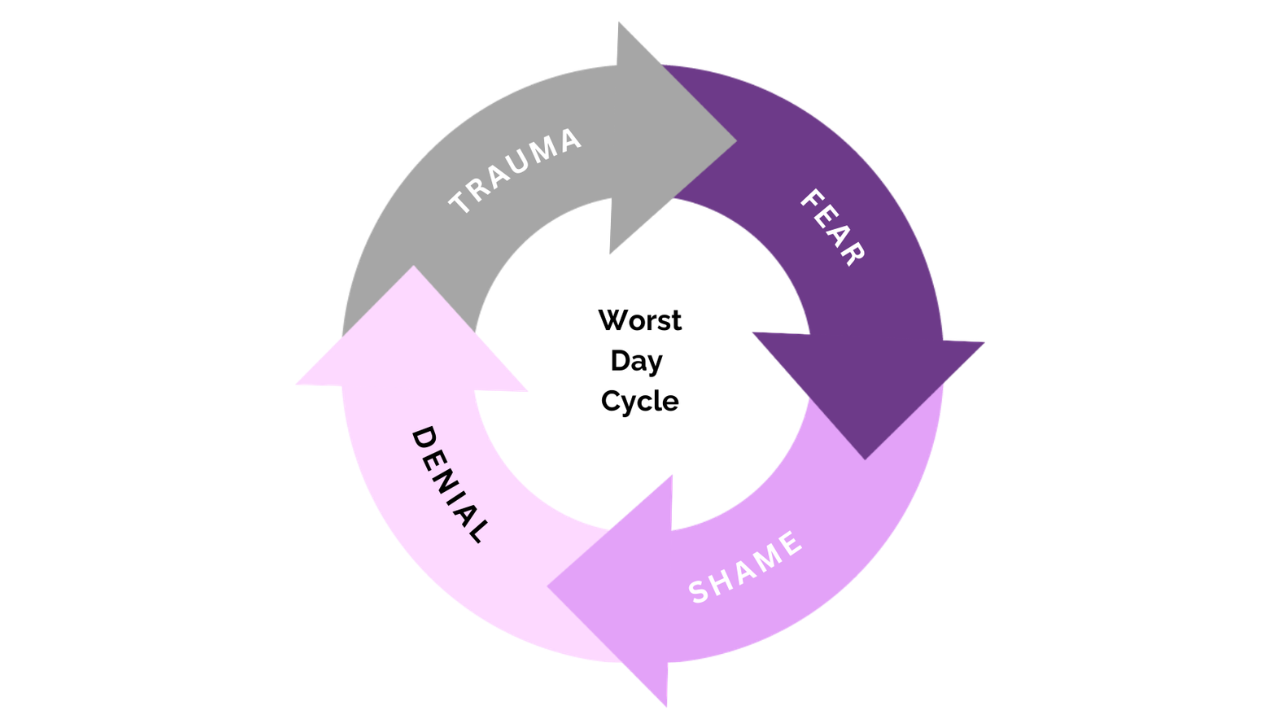
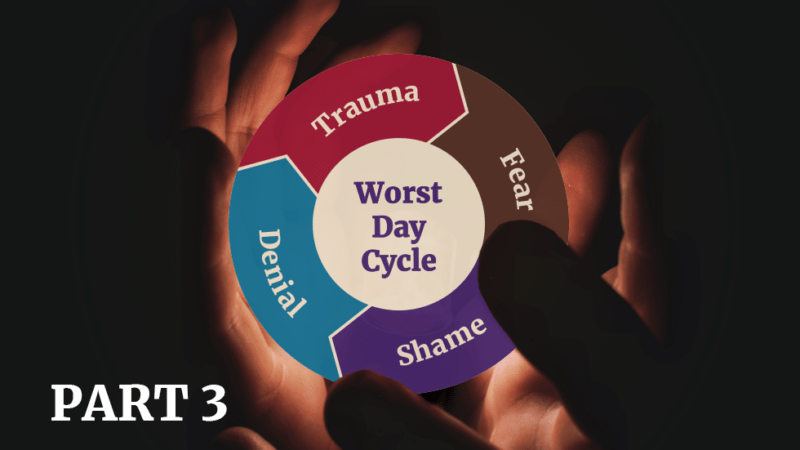
    Worst Day Cycle diagram showing trauma fear shame denial loop that makes pets feel safer than human partners

    The Worst Day Cycle™ has four stages: Trauma → Fear → Shame → Denial.

    Trauma: Any negative emotional experience in childhood that created painful meanings. It doesn’t have to be dramatic — a parent who was emotionally unavailable, a household where feelings were treated as weakness, a caregiver whose love was conditional on performance. These experiences create a massive chemical reaction in the brain and body. The hypothalamus generates chemical cocktails — cortisol, adrenaline, dopamine, oxytocin misfires — and the brain becomes addicted to these emotional states.

    That’s you — feeling more relaxed with your cat than with any human being, because your nervous system was calibrated for emotional danger in every human relationship since childhood.

    Fear: Fear drives repetition. The brain conserves energy by repeating known patterns — it can’t tell right from wrong, only known from unknown. Since 70%+ of childhood messaging is negative and shaming, adults repeat these painful patterns in relationships, career, hobbies, health — everything. Your brain learned that human connection equals pain. So it steers you toward the safest form of connection available — your pet.

    Shame: This is where you lost your inherent worth. “I am the problem.” Not “I made a mistake” — but “I AM the mistake.” This is the core wound underneath the pet-over-partner pattern. You choose your pet because deep down, you believe that if a partner really knew you — the real you, not the survival persona — they would leave. But the pet? The pet stays no matter what.

    That’s the shame talking — the voice that says “my dog loves me unconditionally” while really meaning “my dog is the only one who could.”

    Denial: Denial is the survival persona you created to survive the pain. It was brilliant in childhood — absolutely necessary. But in adulthood, it sabotages your relationships. Denial sounds like: “I’m just a pet person.” “I prefer animals to people.” “Pets love you more than humans ever will.” These aren’t preferences — they’re survival strategies disguised as personality traits.
    Trauma chemistry icon showing how childhood creates neurochemical patterns that make pets feel safer than partners

    The Worst Day Cycle™ reveals why pets feel safer than partners — your brain created a neurochemical loop in childhood that equates human intimacy with danger, and pets provide the only form of connection that doesn’t trigger that loop.

    What Are the 5 Ways Pets Can Damage Your Relationship?

    These aren’t judgments. They’re patterns. And recognizing them is the first step toward healing.

    1. When the pet becomes the emotional spouse. Everything revolves around the pet. Before you go anywhere: “Wait — we have to walk the dog!” Spontaneous weekend away? Not without 24 hours’ notice and a pet sitter. A romantic overnight after a beautiful day trip? Impossible if the dog hasn’t been let out. The pet becomes the priority. The partner becomes the afterthought.

    That’s you — canceling date night for the third time because the dog “seems anxious” while your partner sits in silence wondering where they rank.

    2. When the pet replaces vulnerability. Sad? Snuggle the dog. Angry? Take the cat for a long cuddle. Hurt by your partner? Retreat into the pet’s unconditional acceptance. Every time you turn to your pet instead of turning toward your partner with honesty, you’re choosing comfort over connection. It feels soothing. But it’s keeping you from the deeper intimacy you actually need.

    That’s you — using your pet as an emotional escape hatch every time a conversation gets uncomfortable.

    3. When the pet reinforces love avoidance. Love avoidance stems from childhood environments where a child was emotionally smothered, over-relied on, or forced into adult responsibilities too young. For people with this pattern, closeness feels dangerous. Independence feels safe. And pets are the perfect “safe closeness” — you can love them without getting overwhelmed. They never burden you. You choose the distance.
    Emotional absorption icon showing how pets absorb the emotional energy that should flow into human relationships

    Sound familiar? The person who has room in their heart for every stray animal but can’t make room for a partner who wants to get closer?

    4. When pets create a hierarchy that displaces the partner. I once worked with a man whose childhood still echoed with his mother’s nightly mantra: “Kids, wait — I have to feed the pets first.” The message was clear: your needs come second. Decades later, he dated women who treated him the same way. Not because they were unkind, but because our brains, craving familiarity, unconsciously pull us toward what we know — even when it hurts.

    That’s you — if your partner has ever said “I feel like I come after the dog” and you dismissed it as dramatic.

    5. When “pet person” becomes an identity that blocks growth. Society reinforces this. Commercials portray partners as annoyances while pets are the loyal, loving companions. Social media celebrates “dog mom” culture while mocking relationship struggles. We’re subtly taught that humans disappoint, but pets never do. It’s a comforting story — and it’s a limiting one. When “I’m a pet person” becomes an identity, it becomes a wall. And behind that wall is a person who’s terrified of being hurt by another human being.

    That’s you — wearing your “dog mom” identity like armor, not because you love dogs more than people, but because dogs never made you feel the way your parent did.

    How Your Survival Persona Uses Pets to Avoid Vulnerability

    Your survival persona is the identity you created in childhood to navigate an emotionally unsafe environment. It’s not who you are — it’s who you had to become. And for many people, pets become a central tool of the survival persona.
    Survival persona icon showing how each persona type uses pets differently to avoid emotional vulnerability

    There are three survival persona types:

    The Falsely Empowered: This persona controls, dominates, and rages. They use pets to maintain emotional control. The pet obeys. The pet doesn’t challenge. The pet doesn’t have needs that conflict with theirs. The falsely empowered can be tender and loving with their animal — but that tenderness is conditional on the animal not making demands. When a human partner asks for vulnerability, the falsely empowered shuts down or explodes. The pet never triggers that response.

    That’s you — gentle and patient with your dog but rigid and dismissive the moment your partner needs emotional space.

    The Disempowered: This persona collapses, people-pleases, and disappears. They use pets to feel needed without the risk of rejection. The pet always needs them. The pet always comes to them. The pet provides the validation and purpose that the disempowered can’t find within themselves. They pour their entire emotional reservoir into the animal — and have nothing left for a human partner.

    That’s you — the one who rescues every animal but can’t rescue yourself from relationships that leave you empty.

    The Adapted Wounded Child: This persona oscillates between both — controlling one moment, collapsing the next. They use pets as emotional regulators. When they feel powerful, the pet is a companion. When they feel collapsed, the pet is a lifeline. They swing between “I don’t need anyone” and “at least my dog loves me” without ever landing in their authentic self.
    Adapted wounded child icon showing oscillation between using pets for control and using pets for comfort

    That’s you — swinging between “my dog is my everything” and “why can’t I make a relationship work?” and not seeing the connection between the two.

    Your survival persona uses pets to avoid the vulnerability that human connection demands — not because you love animals too much, but because your childhood taught you that being fully known by another person is the most dangerous thing in the world.

    How Pet-Centered Avoidance Shows Up in Every Area of Your Life

    Family: You’re more emotionally present with your pet than with your parents or siblings. Family gatherings feel like performances — but the moment you get home and sit with your dog, you exhale. You use your pet as an excuse to leave family events early. “I have to get back — the dog needs to go out.” The dog doesn’t need to go out. You need to escape.

    That’s you — using your pet as a socially acceptable exit strategy from every emotionally overwhelming family situation.

    Romantic Relationships: Your partner competes with the pet for your attention and loses. You share more physical affection with your animal than with your partner. You talk to your pet about your day but shut down when your partner asks “how are you?” You choose the pet’s comfort over the partner’s need for connection — every time.

    Sound familiar? The person who sleeps curled up with their dog while their partner lies awake on the other side of the bed?

    Friendships: You’d rather spend a Saturday with your pet than with friends. You cancel plans to stay home with your animal. Your social media is exclusively pet content. You connect with other “pet people” because the shared identity keeps conversations surface-level and safe.

    Work: You rush through meetings to get home to your pet. You work from home not for productivity but because being near your animal regulates your nervous system. You use your pet as the reason you can’t travel, can’t stay late, can’t attend the team dinner — when the real reason is that human interaction drains you because your nervous system treats it as a threat.

    That’s you — building your entire life around your pet’s schedule because your pet’s world is the only one where you feel emotionally safe.

    Body and Health: You walk your dog religiously but haven’t been to the doctor in years. You prepare organic meals for your pet but eat takeout standing over the sink. You prioritize your animal’s health because caring for something else is easier than caring for yourself — because caring for yourself means being alone with your own feelings.
    Emotional blueprint icon showing how childhood patterns create pet-centered avoidance across all life areas

    How the Emotional Authenticity Method™ Heals the Pattern Behind Pet Dependence

    The solution isn’t giving up your pet. It’s healing the emotional blueprint that makes your pet the safest relationship in your life. The Emotional Authenticity Method™ does this by targeting the nervous system — where the avoidance pattern actually lives.
    Emotional regulation icon representing the Emotional Authenticity Method for healing pet-based relationship avoidance

    Step 1: Somatic Down-Regulation with optional Titration. Before you can process the pattern, you have to get your nervous system out of survival mode. When your partner asks for closeness and your body tightens, that’s your nervous system treating intimacy as danger. Down-regulation is the starting point — not the destination.

    That’s you — learning that the tightness in your chest when your partner says “we need to talk” isn’t about your partner. It’s about your five-year-old self who learned that human connection means pain.

    Step 2: What am I feeling? Most people who over-bond with pets have no idea what they’re actually feeling in human relationships. They know they feel “comfortable” with their pet and “stressed” with people — but that’s not emotional granularity. Using the Feelings Wheel, you learn to name the specific emotion: not “stressed” but terrified. Not “comfortable” but relieved. The specificity changes everything.

    Step 3: Where in my body do I feel it? All emotional trauma is stored physically. Your chest tightens when your partner wants to talk. Your stomach drops when someone gets too close. Your shoulders climb when intimacy is on the table. Locating the feeling in your body moves you from intellectual understanding to somatic processing.

    Step 4: What is my earliest memory of this feeling? This is where the breakthrough happens. You trace today’s avoidance back to its childhood origin. Maybe your earliest memory is a parent who was emotionally unavailable. Maybe it’s a household where feelings were mocked. Maybe it’s the moment you realized that the family pet was the only one who was consistently kind to you. You realize: this isn’t about my partner. My nervous system just thinks they’re my parent.

    That’s the moment — when you see that your pet isn’t your best relationship. It’s your safest one. And safety isn’t the same as healing.

    Step 5: Who would I be if I never had this feeling again? This is the vision step. It connects you to the Authentic Self Cycle™ and gives your nervous system a new destination — a life where you can love your pet AND love a partner without your survival persona choosing one over the other.

    The Emotional Authenticity Method™ works because emotions are biochemical events — you cannot change the pattern of choosing pets over people through thoughts alone. Thoughts originate from feelings, not the other way around.

    How the Authentic Self Cycle™ Creates Space for Both Pets and Partners

    The Authentic Self Cycle™ is the healing counterpart to the Worst Day Cycle™. Where the Worst Day Cycle™ traps you in Trauma → Fear → Shame → Denial, the Authentic Self Cycle™ restores your identity through Truth → Responsibility → Healing → Forgiveness.
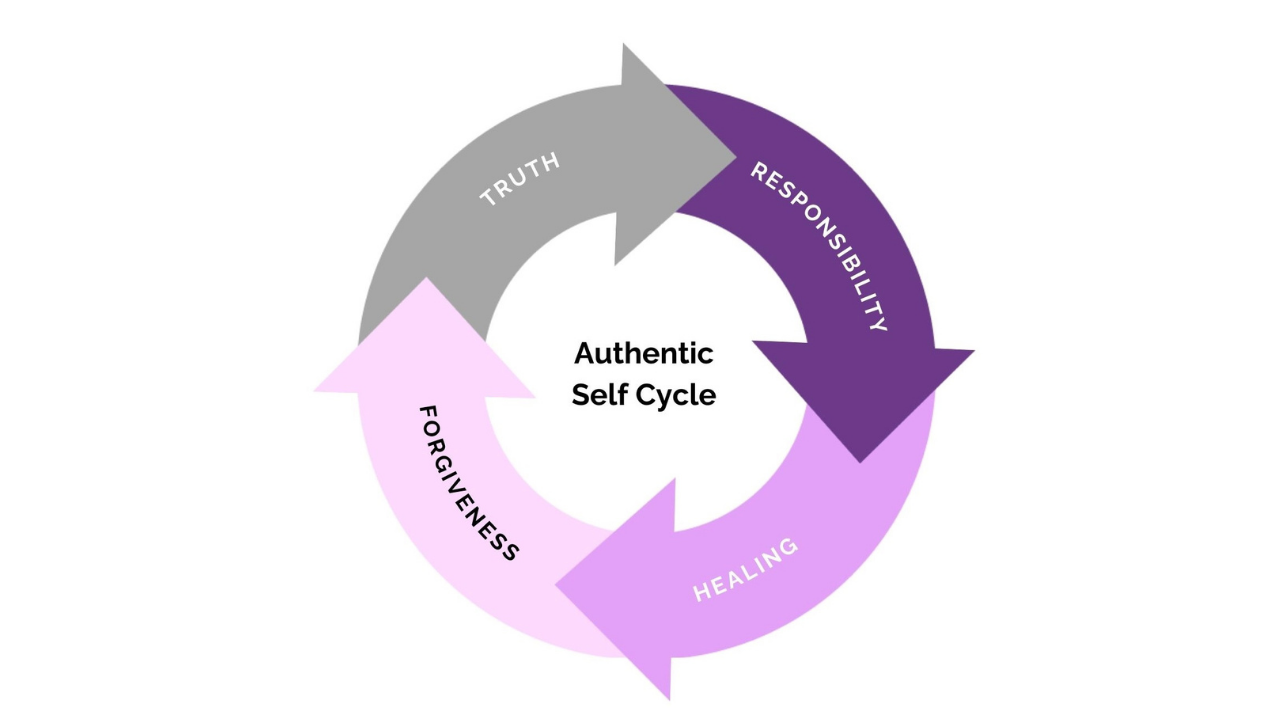
    Authentic Self Cycle diagram showing truth responsibility healing forgiveness as the path to balanced pet and partner relationships

    Truth: Name the blueprint. See that “this isn’t about today.” When your partner asks for closeness and you retreat to your pet, truth says: “I’m not choosing my dog over my partner. I’m choosing safety over vulnerability because that’s what my childhood taught me.”

    That’s the first step — seeing the pattern instead of being trapped inside it.

    Responsibility: Own your emotional reactions without blame. “My partner isn’t my parent — my nervous system just thinks they are.” This isn’t about fault. It’s about taking back your power from a childhood that stole it. Your partner asking for closeness isn’t the threat. Your nervous system’s memory of closeness equaling pain — that’s what’s driving the retreat.

    Healing: Rewire the emotional blueprint so human intimacy becomes uncomfortable but not dangerous, closeness isn’t engulfment, and vulnerability isn’t annihilation. This is where daily practice does its work — second by second, like the ticks of a clock. Each moment of choosing your partner AND your pet, instead of your pet INSTEAD of your partner, rewires the pattern.

    Forgiveness: Release the inherited emotional blueprint and reclaim your authentic self. This creates a NEW emotional chemical pattern that replaces fear, shame, and denial with safety, worth, and connection. You don’t lose your love for your pet. You gain the capacity to love a human being with the same openness.

    That’s you — not the person who had to choose between their pet and their partner. The person who finally has enough love for both because the survival persona isn’t hoarding all of it anymore.

    The Authentic Self Cycle™ is an identity restoration system — it doesn’t ask you to give up your pet, it replaces the neurochemical pattern that made your pet the only safe relationship with a new blueprint built on truth, responsibility, and emotional authenticity.

    Frequently Asked Questions About Pets and Relationships

    Can pets actually damage a romantic relationship?

    Yes — not because pets are harmful, but because unhealed childhood trauma can turn pets into emotional substitutes for human intimacy. When a pet becomes the primary source of comfort, affection, and connection, the romantic partner gets displaced. The Worst Day Cycle™ explains how the brain creates a neurochemical preference for safe, one-directional love over the vulnerable, reciprocal love that adult relationships require.

    Why do I feel more connected to my pet than my partner?

    Because your pet never triggers your childhood wounds. Pets don’t criticize, reject, abandon, or require vulnerability. If your childhood taught you that human connection equals pain, your nervous system will naturally gravitate toward the relationship that feels safest — your pet. The Emotional Authenticity Method™ helps you trace this preference to its origin and rewire it at the nervous system level.

    Is it codependent to prioritize your pet over your partner?

    It can be. When the pet becomes a vehicle for avoiding emotional intimacy, it functions like any other codependent pattern — it substitutes a safe, controllable relationship for the messy, vulnerable, growth-producing one. The three survival persona types — falsely empowered, disempowered, and adapted wounded child — each use pets differently to maintain their survival strategy and avoid authentic connection.

    How do I know if my love for my pet is healthy or avoidant?

    Ask yourself: does my pet add to my human relationships, or replace them? Do I turn to my pet instead of my partner when I’m hurting? Do I use my pet as a reason to avoid intimacy, travel, or social connection? Healthy pet love enhances your life. Avoidant pet love protects you from the vulnerability your survival persona can’t tolerate. The Authentic Self Cycle™ helps you see the difference.

    What should I do if my partner says I prioritize my pet over them?

    Listen — because they might be seeing something your survival persona is hiding from you. Instead of defending, use the Emotional Authenticity Method™: down-regulate, name what you’re feeling, locate it in your body, and trace it to its earliest memory. Your partner’s complaint might be the most honest feedback you’ve received about a pattern you can’t see from inside it.

    Can I heal my relationship patterns without giving up my pet?

    Absolutely. This is not about choosing between your pet and your partner. It’s about healing the childhood emotional blueprint that makes your pet the only safe relationship. When you rewire the Worst Day Cycle™ through the Authentic Self Cycle™, you create enough emotional capacity for both — a pet you adore and a partner you can actually let in.

    The Bottom Line

    Your pet isn’t the problem. Your pet is the solution your nervous system found to a problem that started decades ago.

    Somewhere in childhood, you learned that human connection was dangerous. That being known meant being hurt. That vulnerability was a liability, not a gift. And so your brilliant, adaptive brain found the safest way to get love without risking pain — a four-legged creature who never judges, never leaves, and never asks you to be anything other than what you are.

    That was brilliant. And it’s not enough anymore.

    Because the void doesn’t fill with pet cuddles. It fills with the terrifying, beautiful, messy experience of being truly seen by another human being — and surviving it. Of saying “I’m scared” instead of retreating to the couch with your dog. Of staying in the conversation instead of checking out. Of choosing vulnerability even when every cell in your body screams to run.

    That’s you — not the “pet person” who doesn’t need people. The human being underneath who’s been hiding behind the safest love they could find, waiting for someone to say: “You can have both. You just have to stop running.”

    You can have both. You just have to stop running.

    These books complement the frameworks in this article and deepen your understanding of why pets become emotional substitutes and how to heal the pattern:

    Facing Codependence by Pia Mellody — the foundational text on how childhood trauma creates the codependent patterns that make one-directional relationships (including with pets) feel safer than mutual adult intimacy.

    The Body Keeps the Score by Bessel van der Kolk — the science of how trauma lives in the body, explaining why your nervous system chooses your pet over your partner.

    When the Body Says No by Gabor Maté — how chronic emotional avoidance manifests as physical illness and relational disconnection.

    Codependent No More by Melody Beattie — a practical guide to recognizing when emotional patterns disguise themselves as personality preferences.

    The Gifts of Imperfection by Brené Brown — how shame drives avoidance and why vulnerability is the path back to authentic connection with both animals and humans.

    Take the Next Step

    If you recognize yourself in this article — if you’ve been using your pet as emotional armor and you’re ready to learn how to love both your animal and a partner — Kenny Weiss offers courses designed for people who are done avoiding and ready to heal:

    Emotional Blueprint Starter Course — Individual ($79) — Your personal roadmap to understanding the Worst Day Cycle™ and the emotional patterns that make pets feel safer than partners.

    Relationship Starter Course — Couples ($79) — For couples ready to address the avoidance patterns that create distance in their relationship.

    Why We Can’t Stop Hurting Each Other ($479) — Deep-dive into the Worst Day Cycle™ and how childhood trauma creates the patterns that keep you choosing safety over vulnerability.

    Why High Achievers Fail at Love ($479) — Built specifically for high achievers who have mastered control in every area of life except intimate relationships.

    The Shutdown Avoidant Partner ($479) — Understanding avoidant attachment through the lens of trauma chemistry and survival personas.

    Tier 1: Mapping the Blueprint ($1,379) — The comprehensive program for learning and practicing the Emotional Authenticity Method™.

    Download the Feelings Wheel — the free tool used in Step 2 of the Emotional Authenticity Method™ to build emotional granularity.

    Explore more: The Signs of Enmeshment | 7 Signs of Relationship Insecurity | 7 Signs of High Self-Esteem | How to Determine Your Negotiables and Non-Negotiables | 10 Do’s and Don’ts for a Great Relationship
  • Why You Attract Toxic Partners: The Childhood Trauma Blueprint

    Why You Attract Toxic Partners: The Childhood Trauma Blueprint

    Toxic relationships are not random bad luck — they are the predictable result of a childhood emotional blueprint that wired your brain to seek out partners who recreate the exact pain you experienced as a child, because your nervous system became chemically addicted to that pain before you had any say in the matter. If you keep ending up with partners who lie, manipulate, control, or emotionally abandon you — and you can’t figure out why — you’re not broken. Your brain is doing exactly what it was trained to do. And that training started decades before your first relationship.

    That’s you — the one who can spot a red flag in someone else’s relationship from a mile away but can’t see the ones waving right in front of your own face.

    This isn’t about being naive. It isn’t about not being smart enough. It’s about understanding that your attraction to toxic partners is a neurochemical event rooted in childhood trauma — and until you address the blueprint that created it, no amount of dating advice, boundary-setting tips, or “knowing your worth” affirmations will change the pattern.

    Trauma chemistry icon showing how childhood emotional patterns create toxic relationship attraction

    Why Do You Keep Attracting Toxic Partners?

    Here’s the truth nobody tells you: you don’t attract toxic partners by accident. Your brain selects them with surgical precision — because they recreate the exact emotional environment of your childhood. Not because you want pain. Because your nervous system is addicted to it.

    That’s you — swiping past every safe, stable, “boring” person and feeling an electric pull toward the one who will eventually destroy you.

    Imagine being placed in a room with 20,000 potential partners. All of them are attractive, kind, financially stable, emotionally available — everything you say you want. But hidden among them is one person whose emotional wiring mirrors the abandonment, the control, the chaos of your childhood. Like radar, you’d walk past every safe option and zero in on that one person. And you’d say the same thing everyone says: “There’s just something about them.”

    That “something” isn’t chemistry. It’s trauma recognition. Your brain and body went: “I get to relive the exact same hopelessness, powerlessness, and confusion of my childhood.” That butterfly feeling in your stomach? That’s not love. That’s your nervous system recognizing familiar pain.

    Emotional blueprint icon showing how childhood patterns create toxic partner attraction radar

    You attract toxic partners because your brain became emotionally and chemically addicted to the trauma patterns of your childhood — it cannot distinguish between familiar pain and genuine love, so it seeks out partners who recreate the original wound with radar-like precision.

    That’s the room of 20,000 — and your trauma will find the one person who matches your childhood pain every single time, until you heal the blueprint that created the radar.

    How the Worst Day Cycle™ Creates Your Toxic Relationship Radar

    To understand why you keep choosing toxic partners, you need to understand the Worst Day Cycle™. This is the neurochemical pattern that runs underneath every relationship decision you make — and it explains why smart, successful, capable people end up in relationships that look insane from the outside.

    Worst Day Cycle diagram showing trauma fear shame denial loop that creates toxic relationship patterns

    The Worst Day Cycle™ has four stages: Trauma → Fear → Shame → Denial.

    Trauma: Any negative emotional experience in childhood that created painful meanings. It doesn’t have to be dramatic — a parent who was emotionally unavailable, a household where feelings were punished, a caregiver whose love was conditional. These experiences create a massive chemical reaction in the brain and body. The hypothalamus generates chemical cocktails — cortisol, adrenaline, dopamine, oxytocin misfires — and the brain becomes addicted to these emotional states.

    That’s you — feeling most alive in the chaos of a toxic relationship, because your nervous system was calibrated for chaos in childhood and interprets calm as dangerous.

    Fear: Fear drives repetition. The brain conserves energy by repeating known patterns — it can’t tell right from wrong, only known from unknown. Since 70%+ of childhood messaging is negative and shaming, adults repeat these painful patterns in relationships, career, hobbies, health — everything. Your brain doesn’t choose toxic partners despite your intelligence. It chooses them because of its programming.

    Shame: This is where you lost your inherent worth. “I am the problem.” Not “I made a mistake” — but “I AM the mistake.” This is the core wound underneath every toxic relationship pattern. You tolerate toxic behavior because deep down, you believe it’s what you deserve. You stay because leaving would mean admitting your authentic self has value — and shame told you decades ago that it doesn’t.

    That’s the shame talking — the voice that says “maybe if I love them harder, they’ll finally love me back.” But you’re not trying to earn their love. You’re trying to earn the love your childhood told you that you didn’t deserve.

    Denial: Denial is the survival persona you created to survive the pain. It was brilliant in childhood — absolutely necessary. But in adulthood, it’s the reason you explain away red flags, make excuses for toxic behavior, and convince yourself that “this time will be different.” Denial keeps you in the cycle because seeing the truth would mean feeling the original childhood wound — and your nervous system will do anything to avoid that.

    The Worst Day Cycle™ reveals why you attract toxic partners with such consistency — your brain created a neurochemical radar in childhood that scans every potential partner for the specific emotional signature of your original trauma, and when it finds a match, it floods you with chemicals that feel like love.

    What Is Trauma Chemistry and How Does It Drive Toxic Attraction?

    What most people call “chemistry” in a relationship is actually trauma chemistry — the neurochemical response your body produces when it recognizes a partner who matches your childhood emotional blueprint. It feels like passion. It feels like destiny. It feels like the most intense connection you’ve ever experienced. And it is the most reliable predictor that you’re about to repeat your worst day.

    Emotional regulation icon showing how trauma chemistry hijacks the nervous system in toxic relationships

    That’s you — confusing intensity with intimacy, chaos with connection, and the adrenaline rush of uncertainty with the warmth of genuine love.

    Trauma chemistry evolves into trauma bonding through a predictable cycle: Idealization → Anxiety → Clinging → Withdrawal → Abandonment fear → Reunion → Repeat. Each stage produces a specific chemical cocktail that your brain has been craving since childhood.

    You’re not addicted to them. You’re addicted to the high of being chosen, the crash of being neglected, the relief when they come back, the hope of changing them, and the possibility of finally healing the childhood wound through this relationship. It’s an emotional drug — and like any addiction, it gets stronger with each cycle.

    Sound familiar? The partner who disappears for days, then comes back with just enough warmth to keep you hooked? That’s not love. That’s your nervous system getting its fix.

    Here’s what makes trauma chemistry so dangerous: safe partners don’t trigger it. When you meet someone emotionally healthy — someone who is consistent, available, and honest — your body registers… nothing. No butterflies. No electric charge. No obsessive thinking. And you interpret that absence of chaos as a lack of chemistry. So you leave. And you go find another toxic partner who makes you “feel something.”

    Emotional fitness icon representing the work needed to distinguish trauma chemistry from genuine connection

    Trauma chemistry is the neurochemical con that makes toxic partners feel like soulmates — your brain floods you with the same chemicals it produced during childhood trauma, creating an intensity that feels like love but is actually your nervous system recognizing familiar danger.

    How Your Survival Persona Keeps You Trapped in Toxic Relationships

    Your survival persona is the identity you created in childhood to navigate an emotionally unsafe environment. It’s not who you are — it’s who you had to become. And in toxic relationships, it’s the engine that keeps you stuck in patterns you intellectually know are destroying you.

    Survival persona icon showing how childhood identity adaptations create toxic relationship vulnerability

    There are three survival persona types, and each one creates a specific pattern in toxic relationships:

    The Falsely Empowered: This persona controls, dominates, and rages. In toxic relationships, the falsely empowered person often becomes the one others call “the narcissist.” They use anger, control, and intimidation to avoid vulnerability. They look powerful on the outside, but their power comes from fear, not strength. They attract disempowered partners because the power imbalance recreates the dynamic of their childhood — and both people get to replay their original wounds.

    That’s you — the one who wonders why every partner eventually calls you “controlling” when all you’re trying to do is keep everything from falling apart.

    The Disempowered: This persona collapses, people-pleases, and disappears. In toxic relationships, the disempowered person becomes the one who gives everything and tolerates anything. They confuse self-sacrifice with love. They believe that if they just love harder, give more, or become whatever the toxic partner needs, the pain will stop. It never does — because the pain isn’t coming from the partner. It’s coming from childhood.

    That’s you — the one who bends over backward to make a toxic partner happy and then wonders why you feel invisible, used, and empty.

    The Adapted Wounded Child: This persona oscillates between both — raging one moment, collapsing the next. In toxic relationships, they swing between “I don’t need you” and “please don’t leave me.” They attract partners whose survival strategy is the exact opposite of theirs — because the brain seeks out the dynamic that recreates the original childhood wound from both sides.

    Adapted wounded child icon showing oscillation between falsely empowered and disempowered personas in toxic relationships

    That’s you — the one who threatens to leave every week but never does, because leaving feels more terrifying than the pain of staying.

    Here’s the tragedy: in almost all cases, we pick a partner whose denial strategy is the exact opposite of ours. Your survival strategy threatens theirs, and their survival strategy threatens yours. This creates a cycle of reactivity that both people mistake for “the relationship being toxic” — when really, it’s two wounded children triggering each other’s unhealed pain.

    Your survival persona doesn’t just attract toxic partners — it creates the conditions for toxicity in every relationship by replacing your authentic self with a childhood performance that can’t create genuine intimacy, only recreate familiar pain.

    Why Can’t You Leave a Toxic Relationship? The Trauma Bond Explained

    If you’ve ever tried to leave a toxic relationship and couldn’t — or left and went back — you’re not weak. You’re experiencing a trauma bond. And a trauma bond is not a relationship problem. It’s a neurochemical addiction rooted in your childhood.

    Codependence icon showing the trauma bond cycle that keeps people trapped in toxic relationships

    That’s you — knowing with absolute intellectual clarity that this person is bad for you, and feeling completely powerless to walk away.

    The Victim Position Paradox explains part of why leaving feels impossible. The victim position is a societal construct meant to protect victims, but in reality it has created a paradoxical falsely empowered position that nearly guarantees the victim will reexperience their childhood victimization, leaving them disempowered. Society tells you that the toxic partner is entirely to blame — and they may be behaving terribly. But as long as you stay in the victim position, you never examine the childhood blueprint that drew you to them in the first place. And that blueprint will draw you to the next toxic partner, and the next one, until it’s healed.

    You can’t leave because your brain is addicted to the cycle — the high of being chosen, the crash of being neglected, the relief when they come back. Every time they return after pulling away, your brain gets a dopamine hit that’s more powerful than almost any drug. You’re not staying for love. You’re staying for the chemical.

    That’s the trauma bond — not a sign that the love is real, but a sign that the wound is deep.

    Leaving a toxic relationship requires more than willpower. It requires rewiring the emotional blueprint that makes the toxic cycle feel like home. And that work starts not with the relationship — but with the childhood that created the pattern.

    A trauma bond is a neurochemical addiction to the emotional cycle of a toxic relationship — you can’t think your way out of it because the bond lives in your body’s chemistry, not in your mind’s understanding, and it was wired into your nervous system decades before you met your partner.

    How Toxic Relationship Patterns Show Up in Every Area of Your Life

    Family: You tolerate behavior from family members that you would never accept from a stranger. You minimize their cruelty. You make excuses for their dysfunction. You keep going back to family gatherings that leave you emotionally wrecked because the guilt of not going feels worse than the pain of being there. Your original toxic relationship was with a caregiver — and every family interaction recreates it.

    That’s you — driving home from a family dinner feeling gutted, telling yourself “that’s just how they are” while your body screams that something is deeply wrong.

    Romantic Relationships: You choose partners who need to be saved, who can’t give you what you need, or who recreate the emotional neglect or chaos of your childhood. You confuse intensity with love. You tolerate lying, infidelity, emotional withdrawal, or verbal abuse because it feels normal — because it IS normal for your nervous system. Safe love feels boring. Toxic love feels alive.

    Sound familiar? The person who gives everything to someone who gives nothing back — and then blames themselves for not being enough?

    Friendships: You attract friends who drain you. You’re the listener, the fixer, the one everyone calls in crisis. But when you need something? Silence. You surround yourself with people who replicate the one-sided dynamic of your childhood — where your value was measured by what you gave, not who you were.

    Work: You tolerate toxic bosses, overwork yourself to earn approval, and stay in jobs that undervalue you. You attract workplace dynamics that mirror your family system — the controlling boss who reminds you of a critical parent, the colleagues who take credit for your work while you stay silent, the promotion you never ask for because you don’t believe you deserve it.

    That’s you — building someone else’s dream while your own dies quietly because your childhood taught you that your needs don’t matter.

    Body and Health: Your body absorbs everything your relationships won’t let you express. Chronic pain, digestive issues, insomnia, autoimmune conditions, weight struggles — these are often the body’s response to years of emotional suppression in toxic dynamics. You’ve trained yourself to ignore your body’s signals the same way you ignore red flags in relationships — because both require a level of self-trust that was stolen in childhood.

    Enmeshment icon showing how toxic relationship patterns cross every boundary in life

    How the Emotional Authenticity Method™ Breaks the Toxic Attraction Pattern

    You cannot break the toxic relationship pattern through dating advice, boundary lists, or “knowing your worth.” Those approaches target the thinking brain. Your toxic attraction pattern lives in your nervous system — in the body, not the mind. The Emotional Authenticity Method™ is the daily practice that actually rewires the blueprint.

    Emotional authenticity icon representing the method that rewires toxic relationship patterns at the nervous system level

    Step 1: Somatic Down-Regulation. Focus on what you can hear for 15-30 seconds. Before you can process anything, you have to get your nervous system out of survival mode. If you’re highly dysregulated — which you will be in or after a toxic relationship — use titration: go slowly, don’t force yourself to feel everything at once.

    That’s you — learning that you don’t have to white-knuckle your way through the pain of a toxic relationship. You can actually slow down enough to feel it safely.

    Step 2: What am I feeling right now? Not “what should I feel?” Not “what would a healthy person feel?” But: what am I actually feeling? Use the Feelings Wheel to develop emotional granularity — the ability to name specific emotions instead of lumping everything into “heartbroken” or “angry.” Most people in toxic relationships have been disconnected from their feelings for so long that they genuinely don’t know what they feel.

    Step 3: Where in my body do I feel it? All emotional trauma is stored physically. Your chest tightens when they text. Your stomach drops when they go silent. Your jaw clenches when they gaslight you. Locating the feeling in your body is how you move from intellectual understanding to somatic processing — which is where actual healing happens.

    Step 4: What is my earliest memory of having this exact feeling? This is the step that changes everything. You trace today’s reaction back to its childhood origin. You realize: this isn’t about them. My partner isn’t my parent. My nervous system just thinks they are. The abandonment panic you feel when they pull away? That’s not about this relationship. It’s about being five years old and learning that love could disappear at any moment.

    That’s the moment the toxic pattern starts to dissolve — when you see that your “soulmate” was actually your nervous system’s way of recreating your childhood wound, not healing it.

    Step 5: Who would I be if I never had this thought or feeling again? What would be left over? This is the vision step. It connects you to the Authentic Self Cycle™ and gives your nervous system a new destination — not another toxic relationship, but actual identity restoration.

    Step 6: Feelization. Sit in the feeling of the Authentic Self and make it strong. Create a new emotional chemical addiction to replace the old blueprint. Ask: how would I respond to this situation from this feeling? What would I say? What would I do? Visualize and FEEL yourself operating from your Authentic Self. This is the emotional blueprint remapping and rewiring step — the step that actually builds the new neural pathway that makes safe love feel like home instead of boring.

    Myelin and neural pathways icon showing how the Emotional Authenticity Method rewires toxic attraction patterns

    The Emotional Authenticity Method™ works because emotions are biochemical events — you cannot change toxic attraction patterns through thoughts alone. Thoughts originate from feelings, not the other way around. Until you rewire the feeling, the pattern will repeat.

    How the Authentic Self Cycle™ Replaces Toxic Love With Authentic Connection

    The Authentic Self Cycle™ is the healing counterpart to the Worst Day Cycle™. Where the Worst Day Cycle™ traps you in Trauma → Fear → Shame → Denial, the Authentic Self Cycle™ restores your identity through Truth → Responsibility → Healing → Forgiveness.

    Authentic Self Cycle diagram showing truth responsibility healing forgiveness as the path out of toxic relationships

    Truth: Name the blueprint. See that “this isn’t about today.” When your partner goes silent and your chest tightens with abandonment panic, truth says: “This feeling is from childhood. My partner isn’t my neglectful parent — my nervous system just thinks they are.” Truth also means seeing clearly: this person’s behavior is not acceptable, AND I chose them because of my unhealed wound. Both things are true.

    That’s the first step out of the toxic cycle — seeing the pattern instead of being trapped inside it.

    Responsibility: Own your emotional reactions without blame. “My partner isn’t my parent — my nervous system just thinks they are.” This doesn’t mean excusing toxic behavior. It means understanding why YOU stayed, why YOU tolerated it, why YOUR nervous system interpreted chaos as love. Taking responsibility isn’t about fault. It’s about taking back your power from a childhood that stole it.

    Healing: Rewire the emotional blueprint so that safe love doesn’t feel boring, consistent partners don’t feel suffocating, and calm doesn’t trigger restlessness. This is where daily practice with the Emotional Authenticity Method™ does its work — second by second, like the ticks of a clock. The second hand moves in tiny, almost insignificant ticks. But those ticks move the minute hand. The minutes move the hours. Healing toxic patterns works the same way.

    Forgiveness: Release the inherited emotional blueprint and reclaim your authentic self. This creates a NEW emotional chemical pattern that replaces the addiction to chaos with a capacity for genuine connection. You don’t become someone who can’t feel attraction. You become someone whose attraction system is finally calibrated for safety, not danger.

    That’s you — not the person who keeps choosing toxic partners. The person who finally feels drawn to someone kind, consistent, and real — and for the first time, it doesn’t feel boring. It feels like home.

    Reparenting icon showing the process of moving from toxic relationship patterns to authentic connection

    The Authentic Self Cycle™ is an identity restoration system — it doesn’t teach you to avoid toxic partners, it replaces the neurochemical blueprint that made toxic partners feel like love with a new blueprint built on truth, responsibility, and emotional authenticity.

    Frequently Asked Questions About Toxic Relationships

    Why do I keep attracting toxic partners even though I know better?

    Knowing better doesn’t change the pattern because toxic attraction is a neurochemical event, not an intellectual one. Your brain became chemically addicted to the emotional patterns of your childhood trauma. It selects partners who recreate that specific emotional signature — regardless of what your conscious mind knows. The Worst Day Cycle™ explains how this addiction forms: trauma creates fear, fear drives repetition, repetition creates shame, and shame locks you in denial. Breaking the pattern requires somatic rewiring through the Emotional Authenticity Method™, not more knowledge.

    What is a trauma bond and how do I know if I’m in one?

    A trauma bond is a neurochemical attachment to the emotional cycle of a toxic relationship — idealization, anxiety, clinging, withdrawal, abandonment fear, reunion, repeat. You’re in a trauma bond if you intellectually know the relationship is harmful but feel physically unable to leave, if you feel most alive during the highs and lows of the cycle, or if you keep returning after leaving. The bond isn’t about love. It’s about your nervous system’s addiction to the same emotional chemicals it learned in childhood.

    Can a toxic relationship become healthy without leaving?

    A relationship can only become healthy when BOTH partners commit to healing their individual Worst Day Cycles™. The toxicity exists because two survival personas are triggering each other’s unhealed childhood wounds. If both partners learn the Emotional Authenticity Method™ and begin the Authentic Self Cycle™ — Truth, Responsibility, Healing, Forgiveness — the dynamic can shift. But this requires both people to stop blaming and start owning their part. One person healing alone cannot fix a toxic dynamic.

    Why do safe partners feel boring to me?

    Safe partners feel boring because your nervous system was calibrated for chaos in childhood. Consistency, emotional availability, and honesty don’t produce the neurochemical spike that your brain has been addicted to since childhood. Your body interprets the absence of drama as the absence of connection. The Emotional Authenticity Method™ rewires this by creating new neural pathways that allow your body to experience safety as desirable rather than threatening. Feelization — Step 6 — specifically builds a new emotional chemical addiction to replace the old one.

    Is it my fault that I attract toxic partners?

    It is not your fault — and you are responsible. These are two different things. You didn’t choose your childhood trauma. You didn’t choose the emotional blueprint that was installed before you could read. The toxic partner’s behavior is THEIR responsibility. But understanding why your brain selected them — why your nervous system interpreted their chaos as chemistry — is YOUR responsibility. Taking responsibility isn’t blame. It’s the path to freedom. It’s the difference between “I deserve this” and “I can heal this.”

    How long does it take to stop attracting toxic partners?

    The timeline depends on the depth of the childhood wound and the consistency of your daily practice. Noticeable shifts can happen within weeks of practicing the Emotional Authenticity Method™. You’ll start noticing red flags earlier, feeling less pulled toward chaos, and experiencing less panic when safe partners show up. Full rewiring of the attraction blueprint takes longer — like the second hand on a clock, each small moment of emotional truth moves the larger pattern. The Authentic Self Cycle™ provides the framework for long-term identity restoration.

    The Bottom Line

    You’re not broken. You’re not a magnet for bad people. And you’re not cursed to repeat this pattern forever.

    You are a human being whose brain did exactly what it was designed to do — it took the pain of childhood and built a survival strategy around it. That strategy drew you to partners who felt like home. And home was painful.

    But here’s what nobody told you when they said “just leave”: leaving doesn’t heal the blueprint. You can leave a hundred toxic relationships and your brain will find the hundred-and-first. Because the pattern isn’t about THEM. It’s about the five-year-old inside you who learned that love looks like chaos, sounds like criticism, and feels like walking on eggshells.

    That’s you — not the person who keeps choosing wrong. The person whose childhood never gave them a chance to learn what right feels like.

    The way out isn’t through dating advice. It isn’t through willpower. It’s through the daily, brave, terrifying work of feeling the feelings you’ve been running from since childhood. One somatic check-in at a time. One moment of emotional truth at a time. One tick of the clock at a time.

    The room of 20,000 will always be there. But when you heal the blueprint — when you rewire the radar — you’ll finally walk past the one who matches your wound and feel nothing. And the one who matches your authentic self? For the first time, you’ll feel everything.

    These books complement the frameworks in this article and deepen your understanding of toxic relationship patterns and trauma recovery:

    Facing Codependence by Pia Mellody — the foundational text on how childhood trauma creates the relational patterns that draw people into toxic dynamics.

    The Body Keeps the Score by Bessel van der Kolk — the science of how trauma lives in the body, explaining why you can’t think your way out of toxic attraction.

    When the Body Says No by Gabor Maté — how chronic emotional suppression in toxic relationships manifests as physical illness and disease.

    Codependent No More by Melody Beattie — a practical guide to recognizing when your pattern of overgiving and self-sacrifice is trauma, not love.

    The Gifts of Imperfection by Brené Brown — how shame drives toxic relationship patterns and why vulnerability is the path to authentic connection.

    Take the Next Step

    If you’re ready to break the toxic relationship pattern and build a life from your authentic self, Kenny Weiss offers courses designed for people who are done repeating their worst day and ready to heal:

    Emotional Blueprint Starter Course — Individual ($79) — Your personal roadmap to understanding the Worst Day Cycle™ and how it creates your toxic relationship radar.

    Relationship Starter Course — Couples ($79) — For couples ready to break the cycle of reactivity and build interdependence instead of codependence.

    Why We Can’t Stop Hurting Each Other ($479) — Deep-dive into the Worst Day Cycle™ and how childhood trauma creates the toxic relationship dynamic between partners.

    Why High Achievers Fail at Love ($479) — Built specifically for high achievers who keep choosing toxic partners despite having “everything together.”

    The Shutdown Avoidant Partner ($479) — Understanding avoidant attachment through the lens of trauma chemistry and survival personas.

    Tier 1: Mapping the Blueprint ($1,379) — The comprehensive program for learning and practicing the Emotional Authenticity Method™.

    Download the Feelings Wheel — the free tool used in Step 2 of the Emotional Authenticity Method™ to build emotional granularity and reconnect with your authentic feelings.

    Explore more: The Signs of Enmeshment | 7 Signs of Relationship Insecurity | 7 Signs of High Self-Esteem | How to Determine Your Negotiables and Non-Negotiables | 10 Do’s and Don’ts for a Great Relationship
  • Fear in the Worst Day Cycle: Why Your Brain Repeats Painful Patterns

    Fear in the Worst Day Cycle: Why Your Brain Repeats Painful Patterns

    Fear is the second stage of the Worst Day Cycle™ — it is the neurochemical survival response that keeps your brain repeating painful childhood patterns because your nervous system cannot tell the difference between safe and unsafe, only between known and unknown. If you’ve ever wondered why you keep choosing the same relationships, the same conflicts, the same self-sabotaging patterns — even when you know better — fear is the answer. Not the fear you think of. Not the fear of failure. The fear of success. The fear of becoming who you actually are.

    That’s you — the one who knows exactly what you need to do but can’t make yourself do it, and then shames yourself for not doing it.

    This isn’t weakness. This isn’t laziness. This is neuroscience. Your brain became chemically addicted to the emotional states of your childhood trauma, and fear is the engine that keeps that addiction running. Understanding how fear operates in the Worst Day Cycle™ is the first step to breaking free from the patterns that have been controlling your life since before you could spell your own name.

    Worst Day Cycle diagram showing how fear drives repetition of childhood trauma patterns

    What Is Fear in the Worst Day Cycle™?

    Fear in the Worst Day Cycle™ is the neurochemical survival response that emerges from childhood trauma — it is the brain’s chemical addiction to repeating known emotional patterns because the nervous system equates familiar pain with safety and unfamiliar growth with danger.

    The Worst Day Cycle™ has four stages: Trauma → Fear → Shame → Denial. Fear is Stage 2 — the stage where your brain takes the original childhood wound and turns it into a lifelong operating system.

    Here’s what happens: when you experience trauma as a child — any negative emotional experience that created painful meanings about yourself — your hypothalamus generates a chemical cocktail. Cortisol floods your system. Adrenaline spikes. Dopamine misfires. Oxytocin gets dysregulated. Your brain doesn’t just experience pain — it becomes chemically addicted to that pain.

    That’s you — feeling most alive when you’re in crisis mode, because your nervous system was calibrated for chaos in childhood and it literally doesn’t know how to operate without it.

    Trauma chemistry icon showing how childhood fear creates neurochemical addiction patterns

    Fear doesn’t feel like what you think fear feels like. It doesn’t always show up as shaking hands or a racing heart. Sometimes it shows up as procrastination. Sometimes it shows up as perfectionism. Sometimes it shows up as that inexplicable resistance you feel when you’re about to do something that would actually change your life.

    That’s you — putting off the hard conversation, the career change, the boundary you need to set — not because you’re lazy, but because your nervous system is terrified of what happens when you stop repeating the old pattern.

    Fear in the Worst Day Cycle™ is not a feeling you choose — it is an automated neurochemical response that your brain runs thousands of times per day without your conscious awareness, ensuring that you repeat the emotional patterns of your childhood in relationships, career, health, and every other area of your adult life.

    Why Does Your Brain Repeat Painful Patterns?

    It takes tremendous energy for your brain to do anything. Scientists estimate that 25% of the calories you ingest go straight to powering your brain. So your brain developed an ingenious energy-conservation strategy: it repeats what it already knows.

    Scientists estimate that 95% to 99% of your daily life is run by your subconscious — repeating patterns learned in the first seven years of life. Your brain doesn’t care whether something is good or bad for you. Its primary concern is energy conservation and survival. Known equals safe. Unknown equals dangerous.

    Myelin and neural pathways icon showing how the brain automates fear-based patterns through repetition

    That’s you — choosing the same type of partner for the third time, knowing it won’t work, but feeling magnetically pulled toward them anyway. Your brain isn’t broken. It’s doing exactly what it was designed to do.

    Think of it like a golf swing. You’re on the driving range, your fingers are calloused, your shirt soaked through. You know there’s a hitch in your swing. You can feel it coming. You’re determined to fix it this time. But as you take the club back, the fear escalates, your body stiffens, and the old pattern takes over. The ball sails right — again. You slam the club down and mutter something about being an idiot. Then you grab another ball and do it again. That’s the Worst Day Cycle™ in miniature — fear of the new movement, repetition of the old one, shame about the result, and then hope that next time will be different.

    The brain conserves energy by repeating known patterns. It can’t tell right from wrong — only known from unknown. Since 70%+ of childhood messaging is negative and shaming, adults repeat these painful patterns in relationships, career, hobbies, health — everything. Your brain is literally choosing pain because pain is what it knows.

    Sound familiar? The person who knows exactly what a healthy relationship looks like — and then dates the opposite?

    This is also why healthy relationships feel boring. When you meet someone who is stable, available, and consistent, your nervous system doesn’t register safety. It registers the absence of the chemical cocktail it’s addicted to. The stable person feels flat. The consistent one feels foreign. The available one feels like something is wrong. Your nervous system isn’t seeking love — it’s seeking what it survived.

    Emotional blueprint icon showing how childhood patterns create fear-driven repetition in adult life

    That’s you — calling someone “boring” because they don’t activate your childhood wound, not realizing that what you’re actually experiencing is withdrawal from trauma chemistry.

    Your brain repeats painful patterns not because you lack willpower or intelligence — it repeats them because the neurochemical addiction created by childhood trauma makes the familiar pattern feel like safety and any deviation from that pattern feel like a threat to survival.

    Why Are You Afraid of Success, Not Failure?

    Here’s something that will shake up everything you’ve always believed: not a single person on this planet is afraid to fail. Every person on this planet is afraid to succeed.

    The proof? Have you ever found yourself procrastinating? When you think about making a change — whether it’s getting out of bed, sending the email, leaving the relationship, starting the business — what comes up? Thoughts like “I don’t feel like it.” “I’ll start tomorrow.” “I’ll do it later.” In that moment, you’ve chosen failure. And you’re completely comfortable with it.

    That’s you — choosing failure a hundred times a day and not even noticing, because failure is the known. Failure is what your brain has been rehearsing since childhood.

    Emotional authenticity icon representing the shift from fear-based survival to authentic self

    Nobody is ever afraid to fail because in the moment you choose not to do something, you’ve chosen failure — and you’re totally comfortable with it. What you’re actually afraid of is success. Because if you succeed, the survival persona says you’re going to lose connection with mom and dad. Success means you’ve lived your life as a fraud. The fear is of the authentic self, not of failure.

    Self-sabotage is the collision between the authentic self and the shame-based survival persona. When you start to succeed, your adapted wounded child and shame-based survival persona pop up and say no. Because if you live in your authentic self, the survival persona loses its connection to mom and dad — the connection it was built to preserve. And if you actually succeed, it means the survival persona side was always wrong and bad. So the persona tries to pull you back into the Worst Day Cycle™ — Trauma → Fear → Shame → Denial — to keep you stuck.

    That’s the fear nobody talks about — the fear that if you actually became your authentic self, you’d have to admit that everything you’ve been doing for 20, 30, 40 years was a performance. And who wants to face that?

    There’s a second way fear sabotages you. When you experience fear, it stops blood from flowing to the prefrontal cortex — the thinking, decision-making part of your brain. Fear literally shuts down your ability to think clearly. That’s why you can’t access logic or make good decisions when you’re triggered. Your survival brain has taken over, and it doesn’t care about your goals, your values, or your plans. It cares about one thing: repeating the known.

    That’s you — making terrible decisions at midnight, sending the text you know you shouldn’t send, because your prefrontal cortex is offline and your survival brain is running the show.

    You are not afraid of failure — you are afraid of success because success requires abandoning the survival persona that was built to keep you safe in childhood, and your nervous system interprets that abandonment as a threat to its most fundamental attachment bond.

    How Your Survival Persona Uses Fear to Keep You Stuck

    Your survival persona is the identity you created in childhood to navigate an emotionally unsafe environment. It’s not who you are — it’s who you had to become. And fear is the fuel that keeps it running.

    Survival persona icon showing how fear drives three survival types in the Worst Day Cycle

    There are three survival persona types, and each one uses fear differently:

    The Falsely Empowered: This persona controls, dominates, and rages. Fear tells the falsely empowered: “If you’re not in control, you’ll be destroyed. If you show vulnerability, you’ll be abandoned. If you’re not the best, you’re worthless.” So this person overworks, overachieves, and over-controls. They look fearless on the outside. Inside, they’re terrified. Every decision is driven by the fear of being exposed as inadequate.

    That’s you — the one who’d rather burn out than slow down, because slowing down feels like dying.

    The Disempowered: This persona collapses, people-pleases, and disappears. Fear tells the disempowered: “If you have needs, you’ll be a burden. If you say no, you’ll be abandoned. If you take up space, you’ll be rejected.” So this person shrinks. They make everyone else’s needs more important than their own. They abandon themselves to maintain connection — because their childhood taught them that self-abandonment is the price of love.

    Sound familiar? The person who says yes to everything and then feels invisible, wondering why nobody ever checks on them?

    The Adapted Wounded Child: This persona oscillates between both — raging one moment, collapsing the next. Fear drives the oscillation. When the adapted wounded child feels out of control, they rage (falsely empowered). When the rage fails, they collapse (disempowered). They swing between “I don’t need anyone” and “please don’t leave me” — and can’t figure out which one is real.

    Adapted wounded child icon showing oscillation between falsely empowered and disempowered fear responses

    That’s you — unpredictable even to yourself, exhausted by your own emotional whiplash, wondering why you can’t just pick a lane and stay in it.

    When your childhood wound gets activated, your brain doesn’t react like a 40-year-old adult. It reacts like a five-year-old child. Fear spike. Shame collapse. Emotional freeze. Fawn response. Helplessness. Catastrophic thinking. These aren’t character flaws — they’re survival reflexes. Your brain pulls you into the child version of you, not because you’re weak, but because that version once kept you alive. This is emotional time travel. And it happens thousands of times per day without your conscious awareness.

    That’s the survival persona in action — and until you see it, you’ll keep mistaking its fear for your own truth.

    Your survival persona uses fear as its primary control mechanism — it convinces your nervous system that any deviation from the childhood pattern means loss of attachment, loss of identity, and loss of safety, keeping you trapped in the Worst Day Cycle™ indefinitely.

    How Fear Shows Up in Every Area of Your Life

    Family: Fear keeps you enmeshed with the people who wounded you. You can’t set boundaries because boundaries feel like abandonment. You overfunction — managing your parent’s emotions, solving your sibling’s problems, keeping the peace at every family gathering. Or you underfunction — disappearing, going numb, becoming the invisible one who “doesn’t cause problems.” Either way, fear is running the show. Your nervous system still believes that rocking the boat means being rejected or abandoned.

    That’s you — still playing the same role your family assigned you at age six, even though you’re 45 years old and run a business.

    Romantic Relationships: Fear makes you choose partners who replicate your childhood wound. The avoidant who triggers your abandonment terror. The controller who mirrors your critical parent. The charmer whose inconsistency activates the same fear-hope-disappointment cycle you grew up with. When they pull away, your nervous system doesn’t register a normal boundary. It registers the beginning of the end — the same feeling you had when your parent withdrew love. So you chase. Or you shut down. Or you rage. All of it is fear.

    That’s you — terrified of the silence between texts, interpreting normal space as evidence that you’ve been abandoned, because your childhood taught you that distance means danger.

    Friendships: Fear makes you the friend who gives everything and receives nothing. You listen for hours but never share your own struggles. You cancel your plans when someone else needs you. You monitor social media for signs of exclusion. And when a friend doesn’t text back immediately, the fear spike hits — the same spike you felt as a child when you couldn’t read the room fast enough.

    Sound familiar? The person who has fifty friends and still feels completely alone?

    Work: Fear shows up as workaholism for the falsely empowered and as underearning for the disempowered. If you’re falsely empowered, you say yes to every project, check email at midnight, and measure your worth in productivity — because your childhood taught you that your value equals your output. If you’re disempowered, you accept terrible treatment, undersell yourself, and stay in jobs that exploit you — because your childhood taught you that asking for more means being rejected.

    That’s you — either working 80 hours a week to prove you’re enough, or accepting 30% less than your market value because you don’t believe you deserve it.

    Body and Health: Fear creates chronic disconnection from your body. You push through exhaustion, pain, and illness (falsely empowered) or you abandon self-care entirely (disempowered). Your body has been trying to send you signals for years — chronic tension, digestive issues, insomnia, autoimmune conditions — but fear keeps you from listening. Because listening to your body means slowing down. And slowing down means feeling. And feeling means facing the childhood wound your survival persona was built to avoid.

    Emotional regulation icon showing how fear creates disconnection from the body across all life areas

    That’s you — jittery on coffee, unable to sleep, with a stomach that hasn’t felt right in years, wondering why your body won’t cooperate with your mind’s plans.

    How the Emotional Authenticity Method™ Rewires the Fear Response

    You cannot think your way out of fear. Your emotions are biochemical events — not thoughts. Thoughts originate from feelings, not the other way around. Willpower, affirmations, and positive thinking cannot override a nervous system that has been running a fear program since childhood. You need a method that works at the level where the pattern was created: the nervous system.

    The Emotional Authenticity Method™ is a six-step process that rewires the fear response at the body level — where trauma actually lives.

    Emotional fitness icon representing the daily practice of the Emotional Authenticity Method for fear

    Step 1: Somatic Down-Regulation. Focus on what you can hear for 15 to 30 seconds. This sends a safety signal to your nervous system and begins to calm the fear response. If you’re highly dysregulated, use titration — touch the edge of the feeling without drowning in it. Think of it as a staircase: you start with hearing, then add sight, touch, smell, and taste as you get stronger. Each sense you add creates another neural pathway for regulation.

    That’s you — learning that you don’t have to white-knuckle your way through fear. You can start with 15 seconds of listening.

    Step 2: What am I feeling right now? Use the Feelings Wheel to develop emotional granularity. Instead of “I’m stressed” or “I’m anxious,” get specific: “I’m terrified of being abandoned.” “I’m ashamed of needing help.” “I’m grieving a childhood that never existed.” Specificity is where healing begins.

    Step 3: Where in my body do I feel it? All emotional trauma is stored physically. Your chest tightens. Your stomach drops. Your jaw clenches. Locating the feeling in your body moves you from intellectual understanding to somatic processing — which is where the real rewiring happens.

    Step 4: What is my earliest memory of having this exact feeling? Trace today’s fear back to its childhood origin. You realize: this isn’t about today. My partner isn’t my parent. My boss isn’t my father. My nervous system just thinks they are. This is the moment everything shifts — when you separate the old file from the present moment.

    That’s the moment you see it — the fear driving you right now belongs to a five-year-old, not a forty-year-old. And the five-year-old needs something completely different than what the survival persona has been providing.

    Step 5: Who would I be if I never had this thought or feeling again? What would be left over? This is the vision step. It connects you to the Authentic Self Cycle™ and gives your nervous system a new destination — not more fear management, but actual identity restoration.

    Step 6: Feelization. Sit in the feeling of the Authentic Self and make it strong. Create a new emotional chemical addiction to replace the old blueprint. Ask: how would I respond to this situation from this feeling? What would I say? What would I do? Visualize and FEEL yourself operating from your Authentic Self. This is the emotional blueprint remapping and rewiring step — the step that creates lasting neurological change.

    That’s the difference between understanding your fear and actually rewiring it — Feelization is where you build the new neural pathway that replaces the old one.

    The Emotional Authenticity Method™ works because emotions are biochemical events — you cannot change emotional patterns through thoughts alone. Thoughts originate from feelings, not the other way around. This method speaks the nervous system’s language, creating a new emotional chemical pattern that gradually replaces the fear-based pattern of childhood.

    How the Authentic Self Cycle™ Replaces Fear With Truth

    The Authentic Self Cycle™ is the healing counterpart to the Worst Day Cycle™. Where the Worst Day Cycle™ traps you in Trauma → Fear → Shame → Denial, the Authentic Self Cycle™ restores your identity through Truth → Responsibility → Healing → Forgiveness.

    Authentic Self Cycle diagram showing truth responsibility healing forgiveness as the path out of fear

    Truth: Name the blueprint. See that “this isn’t about today.” When your partner asks for space and your chest tightens with fear, truth says: “This feeling is from childhood. My partner isn’t abandoning me — my nervous system just thinks they are.” Truth is the moment you stop being trapped inside the pattern and start seeing it from the outside.

    That’s the first step out of fear — seeing the pattern instead of being controlled by it.

    Responsibility: Own your emotional reactions without blame. “My partner isn’t my parent — my nervous system just thinks they are.” This isn’t about fault. It’s about taking back your power from a childhood that stole it. Responsibility means: “This is my pattern. This is my fear. I’m responsible for rewiring it.”

    Healing: Rewire the emotional blueprint so conflict becomes uncomfortable but not dangerous, space isn’t abandonment, and intensity isn’t attack. This happens through repeated moments where your nervous system learns something new. Like the second hand on a clock — tiny, almost insignificant ticks that move the minute hand, that moves the hour hand, that changes your entire day. Healing works the same way.

    Forgiveness: Release the inherited emotional blueprint and reclaim your authentic self. This creates a NEW emotional chemical pattern that replaces fear, shame, and denial with safety, worth, and connection. You don’t become someone new. You finally meet who you always were underneath the survival persona.

    That’s you — not the fearful person who’s been repeating the same pattern for decades. The authentic self who was there all along, waiting for the fear to stop running the show.

    The Authentic Self Cycle™ is an identity restoration system — it doesn’t teach you to manage fear, it replaces the neurochemical pattern that created the fear with a new blueprint built on truth, responsibility, and emotional authenticity.

    Reparenting icon showing how the Authentic Self Cycle replaces childhood fear with safety

    Frequently Asked Questions About Fear and the Worst Day Cycle™

    Why does my brain repeat painful patterns when I know they’re harmful?

    Your brain doesn’t evaluate patterns based on whether they’re good or bad — it evaluates them based on whether they’re known or unknown. Since most childhood emotional experiences were negative, your brain’s “known” category is filled with painful patterns. It repeats them because repetition feels safe and change feels dangerous. The brain conserves energy by defaulting to what it has already survived, even if what it survived was traumatic.

    How is fear of success different from fear of failure?

    Nobody is afraid to fail. In the moment you choose not to do something — procrastinate, avoid, put it off — you’ve chosen failure, and you’re completely comfortable with it. The real fear is success, because success means abandoning the survival persona that was built for childhood attachment. If you succeed as your authentic self, it means the survival persona was never who you really were — and admitting that after 20, 30, or 40 years feels unbearable. The Worst Day Cycle™ keeps you stuck in fear of success to preserve the survival persona’s connection to the original attachment bond.

    Can fear be rewired without therapy?

    The Emotional Authenticity Method™ is a self-directed practice that can begin the rewiring process. The six steps — somatic down-regulation, naming the feeling, locating it in the body, tracing it to childhood, envisioning the Authentic Self, and Feelization — create real neurological change through repetition. A skilled guide can accelerate the process, but the daily practice is what creates lasting transformation. Your nervous system learned fear patterns in relationship, so it heals most powerfully in relationship — whether that’s therapy, coaching, or a partner committed to doing their own work.

    Why does a healthy relationship feel boring?

    When your nervous system is addicted to the chemical cocktail of childhood trauma — cortisol, adrenaline, dopamine misfires — a stable, available partner doesn’t activate those chemicals. Your brain registers the absence of chaos as the absence of connection. The stable person feels flat. The consistent one feels foreign. This isn’t incompatibility — it’s withdrawal from trauma chemistry. Just as someone detoxing from a substance feels terrible before they feel better, your nervous system must detox from chaos before it can feel attraction to safety.

    How long does it take to rewire the fear response?

    The behavioral patterns can begin shifting within weeks of consistent daily practice. The neurological rewiring takes months and years. Think of the clock metaphor: the second hand moves in tiny, almost insignificant ticks. But those ticks move the minute hand. The minutes move the hours. Every moment where you choose authenticity over your survival persona — where you stay present instead of shutting down, where you feel instead of numbing — strengthens the new neural pathway. The key is repetition, not intensity.

    What if I don’t have any childhood trauma?

    Childhood trauma isn’t just abuse or neglect. It’s any negative emotional experience that created painful meanings about yourself. A parent who was emotionally unavailable. A household where feelings were treated as weakness. A message that your worth depended on performance. A moment of public humiliation. A caregiver whose love was conditional. The only way you could not have experienced childhood trauma is if a perfect being raised you. Since that’s impossible, everyone has an emotional blueprint formed by their childhood experiences — and everyone’s brain runs that blueprint through the Worst Day Cycle™ until they do the healing work.

    The Bottom Line

    Fear isn’t your enemy. Fear was your protector. It kept you alive in a childhood that didn’t feel safe. It taught your brain to repeat the patterns that helped you survive — even when those patterns caused pain. It created a survival persona so brilliant that it fooled everyone, including you.

    But you’re not a child anymore. You don’t need that level of protection. And the fear that once saved your life is now running it — keeping you stuck in the same relationships, the same patterns, the same self-sabotage loops that have been cycling since before you had words for what was happening.

    The good news: fear is not permanent. It’s a neural pathway. And neural pathways can be rewired. Not through willpower. Not through positive thinking. Not through one dramatic breakthrough. Through the slow, consistent, daily practice of feeling what your survival persona has spent decades avoiding.

    That’s you — not the person trapped in the Worst Day Cycle™. The person who finally sees the pattern, names it, and begins the work of building something new. One second-hand tick at a time.

    The fear was brilliant. The survival persona was genius. And now it’s time to build something even more powerful: your authentic self.

    These books complement the frameworks in this article and deepen your understanding of how fear drives the Worst Day Cycle™:

    Facing Codependence by Pia Mellody — the foundational text on how childhood trauma creates the survival patterns that fear perpetuates.

    The Body Keeps the Score by Bessel van der Kolk — the science of how fear and trauma live in the body, not just the mind.

    When the Body Says No by Gabor Maté — how chronic fear and stress manifest as physical illness and disease.

    Codependent No More by Melody Beattie — a practical guide to recognizing when fear drives self-abandonment in relationships.

    The Gifts of Imperfection by Brené Brown — how fear of vulnerability keeps you trapped in the survival persona.

    Take the Next Step

    If you’re ready to rewire the fear response and break free from the Worst Day Cycle™, Kenny Weiss offers courses designed for people who are done repeating the same patterns and ready to heal:

    Emotional Blueprint Starter Course — Individual ($79) — Your personal roadmap to understanding the Worst Day Cycle™ and the fear patterns keeping you stuck.

    Relationship Starter Course — Couples ($79) — For couples ready to break the fear-driven cycle of reactivity and build interdependence.

    Why We Can’t Stop Hurting Each Other ($479) — Deep-dive into the Worst Day Cycle™ and how childhood fear creates relationship pain.

    Why High Achievers Fail at Love ($479) — Built for high achievers whose falsely empowered survival persona uses fear of vulnerability to sabotage intimacy.

    The Shutdown Avoidant Partner ($479) — Understanding avoidant attachment through the lens of trauma chemistry and fear-based survival personas.

    Tier 1: Mapping the Blueprint ($1,379) — The comprehensive program for learning and practicing the Emotional Authenticity Method™.

    Download the Feelings Wheel — the free tool used in Step 2 of the Emotional Authenticity Method™ to develop the emotional granularity that fear has been suppressing.

    Explore more: The Signs of Enmeshment | 7 Signs of Relationship Insecurity | 7 Signs of High Self-Esteem | How to Determine Your Negotiables and Non-Negotiables | 10 Do’s and Don’ts for a Great Relationship
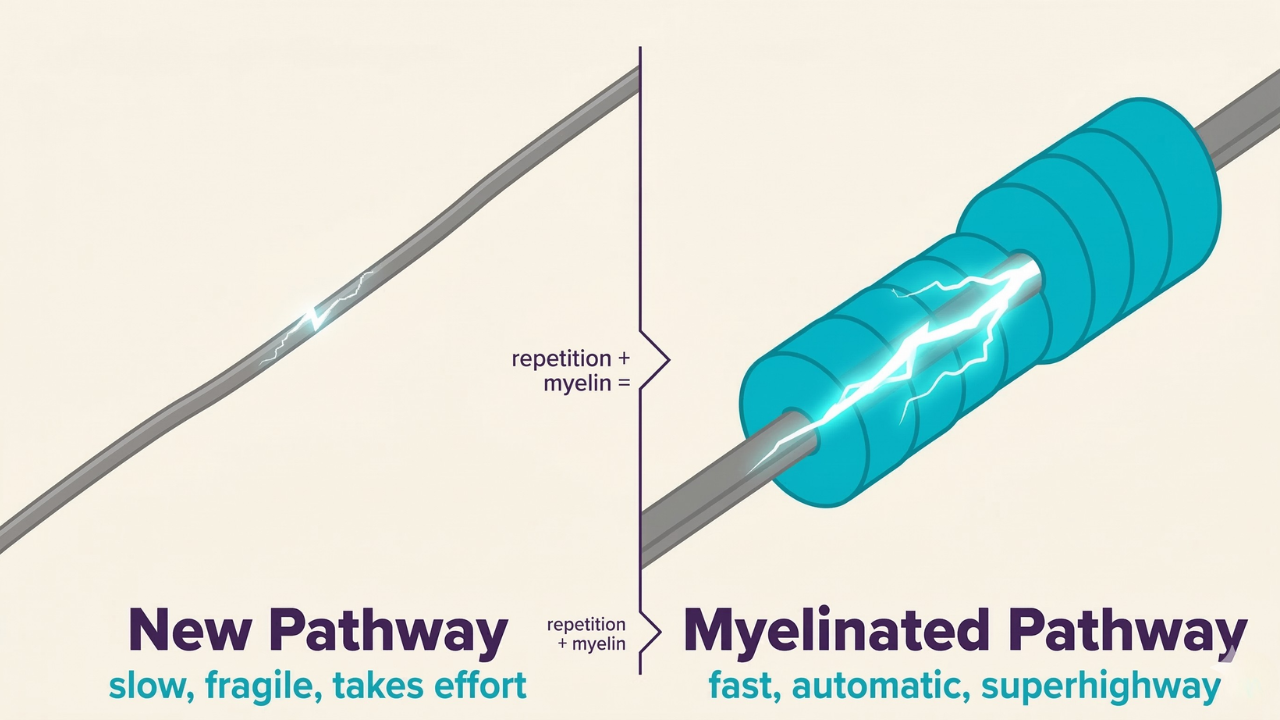
  • Why Do I Keep Attracting Narcissists? The Childhood Blueprint Behind Toxic Relationships

    Why Do I Keep Attracting Narcissists? The Childhood Blueprint Behind Toxic Relationships

    Why Do I Keep Attracting Narcissists?

    Why do I keep attracting narcissists? This is one of the most common questions in trauma recovery — and the answer will challenge everything you’ve been told. You don’t attract narcissists because you’re too nice, too empathetic, or too loving. You attract narcissistic partners because your childhood emotional blueprint created a neurological pattern that draws you toward people who replicate your earliest pain.

    Core definition: Narcissistic relationship attraction is a trauma-driven pattern rooted in childhood emotional neglect, shame, and the survival personas created to manage unbearable pain. Your nervous system bonds to what feels familiar — not what feels safe — creating a cycle where toxic relationships feel like “home” because they mirror the emotional environment you grew up in.

    This isn’t victim-blaming. This is the most empowering truth you’ll ever hear: if your childhood created the attraction pattern, then healing that childhood wound gives you the power to change who you’re drawn to. The problem was never that you loved too much. The problem is that your brain was never taught the difference between trauma chemistry and genuine connection.

    Trauma chemistry creates narcissistic relationship attraction through childhood emotional blueprint

    That’s you if you keep ending up with the same type of person — different face, same pain — and you can’t figure out why.

    Here’s what most people miss: the person who ends up with a narcissist is not an innocent bystander who accidentally stumbled into a toxic relationship. They were drawn to that specific person like radar — unconsciously, powerfully, and for reasons rooted in their childhood. Understanding this dynamic is the beginning of freedom.

    Trauma Chemistry: Why Your Body Mistakes Pain for Love

    Put a person who grew up with a narcissistic parent in a room with 20,000 people — only one of them a narcissist — and like radar, their brain would scan the entire room and land on that one person. Not because they’re broken or stupid, but because their nervous system was trained in childhood to read the emotional frequency of chaos, intensity, and intermittent affection as “love.”

    This is trauma chemistry — and it’s the engine behind every narcissistic relationship pattern. Your brain bonds to what it knows, not what it needs. When 70% or more of your childhood messaging was negative, critical, or conditional, your nervous system learned that this is what connection feels like. The hypothalamus floods your body with cortisol, adrenaline, dopamine misfires, and oxytocin confusion every time you encounter that familiar pattern. And your brain, being the energy-conserving prediction machine it is, tells you: “This feels like home.”

    That’s you — feeling that inexplicable “chemistry” with someone who makes your stomach drop, your heart race, and your palms sweat. That’s not love. That’s your childhood nervous system activating.

    The truth that nobody tells you: the love addict and the love avoidant are mirror images of each other. The love addict’s conscious fear is abandonment — “Don’t leave me.” Their subconscious fear is intimacy. The love avoidant is the polar opposite: their conscious fear is intimacy, their subconscious fear is abandonment. Both carry the same two fears. Both are codependent. The difference is which fear is running the show.

    This mirror structure is why they are magnetically drawn to each other — and why the relationship becomes an endless cycle of chase and retreat. You’re not in love with each other. You’re in love with your childhood trauma replaying itself.

    Emotional blueprint showing how childhood trauma creates narcissistic relationship attraction patterns

    Sound familiar? That’s trauma chemistry at work — your body saying “this is love” when really it’s your childhood pain finding a new stage to perform on.

    Healthy love feels “boring” at first because it doesn’t match the chaos your body learned to chase. The nervousness, the intensity, the desperate longing — that’s not passion. That’s your Worst Day Cycle™ activating. And until you heal the childhood wound that created the attraction, you’ll keep picking the same person with a different face.

    The Worst Day Cycle™: The Four-Stage Loop Behind Every Toxic Relationship

    The Worst Day Cycle™ is the neurological loop that explains why you keep ending up in narcissistic relationships — and why you can’t seem to leave them. It has four stages: Trauma, Fear, Shame, and Denial. Once you see it, you can’t unsee it.

    Worst Day Cycle four stages - Trauma Fear Shame Denial narcissistic relationship loop

    Stage 1: Trauma. Childhood trauma is any negative emotional experience that created painful meanings about yourself, others, or the world. It doesn’t have to be a dramatic event. It can be a parent who criticized you for crying, a family where anger was punished, an environment where your job was to keep the peace. Every time your authentic feelings weren’t honored, your nervous system stored it as threat. In adulthood, a partner’s tone of voice, a moment of silence, a perceived rejection — these activate your threat response as if you’re a child again, helpless and unsafe.

    Stage 2: Fear. Once trauma is triggered, fear floods your body. Your hypothalamus generates a massive chemical cocktail — cortisol, adrenaline, dopamine misfires. Your thinking brain goes offline. Your amygdala takes over. You’re now in fight, flight, freeze, or fawn mode. And here’s the critical piece: your brain can’t tell the difference between a genuine present-day threat and the activation of an old childhood pattern. It treats both identically.

    That’s you — your heart racing when your partner doesn’t text back, your stomach dropping when they seem distant, your entire body going into panic at the thought of being left.

    Stage 3: Shame. Fear morphs into shame — the belief that you are inherently defective, unlovable, or wrong. Not that you made a mistake, but that you ARE the mistake. This is where codependency locks in. Shame says: “If I were better, smarter, thinner, more accommodating — they wouldn’t treat me this way.” So you try harder. Give more. Need less. Abandon yourself more completely.

    The Shame → Story → Wound loop is the engine of the Worst Day Cycle™. Something is wrong with me. I’m not enough. I’m too much. My needs cause problems. I’m unlovable. I’m a burden. These shame conclusions form instantly as a survival reflex — not a conscious choice. And they crystallize into a wound that repeats in every adult relationship.

    Stage 4: Denial. To survive unbearable shame, your psyche creates a survival persona — a false identity that says “I’m fine,” “I can handle this,” “I’ll fix them,” or “I don’t have needs.” Denial is the self-deception that keeps the cycle running. It’s the inability to see your own part in the pattern. And it is the single greatest obstacle to healing.

    That’s the Worst Day Cycle™ — the invisible program running your relationship choices without your permission, pulling you toward the same pain disguised as new love.

    The Three Survival Persona Types in Narcissistic Relationships

    Everyone who ends up in a narcissistic relationship dynamic is operating from a survival persona — a false identity created in childhood to manage unbearable emotional pain. There are three types, and understanding yours is essential to breaking the pattern.

    Three survival personas - falsely empowered disempowered adapted wounded child in narcissistic relationships

    The Falsely Empowered Survival Persona

    This persona says “I’m in control. I’m strong. I don’t need anyone.” On the surface, it looks like confidence — maybe even narcissism. In reality, it’s a hypervigilant defense against the shame and abandonment you experienced as a child. You over-function, over-give, and over-achieve because being needed feels like being loved.

    In narcissistic relationship dynamics, the falsely empowered person often takes on the “fixer” or “savior” role. They believe — unconsciously — that they have the power to change their partner. This is a god complex operating from the disempowered position. They think: “If I love them enough, give them enough, sacrifice enough — I can save them.” This is not love. This is a survival strategy.

    That’s you if you’ve ever thought “I can change them” or “Nobody understands them like I do” — that’s your survival persona running a childhood rescue mission.

    The Disempowered Survival Persona

    This persona says “I can’t. I’m not enough. I need you to survive.” It emerges from environments where your voice was silenced, your opinions minimized, and your needs treated as an inconvenience. You learned that small, quiet, compliant people are safer. In narcissistic relationships, the disempowered persona abandons all agency — suppressing preferences, avoiding conflict at any cost, and interpreting every disagreement as evidence of impending abandonment.

    That’s you — the one who says “I’m fine” while silently drowning, because showing your real needs felt like begging as a child.

    The Adapted Wounded Child Survival Persona

    This persona oscillates between falsely empowered and disempowered — sometimes controlling, sometimes collapsing. The adapted wounded child forms between ages six and seventeen, once logic and reason develop. This is where the child figures out: “This is how I’m going to survive in my family system.” They develop survival strategies and then confuse those adaptations with their authentic self.

    Adapted wounded child survival persona oscillating between falsely empowered and disempowered

    In narcissistic relationships, the adapted wounded child creates a dynamic where the partner becomes the parent — the rescuer, the decision-maker, the emotional authority. You may feel genuinely confused or incompetent in areas where you’re actually capable, because your nervous system regresses to the child state whenever the relationship triggers your original wound.

    That’s the adapted wounded child — waiting for permission to have needs, opinions, or a voice of your own.

    All three survival personas (falsely empowered, disempowered, adapted wounded child) are brilliant childhood survival strategies that protected you from emotional annihilation. In childhood, these personas may have been your only route to connection and safety. In adult narcissistic relationships, they create the exact conditions for the cycle to repeat — self-abandonment, enmeshment, and the loss of emotional authenticity.

    The Victim Position Paradox: Why Staying a Victim Keeps You Stuck

    Here’s the truth that will feel like being waterboarded with spinach: the person who ends up with a narcissist plays a role in the dynamic. They are not to blame — but they are responsible. Both things are true simultaneously. And until you understand the Victim Position Paradox, you will keep repeating the pattern.

    The Victim Position Paradox is this: the victim position is a societal construct meant to protect victims, but in reality it has created a paradoxical falsely empowered position that nearly guarantees the victim will reexperience their childhood victimization, leaving them disempowered.

    Our culture rightly protects victims. But an unintended consequence of that protection is that it absolves victims from examining their own patterns. Instead of teaching people that their childhood emotional blueprint creates unconscious attraction to familiar pain, society celebrates the victim narrative. The result? Tremendous power from the disempowered position — and zero incentive to look at your own part in the dynamic.

    Codependence victim position paradox in narcissistic relationship dynamics

    That’s you if you’ve spent years telling the story of what they did to you — but never once asked yourself why you chose them, why you stayed, and what childhood wound kept you locked in.

    This is not about condoning abuse. This is about giving you your power back. The problem is not that you need to be protected from narcissists. The problem is that you haven’t been taught how your own emotional blueprint draws you to them. And until you make yourself the focus — until you look at how you’re playing a part — the pattern will continue. You will keep picking the same person with a different face.

    Even those of us who end up in narcissistic relationships can be equally manipulative from the victim position. That is tough to admit. But until you confront that denial, your life will suffer. You will end up with these types of people over and over.

    Sound familiar? That’s the Victim Position Paradox — the very identity that promises protection is the one that keeps you trapped.

    Self-Deception and Denial: The Part Nobody Wants to Hear

    The single greatest obstacle to healing from narcissistic relationship patterns is self-deception. Not the narcissist. Not the abuse. Not the trauma. Self-deception — the inability to own and take responsibility for the part you play.

    Self-deception shows up in these ways after a narcissistic relationship:

    — You focus entirely on diagnosing your ex (“They’re a narcissist!”) without examining your own patterns

    — You believe you were a passive recipient of abuse with zero role in the dynamic

    — You move on to the next relationship without healing the childhood wound that created the attraction

    — You use the victim identity as a shield against accountability

    — You stay angry at them instead of doing your own work

    Here’s what frees you: when you deal with the self-deception and denial, when you turn the spotlight on yourself, the resentment and blame disappear. Not because what they did was acceptable — but because you see your part. You understand what your childhood set you up for. You forgive yourself for not knowing what you didn’t know. And you stop needing them to be wrong so you can be right.

    Enmeshment self-deception denial narcissistic relationship pattern

    That’s you if you’ve been free from the narcissist for years but you’re still carrying rage, blame, and the inability to trust — the relationship ended, but the Worst Day Cycle™ never did.

    Self-abandonment is the deepest betrayal in narcissistic relationships. Every time you people-please, say yes when you mean no, or abandon your own morals, values, needs, and wants to keep the peace, you become the perpetrator of your own pain. The real victory isn’t getting the narcissist to change. The real victory is: “I don’t pick it up. I don’t abandon me.”

    The problem isn’t the other person. It’s that you haven’t become an expert in the trauma you experienced. You’re responsible for who you pick. That doesn’t condone what they did — but you chose them for a reason, and that reason lives in your childhood. Until you heal that wound, you’ll keep being attracted to the same type.

    Signs You’re Repeating Narcissistic Relationship Patterns Across Your Life

    Narcissistic relationship patterns don’t exist in one relationship. They bleed into every area of your life. Here are the signs that your childhood emotional blueprint is running the show:

    Family Signs

    — You still manage a parent’s emotions, moods, or well-being as an adult

    — You accept criticism, control, or disrespect from family members without setting boundaries

    — You play the mediator, peacekeeper, or emotional caretaker in your family system

    — You hide your accomplishments, opinions, or authentic self to avoid triggering family conflict

    Insecurity appears whenever a family member expresses disappointment

    — You seek constant reassurance from parents that you’re enough

    That’s you — if your parent’s mood still determines your entire day, you’re operating from the same survival persona you created at age seven.

    Romantic Relationship Signs

    — You’re drawn to intensity, chaos, and emotional volatility — and call it “chemistry”

    — You abandon your needs, preferences, and voice to keep the relationship alive

    — You stay in relationships where you’re disrespected, controlled, or emotionally starved

    — You interpret your partner’s withdrawal as evidence of your failure

    — You obsess about your partner’s emotions and neglect your own

    — You believe you can “save” or “fix” your partner if you just love them hard enough

    Boundaries are unclear or nonexistent — you can’t say no without guilt

    That’s the trauma chemistry speaking — you keep chasing the emotional rollercoaster because your body learned in childhood that chaos equals connection.

    Friendship Signs

    — You attract friends who take advantage of your generosity and emotional labor

    — You’re always the listener, the advisor, the one who shows up — with little reciprocation

    — You tolerate disrespect, flakiness, or one-sided dynamics because you fear losing the friendship

    — You hide your authentic opinions and preferences to be more likable

    That’s you — exhausted from being everyone’s emotional support while nobody holds space for you.

    Work Signs

    — You over-function: taking on too many projects, working late, never asking for help

    — You tolerate disrespect from bosses or colleagues because confrontation feels dangerous

    — Your self-worth is entirely dependent on productivity, performance, or being needed

    — You manage your boss’s moods the same way you managed your parent’s moods

    That’s you — getting promoted for the very pattern that’s destroying you from the inside out.

    Body and Health Signs

    — You ignore your body’s signals: hunger, fatigue, pain, sexual boundaries

    — You use food, sex, substances, or work to numb emotional pain

    — You have difficulty being present in your body — dissociation is common

    — You prioritize everyone else’s health over your own

    — You carry chronic tension, gut issues, or unexplained pain

    That’s your body keeping score — it’s been screaming what your survival persona refuses to acknowledge.

    The Authentic Self Cycle™: How to Break the Pattern

    Understanding the Worst Day Cycle™ immediately reveals the exit. The Authentic Self Cycle™ is the direct inverse — a four-stage healing path that reverses narcissistic attraction patterns at the neurological level: Truth, Responsibility, Healing, and Forgiveness.

    Authentic Self Cycle - Truth Responsibility Healing Forgiveness breaking narcissistic relationship patterns

    Stage 1: Truth. Name the blueprint. See it clearly. “This isn’t about my ex. My nervous system drew me to them because they replicate the emotional environment of my childhood. The attraction I felt wasn’t love — it was my Worst Day Cycle™ activating.” Truth is the flashlight you shine on your own neurobiology. It’s not blame. It’s compassionate realism.

    Stage 2: Responsibility. This is the hardest stage — and the most liberating. Own your emotional reactions without blame. Not blaming yourself, not blaming your ex, not blaming your parents. “I picked this person because my brain and body are addicted to what I know. My childhood set me up for this attraction. Until I heal that wound, I’ll keep being attracted to the same type.” Responsibility gives you back the power the victim position took away.

    That’s the truth that sets you free — you can’t divorce yourself from the responsibility of who you allow into your life.

    Stage 3: Healing. Rewire the emotional blueprint. This means teaching your nervous system that conflict is uncomfortable but not dangerous, that disagreement doesn’t mean abandonment, that healthy love doesn’t require chaos or intensity. Healing is building new emotional associations through deliberate practice — not through willpower or self-judgment.

    Stage 4: Forgiveness. Release the inherited emotional blueprint. Forgive yourself for the survival strategies you developed. Forgive your nervous system for its brilliant, protective repetitions. Reclaim your authentic self as the foundation of your identity. When you stop needing to be angry at the narcissist, you’re free.

    That’s the Authentic Self Cycle™ — the way out of narcissistic relationship patterns is through your own healing, not through diagnosing your ex.

    The Emotional Authenticity Method™: Your 6-Step Recovery Practice

    Understanding the pattern is one thing. Rewiring your nervous system requires a concrete daily practice. The Emotional Authenticity Method™ is a six-step process that breaks the trauma chemistry that pulls you toward narcissistic partners and rebuilds your relationship with your authentic self.

    Emotional Authenticity Method six step recovery practice for narcissistic relationship healing

    Step 1: Somatic Down-Regulation. When you’re triggered — when you feel the pull toward that familiar person, when your body floods with trauma chemistry — pause. Focus on what you can hear for 15-30 seconds. If you’re highly dysregulated, use titration: slightly lower your shoulders, soften your jaw, take one deeper breath. Your nervous system will follow these micro-signals of safety before your thinking brain can even engage.

    Step 2: What Am I Feeling Right Now? Name the emotion with granularity. Not “I feel bad.” Use the Feelings Wheel to identify whether you’re feeling longing, panic, desperate, abandoned, ashamed, or furious. People who end up in narcissistic relationships were trained in childhood to ignore their emotional life. Naming your feelings with precision reconnects you to your authentic self.

    Step 3: Where in My Body Do I Feel It? Emotions aren’t abstract — they’re somatic. All emotional trauma is stored physically. Where is the feeling? Tightness in your chest? Heat in your face? A pit in your stomach? This grounds you in the present moment and breaks the dissociation that narcissistic relationship patterns create.

    Step 4: What Is My Earliest Memory of This Feeling? Trace the feeling to its childhood origin. The desperate longing you feel for your ex? Where did you feel that first? The panic when someone goes silent? When did your nervous system learn that silence means danger? Often, it’s not your partner that’s the problem — it’s that they remind your nervous system of an old, unhealed wound.

    That’s where the real work lives — in the space between “I miss them” and “I miss the parent I never had.”

    Step 5: Who Would I Be If I Never Had This Feeling Again? This is the visioning step. Not pushing the feeling away — but asking: “What would my life look like if this childhood wound was healed? Who would I choose as a partner? What kind of love would I accept? What would I no longer tolerate?” This reconnects you to your authentic self — the you that exists beneath the survival persona.

    Step 6: Feelization. This is the emotional blueprint remapping step. Sit in the feeling of your authentic self and make it strong. Ask: “How would I respond to this situation from this feeling? What would I say? What would I do?” Visualize and FEEL yourself operating from your authentic self. Create a new emotional chemical pattern to replace the old blueprint. You cannot change emotional patterns through thoughts alone. Emotions are biochemical events — and this step rewires the chemistry that has been pulling you toward narcissistic partners your entire life.

    Emotional regulation nervous system healing narcissistic relationship recovery

    That’s the Emotional Authenticity Method™ — six steps to rewire the trauma chemistry that keeps you locked in narcissistic relationship patterns and rebuild your emotional foundation from the inside out.

    Breaking Free: From Trauma Chemistry to Authentic Connection

    Recovery from narcissistic relationship patterns is possible — and it doesn’t require becoming anti-relationship, anti-love, or anti-trust. It requires becoming an expert in your own emotional blueprint.

    Breaking free requires three non-negotiable elements:

    First: Awareness. You can’t change what you can’t see. The Worst Day Cycle™ runs in the background of your consciousness, autopiloting your partner choices. Seeing it — naming it — is the beginning of freedom. You’re reading this article, which means awareness is already starting.

    Second: Rewiring. Awareness without rewiring creates guilt. “I see the pattern. Why can’t I stop?” Because your nervous system is still wired for what it knows. Rewiring happens through the Emotional Authenticity Method™ and deliberate nervous system work — not through willpower, affirmations, or reading another article about narcissism.

    Third: Reclamation. Rebuild your identity around your authentic self, not your survival persona. Discover what you actually want — independent of your childhood programming. Practice genuine self-esteem — not narcissistic confidence, but quiet knowing of your own worth. Learn to sit in healthy love without running toward chaos.

    Recovery from narcissistic relationship patterns doesn’t mean you were weak for staying. It means your childhood created an emotional program that was running beneath your conscious awareness. When you heal the blueprint, you don’t attract the same person anymore. When you stop abandoning yourself, you either build healthier relationships — or you recognize toxic ones immediately and walk away. Either way, you win.

    The paradox: the thing you fear most — being alone, being abandoned — becomes less likely when you stop abandoning yourself. When you have clear boundaries and emotional authenticity, you attract healthier people. When you’re whole, you stop needing someone else to complete you. And that’s when real love becomes possible.

    That’s the promise — not that you’ll never feel pain again, but that you’ll stop choosing pain disguised as love.

    People Also Ask

    Why do I keep attracting narcissists into my life?

    You attract narcissists because your childhood emotional blueprint created a neurological pattern that draws you toward people who replicate your earliest pain. Your brain bonds to what feels familiar — not what feels safe. This isn’t a character flaw; it’s trauma chemistry that can be rewired through the Emotional Authenticity Method™ and the Authentic Self Cycle™.

    Is it my fault that I ended up in a narcissistic relationship?

    No — and you are responsible. Both things are true. You are not to blame because nobody taught you about the Worst Day Cycle™, trauma chemistry, or how your childhood survival persona draws you toward familiar pain. You are responsible because healing the pattern is your work to do. This distinction is the most empowering truth in recovery: if your childhood created it, you can heal it.

    How do I stop being attracted to narcissists?

    Stopping the attraction requires healing the childhood wound that created it — not just avoiding narcissistic people. Use the Emotional Authenticity Method™ to rewire your nervous system, learn to distinguish trauma chemistry from genuine connection, and rebuild your identity around your authentic self rather than your survival persona. When the blueprint changes, the attraction changes.

    What is the difference between a narcissist and a falsely empowered codependent?

    A narcissist is like the desert — their behavior is consistent across time and situations. A falsely empowered codependent is like Denver, Colorado — they go through seasons, with periods of warmth, connection, and genuine empathy that a true narcissist cannot sustain. Many people misdiagnose their partner as a narcissist when they are actually a falsely empowered codependent who, given the right information, can heal and change.

    Can I heal from narcissistic abuse without therapy?

    Self-awareness and intentional practice — like the six-step Emotional Authenticity Method™ — can create significant shifts. However, most people benefit from professional support with someone who understands trauma, nervous system healing, and the Worst Day Cycle™. The key is addressing the root cause (your childhood emotional blueprint) rather than just managing symptoms.

    How do I know if I’m actually healing from narcissistic relationship patterns?

    You know you’re healing when: intensity stops feeling like love, you can disagree without fear of abandonment, you recognize trauma chemistry before acting on it, you choose partners based on safety rather than excitement, and you no longer need to be angry at your ex to feel powerful. Healthy relationships become your baseline — not your exception.

    • Facing Codependence by Pia Mellody — The foundational text on how childhood trauma creates codependent patterns, survival personas, and the loss of authentic self. Essential for understanding why you attract narcissistic partners.
    • The Body Keeps the Score by Bessel van der Kolk — Essential for understanding how trauma lives in the nervous system and why healing narcissistic relationship patterns requires more than talk therapy.
    • When the Body Says No by Gabor Maté — Explores how emotional repression and self-abandonment in toxic relationships manifest as physical illness and chronic stress.
    • Codependent No More by Melody Beattie — The classic that helped countless people recognize their role in codependent dynamics and begin setting boundaries.
    • The Gifts of Imperfection by Brené Brown — A guide to wholehearted living that directly counters the shame that keeps narcissistic relationship patterns locked in place.

    The Bottom Line

    You didn’t attract narcissists because you’re too nice, too empathetic, or too loving. You attracted them because your childhood emotional blueprint — the Worst Day Cycle™ — created a neurological radar for the very pain you grew up with. Trauma chemistry pulled you toward partners who felt like “home” — but home was unsafe.

    This is not your fault. And it is your responsibility to heal. That’s not a contradiction — it’s the most empowering truth in recovery. The problem was never them. The problem is the unhealed childhood wound that made them feel like love.

    When you understand the Worst Day Cycle™, recognize your survival persona, confront the Victim Position Paradox, and practice the Emotional Authenticity Method™, you stop repeating the pattern. You stop picking the same person with a different face. You start choosing partners from wholeness instead of from your wounded child.

    Your authentic self is still in there — beneath the survival persona, beyond the shame, underneath the trauma chemistry. That version of you — the one who knows what they want, honors their own needs, and chooses love from a place of strength instead of desperation — is waiting.

    The healing starts when you stop looking at them and start looking at you. It starts now.

    Next Steps: Courses for Your Recovery

    Ready to Break Free From Narcissistic Relationship Patterns?

    Understanding your patterns is the beginning. Rewiring your nervous system and rebuilding your identity is the work. These courses guide you through the entire journey with video lessons, worksheets, live trainings, and community support.

    Emotional Blueprint Starter Course — Individual

    A 6-week self-guided course on understanding your emotional blueprint, identifying your survival persona, and the first steps toward nervous system healing.

    $79

    Relationship Starter Course — Couples

    For partners who want to heal the relationship together. Learn how to break codependent patterns, communicate authentically, and rebuild intimacy from a foundation of self-awareness.

    $79

    Why We Can’t Stop Hurting Each Other

    A comprehensive deep-dive into how childhood trauma creates adult relationship pain, the neurobiology of conflict, and the complete pathway to healing.

    $479

    Why High Achievers Fail at Love

    For high-functioning codependents who succeed at work but struggle in relationships. Understand how achievement masks the same survival persona that sabotages your love life.

    $479

    The Shutdown Avoidant Partner

    If you’re in a relationship with someone who pulls away, shuts down, or refuses intimacy — understand the love avoidant’s childhood wound and what you can actually control.

    $479

    Tier 1: Mapping the Blueprint

    The complete mastermind experience. Live monthly calls, personalized feedback, access to all courses, and a community of people doing the deep work alongside you.

    $1,379

    Explore Your Path to Healing →

    Continue Your Learning

    The Emotional Authenticity Method™ requires practice. Start with the Feelings Wheel exercise to reconnect with your emotional life. Then explore these related topics:

  • Passion vs Addiction: How Trauma Chemistry Disguises Addiction as Drive

    Passion vs Addiction: How Trauma Chemistry Disguises Addiction as Drive

    The difference between passion and addiction is the difference between a life that expands and a life that slowly devours itself from the inside out. If you have ever felt consumed by a pursuit — a relationship, a career, a goal, a substance, a person — and told yourself it was passion, but deep down you felt the exhaustion, the emptiness, the quiet desperation that nothing was ever enough, you are not experiencing passion. You are experiencing addiction. And that addiction was not born yesterday. It was born in childhood, wired into your nervous system before you had language to describe it, and it has been running your life ever since.

    Most people cannot tell the difference between passion and addiction because their emotional blueprint — the set of meanings, chemical patterns, and survival strategies formed in childhood — never taught them what healthy desire feels like. That’s you if you chase intensity and call it love. That’s you if you grind yourself into the ground and call it ambition. That’s you if you cannot stop, cannot rest, cannot be still without feeling like something is terribly wrong. The truth is, passion creates energy. Addiction borrows energy from your future self and calls it fuel. And until you understand where that pattern comes from and how to rewire it, you will keep mistaking the fire that consumes you for the fire that illuminates you.

    Trauma chemistry and the difference between passion and addiction — Kenny Weiss

    What Is the Real Difference Between Passion and Addiction?

    Passion and addiction can look identical on the surface. Both create energy, focus, drive, and intensity. Both can consume your attention and shape your identity. But the internal experience is completely different — and the outcomes could not be further apart.

    Passion is a source of truth and expansion. It creates energy, deepens your relationships, and leaves you feeling more connected to yourself and others. Addiction is a thief disguised as desire. It borrows energy from your body, your relationships, and your future — and it always demands more than it gives.

    That’s you if you have ever accomplished something massive and felt nothing. That’s you if you have reached the top of a mountain and immediately started looking for the next one — not out of excitement, but out of terror that stillness would swallow you whole.

    Addiction is centrifugal — it sucks energy from you, creating a vacuum of inertia. Passion is centripetal — it energizes you and enriches your relationships, empowering you and giving strength to others.

    Here is the clearest way to tell the difference. Passion pursues the process. Addiction pursues the outcome. A passionate person finds joy in the work itself — the daily practice, the learning, the creation, the growth. An addicted person endures the process as suffering in order to reach the outcome, which provides a brief chemical high before the emptiness returns. That’s you if the only time you feel alive is at the finish line — and even that feeling lasts about thirty seconds before the anxiety kicks back in.

    Passion needs truth. Addiction needs self-deception. Passion can be paused, redirected, or released without creating an identity crisis. Addiction cannot stop — because stopping means confronting the pain underneath. Passionate people accept criticism and use it to grow. Addicted people refuse criticism because it threatens the survival persona that protects the wound. Passion enriches the people around you. Addiction isolates you, even when you are standing in a crowded room.

    Why Addiction Feels Exactly Like Passion

    The reason most people cannot distinguish between passion and addiction is because addiction produces an intense chemical experience in the body that the brain interprets as aliveness, purpose, and connection. But that chemical experience is not coming from fulfillment. It is coming from your childhood emotional blueprint — a set of neurochemical patterns that were formed before you could walk, talk, or think critically about what was happening to you.

    Emotional blueprint and how childhood patterns create addiction disguised as passion

    Your feelings are biochemical events, not abstract concepts. The hypothalamus generates specific chemical cocktails — cortisol, adrenaline, dopamine, oxytocin — that cause you to feel the emotions associated with each experience. When those chemicals fire repeatedly in childhood, your brain and body become addicted to them. This means that by the time you are an adult, your nervous system is not seeking what is good for you. It is seeking what is familiar. And if what was familiar in childhood was chaos, intensity, unpredictability, perfectionism, or emotional deprivation, then your body will interpret those conditions as passion — because the chemical signature matches what your system learned to call “alive.”

    That’s you if healthy calm feels boring. That’s you if you feel most energized in a crisis. That’s you if you have ever sabotaged something good because it felt too quiet, too easy, too peaceful.

    Trauma Chemistry: The Hidden Engine Behind Addiction Disguised as Passion

    What most people call passion is often trauma chemistry — the nervous system re-creating the exact chemical reality of childhood. Trauma chemistry is not a metaphor. It is a physiological state where the body generates adrenaline, cortisol, dopamine surges, and oxytocin misfires that combine to create a high-crash cycle identical to substance addiction patterns.

    Worst Day Cycle and how trauma chemistry drives addiction patterns

    That’s you if you are drawn to people who run hot and cold. That’s you if you have ever said “I know they are bad for me but I cannot stay away.” That’s you if stable, available, consistent people feel like there is no spark — no chemistry — no connection.

    The brain becomes addicted to unpredictable rewards. This is the same mechanism as a slot machine — intermittent reinforcement. You do not win every time. You win just enough to stay hooked. The brain thinks: “Maybe this time. Maybe they will change. Maybe I can fix it. Maybe this time is different.” This is not love. This is not passion. This is intermittent reinforcement addiction operating through your nervous system.

    Chemistry is a warning, not a signal. Safety is attraction. Stability is passion. Calm is love. When the body has been wired by childhood trauma to interpret danger as connection and chaos as aliveness, the person will pursue relationships, careers, substances, and behaviors that provide the chemical hit — and they will call it passion every single time.

    Your body is not choosing passion — it is choosing familiarity. Your chemistry is your childhood. The spark you are addicted to is the wound trying to resolve itself.

    That’s you if you chase the high and call it drive. That’s you if you pursue unavailable people and call it chemistry. That’s you if you push yourself past every healthy limit and call it dedication.

    The Worst Day Cycle™ and Why You Cannot Stop

    To understand why you keep mistaking addiction for passion, you have to understand the Worst Day Cycle™. This is the repeating emotional loop that was installed in childhood and drives nearly every pattern you cannot seem to break in adulthood.

    The Worst Day Cycle™ has four stages: Trauma → Fear → Shame → Denial.

    Trauma is any negative emotional experience in childhood that created painful meanings. It does not have to be dramatic abuse. It can be criticism, comparison, emotional neglect, inconsistency, conditional love, parentification, or simply growing up in an environment where your authentic self was not safe. These experiences create a massive chemical reaction in the brain and body.

    Fear drives repetition. The brain conserves energy by repeating known patterns — it cannot tell right from wrong, only known versus unknown. Since seventy percent or more of childhood messaging is negative and shaming, the brain defaults to repeating painful patterns because painful is familiar, and familiar equals safe in the nervous system’s calculations.

    Emotional regulation and the fear stage of the Worst Day Cycle

    Shame is where you lost your inherent worth. It is the moment the child concluded: “I am the problem. Something is fundamentally wrong with me. I am not enough.” Shame is not guilt — guilt says “I did something bad.” Shame says “I am bad.” And that shame identity becomes the engine that drives every addictive pursuit, because the addiction is always trying to fix, fill, or outrun the shame wound.

    That’s you if you achieve obsessively to prove you are enough. That’s you if you people-please compulsively to earn love. That’s you if you pour yourself into work, relationships, or substances to avoid the feeling that something is missing at your core.

    People remain in addictive patterns not because they want the pain, but because their bodies crave the chemical intensity of the familiar wound — and that craving overrides logic every single time.

    Denial is the survival persona — the brilliant adaptation you created in childhood to survive the pain. It was genius when you were six years old. It is destroying your life at forty. Denial keeps the cycle spinning by preventing you from seeing the truth: that what you call passion is actually the survival persona chasing the chemical fix that temporarily numbs the shame wound.

    How Your Survival Persona Hijacks Passion

    There are three survival persona types, and each one has a specific way of turning addiction into something that looks and sounds exactly like passion.

    Three survival persona types and how they disguise addiction as passion

    The Falsely Empowered survival persona controls, dominates, achieves, and rages. This persona turns addiction into ambition. They build empires, crush goals, accumulate wealth and status — and they call it passion. But underneath the drive is terror. Terror of being seen as weak. Terror of being exposed as not enough. Terror of stopping — because stopping means sitting with the shame. That’s you if people call you driven but you feel empty at every milestone.

    The Disempowered survival persona collapses, people-pleases, caretakes, and disappears. This persona turns addiction into devotion. They pour themselves into other people’s lives, other people’s problems, other people’s emotions — and they call it passion for helping. But underneath the giving is a desperate attempt to earn worth. That’s you if you give everything to everyone and there is nothing left for you. That’s you if your “passion” for caring for others is actually a survival strategy to avoid your own pain.

    The Adapted Wounded Child oscillates between both — sometimes controlling, sometimes collapsing, always reacting from the emotional age where the original wound occurred. This persona creates chaos and calls it creativity, creates intensity and calls it aliveness, creates crisis and calls it purpose. That’s you if you swing between over-functioning and shutting down. That’s you if your life feels like an emotional roller coaster that you cannot get off.

    Signs You Are Addicted, Not Passionate — By Life Area

    The addiction pattern does not stay in one area of life. Because the emotional blueprint operates across every domain, the same trauma chemistry that drives your relationship patterns also drives your career patterns, your friendships, your health, and your family dynamics.

    Family

    You take on everyone’s emotional weight and call it being a good family member. You cannot set boundaries without guilt. You replay the same arguments from childhood with siblings, parents, or your own children. You overfunction to prevent the family from falling apart — and you call that dedication. That’s you if your family role was assigned in childhood and you have never questioned it.

    Romantic Relationships

    You are drawn to partners who are emotionally unavailable, inconsistent, or intense. When things are calm, you create conflict or lose interest. You confuse anxiety with attraction and relief with love. You chase people who match your childhood wound and call it chemistry. That’s you if every relationship follows the same painful pattern and you keep asking what is wrong with you.

    Friendships

    You are the one everyone calls when they need something. You over-give, over-listen, and over-accommodate — and you call it being a great friend. But you never let anyone see you struggling. You never ask for help. Friendships are performance, not connection. That’s you if your friendships feel one-sided but you cannot stop giving.

    Codependence patterns in relationships driven by addiction not passion

    Work and Career

    You work eighty-hour weeks and call it hustle culture. You cannot take a vacation without checking email. Your identity is fused with your job title and your output. When you are not producing, you feel worthless. The addiction is not to the work itself — it is to the chemical hit of achievement that temporarily quiets the shame voice that says you are not enough. That’s you if success never feels like enough and you are already dreading the moment the high fades.

    Body and Health

    You exercise obsessively and call it discipline. You restrict food and call it health. You push through pain, exhaustion, and illness because stopping feels like failure. Your body is a vehicle for the addiction, not a home you inhabit. That’s you if your body is running on cortisol and caffeine and you call it peak performance.

    How the Emotional Authenticity Method™ Breaks the Addiction Loop

    You cannot think your way out of addiction disguised as passion. Emotions are biochemical events. Thoughts originate from feelings — not the other way around. This is why willpower fails, why cognitive strategies alone do not create lasting change, and why you can know something intellectually and still be unable to stop the pattern. The Emotional Authenticity Method™ works because it addresses the body, not just the mind.

    Emotional Authenticity Method six steps to break addiction patterns

    The Emotional Authenticity Method™ is a six-step process:

    Step 1: Somatic Down-Regulation. Focus on what you can hear for fifteen to thirty seconds. If you are highly dysregulated, use titration — oscillating between the activation and the calm stimulus until your nervous system settles enough to proceed. This step interrupts the trauma chemistry hijack.

    Step 2: What am I feeling right now? Use emotional granularity — expand your vocabulary beyond “bad” or “anxious” using the Feelings Wheel. Seventy percent of the population cannot name what they feel because they were taught to suppress their authentic emotional experience. Naming the feeling is the first act of reclaiming yourself.

    Step 3: Where in my body do I feel it? All emotional trauma is stored physically. Every feeling resides in a specific area of your body. When you locate the sensation — the tightness in your chest, the knot in your stomach, the pressure in your throat — you are making contact with the stored wound that is driving the addictive pattern.

    Step 4: What is my earliest memory of having this exact feeling? Trace the feeling back to its childhood origin. You will always arrive at a memory of a less-than-perfect event from childhood. That is the source being replayed in this moment. You are not addicted to the substance, the person, the achievement, or the behavior. You are addicted to the emotional chemical pattern that was installed when you were a child.

    Step 5: Who would I be if I never had this thought or feeling again? What would be left over? This is the vision step — the bridge into the Authentic Self Cycle™. For the first time, you glimpse who you actually are underneath the survival persona and the addiction.

    Step 6: Feelization. Sit in the feeling of the Authentic Self and make it strong. Create a new emotional chemical addiction to replace the old blueprint. Ask yourself: How would I respond to this situation from this feeling? What would I say? What would I do? Visualize and feel yourself operating from your Authentic Self. This is the emotional blueprint remapping and rewiring step — the moment you begin replacing the old chemical pattern with a new one rooted in truth instead of trauma.

    The Authentic Self Cycle™: From Addiction to True Passion

    The Authentic Self Cycle™ is the healing counterpart to the Worst Day Cycle™ — an identity restoration system with four stages: Truth → Responsibility → Healing → Forgiveness.

    Authentic Self Cycle four stages truth responsibility healing forgiveness

    Truth means naming the blueprint, seeing clearly that “this is not about today.” When you chase a goal with desperation and call it passion, truth says: this chemical urgency was installed in childhood. I am repeating my worst day, not pursuing my best life.

    Responsibility means owning your emotional reactions without blame. “My boss is not my parent. My partner is not my caregiver. My nervous system just thinks they are.” This is not about fault. It is about authorship — becoming the author of your emotional life instead of a character in a script written when you were six years old.

    Healing means rewiring the emotional blueprint so that intensity is not the only state that feels real, so that stillness does not feel like death, so that passion can exist without the adrenaline crash of addiction underneath it. This is the work of the Emotional Authenticity Method™ — reworking the emotion until it becomes a new emotional chemical addiction that replaces the fear, shame, and denial response.

    Forgiveness means releasing the inherited emotional blueprint and reclaiming your authentic self. Not forgiving the people who hurt you because they deserve it — forgiving because the alternative is staying chemically bonded to the wound forever. Forgiveness is freedom from the Worst Day Cycle™.

    That’s you if you are tired of the cycle. That’s you if you know something deeper is driving the pattern. That’s you if you are finally ready to stop performing passion and start actually living it.

    What Healthy Passion Actually Looks and Feels Like

    When the addiction loop breaks and you begin living from the Authentic Self, passion transforms. It does not disappear — it changes form. Healthy passion is:

    When addiction breaks and the Authentic Self leads, you do not lose your drive — you lose the desperation underneath it, and what remains is passion in its purest form.

    Energizing instead of depleting. You finish a day of work on your passion and feel alive, not destroyed. Generous instead of consuming. Your passion enriches the people around you instead of demanding that they sacrifice for it. Sustainable instead of desperate. You can pause, rest, redirect, and return without an identity crisis. Process-oriented instead of outcome-dependent. The joy is in the doing, not just the achieving. Free instead of compulsive. You choose your passion. It does not choose you by hijacking your nervous system with childhood chemicals.

    That’s you if you have never known what this feels like — because you have only ever known the addiction version. That’s you if “balance” sounds like a foreign concept because your system only knows all-or-nothing.

    Passion gives and enriches. Addiction takes and impoverishes. You can devote your entire life to a passion, but if it is truly passion and not addiction, you will do so with freedom, joy, and a full expression of your truest self. In addiction, there is no joy, no freedom, no self — only the survival persona performing its role to outrun the shame.

    Frequently Asked Questions

    How do I know if my drive is passion or addiction?

    Ask yourself one question: Am I happier during the process, or only at the outcome? If the process itself is filled with stress, anxiety, and suffering that you endure just to reach the finish line, and the high at the finish line lasts only moments before emptiness returns — that is addiction, not passion. Passion creates joy throughout the journey. Addiction only provides relief at the destination, and even that relief is temporary.

    Can addiction disguised as passion show up in relationships?

    Absolutely. This is one of the most common places it appears. When you confuse anxiety with attraction, when you chase emotionally unavailable partners and call it chemistry, when calm and stable relationships feel boring — that is trauma chemistry operating through your nervous system. Your body is not choosing love. It is choosing familiarity. And if familiarity was chaos, intensity, or enmeshment, that is what your system will interpret as passion.

    Why does healthy passion feel boring at first?

    Because your nervous system was wired for intensity, not stability. To a traumatized nervous system, consistent and safe feels like “no spark.” In reality, the body is detoxing from trauma highs. Healthy love is quiet. Trauma love is loud. As you rewire through the Emotional Authenticity Method™, you will begin to experience stability as deeply satisfying instead of threatening.

    Can high achievers be addicted to success?

    Yes — and this is one of the most invisible forms of addiction. The falsely empowered survival persona turns achievement into a shame management strategy. You do not achieve because you are passionate. You achieve because stopping means sitting with the shame wound that says you are not enough. The relentless pursuit of more — more money, more status, more recognition — is the addiction. The genuine passion for the work itself is buried underneath it.

    How do I break the addiction cycle if I have been in it my whole life?

    You break it by addressing the emotional blueprint, not the behavior. Willpower, discipline, and cognitive strategies alone will not rewire a nervous system pattern that has been running since childhood. The Emotional Authenticity Method™ works with the body and the stored emotion to trace the pattern back to its origin, dismantle the shame identity driving it, and create a new chemical pattern rooted in truth instead of trauma. This is not a quick fix — it is identity restoration.

    What is the role of shame in addiction disguised as passion?

    Shame is the engine. Every addictive pursuit — whether it is a substance, a relationship, a career, or a behavior — is ultimately trying to manage the shame wound. Shame says “I am not enough” and the addiction says “I can prove that I am.” But the proof never sticks because the shame was installed at a level deeper than logic. Healing the shame through emotional authenticity is the only way to stop the cycle permanently.

    The Bottom Line

    The difference between passion and addiction is not visible from the outside. Both can look like intensity, drive, commitment, and fire. But passion feeds your soul while addiction feeds on it. Passion creates connection while addiction creates isolation — even when you are surrounded by people. Passion leaves you more yourself. Addiction leaves you less.

    If you have spent your life chasing the high and calling it passion — in your relationships, your career, your health, your family — the path forward is not more willpower or a better strategy. The path forward is understanding the childhood emotional blueprint that created the addiction, dismantling the survival persona that maintains it, and reconnecting to the authentic self that has been waiting underneath the performance your entire life.

    You are not broken. You are programmed. And programming can be rewritten.

    Recommended Reading

    • In the Realm of Hungry Ghosts by Gabor Maté
    • Facing Codependence by Pia Mellody
    • Codependent No More by Melody Beattie
    • The Gifts of Imperfection by Brené Brown
    • When the Body Says No by Gabor Maté
    • Your Journey To Success by Kenny Weiss, Lara Currie, and Elizabeth Smithson

    Ready to Break the Cycle?

    If this post described your life, the next step is not reading another article. It is doing the work. Kenny Weiss has created courses specifically designed to dismantle these patterns at their root:

    • Emotional Blueprint Starter Course — Individual — $79
    • Relationship Starter Course — Couples — $79
    • Why We Can’t Stop Hurting Each Other — $479
    • Why High Achievers Fail at Love — $479
    • The Shutdown Avoidant Partner — $479
    • Tier 1: Mapping the Blueprint — $1,379

    Visit kennyweiss.net/life-changing-exercise to download the free Feelings Wheel and begin the Emotional Authenticity Method™ today.

    Learn more about the signs of enmeshment, relationship insecurity, signs of high self-esteem, and negotiables and non-negotiables in codependence recovery.

  • Why You Attract Narcissists: 7 Childhood Blueprint Patterns That Create Toxic Relationships

    Why You Attract Narcissists: 7 Childhood Blueprint Patterns That Create Toxic Relationships

    If you wonder why you attract narcissists—charismatic, manipulative people who leave you emotionally drained—the answer isn’t luck or bad timing. The pattern starts in childhood. Your emotional blueprint, formed through early experiences of chaos, shame, manipulation, and disregard, acts like radar that unconsciously seeks out the familiar patterns of a narcissistic personality. Nobody ends up with a narcissistic sociopath unless they’ve seen complete chaos, manipulation, and shame and disregard in their childhood. This isn’t blame. It’s the mechanism of trauma chemistry—your nervous system was trained to recognize and bond with dysfunction, mistaking danger for intimacy. Understanding why you attract narcissists is the first step to breaking the cycle and choosing authentic love instead.

    You attract narcissists because your childhood trauma created an emotional blueprint that recognizes dysfunction as familiar. Seven patterns—codependence, enmeshment, shame, disempowerment, and three survival personas—keep you magnetized to toxic relationships. Breaking this pattern requires rewiring your nervous system through the Emotional Authenticity Method™ and building the Authentic Self Cycle™.

    Why You Attract Narcissists: The Childhood Blueprint

    Your emotional blueprint is your nervous system’s learned pattern for what love, safety, and connection feel like. If your childhood contained chaos, your nervous system learned to associate intensity with intimacy. If you experienced manipulation, you learned that earning someone’s approval through compliance was how you stay safe. If you experienced shame and disregard, you learned that your worth is conditional—something you have to prove, not something you inherently possess.

    The narcissist doesn’t create your wound. They simply confirm it.

    Emotional blueprint showing how childhood patterns create narcissistic attraction

    That’s you when you see someone charismatic and intense—your nervous system says, “I know this dance. This feels like home.”

    Statement of Fact: Nobody ends up with a narcissistic sociopath unless they’ve seen complete chaos, manipulation, and shame and disregard in their childhood. Your blueprint was created through years of exposure to dysfunction, and your adult relationships unconsciously recreate those patterns. This is not a character flaw. This is neuroscience.

    When you grew up with a parent who was unpredictable, controlling, or emotionally unavailable, you developed hypervigilance. You became a specialist in reading other people’s moods, needs, and unspoken demands. You learned to anticipate what would trigger anger or withdrawal. You became excellent at accommodation and self-sacrifice.

    This is a survival skill. But in adulthood, it makes you the perfect match for a narcissist—someone who relies on others to manage their emotions, cater to their needs, and provide endless validation.

    That’s you: scanning the room for someone who needs you, someone you can fix, someone whose approval finally proves you’re worthy.

    The Radar Metaphor: How Your Brain Finds Narcissists in a Room of 10,000

    Imagine you walk into a room with 10,000 people. All but one of them would be a healthy, emotionally available person. The other one is a narcissist—charismatic, charming, but fundamentally self-serving and incapable of genuine empathy.

    Like radar, like radar, you’d come out and go, “Yeah, they’re all attractive, smart, nice, but there’s just something about this one.”

    Trauma chemistry showing nervous system radar for narcissistic partners

    This isn’t mystical. It’s chemistry. Your nervous system recognizes something at a sub-conscious level—a tone of voice, a particular blend of charm and entitlement, a way of making you feel special while subtly dismissing your needs. Your system says: I know how to survive this.

    That’s you: feeling inexplicably drawn to someone while everyone around you sees red flags you can’t quite name.

    Your trauma chemistry—the way your nervous system learned to bond through dysfunction—creates an invisible magnetic pull. Not because you’re broken, but because your brain is following the map it was given in childhood.

    Claim-Level Citation: Your nervous system has been trained to recognize and bond with dysfunction. When you meet a narcissist, your trauma chemistry registers them as familiar—not because they’re healthy, but because they’re the same flavor of chaos you learned to survive. Your brain says: “I can handle this. I know this. I’ve trained my whole life for this.”

    That’s the radar metaphor—your brain finding the one toxic person in a room because that’s what feels like home.

    The 7 Childhood Blueprint Patterns That Create Narcissistic Attraction

    These seven patterns don’t appear in isolation. They overlap, reinforce each other, and create a perfect storm of narcissistic attraction. The good news: all of them are rewirable.

    Pattern 1: Codependence and Loss of Self

    Codependence is your survival strategy becoming your adult identity. As a child, your safety depended on managing other people’s emotions, anticipating their needs, and keeping yourself small. Your sense of worth became attached to your usefulness.

    Codependence pattern showing loss of identity and self-abandonment in narcissistic relationships

    That’s you: staying in a relationship not because it feels good, but because leaving feels selfish, because you believe if you just try harder, just love more, just prove your devotion, they’ll finally see you and change.

    Claim-Level Citation: Codependence is a learned survival adaptation where your worth is conditional on your usefulness to others. You abandon your own needs, wants, and boundaries to maintain connection. In relationships with narcissists, this pattern guarantees you’ll pour endless energy into someone incapable of reciprocal love—because your nervous system was trained for exactly that type of unequal relationship.

    Pattern 2: Enmeshment and Blurred Boundaries

    Enmeshment is the collapse of boundaries between you and another person. You can’t tell where you end and they begin. Their emotions are your emotions. Their needs override yours.

    Enmeshment showing blurred emotional boundaries in narcissistic relationships

    That’s you: checking your phone obsessively to see if they’re okay, rearranging your schedule around their moods, feeling their pain more deeply than your own.

    When you meet a narcissist, enmeshment is their playground. They need constant emotional management, validation, and reassurance. Your learned expertise in emotional caretaking makes you exactly what they need—and the blur of boundaries makes it nearly impossible to leave.

    Pattern 3: Shame and Unworthiness

    Shame is not guilt. Guilt says: “I did something bad.” Shame says: “I am bad.” Shame is the deep, core belief that something fundamental about you is wrong, defective, unworthy of love.

    Survival persona showing shame-based identity in narcissistic attraction

    That’s you: believing that if someone really knew you, they’d leave. Believing your needs are burdensome. Believing you have to earn your way into belonging.

    Pattern 4: Fear of Abandonment and Rejection Sensitivity

    If you experienced neglect, withdrawal, or conditional love in childhood, you learned that love is fragile and you’re always on the edge of losing it. Abandonment isn’t just a fear—it’s a core wound.

    That’s you: staying in a relationship that hurts because the idea of being alone feels worse than the pain you’re experiencing.

    Narcissists understand this fear intuitively. They use intermittent reinforcement—cycles of love and devaluation—to keep you attached. Your abandonment wound makes you unable to leave, even when staying is destroying you.

    Pattern 5: Disempowerment and Learned Helplessness

    If you grew up in an environment where your voice didn’t matter, where your opinions were dismissed, where your needs were ignored or punished, you learned that you have no power.

    That’s you: telling your story to everyone except the person who hurt you, getting sympathy instead of change, and staying stuck in the same painful dynamic year after year.

    Narcissists exploit disempowerment perfectly. They tell you that your perceptions are wrong, your memory is faulty, your feelings are overreactions. They gaslight you—and your learned helplessness makes you doubt yourself.

    Pattern 6: Need to Fix, Rescue, and Prove Your Love

    There’s a seductive belief that comes from childhood trauma: If I can just fix them, I’ll prove my love. If I can just heal them, I’ll finally be worthy.

    That’s you: reading psychology books about narcissism, trying to understand them, believing that if you just love them the right way, you’ll reach the “real person” underneath.

    Claim-Level Citation: The narcissist showed you the holes in your own love for yourself. If you don’t do the work to fill those holes, you never outgrow the lesson. You’ll keep seeking people who need fixing, because fixing them lets you avoid facing your own need to be filled.

    Pattern 7: Obsession and Addiction to Understanding

    After a narcissistic relationship, many people become obsessed with understanding what happened. You analyze their behavior, research narcissism, try to decode their motivations.

    That’s you: scrolling through articles about narcissists at 2 AM, unable to stop replaying conversations, convinced that one more insight will finally make sense of it all.

    But the obsession is the addiction. Every time you want to go research them, stop, turn it around, and ask: What is this obsession keeping me from facing and healing inside myself? The obsession to figure them out is an addiction. And that addiction keeps you tied to them energetically, keeps you in the relationship even after it ends.

    Emotional Authenticity Method showing shift from narcissist obsession to self-healing

    That’s you: finally realizing that understanding the narcissist is a trap, and the only person who needs your focus is you.

    The Worst Day Cycle™: The Four-Stage Loop Behind Narcissistic Attraction

    The Worst Day Cycle™ is the four-stage neurological loop that keeps you magnetized to narcissists. Childhood trauma is any negative emotional experience that created painful meanings about yourself, others, or the world. The hypothalamus generates chemical cocktails (cortisol, adrenaline, dopamine misfires, oxytocin disruptions) and the brain becomes addicted to these emotional states because the brain conserves energy by repeating known patterns. It can’t tell right from wrong, only known versus unknown. Since 70%+ of childhood messaging is negative and shaming, adults repeat these painful patterns in relationships, career, hobbies, health—everything.

    Worst Day Cycle showing Trauma Fear Shame Denial loop in narcissistic attraction

    Stage 1: Trauma. The original wound. Your partner’s tone of voice, their criticism, their silence—these activate your nervous system’s threat response as if you’re a child again, helpless and unsafe.

    Stage 2: Fear. Fear drives repetition. Your brain thinks repetition equals safety. So you unconsciously stay attached to the narcissist because your nervous system can’t tell right from wrong—only known versus unknown.

    That’s you if you’ve left them five times and gone back every single time—your nervous system is choosing the known pain over the unknown freedom.

    Stage 3: Shame. Shame is where you lost your inherent worth. Where you decided “I am the problem.” In a narcissistic relationship, shame whispers: “Maybe if I was better, they’d treat me right.” “Nobody else will want me.” “I deserved it.”

    Stage 4: Denial. To survive unbearable shame, your psyche creates a survival persona—a false identity that romanticizes the relationship, minimizes the abuse, and creates the fantasy that keeps you stuck. Three survival persona types emerge: falsely empowered (controls, dominates, rages), disempowered (collapses, people-pleases), adapted wounded child (oscillates between both).

    Sound familiar? That’s the Worst Day Cycle™ running your relationships without your permission.

    The Three Survival Personas in Narcissistic Relationships

    A survival persona is an adaptive identity you created in childhood to keep you safe. In adulthood, it keeps you stuck in narcissistic relationships.

    The Falsely Empowered Survival Persona

    This persona controls, dominates, and over-functions. In narcissistic relationships, the falsely empowered person becomes the narcissist’s emotional manager. You take responsibility for their moods, their healing, their growth. You believe if you’re strong enough, perfect enough, devoted enough, you can control the outcome.

    That’s you: the one who seems like they have it all together, but secretly you’re exhausted, burned out, and filled with resentment you’re afraid to express.

    The Disempowered Survival Persona

    This persona collapses, people-pleases, and disappears. In narcissistic relationships, the disempowered person is perfect prey. They’re passive enough to tolerate abuse, cooperative enough to absorb blame, and victim-oriented enough to keep providing the narcissist with emotional supply.

    That’s you: staying in a relationship year after year, complaining to your friends about how bad it is, but never taking action to leave because leaving would mean you have to face your own power.

    The Adapted Wounded Child Survival Persona

    Adapted wounded child survival persona oscillating between controlling and collapsing in narcissistic relationships

    This persona oscillates between both. One day you’re furious and swear you’ll never speak to them again. The next day you’re crying and texting them at midnight. You flip between rage and collapse depending on which survival strategy your nervous system thinks will bring relief. Neither does.

    That’s you if your friends are exhausted from the back-and-forth—”I’m done with them” on Monday, “I miss them” on Wednesday. That’s the adapted wounded child trying every survival strategy it learned.

    The Victim Position Paradox: Why Staying a Victim Keeps You Stuck

    The Victim Position Paradox is one of the most important concepts in healing from narcissistic attraction: The victim position is a societal construct meant to protect victims, but in reality it has created a paradoxical falsely empowered position that nearly guarantees the victim will reexperience their childhood victimization, leaving them disempowered.

    When you’re in the victim position, the narrative is: “This is happening to me. I’m helpless.” This narrative gets you sympathy and support. But it also keeps you powerless. If you’re in the victim position, you’re not in the power position. And if you’re not in the power position, you can’t create the change you need.

    That’s you: telling the same heartbreak story to the same people, getting the same support and sympathy, but nothing actually changing.

    The person who gets attracted to the narcissist manipulates and controls them just as much—but from the victim position. We make ourselves helpless. We pout, we passive-aggressively tell people our story to get sympathy. We weaponize our vulnerability.

    Claim-Level Citation: The Victim Position Paradox means that staying in the victim role—while it provides sympathy and exoneration—guarantees you stay disempowered. You reexperience your childhood victimization because you’re waiting for someone else to change. The way out is to move from victim to author—from “this is happening to me” to “I choose what comes next.”

    The move from victim position to authentic power is not about blame. It’s about agency. The only boundary you can set with a narcissist is with YOU. Say to yourself: I choose not to spend time around abusers. That’s the boundary that matters.

    The Emotional Authenticity Method™: 6 Steps to Rewire Your Attraction Blueprint

    The Emotional Authenticity Method™ is a 6-step process that rewires your nervous system, reconnects you to your authentic self, and builds the skill of emotional integrity needed to stop attracting narcissists.

    Emotional regulation through the Emotional Authenticity Method for narcissistic attraction recovery

    Step 1: Somatic Down-Regulation. When you feel the urge to text them, check their social media, or spiral into rumination—pause. Focus on what you can hear for 15-30 seconds. If you’re highly dysregulated, use titration: cold water on your face, step outside, hold ice. Your thinking brain cannot come online while your amygdala is running the show.

    Step 2: What am I feeling right now? Use the Feelings Wheel to name it with precision. Not “I miss them.” Are you feeling abandoned? Terrified? Ashamed? Lonely? Desperate? Emotional granularity breaks the reactive cycle.

    Step 3: Where in my body do I feel it? The ache in your chest when you think of them—that’s not love. That’s a somatic memory. Locate the feeling physically. This grounds you in the present moment.

    Step 4: What is my earliest memory of this exact feeling? The feeling of being drawn to a narcissist likely echoes something much older. The first time you felt abandoned. The first time love disappeared. Your ex didn’t create this feeling—they activated it.

    Step 5: Who would I be if I never had this feeling again? Envision your Authentic Self—the version of you that isn’t controlled by childhood wounds. What would that person do right now? Would they text their narcissistic ex at midnight? Or would they choose themselves?

    Step 6: Feelization. Sit in the feeling of the Authentic Self and make it strong. Don’t just picture it—feel it. Feel the confidence, the groundedness, the worthiness, the freedom. Create a new emotional chemical addiction to replace the old blueprint. Ask yourself: “How would I respond to this longing from this feeling? What would I say? What would I do?” This is the emotional blueprint remapping and rewiring step.

    That’s the Emotional Authenticity Method™—six steps to choose yourself every time your nervous system tries to pull you back to what’s familiar instead of what’s healthy.

    The Authentic Self Cycle™: From Toxic Love to Healthy Love

    The Authentic Self Cycle™ is the healing counterpart to the Worst Day Cycle™—a four-stage identity restoration system that transforms how you relate to love permanently.

    Authentic Self Cycle showing Truth Responsibility Healing Forgiveness for narcissistic attraction recovery

    Stage 1: Truth. Name the blueprint. “This isn’t about my ex. My nervous system bonded to them because they replicated my childhood pain. The intensity I felt wasn’t love—it was my Worst Day Cycle™ recognizing home.” Truth is the flashlight you shine on your own neurobiology.

    Stage 2: Responsibility. Own your emotional reactions without blame—without blaming yourself, your ex, or your parents. “My ex isn’t my parent. My nervous system just thinks they are. It’s not their job to heal my childhood. It’s mine.” This is where you reclaim agency.

    Stage 3: Healing. Rewire the emotional blueprint so healthy love stops feeling boring and starts feeling like home. Teach your nervous system that calm is safe, consistency isn’t boring, and you don’t have to earn connection. Creates a NEW emotional chemical pattern that replaces fear/shame/denial.

    Stage 4: Forgiveness. Release the inherited emotional blueprint and reclaim your authentic self. Not forgiving the narcissist for what they did. Forgiving yourself for the survival strategies you developed. When you can look at your ex without rage, resentment, or longing—and feel genuine gratitude for what they taught you about your own wounds—you’ve broken the cycle.

    That’s the Authentic Self Cycle™—the shift from survival love to secure love. From chasing what hurts you to choosing what heals you.

    Check out our full guide on the signs of enmeshment to deepen your understanding. And for practical steps in recovery, explore negotiables and non-negotiables in codependence recovery.

    Signs of Narcissistic Attraction Patterns Across Your Life

    Narcissistic attraction patterns don’t just show up in romantic relationships. They ripple through every area of your life.

    Family: Where the Blueprint Was Written

    You still seek approval from a parent who withholds it. You’re the family caretaker—managing everyone’s emotions while sacrificing your own needs. You can’t set boundaries with family without feeling guilty or selfish. You minimize or deny family abuse.

    That’s you: still seeking the love from your family that was withheld in childhood, repeating the same dynamics, hoping this time will be different.

    Romantic Relationships: The Repeat Cycle

    You fall hard and fast. You stay in relationships longer than makes sense. You sacrifice your own needs. You’re anxious and hypervigilant. You feel responsible for their happiness. You experience cycles of intense closeness followed by withdrawal.

    That’s you if your friends have said “why do you always pick the same type?”—because your nervous system is running the same blueprint on repeat.

    If you want to break this pattern, start with 10 do’s and don’ts for a great relationship and explore signs of insecurity in relationships.

    Friendships: The One-Sided Pattern

    Your friendships are one-sided. You give more than you receive. You struggle to trust friends. You’re drawn to people with big personalities who seem to need you. You have difficulty saying no.

    That’s you: starting to recognize the narcissistic patterns in friendships, and realizing why you don’t have friends who actually reciprocate.

    Work and Career: The Achievement Trap

    You attract narcissistic bosses or colleagues. You’re a workaholic. You over-function. You struggle with imposter syndrome. You’re conflict-avoidant. Your self-esteem is entirely dependent on your productivity.

    That’s you: recognizing that your work patterns are just as codependent and narcissist-attracting as your romantic patterns.

    Body and Health: The Score Your Body Keeps

    You disconnect from your body’s signals. You struggle with self-care. You use food, substances, or behaviors to numb emotions. You struggle with boundaries around your body. You experience chronic pain or dysfunction that has no clear medical cause.

    Sound familiar? Your body has been in survival mode as long as your mind has, and healing has to address both.

    Visit the Feelings Wheel exercise to start rebuilding your emotional vocabulary.

    People Also Ask

    Is it wrong to stay in a relationship with someone I suspect is a narcissist?

    It’s not wrong, but it’s not healing. Staying in a narcissistic relationship—especially while unaware of your own patterns—guarantees you’ll continue the trauma cycle. The narcissist isn’t the problem you can solve. The pattern is. The question isn’t whether to stay, but why you’re willing to accept treatment you wouldn’t accept from anyone else.

    Can a narcissist change if they get therapy?

    Rarely, and not in the way you hope. Narcissistic personality disorder is resistant to treatment because narcissists don’t believe there’s anything wrong with them—they believe the world is wrong. Your job is not to wait and hope they change. Your job is to change yourself so that you stop accepting their behavior.

    How long does it take to heal from narcissistic attraction patterns?

    There’s no finish line. Healing is a spiral. Most people report significant shifts in 6-12 months of consistent work. The timeline depends on how deep the pattern goes, how much support you have, and how willing you are to face the truth about your own choices.

    I keep attracting the same type of person. How do I break the pattern?

    You break the pattern by building such a strong sense of self that you won’t tolerate disrespect. Such clear boundaries that you won’t absorb their dysfunction. Such secure attachment that you don’t need them to complete you. When you change what you’re offering, who you attract will change. The Emotional Authenticity Method™ is how you get there.

    What if I’m the narcissist? Can I have healthy relationships?

    If you’re asking this question, you’re probably not a clinical narcissist. True narcissists rarely question their behavior. What you might be is someone operating from a falsely empowered survival persona—controlling, unable to access authentic emotion. This is different from pathological narcissism, and it’s absolutely changeable through the Emotional Authenticity Method™.

    Can I be friends with my narcissistic ex?

    Only if you’re healed enough that their dysfunction doesn’t affect you. For most people, the answer is no—at least not immediately. Staying connected keeps the Worst Day Cycle™ active. Distance isn’t about them—it’s about giving yourself space to rebuild. Later, if you’re secure enough, friendship might be possible. But not as a replacement for actual healing.

    The Bottom Line

    You attract narcissists because something in your nervous system learned early that love is chaos, connection is control, and your worth depends on what you can do for someone else. This isn’t a character flaw. This is brilliant survival adaptation gone wrong.

    But here’s what matters: the pattern is not your destiny. You can rewire your nervous system. You can interrupt the Worst Day Cycle™. You can step out of survival personas and into authentic power. You can learn to recognize the difference between intensity and intimacy, between passion and partnership, between someone who needs you and someone who loves you.

    The narcissist is not the villain of your story. They’re the teacher who showed you where you abandoned yourself. And if you’re willing to do the work—to face your own wounds, to build emotional authenticity, to create the Authentic Self Cycle™ instead of the Worst Day Cycle™—you’ll graduate from this lesson.

    You’ll attract different people. You’ll experience different relationships. You’ll finally understand what it feels like to be chosen by someone who doesn’t need to fix you, someone who doesn’t trigger your childhood wound, someone who loves you not because you’ve earned it through endless devotion, but simply because who you are is enough.

    That’s your future. Not someday. Now.

    Recommended Reading

    • Facing Codependence by Pia Mellody — The foundational text on codependence patterns and how they form in childhood.
    • When the Body Says No by Gabor Maté — How childhood trauma gets stored in your body and manifests as illness.
    • Daring Greatly by Brené Brown — On shame, vulnerability, and building authentic connection.
    • Codependent No More by Melody Beattie — Practical strategies for stepping out of codependent patterns.
    • The Body Keeps the Score by Bessel van der Kolk — Deep science on how trauma lives in the nervous system.

    Ready to Rewire Your Attraction Blueprint?

    Emotional Blueprint Starter Course — Individual ($79) — Start here. Understand your emotional blueprint, identify your survival persona, and begin the work of breaking the narcissistic attraction cycle.

    Relationship Starter Course — Couples ($79) — If you’re in a relationship and want to understand the dynamics together. Learn the 10 do’s and don’ts for a great relationship.

    Why We Can’t Stop Hurting Each Other ($479) — A deeper dive into narcissistic attraction patterns, the Victim Position Paradox, and how your survival personas keep you stuck.

    Why High Achievers Fail at Love ($479) — Specifically for the falsely empowered survival persona—high-achievers who succeed at work but struggle in intimate relationships.

    The Shutdown Avoidant Partner ($479) — For people in relationships with avoidant partners, or who have avoidant tendencies themselves.

    Tier 1: Mapping the Blueprint ($1,379) — The comprehensive program. All frameworks, all survival personas, all tools. Deep transformation work for people committed to complete rewiring.