Tag: trauma bond

  • Trauma Bonding: The 7-Stage Emotional Cycle That Keeps You Trapped

    Trauma Bonding: The 7-Stage Emotional Cycle That Keeps You Trapped

    What Is Trauma Bonding and Why Can’t You Just Leave?

    It’s 2 a.m. and your phone lights up. A text. An apology. A promise. After three weeks of silence, they’re reaching out. Your heart races. Relief floods through your body. You know you said you were done. You know every logical argument for leaving. You know what your friends think. But right now, in this moment, the only thing that matters is that they came back.

    By morning, you’re planning how to make it work. By next week, they’ve withdrawn again. By the end of the month, you’re begging them to talk to you. And when they finally do — when they finally apologize, when they finally show up the way you needed them to — you feel like you can breathe again. Like you’ve been rescued. Like this is proof that love is still possible.

    That’s you.

    This isn’t weakness. This isn’t stupidity. This isn’t you settling for less because you don’t know your worth. You’re trapped in something far more neurobiological, far more powerful, and far more treatable: a trauma bond.

    A trauma bond is not the same as love. It’s not an unhealthy attachment. It is a survival attachment — a nervous system state where your brain has learned to mistake danger for love, fear for connection, and chaos for chemistry. It forms when your childhood blueprint fused love with unpredictability, conditional affection, shame, and the desperate need to perform to earn safety. So when an adult partner recreates that exact pattern — the intensity, the withdrawal, the intermittent crumbs of affection — your body doesn’t see danger. It sees home.
    Trauma Chemistry emotional cycle by Kenny Weiss

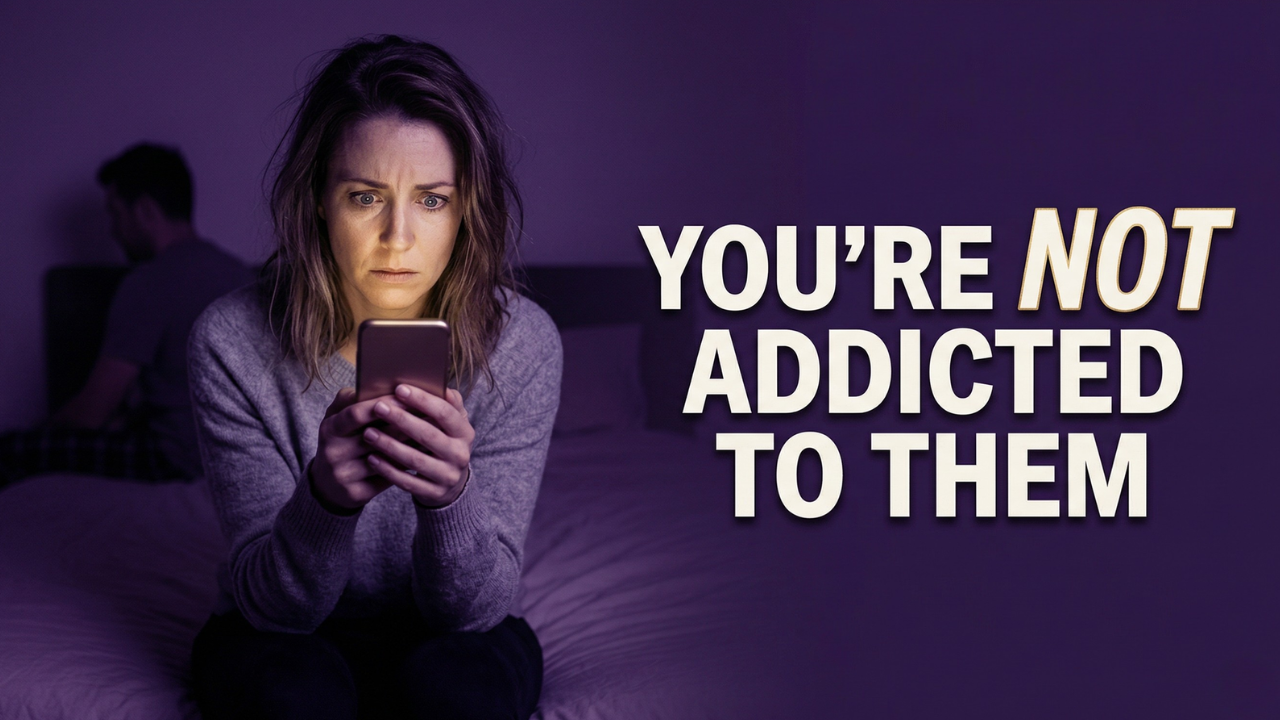
    The reason you can’t leave — despite everything you know, despite every promise to yourself, despite the pain — is that your nervous system has become addicted to the emotional rollercoaster. Not addicted to them. Not addicted to love. Addicted to the cycle itself: the crash and rescue, the fear and relief, the shame and redemption. Each time they come back, your brain floods with dopamine, oxytocin, and cortisol all at once. Your body experiences this as survival. As love. As proof that you matter.

    The person who can’t leave is not broken. They are reliving their blueprint.

    The trauma-bonding cycle is a 7-stage internal emotional journey that hijacks your fear system, activates your childhood shame identity, and uses intermittent reward to keep you trapped. Each stage rewires your nervous system to feel safer in the chaos than in stability. Each stage deepens the bond. Each stage makes leaving feel like emotional death.

    Table of Contents

    Trauma bonding is one of the least understood attachment patterns in psychology — and the most painful to experience. You feel the physical ache of wanting someone who hurts you. You experience genuine love mixed with genuine fear. You alternate between feeling seen and feeling worthless. And every single day, your nervous system is working against your conscious mind, keeping you locked in the cycle.

    The truth nobody tells you: You’re not addicted to them — you’re addicted to the emotional rollercoaster. And your nervous system has been trained since childhood to chase exactly this kind of chaos.

    But here’s what matters right now: The moment you understand the blueprint, the chemistry changes. Not overnight. But the fog starts to lift. You begin to see the pattern. You begin to feel your body’s reaction rather than just obey it. And that shift — that moment of recognition — is where freedom begins.

    What Are the 7 Stages of the Trauma-Bond Emotional Cycle?

    The trauma-bond cycle is not random. It’s not a puzzle with no solution. It is a predictable, repeating neurobiological sequence that your nervous system enters the moment the relationship begins. Understanding each stage is the first step to breaking free from it. Because you cannot heal what you don’t see.

    Stage 1: The Intensity Hook

    This is how it starts. This feels different. This feels powerful. This must be love.

    Chemistry spikes. Attention floods in. Your nervous system lights up like you’ve never felt before. You feel chosen. Special. Seen. The fantasy forms instantly. Text messages are constant. They know exactly what to say. They seem to understand you in ways nobody else ever has. The pace is fast. Too fast, but you don’t notice because the dopamine is flooding through your system.

    You think: “Finally. This is it. This is what I’ve been waiting for.”

    That’s you.

    But this is not love. This is blueprint activation. Intensity is the bait. Your nervous system recognizes this exact flavor of attention — the obsessive focus, the promises, the “I’ve never felt this way before” — because it matches the way your parent or caregiver sometimes made you feel special. It’s intoxicating because it’s familiar. It’s familiar because it touched a wound you’ve carried your entire life: the wound of conditional love.

    Stage 2: The Fear Activation

    Then inconsistency appears. A text goes unanswered for hours. They’re distant in a conversation. They mention an ex. Something shifts.

    Fear floods your body. Abandonment panic activates. Hypervigilance increases. You begin scanning their every move, every tone change, every moment of distance. Your thoughts race. Did I do something wrong? Are they pulling away? What if they leave? What if I lose this?

    Your nervous system is now in full survival mode. And here’s the trap: You need them to soothe the fear they created. The same person who triggered the abandonment anxiety is the only person who can make it stop. This is the addiction mechanism. This is how the bond deepens.

    That’s you — frantically checking your phone, replaying conversations, wondering what you did wrong, feeling the panic rise in your chest, desperate for them to come back and make it stop.

    Stage 3: The Shame Collapse

    Now comes the internal collapse. I must have caused this. I’m the problem.

    The child self carries shame. You internally collapse into the childhood narrative: “I messed up.” “I said something wrong.” “I pushed too hard.” “I’m too much.” “I’m not enough.” “I need to earn this back.” This is the shame identity from childhood. It reopens the wound your parent or caregiver created when love felt conditional, unpredictable, tied to your performance.

    You start modifying yourself. You become smaller. You apologize for things you didn’t do. You take responsibility for their emotions. You contort yourself to fit the shape they need you to be. Because at the deepest level, you believe: If I can just be perfect enough, if I can just understand them deeply enough, if I can just love them correctly, they won’t leave me.

    This is not partnership. This is reenactment.
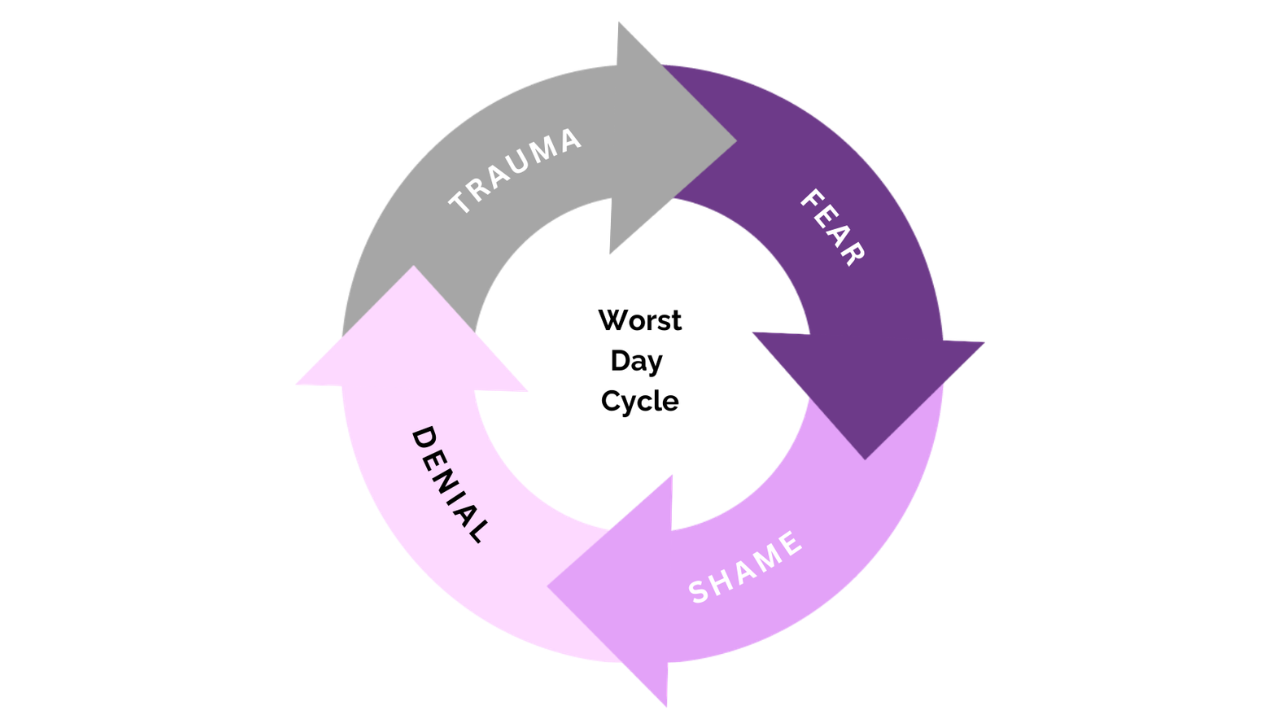
    Worst Day Cycle by Kenny Weiss

    Stage 4: The Intermittent Reward

    Then something shifts. A text. A moment of affection. A crumb of validation. Temporary closeness. They apologize. They say they were stressed. They promise it won’t happen again.

    Your brain releases dopamine. Oxytocin floods through your system. Relief washes over you. You survived. They came back. Your nervous system decides: This is love. This is proof that we can make it work. This is survival.

    That’s you — temporarily at peace, convinced that this time it’s different, that the good moments prove the relationship is worth fighting for.

    This is the most addictive stage. It is identical to gambling reinforcement. A slot-machine effect. Imagine pulling a slot machine handle 100 times with no payout. You stop. But if every 8th or 15th pull gives you a jackpot — you will pull that handle until your fingers bleed. This is your nervous system. The intermittent reward is neurologically more addictive than consistent reward. Your brain becomes wired to chase the crumb.

    Stage 5: The Hope Spike

    Hope becomes intoxicating. Maybe things will go back to how they were at the beginning. Maybe this time the good phase will last. Maybe you’ve finally figured out how to keep them happy. Maybe the fantasy is actually possible.

    Hope becomes emotional anesthesia. It’s the reason you stay. It’s the justification for the harm. You tell yourself: “If I can just hold on a little longer, if I can just be patient, if I can just love them enough, we’ll get back to the beginning.”

    But this is not hope. This is a survival hallucination. Your body is chasing the first high — the intensity hook — and it believes that if you suffer long enough, if you perform perfectly enough, you’ll get back there.

    That’s you — staying in a situation that hurts because hope has become your drug of choice.

    Stage 6: The Rejection/Withdrawal Loop

    Hope crashes. They pull away again. They’re pulling away again. I need to fix it.

    Panic. Dread. Helplessness. Shame. Urgency. Longing. Your nervous system is in full abandonment alarm state. You go into pursuit mode. You text. You call. You show up. You apologize again. You offer solutions. You perform emotional labor. You self-abandon to keep them present.

    This loop reenacts the childhood moment when love disappeared. When you learned that if you weren’t perfect enough, if you didn’t manage the parent’s emotions correctly, if you didn’t read their mood and adjust accordingly, they would withdraw their presence. And their presence was your survival.

    So now you’re willing to do anything — sacrifice anything, become anyone — to prevent that original abandonment from happening again.

    Stage 7: The Reattachment Stage

    When they return, apologize, give affection: relief floods through you. Euphoria. Safety. Reconnection. Emotional completion. You made it through. You survived. Love won.

    That’s you — finally able to breathe again, convinced that this proves the bond is real, that the cycle was worth it, that you made the right choice to stay.

    But here’s what’s actually happening: This is not connection. This is trauma relief mistaken for connection. Your nervous system has been in sympathetic activation (fight-or-flight) for weeks. When the partner returns and gives affection, you shift back into parasympathetic activation (rest-and-digest). The contrast feels like profound love. But it’s just the absence of fear.

    The system reattaches stronger. The bond deepens. The cycle restarts. And each time it cycles, the addictive neural pathways get stronger, the shame belief gets deeper, and the cycle becomes harder to break.

    This is not an unhealthy attachment. This is a survival attachment. And survival attachments are exponentially harder to break than unhealthy attachments because they’re not rooted in bad choice — they’re rooted in nervous system hijacking.

    How Does Your Childhood Blueprint Create Trauma Bonds?
    Emotional Blueprint — the childhood programming that defines what love, safety, and belonging mean for the trauma-bonded adult — by Kenny Weiss

    The trauma-bonding cycle doesn’t start with your partner. It starts in your childhood.

    The trauma bond forms when childhood love was inconsistent, confusing, conditional, unpredictable, mixed with fear or shame, tied to performance. Your parent or caregiver sometimes made you feel special, chosen, deeply seen. But that safety was not guaranteed. It disappeared when you made a mistake. It shifted when they had a bad day. It was withdrawn when you needed it most.

    So your nervous system learned something crucial to survival: Love includes longing. Love includes anxiety. Love includes tension. Love includes instability. Love includes waiting for connection. Love includes fear of abandonment. Love includes performance. Love means being hypervigilant to someone else’s emotional state.

    Your child brain didn’t have words for this. But your body encoded it. Your nervous system created a theta brain wave state — that’s the frequency where deep belief formation happens — and it recorded the pattern: Love is uncertain. Love must be earned. Love can disappear. Love includes fear.

    When you enter adulthood and encounter a partner who recreates this exact pattern — the intensity, the withdrawal, the inconsistency, the conditional affection — your body doesn’t sound an alarm. It recognizes home. It says: This is love. This is what love feels like. This is safe because it’s familiar.

    That’s you — unconsciously drawn to the exact person and pattern your nervous system learned to call love.

    Your blueprint also created your survival persona — the protective structure you built to navigate a world where love was dangerous.
    Three Survival Persona Types by Kenny Weiss

    There are three survival persona types:

    The Falsely Empowered Persona — This is the person who controls, dominates, rages, intimidates to avoid vulnerability. They learned that showing need meant abandonment, so they became the one who never needs, never depends, never asks. They became the pursuer, the one who pulls, the one who demands. In a trauma bond, this person might be the one creating the inconsistency — the hot and cold, the withdrawal, the punishment — because intimacy triggers their core wound.

    The Disempowered Persona — This is the person who collapses, people-pleases, loses themselves to avoid abandonment. They learned that their needs were too much, so they disappeared into someone else’s needs. They became the one who chases, the one who pursues, the one who performs. In a trauma bond, this is the person chasing the intermittent reward, apologizing for things they didn’t do, modifying themselves to keep the partner present.

    The Adapted Wounded Child — This is the person who oscillates between falsely empowered and disempowered. They can be demanding and controlling, then suddenly collapse into shame and people-pleasing. They’re the chameleon. They adapt moment-to-moment based on what they sense the other person needs. In a trauma bond, this person is doing both — they’re sometimes withdrawn and sometimes pursuing, sometimes raging and sometimes begging.

    That’s you — in one of these three personas, or oscillating between all three, depending on what you learned survival meant in your childhood home.

    Here’s what matters: The trauma bond is not a character flaw. It’s not a sign of weakness. It is a direct replication of your childhood blueprint playing out in real time with adult stakes. You are not destined to repeat trauma bonds — you are reliving the blueprint until you heal it.

    Why Does Trauma Bonding Destroy Your Adult Relationships?

    Trauma bonding doesn’t just keep you trapped with one person. It rewires your entire relationship capacity. It teaches your nervous system what to crave. And it can destroy your ability to recognize, attract, or stay with healthy partners.

    Here’s why: Your nervous system mistakes danger for love.

    When you meet someone who is genuinely kind, consistent, reliable, emotionally available — someone who offers stability without chaos — your nervous system often doesn’t recognize it as love. Because it doesn’t match the blueprint. It doesn’t have the intensity. It doesn’t have the fear component. It doesn’t have the intermittent reward. It doesn’t activate your wounds.

    So healthy partners feel boring at first because they don’t match the chaos your body learned to chase.

    That’s you — wondering why the good person doesn’t excite you the way the chaotic person does, interpreting the lack of drama as a lack of chemistry, unconsciously sabotaging the healthy relationship to create the familiar chaos.

    This is the pursuer-distancer dynamic. And it’s deadly in relationships.
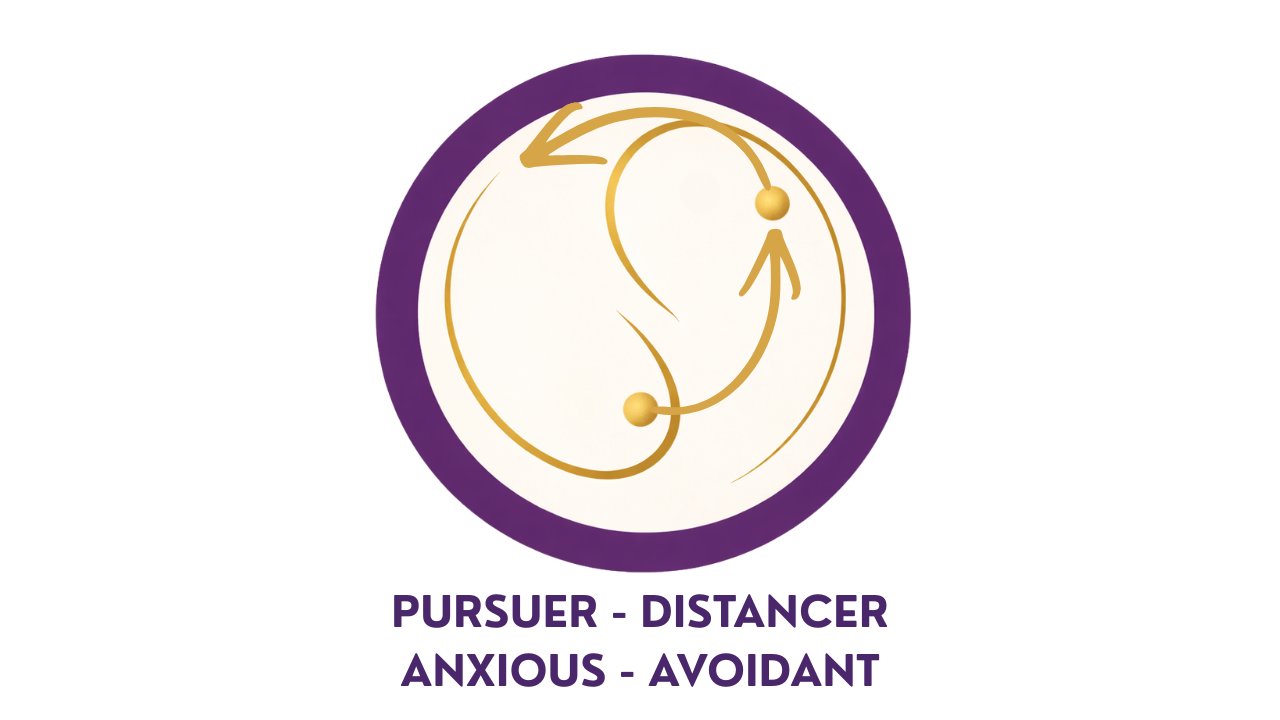
    Pursuer Distancer Pattern by Kenny Weiss

    The person in the disempowered persona becomes the pursuer. They chase. They text. They pursue connection. They blame themselves for distance. They do emotional labor. And the more they pursue, the more their partner withdraws. Because pursuit triggers the falsely empowered partner’s need for control and space.

    The more the partner withdraws, the more the pursuer escalates. They see the withdrawal as abandonment. Their survival is at stake. So they pursue harder. They become more desperate. They lose more of themselves.

    The partner sees the pursuit as suffocation. They feel trapped. Their autonomy is threatened. So they create more distance. They punish the pursuit. They withhold affection to maintain control.

    Neither person is wrong. Both are operating from their blueprint. Both are trying to survive. And the cycle accelerates until one person completely loses themselves or one person leaves.

    Trauma bonds also destroy your body wisdom. Your gut is lying to you. The nervous system signals you’re interpreting as intuition are actually fear responses. They’re not telling you this person is your soulmate. They’re telling you this person matches your blueprint. These are two completely different things.
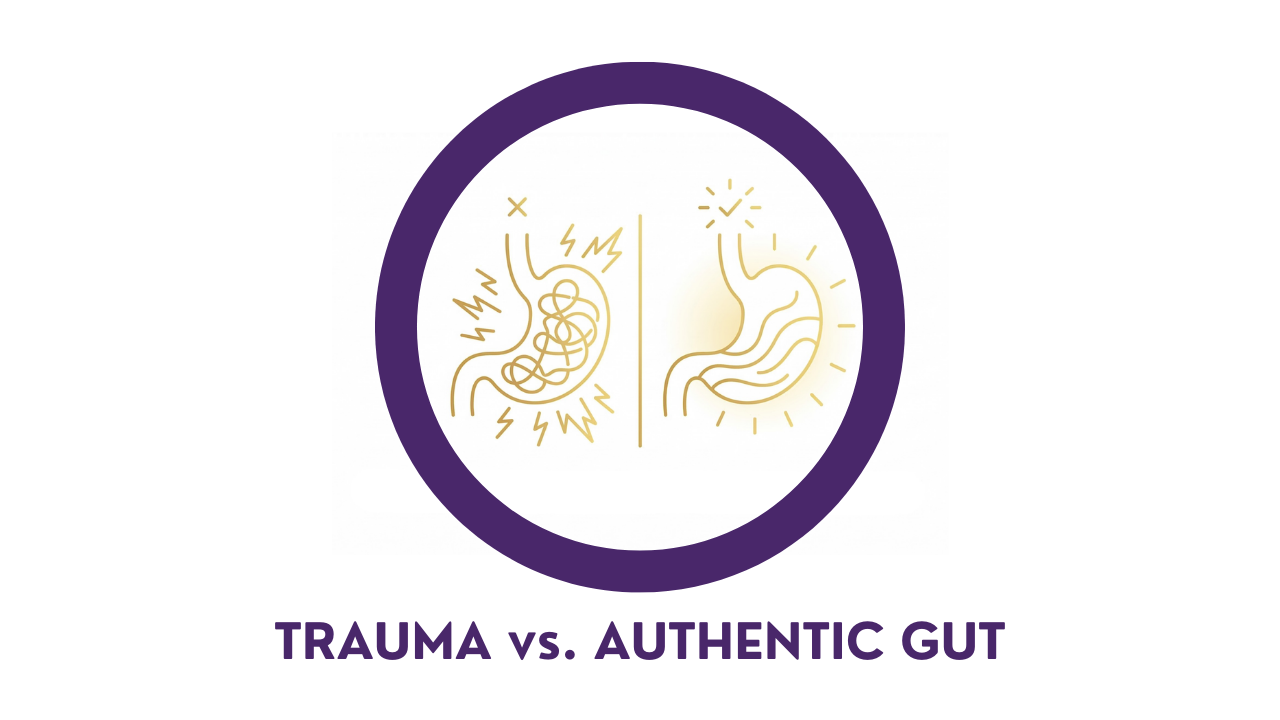
    Trauma Gut vs Authentic Gut by Kenny Weiss

    Your trauma gut pulls you toward people who are familiar — which usually means they’re recreating your original wound. Your authentic gut pulls you toward people who are genuinely healthy, trustworthy, and aligned with your values — which usually means they feel unfamiliar, boring, or “not right.”

    That’s you — caught between two nervous systems, listening to the trauma gut because it feels louder, stronger, more alive, and then wondering why every relationship ends in the same pain.

    Why Has Everything You’ve Tried Failed to Break the Bond?

    You’ve read the books. You’ve been to therapy. You’ve done the boundary work. You’ve journaled. You’ve meditated. You’ve said “I deserve better” a thousand times. You’ve made a firm decision to leave. And yet… you still reach out. You still check their Instagram. You still pick up the phone. You still convince yourself that this time will be different.

    And you feel like you’re failing.

    You’re not failing. The advice you’ve been given is failing you.

    Most relationship advice is designed for unhealthy attachments — the kind where a person is in a relationship with someone who doesn’t match their values, someone they’ve outgrown, someone they chose from a place of low self-esteem. That advice says: Create boundaries. Increase your self-esteem. Remove yourself from the situation. Do the work on yourself.

    And that advice is logical. It makes sense cognitively. But it doesn’t account for the fact that you’re not in an unhealthy attachment. You’re in a survival attachment. And survival attachments live in your nervous system, not in your conscious mind.

    That’s you — doing all the “right” things cognitively while your nervous system is screaming for the familiar pattern, for the intermittent reward, for the fear-and-relief cycle that has become your definition of love.

    Boundary scripts fail because they assume you can think your way out of a nervous system hijacking. You can’t. Saying “no” to someone who activates your abandonment wound requires that your nervous system feel safe. But your nervous system is designed to pursue this person to prevent abandonment. Every boundary you set triggers the fear you’re trying to prevent.

    Leaving fails because it assumes you’re choosing to stay. You’re not. Your nervous system has classified leaving as abandonment — which is death in the language of survival. So your body will sabotage your conscious decision to leave because leaving feels more dangerous than staying.

    Therapy fails if it’s not specifically addressing the nervous system hijacking and the childhood blueprint. Generic talk therapy won’t rewire the neural pathways that have been reinforced ten thousand times. You need to address the body, the nervous system, the shame identity, the belief that love equals fear.

    Self-esteem work fails because the problem isn’t your self-esteem. You can feel worthy and still stay in a trauma bond. Worthiness doesn’t rewire your nervous system. Worthiness doesn’t change what your body has learned to call love.

    Books about narcissistic abuse fail because they’re describing something done TO you — as if you’re a passive victim of someone else’s tactics. And while trauma bonding can occur with narcissistic people, the real issue is not what they’re doing. It’s what your nervous system is doing. It’s how your system is interpreting and responding to their behavior. It’s the blueprint that made you attractive to them in the first place and made their behavior feel like home.

    The reason you can’t leave is not because you’re weak. You don’t stay because you’re weak. You stay because the cycle hijacks your nervous system, your fear, your shame identity, your earliest emotional memories, your need for relief. You stay because leaving triggers an existential panic that feels like death. You stay because your body has been wired since childhood to chase this exact pattern.

    But here’s the critical part: That means the solution is not willpower. It’s not motivation. It’s not “just leaving.” The solution is rewiring the nervous system itself. The solution is healing the childhood wound that created the blueprint. The solution is creating a new emotional chemical addiction — one rooted in your authentic self instead of your survival persona.

    How the Emotional Authenticity Method™ Breaks the Trauma Bond

    The way out of the trauma bond is not leaving. Leaving is just a physical action. The way out is healing. And healing happens through a specific methodology designed to rewire your nervous system from the inside out.
    Emotional Authenticity Method™ — the six-step process that rewires trauma bonding patterns at the nervous system level — by Kenny Weiss

    That methodology is the Emotional Authenticity Method™ (EAM).

    The EAM is a six-step process that teaches your nervous system to recognize the difference between trauma gut and authentic gut, between survival attachment and healthy connection, between performing and being. It rewires the shame identity. It dissolves the fear of abandonment by showing your system that you can survive alone. It creates a new emotional chemical addiction rooted in your authentic self.

    Here’s how it works:

    Step 1: Somatic Down-Regulation

    Before you can think, you must calm your nervous system. When you’re activated by a text, a silence, a fear that they’re leaving, your nervous system is in sympathetic dominance (fight-or-flight). Your prefrontal cortex — the thinking brain — goes offline. You can’t logic your way out. You can’t boundary your way out. You must down-regulate first.

    Somatic down-regulation means bringing your awareness into your five senses for 15-30 seconds. What can you hear right now? Not think about. Hear. The ambient sound. The texture of the chair on your skin. The temperature of the air. The taste in your mouth. By anchoring into present sensory experience, you signal safety to your nervous system. You’re not in the danger that your mind is spinning about. You’re here. You’re safe. You’re alive.

    That’s you — pausing before you text back, before you pursue, before you collapse into shame, and bringing your system back to the present moment.

    Step 2: What Am I Feeling Right Now?

    Once your nervous system is regulated, you can access your thinking brain. Now ask: What am I actually feeling? Not thinking. Feeling. Is it fear? Shame? Longing? Panic? Rejection? Grief? Don’t judge it. Just name it.

    This sounds simple. It’s not. Most people who grew up in traumatic or enmeshed families learned to dissociate from their feeling state. They learned to override their emotions with thinking or performing or people-pleasing. So this step is about reconnecting to the emotional world you learned to abandon.

    Step 3: Where in My Body Do I Feel This?

    Emotions live in the body. The abandonment panic might live as tightness in your chest. The shame might live as heaviness in your shoulders. The longing might live as an ache in your throat. Move your awareness into the sensation. Where is the feeling physically located? Is it sharp or dull? Is it moving or static? Is it warm or cold?

    By creating specificity around the somatic experience, you’re teaching your nervous system that this is information, not danger. You’re becoming a witness to your own internal state rather than being consumed by it.

    Step 4: What Is My Earliest Memory of Having This Exact Feeling?

    Here’s where the blueprint healing happens. That tightness in your chest when they don’t text you back — when was the first time you felt this? Was it when your parent withdrew after you made a mistake? Was it when a sibling was favored over you? Was it when you sensed a parent’s unhappiness and believed you caused it?

    This feeling you’re experiencing right now is not about your current partner. It’s the original wound being triggered. Your current partner is just the activator. The real ache is ancient.

    That’s you — suddenly recognizing that the intensity of your reaction is disproportionate to the current situation because you’re not reacting to the present. You’re reacting to the past.

    This is crucial. Because the moment you recognize that this is an old wound, your nervous system begins to shift. The current threat becomes less urgent. The attention moves to the original hurt. And that original hurt is something you can actually heal — because it’s not about your partner. It’s about you and your childhood.

    Step 5: Who Would I Be If I Never Had This Feeling Again?

    This is the visioning step. You’re creating a new possibility. Not denying the feeling. Not suppressing it. But imagining: What if your nervous system didn’t go into panic at the sign of distance? What if you could be in a relationship and feel secure even when there are gaps in contact? What if your worth wasn’t tied to someone else’s consistency?

    Who would you be? How would you move differently? How would you speak differently? How would you make decisions differently? What would be possible?

    Most people skip this step because it feels too big, too abstract, too impossible. But this step is where you’re programming a new neural pathway. You’re creating a vision of your authentic self — the self that exists independent of the trauma bond, independent of the other person, independent of the cycle.

    Step 6: Feelization — Sit in the Authentic Self Feeling and Create a New Chemical Addiction

    Now comes the rewiring. Sit in that vision. Feel it in your body. What does it feel like to be secure? To be grounded? To know your worth is internal? To trust yourself? To not need rescue?

    This is not positive thinking. This is not affirmations. This is a nervous system experience. You’re creating a somatic state — a full-body felt sense of your authentic self. And you’re holding that state for as long as you can. Because every second you sit in that feeling, you’re creating a neural pathway. You’re building a new emotional chemical experience. You’re training your nervous system that there’s another way to feel. And that feeling is accessible to you.

    That’s you — slowly rewiring the addiction from “fear and relief” to “grounded and present,” from “performing and being seen” to “being yourself and being okay with that.”

    This is where the Emotional Authenticity Method™ connects to the larger healing frameworks. The Worst Day Cycle™ is the problem — the cycle that keeps you trapped. The Authentic Self Cycle™ is the vision of what’s possible when the WDC is healed.

    In the Authentic Self Cycle™, you move from Truth → Responsibility → Healing → Forgiveness. You see the truth about what happened. You take responsibility for your choices (not the blame, not the guilt — the responsibility). You do the work to heal the wound. And you forgive — not them necessarily, but yourself for staying so long, yourself for not knowing better, yourself for surviving the only way you knew how.
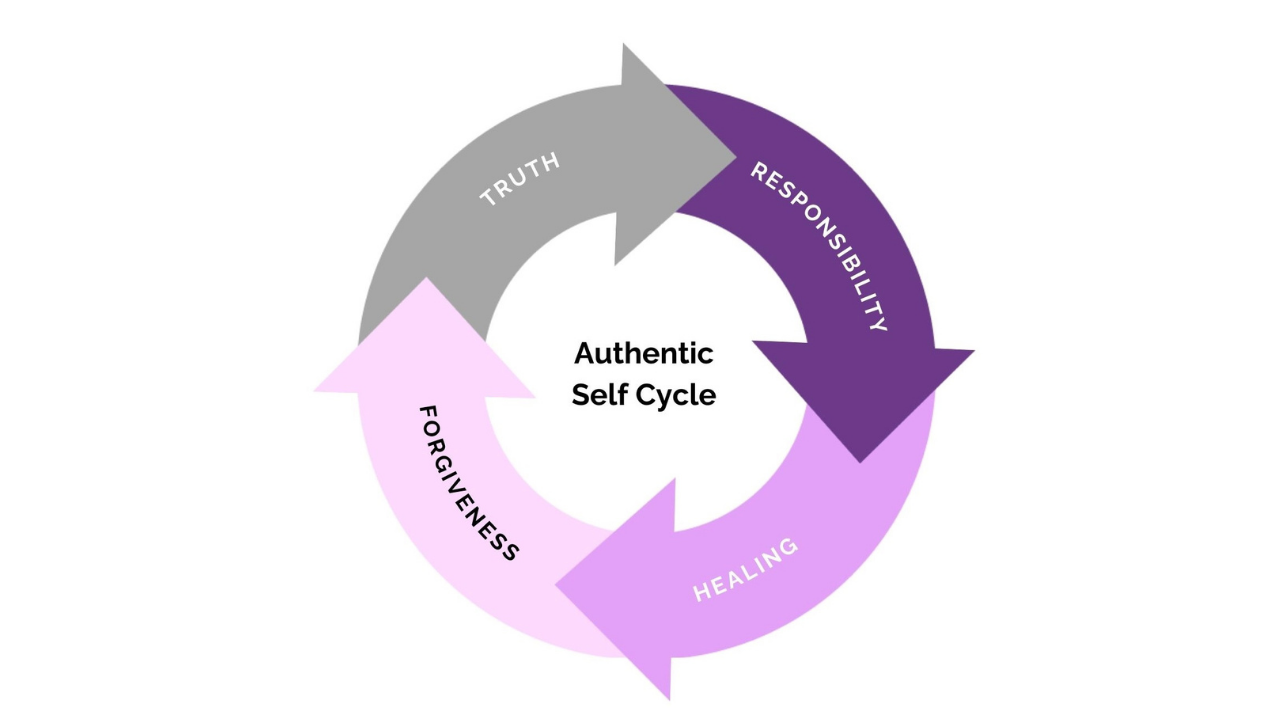
    Authentic Self Cycle™ — truth, responsibility, healing, and forgiveness — the path out of trauma bonding and into secure love — by Kenny Weiss

    The EAM is the methodology that gets you there. Step by step. Feeling by feeling. Rewiring your nervous system one encounter at a time.

    What Does Breaking a Trauma Bond Look Like in Real Life?

    Healing isn’t linear. It’s not: week 1 you’re trapped, week 8 you’re free. Breaking a trauma bond is a slow, spiraling process where you gradually develop capacity to feel your authentic self, gradually recognize the cycle faster, gradually respond differently, gradually stop needing the intermittent reward.

    But here’s what shifts:

    In Family Bonds

    Before: You call your parent hoping for approval. They’re cold. You collapse into shame, believing you did something wrong. You call back, overexplaining yourself, trying to fix the distance. You wait for them to reach out. When they finally do, you feel like you can breathe again. You tell yourself it wasn’t that bad. You go back for more.

    After: You call your parent. They’re cold. You notice the familiar shame rising. You pause. You do a somatic check. You recognize: This is my old wound, not my current reality. You listen to them without needing to fix them or yourself. You feel their distance without interpreting it as rejection of you. You can have contact with them without needing them to approve of you. You can love them without being trapped by them.

    In Romantic Bonds

    Before: Your partner is distant. Your nervous system goes into full panic. You text. You pursue. You feel the abandonment dread. You collapse into self-blame. You do everything you can to get them back. When they finally respond with affection, you feel like you’ve been rescued. The relief is so intense that you believe it’s love. You stay.

    After: Your partner is distant. You notice the impulse to panic. You notice the familiar chase instinct. But you pause. You’re not automatically acting on the nervous system signal. You ask yourself: Is this person actually unavailable, or is my trauma activation interpreting normal space as abandonment? You can sit with distance without having to fix it. You can maintain your own emotional state without needing them to regulate it for you. You can recognize whether this is a pattern that needs to be addressed or whether this is your nervous system lying to you.

    In Friendships

    Before: You have a friend who comes and goes, who gives you intense attention then disappears for weeks. You idealize them when they’re present. You feel rejected when they’re absent. You do emotional labor to maintain the friendship. You modify yourself to fit what you think they need. You can’t imagine life without them even though they consistently hurt you.

    After: You have a friend who comes and goes. You recognize the pattern. You notice that you’re the pursuer in this dynamic. You observe your own shame around their distance. You gradually redirect your emotional investment to people who are consistently present. You can appreciate them without needing them. You can release them without anger. You understand that this wasn’t about them being wrong — it was about your nervous system being trained to chase unavailable people.

    In Work/Professional Bonds

    Before: You have a boss or colleague who gives you intense praise then becomes critical and cold. You work twice as hard to earn back their approval. You feel anxious when you’re not getting direct feedback. You modify your work style to match what you think they want. You interpret their distance as performance feedback even when they don’t say anything. You stay in the job far longer than is healthy.

    After: You have a boss or colleague who gives you intense praise then becomes critical. You notice your nervous system’s hunger for their approval. You recognize that you’re trying to manage their emotions through your performance. You establish clarity about what the job requires versus what your trauma is projecting onto it. You can receive feedback without collapsing into shame. You can leave if the environment isn’t healthy, not because you’re angry at them, but because you recognize the dynamic isn’t serving you.

    In Your Body

    Before: Your body holds chronic tension, especially when you haven’t heard from them. You feel physically ill during conflict. You experience somatic pain that your doctor can’t diagnose. You use food, alcohol, sex, or other behaviors to manage the nervous system dysregulation. You feel disconnected from your body, like it’s betraying you by staying attracted to someone who hurts you.

    After: You begin to feel your body as information. The tension isn’t dysfunction — it’s your nervous system telling you something. You can feel the fear response rising and recognize it as a nervous system pattern, not truth. You gradually release the chronic tension as you stop needing to be hypervigilant to the other person. You experience relief, not as “they came back,” but as “I did the work and my nervous system finally feels safe.” Your body becomes an ally instead of a traitor.
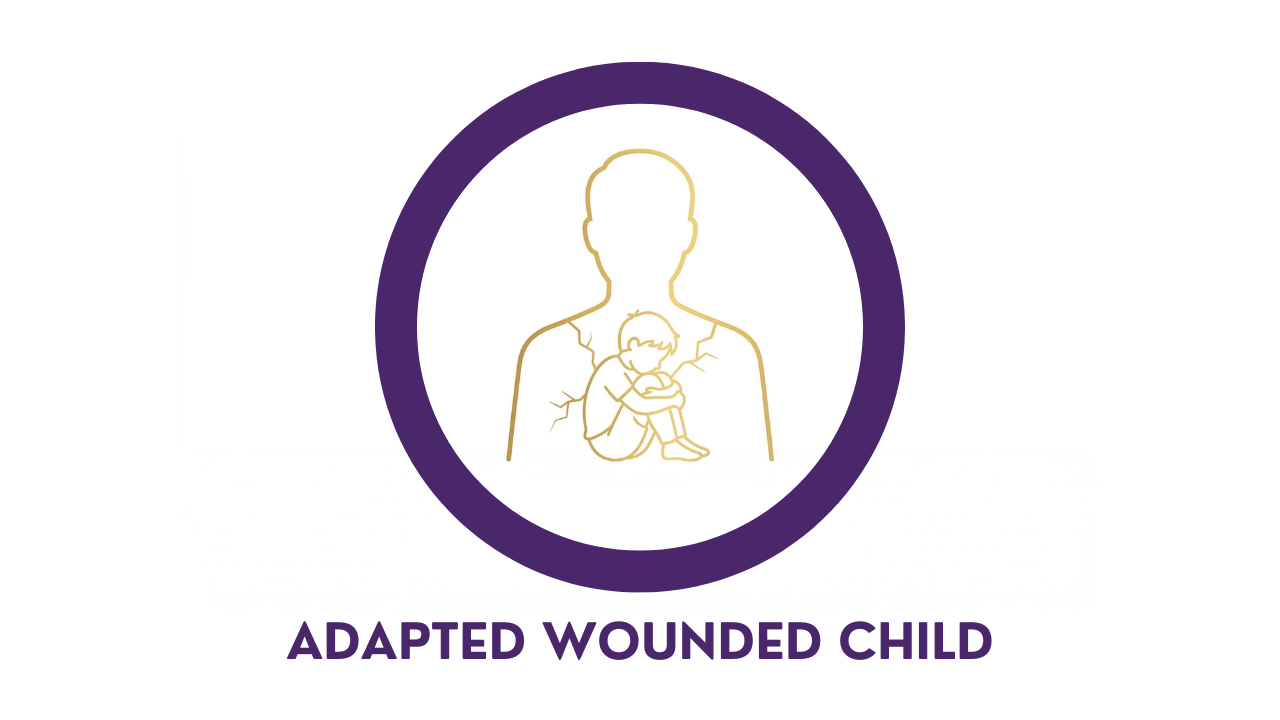
    Adapted Wounded Child Survival Persona by Kenny Weiss

    Breaking the trauma bond is not about willpower. It’s not about leaving. It’s about your nervous system gradually learning that you can be safe, worthy, and connected without the cycle. It’s about your body slowly releasing the blueprint that said love equals fear. It’s about becoming someone who can hold boundaries not out of anger, but out of self-respect. Someone who can feel their own emotional state without needing someone else to soothe it. Someone who can choose to stay or choose to leave from a place of authenticity, not desperation.

    That’s you — slowly becoming the person your wounded child self never got to be. Grounded. Present. Unafraid.

    Your Next Small Step

    Healing from a trauma bond is not a light switch. You don’t read an article and suddenly be free. But you do take a next step. A small one. A human one.

    This week, I want you to practice Step 1 of the Emotional Authenticity Method™: Somatic Down-Regulation. The next time you feel the urge to reach out to this person — to text, to call, to check their social media — pause. For 15-30 seconds, bring your awareness into your five senses. What can you hear? What can you feel on your skin? What can you taste? What can you see right in front of you?

    Just notice. Don’t judge yourself for the urge. Don’t white-knuckle your way through it. Just pause and regulate. Because every moment you can create a gap between the nervous system signal and your response is a moment you’re rewiring. Every time you interrupt the automatic chase, you’re building new neural pathways.

    That’s it. One step. This week.

    If This Article Hit Home, the Books Go Deeper

    If this article hit home, the book goes deeper.

    Everything I write about on this site — the Worst Day Cycle™, your childhood emotional blueprint, why you keep repeating the same patterns no matter how hard you try — it all started with my first book, Your Journey To Success: How to Accept the Answers You Discover Along the Way.

    This is the book readers call “the first time I found a roadmap I could actually understand and that seemed attainable.” It is the book that walks you through WHY your life hasn’t changed despite all the work you’ve done — and shows you, step by step, exactly how to break free. No fluff. No motivational hype. Just the truth about what was done to you, why it stuck, and what to do about it.

    If you’ve read this far, you already know something needs to change. This book is where that change starts.

    Get Your Journey To Success on Amazon → https://amzn.to/3nfVphr


    Ready to stop understanding the problem and start rewiring it?

    The article you just read scratches the surface. My new book, Your Journey To Being Yourself: How to Overcome the Worst Day Cycle & Reclaim Your Authentic Self with Emotional Authenticity, gives you the complete system — the Worst Day Cycle™, the Authentic Self Cycle™, and the full Emotional Authenticity Method™ — all in one place, with the neuroscience behind every step.

    This is the book readers call “a genius piece of art in mastering emotion and the art of healing.” It speaks directly to the person who feels stuck, overwhelmed, and confused by the same repeating patterns — the same arguments, the same relationship breakdowns, the same shame — and is done accepting surface-level answers. Every chapter combines powerful stories, clear steps, and practical tools that show you how to rewire your emotional patterns from the inside out.

    You are not broken. You were programmed. And this book shows you exactly how to rewrite the program.

    Get Your Journey To Being Yourself on Amazon → https://amzn.to/4snRhZp

    Frequently Asked Questions About Trauma Bonding

    Is Trauma Bonding the Same as Unhealthy Attachment?

    No. Unhealthy attachment is when you’re in a relationship that doesn’t serve you, but you can logically see why you should leave. Trauma bonding is when leaving feels like abandonment, when your nervous system interprets distance as threat, when you’re not choosing to stay — your body is forcing you to stay. Trauma bonding hijacks your survival systems. That’s why willpower and logic alone can’t break it.

    Does Trauma Bonding Only Happen with Narcissistic People?

    No. Trauma bonding can happen with anyone, but it requires that the person match your childhood blueprint — which means they have to offer intermittent affection, unpredictability, or conditional love. A narcissist can create a trauma bond, but so can an anxiously attached person, an avoidantly attached person, or someone with untreated mental health struggles. What matters is not their diagnosis — it’s the pattern the relationship creates in your nervous system.

    How Long Does It Take to Break a Trauma Bond?

    It depends on the depth of the original wound and how long the relationship lasted. A two-year trauma bond might take six months to a year to heal. A ten-year trauma bond might take two to three years. But “healing” doesn’t mean you suddenly stop being tempted. It means you gradually develop the nervous system capacity to not act on the temptation. It means the bond loses its electrical charge. It means you can think about them without panic. It means you’re choosing yourself more often than you’re choosing the cycle.

    Can You Break a Trauma Bond While Still in the Relationship?

    Yes, but it’s exponentially harder. Because your nervous system is in daily activation. Every interaction is re-traumatizing, re-wiring, re-strengthening the bond. However, some people do the healing work while still in the relationship, develop capacity to see the pattern, recognize they can’t fix their partner, and then make a clearer choice to leave — not from desperation, but from clarity. That choice tends to stick because it’s rooted in wisdom, not panic.

    Why Do I Feel Physically Addicted to This Person?

    Because you are. Your nervous system has developed a literal chemical addiction to the cycle. The fear releases cortisol and adrenaline. The reunion releases dopamine and oxytocin. Your brain has learned that this person — and specifically this pattern — creates the neurochemical state it craves. Your body doesn’t distinguish between “addiction to a substance” and “addiction to a person and a nervous system pattern.” It’s all the same to your neurobiology.

    Is There Something Wrong with Me That I Keep Repeating This Pattern?

    No. You’re not broken. You’re not defective. You were programmed. Your nervous system learned — in childhood, through thousands of repetitions — that love includes fear, that safety includes anxiety, that connection includes abandonment panic. You picked the person who best matched that programming because your body was looking for something familiar, something that felt like home, something that felt like love. That’s not weakness. That’s your nervous system doing what it learned to do. The good news: You can reprogram it. But the first step is compassion — for yourself, for the person who created the original wound, for the person who recreated it in adulthood.

    What if the Person I’m Trauma Bonded With Comes Back Asking for Another Chance?

    This is the critical test. Your nervous system will be screaming yes. The relief of them reaching out will flood through your body. The hope will activate. All the chemical rewards will trigger. This is when the Emotional Authenticity Method™ matters most. You’ll need to do a somatic down-regulation. You’ll need to ask yourself what you’re actually feeling, where it’s located in your body, when you first felt it. You’ll need to remember that the relief you’re feeling is not proof that they’ve changed — it’s proof that your nervous system is addicted to the pattern. Then you’ll need to decide from a place of authenticity, not from a place of desperation. And that decision — made from clarity rather than panic — is the one that will stick.

    Can I Ever Have a Healthy Relationship After a Trauma Bond?

    Yes. Absolutely yes. But first, you have to heal the original blueprint. Because if you don’t, you’ll attract the same person in a different body. You’ll recreate the same dynamic. You’ll be drawn to the same flavor of chaos. Healing the blueprint doesn’t mean you’ll never be attracted to an unavailable person again — it means you’ll notice the pattern earlier, you’ll recognize it as your wound being triggered, and you’ll make a different choice. You’ll have capacity to stay in a healthy relationship even when it feels boring because you’re not chasing the dopamine hit of the cycle. And that capacity — that’s freedom.

    The Bottom Line

    Trauma bonding is not a character flaw. It’s not a sign that you’re weak, stupid, or broken. It is a nervous system pattern rooted in childhood, activated by an adult partner who matches your blueprint, and maintained by a predictable seven-stage cycle that hijacks your fear system, your shame identity, and your need for relief.

    The reason you can’t leave is not because you love them. It’s because your nervous system mistakes danger for love. It’s because your body learned in childhood that love includes fear, anxiety, shame, and intermittent reward — and now it’s chasing that pattern in an adult relationship.

    The reason everything you’ve tried has failed is because you’ve been trying to think your way out of something that lives in your nervous system. You can’t logic yourself out of a trauma bond. You can’t boundary yourself out of it. You can’t leave your way out of it. You have to rewire it. You have to heal the original blueprint. You have to teach your nervous system that you can be safe, worthy, and connected without the cycle.

    And that rewiring is possible. The Emotional Authenticity Method™ shows you how. The Worst Day Cycle™ shows you what you’re escaping. The Authentic Self Cycle™ shows you what’s possible on the other side. Your childhood blueprint — once you see it — becomes the map to your freedom.

    The moment you understand the blueprint, the chemistry changes.

    Not overnight. But it changes. You’ll notice the pattern before you act on it. You’ll pause before you text. You’ll recognize when your nervous system is lying to you. You’ll feel your authentic self underneath the survival persona. And gradually, one nervous system regulation at a time, one pause at a time, one small choice at a time, you’ll break free.

    You are not destined to repeat trauma bonds. You are reliving the blueprint until you heal it. And healing is always possible.

    Adult Children of Emotionally Immature Parents by Lindsay C. Gibson — A clear, compassionate exploration of how childhood emotional neglect or enmeshment creates the blueprint for trauma bonding in adulthood. Gibson offers practical tools for recognizing patterns and healing the wound.

    What Happened to You? by Bruce D. Perry and Oprah Winfrey — This book reframes trauma and attachment through the neuroscience of how our brains are shaped by childhood experience. It’s essential reading for understanding why your nervous system does what it does.

    Attached: The New Science of Adult Attachment and How It Can Help You Find — and Keep — Love by Amir Levine and Rachel Heller — A detailed exploration of attachment patterns, including how anxious, avoidant, and secure attachment styles show up in relationships. Understanding your attachment style is crucial to recognizing your trauma bond patterns.

    The Body Keeps the Score by Bessel van der Kolk — A comprehensive resource on how trauma lives in the nervous system and body. Van der Kolk explains why traditional talk therapy often fails for trauma and what actually works — which includes somatic practices like those in the Emotional Authenticity Method™.

    Continue the Work

    If you’re ready to do the deeper work of healing your childhood emotional blueprint and breaking free from trauma bonds once and for all, the courses below are designed to guide you step by step through the Emotional Authenticity Method™, the Worst Day Cycle™, and the Authentic Self Cycle™.

    Emotional Blueprint Starter Course — Individual ($79) — A foundational course that walks you through your childhood emotional blueprint, the survival personas you developed, and the first steps of the Emotional Authenticity Method™. Perfect if you’re just beginning to understand why you keep repeating the same patterns.

    Enroll at: kennyweiss.net/individual-starter-course

    Relationship Starter Course — Couples ($79) — Designed for couples who want to understand their dynamic, break the pursuer-distancer pattern, and create a healthier emotional connection. Works best after both partners have done individual healing work.

    Enroll at: kennyweiss.net/relationship-starter-course

    Why We Can’t Stop Hurting Each Other ($479) — A comprehensive deep-dive into the attachment patterns that keep couples trapped in the same arguments, the same breakdowns, the same pain. This course walks you through the neuroscience of why you hurt each other and exactly how to rewire it.

    Enroll at: kennyweiss.net/why-we-cant-stop-hurting-each-other

    Why High Achievers Fail at Love ($479) — For the person who has everything together at work but everything falling apart in relationships. This course explores why success and connection often feel mutually exclusive, and shows you how to rewire the false belief that achievement requires emotional abandonment.

    Enroll at: kennyweiss.net/why-high-achievers-fail-love

    The Shutdown Avoidant Partner ($479) — If you’re dealing with someone who withdraws, shuts down, or goes cold during conflict, this course is for you. It explains the neuroscience of avoidant attachment, the survival reasons behind the shutdown, and how to create safety without chasing.

    Enroll at: kennyweiss.net/shutdown-avoidant-partner

    Tier 1: Mapping the Blueprint ($1,379) — The most comprehensive course available. Over 40+ hours of video, workbook materials, and guided exercises, this tier walks you through every layer of your childhood emotional blueprint, all three survival personas, the Emotional Authenticity Method™ in full depth, and the framework for complete nervous system rewiring.

    Enroll at: kennyweiss.net/mapping-the-blueprint-tier-1


    The Feelings Wheel Exercise — Free

    One of the most powerful tools for rebuilding emotional literacy is the Feelings Wheel. Most people who grew up in traumatic families learned to numb, dissociate, or override their emotions. The Feelings Wheel teaches you to identify and name the specific feeling you’re experiencing — which is the first step of the Emotional Authenticity Method™.

    Access the free Feelings Wheel and guided exercise at: kennyweiss.net/life-changing-exercise

    Start there. Start with naming one feeling. Start with creating one moment of somatic down-regulation. Start with one small pause before you react. Because every small moment you choose authenticity over survival is a moment you’re rewiring your nervous system. Every moment you recognize the pattern is a moment you’re becoming free.

    You’ve got this.
  • What Happens When You Leave a Narcissist: Understanding the Trauma Bond and Healing

    What Happens When You Leave a Narcissist: Understanding the Trauma Bond and Healing

    Leaving a narcissist isn’t just hard—it’s designed to be hard. When you leave, you’re not just ending a relationship. You’re breaking what’s called a trauma bond, a powerful neurochemical attachment that your brain created as a survival mechanism. Understanding why you can’t just “leave and move on” isn’t weakness. It’s neuroscience. It’s your Worst Day Cycle™ in full play. And once you understand the patterns, you can actually heal instead of repeating them.

    Here’s what we know: When you’ve been in a relationship with a narcissist, your nervous system has been hijacked. Your body learned to fear abandonment, your mind learned to decode their moods like a smoke detector, and your soul learned to shrink. The moment you try to leave, every cell in your body screams to go back. That’s not because the relationship was good. That’s because your survival persona—the part of you designed to keep you alive in chaos—is terrified of what comes next.

    Leaving a narcissist activates your Worst Day Cycle™ (trauma → fear → shame → denial). You’re not weak for going back. Your brain is addicted to the familiar pain. Healing requires understanding your survival persona, tracing your childhood blueprint, and using the Authentic Self Cycle™ to reclaim your emotional authenticity instead of living in your survival persona’s denial.

    Trauma chemistry and narcissistic attachment bonding explained

    Why Is Leaving a Narcissist So Impossibly Hard?

    If you’ve tried to leave and found yourself crawling back—sometimes days later, sometimes weeks—you’re not alone. And you’re not broken. What you’re experiencing is a deliberate cycle that a narcissist has trained into your nervous system.

    That’s you sitting in your car outside their apartment at 2 AM, shaking, unable to go inside but unable to drive away.

    The narcissist doesn’t need physical chains to keep you trapped. They’ve already installed themselves in your brain as the authority on your worth. When you leave, you trigger the deepest wound from your childhood: abandonment, rejection, or the message that you’re unlovable if you’re not needed.

    That’s you — the one who knows they should leave but feels paralyzed every time you try.

    Your survival persona created a deal in childhood: “If I disappear myself, if I become indispensable, if I manage their emotions, then I’ll be safe.” Leaving violates that core agreement. And your nervous system interprets leaving as a threat to survival itself.

    Here’s what actually happens: A narcissist’s childhood wounds of abandonment and rejection were never healed. Instead of facing that pain, they developed a falsely empowered survival persona that dominates, controls, and rages when their supply (your attention, your validation, your presence) is threatened. When you leave, you’re pulling their emotional oxygen. They will escalate their tactics—love-bombing, threats, smear campaigns, financial sabotage—not because they love you, but because your absence is unbearable to their survival persona.

    Survival persona types in narcissistic relationships explained

    The Trauma Bond: What You’re Actually Addicted To

    A trauma bond is not love. Let’s be clear. It’s a neurochemical addiction to intermittent reinforcement paired with danger and uncertainty.

    That’s you — telling yourself “this time it’s different” when they promise to change after every blowup.

    Here’s how it’s built: The narcissist gives you crumbs of affection (love-bombing, rare moments of vulnerability, promises of change). Then they withdraw. Then they return with intensity. Your brain releases dopamine during the love-bombing and cortisol during the withdrawal. This exact pattern—reward followed by threat—creates the most addictive neurochemical cocktail known to humans.

    Sound familiar? You get one text: “I miss you. I was wrong. I’ve changed. Come home.” And suddenly the weeks of silent treatment evaporate. You feel alive again. That’s dopamine. Your brain is rewarded for returning.

    Trauma bonds are built on a cycle of intermittent reinforcement: unpredictable rewards paired with threats create the same neurochemical addiction as a slot machine. Your brain becomes conditioned to crave the relief after the withdrawal, which feels like love but is actually your nervous system seeking resolution of threat.

    The narcissist didn’t design this consciously. They’re running their own Worst Day Cycle™. But the effect is devastating: you become neurologically bonded to someone who treats you like an object to be used and discarded.

    That’s the cycle — and your brain doesn’t care that it’s destroying you. It only cares that it’s familiar.

    Leaving breaks that cycle, but the withdrawal is real. You’ll go through actual neurochemical withdrawal—anxiety, insomnia, obsessive thoughts about them, urges to contact them, the false memory of the good times. That’s not weakness. That’s addiction.

    The Worst Day Cycle™ and Why You Keep Going Back

    To understand why you can’t leave, we need to look at Kenny’s Worst Day Cycle™—the four-stage pattern that both you and the narcissist are running.

    Worst Day Cycle framework: Trauma, Fear, Shame, Denial explained

    Stage 1: Trauma (The Chemical Flood)

    Your childhood was traumatic in some way. Maybe it was overt abuse. Maybe it was covert enmeshment or neglect. Either way, when you were young and helpless, your hypothalamus created a chemical blueprint: How to survive THIS. That blueprint is now playing on a loop in your nervous system. When you leave the narcissist, you don’t just leave them. You trigger the original trauma. Your body goes into fight-flight-freeze. Cortisol and adrenaline flood your system. Your nervous system believes you’re dying.

    Stage 2: Fear (The Brain’s Familiar Pattern)

    Fear is what bonds us to the known. Your brain doesn’t distinguish between “this is good” and “this is familiar.” It only knows “this is known, therefore survivable.” The narcissist is known. Loneliness is unknown. Rejection is unknown. Your brain will always choose the known threat over the unknown threat, because at least you know how to survive the known.

    That’s you lying awake thinking, “At least when I was with them, I knew what to expect.” You’re not minimizing abuse. You’re letting your fear brain make the decision. Fear-brain is older, louder, and more powerful than logic-brain when you’re in survival mode.

    Stage 3: Shame (The Belief System)

    This is where the trap locks. Seventy percent of childhood messaging is negative and shaming. “You’re too sensitive. You’re broken. You’re the problem. If you were different, they would love you.” That’s your childhood speaking — and the narcissist learned to speak its language perfectly. That message embedded into your identity becomes: I am the problem. That shame is so unbearable that your nervous system will create a survival persona to hide it.

    When you’re in the narcissistic relationship, the narcissist confirms your deepest shame: “You’re crazy. You’re too needy. You’re unlovable.” Instead of leaving, you work harder to disprove it. You become more available, more accommodating, more self-sacrificing. You’re trying to prove the shame is wrong by becoming perfect.

    Shame is where you lost your inherent worth: “I am the problem” lives deeper than logic. When a narcissist confirms your childhood shame, you unconsciously believe they’re the only one who sees the real you. Leaving them means facing the shame without anyone to blame, which feels impossible.

    Stage 4: Denial (Your Survival Persona Takes Over)

    Denial is not stupidity. It’s your survival persona’s job. Your falsely empowered persona takes control and says, “This isn’t real. They love me. I’m overreacting. I can fix this. I just need to try harder.” Or your disempowered persona takes over: “I can’t do this alone. I need them. I’m nothing without them.” Either way, denial lets you stay in the familiar pain instead of facing the unknown.

    Your Survival Persona in the Narcissistic Relationship

    You didn’t create your survival persona to be broken. You created it to survive an impossible childhood. In a narcissistic relationship, that survival persona goes into overdrive.

    That’s you — brilliant at surviving, exhausted from it.

    Adapted wounded child survival persona in codependent narcissistic relationships

    The Falsely Empowered Survival Persona

    This persona says, “I will control and dominate to feel safe.” In a narcissistic relationship, if you have this persona, you might mirror the narcissist’s behavior—becoming controlling, critical, or rageful yourself. You’re trying to win the power game. You think if you can just out-play them, you’ll regain control. This persona keeps you in the relationship because you’re invested in winning.

    The Disempowered Survival Persona

    This persona says, “I will collapse and people-please to survive.” You become hyper-aware of their needs, their moods, their reactions. You arrange your entire life around managing their emotional state. You’ve become codependent. The narcissist loves this because you’re their perfect supply source. This persona keeps you in the relationship because you genuinely believe you can’t survive without them.

    That’s you checking their location five times a day to see if they’re safe. That’s you rehearsing conversations to avoid triggering their anger. That’s you crying alone in the closet so they don’t have to deal with your pain.

    The Adapted Wounded Child Survival Persona

    This persona oscillates between both. One day you’re falsely empowered and telling them exactly what you think. The next day you’re disempowered and apologizing for your honesty. You’re a human compass trying to read which direction will keep you safe. This persona is exhausting because you’re constantly shifting, constantly checking, constantly adapting. The narcissist keeps you guessing, which keeps your persona in constant motion.

    That’s you — never knowing which version of yourself will show up today, because survival demands constant adaptation.

    The problem is none of these personas is you. None of them is your authentic self. And as long as you’re running your survival persona, you can’t leave. You’re too busy surviving.

    Remember This About Survival Personas

    Your survival persona isn’t your fault. It’s your genius. It kept you alive when the world wasn’t safe. In a narcissistic relationship, that genius becomes a trap. To leave and heal, you have to retire your survival persona and activate your authentic self. That’s scary. That’s also the only way out.

    Signs of Narcissistic Impact by Life Area

    Family Relationships

    • You’re managing the narcissist’s relationship with your parents or siblings
    • Your family has noticed the relationship is unhealthy but you defend them anyway
    • You’ve become the emotional translator between the narcissist and your family
    • You’re protecting their image more than your own well-being
    • You’ve lost touch with family members because the narcissist discouraged those relationships

    Romantic and Physical Intimacy

    • Sex has become a tool for managing their mood or a weapon they withdraw
    • You’ve lost desire because your nervous system is in constant threat mode
    • You’re performing intimacy instead of experiencing it
    • You’re more focused on their pleasure or their mood afterward than your own experience
    • Physical touch feels obligatory or used as control

    Friendships

    • You’ve isolated from friends because the narcissist was jealous or critical
    • You’re afraid to mention the relationship problems because you don’t want them judging your partner
    • Your friendships have become transactional—you seek them out only when desperate
    • You’ve stopped being vulnerable with anyone because you’ve learned vulnerability is weaponized

    Work and Achievement

    • You’re either over-achieving to prove your worth or under-achieving because it’s easier than being criticized
    • You’re distracted at work because you’re monitoring the narcissist’s behavior through texts and calls
    • You’ve downplayed your successes so they don’t feel threatened
    • Your career has stalled because the relationship is your full-time job

    Body and Health

    • You’ve gained or lost significant weight due to stress
    • You have chronic pain, sleep problems, or digestive issues related to nervous system dysregulation
    • You’ve stopped caring for your body because self-care feels selfish — that’s you, putting their needs above your own survival
    • Your immune system is compromised from chronic stress
    • You’re using substances or behaviors to numb the pain
    Emotional authenticity method for healing from narcissistic relationships

    The Authentic Self Cycle™: Your Healing Path

    You can’t will yourself out of the Worst Day Cycle™. You have to heal into the Authentic Self Cycle™. This is the counterpart framework that rebuilds your emotional authenticity from the ground up.

    Authentic Self Cycle: Truth, Responsibility, Healing, Forgiveness framework

    Stage 1 of ASC: Truth

    Truth means naming the blueprint. This isn’t just “my partner is a narcissist.” It’s “My childhood taught me I was responsible for my caregiver’s emotions. My narcissistic partner confirmed that belief. I’ve spent this entire relationship trying to fix someone who doesn’t want to be fixed, using strategies that worked in my family but are killing me now.”

    Truth is seeing the pattern clearly. It’s understanding that the narcissist’s behavior isn’t about you. But your response to it has everything to do with your childhood. That’s the you that finally understands: this isn’t about today.

    Truth in the ASC requires naming the blueprint: “My role was to manage my parent’s emotions. I learned I had to disappear myself to keep them safe. I picked a partner who confirmed that role. Now I have to unlearn it.” Without naming the blueprint, you’ll keep repeating it with someone new.

    Stage 2 of ASC: Responsibility

    This is where people get stuck because they confuse responsibility with blame. Responsibility isn’t “I created this situation.” It’s “I own my reaction without blaming them or myself.”

    You couldn’t control that your childhood was traumatic. You couldn’t control that you chose a narcissist. But you can control what you do now. You can stop using your survival persona to manage their behavior. You can stop abandoning yourself to keep them comfortable. You can stop performing who you think they need you to be.

    That’s the shift — from “what did I do wrong?” to “what pattern am I running?”

    Responsibility means: “I keep going back because my fear brain is calling the shots. That’s my responsibility to manage. Not because I’m weak, but because it’s my nervous system, my life, my soul.”

    Stage 3 of ASC: Healing

    Healing is rewiring your emotional blueprint so that the old trauma patterns lose their power. This is where the Emotional Authenticity Method™ comes in. You’re not bypassing the pain. You’re moving through it deliberately, with awareness, so your nervous system can release it.

    Healing looks like: developing genuine boundaries (not angry boundaries, but clean “I’m leaving” boundaries), rebuilding your capacity to feel emotions without being hijacked by them, and slowly trusting that safety is possible even when someone is upset with you.

    Stage 4 of ASC: Forgiveness

    Forgiveness doesn’t mean reconciliation. It doesn’t mean the narcissist gets off the hook. Forgiveness means releasing your attachment to their changing, your responsibility for their pain, and the belief that their behavior means something about your worth.

    You forgive them so you can be free. Not so they can feel better. Not so the relationship can resume. So YOU can move forward without carrying their load.

    The Authentic Self Cycle™

    Truth: Name your blueprint and the pattern. Responsibility: Own your reactions without blame. Healing: Rewire your emotional response. Forgiveness: Release their load and reclaim your authentic self.

    The Emotional Authenticity Method™ to Break Free

    The Emotional Authenticity Method™ is a five-step process that helps you move from your survival persona back to your authentic self. You use this whenever you feel the urge to go back, whenever you feel the shame rising, whenever your survival persona tries to take over.

    Emotional regulation steps for breaking narcissistic trauma bonds

    Step 1: Somatic Down-Regulation with Optional Titration

    You’re in activation. Your nervous system is flooded. You need to calm your body before you can think clearly. This might be cold water on your face, a 20-minute walk, box breathing, or moving your body. The goal is to bring your nervous system out of fight-flight-freeze and into the window of tolerance where thinking is possible.

    Titration means doing this gradually. If you’re in full panic, you might not be able to jump to calm. You might need to go from panic to angry to sad to neutral. That’s fine. That’s the journey.

    Step 2: What Am I Feeling?

    Once your nervous system is regulated enough, name the emotion. Not “I feel bad.” Specific. Angry? Sad? Ashamed? Afraid? Many of us were taught not to feel our feelings, so we have to practice this. Use the Feelings Wheel for emotional granularity. It’s a game-changer for identifying exactly what’s moving through you.

    Step 3: Where in My Body Do I Feel It?

    Emotions live in the body. Shame lives in the chest and throat. Fear lives in the belly. Anger lives in the jaw and fists. Locate it. Get specific. “I feel anger in my chest and my jaw.” This grounds you in your body instead of spinning in your head.

    Step 4: What Is My Earliest Memory of This Feeling?

    That’s you — realizing this isn’t about them. It never was.

    This is the pivot point. This feeling you’re having right now—it’s old. It’s from your childhood. You’re not actually responding to today. You’re responding to then. When you trace it back, when you see the seven-year-old or the fourteen-year-old in you creating this feeling as a survival strategy, something shifts. It’s not a character flaw. It’s a brilliant survival mechanism that’s now outdated.

    Step 5: Who Would I Be If I Never Had This Feeling Again?

    This is the vision step. This is stepping into the Authentic Self Cycle™. If I never had to feel shame about my needs again, who would I be? If I never had to fear abandonment again, what would I do? If I never had to control to feel safe again, how would I show up in my life?

    Don’t answer with logic. Feel into it. See yourself. That vision is your authentic self waiting to come forward.

    That’s you — not the broken person they told you you were. The whole, worthy human being underneath the survival persona.

    The Emotional Authenticity Method™ is a five-step somatic process: Regulate your body, name the specific emotion, locate it physically, trace it to childhood, then envision your authentic self without that wound. This breaks the trauma response in real time by creating space between stimulus and response—the only space where healing happens.

    In this video, we look at how to recognize a narcissist and understand the patterns that keep you bonded to them.

    If you had a narcissistic parent, this video shows how that blueprint plays out in your adult relationships.

    Here’s how the Authentic Self Cycle™ actually heals your nervous system and rebuilds your authentic self.

    And this is a deep dive into the Worst Day Cycle™ and why it keeps you bonded to narcissists.

    People Also Ask About Leaving Narcissists

    What happens to the narcissist when you leave?

    Their abandonment wound gets triggered and they escalate their manipulation tactics. They’ll love-bomb, threaten, smear your character, weaponize your children, or sabotage your finances. They do this not because they love you, but because losing supply is unbearable. They’re running their Worst Day Cycle™ on turbo. This escalation is temporary if you maintain no contact. They will eventually move to a new supply source. That’s not your responsibility to manage.

    Why do I feel guilty for leaving?

    Because your childhood taught you that you’re responsible for managing other people’s emotions and pain. Leaving violates that core belief. You feel like you’re abandoning them the way you were abandoned. But here’s the truth: You’re not responsible for their wounds. You’re responsible for your own healing. Guilt is your survival persona’s voice. It’s not truth.

    How long does it take to get over a narcissist?

    There’s no timeline. You’ll get over the relationship faster if you understand your Worst Day Cycle™ and stop repeating it. You’ll heal deeper if you use the Emotional Authenticity Method™ to release the childhood trauma that made you vulnerable to a narcissist in the first place. Some people heal in months. Some take years. The variable is how willing you are to face your own blueprint instead of blaming theirs.

    Can a narcissist change?

    Rarely. Not because change is impossible, but because it requires facing shame, taking responsibility, and releasing the survival persona that’s keeping them alive. Most narcissists aren’t willing to do that work because their falsely empowered persona feels like strength. If your narcissist is willing to enter genuine trauma therapy (not couples therapy, which is dangerous with active narcissists), transformation is theoretically possible. But betting your life on “if they change” is betting on a miracle instead of building your own healing.

    What if we have kids together?

    Co-parenting with a narcissist is heartbreaking because they will use your children as tools. Document everything. Keep communications written. Don’t badmouth them to your kids (let them discover who the narcissist is themselves). Focus on being the stable, safe parent they can anchor to. Your presence is what heals them more than your criticism of the narcissist ever could. And get a therapist for your kids. Narcissistic relationships are traumatic for children.

    How do I know if I should stay or leave?

    You already know. You know in your body, in your nervous system, in the part of you that’s exhausted. You’re asking this question because your survival persona is still negotiating with your authentic self. Your survival persona will always find reasons to stay—for the kids, for stability, because they promised to change. Your authentic self knows the answer. The question is whether you’re willing to listen to it.

    Codependence and trauma bonding in narcissistic relationships healed

    The Bottom Line

    Your brain is literally addicted to the familiar pain. Your nervous system is running survival patterns from your childhood. Your survival persona is doing its job protecting you. None of that is weakness. It’s neuroscience.

    But here’s what IS within your power: You can learn about your Worst Day Cycle™. You can see your survival persona at work. You can use the Emotional Authenticity Method™ to rewire your nervous system one feeling at a time. You can step into the Authentic Self Cycle™ and rebuild your emotional authenticity instead of performing who you think someone needs you to be.

    Leaving a narcissist doesn’t happen in a moment. It’s a process of slowly, consistently choosing yourself. And that’s not selfish. That’s the most important work you’ll ever do.

    You deserve a life where you’re not managing someone else’s abandonment wounds. You deserve to be chosen, not tolerated. You deserve emotional authenticity, not denial.

    Your authentic self is waiting. It’s been waiting a long time. And it’s time to let it come home.

    Emotional blueprint healing from narcissistic relationships

    Recommended Reading & Resources

    Facing Codependence by Pia Mellody — The foundational text on how childhood trauma creates codependency and the survival patterns that bond you to narcissists.

    Codependent No More by Melody Beattie — A practical guide to recognizing codependent patterns and reclaiming your life after narcissistic relationships.

    When the Body Says No by Gabor Maté — How chronic emotional suppression from narcissistic relationships manifests as physical illness.

    The Gifts of Imperfection by Brené Brown — How shame drives performance-based identity and why vulnerability is the path to emotional authenticity.

    The Body Keeps the Score by Bessel van der Kolk — The science of how trauma from narcissistic abuse lives in the body, not just the mind.

    Take the Next Step

    If you’re ready to break free from the narcissistic cycle and start building a life from your authentic self, Kenny Weiss offers courses designed for people who are done surviving and ready to heal:

    Emotional Blueprint Starter Course — Individual ($79) — A guided exploration of your emotional blueprint and where your survival persona took over.

    Relationship Starter Course — Couples ($79) — For couples ready to break the cycle of reactivity and build interdependence.

    Why We Can’t Stop Hurting Each Other ($479) — Deep-dive into the Worst Day Cycle™ and how childhood trauma creates relationship pain.

    Why High Achievers Fail at Love ($479) — Built for people who’ve mastered their career but can’t figure out relationships.

    The Shutdown Avoidant Partner ($479) — Understanding avoidant attachment through the lens of trauma chemistry and survival personas.

    Tier 1: Mapping the Blueprint ($1,379) — The comprehensive program for learning and practicing the Emotional Authenticity Method™.

    Download the Feelings Wheel — the free tool used in Step 2 of the Emotional Authenticity Method™ to build emotional granularity.

    Explore more: The Signs of Enmeshment | 7 Signs of Relationship Insecurity | 7 Signs of High Self-Esteem | How to Determine Your Negotiables and Non-Negotiables | 10 Do’s and Don’ts for a Great Relationship

  • Love Addiction: 7 Characteristics of a Love Addict and How to Heal

    Love Addiction: 7 Characteristics of a Love Addict and How to Heal

    Love addiction is a compulsive attachment pattern rooted in childhood abandonment where you pursue relationships with an intensity driven by shame, fear, and denial—not genuine connection. You experience a Worst Day Cycle™ of trauma, fear, shame, and self-deception that keeps you chasing unavailable partners, seeking relief from your inner abandonment wound through another person. Love addicts sacrifice authenticity, boundaries, and self-worth in desperate attempts to feel complete, creating a predictable chemistry with Love-Avoidants that reenacts childhood trauma rather than building true intimacy. This pattern is reversible through the Emotional Authenticity Method™ and the Authentic Self Cycle™, which rewire your nervous system and reconnect you to your real self.

    If you’ve ever felt like you can’t stop pursuing someone—even when they’re clearly wrong for you—you’re not broken. You’re caught in a cycle. A cycle that started before you even knew what love was supposed to look like. Before you learned that your worth wasn’t dependent on whether someone chose you. That cycle is called love addiction, and it’s far more common than you think.

    Love addicts aren’t in love with people. They’re in love with the fantasy of being rescued. With the idea that one more text, one more apology, one more chance will finally make them feel whole. The reality? They’re reenacting a wound from childhood—usually abandonment—and their brain literally can’t tell the difference between that pain and actual love.

    That’s you — if you’ve ever canceled your own plans the moment someone you liked texted you back.

    . Your nervous system became chemically addicted to the pursuit-withdrawal cycle, confusing intensity with intimacy. The Worst Day Cycle™ explains the loop. The Emotional Authenticity Method™ (6 steps including Feelization) and the Authentic Self Cycle™ rewire the pattern at the nervous system level — not through willpower, but through somatic practice.

    What Is Love Addiction?

    Love addiction isn’t about loving too deeply. It’s about the compulsive pursuit of connection to avoid the core wound: abandonment. Most love addicts grew up with parents who were emotionally unavailable, inconsistent, or literally absent. As a child, you internalized the message: “My worth depends on whether this person stays with me.”

    That’s you — if you’re constantly seeking reassurance that your partner hasn’t left you yet.

    Your brain learned early that abandonment equals death (literally, as a helpless child). So it built a survival strategy: become indispensable. Chase. Merge. Disappear into another person so they can’t leave. The problem? That strategy worked in childhood to keep you alive, but now it’s keeping you addicted to people who trigger the exact same wound.

    That’s you — the one who knew exactly what your parent needed before they said a word, and now you do the same thing with every partner.

    Codependence patterns: emotional dependency and love addiction in relationships

    The real difference between genuine love and love addiction? Genuine love expands you. It makes you more yourself, more alive, more free. Love addiction shrinks you. It’s about getting smaller, smaller, smaller—erasing your needs, your boundaries, your reality—just to feel less abandoned.

    The Worst Day Cycle™ That Keeps You Trapped

    Understanding the Worst Day Cycle™

    The Worst Day Cycle™ is the neurological loop that keeps love addicts attached to people and patterns that hurt them. It has four stages:

    1. Trauma: An abandonment wound, usually from childhood. Your caregiver was unavailable, inconsistent, or left. Your child brain interpreted this as “I’m not worthy of being loved.”
    2. Fear: That wound gets triggered (your partner is distant, they don’t text back, they’re considering leaving). Your amygdala fires. Your nervous system floods with cortisol and adrenaline. You feel like you’re about to die.
    3. Shame: Fear turns inward. “What’s wrong with me? Why can’t I make them stay? I’m too needy. I’m too much. I’m not enough.” This shame cocktail is actually a mixture of cortisol, adrenaline, and serotonin depletion—your brain’s way of making you feel small and powerless.
    4. Denial: Instead of facing the reality (“This person doesn’t want to be with me” or “This relationship is hurting me”), you escape into fantasy. “Maybe if I just try harder. Maybe if I become perfect. Maybe they’ll change.” Denial is self-deception. It’s your survival persona taking over, lying to you about what’s actually happening.

    Then the cycle repeats. And every time it repeats, your brain releases a little hit of dopamine when your partner finally responds or comes back. You get addicted to the relief.

    That’s you — if you obsess about text timing: “They took 2 hours to respond, but usually it’s 20 minutes. What did I do wrong?”

    The Worst Day Cycle™ is a neurological addiction loop, not a character flaw. Your brain can’t distinguish between the original abandonment trauma and the current relationship trigger. It’s replaying 70%+ of the messaging from your childhood: “Your value depends on whether they want you.” Each time your partner distances or shows inconsistency, that threat signal feels like death. Your body floods with a chemical cocktail designed to make you chase—to do whatever it takes to make the threat (abandonment) go away.

    7 Characteristics of a Love Addict

    If you see yourself in most or all of these seven characteristics, you’re likely caught in the love addiction cycle. The good news? Awareness is the first step to rewiring your nervous system and stepping into your Authentic Self.

    1. You Pursue Connection With Intensity That Feels Like Desperation

    Love addicts don’t pursue connection—they pursue relief from abandonment. That feels like intensity. Neediness. Obsession. You’re not chasing the person; you’re chasing the feeling of NOT being abandoned. The distinction matters.

    When someone you’re interested in goes cold, you don’t think “Okay, they’re not right for me.” You think “What did I do? How do I fix this? I need to make them want me again.” Your entire emotional state becomes dependent on their response. Your mood swings wildly based on whether they texted you back.

    That’s you — if your first instinct when someone doesn’t text is to text them more.

    2. You Fantasize About Potential Instead of Seeing Reality

    Love addicts are expert screenwriters. You create elaborate stories about who your partner could be, the future you could have together, the transformation that’s coming. You hold onto one kind act or one vulnerable moment and build an entire fantasy architecture around it.

    Meanwhile, the actual person in front of you is treating you poorly, showing you inconsistency, or clearly isn’t interested. But your brain literally can’t see that—because the fantasy is protecting you from the abandonment wound. If you admit they’re not right for you, you face the core fear: “I’m unlovable.”

    What you’re actually addicted to is the fantasy. The potential. The story you’re telling yourself.

    3. You Prioritize Your Partner’s Needs and Emotions Over Your Own

    Your partner’s mood becomes your mood. If they’re sad, you feel responsible for fixing it. If they’re happy, you can finally relax. Their emotional state literally controls your nervous system.

    That’s you — if you’ve canceled plans with friends because your partner seemed distant.

    Love addicts operate from a core belief: “My safety depends on managing their emotions.” So you become a chameleon. You shape-shift to match what they need. You suppress your needs, your opinions, your desires—all to prevent the abandonment trigger.

    This isn’t love. This is a survival strategy. And it’s exhausting.

    4. You Experience Intense Panic When Connection Is Threatened

    When your partner doesn’t text back for hours, when they talk about space, when they mention an ex—your nervous system goes into full threat mode. Your heart races. Your thoughts spin. You can’t focus. You feel like you’re dying.

    That’s not normal relationship nervousness. That’s your abandonment wound screaming. Your brain interprets relationship uncertainty the same way it interprets physical danger. Your amygdala has hijacked your cortex.

    That’s you — lying awake at 2 AM, heart racing, replaying every word they said, analyzing it for signs they’re about to leave.

    You might find yourself doing desperate things: creating fake social media profiles to check if they’re online, texting them repeatedly, showing up unannounced, threatening self-harm if they leave. These aren’t character flaws—they’re the symptoms of a nervous system in chronic threat.

    5. You Make Huge Personal Sacrifices for People Who Don’t Reciprocate

    You move across the country for someone. You leave your job. You stop calling your family. You compromise your dreams, your values, your timeline—all for a relationship that’s fundamentally unequal.

    That’s you — if you’ve made major life decisions based solely on where your partner was.

    And the other person? They probably didn’t ask you to. In fact, they might have explicitly asked you not to. But your brain interpreted their hesitation as a threat, so you doubled down on the self-sacrifice.

    The deep belief driving this? “If I give enough, love enough, sacrifice enough, they won’t leave me.”

    6. You Stay in Relationships That Are Clearly Unhealthy

    Love addicts are famous for this: staying with someone who’s unfaithful, emotionally abusive, distant, or just fundamentally incompatible. When friends express concern, you defend your partner. When you feel the red flags, you rationalize them.

    “They’re just stressed.” “This is just a rough patch.” “They love me deep down.” “Nobody’s perfect.”

    Sound familiar — making excuses for someone who treats you poorly because the alternative is facing the truth about yourself?

    You’re not in denial because you’re weak or foolish. You’re in denial because your brain literally can’t process the reality—because that reality means facing the core wound: “I am unlovable.”

    Love addicts use denial as a survival mechanism, not a character choice. The brain is an automatic pattern-recognition machine. It can’t decipher right from wrong. It only knows what it’s already lived. If your childhood taught you “I’m not worthy” and “I have to chase to be loved,” then a partner who makes you chase feels familiar. Feels safe. Even when it’s destroying you.

    7. You Feel Incomplete Without a Romantic Relationship

    A love addict would rather be in an unhealthy relationship than be single. The thought of being alone is literally unbearable. Not because you enjoy relationships—but because being alone means facing yourself. Your inner world. The abandonment wound that’s been running your life.

    Single periods are filled with obsessive searching. Dating apps all night. Cycling through exes. Creating drama with friends because you’re desperate for connection. The intensity of your need reveals the truth: you’re not looking for a partner. You’re looking for a rescue.

    That’s you — if you’ve started a new relationship before the last one was even over.

    Survival Personas and Love Addiction

    Your survival persona is the adaptive mechanism your nervous system created to keep you safe in an unsafe childhood. There are three primary survival personas, and love addicts typically embody one or more of these:

    Survival persona types: falsely empowered, disempowered, and adapted wounded child in trauma responses

    The Falsely Empowered Survival Persona

    This persona operates from: “I’ll control everything so I can’t be abandoned.” These love addicts are often high-achievers, people-pleasers, caretakers. That’s you — if you’ve ever overperformed at work hoping it would somehow make your partner love you more. They believe if they’re perfect enough, successful enough, helpful enough, their partner will stay.

    They pursue achievement not for themselves but as currency in the relationship. “Look at what I’ve done for you. Now you owe me. Now you have to stay.”

    The Disempowered Survival Persona

    This persona operates from: “I have no power, so I’ll disappear and merge with you.” These love addicts become invisible. They have no boundaries, no needs, no opinions. Their entire identity becomes their partner.

    They attract Love-Avoidants because they trigger no threat—they’re safe. They require nothing. The Love-Avoidant can keep their distance without the Love-Addict making demands (on the surface, at least).

    The Adapted Wounded Child Survival Persona

    This persona operates from: “I’m still that abandoned child, so I’m looking for the parent who will finally get it right.” These love addicts pursue people with obvious dysfunction or unavailability. They’re unconsciously trying to heal the original wound by winning over someone who mirrors it.

    Adapted wounded child survival persona: healing childhood wounds through adult relationships

    Love Addicts + Love-Avoidants: The Perfect Trauma Chemistry

    Love addicts almost always attract Love-Avoidants. This isn’t coincidence. This is trauma chemistry.

    A Love-Addict pursues. A Love-Avoidant runs. The Love-Avoidant distances. The Love-Addict panics. It’s a predictable, repetitive cycle that reenacts the exact abandonment wound that created both of them in the first place.

    That’s you — if you feel abandoned when your partner wants space.

    Here’s the hard truth: They’re not in love with each other. They’re in love with their childhood trauma replaying itself. Two inner children reenacting the same wound from opposite sides. The Love-Addict says, “Don’t leave me.” The Love-Avoidant says, “Don’t suffocate me.” Both are terrified. Both are running from abandonment.

    Love-Addicts and Love-Avoidants are two sides of the same abandonment coin. They fit together like two puzzle pieces carved from heartbreak. One was abandoned by distance; the other by engulfment or emotional unavailability. Together, they create a perfect storm—a relationship where the very thing each person needs (consistency, presence, space, independence) is the thing they sabotage in each other. What feels like a soulmate connection is actually a trauma bond.
    Trauma chemistry: love addiction and avoidant attachment patterns in toxic relationships

    The really painful part? When two love addicts get together, they often become Love-Avoidants with each other—because they’re both terrified of abandonment, so they both preemptively distance.

    Signs of Love Addiction by Life Area

    In Your Family

    That’s you — if your survival persona runs the show in every area of your life, not just romance.

    You try to make your parents proud through achievement or people-pleasing. You replay old abandonment patterns with siblings. You’re overly responsible for your parent’s emotional wellbeing. You feel like a caretaker rather than a child, even as an adult.

    In Romantic Relationships

    You move too fast. You merge identities quickly. You make huge sacrifices early on. You obsess about your partner’s feelings and availability. You fantasize about potential. You stay in relationships that are clearly unhealthy. You panic when your partner creates space.

    That’s you — if you’ve said “I love you” before you really knew someone.

    In Friendships

    You prioritize certain friends’ needs over your own. You feel hurt when friends don’t reach out first. You adjust your personality to match what you think your friends want. You’re overly invested in their lives and problems.

    In Work

    That’s the pattern — chasing approval from bosses the same way you chase it from partners, because the wound is the same.

    You work compulsively to prove your worth. You need constant validation from your boss or clients. You have trouble setting boundaries with colleagues. You take on extra projects to feel more secure in your job. You fear being replaced or made irrelevant.

    In Your Body and Health

    You use substances to manage abandonment anxiety. You neglect your own health needs to focus on your partner’s needs. You have stress-related physical symptoms (stomach issues, tension, sleep problems). You don’t take time for self-care because you feel guilty prioritizing yourself.

    Emotional regulation and stress management in love addiction recovery

    The Authentic Self Cycle™: Your Path to Healing

    Understanding the Authentic Self Cycle™

    The Authentic Self Cycle™ is the opposite pathway. It’s what happens when you stop denying reality and actually move through what’s real. It has four stages:

    1. Truth: You stop lying to yourself. You face what’s actually happening: “This relationship isn’t working.” “I’m not happy.” “They don’t want what I want.” “I’m doing this thing with every partner.” This is hard because it activates your core shame. But it’s the only way out.
    2. Responsibility: You stop blaming your partner or your circumstances. You own your role: “I chose to ignore the red flags. I chose to stay. I chose to sacrifice my needs. I keep attracting the same person because I haven’t healed my abandonment wound.”
    3. Healing: This is where you do the real work. You learn about your survival persona. You understand your Worst Day Cycle™. You rewire your nervous system through the Emotional Authenticity Method™. You reconnect to yourself.
    4. Forgiveness: You forgive your partner (not for their sake—for yours). You forgive your parents for creating the original wound. Most importantly, you forgive yourself for spending years chasing connection in all the wrong places.

    The Authentic Self Cycle™ breaks the addiction. It doesn’t happen overnight, but it’s the only cycle that actually heals.

    Authentic Self Cycle: truth, responsibility, healing, and forgiveness for relationship recovery

    The Emotional Authenticity Method™: 6 Steps to Freedom

    The Emotional Authenticity Method™ is how you rewire your brain. It’s not just understanding your pattern intellectually—it’s creating new neural pathways by literally changing how you relate to your emotions.

    That’s you — if you’ve tried therapy but still felt stuck in the same patterns.

    Step 1: Somatic Down-Regulation

    Before you can think clearly, your nervous system needs to come down from threat mode. This means breathing, grounding, moving your body—anything that signals safety to your amygdala. A 4-7-8 breath. A walk. Cold water on your face. Progressive muscle relaxation.

    Step 2: What Am I Feeling?

    Once you’re regulated, ask yourself: “What am I actually feeling right now?” Not your story about what’s happening. Not your narrative. The actual feeling. Use the Feelings Wheel to identify the specific emotion beneath the surface anxiety. Is it shame? Fear? Loneliness? Rejection?

    Step 3: Where in My Body Do I Feel It?

    Emotions live in your body, not your head. Where do you feel this feeling physically? In your chest? Your stomach? Your throat? Get specific. This is the pathway back to your Authentic Self.

    Step 4: What’s the Earliest Memory of This Feeling?

    Trace this feeling back to its origin. When was the first time you felt this specific feeling? Usually, it goes back to childhood. Your parent was unavailable. They left. They chose someone else. They criticized you. The feeling you’re having right now is actually that original feeling, triggered again.

    Step 5: Who Would I Be Without This Feeling?

    This is the crucial question. If you didn’t have this abandonment fear, this shame, this need for validation—who would you be? What would you want? What would you choose? This is the beginning of reconnecting to your Authentic Self.

    Step 6: Feelization—Creating a New Emotional Chemical Addiction

    Here’s where the real magic happens. Feelization is the practice of sitting in the feeling of your Authentic Self—and creating a new emotional chemical addiction to that feeling instead of to abandonment and chase.

    First, you drop out of your head and into the feeling of being fully present with yourself. What does your Authentic Self feel like? Safety? Freedom? Wholeness? Aliveness? Sit in that feeling. Actually feel it in your body. Don’t visualize it—feel it. Your nervous system needs to experience this chemical state so your brain learns it as “safe.”

    Then ask: “How would I respond to this situation from this feeling?” From your Authentic Self—not from fear, not from shame, not from your survival persona. How would your Real Self handle this relationship? This triggering moment? This abandonment fear?

    Visualize yourself operating from that feeling. See yourself responding with boundaries. With clarity. With self-respect. Feel the feeling of that version of you. Stay there. Your brain is literally building new neural pathways. You’re training your nervous system to get addicted to your Authentic Self instead of to the chase.

    Feelization creates new emotional chemical addiction by rewiring your nervous system’s reward system. When you stay in the feeling of your Authentic Self—calm, present, safe, whole—your brain releases endorphins, serotonin, and oxytocin. Over time, this becomes your baseline. You become addicted to feeling good about yourself instead of addicted to the highs and lows of pursuing someone unavailable. This is how you break the cycle.
    Emotional Authenticity Method: six-step process for healing attachment wounds and creating authentic connection

    FAQ: Love Addiction Questions

    Is love addiction the same as codependency?

    Love addiction and codependency are related but not identical. Codependency is the broader pattern of prioritizing others’ needs over your own and seeking worth through relationships. Love addiction is a specific manifestation of codependency—an addictive attachment to pursuing connection. All love addicts are codependent, but not all codependent people are love addicts. A love addict feels compulsive, obsessive, driven by panic. Codependency is the framework; love addiction is one particular way it shows up.

    Can two love addicts have a healthy relationship?

    Two love addicts together often create a dynamic where they both get triggered and both desperately try to prevent abandonment. The relationship can become chaotic, enmeshed, and volatile. It’s possible for two people with love addiction patterns to heal individually and then build something healthy—but not while both are still operating from the addictive pattern. The healing has to come first. Check out our post on the signs of enmeshment to see if this applies to your relationship.

    How do I know if I’m a love addict or just really into someone?

    Being into someone is wonderful. You’re excited, you want to spend time with them, you think about them. But you can still maintain your own life, your own friendships, your own identity. A love addict loses their identity in the relationship. They panic when their partner creates space. They sacrifice major life decisions. Their mood depends entirely on their partner’s availability. Their self-worth becomes conditional on being chosen. If your relationship has caused you to shrink, sacrifice, or become obsessed, you’re likely in love addiction.

    Why do love addicts keep choosing the same type of person?

    Because your brain is an automatic pattern-recognition machine. It learned a specific template in childhood—usually from your abandoning or emotionally unavailable parent. Your brain looks for that template in partners because it’s familiar. Familiar feels safe, even when it’s destructive. You keep choosing the same type because you haven’t rewired the template yet. The Emotional Authenticity Method™ actually changes the template your nervous system is looking for.

    Is love addiction treatable?

    Absolutely. Love addiction is rooted in a wound—abandonment—that can be healed. It’s not something you’re born with; it’s something you learned. And what was learned can be unlearned. The Authentic Self Cycle™ and the Emotional Authenticity Method™ directly address the wound and rewire your nervous system. Thousands of people have moved through this pattern and built genuinely healthy, reciprocal relationships. The key is doing the actual work—not just understanding the pattern, but practicing the new pathway.

    Can I heal love addiction while still in the relationship?

    It’s extremely difficult. When you’re in the triggering relationship, your nervous system is constantly in a state of fear or chase. It’s like trying to learn a new skill while someone’s constantly distracting you. Healing typically requires creating space—either physical space (leaving the relationship or taking a break) or emotional space (deep boundary work). Many people find it necessary to leave in order to rewire. Others do the work within the relationship but with serious boundary practices and support. The honest answer: if your relationship is actively triggering your love addiction pattern, healing while staying is much harder.

    The Bottom Line

    You’re not broken because you love too much. You’re caught in a cycle that started before you had any choice in the matter. An abandonment wound from childhood that your nervous system is compulsively trying to heal through another person.

    But here’s the revolution: You can rewire this. You can break the cycle. You can reconnect to your Authentic Self—the part of you that knows your worth isn’t dependent on whether someone chooses you. The part of you that can stand alone and feel whole.

    The Worst Day Cycle™ can become the Authentic Self Cycle™. The chase can become peace. The fantasy can become reality. The addiction can become freedom.

    This isn’t something that happens overnight. It requires facing the shame, feeling the abandonment wound, and consciously creating new neural pathways through the Emotional Authenticity Method™. But every single person who has done this work knows it’s worth it.

    You deserve a relationship where you’re not constantly performing, constantly anxious, constantly afraid. You deserve to be chosen—not because you’ve sacrificed everything—but because you’re genuinely, authentically, fully yourself. That version of you is in there. And it’s waiting for you to come back home.

    Recommended Reading

    Facing Love Addiction by Pia Mellody is the definitive resource on love addiction. Mellody’s framework directly informed much of our work. She breaks down the specific patterns of love-addicted individuals and provides practical pathways toward recovery.

    Also recommended:

    • The Myth of Normal by Gabor Maté—Essential for understanding how childhood trauma creates adult patterns
    • Codependent No More by Melody Beattie—A classic that shows how to reclaim your own life
    • Attached by Amir Levine and Rachel Heller—The neuroscience of attachment styles made accessible
    • Dare to Lead by Brené Brown—On vulnerability and shame, which are core to healing
    • The Body Keeps the Score by Bessel van der Kolk—How trauma lives in your nervous system and how to heal it

    Take the Next Step

    Ready to Break the Cycle?

    Understanding love addiction is the first step. Healing it requires rewiring your nervous system and reconnecting to your Authentic Self. We’ve created specific courses designed to guide you through this process.

    Explore these options:

    Emotional Blueprint Starter Course — Individual ($79)
    Relationship Starter Course — Couples ($79)

    For deeper transformation:

    Why We Can’t Stop Hurting Each Other ($479)
    Why High Achievers Fail at Love ($479)
    The Shutdown Avoidant Partner ($479)
    Tier 1: Mapping the Blueprint ($1,379)

    Each course includes the Emotional Authenticity Method™ framework, specific exercises for your pattern, and the support you need to rewire your attachment system.

    Start with the Life-Changing Exercise: The Feelings Wheel—a free tool that helps you identify the emotions driving your love addiction.

    Explore Related Topics

    Emotional blueprint framework: understanding the root patterns behind love addiction and attachment wounds

  • Why People Ghost You: The Childhood Trauma Pattern Behind Ghosting

    Why People Ghost You: The Childhood Trauma Pattern Behind Ghosting

    Ghosting is the act of abruptly cutting off all communication with someone without explanation — and if it keeps happening to you, the pattern isn’t random. It’s rooted in your childhood emotional blueprint. The person who ghosted you has their own unhealed trauma driving their behavior. But here’s what no one tells you: the reason you keep attracting ghosters — and the reason it devastates you every single time — lives in the same place. Your nervous system learned in childhood what “love” looks like, and if love looked like inconsistency, emotional unavailability, or abandonment, your brain will keep choosing partners who deliver exactly that.

    That’s you — the one who keeps showing up with your whole heart and wondering why they disappear without a word.

    This isn’t a dating problem. It’s a trauma pattern. And understanding it is the first step to breaking it.

    Ghosting is a predictable outcome of unhealed childhood attachment wounds — both the ghoster and the person being ghosted are operating from survival personas created in childhood, repeating the Worst Day Cycle™ of trauma, fear, shame, and denial in their adult relationships.

    Trauma chemistry icon showing how childhood attachment wounds create the pattern of attracting ghosters

    What Is Ghosting and Why Does It Hurt So Much?

    Ghosting is the sudden, unexplained disappearance of someone you’re in a relationship with — romantic, friendship, or otherwise. No goodbye. No explanation. No closure. One day they’re texting you back, and the next day they’re gone. And you’re left staring at your phone, replaying every conversation, wondering what you did wrong.

    That’s you — checking your phone for the hundredth time, convinced that if you just figure out what you said wrong, you can fix it.

    Here’s why ghosting hurts so much: it doesn’t just trigger today’s pain. It triggers your oldest pain. For anyone who experienced emotional unavailability, inconsistency, or abandonment in childhood, ghosting doesn’t feel like a dating disappointment. It feels like the original wound ripping back open. Your nervous system doesn’t know the difference between your partner disappearing today and your parent disappearing emotionally when you were five.

    That’s the real pain — not that this person left, but that your body remembers every time someone left before, and it’s feeling all of it at once.

    The intensity of your reaction to ghosting is the clearest sign that this pattern lives deeper than dating. It lives in your childhood emotional blueprint — the set of meanings your brain created about love, safety, and worth before you were old enough to question them.

    Why Do People Ghost? The Childhood Trauma Behind Disappearing

    People who ghost aren’t evil. They’re terrified. Ghosting is a survival strategy — a way to escape vulnerability, conflict, and emotional intimacy without having to feel the feelings that come with honest communication.

    That’s the truth nobody wants to hear — the person who ghosted you is running from their own pain, not from you.

    Here’s what actually happened to the person who ghosts: as a child, they learned that emotional closeness was dangerous. Maybe their parent was unpredictable — loving one moment, raging or withdrawing the next. Maybe vulnerability was punished. Maybe they learned that the safest strategy was to disappear before they could be hurt.

    Survival persona icon showing how ghosters developed a disappearing pattern as a childhood survival strategy

    Their brain built a survival persona around denial, detachment, and control through disappearance. And that persona was brilliant in childhood — it kept them safe when staying emotionally present was dangerous. But in adult relationships, that same survival strategy destroys connection, trust, and intimacy.

    That’s the ghoster — not a villain, but a wounded child in an adult body who never learned that love doesn’t have to be terrifying.

    The brain conserves energy by repeating known patterns. It can’t tell right from wrong — only known from unknown. If the ghoster’s childhood taught them that intimacy leads to pain, their brain will keep choosing disappearance over vulnerability — because disappearance is known, and vulnerability is unknown. And to the brain, unknown means dangerous.

    People ghost because their childhood trauma created a neurochemical pattern that equates emotional vulnerability with danger — their brain automates the disappearing act as a survival response, choosing the familiar pain of disconnection over the terrifying unknown of authentic intimacy.

    How the Worst Day Cycle™ Explains Ghosting

    Ghosting — both doing it and attracting it — follows a predictable neurochemical pattern called the Worst Day Cycle™. Understanding this cycle is the key to breaking the pattern.

    Worst Day Cycle diagram showing how trauma fear shame denial creates the ghosting pattern in relationships

    The Worst Day Cycle™ has four stages: Trauma → Fear → Shame → Denial.

    Trauma: Any negative emotional experience in childhood that created painful meanings. For the ghoster, this might be a parent who was emotionally unavailable, a caregiver who withdrew love as punishment, or a household where vulnerability was treated as weakness. For the person being ghosted, the trauma might be inconsistent love — a parent who was present sometimes and absent other times, teaching the child that love is something you have to chase. These experiences create a massive chemical reaction in the brain and body. The hypothalamus generates chemical cocktails — cortisol, adrenaline, dopamine, oxytocin misfires — and the brain becomes addicted to these emotional states.

    That’s you — feeling that sick rush of anxiety when someone doesn’t text back, because your nervous system was calibrated for emotional inconsistency in childhood.

    Fear: Fear drives repetition. The brain thinks repetition equals safety. So the ghoster keeps disappearing — because disappearing feels safer than staying and being vulnerable. And you keep choosing people who are emotionally unavailable — because unavailable love is what your nervous system recognizes as “love.” Since 70%+ of childhood messaging is negative and shaming, adults repeat these painful patterns in relationships, career, hobbies, health — everything.

    Sound familiar? You swore you’d never date someone unavailable again — and then you did. That’s not weakness. That’s your nervous system doing exactly what it was trained to do.

    Shame: This is where you lost your inherent worth. “I am the problem.” When someone ghosts you, shame says: “There must be something wrong with me. I’m too much. I’m not enough. If I were more attractive, more interesting, more lovable — they wouldn’t have left.” This isn’t a rational thought. It’s a childhood wound that ghosting rips back open.

    That’s the shame talking — the voice that says “they left because of who I am” when the truth is they left because of who THEY are.

    Denial: Denial is the survival persona you created to survive the pain. After being ghosted, denial looks like: making excuses for the ghoster (“they’re just busy”), blaming yourself (“I should have played it cooler”), immediately jumping into the next relationship to avoid the pain, or telling yourself “it doesn’t bother me” while your body tells a completely different story.

    The Worst Day Cycle™ explains why ghosting is never a one-time event — both the ghoster and the person being ghosted are running automated neurochemical programs from childhood, repeating the same attachment pattern until the root trauma is addressed.

    How Your Survival Persona Attracts Ghosters

    Your survival persona is the identity you created in childhood to navigate an emotionally unsafe environment. It’s not who you are — it’s who you had to become. And each survival persona type has a specific relationship to the ghosting pattern.

    There are three survival persona types:

    The Falsely Empowered: This persona controls, dominates, and rages. In the ghosting dynamic, the falsely empowered person may actually be the ghoster — using disappearance as a power move. Or they respond to being ghosted with rage, revenge, and attempts to regain control. They text repeatedly. They show up uninvited. They refuse to accept that someone could just leave. Their ghosting response is driven by the belief: “No one leaves ME.”

    That’s you — the one who sent 47 texts after being ghosted, not because you’re “crazy” but because your survival persona cannot tolerate feeling powerless.

    Codependence icon showing how codependent patterns attract unavailable partners who ghost

    The Disempowered: This persona collapses, people-pleases, and disappears. In the ghosting dynamic, the disempowered person is almost always the one being ghosted — repeatedly. They attract ghosters because they give too much, too fast, abandoning their own needs to keep the other person comfortable. They tolerate red flags. They make excuses. They blame themselves when the person vanishes. Their ghosting response is driven by the belief: “If I had been better, they wouldn’t have left.”

    That’s you — the one who gave everything and then sat alone wondering what was wrong with you, when the truth is you were choosing people who were never available in the first place.

    The Adapted Wounded Child: This persona oscillates between both — raging one moment, collapsing the next. After being ghosted, they swing between “I don’t care, I’m better off” and “please come back, I’ll do anything.” They might block the ghoster, then unblock them three days later. They oscillate between self-blame and other-blame without ever landing on the truth: this pattern started long before this relationship.

    Adapted wounded child icon showing oscillation between rage and collapse after being ghosted

    That’s you — blocking their number on Monday, checking if they viewed your story on Tuesday, and telling your friends you’re “totally fine” on Wednesday.

    Your survival persona is the reason you keep finding yourself in the ghosting dynamic — it unconsciously selects partners whose attachment style matches your childhood blueprint, creating a neurochemical familiarity that your brain misinterprets as love.

    How Ghosting Patterns Show Up in Every Area of Your Life

    Family: The original ghosting happened in your family — not with a dating app, but with a parent or caregiver who was emotionally unavailable. Maybe they were physically present but emotionally gone. Maybe they gave love inconsistently — warm and connected one day, cold and withdrawn the next. That inconsistency trained your nervous system to chase, to wait, to hope. And now you repeat that pattern with everyone.

    That’s you — still waiting for the parent who emotionally ghosted you at age five to finally show up.

    Romantic Relationships: This is where the ghosting pattern is most visible. You choose partners who mirror your childhood attachment wound. If love was inconsistent, you choose inconsistent partners. If love required chasing, you choose partners who pull away. If love was conditional on your performance, you overperform in relationships — giving everything, losing yourself, and then being devastated when they disappear. The chemistry you feel with unavailable people isn’t love. It’s trauma recognition.

    That’s the hardest truth — the “spark” you feel with people who eventually ghost you is your nervous system recognizing the emotional pattern it learned in childhood.

    Friendships: Ghosting doesn’t just happen in dating. You’ve had friends who slowly faded away without explanation. You’ve been the friend who gives everything and then gets dropped when someone more exciting comes along. Or you’ve been the one who withdraws from friendships when they get too close — ghosting others because intimacy feels threatening.

    Sound familiar? You have a hundred acquaintances and zero people who actually know you.

    Work: The ghosting pattern shows up at work as inconsistent engagement — throwing yourself into projects and then burning out and withdrawing. Or it shows up as choosing bosses and colleagues who are emotionally unavailable, hoping to finally earn the approval you never got in childhood. You might even ghost opportunities — self-sabotaging by disappearing from promising situations because success feels as unsafe as intimacy.

    That’s you — the one who gets close to a breakthrough and then mysteriously pulls back, because your nervous system can’t tolerate the vulnerability of actually getting what you want.

    Body and Health: Every time you get ghosted, your body doesn’t just feel sad. It goes into a full trauma response — insomnia, loss of appetite, chest tightness, nausea, obsessive thinking. These aren’t overreactions. They’re your body reliving the original abandonment wound. Chronic ghosting patterns lead to elevated cortisol, disrupted sleep, digestive issues, and a nervous system stuck in fight-or-flight — because your body can’t tell the difference between being abandoned by a partner at thirty and being abandoned by a parent at three.

    Emotional blueprint icon showing how childhood abandonment patterns create vulnerability to ghosting across all life areas

    Why Do You Keep Attracting People Who Ghost?

    Here’s what nobody wants to hear: you’re not just unlucky. You’re not just picking the wrong people. Your nervous system is specifically calibrated to feel “chemistry” with people who will eventually become unavailable — because that’s what love felt like in your childhood.

    That’s you — mistaking anxiety for attraction, mistaking inconsistency for excitement, mistaking the desperate hope that they’ll change for love.

    When someone is consistently available, present, and communicative, your nervous system reads it as boring. Flat. No spark. Because available love is UNKNOWN to your system — and the brain interprets unknown as dangerous. So you gravitate toward the person who texts back sometimes, who’s hot and cold, who keeps you guessing. Not because you want drama. Because your nervous system was programmed for drama in childhood, and it keeps seeking what it knows.

    Trauma gut vs authentic gut icon showing how childhood programming makes unavailable partners feel like the right choice

    The other piece nobody talks about: there are subconscious benefits to attracting ghosters. Inconsistent relationships give you freedom without commitment. They give you the excitement of pursuit without the vulnerability of true intimacy. They let you have one foot in and one foot out — just like your survival persona wants. You get to say you want connection while your nervous system ensures you never actually have to be fully seen.

    That’s the denial — telling yourself you want a committed relationship while unconsciously choosing people who will never commit.

    You attract ghosters because your childhood emotional blueprint set your “love thermostat” to match inconsistent attachment — your brain chemically rewards you for choosing unavailable partners because that pattern matches the original neurochemical cocktail of childhood love mixed with fear, hope, and abandonment.

    How the Emotional Authenticity Method™ Breaks the Ghosting Pattern

    The Emotional Authenticity Method™ is the daily practice that rewires the attachment blueprint underneath the ghosting pattern. It works because it targets the body — where trauma lives — not just the mind where dating advice lives.

    Emotional authenticity icon representing the method that breaks the cycle of attracting ghosters

    Step 1: Somatic Down-Regulation with optional Titration. When you’ve been ghosted, your nervous system is in full survival mode — fight, flight, or freeze. Before you can process anything, you have to get out of that state. This might mean deep breathing, grounding, cold water on your wrists, or simply slowing down enough to feel your body instead of spiraling in your thoughts. Titration means you go slowly — you don’t force yourself to feel everything at once.

    That’s you — learning to put the phone down and breathe instead of sending the eleventh text.

    Step 2: What am I feeling? Not “why did they ghost me?” Not “what did I do wrong?” But: what am I FEELING right now? Using the Feelings Wheel, you develop emotional granularity — the ability to name specific emotions instead of lumping everything into “devastated.” You might discover that underneath the pain of being ghosted, there’s terror. Underneath the terror, there’s shame. Underneath the shame, there’s a tiny child who believed they were abandoned because they weren’t enough.

    Step 3: Where in my body do I feel it? All emotional trauma is stored physically. When you get ghosted, where does it land? Your chest? Your stomach? Your throat? Locating the feeling in your body is how you move from the obsessive mental loop (“why did they leave?”) to actual somatic processing.

    Step 4: What is my earliest memory of this feeling? This is where the pattern breaks. You trace today’s devastation back to its childhood origin. You realize: this isn’t about the person who ghosted me. This feeling is from when I was small. My parent’s emotional unavailability. The inconsistency. The waiting. The hoping. My nervous system just thinks this person IS my parent.

    That’s the moment everything shifts — when you realize you’re not grieving a three-month relationship. You’re grieving the childhood attachment wound that three-month relationship triggered.

    Step 5: Who would I be if I never had this feeling again? This is the vision step. It connects you to the Authentic Self Cycle™ and gives your nervous system a new destination. Who would you be if love didn’t feel like chasing? If connection didn’t require performing? If you could be fully seen and know — in your body, not just your mind — that you wouldn’t be abandoned?

    The Emotional Authenticity Method™ works because emotions are biochemical events — you cannot change the ghosting pattern through dating strategies alone. Thoughts originate from feelings, not the other way around. Until you heal the feeling underneath the pattern, you’ll keep choosing the same people.

    How the Authentic Self Cycle™ Replaces the Ghosting Pattern

    The Authentic Self Cycle™ is the healing counterpart to the Worst Day Cycle™. Where the Worst Day Cycle™ traps you in Trauma → Fear → Shame → Denial, the Authentic Self Cycle™ restores your identity through Truth → Responsibility → Healing → Forgiveness.

    Authentic Self Cycle diagram showing truth responsibility healing forgiveness as the path out of the ghosting pattern

    Truth: Name the blueprint. See that “this isn’t about today.” When someone doesn’t text back and your chest tightens, truth says: “This feeling is from childhood. This person’s silence isn’t abandonment — my nervous system just thinks it is because it’s running the same program it learned when I was a child waiting for my parent to come back.”

    That’s the first step out of the ghosting spiral — seeing the pattern instead of being trapped inside it.

    Responsibility: Own your emotional reactions without blame. “This person isn’t my parent — my nervous system just thinks they are.” This isn’t about excusing the ghoster’s behavior. Ghosting is cruel. But responsibility means you stop making their behavior mean something about YOUR worth. Their disappearance is about their trauma. Your devastation is about yours.

    That’s you — finally separating their wound from your wound, and taking responsibility for healing yours.

    Healing: Rewire the emotional blueprint so another person’s withdrawal becomes uncomfortable but not catastrophic. So silence isn’t abandonment. So inconsistency is a red flag you walk away from, not a pattern you chase. This is where daily practice does its work — second by second, like the ticks of a clock. Each time you choose not to text the person who ghosted you, not to make excuses for unavailable people, not to abandon yourself to keep someone else — you’re rewiring.

    Forgiveness: Release the inherited emotional blueprint and reclaim your authentic self. This creates a NEW emotional chemical pattern that replaces the fear-shame-denial loop with safety, worth, and genuine connection. Forgiveness doesn’t mean the ghoster was right. It means you stop carrying the weight of their wound as if it’s yours. And you stop carrying the weight of your childhood wound as if it defines you.

    That’s you — not the person who keeps getting ghosted. The person who healed the wound that made ghosting feel like the end of the world.

    The Authentic Self Cycle™ is an identity restoration system — it doesn’t teach you better dating strategies, it replaces the neurochemical pattern that draws you to unavailable people with a new blueprint built on truth, responsibility, and emotional authenticity.

    Reparenting icon showing how healing your attachment wound stops the pattern of attracting ghosters

    Frequently Asked Questions About Ghosting

    Why do people ghost instead of just telling you the truth?

    People ghost because their childhood trauma created a survival persona that avoids vulnerability at all costs. Honest communication requires emotional intimacy — the ability to sit with discomfort, say difficult things, and tolerate another person’s pain. For someone whose nervous system was wired in childhood to equate vulnerability with danger, ghosting feels safer than truth. Their disappearance is a trauma response, not a commentary on your worth.

    Why does being ghosted hurt so much more than a normal breakup?

    Being ghosted triggers the original attachment wound from childhood — the experience of being abandoned without explanation. A normal breakup, while painful, gives you closure and information. Ghosting gives you nothing, which forces your brain to fill in the blanks with its oldest, most shame-filled stories: “I wasn’t enough.” “I’m unlovable.” The Worst Day Cycle™ explains how this shame response was automated in childhood and gets reactivated by any experience of unexplained abandonment.

    How do I stop attracting people who ghost me?

    You stop attracting ghosters by healing the childhood emotional blueprint that draws you to unavailable people. Your nervous system currently interprets inconsistency as “chemistry” because that’s what love felt like growing up. The Emotional Authenticity Method™ rewires this pattern by tracing your attraction to unavailable people back to its childhood origin and creating a new neurochemical association with safe, consistent love. You don’t need better dating strategies — you need a different emotional blueprint.

    Is ghosting a form of emotional abuse?

    Ghosting is a form of emotional abandonment. Whether it rises to abuse depends on context — a single ghost after two dates is different from repeated cycles of connection and disappearance within an established relationship. Repeated ghosting — where someone disappears and returns, disappears and returns — is a particularly damaging pattern because it keeps your nervous system in a constant state of hypervigilance and hope, replicating the childhood dynamic of inconsistent love.

    Can a ghoster change their behavior?

    A ghoster can change, but only by addressing the childhood trauma that created the pattern. Ghosting is a survival persona behavior — an automated response to emotional vulnerability that was programmed in childhood. Changing it requires the same deep work as any trauma pattern: somatic processing, tracing the behavior to its childhood origin, and rewiring the nervous system’s relationship to intimacy and vulnerability through the Authentic Self Cycle™.

    What should I do immediately after being ghosted?

    First, do NOT chase. The urge to text repeatedly, to show up uninvited, to demand answers — that’s your survival persona trying to recreate the childhood dynamic of chasing unavailable love. Instead, use Step 1 of the Emotional Authenticity Method™: somatic down-regulation. Get your nervous system out of survival mode. Then ask yourself: “What am I feeling?” and “Where in my body do I feel it?” This shifts you from the obsessive mental loop into your body — where actual healing happens.

    The Bottom Line

    The person who ghosted you didn’t leave because of who you are. They left because of who they are — a wounded person running a childhood survival program that says vulnerability is more dangerous than disappearing.

    And the reason it destroyed you isn’t because you’re weak or dramatic or “too much.” It’s because your nervous system recognizes this pattern. It’s been here before. It knows this pain. And every time someone ghosts you, it’s not just processing today’s loss — it’s processing every loss that came before it, all the way back to the first time love disappeared without warning.

    That’s you — not the person who keeps getting ghosted. The person who’s been carrying a childhood wound that ghosting keeps ripping open.

    You don’t need better dating apps. You don’t need to play harder to get. You don’t need to figure out the perfect text to prevent people from leaving.

    You need to heal the wound that makes leaving feel like dying. You need to rewire the blueprint that mistakes anxiety for attraction and inconsistency for love. You need to build a nervous system that recognizes safe, available, consistent love as HOME — not as boring.

    That work doesn’t happen in your head. It happens in your body. In the feelings you’ve been running from. In the truth you’ve been too afraid to speak. In the five steps of the Emotional Authenticity Method™, practiced daily, until your body learns what your mind already knows: you are worthy of love that stays.

    That’s you — not the person they ghosted. The person who finally stopped chasing and started healing.

    These books complement the frameworks in this article and deepen your understanding of why you attract ghosters and how to break the pattern:

    Facing Codependence by Pia Mellody — the foundational text on how childhood attachment wounds create the codependent patterns that draw you to unavailable partners.

    The Body Keeps the Score by Bessel van der Kolk — the science of how attachment trauma lives in the body, explaining why the pain of ghosting feels physical, not just emotional.

    When the Body Says No by Gabor Maté — how chronic relationship stress from repeated abandonment patterns manifests as physical illness.

    Codependent No More by Melody Beattie — a practical guide to recognizing when your “love” for unavailable people is actually a codependent survival strategy.

    The Gifts of Imperfection by Brené Brown — how shame drives the belief that you were ghosted because you aren’t enough, and how vulnerability is the path back to authentic connection.

    Take the Next Step

    If you’re ready to stop attracting people who ghost and start building relationships from your authentic self, Kenny Weiss offers courses designed for people who are done chasing and ready to heal:

    Emotional Blueprint Starter Course — Individual ($79) — Your personal roadmap to understanding the Worst Day Cycle™ and why your attachment patterns keep drawing you to unavailable people.

    Relationship Starter Course — Couples ($79) — For couples ready to break the cycle of emotional unavailability and build genuine interdependence.

    Why We Can’t Stop Hurting Each Other ($479) — Deep-dive into the Worst Day Cycle™ and how childhood trauma creates the relationship pain that leads to ghosting dynamics.

    Why High Achievers Fail at Love ($479) — For high achievers who keep choosing unavailable partners and can’t figure out why success hasn’t translated to love.

    The Shutdown Avoidant Partner ($479) — Understanding avoidant attachment — the attachment style most likely to ghost — through the lens of trauma chemistry and survival personas.

    Tier 1: Mapping the Blueprint ($1,379) — The comprehensive program for learning and practicing the Emotional Authenticity Method™ and rewiring your attachment blueprint.

    Download the Feelings Wheel — the free tool used in Step 2 of the Emotional Authenticity Method™ to build emotional granularity and move beyond “I feel devastated” to the specific emotions underneath the ghosting pain.

    Explore more: The Signs of Enmeshment | 7 Signs of Relationship Insecurity | 7 Signs of High Self-Esteem | How to Determine Your Negotiables and Non-Negotiables | 10 Do’s and Don’ts for a Great Relationship

  • Why You Attract Toxic Partners: The Childhood Trauma Blueprint

    Why You Attract Toxic Partners: The Childhood Trauma Blueprint

    Toxic relationships are not random bad luck — they are the predictable result of a childhood emotional blueprint that wired your brain to seek out partners who recreate the exact pain you experienced as a child, because your nervous system became chemically addicted to that pain before you had any say in the matter. If you keep ending up with partners who lie, manipulate, control, or emotionally abandon you — and you can’t figure out why — you’re not broken. Your brain is doing exactly what it was trained to do. And that training started decades before your first relationship.

    That’s you — the one who can spot a red flag in someone else’s relationship from a mile away but can’t see the ones waving right in front of your own face.

    This isn’t about being naive. It isn’t about not being smart enough. It’s about understanding that your attraction to toxic partners is a neurochemical event rooted in childhood trauma — and until you address the blueprint that created it, no amount of dating advice, boundary-setting tips, or “knowing your worth” affirmations will change the pattern.

    Trauma chemistry icon showing how childhood emotional patterns create toxic relationship attraction

    Why Do You Keep Attracting Toxic Partners?

    Here’s the truth nobody tells you: you don’t attract toxic partners by accident. Your brain selects them with surgical precision — because they recreate the exact emotional environment of your childhood. Not because you want pain. Because your nervous system is addicted to it.

    That’s you — swiping past every safe, stable, “boring” person and feeling an electric pull toward the one who will eventually destroy you.

    Imagine being placed in a room with 20,000 potential partners. All of them are attractive, kind, financially stable, emotionally available — everything you say you want. But hidden among them is one person whose emotional wiring mirrors the abandonment, the control, the chaos of your childhood. Like radar, you’d walk past every safe option and zero in on that one person. And you’d say the same thing everyone says: “There’s just something about them.”

    That “something” isn’t chemistry. It’s trauma recognition. Your brain and body went: “I get to relive the exact same hopelessness, powerlessness, and confusion of my childhood.” That butterfly feeling in your stomach? That’s not love. That’s your nervous system recognizing familiar pain.

    Emotional blueprint icon showing how childhood patterns create toxic partner attraction radar

    You attract toxic partners because your brain became emotionally and chemically addicted to the trauma patterns of your childhood — it cannot distinguish between familiar pain and genuine love, so it seeks out partners who recreate the original wound with radar-like precision.

    That’s the room of 20,000 — and your trauma will find the one person who matches your childhood pain every single time, until you heal the blueprint that created the radar.

    How the Worst Day Cycle™ Creates Your Toxic Relationship Radar

    To understand why you keep choosing toxic partners, you need to understand the Worst Day Cycle™. This is the neurochemical pattern that runs underneath every relationship decision you make — and it explains why smart, successful, capable people end up in relationships that look insane from the outside.

    Worst Day Cycle diagram showing trauma fear shame denial loop that creates toxic relationship patterns

    The Worst Day Cycle™ has four stages: Trauma → Fear → Shame → Denial.

    Trauma: Any negative emotional experience in childhood that created painful meanings. It doesn’t have to be dramatic — a parent who was emotionally unavailable, a household where feelings were punished, a caregiver whose love was conditional. These experiences create a massive chemical reaction in the brain and body. The hypothalamus generates chemical cocktails — cortisol, adrenaline, dopamine, oxytocin misfires — and the brain becomes addicted to these emotional states.

    That’s you — feeling most alive in the chaos of a toxic relationship, because your nervous system was calibrated for chaos in childhood and interprets calm as dangerous.

    Fear: Fear drives repetition. The brain conserves energy by repeating known patterns — it can’t tell right from wrong, only known from unknown. Since 70%+ of childhood messaging is negative and shaming, adults repeat these painful patterns in relationships, career, hobbies, health — everything. Your brain doesn’t choose toxic partners despite your intelligence. It chooses them because of its programming.

    Shame: This is where you lost your inherent worth. “I am the problem.” Not “I made a mistake” — but “I AM the mistake.” This is the core wound underneath every toxic relationship pattern. You tolerate toxic behavior because deep down, you believe it’s what you deserve. You stay because leaving would mean admitting your authentic self has value — and shame told you decades ago that it doesn’t.

    That’s the shame talking — the voice that says “maybe if I love them harder, they’ll finally love me back.” But you’re not trying to earn their love. You’re trying to earn the love your childhood told you that you didn’t deserve.

    Denial: Denial is the survival persona you created to survive the pain. It was brilliant in childhood — absolutely necessary. But in adulthood, it’s the reason you explain away red flags, make excuses for toxic behavior, and convince yourself that “this time will be different.” Denial keeps you in the cycle because seeing the truth would mean feeling the original childhood wound — and your nervous system will do anything to avoid that.

    The Worst Day Cycle™ reveals why you attract toxic partners with such consistency — your brain created a neurochemical radar in childhood that scans every potential partner for the specific emotional signature of your original trauma, and when it finds a match, it floods you with chemicals that feel like love.

    What Is Trauma Chemistry and How Does It Drive Toxic Attraction?

    What most people call “chemistry” in a relationship is actually trauma chemistry — the neurochemical response your body produces when it recognizes a partner who matches your childhood emotional blueprint. It feels like passion. It feels like destiny. It feels like the most intense connection you’ve ever experienced. And it is the most reliable predictor that you’re about to repeat your worst day.

    Emotional regulation icon showing how trauma chemistry hijacks the nervous system in toxic relationships

    That’s you — confusing intensity with intimacy, chaos with connection, and the adrenaline rush of uncertainty with the warmth of genuine love.

    Trauma chemistry evolves into trauma bonding through a predictable cycle: Idealization → Anxiety → Clinging → Withdrawal → Abandonment fear → Reunion → Repeat. Each stage produces a specific chemical cocktail that your brain has been craving since childhood.

    You’re not addicted to them. You’re addicted to the high of being chosen, the crash of being neglected, the relief when they come back, the hope of changing them, and the possibility of finally healing the childhood wound through this relationship. It’s an emotional drug — and like any addiction, it gets stronger with each cycle.

    Sound familiar? The partner who disappears for days, then comes back with just enough warmth to keep you hooked? That’s not love. That’s your nervous system getting its fix.

    Here’s what makes trauma chemistry so dangerous: safe partners don’t trigger it. When you meet someone emotionally healthy — someone who is consistent, available, and honest — your body registers… nothing. No butterflies. No electric charge. No obsessive thinking. And you interpret that absence of chaos as a lack of chemistry. So you leave. And you go find another toxic partner who makes you “feel something.”

    Emotional fitness icon representing the work needed to distinguish trauma chemistry from genuine connection

    Trauma chemistry is the neurochemical con that makes toxic partners feel like soulmates — your brain floods you with the same chemicals it produced during childhood trauma, creating an intensity that feels like love but is actually your nervous system recognizing familiar danger.

    How Your Survival Persona Keeps You Trapped in Toxic Relationships

    Your survival persona is the identity you created in childhood to navigate an emotionally unsafe environment. It’s not who you are — it’s who you had to become. And in toxic relationships, it’s the engine that keeps you stuck in patterns you intellectually know are destroying you.

    Survival persona icon showing how childhood identity adaptations create toxic relationship vulnerability

    There are three survival persona types, and each one creates a specific pattern in toxic relationships:

    The Falsely Empowered: This persona controls, dominates, and rages. In toxic relationships, the falsely empowered person often becomes the one others call “the narcissist.” They use anger, control, and intimidation to avoid vulnerability. They look powerful on the outside, but their power comes from fear, not strength. They attract disempowered partners because the power imbalance recreates the dynamic of their childhood — and both people get to replay their original wounds.

    That’s you — the one who wonders why every partner eventually calls you “controlling” when all you’re trying to do is keep everything from falling apart.

    The Disempowered: This persona collapses, people-pleases, and disappears. In toxic relationships, the disempowered person becomes the one who gives everything and tolerates anything. They confuse self-sacrifice with love. They believe that if they just love harder, give more, or become whatever the toxic partner needs, the pain will stop. It never does — because the pain isn’t coming from the partner. It’s coming from childhood.

    That’s you — the one who bends over backward to make a toxic partner happy and then wonders why you feel invisible, used, and empty.

    The Adapted Wounded Child: This persona oscillates between both — raging one moment, collapsing the next. In toxic relationships, they swing between “I don’t need you” and “please don’t leave me.” They attract partners whose survival strategy is the exact opposite of theirs — because the brain seeks out the dynamic that recreates the original childhood wound from both sides.

    Adapted wounded child icon showing oscillation between falsely empowered and disempowered personas in toxic relationships

    That’s you — the one who threatens to leave every week but never does, because leaving feels more terrifying than the pain of staying.

    Here’s the tragedy: in almost all cases, we pick a partner whose denial strategy is the exact opposite of ours. Your survival strategy threatens theirs, and their survival strategy threatens yours. This creates a cycle of reactivity that both people mistake for “the relationship being toxic” — when really, it’s two wounded children triggering each other’s unhealed pain.

    Your survival persona doesn’t just attract toxic partners — it creates the conditions for toxicity in every relationship by replacing your authentic self with a childhood performance that can’t create genuine intimacy, only recreate familiar pain.

    Why Can’t You Leave a Toxic Relationship? The Trauma Bond Explained

    If you’ve ever tried to leave a toxic relationship and couldn’t — or left and went back — you’re not weak. You’re experiencing a trauma bond. And a trauma bond is not a relationship problem. It’s a neurochemical addiction rooted in your childhood.

    Codependence icon showing the trauma bond cycle that keeps people trapped in toxic relationships

    That’s you — knowing with absolute intellectual clarity that this person is bad for you, and feeling completely powerless to walk away.

    The Victim Position Paradox explains part of why leaving feels impossible. The victim position is a societal construct meant to protect victims, but in reality it has created a paradoxical falsely empowered position that nearly guarantees the victim will reexperience their childhood victimization, leaving them disempowered. Society tells you that the toxic partner is entirely to blame — and they may be behaving terribly. But as long as you stay in the victim position, you never examine the childhood blueprint that drew you to them in the first place. And that blueprint will draw you to the next toxic partner, and the next one, until it’s healed.

    You can’t leave because your brain is addicted to the cycle — the high of being chosen, the crash of being neglected, the relief when they come back. Every time they return after pulling away, your brain gets a dopamine hit that’s more powerful than almost any drug. You’re not staying for love. You’re staying for the chemical.

    That’s the trauma bond — not a sign that the love is real, but a sign that the wound is deep.

    Leaving a toxic relationship requires more than willpower. It requires rewiring the emotional blueprint that makes the toxic cycle feel like home. And that work starts not with the relationship — but with the childhood that created the pattern.

    A trauma bond is a neurochemical addiction to the emotional cycle of a toxic relationship — you can’t think your way out of it because the bond lives in your body’s chemistry, not in your mind’s understanding, and it was wired into your nervous system decades before you met your partner.

    How Toxic Relationship Patterns Show Up in Every Area of Your Life

    Family: You tolerate behavior from family members that you would never accept from a stranger. You minimize their cruelty. You make excuses for their dysfunction. You keep going back to family gatherings that leave you emotionally wrecked because the guilt of not going feels worse than the pain of being there. Your original toxic relationship was with a caregiver — and every family interaction recreates it.

    That’s you — driving home from a family dinner feeling gutted, telling yourself “that’s just how they are” while your body screams that something is deeply wrong.

    Romantic Relationships: You choose partners who need to be saved, who can’t give you what you need, or who recreate the emotional neglect or chaos of your childhood. You confuse intensity with love. You tolerate lying, infidelity, emotional withdrawal, or verbal abuse because it feels normal — because it IS normal for your nervous system. Safe love feels boring. Toxic love feels alive.

    Sound familiar? The person who gives everything to someone who gives nothing back — and then blames themselves for not being enough?

    Friendships: You attract friends who drain you. You’re the listener, the fixer, the one everyone calls in crisis. But when you need something? Silence. You surround yourself with people who replicate the one-sided dynamic of your childhood — where your value was measured by what you gave, not who you were.

    Work: You tolerate toxic bosses, overwork yourself to earn approval, and stay in jobs that undervalue you. You attract workplace dynamics that mirror your family system — the controlling boss who reminds you of a critical parent, the colleagues who take credit for your work while you stay silent, the promotion you never ask for because you don’t believe you deserve it.

    That’s you — building someone else’s dream while your own dies quietly because your childhood taught you that your needs don’t matter.

    Body and Health: Your body absorbs everything your relationships won’t let you express. Chronic pain, digestive issues, insomnia, autoimmune conditions, weight struggles — these are often the body’s response to years of emotional suppression in toxic dynamics. You’ve trained yourself to ignore your body’s signals the same way you ignore red flags in relationships — because both require a level of self-trust that was stolen in childhood.

    Enmeshment icon showing how toxic relationship patterns cross every boundary in life

    How the Emotional Authenticity Method™ Breaks the Toxic Attraction Pattern

    You cannot break the toxic relationship pattern through dating advice, boundary lists, or “knowing your worth.” Those approaches target the thinking brain. Your toxic attraction pattern lives in your nervous system — in the body, not the mind. The Emotional Authenticity Method™ is the daily practice that actually rewires the blueprint.

    Emotional authenticity icon representing the method that rewires toxic relationship patterns at the nervous system level

    Step 1: Somatic Down-Regulation. Focus on what you can hear for 15-30 seconds. Before you can process anything, you have to get your nervous system out of survival mode. If you’re highly dysregulated — which you will be in or after a toxic relationship — use titration: go slowly, don’t force yourself to feel everything at once.

    That’s you — learning that you don’t have to white-knuckle your way through the pain of a toxic relationship. You can actually slow down enough to feel it safely.

    Step 2: What am I feeling right now? Not “what should I feel?” Not “what would a healthy person feel?” But: what am I actually feeling? Use the Feelings Wheel to develop emotional granularity — the ability to name specific emotions instead of lumping everything into “heartbroken” or “angry.” Most people in toxic relationships have been disconnected from their feelings for so long that they genuinely don’t know what they feel.

    Step 3: Where in my body do I feel it? All emotional trauma is stored physically. Your chest tightens when they text. Your stomach drops when they go silent. Your jaw clenches when they gaslight you. Locating the feeling in your body is how you move from intellectual understanding to somatic processing — which is where actual healing happens.

    Step 4: What is my earliest memory of having this exact feeling? This is the step that changes everything. You trace today’s reaction back to its childhood origin. You realize: this isn’t about them. My partner isn’t my parent. My nervous system just thinks they are. The abandonment panic you feel when they pull away? That’s not about this relationship. It’s about being five years old and learning that love could disappear at any moment.

    That’s the moment the toxic pattern starts to dissolve — when you see that your “soulmate” was actually your nervous system’s way of recreating your childhood wound, not healing it.

    Step 5: Who would I be if I never had this thought or feeling again? What would be left over? This is the vision step. It connects you to the Authentic Self Cycle™ and gives your nervous system a new destination — not another toxic relationship, but actual identity restoration.

    Step 6: Feelization. Sit in the feeling of the Authentic Self and make it strong. Create a new emotional chemical addiction to replace the old blueprint. Ask: how would I respond to this situation from this feeling? What would I say? What would I do? Visualize and FEEL yourself operating from your Authentic Self. This is the emotional blueprint remapping and rewiring step — the step that actually builds the new neural pathway that makes safe love feel like home instead of boring.

    Myelin and neural pathways icon showing how the Emotional Authenticity Method rewires toxic attraction patterns

    The Emotional Authenticity Method™ works because emotions are biochemical events — you cannot change toxic attraction patterns through thoughts alone. Thoughts originate from feelings, not the other way around. Until you rewire the feeling, the pattern will repeat.

    How the Authentic Self Cycle™ Replaces Toxic Love With Authentic Connection

    The Authentic Self Cycle™ is the healing counterpart to the Worst Day Cycle™. Where the Worst Day Cycle™ traps you in Trauma → Fear → Shame → Denial, the Authentic Self Cycle™ restores your identity through Truth → Responsibility → Healing → Forgiveness.

    Authentic Self Cycle diagram showing truth responsibility healing forgiveness as the path out of toxic relationships

    Truth: Name the blueprint. See that “this isn’t about today.” When your partner goes silent and your chest tightens with abandonment panic, truth says: “This feeling is from childhood. My partner isn’t my neglectful parent — my nervous system just thinks they are.” Truth also means seeing clearly: this person’s behavior is not acceptable, AND I chose them because of my unhealed wound. Both things are true.

    That’s the first step out of the toxic cycle — seeing the pattern instead of being trapped inside it.

    Responsibility: Own your emotional reactions without blame. “My partner isn’t my parent — my nervous system just thinks they are.” This doesn’t mean excusing toxic behavior. It means understanding why YOU stayed, why YOU tolerated it, why YOUR nervous system interpreted chaos as love. Taking responsibility isn’t about fault. It’s about taking back your power from a childhood that stole it.

    Healing: Rewire the emotional blueprint so that safe love doesn’t feel boring, consistent partners don’t feel suffocating, and calm doesn’t trigger restlessness. This is where daily practice with the Emotional Authenticity Method™ does its work — second by second, like the ticks of a clock. The second hand moves in tiny, almost insignificant ticks. But those ticks move the minute hand. The minutes move the hours. Healing toxic patterns works the same way.

    Forgiveness: Release the inherited emotional blueprint and reclaim your authentic self. This creates a NEW emotional chemical pattern that replaces the addiction to chaos with a capacity for genuine connection. You don’t become someone who can’t feel attraction. You become someone whose attraction system is finally calibrated for safety, not danger.

    That’s you — not the person who keeps choosing toxic partners. The person who finally feels drawn to someone kind, consistent, and real — and for the first time, it doesn’t feel boring. It feels like home.

    Reparenting icon showing the process of moving from toxic relationship patterns to authentic connection

    The Authentic Self Cycle™ is an identity restoration system — it doesn’t teach you to avoid toxic partners, it replaces the neurochemical blueprint that made toxic partners feel like love with a new blueprint built on truth, responsibility, and emotional authenticity.

    Frequently Asked Questions About Toxic Relationships

    Why do I keep attracting toxic partners even though I know better?

    Knowing better doesn’t change the pattern because toxic attraction is a neurochemical event, not an intellectual one. Your brain became chemically addicted to the emotional patterns of your childhood trauma. It selects partners who recreate that specific emotional signature — regardless of what your conscious mind knows. The Worst Day Cycle™ explains how this addiction forms: trauma creates fear, fear drives repetition, repetition creates shame, and shame locks you in denial. Breaking the pattern requires somatic rewiring through the Emotional Authenticity Method™, not more knowledge.

    What is a trauma bond and how do I know if I’m in one?

    A trauma bond is a neurochemical attachment to the emotional cycle of a toxic relationship — idealization, anxiety, clinging, withdrawal, abandonment fear, reunion, repeat. You’re in a trauma bond if you intellectually know the relationship is harmful but feel physically unable to leave, if you feel most alive during the highs and lows of the cycle, or if you keep returning after leaving. The bond isn’t about love. It’s about your nervous system’s addiction to the same emotional chemicals it learned in childhood.

    Can a toxic relationship become healthy without leaving?

    A relationship can only become healthy when BOTH partners commit to healing their individual Worst Day Cycles™. The toxicity exists because two survival personas are triggering each other’s unhealed childhood wounds. If both partners learn the Emotional Authenticity Method™ and begin the Authentic Self Cycle™ — Truth, Responsibility, Healing, Forgiveness — the dynamic can shift. But this requires both people to stop blaming and start owning their part. One person healing alone cannot fix a toxic dynamic.

    Why do safe partners feel boring to me?

    Safe partners feel boring because your nervous system was calibrated for chaos in childhood. Consistency, emotional availability, and honesty don’t produce the neurochemical spike that your brain has been addicted to since childhood. Your body interprets the absence of drama as the absence of connection. The Emotional Authenticity Method™ rewires this by creating new neural pathways that allow your body to experience safety as desirable rather than threatening. Feelization — Step 6 — specifically builds a new emotional chemical addiction to replace the old one.

    Is it my fault that I attract toxic partners?

    It is not your fault — and you are responsible. These are two different things. You didn’t choose your childhood trauma. You didn’t choose the emotional blueprint that was installed before you could read. The toxic partner’s behavior is THEIR responsibility. But understanding why your brain selected them — why your nervous system interpreted their chaos as chemistry — is YOUR responsibility. Taking responsibility isn’t blame. It’s the path to freedom. It’s the difference between “I deserve this” and “I can heal this.”

    How long does it take to stop attracting toxic partners?

    The timeline depends on the depth of the childhood wound and the consistency of your daily practice. Noticeable shifts can happen within weeks of practicing the Emotional Authenticity Method™. You’ll start noticing red flags earlier, feeling less pulled toward chaos, and experiencing less panic when safe partners show up. Full rewiring of the attraction blueprint takes longer — like the second hand on a clock, each small moment of emotional truth moves the larger pattern. The Authentic Self Cycle™ provides the framework for long-term identity restoration.

    The Bottom Line

    You’re not broken. You’re not a magnet for bad people. And you’re not cursed to repeat this pattern forever.

    You are a human being whose brain did exactly what it was designed to do — it took the pain of childhood and built a survival strategy around it. That strategy drew you to partners who felt like home. And home was painful.

    But here’s what nobody told you when they said “just leave”: leaving doesn’t heal the blueprint. You can leave a hundred toxic relationships and your brain will find the hundred-and-first. Because the pattern isn’t about THEM. It’s about the five-year-old inside you who learned that love looks like chaos, sounds like criticism, and feels like walking on eggshells.

    That’s you — not the person who keeps choosing wrong. The person whose childhood never gave them a chance to learn what right feels like.

    The way out isn’t through dating advice. It isn’t through willpower. It’s through the daily, brave, terrifying work of feeling the feelings you’ve been running from since childhood. One somatic check-in at a time. One moment of emotional truth at a time. One tick of the clock at a time.

    The room of 20,000 will always be there. But when you heal the blueprint — when you rewire the radar — you’ll finally walk past the one who matches your wound and feel nothing. And the one who matches your authentic self? For the first time, you’ll feel everything.

    These books complement the frameworks in this article and deepen your understanding of toxic relationship patterns and trauma recovery:

    Facing Codependence by Pia Mellody — the foundational text on how childhood trauma creates the relational patterns that draw people into toxic dynamics.

    The Body Keeps the Score by Bessel van der Kolk — the science of how trauma lives in the body, explaining why you can’t think your way out of toxic attraction.

    When the Body Says No by Gabor Maté — how chronic emotional suppression in toxic relationships manifests as physical illness and disease.

    Codependent No More by Melody Beattie — a practical guide to recognizing when your pattern of overgiving and self-sacrifice is trauma, not love.

    The Gifts of Imperfection by Brené Brown — how shame drives toxic relationship patterns and why vulnerability is the path to authentic connection.

    Take the Next Step

    If you’re ready to break the toxic relationship pattern and build a life from your authentic self, Kenny Weiss offers courses designed for people who are done repeating their worst day and ready to heal:

    Emotional Blueprint Starter Course — Individual ($79) — Your personal roadmap to understanding the Worst Day Cycle™ and how it creates your toxic relationship radar.

    Relationship Starter Course — Couples ($79) — For couples ready to break the cycle of reactivity and build interdependence instead of codependence.

    Why We Can’t Stop Hurting Each Other ($479) — Deep-dive into the Worst Day Cycle™ and how childhood trauma creates the toxic relationship dynamic between partners.

    Why High Achievers Fail at Love ($479) — Built specifically for high achievers who keep choosing toxic partners despite having “everything together.”

    The Shutdown Avoidant Partner ($479) — Understanding avoidant attachment through the lens of trauma chemistry and survival personas.

    Tier 1: Mapping the Blueprint ($1,379) — The comprehensive program for learning and practicing the Emotional Authenticity Method™.

    Download the Feelings Wheel — the free tool used in Step 2 of the Emotional Authenticity Method™ to build emotional granularity and reconnect with your authentic feelings.

    Explore more: The Signs of Enmeshment | 7 Signs of Relationship Insecurity | 7 Signs of High Self-Esteem | How to Determine Your Negotiables and Non-Negotiables | 10 Do’s and Don’ts for a Great Relationship

  • How to Get Over a Toxic Ex: Why You Can’t Let Go and 7 Steps to Break the Trauma Bond

    How to Get Over a Toxic Ex: Why You Can’t Let Go and 7 Steps to Break the Trauma Bond

    How to get over a toxic ex requires understanding why your nervous system won’t let go — not because you’re weak, but because your childhood emotional blueprint created a trauma bond that your brain mistakes for love. A toxic relationship activates the same neurological addiction cycle as a slot machine: intermittent reinforcement, dopamine spikes, and the desperate hope that “this time will be different.” The Worst Day Cycle™ explains why you stay attached, why you romanticize the good moments, and why leaving feels like dying. The Authentic Self Cycle™ and the Emotional Authenticity Method™ show you how to actually break free — not by white-knuckling it, but by rewiring the emotional blueprint that drew you to them in the first place.

    Why You Can’t Get Over Your Toxic Ex

    You’ve blocked them. Deleted the photos. Told yourself a thousand times it’s over. And yet here you are — still thinking about them at 2 AM, still checking their social media through a friend’s account, still replaying that one beautiful night when everything felt perfect.

    You’re not weak. You’re not crazy. You’re trauma-bonded.

    trauma chemistry why you can't get over a toxic ex — cortisol adrenaline dopamine addiction

    A trauma bond is not an unhealthy attachment — it is a survival attachment. It forms when fear, shame, longing, intermittent affection, unpredictable connection, and identity collapse all fuse together. You don’t stay because you want to. You stay because your nervous system believes: “Leaving is abandonment. Staying is safety” — even when staying is destroying you.

    That’s you if you know in your gut they’re toxic, but your body physically aches at the thought of never seeing them again.

    The reason you can’t let go has nothing to do with how much you love them. It has everything to do with your childhood. Your nervous system learned in childhood what “love” feels like — and if love felt like chaos, intensity, inconsistency, and earning — then that’s exactly what your brain chases in adult relationships. Your toxic ex didn’t create the wound. They activated the one that was already there.

    The Trauma Bond: Why Your Brain Mistakes Pain for Love

    What most people call “chemistry” in relationships is actually a trauma response — the nervous system recognizing childhood emotional patterns and flooding the body with addictive chemicals. Your body confuses familiar with safe, intensity with love, inconsistency with passion, anxiety with desire, and withdrawal with worthlessness.

    emotional blueprint childhood patterns create toxic relationship attraction

    Trauma bonding develops when a child experiences inconsistent affection, unpredictable emotional availability, cycles of connection followed by withdrawal, love tied to performance, and fear-based parenting. The child learns that love equals uncertainty, love equals tension, love equals earning, love equals fear. The nervous system becomes addicted to adrenaline, cortisol, the anxiety spike, the temporary relief, and the intermittent reward.

    That’s you if you’ve ever said “the chemistry was so strong” about someone who treated you terribly — that wasn’t chemistry. That was your childhood blueprint recognizing home.

    Trauma bond partners feel like “home” because they feel like childhood. Not because they’re right for you. The intensity, the longing, the obsession, the can’t-eat-can’t-sleep feeling — that’s not love. That’s your Worst Day Cycle™ in action.

    The Worst Day Cycle™: The Four-Stage Loop Keeping You Stuck

    The Worst Day Cycle™ is the four-stage neurological loop that explains why you can’t get over your toxic ex — and why you’ll attract another one if you don’t heal the blueprint underneath.

    Worst Day Cycle trauma fear shame denial — why you stay in toxic relationships

    Stage 1: Trauma. Childhood trauma is any negative emotional experience that created painful meanings about yourself, others, or the world. Your ex’s behavior — the love-bombing, the withdrawal, the gaslighting, the intermittent warmth — activated the same threat response you felt as a child. Your hypothalamus flooded your body with cortisol, adrenaline, dopamine misfires, and oxytocin confusion. Your brain became neurologically addicted to these states because they were the only emotional home you knew.

    Stage 2: Fear. Fear drives repetition. Your brain thinks repetition equals safety. So you unconsciously stayed in (or keep returning to) the toxic relationship because your nervous system can’t tell right from wrong — only known versus unknown. The pain is known. Leaving is unknown. And unknown feels like death to a nervous system wired for survival.

    That’s you if you’ve left them five times and gone back every single time — your nervous system is choosing the known pain over the unknown freedom.

    Stage 3: Shame. Shame is where you lost your inherent worth. Where you decided “I am the problem.” In a toxic relationship, shame whispers: “Maybe if I was better, they’d treat me right.” “I should have tried harder.” “Nobody else will want me.” “I deserved it.” Shame is the glue that holds the trauma bond in place.

    Stage 4: Denial. To survive unbearable shame, your psyche creates a survival persona — a false identity that romanticizes the relationship, minimizes the abuse, and creates the fantasy that keeps you stuck. “But the good moments were so good.” “They’re not always like that.” “I can change them.” This is denial — brilliant in childhood, catastrophic in adult relationships.

    Sound familiar? That’s the Worst Day Cycle™ running your breakup without your permission.

    The Three Survival Personas in Toxic Relationships

    When you’re trying to get over a toxic ex, your survival persona is the part of you that keeps pulling you back. There are three primary types, and each one has a different strategy for staying stuck.

    three survival personas in toxic relationships — falsely empowered disempowered adapted wounded child

    The Falsely Empowered Survival Persona

    This persona controls, dominates, and rages. After the breakup, the falsely empowered persona obsesses about revenge, justice, or “winning.” You stalk their social media to prove they’re miserable without you. You craft the perfect text to destroy them. You tell everyone what they did. Underneath the rage is terror — terror of being abandoned, of being wrong, of being alone.

    That’s you if you’re spending more energy hating them than healing yourself — your anger is your survival persona’s protection against unbearable grief.

    The Disempowered Survival Persona

    This persona collapses, people-pleases, and disappears. After the breakup, the disempowered persona begs them to come back, takes all the blame, and rewrites history to make the toxic partner the victim. You apologize for leaving. You convince yourself you overreacted. You minimize the abuse because feeling the full weight of it is too devastating.

    That’s you if you’ve caught yourself defending your toxic ex to the people who watched them hurt you — your survival persona would rather betray your own truth than face the pain of what actually happened.

    The Adapted Wounded Child Survival Persona

    This persona oscillates between both. One day you’re furious and swear you’ll never speak to them again. The next day you’re crying and texting them at midnight. You flip between rage and collapse depending on which survival strategy your nervous system thinks will bring relief. Neither does.

    adapted wounded child survival persona — oscillating between rage and grief after toxic breakup

    That’s you if your friends are exhausted from the back-and-forth — “I’m done with them” on Monday, “I miss them” on Wednesday. That’s the adapted wounded child trying every survival strategy it learned.

    The Slot Machine Effect: Why the Good Moments Keep You Hooked

    The single biggest reason people can’t get over a toxic ex is the good moments. “But when it was good, it was so good.” That sentence has kept more people stuck in toxic relationships than any threat or manipulation ever could.

    Here’s what’s actually happening: your toxic ex operated on the exact same principle as a casino slot machine. Inconsistent affection creates addiction, not intimacy. You were sitting there like a gambler, desperate to win. Which version of them would you get today? The loving one? The cold one? The raging one? The charming one? Every time you got a crumb of affection — a text, a moment of tenderness, a “good” day — your brain released dopamine and oxytocin. Your system decided: “I survived. This is love.”

    trauma gut versus authentic gut — slot machine intermittent reinforcement in toxic relationships

    This is identical to gambling reinforcement — the slot-machine effect. The high is the relief from the low. The low is needed to create the high. You’re not addicted to them. You’re addicted to the emotional rollercoaster.

    That’s the slot machine effect — and your toxic ex didn’t even have to know they were doing it. Your nervous system was already primed for this addiction from childhood.

    7 Steps to Get Over a Toxic Ex and Reclaim Your Life

    Step 1: Cut All Contact — and Mean It

    Delete them off social media. Block their number. Remove the back doors. Every point of contact is a pull on the slot machine lever. You cannot heal from an addiction while still using. This is not punishment — it is self-preservation.

    That’s you if you’ve “blocked” them but kept one channel open “just in case” — that open channel is your survival persona’s escape hatch, and it guarantees you’ll stay stuck.

    Step 2: Remove the Triggers

    Get rid of pictures, mementos, playlists, and anything that feeds the romanticization. Every reminder is an invitation for your brain to replay the highlight reel while conveniently editing out the pain. You’re not erasing your past — you’re stopping the intermittent reinforcement cycle.

    Step 3: Stop Analyzing Them — Start Investigating Yourself

    Ruminating about your ex is the most sophisticated self-deception your survival persona has. It feels like you’re processing, but you’re actually avoiding. Every hour you spend analyzing what they meant, what went wrong, or whether they’ll change is an hour you’re not looking at the only person who can heal you: yourself.

    That’s you if you’ve spent months decoding their texts and body language — your analysis is your survival persona’s way of staying connected to them without admitting you don’t want to let go.

    Step 4: Grieve — Really Grieve

    Grief is the single greatest step to break the cycle. Not the story of what happened. Not the analysis. The actual, raw, ugly grief of what you lost — or more accurately, what you never had. You’re not grieving the person. You’re grieving the fantasy. You’re grieving the version of them that existed between the bad moments. You’re grieving the hope that they would become the person you needed them to be.

    Set a limit. When the grief becomes overwhelming, give yourself 30 minutes to fully feel it — then do something on your self-care list. You are not suppressing emotion; you are learning to hold it without drowning in it. That’s titration. That’s emotional fitness.

    emotional regulation grief after toxic relationship — titration and nervous system healing

    That’s you if you still have rage, resentment, or hatred toward your ex — those feelings mean you haven’t grieved yet. If you still have rage, they own and control you without even being with you.

    Step 5: Get Into Reality — Face Your Denial

    Stop romanticizing the good parts of the relationship. This is one of the most powerful ways your survival persona keeps you stuck — remembering the beautiful moments while editing out the abuse, the disrespect, the emotional abandonment. Make a list of every painful, toxic moment. When you start romanticizing, go back to the list and remind yourself of the truth.

    Sound familiar? You wouldn’t be reading this if you didn’t know in your heart they are toxic. Your denial is your survival persona’s last defense against the grief that will actually set you free.

    Step 6: Look at Yourself — What Do You Need to Heal?

    A toxic person only gets in your life because of your own unhealed blueprint. You said yes. You stayed. You went back. This is not blame — this is empowerment. Because if you caused your part, you can heal your part. And when you heal your part, you stop attracting toxic people.

    What you liked about them was the pain you were experiencing with them — because trauma creates an emotional chemical addiction to repeat the pain from the past until you heal it. That’s how every human brain is designed. It’s not a character flaw. It’s neurobiology.

    codependence and toxic relationships — healing the childhood blueprint

    Step 7: Picture What You Actually Want

    Write out your morals, values, needs, wants, negotiables and non-negotiables. When you don’t have this framework, you end up with behaviors you don’t like. When you map these out, you will spot a non-negotiable on the first date and be done. Without this blueprint, you guarantee that you will pick a toxic person again.

    That’s the path from survival to authenticity — and it starts the moment you stop looking at them and start looking at you.

    The Emotional Authenticity Method™: Your 6-Step Recovery Practice

    Understanding why you’re stuck is one thing. Rewiring your nervous system so you actually let go requires a concrete practice. The Emotional Authenticity Method™ is your 6-step process for breaking the trauma bond at the neurological level.

    Emotional Authenticity Method six step process for getting over a toxic ex

    Step 1: Somatic Down-Regulation. When you feel the urge to text them, check their social media, or spiral into rumination — pause. Focus on what you can hear for 15-30 seconds. Your thinking brain cannot come online while your amygdala is running the show. If you’re highly dysregulated, use titration: cold water on your face, step outside, hold ice.

    Step 2: What am I feeling right now? Not “I miss them.” Use the Feelings Wheel to name it with precision. Are you feeling abandoned? Terrified? Ashamed? Lonely? Desperate? Emotional granularity breaks the reactive cycle and activates your thinking brain.

    Step 3: Where in my body do I feel it? The ache in your chest when you think of them — that’s not love. That’s a somatic memory. Locate the feeling physically. This grounds you in the present moment and breaks the dissociation that keeps you trapped in the fantasy.

    Step 4: What is my earliest memory of this exact feeling? The feeling of losing your toxic ex likely echoes something much older. The first time you felt abandoned. The first time love disappeared. The first time you had to earn connection. Your ex didn’t create this feeling — they activated it.

    Step 5: Who would I be if I never had this feeling again? Envision your Authentic Self — the version of you that isn’t controlled by childhood wounds. What would that person do right now? Would they text their toxic ex at midnight? Or would they choose themselves?

    Step 6: Feelization. Sit in the feeling of the Authentic Self and make it strong. Don’t just picture it — feel it. Feel the confidence, the groundedness, the worthiness, the freedom. Create a new emotional chemical addiction to replace the old blueprint. Ask yourself: “How would I respond to this longing from this feeling? What would I say? What would I do?” This is the emotional blueprint remapping and rewiring step.

    That’s the Emotional Authenticity Method™ — six steps to choose yourself every time your nervous system tries to pull you back to what’s familiar instead of what’s healthy.

    The Authentic Self Cycle™: From Survival Love to Secure Love

    The Authentic Self Cycle™ is the healing counterpart to the Worst Day Cycle™ — a four-stage identity restoration system that transforms how you relate to love permanently.

    Authentic Self Cycle truth responsibility healing forgiveness — from toxic love to secure love

    Stage 1: Truth. Name the blueprint. “This isn’t about my ex. My nervous system bonded to them because they replicated my childhood pain. The intensity I felt wasn’t love — it was my Worst Day Cycle™ recognizing home.” Truth is the flashlight you shine on your own neurobiology.

    Stage 2: Responsibility. Own your part without blame — without blaming yourself, your ex, or your parents. “My ex isn’t my parent. My nervous system just thinks they are. It’s not their job to heal my childhood. It’s mine.” This is where you reclaim agency. You stop being a victim of the relationship and become the author of your recovery.

    Stage 3: Healing. Rewire the emotional blueprint so healthy love stops feeling boring and starts feeling like home. This is where you teach your nervous system that calm is safe, consistency isn’t boring, and you don’t have to earn connection. Healing is not fast. But every time you choose yourself over the urge to go back, you’re building a new neural pathway.

    Stage 4: Forgiveness. This is not forgiving your toxic ex for what they did. It’s releasing your attachment to the blueprint they activated. It’s saying: “What happened was real. It taught me about myself. And it doesn’t own me anymore.” When you can look at your ex without rage, resentment, or longing — and feel genuine gratitude for what they taught you about your own wounds — you’ve broken the cycle.

    That’s the Authentic Self Cycle™ — the shift from survival love to secure love. From chasing what hurts you to choosing what heals you.

    How Toxic Relationship Patterns Show Up Across Your Life

    Your toxic ex wasn’t an isolated event. The same blueprint that drew you to them shows up in every area of your life.

    Family: Where the Blueprint Was Written

    You’re still managing a parent’s emotions. You accept mistreatment from family because “that’s just how they are.” You can’t set boundaries without crushing guilt. You were the peacekeeper, the fixer, or the invisible child. The dynamic with your ex? It was a replay of your family system.

    That’s you if your relationship with your parents looks eerily similar to your relationship with your toxic ex — same dynamic, different person.

    Romantic Relationships: The Repeat Cycle

    This isn’t your first toxic relationship — and without healing, it won’t be your last. You keep choosing partners who are emotionally unavailable, inconsistent, or controlling. You confuse intensity with love. You abandon yourself to keep the peace. The faces change but the feeling stays the same.

    That’s you if your friends have said “why do you always pick the same type?” — because your nervous system is running the same blueprint on repeat.

    Friendships: The One-Sided Pattern

    You over-give in friendships. You’re the listener who never gets listened to. You accept flaky, disrespectful behavior because confrontation feels dangerous. You disappear rather than have honest conversations. The same enmeshment patterns from your romantic life show up here.

    Work: The Achievement Trap

    You over-function at work. You seek constant validation from authority figures. You can’t receive feedback without shame spiraling. You stay in toxic work environments the same way you stayed in the toxic relationship — because the familiar feels safer than the unknown. Your self-esteem is built on performance, not worth.

    Body and Health: The Score Your Body Keeps

    Chronic tension, jaw clenching, stomach problems, insomnia, emotional eating, substance use — your body is keeping score of every boundary you didn’t set, every truth you swallowed, every time you abandoned yourself to keep a toxic person close. The grief you won’t feel consciously, your body feels for you.

    Sound familiar? The toxic relationship wasn’t the problem — it was the symptom. The blueprint underneath is what needs healing.

    enmeshment toxic relationship patterns across family work friendships body health

    People Also Ask

    Why can’t I stop thinking about my toxic ex?

    You can’t stop thinking about them because your nervous system is trauma-bonded — addicted to the emotional chemistry of the relationship. Rumination is your brain’s attempt to get another “hit” of the familiar emotional cycle. It’s not about them. It’s about the childhood emotional blueprint they activated. The Emotional Authenticity Method™ teaches you to interrupt the rumination cycle by tracing the feeling to its origin and rewiring your response.

    How long does it take to get over a toxic ex?

    There’s no fixed timeline. Healing depends on the depth of the trauma bond, the length of the relationship, and — most importantly — whether you address the childhood blueprint underneath. Without healing the blueprint, you’ll “get over” this ex and find another toxic partner. With the Authentic Self Cycle™, most people experience meaningful shifts in 3-6 months of consistent practice, though full rewiring is a longer journey.

    Is a trauma bond the same as love?

    No. A trauma bond feels like love because it activates the same intensity as your earliest emotional experiences. But trauma bonds are fear-based attachments masked as passion. The emotional signature is anxiety, obsession, longing, and panic. Healthy love feels calm, steady, grounded, mutual, and safe. Trauma bonds activate your wounds. Healthy bonds activate your worth.

    Why do I keep attracting toxic partners?

    You attract toxic partners because your childhood emotional blueprint created a neurological radar for partners who replicate your earliest pain. Your brain can’t tell right from wrong — only known versus unknown. If love felt like chaos, inconsistency, and earning in childhood, that’s exactly what your nervous system seeks in adult relationships. Healing the blueprint changes the attraction pattern.

    Can I heal from a toxic relationship without therapy?

    Education, self-awareness, and deliberate practice can create real change. However, most people benefit from professional support because old patterns are invisible from the inside. You can’t see the blueprint you’re living inside. A therapist, coach, or structured program like the Emotional Authenticity Method™ provides the mirror and the roadmap your nervous system needs to rewire.

    How do I know I’ve fully healed from a toxic relationship?

    You know you’ve healed when “boring” people become attractive — when calm, consistent love feels safe instead of dull. You know you’ve healed when you can think about your ex without rage, resentment, or longing. The deepest sign: you can recognize that the toxic relationship was your greatest teacher — not because the abuse was okay, but because it revealed the childhood wounds that needed healing. When you adore the lessons without wanting to return to the pain, the cycle is broken.

    The Bottom Line

    Getting over a toxic ex isn’t about time healing all wounds. Time doesn’t heal — it just creates distance from the last hit of trauma chemistry. Without doing the actual work, your nervous system will find another toxic partner to bond with, because the blueprint is still running.

    But here’s what changes everything: the hurt happened in a relationship, and the healing has to happen through understanding yourself within relationships. When you do this process — when you grieve the fantasy, face your denial, understand your survival persona, and rewire your emotional blueprint — something extraordinary happens. You stop being afraid of relationships. You stop being controlled by the past. You start choosing partners from wholeness instead of wound.

    Every single person who does this work discovers something powerful: the toxic relationship that destroyed them was actually the doorway to their authentic self. Not because the abuse was justified. But because the pain finally became unbearable enough to look at the childhood blueprint that created the attraction in the first place.

    Your authentic self is still in there. Underneath the grief, the rage, the shame, the longing for someone who was never going to love you the way you needed. That version of you — the one who knows their worth, sets clear boundaries, and chooses love from safety instead of survival — is waiting to come home.

    The healing starts when you stop trying to get over them and start getting back to yourself. It starts now.

    Take the Next Step

    Emotional Blueprint Starter Course — Individual ($79) — Understand your emotional blueprint, identify your survival persona, and begin the work of breaking the toxic relationship cycle.

    Relationship Starter Course — Couples ($79) — If you’re in a new relationship and don’t want to repeat the pattern, learn the 10 do’s and don’ts for a great relationship.

    Why We Can’t Stop Hurting Each Other ($479) — A comprehensive deep-dive into the neurobiology of toxic relationships, the Worst Day Cycle™, and the complete pathway to healing.

    The Shutdown Avoidant Partner ($479) — If your toxic ex was emotionally unavailable, this program reveals the survival persona driving their behavior and why you were drawn to it.

    Why High Achievers Fail at Love ($479) — For the person who succeeds everywhere except relationships. Learn how your falsely empowered survival persona keeps attracting toxic partners.

    Tier 1: Mapping the Blueprint ($1,379) — The complete mastermind experience. Live monthly coaching, personalized feedback, access to all courses, and a community of people committed to the deep work.

    • Facing Codependence by Pia Mellody — The foundational text on how childhood trauma creates survival personas, codependent patterns, and the loss of authentic self.
    • The Body Keeps the Score by Bessel van der Kolk — Essential reading on how trauma lives in the nervous system and why healing requires more than talk therapy.
    • When the Body Says No by Gabor Maté — How emotional repression and toxic relationship patterns manifest as physical illness.
    • Codependent No More by Melody Beattie — The classic guide to setting boundaries and stopping the cycle of self-abandonment in relationships.
    • The Gifts of Imperfection by Brené Brown — A guide to wholehearted living that directly counters the shame keeping you bonded to toxic partners.

  • Healing From Narcissistic Abuse: 7 Steps to Break the Cycle and Reclaim Your Life

    Healing From Narcissistic Abuse: 7 Steps to Break the Cycle and Reclaim Your Life

    Healing from narcissistic abuse means recovering from a relationship with someone who operates from a place of deep emotional wounding and uses control, manipulation, and emotional withdrawal to manage their own internal chaos. The narcissist isn’t trying to hurt you — they’re trying to regulate themselves. But that doesn’t make the damage any less real. If you’re reading this, you know: the aftermath of narcissistic abuse is one of the most painful emotional journeys you can walk.

    The good news? You’re not broken. You’re not crazy. And you’re not doomed to repeat this pattern forever.

    TL;DR: Healing from narcissistic abuse requires grieving the fantasy, owning your role without blame, rewiring your emotional blueprint, and moving through five stages: naming your trauma bond, understanding your Worst Day Cycle™, recognizing your survival persona, processing your grief, and rebuilding your authentic self through the Emotional Authenticity Method™.

    Table of Contents

    Step 1: Name the Trauma Bond and Stop the Denial

    The hardest part of healing isn’t leaving the narcissist. It’s admitting that you stayed. It’s facing the fact that you allowed someone into your life who harmed you. And here’s what most healing teachers get wrong: they tell you “none of it was your fault.” That sounds compassionate until you realize it leaves you powerless.

    Here’s the truth: Nobody, no person, place or thing gets near our life unless we allow it. Therefore we played a part in it. This isn’t blame. This is power.

    Understanding codependence patterns in narcissistic relationships

    A trauma bond isn’t love. It’s a neurochemical addiction to someone who cycles between cruelty and intermittent reinforcement. The narcissist gives you just enough hope to keep you stuck. You obsess about them. You replay conversations. You try to figure out what you did wrong, how to fix it, how to make them see your worth.

    That’s you if you still check their social media. That’s you if you imagine scenarios where they finally understand you. That’s the trauma bond working exactly as designed.

    The denial stage is where most people get stuck. Denial is one of the three primary survival personas — your nervous system’s way of protecting you from unbearable truth. But denial also keeps the narcissist’s hooks in you. Until you name it, you can’t break it.

    Action step: Write down three specific ways this person harmed you. Not “they were mean.” Specific: “They said I was too sensitive when I expressed my needs, then later used my sensitivity against me to prove I was unstable.”

    Step 2: Grieve the Fantasy, Not Just the Person

    Most people trying to recover from narcissistic abuse get stuck in anger and bargaining. They obsess. They journal about the narcissist. They tell everyone how awful they are. They do this because it’s easier than feeling the sadness.

    Here’s why: The sadness was already there before the narcissist arrived.

    Emotional blueprint patterns from childhood trauma

    The narcissist didn’t create your emotional blueprint — they exploited it. The reason they were attractive to you in the first place is because their emotional unavailability matched your childhood abandonment. Your nervous system recognized it as “home,” and home means familiar, not safe. This is how enmeshment works — your boundaries dissolve because the emotional blueprint says merging equals love.

    Real grief is moving through sadness, not stuck in anger. Kenny recommends scheduling 30 minutes of grief daily — sitting with the loss of the fantasy: the fantasy that they would change, that you could fix them, that your love was enough. After 30 minutes, switch to self-care (painting, walks, time in nature) to interrupt the learned helplessness.

    If you still have rage, anger, or resentment — you have not grieved. And if you haven’t grieved, the narcissist still owns and controls you without even being in your life.

    Action step: Set a timer for 30 minutes. Sit with the loss. Feel the sadness. Don’t try to fix it or move past it. Just feel it. When the timer goes off, do something nurturing.

    Step 3: Understand Your Worst Day Cycle™

    The Worst Day Cycle™ is why you were vulnerable to the narcissist in the first place. It’s a four-stage loop: Trauma → Fear → Shame → Denial, repeating endlessly until you interrupt it.

    Stage 1: Trauma
    Childhood trauma isn’t just major events. It’s any negative emotional experience that created painful meanings. Your parent withdrew during conflict. Your sibling was always favored. You had to be perfect to receive love. Your emotions were mocked. Any of these creates a massive chemical reaction in your nervous system.

    Stage 2: Fear
    Your brain generates chemical cocktails — cortisol, adrenaline, dopamine, oxytocin misfires. The hypothalamus becomes addicted to these states because the brain conserves energy by repeating known patterns. It can’t tell right from wrong; it only knows known versus unknown. That’s you if unfamiliar safety feels scarier than familiar pain.

    Stage 3: Shame
    This is where you lost your inherent worth. Approximately 70% of childhood messaging is negative and shaming. You learned that “I am the problem.” Not “I made a mistake” (responsibility), but “I AM a mistake” (shame). This becomes your baseline emotional state.

    Stage 4: Denial
    Your nervous system creates a survival persona — a false identity that protects you from shame. This is where you hide from yourself and others.

    The Worst Day Cycle showing trauma, fear, shame, and denial

    That’s you if you feel like you’re living a double life — one you show the world, one you keep hidden. The denial stage keeps the cycle spinning because you’re not actually addressing the shame; you’re just hiding from it.

    Action step: Identify your earliest trauma. What painful meaning did you create? (“Love means abandonment.” “I’m not worth staying for.” “My needs don’t matter.”) Write it down.

    Step 4: Identify Your Survival Persona

    Your survival persona is the identity you built to survive your childhood. It’s not your fault that you created it — it was brilliant, necessary, and it kept you alive. But now it’s keeping you stuck in narcissistic patterns.

    There are three primary survival personas:

    Three survival persona types in response to childhood trauma

    The Falsely Empowered Persona
    You control, dominate, rage, or withdraw to manage your shame. That’s you if your childhood taught you that being powerful meant being safe. You attract people you can manage — at first. Then the narcissist arrives, and you finally meet someone you can’t control. The power struggle begins.

    The Disempowered Persona
    You collapse, people-please, sacrifice, and disappear into relationships. That’s you if you lost yourself in the narcissist. You thought loving them harder would fix them. You thought if you just gave more, they’d finally see your worth. This persona attracted the narcissist because you were an excellent source of narcissistic supply — emotional fuel.

    The Adapted Wounded Child
    You oscillate between both — sometimes controlling, sometimes collapsing, never grounded. That’s you if you feel like a different person depending on who’s in the room. You’re hypervigilant to others’ emotions. You shift constantly to try to keep the peace.

    Adapted wounded child survival persona oscillating between empowered and disempowered states

    Action step: Which persona shows up most? When does the other one emerge? Write a scene where you see yourself in that persona. Map out your negotiables and non-negotiables to understand what you truly value versus what your survival persona demands.

    Step 5: Own Your Role Without Self-Blame

    This is where most healing work gets confusing. You need to own your role without drowning in blame. Here’s the distinction:

    Blame: “I’m broken. I deserved this. I should have known better. I’m stupid for believing them.”

    Responsibility: “I stayed because my emotional blueprint made them feel like home. I didn’t set boundaries because my childhood taught me my needs don’t matter. I can see that pattern now, and I can choose differently.”

    That’s you if you’ve been blaming yourself for staying. Stop. You didn’t stay because you’re weak. You stayed because your nervous system was trying to heal an old wound by repeating a familiar pattern. That’s not weakness — that’s neurobiology.

    Here’s what professional support does: the narcissist strips us so much of our identity that our solutions and thinking processes are very distorted. You need someone outside the fog to help you see clearly. Not because you’re broken, but because the abuse literally scrambles your perception.

    The Victim Position Paradox is crucial here: if the narcissist is 100% responsible, then you have zero power to change your future. But if you own your role — not the abuse itself, but why you allowed it — you reclaim your agency.

    Action step: Finish these sentences without shame:

    • “I stayed because…”

    • “I didn’t leave when…”

    • “I accepted the blame because…”

    • “I could change this by…”

    Step 6: Rewire With the Emotional Authenticity Method™

    The Emotional Authenticity Method™ is a six-step process to literally rewire your nervous system. This isn’t talk therapy. This is somatic, chemical, neurological rewiring.

    Step 1: Somatic Down-Regulation
    When you’re dysregulated (flooded with emotion, spinning in thoughts), your prefrontal cortex is offline. You can’t access wisdom or perspective. Focus on what you can hear for 15-30 seconds. Wind. Traffic. Your breath. This simple act activates your parasympathetic nervous system and brings you back online.

    Step 2: Name the Feeling
    Not “I feel bad.” Emotional granularity using the Feelings Wheel. Are you angry, sad, afraid, ashamed? The more specific you are, the more you interrupt the survival persona’s vagueness.

    Step 3: Where in Your Body?
    Emotions are chemical states that live in your body, not your head. Sadness might be a heaviness in your chest. Shame might be heat in your face. Fear might be tightness in your stomach. That’s you if you’ve been “in your head” trying to think your way out of feelings.

    Step 4: Earliest Memory
    Where’s the oldest version of this feeling? When was the first time you felt this exact sensation? This is where you connect present-day triggers to childhood wounds. The narcissist isn’t causing the feeling; they’re triggering the old blueprint.

    Six steps of the Emotional Authenticity Method for rewiring emotional blueprints

    Step 5: Who Would You Be?
    Sit with this: Who would I be if I never had this thought or feeling again? Not “I’d be happy.” Specific: “I’d be someone who doesn’t check their ex’s social media. I’d be someone who believes I’m worth staying for. I’d be someone who can say no without guilt.” This plants the seed of your authentic self.

    Step 6: Feelization — The New Chemical Addiction
    Your survival persona is a chemical addiction to old emotional states. To break it, you need a new addiction. Sit in the feeling of who you’d be — the authentic self. Make it strong. Feel it in your body. Recreate the chemical cocktail of wholeness, worthiness, and peace. This becomes your new baseline.

    That’s you if you’ve never been taught that you can literally rewire your nervous system by changing what you practice feeling.

    How trauma chemistry addiction drives repetitive patterns in relationships

    Action step: Tonight, walk through all six steps with one feeling that came up today. Start with Step 1: What can you hear? Don’t skip the steps.

    Step 7: Activate the Authentic Self Cycle™

    The Authentic Self Cycle™ is the antidote to the Worst Day Cycle™. It has four stages: Truth → Responsibility → Healing → Forgiveness.

    The Authentic Self Cycle moving from truth through responsibility, healing, and forgiveness

    Stage 1: Truth
    Name your blueprint. “This isn’t about today. This is about a meaning I created in childhood: that love means abandonment. The narcissist didn’t create this — they exploited it.” That’s you if you’re finally seeing the pattern.

    Stage 2: Responsibility
    Own your emotional reactions without blame. “I chose to stay. I didn’t set boundaries. I tolerated disrespect because I didn’t believe I deserved better.” Not “I’m bad for staying.” But “I’m responsible for my choices moving forward.”

    Stage 3: Healing
    Rewire the blueprint through the Emotional Authenticity Method™. Practice new emotional states. Let boring people become attractive. When boring people become attractive — that’s when you know you’ve healed. Your nervous system is no longer seeking the chemical intensity of the Worst Day Cycle.

    Stage 4: Forgiveness
    Not forgetting. Not condoning. You’ll know you’ve broken the cycle when you adore your narcissist — not that you condone what they did, but you see they were your greatest teacher. The pain was the education. The relationship was the curriculum for healing your childhood.

    Action step: Which stage are you in right now? Where do you need support?

    Recognizing Healing Across Your Life

    Healing isn’t linear, and it doesn’t look the same for everyone. But there are clear signs by life area:

    Family Relationships
    You stop defending the narcissist to your family. You can talk about the relationship without rage or shame. That’s you if you’ve stopped making excuses for them. You set boundaries without guilt. You see your parents’ wounds more clearly — including how their unhealed trauma created your blueprint.

    Romantic Relationships
    You attract different people. Sound familiar — you’re suddenly drawn to emotionally available, stable, genuinely kind people? They feel boring at first because there’s no drama. But you stay because there’s peace. You don’t obsess. You can disagree without fear of abandonment. You recognize the signs of relationship insecurity and address them. You believe you deserve care.

    Friendships
    You stop being the fixer. That’s you if you finally said no without overexplaining. You have friendships where both people invest equally. You’re not constantly monitoring others’ emotions or sacrificing yourself to keep peace.

    Work and Achievement
    You stop performing for approval. You do good work because you value it, not because you’re trying to prove your worth. You develop genuine self-esteem — the quiet kind that doesn’t need external validation. That’s the difference between high achievement from authenticity versus high achievement from shame. You can celebrate wins without waiting for someone else to validate them.

    Body and Health
    You notice what feels good instead of just pushing through. You can rest without guilt. You move your body for joy, not punishment. That’s you if you’re finally listening to your body instead of ignoring it. You set boundaries around food, sleep, touch. You stop using your body to earn love.

    Embracing perfectly imperfect authentic self after healing from narcissistic abuse

    The Bottom Line: You’re Not Stuck Forever

    Healing from narcissistic abuse isn’t about forgetting what happened or erasing the person from your story. It’s about reclaiming your emotional blueprint — the one that was there before them and will be there after.

    The narcissist didn’t break you. But they did expose the places where you were already broken, where you were already carrying old wounds, where you were already seeking to heal something that happened decades ago.

    That’s actually the gift, even though it doesn’t feel like one. You now have clarity about your pattern. You can see the Worst Day Cycle spinning. You can feel the survival persona activating. And now — with the Emotional Authenticity Method™ and the Authentic Self Cycle™ — you have tools to rewire it.

    The narcissist was never your problem. Your emotional blueprint was. And you have 100% control over rewriting that.

    Frequently Asked Questions

    How long does it take to heal from narcissistic abuse?
    There’s no timeline. Some people move through the stages in months; others take years. The speed depends on how much professional support you get, how deep your childhood wounds run, and how committed you are to rewiring your blueprint. Most people see significant shifts within 6-12 months of consistent work.

    Do I have to forgive the narcissist to heal?
    No. Forgiveness is Stage 4 of the Authentic Self Cycle™, and it’s not about saying they were right. It’s about releasing the grip they have on your emotional life. Some people get there; others don’t. Both are valid. What matters is that you stop letting their actions drive your choices.

    What if I keep attracting narcissists?
    This is your emotional blueprint on repeat. Your nervous system recognizes narcissistic patterns as “home” because they match your childhood. The Emotional Authenticity Method™ literally rewires this. As you change your baseline emotional state, you’ll attract different people. That’s you if you’ve noticed you keep picking the same type of person.

    Can a narcissist change?
    Change requires the capacity for shame and remorse. Most narcissists don’t have this because shame is what they’re running from. It’s possible, but incredibly rare and usually only happens with intensive trauma work. Focus on changing yourself, not them.

    Is it ever safe to co-parent with a narcissist?
    Yes, but it requires strict boundaries and emotional disengagement. Use parallel parenting: minimal communication, business-like tone, no personal information sharing. You’re managing logistics, not a relationship. Professional support and detailed custody agreements are essential.

    How do I know if I’m actually healed?
    You can think about them without rage or obsession. Boring people become attractive. You don’t check their social media. You make decisions based on your values, not their approval. You believe you deserve care. You’re no longer performing for worth.

    Recommended Reading

    If you’re ready to go deeper into understanding your patterns and healing your emotional blueprint, these resources are essential:

    • Facing Codependence by Pia Mellody — The foundational text on how childhood trauma creates survival personas, codependent patterns, and the loss of authentic self.
    • The Body Keeps the Score by Bessel van der Kolk — Essential reading on how trauma lives in the nervous system and why healing requires more than talk therapy.
    • When the Body Says No by Gabor Maté — How emotional repression and unresolved relationship patterns manifest as physical illness.
    • Codependent No More by Melody Beattie — The classic guide to setting boundaries and stopping the cycle of self-abandonment in relationships.
    • The Gifts of Imperfection by Brené Brown — A guide to wholehearted living that directly counters the shame keeping you bonded to toxic patterns.

    The Next Step: Your Healing Journey

    Reading this post is awareness. Awareness is the first step. But awareness without action is just intellectual understanding.

    If you’re ready to rewire your emotional blueprint and break the cycle permanently, I offer several pathways:

    You survived the narcissist. That took strength. Now it’s time to thrive. Your authentic self — the one beneath the survival persona — is ready to emerge. Learn the do’s and don’ts for healthy relationships and start building from wholeness.

    Reparenting yourself to heal childhood emotional wounds after narcissistic abuse