Tag: saying no without guilt

  • Why Emotional Intelligence Isn’t Enough for High Achievers

    Why Emotional Intelligence Isn’t Enough for High Achievers

    Emotional intelligence is the ability to recognize, understand, and manage emotions — but for high achievers running on childhood trauma, emotional intelligence alone cannot heal the void because it manages symptoms without addressing the root cause. If you’ve spent years developing your emotional intelligence — reading the room, regulating your reactions, staying composed under pressure — and you still feel empty, disconnected, or like something fundamental is missing, you’re not failing. You’re experiencing the limits of a system that was never designed to heal you.

    That’s you — the one who can name every emotion in the room except your own.

    The difference between emotional intelligence and emotional authenticity is the difference between managing pain and healing it. And that difference changes everything.

    Emotional intelligence teaches you to manage emotions — but management isn’t healing. High achievers use emotional intelligence as another performance tool, suppressing their authentic feelings while appearing regulated. The Emotional Authenticity Method™ goes deeper: it traces today’s reactions to their childhood origins and rewires the emotional blueprint that created the void. You can’t think your way out of a biochemical event.

    Emotional authenticity icon showing the difference between emotional intelligence and emotional authenticity for high achievers

    What Is Emotional Intelligence — And Why Isn’t It Enough?

    Emotional intelligence is the skill of recognizing emotions in yourself and others, understanding what those emotions mean, and using that understanding to guide your behavior. It’s a real skill. It matters. And for high achievers, it often becomes yet another form of performance.

    That’s you — scoring high on every emotional intelligence assessment while your body is screaming for help underneath.

    Here’s what emotional intelligence teaches you: regulate yourself so you can function. Stay composed. Read the room. Respond appropriately. Don’t let your emotions control you.

    And here’s what it doesn’t teach you: why you’re having those emotions in the first place. Where they actually come from. What childhood experience wired them into your nervous system. And how to actually heal the pattern instead of just managing it.

    Emotional intelligence without emotional authenticity is symptom management disguised as growth — it teaches high achievers to perform regulation rather than experience genuine healing, leaving the original childhood wound untouched and the void unfilled.
    Emotional regulation icon showing how high achievers use regulation skills to mask unhealed trauma

    The problem isn’t that emotional intelligence is wrong. The problem is that for people running on childhood trauma, emotional intelligence becomes another tool in the survival toolkit — another way to control, manage, and suppress. Another way to look healed without being healed.

    That’s you — using emotional intelligence the way you use everything else: to perform, to control, to make sure nobody sees what’s really going on inside.

    What Is the Difference Between Emotional Intelligence and Emotional Authenticity?

    Emotional intelligence says: “Regulate yourself so you can function.”

    Emotional authenticity asks: “What happened to you that makes this reaction make sense?”

    One manages symptoms. The other heals roots.

    That’s the difference nobody talks about — and it’s the reason you can be the most emotionally intelligent person in the room and still feel completely empty.

    Emotional intelligence keeps you in your head. It’s cognitive. It’s strategic. It asks: what’s the best response here? How do I de-escalate? How do I stay composed?

    Emotional authenticity moves you into your body. It’s somatic. It’s honest. It asks: what am I actually feeling? Where do I feel it? And when is the first time I ever felt this way?

    High achievers are drawn to emotional intelligence because it fits their operating system — analyze, strategize, perform. Emotional authenticity terrifies them because it requires something they’ve spent their entire lives avoiding: vulnerability. Truth. Feeling the feelings they’ve been running from since childhood.
    Metacognition icon showing how awareness of thinking patterns reveals the limits of emotional intelligence

    Emotional authenticity is the practice of telling the truth about what you feel, tracing that feeling to its childhood origin, and allowing your nervous system to process what was never safe to process as a child — it heals the root, not just the reaction.

    That’s you — finally understanding why all that emotional intelligence work didn’t fill the void. It wasn’t designed to.

    How the Worst Day Cycle™ Explains Why Emotional Intelligence Fails

    To understand why emotional intelligence isn’t enough, you need to understand the Worst Day Cycle™. This is the neurochemical pattern that runs underneath every emotional reaction you have — and emotional intelligence doesn’t touch it.
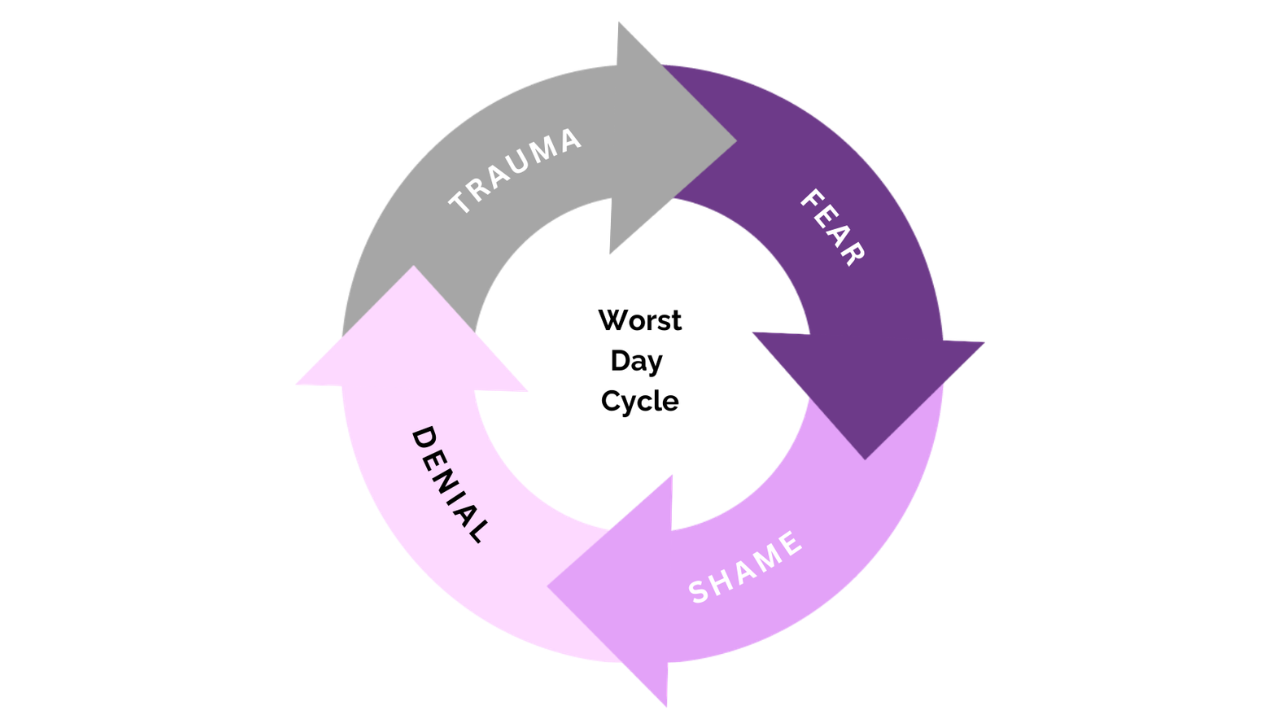
    Worst Day Cycle diagram showing trauma fear shame denial loop that emotional intelligence cannot break

    The Worst Day Cycle™ has four stages: Trauma → Fear → Shame → Denial.

    Trauma: Any negative emotional experience in childhood that created painful meanings. It doesn’t have to be dramatic — a parent who was emotionally unavailable, a household where feelings were treated as weakness, a caregiver whose love was conditional on performance. These experiences create a massive chemical reaction in the brain and body. The hypothalamus generates chemical cocktails — cortisol, adrenaline, dopamine, oxytocin misfires — and the brain becomes addicted to these emotional states.

    That’s you — feeling most alive when you’re in crisis mode, because your nervous system was calibrated for chaos in childhood and emotional intelligence just taught you to manage the chaos more efficiently.

    Fear: Fear drives repetition. The brain conserves energy by repeating known patterns — it can’t tell right from wrong, only known from unknown. Since 70%+ of childhood messaging is negative and shaming, adults repeat these painful patterns in relationships, career, hobbies, health — everything. Emotional intelligence teaches you to recognize the fear. It doesn’t teach you to trace it to its origin and rewire it.

    Shame: This is where you lost your inherent worth. “I am the problem.” Not “I made a mistake” — but “I AM the mistake.” This is the core wound underneath every high achiever’s drive. You don’t achieve because you’re ambitious. You achieve because deep down, you believe your authentic self isn’t enough. And emotional intelligence can’t touch that belief because it lives in your body, not your mind.

    That’s the shame talking — the voice that says “if I just get better at managing my emotions, I’ll finally feel okay.” But management was never the answer.

    Denial: Denial is the survival persona you created to survive the pain. It was brilliant in childhood — absolutely necessary. But in adulthood, it sabotages everything. For high achievers, emotional intelligence often becomes part of the denial — another layer of performance that says “look how regulated I am” while the authentic self stays buried.
    Trauma chemistry icon showing how childhood creates neurochemical patterns that emotional intelligence cannot rewire

    The Worst Day Cycle™ reveals why emotional intelligence fails for trauma survivors — it addresses the cognitive layer of emotional response while leaving the neurochemical addiction to childhood emotional patterns completely intact.

    How Your Survival Persona Uses Emotional Intelligence Against You

    Your survival persona is the identity you created in childhood to navigate an emotionally unsafe environment. It’s not who you are — it’s who you had to become. And for high achievers, emotional intelligence becomes one of the survival persona’s most powerful tools.

    Survival persona icon showing how high achievers use emotional intelligence as a survival strategy

    There are three survival persona types:

    The Falsely Empowered: This persona controls, dominates, and rages. They use emotional intelligence to read the room and maintain power. They know exactly what everyone is feeling — and they use that knowledge to stay in control. They look emotionally sophisticated, but their regulation is driven by fear, not healing. They manage others’ emotions to avoid feeling their own.

    That’s you — the leader who can de-escalate any conflict at work but explodes at home when your partner asks a simple question.

    The Disempowered: This persona collapses, people-pleases, and disappears. They use emotional intelligence to anticipate everyone else’s needs and keep themselves safe through accommodation. They’re so attuned to others’ emotions that they’ve completely lost touch with their own. They confuse hypervigilance with empathy.

    That’s you — the one everyone calls “so empathetic” when really you’re just terrified of what happens if you stop monitoring everyone’s emotional state.

    The Adapted Wounded Child: This persona oscillates between both — controlling one moment, collapsing the next. They use emotional intelligence inconsistently — brilliant at regulation in professional settings, completely dysregulated in intimate relationships. They swing between “I don’t need anyone” and “please don’t leave me.”
    Adapted wounded child icon showing oscillation between falsely empowered and disempowered survival personas

    That’s you — emotionally intelligent enough to see the pattern but not emotionally authentic enough to break it.

    Your survival persona weaponizes emotional intelligence — it uses your awareness of emotions as a control mechanism rather than a healing pathway, keeping you performing emotional regulation instead of experiencing genuine emotional truth.

    How Emotional Intelligence Masks Pain in Every Area of Your Life

    Family: You’re the peacekeeper at every family gathering. You use your emotional intelligence to manage everyone’s reactions — defusing tension, smoothing over conflicts, anticipating who’s about to blow up. You read the room better than anyone. But you haven’t expressed a genuine feeling at a family event in years. Your emotional intelligence keeps the system running. Your authentic self stays silent.

    That’s you — managing your family’s emotions like a full-time job while your own feelings sit in the basement, unvisited.

    Romantic Relationships: You’re the “healthy communicator.” You use “I” statements. You regulate during conflict. You read your partner’s emotional cues. But underneath all that emotional intelligence, you’re terrified. Terrified of abandonment. Terrified of rejection. Terrified that if they saw the real you — not the emotionally intelligent performance — they’d leave. You confuse emotional management with emotional intimacy.

    Sound familiar? The partner who does everything “right” in therapy but still feels completely alone in the relationship?

    Friendships: You’re the friend everyone calls in a crisis. You listen, you validate, you hold space. But no one holds space for you — because you never let them. Your emotional intelligence makes you an exceptional listener and an invisible human being. You know how everyone else feels. Nobody knows how you feel.

    Work: You’re the emotionally intelligent leader. You give great feedback. You manage difficult conversations. You stay composed under pressure. But you’re running on empty. You use emotional intelligence to perform at a level that earns praise and promotions while your body screams for rest, your relationships deteriorate, and the void grows deeper every year.

    That’s you — getting praised for the very emotional intelligence skills that keep you disconnected from yourself.

    Body and Health: You intellectualize your body’s signals. You know you’re stressed — your emotional intelligence told you that. But instead of feeling the stress, tracing it to its source, and processing it somatically, you “manage” it. You meditate. You exercise. You breathe. And you wonder why the chronic tension, the insomnia, the digestive issues, the autoimmune flares — they never fully resolve. Because emotional intelligence addresses the mind. Trauma lives in the body.

    Emotional blueprint icon showing how childhood patterns create emotional intelligence as performance across all life areas

    How the Emotional Authenticity Method™ Goes Beyond Emotional Intelligence

    The Emotional Authenticity Method™ is what happens when you stop managing emotions and start healing them. It’s the daily practice that rewires the emotional blueprint at the nervous system level — where emotional intelligence can’t reach.
    Emotional fitness icon representing the daily practice of the Emotional Authenticity Method beyond emotional intelligence

    Step 1: Somatic Down-Regulation with optional Titration. Before you can process anything, you have to get your nervous system out of survival mode. This is where most emotional intelligence training stops — it teaches regulation as the destination. The Emotional Authenticity Method™ uses regulation as the starting point. Titration means you go slowly — you don’t force yourself to feel everything at once.

    That’s you — learning that regulation isn’t the goal. It’s the doorway.

    Step 2: What am I feeling? Not “what should I feel?” Not “what’s the appropriate response?” But: what am I actually feeling right now? Using the Feelings Wheel, you develop emotional granularity — the ability to name specific emotions instead of lumping everything into “stressed” or “fine.” Most emotionally intelligent people can name others’ emotions perfectly. They struggle to name their own.

    Step 3: Where in my body do I feel it? All emotional trauma is stored physically. Your chest tightens. Your stomach drops. Your jaw clenches. Your shoulders climb toward your ears. Emotional intelligence stays in the head. Emotional authenticity moves into the body — because that’s where the wound actually lives.

    Step 4: What is my earliest memory of this feeling? This is the step that changes everything. You trace today’s reaction back to its childhood origin. You realize: this isn’t about today. My partner isn’t my parent. My boss isn’t my father. My nervous system just thinks they are. Emotional intelligence never asks this question. And that’s why it can’t heal you.

    That’s the moment the void starts to make sense — when you see that your emotional intelligence has been managing a five-year-old’s pain with an adult’s strategy, and the five-year-old needs something completely different.

    Step 5: Who would I be if I never had this feeling again? This is the vision step. It connects you to the Authentic Self Cycle™ and gives your nervous system a new destination — not more management, not better performance, but actual identity restoration.

    The Emotional Authenticity Method™ works because emotions are biochemical events — you cannot change emotional patterns through thoughts alone. Thoughts originate from feelings, not the other way around. Emotional intelligence addresses thoughts about feelings. Emotional authenticity addresses the feelings themselves.

    How the Authentic Self Cycle™ Replaces Performance With Healing

    The Authentic Self Cycle™ is the healing counterpart to the Worst Day Cycle™. Where the Worst Day Cycle™ traps you in Trauma → Fear → Shame → Denial, the Authentic Self Cycle™ restores your identity through Truth → Responsibility → Healing → Forgiveness.

    Authentic Self Cycle diagram showing truth responsibility healing forgiveness pathway beyond emotional intelligence

    Truth: Name the blueprint. See that “this isn’t about today.” When your colleague gives you critical feedback and your chest tightens, truth says: “This feeling is from childhood. My colleague isn’t my critical parent — my nervous system just thinks they are.” Emotional intelligence would tell you to regulate. Truth tells you to investigate.

    That’s the first step beyond emotional intelligence — seeing the pattern instead of managing it.

    Responsibility: Own your emotional reactions without blame. “My partner isn’t my parent — my nervous system just thinks they are.” This isn’t about fault. It’s about taking back your power from a childhood that stole it. Emotional intelligence often stops at “I need to manage my reaction.” Responsibility says “I need to understand where this reaction was born.”

    Healing: Rewire the emotional blueprint so conflict becomes uncomfortable but not dangerous, space isn’t abandonment, and intensity isn’t attack. This is where daily practice does its work — second by second, like the ticks of a clock. The second hand moves in tiny, almost insignificant ticks. But those ticks move the minute hand. The minutes move the hours. Healing works the same way.

    Forgiveness: Release the inherited emotional blueprint and reclaim your authentic self. This creates a NEW emotional chemical pattern that replaces fear, shame, and denial with safety, worth, and connection. You don’t become someone new. You finally meet who you always were underneath the survival persona and its emotional intelligence performance.

    That’s you — not the emotionally intelligent performer. The emotionally authentic human being who no longer needs to manage feelings because they’ve actually healed them.

    The Authentic Self Cycle™ is an identity restoration system — it doesn’t teach you to be more emotionally intelligent, it replaces the neurochemical pattern that made emotional intelligence necessary as a survival tool with a new blueprint built on truth, responsibility, and emotional authenticity.

    Why High Achievers Resist Emotional Authenticity

    High achievers resist emotional authenticity for the same reason they resist rest: it feels dangerous. Their entire identity has been built on performance — including their emotional performance. Dropping into emotional authenticity means admitting that all that emotional intelligence work was another layer of the survival persona.

    That’s you — the person who’d rather read another emotional intelligence book than sit with the feeling in your chest for 60 seconds.

    The brain conserves energy by repeating known patterns. If you grew up in an environment where managing emotions was the path to safety, your brain will keep choosing management over authenticity — because management is known, and authenticity is unknown. And to the brain, unknown means dangerous.
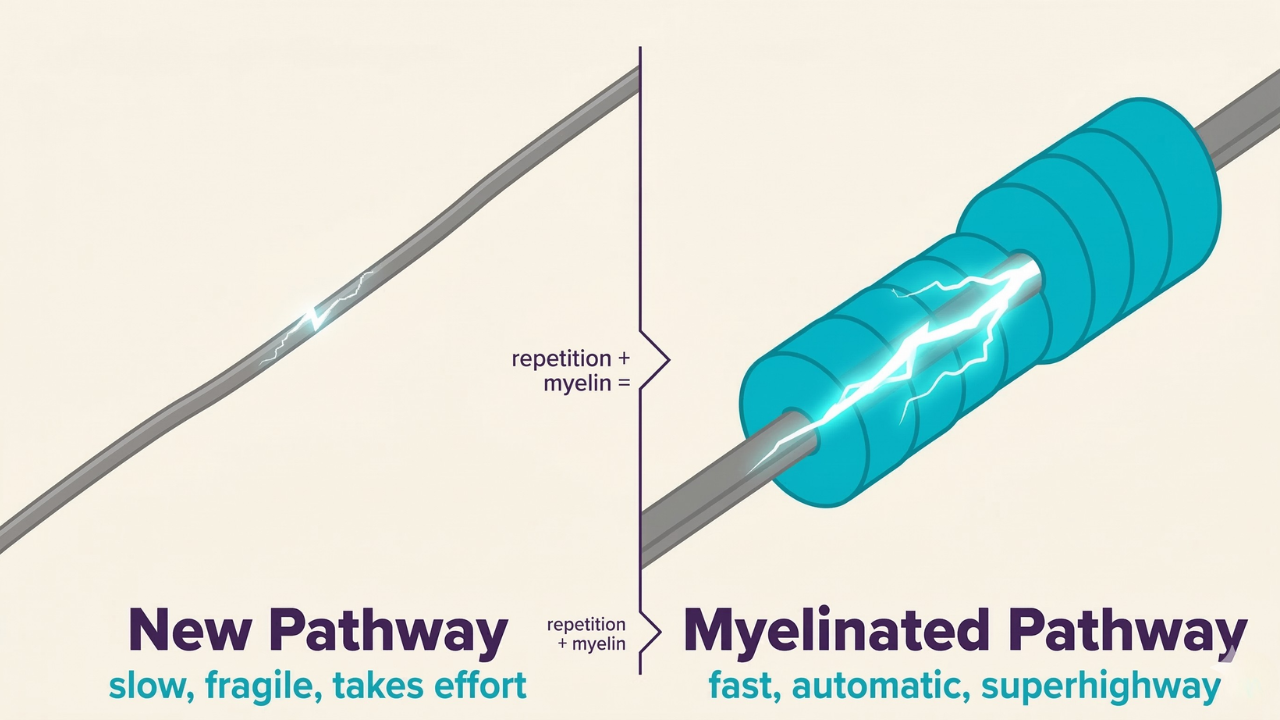
    Myelin and neural pathways icon showing how the brain automates emotional intelligence as a survival pattern

    This is why insight alone doesn’t change the pattern. You can understand intellectually that your emotional intelligence is a survival strategy. But understanding doesn’t rewire the nervous system. Only repeated somatic experience does. Only feeling the feeling — in your body, not just your mind — creates the neurological change that shifts the pattern.

    That’s the hardest truth for high achievers — you can’t achieve your way to healing. You can’t manage your way to authenticity. You have to feel your way there.
    Reparenting icon showing the process of moving from emotional intelligence performance to emotional authenticity

    Frequently Asked Questions

    Why isn’t emotional intelligence enough to heal trauma?

    Emotional intelligence operates at the cognitive level — it teaches you to recognize and manage emotions. But trauma is stored in the body as a neurochemical pattern, not as a thought. The Worst Day Cycle™ shows how childhood trauma creates an automated loop of fear, shame, and denial that runs below conscious awareness. Emotional intelligence manages the symptoms of this loop. Emotional authenticity heals the root.

    What is the difference between emotional intelligence and emotional authenticity?

    Emotional intelligence teaches you to regulate emotions so you can function effectively. Emotional authenticity teaches you to tell the truth about what you feel, trace it to its childhood origin, and allow your nervous system to process what was never safe to process as a child. One manages the surface. The other heals the foundation. The Emotional Authenticity Method™ provides a 5-step daily practice for this deeper work.

    Can you be emotionally intelligent and still have unhealed trauma?

    Yes — and this is extremely common among high achievers. In fact, emotional intelligence often becomes part of the survival persona. You learn to read rooms, manage reactions, and perform regulation — all while the original childhood wound remains untouched. The void persists because emotional intelligence addresses the thinking brain, not the nervous system where trauma actually lives.

    How do high achievers use emotional intelligence as a survival strategy?

    High achievers who grew up in emotionally unsafe environments learned to read emotions for survival — anticipating a parent’s mood, de-escalating conflict, performing the “right” emotion to stay safe. As adults, they refine this into emotional intelligence. But the motivation hasn’t changed: it’s still about control, safety, and preventing abandonment. The three survival persona types — falsely empowered, disempowered, and adapted wounded child — each use emotional intelligence differently to maintain their survival strategy.

    What does the Emotional Authenticity Method™ do that emotional intelligence training doesn’t?

    The Emotional Authenticity Method™ is a 5-step somatic practice: (1) down-regulate the nervous system, (2) name the specific feeling, (3) locate it in the body, (4) trace it to the earliest childhood memory, and (5) envision who you’d be without this pattern. Unlike emotional intelligence training, it targets the body — where trauma is stored — and rewires the neurochemical blueprint that creates automatic emotional reactions.

    How long does it take to move from emotional intelligence to emotional authenticity?

    The shift from emotional intelligence to emotional authenticity is not a single breakthrough — it’s a daily practice. Noticeable changes can happen within weeks of consistent work with the Emotional Authenticity Method™. The key is repetition, not intensity. Like the second hand on a clock, each small moment of emotional truth moves the larger pattern. The Authentic Self Cycle™ provides the framework for long-term identity restoration beyond emotional management.

    The Bottom Line

    You’re not failing because you’re not emotionally intelligent enough. You’re struggling because emotional intelligence was never designed to heal what happened to you in childhood.

    Every emotional intelligence skill you’ve developed was brilliant. It helped you navigate a world that didn’t feel safe. It got you promotions, relationships, respect. It made you the person everyone admires.

    But it didn’t fill the void. And it won’t.

    Because the void doesn’t respond to management. It responds to truth. To feeling. To the willingness to finally stop performing emotional health and start experiencing it.

    That’s you — not the emotionally intelligent performer who has it all together. The human being underneath who’s been waiting decades for someone to ask: “How are you really feeling?”

    The answer to that question — the honest, messy, terrifying answer — is where healing begins. Not in your head. In your body. In the feelings you’ve been managing instead of feeling. In the truth you’ve been regulating instead of speaking.

    You don’t need more emotional intelligence. You need emotional authenticity. And that starts with one brave, honest moment — today.

    These books complement the frameworks in this article and deepen your understanding of why emotional intelligence alone isn’t enough:

    Facing Codependence by Pia Mellody — the foundational text on how childhood trauma creates the survival patterns that emotional intelligence manages but doesn’t heal.

    The Body Keeps the Score by Bessel van der Kolk — the science of how trauma lives in the body, not the mind, explaining why cognitive approaches like emotional intelligence training have limits.

    When the Body Says No by Gabor Maté — how chronic emotional suppression — even “intelligent” suppression — manifests as physical illness.

    Codependent No More by Melody Beattie — a practical guide to recognizing when emotional awareness becomes emotional overfunction.

    The Gifts of Imperfection by Brené Brown — how shame drives performance-based identity and why vulnerability is the path beyond emotional management.

    Take the Next Step

    If you’re ready to move beyond emotional intelligence and into emotional authenticity, Kenny Weiss offers courses designed for high achievers who are done performing and ready to heal:

    Emotional Blueprint Starter Course — Individual ($79) — Your personal roadmap to understanding the Worst Day Cycle™ and beginning the shift from emotional management to emotional truth.

    Relationship Starter Course — Couples ($79) — For couples ready to move beyond emotionally intelligent conflict management into genuine emotional connection.

    Why We Can’t Stop Hurting Each Other ($479) — Deep-dive into the Worst Day Cycle™ and how childhood trauma creates the patterns that emotional intelligence manages but can’t resolve.

    Why High Achievers Fail at Love ($479) — Built specifically for high achievers who’ve mastered emotional intelligence in their career but can’t figure out emotional authenticity in relationships.

    The Shutdown Avoidant Partner ($479) — Understanding avoidant attachment through the lens of trauma chemistry and survival personas.

    Tier 1: Mapping the Blueprint ($1,379) — The comprehensive program for learning and practicing the Emotional Authenticity Method™.

    Download the Feelings Wheel — the free tool used in Step 2 of the Emotional Authenticity Method™ to build emotional granularity beyond surface-level emotional intelligence.

    Explore more: The Signs of Enmeshment | 7 Signs of Relationship Insecurity | 7 Signs of High Self-Esteem | How to Determine Your Negotiables and Non-Negotiables | 10 Do’s and Don’ts for a Great Relationship
  • How to Say No Without Feeling Guilty: The Shame Behind People-Pleasing

    How to Say No Without Feeling Guilty: The Shame Behind People-Pleasing

    How to say no without feeling guilty is one of the most searched questions in emotional health — and the answer has nothing to do with willpower, assertiveness tricks, or scripted phrases. The inability to say no is a trauma response rooted in childhood conditioning where your nervous system learned that compliance equals safety, disagreement equals danger, and your voice creates conflict. Saying no isn’t a boundary problem — it’s a shame problem. When childhood taught you that love is earned through self-abandonment, “no” feels like a death sentence to your nervous system.

    The guilt you feel when you say no isn’t moral guilt — it’s shame disguised as guilt. True guilt says “I did something that violated my values.” The guilt you feel when saying no says “I am bad for having needs.” That’s shame, installed in childhood, running your adult decisions.

    How to say no without guilt — codependence and people-pleasing patterns from childhood

    That’s you if you rehearse saying no in your head but can’t get the words out when the moment arrives — your nervous system still believes that “no” means losing love.

    TL;DR: You can’t say no without guilt because childhood taught your nervous system that compliance equals safety and your needs create conflict. The guilt is actually shame — installed before you had language. Kenny Weiss’s 5-step process, two magic phrases, the Worst Day Cycle™, and the 6-step Emotional Authenticity Method™ rewire your nervous system so you can say no from your Authentic Self instead of collapsing into your survival persona.

    Why You Feel Guilty When You Say No

    If you struggle to say no, you likely freeze, panic, over-explain, over-apologize, soften your “no” until it becomes a “yes,” say yes and resent it, feel responsible for others’ disappointment, feel selfish for choosing yourself, collapse into shame when someone reacts, or fear being seen as “difficult.” This is not a lack of strength. This is childhood conditioning.

    Your nervous system was calibrated in childhood — not by your willpower in adulthood. If you grew up in an environment where love felt conditional, where your parents withdrew approval when you disagreed, where expressing needs was met with criticism or punishment, your brain learned a survival equation: compliance equals connection. Saying yes kept you safe. Saying no meant abandonment.

    Emotional blueprint — childhood patterns create people-pleasing and inability to say no

    Your hypothalamus generated chemical cocktails — cortisol, adrenaline, dopamine misfires, oxytocin confusion — every time you experienced the threat of disconnection. Your brain became neurologically addicted to these states because the brain conserves energy by repeating known patterns. It can’t tell right from wrong — only known versus unknown.

    That’s you if you say yes to everything and then feel exhausted, resentful, and invisible — you’re not generous, you’re surviving.

    Claim-Level Citation: The inability to say no is a trauma response, not a character flaw. When childhood conditions teach a developing nervous system that compliance equals safety and disagreement equals danger, the adult brain continues running that survival program in every relationship — romantic, family, friendship, and work — until the emotional blueprint is consciously rewired.

    It’s Not Guilt — It’s Shame

    Here’s the distinction that changes everything: what you’re calling guilt is actually shame. Guilt says “I did something that violated my values.” Shame says “I am bad for having needs.” When you feel “guilty” for saying no, you’re not experiencing moral guilt — you’re experiencing the activation of a deep shame core installed in childhood.

    Emotional regulation — understanding shame versus guilt when saying no

    Two things create this shame-based guilt response. First, some people were sent the message — directly or indirectly — that they didn’t have value unless they were doing things for others. Their worth was contingent on service, sacrifice, and self-abandonment. This left them with a deep shame core that says “I only matter when I’m useful.”

    Second, codependence. If you’re saying yes out of guilt and obligation, you’re meeting someone else’s needs to manage your own fear of abandonment. And their request is about meeting their needs — it’s not about you. We are raised with a cultural standard that it’s our job to take care of others before ourselves. We can’t do that. We can only truly love someone by loving ourselves first — we can’t give away what we don’t have.

    That’s you if you feel a physical wave of dread in your stomach when you’re about to say no — that’s not conscience. That’s your nervous system predicting abandonment based on childhood data.

    Sound familiar? The guilt you feel when saying no is your survival persona’s alarm system — it was installed to keep you connected to caregivers you depended on for survival. It was brilliant then. It’s destroying you now.

    The Worst Day Cycle™: Why “No” Triggers Your Childhood

    Understanding why you can’t say no requires understanding the Worst Day Cycle™ — the four-stage neurological loop that activates every time someone makes a request and you feel the pressure to comply.

    Worst Day Cycle — Trauma Fear Shame Denial — why you can't say no without guilt

    Stage 1: Trauma. Childhood trauma is any negative emotional experience that created painful meanings about yourself, others, or the world. When someone asks you for something and you feel the pressure to say yes, your nervous system is activating the original threat: “If I don’t comply, I’ll be abandoned. If I have needs, I’ll be punished. If I say no, I’ll lose love.” The hypothalamus floods your body with the same chemical cocktails you experienced as a child.

    Stage 2: Fear. Fear drives repetition. Your brain thinks repetition equals safety. Since 70%+ of childhood messaging is negative and shaming, you learned to repeat the pattern that kept you safest: saying yes. Your brain can’t tell right from wrong — only known versus unknown. Saying yes is known. Saying no is unknown. And unknown feels like death to a nervous system wired for survival.

    That’s you if you’ve said yes to something and immediately felt your body relax — not because you wanted to do it, but because the threat of saying no was removed.

    Stage 3: Shame. Shame is where you lost your inherent worth. Where you decided “I am the problem.” When someone makes a request and you consider saying no, shame floods your system: “Who am I to have boundaries? My needs don’t matter. I’m selfish for wanting something different. They’ll think I’m difficult.” This is the shame core running your decisions — not your values.

    Stage 4: Denial. To survive unbearable shame, your psyche creates a survival persona — a false identity that takes over. “I’m fine with it.” “It’s not a big deal.” “I don’t mind.” “I’m happy to help.” This denial keeps the peace externally while you’re drowning internally. Three survival persona types emerge: falsely empowered (controls, dominates, rages), disempowered (collapses, people-pleases), adapted wounded child (oscillates between both).

    That’s the Worst Day Cycle™ hijacking every “yes” you’ve ever said when you meant “no.”

    The Three Survival Personas and How They Handle “No”

    Your survival persona is the identity you built in childhood to manage unbearable pain. Each type has a distinct strategy for handling — or avoiding — the word “no.”

    Three survival personas — how falsely empowered, disempowered, and adapted wounded child handle saying no

    The Falsely Empowered Survival Persona

    This persona controls, dominates, and rages. When it comes to saying no, the falsely empowered persona says no aggressively — as a weapon, not a boundary. They say no to punish, to control, to dominate. But here’s the paradox: they can’t say no vulnerably. They can’t say “this doesn’t work for me” without escalating it into “you shouldn’t have asked.” Their “no” comes from anger, not authenticity.

    That’s you if you can say no to strangers but can’t say no to the people who matter most — your survival persona only allows “no” when it can be delivered as a power move, not as a quiet truth.

    The Disempowered Survival Persona

    This persona collapses, people-pleases, and disappears. The disempowered persona cannot say no. Period. Every request feels like an obligation. Every “no” feels like rejection of the other person. You say yes to everything — and then resent everyone. You carry the emotional weight of every relationship while nobody carries yours.

    That’s you if you’re the one everyone calls when they need something — but nobody calls to ask how you’re doing. Your disempowered persona has trained everyone to expect your compliance.

    The Adapted Wounded Child Survival Persona

    This persona oscillates between both. Sometimes you say no explosively (falsely empowered). Sometimes you collapse and say yes to everything (disempowered). You’re unpredictable — even to yourself. One week you’re setting fierce boundaries. The next week you’re apologizing for existing.

    Adapted wounded child — oscillating between people-pleasing and explosive no

    That’s you if you swing between “I’m done being everyone’s doormat” and “I’m sorry, of course I’ll do it” within the same week — your adapted wounded child is cycling between survival strategies.

    Claim-Level Citation: All three survival personas (falsely empowered, disempowered, adapted wounded child) are brilliant childhood survival strategies that protected you from emotional annihilation. But you cannot say no authentically from inside a survival persona. Authentic “no” requires showing up as your Authentic Self — which means recognizing when your persona has taken over and choosing differently.

    The 5-Step Process for Saying No Without Guilt

    This process transforms how you handle requests, set boundaries, and reclaim your voice. It’s not about becoming a “no” machine — it’s about making every “yes” genuine and every “no” clean.

    Step 1: Make a List and Rank Your Difficulty

    Write down all the people, places, and things you have a hard time saying no to. Then rank them from easiest to hardest. For most of us, the toughest will be mom, dad, or family members. Do not take them on from day one — start with an easier one. You’re building a muscle, not performing surgery.

    That’s you if you just pictured your mother’s face and felt your stomach drop — she’s at the bottom of the list. Start with the coworker who asks you to cover their shift.

    Step 2: Map Out Your Morals, Values, Needs, Wants, Negotiables and Non-Negotiables

    This step is critical and most people skip it — which is exactly why they can’t say no. If you don’t know what you stand for, you’ll fall for everything. Map these out for every area of your life: relationships, friends, as a parent, hobbies, career, all of it. Without this framework, you get stuck in the moment wondering whether to say yes or no because you have no compass. With it, the answer is clear before the request even arrives.

    Mapping morals values needs wants negotiables non-negotiables for boundary setting

    Learn more about how to build this framework in the negotiables and non-negotiables guide.

    Step 3: Use Magic Phrase #1 — Buy Yourself Time

    When the request comes in, respond with: “Let me think about that, and I’ll get back to you.”

    This magic phrase creates space so you don’t get overrun by guilt. It gives you freedom to check the request against your morals, values, and needs. It buys you time. Practice using this phrase for every request you receive for one full week — even if you know the answer. You’re training your nervous system to tolerate the pause between request and response.

    That’s you if you’ve ever said yes before the other person even finished their sentence — your survival persona answered before your Authentic Self had a chance to speak.

    Step 4: Ask Yourself Four Questions

    Before you respond, run the request through these four filters:

    Question 1: Will I keep score? Am I tallying up what I’m doing for this person? If yes, I need to say no.

    Question 2: Will I bring this up in the future? If yes, I need to say no.

    Question 3: Will I harbor resentment if I do this? If yes, I need to say no.

    Question 4: Do I have the reserves? Just because we’ve been asked to do something we love doesn’t mean we have the energy for it at all times.

    Anchor Teaching: Think about how most relationships end. Each person lists everything they did for the other and what they didn’t get in return. That means both were saying yes when they wanted to say no — manipulating, not loving. Every yes that should have been a no becomes a resentment, a manipulation, a score being kept. When you say no freely, you’re being authentic. When you say yes freely, you’re being loving. Both require the ability to choose.

    Sound familiar? Every resentment in your life is a boundary you didn’t set — a “no” your survival persona wouldn’t let you say.

    Step 5: Use Magic Phrase #2 — Deliver the No

    When you’ve decided to say no, use this phrase: “I thought about it, and this just doesn’t work for me.”

    The power of this phrase: it’s entirely about you, so the other person doesn’t feel attacked. They can’t argue with it. It’s over. There’s no talking you into it. You never have to justify your no. You’re an adult. There’s no reason for you to justify your choices anymore, like when you were a child.

    That’s you if you’ve ever spent 20 minutes explaining why you can’t do something — your over-explanation is your survival persona trying to earn permission to have a boundary.

    Claim-Level Citation: If someone truly loves you, they won’t try to challenge your “no.” People who question your boundaries don’t have your heart in mind — their love and care are dysfunctional. They are more concerned with their own needs being met. That’s the hallmark of codependence. A person who respects your “no” is a person who respects you.

    The Emotional Authenticity Method™: Regulate Before You Respond

    You cannot say no from your Authentic Self while your nervous system is hijacked. Before you deliver your boundary, you need to regulate. The Emotional Authenticity Method™ is your 6-step practice for getting present before responding.

    Emotional Authenticity Method — six step process for regulating before setting boundaries

    Step 1: Somatic Down-Regulation. When someone makes a request and you feel the guilt rising, pause. Focus on what you can hear for 15-30 seconds. Your thinking brain cannot come online while your amygdala is running the show. If you’re highly dysregulated, use titration — cold water on your face, step outside, hold ice.

    Step 2: What am I feeling right now? Not “I feel guilty.” Use the Feelings Wheel to name it with precision. Are you feeling afraid? Obligated? Ashamed? Trapped? Resentful? Emotional granularity activates your thinking brain and breaks the reactive cycle.

    Step 3: Where in my body do I feel it? The knot in your stomach when someone asks for something. The tightness in your chest. The heat in your face. Locating emotion in your body prevents dissociation and grounds you in the present moment — not the childhood memory driving your response.

    Step 4: What is my earliest memory of this exact feeling? The pressure you feel right now likely echoes something much older. The first time you said no and a parent withdrew love. The first time your needs were called selfish. The first time compliance bought you safety. Your coworker isn’t your parent — your nervous system just thinks they are.

    Step 5: Who would I be if I never had this feeling again? Envision your Authentic Self — the version of you that says no without shame, without over-explaining, without guilt. What would that person do right now? What would they say?

    Step 6: Feelization. Sit in the feeling of the Authentic Self and make it strong. Don’t just picture yourself saying no — feel it. Feel the confidence, the groundedness, the worthiness. Create a new emotional chemical addiction to replace the old blueprint. Ask yourself: “How would I respond to this request from this feeling? What would I say? What would I do?” This is the emotional blueprint remapping and rewiring step.

    That’s the Emotional Authenticity Method™ — six steps to say no from your Authentic Self instead of collapsing into your survival persona. Do this before every difficult conversation, and you’ll be setting boundaries from the first word.

    The Authentic Self Cycle™: From People-Pleasing to Authenticity

    The Authentic Self Cycle™ is the healing counterpart to the Worst Day Cycle™ — a four-stage identity restoration system that transforms how you relate to boundaries permanently.

    Authentic Self Cycle — Truth Responsibility Healing Forgiveness — from people-pleasing to authenticity

    Stage 1: Truth. Name the blueprint. See “this isn’t about today.” When someone asks you for something and you feel the pressure to say yes, the truth is: “My coworker isn’t my parent. My nervous system just thinks they are. The guilt I feel isn’t about this request — it’s about a childhood pattern that says my needs create danger.”

    Stage 2: Responsibility. Own your emotional reactions without blame. “I’m responsible for my own choices. I’ve been saying yes out of fear, not love. I can feel the guilt and still choose not to abandon myself.” This is where you reclaim agency — you stop being a victim of other people’s requests and become the author of your own responses.

    Stage 3: Healing. Rewire the emotional blueprint so saying no becomes uncomfortable but not dangerous. Your nervous system learns: saying no doesn’t mean abandonment. Having needs doesn’t make you selfish. Boundaries don’t destroy relationships — they create real ones.

    Stage 4: Forgiveness. Release the inherited emotional blueprint and reclaim your authentic self. Forgive yourself for every time you said yes when you meant no. Forgive your nervous system for its brilliant protective patterns. Forgive the people who taught you that your needs were a burden.

    That’s the Authentic Self Cycle™ — the path from people-pleasing to genuine authenticity. When you can say no without guilt, every yes becomes an act of love instead of an act of survival.

    Metacognition — observing your patterns of people-pleasing and choosing differently

    Where People-Pleasing Shows Up Across Your Life

    The inability to say no doesn’t exist in a vacuum. It bleeds into every relationship and area of your life. Here are the signs across five life domains:

    Family: The Original Training Ground

    You still can’t say no to your parents — even as an adult. You attend every family event even when it costs you emotionally. You manage your parent’s feelings, moods, and expectations. You accept guilt trips without pushback. You hide your true opinions to avoid conflict. You feel responsible for your parent’s happiness. Family boundaries feel impossible because family is where the pattern was installed.

    That’s you if your parent’s disappointment still has the power to ruin your entire week — your nervous system is still running the childhood program that says their approval equals survival.

    Romantic Relationships: Where It Hurts Most

    You sacrifice your preferences to keep your partner happy. You agree to things sexually, financially, or emotionally that violate your values. You can’t disagree without feeling like the relationship is ending. You over-give time, energy, and emotional labor. You avoid bringing up issues because confrontation feels like abandonment. Your relationship insecurity drives your compliance more than love does.

    That’s you if you’ve ever agreed to something in your relationship that made your stomach turn — and told yourself it was compromise. It wasn’t compromise. It was self-abandonment.

    Friendships: The One-Sided Pattern

    You’re the one who always shows up, always listens, always helps — and never asks for anything in return. You accept flaky, disrespectful behavior because confrontation feels dangerous. You say yes to plans you don’t want to attend. You lend money you can’t afford. You become the therapist, the advice-giver, the problem-solver — while nobody holds space for you.

    That’s you if you’re exhausted from being everyone’s support system while your own needs go unmet — your disempowered persona trained everyone to expect your compliance.

    Work: The Professional Cost

    You take on extra projects you don’t have capacity for. You stay late while others leave on time. You can’t say no to your boss without your shame activating. You accept unreasonable deadlines, low pay, or disrespectful treatment. Your self-worth is entirely dependent on productivity and approval. You over-function because being needed feels like being valued.

    Many high achievers are driven by the same survival persona that makes saying no impossible — their success is built on the very pattern that’s destroying them.

    That’s you if you got promoted for the exact behavior that’s burning you out — your workplace rewards your survival persona, which makes it even harder to change.

    Body and Health: The Physical Price

    You ignore your body’s signals — hunger, fatigue, pain, sexual boundaries. You push through exhaustion because resting feels selfish. You eat, drink, or exercise based on what others expect rather than what your body needs. You neglect self-care because you’re too busy managing everyone else. Chronic tension, jaw clenching, stomach issues, and insomnia are your body’s way of saying the “no” your mouth won’t.

    Emotional fitness — how people-pleasing affects your body and health

    Sound familiar? Your body has been trying to say no for years. Every headache, every stomach knot, every sleepless night is your nervous system screaming the boundary your mouth won’t set.

    People Also Ask

    Why do I feel guilty every time I say no to someone?

    The guilt you feel isn’t moral guilt — it’s shame disguised as guilt. Childhood taught your nervous system that saying no means losing love. When you say no as an adult, your survival persona activates the same shame response you felt as a child when compliance was the price of connection. The Emotional Authenticity Method™ teaches you to distinguish shame from guilt and respond from your Authentic Self instead of your survival persona.

    How do I say no without being rude or hurting someone’s feelings?

    Use the magic phrase: “I thought about it, and this just doesn’t work for me.” This phrase is entirely about you, so the other person doesn’t feel attacked. You never need to justify your no. If someone truly loves and respects you, they won’t challenge your boundary. If they do, their concern is about their own needs being met — that’s codependence, not love.

    Is it selfish to say no to family members?

    No. Saying no is the most loving thing you can do — for yourself and for them. When you say yes out of guilt, you’re not being generous — you’re being manipulative, because you’re keeping score. Every yes that should have been a no becomes a resentment. Healthy relationships require both people to have the freedom to say no honestly. Your family deserves your authentic yes, not your resentful compliance.

    Why is it harder to say no to some people than others?

    The people you can’t say no to are the people who most closely activate your childhood blueprint. Parents are usually the hardest because they’re the original source of your survival conditioning. Partners are next because romantic relationships activate attachment wounds. The difficulty of saying no correlates directly with how much that person’s approval feels like survival to your nervous system.

    How do I stop people-pleasing in my relationship?

    Start by mapping out your morals, values, needs, wants, negotiables and non-negotiables. Without this framework, you’ll keep saying yes by default. Then practice the magic phrase “let me think about that” before every response. Use the Emotional Authenticity Method™ to regulate before engaging. And remember: healthy relationships require two whole people, not one person who has abandoned themselves to keep the other comfortable.

    Can learning to say no actually improve my relationships?

    Yes — every single time. When you stop saying yes out of guilt and start saying yes from genuine desire, your relationships transform. Your partner knows that every yes is real. Your friends trust your word. Your family respects your time. And the resentment that has been poisoning every connection in your life begins to dissolve. Boundaries don’t destroy relationships — they create the conditions for real ones.

    Reparenting yourself — learning to say no as an act of self-love and healing

    The Bottom Line

    You were never taught that your “no” is sacred. You were taught that compliance is love, sacrifice is virtue, and your needs are a burden. Your nervous system learned this before you had language — and it’s been running your decisions ever since.

    But here’s what changes everything: understanding the pattern is the first step to breaking it. When you see the Worst Day Cycle™ activating every time someone makes a request, when you recognize your survival persona stepping in to say yes before your Authentic Self has a chance to speak, when you understand that the “guilt” you feel is actually childhood shame — you can choose differently.

    The 5-step process and the two magic phrases aren’t tricks. They’re training wheels for your nervous system. As you practice, as you use the Emotional Authenticity Method™ to regulate before responding, as you move through the Authentic Self Cycle™, something extraordinary happens: saying no stops feeling like dying and starts feeling like freedom.

    Your authentic self is still in there — underneath the people-pleasing, beneath the shame, beyond the survival persona. That version of you — the one who knows what they want, honors their own needs, and says yes from love instead of fear — is waiting to come home.

    Every genuine “no” you speak is a step toward that person. Every boundary you hold is a declaration: I matter. My needs matter. My voice matters. And I’m done abandoning myself to keep the peace.

    It starts with one “no.” It starts now.

    Take the Next Step: Courses for Your Recovery

    Emotional Blueprint Starter Course — Individual ($79) — Understand your emotional blueprint, identify your survival persona, and begin the work of saying no from your Authentic Self.

    Relationship Starter Course — Couples ($79) — If people-pleasing is destroying your romantic relationship, learn how to set boundaries together and build authentic connection.

    Why We Can’t Stop Hurting Each Other ($479) — A comprehensive deep-dive into the neurobiology of people-pleasing, codependence, and the complete Worst Day Cycle™.

    Why High Achievers Fail at Love ($479) — For the person who succeeds at work through people-pleasing but can’t figure out why their relationships are falling apart.

    The Shutdown Avoidant Partner ($479) — If your partner shuts down when you set boundaries, this program reveals the survival persona driving their behavior.

    Tier 1: Mapping the Blueprint ($1,379) — The complete mastermind experience. Live monthly coaching, personalized feedback, access to all courses, and a community of people committed to the deep work.

    Start with the Feelings Wheel exercise to reconnect with your emotional life today.

    • Facing Codependence by Pia Mellody — The foundational text on how childhood trauma creates survival personas, people-pleasing patterns, and the loss of authentic self.
    • The Body Keeps the Score by Bessel van der Kolk — Essential reading on how trauma lives in the nervous system and why saying no requires more than willpower.
    • When the Body Says No by Gabor Maté — How emotional repression and chronic people-pleasing manifest as physical illness and what authentic expression looks like.
    • Codependent No More by Melody Beattie — The classic guide to setting boundaries and stopping the cycle of self-abandonment.
    • The Gifts of Imperfection by Brené Brown — A guide to wholehearted living that directly counters the shame keeping you trapped in people-pleasing.

    Continue Your Learning

    The Emotional Authenticity Method™ requires practice. Start with the Feelings Wheel exercise to reconnect with your emotional life. Then explore these related topics: