Tag: relationship patterns

  • 5 Ways Pets Can Damage Relationships: The Childhood Trauma Pattern

    5 Ways Pets Can Damage Relationships: The Childhood Trauma Pattern

    Pets can damage relationships when they become an unconscious substitute for emotional intimacy — replacing the vulnerability, reciprocity, and conflict that healthy adult connection requires with the safe, one-directional comfort of an animal that never challenges your survival persona. If you adore your pet but struggle with romantic relationships, feel more emotionally available to your dog than your partner, or can’t understand why your love life keeps falling apart despite having “so much love to give,” the answer isn’t about your pet. It’s about what your pet is protecting you from feeling.

    That’s you — the one who can pour unconditional love into a four-legged creature but freezes up the moment a human being asks for the same thing.

    This isn’t about being a “bad pet owner” or choosing animals over people. It’s about understanding how childhood trauma creates emotional patterns that make pets feel safer than partners — and how to heal the root cause so you can have both.
    Codependence icon showing how pets can become codependent substitutes for emotional intimacy in relationships

    How Can Pets Damage Relationships?

    Pets are wonderful. They bring joy, companionship, and genuine healing. Nothing in this article is anti-pet. But in my decades of coaching, I’ve seen the same pattern hundreds of times: a person who gives extraordinary love to their animal but cannot sustain emotional intimacy with another human being.

    That’s you — the one whose dog gets the soft voice, the patience, and the presence that your partner has been begging for.

    Pets can damage relationships when they become the primary emotional outlet — when all the love, tenderness, and vulnerability that should also flow toward a partner gets redirected to an animal that will never ask you to be vulnerable back. The pet becomes the emotional spouse. The partner becomes the logistical roommate.

    This isn’t the pet’s fault. It’s an unconscious trauma pattern. And understanding it is the first step toward having both — a pet you love and a relationship that actually works.

    Pets damage relationships not because animals are harmful, but because unhealed childhood trauma creates an emotional blueprint that makes one-directional love feel safer than the mutual vulnerability that adult intimacy requires — and pets become the perfect vehicle for that avoidance.

    Why Do Pets Replace Emotional Intimacy in Relationships?

    A recent Pew Research trend reveals a significant shift: 57% of women now view their pet as equal to a family member, compared to 43% of men. That’s a massive difference — and it points to something deeper than preference. It points to emotional need.

    That’s you — treating your pet like a partner because your pet never triggers the childhood wounds that a real partner does.

    Here’s what’s actually happening: a relationship with a pet is emotionally one-directional. You give love when you want to. You receive affection when you need it. And when you’re overwhelmed, exhausted, or emotionally flooding — you can check out without consequence. The pet doesn’t feel rejected. The pet doesn’t bring up what happened last Tuesday. The pet doesn’t ask you to be vulnerable.

    Human intimacy doesn’t work that way. Healthy adult connection requires vulnerability, reciprocity, open-hearted communication, and mutual presence. It requires you to be seen — really seen — including the parts of yourself you’ve been hiding since childhood.

    That’s you — the one who can curl up with your dog and feel completely safe, but the moment your partner wants to “talk about feelings,” your entire body tightens up.
    Emotional authenticity icon showing why pets feel emotionally safer than vulnerable human relationships

    Children bond deeply with stuffed animals for the same reason — stuffed animals give comfort without demanding anything in return. Many adults accidentally recreate this dynamic with their pets. The comfort is real. The safety is real. But the growth that comes from genuine human connection — the kind that actually heals the void — is missing.

    Pets replace emotional intimacy because childhood trauma wired your nervous system to equate vulnerability with danger — and pets provide the illusion of deep connection without ever requiring the one thing that terrifies you: being fully known by another human being.

    How the Worst Day Cycle™ Explains Why Pets Feel Safer Than Partners

    To understand why pets become emotional substitutes, you need to understand the neurochemical pattern that drives it — the Worst Day Cycle™.
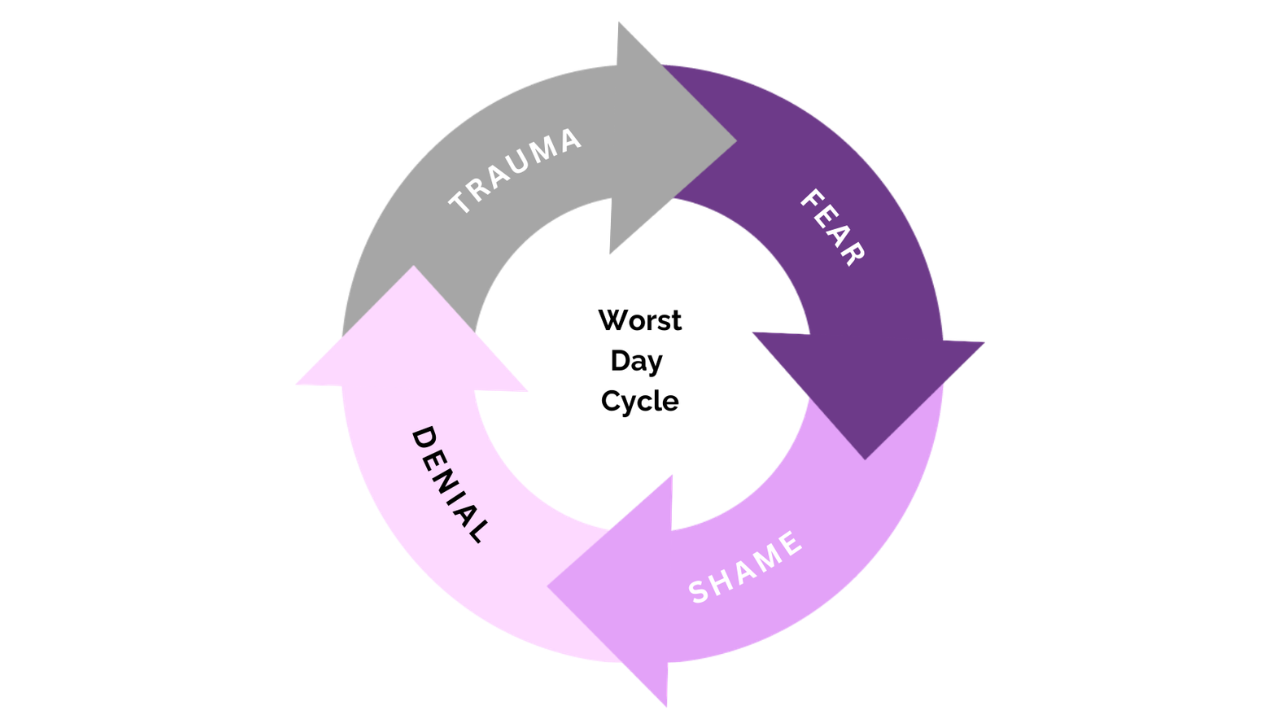
    Worst Day Cycle diagram showing trauma fear shame denial loop that makes pets feel safer than human partners

    The Worst Day Cycle™ has four stages: Trauma → Fear → Shame → Denial.

    Trauma: Any negative emotional experience in childhood that created painful meanings. It doesn’t have to be dramatic — a parent who was emotionally unavailable, a household where feelings were treated as weakness, a caregiver whose love was conditional on performance. These experiences create a massive chemical reaction in the brain and body. The hypothalamus generates chemical cocktails — cortisol, adrenaline, dopamine, oxytocin misfires — and the brain becomes addicted to these emotional states.

    That’s you — feeling more relaxed with your cat than with any human being, because your nervous system was calibrated for emotional danger in every human relationship since childhood.

    Fear: Fear drives repetition. The brain conserves energy by repeating known patterns — it can’t tell right from wrong, only known from unknown. Since 70%+ of childhood messaging is negative and shaming, adults repeat these painful patterns in relationships, career, hobbies, health — everything. Your brain learned that human connection equals pain. So it steers you toward the safest form of connection available — your pet.

    Shame: This is where you lost your inherent worth. “I am the problem.” Not “I made a mistake” — but “I AM the mistake.” This is the core wound underneath the pet-over-partner pattern. You choose your pet because deep down, you believe that if a partner really knew you — the real you, not the survival persona — they would leave. But the pet? The pet stays no matter what.

    That’s the shame talking — the voice that says “my dog loves me unconditionally” while really meaning “my dog is the only one who could.”

    Denial: Denial is the survival persona you created to survive the pain. It was brilliant in childhood — absolutely necessary. But in adulthood, it sabotages your relationships. Denial sounds like: “I’m just a pet person.” “I prefer animals to people.” “Pets love you more than humans ever will.” These aren’t preferences — they’re survival strategies disguised as personality traits.
    Trauma chemistry icon showing how childhood creates neurochemical patterns that make pets feel safer than partners

    The Worst Day Cycle™ reveals why pets feel safer than partners — your brain created a neurochemical loop in childhood that equates human intimacy with danger, and pets provide the only form of connection that doesn’t trigger that loop.

    What Are the 5 Ways Pets Can Damage Your Relationship?

    These aren’t judgments. They’re patterns. And recognizing them is the first step toward healing.

    1. When the pet becomes the emotional spouse. Everything revolves around the pet. Before you go anywhere: “Wait — we have to walk the dog!” Spontaneous weekend away? Not without 24 hours’ notice and a pet sitter. A romantic overnight after a beautiful day trip? Impossible if the dog hasn’t been let out. The pet becomes the priority. The partner becomes the afterthought.

    That’s you — canceling date night for the third time because the dog “seems anxious” while your partner sits in silence wondering where they rank.

    2. When the pet replaces vulnerability. Sad? Snuggle the dog. Angry? Take the cat for a long cuddle. Hurt by your partner? Retreat into the pet’s unconditional acceptance. Every time you turn to your pet instead of turning toward your partner with honesty, you’re choosing comfort over connection. It feels soothing. But it’s keeping you from the deeper intimacy you actually need.

    That’s you — using your pet as an emotional escape hatch every time a conversation gets uncomfortable.

    3. When the pet reinforces love avoidance. Love avoidance stems from childhood environments where a child was emotionally smothered, over-relied on, or forced into adult responsibilities too young. For people with this pattern, closeness feels dangerous. Independence feels safe. And pets are the perfect “safe closeness” — you can love them without getting overwhelmed. They never burden you. You choose the distance.
    Emotional absorption icon showing how pets absorb the emotional energy that should flow into human relationships

    Sound familiar? The person who has room in their heart for every stray animal but can’t make room for a partner who wants to get closer?

    4. When pets create a hierarchy that displaces the partner. I once worked with a man whose childhood still echoed with his mother’s nightly mantra: “Kids, wait — I have to feed the pets first.” The message was clear: your needs come second. Decades later, he dated women who treated him the same way. Not because they were unkind, but because our brains, craving familiarity, unconsciously pull us toward what we know — even when it hurts.

    That’s you — if your partner has ever said “I feel like I come after the dog” and you dismissed it as dramatic.

    5. When “pet person” becomes an identity that blocks growth. Society reinforces this. Commercials portray partners as annoyances while pets are the loyal, loving companions. Social media celebrates “dog mom” culture while mocking relationship struggles. We’re subtly taught that humans disappoint, but pets never do. It’s a comforting story — and it’s a limiting one. When “I’m a pet person” becomes an identity, it becomes a wall. And behind that wall is a person who’s terrified of being hurt by another human being.

    That’s you — wearing your “dog mom” identity like armor, not because you love dogs more than people, but because dogs never made you feel the way your parent did.

    How Your Survival Persona Uses Pets to Avoid Vulnerability

    Your survival persona is the identity you created in childhood to navigate an emotionally unsafe environment. It’s not who you are — it’s who you had to become. And for many people, pets become a central tool of the survival persona.
    Survival persona icon showing how each persona type uses pets differently to avoid emotional vulnerability

    There are three survival persona types:

    The Falsely Empowered: This persona controls, dominates, and rages. They use pets to maintain emotional control. The pet obeys. The pet doesn’t challenge. The pet doesn’t have needs that conflict with theirs. The falsely empowered can be tender and loving with their animal — but that tenderness is conditional on the animal not making demands. When a human partner asks for vulnerability, the falsely empowered shuts down or explodes. The pet never triggers that response.

    That’s you — gentle and patient with your dog but rigid and dismissive the moment your partner needs emotional space.

    The Disempowered: This persona collapses, people-pleases, and disappears. They use pets to feel needed without the risk of rejection. The pet always needs them. The pet always comes to them. The pet provides the validation and purpose that the disempowered can’t find within themselves. They pour their entire emotional reservoir into the animal — and have nothing left for a human partner.

    That’s you — the one who rescues every animal but can’t rescue yourself from relationships that leave you empty.

    The Adapted Wounded Child: This persona oscillates between both — controlling one moment, collapsing the next. They use pets as emotional regulators. When they feel powerful, the pet is a companion. When they feel collapsed, the pet is a lifeline. They swing between “I don’t need anyone” and “at least my dog loves me” without ever landing in their authentic self.
    Adapted wounded child icon showing oscillation between using pets for control and using pets for comfort

    That’s you — swinging between “my dog is my everything” and “why can’t I make a relationship work?” and not seeing the connection between the two.

    Your survival persona uses pets to avoid the vulnerability that human connection demands — not because you love animals too much, but because your childhood taught you that being fully known by another person is the most dangerous thing in the world.

    How Pet-Centered Avoidance Shows Up in Every Area of Your Life

    Family: You’re more emotionally present with your pet than with your parents or siblings. Family gatherings feel like performances — but the moment you get home and sit with your dog, you exhale. You use your pet as an excuse to leave family events early. “I have to get back — the dog needs to go out.” The dog doesn’t need to go out. You need to escape.

    That’s you — using your pet as a socially acceptable exit strategy from every emotionally overwhelming family situation.

    Romantic Relationships: Your partner competes with the pet for your attention and loses. You share more physical affection with your animal than with your partner. You talk to your pet about your day but shut down when your partner asks “how are you?” You choose the pet’s comfort over the partner’s need for connection — every time.

    Sound familiar? The person who sleeps curled up with their dog while their partner lies awake on the other side of the bed?

    Friendships: You’d rather spend a Saturday with your pet than with friends. You cancel plans to stay home with your animal. Your social media is exclusively pet content. You connect with other “pet people” because the shared identity keeps conversations surface-level and safe.

    Work: You rush through meetings to get home to your pet. You work from home not for productivity but because being near your animal regulates your nervous system. You use your pet as the reason you can’t travel, can’t stay late, can’t attend the team dinner — when the real reason is that human interaction drains you because your nervous system treats it as a threat.

    That’s you — building your entire life around your pet’s schedule because your pet’s world is the only one where you feel emotionally safe.

    Body and Health: You walk your dog religiously but haven’t been to the doctor in years. You prepare organic meals for your pet but eat takeout standing over the sink. You prioritize your animal’s health because caring for something else is easier than caring for yourself — because caring for yourself means being alone with your own feelings.
    Emotional blueprint icon showing how childhood patterns create pet-centered avoidance across all life areas

    How the Emotional Authenticity Method™ Heals the Pattern Behind Pet Dependence

    The solution isn’t giving up your pet. It’s healing the emotional blueprint that makes your pet the safest relationship in your life. The Emotional Authenticity Method™ does this by targeting the nervous system — where the avoidance pattern actually lives.
    Emotional regulation icon representing the Emotional Authenticity Method for healing pet-based relationship avoidance

    Step 1: Somatic Down-Regulation with optional Titration. Before you can process the pattern, you have to get your nervous system out of survival mode. When your partner asks for closeness and your body tightens, that’s your nervous system treating intimacy as danger. Down-regulation is the starting point — not the destination.

    That’s you — learning that the tightness in your chest when your partner says “we need to talk” isn’t about your partner. It’s about your five-year-old self who learned that human connection means pain.

    Step 2: What am I feeling? Most people who over-bond with pets have no idea what they’re actually feeling in human relationships. They know they feel “comfortable” with their pet and “stressed” with people — but that’s not emotional granularity. Using the Feelings Wheel, you learn to name the specific emotion: not “stressed” but terrified. Not “comfortable” but relieved. The specificity changes everything.

    Step 3: Where in my body do I feel it? All emotional trauma is stored physically. Your chest tightens when your partner wants to talk. Your stomach drops when someone gets too close. Your shoulders climb when intimacy is on the table. Locating the feeling in your body moves you from intellectual understanding to somatic processing.

    Step 4: What is my earliest memory of this feeling? This is where the breakthrough happens. You trace today’s avoidance back to its childhood origin. Maybe your earliest memory is a parent who was emotionally unavailable. Maybe it’s a household where feelings were mocked. Maybe it’s the moment you realized that the family pet was the only one who was consistently kind to you. You realize: this isn’t about my partner. My nervous system just thinks they’re my parent.

    That’s the moment — when you see that your pet isn’t your best relationship. It’s your safest one. And safety isn’t the same as healing.

    Step 5: Who would I be if I never had this feeling again? This is the vision step. It connects you to the Authentic Self Cycle™ and gives your nervous system a new destination — a life where you can love your pet AND love a partner without your survival persona choosing one over the other.

    The Emotional Authenticity Method™ works because emotions are biochemical events — you cannot change the pattern of choosing pets over people through thoughts alone. Thoughts originate from feelings, not the other way around.

    How the Authentic Self Cycle™ Creates Space for Both Pets and Partners

    The Authentic Self Cycle™ is the healing counterpart to the Worst Day Cycle™. Where the Worst Day Cycle™ traps you in Trauma → Fear → Shame → Denial, the Authentic Self Cycle™ restores your identity through Truth → Responsibility → Healing → Forgiveness.
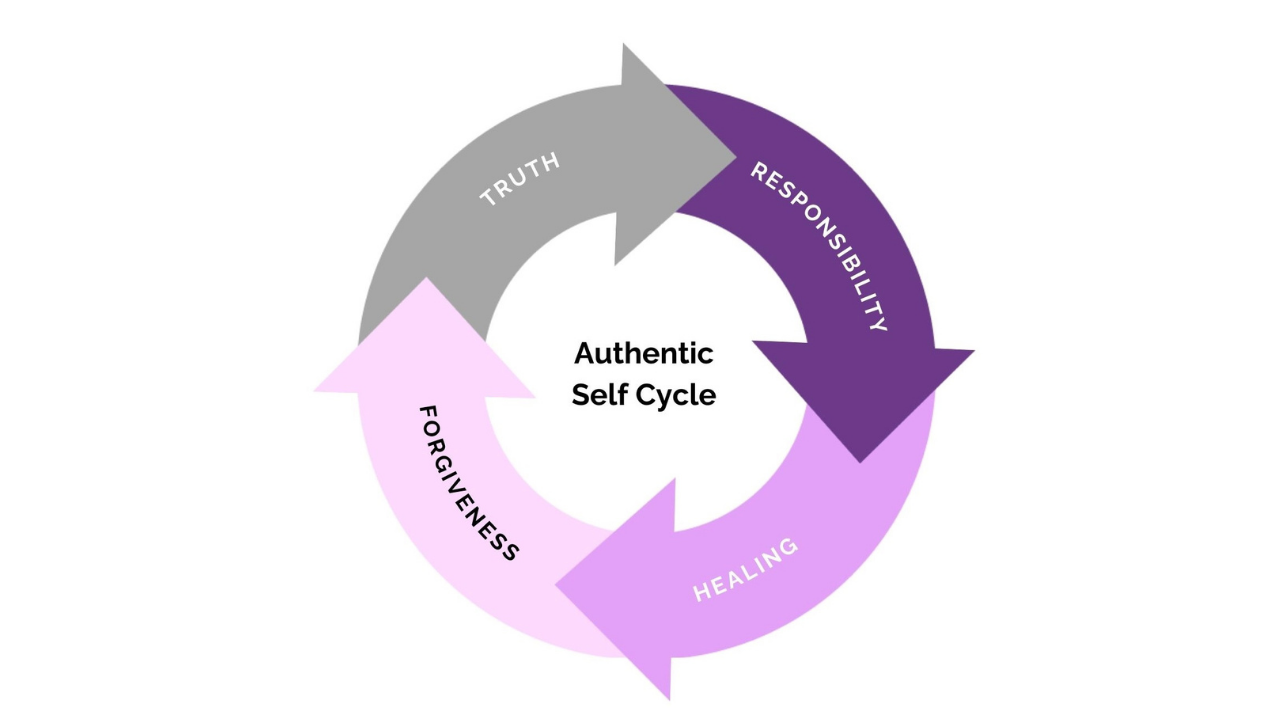
    Authentic Self Cycle diagram showing truth responsibility healing forgiveness as the path to balanced pet and partner relationships

    Truth: Name the blueprint. See that “this isn’t about today.” When your partner asks for closeness and you retreat to your pet, truth says: “I’m not choosing my dog over my partner. I’m choosing safety over vulnerability because that’s what my childhood taught me.”

    That’s the first step — seeing the pattern instead of being trapped inside it.

    Responsibility: Own your emotional reactions without blame. “My partner isn’t my parent — my nervous system just thinks they are.” This isn’t about fault. It’s about taking back your power from a childhood that stole it. Your partner asking for closeness isn’t the threat. Your nervous system’s memory of closeness equaling pain — that’s what’s driving the retreat.

    Healing: Rewire the emotional blueprint so human intimacy becomes uncomfortable but not dangerous, closeness isn’t engulfment, and vulnerability isn’t annihilation. This is where daily practice does its work — second by second, like the ticks of a clock. Each moment of choosing your partner AND your pet, instead of your pet INSTEAD of your partner, rewires the pattern.

    Forgiveness: Release the inherited emotional blueprint and reclaim your authentic self. This creates a NEW emotional chemical pattern that replaces fear, shame, and denial with safety, worth, and connection. You don’t lose your love for your pet. You gain the capacity to love a human being with the same openness.

    That’s you — not the person who had to choose between their pet and their partner. The person who finally has enough love for both because the survival persona isn’t hoarding all of it anymore.

    The Authentic Self Cycle™ is an identity restoration system — it doesn’t ask you to give up your pet, it replaces the neurochemical pattern that made your pet the only safe relationship with a new blueprint built on truth, responsibility, and emotional authenticity.

    Frequently Asked Questions About Pets and Relationships

    Can pets actually damage a romantic relationship?

    Yes — not because pets are harmful, but because unhealed childhood trauma can turn pets into emotional substitutes for human intimacy. When a pet becomes the primary source of comfort, affection, and connection, the romantic partner gets displaced. The Worst Day Cycle™ explains how the brain creates a neurochemical preference for safe, one-directional love over the vulnerable, reciprocal love that adult relationships require.

    Why do I feel more connected to my pet than my partner?

    Because your pet never triggers your childhood wounds. Pets don’t criticize, reject, abandon, or require vulnerability. If your childhood taught you that human connection equals pain, your nervous system will naturally gravitate toward the relationship that feels safest — your pet. The Emotional Authenticity Method™ helps you trace this preference to its origin and rewire it at the nervous system level.

    Is it codependent to prioritize your pet over your partner?

    It can be. When the pet becomes a vehicle for avoiding emotional intimacy, it functions like any other codependent pattern — it substitutes a safe, controllable relationship for the messy, vulnerable, growth-producing one. The three survival persona types — falsely empowered, disempowered, and adapted wounded child — each use pets differently to maintain their survival strategy and avoid authentic connection.

    How do I know if my love for my pet is healthy or avoidant?

    Ask yourself: does my pet add to my human relationships, or replace them? Do I turn to my pet instead of my partner when I’m hurting? Do I use my pet as a reason to avoid intimacy, travel, or social connection? Healthy pet love enhances your life. Avoidant pet love protects you from the vulnerability your survival persona can’t tolerate. The Authentic Self Cycle™ helps you see the difference.

    What should I do if my partner says I prioritize my pet over them?

    Listen — because they might be seeing something your survival persona is hiding from you. Instead of defending, use the Emotional Authenticity Method™: down-regulate, name what you’re feeling, locate it in your body, and trace it to its earliest memory. Your partner’s complaint might be the most honest feedback you’ve received about a pattern you can’t see from inside it.

    Can I heal my relationship patterns without giving up my pet?

    Absolutely. This is not about choosing between your pet and your partner. It’s about healing the childhood emotional blueprint that makes your pet the only safe relationship. When you rewire the Worst Day Cycle™ through the Authentic Self Cycle™, you create enough emotional capacity for both — a pet you adore and a partner you can actually let in.

    The Bottom Line

    Your pet isn’t the problem. Your pet is the solution your nervous system found to a problem that started decades ago.

    Somewhere in childhood, you learned that human connection was dangerous. That being known meant being hurt. That vulnerability was a liability, not a gift. And so your brilliant, adaptive brain found the safest way to get love without risking pain — a four-legged creature who never judges, never leaves, and never asks you to be anything other than what you are.

    That was brilliant. And it’s not enough anymore.

    Because the void doesn’t fill with pet cuddles. It fills with the terrifying, beautiful, messy experience of being truly seen by another human being — and surviving it. Of saying “I’m scared” instead of retreating to the couch with your dog. Of staying in the conversation instead of checking out. Of choosing vulnerability even when every cell in your body screams to run.

    That’s you — not the “pet person” who doesn’t need people. The human being underneath who’s been hiding behind the safest love they could find, waiting for someone to say: “You can have both. You just have to stop running.”

    You can have both. You just have to stop running.

    These books complement the frameworks in this article and deepen your understanding of why pets become emotional substitutes and how to heal the pattern:

    Facing Codependence by Pia Mellody — the foundational text on how childhood trauma creates the codependent patterns that make one-directional relationships (including with pets) feel safer than mutual adult intimacy.

    The Body Keeps the Score by Bessel van der Kolk — the science of how trauma lives in the body, explaining why your nervous system chooses your pet over your partner.

    When the Body Says No by Gabor Maté — how chronic emotional avoidance manifests as physical illness and relational disconnection.

    Codependent No More by Melody Beattie — a practical guide to recognizing when emotional patterns disguise themselves as personality preferences.

    The Gifts of Imperfection by Brené Brown — how shame drives avoidance and why vulnerability is the path back to authentic connection with both animals and humans.

    Take the Next Step

    If you recognize yourself in this article — if you’ve been using your pet as emotional armor and you’re ready to learn how to love both your animal and a partner — Kenny Weiss offers courses designed for people who are done avoiding and ready to heal:

    Emotional Blueprint Starter Course — Individual ($79) — Your personal roadmap to understanding the Worst Day Cycle™ and the emotional patterns that make pets feel safer than partners.

    Relationship Starter Course — Couples ($79) — For couples ready to address the avoidance patterns that create distance in their relationship.

    Why We Can’t Stop Hurting Each Other ($479) — Deep-dive into the Worst Day Cycle™ and how childhood trauma creates the patterns that keep you choosing safety over vulnerability.

    Why High Achievers Fail at Love ($479) — Built specifically for high achievers who have mastered control in every area of life except intimate relationships.

    The Shutdown Avoidant Partner ($479) — Understanding avoidant attachment through the lens of trauma chemistry and survival personas.

    Tier 1: Mapping the Blueprint ($1,379) — The comprehensive program for learning and practicing the Emotional Authenticity Method™.

    Download the Feelings Wheel — the free tool used in Step 2 of the Emotional Authenticity Method™ to build emotional granularity.

    Explore more: The Signs of Enmeshment | 7 Signs of Relationship Insecurity | 7 Signs of High Self-Esteem | How to Determine Your Negotiables and Non-Negotiables | 10 Do’s and Don’ts for a Great Relationship
  • Why People Ghost You: The Childhood Trauma Pattern Behind Ghosting

    Why People Ghost You: The Childhood Trauma Pattern Behind Ghosting

    Ghosting is the act of abruptly cutting off all communication with someone without explanation — and if it keeps happening to you, the pattern isn’t random. It’s rooted in your childhood emotional blueprint. The person who ghosted you has their own unhealed trauma driving their behavior. But here’s what no one tells you: the reason you keep attracting ghosters — and the reason it devastates you every single time — lives in the same place. Your nervous system learned in childhood what “love” looks like, and if love looked like inconsistency, emotional unavailability, or abandonment, your brain will keep choosing partners who deliver exactly that.

    That’s you — the one who keeps showing up with your whole heart and wondering why they disappear without a word.

    This isn’t a dating problem. It’s a trauma pattern. And understanding it is the first step to breaking it.

    Ghosting is a predictable outcome of unhealed childhood attachment wounds — both the ghoster and the person being ghosted are operating from survival personas created in childhood, repeating the Worst Day Cycle™ of trauma, fear, shame, and denial in their adult relationships.

    Trauma chemistry icon showing how childhood attachment wounds create the pattern of attracting ghosters

    What Is Ghosting and Why Does It Hurt So Much?

    Ghosting is the sudden, unexplained disappearance of someone you’re in a relationship with — romantic, friendship, or otherwise. No goodbye. No explanation. No closure. One day they’re texting you back, and the next day they’re gone. And you’re left staring at your phone, replaying every conversation, wondering what you did wrong.

    That’s you — checking your phone for the hundredth time, convinced that if you just figure out what you said wrong, you can fix it.

    Here’s why ghosting hurts so much: it doesn’t just trigger today’s pain. It triggers your oldest pain. For anyone who experienced emotional unavailability, inconsistency, or abandonment in childhood, ghosting doesn’t feel like a dating disappointment. It feels like the original wound ripping back open. Your nervous system doesn’t know the difference between your partner disappearing today and your parent disappearing emotionally when you were five.

    That’s the real pain — not that this person left, but that your body remembers every time someone left before, and it’s feeling all of it at once.

    The intensity of your reaction to ghosting is the clearest sign that this pattern lives deeper than dating. It lives in your childhood emotional blueprint — the set of meanings your brain created about love, safety, and worth before you were old enough to question them.

    Why Do People Ghost? The Childhood Trauma Behind Disappearing

    People who ghost aren’t evil. They’re terrified. Ghosting is a survival strategy — a way to escape vulnerability, conflict, and emotional intimacy without having to feel the feelings that come with honest communication.

    That’s the truth nobody wants to hear — the person who ghosted you is running from their own pain, not from you.

    Here’s what actually happened to the person who ghosts: as a child, they learned that emotional closeness was dangerous. Maybe their parent was unpredictable — loving one moment, raging or withdrawing the next. Maybe vulnerability was punished. Maybe they learned that the safest strategy was to disappear before they could be hurt.

    Survival persona icon showing how ghosters developed a disappearing pattern as a childhood survival strategy

    Their brain built a survival persona around denial, detachment, and control through disappearance. And that persona was brilliant in childhood — it kept them safe when staying emotionally present was dangerous. But in adult relationships, that same survival strategy destroys connection, trust, and intimacy.

    That’s the ghoster — not a villain, but a wounded child in an adult body who never learned that love doesn’t have to be terrifying.

    The brain conserves energy by repeating known patterns. It can’t tell right from wrong — only known from unknown. If the ghoster’s childhood taught them that intimacy leads to pain, their brain will keep choosing disappearance over vulnerability — because disappearance is known, and vulnerability is unknown. And to the brain, unknown means dangerous.

    People ghost because their childhood trauma created a neurochemical pattern that equates emotional vulnerability with danger — their brain automates the disappearing act as a survival response, choosing the familiar pain of disconnection over the terrifying unknown of authentic intimacy.

    How the Worst Day Cycle™ Explains Ghosting

    Ghosting — both doing it and attracting it — follows a predictable neurochemical pattern called the Worst Day Cycle™. Understanding this cycle is the key to breaking the pattern.

    Worst Day Cycle diagram showing how trauma fear shame denial creates the ghosting pattern in relationships

    The Worst Day Cycle™ has four stages: Trauma → Fear → Shame → Denial.

    Trauma: Any negative emotional experience in childhood that created painful meanings. For the ghoster, this might be a parent who was emotionally unavailable, a caregiver who withdrew love as punishment, or a household where vulnerability was treated as weakness. For the person being ghosted, the trauma might be inconsistent love — a parent who was present sometimes and absent other times, teaching the child that love is something you have to chase. These experiences create a massive chemical reaction in the brain and body. The hypothalamus generates chemical cocktails — cortisol, adrenaline, dopamine, oxytocin misfires — and the brain becomes addicted to these emotional states.

    That’s you — feeling that sick rush of anxiety when someone doesn’t text back, because your nervous system was calibrated for emotional inconsistency in childhood.

    Fear: Fear drives repetition. The brain thinks repetition equals safety. So the ghoster keeps disappearing — because disappearing feels safer than staying and being vulnerable. And you keep choosing people who are emotionally unavailable — because unavailable love is what your nervous system recognizes as “love.” Since 70%+ of childhood messaging is negative and shaming, adults repeat these painful patterns in relationships, career, hobbies, health — everything.

    Sound familiar? You swore you’d never date someone unavailable again — and then you did. That’s not weakness. That’s your nervous system doing exactly what it was trained to do.

    Shame: This is where you lost your inherent worth. “I am the problem.” When someone ghosts you, shame says: “There must be something wrong with me. I’m too much. I’m not enough. If I were more attractive, more interesting, more lovable — they wouldn’t have left.” This isn’t a rational thought. It’s a childhood wound that ghosting rips back open.

    That’s the shame talking — the voice that says “they left because of who I am” when the truth is they left because of who THEY are.

    Denial: Denial is the survival persona you created to survive the pain. After being ghosted, denial looks like: making excuses for the ghoster (“they’re just busy”), blaming yourself (“I should have played it cooler”), immediately jumping into the next relationship to avoid the pain, or telling yourself “it doesn’t bother me” while your body tells a completely different story.

    The Worst Day Cycle™ explains why ghosting is never a one-time event — both the ghoster and the person being ghosted are running automated neurochemical programs from childhood, repeating the same attachment pattern until the root trauma is addressed.

    How Your Survival Persona Attracts Ghosters

    Your survival persona is the identity you created in childhood to navigate an emotionally unsafe environment. It’s not who you are — it’s who you had to become. And each survival persona type has a specific relationship to the ghosting pattern.

    There are three survival persona types:

    The Falsely Empowered: This persona controls, dominates, and rages. In the ghosting dynamic, the falsely empowered person may actually be the ghoster — using disappearance as a power move. Or they respond to being ghosted with rage, revenge, and attempts to regain control. They text repeatedly. They show up uninvited. They refuse to accept that someone could just leave. Their ghosting response is driven by the belief: “No one leaves ME.”

    That’s you — the one who sent 47 texts after being ghosted, not because you’re “crazy” but because your survival persona cannot tolerate feeling powerless.

    Codependence icon showing how codependent patterns attract unavailable partners who ghost

    The Disempowered: This persona collapses, people-pleases, and disappears. In the ghosting dynamic, the disempowered person is almost always the one being ghosted — repeatedly. They attract ghosters because they give too much, too fast, abandoning their own needs to keep the other person comfortable. They tolerate red flags. They make excuses. They blame themselves when the person vanishes. Their ghosting response is driven by the belief: “If I had been better, they wouldn’t have left.”

    That’s you — the one who gave everything and then sat alone wondering what was wrong with you, when the truth is you were choosing people who were never available in the first place.

    The Adapted Wounded Child: This persona oscillates between both — raging one moment, collapsing the next. After being ghosted, they swing between “I don’t care, I’m better off” and “please come back, I’ll do anything.” They might block the ghoster, then unblock them three days later. They oscillate between self-blame and other-blame without ever landing on the truth: this pattern started long before this relationship.

    Adapted wounded child icon showing oscillation between rage and collapse after being ghosted

    That’s you — blocking their number on Monday, checking if they viewed your story on Tuesday, and telling your friends you’re “totally fine” on Wednesday.

    Your survival persona is the reason you keep finding yourself in the ghosting dynamic — it unconsciously selects partners whose attachment style matches your childhood blueprint, creating a neurochemical familiarity that your brain misinterprets as love.

    How Ghosting Patterns Show Up in Every Area of Your Life

    Family: The original ghosting happened in your family — not with a dating app, but with a parent or caregiver who was emotionally unavailable. Maybe they were physically present but emotionally gone. Maybe they gave love inconsistently — warm and connected one day, cold and withdrawn the next. That inconsistency trained your nervous system to chase, to wait, to hope. And now you repeat that pattern with everyone.

    That’s you — still waiting for the parent who emotionally ghosted you at age five to finally show up.

    Romantic Relationships: This is where the ghosting pattern is most visible. You choose partners who mirror your childhood attachment wound. If love was inconsistent, you choose inconsistent partners. If love required chasing, you choose partners who pull away. If love was conditional on your performance, you overperform in relationships — giving everything, losing yourself, and then being devastated when they disappear. The chemistry you feel with unavailable people isn’t love. It’s trauma recognition.

    That’s the hardest truth — the “spark” you feel with people who eventually ghost you is your nervous system recognizing the emotional pattern it learned in childhood.

    Friendships: Ghosting doesn’t just happen in dating. You’ve had friends who slowly faded away without explanation. You’ve been the friend who gives everything and then gets dropped when someone more exciting comes along. Or you’ve been the one who withdraws from friendships when they get too close — ghosting others because intimacy feels threatening.

    Sound familiar? You have a hundred acquaintances and zero people who actually know you.

    Work: The ghosting pattern shows up at work as inconsistent engagement — throwing yourself into projects and then burning out and withdrawing. Or it shows up as choosing bosses and colleagues who are emotionally unavailable, hoping to finally earn the approval you never got in childhood. You might even ghost opportunities — self-sabotaging by disappearing from promising situations because success feels as unsafe as intimacy.

    That’s you — the one who gets close to a breakthrough and then mysteriously pulls back, because your nervous system can’t tolerate the vulnerability of actually getting what you want.

    Body and Health: Every time you get ghosted, your body doesn’t just feel sad. It goes into a full trauma response — insomnia, loss of appetite, chest tightness, nausea, obsessive thinking. These aren’t overreactions. They’re your body reliving the original abandonment wound. Chronic ghosting patterns lead to elevated cortisol, disrupted sleep, digestive issues, and a nervous system stuck in fight-or-flight — because your body can’t tell the difference between being abandoned by a partner at thirty and being abandoned by a parent at three.

    Emotional blueprint icon showing how childhood abandonment patterns create vulnerability to ghosting across all life areas

    Why Do You Keep Attracting People Who Ghost?

    Here’s what nobody wants to hear: you’re not just unlucky. You’re not just picking the wrong people. Your nervous system is specifically calibrated to feel “chemistry” with people who will eventually become unavailable — because that’s what love felt like in your childhood.

    That’s you — mistaking anxiety for attraction, mistaking inconsistency for excitement, mistaking the desperate hope that they’ll change for love.

    When someone is consistently available, present, and communicative, your nervous system reads it as boring. Flat. No spark. Because available love is UNKNOWN to your system — and the brain interprets unknown as dangerous. So you gravitate toward the person who texts back sometimes, who’s hot and cold, who keeps you guessing. Not because you want drama. Because your nervous system was programmed for drama in childhood, and it keeps seeking what it knows.

    Trauma gut vs authentic gut icon showing how childhood programming makes unavailable partners feel like the right choice

    The other piece nobody talks about: there are subconscious benefits to attracting ghosters. Inconsistent relationships give you freedom without commitment. They give you the excitement of pursuit without the vulnerability of true intimacy. They let you have one foot in and one foot out — just like your survival persona wants. You get to say you want connection while your nervous system ensures you never actually have to be fully seen.

    That’s the denial — telling yourself you want a committed relationship while unconsciously choosing people who will never commit.

    You attract ghosters because your childhood emotional blueprint set your “love thermostat” to match inconsistent attachment — your brain chemically rewards you for choosing unavailable partners because that pattern matches the original neurochemical cocktail of childhood love mixed with fear, hope, and abandonment.

    How the Emotional Authenticity Method™ Breaks the Ghosting Pattern

    The Emotional Authenticity Method™ is the daily practice that rewires the attachment blueprint underneath the ghosting pattern. It works because it targets the body — where trauma lives — not just the mind where dating advice lives.

    Emotional authenticity icon representing the method that breaks the cycle of attracting ghosters

    Step 1: Somatic Down-Regulation with optional Titration. When you’ve been ghosted, your nervous system is in full survival mode — fight, flight, or freeze. Before you can process anything, you have to get out of that state. This might mean deep breathing, grounding, cold water on your wrists, or simply slowing down enough to feel your body instead of spiraling in your thoughts. Titration means you go slowly — you don’t force yourself to feel everything at once.

    That’s you — learning to put the phone down and breathe instead of sending the eleventh text.

    Step 2: What am I feeling? Not “why did they ghost me?” Not “what did I do wrong?” But: what am I FEELING right now? Using the Feelings Wheel, you develop emotional granularity — the ability to name specific emotions instead of lumping everything into “devastated.” You might discover that underneath the pain of being ghosted, there’s terror. Underneath the terror, there’s shame. Underneath the shame, there’s a tiny child who believed they were abandoned because they weren’t enough.

    Step 3: Where in my body do I feel it? All emotional trauma is stored physically. When you get ghosted, where does it land? Your chest? Your stomach? Your throat? Locating the feeling in your body is how you move from the obsessive mental loop (“why did they leave?”) to actual somatic processing.

    Step 4: What is my earliest memory of this feeling? This is where the pattern breaks. You trace today’s devastation back to its childhood origin. You realize: this isn’t about the person who ghosted me. This feeling is from when I was small. My parent’s emotional unavailability. The inconsistency. The waiting. The hoping. My nervous system just thinks this person IS my parent.

    That’s the moment everything shifts — when you realize you’re not grieving a three-month relationship. You’re grieving the childhood attachment wound that three-month relationship triggered.

    Step 5: Who would I be if I never had this feeling again? This is the vision step. It connects you to the Authentic Self Cycle™ and gives your nervous system a new destination. Who would you be if love didn’t feel like chasing? If connection didn’t require performing? If you could be fully seen and know — in your body, not just your mind — that you wouldn’t be abandoned?

    The Emotional Authenticity Method™ works because emotions are biochemical events — you cannot change the ghosting pattern through dating strategies alone. Thoughts originate from feelings, not the other way around. Until you heal the feeling underneath the pattern, you’ll keep choosing the same people.

    How the Authentic Self Cycle™ Replaces the Ghosting Pattern

    The Authentic Self Cycle™ is the healing counterpart to the Worst Day Cycle™. Where the Worst Day Cycle™ traps you in Trauma → Fear → Shame → Denial, the Authentic Self Cycle™ restores your identity through Truth → Responsibility → Healing → Forgiveness.

    Authentic Self Cycle diagram showing truth responsibility healing forgiveness as the path out of the ghosting pattern

    Truth: Name the blueprint. See that “this isn’t about today.” When someone doesn’t text back and your chest tightens, truth says: “This feeling is from childhood. This person’s silence isn’t abandonment — my nervous system just thinks it is because it’s running the same program it learned when I was a child waiting for my parent to come back.”

    That’s the first step out of the ghosting spiral — seeing the pattern instead of being trapped inside it.

    Responsibility: Own your emotional reactions without blame. “This person isn’t my parent — my nervous system just thinks they are.” This isn’t about excusing the ghoster’s behavior. Ghosting is cruel. But responsibility means you stop making their behavior mean something about YOUR worth. Their disappearance is about their trauma. Your devastation is about yours.

    That’s you — finally separating their wound from your wound, and taking responsibility for healing yours.

    Healing: Rewire the emotional blueprint so another person’s withdrawal becomes uncomfortable but not catastrophic. So silence isn’t abandonment. So inconsistency is a red flag you walk away from, not a pattern you chase. This is where daily practice does its work — second by second, like the ticks of a clock. Each time you choose not to text the person who ghosted you, not to make excuses for unavailable people, not to abandon yourself to keep someone else — you’re rewiring.

    Forgiveness: Release the inherited emotional blueprint and reclaim your authentic self. This creates a NEW emotional chemical pattern that replaces the fear-shame-denial loop with safety, worth, and genuine connection. Forgiveness doesn’t mean the ghoster was right. It means you stop carrying the weight of their wound as if it’s yours. And you stop carrying the weight of your childhood wound as if it defines you.

    That’s you — not the person who keeps getting ghosted. The person who healed the wound that made ghosting feel like the end of the world.

    The Authentic Self Cycle™ is an identity restoration system — it doesn’t teach you better dating strategies, it replaces the neurochemical pattern that draws you to unavailable people with a new blueprint built on truth, responsibility, and emotional authenticity.

    Reparenting icon showing how healing your attachment wound stops the pattern of attracting ghosters

    Frequently Asked Questions About Ghosting

    Why do people ghost instead of just telling you the truth?

    People ghost because their childhood trauma created a survival persona that avoids vulnerability at all costs. Honest communication requires emotional intimacy — the ability to sit with discomfort, say difficult things, and tolerate another person’s pain. For someone whose nervous system was wired in childhood to equate vulnerability with danger, ghosting feels safer than truth. Their disappearance is a trauma response, not a commentary on your worth.

    Why does being ghosted hurt so much more than a normal breakup?

    Being ghosted triggers the original attachment wound from childhood — the experience of being abandoned without explanation. A normal breakup, while painful, gives you closure and information. Ghosting gives you nothing, which forces your brain to fill in the blanks with its oldest, most shame-filled stories: “I wasn’t enough.” “I’m unlovable.” The Worst Day Cycle™ explains how this shame response was automated in childhood and gets reactivated by any experience of unexplained abandonment.

    How do I stop attracting people who ghost me?

    You stop attracting ghosters by healing the childhood emotional blueprint that draws you to unavailable people. Your nervous system currently interprets inconsistency as “chemistry” because that’s what love felt like growing up. The Emotional Authenticity Method™ rewires this pattern by tracing your attraction to unavailable people back to its childhood origin and creating a new neurochemical association with safe, consistent love. You don’t need better dating strategies — you need a different emotional blueprint.

    Is ghosting a form of emotional abuse?

    Ghosting is a form of emotional abandonment. Whether it rises to abuse depends on context — a single ghost after two dates is different from repeated cycles of connection and disappearance within an established relationship. Repeated ghosting — where someone disappears and returns, disappears and returns — is a particularly damaging pattern because it keeps your nervous system in a constant state of hypervigilance and hope, replicating the childhood dynamic of inconsistent love.

    Can a ghoster change their behavior?

    A ghoster can change, but only by addressing the childhood trauma that created the pattern. Ghosting is a survival persona behavior — an automated response to emotional vulnerability that was programmed in childhood. Changing it requires the same deep work as any trauma pattern: somatic processing, tracing the behavior to its childhood origin, and rewiring the nervous system’s relationship to intimacy and vulnerability through the Authentic Self Cycle™.

    What should I do immediately after being ghosted?

    First, do NOT chase. The urge to text repeatedly, to show up uninvited, to demand answers — that’s your survival persona trying to recreate the childhood dynamic of chasing unavailable love. Instead, use Step 1 of the Emotional Authenticity Method™: somatic down-regulation. Get your nervous system out of survival mode. Then ask yourself: “What am I feeling?” and “Where in my body do I feel it?” This shifts you from the obsessive mental loop into your body — where actual healing happens.

    The Bottom Line

    The person who ghosted you didn’t leave because of who you are. They left because of who they are — a wounded person running a childhood survival program that says vulnerability is more dangerous than disappearing.

    And the reason it destroyed you isn’t because you’re weak or dramatic or “too much.” It’s because your nervous system recognizes this pattern. It’s been here before. It knows this pain. And every time someone ghosts you, it’s not just processing today’s loss — it’s processing every loss that came before it, all the way back to the first time love disappeared without warning.

    That’s you — not the person who keeps getting ghosted. The person who’s been carrying a childhood wound that ghosting keeps ripping open.

    You don’t need better dating apps. You don’t need to play harder to get. You don’t need to figure out the perfect text to prevent people from leaving.

    You need to heal the wound that makes leaving feel like dying. You need to rewire the blueprint that mistakes anxiety for attraction and inconsistency for love. You need to build a nervous system that recognizes safe, available, consistent love as HOME — not as boring.

    That work doesn’t happen in your head. It happens in your body. In the feelings you’ve been running from. In the truth you’ve been too afraid to speak. In the five steps of the Emotional Authenticity Method™, practiced daily, until your body learns what your mind already knows: you are worthy of love that stays.

    That’s you — not the person they ghosted. The person who finally stopped chasing and started healing.

    These books complement the frameworks in this article and deepen your understanding of why you attract ghosters and how to break the pattern:

    Facing Codependence by Pia Mellody — the foundational text on how childhood attachment wounds create the codependent patterns that draw you to unavailable partners.

    The Body Keeps the Score by Bessel van der Kolk — the science of how attachment trauma lives in the body, explaining why the pain of ghosting feels physical, not just emotional.

    When the Body Says No by Gabor Maté — how chronic relationship stress from repeated abandonment patterns manifests as physical illness.

    Codependent No More by Melody Beattie — a practical guide to recognizing when your “love” for unavailable people is actually a codependent survival strategy.

    The Gifts of Imperfection by Brené Brown — how shame drives the belief that you were ghosted because you aren’t enough, and how vulnerability is the path back to authentic connection.

    Take the Next Step

    If you’re ready to stop attracting people who ghost and start building relationships from your authentic self, Kenny Weiss offers courses designed for people who are done chasing and ready to heal:

    Emotional Blueprint Starter Course — Individual ($79) — Your personal roadmap to understanding the Worst Day Cycle™ and why your attachment patterns keep drawing you to unavailable people.

    Relationship Starter Course — Couples ($79) — For couples ready to break the cycle of emotional unavailability and build genuine interdependence.

    Why We Can’t Stop Hurting Each Other ($479) — Deep-dive into the Worst Day Cycle™ and how childhood trauma creates the relationship pain that leads to ghosting dynamics.

    Why High Achievers Fail at Love ($479) — For high achievers who keep choosing unavailable partners and can’t figure out why success hasn’t translated to love.

    The Shutdown Avoidant Partner ($479) — Understanding avoidant attachment — the attachment style most likely to ghost — through the lens of trauma chemistry and survival personas.

    Tier 1: Mapping the Blueprint ($1,379) — The comprehensive program for learning and practicing the Emotional Authenticity Method™ and rewiring your attachment blueprint.

    Download the Feelings Wheel — the free tool used in Step 2 of the Emotional Authenticity Method™ to build emotional granularity and move beyond “I feel devastated” to the specific emotions underneath the ghosting pain.

    Explore more: The Signs of Enmeshment | 7 Signs of Relationship Insecurity | 7 Signs of High Self-Esteem | How to Determine Your Negotiables and Non-Negotiables | 10 Do’s and Don’ts for a Great Relationship
  • Trauma Bonding Explained: Why Smart People Stay in Toxic Relationships

    Trauma Bonding Explained: Why Smart People Stay in Toxic Relationships

    Trauma bonding is a deep emotional attachment to someone who harms you, created when cycles of fear, pain, and intermittent relief rewire your nervous system to crave the connection that causes the damage. It happens to intelligent, accomplished people because your brain isn’t running a logic program—it’s running a survival program built in childhood, and that program can’t tell the difference between danger and home.

    That’s you.

    You’re probably successful. You’ve built something. You know better. And yet you can’t leave. Or you leave and come back. Or you leave and find someone just like them. The smartest part of your brain keeps asking “why am I doing this?” while another part of you is completely addicted to this person, to the anxiety, to the hope, to the possibility that this time will be different.

    That’s not weakness. That’s trauma bonding. And it’s the central mechanism of the Worst Day Cycle™.

    In this post, I’m going to show you exactly how trauma bonding forms, why it happens to smart people, what it looks like in your romantic relationships, friendships, family dynamics, work life, and your body, and most importantly—how to break the bond and rebuild your nervous system so you can experience genuine connection without the addiction to pain.

    Table of Contents

    What Is Trauma Bonding and Why Does It Happen?

    Let’s start with the neurobiology. When you experience trauma—especially as a child, when your brain is still developing its emotional blueprint—your nervous system floods with cortisol (stress hormone), adrenaline (fight-or-flight), and a complicated misfiring of dopamine and oxytocin (the bonding chemicals). Your brain remembers the physical state, the chemical state, and who was there when it happened.

    That’s you if you grew up with an emotionally unavailable parent, a raging parent, a parent who cycled between neglect and overwhelming attention, or a parent whose love felt conditional on your performance.

    Trauma chemistry neurobiology cortisol adrenaline dopamine oxytocin misfire emotional blueprint

    Now fast forward to adulthood. Your brain has learned something critical for survival: chaos means love. Anxiety means connection. The fear of abandonment is the fear of dying. So your brain keeps searching for people, situations, and relationships that recreate that original chemistry. This isn’t a choice. This is your nervous system trying to do what it was designed to do—survive.

    The problem is that your brain was built in an environment where 70% or more of the messages you received were negative, shaming, or conditional. Your brain learned that you are the problem. Your brain learned that if you just try harder, perform better, be smaller, be bigger, be perfect—then maybe you’ll finally feel safe. Maybe then you’ll feel loved.

    And when you find someone who reminds you of that original trauma—that parent, that caregiver, that emotional state—your body doesn’t run away. Your body runs toward them. Because your body has a chemical addiction to resolving the original wound. Your body has confused danger with home.

    Trauma bonding is the repetition of a childhood emotional blueprint through adult relationships. Your brain is addicted to the neurochemical state of fear, hope, and relief because that’s what love felt like in your formative years. You aren’t addicted to the person. You’re addicted to the chemistry.

    How the Worst Day Cycle™ Creates Trauma Bonds

    The Worst Day Cycle™ has four stages: Trauma → Fear → Shame → Denial. Let me show you how this becomes a trauma bond.

    Worst Day Cycle framework trauma fear shame denial childhood blueprint

    Stage 1: Trauma. Something happens that triggers your original wound. Your partner withdraws. Your friend makes a comment that lands like criticism. Your boss questions your judgment. In that moment, you’re not 35 years old. You’re seven years old and your parent is disappointed in you. The trigger activates your emotional blueprint.

    Stage 2: Fear. The nervous system floods with cortisol and adrenaline. Your body believes it’s under threat. Fear drives repetition—your brain thinks that by repeating the pattern, by understanding it, by fixing it, you’ll finally become safe. So you text them. You apologize. You try to explain yourself. You attempt to fix the rupture. You sacrifice your boundaries. You contort yourself into whatever shape will make them come back.

    That’s you in the middle of the night, crafting the perfect message that will make them understand.

    Stage 3: Shame. When repetition doesn’t work, shame arrives. Shame is where you lost your inherent worth. Shame is the belief that you are the problem. Not your circumstances, not the relationship dynamic—you. You’re too needy. You’re too much. You’re not enough. You should have known better. Shame creates the survival persona—an identity designed to survive in an environment where love is conditional.

    Stage 4: Denial. The survival persona kicks in to protect you from the shame. It tells you that you misread the situation. That they didn’t mean it that way. That you’re being too sensitive. That if you just love them harder, change yourself more, they’ll finally choose you. Denial creates hope. And hope is the drug that keeps you bonded.

    Then they reach out. Or you reach out and they respond. Or something happens that makes you feel chosen again. Your body floods with dopamine and oxytocin—the bonding chemicals—and the cycle resets. You’re back to Stage 1, waiting for the next trigger.

    Trauma chemistry evolves into trauma bonding: Idealization, Anxiety, Clinging, Withdrawal, Abandonment fear, Reunion, Repeat. This is the Worst Day Cycle™ reenacted in romance. Your nervous system becomes addicted to the emotional state of fear followed by relief, danger followed by reunion, pain followed by hope.

    The Worst Day Cycle™ is brilliant in childhood. It keeps you attuned to the emotional state of your caregiver. It keeps you trying to fix them, heal them, manage them—because your survival depends on it. But in adulthood, that same mechanism is sabotaging you. It’s keeping you bonded to people who don’t serve you. It’s keeping you small, anxious, and addicted to the possibility of finally healing the original wound through this person.

    Why Do Smart, Successful People Stay in Toxic Relationships?

    This is the question that keeps you awake at 3 a.m. You’re intelligent. You’re accomplished. You’ve built a career. You make good decisions in every other area of your life. Why can’t you just leave?

    Because intelligence doesn’t override emotional trauma. Your prefrontal cortex—the part of your brain that does logic, reasoning, and decision-making—goes offline when you’re in a trauma state. Your amygdala takes over. Your amygdala doesn’t care about logic. Your amygdala only knows: this feels familiar, this feels like home, this matches my blueprint.

    That’s you explaining away their behavior, justifying their actions, believing that you can be the one to change them.

    Smart people stay in toxic relationships for another reason: their intelligence becomes a tool of denial. You can rationalize anything. You can find evidence that supports staying. You can construct a narrative where their behavior makes sense, where you’re the problem, where if you just understand them better or love them differently, it will all work out.

    And here’s the harder truth: you’re attracted to them because they match your childhood. Your body isn’t looking for love—it’s looking for what it already knows. Healthy feels unfamiliar. Unfamiliar feels unsafe. Unsafe feels unattractive. So even though the logical part of your brain says “this is toxic,” the emotional part of your brain says “this is home.”

    Your success in other areas of life actually makes this worse. Because you believe that if you can achieve, accomplish, and control other outcomes, you should be able to control this relationship. You should be able to make them love you the way you need to be loved. You should be able to fix this. And when you can’t, the shame deepens. Because if you can’t fix this—the thing that matters most—what does your success even mean?

    Smart people stay in trauma bonds because their intelligence becomes a tool of denial, their success becomes a measure of their failure in love, and their emotional blueprint overrides their logical mind. You aren’t failing. Your nervous system is succeeding at exactly what it was designed to do—repeat the familiar, even when the familiar is harmful.

    How Your Survival Persona Keeps You Trapped in Trauma Bonds

    Your survival persona is the protective identity you created to survive your childhood. It’s brilliant. It’s adaptive. It kept you alive. And it’s now the primary mechanism keeping you bonded to people who hurt you.

    There are three main survival persona types. You might be predominantly one, or you might oscillate between all three depending on the relationship or the situation.

    Survival persona types falsely empowered disempowered adapted wounded child

    The Falsely Empowered Survival Persona. This is the controller, the dominator, the one who rages. If you grew up with a caregiver who was out of control, you might have learned that the way to stay safe is to take control first. The way to manage chaos is to create order through force. So you became the person who controls conversations, manages outcomes, dominates decisions. In trauma bonds, the falsely empowered persona is the one doing the pursuing, the fixing, the caretaking, the managing. You’re trying to control the outcome because chaos = danger in your nervous system.

    That’s you if you find yourself managing their emotions, orchestrating their choices, or believing that if you just manage them the right way, they’ll finally show up for you.

    The Disempowered Survival Persona. This is the collapser, the people-pleaser, the one who abandons themselves to maintain the relationship. If you grew up with a caregiver who was fragile, or whose love was conditional on your emotional labor, you learned to make yourself small. You learned to anticipate needs. You learned that your job is to be the emotional support for other people’s lives. In trauma bonds, the disempowered persona is the one who sacrifices boundaries, absorbs blame, and performs emotional labor hoping that someday it will be reciprocated.

    The Adapted Wounded Child Survival Persona. This is the oscillator. You swing between control and collapse, between rage and resignation, between pursuing and withdrawing. You do whatever it takes to manage the relationship. One moment you’re fighting for the connection, the next moment you’re shutting down to protect yourself. You’re exhausted because you’re running two different programs simultaneously, and neither of them is actually you.

    Adapted Wounded Child survival persona oscillation trauma bonding relationship

    Here’s what’s critical to understand: your survival persona is attracted to people who allow it to keep operating. You could put you in a room with a thousand people—you’d come out with the one that matches your childhood. That’s the Worst Day Cycle™. The only reason you’re attracted to somebody is whatever it is in them reminds you of your childhood trauma. That doesn’t mean your partner’s bad. But you’ve picked them for the express reason for both of you to go become experts in your pain.

    That’s you realizing that your partner’s emotional unavailability matches your parent’s emotional unavailability, and your nervous system feels like you’ve finally met your match.

    Your survival persona keeps you bonded to people who match your childhood because attachment to those people feels like home, even when home was dangerous. Breaking the trauma bond requires rewiring your survival persona, which means becoming aware of it, grieving its necessity, and finally allowing your Authentic Self to emerge.

    How Trauma Bonding Shows Up in Every Area of Your Life

    Trauma bonding doesn’t just show up in romantic relationships. It’s a blueprint that plays out across every relational domain. Let me show you what to look for.

    Trauma Bonding in Your Family Relationships. You’re still trying to get your parent to see you, validate you, or approve of you. You find yourself explaining yourself to them, defending your choices, or performing emotional labor to maintain the relationship. You feel the familiar shame when you’re around them, and you keep hoping that this time will be different. You sacrifice your own boundaries to keep the peace. You’re bonded to your parent not through love, but through the unmet need to finally feel safe with them.

    That’s you calling your parent to tell them good news, only to have them respond in a way that lands like criticism, and you spend the next week replaying the conversation, wondering what you did wrong.

    Sound familiar? The one who keeps showing up at family events hoping this time it will feel different?

    Trauma Bonding in Your Romantic Relationships. This is the obvious one. You cycle through idealization, anxiety, clinging, withdrawal, abandonment fear, and reunion. You’re attracted to people who are emotionally unavailable in ways that match your childhood. You perform yourself. You sacrifice your needs. You believe you can change them through love. You can’t leave even when you know you should. You leave and come back. You leave and find someone similar. You’re bonded through fear and hope, not through genuine safety.

    That’s you — leaving and coming back, leaving and finding someone just like them, wondering why the pattern never changes.

    Trauma Bonding in Your Friendships. You find yourself in friendships where you’re giving significantly more than you’re receiving. You’re the emotional support. You’re the one who reaches out. You’re the one who manages the friendship. You stay bonded to friends who are inconsistent or unreliable because abandoning them feels like abandoning yourself. You’re performing a role instead of being yourself.

    That’s you — the friend everyone calls in a crisis but nobody checks on.

    Trauma Bonding at Work. You find yourself bonded to a boss or mentor who is inconsistently supportive. You work harder trying to earn their approval. You interpret their feedback as personal rejection. You stay in a job or a situation longer than you should because you’re trying to prove something. You’re trying to finally get the mentorship or approval that you needed from your parent. Your professional success becomes a proxy for self-worth.

    That’s you — working late again, trying to prove to a boss who will never give you the approval your parent withheld.

    Trauma Bonding With Your Body. You’re bonded to disordered eating patterns, excessive exercise, self-harm, or neglect because these practices feel familiar and self-protective. Your body holds the trauma. Your body knows the fear. Your body is repeating the familiar pattern of pain as proof that you’re alive, that you matter, that you’re trying hard enough. Your relationship with your body is a trauma bond with yourself.

    The pattern is the same across all domains: you’re bonded to something or someone because they match your childhood blueprint, not because they serve you. You’re performing a role instead of being yourself. You’re hoping that this time will be different instead of accepting that it won’t change unless the blueprint changes.

    How the Emotional Authenticity Method™ Breaks Trauma Bonds

    Breaking a trauma bond requires more than insight. You can understand your childhood and your patterns for years and still stay bonded. Why? Because emotions are biochemical events. Thoughts originate from feelings. You cannot change your emotional patterns through thoughts alone. You have to change the emotional blueprint itself.

    Emotional Authenticity Method framework six steps feeling wheel somatic regulation

    The Emotional Authenticity Method™ is a six-step process designed to help you identify the emotional state that’s driving your trauma bond, trace it back to its origin, and rewire your nervous system to create a new emotional blueprint. Here’s how it works:

    Step 1: Somatic Down-Regulation. Your nervous system is in a dysregulated state. It’s flooded with cortisol and adrenaline. Your prefrontal cortex is offline. Before you can do any other work, you have to bring your nervous system back into window of tolerance. The easiest way to do this is to focus on what you can hear for 15-30 seconds. Just listen. Let your nervous system settle. If you’re highly dysregulated, use titration—split the time into shorter intervals. Your nervous system can’t access insight from a trauma state.

    That’s you sitting in your car for five minutes before you go into the house, just listening to the ambient sound around you.

    Step 2: What Am I Feeling Right Now? Now that your nervous system is more regulated, identify the specific emotion you’re experiencing. Not “I feel bad.” Specific. Use the Feelings Wheel to identify emotional granularity. Are you feeling abandoned? Rejected? Unworthy? Powerless? The more specific you can be, the more power you have to work with the emotion.

    Emotional regulation feelings wheel specific emotion identification trauma bonding

    Step 3: Where in My Body Do I Feel It? All emotional trauma is stored physically. Your body holds the memory of every time you felt unsafe, unworthy, or unloved. Where in your body do you feel this emotion? Is it in your chest? Your stomach? Your throat? Your legs? The body is the gateway to the blueprint.

    Step 4: What Is My Earliest Memory of Having This Exact Feeling? Close your eyes. Stay with the feeling in your body. Let your nervous system take you back. Don’t force it. Just ask the question: when is the first time I remember feeling this exact feeling? A memory will arise. It might be from your childhood. It might be from a specific incident or a feeling tone that ran through your whole childhood. This is your original wound. This is where your nervous system learned to bond through fear.

    That’s you realizing that the rejection you felt from your current partner is the exact same feeling you felt when your parent chose your sibling over you.

    Step 5: Who Would I Be If I Never Had This Thought or Feeling Again? This is the vision step. If you removed this emotional pattern from your life, who would you become? What would be possible? Don’t overthink it. Just feel into it. This vision begins to activate your Authentic Self. This is the self that exists underneath the survival persona. This is the self that never needed to protect itself because it was always safe.

    Step 6: Feelization—Sit in the Feeling of the Authentic Self and Make It Strong. This is the remapping step. This is where the real work happens. You’re not thinking your way to a new blueprint. You’re feeling your way to a new blueprint. Sit with the vision you created in Step 5. Feel it in your body. What does it feel like to be this person? What does safety feel like? What does genuine self-worth feel like? Create a new emotional chemical addiction. Make the Authentic Self feeling as strong, as real, as visceral as the trauma feeling.

    Then ask: How would I respond from this feeling? What would I say? What would I do? Visualize yourself operating from your Authentic Self. See yourself setting a boundary with grace. See yourself choosing yourself. See yourself walking away from the trauma bond. This visualization with full emotional presence is the reparenting work. You’re creating a new emotional blueprint. You’re teaching your nervous system that safety is possible. That love doesn’t require pain. That you are inherently worthy.

    The Emotional Authenticity Method™ works because it addresses the truth: you cannot think your way out of an emotional blueprint. You have to feel your way into a new one. Feelization is the step where your nervous system creates a new emotional addiction—an addiction to safety, to authenticity, to genuine connection.

    How the Authentic Self Cycle™ Replaces Trauma Bonds With Safe Connection

    Once you’ve begun remapping your emotional blueprint with the Emotional Authenticity Method™, the Authentic Self Cycle™ becomes the new relational pattern. Instead of Trauma → Fear → Shame → Denial, your cycle becomes Truth → Responsibility → Healing → Forgiveness.

    Authentic Self Cycle truth responsibility healing forgiveness emotional blueprint rewiring

    Stage 1: Truth. Something triggers you. Instead of going into fear, you name it. “This isn’t about today. This is about my childhood. This is my blueprint being activated.” You get into somatic regulation. You identify the specific feeling. You trace it back to its origin. You see the pattern with clarity, not judgment. Truth means telling yourself the honest story about what’s happening.

    That’s you recognizing that your partner’s lateness is triggering your abandonment wound, and your nervous system is responding as if they’re never coming back.

    Stage 2: Responsibility. This is not blame. This is ownership. You recognize that your nervous system is running a program, and you are responsible for that program. You own your reaction without blaming your partner. “My nervous system is dysregulated. My partner isn’t my parent, but my nervous system thinks they are. I’m responsible for regulating my nervous system. I’m responsible for communicating what I need. I’m responsible for my own healing.”

    Stage 3: Healing. You apply the Emotional Authenticity Method™. You regulate your nervous system. You identify the feeling. You find the origin. You begin to rewire the blueprint. You use Feelization to activate the Authentic Self. You create a new emotional pattern. You respond from safety instead of fear.

    Stage 4: Forgiveness. This is the release. You forgive yourself for the pattern. You forgive your parent for creating the wound. You forgive your partner for matching the wound. You release the inherited emotional blueprint. You reclaim your Authentic Self. Forgiveness is freedom.

    The Authentic Self Cycle™ creates a new emotional chemical pattern. Instead of being addicted to fear and relief, your nervous system becomes addicted to truth and safety. Instead of being bonded to someone through shared pain, you’re connected to someone through genuine presence. The relationship becomes a place where you’re healing, not reenacting.

    Emotional blueprint rewiring authentic self emotional authenticity healing trauma

    How to Start Breaking Trauma Bonds Today

    Breaking a trauma bond is not a single decision. It’s a process. It’s a thousand small choices to choose yourself, to trust yourself, to believe that you deserve genuine connection. Here’s where to start:

    Step 1: Name the Pattern. You can’t change what you don’t see. Look at your relationships across all domains. Family, romantic, friendships, work. Where are you bonded? Where are you performing? Where are you hoping that love will finally feel safe? Name it without judgment. This is not failure. This is awareness.

    Step 2: Trace the Origin. Every trauma bond comes from somewhere. Go back to your childhood. What pattern is being repeated? What is your nervous system trying to resolve? What wound are you hoping this person will finally heal? Understanding the origin doesn’t excuse the relationship dynamic, but it removes the shame. You’re not broken. You’re running a program.

    Step 3: Start the Emotional Authenticity Method™. Pick one emotion that comes up in the bonded relationship. Run through all six steps. Don’t expect your life to change after one round. But notice what happens. Notice how it feels to trace the feeling back to its origin. Notice the power that comes from naming the pattern. This is the foundation of rewiring.

    Step 4: Learn Your Negotiables and Non-Negotiables. A trauma bond thrives in ambiguity. You don’t know what you need. You don’t know what you deserve. Get clear on your non-negotiables—the boundaries that are non-negotiable for you in any relationship. Learn more about negotiables and non-negotiables in relationships. These become your truth-telling devices. When you’re tempted to sacrifice yourself, check your non-negotiables. Let them guide you.

    Step 5: Build Reparenting Practices. Your survival persona was created because you didn’t have enough consistent, attuned caregiving. Reparenting means learning to give yourself what you didn’t receive. Become the parent to yourself that you needed. When you’re triggered, when you’re small, when you’re ashamed—can you speak to yourself the way a loving parent would? Can you say, “I see you. I understand. You’re safe now. You’re not alone”?

    Reparenting inner child emotional attunement self-compassion trauma bonding

    That’s you sitting with your own hands on your heart, validating yourself when no one else is there to do it.

    Step 6: Increase Your Window of Tolerance. Your window of tolerance is the zone where your nervous system feels safe. For people with trauma bonds, this window is narrow. You’re easily dysregulated. Building practices that widen your window—somatic practices, breathwork, movement, time in nature—creates more space for choice. Instead of reacting from trauma, you can respond from intention.

    Step 7: Find New Connection Patterns. Healing doesn’t happen in isolation. But it can’t happen in bonded relationships either. Find people, groups, or communities where you can practice being your Authentic Self. Where there’s no performance. Where connection is safe. This rewires your nervous system’s understanding of what relationship can be.

    Breaking trauma bonds is not about leaving. It’s about becoming. It’s about allowing your Authentic Self to emerge from underneath the survival persona. It’s about teaching your nervous system that safety is possible, that love doesn’t require pain, that you can be chosen without being harmed.

    FAQ

    Can you break a trauma bond and stay in the relationship?

    Yes, if your partner is willing to heal too. The trauma bond itself isn’t the relationship—it’s the pattern underneath the relationship. If both people are committed to moving from the Worst Day Cycle™ to the Authentic Self Cycle™, the relationship can transform. But if your partner is not willing to examine their own patterns, healing within the relationship becomes nearly impossible. You end up doing the work alone, which reinforces the bonded dynamic.

    How long does it take to break a trauma bond?

    There’s no set timeline. What matters is consistency. One person might see shifts in a few weeks. Another person might need months or years. The depth of the original trauma, the length of the bonded relationship, and your commitment to the work all matter. What’s true is this: every application of the Emotional Authenticity Method™ is progress. Every time you choose yourself is progress. Every time you regulate your nervous system instead of reaching out to the bonded person is rewiring.

    Is trauma bonding the same as codependence?

    They’re related but different. Codependence is a pattern of relating where you’ve abandoned yourself to maintain relationship. Trauma bonding is the emotional addiction that drives that pattern. You can be in a relationship with codependent dynamics without a strong trauma bond. But if you’re bonded through fear and pain, codependence is almost always present. Healing trauma bonds breaks the codependent pattern at its root.

    Can you have a trauma bond with someone you’re not in a relationship with?

    Absolutely. You can be bonded to a family member, a friend, a boss, even a mentor. Anywhere your survival persona is activated and your nervous system is cycling through Trauma → Fear → Shame → Denial, you have a trauma bond. The domain doesn’t matter. The pattern does.

    What if you break the trauma bond and then realize they’re getting better without you?

    This is one of the hardest parts. Your survival persona will tell you that you were wrong to leave. That you gave up. That you didn’t try hard enough. But this is the Victim Position Paradox: your survival persona believes that your job is to stay and suffer so that the other person can heal. Breaking the trauma bond means accepting that their healing is not your responsibility. Your responsibility is to your own nervous system, your own healing, your own Authentic Self. If they get better after you leave, that’s not a sign you should have stayed. That’s a sign you were carrying something that wasn’t yours to carry.

    Can you be attracted to someone without a trauma bond?

    Yes. But it feels different. Attraction without trauma bonding doesn’t come with anxiety, fear of abandonment, or the need to perform yourself. It comes with safety, presence, and the ability to see the other person clearly—not as a projection of your parent or your wound, but as they actually are. This is the kind of connection that becomes possible when you’ve rewired your emotional blueprint.

    The Bottom Line

    You’re bonded to them through fear, not love. Your nervous system learned in childhood that danger equals home. That anxiety equals connection. That the possibility of finally healing your original wound justifies staying in pain. Your survival persona is brilliant at managing chaos, but it’s sabotaging your happiness. Your intelligence can rationalize anything, but it can’t override your emotional blueprint.

    The good news: blueprints can be rewritten. The Worst Day Cycle™ can become the Authentic Self Cycle™. Your survival persona can step aside and let your Authentic Self emerge. The Emotional Authenticity Method™ is the bridge. Feelization is the key. And breaking the trauma bond is not about leaving—it’s about coming home to yourself.

    You deserve connection that doesn’t require pain. You deserve love that feels safe. You deserve to be chosen without being harmed. And the only person who can give you that is you.

    Start with somatic regulation. Identify one emotion. Trace it back. Feel your way to the Authentic Self. Do the reparenting work. Widen your window of tolerance. Find new connection patterns. Every step is progress. Every moment you choose yourself is rewiring.

    This is the journey from trauma bonding to genuine connection. This is the path home to yourself.

    • The Language of Letting Go by Melody Beattie — A daily meditation book for breaking codependent patterns and learning to prioritize yourself.
    • The Body Keeps the Score by Bessel van der Kolk — A comprehensive look at how trauma is stored in the nervous system and how to heal it.
    • Attached by Amir Levine and Rachel Heller — Understanding attachment styles and how they show up in relationships.
    • Shame and Guilt by Melody Beattie — Deep work on the emotional patterns that keep you bonded.
    • What Happened to You? by Bruce D. Perry and Oprah Winfrey — A compassionate exploration of how trauma shapes us and how healing works.
    • Daring Greatly by Brené Brown — The power of vulnerability and how to move through shame toward connection.

    Next Steps: Transform Your Relationship With Yourself and Others

    Understanding trauma bonding is the first step. Rewiring your emotional blueprint is the journey. Here are the tools designed to support you:

    Start Small: The Emotional Blueprint Starter Course — Individual ($79) is a guided journey into your own emotional blueprint. No relationship drama. Just you, your patterns, and the beginning of change.

    If You’re In a Relationship: The Relationship Starter Course — Couples ($79) is designed for couples who want to move from the Worst Day Cycle™ to the Authentic Self Cycle™ together.

    For Deep Transformation: My signature courses are designed for people ready to fundamentally rewire their nervous system and their relationships:

    You don’t have to stay bonded. You don’t have to keep hoping. You don’t have to perform yourself anymore. Your Authentic Self is waiting. And breaking the trauma bond is the gateway to meeting that self again.

    Related Articles

    Deepen your understanding of these related concepts:

  • Why You’re Attracted to Narcissists: The Childhood Trauma Pattern Behind Every Toxic Relationship

    Why You’re Attracted to Narcissists: The Childhood Trauma Pattern Behind Every Toxic Relationship

    If you’ve ever felt an inexplicable magnetic pull toward someone who ultimately hurt you, you’re not alone. The attraction to narcissists isn’t random. It’s not a choice. It’s not a character flaw.

    You do not end up with a narcissist unless you experience childhood trauma and you’re a codependent yourself. The narcissist-attracted person is drawn to these relationships because their brain is literally addicted to the emotional chemistry of their childhood trauma—and the narcissist’s behavior activates that exact same chemical cocktail.

    This is why understanding the why behind your attraction is the first step toward breaking the cycle and reclaiming your authentic self.

    Why You’re Attracted to Narcissists (The Science)

    Imagine I put you in a room with 10,000 people. All but one of them would be genuinely healthy. And like radar, you’d come out and say: “Yeah, they’re all attractive, smart, nice, but there’s just something about this one.” You’d be drawn to it.

    That’s not intuition. That’s not destiny. That’s your nervous system recognizing a familiar emotional pattern from your childhood.

    That’s you experiencing the same abandonment, control, shame, or rage that you learned to survive as a child.

    Trauma chemistry and emotional addiction explaining attraction to narcissists

    Attraction is based on a known experience. Your brain and body don’t know right from wrong. They only know known versus unknown. If your childhood was filled with unpredictability, control, shame, or emotional intensity, your adult nervous system mistakes those familiar patterns for safety—even though they’re destroying you.

    The butterfly feeling in your stomach when you meet someone? That’s the red flag. That intense emotion your brain and body is generating is saying: “Oh my God, this person is going to let me relive my childhood trauma.” That’s attraction.

    Not because you want to suffer. But because your emotional blueprint was written in pain—and your nervous system is addicted to the chemistry that recreates it.

    Trauma Chemistry: The Addiction Nobody Talks About

    When you experience childhood trauma—any negative emotional experience that created painful meanings about yourself, others, or the world—your hypothalamus doesn’t file it away as “something to avoid.” Instead, it generates a massive chemical cocktail.

    Your brain releases cortisol (stress), adrenaline (panic), dopamine (addiction), and oxytocin (false bonding). This chemical cascade becomes your nervous system’s baseline. It becomes your normal.

    Your brain becomes addicted to these emotional states.

    Years later, when you meet someone who triggers that exact same chemical cascade—someone who is controlling, unpredictable, charming-then-cruel—your body doesn’t say “danger.” Your body says “home.” Because it’s the chemistry you know.

    The narcissist uses words to hide their actions. They try to smooth things over by being kind and sweet with their words, making you doubt your perception of their behavior. It’s like a snake coming out from behind a sweet mask of love—and you’re dying a thousand paper cuts while they tell you how much they adore you.

    Survival persona types and how they develop from childhood trauma

    The trauma bond isn’t love. It’s chemistry. It’s your nervous system confusing familiarity with safety. And the narcissist—whether they know it or not—is the perfect match for your unhealed childhood blueprint because they replicate the exact conditions that traumatized you in the first place.

    This is why breaking the cycle requires more than willpower or better boundaries. It requires rewiring your emotional blueprint at the biochemical level.

    How to Recognize a Narcissist (6 Red Flags)

    A narcissist doesn’t have to be grandiose or obvious. Many are covert—charming in public, controlling behind closed doors.

    Here are 6 signs you’re with a narcissist:

    1. Love-bombing followed by devaluation: They move fast, make you feel special, then slowly (or suddenly) criticize, withdraw, or make you feel inadequate.
    2. Your reality doesn’t match their story: You experienced something hurtful. They tell you it never happened. You doubt yourself. That’s you falling into denial.
    3. Their needs always come first: Your boundaries get smaller. Your voice gets quieter. Your desires become “selfish” and their demands become “reasonable.”
    4. You feel responsible for their emotions: If they’re upset, it’s your fault. If they’re angry, you caused it. You’re always managing their emotional temperature.
    5. They punish you for having healthy boundaries: When you say no, they withdraw affection, threaten to leave, or rage. You learn to collapse your own needs to keep the peace.
    6. You feel confused about what’s real: One moment they’re loving and attentive. The next they’re cold and cruel. You can’t predict which version of them will show up.

    Sound familiar? This isn’t about finding the “right” narcissist or fixing them. It’s about understanding why you’re magnetically drawn to them in the first place.

    And that answer lives in your childhood.

    The Worst Day Cycle™: Why You Keep Repeating the Pattern

    The Worst Day Cycle™ is a four-stage framework that explains how childhood trauma creates the attraction and keeps you trapped in it.

    Worst Day Cycle framework showing trauma fear shame denial pattern

    The Four Stages of the Worst Day Cycle™

    Stage 1: Trauma

    Any negative emotional experience in childhood that created painful meanings. A parent who raged. A parent who abandoned you emotionally. A parent who controlled everything. A parent who made you responsible for their feelings. A parent who shamed you for who you are.

    Stage 2: Fear

    Your brain responds to trauma by creating fear. But not rational fear. Chemical fear. Your hypothalamus floods your body with cortisol and adrenaline. Your nervous system learns: “This situation is dangerous. I need to survive it.” Fear drives repetition—your brain thinks repetition equals safety. If you learned to survive by people-pleasing, you’ll people-please in every relationship. If you learned to survive by controlling, you’ll try to control.

    Stage 3: Shame

    Shame is where you lost your inherent worth. Not your actions—you. “I am the problem. There’s something wrong with me. I’m not enough.” This is the deepest stage because it’s not about what happened to you. It’s about what you decided about yourself.

    Stage 4: Denial

    To survive the pain of trauma, fear, and shame, your brain creates a survival persona—a false self. This persona is brilliant in childhood. It keeps you alive. It makes sense of the chaos. But in adulthood, it sabotages you. Denial is the stage where you convince yourself the narcissist isn’t that bad, that you can fix them, that you’re overreacting. That’s you staying in the cycle.

    The Worst Day Cycle™ repeats because your brain conserves energy by repeating known patterns. It can’t tell right from wrong. It only knows known versus unknown. Since 70%+ of your childhood messaging was negative or shaming, you unconsciously repeat these painful patterns in relationships, career, health, and every other life area.

    That’s you being a codependent. Not because you’re weak or broken. But because your nervous system learned to survive by merging with chaos, abandonment, or control. And the narcissist is the perfect match because they replicate that exact chaos.

    Your Survival Persona: The False Self That Attracts Them

    To survive the Worst Day Cycle™, your brain creates a survival persona—a false identity designed to protect you from pain. There are three main types:

    1. The Falsely Empowered Survival Persona

    This persona controls, dominates, manages, and rages. If your childhood had an unpredictable parent, you learned: “If I can predict and control everything, I won’t get hurt.” As an adult, you try to control your partner, your kids, your environment. When they don’t comply, you rage or shame them into submission.

    Sound like you? This is why you’re attracted to narcissists who are also falsely empowered. You’re both trying to control the relationship. You clash. You disconnect. But the intensity keeps you addicted.

    2. The Disempowered Survival Persona

    This persona collapses, people-pleases, and abandons their own needs. If your childhood had a narcissistic or controlling parent, you learned: “If I disappear, don’t take up space, and make myself small, maybe I’ll finally be loved.” As an adult, you say yes when you mean no. You sacrifice your needs. You make excuses for their behavior.

    That’s you with the narcissist. They’re attracted to your willingness to be small because it makes them feel big. You’re attracted to their intensity because it’s the only time you feel less empty—even though it destroys you.

    3. The Adapted Wounded Child Survival Persona

    This persona oscillates between falsely empowered and disempowered. You’re controlling one moment, collapsed the next. You rage, then you apologize profusely. You set a boundary, then you dissolve it. That’s you trying to survive using both strategies because neither one actually worked.

    Adapted wounded child survival persona oscillating between control and collapse

    All three survival personas attract narcissists. The falsely empowered clashes with them. The disempowered merges with them. The adapted wounded child does both—creating a relationship that feels like constant whiplash. The narcissist loves this because the chaos keeps you addicted to trying to fix it.

    Codependence and how it develops in relationships with narcissists

    The first step toward healing is naming which survival persona you are. Not to shame yourself. But to understand why you’re attracted to this pattern and what needs to shift in your nervous system for the attraction to disappear.

    7 Signs You’re Attracted to Narcissists (By Life Area)

    The attraction to narcissists doesn’t show up the same way for everyone. Here’s how it manifests across different life areas:

    In Your Family of Origin

    One or both parents were narcissistic, controlling, unpredictable, or emotionally unavailable. You learned to survive by managing their emotions or becoming invisible. You still do this with them now. That’s you repeating the pattern with a partner who acts just like your parent.

    In Romantic Relationships

    You’re attracted to someone who love-bombs, then withdraws. You feel responsible for keeping the relationship stable. You minimize their bad behavior. You blame yourself for their anger. You stay longer than you know you should because the intensity feels like love. That’s the trauma bond.

    In Friendships

    You have one or two “best friends” who take much more than they give. They confide in you, crisis after crisis, but when you need support, they’re unavailable. You feel responsible for their wellbeing. You can’t set boundaries without feeling guilty. That’s you being codependent in friendship.

    At Work

    Your boss or a colleague is charismatic, ambitious, and charming—but also controlling, critical, and takes credit for your work. You work overtime to please them. You doubt your own competence. You stay in the job longer than you should because you think it’s your fault they’re difficult. That’s you extending your family trauma into your career.

    In Your Body and Health

    You ignore physical pain or illness because you were taught your needs weren’t important. You overexercise or undereat to maintain control. You stay in positions of chronic stress because it’s familiar. You self-harm or numb yourself with substances because your body learned pain was normal. That’s trauma living in your cells.

    In Your Money and Resources

    You give more than you receive. You bail people out financially. You stay in jobs that underpay you. You can’t ask for what you deserve. You believe asking for money or payment feels selfish. That’s you confusing self-abandonment with generosity.

    In Your Spiritual or Personal Growth

    You’re attracted to teachers, coaches, or spiritual leaders who seem enlightened but are actually controlling. They require your devotion. They punish questioning. They make you feel special, then make you feel small. That’s you extending your family trauma into your healing journey.

    Do these resonate? The pattern isn’t random. It’s your nervous system trying to survive using the same strategies that kept you alive as a child. The narcissist isn’t the problem. Your unhealed emotional blueprint is.

    The Authentic Self Cycle™: Your Path to Healing

    If the Worst Day Cycle™ is how you got stuck, the Authentic Self Cycle™ is how you get unstuck. It’s the healing counterpart—an identity restoration system with four stages:

    Authentic Self Cycle framework for emotional healing and recovery from narcissistic abuse

    The Four Stages of the Authentic Self Cycle™

    Stage 1: Truth

    Name your emotional blueprint. See the pattern: “This isn’t about today. This is about what I learned to survive in childhood.” When your partner criticizes you, your nervous system goes into shame—not because they’re right, but because your parent criticized you the same way. Truth is naming this without judgment.

    Stage 2: Responsibility

    Own your emotional reactions without blame. “My partner isn’t my parent. My nervous system just thinks they are. I’m responsible for my own healing.” This isn’t about forgiving them or staying. It’s about recognizing that your nervous system is in charge, not your conscious mind. You can’t think your way out of a biochemical response.

    Stage 3: Healing

    Rewire your emotional blueprint using the Emotional Authenticity Method™ (see next section). The goal is to make conflict uncomfortable but not dangerous. Space isn’t abandonment. Intensity isn’t attack. Your nervous system learns new chemistry. That’s you building a new normal.

    Stage 4: Forgiveness

    Release the inherited emotional blueprint and reclaim your authentic self. This doesn’t mean forgiving the narcissist or your parent. It means releasing the grip their pain has on your present moment. You stop living to survive their chaos. You start living to honor your own truth. That’s you becoming free.

    The Authentic Self Cycle™ creates a NEW emotional chemical pattern that replaces fear, shame, and denial. Your nervous system learns that safety comes from authenticity, not from controlling or collapsing. The attraction to narcissists disappears because you’re no longer addicted to the chemistry of your childhood trauma.

    Emotional blueprint rewiring and the pathway to authentic self

    The Emotional Authenticity Method™: 6 Steps to Rewire Your Blueprint

    The Emotional Authenticity Method™ is a six-step process designed to rewire your emotional blueprint at the biochemical level. The core principle: You cannot change emotional patterns through thoughts alone. Emotions are biochemical events. Thoughts originate from feelings.

    Here’s how it works:

    Emotional Authenticity Method six steps for rewiring emotional patterns

    The Six Steps of the Emotional Authenticity Method™

    Step 1: Somatic Down-Regulation

    When your nervous system is activated (triggered by conflict, criticism, or perceived abandonment), you can’t think your way to healing. You have to calm your body first. Focus on what you can hear for 15–30 seconds. Listen to the ambient sounds around you. If you’re highly dysregulated, use titration: squeeze ice, splash cold water on your face, or engage your senses. The goal is to bring your nervous system down from fight/flight/freeze into a state where your prefrontal cortex can actually function.

    Step 2: What Am I Feeling Right Now?

    Most people say “I feel bad” or “I feel anxious.” That’s too vague. Your brain can’t rewire what it can’t name. Use emotional granularity. Expand your vocabulary beyond “bad.” Are you feeling abandoned? Disrespected? Invisible? Controlled? Betrayed? Use the Feelings Wheel (link below) to identify the exact emotion. That’s you developing emotional literacy.

    Step 3: Where in My Body Do I Feel It?

    Emotional trauma is stored physically. Abandonment might live in your chest as a crushing weight. Shame might live in your throat as a lump. Control might live in your stomach as tension. Locate the exact physical sensation and notice it without judging it. That’s you developing somatic awareness.

    Step 4: What Is My Earliest Memory of Having This Exact Feeling?

    Trace the feeling to its origin. When your partner withdrew, you felt abandoned. When did you first feel that way? Maybe your parent left for work and you didn’t understand they were coming back. Maybe a sibling got more attention than you. Maybe a parent died. Whatever it was, your nervous system has been trying to survive that moment ever since. That’s you finding the root.

    Step 5: Who Would I Be If I Never Had This Thought or Feeling Again?

    This is the vision step. Move beyond the past for a moment. If you weren’t controlled by abandonment fear, shame, or the need to control—who would you be? What would you do? How would you show up? What would you say? What kind of partner, parent, friend, or professional would you become? Hold this vision. That’s you imagining your Authentic Self.

    Step 6: Feelization—Sit in the Feeling of Your Authentic Self and Make It Strong

    This is the most critical step because it’s where the biochemical rewiring happens. Close your eyes and feel yourself in that Authentic Self vision. Don’t think about it. Feel it. What does confidence feel like in your body? What does boundaries feel like? What does self-love feel like? Create a strong emotional sensation in your body associated with your Authentic Self. Now, ask: “How would I respond to this situation from this feeling? What would I say? What would I do?” Visualize and FEEL yourself operating from your Authentic Self. Make it visceral. Make it real in your nervous system. This is the emotional blueprint remapping and rewiring step. You’re creating a new chemical addiction to replace the old one.

    That’s the Emotional Authenticity Method™. Not once. Not twice. But repeatedly, over weeks and months, until your nervous system’s default is Authentic Self, not survival persona.

    The breakthrough happens in Step 6. You cannot change an emotional pattern by understanding it intellectually. You change it by feeling something different in your body with such intensity and frequency that your nervous system adopts it as the new baseline. That’s Feelization.

    Want to dive deeper into this work? Use the Feelings Wheel—a life-changing exercise to develop emotional granularity.

    The Victim Position Paradox: Why Healing Stalls

    Here’s something nobody tells you: There’s a reason healing from narcissistic abuse feels so hard, even when you know the framework.

    The victim position is a societal construct meant to protect victims, but in reality it has created a paradoxical falsely empowered position that nearly guarantees the victim will reexperience their childhood victimization, leaving them disempowered.

    What does this mean?

    When you identify as a “victim of narcissistic abuse,” you get validation. You get sympathy. You get to talk about what happened to you. And that feels like progress because, finally, people believe you. Finally, it wasn’t your fault.

    But here’s the trap: You get so much validation from the victim position that you don’t have to address the underlying childhood trauma and pain that created the attraction in the first place. You get to stay in the story: “I’m damaged because of what they did to me.” And that story is true. But it’s not the whole truth.

    The whole truth is: “I was attracted to them because of my unhealed childhood. I stayed with them because of my survival persona. I’m responsible for healing this now.”

    That’s the paradox. The victim position protects you from blame, but it also keeps you stuck in the role of victim. It keeps you disempowered. It keeps you waiting for someone else to fix it—for the narcissist to change, for the legal system to punish them, for therapy to make the pain go away.

    Healing requires moving from the victim position into responsibility. Not blame. Responsibility. You can’t change what happened to you. But you can change how your nervous system responds to it. You can rewire your emotional blueprint. You can become someone the narcissist—and future narcissists—are no longer attracted to.

    That’s where real healing begins.

    People Also Ask (FAQ)

    Q: Can a narcissist actually change?

    Technically, yes. But practically, almost never. Change requires self-awareness, humility, and the willingness to experience shame—all things a narcissist’s survival persona is designed to avoid. If they do change, it’s because their cost of staying the same became higher than their fear of changing. This almost never happens in a romantic relationship where they’re getting their needs met through control and devaluation. Your job isn’t to change them. Your job is to heal yourself so you’re no longer attracted to them.

    Q: How long does it take to stop being attracted to narcissists?

    This depends on how deep your childhood trauma is and how committed you are to the Emotional Authenticity Method™. Some people see shifts in weeks. Others take months or years. The timeline isn’t about time—it’s about nervous system rewiring. Feelization creates new neural pathways. These pathways need to be strengthened repeatedly until they become your default. Most people report major shifts in 90 days of consistent practice. Full rewiring usually takes 12–18 months.

    Q: What if I’m currently in a relationship with a narcissist?

    You have two choices: Leave or stay and heal simultaneously. Staying while you heal requires strong boundaries and a commitment to not merging with their chaos. Leaving while you heal requires processing the grief and loss. Neither is “better.” The key is making a conscious choice based on your values, not based on addiction or fear. Many people find that once they start rewiring their blueprint, staying becomes unbearable—not because it’s too hard, but because their nervous system stops tolerating the chaos.

    Q: Is the attraction to narcissists the same as codependency?

    They’re related but not identical. Codependency is the survival strategy (controlling, collapsing, or oscillating). The attraction to narcissists is the result of unhealed trauma meeting a partner whose behavior activates that trauma. All people attracted to narcissists are codependent to some degree, but not all codependents attract narcissists. Some codependents end up with partners who are emotionally unavailable or dismissive but not full narcissists. The framework is the same: Heal the childhood trauma and the codependency disappears.

Q: Can you be attracted to a narcissist if you didn’t have childhood trauma?

Not in the way described in this post. You might be attracted to someone who’s charismatic or confident (those are normal attractions). But the trauma bond—the intense, addictive pull that keeps you in a destructive relationship—requires an unhealed childhood blueprint. If you find yourself in a long-term relationship with a narcissist, there’s always childhood trauma at the root. It might be obvious, or it might be subtle. But it’s there.

Q: What if the narcissist in my life is my parent, not my partner?

The framework is the same. The Worst Day Cycle™ and your survival persona developed in response to your parent. You then recreate that dynamic with partners, friends, colleagues, and even with your own children. The healing process requires separating from your parent (emotionally and possibly physically), grieving the relationship you should have had, and rewiring your blueprint using the Emotional Authenticity Method™. Internal work first, then decide what level of contact is healthy for you moving forward.

The Bottom Line

You’re attracted to narcissists because your nervous system is addicted to the emotional chemistry of your childhood trauma. This isn’t your fault. It’s not a character flaw. It’s a survival mechanism that kept you alive as a child and is now destroying you as an adult.

The good news? Your emotional blueprint can be rewired. The Authentic Self Cycle™ and the Emotional Authenticity Method™ show you how. It requires work—consistent, vulnerable, honest work. But it works.

You don’t have to keep repeating this pattern. You can break it. You can become someone who’s attracted to healthy, available, grounded people. You can have the relationship you actually deserve.

But it starts with understanding why you’re attracted to narcissists in the first place. And it continues with rewiring your nervous system so that attraction disappears forever.

Related Articles to Deepen Your Understanding

Recommended Reading

Deepen your understanding of trauma, codependency, and emotional healing with these foundational books:

Ready to Heal Your Emotional Blueprint?

Understanding why you’re attracted to narcissists is the first step. Taking action to rewire your nervous system is the next step. Kenny Weiss offers comprehensive courses designed to guide you through the Worst Day Cycle™, Authentic Self Cycle™, and Emotional Authenticity Method™.

Start your healing journey with one of these courses:

Each course includes video training, worksheets, and access to the Emotional Authenticity community.


  • 7 Signs of Relationship Insecurity (And What’s Really Behind It)

    7 Signs of Relationship Insecurity (And What’s Really Behind It)


    The Moment You Realize It’s Not About This Relationship

    You check their phone when they leave the room. You replay their tone of voice for hours. You feel a pause in their texting and your whole body floods — chest tight, stomach dropping, thoughts spiraling: What did I do? Are they pulling away? Is this over?

    You’re not crazy. You’re not “too much.” You’re not broken. What you’re experiencing is relationship insecurity — and it didn’t start with this relationship. It started long before you ever fell in love.

    Relationship insecurity is a trauma-driven pattern where your nervous system constantly scans for signs of abandonment, rejection, or emotional withdrawal — because that’s exactly what it learned to expect in childhood. The overthinking, the jealousy, the clinginess, the need for constant reassurance — these aren’t character flaws. They’re survival strategies your younger self built to manage emotional pain that no child should have had to carry alone.

    That’s you at fourteen, monitoring your parent’s mood the second they walked through the door. That’s you learning to read the room before you learned to read a book. That’s you carrying that same radar into every relationship you’ve ever had.

    In this article, I’m going to walk you through the 7 characteristics of relationship insecurity, what’s really driving each one underneath the surface, why the usual advice hasn’t worked, and what actually does — including the Al-Anon “Three Gets,” Pia Mellody’s foundational work on love addiction, and the Emotional Authenticity Method™ that rewires these patterns at the root.

    isn’t a personality flaw — it’s a nervous system response programmed by childhood emotional abandonment. The 7 characteristics (overthinking, catastrophizing, needing reassurance, bringing the past forward, over-giving, snooping, and inability to be alone) all trace back to your emotional blueprint. Recovery requires healing the original wound through the Emotional Authenticity Method™, not just managing symptoms with communication tips.

    Childhood emotional blueprint diagram showing how the brain predicts adult emotional reactions based on childhood trauma programming

    What Are the 7 Characteristics of Relationship Insecurity?

    Clinically, what most people call “relationship insecurity” or “anxious attachment” is actually love addiction. I know that term sounds intense. But one of the core ingredients of recovery is getting into reality. If we don’t call things what they actually are, we enable the person in pain to stay disconnected from the truth — and that goes against everything I stand for.

    Your survival persona — the identity you built in childhood to manage your parents’ emotional chaos — is running every single one of these behaviors. Whether you became the falsely empowered one (controlling everything), the disempowered one (making yourself invisible), or the adapted wounded child (shape-shifting to match whoever you’re with), these characteristics are your survival persona’s playbook.

    Here are the 7 characteristics I see over and over again in my coaching practice:

    1. Obsessive Overthinking

    This was me for most of my life. I would replay conversations on loop, scrolling back through texts, trying to decode every pause, every word choice, every shift in tone. What did they mean by “okay”? Why didn’t they say “I love you” back?

    The critical distinction here: these aren’t just passing thoughts. They’re obsessive, and they’re always focused outward — trying to figure the other person out instead of turning inward to understand what’s actually happening inside you.

    Your Hurt Child voice is running the show, scanning for danger the same way it did when you were small and couldn’t predict whether your parent would be warm or cold, present or gone.

    That’s you lying awake at 2 AM, scrolling back through a text thread for the fourth time, trying to decode whether “sounds good” means they’re happy or pulling away. That’s you spending more energy reading your partner than reading yourself.

    2. Catastrophic Thinking

    A communication gap opens — even a slight pause in texting — and your entire nervous system goes into threat mode. They’re leaving. They’re angry. Something is wrong. This is over.

    You feel it in your body first: the chest tightens, your breathing gets shallow, your stomach drops. This isn’t rational thinking. This is your nervous system firing a survival alarm that was installed decades ago. What I call the Worst Day Cycle™ — Trauma → Fear → Shame → Denial — is running on autopilot. The original trauma of emotional abandonment triggers fear, which triggers shame (“I’m too much,” “I’m not enough”), which you then deny or project onto your partner.

    That’s you at ten years old, waiting for your parent to come home, not knowing if they’d be sober or drunk, happy or raging. Your adult relationship just triggered the same alarm system — and your nervous system can’t tell the difference between then and now.

    Worst Day Cycle diagram — the continuous loop of trauma, fear, shame, and denial that drives relationship insecurity

    3. Needing Constant Reassurance

    I learned this one from my mother. It was common for our family to be at dinner talking about politics or some completely unrelated topic, and my mom would suddenly blurt out: “How do I look in this dress?”

    While I never did exactly that, I absolutely needed constant affirmation from my partner. And here’s the devastating part — it never satisfied. No amount of “I love you” was enough. No reassurance lasted more than a few hours. Because the emptiness wasn’t coming from this relationship. It was coming from a childhood where your emotional needs went unmet, and your blueprint decided: “I have to earn love, and it can be taken away at any moment.”

    That’s you needing to hear “I love you” three times a day — and still not believing it. That’s the bottomless well inside you that no partner can fill, because the hole was carved in childhood.

    4. Bringing the Past Into the Present Relationship

    Your emotional blueprint’s fear creates an obsessive need to keep yourself safe. One way it attempts this is by constantly comparing the past to the present.

    I used to do this constantly — comparing things my current girlfriend did to what my last girlfriend did. “She paused before answering, just like my ex did before she left.” This attempt to avoid pain makes it impossible to actually be present with the person in front of you. And that hypervigilance? It often creates the exact abandonment you’re trying to prevent.

    That’s you punishing today’s partner for yesterday’s pain. That’s your survival persona running old data through a new relationship, guaranteeing you’ll never actually experience this one.

    5. Over-Giving Time, Attention, and Power

    The love addict’s desperate need to avoid abandonment creates a disempowering abandonment of themselves. You over-emphasize your partner’s strengths, elevating them to a fantasy. You make your entire life about the other person. You give up your interests, your space, your desires, your friendships.

    You feel five years old trying to navigate an adult relationship.

    There is far too much attention on your partner and not nearly enough on yourself. You’ve effectively made the other person your higher power — the source of your worth, your safety, your identity. This is your disempowered survival persona at work — the part of you that learned in childhood: “If I just give enough, they won’t leave.”

    That’s you canceling your plans the second they text. That’s you abandoning yourself so completely that when the relationship ends, you don’t know who you are anymore. That’s the adapted wounded child running your adult life.

    Codependence icon — the relational pattern of abandoning yourself to manage another person's emotions

    6. Snooping and Surveillance

    Love addicts will feel the need — and even demand — to check their partner’s phone, email, or social media. They want to keep tabs on where their partner is going and who they’re with. They are on constant alert for the possibility that they are being replaced.

    This isn’t about trust. This is about a nervous system that was trained in childhood to never feel safe — so it keeps searching for evidence that confirms its deepest fear: “I’m not enough, and they’ll find someone better.”

    That’s you checking their Instagram at midnight. That’s you memorizing which friends liked their posts. That’s your survival persona desperately trying to control what it could never control in childhood — whether someone stays or goes.

    7. The Inability to Feel Whole or Happy Outside of a Relationship

    Love addicts feel empty, sad, and depressed when alone. They often enter new relationships — even destructive ones, or relationships with someone they’re only mildly interested in — just to avoid being alone.

    This is the clearest sign that the issue isn’t about your partner at all. It’s about a wound inside you that predates every relationship you’ve ever had. Your blueprint decided long ago: “I am only valuable when someone else says I am.”

    That’s you jumping from relationship to relationship without ever spending a day understanding who you are without one. That’s you terrified of silence, because in the silence you hear the voice that says you’re not enough.


    How Relationship Insecurity Shows Up Across Your Life

    Relationship insecurity doesn’t stay neatly contained in your romantic life. It bleeds into every relationship you have — because the pattern isn’t about the other person. It’s about your nervous system’s foundational operating system. Here’s how it shows up:

    In Your Family

    You still defer to your parent’s emotions even when they contradict your own reality. You feel responsible for their happiness, their loneliness, their aging. You can’t hold a different opinion without guilt. Holiday visits leave you physically ill. That’s you still running the original childhood program: my parent’s comfort is my job.

    In Your Romantic Relationships

    You read your partner’s mood the moment they walk in the door. You adjust yourself — your tone, your needs, your plans — to keep things calm. You have trouble saying what you want because you’re too busy tracking what they feel. You make yourself smaller and smaller — editing, dimming, adjusting — until you don’t recognize who you’ve become. That’s you still running the survival program: keep them stable and you stay safe.

    In Friendships

    You’re the one who always listens but rarely gets listened to. You show up for others’ crises while your own go unaddressed. You can’t say no without over-explaining or feeling guilty for days. That’s you still running the program: your needs don’t matter if someone else is struggling.

    At Work

    You over-function. You manage your boss’s moods, your colleagues’ problems, your company’s dysfunction. You can’t leave on time even when your work is done. You read rooms for tension and automatically try to smooth it. That’s you still running the program: manage the emotional environment and you’ll be safe.

    In Your Body

    You feel anxious when alone. You’re exhausted by a weight you can’t name. You catch yourself abandoning your own needs mid-conversation without even realizing it. You have chronic health issues — headaches, autoimmune conditions, digestive problems — that nobody can fully explain. That’s your nervous system still believing: your needs aren’t real.

    If several of these ring true, you’re not broken. You’re insecure at the nervous system level. Your survival persona did exactly what it was designed to do. The problem is it’s still running when you no longer need it to.

    Why Does Relationship Insecurity Happen? Your Emotional Blueprint

    Every single one of these 7 characteristics traces back to the same root: childhood emotional abandonment. Not necessarily physical abandonment — though that happens too. I’m talking about the emotional kind. The kind where your feelings were ignored, minimized, punished, or simply never acknowledged.

    When that happens, your developing nervous system builds an emotional blueprint — a set of unconscious beliefs about what love is, what safety means, and what you have to do to keep people from leaving:

    Love = earning someone’s approval.
    Safety = knowing exactly what they’re thinking at all times.
    Belonging = making yourself indispensable so they can’t leave.

    These aren’t conscious choices. They’re survival adaptations. And they made perfect sense when you were a child with no power, no voice, and no ability to leave. The problem is that your adult relationships are now being run by a five-year-old’s survival program.

    That’s you at thirty-five, successful in every visible way, but still feeling like a terrified child the moment your partner goes quiet. That’s the emotional blueprint — running the same childhood code in an adult body.

    Adapted Wounded Child — the survival persona identity created in childhood that still runs adult relationship insecurity patterns

    Why Your Body Is Paying the Price

    People with chronic relationship insecurity are often chronically sick. Headaches, autoimmune conditions, digestive problems, chronic fatigue, insomnia — the list goes on. This isn’t coincidence.

    When you spend years absorbing other people’s emotional states while suppressing your own needs, your body eventually says what your mouth can’t. Dr. Gabor Maté’s When the Body Says No lays out the science: your genes require a specific environment to activate. The emotional turmoil of living in constant fear of abandonment is that environment.

    You weren’t born with these conditions. Your body manufactured them because it had no other way to express the pain your survival persona wouldn’t let you speak.

    That’s you getting a migraine the night before a difficult conversation. That’s the knot in your stomach that appears when your partner is upset. That’s your body screaming what your survival persona won’t let you say: “I’m in pain and I need help.”

    Trauma Chemistry icon — how childhood trauma creates addictive chemical patterns in adult relationships

    Why All the Usual Advice About Relationship Insecurity Fails

    You’ve probably tried everything. Communication techniques. Attachment style quizzes. Journaling. Affirmations. Maybe even therapy where you talked about your childhood for months but still feel the same panic when your partner doesn’t text back.

    Here’s why none of it worked: those approaches treat the symptom, not the wound.

    “Just communicate your needs” doesn’t work when your nervous system is in full survival mode and your shame is screaming that your needs make you a burden. “Set better boundaries” is meaningless when you have no internal sense of where you end and your partner begins — because that boundary was never modeled for you as a child.

    Scripts, tips, and techniques are like putting a fresh coat of paint on a house with a cracked foundation. They look good for a week. Then the cracks show through again. You’re not failing at the advice. The advice is failing you — because it never touches the emotional blueprint driving everything.

    That’s you reading another self-help book and feeling hopeful for three days before the same panic returns. That’s the proof that knowing isn’t enough — you need to go deeper than your thinking brain.

    The 7 Solutions: How to Heal Relationship Insecurity at the Root

    Recovery isn’t about willpower or “trying harder.” It’s about rewiring the blueprint that’s running your relationships on autopilot. Here are the 7 solutions — and they go deep.

    Solution 1: Face the Self-Deception and Acknowledge the Truth

    This means getting into the reality that your expectations are addictive. Your desire for unlimited positive regard — your demand for constant time and attention from the other person — is excessive. Not because you’re bad. Because your blueprint distorted what love looks like.

    You have to recognize that how you define love is distorted, and you have recovery work to do on your codependence. This is the first step of what I call the Authentic Self Cycle™ — Truth → Responsibility → Healing → Forgiveness. It starts with truth.

    That’s you finally admitting: “The way I love isn’t love — it’s addiction. And it’s not my fault, but it is my responsibility to heal.”

    Authentic Self Cycle diagram — the pathway of truth, responsibility, healing, and forgiveness that replaces relationship insecurity patterns

    Solutions 2–4: The Al-Anon “Three Gets”

    The following three solutions come from Al-Anon and are called the “Three Gets.” They are simple to understand and incredibly difficult to practice — which is exactly how you know they’re working.

    Get Off Their Back. Your constant wondering what they’re doing, your need for continuous attention, your overthinking of every word and action, your snooping — this is all evidence that you are “on their back,” paying far too much attention to their life and not nearly enough to your own.

    Get Out of Their Way. Stop trying to dictate or correct how they live their life. Let them be who they want to be. Don’t try to change them or get them to meet your needs. They’re okay the way they are. It’s not your place to critique, judge, or tell them who to be. And here’s the deeper truth — this is also a defensive projection. You avoid focusing on healing yourself by making them the problem.

    Get On With Your Own Life. Instead of putting all your time and attention into them, put it into yourself. Learn to meet your own needs. Get back to living your own life — pursuing the hobbies, friendships, and interests you gave up when the relationship began.

    That’s you putting the phone down and going for a walk instead of checking their location. That’s you picking up the guitar you haven’t touched in three years. That’s you discovering there’s a person underneath the survival persona — and they’ve been waiting for you to show up.

    Solution 5: Deep Self-Esteem Work

    For the love addict, their internal sense of security is based entirely on their partner or the object of their pursuit. You must start developing the belief that you have inherent value at all times — not only when you’re in a relationship.

    This isn’t affirmation work. This isn’t “look in the mirror and say nice things.” This is the deep, somatic work of reconnecting with your Authentic Adult voice — the part of you that knows your worth isn’t determined by anyone else’s attention or approval.

    A powerful place to start: Download my free Feelings Wheel — it will help you build the emotional vocabulary to identify what you’re actually feeling beneath the anxiety and obsessive thoughts. When you can name the feeling, your nervous system begins to calm. This is the foundation of the Emotional Authenticity Method™.

    Solution 6: Develop Boundaries (The Gas Pedal Metaphor)

    Boundaries can be incredibly difficult for the love addict. So here’s a concrete way to think about it: imagine gas pedals.

    Take your foot off the accelerator. You’re used to being fully vested — pedal to the floor — at all times. Pull way back. If your partner shares a little bit, going about 8-10 MPH, join them. Maybe try to advance to 12-13 MPH. But if they back off, you back off.

    Here’s how you know you’re doing this right: you should feel like you’re being cold, mean, selfish, and disinterested. You should feel uncomfortable — because you’re used to that gas pedal being on the floor. When you feel that new discomfort, you’ll know you’re no longer acting addictively. Now you’re acting moderately. In no time, you’ll get used to it, and things will get better.

    That’s you feeling guilty for not texting back immediately — and sitting with the guilt instead of caving. That’s the survival persona screaming that you’re being selfish, when really you’re finally being healthy.

    Solution 7: Work With an Expert

    The addiction was created by childhood abandonment, and working with an expert is the only way to overcome it fully. You are too close to the situation to see your behaviors accurately, and you don’t have access to the knowledge, skills, and tools that an expert provides.

    I strongly encourage you to read Pia Mellody’s Facing Love Addiction and Facing Codependence, as well as Beverly Engel’s The Emotionally Abusive Relationship. These books will help you begin getting into reality about how abandoned you were in childhood — and you’ll become aware that many of the behaviors you believe are kind, authentic, and loving are in fact self-sabotaging.

    The Emotional Authenticity Method™: What Actually Rewires the Pattern

    The 7 solutions above give you the roadmap. But the engine that makes lasting change possible is the Emotional Authenticity Method™ — my 5-step process for interrupting the blueprint in real time:

    Emotional Authenticity Method — the 5-step somatic process for rewiring childhood emotional blueprints that cause relationship insecurity

    Step 1: Somatic Down-Regulation. When the panic hits — when they haven’t texted back and your body is flooding — pause. Focus on what you can hear around you for 15-30 seconds. This interrupts the survival response and brings your prefrontal cortex back online.

    Step 2: What am I feeling right now? Not “what am I thinking” — what am I feeling? Use emotional granularity. Go beyond “anxious” or “bad.” Are you terrified? Abandoned? Ashamed? Invisible? (This is where the Feelings Wheel becomes essential.)

    Step 3: Where in my body do I feel it? Chest? Throat? Stomach? Behind the eyes? Your body holds the map to the wound.

    Step 4: What is my earliest memory of having this exact feeling? This is where the magic happens. The anxiety you feel when your partner pulls away? You’ve felt it before — long before this relationship. Usually before age 7. That’s your blueprint talking.

    Step 5: Who would I be if I never had this thought or feeling again? What would be left over? This question connects you to your Authentic Adult — the part of you that exists beyond the wound, beyond the blueprint, beyond the survival strategies.

    That’s you in the middle of a panic spiral, pausing instead of reaching for the phone. That’s you feeling the fear — really feeling it — and realizing it’s a five-year-old’s terror, not an adult’s reality. That’s the moment your nervous system starts to learn: I can survive this feeling without managing someone else.

    What Healing Relationship Insecurity Actually Looks Like

    Before: Your partner goes quiet for two hours and you’ve already checked their social media three times, drafted a text you’ll delete, and convinced yourself they’re reconsidering the relationship. Your chest is tight. You can’t focus on anything else. You feel like a child waiting to be told they’re still wanted.

    After: Your partner goes quiet and you notice the pull. You feel the tightness in your chest. You pause, use the Method, and realize: “This is the same feeling I had when my mom would go silent for days and I didn’t know what I’d done wrong.” You breathe. You let it move through you. You go back to your life. When they text later, you respond from your Authentic Adult — not from your Hurt Child.

    That’s the difference between managing insecurity and healing it.


    Do You Know How Deep Your Codependence Patterns Go?

    Most people with relationship insecurity don’t realize how many areas of their life are affected by the same emotional blueprint. It’s not just romantic relationships — it shows up in friendships, work dynamics, parenting, and your relationship with yourself.

    Take the free Codependence Blueprint Questionnaire to see how these patterns are operating in your life right now. It takes less than 5 minutes and will show you exactly where your blueprint has been running the show.

    Recommended Reading

    Facing Love Addiction: Giving Yourself the Power to Change the Way You Love by Pia Mellody is the definitive book on love addiction. If you recognized yourself in the 7 characteristics above, this book will validate everything you’ve been feeling — and give you the language to understand what’s actually happening inside you.

    Facing Codependence: What It Is, Where It Comes from, How It Sabotages Our Lives by Pia Mellody goes deeper into the childhood roots of codependence — the same roots that drive relationship insecurity. This book helped me understand my own patterns more clearly than years of traditional therapy.

    The Emotionally Abusive Relationship: How to Stop Being Abused and How to Stop Abusing by Beverly Engel shows you how love addiction creates a cycle where you tolerate — and sometimes don’t even recognize — emotional abuse because your blueprint normalized it in childhood.

    These aren’t self-help books with simple fixes. They’re maps of the actual problem. That’s you finally reading something that validates that this was real, that it mattered, that you weren’t overreacting.

    Frequently Asked Questions About Relationship Insecurity

    Is relationship insecurity the same as anxious attachment?

    Anxious attachment is one clinical framework for describing these patterns. I prefer the term “love addiction” because it gets into reality about what’s actually happening — an addictive pursuit of another person to fill an internal void created by childhood emotional abandonment. The term matters because recovery requires honesty, not softened language.

    Can relationship insecurity be cured?

    Yes — but not with tips, scripts, or surface-level communication techniques. Relationship insecurity is driven by your emotional blueprint, which was formed in childhood. Lasting change requires healing the original wound through somatic and emotional work like the Emotional Authenticity Method™, not just managing symptoms. Recovery is absolutely possible when you address the root.

    Why does reassurance never feel like enough?

    Because the emptiness you’re trying to fill wasn’t created by this partner — it was created by childhood emotional abandonment. No amount of “I love you” from your partner can heal a wound that existed before they entered your life. The Worst Day Cycle™ — Trauma → Fear → Shame → Denial — keeps recycling the original pain. Until you heal the source, no external reassurance will ever be enough.

    Is it my fault that I’m insecure in my relationship?

    It’s not your fault — and it is your responsibility. You didn’t choose your childhood. You didn’t ask for the emotional blueprint that was installed in your nervous system. But as an adult, you’re the only one who can do the work to heal it. The person struggling with love addiction is not bad or weak. They are in pain and doing the best they can to avoid that pain. Recovery begins when you take responsibility without shame.

    What’s the difference between healthy concern and relationship insecurity?

    Healthy concern is proportional, present-focused, and doesn’t hijack your nervous system. Relationship insecurity is disproportionate, past-driven, and takes over your body and mind. If a brief pause in communication sends you into a full panic spiral, that response is coming from your emotional blueprint — not from the current situation. The intensity of the reaction reveals the depth of the original wound.

    How is relationship insecurity connected to codependence?

    Relationship insecurity is one of the primary symptoms of codependence. Both are rooted in the same childhood emotional blueprint — your nervous system learned that your safety depends on managing another person’s emotional state. Enmeshment creates the architecture, codependence is the behavioral pattern, and relationship insecurity is what it feels like from the inside.

    Your Next Step: Start With the Truth

    Remember — the person struggling with love addiction is not bad or weak. You are in pain, and you’ve been doing the best you can to avoid that pain. Addictively pursuing someone is the only way you currently know how to alleviate it. But if left untreated, it creates more of the exact pain you’re desperately trying to avoid.

    There is hope. Real, lasting hope — not the “think positive” kind that evaporates by Tuesday.

    Here’s where to start:

    Free resources to begin right now:

    Go deeper with structured courses at The Greatness University:

    By gaining new knowledge, skills, and tools — and then putting a plan in place to heal the underlying pain — you can find the authentic love you crave and deserve.

    The Bottom Line

    You’ve spent years — maybe your entire adult life — managing a terror that doesn’t belong to this relationship. The overthinking, the jealousy, the snooping, the clinginess, the desperate need for reassurance — none of it started here. It started in a childhood where your emotional needs went unmet, where your nervous system learned that love is conditional and safety is an illusion.

    But that’s not the truth. That’s the blueprint. And blueprints can be rewritten.

    You don’t heal relationship insecurity by finding the right partner, getting enough reassurance, or learning better communication scripts. You heal it by going back to the nervous system level and teaching it what it never learned: you are safe. You are worthy of love without earning it. You can exist as a whole person without managing someone else’s emotional state.

    That’s not selfish. That’s not cold. That’s the beginning of actually being present — for yourself and for the people you love. That’s the beginning of real intimacy, not the desperate survival-driven version you’ve been running on.

    You’re not broken. You’re trauma-trained. And that means you can be retrained.

  • Negotiables and Non-Negotiables in Codependence Recovery: Why You Keep Abandoning Yourself

    Negotiables and Non-Negotiables in Codependence Recovery: Why You Keep Abandoning Yourself

    You sit across from your partner, furious. They did it again — the thing you’ve told them a hundred times bothers you. You want to scream. You want to leave. But something in you freezes. You swallow it. You tell yourself it’s not a big deal. And later that night, you feel a familiar emptiness you can’t explain.

    That’s you — abandoning yourself to keep the peace. Again.

    That’s not compromise. That’s self-abandonment. And it’s happening because you’ve never clearly defined the difference between what’s negotiable and what’s non-negotiable in your life.

    Codependence recovery starts with knowing your morals and values — and then using them to determine your negotiables and non-negotiables. Without this foundation, you end up in relationships with people who violate your core beliefs, and then you blame them for behavior that was there from the beginning. The negotiables/non-negotiables exercise is one of the most powerful tools for reclaiming yourself from codependent patterns and building relationships that actually honor who you are.

    In this article, I’ll walk you through exactly what negotiables and non-negotiables are, why most people have never done this work, how codependence keeps you stuck in relationships that violate your values, and the step-by-step process to change it.

    TL;DR: Codependence recovery requires knowing your morals, values, negotiables, and non-negotiables. Most people skip this foundational work and end up in relationships with partners who violate their core beliefs — then blame the partner instead of taking ownership. The process starts with two lists and honest self-examination, but lasting change requires healing the emotional blueprint that made you abandon yourself in the first place.

    Codependence icon representing codependent patterns of self-abandonment and boundary violations in relationships

    Why Do You Need to Know Your Negotiables and Non-Negotiables?

    Before you can determine what’s negotiable and what’s not, you must know your morals and values. This is the prerequisite that most people skip — and it’s the reason their relationships keep falling apart.

    If you don’t have a North Star — if you don’t know what you value — how do you know if something is negotiable in your life or not? You can’t. You’re making decisions from your emotional blueprint instead of from your Authentic Adult. And your blueprint’s primary goal isn’t to honor your values. It’s to avoid abandonment at any cost — even the cost of yourself.

    That’s you — saying yes when your whole body is screaming no. Agreeing to things you don’t want. Tolerating behavior that makes your stomach turn. Telling yourself “it’s fine” while your nervous system is on fire.

    That’s your survival persona running your relationship, not your Authentic Adult. And until you understand the difference, your negotiables and non-negotiables don’t stand a chance.

    What Is a Negotiable?

    A negotiable is something you’re willing to compromise on. While you may have a strong opinion, another person’s beliefs or preferences can move you. It may not be perfect, but it doesn’t go against your morals and values. It doesn’t violate your belief system. It lives in the gray area — the space where healthy flexibility exists.

    Examples of negotiables in a relationship: how clean your partner keeps the house, how often someone has a drink, food preferences, table manners, hobbies, activities. There’s an amount you’re willing to accept because it doesn’t cross a core line.

    That’s you — the part of you that knows the difference between preference and principle. Between “I’d rather not” and “I absolutely cannot.”

    This framework applies to every area of your life — relationships, career, friendships, parenting. Knowing what’s negotiable gives you the flexibility to connect with imperfect humans (which is all of us) without losing yourself.

    What Is a Non-Negotiable?

    A non-negotiable is something that flat-out goes against your values or your belief system. You won’t sacrifice your beliefs on this — period. It’s not up for discussion, and it shouldn’t be.

    An example for me: I’m a recovering alcoholic. Someone wanting a drink once a week? That’s negotiable for me. Beyond that? Non-negotiable. Any drugs? Non-negotiable. I want someone who is fully present.

    And here’s what matters: this doesn’t make me right. It’s just mine. You get to have yours. Yours could be the complete opposite — and that’s exactly what I want you to look at so you can honor it.

    If we allow a non-negotiable behavior into our life and then get upset about it, we are actually angry at ourselves — not the other person. Going against our non-negotiables is what destroys people in relationships. It’s the deepest form of self-betrayal.

    That’s you — the rage you feel at your partner that’s actually rage at yourself for tolerating what you swore you never would.

    How Does Codependence Keep You From Honoring Your Non-Negotiables?

    Here’s where it gets real. Most people have never sat down and looked at their morals, values, negotiables, and non-negotiables. As a result, they end up in relationships with people they shouldn’t be with — and then blame the other person when things fall apart.

    Because of codependence, we blame our partner when they engage in non-negotiable behaviors. But most of the time, those behaviors were there from the outset. We saw the signs early on but refused to own it. That’s codependence.

    We get caught up in an immature, blueprint-driven way of selecting people. We end up married to someone with five non-negotiable things — and that’s not their fault. It’s ours. Many say, “Well, I didn’t know!” But most people don’t sit down and discuss their morals and values with their partner. And we need to.

    That’s you — choosing the same person in a different body, over and over, because your blueprint keeps selecting for familiarity instead of health.

    Survival persona icon showing the three types — falsely empowered, disempowered, and adapted wounded child — that drive codependent relationship patterns

    The Three Survival Personas That Sabotage Your Non-Negotiables

    Your survival persona — the protective identity you built in childhood to stay safe — shows up in one of three forms, and each one destroys your non-negotiables differently:

    The Falsely Empowered survival persona puts up walls instead of boundaries. They control, dominate, and demand — not because they’re honoring their values, but because they’re terrified of being vulnerable. Their “non-negotiables” are often power plays disguised as principles.

    That’s you — if you’ve ever confused controlling your partner with protecting yourself.

    The Disempowered survival persona has no boundaries at all. They give everything away — their time, their body, their values — hoping that if they sacrifice enough, they’ll finally be loved. They don’t even know what their non-negotiables are because they’ve never been allowed to have any.

    That’s you — if you’ve ever said “I don’t care, whatever you want” when you actually cared deeply.

    The Adapted Wounded Child survival persona swings between both. Sometimes they rage and control. Sometimes they collapse and comply. Neither version is their Authentic Adult — and neither version can hold a non-negotiable.

    That’s you — if you’ve ever exploded at your partner one day and then apologized and gave in the next, hating yourself both times.

    Adapted wounded child icon representing the childhood survival identity that swings between control and collapse in codependent relationships

    The Worst Day Cycle™: Why You Keep Violating Your Own Values

    This is the Worst Day Cycle™ in action — and it’s the engine that keeps codependence running:

    The trauma of childhood emotional abandonment creates fear of being alone. That fear creates shame about having needs — because in your family, having needs meant being too much, being a burden, being rejected. That shame creates denial about what you’re actually tolerating. And denial keeps you in relationships that violate your core self — blaming everyone but yourself for the pain.

    Fear → Shame → Denial. Round and round. Every relationship. Every time.

    That’s you — the knot in your stomach that you’ve learned to ignore. The voice that whispers “something is wrong here” that you’ve trained yourself to silence.

    Worst Day Cycle diagram showing how childhood trauma creates fear of abandonment, shame about needs, and denial of boundary violations in codependent relationships

    Codependent people almost always allow people, places, and things into their lives that go against what they believe. They are responsible for that, yet they project the blame onto others. Recovery begins when you take ownership of this pattern.

    Signs You’re Violating Your Non-Negotiables (By Life Area)

    In Your Family

    You tolerate behavior from parents or siblings that you would never accept from a stranger. You attend family events that leave you emotionally destroyed. You let family members cross lines you set years ago because “they’re family.” You feel guilty for even thinking about setting a boundary with your mother or father.

    That’s you — if the holidays feel more like a hostage situation than a celebration.

    In Your Romantic Relationship

    You stay with someone who does things that go against your core beliefs. You’ve told them it bothers you dozens of times, but nothing changes — and you stay anyway. You’ve stopped bringing up the things that matter most because it always turns into a fight. You feel more alone in the relationship than you did when you were single.

    That’s you — if you’ve ever looked at your partner and thought, “How did I end up here?” The answer is: your blueprint chose them, not your Authentic Adult.

    In Your Friendships

    You have friends who drain you. You say yes to plans you don’t want to attend. You listen to gossip that violates your values. You keep people in your life because you’ve known them forever — not because they honor who you are today.

    That’s you — if “being a good friend” has become code for abandoning yourself.

    At Work

    You tolerate a boss or colleague who treats you in ways that violate your values. You stay in a job that makes you sick because you’re afraid of the unknown. You don’t speak up in meetings because you learned early that your voice doesn’t matter. You over-perform and under-ask because asking for what you need feels dangerous.

    That’s you — if your career has become another relationship where you abandon yourself to belong.

    In Your Body and Health

    Your body keeps the score of every non-negotiable you’ve violated. The chronic tension in your shoulders. The stomach problems. The insomnia. The exhaustion that sleep doesn’t fix. The autoimmune flare-ups that spike every time you swallow another truth.

    As Dr. Gabor Maté writes in When the Body Says No, the body speaks what the mouth cannot. When you consistently override your values to maintain a relationship, your nervous system pays the price. The headaches, the jaw clenching, the gut issues — those aren’t random. They’re your body’s way of saying what your survival persona won’t let you say out loud.

    That’s you — if your body has been trying to tell you something for years that you keep refusing to hear.

    How Do You Determine Your Negotiables and Non-Negotiables? (Step-by-Step Process)

    Here’s the exercise — and it will change your life if you actually do it:

    Step 1: Make two columns. On one side, write “Negotiable.” On the other, “Non-Negotiable.”

    Step 2: List every area of your life. What are your morals and values around: drugs and alcohol, politics, religion, relationships, intimacy, communication styles, parenting approaches, career values, friendships, hobbies, financial habits, family involvement, personal growth, health and wellness? Put every area of life on the list.

    Step 3: For each area, decide — is this negotiable or non-negotiable? Be honest. Not what you think you should say. Not what your partner would want you to say. What is actually true for you? Where does your Authentic Adult draw the line?

    Step 4: Review your current relationships against the list. Are there non-negotiables being violated right now? Are there patterns of self-betrayal you’ve been denying? This is where truth meets reality — and it can be uncomfortable. That discomfort is the beginning of healing.

    That’s you — the moment you realize the problem isn’t that your partner won’t change. It’s that you keep choosing to stay in a dynamic that requires you to betray yourself.

    By employing this process, we begin healing codependence, having the relationships we actually want, and achieving our life goals. Conversely, if we skip this process, we have no shot.

    The Deeper Work: Why Your Emotional Blueprint Keeps Overriding Your Non-Negotiables

    You might do the exercise above and know exactly what your non-negotiables are — and still violate them in your next relationship. That’s not a willpower problem. It’s a blueprint problem.

    Your emotional blueprint was programmed in childhood to prioritize connection over truth, safety over integrity, belonging over self-respect. When your nervous system is terrified of abandonment, it will override your conscious values every single time. You’ll find yourself saying “it’s fine” when it’s not, tolerating behavior that violates everything you believe, and then hating yourself for it.

    That’s you — knowing exactly what you should do and doing the opposite, every single time, and hating yourself for it.

    Emotional blueprint icon showing how childhood programming overrides conscious values and non-negotiables in adult relationships

    This is where the Emotional Authenticity Method™ becomes essential. The 5-step process interrupts the blueprint in real time — when you’re about to abandon yourself for the sake of keeping someone close:

    Emotional Authenticity Method icon showing the 5-step metacognitive process for interrupting codependent patterns and honoring non-negotiables

    Step 1: Somatic Down-Regulation. When you feel the pull to say “yes” when you mean “no” — pause. Focus on what you can hear for 15–30 seconds. Let your nervous system settle before your survival persona takes over.

    Step 2: What am I feeling right now? Not “what do they want me to feel” — what is actually true? Use the Feelings Wheel to find precision. Most of us can only name three or four feelings. Your Authentic Adult needs more vocabulary than that.

    Step 3: Where in my body do I feel it? The tightness, the nausea, the collapse — your body knows before your mind does. This is where Gabor Maté’s work becomes real: the body is always telling the truth, even when the survival persona is lying.

    Step 4: What is my earliest memory of this exact feeling? The urge to abandon yourself to keep someone? You’ve done it before. Usually with a parent. That’s the original wound — the moment your blueprint learned that your values don’t matter as much as someone else’s comfort.

    Step 5: Who would I be if I never had this feeling again? This connects you to your Authentic Adult — the one who can hold the non-negotiable even when the adapted wounded child is terrified of being abandoned for it.

    What Does Codependence Recovery Actually Look Like?

    Before: Your partner does something that crosses your non-negotiable line. Your body tightens. Your survival persona whispers: “Don’t make a big deal out of it. They’ll leave if you say something.” You swallow it. You smile. And something inside you dies a little more.

    After: Your partner does the same thing. Your body tightens. You notice it. You pause. You use the Emotional Authenticity Method™. You trace the feeling back to childhood — to the moment you learned that speaking your truth meant losing love. And then your Authentic Adult speaks: “This is a non-negotiable for me.” Calmly. Without rage. Without apology. And whatever happens next, you know you honored yourself.

    That’s the difference between managing codependence and healing it.

    This is the Authentic Self Cycle™ in action — Truth → Responsibility → Healing → Forgiveness. You told the truth about what you need. You took responsibility for honoring it. The healing begins. And eventually, you forgive yourself for all the years you didn’t.

    Authentic Self Cycle diagram showing the pathway of truth, responsibility, healing, and forgiveness in codependence recovery

    Recommended Reading for Codependence Recovery

    The negotiables/non-negotiables exercise is the beginning, not the end. These books go deeper into the patterns that keep you abandoning yourself:

    Facing Codependence by Pia Mellody — The definitive guide to understanding how childhood trauma creates codependent patterns. Mellody’s work on the “carried feelings” of shame and the boundary distortions of codependence is foundational to everything I teach.

    When the Body Says No by Dr. Gabor Maté — The science behind why your body breaks down when you consistently override your values. If you’ve ever wondered why you’re always sick, tired, or in pain despite “doing everything right” — this book explains the connection between self-abandonment and physical illness.

    Codependent No More by Melody Beattie — The classic that brought codependence into mainstream awareness. Beattie’s practical guidance on detachment and self-care remains essential for anyone in early codependence recovery.

    The Gifts of Imperfection by Brené Brown — Brown’s research on shame, vulnerability, and worthiness connects directly to why we abandon our non-negotiables. When shame tells us we’re not enough, we’ll tolerate anything to avoid being alone.

    The Bottom Line

    No one gets into your life unless you allow it. No one violates your non-negotiables unless you let them. And no one can heal the pattern of self-abandonment except you.

    That’s not blame. That’s power. Because if you created this pattern — unconsciously, from a blueprint you didn’t choose — then you can also change it. Consciously. One non-negotiable at a time.

    The person inside you who knows exactly what they value — who knows where the line is — has been waiting their whole life to be heard. They’ve been buried under years of survival, under a childhood that taught them their truth was dangerous, under relationships that confirmed it.

    But they’re still there. And they’re ready.

    That’s you — the version of you that’s been waiting to finally say “no more” and mean it.

    Frequently Asked Questions About Negotiables, Non-Negotiables, and Codependence Recovery

    What if my partner disagrees with my non-negotiables?

    That’s their right — and it’s important information. A non-negotiable isn’t a demand you impose on someone else. It’s a boundary you hold for yourself. If your partner’s behavior consistently violates your non-negotiable, the question isn’t how to change them. It’s why you’re staying in a dynamic that requires you to abandon yourself. This is codependence recovery work at its core — choosing yourself even when your survival persona is terrified of losing the relationship.

    How do I know if something is truly a non-negotiable or if I’m being controlling?

    A genuine non-negotiable protects your morals and values. Controlling behavior tries to manage another person’s choices to reduce your anxiety. The test: Does this boundary exist because it honors who you are at your core? Or does it exist because you’re afraid of what might happen if you don’t control the situation? One comes from your Authentic Adult. The other comes from your survival persona — usually the falsely empowered type that confuses walls with boundaries.

    Can non-negotiables change over time?

    Yes — as you do deeper recovery work and your emotional blueprint heals, some things that felt non-negotiable may soften because they were driven by fear rather than values. And some things you thought were negotiable may become non-negotiable as you gain more self-respect. The lists should be revisited regularly as part of ongoing codependence recovery. Growth means your relationship with your own values evolves.

    What is the first step in codependence recovery?

    The first step is getting into reality — which means acknowledging that you have been allowing people, places, and things into your life that go against your core beliefs, and that you are responsible for that pattern. This is the Truth step of the Authentic Self Cycle™. From there, you do the negotiables/non-negotiables exercise, and you begin the deeper emotional blueprint work that makes it possible to actually honor what you discover.

    What’s the difference between a boundary and a non-negotiable?

    A boundary is the action you take to protect a non-negotiable. Your non-negotiable is the value — “I will not be in a relationship with someone who uses drugs.” The boundary is what you do when that value is violated — you leave, you speak up, you follow through. Most codependent people know their non-negotiables but have never been taught how to hold a boundary. The survival persona either builds walls (falsely empowered) or has no boundaries at all (disempowered). The Emotional Authenticity Method™ teaches you how to hold boundaries from your Authentic Adult.

    Why do I keep ending up with the same type of person?

    Because your emotional blueprint selects for familiarity, not health. Your nervous system is wired to seek out the emotional dynamics of your childhood — even when those dynamics are painful. The Worst Day Cycle™ explains this: fear of abandonment drives you toward anyone who triggers the familiar dance of pursuit and withdrawal, over-giving and under-receiving. Until you heal the blueprint, you’ll keep choosing the same person in a different body. The negotiables/non-negotiables exercise gives you a conscious checklist to override the unconscious pull.

    Your Next Step: Do the Exercise

    Once we own that no one gets into our life unless we allow it — fully, without blame — everything changes.

    Free resources to start right now:

    Download the Feelings Wheel — the foundation for identifying what you’re actually feeling when you’re about to abandon your non-negotiables. And take the Codependence Blueprint Questionnaire to see exactly how deep your codependent patterns run across every area of your life.

    Go deeper with structured courses at The Greatness U:

    Emotional Blueprint Starter Course — Individual ($79) — Your personal roadmap to identifying your morals, values, and emotional blueprint. This is where the negotiables/non-negotiables exercise becomes a living practice instead of a one-time list.

    Relationship Starter Course — Couples ($79) — Work through negotiables and non-negotiables together as a couple with a structured framework. Discover where your values align, where they conflict, and how to navigate the differences without self-abandonment.

    Why We Can’t Stop Hurting Each Other ($479) — A deep-dive into the codependent dynamics that keep you violating your own values. Understand the Worst Day Cycle™ that drives the pattern and learn how to interrupt it.

    Tier 1: Mapping the Blueprint ($1,379) — The comprehensive program for full codependence recovery and emotional blueprint healing. This is where you don’t just identify your non-negotiables — you develop the capacity to hold them.

    You’re not broken. You’re trauma-trained. And the person inside you who knows exactly what they value — who knows where the line is — is waiting to be heard.

  • Emotionally Shut Down Men: Why Enmeshment Creates the Codependent Dance

    Emotionally Shut Down Men: Why Enmeshment Creates the Codependent Dance

    Emotionally shut down men are not cold, heartless, or incapable of love — they are operating from a survival persona created in childhood to protect them from unbearable emotional pain. When a man shuts down emotionally, he is not choosing to withhold connection. His nervous system is running a childhood program that says intimacy equals danger, vulnerability equals being devoured, and emotional closeness means having the life sucked out of him. Understanding why men shut down emotionally — and why it is not your job to fix them — is the key to ending the codependent dance that keeps both partners trapped in pain.

    Emotionally shut down men and codependence patterns in relationships

    That’s you if you’ve spent years trying to get your partner to open up, to share his feelings, to be vulnerable — and the harder you try, the further he retreats.

    TL;DR: Emotionally shut down men are not broken — they are running a childhood survival persona that equates intimacy with being emotionally devoured. Two forces create this pattern: society teaching men that emotions equal weakness, and childhood enmeshment where a parent used the child to meet their own emotional needs. The solution is not fixing him — it’s understanding your own codependent blueprint that drew you to an emotionally unavailable partner, and using the Emotional Authenticity Method™ to heal both yourself and the relationship dynamic.

    Why Do Men Shut Down Emotionally?

    There are two primary forces that create emotionally shut down men: societal conditioning and childhood enmeshment. Both operate at the neurological level, rewiring the brain to associate emotional expression with danger and vulnerability with annihilation.

    When a man shuts down emotionally in a relationship, he is not making a conscious choice. His nervous system is activating a survival response — the same fight-flight-freeze response that protected him as a child. His prefrontal cortex (the thinking, empathizing, connecting brain) goes offline. His amygdala (the threat detector) takes over. And his body floods with the same stress chemistry — cortisol, adrenaline, dopamine misfires — that he experienced in childhood when emotional closeness felt dangerous.

    Definitional Statement: An emotionally shut down man is not choosing to withhold love — his nervous system has been conditioned through childhood trauma and societal messaging to equate emotional vulnerability with danger, weakness, and the threat of being emotionally consumed. This shutdown is a survival persona, not a character flaw, and it can be rewired through the Emotional Authenticity Method™.

    That’s you if you’ve ever said “he’s a good man, he just can’t open up” — you’re seeing his survival persona and hoping to reach his authentic self underneath. But that’s not your job. It’s his.

    Emotional regulation and nervous system shutdown in men

    How Society Creates Emotionally Unavailable Men

    For centuries, society has perpetuated a devastating stereotype: men must be intense, cold, aloof, and must never cry. Boys are told to “man up,” “stop being a baby,” and “boys don’t cry.” This messaging doesn’t just shape behavior — it literally rewires the developing brain to suppress emotional processing.

    The result is a society of men who genuinely believe that sharing their emotions would make them look weak. They shut down not because they don’t feel — they feel everything — but because they were taught that showing it would cost them respect, connection, and love.

    Here’s the paradox that keeps this cycle alive: many women find the cold, aloof, “confident” man attractive. Society reinforces this dynamic — the strong, silent type gets rewarded with admiration, sexual attention, and status. Then, years into the relationship, the same woman who was attracted to his mysterious intensity is frustrated, lonely, and desperate for emotional connection that he was never taught to provide.

    Sound familiar? You were attracted to his strength and confidence. Now you realize that “strength” was actually a wall, and that “confidence” was actually terror of being known.

    Falsely empowered survival persona in emotionally shut down men

    The good news: none of this is permanent. Science has discovered neuroplasticity — the brain’s ability to rewire itself at any age. DNA and genes shift based on emotional conditions. An emotionally shut down man can become emotionally available. But he has to choose it. You cannot choose it for him.

    Enmeshment: The Childhood Root of Emotional Shutdown

    While society sets the stage, enmeshment is the deeper wound that creates most emotionally shut down men. Enmeshment is less-than-perfect parenting where the emotional umbilical cord flows in the wrong direction — instead of the parent feeding the child emotionally, the parent requires the child to meet their emotional needs.

    Enmeshment in childhood creating emotionally unavailable men — reversed emotional umbilical cord

    Think of enmeshment as an umbilical cord going in the opposite direction. Instead of the parent nourishing the child, the parent is emotionally draining the child — using them as a best friend, a confidant, a therapist, a rescuer. The helicopter parent who swoops in to clean up every mess. The mother who makes her son her emotional partner. The father who treats his son as an extension of his own unfulfilled identity.

    This enmeshment leaves the child emotionally drained, terrified of connection, and wired to believe that intimacy means being consumed. When that boy becomes an adult man, and a woman wants to get close, his nervous system screams: “I’ve already had the life sucked out of me. I can’t let this happen again.”

    That’s you if your partner flinches when you try to have a deep conversation, changes the subject when feelings come up, or literally leaves the room when you express a need — his nervous system is reliving childhood enmeshment, not rejecting you.

    Claim-Level Citation: Enmeshment creates emotionally avoidant adults by teaching children that intimacy equals being devoured. The child’s entire childhood was spent making one or both parents feel better emotionally. As an adult, any request for emotional closeness activates the same survival terror — “please don’t get close to me” — because closeness, in their nervous system, means annihilation of self.

    To these men, intimacy is terrifying. Not because they don’t want love — but because the only version of “love” they ever experienced was a parent taking from them, not giving to them. Their emotional shutdown is their nervous system’s way of saying: “I survived being consumed once. I won’t survive it again.”

    Childhood trauma chemistry creating emotional avoidance and shutdown in men

    The Worst Day Cycle™: Why He Can’t Stop Shutting Down

    The Worst Day Cycle™ is the four-stage neurological loop that keeps emotionally shut down men trapped in avoidance — and keeps you trapped in the pursuit of their connection.

    Worst Day Cycle — Trauma Fear Shame Denial — why emotionally shut down men can't open up

    Stage 1: Trauma. Childhood trauma is any negative emotional experience that created painful meanings about yourself, others, or the world. For emotionally shut down men, the trauma was enmeshment — being used as a parent’s emotional caretaker. Every time his partner asks for emotional connection, his nervous system activates the same threat response he felt as a child. The hypothalamus generates chemical cocktails — cortisol, adrenaline, dopamine misfires — and his brain becomes addicted to these avoidant states because they’re the only emotional home he knows.

    Stage 2: Fear. Fear drives repetition. His brain thinks repetition equals safety. Since 70%+ of his childhood messaging around emotions was negative — “stop crying,” “man up,” “don’t be weak” — his adult brain keeps repeating the same avoidant patterns. His brain can’t tell right from wrong, only known versus unknown. And unknown (emotional vulnerability) feels like death.

    That’s you if every time you try to get closer, he pulls further away — his nervous system is choosing the known safety of emotional distance over the unknown terror of being seen.

    Stage 3: Shame. Shame is where he lost his inherent worth. Where he decided “I am the problem.” For the emotionally shut down man, shame whispers: “If I show my real feelings, I’ll be weak. If I’m vulnerable, I’ll be consumed. If I let her in, she’ll see I’m broken.” Shame is what keeps the wall up — not strength, not confidence, not choice. Shame.

    Stage 4: Denial. To survive unbearable shame, his psyche creates a survival persona — a false identity that says “I don’t have feelings,” “I’m fine,” “You’re being too emotional,” or “I don’t need anyone.” This survival persona was brilliant in childhood — it protected him from being further consumed by an enmeshing parent. In adult relationships, it guarantees emotional starvation for both partners.

    Sound familiar? That’s the Worst Day Cycle™ running his emotional life — and yours — without either of you knowing it.

    The Three Survival Personas in Emotionally Unavailable Men

    When a man shuts down emotionally, he’s operating from one of three survival personas — adaptive identities created in childhood to manage unbearable pain.

    The Falsely Empowered Survival Persona

    This is the most common persona in emotionally shut down men. The falsely empowered persona controls, dominates, and walls off. He appears strong, measured, confident — but he’s hiding severe emotional immaturity behind a fortress of control. He avoids intimacy by never letting himself be known. He uses anger, withdrawal, or cold logic to shut down any conversation that requires emotional vulnerability.

    Emotional blueprint — falsely empowered survival persona hiding emotional immaturity

    In relationships, the falsely empowered man threatens the connection when his partner tries to be vulnerable. He storms out. He slams the door. He gives the silent treatment. He says “you’re too emotional” or “you’re overreacting.” All of these are his survival persona’s strategies for staying in control and avoiding the terrifying vulnerability that intimacy requires.

    That’s you if your partner has ever shut down a conversation by getting big, loud, or intimidating — his anger is his survival persona’s protection against the vulnerability you’re asking him to face.

    Claim-Level Citation: The falsely empowered survival persona in emotionally shut down men appears as strength, confidence, and control — but it is the exact opposite. It hides severe emotional immaturity, an inability to tolerate vulnerability, and a deep terror of being consumed that originated in childhood enmeshment. Society celebrates this persona as masculine power while it is actually a trauma response masquerading as leadership.

    The Disempowered Survival Persona

    Some emotionally shut down men don’t wall off with anger — they disappear. The disempowered persona collapses, withdraws, and becomes invisible. He’s physically present but emotionally absent. He nods along, says “yes dear,” and silently builds resentment for years. He avoids conflict not from strength but from terror — the terror that expressing himself will bring punishment, just as it did in childhood.

    That’s you if your partner agrees with everything you say but you can feel the distance — his compliance isn’t connection. It’s his survival persona keeping him safe by keeping him invisible.

    The Adapted Wounded Child Survival Persona

    This persona oscillates between both. Sometimes he explodes with anger; sometimes he collapses into silence. He’s unpredictable — even to himself. One conversation he’s engaged and open; the next he’s completely walled off. This inconsistency is the adapted wounded child trying every survival strategy it learned, looking for the one that makes the threat go away.

    Adapted wounded child survival persona oscillating between rage and emotional shutdown

    That’s you if you never know which version of your partner you’re going to get — his oscillation is his adapted wounded child cycling through survival strategies from childhood.

    Your Blueprint: Why You Chose an Emotionally Unavailable Partner

    Here’s the part nobody wants to hear — and it’s the part that will set you free: you chose him. Not because you’re broken. Not because you’re stupid. Because your childhood emotional blueprint created a radar for partners who replicate your earliest pain.

    When a woman says “I just want him to open up, I know he has a great heart” — that statement starts with “I.” “I want.” “I need.” The desire to fix him is not love. It is codependence. It is a need to meet your own emotional needs through changing another person. And it is a backdoor manipulation to get what you want — even though it sounds caring.

    Trauma gut versus authentic gut — why you're attracted to emotionally unavailable men

    In a non-codependent dynamic, a man gets to choose whether or not he opens up emotionally. It is not the woman’s job to try and change him. He gets to live the way he chooses. The real question isn’t “how do I get him to open up?” The real question is: “Why did I choose someone emotionally unavailable, and what does that reveal about my own childhood blueprint?”

    That’s you if you’ve been trying to change your partner for years — your desire to fix him is your survival persona’s way of avoiding the deeper question: what is this relationship reflecting about my own unhealed wounds?

    Claim-Level Citation: You are not responsible for your partner’s emotional availability. You are responsible for understanding why you chose a partner who cannot meet your emotional needs. When you ask “why can’t he open up?” the more powerful question is “why did I choose someone who can’t?” The answer lives in your childhood emotional blueprint — and healing that blueprint changes who you attract.

    The Codependent Dance: Pursuer vs. Withdrawer

    The emotionally shut down man and the emotionally pursuing woman create a codependent dance — a pursuer-withdrawer cycle that feeds on itself. The more she pursues emotional connection, the more he withdraws. The more he withdraws, the more she pursues. Neither person gets their needs met. Both people feel increasingly desperate, frustrated, and alone.

    This dance mirrors both partners’ childhood blueprints perfectly. She learned in childhood that love requires earning — so she keeps trying harder. He learned in childhood that emotional closeness means being consumed — so he keeps pulling away. Both are brilliant survival strategies. Both are catastrophic in adult relationships.

    The first step to ending this dance is to stop blaming the other person and recognize that it is each person’s job to meet their own emotional needs — not the other person’s responsibility. She chose him. He was this way from the beginning. He showed her who he was, and she accepted it. The closer she tries to get, the more he will withdraw — because enmeshment taught him that closeness equals being devoured.

    Perfectly imperfect — accepting your partner and healing the codependent dance

    That’s the codependent dance — you’re chasing connection while he’s running from it, and neither of you realizes you’re both running from the same childhood wound.

    The Emotional Authenticity Method™: 6 Steps to Break the Cycle

    Breaking the cycle with an emotionally shut down man does not start with changing him. It starts with regulating yourself. The Emotional Authenticity Method™ is a 6-step process that rewires your nervous system, reconnects you to your authentic self, and ends the codependent pursuit.

    Emotional Authenticity Method — six step process to stop chasing emotionally unavailable men

    Step 1: Somatic Down-Regulation. When you feel the urge to pursue, to fix, to have “the conversation” — pause. Focus on what you can hear for 15-30 seconds. Your thinking brain cannot come online while your amygdala is running the show. If you’re highly dysregulated, use titration: cold water on your face, step outside, hold ice. You cannot have a healthy conversation from a triggered state.

    Step 2: What am I feeling right now? Not “he won’t open up.” What are YOU feeling? Use the Feelings Wheel to name it with precision. Are you feeling abandoned? Rejected? Invisible? Desperate? Emotional granularity breaks the reactive cycle and activates your thinking brain.

    Step 3: Where in my body do I feel it? The ache in your chest when he withdraws — that’s not about him. That’s a somatic memory. Locate the feeling physically. This grounds you in the present moment and breaks the dissociation that keeps you trapped in the pursuit.

    Step 4: What is my earliest memory of this exact feeling? The feeling of being emotionally starved by your partner likely echoes something much older. The first time you felt unseen. The first time love disappeared. The first time your needs were treated as a burden. He didn’t create this feeling — he activated it.

    That’s you if this isn’t the first emotionally unavailable man you’ve been with — your nervous system has been running this pattern since childhood.

    Step 5: Who would I be if I never had this feeling again? Envision your Authentic Self — the version of you that doesn’t need to fix, pursue, or earn emotional connection. What would that person do? Would she beg him to open up? Or would she honor her own needs and make a clear decision about what she will and will not accept?

    Step 6: Feelization. Sit in the feeling of the Authentic Self and make it strong. Don’t just picture it — feel it. Feel the confidence, the groundedness, the worthiness, the peace of being complete without needing someone else to validate you. Create a new emotional chemical addiction to replace the old blueprint. Ask yourself: “How would I respond to his emotional shutdown from this feeling? What would I say? What would I do?” This is the emotional blueprint remapping and rewiring step.

    That’s the Emotional Authenticity Method™ — six steps to stop chasing what your childhood taught you to chase and start choosing what your authentic self actually deserves.

    The Authentic Self Cycle™: From Survival to Authentic Connection

    The Authentic Self Cycle™ is the healing counterpart to the Worst Day Cycle™ — a four-stage identity restoration system that transforms how both partners relate to emotional connection permanently.

    Authentic Self Cycle — Truth Responsibility Healing Forgiveness — healing emotionally unavailable relationships

    Stage 1: Truth. Name the blueprint. “This isn’t about today. My partner’s emotional shutdown activates my childhood fear of being unseen and unloved. His avoidance isn’t about me — it’s about his childhood enmeshment. And my pursuit isn’t about love — it’s about my childhood need to earn connection.” Truth is the flashlight you shine on your own neurobiology.

    Stage 2: Responsibility. Own your emotional reactions without blame — without blaming yourself, your partner, or your parents. “My partner isn’t my parent. My nervous system just thinks he is. It’s not his job to heal my childhood. It’s mine. And it’s not my job to heal his childhood. It’s his.” This is where you reclaim agency.

    Stage 3: Healing. Rewire the emotional blueprint so his withdrawal doesn’t feel like abandonment. Space isn’t rejection. Silence isn’t punishment. His emotional process is his, not yours to manage. Healing creates a NEW emotional chemical pattern that replaces the fear/shame/denial of the codependent pursuit.

    Stage 4: Forgiveness. Release the inherited emotional blueprint and reclaim your authentic self. Forgiveness isn’t about excusing his shutdown or your pursuit. It’s about releasing your attachment to the childhood blueprint that taught you emotional starvation was the price of love.

    That’s the Authentic Self Cycle™ — the path from codependent pursuit to authentic partnership.

    How Emotional Shutdown Shows Up Across Your Life

    Family: Where the Blueprint Was Written

    He still can’t have an emotional conversation with his parents. He avoids family gatherings or shows up physically while being emotionally absent. He can’t discuss childhood memories without deflecting, minimizing, or going silent. His relationship with his mother likely involves either enmeshment or complete emotional distance — there’s no healthy middle ground.

    That’s you if you’ve noticed your partner treats his mother like either a best friend he can’t set boundaries with, or a stranger he barely acknowledges — both are signs of childhood enmeshment.

    Romantic Relationships: The Core Battlefield

    He avoids deep conversations. He changes the subject when feelings come up. He threatens the relationship when you try to be vulnerable — storming out, slamming the door, giving the silent treatment. He uses logic to invalidate your emotions. He’s physically present but emotionally checked out. He confuses sex with intimacy. Insecurity in the relationship drives both partners into their survival personas.

    That’s you if you feel more alone in the relationship than you did before you met him — you’re experiencing the emotional desert that his survival persona creates.

    Friendships: The Surface-Level Pattern

    He has drinking buddies, not deep friendships. His friendships revolve around activities — sports, work, hobbies — but never vulnerability. He can’t name his closest friend’s deepest fear. He avoids one-on-one conversations that go beyond surface level.

    That’s you if you’ve noticed your partner has dozens of “friends” but not one person who truly knows him — his friendships mirror the same emotional avoidance as his romantic relationships.

    Work: The Socially Rewarded Shutdown

    He’s a workaholic. He uses work to avoid emotional availability at home. His career success is driven by the same survival persona that makes him emotionally unavailable — the falsely empowered persona gets promoted for its control, its composure, its ability to “leave feelings out of it.” Society rewards the very pattern that destroys his intimate relationships.

    That’s the cruelest paradox — he gets promoted at work for the exact same survival persona that makes him emotionally unavailable at home.

    Body and Health: The Physical Cost

    Emotional shutdown doesn’t just affect relationships — it destroys the body. Chronic tension, jaw clenching, back pain, stomach issues, high blood pressure, insomnia. His body is keeping score of every feeling he’s refused to feel. He may use alcohol, food, exercise, porn, or work as numbing strategies — anything to avoid sitting with the emotions his survival persona has locked away.

    Sound familiar? His body has been trying to tell him something for decades — the same thing this entire article is teaching: emotions don’t disappear when you suppress them. They show up as illness, pain, and dysfunction.

    Emotional fitness — the physical cost of emotional shutdown in men

    People Also Ask

    Why does my partner shut down during arguments?

    Your partner shuts down during arguments because his nervous system interprets conflict as the same threat he experienced in childhood. If expressing himself brought punishment, criticism, or emotional consumption from an enmeshing parent, his brain learned that silence equals safety. This is the disempowered or falsely empowered survival persona at work — not a conscious choice to withhold. The Emotional Authenticity Method™ teaches both partners to regulate before engaging so the survival persona doesn’t hijack the conversation.

    Can an emotionally shut down man change?

    Yes — but only if he chooses to. Neuroplasticity means the brain can rewire at any age. However, change requires him to see the pattern, take responsibility for it, and do the work of healing his childhood blueprint. You cannot do this work for him. The most you can do is heal your own blueprint so you stop pursuing someone who can’t meet your needs — and either the dynamic shifts, or you clearly see the relationship no longer serves you.

    Is emotional shutdown the same as narcissism?

    Not necessarily. Many emotionally shut down men are falsely empowered codependents, not clinical narcissists. The falsely empowered survival persona — controlling, emotionally walled off, avoidant of intimacy — looks like narcissism but comes from a different place. A narcissist lacks empathy. A falsely empowered codependent has empathy but has walled it off behind a survival persona. The distinction matters because the falsely empowered codependent can heal — the clinical narcissist rarely does.

    How do I stop trying to fix my emotionally unavailable partner?

    You stop trying to fix him by understanding that the impulse to fix is your codependent blueprint in action. Your childhood taught you that love means earning, fixing, and managing other people’s emotions. The Emotional Authenticity Method™ rewires this pattern by reconnecting you to your own needs, wants, negotiables and non-negotiables. When you know what you need and are willing to meet that need yourself, the compulsion to fix him dissolves.

    What should I do if my partner refuses to get help?

    If your partner refuses to acknowledge the pattern or do any work, you have a clear decision to make. Is being with someone emotionally unavailable negotiable or non-negotiable for you? If it’s non-negotiable, you get the opportunity to decide whether to stay. But here’s the key: this isn’t about giving him an ultimatum. It’s about honoring your own values and meeting your own needs. You always have a backup plan for your needs — support groups, friends, community, your own healing work.

    Why am I always attracted to emotionally unavailable men?

    You’re attracted to emotionally unavailable men because your childhood emotional blueprint created a neurological radar for partners who replicate your earliest pain. If love felt like earning, chasing, or being unseen in childhood, your nervous system seeks that exact pattern in adult relationships. It mistakes the anxiety of pursuit for passion, the inconsistency for excitement, and the emotional distance for strength. Healing the blueprint through the Authentic Self Cycle™ changes who you’re attracted to — when “boring” emotionally available men become attractive, you know you’re healing.

    Myelin neural pathways neuroplasticity — rewiring attraction patterns to emotionally unavailable men

    The Bottom Line

    Emotionally shut down men are not the enemy. They are wounded children in adult bodies, running survival programs that protected them from being emotionally consumed in childhood. Their shutdown is not a choice — it’s a neurological response to trauma they may not even remember.

    But here’s what changes everything: it is not your job to fix them. Your job is to understand why you chose an emotionally unavailable partner in the first place. Your job is to heal your own childhood blueprint — the one that taught you love means earning, pursuing, and sacrificing yourself for scraps of connection.

    When you stop pursuing and start healing, one of two things happens: either the dynamic shifts and both partners begin doing their own work, or you clearly see that the relationship cannot give you what you need — and you make a decision from wholeness instead of desperation.

    Either way, you win. Because you’ve stopped abandoning yourself. You’ve stopped making someone else’s emotional health your responsibility. You’ve stopped pouring yourself into a person who can’t reciprocate — not because he’s cruel, but because his nervous system hasn’t been updated since childhood.

    Your authentic self doesn’t need to fix anyone. Your authentic self knows its worth, honors its needs, and chooses relationships from safety — not survival. That version of you is waiting. The healing starts when you turn the mirror away from him and toward yourself.

    • Facing Codependence by Pia Mellody — The foundational text on how childhood trauma creates survival personas, codependent patterns, and the loss of authentic self.
    • The Body Keeps the Score by Bessel van der Kolk — Essential reading on how trauma lives in the nervous system and why healing requires more than talk therapy.
    • When the Body Says No by Gabor Maté — How emotional repression and relationship patterns manifest as physical illness.
    • Codependent No More by Melody Beattie — The classic guide to setting boundaries and stopping the cycle of self-abandonment.
    • The Gifts of Imperfection by Brené Brown — A guide to wholehearted living that directly counters the shame keeping both partners stuck.

    Ready to Break the Cycle?

    Emotional Blueprint Starter Course — Individual ($79) — Understand your emotional blueprint, identify your survival persona, and begin healing the codependent pursuit of emotionally unavailable men.

    Relationship Starter Course — Couples ($79) — If both partners are willing to do the work, learn the 10 do’s and don’ts for a great relationship and start building authentic connection.

    The Shutdown Avoidant Partner ($479) — A comprehensive deep-dive into emotionally avoidant partners, why they shut down, and how to break the pursuer-withdrawer cycle.

    Why We Can’t Stop Hurting Each Other ($479) — Understand the hidden dynamics that keep couples locked in painful cycles of emotional distance and codependent pursuit.

    Why High Achievers Fail at Love ($479) — For the falsely empowered partner who succeeds at work but can’t access emotional vulnerability in relationships.

    Tier 1: Mapping the Blueprint ($1,379) — The complete mastermind experience. Live monthly coaching, personalized feedback, access to all courses, and a community of people committed to the deep work.

    Start with the Feelings Wheel exercise to begin reconnecting with your emotional life today. Then explore the signs of genuine self-esteem to understand what healthy relationships actually look like.