Tag: emotional avoidance

  • Emotional Avoidance: Why Small Things Trigger Big Reactions

    Emotional Avoidance: Why Small Things Trigger Big Reactions

    You’re standing in the kitchen and a cabinet door doesn’t close all the way. You slam it. Then you slam it again. Then you’re yelling at your partner about how nobody in this house respects anything. Your hands are shaking. Your chest is tight. And somewhere in the back of your mind, a quiet voice whispers: this isn’t about the cabinet.

    It never is.

    Emotional avoidance is the pattern of dodging, minimizing, or numbing uncomfortable emotions — and it is the single most destructive habit in adult relationships, career, health, and self-worth. Every time you swallow a feeling, ignore a boundary violation, or tell yourself “it’s not that big of a deal,” you’re dropping another quarter into an invisible bucket. And that bucket always overflows. The explosion that follows — the rage, the tears, the shutdown — feels disproportionate because it is disproportionate to the moment. But it is perfectly proportionate to the decades of unprocessed childhood pain you’ve been carrying.

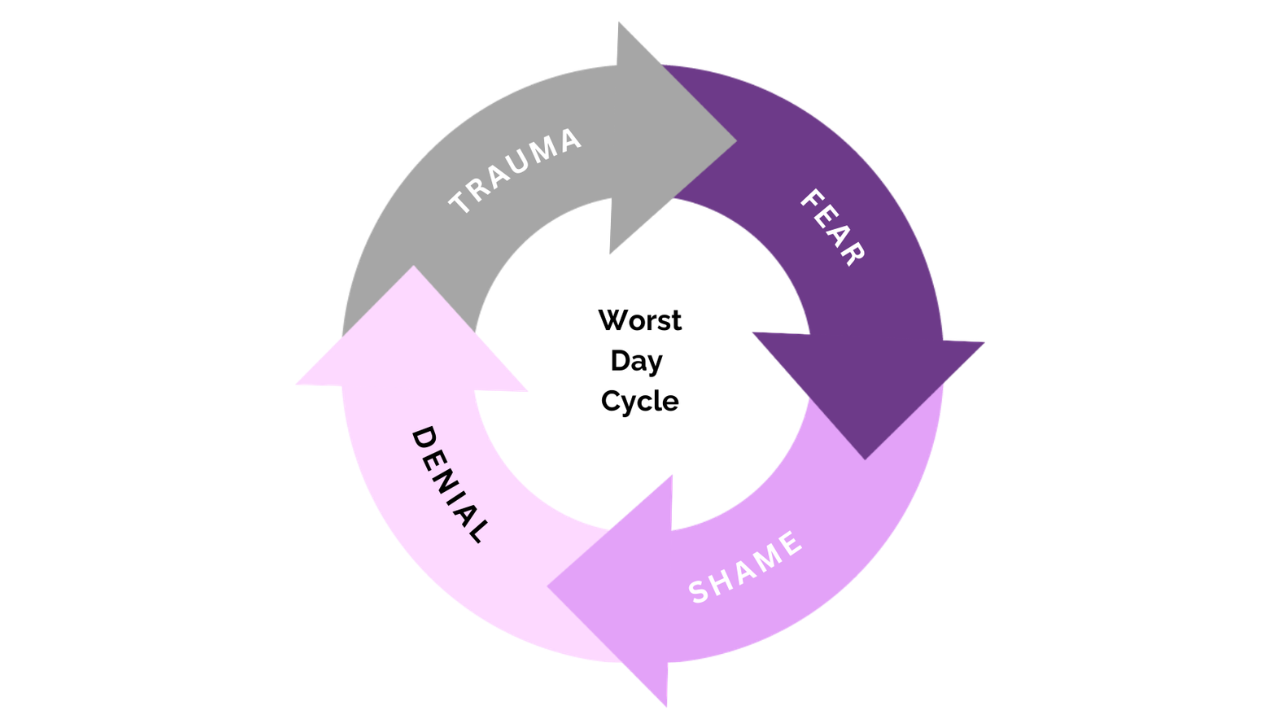
    This is how the Worst Day Cycle™ works. Childhood trauma creates fear. Fear creates shame. Shame creates denial. And denial — emotional avoidance — keeps the entire cycle spinning. The good news? Once you see it, you can break it. This post will show you exactly how.
    emotional regulation and avoidance pattern healing Kenny Weiss

    What Is Emotional Avoidance?

    Emotional avoidance is any strategy — conscious or unconscious — that prevents you from feeling what you actually feel. It sounds like “I’m fine.” It looks like scrolling your phone during an argument. It feels like that third glass of wine you didn’t plan on having.

    That’s you — telling yourself the fight with your mother wasn’t that bad while your stomach has been in knots for three days.

    Most people don’t realize they’re avoiding. That’s because emotional avoidance was learned so early — typically before age ten — that it doesn’t feel like avoidance. It feels like who you are. You think you’re “the calm one” or “the strong one” or “the one who doesn’t let things bother them.” But underneath that identity is a child who learned that emotions were dangerous, unwelcome, or useless.

    Denial is not lying. Denial is an emotional anesthetic — it puts distance between how big those childhood moments were and what your parents said or did. In that moment, you had to make sense of it. You had no other options. So denial taught you to say: “What mom and dad just said or did? It’s not that big a deal.”

    That’s you — minimizing your own pain because someone taught you that your feelings were an inconvenience.
    Worst Day Cycle trauma fear shame denial emotional avoidance pattern

    The Quarter in the Bucket: How Small Avoidances Become Big Explosions

    Picture a bucket hanging by a rope. Every time you avoid a feeling — every confrontation you dodge, every boundary you don’t set, every chocolate you sneak that sabotages your diet, every drink you pour instead of having the conversation — you’re tossing a quarter into that bucket.

    CLINK. The confrontation you avoid.

    CLINK. The phone call you don’t want to make.

    CLINK. The feeling you try not to feel.

    CLINK. The “I can break my morals and values this one time.”

    CLINK. The boundary violation you pretend didn’t happen.

    CLINK. The TV show you watch instead of talking to your kids.

    CLINK. The “I’ll deal with it next time.”

    That’s you — telling yourself it’s no big deal while the rope is already fraying.

    Then one day — a cabinet doesn’t close, someone cuts you off in traffic, your partner asks a simple question in the wrong tone — and the rope snaps. The bucket comes hurtling down. You’re screaming, crying, shaking. You know you shouldn’t be this upset. You know it doesn’t make sense. But you can’t stop.

    The explosion is never about the moment. The explosion is the accumulated weight of every quarter you ever dropped into that bucket instead of facing the fear underneath.

    That’s you — wondering why you can’t stop yourself from overreacting, not realizing your entire childhood is sitting at the table with you.

    Why You Avoid Emotions: The Worst Day Cycle™ Explained

    Emotional avoidance isn’t a character flaw. It’s a survival strategy that was brilliant in childhood and devastating in adulthood. It lives inside a four-stage pattern called the Worst Day Cycle™: Trauma → Fear → Shame → Denial.

    Stage 1: Trauma. Childhood trauma is any negative emotional experience that created painful meanings. It doesn’t have to be abuse. It can be a parent who was emotionally unavailable, a household where feelings were dismissed, a caregiver whose mood swings kept you hypervigilant. The child’s brain generates a massive chemical reaction — cortisol, adrenaline, dopamine misfires — and the brain becomes addicted to these emotional states.

    That’s you — thinking your childhood “wasn’t that bad” while your nervous system tells a completely different story.

    Stage 2: Fear. The brain conserves energy by repeating known patterns. It cannot tell right from wrong — only known versus unknown. Since over seventy percent of childhood messaging is negative and shaming, the brain keeps pulling you back toward familiar pain. Fear drives repetition because the brain equates repetition with safety.

    Stage 3: Shame. This is where you lost your inherent worth. Shame is not guilt — guilt says “I did something bad.” Shame says “I am something bad.” Shame strips self-authorship and replaces it with survival persona roles. It is a power loss — the loss of inherent value, inherent worth, the ability to ask for needs and wants, and the ability to be the author of your own life.

    That’s you — working overtime, people-pleasing, performing, achieving — all to prove you’re worthy of love that was supposed to be unconditional.

    Stage 4: Denial. To protect the authentic self from the truth of what happened, denial shows up. It can sound like: “My childhood wasn’t that bad.” “I’ve done the work on that.” “Other people had it worse.” “This is just how relationships are.” “If I could just stop being so sensitive, this would all be fine.” The goal of denial is to keep the focus on managing symptoms — keeping you in your survival persona and preventing you from feeling the emotional weight of the original trauma.
    trauma chemistry emotional avoidance brain chemical addiction pattern

    That’s you — intellectualizing your pain, making spreadsheets of your problems, using logic to think away feelings that are biochemical events stored in your body.

    Three Survival Personas That Keep You Stuck in Avoidance

    Denial doesn’t just sound one way. It wears a face — your face. The survival persona is the identity you created in childhood to survive pain. It was brilliant then. It is destroying you now. There are three types:

    The Falsely Empowered Persona controls, dominates, and rages. This person avoids vulnerability by staying in power. They’re the one slamming cabinets, yelling in traffic, demanding everyone do things their way. Their avoidance sounds like: “I don’t have the problem — you do.”

    That’s you — confusing control with confidence, not realizing the rage is a cover for the terror underneath.

    The Disempowered Persona collapses, people-pleases, and gives themselves away. This person avoids conflict by disappearing. They say “I’m fine” when they’re not. They absorb everyone else’s emotions. Their avoidance sounds like: “It’s not worth fighting about.”

    That’s you — keeping the peace at the cost of your own existence, wondering why you feel invisible in your own life.

    The Adapted Wounded Child oscillates between both — dominating in one relationship, collapsing in another. Sometimes controlling at work and people-pleasing at home. Sometimes the opposite. Their avoidance sounds like: “I don’t even know who I am anymore.”
    three survival persona types falsely empowered disempowered adapted wounded child

    Signs of Emotional Avoidance by Life Area

    Emotional avoidance doesn’t stay contained. It bleeds into every area of your life:

    Family: You avoid difficult conversations with parents. You play peacemaker at holidays. You minimize how your childhood affected you. You repeat generational patterns while insisting “I’m nothing like my parents.”

    That’s you — sitting at Thanksgiving pretending everything is fine while your chest is so tight you can barely breathe.

    Romantic Relationships: You pick partners who confirm your childhood wound. You avoid confrontation until you explode. You confuse intensity with intimacy. You stay in relationships long past their expiration because leaving means feeling the abandonment wound underneath.

    Friendships: You attract one-sided friendships. You over-give and under-receive. You never say what you actually need. You ghost people instead of having honest conversations.

    Work: You overperform to prove your worth. You avoid asking for raises or promotions. You say yes to everything. You burn out and blame the job instead of recognizing the shame-driven pattern underneath.

    That’s you — working seventy hours a week because somewhere deep inside, a child still believes they have to earn love through performance.

    Body and Health: You numb with food, alcohol, exercise, or screens. You ignore physical symptoms. Your body carries the score — tension headaches, digestive issues, chronic pain, insomnia — and you treat the symptoms instead of addressing the emotional root.
    emotional absorption avoidance pattern signs relationships work health

    Why Anger Is Never the Real Problem

    Here’s what most people get wrong: they think the anger is the problem. They go to anger management classes. They count to ten. They take deep breaths. And none of it works — because anger is never the actual issue.

    Anger is always a smokescreen for fear. It is the fight portion of fight, flight, or freeze. Fear is where the truth lies, and it is what we hide and defend the most.

    Whenever fear is awakened, you’re experiencing one of two things: the fear of rejection and inadequacy — “I don’t have the knowledge, skills, or tools to handle this” — or the fear of powerlessness — “I can’t control this outcome.” In both cases, what you’re actually feeling is a childhood wound. The present moment just triggered it.

    That’s you — screaming at the traffic, but really screaming at the part of yourself that still feels helpless, just like you did when you were six.

    One of the difficulties is that denial was classified by the Freuds as a defense mechanism. And it does start that way — as a child, you don’t have the emotional capabilities to process overwhelming experiences. But because we’ve never been taught emotional authenticity, denial doubles back and becomes an attack mechanism. It starts as defense, but when left unexamined and unhealed, it destroys us — and one of the greatest ways it destroys us is through anger.

    That’s you — not lying to yourself, but anesthetizing yourself because no one ever taught you another way.
    emotional blueprint childhood trauma fear anger emotional avoidance

    How to Stop Avoiding: The Emotional Authenticity Method™

    You cannot change emotional patterns through thoughts alone. Emotions are biochemical events. Thoughts originate from feelings — not the other way around. That’s why affirmations, positive thinking, and traditional cognitive approaches don’t work for trauma. You need a process that goes into the body and rewires the emotional blueprint at its source.

    The Emotional Authenticity Method™ is a six-step process that interrupts the Worst Day Cycle™ in real time:

    Step 1: Somatic Down-Regulation. Focus on what you can hear for fifteen to thirty seconds. Just listen. If you’re highly dysregulated — shaking, crying, shut down — use titration: alternate between the distressing sensation and a neutral body part until your nervous system settles enough to proceed.

    Step 2: What am I feeling right now? Not “what happened” — what are you feeling? Most people are so detached from their body they can’t answer this. They give a story instead of a feeling. Use a Feelings Wheel to build emotional granularity — expand your vocabulary beyond “bad” or “anxious” to specific emotions like “humiliated,” “dismissed,” “invisible,” “inadequate.”

    That’s you — saying “I’m fine” for the thousandth time because you genuinely don’t know what you feel anymore.

    Step 3: Where in my body do I feel it? All emotional trauma is stored physically. Chest, stomach, throat, shoulders, jaw — your body is holding what your mind has been avoiding. Focus on that specific location.

    Step 4: What is my earliest memory of having this exact feeling? Trace it backward. Most people first remember something from last week. Then something from last year. Keep going. Eventually, you arrive at a memory between ages two and ten — your parent standing over you, a moment of helplessness, a time when your feelings were dismissed or punished. That’s the source. That’s the emotional blueprint being replayed right now.

    That’s you — forty-five years old, fighting with your partner about dishes, but reliving the moment your father told you nothing you did was ever good enough.

    Step 5: Who would I be if I never had this thought or feeling again? What would be left over? This is the vision step — the bridge into the Authentic Self Cycle™. When you strip away the shame, the fear, the survival persona — what remains is your authentic self. The person you were before the pain was.

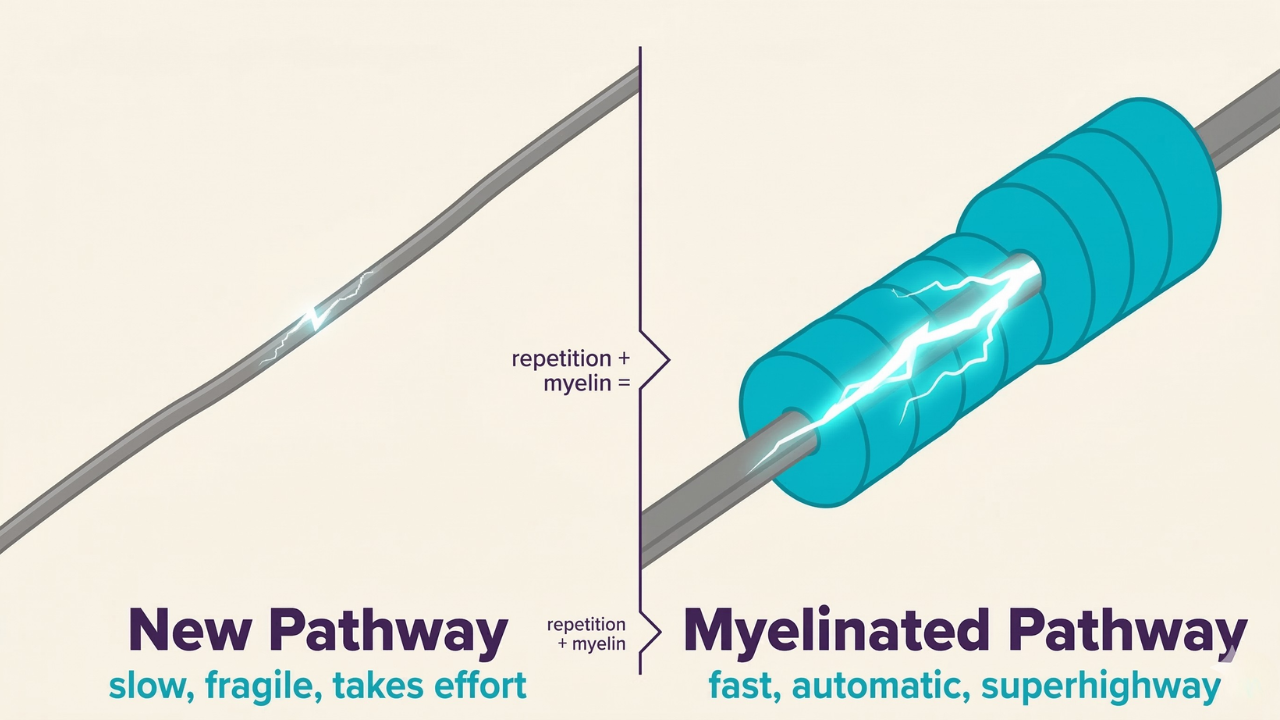
    Step 6: Feelization. Sit in the feeling of that authentic self and make it strong. Create a new emotional chemical addiction to replace the old blueprint. Ask yourself: how would I respond to this situation from this feeling? What would I say? What would I do? Visualize and feel yourself operating from your authentic self. This is the emotional blueprint remapping and rewiring step — the moment where you create a new neurological pathway that your brain can repeat instead of the old one.

    Emotional Authenticity Method six steps somatic regulation feelings body memory feelization

    The Authentic Self Cycle™: From Denial to Freedom

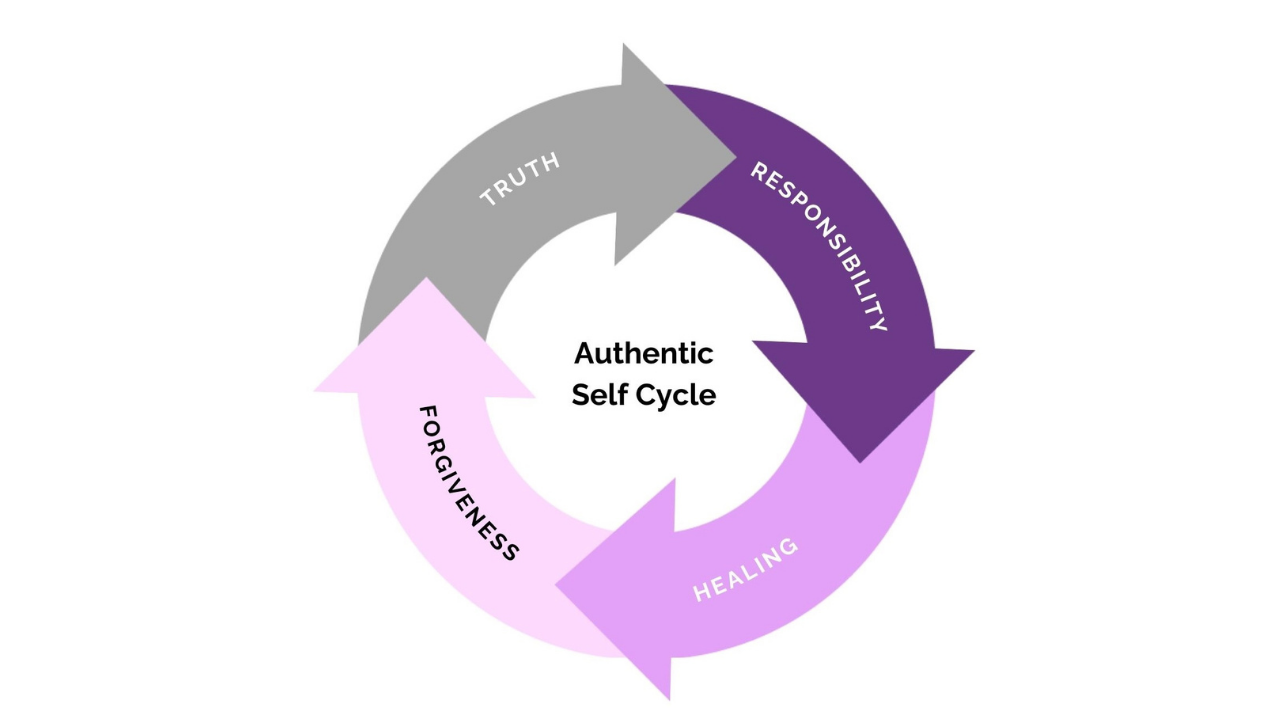
    The Authentic Self Cycle™ is the healing counterpart to the Worst Day Cycle™ — an identity restoration system with four stages: Truth → Responsibility → Healing → Forgiveness.

    Truth: Name the blueprint. See “this isn’t about today.” Recognize the emotional roles you were assigned as a child. Name those wounds without shame or blame. This isn’t about throwing your parents under the bus — they did their job. You’re an adult now. It’s your job to become the parent you needed when you were a child.

    Responsibility: Own your emotional reactions without blame. “My partner isn’t my parent — my nervous system just thinks they are.” You stop pointing the finger outward and start looking at what’s happening inside. No one hurts you — your Worst Day Cycle™ sets you up for the pain, and you get to take responsibility for your adult choices.

    That’s you — finally realizing that the fight isn’t about what they said, it’s about the unhealed wound inside you that heard something completely different.

    Healing: Rewire the emotional blueprint through the Emotional Authenticity Method™ so conflict becomes uncomfortable but not dangerous, space isn’t abandonment, and intensity isn’t attack. Invest in yourself — learn the knowledge, skills, and tools you were never given.

    Forgiveness: Release the inherited emotional blueprint and reclaim your authentic self. This creates a new emotional chemical pattern that replaces fear, shame, and denial. You reconnect to your inherent value and worth — you see yourself clearly and completely, and you can finally accept all of yourself.

    That’s you — not the survival persona you’ve been wearing for decades, but the person underneath who’s been waiting to be seen.
    Authentic Self Cycle truth responsibility healing forgiveness identity restoration

    Frequently Asked Questions About Emotional Avoidance

    Why do I overreact to small things?

    You’re not overreacting to the present moment — you’re reacting to every unprocessed emotion you’ve ever avoided. Each avoided feeling drops another “quarter in the bucket.” When the bucket overflows, the reaction matches the accumulated weight, not the trigger. Your entire childhood is sitting at the table with you during that argument about the dishes.

    Is emotional avoidance the same as being strong?

    No. What society calls “being strong” is often a survival persona — a disempowered or falsely empowered identity created in childhood to survive emotional pain. Real strength is the ability to feel your emotions fully and respond from your authentic self rather than react from your wounded child.

    Can emotional avoidance cause physical symptoms?

    Absolutely. All emotional trauma is stored in the body. Chronic tension, digestive issues, headaches, insomnia, jaw clenching, back pain, and autoimmune conditions can all be connected to unprocessed emotional material. The body keeps the score — when you avoid the emotion, the body carries it instead.

    Why can’t I just think my way out of emotional avoidance?

    Because emotions are biochemical events, not thoughts. Thoughts originate from feelings — not the other way around. That’s why affirmations, positive thinking, and cognitive-only approaches don’t resolve trauma. You need a somatic, body-based process like the Emotional Authenticity Method™ that goes to the root of the emotional blueprint.

    How is emotional avoidance connected to childhood trauma?

    Denial — the root of emotional avoidance — is Stage 4 of the Worst Day Cycle™. It was learned in childhood when you didn’t have the emotional capabilities to process overwhelming experiences. As a child, denial protected you. As an adult, it keeps you trapped in the same patterns, repeating your childhood wound in every relationship, career choice, and health habit.

    What is the first step to stop emotionally avoiding?

    Start with the Feelings Wheel. Most people are so disconnected from their emotions they can’t identify what they’re feeling. Download the wheel and begin asking yourself throughout the day: “What am I feeling right now?” This single practice begins to rebuild the emotional awareness that was shut down in childhood.

    The Bottom Line

    Every quarter you drop into that bucket is a conversation with yourself you’re refusing to have. Every CLINK is a moment where fear won and your authentic self lost. But here’s what I need you to hear: the bucket is not your destiny. The rope can be untied. The quarters can be emptied — one feeling at a time.

    That’s you — reading this and feeling something stirring. Something that’s been buried for a long time. Something that’s tired of being ignored.

    You didn’t choose the emotional blueprint you were given. You didn’t ask for the fear, the shame, or the denial. But you are the only one who can choose to stop dropping quarters and start feeling what’s actually there. The child inside you has been waiting your whole life for you to turn around and say: “I see you. I hear you. And we’re going to do this differently now.”

    That’s you — not broken, not weak, not too far gone. Just someone whose bucket is full. And now you know why.

    Recommended Reading

    Pia Mellody — Facing Codependence and The Intimacy Factor. Gabor Maté — When the Body Says No and In the Realm of Hungry Ghosts. Melody Beattie — Codependent No More. Brené Brown — The Gifts of Imperfection. Bessel van der Kolk — The Body Keeps the Score. Pete Walker — Complex PTSD: From Surviving to Thriving.

    Ready to Break the Cycle?

    If this post hit something in you, that feeling is not a coincidence — it’s your authentic self trying to get your attention. Kenny Weiss offers courses at Greatness U designed to walk you through this process step by step:

    • Emotional Blueprint Starter Course — Individual — $79 (your personal roadmap out of the Worst Day Cycle™)
    • Relationship Starter Course — Couples — $79 (for couples ready to stop the cycle together)
    • Why We Can’t Stop Hurting Each Other — $479
    • Why High Achievers Fail at Love — $479
    • The Shutdown Avoidant Partner — $479
    • Tier 1: Mapping the Blueprint — $1,379 (the complete transformation)

    Start with the free Feelings Wheel exercise — it takes five minutes and it will change how you see yourself.

    Related Articles

    Enmeshment: Signs, Meaning, and How to Heal ·
    7 Signs of Relationship Insecurity ·
    Signs of High Self-Esteem ·
    10 Do’s and Don’ts for a Great Relationship ·
    Negotiables and Non-Negotiables in Codependence Recovery
  • Emotionally Shut Down Men: Why Enmeshment Creates the Codependent Dance

    Emotionally Shut Down Men: Why Enmeshment Creates the Codependent Dance

    Emotionally shut down men are not cold, heartless, or incapable of love — they are operating from a survival persona created in childhood to protect them from unbearable emotional pain. When a man shuts down emotionally, he is not choosing to withhold connection. His nervous system is running a childhood program that says intimacy equals danger, vulnerability equals being devoured, and emotional closeness means having the life sucked out of him. Understanding why men shut down emotionally — and why it is not your job to fix them — is the key to ending the codependent dance that keeps both partners trapped in pain.

    Emotionally shut down men and codependence patterns in relationships

    That’s you if you’ve spent years trying to get your partner to open up, to share his feelings, to be vulnerable — and the harder you try, the further he retreats.

    TL;DR: Emotionally shut down men are not broken — they are running a childhood survival persona that equates intimacy with being emotionally devoured. Two forces create this pattern: society teaching men that emotions equal weakness, and childhood enmeshment where a parent used the child to meet their own emotional needs. The solution is not fixing him — it’s understanding your own codependent blueprint that drew you to an emotionally unavailable partner, and using the Emotional Authenticity Method™ to heal both yourself and the relationship dynamic.

    Why Do Men Shut Down Emotionally?

    There are two primary forces that create emotionally shut down men: societal conditioning and childhood enmeshment. Both operate at the neurological level, rewiring the brain to associate emotional expression with danger and vulnerability with annihilation.

    When a man shuts down emotionally in a relationship, he is not making a conscious choice. His nervous system is activating a survival response — the same fight-flight-freeze response that protected him as a child. His prefrontal cortex (the thinking, empathizing, connecting brain) goes offline. His amygdala (the threat detector) takes over. And his body floods with the same stress chemistry — cortisol, adrenaline, dopamine misfires — that he experienced in childhood when emotional closeness felt dangerous.

    Definitional Statement: An emotionally shut down man is not choosing to withhold love — his nervous system has been conditioned through childhood trauma and societal messaging to equate emotional vulnerability with danger, weakness, and the threat of being emotionally consumed. This shutdown is a survival persona, not a character flaw, and it can be rewired through the Emotional Authenticity Method™.

    That’s you if you’ve ever said “he’s a good man, he just can’t open up” — you’re seeing his survival persona and hoping to reach his authentic self underneath. But that’s not your job. It’s his.

    Emotional regulation and nervous system shutdown in men

    How Society Creates Emotionally Unavailable Men

    For centuries, society has perpetuated a devastating stereotype: men must be intense, cold, aloof, and must never cry. Boys are told to “man up,” “stop being a baby,” and “boys don’t cry.” This messaging doesn’t just shape behavior — it literally rewires the developing brain to suppress emotional processing.

    The result is a society of men who genuinely believe that sharing their emotions would make them look weak. They shut down not because they don’t feel — they feel everything — but because they were taught that showing it would cost them respect, connection, and love.

    Here’s the paradox that keeps this cycle alive: many women find the cold, aloof, “confident” man attractive. Society reinforces this dynamic — the strong, silent type gets rewarded with admiration, sexual attention, and status. Then, years into the relationship, the same woman who was attracted to his mysterious intensity is frustrated, lonely, and desperate for emotional connection that he was never taught to provide.

    Sound familiar? You were attracted to his strength and confidence. Now you realize that “strength” was actually a wall, and that “confidence” was actually terror of being known.

    Falsely empowered survival persona in emotionally shut down men

    The good news: none of this is permanent. Science has discovered neuroplasticity — the brain’s ability to rewire itself at any age. DNA and genes shift based on emotional conditions. An emotionally shut down man can become emotionally available. But he has to choose it. You cannot choose it for him.

    Enmeshment: The Childhood Root of Emotional Shutdown

    While society sets the stage, enmeshment is the deeper wound that creates most emotionally shut down men. Enmeshment is less-than-perfect parenting where the emotional umbilical cord flows in the wrong direction — instead of the parent feeding the child emotionally, the parent requires the child to meet their emotional needs.

    Enmeshment in childhood creating emotionally unavailable men — reversed emotional umbilical cord

    Think of enmeshment as an umbilical cord going in the opposite direction. Instead of the parent nourishing the child, the parent is emotionally draining the child — using them as a best friend, a confidant, a therapist, a rescuer. The helicopter parent who swoops in to clean up every mess. The mother who makes her son her emotional partner. The father who treats his son as an extension of his own unfulfilled identity.

    This enmeshment leaves the child emotionally drained, terrified of connection, and wired to believe that intimacy means being consumed. When that boy becomes an adult man, and a woman wants to get close, his nervous system screams: “I’ve already had the life sucked out of me. I can’t let this happen again.”

    That’s you if your partner flinches when you try to have a deep conversation, changes the subject when feelings come up, or literally leaves the room when you express a need — his nervous system is reliving childhood enmeshment, not rejecting you.

    Claim-Level Citation: Enmeshment creates emotionally avoidant adults by teaching children that intimacy equals being devoured. The child’s entire childhood was spent making one or both parents feel better emotionally. As an adult, any request for emotional closeness activates the same survival terror — “please don’t get close to me” — because closeness, in their nervous system, means annihilation of self.

    To these men, intimacy is terrifying. Not because they don’t want love — but because the only version of “love” they ever experienced was a parent taking from them, not giving to them. Their emotional shutdown is their nervous system’s way of saying: “I survived being consumed once. I won’t survive it again.”

    Childhood trauma chemistry creating emotional avoidance and shutdown in men

    The Worst Day Cycle™: Why He Can’t Stop Shutting Down

    The Worst Day Cycle™ is the four-stage neurological loop that keeps emotionally shut down men trapped in avoidance — and keeps you trapped in the pursuit of their connection.

    Worst Day Cycle — Trauma Fear Shame Denial — why emotionally shut down men can't open up

    Stage 1: Trauma. Childhood trauma is any negative emotional experience that created painful meanings about yourself, others, or the world. For emotionally shut down men, the trauma was enmeshment — being used as a parent’s emotional caretaker. Every time his partner asks for emotional connection, his nervous system activates the same threat response he felt as a child. The hypothalamus generates chemical cocktails — cortisol, adrenaline, dopamine misfires — and his brain becomes addicted to these avoidant states because they’re the only emotional home he knows.

    Stage 2: Fear. Fear drives repetition. His brain thinks repetition equals safety. Since 70%+ of his childhood messaging around emotions was negative — “stop crying,” “man up,” “don’t be weak” — his adult brain keeps repeating the same avoidant patterns. His brain can’t tell right from wrong, only known versus unknown. And unknown (emotional vulnerability) feels like death.

    That’s you if every time you try to get closer, he pulls further away — his nervous system is choosing the known safety of emotional distance over the unknown terror of being seen.

    Stage 3: Shame. Shame is where he lost his inherent worth. Where he decided “I am the problem.” For the emotionally shut down man, shame whispers: “If I show my real feelings, I’ll be weak. If I’m vulnerable, I’ll be consumed. If I let her in, she’ll see I’m broken.” Shame is what keeps the wall up — not strength, not confidence, not choice. Shame.

    Stage 4: Denial. To survive unbearable shame, his psyche creates a survival persona — a false identity that says “I don’t have feelings,” “I’m fine,” “You’re being too emotional,” or “I don’t need anyone.” This survival persona was brilliant in childhood — it protected him from being further consumed by an enmeshing parent. In adult relationships, it guarantees emotional starvation for both partners.

    Sound familiar? That’s the Worst Day Cycle™ running his emotional life — and yours — without either of you knowing it.

    The Three Survival Personas in Emotionally Unavailable Men

    When a man shuts down emotionally, he’s operating from one of three survival personas — adaptive identities created in childhood to manage unbearable pain.

    The Falsely Empowered Survival Persona

    This is the most common persona in emotionally shut down men. The falsely empowered persona controls, dominates, and walls off. He appears strong, measured, confident — but he’s hiding severe emotional immaturity behind a fortress of control. He avoids intimacy by never letting himself be known. He uses anger, withdrawal, or cold logic to shut down any conversation that requires emotional vulnerability.

    Emotional blueprint — falsely empowered survival persona hiding emotional immaturity

    In relationships, the falsely empowered man threatens the connection when his partner tries to be vulnerable. He storms out. He slams the door. He gives the silent treatment. He says “you’re too emotional” or “you’re overreacting.” All of these are his survival persona’s strategies for staying in control and avoiding the terrifying vulnerability that intimacy requires.

    That’s you if your partner has ever shut down a conversation by getting big, loud, or intimidating — his anger is his survival persona’s protection against the vulnerability you’re asking him to face.

    Claim-Level Citation: The falsely empowered survival persona in emotionally shut down men appears as strength, confidence, and control — but it is the exact opposite. It hides severe emotional immaturity, an inability to tolerate vulnerability, and a deep terror of being consumed that originated in childhood enmeshment. Society celebrates this persona as masculine power while it is actually a trauma response masquerading as leadership.

    The Disempowered Survival Persona

    Some emotionally shut down men don’t wall off with anger — they disappear. The disempowered persona collapses, withdraws, and becomes invisible. He’s physically present but emotionally absent. He nods along, says “yes dear,” and silently builds resentment for years. He avoids conflict not from strength but from terror — the terror that expressing himself will bring punishment, just as it did in childhood.

    That’s you if your partner agrees with everything you say but you can feel the distance — his compliance isn’t connection. It’s his survival persona keeping him safe by keeping him invisible.

    The Adapted Wounded Child Survival Persona

    This persona oscillates between both. Sometimes he explodes with anger; sometimes he collapses into silence. He’s unpredictable — even to himself. One conversation he’s engaged and open; the next he’s completely walled off. This inconsistency is the adapted wounded child trying every survival strategy it learned, looking for the one that makes the threat go away.

    Adapted wounded child survival persona oscillating between rage and emotional shutdown

    That’s you if you never know which version of your partner you’re going to get — his oscillation is his adapted wounded child cycling through survival strategies from childhood.

    Your Blueprint: Why You Chose an Emotionally Unavailable Partner

    Here’s the part nobody wants to hear — and it’s the part that will set you free: you chose him. Not because you’re broken. Not because you’re stupid. Because your childhood emotional blueprint created a radar for partners who replicate your earliest pain.

    When a woman says “I just want him to open up, I know he has a great heart” — that statement starts with “I.” “I want.” “I need.” The desire to fix him is not love. It is codependence. It is a need to meet your own emotional needs through changing another person. And it is a backdoor manipulation to get what you want — even though it sounds caring.

    Trauma gut versus authentic gut — why you're attracted to emotionally unavailable men

    In a non-codependent dynamic, a man gets to choose whether or not he opens up emotionally. It is not the woman’s job to try and change him. He gets to live the way he chooses. The real question isn’t “how do I get him to open up?” The real question is: “Why did I choose someone emotionally unavailable, and what does that reveal about my own childhood blueprint?”

    That’s you if you’ve been trying to change your partner for years — your desire to fix him is your survival persona’s way of avoiding the deeper question: what is this relationship reflecting about my own unhealed wounds?

    Claim-Level Citation: You are not responsible for your partner’s emotional availability. You are responsible for understanding why you chose a partner who cannot meet your emotional needs. When you ask “why can’t he open up?” the more powerful question is “why did I choose someone who can’t?” The answer lives in your childhood emotional blueprint — and healing that blueprint changes who you attract.

    The Codependent Dance: Pursuer vs. Withdrawer

    The emotionally shut down man and the emotionally pursuing woman create a codependent dance — a pursuer-withdrawer cycle that feeds on itself. The more she pursues emotional connection, the more he withdraws. The more he withdraws, the more she pursues. Neither person gets their needs met. Both people feel increasingly desperate, frustrated, and alone.

    This dance mirrors both partners’ childhood blueprints perfectly. She learned in childhood that love requires earning — so she keeps trying harder. He learned in childhood that emotional closeness means being consumed — so he keeps pulling away. Both are brilliant survival strategies. Both are catastrophic in adult relationships.

    The first step to ending this dance is to stop blaming the other person and recognize that it is each person’s job to meet their own emotional needs — not the other person’s responsibility. She chose him. He was this way from the beginning. He showed her who he was, and she accepted it. The closer she tries to get, the more he will withdraw — because enmeshment taught him that closeness equals being devoured.

    Perfectly imperfect — accepting your partner and healing the codependent dance

    That’s the codependent dance — you’re chasing connection while he’s running from it, and neither of you realizes you’re both running from the same childhood wound.

    The Emotional Authenticity Method™: 6 Steps to Break the Cycle

    Breaking the cycle with an emotionally shut down man does not start with changing him. It starts with regulating yourself. The Emotional Authenticity Method™ is a 6-step process that rewires your nervous system, reconnects you to your authentic self, and ends the codependent pursuit.

    Emotional Authenticity Method — six step process to stop chasing emotionally unavailable men

    Step 1: Somatic Down-Regulation. When you feel the urge to pursue, to fix, to have “the conversation” — pause. Focus on what you can hear for 15-30 seconds. Your thinking brain cannot come online while your amygdala is running the show. If you’re highly dysregulated, use titration: cold water on your face, step outside, hold ice. You cannot have a healthy conversation from a triggered state.

    Step 2: What am I feeling right now? Not “he won’t open up.” What are YOU feeling? Use the Feelings Wheel to name it with precision. Are you feeling abandoned? Rejected? Invisible? Desperate? Emotional granularity breaks the reactive cycle and activates your thinking brain.

    Step 3: Where in my body do I feel it? The ache in your chest when he withdraws — that’s not about him. That’s a somatic memory. Locate the feeling physically. This grounds you in the present moment and breaks the dissociation that keeps you trapped in the pursuit.

    Step 4: What is my earliest memory of this exact feeling? The feeling of being emotionally starved by your partner likely echoes something much older. The first time you felt unseen. The first time love disappeared. The first time your needs were treated as a burden. He didn’t create this feeling — he activated it.

    That’s you if this isn’t the first emotionally unavailable man you’ve been with — your nervous system has been running this pattern since childhood.

    Step 5: Who would I be if I never had this feeling again? Envision your Authentic Self — the version of you that doesn’t need to fix, pursue, or earn emotional connection. What would that person do? Would she beg him to open up? Or would she honor her own needs and make a clear decision about what she will and will not accept?

    Step 6: Feelization. Sit in the feeling of the Authentic Self and make it strong. Don’t just picture it — feel it. Feel the confidence, the groundedness, the worthiness, the peace of being complete without needing someone else to validate you. Create a new emotional chemical addiction to replace the old blueprint. Ask yourself: “How would I respond to his emotional shutdown from this feeling? What would I say? What would I do?” This is the emotional blueprint remapping and rewiring step.

    That’s the Emotional Authenticity Method™ — six steps to stop chasing what your childhood taught you to chase and start choosing what your authentic self actually deserves.

    The Authentic Self Cycle™: From Survival to Authentic Connection

    The Authentic Self Cycle™ is the healing counterpart to the Worst Day Cycle™ — a four-stage identity restoration system that transforms how both partners relate to emotional connection permanently.

    Authentic Self Cycle — Truth Responsibility Healing Forgiveness — healing emotionally unavailable relationships

    Stage 1: Truth. Name the blueprint. “This isn’t about today. My partner’s emotional shutdown activates my childhood fear of being unseen and unloved. His avoidance isn’t about me — it’s about his childhood enmeshment. And my pursuit isn’t about love — it’s about my childhood need to earn connection.” Truth is the flashlight you shine on your own neurobiology.

    Stage 2: Responsibility. Own your emotional reactions without blame — without blaming yourself, your partner, or your parents. “My partner isn’t my parent. My nervous system just thinks he is. It’s not his job to heal my childhood. It’s mine. And it’s not my job to heal his childhood. It’s his.” This is where you reclaim agency.

    Stage 3: Healing. Rewire the emotional blueprint so his withdrawal doesn’t feel like abandonment. Space isn’t rejection. Silence isn’t punishment. His emotional process is his, not yours to manage. Healing creates a NEW emotional chemical pattern that replaces the fear/shame/denial of the codependent pursuit.

    Stage 4: Forgiveness. Release the inherited emotional blueprint and reclaim your authentic self. Forgiveness isn’t about excusing his shutdown or your pursuit. It’s about releasing your attachment to the childhood blueprint that taught you emotional starvation was the price of love.

    That’s the Authentic Self Cycle™ — the path from codependent pursuit to authentic partnership.

    How Emotional Shutdown Shows Up Across Your Life

    Family: Where the Blueprint Was Written

    He still can’t have an emotional conversation with his parents. He avoids family gatherings or shows up physically while being emotionally absent. He can’t discuss childhood memories without deflecting, minimizing, or going silent. His relationship with his mother likely involves either enmeshment or complete emotional distance — there’s no healthy middle ground.

    That’s you if you’ve noticed your partner treats his mother like either a best friend he can’t set boundaries with, or a stranger he barely acknowledges — both are signs of childhood enmeshment.

    Romantic Relationships: The Core Battlefield

    He avoids deep conversations. He changes the subject when feelings come up. He threatens the relationship when you try to be vulnerable — storming out, slamming the door, giving the silent treatment. He uses logic to invalidate your emotions. He’s physically present but emotionally checked out. He confuses sex with intimacy. Insecurity in the relationship drives both partners into their survival personas.

    That’s you if you feel more alone in the relationship than you did before you met him — you’re experiencing the emotional desert that his survival persona creates.

    Friendships: The Surface-Level Pattern

    He has drinking buddies, not deep friendships. His friendships revolve around activities — sports, work, hobbies — but never vulnerability. He can’t name his closest friend’s deepest fear. He avoids one-on-one conversations that go beyond surface level.

    That’s you if you’ve noticed your partner has dozens of “friends” but not one person who truly knows him — his friendships mirror the same emotional avoidance as his romantic relationships.

    Work: The Socially Rewarded Shutdown

    He’s a workaholic. He uses work to avoid emotional availability at home. His career success is driven by the same survival persona that makes him emotionally unavailable — the falsely empowered persona gets promoted for its control, its composure, its ability to “leave feelings out of it.” Society rewards the very pattern that destroys his intimate relationships.

    That’s the cruelest paradox — he gets promoted at work for the exact same survival persona that makes him emotionally unavailable at home.

    Body and Health: The Physical Cost

    Emotional shutdown doesn’t just affect relationships — it destroys the body. Chronic tension, jaw clenching, back pain, stomach issues, high blood pressure, insomnia. His body is keeping score of every feeling he’s refused to feel. He may use alcohol, food, exercise, porn, or work as numbing strategies — anything to avoid sitting with the emotions his survival persona has locked away.

    Sound familiar? His body has been trying to tell him something for decades — the same thing this entire article is teaching: emotions don’t disappear when you suppress them. They show up as illness, pain, and dysfunction.

    Emotional fitness — the physical cost of emotional shutdown in men

    People Also Ask

    Why does my partner shut down during arguments?

    Your partner shuts down during arguments because his nervous system interprets conflict as the same threat he experienced in childhood. If expressing himself brought punishment, criticism, or emotional consumption from an enmeshing parent, his brain learned that silence equals safety. This is the disempowered or falsely empowered survival persona at work — not a conscious choice to withhold. The Emotional Authenticity Method™ teaches both partners to regulate before engaging so the survival persona doesn’t hijack the conversation.

    Can an emotionally shut down man change?

    Yes — but only if he chooses to. Neuroplasticity means the brain can rewire at any age. However, change requires him to see the pattern, take responsibility for it, and do the work of healing his childhood blueprint. You cannot do this work for him. The most you can do is heal your own blueprint so you stop pursuing someone who can’t meet your needs — and either the dynamic shifts, or you clearly see the relationship no longer serves you.

    Is emotional shutdown the same as narcissism?

    Not necessarily. Many emotionally shut down men are falsely empowered codependents, not clinical narcissists. The falsely empowered survival persona — controlling, emotionally walled off, avoidant of intimacy — looks like narcissism but comes from a different place. A narcissist lacks empathy. A falsely empowered codependent has empathy but has walled it off behind a survival persona. The distinction matters because the falsely empowered codependent can heal — the clinical narcissist rarely does.

    How do I stop trying to fix my emotionally unavailable partner?

    You stop trying to fix him by understanding that the impulse to fix is your codependent blueprint in action. Your childhood taught you that love means earning, fixing, and managing other people’s emotions. The Emotional Authenticity Method™ rewires this pattern by reconnecting you to your own needs, wants, negotiables and non-negotiables. When you know what you need and are willing to meet that need yourself, the compulsion to fix him dissolves.

    What should I do if my partner refuses to get help?

    If your partner refuses to acknowledge the pattern or do any work, you have a clear decision to make. Is being with someone emotionally unavailable negotiable or non-negotiable for you? If it’s non-negotiable, you get the opportunity to decide whether to stay. But here’s the key: this isn’t about giving him an ultimatum. It’s about honoring your own values and meeting your own needs. You always have a backup plan for your needs — support groups, friends, community, your own healing work.

    Why am I always attracted to emotionally unavailable men?

    You’re attracted to emotionally unavailable men because your childhood emotional blueprint created a neurological radar for partners who replicate your earliest pain. If love felt like earning, chasing, or being unseen in childhood, your nervous system seeks that exact pattern in adult relationships. It mistakes the anxiety of pursuit for passion, the inconsistency for excitement, and the emotional distance for strength. Healing the blueprint through the Authentic Self Cycle™ changes who you’re attracted to — when “boring” emotionally available men become attractive, you know you’re healing.

    Myelin neural pathways neuroplasticity — rewiring attraction patterns to emotionally unavailable men

    The Bottom Line

    Emotionally shut down men are not the enemy. They are wounded children in adult bodies, running survival programs that protected them from being emotionally consumed in childhood. Their shutdown is not a choice — it’s a neurological response to trauma they may not even remember.

    But here’s what changes everything: it is not your job to fix them. Your job is to understand why you chose an emotionally unavailable partner in the first place. Your job is to heal your own childhood blueprint — the one that taught you love means earning, pursuing, and sacrificing yourself for scraps of connection.

    When you stop pursuing and start healing, one of two things happens: either the dynamic shifts and both partners begin doing their own work, or you clearly see that the relationship cannot give you what you need — and you make a decision from wholeness instead of desperation.

    Either way, you win. Because you’ve stopped abandoning yourself. You’ve stopped making someone else’s emotional health your responsibility. You’ve stopped pouring yourself into a person who can’t reciprocate — not because he’s cruel, but because his nervous system hasn’t been updated since childhood.

    Your authentic self doesn’t need to fix anyone. Your authentic self knows its worth, honors its needs, and chooses relationships from safety — not survival. That version of you is waiting. The healing starts when you turn the mirror away from him and toward yourself.

    • Facing Codependence by Pia Mellody — The foundational text on how childhood trauma creates survival personas, codependent patterns, and the loss of authentic self.
    • The Body Keeps the Score by Bessel van der Kolk — Essential reading on how trauma lives in the nervous system and why healing requires more than talk therapy.
    • When the Body Says No by Gabor Maté — How emotional repression and relationship patterns manifest as physical illness.
    • Codependent No More by Melody Beattie — The classic guide to setting boundaries and stopping the cycle of self-abandonment.
    • The Gifts of Imperfection by Brené Brown — A guide to wholehearted living that directly counters the shame keeping both partners stuck.

    Ready to Break the Cycle?

    Emotional Blueprint Starter Course — Individual ($79) — Understand your emotional blueprint, identify your survival persona, and begin healing the codependent pursuit of emotionally unavailable men.

    Relationship Starter Course — Couples ($79) — If both partners are willing to do the work, learn the 10 do’s and don’ts for a great relationship and start building authentic connection.

    The Shutdown Avoidant Partner ($479) — A comprehensive deep-dive into emotionally avoidant partners, why they shut down, and how to break the pursuer-withdrawer cycle.

    Why We Can’t Stop Hurting Each Other ($479) — Understand the hidden dynamics that keep couples locked in painful cycles of emotional distance and codependent pursuit.

    Why High Achievers Fail at Love ($479) — For the falsely empowered partner who succeeds at work but can’t access emotional vulnerability in relationships.

    Tier 1: Mapping the Blueprint ($1,379) — The complete mastermind experience. Live monthly coaching, personalized feedback, access to all courses, and a community of people committed to the deep work.

    Start with the Feelings Wheel exercise to begin reconnecting with your emotional life today. Then explore the signs of genuine self-esteem to understand what healthy relationships actually look like.