Tag: codependence recovery

  • How to Deal With a Narcissistic Parent: From Survival to Authentic Healing

    How to Deal With a Narcissistic Parent: From Survival to Authentic Healing

    A narcissistic parent doesn’t just hurt you in the moment—they rewire your brain. Every time they gaslit you, raged at you, or made you responsible for their emotions, your nervous system learned to expect pain in relationships. You developed a survival persona to protect yourself, and now that same protective mechanism sabotages your adult relationships, career, and sense of self.

    A narcissistic parent uses emotional manipulation, lack of empathy, and grandiose behaviors to maintain control and power in the family system, creating childhood trauma that conditions your brain to repeat similar painful patterns in adulthood.

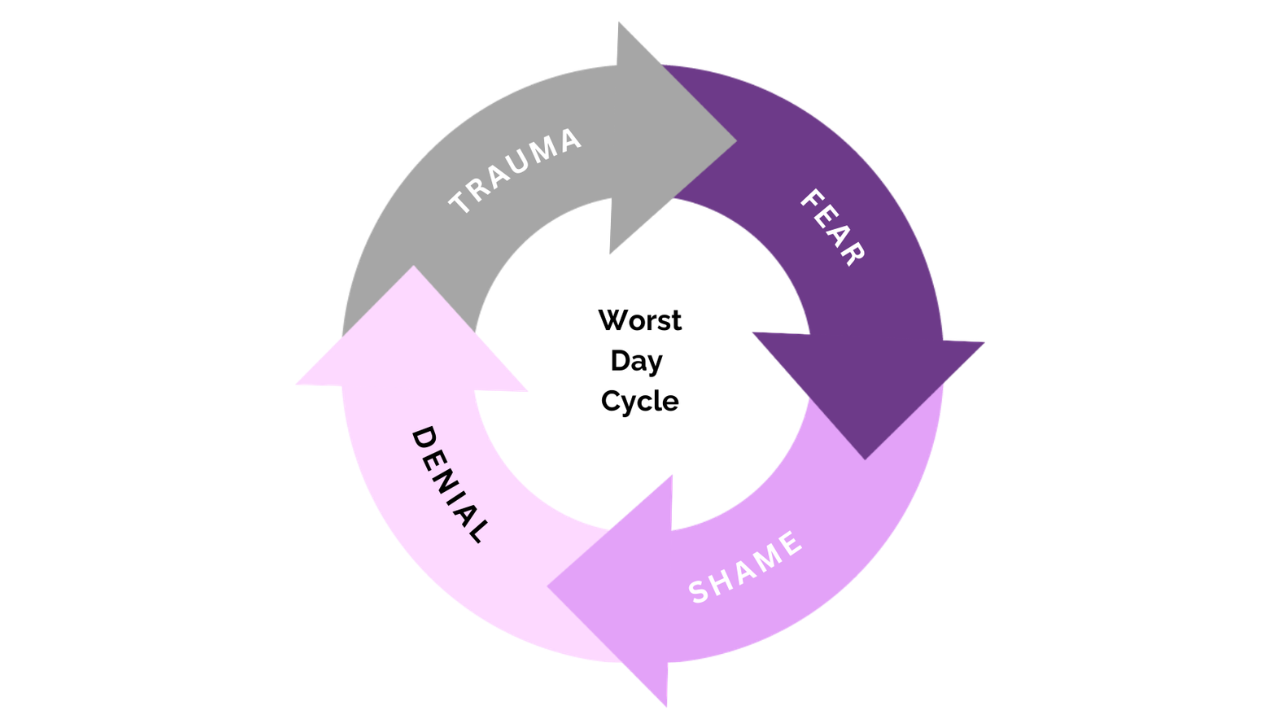
    Healing from a narcissistic parent requires understanding the Worst Day Cycle™ that keeps you trapped, identifying which survival persona you developed, and following the Emotional Authenticity Method™ to rewire your nervous system. This isn’t about forgiving them—it’s about reclaiming your authentic self.

    Table of Contents

    What a Narcissistic Parent Actually Does to Your Brain

    When you grow up with a narcissistic parent, your developing brain doesn’t learn about healthy love. Instead, it learns that relationships are about managing someone else’s emotions, protecting yourself from unpredictable rage, and proving your worth by performing perfection.

    Your hypothalamus—the part of your brain that controls your stress response—becomes hyperactive. It starts pumping out cortisol and adrenaline in response to normal emotional stimuli because your childhood taught you that emotion = danger. Your dopamine system gets rewired around intermittent reinforcement: sometimes the narcissistic parent is loving, sometimes they’re cruel, but you never know which version you’re getting. This creates an addiction-like pattern in your brain.

    That’s you — the one who still flinches when your partner raises their voice, even though they’re not angry at you.

    how childhood trauma with narcissistic parent rewires brain chemistry and stress response system

    Narcissistic abuse creates a specific kind of childhood trauma: you learned that your feelings don’t matter, your needs are selfish, and your job is to manage your parent’s emotional state. This isn’t because you were weak. It’s because your brain is supposed to adapt to survive. And it did. But the adaptation that saved you at age 8 is destroying your adult relationships now.

    The cruelest part? You probably internalized your narcissistic parent. That voice in your head that says you’re not good enough, that your needs are selfish, that you have to earn love—that’s them. You’re now doing to yourself what they did to you.

    The Three Survival Personas You Might Be Living

    When you’re a child with a narcissistic parent, you can’t leave. You can’t fight. You can’t reason with someone who has no empathy. So your nervous system creates a survival persona—a version of yourself that might keep you safe, earn crumbs of approval, or at least numb the pain.

    three survival personas developed in response to narcissistic parent: falsely empowered, disempowered, adapted wounded child

    There are three primary survival personas people develop. Most of us aren’t purely one—we oscillate between them depending on the situation, relationship, or stress level.

    The Falsely Empowered Persona

    This is the survivor who decided the best way to handle a narcissistic parent was to become more controlling, more dominant, more grandiose. You might be the overachiever, the perfectionist, the one who has to win every argument.

    That’s you — the one who has to be right, who can’t admit mistakes, who controls your relationships to prevent abandonment.

    The falsely empowered persona says: “If I can just be perfect, successful, and in control, I won’t be vulnerable to that pain again.” In childhood, this kept you safe. As an adult, it makes you exhausting to be around. You struggle with real intimacy because intimacy requires vulnerability, and vulnerability feels like death to your nervous system.

    You might rage at your partner for small things. You might dismiss their feelings as weakness. You might be unable to apologize genuinely. You’re not a bad person—you’re a person whose survival mechanism became a tyrant.

    The Disempowered Persona

    This is the survivor who decided the best way to handle a narcissistic parent was to become invisible. You learned that your needs were the problem, so you made yourself small, agreeable, and perpetually apologetic.

    That’s you — the one who can’t say no, who people-pleases to the point of self-abandonment, who feels guilty for having any need at all.

    The disempowered persona says: “If I just disappear, if I just make everyone else okay, I’ll be safe.” In childhood, this kept you alive. As an adult, it makes you invisible even to people who love you. You struggle to access your own anger because anger means you matter, and you don’t believe you do.

    You might collapse into depression or anxiety when your partner disagrees with you. You might spend your whole life fixing other people’s problems while ignoring your own. You’re not weak—you’re a person whose survival mechanism became a prison.

    The Adapted Wounded Child Persona

    This is the survivor who oscillates wildly between falsely empowered and disempowered, depending on the situation. One day you’re raging at your partner, the next day you’re dissolved in shame about it. One week you’re setting boundaries, the next week you’ve completely abandoned yourself.

    adapted wounded child survival persona oscillating between control and collapse in narcissistic family patterns

    That’s you — the one who doesn’t know who you are, who changes depending on who you’re around, who feels like you’re living multiple lives.

    The adapted wounded child persona is the exhausting pendulum swing between “I need to control everything” and “I need to disappear.” You might cycle through relationships quickly because you can’t maintain the energy required for either extreme. You’re often diagnosed with anxiety, depression, or borderline traits—not because those are your diagnosis, but because you’re literally running two opposite nervous system states on overdrive.

    You’re not broken—you’re a person whose survival mechanism is conflicted because both survival strategies were necessary at different times in your childhood.

    The Worst Day Cycle™: Why You Keep Repeating the Pattern

    You probably thought the narcissistic parent would be different once you became an adult. You probably thought distance, reasoning, or setting boundaries would help. And then you realized: you keep attracting similar people, or you keep recreating the same dynamic with partners, friends, or even your own children.

    This isn’t your fault. This is the Worst Day Cycle™.

    The Worst Day Cycle showing trauma, fear, shame, denial cycle in narcissistic family trauma

    Stage 1: Childhood Trauma

    Your narcissistic parent created a specific meaning for you: “I am not safe. My needs are selfish. I cannot trust anyone. My job is to manage other people’s emotions.” This isn’t a thought—it’s a cellular, neurobiological imprint.

    Every time they raged, gaslit, invalidated, or abandoned you emotionally, your nervous system recorded it as dangerous. Your brain literally changed its structure. Childhood trauma is real brain damage, not metaphorical.

    Stage 2: Fear (The Chemical Reaction)

    Your hypothalamus responds to this early trauma by creating a chemical cocktail: cortisol floods your system to prepare you for threat, adrenaline makes you hypervigilant, dopamine creates a craving for the unpredictable patterns that feel familiar, oxytocin misfires and makes you bond with the person who hurt you.

    That’s you — the one whose body goes into panic mode at the hint of abandonment, even though you’re 35 years old and safe.

    Your brain becomes chemically addicted to these emotional states because repetition signals safety to your developing nervous system. The brain can’t tell right from wrong—it can only tell familiar from unfamiliar. Known pain feels safer than unknown possibility.

    Stage 3: Shame (Where You Lost Your Worth)

    Over time, the repeated trauma creates a core wound: shame. Not embarrassment—shame. The belief that *you* are the problem. Not “I did something bad,” but “I am bad.”

    Your narcissistic parent probably blamed you for their emotions (“You made me angry,” “If you weren’t so difficult, I wouldn’t have to yell”). Your developing brain, which is 100% egocentric until about age 7, believed it. You internalized the belief that your existence causes problems.

    This shame becomes the engine of all your adult relationship patterns. You stay in relationships where you’re mistreated because shame says you deserve it. You leave relationships where you’re treated well because shame says you don’t deserve it. You sabotage your own success because shame says you’re not worthy of good things.

    Stage 4: Denial (Your Survival Persona)

    Your nervous system can’t survive in constant terror and shame, so it creates a denial mechanism—a persona that protects you from the pain. This is your survival persona: falsely empowered, disempowered, or adapted wounded child.

    That’s you — the one who says “it wasn’t that bad,” who defends your narcissistic parent, who can’t admit how deeply they hurt you.

    Denial is your brain’s survival mechanism, and it’s brilliant—but it keeps you trapped in the cycle. As long as you deny the original trauma, you can’t heal it. You just keep repeating it.

    And here’s where it loops: your survival persona creates new conflict, which triggers your nervous system to produce fear again, which triggers shame again, which requires more denial. And the cycle continues through every relationship you have.

    Signs You’re Still Controlled by a Narcissistic Parent (By Life Area)

    You might not think about your narcissistic parent every day anymore. But their imprint is still running your nervous system. Here’s how it shows up:

    In Your Family Relationships

    You might find yourself repeating your parent’s patterns with your own children. Or you might overcorrect and be so permissive that your kids have no structure. You might struggle to set boundaries with your narcissistic parent even now, or you might have cut them off completely but feel guilty about it.

    That’s you — the one who can’t say no to your parent’s boundary violations, who feels like a terrible person for not “honoring” the person who hurt you.

    A key sign is that you feel responsible for managing your parent’s emotions, even as an adult. You call them to check in when you’re stressed. You apologize for things that aren’t your fault. You still seek their approval.

    enmeshment patterns created by narcissistic parent emotional boundaries crossed in family system

    In Your Romantic Relationships

    You either attract narcissists (because they feel familiar) or you attract avoidants (because your survival persona is designed to manage someone else’s emotions). You might cycle through relationships quickly, or you might stay in one dysfunctional relationship for decades.

    That’s you — the one who can’t relax into a healthy relationship, who waits for the other shoe to drop, who doesn’t believe anyone could actually love you.

    The clearest sign is that you abandon yourself in relationships. You become who they need you to be. You don’t express your real needs. You’re constantly anxious about abandonment or suffocated by closeness. You can’t ask for what you want without shame.

    Learn more about the signs of insecurity in relationships created by this early trauma.

    In Your Friendships

    You might be the one who always listens but never shares. Or you might be the one who disappears from friendships when you need support. You might struggle to maintain friendships because vulnerability feels dangerous.

    That’s you — the one with no close friends, the one with lots of acquaintances but no one who really knows you.

    A key sign is that you don’t have people you can be authentic with. You perform in friendships the same way you performed for your narcissistic parent. The real you stays hidden.

    In Your Work Life

    Your survival persona is probably running your career. Falsely empowered types become workaholics, perfectionists, and people who can’t delegate or admit mistakes. Disempowered types become people-pleasers who are taken advantage of, who don’t get promoted, who do other people’s work.

    That’s you — the one who can’t take feedback without shame spiraling, the one who has to prove your worth through productivity, the one who burns out every few years.

    The narcissistic parent taught you that your worth depends on your performance. So your nervous system never lets you rest. You’re always achieving, always trying, always afraid it’s not enough.

    In Your Body and Health

    Unhealed narcissistic parent trauma lives in your nervous system, and your nervous system is connected to every part of your body. You might struggle with chronic pain, digestive issues, tension, autoimmune conditions, or persistent low energy.

    That’s you — the one who goes to doctor after doctor with mysterious symptoms that no one can diagnose.

    Your body is holding the emotional blueprint created by your narcissistic parent. You might dissociate during stress, leaving your body entirely. Or you might be hypervigilant, tense and ready for threat at all times. Your nervous system is running in survival mode even when you’re objectively safe.

    emotional regulation nervous system healing from narcissistic parent childhood trauma

    The Emotional Authenticity Method™: Your Path Out

    Here’s the truth that most therapy misses: you cannot think your way out of an emotional pattern. Your narcissistic parent didn’t create thoughts in you—they created *feelings* that live in your body. Until you address the feeling directly, no amount of cognitive reframing will help.

    The Emotional Authenticity Method™ is a five-step somatic process designed to rewire your emotional blueprint at the source: in your nervous system, in your body.

    Step 1: Somatic Down-Regulation (With Optional Titration)

    Before you can access the emotion, your nervous system needs to be resourced enough to tolerate the feeling. This is why trauma therapy sometimes fails—therapists push you to feel things before your nervous system can handle it.

    That’s you — the one who doesn’t need to “talk it out,” who needs to calm down first so your thinking brain can come back online.

    Down-regulation means sending a signal to your nervous system that you’re safe right now. You might do this through breathwork (4-count inhale, 6-count exhale), cold exposure (splash your face with cold water), movement (shake your body, go for a walk), or bilateral stimulation (cross-lateral exercises).

    This isn’t about pushing yourself to “be positive.” It’s about creating the physiological conditions where your nervous system believes it’s safe enough to process emotion.

    Step 2: What Am I Feeling?

    Most people with narcissistic parent trauma can only identify two emotions: fine and not-fine. This emotional illiteracy keeps you trapped because you can’t address what you can’t name.

    That’s you — the one who freezes when someone asks “what are you feeling?” and can only say “I don’t know.”

    The Feelings Wheel (available at the bottom of this post) breaks emotion into 12 primary feelings with gradations. Your job is to move past “sad” and get specific: are you disappointed, overwhelmed, heartbroken, or grieving? Are you angry, furious, resentful, or just irritated?

    This seems simple, but it’s revolutionary. When you can name the specific emotion your narcissistic parent created, you begin to separate from it. It’s no longer “I am sad”—it’s “I am feeling grief.”

    Step 3: Where In My Body Do I Feel It?

    All emotional trauma is stored as somatic memory—body memory. Your nervous system remembers what your mind forgot. When you feel grief about your narcissistic parent, where do you feel it? In your chest? Your throat? Your belly? Your legs?

    That’s you — the one who holds your breath when conflict starts, who tightens your shoulders when you need to speak up.

    Your body is not lying to you. The location of the feeling is significant because it’s where the emotional blueprint is encoded. When you locate the feeling somatically, you bypass the denial mechanisms and access the real wound.

    Many people find that when they sit with the physical sensation without judgment, it begins to shift. A tightness loosens. A heaviness lightens. You’re literally rewiring your nervous system’s response by staying present with the sensation.

    Emotional Authenticity Method 5 steps somatic healing from narcissistic parent trauma

    Step 4: What’s My Earliest Memory of This Feeling?

    Your nervous system doesn’t organize emotions by date—it organizes them by pattern. When you feel unsafe in your current relationship, your nervous system doesn’t pull up your partner’s action. It pulls up every time you felt unsafe with your narcissistic parent.

    That’s you — the one whose reaction is way bigger than the situation warrants, because you’re not actually responding to today.

    When you trace the current feeling back to its earliest memory, you separate past from present. You realize: my partner raised their voice, but my nervous system is responding as if I’m 6 years old and my parent is raging. This recognition is everything. It’s the beginning of choice.

    Your job isn’t to re-traumatize yourself by reliving the memory. Your job is simply to acknowledge: this feeling started then. It’s not about today.

    Step 5: Who Would I Be If I Never Had This Feeling Again?

    This is the vision step. Not “get over it” or “move on.” This is imagining yourself without the emotional blueprint created by your narcissistic parent. Who would you be? How would you move through the world differently?

    This isn’t fluffy visualization. This is your nervous system beginning to imagine a new pattern, a new chemical state. Your brain doesn’t know the difference between a vivid imagination and a real experience. When you imagine safety, your nervous system begins to rewire toward safety.

    That’s you — the one who could finally relax, finally trust, finally believe you’re worthy of love.

    This five-step process addresses the core truth: you cannot change what you don’t feel, and you cannot feel what you don’t locate in your body.

    The Authentic Self Cycle™: Breaking Free

    Once you understand the Worst Day Cycle™ that keeps you trapped, you’re ready for the counterpart: the Authentic Self Cycle™. This is the healing cycle that gradually replaces the trauma cycle.

    Authentic Self Cycle framework for healing from narcissistic parent emotional blueprint restoration

    Stage 1: Truth

    You name the blueprint. “My narcissistic parent taught me that I’m not safe. That my needs are selfish. That my job is to manage other people’s emotions.” This isn’t about blame—it’s about clarity.

    That’s you — the one who can finally say what actually happened, without minimizing or defending the person who hurt you.

    Truth is the antidote to denial. As long as you deny what happened, you stay stuck. The moment you tell yourself the truth—even if it’s just internally, even if it terrifies you—something shifts.

    Stage 2: Responsibility

    This doesn’t mean accepting blame. It means acknowledging: “My parent created this wound, but I’m the one maintaining it now. I’m the one choosing partners who recreate it. I’m the one using my survival persona. I’m responsible for my healing.”

    That’s you — the one who stops waiting for your parent to apologize or change, and realizes the only person who can heal this is you.

    Responsibility is powerful because it restores agency. You can’t control what your narcissistic parent did. You can control whether you keep the wound open through denial or close it through healing.

    Stage 3: Healing

    This is where the Emotional Authenticity Method™ comes in. You systematically rewire your emotional blueprint. You send new signals to your nervous system: this conflict isn’t dangerous, this space isn’t abandonment, this intensity isn’t attack.

    You reparent yourself—giving yourself the emotional attunement, consistency, and unconditional acceptance your narcissistic parent couldn’t provide. You learn that you can survive disappointment without collapsing. You learn that you can set boundaries without abandonment.

    reparenting self-compassion healing strategy for adult children of narcissistic parents

    Stage 4: Forgiveness

    Forgiveness doesn’t mean reconciliation. It doesn’t mean excusing what your narcissistic parent did. It means releasing the emotional blueprint they created and reclaiming your authentic self.

    That’s you — the one who can finally let them go, not for them, but for you.

    Forgiveness is the release of the inherited emotional blueprint. Your parent probably had a narcissistic parent too. The wound got passed down. Forgiveness means: I see how this cycle was created, and I’m choosing to end it with me.

    This is where the Authentic Self Cycle™ becomes real. You’re no longer running your parent’s emotional program. You’re running your own.

    Practical Strategies for Dealing With a Narcissistic Parent Now

    Set Boundaries (Or Cut Contact)

    You have two choices with your narcissistic parent: set firm boundaries or cut contact entirely. Both are legitimate. The guilt you feel doing either one? That’s the shame your parent installed. Ignore it.

    That’s you — the one who feels guilty for protecting yourself, as if your safety is selfish.

    If you choose to maintain contact, boundaries are non-negotiable. Not angry boundaries—calm, clear, emotional boundaries. “I won’t discuss my relationship.” “I won’t accept blame for your emotions.” “I won’t respond to guilt trips.”

    Boundaries fail when they’re delivered in anger or when you apologize for them. State them once, calmly, and enforce them consistently.

    Grieve Your Relationship

    You probably fantasize that one day your narcissistic parent will change, apologize, and you’ll have the relationship you always wanted. That’s grief talking. That’s the part of you that still needs them to be the parent you deserved.

    That’s you — the one who keeps hoping this time will be different, who still seeks their approval.

    You need to grieve the parent you needed and never got. This grief is necessary. It’s painful. And it’s the gateway to your authentic self, because your authentic self doesn’t need a narcissistic parent’s approval.

    Identify Your Survival Persona

    You can’t change what you don’t see. Which survival persona do you live in most? Falsely empowered (controlling, raging, needing to win)? Disempowered (collapsing, people-pleasing, abandoning yourself)? Adapted wounded child (oscillating between both)?

    That’s you — the one who finally understands why you’re exhausting in relationships, why you can’t relax, why you sabotage good things.

    Your survival persona isn’t your fault, but it is your responsibility now. Every time you notice it taking over—every time you rage, collapse, or oscillate—pause. Get curious. What triggered it? What scared your nervous system? This awareness is the first step toward integration.

    Work With the Emotional Authenticity Method™

    Use the five steps every time you feel triggered. Down-regulate. Name the emotion. Locate it in your body. Trace it back. Vision your authentic self. This becomes a muscle over time. Your nervous system learns a new response to old triggers.

    emotional fitness exercise building nervous system resilience after narcissistic parent trauma

    Address Your Codependence

    Learn the negotiables and non-negotiables of codependence recovery, because narcissistic parent trauma and codependence are usually intertwined. You learned to manage other people’s emotions as a survival strategy. You need to unlearn that.

    Get Into the Right Relationship Patterns

    Check out the essential dos and don’ts for great relationships so you can build something healthy instead of repeating the narcissistic dynamic.

    People Also Ask

    Can you ever have a healthy relationship with a narcissistic parent?

    Only if you fully separate your emotional blueprint from theirs. Most people can’t do this while in regular contact because the narcissistic parent will keep triggering the old wounds. Some people maintain superficial, boundaried contact. Others find healing requires distance or no contact. Both are valid. The key is that *you* get to decide what protects your healing—not guilt.

    What does it mean to reparent yourself?

    Reparenting means giving yourself what your narcissistic parent couldn’t: attunement to your emotional needs, unconditional acceptance, consistency, and safety. When you feel shame, you soothe it like a loving parent would. When you need comfort, you provide it. You become internally what your parent failed to be externally. This isn’t about self-indulgence—it’s about rewiring your nervous system’s expectation of care.

    How long does it take to heal from narcissistic parent trauma?

    There’s no timeline because you’re literally rewiring your brain. Some people feel major shifts in months. Others take years. The metric isn’t time—it’s change. Are you triggering less? Recovering faster from conflict? Able to be vulnerable? Able to set boundaries without guilt? If yes, you’re healing. If you’re still in the Worst Day Cycle™ and haven’t accessed your authentic self yet, you need support.

    Is it selfish to cut off a narcissistic parent?

    No. Self-protection is never selfish. Your nervous system was injured. Protecting that injury is an act of self-respect. The guilt you feel is the internalized voice of your narcissistic parent telling you that your needs don’t matter. Recognize it. Release it. Choose yourself.

    What if I’m starting to become like my narcissistic parent?

    This is actually a sign you’re aware. Most people with narcissistic parents either become codependent or unconsciously adopt narcissistic traits themselves. The falsely empowered survival persona often looks like narcissism. But awareness means you have choice. You can see the pattern before it damages your relationships. Use the Emotional Authenticity Method™ to process the survival persona before it acts. Seek support immediately. Healing is possible.

    What about extended family members who side with the narcissistic parent?

    Family systems are designed to maintain stability, even dysfunctional stability. When you stop playing your assigned role (the guilt-absorber, the fixer, the one who manages the narcissistic parent), the whole system feels threatened. People will pressure you to return to your role. This is normal. It doesn’t mean you’re wrong. It means your healing is challenging the family’s survival strategy. You may need to create distance from extended family too. Your healing comes first.

    The Bottom Line: Your Authentic Self Is Still In There

    Your narcissistic parent couldn’t destroy your authentic self. They just buried it under layers of survival personas, shame, and denial. But it’s still there—the part of you that knows you’re worthy, that has real needs, that deserves love.

    That’s you — the one who’s been trying to earn love from someone incapable of giving it, when the person you actually need love from is yourself.

    Healing from a narcissistic parent isn’t about forgetting what happened or pretending it didn’t matter. It’s about reclaiming your life from the emotional blueprint they created.

    The Worst Day Cycle™ taught you that you’re not safe, that your needs don’t matter, that you have to manage other people’s emotions to survive. The Authentic Self Cycle™ teaches you the opposite: you are safe, your needs matter, you’re allowed to be yourself.

    The Emotional Authenticity Method™ is how you make that transition real—not in your head, but in your nervous system, in your body, where the original wound lives.

    You don’t need your narcissistic parent’s permission to heal. You don’t need them to apologize or change. You just need to decide: today is the day I choose myself. And then do the work.

    Recommended Reading and Resources

    Deepen your understanding with these books from trauma-informed authors:

    • The New Codependency: Help and Guidance for Today’s Generation by Melody Beattie — Essential for understanding how narcissistic parent trauma manifests as codependence in your adult relationships.
    • The Body Keeps the Score by Bessel van der Kolk — The definitive guide to how trauma lives in your nervous system and how somatic healing works.
    • The Myth of Normal by Gabor Maté — Understand the deeper context of how childhood trauma becomes chronic illness and how to reverse it.
    • Bradshaw On: The Family by John Bradshaw — A classic on family systems and how narcissistic parents create dysfunctional patterns across generations.
    • Dare to Lead by Brené Brown — For building shame resilience and authentic leadership of your own life.

    Use the Feelings Wheel exercise daily to build emotional granularity and awareness.

    Ready to Go Deeper?

    Understanding your narcissistic parent trauma is the first step. Rewiring it requires support, structure, and someone who understands the neurobiology of healing.

    These courses will guide you through the Emotional Authenticity Method™ and help you build your Authentic Self Cycle™:

    • Emotional Blueprint Starter Course — Individual ($79) — A foundational 5-week course on understanding your emotional blueprint and the three survival personas. Start here if you’re just beginning to recognize the pattern.
    • Relationship Starter Course — Couples ($79) — For people in relationships who want to stop repeating narcissistic family patterns with their partners. Learn how to create earned security instead of inherited trauma.
    • Why We Can’t Stop Hurting Each Other ($479) — A comprehensive deep dive into how childhood trauma creates relationship conflict, how to interrupt the cycle, and how to build genuine intimacy.
    • Why High Achievers Fail at Love ($479) — Specifically for falsely empowered survivors who’ve built successful careers but can’t maintain relationships. Learn why achievement doesn’t fix the wound.
    • The Shutdown Avoidant Partner ($479) — If you’re in a relationship with someone whose trauma looks like emotional withdrawal, this course explains how their nervous system works and what actually helps them heal.
    • Tier 1: Mapping the Blueprint ($1,379) — The full-spectrum healing program combining the Emotional Authenticity Method™, the Worst Day Cycle™, and the Authentic Self Cycle™. This is the deepest work.

    Every course includes video instruction, journaling exercises, the Feelings Wheel, and lifetime access.

    See the signs of insecurity in relationships and understand how your narcissistic parent trauma shows up in your love life.

    Learn the signs of enmeshment and how emotional boundaries save relationships.

    Discover what genuine high self-esteem actually looks like (hint: it doesn’t look like your falsely empowered parent).

    understanding emotional blueprint created by narcissistic parent in childhood development

    FAQ Schema

    Article Schema

  • How to Fight Fair in a Relationship

    How to Fight Fair in a Relationship

    Every couple fights. But most couples fight the same fight over and over — not because the issue is unresolvable, but because their nervous systems are replaying childhood survival patterns instead of communicating as adults. You are not arguing about the dishes, the kids, or the money. You are arguing about the shame, the fear, and the unhealed pain your body carries from childhood. One partner attacks from their falsely empowered survival persona — controlling, criticizing, dominating. The other collapses into their disempowered survival persona — people-pleasing, withdrawing, going silent. Or both of you oscillate between the two, never finding solid ground. The result is the same every time: nobody feels heard, nobody feels safe, and the relationship erodes one fight at a time.

    That’s you if you’ve ever thought: “We keep having the same argument and nothing changes.”

    The reason nothing changes is that traditional communication advice — “use I-statements,” “don’t raise your voice,” “take a timeout” — treats the symptoms while ignoring the root cause. Your fights are not communication problems. They are nervous system problems driven by the Worst Day Cycle™. And the only way to stop destroying your relationship is to learn a confrontation model that works at the level where the damage actually happens — your emotional blueprint.

    How to Fight Fair in a Relationship: Why Every Couple Needs a Confrontation Model

    How to fight fair in a relationship is the single most important skill that no one ever teaches you. Fighting fair means having a structured confrontation model — a shared language and step-by-step process that transforms every argument from a destructive war into an opportunity for deeper intimacy, understanding, and connection. Without this model, couples default to hurling pain, defending their position, and fighting over who is the bigger victim — a pattern rooted in childhood survival, not adult love.

    Here is what twenty years of working with couples has taught me: unless you have a specific confrontation model, just trying to talk about it will not solve it. There has to be a process that both people commit to following. When couples adopt a confrontation model, every single fight becomes like dating again — you discover deep, vulnerable truths about your partner that create connection instead of destruction.

    How to fight fair in a relationship - confrontation model for couples in codependency recovery

    Most couples believe they know how to fight. They don’t. What they know is how to re-enact childhood pain with an adult vocabulary. The screaming, the silent treatment, the blame, the withdrawal — none of this is fighting. It’s two wounded children in adult bodies, each desperately trying to prove they are the bigger victim.

    That’s you if every argument with your partner ends the same way — someone storms off, someone shuts down, and nothing ever changes.

    The confrontation model I created has three components: understanding reality arguments, establishing ground rules for both the speaker and the listener, and following seven specific steps that turn conflict into connection. If you commit to this process, you will learn to love fighting. Literally. Because every disagreement becomes a window into your partner’s inner world — and your own.

    What Are Reality Arguments and Why Do They Destroy Relationships?

    Before you can fight fair, you need to understand why most fights are unwinnable. The answer: you’re having a reality argument — and you don’t even know it.

    A reality argument happens when two people experience the exact same event and walk away with two completely different interpretations. Neither person is right or wrong — they simply have different realities. Most couples destroy their relationship by arguing over whose reality is correct, which is like arguing over whether a referee’s call was right when half the stadium disagrees.

    Reality arguments in relationships - two different realities from the same event

    Think about it: have you ever watched a sport where the referee makes a call and half the people in the arena scream he’s wrong while the other half scream he’s right? That’s a reality argument. Now think about politics — Democrat, Republican — both sides believe they’re right and the other side is wrong. Religion works the same way. We all look at the exact same thing and have completely different interpretations.

    That’s you — arguing with your partner about what “really happened” last Tuesday, both of you certain you’re right, both of you walking away feeling unheard.

    Here’s why this destroys relationships: when you fight over realities, you’re fighting to prove you’re the bigger victim. “What you did is bad.” “No, what you did is worse.” “Well, if you hadn’t done it, I wouldn’t have done it.” Each person is saying the same thing: I’m the bigger victim here, and what happened to me is worse.

    Is that reconcilable? No. Because you both feel victimized. You’re fighting a war that nobody can win.

    Sound familiar? Every fight that ends with “you always” or “you never” is a reality argument in disguise.

    Defense is the first act of war. When you defend yourself in an argument, you are making a conscious choice to fight over who is the bigger victim rather than creating connection, intimacy, and understanding. That is not the goal of a confrontation — it is a declaration of war against your partner.

    The Worst Day Cycle™: Why Your Fights Are Never About What You Think

    Every destructive fight follows the same invisible pattern. Your partner says something critical, and within milliseconds your body floods with stress chemicals, your thinking brain goes offline, and you’re no longer an adult having a disagreement — you’re a child fighting for survival. This is the Worst Day Cycle™, and until you see it, it runs your relationships without your permission.

    Worst Day Cycle - Trauma Fear Shame Denial - why couples fight destructively

    Stage 1: Trauma. Childhood trauma is any negative emotional experience that created painful meanings about yourself, others, or the world. Your partner’s tone of voice, their criticism, their withdrawal — these activate your nervous system’s threat response as if you’re back in your childhood home, helpless and unsafe. The hypothalamus generates chemical cocktails of cortisol, adrenaline, and dopamine misfires, and your brain becomes addicted to these emotional states because they’re all it knows.

    Stage 2: Fear. Once trauma is activated, fear floods your body instantly. Your amygdala hijacks your prefrontal cortex. You lose access to wisdom, discernment, and choice. You go into fight, flight, freeze, or fawn mode. This is why you say things you don’t mean during arguments — your thinking brain is literally offline. The brain conserves energy by repeating known patterns, and since 70%+ of childhood messaging is negative and shaming, your adult brain repeats those painful patterns in every conflict.

    That’s you — your heart pounding, your face flushing, words flying out of your mouth that you’ll regret in an hour, and you can’t stop yourself.

    Stage 3: Shame. Fear morphs into the core belief: “I am the problem.” Not “I made a mistake” — “I AM a mistake.” This is where you lost your inherent worth. In childhood, shame was installed through criticism, punishment for normal emotions, and conditional love. In adult fights, shame drives you to either attack (prove it’s their fault, not yours) or collapse (accept all blame to end the conflict).

    Stage 4: Denial. To survive unbearable shame, your psyche activates your survival persona — a false identity created in childhood to manage pain. “I’m fine.” “I can handle this.” “I don’t have needs.” This is self-deception at its most brilliant and most destructive. Your survival persona takes over the fight, and your authentic self disappears.

    That’s the Worst Day Cycle™ — running underneath every argument you’ve ever had with your partner, turning a simple disagreement into a childhood re-enactment.

    How Your Survival Persona Hijacks Every Argument

    When conflict arises, your survival persona takes the wheel. Understanding which persona you default to — and which one your partner defaults to — is essential for learning how to fight fair. There are three primary survival persona types, and most people oscillate between them depending on the situation.

    Three survival persona types that hijack arguments - falsely empowered disempowered adapted wounded child

    The Falsely Empowered Survival Persona in Conflict

    This persona controls, dominates, and rages. In fights, the falsely empowered persona attacks first, raises their voice, uses blame and shame as weapons, and needs to “win” the argument. They appear strong, but underneath they’re terrified of being wrong — because being wrong in childhood meant being abandoned or punished. Their strategy: if I control the fight, I control whether I get hurt.

    That’s you if you notice your voice getting louder, your finger pointing, your words getting sharper — and you can’t seem to stop even though part of you knows you’re making it worse.

    The Disempowered Survival Persona in Conflict

    This persona collapses, people-pleases, and surrenders. In fights, the disempowered persona immediately takes all the blame, says “you’re right, I’m sorry” before the conversation even starts, and shuts down their authentic voice to end the conflict. They’d rather die inside than risk abandonment. Their strategy: if I make myself small enough, maybe the pain will stop.

    That’s you if you go silent in every fight, agree with everything your partner says just to make it stop, and then feel hollow and resentful for days afterward.

    The Adapted Wounded Child Survival Persona in Conflict

    This persona oscillates between the falsely empowered and disempowered positions — sometimes raging, sometimes collapsing, sometimes regressing to a helpless, confused state. They might cry uncontrollably, feel overwhelmed, or seem incapable of engaging. Their strategy: if I stay emotionally young and helpless, maybe someone will finally rescue me the way my parents never did.

    That’s you if your partner says “I can never have a real conversation with you because you either blow up or shut down — I never know which version I’m getting.”

    All three survival personas are brilliant childhood strategies that kept you connected and alive. In adult relationships, they guarantee that every fight re-creates the exact pain you’re trying to escape. The confrontation model replaces these survival strategies with a structured process that creates safety, trust, and genuine intimacy.

    Ground Rules for the Speaker: How to Express Without Destroying

    Fighting fair starts with rules — not to restrict you, but to create the safety required for vulnerability. Without ground rules, your survival persona runs the conversation. With them, your authentic self has a chance to speak. Here are the seven ground rules for the person speaking.

    Ground rules for fighting fair - speaker boundaries for emotional authenticity in relationships

    First: Moderate your emotions before you speak. If you’re flooded with stress chemicals, you are not capable of fighting fair. Take time to regulate. Say “I can’t talk about this right now — I need to go contain myself.” This is not running away. This is wisdom. You cannot have a productive conversation from a hijacked nervous system.

    Second: No shaming, accusing, blaming, judging, yelling, or screaming. And never give your partner unsolicited advice. The moment you shame or blame, you’ve declared war. Your partner’s nervous system will activate, their survival persona will emerge, and the conversation is over before it started.

    Third: Your goal is to be known, not to be right. “I honestly see this as water, and I want you to know that about me.” You’re sharing your reality — not trying to change theirs. This is the most profound shift in fighting: from winning to being understood.

    That’s the shift — from “I need you to agree with me” to “I need you to know who I am.”

    Fourth: Never tell your partner what they should think or feel. “You should have known.” “You shouldn’t even think that way.” “Why do you feel that?” These are reality arguments — you’re trying to control how they see the world. That’s not love. That’s domination.

    Fifth: Don’t guess at their motivation or read their mind. “Well, you rolled your eyes, so obviously you don’t care.” You’re projecting your interpretation onto their behavior. Stay in your lane. If you’re confused, ask — don’t assume.

    Sixth: Nobody ever makes you feel anything. “You made me feel” is the language of enmeshment and codependence. You always have a choice in how you respond. Whenever you say “you made me feel,” you are demanding that your partner take responsibility for your emotional life. That is not their job.

    Seventh: Always use “I” statements. “I felt hurt when…” instead of “You always…” The moment you start with “you,” your partner’s defenses go up and the conversation becomes a war.

    Sound familiar? Most of us break every single one of these rules every time we fight — and then wonder why nothing ever gets resolved.

    Ground Rules for the Listener: How to Hear Without Defending

    Listening is harder than speaking. Most people don’t listen to understand — they listen to form a defense. They’re mentally preparing their rebuttal while their partner is still talking. This is the fastest way to destroy intimacy and guarantee that every fight escalates.

    Listening ground rules for fighting fair - metacognitive awareness in relationship conflict

    First: Never interrupt, and don’t absorb their blame. When someone has lost containment, they may blame you, they may say “you” and “you made me feel.” Don’t take that on. Those are their feelings. They get to have them, but you don’t absorb them as truth. They’re just their feelings.

    Second: Do not interrupt to correct them. You’re listening to know them, not to be right or wrong. You’re responsible for your feelings about the words they’re using — you get to choose how you respond.

    Third: Listen to learn about their reality, not to form a defense. This is the biggest mistake people make. Defense is the first act of war. When you defend yourself, you give yourself away and the relationship is lost. You’re just listening to learn about them — this is how they view the world.

    That’s you — mentally rehearsing your comeback while your partner is pouring their heart out, and wondering why they say you never listen.

    Fourth: If you’re unsure about their reality, ask for information. It’s your job to gather information, not to judge it. “Wait, are you saying you mean this or this? Your memory of it is this?” Keep it to four sentences or less.

    Fifth: If the information they’re sharing is true, own it immediately. Nothing disarms a fight faster than genuine accountability. “You’re right. I did that. I see how that hurt you.”

    Sixth: If your realities are different, detach from the emotions being shared. Just listen without judgment. Accept that their reality is different from yours. Don’t try to change it. Their reality is valid even when it contradicts yours.

    Seventh: After you’ve listened completely, negotiate if necessary. But only after you’ve done the first six steps. This is where most couples fail — they try to negotiate before they’ve truly listened, and the negotiation becomes another fight.

    That’s the shift — from “I need to defend myself” to “I need to understand their world.”

    The 7-Step Confrontation Model That Turns Every Fight Into Intimacy

    This is the process. It will feel clinical at first. It will feel uncomfortable. Nobody talks like this naturally, and that’s exactly the point — because the way you naturally talk during conflict is destroying your relationship. If you commit to this model, you will learn to love fighting because every confrontation becomes an act of discovery and intimacy.

    7-step confrontation model for fighting fair - turns conflict into intimacy and connection

    Step 1: Share what you observed — just the facts. No judgments, no blame. Use “I” statements. “I noticed that when I brought up the credit card bill, you left the room.” Not “You always run away from hard conversations.” Facts, not interpretations.

    Step 2: Share how you chose to make yourself feel about what you observed. Notice the language: “chose to make myself feel.” This is radical responsibility. “I chose to feel hurt. I chose to feel abandoned. I chose to feel scared.” You’re owning your emotional response rather than blaming your partner for causing it.

    That’s you learning a completely new language — one where your feelings belong to you, not to whoever triggered them.

    Step 3: Ask for more information. “Can you help me understand what was happening for you in that moment?” This is curiosity instead of accusation. You’re inviting your partner into the conversation instead of putting them on trial.

    Step 4: Make a request for change. “I would like to request that next time we need to discuss finances, we set aside a specific time when we’re both regulated and ready.” This is clear, specific, and respectful.

    Step 5: Celebrate their “no.” This is the most counterintuitive and most important step. The most loving thing your partner can ever say to you is “no.” Because when they say no, it means every “yes” they’ve ever given you was freely given — not a manipulation, not a transaction, not keeping score. If you can’t celebrate the no, then every yes carries a hidden cost, and that’s not love — it’s a manipulation disguised as generosity.

    Think about it: how many times have you and your partner fought and the fight consisted of “I’ve done this for you and this for you and this for you, and you never did this for me”? That means you did all those things hoping you’d get something back. You wanted to say no, but you were hoping for a return. That’s not freely given — there’s a cost to it. You don’t want someone keeping score. You don’t want someone filled with resentment. You don’t want someone throwing it back in your face.

    Sound familiar? Every time you give with strings attached, you’re not giving — you’re investing in future ammunition.

    Step 6: Share what you’ve decided to do for yourself. After you’ve had time to process, come back and say: “Here’s what I’ve decided to do for myself about this situation.” This is agency. This is self-respect. This is emotional authenticity in action.

    Step 7: Meet the need yourself. Before you ever have a confrontation, have a backup plan in place in case your partner refuses to agree to your request. You are never dependent on their response. You always have a plan for how to meet your own need. This eliminates desperation, manipulation, and the codependent trap of waiting for someone else to save you.

    Signs Your Fighting Pattern Is Destroying Every Area of Your Life

    Destructive fighting doesn’t stay in your relationship. It bleeds into every area of your life because the same survival persona that hijacks your arguments also runs your behavior at work, with family, with friends, and in your body.

    Family Fighting Patterns

    — You regress to childhood roles the moment a parent criticizes you

    — Family gatherings trigger the same fights you’ve been having since adolescence

    — You either dominate family conversations or disappear entirely

    — You feel responsible for managing everyone’s emotions at holidays

    — Siblings can push your buttons in ways that no one else can, and you react the same way every time

    — You avoid family altogether because the pain feels unmanageable

    That’s you if you’re forty years old and still arguing with your mother the exact same way you did when you were twelve.

    Romantic Relationship Fighting Patterns

    — Every fight follows the same script: attack, defend, withdraw, repeat

    — You fight about the same topics repeatedly with zero resolution

    — One partner always pursues while the other withdraws

    — Arguments escalate from a small issue to “everything that’s wrong with our relationship” within minutes

    — You use the silent treatment as punishment or self-protection

    — Make-up sex replaces actual resolution

    — You can’t bring up difficult topics without your partner shutting down or exploding

    Relationship insecurity drives every confrontation

    Friendship Fighting Patterns

    — You avoid conflict entirely and let resentment build silently

    — You ghost friends rather than having difficult conversations

    — You over-explain and over-apologize to avoid any tension

    — You take on the peacemaker role in friend groups, managing everyone’s emotions

    — You feel betrayed when friends disagree with you because disagreement feels like abandonment

    That’s you if you’ve lost friendships not because of a big betrayal, but because you couldn’t have one honest conversation about something that bothered you.

    Work Fighting Patterns

    — You can’t give or receive feedback without your survival persona activating

    — You avoid difficult conversations with your boss or colleagues

    — You over-function to prevent anyone from being upset with you

    — You interpret constructive criticism as a personal attack

    — You people-please at work the same way you people-please in your relationship

    — Conflict with a coworker triggers the same shame spiral as conflict with your partner

    Body and Health Fighting Patterns

    — Unresolved conflict lives in your body: headaches, stomach issues, chronic tension, insomnia

    — You numb emotional pain from fights with food, alcohol, substances, or screens

    — Your body goes into shutdown mode during arguments — you literally can’t think or speak

    — Post-fight anxiety and shame keep you awake at night

    — Chronic stress from destructive fighting is damaging your immune system, sleep, and overall health

    Emotional blueprint - how childhood fighting patterns affect every area of adult life

    That’s your body keeping score — every unresolved fight, every swallowed feeling, every moment you chose peace over truth.

    The Authentic Self Cycle™: How to Break the Cycle of Destructive Fighting

    The Authentic Self Cycle™ is the direct inverse of the Worst Day Cycle™ — a four-stage healing loop that transforms how you relate to conflict at the neurological level. When you fight from your authentic self instead of your survival persona, every disagreement becomes an opportunity for deeper connection.

    Authentic Self Cycle - Truth Responsibility Healing Forgiveness - breaking destructive fighting patterns

    Stage 1: Truth. Name the blueprint. “This isn’t about today. My partner’s criticism activated my childhood fear of being wrong. My panic came from my parent’s conditional love, not from current evidence that I’m in danger.” Truth is the flashlight you shine on your own neurobiology.

    Stage 2: Responsibility. Own your emotional reactions without blame. “My partner isn’t my parent. My nervous system just thinks they are. It’s not their job to heal my childhood — it’s mine.” This is where you reclaim agency in conflict rather than outsourcing your emotional regulation to your partner.

    That’s the moment everything changes — when you stop blaming your partner for your pain and start owning your nervous system’s response.

    Stage 3: Healing. Rewire the emotional blueprint so conflict becomes uncomfortable but not dangerous, disagreement isn’t abandonment, and your authentic voice doesn’t destroy the relationship. This is the actual neurological rewiring that happens through deliberate practice with the confrontation model.

    Stage 4: Forgiveness. Release the inherited emotional blueprint and reclaim your authentic self. Forgive yourself for the survival strategies you developed. Forgive your nervous system for its brilliant, protective repetitions. This creates a new emotional chemical pattern that replaces fear, shame, and denial.

    The Emotional Authenticity Method™: Your 6-Step Practice for Mid-Conflict Recovery

    When you’re in the middle of a fight and your survival persona has taken over, you need a concrete practice to reconnect with your authentic self. The Emotional Authenticity Method™ is a six-step process that rewires your nervous system in real time.

    Emotional Authenticity Method - six step nervous system regulation for mid-conflict recovery

    Step 1: Somatic Down-Regulation. Focus on what you can hear for 15-30 seconds. If you’re highly dysregulated, use titration — small, incremental steps toward calm. Soften your jaw. Lower your shoulders one inch. Take one slightly deeper breath. Your nervous system will follow these micro-signals of safety.

    Step 2: What am I feeling right now? Use emotional granularity. Not “I’m upset” — use the Feelings Wheel to identify whether you’re feeling betrayed, dismissed, controlled, humiliated, or terrified. The more precise you can be, the more power you reclaim over your emotional experience.

    Step 3: Where in my body do I feel it? All emotional trauma is stored physically. Tightness in your chest? Heat in your face? A pit in your stomach? This grounds you in the present moment and breaks the dissociation that conflict creates.

    That’s you learning to come back into your body when every instinct says to check out.

    Step 4: What is my earliest memory of having this exact feeling? Trace the feeling to its childhood origin. The feeling you’re experiencing with your partner right now likely echoes an earlier version of itself. Your partner’s criticism isn’t the problem — it’s that their criticism reminds your nervous system of your parent’s disappointment.

    Step 5: Who would I be if I never had this thought or feeling again? What would be left over? This is the vision step — reconnecting to your authentic self beneath the survival persona. How would the version of you who isn’t run by this wound respond to this argument?

    Step 6: Feelization. Sit in the feeling of the Authentic Self and make it strong. Create a new emotional chemical addiction to replace the old blueprint. Ask: how would I respond to this argument from this feeling? What would I say? What would I do? Visualize and FEEL yourself operating from your authentic self — choosing the confrontation model instead of the survival persona. This is the emotional blueprint remapping and rewiring step.

    You cannot change emotional patterns through thoughts alone. Emotions are biochemical events. Thoughts originate from feelings. That is why every attempt to “just be calmer” during fights has failed — you’re trying to think your way out of a biological response. The Emotional Authenticity Method™ works at the level of the nervous system, not the intellect.

    From Destructive Fighting to Deeper Intimacy

    Here’s what nobody tells you about learning to fight fair: it doesn’t just save your relationship — it transforms you. When you commit to a confrontation model, you’re committing to knowing yourself at the deepest level. Every argument becomes a mirror that shows you where your childhood blueprint is still running the show.

    That’s the paradox — the thing you avoid most (conflict) becomes the most powerful tool for intimacy when you have a structure for it.

    Couples who adopt the confrontation model report something unexpected: they start looking forward to difficult conversations because each one reveals something new about their partner’s inner world. The clinical feeling fades. The structure becomes natural. And what used to be a war zone becomes the safest space in your relationship.

    When couples commit to a shared language — a confrontation model, negotiables and non-negotiables, and ground rules for how they will pursue unconditional love — they create safety. And safety is the prerequisite for vulnerability. And vulnerability is the prerequisite for intimacy. Without a confrontation model, you are asking your partner to be vulnerable in a space that feels dangerous. With one, you are building the foundation for the kind of relationship most people only dream about.

    The work isn’t easy. The first time you try to follow the seven steps, you’ll feel awkward, uncomfortable, and exposed. That discomfort is your survival persona resisting change. Push through it. Because on the other side of that discomfort is a relationship where conflict creates connection, disagreement creates understanding, and every fight makes you love each other more.

    Your authentic self knows how to love. It’s your survival persona that needs a confrontation model. Give it one, and watch everything change.

    People Also Ask

    What does it mean to fight fair in a relationship?

    Fighting fair means having a structured confrontation model — a shared process with clear ground rules for both the speaker and the listener that transforms destructive arguments into opportunities for deeper intimacy. It means no shaming, no blaming, no defending, and a commitment to understanding your partner’s reality rather than proving yours is correct. The confrontation model replaces survival-persona-driven fighting with a seven-step process rooted in emotional authenticity.

    Why do my partner and I keep having the same fight over and over?

    Repetitive fights happen because your nervous system is stuck in the Worst Day Cycle™ — a four-stage loop of Trauma, Fear, Shame, and Denial that replays childhood pain in adult relationships. Your brain conserves energy by repeating known patterns, so the same triggers produce the same reactions every time. Without a confrontation model that interrupts this neurological loop, your survival persona will run the same script in every argument regardless of the topic.

    How do I stop getting defensive during arguments with my partner?

    Defense is the first act of war in any relationship argument. When you defend, you’re fighting over who is the bigger victim — which is irreconcilable. To stop defending, practice the Emotional Authenticity Method™: regulate your nervous system somatically, identify what you’re actually feeling beneath the defensiveness, and trace it back to its childhood origin. When you realize your partner’s criticism activated an old wound (not a current threat), you can listen to understand rather than defend.

    Can a relationship be saved if we fight all the time?

    Yes — if both partners commit to a structured confrontation model and stop fighting from their survival personas. The frequency of fighting isn’t the problem; the destructiveness of HOW you fight is the problem. Couples who adopt ground rules, learn to recognize reality arguments, and follow a seven-step confrontation process often discover that their fights were actually attempts to connect — just executed through a survival blueprint. With structure, every fight becomes an act of intimacy.

    What is a reality argument and how do I stop having them?

    A reality argument happens when two people experience the same event and walk away with completely different interpretations — and then fight over whose version is “correct.” Neither person is right or wrong; they have different realities. You stop having reality arguments by recognizing them in the moment, accepting that your partner’s reality is valid even when it contradicts yours, and shifting your goal from being right to being known. The confrontation model gives you the structure to do this.

    How long does it take to learn to fight fair in a relationship?

    Most couples feel the shift within 2-4 weeks of consistently using a confrontation model, though the first conversations will feel awkward and clinical. This discomfort is normal — it means your survival persona is resisting a new pattern. The key is commitment: both partners must agree to use the model even when it feels unnatural, because “just talking about it” is what created the destructive pattern in the first place. Within 2-3 months, the structure becomes second nature and fights genuinely become opportunities for connection.

    • Facing Codependence by Pia Mellody — The foundational text on how childhood trauma creates survival personas, shame-based identities, and destructive relationship patterns including fighting styles.
    • The Body Keeps the Score by Bessel van der Kolk — Essential for understanding why your nervous system hijacks arguments and why somatic awareness is the key to breaking destructive conflict patterns.
    • When the Body Says No by Gabor Maté — Explores how suppressed emotions and unresolved conflict manifest as physical illness — the cost of never learning to fight fair.
    • Codependent No More by Melody Beattie — The classic guide to stopping people-pleasing, setting boundaries, and reclaiming your voice in relationships and conflict.
    • The Gifts of Imperfection by Brené Brown — A guide to vulnerability, courage, and authenticity that directly supports the shift from survival-persona fighting to authentic connection.

    The Bottom Line

    Every destructive fight you’ve ever had with your partner was two survival personas going to war — not two adults having a disagreement. Your survival persona was brilliant in childhood. It kept you safe, kept you connected, kept you alive. But in your adult relationship, it is the single biggest obstacle to the love you actually want.

    The confrontation model changes everything. Not because it teaches you magic words or secret techniques — but because it replaces the chaos of survival-persona fighting with a structure that creates safety. And safety is the only foundation upon which genuine love, vulnerability, and intimacy can be built.

    You don’t have to fight less. You have to fight better. With a confrontation model, ground rules for both the speaker and the listener, and the courage to show up as your authentic self instead of your survival persona, every argument becomes what it was always meant to be: a doorway to deeper understanding, connection, and love.

    The first step is recognizing that the way you’ve been fighting isn’t working — not because you’re broken, but because nobody ever taught you how. Now you know. The question is: are you willing to feel awkward for a few weeks in exchange for a lifetime of fights that make your relationship stronger?

    Your authentic self already knows the answer.

    Next Steps: Courses for Your Recovery

    Ready to Transform How You Fight and Love?

    Understanding the confrontation model is the beginning. Mastering it — and rewiring the survival personas that sabotage your arguments — requires guided practice. These courses walk you through every step.

    Emotional Blueprint Starter Course — Individual

    A self-guided course on understanding your emotional blueprint, identifying your survival persona, and the first steps toward nervous system healing and authentic communication.

    $79

    Relationship Starter Course — Couples

    For partners ready to adopt a confrontation model together. Learn how to fight fair, communicate authentically, and rebuild intimacy from a foundation of safety and mutual respect.

    $79

    Why We Can’t Stop Hurting Each Other

    A comprehensive deep-dive into how childhood trauma creates destructive fighting patterns, the neurobiology of conflict, and the complete pathway to healing your relationship.

    $479

    Why High Achievers Fail at Love

    For high-functioning people whose falsely empowered survival persona dominates every argument. Learn how the same patterns driving your career success are destroying your relationships.

    $479

    The Shutdown Avoidant Partner

    If your partner shuts down, withdraws, or refuses to engage in conflict — understand what’s happening in their nervous system and learn what you can actually control.

    $479

    Tier 1: Mapping the Blueprint

    The complete mastermind experience. Live monthly calls, personalized feedback, access to all courses, and a community of people doing the deep work of transforming their relationships.

    $1,379

    Continue Your Learning

    The Emotional Authenticity Method™ requires practice. Start with the Feelings Wheel exercise to reconnect with your emotional life. Then explore these related topics:

  • Morals and Values in Codependence Recovery: How to Stop Living by Inherited Rules

    Morals and Values in Codependence Recovery: How to Stop Living by Inherited Rules

    Morals and values in codependence recovery represent the single most important distinction you will ever learn on the path from survival to authenticity. Morals are fear-based rules inherited from childhood attachment and authority conditioning — “be good,” “don’t upset anyone,” “don’t be selfish.” Values are truth-based, self-authored identity principles that protect the Authentic Self — “I will not abandon myself,” “I choose integrity, reciprocity, and emotional safety.” If you don’t know the difference, you’re living someone else’s life. And that’s exactly what codependence is.

    Morals vs. Values: The Distinction That Changes Everything

    Here’s the distinction most therapy, self-help, and personal development completely misses: morals and values are not the same thing. They feel the same. Most people use the words interchangeably. But understanding the difference is the foundation of codependence recovery.

    Morals are inherited, fear-based, attachment-protecting obedience. They are the rules you absorbed in childhood to stay connected to your caregivers. “Be good.” “Don’t make waves.” “Put others first.” “Don’t be selfish.” These rules weren’t chosen — they were installed. And they were installed because your survival depended on keeping your parents happy, calm, and connected to you.

    Values are authored, truth-based, identity-protecting alignment. They are the principles you choose as an adult when you’re no longer operating from fear. “I will not abandon myself.” “I choose honesty over comfort.” “I deserve reciprocity.” “My emotional safety matters.” Values come from your Authentic Self. Morals come from your survival persona.

    morals versus values codependence recovery inherited rules versus self-authored identity

    That’s you if you’ve ever said “I should just let it go” when every cell in your body was screaming that something was wrong — you were following an inherited moral, not an authentic value.

    The critical difference: morals create guilt; values create non-negotiables. Morals protect attachment; values protect identity. When you live by morals, you sacrifice yourself to keep the peace. When you live by values, you honor yourself and invite real connection.

    Why You Don’t Know Your Morals and Values (And Think You Do)

    Here’s the uncomfortable truth that nobody wants to hear: you don’t know your morals and values. You think you do. Everyone thinks they do. But what most people call “my values” are actually their parents’ morals — fear-based rules that were installed before they had language to question them.

    The proof is simple. Ask most people what they want or what they value, and the answer is: “I don’t know.” Ask them what their partner should think or feel, and suddenly they have a detailed list. That disconnect — not knowing yourself while being an expert on everyone else — is the hallmark of codependence.

    emotional authenticity discovering true values versus inherited moral rules

    That’s you if you can describe in exhaustive detail what your partner, parent, or boss needs — but draw a blank when someone asks what you need.

    The reason you don’t know your values is not stupidity or laziness. It’s because you’re stuck in your survival persona, detached from your Authentic Self. You dropped your authenticity in childhood to maintain attachment to your caregivers — because attachment to them was literal survival. You accepted their morals, their values, their needs, their wants, their negotiables and non-negotiables as your own.

    And now, as an adult, you’re pursuing careers, relationships, hobbies, and life paths that go against yourself. That’s why you’re miserable. That’s codependence.

    Sound familiar? That’s the reason a person doesn’t know their authentic morals and values, needs and wants, negotiables and non-negotiables — because they’re stuck in codependence.

    The Attachment-Authenticity Bind: How Childhood Stole Your Identity

    To understand why you’re living by inherited morals instead of self-authored values, you need to understand the attachment-authenticity bind — the impossible choice every child faces.

    As a child, you had to attach to your caregivers or you would die. That’s not hyperbole — that’s biology. A human infant cannot survive without a caregiver. Attachment is non-negotiable.

    But here’s the bind: to maintain that attachment, you had to drop your authenticity. Because most parents are not taught how to parent effectively, they couldn’t honor your authentic self — your real feelings, real needs, real opinions. So you learned to suppress them. You learned that being real meant being abandoned, criticized, punished, or ignored.

    attachment authenticity bind childhood enmeshment losing identity for connection

    That’s you if you learned early that the price of love was becoming someone else — and you’ve been paying that price in every relationship since.

    The attachment-authenticity bind creates a devastating outcome: you accepted your parents’ morals, values, needs, wants, negotiables, and non-negotiables as your own. Not because they were right for you, but because accepting them kept you connected. Rejecting them meant emotional death.

    Now, as an adult, you’re still running that program. You’re still choosing connection over truth. You’re still abandoning yourself to keep the peace. You’re still living by rules you never chose — and wondering why your life feels hollow, anxious, or chaotic.

    The Worst Day Cycle™: How Inherited Morals Keep You Stuck

    The Worst Day Cycle™ is the four-stage neurological loop that installs inherited morals in childhood and keeps them running in adulthood. Understanding this cycle is how you begin to see that your moral system isn’t chosen — it’s programmed.

    Worst Day Cycle trauma fear shame denial inherited moral programming codependence

    Stage 1: Trauma. Childhood trauma is any negative emotional experience that created painful meanings about yourself, others, or the world. When your authentic expression was met with criticism, punishment, or abandonment, your brain recorded: “Being myself is dangerous. Following their rules is safe.” Every critical comment, every emotional withdrawal, every “stop crying” or “don’t be selfish” created a trauma imprint that installed their morals as your survival code.

    Stage 2: Fear. Trauma triggers the hypothalamus, flooding your system with cortisol, adrenaline, dopamine misfires, and oxytocin disruptions. Your brain becomes addicted to these chemical states because they’re familiar. Fear drives repetition — your brain thinks repetition equals safety. So you keep following inherited morals even when they destroy you, because breaking them feels like the fear you felt as a child when attachment was threatened.

    That’s you if you feel physical anxiety — racing heart, tight chest, stomach dropping — when you consider expressing a different opinion from your parent, partner, or boss.

    Stage 3: Shame. Shame is where you lost your inherent worth. Where you decided “I am the problem.” In the context of morals and values, shame says: “If I disagree with their moral system, I’m selfish. I’m bad. I’m ungrateful.” Shame is the enforcer that keeps inherited morals in place. Every time you consider living by your own values, shame punishes you back into compliance.

    trauma chemistry shame enforcing inherited morals cortisol fear response

    Stage 4: Denial. To survive the unbearable shame, your psyche creates a survival persona — a false identity that says “I’m fine,” “I agree,” “I don’t have needs,” or “My parents did their best.” Denial keeps you from seeing that your entire moral system was inherited, not chosen. It keeps you from the terrifying truth that you’ve been living someone else’s life.

    That’s the Worst Day Cycle™ — the invisible system that installed your parents’ morals as your operating code and punishes you every time you try to update it.

    The Three Survival Personas and Their Moral Systems

    Each survival persona develops its own version of inherited morality. Understanding which one you use reveals the moral rules running your life.

    three survival personas moral systems falsely empowered disempowered adapted wounded child

    The Falsely Empowered Survival Persona’s Moral System

    This persona controls, dominates, and rages. Their inherited moral code says: “I must be strong. Vulnerability is weakness. I need to have the answers. If I’m not in control, everything falls apart.”

    The falsely empowered person’s “values” are actually fear-based morals disguised as strength. They value achievement because they were taught that worth comes from performance. They value control because chaos in childhood meant danger. They value self-sufficiency because asking for help brought shame.

    That’s you if you believe “I don’t need anyone” and feel proud of it — that’s not a value, that’s a survival moral installed by a childhood where depending on others brought pain.

    The Disempowered Survival Persona’s Moral System

    This persona collapses, people-pleases, and disappears. Their inherited moral code says: “Good people don’t rock the boat. My needs are less important than everyone else’s. Saying no makes me selfish. If I just give enough, they’ll love me.”

    The disempowered person’s “values” are actually submission dressed up as generosity. They value harmony because conflict in childhood meant abandonment. They value selflessness because having needs brought criticism. They value accommodation because standing up for themselves brought punishment.

    That’s you if you feel guilty every time you set a boundary — that guilt isn’t moral wisdom, it’s moral obedience punishing your Authentic Self for daring to exist.

    The Adapted Wounded Child Survival Persona’s Moral System

    This persona oscillates between both. Sometimes they dominate; sometimes they collapse. Their moral system is inconsistent because they’re constantly shifting between “I must be strong” and “I must be good” depending on which strategy seems safest in the moment.

    adapted wounded child oscillating moral system unpredictable survival strategies

    That’s you if your “values” change depending on who you’re with — that inconsistency isn’t flexibility, it’s a survival persona without a stable moral foundation.

    The Three Levels of Moral Development (And Where You’re Stuck)

    Psychologist Lawrence Kohlberg developed a three-level theory of moral development that explains why most codependent adults are operating from a child’s moral system.

    Level 1: Preconventional Morality (Ages 3-7)

    At this level, morality is about power and punishment. You do what’s “right” to avoid consequences and get rewards. A child at this stage thinks: “I’ll be good because I don’t want to get in trouble.”

    If you’re still seeking power and afraid of punishment as an adult, you’re operating from preconventional morality — the moral development of a three-to-seven-year-old.

    That’s you if your primary motivation in relationships is avoiding your partner’s anger, disappointment, or withdrawal — you’re still a child trying not to get punished.

    Level 2: Conventional Morality (Ages 8-13)

    At this level, morality is about duty, approval, and conformity. You do what’s “right” because you want to be liked, accepted, and praised. A significant marker of codependence is the desire to conform and do everything for others. Your esteem comes from outside sources.

    If you’re only doing things for praise, to fit in with society’s values, or to avoid being seen as “bad” — you’re stuck in conventional morality. You’re living by inherited rules to earn approval, not by self-authored values to honor your identity.

    emotional blueprint moral development stages childhood programming codependence

    Sound familiar? That’s conventional morality — the approval-seeking, conformity-driven moral system that keeps codependent people trapped in relationships, careers, and life patterns that go against their authentic selves.

    Level 3: Post-Conventional Morality (True Adult Values)

    Only 10-15% of people will ever achieve true post-conventional morality — meaning they reach emotional adulthood. This research-backed statistic proves that most of us are stuck in codependence.

    At this level, you’re willing to cast off duty and conformity. You’re ready to take unpopular stances and hold unpopular beliefs — even if it means punishment and rejection — because it’s the right thing to do and is for the greater good. You’ve moved from inherited morals to self-authored values.

    Post-conventional morality means you stop asking “What will make them happy?” and start asking “What honors my truth?” It means your negotiables and non-negotiables come from your Authentic Self, not from your survival persona’s need for approval.

    That’s the goal of codependence recovery — moving from a child’s inherited moral system to an adult’s self-authored values.

    The Authentic Self Cycle™: From Inherited Morals to Self-Authored Values

    If the Worst Day Cycle™ is how inherited morals get installed, the Authentic Self Cycle™ is how you replace them with authentic values. It’s a four-stage identity restoration system.

    Authentic Self Cycle truth responsibility healing forgiveness values restoration

    Stage 1: Truth. Name the blueprint. See “this isn’t about today.” When you feel guilt for setting a boundary, the truth is: “This guilt isn’t moral wisdom — it’s my childhood survival program punishing me for disobeying an inherited rule.” Truth means recognizing which of your “values” are actually fear-based morals inherited from parents who couldn’t honor your authentic self.

    Stage 2: Responsibility. Own your emotional reactions without blame. “My parents installed these morals, but I’m the adult now. It’s my responsibility to discover what I actually stand for.” Responsibility in this context means: stop blaming your parents for your moral system AND stop obeying it. Both are versions of letting them run your life.

    That’s you if you’ve been either resenting your parents or still trying to please them — both are ways of staying attached to their moral system instead of creating your own.

    Stage 3: Healing. Rewire the emotional blueprint. Replace “Good people don’t…” with “Authentic people choose…” This is where you actively practice living by self-authored values instead of inherited morals. It’s uncomfortable. It triggers shame. Your survival persona fights it. But every time you choose truth over approval, you’re building new neural pathways.

    Stage 4: Forgiveness. Release the inherited emotional blueprint and reclaim your authentic self. Forgiveness here means releasing your attachment to their moral system — not excusing what happened, but refusing to let it define your identity any longer. Values live here. In the Authentic Self Cycle™, your values become your north star.

    That’s the Authentic Self Cycle™ — the pathway from living by inherited moral rules to living by self-authored values that actually protect your identity, your relationships, and your peace.

    The Emotional Authenticity Method™: 6 Steps to Discover Your True Values

    Understanding morals versus values is intellectual. Actually discovering your authentic values requires emotional work. The Emotional Authenticity Method™ is the 6-step practice that reconnects you to your Authentic Self so you can author your own moral code.

    Emotional Authenticity Method six steps discovering true values codependence recovery

    Step 1: Somatic Down-Regulation. When you try to question an inherited moral, your nervous system will panic. Your body will flood with shame, guilt, and fear. Before you can think clearly about what you value, you must settle your nervous system. Focus on what you can hear for 15-30 seconds. If you’re highly dysregulated, use titration — cold water on your face, step outside, hold ice.

    Step 2: What am I feeling right now? Use the Feelings Wheel to name it with precision. When you feel “guilty” about setting a boundary, is it actually guilt? Or is it fear of abandonment? Shame about being “selfish”? Anxiety about punishment? Emotional granularity breaks the spell of inherited morals by revealing what’s really driving your compliance.

    Step 3: Where in my body do I feel it? Locate the emotion physically. The tightness in your chest when you consider saying no. The knot in your stomach when you imagine disappointing someone. The heaviness in your shoulders from carrying everyone else’s emotions. Your body knows the cost of living by inherited morals.

    That’s you if your body tenses up the moment you consider putting yourself first — that’s your survival persona’s alarm system, not your conscience.

    Step 4: What is my earliest memory of this feeling? Trace the guilt, shame, or fear back to its origin. The first time you were punished for having your own opinion. The first time you were shamed for saying no. The first time you learned that your needs were a burden. This is where you see: “This moral rule was installed in me at age five. I’m still obeying it at forty.”

    Step 5: Who would I be if I never had this feeling again? Envision the version of you that isn’t controlled by inherited moral rules. How would that person make decisions? What would they stand for? What would their relationships look like? This is where you begin to glimpse your authentic values.

    Step 6: Feelization. Sit in the feeling of the Authentic Self and make it strong. Feel what it feels like to live by self-authored values instead of inherited morals. Feel the freedom of choosing integrity over approval. Feel the peace of knowing what you stand for. Create a new emotional chemical addiction to replace the old blueprint of fear and obedience. Ask yourself: “How would I respond to this situation from my authentic values? What would I say? What would I do?”

    That’s the Emotional Authenticity Method™ — six steps to move from moral obedience to value-based living.

    How Living by Inherited Morals Shows Up Across Your Life

    When you’re living by inherited morals instead of self-authored values, the consequences show up everywhere — not just in relationships.

    Family: The Original Moral Programming

    You still follow your parents’ rules even when they conflict with who you are. You avoid topics that might upset them. You perform the role they assigned you — the good one, the responsible one, the peacekeeper. You feel guilty when you spend holidays differently than “tradition” demands. You can’t disagree with a parent without feeling like a bad child. You’re still enmeshed — their morals are your morals because separating feels like betrayal.

    That’s you if you’re still living by “honor thy father and mother” in a way that means “abandon thyself for their comfort.”

    Romantic Relationships: The Moral Surrender

    You adopt your partner’s moral system to keep the peace. You don’t voice disagreement because “good partners compromise” (translation: good partners surrender). You don’t know what you want in the relationship because you never asked yourself — you only asked what they want. You stay in situations that violate your integrity because your inherited morals say leaving makes you a bad person. Your insecurity drives you to conform rather than confront.

    That’s you if your relationship feels like performing a role rather than being a person — you’re following inherited morals about what a “good partner” should be.

    Friendships: The Approval Performance

    You’re the friend who always says yes. You take on the caretaker role because your inherited morals say “good friends sacrifice.” You hide parts of yourself that might be unpopular. You feel resentful but won’t say anything because “good people don’t complain.” You attract one-sided friendships because your moral system rewards self-abandonment.

    That’s you if you have a list of things you’d never say to your closest friends because you’re afraid of their reaction — that’s moral obedience, not friendship.

    Work: The Achievement Trap

    You pursue careers your parents approved of, not careers that align with your authentic self. You overwork because your inherited morals say “hard work equals worth.” You can’t set boundaries with your boss because your survival persona equates authority figures with parents. You achieve and achieve and achieve — and still feel empty — because the achievement is based on inherited morals about success, not authentic values about fulfillment.

    Sound familiar? That’s the achievement trap — winning at a game you never chose to play because your inherited morals defined success for you.

    Body and Health: The Physical Cost

    Your body is keeping score of every moral rule you follow that goes against yourself. Chronic tension from suppressing your truth. Digestive issues from swallowing your needs. Insomnia from the anxiety of living out of alignment. You eat to numb the discomfort of inauthenticity. You exercise to manage the anxiety of living someone else’s values. Your body knows what your mind won’t admit: this isn’t working.

    neural pathways myelination rewiring inherited morals to authentic values

    That’s your body trying to tell you what codependence recovery will teach you — you cannot thrive while living by someone else’s moral code.

    The Seven Questions That Reveal Your Moral Development

    These seven questions are the starting point for discovering where you are in your moral development — and where your recovery needs to focus.

    1. Is my current set of morals and values helping or hindering me? Look at your life honestly. Are your relationships healthy? Are your finances where you want them? Is your health strong? If any of these areas are in disarray, your current moral system isn’t working.

    2. Are my morals and values influenced by power? If you’re still trying to gain power, status, or dominance, you’re operating from preconventional morality — the moral development of a young child.

    3. Are my morals and values based on the desire for reward or the avoidance of punishment? If your primary motivation is getting praised or avoiding consequences, you’re still in survival mode, not value-based living.

    4. Do my morals and values stem from a sense of duty? “I should” and “I have to” are the language of inherited morals. Authentic values sound like “I choose to” and “I stand for.”

    5. Are my morals and values based on conformity and acceptance seeking? If you change your position depending on who’s in the room, you don’t have values — you have a people-pleasing strategy.

    6. Am I willing to face punishment or rejection to claim my own beliefs? This is the threshold of post-conventional morality. Can you hold an unpopular position because it’s true for you, even when it costs you approval?

    7. What would my morals and values be if I thought for myself and pursued the greater good? This question invites your Authentic Self to speak. Not your survival persona. Not your parents’ voice. Yours.

    That’s the self-assessment that begins codependence recovery — seven questions that reveal whether you’re living by inherited moral obedience or self-authored authentic values.

    People Also Ask

    What is the difference between morals and values in codependence recovery?

    Morals are fear-based rules inherited from childhood attachment and authority conditioning — “be good,” “don’t upset anyone,” “don’t be selfish.” Values are truth-based, self-authored identity principles that protect the Authentic Self — “I will not abandon myself,” “I choose integrity.” In codependence recovery, the goal is to identify which of your “values” are actually inherited morals from your survival persona and replace them with authentic, self-authored values from your Authentic Self.

    How do I know if my values are really mine or inherited from my parents?

    Ask yourself: “Would I hold this belief if there were zero consequences for changing it?” If a belief only survives because of guilt, shame, or fear of rejection, it’s an inherited moral, not an authentic value. Authentic values feel like freedom and alignment. Inherited morals feel like obligation and anxiety. Use the Emotional Authenticity Method™ to trace each “value” back to its origin — if it traces to childhood survival, it’s inherited.

    Why do I feel guilty when I try to set boundaries?

    Guilt after boundary-setting is your inherited moral system punishing you for disobeying childhood rules. Your survival persona learned that “good people don’t have needs” or “saying no means you’re selfish.” That guilt is not moral wisdom — it’s moral obedience. In codependence recovery, you learn to recognize guilt as a signal that you’re breaking an old rule, not that you’re doing something wrong. Collapsing into guilt after asserting a boundary is moral obedience punishing your Authentic Self.

    Can I discover my authentic values without doing codependence recovery work?

    No. The reason you don’t know your authentic morals and values, needs and wants, negotiables and non-negotiables is because you’re stuck in codependence. Until you do the work of identifying your survival persona, understanding the Worst Day Cycle™, and reconnecting with your Authentic Self through the Authentic Self Cycle™ and the Emotional Authenticity Method™, your “values” will be inherited moral rules disguised as personal choices.

    What does Kohlberg’s theory of moral development have to do with codependence?

    Lawrence Kohlberg identified three levels of moral development: preconventional (power and punishment avoidance), conventional (approval and conformity seeking), and post-conventional (self-authored values for the greater good). Only 10-15% of people reach post-conventional morality, which means 85-90% of adults are stuck in the first two levels — operating from a child’s moral system. Codependence recovery is the process of moving from inherited moral obedience to self-authored adult values.

    How do morals and values affect my relationships?

    When you live by inherited morals, you abandon yourself in relationships — you say yes when you mean no, you suppress your needs, you perform a role instead of being a person. This creates resentment, enmeshment, and eventually relationship collapse. When you live by self-authored values, you bring your authentic self to relationships — you set clear boundaries, communicate honestly, and choose partners who respect your truth. Learn more about what healthy relationships look like when both people operate from authentic values.

    The Bottom Line

    You’ve been living by rules you didn’t write. Morals you didn’t choose. A code of conduct that was installed in you before you could question it — because questioning it meant losing the only love you knew.

    That’s not your fault. It’s the attachment-authenticity bind that every child faces. You chose attachment over authenticity because you had to. You were a child. You couldn’t survive alone.

    But you’re not a child anymore.

    You have the capacity now to do what you couldn’t do then: examine the moral system running your life and ask, “Is this mine? Does this serve me? Does this protect my Authentic Self — or does it sacrifice my identity to keep others comfortable?”

    The answers will be uncomfortable. You’ll discover that much of what you called “my values” are actually inherited moral rules designed to keep you compliant, connected, and codependent. You’ll feel guilt, shame, and fear as you begin to question them — because your survival persona doesn’t want you to change.

    But on the other side of that discomfort is something most people never find: a life built on truth instead of fear. Relationships built on authenticity instead of performance. An identity that belongs to you — not to the parents, partners, or systems that programmed you.

    Recovery requires many new skills. You’ll need to reclaim your self-esteem, conquer your fear, and rediscover your morals, values, needs, wants, negotiables, and non-negotiables. You’ll learn how to set boundaries, say no, and turn your confrontations into connections. There’s also the discovery of and the ability to face your self-deception and denial, along with many more aspects.

    It starts with those seven questions. It deepens with the Emotional Authenticity Method™. It transforms through the Authentic Self Cycle™. And it becomes a way of life when you replace “Good people don’t…” with “Authentic people choose…”

    Your authentic values are in there. Under the survival persona, beneath the inherited morals, beyond the fear. They’re waiting to be discovered. They’re waiting to guide your life.

    The discovery starts now.

    Take the Next Step

    Emotional Blueprint Starter Course — Individual ($79) — Discover your emotional blueprint, identify your survival persona, and begin the work of defining your authentic morals, values, needs, and wants.

    Relationship Starter Course — Couples ($79) — Learn how you and your partner’s inherited moral systems are creating conflict and disconnection — and build a shared value system based on authenticity.

    Why We Can’t Stop Hurting Each Other ($479) — A comprehensive deep-dive into how inherited moral systems and survival personas create relationship pain, and the complete pathway to healing.

    Why High Achievers Fail at Love ($479) — If your inherited morals drove you to professional success but your relationships are falling apart, this program reveals how the same survival persona that makes you successful is destroying your connection.

    The Shutdown Avoidant Partner ($479) — If your partner’s inherited moral system tells them vulnerability is weakness, this program reveals what’s happening in their nervous system and how to break the cycle.

    Tier 1: Mapping the Blueprint ($1,379) — The complete mastermind experience. Live monthly coaching, personalized feedback, access to all courses, and a community of people committed to discovering and living by their authentic values.

    • Facing Codependence by Pia Mellody — The foundational text on how childhood attachment creates codependent moral systems and survival personas.
    • The Body Keeps the Score by Bessel van der Kolk — Essential for understanding how inherited moral rules live in the nervous system and why healing requires more than intellectual understanding.
    • When the Body Says No by Gabor Maté — How living by inherited morals instead of authentic values creates physical illness through emotional suppression.
    • Codependent No More by Melody Beattie — The classic guide to breaking free from codependent moral systems and learning to honor your own needs.
    • The Gifts of Imperfection by Brené Brown — A guide to wholehearted living that directly confronts the shame that keeps inherited moral systems in place.

  • How to Stop Feeling Powerless: Why Your Childhood Stole Your Power and How to Reclaim It

    How to Stop Feeling Powerless: Why Your Childhood Stole Your Power and How to Reclaim It

    Powerlessness is the feeling that you don’t matter—that your choices don’t shape your life, that your boundaries don’t stick, that other people’s needs eclipse your own. It’s not laziness or lack of ambition. It’s a learned survival strategy from childhood that became your emotional blueprint.

    If you grew up in a chaotic, neglectful, or controlling home, you learned early: What I do doesn’t matter. What I want doesn’t count. My job is to manage other people’s emotions. That belief became hardwired into your nervous system. Today, decades later, you might be financially independent, professionally successful, or externally competent—yet still feel like a powerless passenger in your own life.

    The truth is: powerlessness isn’t about external circumstances. It’s about the choices you stopped making and the boundaries you never learned to defend.

    Table of Contents

    Emotional Blueprint diagram showing childhood trauma creating powerlessness and survival personas

    The Roots of Powerlessness: Your Childhood Blueprint

    Every child needs three things to feel powerful: agency (your choices matter), voice (your needs matter), and protection (someone keeps you safe). If you grew up without these, your developing brain learned a bitter lesson: I am powerless.

    That wasn’t the truth. That was survival intelligence. Your brain was protecting you from the pain of hoping your needs would be met. So it deleted the hope. It erased the need. It built a survival persona that could survive in chaos without expecting anything.

    That’s you if you grew up in a home where your emotions were invisible, your needs were secondary to a parent’s dysfunction, or your boundaries were punished as selfishness.

    Childhood trauma isn’t just what happened to you—it’s the meaning your developing brain made. If your parent raged, you didn’t learn “Mom/Dad has anger problems.” You learned “I caused this. I’m not safe. My job is to manage this.” That meaning became your emotional blueprint: the chemical-emotional pattern your nervous system now automatically activates in stress.

    Neuroscience shows that childhood stress creates persistent changes in brain architecture and stress-response chemistry. Your hypothalamus—the brain’s emotional command center—generates a chemical cocktail of cortisol, adrenaline, dopamine dysregulation, and oxytocin misfires that your developing brain becomes chemically addicted to these states. This addiction is why you unconsciously recreate family patterns even when they harm you.

    The powerlessness you feel today isn’t new. It’s the echo of a child who learned to disappear to stay safe.

    The Two Forms of Powerlessness

    Powerlessness shows up two ways. Both leave you feeling stuck, but they look dramatically different on the surface.

    Form 1: Focusing on What You Can’t Control

    That’s you if you’re obsessed with what others think, what others do, or what the external world demands—and you’ve given up on shaping your own life.

    You might ruminate endlessly about your partner’s moods, your boss’s opinions, or the economy’s trajectory. You scan for threats. You over-prepare. You try to predict every outcome so you can protect yourself. But underneath all that hypervigilance is a core belief: What I do doesn’t actually matter. I can only control what others do.

    This is the victim position—and here’s the paradox: the Victim Position Paradox means that when you position yourself as a victim, you actually gain the most power. You get to control people through their pity. You get them to shower you with concern. You stay stuck repeating the story because the story is the only place you have power.

    Codependence pattern showing focus on others' needs and loss of personal power

    The science of codependence reveals that when we don’t take ownership of our choices or do the work to heal, we gain control over other people by getting them to shower us with care and concern. We unconsciously engineer scenarios where others have to rescue us, because that’s the only relational pattern our nervous system knows. The payoff is that we never have to be fully responsible for our lives.

    Form 2: The Inability to Say No

    That’s you if you say yes to requests that drain you, accept treatment you wouldn’t wish on anyone, or sacrifice your own needs to keep the peace.

    You learned early that your needs were threatening. Maybe your mother said no and got yelled at. Maybe your father’s needs always came first. Maybe you learned that love meant merging—your boundaries dissolved into someone else’s.

    Now you can’t say no without feeling guilty, selfish, or afraid. You martyr yourself. You build resentment. You eventually explode or collapse. But you still can’t defend your own line.

    This isn’t weakness. This is a nervous system that was never taught that your needs are legitimate.

    Survival Personas: How You Learned to Cope

    Your developing brain created a survival persona—a protective strategy that kept you safe in an unsafe environment. There are three types. You probably cycle between at least two.

    Three survival personas diagram showing falsely empowered, disempowered, and adapted wounded child strategies

    The Falsely Empowered Survival Persona

    That’s you if you control, dominate, rage, or use criticism to maintain power in relationships.

    This persona learned: I’m safe if I’m in control. You came from a home where chaos was constant, so you became hypercompetent, perfectionistic, or aggressive to maintain order. You might use anger to force compliance. You might use intelligence to outmaneuvre others. You might use money or status to maintain dominance.

    The cost: no genuine intimacy. People fear you or resent you. You’re exhausted from controlling everything. And underneath, you’re terrified that if you stop controlling, everything will collapse.

    The Disempowered Survival Persona

    That’s you if you people-please, collapse under pressure, or abandon yourself to keep others comfortable.

    This persona learned: I’m safe if I disappear. You came from a home where your presence was a problem, so you learned to shrink. You read the room obsessively. You manage other people’s emotions. You say yes when you mean no. You’re a caretaker, a peacekeeper, an emotional first responder.

    The cost: you lose yourself. Your resentment grows. You attract people who take advantage. And you never develop the muscles you need to be truly powerful.

    The Adapted Wounded Child Survival Persona

    That’s you if you oscillate between control and collapse, between dominating and disappearing, never able to find solid ground.

    This persona learned flexibility through necessity—sometimes you had to be aggressive to survive, sometimes you had to disappear. So you developed both strategies and swapped between them. One moment you’re raging at your partner; the next you’re apologizing and abandoning your own needs. One moment you’re confident; the next you’re devastated by a single criticism.

    The cost: nobody knows which version of you will show up. You don’t know which version will show up. You’re unpredictable even to yourself.

    The Worst Day Cycle™: How Trauma Keeps You Stuck

    The Worst Day Cycle™ is the neurological loop that keeps powerlessness alive. It has four stages.

    Worst Day Cycle showing four stages trauma, fear, shame, denial creating repetitive emotional patterns

    Stage 1: Trauma (The Original Wound)

    Trauma is any negative emotional experience that created a painful meaning. Your parent’s rage wasn’t just yelling—it was evidence that you were bad. Your parent’s abandonment wasn’t just their choice—it was proof you weren’t worth staying for. Your parent’s control wasn’t just their need—it was because you couldn’t be trusted.

    This meaning became the core belief of your emotional blueprint.

    Stage 2: Fear (The Nervous System Activation)

    When your nervous system perceives a threat related to that original trauma, it triggers a massive chemical reaction. Your hypothalamus floods your body with cortisol (stress), adrenaline (fight/flight), dopamine dysregulation (reward-seeking through chaos), and oxytocin misfires (bonding with harm).

    Your developing brain became chemically addicted to these neurochemical states during childhood. Now your nervous system unconsciously seeks situations that recreate these familiar chemical patterns, even though they’re toxic. This is why you attract the same kind of partner or get stuck in the same workplace dynamic—your nervous system is seeking the chemical state it knows.

    Stage 3: Shame (The Core Wound Activated)

    When the fear activates, the original wound floods back. I’m not enough. I’m bad. I’m unlovable. I’m powerless. Shame isn’t just emotion—it’s a complete dissolution of self-worth. You move from “I made a mistake” to “I am a mistake.”

    Stage 4: Denial (The Escape)

    That’s you if you minimize, intellectualize, distract, numb, or dissociate when things get hard.

    Denial is your nervous system’s way of protecting you from unbearable shame. You don’t consciously choose it. Your brain just shuts down reality and creates a story that feels safer. Maybe you tell yourself “It’s not that bad.” Maybe you distract with work, substances, or drama. Maybe you dissociate entirely.

    Denial feels like relief in the moment. But it’s actually the lock that keeps you stuck in the cycle. When you deny what’s real, you can’t take ownership. When you can’t take ownership, you can’t change anything. So the cycle repeats.

    The Authentic Self Cycle™: Breaking Free

    The way out of powerlessness isn’t willpower or positive thinking. It’s rewiring your emotional blueprint by moving through the Authentic Self Cycle™—four stages that break the Worst Day Cycle™ and restore your power.

    Authentic Self Cycle showing four stages truth, responsibility, healing, forgiveness leading to power recovery

    Stage 1: Truth (Naming the Blueprint)

    That’s you when you stop denying what’s real and start saying: “This is what happened. This is what I learned. This isn’t about today.”

    Truth isn’t blame. It’s not “My parents ruined me.” It’s “My parents did the best they could with what they had. And what they gave me was a survival blueprint that no longer serves me.”

    You get into truth by telling yourself the full story without minimizing or intellectualizing. You feel it in your body. You let it hurt. You stop explaining it away.

    Neuroscience shows that naming an emotional experience—using words to describe what you feel—actually reduces amygdala (fear center) activation. The simple act of truth-telling begins to rewire your nervous system away from denial and toward reality.

    Stage 2: Responsibility (Owning Your Choices)

    That’s you when you move from victim to author—when you stop blaming your childhood and start owning your adult choices.

    This is where real power lives. Not in denying your past. Not in blame. In taking ownership.

    You owned the choice to keep saying yes when you meant no. You owned the choice to recreate family dynamics. You owned the choice to stay in situations that hurt. You’re not a bad person for these choices—you were doing the best you could with your wounded nervous system. But they’re yours to own now.

    When you take ownership, you get your power back. Because if you created the pattern, you can create something different.

    Stage 3: Healing (Rewiring Your Emotional Blueprint)

    That’s you when you use the Emotional Authenticity Method™ to create new emotional pathways in your brain and nervous system.

    Healing isn’t about being nice to yourself or positive thinking. It’s about literally rewiring the neurochemistry that keeps you stuck. Your brain’s job is to conserve energy by repeating known patterns—good or bad. To change a pattern, you have to create a new emotional experience strong enough to override the old one.

    Stage 4: Forgiveness (Releasing the Blueprint)

    That’s you when you let go of the story and step into your authentic self—no longer defined by your wound.

    Forgiveness doesn’t mean what happened was okay. It means you’re releasing the inherited emotional blueprint and reclaiming ownership of who you are now.

    The Emotional Authenticity Method™: Your 6-Step Path to Reclaiming Power

    The Emotional Authenticity Method™ is the protocol for actually rewiring your emotional blueprint. It’s the bridge between understanding your powerlessness and living your power.

    Emotional Authenticity Method six step process for rewiring emotional blueprint and reclaiming authentic power

    Step 1: Somatic Down-Regulation (Calm Your Nervous System)

    That’s you when you interrupt the stress response before shame takes over.

    Your nervous system is flooding with cortisol and adrenaline. Your body is in fight-or-flight. You can’t think clearly. You can’t access your authentic self. So first, you down-regulate your nervous system.

    The Practice: Focus on what you can hear for 15-30 seconds. Just listen. Notice ambient sounds, distant sounds, close sounds. This activates your parasympathetic nervous system (rest-digest) and creates a circuit breaker for fight-or-flight.

    If you’re highly dysregulated (shaking, dissociating, panicking), use titration: step outside, splash cold water on your face, feel your feet on the ground, or hold ice. You’re creating a sensory experience strong enough to interrupt the chemical cascade.

    Step 2: Name the Feeling (Get Emotional Granularity)

    That’s you when you move beyond “I feel bad” and identify the actual emotion.

    Your survival persona probably taught you emotional illiteracy. You feel something big and scary, so you label it “stress” or “overwhelmed” or “tired.” But emotional precision matters. Different emotions activate different neural pathways and require different healing approaches.

    The Practice: Use the Feelings Wheel at kennyweiss.net/life-changing-exercise. Start with the core emotion (angry, sad, afraid, ashamed) and move toward the edge to find the specific feeling (betrayed, disappointed, vulnerable, inadequate).

    This granularity activates your prefrontal cortex (thinking brain) and reduces amygdala hyperactivity (emotional reactivity). You’re literally changing your brain state by getting precise.

    Step 3: Locate the Sensation (Where Do You Feel It?)

    That’s you when you move from head-based analysis to body-based wisdom.

    Emotions live in your body, not your mind. When you feel powerless, where does it live? Chest tightness? Stomach heaviness? Jaw clenching? Throat closing? Your body is the truth-teller. Your mind is the story-maker.

    The Practice: Notice where in your body you feel the emotion most intensely. Don’t try to change it—just be curious about it. “Oh, I feel powerlessness as heaviness in my chest, right here.” You’re creating a somatic (body-based) connection to the emotion, which is how deep rewiring happens.

    Step 4: Find the First Memory (When Did This Begin?)

    That’s you when you trace the emotion back to its origin and see: “This isn’t about today.”

    The powerlessness you feel right now isn’t really about your current situation. It’s the old feeling overlaid onto today. So you trace it back: “When’s the first time I felt this exact feeling in this exact place in my body?”

    This is usually a childhood memory—something your conscious mind might have forgotten, but your nervous system never did. Maybe you felt this helplessness when your parent shut you out. Maybe you felt this shame when you were criticized. Maybe you felt this inability to move when you were powerless to stop the chaos.

    Neuroscience shows that connecting a present emotion to its original context literally changes how your brain processes that emotion. When you say “This isn’t about today—this is about when I was seven,” you’re deactivating the present-moment threat response and activating historical perspective, which reduces amygdala activation.

    Step 5: Imagine Your Authentic Self (Who Would You Be Without This?)

    That’s you when you envision the person you’d be if this emotional wound never happened.

    Not the falsely empowered persona who controls. Not the disempowered persona who disappears. The authentic you—the person who could feel powerless emotions but not be controlled by them.

    The Practice: Ask yourself: “If I never had this thought or feeling again, who would I be? How would I move? How would I speak? How would I relate?” Get specific. Don’t fantasize—imagine. See yourself in that power. Feel what that version of you feels like.

    Step 6: Feelization (Create the New Chemical Addiction)

    That’s you when you sit in the feeling of your authentic self long enough to rewire your nervous system.

    Your nervous system is addicted to the chemical state of powerlessness. To change that addiction, you have to create a new emotional chemical state strong enough to compete.

    The Practice: Stay in the feeling of your authentic self—your actual power—for 2-3 minutes. Not visualizing. Not thinking. Feeling. Feel the confidence in your chest. Feel the groundedness in your feet. Feel the clarity in your mind. Feel the peace in your nervous system. You’re literally building new myelin—neural insulation—around this new emotional pathway.

    Do this daily, and you’re building a new addiction to power.

    Emotional regulation and nervous system down-regulation techniques for managing powerlessness

    Signs You’re Stuck in Powerlessness

    Powerlessness doesn’t announce itself. It hides in your habits, your relationships, your body. Here are the signs across every life area.

    In Your Family of Origin

    That’s you if:

    • You still can’t say no to your parents—you give explanations, justifications, apologies instead of a simple answer
    • You carry responsibility for your parents’ emotions (their happiness, their loneliness, their disappointment)
    • You were the peacekeeper, the caretaker, or the scapegoat growing up
    • You minimize what happened to you (“It wasn’t that bad”) or defend your parents’ behavior
    • You still seek their approval or validation, even though you logically know they won’t give it

    In Your Romantic Relationships

    That’s you if:

    • You show signs of insecurity—seeking constant reassurance, monitoring your partner’s moods, scanning for rejection
    • You say yes to sex, time, or energy you don’t want to give, then resent your partner
    • You can’t remember what you want independently—your wants merge with theirs
    • You recreate enmeshment patterns—blurred boundaries, merged identities, emotional fusion
    • You attract partners who need rescuing or who are emotionally unavailable
    • You use anger, criticism, or withdrawal to maintain control

    In Your Friendships

    That’s you if:

    • You’re the listener, the advice-giver, the emotional support—but rarely receive it
    • You drop your own needs to manage a friend’s crisis
    • You’re afraid to disagree or set non-negotiables
    • You choose friends who need fixing or who are emotionally draining
    • You stay in friendships long after they’ve become painful

    At Work

    That’s you if:

    • You overwork to prove your worth or to avoid criticism
    • You can’t delegate or ask for help—you carry everything
    • You’re hypervigilant to your boss’s moods or opinions
    • You accept projects that aren’t in your job description
    • You struggle with genuine self-esteem—you need external validation to feel competent
    • You either disappear or dominate—no middle ground

    In Your Body and Health

    That’s you if:

    • You ignore your body’s signals—hunger, tiredness, pain, pleasure
    • You prioritize others’ comfort over your own (staying in an uncomfortable position to avoid moving, tolerating cold/heat, etc.)
    • You use your body as a way to gain control (restricting food, excessive exercise, overdoing productivity)
    • You don’t advocate for your health with doctors—you accept diagnoses or dismissals without questioning
    • You experience chronic tension, IBS, headaches, or other stress-based conditions
    • You can’t relax without guilt—rest doesn’t feel legitimate
    Adapted Wounded Child survival persona oscillating between control and collapse in relationships

    Magic Phrases for Saying No

    Learning to say no is the single most powerful skill for reclaiming your power. These aren’t scripts—they’re permission.

    The Three-Question Filter (Before You Say Yes)

    Before you commit to anything, ask yourself:

    1. Will I keep score? Will I resent this person or mentally note that they “owe me”?
    2. Will I throw it in their face? If conflict happens later, will I use this against them? (“After everything I’ve done for you…”)
    3. Will I have any resentment? Will this drain me, sacrifice something I value, or betray my own boundaries?

    If you answer yes to any of these, the answer is no.

    The Magic Phrase #1: The Buy-Time Response

    “Let me think about it, and I’ll get back to you.”

    This is your permission slip to pause. You don’t have to decide immediately. Your nervous system doesn’t have to react from fear. You get to take time, check your three-question filter, and choose consciously.

    Most people will accept this. And if they push back? That’s data. That tells you they need an immediate answer for their own reasons, not for yours.

    The Magic Phrase #2: The Clear No

    “I’ve thought about it, and it just doesn’t work for me.”

    This is the power stance. No apology. No justification. No explanation. No leaving room for negotiation.

    That’s you when you can say no to a request, a relationship, a situation, or a person—clearly, calmly, and without guilt.

    Notice: you don’t have to explain why it doesn’t work. You don’t have to convince them. You don’t have to make it their fault or your fault. You just say the truth: it doesn’t work for me.

    This shifts the dynamic immediately. Instead of them controlling the terms of your relationship, you do.

    The Hard No: When They Push Back

    Some people will argue, question, or guilt-trip. They’ll say:

    • “But I really need you.”
    • “You always help me.”
    • “That’s not like you.”
    • “You’re being selfish.”

    This is where you find out if you’ve actually reclaimed your power or if you’re still operating from your survival persona.

    Research on boundary-setting shows that pushback is predictable and normal. When you change the dynamic, people unconsciously try to pull you back into the familiar pattern. Your job is to stay in your power regardless of their reaction. The moment you explain, justify, or give in to guilt—you’ve handed your power back to them.

    Your response: “I understand you need help. And my answer is still no.” Or even simpler: “That doesn’t change my answer.”

    Repeat as needed. Your boundary isn’t negotiable.

    Frequently Asked Questions

    If I take ownership of my choices, doesn’t that mean I’m blaming myself for my childhood trauma?

    No. Taking ownership in the Authentic Self Cycle™ doesn’t mean denying what happened or suggesting you caused your trauma. It means you’re taking ownership of your adult choices—how you’ve responded to your wound, what patterns you’ve recreated, what boundaries you haven’t defended.

    Your parents created your wound. You’re responsible for healing it. Those are different things.

    I feel powerless in so many areas of my life. How do I even start?

    Start with one area where powerlessness is most painful. Maybe it’s your marriage. Maybe it’s with your mother. Maybe it’s at work. Pick the relationship or situation where your powerlessness costs you the most emotional energy.

    Use the Emotional Authenticity Method™ for that specific situation. Once you experience your power returning in one arena, you’ll have evidence that change is possible, and you can apply the same tools elsewhere.

    What if the people in my life don’t want me to change and get more powerful?

    That’s you discovering who benefits from your powerlessness.

    If your partner relies on your people-pleasing, they might resist. If your parent benefits from your caretaking, they might guilt-trip. If your friend exploits your lack of boundaries, they might withdraw. This is normal. When you reclaim your power, the dynamic shifts, and people who were comfortable with the old dynamic will feel uncomfortable.

    Your job isn’t to manage their discomfort. Your job is to reclaim your life.

    Isn’t saying no mean or aggressive?

    Only if you make it mean or aggressive. A clear, calm “It doesn’t work for me” is neither kind nor cruel. It’s just true. You’re not attacking. You’re not blaming. You’re just stating a boundary.

    What feels mean is your survival persona’s belief that your needs are inherently selfish. That’s the wound talking, not the truth.

    If I’m in the disempowered persona and I say no, will people abandon me?

    Some people might. The ones who loved you only because you said yes will leave. That’s painful. And that’s also data that tells you the relationship was conditional.

    The people who truly care about you want you to have boundaries. They want you to value yourself. They’ll respect your no.

    How long does it take to rewire my emotional blueprint?

    There’s no timeline. Your nervous system didn’t get wounded in days—it took years. Rewiring takes consistent practice with the Emotional Authenticity Method™.

    But you’ll notice shifts within weeks. You’ll say no more easily. You’ll feel less resentment. You’ll notice yourself choosing differently. These early wins build momentum.

    Myelin building new neural pathways through consistent practice of emotional authenticity

    The Bottom Line

    Powerlessness isn’t your fault. Your childhood created a survival strategy that kept you safe then. But that same strategy is stealing your power now.

    The good news: your nervous system isn’t broken. It’s just running an old program. And you can rewrite that program.

    Every time you say no when you mean no, you’re rewiring. Every time you take ownership instead of blaming, you’re healing. Every time you stay in the feeling of your authentic power through the Emotional Authenticity Method™, you’re building a new addiction to genuine strength.

    That’s you when you stop focusing on what you can’t control and start defending what matters most: your own life, your own choices, your own voice.

    You didn’t survive your childhood to stay powerless forever. You survived it to become this person—someone capable of feeling deeply, seeing clearly, and choosing consciously. Someone powerful.

    It’s time to claim that power.

    • Mellody BeattieCodependent No More (the foundational text on boundaries and self-abandonment)
    • Gabor MatéWhen the Body Says No (the neuroscience of how emotional suppression manifests as physical illness)
    • Melody BeattieBeyond Codependency (advanced work on emotional authenticity and authentic power)
    • Brené BrownRising Strong (the science of shame resilience and emotional courage)
    • John BradshawHomecoming: Reclaiming and Championing Your Inner Child (reparenting your wounded nervous system)
    • Pete WalkerComplex PTSD: From Surviving to Thriving (understanding the survival personas and trauma responses)

    Take the Next Step: Heal Your Powerlessness with Kenny

    Understanding your powerlessness intellectually is one thing. Rewiring your nervous system and reclaiming your authentic power is another.

    Kenny has created specific courses to guide you through the process:

    That’s you—choosing to stop accepting powerlessness and starting to build your authentic power.

  • How to Conquer Codependence: 10 Recovery Steps for Both Personality Types

    How to Conquer Codependence: 10 Recovery Steps for Both Personality Types

    Codependence isn’t about loving someone too much—it’s about losing yourself in the process. When you conquer codependence, you reclaim your emotional autonomy, rebuild your self-esteem, and create relationships based on mutual respect rather than survival patterns. Whether you’re the person who sacrifices everything for others or the person who controls everything to feel safe, the path to recovery follows the same emotional blueprint rewiring. This comprehensive guide reveals the exact 10 steps that work for both personality types, grounded in Kenny Weiss’s Worst Day Cycle™ framework and the transformative Authentic Self Cycle™.

    How to conquer codependence recovery steps for both personality types

    What Is Codependence and Why It Damages Your Life

    Codependence is a pattern of prioritizing others’ emotions and needs above your own to the point of losing your identity. It’s not about being kind or caring—it’s about abandoning yourself emotionally to maintain connection or control in relationships.

    At its core, codependence stems from an unmet need for safety and belonging in childhood. When you grew up in an environment where:

    • Your emotional needs were inconsistently met (or never met)
    • You learned to read the room and adjust yourself to keep the peace
    • Love felt conditional on performing or pleasing others
    • You witnessed or experienced chaos, addiction, or emotional volatility

    You developed a survival strategy. You learned to abandon your authentic self and adopt a persona that would keep you safe. This is where the two codependent personality types emerge:

    The Disempowered Personality Type

    You learned early that your needs don’t matter and that caretaking is the price of connection. You collapse into others’ problems, sacrifice your own goals, and feel responsible for their emotional state. You say “yes” when you want to say “no.” You’re exhausted from trying to fix, help, or heal people who aren’t ready. You experience shame around having needs at all.

    That’s you if the question “What do you want?” makes you freeze — you were trained to only answer “What does everyone else want?”

    In a romantic relationship: You over-give, suppress your desires, and blame yourself when your partner is unhappy. You prioritize their recovery over your own healing.

    That’s you if your partner’s bad day becomes your entire focus — you’ve abandoned yourself so completely you’ve forgotten you have your own emotional life.

    With family: You’re the family therapist, peacemaker, or emotional dumping ground. You carry their burdens as if they’re yours to carry.

    That’s you if you’re exhausted from being everyone’s therapist while nobody holds space for you.

    The Falsely Empowered Personality Type

    You learned that you can’t trust others to take care of themselves, so you take over. You control, manage, and direct others “for their own good.” You appear strong and independent, but you’re equally dependent—you need to be needed. You use control as a substitute for intimacy. You experience shame around being vulnerable or admitting you can’t handle everything.

    Sound familiar? If asking for help feels like admitting defeat, that’s your falsely empowered survival persona talking — not reality.

    In a romantic relationship: You manage your partner’s life, make decisions for them, and withdraw emotionally if they don’t follow your lead. You use criticism and superiority to maintain control.

    That’s you if your partner has ever said “I can’t talk to you” — your controlling survival persona is destroying the intimacy you secretly crave.

    With family: You’re the fixer, the responsible one, the one who knows best. You enforce boundaries by distancing rather than connecting.

    That’s the falsely empowered survival persona at work — your walls look like strength but they’re built from childhood terror.

    Why Codependence Damages You

    Both personality types:

    • Lose your sense of self. You don’t know what you actually want, feel, or need.
    • Experience chronic anxiety. You’re always scanning for signs of abandonment or chaos.
    • Burn out emotionally. You exhaust yourself trying to manage relationships that aren’t yours to manage.
    • Attract dysfunction. Your patterns attract people who need fixing or controlling, repeating your trauma cycle.
    • Stay stuck in shame. You believe there’s something fundamentally wrong with you.

    Codependence is not a character flaw. It’s a survival strategy that worked once. Now it’s keeping you trapped.

    That’s you if you feel like something is fundamentally wrong with you that no amount of achievement or people-pleasing can fix — that’s your survival persona running a childhood program.


    The Three Survival Personas That Create Codependent Patterns

    When your emotional needs aren’t consistently met in childhood, you don’t learn to trust your own emotions. Instead, you adopt a survival persona—a protective identity designed to keep you safe, connected, and in control.

    Kenny Weiss identifies three survival personas that drive codependent behavior:

    1. The Caretaker

    The Caretaker learned that your job is to take care of others’ emotions. You believe that if you sacrifice enough, help enough, or fix enough, you’ll finally be safe and loved. You’ve trained yourself to ignore your own needs, emotions, and boundaries. You read the room and adjust yourself constantly.

    That’s you if you feel like a different person depending on who you’re with — your adapted wounded child is performing whatever role keeps you safe.

    Belief system: “If I take care of them, they’ll take care of me. If I’m good enough, I’ll finally be safe.”

    Behavior pattern: Over-functioning, people-pleasing, chronic self-abandonment, difficulty saying no.

    2. The Controller

    The Controller learned that you can’t trust others. You took responsibility for keeping things organized, preventing chaos, and managing outcomes. You believe that if you control enough, anticipate enough, and plan enough, you’ll finally be safe. You can’t let go because chaos is terrifying.

    Belief system: “If I’m in control, nothing bad will happen. If I’m smart enough, I can fix this.”

    Behavior pattern: Micromanaging, criticism, emotional withdrawal, difficulty trusting, perfectionism.

    3. The Withdrawn

    The Withdrawn learned that connection is dangerous. You became emotionally unavailable to protect yourself from further hurt. You maintain distance and independence as a defense against abandonment. You disconnect from your emotions and from others.

    Sound familiar? Your hyper-independence isn’t freedom — it’s a prison built from the belief that needing anyone will destroy you.

    Belief system: “People can’t be trusted. If I need no one, I can’t be hurt.”

    Behavior pattern: Emotional detachment, isolation, difficulty with intimacy, avoidant attachment, self-reliance as defense.

    How These Personas Create Codependent Relationships

    The Caretaker and Controller often attract each other. The Caretaker finds purpose in fixing the Controller’s emotional unavailability. The Controller finds comfort in the Caretaker’s willingness to manage the relationship. Both abandon their authentic selves in the dynamic.

    That’s you if your relationship feels like a seesaw — one person controls while the other collapses, and neither person is actually present.

    The Withdrawn often ends up isolated or in relationships where they continuously push partners away, recreating the abandonment they fear.

    The key is recognizing which persona you adopted—and understanding that it was an intelligent adaptation to an unsafe environment. You didn’t fail. You survived.


    Three survival personas falsely empowered disempowered adapted wounded child codependence

    How the Worst Day Cycle™ Traps You in Codependence

    Worst Day Cycle trauma fear shame denial codependence emotional blueprint

    The Worst Day Cycle™ is Kenny Weiss’s framework for understanding how you get stuck in a repeating loop of shame, survival behaviors, and emotional pain. This cycle is the architecture of codependence.

    The Four Stages of the Worst Day Cycle™

    Stage 1: Shame Activation

    Something happens that activates your core shame. Maybe your partner is distant, a friend doesn’t respond, or you make a mistake. Your nervous system interprets this as evidence that you’re fundamentally flawed, not lovable, or not worthy of care.

    For the Disempowered: “I didn’t do enough. I’m not enough. I need to try harder.”

    For the Falsely Empowered: “They can’t handle this without me. I need to take control.”

    Stage 2: Survival Strategy Activation

    You activate your survival persona to protect yourself from the shame. The Caretaker over-functions. The Controller tightens control. The Withdrawn disconnects further. You’re not thinking rationally—you’re in survival mode.

    The behavior feels urgent and necessary. You’re trying to prevent abandonment, chaos, or further hurt. But your strategy is based on your childhood survival needs, not your adult reality.

    Stage 3: Relationship Impact

    Your survival behavior affects your relationships. You over-give and enable. You control and criticize. You withdraw and distance. Your partner feels:

    • Suffocated (if you’re the Caretaker or Controller)
    • Abandoned (if you’re the Withdrawn)
    • Like they can’t win or please you
    • Responsible for your emotional state

    They react, often negatively. They pull away, get frustrated, criticize you back, or escalate the conflict.

    Stage 4: Shame Confirmation

    Their reaction confirms your original shame: “See? I’m not enough. I can’t fix this. I’m not lovable.” You feel more shame, more fear, more abandonment terror. The cycle intensifies.

    And then it starts again—triggered by the next small thing.

    Why the Worst Day Cycle™ Is So Sticky

    The cycle feels true because it fits your childhood narrative. You learned as a child that you were responsible for keeping others okay. So when your adult relationships feel chaotic, your nervous system says: “See? You need to try even harder.”

    You don’t see the cycle as the problem. You see yourself as the problem.

    Breaking the Worst Day Cycle™ requires more than willpower or better communication skills. It requires rewiring your emotional blueprint—healing the shame that drives the cycle and learning to meet your own needs.


    The Authentic Self Cycle™: Your Path Out

    Authentic Self Cycle truth responsibility healing forgiveness codependence recovery

    The Authentic Self Cycle™ is the opposite of the Worst Day Cycle™. It’s the path to emotional health, genuine intimacy, and freedom from codependence.

    The Four Stages of the Authentic Self Cycle™

    Stage 1: Emotional Safety and Self-Awareness

    You create internal emotional safety by healing shame and learning to tolerate your own emotions. You develop self-awareness about your triggers, patterns, and unmet needs. You begin to notice when you’re activating your survival persona.

    The shift: From “What’s wrong with me?” to “What happened to me?”

    Stage 2: Authentic Needs and Boundaries

    You identify your actual needs, desires, and values—not the ones you think you should have. You practice setting boundaries based on your authentic self, not your survival persona. Boundaries become an act of love, not rejection.

    The shift: From “I need to sacrifice to be loved” to “I deserve to have my needs met.”

    Stage 3: Authentic Connection

    With your own needs met and your boundaries in place, you can connect with others from a place of wholeness rather than desperation. You’re no longer trying to fix, control, or disappear. You can be genuinely present.

    The shift: From “How do I keep you?” to “How can we grow together?”

    Stage 4: Mutual Respect and Growth

    Healthy relationships naturally follow when both people are in their authentic selves. You experience mutual respect, genuine intimacy, and the freedom to be yourself. Conflicts become opportunities for deeper connection, not abandonment triggers.

    The shift: From “I’m not enough” to “We’re enough together.”

    The Authentic Self Cycle™ Is Not About Independence

    The Authentic Self Cycle™ doesn’t mean becoming a robot who doesn’t care about others. It means caring about others from a full tank, not an empty one. It means having boundaries that create safety, not distance.

    Authentic self-connection leads to authentic connection with others.


    10 Steps for the Disempowered Personality Type

    That’s you if you find yourself saying yes to things you don’t want to do, feeling resentful afterward, but not understanding why you can’t just say no.

    If you’re the Disempowered type—the Caretaker who sacrifices yourself to maintain connection—these steps will help you reclaim your identity, heal your shame, and build relationships based on mutual respect.

    Step 1: Recognize That Your Needs Matter

    The foundation of recovery is the radical realization that your needs are as valid as anyone else’s. Not more important. Not less important. Equally valid.

    You’ve spent your life learning that your needs don’t matter. This belief is so deeply embedded that acknowledging your own needs might trigger shame and guilt.

    Your practice:

    • Each day, identify three things you want or need. They don’t have to be big: “I want tea,” “I need five minutes alone,” “I want to watch this show.”
    • Notice the guilt or shame that comes up. That’s your childhood programming. Acknowledge it: “I learned that my needs aren’t important. That’s not true anymore.”
    • Practice stating your need to one person: “I need some quiet time today.” Observe what happens. Nothing bad will happen. The sky doesn’t fall when you have a need.

    Step 2: Heal the Core Shame That Drives Your Self-Abandonment

    Your belief that your needs don’t matter comes from a deep shame story: “I’m not lovable as I am. I only have value if I’m useful to others.”

    Healing this shame is the pivotal step. Without this healing, you’ll keep abandoning yourself because you fundamentally don’t believe you’re worth caring for.

    Your practice:

    • Write out your shame story: “My parent(s) made me feel that my needs were a burden. I learned that love was conditional on caretaking. I believe I’m only valuable if I’m useful.”
    • Speak back to that story: “That was true in my childhood. I was a child who needed care, but my caregiver was not able to provide it. That wasn’t about my lovability. That was about their capacity.”
    • Journal about what you needed from your caregiver that you didn’t get: connection, attunement, reassurance, protection. Name it specifically. Grieve it.
    • Begin to give yourself what you didn’t get: “I see my pain. I’m here for you now. Your needs matter to me.”

    Step 3: Meet Your Own Basic Needs Consistently

    You can’t heal codependence while ignoring your basic needs. Your nervous system needs evidence that you can be responsible for yourself.

    Basic needs include: sleep, nourishment, movement, rest, alone time, play, and connection with people who respect you.

    Your practice:

    • Choose one basic need you consistently neglect. If you don’t sleep enough, make sleep non-negotiable for one week.
    • Notice any guilt or shame: “I’m being selfish,” “I should be doing more,” “They need me.” These are old stories.
    • When you meet your own need, you send your nervous system a message: “I’m safe. I can take care of myself. I don’t need to earn the right to rest.”
    • Gradually expand to other basic needs. Meeting your needs is not selfish. It’s essential.

    Step 4: Recognize and Stop Enabling

    Enabling is caretaking for people who haven’t asked for help. You’re solving problems that aren’t yours to solve, protecting people from consequences, and preventing their growth.

    Enabling feels like love. It’s not. It’s control wrapped in caretaking.

    Your practice:

    • Notice what you’re doing for people that they could do for themselves. Making excuses for them? Fixing their mistakes? Managing their emotions? Paying their bills?
    • Ask yourself: “If I stopped doing this, what would happen?” Usually, something that person needs to learn.
    • Start small. Let one thing go. Maybe you stop reminding someone about a deadline. Or stop giving advice no one asked for.
    • Stay present with the guilt and discomfort. That’s your shame activation. Breathe through it. It will pass.

    Step 5: Practice Saying No Without Apology or Over-Explanation

    No is a complete sentence. You don’t need a reason. You don’t need to justify. “No” is enough.

    But if you’ve spent your life saying yes, saying no will feel selfish, rude, and dangerous. Your nervous system will scream that you’re hurting someone, rejecting them, or ending the relationship.

    Your practice:

    • Start with small no’s. “No, I can’t do that.” Stop. Don’t explain. Don’t apologize.
    • Notice what happens. Usually nothing. The person doesn’t leave. They don’t hate you. They just accept your no.
    • Gradually build your capacity to say no to bigger things: “No, I can’t manage that for you,” “No, I’m not available then,” “No, I don’t want to.”
    • Every time you say no and the sky doesn’t fall, you’re rewiring your nervous system. You’re building trust in yourself.

    Step 6: Stop Trying to Fix People or Make Them Understand

    You can’t think your way out of someone else’s emotional pain. You can’t explain well enough to make them get it. You can’t fix them with enough effort.

    This is one of the hardest lessons for the Disempowered type. You’ve believed that if you just try hard enough, explain clearly enough, love them deeply enough, you can change them or heal them.

    You can’t. That’s not your job.

    Your practice:

    • When you feel the urge to explain, defend, or convince, pause. This is your Caretaker persona trying to keep you safe by controlling the outcome.
    • Practice saying: “I understand you see it differently. That’s okay. I don’t need you to understand my perspective for it to be valid.”
    • Let people be wrong about you. Let them misunderstand. You don’t need everyone to understand. You need to understand yourself.
    • This frees up an enormous amount of energy that you can redirect toward your own life and growth.

    Step 7: Take Responsibility for Your Choices (Not Others’ Emotions)

    There’s a difference between responsibility and blame. You’re responsible for your own choices, not for managing how others feel about those choices.

    If you set a boundary and your partner feels sad or angry, that’s their emotion. You didn’t cause it. You don’t have to fix it.

    Your practice:

    • When you make a choice, own it: “I decided to say no to that. That was my choice.”
    • When someone reacts negfully to your choice, practice separating their emotion from your action: “They’re upset. I can feel compassion for their upset AND maintain my boundary.”
    • Notice if you’re still trying to manage their feelings by explaining, comforting, or backing down. That’s old programming.
    • You’re learning that you can care about someone and still have boundaries. These aren’t opposites. They’re compatible.

    Step 8: Develop Honest Communication About Your Feelings

    You’ve spent your life reading the room and adjusting yourself. You’ve lost touch with what you actually feel. Part of reclaiming your authentic self is reconnecting with your emotional truth.

    Your practice:

    • Each day, check in with yourself: “What am I actually feeling?” Not what you should feel. What you actually feel. Anger, sadness, joy, fear, loneliness—all of it is valid.
    • Practice expressing one feeling to one person: “I’m feeling frustrated about X.” Notice how terrifying this is. Good. That means you’re stretching.
    • Start with safe people. People who’ve shown they can handle your honesty without judgment or contempt.
    • As you practice, you’ll reclaim access to your emotional wisdom. Your feelings are information. They matter.

    Step 9: Create Distance From Relationships That Require Your Self-Abandonment

    Not all relationships can be healthy. Some people are too embedded in their own trauma to show up for you. Some relationships are fundamentally inequitable.

    Part of recovery is recognizing that you can’t earn love from unavailable people. You have the right to choose relationships where you can be yourself.

    Your practice:

    • Honestly assess your relationships: “Can I be myself here? Can I have needs here? Do I feel respected?”
    • If the answer is no, you have choices. You can create distance. You can reduce contact. You can end the relationship.
    • This is an act of love—toward yourself and eventually toward them. You’re no longer enabling their dysfunction by accepting mistreatment.
    • Grief what you wanted the relationship to be. Then claim your freedom.

    Step 10: Seek Professional Support for Deeper Trauma Work

    Codependence often has roots in deeper trauma: childhood abandonment, emotional neglect, enmeshment, or abuse. These patterns are wired deep into your nervous system.

    A trauma-informed therapist can help you rewire these patterns at the nervous system level. They can help you:

    • Access and heal childhood wounds
    • Rewire your attachment patterns
    • Develop genuine self-compassion
    • Build secure relationships

    Your practice:

    • Find a therapist trained in trauma and codependence. Ask them about their approach to attachment, shame, and nervous system regulation.
    • Bring these steps to therapy. Use them as a scaffold for your healing work.
    • Be patient with yourself. Rewiring these patterns takes time. You’ve been practicing self-abandonment for decades. Reclaiming yourself is a journey.

    Emotional regulation codependence recovery disempowered personality healing

    10 Steps for the Falsely Empowered Personality Type

    That’s you if you pride yourself on never needing anyone — your independence isn’t strength when it’s driven by terror of being seen as weak.

    If you’re the Falsely Empowered type—the Controller who needs to be in charge to feel safe—these steps will help you release control, develop genuine vulnerability, and build relationships based on mutual respect rather than domination.

    That’s you if your accomplishments look impressive from the outside but feel hollow on the inside — you’ve been medicating shame with achievement your entire life.

    Step 1: Recognize That You Can’t Control Outcomes or Other People

    Your survival strategy is based on a false belief: “If I control enough, nothing bad will happen.” But the world is inherently uncontrollable. Other people have their own agency. Life is uncertain.

    The first step is acknowledging that your need for control is rooted in fear, not wisdom or capability.

    Your practice:

    • Notice all the ways you try to control: managing others’ decisions, preventing their mistakes, organizing their lives, criticizing their choices.
    • For each control behavior, ask: “What am I afraid will happen if I don’t do this?”
    • Usually the answer is: “Chaos. Abandonment. Failure. Disaster.”
    • These fears came from your childhood. Now you’re acting like that child who needs to prevent catastrophe. You’re not that child anymore. You have adult capacity.

    Step 2: Heal the Core Shame That Drives Your Need for Control

    Your belief that you can’t trust others—that you have to do everything yourself—comes from a deep shame story: “I’m not safe unless I’m in control. People will hurt me or abandon me if I let my guard down. I have to be perfect and self-sufficient to survive.”

    Healing this shame is the pivotal step. Without this healing, you’ll keep controlling because you fundamentally don’t believe the world is safe.

    Your practice:

    • Write out your shame story: “I learned that the world wasn’t safe. I had to be hypervigilant and in control. I learned that needing help meant being weak or vulnerable. I believe I have to do everything myself to survive.”
    • Speak back to that story: “That was true in my childhood. There was chaos or instability. I needed to be vigilant. But that was about my environment, not about my capability or worth.”
    • Journal about what you were afraid of in childhood: being hurt, being abandoned, being humiliated, things falling apart. Name it specifically. Grieve it.
    • Begin to offer yourself what you needed: “I see your fear. You were trying to keep us safe. You can relax now. I’m here. It’s okay to not be perfect.”

    Step 3: Practice Vulnerability With Safe People

    Vulnerability is the antidote to control. But if you’ve spent your life maintaining an image of competence and self-sufficiency, vulnerability feels terrifying—like free-falling without a net.

    You have to learn that vulnerability doesn’t mean weakness. It means honesty. It means letting people see you—fears and all.

    Your practice:

    • Choose one person you trust. Someone who’s shown they can handle your humanity without judgment.
    • Share something small and real: “I’m worried about this,” “I made a mistake,” “I don’t know how to do this.”
    • Notice what happens. Usually, the person doesn’t abandon you or use it against you. They often feel closer to you.
    • Gradually, practice being more vulnerable. Let people see that you don’t have it all figured out. You don’t have to.

    Step 4: Develop the Capacity to Sit With Uncomfortable Emotions (Yours and Others’)

    Controllers often can’t sit with their own or others’ discomfort. You jump into action—fixing, organizing, problem-solving—to escape the discomfort.

    But healing requires developing the capacity to feel your own sadness, fear, grief, and anger. And to let others feel theirs without trying to fix it.

    Your practice:

    • When you feel an uncomfortable emotion, notice your urge to escape it through action. Pause. Just feel it.
    • Breathe. Sit with sadness. Sit with fear. It won’t kill you. It will pass.
    • When someone else is upset, resist the urge to fix, minimize, or solve. Just be present: “I’m here. You can feel this. I’m not going anywhere.”
    • This is revolutionary for Controllers. You’re learning that emotional safety doesn’t come from control. It comes from connection.

    Step 5: Set Boundaries That Create Safety, Not Distance

    Controllers often confuse boundaries with walls. You create distance to feel safe. You withdraw emotionally when people don’t meet your standards.

    Healthy boundaries create safety within connection, not distance from it. A boundary is what you need to show up as your best self. It’s not a punishment for the other person.

    Your practice:

    • Ask yourself: “What do I need to feel safe in this relationship?” Not “What should the other person do?” What do YOU need?
    • Communicate that boundary as a request, not a demand: “I need more honesty from you” instead of “You always lie to me.”
    • If they respect the boundary, you can stay connected. If they don’t, you can reassess. But the goal is connection through safety, not safety through distance.

    Step 6: Stop Criticizing and Start Appreciating

    Controllers often use criticism to maintain control and superiority. You point out what others are doing wrong. You make them feel inadequate. This keeps them dependent on your approval.

    This is a form of emotional abuse. It prevents real connection.

    Your practice:

    • Notice every time you criticize someone internally or out loud. Pause. What’s the fear underneath? Usually it’s fear they’ll abandon you if you’re not criticizing them into shape.
    • Practice appreciation instead. Notice something genuine: “I appreciate how you handled that,” “You did well with that,” “I see how hard you’re trying.”
    • Appreciation creates safety and motivation. Criticism creates shame and distance.
    • As you practice appreciation, you’ll notice people respond differently to you. They’ll be more open. They’ll trust you more.

    Step 7: Release Your Responsibility for Others’ Growth or Choices

    You believe you’re responsible for making sure others don’t fail. You try to prevent their mistakes, guide their decisions, manage their lives “for their own good.”

    But this prevents their growth. It keeps them dependent. It prevents you from having genuine relationships.

    Your practice:

    • Notice all the ways you’re trying to manage someone’s life. Make a list. Be specific.
    • For each one, ask: “Did they ask me to do this?” Usually the answer is no.
    • Practice letting go. Let them fail. Let them learn. Let them make their own choices.
    • This is an act of love. You’re respecting their agency. You’re allowing them to be competent adults.

    Step 8: Learn to Ask for Help and Receive Support

    Controllers struggle to ask for help because it means admitting they can’t do it alone. It triggers deep shame around vulnerability and weakness.

    But everyone needs help sometimes. Asking for help is not weakness. It’s wisdom. It’s how we build connection.

    Your practice:

    • Start small. Ask someone to help you with something you could do alone: “Can you help me move this?” “Can you help me decide?”
    • Notice the discomfort. Let it be there. You’re learning that you don’t have to be self-sufficient to be worthy.
    • Receive the help without taking over: “Thank you. I appreciate your help.”
    • Gradually, ask for bigger things. Let people support you. You’ll feel less alone.

    Step 9: Recognize When You’re in a Relationship With Genuine Incompatibility

    Not all relationships are salvageable. Some people aren’t interested in changing or growing. Some relationships are fundamentally unequal, with you always trying to improve the other person.

    Part of recovery is recognizing that you can’t think your way into compatibility. You can’t control someone into loving you or valuing you.

    Your practice:

    • Honestly assess: “Am I trying to change them into someone I can love? Am I accepting them as they are?”
    • If the answer is “I’m trying to change them,” that’s a sign of incompatibility or that your control needs are driving the relationship.
    • You have the right to choose relationships with people who are compatible with you and interested in mutual growth.
    • Letting someone go is an act of respect—for them and for yourself.

    Step 10: Seek Professional Support for Deeper Trauma Work

    Your need for control likely comes from deeper trauma: childhood chaos, abuse, witnessed violence, or witnessing loss of control. These patterns are wired deep into your nervous system.

    A trauma-informed therapist can help you rewire these patterns at the nervous system level. They can help you:

    • Access and heal the original fear of chaos or loss of control
    • Develop genuine trust in others
    • Build secure relationships where you don’t need to control to feel safe
    • Learn that vulnerability is strength, not weakness

    Your practice:

    • Find a therapist trained in trauma and attachment. Ask them about their approach to shame, control patterns, and nervous system healing.
    • Bring these steps to therapy. Use them as a scaffold for your deeper work.
    • Be patient with yourself. You’ve been practicing control for decades. Learning to trust and let go is a journey.

    Emotional blueprint childhood patterns create codependence across all life areas

    The Emotional Authenticity Method™ for Daily Recovery

    That’s you if you know the patterns but can’t stop repeating them — understanding isn’t enough without a practice that rewires your nervous system.

    These 10 steps work. But they need daily reinforcement. Kenny Weiss’s Emotional Authenticity Method™ gives you a practical tool for staying present to your authentic self—moment by moment.

    The Five Core Principles

    1. Presence

    Show up as your actual self, not your survival persona. When you notice yourself activating your Caretaker or Controller, pause. Take a breath. Ask: “What’s actually true right now?”

    2. Honesty

    Speak your truth about your feelings and needs, even when it’s uncomfortable. Not aggressively. Honestly.

    3. Responsibility

    Own your choices and your emotions. Don’t blame others. Don’t play victim. Don’t make yourself the hero. Just take responsibility for your part.

    4. Boundaries

    Create clear, consistent boundaries that protect your emotional safety. Communicate them calmly and non-defensively.

    5. Compassion

    For yourself and others. You’re not healing to become a perfect, self-sacrificing saint or a detached, independent robot. You’re healing to become whole.

    A Daily Practice

    Each morning, before you engage with others, ask yourself:

    • What do I actually need today?
    • What boundaries do I need to maintain?
    • Where might my survival persona activate?
    • How can I stay present to my authentic self?

    Throughout the day, check in with yourself regularly. When you feel activated—anxious, angry, withdrawn, compelled to fix or control—pause:

    • What’s happening right now?
    • What am I actually feeling? (Use the Feelings Wheel for precision)
    • What do I need?
    • Can I communicate that honestly?

    This is the practice. Not perfection. Just presence.


    Emotional Authenticity Method six step process conquer codependence

    Daily Practices to Stay in Your Authentic Self

    Morning Practices

    • Set your intention: “Today I will stay present to my authentic self. I will honor my needs and boundaries.”
    • Body scan: Close your eyes. Notice where you hold tension. Breathe into it. Your body holds your emotional wisdom.
    • Journal three needs: What do you need today? Rest? Connection? Play? Boundaries? Name them.

    Midday Check-In

    • Pause: Stop what you’re doing. Take three conscious breaths.
    • Notice: Are you in your authentic self or your survival persona? What triggered the shift?
    • Recenter: Ask yourself: “What do I actually need right now?” Then take one action to honor that.

    Evening Practice

    • Reflect: When did you activate your survival persona today? What triggered it?
    • Celebrate: When did you stay authentic? How did that feel?
    • Release: Breathe out the day. Let go of expectations and judgments. Rest is part of healing.

    Weekly Review

    • Patterns: What patterns did you notice this week in your survival activation?
    • Wins: Where did you choose authenticity over survival strategy?
    • Compassion: What’s one thing you can appreciate about your recovery this week?

    Adapted wounded child survival persona oscillating codependence recovery
    Perfectly imperfect self-acceptance codependence recovery authentic self

    Additional Resources

    Books

    • “The New Codependency” by Melody Beattie—A modern take on codependence and recovery.
    • “Attached” by Amir Levine and Rachel Heller—Understanding attachment patterns and how they affect relationships.
    • “The Body Keeps the Score” by Bessel van der Kolk—Trauma and how it’s stored in the nervous system.
    • “Emotional Intelligence 2.0” by Travis Bradberry and Jean Greaves—Developing emotional awareness and resilience.

    Therapy and Support

    • Trauma-informed therapy: Look for therapists trained in EMDR, Somatic Experiencing, Internal Family Systems, or other trauma-informed modalities.
    • Support groups: Many communities offer support groups for codependence recovery (CoDA).
    • 12-Step programs: Codependents Anonymous (CoDA) is available in many areas and online.

    Online Communities

    • Kenny Weiss’s website: Resources on the Worst Day Cycle™ and Authentic Self Cycle™
    • Codependents Anonymous: https://www.coda.org/
    • Online therapy platforms: BetterHelp, Talkspace, Headway (look for trauma-informed therapists)

    Final Message: You’re Not Broken, You’re Healing

    If you’ve spent this article recognizing yourself—the Caretaker or the Controller, the shame and the survival strategies—here’s what you need to know:

    You’re not broken. You survived.

    Codependence isn’t a character flaw or a sign of weakness. It’s an intelligent adaptation to an emotionally unsafe environment. You learned these patterns to keep yourself safe. They worked. They kept you alive.

    But they’re keeping you trapped. And you have the capacity to change them.

    Conquering codependence doesn’t happen overnight. It’s not a linear journey. You’ll have days where you fall back into your survival persona. You’ll have moments of clarity followed by moments of old patterns. That’s normal. That’s healing.

    What matters is that you keep choosing authenticity, even when it’s uncomfortable.

    Every time you acknowledge a need, set a boundary, practice vulnerability, or release control—you’re rewiring your nervous system. You’re teaching yourself that you’re safe. That your needs matter. That genuine connection is possible.

    You deserve to be in a relationship where you don’t have to abandon yourself. You deserve to be loved for who you actually are, not for what you do or how perfectly you manage.

    That journey starts now. With one breath. With one authentic choice. With one moment of presence.

    You’ve got this.

  • The Two Codependent Personality Types: Why You’re Only Seeing Half the Spectrum

    The Two Codependent Personality Types: Why You’re Only Seeing Half the Spectrum


    The Two Codependent Personality Types: Why You’re Only Seeing Half the Spectrum

    You keep ending up in the same relationship dynamic, just with different people. You’re either giving yourself away completely, or you’re building walls so high that nothing real gets in. One day you’re the helper everyone relies on; the next day you’re the one who can’t ask for anything.

    Here’s what most people miss: this isn’t two different personality problems. This is the same wound expressing itself two different ways.

    Codependence isn’t about being clingy or needy. It’s not about lacking boundaries or having low self-esteem. Codependence is a nervous system issue—a survival pattern rooted in your childhood emotional blueprint. And it exists on a spectrum with two polar opposite sides: the disempowered codependent and the falsely empowered codependent.

    Most therapy, coaching, and self-help has only educated you about one side. The side that looks clingy, anxious, and desperate. The side that can’t say no. But there’s another side that looks almost exactly like confidence, success, and strength—and it hurts just as much from the inside.

    The biggest confusion in the recovery industry is not understanding that codependence has two faces. Most people oscillate between both. Some get stuck on one side. And almost everyone misses the real healing because they’re only treating the surface behavior, not the childhood programming underneath.

    Codependent personality types exist on a spectrum with two opposite expressions—disempowered (people-pleaser, frozen, helpless) and falsely empowered (high-achiever, controlling, emotionally defended). Both stem from the same childhood shame wound and emotional blueprint. True healing requires understanding your nervous system pattern and using the Emotional Authenticity Method™ to rewire at the source.

    Codependence spectrum showing disempowered and falsely empowered codependent personality types — by Kenny Weiss

    The Pattern You’re Ashamed Of

    You might recognize yourself in one of these pictures—or maybe you swing between both.

    On one side: You can’t say no. People call you a people-pleaser, but honestly, you just feel guilty the second you consider doing something for yourself. You apologize for things that aren’t your fault. You stay in situations that hurt you because you’re terrified of abandonment. When someone is upset with you, your whole body goes into survival mode. You’ve given yourself away so many times that you’re not sure who you are anymore.

    That’s you when you’re running the disempowered codependent pattern.

    On the other side: You’re the high-achiever. Successful on paper. Everyone admires your drive and discipline. But underneath, you’re running on anxiety and shame. You need to be in control because if you’re not, you feel completely helpless. You withdraw emotionally when people get close. You use work, productivity, or status to numb out. You’d never admit how empty you feel. People call you confident, but inside you’re constantly evaluating yourself against impossible standards.

    That’s you when you’re running the falsely empowered codependent pattern.

    And here’s what neither side will tell you: both are running the exact same nervous system program. Both came from childhood. Both activate your survival instincts. Both use shame as the fuel. The only difference is which way you adapted.

    Adapted wounded child — oscillating between disempowered and falsely empowered codependence — by Kenny Weiss

    Most people don’t stay locked on one side. You might be a people-pleaser in family situations and completely controlling in romantic relationships. You might withdraw emotionally with intimate partners and overfunction at work. The nervous system pattern is flexible—it adapts to whoever you’re with and whatever feels like it will keep you safe.

    That’s the Adapted Wounded Child in action.

    What’s Really Going On Underneath

    To understand the codependence spectrum, you have to go back to childhood. Not to blame your parents—they were doing the best they could with their own wounded nervous systems. But to understand the emotional blueprint they handed you.

    Emotional blueprint — the childhood emotional programming that creates codependent personality types — by Kenny Weiss

    Your childhood emotional blueprint isn’t made up of your memories. It’s the emotional definition of love that your nervous system absorbed before you even had language. When you were young, your nervous system was like a straw—it just soaked in everything about how love, safety, and worth were defined in your family.

    If you were given no power as a child—if you were the scapegoat, the one always in trouble, the one whose needs didn’t matter—your nervous system learned that your voice has no value. You learned that safety comes from disappearing, complying, and reading other people’s emotions so you can manage them before they abandon you. You learned that love means erasing yourself.

    That’s the disempowered blueprint.

    But if you were given too much power too early—if you were the golden child, the confidant, the one who had to take care of the parents or siblings—your nervous system learned something different. You learned that your worth comes from what you produce, achieve, and control. You learned that love means being needed, not being known. You learned that the moment you show weakness or need, you’ll be abandoned or become a burden. So you developed an armor of competence and independence.

    That’s the falsely empowered blueprint.

    Both blueprints create the same core wound: shame about who you are without what you do. The disempowered person hides this shame by shrinking. The falsely empowered person hides it by achieving, controlling, and defending.

    Worst Day Cycle™ — the four-stage trauma loop of trauma, fear, shame, and denial driving codependence — by Kenny Weiss

    Once the blueprint is set, your nervous system runs the Worst Day Cycle™—a four-stage pattern that keeps you trapped. It starts with trauma activation (something reminds your nervous system of the original wound). Then fear kicks in (your body goes into fight, flight, freeze, or fawn). Then shame floods in (you blame yourself for the reaction). Finally, denial sets in (you numb out, rationalize, or push the feeling away).

    The cycle completes, and your nervous system feels safe again—until the next trigger. Then you run the whole loop again.

    That’s the pattern running on repeat every single day.

    Survival persona — the childhood-created identity that replaces the Authentic Self in codependent personality types — by Kenny Weiss

    And over time, your survival persona—the character you developed to survive your family system—becomes who you think you are. You forget there’s an Authentic Self underneath. The falsely empowered person thinks they ARE their achievements. The disempowered person thinks they ARE their helplessness. Both are operating from a false identity that actually keeps them small and separate.

    Why All the Usual Advice Backfires

    If codependence were just a behavior problem, the standard fixes would work. Therapy would work. Self-help books would work. Boundary-setting exercises would work.

    But they don’t—not durably. Here’s why.

    Most advice treats the symptom, not the nervous system. Someone tells you to “set better boundaries.” So you try. You tell your partner no, and your whole body floods with guilt and anxiety. Your nervous system interprets your own boundary as a threat. You collapse back into people-pleasing because the discomfort is unbearable.

    Or you’re the falsely empowered type, and someone tells you, “Work on your relationships. Be more vulnerable.” So you try to open up. But the moment you feel needy or scared, your nervous system panics and you withdraw again. You go back to control and achievement because vulnerability feels like drowning.

    You’re not broken; you’re just trying to use a tool on a nervous system that isn’t ready to use it.

    Emotional intelligence training makes this worse. Every EQ assessment, every “communication strategy,” every workshop on “managing your emotions” asks you to think your way out of a nervous system problem. But codependence doesn’t live in your thoughts. It lives in your body, in your survival reflexes, in the way your nervous system learned to interpret safety.

    You cannot think your way out of a trauma pattern. You can only rewire it at the source.

    Trauma chemistry — how codependent personality types attract their opposite on the spectrum — by Kenny Weiss

    And here’s something nobody talks about: codependents attract their opposite on the spectrum. The disempowered person (love addict) is drawn to the falsely empowered person (love avoidant) because they activate each other’s core wounds perfectly. The disempowered person gets to practice abandonment. The falsely empowered person gets to stay defended and in control.

    Then both partners try to fix it with communication workshops, date nights, and therapy. Nothing changes because the nervous systems are still running the same pattern. They’re just running it with better talking points.

    That’s why so many “good relationships” still feel empty and stuck.

    The Falsely Empowered Codependent vs. The Narcissist

    This is the biggest confusion in recovery work, so let’s be crystal clear.

    A falsely empowered codependent can look almost exactly like a narcissist. Both seem confident. Both are controlling. Both distance emotionally. Both use work or status as a primary relationship. Both have difficulty apologizing.

    But they are fundamentally different, and the difference determines everything about their capacity to heal.

    Three Key Distinctions:

    1. Awareness. The falsely empowered codependent is aware of their dysfunction. They just don’t want to feel it. A narcissist is completely oblivious. If you point out their pattern, a falsely empowered person (deep down) knows you’re right—they’re just too ashamed to admit it. A narcissist genuinely doesn’t see it.

    2. Addiction. The falsely empowered codependent is addicted to the avoidance of feeling. They’ll use work, achievement, control, or withdrawal to numb. But the addiction itself is visible. With a narcissist, according to the DSM addiction is rarely present—there’s just a consistent, calculated pattern of devaluation and control.

    3. Consistency. A narcissist is like the desert—the behavior is consistent, predictable, and relentless. A falsely empowered codependent is more like Colorado—distinct seasons. They have moments where they crack open, where the defended walls come down briefly. They have periods where their behave looks similar to a narcissist. In contrast, the narcissists behvior is mostly consisitent.

    This matters because falsely empowered codependents can recover. They have shame underneath (even if they’re running from it). They have an Authentic Self they’ve abandoned. They have the capacity to feel, to be vulnerable, and to change.

    A narcissist, by definition, does not.

    Enmeshment — the boundary violation that fuels codependent personality types — by Kenny Weiss

    If you’re in a relationship with someone who might be falsely empowered codependent, there’s hope—but only if they’re willing to feel their shame and rebuild from there. If they’re a true narcissist, the relationship is a mirror of your own disempowered codependence, and your healing has to come first.

    The Emotional Authenticity Shift

    Real healing doesn’t come from fixing your behavior. It comes from rewiring your nervous system at the source—from replacing the Worst Day Cycle™ with the Authentic Self Cycle™.

    The Worst Day Cycle™ runs: Trauma → Fear → Shame → Denial. It keeps you locked in survival.

    The Authentic Self Cycle™ runs: Truth → Responsibility → Healing → Forgiveness. It breaks the pattern.
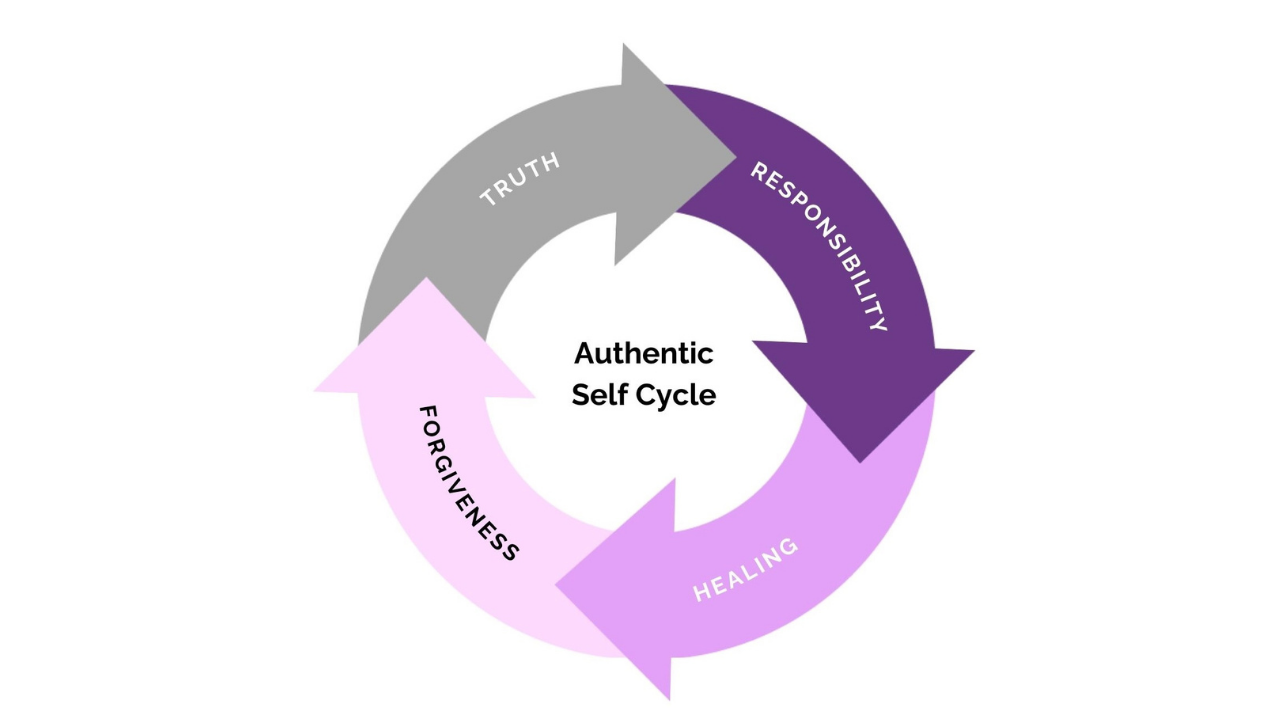
    Authentic Self Cycle™ — truth, responsibility, healing, and forgiveness — the path out of codependence — by Kenny Weiss

    The pathway between them is the Emotional Authenticity Method™—a six-step somatic process that rewires your nervous system at the cellular level.

    The Six Steps of Emotional Authenticity:

    Step 1: Somatic Down-Regulation. Before you can feel anything, your nervous system has to be regulated. Focus on what you can hear for 15-30 seconds. Just sound. This signals safety to your vagus nerve.

    Step 2: Name the Feeling. “What am I feeling right now?” Not thinking—feeling. Not the story about the feeling, but the actual emotion in your body.

    Step 3: Locate the Feeling. “Where in my body do I feel it?” Is it in your chest, your throat, your stomach, your limbs? Get specific.

    Step 4: Find the Origin. “What is my earliest memory of having this exact feeling?” You’ll usually flash to a childhood moment. That’s where the blueprint was encoded.

    Step 5: Envision the Healed Self. “Who would I be if I never had this thought or feeling again?” Hold that vision. Feel it. Let it be real in your nervous system.

    Step 6: Feelization. Sit in the feeling of the Authentic Self. Not thinking about it. Feeling it. Letting your nervous system absorb what wholeness, truth, and safety actually feel like.

    When you run this process consistently, something radical happens: your nervous system rewires. The trigger that used to activate the Worst Day Cycle starts to feel different. Your body doesn’t panic. Your mind doesn’t shame. You have space to choose differently.

    That’s not willpower. That’s not behavior change. That’s your nervous system learning a new definition of safety.

    Emotional Authenticity Method™ — the process for healing codependent personality types at the root — by Kenny Weiss

    What This Looks Like in Real Life

    Let me show you how the codependence spectrum manifests across different areas of life. You’ll probably see yourself in multiple places—that’s normal and it’s exactly why the spectrum model is so important.

    Family Relationships

    Disempowered: Your parent or sibling criticizes you, and you absorb it as truth. You go quiet. You make excuses for their behavior. You keep trying to earn their approval by doing more, being better, staying smaller. You feel guilty for having your own life separate from the family.

    That’s the people-pleaser keeping peace at the cost of yourself.

    Falsely Empowered: You’re the responsible one everyone leans on. You give advice, fix problems, manage the family dynamics. When a family member struggles, you feel obligated to solve it. You maintain control by staying competent and needed. You rarely let anyone see you struggle.

    That’s the overachiever hiding in caretaking.

    Romantic Relationships

    Disempowered: You stay in situations that hurt you because you believe you can love them into safety. You read their moods constantly. You sacrifice your own needs, interests, and boundaries to keep them happy. You apologize for things that aren’t your fault. You feel responsible for their emotions.

    That’s the love addict running on abandonment fear.

    Falsely Empowered: You withdraw emotionally the moment someone gets close. You maintain control through distance or criticism. You can’t admit you need them. You use work, hobbies, or other pursuits to avoid intimacy. You leave before you can be left.

    That’s the love avoidant running on engulfment fear.

    Friendships

    Disempowered: You’re always the listener, never the one being listened to. You remember everything about your friends’ lives but feel like they don’t really know you. You cancel your own plans if a friend needs you. You worry constantly about being too much or not enough.

    That’s the helper who’s terrified of needing.

    Falsely Empowered: You keep friendships surface-level. You’re fun and engaging in groups but struggle with vulnerability one-on-one. You have trouble asking for support. You disappear when things get demanding or emotional.

    That’s the independent one who can’t let people in.

    Work and Career

    Disempowered: You overfunction on your team to compensate for feeling incompetent. You take on extra work you resent. You don’t advocate for yourself in salary negotiations or promotions. You feel responsible for your boss’s or colleagues’ emotions. You seek validation through productivity.

    That’s the anxious achiever running on shame.

    Falsely Empowered: You’re the high-performer, the one everyone depends on. You work long hours and wear it as a badge. You struggle with delegation because your worth is tied to your output. You’re driven by the need to prove yourself. Taking time off feels irresponsible.

    That’s the ambitious one running on anxiety.

    Body and Health

    Disempowered: You ignore your body’s signals. You eat when you’re not hungry to numb emotions. You don’t exercise because you feel like you don’t deserve care. You put everyone else’s health and comfort above your own. You tolerate physical pain or illness without seeking help.

    That’s the self-abandonment pattern running through your nervous system.

    Falsely Empowered: You control your body through rigid exercise or diet regimens. You’re always optimizing, never satisfied. You use fitness or health as another achievement metric. You struggle with rest or flexibility. Your body is something to manage, not something to listen to.

    That’s the defended one controlling through discipline.

    Your Next Small Step

    You don’t need to overhaul your life or fix everything at once. Real change starts with one small practice.

    Try the Emotional Authenticity Method™ this week with one feeling. Pick a moment when you felt shame, guilt, or fear. Don’t try to fix it or manage it. Just follow the six steps:

    1. Regulate: Listen to sound for 15-30 seconds.
    2. Name: What are you feeling?
    3. Locate: Where in your body?
    4. Origin: Your earliest memory of this feeling?
    5. Vision: Who would you be without it?
    6. Feelization: Sit in the feeling of your Authentic Self.

    Do this once. Pay attention to what shifts. You might feel lighter. You might feel more present. You might just feel less alone in the feeling. That’s the beginning of nervous system change.

    And get access to the Feelings Wheel—it’s a free tool that shows you 100+ emotion words so you can get more precise in Step 2. Most people get stuck on “I feel bad”—the Wheel helps you find the actual feeling underneath.

    People Also Ask

    Can someone be both disempowered and falsely empowered at the same time?

    Yes, absolutely. Codependence is a spectrum, not a binary. You’re probably disempowered in some areas (family, close relationships) and falsely empowered in others (work, friendships). Some people oscillate between both depending on the situation or the person. The Adapted Wounded Child is exactly this—someone who bounces between both sides depending on what survival strategy feels safest in the moment.

    Is my codependence my parents’ fault?

    Your parents created the conditions that shaped your nervous system, but they don’t own your recovery. They were doing the best they could with their own wounded nervous systems. Blame won’t set you free. Understanding your blueprint so you can rewire it—that’s what creates change. The Emotional Authenticity Method™ helps you take responsibility for your healing without drowning in shame about your past.

    What’s the difference between enmeshment and codependence?

    Enmeshment is the family system that creates codependence. It’s the boundary violation, the lack of separation, the emotional fusion where your feelings become your parents’ responsibility and vice versa. Codependence is your nervous system’s response to that environment. So enmeshment is the cause; codependence is the trauma pattern that results. Understanding both helps you see why you adapted the way you did.

    Does codependence recovery mean leaving my relationships?

    Not necessarily. If your partner is also willing to do recovery work and rewire their own nervous system, your relationship can become a container for healing. But you have to be honest: some relationships are built on the mutual trauma pattern, and staying in them while you’re trying to heal can keep you stuck. The real question isn’t “Should I leave?” but “Can I be authentic in this relationship?” If the answer is no, that’s important information.

    Why haven’t I heard of the codependence spectrum before?

    Because most of the recovery industry focuses on the disempowered side. The love addict. The people-pleaser. The anxiously attached. Those are easier to identify and easier to talk about. The falsely empowered side—the love avoidant, the high-achiever, the withdrawn one—gets called “independent” or “secure” by mainstream culture. Nobody thinks they need recovery. But they’re equally codependent, equally trapped in a nervous system survival pattern. That’s why so many “successful” people feel empty and alone.

    How do negotiables and non-negotiables fit into codependence recovery?

    Codependents are almost always allowing people, places, and things into their lives that go against their morals, values, and negotiables and non-negotiables. The disempowered codependent says yes to everything because saying no feels like abandonment. The falsely empowered codependent controls everything because they never paused to identify what actually matters to them. Recovery requires getting clear on what you value, what you’re willing to compromise on, and what is non-negotiable—and then having the nervous system capacity to enforce those lines without collapsing or controlling.

    Can the Emotional Authenticity Method™ heal codependence completely?

    The Method rewires your nervous system so the pattern loses its grip. You’ll have moments of genuine freedom, authenticity, and choice that you’ve never experienced before. But codependence is deeply embedded—it’s been your survival strategy your whole life. Real healing is a process, not a destination. You’ll keep discovering new layers, new triggers, new places where the pattern is still running. The difference is that over time, you’ll be running the Authentic Self Cycle™ more than the Worst Day Cycle™. You’ll be more authentic than defended. That’s what recovery looks like.

    The Bottom Line

    You’re not broken. You’re not a bad person. You’re not unlovable because you can’t say no or because you can’t let people in.

    You’re trauma-trained. Your nervous system learned a pattern in childhood that kept you safe then. It’s just no longer serving you.

    The codependence spectrum exists because there were two different threats in your family: the threat of being powerless and abandoned, or the threat of being engulfed and losing yourself. Your nervous system adapted brilliantly to whichever threat felt most real. That adaptation created your survival persona—and it also created the walls between you and genuine connection.

    But here’s what matters: your nervous system can learn something new.

    The Emotional Authenticity Method™ isn’t about trying harder or thinking differently. It’s about teaching your body that you’re safe enough to feel, honest enough to tell the truth, and worthy enough to take up space.

    When that rewiring happens, everything changes. Not because you finally have willpower. But because your nervous system no longer needs the survival strategy anymore.

    That’s when real recovery begins.

    • Codependent No More by Melody Beattie — The foundational book on disempowered codependence. Essential if you’ve never named the pattern before.
    • The New Rules of Marriage by Terrence Real — Brilliant on falsely empowered codependence in relationships and how it sabotages intimacy.
    • Complex PTSD by Pete Walker — The definitive guide to understanding the nervous system patterns (fight, flight, freeze, fawn) that codependence creates.
    • The Body Keeps the Score by Bessel van der Kolk — If you want to understand why talk therapy alone doesn’t heal codependence, this is the scientific explanation.

    Ready to Stop Running the Pattern?

    Understanding the spectrum is the first step. But knowing isn’t the same as rewiring. Your nervous system needs more than information—it needs a practice, a community, and a framework that addresses the root.

    That’s what Greatness U is designed for.

    Courses Designed for Every Stage of Your Recovery

    Emotional Blueprint Starter Course — Individual ($79)
    This 4-hour course teaches you exactly how your childhood emotional blueprint was encoded and how it’s running your codependence pattern. You’ll understand both sides of the spectrum and where you land. Perfect if you’re newly recognizing the pattern and need foundational language.

    Relationship Starter Course — Couples ($79)
    Learn how codependent patterns show up in romantic relationships and why your usual fix strategies backfire. Designed for couples ready to understand their dynamic before diving into deeper work.

    Why We Can’t Stop Hurting Each Other ($479)
    This course maps how codependent pairs attract and hurt each other—and how to break the cycle. You’ll understand trauma chemistry, the disempowered-falsely empowered pairing, and where real healing actually starts.

    The Shutdown Avoidant Partner ($479)
    Specifically designed for anyone in a relationship with a falsely empowered codependent (the withdrawn, defended partner). You’ll learn why standard advice doesn’t work and what actually creates change.

    Tier 1: Mapping the Blueprint ($1,379)
    The deepest work. This tier-based program walks you through identifying your complete emotional blueprint, understanding your family system’s trauma patterns, and beginning the nervous system rewiring process. This is where the transformation actually happens.

    Your recovery isn’t going to look like anyone else’s. You might be disempowered in some areas and falsely empowered in others. You might swing between both. The point is that you see the spectrum now—you understand that both sides are the same wound, just wearing different masks.

    And now you know the real path forward isn’t behavior change. It’s nervous system rewiring through emotional authenticity.

    That’s the shift that sets you free.

  • What Causes Codependency? Childhood Trauma, Emotional Neglect, and Survival Personas

    What Causes Codependency? Childhood Trauma, Emotional Neglect, and Survival Personas

    What Is Codependency? The Clinical Definition

    Codependency is not about loving too much. It’s a learned emotional and behavioral pattern where you lose yourself in relationships, override your own needs for others, and develop an identity built on managing someone else’s emotions, behaviors, or approval.

    Core definition: Codependency occurs when a person excessively relies on others for self-worth, makes sacrificing decisions to avoid conflict or abandonment, and abandons their own emotional authenticity to maintain connection—all rooted in childhood patterns of survival.

    The pain you feel—the constant anxiety, the obsessive need to fix your partner, the inability to say no, the deep shame when someone leaves—that’s your nervous system still running on a childhood survival program. It’s not a character flaw. It’s a brilliant adaptation that kept you alive emotionally in an environment that wasn’t equipped to honor your authentic self.

    What is codependency - emotional pattern of self-abandonment and people-pleasing

    Most people think codependency is about being “too nice” or “too caring.” The reality is darker and more hopeful at once. You’re not broken—you’re operating from an inherited emotional blueprint that no longer serves you.

    That’s you if you constantly ask yourself “Am I doing enough?” or “Will they leave me?”

    How Childhood Trauma Creates Codependent Patterns

    Here’s what most therapy misses: codependency doesn’t come from one big traumatic event (though it can). It comes from thousands of small emotional abandonments, moments where your authentic feelings weren’t honored, and an environment where love felt conditional.

    Childhood trauma is any negative emotional experience that created painful meanings about yourself, others, or the world. This includes obvious trauma (abuse, loss, neglect) but also the quiet kind: parents who criticized you for crying, families where anger was punished, environments where your job was to keep the peace by suppressing yourself.

    When your nervous system experiences threat—emotional or physical—your hypothalamus floods your body with cortisol, adrenaline, dopamine misfires, and oxytocin confusion. Your brain becomes neurologically addicted to these states because they’re the only emotional home you know.

    Childhood trauma triggers cortisol adrenaline dopamine misfire brain chemistry

    The brain is a prediction machine. It learns from patterns. When 70%+ of your childhood messaging is negative, critical, or conditional, your brain learns that you are the problem. And because humans are energy-conserving creatures, your brain keeps repeating the same patterns in adult relationships, work, health, and every area of life. It’s not your fault—it’s neurobiology.

    That’s the painful truth: your nervous system doesn’t know right from wrong. It only knows familiar versus unfamiliar. And safety, in your wiring, means repeating what you learned in childhood.

    The Worst Day Cycle™ Explained

    The Worst Day Cycle™ is the four-stage loop that keeps codependency alive. Once you see it, you can’t unsee it. Understanding this cycle is the first step toward freedom.

    The Worst Day Cycle™ consists of four stages—Trauma, Fear, Shame, and Denial—that create a neurological feedback loop. When childhood trauma is activated (a partner’s criticism, abandonment threat, or perceived rejection), fear floods your body because your nervous system confuses present-day threat with past danger. Shame emerges where you lost your inherent worth (“I am the problem”). Denial manifests as your survival persona—a false identity created to protect you from unbearable pain.

    Stage 1: Trauma. This is the original wound. Your nervous system stores every painful moment as threat. A partner’s tone of voice, a parent’s disappointment, a friend’s distance—these activate your threat response as if you’re a child again, helpless and unsafe.

    Stage 2: Fear. Once trauma is triggered, fear follows instantly. Your body floods with stress chemicals. Your thinking brain shuts down. You go into fight, flight, freeze, or fawn mode. Your amygdala (threat detector) is running the show now, not your prefrontal cortex (wisdom, discernment, choice).

    That’s you — your heart racing at a text message that takes too long, your stomach dropping when your partner goes quiet.

    Stage 3: Shame. Here’s where codependency locks in. Fear morphs into shame—the belief that you are inherently wrong, unlovable, or broken. “I am the problem” becomes the operating system. You don’t just believe you made a mistake; you believe you ARE a mistake.

    Stage 4: Denial. To survive unbearable shame, your psyche creates a survival persona—a false identity that says “I’m fine,” “I can handle this,” “I’ll fix it,” or “I don’t have needs.” This survival persona becomes your go-to strategy for staying connected, avoiding abandonment, and managing the pain.

    Worst Day Cycle - Trauma Fear Shame Denial codependency loop

    The problem: this survival persona is brilliant in childhood (it keeps you safe, keeps you connected to parents you depend on) but catastrophic in adult relationships. You abandon yourself to keep the peace. You ignore red flags. You override your needs. You become obsessed with fixing your partner’s emotions.

    Sound familiar? That’s the Worst Day Cycle™ running your life without your permission.

    The Three Survival Persona Types

    Everyone who experiences childhood trauma develops a survival persona—a false identity designed to protect them from unbearable pain and abandonment. There are three primary archetypes. You may recognize yourself in one, two, or all three at different times.

    Three survival personas - falsely empowered disempowered adapted wounded child

    The Falsely Empowered Survival Persona

    This persona says “I’m in control. I’m strong. I don’t need anyone.” On the surface, it looks like confidence. In reality, it’s a hypervigilant defense against abandonment. You over-function, over-give, over-achieve because being needed feels like being loved.

    In relationships, the falsely empowered persona takes on the fixer role: managing your partner’s emotions, solving their problems, staying one step ahead of their moods to prevent conflict or rejection. You’re exhausted because you’re carrying two emotional loads—yours and theirs.

    That’s you if you’re the one always making the relationship work while your partner seems unbothered.

    The Disempowered Survival Persona

    This persona says “I can’t. I’m not enough. I need you to survive.” It emerges from environments where your opinions were minimized, your voice was silenced, or your needs were treated as inconvenient. You learned early that small, quiet, compliant people are safer.

    That’s you — the one who says “I’m fine” while silently drowning, because showing need felt like begging as a child.

    In relationships, the disempowered persona abandons agency entirely. You suppress your preferences, avoid conflict at any cost, and interpret every disagreement as evidence of impending abandonment. Your partner’s happiness becomes your job. Your authenticity becomes the price of connection.

    The pain here is acute: you feel controlled, voiceless, and trapped—but you can’t leave because abandonment feels like death.

    The Adapted Wounded Child Survival Persona

    This persona tries to stay innocent and helpless: “I’m just a kid who doesn’t know how to handle this.” It’s a regression—an attempt to access the nurturing or protection you never received by staying emotionally young, needy, or confused.

    Adapted wounded child survival persona - emotional regression and learned helplessness

    In relationships, this persona creates a dynamic where your partner becomes the parent—rescuer, caretaker, decision-maker. You may feel genuinely incompetent or confused in areas where you’re actually capable. You unconsciously repeat the child-parent dynamic because it’s the only relational template you learned.

    The adapted wounded child can also appear as the “nice” partner who never expresses anger, always accommodates, and seems content to disappear into the relationship.

    That’s the adapted wounded child if you find yourself waiting for permission to have needs or opinions.

    All three survival personas (falsely empowered, disempowered, adapted wounded child) are brilliant childhood survival strategies that protected you from emotional annihilation. In childhood, these personas may have been your only route to connection and safety. In adult relationships, they create patterns of self-abandonment, enmeshment, and the loss of emotional authenticity—the very thing that would set you free.

    Emotional Neglect as a Root Cause

    One of the deepest roots of codependency is emotional neglect—not the absence of food, shelter, or clothing, but the absence of emotional attunement and validation. This is insidious because it’s invisible. There are no bruises. No one can see it. But it shapes your entire sense of self.

    Emotional neglect happens when:

    — Your parents were emotionally unavailable (depressed, addicted, checked out)

    — Your feelings were dismissed (“You’re being too sensitive”)

    — Expressing needs was met with criticism or punishment (“Stop crying or I’ll give you something to cry about”)

    — Love felt conditional on performance, achievement, or compliance

    — You were given the message that your emotional life was a burden to others

    When you grow up emotionally neglected, your brain doesn’t develop a strong sense of what you feel, what you want, or what you deserve. You become expert at reading others—hyper-attuned to their moods, needs, and potential reactions—because your emotional survival depended on it.

    In adult relationships, this shows up as obsessive attention to your partner’s moods, constant checking in, over-apologizing, and a terrifying inability to know what you actually want apart from them.

    Enmeshment emotional neglect codependency loss of boundaries and identity

    The paradox: you’re incredibly attuned to others while being completely disconnected from yourself. You can name your partner’s feelings before they can. You have no idea what you feel. Enmeshment—the blurring of emotional boundaries between you and others—becomes your normal.

    Sound familiar? That’s emotional neglect creating an expert people-reader and a disconnected self.

    The Role of Shame in Codependency

    Shame is the engine of codependency. Not guilt. Guilt says “I did something bad.” Shame says “I am bad.” And when shame is wired into your sense of self in childhood, it drives every codependent behavior in adulthood.

    Shame emerges in childhood through:

    — Criticism, humiliation, or shaming language from parents

    — Punishment for normal developmental emotions (anger, sadness, sexuality)

    — Being blamed for family problems or emotional dynamics

    — Witnessing or experiencing abuse without protection

    — Being made responsible for a parent’s emotional regulation

    When shame becomes part of your identity, you develop the belief “I am fundamentally wrong, unlovable, or broken.” This is the wound that codependency emerges from and the wound that codependency perpetuates.

    Shame is the belief that you are inherently defective—not that you made a mistake, but that you are the mistake. This core shame drives codependent people to abandon themselves, over-function in relationships, accept mistreatment, and compulsively seek reassurance or approval. Breaking codependency requires identifying and healing the shame beliefs installed in childhood.

    In relationships, shame manifests as:

    — Staying in situations where you’re disrespected

    — Accepting blame for things that aren’t your responsibility

    — Hiding your authentic self, preferences, and needs

    — Seeking constant reassurance that you’re “okay” or “enough”

    — Feeling like you deserve mistreatment

    The codependent strategy is to fix the shame by being “perfect”—perfectly attuned, perfectly accommodating, perfectly self-sacrificing. The belief, buried deep: “If I can just be good enough, loved enough, or needed enough, the shame will disappear.”

    It never does. The shame only deepens as you abandon yourself more completely.

    That’s the shame engine — convincing you that if you just try harder, give more, need less, the pain will finally stop. It never does.

    The Authentic Self Cycle™: How Healing Works

    Here’s the hopeful part: understanding the Worst Day Cycle™ immediately suggests the healing path. The Authentic Self Cycle™ is the direct inverse—a four-stage recovery loop that reverses codependency at the neurological level.

    Authentic Self Cycle - Truth Responsibility Healing Forgiveness recovery

    Stage 1: Truth. This is naming the blueprint. Seeing it clearly. “This isn’t about today. My partner’s criticism activated my childhood fear of being wrong. My abandonment panic came from my parent’s conditional love, not from current evidence that I’ll be left.”

    Truth is the flashlight you shine on your own neurobiology. It’s compassionate realism. It says: “That survival persona? It saved your life. And now it’s drowning you. Both things are true.”

    Stage 2: Responsibility. This is the hardest stage for codependent people because we’re used to taking responsibility for things that aren’t ours. True responsibility means owning your emotional reactions without blame—without blaming yourself, your partner, or your parents.

    “My partner isn’t my parent. My nervous system just thinks they are. It’s not their job to heal my childhood. It’s mine.”

    This is where you reclaim agency. You stop waiting for your partner to change, stop blaming them for your pain, and start acknowledging: “My emotional response is mine to manage. I can feel triggered and still choose not to abandon myself.”

    Stage 3: Healing. This is rewiring the emotional blueprint. It’s the actual neurochecking process where you teach your nervous system that conflict is uncomfortable but not dangerous, that disagreement doesn’t mean abandonment, that your authentic voice won’t destroy the relationship.

    Healing is not forgetting the past. It’s changing what the past means. It’s building new emotional associations through deliberate practice and somatic work.

    Stage 4: Forgiveness. This is releasing the inherited emotional blueprint. Not forgiving your parents or others for what they did—though you may do that. Forgiving yourself for the survival strategies you developed. Forgiving your nervous system for its brilliant, protective repetitions. Reclaiming your authentic self as the foundation of your identity.

    That’s the Authentic Self Cycle™—the way out of codependency is through, not around.

    The Emotional Authenticity Method™ for Recovery

    Understanding your patterns is one thing. Changing them requires a concrete practice. The Emotional Authenticity Method™ is a five-step process that rewires your nervous system, reconnects you to your authentic self, and builds the skill of emotional integrity.

    Emotional Authenticity Method - five step process for nervous system regulation

    Step 1: Somatic Down-Regulation with Optional Titration.

    Before your thinking brain can engage, you must settle your nervous system. When you’re triggered, you’re in threat response—amygdala hijacked, prefrontal cortex offline. Somatic down-regulation means using your body to send your nervous system a signal of safety: deep breathing, cold water on your face, walking, or gentle movement.

    Titration (from somatic therapy) means you don’t have to go from triggered to calm in one leap. You can take small steps: slightly lower your shoulders, soften your jaw, take one deeper breath. Your nervous system will follow these micro-signals.

    Step 2: What Am I Feeling?

    Once you’re slightly regulated, name the emotion with granularity. Not “I feel bad.” Use the Feelings Wheel to identify whether you’re feeling hurt, disappointed, abandoned, embarrassed, or furious. Codependent people are often trained to ignore or minimize their emotional life. Naming it with precision reconnects you to your authentic self.

    Step 3: Where in My Body Do I Feel It?

    Emotions aren’t abstract—they’re somatic. Where is the feeling in your body? Tightness in your chest? Heat in your face? Heaviness in your stomach? This grounds you in the present moment and breaks the dissociation that codependency creates.

    Step 4: What Is My Earliest Memory of This Feeling?

    Here’s where you connect present to past. The feeling you’re experiencing now likely echoes an earlier version of itself. What’s the first time you remember feeling this way? Often, it’s not your current partner that’s the problem—it’s that they remind your nervous system of an old threat.

    Step 5: Who Would I Be If I Never Had This Feeling Again?

    This is the visioning step. It’s not about pushing the feeling away or denying it. It’s about asking: “What would become possible if this particular wound was healed? How would I relate? What would I choose? Who would I be?” This reconnects you to your authentic self—the you that exists beneath the survival persona.

    Emotional regulation nervous system healing codependency recovery

    That’s the Emotional Authenticity Method™—five steps to reconnect with yourself in real time, to rewire your nervous system, and to reclaim agency in your own emotional life.

    Signs of Codependency Across Life Areas

    Codependency doesn’t exist in a vacuum. It bleeds into every relationship and area of your life. Here are the signs across five life domains:

    Family Codependency Signs

    — You manage your parent’s emotions, even as an adult

    — You feel responsible for your parent’s happiness or well-being

    — You hide your accomplishments to avoid triggering your parent’s jealousy or shame

    — You accept abuse or mistreatment without setting boundaries

    Insecurity appears when family members express criticism or disappointment

    — You seek constant reassurance of being loved or accepted

    That’s you — if your parent’s mood determines your entire day, you’re still living inside a childhood survival program.

    Romantic Relationship Codependency Signs

    — You abandon your own needs, preferences, and authentic voice to keep the peace

    — You feel responsible for your partner’s emotions, moods, and problems

    — You over-give: time, energy, money, emotional labor, sex

    — You stay in situations where you’re disrespected, neglected, or mistreated

    — You interpret your partner’s withdrawal or irritability as evidence of your failure

    — You change yourself constantly to be what you think your partner needs

    — Abandonment anxiety drives your behavior more than love does

    — You obsess about your partner’s feelings, thoughts, and reactions

    Boundaries are unclear or nonexistent—you can’t say no without guilt.

    Friendship Codependency Signs

    — You’re the one who always reaches out, initiates plans, and maintains the relationship

    — You accept mistreatment or flakiness because you fear losing the friendship

    — You take on the role of therapist, advisor, or problem-solver for your friends

    — You hide parts of yourself to be more likable or acceptable

    — You feel hurt when your friends don’t reciprocate your effort or attention

    — You feel obligated to be available even when it costs you

    That’s you — exhausted from being everyone’s support system while nobody holds space for you.

    Work Codependency Signs

    — You over-function: taking on too many projects, staying late, taking work home

    — You seek constant validation from your boss or colleagues

    — Your self-worth is entirely dependent on productivity or performance

    — You can’t delegate or ask for help—you believe it’s all your responsibility

    — You manage your boss’s moods or emotions

    — You accept disrespect, unreasonable demands, or low pay

    — You fear disappointing people more than you fear burnout

    That’s you — getting promoted for the very pattern that’s destroying you from the inside out.

    Body and Health Codependency Signs

    — You ignore your body’s signals: hunger, fatigue, pain, sexual boundaries

    — Your body image or health choices are determined by what others want

    — You neglect self-care because you’re too busy managing others

    — You use food, sex, substances, or work to numb emotional pain

    — You have difficulty staying present in your body—dissociation is common

    — You prioritize your partner’s or family’s health over your own

    — You feel shame about your body or your needs

    Emotional blueprint showing how childhood patterns create codependency across all life areas

    That’s your body keeping score — it’s been trying to tell you something for years, but codependency taught you to ignore it.

    Sound familiar? Codependency doesn’t whisper — it shouts across every area of your life until you’re too exhausted to ignore it anymore.

    Breaking Free: From Survival to Authenticity

    Here’s the truth nobody tells you about codependency recovery: it’s not about learning to love better. It’s about learning to love yourself so fiercely that you stop abandoning yourself for connection.

    Breaking free requires three non-negotiable elements:

    First: Awareness. You can’t change what you can’t see. The Worst Day Cycle™ runs in the background of your consciousness, autopiloting your choices. Seeing it—naming it—is the beginning of freedom. You’re reading this, which means awareness is already starting.

    Second: Rewiring. Awareness without rewiring just creates guilt. “I see the pattern. I hate it. Why can’t I stop?” Because your nervous system is still wired for threat, still seeking the familiar, still running survival programs. Rewiring happens through the Emotional Authenticity Method™ and deliberate nervous system work—not through willpower or self-judgment.

    Third: Reclamation. This is where you rebuild your identity around your authentic self, not your survival persona. You discover what you actually want, what your real needs are, what your values are independent of other people’s approval. You practice genuine self-esteem—not narcissistic confidence, but quiet knowing of your own worth.

    Recovery from codependency is possible and doesn’t require leaving your relationship. It requires building a new neurological foundation where your authentic self becomes your primary relationship. When you stop abandoning yourself, you either build a healthier relationship with your partner or you clearly recognize that the relationship no longer serves you. Either way, you win.

    The paradox of codependency recovery: the thing you fear most (abandonment) becomes less likely when you stop abandoning yourself. When you have clear boundaries and emotional authenticity, you attract healthier people and relationships. When you’re willing to leave, many partners step up and do their own work.

    The work is not easy. It’s not quick. But it’s the most important investment you can make in your own life.

    People Also Ask

    Is codependency the same as loving too much?

    No. Codependency is not about loving too much—it’s about abandoning yourself in the name of connection. True love includes healthy boundaries, authentic communication, and mutual respect. Codependency abandons all three to maintain connection through people-pleasing and self-sacrifice.

    Can you have codependency in just one relationship, or is it a pattern?

    Codependency is a pattern that repeats across all relationships—romantic, family, friendship, and work. However, it often shows up most intensely in your primary romantic relationship because that’s where your deepest fears of abandonment live. If you notice the same painful patterns repeating across multiple relationships, that’s a sign of a deeper emotional blueprint that needs rewiring.

    Can someone with codependency be healed without therapy?

    Self-awareness and intentional practice (like the Emotional Authenticity Method™) can create significant shifts. However, most people benefit from professional support—a therapist who understands trauma, nervous system healing, and emotional patterns. Therapy accelerates the process and provides personalized guidance for your specific blueprint.

    What if my partner doesn’t want to do the work of healing the relationship?

    This is the hardest question. If your partner is unwilling to acknowledge patterns, take responsibility, or do their own work, healing the relationship dynamics requires you to get healthy first. Often, when one person stops abandoning themselves and sets clear boundaries, the other person either steps up or the relationship ends. Both outcomes are better than staying stuck in codependency.

    Is codependency genetic or learned?

    Both. You’re neurologically wired by your childhood environment (attachment style, trauma responses, nervous system patterns). You’re also taught behavioral patterns through modeling and direct experience. The good news: neither genetics nor learning are destiny. You can rewire your nervous system and learn new patterns at any age.

    How do I know if I’m recovered from codependency?

    Recovery is not a destination—it’s a practice. You know you’re healing when: you can disagree without fear of abandonment, you have clear boundaries without guilt, you know what you want apart from others’ approval, you feel your feelings without compulsively managing others’, and you choose your relationships from a place of wholeness, not neediness. Healthy relationships become your baseline.

    • Facing Codependence by Pia Mellody — The foundational text on how childhood trauma creates codependent patterns, survival personas, and the loss of authentic self.
    • “The Body Keeps the Score” by Bessel van der Kolk — Essential for understanding how trauma lives in the nervous system and why healing requires more than talk therapy.
    • “When the Body Says No” by Gabor Maté — Explores how emotional repression and codependency manifest as physical illness and what authentic expression looks like.
    • “Codependent No More” by Melody Beattie — The classic that helped countless people set boundaries and stop trying to fix other people.
    • “The Gifts of Imperfection” by Brené Brown — A guide to wholehearted living that directly counters the shame that keeps codependency locked in place.

    The Bottom Line

    Codependency is not a character flaw or proof that you’re broken. It’s a brilliant survival system that kept you connected and safe in an environment that wasn’t equipped to honor your authentic self. Your childhood taught you that abandoning yourself was the price of love. Your adult nervous system is still running that program.

    But here’s what changes everything: understanding the root causes is the first step toward freedom. When you see the Worst Day Cycle™ running, when you recognize your survival persona, when you understand that shame is the fuel and emotional neglect is the blueprint, you can stop blaming yourself and start rewiring your nervous system.

    The Authentic Self Cycle™ and the Emotional Authenticity Method™ are not theoretical—they’re actionable pathways to rebuilding your relationship with yourself and, by extension, your relationships with others. The work is not easy, but it’s infinitely worth it.

    Your authentic self is still in there. Under the survival persona, beneath the shame, beyond the pain. That version of you—the one who knows what they want, honors their own needs, and loves from wholeness instead of desperation—is waiting to come home.

    The healing starts when you stop abandoning yourself. It starts now.

    Next Steps: Courses for Your Recovery

    Ready to Break Free From Codependency?

    Understanding your patterns is the beginning. Rewiring your nervous system and rebuilding your identity is the work. These courses guide you through the entire journey with video lessons, worksheets, live trainings, and community support.

    Emotional Blueprint Starter Course — Individual

    A 6-week self-guided course on understanding your emotional blueprint, identifying your survival persona, and the first steps toward nervous system healing.

    $79

    Relationship Starter Course — Couples

    For partners who want to heal the relationship together. Learn how to break codependent patterns, communicate authentically, and rebuild intimacy from a foundation of self-awareness.

    $79

    Why We Can’t Stop Hurting Each Other

    A comprehensive deep-dive into how childhood trauma creates adult relationship pain, the neurobiology of conflict, and the complete pathway to healing.

    $479

    Why High Achievers Fail at Love

    For high-functioning codependents. Learn how success at work is enabled by the same survival patterns that sabotage your relationships. Rewire for wholeness.

    $479

    The Shutdown Avoidant Partner

    If you’re in a relationship with someone who pulls away, shuts down, or refuses intimacy—understand what’s happening in their nervous system and what you can actually control.

    $479

    Tier 1: Mapping the Blueprint

    The complete mastermind experience. Live monthly calls, personalized feedback on your growth, access to all courses, and a community of people doing the deep work alongside you.

    $1,379

    Explore Your Path to Healing →

    Continue Your Learning

    The Emotional Authenticity Method™ requires practice. Start with the Feelings Wheel exercise to reconnect with your emotional life. Then explore these related topics:

  • How to Ask for Your Needs and Wants: Why Shame Keeps You Silent

    How to Ask for Your Needs and Wants: Why Shame Keeps You Silent

    How to ask for your needs and wants is the single most terrifying skill for anyone recovering from codependence — and the one skill that changes everything. You know what you need. You can feel it in your body — the ache of unmet connection, the exhaustion of carrying everyone else’s emotional weight, the quiet desperation of watching your own life pass by while you manage someone else’s. You rehearse the words in your head. You practice in the shower. You write it in your journal. But when the moment arrives — when your partner is sitting across from you, when your boss asks if you’re okay with the extra hours, when your parent dismisses your feelings one more time — the words dissolve. Your chest tightens. Your throat closes. And you say: “I’m fine.”

    That’s you if you’ve spent your entire life meeting everyone else’s needs while your own needs sit untouched, unspoken, and unmet — not because you don’t know what they are, but because shame taught you that having needs makes you a burden.

    The inability to ask for your needs and wants isn’t a communication problem. It’s a shame problem. Somewhere in childhood, your nervous system learned that expressing needs creates danger — rejection, abandonment, rage, withdrawal, or the cold silence that felt worse than all of them. Your survival persona took over and built an identity around self-sacrifice, and now that identity runs your adult relationships without your permission. The path out isn’t willpower or assertiveness training. It’s healing the childhood emotional blueprint that convinced you your needs don’t matter.

    How to ask for your needs and wants in codependence recovery — breaking self-abandonment patterns

    Table of Contents

    Why You Can’t Ask for What You Need: The Childhood Blueprint

    Every person who struggles to ask for their needs and wants carries a childhood story that sounds something like this: “My needs caused problems. My emotions were a burden. If I asked, I was too much. If I needed, I was selfish. If I spoke up, someone got angry, withdrew, or made me feel like I was destroying the family.”

    Childhood emotional blueprint showing why asking for needs feels dangerous in codependence

    These aren’t just memories. They’re chemical imprints. Your nervous system learned during the most formative years of brain development that expressing needs equals danger. The hypothalamus generated chemical cocktails — cortisol, adrenaline, dopamine misfires — every time you reached for something and were rejected, shamed, or ignored. Your brain became addicted to these emotional states because the brain conserves energy by repeating known patterns. It can’t tell right from wrong — only known versus unknown.

    That’s you if you can articulate exactly what you need to your therapist, your journal, or your best friend — but the moment you try to say it to the person who matters most, your body shuts down.

    The inability to ask for your needs is not weakness. It is a brilliantly engineered childhood survival strategy that kept you safe when asking meant losing love. In adulthood, the same strategy keeps you trapped in relationships where you give endlessly, receive almost nothing, and blame yourself for the emptiness.

    Your childhood taught you that needs are negotiable. That your feelings come second. That love is earned through self-sacrifice. And your adult relationships have been confirming this story ever since — not because the story is true, but because your nervous system keeps choosing partners and situations that match the original blueprint.

    That’s you if you picked a partner who is emotionally unavailable, then convinced yourself that if you just loved harder, gave more, needed less, they’d finally see your worth.

    5 Ways Codependent People Fail to Meet Their Own Needs

    Codependence creates specific, predictable patterns of self-neglect. Understanding these patterns is the first step to breaking them.

    Enmeshment and codependence patterns showing five ways needs go unmet

    Pattern 1: Pursuing wants over needs. Because of such deprivation in childhood — when basic emotional needs were never met — the codependent person chases wants to fill the void. They’ll book a vacation they can’t afford while their rent is overdue. They’ll buy gifts for everyone while neglecting their own medical appointments. The want provides a temporary dopamine hit; the need sits unaddressed.

    That’s you if you’ve ever spent money on something you didn’t need while ignoring something you desperately did — because the want felt exciting and the need felt boring or scary.

    Pattern 2: Never experiencing joy. When your childhood was filled with chaos, neglect, or emotional volatility, your nervous system never learned what joy feels like. Joy wasn’t safe. Joy meant letting your guard down. So you became someone who doesn’t know how to receive pleasure, celebration, or rest.

    That’s you if someone asks what you want for your birthday and you genuinely don’t know — not because you’re modest, but because you never learned to want things for yourself.

    Pattern 3: Meeting everyone else’s needs first. You volunteer while your house is in disarray. You make dinner for a sick friend while your own family goes without. You manage your partner’s emotions while your own body screams for rest. You’ve built an identity around selflessness, and that identity was installed in childhood when the only way to receive love was to be useful.

    Sound familiar? You’re the first one to help anyone in crisis — but when you’re the one in crisis, you can’t even pick up the phone.

    Pattern 4: Working below your capabilities. Codependent people often work in jobs they don’t like, far below their potential, because their shame tells them they don’t deserve more. As a result, they can’t meet their basic financial needs. They stay stuck because the familiar misery feels safer than the unknown possibility of success.

    That’s you if you know you’re capable of more but can’t seem to make the move — something invisible holds you back every time.

    Pattern 5: Fearing intimacy and creating disconnection instead. Because of neglect in childhood, many codependent people fear genuine emotional intimacy. They don’t know how to ask for intellectual, spiritual, or emotional connection. So they create fights instead — because conflict is their representation of connection, even though it’s truly disconnection. They push away the very closeness they’re starving for.

    That’s you if you start arguments when things get too quiet, too close, too peaceful — because closeness triggers your nervous system’s alarm for danger.

    The Difference Between Needs and Wants: Getting Clear on What You’re Asking For

    Before you can ask for your needs, you need to understand the distinction between needs and wants — because codependence blurs the line.

    Needs are things that must be fulfilled for you to survive. There are five fundamental human needs: food, clothing, shelter, intimacy and connection (including physical, emotional, intellectual, and spiritual intimacy), and financial stability. These are non-negotiable. Without them, you deteriorate physically, emotionally, or both.

    Wants are things that bring you joy. There are little wants — a favorite coffee, a quiet morning, a walk in nature. And there are big wants — a dream vacation, a career change, a new home. Wants aren’t frivolous. They’re essential for a meaningful life. But they cannot come at the expense of your needs.

    Emotional fitness and meeting your needs and wants in codependence recovery

    That’s you if you’ve been meeting everyone else’s needs and wants while you can’t even identify your own — because your childhood never gave you permission to have them.

    Don’t shy away from asking for your needs and wants — that’s how you get out of the codependent dynamic. There is nothing wrong with asking for your needs and wants, as long as you’re willing to accept hearing a “no” and you always have a backup plan in place. It is never their job to meet your needs and wants — ever — even in a marriage.

    This is one of the most liberating truths in codependence recovery. Only sometimes will your partner meet your needs, and it’s wonderful when they do. But when they don’t, it’s your job to put a plan in place — because it’s your need, and it’s your responsibility to meet it.

    The Worst Day Cycle™: How Shame Silences Your Voice

    The Worst Day Cycle™ is the four-stage neurological loop that keeps you silent when you should be speaking up: Trauma → Fear → Shame → Denial.

    The Worst Day Cycle showing how childhood trauma creates inability to ask for needs and wants

    Stage 1: Trauma. Childhood trauma is any negative emotional experience that created painful meanings. Your parent snapped when you asked for something. Your caregiver withdrew when you expressed a need. Your sibling was favored when you tried to take up space. These moments created a massive chemical reaction in your nervous system. The hypothalamus generates chemical cocktails — cortisol, adrenaline, dopamine misfires, oxytocin disruptions — and your brain becomes addicted to these emotional states.

    Stage 2: Fear. Fear drives repetition. Your brain thinks repetition equals safety. Since approximately 70% of childhood messaging is negative and shaming, adults repeat these painful patterns in every area of life. Your brain can’t tell right from wrong — only known versus unknown. Asking for needs is unknown territory. Staying silent is known. So you stay silent.

    That’s you if you’ve rehearsed the conversation a hundred times in your head but never had it — because your nervous system has decided that silence is safer than speech.

    Stage 3: Shame. This is where you lost your inherent worth. Where you decided “I am the problem.” Not “I made a mistake” (which is healthy responsibility), but “I AM a mistake” (which is toxic shame). Shame is the loss of inherent power, inherent value and worth, the ability to ask for needs and wants, and the ability to choose direction and be the author of your own life. Shame whispers: “Your needs don’t matter. You’re selfish for wanting anything. You should be grateful for what you have.”

    Stage 4: Denial. To survive unbearable shame, your psyche creates a survival persona — a false identity that says “I don’t have needs,” “I’m fine on my own,” or “I’m the strong one who takes care of everyone else.” Three survival persona types emerge: falsely empowered (controls, dominates, rages), disempowered (collapses, people-pleases), adapted wounded child (oscillates between both).

    That’s you if you’ve told yourself for years that you don’t need help, don’t need support, don’t need anyone — when the truth is you’re drowning and too ashamed to say it.

    The Three Survival Personas and How They Block Your Needs

    Your survival persona is the identity you built in childhood to keep you safe. In adulthood, it’s the identity that keeps you silent, self-sacrificing, and disconnected from your authentic needs.

    Three survival persona types showing how each blocks ability to ask for needs and wants

    The Falsely Empowered Persona

    The falsely empowered survival persona says: “I don’t need anyone. I’ll handle it myself.” This person is anti-dependent — they’ve learned that depending on anyone means being consumed, controlled, or disappointed. They over-function, over-achieve, and refuse help. They appear strong, capable, independent. Underneath, they’re exhausted, isolated, and terrified of vulnerability.

    That’s you if asking for help feels like admitting weakness — because your childhood taught you that needing someone was the most dangerous thing you could do.

    For the falsely empowered person, the work is learning to ask for help. They need to stop doing everything for themselves and begin receiving from others. They’ll know they’re doing it right when they feel weak, vulnerable, whiny, and insecure. In reality, they’ve probably just moved a little toward moderation.

    The Disempowered Persona

    The disempowered survival persona says: “My needs don’t matter.” This person collapses, people-pleases, and disappears into relationships. They can articulate everyone else’s needs but go blank when asked about their own. They stay silent, build resentment, then either explode or withdraw.

    That’s you if you say “whatever you want” when asked where to eat — not because you’re easy-going, but because you genuinely don’t know what you want, or you’re terrified that choosing wrong will cost you love.

    The Adapted Wounded Child

    The adapted wounded child survival persona oscillates between both. One moment they’re controlling and demanding; the next they’re collapsing and over-accommodating. They read the room constantly, adjusting who they are to match what seems safest. They can’t hold a consistent sense of self because their childhood demanded constant adaptation.

    Adapted wounded child survival persona oscillating between demanding and disappearing in relationships

    That’s you if you feel like a completely different person depending on who you’re with — because your survival persona learned to be whatever the room needed, never what you actually are.

    Sound familiar? Most people recognize themselves in all three personas at different times — because they were all brilliant childhood survival strategies that now run your adult life without your permission.

    The Emotional Authenticity Method™: 6 Steps to Finding Your Voice

    The Emotional Authenticity Method™ is a six-step process that rewires your nervous system so you can feel, name, and express your needs without the shame spiral shutting you down. This isn’t talk therapy. This is somatic, chemical, neurological rewiring.

    Six steps of the Emotional Authenticity Method for learning to ask for needs and wants

    Step 1: Somatic Down-Regulation. When the moment arrives to speak your need — and your throat closes, your chest tightens, your mind goes blank — pause. Focus on what you can hear for 15–30 seconds. Wind. Traffic. Your own breath. If you’re highly dysregulated, use titration: cold water on your face, step outside, hold ice. Your prefrontal cortex cannot come online while your amygdala is running the show. You cannot ask for what you need from a triggered state.

    Step 2: What am I feeling right now? Not “I’m fine.” Use the Feelings Wheel to identify it with precision. Are you feeling afraid? Ashamed? Invisible? Resentful? Desperate? Emotional granularity breaks the shame spiral and moves you from survival mode into your thinking brain.

    Step 3: Where in my body do I feel it? The tightness in your throat when you try to speak your need — that’s not anxiety. That’s a somatic memory. The knot in your stomach, the heaviness in your chest, the collapse in your posture. All emotional trauma is stored physically. Locate it. This grounds you in the present moment.

    That’s you if you’ve been “in your head” trying to think your way into asking — but you can’t think your way out of a feeling. Emotions are biochemical events. Thoughts originate from feelings.

    Step 4: What is my earliest memory of having this exact feeling? The terror you feel when asking for something today echoes something much older. The first time you asked and were rejected. The first time you expressed a need and a parent withdrew. The first time you were told you were selfish for wanting something. Your partner didn’t create this feeling — they activated a blueprint that was already there.

    Step 5: Who would I be if I never had this thought or feeling again? Not “I’d be happy.” Specific: “I’d be someone who asks for what they need without apologizing. Someone who believes their needs have the same weight as everyone else’s. Someone who can hear ‘no’ without it meaning they’re unlovable.” This plants the seed of your authentic self — the vision step that connects you to the Authentic Self Cycle™.

    Step 6: Feelization — The New Chemical Addiction. Sit in the feeling of who you’d be — the authentic self who asks clearly and calmly. Make it strong. Feel it in your body. The confidence, the groundedness, the worthiness. Create a new emotional chemical addiction to replace the old shame blueprint. Ask yourself: “How would I ask for this need from this feeling? What would I say? What would my voice sound like? What would my posture be?” Visualize and FEEL yourself operating from your Authentic Self. This is the emotional blueprint remapping and rewiring step.

    That’s you if you’ve never been taught that you can literally rewire your nervous system by changing what you practice feeling — that the silence is a chemical addiction, not a permanent identity.

    Emotional regulation through the Emotional Authenticity Method for codependence recovery

    The Authentic Self Cycle™: From Self-Abandonment to Self-Advocacy

    The Authentic Self Cycle™ is the healing counterpart to the Worst Day Cycle™ — a four-stage identity restoration system: Truth → Responsibility → Healing → Forgiveness.

    Authentic Self Cycle showing truth responsibility healing forgiveness for learning to ask for needs

    Stage 1: Truth. Name the blueprint. “This isn’t about today. My inability to ask for what I need started in childhood, when asking meant losing love. My partner isn’t my parent — my nervous system just thinks they are. The shame I feel when I try to speak isn’t evidence that my needs are wrong. It’s evidence that my childhood blueprint is still running.”

    Stage 2: Responsibility. Own your emotional reactions without blame. “I’ve been silencing myself in this relationship. I’ve been building resentment instead of building connection. I’ve been expecting my partner to read my mind and then feeling hurt when they can’t. That’s my pattern, not their failure.” This is where you reclaim agency.

    That’s you if you’ve ever said “they should just know” — but never actually told them what you need. That expectation was installed by a childhood where you had to anticipate everyone else’s needs to stay safe.

    Stage 3: Healing. Rewire the emotional blueprint so asking for needs becomes uncomfortable but not dangerous. Hearing “no” stings but doesn’t annihilate. Speaking up feels vulnerable but not life-threatening. Creates a NEW emotional chemical pattern that replaces fear, shame, and denial with clarity, self-worth, and genuine connection.

    Stage 4: Forgiveness. Release the inherited emotional blueprint and reclaim your authentic self. Forgive yourself for the decades of silence. Forgive yourself for the resentment you built by not speaking. Forgive your parents — not because what happened was acceptable, but because they were doing the best they could with the tools they had. When you can look at your childhood without rage or collapse and feel genuine compassion for the child you were — you’ve broken the cycle.

    Every time you stay silent when you have a need, you abandon yourself. And self-abandonment is the deepest betrayal — because it’s not just that they won’t acknowledge you. Now you won’t acknowledge you either. That’s the deepest shame.

    The Backup Plan Principle: Why Their “No” Isn’t Rejection

    Here’s the teaching that transforms how codependent people relate to asking: celebrate when they say no.

    A codependent person hears “no” and their nervous system registers it as: “You don’t love me. I’m not important. I’m being rejected. I’m being abandoned.” But that’s the childhood blueprint talking. That’s a regression back into the world where you needed your parents to love and accept you unconditionally — and they didn’t.

    In reality, “no” is just information. It means: “I can’t meet that need right now.” It doesn’t mean: “You’re worthless for having it.”

    Trauma gut versus authentic gut when hearing no to a need or want

    That’s you if someone says “no” to a reasonable request and you spiral into shame, withdrawal, or rage — because your trauma gut interpreted their boundary as your childhood abandonment.

    The backup plan principle works like this: before you ask for anything, have a plan for meeting the need yourself if the answer is no. Need connection? Have a list of friends, support groups, or activities that fill that need. Need a night off? Have a plan to arrange it independently. This isn’t about not needing people. It’s about not being destroyed when people can’t show up the way you hoped.

    When you always have a backup plan, asking becomes low-stakes instead of life-or-death. You’re not betting your emotional survival on their answer. You’re asking from wholeness, not from desperation. And paradoxically, that’s when people are most able to say yes — because they feel invited, not pressured.

    That’s you if you’re ready to stop making your partner responsible for your emotional survival — and start building the internal safety that makes authentic asking possible.

    Signs You’re Not Asking for Your Needs Across Your Life

    The inability to ask for needs doesn’t confine itself to one area. It infiltrates everything — because the emotional blueprint runs beneath every relationship and every decision.

    Family Relationships

    You still manage your parents’ emotions. You attend family events out of obligation, not desire. You sacrifice holidays, vacations, and personal time to keep the family system running. You can’t say “no” to family requests without drowning in guilt. You hide your real feelings to maintain the family narrative. Learn more about the signs of enmeshment to understand these patterns.

    That’s you if your mother calls and you immediately switch into caretaking mode — managing her feelings while yours sit unaddressed for another week.

    Romantic Relationships

    You suppress your needs to avoid conflict. You say “whatever you want” when asked for preferences. You build silent resentment instead of having direct conversations. You expect your partner to read your mind, then feel devastated when they can’t. You over-give hoping they’ll reciprocate without being asked. Explore deeper patterns in signs of relationship insecurity.

    That’s you if you’ve been saying “I’m fine” for so long that even you’ve started to believe it — while your body holds the truth your mouth won’t speak.

    Friendships

    You’re the one who always listens but never shares. You cancel your own plans to accommodate friends but feel angry when they don’t do the same. You attract one-sided friendships because your survival persona trained you to be useful, not vulnerable.

    That’s you if you realized one day that not a single friend has ever asked how you’re really doing — because you’ve never let them see that you’re not okay.

    Work and Achievement

    You take on extra responsibilities without negotiating compensation. You work through lunch. You say yes to projects that aren’t yours. You can’t ask for a raise, a boundary, or a day off without shame. Build genuine self-esteem that doesn’t depend on over-functioning.

    That’s you if your boss praises your reliability — the very pattern your survival persona created to prove your worth, the very pattern that’s burning you out.

    Body and Health

    You ignore pain signals, skip medical appointments, exercise to punish rather than nurture, and push through exhaustion because rest feels selfish. You’ll nurse a friend through illness but won’t take a sick day for yourself. You demand others receive care but deny it to yourself.

    That’s you if your body has been screaming for attention for months and you’ve been telling it to be quiet — because your survival persona says your body’s needs are less important than everyone else’s.

    Perfectly imperfect self-acceptance and permission to have needs and wants

    Frequently Asked Questions

    How do I start asking for my needs when I don’t even know what they are?

    Start with the five fundamental human needs: food, clothing, shelter, intimacy and connection, and financial stability. Then use the Feelings Wheel to expand your emotional vocabulary. When you can name what you’re feeling, you can begin to identify what you need. Many codependent people can’t identify needs because they were trained to focus exclusively on others. The Emotional Authenticity Method™ Step 2 — “What am I feeling right now?” — is the doorway back to your own needs.

    What if asking for my needs pushes my partner away?

    If expressing a legitimate need pushes someone away, that tells you something critical about the relationship — not about your need. A partner who leaves because you asked for connection, respect, or honesty was never capable of meeting those needs. Your survival persona will interpret their departure as proof that asking is dangerous. Your Authentic Self knows that someone who can’t tolerate your needs cannot build a healthy relationship with you.

    Is it selfish to prioritize my own needs?

    Codependent people confuse self-care with selfishness because shame taught them that having needs is a burden. Meeting your needs isn’t selfish — it’s the foundation of every healthy relationship. You cannot pour from an empty cup. When you meet your own needs, you stop building resentment, stop expecting others to read your mind, and stop the cycle of self-abandonment that damages every relationship you’re in.

    How do I ask for needs without coming across as demanding?

    The difference between a request and a demand is your attachment to the outcome. A request says: “I need more quality time together. Can we schedule a date night this week?” A demand says: “You never spend time with me.” Requests come from your Authentic Self. Demands come from your survival persona. The Emotional Authenticity Method™ helps you down-regulate before asking, so your request comes from clarity rather than reactivity. Map out your negotiables and non-negotiables to understand the difference between flexible preferences and essential requirements.

    What if I’ve been silent for years — is it too late to start asking?

    It’s never too late. Your partner may be surprised, confused, or even resistant at first — because the dynamic has been running for so long that your silence became part of the relationship’s operating system. Start small. Ask for one thing. Use the four-step confrontation model: name the behavior, describe the impact, ask for what you need, and listen to their perspective. Change doesn’t happen overnight, but every time you speak instead of staying silent, you weaken the old blueprint and strengthen the new one.

    How do I know if my needs are reasonable or if I’m asking for too much?

    Codependent people consistently under-ask, not over-ask. If you’re worried about asking for too much, you’re almost certainly asking for too little. A reasonable need protects your wellbeing without controlling someone else’s behavior. “I need you to be emotionally available when we talk” is reasonable. “I need you to never be in a bad mood” is controlling. If you’ll know you’re doing it right when you feel guilty or selfish — because you’ve probably just moved into moderation. If you feel selfish, arrogant, and shameful, at the most you’re probably moderate.

    The Bottom Line

    You have needs. Real, legitimate, non-negotiable needs. For connection. For respect. For safety. For joy. For rest. For intimacy. For honesty. For someone to ask how you’re doing and actually wait for the answer.

    These needs are not selfish. They are not excessive. They are not evidence that something is wrong with you. They are evidence that you are human — and that the childhood blueprint that taught you to suppress them was never the truth about who you are.

    That’s you if you’re finally ready to stop performing self-sufficiency and start admitting that you need things too.

    The silence you’ve maintained — the decades of “I’m fine,” the resentment you’ve swallowed, the needs you’ve buried under everyone else’s — isn’t protecting you. It’s destroying you from the inside. Every time you stay silent when you have a need, you abandon yourself. And self-abandonment is the pattern that keeps the Worst Day Cycle™ spinning.

    But here’s what matters: the pattern is not your destiny. You can learn to ask. You can learn to hear “no” without collapsing. You can build a backup plan that makes asking feel safe. You can rewire your nervous system through the Emotional Authenticity Method™ so that speaking your needs becomes as natural as speaking your name.

    Your authentic self — the one beneath the survival persona, beneath the shame, beneath the decades of silence — already knows what you need. Your only job now is to let that voice speak. Start today. Start with one need. Start imperfectly. You’ll know you’re healing when asking feels uncomfortable but not impossible — when your voice shakes but doesn’t disappear.

    That’s courage. That’s recovery. That’s the beginning of everything.

    Reparenting yourself to reclaim your voice and ask for needs in codependence recovery

    Recommended Reading

    • Facing Codependence by Pia Mellody — The foundational text on how childhood creates codependent patterns, survival personas, and the inability to identify and meet your own needs.
    • The Body Keeps the Score by Bessel van der Kolk — Essential reading on how trauma lives in the nervous system and why healing requires more than talk therapy.
    • When the Body Says No by Gabor Maté — How emotional repression and chronic self-neglect manifest as physical illness — the body’s way of screaming the needs your mouth won’t speak.
    • Codependent No More by Melody Beattie — The classic guide to breaking the cycle of self-abandonment and learning to prioritize your own needs.
    • The Gifts of Imperfection by Brené Brown — A guide to wholehearted living that directly counters the shame keeping you silent about what you need.

    Ready to Find Your Voice?

    Start with the Feelings Wheel exercise to begin reconnecting with what you actually feel. Then explore the signs of enmeshment to understand how your boundaries dissolved. Learn your negotiables and non-negotiables so you know exactly what to ask for. And discover the do’s and don’ts for great relationships to build connections where both people can speak their truth.

  • Negotiables and Non-Negotiables in Codependence Recovery: Why You Keep Abandoning Yourself

    Negotiables and Non-Negotiables in Codependence Recovery: Why You Keep Abandoning Yourself

    You sit across from your partner, furious. They did it again — the thing you’ve told them a hundred times bothers you. You want to scream. You want to leave. But something in you freezes. You swallow it. You tell yourself it’s not a big deal. And later that night, you feel a familiar emptiness you can’t explain.

    That’s you — abandoning yourself to keep the peace. Again.

    That’s not compromise. That’s self-abandonment. And it’s happening because you’ve never clearly defined the difference between what’s negotiable and what’s non-negotiable in your life.

    Codependence recovery starts with knowing your morals and values — and then using them to determine your negotiables and non-negotiables. Without this foundation, you end up in relationships with people who violate your core beliefs, and then you blame them for behavior that was there from the beginning. The negotiables/non-negotiables exercise is one of the most powerful tools for reclaiming yourself from codependent patterns and building relationships that actually honor who you are.

    In this article, I’ll walk you through exactly what negotiables and non-negotiables are, why most people have never done this work, how codependence keeps you stuck in relationships that violate your values, and the step-by-step process to change it.

    TL;DR: Codependence recovery requires knowing your morals, values, negotiables, and non-negotiables. Most people skip this foundational work and end up in relationships with partners who violate their core beliefs — then blame the partner instead of taking ownership. The process starts with two lists and honest self-examination, but lasting change requires healing the emotional blueprint that made you abandon yourself in the first place.

    Codependence icon representing codependent patterns of self-abandonment and boundary violations in relationships

    Why Do You Need to Know Your Negotiables and Non-Negotiables?

    Before you can determine what’s negotiable and what’s not, you must know your morals and values. This is the prerequisite that most people skip — and it’s the reason their relationships keep falling apart.

    If you don’t have a North Star — if you don’t know what you value — how do you know if something is negotiable in your life or not? You can’t. You’re making decisions from your emotional blueprint instead of from your Authentic Adult. And your blueprint’s primary goal isn’t to honor your values. It’s to avoid abandonment at any cost — even the cost of yourself.

    That’s you — saying yes when your whole body is screaming no. Agreeing to things you don’t want. Tolerating behavior that makes your stomach turn. Telling yourself “it’s fine” while your nervous system is on fire.

    That’s your survival persona running your relationship, not your Authentic Adult. And until you understand the difference, your negotiables and non-negotiables don’t stand a chance.

    What Is a Negotiable?

    A negotiable is something you’re willing to compromise on. While you may have a strong opinion, another person’s beliefs or preferences can move you. It may not be perfect, but it doesn’t go against your morals and values. It doesn’t violate your belief system. It lives in the gray area — the space where healthy flexibility exists.

    Examples of negotiables in a relationship: how clean your partner keeps the house, how often someone has a drink, food preferences, table manners, hobbies, activities. There’s an amount you’re willing to accept because it doesn’t cross a core line.

    That’s you — the part of you that knows the difference between preference and principle. Between “I’d rather not” and “I absolutely cannot.”

    This framework applies to every area of your life — relationships, career, friendships, parenting. Knowing what’s negotiable gives you the flexibility to connect with imperfect humans (which is all of us) without losing yourself.

    What Is a Non-Negotiable?

    A non-negotiable is something that flat-out goes against your values or your belief system. You won’t sacrifice your beliefs on this — period. It’s not up for discussion, and it shouldn’t be.

    An example for me: I’m a recovering alcoholic. Someone wanting a drink once a week? That’s negotiable for me. Beyond that? Non-negotiable. Any drugs? Non-negotiable. I want someone who is fully present.

    And here’s what matters: this doesn’t make me right. It’s just mine. You get to have yours. Yours could be the complete opposite — and that’s exactly what I want you to look at so you can honor it.

    If we allow a non-negotiable behavior into our life and then get upset about it, we are actually angry at ourselves — not the other person. Going against our non-negotiables is what destroys people in relationships. It’s the deepest form of self-betrayal.

    That’s you — the rage you feel at your partner that’s actually rage at yourself for tolerating what you swore you never would.

    How Does Codependence Keep You From Honoring Your Non-Negotiables?

    Here’s where it gets real. Most people have never sat down and looked at their morals, values, negotiables, and non-negotiables. As a result, they end up in relationships with people they shouldn’t be with — and then blame the other person when things fall apart.

    Because of codependence, we blame our partner when they engage in non-negotiable behaviors. But most of the time, those behaviors were there from the outset. We saw the signs early on but refused to own it. That’s codependence.

    We get caught up in an immature, blueprint-driven way of selecting people. We end up married to someone with five non-negotiable things — and that’s not their fault. It’s ours. Many say, “Well, I didn’t know!” But most people don’t sit down and discuss their morals and values with their partner. And we need to.

    That’s you — choosing the same person in a different body, over and over, because your blueprint keeps selecting for familiarity instead of health.

    Survival persona icon showing the three types — falsely empowered, disempowered, and adapted wounded child — that drive codependent relationship patterns

    The Three Survival Personas That Sabotage Your Non-Negotiables

    Your survival persona — the protective identity you built in childhood to stay safe — shows up in one of three forms, and each one destroys your non-negotiables differently:

    The Falsely Empowered survival persona puts up walls instead of boundaries. They control, dominate, and demand — not because they’re honoring their values, but because they’re terrified of being vulnerable. Their “non-negotiables” are often power plays disguised as principles.

    That’s you — if you’ve ever confused controlling your partner with protecting yourself.

    The Disempowered survival persona has no boundaries at all. They give everything away — their time, their body, their values — hoping that if they sacrifice enough, they’ll finally be loved. They don’t even know what their non-negotiables are because they’ve never been allowed to have any.

    That’s you — if you’ve ever said “I don’t care, whatever you want” when you actually cared deeply.

    The Adapted Wounded Child survival persona swings between both. Sometimes they rage and control. Sometimes they collapse and comply. Neither version is their Authentic Adult — and neither version can hold a non-negotiable.

    That’s you — if you’ve ever exploded at your partner one day and then apologized and gave in the next, hating yourself both times.

    Adapted wounded child icon representing the childhood survival identity that swings between control and collapse in codependent relationships

    The Worst Day Cycle™: Why You Keep Violating Your Own Values

    This is the Worst Day Cycle™ in action — and it’s the engine that keeps codependence running:

    The trauma of childhood emotional abandonment creates fear of being alone. That fear creates shame about having needs — because in your family, having needs meant being too much, being a burden, being rejected. That shame creates denial about what you’re actually tolerating. And denial keeps you in relationships that violate your core self — blaming everyone but yourself for the pain.

    Fear → Shame → Denial. Round and round. Every relationship. Every time.

    That’s you — the knot in your stomach that you’ve learned to ignore. The voice that whispers “something is wrong here” that you’ve trained yourself to silence.

    Worst Day Cycle diagram showing how childhood trauma creates fear of abandonment, shame about needs, and denial of boundary violations in codependent relationships

    Codependent people almost always allow people, places, and things into their lives that go against what they believe. They are responsible for that, yet they project the blame onto others. Recovery begins when you take ownership of this pattern.

    Signs You’re Violating Your Non-Negotiables (By Life Area)

    In Your Family

    You tolerate behavior from parents or siblings that you would never accept from a stranger. You attend family events that leave you emotionally destroyed. You let family members cross lines you set years ago because “they’re family.” You feel guilty for even thinking about setting a boundary with your mother or father.

    That’s you — if the holidays feel more like a hostage situation than a celebration.

    In Your Romantic Relationship

    You stay with someone who does things that go against your core beliefs. You’ve told them it bothers you dozens of times, but nothing changes — and you stay anyway. You’ve stopped bringing up the things that matter most because it always turns into a fight. You feel more alone in the relationship than you did when you were single.

    That’s you — if you’ve ever looked at your partner and thought, “How did I end up here?” The answer is: your blueprint chose them, not your Authentic Adult.

    In Your Friendships

    You have friends who drain you. You say yes to plans you don’t want to attend. You listen to gossip that violates your values. You keep people in your life because you’ve known them forever — not because they honor who you are today.

    That’s you — if “being a good friend” has become code for abandoning yourself.

    At Work

    You tolerate a boss or colleague who treats you in ways that violate your values. You stay in a job that makes you sick because you’re afraid of the unknown. You don’t speak up in meetings because you learned early that your voice doesn’t matter. You over-perform and under-ask because asking for what you need feels dangerous.

    That’s you — if your career has become another relationship where you abandon yourself to belong.

    In Your Body and Health

    Your body keeps the score of every non-negotiable you’ve violated. The chronic tension in your shoulders. The stomach problems. The insomnia. The exhaustion that sleep doesn’t fix. The autoimmune flare-ups that spike every time you swallow another truth.

    As Dr. Gabor Maté writes in When the Body Says No, the body speaks what the mouth cannot. When you consistently override your values to maintain a relationship, your nervous system pays the price. The headaches, the jaw clenching, the gut issues — those aren’t random. They’re your body’s way of saying what your survival persona won’t let you say out loud.

    That’s you — if your body has been trying to tell you something for years that you keep refusing to hear.

    How Do You Determine Your Negotiables and Non-Negotiables? (Step-by-Step Process)

    Here’s the exercise — and it will change your life if you actually do it:

    Step 1: Make two columns. On one side, write “Negotiable.” On the other, “Non-Negotiable.”

    Step 2: List every area of your life. What are your morals and values around: drugs and alcohol, politics, religion, relationships, intimacy, communication styles, parenting approaches, career values, friendships, hobbies, financial habits, family involvement, personal growth, health and wellness? Put every area of life on the list.

    Step 3: For each area, decide — is this negotiable or non-negotiable? Be honest. Not what you think you should say. Not what your partner would want you to say. What is actually true for you? Where does your Authentic Adult draw the line?

    Step 4: Review your current relationships against the list. Are there non-negotiables being violated right now? Are there patterns of self-betrayal you’ve been denying? This is where truth meets reality — and it can be uncomfortable. That discomfort is the beginning of healing.

    That’s you — the moment you realize the problem isn’t that your partner won’t change. It’s that you keep choosing to stay in a dynamic that requires you to betray yourself.

    By employing this process, we begin healing codependence, having the relationships we actually want, and achieving our life goals. Conversely, if we skip this process, we have no shot.

    The Deeper Work: Why Your Emotional Blueprint Keeps Overriding Your Non-Negotiables

    You might do the exercise above and know exactly what your non-negotiables are — and still violate them in your next relationship. That’s not a willpower problem. It’s a blueprint problem.

    Your emotional blueprint was programmed in childhood to prioritize connection over truth, safety over integrity, belonging over self-respect. When your nervous system is terrified of abandonment, it will override your conscious values every single time. You’ll find yourself saying “it’s fine” when it’s not, tolerating behavior that violates everything you believe, and then hating yourself for it.

    That’s you — knowing exactly what you should do and doing the opposite, every single time, and hating yourself for it.

    Emotional blueprint icon showing how childhood programming overrides conscious values and non-negotiables in adult relationships

    This is where the Emotional Authenticity Method™ becomes essential. The 5-step process interrupts the blueprint in real time — when you’re about to abandon yourself for the sake of keeping someone close:

    Emotional Authenticity Method icon showing the 5-step metacognitive process for interrupting codependent patterns and honoring non-negotiables

    Step 1: Somatic Down-Regulation. When you feel the pull to say “yes” when you mean “no” — pause. Focus on what you can hear for 15–30 seconds. Let your nervous system settle before your survival persona takes over.

    Step 2: What am I feeling right now? Not “what do they want me to feel” — what is actually true? Use the Feelings Wheel to find precision. Most of us can only name three or four feelings. Your Authentic Adult needs more vocabulary than that.

    Step 3: Where in my body do I feel it? The tightness, the nausea, the collapse — your body knows before your mind does. This is where Gabor Maté’s work becomes real: the body is always telling the truth, even when the survival persona is lying.

    Step 4: What is my earliest memory of this exact feeling? The urge to abandon yourself to keep someone? You’ve done it before. Usually with a parent. That’s the original wound — the moment your blueprint learned that your values don’t matter as much as someone else’s comfort.

    Step 5: Who would I be if I never had this feeling again? This connects you to your Authentic Adult — the one who can hold the non-negotiable even when the adapted wounded child is terrified of being abandoned for it.

    What Does Codependence Recovery Actually Look Like?

    Before: Your partner does something that crosses your non-negotiable line. Your body tightens. Your survival persona whispers: “Don’t make a big deal out of it. They’ll leave if you say something.” You swallow it. You smile. And something inside you dies a little more.

    After: Your partner does the same thing. Your body tightens. You notice it. You pause. You use the Emotional Authenticity Method™. You trace the feeling back to childhood — to the moment you learned that speaking your truth meant losing love. And then your Authentic Adult speaks: “This is a non-negotiable for me.” Calmly. Without rage. Without apology. And whatever happens next, you know you honored yourself.

    That’s the difference between managing codependence and healing it.

    This is the Authentic Self Cycle™ in action — Truth → Responsibility → Healing → Forgiveness. You told the truth about what you need. You took responsibility for honoring it. The healing begins. And eventually, you forgive yourself for all the years you didn’t.

    Authentic Self Cycle diagram showing the pathway of truth, responsibility, healing, and forgiveness in codependence recovery

    Recommended Reading for Codependence Recovery

    The negotiables/non-negotiables exercise is the beginning, not the end. These books go deeper into the patterns that keep you abandoning yourself:

    Facing Codependence by Pia Mellody — The definitive guide to understanding how childhood trauma creates codependent patterns. Mellody’s work on the “carried feelings” of shame and the boundary distortions of codependence is foundational to everything I teach.

    When the Body Says No by Dr. Gabor Maté — The science behind why your body breaks down when you consistently override your values. If you’ve ever wondered why you’re always sick, tired, or in pain despite “doing everything right” — this book explains the connection between self-abandonment and physical illness.

    Codependent No More by Melody Beattie — The classic that brought codependence into mainstream awareness. Beattie’s practical guidance on detachment and self-care remains essential for anyone in early codependence recovery.

    The Gifts of Imperfection by Brené Brown — Brown’s research on shame, vulnerability, and worthiness connects directly to why we abandon our non-negotiables. When shame tells us we’re not enough, we’ll tolerate anything to avoid being alone.

    The Bottom Line

    No one gets into your life unless you allow it. No one violates your non-negotiables unless you let them. And no one can heal the pattern of self-abandonment except you.

    That’s not blame. That’s power. Because if you created this pattern — unconsciously, from a blueprint you didn’t choose — then you can also change it. Consciously. One non-negotiable at a time.

    The person inside you who knows exactly what they value — who knows where the line is — has been waiting their whole life to be heard. They’ve been buried under years of survival, under a childhood that taught them their truth was dangerous, under relationships that confirmed it.

    But they’re still there. And they’re ready.

    That’s you — the version of you that’s been waiting to finally say “no more” and mean it.

    Frequently Asked Questions About Negotiables, Non-Negotiables, and Codependence Recovery

    What if my partner disagrees with my non-negotiables?

    That’s their right — and it’s important information. A non-negotiable isn’t a demand you impose on someone else. It’s a boundary you hold for yourself. If your partner’s behavior consistently violates your non-negotiable, the question isn’t how to change them. It’s why you’re staying in a dynamic that requires you to abandon yourself. This is codependence recovery work at its core — choosing yourself even when your survival persona is terrified of losing the relationship.

    How do I know if something is truly a non-negotiable or if I’m being controlling?

    A genuine non-negotiable protects your morals and values. Controlling behavior tries to manage another person’s choices to reduce your anxiety. The test: Does this boundary exist because it honors who you are at your core? Or does it exist because you’re afraid of what might happen if you don’t control the situation? One comes from your Authentic Adult. The other comes from your survival persona — usually the falsely empowered type that confuses walls with boundaries.

    Can non-negotiables change over time?

    Yes — as you do deeper recovery work and your emotional blueprint heals, some things that felt non-negotiable may soften because they were driven by fear rather than values. And some things you thought were negotiable may become non-negotiable as you gain more self-respect. The lists should be revisited regularly as part of ongoing codependence recovery. Growth means your relationship with your own values evolves.

    What is the first step in codependence recovery?

    The first step is getting into reality — which means acknowledging that you have been allowing people, places, and things into your life that go against your core beliefs, and that you are responsible for that pattern. This is the Truth step of the Authentic Self Cycle™. From there, you do the negotiables/non-negotiables exercise, and you begin the deeper emotional blueprint work that makes it possible to actually honor what you discover.

    What’s the difference between a boundary and a non-negotiable?

    A boundary is the action you take to protect a non-negotiable. Your non-negotiable is the value — “I will not be in a relationship with someone who uses drugs.” The boundary is what you do when that value is violated — you leave, you speak up, you follow through. Most codependent people know their non-negotiables but have never been taught how to hold a boundary. The survival persona either builds walls (falsely empowered) or has no boundaries at all (disempowered). The Emotional Authenticity Method™ teaches you how to hold boundaries from your Authentic Adult.

    Why do I keep ending up with the same type of person?

    Because your emotional blueprint selects for familiarity, not health. Your nervous system is wired to seek out the emotional dynamics of your childhood — even when those dynamics are painful. The Worst Day Cycle™ explains this: fear of abandonment drives you toward anyone who triggers the familiar dance of pursuit and withdrawal, over-giving and under-receiving. Until you heal the blueprint, you’ll keep choosing the same person in a different body. The negotiables/non-negotiables exercise gives you a conscious checklist to override the unconscious pull.

    Your Next Step: Do the Exercise

    Once we own that no one gets into our life unless we allow it — fully, without blame — everything changes.

    Free resources to start right now:

    Download the Feelings Wheel — the foundation for identifying what you’re actually feeling when you’re about to abandon your non-negotiables. And take the Codependence Blueprint Questionnaire to see exactly how deep your codependent patterns run across every area of your life.

    Go deeper with structured courses at The Greatness U:

    Emotional Blueprint Starter Course — Individual ($79) — Your personal roadmap to identifying your morals, values, and emotional blueprint. This is where the negotiables/non-negotiables exercise becomes a living practice instead of a one-time list.

    Relationship Starter Course — Couples ($79) — Work through negotiables and non-negotiables together as a couple with a structured framework. Discover where your values align, where they conflict, and how to navigate the differences without self-abandonment.

    Why We Can’t Stop Hurting Each Other ($479) — A deep-dive into the codependent dynamics that keep you violating your own values. Understand the Worst Day Cycle™ that drives the pattern and learn how to interrupt it.

    Tier 1: Mapping the Blueprint ($1,379) — The comprehensive program for full codependence recovery and emotional blueprint healing. This is where you don’t just identify your non-negotiables — you develop the capacity to hold them.

    You’re not broken. You’re trauma-trained. And the person inside you who knows exactly what they value — who knows where the line is — is waiting to be heard.