Tag: Childhood Trauma Recovery

  • Why You Chase Love and They Pull Away: The Childhood Trauma Blueprint

    Why You Chase Love and They Pull Away: The Childhood Trauma Blueprint

    You send the text. Then another. Then you check your phone every 87 seconds waiting for a response. The silence feels like drowning. Your nervous system is screaming that something is catastrophically wrong — that they don’t love you, that you’ve done something unforgivable, that abandonment is imminent. So you chase harder.

    But here’s what nobody tells you: chasing love isn’t a character flaw. It’s a survival mechanism. Your brain learned this pattern in childhood when emotional safety depended on managing other people’s emotions, reading invisible cues, and proving your worth through effort and accessibility. This isn’t about being “too needy” or “too clingy.” This is about an emotional blueprint — a neural pathway carved into your nervous system through trauma — that still believes love is something you have to earn through pursuit, performance, and emotional self-abandonment.

    When they pull away, you don’t see a healthy boundary. You see rejection. You see proof that you’re unlovable. And you chase harder because your survival depends on it.

    The good news? This pattern is not your identity. It’s not permanent. And you can rewire it — but not with thoughts alone. You have to go deeper.

    What Is Chasing Love? The Neurobiological Reality

    Chasing love is the compulsive pursuit of emotional reassurance, validation, and proof of connection from someone who is withdrawing, unavailable, or emotionally inconsistent. It’s driven by a nervous system conditioned by childhood trauma to believe that love requires constant effort, emotional self-abandonment, and the ability to anticipate and manage another person’s feelings.

    When you chase, you’re not making a logical choice. Your amygdala — the brain’s threat-detection center — has been activated. Your limbic system is screaming that abandonment = death. Your nervous system believes that the only way to survive is to pursue, perform, prove, and placate.

    That’s you — sending the long text at 2am, rewriting it four times, then lying awake waiting for the reply that never comes.

    The irony? Chasing pushes away exactly the people you’re trying to keep close. Because people who are healthy and secure don’t respond well to pressure, manipulation, or emotional pursuit. They experience it as enmeshment. They feel suffocated. So they pull away more. And you chase harder.
    Codependence and chasing love patterns in relationships

    That’s you — the one who texts goodnight, good morning, and a play-by-play of your day because silence feels like abandonment.

    Where Chasing Love Begins: The Childhood Blueprint

    Every pattern has an origin story. For the chaser, that story usually starts in a childhood home where love was conditional, inconsistent, or contingent on emotional labor.

    Maybe one of your parents was emotionally unavailable. Maybe they were unpredictable — loving one moment, cold the next. Maybe they needed you to be their emotional support system, their therapist, their source of validation. Maybe you learned early that your worth was measured by what you could do for others, how well you could read the room, how perfectly you could manage the emotional climate.

    Your child brain made a logical conclusion: If I can just be good enough, try hard enough, anticipate their needs well enough, I can make them love me consistently. That belief became your nervous system’s operating system.

    That’s you — the child who learned to read the room before you could read a book, because getting it wrong meant losing love.

    Now, decades later, you’re still running that program. You’re still trying to earn love through pursuit. You’re still believing that if someone is pulling away, it’s because you haven’t done enough.

    Emotional blueprint from childhood trauma affecting adult relationships

    Sound familiar — being the child who had to read the room, manage emotions, and prove your worth through compliance and effort?

    The Worst Day Cycle™: How Trauma Perpetuates Chasing

    The Worst Day Cycle™ is the four-stage neurobiological loop that explains why you keep chasing even though it doesn’t work.

    Stage 1: Trauma

    Childhood trauma is any negative emotional experience that created painful meanings about yourself, love, or safety. It could be explicit abuse. It could be neglect. It could be a parent’s emotional unavailability, their rage, their perfectionism, their substance use. It could be divorce, loss, or even cultural shame.

    When this trauma happened, your hypothalamus generated a chemical cocktail — cortisol, adrenaline, oxytocin misfires, dopamine dysregulation. Your nervous system wasn’t just distressed. It was biochemically marked. Your brain learned: This kind of situation = danger.

    Stage 2: Fear

    Fast-forward to adulthood. Your partner doesn’t respond to a text for three hours. Your nervous system doesn’t recognize this as a normal boundary. It recognizes it as the beginning of abandonment — the same threat that existed in childhood. Fear floods your system.

    The brain conserves energy by repeating known patterns. It can’t tell right from wrong. It only knows: safe (because it’s familiar) vs. unsafe (because it’s unknown). So it defaults to the pattern you learned as a child: pursuit, performance, reassurance-seeking.
    How childhood trauma creates chemical addiction to emotional patterns

    Stage 3: Shame

    That’s you — checking their location, analyzing their tone, replaying every conversation looking for proof that they’re about to leave.

    When chasing doesn’t work — when they continue to pull away despite your efforts — shame arrives. Not the healthy guilt of “I did something wrong.” The kind of shame that says: I am the problem.

    You lost something fundamental in this moment: your sense of inherent worth. You became convinced that you’re fundamentally unlovable, that something is broken inside you, that you deserve abandonment because you are abandonment-worthy.

    Stage 4: Denial

    To survive this intolerable shame, your psyche creates a survival persona — a false identity that insulates you from the pain of unworthiness. This is where the real damage happens, because now you’re not just chasing. You’re operating from a fractured sense of self.
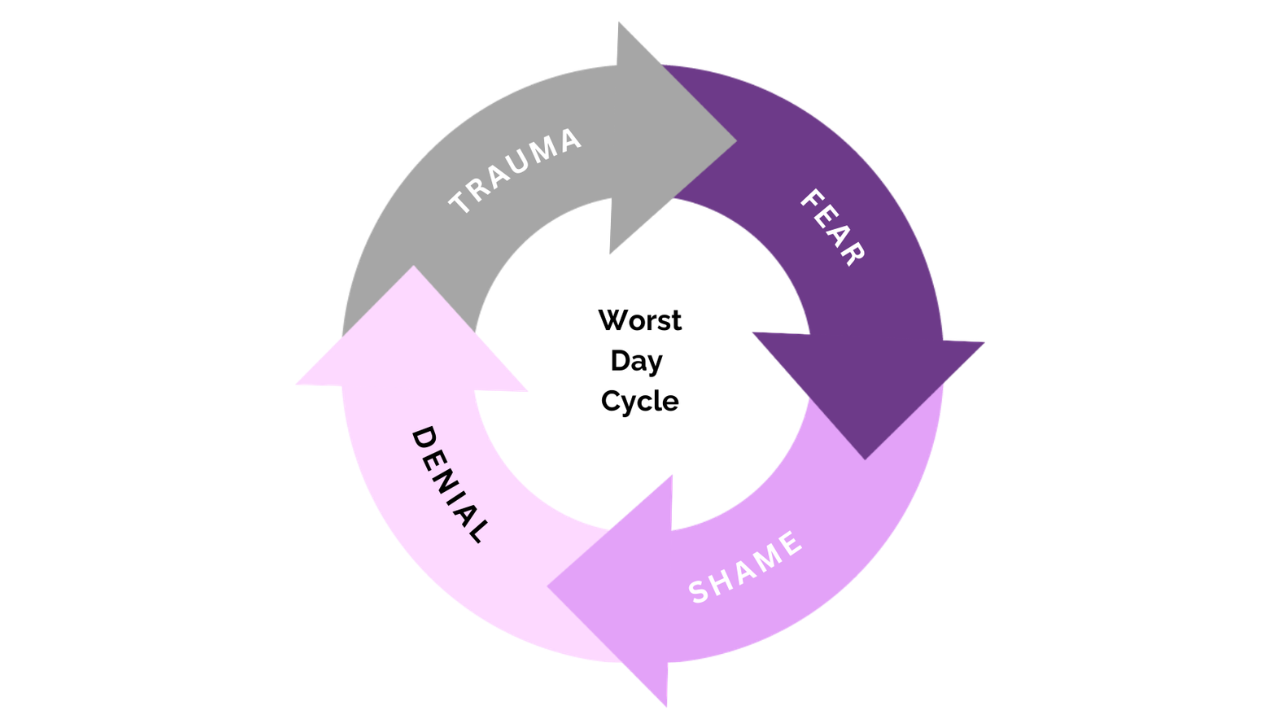
    Worst Day Cycle showing trauma to fear to shame to denial stages

    That’s the cycle you’re stuck in — trauma creates fear, fear drives repetition, repetition creates shame, shame creates denial, and denial creates a survival persona that keeps you chasing.

    Three Survival Personas That Drive the Chase

    The survival persona is a brilliant adaptation. It’s your psyche’s way of making unbearable pain bearable. But it comes at a cost: your authentic self goes into hiding.

    Most chasers operate from one of three survival personas (and many oscillate between them depending on context):

    1. The Falsely Empowered Persona

    This is the survival persona that controls, dominates, and rages. It says: I will never be vulnerable. I will never need anyone. I will earn love through dominance and control. In the context of chasing, the falsely empowered person pursues aggressively, uses guilt-tripping, creates drama, or stages withdrawals to test whether their partner will chase back.

    That’s you — withdrawing attention, creating jealousy, testing their commitment to prove they really love you.

    2. The Disempowered Persona

    This is the survival persona that collapses, people-pleases, and abandons its own needs. It says: My needs don’t matter. Your comfort is my responsibility. If you’re upset, it’s my fault and I have to fix it. In the context of chasing, the disempowered person pursues softly, apologizes for things they didn’t do, shrinks themselves, and becomes obsessively attuned to their partner’s moods.

    Sound familiar — the constant apologies, the self-blame, the belief that you could fix them if you just loved them right?

    3. The Adapted Wounded Child Persona

    This is the survival persona that oscillates between control and collapse. One moment it’s dominating; the next it’s disappearing. This is the most exhausting persona because it keeps the nervous system in constant dysregulation. You’re either chasing aggressively or withdrawing completely, with no middle ground.

    Three survival persona types that drive relationship chasing patterns

    That’s the push-pull relationship — intense pursuit followed by cold withdrawal, cycling endlessly because your nervous system can’t find a regulated middle ground.

    How Chasing Shows Up Across Your Life

    Chasing isn’t just a romantic pattern. When your nervous system is wired to believe that safety requires pursuit, you chase in every domain of life.

    In Family Relationships

    You’re the adult child who calls your parent repeatedly, seeking approval or reassurance. You take responsibility for their emotional state. You shrink your own needs to make room for theirs. You interpret their distance as rejection.

    In Romantic Relationships

    That’s you — the one who gives 90% and then feels guilty about the 10% you kept for yourself.

    You’re the one initiating all contact, planning all dates, managing all emotional labor. You interpret lack of text response as abandonment. You merge your identity with theirs. You can’t imagine life without them, even when the relationship is hurting you.

    In Friendships

    You’re the one always reaching out, always accommodating, always canceling your plans to be available for them. You stay in friendships long after they’ve become one-sided. You monitor their social media for signs they’re angry with you.

    That’s you — the friend who sees a Snapchat from your group and wasn’t included, and the panic sets in immediately.

    In Work

    That’s you — staying in a friendship where you do all the emotional labor and then wondering why you feel so alone.

    You over-deliver on projects to prove your worth. You can’t set boundaries with your boss. You take on others’ emotional labor and problems. You stay in jobs that exploit you because you’re afraid of abandonment or rejection.

    In Body and Health

    You neglect your own health to be available for others. You don’t rest when you’re sick because you fear being a burden. You use food, substances, or sex to regulate the anxiety of chasing. You ignore your body’s signals because you’re so focused on others’ needs.
    Enmeshment patterns showing loss of boundaries and self in relationships

    Sound familiar — the pattern is everywhere in your life, not just romantic, because your nervous system learned one way to survive: pursue, perform, prove.

    The Emotional Authenticity Method™: Breaking Free Step-by-Step

    Here’s what most therapists get wrong: they focus on thoughts. They tell you to challenge your negative self-talk, to think more positively, to use cognitive techniques. But thoughts don’t create feelings. Feelings create thoughts.

    Emotions are biochemical events. You cannot rewire emotional patterns through thought alone. You have to go to the source: the emotional blueprint stored in your nervous system and your body.

    The Emotional Authenticity Method™ is a five-step process that accesses this emotional blueprint and begins to rewire it.

    Step 1: Somatic Down-Regulation (with Optional Titration)

    Before you can access clarity, your nervous system has to come offline from threat mode. This means using body-based techniques — breathing, progressive muscle relaxation, cold water on your face, grounding — to calm your amygdala. Optional titration means you’re touching the edge of the feeling without drowning in it.

    Step 2: What Am I Feeling? (Emotional Granularity)

    Most chasers have one emotion: anxiety. But beneath anxiety is a universe of emotions — fear, shame, anger, grief, longing. Use the Feelings Wheel to get granular. This specificity is where healing begins.

    Step 3: Where in My Body Do I Feel It?

    All emotional trauma is stored in the body. That knot in your chest when they don’t respond. The heaviness in your limbs when they pull away. The tightness in your throat when shame arrives. Locate it. Feel it. Get curious about it instead of running from it.

    Step 4: What Is My Earliest Memory of This Feeling?

    Trace this feeling back to its origin. When did you first feel this abandonment terror? What was happening? Who was involved? What did your child brain decide about yourself and love in that moment? This is where you access the original trauma.

    Step 5: Who Would I Be if I Never Had This Feeling Again?

    This is the vision step. It’s where you begin to imagine an authentic self — someone who doesn’t chase, doesn’t merge their identity with another person, doesn’t abandon themselves for love. This vision becomes the target for the next framework: the Authentic Self Cycle™.

    Emotional Authenticity Method showing five steps to rewire emotional patterns

    That’s the pathway to freedom — not thinking your way out, but feeling your way through.

    The Authentic Self Cycle™: Healing and Restoration

    If the Worst Day Cycle™ is how you get trapped, the Authentic Self Cycle™ is how you escape.

    Stage 1: Truth

    Name the blueprint. Say it out loud: I learned to chase love in childhood because safety required it. I learned that my worth was conditional. I learned that abandonment was imminent and my job was to prevent it. This blueprint isn’t true anymore, but my nervous system still believes it.

    This isn’t blame. This is clarity. This is seeing “this isn’t about today” — seeing that your partner’s withdrawn mood isn’t about your unworthiness. It’s about your nervous system’s trauma response.

    Stage 2: Responsibility

    Own your emotional reactions without blame. My partner isn’t my parent. My nervous system just thinks they are. My terror isn’t proportional to the actual danger. My shame isn’t deserved. I’m responsible for my own emotional regulation, not for managing their feelings.

    This is where the boundary begins. Not the cold, rejecting boundary of avoidance. The warm, sovereign boundary of self-love.

    Stage 3: Healing

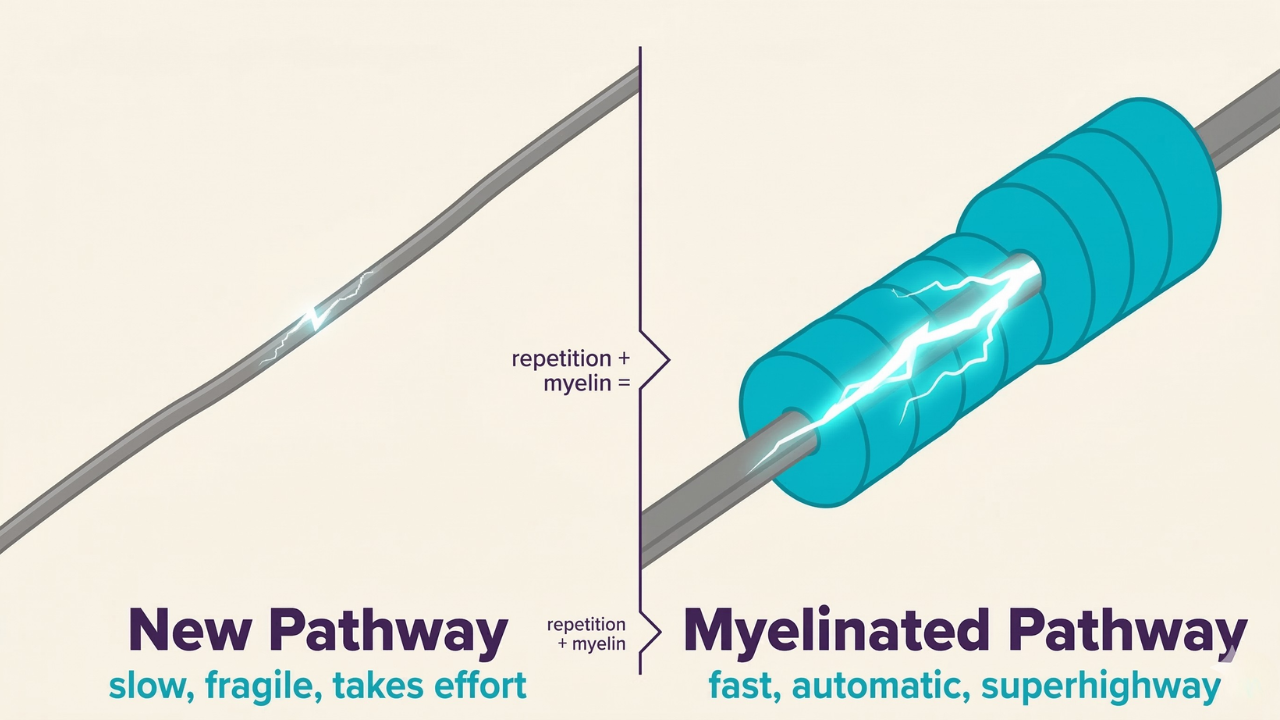
    Rewire the emotional blueprint. Do this through repetition, consistency, and what Bessel van der Kolk calls “felt sense” — the actual felt experience of safety with another person. Conflict becomes uncomfortable but not dangerous. Space becomes independence, not abandonment. Intensity becomes passion, not attack.

    This requires partners who are emotionally healthy and willing to do their own work. If your current partner isn’t, this is the moment you honor yourself by leaving.

    Stage 4: Forgiveness

    Release the inherited emotional blueprint. Not because your parents deserved forgiveness. But because carrying their trauma in your nervous system is like paying interest on a debt that was never yours.

    Forgiveness is the final stage of the Authentic Self Cycle™ because it’s where you truly reclaim yourself. Where you say: I was shaped by their pain, but I am not their pain. I inherited their emotional blueprint, but I can write my own.

    Authentic Self Cycle showing truth responsibility healing forgiveness path to recovery

    That’s the healing path — from blindness to truth, from blame to responsibility, from dysfunction to healing, from resentment to forgiveness.

    Frequently Asked Questions

    Is chasing love the same as being codependent?

    Chasing is usually a symptom of codependence, but they’re not identical. Codependence is a broader pattern of losing yourself in other people, taking responsibility for their emotions, and abandoning your own needs. Chasing is the behavioral manifestation — the pursuit, the reassurance-seeking, the obsessive contact. You can be codependent without being a chaser (some codependent people withdraw instead). But most chasers are codependent.

    Why doesn’t my partner understand that I’m just trying to feel loved?

    Because what feels like love to you feels like pressure to them. When you chase — when you text repeatedly, seek constant reassurance, monitor their mood — you’re communicating: Your emotional state is my responsibility. I don’t trust you to love me. I don’t believe you when you say you need space. To a healthy partner, this doesn’t feel like love. It feels like enmeshment. They need space to maintain their own identity and autonomy.

    Can I heal this pattern without leaving my current relationship?

    Yes, but only if your partner is willing to do their own emotional work. If they’re emotionally unavailable, unwilling to take responsibility for their behavior, or actively punishing you for your needs, healing becomes nearly impossible. The relationship itself becomes the trauma. In that case, your healing requires leaving. If your partner is willing — if they’re willing to be consistent, to communicate, to work on themselves — then healing can happen within the relationship.

    How long does it take to stop chasing?

    The behavioral pattern can shift in weeks. The emotional blueprint rewires over months and years. You’ll have moments where you feel completely free, and then something triggers the old pattern and you’re right back to chasing. This is normal. Healing isn’t linear. But with consistent practice of the Emotional Authenticity Method™ and the Authentic Self Cycle™, the episodes become shorter, the intensity becomes less, and your authentic self becomes stronger.

    What if I chase because I really do love them?

    Love is not pursuit. Love is not sacrifice of self. Love is not reading minds or managing emotions or proving worth. Love is showing up as your authentic self, setting boundaries, and letting someone choose to stay. Real love is the opposite of chasing. When you stop chasing and start honoring yourself, you’ll know if the relationship is worth keeping. If it’s not, you’ll have the clarity and the strength to leave.

    Can avoidant partners ever change?

    Yes. But only if they want to. And usually only with professional help and their own commitment to the Authentic Self Cycle™. What you need to understand is: their avoidance is not your fault. It’s not something you can fix. Your job is to stop chasing and start living. When you do, something remarkable happens. Either they feel safe enough to move toward you (because they’re no longer under pressure), or the relationship ends and you’re free to find someone who’s actually available. Either way, you win.

    The Bottom Line: From Chasing to Authenticity

    You were not born a chaser. You became one because survival required it. Your nervous system learned a life-saving strategy in childhood: pursue, perform, prove. That strategy protected you then. It’s harming you now.

    But here’s what most people miss: this isn’t a character flaw. This isn’t weakness. This is intelligence. Your psyche was brilliant enough to adapt, to survive, to create a strategy that kept you alive when the people you depended on were emotionally unavailable.

    The work now is to honor that brilliance while releasing the strategy. To say: Thank you, survival persona. You did what you had to do. But I’m safe now. I don’t need to chase. I don’t need to prove my worth. I don’t need to abandon myself for love. I can simply be myself, and that is enough.

    That’s you — not broken, not flawed, not too much. Just someone whose nervous system learned the wrong lesson about what love requires.

    This is the promise of the Authentic Self Cycle™. Not a promise that relationships will be easy. But a promise that you’ll stop abandoning yourself in relationships. You’ll stop merging your identity with another person’s. You’ll stop interpreting distance as rejection and silence as abandonment.

    You’ll reclaim your inherent worth. And from that place of wholeness, you’ll build relationships that are actually fulfilling — not codependent, not pursuit-based, but genuine, mutual, and real.

    That’s available to you right now. Not someday. Not when you find the perfect partner. Not when you finally become worthy enough. Right now, in this moment, by choosing to stop chasing and start honoring yourself.

    Next Steps: The Courses That Will Change Your Relationship With Love

    If you’re ready to break the chasing pattern and reclaim your authentic self, here are the resources designed specifically for this work:

    Emotional Blueprint Starter Course — Individual ($79) — A foundational course on understanding your emotional blueprint, your survival persona, and the first steps toward emotional authenticity. Start here if you’re new to this work.

    Tier 1: Mapping the Blueprint ($1,379) — The deep-dive course on the Emotional Authenticity Method™. This is where you learn the five-step process in detail, practice it with real scenarios, and begin rewiring your nervous system. This is the work that changes everything.

    Relationship Starter Course — Couples ($79) — If you’re in a relationship and your partner is willing to do the work too, this course teaches both of you how to navigate the healing process together.

    Why High Achievers Fail at Love ($479) — If you’re successful in every area of life except love, this course is designed for you. It addresses the specific trauma patterns of high-achieving chasers.

    Why We Can’t Stop Hurting Each Other ($479) — For couples stuck in recurring conflict patterns. Both partners learn the framework and how to interrupt the Worst Day Cycle™ together.

    The Shutdown Avoidant Partner ($479) — Understanding avoidant attachment through the lens of trauma chemistry and survival personas. Essential if your partner pulls away and you need to understand why.

    The most important resource, though, is this: the Feelings Wheel and the life-changing exercise (free). Start with that today. It’s the foundation of emotional granularity that makes all the other work possible.

    You’ve been chasing long enough. It’s time to come home to yourself.
  • 7 Signs of a Narcissistic Parent

    7 Signs of a Narcissistic Parent


    You Know Something Was Wrong, You Just Didn’t Have Words for It

    You remember his rage. Or maybe it was his coldness. The way he disappeared into himself when you needed him. Or the way he made everything about him, even your pain. Years later, you’re still waiting for an apology that never comes. You still feel that familiar knot in your chest when you hear his voice. You still find yourself performing, trying to be the right version of yourself to avoid his disappointment.

    That’s not just bad parenting. That’s what happens when your father has a narcissistic wound so deep that he can’t let you be separate from him. He doesn’t see you. He sees a reflection he can control, or a mirror he can break when he needs to feel powerful again.

    This post names the 7 signs that your father was a narcissistic parent. More importantly, it explains why those signs still run your life. And how to stop them.

    Quick Recognition: The 7 Signs of a Narcissistic Father

    If you’re reading this because you suspect your father is narcissistic, you’re not looking for a diagnosis. You’re looking for permission to stop blaming yourself for his emotional unavailability. Here are the core patterns:

    Sign 1: He Lacks Genuine Empathy (But Mimics It Perfectly)

    A narcissistic father can be charming in public. He’ll hug you in front of others, ask about your day, seem interested. But in private, he’s absent. Not just physically—emotionally unreachable.

    When you were hurt, he didn’t feel your pain. He felt inconvenienced by it. When you cried, he either rage-shamed you into silence or ignored you completely. His question “What’s wrong?” wasn’t an invitation to share; it was a demand to stop being a problem.

    This created a wound: you learned that your feelings don’t matter. They’re only important if they serve his image or his needs. Real empathy would require him to see you as a separate person with your own inner world. A narcissist can’t do that. It would threaten his sense of control.

    That’s you when you prioritize other people’s comfort over your own pain. That’s you when you apologize for being upset. That’s you when you believe that real love means not needing anything.

    Emotional Blueprint — how childhood experiences with a narcissistic father program your adult relationships

    Sign 2: He Demands Control and Punishes Disagreement

    There was a hierarchy in your house. His way. No negotiation. Disagreement wasn’t just wrong—it was a personal attack on him. If you questioned his decision, he heard it as “You’re not good enough.” And he punished that.

    The punishment was either rage or withdrawal. Maybe he exploded and made you feel small. Maybe he went silent and let you feel abandoned. Both work the same way: they teach you that having your own thoughts is dangerous.

    As an adult, you probably do one of two things. You either overcorrect and need to control everything (your partner, your children, your environment) to feel safe. Or you’ve become compliant—you go along with what others want and bury your own needs so deep you don’t remember what you want anymore.

    That’s you when you can’t say no without feeling guilty. That’s you when you need approval before you trust your own judgment. That’s you in relationships where you’re always adjusting yourself to keep the peace.

    Sign 3: He Requires Constant Validation and Makes You His Supply

    Your father needed you to admire him. Not because he loved you and wanted you to be proud of him—but because he didn’t believe in himself and needed you to believe in him instead. You became his emotional supply.

    This looked like endless conversations about his achievements, his struggles, his brilliance. Or it looked like him needing you to fix his mood. You became responsible for his emotional state. If he was angry, you tried to cheer him up. If he was disappointed, you tried to prove your worth. If he failed at something, you had to reassure him.

    Your own accomplishments only mattered if they reflected well on him. When you succeeded, it was about his parenting. When you failed, it was your shame to carry alone.

    That’s you when you’re exhausted from managing other people’s emotions. That’s you when you feel guilty for having your own life. That’s you when you can’t celebrate your own wins without minimizing them.

    Survival Persona — the identity children of narcissistic fathers create to avoid shame and punishment

    Sign 4: He Cannot Apologize (Because Apologies Require Shame Awareness)

    Your father harmed you. And he never said sorry. Maybe he said “I was just trying to teach you a lesson” or “I did the best I could” or “You’re too sensitive.” Maybe he said nothing at all and expected you to move on like it never happened.

    An apology requires three things a narcissist cannot do: acknowledge harm, take responsibility, and commit to change. Each one requires him to feel ashamed. And shame is the one thing he cannot tolerate. So instead, he re-writes the narrative. He was right. You misunderstood. You’re overreacting.

    This creates a specific trauma in you: the belief that harm never happened, or that you deserved it. You learn to gaslight yourself. You minimize his behavior. You make excuses for him to friends. And you feel insane, because deep down you know he hurt you, but you’ve been trained to deny it.

    That’s you when you defend your father to others even though he hurt you. That’s you when you question your own memory of events. That’s you when you apologize for things that weren’t your fault.

    Sign 5: He Uses Rage or Withdrawal as His Primary Weapons

    Some narcissistic fathers explode. The rage comes from nowhere—or from something tiny—and suddenly the house is a war zone. You walk on eggshells. You learn his moods. You become hypervigilant to the smallest sign that he’s getting angry so you can adjust yourself to prevent the explosion.

    Other narcissistic fathers are ice. They withdraw emotionally or physically. They punish through silence. Either way, the message is the same: “You made me do this. Your existence is a problem. The way to be safe is to make yourself smaller.”

    These are different tactics, but they create the same wound: you learned that relationships are dangerous. That love is conditional on your ability to read minds and prevent harm. That your presence alone is enough to trigger abandonment.

    That’s you when you’re always trying to anticipate what will upset your partner. That’s you when you’ve built walls to protect yourself from being abandoned. That’s you when you sabotage relationships because you expect them to fail.

    Sign 6: He Treats You as an Extension of Himself, Not a Separate Person

    A narcissistic father sees you as a tool for his own needs. Your job is to make him look good, make him feel powerful, validate his worldview, or carry his unfulfilled dreams.

    This might look like: forcing you into his career path, controlling your appearance, shaming your sexuality, requiring you to share his politics, or using you to compete against your mother. He couldn’t see you. He could only see what you could do for him.

    The deepest wound here is that you were never really known. Your preferences, your gifts, your truth—they only mattered if they aligned with his needs. So you learned to hide your real self and perform the version he wanted to see. Over time, you forgot who you actually were.

    That’s you when you don’t know what you want because you’ve always been living for other people. That’s you when you change yourself completely for each relationship. That’s you when you feel like a fraud because your inner world doesn’t match your outer presentation.

    Worst Day Cycle diagram — the loop of trauma, fear, shame, and denial programmed by narcissistic parenting

    Sign 7: He Alternates Between Idealization and Devaluation

    With a narcissistic father, you were either perfect or worthless. There was no middle ground. You were his favorite, his source of pride—until you weren’t. Then you became the problem, the disappointment, the reason his life didn’t turn out the way he wanted.

    These cycles whiplashed you. When you were idealized, you felt relieved—finally, you had his approval. But it was fragile. You were always one mistake away from being devalued. This taught you that love is conditional, unstable, and impossible to keep.

    In your adult relationships, you either recreate this pattern (seeking partners who idealize and devalue you) or you try to prevent it by staying perfect. Both are exhausting. Both are rooted in the same wound: you believe you have to earn the right to exist.

    That’s you when you’re addicted to the highs and lows of a relationship. That’s you when you stay with someone who alternates between cherishing you and punishing you. That’s you when you believe that if you just get better, the abuse will stop.


    Why This Pattern Is Still Running Your Life: The Worst Day Cycle™

    Your father was a narcissist. But the real problem isn’t him anymore. It’s the Worst Day Cycle™—the loop of trauma, fear, shame, and denial that he programmed into you.

    Here’s how it works:

    Trauma: Something triggers you. A comment from your partner. A moment where you’re invisible. A situation where you need someone and they’re not there. It echoes the original wound with your father.

    Fear: Your nervous system recognizes the pattern. You’re flooded with fear that this will end in abandonment, shame, or control loss. Your body goes into fight/flight/freeze.

    Shame: Instead of recognizing that your father hurt you, you blame yourself. You believe that if you were just better—smarter, prettier, more compliant, less needy—this wouldn’t be happening. The shame is old. It’s from childhood. But it feels present and true.

    Denial: The pain is too much, so you deny it. You tell yourself it wasn’t that bad. You make excuses for the other person. You reframe the situation to make sense of it. You deny what you felt. You deny what happened. You deny that you deserve better.

    Then something else triggers you, and the cycle repeats.

    This is why your relationships keep recreating the narcissistic dynamic. This is why therapy and self-help books haven’t fully fixed this. Because you’re not just dealing with memories of your father. You’re dealing with a nervous system that learned to expect harm, a psyche that learned to deny pain, and a survival persona that learned to be invisible.

    Why Therapy and Self-Help Haven’t Fixed This (Yet)

    You’ve probably tried therapy. Maybe you’ve read a dozen books about narcissistic parents. You understand intellectually that his behavior was wrong. You can articulate the ways he damaged you. You know the theory.

    But you still feel it. You still recreate it. You still shame yourself. You still attract narcissistic partners, or you’ve built walls so thick that real intimacy feels impossible.

    Here’s why: traditional therapy treats this as a thinking problem. It works from your prefrontal cortex—your rational brain. It asks you to process, to reframe, to logically understand that you weren’t to blame. And that’s necessary. But it’s not sufficient.

    The wound with your narcissistic father isn’t in your thinking. It’s in your body. It’s in your nervous system. It’s in the way your survival persona learned to operate to keep you safe. No amount of insight will change what your body learned in childhood.

    Self-help books promise that if you just practice self-love, set better boundaries, or work on your self-esteem, you’ll heal. But they skip over the core issue: you don’t have a self-esteem problem. You have a survival problem. You learned to survive by disappearing, by denying, by becoming what others needed. Your survival persona isn’t a character flaw. It’s evidence of your genius for staying alive in an impossible situation.

    What you need isn’t another framework for self-improvement. What you need is a somatic, emotion-centered approach that brings your whole self into alignment with your truth. That’s where the Emotional Authenticity Method™ comes in.

    The Shift: From Survival Persona to Emotional Authenticity

    The Emotional Authenticity Method™ is not a mental exercise. It’s a somatic process that realigns your nervous system with your truth. It brings your survival persona out of the shadows and helps it evolve into your authentic self.

    Emotional Authenticity Method — the 5-step somatic process for healing from narcissistic parenting

    Step 1: Feel, Don’t Think

    Stop analyzing. Start sensing. Where do you feel your father’s narcissism in your body right now? In your chest? Your stomach? Your throat? Don’t think about where you should feel it. Notice where you actually feel it. Your body knows the truth before your mind does.

    Step 2: Name the Survival Persona Type

    You created a survival persona to survive your father. Which one? The falsely empowered persona that learned to control and perform strength to avoid vulnerability? The disempowered persona that learned to disappear and comply to avoid punishment? Or the adapted wounded child persona that learned to take care of others and deny your own needs to earn belonging?

    Naming it is crucial. Because it’s not who you are. It’s who you had to become to survive.

    Step 3: Grieve What You Needed and Didn’t Get

    Your father owed you something. He owed you empathy, protection, attunement, and unconditional acceptance. He owed you the experience of being truly seen. You didn’t get it. That’s a loss. And losses need to be grieved.

    This isn’t about blaming him. It’s about acknowledging that what happened was real, it mattered, and it hurt. Your grief is justified.

    Step 4: Locate Your Authentic Truth

    Underneath the survival persona is your authentic self. The part of you that knows what you actually want, what matters to you, what feels true. This part has been hidden. Your job is to find it. To listen to it. To ask: What is true for me right now? Not what should be true. Not what he taught me is true. What is actually, genuinely true for me?

    Step 5: Reparent Yourself Into Integration

    Your nervous system learned that authority figures are dangerous. Now you get to become the authority figure who is safe. This is reparenting. This is you giving yourself what your father couldn’t: empathy, protection, attunement, and unconditional acceptance. This is you learning to move from your head into your body, from shame into truth, from denial into responsibility.

    Reparenting — learning to give yourself what your narcissistic father never could

    What Healing Actually Looks Like: The Authentic Self Cycle™

    The Authentic Self Cycle™ is the path from “my father’s narcissism is still running my life” to “I am free to be myself.” It has four stages.

    Authentic Self Cycle — the pathway from narcissistic parent recovery through truth, responsibility, healing, and forgiveness

    Truth: You stop denying. You name what happened. You acknowledge the ways your father’s narcissism shaped you. Not to blame him. But to stop blaming yourself. Truth is the foundation of everything that follows.

    Responsibility: Here’s the hard part. Once you know the truth, you’re responsible for your own healing. Your father hurt you, yes. But he’s not the one stopping you from being authentic. Your survival persona is. Your denial is. Your fear is. Taking responsibility means acknowledging that you now have agency. You can change the patterns.

    Healing: This is the work. This is reparenting. This is the Emotional Authenticity Method™ applied consistently. This is teaching your nervous system that you’re safe. That your needs matter. That your truth is valid. That you don’t have to perform or disappear to be worthy.

    Forgiveness: Not of your father. Not yet, maybe not ever. Forgiveness of yourself. Forgiveness of the part of you that believed his lies about you. Forgiveness of the survival persona that did what it had to do to keep you alive. This is where freedom lives.

    What This Looks Like in Your Adult Life

    When your father’s narcissism was running your life, relationships were a series of compromises and denials. You either became the caretaker (managing everyone else’s emotions) or the avoider (afraid of real connection). You either recreated the narcissistic dynamic or built walls so high no one could get in.

    Here’s what changes when you move through the Authentic Self Cycle™:

    In Romantic Relationships: You stop choosing partners who remind you of your father. You stop performing versions of yourself to earn love. You can name what you actually want—and you can ask for it without shame. You recognize when a partner is being narcissistic, and you don’t normalize it. You can leave, without guilt. Or, if you choose to stay, you can do it from a place of authentic choice, not compulsion.

    In Parenting: You break the cycle. You don’t repeat your father’s patterns with your own children. You learn to see them as separate people. You provide the attunement, the unconditional acceptance, the emotional authenticity that you never received. This is reparenting them—and through them, reparenting yourself.

    In Your Body: Your nervous system stops living in survival mode. Your hypervigilance eases. You sleep better. You breathe easier. You feel safer in your own skin because you’ve become the safe parent you needed.

    In Your Self-Perception: You stop believing the lies your father taught you about yourself. You aren’t unworthy. You aren’t too needy. You aren’t selfish for having needs. You aren’t responsible for his emotional state. You’re allowed to exist. You’re allowed to want things. You’re allowed to be yourself.

    That’s you when you can say no without explaining. That’s you when you know what you want and you go after it. That’s you when you’re in a relationship and you’re still yourself. That’s you when your past doesn’t dictate your present.

    Related Articles on Narcissistic Parenting

    If you’re working through the impact of a narcissistic father, these resources dive deeper into specific patterns and recovery strategies:

    Frequently Asked Questions

    Q: What if my father was a covert narcissist—outwardly nice but emotionally unavailable?

    A: The damage is the same. Covert narcissists are often harder to identify because they don’t explode or dominate openly. They withdraw, subtly punish, and hide their contempt behind a nice facade. The wound they create is the same: the belief that you’re not worth genuine emotional connection. The 7 signs still apply—they just look quieter. Your job is the same: recognizing the pattern and healing your nervous system through the Emotional Authenticity Method™.

    Q: Am I a narcissist if I have some of these traits?

    A: Probably not. Children of narcissistic parents often develop narcissistic-like defenses. The falsely empowered survival persona, for example, can look narcissistic. But there’s a crucial difference: it comes from fear, not entitlement. A true narcissist lacks capacity for shame. You’re reading this because you feel shame. That’s a sign of your humanity, not your narcissism. Your task is to evolve that defense into genuine authenticity, not to shame yourself for having it.

    Q: Should I confront my father about his narcissism?

    A: This depends entirely on your situation. Some people find healing through direct conversation. Others find that confrontation triggers more harm or denial. What matters most is your own healing. If confrontation would serve that, and you’re emotionally resourced to handle his response, it might help. But healing does not require him to acknowledge his behavior. Healing requires you to acknowledge what happened and commit to your own recovery. That work happens inside you, regardless of whether he ever understands.

    Q: How long does it take to heal from a narcissistic father?

    A: This isn’t linear. You can have insights and breakthroughs and still find yourself back in the Worst Day Cycle™ when you’re triggered. That’s normal. That’s not failure. Healing is about moving through these cycles with more awareness, more compassion for yourself, and more ability to return to your truth. Most people notice significant shifts within months of consistent emotional authenticity work. But this is a lifetime practice. You’re not trying to get over it. You’re trying to learn to live from your authentic self regardless of your history.

    Q: What if my father is still alive and in my life?

    A: Your healing doesn’t depend on his death or his absence. It depends on your willingness to grieve what you needed and didn’t get, and to reparent yourself into wholeness. That said, managing ongoing contact with a narcissistic parent requires boundaries. These aren’t walls meant to punish him. They’re containers meant to protect your emotional authenticity. You might decide to maintain contact with strict boundaries, or you might decide that no contact is what your healing requires. Both are valid. The key is that this choice comes from your truth, not from guilt or obligation to him.

    Q: How do I know if my survival persona is falsely empowered, disempowered, or adapted wounded child?

    A: The falsely empowered persona is hypervigilant to control. It needs to be powerful, to be right, to prevent harm through force or dominance. The disempowered persona is hypervigilant to compliance. It learns to be invisible, to go along, to deny its own needs. The adapted wounded child persona is hypervigilant to caretaking. It learned that being needed is how you earn belonging. Pay attention to which patterns you default to under stress. That’s your primary survival strategy. Most of us have elements of all three, but one dominates. Identifying it is the first step to evolving it into genuine authenticity through the Emotional Authenticity Method™.

    Your Next Step: Move from Understanding to Healing

    Recognizing that your father is narcissistic is important. But it’s not enough. The goal isn’t understanding—it’s freedom. Freedom from his voice in your head. Freedom from the shame that isn’t yours. Freedom to be yourself in your relationships. Freedom to choose your own path.

    That freedom comes through the Emotional Authenticity Method™—through feeling, naming, grieving, locating your truth, and reparenting yourself into integration.

    If you’re ready to move beyond insight into actual transformation, I’ve created a comprehensive program at The Greatness U. This is where I teach the full methodology—the Worst Day Cycle™, the Authentic Self Cycle™, and the 5-step Emotional Authenticity Method™ that I’ve outlined in this post. You’ll work through real scenarios from your life, you’ll learn to recognize when you’re in your survival persona, and you’ll develop the capacity to return to your authentic self even when triggered.

    You’ll also have access to my book, “Your Journey to Success,” which goes deeper into the frameworks and the personal work required to move from survival to authenticity.

    This is the kind of work that changes lives. Not because it’s complicated, but because it’s honest. It meets you where you are—in the shame, the denial, the old patterns—and it shows you the path to the other side.

    The Bottom Line

    Your father’s narcissism was never about you. It was about his inability to see you as a separate person, to tolerate his own shame, to offer genuine empathy. The way he treated you was a reflection of his wound, not your worth.

    But his patterns have shaped you. They’ve programmed your nervous system. They’ve created your survival persona. And they’ve kept you locked in the Worst Day Cycle™—repeating the same dynamics in your adult relationships, your career, your parenting, your relationship with yourself.

    The good news: this is changeable. You have the capacity to break the cycle. You have the capacity to move from your survival persona into your authentic self. You have the capacity to build relationships where you’re genuinely seen and accepted. You have the capacity to be free.

    It starts with truth. It continues with responsibility. It moves through healing. And it culminates in forgiveness—of yourself, for doing what you had to do to survive.

    Your father may never understand what he did. But you will. And that understanding, paired with consistent emotional authenticity work, will set you free.

  • How to Deal With a Narcissistic Child: A Parent’s Guide

    How to Deal With a Narcissistic Child: A Parent’s Guide

    The Phone Call That Makes Your Stomach Drop

    Your phone buzzes. You see their name. Your body knows before your mind catches up — your stomach tightens, your jaw clenches, your chest gets tight. You know what’s coming. The demand. The guilt trip. The manipulation wrapped in hurt feelings.

    You answer. And within thirty seconds, they’ve twisted something you said three months ago into proof that you never loved them. They’ve accused you of ruining their life. They’ve told you they’ll never forgive you unless you do exactly what they want. And somehow, even though you’re the adult and they’re the one behaving like a teenager, you end up apologizing. You end up promising something you can’t deliver. You end up feeling like the worst parent who ever lived.

    After the call ends, you sit in the silence of what just happened. You didn’t get angry. You didn’t hold a boundary. You caved, just like always. And the guilt — the bone-deep certainty that this is somehow your fault — settles in like fog you can’t shake.

    Dealing with a narcissistic child means parenting someone whose emotional development got stuck in the normal childhood narcissistic phase — someone who learned that controlling, manipulating, and never admitting fault was the only way to survive their emotional environment. This is not a character flaw. It is a learned survival strategy rooted in the Worst Day Cycle™ of trauma, fear, shame, and denial — and understanding that changes everything about how you respond.

    This is narcissism in your own family.

    And you’re not alone in this. Right now, across the country, thousands of parents are experiencing the same gut-punch of manipulation from their own children. The same cycling pattern of hope and disappointment. The same question that keeps you awake at 3 AM: “Where did I go wrong?”

    That’s you… lying awake replaying every parenting decision, wondering which one broke them.

    What Creates a Narcissistic Child (And Why It’s Not What You Think)

    Here’s what most people get wrong: narcissism isn’t something your child was born with. They didn’t arrive with a twisted character flaw baked into their DNA. A narcissistic child is made. And that’s actually the most important thing you need to understand right now.

    Every child goes through a narcissistic phase. Between ages three and six, your child believed the world revolved around them. This is developmentally normal. They couldn’t yet imagine that other people had internal lives separate from theirs. They were, by definition, the center of their own universe. This isn’t a problem. It’s a stage.

    The problem happens when they get stuck there.

    A child becomes narcissistic when the emotional environment they’re raised in teaches them that their survival depends on it. Narcissism is a learned survival strategy. It’s the nervous system saying: “I learned that if I don’t control everything, demand everything, and never admit I’m wrong, I’m not safe. People will abandon me. I will be harmed.”

    That’s you… watching your child demand the world and wondering how someone you loved so much learned to weaponize your love against you.

    This is where Bruce Lipton’s work on epigenetics becomes crucial. Your child’s environment shaped how their genes expressed themselves. The stress levels in your home, the consistency of emotional safety, the modeling of healthy emotional expression — all of this literally shaped their developing brain. This is not metaphorical. This is biology.

    And here’s where Gabor Maté’s distinction between blame and responsibility changes everything: “We don’t blame people for having unconscious patterns. Instead, we try to make them conscious.” Your narcissistic child didn’t choose their survival strategy. They learned it. But that learning came from somewhere. It came from the emotional climate they were raised in.

    A narcissistic child is the product of the emotional environment they were raised in. That’s not blame — it’s power. Because if the environment shaped them, you can heal the part of you that contributed to it.

    This is the distinction that most parents miss. You didn’t cause your child to become narcissistic by being a bad parent. You weren’t intentionally cruel or abusive. But you may have been unconscious. And unconsciousness, when passed down through generations, creates patterns that feel impossible to break.

    In Kenny’s framework, this unconscious pattern produces one of three survival personas. The falsely empowered persona controls, dominates, rages, and intimidates to avoid vulnerability — this is the survival persona most narcissistic children develop. The disempowered persona collapses, people-pleases, and loses themselves to avoid abandonment — this is often the survival persona the codependent parent developed. And the adapted wounded child oscillates between falsely empowered and disempowered depending on the situation — raging one moment, collapsing in guilt the next. Your narcissistic child learned one. You probably learned another. And together, the two personas lock into a cycle neither of you can see.

    Survival persona types — the falsely empowered, disempowered, and adapted wounded child identities that develop in narcissistic family systems
    Emotional blueprint — how childhood emotional environments program narcissistic and codependent patterns that repeat in adult relationships

    Why Boundaries Alone Won’t Fix This

    You’ve probably heard the conventional wisdom: set boundaries. Don’t engage with their drama. Go to therapy and suggest they do the same. Hold your ground. Don’t give in to their manipulation.

    That hasn’t worked, has it?

    And here’s why: boundaries don’t work on narcissists because they can’t work. A boundary is just a line you draw in the sand. But a narcissistic person’s survival persona literally depends on crossing every line, controlling every situation, getting their way no matter what. Their nervous system has learned that boundaries are threats. When you set one, they don’t hear “I need space.” They hear “You’re losing control. You need to fight harder.”

    That’s you… setting the same boundary for the hundredth time and watching them walk right through it like it was never there.

    Suggesting therapy to your narcissistic child is like suggesting a fish climb a tree. From their perspective, they’re not the problem. You are. Everyone else is. The world is just unfair, and they’re the only one clear-eyed enough to see it. Therapy requires the kind of self-reflection that their survival persona can’t afford to do. Self-reflection means admitting wrongdoing. And admitting wrongdoing feels like death to the nervous system that learned survival through dominance.

    This is why boundaries feel like arguing with a wall. The wall can’t hear you. It can’t feel bad about hurting you. It just exists, doing what walls do.

    The conventional approach treats narcissism like a behavior problem. Fix the behavior, and you fix the person. But narcissism isn’t a behavior problem. It’s a nervous system problem. Your child’s body is running an ancient survival program that says: “Control or be controlled. Dominate or be dominated. Never show weakness, or you’ll be destroyed.”

    Narcissism is not a behavior problem — it is a nervous system survival strategy. Your child’s body learned in childhood that controlling, dominating, and never showing weakness was the only way to stay safe. Boundaries cannot override a survival program that runs deeper than conscious thought.

    Kenny’s approach goes deeper. Instead of trying to manage your child’s behavior, you do the nervous system work that allows you to stop being controlled by their behavior. You heal the part of your own nervous system that’s still reactive to their manipulation. You move from boundaries to freedom.

    The Narcissistic Child and the Codependent Parent

    There’s a reason you ended up with a narcissistic child. And that reason often has to do with the other end of the spectrum.

    Narcissism and codependence are opposite sides of the same coin. Both are survival strategies rooted in the same core wound: “I am not safe being myself.” The narcissist learned to survive by dominating and controlling. The codependent learned to survive by accommodating and merging. One says “I matter most.” The other says “Everyone else matters but me.”

    That’s you… giving everything you have to someone who treats your generosity like a blank check.

    When these two come together in a parent-child relationship, something predictable happens. The parent keeps giving, sacrificing, trying harder. The child keeps taking, demanding, blaming. The parent interprets this as love: “I’m showing them I care by abandoning my own needs.” The child interprets this as confirmation: “See? I was right. I am the center of this universe. I deserve to get everything I want.”

    This dynamic gets locked in early. Your codependent pattern and their narcissistic pattern begin to dance with each other, and by the time they’re adults, you’re both locked in a rhythm neither of you knows how to break.

    This is why just setting boundaries doesn’t work. Boundaries require that you stop abandoning yourself. And if you’ve spent decades abandoning yourself as an act of love, the guilt of stopping is almost unbearable. Your child will leverage that guilt. They’ve learned that guilt is their most effective tool. “You always make this about you. You never supported me. If you loved me, you would…” And your nervous system floods with shame because at some level, you do believe it. You do feel like you’ve failed.

    If you’ve never identified your own codependent patterns and non-negotiables, healing your relationship with your narcissistic child becomes nearly impossible. You’ll just keep playing the same role. And they’ll keep playing theirs.

    Codependence icon — understanding the codependent patterns that enable narcissistic behavior in family systems

    How a Narcissistic Child Affects Every Area of Your Life

    Narcissistic family dynamics don’t stay contained in one relationship. The stress, the guilt, the hypervigilance — it bleeds into everything. Here’s what that looks like across the areas of your life you might not have connected to this pattern.

    Family

    Your other children feel neglected because the narcissistic child demands all the attention. Family gatherings become minefields. Siblings either align with the narcissist or pull away entirely. You walk on eggshells in your own home, managing everyone’s emotions except your own. The entire family system organizes around one person’s demands.

    Romantic Relationships

    Your partner feels like they’re competing with your child for your attention — and losing. The stress of managing your narcissistic child creates constant tension in your marriage or relationship. You’re emotionally drained by the time your partner needs you. Some partners give ultimatums. Others quietly withdraw. Either way, the narcissistic child’s behavior is eroding your closest adult relationship.

    Friendships

    You stop telling friends what’s happening because you’re ashamed. Or you tell them and they don’t understand — “Just cut them off.” “You need to be tougher.” The advice feels hollow because they don’t know what it’s like to love someone who uses your love as a weapon. You isolate. Your social world shrinks.

    Work and Career

    You can’t focus because you’re waiting for the next text or call. Your productivity drops. You take mental health days that aren’t really about your mental health — they’re about recovering from the latest manipulation. Your boss doesn’t know why you’re distracted. You can’t explain it. You just show up and try to function.

    Body and Health

    Chronic stress shows up as chronic pain, digestive issues, insomnia, autoimmune flares, migraines. Your nervous system has been in low-grade fight-or-flight for years. You’ve been to doctors who can’t find anything “wrong.” Nothing shows up on the tests because the problem isn’t in your organs — it’s in your nervous system.

    That’s you… holding it together at work, falling apart in the car, and telling everyone you’re fine.

    5 Strategies That Actually Work With a Narcissistic Child

    Turn Everything Into a Question

    Instead of defending yourself or explaining why they’re wrong, turn the responsibility back to them. When they say “You ruined my life,” don’t explain what you actually did or didn’t do. Ask: “What specifically do you think I did? What would have needed to happen instead?” When they demand money, ask: “How will you pay me back? What’s your timeline?” When they accuse you of not loving them, ask: “What would loving you look like to you right now?”

    Questions do something powerful. They require your child to think instead of just react. They activate a different part of their brain. And most importantly, they stop you from being the villain in their story. Right now, your defenses and explanations feel like proof to them that you’re heartless. Questions shift the dynamic. Suddenly, they have to do the work of thinking about their own behavior.

    That’s you — tired of always being the bad guy no matter what you actually say.

    Accept the Scraps

    You’ve been waiting your whole parenting life for your child to show you unconditional love. You’ve been waiting for them to care about your feelings. You’ve been waiting for them to say thank you, to acknowledge what you’ve done, to show up for you the way you show up for them.

    Stop waiting.

    A narcissistic child cannot give you what a healthy child can give you. They cannot give you unconditional love, genuine gratitude, or authentic connection. That’s not because you didn’t raise them right. It’s because their survival persona won’t allow it. It can’t. Genuine vulnerability feels like death to a narcissistic nervous system.

    What they can give you are scraps. A polite text. A birthday call. An occasional moment where they’re not demanding something. These are crumbs, and you’ve been starving, so the crumbs feel like a feast. Accept them for what they are. Not as proof that deep down they love you. Not as something you should build your life around. Just as scraps.

    The moment you stop expecting more, your nervous system can finally rest. You won’t spend days after a short phone call analyzing what it meant. You won’t interpret a polite greeting as a breakthrough. You’ll just receive the crumb and move on.

    That’s you — exhausted from trying to harvest a full meal out of crumbs.

    Watch Actions, Not Words

    Your narcissistic child can promise you anything. They can tell you they love you, that they’ll change, that they understand they’ve hurt you, that next time will be different. They can be incredibly eloquent and persuasive when they want something from you.

    Don’t listen to their words. Watch what they do instead.

    Words are cheap. A narcissist can manufacture any emotion, say any apology, make any promise. But their actions reveal their actual priorities. Do they follow through on commitments? Do they respect your time? Do they care about your wellbeing, or only about what they can extract from you? Do they ever apologize without immediately explaining why it wasn’t actually their fault?

    This is where you stop being a victim of their narrative. You stop getting hypnotized by their explanations. You just observe. Like a scientist. “What does this person actually do? What pattern am I seeing?” When you watch actions instead of listening to words, the manipulation becomes visible. The contradictions become obvious. And you can finally make decisions based on reality instead of hope.

    That’s you — finally willing to trust what you see instead of what you’re told.

    Safeguard Your Money, Possessions, and Heart

    A narcissistic child will take whatever they can from you. Money, possessions, emotional labor, your time. They’ll justify it a thousand ways. They needed it for an emergency. You owed them. Their sibling got more. You’re selfish for not giving. By refusing, you’re proving you never loved them.

    None of this is true. But if you’re still trying to convince them, you’ve already lost.

    Protect your finances. Don’t loan money you can’t afford to lose, because you won’t get it back. Don’t put them on your accounts. Don’t co-sign their debts. Don’t buy them expensive gifts hoping it will make them love you. Set up your will so your estate isn’t fought over or drained by them.

    Protect your possessions. They will take what they can. They will damage things and deny responsibility. They will “borrow” items and never return them. Lock up important documents, jewelry, anything irreplaceable.

    And protect your heart. This is the hardest one. Stop expecting them to be the person you need them to be. Stop hoping they’ll finally understand. Stop trying to make them see your side. You’re not protecting your heart from them — you’re protecting it from the devastation of repeatedly hoping for someone who can’t change.

    That’s you — finally willing to protect yourself instead of hoping they’ll become someone worth the risk.

    Make YOUR Recovery the Priority

    For years, your attention has been on them. Getting them to understand. Getting them to apologize. Getting them to change. Getting them to acknowledge that you did your best. Your emotional energy has been completely consumed by your narcissistic child.

    It’s time to redirect that energy to the only person you can actually help: yourself.

    Do the emotional work. Trace your own codependent patterns back to your childhood. Understand what wound in you created a parent who would abandon their own needs to appease a demanding child. Heal the part of your nervous system that goes into panic mode when your child rejects you. Process the grief of never having the relationship you wanted.

    This is not selfish. This is not abandoning them. This is choosing not to drown trying to save someone who doesn’t think they’re in the water. Your recovery is the only thing that breaks the cycle. It’s the only thing that might actually shift the dynamic with your child, because as long as your nervous system is reactive to theirs, you’re locked in the dance.

    That’s you — finally understanding that the best thing you can do for your child is heal yourself.

    Your recovery is not selfish — it is the only thing that breaks the generational cycle. As long as your nervous system is reactive to your child’s manipulation, you are locked in the same dance. Healing yourself is the closest you will ever come to helping your narcissistic child.

    Your Body Is Keeping Score of Every Phone Call

    Before your child calls, your stomach starts to knot. You feel it coming. Your body knows before the phone even rings. And once you see their name, the cascade begins. Heart rate up. Breathing shallow. Jaw tight. A vague sense of dread that settles over everything until the interaction is resolved.

    This isn’t weakness. This is your nervous system doing exactly what it’s designed to do: keeping you safe from a threat. Your body has learned that contact with your child is dangerous. Not physically dangerous — emotionally dangerous. Because after every call, you feel worse about yourself. You second-guess your parenting. You make promises you can’t keep. You feel ashamed.

    So your body starts preparing for threat. It triggers the stress response. Cortisol floods your system. Your digestive system shuts down. Your immune function suppresses. Day after day, call after call, your body is running a threat response that doesn’t resolve.

    That’s you… checking your phone with dread and then hating yourself for dreading a call from your own child.

    Gabor Maté documents this perfectly in When the Body Says No. Our bodies don’t lie. They remember every conversation, every betrayal, every time we abandoned ourselves to please someone else. And when that stress becomes chronic — when you’re never quite sure when the next demand or manipulation will come — your body stays locked in a low-grade panic state.

    The result is what you probably already know intimately: chronic pain. Insomnia. Digestive issues. Autoimmune flares. Migraines. Emotional numbness alternating with emotional floods. Your body is literally falling apart because your nervous system can’t find a sense of safety anymore.

    This is why healing isn’t optional. It’s not a luxury or self-care indulgence. It’s a medical necessity. Your body needs to know that you’re going to protect it. That you’re not going to keep putting it through the stress of trying to manage an unmanageable person.

    That’s you — finally understanding that all those physical symptoms aren’t just stress. They’re your body’s way of saying: enough.

    Trauma chemistry — how chronic stress from narcissistic family dynamics creates cortisol addiction, nervous system dysregulation, and physical illness

    Understanding the Worst Day Cycle™ With a Narcissistic Child

    The Worst Day Cycle™ explains how you move from one difficult interaction with your narcissistic child into a full nervous system shutdown. Understanding this cycle is the first step to breaking it.

    Stage 1: Trauma

    Your adult child calls. Or texts. Or shows up at your house. And within moments, something happens that feels like a small betrayal. They demand money for an emergency that may or may not be real. They accuse you of something you definitely didn’t do. They remind you that you’ve never truly supported them. They withdraw their presence as punishment for some perceived slight.

    This interaction is the trauma. It’s not a big “T” trauma like abuse. It’s a small “t” trauma — a repeated wound in a place where you’ve been wounded before. Your nervous system recognizes the pattern. And it floods with the fear and shame that comes with that pattern.

    Stage 2: Fear

    Once the interaction happens, your mind spirals into worst-case scenarios. What if they never forgive me? What if they write me out of their life completely? What if they tell everyone I’m a bad parent? What if I never see my grandchildren again? Your body floods with fear because your nervous system learned long ago that your child’s rejection = abandonment = death.

    The fear is often irrational, but it doesn’t feel that way. It feels like a real threat. Your heart pounds. You can’t sleep. You replay the conversation a hundred times looking for where you went wrong.

    That’s you… replaying a thirty-second phone call for three straight days, searching for the thing you should have said differently.

    Stage 3: Shame

    As the fear settles, shame moves in. I must have failed as a parent. If I’d done things differently, they wouldn’t be like this. I’m the reason they’re this way. I’m a terrible parent for being unable to manage their emotions. The shame is exquisite because it feels true. You can construct an entire narrative about how your parenting failures created your child’s narcissism.

    And on some level, that’s partially accurate. But shame doesn’t make that accuracy helpful. Shame just makes you smaller. Makes you more likely to cave to your child’s next demand. Makes you more willing to abandon yourself.

    That’s you… carrying a shame so heavy you can’t even name it out loud, because saying “my child treats me this way” feels like admitting you failed.

    Stage 4: Denial

    By the time you reach denial, you’re exhausted. So you minimize. It wasn’t that bad. All families have conflict. They were probably right. I probably did overreact. Maybe I should just give them the money and this will blow over. Denial is where you negotiate with reality to escape the shame. And it’s the entry point back into stage one, where the next small trauma will trigger the whole cycle again.

    Understanding this cycle doesn’t stop it immediately. But it lets you recognize where you are in the pattern. And recognition is the first step toward interruption.

    Worst Day Cycle diagram showing how parenting trauma creates fear, shame, and denial in parents of narcissistic children

    The Emotional Authenticity Method™: A 5-Step Process for Healing

    The Emotional Authenticity Method™ is how you interrupt the Worst Day Cycle™. It’s how you move from reactive to conscious. Here are the five steps:

    Step 1: Somatic Down-Regulation

    Before you answer that phone call, before you respond to that text, before you do anything — you need to regulate your nervous system. This means bringing yourself back into your body. Cold water on your face. Slow breathing. Movement. Grounding techniques. Box breathing. Whatever works for your system, you do it until you feel a shift. Until you’re not in fight-or-flight anymore.

    Step 2: What Am I Feeling Right Now?

    Once you’re regulated, ask yourself: what am I actually feeling? Not what should I be feeling. Not what would make sense to feel. What am I actually experiencing? Guilt? Rage? Despair? Numbness? Get specific. Use the Feelings Wheel to expand your emotional vocabulary beyond “bad” or “anxious.”

    Step 3: Where Do I Feel It in My Body?

    Emotions aren’t abstractions. They have locations. Guilt lives in your chest or stomach. Shame lives in your throat or your face. Rage lives in your jaw or your hands. Find where this feeling lives in your body. Put your hand there. Feel it.

    Step 4: What Is My Earliest Memory of This Exact Feeling?

    This is where the real work begins. That guilt you’re feeling with your child — where did you learn to feel that way? Usually, it goes back to your own childhood. Your own parent. Your own early experience of being not quite enough. Your own pattern of abandoning yourself to keep peace. You’re not feeling just the current interaction. You’re feeling decades of patterns.

    Step 5: Who Would I Be If I Never Had This Thought or Feeling Again?

    This is the breakthrough question. Not “How do I make this feeling go away?” But “What becomes possible for me if I’m not controlled by this feeling?” Who is the version of you that isn’t destroyed by your child’s rejection? What does that person do? How do they move through the world? That person already exists inside you. You’re just clearing away the fear and shame that’s been covering them.

    The Emotional Authenticity Method™ interrupts the Worst Day Cycle™ by tracing your current emotional reaction back to its childhood origin. You cannot think your way out of a narcissistic family dynamic — you must feel your way through it, starting with somatic regulation and ending with a vision of who you are without the inherited shame.

    Emotional Authenticity Method — the 5-step somatic process for parents healing from narcissistic family dynamics

    The Authentic Self Cycle™: How Healing Breaks the Pattern

    Once you begin doing the emotional authenticity work, you enter a different cycle. The Authentic Self Cycle™. This is how you move from unconscious patterns to conscious healing.

    Truth

    The truth is both hard and liberating: your child’s narcissism was shaped by the environment you provided. And you were shaped by the environment your parents provided. You didn’t choose to become a codependent parent any more than your child chose to become a narcissistic adult. You’re both unconscious. But that’s not a life sentence. Consciousness is possible.

    Responsibility

    This is where the Gabor Maté wisdom becomes crucial. Responsibility is not blame. You’re not responsible for your child’s narcissism because you’re a bad parent. You’re responsible because you’re an adult with the capacity to heal your own nervous system. You can’t fix them. But you can fix the part of you that’s been trying to fix them for decades.

    Healing

    Healing happens when you reparent yourself. When you become the consistent, emotionally safe, validating parent to yourself that you may not have had growing up. When you stop abandoning yourself to manage your child’s emotions. When you do the nervous system work of feeling safe in your own body again.

    Forgiveness

    Forgiveness isn’t about your child. It’s about you. You forgive yourself for not knowing what you didn’t know. You forgive yourself for the unconscious patterns you passed down. You forgive yourself for trying so hard and still not being enough to heal someone who doesn’t want to be healed. That forgiveness is what sets you free.

    That’s you… finally giving yourself the forgiveness you’ve been begging your child to give you.

    Authentic Self Cycle diagram showing truth, responsibility, healing, and forgiveness for parents of narcissistic children

    Accept That You Played a Part — And That’s Your Power

    This is the hardest truth. You played a part in creating your narcissistic child.

    Not because you’re a bad person. Not because you were intentionally cruel or abusive. But because you were unconscious. Your codependent patterns, your own trauma, your own unhealed wounds — all of that shaped the emotional environment your child was raised in. And that environment taught them that survival required narcissism.

    Here’s the Gabor Maté quote that changes everything: “We don’t blame people for having unconscious patterns. Instead, we try to make them conscious.” This is the most loving thing you can do. Not to your child. To yourself.

    When you take responsibility for the unconscious patterns you passed down, you’re not being a bad parent. You’re being a conscious one. You’re saying: I didn’t know this was happening, but now I do. And I’m going to heal it. I’m going to interrupt this pattern so it doesn’t continue.

    And here’s the thing nobody tells you: healing your own patterns is the closest you’ll ever come to helping your narcissistic child. Because the moment you stop needing them to change, the moment you stop abandoning yourself to manage their emotions, the dynamic shifts. Not always. Not always enough. But the possibility opens.

    More importantly, your healing breaks the cycle for the generations after them. Your grandchildren won’t inherit the same pattern. The unconscious trauma that’s been passed down for generations has a chance to end with you.

    That’s not failure. That’s leadership in your own family system.

    Healing your own codependent patterns is the closest you will ever come to helping your narcissistic child. When you stop abandoning yourself to manage their emotions, the dynamic shifts. Your grandchildren won’t inherit the same pattern. The generational cycle can end with you.

    Reparenting — becoming the safe parent for yourself that your nervous system never had

    The Biology of Belief by Bruce Lipton. This book explains how your environment shapes your genes, not the other way around. Understanding epigenetics helps you see that your child’s narcissism is a learned response, not a life sentence. It also reframes your role from “I caused this damage” to “I can heal this pattern.”

    When the Body Says No by Gabor Maté. This book documents exactly how chronic stress from trying to manage a narcissistic child shows up in your body. Autoimmune disease. Chronic pain. Digestive issues. Maté connects the dots between emotional suppression and physical illness. Reading it might be the first time you understand that your body’s breakdown isn’t weakness — it’s wisdom.

    Facing Codependence by Pia Mellody. The foundational work on understanding codependent patterns — how they form in childhood and how they drive the parent-narcissist dynamic. If you see yourself in the codependent parent description above, this book will help you trace your patterns back to their origin so you can begin healing them.

    Complex PTSD: From Surviving to Thriving by Pete Walker. Walker explains how repeated childhood emotional wounding creates survival responses that persist into adulthood. This book helps both parents and adult children understand why their nervous systems react the way they do — and provides a compassionate framework for recovery.

    That’s you — finally understanding that you weren’t crazy for struggling. Your body and mind were responding exactly as they should to an impossible situation.

    Frequently Asked Questions

    Can a child actually be a narcissist?
    Technically, clinical narcissistic personality disorder (NPD) isn’t usually diagnosed until late adolescence or early adulthood. But the traits can absolutely emerge in childhood. A narcissistic child displays patterns of entitlement, lack of empathy, need for control, and explosive reactions to boundaries. Whether or not they’d receive an official diagnosis, the behavioral patterns are real and the impact on you is real.

    What’s the difference between a narcissistic child and a spoiled child?
    A spoiled child wants things and throws a tantrum when they don’t get them. They can usually recover from disappointment. A narcissistic child feels entitled to things, attacks you when they don’t get them, and genuinely cannot comprehend that their feelings or needs might not be the priority. They can’t take responsibility for their own behavior. They blame external circumstances or other people. A spoiled child can learn. A narcissistic child can’t — unless they want to.

    Should I cut off contact with my narcissistic adult child?
    This is deeply personal. Some parents find that low contact is most sustainable — brief, infrequent interactions with clear boundaries. Some find that no contact is necessary to preserve their mental health. Some maintain contact but with strict emotional walls. There’s no universal answer. The question to ask yourself is: “What contact level allows me to maintain my own healing and stability?” Honor that answer.

    Will therapy help my narcissistic child?
    Only if they want to change. Therapy requires self-reflection, accountability, and willingness to be wrong. Most narcissists experience therapy as confirmation that everyone else is the problem. They might attend and perform recovery for a while, but without genuine motivation to change their survival strategy, lasting change is unlikely.

    How do I stop feeling guilty for my narcissistic child’s behavior?
    By recognizing that guilt is a learned response. You probably grew up in an environment where you were responsible for managing other people’s emotions. You learned to interpret their unhappiness as your failure. That’s not the truth. Your child’s emotional regulation is their responsibility, not yours. Healing that guilt requires tracing it back to your own childhood, grieving what you didn’t get from your own parents, and then reparenting yourself.

    Can narcissism be healed?
    Narcissism can shift if someone becomes willing to question their survival strategy. But it requires them to voluntarily enter the vulnerable emotional space that their narcissism was built to avoid. It’s possible. It’s rare. Don’t wait for your child to become that rare person before you begin healing yourself.

    What’s the first step for a parent dealing with a narcissistic child?
    Stop trying to fix them. Start doing the work to fix yourself. Identify your own codependent patterns. Understand what wound in you created a parent willing to sacrifice everything for a child who will never appreciate it. That’s the first step. From there, everything else becomes possible. You can learn about healthy relationship patterns that actually hold. You can understand the signs of enmeshment that keep you connected even when you’re trying to separate. You can heal.

    Your Next Step

    You’ve spent years managing a narcissistic child’s emotions. Trying to get them to understand. Abandoning yourself hoping they’d finally love you the way you need to be loved. Your nervous system is exhausted. Your body is keeping score. Your hope is running dry.

    It’s time to stop doing external work and start doing internal work. That’s what The Greatness U is designed for. It’s not another self-help program telling you to set boundaries and move on. It’s nervous system work for the high-functioning, intelligent, emotionally exhausted parent who’s finally ready to heal the part of themselves that’s been locked in this dance with their narcissistic child.

    The people in The Greatness U understand because they’ve been there. They’ve made promises they couldn’t keep. They’ve felt the shame of being manipulated by their own child. They’ve walked around with their stomach in knots waiting for the next interaction. And they’ve found a way through.

    You can too. But it requires you to shift your focus from changing them to changing yourself. That’s where the real power lies.

    Start where it makes sense for you:

    • Emotional Blueprint Starter Course — Individual ($79) — Your individual starter roadmap for understanding your emotional blueprint and survival persona
    • Relationship Starter Course — Couples ($79) — A framework for healing the relationship patterns that lock you into the narcissist-codependent dance
    • Why We Can’t Stop Hurting Each Other ($479) — Deep-dive into the cycles that keep families stuck in painful repetition
    • Why High Achievers Fail at Love ($479) — For the parent who has succeeded at everything except the relationships that matter most
    • The Shutdown Avoidant Partner ($479) — Understanding the attachment patterns behind withdrawal and emotional distance
    • Tier 1: Mapping the Blueprint ($1,379) — The comprehensive program for full nervous system rewiring and emotional blueprint healing

    Not sure where to start? Try the Feelings Wheel exercise — it’s free, it takes five minutes, and it will show you how disconnected you’ve become from your own emotional truth.

    You can also explore the signs of enmeshment in your family, learn about relationship insecurity patterns, or understand what genuine self-esteem actually looks like when it’s not built on a survival persona.

    The Bottom Line

    Right now, you’re living in the space between hope and despair. You hope your child will change. You hope that next conversation will be different. You hope that if you just say the right thing, if you just validate them enough, if you just sacrifice a little more, something will shift. And after every interaction, you sink into despair because nothing has shifted. It never does.

    But this is not your failure. This is not proof that you were a bad parent or that you should have done something different. This is evidence of an unconscious pattern that was passed down to you, that you unconsciously passed down to your child. Neither of you chose it. Both of you are living it.

    The beautiful part is this: if you’re conscious enough to see the pattern, you’re conscious enough to heal it. And when you heal your part, something shifts in the entire family system. Not because your child changes. But because you’re no longer participating in the dance the way you used to. And sometimes, that shift is enough. Sometimes it opens a door that was previously locked. And sometimes it doesn’t. But either way, you’re free.

    That’s not bad parenting. That’s unconscious parenting. And consciousness is the cure.

    That’s you… reading this right now because somewhere inside, you already know the answer isn’t fixing them. It’s healing you.

  • Emotional Balance and Stability: Why You Can’t Find Balance and What Your Nervous System Actually Needs

    Emotional Balance and Stability: Why You Can’t Find Balance and What Your Nervous System Actually Needs

    Emotional balance and stability is the ability to experience the full range of human emotions—fear, anger, sadness, joy—without being controlled by them. It’s not about staying calm all the time. It’s about having a nervous system that can regulate, a body that can move through intensity without collapsing or exploding, and the emotional authenticity to feel what’s real instead of performing what’s safe. Most people who struggle with emotional instability aren’t broken—they’re running a childhood survival blueprint that was never updated for adult life.

    Why Balance Has Never Worked for You

    You’ve probably tried everything. Meditation apps, breathing exercises, yoga, therapy, self-help books, productivity systems, relationship advice—all promising that magical word: balance.

    But nothing stuck. Because balance was never the real problem.

    The real problem is that your nervous system isn’t calibrated to sustain balance. It’s like asking someone to maintain a speed of 30 mph when their engine is built to run at 100+ mph. You’ll white-knuckle it for a while, feel virtuous and in control, and then—usually at the worst possible moment—you explode back into chaos.

    That’s you if you’re constantly trying harder to be balanced, to be calmer, to be less reactive, only to find yourself right back where you started.

    emotional regulation nervous system balance stability

    The research on childhood development tells us something radical: your emotional thermostat is set in childhood, not by your willpower in adulthood. If you grew up in a chaotic, fear-filled, or emotionally disorganized environment, your nervous system learned that high-intensity states were normal. Safe, even. Familiar.

    Now, as an adult, calm feels wrong. Wrong enough that your system pulls you back to what feels right—which is the chaos you know.

    Your Emotional Thermostat Was Set in Childhood

    Here’s the neurological truth that changes everything: When our lives have been chaotic and disorganized, filled with fear, our emotional thermostats run between 105 and 110 degrees. That just feels normal.

    Think about the people you know who can’t sit still. They’re always doing something, always moving, always adding more to their plate. They’re not lazy or lazy in disguise—they’re someone whose emotional thermostat is off the chart because they grew up in chaos.

    That’s you if you identify as a chronic “doer,” if stillness makes you anxious, or if you feel most comfortable when there’s a crisis to manage.

    childhood trauma creates emotional chemistry addiction nervous system

    Your childhood taught your nervous system that certain emotional and chemical states were survival. Whether it was anger, fear, shame, abandonment, or hypervigilance—your body learned to produce and expect certain chemical cocktails (cortisol, adrenaline, dopamine misfires, oxytocin disruptions).

    Your brain became addicted to these states. Not because you wanted to be damaged, but because addiction to known patterns is how the brain conserves energy and interprets safety.

    The brain can’t tell right from wrong. It only knows known vs. unknown. And it will fight hard to keep you in the known, even if the known is painful.

    That’s you if you’ve noticed that you attract the same type of relationship over and over, or you sabotage success right when it’s within reach, or you default to anger when you’re actually afraid.

    The Chemical Addiction That Runs Your Life

    About 70% of childhood messaging is negative and shaming. That means most of us grew up marinating in fear, criticism, abandonment, or inadequacy. Those emotional states create chemical cocktails in your body.

    Your brain, acting as an excellent survival system, became dependent on these patterns. Now, as an adult, your nervous system will create circumstances, conflicts, or crises to produce the chemicals it knows.

    This is why you can’t just “think your way” to emotional stability. You can’t positive-think your nervous system out of a chemical addiction that was hardwired before you had language.

    The Worst Day Cycle™: How Trauma Creates Addiction

    Understanding emotional instability requires understanding the Worst Day Cycle™—the four-stage blueprint that runs in the background of your life.

    Worst Day Cycle trauma fear shame denial blueprint childhood emotional patterns

    Stage 1: Trauma (The Painful Meaning)

    Trauma isn’t just big events. Trauma is any negative emotional experience that created a painful meaning about you, your relationships, or your safety.

    A critical parent. Emotional abandonment. Feeling unseen. Being blamed for someone else’s emotions. These create painful meanings: I’m not good enough. I can’t trust anyone. I have to earn love. I’m too much. I’m not enough.

    That’s you if you grew up believing something fundamentally wrong about yourself that you’ve carried into every relationship and career decision.

    Stage 2: Fear (The Repetition Drive)

    Trauma triggers the hypothalamus, which generates chemical cocktails flooding your system. Your brain learns: This pattern = survival.

    Fear drives repetition. Your brain thinks repetition equals safety. So you unconsciously create or attract situations that match your childhood blueprint—not because you want to suffer, but because suffering feels like home.

    Stage 3: Shame (The Loss of Self)

    Shame is where you lost your inherent worth. Where you decided “I am the problem.”

    This is different from guilt (I made a mistake). Shame says I am a mistake. Shame is the ground zero of emotional instability because it tells you that you’re fundamentally broken, and broken things can’t regulate.

    That’s you if you feel like something is wrong with you that no amount of achievement, perfection, or people-pleasing can fix.

    Stage 4: Denial (The Survival Persona)

    Denial is brilliant in childhood. It’s how you survived. Your survival persona is the mask you created to protect yourself from unbearable pain.

    But that brilliant survival tool is sabotaging your adult life. You can’t find emotional stability while you’re in denial about what you’re really feeling.

    The Three Survival Personas That Keep You Unstable

    The Worst Day Cycle™ doesn’t exist in abstract—it lives in how you show up. Your survival persona is your strategy for managing the pain you learned in childhood.

    survival personas false self falsely empowered disempowered adapted wounded child

    The Falsely Empowered Survival Persona

    Strategy: Control, dominate, rage. If I’m powerful enough, I can prevent the pain that hurt me in childhood.

    You grew up learning that vulnerability got you hurt, so you decided: Never again. You control situations, people, outcomes. You rage when things don’t go your way. You’re commanding, intimidating, sometimes charming—but always in charge.

    That’s you if people describe you as intense, demanding, or if you can’t relax unless everything is exactly as you’ve planned it.

    The Disempowered Survival Persona

    Strategy: Collapse, people-please, disappear. If I’m small enough, safe enough, good enough, maybe I won’t be hurt.

    You learned that standing up for yourself brought consequences, so you learned to collapse, to acquiesce, to prioritize everyone else’s emotions over your own reality. You people-please until you resent. You accommodate until you’re invisible.

    That’s you if you struggle to say no, if you prioritize harmony over honesty, if you’re always the “good one” while secretly bitter about it.

    The Adapted Wounded Child Survival Persona

    Strategy: Oscillate between both. You flip between controlling and collapsing depending on the situation, the person, or how dysregulated you feel.

    Sometimes you’re the one making all the decisions. Sometimes you’re the one accommodating everyone else. You swing between these poles depending on context, and the inconsistency confuses both you and the people in your life.

    adapted wounded child oscillating survival persona codependency emotional dysregulation

    That’s you if people describe you as unpredictable, or if your closest relationships feel like you’re riding a roller coaster between harmony and conflict.

    The challenge: All three survival personas are brilliant adaptations to painful childhoods, and all three make emotional stability impossible. You can’t regulate when you’re in denial about what you’re actually feeling.

    What Your Nervous System Actually Needs

    Here’s what changes everything: Your emotional thermostat doesn’t have to stay where it was set in childhood. Your nervous system can be retrained. But not through willpower. Through titration.

    titration emotional regulation teaching nervous system attunement self-regulation

    Titration: Teaching Your Nervous System to Regulate

    Titration is teaching your nervous system instead of the thermostat being stuck up here, you’re teaching that it can move. That it can get unstuck and regulate.

    Instead of forcing yourself into balance, titration is about slowly, incrementally teaching your nervous system that it can sustain lower-intensity emotional states. That calm isn’t dangerous. That you don’t need chaos to feel alive.

    Titration happens in small moments: You notice you’re about to explode, and you pause for 15 seconds. You catch yourself people-pleasing before you’ve completely abandoned yourself. You feel the urge to create drama and you sit with the boredom instead.

    That’s you if you’re tired of being at the mercy of your nervous system and ready to actually teach it something new.

    Attunement: The Root of Emotional Regulation

    A child cannot regulate their emotions alone. The parent’s regulated nervous system becomes the template for the child’s internal regulation. Attunement is the nervous-system root of emotional adulthood.

    If you didn’t have a regulated parent, you didn’t get the template. You didn’t learn that feelings could be felt and survived. So now, as an adult, big feelings trigger you because they feel dangerous—like they might consume you.

    This means you have to become your own attuned parent. You have to learn to be with your own dysregulation. To witness your own nervous system. To say: “I’m scared, and I can handle this. I’m angry, and I can move through this. I’m ashamed, and I’m still worthy.”

    The Emotional Authenticity Method™: 6 Steps to Real Regulation

    Emotional stability isn’t about suppressing emotions or achieving balance. It’s about developing emotional authenticity—the ability to feel what you actually feel, understand what it means, and move through it without being controlled by it.

    Emotions are constantly regulating what we experience as reality. You are coloring everything through an emotional prism before you ever get to intellect.

    emotional authenticity method emotional fitness regulation nervous system

    Step 1: Somatic Down-Regulation

    When you’re dysregulated, your thinking brain is offline. You can’t access wisdom, nuance, or perspective. You’re in pure survival.

    Somatic down-regulation means using your body to calm your nervous system. The simplest, most portable tool: focus on what you can hear for 15-30 seconds. Just listen. Your nervous system recognizes that you’re not in active danger if you have the resources to notice sound.

    If you’re highly dysregulated (rage, panic, complete shutdown), you may need more titration: stepping outside, cold water on your face, movement, or holding ice. The goal is to signal to your nervous system: “We survived. We’re safe now.”

    That’s you if you’ve ever said something in anger you regretted, or made a major decision while upset—somatic regulation happens before you say or do anything.

    Step 2: Name the Feeling (With Granularity)

    Once you’re regulated enough to think, the next step is: What am I feeling right now?

    Not “I’m fine” or “I’m upset.” Emotional granularity—specific feeling words. Frustrated vs. disappointed. Anxious vs. terrified. Sad vs. numb.

    Use the Feelings Wheel, which maps out the full spectrum of human emotion with precision. When you name a feeling specifically, you activate the thinking parts of your brain. You move from pure emotion to emotion with awareness.

    That’s you if you’ve said “I don’t know what I’m feeling” and meant it—you were never taught the emotional vocabulary to recognize your inner world.

    Step 3: Locate the Feeling in Your Body

    Where in my body do I feel it?

    Emotions live in your body. Anxiety in your chest. Shame in your belly. Grief in your throat. When you locate the feeling physically, you’re creating a bridge between your emotional experience and your somatic reality.

    This prevents the spiritual-bypassing trap where you intellectually understand your emotions but never actually feel or move through them.

    Step 4: Connect to Your Earliest Memory of This Feeling

    What is my earliest memory of having this exact feeling?

    This is where you meet your emotional blueprint. That anxiety you feel right now? It might be connected to abandonment you felt at age six. That shame? It might trace back to a critical parent or a traumatic social moment.

    When you connect current emotion to its origin, something radical happens: You see this isn’t about today. This is about then. You’re no longer a child. You have resources, agency, and choice. The feeling is valid, but the story isn’t current.

    That’s you if you’ve overreacted to something small and later thought, “Why did that hit me so hard?” The answer is usually childhood.

    Step 5: Envision Your Authentic Self

    Who would I be if I never had this thought or feeling again?

    This shifts you from problem-focused to solution-focused. Instead of “How do I fix that I’m anxious?” you ask “Who is the version of me that moves through the world without this anxiety controlling my choices?”

    That version exists. That’s your Authentic Self—the you that’s underneath the survival persona, underneath the fear, underneath the denial.

    Step 6: Feelization—Create a New Chemical Addiction

    The final step is the most powerful: Sit in the feeling of the Authentic Self and make it strong.

    This is called Feelization. Not visualization—feelization. You’re not just picturing your Authentic Self; you’re feeling into that identity. You’re creating a new emotional chemical addiction to replace the old blueprint.

    Close your eyes. Feel what it feels like in your body to be the version of you that isn’t controlled by childhood wounds. Feel the confidence. The peace. The agency. The worthiness. Hold that feeling. Make it vivid. Make it real. Make it strong.

    You’re literally rewiring your nervous system by creating a new emotional baseline to aim for. Instead of your brain pulling you back to chaos (because chaos is familiar), you’re creating a new familiar: the Authentic Self.

    That’s you if you’re ready to stop being run by your past and start being drawn toward your actual potential.

    myelin sheath myelination emotional blueprint nervous system rewiring

    The Authentic Self Cycle™: Your Path to Healing

    If the Worst Day Cycle™ is how your emotional blueprint got stuck, the Authentic Self Cycle™ is how you unstick it.

    Authentic Self Cycle truth responsibility healing forgiveness emotional blueprint restoration

    Stage 1: Truth

    Name the blueprint. See “This isn’t about today.”

    You can’t heal what you won’t acknowledge. Truth means looking at the patterns—in relationships, career, health, everything—and seeing the blueprint underneath. It means recognizing: “I keep attracting the same partner because I’m unconsciously drawn to familiar pain.” Or: “I sabotage success because my parent taught me I didn’t deserve it.”

    Truth is uncomfortable. But it’s the ground you stand on to change.

    Stage 2: Responsibility

    Own your emotional reactions without blame.

    This is not the same as shame. Responsibility means: “My parents created my blueprint, but I’m the one responsible for healing it. I can’t change what happened to me, but I can change what I do with it.”

    You’re not responsible for being wounded. You are responsible for the healing. That’s actually good news, because it means you have agency.

    Stage 3: Healing

    Rewire the emotional blueprint so conflict becomes uncomfortable but not dangerous.

    This is where you use titration, the Emotional Authenticity Method™, and deliberate practice to create new neural pathways. Your nervous system learns: Conflict doesn’t mean abandonment. Assertiveness doesn’t mean rage. Vulnerability doesn’t mean weakness.

    Healing is not fast, and it’s not one-time. It’s gradual rewiring. But every time you move through a feeling with awareness instead of reactivity, you’re building a new path in your brain.

    Stage 4: Forgiveness

    Release the inherited emotional blueprint and reclaim your authentic self.

    Forgiveness isn’t about the people who hurt you. It’s about releasing your attachment to the blueprint they gave you. It’s about saying: “What happened to me was real. It shaped me. And it doesn’t have to define me anymore.”

    When you forgive, you’re not saying “What you did was okay.” You’re saying “I’m no longer carrying this weight.”

    How Instability Shows Up in Every Area of Your Life

    Moderation is not avoiding or magnifying emotions. It’s being appropriate in the level of emotionality your situation actually calls for. When your thermostat is stuck high, everything triggers an outsized response.

    Family: The Unhealed Original Blueprint

    Signs of emotional instability in family relationships:

    • You’re still reactive to your parent’s criticism (real or imagined)
    • You either cut contact or stay enmeshed with no middle ground
    • Family gatherings trigger shame spirals or rage
    • You repeat your parent’s emotional patterns with your own children
    • You feel responsible for managing a parent’s emotions

    That’s you if you’ve said, “My family of origin will never change” and meant it—and felt both relieved and devastated about that.

    Romantic Relationships: The Trauma Bond Cycle

    Signs of emotional instability in romantic partnerships:

    • You’re drawn to partners who recreate your childhood wounds
    • You oscillate between pursuing and withdrawing
    • You can’t have a disagreement without it feeling like abandonment
    • You’re either fully merged or completely separate
    • You stay in relationships that hurt you because at least they’re familiar

    This is the trauma bond at work. Your nervous system recognizes the familiar emotional chemistry and confuses it with love. Learn more about enmeshment and healthy boundaries.

    Friendships: The Performance Trap

    Signs of emotional instability in friendships:

    • You people-please until you resent your friends
    • You can’t ask for support without shame
    • You’re the listener but never the one being listened to
    • You’re afraid to be authentic because you might be rejected
    • You have lots of surface friendships but no deep ones

    That’s you if you’re known as the “good friend” but secretly feel unseen and undervalued.

    Work: The Achievement/Collapse Cycle

    Signs of emotional instability in career:

    • You achieve, then self-sabotage
    • You’re driven by fear of failure or abandonment, not actual passion
    • You either overwork or completely check out
    • You can’t take criticism without shame flooding your system
    • You’re unfulfilled even when you “make it”

    Many high achievers fail at love because they’re driven by proving worth, not building actual security.

    Body and Health: The Nervous System’s Message

    Signs of emotional instability in health:

    • Chronic pain or tension (your body holding stress)
    • Digestive issues triggered by anxiety
    • Sleep disruption (your nervous system can’t down-regulate)
    • You’re drawn to substances or behaviors that numb emotions
    • You swing between deprivation and excess (food, exercise, sleep)

    That’s you if your body is keeping score of emotions your mind won’t acknowledge.

    People Also Ask

    What’s the difference between emotional balance and emotional authenticity?

    Balance suggests a static state where you’re always calm, always centered, always in control. Emotional authenticity is the ability to feel what you actually feel, understand it, and move through it with awareness. You might feel angry, sad, or scared—and that’s authentic. What changes is that you’re no longer run by those feelings; you’re moved by them. Authenticity includes the full spectrum of human emotion, held with maturity and responsibility.

    How long does it take to retrain your emotional thermostat?

    There’s no fixed timeline, but research on neuroplasticity suggests that consistent practice creates measurable change in 6-12 weeks. However, complete rewiring of a nervous system that’s been dysregulated for 20, 30, or 40 years? That’s a multi-year journey. The good news: you start feeling different in weeks. Understanding that emotional stability is a practice, not a destination, helps you stay committed through the work.

    Can I heal my emotional blueprint without therapy?

    Education, self-awareness, and deliberate practice can create real change. Books, courses, and community can all contribute. However, most people benefit from skilled guidance—whether that’s therapy, coaching, or structured programs—because old patterns are invisible to us. We can’t see what we can’t see. A trained professional can help you recognize the blueprint that you’ve been living inside of without recognizing it.

    What if I’m the Falsely Empowered persona and my partner is Disempowered?

    You’ve likely created a dynamic where one person controls and the other accommodates. This feels stable to both of you initially—you get to be in charge, they get to avoid responsibility. But this dynamic creates hidden resentment, prevents real intimacy, and ensures neither person can fully heal. Both people need to recognize their own survival persona and start moving toward authenticity. Learn more about building healthy relationship dynamics.

    Is moderation possible if my childhood taught me extremes?

    Yes—and that’s what titration teaches you. Moderation isn’t some magical state you arrive at; it’s a skill you build through practice. Titration is incremental: you practice being uncomfortable without numbing. You practice being still without creating crisis. You practice assertiveness without rage. Each time you do this with awareness, you’re teaching your nervous system that moderation is safe. That balance is possible. That calm doesn’t mean you’ve given up.

    How do I know which survival persona I use?

    Pay attention to your patterns under stress. When conflict arises, do you take charge (falsely empowered)? Do you retreat or accommodate (disempowered)? Do you flip between both (adapted wounded child)? Look at your closest relationships—how do people describe you? How do you describe yourself? Usually, your dominant survival persona shows up most in situations where you feel unsafe or out of control. Remember: all three personas are brilliant adaptations. None of them are character flaws. They kept you alive. The question now is: do they still serve you?

    reparenting inner child healing emotional authenticity nervous system regulation

    The Bottom Line

    You’ve been chasing balance your whole life, but your nervous system wasn’t built for it. It was built for survival—whatever survival looked like in your childhood.

    The good news: your nervous system can learn that it’s safe to regulate. That calm is stable, not boring. That vulnerability is strength, not weakness. That you’re worthy not because you achieve or accommodate, but because you exist.

    But learning requires more than knowing. It requires feeling. It requires practice. It requires becoming your own attuned parent—witnessing your dysregulation, coaching yourself through it, celebrating the moments when you choose authenticity over survival.

    Every time you notice you’re about to explode and you pause for 15 seconds. Every time you name a feeling with specificity instead of numbing it. Every time you sit in the boredom instead of creating crisis. Every time you assert yourself without rage, or relax without collapsing—you’re rewriting your emotional thermostat.

    You’re teaching your nervous system: You’re safe. You can regulate. You can be yourself.

    That’s not balance. That’s freedom.

    Take the Next Step

    Understanding your emotional blueprint is the beginning. The real transformation happens when you have structure, community, and expert guidance to rewire it.

    Emotional Blueprint Starter Course — Individual ($79) — Start with a foundational understanding of your emotional blueprint and the three survival personas.

    Tier 1: Mapping the Blueprint ($1,379) — Our signature program teaching you the complete Emotional Authenticity Method™, the Worst Day Cycle™, and the Authentic Self Cycle™ with live group coaching, accountability, and community.

    Why High Achievers Fail at Love ($479) — If you’re successful in career but struggling in relationships, this program shows you how your achievement drive is actually your survival persona in disguise.

    Why We Can’t Stop Hurting Each Other ($479) — Understand the hidden dynamics that keep couples locked in painful cycles of conflict, control, and emotional distance.

    The Shutdown Avoidant Partner ($479) — If your partner shuts down, withdraws, or stonewalls, this program reveals the survival persona driving their behavior and how to break the cycle.

    Relationship Starter Course — Couples ($79) — Understand how you and your partner are triggering each other’s survival personas and learn the non-negotiables for healthy partnership.

    Recommended Reading

    • Facing Codependence by Pia Mellody
    • The Myth of Normal by Gabor Maté
    • Codependent No More by Melody Beattie
    • Dare to Lead by Brené Brown
    • Hold Me Tight by Sue Johnson

  • Enmeshment Meaning: The Hidden Family Pattern Behind Your Relationship Struggles

    Enmeshment Meaning: The Hidden Family Pattern Behind Your Relationship Struggles

    You’re sitting at a family dinner and your mother starts telling the table about your relationship problems — details you shared with her in private. Your stomach drops. You want to say something, but you can’t. You never could. Because somewhere deep inside, you learned that her feelings matter more than yours. That keeping her happy is your job.

    And it’s been that way for as long as you can remember.

    Maybe it was the way she called you her “best friend” when you were eight. Maybe it was how your father told you everything about his failing marriage — burdens no child should carry. Maybe it was the guilt trips when you tried to move out, go to college, or simply live your own life.

    That’s you — and you’re not broken. You were trained.

    dynamic where emotional boundaries between parent and child are erased. The parent uses the child to meet their own unmet emotional needs — for companionship, validation, intimacy, or emotional regulation — without realizing they’re doing it. The child grows up believing their worth depends on managing other people’s emotions. This isn’t love. It’s emotional survival. And it follows you into every relationship you’ll ever have — until you learn what it is and how to heal from it.

    Enmeshment meaning — the hidden family pattern that erases emotional boundaries between parent and child

    What Does Enmeshment Actually Mean?

    Enmeshment is a family system where the emotional boundaries between parent and child are blurred or completely erased. The parent — usually without realizing it — uses the child as an emotional partner, confidant, therapist, or source of validation. The child’s needs, feelings, and identity get swallowed up by the parent’s emotional world.

    This isn’t about a parent who loves their child deeply. Every loving parent wants closeness. Enmeshment is different. In enmeshment, the closeness isn’t for the child’s benefit — it’s for the parent’s. The parent has unmet emotional and psychological needs, usually from their own childhood trauma, and they unconsciously turn to their child to fill the void their partner, their parents, or their own healing should fill.

    The child’s nervous system learns one thing above all else: other people’s emotions are your responsibility. Your feelings? Those don’t matter. Your needs? Those are selfish. Your job is to keep the peace, absorb the pain, and make sure nobody in the family falls apart.

    That’s you — carrying everyone else’s emotional weight and calling it love.

    Emotional blueprint formed in childhood through enmeshment — Kenny Weiss

    Why Enmeshment Happens: It Starts With the Parent’s Unhealed Wounds

    Here’s something most people don’t understand about enmeshment: the parent doesn’t know they’re doing it. These aren’t bad people. They’re wounded people — adults who never got their own emotional needs met as children, and who unconsciously look to their kids to fill that void.

    A mother who was emotionally abandoned by her own parents turns her daughter into her best friend — her emotional support system. A father whose marriage is falling apart starts confiding in his son about things no child should ever hear. A single parent who’s overwhelmed and lonely makes their child their primary companion.

    None of this happens with malicious intent. It happens because the parent’s nervous system is in survival mode, and the child is the safest, most available source of emotional regulation they have. The parent may even believe they have the closest, most loving relationship imaginable with their child.

    That’s you — and you believed it too. Because it’s all you ever knew.

    That’s you — defending the very dynamic that stole your childhood.

    Society and media haven’t educated us on what healthy parenting actually looks like. We see enmeshed families on television and call it “close.” We see a mother who knows every detail of her adult daughter’s life and say, “What a great relationship.” We don’t recognize the codependence hiding underneath because it looks so much like love.

    But love has boundaries. Enmeshment does not.

    How Enmeshment Shows Up in Your Life

    Enmeshment doesn’t stay in your childhood home. It follows you — into your relationships, your friendships, your career, and your body. The patterns you learned as a child become the patterns you repeat as an adult, because your nervous system was wired for them before you could even speak.

    Enmeshment in Your Family

    Your parent still expects you to call daily. They guilt-trip you when you have plans that don’t include them. They share personal information about you with the entire family without your permission. They react with anger, tears, or withdrawal when you try to set boundaries. They say things like, “After everything I’ve done for you” or “Fine, I’ll just be here alone.”

    You keep secrets from them — not because you’re dishonest, but because you know they can’t handle the truth without making it about themselves. You sacrifice your own belief system to keep them happy. You feel responsible for their emotional state, even though you’re a grown adult with your own life.

    That’s you — still parenting your parent, still abandoning yourself to keep the peace.

    Enmeshment in Romantic Relationships

    You either lose yourself completely in your partner — becoming whatever they need you to be — or you choose emotionally unavailable people because real intimacy feels suffocating. You confuse intensity for connection. You mistake insecurity for love. You feel responsible for your partner’s happiness and take it personally when they’re in a bad mood.

    When there’s conflict, you either shut down completely or over-function — doing more, giving more, trying harder — because that’s what worked with your parent. You don’t know how to have needs in a relationship because you were never allowed to have them as a child.

    That’s you — giving everything to your partner and having nothing left for yourself.

    Trauma chemistry in relationships caused by childhood enmeshment — Kenny Weiss

    Enmeshment in Friendships

    You’re the friend everyone calls when they’re in crisis. You absorb other people’s problems like a sponge. You feel guilty saying no to anyone, even when you’re exhausted. People call you an “empath” — but here’s the truth most people won’t tell you: being an “empath” isn’t a gift. It’s a trauma response. It means your boundaries were erased so early that you don’t know where you end and other people begin.

    You attract people who take more than they give because that dynamic feels normal to you. It’s familiar. And familiar feels safe to your nervous system, even when it’s destroying you.

    That’s you — pouring from an empty cup and wondering why you’re so exhausted.

    Enmeshment at Work

    You’re the overachiever, the people-pleaser, the one who can’t say no to extra projects. You base your entire self-worth on performance and approval from authority figures — because that’s what you did with your parent. Your boss’s mood determines your mood. A critical email sends you into a spiral. You work late, say yes to everything, and then resent everyone for not noticing how much you give.

    You might be wildly successful on the outside — but inside, you feel like a fraud. Because enmeshment taught you that your worth is earned, never inherent.

    That’s you — performing your value instead of knowing it.

    Enmeshment in Your Body and Health

    Your body keeps the score. Dr. Gabor Maté writes in When the Body Says No that when we can’t say no with our words — when our boundaries are erased — our body says no for us. Autoimmune conditions, chronic pain, digestive issues, insomnia, jaw clenching, migraines — these are your nervous system’s way of screaming what your voice was never allowed to say.

    You might bounce your leg constantly, clench your jaw at night, or carry tension in your shoulders that never releases. Your body has been in fight-or-flight since childhood, because enmeshment kept your nervous system in a permanent state of hypervigilance — always scanning, always monitoring, always ready to manage someone else’s emotions.

    That’s you — your body holding all the pain your words were never allowed to speak.

    Survival persona types formed through enmeshment — falsely empowered, disempowered, and adapted wounded child

    The Three Survival Personas Enmeshment Creates

    When a child grows up in an enmeshed family, they don’t get to develop an authentic self. Instead, they develop a survival persona — a version of themselves designed to keep the parent happy and the family system intact. There are three types:

    The Falsely Empowered: This person looks like they have it all together. They’re the high achiever, the controller, the one who takes charge of every situation. But underneath, they’re terrified — terrified that if they stop performing, if they show any weakness, they’ll be abandoned. They learned in childhood that being “strong” was the only way to earn love.

    The Disempowered: This person shrinks. They become passive, compliant, invisible. They learned that having needs was dangerous, that taking up space created conflict, and that the safest place was in the background. They attract controlling partners and overbearing friends because they were trained to serve.

    The Adapted Wounded Child: This is the person stuck in reactive survival mode — acting out, self-sabotaging, using substances or relationships or chaos to manage the pain they were never taught to process. They’re not “broken” — they’re adapting to wounds that never healed.

    That’s you — one of these survival personas running your life on autopilot, making decisions from childhood wounds instead of adult wisdom.

    The adapted wounded child survival persona created by enmeshed family dynamics

    The Worst Day Cycle™: How Enmeshment Keeps You Stuck

    Enmeshment doesn’t just wound you once. It creates a cycle that repeats throughout your entire life — what I call the Worst Day Cycle™. Here’s how it works:

    Fear: At the core of enmeshment is a deep, primal fear — the fear of being alone, abandoned, rejected, or unloved. Your parent taught you that love is conditional. That if you don’t perform, comply, or manage their emotions, you’ll lose them. So fear runs everything. It drives every decision, every relationship, every moment of people-pleasing.

    Shame: That fear creates shame. Not guilt — guilt says “I did something wrong.” Shame says “I am something wrong.” You believe your needs are too much, that you’re fundamentally flawed, that if people really knew you, they’d leave. This shame was installed in childhood, and it sits at the center of your emotional operating system.

    Denial: Because the shame is so unbearable, you develop denial — self-deception. You tell yourself the enmeshment was love. You minimize the damage. You say things like, “My parents did their best” without ever looking at what their “best” actually cost you. You deny your own feelings to maintain the story that your family was normal.

    And then the cycle repeats. Fear → Shame → Denial → Fear → Shame → Denial. Over and over, keeping you trapped in the same patterns, the same relationships, the same pain.

    That’s you — trapped in a cycle you didn’t create and can’t think your way out of.

    The Worst Day Cycle — Fear, Shame, Denial — the repeating pattern caused by enmeshment

    The Emotional Authenticity Method™: How to Start Healing

    You can’t think your way out of enmeshment. You can’t journal your way out. You can’t read enough books or listen to enough podcasts to override what your nervous system learned in childhood. Healing happens in the body, not just the mind.

    That’s why I created the Emotional Authenticity Method™ — a five-step somatic process that interrupts the Worst Day Cycle™ in real time. Here’s how it works:

    Step 1: Somatic Down-Regulation. When you feel triggered — when the guilt, the shame, the fear hits — stop. Focus on what you can hear around you for 15 to 30 seconds. The sound of the air conditioning. A car outside. Your own breathing. This interrupts your nervous system’s trauma response and brings you back into your body.

    Step 2: What am I feeling right now? Name it. Not what you’re thinking — what you’re feeling. Sad. Scared. Angry. Ashamed. Use the Feelings Wheel if you need help — most people raised in enmeshed families were never taught to identify their own emotions.

    Step 3: Where in my body do I feel it? Tightness in your chest. A pit in your stomach. A lump in your throat. Tension in your shoulders. Your body has been holding these emotions for decades. Let yourself feel where they live.

    Step 4: What is my earliest memory of this exact feeling? This is where the breakthrough happens. That feeling you’re having right now — it’s not new. It’s ancient. It’s the same feeling you had at five, at eight, at twelve, when your parent made you responsible for their emotional world. Let the memory surface.

    Step 5: Who would I be if I never had this feeling again? This is the vision of your authentic self — the person underneath the survival persona. The person who doesn’t need to earn love, manage other people’s feelings, or perform their worth. That person is still in there.

    That’s you — five steps away from meeting the person you were always meant to be.

    The Emotional Authenticity Method — Kenny Weiss's 5-step somatic healing process for enmeshment recovery

    The Authentic Self Cycle™: What Healing Actually Looks Like

    When you start doing this work, the Worst Day Cycle™ begins to lose its grip. In its place, something new emerges — what I call the Authentic Self Cycle™:

    Truth: You stop denying what happened to you. You stop calling enmeshment “love.” You tell yourself the truth — that your boundaries were violated, that you were used to meet your parent’s emotional needs, and that you deserved better. Truth is the first act of courage in healing.

    Responsibility: You take ownership of your healing. Not blame — responsibility. You didn’t cause the enmeshment, but you’re the only one who can break the cycle. This means doing the uncomfortable work, not just reading about it.

    Healing: Real healing — somatic, nervous-system-level healing. Not just understanding what happened, but feeling what you were never allowed to feel. Grieving the childhood you didn’t get. Processing the anger, the sadness, the betrayal. Letting your body release what it’s been holding for decades.

    Forgiveness: Not forced forgiveness. Not “I forgive you because I should.” Real forgiveness — the kind that comes naturally when you’ve done the healing work. Forgiveness of your parents for not knowing better. Forgiveness of yourself for all the years you spent in survival mode. Forgiveness is the last step, not the first.

    That’s you — stepping out of the Worst Day Cycle™ and into the life you were always meant to live.

    The Authentic Self Cycle — Truth, Responsibility, Healing, Forgiveness — the path out of enmeshment

    Before and After: What Changes When You Heal Enmeshment

    Before healing, you feel responsible for everyone else’s emotions. You can’t say no without drowning in guilt. You don’t know what you actually want because you’ve spent your entire life focused on what other people need. Relationships feel like obligations. Your body is tense, exhausted, and running on cortisol. You think this is just “who you are.”

    After healing, you discover that you are a whole, separate person with your own needs, feelings, and desires. You set boundaries without guilt. You choose relationships based on mutual respect, not familiar pain. You stop absorbing other people’s emotions and start feeling your own. Your body relaxes. Your nervous system calms. You sleep better, breathe deeper, and show up in the world as you — not as the version of you that was designed to keep someone else comfortable.

    That’s you — not someday. That’s the you that’s available right now, the moment you decide to start.

    Reparenting yourself after enmeshment — learning to meet your own emotional needs

    Recommended Reading

    If this article hit home, these books will take your understanding deeper:

    The Emotional Incest Syndrome by Dr. Patricia Love — The definitive book on enmeshment. Don’t let the title scare you. This book explains exactly how parents use children as emotional partners and what you can do about it.

    Facing Codependence by Pia Mellody — The foundational text on how childhood trauma creates codependent patterns. Pia Mellody’s work is the backbone of everything I teach.

    When the Body Says No by Dr. Gabor Maté — The science behind how repressed emotions and boundary violations show up as physical illness. Essential reading for anyone whose body is carrying their childhood pain.

    Daring Greatly by Brené Brown — A powerful exploration of shame and vulnerability that will help you understand why enmeshment made you so afraid of being seen.

    The Bottom Line

    Enmeshment is one of the most misunderstood forms of childhood emotional abuse — because it doesn’t look like abuse. It looks like love. It looks like closeness. It looks like a family that “would do anything for each other.” But underneath that closeness is a child who was never allowed to become their own person. A child whose feelings, needs, and identity were consumed by a parent who didn’t know any better.

    If you grew up in an enmeshed family, it doesn’t mean your parents were evil. It means they were wounded — and they passed those wounds on to you. The good news is that the cycle can stop. It stops with you. Not by blaming them, but by doing the work they were never able to do.

    That’s you — the one who finally breaks the cycle. The one who heals what was passed down. The one who chooses truth over denial, responsibility over blame, and authenticity over survival. That’s you.

    FAQ: Enmeshment Meaning and Healing

    What is the difference between enmeshment and a close family?

    In a healthy close family, each person has their own identity, feelings, and boundaries. They can disagree without consequences. They support each other without losing themselves. In enmeshment, boundaries don’t exist — the parent’s emotions become the child’s responsibility, and independence is treated as betrayal. The key difference is whether closeness comes with freedom or with obligation.

    Can you be enmeshed with someone other than a parent?

    Yes. Enmeshment can happen in romantic relationships, friendships, and even at work. However, the root almost always traces back to the parent-child relationship. If you’re enmeshed with a partner or friend, it’s because your nervous system was trained for enmeshment in childhood. The pattern repeats until you heal the original wound.

    Is enmeshment the same as codependence?

    Enmeshment and codependence are closely related but not identical. Enmeshment specifically refers to the boundary violation in the family system — where the parent and child’s emotional worlds become fused. Codependence is the broader pattern of behavior that develops as a result. You could say enmeshment is the cause, and codependence is one of the effects.

    How do I know if I grew up in an enmeshed family?

    Common signs include: feeling responsible for your parent’s emotions, difficulty making decisions without their approval, guilt when you set boundaries, keeping secrets to avoid their reaction, feeling like you don’t have your own identity, and physical symptoms like chronic tension or digestive issues. If you read this article and thought “that’s my family” — trust that feeling. Read more about the signs of enmeshment here.

    Can enmeshment be healed?

    Absolutely. But it can’t be healed by thinking about it — it has to be healed in the body, at the nervous system level. The Emotional Authenticity Method™ gives you a practical, five-step somatic process to interrupt enmeshed patterns in real time. Combined with the frameworks of the Worst Day Cycle™ and the Authentic Self Cycle™, healing is not only possible — it’s the most important work you’ll ever do.

    What are the long-term effects of enmeshment on relationships?

    Enmeshment creates a template for all future relationships. You may attract narcissistic partners because their controlling behavior feels familiar. You may lose yourself in relationships, becoming whatever the other person needs. You may avoid intimacy entirely because real closeness feels threatening. The survival persona you developed in your enmeshed family — whether falsely empowered, disempowered, or adapted wounded child — will run every relationship until you do the healing work.

    Your Next Step

    If this article described your life, you’re not alone — and you don’t have to figure this out by yourself. Start with the Feelings Wheel exercise to begin reconnecting with your own emotions. Then explore the courses at Greatness U — specifically Why We Can’t Stop Hurting Each Other ($479) for understanding relationship dynamics rooted in enmeshment, or Tier 1: Mapping the Blueprint ($1,379) for the comprehensive healing program that walks you through every step of breaking free from the Worst Day Cycle™ and building your Authentic Self Cycle™.

    The work isn’t easy. But you’ve already done the hardest thing — you’ve started looking at the truth. Keep going.

  • Enmeshment: Signs, Meaning, and How to Heal From Enmeshed Relationships

    Enmeshment: Signs, Meaning, and How to Heal From Enmeshed Relationships

    The Moment You Realize You’re Not Actually Free

    You’re sitting across from someone you care about. They’re upset. You haven’t even finished your sentence, but your chest tightens. Your voice gets smaller. You shift into problem-solving mode — not because they asked you to, but because their discomfort has become your emergency.

    This happens so fast you don’t even notice it anymore. By the time you realize what’s happened, you’ve agreed to something you didn’t want, canceled plans that mattered to you, or stayed late listening to a problem that isn’t yours to solve. And the worst part? You feel guilty for even noticing the resentment building inside you.

    This is enmeshment.

    Enmeshment is what happens when your developing nervous system learned that your survival depended on monitoring and managing another person’s emotional state — usually a parent. Your job wasn’t to develop your own sense of self. Your job was to be the emotional thermostat for someone else’s dysregulation. And you got very good at it.

    As an adult, this shows up as an almost involuntary responsiveness to others’ emotions. You read micro-expressions. You anticipate needs before they’re stated. You feel responsible for how other people feel. And you’ve probably been told — by therapists, books, well-meaning friends — that you just need to “set boundaries” or “communicate better.”

    That hasn’t worked, has it?

    That’s because enmeshment isn’t a boundary problem. It’s a nervous system problem. And your nervous system doesn’t care about your good intentions or your intellectual understanding. It cares about survival.

    Enmeshment icon showing parent reaching into child — signs of enmeshment in families

    What Is Enmeshment, Really?

    Enmeshment is a relational pattern where emotional and psychological boundaries between two people — typically parent and child — become blurred or completely absent. In an enmeshed family, a child’s emotional needs become secondary to managing or regulating the parent’s emotional state.

    Here’s what that actually looks like in your body:

    As a child, your nervous system didn’t have the luxury of developing normally. Instead of learning to self-regulate, you learned to co-regulate by constantly watching your parent’s face, voice, and body for signals of danger. If your parent was depressed, you became the emotional support. If your parent was volatile, you became the peacekeeper. If your parent was overwhelmed, you became the problem-solver.

    Your nervous system learned one thing: your safety depends on their stability.

    Enmeshment is a developmental nervous system pattern — not a personality flaw — where a child’s brain learns that survival depends on monitoring and managing a parent’s emotional state, creating an adult who unconsciously abandons their own needs to regulate others’ emotions.

    This created a permanent wiring: other people’s emotions = your responsibility. Other people’s comfort = your job. Your own needs = a luxury you can’t afford.

    In childhood, this strategy kept you alive. A child can’t leave. A child can’t say, “This isn’t my job.” So your nervous system adapted. It created a survival persona — a version of you calibrated entirely around managing someone else’s emotional weather. That survival persona takes one of three forms: the falsely empowered type who controls, dominates, and rages to stay safe; the disempowered type who collapses, people-pleases, and makes themselves invisible; or the adapted wounded child who oscillates between both — controlling in some relationships and collapsing in others.

    Survival Persona — the identity children create to manage their parents' emotions and avoid shame

    The problem? You’re not a child anymore, but your nervous system still thinks you are.

    The Emotional Umbilical Cord That Was Never Cut

    Think of a healthy birth. The umbilical cord connects mother and child — it’s how the child gets everything it needs to survive. Then the child is born, the cord is cut, and the child begins developing as a separate being with its own system, its own needs, its own emotional reality.

    In enmeshment, that emotional cord was never cut. The parent — often unconsciously — kept it attached. But here’s the part no one talks about: the flow reversed.

    Instead of the parent providing emotional nourishment to the child, the parent began sucking the emotional life from the child. The child became the parent’s emotional supply — their regulator, their confidant, their reason for stability. The cord stayed attached, but now the child was the one being drained.

    That’s you at ten years old, listening to your mother talk about her marriage. That’s you at eight, being the “easy” child because your parent couldn’t handle one more hard thing. That’s you learning to read the room before you learned to read a book.

    And now, as an adult, you walk around with invisible emotional cords attached to everyone you’re close to. Your partner, your boss, your friends, your kids. Each one draining you a little more. Each one connected to that original pattern: my job is to keep them regulated, no matter what it costs me.

    Emotional absorption — child absorbing parents' emotions in enmeshed family system

    Why “Just Set Boundaries” Has Already Failed You

    You’ve read the books. You know intellectually that you’re allowed to have needs. You’ve listened to podcasts about boundary-setting. Maybe you’ve even tried — said no, walked away, protected your time.

    And then what happened?

    Guilt. Anxiety. A voice in your head telling you how selfish you are. Or maybe you did hold the boundary, but it felt wrong — not just inconvenient, but wrong at a cellular level, like you were violating something sacred.

    This is where most therapy and self-help gets stuck. It treats enmeshment as a conscious choice, something you can un-choose with willpower and verbal skills. But your nervous system didn’t learn enmeshment through logic. It learned it through thousands of micro-moments of survival.

    Traditional boundary-setting fails for enmeshment because it targets conscious behavior while the pattern is encoded in the autonomic nervous system — the part of your brain that operates below awareness and cannot be changed through willpower or verbal skills alone.

    When you try to set a boundary from your thinking brain while your nervous system is still running “other people’s emotions are my responsibility,” you’re trying to drive a car with the emergency brake on. It doesn’t matter how hard you press the accelerator. The system is fighting itself.

    What you need isn’t another book about communication. You need to rewire the survival program at the nervous system level.

    Enmeshment vs. Codependency: They’re Not the Same Thing

    This distinction matters because it changes how you heal.

    Codependency is a set of relational behaviors — obsessing over someone else’s happiness, losing yourself in relationships, sacrificing your needs for others. You can develop codependency at any age, from a partner, a friendship, a work dynamic.

    Enmeshment is earlier. It’s the developmental root of codependency. It’s your nervous system’s foundational operating system, encoded in childhood, that says: my job is to manage your emotional state in order to survive.

    Codependence icon — the relational pattern built on top of enmeshment

    If you’re enmeshed, you will almost certainly display codependent behaviors. But enmeshment is the architecture underneath. Codependency is what you do. Enmeshment is what you became.

    Codependency is a set of relational behaviors you can develop at any age. Enmeshment is a childhood developmental wound encoded in your nervous system — the foundational architecture underneath codependency that cannot be resolved through behavioral changes alone.

    You can’t think your way out of the architecture. You have to go back to the nervous system level and help it recognize that you’re safe now — that you don’t need to manage anyone else’s emotions to survive.

    The Signs of Enmeshment: Recognizing Your Own Pattern

    Enmeshment shows up across every relationship in your life, but it always has the same core: your boundaries blur, your sense of self becomes conditional on managing others, and you’re operating from a state of chronic anxious alertness.

    In Your Family

    You still defer to your parent’s opinions even when they contradict your own values. You feel responsible for their happiness, their problems, their aging. You can’t hold a different view without guilt. They know details about your life that burden you, or you know details about theirs that aren’t yours to carry. That’s you still running the childhood program: my parent’s comfort is my job.

    In Your Romantic Relationships

    You read your partner’s mood the moment they walk in the door. You adjust yourself to keep things calm. You have trouble articulating what you want because you’re too busy managing what they feel. You make yourself smaller and smaller — editing, dimming, adjusting — until you don’t recognize who you’ve become. That’s you still running the program: keep them stable and you stay safe.

    In Friendships

    You’re the one who always listens but rarely gets listened to. You show up for others’ crises while your own go unaddressed. You can’t tell someone no without over-explaining or feeling guilty for days. That’s you still running the program: your needs don’t matter if someone else is struggling.

    In Work

    You over-function. You manage your boss’s moods, your colleagues’ problems, your company’s dysfunction. You can’t leave on time even when your work is done. You read rooms for tension and automatically try to smooth it. That’s you still running the program: manage the emotional environment and you’ll be safe.

    In Your Body

    You feel anxious when alone. You’re exhausted by an invisible weight that never lifts. You catch yourself abandoning your own needs mid-conversation without even realizing it. You have constant health problems — headaches, autoimmune issues, chronic pain — because your body has been absorbing everyone else’s emotional toxicity for decades. That’s your nervous system still believing: your needs aren’t real.

    If several of these ring true, you’re not broken. You’re enmeshed. Your survival system did exactly what it was designed to do. The problem is it’s still running when you no longer need it to.

    Why Your Body Is Paying the Price

    Enmeshed people are chronically sick. Headaches, autoimmune disease, arthritis, digestive problems — the list goes on. This isn’t coincidence. When you spend your entire life absorbing other people’s emotional toxicity while suppressing your own needs, your body eventually says what your mouth can’t.

    Dr. Gabor Maté’s When the Body Says No lays out the science: your genes require a specific environment to activate. The emotional turmoil of enmeshment is that environment. You weren’t born with these conditions. Your body manufactured them because it had no other way to express the pain you couldn’t speak.

    That’s you getting sick every time you visit your parents. That’s the headache that appears when your partner is upset. That’s your body screaming what your survival persona won’t let you say.

    The Worst Day Cycle™ in Enmeshed Patterns

    The Worst Day Cycle™ explains what happens when enmeshment meets a relational trigger:

    Worst Day Cycle diagram — the continuous loop of trauma, fear, shame, and denial in enmeshment

    Trauma (Event) — Something happens. Someone’s upset with you, or you sense disapproval. This is just data. But your enmeshed nervous system interprets it as threat.

    Fear — Your body floods with cortisol. You go into hypervigilance. What did I do wrong? What do they need? How do I fix this? The fear isn’t about the actual event — it’s about the survival response: if I don’t manage this, I’m in danger.

    Shame — You don’t just feel scared — you feel fundamentally wrong for having needs, for taking space, for not being enough. The fear becomes: I am the problem. I am failing at the one job I was born to do.

    Denial — So you disconnect. It’s not that bad. I’m overreacting. They’re fine. I’m fine. You abandon your own nervous system and go back to managing theirs.

    The cycle repeats. And each time, your nervous system learns the pattern more deeply: my feelings don’t matter. Other people’s emotions are real. My job is to fix this.

    The Worst Day Cycle™ is a four-stage neurochemical loop — Trauma → Fear → Shame → Denial — where the brain’s hypothalamus generates addictive chemical cocktails (cortisol, adrenaline, dopamine misfires) that keep you repeating the same painful patterns because your brain can’t tell right from wrong, only known from unknown.

    What Healing Actually Requires: The Emotional Authenticity Shift

    This is where most recovery plateaus. You’ve done the inner work. You understand where it came from. But you still feel the pull. You still feel guilty. You still find yourself managing other people’s emotions before you even realize what’s happening.

    That’s not failure. That’s the signal you need to go deeper — not into your story, but into your nervous system.

    The Emotional Authenticity Method™ is designed precisely for this. It’s a five-step somatic process that rewires your nervous system’s relationship to your own emotional reality:

    Emotional Authenticity Method — the 5-step somatic process for rewiring your childhood emotional blueprint

    1. Somatic Down-Regulation — Get your nervous system out of emergency mode. Focus on what you can hear around you for 15-30 seconds. This isn’t meditation. It’s actual nervous system regulation. You can’t rewire from panic.

    2. What am I feeling right now? — Not what should you feel. Not what are they feeling. What is actually alive in your body right now? For enmeshed people, this is shockingly hard. You’ve spent your whole life feeling what others feel. Accessing your own feeling is like finding a muscle you’ve never used. Use the Feelings Wheel to help you name what you’re actually experiencing.

    3. Where in my body do I feel it? — The tightness in your chest, the heaviness in your belly, the dissociation in your head — that’s where the real information lives. This step anchors you back into your own body as the source of truth.

    4. What is my earliest memory of having this exact feeling? — This isn’t about blame. It’s about recognizing the pattern. Your body has been trying to tell you something since childhood. This step helps you see the thread that connects your adult pain to the original wound.

    5. Who would I be if I never had this thought or feeling again? — This isn’t about positivity. It’s about possibility. What becomes available when this particular nervous system pattern isn’t running your life?

    The EAM works because it addresses the actual problem: your nervous system has lost track of the difference between your feelings and other people’s feelings. It teaches your body that you can feel your own feelings, acknowledge others’ feelings, and let those be separate things.

    The Authentic Self Cycle™: What Emerges on the Other Side

    The Authentic Self Cycle™ is what becomes possible when you start healing:

    Authentic Self Cycle diagram — the pathway of truth, responsibility, healing, and forgiveness

    Truth — You feel something — sadness, anger, desire, a boundary — and instead of immediately managing it, you let yourself know it. This is what’s true for me right now.

    Responsibility — You take ownership of your own emotional reality. Not blame toward others, not shame about yourself. This is my feeling. It’s valid. It tells me something about what I need.

    Healing — You address what your feeling is pointing you toward. Maybe it’s a boundary. Maybe it’s self-care. Maybe it’s a conversation. But you move toward your own wholeness instead of away from it.

    Forgiveness — Not forgiving others for enmeshing you. Forgiving yourself for surviving the way you had to. For being the person you needed to be to make it through. You did the best you could with what you understood at the time.

    The ASC doesn’t mean you stop caring about others. It means you care from a place of choice, not compulsion. From wholeness, not survival. That’s you loving people without losing yourself. That’s real connection.

    Why Your “Empath” Identity Might Be Keeping You Stuck

    If you’ve identified as an empath, read this carefully: the “empath” label can actually lock you deeper into enmeshment. It romanticizes what is actually a dysregulated nervous system. It tells you that your hyperawareness of others’ emotions is a gift instead of a survival adaptation that’s now harming you.

    You’re not inherently more sensitive than other people. Your nervous system is running a different program — one that was necessary when you were small and dependent, but is now draining your life. You can develop actual empathy (understanding others’ emotions while maintaining your own boundaries) on the other side of healing. But first, you have to recognize that your current “empathy” is enmeshment dressed up as sensitivity.

    Enmeshment and Relationship Insecurity

    Enmeshed people almost always experience chronic relationship insecurity. You’re constantly scanning for signs that you’re failing, that the other person is upset, that the relationship is at risk. Not because they’re giving you actual reasons to doubt, but because your nervous system is programmed to believe that someone else’s emotional comfort is your job.

    That’s you waking up at 3 AM wondering if you said something wrong three days ago. That’s you over-functioning to prevent a conflict that hasn’t even happened. That’s you never feeling secure no matter how much reassurance you get.

    Trauma Gut vs Authentic Gut — learning to tell the difference between survival instinct and real intuition

    The security you’re looking for isn’t going to come from another person finally doing it right. It’s going to come from rewiring your nervous system so that your safety doesn’t depend on managing someone else.

    When the Body Says No: Exploring the Stress-Disease Connection by Dr. Gabor Maté explains how chronic emotional suppression becomes physical illness. You’ll recognize yourself on every page.

    The Emotional Incest Syndrome: What to Do When a Parent’s Emotional Needs Overstep Boundaries by Dr. Patricia Love directly addresses the enmeshment wound and how it shows up across your relational patterns.

    Facing Codependence: What It Is, Where It Comes From, How It Sabotages Our Lives by Pia Mellody maps the developmental roots of codependency and the childhood experiences that create it — essential reading for understanding the bridge between enmeshment and adult relational patterns.

    Codependent No More: How to Stop Controlling Others and Start Caring for Yourself by Melody Beattie provides practical tools for recognizing and interrupting codependent patterns that grow from enmeshment.

    The Gifts of Imperfection: Let Go of Who You Think You’re Supposed to Be and Embrace Who You Are by Brené Brown explores how shame drives the survival persona and how vulnerability becomes the pathway back to your authentic self.

    These aren’t self-help books with simple fixes. They’re maps of the actual problem. That’s you finally reading something that validates that this was real, that it mattered, that you weren’t overreacting.

    Frequently Asked Questions About Enmeshment

    Is enmeshment the same as codependency?
    No. Codependency is a set of relational patterns you can develop at any age. Enmeshment is a developmental wound from childhood that creates the foundation for codependency. You can be codependent without being enmeshed, but if you’re enmeshed, codependency is almost inevitable.

    Can you heal from enmeshment without therapy?
    You need something beyond intellectual understanding. Whether that’s therapy, coaching, somatic work, or a structured program depends on you. The key is that you need support that goes beyond reading about it into actual nervous system rewiring.

    Does healing mean cutting off my family?
    Not necessarily. You might need to step back for a while to rewire. But the goal isn’t punishment or abandonment — it’s developing the ability to be in relationship without abandoning yourself. That might look different than before, but it doesn’t have to be all-or-nothing.

    Why do I still feel guilty after setting a boundary, even when I know it’s healthy?
    Because your nervous system interprets the boundary as danger. You’ve been wired since childhood to believe that managing others’ emotions is your job. A boundary feels like you’re failing at the most fundamental task of your existence. The guilt isn’t a sign the boundary was wrong. It’s a sign your nervous system is grieving the loss of a survival strategy. That’s exactly what the Emotional Authenticity Method™ addresses.

    What if the person I’m enmeshed with refuses to see the problem?
    Their awareness doesn’t determine your healing. You are the only one who can rewire your nervous system’s response. You can’t control whether they change, but you can stop running their survival program.

    What does enmeshment mean?
    Enmeshment means a relational dynamic where the emotional boundaries between parent and child were never properly established, creating an adult who unconsciously abandons their own needs to manage others’ emotional states. It’s a nervous system pattern, not a personality flaw.

    Your Next Step

    If you’ve read this far and recognized yourself, you’re already in the first stage of healing. You’re seeing the pattern.

    The next stage is nervous system work. Kenny’s programs at The Greatness U are designed specifically for people like you — high-functioning, intelligent, emotionally exhausted — who have tried traditional therapy and hit a wall. The courses combine the Worst Day Cycle™, Authentic Self Cycle™, and Emotional Authenticity Method™ with actual somatic practices your nervous system needs to rewire.

    Start where you are:

    • Emotional Blueprint Starter Course — Individual ($79) — Your personal roadmap for understanding your survival persona and emotional blueprint
    • Relationship Starter Course — Couples ($79) — Map your relational patterns together and see where enmeshment is running the show
    • Why We Can’t Stop Hurting Each Other ($479) — Deep dive into the Worst Day Cycle™ and how it destroys relationships
    • Why High Achievers Fail at Love ($479) — For the falsely empowered survival persona who succeeds everywhere except intimacy
    • The Shutdown Avoidant Partner ($479) — Understanding the enmeshment wound behind avoidant attachment
    • Tier 1: Mapping the Blueprint ($1,379) — The complete nervous system rewiring program using the Emotional Authenticity Method™

    This isn’t another program that tells you to think differently. It’s work that helps your body learn that you’re safe to exist separately from others. That’s the real healing.

    The Bottom Line

    You’ve spent your entire adult life managing other people’s emotions while your own needs went unmet. Your nervous system learned this survival strategy so well that it feels automatic, invisible, like just who you are.

    But it’s not who you are. It’s who you became to survive.

    And you can become someone different. Not by trying harder. Not by reading more books. Not by forcing yourself to set firmer boundaries. But by going back to the nervous system level and teaching it what it never learned: your feelings matter. Your needs are valid. You can survive without managing someone else’s emotional state.

    That’s not selfish. That’s the beginning of actually being present — for yourself and for the people you love.