Blog

  • Are They a Codependent or a Narcissist?

    Are They a Codependent or a Narcissist?

    Did you know that many people confuse a subtype of codependency with Narcissist?

    It is critically important to know the difference between the two because you can save a relationship with a codependent, but you can’t keep a relationship with a narcissist.


    What’s creating this confusion?


    Why do people get codependency and narcissism mixed up? Well, first simple answer is the internet.

    When you view informative content on any platform, you’re only getting a snapshot of the whole truth. No one would be receptive to content spanning ten or twelve hours – our attention spans aren’t that long! We prefer content that is short and to the point. It’s impossible to cover all of the subtleties and intricacies of a dynamic in such a short amount of time or a passing post on social media.

    People watch several videos or view content and become self-professed experts on the content, not realizing that there is so much to it that they have missed. They then pass this incomplete information along, leading to a lack of clarity and misunderstanding of the distinctions. It actually requires a lot of invested time and effort to become an expert in something.

    So, even this content that I will share will not give you a complete picture of the differences between codependency and narcissism. Still, it will provide you with a basic understanding that you can explore and, if you like, delve deeper.

    The second reason is the lack of understanding in regards to codependence. Sadly, most professionals only know or speak about the typical disempowered, needy, type we are all familiar with. Many are not aware of Pia Mellody’s work which shows that in fact, there is not only the standard disempowered, but also it’s polar opposite, the falsely empowered. To learn more about this relatively unknown side of codependence I suggest you pick up her book, Facing Codependence and subscribe to my Youtube channel. I have several videos on my Codependence playlist which will provide you the complete understanding of Codependence.


    What is a narcissist?


    According to the DSM, for someone to be considered a narcissist, they must have at least five of the following nine characteristics:

    1. A grandiose sense of self-importance. They exaggerate their talents and achievements to seem superior.
    2. A preoccupation with fantasies of unlimited power, success, brilliance, beauty, or ideal love.
    3. A belief that they are special or unique can only be understood by or associated with people or institutions with high statuses.
    4. Requirements of excessive admiration; attempts to attract others and be their focus of attention.
    5. A sense of entitlement such as unreasonable expectations of favorable treatment or automatic compliance with their expectations.
    6. Exploits others to achieve their own ends; relationships are largely superficial and exist for their own self-esteem.
    7. A lack of empathy with an unwillingness to recognize or identify with the feelings of others.
    8. Envious of others or believes others are envious of them.
    9. Arrogant, haughty attitudes or behaviors.

    If someone has at least five of these characteristics without any external factors such as addictions, alcohol, or drugs, they may be a narcissist. In addition, these traits must be relatively stable and consistent across time and situations – they don’t just have moments of these characteristics that come and go.


    Falsely empowered codependent?


    This subtype of codependence is often mistaken for narcissism. In some ways, they look exactly the same, but not in all ways, and the critical part is the stability of these traits across situations.

    Most people teach codependence as one overarching concept, leaving people with the impression that codependent people are whiny, spineless, and weak. That’s the disempowered side of the dynamic. The other side is linked to some of the most successful people on the planet. This is not to say that some successful and powerful people are not narcissistic, but what we celebrate as a successful person in our society is often actually a falsely empowered codependent.

    This subtype of codependent is arrogant, grandiose, invulnerable, anti-dependent, a perfectionist, walled-off, and controlling. This is the CEO, lawyer, banker, finance type, social media star, and actor. These people rely on grandiosity, admiration, entitlement and demand the attention of others to succeed in their career, social status, or achievements. Can you see how this could be mistaken for narcissism?


    Falsely Empowered Codependents


    Falsely empowered codependents minimize and deny their own feelings, seeing them as weaknesses; they lack empathy for others’ emotions. This is because they are so invested in achieving what is called ‘outside pursuits’ such as their career, they can only focus on themselves and their achievement. They need approval and validation just like a narcissist and persistently label, judge, and criticize others. They might use sex, money, intellect, and charm or gifts to manipulate, control, and have power over others. Or they might be indifferent, authoritative, or enraged as a means to control people.

    This type of codependent will try to control and shape others’ thoughts, feelings, and actions. They will avoid emotional, physical, intellectual, and sexual intimacy to keep control and distance. Illness, addiction, and outside hobbies or interests will be used to avoid reality. This subtype believes they have everything together and don’t have any issues; any perceived problems are because of other people. These codependents are also created by their childhood trauma. Unfortunately, they will likely say that their childhood and parents were perfect; there were no problems growing up.

    However, despite how similar this is to narcissism, some differences set them apart.


    The difference between narcissism and falsely empowered codependence


    Although falsely empowered codependents will rarely admit their mistake, they are aware they have made a mistake. They will rarely cooperate, negotiate, or discuss a problem, but they are usually aware that they can avoid the problem. On the other hand, the narcissist thinks that they are faultless and that you are the crazy one for seeing any kind of fault with them.

    Similarly, the codependent will feel superior to others to hide their shame while the narcissist lacks that awareness. The codependent might be aware that they need help but will never ask for it, and they will be resistant to professional help.

    Something commonly found in the falsely empowered codependent is addiction. That doesn’t just mean alcohol, drugs, gambling, or other typically ‘addictive’ things. It can be an addiction to food or working out, for example, or other more ‘acceptable’ things; it doesn’t have to be an addiction to illicit things. With a narcissist, addiction is not always the present. These traits are almost always present in narcissism, while the falsely empowered codependent almost always has an addiction present, which is partially to blame for the behavior. While it is true that some narcissists do have addictions, the narcissist’s primary addiction, usually, is themselves. In many cases they don’t need an outside substance. Finally, they are not present enough in themselves to observe their dysregulation while a falsely empowered codependent is.

    So, the three main distinctions between the narcissist and the falsely empowered codependent are awareness, addiction, and consistency.


    Three Main Distinctions


    The falsely empowered codependent may not admit their dysfunction, but they are aware of it, while the narcissist is entirely oblivious. You may as well be speaking a different language. The codependent almost always has an addiction, while the narcissist sometimes does. And all of the personality traits discussed above that show up in narcissism are consistent across time and situations. One narcissistic moment at one point does not mean a person is a narcissist.

    Take Phoenix, Arizona, and Denver, Colorado as comparisons. Phoenix is a desert – it’s always hot, the skies are usually blue, clouds rarely form, or rain falls; it’s unchanging like a narcissist with only occasional dips. On the other hand, Denver has multiple seasons with long winters that seem almost endless, but they do end. This is an example of consistency differences. You can think of the narcissists as Phoenix and the falsely empowered codependent as Denver. One’s behavior is constant, while the other has seasons.

    So, when people watch a fifteen-minute video and become an ‘expert,’ they’re missing out on the inconsistencies of narcissistic traits found in the codependent. Instead, they mistake falsely empowered codependence as narcissism.


    Seek Professional Help


    This is why it is so important to seek professional help when dealing with these dynamics. Then, when you start to discover the subtleties truly, you’ll realize the difference between the two, which could be the key to saving your relationships.

    If you are not ready to do that, you can go to my Youtube channel, you will find the Codependent and Narcissism playlists. In my opinion, it is critical to understand codependence because it is so prevalent in daily life and relationships. People underestimate how vital codependence recovery is to navigate anything.Gaining the knowledge, skills, and tools to overcome codependence might save a relationship. To get more help with setting boundaries and healing from Codependence, take advantage of my FREE downloads here: http://kennyweiss.net/resources/

    Are you looking for more solutions? Pick the one that suits your needs best!


    1- My Book, Your Journey To Success
    2- My Complete Emotional Authenticity Method
    3- My Perfectly Imperfect Private Group
    4- My Private Coaching


    To learn more, you can watch the video here:


  • It’s Time To Love and Accept Your Perfect Imperfections

    It’s Time To Love and Accept Your Perfect Imperfections

    Do you feel like no one will ever love or accept you unless you are perfect? Its time to accept your Imperfections.

    We’ve all felt this way at some point in our lives.

    But we don’t have to

    All of us are perfectly imperfect in our own special and unique way.

    We just haven’t been shown how to live our life full of self-love and acceptance for our perfect imperfections.

    That End’s Today! This masterclass will provide you with the knowledge, skills, and tools to accept who you are as an individual.

    ALL OF YOU.

    Your Perfect, & Your Imperfect!

    By learning the seven characteristics of high self-love and a simple process to stop negative thoughts and feelings, you will no longer feel lonely, rejected, or like an outsider in this world.

    In fact, you will embrace change without fear, communicate your needs and wants decisively, and easily shrug off attempts by others to judge or criticize you.

    See how simple it is to transform the imperfect emotional wounds from the past into perfect, unshakeable self-confidence.

    Treat Yourself! You’re Worth It!

    Start loving and accepting your perfect imperfections TODAY!

    How To Love and Accept Your Perfect Imperfections
  • How to be “The Shark” in a Room Full of Sharks!

    How to be “The Shark” in a Room Full of Sharks!

    As our business culture continues to change and become less and less people-focused with the use of the internet and cell phones. Face-to-face interactions are becoming increasingly pivotal to our success.

    However, if we aren’t sufficiently prepared and equipped, our chances of thriving in a room full of Sharks are severely compromised. Do you think you have what it takes to keep from being their chum? Today I will show you how to become the Shark in every room you enter.

    How to defeat a Shark?

    To understand how to defeat a Shark, we have to understand what makes us fail in their presence. There are primarily two reasons.

    First mistake

    The first mistake is the most common. This happens when we try and overpower or make ourselves more significant than the other Sharks by talking louder, talking over, or employing any maneuver that publicly tries to shame or humiliate the other Sharks.

    Ask yourself a question, “Who is my best friend, and more importantly, why?” The simple answer is that their actions showed you they were solid, reliable, and we feel a sense of safety, of being known.

    As a result, we all instinctively pull away and become guarded around anyone who makes it all about them. The consequence of making it all about ourselves is that the brightest Shark now knows we’re the weaker.

    The one trying to be the biggest is synonymous with the schoolyard bully. While the bully was scary when we were younger, as adults, we all know that it only takes the smallest of pricks to pop their balloons.

    Most common mistake

    The other most common mistake is feeling insecure. How often have you found yourself questioning whether you even belong?

    This is common for us all, and when we are stuck in this shameful state, the resulting internal thoughts and questions are so negative we become certain every Shark can see right through us.

    These thoughts and feelings lead us to avoid direct contact, put off communications, meetings, share information, or anything that we think might expose us to being found out.

    We are convinced she will know we are a fraud, so we decide, “what’s the point? Why should I even try? I can’t ever be like her!” Or the most common phrase I hear from even my most successful clients, “I feel like I don’t deserve it!”

    5 step process – Room full of sharks

    To overcome being the chum in the water for other Sharks requires Emotional Authenticity. Here is 5 step process that you can start to employ on your journey to gain it.

    Step 1

    Step 1 takes place before we even enter the room. The adage holds for a reason, It’s TRUE! We become whom we associate with.

    If you can’t find quality people around you, then you need to borrow some. Find a Shark you want to emulate or find an expert to teach you how to overcome your feelings of insecurity. The internet is a great place to start. Sharks like Warren Buffet, Mark Cuban, Tony Robbins, Oprah…the list is endless.

    There are thousands of Sharks prowling the waters of the internet. Consume everything they say and do, watch them, become them in your version.

    If you have a weakness in a specific area, hire an expert to teach you. Studies show visual learning or modeling of others is the quickest way to learn a new skill. Learn by sitting across from the skill you want to become.

    Step 2

    The next step is both subtle and cunning. The most important thing we can do upon entering a room of Sharks to disarm them has to do with our physicality. Only 7% of all communication is verbal, more than 50% is done with our bodies.

    If we don’t know how to walk, stand or project ourselves, too “Be” and feel our body, every Shark in the room will instinctively take bites out of us as we walk past. They will feel our insecurity.

    We can lock their jaws simply by the way we enter the room. Once there, settle into a group or even a single Shark and further your disarming by mirroring and matching their body language, tone and dialect so you can silently and instantly gain rapport.

    After a few minutes of following their lead, initiate a subtle physical movement or dialect change and see if they follow. If they follow. you have them completely disarmed, and like a snake charmer, you can begin extracting their venom without their realizing it.

    Step 3

    Step three swims in unison with the previous two. While we are mirroring and matching, If we feel negative about ourselves, our self-talk will be negative, and they will feel it.

    You see, our amygdala is specifically designed to sense fear subconsciously even before we ever register it consciously. We have all had the experience of walking past a stranger and just feeling something was “off.”

    That is precisely the message you will be sending the other Shark if you don’t make Emotional Authenticity the cornerstone of your preparation.

    Step 4

    Now that we have raised your standards, our presence is commanding, and our feelings are clear, you are ready to circle your prey once again. This next circling is done when we learn how to listen correctly. It starts with the realization that if we’re the ones talking, we’re also the ones bleeding! He who speaks the least bleeds the least!

    Step 5

    Remember, only 7% of all communication is verbal, but if we listen carefully, that 7% can tell us almost everything we need to know. Here is the trick to understanding words.

    Nearly every word we choose is chosen to communicate an emotion, a feeling but since most of us were raised to avoid emotions, we don’t know this. Think back to your last business conversation. Even as they discussed their sales process, buying process, and decision-making process.

    whatever process it was, how many times did they pick a word that communicated a feeling? If you replay the conversation, you will see it was countless times because, as humans, nearly every thought is started by a feeling, which gets intellectualized by thoughts, and from those thoughts, we choose an action. We relate to this constant loop of feeling, then thought, then action.

    Examples

    One of the most straightforward examples to demonstrate this is the Shark, who says, “I never let emotions get in the way of business.”

    Wow, he just completely exposed his flank to you. Look at the words he chose. “Get in the way.” He just told you that he sees his emotions as a roadblock. Our single greatest asset in the decision-making process he feels afraid of, so he avoids the construction zone.

    But, in a pressure situation, he just told you that because he has no mastery of his emotions, his emotions WILL get the best of him, and he will only be able to arrive at a few limited answers.

    Is that someone you want to partner with or do business with? By being in touch with your own emotions and knowing how to listen correctly, you have just witnessed a Shark gut itself for you.

    Now that the water is nearly crimson, we move on to the final step. As a general rule, Sharks are inherently self-focused. These traits are often born out of a tremendous sense of inadequacy, a feeling of not being good enough, and a fear of letting anyone find that out.

    That is not a criticism but a reality born out of the human condition.

    We have all experienced tremendous pain in our lives. Therefore narcissistic traits become a natural survival/coping skill to protect us from the devastating effects and feelings of that pain.

    I know because I struggled with this myself. The resulting shame, anger, fear, and denial become excellent short-term motivators and create a tremendous drive to quench our thirst for the relevance we did not get as children.

    But like the rocket boosters on the space shuttle, shame, anger, fear, and denial are a limited fuel sources, and eventually, they burn out, and everything comes crashing back to earth!

    Unhealed feelings

    Those unhealed feelings are the single reason our lives are where they are today. See, every one of us chooses our spouse, career, hobbies…everything we do to reconcile an emotion that we haven’t yet reconciled from our childhood. Ever notice how we all pick the same “type’ of a partner who reminds us of the powerlessness of our youth?

    How about situations in business?

    Do our deals, coworkers, partners, and adversaries trigger the same frustrations as our childhood? All of those directly result from our subconscious screaming at us to reconcile a trauma we experienced and have yet to gain Emotional Authenticity over. Until we face and deal with those hurts.

    We will set our lives up in a way that forces us to relive them. Sadly, most of us never address them because we were told things like “don’t show your emotions, don’t have them, and by God, don’t you dare talk about them.”

    So ultimately, if we want to be “The Shark” and set ourselves apart, the answer lies in our ability to face and overcome the painful feelings from our past.

    So how do we do that?

    We begin by asking ourselves questions about every action we take. Questions like:

    What did I feel when I made that choice?

    When was the first time I felt this?

    Why does this current feeling mirror the powerlessness, frustration, and abandonment…just like the first time I experienced it?

    is that affecting my ability to perform and make the right decisions in my business?

    How much more will it cost me if I continue to deny, suppress, justify, minimize, and ignore healing this painful feeling from my past?

    If I continue to put off gaining Emotional Authenticity over it for another month, six months, 12 months? Am I willing to pay that cost?”

    These types of thought-provoking questions allow us to gain tremendous clarity into exactly how the unhealed emotions from the past impact every decision we make in every area of our lives.

    They force us to make a choice. Are we ready to do what it takes to become the Shark we know we are capable of being?

    New studies show that 90% of all top performers score high on emotional intelligence. Emotional Authenticity is the “It Factor” only a top Shark will possess. If we have Emotional Authenticity, others will FEEL our power as we swim past.

    All corny metaphors aside, If you are looking for more information on how I can help you achieve more success personally and professionally, it can be found at:

    https://www.thegreatnessuniversity.com/

    or

    http://kennyweiss.net/

  • What Are The Benefits of Neurofeedback?

    What Are The Benefits of Neurofeedback?

    Let me begin with a part of my personal story as a clinician. I have been a clinician in the counseling field for a little over 40 years. In my practice, I have always worked with individuals with more complex issues, usually relating to emotional, physical, and sexual trauma. In addition, I have worked to find better tools to help heal people more effectively and more efficiently throughout my career in this article we will look at the benefits of Neurofeedback.

    So a person walks into my office with depression. In my opinion, depression is usually related to trauma or head injury. The idea that depression is a chemical imbalance came from a TV commercial. Regardless, my standard protocol when they came in for treatment was to send them to their doctor or a psychiatrist, and they would be put on anti-depressants- many for the rest of their lives. I won’t get into the problems of psychiatric medications, but I am not a fan. There are multiple side effects, and in recent studies, both longitudinal and re-testing the effectiveness, most drugs are no better than placebo except in very severe cases. I believe that Big Pharma has done a marvelous job marketing the medical community and the general population while skewing their studies and results.

    Devastating Story:

    So one day, a client walked in telling me a devastating story. But, as I listened, I noticed a real difference. I had previously worked with this person for years. They were exceptional at working on their issues, but this was not an everyday problem; however, they did so with balance, appropriateness, and moderation as they talked about this crisis. I was shocked by the story I heard, but I was more shocked by the change that had taken place in my client. So I asked them! “What happened to you?” The long and the short of it was they had begun treatment doing Neurofeedback. At that time, I had been a clinician for 30 years. I had no clue what they were even talking about. So I asked, “How, what, when, and where? (If you want to read more detail about this story, you can go back and read my first blog on Kenny’s website.)

    Well, that began a journey, and essentially, a new career for me. I learned that this process called Neurofeedback started in the sixties with a NASA scientist. I won’t go into the history here, but it was not a treatment. It was a type of brain training where individuals could learn to self-regulate and change their brains significantly that most no longer had their disorder. Furthermore, it did this without any adverse side effects. The training took from 3-6 months, and when most people finished, they were done….forever.

    This process was not a hoax without a scientific basis. In fact, it is an evidence-based treatment that was built on years of scientific study, and not just a few studies, but thousands. The studies weren’t from a remote individual like many options today, but from major universities like Harvard, Stanford, UCLA. It was a well-known and well-studied process in top universities in Europe and Russia.

    Education:

    So I jumped in with both feet. I found the best education. I found the best mentors, including Dr. Joel Lubar. Dr. Lubar was one of the individuals who started neurofeedback treatment at the University of Tennessee in the late sixties. I also got the highest level of certification possible and purchased the best equipment and software available. I maintained these standards from the first day until now. Ten years ago, I began treating people in my clinic at Heart Matters.

    Here is what I discovered. As the saying goes, the proof is in the pudding. I have seen a woman who couldn’t talk without stammering and stuttering speak seamlessly in 5 weeks of training. We didn’t do speech therapy. We trained her brain’s speech networks. She had been in this condition for seven years.

    I saw another person who experienced the loss of feeling in her left arm and hand due to a stroke twenty years previously. She couldn’t hold anything in her hand when she came in unless she looked at her hand. When she quit looking, she dropped whatever she was holding. When she left Heart Matters, she could hold onto whatever was in her hand because she could feel it, whether she looked or not.

    I would estimate that 95% of the people who have come into my office on medication for depression or anxiety leave training off medication and symptom-free. They become self-regulated over their moods.

    Bipolar:

    I have treated seven patients with bipolar. Of those seven, five have been symptom-free and off medication now for years. I used to say six, but one person had chosen to stay on medication, although he had been on meds for over a year when he came to me. Just before seeing us, he was averaging three psychotic episodes a week. He came to us from a mental hospital, and was symptom-free after ten training sessions with us and He has had no further symptoms since leaving us except memory issues from his medication.

    Furthermore, he has returned to work as an accountant without any interruption for the past three years. I have treated a multitude of people with PTSD successfully. Likewise, I have treated tic disorders successfully.

    T

    One area that we have had great success with is learning disorders like dyslexia and ADHD. I cannot tell you the number of people who come to us with an ADHD diagnosis who do not have ADHD. So one of the benefits of working with EEG is that we can see what is going on in an individual’s brain. ADHD is primarily caused by a slowing in the frontal lobes and the midline of the brain. Often people come in with this diagnosis after being put on medication to speed up the slow activity when they don’t have slow activity. These medications are akin to speed. It will sharpen focus for anyone, but there is also a high, which I do not think is good, especially for kids. Regardless, most people come into our clinic having an issue with anxiety. Their brains are not too slow. Their brains are too fast. Adding speed to this brain often creates several side effects like irritability and anger outbursts. An anxious brain lacks focus and concentration, so it is an honest mistake by those diagnosticians. The symptoms fit both categories, but the treatments are very different.

    Story of 9 Year Old Girl:

    I want to tell a story about a 9-year-old girl who came to see us at Heart Matters. She came in with a diagnosis of ADHD and ODD (Oppositional Defiant Disorder). We did our assessment called a QEEG. She did not have a slow brain nor a brain characteristic of ODD. Instead, she had a fast anxious brain and an auditory sequencing issue. The auditory sequencing problem caused her to hear delayed. Imagine this girl’s daily life in class. She is trying to pay attention and on the front row in her classroom. She is anxious because she doesn’t hear in real-time (although she doesn’t know it) and is afraid she will miss being called on by her teacher, and then she will be in trouble.

    This scenario plays out day after day. She and her teacher are frustrated. They send her to the doctor, who puts her on medication—the meds don’t help. Finally, her parents are at their wit’s end. They bring her to Heart Matters. We correctly assess her using QEEG. We begin brain training. Her anxiety is significantly reduced, her auditory condition is corrected and her dad calls me up and tells me she has just read a nine hundred-page book in two days. Does that sound like focus and concentration to you? She started the following year in a new class with a different teacher. The teacher thinks she’s a rock star!

    So here is the question. Since Neurofeedback is a process backed by 60 years of clinical science and research that is effective for most people to treat many psychological and learning disorders without side effects, and most people no longer need further treatment. Why wouldn’t you try it?

    I realize that many of you are not in my area in Colorado, and Neurofeedback, for the most part, requires in-person treatment (some providers can train with Neurofeedback remotely.) So what should you look for in a clinician as far as training and experience? I will answer these questions in the next blog segment.

    About The Author Mike Pinkston:

    For nearly 40 years, Mike has been helping others heal from complex emotional, physical, and sexual trauma and abuse. He is also an expert in diagnosing and treating PTSD, Dissociative Disorders, as in multiple personalities, sex addiction, Love addiction, love avoidance, and Codependence.

    He is also an expert in parenting and marriage, and family structures. Mike has advanced certification in EMDR and clinical hypnosis. Mike is also a leading expert in Neurofeedback training, a cutting-edge treatment for many emotional and psychological difficulties that regular talk therapy and medication can not find solutions for. Things like ADHD, Bipolar, Anxiety, depression, PTSD, Addiction, and much more.

    Finally, Mike has also spent over 25 years supervising and mentoring other clinicians.

    If you are looking for more information about Neurofeedback or want to contact Mike for an appointment, contact at:

    Mike@theheartmatters.org

    719-257-3488

    www.theheartmatters.org

    I am fortunate to have called Mike my counselor and now my friend and colleague and am forever indebted for how he helped me save my life.

    I am also the client Mike refers to in this article who walked into his office so drastically different which led him to become an expert in Neurofeedback.

  • Why We Are Attracted To A Narcissist

    Why We Are Attracted To A Narcissist

    I cannot stress this enough. Parents are NOT to “blame.”

    We are all just human and perfectly imperfect. We will make mistakes not because we’re bad people or bad parents but because we don’t even teach how to be a parent. How could anyone expect not to make mistakes when none of us have taken a single class. Therefore we can’t be blamed for doing something imperfect when we weren’t even aware it was imperfect.in this article we will look at Why We Are Attracted To A Narcissist?

    I say this all the time. Tom Brady might be one of the greatest athletes that ever walked this planet. For nearly 40 years, he’s had experts walking around with him daily, teaching him how to play football. Yet every single day, he fumbles and throws incompletions and interceptions. In other words, he makes mistakes nonstop, and for that, we offer him forgiveness. We don’t judge him or think negatively of him. We still recognize his greatness. We accept ALL of him—both his perfection and his imperfection. We need to do that with our parents as well.

    Yet, we can’t even entertain the idea that our parents might’ve made a mistake?

    It is ludicrous to think our parents never made mistakes when they had no teaching or training. That belief is a complete disconnection from truth and reality. Those beliefs guarantee that pain is passed down.

    It also places an absolutely unrealistic demand and expectation on ourselves to be perfect. That is so unfair. Unfortunately, we place that demand on ourselves because of our own childhood and what happened to us when we were “wrong.”  We all leave childhood with the need to feel perfect, or we wouldn’t get our parent’s love. That is the pain we haven’t healed, and our parents haven’t healed, their parents, and on and on and on.

    That’s why we don’t want to talk about this topic or admit these truths? We’d have to face that feeling of imperfection, and we will do anything to avoid feeling imperfect, but that avoidance keeps us all trapped in pain narcissist, and then we become attracted to narcissist and pick a partner to relieve that pain. It is all our brain and body knows, so it feels like home.

    Therefore, the solution is to face that feeling of imperfection and to sit down with our kids and say,

    “I love you so much. Tell me how I was perfectly imperfect? I want to hear your pain. I want to hug you and hold you and let you know that I did the best I could with where I was at the time. If I had known better, I would’ve done better, but I’m so thankful that you’re willing to be open and vulnerable and share your heart and pain with me.
    I love you for your vulnerability and your strength and courage to tell me how I was perfectly imperfect as your parent.”

    In my book, that is parenting, that is love, and that is how we stop our attraction to toxic people.

    Someone else may disagree and decide they have a different view of parenting. They get to have that view.

  • Why Am I Attracted to Bad Men?

    Why Am I Attracted to Bad Men?

    Do you ever wonder why it’s so easy for you to see that a man or woman is terrible for someone you care about, but you’re unsure when it comes to yourself? You’re certainly not alone. Today, we will explore where that Why Am I Attracted to Bad Men and what you can do to make that a little bit easier on yourself.

    Why does this happen?

    Despite the several apparent clues that tell us someone is interested in us.We often question it because of nerves. Does he like me? Is he interested? This is because of something quite sad: it’s because of developmental trauma.

    Everyone has been through childhood trauma. The types and severity of these traumas vary, but everyone has experienced childhood trauma.

    That’s a given. So, what happens in this dynamic of “does he or doesn’t he like me” is that the part of our brain that allows us to pick up on social cues is damaged.

    When you’re on the outside of a relationship like your friend’s, it’s easy to see whether a person is good or bad for them because you have no emotional investment.

    But, once invested personally, it becomes almost impossible now that you have your skin in the game.

    Conflicting messages

    That is because as a child, our parents gave us conflicting messages. An example is a parent viewing their child as perfect and wonderful but also relying on them for their emotional well-being because of their unhealed traumas.

    For instance, they might ask the child for a hug whenever they feel emotionally inadequate. Thus turning the child into an adult by making the child responsible for their well-being.

    But, unfortunately, that results in an adult who constantly questions physical intimacy. is he hugging me because he likes me or needs something from me?

    What is his motivation for showing me affection? What do his actions actually mean?

    Show affection

    When someone starts to show affection that is clear as day to everyone except you, you don’t take it at face value because, as a child, you received conflicting messages.

    The second we have an emotional investment in the relationship, it triggers the childhood confusing, conflicting messages. We can no longer see for ourselves what was so easy for us to see in others.

    Those traumatic moments from childhood affect all of us . Those subconscious burdens our parents place on us to help them heal from their childhood traumas.

    A parent placing that pressure on you creates a tremendous sense of fear.

    You don’t want to continue caring for someone in the same way you were forced to care for your parents as a kid. No child should have that responsibility.

    Which keeps us, adults, from wanting to invest in a similar relationship.

    It means that for us to become aware of how a person feels about us, we need them to go above and beyond just to prove that they want to be with us and will not abandon us.

    This puts undue stress on our potential partners because of our fear that they will become bored with us or leave us.

    we need them to be wholly invested in us before we feel safe to continue with the relationship. But people want a partner who is not going to be fearful that they will leave.

    How do we heal?

    1. The most important way to heal from this and become better judges of a love interest’s intentions is to become experts in our childhood trauma.
    2. Understanding why and how we act the way we do will help us become more aware of these behaviors as we move forward.
    3. To further your healing, gather information. Explicitly ask if someone is attracted to you. Even a question prefaced with “I know this might sound crazy” is better than just playing guessing games.
    4. If you’re unsure or suspect they do, there is no easier way than to ask to get the answer you need whether it’s affirmative or otherwise. It’s essential to do for you what will best create a sense of safety. Sometimes that means making yourself vulnerable and feeling scared for a moment, but the payoff is worth it.
    5. Neurofeedback is another way to help you heal and understand your relationships better. When we go through developmental trauma, our brain waves get distorted, which means things don’t connect properly. Neurofeedback helps us fix those connections in a way that no medication, coaching, or therapy could ever do. It’s a process that has an effect, unlike any other treatment. It needs to be at the forefront of how we treat mental and emotional disorders in psychology.

    How to learn more

    You can use several books to help you become an expert in your developmental trauma: my book, Your Journey to Success, to help you learn how you are repeating your trauma, and three from Pia Mellody — Facing Love Addiction, Facing Codependence, and Intimacy Factor. All of these books can be found at www.thegreatnessuniversity.com under the book section for direct links.

    If you’re struggling to understand attraction or why you’re attracting the wrong people. Or if your social cues are distorted, these will help you get started on your journey to healing.

    Enjoy The Journey

    To learn more, check out the video here:

  • Your Trauma Is Affecting Your Manifestations

    Your Trauma Is Affecting Your Manifestations

    The inability to manifest our dreams or activate the law of attraction is trauma. It’s always trauma. Specifically, childhood developmental trauma is in our way.


    What the research shows


    The groundbreaking Adverse Childhood Experiences study shows that at least 70% of us have been through at least one traumatic event as a child. Of that 70%, 88% have been through two or more traumatic events. Famed cell biologist, Dr. Bruce Lipton, points out that 70% of all the messaging we receive in childhood is negative, self-sabotaging, and hurtful.

    If you listen to the participants posing questions at an Abraham-Hicks or other teachers of the law of attraction event, you’ll find one common theme throughout pain. The way and type of questions posed show that there’s always unresolved trauma in the person.

    The barriers to the law of attraction

    The whole premise and teaching method of the law of attraction is to feel what you want. Going back to the research of how the brain and body work under trauma, when we have a traumatic event, especially in childhood, it creates this massive chemical explosion within our body and becomes ‘known’ in our body. This “knowing” makes an emotional chemical addiction repeat that painful experience.

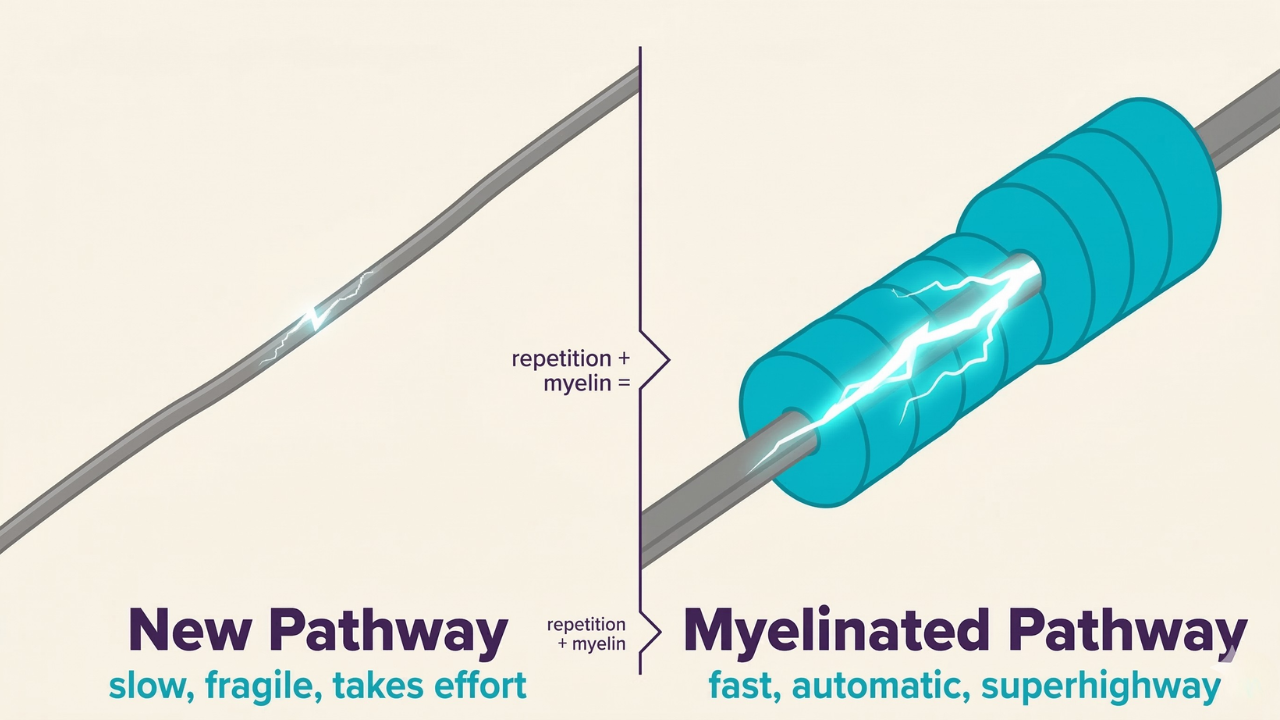
    Because it takes tremendous energy for our brain to work, the brain’s solution is to conserve energy by repeating things it has already done. It doesn’t care if it’s been bad for us – it doesn’t know right from wrong – it just defaults to the position that a known experience is a lot better than an unknown experience. So it’s always trying to avoid anything unknown and trying to repeat what it knows so it can rest.

    Unfortunately, when we look at the Abraham-Hicks responses to questions that have so much pain behind them, trauma is never addressed, and that’s because if someone is not an expert in trauma, they won’t be able to recognize it as a barrier. The trauma that is underlying these people’s conditions is therefore left unresolved. That unresolved trauma keeps the audience from creating the “feeling” required to manifest their dreams. Therefore, those unable to latch onto manifestation cannot do so because of their childhood traumas.

    The key to manifesting what we want is the ability to have Emotional Authenticity because no matter what somebody’s struggle is, whether that’s a career, relationship, or anything else, it all goes back to our emotions. Because of the way our brain and body work, it’s always a feeling before a thought. Therefore, thought-based programs aren’t the solution and will have minimal effect.

    Now, where do we learn about our feelings? Where do we get our perceptions and learn how to make determinations about our feelings? From childhood. From our parents. So the bottom line is this: if something isn’t working in our life, it all goes back to our childhood, the traumas we experienced, and the feelings that became programmed, and we are stuck repeating against ourselves. The stored traumatic feelings are what get in the way, so the question becomes:


    How do you turn it around?


    1. Become an expert in the ability to evaluate your own life. Understand how you are reliving your trauma against yourself. Because that’s what we’re doing, we’re subconsciously putting ourselves in situations that replay our traumatic experiences because of that desire our brain has to reuse information. So, we need to become aware. Most people will say that they have never experienced childhood trauma, but that’s a lack of awareness. Trauma presents itself in different ways, and it’s essential to dive into your personal trauma.

    An example of childhood trauma could be your parents mishandling finances, putting pressure on you to take on adult responsibilities at too young, or creating an experience of food insecurity. Of course, not all trauma is abusive. However, these traumas affect how you interact with related problems in the future – maybe you’re not good with money, struggle to maintain positive relationships, or have a poor understanding of food. Once you are aware of how these traumas affect your daily life, you’ll be able to start moving forward.

    1. Practice Emotional Authenticity. When you understand your emotions, you’re better able to find solutions to moments where you feel off-balance. Maybe the solutions you usually go for won’t work, but how will you know unless you are indeed an expert in evaluating your life?

    The law of attraction isn’t always about getting something. It’s about learning to gain Emotional Authenticity so we can create. Suppose you can spend the time digging through your trauma and reprogramming your subconscious, and learning to develop positive emotional responses to things. In that case, you’re not going to see things negatively anymore. Intuition and emotion are the keys to success in life.

    It’s not all about manifestation and dreaming all day, though. It’s about putting in hard work to master your emotions, to understand your trauma, and to move forward. You’ll start to notice that positive things begin to come once you do these things. That’s how you create the law of attraction. Your recovery is the ‘doing’ part of healing, but once you get there, it’s all about simply ‘being.’


    Exercises that will help you succeed


    Two free exercises are available to download under ‘Resources” on my website. http://kennyweiss.net/resources/ 

    The first is called “How To Remove Feeling Rejected’. This isn’t just about rejection; it goes deeper than that. Any time somebody says something or does something to you, it might feel like a personal attack. What they say is one thing, but what you hear is another – you don’t have enough worth. It’s not what they are saying, but it’s how you perceive it. This is proof of childhood trauma. And this journey book will help you overcome that.

    The second is called “How To Heal From Codependence. Giving the pain back.” This one will walk you through the much deeper process of healing many of the traumatic moments you’ve been through.

    You may need a professional like me to help guide you through your recovery, (you can learn more here. http://kennyweiss.net/coaching/) but these will allow you the opportunity to start on your own.

    The most difficult and important step in manifesting the life you want is to take ownership of what you have been through in childhood. Acknowledging that your parents were perfectly imperfect and left wounds in you does not mean that they were terrible parents, only that they are human. It is loving to ourselves and our parents to live in truth.

    Enjoy The Journey ??

    To Learn More, Watch The Video Here:

  • How To Protect Your Mental Health From Covid Criticism

    How To Protect Your Mental Health From Covid Criticism

    Everywhere you turn it seems like there are more insults than ever flying around. With all of the attacks it can be very difficult to protect your mental health.

    But what if I told you there is a way to turn the insults and criticism into blessings? What if instead of getting angry at the person who criticized you or feeling bad about yourself for being so sensitive, you could turn their words into deeper self-love? Even better, the solution will end the strife and create deeper empathy and connection for you both!

    I know that sounds impossible, but I will show you a foolproof way that works every time.

    The first thing to recognize:

    whenever we judge, blame, criticize, or hate anyone and anything, all we are ever doing is talking about ourselves. A piece of ourselves we are not aware of, and ultimately we haven’t forgiven. That is because at the core of our criticism and insult are denial and projection.

    It may be true that this other person is doing something we disapprove of, but the only reason we can see it in them is that the same perfect imperfection is operating in us as well.

    It happens in one of two ways: directly or indirectly.

    Discovering how we are directly caught in our denial and projecting that onto others is very simple to uncover. What if I said to you, “I can’t stand men who wear bright-colored suits and decorate their house in all these bright colors”? Who am I describing? Myself! Look at my videos, see how I dress and decorate. Sometimes when we criticize others, we’re directly doing it to ourselves. Unless our denial is severe, that’s easy for us to see.

    Discovering how we are indirectly caught in denial and projection is more challenging to see and requires a bit of self-discovery and practice.

    I’m going to give you the secret and tell you about the day I discovered the indirect. I’ve always had this frustration with the way people drive: merging on the highway to slow, people in the left lane going too slow, and various other ways people don’t abide by the rules of the road. I would scream, exclaiming others’ stupidity. One day I was at a light and found myself yelling at this truck in front of me,

    “Why won’t you go? I hate stupid drivers!”

    I paused to remind myself that the screaming, judging, criticizing, and blaming I was doing were really about me. But I was confused and thought out loud,

    “This can’t be about me. I would never do what he is doing?”

    That is when the secret finally came to me. I reminded myself that modern neuroscience now shows that the old paradigm is wrong. We don’t actually become what we think. Instead, we feel before we think in almost every instance, and therefore, we all become our emotions.

    I then pondered

    “What am I feeling, and what emotional words am I using to communicate what is inside me?”

    Specifically, I asked myself,

    “What is the emotional content of the words I am using to judge, blame and criticize him?”

    It was “I hate stupid drivers.” Do you see it? “Stupid.”

    Maybe you don’t know my life story, so here is some insight into how I discovered my indirect denial and projection. I have struggled with multiple addictions, married two narcissistic women, one of which was physically and verbally abusive, played two professional sports I never wanted to play, filed bankruptcy, and at one point nearly took my life.

    As the awareness hit, I felt this blow deep in my stomach when I recognized,

    I’m literally the dumbest person I’ve ever met. Look at all of those stupid decisions. No wonder I can’t stand the way people drive. I have no clue how to drive my own life!”

    I was never aware that I was using the way other people drive to scream back at me until that moment. Nor was I aware that I was begging myself to do even deeper work to heal my pain. But, most importantly, I was desperate to send myself the message that I am not stupid, just perfectly imperfect, and I must learn to forgive myself.

    I am happy to share that now, I rarely notice if a person doesn’t follow the rules of the road. By healing the pain from the past and forgiving myself, I’m done with shaming and inflicting pain upon myself.

    I want you to have this same freedom, so now I want to show you:

    The 5 Steps To Turn An Insult Into a Blessing.

    1- Everything we judge, blame, hate, or criticize is an attempt to help ourselves, see, admit, and heal the pain from our past and forgive our perfect imperfections.

    2-Look for the emotional content. Focus on the emotional words you are using to criticize the person, place, or thing? You may not be doing the exact thing, but the emotional words allow you to see what you are doing.

    3- Look for the metaphor. In my case the way others drove was a metaphor for my life decisions. I couldn’t “drive” my own life.

    4- Once the awareness arrives, recognize you are trying to communicate to yourself how passionate you are about healing the pain from your past and you are imploring yourself to put a plan in place to achieve that recovery.

    5- Give yourself grace and forgiveness. We are all perfectly imperfect, and as a society, we have never been taught how to be a parent, have a relationship, or been given these essential life skills. Our parents were not taught either. Life and relationship skills are the least taught and, therefore, most deficient in us all. None of us can be blamed for doing the best we could with the information we have been given. If we do step four, we can change that because as we know more, we can do more.But, that is only half of the process.

    What about when someone insults us? How Kenny, do we turn that into a blessing?

    I am so happy you asked. To show you that, I’m going to share a comment I received on Facebook on one of my videos about a year ago. The watcher said the following:

    “You are an esoteric, egocentric con man trying to convince yourself that you are something other than a garden variety personality, coupled with an average wit. Unfortunately, those you would most like to convince of your worth are the ones that most easily recognize how basic you are.”

    And here was my reply:

    “I would agree that yes, I can be egocentric. It’s something I’m always working on. You’re also correct that, unfortunately, I do have an average wit. My older brother is much funnier than I am, and I’ve always been jealous of that. I also think it’s true that I was quite the con man, especially when I was younger. It was just the best I could do. I didn’t have any self-esteem, so everything had to be a con. I can definitely own those traits. I know that I’m very thankful that you see so much of me. It’s always a tremendous gift when somebody invests their valuable time in seeing all of me.”

    Why did I choose to respond this way?

    For one, I felt defensive which let’s me know the commenter is correct. I do struggle with my ego, and I do wish I had a better wit. So I owned my perfect imperfections! It is no different than saying I have blue eyes and the sun rises in the east. Healing the pain from the past and forgiving ourselves allows us to hear the truth from others. As I always say,

    “When we learn to forgive our perfect imperfections, they can’t hurt us with them anymore.”

    I chose not to respond to this portion of his comment, “those you would most like to convince of your worth are the ones that most easily recognize how basic you are.” Because for me, it did not ring true. I know that because I did not feel defensive about it, I felt nothing. So, that means one of two things. It is not accurate, or as I progress on my healing journey, I will become aware that he was correct. But, since it is not valid for me at this point in my journey, I just allowed him to have his reality.

    While the commentator correctly saw imperfections in me, his authentic self is desperate for someone to make him aware of the five steps to turn an insult into a blessing so he could finally not only hear but heal and forgive himself. To understand how the insulter is trying to communicate to himself, just flip the “you” into an “I”.;

    I am an esoteric, egocentric con man trying to convince you that I am something other than a garden variety personality, coupled with an average wit. Unfortunately, those I would most like to convince of my worth are the ones that most easily recognize how basic I am.”

    What is the lifelong quest of the human being? Connection, authenticity, and vulnerability. This man could not have been more authentic and vulnerable, and all he is missing is a society that advocates teaching us basic life skills. That is the blessing. Insults, criticism, blame, and hatred of any person, place, or thing is each individual’s attempt to share the deepest darkest, most heartbroken, and perfectly imperfect part of themselves.

    3 Steps To Never Miss The Blessing.

    1. Own your side of the street- Look for defensiveness and allow yourself to accept truth.
    2. Turn it around.
    3. Empathize and appreciate.

    What the commentator said about me had truth! At first, I was upset – of course, I was, I am human and because of my ego problems, in moments I am insecure. But when we get that defensive reaction, it is a sign of denial which means we are trying to hide from the truth. So I paused, asked myself what was true, and forgave myself for being perfectly imperfect in those areas. His so-called insult gave me the blessing of loving and forgiving myself more. So how could I be even remotely upset at him? Remember, when we shout at others, we’re really screaming at ourselves – and when others scream at us, they’re doing the same.

    Empathize and appreciate.

    This gets to step 3: empathize and appreciate. When people insult, they share a deep, dark, perfectly imperfect part of themselves they’ve never healed or forgiven. This man isn’t these things – those thoughts were placed in him as a child, and he’s carried them his whole life. My heart breaks for him! He doesn’t even know that’s how he sees himself. He’s in tremendous pain, and I wouldn’t wish that on anyone.

    Can you now see the blessing that insults provide us all? Either a person is seeing our perfect imperfections which allow us to heal and forgive ourselves more deeply or the insulter is expressing their unhealed pain and being incredibly vulnerable with us. Connection and intimacy are now possible for us both.

    Imagine if both political parties and activists on all sides were aware that while there may be a fault on the other side, the perfect imperfection they are most desperate to change resides in themselves? Imagine if in a relationship, both parties knew this as well? Imagine if everyone knew that their judging, blaming, hating, insulting, and criticizing was really a request to heal and forgive themselves and a request for empathy, understanding, and connection?

    Enjoy The Journey!

    If you want to gain Emotional Authenticity so that your thoughts are not filled with painful emotions, I have created this masterclass for you!

    CLICK THE IMAGE TO LEARN MORE

    To learn more, check out the video here:

  • How To Get Closure From A Narcissist

    How To Get Closure From A Narcissist

    Would you like to know how to get closure from a narcissist? Below are ten ways that have worked for those wanting to move past their relationships with narcissists.


    1. Find closure from within


    No matter how much you try, you will never get closure from the narcissist. They will never give it to you because they want to keep you on the line. So, all the questions you want to ask them and all the things you want an explanation for will get you nowhere. Realizing this is one of the most challenging things because it makes us feel powerless. However, truly understanding that closure needs to come from within is the first step in moving forward.


    2. Stop obsessing


    This means that you must eliminate everything – pictures, videos, souvenirs, and any reminders of them. Throw it all away. It’s key to also do away with those obsessive thoughts, which will take a little more discipline and effort.

    The second you start thinking about any relationship aspect, focus on things you can see around you – chair, rug, lamp, etc. This will help distract you from those obsessive thoughts; you cannot allow any of them to make a home in your mind. Finally, you have to make the conscious choice to stop. Every time we think about them, we are back in that relationship again; we haven’t left. Choosing to leave the relationship means leaving all of it.


    3. Resist the temptation to learn about narcissism


    While many experts believe the opposite, it is actually more important to focus on you and your recovery first and learn about everything else later. Knowing how to identify narcissism and narcissistic behaviors is essential, but not until further along in your recovery journey. Several steps need to be taken before you do that.

    If you obsessively learn about narcissism initially, you’re going to spend most of your energy comparing every piece of information you get against your narcissist. You will be stuck in the relationship and focusing too much on them rather than yourself; the toxicity levels are way too high with this kind of thinking. You will lose yourself and stay stuck in the narcissist’s web if you spend so much time learning about them.


    4. Pay attention to the media you consume


    Become aware of what kind of television you’re watching and the music you’re listening to. A show like American Greed, for example, is all about narcissistic sociopaths. So many people watch these shows and try to figure out how a person could do something like that. Or how could someone fall for X? You’re trying to make sense of whether you would fall victim to people like that.

    Television like this, including that fascination with narcissists, is a sign that you’re still stuck; you’re reliving your narcissist’s experience in an absent-minded way. Sad, victim-oriented music is the same way and can impact your behavior and thought processes. Conversely, ridiculous shows and uplifting music can have tremendous impacts on your ability to heal and move on.


    5. Follow the 90/10 rule


    You’re in a relationship with a narcissist because 90% of your thoughts, feelings, and behaviors focus on the narcissist, while 10% focus on yourself. That’s common with people who end up with narcissists – they’re severely codependent. This dynamic needs to flip.

    We need to learn to love and care for ourselves and also achieve that by focusing 90% of our thoughts, feelings, and behaviors on healing, loving and recovering ourselves. They build up our self-love and self-esteem by focusing almost entirely on ourselves.


    6. Work through the grief process


    The stages of grief are shock/denial, anger, bargaining, depression, and acceptance. Most people get stuck at the bargaining stage, cycling through the first three steps to avoid that depressive stage. They don’t want to feel the pain that comes from being with a narcissist, which is a feeling that was there before the narcissist came along. This is ultimately what every person who has been in a relationship with a narcissist is avoiding. They chose the narcissist because of the underlying pain they have yet to heal.


    7. Take responsibility


    The biggest struggle for someone who can’t find closure is being unable to take responsibility for their part in the relationship. Do not buy into false messaging that the narcissists are the only ones with a problem. Narcissists are undeniably the ones to blame, but those attracted to narcissists are responsible for their attraction to them.

    We can never divorce ourselves from our responsibility in choosing a narcissist and allowing them into our lives. It didn’t happen by magic, after all. We chose them out of the millions of people we could have chosen.

    We will know we haven’t worked through the grief process if we still blame the narcissist for everything and feel anger towards them. If we’re doing that, we’re once again stuck; we’re not taking any responsibility for our part. Attraction to a narcissist comes from childhood trauma that we haven’t healed. We avoid responsibility so we can avoid facing this underlying trauma. Therefore, we need to put in the work to heal ourselves if we want to move forward. If we don’t acknowledge this fact about ourselves, we’re likely condemned to choose another narcissist in the future.


    8. Get help for our codependency


    Any person who is with a narcissist is codependent. One of the core symptoms of codependency is immaturity.

    What does that look like? It means failing to take responsibility for our thoughts, feelings, behaviors, and actions, much like a child. When we don’t address our underlying pain and codependence and continually place all the responsibility at the narcissist’s feet, we remain stagnant in our immaturity and codependence. I offer several free downloads to help you heal your codependence here: http://kennyweiss.net/resources/


    9. Love the memories, not the person


    Narcissists are gifted with creating magical moments filled with everything we could ever want, which can be confusing. It can be tough to let go because these experiences play into the fantasy we may have always had. We start to question what was real or fake or whether we had imagined the love we felt.

    However, we can love the memories without needing to love the person any longer. We can hold onto that memory of ‘God. I felt loved at that moment and know that we felt tremendous without analyzing whether that love was real or not. The way it made you feel is real. So please do not take those beautiful moments away from yourself; revel in them.

    When we can reconcile the idea that a moment is not a person, we’ll be able to start creating closure within ourselves.


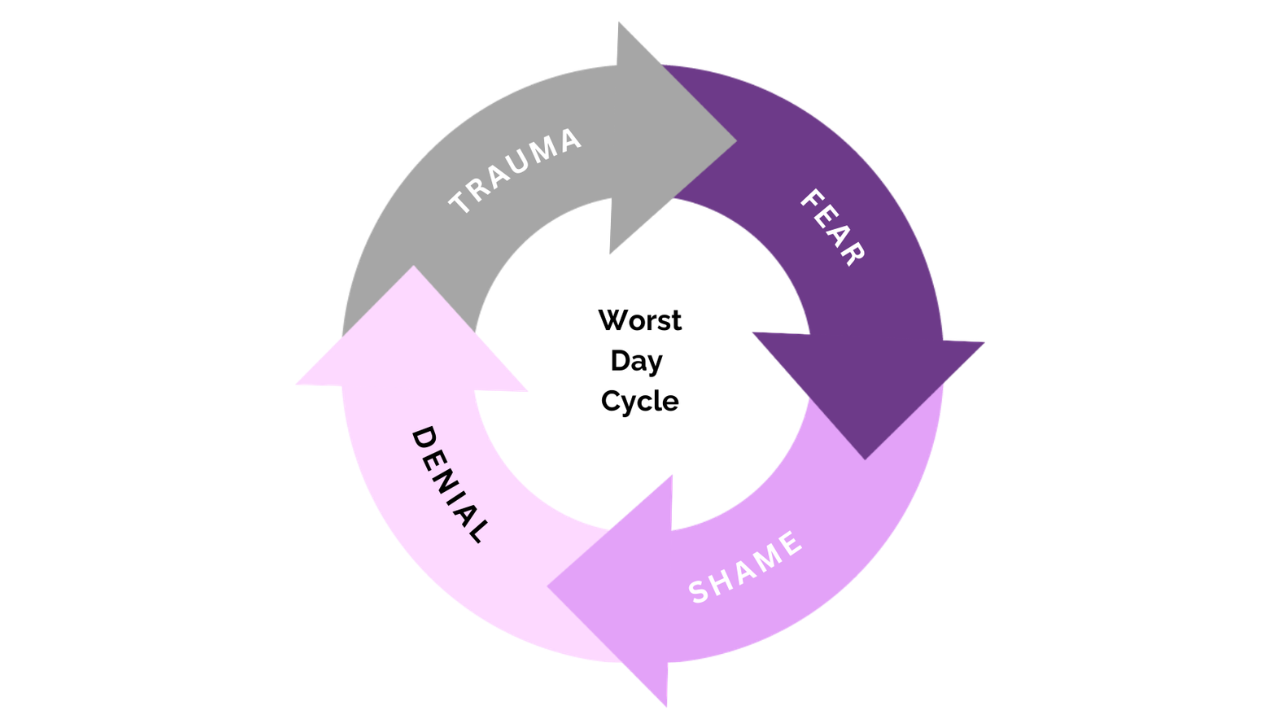
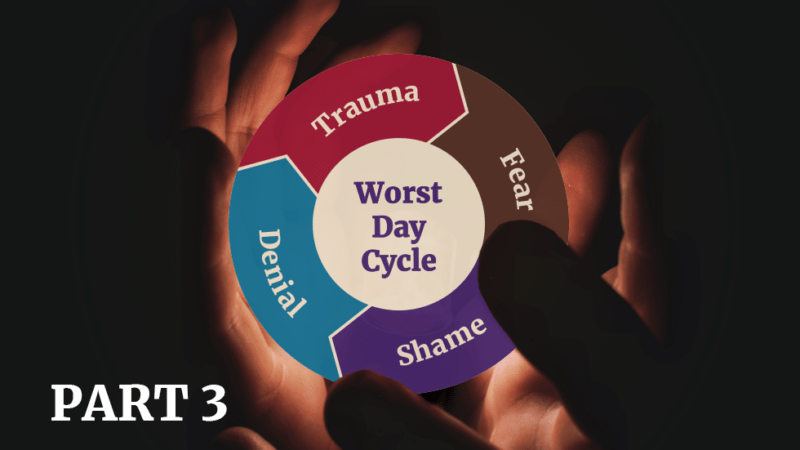
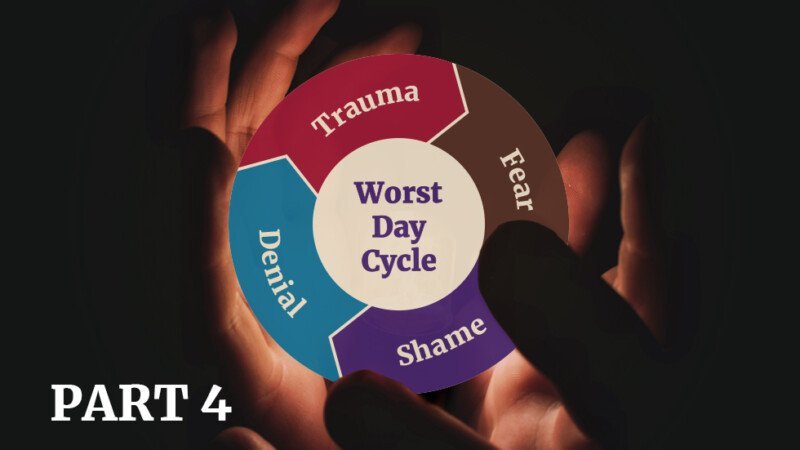
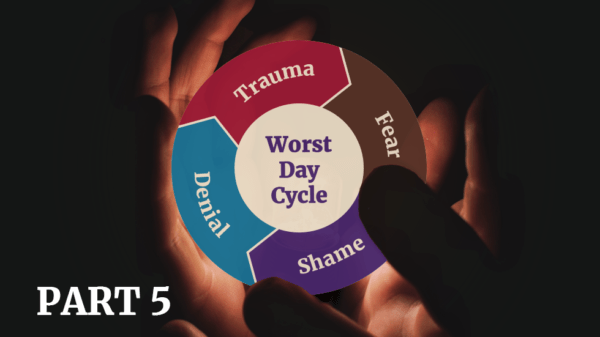
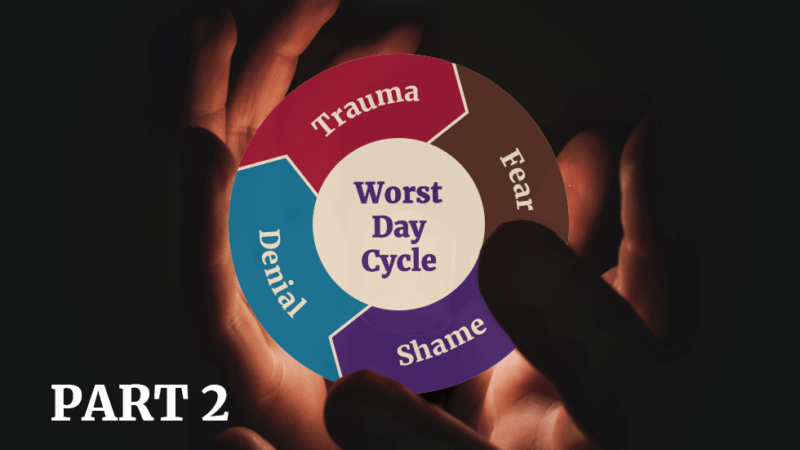
    10. Learn about the worst day cycle


    In basic terms, the worst day cycle is responsible for every individual’s pain in their life. Nobody’s immune from reliving their worst day cycle, regardless of income or station in life.

    The worst day cycle is a maladaptive, self-victimizing, emotionally addictive process that humans have created in response to childhood trauma. Because of the societal lack of knowledge, skills, and tools in parenting, trauma, and Emotional Authenticity, no one is immune from this process. By understanding the worst day cycle, we remove the mystery of the narcissist and relationships and of life itself. Having this understanding and moving through the process of recovery allows you a roadmap to achieve the life you want.

    You can learn more about the worst day cycle in my book Your Journey to Success and can watch my five-part video series on Youtube so that you can start doing the work and moving forward.

    If you are ready for help healing, you can set a private appointment with me, enroll in my online masterclasses or join my private group here. http://kennyweiss.net/coaching/


    Enjoy The Journey


    To learn more, check out the video here:

  • The Difference Between Passion and Addiction

    The Difference Between Passion and Addiction

    Believe it or not, addiction is often mistaken for passion. This is because both can make a person feel energized, excited, and powerful, but it’s important to decipher between the two so you can ensure that you’re pursuing a passion, not an addiction.


    What’s the difference?


    One of the most fantastic explanations for the difference between passion and addiction comes from Dr. Gabor Maté’s In the Realm of Hungry Ghosts: Close Encounters with Addiction, in which he writes:


    “The difference between passion and addiction is that between a divine spark and a flame that incinerates. Passion is divine fire while it enlivens and makes holy.

    it gives light and yields inspiration. Passion is generous because it’s not ego-driven, while addiction is self-centered and a thief. Passion gives and enriches.


    Passion


    Passion is a source of truth and enlightenment; addictive behaviors lead you into darkness. You’re more alive when you are passionate. And you triumph whether or not you attain your goal.

    But an addiction requires a specific outcome that feeds the ego; without that outcome. The ego feels empty and deprived. A consuming passion that you are helpless to resist, no matter what the consequences, is an addiction.”

    “You may even devote your entire life to a passion, but if it’s truly a passion and not an addiction, you’ll do so with freedom, joy, and a full assertion of your truest self and values.

    In addiction, there’s no joy, freedom, or assertion. The addict lurks shamefaced in the shadowy corners of her own existence. It is passion’s darksome outcome and, to the naïve observer, its perfect mimic. It resembles passion in its urgency and in the promise of fulfillment, but its gifts are illusory; it’s a black hole. The more you offer it, the more it demands. Unlike passion, its outcome does not create new elements from old.

    It only degrades what it touches and turns it into something less, something cheaper. The question to ask yourself is, ‘am I happier after pursuing my addiction?’

    Addiction is centrifugal. It sucks energy from you, creating a vacuum of inertia. A passion energizes you and enriches your relationships.

    It empowers you and gives strength to others. Addiction consumes, and passion creates. First the self and then the others within its orbit.”


    In essence:


    • Passion needs truth; addiction needs deception
    • Addiction pursues the outcome, while passion pursues the process.
    • Addiction kills the spirit, while Passion illuminates the spirit.
    • Passion can be stopped; addiction must be maintained
    • Addiction is all-consuming, while Passion has balance.
    • Addiction creates disconnection and isolation while it creates connection and community;
    • Passionate people are enriched by others, while addicted people are consumed with themselves
    • Passionate people accept responsibility and criticism, while addicted people refuse responsibility and deny criticism


    The process vs. the outcome


    If you listen to people who have achieved a lot, you’ll find them insisting that their achievements are based on passion. Often, it’s not. The outcome, not the process, consumes them. Additionally, That becomes evident because there is no balance, joy, or fulfillment outside of their pursuit.

    Therefore, the process leading up to the outcome is filled with stress and anxiety, not enjoyment. And it will only be in the outcome where they’ll experience a few moments of joy and delight; it’s this feeling that they’ll chase. It’s high, and it’s because they’re putting themselves through turmoil to get to that point.

    Finally, when successful people eventually reach their end goal, they will start feeling a sense of emptiness where that high no longer exists.

    That’s not to say you can’t pursue your passion and be successful. You can. The difference is that sense of joy. It’s essential to be self-aware enough to realize where you stand. You must have balance.

    Whether it’s your relationship, career, or hobby, think about the differences between passion and addiction. Take honest stock of your life. Is your pursuit robbing your soul or fulfilling your soul? And most importantly, how is it affecting the people in your life? If you are abandoning your spouse or friends, or children for your passion, it is most likely hiding intolerable pain.

    To discover your autherntic self and true passion, my book, Your Journey To Success shows you how. If you are struggling with addiction and need help, you can schedule an appointment, enroll in my masterclasses or joing my private group here: http://kennyweiss.net/coaching/


    Enjoy The Journey??


    To learn more, watch the video here: