Category: Healing Trauma

  • Turn Insults Into Blessings: How Denial and Projection Reveal Your Path to Healing

    Turn Insults Into Blessings: How Denial and Projection Reveal Your Path to Healing

    Every insult you have ever received — and every insult you have ever given — is a confession. Not a confession of cruelty. A confession of pain. When someone attacks your character, mocks your choices, or tears you down with words designed to wound, they are not talking about you. They are talking about a part of themselves they have never healed, never forgiven, and cannot bear to face. And when you receive that insult and it lands — when it hits you in the gut, when it replays in your mind for days, when it confirms the worst things you secretly believe about yourself — that landing is the evidence that the same unhealed wound lives in you too.

    This is one of the most powerful and counterintuitive truths in emotional healing: whenever we judge, blame, criticize, or hate anyone or anything, we are always talking about a part of ourselves. It might be true that the other person has the flaw we are criticizing. But the only reason we can see it in them — the only reason it triggers us — is because that same perfect imperfection is operating in us, either directly or indirectly. Understanding this single principle will transform how you handle criticism, how you respond to hatred, and how you relate to every difficult person in your life.

    That’s you if someone’s words can ruin your entire day — if a single comment from a stranger on the internet keeps you awake at 2 AM replaying it, trying to prove them wrong in your head. That’s not sensitivity. That’s an unhealed childhood wound getting activated.
    Turn insults into blessings by embracing your perfectly imperfect self

    Table of Contents

    How codependence and denial patterns drive criticism and insults in relationships

    What Is Denial and Projection? The Psychology Behind Every Insult

    Denial is one of the four stages of the Worst Day Cycle™ — it is the survival mechanism your psyche created to protect you from unbearable shame. When something about yourself is too painful to face, your mind hides it from you. You literally cannot see it. And because you cannot see it in yourself, your psyche finds it in everyone else. That is projection — the unconscious act of taking the thing you cannot tolerate about yourself and attributing it to another person.

    Projection, judgment, criticism, blame, and hate always reveal denial within the self. Externalized negative judgments are reflections of unresolved aspects of one’s own denial. This is not theory. This is what every human being does, every day, without awareness. Every time you judge someone’s parenting, every time you criticize a coworker’s laziness, every time you hate a politician’s arrogance — you are revealing a piece of yourself you have not yet healed or forgiven.

    That’s you if you find yourself constantly irritated by the same type of person — the loud one, the needy one, the controlling one. That irritation is a spotlight your psyche is shining on a part of you that you have not forgiven.

    This does not mean the other person is innocent. It might be absolutely true that they are doing the thing you are criticizing. But the reason it triggers you — the reason it gets under your skin, the reason you cannot let it go — is because the same energy exists in you. You are doing the same thing, either directly or indirectly. And your criticism of them is actually your psyche’s desperate attempt to communicate with you about what needs healing.

    That’s you if you have ever said “I would never do that” about someone else’s behavior — while doing the exact same thing in a different form that you cannot see.

    Direct vs. Indirect Projection: Two Ways We Hide From Ourselves

    Denial and projection work in two distinct ways — and understanding the difference is the key to unlocking every insult you have ever received or given.
    Emotional blueprint showing how direct and indirect projection reveal hidden self-denial

    Direct Projection: The Easy One to See

    Direct projection is when you literally do the thing you are criticizing. If Kenny says, “I can’t stand men who wear bright-colored suits and decorate their house in all these bright colors” — who is he describing? Himself. That is exactly how he dresses and decorates. Sometimes when we criticize others, we are directly doing it to ourselves. Unless our denial is severe, this version is easy to spot once you know to look for it.

    That’s you if you criticize someone for being late while you are chronically behind schedule — or judge someone for being controlling while you micromanage every detail of your own relationships.

    Indirect Projection: The Hidden Metaphor

    Indirect projection is where most people get confused — and where the deepest healing lives. This is when you are not literally doing the thing you criticize, but the emotional content of your criticism reveals a metaphor for what you are doing to yourself. You have to look past the surface behavior and find the emotional word — the degrading, shaming word buried inside the judgment. That emotional word is the confession.

    In every judgment, blame, and criticism, there is a deep, heavy emotional word that the person ascribes to it — something degrading. That emotional word is the window into their denial. It reveals what they are actually saying to themselves, about themselves, that they have never healed.

    That’s you if you have ever torn someone apart and then wondered why you felt worse afterward — not better. Your psyche was screaming at itself through them.
    Metacognition and self-awareness revealing hidden projection patterns in criticism

    The Stupid Drivers Metaphor: How Kenny Discovered the Indirect

    Kenny has always had a frustration with the way people drive — merging onto the highway too slowly, sitting in the left lane going under the speed limit, ignoring the rules of the road. He would scream at them, exclaiming their stupidity. One day, sitting at a light behind a truck that would not move, he found himself yelling: “Why won’t you go? I hate stupid drivers!”

    Then he paused. He reminded himself of the principle: whenever we judge, blame, or criticize, we are always talking about ourselves. But he was confused — “This can’t be about me. I would never do what he is doing.”

    That is when the secret finally came. Modern neuroscience shows that we feel before we think in almost every instance. We become our emotions. So Kenny asked himself: “What is the emotional content of the words I am using to judge him?” The answer: stupid.

    That’s you if you have never stopped to ask what emotional word lives inside your judgments — because that word is the message your psyche is desperate for you to hear.

    Then came the metaphor. Why was Kenny complaining about drivers specifically? Not stupid shoppers. Not stupid athletes. Drivers. What do we all drive besides cars? Our lives. Kenny was not complaining about other people’s driving. He was screaming at himself: “I don’t know how to drive my own life.”

    The awareness hit like a blow to the stomach. Multiple addictions. Two marriages to narcissistic women, one physically and verbally abusive. Two professional sports he never wanted to play. Bankruptcy. Three days locked in an apartment trying to write his children a suicide note. He was, by his own admission, using other people’s driving as a projection screen — a way to banish the wounded child inside him by screaming “you’re so stupid” at strangers instead of facing his own pain.
    Survival persona hiding behind projection and criticism of others

    Every insult and judgment is a coded message from your survival persona to your authentic self. The survival persona uses criticism of others to avoid facing its own unhealed pain. The authentic self, when it finally receives the message, can use it to heal.

    That’s you if you have a pet peeve that drives you absolutely crazy — something irrational, something that triggers you far beyond what the situation warrants. That pet peeve is your psyche sending you a love letter in a language you have not yet learned to read.

    Kenny shares that now, he rarely notices if a person does not follow the rules of the road. By healing the pain from the past and forgiving himself, the projection dissolved. The trigger lost its charge. That is the promise: when you heal the wound, the insult loses its power.

    The Worst Day Cycle™: Why Insults Trigger Childhood Pain

    The reason an insult can devastate you — the reason a stranger’s comment can ruin your week — is not because you are weak or too sensitive. It is because the insult activated your Worst Day Cycle™, a four-stage neurological loop that started in childhood and repeats every time a wound gets triggered.
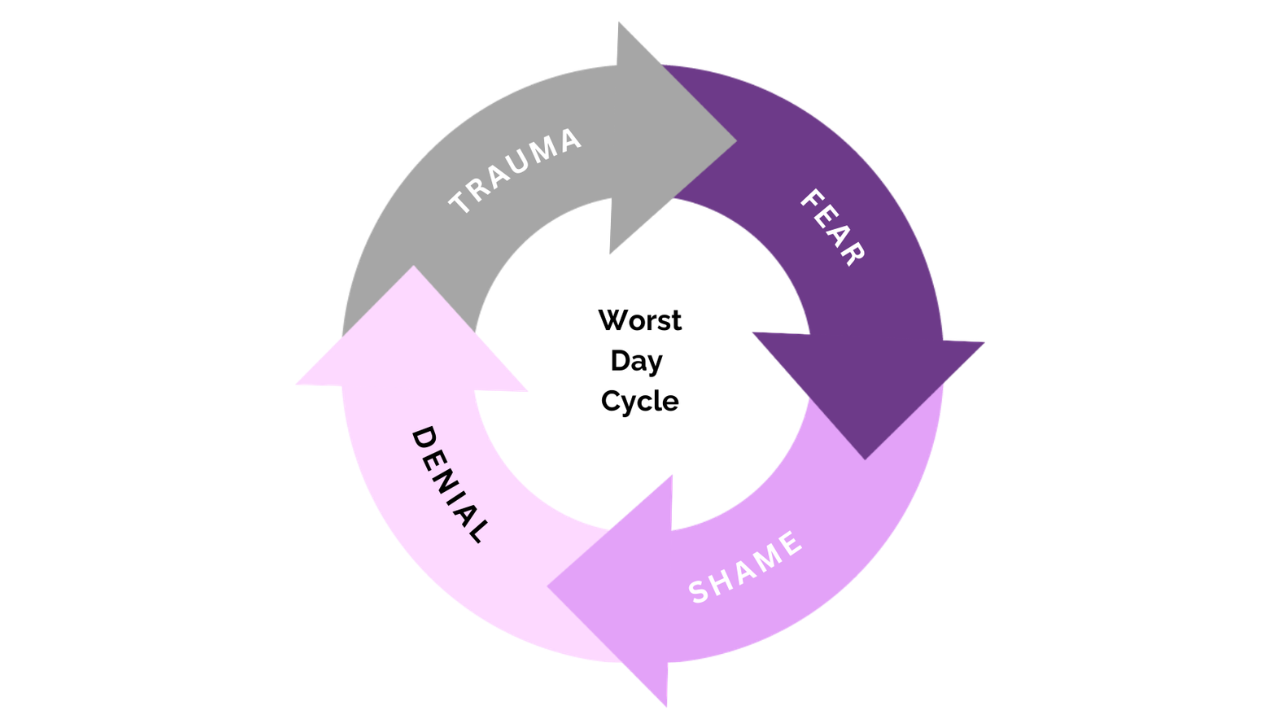
    The Worst Day Cycle showing how insults trigger trauma fear shame and denial

    Stage 1: Trauma. Childhood trauma is any negative emotional experience that created painful meanings about yourself. A parent who called you stupid. A sibling who mocked you. A teacher who shamed you in front of the class. These experiences created a massive chemical reaction — your hypothalamus generated cocktails of cortisol, adrenaline, and dopamine misfires — and your brain became addicted to these emotional states because the brain conserves energy by repeating known patterns. It cannot tell right from wrong — only known versus unknown.

    Stage 2: Fear. Fear drives repetition. Since approximately 70% of childhood messaging is negative and shaming, adults repeat these painful patterns everywhere — in relationships, career, friendships, even how they respond to a comment online. That’s you if you brace yourself every time you open your email, your social media, or a text from certain people — your nervous system is preparing for the childhood blow it expects.

    Stage 3: Shame. Shame is where you lost your inherent worth. Where you decided “I am the problem.” Not “someone said something unkind” (which is about their behavior), but “I am what they said I am” (which is about your identity). When an insult lands, shame is what makes it stick. The insult confirms the painful meaning you created in childhood — and your nervous system treats that confirmation as evidence, not opinion.

    Stage 4: Denial. To survive unbearable shame, your psyche creates a survival persona — a false identity that either attacks back, collapses into self-hatred, or pretends the insult did not happen. Three survival persona types emerge: falsely empowered (controls, dominates, rages), disempowered (collapses, people-pleases, absorbs), and adapted wounded child (oscillates between both). And from inside that survival persona, you project your own pain outward — judging, blaming, and criticizing others, which starts the cycle all over again.

    That’s you if you have ever spiraled from a single comment — one person’s opinion sent you into days of self-doubt, rumination, and rage. That’s not an overreaction. That’s your entire childhood being replayed through one trigger.

    The Three Survival Personas and How They Handle Criticism

    How you respond to insults reveals which survival persona is running your nervous system. Each one handles criticism differently — and each one keeps you trapped in the Worst Day Cycle™.
    Adapted wounded child survival persona responding to insults and criticism

    The Falsely Empowered Persona responds to insults with counterattack. You rage. You demolish the other person with a smarter, sharper insult. You “win” the argument and walk away feeling powerful — but the shame underneath is untouched. Your survival persona controls through dominance, and criticism feels like a threat to the control you need to feel safe. That’s you if you cannot let a criticism go without firing back — if you always need the last word.

    The Disempowered Persona responds to insults with collapse. You absorb the criticism. You believe it. You replay it for weeks. You apologize even when you did nothing wrong. Your survival persona keeps you safe by making you small — and criticism confirms the smallness you already feel. That’s you if someone’s words can flatten you for days — if you carry other people’s opinions like stones in your pockets.

    The Adapted Wounded Child oscillates between both. One moment you are raging at the insult; the next moment you are crying about it. You shift between fighting back and caving in, never finding solid ground. That’s you if your response to criticism depends entirely on who delivered it and how safe you feel in the moment — you are a different person depending on who is in the room.

    Sound familiar? Most of us recognize ourselves in all three of these personas at different times. That is because they were all brilliant childhood survival strategies — and now they are running your adult response to criticism without your permission.

    5 Steps to Turn Any Insult Into a Blessing

    When you give an insult — when you find yourself judging, blaming, or criticizing someone — use these five steps to decode the message your psyche is sending you.
    Emotional Authenticity Method for turning insults into self-healing opportunities

    Step 1: Recognize that everything you judge, blame, hate, or criticize is an attempt to help yourself see, admit, and heal the pain from your past — and forgive your perfect imperfections. This reframe is everything. The judgment is not evidence that they are terrible. It is evidence that something in you is desperate for healing.

    Step 2: Look for the emotional content. What emotional word are you using to criticize this person? Not the surface complaint — the degrading word underneath. “I hate stupid drivers.” “She’s so selfish.” “He’s such a fraud.” That emotional word — stupid, selfish, fraud — is your confession.

    Step 3: Look for the metaphor. You may not be doing the exact thing you are criticizing. But the metaphor reveals how you are doing it indirectly. “I hate stupid drivers” → I do not know how to drive my own life. “She’s so selfish” → I have been sacrificing myself to avoid facing my own needs. “He’s such a fraud” → I have been performing a version of myself that is not real.

    Step 4: Recognize you are trying to communicate to yourself how passionate you are about healing the pain from your past — and you are imploring yourself to put a plan in place to achieve that recovery. The judgment is not cruelty. It is urgency. Your authentic self is trying to break through the survival persona’s denial.

    Step 5: Give yourself grace and forgiveness. We are all perfectly imperfect. As a society, we have never been taught how to parent, how to have a relationship, or how to develop essential emotional skills. Our parents were not taught either. None of us can be blamed for doing the best we could with the information we were given. When we learn to forgive our perfect imperfections, they cannot hurt us with them anymore.

    That’s you if you have been carrying judgment toward someone for months or years — and now you see that the judgment was never really about them. It was always about you, asking yourself to heal.

    How to Receive an Insult Without Losing Yourself

    Turning your own judgments into blessings is one half of the equation. The other half is receiving insults from others. Kenny demonstrates this through one of the most powerful examples in his teaching — a real comment he received on social media:

    “You are an esoteric, egocentric con man trying to convince yourself that you are something other than a garden variety personality, coupled with an average wit. Unfortunately, those you would most like to convince of your worth are the ones that most easily recognize how basic you are.”

    Here is how Kenny responded — not from his survival persona, but from his authentic self:

    “I would agree that yes, I can be egocentric. It’s something I’m always working on. You’re also correct that, unfortunately, I do have an average wit. My older brother is much funnier than I am, and I’ve always been jealous of that. I also think it’s true that I was quite the con man, especially when I was younger. It was just the best I could do. I didn’t have any self-esteem, so everything had to be a con. I know that I’m very thankful that you see so much of me. It’s always a tremendous gift when somebody invests their valuable time in seeing all of me.”
    Reparenting yourself to receive criticism with grace and self-forgiveness

    Why did he respond this way? Because he felt defensive — and defensiveness is the evidence that the criticism touched something true. He does struggle with his ego. He does wish he had a sharper wit. Those are his perfect imperfections. And by owning them — by accepting them as factual as having blue eyes — they lost their power to wound him.

    When immediate defensiveness shows up, it is typically because the other person is bringing up something that is true. Defensiveness is evidence of threatened denial and exposure of hidden self-truth.

    That’s you if you react defensively to certain criticisms — not all of them, but specific ones that hit a nerve. That nerve is the unhealed wound. And the person who hit it just showed you exactly where to do your work.

    There are three steps to receiving insults as blessings:

    1. Own your side of the street. Look for defensiveness. Where the criticism stings, there is truth. Accept it. Not as shame — as information. Healing the pain from the past and forgiving yourself allows you to hear truth from others without it destroying you.

    2. Turn it around. Flip the “you” into an “I” to see what the insulter is really saying about themselves. That comment above becomes: “I am an esoteric, egocentric con man trying to convince you that I am something other than a garden variety personality.” The insulter was not attacking Kenny. He was confessing his own deepest pain to a complete stranger. What a gift.

    3. Empathize and appreciate. When people insult, they share a deep, dark, perfectly imperfect part of themselves they have never healed or forgiven. That man was not those things — those thoughts were placed in him as a child, and he has carried them his whole life. His insult was the most vulnerable, authentic thing he could have said. Connection and intimacy are now possible because the truth is on the table.

    That’s you if you have never considered that the person insulting you was actually being more vulnerable in that moment than in any conversation they have ever had — because their shame was showing.

    The Emotional Authenticity Method™: 6 Steps to Rewire Your Response to Criticism

    The Emotional Authenticity Method™ is a six-step process that rewires your nervous system so that insults no longer trigger your survival persona — they trigger your curiosity instead.
    Emotional regulation through the Emotional Authenticity Method for handling insults

    Step 1: Somatic Down-Regulation. When the insult lands — when your chest tightens, your face flushes, your mind starts composing the perfect comeback — pause. Focus on what you can hear for 15–30 seconds. Wind. Traffic. Your own breath. If you are highly dysregulated, use titration: cold water on your face, step outside, hold ice. Your prefrontal cortex cannot come online while your amygdala is running the show. You cannot access wisdom from a triggered state.

    Step 2: What am I feeling right now? Not “I’m angry.” Use the Feelings Wheel to name it with emotional granularity. Are you feeling humiliated? Exposed? Ashamed? Dismissed? Invisible? The more specific you are, the more you interrupt the survival persona’s vague rage.

    Step 3: Where in my body do I feel it? All emotional trauma is stored physically. The burning in your face when someone mocks you — that is a somatic memory. The tightness in your chest when someone questions your competence — that is your childhood, stored in your body. Locate it.

    Step 4: What is my earliest memory of having this exact feeling? The insult that landed today activated a wound that was installed decades ago. When was the first time someone made you feel this way? The first time your intelligence was questioned. The first time your worth was dismissed. The insulter did not create this feeling — they triggered a blueprint that was already there.

    Step 5: Who would I be if I never had this thought or feeling again? Not “I’d be happy.” Specific: “I would be someone who hears criticism without crumbling. Someone who can own their imperfections without shame. Someone who sees the humanity in the person attacking them.” This vision step plants the seed of your authentic self.

    Step 6: Feelization — Create the New Chemical Addiction. Sit in the feeling of who you would be — the authentic self who can receive an insult as a blessing. Make it strong. Feel it in your body. The groundedness, the compassion, the quiet confidence. Ask yourself: “How would I respond to this insult from this feeling? What would I say? What would I do?” Visualize and FEEL yourself responding from wholeness. This is the emotional blueprint remapping and rewiring step. You cannot change emotional patterns through thoughts alone — emotions are biochemical events, and thoughts originate from feelings.

    That’s you if you have never been taught that you can literally rewire how your nervous system responds to criticism — that defensiveness is a chemical habit, not a permanent trait.

    The Authentic Self Cycle™: From Defensiveness to Freedom

    The Authentic Self Cycle™ is the healing counterpart to the Worst Day Cycle™ — a four-stage identity restoration system: Truth → Responsibility → Healing → Forgiveness. Applied to insults, it transforms every criticism into a doorway for growth.
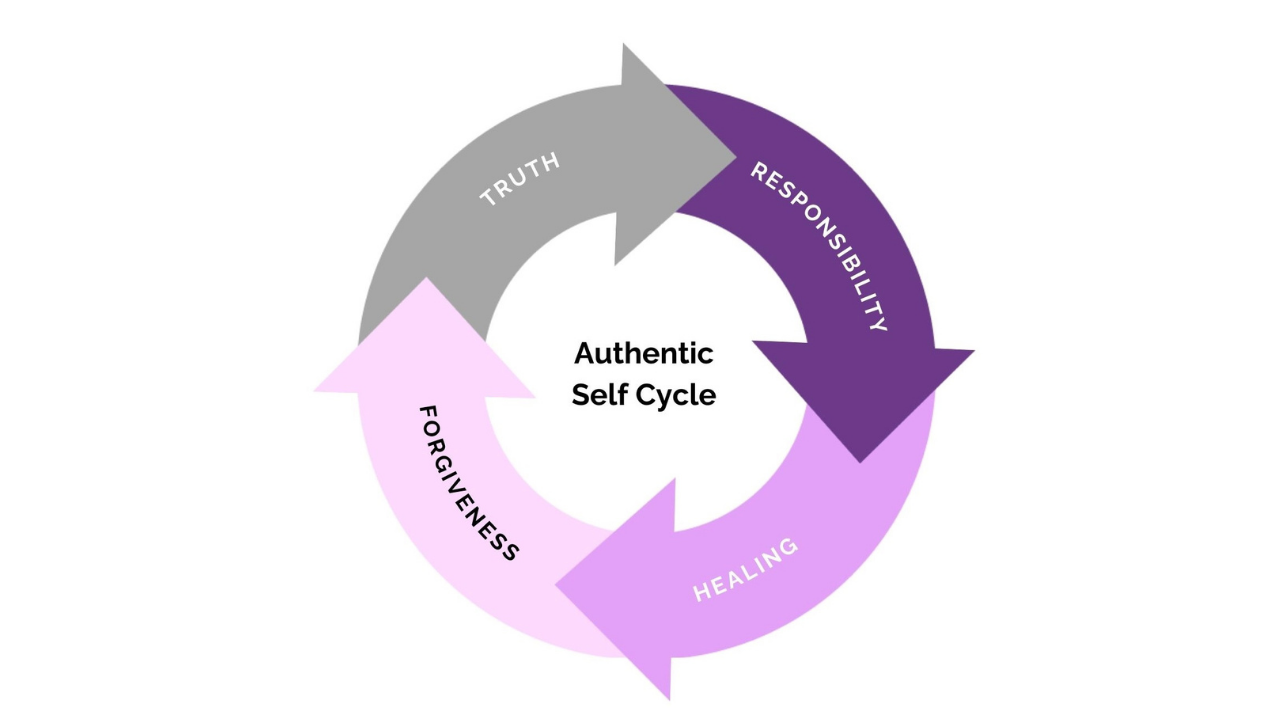
    The Authentic Self Cycle showing how to move from defensiveness to freedom when receiving insults

    Stage 1: Truth. Name the blueprint. “This insult isn’t about today. My defensive reaction is my childhood survival persona activating because this criticism echoes something painful that was said to me — or about me — decades ago. The charge I feel is not about this person. It is about the original wound.”

    Stage 2: Responsibility. Own your emotional reactions without blame. “My reaction is mine to manage. I can feel triggered and still choose not to attack, collapse, or pretend it doesn’t hurt. My partner isn’t my parent — my nervous system just thinks they are.” That’s you if you are ready to stop blaming other people for how their words make you feel — and start using your reactions as a map to your own healing.

    Stage 3: Healing. Rewire the emotional blueprint so that criticism becomes uncomfortable but not dangerous. Disagreement does not mean rejection. Feedback does not mean you are worthless. Someone seeing your imperfections does not mean they will abandon you. This creates a NEW emotional chemical pattern that replaces fear, shame, and denial with curiosity, self-compassion, and genuine connection.

    Stage 4: Forgiveness. Release the inherited emotional blueprint and reclaim your authentic self. Forgive yourself for the survival strategies you developed — the defensiveness, the people-pleasing, the counterattacks. Forgive the people who installed the original wound. Not because what they did was acceptable, but because carrying the resentment keeps the Worst Day Cycle™ spinning. When we learn to forgive our perfect imperfections, they cannot hurt us with them anymore.

    That’s you if you are finally ready to stop being controlled by other people’s opinions — not by building thicker walls, but by healing the wound that made their words feel like weapons.
    Trauma gut versus authentic gut response when receiving criticism and insults

    Where Insults and Criticism Hit Hardest by Life Area

    Family Relationships

    Family criticism carries the deepest charge because family installed the original blueprint. A parent who says “you’re too sensitive” is activating the same wound they created when you were five. A sibling who mocks your choices is playing the same role they played in childhood. Family insults feel different because they are not new injuries — they are re-openings of original wounds.

    That’s you if a single comment from a parent can undo weeks of progress — because their voice still carries the authority of your childhood survival system.

    Romantic Relationships

    Your partner’s criticism lands hardest because intimacy creates vulnerability, and vulnerability exposes the wound. When your partner says something dismissive, your nervous system does not hear “my partner had a bad day.” It hears the voice of the parent who dismissed you. The signs of relationship insecurity often manifest as an inability to receive any feedback without interpreting it as rejection.

    That’s you if your partner’s tone of voice can send you spiraling — not because of what they said, but because of how it echoed what you heard growing up.

    Friendships

    Criticism from friends often triggers the disempowered survival persona. You absorb it. You do not push back. You change your behavior to avoid it happening again. And then you resent the friend for having power over you — power you gave them because your childhood taught you that disagreement costs you connection.

    That’s you if you have lost friendships not because of conflict but because of accumulated, unexpressed resentment — you never said what was true because speaking up felt too dangerous.

    Work and Achievement

    Professional criticism activates the shame of not being enough. A performance review, a client complaint, a boss’s feedback — these can trigger a full Worst Day Cycle™ in high achievers whose survival persona was built on performance. Your self-esteem should not depend on your last review. But if your childhood taught you that worth equals achievement, every criticism at work feels like evidence that you are fundamentally inadequate.

    That’s you if you obsess over negative feedback while dismissing all the positive — your survival persona only lets in information that confirms the childhood wound.

    Body and Health

    Comments about your body, your weight, your appearance, your health choices — these land in the most vulnerable place because your body is where all your trauma lives. When someone criticizes your body, they are criticizing the container that holds every wound you have ever carried. The shame is not about the comment. The shame was already there, installed in childhood.

    Sound familiar? If comments about your body send you into a shame spiral that lasts days, that is not vanity. That is an unhealed childhood wound being touched.
    Emotional fitness and resilience for handling insults across all areas of life

    Frequently Asked Questions

    How do I stop taking insults personally?

    You stop taking insults personally by healing the wound they activate. The insult only lands because it confirms a painful meaning you created in childhood. When you use the Emotional Authenticity Method™ to trace the feeling back to its origin and rewire the blueprint through Feelization, the same insult that once devastated you becomes information instead of ammunition. You hear it, you check for truth, and you move on — because the shame it used to trigger no longer lives in you.

    What if the insult is actually true?

    If the insult is true, that is a gift. When someone points out a genuine imperfection, they are giving you the opportunity to own it, forgive yourself for it, and take away its power. Kenny demonstrates this: he agreed with parts of the Facebook comment because they were true. His ego can be an issue. His wit is average. By owning those truths without shame, they became as neutral as the color of his eyes. The goal is not perfection. The goal is self-forgiveness.

    Does this mean I should let people abuse me?

    Absolutely not. Understanding projection does not mean accepting mistreatment. You can set clear boundaries — “I do not accept being spoken to this way” — while simultaneously understanding that the person’s insult reveals their own unhealed pain. Understanding and tolerating are different things. You can have compassion for someone’s wound and still refuse to let them wound you. Learn how to set healthy negotiables and non-negotiables to protect your authentic self.

    How do I apply this with family members who constantly criticize me?

    Family criticism is the hardest because the people criticizing you are often the ones who installed the original wound. Start with the Emotional Authenticity Method™ — regulate your nervous system, name the feeling, trace it back to childhood. Then use the three-step receiving process: own what is true, turn their criticism around to see what they are confessing about themselves, and empathize. You do not have to agree with their delivery. But when you see that their criticism is their own unhealed pain projected outward, their words lose the power to define you.

    Can this work with online trolls and strangers?

    Online criticism is the easiest place to practice because there is no relationship at stake. Every comment section is a projection field — people revealing their deepest wounds to strangers they will never meet. When you receive hateful online comments, use them as practice. Check for defensiveness. If there is none, the comment is not about you. If there is defensiveness, the comment touched something true — and that is your next healing opportunity. Either way, the troll just gave you a gift.

    How long does it take to stop being affected by insults?

    You will always feel something when someone criticizes you — that is human. The goal is not to feel nothing. The goal is to shorten the gap between trigger and recovery. Right now, an insult might ruin your week. With consistent practice of the Emotional Authenticity Method™, that same insult might affect you for an hour, then a few minutes, then a moment of recognition before curiosity takes over. Most people see significant shifts within six to twelve months of consistent work.

    The Bottom Line

    Every insult is a mirror. When you give one, you are showing someone a piece of yourself you have not forgiven. When you receive one, someone is showing you a piece of themselves they cannot bear to face. And when the insult lands — when it sticks, when it hurts, when it keeps you up at night — that is your psyche pointing at the exact wound that is ready for healing.

    This changes everything. It changes how you respond to criticism. It changes how you relate to the people who hurt you. It changes how you see yourself in the moments when shame tries to convince you that you are what they said you are.

    Insults, criticism, blame, and hatred of any person, place, or thing is each individual’s attempt to share the deepest, darkest, most heartbroken, and perfectly imperfect part of themselves. When you see this — when you truly understand that the person screaming at you is actually screaming at themselves — two things happen simultaneously: you are set free from their words, and you develop compassion for their pain.

    Imagine if both political parties knew this. Imagine if activists on all sides understood that the perfect imperfection they are most desperate to change resides in themselves. Imagine if in every relationship, both partners could see that their criticism was a love letter from their wounded child, begging to be heard and forgiven.

    That’s you if you are finally ready to stop fighting insults and start using them — to heal yourself, to understand others, and to build the kind of genuine connection that only becomes possible when shame loses its grip.

    Your authentic self — the one beneath the survival persona, beneath the defensiveness, beneath the years of accumulated shame — already knows how to do this. Your only job is to clear the path back to it. And every insult you receive from this day forward is another signpost on that path.
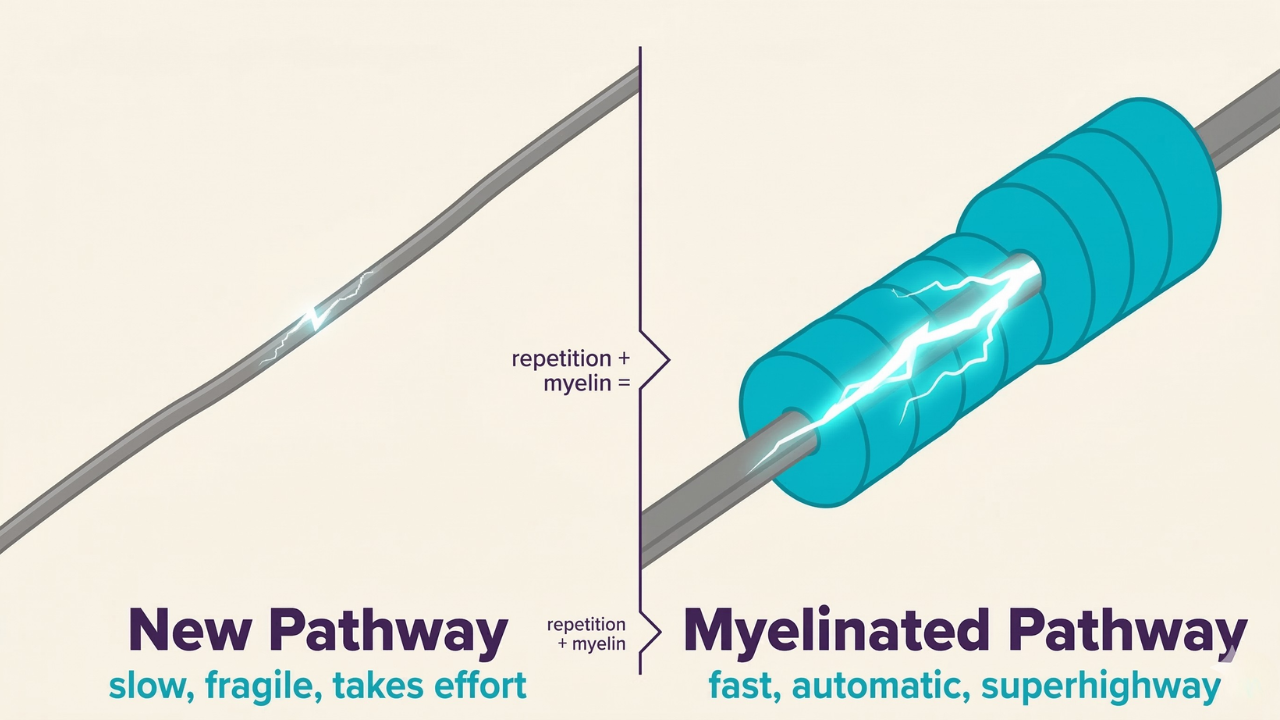
    Neural pathways and myelin showing how rewiring your response to insults creates new brain patterns

    Recommended Reading

    • Facing Codependence by Pia Mellody — The foundational text on how childhood trauma creates denial, projection, and the loss of authentic self.
    • The Body Keeps the Score by Bessel van der Kolk — Essential reading on how shame and unprocessed emotions live in your nervous system and drive reactive patterns.
    • When the Body Says No by Gabor Maté — How emotional repression and unresolved pain manifest as physical illness and chronic reactivity.
    • Codependent No More by Melody Beattie — The classic guide to stopping self-abandonment and setting boundaries without guilt.
    • The Gifts of Imperfection by Brené Brown — A guide to wholehearted living that directly counters the shame that makes insults feel like truth.

    Ready to Turn Every Insult Into Healing?

    Start with the Feelings Wheel exercise to begin identifying the emotions beneath your reactions. Then explore the signs of enmeshment to understand how blurred boundaries make you absorb other people’s projections. Learn your negotiables and non-negotiables to protect your authentic self from criticism that crosses the line. And discover the do’s and don’ts for great relationships to build connections where both people can be perfectly imperfect without fear.
  • 10 Empowering Questions to Shift From Powerlessness to Personal Power

    10 Empowering Questions to Shift From Powerlessness to Personal Power

    Empowering questions to ask yourself are the fastest way to shift from feeling stuck, powerless, and frozen to feeling clear, grounded, and capable of making real decisions about your life. If you’ve been lying awake at night replaying problems you can’t solve, obsessing over what someone else thinks of you, or feeling paralyzed by a decision that shouldn’t be this hard — the issue isn’t that you lack answers. The issue is that you’ve been asking the wrong questions. You’ve been asking questions about what you can’t control — other people’s behavior, other people’s opinions, other people’s choices — and every time you focus on what you can’t control, you hand your power away.

    The feeling of disempowerment didn’t start today. It started in childhood, when your nervous system learned that safety meant compliance, that your voice created conflict, and that other people’s needs mattered more than yours. Your brain learned to focus outward — scanning for threats, managing other people’s moods, trying to earn approval — because that’s what kept you safe as a child. But now you’re an adult, and that same pattern is keeping you stuck in relationships that drain you, jobs that diminish you, and a life that doesn’t feel like yours.

    That’s you if you know exactly what you need to do but can’t seem to make yourself do it — if you feel frozen, overwhelmed, or stuck in a loop of overthinking that never leads to action.

    These ten empowering questions are designed to interrupt the Worst Day Cycle™ and move you from your survival persona into your Authentic Self. They shift your focus from what you can’t control to what you can. They move you from disempowerment to agency. And when you practice them daily, they literally rewire your nervous system’s default response from helplessness to wholeness.

    Table of Contents

    Emotional fitness and empowering questions for personal growth and self-discovery

    Why You Feel Stuck: The Neuroscience of Disempowerment

    When you feel powerless, your brain is doing something very specific: it’s focusing on what you can’t control. Get out two pieces of paper. On one, write “What I Can Control.” On the other, write “What I Can’t Control.” Then add three columns to each: People, Places, Things. If you’re really struggling, you’ll discover that you’re spending almost all of your time — mentally and emotionally — focused on the people, places, and things you have absolutely no control over.

    That’s you if you’ve spent the last week obsessing over why they won’t change, why your boss doesn’t appreciate you, or why your family can’t see what they’re doing to you.

    Emotional regulation showing how to shift from disempowerment to personal power

    You can never tell somebody what to think, what to feel, what to believe, or what to do. Whenever you try, you’re enacting verbal abuse — and you’re also guaranteeing your own powerlessness, because you have zero control over another person’s internal world. The more you demand that someone change, the more powerless you become. Your power lives exclusively in what you can control: your own thoughts, feelings, choices, and actions.

    To feel powerful, you need to defend against feeling powerless. And the single most effective way to shift from powerlessness to power is to change the questions you ask yourself. When you ask disempowering questions — “Why does this always happen to me?” “Why won’t they change?” “What’s wrong with me?” — your brain searches for evidence that confirms the helplessness. When you ask empowering questions — “What can I control?” “What do I actually want?” “What’s the smallest step I can take today?” — your brain shifts into solution mode. The chemical cocktail changes. Cortisol drops. Dopamine rises. You move from survival to agency.

    That’s you if you’ve been asking “why” questions that keep you stuck instead of “what” questions that move you forward.

    The Worst Day Cycle™: How Childhood Trauma Creates Powerlessness

    Disempowerment isn’t a personality trait. It’s a trauma response created in childhood and maintained by the Worst Day Cycle™ — a four-stage neurological loop: Trauma → Fear → Shame → Denial.

    The Worst Day Cycle showing how childhood trauma creates disempowerment through fear shame and denial

    Stage 1: Trauma. Childhood trauma is any negative emotional experience that created painful meanings about yourself, others, or the world. Think of all the times you were asked and forced to do things that went against your own inclinations and desires. Many of those things your parents did were good for you, but many times your parents — because of their own disempowerment — passed on the habits to you. If your mother or father grew up with addiction in their household, and thus a precondition to be afraid, it may have been projected onto you with helicopter parenting. That takes your inherent power away to explore the world and make perfectly imperfect decisions. The hypothalamus generates chemical cocktails — cortisol, adrenaline, dopamine misfires, oxytocin disruptions — and your brain becomes addicted to these emotional states.

    Stage 2: Fear. Fear drives repetition. Your brain conserves energy by repeating known patterns. It can’t tell right from wrong — only known versus unknown. Since approximately 70% of childhood messaging is negative and shaming, adults repeat these painful patterns in relationships, career, hobbies, health — everything. When you’re in that place where you can’t find an answer for anything, you are stuck focusing on what you can’t control rather than what you can control.

    That’s you if unfamiliar confidence feels scarier than familiar helplessness — if stepping into your power makes your stomach clench because your nervous system equates visibility with danger.

    Stage 3: Shame. Shame is where you lost your inherent worth. Where you decided “I am the problem.” Not “I made a mistake” (which is healthy responsibility), but “I AM a mistake” (which is toxic shame). When you belittle your worth by saying “I’m so stupid” or “why didn’t I do that differently?” — you’ve just said “I don’t have value and worth unless I do this perfectly.” Shame is what makes the empowering questions feel impossible to answer. Shame whispers that you don’t deserve to dream, don’t deserve to say no, don’t deserve to take up space.

    Stage 4: Denial. To survive unbearable shame, your psyche creates a survival persona — a false identity that protects you from the truth. This survival persona was brilliant in childhood. It kept you alive. But in adulthood, it keeps you locked in disempowered patterns, focused outward instead of inward, managing everyone else’s emotions while your own needs sit untouched and unmet.

    That’s you if you’ve been performing strength while secretly feeling like you’re drowning — if everyone thinks you’re fine because your survival persona is doing an excellent job of hiding the collapse underneath.

    The Three Survival Personas That Keep You Stuck in Powerlessness

    Your survival persona is the adaptive identity you created in childhood to stay safe. It’s not your fault that you built it — it was brilliant and necessary. But now it’s the primary obstacle between you and the empowered life you deserve. There are three primary types:

    Three survival persona types showing falsely empowered disempowered and adapted wounded child responses to powerlessness

    The Falsely Empowered Persona. This survival persona hides powerlessness behind control, dominance, and over-functioning. You became the one who has all the answers, makes all the decisions, and carries all the weight. You can’t ask empowering questions because you already “know” the answer — your survival persona insists that vulnerability is weakness and asking for help means losing control. You rage when things go wrong. You micromanage. You exhaust yourself trying to control outcomes that were never yours to control.

    That’s you if you’re always in charge, always managing, always the strong one — and secretly terrified of what would happen if you stopped performing and let people see the exhaustion underneath.

    The Disempowered Persona. This survival persona hides powerlessness behind collapse, people-pleasing, and self-abandonment. You became invisible. You learned that safety meant disappearing, that your needs were burdensome, that love required self-sacrifice. You can’t ask empowering questions because your survival persona has convinced you that your answers don’t matter — that someone else should be making these decisions for you.

    That’s you if you’ve been saying yes to everything while silently resenting everyone — if you can’t remember the last time someone asked what you wanted and you actually told the truth.

    The Adapted Wounded Child. This survival persona oscillates between both — controlling one moment, collapsing the next. You read every room constantly, adjusting yourself to whatever seems safest in the moment. You flip between rage and surrender depending on which strategy your nervous system thinks will bring relief. Neither does.

    Adapted wounded child survival persona oscillating between control and collapse in response to disempowerment

    That’s you if you feel like a different person depending on who’s in the room — strong at work but powerless at home, confident with friends but paralyzed with your partner.

    Sound familiar? Most of us recognize ourselves in all three at different times. That’s because they were all brilliant childhood survival strategies — and now they’re running your adult life without your permission.

    The 10 Empowering Questions That Shift You From Survival to Authenticity

    These ten questions are designed to create a massive emotional shift. We become what we feel, not what we think. Each question moves your nervous system from the Worst Day Cycle™ — where you’re focused on what you can’t control — into the Authentic Self Cycle™, where you’re focused on truth, responsibility, healing, and what you actually want.

    Emotional Authenticity Method empowering questions framework for shifting from disempowerment to personal power

    Question 1: What Can I Control?

    This is the foundation of all empowerment. Make two lists: one of what you can completely control and one of what you can’t. This is a living document — you’ll discover more things in the future. When you’re in a depressed or disempowered state, you’ll have this list to return to. You’ll find that most of your mental energy has been going toward people, places, and things you have zero influence over. The moment you redirect that energy toward yourself — your choices, your responses, your boundaries — the chemical shift begins.

    That’s you if you’ve been spending hours trying to change someone who doesn’t want to change — while your own life sits untended.

    Question 2: What Do I Actually Want?

    Tattoo three questions everywhere in your life: What do I want? What will I not tolerate? What can I control? If you don’t know what you want, pay attention to all the complaints you’re making about the person, place, or thing. Ask yourself: what’s the opposite? That lets you know what you want. Most disempowered people can tell you exactly what they don’t want but can’t articulate what they do want. That’s because childhood taught them that wanting was dangerous — that having desires meant being disappointed, rejected, or punished.

    That’s you if someone asks “what do you want for dinner?” and you genuinely don’t know — because you’ve spent so long catering to everyone else’s preferences that you’ve lost access to your own.

    Question 3: What Can I Start Saying No To?

    When you are powerless, you allow behavior and things that don’t work for you. You may be trying to be nice and help others, but you often don’t have the reserves. You get stuck in people-pleasing and guilt, and it robs you of your inherent power. Here’s the test: if you feel guilty, resentful, inclined to keep score, or want to throw it in the other person’s face — you’ve been saying yes to things you need to say no to. The most loving thing you can ever say to anyone is no. Learn to identify your negotiables and non-negotiables.

    That’s you if you say yes when you mean no, and then wonder why you’re bitter toward the people you love — your survival persona is performing generosity while your authentic self is screaming for rest.

    Question 4: What Brings Me Joy?

    When you’re disempowered, you lose access to joy. You survive. You manage. You push through. But you stop doing things that actually light you up. It’s the small things in life that bring us joy — lying in the sun, going on walks, cooking something simple, reading a book with no agenda. Make a list. This is an empowering perspective: nurturing yourself and meeting your own needs and wants. Joy isn’t frivolous. Joy is the signal that your authentic self is present.

    That’s you if you can’t remember the last time you did something purely because it made you happy — not because it was productive, not because someone needed you to, just because it felt good.

    Perfectly imperfect self-acceptance and joy as foundation for personal empowerment

    Question 5: What Do I Love Most About Myself?

    This can be tough for some people, but really think about it. Aren’t you a great friend? Maybe it’s your spirituality, your career, your eyes, your smile. There’s always something about yourself that you genuinely appreciate. This question creates an emotional shift, moving you out of the disempowered position and into truth. We are all lovable and perfectly imperfect. We all have many wonderful things about us that we often don’t give ourselves credit for. Start looking at your life and making a list of what you genuinely value about who you are. Build real self-esteem that isn’t dependent on what you produce.

    That’s you if you deflect every compliment, dismiss every achievement, and focus exclusively on what’s wrong — because shame taught you that self-appreciation is arrogance.

    Question 6: What Is My Best Skill?

    What do you do really, really well? There’s something each of us is genuinely excellent at — whether that’s an activity, career, parenting, willingness to learn, communication, or pursuing growth. When you’re disempowered, you dismiss your skills as “not good enough” or “anyone could do that.” But naming your skill — owning it without apology — moves you into your authentic self. Your skill isn’t accidental. It’s evidence of your capacity. It’s proof that you’ve already overcome challenges, already built competence, already created something real.

    That’s you if you minimize your accomplishments because your survival persona says you haven’t done “enough” yet — the goalpost keeps moving because your childhood taught you that worth is always conditional.

    Question 7: What Have I Always Dreamed of Doing?

    When we’re powerless, we see all the things we can’t do. But we all have dreams. Many times we lose sight of them — but think of how good it feels to dream. You’ll start looking for solutions in the empowered position. What have you always wanted to pursue? Start focusing on that. Sit and dream. Change the way you feel. When you dream, your nervous system begins to reorganize around possibility instead of limitation. This is the beginning of the Authentic Self Cycle™.

    That’s you if you stopped dreaming years ago because it felt safer to expect nothing than to hope and be disappointed — your survival persona calls that “being realistic,” but it’s actually self-protection from shame.

    Question 8: What Skill Do I Need to Learn to Achieve That Dream?

    Maybe you want a dream marriage, or a great friendship, or to play the piano. What skills do you need to learn these things? The best way to achieve what you can control is to develop new skills. This first requires knowledge. Then you turn that knowledge into a skill. Then the skill becomes a tool. Then the tool can help you achieve your dream. This progression — knowledge → skill → tool → dream — is empowerment in action. It moves you from helpless wishing to deliberate building.

    That’s you if you’ve been waiting for someone to give you permission to start — your disempowered persona says you need to be ready first, but the truth is readiness comes from doing, not from waiting.

    Question 9: What Is the Smallest Step I Can Take Today?

    Even the dream may feel overwhelming. So start focusing on what you can control: maybe the smallest step you take today is Googling a topic. Read one article. You’ve already started the journey and are living in what you can control. The greatest chemically-producing way to shift the way we feel is to learn. It’s the single greatest way we feel self-esteem — learning and education. It will really shift you out of the disempowered position into a sense of achievement. One small step creates momentum. Momentum creates confidence. Confidence creates the next step.

    That’s you if you’ve been paralyzed by the size of what needs to change — your survival persona sees the mountain and freezes, but your authentic self only needs to take the next step.

    Neural pathway rewiring through small empowering steps and consistent practice

    Question 10: Who Would I Be If I Never Had This Disempowered Feeling Again?

    This is the most powerful question on the list — and it comes directly from Step 5 of the Emotional Authenticity Method™. Think about when you felt disempowered. What would be left over if you could never feel that again? When that feeling is removed, what emerges are the feelings of lightness, strength, safety, joy, and happiness. Those bad feelings and moments are always temporary — they lead you to solutions and aren’t bad. When you choose to no longer see them as a disempowering problem, you see your authentic self and your greatness. That’s when you can achieve anything and everything you want.

    That’s you if you’ve never asked this question before — if you’ve been so identified with the disempowerment that you can’t imagine who you’d be without it. That person exists beneath your survival persona. They’ve been waiting.

    Emotional blueprint showing the authentic self beneath childhood survival patterns

    The Emotional Authenticity Method™: 6 Steps to Reclaim Your Power

    Empowering questions create awareness. But awareness alone doesn’t change your nervous system. The Emotional Authenticity Method™ is a six-step process that literally rewires the disempowerment pattern at the somatic, chemical, and neurological level. You cannot change emotional patterns through thoughts alone. Emotions are biochemical events. Thoughts originate from feelings — not the other way around.

    Step 1: Somatic Down-Regulation. When you feel powerless — when the freeze response takes over and you can’t act — pause. Focus on what you can hear for 15-30 seconds. Wind. Traffic. Your own breath. If you’re highly dysregulated, use titration: smaller, shorter bursts. This activates your parasympathetic nervous system and brings your thinking brain back online.

    Step 2: What am I feeling right now? Not “I feel stuck.” Use the Feelings Wheel to name it with precision. Are you feeling helpless? Afraid? Ashamed? Overwhelmed? Frustrated? Emotional granularity breaks the reactive cycle and moves you from your survival persona into your thinking brain.

    Step 3: Where in my body do I feel it? All emotional trauma is stored physically. Powerlessness might be heaviness in your chest, collapse in your posture, tension in your jaw, or a knot in your stomach. Locate the feeling. This grounds you in the present moment instead of the childhood memory your nervous system is replaying.

    Step 4: What is my earliest memory of having this exact feeling? The powerlessness you feel today echoes something much older. When was the first time you felt like you had no control? The first time your voice didn’t matter? The first time your needs were dismissed? Your present-day trigger didn’t create this feeling — it activated a blueprint that was already there.

    Step 5: Who would I be if I never had this thought or feeling again? This is Question 10 from the empowering questions list — and it’s the vision step that connects you to the Authentic Self Cycle™. Not “I’d be happy.” Specific: “I’d be someone who speaks up in meetings. Someone who asks for what they need. Someone who makes decisions without second-guessing. Someone who trusts their own judgment.”

    Step 6: Feelization — The New Chemical Addiction. Sit in the feeling of who you’d be — the authentic self. Make it strong. Feel it in your body. The confidence, the groundedness, the power. Create a new emotional chemical addiction to replace the old disempowerment blueprint. Ask yourself: “How would I respond to this situation from this feeling? What would I say? What would I do?” Visualize and FEEL yourself operating from your Authentic Self. This is the emotional blueprint remapping and rewiring step.

    That’s you if you’ve been trying to think your way into empowerment — reading books, watching videos, understanding the concepts — but still feeling stuck when the moment arrives. Feelization is where the neurological change actually happens.

    Trauma chemistry showing how Feelization creates new chemical patterns to replace disempowerment

    The Authentic Self Cycle™: From Victim to Author of Your Life

    The Authentic Self Cycle™ is the healing counterpart to the Worst Day Cycle™ — a four-stage identity restoration system: Truth → Responsibility → Healing → Forgiveness. This is where the empowering questions become a permanent operating system instead of a temporary fix.

    The Authentic Self Cycle showing truth responsibility healing and forgiveness for lasting empowerment

    Stage 1: Truth. Name the blueprint. “This powerlessness isn’t about today. It’s about a childhood where my voice didn’t matter, where my needs were dismissed, where I learned that the only way to survive was to focus on everyone else. That was true then. It’s not true now.”

    Stage 2: Responsibility. Own your emotional reactions without blame. “My boss isn’t my parent. My partner isn’t my parent. My nervous system just thinks they are. The disempowerment I feel is mine to heal, not theirs to fix.” This is where you move from victim to agent — from “this is happening to me” to “this is happening in me, and I can change it.”

    Stage 3: Healing. Rewire the emotional blueprint so that personal power becomes your baseline state, not something you have to earn or perform. Conflict becomes uncomfortable but not dangerous. Saying no becomes assertive but not aggressive. Having needs becomes human but not burdensome. Creates a NEW emotional chemical pattern that replaces fear, shame, and denial with clarity, confidence, and authentic self-worth.

    Stage 4: Forgiveness. Release the inherited emotional blueprint and reclaim your authentic self. Forgive your parents — not because what happened was acceptable, but because they were doing the best they could with the information they had. Your parents weren’t bad people. They adored you. They wanted to do everything they could to raise you perfectly. But they didn’t have all the information, so they made loving mistakes. When you release the fight against your past, you release the disempowerment that came with it.

    That’s you if you’re finally ready to stop waiting for permission to live your life — to stop managing everyone else’s emotions and start asking yourself the questions that actually matter.

    Where Disempowerment Shows Up Across Your Life

    Disempowerment doesn’t confine itself to one area. It infiltrates everything because the emotional blueprint runs beneath every decision, every relationship, every moment of self-talk.

    Family Relationships

    You still seek approval from a parent who gives it conditionally. You change who you are around family to keep the peace. You feel guilty for setting boundaries. You sacrifice your needs “for family.” You can’t share your real self — you manage their perception of you instead. Your parents’ mood still determines your entire day, even though you’re a grown adult with your own life. Learn more about how enmeshment strips away personal power.

    That’s you if you’re still performing the role of the “good child” — managing your family’s emotional world while your own needs go unspoken and unmet.

    Romantic Relationships

    You suppress your needs to avoid conflict. You stay in situations that don’t work because you fear abandonment. Your worth depends on whether your partner loves you back. You try to change yourself to be “the right” partner. You keep score of sacrifices and expect repayment. You can’t answer “what do I want?” because your survival persona has been focused entirely on what they want. Recognize the signs of relationship insecurity and understand how they connect to childhood disempowerment.

    That’s you if you’ve lost yourself in a relationship — if you couldn’t tell someone who you are outside of being someone’s partner.

    Friendships

    You’re the emotional support person but can’t ask for support. You abandon your plans when friends need you. You feel resentful but continue the pattern anyway. You stay friends with people who don’t respect you because being needed feels better than being alone.

    That’s you if you’re exhausted from being everyone’s therapist, advice-giver, and crisis manager while nobody ever asks how you’re doing.

    Work and Achievement

    You work beyond your capacity to prove your worth. You struggle to advocate for yourself or ask for raises. You take on everyone else’s emotional labor. You can’t say no without guilt. You suffer from imposter syndrome — the constant fear that someone will discover you’re not as capable as you appear. Your survival persona’s perfectionism is your company’s greatest asset and your nervous system’s greatest prison.

    That’s you if you’ve been promoted for the very pattern that’s destroying you — your over-functioning keeps the company running while it runs you into the ground.

    Body and Health

    You ignore your body’s signals. You push through exhaustion, pain, and hunger. You use food, substances, or behaviors to numb the feelings your nervous system is trying to communicate. You punish your body instead of caring for it. You prioritize others’ comfort over your own physical needs.

    That’s you if your body has been screaming for rest and you keep telling it to be quiet — because your survival persona says rest is laziness and need is weakness.

    Codependence and disempowerment patterns showing self-abandonment across every area of life

    Frequently Asked Questions

    How do empowering questions actually change my brain chemistry?

    When you ask a disempowering question like “why does this always happen to me?” your brain searches for evidence of helplessness — flooding your system with cortisol and stress hormones. When you ask an empowering question like “what can I control?” your brain shifts into problem-solving mode, activating your prefrontal cortex and releasing dopamine. Over time, this practice rewires your neural pathways so that solution-oriented thinking becomes your default. The Emotional Authenticity Method™ accelerates this process through Feelization — creating new chemical baselines at the somatic level.

    What if I genuinely don’t know what I want?

    That’s not a failure — that’s evidence of how effectively your survival persona has been running your life. When childhood teaches you that your wants create danger, you learn to stop wanting. The path back to desire starts with paying attention to your complaints. Every complaint is an inverted want. If you complain that your partner never listens, you want to be heard. If you complain about your job, you want meaningful work. Start there and work backward from frustration to desire.

    Why do I freeze when it’s time to take action even after asking empowering questions?

    Freezing is a trauma response, not a character flaw. Your nervous system learned in childhood that action creates danger — speaking up got you punished, trying got you criticized, dreaming got you dismissed. Understanding the questions intellectually is Step 1. But your body still holds the old blueprint. That’s why the Emotional Authenticity Method™ starts with somatic down-regulation and moves through the body — not just the mind. You can’t think your way out of a freeze response. You have to feel your way through it.

    How long does it take for empowering questions to create real change?

    Most people report a noticeable shift within days of consistent practice. The chemical shift happens immediately — every time you redirect your focus from what you can’t control to what you can, your nervous system recalibrates. But deep, lasting change — the kind where empowerment becomes your default state — typically takes 6-12 months of consistent work with the Emotional Authenticity Method™ and the Authentic Self Cycle™. The timeline depends on how deep the childhood pattern runs and how committed you are to the daily practice.

    Can I use these questions to help someone else who feels stuck?

    Yes — but here’s the key: turn everything into a question so they figure out the answer for themselves. When someone comes to you for advice, instead of telling them what to do, ask: “What do you think your options are?” “What part of this situation do you think you can control?” “What do you think would help you?” This empowers them instead of creating dependency. The moment you tell someone what to do, you become the parent they never had — and they stay disempowered.

    What’s the difference between empowering questions and positive affirmations?

    Affirmations tell your brain what to believe. Empowering questions ask your brain to search for evidence. When you say “I am powerful,” your shame-based nervous system rejects it — cognitive dissonance. When you ask “what can I control?” your brain actively searches for answers and finds them. Questions engage your prefrontal cortex. Affirmations bounce off your survival persona’s armor. Both have value, but questions create neurological movement where affirmations often create resistance. The Emotional Authenticity Method™ goes deeper than both — it changes the felt experience at the body level through Feelization.

    The Bottom Line

    You’re not powerless. You never were. What happened in childhood was real — the dismissal, the control, the shame, the message that your voice didn’t matter. Those experiences created a survival persona that focused outward instead of inward, that managed everyone else’s emotions while abandoning your own, that performed strength while hiding collapse. But that survival persona is not you. It’s a brilliant adaptation that kept you alive. And now it’s time to outgrow it.

    At all times, no matter what you are thinking, feeling, believing, or doing, you always have value and worth. At all times. Your power doesn’t come from controlling other people. It comes from knowing yourself — your values, your needs, your non-negotiables, your dreams — and having the courage to honor them.

    These ten empowering questions aren’t just a list to read once. They’re a daily practice. Every time you catch yourself spiraling into “why won’t they change?” pause. Redirect. Ask: “What can I control?” Every time your survival persona tries to keep you small, ask: “Who would I be if I never felt this way again?” Every time shame whispers that you don’t deserve to take up space, ask: “What do I love about myself?”

    The questions change your chemistry. The chemistry changes your nervous system. The nervous system changes your life. That’s not theory. That’s neuroscience. And it starts right now, with the decision to stop focusing on what you can’t control and start focusing on the one person you’ve been neglecting your entire life: yourself.

    That’s you if you’re finally ready to stop performing strength and start feeling it — to stop managing everyone else’s world and start building your own.

    Reparenting yourself through empowering questions and authentic self-discovery

    Recommended Reading

    • Facing Codependence by Pia Mellody — The foundational text on how childhood trauma strips away inherent power and creates survival personas, codependent patterns, and the loss of authentic self.
    • The Body Keeps the Score by Bessel van der Kolk — Essential reading on how disempowerment lives in your nervous system and why healing requires more than positive thinking.
    • When the Body Says No by Gabor Maté — How chronic disempowerment and emotional suppression manifest as physical illness.
    • Codependent No More by Melody Beattie — The classic guide to reclaiming your power and stopping the cycle of self-abandonment.
    • The Gifts of Imperfection by Brené Brown — A guide to wholehearted living that directly counters the shame keeping you disconnected from your authentic power.

    Ready to Reclaim Your Personal Power?

    Start with the Feelings Wheel exercise to rebuild your emotional vocabulary today. Then explore the signs of enmeshment to understand where your power was first lost. Map out your negotiables and non-negotiables to rebuild the foundation of authentic empowerment. And learn the do’s and don’ts for great relationships to build connections from wholeness, not from wound.

  • How to Conquer Codependence: 10 Recovery Steps for Both Personality Types

    How to Conquer Codependence: 10 Recovery Steps for Both Personality Types

    Codependence isn’t about loving someone too much—it’s about losing yourself in the process. When you conquer codependence, you reclaim your emotional autonomy, rebuild your self-esteem, and create relationships based on mutual respect rather than survival patterns. Whether you’re the person who sacrifices everything for others or the person who controls everything to feel safe, the path to recovery follows the same emotional blueprint rewiring. This comprehensive guide reveals the exact 10 steps that work for both personality types, grounded in Kenny Weiss’s Worst Day Cycle™ framework and the transformative Authentic Self Cycle™.

    How to conquer codependence recovery steps for both personality types

    What Is Codependence and Why It Damages Your Life

    Codependence is a pattern of prioritizing others’ emotions and needs above your own to the point of losing your identity. It’s not about being kind or caring—it’s about abandoning yourself emotionally to maintain connection or control in relationships.

    At its core, codependence stems from an unmet need for safety and belonging in childhood. When you grew up in an environment where:

    • Your emotional needs were inconsistently met (or never met)
    • You learned to read the room and adjust yourself to keep the peace
    • Love felt conditional on performing or pleasing others
    • You witnessed or experienced chaos, addiction, or emotional volatility

    You developed a survival strategy. You learned to abandon your authentic self and adopt a persona that would keep you safe. This is where the two codependent personality types emerge:

    The Disempowered Personality Type

    You learned early that your needs don’t matter and that caretaking is the price of connection. You collapse into others’ problems, sacrifice your own goals, and feel responsible for their emotional state. You say “yes” when you want to say “no.” You’re exhausted from trying to fix, help, or heal people who aren’t ready. You experience shame around having needs at all.

    That’s you if the question “What do you want?” makes you freeze — you were trained to only answer “What does everyone else want?”

    In a romantic relationship: You over-give, suppress your desires, and blame yourself when your partner is unhappy. You prioritize their recovery over your own healing.

    That’s you if your partner’s bad day becomes your entire focus — you’ve abandoned yourself so completely you’ve forgotten you have your own emotional life.

    With family: You’re the family therapist, peacemaker, or emotional dumping ground. You carry their burdens as if they’re yours to carry.

    That’s you if you’re exhausted from being everyone’s therapist while nobody holds space for you.

    The Falsely Empowered Personality Type

    You learned that you can’t trust others to take care of themselves, so you take over. You control, manage, and direct others “for their own good.” You appear strong and independent, but you’re equally dependent—you need to be needed. You use control as a substitute for intimacy. You experience shame around being vulnerable or admitting you can’t handle everything.

    Sound familiar? If asking for help feels like admitting defeat, that’s your falsely empowered survival persona talking — not reality.

    In a romantic relationship: You manage your partner’s life, make decisions for them, and withdraw emotionally if they don’t follow your lead. You use criticism and superiority to maintain control.

    That’s you if your partner has ever said “I can’t talk to you” — your controlling survival persona is destroying the intimacy you secretly crave.

    With family: You’re the fixer, the responsible one, the one who knows best. You enforce boundaries by distancing rather than connecting.

    That’s the falsely empowered survival persona at work — your walls look like strength but they’re built from childhood terror.

    Why Codependence Damages You

    Both personality types:

    • Lose your sense of self. You don’t know what you actually want, feel, or need.
    • Experience chronic anxiety. You’re always scanning for signs of abandonment or chaos.
    • Burn out emotionally. You exhaust yourself trying to manage relationships that aren’t yours to manage.
    • Attract dysfunction. Your patterns attract people who need fixing or controlling, repeating your trauma cycle.
    • Stay stuck in shame. You believe there’s something fundamentally wrong with you.

    Codependence is not a character flaw. It’s a survival strategy that worked once. Now it’s keeping you trapped.

    That’s you if you feel like something is fundamentally wrong with you that no amount of achievement or people-pleasing can fix — that’s your survival persona running a childhood program.


    The Three Survival Personas That Create Codependent Patterns

    When your emotional needs aren’t consistently met in childhood, you don’t learn to trust your own emotions. Instead, you adopt a survival persona—a protective identity designed to keep you safe, connected, and in control.

    Kenny Weiss identifies three survival personas that drive codependent behavior:

    1. The Caretaker

    The Caretaker learned that your job is to take care of others’ emotions. You believe that if you sacrifice enough, help enough, or fix enough, you’ll finally be safe and loved. You’ve trained yourself to ignore your own needs, emotions, and boundaries. You read the room and adjust yourself constantly.

    That’s you if you feel like a different person depending on who you’re with — your adapted wounded child is performing whatever role keeps you safe.

    Belief system: “If I take care of them, they’ll take care of me. If I’m good enough, I’ll finally be safe.”

    Behavior pattern: Over-functioning, people-pleasing, chronic self-abandonment, difficulty saying no.

    2. The Controller

    The Controller learned that you can’t trust others. You took responsibility for keeping things organized, preventing chaos, and managing outcomes. You believe that if you control enough, anticipate enough, and plan enough, you’ll finally be safe. You can’t let go because chaos is terrifying.

    Belief system: “If I’m in control, nothing bad will happen. If I’m smart enough, I can fix this.”

    Behavior pattern: Micromanaging, criticism, emotional withdrawal, difficulty trusting, perfectionism.

    3. The Withdrawn

    The Withdrawn learned that connection is dangerous. You became emotionally unavailable to protect yourself from further hurt. You maintain distance and independence as a defense against abandonment. You disconnect from your emotions and from others.

    Sound familiar? Your hyper-independence isn’t freedom — it’s a prison built from the belief that needing anyone will destroy you.

    Belief system: “People can’t be trusted. If I need no one, I can’t be hurt.”

    Behavior pattern: Emotional detachment, isolation, difficulty with intimacy, avoidant attachment, self-reliance as defense.

    How These Personas Create Codependent Relationships

    The Caretaker and Controller often attract each other. The Caretaker finds purpose in fixing the Controller’s emotional unavailability. The Controller finds comfort in the Caretaker’s willingness to manage the relationship. Both abandon their authentic selves in the dynamic.

    That’s you if your relationship feels like a seesaw — one person controls while the other collapses, and neither person is actually present.

    The Withdrawn often ends up isolated or in relationships where they continuously push partners away, recreating the abandonment they fear.

    The key is recognizing which persona you adopted—and understanding that it was an intelligent adaptation to an unsafe environment. You didn’t fail. You survived.


    Three survival personas falsely empowered disempowered adapted wounded child codependence

    How the Worst Day Cycle™ Traps You in Codependence

    Worst Day Cycle trauma fear shame denial codependence emotional blueprint

    The Worst Day Cycle™ is Kenny Weiss’s framework for understanding how you get stuck in a repeating loop of shame, survival behaviors, and emotional pain. This cycle is the architecture of codependence.

    The Four Stages of the Worst Day Cycle™

    Stage 1: Shame Activation

    Something happens that activates your core shame. Maybe your partner is distant, a friend doesn’t respond, or you make a mistake. Your nervous system interprets this as evidence that you’re fundamentally flawed, not lovable, or not worthy of care.

    For the Disempowered: “I didn’t do enough. I’m not enough. I need to try harder.”

    For the Falsely Empowered: “They can’t handle this without me. I need to take control.”

    Stage 2: Survival Strategy Activation

    You activate your survival persona to protect yourself from the shame. The Caretaker over-functions. The Controller tightens control. The Withdrawn disconnects further. You’re not thinking rationally—you’re in survival mode.

    The behavior feels urgent and necessary. You’re trying to prevent abandonment, chaos, or further hurt. But your strategy is based on your childhood survival needs, not your adult reality.

    Stage 3: Relationship Impact

    Your survival behavior affects your relationships. You over-give and enable. You control and criticize. You withdraw and distance. Your partner feels:

    • Suffocated (if you’re the Caretaker or Controller)
    • Abandoned (if you’re the Withdrawn)
    • Like they can’t win or please you
    • Responsible for your emotional state

    They react, often negatively. They pull away, get frustrated, criticize you back, or escalate the conflict.

    Stage 4: Shame Confirmation

    Their reaction confirms your original shame: “See? I’m not enough. I can’t fix this. I’m not lovable.” You feel more shame, more fear, more abandonment terror. The cycle intensifies.

    And then it starts again—triggered by the next small thing.

    Why the Worst Day Cycle™ Is So Sticky

    The cycle feels true because it fits your childhood narrative. You learned as a child that you were responsible for keeping others okay. So when your adult relationships feel chaotic, your nervous system says: “See? You need to try even harder.”

    You don’t see the cycle as the problem. You see yourself as the problem.

    Breaking the Worst Day Cycle™ requires more than willpower or better communication skills. It requires rewiring your emotional blueprint—healing the shame that drives the cycle and learning to meet your own needs.


    The Authentic Self Cycle™: Your Path Out

    Authentic Self Cycle truth responsibility healing forgiveness codependence recovery

    The Authentic Self Cycle™ is the opposite of the Worst Day Cycle™. It’s the path to emotional health, genuine intimacy, and freedom from codependence.

    The Four Stages of the Authentic Self Cycle™

    Stage 1: Emotional Safety and Self-Awareness

    You create internal emotional safety by healing shame and learning to tolerate your own emotions. You develop self-awareness about your triggers, patterns, and unmet needs. You begin to notice when you’re activating your survival persona.

    The shift: From “What’s wrong with me?” to “What happened to me?”

    Stage 2: Authentic Needs and Boundaries

    You identify your actual needs, desires, and values—not the ones you think you should have. You practice setting boundaries based on your authentic self, not your survival persona. Boundaries become an act of love, not rejection.

    The shift: From “I need to sacrifice to be loved” to “I deserve to have my needs met.”

    Stage 3: Authentic Connection

    With your own needs met and your boundaries in place, you can connect with others from a place of wholeness rather than desperation. You’re no longer trying to fix, control, or disappear. You can be genuinely present.

    The shift: From “How do I keep you?” to “How can we grow together?”

    Stage 4: Mutual Respect and Growth

    Healthy relationships naturally follow when both people are in their authentic selves. You experience mutual respect, genuine intimacy, and the freedom to be yourself. Conflicts become opportunities for deeper connection, not abandonment triggers.

    The shift: From “I’m not enough” to “We’re enough together.”

    The Authentic Self Cycle™ Is Not About Independence

    The Authentic Self Cycle™ doesn’t mean becoming a robot who doesn’t care about others. It means caring about others from a full tank, not an empty one. It means having boundaries that create safety, not distance.

    Authentic self-connection leads to authentic connection with others.


    10 Steps for the Disempowered Personality Type

    That’s you if you find yourself saying yes to things you don’t want to do, feeling resentful afterward, but not understanding why you can’t just say no.

    If you’re the Disempowered type—the Caretaker who sacrifices yourself to maintain connection—these steps will help you reclaim your identity, heal your shame, and build relationships based on mutual respect.

    Step 1: Recognize That Your Needs Matter

    The foundation of recovery is the radical realization that your needs are as valid as anyone else’s. Not more important. Not less important. Equally valid.

    You’ve spent your life learning that your needs don’t matter. This belief is so deeply embedded that acknowledging your own needs might trigger shame and guilt.

    Your practice:

    • Each day, identify three things you want or need. They don’t have to be big: “I want tea,” “I need five minutes alone,” “I want to watch this show.”
    • Notice the guilt or shame that comes up. That’s your childhood programming. Acknowledge it: “I learned that my needs aren’t important. That’s not true anymore.”
    • Practice stating your need to one person: “I need some quiet time today.” Observe what happens. Nothing bad will happen. The sky doesn’t fall when you have a need.

    Step 2: Heal the Core Shame That Drives Your Self-Abandonment

    Your belief that your needs don’t matter comes from a deep shame story: “I’m not lovable as I am. I only have value if I’m useful to others.”

    Healing this shame is the pivotal step. Without this healing, you’ll keep abandoning yourself because you fundamentally don’t believe you’re worth caring for.

    Your practice:

    • Write out your shame story: “My parent(s) made me feel that my needs were a burden. I learned that love was conditional on caretaking. I believe I’m only valuable if I’m useful.”
    • Speak back to that story: “That was true in my childhood. I was a child who needed care, but my caregiver was not able to provide it. That wasn’t about my lovability. That was about their capacity.”
    • Journal about what you needed from your caregiver that you didn’t get: connection, attunement, reassurance, protection. Name it specifically. Grieve it.
    • Begin to give yourself what you didn’t get: “I see my pain. I’m here for you now. Your needs matter to me.”

    Step 3: Meet Your Own Basic Needs Consistently

    You can’t heal codependence while ignoring your basic needs. Your nervous system needs evidence that you can be responsible for yourself.

    Basic needs include: sleep, nourishment, movement, rest, alone time, play, and connection with people who respect you.

    Your practice:

    • Choose one basic need you consistently neglect. If you don’t sleep enough, make sleep non-negotiable for one week.
    • Notice any guilt or shame: “I’m being selfish,” “I should be doing more,” “They need me.” These are old stories.
    • When you meet your own need, you send your nervous system a message: “I’m safe. I can take care of myself. I don’t need to earn the right to rest.”
    • Gradually expand to other basic needs. Meeting your needs is not selfish. It’s essential.

    Step 4: Recognize and Stop Enabling

    Enabling is caretaking for people who haven’t asked for help. You’re solving problems that aren’t yours to solve, protecting people from consequences, and preventing their growth.

    Enabling feels like love. It’s not. It’s control wrapped in caretaking.

    Your practice:

    • Notice what you’re doing for people that they could do for themselves. Making excuses for them? Fixing their mistakes? Managing their emotions? Paying their bills?
    • Ask yourself: “If I stopped doing this, what would happen?” Usually, something that person needs to learn.
    • Start small. Let one thing go. Maybe you stop reminding someone about a deadline. Or stop giving advice no one asked for.
    • Stay present with the guilt and discomfort. That’s your shame activation. Breathe through it. It will pass.

    Step 5: Practice Saying No Without Apology or Over-Explanation

    No is a complete sentence. You don’t need a reason. You don’t need to justify. “No” is enough.

    But if you’ve spent your life saying yes, saying no will feel selfish, rude, and dangerous. Your nervous system will scream that you’re hurting someone, rejecting them, or ending the relationship.

    Your practice:

    • Start with small no’s. “No, I can’t do that.” Stop. Don’t explain. Don’t apologize.
    • Notice what happens. Usually nothing. The person doesn’t leave. They don’t hate you. They just accept your no.
    • Gradually build your capacity to say no to bigger things: “No, I can’t manage that for you,” “No, I’m not available then,” “No, I don’t want to.”
    • Every time you say no and the sky doesn’t fall, you’re rewiring your nervous system. You’re building trust in yourself.

    Step 6: Stop Trying to Fix People or Make Them Understand

    You can’t think your way out of someone else’s emotional pain. You can’t explain well enough to make them get it. You can’t fix them with enough effort.

    This is one of the hardest lessons for the Disempowered type. You’ve believed that if you just try hard enough, explain clearly enough, love them deeply enough, you can change them or heal them.

    You can’t. That’s not your job.

    Your practice:

    • When you feel the urge to explain, defend, or convince, pause. This is your Caretaker persona trying to keep you safe by controlling the outcome.
    • Practice saying: “I understand you see it differently. That’s okay. I don’t need you to understand my perspective for it to be valid.”
    • Let people be wrong about you. Let them misunderstand. You don’t need everyone to understand. You need to understand yourself.
    • This frees up an enormous amount of energy that you can redirect toward your own life and growth.

    Step 7: Take Responsibility for Your Choices (Not Others’ Emotions)

    There’s a difference between responsibility and blame. You’re responsible for your own choices, not for managing how others feel about those choices.

    If you set a boundary and your partner feels sad or angry, that’s their emotion. You didn’t cause it. You don’t have to fix it.

    Your practice:

    • When you make a choice, own it: “I decided to say no to that. That was my choice.”
    • When someone reacts negfully to your choice, practice separating their emotion from your action: “They’re upset. I can feel compassion for their upset AND maintain my boundary.”
    • Notice if you’re still trying to manage their feelings by explaining, comforting, or backing down. That’s old programming.
    • You’re learning that you can care about someone and still have boundaries. These aren’t opposites. They’re compatible.

    Step 8: Develop Honest Communication About Your Feelings

    You’ve spent your life reading the room and adjusting yourself. You’ve lost touch with what you actually feel. Part of reclaiming your authentic self is reconnecting with your emotional truth.

    Your practice:

    • Each day, check in with yourself: “What am I actually feeling?” Not what you should feel. What you actually feel. Anger, sadness, joy, fear, loneliness—all of it is valid.
    • Practice expressing one feeling to one person: “I’m feeling frustrated about X.” Notice how terrifying this is. Good. That means you’re stretching.
    • Start with safe people. People who’ve shown they can handle your honesty without judgment or contempt.
    • As you practice, you’ll reclaim access to your emotional wisdom. Your feelings are information. They matter.

    Step 9: Create Distance From Relationships That Require Your Self-Abandonment

    Not all relationships can be healthy. Some people are too embedded in their own trauma to show up for you. Some relationships are fundamentally inequitable.

    Part of recovery is recognizing that you can’t earn love from unavailable people. You have the right to choose relationships where you can be yourself.

    Your practice:

    • Honestly assess your relationships: “Can I be myself here? Can I have needs here? Do I feel respected?”
    • If the answer is no, you have choices. You can create distance. You can reduce contact. You can end the relationship.
    • This is an act of love—toward yourself and eventually toward them. You’re no longer enabling their dysfunction by accepting mistreatment.
    • Grief what you wanted the relationship to be. Then claim your freedom.

    Step 10: Seek Professional Support for Deeper Trauma Work

    Codependence often has roots in deeper trauma: childhood abandonment, emotional neglect, enmeshment, or abuse. These patterns are wired deep into your nervous system.

    A trauma-informed therapist can help you rewire these patterns at the nervous system level. They can help you:

    • Access and heal childhood wounds
    • Rewire your attachment patterns
    • Develop genuine self-compassion
    • Build secure relationships

    Your practice:

    • Find a therapist trained in trauma and codependence. Ask them about their approach to attachment, shame, and nervous system regulation.
    • Bring these steps to therapy. Use them as a scaffold for your healing work.
    • Be patient with yourself. Rewiring these patterns takes time. You’ve been practicing self-abandonment for decades. Reclaiming yourself is a journey.

    Emotional regulation codependence recovery disempowered personality healing

    10 Steps for the Falsely Empowered Personality Type

    That’s you if you pride yourself on never needing anyone — your independence isn’t strength when it’s driven by terror of being seen as weak.

    If you’re the Falsely Empowered type—the Controller who needs to be in charge to feel safe—these steps will help you release control, develop genuine vulnerability, and build relationships based on mutual respect rather than domination.

    That’s you if your accomplishments look impressive from the outside but feel hollow on the inside — you’ve been medicating shame with achievement your entire life.

    Step 1: Recognize That You Can’t Control Outcomes or Other People

    Your survival strategy is based on a false belief: “If I control enough, nothing bad will happen.” But the world is inherently uncontrollable. Other people have their own agency. Life is uncertain.

    The first step is acknowledging that your need for control is rooted in fear, not wisdom or capability.

    Your practice:

    • Notice all the ways you try to control: managing others’ decisions, preventing their mistakes, organizing their lives, criticizing their choices.
    • For each control behavior, ask: “What am I afraid will happen if I don’t do this?”
    • Usually the answer is: “Chaos. Abandonment. Failure. Disaster.”
    • These fears came from your childhood. Now you’re acting like that child who needs to prevent catastrophe. You’re not that child anymore. You have adult capacity.

    Step 2: Heal the Core Shame That Drives Your Need for Control

    Your belief that you can’t trust others—that you have to do everything yourself—comes from a deep shame story: “I’m not safe unless I’m in control. People will hurt me or abandon me if I let my guard down. I have to be perfect and self-sufficient to survive.”

    Healing this shame is the pivotal step. Without this healing, you’ll keep controlling because you fundamentally don’t believe the world is safe.

    Your practice:

    • Write out your shame story: “I learned that the world wasn’t safe. I had to be hypervigilant and in control. I learned that needing help meant being weak or vulnerable. I believe I have to do everything myself to survive.”
    • Speak back to that story: “That was true in my childhood. There was chaos or instability. I needed to be vigilant. But that was about my environment, not about my capability or worth.”
    • Journal about what you were afraid of in childhood: being hurt, being abandoned, being humiliated, things falling apart. Name it specifically. Grieve it.
    • Begin to offer yourself what you needed: “I see your fear. You were trying to keep us safe. You can relax now. I’m here. It’s okay to not be perfect.”

    Step 3: Practice Vulnerability With Safe People

    Vulnerability is the antidote to control. But if you’ve spent your life maintaining an image of competence and self-sufficiency, vulnerability feels terrifying—like free-falling without a net.

    You have to learn that vulnerability doesn’t mean weakness. It means honesty. It means letting people see you—fears and all.

    Your practice:

    • Choose one person you trust. Someone who’s shown they can handle your humanity without judgment.
    • Share something small and real: “I’m worried about this,” “I made a mistake,” “I don’t know how to do this.”
    • Notice what happens. Usually, the person doesn’t abandon you or use it against you. They often feel closer to you.
    • Gradually, practice being more vulnerable. Let people see that you don’t have it all figured out. You don’t have to.

    Step 4: Develop the Capacity to Sit With Uncomfortable Emotions (Yours and Others’)

    Controllers often can’t sit with their own or others’ discomfort. You jump into action—fixing, organizing, problem-solving—to escape the discomfort.

    But healing requires developing the capacity to feel your own sadness, fear, grief, and anger. And to let others feel theirs without trying to fix it.

    Your practice:

    • When you feel an uncomfortable emotion, notice your urge to escape it through action. Pause. Just feel it.
    • Breathe. Sit with sadness. Sit with fear. It won’t kill you. It will pass.
    • When someone else is upset, resist the urge to fix, minimize, or solve. Just be present: “I’m here. You can feel this. I’m not going anywhere.”
    • This is revolutionary for Controllers. You’re learning that emotional safety doesn’t come from control. It comes from connection.

    Step 5: Set Boundaries That Create Safety, Not Distance

    Controllers often confuse boundaries with walls. You create distance to feel safe. You withdraw emotionally when people don’t meet your standards.

    Healthy boundaries create safety within connection, not distance from it. A boundary is what you need to show up as your best self. It’s not a punishment for the other person.

    Your practice:

    • Ask yourself: “What do I need to feel safe in this relationship?” Not “What should the other person do?” What do YOU need?
    • Communicate that boundary as a request, not a demand: “I need more honesty from you” instead of “You always lie to me.”
    • If they respect the boundary, you can stay connected. If they don’t, you can reassess. But the goal is connection through safety, not safety through distance.

    Step 6: Stop Criticizing and Start Appreciating

    Controllers often use criticism to maintain control and superiority. You point out what others are doing wrong. You make them feel inadequate. This keeps them dependent on your approval.

    This is a form of emotional abuse. It prevents real connection.

    Your practice:

    • Notice every time you criticize someone internally or out loud. Pause. What’s the fear underneath? Usually it’s fear they’ll abandon you if you’re not criticizing them into shape.
    • Practice appreciation instead. Notice something genuine: “I appreciate how you handled that,” “You did well with that,” “I see how hard you’re trying.”
    • Appreciation creates safety and motivation. Criticism creates shame and distance.
    • As you practice appreciation, you’ll notice people respond differently to you. They’ll be more open. They’ll trust you more.

    Step 7: Release Your Responsibility for Others’ Growth or Choices

    You believe you’re responsible for making sure others don’t fail. You try to prevent their mistakes, guide their decisions, manage their lives “for their own good.”

    But this prevents their growth. It keeps them dependent. It prevents you from having genuine relationships.

    Your practice:

    • Notice all the ways you’re trying to manage someone’s life. Make a list. Be specific.
    • For each one, ask: “Did they ask me to do this?” Usually the answer is no.
    • Practice letting go. Let them fail. Let them learn. Let them make their own choices.
    • This is an act of love. You’re respecting their agency. You’re allowing them to be competent adults.

    Step 8: Learn to Ask for Help and Receive Support

    Controllers struggle to ask for help because it means admitting they can’t do it alone. It triggers deep shame around vulnerability and weakness.

    But everyone needs help sometimes. Asking for help is not weakness. It’s wisdom. It’s how we build connection.

    Your practice:

    • Start small. Ask someone to help you with something you could do alone: “Can you help me move this?” “Can you help me decide?”
    • Notice the discomfort. Let it be there. You’re learning that you don’t have to be self-sufficient to be worthy.
    • Receive the help without taking over: “Thank you. I appreciate your help.”
    • Gradually, ask for bigger things. Let people support you. You’ll feel less alone.

    Step 9: Recognize When You’re in a Relationship With Genuine Incompatibility

    Not all relationships are salvageable. Some people aren’t interested in changing or growing. Some relationships are fundamentally unequal, with you always trying to improve the other person.

    Part of recovery is recognizing that you can’t think your way into compatibility. You can’t control someone into loving you or valuing you.

    Your practice:

    • Honestly assess: “Am I trying to change them into someone I can love? Am I accepting them as they are?”
    • If the answer is “I’m trying to change them,” that’s a sign of incompatibility or that your control needs are driving the relationship.
    • You have the right to choose relationships with people who are compatible with you and interested in mutual growth.
    • Letting someone go is an act of respect—for them and for yourself.

    Step 10: Seek Professional Support for Deeper Trauma Work

    Your need for control likely comes from deeper trauma: childhood chaos, abuse, witnessed violence, or witnessing loss of control. These patterns are wired deep into your nervous system.

    A trauma-informed therapist can help you rewire these patterns at the nervous system level. They can help you:

    • Access and heal the original fear of chaos or loss of control
    • Develop genuine trust in others
    • Build secure relationships where you don’t need to control to feel safe
    • Learn that vulnerability is strength, not weakness

    Your practice:

    • Find a therapist trained in trauma and attachment. Ask them about their approach to shame, control patterns, and nervous system healing.
    • Bring these steps to therapy. Use them as a scaffold for your deeper work.
    • Be patient with yourself. You’ve been practicing control for decades. Learning to trust and let go is a journey.

    Emotional blueprint childhood patterns create codependence across all life areas

    The Emotional Authenticity Method™ for Daily Recovery

    That’s you if you know the patterns but can’t stop repeating them — understanding isn’t enough without a practice that rewires your nervous system.

    These 10 steps work. But they need daily reinforcement. Kenny Weiss’s Emotional Authenticity Method™ gives you a practical tool for staying present to your authentic self—moment by moment.

    The Five Core Principles

    1. Presence

    Show up as your actual self, not your survival persona. When you notice yourself activating your Caretaker or Controller, pause. Take a breath. Ask: “What’s actually true right now?”

    2. Honesty

    Speak your truth about your feelings and needs, even when it’s uncomfortable. Not aggressively. Honestly.

    3. Responsibility

    Own your choices and your emotions. Don’t blame others. Don’t play victim. Don’t make yourself the hero. Just take responsibility for your part.

    4. Boundaries

    Create clear, consistent boundaries that protect your emotional safety. Communicate them calmly and non-defensively.

    5. Compassion

    For yourself and others. You’re not healing to become a perfect, self-sacrificing saint or a detached, independent robot. You’re healing to become whole.

    A Daily Practice

    Each morning, before you engage with others, ask yourself:

    • What do I actually need today?
    • What boundaries do I need to maintain?
    • Where might my survival persona activate?
    • How can I stay present to my authentic self?

    Throughout the day, check in with yourself regularly. When you feel activated—anxious, angry, withdrawn, compelled to fix or control—pause:

    • What’s happening right now?
    • What am I actually feeling? (Use the Feelings Wheel for precision)
    • What do I need?
    • Can I communicate that honestly?

    This is the practice. Not perfection. Just presence.


    Emotional Authenticity Method six step process conquer codependence

    Daily Practices to Stay in Your Authentic Self

    Morning Practices

    • Set your intention: “Today I will stay present to my authentic self. I will honor my needs and boundaries.”
    • Body scan: Close your eyes. Notice where you hold tension. Breathe into it. Your body holds your emotional wisdom.
    • Journal three needs: What do you need today? Rest? Connection? Play? Boundaries? Name them.

    Midday Check-In

    • Pause: Stop what you’re doing. Take three conscious breaths.
    • Notice: Are you in your authentic self or your survival persona? What triggered the shift?
    • Recenter: Ask yourself: “What do I actually need right now?” Then take one action to honor that.

    Evening Practice

    • Reflect: When did you activate your survival persona today? What triggered it?
    • Celebrate: When did you stay authentic? How did that feel?
    • Release: Breathe out the day. Let go of expectations and judgments. Rest is part of healing.

    Weekly Review

    • Patterns: What patterns did you notice this week in your survival activation?
    • Wins: Where did you choose authenticity over survival strategy?
    • Compassion: What’s one thing you can appreciate about your recovery this week?

    Adapted wounded child survival persona oscillating codependence recovery
    Perfectly imperfect self-acceptance codependence recovery authentic self

    Additional Resources

    Books

    • “The New Codependency” by Melody Beattie—A modern take on codependence and recovery.
    • “Attached” by Amir Levine and Rachel Heller—Understanding attachment patterns and how they affect relationships.
    • “The Body Keeps the Score” by Bessel van der Kolk—Trauma and how it’s stored in the nervous system.
    • “Emotional Intelligence 2.0” by Travis Bradberry and Jean Greaves—Developing emotional awareness and resilience.

    Therapy and Support

    • Trauma-informed therapy: Look for therapists trained in EMDR, Somatic Experiencing, Internal Family Systems, or other trauma-informed modalities.
    • Support groups: Many communities offer support groups for codependence recovery (CoDA).
    • 12-Step programs: Codependents Anonymous (CoDA) is available in many areas and online.

    Online Communities

    • Kenny Weiss’s website: Resources on the Worst Day Cycle™ and Authentic Self Cycle™
    • Codependents Anonymous: https://www.coda.org/
    • Online therapy platforms: BetterHelp, Talkspace, Headway (look for trauma-informed therapists)

    Final Message: You’re Not Broken, You’re Healing

    If you’ve spent this article recognizing yourself—the Caretaker or the Controller, the shame and the survival strategies—here’s what you need to know:

    You’re not broken. You survived.

    Codependence isn’t a character flaw or a sign of weakness. It’s an intelligent adaptation to an emotionally unsafe environment. You learned these patterns to keep yourself safe. They worked. They kept you alive.

    But they’re keeping you trapped. And you have the capacity to change them.

    Conquering codependence doesn’t happen overnight. It’s not a linear journey. You’ll have days where you fall back into your survival persona. You’ll have moments of clarity followed by moments of old patterns. That’s normal. That’s healing.

    What matters is that you keep choosing authenticity, even when it’s uncomfortable.

    Every time you acknowledge a need, set a boundary, practice vulnerability, or release control—you’re rewiring your nervous system. You’re teaching yourself that you’re safe. That your needs matter. That genuine connection is possible.

    You deserve to be in a relationship where you don’t have to abandon yourself. You deserve to be loved for who you actually are, not for what you do or how perfectly you manage.

    That journey starts now. With one breath. With one authentic choice. With one moment of presence.

    You’ve got this.

  • The Two Codependent Personality Types: Why You’re Only Seeing Half the Spectrum

    The Two Codependent Personality Types: Why You’re Only Seeing Half the Spectrum


    The Two Codependent Personality Types: Why You’re Only Seeing Half the Spectrum

    You keep ending up in the same relationship dynamic, just with different people. You’re either giving yourself away completely, or you’re building walls so high that nothing real gets in. One day you’re the helper everyone relies on; the next day you’re the one who can’t ask for anything.

    Here’s what most people miss: this isn’t two different personality problems. This is the same wound expressing itself two different ways.

    Codependence isn’t about being clingy or needy. It’s not about lacking boundaries or having low self-esteem. Codependence is a nervous system issue—a survival pattern rooted in your childhood emotional blueprint. And it exists on a spectrum with two polar opposite sides: the disempowered codependent and the falsely empowered codependent.

    Most therapy, coaching, and self-help has only educated you about one side. The side that looks clingy, anxious, and desperate. The side that can’t say no. But there’s another side that looks almost exactly like confidence, success, and strength—and it hurts just as much from the inside.

    The biggest confusion in the recovery industry is not understanding that codependence has two faces. Most people oscillate between both. Some get stuck on one side. And almost everyone misses the real healing because they’re only treating the surface behavior, not the childhood programming underneath.

    Codependent personality types exist on a spectrum with two opposite expressions—disempowered (people-pleaser, frozen, helpless) and falsely empowered (high-achiever, controlling, emotionally defended). Both stem from the same childhood shame wound and emotional blueprint. True healing requires understanding your nervous system pattern and using the Emotional Authenticity Method™ to rewire at the source.

    Codependence spectrum showing disempowered and falsely empowered codependent personality types — by Kenny Weiss

    The Pattern You’re Ashamed Of

    You might recognize yourself in one of these pictures—or maybe you swing between both.

    On one side: You can’t say no. People call you a people-pleaser, but honestly, you just feel guilty the second you consider doing something for yourself. You apologize for things that aren’t your fault. You stay in situations that hurt you because you’re terrified of abandonment. When someone is upset with you, your whole body goes into survival mode. You’ve given yourself away so many times that you’re not sure who you are anymore.

    That’s you when you’re running the disempowered codependent pattern.

    On the other side: You’re the high-achiever. Successful on paper. Everyone admires your drive and discipline. But underneath, you’re running on anxiety and shame. You need to be in control because if you’re not, you feel completely helpless. You withdraw emotionally when people get close. You use work, productivity, or status to numb out. You’d never admit how empty you feel. People call you confident, but inside you’re constantly evaluating yourself against impossible standards.

    That’s you when you’re running the falsely empowered codependent pattern.

    And here’s what neither side will tell you: both are running the exact same nervous system program. Both came from childhood. Both activate your survival instincts. Both use shame as the fuel. The only difference is which way you adapted.

    Adapted wounded child — oscillating between disempowered and falsely empowered codependence — by Kenny Weiss

    Most people don’t stay locked on one side. You might be a people-pleaser in family situations and completely controlling in romantic relationships. You might withdraw emotionally with intimate partners and overfunction at work. The nervous system pattern is flexible—it adapts to whoever you’re with and whatever feels like it will keep you safe.

    That’s the Adapted Wounded Child in action.

    What’s Really Going On Underneath

    To understand the codependence spectrum, you have to go back to childhood. Not to blame your parents—they were doing the best they could with their own wounded nervous systems. But to understand the emotional blueprint they handed you.

    Emotional blueprint — the childhood emotional programming that creates codependent personality types — by Kenny Weiss

    Your childhood emotional blueprint isn’t made up of your memories. It’s the emotional definition of love that your nervous system absorbed before you even had language. When you were young, your nervous system was like a straw—it just soaked in everything about how love, safety, and worth were defined in your family.

    If you were given no power as a child—if you were the scapegoat, the one always in trouble, the one whose needs didn’t matter—your nervous system learned that your voice has no value. You learned that safety comes from disappearing, complying, and reading other people’s emotions so you can manage them before they abandon you. You learned that love means erasing yourself.

    That’s the disempowered blueprint.

    But if you were given too much power too early—if you were the golden child, the confidant, the one who had to take care of the parents or siblings—your nervous system learned something different. You learned that your worth comes from what you produce, achieve, and control. You learned that love means being needed, not being known. You learned that the moment you show weakness or need, you’ll be abandoned or become a burden. So you developed an armor of competence and independence.

    That’s the falsely empowered blueprint.

    Both blueprints create the same core wound: shame about who you are without what you do. The disempowered person hides this shame by shrinking. The falsely empowered person hides it by achieving, controlling, and defending.

    Worst Day Cycle™ — the four-stage trauma loop of trauma, fear, shame, and denial driving codependence — by Kenny Weiss

    Once the blueprint is set, your nervous system runs the Worst Day Cycle™—a four-stage pattern that keeps you trapped. It starts with trauma activation (something reminds your nervous system of the original wound). Then fear kicks in (your body goes into fight, flight, freeze, or fawn). Then shame floods in (you blame yourself for the reaction). Finally, denial sets in (you numb out, rationalize, or push the feeling away).

    The cycle completes, and your nervous system feels safe again—until the next trigger. Then you run the whole loop again.

    That’s the pattern running on repeat every single day.

    Survival persona — the childhood-created identity that replaces the Authentic Self in codependent personality types — by Kenny Weiss

    And over time, your survival persona—the character you developed to survive your family system—becomes who you think you are. You forget there’s an Authentic Self underneath. The falsely empowered person thinks they ARE their achievements. The disempowered person thinks they ARE their helplessness. Both are operating from a false identity that actually keeps them small and separate.

    Why All the Usual Advice Backfires

    If codependence were just a behavior problem, the standard fixes would work. Therapy would work. Self-help books would work. Boundary-setting exercises would work.

    But they don’t—not durably. Here’s why.

    Most advice treats the symptom, not the nervous system. Someone tells you to “set better boundaries.” So you try. You tell your partner no, and your whole body floods with guilt and anxiety. Your nervous system interprets your own boundary as a threat. You collapse back into people-pleasing because the discomfort is unbearable.

    Or you’re the falsely empowered type, and someone tells you, “Work on your relationships. Be more vulnerable.” So you try to open up. But the moment you feel needy or scared, your nervous system panics and you withdraw again. You go back to control and achievement because vulnerability feels like drowning.

    You’re not broken; you’re just trying to use a tool on a nervous system that isn’t ready to use it.

    Emotional intelligence training makes this worse. Every EQ assessment, every “communication strategy,” every workshop on “managing your emotions” asks you to think your way out of a nervous system problem. But codependence doesn’t live in your thoughts. It lives in your body, in your survival reflexes, in the way your nervous system learned to interpret safety.

    You cannot think your way out of a trauma pattern. You can only rewire it at the source.

    Trauma chemistry — how codependent personality types attract their opposite on the spectrum — by Kenny Weiss

    And here’s something nobody talks about: codependents attract their opposite on the spectrum. The disempowered person (love addict) is drawn to the falsely empowered person (love avoidant) because they activate each other’s core wounds perfectly. The disempowered person gets to practice abandonment. The falsely empowered person gets to stay defended and in control.

    Then both partners try to fix it with communication workshops, date nights, and therapy. Nothing changes because the nervous systems are still running the same pattern. They’re just running it with better talking points.

    That’s why so many “good relationships” still feel empty and stuck.

    The Falsely Empowered Codependent vs. The Narcissist

    This is the biggest confusion in recovery work, so let’s be crystal clear.

    A falsely empowered codependent can look almost exactly like a narcissist. Both seem confident. Both are controlling. Both distance emotionally. Both use work or status as a primary relationship. Both have difficulty apologizing.

    But they are fundamentally different, and the difference determines everything about their capacity to heal.

    Three Key Distinctions:

    1. Awareness. The falsely empowered codependent is aware of their dysfunction. They just don’t want to feel it. A narcissist is completely oblivious. If you point out their pattern, a falsely empowered person (deep down) knows you’re right—they’re just too ashamed to admit it. A narcissist genuinely doesn’t see it.

    2. Addiction. The falsely empowered codependent is addicted to the avoidance of feeling. They’ll use work, achievement, control, or withdrawal to numb. But the addiction itself is visible. With a narcissist, according to the DSM addiction is rarely present—there’s just a consistent, calculated pattern of devaluation and control.

    3. Consistency. A narcissist is like the desert—the behavior is consistent, predictable, and relentless. A falsely empowered codependent is more like Colorado—distinct seasons. They have moments where they crack open, where the defended walls come down briefly. They have periods where their behave looks similar to a narcissist. In contrast, the narcissists behvior is mostly consisitent.

    This matters because falsely empowered codependents can recover. They have shame underneath (even if they’re running from it). They have an Authentic Self they’ve abandoned. They have the capacity to feel, to be vulnerable, and to change.

    A narcissist, by definition, does not.

    Enmeshment — the boundary violation that fuels codependent personality types — by Kenny Weiss

    If you’re in a relationship with someone who might be falsely empowered codependent, there’s hope—but only if they’re willing to feel their shame and rebuild from there. If they’re a true narcissist, the relationship is a mirror of your own disempowered codependence, and your healing has to come first.

    The Emotional Authenticity Shift

    Real healing doesn’t come from fixing your behavior. It comes from rewiring your nervous system at the source—from replacing the Worst Day Cycle™ with the Authentic Self Cycle™.

    The Worst Day Cycle™ runs: Trauma → Fear → Shame → Denial. It keeps you locked in survival.

    The Authentic Self Cycle™ runs: Truth → Responsibility → Healing → Forgiveness. It breaks the pattern.

    Authentic Self Cycle™ — truth, responsibility, healing, and forgiveness — the path out of codependence — by Kenny Weiss

    The pathway between them is the Emotional Authenticity Method™—a six-step somatic process that rewires your nervous system at the cellular level.

    The Six Steps of Emotional Authenticity:

    Step 1: Somatic Down-Regulation. Before you can feel anything, your nervous system has to be regulated. Focus on what you can hear for 15-30 seconds. Just sound. This signals safety to your vagus nerve.

    Step 2: Name the Feeling. “What am I feeling right now?” Not thinking—feeling. Not the story about the feeling, but the actual emotion in your body.

    Step 3: Locate the Feeling. “Where in my body do I feel it?” Is it in your chest, your throat, your stomach, your limbs? Get specific.

    Step 4: Find the Origin. “What is my earliest memory of having this exact feeling?” You’ll usually flash to a childhood moment. That’s where the blueprint was encoded.

    Step 5: Envision the Healed Self. “Who would I be if I never had this thought or feeling again?” Hold that vision. Feel it. Let it be real in your nervous system.

    Step 6: Feelization. Sit in the feeling of the Authentic Self. Not thinking about it. Feeling it. Letting your nervous system absorb what wholeness, truth, and safety actually feel like.

    When you run this process consistently, something radical happens: your nervous system rewires. The trigger that used to activate the Worst Day Cycle starts to feel different. Your body doesn’t panic. Your mind doesn’t shame. You have space to choose differently.

    That’s not willpower. That’s not behavior change. That’s your nervous system learning a new definition of safety.

    Emotional Authenticity Method™ — the process for healing codependent personality types at the root — by Kenny Weiss

    What This Looks Like in Real Life

    Let me show you how the codependence spectrum manifests across different areas of life. You’ll probably see yourself in multiple places—that’s normal and it’s exactly why the spectrum model is so important.

    Family Relationships

    Disempowered: Your parent or sibling criticizes you, and you absorb it as truth. You go quiet. You make excuses for their behavior. You keep trying to earn their approval by doing more, being better, staying smaller. You feel guilty for having your own life separate from the family.

    That’s the people-pleaser keeping peace at the cost of yourself.

    Falsely Empowered: You’re the responsible one everyone leans on. You give advice, fix problems, manage the family dynamics. When a family member struggles, you feel obligated to solve it. You maintain control by staying competent and needed. You rarely let anyone see you struggle.

    That’s the overachiever hiding in caretaking.

    Romantic Relationships

    Disempowered: You stay in situations that hurt you because you believe you can love them into safety. You read their moods constantly. You sacrifice your own needs, interests, and boundaries to keep them happy. You apologize for things that aren’t your fault. You feel responsible for their emotions.

    That’s the love addict running on abandonment fear.

    Falsely Empowered: You withdraw emotionally the moment someone gets close. You maintain control through distance or criticism. You can’t admit you need them. You use work, hobbies, or other pursuits to avoid intimacy. You leave before you can be left.

    That’s the love avoidant running on engulfment fear.

    Friendships

    Disempowered: You’re always the listener, never the one being listened to. You remember everything about your friends’ lives but feel like they don’t really know you. You cancel your own plans if a friend needs you. You worry constantly about being too much or not enough.

    That’s the helper who’s terrified of needing.

    Falsely Empowered: You keep friendships surface-level. You’re fun and engaging in groups but struggle with vulnerability one-on-one. You have trouble asking for support. You disappear when things get demanding or emotional.

    That’s the independent one who can’t let people in.

    Work and Career

    Disempowered: You overfunction on your team to compensate for feeling incompetent. You take on extra work you resent. You don’t advocate for yourself in salary negotiations or promotions. You feel responsible for your boss’s or colleagues’ emotions. You seek validation through productivity.

    That’s the anxious achiever running on shame.

    Falsely Empowered: You’re the high-performer, the one everyone depends on. You work long hours and wear it as a badge. You struggle with delegation because your worth is tied to your output. You’re driven by the need to prove yourself. Taking time off feels irresponsible.

    That’s the ambitious one running on anxiety.

    Body and Health

    Disempowered: You ignore your body’s signals. You eat when you’re not hungry to numb emotions. You don’t exercise because you feel like you don’t deserve care. You put everyone else’s health and comfort above your own. You tolerate physical pain or illness without seeking help.

    That’s the self-abandonment pattern running through your nervous system.

    Falsely Empowered: You control your body through rigid exercise or diet regimens. You’re always optimizing, never satisfied. You use fitness or health as another achievement metric. You struggle with rest or flexibility. Your body is something to manage, not something to listen to.

    That’s the defended one controlling through discipline.

    Your Next Small Step

    You don’t need to overhaul your life or fix everything at once. Real change starts with one small practice.

    Try the Emotional Authenticity Method™ this week with one feeling. Pick a moment when you felt shame, guilt, or fear. Don’t try to fix it or manage it. Just follow the six steps:

    1. Regulate: Listen to sound for 15-30 seconds.
    2. Name: What are you feeling?
    3. Locate: Where in your body?
    4. Origin: Your earliest memory of this feeling?
    5. Vision: Who would you be without it?
    6. Feelization: Sit in the feeling of your Authentic Self.

    Do this once. Pay attention to what shifts. You might feel lighter. You might feel more present. You might just feel less alone in the feeling. That’s the beginning of nervous system change.

    And get access to the Feelings Wheel—it’s a free tool that shows you 100+ emotion words so you can get more precise in Step 2. Most people get stuck on “I feel bad”—the Wheel helps you find the actual feeling underneath.

    People Also Ask

    Can someone be both disempowered and falsely empowered at the same time?

    Yes, absolutely. Codependence is a spectrum, not a binary. You’re probably disempowered in some areas (family, close relationships) and falsely empowered in others (work, friendships). Some people oscillate between both depending on the situation or the person. The Adapted Wounded Child is exactly this—someone who bounces between both sides depending on what survival strategy feels safest in the moment.

    Is my codependence my parents’ fault?

    Your parents created the conditions that shaped your nervous system, but they don’t own your recovery. They were doing the best they could with their own wounded nervous systems. Blame won’t set you free. Understanding your blueprint so you can rewire it—that’s what creates change. The Emotional Authenticity Method™ helps you take responsibility for your healing without drowning in shame about your past.

    What’s the difference between enmeshment and codependence?

    Enmeshment is the family system that creates codependence. It’s the boundary violation, the lack of separation, the emotional fusion where your feelings become your parents’ responsibility and vice versa. Codependence is your nervous system’s response to that environment. So enmeshment is the cause; codependence is the trauma pattern that results. Understanding both helps you see why you adapted the way you did.

    Does codependence recovery mean leaving my relationships?

    Not necessarily. If your partner is also willing to do recovery work and rewire their own nervous system, your relationship can become a container for healing. But you have to be honest: some relationships are built on the mutual trauma pattern, and staying in them while you’re trying to heal can keep you stuck. The real question isn’t “Should I leave?” but “Can I be authentic in this relationship?” If the answer is no, that’s important information.

    Why haven’t I heard of the codependence spectrum before?

    Because most of the recovery industry focuses on the disempowered side. The love addict. The people-pleaser. The anxiously attached. Those are easier to identify and easier to talk about. The falsely empowered side—the love avoidant, the high-achiever, the withdrawn one—gets called “independent” or “secure” by mainstream culture. Nobody thinks they need recovery. But they’re equally codependent, equally trapped in a nervous system survival pattern. That’s why so many “successful” people feel empty and alone.

    How do negotiables and non-negotiables fit into codependence recovery?

    Codependents are almost always allowing people, places, and things into their lives that go against their morals, values, and negotiables and non-negotiables. The disempowered codependent says yes to everything because saying no feels like abandonment. The falsely empowered codependent controls everything because they never paused to identify what actually matters to them. Recovery requires getting clear on what you value, what you’re willing to compromise on, and what is non-negotiable—and then having the nervous system capacity to enforce those lines without collapsing or controlling.

    Can the Emotional Authenticity Method™ heal codependence completely?

    The Method rewires your nervous system so the pattern loses its grip. You’ll have moments of genuine freedom, authenticity, and choice that you’ve never experienced before. But codependence is deeply embedded—it’s been your survival strategy your whole life. Real healing is a process, not a destination. You’ll keep discovering new layers, new triggers, new places where the pattern is still running. The difference is that over time, you’ll be running the Authentic Self Cycle™ more than the Worst Day Cycle™. You’ll be more authentic than defended. That’s what recovery looks like.

    The Bottom Line

    You’re not broken. You’re not a bad person. You’re not unlovable because you can’t say no or because you can’t let people in.

    You’re trauma-trained. Your nervous system learned a pattern in childhood that kept you safe then. It’s just no longer serving you.

    The codependence spectrum exists because there were two different threats in your family: the threat of being powerless and abandoned, or the threat of being engulfed and losing yourself. Your nervous system adapted brilliantly to whichever threat felt most real. That adaptation created your survival persona—and it also created the walls between you and genuine connection.

    But here’s what matters: your nervous system can learn something new.

    The Emotional Authenticity Method™ isn’t about trying harder or thinking differently. It’s about teaching your body that you’re safe enough to feel, honest enough to tell the truth, and worthy enough to take up space.

    When that rewiring happens, everything changes. Not because you finally have willpower. But because your nervous system no longer needs the survival strategy anymore.

    That’s when real recovery begins.

    • Codependent No More by Melody Beattie — The foundational book on disempowered codependence. Essential if you’ve never named the pattern before.
    • The New Rules of Marriage by Terrence Real — Brilliant on falsely empowered codependence in relationships and how it sabotages intimacy.
    • Complex PTSD by Pete Walker — The definitive guide to understanding the nervous system patterns (fight, flight, freeze, fawn) that codependence creates.
    • The Body Keeps the Score by Bessel van der Kolk — If you want to understand why talk therapy alone doesn’t heal codependence, this is the scientific explanation.

    Ready to Stop Running the Pattern?

    Understanding the spectrum is the first step. But knowing isn’t the same as rewiring. Your nervous system needs more than information—it needs a practice, a community, and a framework that addresses the root.

    That’s what Greatness U is designed for.

    Courses Designed for Every Stage of Your Recovery

    Emotional Blueprint Starter Course — Individual ($79)
    This 4-hour course teaches you exactly how your childhood emotional blueprint was encoded and how it’s running your codependence pattern. You’ll understand both sides of the spectrum and where you land. Perfect if you’re newly recognizing the pattern and need foundational language.

    Relationship Starter Course — Couples ($79)
    Learn how codependent patterns show up in romantic relationships and why your usual fix strategies backfire. Designed for couples ready to understand their dynamic before diving into deeper work.

    Why We Can’t Stop Hurting Each Other ($479)
    This course maps how codependent pairs attract and hurt each other—and how to break the cycle. You’ll understand trauma chemistry, the disempowered-falsely empowered pairing, and where real healing actually starts.

    The Shutdown Avoidant Partner ($479)
    Specifically designed for anyone in a relationship with a falsely empowered codependent (the withdrawn, defended partner). You’ll learn why standard advice doesn’t work and what actually creates change.

    Tier 1: Mapping the Blueprint ($1,379)
    The deepest work. This tier-based program walks you through identifying your complete emotional blueprint, understanding your family system’s trauma patterns, and beginning the nervous system rewiring process. This is where the transformation actually happens.

    Your recovery isn’t going to look like anyone else’s. You might be disempowered in some areas and falsely empowered in others. You might swing between both. The point is that you see the spectrum now—you understand that both sides are the same wound, just wearing different masks.

    And now you know the real path forward isn’t behavior change. It’s nervous system rewiring through emotional authenticity.

    That’s the shift that sets you free.

  • What Causes Codependency? Childhood Trauma, Emotional Neglect, and Survival Personas

    What Causes Codependency? Childhood Trauma, Emotional Neglect, and Survival Personas

    What Is Codependency? The Clinical Definition

    Codependency is not about loving too much. It’s a learned emotional and behavioral pattern where you lose yourself in relationships, override your own needs for others, and develop an identity built on managing someone else’s emotions, behaviors, or approval.

    Core definition: Codependency occurs when a person excessively relies on others for self-worth, makes sacrificing decisions to avoid conflict or abandonment, and abandons their own emotional authenticity to maintain connection—all rooted in childhood patterns of survival.

    The pain you feel—the constant anxiety, the obsessive need to fix your partner, the inability to say no, the deep shame when someone leaves—that’s your nervous system still running on a childhood survival program. It’s not a character flaw. It’s a brilliant adaptation that kept you alive emotionally in an environment that wasn’t equipped to honor your authentic self.

    What is codependency - emotional pattern of self-abandonment and people-pleasing

    Most people think codependency is about being “too nice” or “too caring.” The reality is darker and more hopeful at once. You’re not broken—you’re operating from an inherited emotional blueprint that no longer serves you.

    That’s you if you constantly ask yourself “Am I doing enough?” or “Will they leave me?”

    How Childhood Trauma Creates Codependent Patterns

    Here’s what most therapy misses: codependency doesn’t come from one big traumatic event (though it can). It comes from thousands of small emotional abandonments, moments where your authentic feelings weren’t honored, and an environment where love felt conditional.

    Childhood trauma is any negative emotional experience that created painful meanings about yourself, others, or the world. This includes obvious trauma (abuse, loss, neglect) but also the quiet kind: parents who criticized you for crying, families where anger was punished, environments where your job was to keep the peace by suppressing yourself.

    When your nervous system experiences threat—emotional or physical—your hypothalamus floods your body with cortisol, adrenaline, dopamine misfires, and oxytocin confusion. Your brain becomes neurologically addicted to these states because they’re the only emotional home you know.

    Childhood trauma triggers cortisol adrenaline dopamine misfire brain chemistry

    The brain is a prediction machine. It learns from patterns. When 70%+ of your childhood messaging is negative, critical, or conditional, your brain learns that you are the problem. And because humans are energy-conserving creatures, your brain keeps repeating the same patterns in adult relationships, work, health, and every area of life. It’s not your fault—it’s neurobiology.

    That’s the painful truth: your nervous system doesn’t know right from wrong. It only knows familiar versus unfamiliar. And safety, in your wiring, means repeating what you learned in childhood.

    The Worst Day Cycle™ Explained

    The Worst Day Cycle™ is the four-stage loop that keeps codependency alive. Once you see it, you can’t unsee it. Understanding this cycle is the first step toward freedom.

    The Worst Day Cycle™ consists of four stages—Trauma, Fear, Shame, and Denial—that create a neurological feedback loop. When childhood trauma is activated (a partner’s criticism, abandonment threat, or perceived rejection), fear floods your body because your nervous system confuses present-day threat with past danger. Shame emerges where you lost your inherent worth (“I am the problem”). Denial manifests as your survival persona—a false identity created to protect you from unbearable pain.

    Stage 1: Trauma. This is the original wound. Your nervous system stores every painful moment as threat. A partner’s tone of voice, a parent’s disappointment, a friend’s distance—these activate your threat response as if you’re a child again, helpless and unsafe.

    Stage 2: Fear. Once trauma is triggered, fear follows instantly. Your body floods with stress chemicals. Your thinking brain shuts down. You go into fight, flight, freeze, or fawn mode. Your amygdala (threat detector) is running the show now, not your prefrontal cortex (wisdom, discernment, choice).

    That’s you — your heart racing at a text message that takes too long, your stomach dropping when your partner goes quiet.

    Stage 3: Shame. Here’s where codependency locks in. Fear morphs into shame—the belief that you are inherently wrong, unlovable, or broken. “I am the problem” becomes the operating system. You don’t just believe you made a mistake; you believe you ARE a mistake.

    Stage 4: Denial. To survive unbearable shame, your psyche creates a survival persona—a false identity that says “I’m fine,” “I can handle this,” “I’ll fix it,” or “I don’t have needs.” This survival persona becomes your go-to strategy for staying connected, avoiding abandonment, and managing the pain.

    Worst Day Cycle - Trauma Fear Shame Denial codependency loop

    The problem: this survival persona is brilliant in childhood (it keeps you safe, keeps you connected to parents you depend on) but catastrophic in adult relationships. You abandon yourself to keep the peace. You ignore red flags. You override your needs. You become obsessed with fixing your partner’s emotions.

    Sound familiar? That’s the Worst Day Cycle™ running your life without your permission.

    The Three Survival Persona Types

    Everyone who experiences childhood trauma develops a survival persona—a false identity designed to protect them from unbearable pain and abandonment. There are three primary archetypes. You may recognize yourself in one, two, or all three at different times.

    Three survival personas - falsely empowered disempowered adapted wounded child

    The Falsely Empowered Survival Persona

    This persona says “I’m in control. I’m strong. I don’t need anyone.” On the surface, it looks like confidence. In reality, it’s a hypervigilant defense against abandonment. You over-function, over-give, over-achieve because being needed feels like being loved.

    In relationships, the falsely empowered persona takes on the fixer role: managing your partner’s emotions, solving their problems, staying one step ahead of their moods to prevent conflict or rejection. You’re exhausted because you’re carrying two emotional loads—yours and theirs.

    That’s you if you’re the one always making the relationship work while your partner seems unbothered.

    The Disempowered Survival Persona

    This persona says “I can’t. I’m not enough. I need you to survive.” It emerges from environments where your opinions were minimized, your voice was silenced, or your needs were treated as inconvenient. You learned early that small, quiet, compliant people are safer.

    That’s you — the one who says “I’m fine” while silently drowning, because showing need felt like begging as a child.

    In relationships, the disempowered persona abandons agency entirely. You suppress your preferences, avoid conflict at any cost, and interpret every disagreement as evidence of impending abandonment. Your partner’s happiness becomes your job. Your authenticity becomes the price of connection.

    The pain here is acute: you feel controlled, voiceless, and trapped—but you can’t leave because abandonment feels like death.

    The Adapted Wounded Child Survival Persona

    This persona tries to stay innocent and helpless: “I’m just a kid who doesn’t know how to handle this.” It’s a regression—an attempt to access the nurturing or protection you never received by staying emotionally young, needy, or confused.

    Adapted wounded child survival persona - emotional regression and learned helplessness

    In relationships, this persona creates a dynamic where your partner becomes the parent—rescuer, caretaker, decision-maker. You may feel genuinely incompetent or confused in areas where you’re actually capable. You unconsciously repeat the child-parent dynamic because it’s the only relational template you learned.

    The adapted wounded child can also appear as the “nice” partner who never expresses anger, always accommodates, and seems content to disappear into the relationship.

    That’s the adapted wounded child if you find yourself waiting for permission to have needs or opinions.

    All three survival personas (falsely empowered, disempowered, adapted wounded child) are brilliant childhood survival strategies that protected you from emotional annihilation. In childhood, these personas may have been your only route to connection and safety. In adult relationships, they create patterns of self-abandonment, enmeshment, and the loss of emotional authenticity—the very thing that would set you free.

    Emotional Neglect as a Root Cause

    One of the deepest roots of codependency is emotional neglect—not the absence of food, shelter, or clothing, but the absence of emotional attunement and validation. This is insidious because it’s invisible. There are no bruises. No one can see it. But it shapes your entire sense of self.

    Emotional neglect happens when:

    — Your parents were emotionally unavailable (depressed, addicted, checked out)

    — Your feelings were dismissed (“You’re being too sensitive”)

    — Expressing needs was met with criticism or punishment (“Stop crying or I’ll give you something to cry about”)

    — Love felt conditional on performance, achievement, or compliance

    — You were given the message that your emotional life was a burden to others

    When you grow up emotionally neglected, your brain doesn’t develop a strong sense of what you feel, what you want, or what you deserve. You become expert at reading others—hyper-attuned to their moods, needs, and potential reactions—because your emotional survival depended on it.

    In adult relationships, this shows up as obsessive attention to your partner’s moods, constant checking in, over-apologizing, and a terrifying inability to know what you actually want apart from them.

    Enmeshment emotional neglect codependency loss of boundaries and identity

    The paradox: you’re incredibly attuned to others while being completely disconnected from yourself. You can name your partner’s feelings before they can. You have no idea what you feel. Enmeshment—the blurring of emotional boundaries between you and others—becomes your normal.

    Sound familiar? That’s emotional neglect creating an expert people-reader and a disconnected self.

    The Role of Shame in Codependency

    Shame is the engine of codependency. Not guilt. Guilt says “I did something bad.” Shame says “I am bad.” And when shame is wired into your sense of self in childhood, it drives every codependent behavior in adulthood.

    Shame emerges in childhood through:

    — Criticism, humiliation, or shaming language from parents

    — Punishment for normal developmental emotions (anger, sadness, sexuality)

    — Being blamed for family problems or emotional dynamics

    — Witnessing or experiencing abuse without protection

    — Being made responsible for a parent’s emotional regulation

    When shame becomes part of your identity, you develop the belief “I am fundamentally wrong, unlovable, or broken.” This is the wound that codependency emerges from and the wound that codependency perpetuates.

    Shame is the belief that you are inherently defective—not that you made a mistake, but that you are the mistake. This core shame drives codependent people to abandon themselves, over-function in relationships, accept mistreatment, and compulsively seek reassurance or approval. Breaking codependency requires identifying and healing the shame beliefs installed in childhood.

    In relationships, shame manifests as:

    — Staying in situations where you’re disrespected

    — Accepting blame for things that aren’t your responsibility

    — Hiding your authentic self, preferences, and needs

    — Seeking constant reassurance that you’re “okay” or “enough”

    — Feeling like you deserve mistreatment

    The codependent strategy is to fix the shame by being “perfect”—perfectly attuned, perfectly accommodating, perfectly self-sacrificing. The belief, buried deep: “If I can just be good enough, loved enough, or needed enough, the shame will disappear.”

    It never does. The shame only deepens as you abandon yourself more completely.

    That’s the shame engine — convincing you that if you just try harder, give more, need less, the pain will finally stop. It never does.

    The Authentic Self Cycle™: How Healing Works

    Here’s the hopeful part: understanding the Worst Day Cycle™ immediately suggests the healing path. The Authentic Self Cycle™ is the direct inverse—a four-stage recovery loop that reverses codependency at the neurological level.

    Authentic Self Cycle - Truth Responsibility Healing Forgiveness recovery

    Stage 1: Truth. This is naming the blueprint. Seeing it clearly. “This isn’t about today. My partner’s criticism activated my childhood fear of being wrong. My abandonment panic came from my parent’s conditional love, not from current evidence that I’ll be left.”

    Truth is the flashlight you shine on your own neurobiology. It’s compassionate realism. It says: “That survival persona? It saved your life. And now it’s drowning you. Both things are true.”

    Stage 2: Responsibility. This is the hardest stage for codependent people because we’re used to taking responsibility for things that aren’t ours. True responsibility means owning your emotional reactions without blame—without blaming yourself, your partner, or your parents.

    “My partner isn’t my parent. My nervous system just thinks they are. It’s not their job to heal my childhood. It’s mine.”

    This is where you reclaim agency. You stop waiting for your partner to change, stop blaming them for your pain, and start acknowledging: “My emotional response is mine to manage. I can feel triggered and still choose not to abandon myself.”

    Stage 3: Healing. This is rewiring the emotional blueprint. It’s the actual neurochecking process where you teach your nervous system that conflict is uncomfortable but not dangerous, that disagreement doesn’t mean abandonment, that your authentic voice won’t destroy the relationship.

    Healing is not forgetting the past. It’s changing what the past means. It’s building new emotional associations through deliberate practice and somatic work.

    Stage 4: Forgiveness. This is releasing the inherited emotional blueprint. Not forgiving your parents or others for what they did—though you may do that. Forgiving yourself for the survival strategies you developed. Forgiving your nervous system for its brilliant, protective repetitions. Reclaiming your authentic self as the foundation of your identity.

    That’s the Authentic Self Cycle™—the way out of codependency is through, not around.

    The Emotional Authenticity Method™ for Recovery

    Understanding your patterns is one thing. Changing them requires a concrete practice. The Emotional Authenticity Method™ is a five-step process that rewires your nervous system, reconnects you to your authentic self, and builds the skill of emotional integrity.

    Emotional Authenticity Method - five step process for nervous system regulation

    Step 1: Somatic Down-Regulation with Optional Titration.

    Before your thinking brain can engage, you must settle your nervous system. When you’re triggered, you’re in threat response—amygdala hijacked, prefrontal cortex offline. Somatic down-regulation means using your body to send your nervous system a signal of safety: deep breathing, cold water on your face, walking, or gentle movement.

    Titration (from somatic therapy) means you don’t have to go from triggered to calm in one leap. You can take small steps: slightly lower your shoulders, soften your jaw, take one deeper breath. Your nervous system will follow these micro-signals.

    Step 2: What Am I Feeling?

    Once you’re slightly regulated, name the emotion with granularity. Not “I feel bad.” Use the Feelings Wheel to identify whether you’re feeling hurt, disappointed, abandoned, embarrassed, or furious. Codependent people are often trained to ignore or minimize their emotional life. Naming it with precision reconnects you to your authentic self.

    Step 3: Where in My Body Do I Feel It?

    Emotions aren’t abstract—they’re somatic. Where is the feeling in your body? Tightness in your chest? Heat in your face? Heaviness in your stomach? This grounds you in the present moment and breaks the dissociation that codependency creates.

    Step 4: What Is My Earliest Memory of This Feeling?

    Here’s where you connect present to past. The feeling you’re experiencing now likely echoes an earlier version of itself. What’s the first time you remember feeling this way? Often, it’s not your current partner that’s the problem—it’s that they remind your nervous system of an old threat.

    Step 5: Who Would I Be If I Never Had This Feeling Again?

    This is the visioning step. It’s not about pushing the feeling away or denying it. It’s about asking: “What would become possible if this particular wound was healed? How would I relate? What would I choose? Who would I be?” This reconnects you to your authentic self—the you that exists beneath the survival persona.

    Emotional regulation nervous system healing codependency recovery

    That’s the Emotional Authenticity Method™—five steps to reconnect with yourself in real time, to rewire your nervous system, and to reclaim agency in your own emotional life.

    Signs of Codependency Across Life Areas

    Codependency doesn’t exist in a vacuum. It bleeds into every relationship and area of your life. Here are the signs across five life domains:

    Family Codependency Signs

    — You manage your parent’s emotions, even as an adult

    — You feel responsible for your parent’s happiness or well-being

    — You hide your accomplishments to avoid triggering your parent’s jealousy or shame

    — You accept abuse or mistreatment without setting boundaries

    Insecurity appears when family members express criticism or disappointment

    — You seek constant reassurance of being loved or accepted

    That’s you — if your parent’s mood determines your entire day, you’re still living inside a childhood survival program.

    Romantic Relationship Codependency Signs

    — You abandon your own needs, preferences, and authentic voice to keep the peace

    — You feel responsible for your partner’s emotions, moods, and problems

    — You over-give: time, energy, money, emotional labor, sex

    — You stay in situations where you’re disrespected, neglected, or mistreated

    — You interpret your partner’s withdrawal or irritability as evidence of your failure

    — You change yourself constantly to be what you think your partner needs

    — Abandonment anxiety drives your behavior more than love does

    — You obsess about your partner’s feelings, thoughts, and reactions

    Boundaries are unclear or nonexistent—you can’t say no without guilt.

    Friendship Codependency Signs

    — You’re the one who always reaches out, initiates plans, and maintains the relationship

    — You accept mistreatment or flakiness because you fear losing the friendship

    — You take on the role of therapist, advisor, or problem-solver for your friends

    — You hide parts of yourself to be more likable or acceptable

    — You feel hurt when your friends don’t reciprocate your effort or attention

    — You feel obligated to be available even when it costs you

    That’s you — exhausted from being everyone’s support system while nobody holds space for you.

    Work Codependency Signs

    — You over-function: taking on too many projects, staying late, taking work home

    — You seek constant validation from your boss or colleagues

    — Your self-worth is entirely dependent on productivity or performance

    — You can’t delegate or ask for help—you believe it’s all your responsibility

    — You manage your boss’s moods or emotions

    — You accept disrespect, unreasonable demands, or low pay

    — You fear disappointing people more than you fear burnout

    That’s you — getting promoted for the very pattern that’s destroying you from the inside out.

    Body and Health Codependency Signs

    — You ignore your body’s signals: hunger, fatigue, pain, sexual boundaries

    — Your body image or health choices are determined by what others want

    — You neglect self-care because you’re too busy managing others

    — You use food, sex, substances, or work to numb emotional pain

    — You have difficulty staying present in your body—dissociation is common

    — You prioritize your partner’s or family’s health over your own

    — You feel shame about your body or your needs

    Emotional blueprint showing how childhood patterns create codependency across all life areas

    That’s your body keeping score — it’s been trying to tell you something for years, but codependency taught you to ignore it.

    Sound familiar? Codependency doesn’t whisper — it shouts across every area of your life until you’re too exhausted to ignore it anymore.

    Breaking Free: From Survival to Authenticity

    Here’s the truth nobody tells you about codependency recovery: it’s not about learning to love better. It’s about learning to love yourself so fiercely that you stop abandoning yourself for connection.

    Breaking free requires three non-negotiable elements:

    First: Awareness. You can’t change what you can’t see. The Worst Day Cycle™ runs in the background of your consciousness, autopiloting your choices. Seeing it—naming it—is the beginning of freedom. You’re reading this, which means awareness is already starting.

    Second: Rewiring. Awareness without rewiring just creates guilt. “I see the pattern. I hate it. Why can’t I stop?” Because your nervous system is still wired for threat, still seeking the familiar, still running survival programs. Rewiring happens through the Emotional Authenticity Method™ and deliberate nervous system work—not through willpower or self-judgment.

    Third: Reclamation. This is where you rebuild your identity around your authentic self, not your survival persona. You discover what you actually want, what your real needs are, what your values are independent of other people’s approval. You practice genuine self-esteem—not narcissistic confidence, but quiet knowing of your own worth.

    Recovery from codependency is possible and doesn’t require leaving your relationship. It requires building a new neurological foundation where your authentic self becomes your primary relationship. When you stop abandoning yourself, you either build a healthier relationship with your partner or you clearly recognize that the relationship no longer serves you. Either way, you win.

    The paradox of codependency recovery: the thing you fear most (abandonment) becomes less likely when you stop abandoning yourself. When you have clear boundaries and emotional authenticity, you attract healthier people and relationships. When you’re willing to leave, many partners step up and do their own work.

    The work is not easy. It’s not quick. But it’s the most important investment you can make in your own life.

    People Also Ask

    Is codependency the same as loving too much?

    No. Codependency is not about loving too much—it’s about abandoning yourself in the name of connection. True love includes healthy boundaries, authentic communication, and mutual respect. Codependency abandons all three to maintain connection through people-pleasing and self-sacrifice.

    Can you have codependency in just one relationship, or is it a pattern?

    Codependency is a pattern that repeats across all relationships—romantic, family, friendship, and work. However, it often shows up most intensely in your primary romantic relationship because that’s where your deepest fears of abandonment live. If you notice the same painful patterns repeating across multiple relationships, that’s a sign of a deeper emotional blueprint that needs rewiring.

    Can someone with codependency be healed without therapy?

    Self-awareness and intentional practice (like the Emotional Authenticity Method™) can create significant shifts. However, most people benefit from professional support—a therapist who understands trauma, nervous system healing, and emotional patterns. Therapy accelerates the process and provides personalized guidance for your specific blueprint.

    What if my partner doesn’t want to do the work of healing the relationship?

    This is the hardest question. If your partner is unwilling to acknowledge patterns, take responsibility, or do their own work, healing the relationship dynamics requires you to get healthy first. Often, when one person stops abandoning themselves and sets clear boundaries, the other person either steps up or the relationship ends. Both outcomes are better than staying stuck in codependency.

    Is codependency genetic or learned?

    Both. You’re neurologically wired by your childhood environment (attachment style, trauma responses, nervous system patterns). You’re also taught behavioral patterns through modeling and direct experience. The good news: neither genetics nor learning are destiny. You can rewire your nervous system and learn new patterns at any age.

    How do I know if I’m recovered from codependency?

    Recovery is not a destination—it’s a practice. You know you’re healing when: you can disagree without fear of abandonment, you have clear boundaries without guilt, you know what you want apart from others’ approval, you feel your feelings without compulsively managing others’, and you choose your relationships from a place of wholeness, not neediness. Healthy relationships become your baseline.

    • Facing Codependence by Pia Mellody — The foundational text on how childhood trauma creates codependent patterns, survival personas, and the loss of authentic self.
    • “The Body Keeps the Score” by Bessel van der Kolk — Essential for understanding how trauma lives in the nervous system and why healing requires more than talk therapy.
    • “When the Body Says No” by Gabor Maté — Explores how emotional repression and codependency manifest as physical illness and what authentic expression looks like.
    • “Codependent No More” by Melody Beattie — The classic that helped countless people set boundaries and stop trying to fix other people.
    • “The Gifts of Imperfection” by Brené Brown — A guide to wholehearted living that directly counters the shame that keeps codependency locked in place.

    The Bottom Line

    Codependency is not a character flaw or proof that you’re broken. It’s a brilliant survival system that kept you connected and safe in an environment that wasn’t equipped to honor your authentic self. Your childhood taught you that abandoning yourself was the price of love. Your adult nervous system is still running that program.

    But here’s what changes everything: understanding the root causes is the first step toward freedom. When you see the Worst Day Cycle™ running, when you recognize your survival persona, when you understand that shame is the fuel and emotional neglect is the blueprint, you can stop blaming yourself and start rewiring your nervous system.

    The Authentic Self Cycle™ and the Emotional Authenticity Method™ are not theoretical—they’re actionable pathways to rebuilding your relationship with yourself and, by extension, your relationships with others. The work is not easy, but it’s infinitely worth it.

    Your authentic self is still in there. Under the survival persona, beneath the shame, beyond the pain. That version of you—the one who knows what they want, honors their own needs, and loves from wholeness instead of desperation—is waiting to come home.

    The healing starts when you stop abandoning yourself. It starts now.

    Next Steps: Courses for Your Recovery

    Ready to Break Free From Codependency?

    Understanding your patterns is the beginning. Rewiring your nervous system and rebuilding your identity is the work. These courses guide you through the entire journey with video lessons, worksheets, live trainings, and community support.

    Emotional Blueprint Starter Course — Individual

    A 6-week self-guided course on understanding your emotional blueprint, identifying your survival persona, and the first steps toward nervous system healing.

    $79

    Relationship Starter Course — Couples

    For partners who want to heal the relationship together. Learn how to break codependent patterns, communicate authentically, and rebuild intimacy from a foundation of self-awareness.

    $79

    Why We Can’t Stop Hurting Each Other

    A comprehensive deep-dive into how childhood trauma creates adult relationship pain, the neurobiology of conflict, and the complete pathway to healing.

    $479

    Why High Achievers Fail at Love

    For high-functioning codependents. Learn how success at work is enabled by the same survival patterns that sabotage your relationships. Rewire for wholeness.

    $479

    The Shutdown Avoidant Partner

    If you’re in a relationship with someone who pulls away, shuts down, or refuses intimacy—understand what’s happening in their nervous system and what you can actually control.

    $479

    Tier 1: Mapping the Blueprint

    The complete mastermind experience. Live monthly calls, personalized feedback on your growth, access to all courses, and a community of people doing the deep work alongside you.

    $1,379

    Explore Your Path to Healing →

    Continue Your Learning

    The Emotional Authenticity Method™ requires practice. Start with the Feelings Wheel exercise to reconnect with your emotional life. Then explore these related topics:

  • Enmeshment Meaning: The Hidden Family Pattern Behind Your Relationship Struggles

    Enmeshment Meaning: The Hidden Family Pattern Behind Your Relationship Struggles

    You’re sitting at a family dinner and your mother starts telling the table about your relationship problems — details you shared with her in private. Your stomach drops. You want to say something, but you can’t. You never could. Because somewhere deep inside, you learned that her feelings matter more than yours. That keeping her happy is your job.

    And it’s been that way for as long as you can remember.

    Maybe it was the way she called you her “best friend” when you were eight. Maybe it was how your father told you everything about his failing marriage — burdens no child should carry. Maybe it was the guilt trips when you tried to move out, go to college, or simply live your own life.

    That’s you — and you’re not broken. You were trained.

    dynamic where emotional boundaries between parent and child are erased. The parent uses the child to meet their own unmet emotional needs — for companionship, validation, intimacy, or emotional regulation — without realizing they’re doing it. The child grows up believing their worth depends on managing other people’s emotions. This isn’t love. It’s emotional survival. And it follows you into every relationship you’ll ever have — until you learn what it is and how to heal from it.

    Enmeshment meaning — the hidden family pattern that erases emotional boundaries between parent and child

    What Does Enmeshment Actually Mean?

    Enmeshment is a family system where the emotional boundaries between parent and child are blurred or completely erased. The parent — usually without realizing it — uses the child as an emotional partner, confidant, therapist, or source of validation. The child’s needs, feelings, and identity get swallowed up by the parent’s emotional world.

    This isn’t about a parent who loves their child deeply. Every loving parent wants closeness. Enmeshment is different. In enmeshment, the closeness isn’t for the child’s benefit — it’s for the parent’s. The parent has unmet emotional and psychological needs, usually from their own childhood trauma, and they unconsciously turn to their child to fill the void their partner, their parents, or their own healing should fill.

    The child’s nervous system learns one thing above all else: other people’s emotions are your responsibility. Your feelings? Those don’t matter. Your needs? Those are selfish. Your job is to keep the peace, absorb the pain, and make sure nobody in the family falls apart.

    That’s you — carrying everyone else’s emotional weight and calling it love.

    Emotional blueprint formed in childhood through enmeshment — Kenny Weiss

    Why Enmeshment Happens: It Starts With the Parent’s Unhealed Wounds

    Here’s something most people don’t understand about enmeshment: the parent doesn’t know they’re doing it. These aren’t bad people. They’re wounded people — adults who never got their own emotional needs met as children, and who unconsciously look to their kids to fill that void.

    A mother who was emotionally abandoned by her own parents turns her daughter into her best friend — her emotional support system. A father whose marriage is falling apart starts confiding in his son about things no child should ever hear. A single parent who’s overwhelmed and lonely makes their child their primary companion.

    None of this happens with malicious intent. It happens because the parent’s nervous system is in survival mode, and the child is the safest, most available source of emotional regulation they have. The parent may even believe they have the closest, most loving relationship imaginable with their child.

    That’s you — and you believed it too. Because it’s all you ever knew.

    That’s you — defending the very dynamic that stole your childhood.

    Society and media haven’t educated us on what healthy parenting actually looks like. We see enmeshed families on television and call it “close.” We see a mother who knows every detail of her adult daughter’s life and say, “What a great relationship.” We don’t recognize the codependence hiding underneath because it looks so much like love.

    But love has boundaries. Enmeshment does not.

    How Enmeshment Shows Up in Your Life

    Enmeshment doesn’t stay in your childhood home. It follows you — into your relationships, your friendships, your career, and your body. The patterns you learned as a child become the patterns you repeat as an adult, because your nervous system was wired for them before you could even speak.

    Enmeshment in Your Family

    Your parent still expects you to call daily. They guilt-trip you when you have plans that don’t include them. They share personal information about you with the entire family without your permission. They react with anger, tears, or withdrawal when you try to set boundaries. They say things like, “After everything I’ve done for you” or “Fine, I’ll just be here alone.”

    You keep secrets from them — not because you’re dishonest, but because you know they can’t handle the truth without making it about themselves. You sacrifice your own belief system to keep them happy. You feel responsible for their emotional state, even though you’re a grown adult with your own life.

    That’s you — still parenting your parent, still abandoning yourself to keep the peace.

    Enmeshment in Romantic Relationships

    You either lose yourself completely in your partner — becoming whatever they need you to be — or you choose emotionally unavailable people because real intimacy feels suffocating. You confuse intensity for connection. You mistake insecurity for love. You feel responsible for your partner’s happiness and take it personally when they’re in a bad mood.

    When there’s conflict, you either shut down completely or over-function — doing more, giving more, trying harder — because that’s what worked with your parent. You don’t know how to have needs in a relationship because you were never allowed to have them as a child.

    That’s you — giving everything to your partner and having nothing left for yourself.

    Trauma chemistry in relationships caused by childhood enmeshment — Kenny Weiss

    Enmeshment in Friendships

    You’re the friend everyone calls when they’re in crisis. You absorb other people’s problems like a sponge. You feel guilty saying no to anyone, even when you’re exhausted. People call you an “empath” — but here’s the truth most people won’t tell you: being an “empath” isn’t a gift. It’s a trauma response. It means your boundaries were erased so early that you don’t know where you end and other people begin.

    You attract people who take more than they give because that dynamic feels normal to you. It’s familiar. And familiar feels safe to your nervous system, even when it’s destroying you.

    That’s you — pouring from an empty cup and wondering why you’re so exhausted.

    Enmeshment at Work

    You’re the overachiever, the people-pleaser, the one who can’t say no to extra projects. You base your entire self-worth on performance and approval from authority figures — because that’s what you did with your parent. Your boss’s mood determines your mood. A critical email sends you into a spiral. You work late, say yes to everything, and then resent everyone for not noticing how much you give.

    You might be wildly successful on the outside — but inside, you feel like a fraud. Because enmeshment taught you that your worth is earned, never inherent.

    That’s you — performing your value instead of knowing it.

    Enmeshment in Your Body and Health

    Your body keeps the score. Dr. Gabor Maté writes in When the Body Says No that when we can’t say no with our words — when our boundaries are erased — our body says no for us. Autoimmune conditions, chronic pain, digestive issues, insomnia, jaw clenching, migraines — these are your nervous system’s way of screaming what your voice was never allowed to say.

    You might bounce your leg constantly, clench your jaw at night, or carry tension in your shoulders that never releases. Your body has been in fight-or-flight since childhood, because enmeshment kept your nervous system in a permanent state of hypervigilance — always scanning, always monitoring, always ready to manage someone else’s emotions.

    That’s you — your body holding all the pain your words were never allowed to speak.

    Survival persona types formed through enmeshment — falsely empowered, disempowered, and adapted wounded child

    The Three Survival Personas Enmeshment Creates

    When a child grows up in an enmeshed family, they don’t get to develop an authentic self. Instead, they develop a survival persona — a version of themselves designed to keep the parent happy and the family system intact. There are three types:

    The Falsely Empowered: This person looks like they have it all together. They’re the high achiever, the controller, the one who takes charge of every situation. But underneath, they’re terrified — terrified that if they stop performing, if they show any weakness, they’ll be abandoned. They learned in childhood that being “strong” was the only way to earn love.

    The Disempowered: This person shrinks. They become passive, compliant, invisible. They learned that having needs was dangerous, that taking up space created conflict, and that the safest place was in the background. They attract controlling partners and overbearing friends because they were trained to serve.

    The Adapted Wounded Child: This is the person stuck in reactive survival mode — acting out, self-sabotaging, using substances or relationships or chaos to manage the pain they were never taught to process. They’re not “broken” — they’re adapting to wounds that never healed.

    That’s you — one of these survival personas running your life on autopilot, making decisions from childhood wounds instead of adult wisdom.

    The adapted wounded child survival persona created by enmeshed family dynamics

    The Worst Day Cycle™: How Enmeshment Keeps You Stuck

    Enmeshment doesn’t just wound you once. It creates a cycle that repeats throughout your entire life — what I call the Worst Day Cycle™. Here’s how it works:

    Fear: At the core of enmeshment is a deep, primal fear — the fear of being alone, abandoned, rejected, or unloved. Your parent taught you that love is conditional. That if you don’t perform, comply, or manage their emotions, you’ll lose them. So fear runs everything. It drives every decision, every relationship, every moment of people-pleasing.

    Shame: That fear creates shame. Not guilt — guilt says “I did something wrong.” Shame says “I am something wrong.” You believe your needs are too much, that you’re fundamentally flawed, that if people really knew you, they’d leave. This shame was installed in childhood, and it sits at the center of your emotional operating system.

    Denial: Because the shame is so unbearable, you develop denial — self-deception. You tell yourself the enmeshment was love. You minimize the damage. You say things like, “My parents did their best” without ever looking at what their “best” actually cost you. You deny your own feelings to maintain the story that your family was normal.

    And then the cycle repeats. Fear → Shame → Denial → Fear → Shame → Denial. Over and over, keeping you trapped in the same patterns, the same relationships, the same pain.

    That’s you — trapped in a cycle you didn’t create and can’t think your way out of.

    The Worst Day Cycle — Fear, Shame, Denial — the repeating pattern caused by enmeshment

    The Emotional Authenticity Method™: How to Start Healing

    You can’t think your way out of enmeshment. You can’t journal your way out. You can’t read enough books or listen to enough podcasts to override what your nervous system learned in childhood. Healing happens in the body, not just the mind.

    That’s why I created the Emotional Authenticity Method™ — a five-step somatic process that interrupts the Worst Day Cycle™ in real time. Here’s how it works:

    Step 1: Somatic Down-Regulation. When you feel triggered — when the guilt, the shame, the fear hits — stop. Focus on what you can hear around you for 15 to 30 seconds. The sound of the air conditioning. A car outside. Your own breathing. This interrupts your nervous system’s trauma response and brings you back into your body.

    Step 2: What am I feeling right now? Name it. Not what you’re thinking — what you’re feeling. Sad. Scared. Angry. Ashamed. Use the Feelings Wheel if you need help — most people raised in enmeshed families were never taught to identify their own emotions.

    Step 3: Where in my body do I feel it? Tightness in your chest. A pit in your stomach. A lump in your throat. Tension in your shoulders. Your body has been holding these emotions for decades. Let yourself feel where they live.

    Step 4: What is my earliest memory of this exact feeling? This is where the breakthrough happens. That feeling you’re having right now — it’s not new. It’s ancient. It’s the same feeling you had at five, at eight, at twelve, when your parent made you responsible for their emotional world. Let the memory surface.

    Step 5: Who would I be if I never had this feeling again? This is the vision of your authentic self — the person underneath the survival persona. The person who doesn’t need to earn love, manage other people’s feelings, or perform their worth. That person is still in there.

    That’s you — five steps away from meeting the person you were always meant to be.

    The Emotional Authenticity Method — Kenny Weiss's 5-step somatic healing process for enmeshment recovery

    The Authentic Self Cycle™: What Healing Actually Looks Like

    When you start doing this work, the Worst Day Cycle™ begins to lose its grip. In its place, something new emerges — what I call the Authentic Self Cycle™:

    Truth: You stop denying what happened to you. You stop calling enmeshment “love.” You tell yourself the truth — that your boundaries were violated, that you were used to meet your parent’s emotional needs, and that you deserved better. Truth is the first act of courage in healing.

    Responsibility: You take ownership of your healing. Not blame — responsibility. You didn’t cause the enmeshment, but you’re the only one who can break the cycle. This means doing the uncomfortable work, not just reading about it.

    Healing: Real healing — somatic, nervous-system-level healing. Not just understanding what happened, but feeling what you were never allowed to feel. Grieving the childhood you didn’t get. Processing the anger, the sadness, the betrayal. Letting your body release what it’s been holding for decades.

    Forgiveness: Not forced forgiveness. Not “I forgive you because I should.” Real forgiveness — the kind that comes naturally when you’ve done the healing work. Forgiveness of your parents for not knowing better. Forgiveness of yourself for all the years you spent in survival mode. Forgiveness is the last step, not the first.

    That’s you — stepping out of the Worst Day Cycle™ and into the life you were always meant to live.

    The Authentic Self Cycle — Truth, Responsibility, Healing, Forgiveness — the path out of enmeshment

    Before and After: What Changes When You Heal Enmeshment

    Before healing, you feel responsible for everyone else’s emotions. You can’t say no without drowning in guilt. You don’t know what you actually want because you’ve spent your entire life focused on what other people need. Relationships feel like obligations. Your body is tense, exhausted, and running on cortisol. You think this is just “who you are.”

    After healing, you discover that you are a whole, separate person with your own needs, feelings, and desires. You set boundaries without guilt. You choose relationships based on mutual respect, not familiar pain. You stop absorbing other people’s emotions and start feeling your own. Your body relaxes. Your nervous system calms. You sleep better, breathe deeper, and show up in the world as you — not as the version of you that was designed to keep someone else comfortable.

    That’s you — not someday. That’s the you that’s available right now, the moment you decide to start.

    Reparenting yourself after enmeshment — learning to meet your own emotional needs

    Recommended Reading

    If this article hit home, these books will take your understanding deeper:

    The Emotional Incest Syndrome by Dr. Patricia Love — The definitive book on enmeshment. Don’t let the title scare you. This book explains exactly how parents use children as emotional partners and what you can do about it.

    Facing Codependence by Pia Mellody — The foundational text on how childhood trauma creates codependent patterns. Pia Mellody’s work is the backbone of everything I teach.

    When the Body Says No by Dr. Gabor Maté — The science behind how repressed emotions and boundary violations show up as physical illness. Essential reading for anyone whose body is carrying their childhood pain.

    Daring Greatly by Brené Brown — A powerful exploration of shame and vulnerability that will help you understand why enmeshment made you so afraid of being seen.

    The Bottom Line

    Enmeshment is one of the most misunderstood forms of childhood emotional abuse — because it doesn’t look like abuse. It looks like love. It looks like closeness. It looks like a family that “would do anything for each other.” But underneath that closeness is a child who was never allowed to become their own person. A child whose feelings, needs, and identity were consumed by a parent who didn’t know any better.

    If you grew up in an enmeshed family, it doesn’t mean your parents were evil. It means they were wounded — and they passed those wounds on to you. The good news is that the cycle can stop. It stops with you. Not by blaming them, but by doing the work they were never able to do.

    That’s you — the one who finally breaks the cycle. The one who heals what was passed down. The one who chooses truth over denial, responsibility over blame, and authenticity over survival. That’s you.

    FAQ: Enmeshment Meaning and Healing

    What is the difference between enmeshment and a close family?

    In a healthy close family, each person has their own identity, feelings, and boundaries. They can disagree without consequences. They support each other without losing themselves. In enmeshment, boundaries don’t exist — the parent’s emotions become the child’s responsibility, and independence is treated as betrayal. The key difference is whether closeness comes with freedom or with obligation.

    Can you be enmeshed with someone other than a parent?

    Yes. Enmeshment can happen in romantic relationships, friendships, and even at work. However, the root almost always traces back to the parent-child relationship. If you’re enmeshed with a partner or friend, it’s because your nervous system was trained for enmeshment in childhood. The pattern repeats until you heal the original wound.

    Is enmeshment the same as codependence?

    Enmeshment and codependence are closely related but not identical. Enmeshment specifically refers to the boundary violation in the family system — where the parent and child’s emotional worlds become fused. Codependence is the broader pattern of behavior that develops as a result. You could say enmeshment is the cause, and codependence is one of the effects.

    How do I know if I grew up in an enmeshed family?

    Common signs include: feeling responsible for your parent’s emotions, difficulty making decisions without their approval, guilt when you set boundaries, keeping secrets to avoid their reaction, feeling like you don’t have your own identity, and physical symptoms like chronic tension or digestive issues. If you read this article and thought “that’s my family” — trust that feeling. Read more about the signs of enmeshment here.

    Can enmeshment be healed?

    Absolutely. But it can’t be healed by thinking about it — it has to be healed in the body, at the nervous system level. The Emotional Authenticity Method™ gives you a practical, five-step somatic process to interrupt enmeshed patterns in real time. Combined with the frameworks of the Worst Day Cycle™ and the Authentic Self Cycle™, healing is not only possible — it’s the most important work you’ll ever do.

    What are the long-term effects of enmeshment on relationships?

    Enmeshment creates a template for all future relationships. You may attract narcissistic partners because their controlling behavior feels familiar. You may lose yourself in relationships, becoming whatever the other person needs. You may avoid intimacy entirely because real closeness feels threatening. The survival persona you developed in your enmeshed family — whether falsely empowered, disempowered, or adapted wounded child — will run every relationship until you do the healing work.

    Your Next Step

    If this article described your life, you’re not alone — and you don’t have to figure this out by yourself. Start with the Feelings Wheel exercise to begin reconnecting with your own emotions. Then explore the courses at Greatness U — specifically Why We Can’t Stop Hurting Each Other ($479) for understanding relationship dynamics rooted in enmeshment, or Tier 1: Mapping the Blueprint ($1,379) for the comprehensive healing program that walks you through every step of breaking free from the Worst Day Cycle™ and building your Authentic Self Cycle™.

    The work isn’t easy. But you’ve already done the hardest thing — you’ve started looking at the truth. Keep going.

  • How to Feel Worthy: Why Unworthiness Is a Childhood Meaning, Not Truth

    How to Feel Worthy: Why Unworthiness Is a Childhood Meaning, Not Truth

    How to feel worthy is a question that haunts millions of people — and the answer has nothing to do with accomplishing more, earning more love, or finally proving yourself to the person who withheld approval in childhood. Unworthiness is not a character flaw. It is not evidence that something is fundamentally broken inside you. Unworthiness is a childhood emotional meaning — a conclusion your nervous system created when you were too young to understand that your caregivers’ pain had nothing to do with your value. The feeling of “I’m not enough” was installed before you could walk, before you could speak, before you had any say in the matter. And it has been running your decisions, your relationships, your career, and your health ever since.

    If you’ve spent your life performing for approval, shrinking to keep the peace, or wondering why success never fills the emptiness — you’re not broken. You’re running an outdated emotional blueprint. That’s you if you’ve achieved everything on the outside and still feel hollow on the inside — because no amount of external validation can heal an internal wound.

    The path to genuine self-worth doesn’t start with affirmations or positive thinking. It starts with understanding where the unworthiness came from, how your nervous system turned it into an identity, and how to rewire your emotional blueprint so that worthiness becomes your baseline — not something you have to earn.

    Table of Contents

    How to feel worthy using the Emotional Authenticity Method to heal childhood shame

    What Is Worthiness? The Difference Between Earned and Inherent Worth

    Most people operate from a belief that worthiness is something you earn. You earn it through achievement. You earn it through being useful. You earn it through perfect behavior, selfless giving, or relentless productivity. This belief is so deeply embedded that it feels like objective truth. But it’s not truth — it’s a childhood survival strategy.

    At all times, no matter what you are thinking, feeling, believing, or doing, you always have value and worth. At all times. Your worth is not negotiable. It is not conditional. It is not something that increases when you succeed and decreases when you fail.

    That’s you if you can’t take a compliment without deflecting it. That’s you if you believe you need to do something to deserve love. That’s you if your inner voice says “I’m not enough” louder than anything anyone else has ever said to you.

    Inherent worth means you are worthy simply because you exist. Not because of what you produce. Not because of who loves you. Not because of how perfectly you perform. Authentic worth comes from existing — nothing more, nothing less. This isn’t a feel-good platitude. It’s the neurological reality that gets buried under years of childhood conditioning.

    Perfectly imperfect self-worth and inherent value regardless of achievement

    That’s you if you’ve been chasing worthiness your whole life — through promotions, relationships, approval, weight loss, achievements — and it still doesn’t feel like enough. Because earned worth is a treadmill. Inherent worth is solid ground.

    Where Unworthiness Comes From: Your Childhood Emotional Blueprint

    Unworthiness is not a personality trait. It is a childhood emotional meaning — a conclusion your nervous system created during experiences of abandonment, neglect, conditional love, criticism, or emotional volatility. When a child experiences pain they cannot understand, they do the only thing a child’s brain can do: they make it about themselves.

    The child concludes: “If I was worthy, they wouldn’t treat me this way.” But the child doesn’t realize that the parent’s pain didn’t belong to them. The chaos wasn’t their fault. The neglect wasn’t a judgment of their worth. The criticism wasn’t truth. The inconsistency wasn’t personal.

    Emotional blueprint showing how childhood creates feelings of unworthiness

    That’s you if you grew up in a home where love was conditional — where you had to be perfect to receive attention, where your emotions were dismissed, where you learned that your needs were burdensome.

    Worthlessness is the childhood explanation for things the child couldn’t understand. It’s an inherited emotional conclusion — not truth. These meanings harden into identity. “I’m the problem.” “I’m not wanted.” “I have no value.” “I’m unlovable.” And then your brain — brilliant and efficient — begins seeking evidence to confirm what it already believes. Every rejection reinforces it. Every failure proves it. Every relationship that doesn’t work out becomes another data point in the case against your own worth.

    Your emotional blueprint — the nervous system’s learned pattern for what love, safety, and connection feel like — was set in childhood. If your childhood contained shame, your blueprint says shame is home. If your childhood contained conditional love, your blueprint says you have to earn your place. The blueprint doesn’t know the difference between familiar and healthy. It only knows: this is what I recognize.

    That’s you if you keep choosing relationships, jobs, and situations that confirm your unworthiness — not because you’re masochistic, but because your nervous system is running childhood software on adult hardware.

    The Worst Day Cycle™: How Unworthiness Becomes a Neurological Addiction

    The Worst Day Cycle™ explains why unworthiness doesn’t just visit you — it lives in you. It’s a four-stage neurological loop: Trauma → Fear → Shame → Denial. This cycle repeats endlessly until you interrupt it.

    The Worst Day Cycle showing how trauma fear shame and denial create feelings of unworthiness

    Stage 1: Trauma. Childhood trauma is any negative emotional experience that created painful meanings. It doesn’t require abuse. A parent who rolled their eyes when you expressed needs. A sibling who was always favored. A teacher who shamed you in front of the class. Any of these creates a massive chemical reaction in your nervous system. The hypothalamus generates chemical cocktails — cortisol, adrenaline, dopamine misfires, oxytocin disruptions — and your brain becomes addicted to these emotional states.

    Stage 2: Fear. Fear drives repetition. Your brain conserves energy by repeating known patterns. It can’t tell right from wrong — only known versus unknown. Since approximately 70% of childhood messaging is negative and shaming, adults repeat these painful patterns in relationships, career, hobbies, health — everything. That’s you if unfamiliar peace feels scarier than familiar pain.

    Stage 3: Shame. This is where you lost your inherent worth. Where you decided “I am the problem.” Not “I made a mistake” (which is healthy responsibility), but “I AM a mistake” (which is toxic shame). When you belittle your worth by saying “I’m so stupid” or “why didn’t I do that differently?” — you’ve just said “I don’t have value and worth unless I do this perfectly.”

    Stage 4: Denial. To survive unbearable shame, your psyche creates a survival persona — a false identity that protects you from the truth. This survival persona was brilliant in childhood. It kept you alive. But in adulthood, it keeps you disconnected from your authentic self and your inherent worth.

    That’s you if you’ve been performing confidence while secretly feeling like a fraud. That’s you if you’ve been giving endlessly while feeling empty. That’s you if you know exactly what to say to help everyone else but can’t seem to help yourself.

    The Three Survival Personas of Unworthiness

    Unworthiness doesn’t look the same in everyone. It creates three distinct survival personas — adaptive identities built in childhood to protect you from shame. Each one masks the same wound: “I am not worthy as I am.”

    Three survival persona types created by childhood unworthiness and shame

    The Falsely Empowered Persona. This survival persona hides unworthiness behind control, dominance, achievement, and emotional distance. You became the overachiever, the one who has it all together, the person everyone depends on. You can’t show vulnerability because vulnerability in childhood meant being consumed, dismissed, or exploited. So you inflate, withdraw, become critical, intellectualize, and project shame outward.

    That’s you if you’ve been promoted for the very pattern that’s destroying you from the inside — your survival persona’s perfectionism is your company’s greatest asset and your nervous system’s greatest prison.

    The Disempowered Persona. This survival persona hides unworthiness behind collapse, people-pleasing, and self-abandonment. You became invisible. You learned that safety meant disappearing, that your needs were burdensome, that love required self-sacrifice. You over-apologize, take all blame, fawn, over-function, and feel chronically “not enough.”

    That’s you if you rehearse your needs in your head but can’t get the words out — because your nervous system still believes that having needs means losing love.

    The Adapted Wounded Child. This survival persona oscillates between both. One moment you’re controlling and rigid; the next you’re collapsing and people-pleasing. You shift constantly depending on who’s in the room, reading emotions like a survival manual, performing whatever version of yourself seems safest in the moment.

    Adapted wounded child survival persona oscillating between empowered and disempowered responses to unworthiness

    That’s you if you feel like a different person depending on who you’re with — because your survival persona learned to be whatever the room needed, never what you actually are.

    Sound familiar? Most of us recognize ourselves in all three at different times. That’s because they were all brilliant childhood survival strategies — and now they’re running your adult life without your permission.

    How Unworthiness Shows Up Across Your Life

    Unworthiness doesn’t confine itself to one area. It infiltrates everything — because the emotional blueprint runs beneath every decision, every relationship, every moment of self-talk.

    Family Relationships

    You still seek approval from a parent who gives it conditionally. You change who you are around family to keep the peace. You feel guilty for setting boundaries. You sacrifice your needs “for family.” You can’t share your real self — you manage their perception of you instead.

    That’s you if your parent’s mood still determines your entire day — even though you’re a grown adult with your own life.

    Romantic Relationships

    You suppress your needs to avoid conflict. You stay in situations that don’t work because you fear abandonment. Your worth depends on whether your partner loves you back. You try to change yourself to be “the right” partner. You keep score of sacrifices and expect repayment. You attract people who confirm your unworthiness because your nervous system recognizes their emotional unavailability as “home.” Learn more about the signs of relationship insecurity.

    That’s you if you’ve ever said “I’m fine” when you weren’t — because speaking up felt more dangerous than suffering in silence.

    Friendships

    You’re the emotional support person but can’t ask for support. You abandon your plans when friends need you. You stay friends with people who don’t respect you. You hide your real struggles because you’re afraid they’ll leave if they see the real you.

    That’s you if you’re exhausted from being everyone’s therapist while nobody holds space for you.

    Work and Achievement

    You work beyond your capacity to prove your worth. You struggle to advocate for yourself or ask for raises. You take on everyone else’s emotional labor. You can’t say no without guilt. You suffer from imposter syndrome — the constant fear that someone will discover you’re not as capable as you appear. Build genuine self-esteem that doesn’t depend on productivity.

    That’s you if you’ve been working yourself into exhaustion trying to prove something that was never in question — your inherent worth.

    Body and Health

    You ignore your own needs until you’re in crisis. You use food, substances, or other numbing strategies to manage emotions. You punish your body instead of caring for it. You feel shame about your body, needs, or desires. You prioritize others’ comfort over your own physical safety.

    That’s you if your body has been screaming for rest and you keep telling it to be quiet — because your survival persona says rest is weakness.

    Codependence and unworthiness patterns showing self-abandonment across life areas

    The Authentic Self Cycle™: Rebuilding Worth From the Inside

    The Authentic Self Cycle™ is the healing counterpart to the Worst Day Cycle™ — a four-stage identity restoration system: Truth → Responsibility → Healing → Forgiveness. This is how you reclaim the inherent worth that was always there beneath the survival persona.

    The Authentic Self Cycle showing truth responsibility healing and forgiveness for rebuilding self-worth

    Stage 1: Truth. Name the blueprint. “This unworthiness isn’t about today. It’s about a meaning I created in childhood — that I had to earn love, that my needs were burdensome, that something was fundamentally wrong with me. That meaning was never true. It was the only explanation a child’s brain could create for pain it couldn’t understand.”

    Stage 2: Responsibility. Own your emotional reactions without blame. “My partner isn’t my parent — my nervous system just thinks they are. The unworthiness I feel when they’re disappointed isn’t about them. It’s my childhood blueprint activating. I’m responsible for healing this, not for having it.” That’s you if you’re finally seeing the pattern — the same unworthiness showing up in every relationship, every job, every mirror.

    Stage 3: Healing. Rewire the emotional blueprint so that worthiness becomes your baseline state. This is where the Emotional Authenticity Method™ does its deepest work — creating a NEW emotional chemical pattern that replaces the old shame-based identity. Conflict becomes uncomfortable but not dangerous. Rejection stings but doesn’t destroy. Failure disappoints but doesn’t define. That’s you if you’re ready to stop performing worth and start feeling it.

    Stage 4: Forgiveness. Release the inherited emotional blueprint and reclaim your authentic self. Forgive yourself for the survival strategies you developed. Forgive your parents — not because what happened was acceptable, but because they were doing the best they could with the information they had. When you can look at your childhood without rage or collapse — and feel genuine compassion for the child you were — you’ve broken the cycle.

    Your behavior changes; your worth doesn’t. Shame says: “I did something bad, so I am bad.” Your Authentic Self says: “I did something I regret, and I’m still worthy — I’ll own it and repair.”

    The Emotional Authenticity Method™: 6 Steps to Rewire Your Worth

    The Emotional Authenticity Method™ is a six-step process that literally rewires your nervous system’s relationship with worthiness. This isn’t positive thinking. This is somatic, chemical, neurological transformation.

    Emotional regulation through the Emotional Authenticity Method for rebuilding self-worth

    Step 1: Somatic Down-Regulation. When unworthiness floods you — when shame takes over and your inner critic is screaming — pause. Focus on what you can hear for 15-30 seconds. Wind. Traffic. Your own breath. If you’re highly dysregulated, use titration: cold water on your face, step outside, hold ice. Your prefrontal cortex cannot come online while your amygdala is running the show.

    Step 2: What am I feeling right now? Not “I feel worthless.” Use the Feelings Wheel to name it with precision. Are you feeling ashamed? Inadequate? Rejected? Invisible? Afraid? Emotional granularity breaks the shame spiral and moves you from survival mode into your thinking brain.

    Step 3: Where in my body do I feel it? All emotional trauma is stored physically. Unworthiness might be heaviness in your chest, a knot in your stomach, tension in your jaw, or collapse in your posture. Locate the feeling. This grounds you in the present moment. That’s you if you’ve been “in your head” trying to think your way to worthiness — you can’t think your way out of a feeling.

    Step 4: What is my earliest memory of having this exact feeling? The unworthiness you feel today echoes something much older. When was the first time you felt “not enough”? The first time love was conditional? The first time your needs were dismissed? Your present-day trigger didn’t create this feeling — it activated a blueprint that was already there.

    Step 5: Who would I be if I never had this thought or feeling again? Not “I’d be happy.” Specific: “I’d be someone who doesn’t need permission to take up space. Someone who asks for what they need without apologizing. Someone who believes they deserve care. Someone who can receive love without suspecting it will be taken away.” This plants the seed of your authentic self — the vision step that connects you to the Authentic Self Cycle™.

    Step 6: Feelization — The New Chemical Addiction. Sit in the feeling of who you’d be — the authentic self. Make it strong. Feel it in your body. The confidence, the groundedness, the worthiness. Create a new emotional chemical addiction to replace the old shame blueprint. Ask yourself: “How would I respond to this situation from this feeling? What would I say? What would I do?” Visualize and FEEL yourself operating from your Authentic Self. This is the emotional blueprint remapping and rewiring step. You cannot change emotional patterns through thoughts alone — emotions are biochemical events, and thoughts originate from feelings.

    That’s you if you’ve never been taught that you can literally rewire your nervous system by changing what you practice feeling — that unworthiness is a chemical addiction, not a permanent identity.

    Trauma chemistry and emotional addiction driving feelings of unworthiness

    Frequently Asked Questions

    How do I know if I have a worthiness problem or just low self-esteem?

    Low self-esteem is a symptom. Unworthiness is the root cause. Self-esteem fluctuates based on circumstances — you feel better after a win, worse after a loss. Unworthiness is a baseline state that persists regardless of achievement. If you accomplish something great and the good feeling disappears within hours, that’s unworthiness — your emotional blueprint won’t let you hold positive feelings because they don’t match the childhood programming.

    Can affirmations fix feelings of unworthiness?

    Affirmations alone cannot rewire your nervous system. Saying “I am worthy” while your body holds decades of shame creates cognitive dissonance — your thinking brain says one thing while your emotional brain screams the opposite. The Emotional Authenticity Method™ works because it addresses the somatic, chemical, neurological level — not just the intellectual level. Affirmations can support the process but cannot replace it.

    Why do I feel unworthy even when I know logically that I have value?

    Because worthlessness is not a thought — it’s a felt sense. It lives in your body, not your intellect. You can understand your worth cognitively and still feel unworthy somatically because the emotional blueprint was set before your logical brain was fully developed. This is why the Emotional Authenticity Method™ starts with the body (somatic down-regulation) and moves through feeling — not thinking.

    How long does it take to feel worthy?

    There’s no timeline. Most people report significant shifts within 6-12 months of consistent work. The timeline depends on how deep the childhood wounds run, how much professional support you get, and how committed you are to the daily practice of Feelization. The good news: every time you practice, you’re building new neural pathways. The old blueprint weakens with each repetition of the new one.

    Is it possible to feel worthy and still have bad days?

    Absolutely. Worthiness doesn’t mean you never feel shame or self-doubt. It means those feelings no longer define you. When shame shows up — and it will — you recognize it as a childhood echo, not current reality. You use the Emotional Authenticity Method™ to move through it rather than getting stuck in it. Healing isn’t the absence of triggers. It’s the presence of tools.

    What if my unworthiness comes from something that happened in adulthood, not childhood?

    Adult experiences can certainly trigger and reinforce unworthiness. But the emotional blueprint — the vulnerability to that specific wound — was set in childhood. An adult who was never exposed to conditional love or shame in childhood processes a job loss very differently than an adult whose childhood taught them “your worth depends on your performance.” The adult event activates the childhood meaning. Healing requires addressing both.

    The Bottom Line

    You are worthy. Not because of what you’ve accomplished. Not because of who loves you. Not because of how hard you work or how much you give. You are worthy because you exist. That is the truth your survival persona has been hiding from you since childhood.

    The unworthiness you carry is not yours. It was placed in you by experiences you couldn’t control, by people who were doing the best they could with their own unhealed wounds, by a society that never taught any of us the basic emotional skills we need to thrive. You absorbed shame that belonged to someone else’s pain. You created meanings that protected you as a child and imprisoned you as an adult.

    That’s you if you’re finally ready to stop earning your place in the world and start claiming it.

    The Worst Day Cycle™ keeps you stuck in unworthiness by repeating the same trauma, fear, shame, and denial. The Authentic Self Cycle™ breaks it by moving through truth, responsibility, healing, and forgiveness. And the Emotional Authenticity Method™ gives you the six steps to literally rewire your nervous system so that worthiness becomes your new baseline — not something you perform, but something you feel in your bones.

    There isn’t anything you need to do or become. You already are enough. At all times. That is not a motivational quote — that is the neurological reality waiting beneath the survival persona.

    Your authentic self — the one beneath the shame, beneath the performance, beneath the survival strategies — already knows this. Your only job is to clear the path back to it.

    Reparenting yourself to reclaim inherent worth and heal childhood shame

    Recommended Reading

    • Facing Codependence by Pia Mellody — The foundational text on how childhood trauma strips away inherent worth and creates survival personas, codependent patterns, and the loss of authentic self.
    • The Body Keeps the Score by Bessel van der Kolk — Essential reading on how shame and unworthiness live in your nervous system and why healing requires more than talk therapy.
    • When the Body Says No by Gabor Maté — How emotional repression and chronic unworthiness manifest as physical illness.
    • Codependent No More by Melody Beattie — The classic guide to reclaiming your worth and stopping the cycle of self-abandonment in relationships.
    • The Gifts of Imperfection by Brené Brown — A guide to wholehearted living that directly counters the shame keeping you disconnected from your inherent worth.

    Ready to Reclaim Your Inherent Worth?

    Start with the Feelings Wheel exercise to begin reconnecting with your emotional life today. Then explore the signs of enmeshment to understand how your boundaries collapsed under childhood shame. Learn your negotiables and non-negotiables to rebuild the foundation of authentic self-worth. And discover the do’s and don’ts for great relationships to build connections from wholeness, not from wound.

  • Enmeshment: Signs, Meaning, and How to Heal From Enmeshed Relationships

    Enmeshment: Signs, Meaning, and How to Heal From Enmeshed Relationships

    The Moment You Realize You’re Not Actually Free

    You’re sitting across from someone you care about. They’re upset. You haven’t even finished your sentence, but your chest tightens. Your voice gets smaller. You shift into problem-solving mode — not because they asked you to, but because their discomfort has become your emergency.

    This happens so fast you don’t even notice it anymore. By the time you realize what’s happened, you’ve agreed to something you didn’t want, canceled plans that mattered to you, or stayed late listening to a problem that isn’t yours to solve. And the worst part? You feel guilty for even noticing the resentment building inside you.

    This is enmeshment.

    Enmeshment is what happens when your developing nervous system learned that your survival depended on monitoring and managing another person’s emotional state — usually a parent. Your job wasn’t to develop your own sense of self. Your job was to be the emotional thermostat for someone else’s dysregulation. And you got very good at it.

    As an adult, this shows up as an almost involuntary responsiveness to others’ emotions. You read micro-expressions. You anticipate needs before they’re stated. You feel responsible for how other people feel. And you’ve probably been told — by therapists, books, well-meaning friends — that you just need to “set boundaries” or “communicate better.”

    That hasn’t worked, has it?

    That’s because enmeshment isn’t a boundary problem. It’s a nervous system problem. And your nervous system doesn’t care about your good intentions or your intellectual understanding. It cares about survival.

    Enmeshment icon showing parent reaching into child — signs of enmeshment in families

    What Is Enmeshment, Really?

    Enmeshment is a relational pattern where emotional and psychological boundaries between two people — typically parent and child — become blurred or completely absent. In an enmeshed family, a child’s emotional needs become secondary to managing or regulating the parent’s emotional state.

    Here’s what that actually looks like in your body:

    As a child, your nervous system didn’t have the luxury of developing normally. Instead of learning to self-regulate, you learned to co-regulate by constantly watching your parent’s face, voice, and body for signals of danger. If your parent was depressed, you became the emotional support. If your parent was volatile, you became the peacekeeper. If your parent was overwhelmed, you became the problem-solver.

    Your nervous system learned one thing: your safety depends on their stability.

    Enmeshment is a developmental nervous system pattern — not a personality flaw — where a child’s brain learns that survival depends on monitoring and managing a parent’s emotional state, creating an adult who unconsciously abandons their own needs to regulate others’ emotions.

    This created a permanent wiring: other people’s emotions = your responsibility. Other people’s comfort = your job. Your own needs = a luxury you can’t afford.

    In childhood, this strategy kept you alive. A child can’t leave. A child can’t say, “This isn’t my job.” So your nervous system adapted. It created a survival persona — a version of you calibrated entirely around managing someone else’s emotional weather. That survival persona takes one of three forms: the falsely empowered type who controls, dominates, and rages to stay safe; the disempowered type who collapses, people-pleases, and makes themselves invisible; or the adapted wounded child who oscillates between both — controlling in some relationships and collapsing in others.

    Survival Persona — the identity children create to manage their parents' emotions and avoid shame

    The problem? You’re not a child anymore, but your nervous system still thinks you are.

    The Emotional Umbilical Cord That Was Never Cut

    Think of a healthy birth. The umbilical cord connects mother and child — it’s how the child gets everything it needs to survive. Then the child is born, the cord is cut, and the child begins developing as a separate being with its own system, its own needs, its own emotional reality.

    In enmeshment, that emotional cord was never cut. The parent — often unconsciously — kept it attached. But here’s the part no one talks about: the flow reversed.

    Instead of the parent providing emotional nourishment to the child, the parent began sucking the emotional life from the child. The child became the parent’s emotional supply — their regulator, their confidant, their reason for stability. The cord stayed attached, but now the child was the one being drained.

    That’s you at ten years old, listening to your mother talk about her marriage. That’s you at eight, being the “easy” child because your parent couldn’t handle one more hard thing. That’s you learning to read the room before you learned to read a book.

    And now, as an adult, you walk around with invisible emotional cords attached to everyone you’re close to. Your partner, your boss, your friends, your kids. Each one draining you a little more. Each one connected to that original pattern: my job is to keep them regulated, no matter what it costs me.

    Emotional absorption — child absorbing parents' emotions in enmeshed family system

    Why “Just Set Boundaries” Has Already Failed You

    You’ve read the books. You know intellectually that you’re allowed to have needs. You’ve listened to podcasts about boundary-setting. Maybe you’ve even tried — said no, walked away, protected your time.

    And then what happened?

    Guilt. Anxiety. A voice in your head telling you how selfish you are. Or maybe you did hold the boundary, but it felt wrong — not just inconvenient, but wrong at a cellular level, like you were violating something sacred.

    This is where most therapy and self-help gets stuck. It treats enmeshment as a conscious choice, something you can un-choose with willpower and verbal skills. But your nervous system didn’t learn enmeshment through logic. It learned it through thousands of micro-moments of survival.

    Traditional boundary-setting fails for enmeshment because it targets conscious behavior while the pattern is encoded in the autonomic nervous system — the part of your brain that operates below awareness and cannot be changed through willpower or verbal skills alone.

    When you try to set a boundary from your thinking brain while your nervous system is still running “other people’s emotions are my responsibility,” you’re trying to drive a car with the emergency brake on. It doesn’t matter how hard you press the accelerator. The system is fighting itself.

    What you need isn’t another book about communication. You need to rewire the survival program at the nervous system level.

    Enmeshment vs. Codependency: They’re Not the Same Thing

    This distinction matters because it changes how you heal.

    Codependency is a set of relational behaviors — obsessing over someone else’s happiness, losing yourself in relationships, sacrificing your needs for others. You can develop codependency at any age, from a partner, a friendship, a work dynamic.

    Enmeshment is earlier. It’s the developmental root of codependency. It’s your nervous system’s foundational operating system, encoded in childhood, that says: my job is to manage your emotional state in order to survive.

    Codependence icon — the relational pattern built on top of enmeshment

    If you’re enmeshed, you will almost certainly display codependent behaviors. But enmeshment is the architecture underneath. Codependency is what you do. Enmeshment is what you became.

    Codependency is a set of relational behaviors you can develop at any age. Enmeshment is a childhood developmental wound encoded in your nervous system — the foundational architecture underneath codependency that cannot be resolved through behavioral changes alone.

    You can’t think your way out of the architecture. You have to go back to the nervous system level and help it recognize that you’re safe now — that you don’t need to manage anyone else’s emotions to survive.

    The Signs of Enmeshment: Recognizing Your Own Pattern

    Enmeshment shows up across every relationship in your life, but it always has the same core: your boundaries blur, your sense of self becomes conditional on managing others, and you’re operating from a state of chronic anxious alertness.

    In Your Family

    You still defer to your parent’s opinions even when they contradict your own values. You feel responsible for their happiness, their problems, their aging. You can’t hold a different view without guilt. They know details about your life that burden you, or you know details about theirs that aren’t yours to carry. That’s you still running the childhood program: my parent’s comfort is my job.

    In Your Romantic Relationships

    You read your partner’s mood the moment they walk in the door. You adjust yourself to keep things calm. You have trouble articulating what you want because you’re too busy managing what they feel. You make yourself smaller and smaller — editing, dimming, adjusting — until you don’t recognize who you’ve become. That’s you still running the program: keep them stable and you stay safe.

    In Friendships

    You’re the one who always listens but rarely gets listened to. You show up for others’ crises while your own go unaddressed. You can’t tell someone no without over-explaining or feeling guilty for days. That’s you still running the program: your needs don’t matter if someone else is struggling.

    In Work

    You over-function. You manage your boss’s moods, your colleagues’ problems, your company’s dysfunction. You can’t leave on time even when your work is done. You read rooms for tension and automatically try to smooth it. That’s you still running the program: manage the emotional environment and you’ll be safe.

    In Your Body

    You feel anxious when alone. You’re exhausted by an invisible weight that never lifts. You catch yourself abandoning your own needs mid-conversation without even realizing it. You have constant health problems — headaches, autoimmune issues, chronic pain — because your body has been absorbing everyone else’s emotional toxicity for decades. That’s your nervous system still believing: your needs aren’t real.

    If several of these ring true, you’re not broken. You’re enmeshed. Your survival system did exactly what it was designed to do. The problem is it’s still running when you no longer need it to.

    Why Your Body Is Paying the Price

    Enmeshed people are chronically sick. Headaches, autoimmune disease, arthritis, digestive problems — the list goes on. This isn’t coincidence. When you spend your entire life absorbing other people’s emotional toxicity while suppressing your own needs, your body eventually says what your mouth can’t.

    Dr. Gabor Maté’s When the Body Says No lays out the science: your genes require a specific environment to activate. The emotional turmoil of enmeshment is that environment. You weren’t born with these conditions. Your body manufactured them because it had no other way to express the pain you couldn’t speak.

    That’s you getting sick every time you visit your parents. That’s the headache that appears when your partner is upset. That’s your body screaming what your survival persona won’t let you say.

    The Worst Day Cycle™ in Enmeshed Patterns

    The Worst Day Cycle™ explains what happens when enmeshment meets a relational trigger:

    Worst Day Cycle diagram — the continuous loop of trauma, fear, shame, and denial in enmeshment

    Trauma (Event) — Something happens. Someone’s upset with you, or you sense disapproval. This is just data. But your enmeshed nervous system interprets it as threat.

    Fear — Your body floods with cortisol. You go into hypervigilance. What did I do wrong? What do they need? How do I fix this? The fear isn’t about the actual event — it’s about the survival response: if I don’t manage this, I’m in danger.

    Shame — You don’t just feel scared — you feel fundamentally wrong for having needs, for taking space, for not being enough. The fear becomes: I am the problem. I am failing at the one job I was born to do.

    Denial — So you disconnect. It’s not that bad. I’m overreacting. They’re fine. I’m fine. You abandon your own nervous system and go back to managing theirs.

    The cycle repeats. And each time, your nervous system learns the pattern more deeply: my feelings don’t matter. Other people’s emotions are real. My job is to fix this.

    The Worst Day Cycle™ is a four-stage neurochemical loop — Trauma → Fear → Shame → Denial — where the brain’s hypothalamus generates addictive chemical cocktails (cortisol, adrenaline, dopamine misfires) that keep you repeating the same painful patterns because your brain can’t tell right from wrong, only known from unknown.

    What Healing Actually Requires: The Emotional Authenticity Shift

    This is where most recovery plateaus. You’ve done the inner work. You understand where it came from. But you still feel the pull. You still feel guilty. You still find yourself managing other people’s emotions before you even realize what’s happening.

    That’s not failure. That’s the signal you need to go deeper — not into your story, but into your nervous system.

    The Emotional Authenticity Method™ is designed precisely for this. It’s a five-step somatic process that rewires your nervous system’s relationship to your own emotional reality:

    Emotional Authenticity Method — the 5-step somatic process for rewiring your childhood emotional blueprint

    1. Somatic Down-Regulation — Get your nervous system out of emergency mode. Focus on what you can hear around you for 15-30 seconds. This isn’t meditation. It’s actual nervous system regulation. You can’t rewire from panic.

    2. What am I feeling right now? — Not what should you feel. Not what are they feeling. What is actually alive in your body right now? For enmeshed people, this is shockingly hard. You’ve spent your whole life feeling what others feel. Accessing your own feeling is like finding a muscle you’ve never used. Use the Feelings Wheel to help you name what you’re actually experiencing.

    3. Where in my body do I feel it? — The tightness in your chest, the heaviness in your belly, the dissociation in your head — that’s where the real information lives. This step anchors you back into your own body as the source of truth.

    4. What is my earliest memory of having this exact feeling? — This isn’t about blame. It’s about recognizing the pattern. Your body has been trying to tell you something since childhood. This step helps you see the thread that connects your adult pain to the original wound.

    5. Who would I be if I never had this thought or feeling again? — This isn’t about positivity. It’s about possibility. What becomes available when this particular nervous system pattern isn’t running your life?

    The EAM works because it addresses the actual problem: your nervous system has lost track of the difference between your feelings and other people’s feelings. It teaches your body that you can feel your own feelings, acknowledge others’ feelings, and let those be separate things.

    The Authentic Self Cycle™: What Emerges on the Other Side

    The Authentic Self Cycle™ is what becomes possible when you start healing:

    Authentic Self Cycle diagram — the pathway of truth, responsibility, healing, and forgiveness

    Truth — You feel something — sadness, anger, desire, a boundary — and instead of immediately managing it, you let yourself know it. This is what’s true for me right now.

    Responsibility — You take ownership of your own emotional reality. Not blame toward others, not shame about yourself. This is my feeling. It’s valid. It tells me something about what I need.

    Healing — You address what your feeling is pointing you toward. Maybe it’s a boundary. Maybe it’s self-care. Maybe it’s a conversation. But you move toward your own wholeness instead of away from it.

    Forgiveness — Not forgiving others for enmeshing you. Forgiving yourself for surviving the way you had to. For being the person you needed to be to make it through. You did the best you could with what you understood at the time.

    The ASC doesn’t mean you stop caring about others. It means you care from a place of choice, not compulsion. From wholeness, not survival. That’s you loving people without losing yourself. That’s real connection.

    Why Your “Empath” Identity Might Be Keeping You Stuck

    If you’ve identified as an empath, read this carefully: the “empath” label can actually lock you deeper into enmeshment. It romanticizes what is actually a dysregulated nervous system. It tells you that your hyperawareness of others’ emotions is a gift instead of a survival adaptation that’s now harming you.

    You’re not inherently more sensitive than other people. Your nervous system is running a different program — one that was necessary when you were small and dependent, but is now draining your life. You can develop actual empathy (understanding others’ emotions while maintaining your own boundaries) on the other side of healing. But first, you have to recognize that your current “empathy” is enmeshment dressed up as sensitivity.

    Enmeshment and Relationship Insecurity

    Enmeshed people almost always experience chronic relationship insecurity. You’re constantly scanning for signs that you’re failing, that the other person is upset, that the relationship is at risk. Not because they’re giving you actual reasons to doubt, but because your nervous system is programmed to believe that someone else’s emotional comfort is your job.

    That’s you waking up at 3 AM wondering if you said something wrong three days ago. That’s you over-functioning to prevent a conflict that hasn’t even happened. That’s you never feeling secure no matter how much reassurance you get.

    Trauma Gut vs Authentic Gut — learning to tell the difference between survival instinct and real intuition

    The security you’re looking for isn’t going to come from another person finally doing it right. It’s going to come from rewiring your nervous system so that your safety doesn’t depend on managing someone else.

    When the Body Says No: Exploring the Stress-Disease Connection by Dr. Gabor Maté explains how chronic emotional suppression becomes physical illness. You’ll recognize yourself on every page.

    The Emotional Incest Syndrome: What to Do When a Parent’s Emotional Needs Overstep Boundaries by Dr. Patricia Love directly addresses the enmeshment wound and how it shows up across your relational patterns.

    Facing Codependence: What It Is, Where It Comes From, How It Sabotages Our Lives by Pia Mellody maps the developmental roots of codependency and the childhood experiences that create it — essential reading for understanding the bridge between enmeshment and adult relational patterns.

    Codependent No More: How to Stop Controlling Others and Start Caring for Yourself by Melody Beattie provides practical tools for recognizing and interrupting codependent patterns that grow from enmeshment.

    The Gifts of Imperfection: Let Go of Who You Think You’re Supposed to Be and Embrace Who You Are by Brené Brown explores how shame drives the survival persona and how vulnerability becomes the pathway back to your authentic self.

    These aren’t self-help books with simple fixes. They’re maps of the actual problem. That’s you finally reading something that validates that this was real, that it mattered, that you weren’t overreacting.

    Frequently Asked Questions About Enmeshment

    Is enmeshment the same as codependency?
    No. Codependency is a set of relational patterns you can develop at any age. Enmeshment is a developmental wound from childhood that creates the foundation for codependency. You can be codependent without being enmeshed, but if you’re enmeshed, codependency is almost inevitable.

    Can you heal from enmeshment without therapy?
    You need something beyond intellectual understanding. Whether that’s therapy, coaching, somatic work, or a structured program depends on you. The key is that you need support that goes beyond reading about it into actual nervous system rewiring.

    Does healing mean cutting off my family?
    Not necessarily. You might need to step back for a while to rewire. But the goal isn’t punishment or abandonment — it’s developing the ability to be in relationship without abandoning yourself. That might look different than before, but it doesn’t have to be all-or-nothing.

    Why do I still feel guilty after setting a boundary, even when I know it’s healthy?
    Because your nervous system interprets the boundary as danger. You’ve been wired since childhood to believe that managing others’ emotions is your job. A boundary feels like you’re failing at the most fundamental task of your existence. The guilt isn’t a sign the boundary was wrong. It’s a sign your nervous system is grieving the loss of a survival strategy. That’s exactly what the Emotional Authenticity Method™ addresses.

    What if the person I’m enmeshed with refuses to see the problem?
    Their awareness doesn’t determine your healing. You are the only one who can rewire your nervous system’s response. You can’t control whether they change, but you can stop running their survival program.

    What does enmeshment mean?
    Enmeshment means a relational dynamic where the emotional boundaries between parent and child were never properly established, creating an adult who unconsciously abandons their own needs to manage others’ emotional states. It’s a nervous system pattern, not a personality flaw.

    Your Next Step

    If you’ve read this far and recognized yourself, you’re already in the first stage of healing. You’re seeing the pattern.

    The next stage is nervous system work. Kenny’s programs at The Greatness U are designed specifically for people like you — high-functioning, intelligent, emotionally exhausted — who have tried traditional therapy and hit a wall. The courses combine the Worst Day Cycle™, Authentic Self Cycle™, and Emotional Authenticity Method™ with actual somatic practices your nervous system needs to rewire.

    Start where you are:

    • Emotional Blueprint Starter Course — Individual ($79) — Your personal roadmap for understanding your survival persona and emotional blueprint
    • Relationship Starter Course — Couples ($79) — Map your relational patterns together and see where enmeshment is running the show
    • Why We Can’t Stop Hurting Each Other ($479) — Deep dive into the Worst Day Cycle™ and how it destroys relationships
    • Why High Achievers Fail at Love ($479) — For the falsely empowered survival persona who succeeds everywhere except intimacy
    • The Shutdown Avoidant Partner ($479) — Understanding the enmeshment wound behind avoidant attachment
    • Tier 1: Mapping the Blueprint ($1,379) — The complete nervous system rewiring program using the Emotional Authenticity Method™

    This isn’t another program that tells you to think differently. It’s work that helps your body learn that you’re safe to exist separately from others. That’s the real healing.

    The Bottom Line

    You’ve spent your entire adult life managing other people’s emotions while your own needs went unmet. Your nervous system learned this survival strategy so well that it feels automatic, invisible, like just who you are.

    But it’s not who you are. It’s who you became to survive.

    And you can become someone different. Not by trying harder. Not by reading more books. Not by forcing yourself to set firmer boundaries. But by going back to the nervous system level and teaching it what it never learned: your feelings matter. Your needs are valid. You can survive without managing someone else’s emotional state.

    That’s not selfish. That’s the beginning of actually being present — for yourself and for the people you love.

  • Narcissist vs Sociopath vs Borderline: How Childhood Trauma Creates Personality Disorders

    Narcissist vs Sociopath vs Borderline: How Childhood Trauma Creates Personality Disorders

    Narcissist vs sociopath vs borderline personality — understanding the differences between these three conditions is critical for your emotional safety, your healing, and your ability to recognize what you’re actually dealing with in a relationship. Most people throw these terms around without understanding what they mean, which creates dangerous misdiagnosis. A narcissist is made through childhood trauma and horrific parenting. A sociopath involves a criminal element. A borderline personality was abandoned so severely that the authentic self cannot be accessed. And here’s what most teachers miss entirely: the person you’re calling a narcissist is probably a falsely empowered codependent — and that distinction could save your relationship or your sanity.

    TL;DR: Narcissists are made through childhood trauma and overindulgent or severely neglectful parenting — they are not born. Sociopaths must involve a criminal element. Psychopaths are born without empathy. Borderline personalities were abandoned so deeply that the authentic self is nearly unreachable. Most importantly, the person you’re calling a narcissist is likely a falsely empowered codependent who can heal — and knowing this difference changes everything.

    What Is a Narcissist? The DSM Definition Most People Get Wrong

    The first thing to understand: all of us have narcissism in us. Narcissism exists on a spectrum. A certain level of healthy self-interest is normal and necessary for survival. What we’re talking about here is far out on that spectrum — a pattern so entrenched it becomes a disorder.

    According to the DSM (Diagnostic and Statistical Manual), for someone to be classified as a narcissist, five of nine specific characteristics must be present: a grandiose sense of self-importance, preoccupation with fantasies of unlimited success or power, belief that they are special and unique, need for excessive admiration, sense of entitlement, interpersonal exploitation, lack of empathy, envy of others, and arrogant behaviors.

    narcissist survival persona falsely empowered codependent personality spectrum

    But here’s the key that changes everything: these personality traits must be relatively stable across time and consistent across situations. In other words, they don’t have “moments” of these traits — this is them all day, every day. It would be extremely rare for them to not exhibit these traits. Those rare moments are the exceptions.

    That’s you if you’ve been labeling someone a narcissist because they had a bad month or went through a selfish phase — that’s not narcissism. That might be a survival persona in crisis.

    These traits must also be present without addiction. If someone only exhibits narcissistic behaviors while drunk or high, that’s the addiction driving the behavior — not narcissistic personality disorder. This distinction matters enormously.

    Anchor Teaching: Narcissism is a trait, not a chemical imbalance or psychological disorder in the traditional sense. It stems from severe childhood abuse and neglect, leaving the narcissist insecure and needing constant outside validation. A narcissist will feel guilt and shame — primarily shame — when they do something wrong, because they fear others’ thoughts. It’s an external condition, not an internal one.

    The most significant distinction: narcissists are made, not born. Parents create narcissists through either extreme overindulgence and spoiling, or significant under-indulgence and neglect. The spoiling parents give their children everything, rescue them from consequences, and focus heavily on appearance and achievement. The neglectful parents strip the child of emotional safety entirely. Both create a child who builds a falsely empowered survival persona to manage unbearable shame.

    That’s the foundation most people miss — the narcissist didn’t choose to be this way. Their childhood created a survival persona so powerful it consumed their authentic self.

    The Misdiagnosis Epidemic: Narcissist vs. Falsely Empowered Codependent

    Here’s what most narcissism teachers get dangerously wrong: they’re calling people narcissists when they’re actually falsely empowered codependents. And if you don’t know the difference, you could be with somebody you could have a relationship with — but you’ve miscategorized them and missed your shot.

    codependence spectrum narcissist vs falsely empowered codependent misdiagnosis

    A narcissist is like the desert. It is almost always hot. Always filled with sand. The landscape is almost always the same. It is extremely rare that there’s rain, clouds, or any change at all. Their behavior is consistent — the same personality, the same traits, the same patterns across every situation and relationship.

    A falsely empowered codependent is like Denver, Colorado. Winter in Denver is six to eight months long — that’s a long period that might look like narcissism. But then spring arrives. Spring in Denver is fantastic, but it also has the most violent storms. It looks even more like narcissism — now they’re dumping more snow. But then summer comes: calm, relaxing breezes. July is basically sunny for a full month.

    That’s the distinction most people miss entirely — a falsely empowered codependent goes through seasons. They have moments of warmth, calm, and genuine connection that a narcissist simply does not have.

    Anchor Teaching: Given the proper information, many falsely empowered codependents will seek help. They’ll get into truth and reality, address their childhood trauma and codependence, and mature out of it. A true narcissist’s personality traits are relatively stable across time and consistent across situations. The falsely empowered codependent can look very similar but can touch the underlying pain — they may not admit to it, but they can feel it. The narcissist almost never feels it.

    Sound familiar? If the person you’re calling a narcissist has moments of genuine vulnerability, remorse, or warmth — they might be a falsely empowered codependent who can heal. That changes everything.

    What Is a Sociopath? The Criminal Element Nobody Mentions

    The critical distinction with sociopaths that almost nobody discusses: to be a sociopath, there must be a criminal element involved. You can have every narcissistic trait in the book, but if they’re not breaking the law, they’re not a sociopath. Please don’t let people throw that term around unless they’re talking about a criminal element.

    sociopath criminal element trauma gut authentic gut distinction manipulation

    Killing, robbing, fraud — these are obvious crimes of sociopaths. But there are many closeted examples: tax evasion, financial exploitation, escorting, sex trafficking, and manipulation schemes that cross legal boundaries. Many sociopaths redefine what they do so it’s perceived better by the public.

    Like narcissists, sociopaths are made, not born. They learned to be con artists. They were trained not to be empathetic — often by a parent who punished emotional expression. “Stop crying or I’ll give you something to cry about.” Their reality and emotions were systematically stripped. They act first and think later. They have inconsistent work histories.

    That’s you if you’ve been calling your manipulative ex a sociopath — unless they broke the law, that term doesn’t apply. Words matter. Accurate labels lead to accurate healing.

    Sociopaths often use aliases, including on social media. Everything for them is a game — they love to outthink you. They’re chameleons who find what they like about someone and drain it. They gaslight to the point where you feel you need to record your conversations. And when you narrow down the problem, they start all over again. A sociopath will leave a relationship with zero emotion — done and over, no looking back.

    That’s the sociopath — the narcissist taken to a criminal level. If there’s no criminal element, it’s not sociopathy.

    What Is a Psychopath? Born Without Empathy

    Every psychopath is a narcissist — but not every narcissist is a psychopath. This distinction is essential. Psychopaths represent the extreme end of the personality disorder spectrum, and unlike narcissists, they are born this way.

    psychopath brain chemistry no empathy response narcissist vs psychopath distinction

    Psychopaths completely lack empathy at a neurological level. They could pass a polygraph test while lying straight to your face. The part of their brain that produces the chemical reaction when normal people lie simply doesn’t activate. In brain scans, there is absolutely no empathetic activity. They do not feel fear or stress. They can watch death unfold in front of them without flinching.

    Anchor Teaching: The psychopath is the one exception to the “made, not born” principle. Psychopaths are born with a neurological deficit that prevents empathy, guilt, shame, and remorse from developing normally. They will show a pattern of truancy, fire-setting, cruelty to animals, or extreme behavioral problems before the age of 15. Their parents typically couldn’t do anything about it.

    Psychopaths are completely entitled, lack self-esteem, and display all the narcissistic traits — plus they lack shame, remorse, and guilt entirely. The narcissist feels shame (that’s actually what drives them). The psychopath does not. That’s a fundamental neurological difference.

    That’s the critical distinction — the narcissist’s behavior is driven by shame they’re running from. The psychopath has no shame to run from. Their autonomic nervous system doesn’t produce the same arousal response.

    What Is a Borderline Personality? The Deepest Abandonment Wound

    Borderline personality represents the deepest level of childhood abandonment — so severe that the authentic person cannot be found. This is the most difficult condition on this list because, in most cases, the authentic self was buried so early and so completely that recovery is extraordinarily rare.

    borderline personality abandonment wound enmeshment loss of authentic self

    Borderline personalities are highly victim-oriented. They use medication constantly, are chronically sick and hurt, and move from one disease or illness to the next. They very rarely maintain consistent work. They always have someone to take care of them. They doctor-shop for pills and diagnoses. They are highly psychosomatic — they focus on illness so heavily that their brain and body create somatic conditions that feel absolutely real.

    They exhibit learned helplessness at its most extreme. Since they are so focused on being a victim, they are typically unwilling to do the deep work required for healing. As a result, it is nearly impossible for them to access their true selves.

    That’s you if you’ve been with someone who cycles through illnesses, victim stories, and helplessness with no willingness to look at their own patterns — that depth of victimhood may indicate borderline personality, not narcissism.

    An important demographic note: it is very rare for a straight male to present as borderline personality. This condition is primarily found in women and gay men. This isn’t a judgment — it’s a clinical observation about how different populations process deep childhood abandonment.

    The Worst Day Cycle™: How All of These Patterns Begin

    Every condition on this list — except psychopathy — traces back to childhood trauma processed through the Worst Day Cycle™. Understanding this four-stage loop explains how narcissists, sociopaths, and borderline personalities are created, and why you attracted one.

    Worst Day Cycle trauma fear shame denial creates narcissism sociopathy borderline

    Stage 1: Trauma. Childhood trauma is any negative emotional experience that created painful meanings about yourself, others, or the world. For the narcissist, this came through either extreme overindulgence (never facing consequences, being told they were superior) or severe neglect (being stripped of emotional safety). Either way, the child’s authentic self was not honored.

    Stage 2: Fear. Trauma triggers a massive chemical reaction. The hypothalamus generates chemical cocktails — cortisol, adrenaline, dopamine misfires, oxytocin confusion. The brain becomes addicted to these states because it conserves energy by repeating known patterns. It can’t tell right from wrong — only known versus unknown. Since 70%+ of childhood messaging is negative and shaming, adults repeat these painful patterns in every area of life.

    That’s you if you keep ending up with the same type of person in different bodies — your brain is addicted to the known, even when the known is painful.

    Stage 3: Shame. Shame is where you lost your inherent worth. Where you decided “I am the problem.” For the narcissist, shame is so unbearable that they build an entire identity to never feel it again. For the borderline, shame became their entire identity — “I am broken beyond repair.” For the sociopath, shame was beaten out of them through training and punishment.

    Stage 4: Denial. To survive unbearable shame, the psyche creates a survival persona — a false identity. The narcissist’s survival persona says “I’m superior, I’m always right, I don’t need anyone.” The borderline’s survival persona says “I’m helpless, I’m sick, I need you to rescue me.” The sociopath’s survival persona says “Everyone is a game piece, and I play to win.”

    Sound familiar? Every personality pattern on this page is a survival persona running the Worst Day Cycle™ without permission.

    The Three Survival Personas That Mimic Personality Disorders

    Before you label someone with a personality disorder, you need to understand the three survival persona types — because they often mimic narcissism, sociopathy, or borderline behavior without being any of those things.

    The Falsely Empowered Survival Persona

    This persona controls, dominates, and rages. They look almost identical to a narcissist on the surface. They over-function, over-achieve, and need to be right. They use anger as armor because vulnerability feels like death. But underneath the rage is terror — terror of being abandoned, of being wrong, of being exposed as the broken child they still feel like inside.

    The critical difference: the falsely empowered codependent can touch their pain. They may not admit it publicly, but in safe moments — with a therapist, a trusted friend, or alone at night — they can feel the shame underneath. A true narcissist almost never can.

    That’s you if you’ve been calling your partner a narcissist because they’re controlling and angry — ask yourself: do they ever show genuine vulnerability? Do they ever, even briefly, acknowledge they’re wrong? If yes, you might be with a falsely empowered codependent, not a narcissist.

    The Disempowered Survival Persona

    This persona collapses, people-pleases, and disappears. They can mimic borderline behavior — chronic victimhood, helplessness, inability to function independently. But the disempowered codependent still has access to their authentic self, even if it’s deeply buried. They can be reached. They can heal.

    That’s you if you identify as the “nice one” who always gives too much — your niceness might be a survival strategy, not a personality trait.

    The Adapted Wounded Child Survival Persona

    This persona oscillates between both — sometimes controlling, sometimes collapsing. They’re unpredictable and confusing. One day they’re the narcissist; the next day they’re the victim. This oscillation can look like borderline behavior, but it’s actually a survival strategy trying every tool it learned in childhood.

    adapted wounded child survival persona oscillating between narcissistic and victim behaviors

    That’s you if your partner seems like a completely different person depending on the day — they’re not multiple people. They’re one wounded child trying every survival strategy they have.

    Anchor Teaching: Empaths and narcissists are an exact mirror of each other. Both are on two different sides of the codependent scale. Both are operating from unhealed childhood shame and just express it from completely polar opposite ends of the same power spectrum. Whether falsely empowered, disempowered, or narcissist — it’s all a power game. It’s all about regaining power because shame strips us of our inherent value and worth.

    Your Role: Why You Attracted This Person

    This is the part nobody wants to hear, but it’s the part that gives you your power back: nobody, no person, place, or thing gets near your life unless you allow it. Therefore, you played a part in it. This isn’t blame — this is power.

    Many people think they’re with a sociopath, borderline, or narcissist, but it’s actually their own victimhood and projections creating the label. A relationship is always a two-way street. Be wary before labeling someone as one of these — you may be the one who needs help.

    The Victim Position Paradox is crucial here: the victim position is a societal construct meant to protect victims, but in reality it has created a paradoxical falsely empowered position that nearly guarantees the victim will reexperience their childhood victimization, leaving them disempowered.

    That’s you if you’ve spent months researching narcissism while avoiding looking at your own childhood blueprint — your obsession with diagnosing them is keeping you from healing yourself.

    Your nervous system has a radar. Imagine walking into a room with 20,000 people. Only one of them is a narcissist. Your brain locks onto that one person like a radar system. Why? Because your childhood conditioned your brain to recognize that dynamic as home. That feeling of chaos, control, and emotional unavailability — your nervous system registers it as familiar, as love. It’s not bad luck. It’s not coincidence. It’s your brain doing exactly what it was trained to do.

    That’s you if you keep ending up with the same type of toxic person — your nervous system is seeking the familiar, not the healthy. The work isn’t to diagnose them. The work is to rewire your radar.

    The Emotional Authenticity Method™: Your 6-Step Recovery Practice

    Whether you’re recovering from a relationship with a narcissist, a falsely empowered codependent, or any toxic dynamic, the Emotional Authenticity Method™ is your concrete 6-step practice for rewiring your emotional blueprint.

    Emotional Authenticity Method six step process healing from narcissistic relationships

    Step 1: Somatic Down-Regulation. When you’re triggered — replaying conversations, obsessing about your ex, spiraling into rage or grief — pause. Focus on what you can hear for 15-30 seconds. Your thinking brain cannot come online while your amygdala is running the show. If highly dysregulated, use titration: cold water on your face, step outside, hold ice.

    Step 2: What am I feeling right now? Not “I’m upset about the narcissist.” Use the Feelings Wheel to name it with precision. Are you feeling abandoned? Terrified? Ashamed? Enraged? Betrayed? Emotional granularity activates your thinking brain and breaks the reactive cycle.

    Step 3: Where in my body do I feel it? Emotions are biochemical events that live in your body. The tightness in your chest isn’t abstract — it’s cortisol and adrenaline. Locate it physically to ground yourself in the present moment.

    Step 4: What is my earliest memory of this exact feeling? The feeling of being controlled, manipulated, or abandoned by this person likely echoes something much older. Your narcissistic partner didn’t create this wound — they activated the one that was already there from childhood.

    Step 5: Who would I be if I never had this feeling again? Envision your Authentic Self — the version of you that isn’t controlled by childhood wounds. What would that person do? How would they respond? What boundaries would they set?

    Step 6: Feelization. Sit in the feeling of the Authentic Self and make it strong. Don’t just picture it — feel it. Feel the confidence, the groundedness, the worthiness, the freedom. Create a new emotional chemical addiction to replace the old blueprint. Ask yourself: “How would I respond to this situation from this feeling? What would I say? What would I do?” This is the emotional blueprint remapping and rewiring step.

    That’s the Emotional Authenticity Method™ — six steps to stop diagnosing them and start healing yourself.

    The Authentic Self Cycle™: From Victim to Author

    The Authentic Self Cycle™ is the healing counterpart to the Worst Day Cycle™ — a four-stage identity restoration system that transforms how you relate to toxic people permanently.

    Authentic Self Cycle truth responsibility healing forgiveness recovery from narcissistic abuse

    Stage 1: Truth. Name the blueprint. “This isn’t about today. My partner activated my childhood blueprint. The chaos, the control, the emotional unavailability — my nervous system recognized it as home, not because it’s healthy, but because it’s familiar.”

    Stage 2: Responsibility. Own your emotional reactions without blame. “I chose this person because my brain is addicted to what I know. My childhood set me up for this attraction. Until I heal that wound, I’ll keep being attracted to the same type.” This is where you stop being a victim of the relationship and become the author of your recovery.

    Stage 3: Healing. Rewire the emotional blueprint so healthy people stop feeling “boring” and start feeling like home. Teach your nervous system that calm is safe, consistency isn’t dull, and you don’t have to earn connection. This happens through the Emotional Authenticity Method™ and deliberate practice.

    Stage 4: Forgiveness. Release the inherited emotional blueprint and reclaim your authentic self. Forgiveness isn’t about excusing what was done to you. It’s about releasing your attachment to the pain so it stops running your relationships. When you can look at the person who hurt you without rage, resentment, or longing — you’ve broken the cycle.

    That’s the Authentic Self Cycle™ — the path from victim to author of your own story.

    How These Patterns Show Up Across Your Life

    Toxic relationship dynamics don’t exist in a vacuum. The same childhood blueprint that attracted you to a narcissist, sociopath, or borderline personality shows up in every area of your life.

    Family: Where the Blueprint Was Written

    You’re still managing a parent’s emotions. You accept mistreatment from family because “that’s just how they are.” You can’t set boundaries without guilt. You were the peacekeeper, the fixer, or the invisible one. The dynamic with your toxic partner? It was a replay of your family system. Learn more about enmeshment and losing yourself in relationships.

    That’s you if your family of origin taught you that love means chaos, control, or earning — and now you keep finding those same patterns in every relationship.

    Romantic Relationships: The Repeat Cycle

    This isn’t your first toxic relationship. You keep choosing partners who are emotionally unavailable, controlling, or manipulative. You confuse intensity with love. You abandon yourself to keep the peace. The faces change but the feeling stays the same. Understanding your negotiables and non-negotiables is essential for breaking this cycle.

    That’s you if you’ve ever said “the chemistry was so strong” about someone who treated you terribly — that wasn’t chemistry. That was your childhood blueprint recognizing home.

    Friendships: The One-Sided Pattern

    You over-give in friendships. You’re the listener who never gets listened to. You accept flaky, disrespectful behavior because confrontation feels dangerous. You disappear rather than have honest conversations. The same patterns from your romantic life show up here.

    That’s you if you’re exhausted from being everyone’s therapist while nobody holds space for you.

    Work: The Achievement Trap

    You over-function at work. You seek constant validation from authority figures. You can’t receive feedback without shame spiraling. You stay in toxic work environments the same way you stayed in the toxic relationship — because the familiar feels safer than the unknown. Building genuine self-esteem is the antidote.

    Body and Health: The Score Your Body Keeps

    Chronic tension, jaw clenching, stomach problems, insomnia, emotional eating, substance use — your body is keeping score of every boundary you didn’t set, every truth you swallowed, every time you abandoned yourself to keep a toxic person close.

    Sound familiar? The toxic relationship wasn’t the problem — it was the symptom. The childhood blueprint underneath is what needs healing.

    emotional blueprint childhood patterns create toxic relationship attraction across all life areas

    People Also Ask

    What is the difference between a narcissist and a sociopath?

    A narcissist is made through childhood trauma — overindulgent or neglectful parenting — and operates from shame, needing constant external validation. A sociopath must involve a criminal element. Both can manipulate and gaslight, but the sociopath crosses legal boundaries, uses aliases, and can leave relationships with zero emotional attachment. Narcissists are driven by shame they’re running from. Sociopaths were trained to suppress empathy entirely.

    Can a narcissist change or be healed?

    Because narcissism stems from childhood trauma (not a neurological defect), change is theoretically possible but extremely rare. Most narcissists cannot acknowledge their shame long enough to do the healing work. However, many people labeled as narcissists are actually falsely empowered codependents — and codependents absolutely can heal through the Authentic Self Cycle™ and the Emotional Authenticity Method™.

    How do I know if my partner is a narcissist or just a difficult person?

    The key question: are their problematic traits stable across time and consistent across all situations, or do they have seasons of warmth and genuine vulnerability? A narcissist is like the desert — always the same. A falsely empowered codependent is like Denver — harsh winters but real spring and summer. If your partner can ever genuinely touch their pain, they’re likely a codependent who can heal, not a true narcissist.

    Why do I keep attracting narcissists?

    Your childhood emotional blueprint created a neurological radar for partners who replicate your earliest pain. Your brain can’t tell right from wrong — only known versus unknown. If love felt like chaos, inconsistency, and earning in childhood, that’s exactly what your nervous system seeks in adult relationships. The work isn’t to diagnose your partners — it’s to heal the blueprint that attracts them through the Emotional Authenticity Method™.

    What is the Victim Position Paradox and how does it relate to narcissistic abuse?

    The Victim Position Paradox states that the victim position is a societal construct meant to protect victims, but in reality it has created a paradoxical falsely empowered position that nearly guarantees the victim will reexperience their childhood victimization, leaving them disempowered. As long as you believe you’re the innocent victim and the narcissist is the only predator, you’ll keep attracting the same person in a different body.

    Is borderline personality disorder treatable?

    Borderline personality represents the deepest level of childhood abandonment, where the authentic self was buried so early and completely that accessing it is extraordinarily difficult. The person is highly victim-oriented and typically unwilling to do the deep work. While professional support is always recommended, meaningful change requires the individual to move past the victim position and engage in the hard work of emotional recovery — which most borderline presentations resist.

    The Bottom Line

    The labels matter — but not for the reasons you think. Understanding the difference between a narcissist, sociopath, psychopath, and borderline personality isn’t about diagnosing other people. It’s about understanding yourself.

    Here’s what changes everything: the person you’re calling a narcissist is probably a falsely empowered codependent. And that distinction means the relationship might be healable. Or it means you’ve been avoiding your own work by staying focused on diagnosing them.

    Every hour you spend analyzing what they are is an hour you’re not looking at the only person who can heal you: yourself. The narcissist, the sociopath, the borderline — they showed you the holes in your own love for yourself. If you don’t do the work to fill those holes, you never outgrow the lesson.

    Your authentic self is still in there — underneath the survival persona, beneath the shame, beyond the pain of every toxic relationship that brought you to this page. That version of you — the one who knows their worth, sets clear boundaries, and chooses relationships from wholeness instead of wound — is waiting to come home.

    Stop diagnosing them. Start healing you. It starts now.

    Take the Next Step

    Emotional Blueprint Starter Course — Individual ($79) — Understand your emotional blueprint, identify your survival persona, and begin the work of breaking the toxic relationship cycle.

    Relationship Starter Course — Couples ($79) — If you’re in a relationship with a falsely empowered codependent (not a narcissist), this program teaches you both to heal together. Learn the 10 do’s and don’ts for a great relationship.

    Why We Can’t Stop Hurting Each Other ($479) — A comprehensive deep-dive into the neurobiology of toxic relationships, the Worst Day Cycle™, and the complete pathway to healing.

    The Shutdown Avoidant Partner ($479) — If your partner shuts down, withdraws, or stonewalls, this program reveals the survival persona driving their behavior.

    Why High Achievers Fail at Love ($479) — For the person who succeeds at work but keeps choosing toxic partners. Your falsely empowered survival persona is running the show.

    Tier 1: Mapping the Blueprint ($1,379) — The complete mastermind experience. Live monthly coaching, personalized feedback, access to all courses, and a community committed to the deep work.

    • Facing Codependence by Pia Mellody — The foundational text on how childhood trauma creates survival personas, codependent patterns, and the loss of authentic self.
    • The Body Keeps the Score by Bessel van der Kolk — Essential reading on how trauma lives in the nervous system and why healing requires more than talk therapy.
    • When the Body Says No by Gabor Maté — How emotional repression and unresolved relationship patterns manifest as physical illness.
    • Codependent No More by Melody Beattie — The classic guide to setting boundaries and stopping the cycle of self-abandonment.
    • The Gifts of Imperfection by Brené Brown — A guide to wholehearted living that directly counters the shame that keeps you bonded to toxic patterns.

  • How Narcissists Are Made: Childhood Trauma, Parenting, and the Survival Persona

    How Narcissists Are Made: Childhood Trauma, Parenting, and the Survival Persona

    How narcissists are made is one of the most misunderstood topics in mental health and relationship recovery. A narcissist is not born with a personality disorder — they are created through horrific childhood trauma, developmental neglect, conditional love, and parenting styles that strip a child of their authentic self and force them to build a survival persona to endure unbearable pain. Understanding how narcissism develops is critical because it changes how you relate to the narcissist in your life, how you heal from narcissistic abuse, and most importantly — how you recognize the childhood blueprint that drew you to them in the first place.

    TL;DR: Narcissists are made, not born. Childhood trauma — neglect, abuse, conditional love, helicopter parenting, and emotional abandonment — forces a child to abandon their authentic self and build a falsely empowered survival persona. The Worst Day Cycle™ (Trauma → Fear → Shame → Denial) explains the neurological loop that creates and sustains narcissistic behavior. Understanding how narcissists are made helps you heal from narcissistic abuse by revealing the childhood blueprint that attracted you to them.

    What Creates a Narcissist? The Childhood Origins

    The first truth most people miss about narcissism: it is a trait, not a disorder. Narcissists were not born this way. They were created through horrific childhood trauma — massive neglect, abuse, emotional abandonment, and parenting that stripped them of their authentic self before they had the language to understand what was happening.

    How narcissists are made — survival persona created through childhood trauma neglect and abuse

    What’s heartbreaking about this is that whether you’ve been with a narcissist, you know one, or you see one on TV — remember to have tremendous empathy. The reason they’re a narcissist is they went through horrific pain and trauma in childhood. Absolutely horrific. The type of parenting they received involved massive abandonment, massive neglect, massive manipulation. They were made to be this way.

    That’s you if you’ve been demonizing the narcissist in your life without understanding what created them — not to excuse their behavior, but to understand the full picture so you can heal.

    They went through such devastating trauma that they basically dropped the person they are and developed a personality to survive it. This became the maladaptive survival persona they developed to navigate the world — and they think it’s them. “This is me. This is my personality. I’ve always been this way.” True — but they were trained.

    Anchor Teaching: Narcissists are not born. They are created through horrific childhood trauma. They went through such devastating pain that they dropped their authentic self and built a survival persona to endure it. That survival persona — the grandiosity, the control, the rage, the emotional unavailability — is not who they are. It’s who they had to become to survive.

    Adverse Childhood Experiences and Narcissistic Development

    Every narcissist has been through adverse childhood experiences. This is not an opinion — it is part of what creates narcissism. There is always some form of neglect, some type of abuse (physical, emotional, psychological, or sexual), abandonment, and a chaotic, insecure attachment style in their childhood.

    Childhood trauma creates narcissistic personality through cortisol adrenaline chemical addiction

    Childhood trauma is any negative emotional experience that created painful meanings about yourself, others, or the world. For the future narcissist, these painful meanings are so unbearable that the child’s psyche creates a fortress — a grandiose, controlling, emotionally impenetrable identity that says: “I will never be hurt like that again.”

    The first seven years of life are critical. During this period, children are in a theta brainwave state — the exact same state as hypnosis. They are absorbing every intellectual and emotional experience from their parents without any filter. When those experiences are traumatic, neglectful, or shaming, the child’s brain builds its entire operating system around survival — not thriving, not connection, not authenticity. Survival.

    That’s the devastating truth — by the time a child’s brain “wakes up” around age seven, the survival persona is already installed. They don’t know there’s another version of themselves underneath it.

    The narcissist’s parents could have been neglectful, abandoning, overprotective, entitled, or emotionally unavailable. Some were outright abusive. Others were subtler — spoiling the child, rescuing them from every consequence, and teaching them that their worth depended entirely on performance, appearance, or achievement.

    Conditional Love: The Silent Narcissism Factory

    One of the most powerful forces that creates a narcissist is conditional love — when a child only has value if they do something that makes mom and dad feel good about themselves.

    Conditional love enmeshment creates narcissistic patterns — child earns worth through performance

    When love is conditional, the child learns a devastating equation: “I am only lovable when I perform. When I achieve. When I look a certain way. When I make my parents proud.” This is where narcissistic grandiosity comes from — it’s not confidence. It’s a desperate performance to earn the love that should have been freely given.

    That’s you if you recognize this pattern — not in the narcissist, but in yourself. Many people who end up with narcissists grew up with the same conditional love, but responded differently. The narcissist went falsely empowered. You may have gone disempowered.

    Spoiling a child is not loving a child. It is essentially abandoning the child. The spoiled child never learns disappointment or how to regulate emotions. We want children to make mistakes when they’re young — when the mistakes are just bruised knees. When parents rescue their children from every discomfort, the child never develops the emotional musculature to handle disappointment, rejection, or failure.

    The parents who tell every child they’ll be the best at everything create an overindulgence in the sense of superiority. When that superiority meets real-world consequences — and it always does — the child has no internal resources to cope. The survival persona hardens further.

    Sound familiar? That’s why we see such heavy narcissism in social media generations — the need for external validation through likes, comments, and followers is just the digital version of conditional love.

    Helicopter Parenting and Overindulgence

    There’s a reason narcissism is rising. The previous generation’s parenting style was cold, domineering, and demeaning. In response, the next generation overcorrected — becoming excessively attached, helicoptering, and overprotective. Both extremes create narcissism through different mechanisms.

    Helicopter parenting creates narcissism — overprotection prevents emotional regulation development

    Helicopter parents say: “Don’t go anywhere. Don’t go outside. You’re going to get hurt.” This leaves a child with the inability to regulate their emotions because they’ve never learned how. Mom and dad stopped the natural learning process from happening. Childhood is about learning to scrape your knees, learning to fall, experiencing disappointments — with a parent who helps you process those experiences, not one who prevents them entirely.

    Massively overprotective parents also create narcissism because the child never learns that discomfort is survivable. When every negative emotion is eliminated by a parent’s intervention, the child’s nervous system never builds the capacity to self-regulate. They become adults who cannot tolerate any form of emotional discomfort — and they develop a survival persona that demands the world accommodate them.

    That’s the pattern — whether the parenting was too cold or too suffocating, the result is the same: a child who never developed emotional regulation and built a survival persona to compensate.

    Anchor Teaching: Narcissism develops from parents who are unable to endure their children having any bad emotions. Whether they spoil, rescue, helicopter, or rage — the common thread is that the child’s authentic emotional experience was never honored. The child learned: my real feelings are dangerous. My real self is not enough. I need to become someone else to survive.

    The Worst Day Cycle™: How Trauma Becomes Personality

    The Worst Day Cycle™ is the four-stage neurological loop that explains how childhood trauma transforms into a narcissistic personality. Once you understand this cycle, you’ll see it running in the narcissist’s behavior — and you’ll also recognize it in yourself.

    Worst Day Cycle trauma fear shame denial — how childhood trauma creates narcissistic personality

    Stage 1: Trauma. The original wound. Every narcissist experienced devastating childhood trauma — neglect, abuse, abandonment, conditional love, or emotional invalidation. The hypothalamus generated chemical cocktails (cortisol, adrenaline, dopamine misfires, oxytocin confusion), and the brain became neurologically addicted to these states. The brain conserves energy by repeating known patterns — it can’t tell right from wrong, only known versus unknown.

    Stage 2: Fear. Fear drives repetition. Since 70%+ of childhood messaging is negative and shaming, the narcissist’s brain learned that pain, control, and emotional dominance were “normal.” Fear tells the nervous system: repeat what you know. Stay in the familiar. The narcissist unconsciously recreates the same dynamics they grew up with — not because they choose to, but because their neurobiology demands it.

    That’s the narcissist who rages when challenged — their nervous system is responding to a childhood threat, not the present-moment disagreement.

    Stage 3: Shame. Shame is where the narcissist lost their inherent worth. Where they decided “I am the problem.” The narcissist’s entire personality is built to avoid feeling this shame. The grandiosity, the control, the need to be right — all of it is a desperate defense against the unbearable belief that they are fundamentally broken, unlovable, and defective.

    Stage 4: Denial. To survive the shame, the narcissist’s psyche creates the ultimate survival persona — a false identity that says “I’m superior. I’m always right. I don’t need anyone. I’m special.” This survival persona was brilliant in childhood. It protected a devastated child from annihilation. In adulthood, it becomes the destructive force that harms everyone around them.

    That’s the Worst Day Cycle™ creating the narcissist — and it’s the same cycle that created your attraction to them.

    The Three Survival Persona Types

    Not everyone who experiences childhood trauma becomes a narcissist. Each individual develops their own unique survival response. There are three primary survival persona types, and understanding them is essential for recognizing how narcissism fits into the larger picture of trauma responses.

    Three survival persona types — falsely empowered disempowered adapted wounded child trauma responses

    The Falsely Empowered Survival Persona (The Narcissist’s Home Base)

    This persona controls, dominates, and rages. The narcissist lives here. They are always right, always in control, always dominating the emotional landscape. Underneath the grandiosity is a terrified child who believes that if they lose control, they’ll be destroyed — because that’s what happened in childhood. The falsely empowered persona says: “I will never be vulnerable again.”

    That’s the narcissist — their power isn’t real. It’s a defense against shame so deep they can’t even access it.

    The Disempowered Survival Persona (The Narcissist’s Mirror)

    This persona collapses, people-pleases, and disappears. If you’re reading this because you’ve been in a relationship with a narcissist, this may be your primary survival persona. You learned in childhood that being small, accommodating, and invisible kept you safe. You attract narcissists because your nervous system recognizes their dynamics as familiar — and familiar feels like home.

    That’s you if you’ve spent years trying to understand the narcissist while ignoring the childhood blueprint that drew you to them.

    The Adapted Wounded Child Survival Persona

    This persona oscillates between both extremes — sometimes controlling, sometimes collapsing. The adapted wounded child tries every strategy the nervous system learned: rage one moment, people-pleasing the next. They’re unpredictable — even to themselves.

    That’s you if people describe you as a different person depending on the situation — your nervous system is cycling through survival strategies learned in childhood.

    Narcissist vs. Falsely Empowered Codependent: The Misdiagnosis Epidemic

    Here’s what most narcissism teachers get wrong: they’re calling people narcissists when they’re actually falsely empowered codependents. And if you don’t know the difference, you could be with somebody you could have a relationship with, but you’ve miscategorized them and missed your shot.

    Emotional blueprint narcissist vs falsely empowered codependent — the misdiagnosis epidemic

    Think of it this way: a narcissist is like the desert. It is almost always hot. Always filled with sand. The landscape is almost always the same. It is rare that there’s rain, clouds, or any change at all. Their behavior is consistent. Every once in a while there might be a dip, but the pattern holds.

    A falsely empowered codependent is like Denver, Colorado. Winter in Denver is six to eight months long — a long period that might look like narcissism. But then spring pops. Then summer comes with genuine warmth. A falsely empowered codependent goes through seasons. They have moments of warmth, calm, and genuine connection that a narcissist simply does not have.

    That’s the distinction most people miss — the falsely empowered codependent goes through seasons. The narcissist is the desert. Always. And given the proper information, many falsely empowered codependents will seek help and heal.

    Anchor Teaching: Empaths and narcissists are an exact mirror of each other. Both are on two different sides of the codependent scale. Both are operating from unhealed childhood shame and just express it from completely polar opposite ends of the same power spectrum. The narcissist is on the falsely empowered side. The so-called empath is on the disempowered side. But both are running the exact same shame pattern.

    Sound familiar? If you’ve been calling your partner a narcissist — pause. Ask yourself: do they have seasons? Can they touch the underlying pain, even if they won’t admit to it? If so, you may be looking at a falsely empowered codependent who can actually heal.

    The Genetics Myth: Why Narcissism Is Not a Genetic Disorder

    Many people want narcissism to be a genetic disorder. It is not a genetic disorder based on all available science and studies. What creates a narcissist is childhood trauma, developmental trauma, almost always at the hands of the primary caregivers.

    Narcissism is not genetic — neural pathways and myelination show learned behavior patterns

    In his groundbreaking research on genetics, Dr. Bruce Lipton pointed out that only three disorders or diseases can 100% be determined by genetics without any external factors — and narcissism is certainly not one of them. Genes are only activated when something triggers them in the environment. The emotional environment that the individual was raised in is the most important factor.

    If there’s a genetic predisposition in the family history for narcissistic traits, but the parents don’t “turn it on” with their parenting style and emotional condition, the child will not become a narcissist. It’s like this with many other genetic conditions — the environment activates the expression.

    That’s the science — narcissism is made, not born. Which means it can also be understood, and in some cases, healed. And it always means YOU can heal from the impact of being with one.

    How Narcissistic Patterns Show Up Across Your Life

    Understanding how narcissists are made isn’t just about the narcissist — it’s about recognizing how these dynamics play out in every area of your life.

    Family: Where It All Started

    The narcissistic parent was created by their own parents. Narcissistic patterns are generational — passed down through family systems like an emotional inheritance. You may have a narcissistic parent who had a narcissistic parent who had one before them. Each generation passes the unhealed trauma to the next through the Worst Day Cycle™.

    That’s you if you can see the same patterns in your grandparents, your parents, and now in yourself or your siblings — the blueprint travels through generations until someone breaks the cycle.

    Romantic Relationships: The Attraction Pattern

    Imagine you walk into a room with 20,000 people. Only one of them is a narcissist. You walk out and say: “There’s something about this one.” Your brain locks onto that person like a radar system. Why? Because your childhood conditioned your brain to recognize that dynamic as home. The chaos, the control, the emotional unavailability — your nervous system registers it as love.

    That’s your nervous system running your love life — pulling you toward the one person in 20,000 who will repeat the exact trauma you grew up with. It’s not bad luck. It’s your brain doing exactly what it was trained to do.

    Learn more about recognizing the signs of relationship insecurity and the patterns of enmeshment that keep you stuck.

    Friendships: The Power Dynamic

    Narcissistic patterns don’t just show up in romantic relationships. You may have friends who dominate every conversation, who dismiss your feelings, who gaslight you subtly. Or you may be the friend who over-gives, accommodates, and never sets boundaries — the disempowered mirror of the narcissist.

    That’s you if your friendships feel one-sided — you’re the listener, the fixer, the accommodator. That’s your survival persona at work.

    Work: The Achievement Mask

    Many narcissists are high achievers — driven not by passion but by the desperate need to prove their worth. In the workplace, narcissistic patterns manifest as micromanagement, credit-stealing, inability to receive feedback, and creating toxic dynamics where others walk on eggshells.

    If you work for a narcissist, you may recognize the same feeling of hypervigilance you felt in childhood — constantly scanning their mood, adjusting your behavior, and abandoning your authentic self to survive.

    Body and Health: The Nervous System’s Score

    Living with narcissistic patterns — either your own or someone else’s — takes a physical toll. Chronic stress, hypervigilance, emotional suppression, and the constant activation of your threat response create real health consequences: inflammation, digestive issues, insomnia, and immune system compromise.

    That’s your body keeping score — every interaction with narcissistic dynamics costs your nervous system something, whether you’re conscious of it or not.

    Emotional fitness — healing from narcissistic dynamics across family work relationships health

    The Emotional Authenticity Method™: Your 6-Step Healing Practice

    Whether you’re healing from a relationship with a narcissist, recognizing narcissistic patterns in yourself, or breaking a generational cycle — the Emotional Authenticity Method™ is your concrete practice for rewiring the nervous system.

    Emotional Authenticity Method six steps to heal from narcissistic abuse and rewire emotional blueprint

    Step 1: Somatic Down-Regulation. When you’re triggered by a narcissist’s behavior (or by the memory of it), focus on what you can hear for 15-30 seconds. Your thinking brain cannot come online while your amygdala is running the show. If you’re highly dysregulated, use titration: cold water on your face, step outside, hold ice.

    Step 2: What am I feeling right now? Use the Feelings Wheel to name it with precision. Not “I’m upset.” Are you hurt? Dismissed? Abandoned? Terrified? Furious? Emotional granularity activates your thinking brain and breaks the reactive cycle.

    Step 3: Where in my body do I feel it? Tightness in your chest? Knot in your stomach? Heat in your face? Locating emotion physically grounds you in the present moment and breaks the dissociation that narcissistic dynamics create.

    Step 4: What is my earliest memory of this exact feeling? The feeling activated by the narcissist likely echoes something much older — a parent’s criticism, a moment of abandonment, the first time love felt conditional. The narcissist didn’t create this feeling. They activated the one that was already there.

    Step 5: Who would I be if I never had this feeling again? Envision your Authentic Self — the version of you not controlled by childhood wounds. What would that person do? How would they respond to the narcissist’s behavior?

    Step 6: Feelization. Sit in the feeling of the Authentic Self and make it strong. Don’t just picture it — feel it. Feel the confidence, the groundedness, the worthiness, the freedom. Create a new emotional chemical addiction to replace the old blueprint. Ask yourself: “How would I respond to this situation from this feeling?” This is the emotional blueprint remapping and rewiring step.

    That’s the Emotional Authenticity Method™ — six steps to stop reacting from your survival persona and start responding from your authentic self.

    The Authentic Self Cycle™: From Understanding to Freedom

    Understanding how narcissists are made is the first step. Healing from the impact requires the Authentic Self Cycle™ — the four-stage recovery loop that reverses the Worst Day Cycle™ at the neurological level.

    Authentic Self Cycle truth responsibility healing forgiveness — recovery from narcissistic abuse

    Stage 1: Truth. Name the blueprint. “This isn’t about today. My attraction to this narcissist was created by my childhood. My nervous system recognized their dynamics as familiar — not because they’re right for me, but because they replicate the pain I know.” Truth is the flashlight you shine on your own neurobiology.

    Stage 2: Responsibility. Own your emotional reactions without blame. “The narcissist isn’t my parent. My nervous system just thinks they are. I can’t change what they did to me, but I can change what I do with it.” This is where you reclaim agency — you stop being a victim of the narcissist and become the author of your recovery.

    Stage 3: Healing. Rewire the emotional blueprint so narcissistic dynamics stop feeling like home. This is where “boring” people start becoming attractive — when calm, consistent love feels safe instead of dull. Healing is not forgetting. It’s changing what the past means.

    Stage 4: Forgiveness. Release the inherited emotional blueprint. Not forgiving the narcissist for what they did — forgiving yourself for the survival strategies that kept you in the dynamic. Forgiving your nervous system for its brilliant, protective repetitions. Reclaiming your authentic self as the foundation of your identity.

    That’s the Authentic Self Cycle™ — the way out is through understanding, not avoidance. When you understand how narcissists are made, you understand how your attraction to them was made too.

    People Also Ask

    Are narcissists born or made?

    Narcissists are made, not born. Based on all available science and research, narcissism is created through childhood developmental trauma — neglect, abuse, conditional love, and parenting styles that strip a child of emotional regulation and authentic self-expression. While there can be genetic predispositions, genes are only activated by environmental factors. The emotional environment created by parents is the primary determinant.

    What kind of childhood creates a narcissist?

    Narcissism develops from childhoods marked by adverse experiences: emotional neglect, physical or psychological abuse, abandonment, chaotic attachment, conditional love, helicopter parenting, overindulgence, or emotionally unavailable parents. The common thread is that the child’s authentic self was never honored — their real feelings were dangerous, and they built a survival persona to compensate. Both extremes of parenting (too cold or too suffocating) can produce narcissistic traits.

    Can a narcissist change or be healed?

    Change requires the capacity for shame, remorse, and self-awareness. True narcissists on the far end of the spectrum rarely have this capacity because shame is exactly what they’re running from. However, many people labeled as narcissists are actually falsely empowered codependents — and they can heal with the right support and willingness. The distinction matters: given proper information, many falsely empowered codependents will seek help and mature out of their patterns.

    Why do I keep attracting narcissists?

    Your childhood emotional blueprint created a neurological radar that draws you to partners who replicate your earliest pain. Your brain can’t tell right from wrong — only known versus unknown. If love felt like chaos, control, and earning in childhood, that’s what your nervous system seeks in adult relationships. The Emotional Authenticity Method™ rewires this radar by healing the childhood blueprint underneath the attraction pattern.

    Is narcissism a genetic disorder?

    No. While there can be genetic predispositions to certain personality traits, narcissism is not genetically determined. Research by Dr. Bruce Lipton and others demonstrates that genes are only activated by environmental triggers. The emotional environment of childhood — particularly the parenting style and attachment quality — is the primary factor. If the genetic predisposition isn’t activated by the environment, the child will not develop narcissistic traits.

    What’s the difference between a narcissist and a codependent?

    Narcissists and codependents are on two different sides of the same scale. Both are operating from unhealed childhood shame. The narcissist goes falsely empowered — controlling, dominating, always right. The codependent goes disempowered — accommodating, people-pleasing, always sacrificing. Both are survival personas created to manage unbearable pain. Understanding this mirror dynamic is essential for breaking the cycle — as long as you believe you’re the innocent victim and the narcissist is the only predator, you’ll keep attracting the same person in a different body.

    Codependence and narcissism — two sides of the same survival persona scale

    The Bottom Line

    Nobody escapes childhood without pain. Nobody. And the narcissist in your life went through some of the worst of it. That doesn’t excuse their behavior. It doesn’t justify the harm they caused. But understanding how narcissists are made changes everything about how you relate to the experience.

    When you understand the Worst Day Cycle™ that created them, you see: they didn’t choose this. They survived this. Their grandiosity isn’t power — it’s a fortress built by a terrified child. Their control isn’t strength — it’s the only way they know to prevent the annihilation they felt in childhood.

    And here’s what changes everything for you: the same childhood trauma that created the narcissist also created your attraction to them. You didn’t end up with a narcissist because you had bad luck. You ended up with them because your childhood emotional blueprint — your own Worst Day Cycle™ — drew you to the dynamics that felt like home.

    That’s not blame. That’s power. Because if your childhood created the attraction, your healing can change it. The Emotional Authenticity Method™ and the Authentic Self Cycle™ give you the tools to rewire the blueprint that drew you to narcissistic dynamics — so you can stop repeating the pattern and start building relationships from wholeness instead of wound.

    Your authentic self is still in there — underneath the survival persona, beneath the hypervigilance, beyond the pain. The version of you that doesn’t need to fix, save, or endure a narcissist to feel worthy of love. That version of you is waiting to come home.

    The healing starts when you stop researching the narcissist and start investigating yourself. It starts now.

    Take the Next Step

    Emotional Blueprint Starter Course — Individual ($79) — Understand your emotional blueprint, identify your survival persona, and begin the work of breaking the narcissistic attraction cycle.

    Relationship Starter Course — Couples ($79) — If you’re in a new relationship and want to avoid repeating the pattern, learn the 10 do’s and don’ts for a great relationship.

    Why We Can’t Stop Hurting Each Other ($479) — A comprehensive deep-dive into how childhood trauma creates narcissistic relationship patterns and the complete pathway to healing.

    Why High Achievers Fail at Love ($479) — For the person whose falsely empowered survival persona drives career success but destroys relationships.

    The Shutdown Avoidant Partner ($479) — If you’re in a relationship with someone who shuts down, withdraws, or stonewalls — understand the survival persona driving their behavior.

    Tier 1: Mapping the Blueprint ($1,379) — The complete mastermind experience. Live monthly coaching, personalized feedback, access to all courses, and a community of people committed to the deep work.

    • Facing Codependence by Pia Mellody — The foundational text on how childhood trauma creates survival personas, codependent patterns, and the loss of authentic self.
    • The Biology of Belief by Bruce Lipton — Groundbreaking research on epigenetics showing that genes are activated by environment, not destiny.
    • The Body Keeps the Score by Bessel van der Kolk — Essential reading on how trauma lives in the nervous system and why healing requires more than talk therapy.
    • When the Body Says No by Gabor Maté — How emotional repression and unresolved childhood patterns manifest as physical illness and relational dysfunction.
    • Codependent No More by Melody Beattie — The classic guide to setting boundaries and stopping the cycle of self-abandonment in relationships with narcissistic dynamics.