Category: Codependence

  • Passion vs Addiction: How Trauma Chemistry Disguises Addiction as Drive

    Passion vs Addiction: How Trauma Chemistry Disguises Addiction as Drive

    The difference between passion and addiction is the difference between a life that expands and a life that slowly devours itself from the inside out. If you have ever felt consumed by a pursuit — a relationship, a career, a goal, a substance, a person — and told yourself it was passion, but deep down you felt the exhaustion, the emptiness, the quiet desperation that nothing was ever enough, you are not experiencing passion. You are experiencing addiction. And that addiction was not born yesterday. It was born in childhood, wired into your nervous system before you had language to describe it, and it has been running your life ever since.

    Most people cannot tell the difference between passion and addiction because their emotional blueprint — the set of meanings, chemical patterns, and survival strategies formed in childhood — never taught them what healthy desire feels like. That’s you if you chase intensity and call it love. That’s you if you grind yourself into the ground and call it ambition. That’s you if you cannot stop, cannot rest, cannot be still without feeling like something is terribly wrong. The truth is, passion creates energy. Addiction borrows energy from your future self and calls it fuel. And until you understand where that pattern comes from and how to rewire it, you will keep mistaking the fire that consumes you for the fire that illuminates you.
    Trauma chemistry and the difference between passion and addiction — Kenny Weiss

    What Is the Real Difference Between Passion and Addiction?

    Passion and addiction can look identical on the surface. Both create energy, focus, drive, and intensity. Both can consume your attention and shape your identity. But the internal experience is completely different — and the outcomes could not be further apart.

    Passion is a source of truth and expansion. It creates energy, deepens your relationships, and leaves you feeling more connected to yourself and others. Addiction is a thief disguised as desire. It borrows energy from your body, your relationships, and your future — and it always demands more than it gives.

    That’s you if you have ever accomplished something massive and felt nothing. That’s you if you have reached the top of a mountain and immediately started looking for the next one — not out of excitement, but out of terror that stillness would swallow you whole.

    Addiction is centrifugal — it sucks energy from you, creating a vacuum of inertia. Passion is centripetal — it energizes you and enriches your relationships, empowering you and giving strength to others.

    Here is the clearest way to tell the difference. Passion pursues the process. Addiction pursues the outcome. A passionate person finds joy in the work itself — the daily practice, the learning, the creation, the growth. An addicted person endures the process as suffering in order to reach the outcome, which provides a brief chemical high before the emptiness returns. That’s you if the only time you feel alive is at the finish line — and even that feeling lasts about thirty seconds before the anxiety kicks back in.

    Passion needs truth. Addiction needs self-deception. Passion can be paused, redirected, or released without creating an identity crisis. Addiction cannot stop — because stopping means confronting the pain underneath. Passionate people accept criticism and use it to grow. Addicted people refuse criticism because it threatens the survival persona that protects the wound. Passion enriches the people around you. Addiction isolates you, even when you are standing in a crowded room.

    Why Addiction Feels Exactly Like Passion

    The reason most people cannot distinguish between passion and addiction is because addiction produces an intense chemical experience in the body that the brain interprets as aliveness, purpose, and connection. But that chemical experience is not coming from fulfillment. It is coming from your childhood emotional blueprint — a set of neurochemical patterns that were formed before you could walk, talk, or think critically about what was happening to you.
    Emotional blueprint and how childhood patterns create addiction disguised as passion

    Your feelings are biochemical events, not abstract concepts. The hypothalamus generates specific chemical cocktails — cortisol, adrenaline, dopamine, oxytocin — that cause you to feel the emotions associated with each experience. When those chemicals fire repeatedly in childhood, your brain and body become addicted to them. This means that by the time you are an adult, your nervous system is not seeking what is good for you. It is seeking what is familiar. And if what was familiar in childhood was chaos, intensity, unpredictability, perfectionism, or emotional deprivation, then your body will interpret those conditions as passion — because the chemical signature matches what your system learned to call “alive.”

    That’s you if healthy calm feels boring. That’s you if you feel most energized in a crisis. That’s you if you have ever sabotaged something good because it felt too quiet, too easy, too peaceful.

    Trauma Chemistry: The Hidden Engine Behind Addiction Disguised as Passion

    What most people call passion is often trauma chemistry — the nervous system re-creating the exact chemical reality of childhood. Trauma chemistry is not a metaphor. It is a physiological state where the body generates adrenaline, cortisol, dopamine surges, and oxytocin misfires that combine to create a high-crash cycle identical to substance addiction patterns.
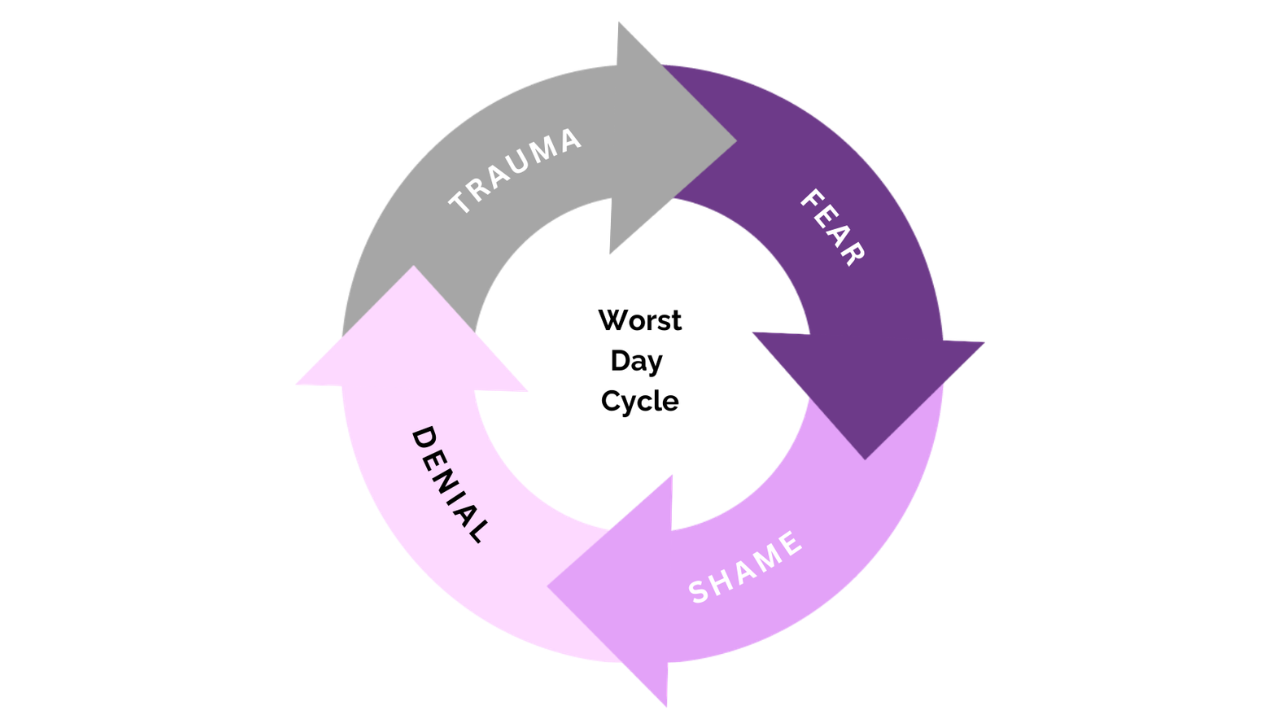
    Worst Day Cycle and how trauma chemistry drives addiction patterns

    That’s you if you are drawn to people who run hot and cold. That’s you if you have ever said “I know they are bad for me but I cannot stay away.” That’s you if stable, available, consistent people feel like there is no spark — no chemistry — no connection.

    The brain becomes addicted to unpredictable rewards. This is the same mechanism as a slot machine — intermittent reinforcement. You do not win every time. You win just enough to stay hooked. The brain thinks: “Maybe this time. Maybe they will change. Maybe I can fix it. Maybe this time is different.” This is not love. This is not passion. This is intermittent reinforcement addiction operating through your nervous system.

    Chemistry is a warning, not a signal. Safety is attraction. Stability is passion. Calm is love. When the body has been wired by childhood trauma to interpret danger as connection and chaos as aliveness, the person will pursue relationships, careers, substances, and behaviors that provide the chemical hit — and they will call it passion every single time.

    Your body is not choosing passion — it is choosing familiarity. Your chemistry is your childhood. The spark you are addicted to is the wound trying to resolve itself.

    That’s you if you chase the high and call it drive. That’s you if you pursue unavailable people and call it chemistry. That’s you if you push yourself past every healthy limit and call it dedication.

    The Worst Day Cycle™ and Why You Cannot Stop

    To understand why you keep mistaking addiction for passion, you have to understand the Worst Day Cycle™. This is the repeating emotional loop that was installed in childhood and drives nearly every pattern you cannot seem to break in adulthood.

    The Worst Day Cycle™ has four stages: Trauma → Fear → Shame → Denial.

    Trauma is any negative emotional experience in childhood that created painful meanings. It does not have to be dramatic abuse. It can be criticism, comparison, emotional neglect, inconsistency, conditional love, parentification, or simply growing up in an environment where your authentic self was not safe. These experiences create a massive chemical reaction in the brain and body.

    Fear drives repetition. The brain conserves energy by repeating known patterns — it cannot tell right from wrong, only known versus unknown. Since seventy percent or more of childhood messaging is negative and shaming, the brain defaults to repeating painful patterns because painful is familiar, and familiar equals safe in the nervous system’s calculations.
    Emotional regulation and the fear stage of the Worst Day Cycle

    Shame is where you lost your inherent worth. It is the moment the child concluded: “I am the problem. Something is fundamentally wrong with me. I am not enough.” Shame is not guilt — guilt says “I did something bad.” Shame says “I am bad.” And that shame identity becomes the engine that drives every addictive pursuit, because the addiction is always trying to fix, fill, or outrun the shame wound.

    That’s you if you achieve obsessively to prove you are enough. That’s you if you people-please compulsively to earn love. That’s you if you pour yourself into work, relationships, or substances to avoid the feeling that something is missing at your core.

    People remain in addictive patterns not because they want the pain, but because their bodies crave the chemical intensity of the familiar wound — and that craving overrides logic every single time.

    Denial is the survival persona — the brilliant adaptation you created in childhood to survive the pain. It was genius when you were six years old. It is destroying your life at forty. Denial keeps the cycle spinning by preventing you from seeing the truth: that what you call passion is actually the survival persona chasing the chemical fix that temporarily numbs the shame wound.

    How Your Survival Persona Hijacks Passion

    There are three survival persona types, and each one has a specific way of turning addiction into something that looks and sounds exactly like passion.
    Three survival persona types and how they disguise addiction as passion

    The Falsely Empowered survival persona controls, dominates, achieves, and rages. This persona turns addiction into ambition. They build empires, crush goals, accumulate wealth and status — and they call it passion. But underneath the drive is terror. Terror of being seen as weak. Terror of being exposed as not enough. Terror of stopping — because stopping means sitting with the shame. That’s you if people call you driven but you feel empty at every milestone.

    The Disempowered survival persona collapses, people-pleases, caretakes, and disappears. This persona turns addiction into devotion. They pour themselves into other people’s lives, other people’s problems, other people’s emotions — and they call it passion for helping. But underneath the giving is a desperate attempt to earn worth. That’s you if you give everything to everyone and there is nothing left for you. That’s you if your “passion” for caring for others is actually a survival strategy to avoid your own pain.

    The Adapted Wounded Child oscillates between both — sometimes controlling, sometimes collapsing, always reacting from the emotional age where the original wound occurred. This persona creates chaos and calls it creativity, creates intensity and calls it aliveness, creates crisis and calls it purpose. That’s you if you swing between over-functioning and shutting down. That’s you if your life feels like an emotional roller coaster that you cannot get off.

    Signs You Are Addicted, Not Passionate — By Life Area

    The addiction pattern does not stay in one area of life. Because the emotional blueprint operates across every domain, the same trauma chemistry that drives your relationship patterns also drives your career patterns, your friendships, your health, and your family dynamics.

    Family

    You take on everyone’s emotional weight and call it being a good family member. You cannot set boundaries without guilt. You replay the same arguments from childhood with siblings, parents, or your own children. You overfunction to prevent the family from falling apart — and you call that dedication. That’s you if your family role was assigned in childhood and you have never questioned it.

    Romantic Relationships

    You are drawn to partners who are emotionally unavailable, inconsistent, or intense. When things are calm, you create conflict or lose interest. You confuse anxiety with attraction and relief with love. You chase people who match your childhood wound and call it chemistry. That’s you if every relationship follows the same painful pattern and you keep asking what is wrong with you.

    Friendships

    You are the one everyone calls when they need something. You over-give, over-listen, and over-accommodate — and you call it being a great friend. But you never let anyone see you struggling. You never ask for help. Friendships are performance, not connection. That’s you if your friendships feel one-sided but you cannot stop giving.
    Codependence patterns in relationships driven by addiction not passion

    Work and Career

    You work eighty-hour weeks and call it hustle culture. You cannot take a vacation without checking email. Your identity is fused with your job title and your output. When you are not producing, you feel worthless. The addiction is not to the work itself — it is to the chemical hit of achievement that temporarily quiets the shame voice that says you are not enough. That’s you if success never feels like enough and you are already dreading the moment the high fades.

    Body and Health

    You exercise obsessively and call it discipline. You restrict food and call it health. You push through pain, exhaustion, and illness because stopping feels like failure. Your body is a vehicle for the addiction, not a home you inhabit. That’s you if your body is running on cortisol and caffeine and you call it peak performance.

    How the Emotional Authenticity Method™ Breaks the Addiction Loop

    You cannot think your way out of addiction disguised as passion. Emotions are biochemical events. Thoughts originate from feelings — not the other way around. This is why willpower fails, why cognitive strategies alone do not create lasting change, and why you can know something intellectually and still be unable to stop the pattern. The Emotional Authenticity Method™ works because it addresses the body, not just the mind.
    Emotional Authenticity Method six steps to break addiction patterns

    The Emotional Authenticity Method™ is a six-step process:

    Step 1: Somatic Down-Regulation. Focus on what you can hear for fifteen to thirty seconds. If you are highly dysregulated, use titration — oscillating between the activation and the calm stimulus until your nervous system settles enough to proceed. This step interrupts the trauma chemistry hijack.

    Step 2: What am I feeling right now? Use emotional granularity — expand your vocabulary beyond “bad” or “anxious” using the Feelings Wheel. Seventy percent of the population cannot name what they feel because they were taught to suppress their authentic emotional experience. Naming the feeling is the first act of reclaiming yourself.

    Step 3: Where in my body do I feel it? All emotional trauma is stored physically. Every feeling resides in a specific area of your body. When you locate the sensation — the tightness in your chest, the knot in your stomach, the pressure in your throat — you are making contact with the stored wound that is driving the addictive pattern.

    Step 4: What is my earliest memory of having this exact feeling? Trace the feeling back to its childhood origin. You will always arrive at a memory of a less-than-perfect event from childhood. That is the source being replayed in this moment. You are not addicted to the substance, the person, the achievement, or the behavior. You are addicted to the emotional chemical pattern that was installed when you were a child.

    Step 5: Who would I be if I never had this thought or feeling again? What would be left over? This is the vision step — the bridge into the Authentic Self Cycle™. For the first time, you glimpse who you actually are underneath the survival persona and the addiction.

    Step 6: Feelization. Sit in the feeling of the Authentic Self and make it strong. Create a new emotional chemical addiction to replace the old blueprint. Ask yourself: How would I respond to this situation from this feeling? What would I say? What would I do? Visualize and feel yourself operating from your Authentic Self. This is the emotional blueprint remapping and rewiring step — the moment you begin replacing the old chemical pattern with a new one rooted in truth instead of trauma.

    The Authentic Self Cycle™: From Addiction to True Passion

    The Authentic Self Cycle™ is the healing counterpart to the Worst Day Cycle™ — an identity restoration system with four stages: Truth → Responsibility → Healing → Forgiveness.
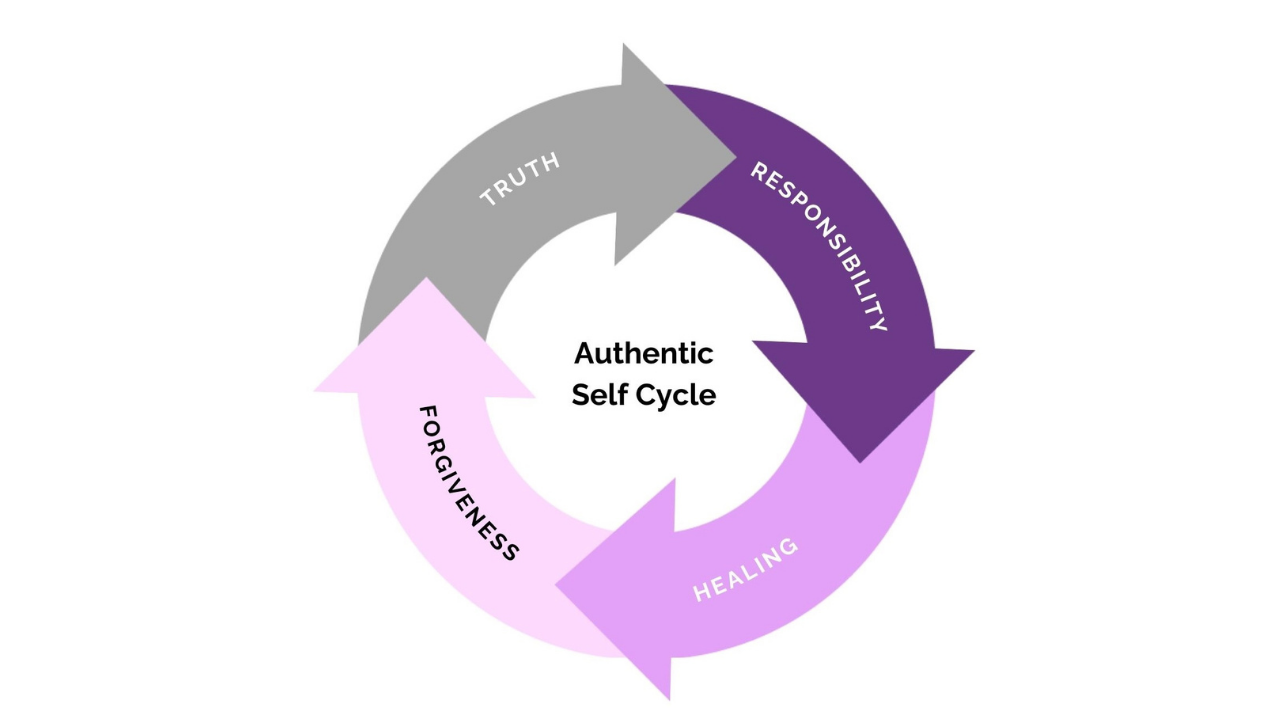
    Authentic Self Cycle four stages truth responsibility healing forgiveness

    Truth means naming the blueprint, seeing clearly that “this is not about today.” When you chase a goal with desperation and call it passion, truth says: this chemical urgency was installed in childhood. I am repeating my worst day, not pursuing my best life.

    Responsibility means owning your emotional reactions without blame. “My boss is not my parent. My partner is not my caregiver. My nervous system just thinks they are.” This is not about fault. It is about authorship — becoming the author of your emotional life instead of a character in a script written when you were six years old.

    Healing means rewiring the emotional blueprint so that intensity is not the only state that feels real, so that stillness does not feel like death, so that passion can exist without the adrenaline crash of addiction underneath it. This is the work of the Emotional Authenticity Method™ — reworking the emotion until it becomes a new emotional chemical addiction that replaces the fear, shame, and denial response.

    Forgiveness means releasing the inherited emotional blueprint and reclaiming your authentic self. Not forgiving the people who hurt you because they deserve it — forgiving because the alternative is staying chemically bonded to the wound forever. Forgiveness is freedom from the Worst Day Cycle™.

    That’s you if you are tired of the cycle. That’s you if you know something deeper is driving the pattern. That’s you if you are finally ready to stop performing passion and start actually living it.

    What Healthy Passion Actually Looks and Feels Like

    When the addiction loop breaks and you begin living from the Authentic Self, passion transforms. It does not disappear — it changes form. Healthy passion is:

    When addiction breaks and the Authentic Self leads, you do not lose your drive — you lose the desperation underneath it, and what remains is passion in its purest form.

    Energizing instead of depleting. You finish a day of work on your passion and feel alive, not destroyed. Generous instead of consuming. Your passion enriches the people around you instead of demanding that they sacrifice for it. Sustainable instead of desperate. You can pause, rest, redirect, and return without an identity crisis. Process-oriented instead of outcome-dependent. The joy is in the doing, not just the achieving. Free instead of compulsive. You choose your passion. It does not choose you by hijacking your nervous system with childhood chemicals.

    That’s you if you have never known what this feels like — because you have only ever known the addiction version. That’s you if “balance” sounds like a foreign concept because your system only knows all-or-nothing.

    Passion gives and enriches. Addiction takes and impoverishes. You can devote your entire life to a passion, but if it is truly passion and not addiction, you will do so with freedom, joy, and a full expression of your truest self. In addiction, there is no joy, no freedom, no self — only the survival persona performing its role to outrun the shame.

    Frequently Asked Questions

    How do I know if my drive is passion or addiction?

    Ask yourself one question: Am I happier during the process, or only at the outcome? If the process itself is filled with stress, anxiety, and suffering that you endure just to reach the finish line, and the high at the finish line lasts only moments before emptiness returns — that is addiction, not passion. Passion creates joy throughout the journey. Addiction only provides relief at the destination, and even that relief is temporary.

    Can addiction disguised as passion show up in relationships?

    Absolutely. This is one of the most common places it appears. When you confuse anxiety with attraction, when you chase emotionally unavailable partners and call it chemistry, when calm and stable relationships feel boring — that is trauma chemistry operating through your nervous system. Your body is not choosing love. It is choosing familiarity. And if familiarity was chaos, intensity, or enmeshment, that is what your system will interpret as passion.

    Why does healthy passion feel boring at first?

    Because your nervous system was wired for intensity, not stability. To a traumatized nervous system, consistent and safe feels like “no spark.” In reality, the body is detoxing from trauma highs. Healthy love is quiet. Trauma love is loud. As you rewire through the Emotional Authenticity Method™, you will begin to experience stability as deeply satisfying instead of threatening.

    Can high achievers be addicted to success?

    Yes — and this is one of the most invisible forms of addiction. The falsely empowered survival persona turns achievement into a shame management strategy. You do not achieve because you are passionate. You achieve because stopping means sitting with the shame wound that says you are not enough. The relentless pursuit of more — more money, more status, more recognition — is the addiction. The genuine passion for the work itself is buried underneath it.

    How do I break the addiction cycle if I have been in it my whole life?

    You break it by addressing the emotional blueprint, not the behavior. Willpower, discipline, and cognitive strategies alone will not rewire a nervous system pattern that has been running since childhood. The Emotional Authenticity Method™ works with the body and the stored emotion to trace the pattern back to its origin, dismantle the shame identity driving it, and create a new chemical pattern rooted in truth instead of trauma. This is not a quick fix — it is identity restoration.

    What is the role of shame in addiction disguised as passion?

    Shame is the engine. Every addictive pursuit — whether it is a substance, a relationship, a career, or a behavior — is ultimately trying to manage the shame wound. Shame says “I am not enough” and the addiction says “I can prove that I am.” But the proof never sticks because the shame was installed at a level deeper than logic. Healing the shame through emotional authenticity is the only way to stop the cycle permanently.

    The Bottom Line

    The difference between passion and addiction is not visible from the outside. Both can look like intensity, drive, commitment, and fire. But passion feeds your soul while addiction feeds on it. Passion creates connection while addiction creates isolation — even when you are surrounded by people. Passion leaves you more yourself. Addiction leaves you less.

    If you have spent your life chasing the high and calling it passion — in your relationships, your career, your health, your family — the path forward is not more willpower or a better strategy. The path forward is understanding the childhood emotional blueprint that created the addiction, dismantling the survival persona that maintains it, and reconnecting to the authentic self that has been waiting underneath the performance your entire life.

    You are not broken. You are programmed. And programming can be rewritten.

    Recommended Reading

    • In the Realm of Hungry Ghosts by Gabor Maté
    • Facing Codependence by Pia Mellody
    • Codependent No More by Melody Beattie
    • The Gifts of Imperfection by Brené Brown
    • When the Body Says No by Gabor Maté
    • Your Journey To Success by Kenny Weiss, Lara Currie, and Elizabeth Smithson

    Ready to Break the Cycle?

    If this post described your life, the next step is not reading another article. It is doing the work. Kenny Weiss has created courses specifically designed to dismantle these patterns at their root:

    • Emotional Blueprint Starter Course — Individual — $79
    • Relationship Starter Course — Couples — $79
    • Why We Can’t Stop Hurting Each Other — $479
    • Why High Achievers Fail at Love — $479
    • The Shutdown Avoidant Partner — $479
    • Tier 1: Mapping the Blueprint — $1,379

    Visit kennyweiss.net/life-changing-exercise to download the free Feelings Wheel and begin the Emotional Authenticity Method™ today.

    Learn more about the signs of enmeshment, relationship insecurity, signs of high self-esteem, and negotiables and non-negotiables in codependence recovery.

  • Why Men Shut Down Emotionally: The Childhood Blueprint Behind the Doghouse

    Why Men Shut Down Emotionally: The Childhood Blueprint Behind the Doghouse

    What puts men in the doghouse is not what most people think — it is not forgetting an anniversary, leaving socks on the floor, or saying the wrong thing at dinner. What actually puts men in the doghouse is a childhood emotional blueprint that taught them to shut down, suppress, and perform a version of masculinity that makes genuine emotional connection nearly impossible. If you are a woman wondering why the man in your life goes distant, moody, and unreachable — or if you are a man who keeps ending up on the couch wondering what you did wrong this time — the answer is not on the surface. The answer lives in the survival persona that was created in childhood to protect a little boy who was told, directly or indirectly, that his feelings were dangerous, weak, and unacceptable.

    That’s you if your partner shuts down the moment things get emotional. That’s you if you have spent years trying to get the man in your life to open up and it feels like pulling teeth. That’s you if you are a man who genuinely does not understand what your partner wants from you — because nobody ever taught you that what she wants is to actually know you.

    Nearly twenty years of coaching men and couples has revealed a painful truth: most men do not end up in the doghouse because they are bad partners. They end up there because their nervous system learned in childhood that vulnerability equals danger, and that lesson runs every relationship they enter as adults. The only appropriate emotion for a man growing up is anger — unless that anger causes trouble for his mother or his teacher. Everything else gets buried. And what gets buried does not disappear. It festers, it controls, and it destroys the very connections men desperately want but have no idea how to create.

    Survival persona types and why men shut down emotionally in relationships

    Why Do Men Really End Up in the Doghouse?

    The surface reasons men end up in the doghouse — forgetting something, being insensitive, saying the wrong thing — are symptoms, not causes. The real reason is that most men were raised inside an emotional environment that systematically dismantled their ability to be vulnerable, emotionally present, and authentically connected. Society told them feelings are bad. Their fathers modeled emotional shutdown. Their mothers either over-controlled their emotional world or needed them to be the strong one. And by the time they entered adult relationships, they had built an entire identity around an image they thought they were supposed to uphold.

    Most men do not want to face that they have needs and wants. They do not want to face that they have pain inside — because they spent their entire lives being taught one message: do not feel.

    That’s you if you spend your life building an image of strength while feeling empty inside. That’s you if you genuinely do not know what your partner means when she says she wants to “connect.” That’s you if the idea of sharing three feelings you experienced today sounds like an impossible task.

    What happens is predictable. A man gets into a relationship with a woman who wants to know him — who wants to share dreams, build something together, experience real intimacy. And he does not even notice that this is what she is asking for. The self-deception is: “I will give you the impression of closeness because I need you right now.” But the reality of genuine vulnerability — sharing dreams, goals, fears, and the messy truth of who he actually is — feels like too much. It feels like losing control. So what does he do? He goes to work. He buries himself in productivity. He finds someone else who will allow him to maintain the facade. And he ends up in the doghouse again, wondering what went wrong.

    How Childhood Taught Men to Shut Down Emotionally

    The emotional shutdown that puts men in the doghouse did not start in adulthood. It started in a childhood where three forces conspired to strip boys of their emotional authenticity.

    Emotional blueprint childhood programming that teaches men to shut down feelings

    The first force is society’s messaging about masculinity. Boys are told — through direct instruction, through media, through peer culture — that emotions other than anger are unacceptable. When NFL player Odell Beckham Jr. was going through a difficult period and was seen crying on the sidelines, Hall-of-Famer Ray Lewis responded by saying the anger was perfectly fine but the tears were unacceptable. He celebrated the rage and chastised the vulnerability. This is the message every boy receives: anger is masculine, tears are weakness, and if you show the wrong emotion, other men will shame you for it.

    That’s you if you learned as a boy that crying meant something was wrong with you. That’s you if the men in your life taught you that feelings were a luxury you could not afford. That’s you if the only emotion that felt safe was anger — and even that had to be controlled.

    The second force is how boys are raised inside their families. Young boys learn they cannot express their thoughts or feelings, and they cannot ask for their needs or wants to be met. They are supposed to be independent, needing no one. As those boys grow into men, they face a devastating double bind: if they stand up for their needs, they are labeled toxic. If they do not, they are labeled a pushover. Either way, the authentic self gets buried deeper.

    Your childhood emotional blueprint taught you how to behave, how to feel, how to hide, how to protect, how to perform, how to disappear, how to adapt, and how to survive. That blueprint becomes your identity — not by choice, but by necessity.

    The third force is fear. There is a real fear in men that if they express themselves, they will be rejected or reprimanded — because that is exactly what happened every time they tried. A man appropriately asks for his needs and wants, and he is called toxic. He does not ask, and he is called a pushover. He is placed in a double bind where the safest option is silence. And silence, over decades, becomes the emotional wall that puts him in the doghouse every single time.

    That’s you if you walk a fine line between being labeled toxic or being labeled weak. That’s you if silence became your default because every other option felt dangerous. That’s you if you have given up trying to express yourself because the cost has always been too high.

    The Worst Day Cycle™ and Why Men Cannot Open Up

    To understand why men keep ending up in the doghouse despite genuinely wanting connection, you have to understand the Worst Day Cycle™ — the repeating emotional loop that was installed in childhood and runs every pattern a man cannot seem to break in adulthood.

    Worst Day Cycle four stages trauma fear shame denial and why men shut down

    The Worst Day Cycle™ has four stages: Trauma → Fear → Shame → Denial.

    Trauma is any negative emotional experience in childhood that created painful meanings. For boys, this includes every moment they were told their feelings were wrong, every time vulnerability was punished, every instance where the authentic self was unsafe. These experiences create a massive chemical reaction in the brain and body — the hypothalamus generates chemical cocktails of cortisol, adrenaline, dopamine, and oxytocin misfires that the brain becomes addicted to.

    Fear drives repetition. The brain conserves energy by repeating known patterns — it cannot tell right from wrong, only known versus unknown. Since seventy percent or more of childhood messaging is negative and shaming, the brain defaults to repeating painful patterns because painful is familiar, and familiar equals safe. For men, this means repeating the emotional shutdown pattern in every relationship because shutdown is what the nervous system knows.

    Trauma chemistry and how childhood chemical patterns keep men emotionally shut down

    Shame is where a boy lost his inherent worth. It is the moment the child concluded: “I am the problem. Something is fundamentally wrong with me. My feelings are the problem.” For men specifically, shame gets welded to vulnerability itself — so the act of opening up triggers the deepest wound they carry. This is why a man can want to connect with his partner and still be physically unable to do it. The shame identity says: if you show who you really are, you will be destroyed.

    That’s you if you want to open up but your body literally will not let you. That’s you if the words are in your head but they cannot make it past your throat. That’s you if you feel like there is a wall between you and your partner that you did not build on purpose.

    People remain in emotionally shut-down patterns not because they want the distance, but because their bodies crave the chemical familiarity of the known pattern — and that craving overrides logic, love, and good intentions every single time.

    Denial is the survival persona — the brilliant adaptation created in childhood to survive the pain. For men, denial sounds like: “I’m fine.” “Nothing’s wrong.” “I don’t know why you’re upset.” “You’re being too emotional.” These are not conscious lies. They are the survival persona speaking — the identity that was built to keep the shame wound protected at all costs.

    How Survival Personas Keep Men Emotionally Unavailable

    There are three survival persona types, and each one creates a specific version of the doghouse dynamic.

    The Falsely Empowered survival persona controls, dominates, achieves, and rages. This is the man who stays in his head, thinks emotions are silly, and has built his entire identity around logic, productivity, and control. When things get vulnerable, he shuts down. He makes jokes, changes the subject, reaches for his phone, or buries himself in work. He is not avoiding his partner on purpose — his nervous system is running a childhood program that says closeness is dangerous and vulnerability will get him engulfed, smothered, and controlled. That’s you if you feel trapped by other people’s emotional needs and resent them for it — not because of who they are today, but because of what happened to the child inside you who was made to carry everyone else’s emotional weight.

    The Disempowered survival persona collapses, people-pleases, caretakes, and disappears. This is the man who does everything for everyone, never asks for what he needs, and then gets discarded anyway. He learned in childhood that the only way to get attachment was to do everything for everybody else — and they would still take their problems out on him. In relationships, he over-gives until he is empty, then withdraws in silent resentment, and ends up in the doghouse because his partner can feel the inauthenticity underneath the compliance. That’s you if you give everything and get nothing back. That’s you if you roll over to keep the peace and then wonder why she lost respect for you.

    The Adapted Wounded Child oscillates between both — sometimes controlling, sometimes collapsing, always reacting from the emotional age where the original wound occurred. This man swings between over-functioning and shutting down completely. One day he is in charge, the next day he is on the couch unable to speak. His partner never knows which version she is going to get. That’s you if your emotional life feels like a roller coaster that you cannot get off — and you are taking everyone you love on the ride with you.

    Adapted wounded child survival persona oscillating between control and collapse

    Signs the Doghouse Pattern Is Running Your Life — By Life Area

    The emotional shutdown pattern that puts men in the doghouse does not stay in romantic relationships. Because the emotional blueprint operates across every domain, the same childhood programming that creates distance with a partner creates distance everywhere.

    Family

    You take on the role assigned to you in childhood — the strong one, the fixer, the provider — and you never question whether that role serves you. You cannot set emotional boundaries with parents or siblings without guilt. You show up at family gatherings performing the same character you have played since you were ten years old. That’s you if your family knows your resume but has no idea what you actually feel.

    Romantic Relationships

    Your partner asks you what you are feeling and you genuinely do not know. When she gets emotional, your first instinct is to fix it, escape it, or shut down. You confuse providing financially with providing emotionally. She tells you she feels alone in the relationship and you are baffled because you are standing right there. That’s you if she keeps saying she wants more of you and you have no idea what that means.

    Friendships

    Your friendships are built around activities — sports, work, drinking — never around actual emotional sharing. You have guys you hang out with but not a single person who knows what you are going through. The idea of telling another man you are struggling feels impossible. That’s you if you have a hundred contacts and zero people you can call at two in the morning.

    Work and Career

    You pour everything into your career because it is the one place where the rules are clear and emotions are not required. Your identity is fused with your job title. When work goes well you feel worthy; when it does not, you spiral. You use productivity as a hiding place from the emotional demands of every other area of your life. That’s you if your career is the only place you feel competent — and even that feeling is never quite enough.

    Body and Health

    You ignore your body’s signals because you were taught that pain is weakness. You push through exhaustion, illness, and injury because stopping feels like failure. Your body is running on cortisol and adrenaline and you call it toughness. The emotional weight you refuse to process gets stored physically — in your back, your chest, your gut, your jaw. That’s you if your body has been screaming at you for years and you have been told to ignore it.

    Why Women Accidentally Push Men Further Into Shutdown

    Here is the painful irony that most couples never see: the way women respond when men finally do open up often confirms every fear the man’s nervous system has been carrying since childhood.

    Enmeshment patterns and how women accidentally push men into emotional shutdown

    When a man finally opens up after years of shutdown, many women instantly jump in: “That’s not true.” “That’s not what happened.” “Why didn’t you tell me this earlier?” “That’s silly.” They correct him. They shame him — especially if what he shares has anything to do with the relationship. And what happens? He closes right back up. Because she just proved what his nervous system has been telling him since childhood: when you open up, you get hit over the head with it.

    That’s you if you have been begging your partner to open up and then got upset when what he shared was not what you wanted to hear. That’s you if you punished him for not telling you sooner — and did not realize you just slammed the door on the very vulnerability you were asking for.

    When a man finally opens up and the woman reacts with correction, judgment, or frustration, she has just created the exact dynamic she is complaining about. She is now the one lacking vulnerability, doing exactly what she accuses him of — and neither of them sees it.

    This is not about blaming women. Both partners are running childhood survival personas. Both are operating from emotional blueprints that were installed before either of them had any say in the matter. But understanding this dynamic is the first step toward breaking it.

    The Modern Masculinity Trap: Why Both Extremes Fail

    Modern culture has created a new version of the double bind that puts men in the doghouse. The old model said: be the Marlboro Man — closed, shut down, take care of everything yourself, never open up. The new model says: anything masculine is toxic, all male emotion is suspicious, and men should essentially become compliant versions of what they think women want.

    Neither extreme works. Men laid down under the cultural pressure and stopped standing up for themselves. Now there is a whole population of men who just roll over — and women get the ick. It is not attractive. Women are drawn to a man who politely and firmly says, “Let’s think about this. Let’s have a discussion because I don’t think this is going to go well.” That is not a bully. That is not a tyrant. That is a leader. But men collapsed because the messaging said anything strong is toxic.

    That’s you if you swing between being too aggressive and too passive because nobody ever showed you what healthy masculinity actually looks like. That’s you if you have tried being the “sensitive guy” and it backfired. That’s you if you are exhausted by the impossible standards being placed on men from every direction.

    Perfectly imperfect masculinity finding the middle ground between toxic extremes

    What if men were told to hold on to their traditional masculine traits of being hunters, go-getters, and protectors — while also rounding out their masculinity with emotional depth and breadth? What if the best way to provide, protect, and lead is to be her emotional leader?

    The answer is not the old model and it is not the new model. The answer is maturity and moderation — the ability to be strong and express needs without being demanding or abusive, combined with the ability to get in touch with emotions from a place of inner security. A man who can do both is not weak. He is the most attractive, the most connected, and the most powerful version of himself that exists.

    How the Emotional Authenticity Method™ Helps Men Break Free

    You cannot think your way out of emotional shutdown. Emotions are biochemical events. Thoughts originate from feelings — not the other way around. This is why willpower fails, why “just communicate better” does not work, and why a man can understand intellectually what his partner needs and still be unable to provide it. The Emotional Authenticity Method™ works because it addresses the body, not just the mind.

    Emotional Authenticity Method six steps to help men break emotional shutdown patterns

    The Emotional Authenticity Method™ is a six-step process:

    Step 1: Somatic Down-Regulation. Focus on what you can hear for fifteen to thirty seconds. If you are highly dysregulated, use titration — oscillating between the activation and the calm stimulus until your nervous system settles enough to proceed. For men who have spent decades in shutdown, this step alone can be revolutionary because it asks the body to slow down before the survival persona takes over.

    Step 2: What am I feeling right now? Use emotional granularity — expand your vocabulary beyond “fine” or “frustrated” using the Feelings Wheel. Seventy percent of the population cannot name what they feel. For men raised to suppress everything except anger, the Feelings Wheel is often the first tool that gives them language for an internal world they have been running from their entire lives.

    Step 3: Where in my body do I feel it? All emotional trauma is stored physically. Every feeling resides in a specific area of your body — the tightness in your chest, the knot in your stomach, the clenching in your jaw. For men, the body often speaks what the mouth cannot.

    Step 4: What is my earliest memory of having this exact feeling? Trace the feeling back to its childhood origin. You will always arrive at a memory of a less-than-perfect event from childhood. That is the source being replayed in this moment. You are not shutting down because of your partner. You are shutting down because your nervous system thinks you are back in the room where vulnerability first became dangerous.

    Step 5: Who would I be if I never had this thought or feeling again? What would be left over? This is the vision step — the bridge into the Authentic Self Cycle™. For a man who has spent decades performing masculinity, this question can crack open an entirely new identity. What would be left if the fear of vulnerability disappeared? Who are you underneath the armor?

    Step 6: Feelization. Sit in the feeling of the Authentic Self and make it strong. Create a new emotional chemical pattern to replace the old blueprint. Ask yourself: How would I respond to my partner from this feeling? What would I say? What would I do? Visualize and feel yourself operating from your Authentic Self — present, open, strong, and emotionally available. This is the emotional blueprint remapping and rewiring step — the moment you begin replacing decades of shutdown with a new pattern rooted in truth instead of survival.

    The Authentic Self Cycle™: From the Doghouse to Genuine Connection

    The Authentic Self Cycle™ is the healing counterpart to the Worst Day Cycle™ — an identity restoration system with four stages: Truth → Responsibility → Healing → Forgiveness.

    Authentic Self Cycle four stages truth responsibility healing forgiveness for men

    Truth means naming the blueprint. It means seeing clearly: “This shutdown is not about my partner. This pattern was installed in childhood. I am repeating my worst day, not responding to today.” When a man can name the truth — that his emotional unavailability is a survival strategy, not a personality trait — everything begins to shift.

    Responsibility means owning your emotional reactions without blame. “My partner is not my mother. My partner is not my father. My nervous system just thinks she is.” This is not about fault. It is about authorship — becoming the author of your emotional life instead of a character in a script written when you were six years old.

    Healing means rewiring the emotional blueprint so that vulnerability does not feel like death, so that emotional presence does not feel like losing control, so that connection can exist without the survival persona hijacking every conversation. This is the work of the Emotional Authenticity Method™ — reworking the stored emotion until the nervous system finally learns that closeness is safe.

    Forgiveness means releasing the inherited emotional blueprint and reclaiming your authentic self. Not forgiving the people who hurt you because they deserve it — forgiving because the alternative is staying chemically bonded to the childhood wound forever. For men, forgiveness often means releasing the version of masculinity that was handed to them and choosing a version that actually serves their lives, their relationships, and their children.

    That’s you if you are tired of the couch. That’s you if you want to be known but do not know how to let someone in. That’s you if you are finally ready to stop performing masculinity and start actually living it.

    What Men Actually Need to Feel Safe Enough to Open Up

    There is a huge lie that society has taught about relationships — that women are the emotional ones and men are stoic. That is simply not true. Men require an incredible amount of emotional affirmation. Men will shut down, quit, and crawl back into the little boy if they are not recognized. Women have their girlfriends for support. Men often have no one.

    When a man steps up, owns his mistakes, listens with empathy, and shows vulnerability — and his partner looks him in the eyes and says, “Thank you. I love the way you love me” — that man will melt. That is all he needs. Not the mother’s voice correcting him. The lover’s voice recognizing him.

    Emotional regulation and creating safety for men to open up in relationships

    Here is a practical starting point for couples. Suggest that he share three feelings he experienced that day. Simple things — “At work today I felt a little insecure when my boss asked me to take on a new project.” That is it. One sentence. Does not have to be deep or profound. But here is the key: no feedback. Do not fix it. Do not correct it. Do not get into it. Just listen. Say, “Thank you for sharing. Is there more?” Create the safety for him to start learning that vulnerability does not lead to punishment.

    That’s you if you have never had a safe place to share what you actually feel. That’s you if the three-feelings exercise sounds terrifying — because it means admitting you have feelings at all. That’s you if you are a woman reading this and realizing you may have been the unsafe environment your partner was avoiding.

    And for the men: ask yourself honestly — has the old model of masculinity worked? Being closed, shut down, handling everything alone, never opening up — is that getting you the intimacy, the connection, the partnership you actually want? If it is not, then the willingness to face the false narrative that vulnerability makes you weak is the most courageous and attractive thing you will ever do. A man who can navigate both sides of the dynamic — who can be declaratively strong and emotionally available — is not a pushover. He is the fullest expression of what a man can be.

    Frequently Asked Questions

    Why do men shut down emotionally in relationships?

    Men shut down because their childhood emotional blueprint taught them that vulnerability is dangerous. The only emotion deemed acceptable for boys is anger. Every other feeling gets suppressed, creating a survival persona that automatically shuts down when emotional intimacy is required. This is not a choice — it is a nervous system pattern that was installed before the man had any say in the matter.

    How can I get my partner to open up without pushing him away?

    Start with the three-feelings exercise: ask him to share three simple feelings he experienced that day. The critical rule is no feedback — do not correct, do not fix, do not judge. Just listen and create safety. Men have been rejected and reprimanded for being vulnerable their entire lives. The goal is to create a consistent experience where opening up does not lead to punishment.

    Is emotional unavailability in men a form of toxic masculinity?

    Emotional unavailability is not toxicity — it is a survival strategy formed in childhood. The real toxicity is the cultural messaging that taught boys their feelings were unacceptable. When men are shamed for vulnerability by other men and then punished for shutdown by women, they are placed in an impossible double bind. Healing requires addressing the childhood blueprint, not labeling the symptom.

    Can men change their emotional patterns after decades of shutdown?

    Yes. The emotional blueprint can be rewired at any age through the Emotional Authenticity Method™. Because emotions are biochemical events stored in the body, the work involves tracing current patterns back to their childhood origin, dismantling the shame identity that drives the shutdown, and creating new chemical patterns through Feelization — the sixth step of the method.

    Why do women lose attraction when men become emotionally compliant?

    Because compliance is not emotional authenticity — it is another survival persona. Women are drawn to a man who can be strong, declarative, and emotionally present simultaneously. When a man collapses into people-pleasing, he is not being vulnerable — he is running the disempowered survival persona. True emotional strength is the ability to say “this is who I am” without demand and to share feelings without losing your center.

    What is the difference between emotional vulnerability and emotional weakness in men?

    Emotional vulnerability is the willingness to be known — to share your authentic experience without performing strength or collapsing into helplessness. Emotional weakness is the inability to tolerate your own feelings, which leads to either shutdown or uncontrolled emotional flooding. The Authentic Self Cycle™ teaches men to be vulnerable from a place of inner security, which is the foundation of genuine masculine strength.

    The Bottom Line

    What puts men in the doghouse is not bad behavior. It is a childhood emotional blueprint that taught a little boy his feelings were dangerous, his vulnerability was weakness, and his only option for survival was to build a wall between himself and everyone who tries to get close. That wall was brilliant at age six. It is destroying his relationships at forty.

    If you are a man reading this, the path out of the doghouse is not trying harder, communicating better, or memorizing the right things to say. The path out is understanding the Worst Day Cycle™ that created the shutdown, identifying the survival persona that maintains it, and reconnecting to the authentic self that has been buried underneath decades of performed masculinity. You are not broken. You are programmed. And programming can be rewritten.

    If you are a woman reading this, the path forward is not demanding vulnerability or punishing shutdown. The path forward is creating safety, recognizing courage when it appears, and understanding that the man in your life is not choosing to be distant — his nervous system is running a program that was installed in a childhood he had no control over. Both of you deserve better than the doghouse. And both of you can get there.

    Recommended Reading

    • Facing Codependence by Pia Mellody
    • Codependent No More by Melody Beattie
    • The Gifts of Imperfection by Brené Brown
    • In the Realm of Hungry Ghosts by Gabor Maté
    • When the Body Says No by Gabor Maté
    • Your Journey To Success by Kenny Weiss, Lara Currie, and Elizabeth Smithson

    Ready to Get Out of the Doghouse for Good?

    If this post described your life or your relationship, the next step is not reading another article. It is doing the work. Kenny Weiss has created courses specifically designed to dismantle these patterns at their root:

    • Emotional Blueprint Starter Course — Individual — $79
    • Relationship Starter Course — Couples — $79
    • Why We Can’t Stop Hurting Each Other — $479
    • Why High Achievers Fail at Love — $479
    • The Shutdown Avoidant Partner — $479
    • Tier 1: Mapping the Blueprint — $1,379

    Visit kennyweiss.net/life-changing-exercise to download the free Feelings Wheel and begin the Emotional Authenticity Method™ today.

    Learn more about the signs of enmeshment, relationship insecurity, signs of high self-esteem, 10 do’s and don’ts for a great relationship, and negotiables and non-negotiables in codependence recovery.
  • Why It’s Better to Be Liked Than Loved: The Hidden Key to Authentic Relationships

    Why It’s Better to Be Liked Than Loved: The Hidden Key to Authentic Relationships

    It’s better to be liked than loved — and that one idea will transform every relationship you have. If you’ve spent your life chasing the feeling of being loved — the intensity, the passion, the grand declarations — and it still hasn’t brought you lasting peace, safety, or genuine connection, you’re not failing at love. You’re chasing a version of love that was designed in childhood to keep you performing, not to keep you whole. The truth is, most of what we call “love” is a conditional, perfectionist, survival-driven dynamic that demands intensity, punishes imperfection, and collapses the moment the feeling fades. Being liked is something entirely different — and something most people have never experienced because their emotional blueprint doesn’t even know it exists.

    Nearly twenty years ago, when Kenny Weiss was working with his counselor and they started talking about dating again, the counselor gave him a homework assignment: come back with a list of what you want in a partner. Kenny came back with the standard list — attractive, kind, smart, adventurous. The counselor listened, paused, and asked one question that changed everything: “What about a woman who likes you?” The concept of being liked had never entered his mind. That single question created a massive shift — because it exposed the truth that Kenny, like most people raised in codependent family systems, had never been taught that someone could accept all of him, not just the performance version.

    That’s you if you’ve spent your entire dating life building a list of what you want in a partner — their looks, their career, their hobbies — without ever once asking: “Do they actually like me? All of me? The messy, imperfect, real version of me that I hide from everyone?”

    Table of Contents

    Being perfectly imperfect and choosing to be liked over loved in relationships

    The Difference Between Being Loved and Being Liked

    When you think about what you want in a partner, what comes to mind first? Someone who looks a certain way. Acts a certain way. Has the right career, the right politics, the right hobbies. Someone kind, athletic, adventurous, powerful, successful. You build this list — and you also build the anti-list: not boring, not lazy, not insecure, not divorced, not addicted. What you’ve done, without realizing it, is split your vision of love into perfection and imperfection. You welcome the perfections. You shame the imperfections. And love becomes this conditional agreement: I will love you despite how horrible you are, as long as you mostly stay on the perfection side of the list.

    That’s you if you’ve ever thought “I love them, but…” — and the “but” is a list of imperfections you’re tolerating, not accepting. That’s you if the word “love” in your vocabulary comes with conditions attached.

    Love, as most people have been taught to experience it, is conditional, perfection-demanding, and intensity-dependent. It demands a magical feeling. It holds the other person to an impossible standard. And the moment that standard is violated — the moment the feeling fades or the imperfections show — love collapses. This is not a relationship problem. This is a childhood emotional blueprint problem.

    Emotional blueprint showing how childhood conditioning creates conditional love patterns

    Being liked is fundamentally different. Think about your best friend. They know your imperfections — your quirky habits, your relationship disasters, your career struggles, your worst moments. They’ve seen you at your lowest. They know parts of you that strangers never will. And despite all of it, they still like you. They accept your perfect imperfections. They don’t demand that you perform. They don’t withdraw when you’re messy. They don’t keep score.

    That’s you if your best friend knows everything about you and still chooses to be in your life — and yet you’ve never once expected a romantic partner to offer that same level of acceptance.

    Why “Love” Is Almost Always Conditional

    Here is what most people never examine: when you say “I love you,” what are you actually saying? For most people raised in codependent family systems — and that’s nearly everyone — “I love you” means “I love the version of you that matches my expectations.” It means “I love you when you’re being the person I need you to be.” It means “I love you conditionally, and the conditions are the perfection list I built in childhood.”

    Codependence patterns showing conditional love and perfectionism in relationships

    This isn’t cruelty. It’s programming. Your emotional blueprint — the nervous system’s learned pattern for what love, safety, and connection feel like — was set in childhood. If your childhood contained conditional love, your blueprint says love must be earned through performance. If your childhood contained intensity and chaos, your blueprint says love should feel electric, dramatic, consuming. If your childhood contained criticism and high standards, your blueprint says love means tolerating imperfection while secretly resenting it.

    That’s you if you’ve ever felt the “spark” with someone who turned out to be emotionally unavailable — and felt nothing with someone who was genuinely kind, stable, and present. That’s not chemistry. That’s your Worst Day Cycle™ recognizing childhood.

    Everyone on this planet is living out of a survival persona. It takes tremendous work to discover our true authenticity, our inherent authentic self. When two people come together showing their survival personas — desperate for attachment because they didn’t get it as children — they immediately start adjusting to the other person. Both sides do it. Then commitment happens, the adrenaline ends, and the authentic desires, needs, and non-negotiables start surfacing. And both people say: “You’re a stranger to me. This is not who I wanted to be with.” The truth is, both of them performed love instead of offering the real person.

    Sound familiar? That’s you if you’ve ever felt blindsided by who your partner “really was” after the honeymoon phase ended — or if a partner has ever said the same about you.

    Four Qualities of Being Liked That Change Everything

    Being liked has four qualities that love, as most people practice it, simply does not have.

    First: Liking encompasses the whole person — the perfect imperfections. When you like someone, you don’t split them into acceptable and unacceptable parts. You see the complete picture — their strengths and their struggles, their beauty and their messiness — and you choose them anyway. Not despite their imperfections. Including them.

    That’s you if you’ve never had a partner who actually knew the real you — because you’ve been hiding the parts you thought would make them leave.

    Emotional authenticity and the four qualities of being liked in relationships

    Second: Liking is quiet. Love demands intensity — this supercharged feeling that most people mistake for connection. And when that feeling fades, most couples say “the feeling’s gone” and assume the relationship is over. But when you like someone, you’re perfectly comfortable with the quiet. You can sit in silence together and still enjoy their presence. It doesn’t require performance or perfection. It doesn’t need the drama to feel alive.

    That’s you if silence with your partner feels uncomfortable — if you need constant intensity, conversation, or activity to feel connected. That discomfort isn’t about them. It’s about what your nervous system learned connection should feel like.

    Third: Liking is accepting and forgiving. It doesn’t have demands. You give so much more grace to the people you like than to those you love. Think about that — you’re harder on the person you love than on anyone else in your life. You have more expectations, more conditions, more resentment. But the people you like? You forgive them easily. You don’t keep score. You don’t punish them for being human.

    That’s you if you’ve noticed you’re more patient, more understanding, more compassionate with your friends than with your romantic partner — and you’ve never asked yourself why.

    Fourth: When someone likes you, they accept your perfect imperfections. They see you — all of you — and they stay. Not because they’re tolerating you. Not because they’re performing devotion. But because who you actually are, imperfections included, is someone they genuinely enjoy being around.

    That’s you if you’ve never experienced being fully known and fully accepted at the same time — because your childhood taught you that being known means being judged.

    The Worst Day Cycle™: Why You Chase Love Instead of Like

    The Worst Day Cycle™ explains why you keep pursuing intensity instead of acceptance, performance instead of presence, and conditional love instead of genuine liking. It’s a four-stage neurological loop — Trauma → Fear → Shame → Denial — that repeats endlessly until you interrupt it.

    The Worst Day Cycle showing why you chase intensity instead of genuine connection

    Stage 1: Trauma. Childhood trauma is any negative emotional experience that created painful meanings. Your parent only showed affection when you performed. Your caregiver withdrew when you had needs. Your worth was tied to achievement, obedience, or being easy. The hypothalamus generated chemical cocktails — cortisol, adrenaline, dopamine misfires, oxytocin disruptions — and your brain became addicted to these emotional states because the brain conserves energy by repeating known patterns. It can’t tell right from wrong, only known versus unknown.

    Stage 2: Fear. Fear drives repetition. Since approximately 70% of childhood messaging is negative and shaming, adults repeat these painful patterns in relationships, career, hobbies, health — everything. Your brain thinks repetition equals safety. So you keep choosing partners who demand perfection, because perfection-demanding love is what your nervous system recognizes as “home.”

    That’s you if you feel uncomfortable when someone is simply kind to you without wanting anything in return — because your nervous system doesn’t recognize unconditional acceptance.

    Stage 3: Shame. This is where you lost your inherent worth. Where you decided “I am the problem.” Not “I made a mistake” (which is healthy responsibility) but “I AM a mistake” (which is toxic shame). Shame is what makes you believe you have to earn love through performance rather than receive liking through authenticity.

    Stage 4: Denial. To survive unbearable shame, your psyche creates a survival persona — a false identity that performs worthiness, hides imperfection, and chases the conditional love that feels familiar. Three survival persona types emerge: falsely empowered (controls, dominates, performs strength), disempowered (collapses, people-pleases, disappears), adapted wounded child (oscillates between both).

    That’s you if you show a different version of yourself on a first date than you do six months into a relationship — because the survival persona runs the early phase and the real you eventually leaks through.

    The Three Survival Personas and How They Sabotage Being Liked

    Three survival persona types that prevent genuine connection and being liked

    The Falsely Empowered Persona chases love through control, achievement, and dominance. This person builds the perfection list and holds their partner to impossible standards. They pursue love as a project — something to manage, optimize, and control. They can’t let themselves be liked because being liked requires vulnerability, and vulnerability in childhood meant being consumed, enmeshed, or exploited.

    That’s you if you’re the one who always has it together, who manages the relationship, who has the plan — and who secretly feels exhausted because you can never just be yourself and rest.

    The Disempowered Persona chases love through self-abandonment, people-pleasing, and performance. This person becomes whoever the other person needs them to be. They morph, adjust, sacrifice, and disappear — all to earn the love they believe they don’t inherently deserve. They can’t let themselves be liked because they don’t believe the real version of themselves is likeable.

    That’s you if you’ve lost yourself in every relationship — changed your hobbies, your friends, your opinions, your entire identity to match what you thought your partner wanted.

    The Adapted Wounded Child oscillates between both. One moment they’re controlling and rigid. The next they’re collapsing and people-pleasing. They shift constantly depending on who’s in the room, reading emotions like a survival manual, performing whatever version of themselves seems safest in the moment. They can’t be liked because nobody knows who they actually are — including themselves.

    Adapted wounded child survival persona oscillating between control and collapse in relationships

    That’s you if you feel like a different person depending on who you’re with — confident at work, insecure at home, charming with strangers, shut down with family. That’s the adapted wounded child performing safety instead of living authentically.

    The Attachment-Authenticity Bind: Why You Show a Fake Self

    There’s a reason you perform instead of show up authentically: the attachment-authenticity bind. In childhood, you learned that attachment (love, safety, connection) required abandoning your authenticity (your real thoughts, feelings, needs, and wants). If expressing your authentic self created conflict, withdrawal, or punishment, your nervous system made a choice: suppress the real you and project whatever version of yourself keeps the attachment intact.

    Enmeshment showing the attachment-authenticity bind in relationships

    Look through your life — every interaction with friends, family, your children, your partner. Unless you feel overwhelmingly safe, you’re withholding something. You’re not sharing your true thoughts, your true feelings, the full story of what you’ve been through. You’re projecting a survival persona for the need to get attachment. The problem is it can’t work, because you’re projecting something you’re not.

    That’s you if you rehearse conversations in your head, edit your texts before sending, or carefully manage what your partner knows about your past — because your nervous system still believes that being fully known means being abandoned.

    This is why most marriages collapse. Two people come together showing survival personas. They’re desperate for connection because they didn’t get it as children, so they immediately start adjusting to the other person. Both sides do it. Then commitment happens, the adrenaline fades, and all the authentic desires, needs, negotiables and non-negotiables start surfacing. And both people look at each other and think: “Who are you?”

    That’s you if a partner has ever said “you’ve changed” — when the truth is you just finally stopped performing.

    The Emotional Authenticity Method™: 6 Steps to Become Likeable to Yourself

    Before anyone else can genuinely like you, you have to like yourself. Not the performance version. Not the survival persona. The real you — imperfections included. The Emotional Authenticity Method™ is a six-step process that rewires your nervous system so you can actually show up as yourself in relationships.

    Emotional regulation through the Emotional Authenticity Method for authentic connection

    Step 1: Somatic Down-Regulation. When you feel the urge to perform — to adjust yourself, people-please, or hide an imperfection — pause. Focus on what you can hear for 15-30 seconds. Wind. Traffic. Your breath. If you’re highly dysregulated, use titration: cold water on your face, step outside, hold ice. Your prefrontal cortex cannot come online while your amygdala is running the show.

    Step 2: What am I feeling right now? Not “I’m fine.” Use the Feelings Wheel to name it with emotional granularity. Are you feeling afraid of rejection? Ashamed of an imperfection? Anxious about being seen? The more specific you get, the more you interrupt the survival persona’s automatic programming.

    Step 3: Where in my body do I feel it? All emotional trauma is stored physically. The tightness when you’re about to reveal something real. The knot when someone sees past your performance. The heaviness when you can’t keep pretending everything is fine. Locate the sensation. This grounds you in the present moment.

    That’s you if you’ve been “in your head” trying to figure out relationships intellectually — analyzing, strategizing, planning — instead of feeling what’s actually happening in your body.

    Step 4: What is my earliest memory of having this exact feeling? The fear of being disliked didn’t start with your partner. It started in childhood — the first time showing your real self resulted in withdrawal, punishment, or rejection. Your ex didn’t create this fear. They activated the blueprint that was already there.

    Step 5: Who would I be if I never had this thought or feeling again? Not “I’d be happy.” Specific: “I’d be someone who doesn’t edit themselves. Someone who shares their real opinion without bracing for rejection. Someone who believes their imperfections are part of their appeal, not liabilities to hide.” This plants the seed of your authentic self.

    Step 6: Feelization — The New Chemical Addiction. Sit in the feeling of who you’d be — the authentic self. Make it strong. Feel the confidence, the groundedness, the worthiness of being liked as you actually are. Create a new emotional chemical addiction to replace the old blueprint of performance and conditional love. Ask yourself: “How would I show up in this relationship from this feeling? What would I say? What would I do?” Visualize and FEEL yourself being authentic. This is the emotional blueprint remapping and rewiring step. You cannot change emotional patterns through thoughts alone — emotions are biochemical events, and thoughts originate from feelings.

    That’s you if you’ve never been taught that you can literally rewire your nervous system by changing what you practice feeling — that the compulsion to perform love is a chemical addiction, not a personality trait.

    The Authentic Self Cycle™: From Performing Love to Feeling It

    The Authentic Self Cycle™ is the healing counterpart to the Worst Day Cycle™ — a four-stage identity restoration system: Truth → Responsibility → Healing → Forgiveness. This is how you move from chasing conditional love to creating genuine connection where both people are actually liked.

    The Authentic Self Cycle showing the path from performing love to genuine connection

    Stage 1: Truth. Name the blueprint. “The version of love I’ve been chasing isn’t love — it’s a childhood survival strategy. I’ve been performing to earn attachment, not showing up to be known. My partner isn’t rejecting the real me — they’ve never met the real me because I’ve been too afraid to show up.”

    Stage 2: Responsibility. Own your emotional reactions without blame. “My partner isn’t my parent — my nervous system just thinks they are. The performance, the people-pleasing, the perfection-demanding — that’s mine to heal. It’s not their job to make me feel liked. It’s mine to become someone I like first.”

    That’s you if you’re finally seeing the pattern — the same performance running in every relationship, every job interview, every family dinner, every first date.

    Stage 3: Healing. Rewire the emotional blueprint so that quiet acceptance stops feeling boring and starts feeling like home. When boring people become attractive — when stability, consistency, and genuine liking feel safe instead of suffocating — that’s when you know you’re healing. Creates a NEW emotional chemical pattern that replaces fear, shame, and denial.

    Stage 4: Forgiveness. Release the inherited emotional blueprint and reclaim your authentic self. Not forgiving others for the conditional love they modeled. Forgiving yourself for the decades you spent performing instead of living. When you can look at your past relationships without rage or shame and see them as the curriculum for discovering your authentic self — you’ve graduated from this lesson.

    The best you can ever do and expect is that today you like someone. You can only guarantee today because you’re ever-evolving. When that becomes your view of relationship — showing up authentically today, releasing the demand for forever, allowing both people to be perfectly imperfect — you’ve arrived at something most people never experience.

    Signs You’re Chasing Love Instead of Like Across Your Life

    Family Relationships

    You perform a version of yourself around family that doesn’t match who you actually are. You manage your parents’ perceptions. You hide your real struggles, your real beliefs, your real life. You seek their approval for major decisions even as an adult. You feel guilty for setting boundaries because boundary-setting wasn’t safe in childhood.

    That’s you if your parents still don’t know the real you — because the real you was never safe enough to show them.

    Romantic Relationships

    You fall hard and fast based on intensity, not compatibility. You suppress your needs to avoid conflict. Your worth depends on whether your partner loves you back. You try to change yourself to be “the right” partner. You keep score of sacrifices and expect repayment. The honeymoon ends and you both feel blindsided by who the other person “really is.” Explore the signs of relationship insecurity to understand this pattern.

    That’s you if every relationship starts with fireworks and ends with “I don’t even know who you are anymore” — because both of you were performing survival personas, not showing authentic selves.

    Friendships

    You have one or two friends who actually know you — and dozens who know the performance version. You’re the emotional support person who can’t ask for support. You stay friends with people who don’t actually like you; they like what you do for them. You hide your struggles because vulnerability feels dangerous.

    That’s you if your friendships feel one-directional — you give, they take, and nobody actually knows who you are underneath the helpfulness.

    Work and Achievement

    You work beyond your capacity to prove your worth. You equate productivity with lovability. You struggle with imposter syndrome because you’ve been performing competence the same way you perform love. You can’t say no to requests because your survival persona says compliance equals safety. Build genuine self-esteem that doesn’t depend on achievement.

    That’s you if you’ve been promoted for the very pattern that’s destroying you — your survival persona’s perfectionism is your company’s greatest asset and your nervous system’s greatest prison.

    Body and Health

    You ignore your body’s signals because your survival persona says rest is weakness. You use food, substances, exercise, or work to numb the feelings your authentic self is trying to express. You push through exhaustion because performing wellness is easier than feeling the truth underneath.

    That’s you if you have a morning routine, a workout schedule, and a wellness tracker — but you can’t tell a friend you’re having a bad day because vulnerability still feels dangerous.

    Trauma chemistry showing how childhood conditioning drives performance over authenticity

    Frequently Asked Questions

    What does it mean to be liked instead of loved?

    Being liked means someone accepts your complete self — perfections and imperfections — without demanding that you perform, change, or earn their approval. Love, as most people practice it, is conditional and intensity-dependent. Liking is quiet, accepting, forgiving, and encompassing of the whole person. Being liked creates safety because the other person knows you fully and chooses you anyway — not despite your imperfections, but including them.

    How do I know if my partner actually likes me or just loves me?

    Ask yourself: does your partner know the real you? Do they know your struggles, your childhood wounds, your worst moments — and still choose to be with you? Or are they in love with a version of you that you carefully curated? If they only know the performance, they love a character. If they know the whole person and still show up with acceptance, they like you. The difference is whether you feel safe being imperfect around them.

    Can you have both love and like in a relationship?

    Absolutely — and that’s the goal. The healthiest relationships have both. But like must come first. Without genuine liking — without the quiet acceptance of the whole person — love becomes a performance that eventually collapses under its own weight. When you build a relationship on liking first, the love that develops is authentic, sustainable, and doesn’t require intensity to survive. Learn the do’s and don’ts for great relationships to build this foundation.

    Why does being liked feel harder to find than being loved?

    Because being liked requires you to show up as yourself — and your survival persona has spent decades making sure that doesn’t happen. Being loved only requires you to perform well enough to match someone’s expectations. Being liked requires vulnerability, authenticity, and the willingness to be seen fully. Most people never experience being liked because they never let anyone see the real version of themselves.

    Is it possible to like yourself if your childhood taught you that you’re unlovable?

    Yes. Self-liking is a skill that can be built through the Emotional Authenticity Method™. Your childhood taught you that your worth was conditional — tied to performance, obedience, or achievement. The Authentic Self Cycle™ rewires that blueprint by moving through truth, responsibility, healing, and forgiveness until your nervous system recognizes that you have inherent value — not because of what you do, but because of who you are.

    How long does it take to move from performing love to genuine connection?

    There’s no fixed timeline. Most people report significant shifts within 6-12 months of consistent work with the Emotional Authenticity Method™. The timeline depends on how deep the childhood conditioning runs, how much professional support you get, and how willing you are to show up imperfectly in your relationships. Every time you practice being authentic instead of performing, you’re building new neural pathways. The performance weakens. The authentic self strengthens.

    The Bottom Line

    You’ve been chasing the wrong thing. The intensity you thought was love was actually your nervous system recognizing childhood. The performance you thought was connection was actually your survival persona earning attachment. The conditions you placed on your partner — and the conditions they placed on you — were childhood blueprints running adult relationships.

    Being liked is quieter. It’s less dramatic. It doesn’t come with fireworks or grand declarations. But it comes with something love rarely delivers: safety. The safety to be imperfect. The safety to show your real self. The safety to sit in silence and know that who you are — not who you perform to be — is enough.

    That’s the shift. From performing love to feeling connection. From chasing intensity to choosing acceptance. From hiding your imperfections to discovering that your imperfections are the very things that make you likeable.

    Can you see why it’s better to be liked much more than loved? It’s a much safer, more complete, honest, vulnerable, and transparent dynamic than to be loved. And it starts with one decision: to stop performing and start showing up as yourself. Imperfect. Real. Likeable.

    Reparenting yourself to build authentic self-worth and genuine connection

    Recommended Reading

    • Facing Codependence by Pia Mellody — The foundational text on how childhood creates the performance of love, survival personas, and the loss of authentic self.
    • The Body Keeps the Score by Bessel van der Kolk — Essential reading on how conditional love patterns live in your nervous system and why healing requires more than understanding.
    • When the Body Says No by Gabor Maté — How emotional repression and the performance of perfection manifest as physical illness.
    • Codependent No More by Melody Beattie — The classic guide to stopping the cycle of self-abandonment and earning love through sacrifice.
    • The Gifts of Imperfection by Brené Brown — A guide to wholehearted living that directly counters the perfectionism keeping you from being genuinely liked.

    Ready to Be Liked Instead of Performed For?

    Start with the Feelings Wheel exercise to begin reconnecting with your emotional life today. Then explore the signs of enmeshment to understand how your boundaries collapsed under conditional love. Your authentic self — the one beneath the performance, beneath the perfection, beneath the survival persona — is ready to be liked.

  • How to Recognize a Narcissist: 15 Warning Signs and How to Respond

    How to Recognize a Narcissist: 15 Warning Signs and How to Respond

    You already know something is wrong. You feel it in your body every time they walk into the room — that low-grade tension in your chest, the way your stomach tightens before they even speak. You’ve Googled “am I crazy” more times than you can count. You’ve replayed conversations in your head trying to figure out where it went sideways. You’ve apologized for things you didn’t do, questioned your own memory, and walked on eggshells so carefully that you’ve forgotten what solid ground feels like.

    That’s you, isn’t it?

    How do you recognize a narcissist? A true narcissist consistently displays a specific cluster of traits — grandiosity, lack of empathy, entitlement, exploitation, and an insatiable need for admiration — that show up reliably across every relationship and every situation, not just during moments of stress or conflict. These traits are not occasional bad days. They are permanent operating systems built on a foundation that cannot access genuine emotional connection. And understanding this distinction is the first step toward protecting yourself — and healing the part of you that keeps choosing this dynamic.

    But here’s what most narcissism content won’t tell you: recognizing the narcissist is only half the equation. The other half — the half that actually sets you free — is understanding why your brain chose them in the first place. That answer lives in your childhood, in a pattern called the Worst Day Cycle™, and it changes everything about how you respond.

    Survival persona icon — how narcissistic behavior develops from childhood survival strategies

    What Is Narcissism — And Why Most People Get It Wrong

    The internet has turned “narcissist” into a catchall for anyone who hurts your feelings. Your ex who ghosted you? Narcissist. Your mother-in-law who criticizes your cooking? Narcissist. Your coworker who takes credit for your ideas? Narcissist. But here’s the problem with that — when everyone is a narcissist, the word loses all meaning, and the people who are actually trapped with one can’t find the help they need.

    Narcissism originally had a clear, specific clinical definition — a consistent set of traits that showed up reliably and repeatedly in a person: grandiosity, lack of empathy, entitlement, exploitation, and an insatiable need for admiration. That original framework was valid. Those people exist. The DSM-5 requires five of nine specific criteria to be present — and they must be present nearly all the time, not just during moments of stress, intoxication, or conflict. These traits are relatively stable across time and consistent across situations. Rare exceptions are just that — rare.

    That’s you wondering — wait, does occasional bad behavior make someone a narcissist? No. And that distinction matters enormously. A person having a terrible day and snapping at you is not narcissism. A person who consistently lacks empathy, demands special treatment, exploits your emotions for their gain, and cannot tolerate the slightest criticism — across every relationship, every context, every day — that is narcissism.

    15 Warning Signs You’re Dealing with a Narcissist

    In my experience working with clients for over two decades, these fifteen signs show up regardless of whether someone is dealing with an overt, covert, or any other presentation of narcissism. There are probably thirty or more total indicators, but these are the core symptoms — the ones that appear in every single case.

    Emotional regulation icon — narcissists cannot regulate their own emotions

    1. They Lack Empathy — Completely

    You’re pouring your heart out and they appear to be listening, but when they respond, their reaction has nothing to do with what you just said. It’s not that they missed one thing — they didn’t absorb any of it. And if you call them on it, they’ll insist they were listening. That’s you replaying conversations trying to figure out why you feel so invisible. A narcissist doesn’t feel remorse because they are neurologically incapable of it. This isn’t a choice they’re making — it’s a permanent deficit.

    2. They Demand Special Treatment Everywhere

    Watch what happens at a restaurant when the order comes out wrong. Watch what happens at a mechanic, a clothing store, anywhere they interact with service workers. Are they constantly looking to be elevated? Do they explode over light ice when they asked for none? There’s a profound difference between calmly advocating for yourself and feeling entitled to perfection from every human being you encounter. That’s you noticing the waitress’s face change when your partner speaks to her.

    3. They Live in Grandiose Fantasies

    Everyone has ambitions. A narcissist has delusions. They will claim skills they don’t possess, promise achievements they can’t deliver, and construct a version of reality where they are exceptional at everything. These aren’t lies exactly — they are genuine beliefs. And those beliefs set impossible expectations in every relationship they enter.

    4. Appearance Is Everything

    The word “narcissism” comes from the Greek myth of Narcissus, who was obsessed with his own reflection — and that obsession with external appearance runs through every narcissist. Not just their own appearance — yours matters too. They want the people around them to be attractive because they equate beauty with power. That’s you feeling like you’re never quite put-together enough for them. The obsession with social media likes, the constant comparing of status and success to others — all of it is a desperate need for external validation.

    5. They Only Associate with the Powerful

    Narcissists climb social ladders the way other people breathe — constantly and unconsciously. They need proximity to power, fame, beauty, and influence because they see themselves as belonging to that tier. Anyone they perceive as beneath them gets dismissed or destroyed. That’s you watching them tear apart someone who can’t do anything for them.

    Trauma chemistry icon — the chemical bond that keeps you attracted to narcissistic partners

    6. They Cannot Regulate Their Emotions

    A narcissist’s emotional regulation is a rubber band stretched to its limit. They can hold it together — sometimes for impressively long stretches — but eventually, that rubber band snaps. The tantrum, the rage, the cold fury. And then they snap right back to the charming version of themselves, as if nothing happened. That’s you living with Dr. Jekyll and Mr. Hyde, never knowing which version you’ll get when they walk through the door.

    7. They Are Hypersensitive to Any Criticism

    They will critique everything about you — your appearance, your cooking, your parenting, your career — but the moment you offer even the gentlest suggestion that they might consider doing something differently? A wall goes up instantly. Or worse, volcanic rage. They view themselves as infallible. Suggesting otherwise is an attack on the carefully constructed identity they’ve built to survive.

    8. They Don’t Think They Need to Change

    Any suggestion that they might need help, that they could learn something, that the problem might partially reside in them — boom. A wall so high you can’t see over it. Their lack of empathy and their rage combine to shut down any conversation that threatens their grandiosity. That’s you walking out of couples therapy alone because they refused to go back.

    9. They Are Consumed by Jealousy

    They’re jealous of anyone you interact with — from a five-minute conversation with a coworker to an evening with your friends. They’re jealous of anyone who achieves more than them. Everyone gets envious occasionally, but for a narcissist, jealousy is the engine that drives their behavior. It triggers the rubber band. It makes them snap.

    10. They Gaslight You Until You Can’t Trust Yourself

    You start a conversation with a legitimate concern and by the end, you’re the one apologizing. You know what you said and what you meant, but somehow they’ve twisted reality so completely that you walk away wondering if you’re the problem. That’s you feeling like you need to secretly record your own conversations just to prove to yourself that you’re not crazy. Gaslighting is the most insidious weapon in the narcissist’s arsenal because it doesn’t just hurt you — it makes you doubt your own perception of reality.

    11. They Are Incapable of Loyalty

    A narcissist will leave you. Always. The moment a higher-status option, a more attractive supply, or a more advantageous situation presents itself, they’re gone. They will never put anyone before themselves — including you, including your children, including anyone they claim to love.

    12. They Get Pleasure from Your Pain

    When they cause you pain and you show it, watch their face. There’s a flicker — a moment of satisfaction, almost joy. They are feeding off your emotional reaction. Your hurt, your confusion, your tears — it’s fuel. That’s you recognizing that sickening moment when you realized they were enjoying watching you fall apart.

    Emotional blueprint icon — childhood creates the template for adult narcissistic relationship patterns

    The Part We Play — Three Signs Inside You

    13. You Think You Can Love Them Out of It

    When they show weakness or vulnerability — and they will, because it keeps you hooked — you start rationalizing what you can change. If I dress differently. If I’m less needy. If I’m more supportive. If I just love them enough, they’ll transform. That’s you spending all your energy trying to fix someone who doesn’t think they’re broken.

    14. You Believe You’re Not Good Enough

    “If I were thinner.” “If I made more money.” “If I weren’t so emotional.” You rationalize their behavior by blaming yourself — and that’s exactly what makes gaslighting so effective. This isn’t a character flaw in you. This is shame — deep childhood shame that was installed before you had any say in the matter — and the narcissist found it like a heat-seeking missile.

    15. You Obsessively Research Them Instead of Healing Yourself

    Here’s the hardest truth: if you’re spending 90% of your energy researching narcissism, replaying their behavior, and trying to figure them out — you’re staying stuck. That’s you reading your fifteenth article about narcissists this week while ignoring the wound inside you that attracted one in the first place. Every moment spent analyzing them is a moment you’re not spending on the only person you can actually change — yourself.

    How Narcissistic Abuse Shows Up in Every Area of Your Life

    Enmeshment icon — narcissistic relationships create enmeshed boundaries across all life areas

    In Family

    The narcissistic parent who made everything about them. The sibling who weaponized your vulnerabilities. The family system where your needs were invisible and their needs were the center of gravity. That’s you still performing at family holidays, pretending everything is fine while your stomach is in knots.

    In Romantic Relationships

    The idealization phase that felt like a fairy tale. The devaluation phase where nothing you did was right. The discard phase where they replaced you overnight. And then the hoovering — the desperate attempt to suck you back in when their new supply runs dry. That’s you checking their social media at 2 AM, wondering what you did wrong.

    In Friendships

    The friend who only calls when they need something. The one who takes credit for your ideas, dismisses your accomplishments, and always — always — redirects every conversation back to themselves. That’s you feeling drained after every coffee date.

    In Work

    The boss who takes credit for your projects and blames you for their failures. The colleague who charms leadership while terrorizing the team. The workplace where your boundaries are treated as insubordination. That’s you dreading Monday morning with a heaviness that has nothing to do with the work itself.

    In Your Body and Health

    Chronic anxiety. Insomnia. Digestive issues. Autoimmune flares. Your body has been keeping the score of every interaction, every lie, every moment you abandoned yourself to keep the peace. The physical symptoms are not separate from the emotional abuse — they are a direct expression of it.

    Why Your Brain Chose a Narcissist — The Worst Day Cycle™

    Worst Day Cycle icon — the four-stage trauma pattern that drives attraction to narcissists

    This is where most narcissism content stops — at the “recognize the signs and get out” stage. But that advice, while well-intentioned, misses the entire point. Because if you don’t understand why you chose a narcissist, you will choose another one. And another. And another. Different face, same dynamic, same pain.

    Your attraction to a narcissist is not random, not bad luck, and not a character flaw. It is a neurological pattern rooted in childhood trauma — a pattern I call the Worst Day Cycle™. The cycle has four stages: Trauma → Fear → Shame → Denial. And it explains everything.

    Stage 1 — Trauma: Any negative emotional experience in childhood that created painful meanings about who you are. This doesn’t require physical violence or sexual abuse. A parent rolling their eyes when you asked for homework help. A caregiver saying “what’s wrong with you?” when you spilled milk. Thousands of perfectly imperfect parenting moments across your first seven years that taught your nervous system one devastating lesson: something is fundamentally wrong with me.

    Stage 2 — Fear: The trauma creates a fear response that never resolves. Your nervous system becomes chemically addicted to the original wounding — the cortisol, the adrenaline, the hypervigilance. That’s you calling those butterflies in your stomach “chemistry” when it was actually your childhood alarm system recognizing danger as home. Your brain doesn’t know right from wrong. It only knows known versus unknown. And since you survived the original pattern, your brain concludes: this is safe. Let’s repeat it.

    Stage 3 — Shame: Shame takes what happened to you and turns it into who you are. Instead of “that was a painful experience,” the child concludes “I am the problem.” That’s you believing deep in your bones that if you were just better, thinner, smarter, calmer — they would love you the way you need. Seventy percent of all messaging children receive is negative and shame-based. Parents don’t correct behavior — they shame identity. And that shame becomes the lens through which every future relationship is filtered.

    Stage 4 — Denial: To survive the unbearable weight of shame, you build a survival persona — a version of yourself designed to hide the wound from the world and from yourself. This persona was brilliant in childhood. It kept you alive. But in adulthood, it is the very thing that draws you to narcissists and keeps you stuck in their orbit.

    The Three Survival Personas That Keep You Stuck with a Narcissist

    Everyone who stays in a narcissistic dynamic is operating from one of three survival personas. Understanding which one is yours is the key to breaking free.

    The Falsely Empowered Persona: This person controls, dominates, criticizes, and rages. They look powerful on the outside but underneath is the same shame wound as everyone else. In a narcissistic dynamic, the falsely empowered person may actually be the narcissist — or they may be the partner who fights back with matching intensity, creating an escalating cycle of mutual destruction. That’s you losing your temper in ways that scare you, then hating yourself for becoming just like them.

    The Disempowered Persona: This person collapses, people-pleases, absorbs blame, and makes themselves as small as possible to avoid conflict. They are the classic “empath” attracted to narcissists — endlessly giving, endlessly forgiving, endlessly hoping that enough love will fix the unfixable. That’s you pouring from an empty cup and calling it compassion.

    The Adapted Wounded Child: This person oscillates between both — raging one moment, collapsing the next. They can’t find stable ground because their childhood didn’t provide any. They’re the most confused because they can’t even predict their own reactions.

    Adapted wounded child icon — the survival persona that oscillates between falsely empowered and disempowered positions

    The empath and the narcissist are not predator and prey. They are a mirror — two sides of the same codependent spectrum. Both are operating from unhealed childhood shame. Both are manipulating from opposite ends of the same power dynamic. The narcissist manipulates through dominance and control from the falsely empowered position. The empath manipulates through niceness and moral superiority from the disempowered position. Until you can see your side of the mirror, you will keep repeating the dynamic with the next person and the next.

    How to Actually Respond to a Narcissist

    If you’ve recognized these signs in your partner, parent, boss, or friend, there are two honest options. Not easy options — honest ones.

    Option 1: Leave the Relationship

    The chances of a true narcissist doing genuine healing work are extremely slim. They can’t sustain it because they don’t see an advantage to it. I know your situation may be complicated — marriage, children, finances, religious beliefs, shared history. But if you are being consistently abused, getting out is the loving choice — for you and for anyone watching you accept treatment you would never want for them.

    Option 2: Radically Lower Your Expectations and Invest in Yourself

    If leaving isn’t possible right now, you must accept a painful truth: you will get almost nothing emotionally from this person. Stop trying to get them to meet your needs. Instead, build an entire infrastructure of support around yourself — friendships, therapy, groups, emotional fitness practices, and deep work on the childhood wound that trained you to accept this treatment.

    That’s you realizing that the only person you have control over is yourself.

    You cannot set boundaries WITH a narcissist. By definition, a narcissist is an abuser, and abusers don’t honor boundaries. The only boundary you can set is with yourself. Ask: “How often can I see this person without losing containment and without feeling abused?” Honor that answer. When they ask to do something and you don’t have the emotional reserves, say: “No, it doesn’t work for me.” No explanation needed.

    The Real Healing Path: The Emotional Authenticity Method™

    Emotional Authenticity Method icon — the six-step process for healing from narcissistic abuse

    Recognizing the narcissist is awareness. Responding to the narcissist is self-protection. But healing from the narcissist — healing the wound that drew you to them — requires something deeper. It requires rewiring the emotional blueprint that was installed in childhood. That’s what the Emotional Authenticity Method™ does.

    Step 1 — Somatic Down-Regulation: When you’re activated — heart racing, chest tight, mind spinning — pause. Focus on what you can hear around you for 15-30 seconds. Feel your feet on the floor. Feel your weight in the chair. This calms the nervous system enough for the thinking brain to come back online. You cannot communicate with somebody you’re trying to survive — and you can’t heal from a place of panic.

    Step 2 — What Am I Feeling Right Now? Not what they did. Not what they said. What are you feeling? Use the Feelings Wheel to expand your emotional vocabulary beyond “fine,” “angry,” and “anxious.” That’s you learning to name what lives inside you for the first time.

    Step 3 — Where in My Body Do I Feel It? All emotional trauma is stored physically. Tightness in the chest. Knot in the stomach. Heaviness in the shoulders. Heat in the face. Your body has been keeping the score long before you had words for what was happening.

    Step 4 — What Is My Earliest Memory of This Exact Feeling? This is the breakthrough question. Because the feeling you’re having right now with the narcissist? It didn’t start with them. Trace it back. The first time you felt invisible. The first time your needs were dismissed. The first time you concluded: “Something is wrong with me.” That’s you realizing this dynamic is decades older than this relationship.

    Step 5 — Who Would I Be Without This Feeling? If you had never had this thought or feeling, what would be left over? What would you do? How would you show up? This is the vision step — a glimpse of the Authentic Self that has been buried under decades of survival programming.

    Step 6 — Feelization: Sit in the feeling of that Authentic Self. Make it strong. Create a new emotional chemical state to replace the old blueprint. Ask: How would I respond to this situation from this feeling? What would I say? What would I do? Visualize and feel yourself operating from your Authentic Self. You cannot change emotional patterns through thoughts alone. Emotions are biochemical events. Thoughts originate from feelings — not the other way around. Feelization is how you build a new addiction — an addiction to your own wholeness instead of your own pain.

    Breaking Free: The Authentic Self Cycle™

    Authentic Self Cycle icon — the four-stage identity restoration system for healing from narcissistic abuse

    The Worst Day Cycle™ explains how you got here. The Authentic Self Cycle™ is how you get out. It has four stages that directly counteract the four stages of the WDC:

    Truth: Name the blueprint. See that this relationship dynamic isn’t about today — it’s about a childhood pattern playing out in an adult body. “My partner isn’t my parent. My nervous system just thinks they are.”

    Responsibility: Own your emotional reactions without blame. Not “they made me feel this way,” but “my childhood wound is activated and I am choosing how to respond.” This isn’t about letting them off the hook — it’s about taking your power back.

    Healing: Rewire the emotional blueprint so that conflict becomes uncomfortable but not dangerous. So that silence doesn’t feel like abandonment. So that intensity doesn’t feel like love. This is the deep neurological work of building new pathways — and it takes time, practice, and commitment.

    Forgiveness: Release the inherited emotional blueprint and reclaim your Authentic Self. Not forgiveness of the narcissist — forgiveness of the child who did the best they could with what they had. Forgiveness of yourself for not knowing sooner. That’s you putting down a weight you’ve been carrying since before you could walk.

    Frequently Asked Questions About Narcissism

    Can a narcissist ever truly change?

    True narcissism — the consistent, pervasive pattern defined by the DSM-5 — is extraordinarily resistant to change because the narcissist doesn’t believe they need to change. Therapy requires vulnerability, self-reflection, and the willingness to sit with shame — three things a narcissist’s entire personality structure was built to avoid. Some people labeled as narcissists are actually falsely empowered codependents who can heal when they’re given the right framework.

    Why do I keep attracting narcissists into my life?

    Your brain is running a pattern installed in childhood through the Worst Day Cycle™. The chemical cocktail of cortisol and adrenaline that accompanied your original trauma became what your brain labels as “normal” — and it seeks out that same chemistry in adult relationships. What feels like butterflies or an instant connection is actually your nervous system recognizing danger as home. Healing the childhood wound through the Emotional Authenticity Method™ is what changes the attraction pattern.

    Is the “empath and narcissist” dynamic real?

    The dynamic is real, but the framing is incomplete. The empath and the narcissist are not predator and prey — they are two sides of the same codependent mirror. Both carry unhealed childhood shame. Both are manipulating from opposite ends of the same spectrum. Until the so-called empath can see their own covert manipulation — the niceness as control, the moral superiority, the boundarylessness — they will keep finding narcissists because they need the dynamic as much as the narcissist does.

    What is the difference between a narcissist and a codependent who acts narcissistic?

    A true narcissist displays the full cluster of traits consistently and cannot access the shame underneath their behavior. A falsely empowered codependent may look identical on the surface — controlling, critical, rageful — but underneath there is a shame core and a capacity for change that the narcissist doesn’t have. Most clinicians miss this distinction because they aren’t trained in the codependence spectrum.

    How do I set boundaries with a narcissist?

    You can’t set boundaries with a narcissist — they won’t honor them. The only boundary you can set is with yourself. Decide how much contact you can handle without losing your emotional containment, and honor that decision. When you don’t have the reserves, say “No, it doesn’t work for me.” No explanation required. Stop trying to get them to respect your boundaries and start respecting your own.

    Can childhood trauma really cause me to choose narcissistic partners?

    Absolutely. Imagine walking into a room with 20,000 people — only one is a narcissist. Your brain locks onto that one person like a radar system. Why? Because your childhood conditioned your nervous system to recognize chaos, emotional unavailability, and control as home. That feeling gets labeled as “chemistry.” It’s not bad luck. It’s your brain doing exactly what it was trained to do. The Worst Day Cycle™ explains the mechanism, and the Authentic Self Cycle™ provides the way out.

    The Bottom Line

    Recognizing a narcissist is important. But it’s not where freedom lives. Freedom lives in the moment you stop asking “what’s wrong with them?” and start asking “what was it in me — what unhealed childhood wound, what survival persona, what emotional blueprint — that made me get into this dynamic in the first place?”

    That question isn’t blame. It’s power. Because the narcissist showed you the holes in your own love for yourself. And if you don’t do the work to fill those holes, you never outgrow the lesson.

    That’s you standing at the edge of something terrifying and beautiful — the moment you choose yourself for the first time.

    You deserve to be seen. You deserve to be heard. You deserve relationships that don’t require you to abandon yourself to keep the peace. And that starts with one radical, courageous act: healing the child inside you who learned that love always hurts.

    Recommended Reading

    Facing Codependence by Pia Mellody — The foundational text on codependence and the survival personas that drive narcissistic attraction patterns.

    When the Body Says No by Gabor Maté — How childhood emotional wounds manifest as physical illness and chronic stress.

    Codependent No More by Melody Beattie — The classic guide to recognizing codependent patterns and reclaiming your identity.

    The Gifts of Imperfection by Brené Brown — Research-backed guidance on releasing shame and embracing your authentic self.

    The Body Keeps the Score by Bessel van der Kolk — How trauma reshapes the brain and body, and what it takes to heal.

    Ready to Break the Cycle?

    If you’re done researching narcissists and ready to heal the wound that keeps attracting them, these courses will walk you through the exact frameworks described in this article:

    Emotional Blueprint Starter Course — Individual ($79) — Start mapping your own Worst Day Cycle™ and identify your survival persona.
    Relationship Starter Course — Couples ($79) — Understand how two survival personas collide in relationships.
    Why We Can’t Stop Hurting Each Other ($479) — Deep dive into the narcissist-codependent dynamic and how to heal both sides.
    Why High Achievers Fail at Love ($479) — For the falsely empowered persona who succeeds everywhere except relationships.
    The Shutdown Avoidant Partner ($479) — Understand the avoidant attachment pattern that pairs with narcissistic dynamics.
    Tier 1: Mapping the Blueprint ($1,379) — The complete Emotional Authenticity Method™ training for deep, lasting transformation.

    Take the Feelings Wheel exercise — it’s free, it takes five minutes, and it’s the first step toward emotional literacy that changes everything.

  • Relationship Do’s and Don’ts: 10 Rules for Healthy Love

    Relationship Do’s and Don’ts: 10 Rules for Healthy Love

    You’ve read every relationship book. You’ve tried couples therapy. You’ve watched the TED talks, listened to the podcasts, and promised yourself — again — that this time will be different.

    But nothing changes. The same fights keep happening. The same walls go up. The same emptiness sits between you and the person you’re supposed to love.

    The relationship patterns you keep repeating are not communication problems, compatibility issues, or bad luck in love — they are childhood survival strategies running on autopilot in your adult relationships, and until you trace them back to the emotional blueprint that installed them, no amount of relationship advice will change anything.

    Here’s what nobody tells you: the problem isn’t your partner. It’s not your communication skills. It’s not even the specific things you fight about. The problem is the invisible blueprint you’re running — one that was installed in childhood, long before you ever chose a partner. Every one of the 10 Don’ts I’m about to share traces back to the Worst Day Cycle™ — a repeating loop of trauma, fear, shame, and denial that drives every unhealthy relationship pattern you’ve ever experienced.

    That’s you if you keep trying to fix your relationship without understanding what’s actually driving it.

    I’m going to give you 10 Do’s and 10 Don’ts for a great relationship. But more importantly, I’m going to show you why you keep falling into the Don’ts — and the exact path out through the Emotional Authenticity Method™ and the Authentic Self Cycle™.

    Emotional Blueprint icon representing the unconscious relationship patterns formed in childhood trauma

    The 10 Do’s: What Healthy Relationships Actually Look Like

    Before we get into what’s broken, let’s paint the picture of what’s possible. People in genuinely healthy relationships share these traits — not because they got lucky, but because they did the work to get there.

    1. They Know It’s Never Their Partner’s Job to Meet Their Needs

    This is the foundation. People in healthy relationships recognize that meeting their own needs and wants is their responsibility. Is it wonderful when their partner steps up? Absolutely. But they don’t expect it. They don’t demand it. They put a plan in place to meet their own needs — and that changes everything.

    That’s you if you’ve ever thought, “If they really loved me, they’d just know what I need.”

    2. They Don’t Live in Fear of Betrayal

    They aren’t snooping through phones. They aren’t checking location apps. They aren’t interrogating their partner after every night out. They have a basic, grounded security that their partner is invested in them — not because their partner is perfect, but because they trust themselves enough to handle whatever comes.

    3. They See the World as Basically Decent

    Sure, there are difficult people. But their default setting isn’t suspicion. Their general worldview is positive rather than negative. They don’t walk into every room scanning for threats. They don’t assume the worst about strangers, coworkers, or their partner’s intentions.

    4. They See Themselves as Lovable and Worthy

    They recognize their great qualities and their perfect imperfections. They don’t need constant external validation to feel OK about who they are. They’re open to the possibility that someone else out there feels the same way about themselves — and is willing to accept those imperfections.

    That’s you if you secretly believe something is fundamentally wrong with you — something that makes you undeserving of real love.

    Perfectly Imperfect icon representing self-acceptance and authentic self-worth in relationships

    5. They Don’t Allow Harmful Behaviors

    They don’t make excuses. They don’t minimize. They don’t say, “Well, they only act like that when they’re stressed.” They recognize harmful behaviors as intolerable and say no to them immediately — not from anger, but from self-respect.

    6. They Don’t Abandon Themselves to Be Loved

    They don’t give up friends, family, hobbies, or careers to keep the peace. They stay attached to what matters to them. And if someone asks them to sacrifice those things? They won’t. That’s what makes them available for a healthy relationship.

    Codependence icon representing the pattern of abandoning yourself to be loved by your partner

    7. They Know Their Morals, Values, Needs, Wants, Negotiables, and Non-Negotiables

    They’ve sat down and mapped it all out. They know what they stand for. They know what they need. They know what they’re willing to flex on — and what they’re not. And they communicate all of this openly, without expecting their partner to read their mind. If you haven’t done this work, here’s where to start: How to Determine Your Negotiables and Non-Negotiables.

    That’s you if you’ve never once sat down and asked yourself: What are my non-negotiables? What do I actually need from a partner?

    8. They Believe Saying “No” Is Loving

    They don’t see boundaries as cold or problematic. They understand that saying no removes the possibility of saying yes to things while expecting something in return — which is manipulation. Boundaries aren’t walls. They’re the foundation love is built on.

    That’s you if you keep saying yes when you mean no — and then keeping score of everything you’ve “sacrificed.”

    9. They Never Enable, Rescue, or Parent Their Partner

    They know their partner will struggle. They have faith their partner will figure it out. They don’t try to gain false power by fixing everything. Instead, they pick partners who can do it on their own.

    10. They Embrace That Relationships Are Difficult

    They don’t pull away, run, or quit when things get hard. They stay engaged. They recognize that the difficulties are exactly what create long-lasting intimacy and connection. They use challenges to learn about each other — and to build deeper trust.

    That’s you if your first instinct when things get hard is to shut down, pull away, or start planning your exit.

    That is the foundation. This is what people in healthy relationships believe about themselves, and they always return to that base. This is where they originate their relationships from.

    The 10 Don’ts: The Patterns That Destroy Relationships

    Now let’s get into the Don’ts — the polar opposite of everything above. You see these patterns in almost every movie, TV show, and social media post about love. What we’ve had modeled for us is deeply unhealthy.

    If you find yourself on this list, that doesn’t mean you’re a bad person. You can’t be blamed for doing things you were taught to do. If this is the first time you’re hearing these, then this is the first day you have a choice. You can choose to learn new information, gain new skills and tools, and build the relationship you actually deserve.

    Survival Persona icon representing the false identity created in childhood to cope with unmet emotional needs

    1. Believing Your Partner Should Meet All Your Needs

    This is the number one relationship killer. It shows up as the belief that your partner should know what you need without you ever asking — and that they should deliver it at all times. In almost every session, clients tell me they’ve told their partner what they want “a thousand times” and that they “should just know.”

    Here’s the truth: what’s important to you may not be important to them. That doesn’t make them bad people. Their life is filled with their own needs and wants. Our partners are human — they’re going to forget. That belief that they should be focused on us at all times is codependent, manipulative, destructive, and unhealthy.

    That’s you if you feel abandoned or unloved when your partner doesn’t anticipate what you need before you ask.

    2. No Trust — Controlling, Spying, and Snooping

    We put the latches on our partners because of our own fears, insecurities, and abandonment issues. But here’s what we don’t want to face: a lack of trust in others is hiding a lack of trust in ourselves for our previous choices. We project that lack of self-trust outward and convince ourselves that everyone is inherently bad, deceptive, or dangerous. For a deeper look at how relationship insecurity drives these controlling behaviors, that post will change your perspective.

    3. A Core Belief That You’re Unlovable

    This drives the first two Don’ts. If we’re controlling, demanding, and hypervigilant, it’s because deep down we believe something is defective in us. Instead of learning to love ourselves, we try to force the other person to love us. Oftentimes we’re completely detached from these deeper feelings and don’t even recognize our own behaviors.

    That’s you if you can’t sit alone with yourself for more than a few minutes without feeling empty, anxious, or worthless.

    4. Tolerating Abuse Because You Believe No One Else Will Love You

    I’ve had clients who call me every week saying they’ve broken up with their partner “for the last time.” The next session starts with how they got back together — and the partner is still saying and doing hurtful things. The violence only escalates, yet they keep going back. That going back is a product of the lack of love for themselves. They minimize the bad behaviors because the alternative — being alone — feels worse than being hurt.

    That’s you if you keep going back to someone who hurts you because the fear of being alone is worse than the pain of staying.

    5. Needing Constant Approval and Affirmation

    This shows up as the inability to take criticism or be wrong. It’s the belief that our partner must constantly have our back in any disagreement — that they must support us no matter what. Think about how absurd that is: if we believe our partner should support us at all times, what happens when we do something genuinely harmful? Are they supposed to support that too?

    Everyone is perfectly imperfect. Everyone has behaviors that shouldn’t be supported. It’s actually loving for a partner to kindly show us when we didn’t have a great moment.

    That’s you if you feel attacked or betrayed when your partner disagrees with you or points out something you could do differently.

    Adapted Wounded Child icon representing the survival response of people-pleasing and self-abandonment in relationships

    6. Sacrificing Everything for Your Partner

    Giving up friends, hobbies, family, career — all to keep the relationship alive. I did this in my first marriage. I went about 10 years without seeing my family because it was what she wanted. All I knew were the messages from movies, media, and TV: if I loved her, I had to sacrifice everything.

    That’s you if you look around and realize you’ve given up everything that used to matter to you — and you still feel empty.

    7. Not Knowing Your Morals, Values, Needs, Wants, Negotiables, and Non-Negotiables

    This was me. I remember laying on my bed as a kid, wondering who would marry me — if she’d be nice or pretty. I had no idea I could decide my morals, values, needs, wants, negotiables, and non-negotiables. I spent years waiting for someone to pick me up. Every area of my life didn’t line up with my first wife because I never sat down and mapped these things out — that’s on me. How could she meet my needs and wants if our morals and values were opposite?

    8. No Boundaries and the Inability to Say No

    You hear people exclaiming, “I did this and that for them, and look what they did to me!” That means we did all those things hoping to get something in return. That is manipulation. The proof is we’re throwing it in their face, keeping score, and resenting them.

    That’s why “no” is the most loving word a partner can tell us. When they say no, we know they won’t throw it in our face later. I used to go to garage sales with my first wife for hours — hating every minute — then come home and be passive-aggressive all night. Where’s the love in that?

    That’s you if you keep saying yes when you mean no — and then resenting your partner for “making” you do things you never wanted to do.

    9. Rescuing, Enabling, and Playing the Parent

    My ex was a pill addict. I’d drive all across the state, going to friends’ houses, lying to pharmacies and doctors, trying to get more pills. I was totally enabling her addiction — thinking I was rescuing her from being hurt. The truth? I thought if I did this, maybe she’d have sex with me. It was all manipulation.

    When people give themselves away to do for others, it’s a false power dynamic. They sit in the resentment, never having to face their own manipulation. I used to say, “I quit pro hockey. I gave up my family. I gave up sex. I changed careers. I changed my whole life for her — and she wouldn’t stop hitting me.” I’m not condoning any of her behaviors. But I was never taught about boundaries or healthy relationships. I was manipulative and I had to take responsibility for my part to change it.

    That’s you if you give everything away and then feel like a martyr when nobody appreciates the sacrifice.

    10. Avoiding Relationships Entirely

    These are the people who say, “I’m done with relationships! Men are all liars. Women are all cheaters.” If they are in a relationship, they won’t open up or be vulnerable. Because of the lack of knowledge, skills, and tools, they stay stuck in their pain, avoid connection, and project the problem onto everyone else.

    That’s you if you’ve built a wall so high that nobody can get in — and you tell yourself it’s because you’re “protecting yourself.”

    Trauma Chemistry icon representing the addictive biochemical patterns that keep you in unhealthy relationship cycles

    The Worst Day Cycle™: Why You Keep Repeating the Same Patterns

    Here’s where most relationship advice completely fails you. Therapists and self-help books give you communication techniques, love languages, and conflict resolution scripts. But none of that works if you don’t address the root cause.

    Every adult relationship pattern — every fight, every shutdown, every desperate attempt to control or please — is a direct replay of an unhealed childhood emotional blueprint. The brain doesn’t distinguish between past and present danger. It only recognizes known versus unknown. And since the known pattern was installed in childhood, the brain repeats it in every adult relationship, mistaking repetition for safety.

    The Worst Day Cycle™ operates in four stages:

    Stage 1 — Trauma: Childhood trauma isn’t limited to extreme abuse. Any negative emotional experience that created painful meanings — shame, neglect, enmeshment, emotional absence — qualifies. These experiences create a massive chemical reaction in the brain and body. The hypothalamus generates chemical cocktails of cortisol, adrenaline, dopamine, and oxytocin misfires, and the brain becomes addicted to these emotional states.

    Stage 2 — Fear: The brain conserves energy by repeating known patterns — it can’t tell right from wrong, only known versus unknown. Since 70%+ of childhood messaging is negative and shaming, adults repeat these painful patterns in relationships, career, hobbies, health — everything. Fear drives repetition because the brain thinks repetition equals safety.

    Stage 3 — Shame: This is where you lost your inherent worth. The core wound says “I am the problem.” Not “I made a mistake” — “I am the mistake.” This shame becomes the engine that drives every Don’t on the list above.

    Stage 4 — Denial: To survive the unbearable pain of shame, the brain creates a survival persona — a false version of yourself designed to manage the chaos. This denial is brilliant in childhood. It keeps you alive. But in adulthood, it becomes the very thing that destroys your relationships.

    Worst Day Cycle icon representing the repeating pattern of childhood trauma playing out in adult relationships

    The survival persona shows up in three types:

    The falsely empowered survival persona controls, dominates, rages, and demands. In relationships, this looks like jealousy, possessiveness, and emotional explosions.

    The disempowered survival persona withdraws, shuts down, disappears, and avoids. In relationships, this is the stonewaller — the person who goes silent when things get hard.

    The adapted wounded child survival persona people-pleases, sacrifices, enables, and rescues. In relationships, this is the person who gives everything away and then resents their partner for not reciprocating.

    That’s you if you recognize yourself in one — or all three — of those patterns, depending on the situation.

    The Worst Day Cycle™ keeps running because the survival persona was never designed to create healthy relationships. It was designed to survive childhood. But you’re not a child anymore — and the strategies that kept you safe then are destroying your relationships now.

    How the Don’ts Show Up in Every Area of Your Life

    These patterns don’t just wreck your romantic relationships. They bleed into everything.

    In your romantic relationship: You pick partners who recreate your childhood dynamics. You enable, control, or withdraw. You can’t resolve conflict without one of you shutting down or exploding. You feel like you’re walking on eggshells — or your partner does.

    That’s you if every relationship follows the same script — different person, same pain.

    In your friendships: You over-give, then resent. You keep score. You attract people who take advantage of your inability to say no. Or you keep everyone at arm’s length because you don’t trust anyone.

    At work: You people-please your boss. You take on extra work and then burn out. You can’t handle feedback without spiraling. Or you dominate and control — and wonder why your team doesn’t respect you.

    In your parenting: You repeat the very patterns your parents used on you — the ones you swore you’d never repeat. You control, enable, or emotionally withdraw from your children without realizing you’re doing it.

    In your body and health: The stress of living in the Don’ts shows up physically. Chronic pain, insomnia, digestive issues, autoimmune conditions. Your body keeps the score of every unprocessed emotion.

    That’s you if your body is screaming at you and you keep pushing through, ignoring what it’s trying to tell you.

    Emotional Regulation icon representing the somatic process of down-regulating the nervous system before making relationship decisions

    The Emotional Authenticity Method™: The 6-Step Path From the Don’ts to the Do’s

    So how do you actually get from the Don’ts to the Do’s? Not through willpower. Not through communication techniques. Not through finding a “better” partner. You get there through the Emotional Authenticity Method™ — a 6-step process for feeling your real feelings, tracing them to their origin, and rewiring the emotional blueprint that drives every relationship pattern.

    Emotional Authenticity icon representing the method for processing shame and building real connection in relationships

    You cannot change emotional patterns through thoughts alone. Emotions are biochemical events. Thoughts originate from feelings — not the other way around. This is why affirmations fail, why “just think positive” fails, and why cognitive techniques alone will never rewire the survival persona driving your relationship patterns.

    Step 1 — Somatic Down-Regulation: Focus on what you can hear for 15 to 30 seconds. This activates the auditory cortex and pulls the brain out of the emotional hijack. If you’re highly dysregulated, use titration — alternate between the triggering feeling and the grounding sound in small doses until the nervous system settles enough to think.

    Step 2 — What Am I Feeling Right Now? Use emotional granularity — expand your vocabulary beyond “bad” or “anxious.” The Feelings Wheel is one of the most powerful tools for this. Most people use five or six words for their entire emotional range. Real healing requires naming the specific feeling: abandoned, dismissed, invisible, suffocated, controlled, not enough.

    Step 3 — Where in My Body Do I Feel It? All emotional trauma is stored physically. The tightness in your chest, the knot in your stomach, the tension in your jaw — these are the body’s record of every childhood wound that was never processed. Locate it. Stay with it.

    Step 4 — What Is My Earliest Memory of Having This Exact Feeling? This is the step that changes everything. Trace the current feeling back to its childhood origin. When your partner forgets your birthday and you feel worthless, that’s not about the birthday. That’s about every time your needs were invisible as a child. This step breaks the illusion that the present moment is causing your pain.

    That’s you if you know your reactions are way too big for the situation — but you can’t figure out where the intensity is coming from.

    Step 5 — Who Would I Be If I Never Had This Thought or Feeling Again? What would be left over? This is the vision step. It connects directly to the Authentic Self Cycle™. Most people have never imagined themselves without the shame, without the fear, without the survival persona. This question opens the door to who you actually are underneath all of it.

    Step 6 — Feelization: Sit in the feeling of the Authentic Self and make it strong. Create a new emotional chemical addiction to replace the old blueprint. Ask: how would I respond to this situation from this feeling? What would I say? What would I do? Visualize and feel yourself operating from your Authentic Self. This is the emotional blueprint remapping and rewiring step — the moment where the brain starts building new neural pathways that override the childhood programming.

    That’s you if you know what you should do in your relationship — but your body keeps hijacking you into the same old reaction before your brain can catch up.

    Myelin neural pathways icon representing the neuroplasticity process of building new emotional patterns through Feelization

    The Authentic Self Cycle™: What Becomes Possible

    Authentic Self Cycle icon representing the path from survival persona to genuine connection and healthy relationships

    When you start living from your authentic self instead of your survival persona, you enter the Authentic Self Cycle™ — the healing counterpart to the Worst Day Cycle™. This is an identity restoration system that operates in four stages:

    Truth: Name the blueprint. See “this isn’t about today.” Recognize that your partner isn’t your parent — your nervous system just thinks they are.

    Responsibility: Own your emotional reactions without blame. Stop pointing at your partner and start asking, “What childhood wound is running me right now?”

    Healing: Rewire the emotional blueprint so conflict becomes uncomfortable but not dangerous, space isn’t abandonment, and intensity isn’t attack. This is where the Emotional Authenticity Method™’s Feelization step creates a new emotional chemical pattern.

    Forgiveness: Release the inherited emotional blueprint and reclaim your authentic self. This isn’t about forgiving your parents’ behavior — it’s about releasing the grip the childhood wound has on your adult life.

    When couples each do this work independently — healing their own Worst Day Cycle™, identifying their own survival persona, and practicing the Emotional Authenticity Method™ — the relationship transforms. Not because the other person changed, but because two authentic selves showed up instead of two survival personas fighting each other’s childhood ghosts.

    In the Authentic Self Cycle™, you stop trying to get love and start being love. You stop demanding your partner meet your needs and start meeting your own. You stop fearing abandonment because you’ve stopped abandoning yourself. You stop controlling because you trust yourself to handle whatever comes.

    That’s you if you’re tired of surviving and ready to actually live — in your relationship and in every part of your life.

    It Starts With Your Childhood — And That’s Not a Blame Game

    I know it’s uncomfortable to look at our parents’ imperfections — or to admit our own as parents. I’m not trying to blame anyone. I believe it’s loving to hold our parents accountable without blaming them. My goal is to break the wall of denial down, and my heart is to do it lovingly.

    Every scientific process out there shows that our relationship patterns are a direct result of our childhood experiences. If we’re not addressing childhood trauma, we’re not addressing the core problem. We’re just rearranging deck chairs on the Titanic.

    That’s you if the phrase “look at your childhood” makes you tense up, shut down, or immediately think “my childhood was fine.”

    Your Next Step: Start Moving From the Don’ts to the Do’s

    If you recognized yourself in the Don’ts — and especially if you recognized yourself in all 10 — here’s where you start:

    For understanding your relationship patterns: The Relationship Starter Course — Couples ($79) walks you through exactly how your childhood blueprint is driving your current relationship — and what to do about it.

    For understanding yourself: The Emotional Blueprint Starter Course — Individual ($79) helps you identify your survival persona, map your emotional blueprint, and start building from your authentic self.

    For going deeper: Why We Can’t Stop Hurting Each Other ($479) and Why High Achievers Fail at Love ($479) are comprehensive courses that take you through the full Worst Day Cycle™ and into the Authentic Self Cycle™.

    For the avoidant dynamic: The Shutdown Avoidant Partner ($479) is specifically designed for couples trapped in the pursuer-distancer cycle.

    For complete transformation: Tier 1: Mapping the Blueprint ($1,379) is where the deepest work happens — the full Emotional Authenticity Method™ with guided practice, community support, and real transformation.

    If you want to understand the patterns driving your relationships at a deeper level, these books have been instrumental in my own work and in the lives of my clients:

    Facing Codependence by Pia Mellody — The foundational text on how childhood trauma creates codependent relationship patterns. Mellody’s framework for understanding carried shame and the five core symptoms of codependence is some of the most important work ever done in this field.

    When the Body Says No by Gabor Maté — How the stress of unprocessed emotions and unhealthy relationship patterns manifests in physical illness. Maté’s work on the mind-body connection shows why relationship patterns don’t just hurt emotionally — they hurt physically.

    Codependent No More by Melody Beattie — The classic guide to understanding and recovering from codependent patterns in relationships. If you recognized yourself in the Don’ts, start here.

    Daring Greatly by Brené Brown — Why vulnerability is the birthplace of connection and why the survival persona’s strategy of hiding, controlling, or people-pleasing will never create the intimacy you’re looking for.

    The Bottom Line

    The 10 Don’ts aren’t character flaws. They’re survival strategies — built in childhood, reinforced by culture, and running on autopilot in every relationship you’ve ever had. You didn’t choose them. But now that you see them, you can choose something different.

    The path from the Don’ts to the Do’s doesn’t run through better communication or a more compatible partner. It runs through your own childhood wounds, through the survival persona you built to manage those wounds, and into the authentic self that’s been waiting underneath all along.

    The relationship you want is on the other side of the work you’ve been avoiding.

    I’ll leave you with this: if you decide to face the pain from the past, I have yet to see one person whose life didn’t explode with joy, peace, and contentment. If that’s what you really want, this is the only way I have found that always works.

    Frequently Asked Questions

    Why do I keep attracting the same type of partner?

    You’re not “attracting” them — you’re choosing them. Your survival persona is drawn to partners who recreate the emotional dynamics of your childhood because those dynamics feel familiar. The Worst Day Cycle™ explains exactly how your childhood attachment patterns create a template that keeps pulling you toward the same relationship dynamics, no matter how different the person seems on the surface.

    Can I fix my relationship without my partner doing the work too?

    You can’t control whether your partner does the work. But when you start operating from your authentic self instead of your survival persona, the entire dynamic shifts. Many of my clients find that as they change, their partner either rises to meet them — or it becomes clear the relationship was built entirely on survival patterns. Either way, you win.

    What’s the difference between healthy boundaries and being cold or selfish?

    Your survival persona tells you that saying no is mean, selfish, or unloving. The truth is the opposite. Saying no is the most loving thing you can do — for yourself and for your partner. When you say yes and don’t mean it, you’re manipulating. You’re setting the stage for resentment, score-keeping, and passive aggression. Boundaries create safety. Lack of boundaries creates chaos.

    Is it really about my childhood even if my parents did their best?

    Your parents absolutely did their best with what they had. This isn’t about blame — it’s about truth. Every major framework in psychology and neuroscience confirms that our adult relationship patterns are formed in childhood. Holding your parents accountable isn’t the same as blaming them. It’s the doorway to healing. Without it, you stay stuck in denial — and denial keeps the Worst Day Cycle™ spinning.

    How do I know if I have a survival persona running my relationships?

    If you recognized yourself in any of the 10 Don’ts, your survival persona is running the show. The three types — falsely empowered (controlling, raging), disempowered (withdrawing, shutting down), and adapted wounded child (people-pleasing, enabling) — cover nearly every unhealthy relationship pattern. Most people flip between all three depending on the situation. The Emotional Authenticity Method™ teaches you to recognize which one is active in real time.

    What if I’ve already tried therapy and it didn’t work?

    Most therapy focuses on managing symptoms — better communication, coping strategies, conflict resolution techniques. Those are useful, but they don’t address the root cause. If you haven’t worked specifically on your childhood attachment wounds, your survival persona, and the Worst Day Cycle™ that’s driving everything, you haven’t done the work that actually changes things. The Emotional Authenticity Method™ goes where most therapy doesn’t — into the shame, the survival patterns, and the authentic self underneath.

  • How to Fight Fair in a Relationship

    How to Fight Fair in a Relationship

    Every couple fights. But most couples fight the same fight over and over — not because the issue is unresolvable, but because their nervous systems are replaying childhood survival patterns instead of communicating as adults. You are not arguing about the dishes, the kids, or the money. You are arguing about the shame, the fear, and the unhealed pain your body carries from childhood. One partner attacks from their falsely empowered survival persona — controlling, criticizing, dominating. The other collapses into their disempowered survival persona — people-pleasing, withdrawing, going silent. Or both of you oscillate between the two, never finding solid ground. The result is the same every time: nobody feels heard, nobody feels safe, and the relationship erodes one fight at a time.

    That’s you if you’ve ever thought: “We keep having the same argument and nothing changes.”

    The reason nothing changes is that traditional communication advice — “use I-statements,” “don’t raise your voice,” “take a timeout” — treats the symptoms while ignoring the root cause. Your fights are not communication problems. They are nervous system problems driven by the Worst Day Cycle™. And the only way to stop destroying your relationship is to learn a confrontation model that works at the level where the damage actually happens — your emotional blueprint.

    How to Fight Fair in a Relationship: Why Every Couple Needs a Confrontation Model

    How to fight fair in a relationship is the single most important skill that no one ever teaches you. Fighting fair means having a structured confrontation model — a shared language and step-by-step process that transforms every argument from a destructive war into an opportunity for deeper intimacy, understanding, and connection. Without this model, couples default to hurling pain, defending their position, and fighting over who is the bigger victim — a pattern rooted in childhood survival, not adult love.

    Here is what twenty years of working with couples has taught me: unless you have a specific confrontation model, just trying to talk about it will not solve it. There has to be a process that both people commit to following. When couples adopt a confrontation model, every single fight becomes like dating again — you discover deep, vulnerable truths about your partner that create connection instead of destruction.

    How to fight fair in a relationship - confrontation model for couples in codependency recovery

    Most couples believe they know how to fight. They don’t. What they know is how to re-enact childhood pain with an adult vocabulary. The screaming, the silent treatment, the blame, the withdrawal — none of this is fighting. It’s two wounded children in adult bodies, each desperately trying to prove they are the bigger victim.

    That’s you if every argument with your partner ends the same way — someone storms off, someone shuts down, and nothing ever changes.

    The confrontation model I created has three components: understanding reality arguments, establishing ground rules for both the speaker and the listener, and following seven specific steps that turn conflict into connection. If you commit to this process, you will learn to love fighting. Literally. Because every disagreement becomes a window into your partner’s inner world — and your own.

    What Are Reality Arguments and Why Do They Destroy Relationships?

    Before you can fight fair, you need to understand why most fights are unwinnable. The answer: you’re having a reality argument — and you don’t even know it.

    A reality argument happens when two people experience the exact same event and walk away with two completely different interpretations. Neither person is right or wrong — they simply have different realities. Most couples destroy their relationship by arguing over whose reality is correct, which is like arguing over whether a referee’s call was right when half the stadium disagrees.

    Reality arguments in relationships - two different realities from the same event

    Think about it: have you ever watched a sport where the referee makes a call and half the people in the arena scream he’s wrong while the other half scream he’s right? That’s a reality argument. Now think about politics — Democrat, Republican — both sides believe they’re right and the other side is wrong. Religion works the same way. We all look at the exact same thing and have completely different interpretations.

    That’s you — arguing with your partner about what “really happened” last Tuesday, both of you certain you’re right, both of you walking away feeling unheard.

    Here’s why this destroys relationships: when you fight over realities, you’re fighting to prove you’re the bigger victim. “What you did is bad.” “No, what you did is worse.” “Well, if you hadn’t done it, I wouldn’t have done it.” Each person is saying the same thing: I’m the bigger victim here, and what happened to me is worse.

    Is that reconcilable? No. Because you both feel victimized. You’re fighting a war that nobody can win.

    Sound familiar? Every fight that ends with “you always” or “you never” is a reality argument in disguise.

    Defense is the first act of war. When you defend yourself in an argument, you are making a conscious choice to fight over who is the bigger victim rather than creating connection, intimacy, and understanding. That is not the goal of a confrontation — it is a declaration of war against your partner.

    The Worst Day Cycle™: Why Your Fights Are Never About What You Think

    Every destructive fight follows the same invisible pattern. Your partner says something critical, and within milliseconds your body floods with stress chemicals, your thinking brain goes offline, and you’re no longer an adult having a disagreement — you’re a child fighting for survival. This is the Worst Day Cycle™, and until you see it, it runs your relationships without your permission.

    Worst Day Cycle - Trauma Fear Shame Denial - why couples fight destructively

    Stage 1: Trauma. Childhood trauma is any negative emotional experience that created painful meanings about yourself, others, or the world. Your partner’s tone of voice, their criticism, their withdrawal — these activate your nervous system’s threat response as if you’re back in your childhood home, helpless and unsafe. The hypothalamus generates chemical cocktails of cortisol, adrenaline, and dopamine misfires, and your brain becomes addicted to these emotional states because they’re all it knows.

    Stage 2: Fear. Once trauma is activated, fear floods your body instantly. Your amygdala hijacks your prefrontal cortex. You lose access to wisdom, discernment, and choice. You go into fight, flight, freeze, or fawn mode. This is why you say things you don’t mean during arguments — your thinking brain is literally offline. The brain conserves energy by repeating known patterns, and since 70%+ of childhood messaging is negative and shaming, your adult brain repeats those painful patterns in every conflict.

    That’s you — your heart pounding, your face flushing, words flying out of your mouth that you’ll regret in an hour, and you can’t stop yourself.

    Stage 3: Shame. Fear morphs into the core belief: “I am the problem.” Not “I made a mistake” — “I AM a mistake.” This is where you lost your inherent worth. In childhood, shame was installed through criticism, punishment for normal emotions, and conditional love. In adult fights, shame drives you to either attack (prove it’s their fault, not yours) or collapse (accept all blame to end the conflict).

    Stage 4: Denial. To survive unbearable shame, your psyche activates your survival persona — a false identity created in childhood to manage pain. “I’m fine.” “I can handle this.” “I don’t have needs.” This is self-deception at its most brilliant and most destructive. Your survival persona takes over the fight, and your authentic self disappears.

    That’s the Worst Day Cycle™ — running underneath every argument you’ve ever had with your partner, turning a simple disagreement into a childhood re-enactment.

    How Your Survival Persona Hijacks Every Argument

    When conflict arises, your survival persona takes the wheel. Understanding which persona you default to — and which one your partner defaults to — is essential for learning how to fight fair. There are three primary survival persona types, and most people oscillate between them depending on the situation.

    Three survival persona types that hijack arguments - falsely empowered disempowered adapted wounded child

    The Falsely Empowered Survival Persona in Conflict

    This persona controls, dominates, and rages. In fights, the falsely empowered persona attacks first, raises their voice, uses blame and shame as weapons, and needs to “win” the argument. They appear strong, but underneath they’re terrified of being wrong — because being wrong in childhood meant being abandoned or punished. Their strategy: if I control the fight, I control whether I get hurt.

    That’s you if you notice your voice getting louder, your finger pointing, your words getting sharper — and you can’t seem to stop even though part of you knows you’re making it worse.

    The Disempowered Survival Persona in Conflict

    This persona collapses, people-pleases, and surrenders. In fights, the disempowered persona immediately takes all the blame, says “you’re right, I’m sorry” before the conversation even starts, and shuts down their authentic voice to end the conflict. They’d rather die inside than risk abandonment. Their strategy: if I make myself small enough, maybe the pain will stop.

    That’s you if you go silent in every fight, agree with everything your partner says just to make it stop, and then feel hollow and resentful for days afterward.

    The Adapted Wounded Child Survival Persona in Conflict

    This persona oscillates between the falsely empowered and disempowered positions — sometimes raging, sometimes collapsing, sometimes regressing to a helpless, confused state. They might cry uncontrollably, feel overwhelmed, or seem incapable of engaging. Their strategy: if I stay emotionally young and helpless, maybe someone will finally rescue me the way my parents never did.

    That’s you if your partner says “I can never have a real conversation with you because you either blow up or shut down — I never know which version I’m getting.”

    All three survival personas are brilliant childhood strategies that kept you connected and alive. In adult relationships, they guarantee that every fight re-creates the exact pain you’re trying to escape. The confrontation model replaces these survival strategies with a structured process that creates safety, trust, and genuine intimacy.

    Ground Rules for the Speaker: How to Express Without Destroying

    Fighting fair starts with rules — not to restrict you, but to create the safety required for vulnerability. Without ground rules, your survival persona runs the conversation. With them, your authentic self has a chance to speak. Here are the seven ground rules for the person speaking.

    Ground rules for fighting fair - speaker boundaries for emotional authenticity in relationships

    First: Moderate your emotions before you speak. If you’re flooded with stress chemicals, you are not capable of fighting fair. Take time to regulate. Say “I can’t talk about this right now — I need to go contain myself.” This is not running away. This is wisdom. You cannot have a productive conversation from a hijacked nervous system.

    Second: No shaming, accusing, blaming, judging, yelling, or screaming. And never give your partner unsolicited advice. The moment you shame or blame, you’ve declared war. Your partner’s nervous system will activate, their survival persona will emerge, and the conversation is over before it started.

    Third: Your goal is to be known, not to be right. “I honestly see this as water, and I want you to know that about me.” You’re sharing your reality — not trying to change theirs. This is the most profound shift in fighting: from winning to being understood.

    That’s the shift — from “I need you to agree with me” to “I need you to know who I am.”

    Fourth: Never tell your partner what they should think or feel. “You should have known.” “You shouldn’t even think that way.” “Why do you feel that?” These are reality arguments — you’re trying to control how they see the world. That’s not love. That’s domination.

    Fifth: Don’t guess at their motivation or read their mind. “Well, you rolled your eyes, so obviously you don’t care.” You’re projecting your interpretation onto their behavior. Stay in your lane. If you’re confused, ask — don’t assume.

    Sixth: Nobody ever makes you feel anything. “You made me feel” is the language of enmeshment and codependence. You always have a choice in how you respond. Whenever you say “you made me feel,” you are demanding that your partner take responsibility for your emotional life. That is not their job.

    Seventh: Always use “I” statements. “I felt hurt when…” instead of “You always…” The moment you start with “you,” your partner’s defenses go up and the conversation becomes a war.

    Sound familiar? Most of us break every single one of these rules every time we fight — and then wonder why nothing ever gets resolved.

    Ground Rules for the Listener: How to Hear Without Defending

    Listening is harder than speaking. Most people don’t listen to understand — they listen to form a defense. They’re mentally preparing their rebuttal while their partner is still talking. This is the fastest way to destroy intimacy and guarantee that every fight escalates.

    Listening ground rules for fighting fair - metacognitive awareness in relationship conflict

    First: Never interrupt, and don’t absorb their blame. When someone has lost containment, they may blame you, they may say “you” and “you made me feel.” Don’t take that on. Those are their feelings. They get to have them, but you don’t absorb them as truth. They’re just their feelings.

    Second: Do not interrupt to correct them. You’re listening to know them, not to be right or wrong. You’re responsible for your feelings about the words they’re using — you get to choose how you respond.

    Third: Listen to learn about their reality, not to form a defense. This is the biggest mistake people make. Defense is the first act of war. When you defend yourself, you give yourself away and the relationship is lost. You’re just listening to learn about them — this is how they view the world.

    That’s you — mentally rehearsing your comeback while your partner is pouring their heart out, and wondering why they say you never listen.

    Fourth: If you’re unsure about their reality, ask for information. It’s your job to gather information, not to judge it. “Wait, are you saying you mean this or this? Your memory of it is this?” Keep it to four sentences or less.

    Fifth: If the information they’re sharing is true, own it immediately. Nothing disarms a fight faster than genuine accountability. “You’re right. I did that. I see how that hurt you.”

    Sixth: If your realities are different, detach from the emotions being shared. Just listen without judgment. Accept that their reality is different from yours. Don’t try to change it. Their reality is valid even when it contradicts yours.

    Seventh: After you’ve listened completely, negotiate if necessary. But only after you’ve done the first six steps. This is where most couples fail — they try to negotiate before they’ve truly listened, and the negotiation becomes another fight.

    That’s the shift — from “I need to defend myself” to “I need to understand their world.”

    The 7-Step Confrontation Model That Turns Every Fight Into Intimacy

    This is the process. It will feel clinical at first. It will feel uncomfortable. Nobody talks like this naturally, and that’s exactly the point — because the way you naturally talk during conflict is destroying your relationship. If you commit to this model, you will learn to love fighting because every confrontation becomes an act of discovery and intimacy.

    7-step confrontation model for fighting fair - turns conflict into intimacy and connection

    Step 1: Share what you observed — just the facts. No judgments, no blame. Use “I” statements. “I noticed that when I brought up the credit card bill, you left the room.” Not “You always run away from hard conversations.” Facts, not interpretations.

    Step 2: Share how you chose to make yourself feel about what you observed. Notice the language: “chose to make myself feel.” This is radical responsibility. “I chose to feel hurt. I chose to feel abandoned. I chose to feel scared.” You’re owning your emotional response rather than blaming your partner for causing it.

    That’s you learning a completely new language — one where your feelings belong to you, not to whoever triggered them.

    Step 3: Ask for more information. “Can you help me understand what was happening for you in that moment?” This is curiosity instead of accusation. You’re inviting your partner into the conversation instead of putting them on trial.

    Step 4: Make a request for change. “I would like to request that next time we need to discuss finances, we set aside a specific time when we’re both regulated and ready.” This is clear, specific, and respectful.

    Step 5: Celebrate their “no.” This is the most counterintuitive and most important step. The most loving thing your partner can ever say to you is “no.” Because when they say no, it means every “yes” they’ve ever given you was freely given — not a manipulation, not a transaction, not keeping score. If you can’t celebrate the no, then every yes carries a hidden cost, and that’s not love — it’s a manipulation disguised as generosity.

    Think about it: how many times have you and your partner fought and the fight consisted of “I’ve done this for you and this for you and this for you, and you never did this for me”? That means you did all those things hoping you’d get something back. You wanted to say no, but you were hoping for a return. That’s not freely given — there’s a cost to it. You don’t want someone keeping score. You don’t want someone filled with resentment. You don’t want someone throwing it back in your face.

    Sound familiar? Every time you give with strings attached, you’re not giving — you’re investing in future ammunition.

    Step 6: Share what you’ve decided to do for yourself. After you’ve had time to process, come back and say: “Here’s what I’ve decided to do for myself about this situation.” This is agency. This is self-respect. This is emotional authenticity in action.

    Step 7: Meet the need yourself. Before you ever have a confrontation, have a backup plan in place in case your partner refuses to agree to your request. You are never dependent on their response. You always have a plan for how to meet your own need. This eliminates desperation, manipulation, and the codependent trap of waiting for someone else to save you.

    Signs Your Fighting Pattern Is Destroying Every Area of Your Life

    Destructive fighting doesn’t stay in your relationship. It bleeds into every area of your life because the same survival persona that hijacks your arguments also runs your behavior at work, with family, with friends, and in your body.

    Family Fighting Patterns

    — You regress to childhood roles the moment a parent criticizes you

    — Family gatherings trigger the same fights you’ve been having since adolescence

    — You either dominate family conversations or disappear entirely

    — You feel responsible for managing everyone’s emotions at holidays

    — Siblings can push your buttons in ways that no one else can, and you react the same way every time

    — You avoid family altogether because the pain feels unmanageable

    That’s you if you’re forty years old and still arguing with your mother the exact same way you did when you were twelve.

    Romantic Relationship Fighting Patterns

    — Every fight follows the same script: attack, defend, withdraw, repeat

    — You fight about the same topics repeatedly with zero resolution

    — One partner always pursues while the other withdraws

    — Arguments escalate from a small issue to “everything that’s wrong with our relationship” within minutes

    — You use the silent treatment as punishment or self-protection

    — Make-up sex replaces actual resolution

    — You can’t bring up difficult topics without your partner shutting down or exploding

    Relationship insecurity drives every confrontation

    Friendship Fighting Patterns

    — You avoid conflict entirely and let resentment build silently

    — You ghost friends rather than having difficult conversations

    — You over-explain and over-apologize to avoid any tension

    — You take on the peacemaker role in friend groups, managing everyone’s emotions

    — You feel betrayed when friends disagree with you because disagreement feels like abandonment

    That’s you if you’ve lost friendships not because of a big betrayal, but because you couldn’t have one honest conversation about something that bothered you.

    Work Fighting Patterns

    — You can’t give or receive feedback without your survival persona activating

    — You avoid difficult conversations with your boss or colleagues

    — You over-function to prevent anyone from being upset with you

    — You interpret constructive criticism as a personal attack

    — You people-please at work the same way you people-please in your relationship

    — Conflict with a coworker triggers the same shame spiral as conflict with your partner

    Body and Health Fighting Patterns

    — Unresolved conflict lives in your body: headaches, stomach issues, chronic tension, insomnia

    — You numb emotional pain from fights with food, alcohol, substances, or screens

    — Your body goes into shutdown mode during arguments — you literally can’t think or speak

    — Post-fight anxiety and shame keep you awake at night

    — Chronic stress from destructive fighting is damaging your immune system, sleep, and overall health

    Emotional blueprint - how childhood fighting patterns affect every area of adult life

    That’s your body keeping score — every unresolved fight, every swallowed feeling, every moment you chose peace over truth.

    The Authentic Self Cycle™: How to Break the Cycle of Destructive Fighting

    The Authentic Self Cycle™ is the direct inverse of the Worst Day Cycle™ — a four-stage healing loop that transforms how you relate to conflict at the neurological level. When you fight from your authentic self instead of your survival persona, every disagreement becomes an opportunity for deeper connection.

    Authentic Self Cycle - Truth Responsibility Healing Forgiveness - breaking destructive fighting patterns

    Stage 1: Truth. Name the blueprint. “This isn’t about today. My partner’s criticism activated my childhood fear of being wrong. My panic came from my parent’s conditional love, not from current evidence that I’m in danger.” Truth is the flashlight you shine on your own neurobiology.

    Stage 2: Responsibility. Own your emotional reactions without blame. “My partner isn’t my parent. My nervous system just thinks they are. It’s not their job to heal my childhood — it’s mine.” This is where you reclaim agency in conflict rather than outsourcing your emotional regulation to your partner.

    That’s the moment everything changes — when you stop blaming your partner for your pain and start owning your nervous system’s response.

    Stage 3: Healing. Rewire the emotional blueprint so conflict becomes uncomfortable but not dangerous, disagreement isn’t abandonment, and your authentic voice doesn’t destroy the relationship. This is the actual neurological rewiring that happens through deliberate practice with the confrontation model.

    Stage 4: Forgiveness. Release the inherited emotional blueprint and reclaim your authentic self. Forgive yourself for the survival strategies you developed. Forgive your nervous system for its brilliant, protective repetitions. This creates a new emotional chemical pattern that replaces fear, shame, and denial.

    The Emotional Authenticity Method™: Your 6-Step Practice for Mid-Conflict Recovery

    When you’re in the middle of a fight and your survival persona has taken over, you need a concrete practice to reconnect with your authentic self. The Emotional Authenticity Method™ is a six-step process that rewires your nervous system in real time.

    Emotional Authenticity Method - six step nervous system regulation for mid-conflict recovery

    Step 1: Somatic Down-Regulation. Focus on what you can hear for 15-30 seconds. If you’re highly dysregulated, use titration — small, incremental steps toward calm. Soften your jaw. Lower your shoulders one inch. Take one slightly deeper breath. Your nervous system will follow these micro-signals of safety.

    Step 2: What am I feeling right now? Use emotional granularity. Not “I’m upset” — use the Feelings Wheel to identify whether you’re feeling betrayed, dismissed, controlled, humiliated, or terrified. The more precise you can be, the more power you reclaim over your emotional experience.

    Step 3: Where in my body do I feel it? All emotional trauma is stored physically. Tightness in your chest? Heat in your face? A pit in your stomach? This grounds you in the present moment and breaks the dissociation that conflict creates.

    That’s you learning to come back into your body when every instinct says to check out.

    Step 4: What is my earliest memory of having this exact feeling? Trace the feeling to its childhood origin. The feeling you’re experiencing with your partner right now likely echoes an earlier version of itself. Your partner’s criticism isn’t the problem — it’s that their criticism reminds your nervous system of your parent’s disappointment.

    Step 5: Who would I be if I never had this thought or feeling again? What would be left over? This is the vision step — reconnecting to your authentic self beneath the survival persona. How would the version of you who isn’t run by this wound respond to this argument?

    Step 6: Feelization. Sit in the feeling of the Authentic Self and make it strong. Create a new emotional chemical addiction to replace the old blueprint. Ask: how would I respond to this argument from this feeling? What would I say? What would I do? Visualize and FEEL yourself operating from your authentic self — choosing the confrontation model instead of the survival persona. This is the emotional blueprint remapping and rewiring step.

    You cannot change emotional patterns through thoughts alone. Emotions are biochemical events. Thoughts originate from feelings. That is why every attempt to “just be calmer” during fights has failed — you’re trying to think your way out of a biological response. The Emotional Authenticity Method™ works at the level of the nervous system, not the intellect.

    From Destructive Fighting to Deeper Intimacy

    Here’s what nobody tells you about learning to fight fair: it doesn’t just save your relationship — it transforms you. When you commit to a confrontation model, you’re committing to knowing yourself at the deepest level. Every argument becomes a mirror that shows you where your childhood blueprint is still running the show.

    That’s the paradox — the thing you avoid most (conflict) becomes the most powerful tool for intimacy when you have a structure for it.

    Couples who adopt the confrontation model report something unexpected: they start looking forward to difficult conversations because each one reveals something new about their partner’s inner world. The clinical feeling fades. The structure becomes natural. And what used to be a war zone becomes the safest space in your relationship.

    When couples commit to a shared language — a confrontation model, negotiables and non-negotiables, and ground rules for how they will pursue unconditional love — they create safety. And safety is the prerequisite for vulnerability. And vulnerability is the prerequisite for intimacy. Without a confrontation model, you are asking your partner to be vulnerable in a space that feels dangerous. With one, you are building the foundation for the kind of relationship most people only dream about.

    The work isn’t easy. The first time you try to follow the seven steps, you’ll feel awkward, uncomfortable, and exposed. That discomfort is your survival persona resisting change. Push through it. Because on the other side of that discomfort is a relationship where conflict creates connection, disagreement creates understanding, and every fight makes you love each other more.

    Your authentic self knows how to love. It’s your survival persona that needs a confrontation model. Give it one, and watch everything change.

    People Also Ask

    What does it mean to fight fair in a relationship?

    Fighting fair means having a structured confrontation model — a shared process with clear ground rules for both the speaker and the listener that transforms destructive arguments into opportunities for deeper intimacy. It means no shaming, no blaming, no defending, and a commitment to understanding your partner’s reality rather than proving yours is correct. The confrontation model replaces survival-persona-driven fighting with a seven-step process rooted in emotional authenticity.

    Why do my partner and I keep having the same fight over and over?

    Repetitive fights happen because your nervous system is stuck in the Worst Day Cycle™ — a four-stage loop of Trauma, Fear, Shame, and Denial that replays childhood pain in adult relationships. Your brain conserves energy by repeating known patterns, so the same triggers produce the same reactions every time. Without a confrontation model that interrupts this neurological loop, your survival persona will run the same script in every argument regardless of the topic.

    How do I stop getting defensive during arguments with my partner?

    Defense is the first act of war in any relationship argument. When you defend, you’re fighting over who is the bigger victim — which is irreconcilable. To stop defending, practice the Emotional Authenticity Method™: regulate your nervous system somatically, identify what you’re actually feeling beneath the defensiveness, and trace it back to its childhood origin. When you realize your partner’s criticism activated an old wound (not a current threat), you can listen to understand rather than defend.

    Can a relationship be saved if we fight all the time?

    Yes — if both partners commit to a structured confrontation model and stop fighting from their survival personas. The frequency of fighting isn’t the problem; the destructiveness of HOW you fight is the problem. Couples who adopt ground rules, learn to recognize reality arguments, and follow a seven-step confrontation process often discover that their fights were actually attempts to connect — just executed through a survival blueprint. With structure, every fight becomes an act of intimacy.

    What is a reality argument and how do I stop having them?

    A reality argument happens when two people experience the same event and walk away with completely different interpretations — and then fight over whose version is “correct.” Neither person is right or wrong; they have different realities. You stop having reality arguments by recognizing them in the moment, accepting that your partner’s reality is valid even when it contradicts yours, and shifting your goal from being right to being known. The confrontation model gives you the structure to do this.

    How long does it take to learn to fight fair in a relationship?

    Most couples feel the shift within 2-4 weeks of consistently using a confrontation model, though the first conversations will feel awkward and clinical. This discomfort is normal — it means your survival persona is resisting a new pattern. The key is commitment: both partners must agree to use the model even when it feels unnatural, because “just talking about it” is what created the destructive pattern in the first place. Within 2-3 months, the structure becomes second nature and fights genuinely become opportunities for connection.

    • Facing Codependence by Pia Mellody — The foundational text on how childhood trauma creates survival personas, shame-based identities, and destructive relationship patterns including fighting styles.
    • The Body Keeps the Score by Bessel van der Kolk — Essential for understanding why your nervous system hijacks arguments and why somatic awareness is the key to breaking destructive conflict patterns.
    • When the Body Says No by Gabor Maté — Explores how suppressed emotions and unresolved conflict manifest as physical illness — the cost of never learning to fight fair.
    • Codependent No More by Melody Beattie — The classic guide to stopping people-pleasing, setting boundaries, and reclaiming your voice in relationships and conflict.
    • The Gifts of Imperfection by Brené Brown — A guide to vulnerability, courage, and authenticity that directly supports the shift from survival-persona fighting to authentic connection.

    The Bottom Line

    Every destructive fight you’ve ever had with your partner was two survival personas going to war — not two adults having a disagreement. Your survival persona was brilliant in childhood. It kept you safe, kept you connected, kept you alive. But in your adult relationship, it is the single biggest obstacle to the love you actually want.

    The confrontation model changes everything. Not because it teaches you magic words or secret techniques — but because it replaces the chaos of survival-persona fighting with a structure that creates safety. And safety is the only foundation upon which genuine love, vulnerability, and intimacy can be built.

    You don’t have to fight less. You have to fight better. With a confrontation model, ground rules for both the speaker and the listener, and the courage to show up as your authentic self instead of your survival persona, every argument becomes what it was always meant to be: a doorway to deeper understanding, connection, and love.

    The first step is recognizing that the way you’ve been fighting isn’t working — not because you’re broken, but because nobody ever taught you how. Now you know. The question is: are you willing to feel awkward for a few weeks in exchange for a lifetime of fights that make your relationship stronger?

    Your authentic self already knows the answer.

    Next Steps: Courses for Your Recovery

    Ready to Transform How You Fight and Love?

    Understanding the confrontation model is the beginning. Mastering it — and rewiring the survival personas that sabotage your arguments — requires guided practice. These courses walk you through every step.

    Emotional Blueprint Starter Course — Individual

    A self-guided course on understanding your emotional blueprint, identifying your survival persona, and the first steps toward nervous system healing and authentic communication.

    $79

    Relationship Starter Course — Couples

    For partners ready to adopt a confrontation model together. Learn how to fight fair, communicate authentically, and rebuild intimacy from a foundation of safety and mutual respect.

    $79

    Why We Can’t Stop Hurting Each Other

    A comprehensive deep-dive into how childhood trauma creates destructive fighting patterns, the neurobiology of conflict, and the complete pathway to healing your relationship.

    $479

    Why High Achievers Fail at Love

    For high-functioning people whose falsely empowered survival persona dominates every argument. Learn how the same patterns driving your career success are destroying your relationships.

    $479

    The Shutdown Avoidant Partner

    If your partner shuts down, withdraws, or refuses to engage in conflict — understand what’s happening in their nervous system and learn what you can actually control.

    $479

    Tier 1: Mapping the Blueprint

    The complete mastermind experience. Live monthly calls, personalized feedback, access to all courses, and a community of people doing the deep work of transforming their relationships.

    $1,379

    Continue Your Learning

    The Emotional Authenticity Method™ requires practice. Start with the Feelings Wheel exercise to reconnect with your emotional life. Then explore these related topics:

  • Morals and Values in Codependence Recovery: How to Stop Living by Inherited Rules

    Morals and Values in Codependence Recovery: How to Stop Living by Inherited Rules

    Morals and values in codependence recovery represent the single most important distinction you will ever learn on the path from survival to authenticity. Morals are fear-based rules inherited from childhood attachment and authority conditioning — “be good,” “don’t upset anyone,” “don’t be selfish.” Values are truth-based, self-authored identity principles that protect the Authentic Self — “I will not abandon myself,” “I choose integrity, reciprocity, and emotional safety.” If you don’t know the difference, you’re living someone else’s life. And that’s exactly what codependence is.

    Morals vs. Values: The Distinction That Changes Everything

    Here’s the distinction most therapy, self-help, and personal development completely misses: morals and values are not the same thing. They feel the same. Most people use the words interchangeably. But understanding the difference is the foundation of codependence recovery.
    Morals are inherited, fear-based, attachment-protecting obedience. They are the rules you absorbed in childhood to stay connected to your caregivers. “Be good.” “Don’t make waves.” “Put others first.” “Don’t be selfish.” These rules weren’t chosen — they were installed. And they were installed because your survival depended on keeping your parents happy, calm, and connected to you.

    Values are authored, truth-based, identity-protecting alignment. They are the principles you choose as an adult when you’re no longer operating from fear. “I will not abandon myself.” “I choose honesty over comfort.” “I deserve reciprocity.” “My emotional safety matters.” Values come from your Authentic Self. Morals come from your survival persona.

    morals versus values codependence recovery inherited rules versus self-authored identity

    That’s you if you’ve ever said “I should just let it go” when every cell in your body was screaming that something was wrong — you were following an inherited moral, not an authentic value.

    The critical difference: morals create guilt; values create non-negotiables. Morals protect attachment; values protect identity. When you live by morals, you sacrifice yourself to keep the peace. When you live by values, you honor yourself and invite real connection.

    Why You Don’t Know Your Morals and Values (And Think You Do)

    Here’s the uncomfortable truth that nobody wants to hear: you don’t know your morals and values. You think you do. Everyone thinks they do. But what most people call “my values” are actually their parents’ morals — fear-based rules that were installed before they had language to question them.

    The proof is simple. Ask most people what they want or what they value, and the answer is: “I don’t know.” Ask them what their partner should think or feel, and suddenly they have a detailed list. That disconnect — not knowing yourself while being an expert on everyone else — is the hallmark of codependence.

    emotional authenticity discovering true values versus inherited moral rules

    That’s you if you can describe in exhaustive detail what your partner, parent, or boss needs — but draw a blank when someone asks what you need.

    The reason you don’t know your values is not stupidity or laziness. It’s because you’re stuck in your survival persona, detached from your Authentic Self. You dropped your authenticity in childhood to maintain attachment to your caregivers — because attachment to them was literal survival. You accepted their morals, their values, their needs, their wants, their negotiables and non-negotiables as your own.

    And now, as an adult, you’re pursuing careers, relationships, hobbies, and life paths that go against yourself. That’s why you’re miserable. That’s codependence.

    Sound familiar? That’s the reason a person doesn’t know their authentic morals and values, needs and wants, negotiables and non-negotiables — because they’re stuck in codependence.

    The Attachment-Authenticity Bind: How Childhood Stole Your Identity

    To understand why you’re living by inherited morals instead of self-authored values, you need to understand the attachment-authenticity bind — the impossible choice every child faces.

    As a child, you had to attach to your caregivers or you would die. That’s not hyperbole — that’s biology. A human infant cannot survive without a caregiver. Attachment is non-negotiable.

    But here’s the bind: to maintain that attachment, you had to drop your authenticity. Because most parents are not taught how to parent effectively, they couldn’t honor your authentic self — your real feelings, real needs, real opinions. So you learned to suppress them. You learned that being real meant being abandoned, criticized, punished, or ignored.

    attachment authenticity bind childhood enmeshment losing identity for connection

    That’s you if you learned early that the price of love was becoming someone else — and you’ve been paying that price in every relationship since.

    The attachment-authenticity bind creates a devastating outcome: you accepted your parents’ morals, values, needs, wants, negotiables, and non-negotiables as your own. Not because they were right for you, but because accepting them kept you connected. Rejecting them meant emotional death.

    Now, as an adult, you’re still running that program. You’re still choosing connection over truth. You’re still abandoning yourself to keep the peace. You’re still living by rules you never chose — and wondering why your life feels hollow, anxious, or chaotic.

    The Worst Day Cycle™: How Inherited Morals Keep You Stuck

    The Worst Day Cycle™ is the four-stage neurological loop that installs inherited morals in childhood and keeps them running in adulthood. Understanding this cycle is how you begin to see that your moral system isn’t chosen — it’s programmed.

    Worst Day Cycle trauma fear shame denial inherited moral programming codependence

    Stage 1: Trauma. Childhood trauma is any negative emotional experience that created painful meanings about yourself, others, or the world. When your authentic expression was met with criticism, punishment, or abandonment, your brain recorded: “Being myself is dangerous. Following their rules is safe.” Every critical comment, every emotional withdrawal, every “stop crying” or “don’t be selfish” created a trauma imprint that installed their morals as your survival code.

    Stage 2: Fear. Trauma triggers the hypothalamus, flooding your system with cortisol, adrenaline, dopamine misfires, and oxytocin disruptions. Your brain becomes addicted to these chemical states because they’re familiar. Fear drives repetition — your brain thinks repetition equals safety. So you keep following inherited morals even when they destroy you, because breaking them feels like the fear you felt as a child when attachment was threatened.

    That’s you if you feel physical anxiety — racing heart, tight chest, stomach dropping — when you consider expressing a different opinion from your parent, partner, or boss.

    Stage 3: Shame. Shame is where you lost your inherent worth. Where you decided “I am the problem.” In the context of morals and values, shame says: “If I disagree with their moral system, I’m selfish. I’m bad. I’m ungrateful.” Shame is the enforcer that keeps inherited morals in place. Every time you consider living by your own values, shame punishes you back into compliance.

    trauma chemistry shame enforcing inherited morals cortisol fear response

    Stage 4: Denial. To survive the unbearable shame, your psyche creates a survival persona — a false identity that says “I’m fine,” “I agree,” “I don’t have needs,” or “My parents did their best.” Denial keeps you from seeing that your entire moral system was inherited, not chosen. It keeps you from the terrifying truth that you’ve been living someone else’s life.

    That’s the Worst Day Cycle™ — the invisible system that installed your parents’ morals as your operating code and punishes you every time you try to update it.

    The Three Survival Personas and Their Moral Systems

    Each survival persona develops its own version of inherited morality. Understanding which one you use reveals the moral rules running your life.

    three survival personas moral systems falsely empowered disempowered adapted wounded child

    The Falsely Empowered Survival Persona’s Moral System

    This persona controls, dominates, and rages. Their inherited moral code says: “I must be strong. Vulnerability is weakness. I need to have the answers. If I’m not in control, everything falls apart.”

    The falsely empowered person’s “values” are actually fear-based morals disguised as strength. They value achievement because they were taught that worth comes from performance. They value control because chaos in childhood meant danger. They value self-sufficiency because asking for help brought shame.

    That’s you if you believe “I don’t need anyone” and feel proud of it — that’s not a value, that’s a survival moral installed by a childhood where depending on others brought pain.

    The Disempowered Survival Persona’s Moral System

    This persona collapses, people-pleases, and disappears. Their inherited moral code says: “Good people don’t rock the boat. My needs are less important than everyone else’s. Saying no makes me selfish. If I just give enough, they’ll love me.”

    The disempowered person’s “values” are actually submission dressed up as generosity. They value harmony because conflict in childhood meant abandonment. They value selflessness because having needs brought criticism. They value accommodation because standing up for themselves brought punishment.

    That’s you if you feel guilty every time you set a boundary — that guilt isn’t moral wisdom, it’s moral obedience punishing your Authentic Self for daring to exist.

    The Adapted Wounded Child Survival Persona’s Moral System

    This persona oscillates between both. Sometimes they dominate; sometimes they collapse. Their moral system is inconsistent because they’re constantly shifting between “I must be strong” and “I must be good” depending on which strategy seems safest in the moment.

    adapted wounded child oscillating moral system unpredictable survival strategies

    That’s you if your “values” change depending on who you’re with — that inconsistency isn’t flexibility, it’s a survival persona without a stable moral foundation.

    The Three Levels of Moral Development (And Where You’re Stuck)

    Psychologist Lawrence Kohlberg developed a three-level theory of moral development that explains why most codependent adults are operating from a child’s moral system.

    Level 1: Preconventional Morality (Ages 3-7)

    At this level, morality is about power and punishment. You do what’s “right” to avoid consequences and get rewards. A child at this stage thinks: “I’ll be good because I don’t want to get in trouble.”

    If you’re still seeking power and afraid of punishment as an adult, you’re operating from preconventional morality — the moral development of a three-to-seven-year-old.

    That’s you if your primary motivation in relationships is avoiding your partner’s anger, disappointment, or withdrawal — you’re still a child trying not to get punished.

    Level 2: Conventional Morality (Ages 8-13)

    At this level, morality is about duty, approval, and conformity. You do what’s “right” because you want to be liked, accepted, and praised. A significant marker of codependence is the desire to conform and do everything for others. Your esteem comes from outside sources.

    If you’re only doing things for praise, to fit in with society’s values, or to avoid being seen as “bad” — you’re stuck in conventional morality. You’re living by inherited rules to earn approval, not by self-authored values to honor your identity.

    emotional blueprint moral development stages childhood programming codependence

    Sound familiar? That’s conventional morality — the approval-seeking, conformity-driven moral system that keeps codependent people trapped in relationships, careers, and life patterns that go against their authentic selves.

    Level 3: Post-Conventional Morality (True Adult Values)

    Only 10-15% of people will ever achieve true post-conventional morality — meaning they reach emotional adulthood. This research-backed statistic proves that most of us are stuck in codependence.

    At this level, you’re willing to cast off duty and conformity. You’re ready to take unpopular stances and hold unpopular beliefs — even if it means punishment and rejection — because it’s the right thing to do and is for the greater good. You’ve moved from inherited morals to self-authored values.

    Post-conventional morality means you stop asking “What will make them happy?” and start asking “What honors my truth?” It means your negotiables and non-negotiables come from your Authentic Self, not from your survival persona’s need for approval.

    That’s the goal of codependence recovery — moving from a child’s inherited moral system to an adult’s self-authored values.

    The Authentic Self Cycle™: From Inherited Morals to Self-Authored Values

    If the Worst Day Cycle™ is how inherited morals get installed, the Authentic Self Cycle™ is how you replace them with authentic values. It’s a four-stage identity restoration system.

    Authentic Self Cycle truth responsibility healing forgiveness values restoration

    Stage 1: Truth. Name the blueprint. See “this isn’t about today.” When you feel guilt for setting a boundary, the truth is: “This guilt isn’t moral wisdom — it’s my childhood survival program punishing me for disobeying an inherited rule.” Truth means recognizing which of your “values” are actually fear-based morals inherited from parents who couldn’t honor your authentic self.

    Stage 2: Responsibility. Own your emotional reactions without blame. “My parents installed these morals, but I’m the adult now. It’s my responsibility to discover what I actually stand for.” Responsibility in this context means: stop blaming your parents for your moral system AND stop obeying it. Both are versions of letting them run your life.

    That’s you if you’ve been either resenting your parents or still trying to please them — both are ways of staying attached to their moral system instead of creating your own.

    Stage 3: Healing. Rewire the emotional blueprint. Replace “Good people don’t…” with “Authentic people choose…” This is where you actively practice living by self-authored values instead of inherited morals. It’s uncomfortable. It triggers shame. Your survival persona fights it. But every time you choose truth over approval, you’re building new neural pathways.

    Stage 4: Forgiveness. Release the inherited emotional blueprint and reclaim your authentic self. Forgiveness here means releasing your attachment to their moral system — not excusing what happened, but refusing to let it define your identity any longer. Values live here. In the Authentic Self Cycle™, your values become your north star.

    That’s the Authentic Self Cycle™ — the pathway from living by inherited moral rules to living by self-authored values that actually protect your identity, your relationships, and your peace.

    The Emotional Authenticity Method™: 6 Steps to Discover Your True Values

    Understanding morals versus values is intellectual. Actually discovering your authentic values requires emotional work. The Emotional Authenticity Method™ is the 6-step practice that reconnects you to your Authentic Self so you can author your own moral code.

    Emotional Authenticity Method six steps discovering true values codependence recovery

    Step 1: Somatic Down-Regulation. When you try to question an inherited moral, your nervous system will panic. Your body will flood with shame, guilt, and fear. Before you can think clearly about what you value, you must settle your nervous system. Focus on what you can hear for 15-30 seconds. If you’re highly dysregulated, use titration — cold water on your face, step outside, hold ice.

    Step 2: What am I feeling right now? Use the Feelings Wheel to name it with precision. When you feel “guilty” about setting a boundary, is it actually guilt? Or is it fear of abandonment? Shame about being “selfish”? Anxiety about punishment? Emotional granularity breaks the spell of inherited morals by revealing what’s really driving your compliance.

    Step 3: Where in my body do I feel it? Locate the emotion physically. The tightness in your chest when you consider saying no. The knot in your stomach when you imagine disappointing someone. The heaviness in your shoulders from carrying everyone else’s emotions. Your body knows the cost of living by inherited morals.

    That’s you if your body tenses up the moment you consider putting yourself first — that’s your survival persona’s alarm system, not your conscience.

    Step 4: What is my earliest memory of this feeling? Trace the guilt, shame, or fear back to its origin. The first time you were punished for having your own opinion. The first time you were shamed for saying no. The first time you learned that your needs were a burden. This is where you see: “This moral rule was installed in me at age five. I’m still obeying it at forty.”

    Step 5: Who would I be if I never had this feeling again? Envision the version of you that isn’t controlled by inherited moral rules. How would that person make decisions? What would they stand for? What would their relationships look like? This is where you begin to glimpse your authentic values.

    Step 6: Feelization. Sit in the feeling of the Authentic Self and make it strong. Feel what it feels like to live by self-authored values instead of inherited morals. Feel the freedom of choosing integrity over approval. Feel the peace of knowing what you stand for. Create a new emotional chemical addiction to replace the old blueprint of fear and obedience. Ask yourself: “How would I respond to this situation from my authentic values? What would I say? What would I do?”

    That’s the Emotional Authenticity Method™ — six steps to move from moral obedience to value-based living.

    How Living by Inherited Morals Shows Up Across Your Life

    When you’re living by inherited morals instead of self-authored values, the consequences show up everywhere — not just in relationships.

    Family: The Original Moral Programming

    You still follow your parents’ rules even when they conflict with who you are. You avoid topics that might upset them. You perform the role they assigned you — the good one, the responsible one, the peacekeeper. You feel guilty when you spend holidays differently than “tradition” demands. You can’t disagree with a parent without feeling like a bad child. You’re still enmeshed — their morals are your morals because separating feels like betrayal.

    That’s you if you’re still living by “honor thy father and mother” in a way that means “abandon thyself for their comfort.”

    Romantic Relationships: The Moral Surrender

    You adopt your partner’s moral system to keep the peace. You don’t voice disagreement because “good partners compromise” (translation: good partners surrender). You don’t know what you want in the relationship because you never asked yourself — you only asked what they want. You stay in situations that violate your integrity because your inherited morals say leaving makes you a bad person. Your insecurity drives you to conform rather than confront.

    That’s you if your relationship feels like performing a role rather than being a person — you’re following inherited morals about what a “good partner” should be.

    Friendships: The Approval Performance

    You’re the friend who always says yes. You take on the caretaker role because your inherited morals say “good friends sacrifice.” You hide parts of yourself that might be unpopular. You feel resentful but won’t say anything because “good people don’t complain.” You attract one-sided friendships because your moral system rewards self-abandonment.

    That’s you if you have a list of things you’d never say to your closest friends because you’re afraid of their reaction — that’s moral obedience, not friendship.

    Work: The Achievement Trap

    You pursue careers your parents approved of, not careers that align with your authentic self. You overwork because your inherited morals say “hard work equals worth.” You can’t set boundaries with your boss because your survival persona equates authority figures with parents. You achieve and achieve and achieve — and still feel empty — because the achievement is based on inherited morals about success, not authentic values about fulfillment.

    Sound familiar? That’s the achievement trap — winning at a game you never chose to play because your inherited morals defined success for you.

    Body and Health: The Physical Cost

    Your body is keeping score of every moral rule you follow that goes against yourself. Chronic tension from suppressing your truth. Digestive issues from swallowing your needs. Insomnia from the anxiety of living out of alignment. You eat to numb the discomfort of inauthenticity. You exercise to manage the anxiety of living someone else’s values. Your body knows what your mind won’t admit: this isn’t working.

    neural pathways myelination rewiring inherited morals to authentic values

    That’s your body trying to tell you what codependence recovery will teach you — you cannot thrive while living by someone else’s moral code.

    The Seven Questions That Reveal Your Moral Development

    These seven questions are the starting point for discovering where you are in your moral development — and where your recovery needs to focus.

    1. Is my current set of morals and values helping or hindering me? Look at your life honestly. Are your relationships healthy? Are your finances where you want them? Is your health strong? If any of these areas are in disarray, your current moral system isn’t working.

    2. Are my morals and values influenced by power? If you’re still trying to gain power, status, or dominance, you’re operating from preconventional morality — the moral development of a young child.

    3. Are my morals and values based on the desire for reward or the avoidance of punishment? If your primary motivation is getting praised or avoiding consequences, you’re still in survival mode, not value-based living.

    4. Do my morals and values stem from a sense of duty? “I should” and “I have to” are the language of inherited morals. Authentic values sound like “I choose to” and “I stand for.”

    5. Are my morals and values based on conformity and acceptance seeking? If you change your position depending on who’s in the room, you don’t have values — you have a people-pleasing strategy.

    6. Am I willing to face punishment or rejection to claim my own beliefs? This is the threshold of post-conventional morality. Can you hold an unpopular position because it’s true for you, even when it costs you approval?

    7. What would my morals and values be if I thought for myself and pursued the greater good? This question invites your Authentic Self to speak. Not your survival persona. Not your parents’ voice. Yours.

    That’s the self-assessment that begins codependence recovery — seven questions that reveal whether you’re living by inherited moral obedience or self-authored authentic values.

    People Also Ask

    What is the difference between morals and values in codependence recovery?

    Morals are fear-based rules inherited from childhood attachment and authority conditioning — “be good,” “don’t upset anyone,” “don’t be selfish.” Values are truth-based, self-authored identity principles that protect the Authentic Self — “I will not abandon myself,” “I choose integrity.” In codependence recovery, the goal is to identify which of your “values” are actually inherited morals from your survival persona and replace them with authentic, self-authored values from your Authentic Self.

    How do I know if my values are really mine or inherited from my parents?

    Ask yourself: “Would I hold this belief if there were zero consequences for changing it?” If a belief only survives because of guilt, shame, or fear of rejection, it’s an inherited moral, not an authentic value. Authentic values feel like freedom and alignment. Inherited morals feel like obligation and anxiety. Use the Emotional Authenticity Method™ to trace each “value” back to its origin — if it traces to childhood survival, it’s inherited.

    Why do I feel guilty when I try to set boundaries?

    Guilt after boundary-setting is your inherited moral system punishing you for disobeying childhood rules. Your survival persona learned that “good people don’t have needs” or “saying no means you’re selfish.” That guilt is not moral wisdom — it’s moral obedience. In codependence recovery, you learn to recognize guilt as a signal that you’re breaking an old rule, not that you’re doing something wrong. Collapsing into guilt after asserting a boundary is moral obedience punishing your Authentic Self.

    Can I discover my authentic values without doing codependence recovery work?

    No. The reason you don’t know your authentic morals and values, needs and wants, negotiables and non-negotiables is because you’re stuck in codependence. Until you do the work of identifying your survival persona, understanding the Worst Day Cycle™, and reconnecting with your Authentic Self through the Authentic Self Cycle™ and the Emotional Authenticity Method™, your “values” will be inherited moral rules disguised as personal choices.

    What does Kohlberg’s theory of moral development have to do with codependence?

    Lawrence Kohlberg identified three levels of moral development: preconventional (power and punishment avoidance), conventional (approval and conformity seeking), and post-conventional (self-authored values for the greater good). Only 10-15% of people reach post-conventional morality, which means 85-90% of adults are stuck in the first two levels — operating from a child’s moral system. Codependence recovery is the process of moving from inherited moral obedience to self-authored adult values.

    How do morals and values affect my relationships?

    When you live by inherited morals, you abandon yourself in relationships — you say yes when you mean no, you suppress your needs, you perform a role instead of being a person. This creates resentment, enmeshment, and eventually relationship collapse. When you live by self-authored values, you bring your authentic self to relationships — you set clear boundaries, communicate honestly, and choose partners who respect your truth. Learn more about what healthy relationships look like when both people operate from authentic values.

    The Bottom Line

    You’ve been living by rules you didn’t write. Morals you didn’t choose. A code of conduct that was installed in you before you could question it — because questioning it meant losing the only love you knew.

    That’s not your fault. It’s the attachment-authenticity bind that every child faces. You chose attachment over authenticity because you had to. You were a child. You couldn’t survive alone.

    But you’re not a child anymore.

    You have the capacity now to do what you couldn’t do then: examine the moral system running your life and ask, “Is this mine? Does this serve me? Does this protect my Authentic Self — or does it sacrifice my identity to keep others comfortable?”

    The answers will be uncomfortable. You’ll discover that much of what you called “my values” are actually inherited moral rules designed to keep you compliant, connected, and codependent. You’ll feel guilt, shame, and fear as you begin to question them — because your survival persona doesn’t want you to change.

    But on the other side of that discomfort is something most people never find: a life built on truth instead of fear. Relationships built on authenticity instead of performance. An identity that belongs to you — not to the parents, partners, or systems that programmed you.

    Recovery requires many new skills. You’ll need to reclaim your self-esteem, conquer your fear, and rediscover your morals, values, needs, wants, negotiables, and non-negotiables. You’ll learn how to set boundaries, say no, and turn your confrontations into connections. There’s also the discovery of and the ability to face your self-deception and denial, along with many more aspects.

    It starts with those seven questions. It deepens with the Emotional Authenticity Method™. It transforms through the Authentic Self Cycle™. And it becomes a way of life when you replace “Good people don’t…” with “Authentic people choose…”

    Your authentic values are in there. Under the survival persona, beneath the inherited morals, beyond the fear. They’re waiting to be discovered. They’re waiting to guide your life.

    The discovery starts now.

    Take the Next Step

    Emotional Blueprint Starter Course — Individual ($79) — Discover your emotional blueprint, identify your survival persona, and begin the work of defining your authentic morals, values, needs, and wants.

    Relationship Starter Course — Couples ($79) — Learn how you and your partner’s inherited moral systems are creating conflict and disconnection — and build a shared value system based on authenticity.

    Why We Can’t Stop Hurting Each Other ($479) — A comprehensive deep-dive into how inherited moral systems and survival personas create relationship pain, and the complete pathway to healing.

    Why High Achievers Fail at Love ($479) — If your inherited morals drove you to professional success but your relationships are falling apart, this program reveals how the same survival persona that makes you successful is destroying your connection.

    The Shutdown Avoidant Partner ($479) — If your partner’s inherited moral system tells them vulnerability is weakness, this program reveals what’s happening in their nervous system and how to break the cycle.

    Tier 1: Mapping the Blueprint ($1,379) — The complete mastermind experience. Live monthly coaching, personalized feedback, access to all courses, and a community of people committed to discovering and living by their authentic values.

    • Facing Codependence by Pia Mellody — The foundational text on how childhood attachment creates codependent moral systems and survival personas.
    • The Body Keeps the Score by Bessel van der Kolk — Essential for understanding how inherited moral rules live in the nervous system and why healing requires more than intellectual understanding.
    • When the Body Says No by Gabor Maté — How living by inherited morals instead of authentic values creates physical illness through emotional suppression.
    • Codependent No More by Melody Beattie — The classic guide to breaking free from codependent moral systems and learning to honor your own needs.
    • The Gifts of Imperfection by Brené Brown — A guide to wholehearted living that directly confronts the shame that keeps inherited moral systems in place.

  • Unconditional Love: The Four Pillars of Authentic Connection

    Unconditional Love: The Four Pillars of Authentic Connection

    You’ve probably heard the phrase “unconditional love” a thousand times—in movies, self-help books, relationship advice. But here’s what most people miss: unconditional love isn’t about pouring yourself endlessly into someone else. It’s about being safe within yourself first.

    For years, you may have thought unconditional love meant accepting everything, forgiving everything, staying no matter what. That’s not unconditional love—that’s abandonment of self. That’s codependence dressed up in spiritual language.

    The only way you get safety is by being safe within yourself. Until you’re actually safe internally, how can you bring unconditional love into your relationships? You can’t. What you bring instead is desperation, people-pleasing, resentment, and the unconscious patterns you learned as a child. That’s you if you’ve ever felt like you were performing love instead of feeling it.

    Real unconditional love requires four pillars: knowing your morals, values, needs, and non-negotiables; the ability to establish boundaries; a confrontation model for addressing harm; and healing the childhood trauma that drives your survival patterns. When these four pillars are in place, you become safe enough to love authentically—and you inspire the same in others.

    This isn’t theoretical. This is how people actually move from codependence to connection, from resentment to adoration, from performing love to feeling it.

    Emotional authenticity and unconditional love framework

    The Safety Foundation: Why Unconditional Love Starts With You

    Most relationship problems don’t start in the relationship. They start inside you.

    When you’re not safe within yourself—when you don’t know your values, can’t say no, fear abandonment, or carry unhealed trauma—you enter relationships in survival mode. You’re not choosing your partner; you’re choosing whoever can temporarily make you feel okay. You’re not loving; you’re clinging. You’re not connecting; you’re performing.

    That’s you if you find yourself tolerating behavior you hate, staying silent when you’re angry, or disappearing your own needs to keep the peace.

    Unconditional love requires personal safety first. Safety within yourself means you know who you are, what you need, what you won’t accept, and how to maintain those boundaries even when someone you love pushes against them. It means you can say no without guilt, express anger without shame, and ask for what you need without apologizing for existing.

    This foundation is non-negotiable. Build it first, and everything else—real connection, authentic vulnerability, genuine affection—becomes possible.

    Pillar One: Know Your Values, Needs, and Non-Negotiables

    You can’t protect what you don’t know. If you haven’t defined your values, you’ll adopt someone else’s. If you haven’t identified your needs, you’ll ignore them until resentment explodes. If you haven’t clarified your non-negotiables, you’ll compromise yourself into exhaustion.

    Start here: What are your core values? Not what you think they should be—what actually guides your decisions? Is it honesty? Loyalty? Growth? Independence? Write them down. Get specific.

    Next, what do you actually need to feel safe and loved? Not wants—needs. Do you need consistency? Respect? Emotional availability? Regular quality time? Space to be yourself?

    That’s you if you’ve never actually asked yourself these questions, and you’re operating on what you think love “should” look like.

    Finally, what are your non-negotiables—the things you absolutely won’t accept? These aren’t petty preferences. Non-negotiables are behaviors that tell you someone doesn’t respect you or your values. That’s you if you’ve been accepting behavior that violates your core values because you were afraid of being alone. Infidelity, dishonesty, disrespect, abandonment, abuse, substance problems—these are the line items that, if violated, mean this relationship doesn’t work for you.

    Knowing your non-negotiables isn’t rigid or unloving. It’s the clearest way to show up authentically. When your partner knows exactly where you stand—what you value, what you need, what you won’t tolerate—they can actually choose to stay with you. They’re not guessing. They’re not managing your moods. They’re choosing you, knowing all of you.

    Pillar Two: The Loving Power of No

    Somewhere along the way, you learned that love meant saying yes. Yes to requests that drain you. Yes to staying late. Yes to absorbing someone’s emotions. Yes to making their needs more important than your own.

    That’s not love. That’s enmeshment.

    Enmeshment and codependent relationship patterns

    The most loving thing you can ever say to anyone is no. When you say no to what doesn’t work for you, you’re doing several things at once: you’re respecting yourself, you’re giving your partner accurate information about who you are, and you’re protecting the relationship by preventing resentment.

    Before you say yes to anything significant—staying late, lending money, managing someone’s emotions, giving up your plans—ask yourself three questions:

    1. Will I keep score? (Will you silently catalog this favor and expect repayment?)
    2. Will I bring it up later? (When you’re fighting, will you weaponize this sacrifice?)
    3. Will I have resentment? (In a month, will you resent this person for asking?)

    If the answer to any of these is yes—say no. Right now. Not in a mean way. Not with explanation or apology. Just: “I can’t do that. It doesn’t work for me.”

    That’s you if you say yes when you mean no, and then wonder why you’re bitter toward the people you love.

    Boundaries aren’t walls. They’re bridges—they tell your partner exactly how to stay in relationship with you. When you establish clear boundaries, you’re actually creating the conditions for deeper love. Your partner doesn’t have to guess. They don’t have to tiptoe. They can show up authentically because they know where they stand.

    Pillar Three: The Confrontation Model for Real Connection

    Conflict is inevitable. How you handle it determines whether your relationship becomes safer or more fractured.

    Most people either avoid confrontation entirely (storing resentment until they explode) or attack with blame and defensiveness (escalating the fight). Neither approach is safe. Neither creates connection.

    A functional confrontation model works like this:

    The Four-Step Confrontation

    1. Name the behavior, not the person. “When you said X…” not “You’re always so dismissive.”
    2. Describe the impact on you. “That made me feel…” not “You made me feel…”
    3. Ask for what you need going forward. “I need…” not “You should…”
    4. Listen to their perspective without defending. They may have context you don’t. Stay curious.

    This isn’t about being nice. It’s about being clear. When you confront with kindness and specificity, your partner can actually hear you. They don’t go into defensive mode. They can take responsibility and change.

    That’s you if you avoid conflict until you explode, or if you argue in circles without ever actually resolving anything.

    The ability to confront with love is what separates authentic relationships from codependent ones. In codependent dynamics, you suppress, then explode, then apologize and pretend it didn’t happen. In authentic relationships, you speak up when something hurts, you listen to what your partner experienced, and you both adjust.

    Pillar Four: Healing Childhood Trauma

    Here’s what most people don’t realize: your unconscious is running your relationships.

    When you were a child, your nervous system learned survival strategies. Maybe you learned to be invisible so you didn’t trigger a parent’s rage. Maybe you learned to perform happiness to make a depressed parent feel better. Maybe you learned that love was conditional—only there when you behaved right. Maybe you learned that your needs weren’t important.

    Your brain is still using those strategies. And now you’re using them on your partner.

    How childhood trauma patterns repeat in adult relationships

    Childhood trauma creates an emotional chemical addiction. Your brain learned a pattern—abandonment, betrayal, dismissal, shame—and now it’s seeking that pattern again and again in your relationships. You’re not choosing your partner consciously. Your unconscious is choosing someone who will teach you the same lessons your parents did.

    This is why your fights feel so intense. You’re not fighting about the dishes or the forgotten birthday. You’re fighting to reconcile the unhealed abandonment you experienced as a child. You’re using your partner as a proxy to finally get it right, finally prove you’re lovable, finally earn the love you should have gotten automatically.

    That’s you if you notice the same pattern repeating across relationships, or if your fights feel disproportionately intense compared to the actual issue.

    The path forward is healing. Not talking about your trauma. Not understanding it intellectually. But actually feeling the wounds, grieving what you didn’t get, and reorganizing your nervous system so you’re not running childhood survival patterns anymore.

    Once you heal, something miraculous happens. You see your partner differently. The person you thought betrayed you, dismissed you, didn’t love you—suddenly you see they were loving you exactly as they could at the time. They were your teacher. And in healing, you adore them not because they fixed you, but because you finally see you were always lovable.

    Understanding the Worst Day Cycle™

    The Worst Day Cycle™ is how trauma stays active in your body and relationships.

    Worst Day Cycle showing how trauma patterns repeat

    How the Worst Day Cycle™ Works

    The cycle starts when something triggers your childhood wound—real or perceived rejection, criticism, or abandonment. Your survival persona activates. You either become falsely empowered (controlling, aggressive, dismissive), disempowered (withdrawn, passive, depressed), or the adapted wounded child (performing, people-pleasing, abandoning yourself).

    From this survival state, you interpret everything your partner does through the lens of your trauma. They’re distant? That means they don’t love you. They’re busy? That’s rejection. They disagree with you? That’s betrayal. You’re not seeing them clearly—you’re seeing the parent who hurt you.

    So you respond from that wound. Maybe you attack. Maybe you shut down. Maybe you chase. And your partner, feeling blamed or pushed away, responds defensively. The fight escalates. You both end up hurt and further apart.

    The cycle repeats until someone breaks it—usually by healing their trauma enough to see their partner clearly again.

    That’s you if you notice your fights follow a pattern—same escalation, same breakdown, same making up, same two weeks of peace before it happens again.

    The Authentic Self Cycle™ Path Forward

    The Authentic Self Cycle™ is what happens when you break free from trauma patterns.

    Authentic Self Cycle showing healthy relationship patterns

    Steps in the Authentic Self Cycle™

    1. Trigger arrives (same as before). Something happens that would normally activate your wound.
    2. But now you pause. Instead of automatically reacting, you notice what’s happening. You have enough healing that you can create space between stimulus and response.
    3. You get curious instead of reactive. “Why am I interpreting this as rejection? What’s actually happening here? What did my partner actually say/do?”
    4. You show up authentically. From your whole self, not your survival persona. You can express what you’re feeling without blaming them for it.
    5. Your partner can actually hear you. Because you’re not attacking or withdrawing, they don’t have to defend. They can listen.
    6. Real connection happens. You both feel seen, understood, and safe. The relationship deepens.

    This is what unconditional love actually looks like. Not performing love. Not sacrificing yourself. Not tolerating disrespect. But showing up as your authentic self, with boundaries and values intact, and allowing your partner to do the same.

    The Emotional Authenticity Method™: 6-Step Framework for Healing

    If you’re ready to actually heal, the Emotional Authenticity Method™ gives you a concrete path.

    Emotional Authenticity Method framework for healing and connection

    The Six Steps of Emotional Authenticity™

    1. Awareness. Notice what you’re actually feeling. Not what you think you should feel. Not what makes sense. What’s really there? Anger? Fear? Longing? Name it without judgment.
    2. Acknowledgment. Give yourself permission to feel it. “It makes sense that I’m scared. I was abandoned as a kid. Of course I’m scared now.”
    3. Acceptance. Stop fighting the feeling. Let it be there. You don’t have to act on it. You don’t have to change it. Just let it exist.
    4. Feelization. This is the crucial step most people skip. You don’t just think about your feelings—you feel them in your body. Where is the fear? What does it feel like? Get curious about the sensation. Let yourself actually experience it, fully and completely. This is how your nervous system reorganizes.
    5. Expression. Once you’ve felt the emotion, you can express it authentically. Not from the survival persona. From the real you. To the right person, at the right time, in a way that creates connection.
    6. Evolution. As you move through emotions authentically instead of suppressing or acting them out, you change. You become someone who can love unconditionally because you’re not running from your own feelings anymore.

    Most personal development gets stuck at awareness or acknowledgment. People understand their patterns intellectually but never actually heal because they skip the embodiment step. That’s why Feelization matters so much—it’s where the actual neurological change happens.

    That’s you if you understand your trauma intellectually but still react the same way in relationships.

    Recognizing Your Survival Persona

    Your survival persona is the version of you that kept you safe as a child. It’s not fake—it’s adaptive. But it’s also still running, even though you’re not a kid anymore and you’re not in danger.

    Survival persona types in relationships

    There are three primary survival persona types:

    The Three Survival Persona Types

    1. The Falsely Empowered

    You learned that the only way to be safe was to be in control. You became dominant, commanding, sometimes aggressive. You made decisions unilaterally. You couldn’t let anyone see vulnerability. In relationships, this shows up as criticism, dismissiveness, or emotional distance. You’re the strong one. Everyone else needs to be fixed. Sound like you? Your childhood probably taught you that dependence meant pain.

    2. The Disempowered

    You learned that safety meant disappearing. You became quiet, withdrawn, compliant. You didn’t have your own opinions—you absorbed whatever kept the peace. In relationships, this shows up as passivity, depression, or chronic self-abandonment. You say yes to everything, resent everything, and wonder why you’re exhausted. Your childhood probably taught you that your needs were burdensome.

    3. The Adapted Wounded Child

    You learned that love was conditional and you had to earn it. So you became the performer. You read the room constantly, adjusted yourself to get approval, abandoned your own needs to make others comfortable. In relationships, this shows up as people-pleasing, codependence, and the constant sacrifice of self. You’re the “good” one everyone relies on. Your childhood probably taught you that you had to fix other people’s emotions to be loved.

    That’s you if you recognize yourself in one of these descriptions and suddenly understand why your relationships follow the same patterns.

    The healing happens when you recognize your survival persona as exactly what it is: a brilliant adaptation that protected you once and now limits you. You don’t have to destroy it. You integrate it. You thank it for protecting you, and then you practice responding from your authentic self instead.

    What Unconditional Love Actually Means

    Here’s the definition that changes everything:

    Unconditional love is the recognition that the best you can ever do and expect is that today you love someone. You can only guarantee today because you’re ever-evolving. You’re not the same person you were last year. You won’t be the same person next year.

    This is radically different from what most people think unconditional love means. It’s not about loving someone no matter how they treat you. It’s not about sacrificing yourself endlessly. It’s not about staying in a relationship that’s unhealthy.

    It’s about showing up today—fully, authentically, with all of you—and releasing the expectation that this will be forever or that your love should fix anything. The best you can give anyone is today. Nothing more. When that becomes your view of unconditional love, you’ve arrived.

    That’s you if you’ve been trying to love someone “right” and still feeling like you’re failing because the relationship isn’t working out.

    That’s you if you’ve been clinging to the fantasy that love means forever, and the fear of losing it controls everything you do.

    This perspective dissolves so much pain. You’re not responsible for whether your partner stays or leaves. You’re not responsible for whether your love “works.” You’re only responsible for whether you’re showing up authentically today. And your partner is only responsible for whether they can show up authentically today with you.

    Some days, that’s yes. Some days, it’s no. And both are valid.

    Being perfectly imperfect in relationships and love

    Signs You’re Living in Conditional Love Patterns

    Conditional love shows up differently depending on the context. Here’s what to look for:

    Family Relationships

    • You change who you are around your parents to keep the peace
    • You still seek their approval for major decisions, even as an adult
    • You resent them but feel obligated to stay close
    • You don’t share your real self with them; you manage their perception of you
    • You feel guilty for setting boundaries
    • You sacrifice your own needs “for family”

    Romantic Relationships

    • You suppress your needs and preferences to avoid conflict
    • You stay in situations that don’t work because you fear abandonment
    • You resent your partner for not reading your mind
    • Your worth depends on whether your partner loves you back
    • You try to change yourself to be “the right” partner
    • You keep score of sacrifices and expect repayment

    Friendships

    • You’re the emotional support person but can’t ask for support
    • You abandon your plans when friends need you
    • You feel resentful but continue the pattern anyway
    • You stay friends with people who don’t respect you
    • You hide your real struggles because you’re afraid they’ll leave

    Work

    • You work beyond your capacity to prove your worth
    • You struggle to advocate for yourself or ask for raises
    • You take on everyone else’s emotional labor
    • You feel responsible for your manager’s or team’s feelings
    • You can’t say no without guilt

    Body and Health

    • You ignore your own needs until you’re in crisis
    • You use food, substances, or other numbing strategies to manage emotions
    • You punish your body instead of caring for it
    • You feel shame about your body, needs, or desires
    • You prioritize others’ comfort over your physical safety

    People Also Ask

    How do I know if I’m in a codependent relationship?

    Codependence is when you’ve lost yourself in the relationship. You’re managing your partner’s emotions, abandoning your own needs, staying in situations that hurt you, and feeling responsible for their happiness. The signs of codependence include chronic resentment, self-abandonment, difficulty saying no, and the belief that your love should fix them. If you’re sacrificing yourself and expecting gratitude in return, that’s a sign. The path forward is reclaiming yourself through the four pillars: knowing your values, establishing boundaries, learning confrontation, and healing childhood trauma.

    What if my partner won’t work on healing their trauma?

    You can only control yourself. You can’t force anyone to heal. What you can do is heal yourself, set clear boundaries about what you will and won’t accept, and then observe. Does your partner respond to your boundary-setting by being curious? Or defensive? Do they make changes, even small ones? Or do they continue the same patterns? Your partner’s willingness to grow is their choice. Your job is to decide what you’re willing to accept, knowing that love alone won’t change them.

    Is unconditional love the same as staying in a bad relationship?

    No. Unconditional love doesn’t mean tolerating disrespect, betrayal, or harm. The most loving thing you can do for yourself and your partner is walk away if the relationship is unhealthy. Real love includes the ability to say “I love you, and this doesn’t work for me.” Love doesn’t require staying. It requires honesty, boundaries, and the willingness to walk if necessary. Your non-negotiables matter.

    How long does it take to heal from childhood trauma?

    There’s no timeline. Healing isn’t linear. You might feel transformed in months, and then six months later you’ll trigger on something and realize you have more work to do. That’s not failure—that’s how integration works. The goal isn’t to never be triggered. The goal is to have more space between the trigger and your response, to understand what’s happening, and to respond authentically instead of reactively. That space grows over time, with consistent work.

    Can I love someone unconditionally if I’m still healing?

    Yes, but the quality of that love will be limited by the wounds you haven’t healed yet. That’s not judgment—that’s reality. As you heal, your capacity for authentic love grows. You’ll be able to stay present longer. You’ll have fewer reactive moments. You’ll listen better. You’ll hurt less. The healing and the loving happen simultaneously. You don’t have to be “done” healing to start loving better, but the more you heal, the better you can love.

    What if I’m the one with insecure high self-esteem and my partner is the one struggling?

    First, check whether that perception is accurate. Sometimes secure people mistake their own avoidance patterns for strength. But if you’re genuinely healthier than your partner, the question is: can they take responsibility for their healing? Are they willing to work? Or are they staying stuck and expecting you to fix it? You can support someone’s healing without carrying it. You can love someone in their struggle without drowning in it. Set clear boundaries about what you’re willing to do, and let them take responsibility for the rest.

    The Bottom Line

    That’s you if you’re finally ready to stop performing love and start living it.

    Unconditional love isn’t a fairy tale where everything works out forever. It’s something you create today, with someone you choose, from your authentic self.

    It requires you to be safe within yourself first—knowing your values, setting boundaries, learning how to confront with kindness, and healing the childhood wounds that drive your patterns. It requires you to see your partner clearly, not through the lens of your trauma. It requires you to show up today, fully, and release the need to control whether they stay or whether your love “works.”

    When you do this work—when you move from the Worst Day Cycle™ to the Authentic Self Cycle™, when you recognize and integrate your survival persona, when you start living from your authentic self—something changes. Your relationships deepen. Your capacity for real connection expands. You stop performing love and start feeling it.

    And sometimes, in the midst of that authentic connection, the person across from you will finally feel safe enough to be themselves too. They’ll see that you’re not keeping score. You’re not punishing them for being human. You’re not abandoning them for being imperfect. And in that safety, real love becomes possible.

    That’s unconditional love. That’s worth the work.

    Recommended Reading

    • The Language of Letting Go by Melody Beattie — A daily reader on releasing codependence and finding peace
    • Scattered Minds by Gabor Maté — Understanding how childhood trauma becomes adult patterns
    • The Body Keeps the Score by Bessel van der Kolk — How trauma lives in your nervous system and how to heal it
    • Facing Love Addiction by Pia Mellody — The definitive book on codependent patterns in relationships
    • Daring Greatly by Brené Brown — Vulnerability and shame resilience as the foundation for real connection
    • Attached by Amir Levine and Rachel Heller — Understanding attachment styles and how they show up in your relationships

    Ready to Create Unconditional Love?

    These four pillars—knowing yourself, setting boundaries, learning confrontation, and healing trauma—are foundational. The courses below teach you how to actually implement them in your real relationships.

    • Emotional Blueprint Starter Course — Individual ($79) — Build the foundation: values, non-negotiables, and emotional authenticity
    • Relationship Starter Course — Couples ($79) — Applied frameworks for two people healing together
    • Why We Can’t Stop Hurting Each Other ($479) — Deep dive into trauma patterns and the Authentic Self Cycle™
    • Why High Achievers Fail at Love ($479) — For high-functioning people who excel at work but struggle in relationships
    • The Shutdown Avoidant Partner ($479) — Specific strategies for relationships with avoidant attachment styles
    • Tier 1: Mapping the Blueprint ($1,379) — The complete framework including Feelization and the six-step method

    Start with the Emotional Blueprint Starter Course — Individual if you’re new to this work. It builds the foundation everything else is based on. If you’re in a relationship and want to work together, the Relationship Starter Course — Couples is your next step.

    Explore All Courses

    Use this exercise to start identifying your values and non-negotiables:
    Download the Feelings Wheel and Self-Discovery Guide

  • Why People Shut Down Emotionally: The Childhood Trauma Behind Emotional Withdrawal

    Why People Shut Down Emotionally: The Childhood Trauma Behind Emotional Withdrawal

    Emotional shutdown is a trauma response — not a personality flaw — where the nervous system floods with cortisol and adrenaline during intimacy or conflict, triggering a protective withdrawal that makes connection feel physically dangerous. If your partner shuts down during every difficult conversation, if they walk out of the room, go silent, or seem to vanish emotionally right when you need them most — they’re not choosing to hurt you. Their body is doing what it learned to do in childhood: survive.

    That’s you — reaching for someone who keeps pulling away, and you can’t figure out why love feels like a game you’re always losing.

    This pattern has a name. It’s called love avoidance. And it doesn’t come from a lack of love — it comes from a childhood where love came at a devastating cost. Understanding what’s actually happening inside the person who shuts down is the first step toward healing — whether you’re the one shutting down or the one being shut out.

    Emotional regulation icon showing how emotional shutdown is a nervous system survival response not a choice

    What Is Emotional Shutdown and Why Does It Happen?

    Emotional shutdown is the nervous system’s emergency response to perceived emotional danger. When someone shuts down emotionally, their brain has detected a threat — not a physical threat, but an emotional one. Intimacy, vulnerability, conflict, a partner’s tears, a request for closeness — any of these can trigger the same neurochemical cascade that a child experiences when their emotional boundaries are being violated.

    That’s you — watching your partner’s eyes go flat in the middle of a conversation that matters, and feeling like you’re talking to a wall.

    The shutdown isn’t anger. It isn’t indifference. It isn’t punishment. It’s protection. The body floods with cortisol and adrenaline. The prefrontal cortex — the part of the brain responsible for language, empathy, and reasoning — goes offline. The amygdala takes over, running a single program: escape.

    This is why you can’t reason with someone who has shut down. This is why “just talk to me” doesn’t work. Their thinking brain has literally been hijacked by their survival brain. And that survival brain learned its programming decades ago — in childhood.

    Emotional shutdown is a neurochemical survival response wired in childhood — the brain learned that intimacy equals danger, so it automates withdrawal to protect the nervous system from the overwhelming emotional states that closeness once created.

    What Childhood Experiences Create Emotional Shutdown?

    Emotional shutdown almost always traces back to one childhood experience: being made responsible for a parent’s emotional world. The child who shuts down as an adult was typically the child who was parentified — forced to become their parent’s emotional partner, confidant, therapist, or surrogate spouse.

    Enmeshment icon showing how childhood emotional parentification creates adult emotional shutdown patterns

    That’s you — the kid who knew your mom’s mood before she walked in the door, who absorbed your dad’s anger so your siblings wouldn’t have to, who became the “easy child” because having needs felt dangerous.

    Here’s what happened: a parent — usually without malicious intent — was overwhelmed by their own unhealed pain. Maybe they were going through a divorce. Maybe they were emotionally neglected themselves. Maybe they were an alcoholic whose emotional world consumed the entire household. And they turned to the most available, most loyal, most willing source of comfort they had: their child.

    The child became the parent’s best friend, emotional regulator, or source of meaning. The child’s own feelings, needs, and identity were consumed by the parent’s emotional world. This is enmeshment — and it’s one of the most common and least recognized forms of childhood emotional abuse.

    That’s you — still carrying the belief that closeness means being consumed, that vulnerability means losing yourself, that love always comes with a devastating price.

    As Pia Mellody, the foremost expert on codependence and love avoidance, describes it: love avoidants evade intimacy within relationships by creating intensity in activities outside the relationship. They avoid being known to protect themselves from engulfment and control. They use distancing techniques to prevent the closeness that once suffocated them as children.

    Emotional shutdown in adulthood is the echo of childhood enmeshment — the brain learned that closeness means being consumed, so it automates withdrawal as a survival strategy to prevent the emotional engulfment that defined the parent-child relationship.

    How the Worst Day Cycle™ Drives Emotional Withdrawal

    Emotional shutdown isn’t random. It follows a predictable neurochemical pattern called the Worst Day Cycle™. Understanding this cycle is critical — whether you’re the one shutting down or the one watching your partner disappear.

    Worst Day Cycle diagram showing trauma fear shame denial loop that drives emotional shutdown and withdrawal

    The Worst Day Cycle™ has four stages: Trauma → Fear → Shame → Denial.

    Trauma: Any negative emotional experience in childhood that created painful meanings. For the person who shuts down, the trauma was typically enmeshment — being made into a parent’s emotional partner. This creates a massive chemical reaction in the brain and body. The hypothalamus generates chemical cocktails — cortisol, adrenaline, dopamine, oxytocin misfires — and the brain becomes addicted to these emotional states.

    That’s you — feeling most “safe” when you’re alone, because your nervous system was calibrated for isolation as the only escape from emotional engulfment.

    Fear: Fear drives repetition. The brain conserves energy by repeating known patterns — it can’t tell right from wrong, only known from unknown. Since 70%+ of childhood messaging is negative and shaming, adults repeat these painful patterns in relationships, career, hobbies, health — everything. For the person who shuts down, the fear is threefold: fear of being consumed, fear of being seen, and fear of being made responsible for someone else’s emotional world — again.

    Shame: This is where you lost your inherent worth. “I am the problem.” Not “I made a mistake” — but “I AM the mistake.” For the avoidant, shame says: “If you see the real me — my flaws, my imperfections, my needs — you’ll reject me. Or worse, you’ll consume me.” So they hide. They withdraw. They build walls so thick that no one can get close enough to see what’s underneath.

    That’s the shame talking — the voice that says “I’m failing at this relationship” while your body prepares to flee the room.

    Denial: Denial is the survival persona — self-deception — created to survive the pain. For the person who shuts down, denial sounds like: “I’m fine. I don’t need anyone. I don’t have feelings about this. You’re being too emotional.” They are so disconnected from their own emotional reality that they genuinely believe they’re okay. They’re not okay. They’re defended.

    The Worst Day Cycle™ explains why emotional shutdown feels automatic — the brain created a neurochemical loop in childhood that equates intimacy with danger, and it runs that program thousands of times per day without conscious awareness.

    What Is Actually Happening Inside Someone Who Shuts Down?

    From the outside, emotional shutdown looks like coldness, indifference, or cruelty. From the inside, it’s a five-alarm fire.

    That’s you — the partner who sees ice when there’s actually a volcano underneath.

    When conflict or intimacy triggers the shutdown response, here’s what happens inside the person’s body and brain in rapid succession:

    Somatic overwhelm: Sweating. Fidgeting. Body tension. Numbness. Shallow breathing. An urgent need to leave. The body is preparing for escape before the conscious mind even registers what’s happening.

    Emotional disappearance: Feelings vanish. Heart rate spikes paradoxically as emotions go offline. The mind detaches. Eye contact reduces. The person is physically present but emotionally gone — because their nervous system has pulled the emergency brake.

    Trauma chemistry icon showing the neurochemical cascade during emotional shutdown and withdrawal

    Cognitive takeover: The thinking brain tries to compensate. Analyzing. Intellectualizing. Debating. Minimizing. “You’re overreacting.” “This isn’t a big deal.” “I don’t understand why you’re upset.” This isn’t dismissiveness — it’s a desperate attempt to stay in the head because the body has become unbearable.

    Shame activation: Underneath it all: “I’m failing. I’m disappointing them. I’m inadequate. I can’t do this.” The shame is so overwhelming that the only option is to shut it down entirely — to become numb.

    That’s you — the one who goes completely blank during arguments and later can’t remember what was said, because your nervous system checked out to survive.

    Escape urgency: The body prepares to flee. Distraction. Leaving the room. Need for “space.” Stonewalling. Silence. The partner interprets this as abandonment. The person shutting down experiences it as physiological survival.

    Inside emotional shutdown, the person is not choosing silence — their nervous system has hijacked their capacity for connection because it detected the same emotional danger pattern that overwhelmed them as a child, and the only survival program it knows is withdrawal.

    How Does the Survival Persona Keep You Emotionally Shut Down?

    Your survival persona is the identity you created in childhood to navigate an emotionally unsafe environment. For the person who shuts down, this persona was built on one core belief: distance equals safety.

    Survival persona icon showing three types of protective identity created by childhood emotional trauma

    There are three survival persona types:

    The Falsely Empowered: This persona controls, dominates, and rages. In the emotionally shut-down person, this looks like the high achiever who appears confident and self-reliant — but whose strength is armor, not authenticity. They use intellect, status, money, or intensity to maintain power in relationships while keeping emotional vulnerability completely locked away. They present as strong. But the strength is a fortress built to keep everyone out.

    That’s you — the one everyone admires for being “so independent” while inside you’re terrified that if anyone got close enough to see the real you, they’d either consume you or leave.

    The Disempowered: This persona collapses, people-pleases, and disappears. In the emotionally shut-down person, this looks like the partner who goes along with everything, never expresses a need, and seems “easy” — until one day they explode or leave without warning. They learned that having needs meant burdening their already-overwhelmed parent, so they erased themselves. Their shutdown isn’t dramatic — it’s invisible. They vanish without anyone noticing.

    That’s you — so good at disappearing that even your partner doesn’t notice you’ve left the relationship emotionally.

    The Adapted Wounded Child: This persona oscillates between both — raging one moment, collapsing the next. In the emotionally shut-down person, this looks like someone who is brilliant at emotional regulation in professional settings but completely dysregulated in intimate relationships. They swing between “I don’t need anyone” and “please don’t leave me” — and can’t figure out which one is real.

    Adapted wounded child icon showing oscillation between falsely empowered withdrawal and disempowered collapse

    That’s you — the one who craves deep intimacy but sets up every dynamic to make sure it doesn’t happen, because the fear is that overwhelming.

    Your survival persona replaces your authentic self with a protective identity — and after decades, you can’t tell the difference between who you really are and who you had to become to survive a childhood where closeness meant losing yourself.

    How Emotional Shutdown Shows Up in Every Area of Your Life

    Family: You’re the “low-maintenance” family member. You don’t share your problems. You don’t ask for help. At family gatherings, you’re present but not connected — performing pleasantries while your inner world stays completely private. You keep secrets from your family — not because you’re dishonest, but because being known feels unsafe. When your parent calls and asks how you’re doing, you say “fine” every single time, regardless of what’s actually happening.

    That’s you — still keeping your emotional world locked away from the same people who taught you that your feelings were a burden.

    Romantic Relationships: You either choose partners who are more emotionally demanding than you — creating the familiar pursuer-distancer dynamic from childhood — or you choose partners who are equally shut down, creating a relationship that looks stable from the outside but has no emotional depth whatsoever. When your partner asks for closeness, your body doesn’t hear “I want to feel connected to you.” It hears: “I want access to you. I want to live inside you. I want you to regulate my feelings like you did when you were a kid.”

    Sound familiar? The partner who seemed so open and vulnerable when you were dating — and then went cold the moment real commitment began?

    Friendships: You have many acquaintances and very few real friends. You’re charming, intelligent, and engaging in social settings — but no one actually knows you. You keep conversations surface-level. You deflect personal questions with humor. You’re the friend who’s always “doing great” while falling apart in private. You feel alive only in your outside pursuits — hobbies, achievements, work — because relationships in your childhood came at such a severe cost.

    That’s you — surrounded by people and still fundamentally alone, because being known feels more dangerous than being lonely.

    Work: You pour yourself into your career because work is safe. Work has rules. Work has metrics. Work doesn’t ask you to be vulnerable. You become the hyper-self-dependent achiever who can handle everything alone. You won’t ask for help because depending on someone means they can engulf you. You’re the one who gets in a car accident and walks into the emergency room alone, bleeding, saying “take everyone else first.”

    Body and Health: Your body carries what your words won’t say. Jaw clenching. Shoulder tension that never releases. Insomnia. Digestive issues. Chronic back pain. Migraines that appear right when intimacy increases. Your body has been in a state of hypervigilance since childhood — always scanning, always bracing, always prepared to shut down. When the body says no, it’s because your voice was never allowed to.

    Emotional blueprint icon showing how childhood patterns create emotional shutdown across all life areas

    How the Emotional Authenticity Method™ Rewires Emotional Shutdown

    You cannot think your way out of emotional shutdown. You cannot will yourself to “just open up.” The pattern lives in your body — in the neurochemistry your brain has been running since childhood. The Emotional Authenticity Method™ is the daily practice that rewires this pattern at the nervous system level — where the shutdown actually lives.

    Emotional Authenticity Method icon representing the 6-step somatic process that rewires emotional shutdown

    Step 1: Somatic Down-Regulation. Focus on what you can hear for 15-30 seconds. The hum of the air conditioner. A car passing outside. Your own breathing. This interrupts the shutdown cascade and brings your prefrontal cortex back online. If you’re highly dysregulated, use titration — go slowly, don’t force yourself to feel everything at once.

    That’s you — learning that you don’t have to choose between shutting down and being overwhelmed. There’s a middle path.

    Step 2: What am I feeling right now? This is the hardest step for the person who shuts down — because they’ve been disconnected from their feelings for so long that “fine” and “nothing” are their default answers. Use the Feelings Wheel to develop emotional granularity. Name the specific feeling: not “fine” — but scared, ashamed, overwhelmed, trapped, suffocated.

    Step 3: Where in my body do I feel it? All emotional trauma is stored physically. The tightness in your chest when your partner says “we need to talk.” The knot in your stomach when someone asks how you’re really doing. The numbness that spreads through your body during conflict. Locate the sensation — this moves you from intellectual understanding to somatic processing.

    Step 4: What is my earliest memory of having this exact feeling? This is where the rewiring happens. You trace today’s shutdown back to its childhood origin. You realize: this isn’t about my partner. My partner isn’t my parent. My nervous system just thinks they are. The shutdown that happens in this conversation belongs to a five-year-old who was drowning in their parent’s emotional world — not to the adult standing in front of their partner right now.

    That’s the moment everything shifts — when you see that your shutdown is a childhood survival strategy running on autopilot in an adult relationship.

    Step 5: Who would I be if I never had this feeling again? This is the vision step. It connects you to the Authentic Self Cycle™ and gives your nervous system a new destination — not more withdrawal, not more walls, but actual identity restoration. What would it feel like to stay present during conflict? To let someone see the real you? To be known and not consumed?

    Step 6: Feelization. Sit in the feeling of the Authentic Self and make it strong. Create a new emotional chemical addiction to replace the old blueprint. Ask: how would I respond to this situation from this feeling? What would I say? What would I do? Visualize and FEEL yourself staying present, staying connected, staying in the room. This is the emotional blueprint remapping and rewiring step — creating a new neurochemical pathway that replaces shutdown with presence.

    The Emotional Authenticity Method™ works because emotions are biochemical events — you cannot change emotional patterns through thoughts alone. Thoughts originate from feelings, not the other way around. Emotional shutdown will not resolve through willpower, logic, or good intentions — it rewires through repeated somatic practice.

    How the Authentic Self Cycle™ Replaces Withdrawal With Connection

    The Authentic Self Cycle™ is the healing counterpart to the Worst Day Cycle™. Where the Worst Day Cycle™ traps you in Trauma → Fear → Shame → Denial, the Authentic Self Cycle™ restores your identity through Truth → Responsibility → Healing → Forgiveness.

    Authentic Self Cycle diagram showing truth responsibility healing forgiveness as the path out of emotional shutdown

    Truth: Name the blueprint. See that “this isn’t about today.” When your partner asks for closeness and your body screams to run, truth says: “This feeling is from childhood. My partner isn’t trying to engulf me — my nervous system just thinks they are.” You’re not distant. You’re defended. You’re not commitment-phobic. You’re survival-driven.

    That’s the first step out of shutdown — seeing the pattern instead of being trapped inside it.

    Responsibility: Own your emotional reactions without blame. “My partner isn’t my parent — my nervous system just thinks they are.” This isn’t about fault. It’s about taking back your power from a childhood that stole it. Responsibility doesn’t mean blaming yourself for shutting down. It means recognizing that you’re the only one who can rewire the pattern.

    Healing: Rewire the emotional blueprint so intimacy becomes uncomfortable but not dangerous, closeness isn’t engulfment, and vulnerability isn’t annihilation. This is where daily practice does its work — second by second, like the ticks of a clock. The second hand moves in tiny, almost insignificant ticks. But those ticks move the minute hand. The minutes move the hours.

    Forgiveness: Release the inherited emotional blueprint and reclaim your authentic self. This creates a NEW emotional chemical pattern that replaces fear, shame, and denial with safety, worth, and connection. Forgiveness of your parent for not knowing better. Forgiveness of yourself for all the years you spent behind walls. Forgiveness is the last step, not the first.

    That’s you — not becoming someone new, but finally meeting who you always were underneath the walls you built to survive.

    The Authentic Self Cycle™ is an identity restoration system — it doesn’t teach you to cope with emotional shutdown, it replaces the neurochemical pattern that created it with a new blueprint built on truth, responsibility, and emotional authenticity.

    What Should You Do If Your Partner Shuts Down Emotionally?

    If you’re the partner of someone who shuts down, the hardest truth you need to hear is this: you cannot fix them. You cannot love them hard enough to make them open up. You cannot pursue them into connection — because your pursuit activates the exact childhood panic that makes them run.

    That’s you — chasing the very person whose nervous system interprets your love as danger.

    Here’s what’s actually helpful: stop chasing. Not as a manipulation tactic, but as an act of respect — for their nervous system and for your own. When you pursue someone who is shutting down, their body hears the same message it heard in childhood: “I need you to take care of my emotions.” And they will run harder.

    Instead, work on your own healing. Ask yourself: why am I drawn to someone who can’t be emotionally present? What childhood pattern makes this dynamic feel familiar? The pursuer-distancer dynamic is not one person’s problem. It’s two childhood survival strategies colliding — the love addict’s terror of abandonment crashing into the love avoidant’s terror of engulfment.

    If your partner is willing to do the work — to explore the Emotional Authenticity Method™, to look at their childhood patterns, to understand the Worst Day Cycle™ — there is genuine hope. But if they are not willing, you face a painful decision: are you willing to accept a relationship where emotional intimacy is limited?

    That’s the truth nobody wants to hear — but it’s the truth that sets you free to stop abandoning yourself in the pursuit of someone who can’t yet show up.

    Frequently Asked Questions About Emotional Shutdown

    Why does my partner shut down during arguments instead of talking?

    When your partner shuts down during arguments, their nervous system has detected emotional danger — the same kind of danger they experienced as a child when intimacy or emotional intensity meant engulfment, control, or losing themselves. The prefrontal cortex goes offline, the amygdala takes over, and the body’s only program is escape. They’re not choosing silence to punish you — their brain has literally lost access to the language and empathy centers needed for connection. The Worst Day Cycle™ explains how this pattern becomes an automated neurochemical loop.

    Is emotional shutdown the same as stonewalling?

    Stonewalling is the observable behavior — going silent, leaving the room, refusing to engage. Emotional shutdown is what’s happening underneath: a full nervous system hijack driven by childhood trauma. The person who is stonewalling is experiencing somatic overwhelm, shame activation, and escape urgency simultaneously. Understanding that stonewalling is a trauma response — not a power play — changes how both partners can approach the pattern. The Emotional Authenticity Method™ provides a 6-step somatic practice to interrupt the shutdown before it becomes stonewalling.

    Can someone who shuts down emotionally learn to be vulnerable?

    Yes — but not through willpower, logic, or pressure from a partner. Vulnerability feels physically dangerous to the person who shuts down because their childhood taught them that being known means being consumed. Rewiring this pattern requires somatic work — changing the body’s relationship to intimacy at the nervous system level. The Emotional Authenticity Method™ creates this change through daily practice: down-regulation, emotional naming, body scanning, tracing feelings to childhood origins, visioning the authentic self, and Feelization. With consistent practice, the nervous system learns that closeness is uncomfortable but not dangerous.

    What causes someone to become emotionally unavailable?

    Emotional unavailability almost always traces back to childhood enmeshment or emotional parentification — being made responsible for a parent’s emotional world. The child learned that love comes at a devastating cost: their own identity, boundaries, and emotional needs. As adults, they recreate the only safety they ever knew — distance. The three survival persona types — falsely empowered, disempowered, and adapted wounded child — each express emotional unavailability differently, but the root cause is the same: a childhood where intimacy meant losing yourself.

    How long does it take to heal emotional shutdown patterns?

    Emotional shutdown patterns that have been running for 20, 30, or 40 years don’t reverse overnight. But noticeable shifts — staying present a few seconds longer during conflict, naming a feeling instead of going numb, catching the shutdown pattern before it completes — can happen within weeks of consistent daily practice. The key is repetition, not intensity. Like the second hand on a clock, each small moment of presence moves the larger pattern. The Authentic Self Cycle™ provides the framework for long-term identity restoration.

    Is the love avoidant actually capable of love?

    Absolutely — and this is the most important thing to understand. Underneath the avoidant’s walls, underneath the shutdown, underneath every distancing technique — is a person who is craving deep intimacy. They just don’t know how to have it safely. Their childhood stripped that possibility from them. The avoidant doesn’t avoid people — they avoid the shame they believe connection will expose. With healing through the Emotional Authenticity Method™ and the Authentic Self Cycle™, the avoidant can learn to be present, to be known, and to experience love without losing themselves.

    The Bottom Line

    If you shut down emotionally, you’re not broken. You’re not cold. You’re not incapable of love.

    You’re defended. You’re survival-driven. You’re running a childhood program that once saved your life — and is now destroying your relationships.

    You didn’t choose to become this way. A child who was made into their parent’s emotional partner didn’t have a choice. A child whose boundaries were erased by enmeshment didn’t have a choice. A child who learned that closeness means being consumed didn’t have a choice.

    But you have a choice now.

    You can keep building walls. You can keep running. You can keep convincing yourself that you don’t need anyone, that you’re fine, that relationships just aren’t for you.

    Or you can start — slowly, gently, one somatic practice at a time — to let the walls come down. Not all at once. Not dramatically. Just one brick at a time. One 60-second moment of honesty. One feeling named instead of numbed. One conversation where you stay in the room instead of leaving.

    That’s you — not the person who shuts down. The person underneath who’s been waiting decades to be safe enough to show up. That person is still in there. And they’re worth finding.

    These books complement the frameworks in this article and can deepen your understanding of emotional shutdown, love avoidance, and trauma recovery:

    Facing Love Addiction by Pia Mellody — the definitive text on the love addict / love avoidant dynamic and how childhood enmeshment creates both patterns.

    Facing Codependence by Pia Mellody — the foundational work on how childhood trauma creates codependent patterns and survival personas.

    The Body Keeps the Score by Bessel van der Kolk — the science of how trauma lives in the body, not the mind, and why somatic approaches are essential for healing emotional shutdown.

    When the Body Says No by Gabor Maté — how chronic emotional suppression manifests as physical illness and disease.

    The Gifts of Imperfection by Brené Brown — how shame drives protective identity and why vulnerability is the path back to authenticity.

    Take the Next Step

    If you’re ready to stop shutting down and start showing up — in your relationships, your body, and your life — Kenny Weiss offers courses designed for people who are done hiding behind their survival persona and ready to heal:

    Emotional Blueprint Starter Course — Individual ($79) — Your personal roadmap to understanding the Worst Day Cycle™ and beginning the journey to your authentic self.

    Relationship Starter Course — Couples ($79) — For couples caught in the pursuer-distancer dynamic, ready to break the cycle and build interdependence.

    Why We Can’t Stop Hurting Each Other ($479) — Deep-dive into the Worst Day Cycle™ and how childhood trauma creates the shutdown-pursuit pattern in relationships.

    The Shutdown Avoidant Partner ($479) — Understanding avoidant attachment through the lens of trauma chemistry and survival personas — built specifically for this pattern.

    Why High Achievers Fail at Love ($479) — For high achievers who’ve mastered their career but can’t figure out emotional intimacy.

    Tier 1: Mapping the Blueprint ($1,379) — The comprehensive program for learning and practicing the Emotional Authenticity Method™.

    Download the Feelings Wheel — the free tool used in Step 2 of the Emotional Authenticity Method™ to build emotional granularity beyond “fine” and “nothing.”

    Explore more: The Signs of Enmeshment | 7 Signs of Relationship Insecurity | 7 Signs of High Self-Esteem | How to Determine Your Negotiables and Non-Negotiables | 10 Do’s and Don’ts for a Great Relationship

  • 7 Signs of Relationship Insecurity (And What’s Really Behind It)

    7 Signs of Relationship Insecurity (And What’s Really Behind It)


    The Moment You Realize It’s Not About This Relationship

    You check their phone when they leave the room. You replay their tone of voice for hours. You feel a pause in their texting and your whole body floods — chest tight, stomach dropping, thoughts spiraling: What did I do? Are they pulling away? Is this over?

    You’re not crazy. You’re not “too much.” You’re not broken. What you’re experiencing is relationship insecurity — and it didn’t start with this relationship. It started long before you ever fell in love.

    Relationship insecurity is a trauma-driven pattern where your nervous system constantly scans for signs of abandonment, rejection, or emotional withdrawal — because that’s exactly what it learned to expect in childhood. The overthinking, the jealousy, the clinginess, the need for constant reassurance — these aren’t character flaws. They’re survival strategies your younger self built to manage emotional pain that no child should have had to carry alone.

    That’s you at fourteen, monitoring your parent’s mood the second they walked through the door. That’s you learning to read the room before you learned to read a book. That’s you carrying that same radar into every relationship you’ve ever had.

    In this article, I’m going to walk you through the 7 characteristics of relationship insecurity, what’s really driving each one underneath the surface, why the usual advice hasn’t worked, and what actually does — including the Al-Anon “Three Gets,” Pia Mellody’s foundational work on love addiction, and the Emotional Authenticity Method™ that rewires these patterns at the root.

    isn’t a personality flaw — it’s a nervous system response programmed by childhood emotional abandonment. The 7 characteristics (overthinking, catastrophizing, needing reassurance, bringing the past forward, over-giving, snooping, and inability to be alone) all trace back to your emotional blueprint. Recovery requires healing the original wound through the Emotional Authenticity Method™, not just managing symptoms with communication tips.

    Childhood emotional blueprint diagram showing how the brain predicts adult emotional reactions based on childhood trauma programming

    What Are the 7 Characteristics of Relationship Insecurity?

    Clinically, what most people call “relationship insecurity” or “anxious attachment” is actually love addiction. I know that term sounds intense. But one of the core ingredients of recovery is getting into reality. If we don’t call things what they actually are, we enable the person in pain to stay disconnected from the truth — and that goes against everything I stand for.

    Your survival persona — the identity you built in childhood to manage your parents’ emotional chaos — is running every single one of these behaviors. Whether you became the falsely empowered one (controlling everything), the disempowered one (making yourself invisible), or the adapted wounded child (shape-shifting to match whoever you’re with), these characteristics are your survival persona’s playbook.

    Here are the 7 characteristics I see over and over again in my coaching practice:

    1. Obsessive Overthinking

    This was me for most of my life. I would replay conversations on loop, scrolling back through texts, trying to decode every pause, every word choice, every shift in tone. What did they mean by “okay”? Why didn’t they say “I love you” back?

    The critical distinction here: these aren’t just passing thoughts. They’re obsessive, and they’re always focused outward — trying to figure the other person out instead of turning inward to understand what’s actually happening inside you.

    Your Hurt Child voice is running the show, scanning for danger the same way it did when you were small and couldn’t predict whether your parent would be warm or cold, present or gone.

    That’s you lying awake at 2 AM, scrolling back through a text thread for the fourth time, trying to decode whether “sounds good” means they’re happy or pulling away. That’s you spending more energy reading your partner than reading yourself.

    2. Catastrophic Thinking

    A communication gap opens — even a slight pause in texting — and your entire nervous system goes into threat mode. They’re leaving. They’re angry. Something is wrong. This is over.

    You feel it in your body first: the chest tightens, your breathing gets shallow, your stomach drops. This isn’t rational thinking. This is your nervous system firing a survival alarm that was installed decades ago. What I call the Worst Day Cycle™ — Trauma → Fear → Shame → Denial — is running on autopilot. The original trauma of emotional abandonment triggers fear, which triggers shame (“I’m too much,” “I’m not enough”), which you then deny or project onto your partner.

    That’s you at ten years old, waiting for your parent to come home, not knowing if they’d be sober or drunk, happy or raging. Your adult relationship just triggered the same alarm system — and your nervous system can’t tell the difference between then and now.

    Worst Day Cycle diagram — the continuous loop of trauma, fear, shame, and denial that drives relationship insecurity

    3. Needing Constant Reassurance

    I learned this one from my mother. It was common for our family to be at dinner talking about politics or some completely unrelated topic, and my mom would suddenly blurt out: “How do I look in this dress?”

    While I never did exactly that, I absolutely needed constant affirmation from my partner. And here’s the devastating part — it never satisfied. No amount of “I love you” was enough. No reassurance lasted more than a few hours. Because the emptiness wasn’t coming from this relationship. It was coming from a childhood where your emotional needs went unmet, and your blueprint decided: “I have to earn love, and it can be taken away at any moment.”

    That’s you needing to hear “I love you” three times a day — and still not believing it. That’s the bottomless well inside you that no partner can fill, because the hole was carved in childhood.

    4. Bringing the Past Into the Present Relationship

    Your emotional blueprint’s fear creates an obsessive need to keep yourself safe. One way it attempts this is by constantly comparing the past to the present.

    I used to do this constantly — comparing things my current girlfriend did to what my last girlfriend did. “She paused before answering, just like my ex did before she left.” This attempt to avoid pain makes it impossible to actually be present with the person in front of you. And that hypervigilance? It often creates the exact abandonment you’re trying to prevent.

    That’s you punishing today’s partner for yesterday’s pain. That’s your survival persona running old data through a new relationship, guaranteeing you’ll never actually experience this one.

    5. Over-Giving Time, Attention, and Power

    The love addict’s desperate need to avoid abandonment creates a disempowering abandonment of themselves. You over-emphasize your partner’s strengths, elevating them to a fantasy. You make your entire life about the other person. You give up your interests, your space, your desires, your friendships.

    You feel five years old trying to navigate an adult relationship.

    There is far too much attention on your partner and not nearly enough on yourself. You’ve effectively made the other person your higher power — the source of your worth, your safety, your identity. This is your disempowered survival persona at work — the part of you that learned in childhood: “If I just give enough, they won’t leave.”

    That’s you canceling your plans the second they text. That’s you abandoning yourself so completely that when the relationship ends, you don’t know who you are anymore. That’s the adapted wounded child running your adult life.

    Codependence icon — the relational pattern of abandoning yourself to manage another person's emotions

    6. Snooping and Surveillance

    Love addicts will feel the need — and even demand — to check their partner’s phone, email, or social media. They want to keep tabs on where their partner is going and who they’re with. They are on constant alert for the possibility that they are being replaced.

    This isn’t about trust. This is about a nervous system that was trained in childhood to never feel safe — so it keeps searching for evidence that confirms its deepest fear: “I’m not enough, and they’ll find someone better.”

    That’s you checking their Instagram at midnight. That’s you memorizing which friends liked their posts. That’s your survival persona desperately trying to control what it could never control in childhood — whether someone stays or goes.

    7. The Inability to Feel Whole or Happy Outside of a Relationship

    Love addicts feel empty, sad, and depressed when alone. They often enter new relationships — even destructive ones, or relationships with someone they’re only mildly interested in — just to avoid being alone.

    This is the clearest sign that the issue isn’t about your partner at all. It’s about a wound inside you that predates every relationship you’ve ever had. Your blueprint decided long ago: “I am only valuable when someone else says I am.”

    That’s you jumping from relationship to relationship without ever spending a day understanding who you are without one. That’s you terrified of silence, because in the silence you hear the voice that says you’re not enough.


    How Relationship Insecurity Shows Up Across Your Life

    Relationship insecurity doesn’t stay neatly contained in your romantic life. It bleeds into every relationship you have — because the pattern isn’t about the other person. It’s about your nervous system’s foundational operating system. Here’s how it shows up:

    In Your Family

    You still defer to your parent’s emotions even when they contradict your own reality. You feel responsible for their happiness, their loneliness, their aging. You can’t hold a different opinion without guilt. Holiday visits leave you physically ill. That’s you still running the original childhood program: my parent’s comfort is my job.

    In Your Romantic Relationships

    You read your partner’s mood the moment they walk in the door. You adjust yourself — your tone, your needs, your plans — to keep things calm. You have trouble saying what you want because you’re too busy tracking what they feel. You make yourself smaller and smaller — editing, dimming, adjusting — until you don’t recognize who you’ve become. That’s you still running the survival program: keep them stable and you stay safe.

    In Friendships

    You’re the one who always listens but rarely gets listened to. You show up for others’ crises while your own go unaddressed. You can’t say no without over-explaining or feeling guilty for days. That’s you still running the program: your needs don’t matter if someone else is struggling.

    At Work

    You over-function. You manage your boss’s moods, your colleagues’ problems, your company’s dysfunction. You can’t leave on time even when your work is done. You read rooms for tension and automatically try to smooth it. That’s you still running the program: manage the emotional environment and you’ll be safe.

    In Your Body

    You feel anxious when alone. You’re exhausted by a weight you can’t name. You catch yourself abandoning your own needs mid-conversation without even realizing it. You have chronic health issues — headaches, autoimmune conditions, digestive problems — that nobody can fully explain. That’s your nervous system still believing: your needs aren’t real.

    If several of these ring true, you’re not broken. You’re insecure at the nervous system level. Your survival persona did exactly what it was designed to do. The problem is it’s still running when you no longer need it to.

    Why Does Relationship Insecurity Happen? Your Emotional Blueprint

    Every single one of these 7 characteristics traces back to the same root: childhood emotional abandonment. Not necessarily physical abandonment — though that happens too. I’m talking about the emotional kind. The kind where your feelings were ignored, minimized, punished, or simply never acknowledged.

    When that happens, your developing nervous system builds an emotional blueprint — a set of unconscious beliefs about what love is, what safety means, and what you have to do to keep people from leaving:

    Love = earning someone’s approval.
    Safety = knowing exactly what they’re thinking at all times.
    Belonging = making yourself indispensable so they can’t leave.

    These aren’t conscious choices. They’re survival adaptations. And they made perfect sense when you were a child with no power, no voice, and no ability to leave. The problem is that your adult relationships are now being run by a five-year-old’s survival program.

    That’s you at thirty-five, successful in every visible way, but still feeling like a terrified child the moment your partner goes quiet. That’s the emotional blueprint — running the same childhood code in an adult body.

    Adapted Wounded Child — the survival persona identity created in childhood that still runs adult relationship insecurity patterns

    Why Your Body Is Paying the Price

    People with chronic relationship insecurity are often chronically sick. Headaches, autoimmune conditions, digestive problems, chronic fatigue, insomnia — the list goes on. This isn’t coincidence.

    When you spend years absorbing other people’s emotional states while suppressing your own needs, your body eventually says what your mouth can’t. Dr. Gabor Maté’s When the Body Says No lays out the science: your genes require a specific environment to activate. The emotional turmoil of living in constant fear of abandonment is that environment.

    You weren’t born with these conditions. Your body manufactured them because it had no other way to express the pain your survival persona wouldn’t let you speak.

    That’s you getting a migraine the night before a difficult conversation. That’s the knot in your stomach that appears when your partner is upset. That’s your body screaming what your survival persona won’t let you say: “I’m in pain and I need help.”

    Trauma Chemistry icon — how childhood trauma creates addictive chemical patterns in adult relationships

    Why All the Usual Advice About Relationship Insecurity Fails

    You’ve probably tried everything. Communication techniques. Attachment style quizzes. Journaling. Affirmations. Maybe even therapy where you talked about your childhood for months but still feel the same panic when your partner doesn’t text back.

    Here’s why none of it worked: those approaches treat the symptom, not the wound.

    “Just communicate your needs” doesn’t work when your nervous system is in full survival mode and your shame is screaming that your needs make you a burden. “Set better boundaries” is meaningless when you have no internal sense of where you end and your partner begins — because that boundary was never modeled for you as a child.

    Scripts, tips, and techniques are like putting a fresh coat of paint on a house with a cracked foundation. They look good for a week. Then the cracks show through again. You’re not failing at the advice. The advice is failing you — because it never touches the emotional blueprint driving everything.

    That’s you reading another self-help book and feeling hopeful for three days before the same panic returns. That’s the proof that knowing isn’t enough — you need to go deeper than your thinking brain.

    The 7 Solutions: How to Heal Relationship Insecurity at the Root

    Recovery isn’t about willpower or “trying harder.” It’s about rewiring the blueprint that’s running your relationships on autopilot. Here are the 7 solutions — and they go deep.

    Solution 1: Face the Self-Deception and Acknowledge the Truth

    This means getting into the reality that your expectations are addictive. Your desire for unlimited positive regard — your demand for constant time and attention from the other person — is excessive. Not because you’re bad. Because your blueprint distorted what love looks like.

    You have to recognize that how you define love is distorted, and you have recovery work to do on your codependence. This is the first step of what I call the Authentic Self Cycle™ — Truth → Responsibility → Healing → Forgiveness. It starts with truth.

    That’s you finally admitting: “The way I love isn’t love — it’s addiction. And it’s not my fault, but it is my responsibility to heal.”

    Authentic Self Cycle diagram — the pathway of truth, responsibility, healing, and forgiveness that replaces relationship insecurity patterns

    Solutions 2–4: The Al-Anon “Three Gets”

    The following three solutions come from Al-Anon and are called the “Three Gets.” They are simple to understand and incredibly difficult to practice — which is exactly how you know they’re working.

    Get Off Their Back. Your constant wondering what they’re doing, your need for continuous attention, your overthinking of every word and action, your snooping — this is all evidence that you are “on their back,” paying far too much attention to their life and not nearly enough to your own.

    Get Out of Their Way. Stop trying to dictate or correct how they live their life. Let them be who they want to be. Don’t try to change them or get them to meet your needs. They’re okay the way they are. It’s not your place to critique, judge, or tell them who to be. And here’s the deeper truth — this is also a defensive projection. You avoid focusing on healing yourself by making them the problem.

    Get On With Your Own Life. Instead of putting all your time and attention into them, put it into yourself. Learn to meet your own needs. Get back to living your own life — pursuing the hobbies, friendships, and interests you gave up when the relationship began.

    That’s you putting the phone down and going for a walk instead of checking their location. That’s you picking up the guitar you haven’t touched in three years. That’s you discovering there’s a person underneath the survival persona — and they’ve been waiting for you to show up.

    Solution 5: Deep Self-Esteem Work

    For the love addict, their internal sense of security is based entirely on their partner or the object of their pursuit. You must start developing the belief that you have inherent value at all times — not only when you’re in a relationship.

    This isn’t affirmation work. This isn’t “look in the mirror and say nice things.” This is the deep, somatic work of reconnecting with your Authentic Adult voice — the part of you that knows your worth isn’t determined by anyone else’s attention or approval.

    A powerful place to start: Download my free Feelings Wheel — it will help you build the emotional vocabulary to identify what you’re actually feeling beneath the anxiety and obsessive thoughts. When you can name the feeling, your nervous system begins to calm. This is the foundation of the Emotional Authenticity Method™.

    Solution 6: Develop Boundaries (The Gas Pedal Metaphor)

    Boundaries can be incredibly difficult for the love addict. So here’s a concrete way to think about it: imagine gas pedals.

    Take your foot off the accelerator. You’re used to being fully vested — pedal to the floor — at all times. Pull way back. If your partner shares a little bit, going about 8-10 MPH, join them. Maybe try to advance to 12-13 MPH. But if they back off, you back off.

    Here’s how you know you’re doing this right: you should feel like you’re being cold, mean, selfish, and disinterested. You should feel uncomfortable — because you’re used to that gas pedal being on the floor. When you feel that new discomfort, you’ll know you’re no longer acting addictively. Now you’re acting moderately. In no time, you’ll get used to it, and things will get better.

    That’s you feeling guilty for not texting back immediately — and sitting with the guilt instead of caving. That’s the survival persona screaming that you’re being selfish, when really you’re finally being healthy.

    Solution 7: Work With an Expert

    The addiction was created by childhood abandonment, and working with an expert is the only way to overcome it fully. You are too close to the situation to see your behaviors accurately, and you don’t have access to the knowledge, skills, and tools that an expert provides.

    I strongly encourage you to read Pia Mellody’s Facing Love Addiction and Facing Codependence, as well as Beverly Engel’s The Emotionally Abusive Relationship. These books will help you begin getting into reality about how abandoned you were in childhood — and you’ll become aware that many of the behaviors you believe are kind, authentic, and loving are in fact self-sabotaging.

    The Emotional Authenticity Method™: What Actually Rewires the Pattern

    The 7 solutions above give you the roadmap. But the engine that makes lasting change possible is the Emotional Authenticity Method™ — my 5-step process for interrupting the blueprint in real time:

    Emotional Authenticity Method — the 5-step somatic process for rewiring childhood emotional blueprints that cause relationship insecurity

    Step 1: Somatic Down-Regulation. When the panic hits — when they haven’t texted back and your body is flooding — pause. Focus on what you can hear around you for 15-30 seconds. This interrupts the survival response and brings your prefrontal cortex back online.

    Step 2: What am I feeling right now? Not “what am I thinking” — what am I feeling? Use emotional granularity. Go beyond “anxious” or “bad.” Are you terrified? Abandoned? Ashamed? Invisible? (This is where the Feelings Wheel becomes essential.)

    Step 3: Where in my body do I feel it? Chest? Throat? Stomach? Behind the eyes? Your body holds the map to the wound.

    Step 4: What is my earliest memory of having this exact feeling? This is where the magic happens. The anxiety you feel when your partner pulls away? You’ve felt it before — long before this relationship. Usually before age 7. That’s your blueprint talking.

    Step 5: Who would I be if I never had this thought or feeling again? What would be left over? This question connects you to your Authentic Adult — the part of you that exists beyond the wound, beyond the blueprint, beyond the survival strategies.

    That’s you in the middle of a panic spiral, pausing instead of reaching for the phone. That’s you feeling the fear — really feeling it — and realizing it’s a five-year-old’s terror, not an adult’s reality. That’s the moment your nervous system starts to learn: I can survive this feeling without managing someone else.

    What Healing Relationship Insecurity Actually Looks Like

    Before: Your partner goes quiet for two hours and you’ve already checked their social media three times, drafted a text you’ll delete, and convinced yourself they’re reconsidering the relationship. Your chest is tight. You can’t focus on anything else. You feel like a child waiting to be told they’re still wanted.

    After: Your partner goes quiet and you notice the pull. You feel the tightness in your chest. You pause, use the Method, and realize: “This is the same feeling I had when my mom would go silent for days and I didn’t know what I’d done wrong.” You breathe. You let it move through you. You go back to your life. When they text later, you respond from your Authentic Adult — not from your Hurt Child.

    That’s the difference between managing insecurity and healing it.


    Do You Know How Deep Your Codependence Patterns Go?

    Most people with relationship insecurity don’t realize how many areas of their life are affected by the same emotional blueprint. It’s not just romantic relationships — it shows up in friendships, work dynamics, parenting, and your relationship with yourself.

    Take the free Codependence Blueprint Questionnaire to see how these patterns are operating in your life right now. It takes less than 5 minutes and will show you exactly where your blueprint has been running the show.

    Recommended Reading

    Facing Love Addiction: Giving Yourself the Power to Change the Way You Love by Pia Mellody is the definitive book on love addiction. If you recognized yourself in the 7 characteristics above, this book will validate everything you’ve been feeling — and give you the language to understand what’s actually happening inside you.

    Facing Codependence: What It Is, Where It Comes from, How It Sabotages Our Lives by Pia Mellody goes deeper into the childhood roots of codependence — the same roots that drive relationship insecurity. This book helped me understand my own patterns more clearly than years of traditional therapy.

    The Emotionally Abusive Relationship: How to Stop Being Abused and How to Stop Abusing by Beverly Engel shows you how love addiction creates a cycle where you tolerate — and sometimes don’t even recognize — emotional abuse because your blueprint normalized it in childhood.

    These aren’t self-help books with simple fixes. They’re maps of the actual problem. That’s you finally reading something that validates that this was real, that it mattered, that you weren’t overreacting.

    Frequently Asked Questions About Relationship Insecurity

    Is relationship insecurity the same as anxious attachment?

    Anxious attachment is one clinical framework for describing these patterns. I prefer the term “love addiction” because it gets into reality about what’s actually happening — an addictive pursuit of another person to fill an internal void created by childhood emotional abandonment. The term matters because recovery requires honesty, not softened language.

    Can relationship insecurity be cured?

    Yes — but not with tips, scripts, or surface-level communication techniques. Relationship insecurity is driven by your emotional blueprint, which was formed in childhood. Lasting change requires healing the original wound through somatic and emotional work like the Emotional Authenticity Method™, not just managing symptoms. Recovery is absolutely possible when you address the root.

    Why does reassurance never feel like enough?

    Because the emptiness you’re trying to fill wasn’t created by this partner — it was created by childhood emotional abandonment. No amount of “I love you” from your partner can heal a wound that existed before they entered your life. The Worst Day Cycle™ — Trauma → Fear → Shame → Denial — keeps recycling the original pain. Until you heal the source, no external reassurance will ever be enough.

    Is it my fault that I’m insecure in my relationship?

    It’s not your fault — and it is your responsibility. You didn’t choose your childhood. You didn’t ask for the emotional blueprint that was installed in your nervous system. But as an adult, you’re the only one who can do the work to heal it. The person struggling with love addiction is not bad or weak. They are in pain and doing the best they can to avoid that pain. Recovery begins when you take responsibility without shame.

    What’s the difference between healthy concern and relationship insecurity?

    Healthy concern is proportional, present-focused, and doesn’t hijack your nervous system. Relationship insecurity is disproportionate, past-driven, and takes over your body and mind. If a brief pause in communication sends you into a full panic spiral, that response is coming from your emotional blueprint — not from the current situation. The intensity of the reaction reveals the depth of the original wound.

    How is relationship insecurity connected to codependence?

    Relationship insecurity is one of the primary symptoms of codependence. Both are rooted in the same childhood emotional blueprint — your nervous system learned that your safety depends on managing another person’s emotional state. Enmeshment creates the architecture, codependence is the behavioral pattern, and relationship insecurity is what it feels like from the inside.

    Your Next Step: Start With the Truth

    Remember — the person struggling with love addiction is not bad or weak. You are in pain, and you’ve been doing the best you can to avoid that pain. Addictively pursuing someone is the only way you currently know how to alleviate it. But if left untreated, it creates more of the exact pain you’re desperately trying to avoid.

    There is hope. Real, lasting hope — not the “think positive” kind that evaporates by Tuesday.

    Here’s where to start:

    Free resources to begin right now:

    Go deeper with structured courses at The Greatness University:

    By gaining new knowledge, skills, and tools — and then putting a plan in place to heal the underlying pain — you can find the authentic love you crave and deserve.

    The Bottom Line

    You’ve spent years — maybe your entire adult life — managing a terror that doesn’t belong to this relationship. The overthinking, the jealousy, the snooping, the clinginess, the desperate need for reassurance — none of it started here. It started in a childhood where your emotional needs went unmet, where your nervous system learned that love is conditional and safety is an illusion.

    But that’s not the truth. That’s the blueprint. And blueprints can be rewritten.

    You don’t heal relationship insecurity by finding the right partner, getting enough reassurance, or learning better communication scripts. You heal it by going back to the nervous system level and teaching it what it never learned: you are safe. You are worthy of love without earning it. You can exist as a whole person without managing someone else’s emotional state.

    That’s not selfish. That’s not cold. That’s the beginning of actually being present — for yourself and for the people you love. That’s the beginning of real intimacy, not the desperate survival-driven version you’ve been running on.

    You’re not broken. You’re trauma-trained. And that means you can be retrained.