
Emotional balance and stability is the ability to experience the full range of human emotions—fear, anger, sadness, joy—without being controlled by them. It’s not about staying calm all the time. It’s about having a nervous system that can regulate, a body that can move through intensity without collapsing or exploding, and the emotional authenticity to feel what’s real instead of performing what’s safe. Most people who struggle with emotional instability aren’t broken—they’re running a childhood survival blueprint that was never updated for adult life.
Why Balance Has Never Worked for You
You’ve probably tried everything. Meditation apps, breathing exercises, yoga, therapy, self-help books, productivity systems, relationship advice—all promising that magical word: balance.
But nothing stuck. Because balance was never the real problem.
The real problem is that your nervous system isn’t calibrated to sustain balance. It’s like asking someone to maintain a speed of 30 mph when their engine is built to run at 100+ mph. You’ll white-knuckle it for a while, feel virtuous and in control, and then—usually at the worst possible moment—you explode back into chaos.
That’s you if you’re constantly trying harder to be balanced, to be calmer, to be less reactive, only to find yourself right back where you started.
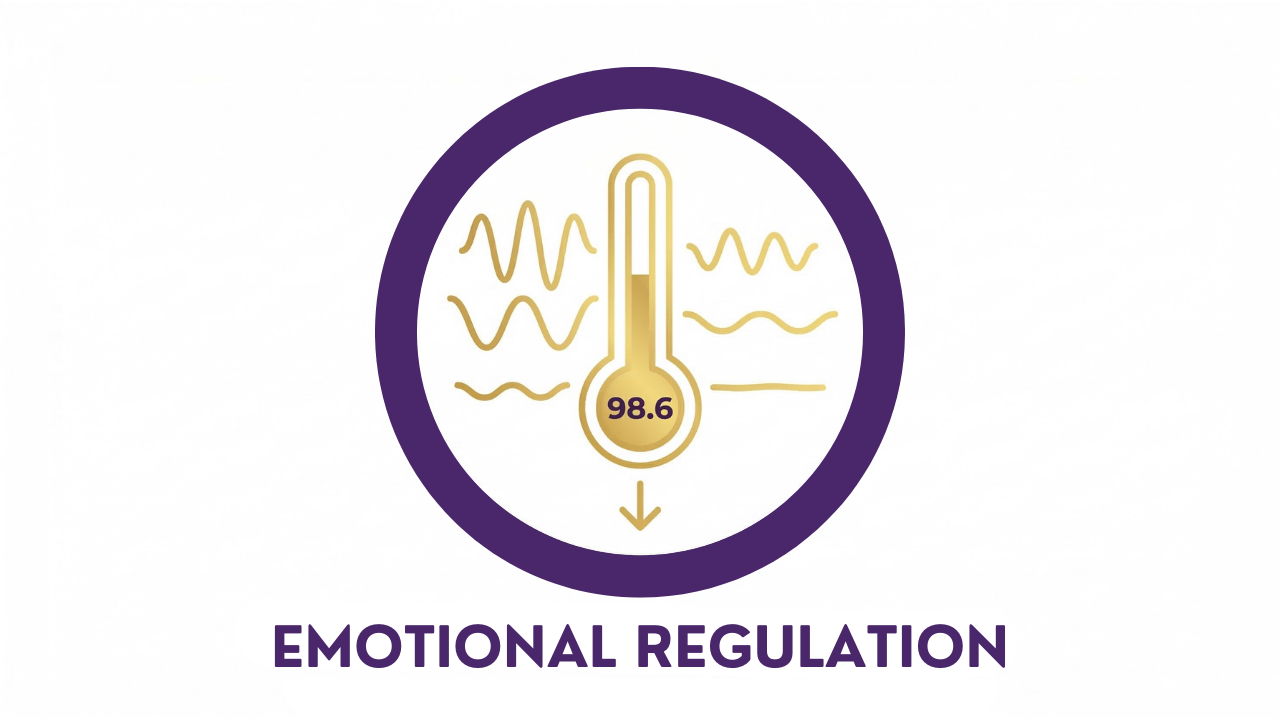
The research on childhood development tells us something radical: your emotional thermostat is set in childhood, not by your willpower in adulthood. If you grew up in a chaotic, fear-filled, or emotionally disorganized environment, your nervous system learned that high-intensity states were normal. Safe, even. Familiar.
Now, as an adult, calm feels wrong. Wrong enough that your system pulls you back to what feels right—which is the chaos you know.
Your Emotional Thermostat Was Set in Childhood
Here’s the neurological truth that changes everything: When our lives have been chaotic and disorganized, filled with fear, our emotional thermostats run between 105 and 110 degrees. That just feels normal.
Think about the people you know who can’t sit still. They’re always doing something, always moving, always adding more to their plate. They’re not lazy or lazy in disguise—they’re someone whose emotional thermostat is off the chart because they grew up in chaos.
That’s you if you identify as a chronic “doer,” if stillness makes you anxious, or if you feel most comfortable when there’s a crisis to manage.
Your childhood taught your nervous system that certain emotional and chemical states were survival. Whether it was anger, fear, shame, abandonment, or hypervigilance—your body learned to produce and expect certain chemical cocktails (cortisol, adrenaline, dopamine misfires, oxytocin disruptions).
Your brain became addicted to these states. Not because you wanted to be damaged, but because addiction to known patterns is how the brain conserves energy and interprets safety.
The brain can’t tell right from wrong. It only knows known vs. unknown. And it will fight hard to keep you in the known, even if the known is painful.
That’s you if you’ve noticed that you attract the same type of relationship over and over, or you sabotage success right when it’s within reach, or you default to anger when you’re actually afraid.
The Chemical Addiction That Runs Your Life
About 70% of childhood messaging is negative and shaming. That means most of us grew up marinating in fear, criticism, abandonment, or inadequacy. Those emotional states create chemical cocktails in your body.
Your brain, acting as an excellent survival system, became dependent on these patterns. Now, as an adult, your nervous system will create circumstances, conflicts, or crises to produce the chemicals it knows.
This is why you can’t just “think your way” to emotional stability. You can’t positive-think your nervous system out of a chemical addiction that was hardwired before you had language.
The Worst Day Cycle™: How Trauma Creates Addiction
Understanding emotional instability requires understanding the Worst Day Cycle™—the four-stage blueprint that runs in the background of your life.
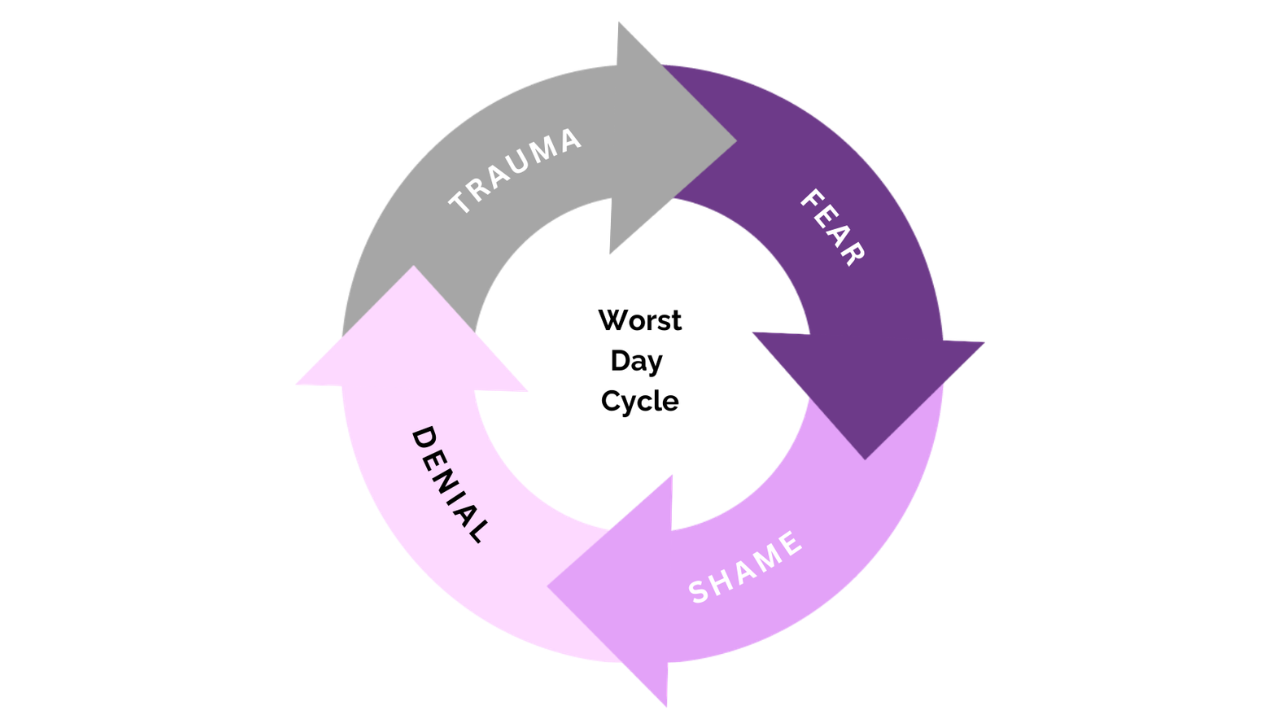
Stage 1: Trauma (The Painful Meaning)
Trauma isn’t just big events. Trauma is any negative emotional experience that created a painful meaning about you, your relationships, or your safety.
A critical parent. Emotional abandonment. Feeling unseen. Being blamed for someone else’s emotions. These create painful meanings: I’m not good enough. I can’t trust anyone. I have to earn love. I’m too much. I’m not enough.
That’s you if you grew up believing something fundamentally wrong about yourself that you’ve carried into every relationship and career decision.
Stage 2: Fear (The Repetition Drive)
Trauma triggers the hypothalamus, which generates chemical cocktails flooding your system. Your brain learns: This pattern = survival.
Fear drives repetition. Your brain thinks repetition equals safety. So you unconsciously create or attract situations that match your childhood blueprint—not because you want to suffer, but because suffering feels like home.
Stage 3: Shame (The Loss of Self)
Shame is where you lost your inherent worth. Where you decided “I am the problem.”
This is different from guilt (I made a mistake). Shame says I am a mistake. Shame is the ground zero of emotional instability because it tells you that you’re fundamentally broken, and broken things can’t regulate.
That’s you if you feel like something is wrong with you that no amount of achievement, perfection, or people-pleasing can fix.
Stage 4: Denial (The Survival Persona)
Denial is brilliant in childhood. It’s how you survived. Your survival persona is the mask you created to protect yourself from unbearable pain.
But that brilliant survival tool is sabotaging your adult life. You can’t find emotional stability while you’re in denial about what you’re really feeling.
The Three Survival Personas That Keep You Unstable
The Worst Day Cycle™ doesn’t exist in abstract—it lives in how you show up. Your survival persona is your strategy for managing the pain you learned in childhood.
The Falsely Empowered Survival Persona
Strategy: Control, dominate, rage. If I’m powerful enough, I can prevent the pain that hurt me in childhood.
You grew up learning that vulnerability got you hurt, so you decided: Never again. You control situations, people, outcomes. You rage when things don’t go your way. You’re commanding, intimidating, sometimes charming—but always in charge.
That’s you if people describe you as intense, demanding, or if you can’t relax unless everything is exactly as you’ve planned it.
The Disempowered Survival Persona
Strategy: Collapse, people-please, disappear. If I’m small enough, safe enough, good enough, maybe I won’t be hurt.
You learned that standing up for yourself brought consequences, so you learned to collapse, to acquiesce, to prioritize everyone else’s emotions over your own reality. You people-please until you resent. You accommodate until you’re invisible.
That’s you if you struggle to say no, if you prioritize harmony over honesty, if you’re always the “good one” while secretly bitter about it.
The Adapted Wounded Child Survival Persona
Strategy: Oscillate between both. You flip between controlling and collapsing depending on the situation, the person, or how dysregulated you feel.
Sometimes you’re the one making all the decisions. Sometimes you’re the one accommodating everyone else. You swing between these poles depending on context, and the inconsistency confuses both you and the people in your life.
That’s you if people describe you as unpredictable, or if your closest relationships feel like you’re riding a roller coaster between harmony and conflict.
The challenge: All three survival personas are brilliant adaptations to painful childhoods, and all three make emotional stability impossible. You can’t regulate when you’re in denial about what you’re actually feeling.
What Your Nervous System Actually Needs
Here’s what changes everything: Your emotional thermostat doesn’t have to stay where it was set in childhood. Your nervous system can be retrained. But not through willpower. Through titration.
Titration: Teaching Your Nervous System to Regulate
Titration is teaching your nervous system instead of the thermostat being stuck up here, you’re teaching that it can move. That it can get unstuck and regulate.
Instead of forcing yourself into balance, titration is about slowly, incrementally teaching your nervous system that it can sustain lower-intensity emotional states. That calm isn’t dangerous. That you don’t need chaos to feel alive.
Titration happens in small moments: You notice you’re about to explode, and you pause for 15 seconds. You catch yourself people-pleasing before you’ve completely abandoned yourself. You feel the urge to create drama and you sit with the boredom instead.
That’s you if you’re tired of being at the mercy of your nervous system and ready to actually teach it something new.
Attunement: The Root of Emotional Regulation
A child cannot regulate their emotions alone. The parent’s regulated nervous system becomes the template for the child’s internal regulation. Attunement is the nervous-system root of emotional adulthood.
If you didn’t have a regulated parent, you didn’t get the template. You didn’t learn that feelings could be felt and survived. So now, as an adult, big feelings trigger you because they feel dangerous—like they might consume you.
This means you have to become your own attuned parent. You have to learn to be with your own dysregulation. To witness your own nervous system. To say: “I’m scared, and I can handle this. I’m angry, and I can move through this. I’m ashamed, and I’m still worthy.”
The Emotional Authenticity Method™: 6 Steps to Real Regulation
Emotional stability isn’t about suppressing emotions or achieving balance. It’s about developing emotional authenticity—the ability to feel what you actually feel, understand what it means, and move through it without being controlled by it.
Emotions are constantly regulating what we experience as reality. You are coloring everything through an emotional prism before you ever get to intellect.
Step 1: Somatic Down-Regulation
When you’re dysregulated, your thinking brain is offline. You can’t access wisdom, nuance, or perspective. You’re in pure survival.
Somatic down-regulation means using your body to calm your nervous system. The simplest, most portable tool: focus on what you can hear for 15-30 seconds. Just listen. Your nervous system recognizes that you’re not in active danger if you have the resources to notice sound.
If you’re highly dysregulated (rage, panic, complete shutdown), you may need more titration: stepping outside, cold water on your face, movement, or holding ice. The goal is to signal to your nervous system: “We survived. We’re safe now.”
That’s you if you’ve ever said something in anger you regretted, or made a major decision while upset—somatic regulation happens before you say or do anything.
Step 2: Name the Feeling (With Granularity)
Once you’re regulated enough to think, the next step is: What am I feeling right now?
Not “I’m fine” or “I’m upset.” Emotional granularity—specific feeling words. Frustrated vs. disappointed. Anxious vs. terrified. Sad vs. numb.
Use the Feelings Wheel, which maps out the full spectrum of human emotion with precision. When you name a feeling specifically, you activate the thinking parts of your brain. You move from pure emotion to emotion with awareness.
That’s you if you’ve said “I don’t know what I’m feeling” and meant it—you were never taught the emotional vocabulary to recognize your inner world.
Step 3: Locate the Feeling in Your Body
Where in my body do I feel it?
Emotions live in your body. Anxiety in your chest. Shame in your belly. Grief in your throat. When you locate the feeling physically, you’re creating a bridge between your emotional experience and your somatic reality.
This prevents the spiritual-bypassing trap where you intellectually understand your emotions but never actually feel or move through them.
Step 4: Connect to Your Earliest Memory of This Feeling
What is my earliest memory of having this exact feeling?
This is where you meet your emotional blueprint. That anxiety you feel right now? It might be connected to abandonment you felt at age six. That shame? It might trace back to a critical parent or a traumatic social moment.
When you connect current emotion to its origin, something radical happens: You see this isn’t about today. This is about then. You’re no longer a child. You have resources, agency, and choice. The feeling is valid, but the story isn’t current.
That’s you if you’ve overreacted to something small and later thought, “Why did that hit me so hard?” The answer is usually childhood.
Step 5: Envision Your Authentic Self
Who would I be if I never had this thought or feeling again?
This shifts you from problem-focused to solution-focused. Instead of “How do I fix that I’m anxious?” you ask “Who is the version of me that moves through the world without this anxiety controlling my choices?”
That version exists. That’s your Authentic Self—the you that’s underneath the survival persona, underneath the fear, underneath the denial.
Step 6: Feelization—Create a New Chemical Addiction
The final step is the most powerful: Sit in the feeling of the Authentic Self and make it strong.
This is called Feelization. Not visualization—feelization. You’re not just picturing your Authentic Self; you’re feeling into that identity. You’re creating a new emotional chemical addiction to replace the old blueprint.
Close your eyes. Feel what it feels like in your body to be the version of you that isn’t controlled by childhood wounds. Feel the confidence. The peace. The agency. The worthiness. Hold that feeling. Make it vivid. Make it real. Make it strong.
You’re literally rewiring your nervous system by creating a new emotional baseline to aim for. Instead of your brain pulling you back to chaos (because chaos is familiar), you’re creating a new familiar: the Authentic Self.
That’s you if you’re ready to stop being run by your past and start being drawn toward your actual potential.
The Authentic Self Cycle™: Your Path to Healing
If the Worst Day Cycle™ is how your emotional blueprint got stuck, the Authentic Self Cycle™ is how you unstick it.
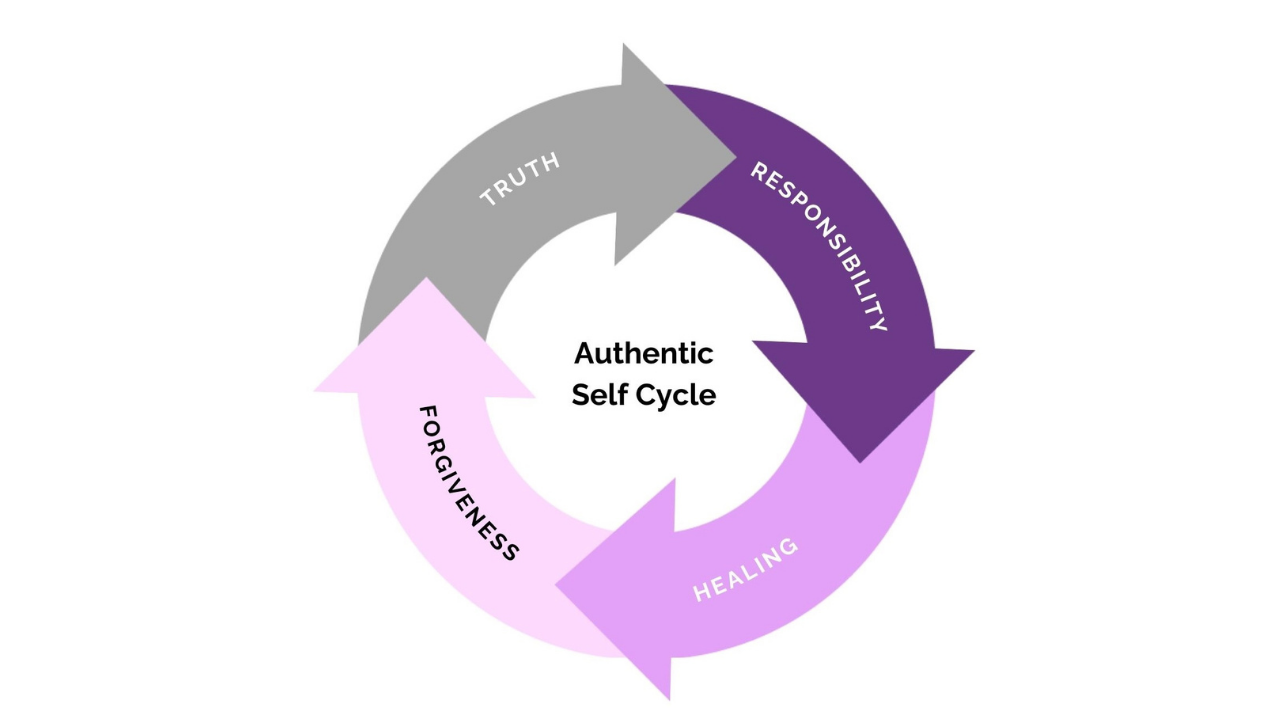
Stage 1: Truth
Name the blueprint. See “This isn’t about today.”
You can’t heal what you won’t acknowledge. Truth means looking at the patterns—in relationships, career, health, everything—and seeing the blueprint underneath. It means recognizing: “I keep attracting the same partner because I’m unconsciously drawn to familiar pain.” Or: “I sabotage success because my parent taught me I didn’t deserve it.”
Truth is uncomfortable. But it’s the ground you stand on to change.
Stage 2: Responsibility
Own your emotional reactions without blame.
This is not the same as shame. Responsibility means: “My parents created my blueprint, but I’m the one responsible for healing it. I can’t change what happened to me, but I can change what I do with it.”
You’re not responsible for being wounded. You are responsible for the healing. That’s actually good news, because it means you have agency.
Stage 3: Healing
Rewire the emotional blueprint so conflict becomes uncomfortable but not dangerous.
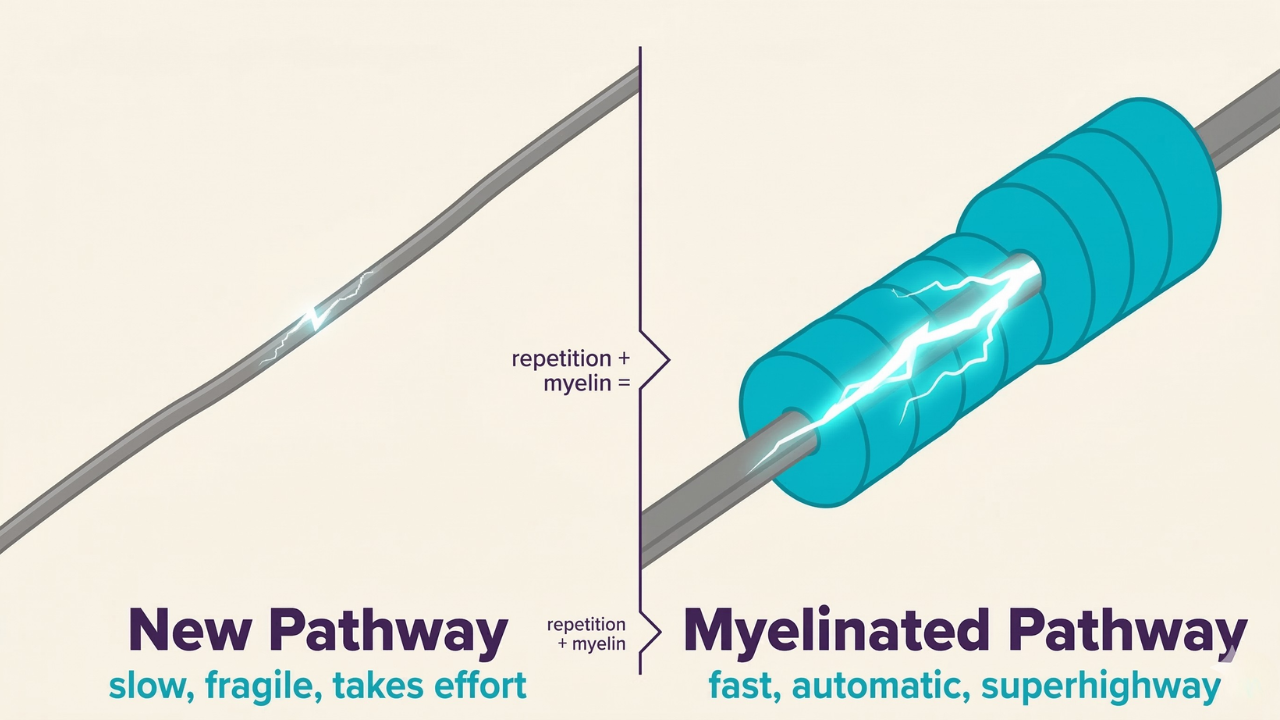
This is where you use titration, the Emotional Authenticity Method™, and deliberate practice to create new neural pathways. Your nervous system learns: Conflict doesn’t mean abandonment. Assertiveness doesn’t mean rage. Vulnerability doesn’t mean weakness.
Healing is not fast, and it’s not one-time. It’s gradual rewiring. But every time you move through a feeling with awareness instead of reactivity, you’re building a new path in your brain.
Stage 4: Forgiveness
Release the inherited emotional blueprint and reclaim your authentic self.
Forgiveness isn’t about the people who hurt you. It’s about releasing your attachment to the blueprint they gave you. It’s about saying: “What happened to me was real. It shaped me. And it doesn’t have to define me anymore.”
When you forgive, you’re not saying “What you did was okay.” You’re saying “I’m no longer carrying this weight.”
How Instability Shows Up in Every Area of Your Life
Moderation is not avoiding or magnifying emotions. It’s being appropriate in the level of emotionality your situation actually calls for. When your thermostat is stuck high, everything triggers an outsized response.
Family: The Unhealed Original Blueprint
Signs of emotional instability in family relationships:
- You’re still reactive to your parent’s criticism (real or imagined)
- You either cut contact or stay enmeshed with no middle ground
- Family gatherings trigger shame spirals or rage
- You repeat your parent’s emotional patterns with your own children
- You feel responsible for managing a parent’s emotions
That’s you if you’ve said, “My family of origin will never change” and meant it—and felt both relieved and devastated about that.
Romantic Relationships: The Trauma Bond Cycle
Signs of emotional instability in romantic partnerships:
- You’re drawn to partners who recreate your childhood wounds
- You oscillate between pursuing and withdrawing
- You can’t have a disagreement without it feeling like abandonment
- You’re either fully merged or completely separate
- You stay in relationships that hurt you because at least they’re familiar
This is the trauma bond at work. Your nervous system recognizes the familiar emotional chemistry and confuses it with love. Learn more about enmeshment and healthy boundaries.
Friendships: The Performance Trap
Signs of emotional instability in friendships:
- You people-please until you resent your friends
- You can’t ask for support without shame
- You’re the listener but never the one being listened to
- You’re afraid to be authentic because you might be rejected
- You have lots of surface friendships but no deep ones
That’s you if you’re known as the “good friend” but secretly feel unseen and undervalued.
Work: The Achievement/Collapse Cycle
Signs of emotional instability in career:
- You achieve, then self-sabotage
- You’re driven by fear of failure or abandonment, not actual passion
- You either overwork or completely check out
- You can’t take criticism without shame flooding your system
- You’re unfulfilled even when you “make it”
Many high achievers fail at love because they’re driven by proving worth, not building actual security.
Body and Health: The Nervous System’s Message
Signs of emotional instability in health:
- Chronic pain or tension (your body holding stress)
- Digestive issues triggered by anxiety
- Sleep disruption (your nervous system can’t down-regulate)
- You’re drawn to substances or behaviors that numb emotions
- You swing between deprivation and excess (food, exercise, sleep)
That’s you if your body is keeping score of emotions your mind won’t acknowledge.
People Also Ask
What’s the difference between emotional balance and emotional authenticity?
Balance suggests a static state where you’re always calm, always centered, always in control. Emotional authenticity is the ability to feel what you actually feel, understand it, and move through it with awareness. You might feel angry, sad, or scared—and that’s authentic. What changes is that you’re no longer run by those feelings; you’re moved by them. Authenticity includes the full spectrum of human emotion, held with maturity and responsibility.
How long does it take to retrain your emotional thermostat?
There’s no fixed timeline, but research on neuroplasticity suggests that consistent practice creates measurable change in 6-12 weeks. However, complete rewiring of a nervous system that’s been dysregulated for 20, 30, or 40 years? That’s a multi-year journey. The good news: you start feeling different in weeks. Understanding that emotional stability is a practice, not a destination, helps you stay committed through the work.
Can I heal my emotional blueprint without therapy?
Education, self-awareness, and deliberate practice can create real change. Books, courses, and community can all contribute. However, most people benefit from skilled guidance—whether that’s therapy, coaching, or structured programs—because old patterns are invisible to us. We can’t see what we can’t see. A trained professional can help you recognize the blueprint that you’ve been living inside of without recognizing it.
What if I’m the Falsely Empowered persona and my partner is Disempowered?
You’ve likely created a dynamic where one person controls and the other accommodates. This feels stable to both of you initially—you get to be in charge, they get to avoid responsibility. But this dynamic creates hidden resentment, prevents real intimacy, and ensures neither person can fully heal. Both people need to recognize their own survival persona and start moving toward authenticity. Learn more about building healthy relationship dynamics.
Is moderation possible if my childhood taught me extremes?
Yes—and that’s what titration teaches you. Moderation isn’t some magical state you arrive at; it’s a skill you build through practice. Titration is incremental: you practice being uncomfortable without numbing. You practice being still without creating crisis. You practice assertiveness without rage. Each time you do this with awareness, you’re teaching your nervous system that moderation is safe. That balance is possible. That calm doesn’t mean you’ve given up.
How do I know which survival persona I use?
Pay attention to your patterns under stress. When conflict arises, do you take charge (falsely empowered)? Do you retreat or accommodate (disempowered)? Do you flip between both (adapted wounded child)? Look at your closest relationships—how do people describe you? How do you describe yourself? Usually, your dominant survival persona shows up most in situations where you feel unsafe or out of control. Remember: all three personas are brilliant adaptations. None of them are character flaws. They kept you alive. The question now is: do they still serve you?
The Bottom Line
You’ve been chasing balance your whole life, but your nervous system wasn’t built for it. It was built for survival—whatever survival looked like in your childhood.
The good news: your nervous system can learn that it’s safe to regulate. That calm is stable, not boring. That vulnerability is strength, not weakness. That you’re worthy not because you achieve or accommodate, but because you exist.
But learning requires more than knowing. It requires feeling. It requires practice. It requires becoming your own attuned parent—witnessing your dysregulation, coaching yourself through it, celebrating the moments when you choose authenticity over survival.
Every time you notice you’re about to explode and you pause for 15 seconds. Every time you name a feeling with specificity instead of numbing it. Every time you sit in the boredom instead of creating crisis. Every time you assert yourself without rage, or relax without collapsing—you’re rewriting your emotional thermostat.
You’re teaching your nervous system: You’re safe. You can regulate. You can be yourself.
That’s not balance. That’s freedom.
Take the Next Step
Understanding your emotional blueprint is the beginning. The real transformation happens when you have structure, community, and expert guidance to rewire it.
Emotional Blueprint Starter Course — Individual ($79) — Start with a foundational understanding of your emotional blueprint and the three survival personas.
Tier 1: Mapping the Blueprint ($1,379) — Our signature program teaching you the complete Emotional Authenticity Method™, the Worst Day Cycle™, and the Authentic Self Cycle™ with live group coaching, accountability, and community.
Why High Achievers Fail at Love ($479) — If you’re successful in career but struggling in relationships, this program shows you how your achievement drive is actually your survival persona in disguise.
Why We Can’t Stop Hurting Each Other ($479) — Understand the hidden dynamics that keep couples locked in painful cycles of conflict, control, and emotional distance.
The Shutdown Avoidant Partner ($479) — If your partner shuts down, withdraws, or stonewalls, this program reveals the survival persona driving their behavior and how to break the cycle.
Relationship Starter Course — Couples ($79) — Understand how you and your partner are triggering each other’s survival personas and learn the non-negotiables for healthy partnership.
Recommended Reading
- Facing Codependence by Pia Mellody
- The Myth of Normal by Gabor Maté
- Codependent No More by Melody Beattie
- Dare to Lead by Brené Brown
- Hold Me Tight by Sue Johnson