Toxic shame is the internalized belief that you are fundamentally defective, unlovable, and unworthy of authentic connection. Unlike healthy shame—which teaches us that mistakes are human—toxic shame makes you the mistake. It’s not about what you did; it’s about who you believe you are. This pervasive sense of worthlessness originates in childhood through emotional abandonment and develops into a survival persona that sabotages relationships, careers, health, and every area of adult life.
Table of Contents
- Toxic Shame Defined: The Loss of Your Authentic Self
- How Toxic Shame Forms in Childhood
- The Root: Emotional Abandonment
- The Worst Day Cycle™: How Shame Perpetuates
- Three Survival Persona Types
- 24 Signs of Toxic Shame (By Life Area)
- From Worst Day Cycle™ to Authentic Self Cycle™
- The Emotional Authenticity Method™: Your Healing Path
- Toxic vs. Healthy Shame
- People Also Ask: FAQ
- The Bottom Line
- Recommended Reading & Resources
- Next Steps: Start Your Healing Today
Toxic Shame Defined: The Loss of Your Authentic Self
When you carry toxic shame, you’ve lost the ability to distinguish between what you did and who you are. A child who makes a mistake hears from a shaming parent: “You’re stupid,” not “That was a poor choice.” The behavior becomes fused with identity.
As author John Bradshaw wrote, “When we are continuously overexposed without protection, shame becomes toxic. The self becomes an object of its own contempt, an object that can’t be trusted.” This is the essence of toxic shame—your nervous system learned early that you are the problem, not the circumstance.
Unlike guilt—which says “I made a mistake”—shame says “I am a mistake.” Guilt is temporary and correctable. Shame is permanent and pervasive. It lives in your body as a chemical cocktail your brain released during your most vulnerable moments, and your nervous system learned to repeat this pattern as a way to stay safe.
Toxic shame is the fundamental belief—held in your nervous system—that your authentic self is defective, that your emotions are too much, that you need to hide who you really are to be acceptable. It’s the deep conviction that if people truly knew you, they would abandon you.
How Toxic Shame Forms in Childhood: The Mirroring Mirror Lost
Children cannot know who they are without mirrors. These mirrors are your primary caregivers. In the first years of life, a caregiver’s job is to reflect back to the child: “I see you. Your emotions matter. You are safe. You belong.”
When this mirroring fails—through emotional abandonment, enmeshment, perfectionist demands, or neglect—the child internalizes a different message: “I’m too much. I’m not enough. I’m unlovable. I need to hide.”
The child then creates a survival persona — an identity designed to be acceptable, to earn love, to prevent abandonment. That’s you if you’re a people-pleaser, a high achiever, a caretaker, a controller, or someone who goes numb when conflict arises. Your survival persona isn’t weakness—it was brilliant in childhood. Now it’s sabotaging you.
The Root: Emotional Abandonment (It’s More Common Than You Think)
Emotional abandonment doesn’t require absence. Your parent could be physically present but emotionally shut down—unable to attune to your feelings because they never learned how. They might shame you for crying, for being “too sensitive,” for needing anything. They might use you to meet their emotional needs instead of meeting yours.
As Pia Mellody teaches, emotional abandonment includes:
- Enmeshment: Parent uses child as emotional support, making child responsible for parent’s feelings. “You’re my rock.” “Without you, I couldn’t survive.” That’s you becoming the surrogate spouse.
- Perfectionism: Parent demands flawlessness. Mistakes mean rejection. You learn: “I must be perfect to be worthy.”
- Emotional Unavailability: Parent is shut down, dismissive, or cold. “Stop crying. Toughen up. I don’t have time for this.” The message: your emotions are burdensome.
- Parentification: Child is forced to grow up too fast, manage household, caretake younger siblings or the parent. Childhood is sacrificed for adult responsibility. “Act your age—you’re 8 but you’re my little helper.”
- Neglect: Caregiving is inconsistent or absent. Child is left in daycare without secure attachment, or literally parentless. The repeated message: nobody’s coming.
The result? That’s you— the adult who still doesn’t believe you’re worth protecting. The one who settles in relationships because you don’t expect better. The one who overworks to prove your value. The one who goes numb when intimacy is offered because connection feels dangerous.
The Worst Day Cycle™: How Shame Becomes a Life Pattern
Here’s what nobody teaches you: your brain becomes chemically addicted to the emotional states of your childhood. Trauma creates a specific neurochemical pattern—cortisol, adrenaline, dopamine dysregulation, oxytocin misfires. Your hypothalamus released these chemicals during your most painful moments. Your brain learned: this is what safety feels like.
This is the Worst Day Cycle™—a four-stage loop that explains why you keep repeating the same painful patterns despite consciously wanting something different.
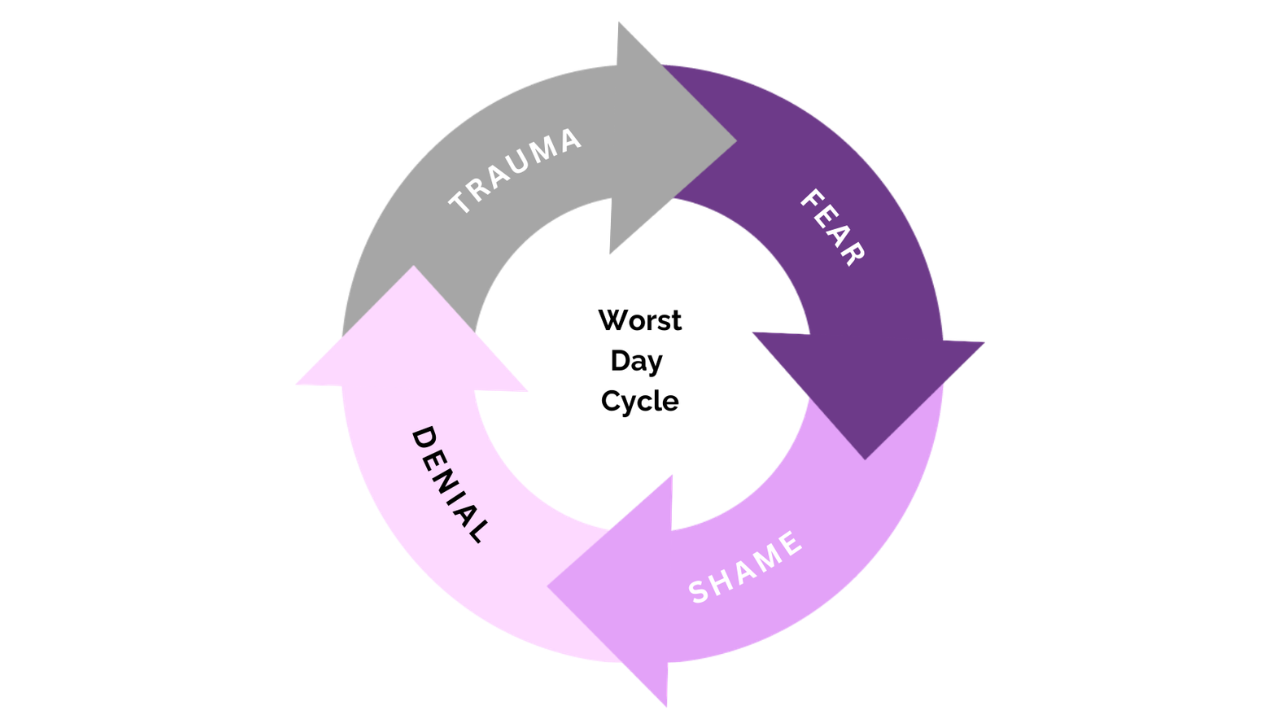
Stage 1: Trauma (The Blueprint)
Childhood emotional experience (any moment of shame, abandonment, enmeshment) creates painful meanings: “I’m not safe. I’m unlovable. I’m alone. I’m responsible for others’ emotions.”
Stage 2: Fear (The Repetition Compulsion)
Your nervous system learned that repetition = safety. Your brain cannot tell right from wrong—it only knows familiar vs. unfamiliar. So you unconsciously recreate childhood dynamics in adult relationships. That’s you— choosing partners who abandon you like your parents did, or becoming the abandoner before they can leave.
Stage 3: Shame (The Identity Collapse)
When the painful pattern repeats, shame hits: “I’m the problem. I’m defective. There’s something fundamentally wrong with me that makes people leave.” This isn’t situational shame about a mistake—this is identity shame. You don’t just feel bad; you feel bad about who you are.
Stage 4: Denial (The Survival Persona Activation)
To survive the unbearable feeling of being fundamentally flawed, you unconsciously activate your survival persona. You control, perform, numb, collapse, or disappear. The survival persona says: “If I just become who they need, maybe I won’t be abandoned again.” It’s brilliant protection. It’s also keeping you stuck.
The Worst Day Cycle™ perpetuates because 70%+ of childhood messaging is negative and shaming. Your brain wired these neural pathways so efficiently that now, as an adult, you activate them automatically—in seconds—when triggered. You’re not choosing this pattern. Your nervous system is.
Three Survival Persona Types: How Toxic Shame Shapes Your Identity
Your survival persona is not your personality—it’s a brilliant adaptation to childhood pain. Identifying your type is step one toward reclaiming your authentic self.
The Falsely Empowered Persona (The Controller)
That’s you— if you rage, dominate, control, achieve obsessively, or manage everyone around you. Your childhood message was: “Vulnerability means death. Only the strong survive.” So you learned to never be soft, never need, never ask for help. You’re the caretaker, the high achiever, the “I don’t need anybody” person.
Your shadow: beneath the control is terror. You rage because you feel helpless. You achieve because you believe you’re only worthy if you’re producing. You can’t receive love because it requires vulnerability.
The Disempowered Persona (The Collapser)
That’s you— if you people-please, apologize for existing, abandon yourself to keep the peace, or collapse when conflict arises. Your childhood message was: “Your needs don’t matter. Your emotions are too much. Disappear and you’ll be safe.” So you learned to shrink, accommodate, and make yourself small. You’re the “nice” one. You’re the rescuer. You don’t know what you want because your wants were never welcomed.
Your shadow: beneath the niceness is rage that you’ve never permitted yourself to feel. You resent those you’ve sacrificed for. You feel invisible and exploited. You can’t say no because rejection of your request feels like rejection of you.
The Adapted Wounded Child (The Oscillator)
That’s you— if you swing between falsely empowered and disempowered depending on context. You’re the rigid controller at work and the people-pleaser at home. You’re explosive one moment and collapsed the next. You never found a stable survival persona, so you oscillate between both poles—exhausting and confusing.
Your shadow: you’ve adapted to unpredictability. Your childhood was chaotic. One parent might have been empowered, the other disempowered. You learned to mirror whichever persona would keep you safe in that moment.
24 Signs of Toxic Shame (By Life Area)
Toxic shame doesn’t show up the same way in everyone. Here’s how it manifests across different areas of your adult life:
In Family Relationships
- Feeling used, treated with little or no respect by parents or siblings
- Enmeshment: you’re responsible for parents’ emotional wellbeing
- Inability to set boundaries without excessive guilt
- Feeling like an outsider or the “scapegoat” in your family of origin
In Romantic Relationships
- Poor relationship stability, repeated patterns of conflict or abandonment
- Triggered by perceived criticism, disapproval, or rejection
- Can’t be your true self with your partner; hiding parts of yourself
- Codependence: over-accommodating, losing yourself in the relationship
- Worrying constantly about what your partner thinks of you
- Fear of intimacy; vulnerability feels dangerous
Sound familiar? The person who gives everything in a relationship and then wonders why they feel invisible — that’s the toxic shame pattern running your love life.
In Friendships
- Suspicion and distrust; difficulty believing others genuinely care
- Feeling like you don’t belong or are different from everyone else
- Fear of exposure—hiding your true thoughts and feelings to avoid embarrassment
- Wallflower tendency; not wanting to be center of attention, withdrawing
- Wanting to have the last word in disagreements (shame-driven need to prove yourself)
In Work/Achievement
- Perfectionism: making mistakes feels like personal failure
- Workaholism: proving your worth through productivity
- Grandiosity: overcompensation through arrogance or superiority
- Feeling like an imposter despite accomplishments
- Fear that you don’t have real impact or that you’re not good enough
That’s you — the one who built an empire on shame and calls it ambition.
In Body/Health & Emotional Life
- Addiction (drugs, alcohol, sex, food, shopping, work)
- Self-loathing: internal narrative of “I’m stupid, defective, a failure, unlovable, shouldn’t have been born”
- Anger toward yourself and others
- Worry, anxiety, and pervasive fear
- Feeling numb or dissociated from your emotions (can’t feel anything)
- Regret, rumination about past mistakes
- Secrecy and isolation; fear of exposure
That’s you — the person who numbs with food, scrolling, or alcohol because feeling anything fully was never safe.
If you resonate with multiple signs across life areas, you’re not broken—you’re carrying an emotional blueprint from childhood. Your nervous system learned this language early. The good news: nervous systems can rewire.
From Worst Day Cycle™ to Authentic Self Cycle™: The Path Forward
The Worst Day Cycle™ is not permanent. It’s a pattern your nervous system learned because it once meant survival. Now it means suffering. The antidote is the Authentic Self Cycle™.
The Authentic Self Cycle™: Four Stages of Reclamation
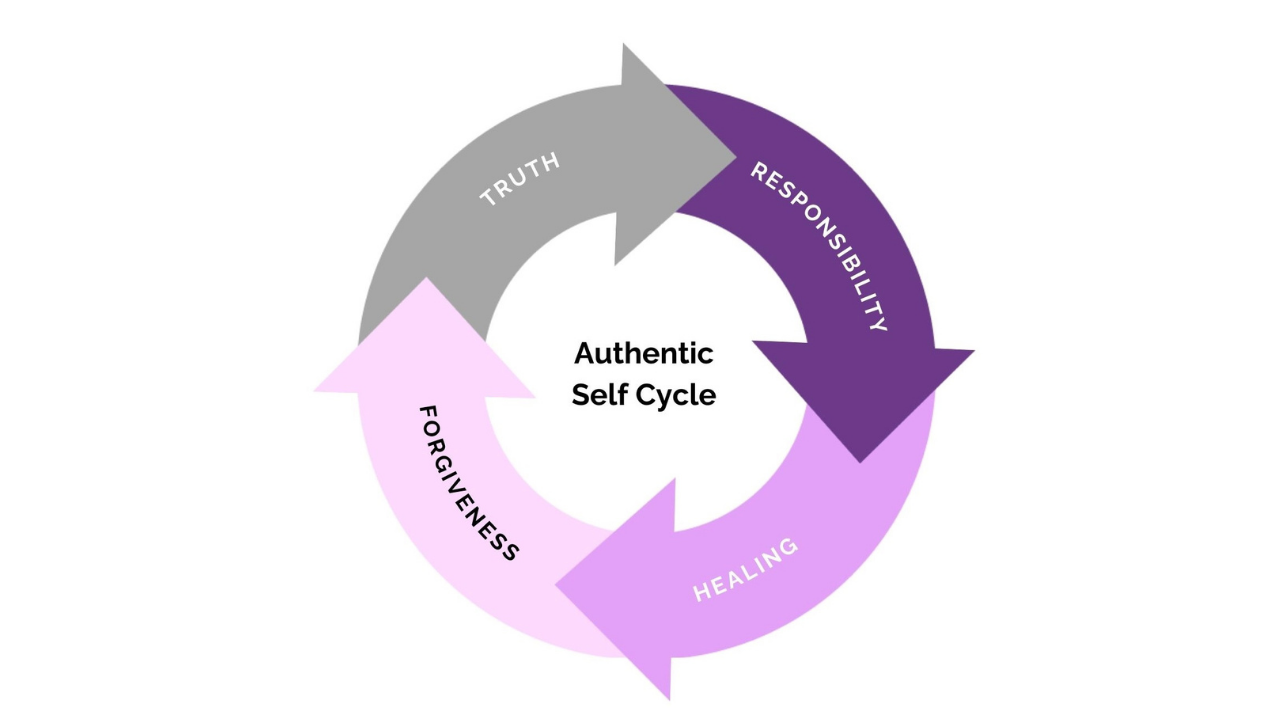
Stage 1: Truth
Name the blueprint. See the pattern clearly: “This anger I feel toward my partner isn’t about today—it’s about my father’s abandonment. My nervous system believes this is happening again.” Truth isn’t blame. It’s clarity. You’re not blaming your parents for your adult patterns; you’re acknowledging where they originated.
Stage 2: Responsibility
Own your nervous system’s reactivity without blame. “I choose to take responsibility for my emotional reactions without making it my partner’s fault or my fault for ‘being broken.’” Responsibility is the bridge between victim consciousness and empowerment. You’re not responsible for your nervous system’s encoding—but you are responsible for rewiring it now.
Stage 3: Healing
Rewire the emotional blueprint so that conflict becomes uncomfortable but not dangerous, space isn’t abandonment, intensity isn’t attack. This happens through the Emotional Authenticity Method™ (see below).
Stage 4: Forgiveness
Release the inherited emotional blueprint. Forgive your parents not because they deserve it, but because carrying resentment keeps you chemically bound to them. Forgiveness is freedom—you’re choosing to stop letting their emotional wounds run your life.
That’s you— moving from “my parents ruined me” to “my parents did the best they could with their own unhealed wounds, and now I choose to heal mine.”
The Emotional Authenticity Method™: Your Healing Path
You cannot heal toxic shame through thoughts alone. Toxic shame is not a cognitive problem—it’s a biochemical problem. Your emotions are not thoughts; thoughts originate from feelings. This is why willpower fails. This is why positive affirmations don’t work. You’re trying to think your way out of something your body remembers.
The Emotional Authenticity Method™ is a somatic (body-based) five-step process designed to rewire your emotional blueprint from the nervous system up:
Step 1: Somatic Down-Regulation (With Optional Titration)
When shame activates, your nervous system floods with cortisol and adrenaline. You’re in fight-or-flight. You cannot think, cannot access wisdom, cannot connect. First, you regulate your nervous system back to the window of tolerance—the zone where healing is possible.
Techniques: box breathing, cold water immersion, bilateral stimulation, grounding (5-4-3-2-1 sensory awareness). Titration means working with small doses of the activation so your system doesn’t get re-traumatized during healing work.
That’s you— learning that you can’t resolve the conflict until your nervous system is calm. That’s maturity. That’s emotional intelligence.
Step 2: Name the Feeling (Emotional Granularity)
Most people say “I feel bad” or “I feel angry.” This is vague. The Feelings Wheel teaches emotional granularity. Instead of “angry,” you might identify: “I feel disrespected. I feel powerless. I feel betrayed.”
Granularity activates your prefrontal cortex and shifts you from pure emotion into awareness. Naming is the beginning of power.
Step 3: Locate It in Your Body (Somatic Memory)
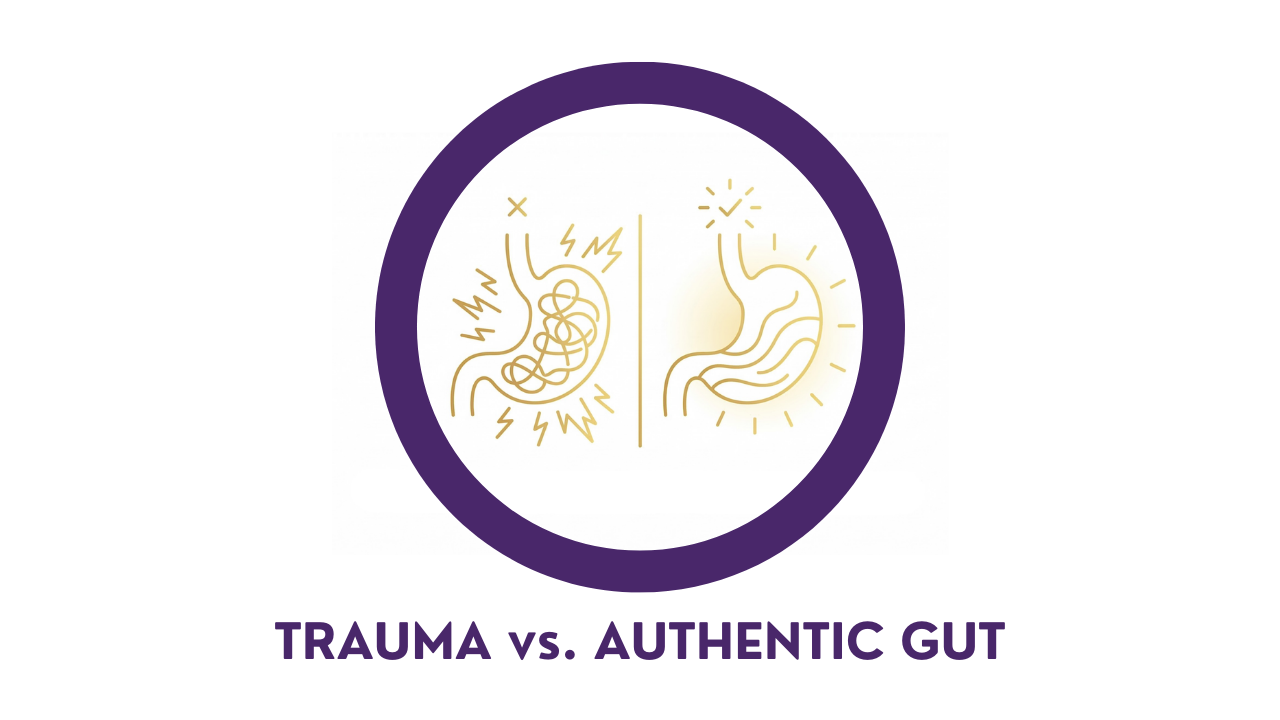
All emotional trauma is stored physically. You might feel shame as tightness in your chest, a lump in your throat, heaviness in your stomach, numbness in your limbs. These somatic markers are how your body remembers what your mind has tried to forget.
That’s you — wondering why your chest tightens every time your partner raises their voice, even though you know they’re not your parent.
Ask yourself: “Where in my body do I feel this shame?” Then place your hand there. Breathe into it. This is not painful catharsing—this is gentle witnessing. You’re telling your nervous system: “I see you. This makes sense. You learned this to protect me.”
Step 4: Trace to Origin (The Childhood Connection)
Ask: “What’s my earliest memory of feeling this way?” Suddenly you’re not dealing with your partner’s minor comment; you’re dealing with the moment your mother gave you that look. That moment your father ignored your raised hand. That moment you realized you weren’t safe.
This is the bridge: “My partner isn’t my parent. My nervous system is responding to my childhood blueprint, not to today.” This clarity is liberating.
Step 5: Envision the Authentic Self (The Vision Step)
Ask: “Who would I be if I never had this feeling again? What would I do? What would I say? How would I show up in relationships?”
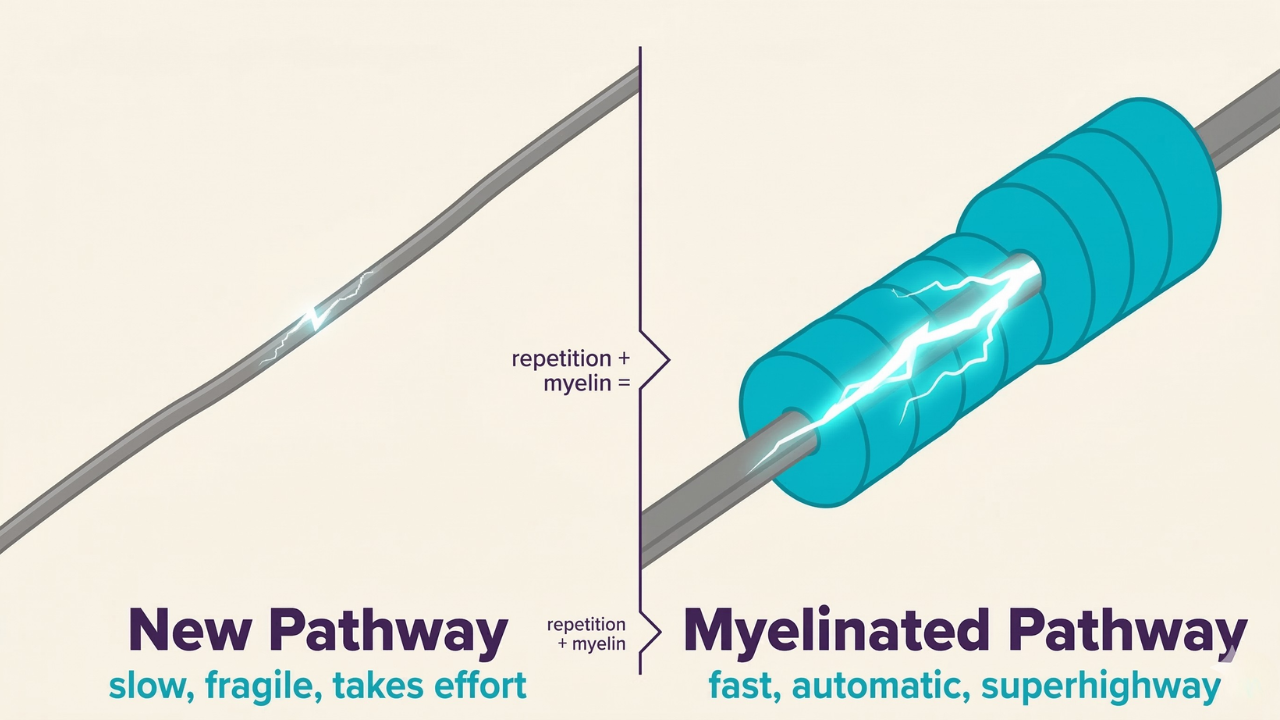
This isn’t toxic positivity or denial. This is your nervous system learning a new pattern. You’re literally building new neural pathways—myelin sheaths—around a healthier version of yourself.
You cannot think your way to healing, but you can feel your way there. The Emotional Authenticity Method™ works because it addresses the root: your nervous system’s emotional blueprint.
Toxic Shame vs. Healthy Shame: The Crucial Difference
Not all shame is toxic. Healthy shame is not a weakness; it’s a feature of emotional maturity.
Healthy Shame
- Sees mistakes as gifts and best teachers
- Contains grace, self-forgiveness, and acceptance of humanity
- Recognizes when help is needed and acknowledges limits
- Is creative: learns from others’ views rather than canceling those who trigger you
- Allows you to repair after conflict
- Is temporary and specific: “I made a poor choice in that moment”
Toxic Shame
- Sees mistakes as proof you’re defective
- Contains harsh self-criticism, perfectionism, and condemnation of your humanity
- Refuses help; must do everything alone to prove worth
- Is rigid: anyone who triggers you must be wrong or bad
- Makes repair impossible because admitting fault feels like annihilation
- Is pervasive and identity-based: “I am the problem”
Moving from toxic to healthy shame is the goal. You don’t eliminate shame—you integrate it. Learn more about healthy shame here.
How Toxic Shame Shows Up in Your Most Important Relationships
In Romantic Partnership
Toxic shame makes healthy intimacy nearly impossible. You either become the falsely empowered partner who controls and distances, or the disempowered partner who disappears and abandons yourself.
You pick partners who confirm your core shame belief: “See? I was right. I’m unlovable.” Then when they treat you poorly, you stay because part of you believes that’s what you deserve. Learn the 7 signs of insecurity in relationships here.
That’s you— recreating your parents’ dynamic even though you swore you’d never do that.
In Family Relationships
If your parents were emotionally unavailable, you might stay enmeshed—still responsible for their emotional wellbeing as an adult. Or you might cut contact entirely, which is sometimes necessary but often driven by shame and anger rather than healthy boundaries.
That’s you— managing your parent’s emotions while your own go unattended.
In Work/Achievement
Toxic shame drives two extremes: burnout through overachievement (proving your worth through productivity), or self-sabotage (unconsciously ensuring you never fully succeed because deep down you believe you don’t deserve it).
Discover the signs of genuine high self-esteem here. They look nothing like the false confidence of shame-driven achievement.
People Also Ask: FAQ About Toxic Shame
1. Is toxic shame the same as low self-esteem?
No. Low self-esteem is about not thinking much of yourself. Toxic shame is about believing you’re defective at your core. Someone with low self-esteem might say, “I’m not good at public speaking.” Someone with toxic shame says, “I’m not good at public speaking because I’m inherently flawed.” The difference is subtle but massive. Toxic shame contaminates every area of life because it’s identity-based.
2. Can toxic shame be healed?
Yes. Absolutely. It requires rewiring your nervous system’s emotional blueprint, which takes time and consistent effort, but thousands of people have moved from toxic shame to healthy self-awareness. The Authentic Self Cycle™ and Emotional Authenticity Method™ provide the roadmap.
3. Is it my parent’s fault that I have toxic shame?
Your parents did not intentionally create toxic shame in you. They passed down their own unhealed emotional blueprints. That said, the impact of their emotional unavailability is real and has shaped your life. The question isn’t blame—it’s: what are you going to do about it now? Healing requires acknowledging how childhood shaped you while taking responsibility for rewiring your adult patterns.
4. Why do I keep picking the same toxic people in relationships?
Because your nervous system recognizes the familiar pain of childhood. Your brain thinks, “This feels like home because it feels like my parents.” You’re unconsciously recreating childhood dynamics to try to get a different outcome. Until you rewire your emotional blueprint, you’ll keep attracting the same type of person.
5. Can I heal toxic shame on my own?
You can do some healing work alone through self-awareness and tools like the Emotional Authenticity Method™. However, because toxic shame often involves abandonment trauma, you heal fastest with safe, attuned relationships—whether that’s a therapist, coach, support group, or healing community. You need to experience what safety and attunement feel like from another person. Your nervous system learns through relational connection.
6. What’s the difference between shame and guilt, and why does it matter?
Guilt says, “I did something bad.” Shame says, “I am bad.” Guilt is about behavior and is correctable. Shame is about identity and is pervasive. Someone who feels guilt can apologize, make amends, and move forward. Someone in toxic shame cannot apologize without feeling like they’re confirming their unworthiness. This is why shame drives hiding and denial instead of accountability.
The Bottom Line: Your Authentic Self Is Still There
Toxic shame isn’t a character flaw. It’s not a sign that something is permanently broken inside you. It’s evidence that your nervous system learned to protect itself brilliantly in an environment where you felt unsafe.
Your survival persona—whether you’re a controller, a collapser, or an oscillator—saved your life as a child. It made you acceptable when you felt fundamentally unacceptable. That’s not weakness. That’s adaptation.
But that survival persona is also sabotaging you now. It’s keeping you isolated in relationships where you can’t be fully known. It’s keeping you from taking risks that could fulfill you. It’s keeping you from your authentic self—the part of you that knows you’re worthy simply because you exist.
The good news: your authentic self never disappeared. It’s still there, waiting beneath the layers of protection. It’s waiting for you to feel safe enough to emerge.
That safety comes through understanding your Worst Day Cycle™, identifying your survival persona, and rewiring your emotional blueprint with the Emotional Authenticity Method™. It comes through truth about where shame originated, responsibility for your nervous system, healing of your emotional wounds, and forgiveness of those who couldn’t give you what you needed.
That’s you— moving from “something’s wrong with me” to “something happened to me, and I choose to heal it.”
Recommended Reading & Resources
To deepen your understanding of toxic shame and recovery, these books and resources are foundational:
- Pia Mellody — “Facing Codependence” and “The Intimacy Factor” (the framework for understanding emotional abandonment)
- John Bradshaw — “Healing the Shame That Binds You” (the seminal work on toxic shame)
- Gabor Maté — “The Myth of Normal” (how childhood trauma becomes adult illness)
- Melody Beattie — “Codependent No More” (breaking the cycle of self-abandonment)
- Brené Brown — “Dare to Lead” (shame resilience and vulnerability)
- Ken Wilber — Understanding shadow work and emotional integration
- Kenny Weiss — “Your Journey to Success” (the comprehensive guide to the Worst Day Cycle™)
Free resource: Download the Feelings Wheel exercise to develop emotional granularity.
Next Steps: Start Your Healing Today
Understanding toxic shame is the first step. Taking action is the next. Here’s where to start based on your situation:
If you’re just beginning to explore this:
Emotional Blueprint Starter Course — Individual ($79) — A foundational 6-week course that teaches you the Worst Day Cycle™, identifies your survival persona type, and introduces the Emotional Authenticity Method™. This is the essential starting point.
If you’re in a relationship struggling with shame patterns:
Relationship Starter Course — Couples ($79) — Learn how toxic shame shows up in romantic partnership and how to break the cycle together. This course teaches both partners to move from the Worst Day Cycle™ to the Authentic Self Cycle™.
If you’re ready for deep, comprehensive healing:
Tier 1: Mapping the Blueprint ($1,379) — The complete training in the Emotional Authenticity Method™. This is where real rewiring happens. You’ll learn the somatic techniques, practice with real-life scenarios, and begin genuinely healing your emotional blueprint.
If you’re struggling with specific relationship patterns:
Why We Can’t Stop Hurting Each Other ($479) — Deep dive into how toxic shame creates relationship sabotage and how to break the pattern.
The Shutdown Avoidant Partner ($479) — If you’re with someone who withdraws, numbs, or distances when things get real, this course explains why and what to do about it.
Why High Achievers Fail at Love ($479) — For the driven, accomplished person who excels at work but crashes in relationships. Learn how achievement addiction masks shame.
If you need personal guidance:
Private Coaching — Work one-on-one with Kenny in a 60-minute intensive session. Perfect for getting clarity on your specific patterns and creating a personalized healing roadmap.
The choice is yours. But know this: staying in toxic shame is a choice too. And it will continue to cost you in relationships, achievement, health, and joy.
Your authentic self is worth reclaiming. Let’s get started.
Learn More About Your Healing
- The Signs of Enmeshment (And How to Break Free)
- 7 Signs of Insecurity in Relationships
- Signs of Genuine High Self-Esteem (Not Arrogance)
- Negotiables vs. Non-Negotiables: Your Codependence Recovery Map
- 10 Dos and Don’ts for a Relationship That Works
- The Feelings Wheel: Your Life-Changing Exercise in Emotional Granularity