You send the text. Then another. Then you check your phone every 87 seconds waiting for a response. The silence feels like drowning. Your nervous system is screaming that something is catastrophically wrong — that they don’t love you, that you’ve done something unforgivable, that abandonment is imminent. So you chase harder.
But here’s what nobody tells you: chasing love isn’t a character flaw. It’s a survival mechanism. Your brain learned this pattern in childhood when emotional safety depended on managing other people’s emotions, reading invisible cues, and proving your worth through effort and accessibility. This isn’t about being “too needy” or “too clingy.” This is about an emotional blueprint — a neural pathway carved into your nervous system through trauma — that still believes love is something you have to earn through pursuit, performance, and emotional self-abandonment.
When they pull away, you don’t see a healthy boundary. You see rejection. You see proof that you’re unlovable. And you chase harder because your survival depends on it.
The good news? This pattern is not your identity. It’s not permanent. And you can rewire it — but not with thoughts alone. You have to go deeper.
What Is Chasing Love? The Neurobiological Reality
Chasing love is the compulsive pursuit of emotional reassurance, validation, and proof of connection from someone who is withdrawing, unavailable, or emotionally inconsistent. It’s driven by a nervous system conditioned by childhood trauma to believe that love requires constant effort, emotional self-abandonment, and the ability to anticipate and manage another person’s feelings.
When you chase, you’re not making a logical choice. Your amygdala — the brain’s threat-detection center — has been activated. Your limbic system is screaming that abandonment = death. Your nervous system believes that the only way to survive is to pursue, perform, prove, and placate.
That’s you — sending the long text at 2am, rewriting it four times, then lying awake waiting for the reply that never comes.
The irony? Chasing pushes away exactly the people you’re trying to keep close. Because people who are healthy and secure don’t respond well to pressure, manipulation, or emotional pursuit. They experience it as enmeshment. They feel suffocated. So they pull away more. And you chase harder.
That’s you — the one who texts goodnight, good morning, and a play-by-play of your day because silence feels like abandonment.
Where Chasing Love Begins: The Childhood Blueprint
Every pattern has an origin story. For the chaser, that story usually starts in a childhood home where love was conditional, inconsistent, or contingent on emotional labor.
Maybe one of your parents was emotionally unavailable. Maybe they were unpredictable — loving one moment, cold the next. Maybe they needed you to be their emotional support system, their therapist, their source of validation. Maybe you learned early that your worth was measured by what you could do for others, how well you could read the room, how perfectly you could manage the emotional climate.
Your child brain made a logical conclusion: If I can just be good enough, try hard enough, anticipate their needs well enough, I can make them love me consistently. That belief became your nervous system’s operating system.
That’s you — the child who learned to read the room before you could read a book, because getting it wrong meant losing love.
Now, decades later, you’re still running that program. You’re still trying to earn love through pursuit. You’re still believing that if someone is pulling away, it’s because you haven’t done enough.
Sound familiar — being the child who had to read the room, manage emotions, and prove your worth through compliance and effort?
The Worst Day Cycle™: How Trauma Perpetuates Chasing
The Worst Day Cycle™ is the four-stage neurobiological loop that explains why you keep chasing even though it doesn’t work.
Stage 1: Trauma
Childhood trauma is any negative emotional experience that created painful meanings about yourself, love, or safety. It could be explicit abuse. It could be neglect. It could be a parent’s emotional unavailability, their rage, their perfectionism, their substance use. It could be divorce, loss, or even cultural shame.
When this trauma happened, your hypothalamus generated a chemical cocktail — cortisol, adrenaline, oxytocin misfires, dopamine dysregulation. Your nervous system wasn’t just distressed. It was biochemically marked. Your brain learned: This kind of situation = danger.
Stage 2: Fear
Fast-forward to adulthood. Your partner doesn’t respond to a text for three hours. Your nervous system doesn’t recognize this as a normal boundary. It recognizes it as the beginning of abandonment — the same threat that existed in childhood. Fear floods your system.
The brain conserves energy by repeating known patterns. It can’t tell right from wrong. It only knows: safe (because it’s familiar) vs. unsafe (because it’s unknown). So it defaults to the pattern you learned as a child: pursuit, performance, reassurance-seeking.
Stage 3: Shame
That’s you — checking their location, analyzing their tone, replaying every conversation looking for proof that they’re about to leave.
When chasing doesn’t work — when they continue to pull away despite your efforts — shame arrives. Not the healthy guilt of “I did something wrong.” The kind of shame that says: I am the problem.
You lost something fundamental in this moment: your sense of inherent worth. You became convinced that you’re fundamentally unlovable, that something is broken inside you, that you deserve abandonment because you are abandonment-worthy.
Stage 4: Denial
To survive this intolerable shame, your psyche creates a survival persona — a false identity that insulates you from the pain of unworthiness. This is where the real damage happens, because now you’re not just chasing. You’re operating from a fractured sense of self.
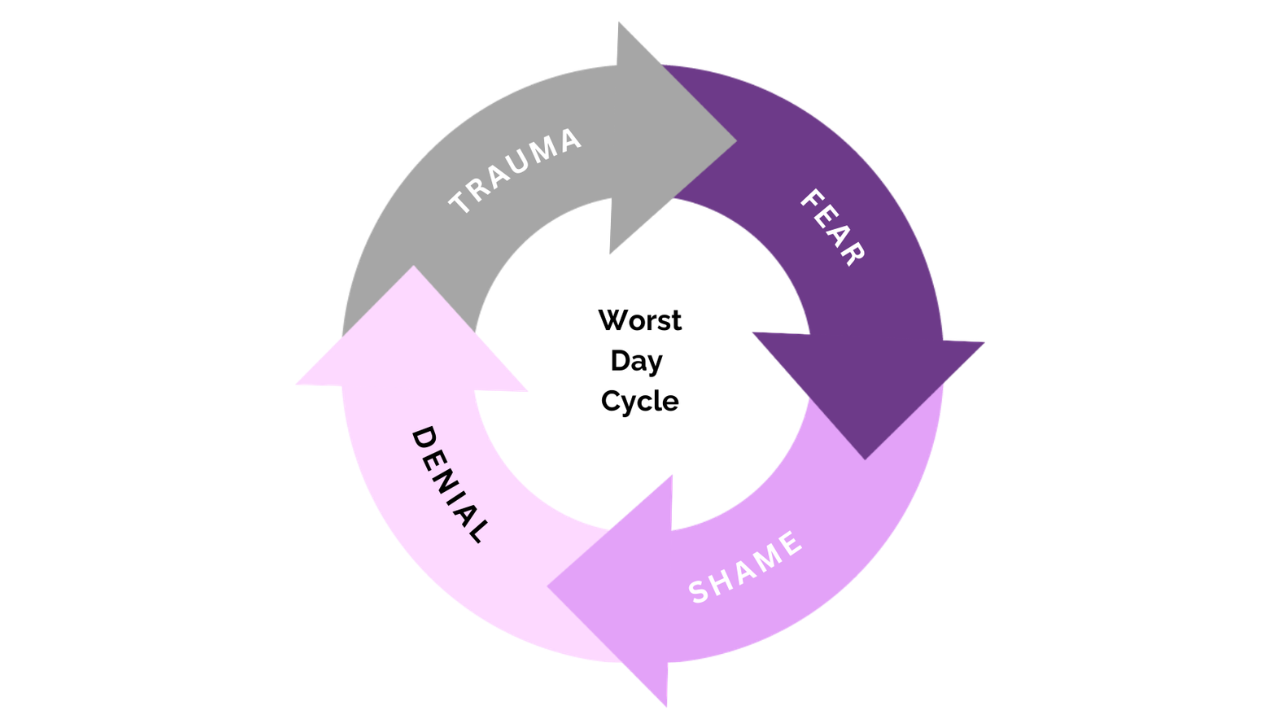
That’s the cycle you’re stuck in — trauma creates fear, fear drives repetition, repetition creates shame, shame creates denial, and denial creates a survival persona that keeps you chasing.
Three Survival Personas That Drive the Chase
The survival persona is a brilliant adaptation. It’s your psyche’s way of making unbearable pain bearable. But it comes at a cost: your authentic self goes into hiding.
Most chasers operate from one of three survival personas (and many oscillate between them depending on context):
1. The Falsely Empowered Persona
This is the survival persona that controls, dominates, and rages. It says: I will never be vulnerable. I will never need anyone. I will earn love through dominance and control. In the context of chasing, the falsely empowered person pursues aggressively, uses guilt-tripping, creates drama, or stages withdrawals to test whether their partner will chase back.
That’s you — withdrawing attention, creating jealousy, testing their commitment to prove they really love you.
2. The Disempowered Persona
This is the survival persona that collapses, people-pleases, and abandons its own needs. It says: My needs don’t matter. Your comfort is my responsibility. If you’re upset, it’s my fault and I have to fix it. In the context of chasing, the disempowered person pursues softly, apologizes for things they didn’t do, shrinks themselves, and becomes obsessively attuned to their partner’s moods.
Sound familiar — the constant apologies, the self-blame, the belief that you could fix them if you just loved them right?
3. The Adapted Wounded Child Persona
This is the survival persona that oscillates between control and collapse. One moment it’s dominating; the next it’s disappearing. This is the most exhausting persona because it keeps the nervous system in constant dysregulation. You’re either chasing aggressively or withdrawing completely, with no middle ground.
That’s the push-pull relationship — intense pursuit followed by cold withdrawal, cycling endlessly because your nervous system can’t find a regulated middle ground.
How Chasing Shows Up Across Your Life
Chasing isn’t just a romantic pattern. When your nervous system is wired to believe that safety requires pursuit, you chase in every domain of life.
In Family Relationships
You’re the adult child who calls your parent repeatedly, seeking approval or reassurance. You take responsibility for their emotional state. You shrink your own needs to make room for theirs. You interpret their distance as rejection.
In Romantic Relationships
That’s you — the one who gives 90% and then feels guilty about the 10% you kept for yourself.
You’re the one initiating all contact, planning all dates, managing all emotional labor. You interpret lack of text response as abandonment. You merge your identity with theirs. You can’t imagine life without them, even when the relationship is hurting you.
In Friendships
You’re the one always reaching out, always accommodating, always canceling your plans to be available for them. You stay in friendships long after they’ve become one-sided. You monitor their social media for signs they’re angry with you.
That’s you — the friend who sees a Snapchat from your group and wasn’t included, and the panic sets in immediately.
In Work
That’s you — staying in a friendship where you do all the emotional labor and then wondering why you feel so alone.
You over-deliver on projects to prove your worth. You can’t set boundaries with your boss. You take on others’ emotional labor and problems. You stay in jobs that exploit you because you’re afraid of abandonment or rejection.
In Body and Health
You neglect your own health to be available for others. You don’t rest when you’re sick because you fear being a burden. You use food, substances, or sex to regulate the anxiety of chasing. You ignore your body’s signals because you’re so focused on others’ needs.
Sound familiar — the pattern is everywhere in your life, not just romantic, because your nervous system learned one way to survive: pursue, perform, prove.
The Emotional Authenticity Method™: Breaking Free Step-by-Step
Here’s what most therapists get wrong: they focus on thoughts. They tell you to challenge your negative self-talk, to think more positively, to use cognitive techniques. But thoughts don’t create feelings. Feelings create thoughts.
Emotions are biochemical events. You cannot rewire emotional patterns through thought alone. You have to go to the source: the emotional blueprint stored in your nervous system and your body.
The Emotional Authenticity Method™ is a five-step process that accesses this emotional blueprint and begins to rewire it.
Step 1: Somatic Down-Regulation (with Optional Titration)
Before you can access clarity, your nervous system has to come offline from threat mode. This means using body-based techniques — breathing, progressive muscle relaxation, cold water on your face, grounding — to calm your amygdala. Optional titration means you’re touching the edge of the feeling without drowning in it.
Step 2: What Am I Feeling? (Emotional Granularity)
Most chasers have one emotion: anxiety. But beneath anxiety is a universe of emotions — fear, shame, anger, grief, longing. Use the Feelings Wheel to get granular. This specificity is where healing begins.
Step 3: Where in My Body Do I Feel It?
All emotional trauma is stored in the body. That knot in your chest when they don’t respond. The heaviness in your limbs when they pull away. The tightness in your throat when shame arrives. Locate it. Feel it. Get curious about it instead of running from it.
Step 4: What Is My Earliest Memory of This Feeling?
Trace this feeling back to its origin. When did you first feel this abandonment terror? What was happening? Who was involved? What did your child brain decide about yourself and love in that moment? This is where you access the original trauma.
Step 5: Who Would I Be if I Never Had This Feeling Again?
This is the vision step. It’s where you begin to imagine an authentic self — someone who doesn’t chase, doesn’t merge their identity with another person, doesn’t abandon themselves for love. This vision becomes the target for the next framework: the Authentic Self Cycle™.
That’s the pathway to freedom — not thinking your way out, but feeling your way through.
The Authentic Self Cycle™: Healing and Restoration
If the Worst Day Cycle™ is how you get trapped, the Authentic Self Cycle™ is how you escape.
Stage 1: Truth
Name the blueprint. Say it out loud: I learned to chase love in childhood because safety required it. I learned that my worth was conditional. I learned that abandonment was imminent and my job was to prevent it. This blueprint isn’t true anymore, but my nervous system still believes it.
This isn’t blame. This is clarity. This is seeing “this isn’t about today” — seeing that your partner’s withdrawn mood isn’t about your unworthiness. It’s about your nervous system’s trauma response.
Stage 2: Responsibility
Own your emotional reactions without blame. My partner isn’t my parent. My nervous system just thinks they are. My terror isn’t proportional to the actual danger. My shame isn’t deserved. I’m responsible for my own emotional regulation, not for managing their feelings.
This is where the boundary begins. Not the cold, rejecting boundary of avoidance. The warm, sovereign boundary of self-love.
Stage 3: Healing
Rewire the emotional blueprint. Do this through repetition, consistency, and what Bessel van der Kolk calls “felt sense” — the actual felt experience of safety with another person. Conflict becomes uncomfortable but not dangerous. Space becomes independence, not abandonment. Intensity becomes passion, not attack.
This requires partners who are emotionally healthy and willing to do their own work. If your current partner isn’t, this is the moment you honor yourself by leaving.
Stage 4: Forgiveness
Release the inherited emotional blueprint. Not because your parents deserved forgiveness. But because carrying their trauma in your nervous system is like paying interest on a debt that was never yours.
Forgiveness is the final stage of the Authentic Self Cycle™ because it’s where you truly reclaim yourself. Where you say: I was shaped by their pain, but I am not their pain. I inherited their emotional blueprint, but I can write my own.
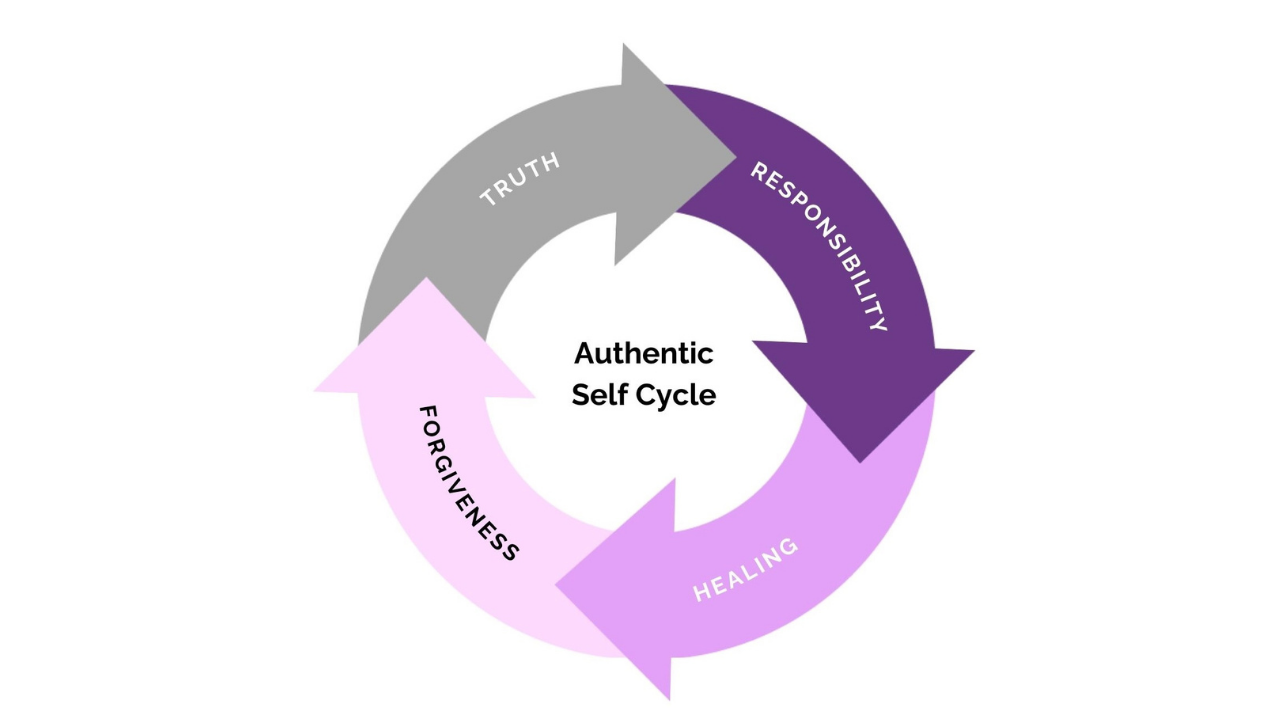
That’s the healing path — from blindness to truth, from blame to responsibility, from dysfunction to healing, from resentment to forgiveness.
Frequently Asked Questions
Is chasing love the same as being codependent?
Chasing is usually a symptom of codependence, but they’re not identical. Codependence is a broader pattern of losing yourself in other people, taking responsibility for their emotions, and abandoning your own needs. Chasing is the behavioral manifestation — the pursuit, the reassurance-seeking, the obsessive contact. You can be codependent without being a chaser (some codependent people withdraw instead). But most chasers are codependent.
Why doesn’t my partner understand that I’m just trying to feel loved?
Because what feels like love to you feels like pressure to them. When you chase — when you text repeatedly, seek constant reassurance, monitor their mood — you’re communicating: Your emotional state is my responsibility. I don’t trust you to love me. I don’t believe you when you say you need space. To a healthy partner, this doesn’t feel like love. It feels like enmeshment. They need space to maintain their own identity and autonomy.
Can I heal this pattern without leaving my current relationship?
Yes, but only if your partner is willing to do their own emotional work. If they’re emotionally unavailable, unwilling to take responsibility for their behavior, or actively punishing you for your needs, healing becomes nearly impossible. The relationship itself becomes the trauma. In that case, your healing requires leaving. If your partner is willing — if they’re willing to be consistent, to communicate, to work on themselves — then healing can happen within the relationship.
How long does it take to stop chasing?
The behavioral pattern can shift in weeks. The emotional blueprint rewires over months and years. You’ll have moments where you feel completely free, and then something triggers the old pattern and you’re right back to chasing. This is normal. Healing isn’t linear. But with consistent practice of the Emotional Authenticity Method™ and the Authentic Self Cycle™, the episodes become shorter, the intensity becomes less, and your authentic self becomes stronger.
What if I chase because I really do love them?
Love is not pursuit. Love is not sacrifice of self. Love is not reading minds or managing emotions or proving worth. Love is showing up as your authentic self, setting boundaries, and letting someone choose to stay. Real love is the opposite of chasing. When you stop chasing and start honoring yourself, you’ll know if the relationship is worth keeping. If it’s not, you’ll have the clarity and the strength to leave.
Can avoidant partners ever change?
Yes. But only if they want to. And usually only with professional help and their own commitment to the Authentic Self Cycle™. What you need to understand is: their avoidance is not your fault. It’s not something you can fix. Your job is to stop chasing and start living. When you do, something remarkable happens. Either they feel safe enough to move toward you (because they’re no longer under pressure), or the relationship ends and you’re free to find someone who’s actually available. Either way, you win.
The Bottom Line: From Chasing to Authenticity
You were not born a chaser. You became one because survival required it. Your nervous system learned a life-saving strategy in childhood: pursue, perform, prove. That strategy protected you then. It’s harming you now.
But here’s what most people miss: this isn’t a character flaw. This isn’t weakness. This is intelligence. Your psyche was brilliant enough to adapt, to survive, to create a strategy that kept you alive when the people you depended on were emotionally unavailable.
The work now is to honor that brilliance while releasing the strategy. To say: Thank you, survival persona. You did what you had to do. But I’m safe now. I don’t need to chase. I don’t need to prove my worth. I don’t need to abandon myself for love. I can simply be myself, and that is enough.
That’s you — not broken, not flawed, not too much. Just someone whose nervous system learned the wrong lesson about what love requires.
This is the promise of the Authentic Self Cycle™. Not a promise that relationships will be easy. But a promise that you’ll stop abandoning yourself in relationships. You’ll stop merging your identity with another person’s. You’ll stop interpreting distance as rejection and silence as abandonment.
You’ll reclaim your inherent worth. And from that place of wholeness, you’ll build relationships that are actually fulfilling — not codependent, not pursuit-based, but genuine, mutual, and real.
That’s available to you right now. Not someday. Not when you find the perfect partner. Not when you finally become worthy enough. Right now, in this moment, by choosing to stop chasing and start honoring yourself.
Recommended Reading
- Facing Love Addiction by Pia Mellody — The definitive book on chasing patterns and codependence
- The Body Keeps the Score by Bessel van der Kolk — Understanding how trauma lives in the nervous system
- Attached by Amir Levine and Rachel Heller — Attachment science applied to adult relationships
- The New Rules of Divorce by Jacqueline Newman (also: The Essential Couple’s Workbook) — If you need to leave
- Codependent No More by Melody Beattie — The classic on boundary-setting and self-recovery
- Anatomy of the Spirit by Caroline Myss — Understanding how trauma lives in the body
- Explore more on signs of insecurity in relationships | the signs of enmeshment | 7 signs of high self-esteem | how to determine your negotiables and non-negotiables | 10 do’s and don’ts for a great relationship
Next Steps: The Courses That Will Change Your Relationship With Love
If you’re ready to break the chasing pattern and reclaim your authentic self, here are the resources designed specifically for this work:
Emotional Blueprint Starter Course — Individual ($79) — A foundational course on understanding your emotional blueprint, your survival persona, and the first steps toward emotional authenticity. Start here if you’re new to this work.
Tier 1: Mapping the Blueprint ($1,379) — The deep-dive course on the Emotional Authenticity Method™. This is where you learn the five-step process in detail, practice it with real scenarios, and begin rewiring your nervous system. This is the work that changes everything.
Relationship Starter Course — Couples ($79) — If you’re in a relationship and your partner is willing to do the work too, this course teaches both of you how to navigate the healing process together.
Why High Achievers Fail at Love ($479) — If you’re successful in every area of life except love, this course is designed for you. It addresses the specific trauma patterns of high-achieving chasers.
Why We Can’t Stop Hurting Each Other ($479) — For couples stuck in recurring conflict patterns. Both partners learn the framework and how to interrupt the Worst Day Cycle™ together.
The Shutdown Avoidant Partner ($479) — Understanding avoidant attachment through the lens of trauma chemistry and survival personas. Essential if your partner pulls away and you need to understand why.
The most important resource, though, is this: the Feelings Wheel and the life-changing exercise (free). Start with that today. It’s the foundation of emotional granularity that makes all the other work possible.
You’ve been chasing long enough. It’s time to come home to yourself.