Tag: why success feels empty

  • High Achiever Burnout: Why Success Feels Empty When Shame Is the Fuel

    High Achiever Burnout: Why Success Feels Empty When Shame Is the Fuel

    You hit every target. You built the career, earned the money, collected the accolades. From the outside, your life looks like a success story other people envy. But here is what nobody sees: at the end of the day, when the office empties and the notifications stop, you feel hollow. Not sad exactly — just empty. Like something fundamental is missing no matter how much you achieve. That’s you if you’ve ever thought, “I should be happy by now… so why do I feel nothing?” The reason success feels empty is not that you haven’t achieved enough. It is that your entire drive was built on a childhood wound called shame — and no amount of accomplishment can heal an identity wound. High achiever burnout is not about working too hard. It is about running your entire life on the wrong fuel source.

    High achiever burnout happens when the shame that once fueled your extraordinary performance becomes the very thing destroying your relationships, your health, and your ability to feel anything real — and no amount of meditation, time management, or positive thinking can fix it because the problem was never your habits, it was your emotional blueprint.

    If that sentence stopped you, keep reading. Everything you are about to learn will change the way you understand yourself, your relationships, and the relentless drive that got you here.
    Survival persona icon — how high achievers build identity around performance to escape childhood shame

    What High Achiever Burnout Really Is (It’s Not What You Think)

    Most burnout advice tells you to take a vacation, set better boundaries, or practice self-care. That advice is useless for you — and here is why. Your burnout is not caused by overwork. It is caused by the emotional reason you overwork. That’s you if you’ve tried every productivity hack, every wellness routine, every self-help book, and you still feel like something is fundamentally wrong.

    If you grew up in a home where love was conditional, where you were criticized, where you were forced to be the adult, or where you felt invisible unless you performed, you experienced childhood emotional trauma. Your perfectly imperfect caregivers transferred their unhealed pain into you every time they made their love conditional, forced you to be the adult, or criticized you. That transfer of trauma created a deep, wordless identity wound called shame. Shame is the quiet belief that says: “I am not enough. I am the problem. I am unworthy.”

    To survive that unbearable feeling, your brilliant childhood brain created a survival persona. For you, that persona became the over-achiever, the perfectionist, or the avoidant intellectual. You decided: “I will prove I am not a failure by becoming extraordinary. I will out-work, out-earn, and out-perform my pain.” That’s you if your entire career was built on proving something to someone who never actually validated you.
    Emotional blueprint icon — the childhood programming that drives high achiever burnout and shame-based performance

    The survival persona protects the child but destroys the adult. It was brilliant in childhood — it kept you safe, functional, even exceptional. But it was never designed for long-term flight. It was designed for emergency lift-off.

    The Shame Engine Behind Your Success

    Think of your childhood shame like the booster rockets on a space shuttle. Shame is an incredibly powerful fuel source. It provides massive, explosive energy to get the shuttle off the ground. It drives ninety-hour work weeks. It drives impossible achievements. It creates relentless, undeniable performance. That’s you if people describe you as “driven” or “unstoppable” but they have no idea that underneath the drive is pain you can’t name.

    But here is the problem with booster rockets: they are designed for initial lift-off. They are not designed for long-term flight. If you keep running your life on the explosive fuel of shame, the shuttle will eventually blow up.

    This is the explosion phase of the high achiever. It looks like burnout, panic attacks, an affair, a sudden divorce, or a complete physical collapse. Your body literally cannot sustain the chemical addiction to cortisol and adrenaline required to keep the shame at bay. That’s you if your body has already started sending you warnings — insomnia, chronic tension, digestive problems, mysterious health issues your doctor cannot explain.

    The shame turns a person into a human doing, not a human being. The super achiever chases accolades, money, status, and accomplishment because those things provide temporary relief from the unbearable feeling of unworthiness. But no matter what they accomplish, what car they drive, or how big their house is — they never outrun how terrible they feel about themselves inside. That’s you if you have everything on paper but still go to bed feeling like a fraud.
    Trauma chemistry icon — cortisol and adrenaline addiction that fuels high achiever burnout and shame-driven performance

    How the Worst Day Cycle™ Drives High Achievers

    The Worst Day Cycle™ explains why you keep repeating the same painful patterns even though you are one of the smartest, most capable people in any room. The cycle has four stages: Trauma, Fear, Shame, and Denial.

    Stage 1: Trauma. Childhood trauma is any negative emotional experience that created painful meanings about who you are. It does not require physical abuse. Conditional love, emotional neglect, being parentified, chronic criticism — these are all forms of trauma that create a massive chemical reaction in the brain and body. The hypothalamus generates chemical cocktails of cortisol, adrenaline, dopamine, and oxytocin misfires, and the brain becomes addicted to these emotional states. That’s you if you were the “easy child” who never caused problems — because you learned early that having needs was dangerous.

    Stage 2: Fear. Fear drives the repetition. The brain conserves energy by repeating known patterns. It cannot tell right from wrong — only known versus unknown. Since seventy percent or more of childhood messaging is negative and shaming, adults repeat these painful patterns in relationships, career, friendships, health, everything. Your nervous system learned that productivity equals safety and stillness equals risk. That’s you if you physically cannot sit still for sixty seconds without checking your phone, making a list, or planning your next move.

    Stage 3: Shame. Shame is where you lost your inherent worth. It is the core wound that says “I am the problem.” Not “I made a mistake” — but “I am a mistake.” Every achievement is an unconscious attempt to disprove this belief. But the belief was installed at a preverbal, somatic level. No amount of cognitive accomplishment can override it. That’s you if compliments make you uncomfortable and you secretly believe people would think less of you if they really knew you.

    Stage 4: Denial. Denial is the survival persona you created to survive the pain. It was brilliant in childhood. It is sabotaging you in adulthood. A shame-based person will guard against exposing their inner self to others, but more significantly, they will guard against exposing themselves to themselves. You keep yourself so busy achieving and doing that you cannot simply be — because being still means feeling, and feeling means confronting the shame. That’s you if you schedule every minute of your day and feel panic when plans get cancelled.
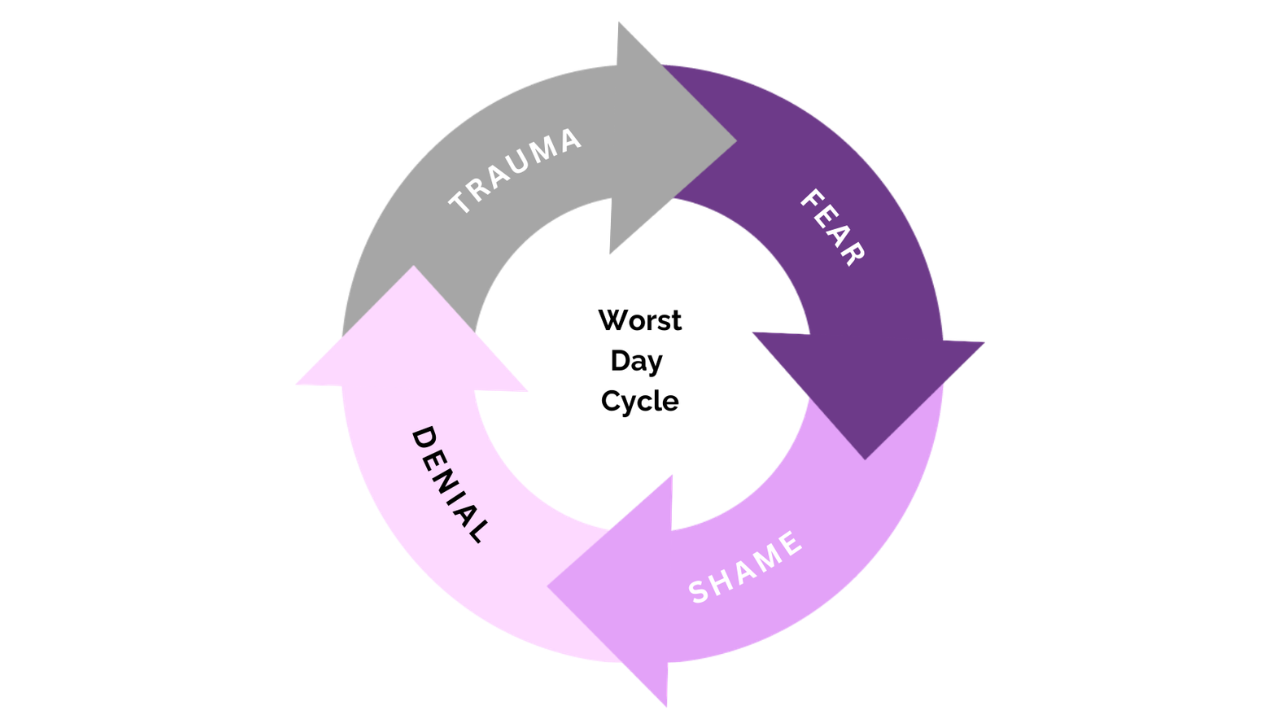
    Worst Day Cycle icon — the four stages of trauma, fear, shame, and denial that trap high achievers in burnout

    The Three Survival Personas That Run Your Life

    There are three types of survival personas, and most high achievers operate from one or cycle between all three depending on the situation.

    The Falsely Empowered Persona controls, dominates, and rages. This is the high achiever who runs the room, makes all the decisions, and cannot tolerate being wrong or out of control. They appear powerful, but the power is built on top of terror. Underneath the dominance is a child who learned that vulnerability gets you destroyed. That’s you if people call you “intimidating” and you secretly think that is a compliment because at least they cannot hurt you.

    The Disempowered Persona collapses, people-pleases, and disappears. This is the high achiever who works themselves to the bone for everyone else — the fixer, the emotional rock, the one who never has needs. They look selfless, but the selflessness is actually self-abandonment. They gave up on their own needs because having needs as a child led to rejection. That’s you if you know everyone else’s emotional temperature but have no idea what you actually feel.

    The Adapted Wounded Child oscillates between falsely empowered and disempowered. One minute they are in charge and controlling everything. The next minute they collapse and feel helpless. This whiplash is confusing to everyone around them — and even more confusing to the person experiencing it. That’s you if you swing between “I’ve got this” and “I’m completely falling apart” with no middle ground.

    Signs of Shame-Driven Success Across Every Area of Life

    High achiever burnout does not stay in one lane. When shame is the engine, it leaks into every area of your life.

    Family. You over-function at every holiday. You are the one everyone calls when there is a crisis. You resent it but cannot stop because stopping feels like abandoning people — the exact thing that was done to you. That’s you if you are exhausted by your family but feel crushing guilt when you try to set a boundary.

    Romantic Relationships. You pick partners who need fixing, or you pick partners who are emotionally unavailable because familiar pain feels safer than unfamiliar intimacy. When someone healthy shows interest, something feels “off” — there is no chemistry because your nervous system only recognizes chaos as connection. Insecurity in relationships is not a personality flaw. It is a survival response.

    Friendships. You have many acquaintances and almost no real friends. You keep people at arm’s length because true closeness requires vulnerability, and vulnerability was punished in your childhood home. That’s you if people think they know you but nobody actually does.

    Work. You are the first one in and the last one out. You take on everyone else’s projects. You say yes when you mean no. You feel physically ill at the thought of being seen as lazy or incompetent. Your self-worth is tied directly to your output. One bad quarter feels like proof that you are worthless.

    Body and Health. Your body keeps the score. Chronic stress, autoimmune flare-ups, mysterious pain, digestive issues, insomnia, teeth grinding, jaw clenching — these are not random. They are your nervous system screaming that the pace you are running is unsustainable. That’s you if you have been to five specialists and nobody can find anything “wrong” with you.
    Emotional regulation icon — the somatic skills high achievers need to break shame-driven burnout patterns

    Why Traditional Therapy Fails High Achievers

    When you try to use deep breathing, meditation, Emotional Intelligence, or Cognitive Behavioral Therapy to “calm down,” you are completely missing the point. You cannot use a breathing technique to stop a booster rocket from exploding. You have to change the fuel source of your entire life.

    Traditional approaches fail high achievers for a specific reason: they treat symptoms, not the blueprint. CBT tells you to change your thoughts. But your thoughts originate from your feelings, and your feelings originate from a biochemical pattern installed in childhood. You cannot think your way out of a feeling problem. That’s you if you have done years of therapy, can explain your patterns perfectly, and still repeat them anyway.

    You cannot change emotional patterns through thoughts alone. Emotions are biochemical events. Thoughts originate from feelings — not the other way around. Until you change the emotional blueprint, the thoughts will keep regenerating the same patterns no matter how many affirmations you tape to your mirror.

    Emotional Authenticity icon — the method that heals shame-driven high achiever burnout at the root

    The Emotional Authenticity Method™: 6 Steps to Change the Fuel Source

    The Emotional Authenticity Method™ is the process that actually reaches the emotional blueprint where shame lives. It is not a coping strategy. It is an identity restoration system. Here are the six steps:

    Step 1: Somatic Down-Regulation. Focus on what you can hear right now for fifteen to thirty seconds. Not deep breathing — listening. This activates the parasympathetic nervous system without triggering the cognitive resistance that high achievers have toward “relaxation techniques.” If you are highly dysregulated, use titration — alternate between the triggering thought and the sensory anchor until your nervous system settles.

    Step 2: What Am I Feeling Right Now? Name the emotion with granularity. “Bad” is not a feeling. “Anxious” is too vague. Use the Feelings Wheel to expand your emotional vocabulary. Are you feeling inadequate? Invisible? Dismissed? Controlled? The more precisely you name it, the less power it has. That’s you if someone asks how you feel and your answer is always “fine” or “stressed.”

    Step 3: Where in My Body Do I Feel It? All emotional trauma is stored physically. Tightness in the chest, knot in the stomach, tension in the jaw, heaviness in the shoulders — your body is holding what your mind refuses to acknowledge. Locate it. Stay with it.

    Step 4: What Is My Earliest Memory of Having This Exact Feeling? Trace the feeling backward. The anxiety you feel before a board meeting is not about the board meeting. It is the same feeling you had standing in front of your parent waiting for criticism. The current situation is the trigger. The original wound is the source.

    Step 5: Who Would I Be If I Never Had This Thought or Feeling Again? What would be left over? This is the vision step — it connects you to the Authentic Self Cycle™. Most high achievers have never imagined themselves without the shame engine. This question opens the door to an identity that is not built on proving, performing, or perfecting.

    Step 6: Feelization. Sit in the feeling of that authentic self and make it strong. Create a new emotional chemical addiction to replace the old blueprint. Ask: How would I respond to this situation from this feeling? What would I say? What would I do? Visualize and feel yourself operating from your authentic self. This is the emotional blueprint remapping and rewiring step. This is where the new neural pathways get built — where shame-fuel gets replaced by worth-fuel.
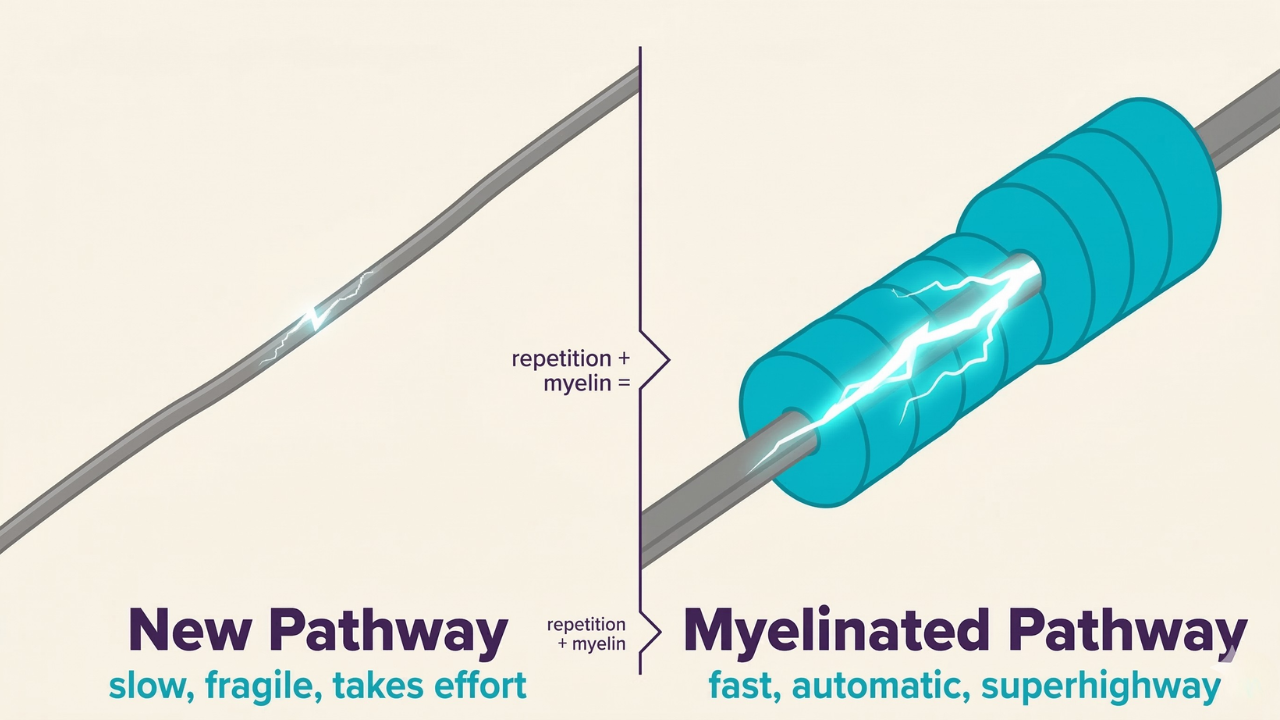
    Myelin neural pathways icon — neuroplasticity and emotional rewiring for high achievers healing shame-driven burnout

    The Authentic Self Cycle™: Building From Worth Instead of Shame

    The Authentic Self Cycle™ is the healing counterpart to the Worst Day Cycle™. It is an identity restoration system with four stages: Truth, Responsibility, Healing, and Forgiveness.

    Truth. Name the blueprint. See that “this is not about today.” The anxiety before the presentation is not about the presentation. The rage when your partner disagrees is not about your partner. The collapse when you receive criticism is not about the criticism. It is all the original wound replaying. That’s you if you react to small things with big emotions and cannot figure out why.

    Responsibility. Own your emotional reactions without blame. “My partner is not my parent. My nervous system just thinks they are.” This is the hardest step for high achievers because it means admitting that all the success in the world has not healed the wound. It means admitting that the survival persona — the thing you are most proud of — is actually the thing keeping you stuck.

    Healing. Rewire the emotional blueprint so that conflict becomes uncomfortable but not dangerous, space is not abandonment, and intensity is not attack. This is where the Emotional Authenticity Method™ does its deepest work. You create new emotional chemical patterns that replace the fear, shame, and denial.

    Forgiveness. Release the inherited emotional blueprint and reclaim your authentic self. This is not about forgiving the people who hurt you — not yet, maybe not ever. This is about forgiving yourself for the survival strategies you built and the years you spent running on the wrong fuel. It is about releasing the belief that you are only as valuable as your last achievement.
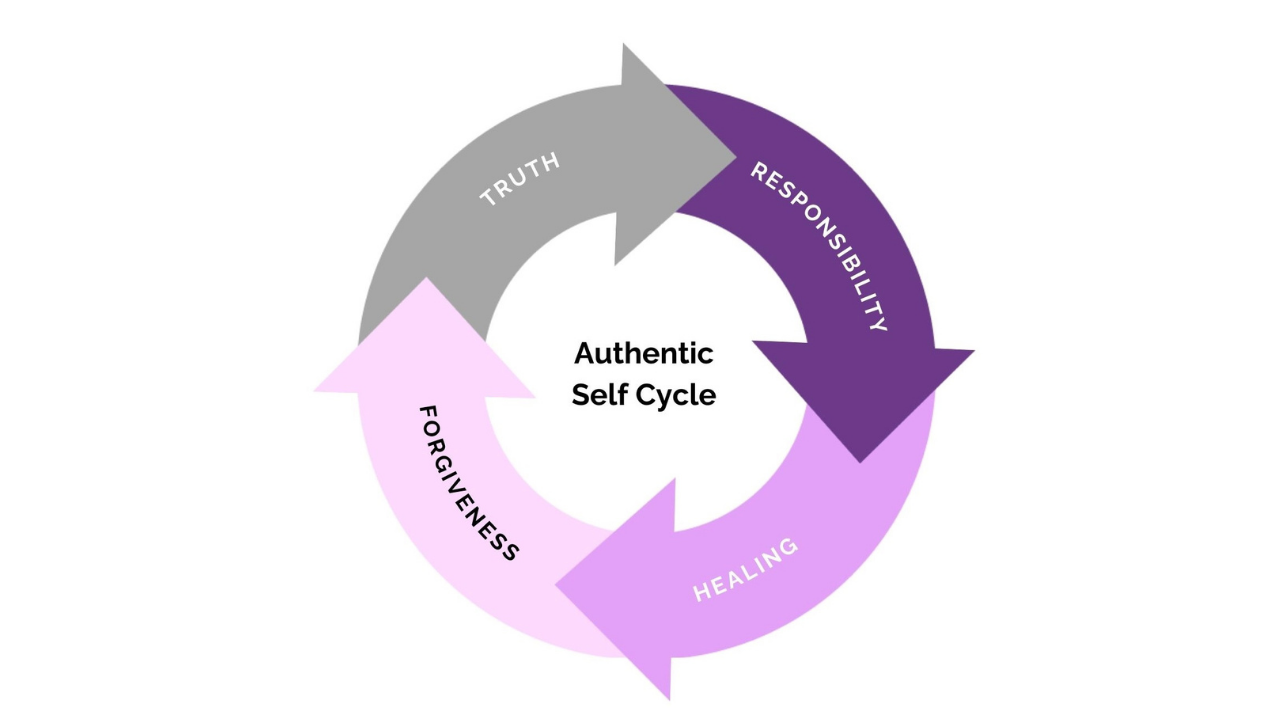
    Authentic Self Cycle icon — the four-stage healing framework for high achievers recovering from shame-driven burnout

    Why Rest Feels Dangerous to High Achievers

    If slowing down makes you anxious, here is exactly why. Your nervous system learned a survival equation in childhood: productivity equals safety, stillness equals risk. That is why you cannot sit still for sixty seconds. That is why you feel guilty resting. That is why you overthink after doing nothing. That is why you measure your day by output. That’s you if a Sunday with no plans feels like a punishment instead of a gift.

    You are not addicted to success. You are addicted to avoiding the void — the shame that surfaces the moment you stop performing. Your ambition is built on top of pain. One of the greatest gifts that highly successful people and go-getters have is high levels of shame. It motivates them to want to get everything out of life. And they do accomplish a lot. On the downside, they are mostly dissatisfied and emotionally alone. And sad. There is a trade-off that you will have to contemplate: how much ambition and achievement do you want versus how much emotional safety and comfort do you want?

    High performers are not blocked by skill gaps. They are blocked by shame caps. When internalized shame says “I am not enough,” achievement triggers self-sabotage. Emotional explosions or shutdowns pull you back down to the level your emotional blueprint believes you deserve.
    Perfectly Imperfect icon — releasing the need for perfection in high achiever burnout recovery

    What Real Healing Looks Like (It’s Not Perfection)

    Healing does not mean you will never overwork again. It does not mean you will never people-please. It does not mean you will never feel triggered. It means you notice sooner. You abandon yourself less. You return to yourself faster. You stay with yourself longer.

    You feel anxiety — and still choose a boundary. You feel guilt — and still say no. You feel the void — and instead of running from it, you sit with it. That is emotional strength. Not hustle. That’s you if you are ready to stop white-knuckling your way through life and start actually living it.

    The shift does not come from achieving more. It comes from changing the fuel source. Not from “I must prove I am not worthless” to something healthier. From shame-fuel to worth-fuel. You can still achieve. You can still create. You can still succeed. But your worth is no longer on trial. That is the difference. True self-esteem is not confidence. It is the quiet knowing that you matter regardless of your output.

    FAQ: High Achiever Burnout and Shame-Driven Success

    Why do high achievers burn out even when they love their work?
    Because the burnout is not caused by the work itself. It is caused by the emotional reason behind the work — shame. When your drive is fueled by an unconscious need to prove your worth, no amount of passion or purpose can prevent the eventual crash. The body cannot sustain shame-level cortisol and adrenaline indefinitely.

    Is high achiever burnout the same as regular burnout?
    No. Regular burnout is often about workload and can be resolved with rest, boundaries, and better time management. Shame-driven burnout in high achievers is an identity crisis — your entire sense of self is built on performance, so slowing down feels like dying. The fix is not rest. The fix is changing the emotional blueprint that makes rest feel dangerous.

    Can you be a high achiever without being driven by shame?
    Absolutely. The goal is not to stop achieving — it is to change the fuel source. Achievement driven by inherent worth feels completely different from achievement driven by shame. Worth-fueled achievers can rest without guilt, celebrate without deflecting, and fail without collapsing. The ambition remains. The desperation disappears.

    Why does success feel empty even after reaching my goals?
    Because the goal was never really about the achievement. It was about the feeling you hoped the achievement would create — the feeling of being enough. But “enough” is an identity issue, not an accomplishment issue. The Worst Day Cycle™ explains exactly how childhood shame creates this pattern and why it persists no matter how much you achieve.

    How do I know if my drive is shame-based or authentic?
    Ask yourself: what happens when I fail? If failure feels like evidence that you are fundamentally flawed — not just disappointed but destroyed — your drive is shame-based. If failure feels uncomfortable but does not threaten your sense of identity, your drive is rooted in authentic motivation. Most high achievers discover they have been running on shame fuel their entire lives.

    What is the first step to healing high achiever burnout?
    Start with the Emotional Authenticity Method™ Step 1: Somatic Down-Regulation. Focus on what you can hear for fifteen to thirty seconds. This interrupts the shame-cortisol loop without requiring you to “relax” — a word that triggers resistance in most high achievers. Then move through the remaining five steps to trace the feeling to its childhood origin and begin building a new emotional blueprint.

    The Bottom Line

    You are not empty because you failed. You are empty because you were taught that who you are is not enough — so you learned to live without yourself. And you became wildly successful doing it. But now you see it. And once you see it, you cannot unsee it. That awareness is not collapse. It is awakening.

    The next chapter is not about losing your success. It is about removing shame from the driver’s seat. It is about keeping the ambition but rooting it in inherent worth. It is about going to bed and asking one question: “Was I loyal to myself today?” That question changes everything. That’s you if something in this article made you stop scrolling — because it described a feeling you have never been able to name.

    Recommended Reading

    Pia Mellody — Facing Codependence
    Gabor Maté — When the Body Says No
    Melody Beattie — Codependent No More
    Brené Brown — The Gifts of Imperfection
    Bessel van der Kolk — The Body Keeps the Score
    John Bradshaw — Healing the Shame That Binds You

    Ready to Change the Fuel Source?

    Kenny Weiss created three frameworks — the Worst Day Cycle™, the Authentic Self Cycle™, and the Emotional Authenticity Method™ — specifically for high achievers who are tired of running on shame. Start with the self-paced courses at kennyweiss.net:

    Emotional Blueprint Starter Course — Individual ($79) — Identify your survival persona and emotional blueprint
    Relationship Starter Course — Couples ($79) — See how two survival personas interact in relationships
    Why High Achievers Fail at Love ($479) — Deep-dive into shame-driven relationship patterns
    Why We Can’t Stop Hurting Each Other ($479) — Break the cycle of emotional reactivity
    The Shutdown Avoidant Partner ($479) — Understand why emotional distance feels safe
    Tier 1: Mapping the Blueprint ($1,379) — Full immersion in the 6-step method

    Download the Feelings Wheel — the free tool that starts Step 2 of the Emotional Authenticity Method™.

    Explore more: Signs of Enmeshment | Codependence Recovery | 10 Do’s and Don’ts for a Great Relationship
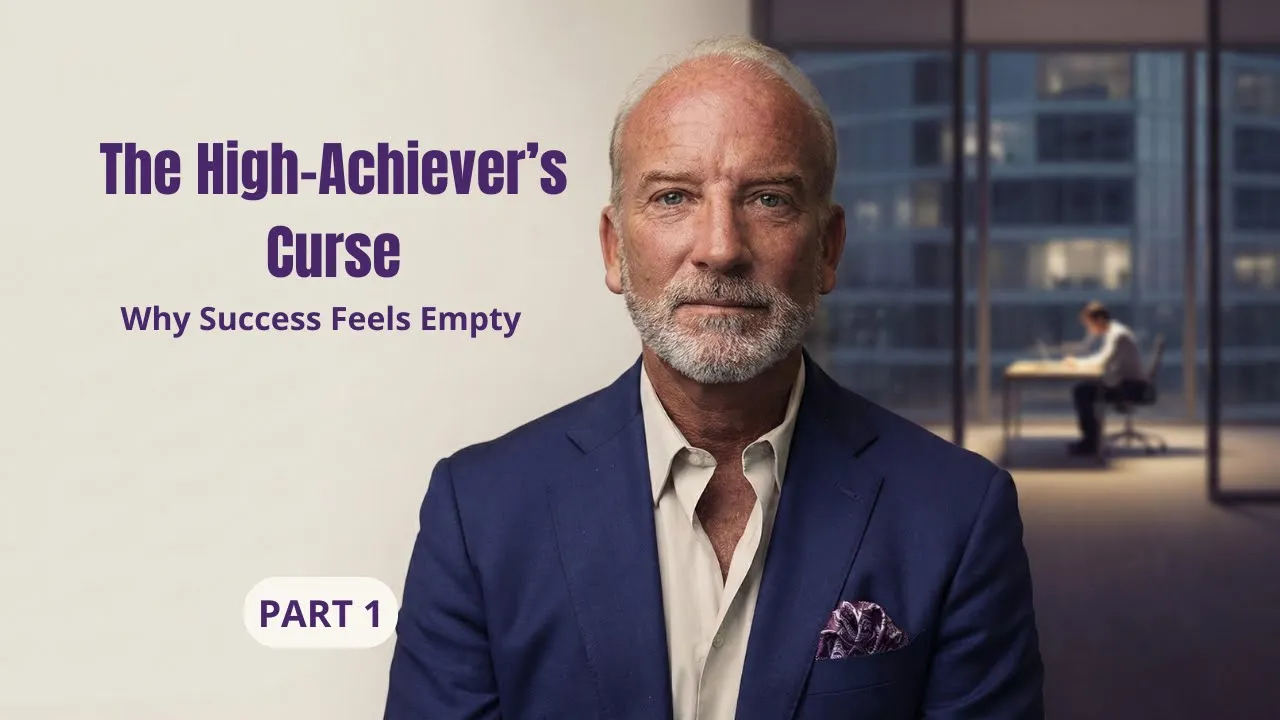
  • Your Success Is a Trauma Response: Why High Achievers Feel Empty

    Your Success Is a Trauma Response: Why High Achievers Feel Empty

    Your success is a trauma response — it is the survival persona’s most sophisticated strategy, built in childhood to earn love, prove worth, and avoid rejection, which is why no amount of achievement will ever fill the void inside. If you’ve hit every goal, built the career, became the person everyone depends on — and still feel a quiet emptiness underneath all of it — you’re not broken. You’re experiencing the predictable cost of running your entire adult life on a childhood survival blueprint that was never designed to make you happy. It was designed to keep you safe.

    That’s you — the one who can close a million-dollar deal but can’t sit still on a Sunday morning without reaching for your phone.

    This isn’t a lack of gratitude. It isn’t a character flaw. It’s the neurochemical evidence that your drive was never about ambition — it was about survival. And understanding that distinction is the first step toward building a life that actually feels as good as it looks.

    Emotional authenticity icon representing healing the trauma response behind high achiever success

    Why Is Your Success a Trauma Response?

    Most high achievers believe their success comes from ambition, talent, or discipline. And those things are real. But underneath them — driving them — is something most people never examine: a childhood emotional blueprint that wired your brain to equate performance with survival.

    That’s you — the one who built an empire because resting felt more dangerous than working yourself into the ground.

    Here’s what actually happened: as a child, you learned that love, safety, or approval were conditional. They depended on what you produced. On how little you needed. On how impressive you were. Maybe your parent only noticed you when you brought home straight A’s. Maybe the household was so chaotic that being the “responsible one” was the only way to feel safe. Maybe love showed up when you performed — and disappeared when you didn’t.

    So your brain did something brilliant: it built a survival strategy around achievement. Become impressive. Become indispensable. Become so successful that no one can reject you, abandon you, or see the shame underneath.

    That’s you — not chasing success because you love the work, but because your nervous system is terrified of what happens when you stop.

    Success as a trauma response is the predictable outcome of childhood emotional conditioning — the brain learned that performance equals safety and worth, then automated that pattern so thoroughly that most high achievers can’t distinguish between genuine ambition and survival-driven compulsion.

    Survival persona icon showing how high achievers use success as a trauma response to earn love and avoid rejection

    How the Worst Day Cycle™ Turns Trauma Into Achievement Addiction

    To understand why your success feels empty, you need to understand the neurochemical engine running underneath it. The Worst Day Cycle™ explains how childhood trauma creates an automated loop that drives achievement addiction — and why no amount of success can break it.

    Worst Day Cycle diagram showing trauma fear shame denial loop that drives success as a trauma response in high achievers

    The Worst Day Cycle™ has four stages: Trauma → Fear → Shame → Denial.

    Trauma: Any negative emotional experience in childhood that created painful meanings. It doesn’t have to be dramatic — it can be as subtle as a parent who was emotionally unavailable, a household where your feelings were treated as weakness, or a family system where love was earned through performance. These experiences create a massive chemical reaction in the brain and body. The hypothalamus generates chemical cocktails — cortisol, adrenaline, dopamine, oxytocin misfires — and the brain becomes addicted to these emotional states.

    That’s you — feeling most alive when you’re under pressure, because your nervous system was calibrated for high-stress performance in childhood and it’s been chasing that chemical cocktail ever since.

    Fear: Fear drives repetition. The brain conserves energy by repeating known patterns — it can’t tell right from wrong, only known from unknown. Since 70%+ of childhood messaging is negative and shaming, adults repeat these painful patterns in relationships, career, hobbies, health — everything. For high achievers, fear sounds like: “If I stop producing, I’ll lose everything. If I’m not impressive, I’m nothing.” So you keep achieving — not because you want to, but because your nervous system is terrified of what happens if you don’t.

    Shame: This is where you lost your inherent worth. “I am the problem.” Not “I made a mistake” — but “I AM the mistake.” This is the core wound underneath every high achiever’s drive. You don’t achieve because you’re confident. You achieve because deep down, you believe your authentic self isn’t enough — so you compensate with performance, production, and success. Every achievement is a temporary reprieve from the shame. And when the high fades, the shame comes flooding back.

    That’s the shame talking — the voice that says “I’ll finally feel okay when I hit the next goal.” But you’ve hit a hundred goals and the void is still there.

    Denial: Denial is the survival persona you created to survive the pain. It was brilliant in childhood — absolutely necessary. But in adulthood, it sabotages everything. For high achievers, the denial stage looks like calling your trauma response “ambition.” Calling your compulsion “passion.” Calling your inability to rest “discipline.” The survival persona is so convincing that most high achievers defend it with their lives — because admitting it’s a trauma response means feeling the shame underneath.

    Trauma chemistry icon showing how childhood creates neurochemical addiction to achievement and success in high achievers

    The Worst Day Cycle™ reveals why success feels empty — your brain created a neurochemical addiction to the stress-performance-validation loop in childhood, and each achievement produces a diminishing dopamine return while the underlying shame remains completely untouched.

    How Your Survival Persona Uses Success to Avoid Pain

    Your survival persona is the identity you created in childhood to navigate an emotionally unsafe environment. It’s not who you are — it’s who you had to become. And for high achievers, success is the survival persona’s most impressive disguise.

    There are three survival persona types, and each one uses success differently:

    The Falsely Empowered: This persona controls, dominates, and rages. They build empires. They command rooms. They look powerful, confident, and unstoppable. But their power comes from fear, not strength. They achieve to dominate — because losing control means feeling the vulnerability they’ve been running from since childhood. Their success is a fortress built to keep everyone out and the shame locked inside.

    That’s you — the one whose success looks like power but feels like a prison you can’t escape.

    Emotional fitness icon representing the work of moving from survival persona success to authentic fulfillment

    The Disempowered: This persona collapses, people-pleases, and disappears. They achieve through service — becoming indispensable, the person everyone leans on, the one who never says no. Their success comes from making themselves essential to others. They don’t build empires for power — they build them so no one can leave. Their worth is measured by how much they give, how much they sacrifice, how little they need.

    That’s you — the one who achieved everything by abandoning yourself, and now you don’t even know who you are underneath the giving.

    The Adapted Wounded Child: This persona oscillates between both — dominating one moment, collapsing the next. They might build a thriving business (falsely empowered) and then sabotage a relationship by people-pleasing until they disappear (disempowered). They swing between “I don’t need anyone” and “please don’t leave me.” Their success is inconsistent — brilliant periods followed by crashes, burnout, or self-sabotage — because they can never settle into a stable identity.

    Adapted wounded child icon showing oscillation between falsely empowered and disempowered survival personas in high achievers

    That’s you — the one who can crush it at work and then fall apart at home, swinging between superhuman and shutdown with no middle ground.

    Your survival persona weaponizes success — it uses achievement as emotional armor, keeping you performing at extraordinary levels while your authentic self stays buried under decades of shame, fear, and denial.

    How Success as a Trauma Response Shows Up in Every Area of Your Life

    Family: You’re the one who “made it.” The success story. The one everyone points to and says, “Look how well they turned out.” But underneath the pride is an invisible contract: your family’s validation depends on your performance. You can’t be struggling. You can’t be vulnerable. You can’t be human. If you showed them the emptiness underneath the success, the entire family narrative would collapse — and so would your place in it.

    That’s you — still performing for a family audience that assigned you the role of “the successful one” before you could choose it for yourself.

    Romantic Relationships: You choose partners who admire your success — but never truly see you. You attract people who love what you do, not who you are. When the relationship gets intimate — when they want the real you, not the impressive you — you pull away. Because the real you is the one your childhood taught you wasn’t enough. Your success becomes a wall between you and genuine connection.

    Sound familiar? The partner who has it all together on the outside but can’t let anyone past the surface?

    Friendships: Your friends know you as the successful one, the driven one, the one who always has their life together. But no one actually knows you. You share achievements, not feelings. You bond over ambition, not vulnerability. And when someone asks, “How are you really doing?” — your survival persona answers for you: “Great. Busy. Can’t complain.”

    That’s you — surrounded by people who admire you and not a single person who actually knows you.

    Work: This is where the trauma response looks most like a gift. You outperform everyone. You work longer, harder, smarter. You’re the first one in and the last one out. Your success is undeniable — and it’s destroying you. Because the fuel isn’t passion. It’s fear. Fear of being seen as ordinary. Fear of being exposed as “not enough.” Fear of what happens in the quiet when there’s no work to hide behind.

    That’s you — getting promoted for the very pattern that’s eating you alive.

    Body and Health: Your body has been keeping score. The chronic tension in your shoulders. The insomnia. The digestive issues. The unexplained fatigue that no amount of sleep fixes. The autoimmune conditions that appeared in your thirties or forties. Your body isn’t breaking down from success — it’s breaking down from decades of running on shame-fueled cortisol while pretending everything is fine.

    Emotional blueprint icon showing how childhood trauma creates success as a trauma response across all life areas

    Why Achieving More Will Never Fill the Void

    Every achievement gives you a temporary high. For a few hours or days, the shame quiets down. The void shrinks. You feel: “See? I’m enough. Look what I did. Now I matter.”

    That’s you — chasing the next goal not because you want it, but because the last one already stopped working.

    But because the achievement doesn’t touch the original emotional blueprint, the void returns. Every single time. And when it does, you set a bigger goal. Not because you’re greedy or ungrateful — because your nervous system is trying to outrun a wound that lives inside your own body.

    Here’s the neuroscience: each achievement triggers a dopamine release. But your brain adapts. It requires more stimulation to produce the same effect. So the goals get bigger. The hours get longer. The stakes get higher. And the void gets deeper. This is the same mechanism behind every addiction — and achievement addiction is one of the most socially rewarded addictions on the planet.

    Myelin and neural pathways icon showing how the brain automates achievement addiction through repetition

    That’s the trap — you’re not lazy for feeling empty. You’re experiencing the diminishing returns of a neurochemical strategy that was never designed to produce fulfillment.

    Achievement cannot fill the void because the void is not a lack of success — it is the absence of your authentic self, which was abandoned in childhood when your brain decided that who you are wasn’t enough and who you could perform as was the only path to survival.

    How the Emotional Authenticity Method™ Heals What Success Cannot

    The Emotional Authenticity Method™ is the daily practice that rewires the trauma response underneath your success. It works because it targets the body — where trauma lives — not the mind where your survival persona has been running the show.

    Emotional regulation icon representing the Emotional Authenticity Method for healing success as a trauma response

    Step 1: Somatic Down-Regulation with optional Titration. Before you can process anything, you have to get your nervous system out of survival mode. For high achievers, this is the hardest step — because your survival mode looks like productivity. Slowing down feels dangerous. But regulation is the doorway, not the destination. Titration means you go slowly — you don’t force yourself to feel everything at once.

    That’s you — learning that the most powerful thing you can do isn’t more work. It’s stopping long enough to feel what you’ve been running from.

    Step 2: What am I feeling? Most high achievers have two emotional settings: “fine” and “productive.” Using the Feelings Wheel, you develop emotional granularity — the ability to name specific emotions instead of lumping everything into “stressed” or “driven.” You might discover that underneath “motivated” is fear. Underneath “focused” is shame. Underneath “driven” is a five-year-old who believes rest equals rejection.

    Step 3: Where in my body do I feel it? All emotional trauma is stored physically. Your chest tightens before a presentation — not from performance anxiety, but from a childhood moment when being seen meant being judged. Your stomach drops when the calendar is empty — not from laziness, but from a nervous system that equates stillness with abandonment. Locating the feeling in your body is how you move from intellectual understanding to somatic processing.

    Step 4: What is my earliest memory of this feeling? This is where the rewiring happens. You trace today’s compulsive drive back to its childhood origin. You realize: this isn’t about the quarterly report. This isn’t about the promotion. My nervous system is replaying a childhood scene where my worth depended on my output. My boss isn’t my parent. My nervous system just thinks they are.

    That’s the moment the achievement treadmill starts to slow down — when you see that your forty-year-old ambition is being driven by a seven-year-old’s terror.

    Step 5: Who would I be if I never had this feeling again? This is the vision step. It connects you to the Authentic Self Cycle™ and gives your nervous system a new destination — not more achievement, not better performance, but actual identity restoration. For the first time, you get to imagine a life where you succeed because you choose to, not because you have to.

    The Emotional Authenticity Method™ works because emotions are biochemical events — you cannot change emotional patterns through thoughts alone. Thoughts originate from feelings, not the other way around. Your success was built on feelings of shame and fear, and no amount of thinking about success differently will change the biochemistry driving it.

    How the Authentic Self Cycle™ Replaces the Achievement Loop

    The Authentic Self Cycle™ is the healing counterpart to the Worst Day Cycle™. Where the Worst Day Cycle™ traps you in Trauma → Fear → Shame → Denial, the Authentic Self Cycle™ restores your identity through Truth → Responsibility → Healing → Forgiveness.

    Authentic Self Cycle diagram showing truth responsibility healing forgiveness as the path from trauma-driven success to authentic fulfillment

    Truth: Name the blueprint. See that “this isn’t about today.” When you can’t stop working even though your body is begging for rest, truth says: “This drive isn’t ambition — it’s a childhood survival strategy. I’m not pursuing success. I’m fleeing shame.” Truth is the moment you stop defending the survival persona and start seeing it clearly.

    That’s the first step off the achievement treadmill — seeing the pattern instead of being trapped inside it.

    Responsibility: Own your emotional reactions without blame. “My childhood wasn’t my fault — but my healing is my responsibility.” This isn’t about blaming your parents. It’s about taking back your power from a childhood that defined your worth by your output. Responsibility means choosing to heal even when it’s uncomfortable — even when every fiber of your survival persona screams to just work harder.

    Healing: Rewire the emotional blueprint so stillness becomes safe, rest isn’t laziness, and your worth isn’t measured by your productivity. This is where the Emotional Authenticity Method™ does its work — second by second, like the ticks of a clock. The second hand moves in tiny, almost insignificant ticks. But those ticks move the minute hand. The minutes move the hours. The hours change your entire day. Healing works the same way. It’s not dramatic. It’s repetitive. And it’s built on small moments where you choose presence over performance.

    Forgiveness: Release the inherited emotional blueprint and reclaim your authentic self. This creates a NEW emotional chemical pattern that replaces fear, shame, and denial with safety, worth, and genuine connection. Forgiveness isn’t about excusing what happened. It’s about releasing the blueprint that’s been running your life — and finally meeting who you actually are underneath the success.

    That’s you — not the high achiever running from shame. The human being underneath who’s been waiting decades for permission to just exist without performing.

    Reparenting icon showing how the Authentic Self Cycle replaces trauma-driven success with authentic fulfillment

    The Authentic Self Cycle™ is an identity restoration system — it doesn’t ask you to give up success, it replaces the neurochemical pattern that made success a survival requirement with a new blueprint where achievement becomes a choice, not a compulsion.

    What Fulfillment Actually Looks Like After Healing

    Fulfillment after healing doesn’t mean you stop achieving. It means you stop needing achievement to feel okay. The difference is seismic.

    That’s you — imagining a life where you work because you want to, not because you’ll collapse into shame if you stop.

    After healing the trauma response underneath your success, you can still build companies, close deals, and pursue ambitious goals. But the fuel changes. Instead of fear, shame, and denial driving your engine, you operate from clarity, purpose, and genuine desire. Rest stops feeling dangerous. Stillness stops feeling like failure. And the quiet moments — the ones that used to terrify you — become the moments where you actually feel alive.

    You can still be successful. But you won’t need success to prove you deserve to exist.

    That’s the difference nobody talks about — the difference between success that fills you and success that empties you is not what you achieve. It’s why you achieve it.

    Perfectly imperfect icon showing how healing allows high achievers to embrace authentic fulfillment beyond performance

    Frequently Asked Questions About Success and Trauma

    How do I know if my success is a trauma response?

    If your success comes with a persistent feeling of emptiness, if you can’t rest without guilt or anxiety, if you feel like you’re performing rather than living, or if achieving your goals brings relief rather than joy — your success may be driven by a childhood survival blueprint. The Worst Day Cycle™ explains how childhood trauma creates a neurochemical addiction to the stress-performance-validation loop that makes trauma-driven success feel identical to genuine ambition.

    Can you be successful and still have unhealed childhood trauma?

    Yes — and this is extremely common. In fact, unhealed childhood trauma is often the engine behind extraordinary success. The three survival persona types — falsely empowered, disempowered, and adapted wounded child — each create impressive external results while leaving the original emotional wound completely untouched. You can build an empire on shame. But you can’t build a life that feels good on shame.

    Why does success feel empty even when I’ve achieved everything I wanted?

    Success feels empty because achievement addresses the external world while the wound is internal. Each accomplishment triggers a temporary dopamine release that quiets the shame — but the brain adapts, requiring bigger achievements for the same relief. This is the same mechanism behind all addiction. The void isn’t a lack of success — it’s the absence of your authentic self, which was abandoned in childhood when performance became the price of love.

    What is the difference between healthy ambition and trauma-driven achievement?

    Healthy ambition comes from genuine desire and curiosity — you pursue goals because they align with your values and bring you fulfillment. Trauma-driven achievement comes from fear and shame — you pursue goals to escape feelings of worthlessness, to prove you deserve love, or to avoid the void that appears when you stop producing. The Emotional Authenticity Method™ helps you distinguish between the two by tracing your drive back to its emotional origin.

    How do I stop using success as a coping mechanism without losing my career?

    Healing doesn’t mean abandoning your career or giving up ambition. It means changing the fuel source. The Authentic Self Cycle™ replaces fear-driven performance with purpose-driven action. You can still achieve at the highest level — but from a place of choice rather than compulsion. Most high achievers find that their performance actually improves when they heal the trauma underneath, because they’re no longer burning energy managing shame while trying to produce results.

    Can the Emotional Authenticity Method™ help high achievers who feel burned out?

    Burnout in high achievers is rarely about workload — it’s about running on shame-fueled cortisol for decades until the body can no longer sustain the chemical demand. The Emotional Authenticity Method™ is a 5-step somatic practice that rewires the nervous system’s relationship to rest, worth, and productivity. By tracing burnout to its childhood origin and processing it at the body level, high achievers can rebuild their relationship with work from a foundation of authenticity rather than survival.

    The Bottom Line

    Your success isn’t the problem. It’s proof of how brilliant you are — how hard you worked to survive emotionally. You took a childhood wound and turned it into something the world admires. That’s extraordinary.

    But survival and fulfillment are not the same thing.

    You don’t need to blow up your life. You don’t need to quit your job. You don’t need to abandon ambition. You need to heal the wound underneath the ambition — the childhood blueprint that told you your worth equals your output.

    When that heals, you can still build. You can still create. You can still achieve extraordinary things. But you’ll do it because you choose to — not because your survival persona can’t imagine any other way to exist.

    That’s you — not the high achiever who needs another goal to feel okay. The human being underneath who’s finally ready to stop running and start living.

    The void doesn’t fill with achievement. It fills with truth. With presence. With the willingness to finally stop performing your life and start experiencing it.

    These books complement the frameworks in this article and deepen your understanding of how childhood trauma drives achievement addiction:

    Facing Codependence by Pia Mellody — the foundational text on how childhood trauma creates the survival patterns that drive compulsive achievement.

    The Body Keeps the Score by Bessel van der Kolk — the science of how trauma lives in the body, explaining why success can’t heal a wound that’s stored in your nervous system.

    When the Body Says No by Gabor Maté — how chronic stress from trauma-driven achievement manifests as physical illness, autoimmune conditions, and burnout.

    Codependent No More by Melody Beattie — a practical guide to recognizing when your drive to help, produce, and achieve is actually a codependent survival strategy.

    The Gifts of Imperfection by Brené Brown — how shame drives performance-based identity and why vulnerability is the path from survival to authenticity.

    Take the Next Step

    If you’re ready to heal the trauma response underneath your success and build a life that feels as good as it looks, Kenny Weiss offers courses designed for high achievers who are done performing and ready to live:

    Emotional Blueprint Starter Course — Individual ($79) — Your personal roadmap to understanding the Worst Day Cycle™ and seeing how your success connects to your childhood emotional blueprint.

    Relationship Starter Course — Couples ($79) — For couples ready to stop performing “healthy relationship” and start building genuine emotional connection.

    Why We Can’t Stop Hurting Each Other ($479) — Deep-dive into the Worst Day Cycle™ and how childhood trauma creates the patterns that drive both relationship pain and compulsive achievement.

    Why High Achievers Fail at Love ($479) — Built specifically for high achievers who’ve mastered success but can’t figure out why their relationships feel empty.

    The Shutdown Avoidant Partner ($479) — Understanding avoidant attachment through the lens of trauma chemistry and survival personas.

    Tier 1: Mapping the Blueprint ($1,379) — The comprehensive program for learning and practicing the Emotional Authenticity Method™.

    Download the Feelings Wheel — the free tool used in Step 2 of the Emotional Authenticity Method™ to develop the emotional granularity that achievement has been masking.

    Explore more: The Signs of Enmeshment | 7 Signs of Relationship Insecurity | 7 Signs of High Self-Esteem | How to Determine Your Negotiables and Non-Negotiables | 10 Do’s and Don’ts for a Great Relationship