Tag: what is enmeshment

  • How to Deal With a Narcissistic Child: A Parent’s Guide

    How to Deal With a Narcissistic Child: A Parent’s Guide

    The Phone Call That Makes Your Stomach Drop

    Your phone buzzes. You see their name. Your body knows before your mind catches up — your stomach tightens, your jaw clenches, your chest gets tight. You know what’s coming. The demand. The guilt trip. The manipulation wrapped in hurt feelings.

    You answer. And within thirty seconds, they’ve twisted something you said three months ago into proof that you never loved them. They’ve accused you of ruining their life. They’ve told you they’ll never forgive you unless you do exactly what they want. And somehow, even though you’re the adult and they’re the one behaving like a teenager, you end up apologizing. You end up promising something you can’t deliver. You end up feeling like the worst parent who ever lived.

    After the call ends, you sit in the silence of what just happened. You didn’t get angry. You didn’t hold a boundary. You caved, just like always. And the guilt — the bone-deep certainty that this is somehow your fault — settles in like fog you can’t shake.

    Dealing with a narcissistic child means parenting someone whose emotional development got stuck in the normal childhood narcissistic phase — someone who learned that controlling, manipulating, and never admitting fault was the only way to survive their emotional environment. This is not a character flaw. It is a learned survival strategy rooted in the Worst Day Cycle™ of trauma, fear, shame, and denial — and understanding that changes everything about how you respond.

    This is narcissism in your own family.

    And you’re not alone in this. Right now, across the country, thousands of parents are experiencing the same gut-punch of manipulation from their own children. The same cycling pattern of hope and disappointment. The same question that keeps you awake at 3 AM: “Where did I go wrong?”

    That’s you… lying awake replaying every parenting decision, wondering which one broke them.

    What Creates a Narcissistic Child (And Why It’s Not What You Think)

    Here’s what most people get wrong: narcissism isn’t something your child was born with. They didn’t arrive with a twisted character flaw baked into their DNA. A narcissistic child is made. And that’s actually the most important thing you need to understand right now.

    Every child goes through a narcissistic phase. Between ages three and six, your child believed the world revolved around them. This is developmentally normal. They couldn’t yet imagine that other people had internal lives separate from theirs. They were, by definition, the center of their own universe. This isn’t a problem. It’s a stage.

    The problem happens when they get stuck there.

    A child becomes narcissistic when the emotional environment they’re raised in teaches them that their survival depends on it. Narcissism is a learned survival strategy. It’s the nervous system saying: “I learned that if I don’t control everything, demand everything, and never admit I’m wrong, I’m not safe. People will abandon me. I will be harmed.”

    That’s you… watching your child demand the world and wondering how someone you loved so much learned to weaponize your love against you.

    This is where Bruce Lipton’s work on epigenetics becomes crucial. Your child’s environment shaped how their genes expressed themselves. The stress levels in your home, the consistency of emotional safety, the modeling of healthy emotional expression — all of this literally shaped their developing brain. This is not metaphorical. This is biology.

    And here’s where Gabor Maté’s distinction between blame and responsibility changes everything: “We don’t blame people for having unconscious patterns. Instead, we try to make them conscious.” Your narcissistic child didn’t choose their survival strategy. They learned it. But that learning came from somewhere. It came from the emotional climate they were raised in.

    A narcissistic child is the product of the emotional environment they were raised in. That’s not blame — it’s power. Because if the environment shaped them, you can heal the part of you that contributed to it.

    This is the distinction that most parents miss. You didn’t cause your child to become narcissistic by being a bad parent. You weren’t intentionally cruel or abusive. But you may have been unconscious. And unconsciousness, when passed down through generations, creates patterns that feel impossible to break.

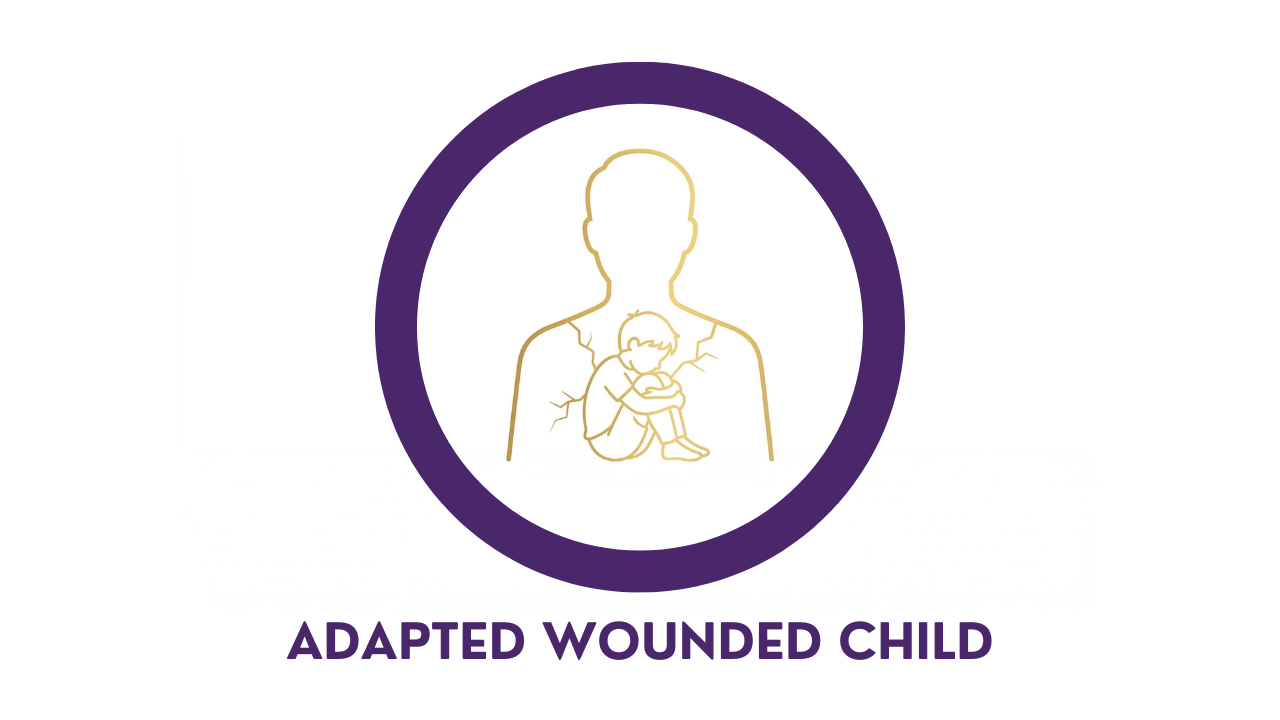
    In Kenny’s framework, this unconscious pattern produces one of three survival personas. The falsely empowered persona controls, dominates, rages, and intimidates to avoid vulnerability — this is the survival persona most narcissistic children develop. The disempowered persona collapses, people-pleases, and loses themselves to avoid abandonment — this is often the survival persona the codependent parent developed. And the adapted wounded child oscillates between falsely empowered and disempowered depending on the situation — raging one moment, collapsing in guilt the next. Your narcissistic child learned one. You probably learned another. And together, the two personas lock into a cycle neither of you can see.
    Survival persona types — the falsely empowered, disempowered, and adapted wounded child identities that develop in narcissistic family systems
    Emotional blueprint — how childhood emotional environments program narcissistic and codependent patterns that repeat in adult relationships

    Why Boundaries Alone Won’t Fix This

    You’ve probably heard the conventional wisdom: set boundaries. Don’t engage with their drama. Go to therapy and suggest they do the same. Hold your ground. Don’t give in to their manipulation.

    That hasn’t worked, has it?

    And here’s why: boundaries don’t work on narcissists because they can’t work. A boundary is just a line you draw in the sand. But a narcissistic person’s survival persona literally depends on crossing every line, controlling every situation, getting their way no matter what. Their nervous system has learned that boundaries are threats. When you set one, they don’t hear “I need space.” They hear “You’re losing control. You need to fight harder.”

    That’s you… setting the same boundary for the hundredth time and watching them walk right through it like it was never there.

    Suggesting therapy to your narcissistic child is like suggesting a fish climb a tree. From their perspective, they’re not the problem. You are. Everyone else is. The world is just unfair, and they’re the only one clear-eyed enough to see it. Therapy requires the kind of self-reflection that their survival persona can’t afford to do. Self-reflection means admitting wrongdoing. And admitting wrongdoing feels like death to the nervous system that learned survival through dominance.

    This is why boundaries feel like arguing with a wall. The wall can’t hear you. It can’t feel bad about hurting you. It just exists, doing what walls do.

    The conventional approach treats narcissism like a behavior problem. Fix the behavior, and you fix the person. But narcissism isn’t a behavior problem. It’s a nervous system problem. Your child’s body is running an ancient survival program that says: “Control or be controlled. Dominate or be dominated. Never show weakness, or you’ll be destroyed.”

    Narcissism is not a behavior problem — it is a nervous system survival strategy. Your child’s body learned in childhood that controlling, dominating, and never showing weakness was the only way to stay safe. Boundaries cannot override a survival program that runs deeper than conscious thought.

    Kenny’s approach goes deeper. Instead of trying to manage your child’s behavior, you do the nervous system work that allows you to stop being controlled by their behavior. You heal the part of your own nervous system that’s still reactive to their manipulation. You move from boundaries to freedom.

    The Narcissistic Child and the Codependent Parent

    There’s a reason you ended up with a narcissistic child. And that reason often has to do with the other end of the spectrum.

    Narcissism and codependence are opposite sides of the same coin. Both are survival strategies rooted in the same core wound: “I am not safe being myself.” The narcissist learned to survive by dominating and controlling. The codependent learned to survive by accommodating and merging. One says “I matter most.” The other says “Everyone else matters but me.”

    That’s you… giving everything you have to someone who treats your generosity like a blank check.

    When these two come together in a parent-child relationship, something predictable happens. The parent keeps giving, sacrificing, trying harder. The child keeps taking, demanding, blaming. The parent interprets this as love: “I’m showing them I care by abandoning my own needs.” The child interprets this as confirmation: “See? I was right. I am the center of this universe. I deserve to get everything I want.”

    This dynamic gets locked in early. Your codependent pattern and their narcissistic pattern begin to dance with each other, and by the time they’re adults, you’re both locked in a rhythm neither of you knows how to break.

    This is why just setting boundaries doesn’t work. Boundaries require that you stop abandoning yourself. And if you’ve spent decades abandoning yourself as an act of love, the guilt of stopping is almost unbearable. Your child will leverage that guilt. They’ve learned that guilt is their most effective tool. “You always make this about you. You never supported me. If you loved me, you would…” And your nervous system floods with shame because at some level, you do believe it. You do feel like you’ve failed.

    If you’ve never identified your own codependent patterns and non-negotiables, healing your relationship with your narcissistic child becomes nearly impossible. You’ll just keep playing the same role. And they’ll keep playing theirs.
    Codependence icon — understanding the codependent patterns that enable narcissistic behavior in family systems

    How a Narcissistic Child Affects Every Area of Your Life

    Narcissistic family dynamics don’t stay contained in one relationship. The stress, the guilt, the hypervigilance — it bleeds into everything. Here’s what that looks like across the areas of your life you might not have connected to this pattern.

    Family

    Your other children feel neglected because the narcissistic child demands all the attention. Family gatherings become minefields. Siblings either align with the narcissist or pull away entirely. You walk on eggshells in your own home, managing everyone’s emotions except your own. The entire family system organizes around one person’s demands.

    Romantic Relationships

    Your partner feels like they’re competing with your child for your attention — and losing. The stress of managing your narcissistic child creates constant tension in your marriage or relationship. You’re emotionally drained by the time your partner needs you. Some partners give ultimatums. Others quietly withdraw. Either way, the narcissistic child’s behavior is eroding your closest adult relationship.

    Friendships

    You stop telling friends what’s happening because you’re ashamed. Or you tell them and they don’t understand — “Just cut them off.” “You need to be tougher.” The advice feels hollow because they don’t know what it’s like to love someone who uses your love as a weapon. You isolate. Your social world shrinks.

    Work and Career

    You can’t focus because you’re waiting for the next text or call. Your productivity drops. You take mental health days that aren’t really about your mental health — they’re about recovering from the latest manipulation. Your boss doesn’t know why you’re distracted. You can’t explain it. You just show up and try to function.

    Body and Health

    Chronic stress shows up as chronic pain, digestive issues, insomnia, autoimmune flares, migraines. Your nervous system has been in low-grade fight-or-flight for years. You’ve been to doctors who can’t find anything “wrong.” Nothing shows up on the tests because the problem isn’t in your organs — it’s in your nervous system.

    That’s you… holding it together at work, falling apart in the car, and telling everyone you’re fine.

    5 Strategies That Actually Work With a Narcissistic Child

    Turn Everything Into a Question

    Instead of defending yourself or explaining why they’re wrong, turn the responsibility back to them. When they say “You ruined my life,” don’t explain what you actually did or didn’t do. Ask: “What specifically do you think I did? What would have needed to happen instead?” When they demand money, ask: “How will you pay me back? What’s your timeline?” When they accuse you of not loving them, ask: “What would loving you look like to you right now?”

    Questions do something powerful. They require your child to think instead of just react. They activate a different part of their brain. And most importantly, they stop you from being the villain in their story. Right now, your defenses and explanations feel like proof to them that you’re heartless. Questions shift the dynamic. Suddenly, they have to do the work of thinking about their own behavior.

    That’s you — tired of always being the bad guy no matter what you actually say.

    Accept the Scraps

    You’ve been waiting your whole parenting life for your child to show you unconditional love. You’ve been waiting for them to care about your feelings. You’ve been waiting for them to say thank you, to acknowledge what you’ve done, to show up for you the way you show up for them.

    Stop waiting.

    A narcissistic child cannot give you what a healthy child can give you. They cannot give you unconditional love, genuine gratitude, or authentic connection. That’s not because you didn’t raise them right. It’s because their survival persona won’t allow it. It can’t. Genuine vulnerability feels like death to a narcissistic nervous system.

    What they can give you are scraps. A polite text. A birthday call. An occasional moment where they’re not demanding something. These are crumbs, and you’ve been starving, so the crumbs feel like a feast. Accept them for what they are. Not as proof that deep down they love you. Not as something you should build your life around. Just as scraps.

    The moment you stop expecting more, your nervous system can finally rest. You won’t spend days after a short phone call analyzing what it meant. You won’t interpret a polite greeting as a breakthrough. You’ll just receive the crumb and move on.

    That’s you — exhausted from trying to harvest a full meal out of crumbs.

    Watch Actions, Not Words

    Your narcissistic child can promise you anything. They can tell you they love you, that they’ll change, that they understand they’ve hurt you, that next time will be different. They can be incredibly eloquent and persuasive when they want something from you.

    Don’t listen to their words. Watch what they do instead.

    Words are cheap. A narcissist can manufacture any emotion, say any apology, make any promise. But their actions reveal their actual priorities. Do they follow through on commitments? Do they respect your time? Do they care about your wellbeing, or only about what they can extract from you? Do they ever apologize without immediately explaining why it wasn’t actually their fault?

    This is where you stop being a victim of their narrative. You stop getting hypnotized by their explanations. You just observe. Like a scientist. “What does this person actually do? What pattern am I seeing?” When you watch actions instead of listening to words, the manipulation becomes visible. The contradictions become obvious. And you can finally make decisions based on reality instead of hope.

    That’s you — finally willing to trust what you see instead of what you’re told.

    Safeguard Your Money, Possessions, and Heart

    A narcissistic child will take whatever they can from you. Money, possessions, emotional labor, your time. They’ll justify it a thousand ways. They needed it for an emergency. You owed them. Their sibling got more. You’re selfish for not giving. By refusing, you’re proving you never loved them.

    None of this is true. But if you’re still trying to convince them, you’ve already lost.

    Protect your finances. Don’t loan money you can’t afford to lose, because you won’t get it back. Don’t put them on your accounts. Don’t co-sign their debts. Don’t buy them expensive gifts hoping it will make them love you. Set up your will so your estate isn’t fought over or drained by them.

    Protect your possessions. They will take what they can. They will damage things and deny responsibility. They will “borrow” items and never return them. Lock up important documents, jewelry, anything irreplaceable.

    And protect your heart. This is the hardest one. Stop expecting them to be the person you need them to be. Stop hoping they’ll finally understand. Stop trying to make them see your side. You’re not protecting your heart from them — you’re protecting it from the devastation of repeatedly hoping for someone who can’t change.

    That’s you — finally willing to protect yourself instead of hoping they’ll become someone worth the risk.

    Make YOUR Recovery the Priority

    For years, your attention has been on them. Getting them to understand. Getting them to apologize. Getting them to change. Getting them to acknowledge that you did your best. Your emotional energy has been completely consumed by your narcissistic child.

    It’s time to redirect that energy to the only person you can actually help: yourself.

    Do the emotional work. Trace your own codependent patterns back to your childhood. Understand what wound in you created a parent who would abandon their own needs to appease a demanding child. Heal the part of your nervous system that goes into panic mode when your child rejects you. Process the grief of never having the relationship you wanted.

    This is not selfish. This is not abandoning them. This is choosing not to drown trying to save someone who doesn’t think they’re in the water. Your recovery is the only thing that breaks the cycle. It’s the only thing that might actually shift the dynamic with your child, because as long as your nervous system is reactive to theirs, you’re locked in the dance.

    That’s you — finally understanding that the best thing you can do for your child is heal yourself.

    Your recovery is not selfish — it is the only thing that breaks the generational cycle. As long as your nervous system is reactive to your child’s manipulation, you are locked in the same dance. Healing yourself is the closest you will ever come to helping your narcissistic child.

    Your Body Is Keeping Score of Every Phone Call

    Before your child calls, your stomach starts to knot. You feel it coming. Your body knows before the phone even rings. And once you see their name, the cascade begins. Heart rate up. Breathing shallow. Jaw tight. A vague sense of dread that settles over everything until the interaction is resolved.

    This isn’t weakness. This is your nervous system doing exactly what it’s designed to do: keeping you safe from a threat. Your body has learned that contact with your child is dangerous. Not physically dangerous — emotionally dangerous. Because after every call, you feel worse about yourself. You second-guess your parenting. You make promises you can’t keep. You feel ashamed.

    So your body starts preparing for threat. It triggers the stress response. Cortisol floods your system. Your digestive system shuts down. Your immune function suppresses. Day after day, call after call, your body is running a threat response that doesn’t resolve.

    That’s you… checking your phone with dread and then hating yourself for dreading a call from your own child.

    Gabor Maté documents this perfectly in When the Body Says No. Our bodies don’t lie. They remember every conversation, every betrayal, every time we abandoned ourselves to please someone else. And when that stress becomes chronic — when you’re never quite sure when the next demand or manipulation will come — your body stays locked in a low-grade panic state.

    The result is what you probably already know intimately: chronic pain. Insomnia. Digestive issues. Autoimmune flares. Migraines. Emotional numbness alternating with emotional floods. Your body is literally falling apart because your nervous system can’t find a sense of safety anymore.

    This is why healing isn’t optional. It’s not a luxury or self-care indulgence. It’s a medical necessity. Your body needs to know that you’re going to protect it. That you’re not going to keep putting it through the stress of trying to manage an unmanageable person.

    That’s you — finally understanding that all those physical symptoms aren’t just stress. They’re your body’s way of saying: enough.
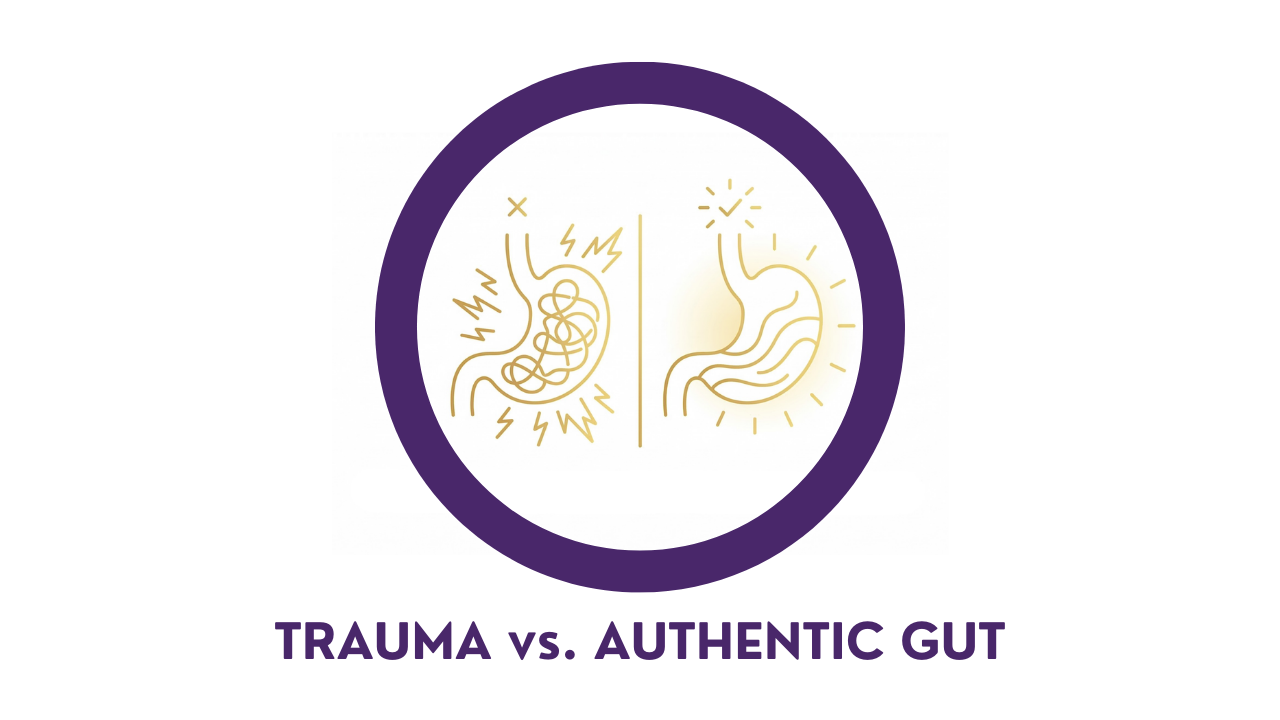
    Trauma chemistry — how chronic stress from narcissistic family dynamics creates cortisol addiction, nervous system dysregulation, and physical illness

    Understanding the Worst Day Cycle™ With a Narcissistic Child

    The Worst Day Cycle™ explains how you move from one difficult interaction with your narcissistic child into a full nervous system shutdown. Understanding this cycle is the first step to breaking it.

    Stage 1: Trauma

    Your adult child calls. Or texts. Or shows up at your house. And within moments, something happens that feels like a small betrayal. They demand money for an emergency that may or may not be real. They accuse you of something you definitely didn’t do. They remind you that you’ve never truly supported them. They withdraw their presence as punishment for some perceived slight.

    This interaction is the trauma. It’s not a big “T” trauma like abuse. It’s a small “t” trauma — a repeated wound in a place where you’ve been wounded before. Your nervous system recognizes the pattern. And it floods with the fear and shame that comes with that pattern.

    Stage 2: Fear

    Once the interaction happens, your mind spirals into worst-case scenarios. What if they never forgive me? What if they write me out of their life completely? What if they tell everyone I’m a bad parent? What if I never see my grandchildren again? Your body floods with fear because your nervous system learned long ago that your child’s rejection = abandonment = death.

    The fear is often irrational, but it doesn’t feel that way. It feels like a real threat. Your heart pounds. You can’t sleep. You replay the conversation a hundred times looking for where you went wrong.

    That’s you… replaying a thirty-second phone call for three straight days, searching for the thing you should have said differently.

    Stage 3: Shame

    As the fear settles, shame moves in. I must have failed as a parent. If I’d done things differently, they wouldn’t be like this. I’m the reason they’re this way. I’m a terrible parent for being unable to manage their emotions. The shame is exquisite because it feels true. You can construct an entire narrative about how your parenting failures created your child’s narcissism.

    And on some level, that’s partially accurate. But shame doesn’t make that accuracy helpful. Shame just makes you smaller. Makes you more likely to cave to your child’s next demand. Makes you more willing to abandon yourself.

    That’s you… carrying a shame so heavy you can’t even name it out loud, because saying “my child treats me this way” feels like admitting you failed.

    Stage 4: Denial

    By the time you reach denial, you’re exhausted. So you minimize. It wasn’t that bad. All families have conflict. They were probably right. I probably did overreact. Maybe I should just give them the money and this will blow over. Denial is where you negotiate with reality to escape the shame. And it’s the entry point back into stage one, where the next small trauma will trigger the whole cycle again.

    Understanding this cycle doesn’t stop it immediately. But it lets you recognize where you are in the pattern. And recognition is the first step toward interruption.
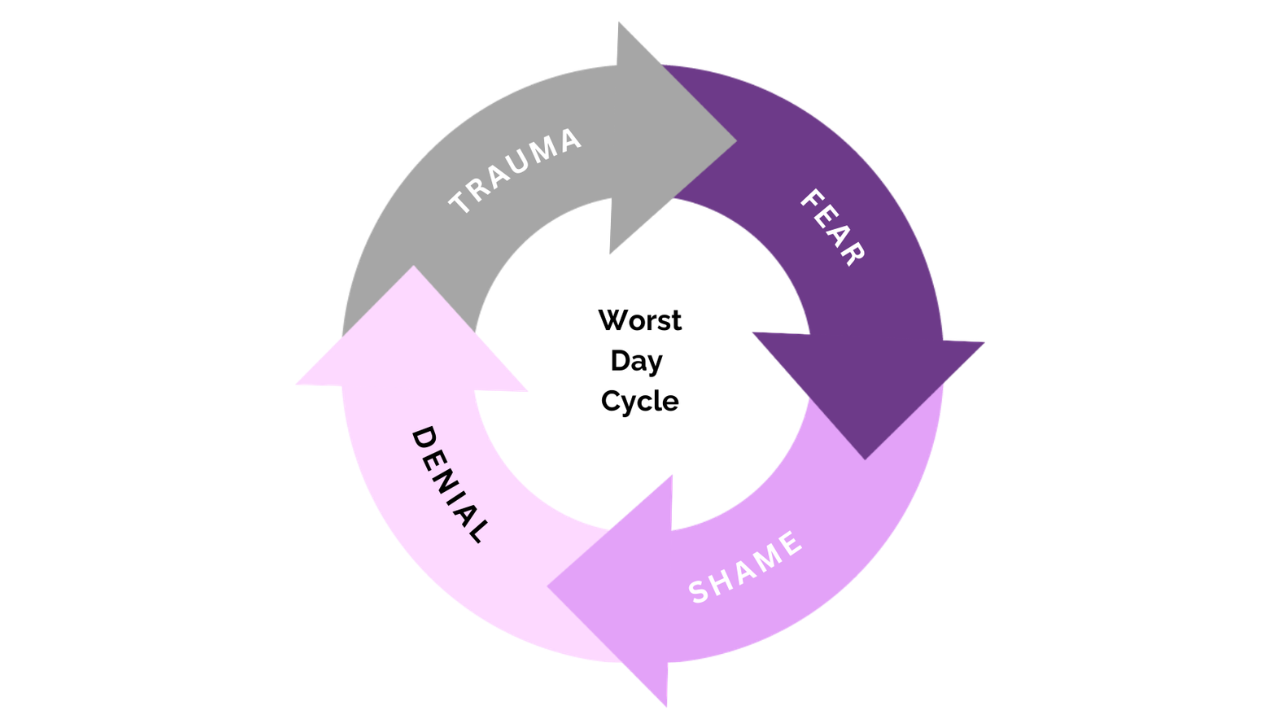
    Worst Day Cycle diagram showing how parenting trauma creates fear, shame, and denial in parents of narcissistic children

    The Emotional Authenticity Method™: A 5-Step Process for Healing

    The Emotional Authenticity Method™ is how you interrupt the Worst Day Cycle™. It’s how you move from reactive to conscious. Here are the five steps:

    Step 1: Somatic Down-Regulation

    Before you answer that phone call, before you respond to that text, before you do anything — you need to regulate your nervous system. This means bringing yourself back into your body. Cold water on your face. Slow breathing. Movement. Grounding techniques. Box breathing. Whatever works for your system, you do it until you feel a shift. Until you’re not in fight-or-flight anymore.

    Step 2: What Am I Feeling Right Now?

    Once you’re regulated, ask yourself: what am I actually feeling? Not what should I be feeling. Not what would make sense to feel. What am I actually experiencing? Guilt? Rage? Despair? Numbness? Get specific. Use the Feelings Wheel to expand your emotional vocabulary beyond “bad” or “anxious.”

    Step 3: Where Do I Feel It in My Body?

    Emotions aren’t abstractions. They have locations. Guilt lives in your chest or stomach. Shame lives in your throat or your face. Rage lives in your jaw or your hands. Find where this feeling lives in your body. Put your hand there. Feel it.

    Step 4: What Is My Earliest Memory of This Exact Feeling?

    This is where the real work begins. That guilt you’re feeling with your child — where did you learn to feel that way? Usually, it goes back to your own childhood. Your own parent. Your own early experience of being not quite enough. Your own pattern of abandoning yourself to keep peace. You’re not feeling just the current interaction. You’re feeling decades of patterns.

    Step 5: Who Would I Be If I Never Had This Thought or Feeling Again?

    This is the breakthrough question. Not “How do I make this feeling go away?” But “What becomes possible for me if I’m not controlled by this feeling?” Who is the version of you that isn’t destroyed by your child’s rejection? What does that person do? How do they move through the world? That person already exists inside you. You’re just clearing away the fear and shame that’s been covering them.

    The Emotional Authenticity Method™ interrupts the Worst Day Cycle™ by tracing your current emotional reaction back to its childhood origin. You cannot think your way out of a narcissistic family dynamic — you must feel your way through it, starting with somatic regulation and ending with a vision of who you are without the inherited shame.
    Emotional Authenticity Method — the 5-step somatic process for parents healing from narcissistic family dynamics

    The Authentic Self Cycle™: How Healing Breaks the Pattern

    Once you begin doing the emotional authenticity work, you enter a different cycle. The Authentic Self Cycle™. This is how you move from unconscious patterns to conscious healing.

    Truth

    The truth is both hard and liberating: your child’s narcissism was shaped by the environment you provided. And you were shaped by the environment your parents provided. You didn’t choose to become a codependent parent any more than your child chose to become a narcissistic adult. You’re both unconscious. But that’s not a life sentence. Consciousness is possible.

    Responsibility

    This is where the Gabor Maté wisdom becomes crucial. Responsibility is not blame. You’re not responsible for your child’s narcissism because you’re a bad parent. You’re responsible because you’re an adult with the capacity to heal your own nervous system. You can’t fix them. But you can fix the part of you that’s been trying to fix them for decades.

    Healing

    Healing happens when you reparent yourself. When you become the consistent, emotionally safe, validating parent to yourself that you may not have had growing up. When you stop abandoning yourself to manage your child’s emotions. When you do the nervous system work of feeling safe in your own body again.

    Forgiveness

    Forgiveness isn’t about your child. It’s about you. You forgive yourself for not knowing what you didn’t know. You forgive yourself for the unconscious patterns you passed down. You forgive yourself for trying so hard and still not being enough to heal someone who doesn’t want to be healed. That forgiveness is what sets you free.

    That’s you… finally giving yourself the forgiveness you’ve been begging your child to give you.
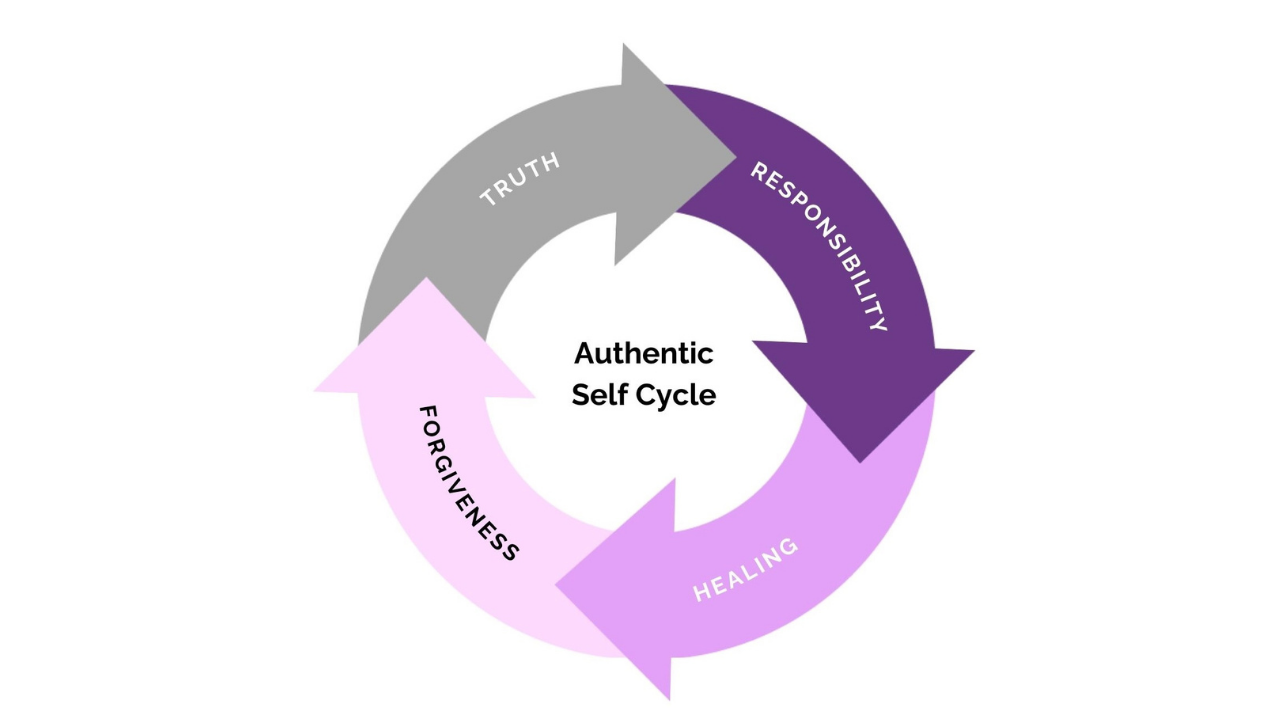
    Authentic Self Cycle diagram showing truth, responsibility, healing, and forgiveness for parents of narcissistic children

    Accept That You Played a Part — And That’s Your Power

    This is the hardest truth. You played a part in creating your narcissistic child.

    Not because you’re a bad person. Not because you were intentionally cruel or abusive. But because you were unconscious. Your codependent patterns, your own trauma, your own unhealed wounds — all of that shaped the emotional environment your child was raised in. And that environment taught them that survival required narcissism.

    Here’s the Gabor Maté quote that changes everything: “We don’t blame people for having unconscious patterns. Instead, we try to make them conscious.” This is the most loving thing you can do. Not to your child. To yourself.

    When you take responsibility for the unconscious patterns you passed down, you’re not being a bad parent. You’re being a conscious one. You’re saying: I didn’t know this was happening, but now I do. And I’m going to heal it. I’m going to interrupt this pattern so it doesn’t continue.

    And here’s the thing nobody tells you: healing your own patterns is the closest you’ll ever come to helping your narcissistic child. Because the moment you stop needing them to change, the moment you stop abandoning yourself to manage their emotions, the dynamic shifts. Not always. Not always enough. But the possibility opens.

    More importantly, your healing breaks the cycle for the generations after them. Your grandchildren won’t inherit the same pattern. The unconscious trauma that’s been passed down for generations has a chance to end with you.

    That’s not failure. That’s leadership in your own family system.

    Healing your own codependent patterns is the closest you will ever come to helping your narcissistic child. When you stop abandoning yourself to manage their emotions, the dynamic shifts. Your grandchildren won’t inherit the same pattern. The generational cycle can end with you.
    Reparenting — becoming the safe parent for yourself that your nervous system never had

    The Biology of Belief by Bruce Lipton. This book explains how your environment shapes your genes, not the other way around. Understanding epigenetics helps you see that your child’s narcissism is a learned response, not a life sentence. It also reframes your role from “I caused this damage” to “I can heal this pattern.”

    When the Body Says No by Gabor Maté. This book documents exactly how chronic stress from trying to manage a narcissistic child shows up in your body. Autoimmune disease. Chronic pain. Digestive issues. Maté connects the dots between emotional suppression and physical illness. Reading it might be the first time you understand that your body’s breakdown isn’t weakness — it’s wisdom.

    Facing Codependence by Pia Mellody. The foundational work on understanding codependent patterns — how they form in childhood and how they drive the parent-narcissist dynamic. If you see yourself in the codependent parent description above, this book will help you trace your patterns back to their origin so you can begin healing them.

    Complex PTSD: From Surviving to Thriving by Pete Walker. Walker explains how repeated childhood emotional wounding creates survival responses that persist into adulthood. This book helps both parents and adult children understand why their nervous systems react the way they do — and provides a compassionate framework for recovery.

    That’s you — finally understanding that you weren’t crazy for struggling. Your body and mind were responding exactly as they should to an impossible situation.

    Frequently Asked Questions

    Can a child actually be a narcissist?
    Technically, clinical narcissistic personality disorder (NPD) isn’t usually diagnosed until late adolescence or early adulthood. But the traits can absolutely emerge in childhood. A narcissistic child displays patterns of entitlement, lack of empathy, need for control, and explosive reactions to boundaries. Whether or not they’d receive an official diagnosis, the behavioral patterns are real and the impact on you is real.

    What’s the difference between a narcissistic child and a spoiled child?
    A spoiled child wants things and throws a tantrum when they don’t get them. They can usually recover from disappointment. A narcissistic child feels entitled to things, attacks you when they don’t get them, and genuinely cannot comprehend that their feelings or needs might not be the priority. They can’t take responsibility for their own behavior. They blame external circumstances or other people. A spoiled child can learn. A narcissistic child can’t — unless they want to.

    Should I cut off contact with my narcissistic adult child?
    This is deeply personal. Some parents find that low contact is most sustainable — brief, infrequent interactions with clear boundaries. Some find that no contact is necessary to preserve their mental health. Some maintain contact but with strict emotional walls. There’s no universal answer. The question to ask yourself is: “What contact level allows me to maintain my own healing and stability?” Honor that answer.

    Will therapy help my narcissistic child?
    Only if they want to change. Therapy requires self-reflection, accountability, and willingness to be wrong. Most narcissists experience therapy as confirmation that everyone else is the problem. They might attend and perform recovery for a while, but without genuine motivation to change their survival strategy, lasting change is unlikely.

    How do I stop feeling guilty for my narcissistic child’s behavior?
    By recognizing that guilt is a learned response. You probably grew up in an environment where you were responsible for managing other people’s emotions. You learned to interpret their unhappiness as your failure. That’s not the truth. Your child’s emotional regulation is their responsibility, not yours. Healing that guilt requires tracing it back to your own childhood, grieving what you didn’t get from your own parents, and then reparenting yourself.

    Can narcissism be healed?
    Narcissism can shift if someone becomes willing to question their survival strategy. But it requires them to voluntarily enter the vulnerable emotional space that their narcissism was built to avoid. It’s possible. It’s rare. Don’t wait for your child to become that rare person before you begin healing yourself.

    What’s the first step for a parent dealing with a narcissistic child?
    Stop trying to fix them. Start doing the work to fix yourself. Identify your own codependent patterns. Understand what wound in you created a parent willing to sacrifice everything for a child who will never appreciate it. That’s the first step. From there, everything else becomes possible. You can learn about healthy relationship patterns that actually hold. You can understand the signs of enmeshment that keep you connected even when you’re trying to separate. You can heal.

    Your Next Step

    You’ve spent years managing a narcissistic child’s emotions. Trying to get them to understand. Abandoning yourself hoping they’d finally love you the way you need to be loved. Your nervous system is exhausted. Your body is keeping score. Your hope is running dry.

    It’s time to stop doing external work and start doing internal work. That’s what The Greatness U is designed for. It’s not another self-help program telling you to set boundaries and move on. It’s nervous system work for the high-functioning, intelligent, emotionally exhausted parent who’s finally ready to heal the part of themselves that’s been locked in this dance with their narcissistic child.

    The people in The Greatness U understand because they’ve been there. They’ve made promises they couldn’t keep. They’ve felt the shame of being manipulated by their own child. They’ve walked around with their stomach in knots waiting for the next interaction. And they’ve found a way through.

    You can too. But it requires you to shift your focus from changing them to changing yourself. That’s where the real power lies.

    Start where it makes sense for you:

    • Emotional Blueprint Starter Course — Individual ($79) — Your individual starter roadmap for understanding your emotional blueprint and survival persona
    • Relationship Starter Course — Couples ($79) — A framework for healing the relationship patterns that lock you into the narcissist-codependent dance
    • Why We Can’t Stop Hurting Each Other ($479) — Deep-dive into the cycles that keep families stuck in painful repetition
    • Why High Achievers Fail at Love ($479) — For the parent who has succeeded at everything except the relationships that matter most
    • The Shutdown Avoidant Partner ($479) — Understanding the attachment patterns behind withdrawal and emotional distance
    • Tier 1: Mapping the Blueprint ($1,379) — The comprehensive program for full nervous system rewiring and emotional blueprint healing

    Not sure where to start? Try the Feelings Wheel exercise — it’s free, it takes five minutes, and it will show you how disconnected you’ve become from your own emotional truth.

    You can also explore the signs of enmeshment in your family, learn about relationship insecurity patterns, or understand what genuine self-esteem actually looks like when it’s not built on a survival persona.

    The Bottom Line

    Right now, you’re living in the space between hope and despair. You hope your child will change. You hope that next conversation will be different. You hope that if you just say the right thing, if you just validate them enough, if you just sacrifice a little more, something will shift. And after every interaction, you sink into despair because nothing has shifted. It never does.

    But this is not your failure. This is not proof that you were a bad parent or that you should have done something different. This is evidence of an unconscious pattern that was passed down to you, that you unconsciously passed down to your child. Neither of you chose it. Both of you are living it.

    The beautiful part is this: if you’re conscious enough to see the pattern, you’re conscious enough to heal it. And when you heal your part, something shifts in the entire family system. Not because your child changes. But because you’re no longer participating in the dance the way you used to. And sometimes, that shift is enough. Sometimes it opens a door that was previously locked. And sometimes it doesn’t. But either way, you’re free.

    That’s not bad parenting. That’s unconscious parenting. And consciousness is the cure.

    That’s you… reading this right now because somewhere inside, you already know the answer isn’t fixing them. It’s healing you.
  • Enmeshment Meaning: The Hidden Family Pattern Behind Your Relationship Struggles

    Enmeshment Meaning: The Hidden Family Pattern Behind Your Relationship Struggles

    You’re sitting at a family dinner and your mother starts telling the table about your relationship problems — details you shared with her in private. Your stomach drops. You want to say something, but you can’t. You never could. Because somewhere deep inside, you learned that her feelings matter more than yours. That keeping her happy is your job.

    And it’s been that way for as long as you can remember.

    Maybe it was the way she called you her “best friend” when you were eight. Maybe it was how your father told you everything about his failing marriage — burdens no child should carry. Maybe it was the guilt trips when you tried to move out, go to college, or simply live your own life.

    That’s you — and you’re not broken. You were trained.

    dynamic where emotional boundaries between parent and child are erased. The parent uses the child to meet their own unmet emotional needs — for companionship, validation, intimacy, or emotional regulation — without realizing they’re doing it. The child grows up believing their worth depends on managing other people’s emotions. This isn’t love. It’s emotional survival. And it follows you into every relationship you’ll ever have — until you learn what it is and how to heal from it.

    Enmeshment meaning — the hidden family pattern that erases emotional boundaries between parent and child

    What Does Enmeshment Actually Mean?

    Enmeshment is a family system where the emotional boundaries between parent and child are blurred or completely erased. The parent — usually without realizing it — uses the child as an emotional partner, confidant, therapist, or source of validation. The child’s needs, feelings, and identity get swallowed up by the parent’s emotional world.

    This isn’t about a parent who loves their child deeply. Every loving parent wants closeness. Enmeshment is different. In enmeshment, the closeness isn’t for the child’s benefit — it’s for the parent’s. The parent has unmet emotional and psychological needs, usually from their own childhood trauma, and they unconsciously turn to their child to fill the void their partner, their parents, or their own healing should fill.

    The child’s nervous system learns one thing above all else: other people’s emotions are your responsibility. Your feelings? Those don’t matter. Your needs? Those are selfish. Your job is to keep the peace, absorb the pain, and make sure nobody in the family falls apart.

    That’s you — carrying everyone else’s emotional weight and calling it love.

    Emotional blueprint formed in childhood through enmeshment — Kenny Weiss

    Why Enmeshment Happens: It Starts With the Parent’s Unhealed Wounds

    Here’s something most people don’t understand about enmeshment: the parent doesn’t know they’re doing it. These aren’t bad people. They’re wounded people — adults who never got their own emotional needs met as children, and who unconsciously look to their kids to fill that void.

    A mother who was emotionally abandoned by her own parents turns her daughter into her best friend — her emotional support system. A father whose marriage is falling apart starts confiding in his son about things no child should ever hear. A single parent who’s overwhelmed and lonely makes their child their primary companion.

    None of this happens with malicious intent. It happens because the parent’s nervous system is in survival mode, and the child is the safest, most available source of emotional regulation they have. The parent may even believe they have the closest, most loving relationship imaginable with their child.

    That’s you — and you believed it too. Because it’s all you ever knew.

    That’s you — defending the very dynamic that stole your childhood.

    Society and media haven’t educated us on what healthy parenting actually looks like. We see enmeshed families on television and call it “close.” We see a mother who knows every detail of her adult daughter’s life and say, “What a great relationship.” We don’t recognize the codependence hiding underneath because it looks so much like love.

    But love has boundaries. Enmeshment does not.

    How Enmeshment Shows Up in Your Life

    Enmeshment doesn’t stay in your childhood home. It follows you — into your relationships, your friendships, your career, and your body. The patterns you learned as a child become the patterns you repeat as an adult, because your nervous system was wired for them before you could even speak.

    Enmeshment in Your Family

    Your parent still expects you to call daily. They guilt-trip you when you have plans that don’t include them. They share personal information about you with the entire family without your permission. They react with anger, tears, or withdrawal when you try to set boundaries. They say things like, “After everything I’ve done for you” or “Fine, I’ll just be here alone.”

    You keep secrets from them — not because you’re dishonest, but because you know they can’t handle the truth without making it about themselves. You sacrifice your own belief system to keep them happy. You feel responsible for their emotional state, even though you’re a grown adult with your own life.

    That’s you — still parenting your parent, still abandoning yourself to keep the peace.

    Enmeshment in Romantic Relationships

    You either lose yourself completely in your partner — becoming whatever they need you to be — or you choose emotionally unavailable people because real intimacy feels suffocating. You confuse intensity for connection. You mistake insecurity for love. You feel responsible for your partner’s happiness and take it personally when they’re in a bad mood.

    When there’s conflict, you either shut down completely or over-function — doing more, giving more, trying harder — because that’s what worked with your parent. You don’t know how to have needs in a relationship because you were never allowed to have them as a child.

    That’s you — giving everything to your partner and having nothing left for yourself.

    Trauma chemistry in relationships caused by childhood enmeshment — Kenny Weiss

    Enmeshment in Friendships

    You’re the friend everyone calls when they’re in crisis. You absorb other people’s problems like a sponge. You feel guilty saying no to anyone, even when you’re exhausted. People call you an “empath” — but here’s the truth most people won’t tell you: being an “empath” isn’t a gift. It’s a trauma response. It means your boundaries were erased so early that you don’t know where you end and other people begin.

    You attract people who take more than they give because that dynamic feels normal to you. It’s familiar. And familiar feels safe to your nervous system, even when it’s destroying you.

    That’s you — pouring from an empty cup and wondering why you’re so exhausted.

    Enmeshment at Work

    You’re the overachiever, the people-pleaser, the one who can’t say no to extra projects. You base your entire self-worth on performance and approval from authority figures — because that’s what you did with your parent. Your boss’s mood determines your mood. A critical email sends you into a spiral. You work late, say yes to everything, and then resent everyone for not noticing how much you give.

    You might be wildly successful on the outside — but inside, you feel like a fraud. Because enmeshment taught you that your worth is earned, never inherent.

    That’s you — performing your value instead of knowing it.

    Enmeshment in Your Body and Health

    Your body keeps the score. Dr. Gabor Maté writes in When the Body Says No that when we can’t say no with our words — when our boundaries are erased — our body says no for us. Autoimmune conditions, chronic pain, digestive issues, insomnia, jaw clenching, migraines — these are your nervous system’s way of screaming what your voice was never allowed to say.

    You might bounce your leg constantly, clench your jaw at night, or carry tension in your shoulders that never releases. Your body has been in fight-or-flight since childhood, because enmeshment kept your nervous system in a permanent state of hypervigilance — always scanning, always monitoring, always ready to manage someone else’s emotions.

    That’s you — your body holding all the pain your words were never allowed to speak.

    Survival persona types formed through enmeshment — falsely empowered, disempowered, and adapted wounded child

    The Three Survival Personas Enmeshment Creates

    When a child grows up in an enmeshed family, they don’t get to develop an authentic self. Instead, they develop a survival persona — a version of themselves designed to keep the parent happy and the family system intact. There are three types:

    The Falsely Empowered: This person looks like they have it all together. They’re the high achiever, the controller, the one who takes charge of every situation. But underneath, they’re terrified — terrified that if they stop performing, if they show any weakness, they’ll be abandoned. They learned in childhood that being “strong” was the only way to earn love.

    The Disempowered: This person shrinks. They become passive, compliant, invisible. They learned that having needs was dangerous, that taking up space created conflict, and that the safest place was in the background. They attract controlling partners and overbearing friends because they were trained to serve.

    The Adapted Wounded Child: This is the person stuck in reactive survival mode — acting out, self-sabotaging, using substances or relationships or chaos to manage the pain they were never taught to process. They’re not “broken” — they’re adapting to wounds that never healed.

    That’s you — one of these survival personas running your life on autopilot, making decisions from childhood wounds instead of adult wisdom.

    The adapted wounded child survival persona created by enmeshed family dynamics

    The Worst Day Cycle™: How Enmeshment Keeps You Stuck

    Enmeshment doesn’t just wound you once. It creates a cycle that repeats throughout your entire life — what I call the Worst Day Cycle™. Here’s how it works:

    Fear: At the core of enmeshment is a deep, primal fear — the fear of being alone, abandoned, rejected, or unloved. Your parent taught you that love is conditional. That if you don’t perform, comply, or manage their emotions, you’ll lose them. So fear runs everything. It drives every decision, every relationship, every moment of people-pleasing.

    Shame: That fear creates shame. Not guilt — guilt says “I did something wrong.” Shame says “I am something wrong.” You believe your needs are too much, that you’re fundamentally flawed, that if people really knew you, they’d leave. This shame was installed in childhood, and it sits at the center of your emotional operating system.

    Denial: Because the shame is so unbearable, you develop denial — self-deception. You tell yourself the enmeshment was love. You minimize the damage. You say things like, “My parents did their best” without ever looking at what their “best” actually cost you. You deny your own feelings to maintain the story that your family was normal.

    And then the cycle repeats. Fear → Shame → Denial → Fear → Shame → Denial. Over and over, keeping you trapped in the same patterns, the same relationships, the same pain.

    That’s you — trapped in a cycle you didn’t create and can’t think your way out of.

    The Worst Day Cycle — Fear, Shame, Denial — the repeating pattern caused by enmeshment

    The Emotional Authenticity Method™: How to Start Healing

    You can’t think your way out of enmeshment. You can’t journal your way out. You can’t read enough books or listen to enough podcasts to override what your nervous system learned in childhood. Healing happens in the body, not just the mind.

    That’s why I created the Emotional Authenticity Method™ — a five-step somatic process that interrupts the Worst Day Cycle™ in real time. Here’s how it works:

    Step 1: Somatic Down-Regulation. When you feel triggered — when the guilt, the shame, the fear hits — stop. Focus on what you can hear around you for 15 to 30 seconds. The sound of the air conditioning. A car outside. Your own breathing. This interrupts your nervous system’s trauma response and brings you back into your body.

    Step 2: What am I feeling right now? Name it. Not what you’re thinking — what you’re feeling. Sad. Scared. Angry. Ashamed. Use the Feelings Wheel if you need help — most people raised in enmeshed families were never taught to identify their own emotions.

    Step 3: Where in my body do I feel it? Tightness in your chest. A pit in your stomach. A lump in your throat. Tension in your shoulders. Your body has been holding these emotions for decades. Let yourself feel where they live.

    Step 4: What is my earliest memory of this exact feeling? This is where the breakthrough happens. That feeling you’re having right now — it’s not new. It’s ancient. It’s the same feeling you had at five, at eight, at twelve, when your parent made you responsible for their emotional world. Let the memory surface.

    Step 5: Who would I be if I never had this feeling again? This is the vision of your authentic self — the person underneath the survival persona. The person who doesn’t need to earn love, manage other people’s feelings, or perform their worth. That person is still in there.

    That’s you — five steps away from meeting the person you were always meant to be.

    The Emotional Authenticity Method — Kenny Weiss's 5-step somatic healing process for enmeshment recovery

    The Authentic Self Cycle™: What Healing Actually Looks Like

    When you start doing this work, the Worst Day Cycle™ begins to lose its grip. In its place, something new emerges — what I call the Authentic Self Cycle™:

    Truth: You stop denying what happened to you. You stop calling enmeshment “love.” You tell yourself the truth — that your boundaries were violated, that you were used to meet your parent’s emotional needs, and that you deserved better. Truth is the first act of courage in healing.

    Responsibility: You take ownership of your healing. Not blame — responsibility. You didn’t cause the enmeshment, but you’re the only one who can break the cycle. This means doing the uncomfortable work, not just reading about it.

    Healing: Real healing — somatic, nervous-system-level healing. Not just understanding what happened, but feeling what you were never allowed to feel. Grieving the childhood you didn’t get. Processing the anger, the sadness, the betrayal. Letting your body release what it’s been holding for decades.

    Forgiveness: Not forced forgiveness. Not “I forgive you because I should.” Real forgiveness — the kind that comes naturally when you’ve done the healing work. Forgiveness of your parents for not knowing better. Forgiveness of yourself for all the years you spent in survival mode. Forgiveness is the last step, not the first.

    That’s you — stepping out of the Worst Day Cycle™ and into the life you were always meant to live.

    The Authentic Self Cycle — Truth, Responsibility, Healing, Forgiveness — the path out of enmeshment

    Before and After: What Changes When You Heal Enmeshment

    Before healing, you feel responsible for everyone else’s emotions. You can’t say no without drowning in guilt. You don’t know what you actually want because you’ve spent your entire life focused on what other people need. Relationships feel like obligations. Your body is tense, exhausted, and running on cortisol. You think this is just “who you are.”

    After healing, you discover that you are a whole, separate person with your own needs, feelings, and desires. You set boundaries without guilt. You choose relationships based on mutual respect, not familiar pain. You stop absorbing other people’s emotions and start feeling your own. Your body relaxes. Your nervous system calms. You sleep better, breathe deeper, and show up in the world as you — not as the version of you that was designed to keep someone else comfortable.

    That’s you — not someday. That’s the you that’s available right now, the moment you decide to start.

    Reparenting yourself after enmeshment — learning to meet your own emotional needs

    Recommended Reading

    If this article hit home, these books will take your understanding deeper:

    The Emotional Incest Syndrome by Dr. Patricia Love — The definitive book on enmeshment. Don’t let the title scare you. This book explains exactly how parents use children as emotional partners and what you can do about it.

    Facing Codependence by Pia Mellody — The foundational text on how childhood trauma creates codependent patterns. Pia Mellody’s work is the backbone of everything I teach.

    When the Body Says No by Dr. Gabor Maté — The science behind how repressed emotions and boundary violations show up as physical illness. Essential reading for anyone whose body is carrying their childhood pain.

    Daring Greatly by Brené Brown — A powerful exploration of shame and vulnerability that will help you understand why enmeshment made you so afraid of being seen.

    The Bottom Line

    Enmeshment is one of the most misunderstood forms of childhood emotional abuse — because it doesn’t look like abuse. It looks like love. It looks like closeness. It looks like a family that “would do anything for each other.” But underneath that closeness is a child who was never allowed to become their own person. A child whose feelings, needs, and identity were consumed by a parent who didn’t know any better.

    If you grew up in an enmeshed family, it doesn’t mean your parents were evil. It means they were wounded — and they passed those wounds on to you. The good news is that the cycle can stop. It stops with you. Not by blaming them, but by doing the work they were never able to do.

    That’s you — the one who finally breaks the cycle. The one who heals what was passed down. The one who chooses truth over denial, responsibility over blame, and authenticity over survival. That’s you.

    FAQ: Enmeshment Meaning and Healing

    What is the difference between enmeshment and a close family?

    In a healthy close family, each person has their own identity, feelings, and boundaries. They can disagree without consequences. They support each other without losing themselves. In enmeshment, boundaries don’t exist — the parent’s emotions become the child’s responsibility, and independence is treated as betrayal. The key difference is whether closeness comes with freedom or with obligation.

    Can you be enmeshed with someone other than a parent?

    Yes. Enmeshment can happen in romantic relationships, friendships, and even at work. However, the root almost always traces back to the parent-child relationship. If you’re enmeshed with a partner or friend, it’s because your nervous system was trained for enmeshment in childhood. The pattern repeats until you heal the original wound.

    Is enmeshment the same as codependence?

    Enmeshment and codependence are closely related but not identical. Enmeshment specifically refers to the boundary violation in the family system — where the parent and child’s emotional worlds become fused. Codependence is the broader pattern of behavior that develops as a result. You could say enmeshment is the cause, and codependence is one of the effects.

    How do I know if I grew up in an enmeshed family?

    Common signs include: feeling responsible for your parent’s emotions, difficulty making decisions without their approval, guilt when you set boundaries, keeping secrets to avoid their reaction, feeling like you don’t have your own identity, and physical symptoms like chronic tension or digestive issues. If you read this article and thought “that’s my family” — trust that feeling. Read more about the signs of enmeshment here.

    Can enmeshment be healed?

    Absolutely. But it can’t be healed by thinking about it — it has to be healed in the body, at the nervous system level. The Emotional Authenticity Method™ gives you a practical, five-step somatic process to interrupt enmeshed patterns in real time. Combined with the frameworks of the Worst Day Cycle™ and the Authentic Self Cycle™, healing is not only possible — it’s the most important work you’ll ever do.

    What are the long-term effects of enmeshment on relationships?

    Enmeshment creates a template for all future relationships. You may attract narcissistic partners because their controlling behavior feels familiar. You may lose yourself in relationships, becoming whatever the other person needs. You may avoid intimacy entirely because real closeness feels threatening. The survival persona you developed in your enmeshed family — whether falsely empowered, disempowered, or adapted wounded child — will run every relationship until you do the healing work.

    Your Next Step

    If this article described your life, you’re not alone — and you don’t have to figure this out by yourself. Start with the Feelings Wheel exercise to begin reconnecting with your own emotions. Then explore the courses at Greatness U — specifically Why We Can’t Stop Hurting Each Other ($479) for understanding relationship dynamics rooted in enmeshment, or Tier 1: Mapping the Blueprint ($1,379) for the comprehensive healing program that walks you through every step of breaking free from the Worst Day Cycle™ and building your Authentic Self Cycle™.

    The work isn’t easy. But you’ve already done the hardest thing — you’ve started looking at the truth. Keep going.

  • Enmeshment: Signs, Meaning, and How to Heal From Enmeshed Relationships

    Enmeshment: Signs, Meaning, and How to Heal From Enmeshed Relationships

    The Moment You Realize You’re Not Actually Free

    You’re sitting across from someone you care about. They’re upset. You haven’t even finished your sentence, but your chest tightens. Your voice gets smaller. You shift into problem-solving mode — not because they asked you to, but because their discomfort has become your emergency.

    This happens so fast you don’t even notice it anymore. By the time you realize what’s happened, you’ve agreed to something you didn’t want, canceled plans that mattered to you, or stayed late listening to a problem that isn’t yours to solve. And the worst part? You feel guilty for even noticing the resentment building inside you.

    This is enmeshment.

    Enmeshment is what happens when your developing nervous system learned that your survival depended on monitoring and managing another person’s emotional state — usually a parent. Your job wasn’t to develop your own sense of self. Your job was to be the emotional thermostat for someone else’s dysregulation. And you got very good at it.

    As an adult, this shows up as an almost involuntary responsiveness to others’ emotions. You read micro-expressions. You anticipate needs before they’re stated. You feel responsible for how other people feel. And you’ve probably been told — by therapists, books, well-meaning friends — that you just need to “set boundaries” or “communicate better.”

    That hasn’t worked, has it?

    That’s because enmeshment isn’t a boundary problem. It’s a nervous system problem. And your nervous system doesn’t care about your good intentions or your intellectual understanding. It cares about survival.

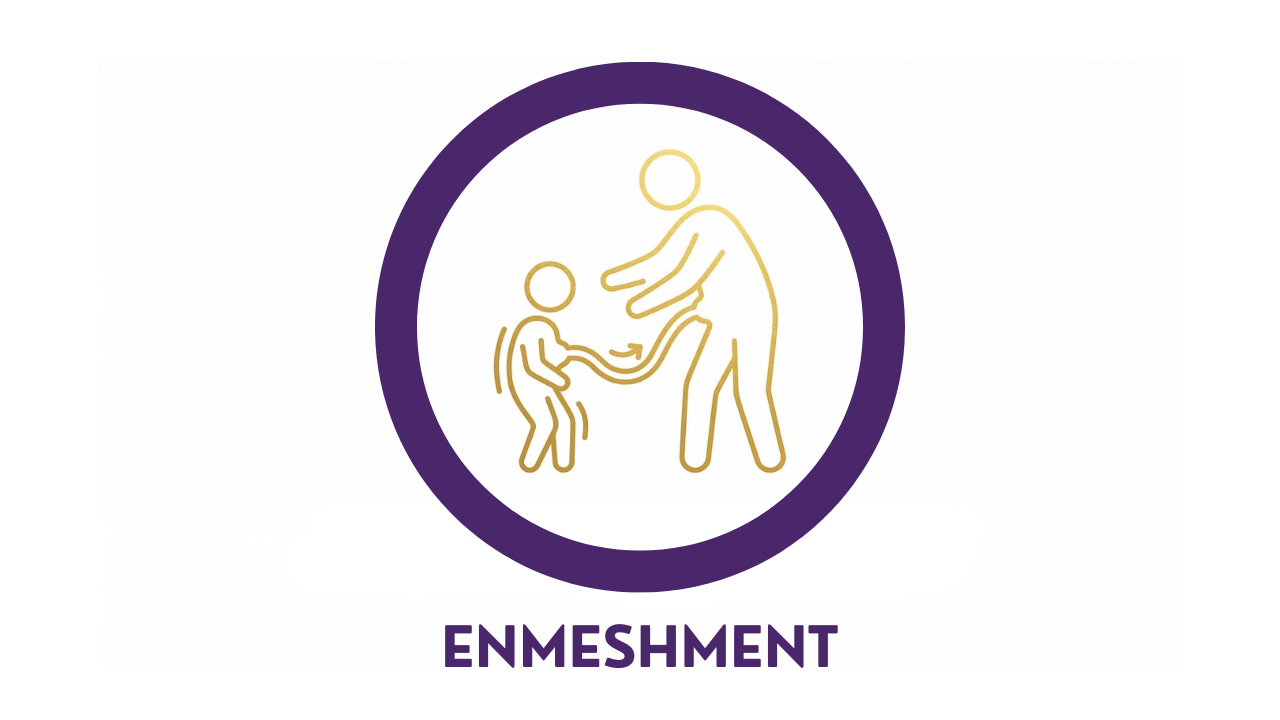
    Enmeshment icon showing parent reaching into child — signs of enmeshment in families

    What Is Enmeshment, Really?

    Enmeshment is a relational pattern where emotional and psychological boundaries between two people — typically parent and child — become blurred or completely absent. In an enmeshed family, a child’s emotional needs become secondary to managing or regulating the parent’s emotional state.

    Here’s what that actually looks like in your body:

    As a child, your nervous system didn’t have the luxury of developing normally. Instead of learning to self-regulate, you learned to co-regulate by constantly watching your parent’s face, voice, and body for signals of danger. If your parent was depressed, you became the emotional support. If your parent was volatile, you became the peacekeeper. If your parent was overwhelmed, you became the problem-solver.

    Your nervous system learned one thing: your safety depends on their stability.

    Enmeshment is a developmental nervous system pattern — not a personality flaw — where a child’s brain learns that survival depends on monitoring and managing a parent’s emotional state, creating an adult who unconsciously abandons their own needs to regulate others’ emotions.

    This created a permanent wiring: other people’s emotions = your responsibility. Other people’s comfort = your job. Your own needs = a luxury you can’t afford.

    In childhood, this strategy kept you alive. A child can’t leave. A child can’t say, “This isn’t my job.” So your nervous system adapted. It created a survival persona — a version of you calibrated entirely around managing someone else’s emotional weather. That survival persona takes one of three forms: the falsely empowered type who controls, dominates, and rages to stay safe; the disempowered type who collapses, people-pleases, and makes themselves invisible; or the adapted wounded child who oscillates between both — controlling in some relationships and collapsing in others.

    Survival Persona — the identity children create to manage their parents' emotions and avoid shame

    The problem? You’re not a child anymore, but your nervous system still thinks you are.

    The Emotional Umbilical Cord That Was Never Cut

    Think of a healthy birth. The umbilical cord connects mother and child — it’s how the child gets everything it needs to survive. Then the child is born, the cord is cut, and the child begins developing as a separate being with its own system, its own needs, its own emotional reality.

    In enmeshment, that emotional cord was never cut. The parent — often unconsciously — kept it attached. But here’s the part no one talks about: the flow reversed.

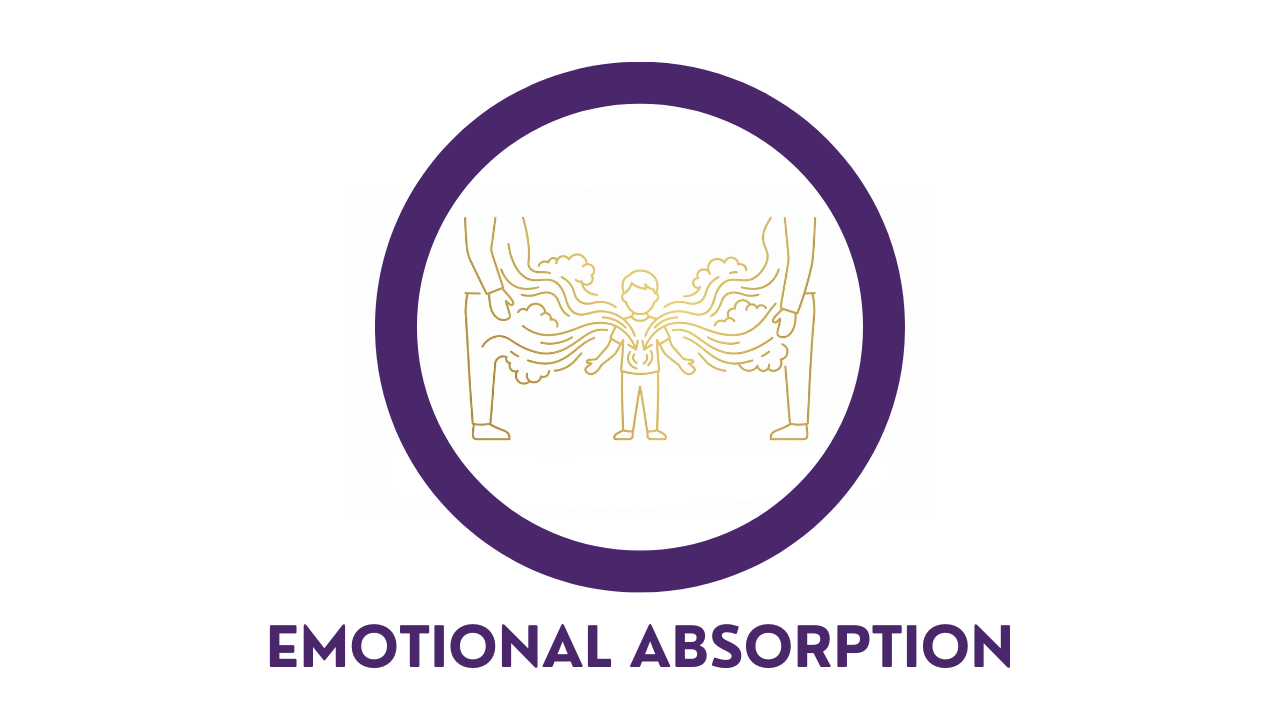
    Instead of the parent providing emotional nourishment to the child, the parent began sucking the emotional life from the child. The child became the parent’s emotional supply — their regulator, their confidant, their reason for stability. The cord stayed attached, but now the child was the one being drained.

    That’s you at ten years old, listening to your mother talk about her marriage. That’s you at eight, being the “easy” child because your parent couldn’t handle one more hard thing. That’s you learning to read the room before you learned to read a book.

    And now, as an adult, you walk around with invisible emotional cords attached to everyone you’re close to. Your partner, your boss, your friends, your kids. Each one draining you a little more. Each one connected to that original pattern: my job is to keep them regulated, no matter what it costs me.

    Emotional absorption — child absorbing parents' emotions in enmeshed family system

    Why “Just Set Boundaries” Has Already Failed You

    You’ve read the books. You know intellectually that you’re allowed to have needs. You’ve listened to podcasts about boundary-setting. Maybe you’ve even tried — said no, walked away, protected your time.

    And then what happened?

    Guilt. Anxiety. A voice in your head telling you how selfish you are. Or maybe you did hold the boundary, but it felt wrong — not just inconvenient, but wrong at a cellular level, like you were violating something sacred.

    This is where most therapy and self-help gets stuck. It treats enmeshment as a conscious choice, something you can un-choose with willpower and verbal skills. But your nervous system didn’t learn enmeshment through logic. It learned it through thousands of micro-moments of survival.

    Traditional boundary-setting fails for enmeshment because it targets conscious behavior while the pattern is encoded in the autonomic nervous system — the part of your brain that operates below awareness and cannot be changed through willpower or verbal skills alone.

    When you try to set a boundary from your thinking brain while your nervous system is still running “other people’s emotions are my responsibility,” you’re trying to drive a car with the emergency brake on. It doesn’t matter how hard you press the accelerator. The system is fighting itself.

    What you need isn’t another book about communication. You need to rewire the survival program at the nervous system level.

    Enmeshment vs. Codependency: They’re Not the Same Thing

    This distinction matters because it changes how you heal.

    Codependency is a set of relational behaviors — obsessing over someone else’s happiness, losing yourself in relationships, sacrificing your needs for others. You can develop codependency at any age, from a partner, a friendship, a work dynamic.

    Enmeshment is earlier. It’s the developmental root of codependency. It’s your nervous system’s foundational operating system, encoded in childhood, that says: my job is to manage your emotional state in order to survive.

    Codependence icon — the relational pattern built on top of enmeshment

    If you’re enmeshed, you will almost certainly display codependent behaviors. But enmeshment is the architecture underneath. Codependency is what you do. Enmeshment is what you became.

    Codependency is a set of relational behaviors you can develop at any age. Enmeshment is a childhood developmental wound encoded in your nervous system — the foundational architecture underneath codependency that cannot be resolved through behavioral changes alone.

    You can’t think your way out of the architecture. You have to go back to the nervous system level and help it recognize that you’re safe now — that you don’t need to manage anyone else’s emotions to survive.

    The Signs of Enmeshment: Recognizing Your Own Pattern

    Enmeshment shows up across every relationship in your life, but it always has the same core: your boundaries blur, your sense of self becomes conditional on managing others, and you’re operating from a state of chronic anxious alertness.

    In Your Family

    You still defer to your parent’s opinions even when they contradict your own values. You feel responsible for their happiness, their problems, their aging. You can’t hold a different view without guilt. They know details about your life that burden you, or you know details about theirs that aren’t yours to carry. That’s you still running the childhood program: my parent’s comfort is my job.

    In Your Romantic Relationships

    You read your partner’s mood the moment they walk in the door. You adjust yourself to keep things calm. You have trouble articulating what you want because you’re too busy managing what they feel. You make yourself smaller and smaller — editing, dimming, adjusting — until you don’t recognize who you’ve become. That’s you still running the program: keep them stable and you stay safe.

    In Friendships

    You’re the one who always listens but rarely gets listened to. You show up for others’ crises while your own go unaddressed. You can’t tell someone no without over-explaining or feeling guilty for days. That’s you still running the program: your needs don’t matter if someone else is struggling.

    In Work

    You over-function. You manage your boss’s moods, your colleagues’ problems, your company’s dysfunction. You can’t leave on time even when your work is done. You read rooms for tension and automatically try to smooth it. That’s you still running the program: manage the emotional environment and you’ll be safe.

    In Your Body

    You feel anxious when alone. You’re exhausted by an invisible weight that never lifts. You catch yourself abandoning your own needs mid-conversation without even realizing it. You have constant health problems — headaches, autoimmune issues, chronic pain — because your body has been absorbing everyone else’s emotional toxicity for decades. That’s your nervous system still believing: your needs aren’t real.

    If several of these ring true, you’re not broken. You’re enmeshed. Your survival system did exactly what it was designed to do. The problem is it’s still running when you no longer need it to.

    Why Your Body Is Paying the Price

    Enmeshed people are chronically sick. Headaches, autoimmune disease, arthritis, digestive problems — the list goes on. This isn’t coincidence. When you spend your entire life absorbing other people’s emotional toxicity while suppressing your own needs, your body eventually says what your mouth can’t.

    Dr. Gabor Maté’s When the Body Says No lays out the science: your genes require a specific environment to activate. The emotional turmoil of enmeshment is that environment. You weren’t born with these conditions. Your body manufactured them because it had no other way to express the pain you couldn’t speak.

    That’s you getting sick every time you visit your parents. That’s the headache that appears when your partner is upset. That’s your body screaming what your survival persona won’t let you say.

    The Worst Day Cycle™ in Enmeshed Patterns

    The Worst Day Cycle™ explains what happens when enmeshment meets a relational trigger:

    Worst Day Cycle diagram — the continuous loop of trauma, fear, shame, and denial in enmeshment

    Trauma (Event) — Something happens. Someone’s upset with you, or you sense disapproval. This is just data. But your enmeshed nervous system interprets it as threat.

    Fear — Your body floods with cortisol. You go into hypervigilance. What did I do wrong? What do they need? How do I fix this? The fear isn’t about the actual event — it’s about the survival response: if I don’t manage this, I’m in danger.

    Shame — You don’t just feel scared — you feel fundamentally wrong for having needs, for taking space, for not being enough. The fear becomes: I am the problem. I am failing at the one job I was born to do.

    Denial — So you disconnect. It’s not that bad. I’m overreacting. They’re fine. I’m fine. You abandon your own nervous system and go back to managing theirs.

    The cycle repeats. And each time, your nervous system learns the pattern more deeply: my feelings don’t matter. Other people’s emotions are real. My job is to fix this.

    The Worst Day Cycle™ is a four-stage neurochemical loop — Trauma → Fear → Shame → Denial — where the brain’s hypothalamus generates addictive chemical cocktails (cortisol, adrenaline, dopamine misfires) that keep you repeating the same painful patterns because your brain can’t tell right from wrong, only known from unknown.

    What Healing Actually Requires: The Emotional Authenticity Shift

    This is where most recovery plateaus. You’ve done the inner work. You understand where it came from. But you still feel the pull. You still feel guilty. You still find yourself managing other people’s emotions before you even realize what’s happening.

    That’s not failure. That’s the signal you need to go deeper — not into your story, but into your nervous system.

    The Emotional Authenticity Method™ is designed precisely for this. It’s a five-step somatic process that rewires your nervous system’s relationship to your own emotional reality:

    Emotional Authenticity Method — the 5-step somatic process for rewiring your childhood emotional blueprint

    1. Somatic Down-Regulation — Get your nervous system out of emergency mode. Focus on what you can hear around you for 15-30 seconds. This isn’t meditation. It’s actual nervous system regulation. You can’t rewire from panic.

    2. What am I feeling right now? — Not what should you feel. Not what are they feeling. What is actually alive in your body right now? For enmeshed people, this is shockingly hard. You’ve spent your whole life feeling what others feel. Accessing your own feeling is like finding a muscle you’ve never used. Use the Feelings Wheel to help you name what you’re actually experiencing.

    3. Where in my body do I feel it? — The tightness in your chest, the heaviness in your belly, the dissociation in your head — that’s where the real information lives. This step anchors you back into your own body as the source of truth.

    4. What is my earliest memory of having this exact feeling? — This isn’t about blame. It’s about recognizing the pattern. Your body has been trying to tell you something since childhood. This step helps you see the thread that connects your adult pain to the original wound.

    5. Who would I be if I never had this thought or feeling again? — This isn’t about positivity. It’s about possibility. What becomes available when this particular nervous system pattern isn’t running your life?

    The EAM works because it addresses the actual problem: your nervous system has lost track of the difference between your feelings and other people’s feelings. It teaches your body that you can feel your own feelings, acknowledge others’ feelings, and let those be separate things.

    The Authentic Self Cycle™: What Emerges on the Other Side

    The Authentic Self Cycle™ is what becomes possible when you start healing:

    Authentic Self Cycle diagram — the pathway of truth, responsibility, healing, and forgiveness

    Truth — You feel something — sadness, anger, desire, a boundary — and instead of immediately managing it, you let yourself know it. This is what’s true for me right now.

    Responsibility — You take ownership of your own emotional reality. Not blame toward others, not shame about yourself. This is my feeling. It’s valid. It tells me something about what I need.

    Healing — You address what your feeling is pointing you toward. Maybe it’s a boundary. Maybe it’s self-care. Maybe it’s a conversation. But you move toward your own wholeness instead of away from it.

    Forgiveness — Not forgiving others for enmeshing you. Forgiving yourself for surviving the way you had to. For being the person you needed to be to make it through. You did the best you could with what you understood at the time.

    The ASC doesn’t mean you stop caring about others. It means you care from a place of choice, not compulsion. From wholeness, not survival. That’s you loving people without losing yourself. That’s real connection.

    Why Your “Empath” Identity Might Be Keeping You Stuck

    If you’ve identified as an empath, read this carefully: the “empath” label can actually lock you deeper into enmeshment. It romanticizes what is actually a dysregulated nervous system. It tells you that your hyperawareness of others’ emotions is a gift instead of a survival adaptation that’s now harming you.

    You’re not inherently more sensitive than other people. Your nervous system is running a different program — one that was necessary when you were small and dependent, but is now draining your life. You can develop actual empathy (understanding others’ emotions while maintaining your own boundaries) on the other side of healing. But first, you have to recognize that your current “empathy” is enmeshment dressed up as sensitivity.

    Enmeshment and Relationship Insecurity

    Enmeshed people almost always experience chronic relationship insecurity. You’re constantly scanning for signs that you’re failing, that the other person is upset, that the relationship is at risk. Not because they’re giving you actual reasons to doubt, but because your nervous system is programmed to believe that someone else’s emotional comfort is your job.

    That’s you waking up at 3 AM wondering if you said something wrong three days ago. That’s you over-functioning to prevent a conflict that hasn’t even happened. That’s you never feeling secure no matter how much reassurance you get.

    Trauma Gut vs Authentic Gut — learning to tell the difference between survival instinct and real intuition

    The security you’re looking for isn’t going to come from another person finally doing it right. It’s going to come from rewiring your nervous system so that your safety doesn’t depend on managing someone else.

    When the Body Says No: Exploring the Stress-Disease Connection by Dr. Gabor Maté explains how chronic emotional suppression becomes physical illness. You’ll recognize yourself on every page.

    The Emotional Incest Syndrome: What to Do When a Parent’s Emotional Needs Overstep Boundaries by Dr. Patricia Love directly addresses the enmeshment wound and how it shows up across your relational patterns.

    Facing Codependence: What It Is, Where It Comes From, How It Sabotages Our Lives by Pia Mellody maps the developmental roots of codependency and the childhood experiences that create it — essential reading for understanding the bridge between enmeshment and adult relational patterns.

    Codependent No More: How to Stop Controlling Others and Start Caring for Yourself by Melody Beattie provides practical tools for recognizing and interrupting codependent patterns that grow from enmeshment.

    The Gifts of Imperfection: Let Go of Who You Think You’re Supposed to Be and Embrace Who You Are by Brené Brown explores how shame drives the survival persona and how vulnerability becomes the pathway back to your authentic self.

    These aren’t self-help books with simple fixes. They’re maps of the actual problem. That’s you finally reading something that validates that this was real, that it mattered, that you weren’t overreacting.

    Frequently Asked Questions About Enmeshment

    Is enmeshment the same as codependency?
    No. Codependency is a set of relational patterns you can develop at any age. Enmeshment is a developmental wound from childhood that creates the foundation for codependency. You can be codependent without being enmeshed, but if you’re enmeshed, codependency is almost inevitable.

    Can you heal from enmeshment without therapy?
    You need something beyond intellectual understanding. Whether that’s therapy, coaching, somatic work, or a structured program depends on you. The key is that you need support that goes beyond reading about it into actual nervous system rewiring.

    Does healing mean cutting off my family?
    Not necessarily. You might need to step back for a while to rewire. But the goal isn’t punishment or abandonment — it’s developing the ability to be in relationship without abandoning yourself. That might look different than before, but it doesn’t have to be all-or-nothing.

    Why do I still feel guilty after setting a boundary, even when I know it’s healthy?
    Because your nervous system interprets the boundary as danger. You’ve been wired since childhood to believe that managing others’ emotions is your job. A boundary feels like you’re failing at the most fundamental task of your existence. The guilt isn’t a sign the boundary was wrong. It’s a sign your nervous system is grieving the loss of a survival strategy. That’s exactly what the Emotional Authenticity Method™ addresses.

    What if the person I’m enmeshed with refuses to see the problem?
    Their awareness doesn’t determine your healing. You are the only one who can rewire your nervous system’s response. You can’t control whether they change, but you can stop running their survival program.

    What does enmeshment mean?
    Enmeshment means a relational dynamic where the emotional boundaries between parent and child were never properly established, creating an adult who unconsciously abandons their own needs to manage others’ emotional states. It’s a nervous system pattern, not a personality flaw.

    Your Next Step

    If you’ve read this far and recognized yourself, you’re already in the first stage of healing. You’re seeing the pattern.

    The next stage is nervous system work. Kenny’s programs at The Greatness U are designed specifically for people like you — high-functioning, intelligent, emotionally exhausted — who have tried traditional therapy and hit a wall. The courses combine the Worst Day Cycle™, Authentic Self Cycle™, and Emotional Authenticity Method™ with actual somatic practices your nervous system needs to rewire.

    Start where you are:

    • Emotional Blueprint Starter Course — Individual ($79) — Your personal roadmap for understanding your survival persona and emotional blueprint
    • Relationship Starter Course — Couples ($79) — Map your relational patterns together and see where enmeshment is running the show
    • Why We Can’t Stop Hurting Each Other ($479) — Deep dive into the Worst Day Cycle™ and how it destroys relationships
    • Why High Achievers Fail at Love ($479) — For the falsely empowered survival persona who succeeds everywhere except intimacy
    • The Shutdown Avoidant Partner ($479) — Understanding the enmeshment wound behind avoidant attachment
    • Tier 1: Mapping the Blueprint ($1,379) — The complete nervous system rewiring program using the Emotional Authenticity Method™

    This isn’t another program that tells you to think differently. It’s work that helps your body learn that you’re safe to exist separately from others. That’s the real healing.

    The Bottom Line

    You’ve spent your entire adult life managing other people’s emotions while your own needs went unmet. Your nervous system learned this survival strategy so well that it feels automatic, invisible, like just who you are.

    But it’s not who you are. It’s who you became to survive.

    And you can become someone different. Not by trying harder. Not by reading more books. Not by forcing yourself to set firmer boundaries. But by going back to the nervous system level and teaching it what it never learned: your feelings matter. Your needs are valid. You can survive without managing someone else’s emotional state.

    That’s not selfish. That’s the beginning of actually being present — for yourself and for the people you love.