Tag: #TraumaRecovery

  • Chronic Stress Is a Trauma Response: Why You Can’t Stop Stress Until You Heal the Childhood Wound

    Chronic Stress Is a Trauma Response: Why You Can’t Stop Stress Until You Heal the Childhood Wound

    You’re lying in bed at 2 a.m. and your mind won’t stop. Tomorrow’s meeting. The email you forgot to send. The thing your partner said three days ago that you can’t shake. Your jaw is clenched, your shoulders are up by your ears, and your chest feels like someone parked a car on it. You tell yourself to relax — and the tension gets worse.

    You’ve tried the breathing apps. The meditation. The “just think positive” advice. None of it worked — because none of it touched the actual problem.

    Stress is not caused by your job, your bills, or your relationship. Stress is a fear response — and that fear was learned in childhood, stored in your body, and has been running your nervous system on autopilot ever since.

    The reason you can’t stop stress isn’t because you haven’t found the right technique. It’s because what you’re calling “stress” is actually unhealed childhood pain being triggered by present-day situations that remind your nervous system of the original wound. Your brain can’t tell the difference between your boss’s disapproving tone and your father’s disappointment when you were seven. It fires the same alarm, releases the same cortisol flood, and locks your body into the same survival state it learned decades ago.

    That’s you if you’ve tried everything to manage stress and nothing sticks. That’s you if the tension comes back no matter how many vacations you take, lists you make, or deep breaths you force. That’s you if you have a nagging sense that the stress isn’t really about what’s happening right now — it’s about something older, something deeper, something you can’t quite name.

    This isn’t about stress management. This is about understanding what stress actually is, where it actually comes from, and why your body won’t let it go until you trace it back to the source.

    emotional blueprint showing how childhood fear creates chronic stress patterns in adulthood

    What Stress Really Is (and Why Nobody Told You the Truth)

    The medical community treats stress like a mechanical problem — as if your body is a car engine that needs its spark plugs changed. They prescribe pills, breathing exercises, and relaxation techniques. And none of it works for long — because they’re treating the symptom while the cause runs unchecked underneath.

    When we are stressed, we are in fear. Stress is not an external condition — it is an internal emotional response rooted in childhood experiences that have never been addressed, and the unhealed pain from those experiences is being relived in the present moment.

    Think about that. Every time your chest tightens before a meeting, every time your stomach knots when your phone rings, every time your jaw clenches during a conversation with your mother — that isn’t the present moment causing the reaction. It’s your nervous system time-traveling back to childhood and firing the same alarm it learned when you were five, seven, ten years old.

    That’s you if you get “stressed” when your partner comes home in a bad mood — and the feeling is way bigger than the situation warrants. That’s you if a grumpy tone from someone at work can ruin your entire day. That’s you if certain situations make you feel like a helpless child even though you’re a competent adult.

    Here’s what your doctor, your therapist, and every stress-management article on the internet isn’t telling you: you cannot change emotional patterns through thoughts alone. Emotions are biochemical events. Thoughts originate from feelings. The stress you’re trying to think your way out of is a chemical flood that was installed in your body before you had words for it — and no amount of positive thinking will override a nervous system that learned fear as its first language.
    trauma chemistry diagram showing cortisol and stress hormones from childhood fear responses

    Where Your Stress Actually Comes From

    Stress doesn’t appear out of nowhere in adulthood. It was learned in childhood — during the moments when your emotional experience overwhelmed your capacity to process it.

    Trauma is any negative emotional event you experienced as a child that you didn’t have the tools, support, or safety to process. It doesn’t have to be dramatic abuse. It can be a parent who came home from work distant and disinterested. A teacher who shamed you for the wrong answer. A household where mistakes were punished and emotions were inconvenient. A caregiver who was physically present but emotionally checked out — buried in work, screens, or their own life stress. Being the child who had to break up arguments between parents and keep the peace while the adults lost it. Being shamed around your morals, values, grades, body, or choices.

    Every one of those seemingly insignificant moments wasn’t insignificant. Each one taught your body fear — and that fear is what you now call stress.

    When those moments overwhelmed a child’s ability to cope, the brain didn’t file them away neatly. The hypothalamus generated chemical cocktails — cortisol, adrenaline, dopamine misfires, oxytocin disruptions — and the brain became addicted to these emotional states. The nervous system entered fight, flight, freeze, or fawn. And those responses became your automatic emotional programming.

    That’s you if fight looks like anger, irritability, and defensiveness in your daily life. That’s you if flight looks like overthinking, perfectionism, and workaholism. That’s you if freeze looks like shutdown, numbness, and emotional paralysis. That’s you if fawn looks like people-pleasing, caretaking, and giving yourself away.

    Your husband or wife walks in the door grumpy and disinterested. You say hello. They’re nonchalant, distant. Suddenly your chest tightens. You feel “stressed.” But it isn’t about this moment. Most likely, as a child, you had a mother or father come home from work looking exactly the same — and it felt like rejection. That childhood feeling is what’s causing the stress. Your nervous system is not responding to the present. It is responding to the unprocessed trauma stored in the past.

    That’s you if certain people’s moods control your entire emotional state — and you don’t know why. That’s you if you can’t relax in your own home because you’re always scanning for danger that isn’t there.
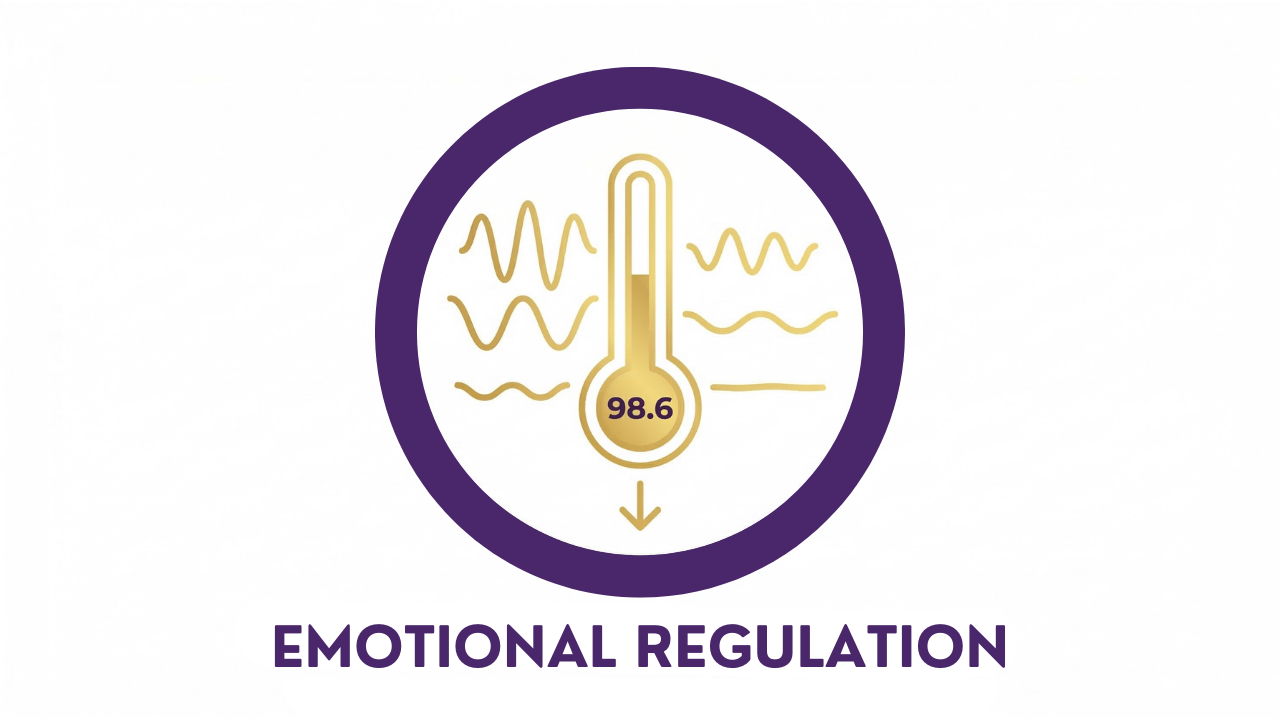
    emotional regulation showing how childhood stress responses persist into adult chronic stress

    The Brain Chemistry That Keeps You Stuck in Stress

    Here’s the part that changes everything: the brain conserves energy by repeating known patterns. It can’t tell right from wrong — only known from unknown. Since 70% or more of childhood messaging is negative and shaming, the brain treats stress as “normal” and calm as “dangerous.”

    When you were a child and trauma happened, your brain created a chemical blueprint. Cortisol flooded your system. Adrenaline spiked. Your emotional thermostat got set to approximately 105 degrees — flooded, on high alert, unable to think clearly. And because the brain conserves energy by predicting and repeating, it locked that thermostat in place.

    Trauma turns the nervous system into a time machine. Every emotional trigger is the nervous system reliving a moment it never completed — and the stress you feel today is your body trying to finish processing pain that started in childhood.

    This is why stress feels so disproportionate. Your colleague gives you mild feedback and your body reacts like you’ve been attacked. Your partner asks for space and your nervous system screams abandonment. A minor setback at work triggers a shame spiral that lasts for days. The reaction doesn’t match the present because the reaction isn’t about the present. It’s about the original wound — the dinner table where you were six and something was fundamentally wrong and you couldn’t fix it.

    That’s you if your emotional reactions are always too big for the situation. That’s you if you’ve been told you’re “overreacting” — and the painful truth is that the reaction is real, it’s just not about what everyone thinks it’s about.

    The brain doesn’t just repeat the pattern — it seeks it. It looks for the familiar, not the healthy. That’s why you end up in the same kinds of stressful relationships, the same kinds of overwhelming jobs, the same kinds of impossible standards. Your brain is not broken. It’s doing exactly what it was programmed to do in childhood. And it will keep doing it until the original emotional blueprint gets addressed.
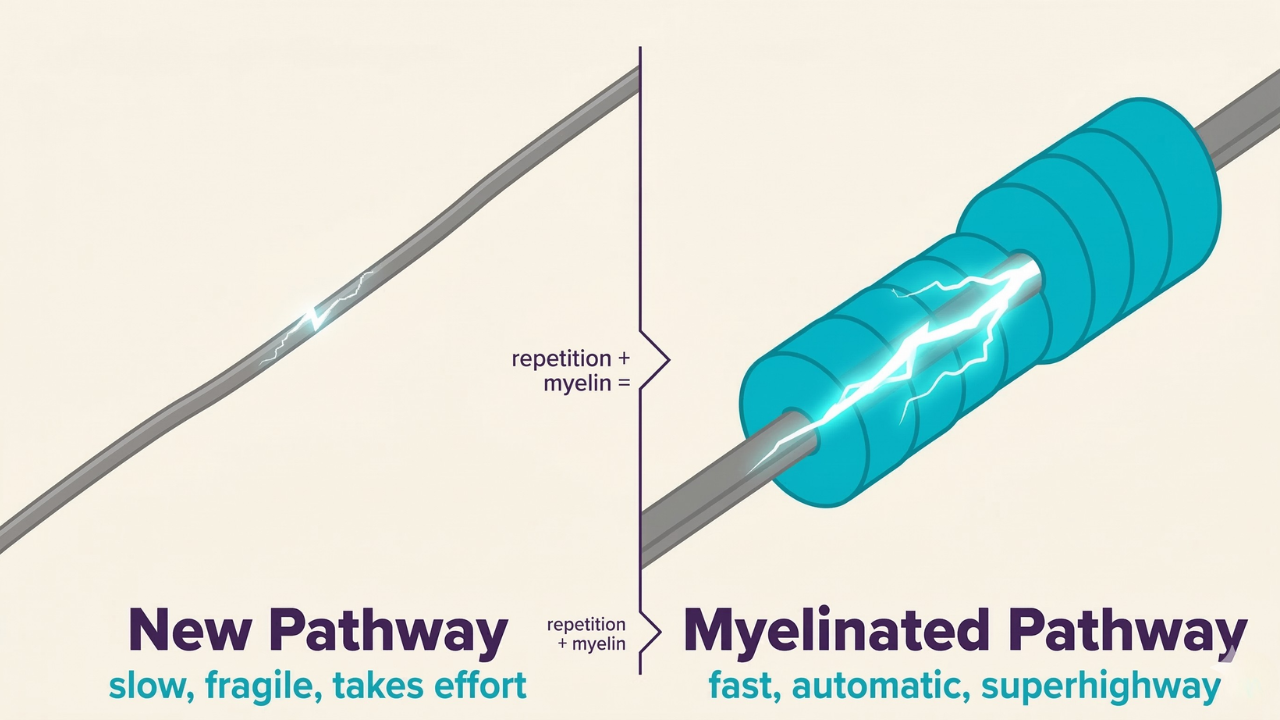
    myelin neural pathways showing how stress patterns become hardwired through repetition

    How Chronic Stress Shows Up in Every Area of Life

    Stress doesn’t stay contained. The childhood emotional blueprint that created it touches everything — because the fear underneath it runs every system in your body and every relationship in your life.

    Family

    You walk into your parents’ house and your body changes before anyone says a word. Your shoulders tighten. Your voice gets smaller. You become the child you were in that house — hypervigilant, scanning the room for emotional landmines, adjusting yourself to manage everyone else’s mood. The “stress” you feel around family isn’t about the holiday dinner. It’s your nervous system firing the same alarm it learned in that exact house decades ago.

    That’s you if you spend days dreading family events — and hours recovering from them. That’s you if your body carries tension for days after a phone call with your mother.

    Romantic Relationships

    Your partner’s silence feels like punishment. Their independence feels like rejection. A small disagreement activates a fear so deep it feels like the relationship is ending. You either cling harder or shut down completely — because your childhood blueprint taught you that love is conditional, that closeness is dangerous, and that someone will always leave. The stress in your relationship isn’t about the dishes or the text they didn’t return. It’s about a six-year-old who learned that connection means pain.

    That’s you if you can’t have a disagreement without your body going into full survival mode. That’s you if your partner’s bad day becomes your emotional emergency.

    Friendships

    You overfunction — always the one who plans, listens, holds everyone together. You never share what’s really going on because vulnerability feels like an invitation to be abandoned. The “stress” of friendship isn’t about busy schedules. It’s about the terror that if people saw the real you — the messy, overwhelmed, sometimes falling-apart you — they’d leave.

    That’s you if you’ve built a reputation for being the strong one — and the loneliest part is that everyone believes it.

    Work and Career

    You overprepare for meetings. You rewrite emails five times. You take on more than you can handle because saying no triggers a fear of rejection so primal it overrides your logic. The stress at work isn’t about deadlines. It’s your childhood blueprint for “mistakes equal punishment” running your professional identity. Your boss isn’t your parent — but your nervous system doesn’t know that.

    That’s you if you work twice as hard as everyone else and still feel like you’re about to be exposed. That’s you if a single piece of criticism can unravel weeks of confidence.

    Body and Health

    Every chronic stress pattern is the body’s attempt to communicate an emotional wound that has never been heard — and when that wound goes unaddressed, it doesn’t just stay emotional. It becomes physical.

    The cortisol from chronic fear breaks down cells over time. The tight jaw, the stomach problems, the headaches, the insomnia, the autoimmune flares — your body has been absorbing the impact of unhealed childhood pain for years. The stress isn’t just mental. It’s destroying you physically because the body keeps the score even when the mind tries to forget.

    That’s you if your body carries pain that no doctor can explain. That’s you if the stress lives in your chest, your gut, your back — and relaxation techniques never reach it.
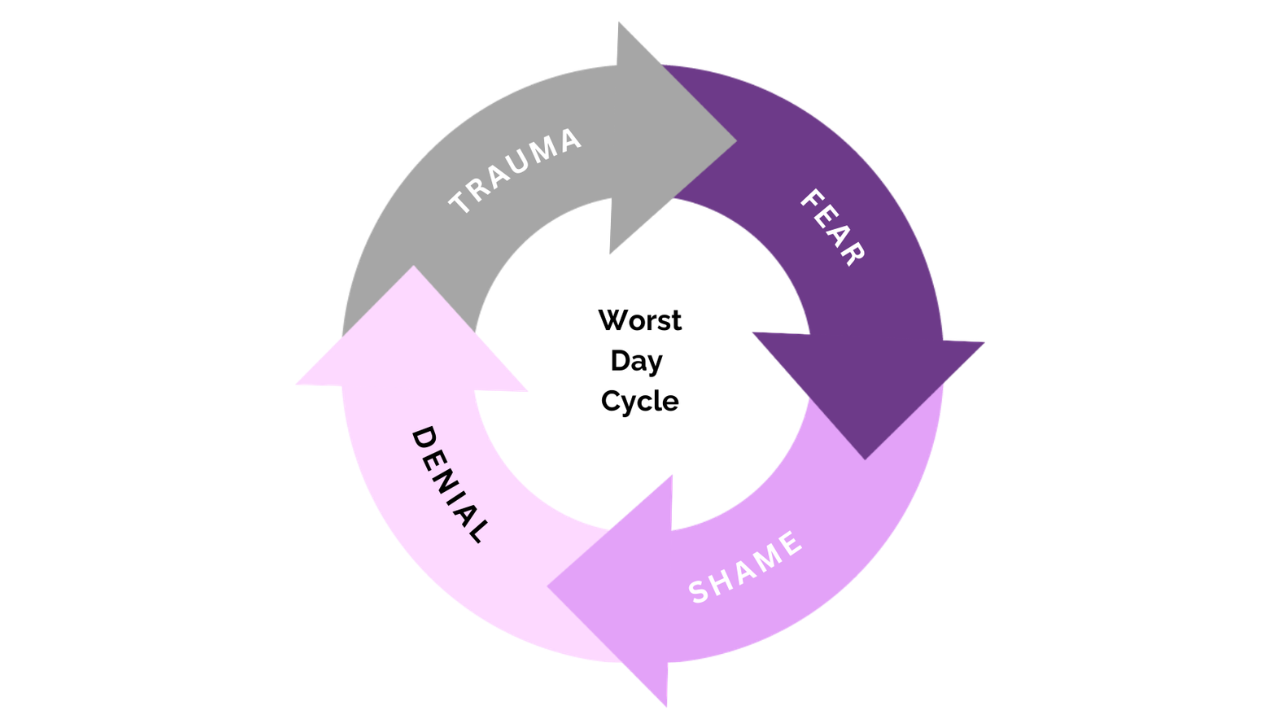
    Worst Day Cycle diagram showing trauma fear shame denial loop driving chronic stress

    The Worst Day Cycle™: Why Your Brain Replays the Same Stress Pattern

    To understand why stress has been running your life — why it keeps coming back no matter what you do — you need to understand the Worst Day Cycle™. This is the cycle that explains why the brain and body repeat painful emotional patterns long after the original event is over.

    The Worst Day Cycle™ has four stages: Trauma → Fear → Shame → Denial.

    Trauma is any negative emotional experience that created painful meanings. It doesn’t have to be a dramatic event. It could be the constant pressure to perform. A parent who was emotionally unavailable. A household where feelings were inconvenient. Whatever the experience, it triggered a massive chemical reaction in the brain and body. The hypothalamus generated chemical cocktails of cortisol, adrenaline, dopamine, and oxytocin misfires — and the brain became addicted to these emotional states.

    Fear drives the repetition. The brain conserves energy by repeating known patterns. It can’t tell right from wrong — only known from unknown. Since the majority of childhood messaging is negative and shaming, your brain learned that stress is “safe” and peace is “dangerous.” Every time you feel that familiar knot of anxiety before a conversation, that’s your brain choosing the known pattern of fear over the unknown possibility of safety.

    Shame is where you lost your inherent worth. When your authentic self was rejected in childhood — when emotions were dismissed, mistakes were punished, or love was conditional — you didn’t conclude “my parents couldn’t handle this.” You concluded “I am the problem.” That shame went underground. And now it powers the stress response from beneath every anxious thought.

    Denial is the survival persona you created to survive the pain. It was brilliant in childhood — it kept you alive. But in adulthood, it’s the voice telling you “I’m just a high-strung person” or “I work better under pressure” or “Everyone is stressed, it’s normal.” Denial keeps you from looking at what’s actually underneath the stress, because looking at it means feeling the original pain.

    That’s you if you’ve normalized your stress as “just who I am.” That’s you if the idea of being calm — genuinely calm, not performing calm — feels foreign and unsafe. That’s you if you’ve confused being stressed with being responsible.
    three survival persona types that keep people trapped in chronic stress cycles

    Three Survival Personas That Keep You Trapped in Stress

    The denial stage of the Worst Day Cycle™ doesn’t look the same for everyone. It shows up as one of three survival personas — patterns created in childhood to manage overwhelming pain. Each one keeps stress running in a different way.

    The Falsely Empowered Survival Persona

    This person controls, dominates, and rages. They don’t look stressed — they look bulletproof. They power through deadlines, crush goals, and never admit they’re overwhelmed. But underneath the productivity is a terror of being exposed. They stay in their head, dismiss emotions as “silly,” and bury themselves in work because sitting still means feeling the shame underneath. Their stress is so deep that they built an entire identity — the overachiever, the workaholic, the one who “thrives under pressure” — to make sure nobody, including themselves, ever sees it.

    That’s you if you respond to stress by working harder, getting louder, or proving people wrong — and the exhaustion is still there when the applause stops.

    The Disempowered Survival Persona

    This person collapses and people-pleases. Their stress is visible — they apologize constantly, defer to others, and can’t make a decision without asking five people first. They give themselves away, going against their own morals, values, needs, and wants to keep the peace. Their body lives in constant freeze or fawn. They absorb everyone else’s emotions because in childhood, having boundaries was dangerous.

    That’s you if your first response to stress is to ask someone else what you should do — because trusting yourself feels impossible. That’s you if other people’s moods become your responsibility.

    The Adapted Wounded Child

    This person oscillates between both — sometimes overcompensating with false control, sometimes collapsing into paralysis. They can lead a meeting at nine and spiral into shutdown by noon. Their nervous system is the most dysregulated because it’s constantly switching between fight and freeze — between “I’ll power through this” and “I can’t handle anything.” They never know which version of themselves is going to show up, and that unpredictability creates its own layer of stress.

    That’s you if your stress response depends entirely on the room you’re in and the people you’re with. That’s you if you feel like you’re always one bad moment away from falling apart.
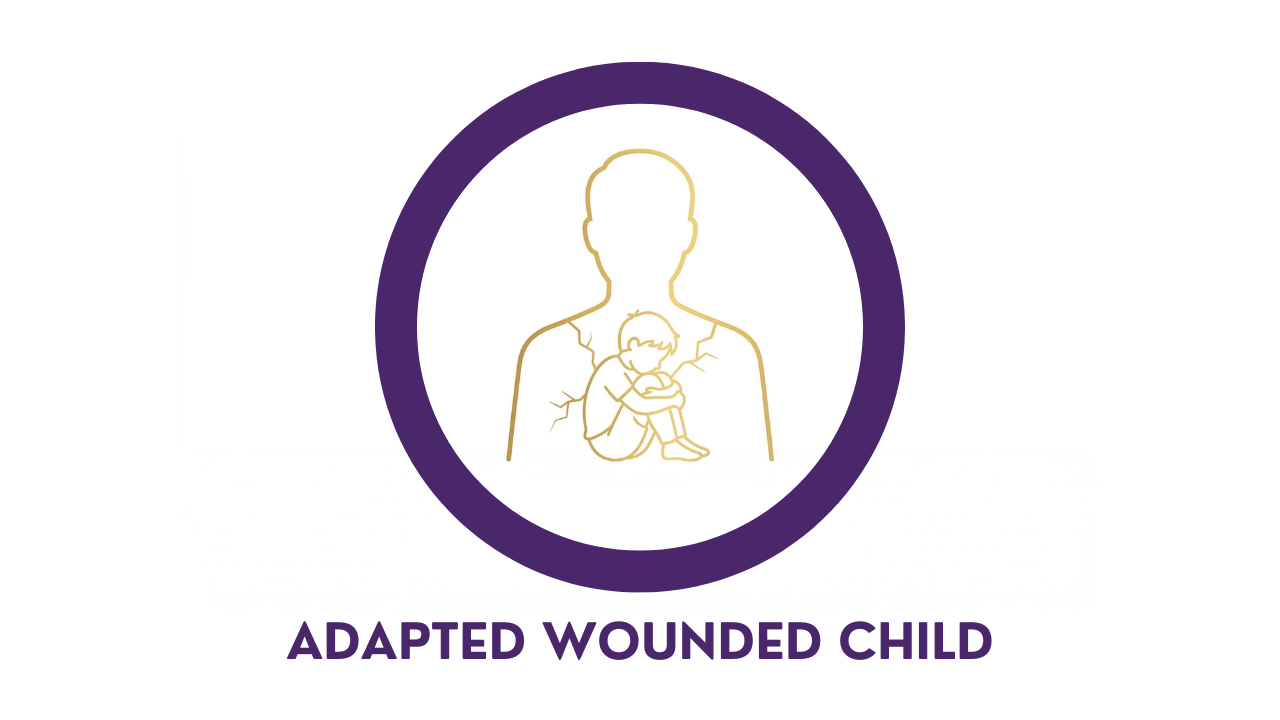
    adapted wounded child survival persona oscillating between stress responses
    Emotional Authenticity Method six steps to heal the root cause of chronic stress

    The Emotional Authenticity Method™: How to Actually Stop the Stress Cycle

    Breathing exercises don’t work on stress because they’re treating a chemical flood with a mechanical fix. Meditation doesn’t reach it because you’re trying to quiet a mind that’s running a body-level alarm. Affirmations bounce off it because you cannot override biochemistry with words.

    You cannot heal chronic stress through relaxation techniques, coping skills, or stress management — because the pattern is biochemical, not situational, and it will persist until the original emotional wound is addressed at the body level where it lives.

    The Emotional Authenticity Method™ is a six-step process designed to trace the stress response back to its childhood source and rewire the emotional pattern at the root.

    Step 1: Somatic Down-Regulation. The moment stress spikes — before a meeting, during a conflict, in the middle of the night — stop everything and focus on what you can hear for 15 to 30 seconds. Not what you’re thinking — what you can actually hear through your ears right now. This activates your anterior prefrontal cortex and engages metacognition — the space between thought and feeling, the highest form of intellect. It brings your prefrontal cortex back online so you can investigate your emotional landscape from your Authentic Self rather than your survival persona. If you’re highly dysregulated, use titration — alternate between 30 seconds of listening and 30 seconds of bringing the trigger back up, three to five times, until your emotional thermostat drops from 105 back toward 98.6.

    Step 2: What am I feeling right now? Not “I’m stressed” — that’s a label, not a feeling. Use a feelings wheel and get precise. Terrified? Ashamed? Furious? Overwhelmed? Rejected? Powerless? Use emotional granularity — expand your vocabulary beyond “stressed” and “anxious.” The more precisely you can name the feeling, the more power you have over it.

    Step 3: Where in my body do I feel it? Chest tightness? Stomach knot? Throat closing? Jaw clenching? Shoulders locked? All emotional trauma is stored physically in the body — your body has been holding this for you, waiting for you to notice.

    Step 4: What is my earliest memory of having this exact feeling? Most people first remember something recent — a bad day at work, an argument, a deadline. Write it down. Then ask: what’s my next memory before that? And before that? Keep tracing it back. Eventually you’ll arrive at a moment in childhood: “That’s where I first learned this feeling.” Some people don’t remember a specific event — they just remember a feeling in the house. That’s enough.

    Step 5: Who would I be if I never had this thought or feeling again? What would be left over? This is the vision step. It moves you from the Worst Day Cycle™ into the Authentic Self Cycle™. For the first time, you’re imagining an identity that isn’t organized around stress, fear, and survival.

    Step 6: Feelization. This is the most important step. Sit in the feeling of your Authentic Self and make it strong. Create a new emotional chemical pattern to replace the old blueprint. Ask yourself: How would I respond to this situation from this feeling? What would I say? What would I do? Visualize and FEEL yourself operating from calm, from worth, from presence — making the decision without the cortisol spike, having the conversation without the chest tightness, sitting in stillness without the terror. This isn’t visualization — it’s Feelization. You’re creating a new biochemical pattern to replace the one your trauma installed. This is the emotional blueprint remapping and rewiring step.

    That’s you if you’ve tried every stress management technique and nothing lasted. That’s you if you’re ready to stop managing the symptom and start healing what’s actually causing it.
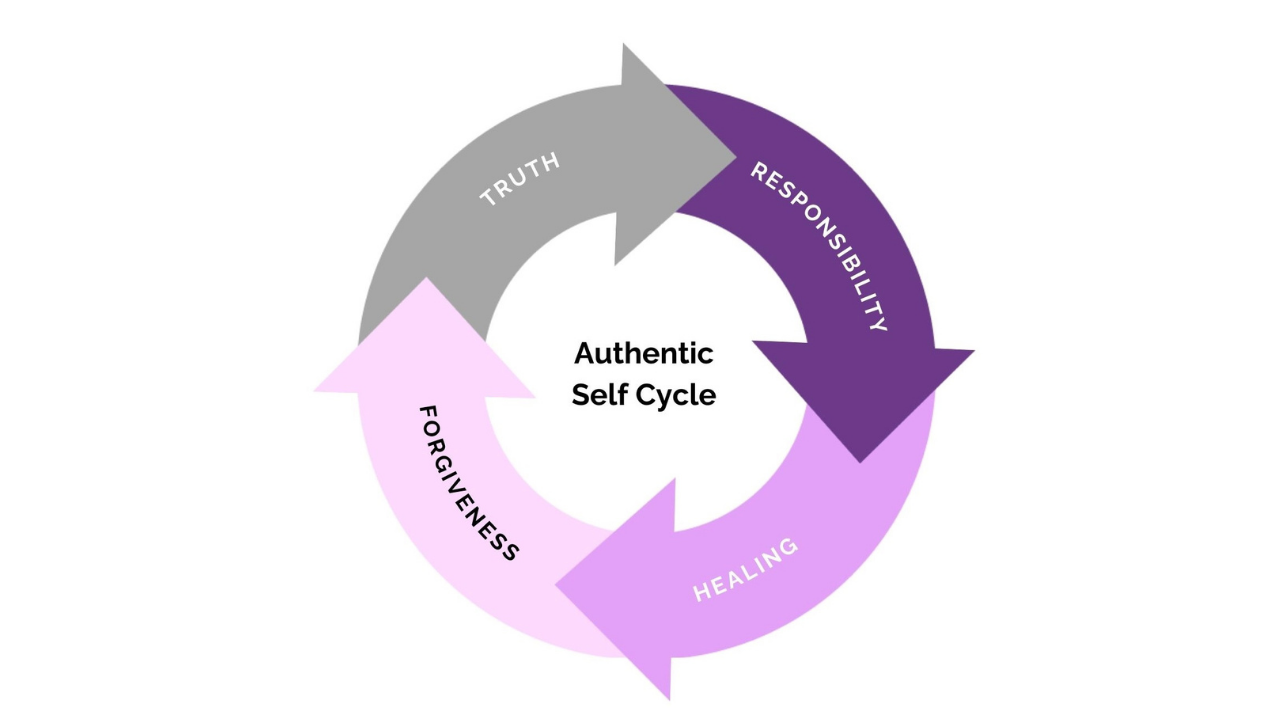
    Authentic Self Cycle replacing chronic stress with emotional freedom and healing

    The Authentic Self Cycle™: Replacing Stress With Emotional Freedom

    The Worst Day Cycle™ explains why you’re stuck in stress. The Authentic Self Cycle™ is how you get unstuck. It’s the healing counterpart — an identity restoration system with four stages: Truth → Responsibility → Healing → Forgiveness.

    Truth: Name the blueprint. See that “this isn’t about today.” Your stress isn’t about the deadline, the relationship, or the decision in front of you. It’s about a childhood where overwhelming emotions were never processed and your nervous system learned that the world is dangerous. Naming the pattern takes away its invisible power.

    Responsibility: Own your emotional reactions without blame. “My boss isn’t my parent — my nervous system just thinks they are.” The person who raised their voice in the meeting isn’t attacking your worth. Your childhood blueprint is interpreting everything through the lens of the original wound. Responsibility means you stop waiting for external circumstances to change and start addressing the internal pattern that creates the stress regardless of circumstances.

    Healing: Rewire the emotional blueprint so that challenges become uncomfortable but not dangerous. So that uncertainty doesn’t trigger a cortisol flood. So that stillness — actual stillness — feels safe instead of terrifying. The brain learns new patterns. The chemistry changes. The automatic stress response loses its grip.

    Forgiveness: Release the inherited emotional blueprint and reclaim your Authentic Self. This doesn’t mean forgiving the people who installed the fear. It means releasing the chemical pattern your body has been running on autopilot. Forgiveness creates a new emotional chemical pattern that replaces fear, shame, and denial with presence, worth, and truth.

    That’s you if you’re exhausted from a lifetime of being “stressed” and managing something that was never yours to carry. That’s you if you’re ready to find out what life feels like without the constant alarm.
    metacognition creating space between thought and feeling to interrupt stress cycles

    Why Stress Management Always Fails

    The entire stress management industry is built on a lie: that stress is caused by external circumstances and can be fixed with techniques. Take a bath. Go for a walk. Practice gratitude. Breathe in for four, hold for seven, out for eight.

    None of it addresses the fact that stress is an emotional condition rooted in childhood fear that has never been healed. You can’t breathe your way out of a nervous system that’s been running a survival program for thirty years. You can’t journal your way out of a chemical blueprint that was installed before you could write.

    Coping skills fail because coping is, by definition, managing a problem instead of solving it. Every coping skill is a Band-Aid on a wound that needs surgery. The moment you stop coping — the moment the vacation ends, the meditation timer goes off, the glass of wine wears off — the stress comes roaring back. Because the source never changed.

    That’s you if you’ve built an elaborate stress-management routine that requires constant maintenance just to function. That’s you if you secretly know that all the techniques are just keeping the lid on something you’ve never been willing to open.

    The medical community hasn’t told you the truth because medical schools provide almost no training on trauma or emotions. They’re trained to treat the body like a machine. That works for a broken arm. But when it comes to stress — which is fear, which is an emotional condition — prescribing medication is like a car being out of gas and the mechanic changing the spark plugs. The prescription you actually need isn’t a pill. It’s emotional authenticity.
    emotional fitness as the real solution to chronic stress instead of stress management
    reparenting yourself to build a new emotional foundation free from chronic stress

    FAQ: Chronic Stress and Childhood Trauma

    Is chronic stress a sign of unhealed childhood trauma?

    Yes. Chronic stress that persists regardless of external circumstances is almost always rooted in unhealed childhood emotional experiences. When a child’s authentic self is rejected, dismissed, or conditionally loved, the brain creates a chemical blueprint organized around fear. That blueprint becomes the default setting for the nervous system — so the adult experiences persistent “stress” even when the present circumstances don’t warrant it. The stress isn’t about today. It’s about an emotional wound that started in childhood and has never been processed at the body level where it lives.

    Why do relaxation techniques and coping skills only work temporarily?

    Because they address the symptom, not the cause. Relaxation techniques work on the surface level of the nervous system — they temporarily lower cortisol and create a sense of calm. But the underlying emotional blueprint hasn’t changed. The moment the technique stops, the default programming kicks back in and the stress returns. Coping is by definition managing a problem rather than solving it. Real change requires tracing the stress response back to its childhood origin and rewiring the biochemical pattern through a process like the Emotional Authenticity Method™.

    Can stress be inherited from parents?

    Absolutely. Stress patterns are passed from generation to generation through emotional blueprints. A parent who never healed their own childhood trauma will unconsciously pass that fear, shame, and denial to their children — not through genetics, but through the emotional environment they create. A terrible thing happens when fear meets fear: when a parent’s unhealed fear collides with a child’s developing emotional system, the result is generational trauma transfer. The parent’s survival persona becomes the child’s emotional blueprint, and the Worst Day Cycle™ repeats across generations.

    What is the difference between stress and anxiety?

    In conventional terms, stress is considered a response to external pressures and anxiety is considered a more persistent internal state. But at the root level, both are the same thing: fear learned in childhood running the nervous system on autopilot. Whether you call it stress, anxiety, panic, or overwhelm — the source is a childhood emotional blueprint that taught your body that the world is dangerous. The labels change but the wound underneath is identical. Healing one heals the other because they share the same origin.

    Why do high achievers experience more stress, not less?

    Because achievement is often shame in disguise. The most paradoxical aspect of shame is that it is the core motivator of the super-achiever. High achievers use self-loathing as fuel — chasing success so they never have to sit still and feel the original wound of no worth. They become human doings instead of human beings. The more they achieve, the higher the stakes, and the louder the inner voice that says “it’s still not enough.” Success doesn’t cure stress because the stress was never about what they have or haven’t accomplished. It’s about a childhood wound that said “who you are isn’t enough” — and no amount of achievement can heal that.

    How long does it take to rewire a stress response from childhood?

    The honest answer is that it varies — because the depth and duration of the childhood wounding varies. But the process isn’t about “fixing” something broken. It’s about creating a new emotional chemical pattern to replace the old one. Each time you practice the Emotional Authenticity Method™ — each time you trace a stress response back to its origin, feel what’s underneath it, and practice Feelization from your Authentic Self — you are literally building new neural pathways. The brain learns new patterns at any age. The key is that healing happens at the feeling level, not the thinking level. A feelings wheel is a better starting tool than any stress-management app.

    The Bottom Line

    Your stress is not a character flaw. It’s not a sign that you can’t handle life. It’s not something you need to manage better, cope with harder, or medicate away. Your stress is your nervous system running a program that was installed in childhood — a program that says “the world is dangerous and I am not safe.”

    That program was brilliant when you were a child. It kept you alive. It helped you navigate a world where overwhelming emotions had nowhere to go. But you’re not a child anymore. And the stress that once protected you is now the thing standing between you and the life you were designed to live.

    You can keep managing it — keep breathing, keep coping, keep white-knuckling your way through another day. Or you can do the one thing the stress doesn’t want you to do: stop, feel what’s underneath, and trace it back to where it started.

    The stress will quiet when the fear gets heard. Not before.

    That’s you if something in this article landed — and the old programming is already trying to talk you out of believing it. That’s the survival persona doing its job. And you just caught it.

    When the Body Says No by Gabor Maté — the groundbreaking work on how suppressed emotions and chronic stress create physical illness, and why the body always tells the truth the mind tries to hide.

    The Body Keeps the Score by Bessel van der Kolk — the foundational text on how trauma is stored physically in the body and why traditional approaches to stress fail to reach the actual wound.

    Facing Codependence by Pia Mellody — the original framework for understanding how childhood experiences create the adult patterns of people-pleasing, overfunction, and self-abandonment that drive chronic stress.

    Healing the Shame That Binds You by John Bradshaw — the definitive work on toxic shame, how it creates the survival persona, and what it actually takes to heal the wound underneath the stress.

    The Gifts of Imperfection by Brené Brown — how shame drives us to hide behind perfectionism and performance, and what it takes to reclaim vulnerability as the path to genuine peace.

    Codependent No More by Melody Beattie — the classic guide to breaking the patterns of over-responsibility and self-abandonment that keep the body locked in a chronic stress state.

    Ready to Heal What’s Underneath the Stress?

    If this article found you, your stress has already done the hard part — it got your attention. Now it’s time to do the work that actually changes the pattern.

    Kenny Weiss’s courses at Greatness U give you the tools to trace the stress back to its childhood source and build a new emotional blueprint:

    Emotional Blueprint Starter Course — Individual ($79) — Identify your survival persona and map the childhood blueprint that’s driving your stress today.

    Relationship Starter Course — Couples ($79) — Understand how two fear blueprints collide in a relationship and learn to create safety together.

    Why We Can’t Stop Hurting Each Other ($479) — A deep dive into the Worst Day Cycle™ and how trauma chemistry keeps us stuck in painful patterns with the people we love.

    Why High Achievers Fail at Love ($479) — For the person whose career “works” but whose body and relationships are paying the price of chronic stress.

    The Shutdown Avoidant Partner ($479) — Understand the survival persona that shuts down under stress and learn what’s actually driving the withdrawal.

    Tier 1: Mapping the Blueprint ($1,379) — The complete Emotional Authenticity Method™ with guided practice, community support, and direct access to the tools that rewire your emotional blueprint from the ground up.

    Related articles:
    The Signs of Enmeshment and How to Heal
    7 Signs of Insecurity in a Relationship
    Signs of High Self-Esteem (and What’s Actually Underneath)
    Negotiables and Non-Negotiables in Codependence Recovery
    10 Do’s and Don’ts for a Great Relationship
  • Why You’re Attracted to Bad Men: The Childhood Trauma Pattern Behind Toxic Relationships

    Why You’re Attracted to Bad Men: The Childhood Trauma Pattern Behind Toxic Relationships

    Why are you attracted to bad men? If you keep falling for emotionally unavailable, manipulative, or toxic partners — and you can see red flags in everyone else’s relationships but not your own — it’s not a character flaw. It’s a childhood trauma pattern running on autopilot inside your nervous system. Being attracted to bad men is a sign that your emotional blueprint was set in childhood, and your brain is chemically addicted to recreating the pain it never healed.

    The reason you keep choosing toxic partners is not because something is wrong with you. It’s because your brain learned what “love” feels like from the people who raised you — and if that included chaos, neglect, manipulation, or emotional unavailability, your nervous system now reads those signals as familiar, safe, and even attractive. You’re not broken. You’re running a program that was installed before you had any say in the matter.

    That’s you — wondering why you always end up with the same kind of man, no matter how many times you promise yourself “never again.”

    Table of Contents

    What Does It Really Mean to Be “Attracted to Bad Men”?

    Being attracted to bad men means your nervous system has been programmed — through childhood experiences — to interpret chaos, emotional unavailability, and intensity as love. It is not a conscious choice. It is an emotional blueprint that was set before you could speak, walk, or understand what was happening to you. Your brain learned to associate pain with connection, and now it recreates that pattern in every romantic relationship you enter.

    Emotional blueprint childhood trauma pattern attraction to bad men

    That’s you — sitting across from a man who ticks every red flag box, and instead of running, your stomach flutters. You call it chemistry. It’s actually your childhood.

    The only reason you’re attracted to somebody is whatever it is in them reminds you of your childhood trauma. That’s all attraction is. Your brain and body become addicted to the trauma you experienced, and so you relive it until you heal it. That doesn’t mean your partner is bad as a person — but you picked them for the express reason of recreating the emotional experience you never resolved from childhood.

    That’s you — choosing the emotionally unavailable man because one or both of your parents were emotionally unavailable. Until you heal that wound, you’ll keep being attracted to men who are emotionally unavailable.

    This is not about blame. This is about understanding. And once you understand what’s driving the attraction, you can finally stop the cycle.

    Why Your Childhood Trauma Blueprint Controls Your Attraction

    Everyone has been through childhood trauma. The types and severity vary, but everyone has experienced it. Trauma is any negative emotional experience that created painful meanings — it doesn’t have to be a catastrophic event. It can be a parent who dismissed your feelings, a caregiver who made you responsible for their emotional wellbeing, or a household where conflict was constant and unpredictable.

    Trauma chemistry and childhood emotional blueprint driving toxic attraction

    That’s you — thinking your childhood was “fine” because nothing dramatic happened, while your nervous system is still running the same painful patterns every day.

    What happens in childhood trauma is this: because we don’t teach how to parent, and because even the best parents are perfectly imperfect, children receive a devastating message. Instead of hearing “that behavior was wrong,” the child hears “you as a person are wrong and bad.” This creates a shame core — the deep belief that “I am defective.”

    We also learn about relationships from our primary relationships as children — watching our parents, observing how they interact with each other and with us. Nobody ends up with a narcissistic or toxic partner unless they’ve experienced chaos, manipulation, shame, and disregard in their childhood.

    That’s the truth nobody tells you — your “type” isn’t a preference. It’s a wound.

    How the Worst Day Cycle™ Keeps You Choosing Toxic Partners

    The Worst Day Cycle™ is a four-stage pattern that explains exactly why you keep ending up with bad men. It runs on autopilot inside your nervous system, and until you understand it, you cannot escape it.

    Worst Day Cycle four stages trauma fear shame denial toxic attraction

    Stage 1 — Trauma: Childhood trauma is any negative emotional experience that created painful meanings. It causes a massive chemical reaction in the brain and body. The hypothalamus generates chemical cocktails — cortisol, adrenaline, dopamine, and oxytocin misfires — and the brain becomes addicted to these emotional states. The brain conserves energy by repeating known patterns. It cannot tell right from wrong, only known from unknown. Since over 70% of childhood messaging is negative and shaming, adults repeat these painful patterns in relationships, career, hobbies, health — everything.

    That’s you — drawn to the man who runs hot and cold because that unpredictable emotional rollercoaster feels like home.

    Stage 2 — Fear: Fear drives repetition. The brain thinks repetition equals safety. Even though the pattern hurts, it feels familiar — and to your nervous system, familiar means survivable. The unknown — a kind, emotionally available man — actually feels dangerous because your brain has no reference point for it.

    That’s you — feeling bored or “no spark” with the nice guy, and mistaking the absence of anxiety for the absence of attraction.

    Stage 3 — Shame: This is where you lost your inherent worth. Shame is the core wound that says “I am the problem.” When your parents treated your mistakes as evidence of your defectiveness instead of normal learning, shame was installed as your operating system. Now every relationship confirms what shame already told you — you’re not enough.

    Survival persona types shame-driven attraction to toxic men

    That’s you — staying with a man who treats you poorly because somewhere deep inside, you believe you don’t deserve better.

    Stage 4 — Denial: Denial is the survival persona you created to survive the pain. It was brilliant in childhood — it kept you alive. But in adulthood, it sabotages every relationship. Denial keeps you romanticizing the good moments and minimizing the bad ones. It keeps you saying “he’ll change” when every piece of evidence says he won’t.

    That’s you — making excuses for his behavior, telling your friends “you don’t know him like I do,” while your body knows the truth.

    I could put you in a room with a thousand people — all of them kind, available, exactly what you say you want. And I’d put one person in there who is just like your childhood. Like radar, you’d walk out with that one and say, “There’s just something about him.” That something is your Worst Day Cycle™. That’s the fear piece. Your brain and body have become emotionally, chemically addicted to reliving the trauma you haven’t healed.

    The Three Survival Persona Types That Drive Toxic Attraction

    The denial stage of the Worst Day Cycle™ creates what’s called a survival persona — a protective identity your brain built in childhood to shield you from the full impact of your pain. There are three types, and each one drives attraction to bad men in a different way.

    The Falsely Empowered Survival Persona: This is the person who controls, dominates, and rages. If this is your pattern, you may be attracted to bad men because you unconsciously seek someone you can “fix” or “save.” You believe your strength can change them. It can’t — because your strength is actually a defense against the helplessness you felt as a child.

    That’s you — the woman everyone calls “strong” who keeps ending up with men who need rescuing.

    The Disempowered Survival Persona: This is the person who collapses, people-pleases, and gives everything away to avoid abandonment. If this is your pattern, you’re attracted to bad men because intensity feels like love, and their controlling behavior feels like being wanted. You confuse someone needing you with someone loving you.

    That’s you — losing yourself completely in relationships, becoming whoever he needs you to be, until there’s nothing left of you.

    The Adapted Wounded Child: This survival persona oscillates between both — sometimes controlling, sometimes collapsing. The unpredictability mirrors the chaos of childhood, and relationships become an exhausting cycle of highs and lows that feel normal because chaos is all you’ve ever known.

    Adapted wounded child survival persona oscillating between empowered and disempowered

    That’s you — one day you’re the strong one holding everything together, the next you’re falling apart wondering why you can’t just leave.

    Signs Your Trauma Blueprint Is Running Your Relationships

    The pattern of being attracted to bad men doesn’t just show up in romance. Your emotional blueprint runs through every area of your life. Here’s how to spot it.

    In Family Relationships

    You take on the caretaker role — managing everyone’s emotions, keeping the peace, being the one who holds it all together. You learned in childhood that love meant being useful, so you perform love instead of receiving it. Your family relationships exhaust you because you’re still playing the same role you were assigned as a child.

    That’s you — the one everyone calls when there’s a crisis, but nobody asks how you’re doing.

    In Romantic Relationships

    You’re drawn to intensity, unavailability, and the promise of potential. You fall for who he could be instead of who he is. You ignore red flags because the chemistry is overwhelming — and you don’t realize that “chemistry” is actually your trauma response recognizing something familiar.

    That’s you — believing that if you just love him enough, he’ll finally become the man you know he can be.

    In Friendships

    You attract friendships that mirror the same dynamic — one-sided giving, emotional unavailability, or friends who only show up when they need something. You tolerate behavior in friendships that you’d tell anyone else to walk away from.

    At Work

    You overperform, under-ask, and accept less than you deserve. You may work for bosses who are demanding and emotionally volatile — and instead of setting boundaries, you try harder. Your career becomes another stage where your childhood drama replays itself.

    That’s you — working 60-hour weeks for a boss who never says “good job” because it feels exactly like trying to earn your parent’s approval.

    In Your Body and Health

    Chronic stress, anxiety, insomnia, digestive issues, and autoimmune conditions. Your body has been storing the trauma your mind was told to ignore. The same nervous system that keeps you attracted to toxic men also keeps your body in a constant state of fight-or-flight.

    Why You Can See Red Flags in Others But Not Yourself

    Here’s the cruel paradox: you can see exactly when a man is terrible for your friend, your sister, your coworker. But when it comes to your own relationships, you’re blind. This isn’t stupidity. It’s neuroscience.

    When you’re on the outside of someone else’s relationship, you have no emotional investment. Your trauma blueprint isn’t activated. You can see clearly because your nervous system isn’t involved.

    But the second you have skin in the game — the second your heart is involved — your childhood wiring takes over. The conflicting messages you received as a child flood back in. A parent who told you that you were wonderful while making you responsible for their emotional wellbeing. A parent who showed affection when they needed something from you. These mixed signals taught your brain that love is confusing, unpredictable, and comes with conditions.

    That’s you — knowing exactly what you should do, and watching yourself do the opposite, because your body won’t let your brain drive.

    Emotional authenticity healing from attraction to toxic relationships

    So when someone starts showing you clear affection, you don’t take it at face value — because as a child, affection always came with a hidden cost. You need a man to go above and beyond just to prove he won’t abandon you. This puts impossible stress on healthy partners and pushes them away, while the toxic ones thrive in this dynamic because manipulation is their native language.

    The Chemical Addiction to Pain: Why Attraction Feels Like Love

    This is the part most people never learn: attraction to bad men is a chemical addiction. When you went through childhood trauma, it created a chemical signature in your body — specific combinations of cortisol, adrenaline, dopamine, and oxytocin that your brain now associates with love, connection, and home.

    Neural pathways myelin chemical addiction trauma pattern attraction

    When you meet a kind, stable, emotionally available man, your body doesn’t produce those chemicals. So you feel nothing — no butterflies, no excitement, no “spark.” And you walk away thinking there’s no connection.

    When you meet a chaotic, unavailable, or manipulative man, your body floods with those familiar chemicals. Your heart races. Your stomach flips. You feel alive. And your brain says, “This is love.”

    That’s you — confusing the stress response of your nervous system with the feeling of falling in love.

    It’s not love. It’s recognition. Your nervous system is recognizing the emotional pattern it was trained on in childhood. The “spark” you feel with bad men is actually your trauma response firing. Until you create a new chemical pattern through healing, you will continue to be drawn to what hurts you and repelled by what could heal you.

    When trauma creates a chemical addiction inside you, you repeat the pattern until you heal and change the emotional chemical addiction. That’s what real recovery looks like — not white-knuckling your way into choosing a “nice guy,” but actually rewiring the chemical signature that drives your attraction in the first place.

    How to Break the Pattern: The Emotional Authenticity Method™

    You cannot change emotional patterns through thoughts alone. Emotions are biochemical events. Thoughts originate from feelings — not the other way around. This is why positive affirmations, willpower, and “just choosing better” don’t work. You need a method that rewires the emotional blueprint itself.

    The Emotional Authenticity Method™ is a six-step process designed to do exactly that.

    Emotional regulation somatic down-regulation for breaking toxic attraction patterns

    Step 1: Somatic Down-Regulation. Focus on what you can hear for 15–30 seconds. If you’re highly dysregulated, use titration — small doses of awareness rather than flooding yourself with sensation. This step brings your nervous system out of fight-or-flight so your rational brain can come back online.

    Step 2: What am I feeling right now? Use emotional granularity — expand your vocabulary beyond “bad” or “anxious.” Are you feeling abandoned? Invisible? Terrified? Worthless? The more precisely you can name the feeling, the less power it has over you. Use the Feelings Wheel to build your emotional vocabulary.

    Step 3: Where in my body do I feel it? All emotional trauma is stored physically. Tightness in your chest. A pit in your stomach. Tension in your jaw. Your body has been keeping score even when your mind was told to move on.

    That’s you — realizing that the “butterflies” you feel with bad men are actually stored terror in your gut.

    Step 4: What is my earliest memory of having this exact feeling? Trace it to the childhood origin. When you feel that familiar pull toward a toxic man, ask yourself: when was the first time I felt this exact sensation? You’ll find a childhood memory — a parent who was unpredictable, a moment when love felt conditional, a time when being needed was the only way to feel worthy.

    Step 5: Who would I be if I never had this thought or feeling again? What would be left over? This is the vision step. It connects you to the Authentic Self Cycle™ and shows you the person you are beneath the trauma programming. The woman who doesn’t need chaos to feel alive. The woman who can sit in peace and feel worthy.

    Step 6: Feelization. Sit in the feeling of the Authentic Self and make it strong. Create a new emotional chemical addiction to replace the old blueprint. Ask yourself: how would I respond to this situation from this feeling? What would I say? What would I do? Visualize and FEEL yourself operating from your Authentic Self. This is the emotional blueprint remapping and rewiring step — the step where you actually create the new chemical signature that will change who you’re attracted to.

    Healing Through the Authentic Self Cycle™

    The Authentic Self Cycle™ is the healing counterpart to the Worst Day Cycle™. It is an identity restoration system with four stages that replace the trauma pattern driving your attraction to bad men.

    Authentic Self Cycle four stages healing from toxic relationship attraction

    Stage 1 — Truth: Name the blueprint. See that “this isn’t about today.” When that man triggers your longing, your anxiety, your desperate need to be chosen — that’s not about him. It’s about the child inside you who learned that love requires suffering.

    Stage 2 — Responsibility: Own your emotional reactions without blame. “My partner isn’t my parent. My nervous system just thinks he is.” This is not about blaming yourself for choosing bad men. It’s about understanding that your emotional reactions belong to you, and you have the power to change them.

    Stage 3 — Healing: Rewire the emotional blueprint so that conflict becomes uncomfortable but not dangerous, space isn’t abandonment, and intensity isn’t love. This is where the Emotional Authenticity Method™ does its deepest work — creating new neural pathways and new chemical patterns that change what your body reads as “safe” and “attractive.”

    Stage 4 — Forgiveness: Release the inherited emotional blueprint and reclaim your authentic self. This creates a new emotional chemical pattern that replaces fear, shame, and denial. Forgiveness isn’t about excusing what was done to you. It’s about releasing its hold on your nervous system so you can finally choose from freedom instead of fear.

    That’s you — for the first time in your life, feeling drawn to a man who is kind, stable, and emotionally present — and recognizing that feeling as love instead of boredom.

    The Bottom Line

    You are not attracted to bad men because you’re stupid, weak, or broken. You are attracted to bad men because your childhood wired you to be. Your brain became chemically addicted to the emotional patterns of your earliest relationships, and it has been faithfully recreating those patterns in every partner you’ve chosen since.

    The good news is that the same brain that learned these patterns can unlearn them. The same nervous system that drives you toward chaos can be rewired toward peace. The same heart that keeps choosing pain can learn to recognize and receive love.

    But you cannot think your way there. You cannot willpower your way there. You have to feel your way there — through the Emotional Authenticity Method™, through the Authentic Self Cycle™, through the courageous work of facing the childhood pain you were told to forget.

    You deserve a love that doesn’t hurt. And the path to it runs directly through the wound you’ve been avoiding your entire life.

    That’s you — finally ready to stop choosing the pain you know and start building the love you deserve.

    Frequently Asked Questions

    Why am I always attracted to emotionally unavailable men?

    You’re attracted to emotionally unavailable men because one or both of your parents were emotionally unavailable. Your brain learned in childhood that love means chasing someone who can’t fully show up for you. Until you heal that original wound through the Emotional Authenticity Method™, your nervous system will continue selecting partners who replicate that pattern.

    Can I change who I’m attracted to?

    Yes, but not through willpower or “choosing better.” Attraction is driven by your emotional blueprint — a chemical pattern set in childhood. To change who you’re attracted to, you must rewire that blueprint using somatic and emotional healing work like the Emotional Authenticity Method™ and the Authentic Self Cycle™. When your chemistry changes, your attraction changes.

    Is being attracted to bad men a trauma response?

    Absolutely. Being attracted to bad men is one of the most common trauma responses. Your nervous system became chemically addicted to the emotional patterns of your childhood, and it recreates those patterns in adult relationships. The “spark” you feel with toxic men is actually your trauma recognition system firing — not love.

    Why do I stay with men who treat me badly?

    You stay because your survival persona — built in childhood to protect you from pain — convinces you that this is what you deserve, that he’ll change, or that leaving would be worse than staying. The Worst Day Cycle™ of trauma, fear, shame, and denial keeps you locked in a pattern that feels impossible to break without understanding its origins.

    How do I break the cycle of toxic relationships?

    Breaking the cycle requires becoming an expert in your own childhood trauma. Use the Emotional Authenticity Method™ to trace your attraction patterns back to their childhood origins, rewire your emotional blueprint through Feelization, and build the Authentic Self Cycle™ as your new operating system. This is not about finding a better man — it’s about becoming the healed version of yourself who naturally attracts healthy love.

    What is the Worst Day Cycle™ and how does it affect my relationships?

    The Worst Day Cycle™ is a four-stage pattern — Trauma, Fear, Shame, Denial — that explains why you repeat painful relationship patterns. Childhood trauma creates fear-based chemical addictions in your brain. Shame makes you believe you’re defective. Denial creates a survival persona that keeps you from seeing the truth. Together, these stages keep you attracted to bad men and repelled by healthy ones until you do the healing work to break free.

    If you want to go deeper into understanding why you’re attracted to bad men and how to heal, these books are essential reading. Facing Codependence and Facing Love Addiction by Pia Mellody — foundational texts on how childhood trauma creates adult relationship dysfunction. When the Body Keeps the Score by Bessel van der Kolk — the definitive work on how trauma is stored in the body. In the Realm of Hungry Ghosts by Gabor Maté — understanding addiction as a trauma response. Codependent No More by Melody Beattie — the classic on releasing codependent patterns. The Gifts of Imperfection by Brené Brown — learning to embrace your perfectly imperfect self. Your Journey to Success by Kenny Weiss — the complete guide to the Worst Day Cycle™ and how to break free.

    Start Your Healing Journey Today

    If you’re ready to stop being attracted to bad men and start building relationships from your Authentic Self, Kenny Weiss offers courses designed to help you do exactly that. Emotional Blueprint Starter Course — Individual ($79) — understand your emotional blueprint and begin rewiring it. Relationship Starter Course — Couples ($79) — heal your relationship together. Why We Can’t Stop Hurting Each Other ($479) — deep dive into the trauma patterns that destroy relationships. Why High Achievers Fail at Love ($479) — for driven people who can’t figure out why success doesn’t translate to love. The Shutdown Avoidant Partner ($479) — understand and heal the avoidant pattern. Tier 1: Mapping the Blueprint ($1,379) — the complete transformation program.

    Explore the Feelings Wheel to start building emotional granularity today.

    Related articles: Enmeshment: Signs, Meaning, and How to Heal | 7 Signs of Relationship Insecurity | 7 Signs of High Self-Esteem | How to Determine Your Negotiables and Non-Negotiables | 10 Do’s and Don’ts For a Great Relationship

  • How to Handle Criticism: Turn Insults Into Blessings With Denial and Projection

    How to Handle Criticism: Turn Insults Into Blessings With Denial and Projection

    Criticism stings. When someone attacks you—whether directly to your face or through a casual insult—the pain can feel disproportionate to what was actually said. You replay the comment over and over. You defend yourself in imaginary conversations. You lose sleep. But here’s what most people don’t realize: that sting you feel isn’t about them. It’s about you. When you learn to recognize what’s happening at the psychological level, insults transform from wounds into gifts. This is about understanding denial and projection—the twin forces that make us see in others what we haven’t yet healed in ourselves. In this article, you’ll discover exactly why criticism hits so hard, what it actually reveals about both the person delivering it and the person receiving it, and how to use the Emotional Authenticity Method™ to turn any insult into a blessing that accelerates your healing.

    Table of Contents

    Understanding denial projection and criticism in relationships and personal growth

    Denial and Projection: The Core of How Criticism Works

    Whenever we judge, blame, criticize, or hate anyone or anything, all we’re ever doing is talking about ourselves. A piece of ourselves we’re not aware of and ultimately we haven’t forgiven. This is the foundational truth that changes everything.

    Now, it may be true that the other person or situation is actually doing what we’re criticizing them for. But here’s the critical insight: the only reason we can see it in them is because it’s operating in us as well. We’re neurologically blind to what we haven’t done the internal work to recognize. When someone attacks you, they’re revealing their own unhealed wounds through the language of judgment.

    Think about the last time someone said something truly hurtful to you. Consider what emotional word they used to degrade you—”stupid,” “selfish,” “inadequate,” “broken.” That word is a window into their shame. They’re telling you about a part of themselves they haven’t forgiven. They’re projecting their internal pain onto you because it’s too much to look at in the mirror.

    That’s you when you judge someone else too. You’re unconsciously revealing what you haven’t healed.

    Codependence patterns and denial in relationships healing

    Direct vs. Indirect Projection: Two Paths to Self-Revelation

    Denial and projection work in two distinct ways, and understanding both is essential to recognizing yourself in every criticism you receive.

    Direct Projection

    This is the easiest to spot. Someone criticizes you for something they’re actively doing themselves. I use this example often: imagine someone saying, “I can’t stand men who wear bright colored suits, decorate their house with bold colors, wear these silly pocket squares. Oh my God, they drive me nuts. They’re so stupid.”

    Who are they talking about? Themselves. If you look at their closet and their home, you’ll see exactly what they’re judging. That’s you when you criticize someone for being too emotional while you’re emotionally reactive yourself. Direct denial is straightforward because the behavior is visible.

    Indirect Projection

    This is where most people get confused—and where the real power lies. Indirect projection is metaphorical. Someone might say, “I hate stupid drivers,” but they don’t necessarily drive recklessly. The operative word is “stupid.” Every judgment contains a heavy emotional word—something degrading. And that emotional word is the clue.

    When they call a driver “stupid,” what they’re revealing is that somewhere in their own life, they feel stupid. Not necessarily about driving, but about something. Maybe it’s their career, their parenting, their finances. The metaphor is how their unconscious self communicates what they’re judging in themselves.

    That’s you when you judge your partner for being “irresponsible” but you’re actually terrified of your own financial instability. You’re not talking about them—you’re metaphorically describing your own shame.

    This is why defensiveness is so revealing. When somebody immediately becomes defensive, it typically means you’ve touched on something that’s true inside them. Their denial is being threatened. And denial is powerful—it’s the mechanism that allows us to survive the unbearable.

    Perfect imperfections shame and personal healing journey

    The Driving Metaphor: How I Discovered This Truth

    I figured this out years ago while driving. I realized I was constantly angry at other drivers. “These stupid drivers!” “Look at that moron!” “What an idiot!” I was furious, judging everyone on the road.

    One day I had an insight: I wasn’t actually driving differently than they were. I was breaking the same rules, making the same mistakes. But I was in complete denial about it. Every time I judged another driver, I was unconsciously revealing that I felt stupid about something in my own life. Driving was just the metaphor my unconscious mind chose.

    That’s when everything clicked. If I can only see what’s operating inside me, then every single judgment I make is literally a mirror of my own denial. That’s you when you watch the news and get enraged at “those people.” You’re not just angry at them—you’re unconsciously identifying a part of yourself you haven’t healed.

    Once I understood this, I stopped being so angry at other drivers. Instead, I got curious: What part of me feels stupid? What haven’t I forgiven myself for? And that curiosity opened the door to actual healing.

    The Facebook Comment Story: Flipping the Script

    A client of mine shared a devastating text she received from her ex-husband after she delivered the eulogy at her father’s funeral. The message was cruel, dismissive, and filled with harsh judgments. Rather than defend herself against his attacks, she did something remarkable: she flipped every statement to reveal what he was actually saying about himself.

    His original text said: “It’s just like you to start an argument and not listen; it’s all about you. You need to hear the truth but you can’t.”

    When flipped to reveal his projection, it became: “It’s just like me to start an argument and not listen; it’s all about me. I need to hear the truth but I can’t.”

    He accused her of being self-centered. When she flipped it: “I am the most self-centered person in this situation.” He said her eulogy was “all about you.” When flipped: “My criticism of this moment is all about me.”

    That’s you when your partner says you’re “too needy” and you realize they’re actually terrified of intimacy. The criticism is their confession. And here’s the beautiful part: once you realize that, the sting disappears. Instead of feeling attacked, you see vulnerability. You see pain. You see someone doing their best with the emotional tools they have.

    My client did something even more powerful at the end of the conversation with her ex. She wrote: “I’m very thankful that you see so much of me. It’s always a tremendous gift when someone invests their valuable time in seeing me.” She was acknowledging his vulnerability, his courage in being so transparent about his inner world—even if he didn’t realize that’s what he was doing.

    That’s the turnaround. That’s how you transform an insult from a wound into a blessing.

    Worst Day Cycle trauma fear shame denial framework

    5 Steps to Turn Any Insult Into a Blessing

    Now that you understand denial and projection, here’s the practical framework for transforming criticism into a healing tool.

    Step 1: Name the Insult Without Defending

    The first instinct when insulted is to defend yourself, argue, correct them, prove them wrong. But that never works. Has it ever worked for you? Have you ever convinced someone who judged you to suddenly see your perspective? In my experience, the answer is almost always no.

    Instead, simply name what they said without immediately defending against it. Agree with them. Yes, I hear what you’re saying. That’s you letting go of the need to convince them of your truth. You release the exhausting work of being their teacher.

    Step 2: Identify the Emotional Word

    What word did they use to degrade you? “Stupid,” “selfish,” “weak,” “crazy,” “broken,” “manipulative”? Extract that emotional word—that’s your clue.

    This emotional word is not about you. It’s the metaphorical language of their own shame. They’ve chosen a word that carries weight in their internal world. That’s you recognizing that their vocabulary of shame is their confession, not your diagnosis.

    Step 3: Flip the Statement to Reveal Their Projection

    Rewrite their criticism by changing “you” to “me.” If they said, “You’re so selfish and you only think about yourself,” flip it to: “I’m so selfish and I only think about myself.” Read that version. Does it ring true for them? Almost certainly, yes.

    This isn’t about mocking them. It’s about seeing the truth of their projection. That’s you developing the neural capacity to see criticism as feedback about the person speaking, not about you.

    Step 4: Check Yourself for Any Truth on Your Side

    While their criticism is about them, it’s worth asking: Is there any truth here for me? Am I actually being selfish in some way? Not in the way they defined it, but genuinely? If yes, note that and work on it privately. Separately. Not in the conversation with them.

    That’s you doing your own internal work without needing validation or agreement from the person who hurt you. You’re taking responsibility for your part without entering what I call a “reality argument”—that exhausting cycle where two people race to the victim position, each demanding the other act as their parent.

    Step 5: Offer Them Gratitude for Their Vulnerability

    This is the transformation. Instead of seeing the person who insulted you as cruel, recognize them as vulnerable. They just told you something deeply true about themselves. They revealed their shame, their unhealed wounds, their perfect imperfection.

    You can even say it: “Thank you for being so vulnerable with me. I can see how much pain you’re carrying.” Or simply: “I’m grateful you see me so clearly. That takes courage.”

    That’s you meeting their broken part with compassion instead of defensiveness. And when you do that consistently, something miraculous happens: you stop being triggered. The insult loses its power.

    Survival persona types falsely empowered disempowered adapted wounded child

    Understanding the Worst Day Cycle™

    To truly heal from the impact of criticism and judgment, you need to understand the framework that created your defensive response in the first place. That’s the Worst Day Cycle™.

    The Worst Day Cycle™ (WDC) is a trauma-driven loop that starts in childhood and continues into adulthood. Here’s how it works:

    Trauma → Your early environment creates painful experiences—rejection, neglect, criticism, abuse, or conditional love.

    Fear → Your nervous system responds to protect you. Cortisol and adrenaline flood your system. You become hypervigilant to threats.

    Shame → Over time, you internalize the message that you’re wrong, broken, inadequate. Your brain receives 70% negative messaging during childhood. You encode shame as identity.

    Denial → To survive this unbearable emotional state, your brain develops denial mechanisms. You push the pain down, rationalize it away, project it onto others, or dissociate from it entirely.

    But here’s the problem: your brain becomes neurologically addicted to these states. Cortisol, adrenaline, dopamine, oxytocin—they all dysregulate. Your brain can’t tell right from wrong anymore. It only knows familiar from unfamiliar. And trauma is familiar.

    That’s you when criticism triggers you far more than it should, when you ruminate for days, when you can’t let it go. Your Worst Day Cycle™ is running. Your survival persona has taken over.

    The Three Survival Persona Types

    Within the Worst Day Cycle™, your brain developed a survival persona—a false self designed to keep you safe. There are three primary types, and most people recognize themselves in at least two.

    The Falsely Empowered Persona

    This persona says, “I don’t need anyone. I’m tough. I’m independent. I’ll just push through.” The falsely empowered person appears confident and self-sufficient on the outside, but internally they’re driven by shame and the fear of being seen as weak. They judge others for being vulnerable. They shame people for needing help. They control situations because vulnerability feels like death.

    That’s you when you pride yourself on “never asking for help” and you judge your partner for needing emotional support. You’re projecting your own terror of vulnerability onto them.

    The Disempowered Persona

    This persona says, “I can’t do anything right. I’m broken. Someone else will have to fix me.” The disempowered person appears helpless and victimized. They give their power away. They wait for rescue. They’re controlled by the shame belief that they’re incapable. They judge others for being “selfish” when really they’re terrified of their own capability.

    That’s you when you believe your trauma defines your limitations and you resent others for their independence. You’re projecting your own terror of responsibility onto them.

    The Adapted Wounded Child

    This persona is a hybrid. The adapted wounded child has learned to survive by becoming whatever the environment needed them to be. They’re the peacekeeper, the caretaker, the performer. They sacrifice their authentic self to manage other people’s emotions. They judge others who have boundaries as “selfish” because boundaries feel like abandonment to them.

    That’s you when you lose yourself in relationships and resent others for not doing the same. You’re projecting your own loss of self onto them, confusing merger with love.

    Most people operate from all three survival personas at different times, with one being dominant. The problem is: these personas are running denial protocols 24/7. They’re protecting you from shame at all costs. And that’s why criticism hits so hard—it threatens the survival persona’s illusion of safety.

    Adapted wounded child survival persona healing framework

    The Authentic Self Cycle™: The Path Forward

    The Worst Day Cycle™ is how you survived. The Authentic Self Cycle™ is how you heal. This framework offers a path out of denial and into truth.

    The Authentic Self Cycle™ has four steps:

    Truth → Name your actual blueprint. Not the story you tell yourself, but the truth of what you learned in childhood. “My parents were critical. I learned that love was conditional on performance.” Name it.

    Responsibility → Own your reactions without blame. Not “They made me this way” but “I learned to respond this way to survive, and now it’s running my life.” Take ownership of your survival mechanisms.

    Healing → Rewire the blueprint. This isn’t talk therapy alone. This is somatic work, emotional regulation, changing the chemical addiction in your nervous system. This is the Emotional Authenticity Method™.

    Forgiveness → Release the inherited blueprint. Not forgive the people who hurt you (though that may come). But forgive the blueprint itself. Accept that you’re not broken—you’re human.

    That’s you when you stop blaming your past and start taking responsibility for your present. That’s when your nervous system begins to rewire. That’s when criticism stops triggering your survival persona and starts activating your authentic self.

    Authentic Self Cycle truth responsibility healing forgiveness

    The Emotional Authenticity Method™: 6 Steps to Transform Criticism

    Now, when criticism comes—and it will—how do you move from your survival persona into your authentic self in real time? That’s what the Emotional Authenticity Method™ does. This is the practical, somatic framework that rewires your nervous system response.

    Step 1: Somatic Down-Regulation (15–30 Seconds)

    When you’re triggered, your nervous system is in fight-flight-freeze. You can’t think clearly. You’re flooded with adrenaline. The first step is to down-regulate your autonomic nervous system.

    Focus on what you can hear for 15–30 seconds. Just listen. Ambient sounds, the room around you, your breath. This shifts your brain from the emotional processing center (amygdala) to the sensing center. Your nervous system begins to calm.

    That’s you interrupting the automatic reaction pattern before it hijacks your response.

    Step 2: Name the Feeling

    Once you’re regulated, ask yourself: What am I feeling right now? Not “What is the situation?” but “What is the emotion in my body?” Anger, sadness, shame, fear, embarrassment?

    Use granular emotional language. Not just “sad,” but “betrayed.” Not just “angry,” but “humiliated.” The more specific you can be, the more you activate the language centers of your brain, which calms the emotional centers.

    I recommend exploring the Feelings Wheel to build your emotional vocabulary. This is non-negotiable for the Method™ to work.

    Step 3: Locate the Feeling in Your Body

    Where do you feel this emotion physically? Chest? Throat? Stomach? Limbs? Don’t intellectualize it. Just notice where the sensation lives.

    That’s you anchoring the emotion in your somatic reality, making it real and manageable instead of all-consuming.

    Step 4: Remember the Origin

    What is your earliest memory of feeling exactly this? Not just similar—this exact feeling. When did you first learn this response? This is often a moment from childhood where you felt unsafe, judged, shamed, or abandoned.

    Don’t re-traumatize yourself. Just notice. “Oh, I felt this way when my father criticized me in front of my friends.” That’s the moment. That’s the blueprint.

    Step 5: Vision Your Authentic Self

    Ask: Who would I be if I never had this thought or feeling again? What would be possible? Not delusion—genuine possibility. What would you do differently? How would you show up? Who would you become?

    That’s you accessing the neural pathways of your authentic self before you’ve fully healed. You’re creating a template for who you’re becoming.

    Step 6: Feelization – Rewire Your Nervous System

    This is the most powerful step. Close your eyes. Sit in the feeling of that authentic self. Make it strong. Feel what it feels like to be that version of you—confident, unbothered by the criticism, seeing it as their projection. Not thinking about it. Feeling it. Embodying it.

    Stay here for 2–3 minutes. This is where you create a new chemical addiction. Your brain will start associating this new self with dopamine, oxytocin, and serotonin instead of cortisol and adrenaline.

    That’s you literally rewiring your nervous system response to criticism in real time. Over time, this becomes your default.

    The Emotional Authenticity Method™ is not about avoiding difficult emotions. It’s about moving through them with precision, landing in your authentic self, and creating new neural pathways that serve you.

    Emotional Authenticity Method 6 steps to handle criticism

    How Denial and Projection Show Up Across Your Life

    Denial and projection aren’t confined to romantic relationships or family. They show up everywhere—because your survival persona is running in all domains. Here’s how to recognize them:

    In Family Relationships

    Your parent criticizes you for being “selfish.” What they’re revealing: they can’t maintain boundaries and they resent you for having them. Your sibling judges you for being “too ambitious.” What they’re revealing: they feel small and threatened by your growth. That’s you when you judge your adult child for moving away, unconsciously revealing your abandonment wounds. You’re not protecting them. You’re protecting your denial.

    In Romantic Relationships

    Your partner says you’re “too emotional” or “never available.” What they’re revealing: they’re terrified of vulnerability and connection. Your ex told you that you’re “controlling.” What they’re revealing: they gave away their power and resented you for not making it safe. That’s you when you attract partners who judge you for your wounds because those wounds are mirrors of your own unhealed family trauma. You’re not in a relationship problem. You’re in a blueprint problem. See the signs of enmeshment and insecurity in relationships for deeper work.

    In Friendships

    Your friend says you’re “flaky” or “don’t show up.” What they’re revealing: they have abandonment wounds and they’re testing whether you’ll leave. Your acquaintance judges you for being “too nice.” What they’re revealing: they operate from a false persona and they resent authenticity. That’s you when you judge people who set boundaries as “cold” or “unfriendly.” You’re projecting your own terror of being rejected if you say no.

    In Work Environments

    Your boss says you’re “not a team player.” What they’re revealing: they need control and they resent your autonomy. A colleague judges you for your communication style. What they’re revealing: they’re insecure about being heard. That’s you when you judge a coworker’s success as “luck” or “unfair advantage.” You’re projecting your own shame about not being good enough.

    You can also check signs of high self-esteem and explore negotiables and non-negotiables to build your own framework around work boundaries.

    In Physical Health and Body Image

    When someone judges your body, diet, or health choices, what are they really saying? That they’re at war with their own body. That they have shame about their own health. That they’ve bought into a cultural narrative and they’re projecting that standard onto you. That’s you when you judge someone for gaining weight and you unconsciously reveal your own body terror. Their shape is triggering your shape-related shame.

    In every domain of life, projection is the same: they’re talking about themselves. They’re revealing their unhealed blueprint. And once you see this pattern clearly, criticism transforms from attack to information.

    Enmeshment codependence boundaries healing relationships

    Frequently Asked Questions

    What if the criticism is actually true?

    Great question. Two things can be true at once: (1) There may be legitimate feedback about your behavior, and (2) The way they delivered it, the emotional word they used, the intensity—that’s about them. Separate the feedback from the delivery. If there’s truth, you can work on it privately without entering a debate about whether you’re a “bad person.” You’re not. You’re human.

    How do I handle criticism from someone I care about?

    The fact that you care about them makes it harder, not easier. Your survival persona is activated because you fear abandonment. Use the Emotional Authenticity Method™. Down-regulate. Name the feeling. Find the origin. Then decide: Is this feedback worth taking, or is this their projection? Often it’s both. Take what’s yours, leave what’s theirs.

    Can I use this understanding in conversations with the person who hurt me?

    Proceed with caution. If the person is emotionally mature and capable of self-reflection, you can gently mirror their projection back to them—like the “flipping” technique. But if they’re in active denial or narcissistic defense, sharing your insight will only trigger them. Save your energy for your own healing work.

    What if I’m the one projecting? How do I stop?

    First, congratulate yourself on the self-awareness. That’s the hardest part. Second, every time you feel rage toward someone, get curious: What am I judging in them that I haven’t healed in myself? Use that anger as a diagnostic tool. It’s showing you your next healing frontier. Finally, practice the Emotional Authenticity Method™ regularly to rewire your default response.

    Does this mean I should tolerate abuse?

    Absolutely not. Understanding that someone’s criticism is about them doesn’t mean you accept ongoing harm. You can recognize their projection and still set a boundary: “I love you, and this dynamic isn’t working for me. I’m moving on.” Understanding projection is about your healing, not about condoning their behavior. See the dos and don’ts for a great relationship for clarity on healthy boundaries.

    How long does it take to stop being triggered by criticism?

    It depends on your nervous system history and your practice consistency. Some people see shifts in weeks. Others take months. The Emotional Authenticity Method™ creates neurological change, but your brain needs repetition to rewire. Use it every single time you’re triggered. Over time, you’ll notice that criticism triggers you less and less. Eventually, it becomes information instead of threat.

    Trauma chemistry nervous system codependence healing

    The Bottom Line

    Criticism stings because your survival persona is built on the foundation of childhood shame. When someone judges you, they’re triggering the exact wounds that your false self was designed to protect. But here’s the liberation: once you understand that their criticism is projection—once you see it as a confession rather than a condemnation—the power dynamic shifts entirely.

    They’re no longer the authority on your worth. They’re just a person revealing their own unhealed blueprint. And you? You become the scientist of your own healing.

    Use the five steps. Practice the Emotional Authenticity Method™. Recognize your survival persona. Understand the Worst Day Cycle™ that created it and the Authentic Self Cycle™ that will heal it. Over time, your nervous system will rewire. Criticism will become a diagnostic tool instead of a threat. And insults will transform into blessings—evidence of how much work you still get to do, and how capable you are of doing it.

    To deepen your understanding of denial, projection, shame, and healing, I recommend these foundational works:

    • Facing Codependence by Mellody Beattie—The definitive exploration of how childhood trauma creates adult codependence patterns and denial mechanisms.
    • The Body Keeps the Score by Bessel van der Kolk—Essential for understanding how trauma is stored somatically and why the Emotional Authenticity Method™ works through somatic work.
    • Scattered Minds by Gabor Maté—A brilliant exploration of how shame and unmet needs create behavioral patterns and disease.
    • Braving the Wilderness by Brené Brown—The intersection of shame, belonging, and authenticity. Critical for understanding why vulnerability feels dangerous.
    • Codependent No More by Melody Beattie—A practical guide to recognizing projection and taking your power back in relationships.

    Start Your Healing Journey Today

    Understanding denial and projection is the first step. But knowledge alone doesn’t rewire your nervous system. Action does. That’s why I’ve created comprehensive courses to guide you through the Emotional Authenticity Method™ and the Worst Day Cycle™ frameworks with precision.

    Self-Healing Path

    Emotional Blueprint Starter Course — Individual ($79) — A guided video course walking you through your personal Worst Day Cycle™, identifying your survival persona, and practicing the six steps of the Emotional Authenticity Method™. This is your foundation.

    Why We Can’t Stop Hurting Each Other ($479) — A deep dive into how the Worst Day Cycle™ shows up in relationships, how projection creates conflict, and how to break the cycle with your partner.

    Why High Achievers Fail at Love ($479) — Specifically designed for ambitious people whose falsely empowered survival persona is sabotaging their relationships. This course teaches you how to integrate achievement with authenticity.

    Tier 1: Mapping the Blueprint ($1,379) — My most comprehensive program. Six weeks of daily video lessons, somatic practices, and real-time application of the Method™. This is where transformation happens.

    Relationship-Focused Path

    Relationship Starter Course — Couples ($79) — A shared course designed for couples who want to understand each other’s projections, break the Victim Position Paradox, and heal together.

    The Shutdown Avoidant Partner ($479) — If your partner runs from intimacy, withdraws, or uses criticism as a defense mechanism, this course explains exactly why and how to respond without triggering their survival persona further.

    Each course includes video instruction, workbooks, bonus content, and lifetime access. You work at your pace. But I recommend committing to one framework for at least 30 days before moving to the next, allowing your nervous system time to integrate.

    The question isn’t whether you can transform your relationship with criticism. The question is: How much longer are you willing to let other people’s projections run your life? Your authentic self is waiting. Your nervous system is ready. The tools are here.

    Start with the Emotional Blueprint Starter Course — Individual. Begin this week. Your future self will thank you.

  • Closure From a Narcissist: Why You Can’t Let Go and How to Actually Heal

    Closure From a Narcissist: Why You Can’t Let Go and How to Actually Heal

    Closure from a narcissist is the emotional release you seek after a narcissistic relationship — but true closure never comes from the narcissist, because they will never give it to you. If you’ve been waiting for an apology, an explanation, or a moment of accountability from a narcissist, you are waiting for something that will never arrive. The narcissist keeps you hooked precisely because unanswered questions keep you tethered. And that tether isn’t accidental — it’s the same childhood trauma pattern that attracted you to the narcissist in the first place.

    That’s you — the one who replays every conversation in your head, searching for the moment it all went wrong, hoping that if you just understand enough, the pain will stop.

    The truth is: closure doesn’t come from understanding the narcissist. It comes from understanding yourself — the childhood emotional blueprint that made you vulnerable to narcissistic abuse, and the survival persona that kept you trapped long after you knew something was wrong.

    Emotional authenticity icon representing the path to real closure from narcissistic abuse

    What Is Closure From a Narcissist and Why Can’t You Get It?

    Closure is the emotional resolution you seek after a relationship ends — the feeling that you understand what happened, that it makes sense, and that you can move forward. In healthy relationships, closure often comes through honest conversation, mutual accountability, and shared grief. In narcissistic relationships, none of that exists.

    That’s you — sitting in your car at 2 AM, composing the perfect text that will finally make them understand what they did to you.

    You will never, ever get closure from a narcissist. They won’t give it to you because they want to keep you on the line. They want you hooked. All the questions you want answered, all the things that don’t make sense, the confusion — you just want to sit down and have a conversation: “Why did you do this?” or “What were you thinking?” That will never happen.

    And that powerlessness — the recognition that you will never get an answer — is one of the most difficult things to accept. The only way you can get closure is from inside yourself.

    That’s you — still waiting for the narcissist to validate your pain, when validation is the one thing they are designed never to give.

    Closure from a narcissist is impossible because the narcissist’s power depends on keeping you in a perpetual state of confusion — your unanswered questions are not a bug in the relationship, they are the feature that keeps the trauma bond alive.

    How the Worst Day Cycle™ Explains Why You Can’t Let Go of a Narcissist

    The reason you can’t let go of a narcissist isn’t weakness. It isn’t stupidity. It’s neuroscience. The Worst Day Cycle™ explains exactly why your brain keeps pulling you back to someone who hurt you — and why no amount of logic can break the pattern.

    Worst Day Cycle diagram showing trauma fear shame denial loop that keeps you seeking closure from a narcissist

    The Worst Day Cycle™ has four stages: Trauma → Fear → Shame → Denial.

    Trauma: Any negative emotional experience in childhood that created painful meanings. For people who end up in narcissistic relationships, childhood trauma often looked like emotional neglect, conditional love, or a household where your feelings were dismissed. These experiences create a massive chemical reaction in the brain and body. The hypothalamus generates chemical cocktails — cortisol, adrenaline, dopamine, oxytocin misfires — and the brain becomes addicted to these emotional states.

    That’s you — feeling most alive during the chaos of the narcissistic relationship, because your nervous system was calibrated for intensity in childhood.

    Fear: The brain conserves energy by repeating known patterns. It can’t tell right from wrong — only known from unknown. Since 70%+ of childhood messaging is negative and shaming, adults repeat these painful patterns in relationships, career, hobbies, health — everything. Fear drives repetition. Your brain thinks repetition equals safety. So you keep going back to the narcissist — or to the obsessive thoughts about them — not because you’re weak, but because your nervous system is terrified of the unknown.

    Shame: This is where you lost your inherent worth. “I am the problem.” Not “I made a mistake” — but “I AM the mistake.” This is the core wound that made you vulnerable to the narcissist in the first place. You chose someone who confirmed what you already believed about yourself — that you aren’t enough, that you have to earn love, that your needs are a burden.

    That’s the shame talking — the voice that says “maybe if I had been different, they wouldn’t have treated me that way.” But the narcissist didn’t create your shame. They exploited the shame that was already there.

    Denial: Denial is the survival persona you created to survive the pain. It was brilliant in childhood — absolutely necessary. But in adulthood, it sabotages everything. Denial is what kept you in the relationship long after you knew something was wrong. Denial is what makes you romanticize the good moments. Denial is what has you believing that the next conversation, the next text, the next encounter will finally give you the closure you need.

    Trauma chemistry icon showing how narcissistic relationships create neurochemical addiction through the Worst Day Cycle

    The Worst Day Cycle™ reveals why you can’t stop thinking about the narcissist — your brain created a neurochemical addiction to the emotional chaos of the relationship, and seeking closure is just another way your nervous system tries to get its next fix of the familiar pain pattern.

    Why the Trauma Bond Keeps You Seeking Closure

    The reason you can’t stop thinking about the narcissist isn’t love. It’s chemistry. Specifically, it’s trauma chemistry — the same neurochemical pattern that was wired into your nervous system in childhood.

    That’s you — knowing they’re toxic, knowing they hurt you, and still feeling physically pulled back to them like gravity.

    A trauma bond forms when intermittent reinforcement — the cycle of love-bombing, devaluation, and discarding — hijacks your brain’s dopamine system. The narcissist trained your nervous system the same way a slot machine trains a gambler: unpredictable rewards create the strongest addictions. You don’t go back for the pain. You go back for the possibility that this time, you’ll finally get the love you’ve been chasing since childhood.

    This is what Kenny’s metaphor “The Snake Behind the Sweet Mask” reveals: narcissists use words to hide their actions. They can be gaslighting you, manipulating you, blame-shifting — but they do it with a smile, very kind and loving words, as they completely denigrate you. You’re sitting there confused because the packaging says “love” but the content is poison. That confusion is the trauma bond in action.

    Codependence icon showing how codependent patterns fuel the trauma bond with narcissists

    Sound familiar? The person who treats you terribly but says all the right things — and your body believes the words instead of the actions.

    The 90/10 rule explains why: you’re in a relationship with a narcissist because 90% of your thoughts, feelings, and behaviors are focused on the narcissist, while only 10% focus on you. That dynamic has to flip. People who end up with narcissists are severely codependent — 90% of their life revolves around the narcissist. Healing means dedicating 90% of your energy to recovering yourself, building your self-love, your self-esteem, doing the recovery work.

    The trauma bond keeps you seeking closure because your nervous system is chemically addicted to the intermittent reinforcement pattern of the narcissistic relationship — your brain doesn’t distinguish between seeking closure and seeking another hit of the same emotional drug that has been running since childhood.

    How Your Survival Persona Keeps You Trapped in the Narcissistic Cycle

    Your survival persona is the identity you created in childhood to navigate an emotionally unsafe environment. It’s not who you are — it’s who you had to become. And it’s the reason you ended up with a narcissist in the first place.

    Survival persona icon showing how childhood identity creation leads to narcissistic relationship patterns

    There are three survival persona types:

    The Falsely Empowered: This persona controls, dominates, and rages. In the narcissistic dynamic, this is often the narcissist’s position — but here’s the truth nobody tells you: both partners in a narcissistic relationship are operating from survival personas. The falsely empowered position uses power to avoid vulnerability. They seek closure through control — “If I can just make them admit what they did, I’ll feel better.”

    That’s you — the one who writes the long, detailed text exposing every lie, every manipulation, every betrayal — because proving you were right feels like power.

    The Disempowered: This persona collapses, people-pleases, and disappears. In the narcissistic dynamic, this is often the codependent position — the one who gave everything and got destroyed. They seek closure through understanding — “If I can just understand why they did it, the pain will make sense.” They stay focused on the narcissist’s psychology, reading every article about narcissism, watching every video, analyzing every interaction — all to avoid looking at their own childhood wound.

    That’s you — spending hours reading about narcissistic personality disorder instead of asking the real question: what in my childhood made me choose this person?

    The Adapted Wounded Child: This persona oscillates between both — raging one moment, collapsing the next. They swing between wanting to destroy the narcissist and wanting them back. They seek closure through oscillation — angry texts followed by vulnerable pleas, boundaries followed by complete surrender.

    Adapted wounded child icon showing oscillation between falsely empowered and disempowered positions in narcissistic relationships

    That’s you — blocking them on Monday, unblocking them by Wednesday, and hating yourself by Friday.

    Here’s the insight that changes everything: once you learn the truth — that you are controlling, that you’re doing many of the same things the narcissist does, just from the victim position — then you can learn to stop it. And once you stop, the narcissist loses their power. You just don’t care anymore. You start to heal. You start to give the love to yourself instead of looking for someone else to do the job for you.

    Your survival persona keeps you trapped in the narcissistic cycle because it uses the search for closure as a way to avoid confronting the real wound — the childhood trauma that created the survival persona in the first place.

    The Victim Position Paradox: Why Blaming the Narcissist Keeps You Stuck

    The Victim Position Paradox is one of the most important concepts to understand when seeking closure from a narcissist. The victim position is a societal construct meant to protect victims, but in reality it has created a paradoxical falsely empowered position that nearly guarantees the victim will reexperience their childhood victimization, leaving them disempowered.

    That’s you — feeling powerful when you tell the story of what they did to you, while simultaneously staying completely stuck in the pain.

    Here’s what most narcissistic abuse content won’t tell you: if you are stuck in a place where you hate, judge, blame, and criticize the narcissist, what that means is you haven’t forgiven yourself. The biggest struggle for someone who can’t find closure is being unable to take responsibility for their part in the relationship.

    This is NOT victim-blaming. The narcissist is absolutely to blame. But those attracted to narcissists are responsible for their attraction to them. We can never divorce ourselves from our responsibility in choosing a narcissist and allowing them into our lives. We chose them out of the millions of people we could have chosen.

    Emotional fitness icon representing the work of moving from victim position to empowered healing after narcissistic abuse

    That’s the hardest truth — recognizing that the narcissist was the symptom, not the cause. The cause was a childhood that didn’t teach you what healthy love looks like.

    When you hit the sadness and depression of truly confronting your childhood wound, you can accept your pain, work through it, grieve it. That allows acceptance, and then forgiveness — not of the narcissist, but of yourself. And then something shifts: “My God, the narcissist was actually the key to my healing. They exposed the underlying pain that made me susceptible to their games. What a gift. Now I can forgive because I’ve forgiven myself. I recognize I had no shot — my childhood trauma primed me for it.”

    That’s empowerment. That’s real closure.

    The Victim Position Paradox keeps you seeking external closure because blaming the narcissist provides a temporary sense of power that masks the real wound — but genuine closure only arrives when you take responsibility for the childhood pattern that made you vulnerable, without blaming yourself for what happened.

    How the Need for Narcissist Closure Shows Up in Every Area of Your Life

    Family: You replay childhood dynamics with your family of origin, seeking the closure from your parents that the narcissist couldn’t give. You over-function at family gatherings, manage everyone’s emotions, and swallow your own reactions. You might even recognize narcissistic patterns in your parents — and realize the narcissistic relationship you’re trying to get closure from was a repetition of the one you grew up in.

    That’s you — still trying to get the love from your partner that your parent never gave you, and calling it closure when it’s actually the original wound.

    Romantic Relationships: You either avoid relationships entirely — using the narcissist’s betrayal as proof that love is dangerous — or you jump into a new relationship seeking the validation the narcissist denied you. Both responses are the Worst Day Cycle™ in action. You confuse intensity with intimacy. You mistake anxiety for attraction. And you remain hypervigilant, scanning every new partner for narcissistic red flags while ignoring your own unhealed patterns.

    Sound familiar? The person who can spot a narcissist from a mile away but has no idea what a healthy relationship actually feels like.

    Friendships: You become the friend who tells the narcissist story to everyone who will listen. You analyze the relationship endlessly. You seek validation from friends who confirm the narcissist was terrible. And while all of that feels like healing, it’s actually keeping you in the relationship — because 90% of your thoughts are still about them.

    Work: You either throw yourself into work to numb the pain — becoming a high achiever who uses productivity as a drug — or you can’t focus because your mind is consumed with the narcissist. You might recreate the narcissistic dynamic with a controlling boss or dominating colleague, because your nervous system seeks the familiar pattern.

    That’s you — getting promoted for the same codependent pattern that kept you in the narcissistic relationship.

    Body and Health: Your body keeps the score. The obsessive thoughts about the narcissist live in your nervous system as chronic tension, insomnia, digestive issues, exhaustion, and autoimmune flares. You can’t “think” your way to closure because the trauma bond isn’t stored in your thoughts — it’s stored in your body. Every time you ruminate about the narcissist, your body floods with the same stress chemicals it produced during the relationship.

    Emotional blueprint icon showing how childhood patterns create narcissistic relationship vulnerability across all life areas

    How the Emotional Authenticity Method™ Creates Real Closure

    The Emotional Authenticity Method™ is the daily practice that creates the closure the narcissist never will. It works because it targets the body — where the trauma bond lives — not just the mind where you’ve been endlessly analyzing the relationship.

    Emotional regulation icon representing the Emotional Authenticity Method for creating real closure from narcissistic abuse

    Step 1: Somatic Down-Regulation. Focus on what you can hear for 15-30 seconds. When you’re spiraling about the narcissist — replaying conversations, composing texts, analyzing their behavior — your nervous system is in survival mode. Before you can process anything, you have to get out of fight-or-flight. If you’re highly dysregulated, use titration — go slowly, don’t force yourself to feel everything at once.

    That’s you — learning that the obsessive thoughts about the narcissist are your nervous system’s way of staying in survival mode, not your mind’s way of finding answers.

    Step 2: What am I feeling right now? Not “what did the narcissist do?” Not “why are they like this?” But: what am I actually feeling in this moment? Using the Feelings Wheel, develop emotional granularity — the ability to name specific emotions beyond “angry” or “hurt.” You might discover that underneath the anger at the narcissist is grief, abandonment, terror, or shame that has nothing to do with them.

    Step 3: Where in my body do I feel it? All emotional trauma is stored physically. Your chest tightens. Your stomach drops. Your throat closes. Locating the feeling in your body is how you move from intellectual analysis of the narcissist to somatic processing of your own wound.

    Step 4: What is my earliest memory of having this exact feeling? This is where real closure begins. You trace today’s obsession with the narcissist back to its childhood origin. You realize: this isn’t about the narcissist. This feeling was there before they arrived. My partner isn’t my parent — my nervous system just thinks they are.

    That’s the moment everything shifts — when you see that the closure you’ve been seeking from the narcissist is actually the closure you never got from childhood.

    Step 5: Who would I be if I never had this thought or feeling again? What would be left over? This is the vision step. It connects you to the Authentic Self Cycle™ and gives your nervous system a new destination — not another narcissist, not another obsessive thought loop, but your actual identity.

    Step 6: Feelization. Sit in the feeling of the Authentic Self and make it strong. Create a new emotional chemical addiction to replace the old blueprint. Ask: how would I respond to this situation from this feeling? What would I say? What would I do? Visualize and FEEL yourself operating from your Authentic Self. This is the emotional blueprint remapping and rewiring step — the step where the trauma bond to the narcissist actually breaks.

    That’s you — not reading another article about narcissism, but actually sitting with the feeling in your body and letting it show you where the real wound is.

    The Emotional Authenticity Method™ creates real closure because emotions are biochemical events — you cannot change emotional patterns through thoughts alone. Thoughts originate from feelings, not the other way around. Analyzing the narcissist changes your thoughts. The EAM™ changes your feelings.

    How the Authentic Self Cycle™ Replaces the Need for External Closure

    The Authentic Self Cycle™ is the healing counterpart to the Worst Day Cycle™. Where the Worst Day Cycle™ traps you in Trauma → Fear → Shame → Denial, the Authentic Self Cycle™ restores your identity through Truth → Responsibility → Healing → Forgiveness.

    Authentic Self Cycle diagram showing truth responsibility healing forgiveness as the path to real closure from narcissistic abuse

    Truth: Name the blueprint. See that “this isn’t about the narcissist.” When you feel the pull to text them, to check their social media, to replay the relationship — truth says: “This feeling is from childhood. The narcissist isn’t my parent — my nervous system just thinks they are.” Truth means getting honest about your own role: your situation with the narcissist repeated what happened in childhood. You neglected yourself because you were taught to neglect yourself.

    That’s the first step toward real closure — seeing the narcissist as a mirror of your childhood wound, not the cause of your pain.

    Responsibility: Own your emotional reactions without blame. “I chose this person. Not because I’m broken, but because my childhood trauma primed me for it.” Responsibility doesn’t mean the narcissist wasn’t abusive. It means recognizing that the only way to fix the pattern is to become your own parent and stop neglecting yourself.

    Healing: Rewire the emotional blueprint so the narcissist’s behavior becomes uncomfortable but not devastating, their silence isn’t abandonment, and their manipulation doesn’t feel like love. This is where daily practice does its work — second by second, like the ticks of a clock.

    Forgiveness: Release the inherited emotional blueprint and reclaim your authentic self. This creates a NEW emotional chemical pattern that replaces fear, shame, and denial with safety, worth, and connection. Forgiveness doesn’t mean condoning what the narcissist did. It means releasing the grip their behavior has on your nervous system. When you forgive yourself for the childhood wound that made you vulnerable, the need for the narcissist’s closure dissolves.

    That’s you — not the person who got conned by a narcissist. The person who finally understands why, and is building something entirely new.

    The Authentic Self Cycle™ is an identity restoration system — it doesn’t give you closure from the narcissist, it eliminates the need for it by replacing the neurochemical pattern that created the attraction with a new blueprint built on truth, self-responsibility, and emotional authenticity.

    What Are the Steps to Getting Closure Without the Narcissist?

    These aren’t tips. They’re rewiring practices. Each one breaks the trauma bond a little more and builds your authentic self a little stronger.

    Reparenting icon showing how self-parenting creates real closure from narcissistic relationships

    Cut all contact. Delete them off social media. Block them. Remove all pictures, mementos, music, and reminders. Every time you check their profile or reread their messages, you’re back in the relationship. You haven’t left. Choosing to leave means leaving all of it.

    That’s you — knowing you should block them but keeping one channel open “just in case.” That “just in case” is the trauma bond talking.

    Stop analyzing the narcissist. The obsessive analysis — what did this mean, why did they say that, were they ever real — is not healing. It’s denial. You analyze the narcissist to deny the truth about yourself. Every minute spent decoding their behavior is a minute stolen from your own recovery. When the rumination starts, redirect: focus on what you can see and hear around you right now. Get present. Don’t give your power away.

    Flip the 90/10 rule. Dedicate 90% of your energy to your own healing, self-love, and recovery. Stop talking about the narcissist. Stop commenting about them. Make everything about your progress on your own journey.

    Work through the grief process. Shock, anger, bargaining, depression, acceptance. Most people get stuck at bargaining — cycling through the first three stages to avoid the depression. They don’t want to feel the pain that was there before the narcissist came along. The narcissist didn’t create the pain. They activated it.

    That’s you — cycling between anger and bargaining, never letting yourself sink into the grief because the grief isn’t about the narcissist. It’s about your childhood.

    Take responsibility. Not blame. Responsibility. The narcissist is to blame for their behavior. You are responsible for understanding why you chose them. If you don’t acknowledge that childhood trauma primed you for this relationship, you are likely to choose another narcissist in the future.

    Practice the Emotional Authenticity Method™ daily. Every time the obsessive thoughts start, run the 6-step process. Down-regulate. Name the feeling. Find it in your body. Trace it to childhood. Envision your authentic self. Feelize it into your nervous system. This is how the trauma bond breaks — not through understanding the narcissist, but through rewiring your own emotional blueprint.

    That’s you — finally becoming the expert on yourself instead of the expert on narcissism.

    Frequently Asked Questions About Closure From a Narcissist

    Why can’t I get closure from a narcissist?

    You can’t get closure from a narcissist because closure requires honesty, accountability, and mutual vulnerability — none of which a narcissist can provide. The narcissist’s power depends on keeping you confused and tethered through unanswered questions. The Worst Day Cycle™ explains how childhood trauma creates a neurochemical addiction to the chaos, making the search for closure feel urgent even though the narcissist will never provide it. Real closure comes from healing the childhood wound, not from the narcissist’s admission.

    How long does it take to get over a narcissist?

    The timeline depends on the depth of the childhood trauma that made you vulnerable to the narcissist. Surface-level recovery — going no contact, stopping the obsessive thoughts — can happen within weeks with consistent practice of the Emotional Authenticity Method™. Deeper rewiring of the emotional blueprint that attracted you to the narcissist takes longer and requires daily repetition. The key is understanding that you’re not getting over the narcissist — you’re healing the childhood wound that created the attraction.

    Is it normal to still think about a narcissist years later?

    Yes — and it’s a sign that the underlying childhood trauma hasn’t been processed. Persistent thoughts about the narcissist are your nervous system’s way of staying in the Worst Day Cycle™ — repeating the known pattern because the unknown feels dangerous. The three survival persona types each ruminate differently: the falsely empowered replays anger, the disempowered replays loss, and the adapted wounded child oscillates between both. The Emotional Authenticity Method™ breaks this loop by redirecting the processing from the narcissist to the childhood origin.

    What is the difference between blame and responsibility after narcissistic abuse?

    Blame says the narcissist caused your pain. Responsibility says your childhood trauma made you vulnerable to their tactics. Both are true simultaneously. The narcissist is to blame for their abusive behavior. You are responsible for understanding why you chose them and for healing the pattern so you don’t choose another one. The Victim Position Paradox explains how staying in blame provides temporary power but prevents genuine healing — the Authentic Self Cycle™ moves you from blame through truth and responsibility to actual forgiveness and freedom.

    Can you heal from narcissistic abuse without therapy?

    You can begin healing with daily somatic practices like the Emotional Authenticity Method™, which targets the body where the trauma bond lives. The six steps — somatic down-regulation, naming feelings, locating them in the body, tracing to childhood, envisioning the authentic self, and Feelization — create real neurological change. A skilled guide can accelerate the process, especially for deep childhood trauma, but the daily work is what creates lasting transformation. The most important step is becoming an expert in your own patterns rather than an expert in narcissism.

    Why am I attracted to narcissists?

    You’re attracted to narcissists because your childhood emotional blueprint taught you that love requires intensity, chaos, conditional approval, and earning someone’s affection. The Worst Day Cycle™ explains how the brain becomes addicted to the chemical cocktails produced by these painful patterns and seeks relationships that reproduce them. Your attraction to the narcissist wasn’t random — it was your nervous system recognizing a familiar pattern and calling it love. Healing this attraction requires rewiring the blueprint itself through the Authentic Self Cycle™, not just avoiding narcissists.

    The Bottom Line

    You will never get closure from the narcissist. Not because there’s something wrong with you. Not because you haven’t found the right words. But because the narcissist’s entire strategy depends on your questions staying unanswered.

    And here’s the truth that sets you free: the closure you’re seeking from the narcissist isn’t really about the narcissist. It’s about a child who never got answers either. A child who was told their feelings didn’t matter. A child who learned that love meant confusion, intensity, and pain.

    That child is still waiting for closure. And only you can give it to them.

    Not through one more text. Not through one more conversation. Not through one more article about narcissism. But through the daily, quiet, brave practice of turning inward — feeling the feeling, tracing it back, and choosing yourself.

    That’s you — not the person who was broken by a narcissist. The person who is finally healing the wound the narcissist exposed. And that wound was never about them. It was always about you learning to give yourself what nobody gave you as a child.

    The void doesn’t fill with answers from the narcissist. It fills with truth. With self-responsibility. With the willingness to grieve what happened in childhood, forgive yourself for what you didn’t know, and build a life from your authentic self — not the survival persona that chose the narcissist in the first place.

    Real closure isn’t something they give you. It’s something you become.

    These books complement the frameworks in this article and deepen your understanding of narcissistic relationship patterns and healing:

    Facing Codependence by Pia Mellody — the foundational text on how childhood trauma creates the codependent patterns that make you vulnerable to narcissistic relationships.

    The Body Keeps the Score by Bessel van der Kolk — the science of how trauma bonds live in the body, not the mind, explaining why analyzing the narcissist doesn’t create closure.

    When the Body Says No by Gabor Maté — how chronic emotional suppression during and after narcissistic relationships manifests as physical illness.

    Codependent No More by Melody Beattie — a practical guide to recognizing and healing the codependent patterns that attracted you to the narcissist.

    The Gifts of Imperfection by Brené Brown — how shame drives the need for external validation and why vulnerability is the path to authentic closure.

    Take the Next Step

    If you’re ready to stop seeking closure from the narcissist and start building real healing from within, Kenny Weiss offers courses designed for people who are done analyzing the narcissist and ready to heal themselves:

    Emotional Blueprint Starter Course — Individual ($79) — Your personal roadmap to understanding the Worst Day Cycle™ and why you were attracted to the narcissist.

    Relationship Starter Course — Couples ($79) — For couples ready to break the cycle of narcissistic and codependent dynamics and build interdependence.

    Why We Can’t Stop Hurting Each Other ($479) — Deep-dive into the Worst Day Cycle™ and how childhood trauma creates narcissistic and codependent relationship patterns.

    Why High Achievers Fail at Love ($479) — Built for high achievers who keep choosing narcissistic partners because their childhood taught them love requires earning.

    The Shutdown Avoidant Partner ($479) — Understanding avoidant attachment and narcissistic dynamics through the lens of trauma chemistry and survival personas.

    Tier 1: Mapping the Blueprint ($1,379) — The comprehensive program for learning and practicing the Emotional Authenticity Method™ so you never need a narcissist’s closure again.

    Download the Feelings Wheel — the free tool used in Step 2 of the Emotional Authenticity Method™ to move beyond “angry” and “hurt” into real emotional granularity.

    Explore more: The Signs of Enmeshment | 7 Signs of Relationship Insecurity | 7 Signs of High Self-Esteem | How to Determine Your Negotiables and Non-Negotiables | 10 Do’s and Don’ts for a Great Relationship
  • Relationship With an Addict: Why Both Partners Are Trapped in Childhood Survival Patterns

    Relationship With an Addict: Why Both Partners Are Trapped in Childhood Survival Patterns

    Having a relationship with an addict who is active in their addiction is one of the most painful, confusing, and isolating experiences you can have. You love them. You see flashes of who they really are underneath the substance, the behavior, the chaos. You hold onto those flashes like oxygen. And every time they promise to change, every time they have a good week, your nervous system floods with hope — the same hope you felt as a child when your parent finally showed up for you, even if just for a moment. But the pattern repeats. The lies return. The instability crashes back. And you find yourself asking the question that brought you here: Is it even possible to have a real relationship with someone who is actively addicted?

    The honest answer is no. Not because the addict is a bad person — but because addiction hijacks the brain’s capacity for authentic connection. The addict isn’t choosing the substance over you. Their nervous system is choosing survival over everything. And until the addiction is addressed at its root — the childhood trauma that created the unbearable pain the addiction was built to medicate — no amount of love, patience, or sacrifice from you will change the dynamic.

    That’s you if you’ve been telling yourself “they’ll change” for months or years — and nothing has changed except how much of yourself you’ve lost in the process.

    Codependence patterns in relationships with addicts and enabling dynamics

    Why a Real Relationship With an Active Addict Is Impossible

    Addiction is not a choice problem. It’s a pain problem. At the core of every addiction — whether it’s alcohol, drugs, food, sex, gambling, work, exercise, or even obsessive caretaking — is intolerable emotional pain that originated in childhood. The addiction exists because the person’s nervous system found a way to medicate that pain without having to feel it. The substance or behavior becomes the only reliable source of relief in a world that felt emotionally unsafe from the very beginning.

    A relationship with an active addict is not a partnership between two whole people. It is a codependent system where one person medicates their pain through the addiction and the other person medicates their pain through trying to fix, rescue, and control the addict. Both people are running from the same thing: unbearable childhood wounds they never learned to process. Both people are stuck in their own version of the Worst Day Cycle™. And neither person can access their authentic self while the dynamic continues.

    That’s you if you spend more energy managing their addiction than you spend managing your own emotional life.

    Trauma chemistry and emotional chemical addiction driving addictive relationship patterns

    This isn’t about blame. The addict didn’t wake up one morning and decide to destroy their life. And you didn’t wake up one morning and decide to lose yourself in someone else’s destruction. Both of you are replaying childhood blueprints — neurological patterns installed before you had any say in the matter. But understanding the mechanism is the first step to breaking free.

    The 7 Reasons Authentic Connection Cannot Exist With Active Addiction

    Reason 1: There Is No Mutual Sharing

    Authentic intimacy requires two people who can share their inner world — their fears, their hopes, their pain, their joy. Addicts in active addiction are self-absorbed by neurological necessity. The addiction runs everything. Any sharing they do is filtered through the addiction’s need to survive. They share what keeps the system intact, not what’s true. The manipulation isn’t always conscious — their survival persona has been running the show so long they may not even recognize the difference between authentic expression and strategic performance.

    That’s you if every conversation eventually circles back to their needs, their crisis, their promises — and your inner world stays unexplored, unasked about, invisible.

    Reason 2: There Is No Stability

    Addiction creates an environment of constant intensity. Everything is extreme — extreme highs when things are “good,” extreme lows when the addiction takes over. The addict is completely impulsive and compulsive, which eliminates the possibility of stability. When there’s no stability in a relationship, it creates a perpetual state of stress, fear, and hypervigilance in the partner. Your nervous system never rests because it can never predict what’s coming next.

    That’s you if you walk on eggshells every day — reading their mood the moment they walk through the door, calculating whether tonight will be calm or catastrophic.

    Worst Day Cycle showing trauma fear shame denial loop in addiction relationships

    Reason 3: There Is No Trust

    Addicts lie. They manipulate. They hide. They’ll do anything to protect the addiction because the addiction is their survival mechanism — it’s the only thing standing between them and the unbearable pain underneath. They’ll convince you the problem isn’t as bad as you think. They’ll gaslight you into questioning your own perception. They’ll make promises they genuinely believe in the moment but cannot keep because the addiction is stronger than their intention.

    That’s you if you’ve become a detective in your own home — checking bottles, reading texts, counting pills, monitoring bank accounts — because your gut knows the truth even when their words deny it.

    Reason 4: There Is No Emotional Connection

    At the heart of addiction is intolerable emotional pain. The addiction exists specifically so the addict doesn’t have to feel that pain. But if they can’t feel their own pain, they can’t feel you either. They can’t be present. They can’t empathize. They can’t hold space for your emotions because they’re using every ounce of energy to avoid their own. Healthy relationships require two people who can access and express their feelings. An active addict has built their entire survival system around not feeling.

    That’s you if you’ve poured your heart out to them and watched their eyes glaze over — not because they don’t care, but because their nervous system literally cannot receive what you’re offering.

    Emotional Authenticity Method for healing from addictive relationship dynamics

    Reason 5: There Is Profound Self-Loathing

    Every addict goes against their own morals, values, needs, and wants. They violate their own non-negotiables daily. This creates a crushing cycle of shame and self-loathing that feeds the addiction further. They don’t want to be an addict — even when they say “I’m fine” or “it’s not a big deal.” Those statements are denial, and denial is the fourth stage of the Worst Day Cycle™. The self-loathing they carry gets projected onto you. Their inability to face their own shame becomes criticism, blame, withdrawal, and emotional punishment directed at the person closest to them.

    That’s you if you’ve started to believe their criticisms — if their shame has become your shame, if you’ve internalized the message that you’re the problem.

    Reason 6: There Is Delusion

    Addicts operate from a distorted reality. They’ve convinced themselves — and often you — that the addiction is manageable, normal, or even beneficial. This delusion isn’t stupidity; it’s a survival mechanism. Their denial is so sophisticated that they genuinely believe their own narrative. And here’s what makes it dangerous: addicts are extremely convincing. They’ve had a lifetime of practice performing normalcy while their internal world burns.

    That’s you if you’ve ever questioned your own sanity — wondering if maybe they’re right, maybe you are overreacting, maybe the problem really isn’t that bad.

    Reason 7: There Is Complete Detachment

    Addicts survive their unhealed pain by detaching from reality. They aren’t fully present in the world, which means they aren’t present in the relationship. When you’re in a relationship with an active addict, you’re essentially in a relationship with a performance — a survival persona playing the role of partner while the real person hides behind the substance. Can you have authentic intimacy with a performance? You cannot.

    Sound familiar? That’s you if you feel lonely in the relationship — if you miss someone who’s sitting right next to you.

    Three survival persona types in addiction and codependent relationship dynamics

    The Worst Day Cycle™: Why Addiction Exists in the First Place

    To understand why you can’t have a real relationship with an addict, you need to understand what created the addiction. The Worst Day Cycle™ is a four-stage neurological loop that drives all addictive behavior: Trauma → Fear → Shame → Denial.

    Stage 1: Trauma. Childhood trauma is any negative emotional experience that created painful meanings. The addict’s childhood contained experiences so painful — abuse, neglect, abandonment, conditional love, chaos, emotional unavailability — that their nervous system couldn’t process the pain. The hypothalamus generates chemical cocktails (cortisol, adrenaline, dopamine misfires, oxytocin disruptions) and the brain becomes addicted to these emotional states because the brain conserves energy by repeating known patterns. It can’t tell right from wrong — only known versus unknown.

    Stage 2: Fear. Fear drives repetition. Since 70%+ of childhood messaging is negative and shaming, the brain repeats painful patterns in relationships, career, health — everything. The addict’s brain learned that pain is the baseline. Anything different feels dangerous. So the brain keeps seeking the familiar chemical state, even when it’s destroying the person’s life.

    Stage 3: Shame. This is where the addict lost their inherent worth. Not “I made a mistake” (that’s responsibility) — but “I AM a mistake” (that’s shame). This core shame is so unbearable that the entire addiction exists to avoid feeling it. Every relapse, every lie, every broken promise adds more shame, which demands more medication, which creates more shame. The cycle accelerates.

    Stage 4: Denial. To survive the unbearable shame, the psyche creates a survival persona — a false identity that says “I’m fine,” “I can quit anytime,” “it’s not that bad.” The denial isn’t a choice. It’s a neurological protection system. Three survival persona types emerge: the falsely empowered (controls, dominates, rages), the disempowered (collapses, people-pleases, becomes helpless), and the adapted wounded child (oscillates between both, never grounded in authentic self).

    That’s you if you can now see that their addiction isn’t about you — it’s about pain that existed long before you entered their life.

    The Three Survival Personas in Addiction Dynamics

    Both the addict and the partner operate from survival personas. Understanding which persona is running your life is critical to breaking free from the addiction dynamic.

    The Falsely Empowered Survival Persona

    In the addict: this is the person who controls through rage, intimidation, or cold withdrawal. They dominate conversations. They punish you for bringing up the addiction. They make you feel like the problem. Their falsely empowered persona is a fortress built to keep shame at bay.

    In the partner: this is the fixer, the rescuer, the over-functioner. You manage their appointments. You make excuses to their employer. You pour out the bottles and monitor their phone. You believe that if you just try hard enough, love hard enough, control the environment thoroughly enough, you can save them.

    That’s you if you’ve become the manager of their addiction — running their recovery while they resist every step.

    The Disempowered Survival Persona

    In the addict: this is helplessness, victimhood, and collapse. “I can’t help it.” “You don’t understand how hard it is.” They use your empathy against you — not maliciously, but because their disempowered persona learned in childhood that helplessness gets needs met.

    In the partner: this is the person who disappears. You stop having opinions. You stop having needs. You make yourself invisible to avoid triggering their next episode. You’ve given up your friends, your hobbies, your identity — all to keep the peace in a war you didn’t start.

    That’s you if you can’t remember the last time you did something just for yourself — because every ounce of your energy goes to surviving their chaos.

    Adapted wounded child survival persona oscillating between controlling and collapsing in addiction dynamics

    The Adapted Wounded Child Survival Persona

    This persona oscillates between both extremes. One day you’re raging — threatening to leave, issuing ultimatums, pouring their stash down the drain. The next day you’re collapsed — apologizing, making excuses, wondering if you were too harsh. You flip between fury and surrender because your nervous system learned both strategies in childhood and deploys whichever one it thinks might work in the moment. Neither does.

    That’s you if your friends are exhausted by the back and forth — “I’m done with them” on Monday, “but they’re really trying” on Wednesday. That’s the adapted wounded child cycling through every survival strategy it learned.

    The Enabler’s Role: Why You Stay and What It Costs

    Here’s the part nobody wants to hear: if you are in a relationship with an active addict, you are not simply a victim of their addiction. You are a participant in a codependent system that serves both of your survival personas. This isn’t blame. This is the mechanism of codependence — and seeing it clearly is the only path to freedom.

    The enabler stays because the addict’s chaos provides a purpose. As long as you’re focused on fixing them, you don’t have to face your own unhealed wounds. Their dysfunction becomes your distraction. Their crisis becomes your identity. Their need for rescue becomes your proof of worth. And every time you pour out a bottle, cover for them at work, or forgive another broken promise, you’re not helping them — you’re feeding the system that keeps both of you stuck.

    That’s you if the thought of them getting sober terrifies you — because without their problem to solve, you’d have to face your own emptiness.

    Enmeshment patterns between addicts and enabling codependent partners

    Enabling is not love. Enabling is codependence disguised as compassion. True love has boundaries. True love says: “I refuse to participate in your self-destruction. I refuse to make it easier for you to avoid your pain. And I refuse to lose myself in the process of trying to save you.” That’s not cruel. That’s the most loving thing you can ever do — for them and for yourself.

    The addict will only face their addiction when the consequences of continuing become more painful than the addiction itself. Every time you soften the consequences — every time you forgive without accountability, every time you absorb the chaos without setting a boundary — you’re extending their timeline to rock bottom. You’re robbing them of the pain that could save their life.

    That’s you if you’ve been the safety net that keeps them from hitting the ground — and you’re starting to realize the net is destroying you both.

    Signs of Addiction-Driven Dysfunction Across Your Life

    Family

    Your family has normalized the addiction. Everyone knows but nobody talks about it directly. You’ve taken on the caretaker role — managing holidays around their episodes, making excuses to extended family, shielding children from the reality. Your family relationships have become performative — everyone pretending things are fine while the addiction destroys the family from within. Learn more about how family systems create these patterns in the signs of enmeshment.

    That’s you if you’ve rehearsed the “everything’s fine” speech so many times you almost believe it yourself.

    Romantic Relationship

    Intimacy has disappeared. Sex is either non-existent or compulsive. Communication has become transactional — logistics and crisis management, never depth or vulnerability. You feel more like a parent than a partner. Trust has eroded to the point where you second-guess everything they say. The relationship revolves around the addiction’s schedule, not around genuine connection. Check out signs of insecurity in relationships for more on these patterns.

    That’s you if “date night” means an evening where they don’t use — and even that feels like a miracle.

    Friendships

    You’ve isolated yourself. You stopped accepting invitations because you can’t predict their behavior in social settings. Your friendships have become therapy sessions where you vent about the addict but never take action. You’ve lost friends who got tired of watching you stay. The friends who remain are either enablers themselves or have pulled back to protect their own boundaries.

    That’s you if your social life has shrunk to the size of the addiction — small, controlled, and deeply lonely.

    Work and Career

    Your performance is declining because your energy goes to managing the home crisis. You’ve missed work to handle their emergencies. You can’t focus because your phone might buzz with the next catastrophe at any moment. Or conversely — you’ve become a workaholic yourself, using career success as your own addiction to avoid the pain waiting at home. Explore this pattern in signs of high self-esteem versus achievement from shame.

    That’s you if work has become your escape from home — the one place where you feel competent and in control.

    Body and Health

    Chronic stress has manifested physically. You’re not sleeping. You’re stress-eating or not eating at all. Anxiety lives in your chest. Headaches are constant. Your immune system is compromised. Your body is keeping the score of every sleepless night, every screaming match, every morning wondering if today is the day everything falls apart.

    That’s you if your doctor has told you to reduce stress and you almost laughed — because stress isn’t something you experience, it’s something you live inside of.

    Emotional fitness and physical health impact of addiction-driven relationship stress

    The Emotional Authenticity Method™: 6 Steps to Reclaim Yourself

    Whether the addict chooses recovery or not, you can choose yours. The Emotional Authenticity Method™ is a six-step process that rewires your nervous system and rebuilds your capacity for authentic emotional experience — the capacity that codependent enabling has been slowly eroding.

    Step 1: Somatic Down-Regulation. When you’re in crisis mode — when they’ve relapsed again, when you’ve found the hidden bottles, when the rage or despair is flooding your body — your prefrontal cortex goes offline. You can’t think clearly. You can’t make good decisions. Focus on what you can hear for 15–30 seconds. Wind. Traffic. Your breath. If you’re highly dysregulated, use titration — cold water on your face, step outside, hold ice. This activates your parasympathetic nervous system and brings your thinking brain back online.

    Step 2: What am I feeling right now? Not “I’m angry at them” — that’s a thought about them. What are you actually feeling? Use the Feelings Wheel to get specific. Are you feeling betrayed? Terrified? Helpless? Ashamed? Exhausted? Grieving? Emotional granularity breaks the reactive cycle and moves you from survival mode to awareness.

    Step 3: Where in my body do I feel it? All emotional trauma is stored physically. The knot in your stomach. The heaviness in your chest. The tightness in your throat. Locate the feeling in your body. This grounds you in the present moment and interrupts the mental spiral.

    Step 4: What is my earliest memory of having this exact feeling? This is where the breakthrough happens. The helplessness you feel with the addict likely echoes a much older helplessness — a childhood moment when someone you loved was unavailable, unpredictable, or lost to their own pain. The addict didn’t create this feeling. They activated an existing blueprint.

    Emotional blueprint showing how childhood patterns create codependent enabling in addiction

    Step 5: Who would I be if I never had this thought or feeling again? Envision your authentic self — the version of you who doesn’t organize their life around someone else’s addiction. What would that person do? Where would they live? How would they spend their energy? What would their boundaries look like? This plants the seed of the Authentic Self Cycle™.

    Step 6: Feelization — the new chemical addiction. Sit in the feeling of the authentic self and make it strong. Don’t just picture it — feel it. Feel the peace. The clarity. The self-respect. The groundedness. Create a new emotional chemical addiction to replace the old blueprint of crisis and caretaking. Ask yourself: “How would I respond to this situation from this feeling? What would I say? What would I do?” Visualize and FEEL yourself operating from your authentic self. This is the emotional blueprint remapping and rewiring step.

    That’s you if you’ve never been taught that you can literally rewire your nervous system — that the enabling pattern isn’t permanent, that your identity as “the one who holds everything together” can be replaced with something far more powerful: your authentic self.

    The Authentic Self Cycle™: From Codependent Enabling to Authentic Love

    The Authentic Self Cycle™ is the healing counterpart to the Worst Day Cycle™ — a four-stage identity restoration system that transforms how you relate to the addict, to yourself, and to love itself.

    Authentic Self Cycle showing truth responsibility healing forgiveness for addiction recovery

    Stage 1: Truth. Name the blueprint. “This isn’t about today. I’m not just dealing with their addiction — I’m reliving my childhood. My parent was unavailable, unpredictable, or lost in their own pain. I learned that my job was to manage their chaos. My partner isn’t my parent — but my nervous system thinks they are.”

    Stage 2: Responsibility. Own your role without blame. “I chose to stay. I chose to enable. I chose to make their recovery my project. Not because I’m weak — but because my survival persona was trained for exactly this dynamic. I can see the pattern now. And I can choose differently.” This is where you reclaim agency — not by fixing them, but by fixing the blueprint that draws you to what needs fixing.

    Stage 3: Healing. Rewire the emotional blueprint so that your worth is no longer tied to your usefulness. So that peace doesn’t feel boring. So that a calm evening doesn’t feel suspicious. So that love without crisis doesn’t feel empty. Creates a NEW emotional chemical pattern that replaces the fear, shame, and denial of codependent enabling.

    Stage 4: Forgiveness. Release the inherited emotional blueprint and reclaim your authentic self. Forgiveness here doesn’t mean condoning the addiction or the damage it caused. It means releasing your attachment to the role of rescuer. It means forgiving yourself for the years you spent pouring love into a system that couldn’t receive it. It means recognizing that both you and the addict were doing the best you could with unhealed childhood wounds — and choosing to heal yours regardless of what they choose.

    That’s you if you’re ready to stop waiting for them to change and start changing the only person you can: yourself.

    Embracing perfectly imperfect authentic self after healing from codependent addiction patterns

    Frequently Asked Questions

    Can you have a healthy relationship with a recovering addict?

    Yes — if both people are committed to individual healing work. Recovery from addiction is not just about stopping the substance or behavior. It’s about addressing the childhood trauma that created the need for the addiction in the first place. A recovering addict who is actively working through their Worst Day Cycle™, building their Authentic Self Cycle™, and developing emotional authenticity can absolutely be a present, connected, loving partner. The key is sustained action, not just sobriety.

    How do I know if I’m enabling an addict?

    If you’re making it easier for them to continue the addiction without facing consequences, you’re enabling. This includes making excuses for them, covering their responsibilities, softening the impact of their behavior on their life, managing their recovery for them, or staying in the relationship without clear boundaries. Enabling feels like love — but it’s actually codependence. True love has boundaries that protect both people.

    What should I do if my partner is an active addict?

    The only boundary you can truly set with an addict is with yourself. You cannot control their addiction. You cannot force them into recovery. You can decide what you will and will not accept in your life. The addict will face their addiction when the consequences become more painful than the addiction itself. Every time you soften those consequences, you extend their suffering. Seek professional support for yourself — not to learn how to save them, but to heal the wounds that keep you in the dynamic.

    Why do addicts shift from one addiction to another?

    Addicts often shift addictions — alcohol to exercise, food to work, pills to obsessive relationships — because the underlying pain has never been addressed. The addiction is the symptom, not the disease. Until the childhood trauma driving the Worst Day Cycle™ is healed, the nervous system will find new ways to medicate the pain. A healthy adult is moderate. They don’t live in the extremes. Enmeshed codependent people live in the extremes.

    Is it possible to love an addict without losing yourself?

    Only if you have strong internal and external boundaries and are committed to your own emotional work. Most people in relationships with addicts lose themselves because the dynamic activates their childhood survival persona — the caretaker, the fixer, the one who earned love through self-sacrifice. Loving an addict without losing yourself requires maintaining your negotiables and non-negotiables and practicing the Emotional Authenticity Method™ consistently.

    How do I stop attracting addicts into my life?

    You stop attracting addicts by healing the childhood blueprint that makes dysfunction feel like home. Your nervous system has been trained to recognize chaos, unpredictability, and emotional unavailability as “normal.” The Emotional Authenticity Method™ rewires this blueprint. As you change your baseline emotional state, you’ll find that calm, stable, present people become attractive instead of boring. That’s when you know you’ve broken the cycle. Read more about this in the do’s and don’ts for a great relationship.

    The Bottom Line

    If you’re in a relationship with an active addict, you’re not really in a relationship. You’re in a codependent system — two people doing the best they can with where they are in the moment, both of them hurting, both of them perfectly imperfect. There is no authentic relationship or authentic intimacy when addiction is active. It’s not possible — not because the addict doesn’t love you, but because addiction hijacks the nervous system’s capacity for genuine connection.

    But here’s what matters: you don’t have to wait for them to change before you start healing. Your recovery doesn’t depend on theirs. Your worth doesn’t depend on saving them. Your authentic self is still there — underneath the enabling, the caretaking, the crisis management, the exhaustion.

    The most loving thing you can do for an addict is to stop enabling their denial. Set boundaries. Hold consequences. Take care of yourself. And if they choose recovery, you can walk that path alongside them — not as their rescuer, but as a whole person who chose to heal their own wounds first.

    Both of you are hurting. Both of you are stuck in childhood patterns. Both of you deserve healing. But healing starts with one person choosing to break the cycle — and that person can be you, starting today.

    Reparenting yourself to heal from codependent enabling and addiction relationship patterns

    Recommended Reading

    • Facing Codependence by Pia Mellody — The foundational text on how childhood trauma creates codependent patterns, survival personas, and the loss of authentic self that drives addiction dynamics.
    • The Body Keeps the Score by Bessel van der Kolk — Essential reading on how trauma lives in the nervous system and why healing requires more than talk therapy or willpower.
    • When the Body Says No by Gabor Maté — How emotional repression and unresolved relationship patterns manifest as addiction and physical illness.
    • Codependent No More by Melody Beattie — The classic guide to setting boundaries with addicts and stopping the cycle of self-abandonment and enabling.
    • The Gifts of Imperfection by Brené Brown — A guide to wholehearted living that directly counters the shame keeping both addicts and their partners stuck in destructive cycles.

    Ready to Break the Codependent Addiction Cycle?

    If you’re ready to stop managing someone else’s addiction and start healing your own emotional blueprint, here are the pathways:

    Start with the Feelings Wheel exercise to begin reconnecting with your emotional life today. Your healing doesn’t wait for anyone else’s timeline.