Tag: somatic healing

  • Somatic Emotional Regulation: Why You Can’t Think Your Way Out of Trauma

    Somatic Emotional Regulation: Why You Can’t Think Your Way Out of Trauma

    If you are an overthinker, a high achiever, or someone who lives entirely in their head, you probably believe that if you just analyze a problem from every possible angle, you can solve your anxiety. You use logic, spreadsheets, and pros-and-cons lists to try and “think” your way out of disturbing feelings.

    Somatic emotional regulation is the process of healing trauma through the body—not the mind. It works because your emotions are biochemical events that originate in your nervous system before your brain ever constructs a thought. Your feelings come first, your thoughts come second, and no amount of intellectual analysis can override the chemical cascade your body has already initiated. Traditional approaches like CBT and positive thinking fail for trauma because they target thoughts while leaving the body’s alarm system untouched.

    You have probably tried Cognitive Behavioral Therapy, repeating positive affirmations, or telling yourself, “Just let it go, it makes no logical sense to be upset about this.” But despite your massive intellect, the physical panic remains. The tightness in your chest doesn’t care about your logic. The knot in your stomach ignores your spreadsheets. You end up exhausted, stressed, and frustrated because your brilliant mind cannot turn off your body’s alarm system.

    That’s you… lying in bed at 2am with your mind running cost-benefit analyses on a conversation that happened six hours ago, as if the right spreadsheet could make the knot in your chest disappear.

    If this is you, there is nothing wrong with your brain. You are simply trying to solve a somatic, body-based trauma problem with an intellectual tool.

    Here is the neuroscience of why “thoughts are not the leaders” of your behavior, how your intellect is actually operating as a highly sophisticated denial machine, and the exact Somatic Emotional Regulation process you need to use to finally get out of your head, into your body, and heal the root of your overthinking.

    TL;DR: You cannot think your way out of trauma because your thoughts are not the leaders of your nervous system—they are the lawyers arguing for whatever your body has already decided. Somatic emotional regulation bypasses the left-brain denial machine by dropping into body sensations, tracing them to childhood origins, and rewiring the emotional blueprint through the Emotional Authenticity Method™.

    Why Are Your Thoughts Not the Leaders of Your Nervous System?

    Let’s start with a massive paradigm shift. For decades, the self-help industry has pushed the narrative: “Change your thoughts, change your life.” But based on the latest neuroscience, that is completely backward.

    Your thoughts are not the leaders of your life. Your feelings come first, and your intellect and your words emerge from the emotions that follow.

    Neuroscience shows us that milliseconds prior to any action or thought, your brain experiences a lightning-fast flash of subconscious emotion associated with a childhood memory. Your brain filters sensory input from your environment, compares it to the emotional simulations and concepts you learned from your perfectly imperfect parents, and constructs an emotional reaction.

    That’s you… thinking you made a “rational decision” to pull away from your partner, when really your nervous system detected a tone of voice that matched your mother’s disappointment thirty years ago and hit the eject button before your prefrontal cortex even woke up.
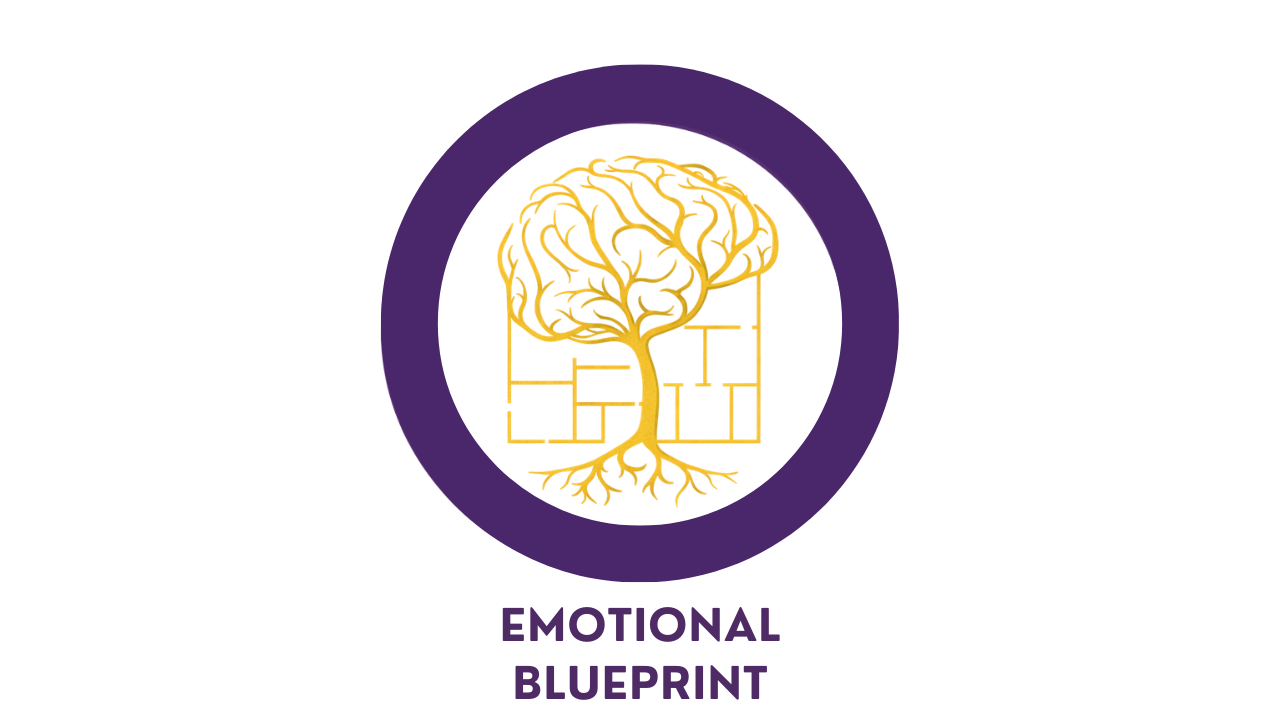
    Emotional Blueprint diagram showing how childhood experiences create unconscious emotional programming that drives adult reactions before conscious thought — by Kenny Weiss

    By the time you start “thinking” about why you are upset, your nervous system has already decided you are in danger based on your childhood emotional blueprint. Your thoughts are just the lawyers arguing for whatever your body has already decided is true.

    This is why trying to change your thoughts without addressing your body is useless. Your thoughts and intellect aren’t Santa Claus; they cannot magically bring you the peaceful life you crave if your body is trapped in trauma.

    That’s you… in therapy for three years understanding exactly why you shut down in conflict, and still shutting down every single time because understanding didn’t change the chemistry.

    How Does the Left-Brain Denial Machine Block Your Nervous System Regulation?

    To stop overthinking, we have to look at what intellectualization actually is. It is not a sign of emotional maturity; it is a defense mechanism.

    All sensory information that enters your body first goes through the right hemisphere of your brain, which is your emotional center. It is then supposed to pass to the left hemisphere to be categorized and simplified, and then return to the right hemisphere for a final emotional sifting.

    But in trauma survivors, that last biological step goes missing.

    You get stuck in the left hemisphere. And the left hemisphere is a denial machine. When you are confronted with emotional pain, your left brain jumps to irrational conclusions, dismisses new information, and becomes frozen in denial. When confronted with the truth, it actually doubles down and uses logic to fuel its destructive thinking.

    That’s you… building an airtight logical case for why you “don’t need anyone” when the truth is your body is terrified of the vulnerability that intimacy requires.
    Metacognition diagram showing the ability to think about your own thinking — the key to recognizing when your left brain is running the denial machine — by Kenny Weiss

    When you intellectualize a problem, you aren’t solving it. You are using logic to detach from all emotion, completely avoiding the intimacy and vulnerability required to actually heal. You put on the survival persona of the Falsely Empowered—the avoidant who stays busy, stays blank, and stays numb. Your intellect becomes the fortress wall that keeps everyone out, including yourself.

    But the Disempowered survival persona overthinks differently. Instead of using logic as a wall, they use it as a weapon against themselves. They replay every conversation looking for proof that they are the problem. They over-analyze every text, every tone, every micro-expression, searching for evidence that confirms the shame story their childhood installed: “I am too much. I am not enough. I drove them away.”

    That’s you… replaying a two-second pause in your partner’s voice for four hours straight, constructing an entire narrative about how they’re about to leave you based on literally nothing.

    And the Adapted Wounded Child oscillates between both—intellectualizing to push people away one day, then overthinking to pull them back the next. One moment building logical walls, the next moment tearing them down in a panic of self-blame.
    Survival Persona diagram showing the three types — falsely empowered, disempowered, and adapted wounded child — each with a different pattern of overthinking and somatic dysregulation — by Kenny Weiss

    Overthinking is simply your inner child hiding behind a wall of logic because they are terrified of feeling the original shame and powerlessness of their past.

    What Does Unregulated Somatic Trauma Look Like Across Your Life?

    When your body is holding trauma that your mind refuses to feel, it doesn’t just show up as overthinking. It bleeds into every area of your life through physical symptoms your intellect cannot explain away.

    In Family: Your jaw locks when your mother calls. Your shoulders climb toward your ears during holiday dinners. You get migraines after family gatherings and tell yourself it’s “just stress” while your body screams that it’s reliving the emotional environment of your childhood.

    That’s you… taking three Advil before Thanksgiving dinner and calling it “being prepared” instead of acknowledging that your body knows exactly what’s coming.

    In Romantic Relationships: Your chest tightens when your partner goes quiet. Your stomach drops when they don’t respond to a text. You intellectualize these reactions—”I’m just anxious, it’s nothing”—while your body is replaying the exact moment your caregiver withdrew their love and your nervous system learned that silence means danger.

    In Friendships: You feel physically exhausted after social interactions because your body has been in fight-or-flight the entire time, scanning for rejection signals. You cancel plans because your body “doesn’t feel right” even though nothing is medically wrong. The truth is your nervous system is overloaded from performing safety assessments on every human interaction.

    In Work and Career: Your neck and shoulders carry chronic tension. You clench your jaw through meetings. You get stomach pain before presentations—not because you’re unprepared, but because performing in front of authority figures activates the same nervous system response as performing for a critical parent who was never satisfied.

    That’s you… with a perfect presentation and a stomach full of acid, wondering why your body treats a Tuesday morning meeting like a life-threatening event.

    In Body and Health: Chronic pain with no clear medical cause. IBS, TMJ, tension headaches, autoimmune flares that worsen during emotional stress. Your body is keeping a running tab of every emotion your intellect has refused to process. As Bessel van der Kolk says, the body keeps the score.
    Trauma Chemistry diagram showing how cortisol, adrenaline, and dopamine create addictive somatic patterns that keep the body trapped in survival mode — by Kenny Weiss

    Why Does CBT Fail for Trauma in the Body?

    To illustrate why intellectualizing and standard cognitive therapies fail to regulate the nervous system, let’s look at how they handle fear.

    Traditional Cognitive Behavioral Therapy (CBT) often tells you to re-describe a situation differently or divert your attention, which only serves to suppress your emotions. It strengthens the left-hemisphere dominance, which is the exact opposite of what you need.

    Imagine a venomous snake is coiled up on the floor in front of you. The intellectual, CBT approach tells you to reframe your thoughts: “Look at this beautiful, safe, and peacefully coiled up creature before you.”

    But your body is screaming! Your heart is pounding. You are terrified. Lying to your brain does not calm your nervous system.

    That’s you… repeating “I am safe, I am safe, I am safe” while your hands are literally trembling, your palms are sweating, and your body knows you are absolutely lying.

    Somatic emotional regulation requires what I call Negative Emotional Differentiation. It requires intense physical truth. Instead of positive thinking, you look at the snake and say, “I feel petrified. I feel breathtakingly afraid. My stomach feels like it’s in knots looking at this slithering, menacing creature… but I am open to feeling differently about it.”

    You have to know exactly how you feel physically in order to change how you feel. You must get out of the story in your head and drop into the sensations in your body.
    Emotional Regulation diagram showing the thermostat concept — your emotional baseline was set in childhood and somatic regulation recalibrates it at the body level — by Kenny Weiss

    Why Do All Thinking-Based Tools Fail for Somatic Trauma?

    CBT is not the only approach that fails. Every tool that starts with thoughts and works backward to feelings has the same fundamental flaw: it treats the symptom (the thought) instead of the cause (the body’s stored trauma chemistry).

    Positive affirmations tell you to override your body’s alarm system with words. But your amygdala does not speak English. It speaks cortisol, adrenaline, and muscle tension. Telling it “I am worthy” while it is flooded with shame chemistry from 1987 is like whispering to a fire alarm that there is no fire while the building is actually burning.

    That’s you… with a vision board on your wall and a panic attack in your chest, wondering why the universe isn’t responding to your positive energy.

    Talk therapy helps you understand your story, and understanding matters. But understanding without somatic engagement is like reading a cookbook without ever turning on the stove. You know all the ingredients. You can describe the meal in detail. But you are still hungry.

    Mindfulness meditation tells you to observe your thoughts without judgment. This is useful for building metacognitive awareness—the ability to think about your own thinking. But observation alone does not rewire the neural pathway. You can watch the train wreck in slow motion with perfect mindful awareness and still be standing on the tracks.

    The missing piece in all of these approaches is the body. Your trauma lives in your nervous system, not your narrative. And the only way to heal it is to go where it lives.

    How Does the 5-Step Emotional Authenticity Method™ Stop Overthinking Through Somatic Regulation?

    How do we bypass the left-brain denial machine and actually regulate the body? We use the Emotional Authenticity Method™ to connect directly to the somatic truth.
    Emotional Authenticity Method™ — the five-step somatic process for bypassing the intellectual denial machine and rewiring trauma at the body level — by Kenny Weiss

    Here is exactly what you do the next time you catch yourself overthinking, pacing the floor, or endlessly analyzing a conflict.

    Somatic Titration: How to Lower Your Nervous System Activation Before Starting

    First, if your body is completely flooded with panic, do not start asking yourself deep psychological questions. You must lower the emotional temperature first. Use somatic titration: spend 30 seconds focusing entirely on what you can hear in your room. Then, bring the stressful thought back for 30 seconds. Then return to listening for 30 seconds. Do this back-and-forth three to five times to unstick your emotional thermostat and bring your prefrontal cortex back online.

    That’s you… discovering that thirty seconds of listening to the air conditioner does more for your nervous system than three hours of journaling about why you’re anxious.

    Once the panic drops, you apply the 5 steps:

    Step 1: What am I feeling right now? Look at the Feelings Wheel. Stop analyzing the situation and name the emotion. Expand your emotional vocabulary. Are you feeling isolated, apathetic, inferior, or remorseful? Pick the strongest one. This is Negative Emotional Differentiation—the antidote to intellectual denial.

    Step 2: Where do I feel this in my body? This is the antidote to overthinking. List all the places you feel this emotion physically. A tight jaw? A heavy chest? A buzzing in your arms? Reconnecting to your bodily sensations is how you bypass the intellect.

    Step 3: What is my earliest memory of having this exact feeling? Follow the body sensation back in time. Write down the memories. You will find the exact childhood moment where you first felt this physical sensation and adopted a painful emotional definition.

    Step 4: How does the current event mirror the first time? Look at how your current overthinking is just a reenactment of that childhood moment. You aren’t reacting to your boss; you are reacting to your critical parent. You aren’t panicking about the text; you are reliving the moment your caregiver’s silence meant you had done something wrong.

    That’s you… realizing that the knot in your stomach during your performance review is the exact same knot you felt at eight years old waiting for your father to read your report card.

    Step 5: Who would I be if I never had this feeling again? If this feeling were completely wiped out, what would be left? You would feel light, strong, safe, and joyful. Using “feelization,” visualize and feel yourself responding from this new, peaceful state, creating a new emotional neural pathway. That is your Authentic Self.
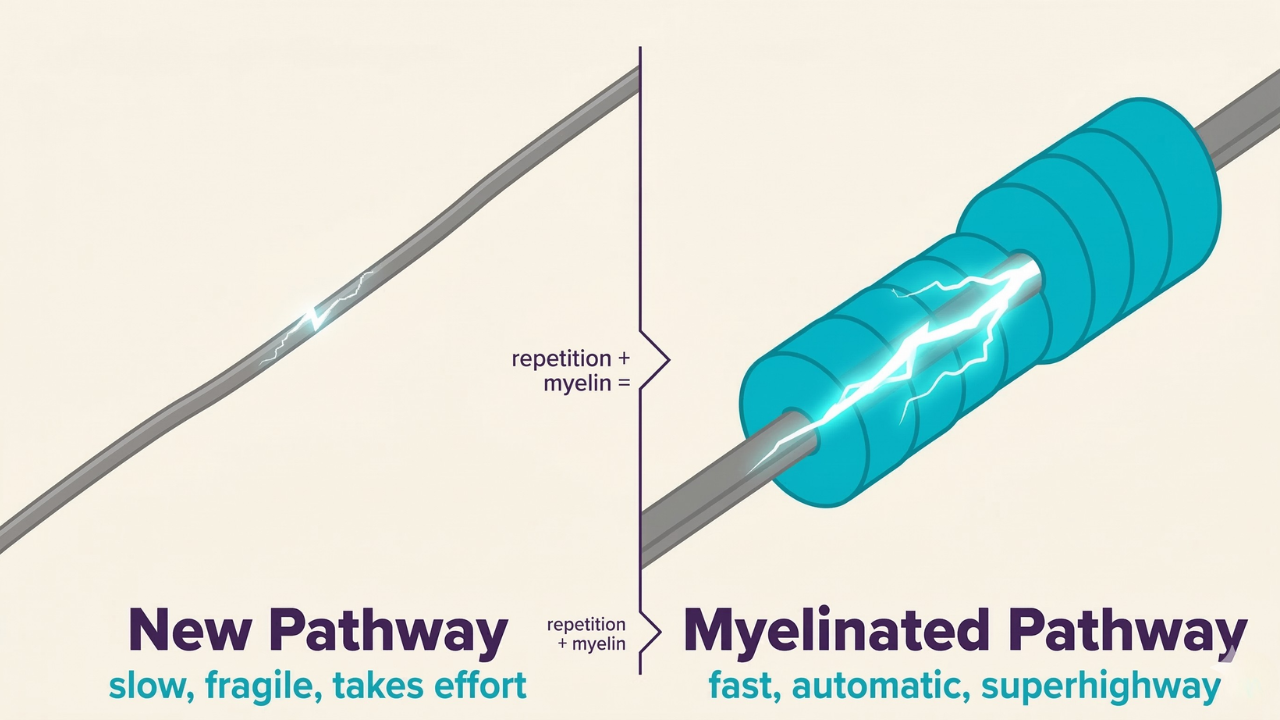
    Myelin neural pathway graphic showing how somatic practice lays down new emotional wiring that replaces intellectual overthinking patterns — by Kenny Weiss

    Every time you complete these five steps, you are laying down myelin—the biological insulation that strengthens new neural pathways. You are literally building a somatic highway that bypasses the old intellectual detour your trauma installed.

    How the Worst Day Cycle™ Keeps You Trapped in Your Head
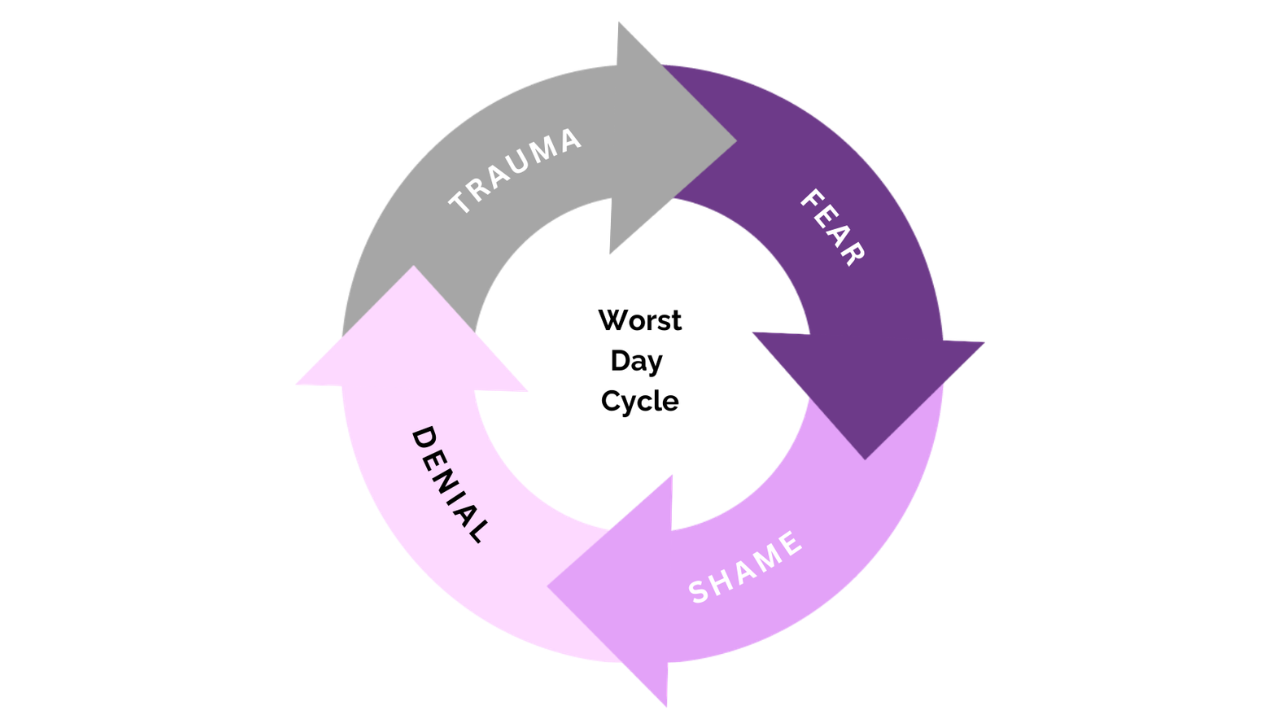
    Worst Day Cycle™ — the four-stage loop of trauma, fear, shame, and denial that fuels intellectual overthinking as a survival strategy — by Kenny Weiss

    The Worst Day Cycle™ explains exactly why overthinking feels impossible to stop: Trauma creates Fear, Fear creates Shame, Shame creates Denial, and Denial loops you back into Trauma. Your intellectualization is the Denial stage—the sophisticated, high-functioning version of denial that looks like productivity and intelligence but is actually your nervous system’s way of avoiding the shame underneath.

    When you were a child, your perfectly imperfect parents transferred their unhealed pain into you. Your body absorbed it. Your nervous system cataloged it. And your brilliant brain created a strategy to survive it: think harder, analyze more, stay in your head where it’s safe. The problem is that strategy worked at seven years old, and now at forty-seven it’s running your entire life while the body that holds the original wound goes completely unaddressed.

    That’s you… the smartest person in every room, with the answer to everyone else’s problems, who goes home and can’t figure out why you feel empty, tense, and alone.

    The Authentic Self Cycle™: From Overthinking to Embodied Healing
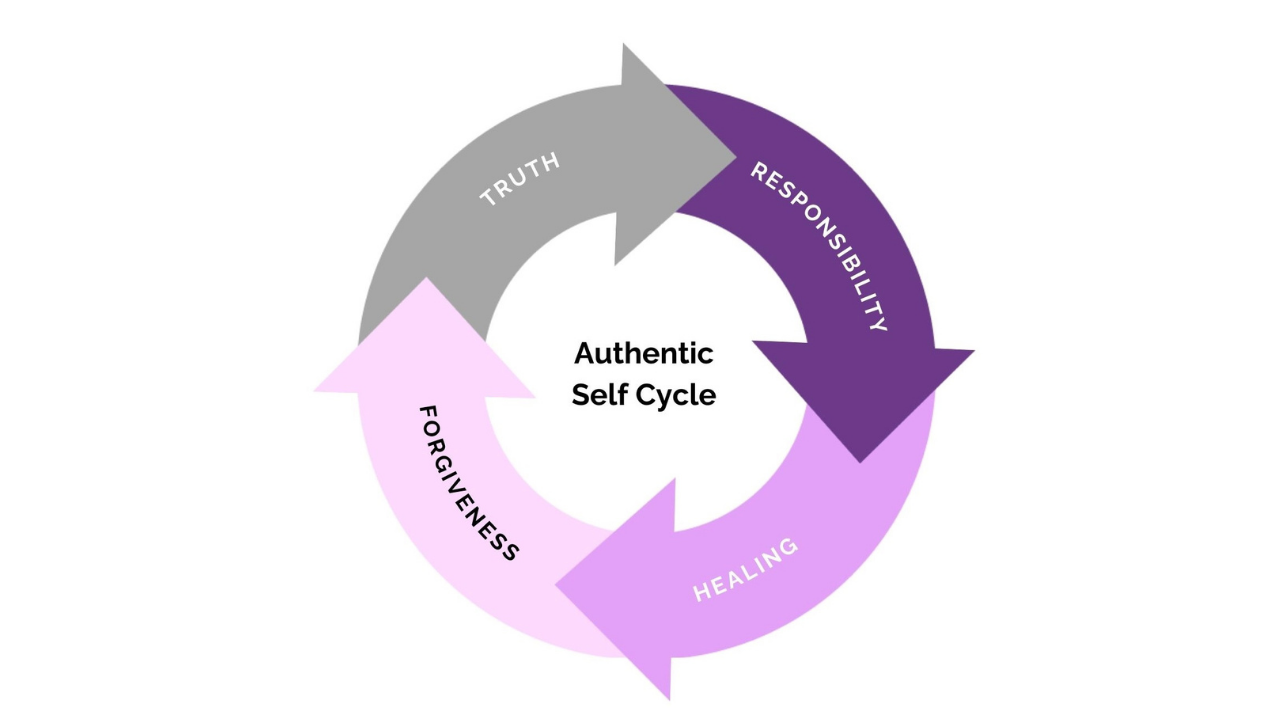
    Authentic Self Cycle™ — the four-stage healing path of Truth, Responsibility, Healing, and Forgiveness that moves you from intellectual survival to embodied authenticity — by Kenny Weiss

    The Authentic Self Cycle™ is the healing counterpart to the Worst Day Cycle™. Where the WDC traps you in Trauma → Fear → Shame → Denial, the ASC moves you through Truth → Responsibility → Healing → Forgiveness.

    Truth: Name what your body is actually feeling instead of what your intellect is constructing. “I’m not ‘fine.’ My chest is tight, my jaw is clenched, and I feel invisible.”

    Responsibility: Own that your overthinking is a survival persona response, not a personality trait. “My analysis of this situation is my childhood denial machine running, not my adult self solving a problem.”

    Healing: Use the Emotional Authenticity Method™ to drop into the body, trace the sensation to its origin, and create a new neural pathway. This is the somatic work that thinking-based tools skip entirely.

    Forgiveness: Release the emotional blueprint that installed the overthinking pattern. Forgive the child who needed intellectualization to survive. And step into the embodied, present, Authentic Self who no longer needs a fortress of logic to feel safe.

    That’s you… feeling something shift in your chest as you read this—not a thought, but a sensation. That’s your body recognizing the truth before your mind can argue with it.

    What Is Your Next Step to Stop Overthinking and Start Healing?

    You cannot think your way out of a feeling. You have to drop into your body, locate the origin of the trauma, and heal the emotional definitions that are keeping your nervous system trapped in the past.

    That’s you… ready to finally put down the spreadsheet and pick up the Feelings Wheel.

    Start with the Feelings Wheel exercise—it is completely free and will immediately begin building the emotional granularity you need for Step 1 of the Emotional Authenticity Method™.

    For those ready to go deeper, explore how enmeshment patterns may be fueling your intellectualization, or how relationship insecurity keeps your body locked in hypervigilance.

    When you are ready to map your specific survival persona patterns and rewire the somatic blueprint, explore what fits your journey:

    • Emotional Blueprint Starter Course — Individual ($79) — Your individual starter roadmap to identifying your emotional blueprint
    • Relationship Starter Course — Couples ($79) — A couples framework for healing somatic patterns together
    • Why We Can’t Stop Hurting Each Other ($479) — Deep dive into relationship trauma and the Worst Day Cycle™
    • Why High Achievers Fail at Love ($479) — For the overthinker who has everything figured out except their body
    • The Shutdown Avoidant Partner ($479) — Understanding intellectualization, withdrawal, and emotional unavailability
    • Tier 1: Mapping the Blueprint ($1,379) — The comprehensive program for full somatic emotional blueprint rewiring

    Whatever choice you make, just know that when you are ready, you now have a root-level solution, not a symptom-based topical band-aid approach, that will provide you with the root-level emotional regulation you are looking for.

    And don’t forget: You are not to blame, and you are not broken. You were just programmed, and programs can be rewritten. You did the best you could with the information you had at the time. But now that you know more, you can equip yourself with the tools to do more.

    If This Article Hit Home, the Book Goes Deeper

    Everything I write about on this site — the Worst Day Cycle™, your childhood emotional blueprint, why you keep repeating the same patterns no matter how hard you try — it all started with my first book, Your Journey To Success: How to Accept the Answers You Discover Along the Way.

    This is the book readers call “the first time I found a roadmap I could actually understand and that seemed attainable.” It is the book that walks you through WHY your life hasn’t changed despite all the work you’ve done — and shows you, step by step, exactly how to break free. No fluff. No motivational hype. Just the truth about what was done to you, why it stuck, and what to do about it.

    If you’ve read this far, you already know something needs to change. This book is where that change starts.

    Get Your Journey To Success on Amazon →

    Ready to Stop Understanding the Problem and Start Rewiring It?

    The article you just read scratches the surface. My new book, Your Journey To Being Yourself: How to Overcome the Worst Day Cycle & Reclaim Your Authentic Self with Emotional Authenticity, gives you the complete system — the Worst Day Cycle™, the Authentic Self Cycle™, and the full Emotional Authenticity Method™ — all in one place, with the neuroscience behind every step.

    This is the book readers call “a genius piece of art in mastering emotion and the art of healing.” It speaks directly to the person who feels stuck, overwhelmed, and confused by the same repeating patterns — the same arguments, the same relationship breakdowns, the same shame — and is done accepting surface-level answers. Every chapter combines powerful stories, clear steps, and practical tools that show you how to rewire your emotional patterns from the inside out.

    You are not broken. You were programmed. And this book shows you exactly how to rewrite the program.

    Get Your Journey To Being Yourself on Amazon →

    Frequently Asked Questions About Somatic Emotional Regulation

    What is somatic emotional regulation and how is it different from traditional emotional regulation?

    Somatic emotional regulation addresses trauma through the body’s nervous system rather than through thoughts or cognitive reframing. Traditional emotional regulation tools like CBT, affirmations, and mindfulness work top-down—from thoughts to feelings. Somatic regulation works bottom-up—from body sensations to emotional origins to new neural pathways. The Emotional Authenticity Method™ combines somatic awareness with emotional granularity to rewire trauma at the level where it actually lives: your nervous system.

    Why can’t I think my way out of trauma even though I understand it intellectually?

    Because your thoughts are not the leaders of your nervous system—they are the lawyers arguing for whatever your body has already decided. Neuroscience shows that emotions fire milliseconds before thoughts. By the time you construct a thought about your trigger, your body has already flooded with cortisol and adrenaline based on your childhood emotional blueprint. Understanding why you react does not change the biochemistry of the reaction itself.

    What is the left-brain denial machine Kenny Weiss talks about?

    In trauma survivors, sensory information gets stuck in the left hemisphere of the brain instead of completing its natural circuit back to the right hemisphere for emotional processing. The left brain then uses logic, intellectualization, and analysis as a defense mechanism to avoid feeling the original pain. Kenny Weiss calls this the “left-brain denial machine” because it looks like intelligence and productivity but is actually a sophisticated form of emotional denial.

    What is Negative Emotional Differentiation and why does it work better than positive thinking?

    Negative Emotional Differentiation is the practice of naming your uncomfortable emotions with precise, granular specificity—”I feel petrified, I feel breathtakingly afraid”—instead of reframing them as positive. It works because your nervous system responds to truth, not affirmations. When you accurately name what your body is experiencing, your prefrontal cortex comes back online and you gain the ability to process the emotion rather than suppress it.

    How long does somatic emotional regulation take to show results?

    Most people notice a shift within the first few sessions of consistent practice with the Emotional Authenticity Method™. The somatic titration technique—alternating 30 seconds of environmental listening with 30 seconds of touching the trigger—can lower nervous system activation within minutes. Building new myelin on somatic neural pathways typically takes 3-6 months of regular practice. The key difference from thinking-based tools is that somatic work produces felt changes in the body, not just intellectual understanding.

    Can somatic emotional regulation help with physical symptoms like chronic pain or IBS?

    Many physical symptoms with no clear medical cause—chronic pain, IBS, TMJ, tension headaches, autoimmune flares—are the body’s way of expressing unprocessed emotional trauma. Somatic emotional regulation addresses the stored trauma chemistry that drives these symptoms. While it is not a replacement for medical care, many people find that as they process stored emotions through the body, their unexplained physical symptoms significantly improve or resolve.

    The Bottom Line

    Your intellect has been your greatest asset and your most elegant prison. It got you through childhood. It built your career. It earned you respect. And it has been quietly, brilliantly keeping you disconnected from the body that holds everything you have been running from.

    You are not broken for being an overthinker. You are trauma-trained. Your brilliant brain created the most sophisticated denial machine it could to protect a child who was never given permission to feel. But you are not that child anymore, and the fortress of logic that kept you safe then is keeping you trapped now.

    That’s you… feeling the truth of that land somewhere in your chest, not your head. That’s your body, finally being heard.

    The Worst Day Cycle™ taught you that safety lives in your thoughts. The Authentic Self Cycle™ shows you that freedom lives in your body. Every time you drop out of analysis and into sensation, every time you name the feeling instead of explaining it away, every time you trace the knot in your stomach back to the seven-year-old who first felt it—you are laying down new myelin. You are building a new path. You are coming home to the self you abandoned when thinking became safer than feeling.

    You are not to blame. You are not broken. You are trauma-trained. And the body that has been keeping the score is also the body that knows how to heal.

    • Bessel van der Kolk — The Body Keeps the Score
    • Lisa Feldman Barrett — How Emotions Are Made
    • Pete Walker — Complex PTSD: From Surviving to Thriving
    • Gabor Maté — When the Body Says No
  • Why You Shut Down During Conflict: Nervous System Trauma Response

    Why You Shut Down During Conflict: Nervous System Trauma Response

    You’re in the middle of an important conversation with your partner. Things get tense. And then — nothing. Your mind goes blank. Your body feels heavy. You can’t find the words. You want to engage, to fight for the relationship, but instead you just… freeze.

    Sound familiar?

    That shutdown isn’t weakness. It’s not you being difficult or emotionally unavailable. Shutting down during conflict is a nervous system trauma response from your childhood — a brilliant survival strategy your brain learned to keep you safe when you were small and powerless. The problem is that strategy still runs the show, even though you’re now an adult in a relationship with someone who loves you.

    Here’s the neurobiological truth: your nervous system learned during childhood that conflict equals danger. When your parents fought, raised their voices, withdrew, or shamed you, your developing brain created a survival blueprint. That blueprint says: “When conflict starts, shut down. Conserve energy. Go invisible. Don’t fight back — you’ll lose and it will hurt worse.”

    Today, when your partner brings up a difficult topic or raises their voice, your nervous system doesn’t see your adult partner. It sees the threat from your childhood. Your dorsal vagal nerve activates — the ancient “freeze” response. Your body conserves energy. Your brain goes offline. You shut down.

    And then you both suffer, because you can’t connect when you’re frozen.

    This post will show you exactly why this happens, how your childhood emotional blueprint gets wired into your nervous system, and — most importantly — how to rewire it so conflict becomes uncomfortable but not dangerous.

    Table of Contents

    What Shutting Down During Conflict Actually Is (It’s Not What You Think)

    When most people talk about “shutting down,” they mean different things. Some describe it as going emotionally numb. Others say they just can’t find the words. Some describe it as physically leaving the room or mentally checking out mid-conversation.

    The common thread: your nervous system is protecting you from what it perceives as danger.

    That’s you — standing in the kitchen while your partner tries to talk about hurt feelings, and suddenly you feel like you’re underwater. Nothing they’re saying makes sense. You can’t respond. Your body feels heavy and numb.

    Here’s what’s actually happening: your dorsal vagal nerve — part of your parasympathetic nervous system — is activating your “freeze” response. This is the same response wild animals use when a predator appears. They freeze because movement draws attention. If the predator doesn’t see them, they survive.

    Your childhood brain learned the same thing: if you freeze, if you don’t respond, if you make yourself small and invisible, maybe the conflict will stop hurting. Maybe your parent will stop yelling. Maybe you’ll stay safe.

    Your adult brain knows better. Your adult brain knows your partner isn’t a threat. But your nervous system doesn’t care what your adult brain knows. Your nervous system is still running a 25-year-old program that says: “Conflict = danger. Freeze = survival.”

    nervous system regulation emotional response shutdown during conflict

    The Dorsal Vagal Nervous System: Your Freeze Response

    Your nervous system has three main gears: sympathetic (fight/flight), parasympathetic vagal (rest/digest), and dorsal vagal (freeze/collapse). Most people know about fight-or-flight. But they don’t know about the freeze response — and that’s usually where conflict-shutdown lives.

    When your sympathetic nervous system activates, you feel flooded with adrenaline. Your heart races. You want to run or fight. You’re activated. This is uncomfortable but at least you’re available — you can talk, respond, engage.

    When your dorsal vagal nerve activates, something different happens. Your body literally shuts down. Your heart rate drops. Your muscles relax into numbness. Your breath becomes shallow. Your brain conserves energy.

    That’s the shutdown — your body going into conservation mode.

    This response makes sense in true survival situations. If you’re caught by a predator and can’t escape, playing dead is your best chance. But in modern relationships, this response creates disaster. When you freeze during a conflict with your partner, they interpret it as coldness, avoidance, or not caring. They don’t see a trauma response. They see someone emotionally unavailable.

    And you feel trapped because you want to respond but you literally can’t access your nervous system. You’re stuck in freeze.

    The dorsal vagal response isn’t a choice. It’s not something you’re doing on purpose. It’s an automatic nervous system reaction that developed in childhood and now activates whenever conflict triggers the same threat-perception your brain learned long ago.

    childhood trauma nervous system chemistry cortisol adrenaline dopamine

    The Worst Day Cycle™: How Childhood Trauma Gets Wired Into Your Nervous System

    The Worst Day Cycle™ (WDC) is the four-stage loop that turns childhood trauma into adult emotional patterns. Understanding this cycle is the foundation for understanding why you shut down.

    The Four Stages: Trauma → Fear → Shame → Denial

    Stage 1: Trauma (The Blueprint Gets Created)

    When you’re a child, your parents or caregivers are your entire world. They’re not just people — they’re your nervous system’s external regulator. When they’re calm, you feel safe. When they’re chaotic, angry, withdrawn, or shaming, your developing brain registers that as existential threat.

    Let’s say your parent would yell during disagreements. Or shut down and give silent treatment. Or criticize you for having feelings. Or withdraw affection when you didn’t perform. These experiences become your emotional blueprint — the template your nervous system uses to understand what relationships are “supposed” to be.

    Your brain catalogs these moments: “When there’s conflict, bad things happen. When I speak up, I get shamed. When I have needs, I’m abandoned. The safest thing is to freeze and disappear.”

    That’s the blueprint — the invisible rules your nervous system learned about survival.

    Stage 2: Fear (Your Brain Becomes Addicted to Repetition)

    Here’s what neuroscience shows us: your brain doesn’t distinguish between danger and familiarity. Your brain’s job is to keep you alive, and it does this by learning patterns. Once your brain learns a pattern — even a painful one — it likes that pattern because it’s known.

    Unknown = potentially dangerous. Known = safe (even if it hurts).

    When conflict triggers start to happen in your adult relationships, your nervous system recognizes them as “known patterns” from childhood. Your brain actually feels safer repeating painful patterns than exploring new ones. So you unconsciously recreate dynamics from your childhood.

    Your partner raises their voice. Your nervous system says: “I’ve seen this before. I know how this ends. I need to protect myself the way I learned to protect myself then.”

    Fear drives the repetition. Your brain thinks: “If I do what I did before, maybe I’ll survive this time.”

    Stage 3: Shame (Where You Lost Your Inherent Worth)

    Shame is the deepest level of the Worst Day Cycle. While guilt says “I did something bad,” shame says “I am something bad. I am the problem.”

    When childhood conflict involved criticism, rejection, or emotional abandonment, you internalized a core message: “There’s something wrong with me.” Not with how your parents responded. Not with their unhealed trauma. With YOU.

    Research shows that over 70% of childhood messaging is negative and shaming. Parents tell children what they’re doing wrong far more often than what they’re doing right. This creates a nervous system that’s primed to see threat in conflict because conflict confirms the core shame: “I’m the problem. I’m not good enough. I’m broken.”

    That’s shame hijacking your system — the belief that you ARE the problem, not that you HAVE a problem.

    When you shut down during conflict, shame is running the program. Your nervous system is protecting you from the unbearable reality: “If I stay present during this conflict, I have to face the fact that I’m fundamentally flawed.”

    Freezing protects you from that shame. Going numb means you don’t have to feel how broken you believe yourself to be.

    Stage 4: Denial (Your Survival Persona Takes Over)

    Denial is when your nervous system creates a survival persona — a protective identity — that shields you from having to feel the truth of your trauma and shame. This persona was brilliant when you were a child. It kept you safe. It helped you survive.

    But now it’s sabotaging your adult relationships because it’s still operating from childhood rules.

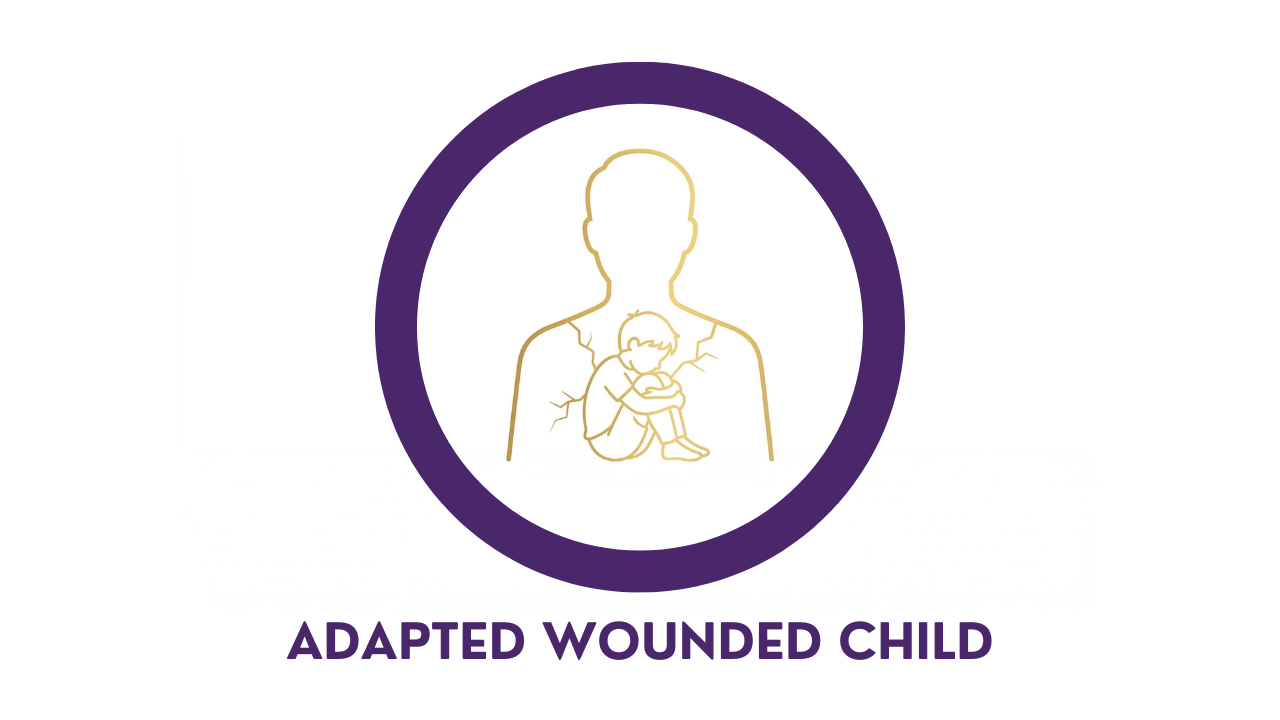
    The survival persona shows up as either control and dominance (the Falsely Empowered persona), collapse and people-pleasing (the Disempowered persona), or oscillation between both (the Adapted Wounded Child). All three are brilliant survival strategies. All three destroy modern relationships.

    Worst Day Cycle trauma fear shame denial emotional blueprint

    The Three Survival Personas: Which One Are You?

    Your survival persona is the protective identity you created to handle childhood trauma. It’s not who you are. It’s who you became to survive. And while it protected you then, it’s probably destroying your relationships now.

    The Falsely Empowered Persona: Control, Dominance, and Rage

    The Falsely Empowered persona responds to childhood threat by taking control. If you can control everything — your partner, your kids, your environment, the narrative — then you can’t be hurt the way you were hurt before.

    This persona shows up as:

    • Needing to be right in every conversation
    • Controlling partner behavior or decisions
    • Raging when things don’t go as planned
    • Dominating conversations or decisions
    • Using threats or intimidation (even subtle ones)
    • Never admitting mistakes or vulnerabilities

    That’s you — in the heat of a disagreement, your voice gets louder and your need to win becomes everything. You can’t let your partner have the last word because that feels like losing.

    The Falsely Empowered persona shuts down differently than other personas. Instead of going numb, you might shut your partner down — by raging, by leaving the room, by refusing to talk. You’re shutting DOWN the conflict, not shutting DOWN yourself. But the effect is the same: no real connection happens.

    The Disempowered Persona: Collapse and People-Pleasing

    The Disempowered persona responds to childhood threat by surrendering. If you make yourself small, if you agree with everything, if you people-please and never upset anyone, maybe you’ll be safe. Maybe someone will finally stay.

    This persona shows up as:

    • Apologizing for things that aren’t your fault
    • Agreeing with your partner even when you disagree
    • Your needs always coming last
    • Difficulty setting boundaries
    • Fear of abandonment driving every decision
    • Conflict making you want to disappear

    That’s you — when conflict starts, you immediately go into protect-the-relationship mode. You’ll say whatever keeps the peace, even if it means betraying yourself.

    The Disempowered persona WILL shut down during conflict. This is the classic shutdown response — going numb, unable to speak, feeling paralyzed, wanting to disappear.

    The Adapted Wounded Child: Oscillating Between Both

    The Adapted Wounded Child is the most confusing persona because it switches between Falsely Empowered and Disempowered depending on what’s happening. Sometimes you’re the controller. Sometimes you’re the collapser. Sometimes you’re both in the same conversation.

    This persona develops when childhood trauma was unpredictable. Your parents might have been controlling one moment and withdrawn the next. Or they might have treated you harshly one day and affectionate the next. Your nervous system learned: “I need to be ready for anything. I need to be able to collapse AND dominate depending on what keeps me safe.”

    That’s you — unpredictable even to yourself. One day you’re standing up for your needs. The next day you’re collapsed and people-pleasing. Your partner never knows which version of you will show up.

    The Adapted Wounded Child often shuts down in the middle of conflict. You’ll start out defending yourself (Falsely Empowered) and then suddenly collapse into numbness and withdrawal (Disempowered). Or you’ll oscillate between both within the same conversation.

    survival persona falsely empowered disempowered adapted wounded child

    All three survival personas are brilliant. They kept you alive when you were powerless. The problem is that they still run your nervous system in situations where you’re actually safe and powerful. Healing means developing a new response: staying present during conflict even when your nervous system says it’s dangerous.

    How Shame Hijacks Your Nervous System

    Shame is the glue that holds the entire shutdown pattern in place. Understanding how shame works in your nervous system is crucial to breaking free from shutdown cycles.

    Shame isn’t just an emotion. It’s a biochemical event. When shame activates, your nervous system interprets it as threat. Your body releases cortisol and adrenaline. Your brain goes into protection mode. And protection mode looks like shutdown.

    Here’s how it works:

    1. Conflict triggers → 2. Your nervous system recognizes it as similar to childhood threat → 3. Shame activates (“I’m the problem”) → 4. Shutdown happens (your body tries to protect you from feeling that shame) → 5. Your partner interprets shutdown as coldness → 6. Conflict escalates → 7. Shame deepens

    The cycle feeds itself. Each time you shut down during conflict, you confirm the shame: “See? I can’t handle this. I’m broken. I’m not good enough for a healthy relationship.”

    That’s the shame trap — every shutdown reinforces the belief that there’s something fundamentally wrong with you.

    The neuroscience is clear: shame lives in your nervous system, not your thoughts. You can’t think your way out of shame. You can’t positive-affirm your way out of it. You have to regulate your nervous system so deeply that shame loses its grip.

    This is where most people get stuck. They try to think differently, but their nervous system is still screaming danger. They try to communicate differently, but their body is still locked in freeze. They try to be more present, but shame makes them want to disappear.

    The solution isn’t better thinking. The solution is nervous system rewiring through the Emotional Authenticity Method™.

    emotional blueprint childhood shame core beliefs attachment patterns

    Signs You’re Shutting Down (By Life Area)

    Shutdown patterns aren’t just in romantic conflict. They show up across your entire life. Here’s what to look for:

    Family Relationships

    That’s you — sitting at the holiday dinner table, smiling on the outside while your body is completely numb on the inside, because your family still triggers the same shutdown you learned at age seven.

    • Going numb when parents bring up old wounds
    • Avoiding certain family members because conflict feels unsafe
    • Not speaking up about your needs or boundaries
    • Repeating the same unresolved patterns with parents year after year
    • Feeling like a child again when around family
    • Unable to have difficult conversations without shutting down

    Romantic Relationships

    • Going silent or numb mid-argument
    • Feeling like you “can’t communicate” no matter how much you try
    • Your partner says you’re “emotionally unavailable” during conflict
    • Choosing to stay in unhealthy relationships because confrontation feels impossible
    • Unable to express needs or boundaries with romantic partners
    • After conflict, feeling disconnected and unsure how to reconnect

    Friendships

    • Disappearing from friendships when there’s disagreement
    • Difficulty having vulnerable conversations with friends
    • Friendships ending because you shut down instead of working through issues
    • People perceiving you as “cold” or “distant” after conflict
    • Unable to repair friendships after conflict without professional help

    Work Environment

    That’s you — the professional who can run a department but freezes the moment your boss gives critical feedback, because your nervous system hears your parent’s voice, not your manager’s.

    • Going silent in meetings when challenged or criticized
    • Difficulty speaking up about work needs or boundaries
    • Shutting down during performance reviews or difficult conversations with managers
    • Conflict with coworkers creating anxiety that keeps you up at night
    • Struggling to advocate for yourself professionally

    Body and Health

    Sound familiar? Your body has been keeping score of every shutdown for decades — and now it’s sending the bill.

    • Chronic tension, especially in neck, shoulders, and jaw
    • Frequent headaches or migraines triggered by stress or conflict
    • Digestive issues that worsen during relationship conflict
    • Low-grade inflammation and immune system dysfunction
    • Sleep problems, especially the night after conflict
    • Feeling physically “numb” or disconnected from your body
    • History of autoimmune conditions or chronic pain syndromes

    That’s you in all these areas — the common thread is shutdown and disconnection when conflict or high emotion shows up.

    adapted wounded child oscillating between control and collapse in relationships

    The Emotional Authenticity Method™: How to Rewire Your Response

    The Emotional Authenticity Method™ (EAM) is the five-step process for rewiring your emotional response to conflict. This isn’t about learning better communication skills. It’s about teaching your nervous system that conflict isn’t danger.

    The core principle: you cannot change emotional patterns through thoughts alone. Emotions are biochemical events. Your thoughts originate from your feelings, not the other way around. To change how you respond to conflict, you have to rewire the emotional blueprint stored in your body.

    The Five Steps of Emotional Authenticity

    Step 1: Somatic Down-Regulation (with Optional Titration)

    Before you can access your nervous system’s wisdom, you have to bring your body out of threat state. Somatic down-regulation means using your body to signal safety to your nervous system.

    This might include:

    • Box breathing (breathe in for 4, hold for 4, out for 4, hold for 4)
    • Cold water immersion on your wrists or face
    • Gentle movement like walking or stretching
    • Progressive muscle relaxation
    • Humming or singing (stimulates the vagal nerve)
    • Being near someone you trust

    Titration is a technique where you briefly touch into the emotional pain and then return to safety. You’re teaching your nervous system: “This feeling is manageable. I can be present with it.”

    That’s the first step — getting your body to a place where learning is possible.

    Step 2: What Am I Feeling? (Emotional Granularity)

    Most people shutdown because they lump all negative emotion into one bucket: “I feel bad.” This keeps emotions vague and overwhelming.

    Real healing requires emotional granularity — the ability to name exactly what you’re feeling. This is where the Feelings Wheel becomes essential. Instead of “I feel bad,” you might discover you’re feeling: frustrated, disappointed, scared, ashamed, and unseen.

    Naming emotions is neurologically powerful. When you name an emotion, you activate your prefrontal cortex — the rational thinking part of your brain. This actually reduces the intensity of the emotional response.

    That’s granularity — the difference between drowning in emotion and being able to describe it with precision.

    Step 3: Where in My Body Do I Feel It? (Somatic Awareness)

    All emotional trauma is stored in your body. When you shut down, you’re literally disconnecting from the physical sensations of your emotions. This is dissociation — a nervous system trick to protect you from feeling.

    Healing requires reconnecting with your body. Where do you feel the fear? Is it in your chest as tightness? In your throat as constriction? In your gut as heaviness? In your limbs as numbness?

    The more specific you can be about where emotions live in your body, the more power you have to regulate them.

    That’s embodied awareness — the difference between thinking about your emotions and actually feeling them in your nervous system.

    Step 4: What Is My Earliest Memory of This Feeling? (Trace to Origin)

    This is the crucial step where healing actually happens. When you feel shutdown during conflict, you’re usually not responding to what’s happening today. You’re responding to what happened in your childhood.

    Your nervous system can’t tell the difference between then and now. So you need to make that difference conscious. When you’re feeling the shutdown, ask: “What’s the earliest time I felt this exact feeling?”

    Maybe the answer is: “I felt this with my father when I was eight and he yelled at me for making a mistake.” Or: “I felt this with my mother when she withdrew and gave silent treatment.”

    Once you consciously connect your current shutdown to your childhood wound, your adult brain can start to differentiate: “Oh. I’m not with my parent anymore. I’m with my partner. This isn’t the same situation.”

    That’s the breakthrough — realizing your nervous system is confusing your partner with your parent.

    Step 5: Who Would I Be If I Never Had This Feeling Again? (Vision Step)

    This final step moves you toward the Authentic Self Cycle. Instead of staying focused on the wound, you imagine the healed version of yourself.

    Ask yourself: “If I never felt this shutdown again, who would I be in my relationships? How would I respond to conflict? What would become possible for me?”

    This vision step isn’t about denial or bypassing. It’s about giving your nervous system a new goal, a new blueprint to work toward. Your brain’s job is to solve problems and reach goals. Once you give it a clear vision of who you want to become, it starts working toward that goal automatically.

    That’s the vision — moving from “I shut down because of my past” to “I want to stay present because of my future.”

    Emotional Authenticity Method five steps somatic regulation emotional granularity

    The Authentic Self Cycle™: Your Path to Healing

    While the Worst Day Cycle™ is what got you stuck, the Authentic Self Cycle™ (ASC) is what gets you free. This four-stage cycle is how you rewire your emotional blueprint and reclaim your authentic self.

    The Four Stages: Truth → Responsibility → Healing → Forgiveness

    Stage 1: Truth (Name the Blueprint)

    The first stage is seeing your emotional blueprint clearly. This means understanding: “Here’s what my nervous system learned in childhood. Here’s how that shows up in my adult relationships. Here’s why I shut down.”

    Truth isn’t about blame. It’s not about your parents being bad people. It’s about seeing clearly: “This is what happened. This is what I learned. This is what my nervous system still believes.”

    Once you see the blueprint clearly, you can also see: “This isn’t about today. When my partner brings up a difficult topic, my nervous system isn’t responding to my partner. It’s responding to a threat pattern from thirty years ago.”

    That’s the truth — this isn’t about today, it’s about then.

    Stage 2: Responsibility (Own Your Reactions Without Blame)

    The second stage is owning your nervous system response without blame. This is subtle but crucial.

    Responsibility means: “My partner isn’t my parent. My nervous system just thinks they are. I’m responsible for managing my nervous system, not for pretending my childhood didn’t happen.”

    This is different from blame. Blame says: “I’m shutting down because my partner is like my parent.” Responsibility says: “I’m shutting down because my nervous system learned to respond this way to conflict. That’s my job to heal.”

    You’re not responsible for your childhood. You’re not responsible for how your nervous system got wired. But you ARE responsible for what you do with that knowledge going forward.

    That’s responsibility — the difference between “This is my parent’s fault” and “This is my work to do.”

    Stage 3: Healing (Rewire the Emotional Blueprint)

    Healing is where the real nervous system work happens. This is where you use the Emotional Authenticity Method™ to gradually teach your nervous system that conflict isn’t danger.

    You start having small conflicts. You practice staying present. You notice the shutdown impulse and breathe through it. You get curious about your body’s response instead of running from it. You reconnect the feeling to its origin. Slowly, gradually, your nervous system learns: “We’re safe. This isn’t like then. We can stay present.”

    This isn’t a linear process. You won’t feel healed one day and then never feel shutdown again. But over time, your nervous system’s default response changes. Conflict becomes uncomfortable but not dangerous. Shutdown becomes possible but not automatic.

    That’s healing — the slow rewiring of your nervous system’s threat response through repeated experiences of safety.

    Stage 4: Forgiveness (Release the Inherited Blueprint)

    The final stage is forgiveness — not of your parents necessarily, but of yourself and your nervous system. Forgiveness means releasing the inherited emotional blueprint so you can reclaim your authentic self.

    This looks like: “I understand why my nervous system responds this way. I understand why my parents responded the way they did. I’m no longer obligated to repeat these patterns. I’m free to be myself.”

    Forgiveness creates space for a new emotional chemical pattern. Instead of the trauma chemistry of cortisol, adrenaline, and dopamine misfire, you develop the chemistry of oxytocin (safety), serotonin (wellbeing), and endogenous opioids (comfort).

    That’s forgiveness — moving from “I’m still managing my childhood trauma” to “I’m free to be who I actually am.”

    Authentic Self Cycle truth responsibility healing forgiveness rewire emotional blueprint

    People Also Ask: Common Questions About Shutdown and Conflict

    Why Do I Go Blank During Arguments?

    Going blank during arguments is a dorsal vagal response where your nervous system activates your freeze response. Your brain perceives conflict as threat (based on childhood learning) and literally shuts down cognitive function to conserve energy. This isn’t stupidity or emotional damage — it’s a survival mechanism that made sense when you were small.

    Is Shutting Down the Same as Dissociation?

    Shutting down and dissociation are related but not identical. Shutdown is primarily a dorsal vagal freeze response affecting your ability to engage. Dissociation is disconnecting from your thoughts, emotions, and bodily sensations — it’s a deeper disconnection from reality. Someone can shut down without fully dissociating, but chronic shutdown often leads to dissociation. Both require nervous system rewiring.

    Can I Learn to Stay Present During Conflict?

    Yes, absolutely. Your nervous system learned the shutdown response through repeated experiences in childhood. It can learn a new response through repeated experiences of safety in adulthood. This doesn’t happen overnight, but with consistent work using the Emotional Authenticity Method™, your default response to conflict changes. Conflict becomes uncomfortable but not dangerous.

    Why Do I Shut Down With My Partner but Not With Others?

    Your partner (especially if you’re in a serious relationship) likely triggers the deepest childhood wounds because romantic relationships activate your core attachment patterns. You shut down with your partner because they’re the one whose potential rejection triggers your deepest fear. Other people don’t activate the same nervous system response because the stakes feel different.

    What’s the Difference Between Shutting Down and Just Being Quiet?

    Shutting down involves an involuntary nervous system response where you lose access to your words, emotions, and body awareness. Choosing to be quiet is conscious. You can choose to be quiet AND stay emotionally available. Shutdown is when you want to engage but literally cannot because your nervous system has gone offline.

    Is Shutdown Permanent? Will I Always Do This?

    No. Shutdown is a learned response, not a permanent trait. Your nervous system learned it can learn anything else. The Authentic Self Cycle™ and Emotional Authenticity Method™ directly address the nervous system patterns that create shutdown. Healing is possible, but it requires consistent work and often professional support.

    The Bottom Line: You’re Not Broken, You’re Wired for Survival

    The next time you shut down during conflict, here’s what I want you to remember:

    You’re not broken. You’re not emotionally unavailable. You’re not a bad partner or a bad person. Your nervous system is doing exactly what it learned to do in order to keep you safe when you were powerless.

    Your parents probably weren’t villains. They were probably doing the best they could with the nervous system regulation they learned from their parents. And now their trauma lives in your nervous system, showing up as shutdown during conflict.

    That’s not your fault. But healing is your responsibility.

    The beautiful part: shutdown is fixable. Your nervous system isn’t broken. It just learned wrong. And what it learned can be unlearned.

    The path forward isn’t through thinking harder or communicating better. The path forward is through your body. It’s through the Emotional Authenticity Method™ — getting curious about what your nervous system learned, where it learned it, and what it needs to feel safe enough to respond differently.

    It’s through the Authentic Self Cycle™ — moving from truth about your blueprint to responsibility to healing to forgiveness.

    And it’s through doing this work consistently, with support, until your nervous system gets the message: “We’re safe now. Conflict isn’t danger. You can stay present.”

    Your authentic self is still in there. The part of you that’s not shaped by childhood trauma. The part that can be present during conflict. The part that can be vulnerable and real and connected to another person.

    Healing means reclaiming that self. And it starts by understanding why you shut down in the first place.

    reparenting rewire nervous system childhood wounds healing attachment

    If you want to go deeper into understanding nervous system trauma and healing, these books are gold:

    • Facing Codependence by Mellody Beattie — The foundational text on understanding how childhood patterns show up in adult relationships. Essential reading.
    • The Body Keeps the Score by Bessel van der Kolk — The neuroscience of trauma and how it gets stored in your nervous system. This book changed how we understand healing.
    • When the Body Says No by Gabor Maté — How unresolved emotional wounds show up as chronic illness and pain. Connects childhood trauma to physical health.
    • Codependent No More by Melody Beattie — The practical guide to understanding codependence and setting healthy boundaries.
    • The Gifts of Imperfection by Brené Brown — How shame shows up in our lives and why vulnerability is the antidote. Important for understanding the shame component of shutdown.

    Get Help: Courses & Resources

    If you’re ready to start rewiring your nervous system and healing your shutdown patterns, here are the resources that will help:

    Self-Guided Healing Paths

    • Emotional Blueprint Starter Course — Individual — $79 — The foundational guide to understanding your emotional blueprint and starting the healing journey on your own. Best for people who want to begin with self-awareness before professional support.
    • Relationship Starter Course — Couples — $79 — Designed for couples who want to understand each other’s emotional blueprints and how they interact. Best if you’re in a relationship and want to heal together.

    Comprehensive Courses

    • Why We Can’t Stop Hurting Each Other — $479 — A complete deep-dive into the Worst Day Cycle™ and how to break it. For people ready to do serious nervous system work.
    • Why High Achievers Fail at Love — $479 — Specific to high-achievers and high-performers whose survival personas sabotage their relationships. Best for people who crush it professionally but struggle personally.
    • The Shutdown Avoidant Partner — $479 — Specifically addresses avoidant attachment patterns and shutdown responses. Best if avoidance is your primary challenge.
    • Tier 1: Mapping the Blueprint — $1,379 — The complete training in the Emotional Authenticity Method™. This is the advanced work for serious transformation. Best for people ready to rewire their entire emotional response system.

    Free Resources

    The journey from shutdown to authentic presence doesn’t happen overnight. But it happens. Thousands of people have moved through their nervous system trauma and learned to stay present during conflict. You can too.

    The first step is understanding why you shut down. You’ve done that by reading this post.

    The second step is deciding that healing is worth the work.

    Everything else follows from there.

  • Depression Solutions Without Medication: Heal the Root Cause

    Depression Solutions Without Medication: Heal the Root Cause

    Depression isn’t a chemical imbalance that requires medication — it’s a trauma response your body learned in childhood to protect you from emotional pain. When you experience trauma, abandonment, or rejection as a child, your nervous system creates neural patterns that feel like depression in adulthood: numbness, hopelessness, exhaustion. These aren’t symptoms of a broken brain. They’re evidence of a brilliant system that adapted to survive. The good news? That same adaptive system can be rewired through emotional authenticity and trauma processing, without pills.

    Why Depression Isn’t About Brain Chemistry

    For decades, we’ve been told depression is a serotonin deficiency. Take an SSRI, balance your brain chemicals, and you’ll feel better. But the research doesn’t hold up. Studies show antidepressants work no better than placebo for mild-to-moderate depression. And they don’t address the root cause.

    That’s you if you’ve tried medication and felt like something was still missing.

    Depression is the nervous system’s adaptive response to chronic emotional pain in childhood. When a child experiences repeated rejection, abandonment, abuse, or emotional neglect, their developing brain creates a survival pattern: if I stop feeling, I stop hurting. This pattern becomes hardwired in the body—in the vagus nerve, the receptor sites at the cellular level, the neural pathways that light up when threat is perceived.

    Trauma Chemistry: How childhood trauma creates depression at the cellular and neurological level

    Medication doesn’t rewire these patterns. It mutes them. You still carry the nervous system dysregulation, the shame, the fear. You’re just numb to it. And the moment you stop the pills, the pattern returns—often stronger.

    Sound familiar? That feeling of being stuck in the same loop even though you’re medicated?

    The Trauma Signal Your Body Is Sending

    Your depression isn’t a malfunction. It’s a message. Your body is saying: “I learned how to survive by shutting down. I learned that my feelings weren’t safe. I learned to disappear to avoid pain.”

    That’s brilliant adaptation. As a child, it kept you safe. As an adult, it keeps you trapped.

    The body’s stress response system—the sympathetic nervous system—is designed for acute threats: a predator, a fire, a car accident. For 10 minutes of terror, it saves your life. But when you grow up in an environment where emotional pain is constant and inescapable, your nervous system stays switched on for years. Decades, even.

    That’s the depression you feel when you wake up at 3 AM with dread for no reason.

    Your body is still protecting you from a threat that no longer exists. The child you were needed that protection. The adult you are needs something different: activation, choice, emotional truth.

    Emotional Regulation: The pathway from dysregulation to nervous system calm

    Understanding the Worst Day Cycle™

    The Worst Day Cycle™ is the neurochemical pattern that creates depression. It has four stages, and if you’ve ever felt truly depressed, you’ve lived this cycle hundreds of times.

    Stage 1: The Trigger (Trauma Activation)

    Something happens. A partner doesn’t text back. A boss gives you critical feedback. A memory surfaces. Your nervous system registers this as the same threat you faced in childhood. Your amygdala—the brain’s threat detector—fires.

    That’s you when you interpret your partner’s silence as abandonment because your parent ignored you for days when they were angry.

    Stage 2: Fear and Hypervigilance

    Your body floods with cortisol and adrenaline. Your heart races. You become hypervigilant—scanning for danger, looking for proof that your fear is justified. Your prefrontal cortex (the thinking brain) goes offline. You’re now in survival mode.

    This is where most people medicate. They take a pill hoping to skip stages 3 and 4. But the cycle completes anyway, just slower and less consciously.

    Stage 3: Shame and Self-Blame

    As the fear peaks, something shifts. You can’t stay in terror forever. Your mind turns the fear inward. “I’m broken. I’m overreacting. I’m too sensitive. What’s wrong with me?” Shame floods in. This is the crash—the moment the nervous system says: “I can’t handle this. I have to shut down.”

    That’s the shame that makes you not want to leave the house, not want to reach out, not want to be seen.

    Stage 4: Denial and Dissociation

    To escape the unbearable feelings of shame and fear, your nervous system dissociates. You go numb. You don’t remember the cycle happened. You feel nothing. And nothing feels safer than pain.

    This numb stage is what we call depression. It’s not your natural state. It’s a dissociative response to unbearable feelings.

    Worst Day Cycle: The four-stage trauma response pattern that creates depression (Trauma, Fear, Shame, Denial)

    The Worst Day Cycle™ is Trauma (amygdala activation and nervous system dysregulation) → Fear (hypervigilance and threat scanning) → Shame (internalized fear and self-blame) → Denial (dissociation and numbness). This cycle repeats until you break the pattern at the nervous system level, which requires emotional authenticity work, not medication.

    Most depression treatment stops here. Therapists talk about the cycle. Psychiatrists prescribe pills to flatten it. But neither addresses the core mechanism: the survival persona that’s preventing you from moving through the cycle consciously.

    The Three Survival Personas That Keep Depression Locked In

    When you survived childhood trauma, your personality adapted. You created what I call a survival persona—a false version of yourself designed to keep you safe and keep others happy.

    There are three main survival personas. Almost everyone with depression operates from at least one of them.

    Survival Personas: The three adaptive identities created to survive childhood trauma

    The Falsely Empowered Persona

    This is the person who learned early: “If I take care of everyone else, I’ll be safe. If I’m the strong one, I won’t be abandoned. If I’m perfect, I’ll finally be loved.”

    You’re driven. Productive. High-achieving. You get things done. But internally, you’re running on fumes. You’re exhausted from proving your worth. You dismiss your own needs as weakness. You can’t ask for help because asking for help means you’re failing.

    That’s you when you’re burned out but can’t admit it because admitting it means you’re not good enough.

    The falsely empowered persona creates depression through relentless self-criticism and the impossible standard of being perfect for others.

    The Disempowered Persona

    This is the person who learned: “I can’t do anything right. I’m broken. I’m the problem. I might as well give up.” You’ve internalized the blame. You believe the narrative: you’re too much, not enough, fundamentally defective.

    You don’t try because trying means risking failure, and failure confirms what you already believe about yourself. You isolate. You ruminate. You sabotage good things because you don’t believe you deserve them.

    That’s the depression that whispers: “What’s the point? You’ll just mess it up anyway.”

    The disempowered persona is the most obviously depressed of the three. It matches our cultural image of depression perfectly.

    The Adapted Wounded Child Persona

    This is the person who learned: “I’ll be small, invisible, and compliant. If I don’t have needs, I can’t be hurt. If I’m flexible, I can’t be rejected.” You’re the peacekeeper. The people-pleaser. You read the room obsessively. You shift your personality based on who you’re with.

    Adapted Wounded Child Persona: The survival strategy of invisibility, compliance, and emotional flexibility

    You have no clear identity. You’re a mirror, reflecting back what people need from you. This feels like depression because there’s no one home—no real you underneath all the adaptation.

    That’s you when you realize you don’t actually know what you want because you’ve spent your whole life wanting what others want.

    The adapted wounded child creates depression through chronic enmeshment and the slow disappearance of self.

    Most people have a blend of all three personas, activated in different relationships and contexts. To heal depression, you need to recognize which persona is active, understand what trauma created it, and then begin the process of reclaiming your authentic self.

    Where Depression Shows Up: Five Life Areas

    Depression doesn’t just feel like sadness. It shows up in your behavior, your relationships, your body, your work. Here’s where to look.

    Family: The Pattern of Invisibility or Conflict

    In your family of origin, depression often shows up as you either being the invisible peacekeeper or the identified problem. You either fade into the background or you’re blamed for everything that goes wrong. Either way, your authentic needs never get met.

    That’s you when you go home and immediately become the version of yourself your family expects, and you feel your authentic self shrink away.

    Romantic Relationships: Abandonment Anxiety or Emotional Withdrawal

    Depression in romantic relationships shows up as either desperate clinging (if you have an abandonment wound) or cold withdrawal (if you have a rejection wound). You either chase intimacy and feel rejected, or you sabotage it before it gets too close. You rarely feel secure.

    That’s the anxiety that wakes you up at 3 AM wondering if your partner is going to leave you, or the numbness that makes you not care either way.

    Friendships: Isolation or Enmeshment

    Your friendships either feel surface-level and lonely, or they’re so fused that you’ve lost your boundaries. You either don’t let people in, or you let them in too much and lose yourself. Depression whispers that you don’t deserve real friendship, so you don’t invest.

    Sound familiar? Feeling alone in a room full of people because no one really knows you?

    Work: Perfectionism or Apathy

    At work, depression shows up as either compulsive overwork (proving your worth) or complete apathy (why bother). You either burn out from trying too hard or feel numb and unmotivated. There’s no middle ground where you’re engaged and energized.

    That’s you when you’re checking boxes but not actually present, or when you’re driving yourself into the ground to prove you matter.

    Body and Health: Numbness or Hypervigilance

    Depression disconnects you from your body. You either don’t notice physical signals (hunger, pain, pleasure, fatigue) or you’re hypervigilant to every ache and pain. You might struggle with sleep, appetite, or chronic pain that no doctor can explain. Your body is trying to tell you something, and depression is the static that drowns out the signal.

    That’s the exhaustion that sleep doesn’t fix, or the pain that moves around your body looking for a home.

    The Emotional Authenticity Method™: Your Daily Healing Practice

    Here’s the truth: you can’t think your way out of depression. Antidepressants can’t medicate it away. You can only move through it by feeling it, understanding it, and integrating it into your nervous system at the somatic level.

    The Emotional Authenticity Method™ is a five-step daily practice that moves you from dissociation (denial) back into feeling (authenticity).

    Emotional Authenticity Method: Five-step pathway from nervous system dysregulation to emotional truth and healing

    The Emotional Authenticity Method™ comprises five steps: Somatic Down-Regulation (calming the nervous system through breath and body awareness), What Am I Feeling? (naming emotions without judgment), Where in My Body? (locating the sensation), Earliest Memory? (tracing the emotion back to its origin in childhood), and Who Would I Be? (imagining your authentic self without the survival persona). This five-step daily practice rewires the nervous system’s response to fear and shame, breaking the Worst Day Cycle™ at the cellular level.

    Step 1: Somatic Down-Regulation

    Before you can think or feel clearly, your nervous system has to be calm enough to access your prefrontal cortex. When you’re in fight-flight-freeze, your amygdala is running the show. You’re not in a place to process anything except survival.

    Somatic down-regulation is simple: box breathing, progressive muscle relaxation, cold water on your face, vigorous movement, or slow, intentional stretching. The goal is to signal to your body: “The threat has passed. We’re safe now.”

    That’s you when you take five minutes before responding to the text message that triggered you, instead of sending a response you’ll regret.

    Step 2: What Am I Feeling?

    Once your nervous system is regulated, ask yourself: “What am I actually feeling?” Not what should I feel. Not what will make others comfortable. What are you actually experiencing?

    Use the Feelings Wheel. There are probably 60+ emotion words on it, and most of us cycle through the same 3-4 (fine, okay, sad, angry). The more precise you can be with the emotion, the more information you unlock.

    Are you feeling abandoned? Powerless? Unseen? Unworthy? These are not the same as “sad,” and the specificity matters.

    That’s you when you realize what you thought was sadness was actually rage, and suddenly everything makes sense.

    Step 3: Where in My Body?

    Emotions are not abstract. They live in your body. Fear lives in your chest. Shame lives in your face and throat. Grief lives in your gut. Anger lives in your jaw and fists.

    Where in your body are you feeling this emotion right now? Don’t think about where it “should” be. Feel where it actually is. What’s the sensation? Heaviness? Tightness? Burning? Numbness?

    This step brings you fully into the present moment and out of your thinking mind. Your nervous system can’t stay in dissociation when you’re fully present in your body.

    Sound familiar? That moment when you stop thinking about your feelings and start actually feeling them, and everything shifts?

    Step 4: Earliest Memory?

    Now ask: “When is the first time I felt this feeling in my body?” Not the most recent trigger. The original time. The prototype of this feeling in your nervous system.

    You might remember a specific moment from childhood: your parent’s face when they were angry, the silence after they left the room, the feeling of being completely alone. Or you might just sense a feeling—terror, rejection, invisibility—without a specific memory. Both are valid.

    This step connects your present-day depression to its roots in childhood trauma. It transforms the feeling from “something’s wrong with me” to “my nervous system learned something in childhood that still runs today.”

    That’s the moment when you realize your anxiety about your partner isn’t really about your partner—it’s about your parent, and suddenly you can actually separate the two.

    Step 5: Who Would I Be?

    Finally, ask: “Who would I be without this survival persona? What would I want if I wasn’t afraid? What would I choose if I wasn’t ashamed?”

    This is the authentic self beneath the depression. This is the person you were before trauma asked you to disappear. This is who you’re becoming as you do this work.

    You don’t need to know the answer fully. Just begin to ask the question. Just begin to imagine what you might be without all the protection.

    That’s you when you feel the first whisper of aliveness—the sense that there’s someone real under all the numbness.

    The Authentic Self Cycle™: Restoring Your Real Identity

    Once you start moving through the Emotional Authenticity Method™, you encounter something that might feel dangerous: the real you. The authentic self beneath the survival persona. This is where many people get stuck. The authentic self feels vulnerable, unfamiliar, even terrifying.

    The Authentic Self Cycle™ is the framework for integrating this real self back into your life and identity.

    Authentic Self Cycle: Four-stage integration of truth, responsibility, healing, and forgiveness

    The Authentic Self Cycle™ is a four-stage integration process: Truth (acknowledging what actually happened in your childhood, without minimizing or exaggerating), Responsibility (claiming ownership of your healing as an adult, separate from your childhood caretaker’s failures), Healing (processing trauma at the nervous system level through emotional authenticity), and Forgiveness (releasing the grip of the past on your present, not for the person who harmed you, but for your own freedom). This cycle restores your genuine identity and ends the depression that comes from living as a survival persona.

    Stage 1: Truth

    Depression thrives in denial. Your survival persona is built on the lie: “What happened wasn’t that bad. I’m overreacting. It was my fault. They did the best they could.”

    The first stage of the Authentic Self Cycle™ is telling the truth about what happened. Not the sanitized version. Not the version that protects your parents’ feelings. The actual truth about what you experienced.

    That’s you when you finally admit: “My parent was emotionally absent” or “They were physically there but completely unavailable” or “They used me to manage their emotions.”

    This is where people resist. Admitting the truth means admitting you didn’t deserve what happened. You weren’t bad. You weren’t the problem. It wasn’t your fault. And that truth is actually harder to live with than the blame, because blame at least gave you control.

    Stage 2: Responsibility

    Here’s where people get confused. Responsibility doesn’t mean: “It was actually my fault for being too sensitive.” It means: “As an adult, the healing of my nervous system is my responsibility, not theirs.”

    Your parent couldn’t give you what they didn’t have. That’s sad. That’s tragic. That’s not your fault. But as an adult, you can’t wait for them to heal you. You can’t keep hoping they’ll finally give you the emotional attunement you needed. You have to become your own secure base.

    That’s you when you stop waiting for permission or apology and start doing the work yourself.

    This is where depression often shifts. You stop blaming yourself and you stop waiting to be rescued. You get your power back.

    Stage 3: Healing

    With truth acknowledged and responsibility claimed, you can actually heal. This is the emotional authenticity work. This is the nervous system rewiring. This is where the depression begins to lift because you’re not fighting against your own survival mechanism anymore—you’re working with it.

    Healing isn’t linear. You don’t do the five steps of the Emotional Authenticity Method™ once and you’re done. You do them daily, for months, for years, as new triggers emerge and new layers of the pattern become conscious.

    Sound familiar? The feeling that you’re going in circles, but each spiral takes you deeper and you understand more?

    Stage 4: Forgiveness

    Forgiveness doesn’t mean: “What you did was okay.” It means: “I’m releasing the grip this has on me.” Forgiveness is not for them. It’s for you. It’s the moment when the past stops running your present.

    You might forgive your parent. You might forgive yourself. You might forgive the version of you that had to survive by shutting down. Forgiveness is the moment depression finally loses its anchor, because you’ve moved from victim (it happened to me) through fighter (I’m going to fix this) to integrator (this happened, and I survived, and I’m whole).

    Emotional Blueprint: Understanding how childhood emotional patterns create adult relationship and life patterns

    First Steps You Can Take Today

    You don’t need to overhaul your entire life or drop thousands of dollars on therapy to start healing depression. You can begin today, right now, with these concrete steps.

    1. Download the Feelings Wheel

    Go to kennyweiss.net/life-changing-exercise and download the Feelings Wheel. Print it out. Put it on your fridge. When you notice you’re numb or “just okay,” pull out the wheel and ask yourself: “What’s one of these feelings that’s actually here?”

    Precision with emotion is precision with healing. The more specific you can be, the more you can process.

    2. Start the Emotional Authenticity Method™ Daily

    Tomorrow morning, before you do anything else, spend 10 minutes on the five steps. Somatic down-regulation (3 minutes). What am I feeling? (2 minutes). Where in my body? (2 minutes). Earliest memory? (2 minutes). Who would I be? (1 minute).

    That’s you when you notice that depression starts to lift not when you think differently, but when you feel differently.

    3. Identify Your Survival Persona

    Which one are you? Falsely empowered, disempowered, or adapted wounded child? If you’re not sure, ask someone who knows you well: “When I’m stressed, what do I do? Do I take over, shut down, or disappear?”

    Naming your survival persona is the first step to stepping outside of it.

    4. Read Gabor Maté

    Pick up When the Body Says No or The Myth of Normal. Maté’s research on how childhood trauma gets stored in the body will change how you understand your depression. You’re not broken. You’re brilliant. You adapted to survive.

    5. Explore Your Enmeshment Patterns

    Depression is often rooted in enmeshment—the loss of self in relationship to caretakers or partners. Read about the signs of enmeshment and identify where you’ve fused with others’ emotions, needs, and identities.

    Reparenting: The process of becoming your own secure, emotionally attuned caregiver in adulthood

    People Also Ask

    Can depression really heal without medication?

    Yes, if it’s rooted in trauma and survival adaptation, which most depression is. Medication can reduce symptoms temporarily, but it doesn’t address the nervous system dysregulation that creates the depression. Healing requires nervous system rewiring through emotional authenticity work, which medication actually prevents by suppressing the feeling you need to move through. That said, if you’re currently on medication, don’t stop without medical supervision. The work is about whether long-term healing requires pills, and for most people with trauma-rooted depression, it doesn’t.

    What if I’ve been diagnosed with clinical depression?

    Clinical depression is a legitimate nervous system state. The question isn’t whether it’s real—it absolutely is. The question is whether the cause is brain chemistry or trauma and adaptation. If you can trace your depression back to childhood emotional pain, abandonment, abuse, or neglect, then the root is trauma, not a chemical deficiency. The treatment should address the root.

    How long does it take to heal depression with this method?

    Nervous system patterns typically take 6-18 months to begin rewiring significantly. Some people feel shifts within weeks. Some take years. The timeline depends on how deeply the trauma is encoded, how long you’ve lived in the survival persona, and how consistently you do the work. Depression is not a quick fix, whether you’re medicating or processing. But the difference is that with emotional authenticity work, you’re actually addressing the root, not just managing symptoms.

    What if I have trauma but no depression?

    Not all trauma manifests as depression. Some people dissociate into hyperactivity, perfectionism, or addiction. Some develop anxiety instead. Some develop chronic physical illness. The nervous system adapts in many ways. But if you have a survival persona and unprocessed childhood pain, depression is often lurking beneath the surface, waiting for a big enough trigger to activate.

    Can I do this work alone, or do I need a therapist?

    You can begin alone with the Emotional Authenticity Method™ and the frameworks in this post. But trauma is relational—it happens in relationship, and healing also happens best in relationship. A skilled trauma-informed therapist, coach, or somatic practitioner can help you move through the process faster and deeper. The tools here are real. But having a witness to your process accelerates everything.

    Is this the same as acceptance and commitment therapy or cognitive behavioral therapy?

    No. ACT and CBT focus on changing thoughts and building coping strategies. This work is about somatic processing and nervous system rewiring. You’re not trying to think your way out of depression. You’re feeling your way through it. You’re not building better coping mechanisms. You’re processing the trauma so you don’t need coping mechanisms. The approaches are fundamentally different in both theory and practice.

    The Bottom Line

    Depression isn’t a defect in your brain chemistry. It’s evidence that your nervous system is still protecting you from a pain you experienced in childhood. That protection kept you alive. It made sense at the time. But it’s costing you your life now.

    The path forward isn’t medication. It’s truth. It’s feeling. It’s moving through the Worst Day Cycle™ consciously instead of being moved through it unconsciously. It’s practicing emotional authenticity daily until your nervous system believes that it’s safe to feel again. It’s rebuilding your authentic self through the Authentic Self Cycle™ until you remember who you actually are beneath all the protection.

    This work is hard. Harder than taking a pill. But it’s also real. And real healing is the only kind that lasts.

    You don’t have to stay numb. You don’t have to choose between depression and medication. There’s a third way: the authentic way. Your nervous system is waiting for you to find it.

    Recommended Reading

    These books will deepen your understanding of how trauma creates depression and how to heal it:

    • Mellody, P., Miller, A., & Miller, J. L. (1989). Facing Codependence. This is the foundational text on how childhood abandonment creates adult relational patterns and depression. Mellody’s framework on how children adapt to emotionally unavailable parents is essential reading.
    • Maté, G. (2003). When the Body Says No. Maté connects childhood stress and emotional suppression to physical illness and depression. His research on the mind-body connection will change how you understand your symptoms.
    • Beattie, M. (1989). Beyond Codependency. This book addresses the internal shame work that’s essential for healing depression rooted in childhood emotional neglect.
    • Brown, B. (2015). Daring Greatly. Brown’s research on vulnerability and shame is crucial for understanding why depression feels safer than authenticity, and how to rewire that response.

    Transform Your Life: Courses That Work

    The frameworks in this post are powerful. But they’re exponentially more powerful when you have guidance, accountability, and a community of people doing the same work.

    These courses walk you through the process step by step:

    • Emotional Blueprint Starter Course — Individual — $79
      A self-guided introduction to the Emotional Authenticity Method™ and the Worst Day Cycle™. Start here if you want to begin the work on your own timeline.
    • Relationship Starter Course — Couples — $79
      If your depression shows up in your romantic relationship, this course walks you through how to use emotional authenticity to repair ruptures and build real intimacy with your partner.
    • Why We Can’t Stop Hurting Each Other — $479
      A deep dive into how survival personas create relationship conflict, how the Worst Day Cycle™ repeats in partnership, and how the Authentic Self Cycle™ creates real healing. This course is for people ready to do serious work.
    • Why High Achievers Fail at Love — $479
      Specifically designed for the falsely empowered persona. If you’re burning out trying to prove your worth while your relationships crumble, this course addresses the exact pattern keeping you trapped.
    • The Shutdown Avoidant Partner — $479
      If you or your partner has an avoidant attachment style rooted in rejection or abandonment trauma, this course explains why the pattern exists and how to break it through emotional authenticity.
    • Tier 1: Mapping the Blueprint — $1,379
      The comprehensive deep-dive program. Six weeks, daily practices, live group sessions, personalized feedback. This is where real transformation happens. This is the work that changes your life.

    Related Articles You’ll Want to Read

    Codependence and Emotional Enmeshment: How loss of self creates depression and relationship dysfunction
    Emotional Fitness: Daily nervous system practices that build resilience and rewire depression

    A Final Word

    Depression has told you a lie: that you’re broken, that you can’t heal, that the best you can do is numb it down. That’s not true. You’re not broken. You’re brilliant. You adapted to survive. And now you can adapt again—this time toward aliveness, toward authenticity, toward the real you underneath all the protection.

    The Worst Day Cycle™ can be broken. The survival persona can be released. The authentic self can be reclaimed. And depression—the symptom of all that unexpressed, unprocessed pain—can finally lift.

    The question isn’t whether you can heal without medication. The question is whether you’re ready to feel what you’ve been running from, face the truth of what happened, and reclaim yourself in the process. That’s harder than pills. But it’s real. And it’s yours.

  • Mental Health Awareness: Why Traditional Approaches Fail and What Actually Works

    Mental Health Awareness: Why Traditional Approaches Fail and What Actually Works

    Mental health awareness is the ability to recognize that your emotional struggles are not character flaws, disorders to manage, or chemical imbalances to medicate — they are predictable outcomes of childhood emotional trauma that rewired your nervous system, and true healing requires emotional authenticity, not symptom management. If you’ve spent years in therapy, tried medication, practiced affirmations, and still feel stuck — you’re not broken. The system that was supposed to help you was never designed to address the root cause. It was designed to manage symptoms. And symptom management is the reason the mental health crisis keeps getting worse.

    That’s you — the one who’s read every self-help book, tried every mindfulness app, and still can’t shake the feeling that something fundamental is missing.

    The mental health industry has taught you to avoid pain, regulate symptoms, and think your way to wellness. But your emotional struggles aren’t happening in your thoughts. They’re happening in your nervous system — in the biochemical patterns your brain built when you were too young to have a choice. And until you address what’s actually happening in your body, no amount of awareness will set you free.

    Traditional mental health awareness focuses on managing symptoms — but the real crisis is unhealed childhood trauma stored in your nervous system. The Worst Day Cycle™ explains how trauma, fear, shame, and denial create emotional patterns that no amount of positive thinking can break. The Emotional Authenticity Method™ rewires these patterns at the body level, and the Authentic Self Cycle™ restores your identity. You can’t think your way out of a biochemical event.

    Emotional authenticity icon representing true mental health awareness beyond symptom management

    What Is Mental Health Awareness — And Why Isn’t It Working?

    Mental health awareness is the recognition that emotional and psychological wellbeing matters — that anxiety, depression, burnout, and emotional pain deserve attention and care. And on the surface, that’s a good thing. The problem isn’t the awareness. The problem is what we’ve been taught to do with it.

    That’s you — aware that you’re struggling, but every tool you’ve been given just teaches you to manage the struggle instead of heal it.

    The traditional mental health model says: identify your symptoms, label your disorder, manage your reactions. Take medication to regulate your brain chemistry. Practice cognitive reframing to change your thoughts. Use mindfulness to stay present. Learn coping skills to get through the hard moments.

    And none of it addresses why you’re struggling in the first place.

    Mental health awareness without emotional authenticity is symptom management disguised as healing — it teaches you to label your pain and cope with it, but it never traces that pain to its childhood origin or rewires the nervous system pattern that created it.

    Emotional regulation icon showing the limits of traditional mental health approaches

    Here’s what the data shows: despite decades of mental health awareness campaigns, rising therapy rates, and a multi-billion-dollar pharmaceutical industry, the mental health crisis is getting worse. Anxiety is up. Depression is up. Addiction is up. Obesity is up. Loneliness is up. Suicide rates are up. More people are aware of mental health than ever before — and more people are struggling than ever before.

    That’s the paradox — we’ve never been more aware of mental health, and we’ve never been more mentally unwell. Because awareness without the right tools isn’t healing. It’s just watching yourself drown with better vocabulary.

    The reason is simple: the mental health industry has been treating the wrong thing. It’s been treating symptoms — anxiety, depression, emotional dysregulation — as if they’re the problem. But they’re not the problem. They’re the evidence. The real problem is underneath: unhealed childhood trauma stored in your nervous system, running patterns that no amount of cognitive therapy, medication, or positive thinking can rewire.

    What Is the Real Mental Health Crisis Nobody Talks About?

    The real mental health crisis isn’t a lack of awareness. It’s a lack of emotional authenticity. Nearly 70% of adults have experienced at least one adverse childhood experience (ACE), and of those, 88% have experienced two or more. That’s not a mental health statistic — that’s a trauma statistic. And trauma doesn’t live in your thoughts. It lives in your body.

    That’s you — told you have “anxiety” or “depression” when what you actually have is unprocessed childhood pain that your nervous system has been carrying for decades.

    Emotional blueprint icon showing how childhood trauma creates the real mental health crisis

    Childhood trauma isn’t just abuse. It’s any negative emotional experience that created painful meanings about yourself. A parent who was emotionally unavailable. A household where feelings were treated as weakness. A caregiver whose love was conditional on performance. An eye roll at the dinner table. A moment of being ignored when you needed connection. These seemingly small moments create massive chemical reactions in a developing brain — and the brain becomes addicted to those emotional states.

    The simplest thing in childhood creates pain. An eye roll is trauma. Being picked up late from school is trauma. Watching your parents fight is trauma. Not because these events are catastrophic, but because a child’s nervous system doesn’t have the capacity to process the emotional meaning they create. So the brain stores it. The body holds it. And decades later, you’re calling it “anxiety” or “depression” when it’s really a five-year-old’s unprocessed fear that never had permission to be felt.

    That’s the truth nobody tells you — your “mental health issues” are childhood emotions that were too big to feel then, and they’ve been running your adult life ever since.

    The real mental health crisis is unhealed childhood trauma — the Adverse Childhood Experiences study proves that 70% of adults carry emotional wounds from childhood that manifest as anxiety, depression, addiction, obesity, and chronic illness, yet the mental health industry treats these as disorders instead of tracing them to their origin.

    Up to 70% of adults don’t even feel. They’re not in touch with what’s happening inside them. They’ve been disconnected from their emotions since childhood — because feeling wasn’t safe. So they numb with food, alcohol, work, scrolling, shopping, or achievement. And then they go to therapy and try to think their way out of a problem that was never cognitive in the first place.

    Trauma chemistry icon showing how childhood creates neurochemical patterns underlying mental health struggles

    How the Worst Day Cycle™ Explains the Mental Health Crisis

    To understand why traditional mental health awareness fails, you need to understand the Worst Day Cycle™ — the neurochemical pattern that runs underneath every emotional struggle you have.

    Worst Day Cycle diagram showing trauma fear shame denial loop behind the mental health crisis

    The Worst Day Cycle™ has four stages: Trauma → Fear → Shame → Denial.

    Trauma: Any negative emotional experience in childhood that created painful meanings. These experiences create a massive chemical reaction in the brain and body. The hypothalamus generates chemical cocktails — cortisol, adrenaline, dopamine, oxytocin misfires — and the brain becomes addicted to these emotional states. This isn’t weakness. This is neurology. Your brain was designed to learn from emotional experience, and it learned that pain, fear, and shame are the normal operating states of life.

    That’s you — feeling most alive when you’re in crisis mode, because your nervous system was calibrated for chaos in childhood and calm actually feels dangerous.

    Fear: Fear drives repetition. The brain conserves energy by repeating known patterns — it can’t tell right from wrong, only known from unknown. Since 70%+ of childhood messaging is negative and shaming, adults repeat these painful patterns in relationships, career, hobbies, health — everything. Your brain doesn’t care that the pattern hurts. It cares that the pattern is familiar. And familiar means safe, even when it’s destroying you.

    Shame: This is where you lost your inherent worth. “I am the problem.” Not “I made a mistake” — but “I AM the mistake.” This is the core wound underneath anxiety, depression, perfectionism, people-pleasing, and every other “mental health” label you’ve been given. Shame isn’t a symptom to manage. It’s a childhood belief that was carved into your nervous system before you could defend yourself.

    That’s the shame talking — the voice that says “there’s something wrong with me” when really what happened is something wrong was done TO you, and your nervous system never had the chance to process it.

    Denial: Denial is the survival persona you created to survive the pain. It was brilliant in childhood — absolutely necessary. But in adulthood, it sabotages everything. Denial keeps you from seeing the pattern. It keeps you medicating symptoms instead of healing roots. It keeps you in therapy for years, “working on yourself,” while the childhood blueprint runs unchanged underneath.

    The Worst Day Cycle™ reveals why the mental health crisis keeps getting worse — traditional approaches address the cognitive symptoms of this neurochemical loop while leaving the childhood trauma, fear, shame, and denial pattern completely intact, ensuring the cycle repeats indefinitely.

    How Do the Three Survival Personas Mask Mental Health Struggles?

    Your survival persona is the identity you created in childhood to navigate an emotionally unsafe environment. It’s not who you are — it’s who you had to become. And it’s the reason your mental health struggles look different from someone else’s, even though the root cause is the same.

    Survival persona icon showing three types that mask mental health struggles

    There are three survival persona types:

    The Falsely Empowered: This persona controls, dominates, and rages. Their mental health struggles look like anger management issues, workaholism, perfectionism, and emotional unavailability. They don’t “look” like they have mental health problems — they look strong, successful, in control. But underneath, they’re running on fear and shame, terrified that if they slow down or show vulnerability, everything will collapse.

    That’s you — the one everyone describes as “so strong” while you’re white-knuckling your way through life, terrified of being seen as weak.

    The Disempowered: This persona collapses, people-pleases, and disappears. Their mental health struggles look like anxiety, depression, codependence, and chronic self-abandonment. They’re the ones most likely to seek help — but the help they receive usually teaches them to cope better, not heal the root. They learn better coping skills, better communication tools, better ways to manage their reactions. And they stay stuck.

    That’s you — the one who’s been in therapy for years and can explain your patterns perfectly but still can’t stop repeating them.

    The Adapted Wounded Child: This persona oscillates between both — controlling one moment, collapsing the next. Their mental health struggles look like mood swings, emotional instability, and relationship chaos. They’re often misdiagnosed because their symptoms change depending on context. They’re the perfectionist at work and the people-pleaser at home. The controller with friends and the collapsed one with their partner.

    Adapted wounded child icon showing oscillation between falsely empowered and disempowered mental health patterns

    That’s you — the one who swings between “I’ve got this” and “I’m falling apart” and can’t figure out which one is real.

    All three survival personas mask the same root cause — childhood emotional trauma that created a neurochemical pattern of fear, shame, and denial — but traditional mental health awareness treats each persona’s symptoms differently instead of addressing the shared origin underneath.

    Why Can’t Positive Thinking and Affirmations Fix Mental Health?

    Here’s what doesn’t work: affirmations. Positive thinking. Cognitive reframing. Willpower. Gratitude journals. Vision boards.

    You’ve probably tried all of them. And you probably felt a temporary lift — a few hours, maybe a few days of feeling better. Then the old patterns came roaring back, and you blamed yourself for not being “positive enough” or “committed enough.”

    That’s you — repeating “I am enough” in the mirror while your nervous system screams that you’re not, and then shaming yourself for not believing the affirmation.

    Here’s why positive thinking fails: studies show that if you tell a depressed person to use affirmations, their depression actually gets worse. It has the opposite effect — because it’s a lie. Your nervous system knows it’s a lie. And when the conscious mind says one thing while the body feels another, the body always wins.

    Metacognition icon showing why positive thinking fails for real mental health healing

    You cannot change emotional patterns through thoughts alone. Emotions are biochemical events. Thoughts originate from feelings, not the other way around. Your “negative thinking” isn’t causing your depression. Your depression — a biochemical state created by childhood trauma — is generating the negative thoughts. Trying to fix the thoughts without addressing the biochemistry is like trying to stop a fire by fanning away the smoke.

    That’s the truth that changes everything — your thoughts don’t create your feelings. Your feelings create your thoughts. And those feelings were installed in childhood, before you could think critically about any of it.

    This is why the mental health industry’s cognitive approach has hit a wall. Cognitive Behavioral Therapy, positive psychology, and mindfulness all operate at the thinking level. They assume that if you change your thoughts, you’ll change your feelings. But the neuroscience says the opposite: feelings come first. Thoughts follow. And the feelings driving your mental health struggles were learned in childhood, stored in your body, and automated by your nervous system. No amount of thinking can override that.

    How Unhealed Trauma Shows Up in Every Area of Your Life

    Family: You’re either enmeshed — managing everyone’s emotions, keeping the peace, sacrificing yourself to maintain connection — or you’re disconnected, showing up physically but emotionally checked out. You can’t set boundaries without guilt. You can’t disagree without panic. Holiday dinners feel like emotional minefields. And you keep wondering why your family relationships feel exactly like they did when you were a kid — because they’re running on the same emotional blueprint.

    That’s you — still playing the role your family assigned you at age six, wondering why adulthood feels so much like childhood.

    Romantic Relationships: You choose partners who trigger your childhood wounds. You confuse intensity with intimacy. You tolerate behavior that crosses your boundaries because leaving feels more terrifying than staying. You either control and criticize, or collapse and people-please. And every argument with your partner isn’t really about the dishes or the schedule — it’s about the five-year-old inside you who never felt safe.

    Sound familiar? The person who knows exactly how to communicate “correctly” but still can’t stop the emotional spiral when conflict arises?

    Friendships: You’re the friend everyone calls in a crisis but no one checks on. You listen for hours but never share your own struggles. You cancel your own plans when someone else needs you. You feel lonely even when surrounded by people — because no one actually knows you. They know your survival persona.

    Work: You overdeliver, say yes to everything, check email at midnight, and measure your worth in productivity. Or you underperform, undersell yourself, and stay in jobs that don’t value you because your shame says you don’t deserve better. Either way, your career is being run by a childhood blueprint — not by your authentic ambitions.

    That’s you — either burning out from overachieving or stuck in paralysis from undervaluing yourself, and neither one reflects who you actually are.

    Body and Health: You eat to numb. You exercise compulsively or not at all. You ignore your body’s signals until they become impossible to ignore — chronic pain, digestive issues, insomnia, autoimmune conditions. The mental health industry calls these “comorbidities.” They’re not. They’re your body screaming what your mind won’t acknowledge: unhealed childhood trauma is stored physically, and it will find a way to get your attention.

    Emotional fitness icon representing whole-life mental health awareness through emotional authenticity

    How the Emotional Authenticity Method™ Heals What Mental Health Awareness Can’t

    The Emotional Authenticity Method™ is what happens when you stop managing symptoms and start healing roots. It’s a daily practice that rewires your emotional blueprint at the nervous system level — where traditional mental health approaches can’t reach.

    Myelin and neural pathways icon showing how the Emotional Authenticity Method rewires the brain for lasting mental health

    Step 1: Somatic Down-Regulation with optional Titration. Before you can process anything, you have to get your nervous system out of survival mode. Focus on what you can hear for 15 to 30 seconds. This isn’t meditation — it’s sending your body a signal that you’re safe enough to feel. If the emotion feels overwhelming, titration means you go slowly — you don’t force yourself to feel everything at once.

    That’s you — learning that healing doesn’t mean forcing yourself through the pain. It means giving your nervous system permission to feel at a pace it can handle.

    Step 2: What am I feeling? Most people answer “stressed” or “fine.” That’s not a feeling — that’s a defense. Using the Feelings Wheel, you develop emotional granularity — the ability to name specific emotions instead of lumping everything into vague categories. “I feel abandoned.” “I feel ashamed.” “I feel invisible.” That specificity changes everything, because your nervous system can process what it can name.

    Step 3: Where in my body do I feel it? All emotional trauma is stored physically. Your chest tightens. Your stomach drops. Your jaw clenches. Your shoulders climb toward your ears. Locating the feeling in your body is how you move from intellectual understanding to somatic processing — because this is not a cognitive experience. Most of these wounds happened before the age of four, before you could put cognitive thoughts to any of it. It was an emotional experience.

    Step 4: What is my earliest memory of having this exact feeling? This is where the rewiring happens. You trace today’s reaction back to its childhood origin. You start to see: this isn’t about today. My partner isn’t my parent. My boss isn’t my father. My nervous system just thinks they are. When you see the connection — between your adult reaction and your childhood wound — everything shifts.

    That’s the moment that changes everything — when you realize your partner didn’t create this fear. Your parent did. And your nervous system has been replaying that pattern with every person you’ve ever loved.

    Step 5: Who would I be if I never had this thought or feeling again? What would be left over? This is the vision step. It connects you to the Authentic Self Cycle™ and gives your nervous system a new destination — not more coping, not better symptom management, but actual identity restoration.

    Step 6: Feelization. Sit in the feeling of the Authentic Self and make it strong. Create a new emotional chemical addiction to replace the old blueprint. Ask: how would I respond to this situation from this feeling? What would I say? What would I do? Visualize and FEEL yourself operating from your Authentic Self. This is the emotional blueprint remapping and rewiring step — you’re not just imagining a different life, you’re creating the neurochemical pathway that makes it real.

    That’s you — not just understanding what healing looks like, but actually feeling it in your body and letting that feeling become your new normal.

    The Emotional Authenticity Method™ works because emotions are biochemical events — you cannot change emotional patterns through thoughts alone. Thoughts originate from feelings, not the other way around. This is why cognitive approaches fail for trauma survivors and why emotional authenticity succeeds where mental health awareness alone cannot.

    Reparenting icon showing how the Emotional Authenticity Method restores what childhood took away

    How the Authentic Self Cycle™ Replaces Symptom Management With Identity Restoration

    The Authentic Self Cycle™ is the healing counterpart to the Worst Day Cycle™. Where the Worst Day Cycle™ traps you in Trauma → Fear → Shame → Denial, the Authentic Self Cycle™ restores your identity through Truth → Responsibility → Healing → Forgiveness.

    Authentic Self Cycle diagram showing truth responsibility healing forgiveness as the real path to mental health

    Truth: Name the blueprint. See that “this isn’t about today.” When anxiety spikes before a meeting, truth says: “This feeling is from childhood. My boss isn’t my critical parent — my nervous system just thinks they are.” Truth is the moment you stop calling it “anxiety” and start calling it what it is: a childhood emotional pattern that never got processed.

    That’s the first step toward real mental health — seeing the pattern instead of being trapped inside it.

    Responsibility: Own your emotional reactions without blame. “My partner isn’t my parent — my nervous system just thinks they are.” This isn’t about fault. It’s about taking back your power from a childhood that stole it. Responsibility means you stop waiting for someone else to fix your mental health and start doing the nervous system work yourself.

    Healing: Rewire the emotional blueprint so conflict becomes uncomfortable but not dangerous, space isn’t abandonment, and intensity isn’t attack. This happens through repeated somatic experience — tiny moments where your nervous system learns something new. Like the second hand on a clock: each tick is almost imperceptible, but those ticks move the minute hand, and the minutes move the hours. Healing works the same way.

    That’s the truth about healing — it’s not one dramatic breakthrough. It’s thousands of small moments where you choose emotional authenticity over your survival persona.

    Forgiveness: Release the inherited emotional blueprint and reclaim your authentic self. This creates a NEW emotional chemical pattern that replaces fear, shame, and denial with safety, worth, and connection. Forgiveness doesn’t mean what happened was okay. It means you stop carrying the emotional blueprint your parents inherited from their parents. You break the cycle.

    The Authentic Self Cycle™ is an identity restoration system — it doesn’t teach you to manage your mental health symptoms, it replaces the neurochemical pattern that created those symptoms with a new blueprint built on truth, responsibility, and emotional authenticity.

    Frequently Asked Questions About Mental Health Awareness

    What is mental health awareness and why isn’t it enough to heal?

    Mental health awareness is the recognition that emotional and psychological wellbeing matters. It’s an important first step — but awareness alone doesn’t heal. Traditional mental health awareness focuses on identifying symptoms (anxiety, depression, emotional dysregulation) and managing them through medication, therapy, or coping strategies. It doesn’t trace those symptoms to their childhood origin or rewire the nervous system pattern that created them. The Worst Day Cycle™ explains how childhood trauma creates automated emotional patterns that no amount of cognitive awareness can break.

    Why does the mental health crisis keep getting worse despite increased awareness?

    The mental health crisis worsens because the dominant approach treats symptoms instead of root causes. Nearly 70% of adults carry unhealed childhood trauma that manifests as anxiety, depression, addiction, and chronic illness. Traditional approaches use medication to alter brain chemistry and cognitive therapy to change thoughts — but childhood trauma is stored in the body as a neurochemical pattern, not as a thought. Until we address the emotional blueprint created in childhood, symptom management will continue to fail at the population level.

    Can childhood trauma really cause anxiety and depression in adults?

    Yes — and the science is overwhelming. The Adverse Childhood Experiences (ACE) study, replicated worldwide, shows that childhood emotional trauma creates lasting neurochemical changes that manifest as anxiety, depression, addiction, obesity, and chronic disease in adulthood. Trauma isn’t just abuse — it includes emotional neglect, conditional love, parental criticism, and any experience that created painful meanings about yourself. The brain becomes addicted to the stress hormones produced during these events, repeating the pattern in adulthood.

    What is the difference between mental health awareness and emotional authenticity?

    Mental health awareness teaches you to recognize and manage emotional symptoms. Emotional authenticity teaches you to tell the truth about what you feel, trace it to its childhood origin, locate it in your body, and allow your nervous system to process what was never safe to process as a child. The Emotional Authenticity Method™ is a 6-step somatic practice that rewires the emotional blueprint at the nervous system level — where cognitive approaches can’t reach.

    Why do affirmations and positive thinking make depression worse?

    Studies show that affirmations worsen depression because they create a conflict between what the conscious mind says and what the nervous system knows to be true. When you tell yourself “I am enough” but your body carries decades of childhood shame saying you’re not, the nervous system registers the affirmation as a lie — and the shame intensifies. Emotions are biochemical events, not thoughts. You cannot override a neurochemical pattern with a positive statement. Healing requires somatic processing, not cognitive reframing.

    How long does it take to heal from childhood trauma using the Emotional Authenticity Method™?

    Patterns that have been running for 20, 30, or 40 years don’t reverse overnight. But noticeable shifts can happen within weeks of consistent daily practice. The key is repetition, not intensity — like the second hand on a clock, each small moment of emotional truth moves the larger pattern. The Emotional Authenticity Method™ and Authentic Self Cycle™ provide the framework for long-term identity restoration. Most people see meaningful shifts within months, and deep neurological rewiring over one to two years of committed practice.

    The Bottom Line

    The mental health crisis isn’t a crisis of awareness. It’s a crisis of approach.

    We’ve been taught to manage symptoms when we should be healing roots. We’ve been taught to think our way out of feelings when feelings come first and thoughts follow. We’ve been taught that awareness is enough when awareness without the right tools is just watching yourself suffer with better vocabulary.

    The real solution isn’t more awareness. It’s emotional authenticity — the willingness to feel what you actually feel, trace it to where it started, and allow your nervous system to process what it never had permission to process as a child.

    Every person struggling with “mental health” is carrying an unhealed childhood wound. Every anxiety spike is a five-year-old’s fear. Every depressive episode is a child’s grief. Every addiction is a nervous system trying to numb pain it was never taught to feel.

    That’s you — not someone with a mental health disorder. Someone with an unhealed childhood that’s been waiting decades for permission to finally feel the truth.

    The solution isn’t pills. It’s not positive thinking. It’s not more coping skills. The solution is learning Emotional Authenticity — giving yourself the knowledge, skills, and tools to navigate pain instead of running from it. Because for every person who has ever truly healed, the turning point wasn’t when the pain stopped. It was when they finally had permission to feel it.

    All the problems in the world — the addiction, the obesity, the illness, the relationship destruction, the political and social unrest — are just broken children repeating the pain from their past, demanding the world accommodate their survival persona. That’s it. And the solution is the same for all of it: give the child inside you permission to heal the pain from their past.

    That’s you — not broken. Not disordered. Not lacking awareness. Just carrying a childhood wound that deserves to finally be felt, processed, and released.

    That’s where real mental health begins. Not in your head. In your body. In your truth. In your willingness to stop managing and start healing.

    These books complement the frameworks in this article and deepen your understanding of why traditional mental health approaches fall short:

    Facing Codependence by Pia Mellody — the foundational text on how childhood trauma creates the survival patterns that mental health awareness labels as disorders but doesn’t heal.

    The Body Keeps the Score by Bessel van der Kolk — the science of how trauma lives in the body, not the mind, explaining why cognitive approaches have limits.

    When the Body Says No by Gabor Maté — how chronic emotional suppression manifests as physical illness, addiction, and the very symptoms the mental health industry tries to medicate.

    Codependent No More by Melody Beattie — a practical guide to recognizing when mental health management becomes emotional overfunction.

    The Gifts of Imperfection by Brené Brown — how shame drives the survival persona and why vulnerability is the path beyond symptom management to authentic healing.

    Take the Next Step

    If you’re ready to move beyond mental health awareness and into emotional authenticity, Kenny Weiss offers courses designed for people who are done managing symptoms and ready to heal roots:

    Emotional Blueprint Starter Course — Individual ($79) — Your personal roadmap to understanding the Worst Day Cycle™ and beginning the shift from symptom management to nervous system healing.

    Relationship Starter Course — Couples ($79) — For couples ready to stop managing conflict and start healing the childhood blueprints driving it.

    Why We Can’t Stop Hurting Each Other ($479) — Deep-dive into the Worst Day Cycle™ and how childhood trauma creates the relationship patterns that traditional therapy manages but can’t resolve.

    Why High Achievers Fail at Love ($479) — Built for high achievers who’ve mastered mental health awareness but can’t figure out why they still feel empty.

    The Shutdown Avoidant Partner ($479) — Understanding avoidant attachment through the lens of trauma chemistry and survival personas.

    Tier 1: Mapping the Blueprint ($1,379) — The comprehensive program for learning and practicing the Emotional Authenticity Method™.

    Download the Feelings Wheel — the free tool used in Step 2 of the Emotional Authenticity Method™ to build emotional granularity beyond surface-level mental health awareness.

    Explore more: The Signs of Enmeshment | 7 Signs of Relationship Insecurity | 7 Signs of High Self-Esteem | How to Determine Your Negotiables and Non-Negotiables | 10 Do’s and Don’ts for a Great Relationship

  • How to Overcome Limiting Beliefs: Why Positive Thinking Fails

    How to Overcome Limiting Beliefs: Why Positive Thinking Fails

    Limiting beliefs are deeply held convictions about yourself — “I’m not enough,” “I’m not lovable,” “I don’t deserve success” — that originated in childhood trauma and now run your life on autopilot, sabotaging your relationships, career, health, and self-worth. They aren’t thoughts you chose. They’re emotional blueprints that were installed before you could read, and they’ve been dictating your decisions ever since. If you’ve tried affirmations, positive thinking, and personal development programs and nothing sticks — it’s not because you’re broken. It’s because you’ve been trying to think your way out of a feeling problem.

    That’s you — the one who can list everything wrong with yourself in five seconds flat but can’t accept a compliment without deflecting it.

    Limiting beliefs don’t live in your thoughts. They live in your body, in your nervous system, in the chemical patterns your brain has been running since childhood. And until you address what created them — not just what they say — no amount of positive thinking will set you free.

    Emotional authenticity icon representing the path to overcoming limiting beliefs through feeling rather than thinking

    What Are Limiting Beliefs and Where Do They Come From?

    A limiting belief is a deeply held conviction about yourself or the world that constrains your choices, your relationships, and your sense of possibility. “I’m not smart enough.” “I don’t deserve love.” “If I let my guard down, I’ll get hurt.” “I’m too much.” “I’m not enough.” These aren’t random thoughts. They’re emotional conclusions your brain drew in childhood — and they’ve been running your life ever since.

    That’s you — carrying a belief about yourself that was written by a five-year-old in a moment of pain, and treating it like absolute truth at forty.

    Here’s what most personal development programs get wrong: they treat limiting beliefs as a thinking problem. “Just change the thought! Replace the negative belief with a positive one!” But here’s what actually happens in the brain. With every piece of information you take in — whether you see it, hear it, touch it, or smell it — you first have an emotional reaction. All incoming information checks your emotional centers first. Your brain is checking previous emotional experiences so they can be categorized. All of this happens well before you’re cognitively aware.

    Limiting beliefs are not thoughts that create feelings — they are childhood emotional experiences that generate automatic thoughts. You become what you feel, not what you think. Until you heal the feeling underneath the belief, no amount of cognitive restructuring will produce lasting change.

    Because in the past, you received the message that you’re not capable, not smart, not beautiful, not worthy. You are replaying those feelings. That is why when you try to talk positively to yourself, you can’t believe it. The previously unhealed feeling is more powerful than any affirmation you can construct.

    That’s you — telling yourself “I am worthy” in the mirror while your body screams “no, you’re not” — and your body always wins.

    Emotional blueprint icon showing how childhood experiences create limiting beliefs that run on autopilot

    Why Can’t Positive Thinking and Affirmations Fix Limiting Beliefs?

    Think about a limiting belief you have right now. “I’m not attractive.” “I’m not smart.” “I’m not thin enough.” “I don’t make enough money.” Whatever it is — notice when you think about that limiting belief that the feeling is deeply negative. The feeling matches the thought. That’s because a belief is when your thoughts and your feelings line up.

    Now try to change it. Tell yourself “I’m beautiful.” “I’m intelligent.” “I’m powerful.” Notice the feeling hasn’t changed. You don’t feel more attractive, smart, or powerful. The words bounce off the wall of the original emotional experience like tennis balls off concrete.

    That’s you — buying the self-help book, doing the exercises, reciting the affirmations for three weeks, and then feeling worse than when you started because nothing changed.

    This is why personal development programs produce limited results. They all teach that you need to change the way you think about yourself. But no amount of thinking will change what you feel. The feeling was installed first. The thought was generated by the feeling. Trying to change the belief by changing the thought is like trying to change the weather by moving the thermometer.

    Metacognition icon showing awareness of how thoughts originate from feelings not the other way around

    Positive thinking and affirmations fail because they target the cognitive output of a limiting belief while leaving the emotional source — the childhood trauma that created the belief — completely untouched. The brain processes emotion before cognition, which means feelings generate thoughts, not the reverse.

    That’s the reason every “mindset shift” you’ve tried has had an expiration date — you were trying to overwrite software while the hardware kept running the original program.

    How the Worst Day Cycle™ Creates and Maintains Limiting Beliefs

    Limiting beliefs aren’t random. They follow a predictable neurochemical pattern called the Worst Day Cycle™. Understanding this cycle is the first step to finally breaking free from beliefs that have controlled you for decades.

    Worst Day Cycle diagram showing trauma fear shame denial loop that creates and maintains limiting beliefs

    The Worst Day Cycle™ has four stages: Trauma → Fear → Shame → Denial.

    Trauma: Any negative emotional experience in childhood that created painful meanings. It doesn’t have to be dramatic — a parent who was emotionally unavailable, a household where feelings were treated as weakness, a caregiver whose love was conditional on performance, a sibling who got more attention. These experiences create a massive chemical reaction in the brain and body. The hypothalamus generates chemical cocktails — cortisol, adrenaline, dopamine, oxytocin misfires — and the brain becomes addicted to these emotional states.

    That’s you — wondering why you keep choosing the same painful patterns even though you “know better.” Your brain doesn’t care what you know. It cares what it’s addicted to.

    Fear: Fear drives repetition. The brain conserves energy by repeating known patterns — it can’t tell right from wrong, only known from unknown. Since 70%+ of childhood messaging is negative and shaming, adults repeat these painful patterns in relationships, career, hobbies, health — everything. Your limiting belief is the brain’s way of keeping you in known territory. “I’m not enough” keeps you small. Small is familiar. Familiar feels safe — even when it’s destroying you.

    Shame: This is where you lost your inherent worth. “I am the problem.” Not “I made a mistake” — but “I AM the mistake.” This is the core wound underneath every limiting belief. You don’t believe you’re not enough because of evidence. You believe it because shame rewired your sense of self before you could defend against it. Shame is the soil that every limiting belief grows in.

    That’s the shame talking — the voice that installed the belief so early and so deeply that you can’t tell the difference between the belief and who you actually are.

    Denial: Denial is the survival persona you created to survive the pain. It was brilliant in childhood — absolutely necessary. But in adulthood, it sabotages everything. Your survival persona protects the limiting belief by making sure you never go deep enough to question where it actually came from. It keeps you in your head — thinking about the belief instead of feeling into its origin.

    Trauma chemistry icon showing how childhood creates neurochemical addiction patterns that maintain limiting beliefs

    The Worst Day Cycle™ reveals that limiting beliefs are not cognitive errors — they are neurochemical addictions created by childhood trauma. The brain became chemically dependent on the emotional state that produced the belief, and it repeats the pattern thousands of times per day without your conscious awareness.

    How Your Survival Persona Protects Your Limiting Beliefs

    Your survival persona is the identity you created in childhood to navigate an emotionally unsafe environment. It’s not who you are — it’s who you had to become. And it is the guardian of your limiting beliefs. It makes sure you never challenge them, because challenging the belief means challenging the survival strategy — and to the brain, that feels like death.

    Survival persona icon showing three types of protective identities that maintain limiting beliefs

    There are three survival persona types:

    The Falsely Empowered: This persona controls, dominates, and rages. Their limiting belief is usually “I have to be in control or I’ll be destroyed.” They overcompensate for the belief by becoming the most powerful person in every room. They don’t look like they have limiting beliefs — they look like they have no limits at all. But underneath the dominance is a terrified child who believes they’re only safe when they’re in charge.

    That’s you — the one who built an empire to prove “I’m not enough” wrong, and discovered the empire didn’t change the feeling.

    The Disempowered: This persona collapses, people-pleases, and disappears. Their limiting belief is usually “I’m not worth taking up space.” They make themselves invisible to stay safe. They don’t pursue their abilities, don’t ask for their needs, don’t assert their worth — because the childhood blueprint says doing any of those things leads to rejection, punishment, or abandonment.

    That’s you — the one who dims your light in every room so nobody feels threatened, and then wonders why nobody sees you.

    The Adapted Wounded Child: This persona oscillates between both — controlling one moment, collapsing the next. Their limiting beliefs shift depending on which mode they’re in. In falsely empowered mode: “I don’t need anyone.” In disempowered mode: “Please don’t leave me.” They never land in their authentic self because the limiting beliefs keep pulling them between extremes.

    Adapted wounded child icon showing oscillation between falsely empowered and disempowered survival personas driven by limiting beliefs

    That’s you — swinging between “I can do anything” and “I can’t do anything right” and never knowing which voice is telling the truth.

    Your survival persona is the enforcement mechanism for your limiting beliefs — it was designed in childhood to keep you safe by keeping you small, controlled, or compliant, and it will resist any attempt to change the belief because change represents the unknown, and to the brain, unknown equals dangerous.

    How Limiting Beliefs Sabotage Every Area of Your Life

    Family: You replay your childhood role at every family gathering. If your limiting belief is “my needs don’t matter,” you over-function for everyone. You manage your parents’ emotions. You swallow your reactions. You give and give and give — and then feel resentful when nobody gives back. Your family reinforced the limiting belief, and every interaction with them reactivates the original blueprint.

    That’s you — still performing the role your family assigned you at age six, wondering why you feel like a child every time you go home for the holidays.

    Romantic Relationships: If your limiting belief is “I’m not lovable,” you choose partners who confirm it. You tolerate behavior that crosses your boundaries because the belief says you don’t deserve better. You confuse intensity with intimacy. You give everything to prove your worth — and then feel devastated when it’s not enough. Or you avoid intimacy entirely because the belief says vulnerability will get you destroyed.

    Sound familiar? The person who either gives too much or walls off completely — and can’t figure out why neither approach creates the love they want?

    Friendships: Your limiting beliefs determine who you befriend and how you show up. “I’m too much” makes you dim yourself. “I’m not interesting” makes you the permanent listener. “People always leave” makes you keep everyone at arm’s length. You feel lonely even when surrounded by people because the belief won’t let anyone get close enough to actually know you.

    Work: “I’m not smart enough” makes you overwork to compensate. “I don’t deserve success” makes you self-sabotage right before the breakthrough. “I have to be perfect” makes you paralyzed by decisions. Your career is a direct reflection of your limiting beliefs — every promotion you didn’t go for, every raise you didn’t ask for, every idea you didn’t share was a limiting belief making your choices for you.

    That’s you — watching people with half your talent get ahead because they don’t carry the belief that they’re not allowed to take up space.

    Body and Health: Limiting beliefs don’t just live in your mind — they live in your body. “I’m not worth caring for” shows up as ignoring your body’s signals, pushing through exhaustion, numbing with food or alcohol. Chronic stress from limiting beliefs produces sustained cortisol, which damages the immune system, digestive system, and cardiovascular system. Your body has been trying to tell you about your limiting beliefs for years — through tension, pain, insomnia, and illness.

    Emotional fitness icon representing the whole-life impact of overcoming limiting beliefs

    How the Emotional Authenticity Method™ Rewires Limiting Beliefs

    The Emotional Authenticity Method™ is the daily practice that actually rewires limiting beliefs at the nervous system level. It works because it targets the body — where the belief actually lives — not just the mind.

    Emotional regulation icon representing the Emotional Authenticity Method for rewiring limiting beliefs at the nervous system level

    Step 1: Somatic Down-Regulation with optional Titration. Before you can challenge any limiting belief, you have to get your nervous system out of survival mode. When you’re activated — heart racing, chest tight, stomach clenched — your brain is in threat response and cannot process new information. Down-regulation calms the system enough to begin. Titration means you go slowly — you don’t force yourself to confront the deepest belief all at once.

    That’s you — learning that you don’t have to white-knuckle your way through healing. You can go at the pace your nervous system can actually handle.

    Step 2: What am I feeling? Most people with deeply held limiting beliefs have lost connection with their emotions. “Fine” is their default answer. Using the Feelings Wheel, you develop emotional granularity — the ability to name specific emotions instead of lumping everything into “stressed” or “anxious.” When you can name the specific feeling underneath a limiting belief — not just the belief itself, but the feeling that powers it — you’ve taken the first real step toward freedom.

    Step 3: Where in my body do I feel it? All emotional trauma is stored physically. When the limiting belief activates, your chest tightens. Your stomach drops. Your throat closes. Your shoulders climb. Locating the feeling in your body is how you move from intellectual awareness to somatic processing — from knowing about the belief to actually meeting it where it lives.

    Step 4: What is my earliest memory of this feeling? This is where the rewiring happens. You trace today’s limiting belief back to its childhood origin. You ask: when is the first time I ever felt “not enough”? And you follow the feeling backward — five years ago, ten years ago, fifteen, twenty — until you arrive at the original moment when that belief was installed. Usually by a parent or caregiver who was passing on their own unhealed pain.

    That’s the moment everything shifts — when you realize your limiting belief was never your truth. It was somebody else’s pain that was placed into you, and you’ve been carrying it for them your entire life.

    Step 5: Who would I be if I never had this feeling again? This is the vision step. It connects you to the Authentic Self Cycle™ and gives your nervous system a new destination — not a positive affirmation plastered over an unhealed wound, but an actual felt experience of who you are without the limiting belief. When the feeling underneath the belief heals, the belief dissolves on its own. You don’t have to argue with it. You don’t have to replace it. It simply loses its power.

    The Emotional Authenticity Method™ works because emotions are biochemical events — you cannot change limiting beliefs through thoughts alone. Thoughts originate from feelings, not the other way around. When you heal the feeling, the limiting thought has no fuel to run on.

    How the Authentic Self Cycle™ Replaces Limiting Beliefs With Truth

    The Authentic Self Cycle™ is the healing counterpart to the Worst Day Cycle™. Where the Worst Day Cycle™ traps you in Trauma → Fear → Shame → Denial, the Authentic Self Cycle™ restores your identity through Truth → Responsibility → Healing → Forgiveness.

    Authentic Self Cycle diagram showing truth responsibility healing forgiveness as the path to overcoming limiting beliefs

    Truth: Name the blueprint. See that “this isn’t about today.” When the limiting belief fires — “I’m not enough,” “I don’t deserve this,” “something bad is about to happen” — truth says: “This belief is from childhood. This feeling was installed by someone who was in their own pain. It was never mine.” This isn’t denial or dismissal. It’s the radical honesty of seeing the pattern instead of being trapped inside it.

    That’s the first step out of a limiting belief — recognizing that it’s a recording, not reality.

    Responsibility: Own your emotional reactions without blame. “My partner isn’t my parent — my nervous system just thinks they are.” “My boss isn’t the teacher who humiliated me — my body just responds as if they are.” Responsibility means you stop waiting for someone else to disprove your limiting belief. You take back the power that was stolen in childhood by owning the fact that the belief is yours to heal — even though it wasn’t yours to create.

    Healing: Rewire the emotional blueprint so the old triggers lose their charge. Conflict becomes uncomfortable but not dangerous. Rejection stings but doesn’t annihilate. Success feels earned, not like something that’s about to be taken away. This is where daily practice does its work — second by second, like the ticks of a clock. The second hand moves in tiny, almost insignificant ticks. But those ticks move the minute hand. The minutes move the hours. Healing works the same way.

    That’s you — not looking for the one big breakthrough that changes everything, but showing up for the thousand small moments that actually do.

    Forgiveness: Release the inherited emotional blueprint and reclaim your authentic self. This creates a NEW emotional chemical pattern that replaces fear, shame, and denial with safety, worth, and connection. Forgiveness isn’t saying what happened was okay. It’s saying you’re done carrying someone else’s pain as your identity.

    It was somebody else’s pain that was placed into you. You’ve been carrying it for far too many years. With the Authentic Self Cycle™, you learn to give it back — not with anger, but with clarity: “I love you. I know you were doing the best you could. But this is your pain, and I will not carry it for you anymore.”

    That’s you — not becoming someone new, but finally meeting who you always were underneath the limiting beliefs your family installed.

    The Authentic Self Cycle™ is an identity restoration system — it doesn’t paste positive beliefs over negative ones, it heals the emotional wound that made the limiting belief necessary as a survival strategy, replacing the entire neurochemical pattern with one built on truth, worth, and authentic self-connection.

    Perfectly imperfect icon showing that healing limiting beliefs means accepting your humanity not achieving perfection

    Why Knowing Your Limiting Beliefs Isn’t Enough to Change Them

    You probably already know what your limiting beliefs are. You’ve done the worksheets. You’ve identified the patterns. You’ve had the insight. And yet — the beliefs persist. Here’s why.

    Knowledge is cognitive. Limiting beliefs are somatic. Knowing that “I’m not enough” came from your father’s criticism doesn’t change the fact that your body still floods with shame every time you make a mistake. Insight without somatic processing is like reading a map without taking a step. It’s useful — but it doesn’t move you anywhere.

    That’s you — the person who can articulate their trauma perfectly in therapy and still gets triggered by a single text message.

    The brain conserves energy by repeating known patterns. If “I’m not enough” has been running for 20, 30, or 40 years, your neural pathways have been myelinated — literally reinforced with a fatty sheath that makes the signal travel faster and more efficiently. Your limiting belief has a superhighway in your brain. The new belief has a dirt path. That’s why insight alone doesn’t change the pattern. You need repetition — daily, somatic, embodied practice — to build a new neural pathway strong enough to compete with the old one.

    Myelin and neural pathways icon showing how repetition builds new neural pathways to overcome limiting beliefs

    That’s why healing isn’t a breakthrough — it’s a practice. Not dramatic. Not glamorous. But the only thing that actually works.

    Reparenting icon showing the process of becoming the safe parent you never had to overcome limiting beliefs

    Frequently Asked Questions About Limiting Beliefs

    What are limiting beliefs and where do they come from?

    Limiting beliefs are deeply held convictions about yourself — such as “I’m not enough,” “I’m not lovable,” or “I don’t deserve success” — that originated in childhood emotional experiences. They are not thoughts you chose; they are emotional conclusions your brain drew during trauma and encoded into your nervous system. The Worst Day Cycle™ shows how childhood trauma creates a loop of fear, shame, and denial that installs and maintains these beliefs automatically.

    Why don’t affirmations work to overcome limiting beliefs?

    Affirmations target the cognitive layer of a limiting belief while leaving the emotional root untouched. Since the brain processes emotion before cognition — feelings generate thoughts, not the reverse — repeating a positive thought cannot override the deeper emotional pattern that produced the limiting belief. The Emotional Authenticity Method™ addresses the feeling underneath the belief, which is why it produces lasting change where affirmations cannot.

    Can limiting beliefs be completely eliminated?

    Limiting beliefs can be fundamentally rewired through consistent somatic practice. The Emotional Authenticity Method™ traces the belief to its childhood origin, processes the unhealed emotion underneath it, and creates a new neurochemical pathway. As the emotional charge diminishes, the belief loses its power. It doesn’t disappear overnight — patterns that have been running for decades require daily repetitive practice — but real, measurable shifts happen within weeks of consistent work.

    What is the connection between limiting beliefs and childhood trauma?

    Limiting beliefs are the cognitive output of childhood trauma. When a child experiences emotional pain — abandonment, criticism, conditional love, emotional neglect — the brain creates a meaning: “I am the problem.” This meaning becomes chemically encoded in the nervous system through the Worst Day Cycle™ of trauma, fear, shame, and denial. The brain then repeats this pattern to conserve energy, creating a lifelong loop that feels like truth but is actually an inherited survival strategy.

    How long does it take to overcome a limiting belief?

    Limiting beliefs that have been running for decades don’t reverse overnight. But the Emotional Authenticity Method™ produces noticeable shifts within weeks of consistent daily practice. The key is repetition, not intensity — like the second hand on a clock, each small moment of emotional truth moves the larger pattern. The Authentic Self Cycle™ provides the framework for long-term identity restoration beyond surface-level belief change.

    What is the difference between a limiting belief and low self-esteem?

    Low self-esteem is the overall experience of not feeling worthy. Limiting beliefs are the specific statements that create and maintain low self-esteem — “I’m not smart enough,” “I’m not lovable,” “I don’t deserve success.” Low self-esteem is the landscape; limiting beliefs are the individual weeds growing in it. The three survival persona types — falsely empowered, disempowered, and adapted wounded child — each produce different patterns of limiting beliefs that all lead to the same core wound: shame.

    The Bottom Line

    Your limiting beliefs are not your truth. They are somebody else’s pain — placed into you before you could defend against it, automated by a brain that was trying to keep you safe, and reinforced by decades of repetition until they felt like who you are.

    They are not who you are.

    You didn’t choose them. You didn’t earn them. And you are not defined by them. But you are the only one who can heal them — not by thinking harder, not by affirming louder, not by achieving more, but by feeling into the wound underneath the belief and finally letting it be seen, named, and released.

    You become what you feel, not what you think. When you learn to change what you feel — when the feeling underneath “I’m not enough” dissolves because you traced it to its origin and processed it in your body — the belief that grew from it has nowhere to live.

    That’s you — not the collection of limiting beliefs that were installed in childhood. The authentic human being underneath who has been waiting their entire life for someone to say: “That belief was never yours. And you can put it down.”

    You can put it down. Today. Not through willpower. Through truth. Through feeling. Through the brave, daily practice of meeting yourself exactly where you are — and choosing to stay.

    These books complement the frameworks in this article and deepen your understanding of how limiting beliefs form and how to heal them:

    Facing Codependence by Pia Mellody — the foundational text on how childhood trauma creates the core wounds that produce limiting beliefs and codependent patterns.

    The Body Keeps the Score by Bessel van der Kolk — the science of how trauma lives in the body, not the mind, explaining why cognitive approaches to limiting beliefs have fundamental limits.

    When the Body Says No by Gabor Maté — how chronic emotional suppression and unhealed limiting beliefs manifest as physical illness and disease.

    Codependent No More by Melody Beattie — a practical guide to recognizing how limiting beliefs drive codependent patterns in relationships.

    The Gifts of Imperfection by Brené Brown — how shame drives limiting beliefs and why vulnerability is the path back to authenticity and self-worth.

    Take the Next Step

    If you’re ready to stop managing limiting beliefs and start healing them at the root, Kenny Weiss offers courses designed for people who are done with surface-level solutions and ready for real transformation:

    Emotional Blueprint Starter Course — Individual ($79) — Your personal roadmap to understanding the Worst Day Cycle™ and discovering which limiting beliefs are running your life.

    Relationship Starter Course — Couples ($79) — For couples ready to see how each partner’s limiting beliefs create the cycle of conflict and disconnection.

    Why We Can’t Stop Hurting Each Other ($479) — Deep-dive into the Worst Day Cycle™ and how childhood limiting beliefs create relationship pain.

    Why High Achievers Fail at Love ($479) — Built specifically for high achievers whose limiting beliefs created career success but relationship failure.

    The Shutdown Avoidant Partner ($479) — Understanding avoidant attachment through the lens of limiting beliefs, trauma chemistry, and survival personas.

    Tier 1: Mapping the Blueprint ($1,379) — The comprehensive program for learning and practicing the Emotional Authenticity Method™ to rewire limiting beliefs at the nervous system level.

    Download the Feelings Wheel — the free tool used in Step 2 of the Emotional Authenticity Method™ to build emotional granularity and reconnect with the feelings underneath your limiting beliefs.

    Explore more: The Signs of Enmeshment | 7 Signs of Relationship Insecurity | 7 Signs of High Self-Esteem | How to Determine Your Negotiables and Non-Negotiables | 10 Do’s and Don’ts for a Great Relationship