You’ve read every relationship book. You’ve tried couples therapy. You’ve watched the TED talks, listened to the podcasts, and promised yourself — again — that this time will be different.
But nothing changes. The same fights keep happening. The same walls go up. The same emptiness sits between you and the person you’re supposed to love.
The relationship patterns you keep repeating are not communication problems, compatibility issues, or bad luck in love — they are childhood survival strategies running on autopilot in your adult relationships, and until you trace them back to the emotional blueprint that installed them, no amount of relationship advice will change anything.
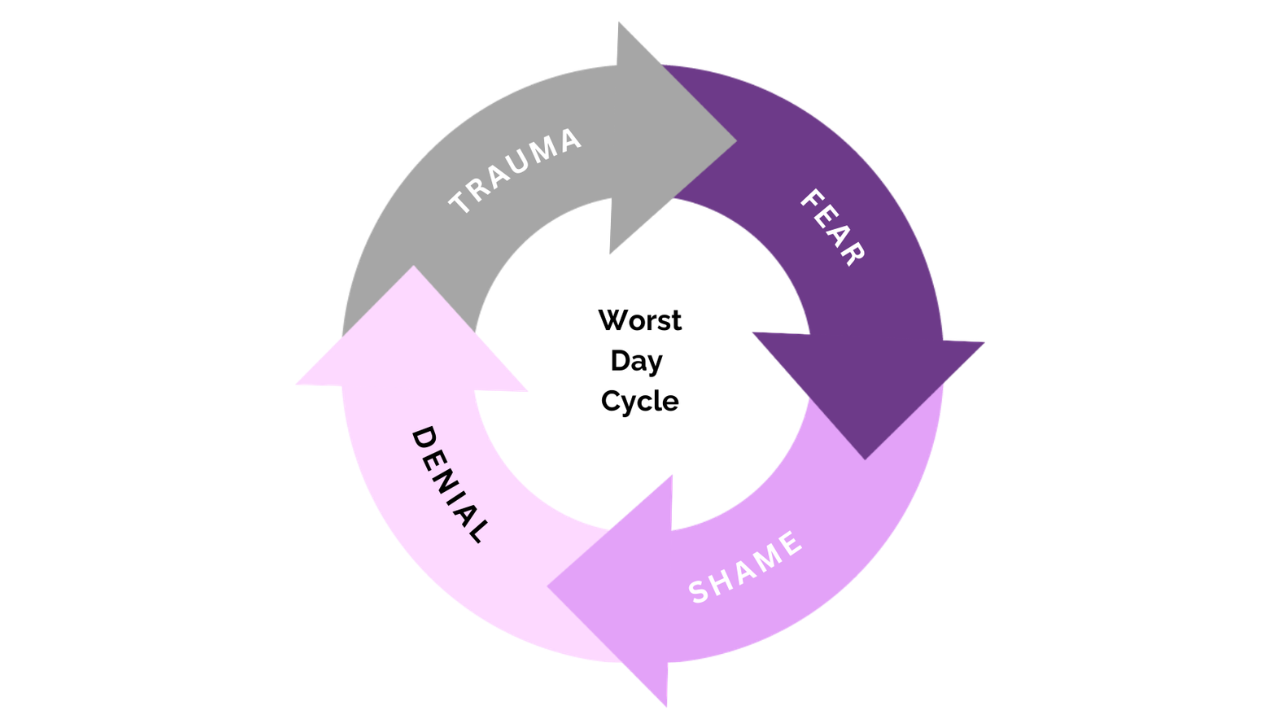
Here’s what nobody tells you: the problem isn’t your partner. It’s not your communication skills. It’s not even the specific things you fight about. The problem is the invisible blueprint you’re running — one that was installed in childhood, long before you ever chose a partner. Every one of the 10 Don’ts I’m about to share traces back to the Worst Day Cycle™ — a repeating loop of trauma, fear, shame, and denial that drives every unhealthy relationship pattern you’ve ever experienced.
That’s you if you keep trying to fix your relationship without understanding what’s actually driving it.
I’m going to give you 10 Do’s and 10 Don’ts for a great relationship. But more importantly, I’m going to show you why you keep falling into the Don’ts — and the exact path out through the Emotional Authenticity Method™ and the Authentic Self Cycle™.
The 10 Do’s: What Healthy Relationships Actually Look Like
Before we get into what’s broken, let’s paint the picture of what’s possible. People in genuinely healthy relationships share these traits — not because they got lucky, but because they did the work to get there.
1. They Know It’s Never Their Partner’s Job to Meet Their Needs
This is the foundation. People in healthy relationships recognize that meeting their own needs and wants is their responsibility. Is it wonderful when their partner steps up? Absolutely. But they don’t expect it. They don’t demand it. They put a plan in place to meet their own needs — and that changes everything.
That’s you if you’ve ever thought, “If they really loved me, they’d just know what I need.”
2. They Don’t Live in Fear of Betrayal
They aren’t snooping through phones. They aren’t checking location apps. They aren’t interrogating their partner after every night out. They have a basic, grounded security that their partner is invested in them — not because their partner is perfect, but because they trust themselves enough to handle whatever comes.
3. They See the World as Basically Decent
Sure, there are difficult people. But their default setting isn’t suspicion. Their general worldview is positive rather than negative. They don’t walk into every room scanning for threats. They don’t assume the worst about strangers, coworkers, or their partner’s intentions.
4. They See Themselves as Lovable and Worthy
They recognize their great qualities and their perfect imperfections. They don’t need constant external validation to feel OK about who they are. They’re open to the possibility that someone else out there feels the same way about themselves — and is willing to accept those imperfections.
That’s you if you secretly believe something is fundamentally wrong with you — something that makes you undeserving of real love.
5. They Don’t Allow Harmful Behaviors
They don’t make excuses. They don’t minimize. They don’t say, “Well, they only act like that when they’re stressed.” They recognize harmful behaviors as intolerable and say no to them immediately — not from anger, but from self-respect.
6. They Don’t Abandon Themselves to Be Loved
They don’t give up friends, family, hobbies, or careers to keep the peace. They stay attached to what matters to them. And if someone asks them to sacrifice those things? They won’t. That’s what makes them available for a healthy relationship.
7. They Know Their Morals, Values, Needs, Wants, Negotiables, and Non-Negotiables
They’ve sat down and mapped it all out. They know what they stand for. They know what they need. They know what they’re willing to flex on — and what they’re not. And they communicate all of this openly, without expecting their partner to read their mind. If you haven’t done this work, here’s where to start: How to Determine Your Negotiables and Non-Negotiables.
That’s you if you’ve never once sat down and asked yourself: What are my non-negotiables? What do I actually need from a partner?
8. They Believe Saying “No” Is Loving
They don’t see boundaries as cold or problematic. They understand that saying no removes the possibility of saying yes to things while expecting something in return — which is manipulation. Boundaries aren’t walls. They’re the foundation love is built on.
That’s you if you keep saying yes when you mean no — and then keeping score of everything you’ve “sacrificed.”
9. They Never Enable, Rescue, or Parent Their Partner
They know their partner will struggle. They have faith their partner will figure it out. They don’t try to gain false power by fixing everything. Instead, they pick partners who can do it on their own.
10. They Embrace That Relationships Are Difficult
They don’t pull away, run, or quit when things get hard. They stay engaged. They recognize that the difficulties are exactly what create long-lasting intimacy and connection. They use challenges to learn about each other — and to build deeper trust.
That’s you if your first instinct when things get hard is to shut down, pull away, or start planning your exit.
That is the foundation. This is what people in healthy relationships believe about themselves, and they always return to that base. This is where they originate their relationships from.
The 10 Don’ts: The Patterns That Destroy Relationships
Now let’s get into the Don’ts — the polar opposite of everything above. You see these patterns in almost every movie, TV show, and social media post about love. What we’ve had modeled for us is deeply unhealthy.
If you find yourself on this list, that doesn’t mean you’re a bad person. You can’t be blamed for doing things you were taught to do. If this is the first time you’re hearing these, then this is the first day you have a choice. You can choose to learn new information, gain new skills and tools, and build the relationship you actually deserve.
1. Believing Your Partner Should Meet All Your Needs
This is the number one relationship killer. It shows up as the belief that your partner should know what you need without you ever asking — and that they should deliver it at all times. In almost every session, clients tell me they’ve told their partner what they want “a thousand times” and that they “should just know.”
Here’s the truth: what’s important to you may not be important to them. That doesn’t make them bad people. Their life is filled with their own needs and wants. Our partners are human — they’re going to forget. That belief that they should be focused on us at all times is codependent, manipulative, destructive, and unhealthy.
That’s you if you feel abandoned or unloved when your partner doesn’t anticipate what you need before you ask.
2. No Trust — Controlling, Spying, and Snooping
We put the latches on our partners because of our own fears, insecurities, and abandonment issues. But here’s what we don’t want to face: a lack of trust in others is hiding a lack of trust in ourselves for our previous choices. We project that lack of self-trust outward and convince ourselves that everyone is inherently bad, deceptive, or dangerous. For a deeper look at how relationship insecurity drives these controlling behaviors, that post will change your perspective.
3. A Core Belief That You’re Unlovable
This drives the first two Don’ts. If we’re controlling, demanding, and hypervigilant, it’s because deep down we believe something is defective in us. Instead of learning to love ourselves, we try to force the other person to love us. Oftentimes we’re completely detached from these deeper feelings and don’t even recognize our own behaviors.
That’s you if you can’t sit alone with yourself for more than a few minutes without feeling empty, anxious, or worthless.
4. Tolerating Abuse Because You Believe No One Else Will Love You
I’ve had clients who call me every week saying they’ve broken up with their partner “for the last time.” The next session starts with how they got back together — and the partner is still saying and doing hurtful things. The violence only escalates, yet they keep going back. That going back is a product of the lack of love for themselves. They minimize the bad behaviors because the alternative — being alone — feels worse than being hurt.
That’s you if you keep going back to someone who hurts you because the fear of being alone is worse than the pain of staying.
5. Needing Constant Approval and Affirmation
This shows up as the inability to take criticism or be wrong. It’s the belief that our partner must constantly have our back in any disagreement — that they must support us no matter what. Think about how absurd that is: if we believe our partner should support us at all times, what happens when we do something genuinely harmful? Are they supposed to support that too?
Everyone is perfectly imperfect. Everyone has behaviors that shouldn’t be supported. It’s actually loving for a partner to kindly show us when we didn’t have a great moment.
That’s you if you feel attacked or betrayed when your partner disagrees with you or points out something you could do differently.
6. Sacrificing Everything for Your Partner
Giving up friends, hobbies, family, career — all to keep the relationship alive. I did this in my first marriage. I went about 10 years without seeing my family because it was what she wanted. All I knew were the messages from movies, media, and TV: if I loved her, I had to sacrifice everything.
That’s you if you look around and realize you’ve given up everything that used to matter to you — and you still feel empty.
7. Not Knowing Your Morals, Values, Needs, Wants, Negotiables, and Non-Negotiables
This was me. I remember laying on my bed as a kid, wondering who would marry me — if she’d be nice or pretty. I had no idea I could decide my morals, values, needs, wants, negotiables, and non-negotiables. I spent years waiting for someone to pick me up. Every area of my life didn’t line up with my first wife because I never sat down and mapped these things out — that’s on me. How could she meet my needs and wants if our morals and values were opposite?
8. No Boundaries and the Inability to Say No
You hear people exclaiming, “I did this and that for them, and look what they did to me!” That means we did all those things hoping to get something in return. That is manipulation. The proof is we’re throwing it in their face, keeping score, and resenting them.
That’s why “no” is the most loving word a partner can tell us. When they say no, we know they won’t throw it in our face later. I used to go to garage sales with my first wife for hours — hating every minute — then come home and be passive-aggressive all night. Where’s the love in that?
That’s you if you keep saying yes when you mean no — and then resenting your partner for “making” you do things you never wanted to do.
9. Rescuing, Enabling, and Playing the Parent
My ex was a pill addict. I’d drive all across the state, going to friends’ houses, lying to pharmacies and doctors, trying to get more pills. I was totally enabling her addiction — thinking I was rescuing her from being hurt. The truth? I thought if I did this, maybe she’d have sex with me. It was all manipulation.
When people give themselves away to do for others, it’s a false power dynamic. They sit in the resentment, never having to face their own manipulation. I used to say, “I quit pro hockey. I gave up my family. I gave up sex. I changed careers. I changed my whole life for her — and she wouldn’t stop hitting me.” I’m not condoning any of her behaviors. But I was never taught about boundaries or healthy relationships. I was manipulative and I had to take responsibility for my part to change it.
That’s you if you give everything away and then feel like a martyr when nobody appreciates the sacrifice.
10. Avoiding Relationships Entirely
These are the people who say, “I’m done with relationships! Men are all liars. Women are all cheaters.” If they are in a relationship, they won’t open up or be vulnerable. Because of the lack of knowledge, skills, and tools, they stay stuck in their pain, avoid connection, and project the problem onto everyone else.
That’s you if you’ve built a wall so high that nobody can get in — and you tell yourself it’s because you’re “protecting yourself.”
The Worst Day Cycle™: Why You Keep Repeating the Same Patterns
Here’s where most relationship advice completely fails you. Therapists and self-help books give you communication techniques, love languages, and conflict resolution scripts. But none of that works if you don’t address the root cause.
Every adult relationship pattern — every fight, every shutdown, every desperate attempt to control or please — is a direct replay of an unhealed childhood emotional blueprint. The brain doesn’t distinguish between past and present danger. It only recognizes known versus unknown. And since the known pattern was installed in childhood, the brain repeats it in every adult relationship, mistaking repetition for safety.
The Worst Day Cycle™ operates in four stages:
Stage 1 — Trauma: Childhood trauma isn’t limited to extreme abuse. Any negative emotional experience that created painful meanings — shame, neglect, enmeshment, emotional absence — qualifies. These experiences create a massive chemical reaction in the brain and body. The hypothalamus generates chemical cocktails of cortisol, adrenaline, dopamine, and oxytocin misfires, and the brain becomes addicted to these emotional states.
Stage 2 — Fear: The brain conserves energy by repeating known patterns — it can’t tell right from wrong, only known versus unknown. Since 70%+ of childhood messaging is negative and shaming, adults repeat these painful patterns in relationships, career, hobbies, health — everything. Fear drives repetition because the brain thinks repetition equals safety.
Stage 3 — Shame: This is where you lost your inherent worth. The core wound says “I am the problem.” Not “I made a mistake” — “I am the mistake.” This shame becomes the engine that drives every Don’t on the list above.
Stage 4 — Denial: To survive the unbearable pain of shame, the brain creates a survival persona — a false version of yourself designed to manage the chaos. This denial is brilliant in childhood. It keeps you alive. But in adulthood, it becomes the very thing that destroys your relationships.
The survival persona shows up in three types:
The falsely empowered survival persona controls, dominates, rages, and demands. In relationships, this looks like jealousy, possessiveness, and emotional explosions.
The disempowered survival persona withdraws, shuts down, disappears, and avoids. In relationships, this is the stonewaller — the person who goes silent when things get hard.
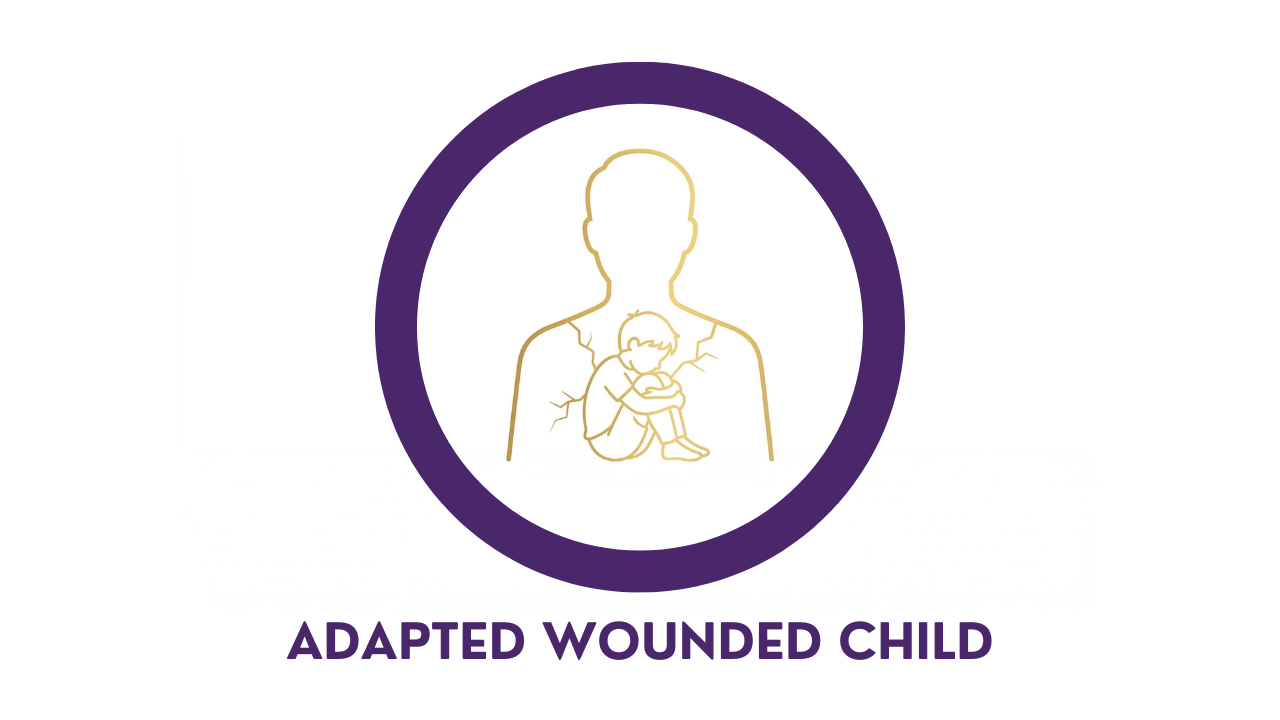
The adapted wounded child survival persona people-pleases, sacrifices, enables, and rescues. In relationships, this is the person who gives everything away and then resents their partner for not reciprocating.
That’s you if you recognize yourself in one — or all three — of those patterns, depending on the situation.
The Worst Day Cycle™ keeps running because the survival persona was never designed to create healthy relationships. It was designed to survive childhood. But you’re not a child anymore — and the strategies that kept you safe then are destroying your relationships now.
How the Don’ts Show Up in Every Area of Your Life
These patterns don’t just wreck your romantic relationships. They bleed into everything.
In your romantic relationship: You pick partners who recreate your childhood dynamics. You enable, control, or withdraw. You can’t resolve conflict without one of you shutting down or exploding. You feel like you’re walking on eggshells — or your partner does.
That’s you if every relationship follows the same script — different person, same pain.
In your friendships: You over-give, then resent. You keep score. You attract people who take advantage of your inability to say no. Or you keep everyone at arm’s length because you don’t trust anyone.
At work: You people-please your boss. You take on extra work and then burn out. You can’t handle feedback without spiraling. Or you dominate and control — and wonder why your team doesn’t respect you.
In your parenting: You repeat the very patterns your parents used on you — the ones you swore you’d never repeat. You control, enable, or emotionally withdraw from your children without realizing you’re doing it.
In your body and health: The stress of living in the Don’ts shows up physically. Chronic pain, insomnia, digestive issues, autoimmune conditions. Your body keeps the score of every unprocessed emotion.
That’s you if your body is screaming at you and you keep pushing through, ignoring what it’s trying to tell you.
The Emotional Authenticity Method™: The 6-Step Path From the Don’ts to the Do’s
So how do you actually get from the Don’ts to the Do’s? Not through willpower. Not through communication techniques. Not through finding a “better” partner. You get there through the Emotional Authenticity Method™ — a 6-step process for feeling your real feelings, tracing them to their origin, and rewiring the emotional blueprint that drives every relationship pattern.
You cannot change emotional patterns through thoughts alone. Emotions are biochemical events. Thoughts originate from feelings — not the other way around. This is why affirmations fail, why “just think positive” fails, and why cognitive techniques alone will never rewire the survival persona driving your relationship patterns.
Step 1 — Somatic Down-Regulation: Focus on what you can hear for 15 to 30 seconds. This activates the auditory cortex and pulls the brain out of the emotional hijack. If you’re highly dysregulated, use titration — alternate between the triggering feeling and the grounding sound in small doses until the nervous system settles enough to think.
Step 2 — What Am I Feeling Right Now? Use emotional granularity — expand your vocabulary beyond “bad” or “anxious.” The Feelings Wheel is one of the most powerful tools for this. Most people use five or six words for their entire emotional range. Real healing requires naming the specific feeling: abandoned, dismissed, invisible, suffocated, controlled, not enough.
Step 3 — Where in My Body Do I Feel It? All emotional trauma is stored physically. The tightness in your chest, the knot in your stomach, the tension in your jaw — these are the body’s record of every childhood wound that was never processed. Locate it. Stay with it.
Step 4 — What Is My Earliest Memory of Having This Exact Feeling? This is the step that changes everything. Trace the current feeling back to its childhood origin. When your partner forgets your birthday and you feel worthless, that’s not about the birthday. That’s about every time your needs were invisible as a child. This step breaks the illusion that the present moment is causing your pain.
That’s you if you know your reactions are way too big for the situation — but you can’t figure out where the intensity is coming from.
Step 5 — Who Would I Be If I Never Had This Thought or Feeling Again? What would be left over? This is the vision step. It connects directly to the Authentic Self Cycle™. Most people have never imagined themselves without the shame, without the fear, without the survival persona. This question opens the door to who you actually are underneath all of it.
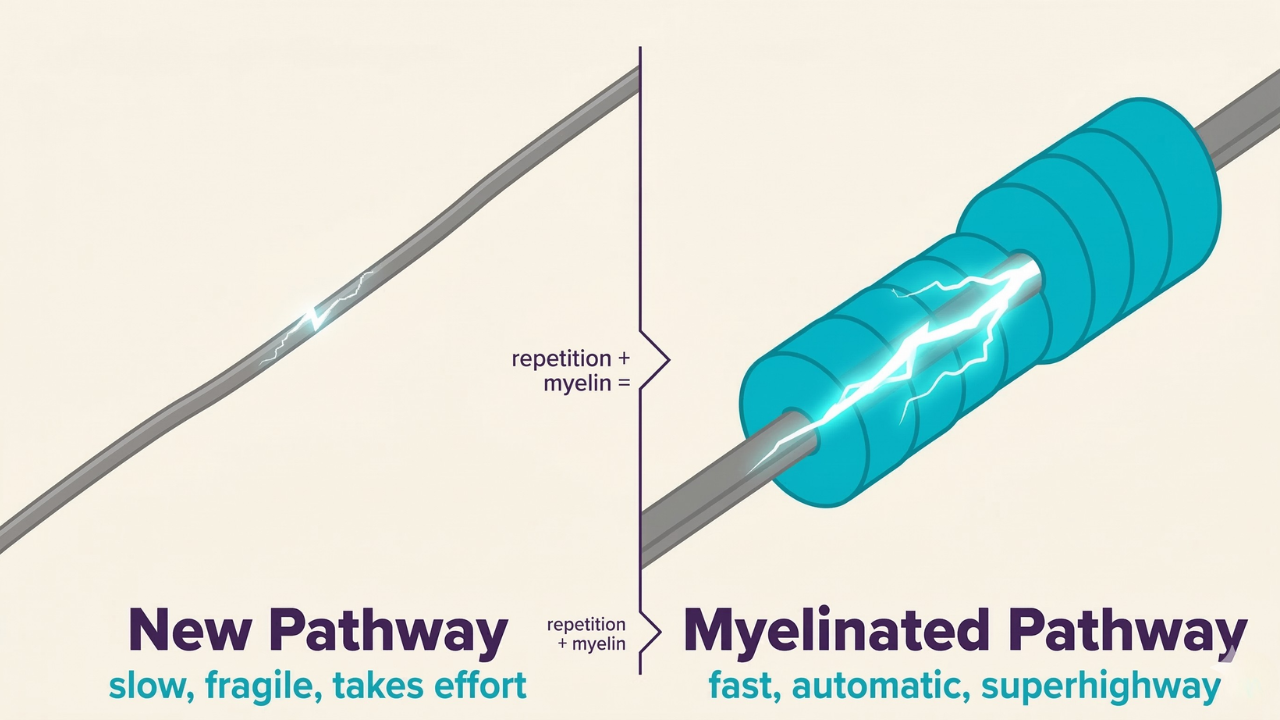
Step 6 — Feelization: Sit in the feeling of the Authentic Self and make it strong. Create a new emotional chemical addiction to replace the old blueprint. Ask: how would I respond to this situation from this feeling? What would I say? What would I do? Visualize and feel yourself operating from your Authentic Self. This is the emotional blueprint remapping and rewiring step — the moment where the brain starts building new neural pathways that override the childhood programming.
That’s you if you know what you should do in your relationship — but your body keeps hijacking you into the same old reaction before your brain can catch up.
The Authentic Self Cycle™: What Becomes Possible
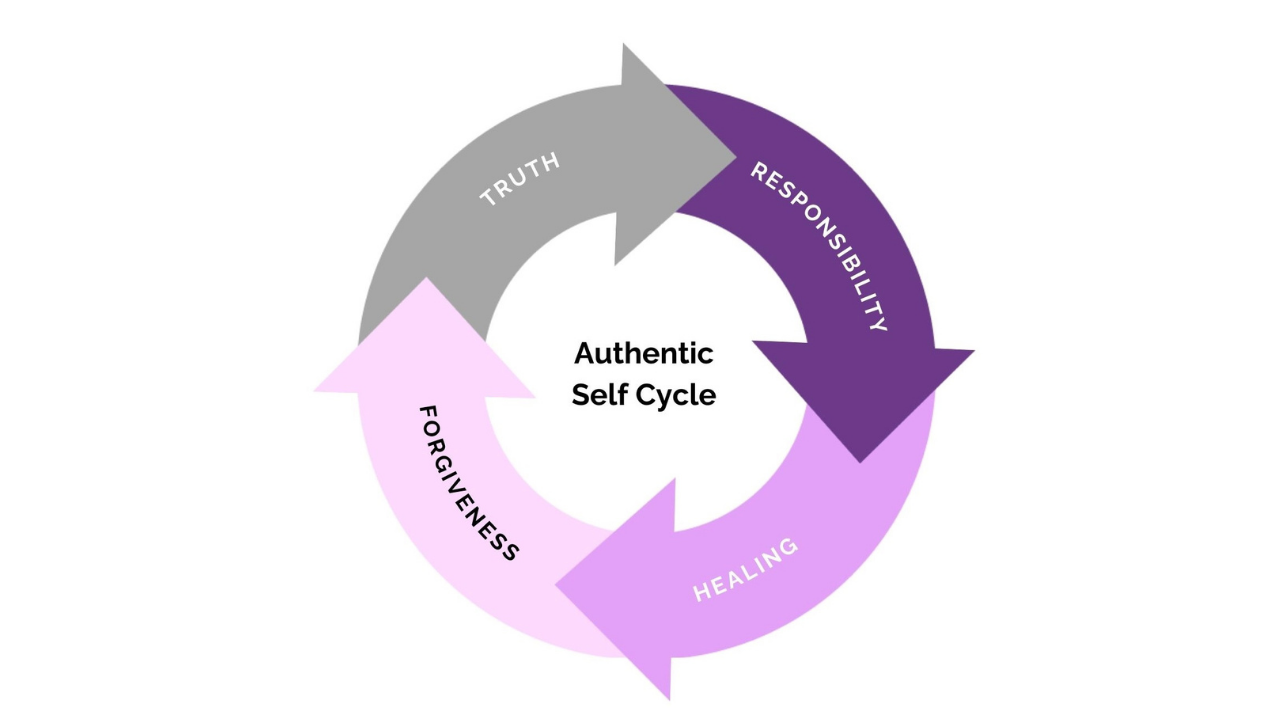
When you start living from your authentic self instead of your survival persona, you enter the Authentic Self Cycle™ — the healing counterpart to the Worst Day Cycle™. This is an identity restoration system that operates in four stages:
Truth: Name the blueprint. See “this isn’t about today.” Recognize that your partner isn’t your parent — your nervous system just thinks they are.
Responsibility: Own your emotional reactions without blame. Stop pointing at your partner and start asking, “What childhood wound is running me right now?”
Healing: Rewire the emotional blueprint so conflict becomes uncomfortable but not dangerous, space isn’t abandonment, and intensity isn’t attack. This is where the Emotional Authenticity Method™’s Feelization step creates a new emotional chemical pattern.
Forgiveness: Release the inherited emotional blueprint and reclaim your authentic self. This isn’t about forgiving your parents’ behavior — it’s about releasing the grip the childhood wound has on your adult life.
When couples each do this work independently — healing their own Worst Day Cycle™, identifying their own survival persona, and practicing the Emotional Authenticity Method™ — the relationship transforms. Not because the other person changed, but because two authentic selves showed up instead of two survival personas fighting each other’s childhood ghosts.
In the Authentic Self Cycle™, you stop trying to get love and start being love. You stop demanding your partner meet your needs and start meeting your own. You stop fearing abandonment because you’ve stopped abandoning yourself. You stop controlling because you trust yourself to handle whatever comes.
That’s you if you’re tired of surviving and ready to actually live — in your relationship and in every part of your life.
It Starts With Your Childhood — And That’s Not a Blame Game
I know it’s uncomfortable to look at our parents’ imperfections — or to admit our own as parents. I’m not trying to blame anyone. I believe it’s loving to hold our parents accountable without blaming them. My goal is to break the wall of denial down, and my heart is to do it lovingly.
Every scientific process out there shows that our relationship patterns are a direct result of our childhood experiences. If we’re not addressing childhood trauma, we’re not addressing the core problem. We’re just rearranging deck chairs on the Titanic.
That’s you if the phrase “look at your childhood” makes you tense up, shut down, or immediately think “my childhood was fine.”
Your Next Step: Start Moving From the Don’ts to the Do’s
If you recognized yourself in the Don’ts — and especially if you recognized yourself in all 10 — here’s where you start:
For understanding your relationship patterns: The Relationship Starter Course — Couples ($79) walks you through exactly how your childhood blueprint is driving your current relationship — and what to do about it.
For understanding yourself: The Emotional Blueprint Starter Course — Individual ($79) helps you identify your survival persona, map your emotional blueprint, and start building from your authentic self.
For going deeper: Why We Can’t Stop Hurting Each Other ($479) and Why High Achievers Fail at Love ($479) are comprehensive courses that take you through the full Worst Day Cycle™ and into the Authentic Self Cycle™.
For the avoidant dynamic: The Shutdown Avoidant Partner ($479) is specifically designed for couples trapped in the pursuer-distancer cycle.
For complete transformation: Tier 1: Mapping the Blueprint ($1,379) is where the deepest work happens — the full Emotional Authenticity Method™ with guided practice, community support, and real transformation.
Recommended Reading
If you want to understand the patterns driving your relationships at a deeper level, these books have been instrumental in my own work and in the lives of my clients:
Facing Codependence by Pia Mellody — The foundational text on how childhood trauma creates codependent relationship patterns. Mellody’s framework for understanding carried shame and the five core symptoms of codependence is some of the most important work ever done in this field.
When the Body Says No by Gabor Maté — How the stress of unprocessed emotions and unhealthy relationship patterns manifests in physical illness. Maté’s work on the mind-body connection shows why relationship patterns don’t just hurt emotionally — they hurt physically.
Codependent No More by Melody Beattie — The classic guide to understanding and recovering from codependent patterns in relationships. If you recognized yourself in the Don’ts, start here.
Daring Greatly by Brené Brown — Why vulnerability is the birthplace of connection and why the survival persona’s strategy of hiding, controlling, or people-pleasing will never create the intimacy you’re looking for.
The Bottom Line
The 10 Don’ts aren’t character flaws. They’re survival strategies — built in childhood, reinforced by culture, and running on autopilot in every relationship you’ve ever had. You didn’t choose them. But now that you see them, you can choose something different.
The path from the Don’ts to the Do’s doesn’t run through better communication or a more compatible partner. It runs through your own childhood wounds, through the survival persona you built to manage those wounds, and into the authentic self that’s been waiting underneath all along.
The relationship you want is on the other side of the work you’ve been avoiding.
I’ll leave you with this: if you decide to face the pain from the past, I have yet to see one person whose life didn’t explode with joy, peace, and contentment. If that’s what you really want, this is the only way I have found that always works.
Frequently Asked Questions
Why do I keep attracting the same type of partner?
You’re not “attracting” them — you’re choosing them. Your survival persona is drawn to partners who recreate the emotional dynamics of your childhood because those dynamics feel familiar. The Worst Day Cycle™ explains exactly how your childhood attachment patterns create a template that keeps pulling you toward the same relationship dynamics, no matter how different the person seems on the surface.
Can I fix my relationship without my partner doing the work too?
You can’t control whether your partner does the work. But when you start operating from your authentic self instead of your survival persona, the entire dynamic shifts. Many of my clients find that as they change, their partner either rises to meet them — or it becomes clear the relationship was built entirely on survival patterns. Either way, you win.
What’s the difference between healthy boundaries and being cold or selfish?
Your survival persona tells you that saying no is mean, selfish, or unloving. The truth is the opposite. Saying no is the most loving thing you can do — for yourself and for your partner. When you say yes and don’t mean it, you’re manipulating. You’re setting the stage for resentment, score-keeping, and passive aggression. Boundaries create safety. Lack of boundaries creates chaos.
Is it really about my childhood even if my parents did their best?
Your parents absolutely did their best with what they had. This isn’t about blame — it’s about truth. Every major framework in psychology and neuroscience confirms that our adult relationship patterns are formed in childhood. Holding your parents accountable isn’t the same as blaming them. It’s the doorway to healing. Without it, you stay stuck in denial — and denial keeps the Worst Day Cycle™ spinning.
How do I know if I have a survival persona running my relationships?
If you recognized yourself in any of the 10 Don’ts, your survival persona is running the show. The three types — falsely empowered (controlling, raging), disempowered (withdrawing, shutting down), and adapted wounded child (people-pleasing, enabling) — cover nearly every unhealthy relationship pattern. Most people flip between all three depending on the situation. The Emotional Authenticity Method™ teaches you to recognize which one is active in real time.
What if I’ve already tried therapy and it didn’t work?
Most therapy focuses on managing symptoms — better communication, coping strategies, conflict resolution techniques. Those are useful, but they don’t address the root cause. If you haven’t worked specifically on your childhood attachment wounds, your survival persona, and the Worst Day Cycle™ that’s driving everything, you haven’t done the work that actually changes things. The Emotional Authenticity Method™ goes where most therapy doesn’t — into the shame, the survival patterns, and the authentic self underneath.