Tag: Pia Mellody

  • 7 Signs of Relationship Insecurity (And What’s Really Behind It)

    7 Signs of Relationship Insecurity (And What’s Really Behind It)


    The Moment You Realize It’s Not About This Relationship

    You check their phone when they leave the room. You replay their tone of voice for hours. You feel a pause in their texting and your whole body floods — chest tight, stomach dropping, thoughts spiraling: What did I do? Are they pulling away? Is this over?

    You’re not crazy. You’re not “too much.” You’re not broken. What you’re experiencing is relationship insecurity — and it didn’t start with this relationship. It started long before you ever fell in love.

    Relationship insecurity is a trauma-driven pattern where your nervous system constantly scans for signs of abandonment, rejection, or emotional withdrawal — because that’s exactly what it learned to expect in childhood. The overthinking, the jealousy, the clinginess, the need for constant reassurance — these aren’t character flaws. They’re survival strategies your younger self built to manage emotional pain that no child should have had to carry alone.

    That’s you at fourteen, monitoring your parent’s mood the second they walked through the door. That’s you learning to read the room before you learned to read a book. That’s you carrying that same radar into every relationship you’ve ever had.

    In this article, I’m going to walk you through the 7 characteristics of relationship insecurity, what’s really driving each one underneath the surface, why the usual advice hasn’t worked, and what actually does — including the Al-Anon “Three Gets,” Pia Mellody’s foundational work on love addiction, and the Emotional Authenticity Method™ that rewires these patterns at the root.

    isn’t a personality flaw — it’s a nervous system response programmed by childhood emotional abandonment. The 7 characteristics (overthinking, catastrophizing, needing reassurance, bringing the past forward, over-giving, snooping, and inability to be alone) all trace back to your emotional blueprint. Recovery requires healing the original wound through the Emotional Authenticity Method™, not just managing symptoms with communication tips.

    Childhood emotional blueprint diagram showing how the brain predicts adult emotional reactions based on childhood trauma programming

    What Are the 7 Characteristics of Relationship Insecurity?

    Clinically, what most people call “relationship insecurity” or “anxious attachment” is actually love addiction. I know that term sounds intense. But one of the core ingredients of recovery is getting into reality. If we don’t call things what they actually are, we enable the person in pain to stay disconnected from the truth — and that goes against everything I stand for.

    Your survival persona — the identity you built in childhood to manage your parents’ emotional chaos — is running every single one of these behaviors. Whether you became the falsely empowered one (controlling everything), the disempowered one (making yourself invisible), or the adapted wounded child (shape-shifting to match whoever you’re with), these characteristics are your survival persona’s playbook.

    Here are the 7 characteristics I see over and over again in my coaching practice:

    1. Obsessive Overthinking

    This was me for most of my life. I would replay conversations on loop, scrolling back through texts, trying to decode every pause, every word choice, every shift in tone. What did they mean by “okay”? Why didn’t they say “I love you” back?

    The critical distinction here: these aren’t just passing thoughts. They’re obsessive, and they’re always focused outward — trying to figure the other person out instead of turning inward to understand what’s actually happening inside you.

    Your Hurt Child voice is running the show, scanning for danger the same way it did when you were small and couldn’t predict whether your parent would be warm or cold, present or gone.

    That’s you lying awake at 2 AM, scrolling back through a text thread for the fourth time, trying to decode whether “sounds good” means they’re happy or pulling away. That’s you spending more energy reading your partner than reading yourself.

    2. Catastrophic Thinking

    A communication gap opens — even a slight pause in texting — and your entire nervous system goes into threat mode. They’re leaving. They’re angry. Something is wrong. This is over.

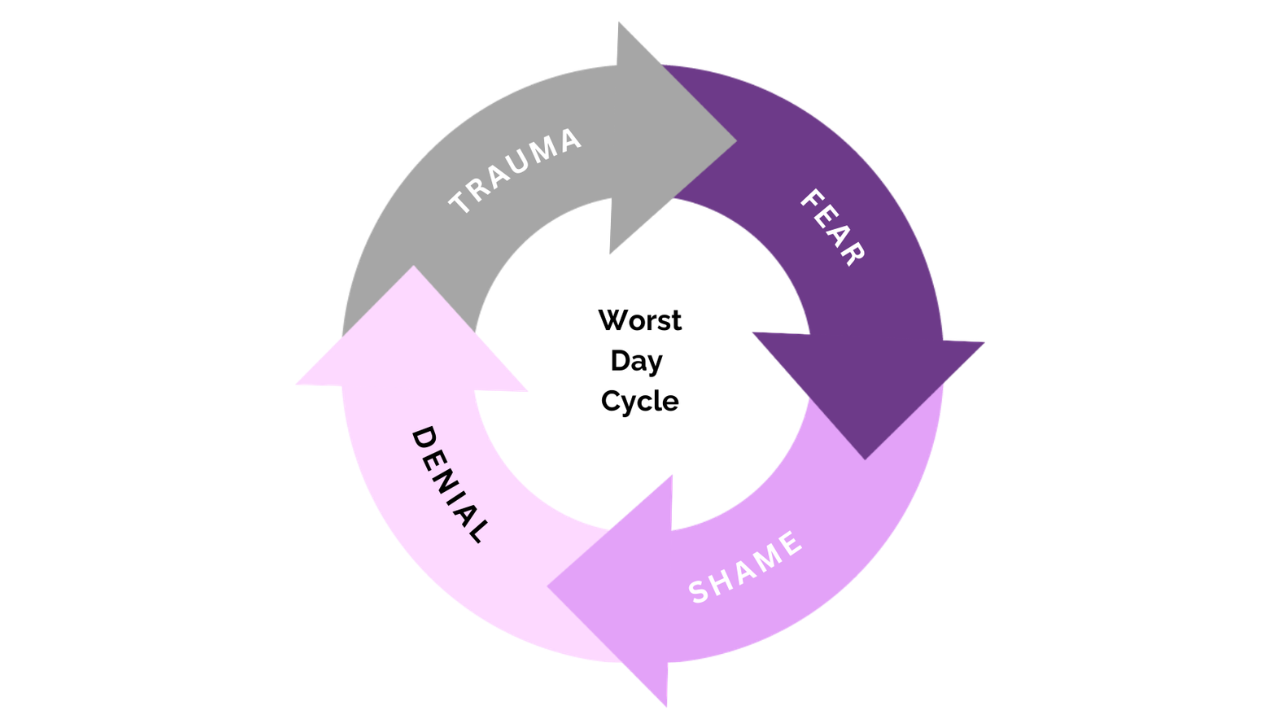
    You feel it in your body first: the chest tightens, your breathing gets shallow, your stomach drops. This isn’t rational thinking. This is your nervous system firing a survival alarm that was installed decades ago. What I call the Worst Day Cycle™ — Trauma → Fear → Shame → Denial — is running on autopilot. The original trauma of emotional abandonment triggers fear, which triggers shame (“I’m too much,” “I’m not enough”), which you then deny or project onto your partner.

    That’s you at ten years old, waiting for your parent to come home, not knowing if they’d be sober or drunk, happy or raging. Your adult relationship just triggered the same alarm system — and your nervous system can’t tell the difference between then and now.

    Worst Day Cycle diagram — the continuous loop of trauma, fear, shame, and denial that drives relationship insecurity

    3. Needing Constant Reassurance

    I learned this one from my mother. It was common for our family to be at dinner talking about politics or some completely unrelated topic, and my mom would suddenly blurt out: “How do I look in this dress?”

    While I never did exactly that, I absolutely needed constant affirmation from my partner. And here’s the devastating part — it never satisfied. No amount of “I love you” was enough. No reassurance lasted more than a few hours. Because the emptiness wasn’t coming from this relationship. It was coming from a childhood where your emotional needs went unmet, and your blueprint decided: “I have to earn love, and it can be taken away at any moment.”

    That’s you needing to hear “I love you” three times a day — and still not believing it. That’s the bottomless well inside you that no partner can fill, because the hole was carved in childhood.

    4. Bringing the Past Into the Present Relationship

    Your emotional blueprint’s fear creates an obsessive need to keep yourself safe. One way it attempts this is by constantly comparing the past to the present.

    I used to do this constantly — comparing things my current girlfriend did to what my last girlfriend did. “She paused before answering, just like my ex did before she left.” This attempt to avoid pain makes it impossible to actually be present with the person in front of you. And that hypervigilance? It often creates the exact abandonment you’re trying to prevent.

    That’s you punishing today’s partner for yesterday’s pain. That’s your survival persona running old data through a new relationship, guaranteeing you’ll never actually experience this one.

    5. Over-Giving Time, Attention, and Power

    The love addict’s desperate need to avoid abandonment creates a disempowering abandonment of themselves. You over-emphasize your partner’s strengths, elevating them to a fantasy. You make your entire life about the other person. You give up your interests, your space, your desires, your friendships.

    You feel five years old trying to navigate an adult relationship.

    There is far too much attention on your partner and not nearly enough on yourself. You’ve effectively made the other person your higher power — the source of your worth, your safety, your identity. This is your disempowered survival persona at work — the part of you that learned in childhood: “If I just give enough, they won’t leave.”

    That’s you canceling your plans the second they text. That’s you abandoning yourself so completely that when the relationship ends, you don’t know who you are anymore. That’s the adapted wounded child running your adult life.

    Codependence icon — the relational pattern of abandoning yourself to manage another person's emotions

    6. Snooping and Surveillance

    Love addicts will feel the need — and even demand — to check their partner’s phone, email, or social media. They want to keep tabs on where their partner is going and who they’re with. They are on constant alert for the possibility that they are being replaced.

    This isn’t about trust. This is about a nervous system that was trained in childhood to never feel safe — so it keeps searching for evidence that confirms its deepest fear: “I’m not enough, and they’ll find someone better.”

    That’s you checking their Instagram at midnight. That’s you memorizing which friends liked their posts. That’s your survival persona desperately trying to control what it could never control in childhood — whether someone stays or goes.

    7. The Inability to Feel Whole or Happy Outside of a Relationship

    Love addicts feel empty, sad, and depressed when alone. They often enter new relationships — even destructive ones, or relationships with someone they’re only mildly interested in — just to avoid being alone.

    This is the clearest sign that the issue isn’t about your partner at all. It’s about a wound inside you that predates every relationship you’ve ever had. Your blueprint decided long ago: “I am only valuable when someone else says I am.”

    That’s you jumping from relationship to relationship without ever spending a day understanding who you are without one. That’s you terrified of silence, because in the silence you hear the voice that says you’re not enough.


    How Relationship Insecurity Shows Up Across Your Life

    Relationship insecurity doesn’t stay neatly contained in your romantic life. It bleeds into every relationship you have — because the pattern isn’t about the other person. It’s about your nervous system’s foundational operating system. Here’s how it shows up:

    In Your Family

    You still defer to your parent’s emotions even when they contradict your own reality. You feel responsible for their happiness, their loneliness, their aging. You can’t hold a different opinion without guilt. Holiday visits leave you physically ill. That’s you still running the original childhood program: my parent’s comfort is my job.

    In Your Romantic Relationships

    You read your partner’s mood the moment they walk in the door. You adjust yourself — your tone, your needs, your plans — to keep things calm. You have trouble saying what you want because you’re too busy tracking what they feel. You make yourself smaller and smaller — editing, dimming, adjusting — until you don’t recognize who you’ve become. That’s you still running the survival program: keep them stable and you stay safe.

    In Friendships

    You’re the one who always listens but rarely gets listened to. You show up for others’ crises while your own go unaddressed. You can’t say no without over-explaining or feeling guilty for days. That’s you still running the program: your needs don’t matter if someone else is struggling.

    At Work

    You over-function. You manage your boss’s moods, your colleagues’ problems, your company’s dysfunction. You can’t leave on time even when your work is done. You read rooms for tension and automatically try to smooth it. That’s you still running the program: manage the emotional environment and you’ll be safe.

    In Your Body

    You feel anxious when alone. You’re exhausted by a weight you can’t name. You catch yourself abandoning your own needs mid-conversation without even realizing it. You have chronic health issues — headaches, autoimmune conditions, digestive problems — that nobody can fully explain. That’s your nervous system still believing: your needs aren’t real.

    If several of these ring true, you’re not broken. You’re insecure at the nervous system level. Your survival persona did exactly what it was designed to do. The problem is it’s still running when you no longer need it to.

    Why Does Relationship Insecurity Happen? Your Emotional Blueprint

    Every single one of these 7 characteristics traces back to the same root: childhood emotional abandonment. Not necessarily physical abandonment — though that happens too. I’m talking about the emotional kind. The kind where your feelings were ignored, minimized, punished, or simply never acknowledged.

    When that happens, your developing nervous system builds an emotional blueprint — a set of unconscious beliefs about what love is, what safety means, and what you have to do to keep people from leaving:

    Love = earning someone’s approval.
    Safety = knowing exactly what they’re thinking at all times.
    Belonging = making yourself indispensable so they can’t leave.

    These aren’t conscious choices. They’re survival adaptations. And they made perfect sense when you were a child with no power, no voice, and no ability to leave. The problem is that your adult relationships are now being run by a five-year-old’s survival program.

    That’s you at thirty-five, successful in every visible way, but still feeling like a terrified child the moment your partner goes quiet. That’s the emotional blueprint — running the same childhood code in an adult body.

    Adapted Wounded Child — the survival persona identity created in childhood that still runs adult relationship insecurity patterns

    Why Your Body Is Paying the Price

    People with chronic relationship insecurity are often chronically sick. Headaches, autoimmune conditions, digestive problems, chronic fatigue, insomnia — the list goes on. This isn’t coincidence.

    When you spend years absorbing other people’s emotional states while suppressing your own needs, your body eventually says what your mouth can’t. Dr. Gabor Maté’s When the Body Says No lays out the science: your genes require a specific environment to activate. The emotional turmoil of living in constant fear of abandonment is that environment.

    You weren’t born with these conditions. Your body manufactured them because it had no other way to express the pain your survival persona wouldn’t let you speak.

    That’s you getting a migraine the night before a difficult conversation. That’s the knot in your stomach that appears when your partner is upset. That’s your body screaming what your survival persona won’t let you say: “I’m in pain and I need help.”

    Trauma Chemistry icon — how childhood trauma creates addictive chemical patterns in adult relationships

    Why All the Usual Advice About Relationship Insecurity Fails

    You’ve probably tried everything. Communication techniques. Attachment style quizzes. Journaling. Affirmations. Maybe even therapy where you talked about your childhood for months but still feel the same panic when your partner doesn’t text back.

    Here’s why none of it worked: those approaches treat the symptom, not the wound.

    “Just communicate your needs” doesn’t work when your nervous system is in full survival mode and your shame is screaming that your needs make you a burden. “Set better boundaries” is meaningless when you have no internal sense of where you end and your partner begins — because that boundary was never modeled for you as a child.

    Scripts, tips, and techniques are like putting a fresh coat of paint on a house with a cracked foundation. They look good for a week. Then the cracks show through again. You’re not failing at the advice. The advice is failing you — because it never touches the emotional blueprint driving everything.

    That’s you reading another self-help book and feeling hopeful for three days before the same panic returns. That’s the proof that knowing isn’t enough — you need to go deeper than your thinking brain.

    The 7 Solutions: How to Heal Relationship Insecurity at the Root

    Recovery isn’t about willpower or “trying harder.” It’s about rewiring the blueprint that’s running your relationships on autopilot. Here are the 7 solutions — and they go deep.

    Solution 1: Face the Self-Deception and Acknowledge the Truth

    This means getting into the reality that your expectations are addictive. Your desire for unlimited positive regard — your demand for constant time and attention from the other person — is excessive. Not because you’re bad. Because your blueprint distorted what love looks like.

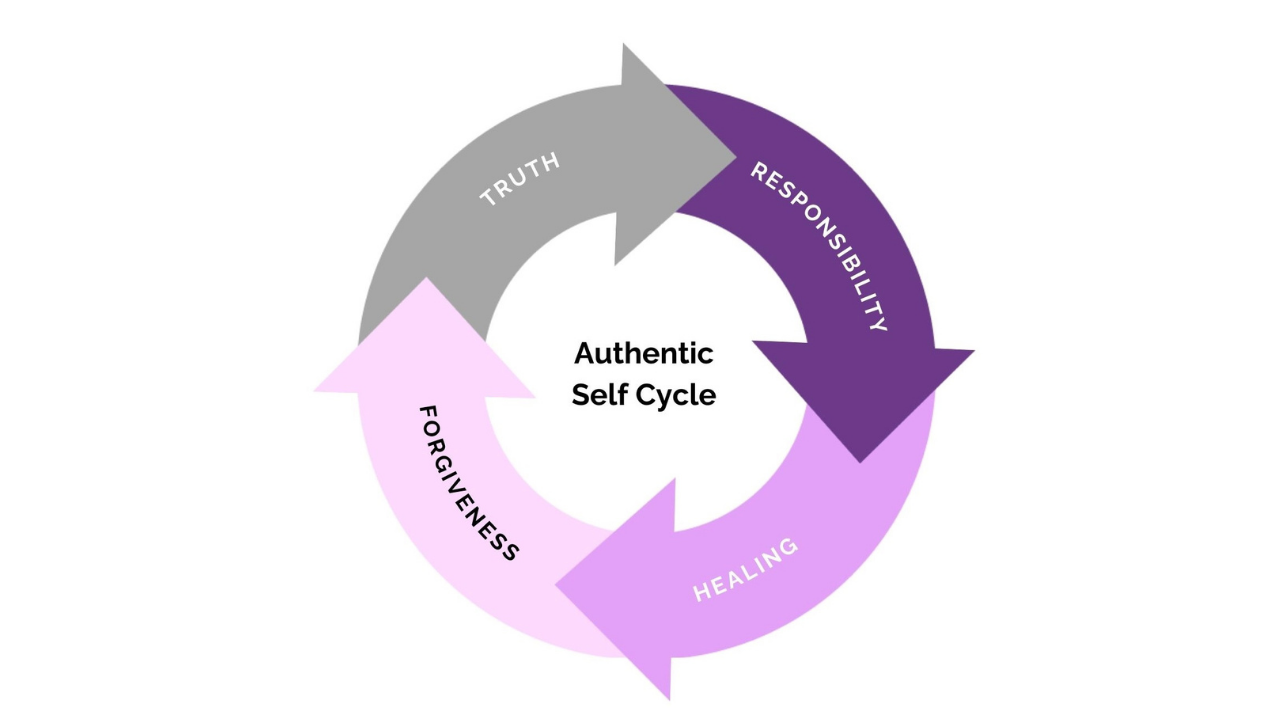
    You have to recognize that how you define love is distorted, and you have recovery work to do on your codependence. This is the first step of what I call the Authentic Self Cycle™ — Truth → Responsibility → Healing → Forgiveness. It starts with truth.
    That’s you finally admitting: “The way I love isn’t love — it’s addiction. And it’s not my fault, but it is my responsibility to heal.”

    Authentic Self Cycle diagram — the pathway of truth, responsibility, healing, and forgiveness that replaces relationship insecurity patterns

    Solutions 2–4: The Al-Anon “Three Gets”

    The following three solutions come from Al-Anon and are called the “Three Gets.” They are simple to understand and incredibly difficult to practice — which is exactly how you know they’re working.

    Get Off Their Back. Your constant wondering what they’re doing, your need for continuous attention, your overthinking of every word and action, your snooping — this is all evidence that you are “on their back,” paying far too much attention to their life and not nearly enough to your own.

    Get Out of Their Way. Stop trying to dictate or correct how they live their life. Let them be who they want to be. Don’t try to change them or get them to meet your needs. They’re okay the way they are. It’s not your place to critique, judge, or tell them who to be. And here’s the deeper truth — this is also a defensive projection. You avoid focusing on healing yourself by making them the problem.

    Get On With Your Own Life. Instead of putting all your time and attention into them, put it into yourself. Learn to meet your own needs. Get back to living your own life — pursuing the hobbies, friendships, and interests you gave up when the relationship began.

    That’s you putting the phone down and going for a walk instead of checking their location. That’s you picking up the guitar you haven’t touched in three years. That’s you discovering there’s a person underneath the survival persona — and they’ve been waiting for you to show up.

    Solution 5: Deep Self-Esteem Work

    For the love addict, their internal sense of security is based entirely on their partner or the object of their pursuit. You must start developing the belief that you have inherent value at all times — not only when you’re in a relationship.

    This isn’t affirmation work. This isn’t “look in the mirror and say nice things.” This is the deep, somatic work of reconnecting with your Authentic Adult voice — the part of you that knows your worth isn’t determined by anyone else’s attention or approval.

    A powerful place to start: Download my free Feelings Wheel — it will help you build the emotional vocabulary to identify what you’re actually feeling beneath the anxiety and obsessive thoughts. When you can name the feeling, your nervous system begins to calm. This is the foundation of the Emotional Authenticity Method™.

    Solution 6: Develop Boundaries (The Gas Pedal Metaphor)

    Boundaries can be incredibly difficult for the love addict. So here’s a concrete way to think about it: imagine gas pedals.

    Take your foot off the accelerator. You’re used to being fully vested — pedal to the floor — at all times. Pull way back. If your partner shares a little bit, going about 8-10 MPH, join them. Maybe try to advance to 12-13 MPH. But if they back off, you back off.

    Here’s how you know you’re doing this right: you should feel like you’re being cold, mean, selfish, and disinterested. You should feel uncomfortable — because you’re used to that gas pedal being on the floor. When you feel that new discomfort, you’ll know you’re no longer acting addictively. Now you’re acting moderately. In no time, you’ll get used to it, and things will get better.

    That’s you feeling guilty for not texting back immediately — and sitting with the guilt instead of caving. That’s the survival persona screaming that you’re being selfish, when really you’re finally being healthy.

    Solution 7: Work With an Expert

    The addiction was created by childhood abandonment, and working with an expert is the only way to overcome it fully. You are too close to the situation to see your behaviors accurately, and you don’t have access to the knowledge, skills, and tools that an expert provides.

    I strongly encourage you to read Pia Mellody’s Facing Love Addiction and Facing Codependence, as well as Beverly Engel’s The Emotionally Abusive Relationship. These books will help you begin getting into reality about how abandoned you were in childhood — and you’ll become aware that many of the behaviors you believe are kind, authentic, and loving are in fact self-sabotaging.

    The Emotional Authenticity Method™: What Actually Rewires the Pattern

    The 7 solutions above give you the roadmap. But the engine that makes lasting change possible is the Emotional Authenticity Method™ — my 5-step process for interrupting the blueprint in real time:

    Emotional Authenticity Method — the 5-step somatic process for rewiring childhood emotional blueprints that cause relationship insecurity

    Step 1: Somatic Down-Regulation. When the panic hits — when they haven’t texted back and your body is flooding — pause. Focus on what you can hear around you for 15-30 seconds. This interrupts the survival response and brings your prefrontal cortex back online.

    Step 2: What am I feeling right now? Not “what am I thinking” — what am I feeling? Use emotional granularity. Go beyond “anxious” or “bad.” Are you terrified? Abandoned? Ashamed? Invisible? (This is where the Feelings Wheel becomes essential.)

    Step 3: Where in my body do I feel it? Chest? Throat? Stomach? Behind the eyes? Your body holds the map to the wound.

    Step 4: What is my earliest memory of having this exact feeling? This is where the magic happens. The anxiety you feel when your partner pulls away? You’ve felt it before — long before this relationship. Usually before age 7. That’s your blueprint talking.

    Step 5: Who would I be if I never had this thought or feeling again? What would be left over? This question connects you to your Authentic Adult — the part of you that exists beyond the wound, beyond the blueprint, beyond the survival strategies.

    That’s you in the middle of a panic spiral, pausing instead of reaching for the phone. That’s you feeling the fear — really feeling it — and realizing it’s a five-year-old’s terror, not an adult’s reality. That’s the moment your nervous system starts to learn: I can survive this feeling without managing someone else.

    What Healing Relationship Insecurity Actually Looks Like

    Before: Your partner goes quiet for two hours and you’ve already checked their social media three times, drafted a text you’ll delete, and convinced yourself they’re reconsidering the relationship. Your chest is tight. You can’t focus on anything else. You feel like a child waiting to be told they’re still wanted.

    After: Your partner goes quiet and you notice the pull. You feel the tightness in your chest. You pause, use the Method, and realize: “This is the same feeling I had when my mom would go silent for days and I didn’t know what I’d done wrong.” You breathe. You let it move through you. You go back to your life. When they text later, you respond from your Authentic Adult — not from your Hurt Child.

    That’s the difference between managing insecurity and healing it.


    Do You Know How Deep Your Codependence Patterns Go?

    Most people with relationship insecurity don’t realize how many areas of their life are affected by the same emotional blueprint. It’s not just romantic relationships — it shows up in friendships, work dynamics, parenting, and your relationship with yourself.

    Take the free Codependence Blueprint Questionnaire to see how these patterns are operating in your life right now. It takes less than 5 minutes and will show you exactly where your blueprint has been running the show.

    Recommended Reading

    Facing Love Addiction: Giving Yourself the Power to Change the Way You Love by Pia Mellody is the definitive book on love addiction. If you recognized yourself in the 7 characteristics above, this book will validate everything you’ve been feeling — and give you the language to understand what’s actually happening inside you.

    Facing Codependence: What It Is, Where It Comes from, How It Sabotages Our Lives by Pia Mellody goes deeper into the childhood roots of codependence — the same roots that drive relationship insecurity. This book helped me understand my own patterns more clearly than years of traditional therapy.

    The Emotionally Abusive Relationship: How to Stop Being Abused and How to Stop Abusing by Beverly Engel shows you how love addiction creates a cycle where you tolerate — and sometimes don’t even recognize — emotional abuse because your blueprint normalized it in childhood.

    These aren’t self-help books with simple fixes. They’re maps of the actual problem. That’s you finally reading something that validates that this was real, that it mattered, that you weren’t overreacting.

    Frequently Asked Questions About Relationship Insecurity

    Is relationship insecurity the same as anxious attachment?

    Anxious attachment is one clinical framework for describing these patterns. I prefer the term “love addiction” because it gets into reality about what’s actually happening — an addictive pursuit of another person to fill an internal void created by childhood emotional abandonment. The term matters because recovery requires honesty, not softened language.

    Can relationship insecurity be cured?

    Yes — but not with tips, scripts, or surface-level communication techniques. Relationship insecurity is driven by your emotional blueprint, which was formed in childhood. Lasting change requires healing the original wound through somatic and emotional work like the Emotional Authenticity Method™, not just managing symptoms. Recovery is absolutely possible when you address the root.

    Why does reassurance never feel like enough?

    Because the emptiness you’re trying to fill wasn’t created by this partner — it was created by childhood emotional abandonment. No amount of “I love you” from your partner can heal a wound that existed before they entered your life. The Worst Day Cycle™ — Trauma → Fear → Shame → Denial — keeps recycling the original pain. Until you heal the source, no external reassurance will ever be enough.

    Is it my fault that I’m insecure in my relationship?

    It’s not your fault — and it is your responsibility. You didn’t choose your childhood. You didn’t ask for the emotional blueprint that was installed in your nervous system. But as an adult, you’re the only one who can do the work to heal it. The person struggling with love addiction is not bad or weak. They are in pain and doing the best they can to avoid that pain. Recovery begins when you take responsibility without shame.

    What’s the difference between healthy concern and relationship insecurity?

    Healthy concern is proportional, present-focused, and doesn’t hijack your nervous system. Relationship insecurity is disproportionate, past-driven, and takes over your body and mind. If a brief pause in communication sends you into a full panic spiral, that response is coming from your emotional blueprint — not from the current situation. The intensity of the reaction reveals the depth of the original wound.

    How is relationship insecurity connected to codependence?

    Relationship insecurity is one of the primary symptoms of codependence. Both are rooted in the same childhood emotional blueprint — your nervous system learned that your safety depends on managing another person’s emotional state. Enmeshment creates the architecture, codependence is the behavioral pattern, and relationship insecurity is what it feels like from the inside.

    Your Next Step: Start With the Truth

    Remember — the person struggling with love addiction is not bad or weak. You are in pain, and you’ve been doing the best you can to avoid that pain. Addictively pursuing someone is the only way you currently know how to alleviate it. But if left untreated, it creates more of the exact pain you’re desperately trying to avoid.

    There is hope. Real, lasting hope — not the “think positive” kind that evaporates by Tuesday.

    Here’s where to start:

    Free resources to begin right now:

    Go deeper with structured courses at The Greatness University:

    By gaining new knowledge, skills, and tools — and then putting a plan in place to heal the underlying pain — you can find the authentic love you crave and deserve.

    The Bottom Line

    You’ve spent years — maybe your entire adult life — managing a terror that doesn’t belong to this relationship. The overthinking, the jealousy, the snooping, the clinginess, the desperate need for reassurance — none of it started here. It started in a childhood where your emotional needs went unmet, where your nervous system learned that love is conditional and safety is an illusion.

    But that’s not the truth. That’s the blueprint. And blueprints can be rewritten.

    You don’t heal relationship insecurity by finding the right partner, getting enough reassurance, or learning better communication scripts. You heal it by going back to the nervous system level and teaching it what it never learned: you are safe. You are worthy of love without earning it. You can exist as a whole person without managing someone else’s emotional state.

    That’s not selfish. That’s not cold. That’s the beginning of actually being present — for yourself and for the people you love. That’s the beginning of real intimacy, not the desperate survival-driven version you’ve been running on.

    You’re not broken. You’re trauma-trained. And that means you can be retrained.

  • The Two Codependent Personality Types: Why You’re Only Seeing Half the Spectrum

    The Two Codependent Personality Types: Why You’re Only Seeing Half the Spectrum


    The Two Codependent Personality Types: Why You’re Only Seeing Half the Spectrum

    You keep ending up in the same relationship dynamic, just with different people. You’re either giving yourself away completely, or you’re building walls so high that nothing real gets in. One day you’re the helper everyone relies on; the next day you’re the one who can’t ask for anything.

    Here’s what most people miss: this isn’t two different personality problems. This is the same wound expressing itself two different ways.

    Codependence isn’t about being clingy or needy. It’s not about lacking boundaries or having low self-esteem. Codependence is a nervous system issue—a survival pattern rooted in your childhood emotional blueprint. And it exists on a spectrum with two polar opposite sides: the disempowered codependent and the falsely empowered codependent.

    Most therapy, coaching, and self-help has only educated you about one side. The side that looks clingy, anxious, and desperate. The side that can’t say no. But there’s another side that looks almost exactly like confidence, success, and strength—and it hurts just as much from the inside.

    The biggest confusion in the recovery industry is not understanding that codependence has two faces. Most people oscillate between both. Some get stuck on one side. And almost everyone misses the real healing because they’re only treating the surface behavior, not the childhood programming underneath.

    Codependent personality types exist on a spectrum with two opposite expressions—disempowered (people-pleaser, frozen, helpless) and falsely empowered (high-achiever, controlling, emotionally defended). Both stem from the same childhood shame wound and emotional blueprint. True healing requires understanding your nervous system pattern and using the Emotional Authenticity Method™ to rewire at the source.

    Codependence spectrum showing disempowered and falsely empowered codependent personality types — by Kenny Weiss

    The Pattern You’re Ashamed Of

    You might recognize yourself in one of these pictures—or maybe you swing between both.

    On one side: You can’t say no. People call you a people-pleaser, but honestly, you just feel guilty the second you consider doing something for yourself. You apologize for things that aren’t your fault. You stay in situations that hurt you because you’re terrified of abandonment. When someone is upset with you, your whole body goes into survival mode. You’ve given yourself away so many times that you’re not sure who you are anymore.

    That’s you when you’re running the disempowered codependent pattern.

    On the other side: You’re the high-achiever. Successful on paper. Everyone admires your drive and discipline. But underneath, you’re running on anxiety and shame. You need to be in control because if you’re not, you feel completely helpless. You withdraw emotionally when people get close. You use work, productivity, or status to numb out. You’d never admit how empty you feel. People call you confident, but inside you’re constantly evaluating yourself against impossible standards.

    That’s you when you’re running the falsely empowered codependent pattern.

    And here’s what neither side will tell you: both are running the exact same nervous system program. Both came from childhood. Both activate your survival instincts. Both use shame as the fuel. The only difference is which way you adapted.

    Adapted wounded child — oscillating between disempowered and falsely empowered codependence — by Kenny Weiss

    Most people don’t stay locked on one side. You might be a people-pleaser in family situations and completely controlling in romantic relationships. You might withdraw emotionally with intimate partners and overfunction at work. The nervous system pattern is flexible—it adapts to whoever you’re with and whatever feels like it will keep you safe.

    That’s the Adapted Wounded Child in action.

    What’s Really Going On Underneath

    To understand the codependence spectrum, you have to go back to childhood. Not to blame your parents—they were doing the best they could with their own wounded nervous systems. But to understand the emotional blueprint they handed you.

    Emotional blueprint — the childhood emotional programming that creates codependent personality types — by Kenny Weiss

    Your childhood emotional blueprint isn’t made up of your memories. It’s the emotional definition of love that your nervous system absorbed before you even had language. When you were young, your nervous system was like a straw—it just soaked in everything about how love, safety, and worth were defined in your family.

    If you were given no power as a child—if you were the scapegoat, the one always in trouble, the one whose needs didn’t matter—your nervous system learned that your voice has no value. You learned that safety comes from disappearing, complying, and reading other people’s emotions so you can manage them before they abandon you. You learned that love means erasing yourself.

    That’s the disempowered blueprint.

    But if you were given too much power too early—if you were the golden child, the confidant, the one who had to take care of the parents or siblings—your nervous system learned something different. You learned that your worth comes from what you produce, achieve, and control. You learned that love means being needed, not being known. You learned that the moment you show weakness or need, you’ll be abandoned or become a burden. So you developed an armor of competence and independence.

    That’s the falsely empowered blueprint.

    Both blueprints create the same core wound: shame about who you are without what you do. The disempowered person hides this shame by shrinking. The falsely empowered person hides it by achieving, controlling, and defending.

    Worst Day Cycle™ — the four-stage trauma loop of trauma, fear, shame, and denial driving codependence — by Kenny Weiss

    Once the blueprint is set, your nervous system runs the Worst Day Cycle™—a four-stage pattern that keeps you trapped. It starts with trauma activation (something reminds your nervous system of the original wound). Then fear kicks in (your body goes into fight, flight, freeze, or fawn). Then shame floods in (you blame yourself for the reaction). Finally, denial sets in (you numb out, rationalize, or push the feeling away).

    The cycle completes, and your nervous system feels safe again—until the next trigger. Then you run the whole loop again.

    That’s the pattern running on repeat every single day.

    Survival persona — the childhood-created identity that replaces the Authentic Self in codependent personality types — by Kenny Weiss

    And over time, your survival persona—the character you developed to survive your family system—becomes who you think you are. You forget there’s an Authentic Self underneath. The falsely empowered person thinks they ARE their achievements. The disempowered person thinks they ARE their helplessness. Both are operating from a false identity that actually keeps them small and separate.

    Why All the Usual Advice Backfires

    If codependence were just a behavior problem, the standard fixes would work. Therapy would work. Self-help books would work. Boundary-setting exercises would work.

    But they don’t—not durably. Here’s why.

    Most advice treats the symptom, not the nervous system. Someone tells you to “set better boundaries.” So you try. You tell your partner no, and your whole body floods with guilt and anxiety. Your nervous system interprets your own boundary as a threat. You collapse back into people-pleasing because the discomfort is unbearable.

    Or you’re the falsely empowered type, and someone tells you, “Work on your relationships. Be more vulnerable.” So you try to open up. But the moment you feel needy or scared, your nervous system panics and you withdraw again. You go back to control and achievement because vulnerability feels like drowning.

    You’re not broken; you’re just trying to use a tool on a nervous system that isn’t ready to use it.

    Emotional intelligence training makes this worse. Every EQ assessment, every “communication strategy,” every workshop on “managing your emotions” asks you to think your way out of a nervous system problem. But codependence doesn’t live in your thoughts. It lives in your body, in your survival reflexes, in the way your nervous system learned to interpret safety.

    You cannot think your way out of a trauma pattern. You can only rewire it at the source.

    Trauma chemistry — how codependent personality types attract their opposite on the spectrum — by Kenny Weiss

    And here’s something nobody talks about: codependents attract their opposite on the spectrum. The disempowered person (love addict) is drawn to the falsely empowered person (love avoidant) because they activate each other’s core wounds perfectly. The disempowered person gets to practice abandonment. The falsely empowered person gets to stay defended and in control.

    Then both partners try to fix it with communication workshops, date nights, and therapy. Nothing changes because the nervous systems are still running the same pattern. They’re just running it with better talking points.

    That’s why so many “good relationships” still feel empty and stuck.

    The Falsely Empowered Codependent vs. The Narcissist

    This is the biggest confusion in recovery work, so let’s be crystal clear.

    A falsely empowered codependent can look almost exactly like a narcissist. Both seem confident. Both are controlling. Both distance emotionally. Both use work or status as a primary relationship. Both have difficulty apologizing.

    But they are fundamentally different, and the difference determines everything about their capacity to heal.

    Three Key Distinctions:

    1. Awareness. The falsely empowered codependent is aware of their dysfunction. They just don’t want to feel it. A narcissist is completely oblivious. If you point out their pattern, a falsely empowered person (deep down) knows you’re right—they’re just too ashamed to admit it. A narcissist genuinely doesn’t see it.

    2. Addiction. The falsely empowered codependent is addicted to the avoidance of feeling. They’ll use work, achievement, control, or withdrawal to numb. But the addiction itself is visible. With a narcissist, according to the DSM addiction is rarely present—there’s just a consistent, calculated pattern of devaluation and control.

    3. Consistency. A narcissist is like the desert—the behavior is consistent, predictable, and relentless. A falsely empowered codependent is more like Colorado—distinct seasons. They have moments where they crack open, where the defended walls come down briefly. They have periods where their behave looks similar to a narcissist. In contrast, the narcissists behvior is mostly consisitent.

    This matters because falsely empowered codependents can recover. They have shame underneath (even if they’re running from it). They have an Authentic Self they’ve abandoned. They have the capacity to feel, to be vulnerable, and to change.

    A narcissist, by definition, does not.

    Enmeshment — the boundary violation that fuels codependent personality types — by Kenny Weiss

    If you’re in a relationship with someone who might be falsely empowered codependent, there’s hope—but only if they’re willing to feel their shame and rebuild from there. If they’re a true narcissist, the relationship is a mirror of your own disempowered codependence, and your healing has to come first.

    The Emotional Authenticity Shift

    Real healing doesn’t come from fixing your behavior. It comes from rewiring your nervous system at the source—from replacing the Worst Day Cycle™ with the Authentic Self Cycle™.

    The Worst Day Cycle™ runs: Trauma → Fear → Shame → Denial. It keeps you locked in survival.

    The Authentic Self Cycle™ runs: Truth → Responsibility → Healing → Forgiveness. It breaks the pattern.

    Authentic Self Cycle™ — truth, responsibility, healing, and forgiveness — the path out of codependence — by Kenny Weiss

    The pathway between them is the Emotional Authenticity Method™—a six-step somatic process that rewires your nervous system at the cellular level.

    The Six Steps of Emotional Authenticity:

    Step 1: Somatic Down-Regulation. Before you can feel anything, your nervous system has to be regulated. Focus on what you can hear for 15-30 seconds. Just sound. This signals safety to your vagus nerve.

    Step 2: Name the Feeling. “What am I feeling right now?” Not thinking—feeling. Not the story about the feeling, but the actual emotion in your body.

    Step 3: Locate the Feeling. “Where in my body do I feel it?” Is it in your chest, your throat, your stomach, your limbs? Get specific.

    Step 4: Find the Origin. “What is my earliest memory of having this exact feeling?” You’ll usually flash to a childhood moment. That’s where the blueprint was encoded.

    Step 5: Envision the Healed Self. “Who would I be if I never had this thought or feeling again?” Hold that vision. Feel it. Let it be real in your nervous system.

    Step 6: Feelization. Sit in the feeling of the Authentic Self. Not thinking about it. Feeling it. Letting your nervous system absorb what wholeness, truth, and safety actually feel like.

    When you run this process consistently, something radical happens: your nervous system rewires. The trigger that used to activate the Worst Day Cycle starts to feel different. Your body doesn’t panic. Your mind doesn’t shame. You have space to choose differently.

    That’s not willpower. That’s not behavior change. That’s your nervous system learning a new definition of safety.

    Emotional Authenticity Method™ — the process for healing codependent personality types at the root — by Kenny Weiss

    What This Looks Like in Real Life

    Let me show you how the codependence spectrum manifests across different areas of life. You’ll probably see yourself in multiple places—that’s normal and it’s exactly why the spectrum model is so important.

    Family Relationships

    Disempowered: Your parent or sibling criticizes you, and you absorb it as truth. You go quiet. You make excuses for their behavior. You keep trying to earn their approval by doing more, being better, staying smaller. You feel guilty for having your own life separate from the family.

    That’s the people-pleaser keeping peace at the cost of yourself.

    Falsely Empowered: You’re the responsible one everyone leans on. You give advice, fix problems, manage the family dynamics. When a family member struggles, you feel obligated to solve it. You maintain control by staying competent and needed. You rarely let anyone see you struggle.

    That’s the overachiever hiding in caretaking.

    Romantic Relationships

    Disempowered: You stay in situations that hurt you because you believe you can love them into safety. You read their moods constantly. You sacrifice your own needs, interests, and boundaries to keep them happy. You apologize for things that aren’t your fault. You feel responsible for their emotions.

    That’s the love addict running on abandonment fear.

    Falsely Empowered: You withdraw emotionally the moment someone gets close. You maintain control through distance or criticism. You can’t admit you need them. You use work, hobbies, or other pursuits to avoid intimacy. You leave before you can be left.

    That’s the love avoidant running on engulfment fear.

    Friendships

    Disempowered: You’re always the listener, never the one being listened to. You remember everything about your friends’ lives but feel like they don’t really know you. You cancel your own plans if a friend needs you. You worry constantly about being too much or not enough.

    That’s the helper who’s terrified of needing.

    Falsely Empowered: You keep friendships surface-level. You’re fun and engaging in groups but struggle with vulnerability one-on-one. You have trouble asking for support. You disappear when things get demanding or emotional.

    That’s the independent one who can’t let people in.

    Work and Career

    Disempowered: You overfunction on your team to compensate for feeling incompetent. You take on extra work you resent. You don’t advocate for yourself in salary negotiations or promotions. You feel responsible for your boss’s or colleagues’ emotions. You seek validation through productivity.

    That’s the anxious achiever running on shame.

    Falsely Empowered: You’re the high-performer, the one everyone depends on. You work long hours and wear it as a badge. You struggle with delegation because your worth is tied to your output. You’re driven by the need to prove yourself. Taking time off feels irresponsible.

    That’s the ambitious one running on anxiety.

    Body and Health

    Disempowered: You ignore your body’s signals. You eat when you’re not hungry to numb emotions. You don’t exercise because you feel like you don’t deserve care. You put everyone else’s health and comfort above your own. You tolerate physical pain or illness without seeking help.

    That’s the self-abandonment pattern running through your nervous system.

    Falsely Empowered: You control your body through rigid exercise or diet regimens. You’re always optimizing, never satisfied. You use fitness or health as another achievement metric. You struggle with rest or flexibility. Your body is something to manage, not something to listen to.

    That’s the defended one controlling through discipline.

    Your Next Small Step

    You don’t need to overhaul your life or fix everything at once. Real change starts with one small practice.

    Try the Emotional Authenticity Method™ this week with one feeling. Pick a moment when you felt shame, guilt, or fear. Don’t try to fix it or manage it. Just follow the six steps:

    1. Regulate: Listen to sound for 15-30 seconds.
    2. Name: What are you feeling?
    3. Locate: Where in your body?
    4. Origin: Your earliest memory of this feeling?
    5. Vision: Who would you be without it?
    6. Feelization: Sit in the feeling of your Authentic Self.

    Do this once. Pay attention to what shifts. You might feel lighter. You might feel more present. You might just feel less alone in the feeling. That’s the beginning of nervous system change.

    And get access to the Feelings Wheel—it’s a free tool that shows you 100+ emotion words so you can get more precise in Step 2. Most people get stuck on “I feel bad”—the Wheel helps you find the actual feeling underneath.

    People Also Ask

    Can someone be both disempowered and falsely empowered at the same time?

    Yes, absolutely. Codependence is a spectrum, not a binary. You’re probably disempowered in some areas (family, close relationships) and falsely empowered in others (work, friendships). Some people oscillate between both depending on the situation or the person. The Adapted Wounded Child is exactly this—someone who bounces between both sides depending on what survival strategy feels safest in the moment.

    Is my codependence my parents’ fault?

    Your parents created the conditions that shaped your nervous system, but they don’t own your recovery. They were doing the best they could with their own wounded nervous systems. Blame won’t set you free. Understanding your blueprint so you can rewire it—that’s what creates change. The Emotional Authenticity Method™ helps you take responsibility for your healing without drowning in shame about your past.

    What’s the difference between enmeshment and codependence?

    Enmeshment is the family system that creates codependence. It’s the boundary violation, the lack of separation, the emotional fusion where your feelings become your parents’ responsibility and vice versa. Codependence is your nervous system’s response to that environment. So enmeshment is the cause; codependence is the trauma pattern that results. Understanding both helps you see why you adapted the way you did.

    Does codependence recovery mean leaving my relationships?

    Not necessarily. If your partner is also willing to do recovery work and rewire their own nervous system, your relationship can become a container for healing. But you have to be honest: some relationships are built on the mutual trauma pattern, and staying in them while you’re trying to heal can keep you stuck. The real question isn’t “Should I leave?” but “Can I be authentic in this relationship?” If the answer is no, that’s important information.

    Why haven’t I heard of the codependence spectrum before?

    Because most of the recovery industry focuses on the disempowered side. The love addict. The people-pleaser. The anxiously attached. Those are easier to identify and easier to talk about. The falsely empowered side—the love avoidant, the high-achiever, the withdrawn one—gets called “independent” or “secure” by mainstream culture. Nobody thinks they need recovery. But they’re equally codependent, equally trapped in a nervous system survival pattern. That’s why so many “successful” people feel empty and alone.

    How do negotiables and non-negotiables fit into codependence recovery?

    Codependents are almost always allowing people, places, and things into their lives that go against their morals, values, and negotiables and non-negotiables. The disempowered codependent says yes to everything because saying no feels like abandonment. The falsely empowered codependent controls everything because they never paused to identify what actually matters to them. Recovery requires getting clear on what you value, what you’re willing to compromise on, and what is non-negotiable—and then having the nervous system capacity to enforce those lines without collapsing or controlling.

    Can the Emotional Authenticity Method™ heal codependence completely?

    The Method rewires your nervous system so the pattern loses its grip. You’ll have moments of genuine freedom, authenticity, and choice that you’ve never experienced before. But codependence is deeply embedded—it’s been your survival strategy your whole life. Real healing is a process, not a destination. You’ll keep discovering new layers, new triggers, new places where the pattern is still running. The difference is that over time, you’ll be running the Authentic Self Cycle™ more than the Worst Day Cycle™. You’ll be more authentic than defended. That’s what recovery looks like.

    The Bottom Line

    You’re not broken. You’re not a bad person. You’re not unlovable because you can’t say no or because you can’t let people in.

    You’re trauma-trained. Your nervous system learned a pattern in childhood that kept you safe then. It’s just no longer serving you.

    The codependence spectrum exists because there were two different threats in your family: the threat of being powerless and abandoned, or the threat of being engulfed and losing yourself. Your nervous system adapted brilliantly to whichever threat felt most real. That adaptation created your survival persona—and it also created the walls between you and genuine connection.

    But here’s what matters: your nervous system can learn something new.

    The Emotional Authenticity Method™ isn’t about trying harder or thinking differently. It’s about teaching your body that you’re safe enough to feel, honest enough to tell the truth, and worthy enough to take up space.

    When that rewiring happens, everything changes. Not because you finally have willpower. But because your nervous system no longer needs the survival strategy anymore.

    That’s when real recovery begins.

    • Codependent No More by Melody Beattie — The foundational book on disempowered codependence. Essential if you’ve never named the pattern before.
    • The New Rules of Marriage by Terrence Real — Brilliant on falsely empowered codependence in relationships and how it sabotages intimacy.
    • Complex PTSD by Pete Walker — The definitive guide to understanding the nervous system patterns (fight, flight, freeze, fawn) that codependence creates.
    • The Body Keeps the Score by Bessel van der Kolk — If you want to understand why talk therapy alone doesn’t heal codependence, this is the scientific explanation.

    Ready to Stop Running the Pattern?

    Understanding the spectrum is the first step. But knowing isn’t the same as rewiring. Your nervous system needs more than information—it needs a practice, a community, and a framework that addresses the root.

    That’s what Greatness U is designed for.

    Courses Designed for Every Stage of Your Recovery

    Emotional Blueprint Starter Course — Individual ($79)
    This 4-hour course teaches you exactly how your childhood emotional blueprint was encoded and how it’s running your codependence pattern. You’ll understand both sides of the spectrum and where you land. Perfect if you’re newly recognizing the pattern and need foundational language.

    Relationship Starter Course — Couples ($79)
    Learn how codependent patterns show up in romantic relationships and why your usual fix strategies backfire. Designed for couples ready to understand their dynamic before diving into deeper work.

    Why We Can’t Stop Hurting Each Other ($479)
    This course maps how codependent pairs attract and hurt each other—and how to break the cycle. You’ll understand trauma chemistry, the disempowered-falsely empowered pairing, and where real healing actually starts.

    The Shutdown Avoidant Partner ($479)
    Specifically designed for anyone in a relationship with a falsely empowered codependent (the withdrawn, defended partner). You’ll learn why standard advice doesn’t work and what actually creates change.

    Tier 1: Mapping the Blueprint ($1,379)
    The deepest work. This tier-based program walks you through identifying your complete emotional blueprint, understanding your family system’s trauma patterns, and beginning the nervous system rewiring process. This is where the transformation actually happens.

    Your recovery isn’t going to look like anyone else’s. You might be disempowered in some areas and falsely empowered in others. You might swing between both. The point is that you see the spectrum now—you understand that both sides are the same wound, just wearing different masks.

    And now you know the real path forward isn’t behavior change. It’s nervous system rewiring through emotional authenticity.

    That’s the shift that sets you free.