Empowering questions to ask yourself are the fastest way to shift from feeling stuck, powerless, and frozen to feeling clear, grounded, and capable of making real decisions about your life. If you’ve been lying awake at night replaying problems you can’t solve, obsessing over what someone else thinks of you, or feeling paralyzed by a decision that shouldn’t be this hard — the issue isn’t that you lack answers. The issue is that you’ve been asking the wrong questions. You’ve been asking questions about what you can’t control — other people’s behavior, other people’s opinions, other people’s choices — and every time you focus on what you can’t control, you hand your power away.
The feeling of disempowerment didn’t start today. It started in childhood, when your nervous system learned that safety meant compliance, that your voice created conflict, and that other people’s needs mattered more than yours. Your brain learned to focus outward — scanning for threats, managing other people’s moods, trying to earn approval — because that’s what kept you safe as a child. But now you’re an adult, and that same pattern is keeping you stuck in relationships that drain you, jobs that diminish you, and a life that doesn’t feel like yours.
That’s you if you know exactly what you need to do but can’t seem to make yourself do it — if you feel frozen, overwhelmed, or stuck in a loop of overthinking that never leads to action.
These ten empowering questions are designed to interrupt the Worst Day Cycle™ and move you from your survival persona into your Authentic Self. They shift your focus from what you can’t control to what you can. They move you from disempowerment to agency. And when you practice them daily, they literally rewire your nervous system’s default response from helplessness to wholeness.
Table of Contents
- Why You Feel Stuck: The Neuroscience of Disempowerment
- The Worst Day Cycle™: How Childhood Trauma Creates Powerlessness
- The Three Survival Personas That Keep You Stuck
- The 10 Empowering Questions That Change Everything
- The Emotional Authenticity Method™: 6 Steps to Reclaim Your Power
- The Authentic Self Cycle™: From Victim to Author
- Where Disempowerment Shows Up Across Your Life
- Frequently Asked Questions
- The Bottom Line
- Recommended Reading
- Courses
Why You Feel Stuck: The Neuroscience of Disempowerment
When you feel powerless, your brain is doing something very specific: it’s focusing on what you can’t control. Get out two pieces of paper. On one, write “What I Can Control.” On the other, write “What I Can’t Control.” Then add three columns to each: People, Places, Things. If you’re really struggling, you’ll discover that you’re spending almost all of your time — mentally and emotionally — focused on the people, places, and things you have absolutely no control over.
That’s you if you’ve spent the last week obsessing over why they won’t change, why your boss doesn’t appreciate you, or why your family can’t see what they’re doing to you.
You can never tell somebody what to think, what to feel, what to believe, or what to do. Whenever you try, you’re enacting verbal abuse — and you’re also guaranteeing your own powerlessness, because you have zero control over another person’s internal world. The more you demand that someone change, the more powerless you become. Your power lives exclusively in what you can control: your own thoughts, feelings, choices, and actions.
To feel powerful, you need to defend against feeling powerless. And the single most effective way to shift from powerlessness to power is to change the questions you ask yourself. When you ask disempowering questions — “Why does this always happen to me?” “Why won’t they change?” “What’s wrong with me?” — your brain searches for evidence that confirms the helplessness. When you ask empowering questions — “What can I control?” “What do I actually want?” “What’s the smallest step I can take today?” — your brain shifts into solution mode. The chemical cocktail changes. Cortisol drops. Dopamine rises. You move from survival to agency.
That’s you if you’ve been asking “why” questions that keep you stuck instead of “what” questions that move you forward.
The Worst Day Cycle™: How Childhood Trauma Creates Powerlessness
Disempowerment isn’t a personality trait. It’s a trauma response created in childhood and maintained by the Worst Day Cycle™ — a four-stage neurological loop: Trauma → Fear → Shame → Denial.
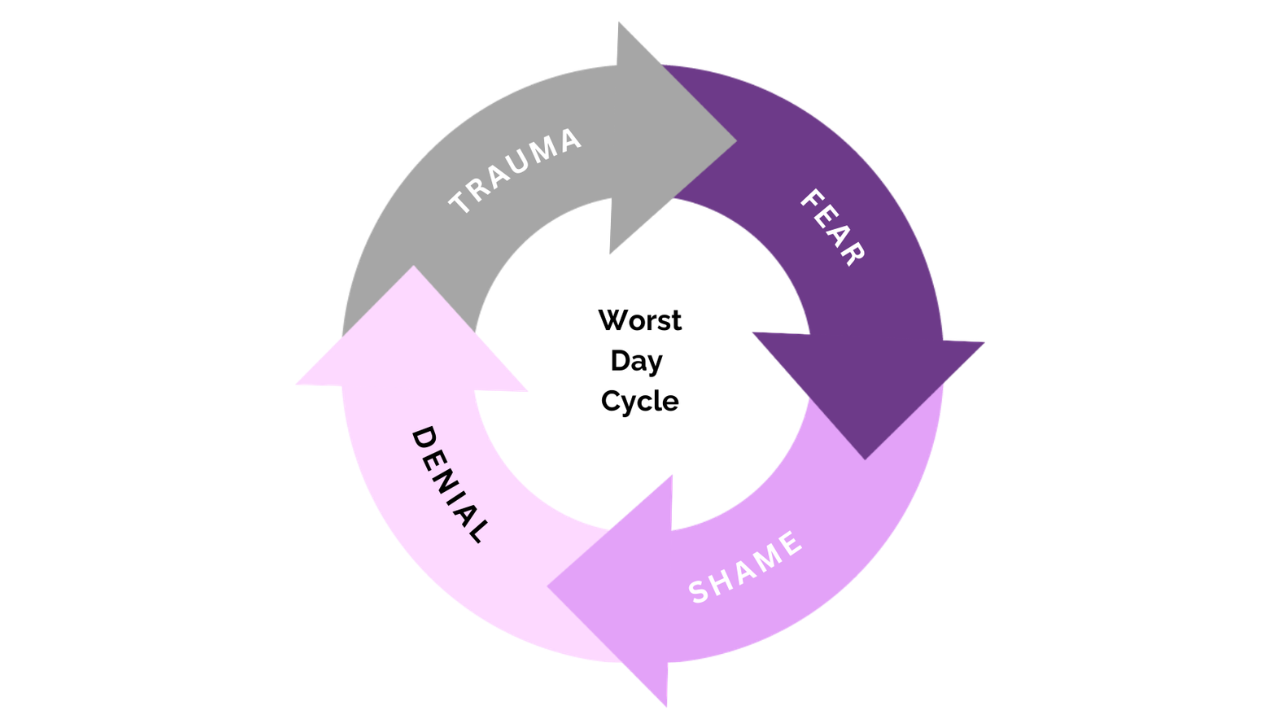
Stage 1: Trauma. Childhood trauma is any negative emotional experience that created painful meanings about yourself, others, or the world. Think of all the times you were asked and forced to do things that went against your own inclinations and desires. Many of those things your parents did were good for you, but many times your parents — because of their own disempowerment — passed on the habits to you. If your mother or father grew up with addiction in their household, and thus a precondition to be afraid, it may have been projected onto you with helicopter parenting. That takes your inherent power away to explore the world and make perfectly imperfect decisions. The hypothalamus generates chemical cocktails — cortisol, adrenaline, dopamine misfires, oxytocin disruptions — and your brain becomes addicted to these emotional states.
Stage 2: Fear. Fear drives repetition. Your brain conserves energy by repeating known patterns. It can’t tell right from wrong — only known versus unknown. Since approximately 70% of childhood messaging is negative and shaming, adults repeat these painful patterns in relationships, career, hobbies, health — everything. When you’re in that place where you can’t find an answer for anything, you are stuck focusing on what you can’t control rather than what you can control.
That’s you if unfamiliar confidence feels scarier than familiar helplessness — if stepping into your power makes your stomach clench because your nervous system equates visibility with danger.
Stage 3: Shame. Shame is where you lost your inherent worth. Where you decided “I am the problem.” Not “I made a mistake” (which is healthy responsibility), but “I AM a mistake” (which is toxic shame). When you belittle your worth by saying “I’m so stupid” or “why didn’t I do that differently?” — you’ve just said “I don’t have value and worth unless I do this perfectly.” Shame is what makes the empowering questions feel impossible to answer. Shame whispers that you don’t deserve to dream, don’t deserve to say no, don’t deserve to take up space.
Stage 4: Denial. To survive unbearable shame, your psyche creates a survival persona — a false identity that protects you from the truth. This survival persona was brilliant in childhood. It kept you alive. But in adulthood, it keeps you locked in disempowered patterns, focused outward instead of inward, managing everyone else’s emotions while your own needs sit untouched and unmet.
That’s you if you’ve been performing strength while secretly feeling like you’re drowning — if everyone thinks you’re fine because your survival persona is doing an excellent job of hiding the collapse underneath.
The Three Survival Personas That Keep You Stuck in Powerlessness
Your survival persona is the adaptive identity you created in childhood to stay safe. It’s not your fault that you built it — it was brilliant and necessary. But now it’s the primary obstacle between you and the empowered life you deserve. There are three primary types:
The Falsely Empowered Persona. This survival persona hides powerlessness behind control, dominance, and over-functioning. You became the one who has all the answers, makes all the decisions, and carries all the weight. You can’t ask empowering questions because you already “know” the answer — your survival persona insists that vulnerability is weakness and asking for help means losing control. You rage when things go wrong. You micromanage. You exhaust yourself trying to control outcomes that were never yours to control.
That’s you if you’re always in charge, always managing, always the strong one — and secretly terrified of what would happen if you stopped performing and let people see the exhaustion underneath.
The Disempowered Persona. This survival persona hides powerlessness behind collapse, people-pleasing, and self-abandonment. You became invisible. You learned that safety meant disappearing, that your needs were burdensome, that love required self-sacrifice. You can’t ask empowering questions because your survival persona has convinced you that your answers don’t matter — that someone else should be making these decisions for you.
That’s you if you’ve been saying yes to everything while silently resenting everyone — if you can’t remember the last time someone asked what you wanted and you actually told the truth.
The Adapted Wounded Child. This survival persona oscillates between both — controlling one moment, collapsing the next. You read every room constantly, adjusting yourself to whatever seems safest in the moment. You flip between rage and surrender depending on which strategy your nervous system thinks will bring relief. Neither does.
That’s you if you feel like a different person depending on who’s in the room — strong at work but powerless at home, confident with friends but paralyzed with your partner.
Sound familiar? Most of us recognize ourselves in all three at different times. That’s because they were all brilliant childhood survival strategies — and now they’re running your adult life without your permission.
The 10 Empowering Questions That Shift You From Survival to Authenticity
These ten questions are designed to create a massive emotional shift. We become what we feel, not what we think. Each question moves your nervous system from the Worst Day Cycle™ — where you’re focused on what you can’t control — into the Authentic Self Cycle™, where you’re focused on truth, responsibility, healing, and what you actually want.
Question 1: What Can I Control?
This is the foundation of all empowerment. Make two lists: one of what you can completely control and one of what you can’t. This is a living document — you’ll discover more things in the future. When you’re in a depressed or disempowered state, you’ll have this list to return to. You’ll find that most of your mental energy has been going toward people, places, and things you have zero influence over. The moment you redirect that energy toward yourself — your choices, your responses, your boundaries — the chemical shift begins.
That’s you if you’ve been spending hours trying to change someone who doesn’t want to change — while your own life sits untended.
Question 2: What Do I Actually Want?
Tattoo three questions everywhere in your life: What do I want? What will I not tolerate? What can I control? If you don’t know what you want, pay attention to all the complaints you’re making about the person, place, or thing. Ask yourself: what’s the opposite? That lets you know what you want. Most disempowered people can tell you exactly what they don’t want but can’t articulate what they do want. That’s because childhood taught them that wanting was dangerous — that having desires meant being disappointed, rejected, or punished.
That’s you if someone asks “what do you want for dinner?” and you genuinely don’t know — because you’ve spent so long catering to everyone else’s preferences that you’ve lost access to your own.
Question 3: What Can I Start Saying No To?
When you are powerless, you allow behavior and things that don’t work for you. You may be trying to be nice and help others, but you often don’t have the reserves. You get stuck in people-pleasing and guilt, and it robs you of your inherent power. Here’s the test: if you feel guilty, resentful, inclined to keep score, or want to throw it in the other person’s face — you’ve been saying yes to things you need to say no to. The most loving thing you can ever say to anyone is no. Learn to identify your negotiables and non-negotiables.
That’s you if you say yes when you mean no, and then wonder why you’re bitter toward the people you love — your survival persona is performing generosity while your authentic self is screaming for rest.
Question 4: What Brings Me Joy?
When you’re disempowered, you lose access to joy. You survive. You manage. You push through. But you stop doing things that actually light you up. It’s the small things in life that bring us joy — lying in the sun, going on walks, cooking something simple, reading a book with no agenda. Make a list. This is an empowering perspective: nurturing yourself and meeting your own needs and wants. Joy isn’t frivolous. Joy is the signal that your authentic self is present.
That’s you if you can’t remember the last time you did something purely because it made you happy — not because it was productive, not because someone needed you to, just because it felt good.
Question 5: What Do I Love Most About Myself?
This can be tough for some people, but really think about it. Aren’t you a great friend? Maybe it’s your spirituality, your career, your eyes, your smile. There’s always something about yourself that you genuinely appreciate. This question creates an emotional shift, moving you out of the disempowered position and into truth. We are all lovable and perfectly imperfect. We all have many wonderful things about us that we often don’t give ourselves credit for. Start looking at your life and making a list of what you genuinely value about who you are. Build real self-esteem that isn’t dependent on what you produce.
That’s you if you deflect every compliment, dismiss every achievement, and focus exclusively on what’s wrong — because shame taught you that self-appreciation is arrogance.
Question 6: What Is My Best Skill?
What do you do really, really well? There’s something each of us is genuinely excellent at — whether that’s an activity, career, parenting, willingness to learn, communication, or pursuing growth. When you’re disempowered, you dismiss your skills as “not good enough” or “anyone could do that.” But naming your skill — owning it without apology — moves you into your authentic self. Your skill isn’t accidental. It’s evidence of your capacity. It’s proof that you’ve already overcome challenges, already built competence, already created something real.
That’s you if you minimize your accomplishments because your survival persona says you haven’t done “enough” yet — the goalpost keeps moving because your childhood taught you that worth is always conditional.
Question 7: What Have I Always Dreamed of Doing?
When we’re powerless, we see all the things we can’t do. But we all have dreams. Many times we lose sight of them — but think of how good it feels to dream. You’ll start looking for solutions in the empowered position. What have you always wanted to pursue? Start focusing on that. Sit and dream. Change the way you feel. When you dream, your nervous system begins to reorganize around possibility instead of limitation. This is the beginning of the Authentic Self Cycle™.
That’s you if you stopped dreaming years ago because it felt safer to expect nothing than to hope and be disappointed — your survival persona calls that “being realistic,” but it’s actually self-protection from shame.
Question 8: What Skill Do I Need to Learn to Achieve That Dream?
Maybe you want a dream marriage, or a great friendship, or to play the piano. What skills do you need to learn these things? The best way to achieve what you can control is to develop new skills. This first requires knowledge. Then you turn that knowledge into a skill. Then the skill becomes a tool. Then the tool can help you achieve your dream. This progression — knowledge → skill → tool → dream — is empowerment in action. It moves you from helpless wishing to deliberate building.
That’s you if you’ve been waiting for someone to give you permission to start — your disempowered persona says you need to be ready first, but the truth is readiness comes from doing, not from waiting.
Question 9: What Is the Smallest Step I Can Take Today?
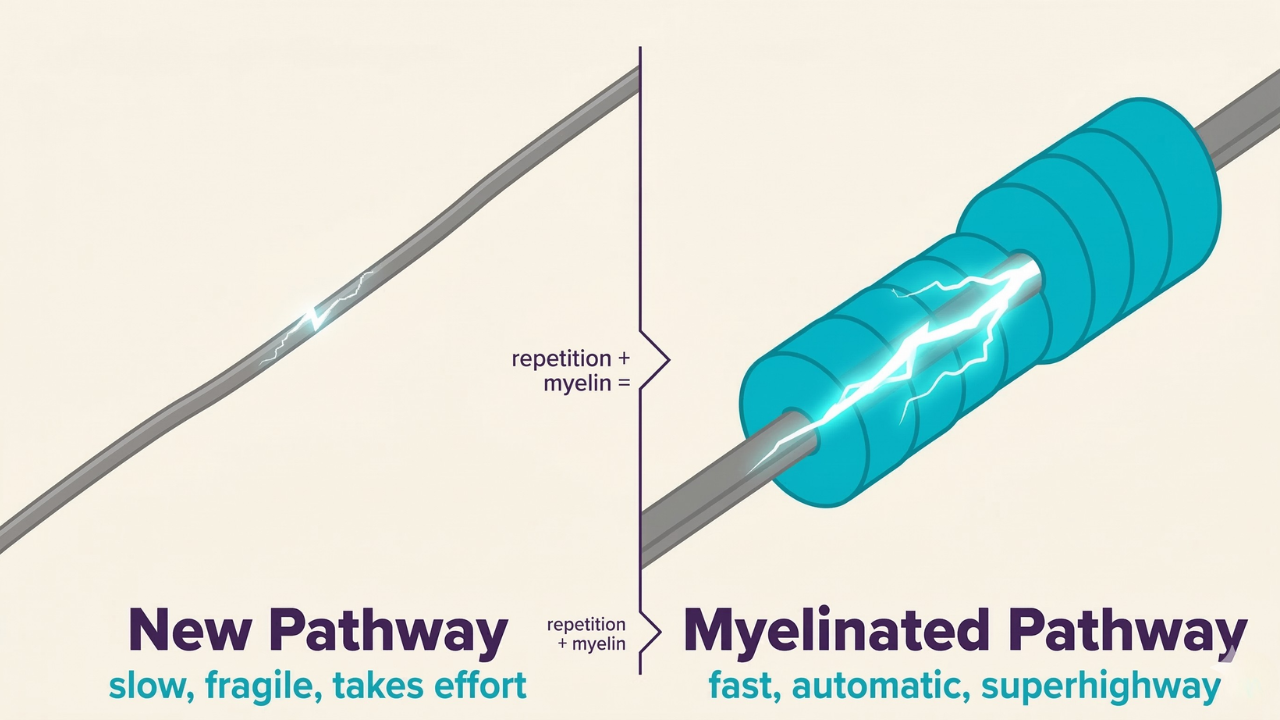
Even the dream may feel overwhelming. So start focusing on what you can control: maybe the smallest step you take today is Googling a topic. Read one article. You’ve already started the journey and are living in what you can control. The greatest chemically-producing way to shift the way we feel is to learn. It’s the single greatest way we feel self-esteem — learning and education. It will really shift you out of the disempowered position into a sense of achievement. One small step creates momentum. Momentum creates confidence. Confidence creates the next step.
That’s you if you’ve been paralyzed by the size of what needs to change — your survival persona sees the mountain and freezes, but your authentic self only needs to take the next step.
Question 10: Who Would I Be If I Never Had This Disempowered Feeling Again?
This is the most powerful question on the list — and it comes directly from Step 5 of the Emotional Authenticity Method™. Think about when you felt disempowered. What would be left over if you could never feel that again? When that feeling is removed, what emerges are the feelings of lightness, strength, safety, joy, and happiness. Those bad feelings and moments are always temporary — they lead you to solutions and aren’t bad. When you choose to no longer see them as a disempowering problem, you see your authentic self and your greatness. That’s when you can achieve anything and everything you want.
That’s you if you’ve never asked this question before — if you’ve been so identified with the disempowerment that you can’t imagine who you’d be without it. That person exists beneath your survival persona. They’ve been waiting.
The Emotional Authenticity Method™: 6 Steps to Reclaim Your Power
Empowering questions create awareness. But awareness alone doesn’t change your nervous system. The Emotional Authenticity Method™ is a six-step process that literally rewires the disempowerment pattern at the somatic, chemical, and neurological level. You cannot change emotional patterns through thoughts alone. Emotions are biochemical events. Thoughts originate from feelings — not the other way around.
Step 1: Somatic Down-Regulation. When you feel powerless — when the freeze response takes over and you can’t act — pause. Focus on what you can hear for 15-30 seconds. Wind. Traffic. Your own breath. If you’re highly dysregulated, use titration: smaller, shorter bursts. This activates your parasympathetic nervous system and brings your thinking brain back online.
Step 2: What am I feeling right now? Not “I feel stuck.” Use the Feelings Wheel to name it with precision. Are you feeling helpless? Afraid? Ashamed? Overwhelmed? Frustrated? Emotional granularity breaks the reactive cycle and moves you from your survival persona into your thinking brain.
Step 3: Where in my body do I feel it? All emotional trauma is stored physically. Powerlessness might be heaviness in your chest, collapse in your posture, tension in your jaw, or a knot in your stomach. Locate the feeling. This grounds you in the present moment instead of the childhood memory your nervous system is replaying.
Step 4: What is my earliest memory of having this exact feeling? The powerlessness you feel today echoes something much older. When was the first time you felt like you had no control? The first time your voice didn’t matter? The first time your needs were dismissed? Your present-day trigger didn’t create this feeling — it activated a blueprint that was already there.
Step 5: Who would I be if I never had this thought or feeling again? This is Question 10 from the empowering questions list — and it’s the vision step that connects you to the Authentic Self Cycle™. Not “I’d be happy.” Specific: “I’d be someone who speaks up in meetings. Someone who asks for what they need. Someone who makes decisions without second-guessing. Someone who trusts their own judgment.”
Step 6: Feelization — The New Chemical Addiction. Sit in the feeling of who you’d be — the authentic self. Make it strong. Feel it in your body. The confidence, the groundedness, the power. Create a new emotional chemical addiction to replace the old disempowerment blueprint. Ask yourself: “How would I respond to this situation from this feeling? What would I say? What would I do?” Visualize and FEEL yourself operating from your Authentic Self. This is the emotional blueprint remapping and rewiring step.
That’s you if you’ve been trying to think your way into empowerment — reading books, watching videos, understanding the concepts — but still feeling stuck when the moment arrives. Feelization is where the neurological change actually happens.
The Authentic Self Cycle™: From Victim to Author of Your Life
The Authentic Self Cycle™ is the healing counterpart to the Worst Day Cycle™ — a four-stage identity restoration system: Truth → Responsibility → Healing → Forgiveness. This is where the empowering questions become a permanent operating system instead of a temporary fix.
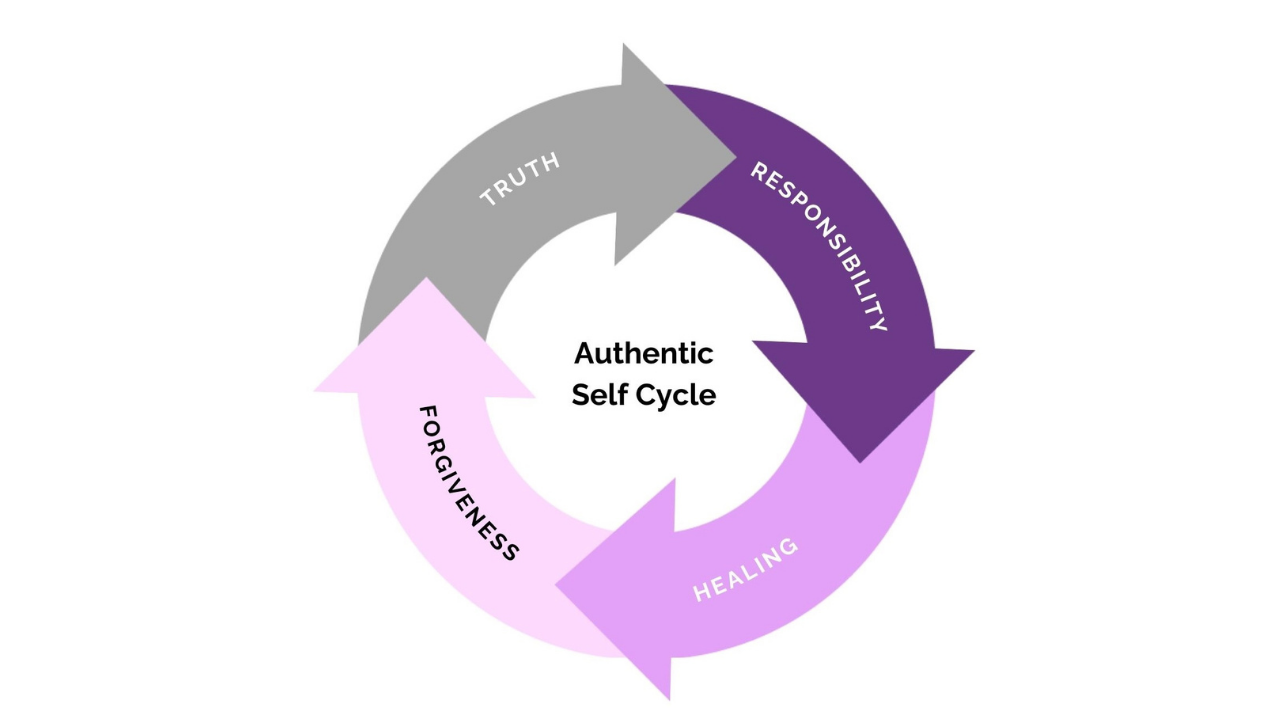
Stage 1: Truth. Name the blueprint. “This powerlessness isn’t about today. It’s about a childhood where my voice didn’t matter, where my needs were dismissed, where I learned that the only way to survive was to focus on everyone else. That was true then. It’s not true now.”
Stage 2: Responsibility. Own your emotional reactions without blame. “My boss isn’t my parent. My partner isn’t my parent. My nervous system just thinks they are. The disempowerment I feel is mine to heal, not theirs to fix.” This is where you move from victim to agent — from “this is happening to me” to “this is happening in me, and I can change it.”
Stage 3: Healing. Rewire the emotional blueprint so that personal power becomes your baseline state, not something you have to earn or perform. Conflict becomes uncomfortable but not dangerous. Saying no becomes assertive but not aggressive. Having needs becomes human but not burdensome. Creates a NEW emotional chemical pattern that replaces fear, shame, and denial with clarity, confidence, and authentic self-worth.
Stage 4: Forgiveness. Release the inherited emotional blueprint and reclaim your authentic self. Forgive your parents — not because what happened was acceptable, but because they were doing the best they could with the information they had. Your parents weren’t bad people. They adored you. They wanted to do everything they could to raise you perfectly. But they didn’t have all the information, so they made loving mistakes. When you release the fight against your past, you release the disempowerment that came with it.
That’s you if you’re finally ready to stop waiting for permission to live your life — to stop managing everyone else’s emotions and start asking yourself the questions that actually matter.
Where Disempowerment Shows Up Across Your Life
Disempowerment doesn’t confine itself to one area. It infiltrates everything because the emotional blueprint runs beneath every decision, every relationship, every moment of self-talk.
Family Relationships
You still seek approval from a parent who gives it conditionally. You change who you are around family to keep the peace. You feel guilty for setting boundaries. You sacrifice your needs “for family.” You can’t share your real self — you manage their perception of you instead. Your parents’ mood still determines your entire day, even though you’re a grown adult with your own life. Learn more about how enmeshment strips away personal power.
That’s you if you’re still performing the role of the “good child” — managing your family’s emotional world while your own needs go unspoken and unmet.
Romantic Relationships
You suppress your needs to avoid conflict. You stay in situations that don’t work because you fear abandonment. Your worth depends on whether your partner loves you back. You try to change yourself to be “the right” partner. You keep score of sacrifices and expect repayment. You can’t answer “what do I want?” because your survival persona has been focused entirely on what they want. Recognize the signs of relationship insecurity and understand how they connect to childhood disempowerment.
That’s you if you’ve lost yourself in a relationship — if you couldn’t tell someone who you are outside of being someone’s partner.
Friendships
You’re the emotional support person but can’t ask for support. You abandon your plans when friends need you. You feel resentful but continue the pattern anyway. You stay friends with people who don’t respect you because being needed feels better than being alone.
That’s you if you’re exhausted from being everyone’s therapist, advice-giver, and crisis manager while nobody ever asks how you’re doing.
Work and Achievement
You work beyond your capacity to prove your worth. You struggle to advocate for yourself or ask for raises. You take on everyone else’s emotional labor. You can’t say no without guilt. You suffer from imposter syndrome — the constant fear that someone will discover you’re not as capable as you appear. Your survival persona’s perfectionism is your company’s greatest asset and your nervous system’s greatest prison.
That’s you if you’ve been promoted for the very pattern that’s destroying you — your over-functioning keeps the company running while it runs you into the ground.
Body and Health
You ignore your body’s signals. You push through exhaustion, pain, and hunger. You use food, substances, or behaviors to numb the feelings your nervous system is trying to communicate. You punish your body instead of caring for it. You prioritize others’ comfort over your own physical needs.
That’s you if your body has been screaming for rest and you keep telling it to be quiet — because your survival persona says rest is laziness and need is weakness.
Frequently Asked Questions
How do empowering questions actually change my brain chemistry?
When you ask a disempowering question like “why does this always happen to me?” your brain searches for evidence of helplessness — flooding your system with cortisol and stress hormones. When you ask an empowering question like “what can I control?” your brain shifts into problem-solving mode, activating your prefrontal cortex and releasing dopamine. Over time, this practice rewires your neural pathways so that solution-oriented thinking becomes your default. The Emotional Authenticity Method™ accelerates this process through Feelization — creating new chemical baselines at the somatic level.
What if I genuinely don’t know what I want?
That’s not a failure — that’s evidence of how effectively your survival persona has been running your life. When childhood teaches you that your wants create danger, you learn to stop wanting. The path back to desire starts with paying attention to your complaints. Every complaint is an inverted want. If you complain that your partner never listens, you want to be heard. If you complain about your job, you want meaningful work. Start there and work backward from frustration to desire.
Why do I freeze when it’s time to take action even after asking empowering questions?
Freezing is a trauma response, not a character flaw. Your nervous system learned in childhood that action creates danger — speaking up got you punished, trying got you criticized, dreaming got you dismissed. Understanding the questions intellectually is Step 1. But your body still holds the old blueprint. That’s why the Emotional Authenticity Method™ starts with somatic down-regulation and moves through the body — not just the mind. You can’t think your way out of a freeze response. You have to feel your way through it.
How long does it take for empowering questions to create real change?
Most people report a noticeable shift within days of consistent practice. The chemical shift happens immediately — every time you redirect your focus from what you can’t control to what you can, your nervous system recalibrates. But deep, lasting change — the kind where empowerment becomes your default state — typically takes 6-12 months of consistent work with the Emotional Authenticity Method™ and the Authentic Self Cycle™. The timeline depends on how deep the childhood pattern runs and how committed you are to the daily practice.
Can I use these questions to help someone else who feels stuck?
Yes — but here’s the key: turn everything into a question so they figure out the answer for themselves. When someone comes to you for advice, instead of telling them what to do, ask: “What do you think your options are?” “What part of this situation do you think you can control?” “What do you think would help you?” This empowers them instead of creating dependency. The moment you tell someone what to do, you become the parent they never had — and they stay disempowered.
What’s the difference between empowering questions and positive affirmations?
Affirmations tell your brain what to believe. Empowering questions ask your brain to search for evidence. When you say “I am powerful,” your shame-based nervous system rejects it — cognitive dissonance. When you ask “what can I control?” your brain actively searches for answers and finds them. Questions engage your prefrontal cortex. Affirmations bounce off your survival persona’s armor. Both have value, but questions create neurological movement where affirmations often create resistance. The Emotional Authenticity Method™ goes deeper than both — it changes the felt experience at the body level through Feelization.
The Bottom Line
You’re not powerless. You never were. What happened in childhood was real — the dismissal, the control, the shame, the message that your voice didn’t matter. Those experiences created a survival persona that focused outward instead of inward, that managed everyone else’s emotions while abandoning your own, that performed strength while hiding collapse. But that survival persona is not you. It’s a brilliant adaptation that kept you alive. And now it’s time to outgrow it.
At all times, no matter what you are thinking, feeling, believing, or doing, you always have value and worth. At all times. Your power doesn’t come from controlling other people. It comes from knowing yourself — your values, your needs, your non-negotiables, your dreams — and having the courage to honor them.
These ten empowering questions aren’t just a list to read once. They’re a daily practice. Every time you catch yourself spiraling into “why won’t they change?” pause. Redirect. Ask: “What can I control?” Every time your survival persona tries to keep you small, ask: “Who would I be if I never felt this way again?” Every time shame whispers that you don’t deserve to take up space, ask: “What do I love about myself?”
The questions change your chemistry. The chemistry changes your nervous system. The nervous system changes your life. That’s not theory. That’s neuroscience. And it starts right now, with the decision to stop focusing on what you can’t control and start focusing on the one person you’ve been neglecting your entire life: yourself.
That’s you if you’re finally ready to stop performing strength and start feeling it — to stop managing everyone else’s world and start building your own.
Recommended Reading
- Facing Codependence by Pia Mellody — The foundational text on how childhood trauma strips away inherent power and creates survival personas, codependent patterns, and the loss of authentic self.
- The Body Keeps the Score by Bessel van der Kolk — Essential reading on how disempowerment lives in your nervous system and why healing requires more than positive thinking.
- When the Body Says No by Gabor Maté — How chronic disempowerment and emotional suppression manifest as physical illness.
- Codependent No More by Melody Beattie — The classic guide to reclaiming your power and stopping the cycle of self-abandonment.
- The Gifts of Imperfection by Brené Brown — A guide to wholehearted living that directly counters the shame keeping you disconnected from your authentic power.
Ready to Reclaim Your Personal Power?
- Emotional Blueprint Starter Course — Individual ($79) — Your personal roadmap to understanding your emotional blueprint, identifying your survival persona, and reconnecting with your inherent power.
- Relationship Starter Course — Couples ($79) — If disempowerment is showing up in your relationship and you want to rebuild authentic connection together.
- Why We Can’t Stop Hurting Each Other ($479) — A deep dive into how childhood disempowerment creates relationship conflict and how to interrupt it permanently.
- Why High Achievers Fail at Love ($479) — If your falsely empowered survival persona has you succeeding at work but struggling in every other area of life.
- The Shutdown Avoidant Partner ($479) — Understanding how disempowerment drives emotional distance and avoidant attachment.
- Tier 1: Mapping the Blueprint ($1,379) — The comprehensive program for deep rewiring of your emotional blueprint and rebuilding authentic personal power.
Start with the Feelings Wheel exercise to rebuild your emotional vocabulary today. Then explore the signs of enmeshment to understand where your power was first lost. Map out your negotiables and non-negotiables to rebuild the foundation of authentic empowerment. And learn the do’s and don’ts for great relationships to build connections from wholeness, not from wound.