Tag: personal growth

  • Shame Engine: Why Your Inner Critic Is a Trauma Response, Not Motivation

    Shame Engine: Why Your Inner Critic Is a Trauma Response, Not Motivation

    That critical voice telling you that you’re not good enough, not fast enough, not worthy of love or success? That’s not motivation. It’s not accountability. It’s your shame engine — and it’s been running since childhood.

    For years, you’ve believed that harsh inner critic was helping you. You thought the voice saying “You should be better” or “Why aren’t you further along?” was pushing you toward excellence. But here’s the truth: shame is never a pathway to sustainable success or healthy relationships. Shame is a survival mechanism your nervous system created when you were too young to have a choice. And like all survival mechanisms from childhood, it’s sabotaging your adult life.

    That’s you — the person grinding endlessly because you believe that if you just work hard enough, achieve enough, be perfect enough, people will finally see your worth.

    Table of Contents

    What Is the Shame Engine?

    The shame engine is the internal operating system your nervous system created to survive childhood pain. It’s not something you chose. It’s not something you “have wrong with you.” It’s a brilliant adaptation to an unbearable situation.

    But here’s the problem: the system that saved you in childhood is killing you in adulthood.
    The Emotional Authenticity system for healing the shame engine

    The shame engine operates through fear and shame. Fear tells you that if you stop working so hard, stop being perfect, stop managing everyone’s emotions, something catastrophic will happen. You’ll be abandoned. You’ll be exposed. You’ll prove that you’re actually worthless.

    Shame tells you that these fears are true — that you ARE the problem. Not your circumstances, not your upbringing, not the people who hurt you. You.

    That’s the voice that wakes you up at 3 AM obsessing over something you said two years ago.

    The shame engine is powered by your emotional blueprint — the unconscious rules about yourself, others, and the world that you absorbed before you could think critically. These rules were formed in response to childhood trauma (any negative emotional experience that created painful meanings about you). The shame engine then uses these rules to control your behavior through fear and shame, ensuring you never face whatever it is you’re protecting yourself from.

    How the Worst Day Cycle™ Creates the Shame Engine

    To understand the shame engine, you need to understand the Worst Day Cycle™ — the system that drives all self-sabotage.

    The Worst Day Cycle™ has four stages: Trauma → Fear → Shame → Denial.
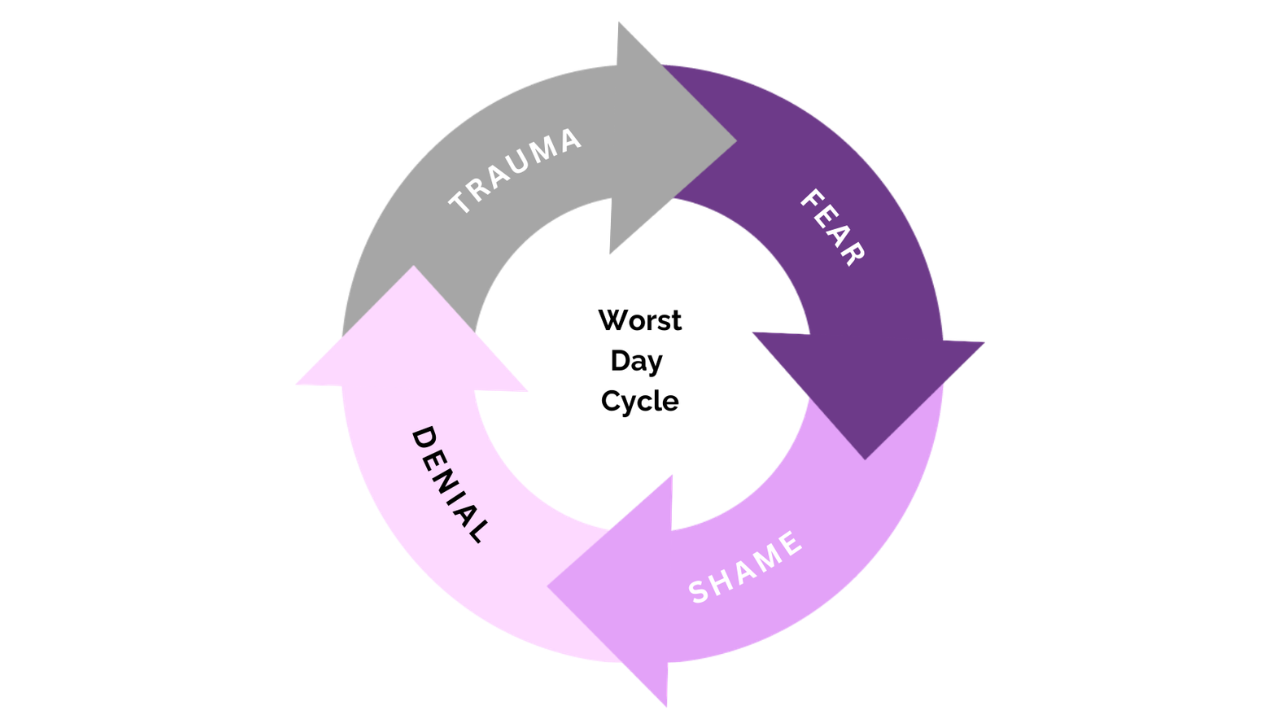
    The Worst Day Cycle showing trauma, fear, shame, and denial stages

    Stage 1: Trauma (The Wound)

    Childhood trauma isn’t just abuse. It’s any negative emotional experience that created a painful meaning about you. Maybe your parent said, “Why are you so sensitive?” and you decided I’m broken. Maybe you came home excited about an achievement and got no response, so you learned My accomplishments don’t matter. Maybe you watched a parent’s rage and decided I need to control everything to stay safe.

    These moments create actual neurochemical changes in your developing brain. When you experience shame, fear, or abandonment in childhood, your brain releases a cocktail of stress hormones: cortisol floods your system, adrenaline spikes, and your brain becomes chemically addicted to these emotional states.
    How childhood trauma creates chemical addiction to fear and shame responses

    Stage 2: Fear (The Response)

    Your nervous system never forgets that wound. It learns to perceive threats everywhere — threats that look like the original pain. Now, as an adult, anything that resembles that childhood feeling triggers your threat detection system.

    A partner’s criticism triggers the same fear as a parent’s rejection. A setback at work triggers the same panic as parental disappointment. Space in a relationship triggers the same terror as childhood abandonment.

    That’s you — terrified of disappointing people because you learned that disappointment meant you were fundamentally unlovable.

    Fear drives repetition. Your brain conserves energy by repeating known patterns because it can’t tell the difference between safe and unsafe — only between known and unknown. Since 70%+ of childhood messaging is negative and shaming, your adult nervous system actually feels SAFER repeating these painful patterns in relationships, career, health, and hobbies than trying something new.

    Stage 3: Shame (The Collapse)

    Here’s where the shame engine fully activates. Instead of seeing the fear as your nervous system’s response to a childhood wound, you internalize it as truth about yourself.

    Shame is the belief: I AM the problem.

    Not “I made a mistake” (guilt — which is healthy). But “I am fundamentally broken, unworthy, unlovable.” That’s where you lose your inherent worth. That’s where the shame engine takes over.

    Stage 4: Denial (The Survival Persona)

    And then your nervous system does something brilliant to protect you: it creates a survival persona — a false identity designed to keep you safe from feeling that shame again.

    This survival persona is not lazy. It’s not selfish. It’s genius-level adaptation. But it’s also completely sabotaging your adult life.

    The Three Survival Personas and How Each Uses Shame

    Your survival persona is the “you” that emerged to survive childhood pain. There are three core types — and most people oscillate between them depending on the situation.
    The three survival personas: falsely empowered, disempowered, and adapted wounded child

    The Falsely Empowered Persona

    This person controls, dominates, and rages to avoid feeling helpless. The shame engine tells them: “If I’m in charge, if I win, if I’m perfect, people can’t hurt me or abandon me.”

    The falsely empowered persona is the high achiever, the perfectionist, the one who never asks for help. They’re driven by a deep terror of vulnerability and powerlessness. Work is their addiction, success is their medication, and failure is their nightmare.

    That’s you — the one who’d rather burn out than admit you’re exhausted, because admitting weakness feels like proof that you are fundamentally flawed.

    Their shame engine manifests as relentless self-criticism, rage when things don’t go perfectly, and deep loneliness despite external success. They’re terrified that if they slow down, everyone will see they’re a fraud.

    The Disempowered Persona

    This person collapses, people-pleases, and abandons themselves to avoid abandonment. The shame engine tells them: “If I make myself small, if I sacrifice myself, if I’m always available, people won’t leave me.”

    The disempowered persona believes their worth is conditional — based on what they do for others. They abandon their own needs, their own boundaries, their own voice. They become expert at managing other people’s emotions and completely blind to their own.

    Sound familiar — the feeling that you have to earn love through sacrifice, that saying no will cause abandonment, that your own needs are selfish?

    Their shame engine manifests as chronic resentment, depression, health issues from chronic stress, and relationships where they’re completely unvalued. They’re terrified that if they ask for anything, they’ll be seen as a burden.

    The Adapted Wounded Child

    This person oscillates between falsely empowered and disempowered depending on the context. One moment they’re raging and controlling, the next they’re collapsed and people-pleasing. They’re unpredictable even to themselves.
    The adapted wounded child survival persona oscillating between control and collapse

    The adapted wounded child learned that safety required constant vigilance. They had to be ready to control if someone got close, and ready to collapse if control failed. This person is exhausted by their own unpredictability.

    That’s you — the one who can’t understand why you blow up at your partner one moment and then become a doormat the next, wondering why you can’t just be consistent.

    All three survival personas use shame as a control mechanism. They tell you that if you step out of your survival role, if you become vulnerable, if you ask for what you need, you’ll be exposed, abandoned, or destroyed. The shame engine keeps you locked in this persona through fear and shame, ensuring you never risk the vulnerability that actual connection requires.

    How the Shame Engine Hijacks Every Area of Your Life

    The shame engine doesn’t just affect one area of your life. It’s a system that runs everything — because it’s your nervous system trying to keep you safe.

    In Family Relationships

    The shame engine keeps you enmeshed with the people who wounded you. You’re either trying to finally get their approval (falsely empowered) or you’re completely dependent on their validation (disempowered). You can’t set healthy boundaries because boundaries feel like abandonment.

    That’s the voice telling you that you should just accept the disrespect because “that’s just how they are,” or the one that says you’re selfish for wanting space from family.

    If you haven’t read about the signs of enmeshment, this is the core system running that dynamic.

    In Romantic Relationships

    The shame engine ensures you choose partners who trigger your childhood wounds. It keeps you in patterns where you’re either controlling and critical (falsely empowered) or accepting disrespect and abandonment (disempowered).

    You recreate the Worst Day Cycle™ with your partner over and over. They do something that triggers your fear, you shame yourself, you develop a coping strategy (control or collapse), and your partner reacts to your coping strategy, not the original issue.

    That’s you — unable to have a conversation about a legitimate need without either exploding or shutting down, wondering why your relationships never feel secure.

    Check out 7 signs of insecurity in relationships to see the shame engine in action in your romantic patterns.

    In Friendships

    The shame engine makes you either the friend who always has it together and secretly resents that others never check on you (falsely empowered), or the friend who abandons themselves completely and becomes bitter when others don’t reciprocate (disempowered).

    You don’t let people see you struggle. You don’t ask for support. And then you feel completely alone despite having many friends.

    That’s you — lonely in a room full of people, afraid that if you showed your real self, everyone would leave.

    In Your Career

    The falsely empowered shame engine shows up as burnout, perfectionism, and inability to delegate. The disempowered shame engine shows up as underearning, underselling yourself, and accepting terrible treatment from employers.

    Either way, you’re not working from your real motivation — you’re working from fear and shame. You’re proving something instead of creating something.

    Sound familiar — working 60+ hours a week because you believe that’s the only way you’re valuable, or staying in a job that pays you 30% less than your market value because you don’t think you deserve better?

    In Your Body and Health

    The shame engine creates disconnection from your body. You push through pain and exhaustion (falsely empowered) or you abandon self-care entirely (disempowered). Your body becomes something to fix, control, or ignore — never something to listen to.

    This disconnection keeps you from hearing the signals your nervous system is sending. You don’t know when you’re stressed until you’re burned out. You don’t know when you’re hungry until you’re starving. You don’t know when you need rest until you collapse.
    Emotional regulation as the foundation for body awareness and nervous system healing

    Why Positive Thinking Can’t Silence the Shame Engine

    Here’s what doesn’t work: affirmations. Willpower. Positive thinking. Cognitive reframing.

    You’ve probably already tried all of these. You’ve probably spent years telling yourself you’re worthy, you’re capable, you’re enough. And you probably still feel the shame.

    Here’s why: shame is not a thought — it’s a nervous system state. Your emotions are biochemical events, not intellectual ones. Thoughts originate from feelings, not the other way around. You cannot think your way out of a nervous system that’s still running the Worst Day Cycle™.

    When your nervous system is in fear, it doesn’t care what your mind says. It’s running on survival code written in childhood. That code says: “I need to either control everything or collapse completely. And if I don’t, I’ll be abandoned/destroyed/exposed.”

    Affirmations can’t reprogram that. Willpower can’t override that. Your conscious mind is no match for your nervous system’s survival patterns.

    That’s you — repeating “I am worthy” while your nervous system is screaming that you’re not, wondering why the affirmations aren’t working and then shaming yourself for not being “positive enough.”

    How the Emotional Authenticity Method™ Rewires the Shame Engine

    The only way to rewire the shame engine is to change your nervous system’s emotional blueprint. And that requires the Emotional Authenticity Method™ — a somatic, nervous-system-based approach that actually changes your neurochemistry.

    Here are the five steps:
    The five steps of the Emotional Authenticity Method for nervous system healing

    Step 1: Somatic Down-Regulation (With Optional Titration)

    Before you can do anything else, you need to get your nervous system below threat level. This isn’t meditation or deep breathing (though those can help). It’s about sending your body a signal that it’s safe enough to feel what you’re feeling.

    Somatic down-regulation might look like: movement (walking, dancing, shaking), breathwork, temperature changes (cold water on your face), bilateral stimulation (tapping alternating sides of your body), or safe touch.

    Titration is the practice of feeling a little bit of an emotion, getting regulated, then feeling a little bit more. You’re essentially teaching your nervous system that this feeling won’t destroy you — in manageable doses.

    That’s you — finally understanding why pushing through your feelings with willpower only makes things worse, and learning that sometimes “handling it” means pausing to calm your nervous system first.

    Step 2: What Am I Feeling? (Emotional Granularity)

    Most people respond to complex emotions by saying “I feel bad” or “I’m stressed.” Your nervous system needs more specificity to heal.

    Are you feeling shame, fear, grief, rage, loneliness, or something else? The Feelings Wheel is designed to help you develop emotional granularity — the ability to identify exactly what you’re experiencing beneath the surface.

    This matters because each emotion carries different information. Fear says “threat.” Shame says “I am the problem.” Grief says “I’ve lost something.” They require different responses.

    Sound familiar — naming a feeling and suddenly understanding what your nervous system has been trying to tell you, instead of just numbing it?

    Step 3: Where in My Body Do I Feel It?

    All emotional trauma is stored in your body. This is not metaphorical. Your nervous system holds the memory of every time you felt shame, fear, or abandonment in your tissues.

    When you feel an emotion, where does it live? In your chest? Your throat? Your stomach? Your limbs? The location matters because it’s where the nervous system is holding the pattern.

    As you learn to locate emotions in your body, you’re actually building the neural pathways that allow you to feel emotions instead of being controlled by them. You’re moving from “I AM anxious” to “I FEEL anxious in my chest” — and that difference is everything.
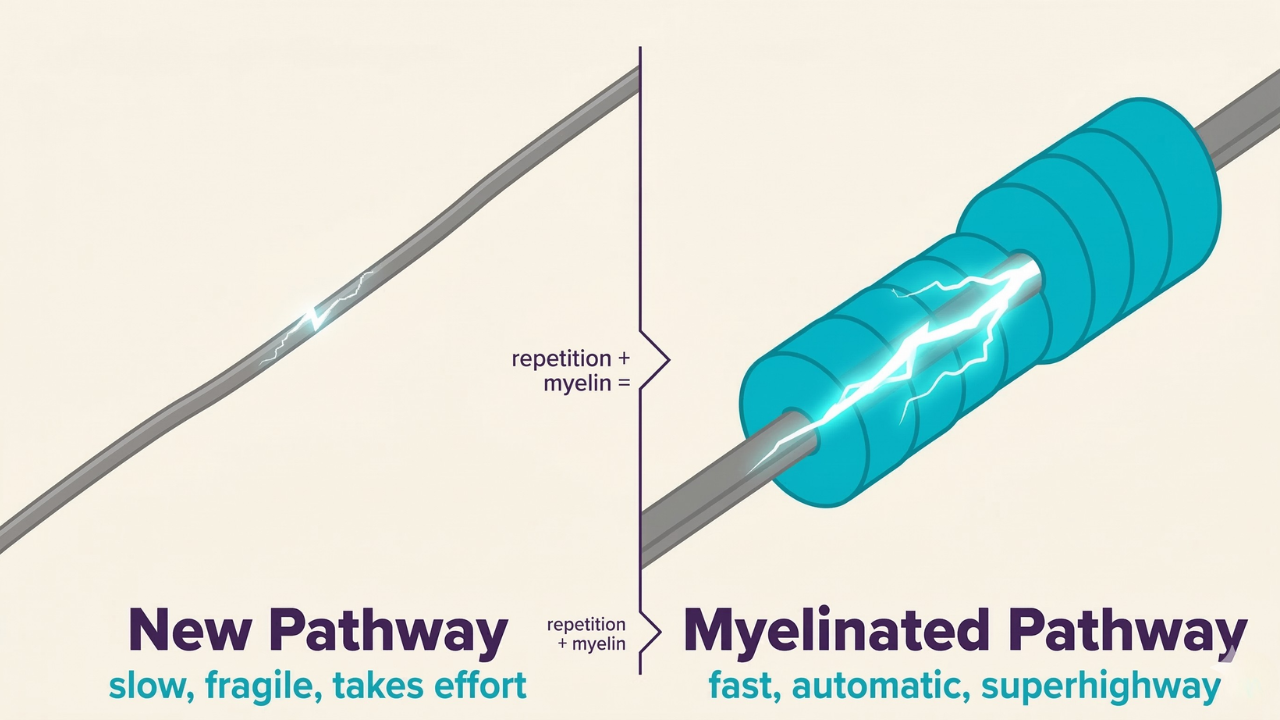
    Building myelin sheath through nervous system awareness for emotional healing

    Step 4: What Is My Earliest Memory of This Feeling?

    This is where the real magic happens. You’re going to trace this feeling back to its source — the original childhood moment when your nervous system learned this pattern.

    You might remember a specific moment. Or you might just get a sense of when you first learned that abandonment meant you were unlovable, or that vulnerability meant punishment, or that your needs would never be met.

    That’s you — suddenly understanding that your partner didn’t create this fear; your parent did. And your nervous system has just been replaying that pattern with every person you love.

    This step is where you shift from “Something is wrong with me” to “My nervous system learned something painful, and now it’s trying to protect me from that pain.” That compassion changes everything.

    Step 5: Who Would I Be If I Never Had This Feeling Again?

    This is the vision step — the place where you move from healing into building. You’re not trying to force yourself to feel different. You’re envisioning who you actually are when you’re not controlled by this fear or shame.

    What would you do? How would you show up? What would you create, ask for, risk? This isn’t about becoming someone new. It’s about accessing the authentic self that’s been hiding behind the survival persona.

    That’s the moment you realize: I could actually ask for what I need. I could actually leave. I could actually create. I could actually love myself.

    The Emotional Authenticity Method™ works because it speaks your nervous system’s language. It’s somatic, not intellectual. It honors the way emotions actually work — as biochemical patterns stored in your body. And it creates a new emotional chemical pattern (the Authentic Self Cycle™) that gradually replaces the fear/shame/denial pattern of the Worst Day Cycle™.

    How the Authentic Self Cycle™ Replaces Shame With Worth

    While the Worst Day Cycle™ is the system keeping you trapped in shame, the Authentic Self Cycle™ is the system that sets you free. It’s the healing counterpart — an identity restoration system with four stages: Truth → Responsibility → Healing → Forgiveness.
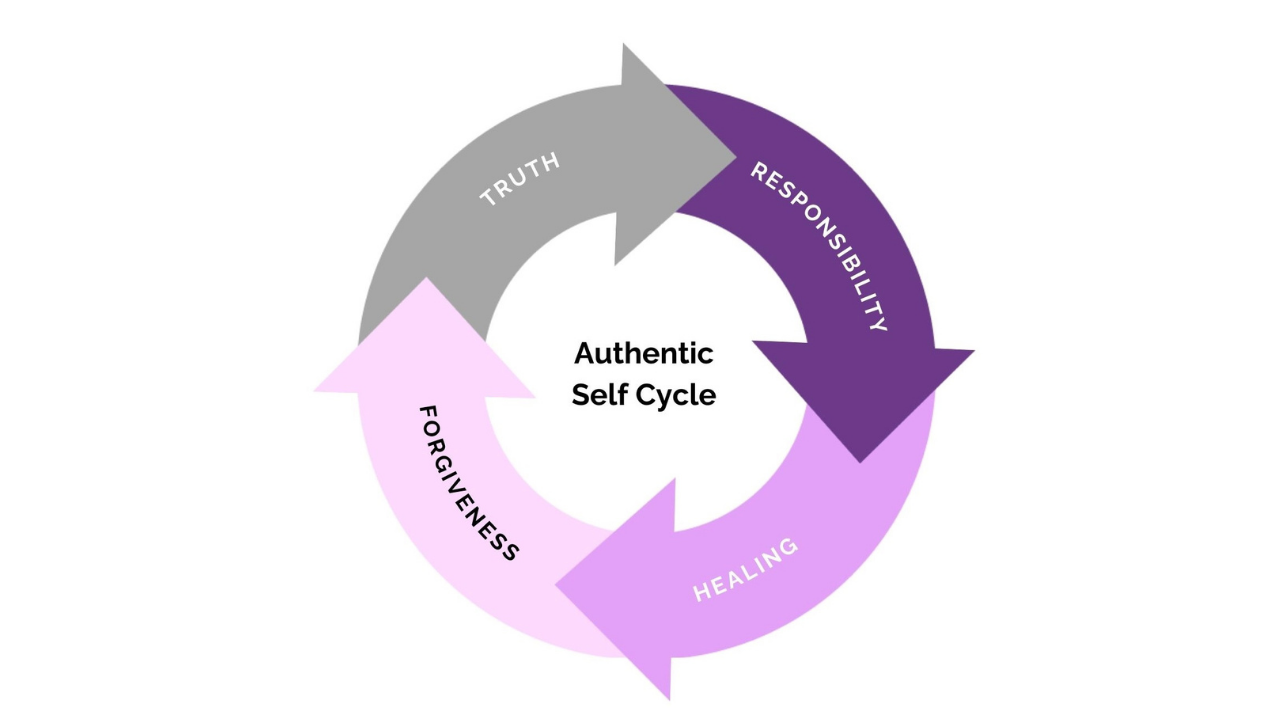
    The Authentic Self Cycle: Truth, Responsibility, Healing, and Forgiveness stages

    Stage 1: Truth (Name the Blueprint)

    Here’s where you stop blaming yourself and start seeing what actually happened. You name the blueprint — the unconscious rules about yourself and the world that you absorbed from childhood.

    “My parent’s criticism taught me that I’m never good enough.” “My parent’s unpredictability taught me that people can’t be trusted.” “My parent’s rejection taught me that my worth is conditional.”

    Truth is the moment you see: “This isn’t about today. This is about something my nervous system learned decades ago.”

    That’s you — realizing that you’re not actually defective, you’re just operating from an old emotional blueprint that made sense in childhood but is sabotaging everything now.

    Stage 2: Responsibility (Own Your Reactions Without Blame)

    Responsibility doesn’t mean blame. It means: “My partner isn’t my parent, but my nervous system thinks they are. And I need to own that.”

    This is where you stop making your partner, your boss, your friend responsible for your emotional regulation. You start recognizing: “I’m having a reaction to my blueprint, not to what they actually did.”

    Responsibility is the hardest stage because it means you can’t blame anyone else. But it’s also the most powerful, because it means you’re no longer a victim of your past — you’re the author of your future.

    Sound familiar — the relief of finally understanding that you can’t control anyone else, but you CAN rewire how you respond to them?

    Stage 3: Healing (Rewire the Emotional Blueprint)

    Once you’ve named the blueprint and owned your reactions, healing is about creating new neural pathways. It’s about teaching your nervous system that conflict can be uncomfortable without being dangerous, that space isn’t abandonment, that intensity isn’t attack.

    This happens through repeated experiences of safety. Every time you feel an emotion without your survival persona taking over, you’re building new myelin. Every time you stay present in a difficult conversation, you’re rewiring your nervous system.

    This is where the Emotional Authenticity Method™ becomes essential — because you’re not just thinking differently, you’re training your nervous system to feel differently.

    Stage 4: Forgiveness (Release the Inherited Blueprint)

    Forgiveness doesn’t mean condoning what happened or saying the harm was okay. Forgiveness means releasing the inherited emotional blueprint — letting go of the rules you learned from your parents’ pain, their unmet needs, their survival strategies.

    You’re saying: “I understand why my parents created these rules. Their parents probably created them for the same reason. But I’m breaking the cycle. I’m not passing this to the next generation.”

    Forgiveness is reclaiming your inherent worth — the worth you had before anyone told you that you weren’t enough.

    That’s you — finally understanding that you were never the problem, and that the shame your parents carried was never actually yours to carry.

    The Authentic Self Cycle™ creates a new emotional chemical pattern that gradually replaces the fear/shame/denial pattern. As this new pattern strengthens, your survival persona becomes less necessary. You can access vulnerability without terror. You can set boundaries without rage. You can ask for what you need without shame. You’re not trying to force yourself to feel different — you’re building an actual new nervous system pattern.

    FAQ: People Also Ask

    Isn’t Some Shame Healthy? Don’t We Need That Inner Critic?

    No. There’s a difference between shame and healthy accountability. Guilt is healthy — it tells you that you did something against your values. “I hurt someone I care about, and I want to make it right.” That’s functional.

    Shame is different: “I am fundamentally broken and unworthy.” That’s the shame engine, and it never leads anywhere good.

    A healthy inner voice sounds like wisdom, not punishment. It sounds like someone who actually loves you — not like your critical parent.

    Can I Heal My Shame Engine Without Therapy?

    You can make progress on your own using the Emotional Authenticity Method™. But here’s the truth: your nervous system learned these patterns in relationship, so it heals most powerfully in relationship.

    Whether that’s therapy, coaching, group work, or a skilled partner who understands this system — having someone to witness and reflect your process accelerates healing dramatically. Your nervous system needs to feel safe enough to change, and that safety most powerfully comes through connection.

    How Long Does It Take to Rewire the Shame Engine?

    This depends on how long you’ve been running the Worst Day Cycle™ and how willing you are to do the work. Most people see shifts within weeks, but real neurological rewiring takes months and years.

    The good news: you don’t have to wait for complete healing to feel better. Within weeks, you’ll notice that your reactions are less automatic. Within months, you’ll notice that shame has less power. After a year of consistent work, your baseline nervous system state will be fundamentally different.

    What If My Shame Engine Is About Trauma That Wasn’t “That Bad”?

    Your trauma is valid regardless of how it compares to someone else’s. Your nervous system’s response to your experience is real, and the shame engine doesn’t discriminate based on severity.

    A child who was ignored experiences abandonment just as powerfully as a child who was abandoned. A child who was criticized experiences shame just as deeply as a child who was abused. Your nervous system doesn’t rate experiences on a scale of “bad enough” — it just learns the patterns.

    Can I Use This Method With High-Achievers and Ambitious People?

    Yes — in fact, many high achievers are desperate for this work. The falsely empowered survival persona creates tremendous external success and tremendous internal loneliness.

    Once they understand that shame is driving them, not motivation, they often become even more effective — because they’re working from their actual values and desires, not from fear and proving. Check out signs of high self-esteem to see what real motivation looks like.

    Is the Shame Engine Just Another Name for Codependency?

    Codependency is one expression of the shame engine, but not the only one. The shame engine drives all three survival personas — the falsely empowered controller, the disempowered people-pleaser, and the adapted wounded child who oscillates between both.

    If you want to explore codependency patterns specifically, read about negotiables and non-negotiables in codependence recovery.

    The Bottom Line

    That voice in your head telling you that you’re not good enough? It’s not your motivation. It’s not accountability. It’s your nervous system’s survival pattern — the shame engine running the Worst Day Cycle™.

    And here’s what no one tells you: you don’t have to believe it. You don’t have to obey it. You don’t have to let it run your life.

    The shame engine was brilliant in childhood — it helped you survive an impossible situation. But you’re not that child anymore. You have choices now. You have power now. You have worth now that has nothing to do with your performance.

    Your authentic self is still in there — the you that knows what you want, that sets boundaries without rage, that asks for what you need without shame, that creates from inspiration instead of fear.

    That person isn’t hiding because they don’t exist. They’re hiding because your survival persona is protecting them — trying to keep you safe from the pain of being seen, rejected, or abandoned.

    And that protection was necessary once. But it’s not anymore. You’re ready to step out of denial and into truth. You’re ready to move through the Authentic Self Cycle™. You’re ready to rewire the shame engine with the Emotional Authenticity Method™.

    Not through willpower. Not through positive thinking. But through actually changing your nervous system so that your authentic self becomes your default.

    That’s where real motivation lives. That’s where sustainable success lives. That’s where love lives. Not in the shame engine. In you.

    • Pia MellodyFacing Codependence (the foundational text on childhood trauma and codependence)
    • Melody BeattieCodependent No More (the foundation for understanding the disempowered persona)
    • Gabor MatéWhen the Body Says No (the neuroscience of emotional trauma)
    • Brené BrownDaring Greatly (shame resilience and vulnerability)
    • Bessel van der KolkThe Body Keeps the Score (trauma stored in the nervous system)
    • John BradshawHealing the Shame That Binds You (foundational work on toxic shame)
    • Susan DavidEmotional Agility (building emotional awareness without judgment)

    Start Your Healing Journey

    If you’re ready to rewire the shame engine and access your authentic self, these courses will guide you through the Emotional Authenticity Method™ and the Authentic Self Cycle™:

    You can also explore 10 dos and don’ts for a great relationship — a free resource for identifying your patterns in partnership.

    And don’t forget the Feelings Wheel exercise — one of the most powerful tools for building emotional granularity and rewiring your shame engine from the inside out.

  • Signs of High Self-Esteem: 7 Markers of Genuine Self-Worth

    Signs of High Self-Esteem: 7 Markers of Genuine Self-Worth

    You walk into a room full of people and immediately start scanning. Who’s judging you? Who thinks you don’t belong? You adjust your posture, rehearse what you’ll say, and hope no one notices the version of you that you’re terrified they’ll see.

    That’s not a personality trait. That’s a survival persona — and it was built in childhood.

    High self-esteem is not confidence, arrogance, or performing “I’m fine” convincingly enough that people believe it. Real self-esteem means knowing your inherent value regardless of external validation — knowing your morals and values, facing your imperfections without shame, taking full ownership of your life outcomes, and being the author of your own life rather than waiting to be rescued. It’s rooted in your emotional blueprint, and most people have never been shown what it actually looks like.

    That’s you at dinner, agreeing to something you don’t want because the thought of conflict makes your chest tighten. That’s you checking your phone for likes because the silence inside feels unbearable. That’s your survival persona running the show — and you don’t even know it.

    In this article, I’m breaking down the 7 signs that someone genuinely has high self-esteem — not the Instagram version, but the real, trauma-informed, blueprint-level version. And more importantly, I’ll show you why you don’t have it yet and what to do about it.

    Perfectly Imperfect icon — real self-esteem means embracing your imperfections as growth opportunities, not flaws to eliminate

    What Does High Self-Esteem Actually Look Like?

    Our culture has completely distorted what self-esteem means. Social media equates it with confidence. Self-help books confuse it with positive self-talk. Pop psychology treats it like something you can build with affirmations and morning routines.

    None of that is self-esteem. Those are performances — costumes your survival persona wears to avoid being seen. Whether you became the falsely empowered one (projecting confidence to hide the wound), the disempowered one (making yourself invisible so you can’t be criticized), or the adapted wounded child (shape-shifting to match what everyone expects) — those are all strategies to avoid the deeper truth: you don’t believe you have inherent worth.

    Worthlessness is not a fact. Worthlessness is a childhood emotional meaning — an inherited emotional conclusion created before you could fight back. Your worth is inherent, irrevocable, and never lost. It was simply buried under decades of shame, denial, and survival strategies.

    Real self-esteem is quiet. It’s internal. It doesn’t need to announce itself. And it has 7 very specific characteristics that I see consistently in people who have done the deep work.

    Survival Persona — the false identity built in childhood to avoid shame, which blocks the development of genuine self-esteem

    Sign 1: You Know What You Value and Believe

    A person with high self-esteem has done the foundational work of identifying their needs and wants, their morals and values, their negotiables and non-negotiables. They have a North Star — something that provides direction, stability, balance, and a framework to honor their self-worth.

    When you have these settings in place, you have a barometer for everything you do. It allows you to live for your purpose and achieve your goals. It enables you to say no to things that would divert you from what matters. And it keeps you from going against your own beliefs — which is the fastest path to self-betrayal and shame.

    That’s you replaying the conversation from dinner for hours because you agreed to something you didn’t actually want — and you can’t figure out why you feel so hollow. That’s you saying “yes” when every cell in your body is screaming “no.” That’s your survival persona making decisions for you, choosing safety over truth every single time.

    Sign 2: You Face Your Imperfections Without Shame

    People with high self-esteem believe — deep in their bones — that acknowledging their imperfections makes them good, not bad. It increases their self-worth because they value honesty over image.

    Here’s the truth most people miss: we are all naturally in massive denial, and we don’t know we are. It’s a survival mechanism from childhood. In denial, there is no truth. But when we face our imperfections, we get truth. And truth is the first step of the Authentic Self Cycle™ — Truth → Responsibility → Healing → Forgiveness.

    Authentic Self Cycle diagram — the pathway of truth, responsibility, healing, and forgiveness that builds real self-esteem

    If I’m honest with myself, I love myself. We must become experts at facing and embracing our imperfections. They aren’t flaws to be eliminated — they are growth opportunities to be integrated.

    The “bad traits” you developed? They were survival mechanisms. They are part of you. You can’t banish them. Recovery is about integration — loving and healing all aspects of yourself. Shutting any part of yourself out keeps you sick and fractured. This is the core of what I call the Emotional Authenticity Method™ — reconnecting with every part of yourself, not just the ones that feel safe.

    That’s you hiding the parts of yourself that feel unacceptable — the anger, the neediness, the messiness — because your childhood taught you that imperfection equals abandonment. That’s the survival persona working overtime to present a version of you that’s “good enough” to be loved.

    Sign 3: You Can Hear Criticism Without Losing Your Core Beliefs

    When someone with high self-esteem receives criticism, they can evaluate it without their identity crumbling. They know who they are, and they’re okay with that. They don’t need to put others down or judge them to prop themselves up.

    When people show me their darkness, I see their perfect imperfections. We all put people down sometimes — and that’s a sign there’s still a part of us that doesn’t feel loved. When we notice that in ourselves, we should work on it — not shame ourselves for it.

    The person with low self-esteem hears “you were wrong about that” and their nervous system translates it to: “You are wrong. You are defective. You are unlovable.” That’s not the criticism talking. That’s the Worst Day Cycle™ — Trauma → Fear → Shame → Denial — firing in real time. The original wound of not being valued as a child gets re-triggered, and suddenly a minor critique feels like emotional annihilation.

    Worst Day Cycle diagram — how trauma triggers fear, shame, and denial, explaining why criticism destroys self-esteem

    The voice in your head that says “you’re not enough” is not you. It sounds like you, but it’s an echo — an echo of the blueprint, an echo of the adults who could not see you for who you really are. They could not validate you or love you without conditions. That voice is your shame engine, and it has been running since childhood.

    That’s you spiraling for three days because your boss said “this could be better.” That’s you cutting off a friend because they gave you honest feedback. That’s your nervous system interpreting every critique as the original childhood message: “You’re not enough.”

    Sign 4: You Take Full Responsibility for Your Life Outcomes

    There is a phenomenon in our society of blaming others and playing the victim. But the truth is: we all determine our life outcomes. We all have roadblocks inherent in our makeup — that’s just life. With high self-esteem, we aren’t looking to blame or place responsibility on others. Our choices created the outcomes we experience, and we must own them.

    I use a story in my work to illustrate this: Imagine you’re walking down the street, and out of nowhere, you get shot. The person with low self-esteem screams at the government, blames other people, says it shouldn’t have happened to them. And I agree — it shouldn’t have. But what they fail to recognize is that they made thousands of choices that led them to that street at that time.

    You can’t divorce yourself from that. It doesn’t condone the shooter or let them off the hook. But the alternative to crying and blaming is to ask for aid from others, take ownership, and become the author of your recovery.

    Metacognition icon — the ability to think about your own thinking, essential for building self-awareness and high self-esteem

    A person with high self-esteem takes ownership of all their life outcomes and wants to be the author of their own life. They gain new knowledge, skills, and tools to overcome roadblocks rather than waiting to be rescued. This is the Responsibility step of the Authentic Self Cycle™ — owning your emotional reactions without blame. Your partner isn’t your parent. Your nervous system just thinks they are.

    That’s you blaming your partner for the state of your relationship instead of asking: “What am I bringing to this?” That’s you waiting for someone to rescue you from a life you have the power to change. That’s the survival persona running the old childhood program: “Someone else needs to make me okay.”

    Sign 5: You Embrace Change Instead of Fearing It

    People with high self-esteem recognize that change is an opportunity to grow and experience more joy. When we close ourselves off to change, we miss out on life. What is the most incredible experience in life? Hitting a roadblock and conquering it.

    Change is something I struggle with — it scares me because of what happened in my childhood. In high school, I had been playing hockey, ready to come home for Christmas — so excited. My dad picked me up and said my mom had disappeared that day. Boom. Out of nowhere, everything changed. I walked in to find my sister on the phone screaming at the police, begging them to find our mother.

    Change scares me because of that experience. And I have every reason to be scared. But my greatest blessings in life have come from confronting moments like that. I get an opportunity to overcome that pain and reclaim myself. I get to put further distance between myself and that trauma. It brings me joy and possibility.

    When we don’t allow change, we stay stuck in those traumatic moments. If our life isn’t how we want it, people with high self-esteem make a plan and execute changes. They don’t freeze, fawn, or collapse into the Worst Day Cycle™. They move through the fear using their Authentic Adult voice.

    That’s you staying in a job you hate because the thought of change triggers the same terror you felt as a child when everything was unpredictable. That’s you choosing the familiar pain over the unfamiliar possibility — because your survival persona would rather keep you safe than let you grow.

    Sign 6: You Have a Healthy Relationship Outlook

    Remember: we own that every person who comes into our lives is only there because we allow them in. With high self-esteem, we recognize that we are responsible for our part in every relationship. We aren’t responsible for others choosing to be bad actors — but we are accountable for allowing it into our lives.

    I ask myself: “What was it in me that attracted me to them? And if I wasn’t aware they were like this, that is also about me.” We need to gain more tools about human and relationship dynamics.

    People end up in harmful relationships because they don’t have the knowledge, skills, and tools to look for specific characteristics. We have to take responsibility for it ourselves. Even while we don’t condone the mistreatment, we see it as an opportunity to grow.

    What most people call “chemistry” is actually trauma. The electric spark, the sense that you’ve known someone your whole life — those are signs that your nervous system has identified someone who matches the emotional environment of your childhood. Your brain doesn’t choose what is good. It chooses what is known.

    The relationships our society glorifies — someone who sees you as perfect, who always supports you, who completes you — are harmful fantasies. That’s the codependent dream of someone with low self-esteem waiting to be rescued. True love recognizes there are times when our partners can’t be there for us, and that’s okay — because we can be there for ourselves.

    Trauma Chemistry — how the brain mistakes familiar childhood emotional patterns for romantic attraction, blocking genuine self-esteem in relationships

    There’s an old fable where a girl asks her grandmother how her marriage lasted so long. The grandmother said she went to a pastor who told them to each write down three things that, no matter what, they would always forgive. The grandmother said that whenever her husband did something she didn’t like, she’d roll her eyes and say, “It must have been one of the three things.” The sentiment is this: our partners will not always meet our needs — and they shouldn’t when our behavior is poor. Taking care of ourselves should always be the priority.

    That’s you expecting your partner to “make you happy” instead of recognizing that happiness is an inside job. That’s you tolerating mistreatment because your blueprint says you don’t deserve better. That’s the survival persona choosing familiar pain over the terrifying possibility of being alone.

    Sign 7: You Don’t Need to Be Rescued

    Some parents come to me concerned about their child’s relationship or marriage. What they don’t realize is that by intervening, they’re sending a message: “I don’t believe in you. Only I can save you.” Is that the message we want to send? Let them figure things out — rather than rescuing them, which only deepens the enmeshment.

    High self-esteem means having open, honest communication without fear of repercussions. Pain and imperfection are not taboo. Rejection is understood as a construct — not a true thing. We’ve never actually been “rejected.” Low self-esteem manifests when we feel rejected because our value is placed in the hands of others. Someone with high self-esteem recognizes this pattern and grows beyond it.

    We own our life when we have high self-esteem. Self-esteem is centered on being the author of our creation or destruction. It’s all an individual choice. And if we don’t know how to do it, we put a plan in place to gain the knowledge, skills, and tools to overcome the obstacles. We stop looking for things outside ourselves to fix what’s broken inside.

    That’s you waiting for your therapist, your partner, your parent, or your boss to tell you you’re okay — instead of knowing it yourself. That’s your survival persona still running the childhood program: “I need someone else to validate my existence.”

    How Low Self-Esteem Shows Up Across Your Life

    Low self-esteem doesn’t stay contained in one area. It bleeds into everything — because it’s not a mood or a bad day. It’s your nervous system’s foundational operating system. Here’s how it shows up:

    In Your Family

    You still defer to your parents’ opinions even when they contradict your own values. You perform the role they assigned you — the good one, the successful one, the peacekeeper — because stepping out of that role triggers shame. Holiday gatherings leave you physically exhausted. That’s you still running the childhood program: my value is determined by my family’s approval.

    In Your Romantic Relationships

    You choose partners who confirm your blueprint’s belief that you’re not enough. You over-give, people-please, and abandon your own needs to keep the relationship “safe.” When they pull away, you panic — because your worth is tied to their attention. That’s you still running the survival program: I’m only valuable when someone else says I am.

    In Friendships

    You’re the one who always adjusts. You laugh at jokes that aren’t funny. You go along with plans you don’t want. You can’t express a different opinion without anxiety. That’s you still running the program: if I’m not agreeable, I’ll be abandoned.

    At Work

    You achieve compulsively but never feel successful. You overwork to prove your value. You can’t receive a compliment without deflecting it. You dread performance reviews even when you know the feedback will be positive. That’s you still running the program: my worth depends on what I produce, not who I am.

    Perfectionism is all about low self-esteem and high shame. When you try to be perfect, you are creating your own lack of control, making yourself powerless, choosing to give up your own identity. You are actually self-rejecting when you’re trying to be perfect. You have worth no matter what — even if you so-called fail or do nothing.

    In Your Body and Health

    You carry chronic tension — jaw clenching, shoulder tightness, digestive issues. You feel anxious in your own skin. You avoid mirrors. You have an adversarial relationship with your body because your blueprint taught you that your physical self is something to be managed, hidden, or punished. That’s your nervous system still believing: you are fundamentally flawed.

    Emotional Regulation — how chronic low self-esteem dysregulates the nervous system, creating physical symptoms throughout the body

    Why Don’t You Have High Self-Esteem Yet? Your Emotional Blueprint

    If you read those 7 signs and thought, “I want that, but I can’t seem to get there” — that’s not a willpower problem. It’s a blueprint problem.

    Your emotional blueprint was formed in childhood. It decided — based on how your caregivers treated you emotionally — what you’re worth, what love looks like, and what you have to do to earn belonging. If your childhood taught you that your value depends on performance, approval, or being needed, then your nervous system is literally wired against self-esteem.

    Love = being needed by someone.
    Safety = never making mistakes.
    Worth = what others think of me.

    These unconscious equations run your life until you identify them and rewire them. That’s what the Emotional Authenticity Method™ does — it takes you beneath the surface performance of “confidence” and into the root system where your self-esteem was destroyed.

    Childhood emotional blueprint diagram showing how the brain predicts adult emotional reactions based on childhood trauma programming that destroys self-esteem

    A shame-based person will guard against exposing their inner self to others, but more significantly, they will guard against exposing themselves to themselves. This is at the heart of toxic shame. People think they know who they are — especially the successful — because they have used shame and self-loathing to motivate themselves so they don’t feel the feeling of no worth. They keep themselves so busy achieving and doing that they can’t simply be. The feeling is just too overwhelming to experience.

    That’s you at forty, successful by every external measure, but still feeling like a fraud waiting to be exposed. That’s your emotional blueprint — written in childhood, running your adult life, and telling you every day that you’re not enough no matter how much you achieve.

    Why Your Body Is Paying the Price

    People with chronic low self-esteem are often chronically sick. Migraines, autoimmune conditions, digestive problems, chronic fatigue, insomnia — the list goes on. This isn’t coincidence.

    When you spend decades suppressing your authentic needs, performing a version of yourself that feels “acceptable,” and absorbing the shame your survival persona won’t let you express — your body eventually says what your mouth can’t. Dr. Gabor Maté’s When the Body Says No lays out the science: your genes require a specific environment to activate. The emotional turmoil of living in chronic shame and self-deception is that environment.

    You weren’t born with these conditions. Your body manufactured them because it had no other way to express the pain you couldn’t speak.

    That’s you getting sick before every family visit. That’s the tension headache that appears every Sunday night before the work week begins. That’s your body screaming what your survival persona won’t let you say: “I’m exhausted from pretending to be someone I’m not.”

    Why Affirmations, Therapy, and Self-Help Books Haven’t Built Your Self-Esteem

    You’ve probably tried. Mirror affirmations. Gratitude journals. Therapy where you talked about your parents for months. Books about self-love. And maybe it helped for a week — until someone criticized you and the whole thing crumbled.

    Here’s why: those approaches work at the cognitive level, but your self-esteem problem lives at the nervous system level. Your survival persona is louder than any affirmation. It’s been running for decades. You can’t out-think a blueprint that operates below conscious awareness.

    Affirmations are a lie to the nervous system and will make depression worse. You cannot change emotional patterns through thoughts alone. Emotions are biochemical events. Thoughts originate from feelings — not the other way around. The thought doesn’t create the feeling. The feeling creates the thought.

    Real self-esteem work means going to the wound — the specific moments in childhood where your value was denied, ignored, or made conditional — and healing them through somatic and emotional processing, not just intellectual understanding.

    That’s you saying “I am enough” in the mirror while your nervous system screams “no you’re not.” That’s the proof that knowing isn’t enough — you need to go deeper than your thinking brain.

    The Emotional Authenticity Method™: Rebuilding Self-Esteem From the Root

    The 6-step Emotional Authenticity Method™ is how you interrupt the blueprint in real time and begin reclaiming your inherent worth:

    Emotional Authenticity Method — the 6-step somatic process for rebuilding self-esteem by rewiring the childhood emotional blueprint

    Step 1: Somatic Down-Regulation. When shame floods your body — when you feel “not enough” — pause. Focus on what you can hear around you for 15–30 seconds. This puts you into metacognition, shuts down the overwhelming thoughts and feelings, and brings your prefrontal cortex back online before the trauma can hijack your response.

    Step 2: What am I feeling right now? Not thinking — feeling. Use emotional granularity. Are you ashamed? Invisible? Terrified of being exposed? Powerless? (The Feelings Wheel helps you build the vocabulary for this.)

    Step 3: Where in my body do I feel it? Chest? Throat? Gut? Behind the eyes? All emotional trauma gets stored in the body — that’s the emotional chemical reaction that was placed into you. Your body holds the map to the wound.

    Step 4: What is my earliest memory of having this exact feeling? The shame you feel when criticized? You’ve felt it before. Usually before age 7. That’s the first moment you had to drop your Authentic Self. That’s your blueprint talking.

    Step 5: Who would I be if I never had this thought or feeling again? If those feelings were completely wiped away — if they were not even conditions a human could experience — what would you think and feel then? What would be left over? Every person answers with some version of the same thing: lighter, free, peaceful, safe, confident, powerful. That person you just described? That is you. That is who you are without your parents’ pain. That is your Authentic Self.

    Step 6: Feelization. Now that you can feel who you actually were before the shame and pain was placed into you — sit in that feeling and make it strong. This is not visualization. Visualization is imagining a picture of what you want. Feelization is sitting in the feeling of who you actually are underneath the wound. We have to create a new emotional chemical addiction in our brain and body to replace the old emotional blueprint. Sit in that feeling of being strong, safe, powerful, and free — and then ask yourself: how would I respond to this situation from this feeling? What would I say? What would I do? See and feel yourself operating from your Authentic Self. That’s the emotional blueprint remapping and rewiring. Your life has been about having an emotional chemical addiction based on trauma, fear, shame, and denial. Feelization creates an emotional chemical addiction to the Authentic Self.

    That’s you in the middle of a shame spiral, pausing instead of performing. That’s you feeling the unworthiness — really feeling it — and realizing it’s a child’s belief, not an adult’s truth. That’s you sitting in the feeling of your Authentic Self and discovering that your worth was never gone — it was just buried. That’s the moment your nervous system starts to learn: my value isn’t determined by anyone else.

    Facing Codependence: What It Is, Where It Comes from, How It Sabotages Our Lives by Pia Mellody is the foundational book on how childhood emotional abandonment destroys self-esteem. If you recognized yourself in the 7 signs above, this book will give you the language to understand why your worth has always felt conditional.

    When the Body Says No: Exploring the Stress-Disease Connection by Dr. Gabor Maté explains the direct link between suppressed emotional needs and physical illness. You’ll understand why your body has been paying the price for your survival persona’s performance.

    The Gifts of Imperfection: Let Go of Who You Think You’re Supposed to Be and Embrace Who You Are by Brené Brown offers a research-backed framework for why vulnerability — not performance — is the path to genuine self-worth.

    Codependent No More: How to Stop Controlling Others and Start Caring for Yourself by Melody Beattie provides the practical tools for breaking the codependent patterns that keep your self-esteem outsourced to others.

    These aren’t self-help books with simple fixes. They’re maps of the actual problem. That’s you finally reading something that validates that your low self-esteem wasn’t your fault — it was programmed into you before you could fight back.

    Frequently Asked Questions About Self-Esteem

    What is the difference between self-esteem and confidence?

    Confidence is situational — you can feel confident giving a presentation but worthless in a relationship. Self-esteem is foundational — it’s your internal belief about your inherent value as a human being, regardless of performance or external validation. High self-esteem means knowing your worth at all times, not just when things are going well. Confidence can be performed by your survival persona. Self-esteem cannot.

    Can self-esteem be rebuilt in adulthood?

    Yes — but not through affirmations, tips, or cognitive reframing alone. Self-esteem was built (or destroyed) at the emotional blueprint level in childhood. Rebuilding it requires healing the original wounds through somatic and emotional work like the Emotional Authenticity Method™. The process reconnects you with your Authentic Adult voice — the part of you that knows your value independent of anyone else’s opinion.

    Why do high achievers often have low self-esteem?

    Because achievement became their survival persona’s strategy. Their childhood blueprint taught them: “You are only valuable when you produce, perform, or succeed.” So they achieve compulsively — but no accomplishment ever fills the void because the wound isn’t about achievement. It’s about inherent worth that was never reflected back to them as children. The shame turns a person into a human doing, not a human being. The Worst Day Cycle™ keeps them chasing external validation while their internal sense of worth stays empty.

    Is self-esteem the same as self-love?

    They’re related but not identical. Self-love is the practice of treating yourself with care and compassion. Self-esteem is the deeper belief that you deserve that care — that you have inherent value simply because you exist. Many people practice self-love behaviors (spa days, boundaries, saying no) while their blueprint still whispers: “You’re only doing this because you’re broken.” Real self-esteem transforms the belief system underneath the behaviors.

    How is low self-esteem connected to enmeshment and codependence?

    Low self-esteem is one of the primary consequences of enmeshment. When your childhood taught you that your value depends on managing someone else’s emotional state, you never developed an internal sense of worth. Codependence is the behavioral pattern that grows from this wound — outsourcing your self-esteem to relationships, achievement, or others’ approval. Enmeshment is the architecture, codependence is the pattern, and low self-esteem is what it feels like from the inside.

    Why does my self-esteem crash when I’m alone?

    Because your survival persona doesn’t have an audience to perform for. When you’re alone, the performance stops — and what’s left is the blueprint’s core message: “You’re not enough on your own.” This is why people with low self-esteem often fear solitude, jump from relationship to relationship, or stay constantly busy. Stillness reveals the wound. The Emotional Authenticity Method™ teaches you to sit with that stillness and discover that your Authentic Self is already there — you just couldn’t hear it over the survival persona’s noise.

    Your Next Step: Start With the Truth

    There are thousands of choices we make that put us in every life position. And once we learn that — once we truly own it — we begin to believe in ourselves to construct the best outcome.

    Self-esteem isn’t something you build on top of your life. It’s something you excavate from underneath the rubble of childhood programming. The real you — the Authentic Self — is already there. It’s been buried under decades of survival strategies, shame stories, and borrowed beliefs about your worth.

    Free resources to begin right now:

    Go deeper with structured courses at The Greatness University:

    • Self-Path Map ($79) — Your personal roadmap to understanding the emotional blueprint that’s been running your self-esteem
    • Couples Path Map ($79) — See how your blueprint and your partner’s blueprint collide and create conflict
    • Why We Can’t Stop Hurting Each Other ($479) — Understand the Worst Day Cycle™ dynamics destroying your relationship and self-worth
    • Why High Achievers Fail at Love ($479) — Specifically for high-functioning people whose achievement masks deep self-esteem wounds
    • The Avoidant Partner ($479) — If low self-esteem is driving a push-pull dynamic in your relationship
    • Emotional Authenticity Tier 1 ($1,379) — The comprehensive program for full emotional blueprint recovery and lasting self-esteem

    By gaining new knowledge, skills, and tools — and putting a plan in place to heal the underlying wound — you can build the genuine, unshakeable self-esteem you’ve been chasing your entire life.

    The Bottom Line

    You’ve spent your life performing self-esteem instead of having it. The confidence, the achievement, the people-pleasing, the self-help books — those were all your survival persona’s strategies for managing a wound that started long before you had the words to describe it.

    But here’s the truth your blueprint doesn’t want you to know: you already have inherent worth. You had it the day you were born. Your childhood didn’t give it to you, which means your childhood can’t take it away. It just buried it under decades of shame, denial, and survival strategies.

    Whether at your worst or best, you always have inherent worth and value. Your behavior changes; your worth doesn’t. Shame says “I did X, so I am bad.” Your Authentic Self says “I did X, and I’m still worthy — I’ll own it and repair.”

    You don’t build self-esteem by achieving more, performing better, or finding the right partner to validate you. You build it by going back to the nervous system level and teaching it what it never learned: you are worthy. Not because of what you do. Not because of who loves you. But because you exist.

    That’s not arrogance. That’s not delusion. That’s the beginning of actually living — as yourself, for yourself, from a place of wholeness instead of a place of survival.

    You’re not broken. You’re blueprint-trained. And blueprints can be rewritten.