You’ve built an incredible life. You’re driven, accomplished, maybe even enviable to those around you. Yet when you become a parent, something shifts. You find yourself saying the exact words your mother said. You feel the same overwhelm, the same enmeshment with your child’s emotions. You realize with a jolt: I’m becoming my parents.
Codependency in parenting is not a choice—it’s a blueprint inherited from childhood trauma, written into your nervous system through patterns of shame, denial, and emotional enmeshment that taught you to abandon your authentic self to keep your family intact. This isn’t about blame. It’s about understanding that what happened to you was not normal, and the way you’re now parenting your children—despite your best intentions—is repeating that same cycle.
This post breaks down exactly how codependent parenting patterns form, how they’re transmitted across generations, and—most importantly—how you can interrupt this cycle using Kenny Weiss’s three proven frameworks: the Worst Day Cycle™, the Authentic Self Cycle™, and the Emotional Authenticity Method™.
Codependent parenting stems from childhood trauma that taught you your feelings don’t matter, secrets are safety, and family harmony is your responsibility. You now parent your own children from the same fear, shame, and denial, creating the same emotional environment. Breaking this requires naming the blueprint, taking responsibility without blame, and rewiring your emotional authenticity.
Table of Contents
- What Is Codependency in Parenting?
- Five Critical Questions That Reveal Your Codependent Blueprint
- The Worst Day Cycle™: How Childhood Trauma Becomes Parenting Behavior
- The Three Survival Personas: How You Learned to Hide Your Authentic Self
- How Codependent Parenting Shows Up in Every Life Area
- The Authentic Self Cycle™: Breaking Free from Inherited Patterns
- The Emotional Authenticity Method™: Five Steps to Rewire Your Blueprint
- People Also Ask: 6 Questions About Codependent Parenting
- The Bottom Line: What Happens When You Stop the Cycle
- Recommended Reading & Next Steps
What Is Codependency in Parenting?
Codependency in parenting is a relational pattern where you’ve made your child’s emotions, behaviors, and well-being your primary responsibility—sometimes at the expense of your own emotional integrity. You manage their feelings instead of letting them sit with natural consequences. You hide your authentic self to keep the peace. You feel responsible for their happiness, their achievements, their pain.
That’s you if you find yourself obsessing over whether your 8-year-old “gets you,” or you tell your teenager about adult stressors you should be processing with a therapist, not your child.
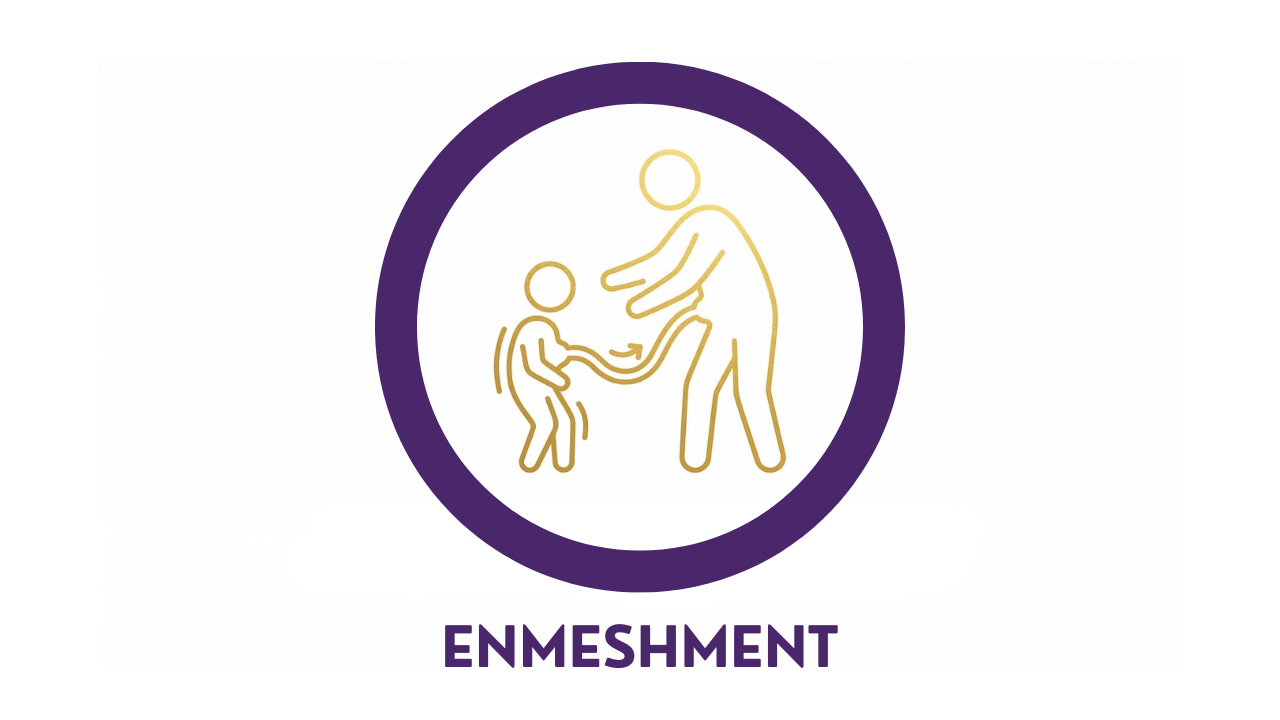
This pattern wasn’t something you chose. It’s the direct result of how you were parented. Your parents (or guardians) operated from their own trauma, their own fear, and their own survival strategies. They passed down a blueprint—an emotional template—that taught you:
- Your feelings are less important than keeping others comfortable
- It’s your job to manage other people’s emotions
- Being your authentic self is dangerous
- Love means sacrifice of your own needs and boundaries
- Secrets protect people (even though they isolate them)
Now, as a parent, you’re unconsciously recreating this same environment for your children. And they’re absorbing the same message you did: Your authentic self is the problem.
Five Critical Questions That Reveal Your Codependent Blueprint
The original post asked five questions that have helped thousands recognize themselves in codependent patterns. These questions work because they tap directly into the behaviors that codependency creates. Let’s walk through them with fresh understanding:
Question One: Could You Express Your Authentic Feelings to Your Parents?
“When you were a child and you felt angry, sad, or scared—when your parents did something that hurt you—could you talk to them about it? Could you have a real conversation about how you felt?”
If you couldn’t, you learned early that your feelings weren’t welcome. So you adapted. You created a survival persona—a mask—that was easier for your parents to be around. That’s you if you’re now doing the same thing with your kids: shutting down their emotional expression because it feels threatening or overwhelming.
The codependent parent typically responds to a child’s big feelings by:
- Dismissing them: “You’re overreacting”
- Making them about the parent: “You’re making me look like a bad parent”
- Trying to fix them immediately: “Here, this will make it better”
- Becoming emotionally flooded and unable to regulate
What your child learns: My feelings are a problem. When I’m authentic, I create chaos. And the cycle continues.
Question Two: Do You Still Keep Secrets from Your Parents (or Find Yourself Keeping Secrets from Your Kids)?
“Having secrets shows that to be your authentic self—even now as an adult—is not safe.”
This is one of the most painful recognitions. You might be an adult with grown children, yet you still can’t tell your parents what you really think, believe, or feel. Because somewhere in your nervous system, the message persists: If they knew who I really am, they would reject me.
That’s you if you’re now doing this with your own children—keeping them out of your authentic self, managing their perception of you, staying hidden.
The tragedy is this: when children can’t access their parent’s authentic self, they learn that authenticity is dangerous. They develop their own survival personas. They become codependent too.
Question Three: Can You Have an Open Discussion About Your Parents’ Imperfections?
“Could you sit with your parents and talk honestly about what happened in your childhood—and feel that they would take responsibility, or at least acknowledge what you’re saying?”
Most people can’t. Because denial is their parent’s survival mechanism too. The parent who can’t acknowledge their own failures, their own limitations, their own trauma—that parent is frozen in the Worst Day Cycle™, unable to move toward healing.
And now, that’s you with your children. You can’t admit when you’ve been harsh, enmeshed, or wrong, because that would crack the survival persona you’ve constructed. It would require vulnerability. It would mean your child might see you as imperfect, and the fear of that is intolerable.
Your child learns: Adults don’t take responsibility. Mistakes are shameful. Honesty isn’t safe.
Question Four: Do You Excuse, Minimize, or Justify Your Parents’ Harmful Behavior?
“‘They were young.’ ‘They did the best they could.’ ‘It made me stronger.’ ‘That was normal back then.’”
These are the words of someone still in denial. Denial—self-deception—is the fourth stage of the Worst Day Cycle™, the final protection mechanism that keeps people trapped.
When you can’t speak the truth about what was done to you, you can’t heal from it. And you can’t stop yourself from repeating it. The best-intentioned parent who says “My parents did their best” while unconsciously replicating their emotional patterns is still passing the trauma forward.
Question Five: Do You Use “Should,” “Could,” and “If” Statements?
“‘I should have…’ ‘I could have…’ ‘If only I had…’”
These are shame-based statements. They come from childhood messaging that said: You’re not okay as you are. You must earn your worth through perfect performance.
That’s you if you tell your children “You should have known better” instead of “Let’s figure this out together.” You’re transmitting the same conditional love you received: I love you if you’re perfect. I love you if you don’t make mistakes.
The healing marker? When “shoulds” become “woulds”: “I would have liked to handle that differently.” That’s self-acceptance. That’s the beginning of breaking the cycle.
The Worst Day Cycle™: How Childhood Trauma Becomes Parenting Behavior
To interrupt codependent parenting, you must understand how it gets hard-wired into your neurology. This is where the Worst Day Cycle™ becomes essential.
The Worst Day Cycle™ has four stages: Trauma → Fear → Shame → Denial. Understanding each stage is the first step to escaping it.
Stage One: The Original Trauma
Your childhood trauma wasn’t necessarily dramatic. It could be a parent who couldn’t handle your feelings. A parent who used you as an emotional support system. A parent who punished you for being imperfect. A parent who was absent. A parent who was suffocating.
Your brain experienced these moments as threats to survival because, developmentally, you depend on your parents for literal survival. When they withdraw emotionally or become frightening, your nervous system treats it like a life-or-death crisis. This triggers the release of cortisol and adrenaline—stress chemicals that flood your system and create lasting neural pathways.
Research shows that 70% of us experienced severe childhood trauma (the ACE study). This isn’t rare. This is the human condition.
Stage Two: Fear—The Survival Response
After trauma, fear becomes the operating system. Your brain learned: This situation is dangerous. I must prevent it from happening again.
That’s you if you find yourself unable to relax with your children, always braced for the next thing to go wrong, unable to enjoy the present moment because you’re managing potential disasters.
Your nervous system is still running the survival script from childhood. It’s trying to protect you. But now it’s protecting you from shadows—from situations that aren’t actually dangerous, because they’re not happening today.
Stage Three: Shame—The Belief That You Are the Problem
Shame is the critical stage where the damage deepens. Shame is the felt sense that I am the problem. Not my behavior—my self.
Most parents received shaming as their primary feedback mechanism. “You should know better.” “Why would you do that?” “You’re so stupid/lazy/selfish.” Over time, the child internalizes this: There’s something fundamentally wrong with me.
Now, as a parent, you transmit shame to your children in identical ways. You don’t do it on purpose. You do it because shame is the only language you learned. You shame them for emotions you find threatening. You shame them for needs. You shame them for being imperfect.
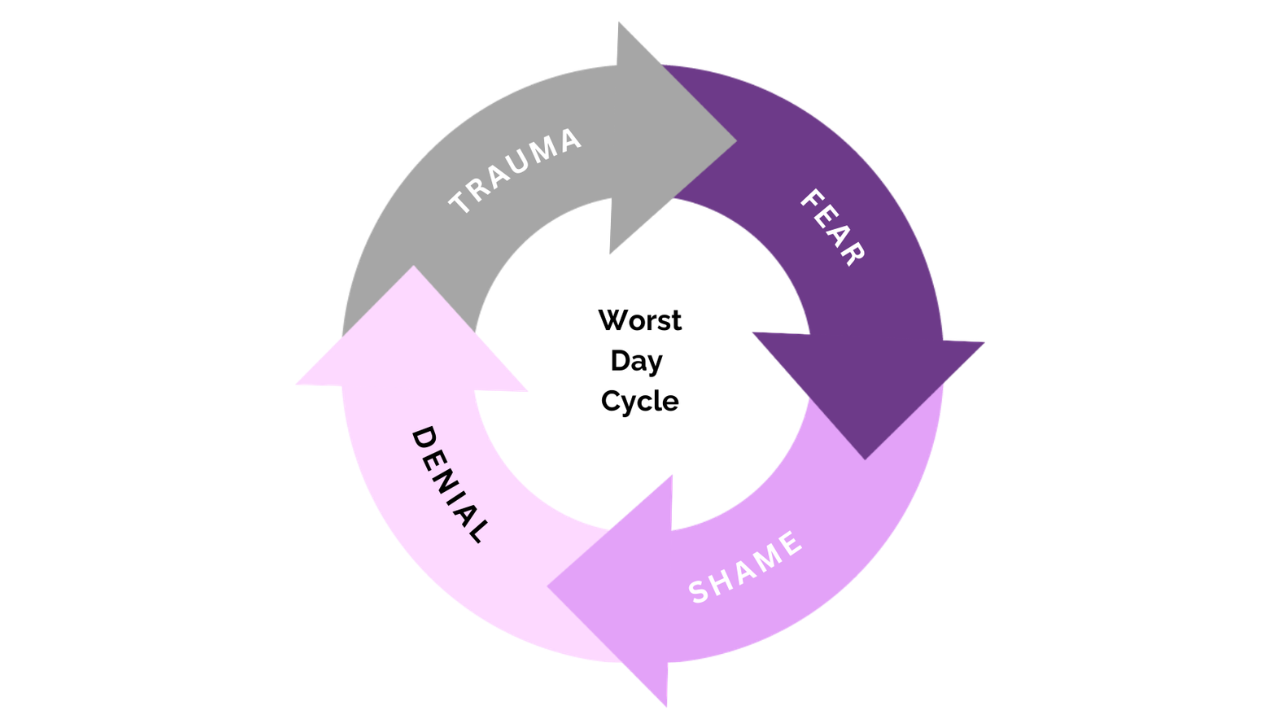
Stage Four: Denial—The Survival Persona Takes Over
Denial—also called self-deception—is the final stage. It’s when the pain becomes unbearable and the mind says: This isn’t happening. This is normal. This was good for me.
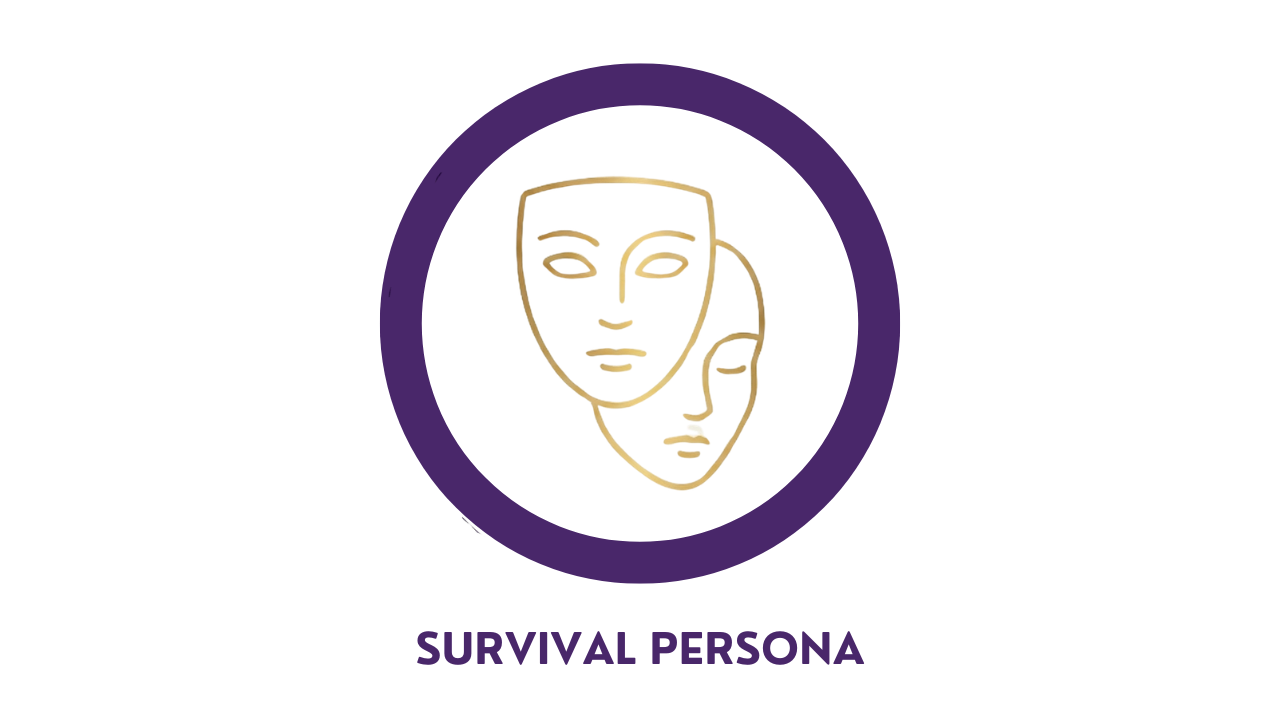
Denial creates the survival persona. Instead of staying in the devastating truth that your parents didn’t adequately nurture you, your mind creates a character: the Falsely Empowered Person (“I’m fine, I don’t need anyone”), the Disempowered Person (“I’m too broken to be loved”), or the Adapted Wounded Child (“I’ll be perfect and earn their love”).
This survival persona becomes so integrated that you forget it’s a mask. You think it’s your authentic self. And you pass it directly to your children.
The Three Survival Personas: How You Learned to Hide Your Authentic Self
There are three primary ways people respond to childhood trauma and shame. Understanding which one you adopted is essential to recognizing your parenting patterns.
The Falsely Empowered Survival Persona
This person learned early that vulnerability was dangerous. So they built a wall. They became the achiever, the caretaker, the one who “doesn’t need anyone.” They learned to disconnect from their feelings and operate from pure willpower.
That’s you if you’re the parent who says “I’m fine, I’ll handle it” while drowning. Your child learns that emotions are weakness, that they should handle everything alone, that asking for help is failure.
The falsely empowered persona parenting style: You’re competent and in control, but emotionally unavailable. You may be critical of others’ emotions because you’ve had to amputate your own. Your children feel they have to be perfect and self-sufficient to deserve your love.
The Disempowered Survival Persona
This person internalized the message: I’m fundamentally broken. I can’t handle life. They learned helplessness as a survival strategy. If they expected nothing of themselves, they couldn’t be disappointed.
That’s you if you parent from a place of “I’m doing my best but I’m a mess.” Your child inherits your anxiety about your own adequacy. They become your emotional support system, role-reversed into parenthood.
The disempowered persona parenting style: You’re emotionally flooded and unpredictable. You make your children responsible for your emotional regulation. They learn that they must take care of you to be safe.
The Adapted Wounded Child Survival Persona
This person learned that earning love is the path to safety. They became the people-pleaser, the high achiever, the one who reads the room and adapts. They abandoned their authentic self in exchange for the conditional approval of others.
That’s you if you parent by controlling your child’s behavior so they’ll be “likable,” or if you create enmeshment by making their achievements your measure of success.
The adapted wounded child parenting style: You’re invested in your child being “good” because their goodness feels like proof that you’re a good parent. You’re enmeshed in their identity. They learn that their worth depends on performance and pleasing others.
How Codependent Parenting Shows Up in Every Life Area
In Family Relationships
- You can’t have honest conversations with your children about your needs
- You feel responsible for your child’s emotions
- You become flooded or defensive when your child is upset
- You make decisions based on what keeps family peace, not what’s healthy
- You hide your authentic self to maintain the family image
- Your children don’t really know who you are
In Romantic Relationships
- You abandon your own needs in service of keeping the relationship intact
- You can’t receive criticism without taking it as evidence you’re fundamentally flawed
- You manipulate outcomes through people-pleasing rather than honest communication
- You’re enmeshed with your partner’s emotions and feel responsible for their happiness
- You repeat the same dynamics you witnessed in your parents’ marriage
In Friendships
- You’re the giver; friendships feel transactional
- You stay in relationships that are one-sided out of fear of abandonment
- You can’t express your authentic needs or opinions
- You collect evidence that you’re not worthy of friendship
In Work/Achievement
- Your self-worth is entirely dependent on external achievement
- You overfunction and burn out regularly
- You’re unable to rest because rest feels like failure
- You’re hypersensitive to feedback and take criticism as personal rejection
In Body/Health
- You disconnect from your body’s signals (hunger, fatigue, pain, arousal)
- You prioritize others’ comfort over your physical needs
- You use food, alcohol, or other substances to regulate emotions
- You experience chronic stress-related illness (headaches, digestive issues, autoimmune flares)
The Authentic Self Cycle™: Breaking Free from Inherited Patterns
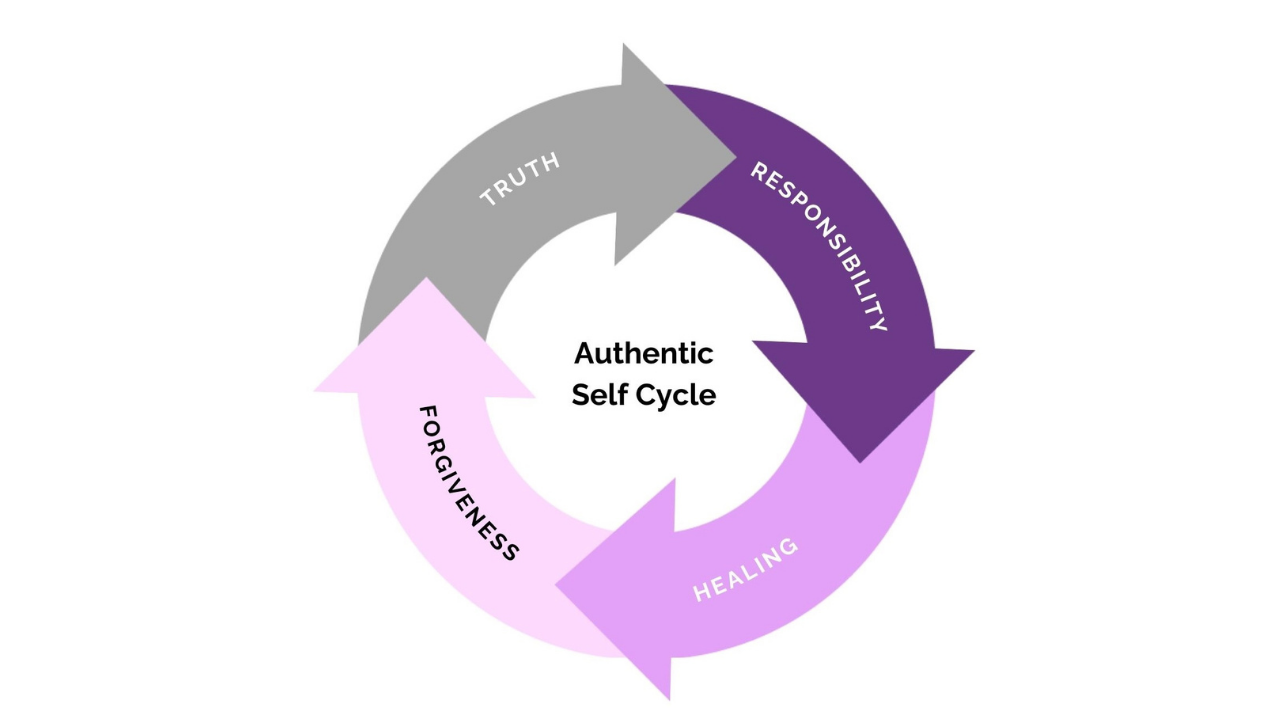
You can interrupt the Worst Day Cycle™. Breaking free from codependent parenting requires moving through four stages of the Authentic Self Cycle™: Truth → Responsibility → Healing → Forgiveness.
Stage One: Truth—Name the Blueprint
Truth means saying it plainly: I was harmed. My parents’ way of relating was not healthy. I absorbed a blueprint that is now harming my children.
This isn’t blame. Blame is shame looking for a target. Truth is just reality. Your parents did the best they could with the information they had (probably). And they still harmed you. Both things can be true.
Truth requires getting out of denial. It requires saying the things you’ve been trained to minimize:
- “I was emotionally neglected, and that hurt me.”
- “My parent used me as their emotional support system, and that was enmeshment.”
- “I was shamed for my feelings, and now I shame my children the same way.”
- “I keep secrets from my parents because it still isn’t safe to be authentic with them.”
That’s you if you’re willing to name what actually happened instead of reframing it as “character-building.”
Stage Two: Responsibility—Own Your Reactions Without Blame
Responsibility says: I was harmed AND I am responsible for healing. I cannot change what was done to me, but I can choose what I do with it.
This is where you stop waiting for your parents to acknowledge what they did. Stop expecting them to apologize or take responsibility. That might never happen. And waiting for it freezes you in victim status.
Instead, you take responsibility for your own healing. You acknowledge: I parent my children from a blueprint I inherited. I can’t blame them for what I didn’t know. But now I know. Now I’m responsible for changing it.
Taking responsibility in parenting means: You stop pointing at your childhood as an excuse and start treating your codependency as your work to do. You become willing to feel the discomfort of being different from your parents. You tolerate your children’s authentic emotions even though they trigger you. You admit when you’re wrong. You do the hard internal work instead of expecting others to accommodate your emotional dysregulation.
Stage Three: Healing—Rewire Your Emotional Blueprint
Healing is the work of rewiring. Your emotional blueprint—the neural pathways, the shame messages, the fear responses—was built over years of childhood. It won’t change through insight alone. It changes through new experiences that contradict the old blueprint.
Healing happens when you:
- Regulate your nervous system instead of being ruled by it
- Experience yourself as worthy without earning it
- Express authentic feelings without the family unit collapsing
- Set boundaries and aren’t abandoned for doing so
- Receive love while being imperfect
This rewiring happens in relationship—especially in your parenting. When you stay regulated while your child has big feelings, their brain learns: Emotions are safe. My parent can handle me.
That’s you if you’re willing to be the parent to your child that you didn’t have. To model emotional authenticity instead of survival personas.
Stage Four: Forgiveness—Release the Inherited Blueprint
Forgiveness is the final stage, and it’s not what you think. It’s not pretending nothing happened. It’s not excusing the harm. It’s not even necessarily reconciliation with your parents.
Forgiveness is releasing the grip of your inherited blueprint on your future. It’s saying: I understand how you came to parent this way. I release my expectation that you could have been different. And I’m no longer going to parent my children the way you parented me.
Forgiveness is sovereignty. It’s the moment when you stop being defined by what was done to you and become defined by what you choose.
The Emotional Authenticity Method™: Five Steps to Rewire Your Blueprint
Understanding the frameworks is one thing. But how do you actually rewire your nervous system when you’re triggered by your child, flooded with shame, running your survival persona?
The Emotional Authenticity Method™ is the practical tool. It has five steps:
Step One: Somatic Down-Regulation (With Optional Titration)
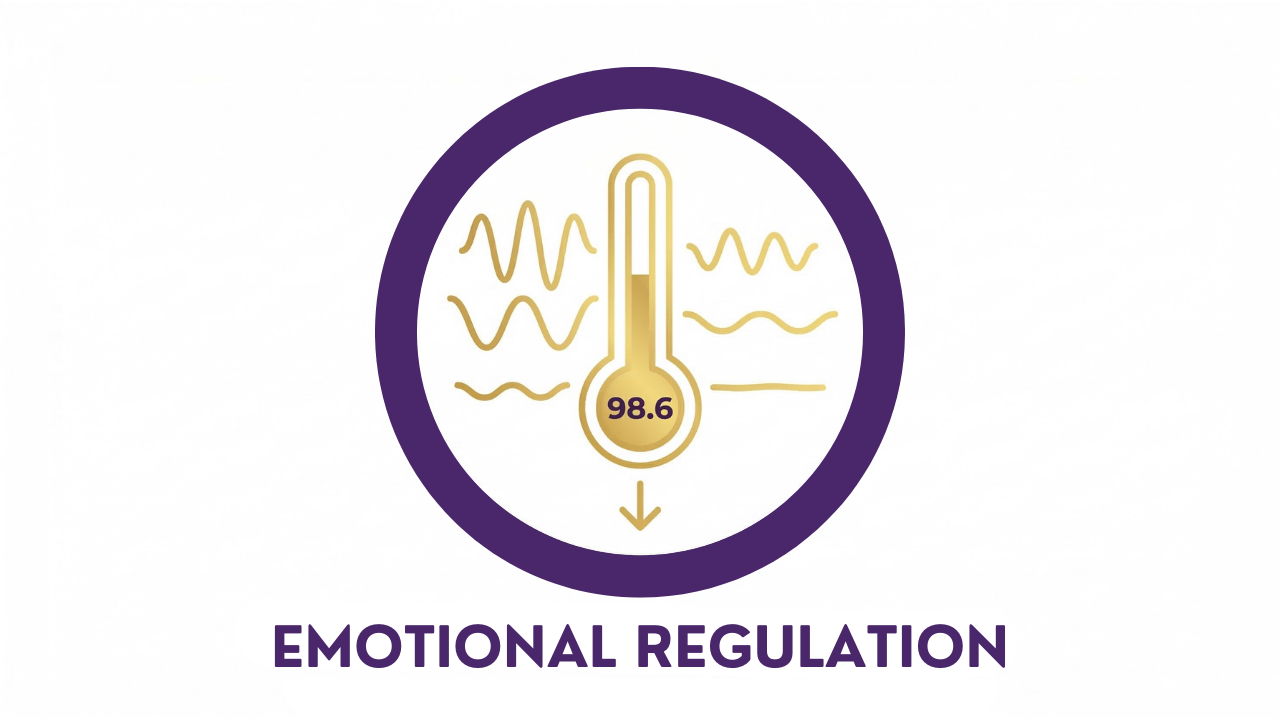
When you’re flooded, your prefrontal cortex—the part that thinks, reasons, and connects—goes offline. You’re running from your limbic system and brainstem. You need to get back into your body.
Somatic down-regulation means returning to your physical sensations. Cold water on your face. Grounding (feet on earth). Deep breathing. Progressive muscle relaxation. Movement.
Titration is the more subtle version: noticing just enough of the trigger to feel it, then pulling back. Slightly increasing the activation, then pulling back. This teaches your nervous system that you can tolerate the sensation without being consumed by it.
That’s you if you pause mid-argument with your child, excuse yourself for 5 minutes, and come back regulated. That pause is everything.
Step Two: What Am I Feeling? (Use the Feelings Wheel)
Most codependent people have learned to suppress feelings. You need a map. The Feelings Wheel gives you one. It breaks down emotions into primary feelings (anger, sadness, fear, joy, trust, surprise) and their subtler variations.
Instead of “I’m stressed,” you identify: “I’m anxious about losing control.” That specificity is where the power is.
Step Three: Where in My Body Do I Feel This?
Emotions live in your body. Shame might be a tightness in your chest. Fear might be a knot in your stomach. Anger might be heat in your face.
When you locate the feeling somatically, you’re moving it from the abstract (“I’m a bad parent”) to the physical (“There’s a tight knot in my chest when I raised my voice”). This is crucial because you can work with physical sensations in ways you can’t work with stories.
Step Four: What’s the Earliest Memory of This Feeling?
Often, the feeling you’re experiencing in the present moment with your child is not actually about today. It’s a memory. Your nervous system is responding to something from your past.
Maybe your child’s eye roll reminds you of the look your mother gave when you disappointed her. Maybe their defiance feels like abandonment because your father withdrew when you didn’t obey.
When you can trace the feeling back to its origin, you’ve separated the past from the present. That’s you if you can say: “I’m reacting to something that happened 35 years ago, not to what my child just did.”
Step Five: Who Would I Be Without This Feeling?
This final step invites imagination. If you released the fear, the shame, the obligation—who would you become? What would you do differently as a parent?
This is the bridge to your authentic self. This is where you step into possibility.
People Also Ask: 6 Questions About Codependent Parenting
Are parents to blame for codependency?
No. Blame is just shame looking for a target. Your parents did the best they could with the information they had at the time. Most parents were never taught healthy emotional parenting. They inherited codependency from their parents, who inherited it from theirs.
However—and this is critical—your parents are responsible. Responsibility means acknowledging that they chose not to educate themselves, not to seek help, not to break the cycle. You cannot blame them. You can hold them responsible. And you can make a different choice.
Can you be codependent if you came from a “good family”?
Absolutely. Codependency doesn’t always look like abuse. It can look like enmeshment (healthy-seeming closeness that’s actually fusion). It can look like a parent who’s always available but never sets boundaries. It can look like a parent who sacrificed everything and expects gratitude in return.
The ACE study shows that 70% of people experienced significant childhood trauma. Most of that doesn’t look dramatic from the outside.
How do you break codependency without cutting off your family?
Breaking codependency means changing the relationship structure, not necessarily ending the relationship. You set boundaries. You stop managing your family members’ emotions. You speak your truth, knowing they might respond with anger or withdrawal. You tolerate their discomfort without stepping in to fix it. You remain in relationship, but you’re no longer enmeshed.
Sometimes, after you set boundaries and start being authentic, family members choose to leave. That’s their choice, and it’s painful, but it’s not your responsibility to prevent.
Can you change codependent parenting patterns if you’re already doing them?
Yes. Your children’s brains are neuroplastic. They’re building neural pathways right now, but those pathways aren’t permanent. When you change your parenting today—when you admit you were wrong, when you regulate yourself, when you let them have feelings—you’re literally rewiring their brains.
It’s never too late. A parent who acknowledges their patterns and makes amends is infinitely more powerful than a parent who claims to be perfect.
What if your co-parent is codependent and won’t change?
You can only change yourself. You cannot make your co-parent break their codependency. You can model healthy behavior. You can set boundaries on what you will and won’t tolerate in your children’s presence. You can make clear agreements about parenting.
But ultimately, you’re responsible for your own healing and your own parenting. You can’t fix your co-parent’s blueprint. You can only protect your children from the fallout while modeling a different way.
How long does it take to rewire codependency in parenting?
Codependency was built over years (or decades) of conditioning. Rewiring takes consistent work. Most people see significant shifts within 6-12 months of intentional practice. But complete rewiring—full integration of emotional authenticity—is a lifelong process.
The good news: you don’t have to be fully healed to start breaking the cycle. You just have to be willing.
The Bottom Line: What Happens When You Stop the Cycle
When you interrupt the codependent parenting cycle, everything changes. Not just for you—for your children, and for their children.
Your children learn that their feelings matter. They learn that authenticity is safe. They learn that love isn’t transactional, that mistakes are survivable, that they’re worthy simply by existing—not through earning it.
Your nervous system begins to regulate. The constant vigilance, the bracing for disaster, the hyperresponsibility—it starts to dissolve. You remember what rest feels like. You remember who you are separate from your family system.
Your relationships deepen because they’re built on truth instead of survival personas. You can be genuinely close to people because you’re not managing their emotions or hiding your own.
And perhaps most importantly: you reclaim your authentic self. The one that was too terrifying to show to your parents. The one you’ve been hiding from your children. That’s your real self. And it’s the greatest gift you can give them—the permission to be their real selves too.
Recommended Reading & Next Steps
Books That Will Change Your Understanding
- Facing Codependence by Pia Mellody — The definitive text on codependency patterns and recovery. Essential reading.
- The Body Keeps the Score by Bessel van der Kolk — Understanding trauma’s impact on the nervous system and how to heal it.
- Scattered by Gabor Maté — How childhood disconnection becomes adulthood dysregulation and disease.
- Dare to Lead by Brené Brown — The role of vulnerability and shame resilience in authentic leadership and parenting.
- Your Journey to Success by Kenny Weiss — Understanding the Worst Day Cycle™ and how to break it.
Take the ACE Quiz
The Adverse Childhood Experiences (ACE) quiz measures the cumulative impact of trauma. Taking it clarifies just how much your nervous system is still responding to childhood harm.
Ready to Start Healing?
These courses will guide you through the frameworks and provide structure for your rewiring:
- Emotional Blueprint Starter Course — Individual ($79) — Understand your personal patterns and blueprint
- Relationship Starter Course — Couples ($79) — Heal codependency patterns in your romantic relationship
- Why We Can’t Stop Hurting Each Other ($479) — Deep dive into the neurobiology of relationship trauma
- Why High Achievers Fail at Love ($479) — For the falsely empowered: understanding achievement-focused codependency
- The Shutdown Avoidant Partner ($479) — If your co-parent or partner is avoidantly attached
- Tier 1: Mapping the Blueprint ($1,379) — Comprehensive rewiring program using the Emotional Authenticity Method™
Start Here: The Feelings Wheel Exercise
Use this simple but profound exercise to begin reconnecting with your emotional authenticity. It takes 10 minutes and can completely shift how you understand yourself.
Related Articles Worth Reading
- The Signs of Enmeshment: Are You Fused With Your Family?
- 7 Signs of Insecurity in Relationships (And How Codependency Creates Them)
- What Real Self-Esteem Looks Like (It’s Not What You Think)
- Negotiables and Non-Negotiables: Setting Boundaries in Codependent Recovery
- 10 Do’s and Don’ts for a Great Relationship (From Someone Who Almost Lost Everything)
The Video That Started It All
Thousands of people have watched this video and recognized themselves in the five questions. If this post has resonated with you, watch this too. Then start your healing journey.