What Is Enmeshment and Why Does Society Celebrate It?
You answer the phone and your stomach drops before they even speak. You already know what’s coming — the guilt, the obligation, the invisible leash that pulls you back into the role you’ve been playing since you were six years old. You’re the one who manages everyone’s emotions. You’re the one who keeps the peace, who checks in, who fixes, who sacrifices your plans, your energy, your identity so that someone else can feel okay.
And you’re exhausted by it. You’re resentful. You’re confused, because from the outside, everyone says you have a “close” family. A “tight-knit” family. A family that “really loves each other.”
But something has always felt wrong. Something has always felt like too much. Like you could never breathe. Like you were never actually allowed to be you.
That’s you… feeling responsible for your parent’s happiness before you even understood what happiness was.
Enmeshment is a parenting style mischaracterized as love. It is a family dynamic where the boundaries between parent and child are dissolved, and the child becomes the parent’s emotional caretaker — their confidant, their therapist, their surrogate spouse, their reason for living. It contains elements of psychological and emotional incest, perpetrated through the behaviors, communication style, and actions of the parents, who are completely unconscious that they are doing it. Enmeshment creates two types of codependence: the disempowered (people-pleaser, frozen, helpless) and the falsely empowered (super-achiever, hyper-controlling). Both are survival persona formations built to maintain attachment to caregivers. Your childhood did not teach you how to love — it taught you how to disappear.
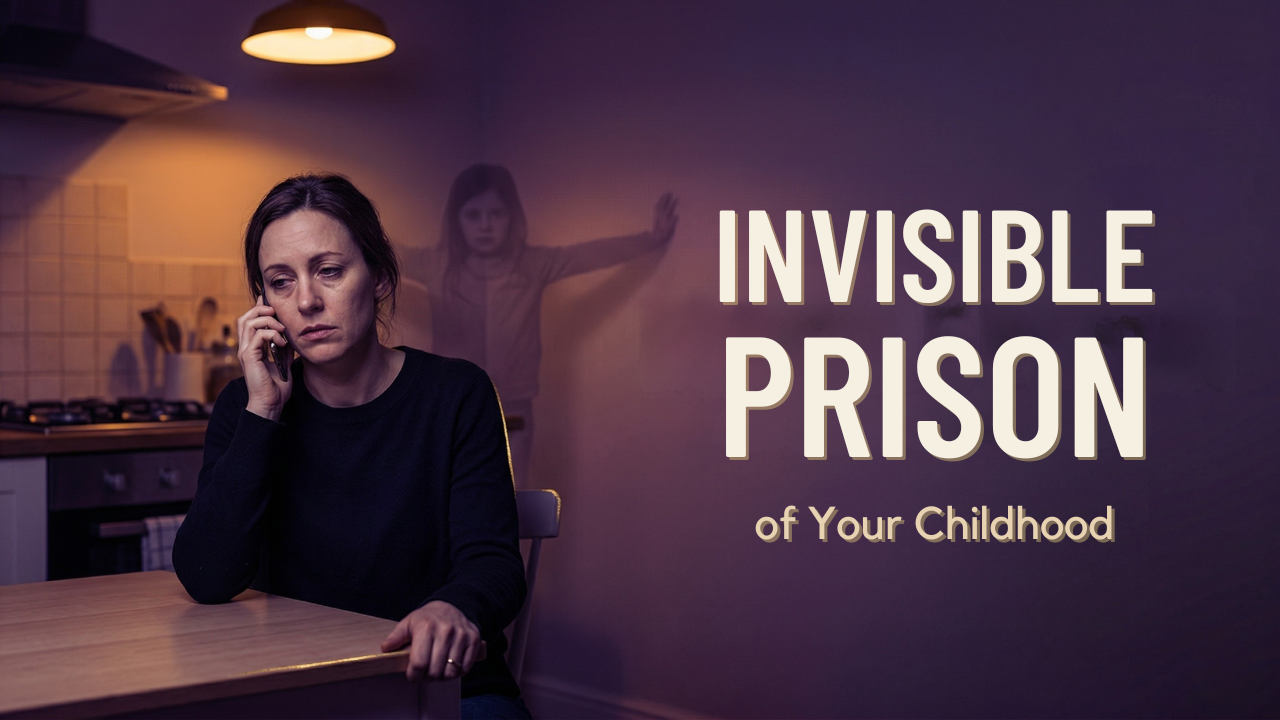
Enmeshment is childhood abuse disguised as a loving, tight-knit family. The parent unconsciously uses the child for intimacy, companionship, advice, and emotional release — reversing the parent-child relationship and programming the child into a codependent caretaker. This invisible prison creates the survival personas, shame patterns, and relationship blueprints that drive the Worst Day Cycle™ in every adult bond. The Emotional Authenticity Method™ heals enmeshment by rewiring the emotional blueprint at the nervous system level — not with tips, but by restoring the identity that was colonized in childhood.
Enmeshment is a parenting style that society mischaracterizes as loving, loyal, and protective. The “close family.” The “tight-knit family.” The parent who says “my kids are my world” and means it with a ferocity that feels like devotion but functions like a cage.
In an enmeshed family, the parent is using the child for intimacy, companionship, romantic attachment, advice, problem-solving, ego fulfillment, or emotional release. The parent is completely unconscious that they are doing this. They are also completely unconscious that they have severe unmet emotional and psychological needs within themselves — needs that come from their own unresolved childhood trauma. Society and the media have not educated us on what healthy parenting looks like. They have actually educated us to promote enmeshment.
That’s you… watching your parent post another essay on Facebook about how “blessed” they are to have you, while you feel the weight of being their entire emotional world.
I call these the Facebook parents. You see it when the child is going through fourth grade, eighth grade, tenth grade graduation — mom or dad lamenting that they’re growing up. They’re losing this romantic attachment. It’s too close. They are too involved with their child. That’s too much love. It’s smother love. It’s enmeshment. It’s not healthy. These parents have very few friends and very little support — that’s part of why they’re so over-involved with their child.
I saw this a couple of years ago on Facebook: a woman had taken her daughter off to college and she spent the first week with her daughter. Her Facebook posts were pages long — talking about all the new friends, the frat parties, moving in. This mother couldn’t let go. Her life revolved around her daughter. She was consumed with every aspect of her daughter’s life — her friends, everything. She was governing all of it. She couldn’t let go. That is severe enmeshment, severely toxic, severely abusive, and that’s emotional incest.
That’s you… the one who moved across the country and still feels the guilt of that phone call: “I just miss you so much. I’ll be fine here. All alone.”
If you find that this describes yourself or your family, don’t beat yourself up. This is very common. Most of the things you’re going to hear about enmeshment — it’s not about blaming people. They just didn’t know. They weren’t aware that what they thought was proper parenting is actually very destructive. They also weren’t aware that they had so many unmet needs within themselves. This doesn’t make them bad people. It makes them people who were never taught the truth about what love actually requires.
What Are the Warning Signs of an Enmeshed Parent?
I have identified 18 warning signs that your parent is enmeshed with you. Here are the ones that show up most often in the adults I work with — and the ones that create the most damage in adult relationships.
Their Life Revolves Around You — Even Into Adulthood
This is the parent whose identity is fused with yours. “My kids are my world.” They feel lost, lonely, sad, even hopeless when their children are not around. They have very few friends and very little outside support. Their child is their primary emotional attachment — not their spouse, not their friendships, not their own inner life. The child carries the full weight of being someone’s reason for existing.
They Demand to Know Everything
Parents who know too much about their children’s personal relationships, activities, and problems — and they demand to be included. This is the mother at her daughter’s college, posting about every party, every friend, governing everything. She couldn’t let go because letting go would mean confronting her own emptiness.
That’s you… hiding your real life from your parent because you know if they find out, they’ll insert themselves into every corner of it.
They Share Too Much Personal Information
Telling your child about your marital problems. Lamenting about the divorce. Using your child as your emotional support and confidant. This is completely inappropriate. It is not their job. That is way too detailed information for their development. They can’t handle it emotionally. It puts them in a position to have to choose a side. It’s very abusive to dump that kind of information on a child.
I will never forget this moment. I was six years old. We were walking into Safeway. My mom and I were holding hands, and I can still feel my feet hitting the asphalt as we’re just leaving the parking lot about to get on the sidewalk and walk in the door. My mom, holding my hand, says, “You know Kenny, I take you for granted.” I had no idea what that meant. I just knew I felt this tremendous weight of responsibility. What later became — I became both my parents’ emotional confidants. They came to me for everything. That was the first memory I have of my mom enmeshing with me and creating an emotional incest situation.
That’s you… six years old, carrying an adult’s emotional world on your shoulders and not understanding why your chest feels so heavy.
Their Self-Worth Depends on Your Success
These are the classic screaming parents at the Little League games. They go ballistic — “What are you doing? You’re so stupid! Come on, make a play!” — or they fight with the coaches, fight with the fans, fight with other parents. This is classic enmeshment. They are over-involved and not allowing their child to live a life. They think it’s protection. It’s not. It’s emotional incest and enmeshment. This is also the college admissions scandal. All of those wealthy people whose entire self-worth was tied up in whether their child got into Harvard or USC. They did that for themselves, not for their child. That situation is so abusive, and the media really didn’t get into how horrifically abusive all of those parents were to their children.
They Discourage Your Independence
A parent who subtly or directly criticizes a child’s independence or plays the martyr: “You sure you want to do that? You might get hurt.” Or: “Why do you want to live there? It’s so far away from me and your dad.” Or the guilt play: “Go ahead, go out with your friends. I’ll be right here. I’ll be fine sitting here all alone.” That’s all enmeshment. Do you hear it? That’s the parent requesting, demanding that the child take care of them. That’s incestuous. It is not a child’s job. Children don’t owe us anything. We made the choice to have children. The enmeshed parent thinks that even in old age, the child owes them something. The child never made the choice to be born. So many parents have kids like props, little dolls they’re going to mold into what they want. That’s not our job as parents. Our job is to create an emotional environment for them to become what they want, not what we want.
That’s you… canceling your own plans again because the guilt of saying “no” to your parent is physically unbearable.
They React with Rage When You Set Boundaries
A parent who reacts with anger if an adult child tries to set boundaries or limits of any kind. They just freak out. If anyone listening to this is going to hear it and go into massive anger and denial — that’s the sign right there. Setting boundaries takes away their food supply, their emotional supply, and they freak out at any suggestion of that.
They Made You a Surrogate Spouse
An opposite-sex parent who criticizes your partner or is in competition with them for the child’s love. They basically made you a surrogate spouse. This happened to me — my mother made me a surrogate spouse. The surrogate spouse dynamic has many facets. One of them is to criticize and always put down the man or the woman: “Oh, they’re an awful person, how’d you marry them?” They’ve lost their love relationship with you, they had romanticized you, and so they’re going to do anything to keep you from feeling closeness to this person.
They Spoil to Control
When a parent spoils or takes care of a child financially to maintain enmeshment. I had a client — probably the worst case of child abuse I’ve ever seen. This woman came into my office in her late 20s, never really had a job, didn’t know how to care for herself. Mom was an alcoholic who gave her credit cards and paid for everything destructive — no questions asked. But if she did one simple thing that was self-loving, like take a yoga class, mom would threaten to cut her off. Using finances to keep her close, to sit on the phone and drink together. In a few short years, the progress this woman has made is beyond comprehension. To cut that level of enmeshment from a parent — it’s truly courageous work.
How Does Enmeshment Become Emotional Incest?
Enmeshment and emotional incest are not two separate problems. Every enmeshed family has elements of emotional incest, because the core dynamic is the parent using the child for emotional needs that should be met by adult relationships, therapy, or self-work.
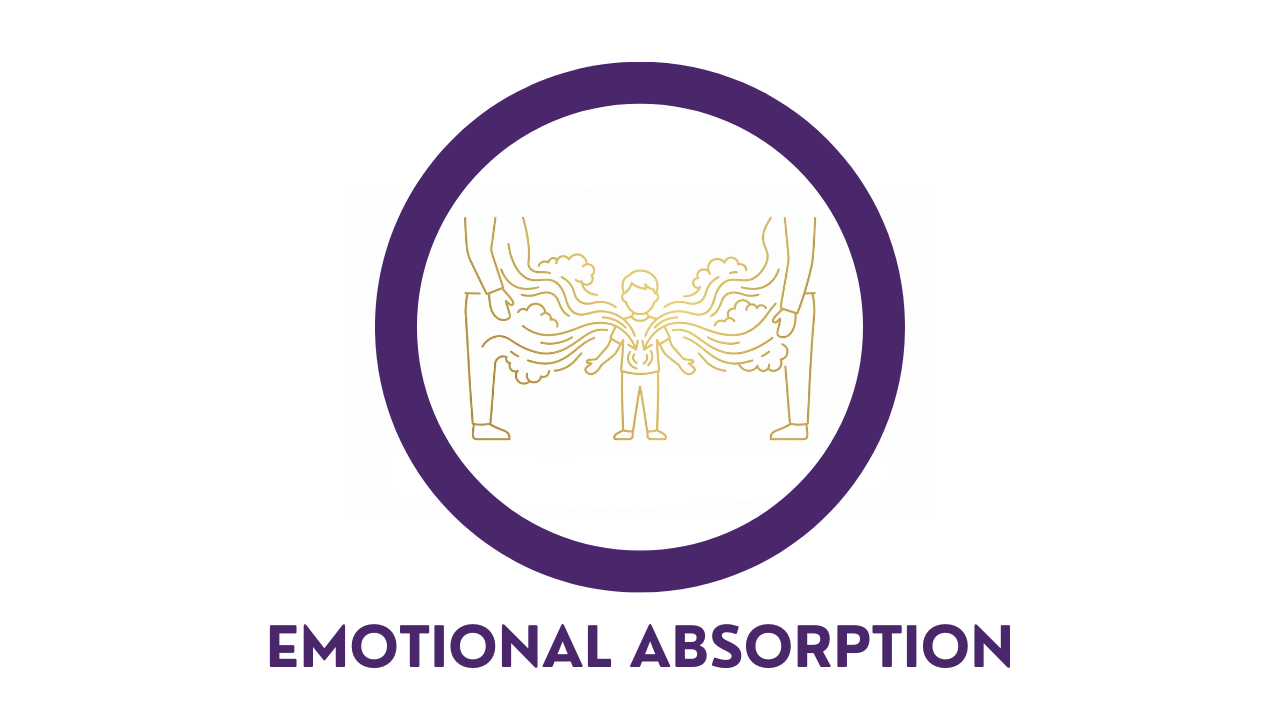
In a healthy parent-child relationship, the umbilical cord feeds the child — it sends nutrients, safety, and emotional nourishment from the parent to the child. But in an enmeshed childhood, the cord flips direction. One or both parents suck the emotional life out of the child to feed themselves. The child becomes the emotional provider, the surrogate spouse, the confidant, the therapist, the best friend — all before the child has any capacity to carry those roles.
That’s you… the eight-year-old who could read the room before you could read a book.
This happens most often in single-parent households and in households where the partners aren’t getting along. The parents will then enmesh with the child. The mother or father shares intimate details of the divorce, their sadness, their struggles with dating — information no child should ever carry. The child may be the golden child — outsized attention that is actually a prison of expectation. The parentified child — cooking, cleaning, babysitting at four or six years old. Or the emotional shock absorber — listening to mom cry about dad, mediating between parents, carrying family secrets.
That’s you… the child who learned that your pain was less important than your parent’s comfort.
In every case, the child’s own emotional needs are subordinated. They feel special and powerful — but hidden underneath is a devastating truth: if I have this much power and responsibility, who is taking care of me? Nobody. The child is being horrifically abandoned while being told they are special. That double bind creates the love avoidant adult.
John Bradshaw calls this dynamic the “thinly sadistic nice person” — the parent whose giving and kindness and niceness is thinly sadistic. Because underneath, there’s this unspoken requirement. And if you don’t meet that requirement, it’s like being slashed by a thousand paper cuts. Because now the parent is upset: they’ve been giving, giving, giving. Now they’re depleted because all they do is give and you still won’t change and give them what they want. So they were never giving. But now they’re placing the responsibility on the child. And that’s why the child is anxious. It’s like — I can’t even process my own emotions. Now I have to deal with your covert manipulations. Leave me alone. It’s too much. That’s the enmeshment. It’s a covert, manipulative dynamic: I’m going to give to you in the hopes that you recognize me and how loving and kind I am, and you pat me on the back — which makes the child emotionally responsible for validating the parent.
That’s you… the one who was told you’re “so loved” but always felt like you were being consumed.
As Dr. Patricia Love documents in The Emotional Incest Syndrome, every parent does a level of this enmeshment to their child. Nobody is immune from it. It’s a scale — some are more severe — but it’s prevalent in every relationship as a parent and in adult love relationships. It’s part of the recovery process to gain this knowledge so we can develop new tools and skills to nurture ourselves and those closest to us the way we actually want to — not the way we were taught.
How Does Enmeshment Program Your Emotional Blueprint?
Enmeshment doesn’t just affect your emotions — it colonizes your identity. The parent colonizes the child’s emotional world, preferences, beliefs, moral framework, spiritual framework, conflict style, sense of self, and relational blueprint. So the adult struggles with knowing what they want, expressing preferences, holding boundaries, forming independent thought, making autonomous decisions. Enmeshed adults often say: “I don’t know what I want.” “What do you think I should do?” “What if they get upset?” “I can’t disappoint them.” “I feel guilty choosing myself.”
That’s you… standing in a restaurant unable to order because choosing for yourself feels dangerous.
This identity colonization is why you can read twenty books on boundaries and still not set one. Your brain doesn’t have a boundary problem — it has an identity problem. The boundaries never formed because the environment never permitted separation.
Here is the mechanism: in the first seven years of life, the child is in a theta brain wave state — essentially a sponge absorbing everything without conscious filtering. During those years, the child had no emotional boundaries. They became whatever their parents’ emotional condition was. The parents transgressed the child’s boundaries so completely that the child never developed internal containment. By the time consciousness came online around age seven, the trauma had already been normalized. The child had already created adaptations, belief systems, and survival responses.
The enmeshed child either goes disempowered — collapsing, people-pleasing, losing themselves to avoid abandonment — or falsely empowered — controlling, dominating, raging, intimidating to avoid vulnerability. Or they become the adapted wounded child, who oscillates between falsely empowered and disempowered depending on the situation. All three are survival personas. They are not who you are. They are who you became to stay safe.
That’s you… being the rock for everyone in public and falling apart alone in your car.
The brain does not process the world through right and wrong, good and bad, healthy and unhealthy. The brain processes the world through one single filter: known versus unknown. If the brain has already experienced something — even if it was devastating — it categorizes that experience as survivable and therefore safe to repeat. Anything the brain has never experienced — even if it would be genuinely healthy, loving, and stabilizing — registers as unknown, and unknown triggers a fear response that shuts the system down. This is why you keep recreating enmeshment in your adult relationships. Your brain is addicted to the chemistry of it.
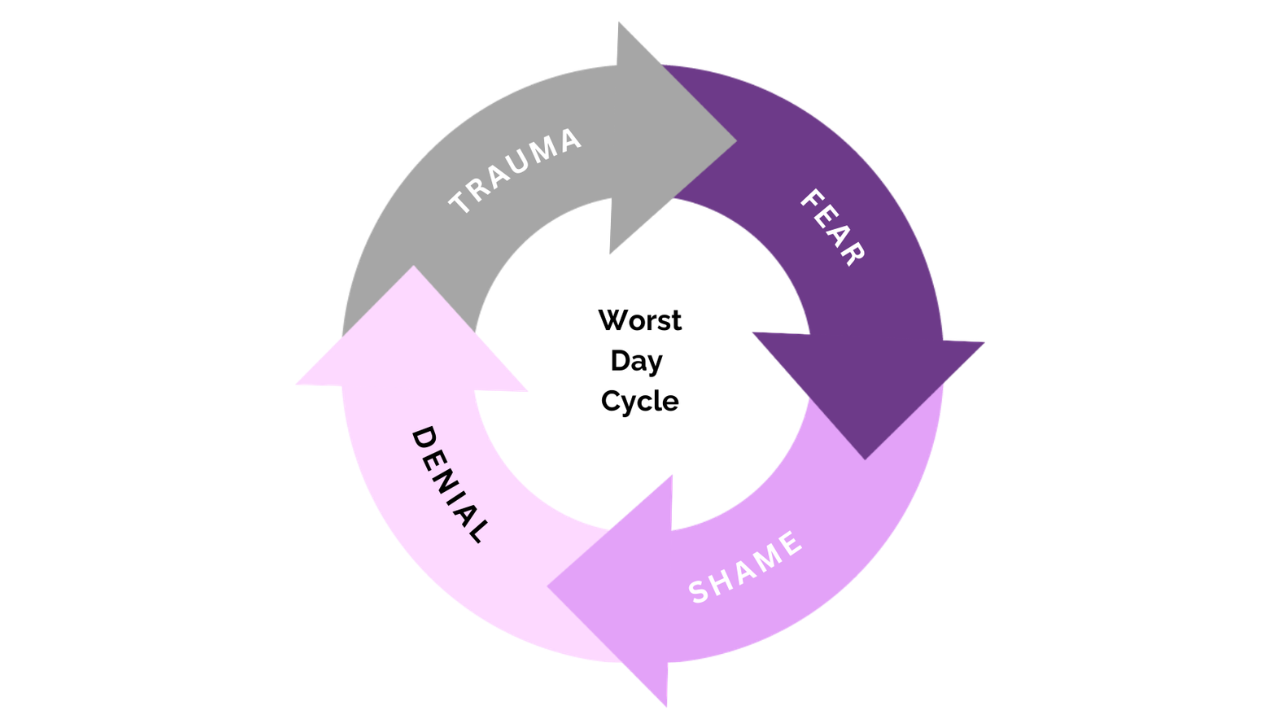
This is the Worst Day Cycle™ — Trauma → Fear → Shame → Denial — repeating on a loop. The enmeshment was the original trauma. The fear is the terror of abandonment if you stop performing your role. The shame is the belief that your needs make you selfish. The denial is “We’re just a really close family.”
Why Does Enmeshment Destroy Your Adult Relationships?
Enmeshment programs your nervous system with an emotional blueprint that says: love equals losing yourself. Safety equals performing. Belonging equals making someone else feel okay at the expense of your own needs. And that blueprint doesn’t stay in your family — it follows you into every relationship you enter for the rest of your life.
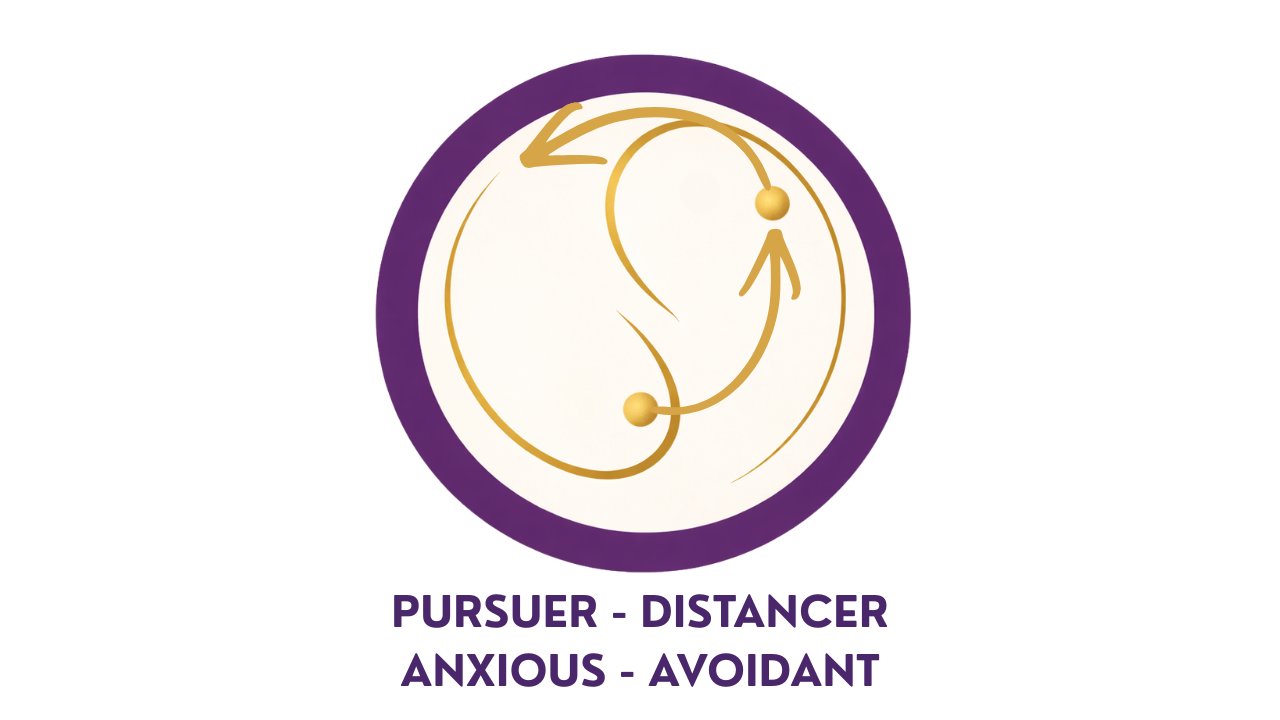
What most people call love is actually a codependent dynamic called love addiction and love avoidance — and it is running in virtually every relationship on the planet. The love addict’s conscious fear is abandonment. Their subconscious fear is intimacy. The love avoidant’s conscious fear is intimacy. Their subconscious fear is abandonment. Pia Mellody’s research on this is foundational — her three books are so groundbreaking that no adult should ever go on a date without reading them first.
The enmeshed child who was the emotional caretaker becomes the love addict — the pursuer. They chase connection because their childhood taught them they must earn love through caretaking, through performing, through making themselves indispensable. They will do anything to avoid abandonment, because abandonment meant emotional death as a child.
That’s you… texting them again even though you know you shouldn’t, because the silence feels like you’re six years old and nobody’s coming.
The enmeshed child who was engulfed — the one whose parent sucked the emotional life out of them — becomes the love avoidant. They pull away from intimacy because their childhood taught them that closeness means being consumed. Connection means losing yourself. Love means someone taking from you until there’s nothing left. You see it on dating profiles: “don’t suffocate me.” They are literally advertising their childhood wound.
That’s you… pulling away from the person who loves you most because their warmth triggers the same terror you felt when your parent needed too much.
Each partner’s survival strategy triggers the other’s deepest wound. When the pursuer seeks closeness, the distancer’s body experiences threat, not love. When the distancer withdraws, the pursuer’s body experiences abandonment, not space. Neither is responding to the present moment. Both are replaying the Worst Day Cycle™.
How Enmeshment Shows Up by Life Area
Family
You dread holidays. You feel like a completely different person around your parents. You revert to your childhood role the moment you walk through their door. You leave family gatherings emotionally drained for days. You cannot have an honest conversation with your parent without guilt, rage, or shutdown.
Romantic Relationships
You choose partners who need to be rescued or who cannot be reached. You confuse intensity with love. You lose yourself completely in relationships. You either suffocate your partner with need or build walls they can never breach. You cannot tolerate healthy, stable love — because it doesn’t match your blueprint.
That’s you… wondering why the stable, kind partner feels wrong while the unavailable one feels like home.
Friendships
You are the therapist friend. Everyone dumps their problems on you and you absorb all of it. You cannot say no. You over-give until you resent them. You don’t know how to receive without guilt. You choose friends who mirror your family dynamic.
Work and Career
You are the reliable one. The one who takes on everyone’s workload. The one who cannot delegate, cannot ask for help, cannot tolerate being anything less than indispensable. You confuse your value with your productivity. Burnout is not a risk — it’s your baseline.
That’s you… answering work emails at midnight because if you stop producing, you stop existing.
Body and Health
Your body carries the enmeshment. Chronic tension in your shoulders from carrying everyone’s emotional weight. Stomach problems from swallowing your own needs. Exhaustion that sleep doesn’t fix. Autoimmune flare-ups that spike when family contact increases. Your body is keeping the score of every time you abandoned yourself to take care of someone else.
Why Has Everything You’ve Tried Failed to Fix This?
You’ve read the books. You’ve been to therapy. You’ve watched the TED talks. You’ve journaled, meditated, tried to “just set boundaries.” And nothing has changed the core pattern. You still feel the pull. You still lose yourself. You still can’t say no without the guilt swallowing you whole.
Here’s why: every tool you’ve been given works at the level of behavior and cognition. But enmeshment lives in your nervous system, your emotional blueprint, your body. It was installed before you had conscious awareness — in the first seven years of life while your brain was in theta state, absorbing everything without filtering. Telling an enmeshed person to “just set boundaries” is like telling someone with a broken leg to “just walk.” The structure isn’t there.
That’s you… knowing exactly what you should do and being physically unable to do it.
Traditional therapy often stays at the surface — talking about the pattern without touching the blueprint underneath. Communication skills teach you what to say but don’t address why your throat closes when you try to say it. Mindset work tells you to “choose yourself” but doesn’t explain why choosing yourself triggers the same panic response as childhood abandonment. Boundary scripts give you the words but not the internal architecture to hold them.
Jerry Wise covers Bowen family systems theory but stays in intellectual framework territory. Patrick Teahan does roleplays. Neither of them connects enmeshment to the full chain: enmeshment → survival persona formation → love addict/avoidant blueprint → adult relationship destruction → Worst Day Cycle™. Without seeing the full chain, you’re treating symptoms, not the disease.
That’s you… collecting coping strategies like badges while the fire underneath keeps burning.
The tools aren’t bad. They’re just not deep enough. They treat the behavior without touching the emotional chemical addiction that’s driving it. Your brain has been running the enmeshment program for decades. Logic cannot override a chemical addiction. Willpower cannot override a nervous system that has been programmed since birth.
The Emotional Authenticity Shift: How to Heal Enmeshment at the Root
Healing enmeshment requires working at the level where enmeshment was installed — the emotional blueprint. Not the cognitive level. Not the behavioral level. The level of your nervous system, your body, and the survival adaptations your brain created before you could speak.
The Emotional Authenticity Method™ is the process that does this. Here is how it applies specifically to enmeshment:
Step 1: Somatic Down-Regulation
When you feel the enmeshment activation — the guilt, the pull to caretake, the loss of yourself — pause. Focus on what you can hear for 15 to 30 seconds. This interrupts the automatic nervous system hijack that fires the moment your parent calls or your partner needs something. If you are highly dysregulated, use titration — smaller doses of awareness.
Step 2: What Am I Feeling Right Now?
Use emotional granularity — go beyond “bad” or “anxious.” Name the specific emotion: guilt, obligation, terror of abandonment, rage at being consumed, grief for the childhood you never had. The enmeshed person has spent their entire life tracking other people’s emotions. This step asks you to track your own — possibly for the first time.
That’s you… realizing you’ve never actually asked yourself how YOU feel, only how everyone else feels.
Step 3: Where in My Body Do I Feel It?
The enmeshment response lives in the body — tightness in the chest, heaviness in the shoulders, knot in the stomach, collapse in the spine. When you locate the physical sensation, you break the cognitive loop and connect with the somatic reality of what enmeshment did to you.
Step 4: What Is My Earliest Memory of Having This Exact Feeling?
This takes you back to the original enmeshment moment — the first time you learned that your needs did not matter, that your job was to take care of someone else. Maybe it was walking into Safeway at six years old. Maybe it was watching your mother cry about your father. When you find this memory, you find the root.
Step 5: Who Would I Be If I Never Had This Thought or Feeling Again?
This reveals your Authentic Self — the person who existed before enmeshment overwrote your identity. Before you were programmed to be the caretaker, the responsible one, the emotional shock absorber. What would be left over if you removed the guilt, the obligation, the compulsive need to manage everyone’s feelings? That is who you actually are.
Step 6: Feelization
Sit in the feeling of the Authentic Self and make it strong. Create a new emotional chemical addiction to replace the old enmeshment blueprint. Ask: How would I respond to this situation from this feeling? What would I say? What would I do? Visualize and feel yourself operating from your Authentic Self — setting the boundary, making the choice, choosing yourself without guilt. This is the emotional blueprint remapping step. This is how you build the internal boundary structure that enmeshment never allowed you to develop.
That’s you… feeling what it’s like to choose yourself for the first time and realizing the world doesn’t end.
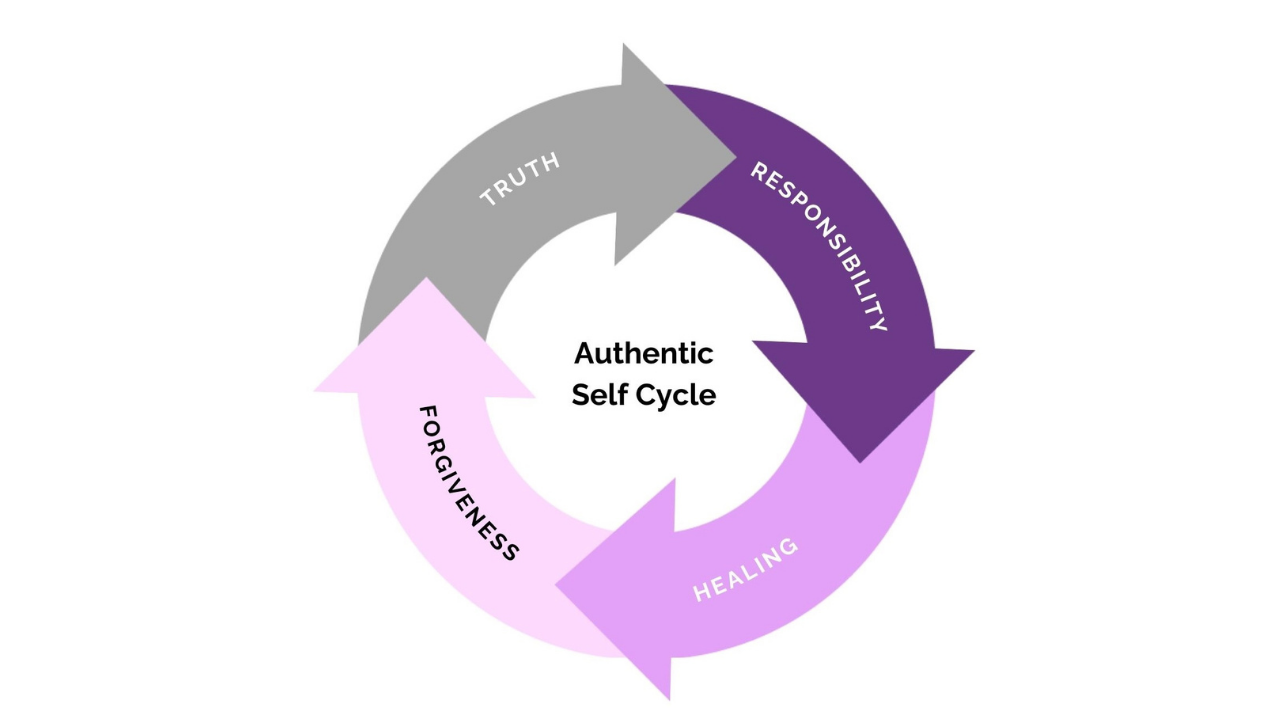
This is the shift from the Worst Day Cycle™ — Trauma → Fear → Shame → Denial — into the Authentic Self Cycle™ — Truth → Responsibility → Healing → Forgiveness. You tell the truth about what enmeshment did to you. You take responsibility for your healing (not for what was done to you). You heal the blueprint. And you forgive — not because what happened was okay, but because carrying it is destroying you.
What Does Healing from Enmeshment Look Like in Real Life?
Healing from enmeshment is not a single breakthrough moment. It is a daily practice of choosing yourself when every cell in your body screams that choosing yourself is selfish, dangerous, and unforgivable.
Before and After: The Shift in Action
Before: Your parent calls and you drop everything. You rearrange your entire day, cancel your own plans, absorb their mood, and spend the next three hours managing their emotional state. You hang up feeling hollow, resentful, and somehow guilty for feeling resentful.
After: Your parent calls and you feel the pull. You notice the tightness in your chest. You let it ring once more while you regulate. You answer and listen without absorbing. You say, “I hear you, and I love you. I need to go in fifteen minutes.” You hang up feeling shaky but whole. You chose yourself, and the world did not end.
That’s you… learning that boundaries are not walls. They are the structure that makes love possible.
Before: Your partner says “I need space” and your body goes into full panic — heart racing, catastrophic thinking, the desperate urge to pursue, to fix, to earn their return.
After: Your partner says “I need space” and your body activates, but you recognize it — that’s the six-year-old who was abandoned when they stopped performing. You breathe. You feel. You stay in your body. You say, “I understand. I’m here when you’re ready.” And you mean it, because your worth no longer depends on their proximity.
That’s you… staying in your own lane for the first time in your life and discovering that you still exist when nobody needs you.
I have seen this transformation hundreds of times. I experienced it myself — I was severely enmeshed with my mother. She made me a surrogate spouse. I had every condition the so-called empath claims — sucking in other people’s emotional energy, being overwhelmed in rooms full of people, my entire affect shifting the moment a negative person walked in. I discovered it was not a gift. It was a sign of severe childhood abuse — particularly my mother’s enmeshment — that left me completely boundaryless. Through the codependence work, through Emotional Authenticity, I now have internal boundaries. I can be present to someone’s pain without absorbing it. Not perfectly. Not all the time. But the awareness is there, and the process works.
You are not broken. You are not codependent because you care too much. You are codependent because you learned it is unsafe to stay inside yourself. You were never allowed separation. You were programmed to abandon yourself before you could tie your shoes. And that programming can be rewritten.
Your Next Small Step
Here is one thing you can do today. Not a big performance. Not a dramatic confrontation with your parent. Just this:
The next time you feel the pull to caretake, to manage someone else’s emotional state, to sacrifice your own need to keep the peace — pause. Put your hand on your chest. And ask: “Is this mine?”
That question — “Is this mine?” — is the beginning of the internal boundary that enmeshment never allowed you to build. You don’t have to do anything with the answer yet. You just have to ask the question. That alone is revolutionary for someone who was never allowed to have their own emotional world.
If you want to go deeper, try the Feelings Wheel exercise — it builds emotional granularity, which is the foundation of knowing where you end and someone else begins.
That’s you… choosing one small act of self-awareness instead of the giant leap that your survival persona insists is the only option.
If This Article Hit Home, the Books Go Deeper
Your Journey To Success
If this article hit home, the book goes deeper.
Everything I write about on this site — the Worst Day Cycle™, your childhood emotional blueprint, why you keep repeating the same patterns no matter how hard you try — it all started with my first book, Your Journey To Success: How to Accept the Answers You Discover Along the Way.
This is the book readers call “the first time I found a roadmap I could actually understand and that seemed attainable.” It is the book that walks you through WHY your life hasn’t changed despite all the work you’ve done — and shows you, step by step, exactly how to break free. No fluff. No motivational hype. Just the truth about what was done to you, why it stuck, and what to do about it.
If you’ve read this far, you already know something needs to change. This book is where that change starts.
Get Your Journey To Success on Amazon →
Your Journey To Being Yourself
Ready to stop understanding the problem and start rewiring it?
The article you just read scratches the surface. My new book, Your Journey To Being Yourself: How to Overcome the Worst Day Cycle & Reclaim Your Authentic Self with Emotional Authenticity, gives you the complete system — the Worst Day Cycle™, the Authentic Self Cycle™, and the full Emotional Authenticity Method™ — all in one place, with the neuroscience behind every step.
This is the book readers call “a genius piece of art in mastering emotion and the art of healing.” It speaks directly to the person who feels stuck, overwhelmed, and confused by the same repeating patterns — the same arguments, the same relationship breakdowns, the same shame — and is done accepting surface-level answers. Every chapter combines powerful stories, clear steps, and practical tools that show you how to rewire your emotional patterns from the inside out.
You are not broken. You were programmed. And this book shows you exactly how to rewrite the program.
Get Your Journey To Being Yourself on Amazon →
Frequently Asked Questions About Enmeshment
What is enmeshment in a family?
Enmeshment is a parenting style mischaracterized as a loving, loyal, tight-knit family. In reality, it involves elements of psychological and emotional incest where the parent uses the child for intimacy, companionship, advice, problem-solving, ego fulfillment, or emotional release. The parent is completely unconscious they are doing this. They have unmet emotional needs from their own childhood and are using the child to fill them. Enmeshment creates two types of codependence: the disempowered (people-pleaser, frozen, helpless) and the falsely empowered (super-achiever, hyper-controlling). Both are survival persona formations built to maintain attachment to caregivers.
What is the difference between enmeshment and emotional incest?
Enmeshment is the broader pattern where boundaries between parent and child are dissolved. Emotional incest is what happens inside that pattern — the parent treats the child as a surrogate spouse, confidant, or emotional partner. The child becomes the parent’s primary emotional support, carrying adult burdens like listening to marital problems, mediating between parents, or managing the parent’s moods. Every enmeshed family has elements of emotional incest, because the core dynamic is the parent using the child for emotional needs that should be met by adult relationships, therapy, or self-work.
How does enmeshment affect adult relationships?
Enmeshment programs your nervous system with an emotional blueprint that says love equals losing yourself. As an adult, this creates two predictable patterns: the love addict (pursuer) who chases connection because their childhood taught them they must earn love through caretaking, and the love avoidant (distancer) who pulls away from intimacy because their childhood taught them that closeness means being consumed. Both patterns are the Worst Day Cycle™ replaying in adult relationships — trauma, fear, shame, and denial on repeat. The enmeshed adult cannot tell where they end and their partner begins.
What are the signs of an enmeshed parent?
The most common signs include: a parent whose life revolves around their children even into adulthood, parents who demand to know every detail of their child’s personal relationships, sharing too much personal information with children especially about marital problems or divorce, living vicariously through a child’s accomplishments, discouraging independence through guilt, expecting children to follow parental rules and values into adulthood, reacting with anger when adult children set boundaries, spoiling children financially to maintain control, and making the child a surrogate spouse.
Can you heal from enmeshment trauma?
Yes — enmeshment is not a permanent condition. It is a learned pattern that can be unlearned. Healing requires working at the emotional blueprint level, not just the cognitive level. The Emotional Authenticity Method™ addresses enmeshment by asking: What am I feeling right now? Where in my body do I feel it? What is my earliest memory of having this exact feeling? Who would I be if I never had this feeling again? This process interrupts the automatic enmeshment response and builds the internal boundary structure that was never allowed to develop in childhood. Recovery moves through the Authentic Self Cycle™ — truth, responsibility, healing, and forgiveness.
Is parentification the same as enmeshment?
Parentification is one expression of enmeshment — it is the specific dynamic where the child takes on the role of parent, either instrumentally (cooking, cleaning, raising siblings) or emotionally (becoming the parent’s confidant, therapist, or emotional regulator). Not all enmeshment involves parentification, but all parentification involves enmeshment. A parentified child learns that their value comes from what they provide, not who they are. As adults, they become the responsible one in every relationship — the one who holds everything together while silently drowning.
Why do I feel guilty setting boundaries with my parents?
The guilt you feel when setting boundaries with your parents is not evidence that you are doing something wrong — it is evidence that enmeshment programmed your nervous system to equate your needs with betrayal. In an enmeshed family, choosing yourself was the one thing that was never allowed. Your brain learned that independence equals abandonment, that having your own preferences means you are selfish, and that saying no means you are unloving. That guilt is your childhood emotional blueprint activating — it is the Worst Day Cycle™ firing.
What is the difference between a close family and an enmeshed family?
In a close family, each member has their own identity, their own emotional life, and the freedom to make independent choices without guilt or punishment. Closeness includes a healthy boundary — like a tennis net that allows connection while maintaining separation. In an enmeshed family, there is no net. There is no separation between the parent’s emotional world and the child’s. The parent’s moods dictate the child’s emotional state. The child’s independence is experienced as a threat. The key difference: closeness allows you to be yourself. Enmeshment requires you to abandon yourself.
The Bottom Line
You didn’t choose this. You didn’t choose to be the responsible one, the emotional shock absorber, the child who grew up too fast because someone needed you to. You didn’t choose to carry your parent’s emotional world before you could carry your own backpack. And you didn’t choose the blueprint that enmeshment burned into your nervous system — the one that says love means disappearing, boundaries mean betrayal, and your worth is measured by what you provide.
But you are here now. Reading this. And the fact that you made it to the end of this article tells me something about you: you are tired of the cycle. You are tired of losing yourself in everyone else’s emotional weather. You are tired of being the one who holds it all together while nobody holds you.
That’s you… finally seeing the prison for the first time, and realizing you’re not broken for wanting out.
What enmeshment took from you — your identity, your preferences, your right to exist as a separate person — the Authentic Self Cycle™ can restore. Not overnight. Not with a single boundary conversation. But through the daily, courageous practice of telling the truth about what was done to you, taking responsibility for your own healing, doing the emotional blueprint work that actually reaches the root, and forgiving — not because any of it was okay, but because you deserve to stop carrying it.
You are not broken. You were programmed. And every program can be rewritten.
Recommended Reading
If this article resonated with you, these books will deepen your understanding of enmeshment, codependence, and the path to emotional adulthood:
Pia Mellody — Facing Codependence — The foundational text on how childhood abuse and neglect create codependent patterns in adulthood. Essential reading for anyone who grew up in an enmeshed family.
Pia Mellody — The Intimacy Factor — Shows how childhood relational trauma creates the love addict/love avoidant dynamic that runs in virtually every adult relationship.
Pete Walker — Complex PTSD: From Surviving to Thriving — The most practical guide for adults who grew up with chronic childhood trauma and now live with emotional flashbacks, toxic shame, and relational dysfunction.
Bessel van der Kolk — The Body Keeps the Score — The landmark book on how trauma lives in the body and why cognitive approaches alone cannot heal somatic wounds.
Continue the Work
If you’re ready to go deeper than reading, these courses walk you through the frameworks discussed in this article — step by step, at your own pace.
Emotional Blueprint Starter Course — Individual ($79) — Begin mapping your childhood emotional blueprint, identify your survival persona, and start practicing the Emotional Authenticity Method™.
Relationship Starter Course — Couples ($79) — If enmeshment is showing up in your relationship, this course helps both partners understand the dynamic and begin the work together.
Why We Can’t Stop Hurting Each Other ($479) — Understand why the same arguments keep happening and why both partners feel like the victim.
Why High Achievers Fail at Love ($479) — If you’re the falsely empowered survivor who crushes it at work but can’t sustain intimacy, this course is for you.
The Shutdown Avoidant Partner ($479) — If your partner shuts down, withdraws, and can’t be reached — or if that’s you — this course explains why and what to do about it.
Tier 1: Mapping the Blueprint ($1,379) — The comprehensive deep-dive into mapping and rewiring your entire emotional blueprint.