Tag: Overachiever Mindset

  • High Achiever Burnout: Why Success Feels Empty When Shame Is the Fuel

    High Achiever Burnout: Why Success Feels Empty When Shame Is the Fuel

    You hit every target. You built the career, earned the money, collected the accolades. From the outside, your life looks like a success story other people envy. But here is what nobody sees: at the end of the day, when the office empties and the notifications stop, you feel hollow. Not sad exactly — just empty. Like something fundamental is missing no matter how much you achieve. That’s you if you’ve ever thought, “I should be happy by now… so why do I feel nothing?” The reason success feels empty is not that you haven’t achieved enough. It is that your entire drive was built on a childhood wound called shame — and no amount of accomplishment can heal an identity wound. High achiever burnout is not about working too hard. It is about running your entire life on the wrong fuel source.

    High achiever burnout happens when the shame that once fueled your extraordinary performance becomes the very thing destroying your relationships, your health, and your ability to feel anything real — and no amount of meditation, time management, or positive thinking can fix it because the problem was never your habits, it was your emotional blueprint.

    If that sentence stopped you, keep reading. Everything you are about to learn will change the way you understand yourself, your relationships, and the relentless drive that got you here.
    Survival persona icon — how high achievers build identity around performance to escape childhood shame

    What High Achiever Burnout Really Is (It’s Not What You Think)

    Most burnout advice tells you to take a vacation, set better boundaries, or practice self-care. That advice is useless for you — and here is why. Your burnout is not caused by overwork. It is caused by the emotional reason you overwork. That’s you if you’ve tried every productivity hack, every wellness routine, every self-help book, and you still feel like something is fundamentally wrong.

    If you grew up in a home where love was conditional, where you were criticized, where you were forced to be the adult, or where you felt invisible unless you performed, you experienced childhood emotional trauma. Your perfectly imperfect caregivers transferred their unhealed pain into you every time they made their love conditional, forced you to be the adult, or criticized you. That transfer of trauma created a deep, wordless identity wound called shame. Shame is the quiet belief that says: “I am not enough. I am the problem. I am unworthy.”

    To survive that unbearable feeling, your brilliant childhood brain created a survival persona. For you, that persona became the over-achiever, the perfectionist, or the avoidant intellectual. You decided: “I will prove I am not a failure by becoming extraordinary. I will out-work, out-earn, and out-perform my pain.” That’s you if your entire career was built on proving something to someone who never actually validated you.
    Emotional blueprint icon — the childhood programming that drives high achiever burnout and shame-based performance

    The survival persona protects the child but destroys the adult. It was brilliant in childhood — it kept you safe, functional, even exceptional. But it was never designed for long-term flight. It was designed for emergency lift-off.

    The Shame Engine Behind Your Success

    Think of your childhood shame like the booster rockets on a space shuttle. Shame is an incredibly powerful fuel source. It provides massive, explosive energy to get the shuttle off the ground. It drives ninety-hour work weeks. It drives impossible achievements. It creates relentless, undeniable performance. That’s you if people describe you as “driven” or “unstoppable” but they have no idea that underneath the drive is pain you can’t name.

    But here is the problem with booster rockets: they are designed for initial lift-off. They are not designed for long-term flight. If you keep running your life on the explosive fuel of shame, the shuttle will eventually blow up.

    This is the explosion phase of the high achiever. It looks like burnout, panic attacks, an affair, a sudden divorce, or a complete physical collapse. Your body literally cannot sustain the chemical addiction to cortisol and adrenaline required to keep the shame at bay. That’s you if your body has already started sending you warnings — insomnia, chronic tension, digestive problems, mysterious health issues your doctor cannot explain.

    The shame turns a person into a human doing, not a human being. The super achiever chases accolades, money, status, and accomplishment because those things provide temporary relief from the unbearable feeling of unworthiness. But no matter what they accomplish, what car they drive, or how big their house is — they never outrun how terrible they feel about themselves inside. That’s you if you have everything on paper but still go to bed feeling like a fraud.
    Trauma chemistry icon — cortisol and adrenaline addiction that fuels high achiever burnout and shame-driven performance

    How the Worst Day Cycle™ Drives High Achievers

    The Worst Day Cycle™ explains why you keep repeating the same painful patterns even though you are one of the smartest, most capable people in any room. The cycle has four stages: Trauma, Fear, Shame, and Denial.

    Stage 1: Trauma. Childhood trauma is any negative emotional experience that created painful meanings about who you are. It does not require physical abuse. Conditional love, emotional neglect, being parentified, chronic criticism — these are all forms of trauma that create a massive chemical reaction in the brain and body. The hypothalamus generates chemical cocktails of cortisol, adrenaline, dopamine, and oxytocin misfires, and the brain becomes addicted to these emotional states. That’s you if you were the “easy child” who never caused problems — because you learned early that having needs was dangerous.

    Stage 2: Fear. Fear drives the repetition. The brain conserves energy by repeating known patterns. It cannot tell right from wrong — only known versus unknown. Since seventy percent or more of childhood messaging is negative and shaming, adults repeat these painful patterns in relationships, career, friendships, health, everything. Your nervous system learned that productivity equals safety and stillness equals risk. That’s you if you physically cannot sit still for sixty seconds without checking your phone, making a list, or planning your next move.

    Stage 3: Shame. Shame is where you lost your inherent worth. It is the core wound that says “I am the problem.” Not “I made a mistake” — but “I am a mistake.” Every achievement is an unconscious attempt to disprove this belief. But the belief was installed at a preverbal, somatic level. No amount of cognitive accomplishment can override it. That’s you if compliments make you uncomfortable and you secretly believe people would think less of you if they really knew you.

    Stage 4: Denial. Denial is the survival persona you created to survive the pain. It was brilliant in childhood. It is sabotaging you in adulthood. A shame-based person will guard against exposing their inner self to others, but more significantly, they will guard against exposing themselves to themselves. You keep yourself so busy achieving and doing that you cannot simply be — because being still means feeling, and feeling means confronting the shame. That’s you if you schedule every minute of your day and feel panic when plans get cancelled.
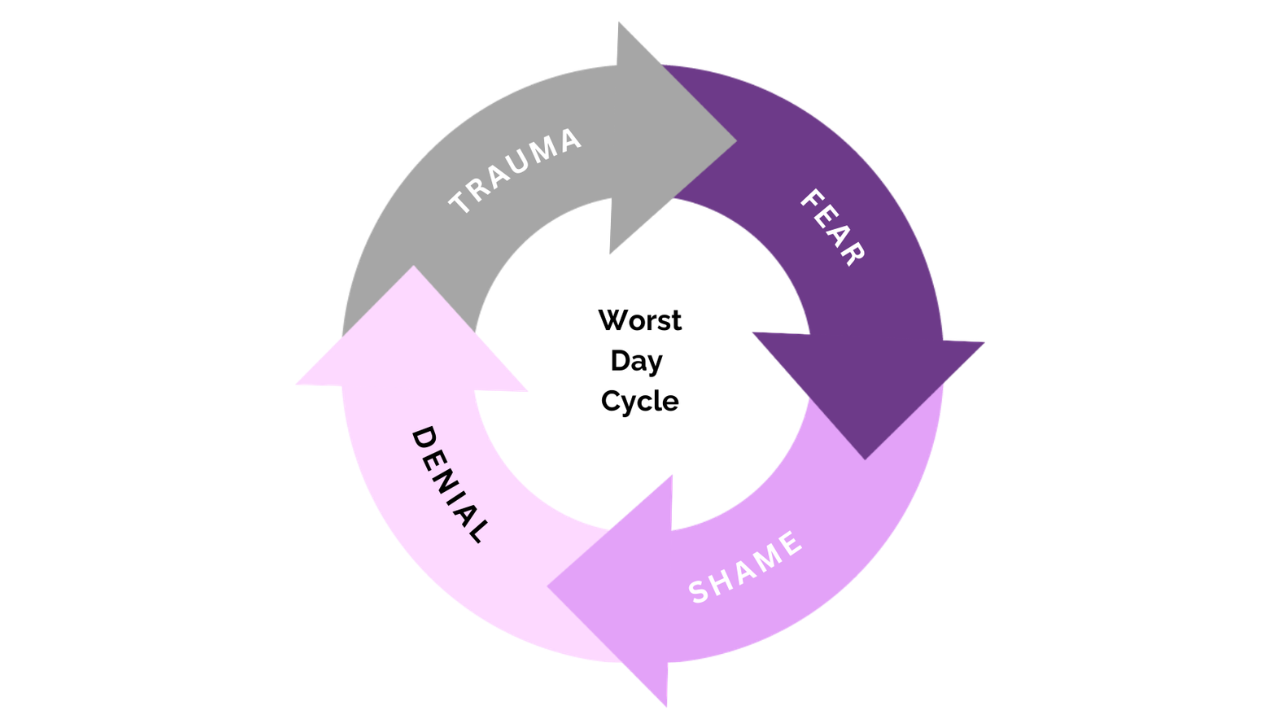
    Worst Day Cycle icon — the four stages of trauma, fear, shame, and denial that trap high achievers in burnout

    The Three Survival Personas That Run Your Life

    There are three types of survival personas, and most high achievers operate from one or cycle between all three depending on the situation.

    The Falsely Empowered Persona controls, dominates, and rages. This is the high achiever who runs the room, makes all the decisions, and cannot tolerate being wrong or out of control. They appear powerful, but the power is built on top of terror. Underneath the dominance is a child who learned that vulnerability gets you destroyed. That’s you if people call you “intimidating” and you secretly think that is a compliment because at least they cannot hurt you.

    The Disempowered Persona collapses, people-pleases, and disappears. This is the high achiever who works themselves to the bone for everyone else — the fixer, the emotional rock, the one who never has needs. They look selfless, but the selflessness is actually self-abandonment. They gave up on their own needs because having needs as a child led to rejection. That’s you if you know everyone else’s emotional temperature but have no idea what you actually feel.

    The Adapted Wounded Child oscillates between falsely empowered and disempowered. One minute they are in charge and controlling everything. The next minute they collapse and feel helpless. This whiplash is confusing to everyone around them — and even more confusing to the person experiencing it. That’s you if you swing between “I’ve got this” and “I’m completely falling apart” with no middle ground.

    Signs of Shame-Driven Success Across Every Area of Life

    High achiever burnout does not stay in one lane. When shame is the engine, it leaks into every area of your life.

    Family. You over-function at every holiday. You are the one everyone calls when there is a crisis. You resent it but cannot stop because stopping feels like abandoning people — the exact thing that was done to you. That’s you if you are exhausted by your family but feel crushing guilt when you try to set a boundary.

    Romantic Relationships. You pick partners who need fixing, or you pick partners who are emotionally unavailable because familiar pain feels safer than unfamiliar intimacy. When someone healthy shows interest, something feels “off” — there is no chemistry because your nervous system only recognizes chaos as connection. Insecurity in relationships is not a personality flaw. It is a survival response.

    Friendships. You have many acquaintances and almost no real friends. You keep people at arm’s length because true closeness requires vulnerability, and vulnerability was punished in your childhood home. That’s you if people think they know you but nobody actually does.

    Work. You are the first one in and the last one out. You take on everyone else’s projects. You say yes when you mean no. You feel physically ill at the thought of being seen as lazy or incompetent. Your self-worth is tied directly to your output. One bad quarter feels like proof that you are worthless.

    Body and Health. Your body keeps the score. Chronic stress, autoimmune flare-ups, mysterious pain, digestive issues, insomnia, teeth grinding, jaw clenching — these are not random. They are your nervous system screaming that the pace you are running is unsustainable. That’s you if you have been to five specialists and nobody can find anything “wrong” with you.
    Emotional regulation icon — the somatic skills high achievers need to break shame-driven burnout patterns

    Why Traditional Therapy Fails High Achievers

    When you try to use deep breathing, meditation, Emotional Intelligence, or Cognitive Behavioral Therapy to “calm down,” you are completely missing the point. You cannot use a breathing technique to stop a booster rocket from exploding. You have to change the fuel source of your entire life.

    Traditional approaches fail high achievers for a specific reason: they treat symptoms, not the blueprint. CBT tells you to change your thoughts. But your thoughts originate from your feelings, and your feelings originate from a biochemical pattern installed in childhood. You cannot think your way out of a feeling problem. That’s you if you have done years of therapy, can explain your patterns perfectly, and still repeat them anyway.

    You cannot change emotional patterns through thoughts alone. Emotions are biochemical events. Thoughts originate from feelings — not the other way around. Until you change the emotional blueprint, the thoughts will keep regenerating the same patterns no matter how many affirmations you tape to your mirror.
    Emotional Authenticity icon — the method that heals shame-driven high achiever burnout at the root

    The Emotional Authenticity Method™: 6 Steps to Change the Fuel Source

    The Emotional Authenticity Method™ is the process that actually reaches the emotional blueprint where shame lives. It is not a coping strategy. It is an identity restoration system. Here are the six steps:

    Step 1: Somatic Down-Regulation. Focus on what you can hear right now for fifteen to thirty seconds. Not deep breathing — listening. This activates the parasympathetic nervous system without triggering the cognitive resistance that high achievers have toward “relaxation techniques.” If you are highly dysregulated, use titration — alternate between the triggering thought and the sensory anchor until your nervous system settles.

    Step 2: What Am I Feeling Right Now? Name the emotion with granularity. “Bad” is not a feeling. “Anxious” is too vague. Use the Feelings Wheel to expand your emotional vocabulary. Are you feeling inadequate? Invisible? Dismissed? Controlled? The more precisely you name it, the less power it has. That’s you if someone asks how you feel and your answer is always “fine” or “stressed.”

    Step 3: Where in My Body Do I Feel It? All emotional trauma is stored physically. Tightness in the chest, knot in the stomach, tension in the jaw, heaviness in the shoulders — your body is holding what your mind refuses to acknowledge. Locate it. Stay with it.

    Step 4: What Is My Earliest Memory of Having This Exact Feeling? Trace the feeling backward. The anxiety you feel before a board meeting is not about the board meeting. It is the same feeling you had standing in front of your parent waiting for criticism. The current situation is the trigger. The original wound is the source.

    Step 5: Who Would I Be If I Never Had This Thought or Feeling Again? What would be left over? This is the vision step — it connects you to the Authentic Self Cycle™. Most high achievers have never imagined themselves without the shame engine. This question opens the door to an identity that is not built on proving, performing, or perfecting.

    Step 6: Feelization. Sit in the feeling of that authentic self and make it strong. Create a new emotional chemical addiction to replace the old blueprint. Ask: How would I respond to this situation from this feeling? What would I say? What would I do? Visualize and feel yourself operating from your authentic self. This is the emotional blueprint remapping and rewiring step. This is where the new neural pathways get built — where shame-fuel gets replaced by worth-fuel.
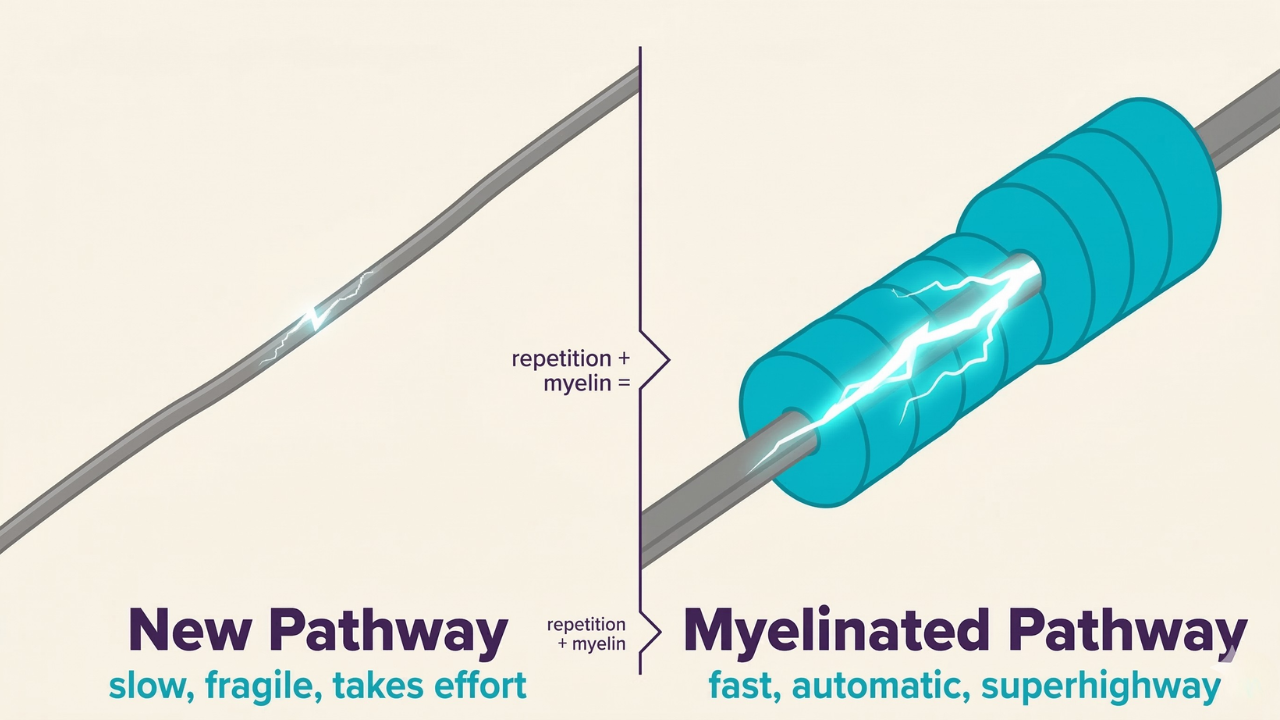
    Myelin neural pathways icon — neuroplasticity and emotional rewiring for high achievers healing shame-driven burnout

    The Authentic Self Cycle™: Building From Worth Instead of Shame

    The Authentic Self Cycle™ is the healing counterpart to the Worst Day Cycle™. It is an identity restoration system with four stages: Truth, Responsibility, Healing, and Forgiveness.

    Truth. Name the blueprint. See that “this is not about today.” The anxiety before the presentation is not about the presentation. The rage when your partner disagrees is not about your partner. The collapse when you receive criticism is not about the criticism. It is all the original wound replaying. That’s you if you react to small things with big emotions and cannot figure out why.

    Responsibility. Own your emotional reactions without blame. “My partner is not my parent. My nervous system just thinks they are.” This is the hardest step for high achievers because it means admitting that all the success in the world has not healed the wound. It means admitting that the survival persona — the thing you are most proud of — is actually the thing keeping you stuck.

    Healing. Rewire the emotional blueprint so that conflict becomes uncomfortable but not dangerous, space is not abandonment, and intensity is not attack. This is where the Emotional Authenticity Method™ does its deepest work. You create new emotional chemical patterns that replace the fear, shame, and denial.

    Forgiveness. Release the inherited emotional blueprint and reclaim your authentic self. This is not about forgiving the people who hurt you — not yet, maybe not ever. This is about forgiving yourself for the survival strategies you built and the years you spent running on the wrong fuel. It is about releasing the belief that you are only as valuable as your last achievement.
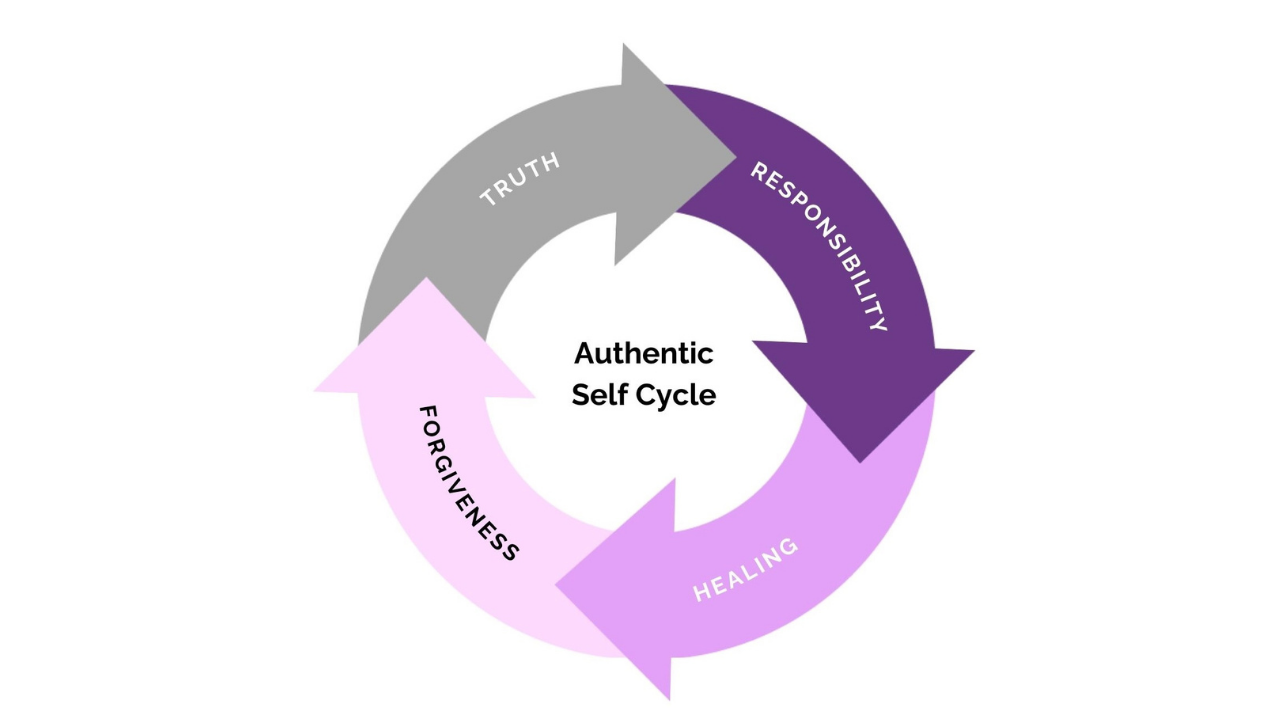
    Authentic Self Cycle icon — the four-stage healing framework for high achievers recovering from shame-driven burnout

    Why Rest Feels Dangerous to High Achievers

    If slowing down makes you anxious, here is exactly why. Your nervous system learned a survival equation in childhood: productivity equals safety, stillness equals risk. That is why you cannot sit still for sixty seconds. That is why you feel guilty resting. That is why you overthink after doing nothing. That is why you measure your day by output. That’s you if a Sunday with no plans feels like a punishment instead of a gift.

    You are not addicted to success. You are addicted to avoiding the void — the shame that surfaces the moment you stop performing. Your ambition is built on top of pain. One of the greatest gifts that highly successful people and go-getters have is high levels of shame. It motivates them to want to get everything out of life. And they do accomplish a lot. On the downside, they are mostly dissatisfied and emotionally alone. And sad. There is a trade-off that you will have to contemplate: how much ambition and achievement do you want versus how much emotional safety and comfort do you want?

    High performers are not blocked by skill gaps. They are blocked by shame caps. When internalized shame says “I am not enough,” achievement triggers self-sabotage. Emotional explosions or shutdowns pull you back down to the level your emotional blueprint believes you deserve.
    Perfectly Imperfect icon — releasing the need for perfection in high achiever burnout recovery

    What Real Healing Looks Like (It’s Not Perfection)

    Healing does not mean you will never overwork again. It does not mean you will never people-please. It does not mean you will never feel triggered. It means you notice sooner. You abandon yourself less. You return to yourself faster. You stay with yourself longer.

    You feel anxiety — and still choose a boundary. You feel guilt — and still say no. You feel the void — and instead of running from it, you sit with it. That is emotional strength. Not hustle. That’s you if you are ready to stop white-knuckling your way through life and start actually living it.

    The shift does not come from achieving more. It comes from changing the fuel source. Not from “I must prove I am not worthless” to something healthier. From shame-fuel to worth-fuel. You can still achieve. You can still create. You can still succeed. But your worth is no longer on trial. That is the difference. True self-esteem is not confidence. It is the quiet knowing that you matter regardless of your output.

    FAQ: High Achiever Burnout and Shame-Driven Success

    Why do high achievers burn out even when they love their work?
    Because the burnout is not caused by the work itself. It is caused by the emotional reason behind the work — shame. When your drive is fueled by an unconscious need to prove your worth, no amount of passion or purpose can prevent the eventual crash. The body cannot sustain shame-level cortisol and adrenaline indefinitely.

    Is high achiever burnout the same as regular burnout?
    No. Regular burnout is often about workload and can be resolved with rest, boundaries, and better time management. Shame-driven burnout in high achievers is an identity crisis — your entire sense of self is built on performance, so slowing down feels like dying. The fix is not rest. The fix is changing the emotional blueprint that makes rest feel dangerous.

    Can you be a high achiever without being driven by shame?
    Absolutely. The goal is not to stop achieving — it is to change the fuel source. Achievement driven by inherent worth feels completely different from achievement driven by shame. Worth-fueled achievers can rest without guilt, celebrate without deflecting, and fail without collapsing. The ambition remains. The desperation disappears.

    Why does success feel empty even after reaching my goals?
    Because the goal was never really about the achievement. It was about the feeling you hoped the achievement would create — the feeling of being enough. But “enough” is an identity issue, not an accomplishment issue. The Worst Day Cycle™ explains exactly how childhood shame creates this pattern and why it persists no matter how much you achieve.

    How do I know if my drive is shame-based or authentic?
    Ask yourself: what happens when I fail? If failure feels like evidence that you are fundamentally flawed — not just disappointed but destroyed — your drive is shame-based. If failure feels uncomfortable but does not threaten your sense of identity, your drive is rooted in authentic motivation. Most high achievers discover they have been running on shame fuel their entire lives.

    What is the first step to healing high achiever burnout?
    Start with the Emotional Authenticity Method™ Step 1: Somatic Down-Regulation. Focus on what you can hear for fifteen to thirty seconds. This interrupts the shame-cortisol loop without requiring you to “relax” — a word that triggers resistance in most high achievers. Then move through the remaining five steps to trace the feeling to its childhood origin and begin building a new emotional blueprint.

    The Bottom Line

    You are not empty because you failed. You are empty because you were taught that who you are is not enough — so you learned to live without yourself. And you became wildly successful doing it. But now you see it. And once you see it, you cannot unsee it. That awareness is not collapse. It is awakening.

    The next chapter is not about losing your success. It is about removing shame from the driver’s seat. It is about keeping the ambition but rooting it in inherent worth. It is about going to bed and asking one question: “Was I loyal to myself today?” That question changes everything. That’s you if something in this article made you stop scrolling — because it described a feeling you have never been able to name.

    Recommended Reading

    Pia Mellody — Facing Codependence
    Gabor Maté — When the Body Says No
    Melody Beattie — Codependent No More
    Brené Brown — The Gifts of Imperfection
    Bessel van der Kolk — The Body Keeps the Score
    John Bradshaw — Healing the Shame That Binds You

    Ready to Change the Fuel Source?

    Kenny Weiss created three frameworks — the Worst Day Cycle™, the Authentic Self Cycle™, and the Emotional Authenticity Method™ — specifically for high achievers who are tired of running on shame. Start with the self-paced courses at kennyweiss.net:

    Emotional Blueprint Starter Course — Individual ($79) — Identify your survival persona and emotional blueprint
    Relationship Starter Course — Couples ($79) — See how two survival personas interact in relationships
    Why High Achievers Fail at Love ($479) — Deep-dive into shame-driven relationship patterns
    Why We Can’t Stop Hurting Each Other ($479) — Break the cycle of emotional reactivity
    The Shutdown Avoidant Partner ($479) — Understand why emotional distance feels safe
    Tier 1: Mapping the Blueprint ($1,379) — Full immersion in the 6-step method

    Download the Feelings Wheel — the free tool that starts Step 2 of the Emotional Authenticity Method™.

    Explore more: Signs of Enmeshment | Codependence Recovery | 10 Do’s and Don’ts for a Great Relationship
  • How to Heal Self-Abandonment: 3 Daily Practices for High Achievers

    How to Heal Self-Abandonment: 3 Daily Practices for High Achievers

    Self-abandonment is the act of chronically ignoring your own feelings, needs, and boundaries in order to maintain connection, approval, or safety. It is one of the most common — and most invisible — patterns in high achievers. If you grew up learning that your worth depended on what you produced, how you performed, or how little you needed, you learned to abandon yourself long before you had words for it. And that pattern didn’t stop in childhood. It followed you into your career, your relationships, your body, and the quiet moments you spend alone.

    That’s you — the one who can run a company but can’t sit still for five minutes without reaching for your phone.

    This isn’t a character flaw. It’s a survival strategy that was brilliant when you were a child — and it’s destroying you now.

    Self-abandonment isn’t a single wound you fix with one breakthrough. It’s a daily pattern of ignoring your feelings, needs, and limits — built in childhood trauma. Healing requires small, repeated moments of self-loyalty using the Emotional Authenticity Method™, not more willpower or bigger achievements.

    Emotional authenticity icon representing self-abandonment healing through feeling your feelings

    What Is Self-Abandonment?

    Self-abandonment is the chronic pattern of dismissing, suppressing, or overriding your own emotional needs in favor of someone else’s comfort, approval, or expectations. It’s not a single event — it’s a way of living. Every time you say yes when your body screams no, every time you swallow your feelings to keep the peace, every time you push through exhaustion because resting feels dangerous — that is self-abandonment.

    That’s you — saying “I’m fine” when you’re falling apart inside, because showing vulnerability was never safe.

    Self-abandonment is the foundation of codependence. It’s the invisible cost of being the “strong one,” the “reliable one,” the one everyone leans on. And it starts in childhood — when the emotional environment taught you that your feelings didn’t matter, your needs were a burden, and your value was measured by what you gave, not who you were.

    Self-abandonment is the predictable outcome of childhood emotional neglect — the brain learns that suppressing your authentic self is the price of survival, and it automates that pattern for life.

    Why Do High Achievers Self-Abandon?

    High achievers are the most common self-abandoners — and the least likely to recognize it. That’s because their self-abandonment looks like discipline. It looks like drive. It looks like success.

    That’s you — working 12-hour days and calling it passion when really it’s just the only way you know how to feel safe.

    Here’s what actually happened: as a child, you learned that love, safety, or approval were conditional. They depended on your performance. On how little you needed. On how much you produced. So your brain built a survival strategy — become impressive, become indispensable, become so good that no one can reject you.

    Survival persona icon showing how high achievers use performance to mask self-abandonment

    And it worked. You built the career. You got the accolades. You became the person everyone admires.

    But underneath all of it — a quiet emptiness. A void. A hollow feeling that creeps in when the noise stops.

    That’s the void — the emotional space that exists because you’ve been abandoning yourself for decades and no amount of achievement can fill it.

    The brain conserves energy by repeating known patterns. It can’t tell right from wrong — only known from unknown. Since 70%+ of childhood messaging is negative and shaming, adults repeat these painful patterns in relationships, career, hobbies, health — everything. Your achievement isn’t healing. It’s the most socially acceptable form of self-abandonment.

    High achievers self-abandon because their childhood trauma taught them that their worth equals their output — the brain became chemically addicted to the stress-performance-validation loop, making self-abandonment feel like ambition.

    How the Worst Day Cycle™ Drives Self-Abandonment

    Self-abandonment isn’t random. It follows a predictable neurochemical pattern called the Worst Day Cycle™. Understanding this cycle is the first step to breaking free from it.

    Worst Day Cycle diagram showing trauma fear shame denial loop that drives self-abandonment

    The Worst Day Cycle™ has four stages: Trauma → Fear → Shame → Denial.

    Trauma: Any negative emotional experience in childhood that created painful meanings. It doesn’t have to be dramatic — it can be as subtle as a parent who was emotionally unavailable or a household where feelings were treated as weakness. These experiences create a massive chemical reaction in the brain and body. The hypothalamus generates chemical cocktails — cortisol, adrenaline, dopamine, oxytocin misfires — and the brain becomes addicted to these emotional states.

    That’s you — feeling most alive when you’re in crisis mode, because your nervous system was calibrated for chaos.

    Fear: Fear drives repetition. The brain thinks repetition equals safety. So you keep choosing the same relationships, the same work patterns, the same cycles of overgiving and burnout — not because you want to, but because your nervous system is terrified of the unknown.

    Shame: This is where you lost your inherent worth. “I am the problem.” Not “I made a mistake” — but “I AM the mistake.” This is the core wound underneath self-abandonment. You abandon yourself because deep down, you believe your authentic self isn’t worth keeping.

    That’s the shame talking — and it’s been running your life since before you could spell your own name.

    Denial: Denial is the survival persona you created to survive the pain. It was brilliant in childhood — absolutely necessary. But in adulthood, it sabotages everything. It keeps you performing instead of feeling. Producing instead of connecting. Running instead of resting.

    The Worst Day Cycle™ explains why self-abandonment feels automatic — your brain created a neurochemical loop in childhood that equates self-suppression with survival, and it repeats that loop thousands of times per day without your conscious awareness.

    What Are the Signs of Self-Abandonment?

    Self-abandonment is invisible because it disguises itself as virtue. It looks like being selfless, hardworking, flexible, and easygoing. But underneath those labels, your body is keeping score.

    That’s you — the person everyone describes as “so strong” while you’re silently drowning.

    Here are the signs that self-abandonment is running your life:

    You say yes when your body says no. You minimize your own feelings — “I shouldn’t be upset about this.” You consistently put others’ needs before your own, not out of generosity, but out of fear. You feel guilty for resting, for having needs, for taking up space. You numb out with food, scrolling, alcohol, work, or shopping when emotions get too big. You don’t know what you actually want — you only know what other people want from you. You feel responsible for other people’s emotions. You abandon your own plans the moment someone else has a preference.

    That’s you — knowing exactly what everyone else needs and having no idea what you need.

    Codependence icon showing the connection between self-abandonment and codependent patterns

    How Does Your Survival Persona Keep You Stuck in Self-Abandonment?

    Your survival persona is the identity you created in childhood to navigate an emotionally unsafe environment. It’s not who you are — it’s who you had to become. And it’s the engine that powers self-abandonment.

    There are three survival persona types:

    The Falsely Empowered: This persona controls, dominates, and rages. They look powerful on the outside, but their power comes from fear, not strength. They self-abandon by never allowing vulnerability — they perform strength instead of feeling anything real. They control others to avoid feeling out of control inside.

    That’s you — the CEO who can command a boardroom but can’t have a vulnerable conversation with your partner.

    Emotional fitness icon representing the work of healing survival persona patterns

    The Disempowered: This persona collapses, people-pleases, and disappears. They make themselves small to be safe. They self-abandon by making everyone else’s needs more important than their own — not out of love, but out of fear of abandonment. They believe that if they stop giving, they’ll be left.

    That’s you — the one who bends over backward for everyone and then wonders why you feel invisible.

    The Adapted Wounded Child: This persona oscillates between both — raging one moment, collapsing the next. They self-abandon by never having a stable sense of self. They flip between overperforming and shutting down, between control and submission, never landing in their authentic self.

    Adapted wounded child icon showing oscillation between falsely empowered and disempowered survival personas

    That’s you — the one who swings between “I don’t need anyone” and “please don’t leave me” and can’t figure out which one is real.

    Your survival persona is the most sophisticated form of self-abandonment because it replaces your authentic identity with a performance — and after decades, you can’t tell the difference between who you really are and who you had to become to survive.

    Why Can’t One Breakthrough Heal Self-Abandonment?

    High achievers love breakthroughs. The big realization. The life-changing seminar. The moment everything “clicks.” But here’s the truth no one tells you: you can’t heal a lifetime of self-abandonment with one breakthrough.

    That’s you — collecting insights like trophies and wondering why nothing actually changes.

    Here’s why breakthroughs fail: they target the thinking brain. They give you an intellectual understanding of your patterns. And for a few hours or days, you feel different. Hopeful. Clear.

    But self-abandonment doesn’t live in your thoughts. It lives in your nervous system. In your body. In the chemical patterns your brain has been running since childhood. And those patterns don’t care about your breakthrough. They respond to repetition, not realization.

    Trauma chemistry icon showing how childhood emotional patterns create neurochemical addiction

    Think of the second hand on a clock. It moves in tiny, almost insignificant ticks. But those ticks move the minute hand. The minutes move the hours. The hours change your entire day. Healing works the same way. It’s not dramatic. It’s repetitive. And it’s built on small moments where you choose not to abandon yourself.

    That’s the truth — you don’t need a bigger breakthrough. You need a smaller, more consistent practice.

    One breakthrough cannot heal self-abandonment because the pattern is stored in the body’s neurochemistry, not in the mind’s understanding — you cannot think your way out of a biochemical event that has been automated since childhood.

    How the Emotional Authenticity Method™ Rewires Self-Abandonment

    The Emotional Authenticity Method™ is the daily practice that actually rewires self-abandonment at the nervous system level. It works because it targets the body — where trauma lives — not just the mind.

    Emotional regulation icon representing the Emotional Authenticity Method for healing self-abandonment

    Here’s how it works:

    Step 1: Somatic Down-Regulation with optional Titration. Before you can process anything, you have to get your nervous system out of survival mode. This might mean deep breathing, grounding, or simply slowing down enough to feel your body. Titration means you go slowly — you don’t force yourself to feel everything at once.

    That’s you — learning that you don’t have to white-knuckle your way through healing.

    Step 2: What am I feeling? Most self-abandoners have no idea what they’re feeling. They’ve been disconnected from their emotions for so long that “fine” is their default answer. Using the Feelings Wheel, you develop emotional granularity — the ability to name specific emotions instead of lumping everything into “stressed” or “fine.”

    Step 3: Where in my body do I feel it? All emotional trauma is stored physically. Your chest tightens. Your stomach drops. Your jaw clenches. Locating the feeling in your body is how you move from intellectual understanding to somatic processing.

    Step 4: What is my earliest memory of this feeling? This is where the rewiring happens. You trace today’s reaction back to its childhood origin. You realize: this isn’t about today. My partner isn’t my parent. My nervous system just thinks they are.

    That’s the moment everything shifts — when you see that your reaction belongs to a five-year-old, not a forty-year-old.

    Step 5: Who would I be if I never had this feeling again? This is the vision step. It connects you to the Authentic Self Cycle™ and gives your nervous system a new destination — not more coping, but actual identity restoration.

    The Emotional Authenticity Method™ works because emotions are biochemical events — you cannot change emotional patterns through thoughts alone. Thoughts originate from feelings, not the other way around.

    3 Daily Practices That End Self-Abandonment

    These aren’t breakthroughs. They’re rewiring practices. Each one sends your nervous system a new message: “I’m not leaving you anymore.”

    Practice 1: The 60-Second Check-In. Most high achievers live from the neck up. They think their way through life. But every thought is driven by an emotion. So once a day — just once — pause for 60 seconds and ask: What am I feeling right now? What do I need in this moment? Not what should I feel. Not what do they need from me. Just you.

    That’s you — finally asking yourself the question nobody ever asked you as a child.

    You might notice anxiety, resentment, exhaustion, or numbness. And maybe what you need is water, a break, five minutes of silence, or permission to stop pushing. The goal isn’t perfection. The goal is emotional authenticity. Because the void grows when you never ask what you feel or need.

    Practice 2: The Micro-No. Many high achievers were trained to preserve connection by sacrificing themselves. The micro-no retrains your nervous system. Once a day, say no in a small way. Instead of “Yes, I’ll do it,” try “That doesn’t work for me right now.” Instead of responding immediately to every text, wait. Instead of staying three hours, stay one.

    That’s you — discovering that saying no doesn’t make people leave. It makes you arrive.

    Your body learned that saying no meant danger, rejection, disconnection. The micro-no teaches your body: “I can choose myself… and I’m still safe.” Every micro-no is one brick removed from the wall of self-abandonment.

    Practice 3: The Void Visit. This is the hardest one. Most people spend their lives avoiding silence. When it gets quiet, the void creeps in — that heavy, hollow, lonely feeling. Instead of running from it, visit it. Set a timer for 2 minutes, 1 minute, 30 seconds, or even 5 seconds — whatever you can tolerate. Sit still. No phone. No distraction. Just notice where you feel it in your body.

    That’s you — sitting with the part of yourself that’s been alone the longest, and finally saying: “I see you. And I’m not running.”

    The void isn’t punishment. It’s the part of you that’s been abandoned the longest. Visiting it is how you start rebuilding trust with yourself.

    Reparenting icon showing how daily practices rebuild self-trust and heal self-abandonment

    How the Authentic Self Cycle™ Replaces Self-Abandonment

    The Authentic Self Cycle™ is the healing counterpart to the Worst Day Cycle™. Where the Worst Day Cycle™ traps you in Trauma → Fear → Shame → Denial, the Authentic Self Cycle™ restores your identity through Truth → Responsibility → Healing → Forgiveness.

    Authentic Self Cycle diagram showing truth responsibility healing forgiveness as the path out of self-abandonment

    Truth: Name the blueprint. See that “this isn’t about today.” When your partner asks for space and your chest tightens, truth says: “This feeling is from childhood. My partner isn’t abandoning me — my nervous system just thinks they are.”

    That’s the first step out of self-abandonment — seeing the pattern instead of being trapped inside it.

    Responsibility: Own your emotional reactions without blame. “My partner isn’t my parent — my nervous system just thinks they are.” This isn’t about fault. It’s about taking back your power from a childhood that stole it.

    Healing: Rewire the emotional blueprint so conflict becomes uncomfortable but not dangerous, space isn’t abandonment, and intensity isn’t attack. This is where the three daily practices do their work — second by second, the clock ticks forward.

    Forgiveness: Release the inherited emotional blueprint and reclaim your authentic self. This creates a NEW emotional chemical pattern that replaces fear, shame, and denial with safety, worth, and connection.

    That’s you — not becoming someone new, but finally meeting who you always were underneath the survival persona.

    The Authentic Self Cycle™ is an identity restoration system — it doesn’t teach you to cope with self-abandonment, it replaces the neurochemical pattern that created it with a new blueprint built on truth, responsibility, and emotional authenticity.

    How Self-Abandonment Shows Up in Every Area of Your Life

    Family: You’re the peacekeeper. You manage everyone’s emotions. You swallow your reactions at holiday dinners. You feel responsible for your parents’ happiness — even now, as an adult. You over-function to keep the system running. And when you try to set a boundary, the guilt is so overwhelming that you cave.

    That’s you — still playing the role your family assigned you at age six.

    Romantic Relationships: You choose partners who need you more than they love you. You tolerate behavior that crosses your boundaries because leaving feels more terrifying than staying. You confuse intensity with intimacy. You abandon your needs to keep the relationship “safe” — and then feel resentful when your partner doesn’t read your mind.

    Sound familiar? The person who gives everything and then feels invisible?

    Friendships: You’re the friend everyone calls in a crisis but no one checks on. You listen for hours but never share your own struggles. You cancel your own plans when someone else needs you. You feel lonely even when surrounded by people because no one actually knows you — they know your survival persona.

    Work: You overdeliver. You say yes to every project. You check email at midnight. You take on other people’s responsibilities because if you don’t do it, no one will (or it won’t be good enough). Your worth is measured in productivity, and rest feels like laziness. You’ve been promoted for your self-abandonment — and rewarded for it.

    That’s you — getting promoted for the very pattern that’s destroying you.

    Body and Health: You ignore your body’s signals. You push through exhaustion, pain, hunger, and stress. You numb with food, alcohol, exercise, or scrolling. Your body has been trying to tell you something for years — but self-abandonment means you’ve stopped listening. Chronic pain, digestive issues, insomnia, and autoimmune conditions are often the body’s last resort when emotional signals have been ignored for decades.

    Emotional blueprint icon showing how childhood patterns create self-abandonment across all life areas

    Frequently Asked Questions About Self-Abandonment

    What is self-abandonment and how do I know if I’m doing it?

    Self-abandonment is the chronic pattern of ignoring your own feelings, needs, and boundaries to maintain connection or approval. You’re doing it if you consistently say yes when you mean no, if you don’t know what you actually want, if you feel guilty for resting, or if you make everyone else’s needs more important than your own. It usually originates in childhood emotional neglect and becomes so automatic that most people don’t realize they’re doing it.

    Can self-abandonment be healed without therapy?

    Self-abandonment can begin to heal with daily somatic practices like the Emotional Authenticity Method™ — but the depth of healing often depends on the depth of the original trauma. The three daily practices (60-Second Check-In, Micro-No, and Void Visit) create real neurological change. A skilled guide can accelerate the process, but the daily work is what creates lasting transformation.

    Why do high achievers struggle with self-abandonment more than others?

    High achievers learned in childhood that their worth was conditional on performance. Their self-abandonment got rewarded — with grades, promotions, praise, and success. So the pattern became invisible. They don’t see it as self-abandonment — they see it as discipline, drive, or work ethic. The Worst Day Cycle™ explains how childhood trauma creates a neurochemical addiction to the stress-performance-validation loop.

    What is the difference between self-care and healing self-abandonment?

    Self-care addresses symptoms — bubble baths, vacations, affirmations. Healing self-abandonment addresses the root cause — the childhood emotional blueprint that taught you to suppress your authentic self. You can practice self-care while still deeply self-abandoning. True healing means rewiring the nervous system’s relationship to your own feelings, needs, and worth using practices like the Emotional Authenticity Method™.

    How long does it take to stop self-abandoning?

    Self-abandonment patterns that have been running for 20, 30, or 40 years don’t reverse overnight. But noticeable shifts can happen within weeks of consistent daily practice. The key is repetition, not intensity. Small moments of self-loyalty — checking in with your feelings, saying a micro-no, sitting with the void — create cumulative neurological change. The Authentic Self Cycle™ provides the framework for long-term identity restoration.

    Is self-abandonment the same as codependency?

    Self-abandonment is the foundation of codependence. Codependence is the relational pattern that emerges when self-abandonment becomes your primary way of connecting with others. You abandon yourself to maintain attachment — giving too much, tolerating too much, and losing yourself in the process. Healing self-abandonment is the first step in healing codependence and building interdependence.

    The Bottom Line

    You don’t need a bigger breakthrough. You don’t need another seminar. You don’t need to try harder.

    You need to stop leaving yourself.

    Every 60-second check-in is a tiny act of self-loyalty. Every micro-no is a brick removed from the wall of self-abandonment. Every void visit is a message to the youngest part of you that says: “I see you. I’m here. And I’m not leaving.”

    Some days you’ll forget. Some days the survival persona will win. That doesn’t mean you failed — it means your brain is doing what it was trained to do. Healing is not about intensity. It’s about consistency. Tiny ticks of the clock. Truth. Responsibility. Healing. Over and over.

    That’s you — not the person who had the breakthrough. The person who showed up for themselves today. And tomorrow. And the day after that.

    The void doesn’t fill with achievement. It fills with presence. With honesty. With the willingness to finally stop running from yourself — and start running toward who you actually are.

    These books complement the frameworks in this article and can deepen your understanding of self-abandonment, codependence, and trauma recovery:

    Facing Codependence by Pia Mellody — the foundational text on how childhood trauma creates codependent patterns and self-abandonment.

    The Body Keeps the Score by Bessel van der Kolk — the science of how trauma lives in the body, not just the mind.

    When the Body Says No by Gabor Maté — how chronic self-abandonment manifests as physical illness and disease.

    Codependent No More by Melody Beattie — a practical guide to recognizing and healing codependent patterns.

    The Gifts of Imperfection by Brené Brown — how shame drives self-abandonment and how vulnerability is the path back to authenticity.

    Take the Next Step

    If you’re ready to stop self-abandoning and start building a life from your authentic self, Kenny Weiss offers courses designed for high achievers who are done performing and ready to heal:

    Emotional Blueprint Starter Course — Individual ($79) — Your personal roadmap to understanding the Worst Day Cycle™ and beginning the journey to your authentic self.

    Relationship Starter Course — Couples ($79) — For couples ready to break the cycle of reactivity and build interdependence.

    Why We Can’t Stop Hurting Each Other ($479) — Deep-dive into the Worst Day Cycle™ and how childhood trauma creates relationship pain.

    Why High Achievers Fail at Love ($479) — Built specifically for high achievers who have mastered their career but can’t figure out relationships.

    The Shutdown Avoidant Partner ($479) — Understanding avoidant attachment through the lens of trauma chemistry and survival personas.

    Tier 1: Mapping the Blueprint ($1,379) — The comprehensive program for learning and practicing the Emotional Authenticity Method™.

    Download the Feelings Wheel — the free tool used in Step 2 of the Emotional Authenticity Method™ to build emotional granularity.

    Explore more: The Signs of Enmeshment | 7 Signs of Relationship Insecurity | 7 Signs of High Self-Esteem | How to Determine Your Negotiables and Non-Negotiables | 10 Do’s and Don’ts for a Great Relationship
  • Why Emotional Intelligence Isn’t Enough for High Achievers

    Why Emotional Intelligence Isn’t Enough for High Achievers

    Emotional intelligence is the ability to recognize, understand, and manage emotions — but for high achievers running on childhood trauma, emotional intelligence alone cannot heal the void because it manages symptoms without addressing the root cause. If you’ve spent years developing your emotional intelligence — reading the room, regulating your reactions, staying composed under pressure — and you still feel empty, disconnected, or like something fundamental is missing, you’re not failing. You’re experiencing the limits of a system that was never designed to heal you.

    That’s you — the one who can name every emotion in the room except your own.

    The difference between emotional intelligence and emotional authenticity is the difference between managing pain and healing it. And that difference changes everything.

    Emotional intelligence teaches you to manage emotions — but management isn’t healing. High achievers use emotional intelligence as another performance tool, suppressing their authentic feelings while appearing regulated. The Emotional Authenticity Method™ goes deeper: it traces today’s reactions to their childhood origins and rewires the emotional blueprint that created the void. You can’t think your way out of a biochemical event.

    Emotional authenticity icon showing the difference between emotional intelligence and emotional authenticity for high achievers

    What Is Emotional Intelligence — And Why Isn’t It Enough?

    Emotional intelligence is the skill of recognizing emotions in yourself and others, understanding what those emotions mean, and using that understanding to guide your behavior. It’s a real skill. It matters. And for high achievers, it often becomes yet another form of performance.

    That’s you — scoring high on every emotional intelligence assessment while your body is screaming for help underneath.

    Here’s what emotional intelligence teaches you: regulate yourself so you can function. Stay composed. Read the room. Respond appropriately. Don’t let your emotions control you.

    And here’s what it doesn’t teach you: why you’re having those emotions in the first place. Where they actually come from. What childhood experience wired them into your nervous system. And how to actually heal the pattern instead of just managing it.

    Emotional intelligence without emotional authenticity is symptom management disguised as growth — it teaches high achievers to perform regulation rather than experience genuine healing, leaving the original childhood wound untouched and the void unfilled.

    Emotional regulation icon showing how high achievers use regulation skills to mask unhealed trauma

    The problem isn’t that emotional intelligence is wrong. The problem is that for people running on childhood trauma, emotional intelligence becomes another tool in the survival toolkit — another way to control, manage, and suppress. Another way to look healed without being healed.

    That’s you — using emotional intelligence the way you use everything else: to perform, to control, to make sure nobody sees what’s really going on inside.

    What Is the Difference Between Emotional Intelligence and Emotional Authenticity?

    Emotional intelligence says: “Regulate yourself so you can function.”

    Emotional authenticity asks: “What happened to you that makes this reaction make sense?”

    One manages symptoms. The other heals roots.

    That’s the difference nobody talks about — and it’s the reason you can be the most emotionally intelligent person in the room and still feel completely empty.

    Emotional intelligence keeps you in your head. It’s cognitive. It’s strategic. It asks: what’s the best response here? How do I de-escalate? How do I stay composed?

    Emotional authenticity moves you into your body. It’s somatic. It’s honest. It asks: what am I actually feeling? Where do I feel it? And when is the first time I ever felt this way?

    High achievers are drawn to emotional intelligence because it fits their operating system — analyze, strategize, perform. Emotional authenticity terrifies them because it requires something they’ve spent their entire lives avoiding: vulnerability. Truth. Feeling the feelings they’ve been running from since childhood.

    Metacognition icon showing how awareness of thinking patterns reveals the limits of emotional intelligence

    Emotional authenticity is the practice of telling the truth about what you feel, tracing that feeling to its childhood origin, and allowing your nervous system to process what was never safe to process as a child — it heals the root, not just the reaction.

    That’s you — finally understanding why all that emotional intelligence work didn’t fill the void. It wasn’t designed to.

    How the Worst Day Cycle™ Explains Why Emotional Intelligence Fails

    To understand why emotional intelligence isn’t enough, you need to understand the Worst Day Cycle™. This is the neurochemical pattern that runs underneath every emotional reaction you have — and emotional intelligence doesn’t touch it.

    Worst Day Cycle diagram showing trauma fear shame denial loop that emotional intelligence cannot break

    The Worst Day Cycle™ has four stages: Trauma → Fear → Shame → Denial.

    Trauma: Any negative emotional experience in childhood that created painful meanings. It doesn’t have to be dramatic — a parent who was emotionally unavailable, a household where feelings were treated as weakness, a caregiver whose love was conditional on performance. These experiences create a massive chemical reaction in the brain and body. The hypothalamus generates chemical cocktails — cortisol, adrenaline, dopamine, oxytocin misfires — and the brain becomes addicted to these emotional states.

    That’s you — feeling most alive when you’re in crisis mode, because your nervous system was calibrated for chaos in childhood and emotional intelligence just taught you to manage the chaos more efficiently.

    Fear: Fear drives repetition. The brain conserves energy by repeating known patterns — it can’t tell right from wrong, only known from unknown. Since 70%+ of childhood messaging is negative and shaming, adults repeat these painful patterns in relationships, career, hobbies, health — everything. Emotional intelligence teaches you to recognize the fear. It doesn’t teach you to trace it to its origin and rewire it.

    Shame: This is where you lost your inherent worth. “I am the problem.” Not “I made a mistake” — but “I AM the mistake.” This is the core wound underneath every high achiever’s drive. You don’t achieve because you’re ambitious. You achieve because deep down, you believe your authentic self isn’t enough. And emotional intelligence can’t touch that belief because it lives in your body, not your mind.

    That’s the shame talking — the voice that says “if I just get better at managing my emotions, I’ll finally feel okay.” But management was never the answer.

    Denial: Denial is the survival persona you created to survive the pain. It was brilliant in childhood — absolutely necessary. But in adulthood, it sabotages everything. For high achievers, emotional intelligence often becomes part of the denial — another layer of performance that says “look how regulated I am” while the authentic self stays buried.

    Trauma chemistry icon showing how childhood creates neurochemical patterns that emotional intelligence cannot rewire

    The Worst Day Cycle™ reveals why emotional intelligence fails for trauma survivors — it addresses the cognitive layer of emotional response while leaving the neurochemical addiction to childhood emotional patterns completely intact.

    How Your Survival Persona Uses Emotional Intelligence Against You

    Your survival persona is the identity you created in childhood to navigate an emotionally unsafe environment. It’s not who you are — it’s who you had to become. And for high achievers, emotional intelligence becomes one of the survival persona’s most powerful tools.

    Survival persona icon showing how high achievers use emotional intelligence as a survival strategy

    There are three survival persona types:

    The Falsely Empowered: This persona controls, dominates, and rages. They use emotional intelligence to read the room and maintain power. They know exactly what everyone is feeling — and they use that knowledge to stay in control. They look emotionally sophisticated, but their regulation is driven by fear, not healing. They manage others’ emotions to avoid feeling their own.

    That’s you — the leader who can de-escalate any conflict at work but explodes at home when your partner asks a simple question.

    The Disempowered: This persona collapses, people-pleases, and disappears. They use emotional intelligence to anticipate everyone else’s needs and keep themselves safe through accommodation. They’re so attuned to others’ emotions that they’ve completely lost touch with their own. They confuse hypervigilance with empathy.

    That’s you — the one everyone calls “so empathetic” when really you’re just terrified of what happens if you stop monitoring everyone’s emotional state.

    The Adapted Wounded Child: This persona oscillates between both — controlling one moment, collapsing the next. They use emotional intelligence inconsistently — brilliant at regulation in professional settings, completely dysregulated in intimate relationships. They swing between “I don’t need anyone” and “please don’t leave me.”

    Adapted wounded child icon showing oscillation between falsely empowered and disempowered survival personas

    That’s you — emotionally intelligent enough to see the pattern but not emotionally authentic enough to break it.

    Your survival persona weaponizes emotional intelligence — it uses your awareness of emotions as a control mechanism rather than a healing pathway, keeping you performing emotional regulation instead of experiencing genuine emotional truth.

    How Emotional Intelligence Masks Pain in Every Area of Your Life

    Family: You’re the peacekeeper at every family gathering. You use your emotional intelligence to manage everyone’s reactions — defusing tension, smoothing over conflicts, anticipating who’s about to blow up. You read the room better than anyone. But you haven’t expressed a genuine feeling at a family event in years. Your emotional intelligence keeps the system running. Your authentic self stays silent.

    That’s you — managing your family’s emotions like a full-time job while your own feelings sit in the basement, unvisited.

    Romantic Relationships: You’re the “healthy communicator.” You use “I” statements. You regulate during conflict. You read your partner’s emotional cues. But underneath all that emotional intelligence, you’re terrified. Terrified of abandonment. Terrified of rejection. Terrified that if they saw the real you — not the emotionally intelligent performance — they’d leave. You confuse emotional management with emotional intimacy.

    Sound familiar? The partner who does everything “right” in therapy but still feels completely alone in the relationship?

    Friendships: You’re the friend everyone calls in a crisis. You listen, you validate, you hold space. But no one holds space for you — because you never let them. Your emotional intelligence makes you an exceptional listener and an invisible human being. You know how everyone else feels. Nobody knows how you feel.

    Work: You’re the emotionally intelligent leader. You give great feedback. You manage difficult conversations. You stay composed under pressure. But you’re running on empty. You use emotional intelligence to perform at a level that earns praise and promotions while your body screams for rest, your relationships deteriorate, and the void grows deeper every year.

    That’s you — getting praised for the very emotional intelligence skills that keep you disconnected from yourself.

    Body and Health: You intellectualize your body’s signals. You know you’re stressed — your emotional intelligence told you that. But instead of feeling the stress, tracing it to its source, and processing it somatically, you “manage” it. You meditate. You exercise. You breathe. And you wonder why the chronic tension, the insomnia, the digestive issues, the autoimmune flares — they never fully resolve. Because emotional intelligence addresses the mind. Trauma lives in the body.

    Emotional blueprint icon showing how childhood patterns create emotional intelligence as performance across all life areas

    How the Emotional Authenticity Method™ Goes Beyond Emotional Intelligence

    The Emotional Authenticity Method™ is what happens when you stop managing emotions and start healing them. It’s the daily practice that rewires the emotional blueprint at the nervous system level — where emotional intelligence can’t reach.

    Emotional fitness icon representing the daily practice of the Emotional Authenticity Method beyond emotional intelligence

    Step 1: Somatic Down-Regulation with optional Titration. Before you can process anything, you have to get your nervous system out of survival mode. This is where most emotional intelligence training stops — it teaches regulation as the destination. The Emotional Authenticity Method™ uses regulation as the starting point. Titration means you go slowly — you don’t force yourself to feel everything at once.

    That’s you — learning that regulation isn’t the goal. It’s the doorway.

    Step 2: What am I feeling? Not “what should I feel?” Not “what’s the appropriate response?” But: what am I actually feeling right now? Using the Feelings Wheel, you develop emotional granularity — the ability to name specific emotions instead of lumping everything into “stressed” or “fine.” Most emotionally intelligent people can name others’ emotions perfectly. They struggle to name their own.

    Step 3: Where in my body do I feel it? All emotional trauma is stored physically. Your chest tightens. Your stomach drops. Your jaw clenches. Your shoulders climb toward your ears. Emotional intelligence stays in the head. Emotional authenticity moves into the body — because that’s where the wound actually lives.

    Step 4: What is my earliest memory of this feeling? This is the step that changes everything. You trace today’s reaction back to its childhood origin. You realize: this isn’t about today. My partner isn’t my parent. My boss isn’t my father. My nervous system just thinks they are. Emotional intelligence never asks this question. And that’s why it can’t heal you.

    That’s the moment the void starts to make sense — when you see that your emotional intelligence has been managing a five-year-old’s pain with an adult’s strategy, and the five-year-old needs something completely different.

    Step 5: Who would I be if I never had this feeling again? This is the vision step. It connects you to the Authentic Self Cycle™ and gives your nervous system a new destination — not more management, not better performance, but actual identity restoration.

    The Emotional Authenticity Method™ works because emotions are biochemical events — you cannot change emotional patterns through thoughts alone. Thoughts originate from feelings, not the other way around. Emotional intelligence addresses thoughts about feelings. Emotional authenticity addresses the feelings themselves.

    How the Authentic Self Cycle™ Replaces Performance With Healing

    The Authentic Self Cycle™ is the healing counterpart to the Worst Day Cycle™. Where the Worst Day Cycle™ traps you in Trauma → Fear → Shame → Denial, the Authentic Self Cycle™ restores your identity through Truth → Responsibility → Healing → Forgiveness.

    Authentic Self Cycle diagram showing truth responsibility healing forgiveness pathway beyond emotional intelligence

    Truth: Name the blueprint. See that “this isn’t about today.” When your colleague gives you critical feedback and your chest tightens, truth says: “This feeling is from childhood. My colleague isn’t my critical parent — my nervous system just thinks they are.” Emotional intelligence would tell you to regulate. Truth tells you to investigate.

    That’s the first step beyond emotional intelligence — seeing the pattern instead of managing it.

    Responsibility: Own your emotional reactions without blame. “My partner isn’t my parent — my nervous system just thinks they are.” This isn’t about fault. It’s about taking back your power from a childhood that stole it. Emotional intelligence often stops at “I need to manage my reaction.” Responsibility says “I need to understand where this reaction was born.”

    Healing: Rewire the emotional blueprint so conflict becomes uncomfortable but not dangerous, space isn’t abandonment, and intensity isn’t attack. This is where daily practice does its work — second by second, like the ticks of a clock. The second hand moves in tiny, almost insignificant ticks. But those ticks move the minute hand. The minutes move the hours. Healing works the same way.

    Forgiveness: Release the inherited emotional blueprint and reclaim your authentic self. This creates a NEW emotional chemical pattern that replaces fear, shame, and denial with safety, worth, and connection. You don’t become someone new. You finally meet who you always were underneath the survival persona and its emotional intelligence performance.

    That’s you — not the emotionally intelligent performer. The emotionally authentic human being who no longer needs to manage feelings because they’ve actually healed them.

    The Authentic Self Cycle™ is an identity restoration system — it doesn’t teach you to be more emotionally intelligent, it replaces the neurochemical pattern that made emotional intelligence necessary as a survival tool with a new blueprint built on truth, responsibility, and emotional authenticity.

    Why High Achievers Resist Emotional Authenticity

    High achievers resist emotional authenticity for the same reason they resist rest: it feels dangerous. Their entire identity has been built on performance — including their emotional performance. Dropping into emotional authenticity means admitting that all that emotional intelligence work was another layer of the survival persona.

    That’s you — the person who’d rather read another emotional intelligence book than sit with the feeling in your chest for 60 seconds.

    The brain conserves energy by repeating known patterns. If you grew up in an environment where managing emotions was the path to safety, your brain will keep choosing management over authenticity — because management is known, and authenticity is unknown. And to the brain, unknown means dangerous.

    Myelin and neural pathways icon showing how the brain automates emotional intelligence as a survival pattern

    This is why insight alone doesn’t change the pattern. You can understand intellectually that your emotional intelligence is a survival strategy. But understanding doesn’t rewire the nervous system. Only repeated somatic experience does. Only feeling the feeling — in your body, not just your mind — creates the neurological change that shifts the pattern.

    That’s the hardest truth for high achievers — you can’t achieve your way to healing. You can’t manage your way to authenticity. You have to feel your way there.

    Reparenting icon showing the process of moving from emotional intelligence performance to emotional authenticity

    Frequently Asked Questions

    Why isn’t emotional intelligence enough to heal trauma?

    Emotional intelligence operates at the cognitive level — it teaches you to recognize and manage emotions. But trauma is stored in the body as a neurochemical pattern, not as a thought. The Worst Day Cycle™ shows how childhood trauma creates an automated loop of fear, shame, and denial that runs below conscious awareness. Emotional intelligence manages the symptoms of this loop. Emotional authenticity heals the root.

    What is the difference between emotional intelligence and emotional authenticity?

    Emotional intelligence teaches you to regulate emotions so you can function effectively. Emotional authenticity teaches you to tell the truth about what you feel, trace it to its childhood origin, and allow your nervous system to process what was never safe to process as a child. One manages the surface. The other heals the foundation. The Emotional Authenticity Method™ provides a 5-step daily practice for this deeper work.

    Can you be emotionally intelligent and still have unhealed trauma?

    Yes — and this is extremely common among high achievers. In fact, emotional intelligence often becomes part of the survival persona. You learn to read rooms, manage reactions, and perform regulation — all while the original childhood wound remains untouched. The void persists because emotional intelligence addresses the thinking brain, not the nervous system where trauma actually lives.

    How do high achievers use emotional intelligence as a survival strategy?

    High achievers who grew up in emotionally unsafe environments learned to read emotions for survival — anticipating a parent’s mood, de-escalating conflict, performing the “right” emotion to stay safe. As adults, they refine this into emotional intelligence. But the motivation hasn’t changed: it’s still about control, safety, and preventing abandonment. The three survival persona types — falsely empowered, disempowered, and adapted wounded child — each use emotional intelligence differently to maintain their survival strategy.

    What does the Emotional Authenticity Method™ do that emotional intelligence training doesn’t?

    The Emotional Authenticity Method™ is a 5-step somatic practice: (1) down-regulate the nervous system, (2) name the specific feeling, (3) locate it in the body, (4) trace it to the earliest childhood memory, and (5) envision who you’d be without this pattern. Unlike emotional intelligence training, it targets the body — where trauma is stored — and rewires the neurochemical blueprint that creates automatic emotional reactions.

    How long does it take to move from emotional intelligence to emotional authenticity?

    The shift from emotional intelligence to emotional authenticity is not a single breakthrough — it’s a daily practice. Noticeable changes can happen within weeks of consistent work with the Emotional Authenticity Method™. The key is repetition, not intensity. Like the second hand on a clock, each small moment of emotional truth moves the larger pattern. The Authentic Self Cycle™ provides the framework for long-term identity restoration beyond emotional management.

    The Bottom Line

    You’re not failing because you’re not emotionally intelligent enough. You’re struggling because emotional intelligence was never designed to heal what happened to you in childhood.

    Every emotional intelligence skill you’ve developed was brilliant. It helped you navigate a world that didn’t feel safe. It got you promotions, relationships, respect. It made you the person everyone admires.

    But it didn’t fill the void. And it won’t.

    Because the void doesn’t respond to management. It responds to truth. To feeling. To the willingness to finally stop performing emotional health and start experiencing it.

    That’s you — not the emotionally intelligent performer who has it all together. The human being underneath who’s been waiting decades for someone to ask: “How are you really feeling?”

    The answer to that question — the honest, messy, terrifying answer — is where healing begins. Not in your head. In your body. In the feelings you’ve been managing instead of feeling. In the truth you’ve been regulating instead of speaking.

    You don’t need more emotional intelligence. You need emotional authenticity. And that starts with one brave, honest moment — today.

    These books complement the frameworks in this article and deepen your understanding of why emotional intelligence alone isn’t enough:

    Facing Codependence by Pia Mellody — the foundational text on how childhood trauma creates the survival patterns that emotional intelligence manages but doesn’t heal.

    The Body Keeps the Score by Bessel van der Kolk — the science of how trauma lives in the body, not the mind, explaining why cognitive approaches like emotional intelligence training have limits.

    When the Body Says No by Gabor Maté — how chronic emotional suppression — even “intelligent” suppression — manifests as physical illness.

    Codependent No More by Melody Beattie — a practical guide to recognizing when emotional awareness becomes emotional overfunction.

    The Gifts of Imperfection by Brené Brown — how shame drives performance-based identity and why vulnerability is the path beyond emotional management.

    Take the Next Step

    If you’re ready to move beyond emotional intelligence and into emotional authenticity, Kenny Weiss offers courses designed for high achievers who are done performing and ready to heal:

    Emotional Blueprint Starter Course — Individual ($79) — Your personal roadmap to understanding the Worst Day Cycle™ and beginning the shift from emotional management to emotional truth.

    Relationship Starter Course — Couples ($79) — For couples ready to move beyond emotionally intelligent conflict management into genuine emotional connection.

    Why We Can’t Stop Hurting Each Other ($479) — Deep-dive into the Worst Day Cycle™ and how childhood trauma creates the patterns that emotional intelligence manages but can’t resolve.

    Why High Achievers Fail at Love ($479) — Built specifically for high achievers who’ve mastered emotional intelligence in their career but can’t figure out emotional authenticity in relationships.

    The Shutdown Avoidant Partner ($479) — Understanding avoidant attachment through the lens of trauma chemistry and survival personas.

    Tier 1: Mapping the Blueprint ($1,379) — The comprehensive program for learning and practicing the Emotional Authenticity Method™.

    Download the Feelings Wheel — the free tool used in Step 2 of the Emotional Authenticity Method™ to build emotional granularity beyond surface-level emotional intelligence.

    Explore more: The Signs of Enmeshment | 7 Signs of Relationship Insecurity | 7 Signs of High Self-Esteem | How to Determine Your Negotiables and Non-Negotiables | 10 Do’s and Don’ts for a Great Relationship
  • Why You Can’t Relax: The Nervous System Trap High Achievers Can’t Escape

    Why You Can’t Relax: The Nervous System Trap High Achievers Can’t Escape

    The inability to relax is not a personality trait or a lack of discipline — it is a neurochemical survival pattern built in childhood that keeps your nervous system locked in threat mode, making stillness feel dangerous even when you are completely safe. If you finally got the day off, the vacation, the quiet weekend — and your body responded with restlessness, guilt, anxiety, or an overwhelming urge to check your phone — you are not broken. Your nervous system is doing exactly what it was trained to do. And that training started long before your first job.

    That’s you — the one who can run a company but can’t sit on the couch for ten minutes without reaching for your laptop.

    This isn’t about discipline. It isn’t about gratitude. And it isn’t about “just learning to unwind.” It’s about a childhood emotional blueprint that wired your brain to equate stillness with danger — and until you address that blueprint, no vacation, meditation app, or productivity hack will ever let you truly rest.

    Emotional regulation icon showing why high achievers can't relax due to childhood nervous system patterns

    Why Can’t You Relax Even When Nothing Is Wrong?

    You finally got the break. No deadlines. No meetings. No one asking you for anything. You’ve been craving this for weeks. And then it happens — your body won’t cooperate. Your mind starts scanning for problems. Your chest tightens. Your leg bounces. You feel guilty for sitting still. So you grab your phone, open your laptop, start planning something, cleaning something, fixing something. Because doing nothing feels physically wrong.

    That’s you — craving rest with every cell in your body and then panicking the moment you actually get it.

    This isn’t a character flaw. It’s not that you “just like being busy.” Your nervous system is stuck in survival mode — and it has been since childhood. The brain has one job: keep you alive. It doesn’t care about your vision board or your work-life balance goals. It asks one question: “Am I safe right now?” And if your childhood taught it that stillness means danger — that calm means something bad is about to happen — then every quiet moment triggers an alarm.

    The inability to relax is the predictable result of a nervous system that was calibrated in childhood to treat stillness as a survival threat — the brain learned that hypervigilance and constant doing were the price of safety, and it automated that pattern for life.

    That’s you — the person whose body doesn’t know the difference between a Sunday afternoon and a childhood where quiet meant someone was about to explode.

    How Does Your Nervous System Keep You Stuck in Survival Mode?

    Your brain conserves energy by repeating known patterns. It can’t tell right from wrong — only known from unknown. If you grew up in an environment where being relaxed wasn’t safe, where having needs wasn’t welcomed, where love felt conditional, or where approval had to be earned — your nervous system learned something powerful: calm is dangerous and performance is safety.

    Trauma chemistry icon showing how childhood stress creates neurochemical addiction to urgency in high achievers who can't relax

    Since 70%+ of childhood messaging is negative and shaming, adults repeat these painful patterns in relationships, career, hobbies, health — everything. Your childhood created a massive chemical reaction in the brain and body. The hypothalamus generates chemical cocktails — cortisol, adrenaline, dopamine, oxytocin misfires — and the brain becomes addicted to these emotional states. So now, as an adult, even when your life looks stable and successful on the outside, your body still thinks it’s that kid trying not to get blindsided.

    That’s you — feeling most alive when you’re in crisis mode, because your nervous system was calibrated for chaos and quiet feels like the moment before the storm.

    That’s why when things go quiet, you don’t feel peace. You feel exposed. Your body has been running on stress hormones for so long that the absence of stress feels like something is wrong. The adrenaline, the cortisol, the rush of urgency — those stress chemicals are intense, but they’re familiar. And your brain loves familiar. It doesn’t know healthy from unhealthy. It only knows: “Have I survived this before?”

    That’s the trap — your brain keeps choosing urgency over peace, not because urgency is better, but because it’s the only thing your nervous system trusts.

    Your nervous system maintains survival mode because it became chemically addicted to the stress-performance-validation loop created in childhood — the brain treats the absence of stress as a threat signal, making genuine rest neurologically impossible without rewiring the original emotional blueprint.

    How the Worst Day Cycle™ Explains Why Calm Feels Dangerous

    The inability to relax isn’t random. It follows a predictable neurochemical pattern called the Worst Day Cycle™. Understanding this cycle is the first step to breaking free from the restlessness that runs your life.

    Worst Day Cycle diagram showing trauma fear shame denial loop that makes high achievers unable to relax

    The Worst Day Cycle™ has four stages: Trauma → Fear → Shame → Denial.

    Trauma: Any negative emotional experience in childhood that created painful meanings. It doesn’t have to be dramatic — it can be as subtle as a parent who was emotionally unavailable, a household where feelings were treated as weakness, or a caregiver whose love was conditional on performance. These experiences create a massive chemical reaction in the brain and body.

    That’s you — the one who grew up in a home where everything looked fine on the outside but your body was always bracing for impact.

    Fear: Fear drives repetition. The brain thinks repetition equals safety. So you keep choosing the same work patterns, the same relentless pace, the same cycles of overgiving and burnout — not because you want to, but because your nervous system is terrified of the unknown. Rest is unknown. Stillness is unknown. And to a trauma brain, unknown means dangerous.

    Shame: This is where you lost your inherent worth. “I am the problem.” Not “I made a mistake” — but “I AM the mistake.” This is the core wound underneath the inability to relax. You can’t rest because deep down, you believe your worth is conditional on your output. The moment you stop producing, the shame voice starts: “You’re lazy. You’re falling behind. You don’t deserve this.”

    That’s the shame talking — the voice that says you haven’t earned the right to sit down, and it’s been running your schedule since before you could spell your own name.

    Denial: Denial is the survival persona you created to survive the pain. It was brilliant in childhood — absolutely necessary. But in adulthood, it sabotages everything. It keeps you performing instead of feeling. Producing instead of resting. Running instead of being. You tell yourself: “I just have high standards.” “I’m wired this way.” “I’ll rest when I’m done.” But you’re never done — because done means feeling, and feeling means confronting the original wound.

    Emotional blueprint icon showing how childhood patterns make calm feel dangerous for high achievers

    The Worst Day Cycle™ reveals why you can’t relax — your brain created a neurochemical loop in childhood that equates stillness with danger and constant doing with survival, and it repeats that loop thousands of times per day without your conscious awareness.

    How Your Survival Persona Turns Rest Into a Threat

    Your survival persona is the identity you created in childhood to navigate an emotionally unsafe environment. It’s not who you are — it’s who you had to become. And it’s the engine that makes rest feel impossible.

    Survival persona icon showing how childhood identity adaptation prevents high achievers from relaxing

    There are three survival persona types:

    The Falsely Empowered: This persona controls, dominates, and rages. They can’t relax because relaxing means surrendering control — and control is the only thing that makes them feel safe. They fill every quiet moment with planning, strategizing, and managing. They look powerful on the outside, but their constant doing comes from fear, not strength.

    That’s you — the CEO who can command a boardroom but can’t sit through a movie without checking email, because sitting still feels like losing your grip on everything.

    The Disempowered: This persona collapses, people-pleases, and disappears. They can’t relax because resting means they’re not taking care of someone else — and if they’re not useful, they believe they’ll be abandoned. They fill every quiet moment with checking on others, anticipating needs, and staying available. Rest feels selfish. Stillness feels like the moment people will realize they don’t need you anymore.

    That’s you — the one who can’t take a vacation without bringing your laptop “just in case someone needs you,” because being needed is the only way you know how to matter.

    The Adapted Wounded Child: This persona oscillates between both — controlling one moment, collapsing the next. They can’t relax because they never have a stable sense of self. They swing between overperforming and shutting down, between filling every moment with activity and numbing out on the couch with their phone — but neither state is rest. It’s just two different forms of survival.

    Adapted wounded child icon showing oscillation between overperforming and numbing that prevents genuine rest

    That’s you — the one who swings between “I’ll sleep when I’m dead” and scrolling your phone for three hours in a fog, and neither one feels like actual rest.

    Your survival persona is the most sophisticated obstacle to genuine rest because it replaces your authentic relationship with your body with a performance — and after decades, you can’t tell the difference between productive rest and another form of self-abandonment.

    Why Are High Achievers Addicted to Urgency?

    When you live in survival mode long enough, your body gets hooked on the chemistry of it. Adrenaline. Cortisol. The rush of urgency. The “almost there” feeling. One more email. One more task. One more win. Those stress chemicals are intense — but they’re familiar. And your brain loves familiar.

    That’s you — the one who feels more comfortable in a crisis than on a beach, because chaos is the emotional weather you grew up in.

    Myelin and neural pathways icon showing how urgency addiction creates neurological grooves that prevent relaxation

    For many high achievers, productivity didn’t start as ambition. It started as adaptation. If you grew up in an environment where being relaxed wasn’t safe, where having needs wasn’t welcomed, where love felt conditional, or where approval had to be earned — your nervous system learned that calm is dangerous and performance is safety.

    So now, as an adult, you live in fight, flight, fawn, or freeze all day long — even when nothing bad is happening. Your body doesn’t know the difference between a real threat and a remembered one. Fight sounds like: “I’ll power through. I’ll outwork everyone.” Flight looks like constant busyness, over-scheduling, never sitting still. Fawn shows up as people-pleasing, over-giving, saying yes when you mean no. Freeze is numbing out — scrolling, zoning out, collapsing on the couch but not actually resting.

    That’s you — the one who collapses at 10pm and calls it rest, when really your body just ran out of cortisol and crashed into freeze mode.

    The void shows up loudest at night. After the launch. After the deadline. After everyone’s taken care of. When you finally sit down. That’s when the thoughts start racing: “What’s the point? Why do I feel alone? Why doesn’t any of this feel like enough?” Your survival system doesn’t celebrate your success. It panics in the quiet. Because it doesn’t know how to exist without scanning for what might go wrong.

    Sound familiar? The person who can’t enjoy a single evening without that hollow, restless, “something’s wrong” feeling creeping in?

    High achievers are addicted to urgency because their childhood trauma created a neurochemical dependency on stress hormones — the brain treats cortisol and adrenaline as evidence of safety through familiar repetition, making genuine rest feel like a withdrawal symptom rather than a reward.

    How the Inability to Relax Shows Up in Every Area of Your Life

    Family: You’re the one who plans every holiday, manages every conflict, and makes sure everyone else is comfortable. Even at family gatherings, you’re “on” — monitoring the room, smoothing over tension, handling logistics. You can’t sit and just be present with your family because your nervous system was trained to be the emotional manager of the household. And if you’re not managing, you feel useless.

    That’s you — still running the same emotional program your family assigned you at age six, even at the dinner table twenty years later.

    Romantic Relationships: You choose partners and then struggle to be present with them. You’re physically there but mentally elsewhere — planning, worrying, future-tripping. When your partner wants to just be together, doing nothing, you feel anxious. Intimacy requires presence, and presence requires your nervous system to feel safe. If it doesn’t, you stay in your head — and your partner feels it.

    Sound familiar? The partner who says “I love you” but can’t put the phone down, because being fully present with another human feels more vulnerable than running a business?

    Friendships: You’re the reliable one. The busy one. The one who’s hard to pin down. But your friends don’t know that your constant doing isn’t ambition — it’s a wall. If you slowed down enough to actually connect, they’d see the exhaustion, the loneliness, the person underneath the performance. And that feels terrifying.

    Work: You overdeliver. You say yes to every project. You check email at midnight. You take on other people’s responsibilities because if you don’t do it, no one will. Your worth is measured in productivity, and rest feels like laziness. You’ve been promoted for your inability to relax — and rewarded for it. The workplace celebrates your survival strategy. And every promotion makes it harder to stop.

    That’s you — getting promotions and praise for the very pattern that’s destroying your health, your relationships, and your connection to yourself.

    Body and Health: You push through exhaustion, pain, hunger, and stress. You ignore your body’s signals because stopping to listen feels dangerous. Chronic pain, digestive issues, insomnia, jaw clenching, shallow breathing — your body has been trying to get your attention for years. But your survival persona interprets body signals as weakness, not information. So you override them. Until your body forces you to stop.

    Emotional fitness icon representing the work of healing the nervous system so high achievers can finally rest

    How the Emotional Authenticity Method™ Teaches Your Body That Rest Is Safe

    The Emotional Authenticity Method™ is the daily practice that rewires your nervous system’s relationship with rest. It works because it targets the body — where the survival pattern lives — not just the mind.

    Emotional authenticity icon representing the method that teaches high achievers how to relax by rewiring the nervous system

    Step 1: Somatic Down-Regulation with optional Titration. Before you can process anything, you have to get your nervous system out of survival mode. This might mean deep breathing, grounding, or simply slowing down enough to feel your body. Titration means you go slowly — you don’t force yourself to feel everything at once. For someone who can’t relax, even 30 seconds of genuine stillness is a revolution.

    That’s you — learning that you don’t have to white-knuckle your way to calm. You just have to let your body experience safety in tiny doses.

    Step 2: What am I feeling? Most high achievers who can’t relax have no idea what they’re feeling. They’ve been disconnected from their emotions for so long that “stressed” is their default answer. Using the Feelings Wheel, you develop emotional granularity — the ability to name specific emotions instead of lumping everything into “stressed” or “fine.” When you can name the feeling underneath the restlessness — fear, guilt, shame, loneliness — the urgency begins to lose its grip.

    Step 3: Where in my body do I feel it? All emotional trauma is stored physically. The tight chest when you try to rest. The clenched jaw. The shallow breathing. The knot in your stomach. Locating the feeling in your body is how you move from intellectual understanding to somatic processing. Your inability to relax isn’t in your mind — it’s in your nervous system.

    Step 4: What is my earliest memory of this feeling? This is where the rewiring happens. You trace today’s restlessness back to its childhood origin. You realize: this isn’t about today. This isn’t laziness or a lack of discipline. My nervous system is replaying a childhood pattern where stillness meant danger. My partner isn’t my parent. My Sunday isn’t my childhood living room. My nervous system just thinks they are.

    That’s the moment everything shifts — when you see that your restlessness belongs to a seven-year-old who had to stay hypervigilant to survive, not a forty-year-old sitting on their own couch.

    Step 5: Who would I be if I never had this feeling again? This is the vision step. It connects you to the Authentic Self Cycle™ and gives your nervous system a new destination — not more coping, not “better relaxation techniques,” but actual identity restoration. Who would you be if rest felt safe? If you could sit in silence without guilt? If your worth wasn’t measured in productivity?

    The Emotional Authenticity Method™ works because emotions are biochemical events — you cannot change emotional patterns through thoughts alone. Thoughts originate from feelings, not the other way around. You can’t think your way to relaxation. You have to feel your way there.

    How the Authentic Self Cycle™ Replaces Survival Mode With Safety

    The Authentic Self Cycle™ is the healing counterpart to the Worst Day Cycle™. Where the Worst Day Cycle™ traps you in Trauma → Fear → Shame → Denial, the Authentic Self Cycle™ restores your identity through Truth → Responsibility → Healing → Forgiveness.

    Authentic Self Cycle diagram showing truth responsibility healing forgiveness pathway that replaces survival mode restlessness

    Truth: Name the blueprint. See that “this isn’t about today.” When you try to rest and your body floods with anxiety, truth says: “This feeling is from childhood. My couch isn’t a dangerous place — my nervous system just thinks it is because stillness was never safe growing up.”

    That’s the first step out of survival mode — seeing the pattern instead of being trapped inside it.

    Responsibility: Own your emotional reactions without blame. “My parents did the best they could with their own emotional blueprints — and the pattern they created in me is now mine to heal.” This isn’t about fault. It’s about taking back your power from a childhood that stole your ability to rest.

    Healing: Rewire the emotional blueprint so stillness becomes uncomfortable but not dangerous, rest isn’t laziness, and quiet isn’t the moment before the explosion. This is where the Emotional Authenticity Method™ does its daily work — second by second, like the ticks of a clock. The second hand moves in tiny, almost insignificant ticks. But those ticks move the minute hand. The minutes move the hours. Healing works the same way.

    Forgiveness: Release the inherited emotional blueprint and reclaim your authentic self. This creates a NEW emotional chemical pattern that replaces fear, shame, and denial with safety, worth, and connection. You don’t become someone new. You finally meet who you always were underneath the survival persona — someone who can achieve AND rest, produce AND be present, work AND feel worthy of stillness.

    That’s you — not the person who has to earn the right to sit down. The person who rests because they finally understand that their worth was never conditional on their output.

    Reparenting icon showing how the Authentic Self Cycle teaches the nervous system that rest is safe

    The Authentic Self Cycle™ is an identity restoration system — it doesn’t teach you relaxation techniques, it replaces the neurochemical pattern that made rest feel dangerous with a new blueprint built on truth, responsibility, and the understanding that your worth exists independent of your productivity.

    Why Willpower and Productivity Hacks Can’t Fix This

    You’ve probably tried everything. Morning routines. Meditation apps. Digital detoxes. Scheduled downtime. And maybe they worked — for a few hours. Maybe even a few days. But the restlessness always comes back. Because willpower targets the thinking brain. And your inability to relax doesn’t live in your thoughts. It lives in your nervous system.

    That’s you — the one who downloaded the meditation app, did it perfectly for a week, and then felt more anxious than before because sitting still surfaced feelings you’ve been running from for decades.

    You can’t out-optimize a survival pattern. You can’t hack your way to nervous system safety. The pattern was installed before you had language, before you had conscious memory, before you could make a choice about who to become. It was built into your body’s operating system. And it requires body-level rewiring to change — not another productivity framework.

    That’s the hardest truth for high achievers — you can’t achieve your way to rest. You can’t earn the right to relax. You have to feel your way to safety, and that means doing the one thing your survival persona was built to prevent: stopping.

    Frequently Asked Questions About Why You Can’t Relax

    Why can’t I relax even when nothing is wrong?

    Your inability to relax isn’t caused by current circumstances — it’s driven by a childhood emotional blueprint that trained your nervous system to treat stillness as a threat. The Worst Day Cycle™ explains how childhood trauma creates a neurochemical loop where the brain equates constant doing with safety. Your body doesn’t know the difference between a real threat and a remembered one, so it stays in survival mode even when you’re completely safe.

    Is the inability to relax a trauma response?

    Yes. For most high achievers, the inability to relax is a survival pattern that originated in childhood. If you grew up in an environment where love was conditional, feelings weren’t safe, or your worth depended on performance, your nervous system learned that stillness equals danger. This isn’t a personality trait — it’s an adaptation that was brilliant in childhood and sabotaging in adulthood.

    Why do high achievers feel guilty when they rest?

    Rest guilt comes from the shame stage of the Worst Day Cycle™. When your childhood blueprint taught you that your worth equals your output, resting triggers the core shame wound: “I am not enough unless I’m producing.” The guilt isn’t rational — it’s a neurochemical response from your survival persona, which believes that stopping means losing love, safety, or relevance.

    Can meditation help if you can’t relax?

    Meditation addresses symptoms — it can temporarily down-regulate your nervous system. But it doesn’t address the root cause: the childhood emotional blueprint that made stillness feel dangerous. The Emotional Authenticity Method™ goes deeper by tracing today’s restlessness to its childhood origin and rewiring the pattern at the nervous system level. Meditation manages the surface. Emotional authenticity heals the foundation.

    What is the difference between rest and freeze mode?

    Genuine rest involves a regulated nervous system that feels safe in stillness. Freeze mode is a survival response — your body collapses because it has exhausted its stress hormones, not because it feels safe. Scrolling your phone for three hours, zoning out on the couch, or sleeping twelve hours and waking up exhausted are freeze responses, not rest. The three survival persona types — falsely empowered, disempowered, and adapted wounded child — each have different freeze patterns that masquerade as relaxation.

    How long does it take to learn to genuinely relax?

    Nervous system patterns that have been running for 20, 30, or 40 years don’t reverse overnight. But noticeable shifts can happen within weeks of consistent daily practice with the Emotional Authenticity Method™. The key is repetition, not intensity. Small moments of genuine stillness — even 30 seconds — create cumulative neurological change. The Authentic Self Cycle™ provides the framework for long-term nervous system restoration.

    The Bottom Line

    Your inability to relax is not a personality trait. It is not weakness. It is not laziness. It is not proof you’re broken.

    It is proof you adapted to survive.

    Your nervous system simply never got the update that you’re not back there anymore. And because so many emotional patterns are formed between ages zero and seven — before you could even put words to them — this survival mode feels normal. It feels like “just who you are.”

    But it isn’t.

    You were not born incapable of rest. You were trained out of it. By a childhood that rewarded performance and punished stillness. By a nervous system that learned the only safe way to exist was to keep moving. By a survival persona that was brilliant at keeping you alive — and terrible at letting you live.

    That’s you — not the person who can’t relax. The person whose survival persona convinced them that rest is a privilege they haven’t earned yet. And that was never true.

    Healing doesn’t mean you stop achieving. It means you stop needing achievement to feel safe. It means rest becomes possible — not through willpower, but because your nervous system finally gets the message: you survived. You made it. You can put the armor down now.

    And once you begin to separate your survival persona from your authentic self, rest won’t feel like danger anymore. It will feel like home.

    These books complement the frameworks in this article and can deepen your understanding of why high achievers can’t relax:

    Facing Codependence by Pia Mellody — the foundational text on how childhood trauma creates the survival patterns that turn rest into a threat.

    The Body Keeps the Score by Bessel van der Kolk — the science of how trauma lives in the body and why your nervous system stays in survival mode decades after childhood ended.

    When the Body Says No by Gabor Maté — how chronic inability to rest manifests as physical illness and disease when the body’s signals are overridden for years.

    Codependent No More by Melody Beattie — a practical guide to recognizing when your inability to stop doing is actually codependent self-abandonment.

    The Gifts of Imperfection by Brené Brown — how shame drives performance-based identity and why vulnerability is the path back to genuine rest.

    Take the Next Step

    If you’re ready to teach your nervous system that rest is safe and stop running on survival mode, Kenny Weiss offers courses designed for high achievers who are done performing and ready to heal:

    Emotional Blueprint Starter Course — Individual ($79) — Your personal roadmap to understanding the Worst Day Cycle™ and beginning the journey from survival mode to genuine rest.

    Relationship Starter Course — Couples ($79) — For couples where one or both partners can’t slow down enough to be present in the relationship.

    Why We Can’t Stop Hurting Each Other ($479) — Deep-dive into the Worst Day Cycle™ and how childhood trauma creates the restlessness that destroys connection.

    Why High Achievers Fail at Love ($479) — Built specifically for high achievers who have mastered their career but can’t figure out how to be present in their relationships.

    The Shutdown Avoidant Partner ($479) — Understanding avoidant attachment through the lens of trauma chemistry and survival personas.

    Tier 1: Mapping the Blueprint ($1,379) — The comprehensive program for learning and practicing the Emotional Authenticity Method™.

    Download the Feelings Wheel — the free tool used in Step 2 of the Emotional Authenticity Method™ to build emotional granularity and finally name what’s underneath the restlessness.

    Explore more: The Signs of Enmeshment | 7 Signs of Relationship Insecurity | 7 Signs of High Self-Esteem | How to Determine Your Negotiables and Non-Negotiables | 10 Do’s and Don’ts for a Great Relationship
  • Why High Achievers Chase Success: The Childhood Trauma Blueprint Behind the Void

    Why High Achievers Chase Success: The Childhood Trauma Blueprint Behind the Void

    The emotional blueprint from your childhood is running the show. Everything you’re achieving—the promotions, the money, the accolades—is an attempt to recreate the love, approval, and safety you never received as a kid. Your brain is addicted to the chemical states of your childhood trauma, and achievement is the drug. The Worst Day Cycle™ doesn’t care that you’re “successful” now. It’s still running the same neural pathways that taught you that your worth depends on what you *do*, not who you *are*. This post will show you why high achievers are actually chasing childhood, and how to break the loop.

    Your success isn’t about ambition—it’s about filling a void created in childhood. Your survival persona (likely falsely empowered) was designed to earn safety through achievement. Until you rewire your emotional blueprint using the Worst Day Cycle™ and Authentic Self Cycle™, you’ll keep chasing a childhood that has already passed.

    Table of Contents

    The Childhood Blueprint: How Achievement Became Your Survival Strategy

    When you were a kid, love was conditional. Or it was withheld. Or it came with strings attached that you had to figure out how to pull. Your parent needed you to be a certain way—smart, compliant, responsible, impressive, quiet, tough—and you learned that performing that role was the only way to get closeness, approval, or safety.

    So your brain did what brains do: it created a blueprint. An emotional blueprint that says, “If I achieve enough, I’ll finally get the love I deserve.” That’s you in every meeting, staying late, taking on one more project, proving yourself over and over.

    The problem isn’t your ambition. Ambition is fine. The problem is that achievement is medicating an unhealed wound from 30 years ago.

    Emotional blueprint from childhood trauma running your success drive

    Your childhood didn’t end when you turned 18. Your nervous system is still a kid. It’s still trying to win approval from a parent who may have never given it unconditionally. It’s still searching for the moment when you’ll finally feel safe—the moment when you’ve done enough, achieved enough, proven yourself enough.

    That moment doesn’t exist. Because achievement was never the real goal. Safety was. Love was. Belonging was. And none of those come from the corner office.

    That’s you, rationalizing one more deal, one more promotion, one more certification. Your survival persona took over a long time ago, and it’s still running the show.

    Why Achievement Feels Like Survival

    This isn’t weakness. This isn’t greed. This is neurology.

    When a kid experiences emotional trauma—whether that’s neglect, conditional love, pressure, shame, or chaos—the brain doesn’t label it as “bad parenting.” The brain labels it as “This is how survival works.” The hypothalamus releases a chemical cocktail: cortisol (stress), adrenaline (hypervigilance), dopamine misfires (seeking), and oxytocin misfires (false bonding).

    Your brain became *addicted* to these chemical states. Not in a weak way. In a survival way. Stress became familiar. Striving became home. The absence of pressure started to feel like death.

    So now, at 35 or 45 or 55, you *need* the next goal. You *need* the challenge. You *need* the pressure. Without it, you feel empty. Purposeless. Like you’re disappearing.

    Childhood trauma creates brain chemistry addiction to stress and achievement cycles

    That emptiness you feel when you’re not achieving? That’s not about the goal. That’s about the chemical state your brain lost. Your nervous system is jonesing for the dopamine hit of striving.

    The brain conserves energy by repeating known patterns. It can’t tell right from wrong—only known from unknown. Your childhood taught you that love comes from achievement. So your brain keeps running that pattern, over and over, hoping that *this time* it will work. That this success will finally fill the void.

    That’s the high-achiever’s trap. You’re not actually chasing the goal. You’re chasing the chemical state your childhood taught you was love.

    The Survival Persona: Your Falsely Empowered Self

    When you were a kid and your emotional needs weren’t met, you didn’t die. You adapted. You created a version of yourself that could survive the environment you were in. We call this your survival persona.

    If your parent was critical, controlling, or demanding, you likely developed what we call the falsely empowered survival persona. This version of you learned that:

    • Control = safety
    • Achievement = worth
    • Winning = survival
    • Vulnerability = weakness

    So you became driven. Competitive. Self-reliant to the point of isolation. You learned to outwork everyone, outsmart everyone, outachieve everyone. Because if you were the best, you couldn’t be rejected. If you were in control, you couldn’t be hurt.

    Survival persona types: falsely empowered, disempowered, and adapted wounded child response patterns

    There are three survival persona types. The falsely empowered one (controls, dominates, achieves). The disempowered one (collapses, people-pleases, disappears). And the adapted wounded child (oscillates between both, depending on context). All of them are brilliant survival strategies. All of them are sabotaging your adult relationships and happiness.

    Your survival persona kept you alive as a kid. It’s killing you as an adult.

    Because now, when your spouse asks for emotional intimacy, your falsely empowered persona turns it into a problem to solve or a threat to defend against. When your kid needs help, you turn it into a lesson about independence. When you feel vulnerable, you *immediately* pivot to achievement, to control, to the thing that kept you safe before.

    That’s you, saying yes to the promotion you don’t want, because saying no feels like admitting you’re not enough.

    Your survival persona isn’t your authentic self. It’s the version of you that your childhood *forced* you to become.

    The Worst Day Cycle™: How Childhood Runs Your Ambition

    The Worst Day Cycle™ has four stages, and it’s running in the background of every high achiever’s life. Understanding it is the difference between staying trapped and actually healing.

    Stage 1: Childhood Trauma (The Original Wound)

    Trauma isn’t always dramatic. It’s any negative emotional experience that created painful meanings about yourself, others, or the world. A parent who said you were “too sensitive.” A parent who only showed up when you performed. A parent who was emotionally absent, or emotionally unpredictable. A sibling who got more attention. A moment you felt publicly humiliated. A message that said, “Your worth depends on what you produce.”

    That’s trauma. And it created a belief: “I am the problem.” That’s shame.

    Stage 2: Fear (The Brain’s Protection Strategy)

    Once your brain learned that love was conditional on achievement, it became afraid. Afraid of rejection. Afraid of failure. Afraid of being “found out” as inadequate. So it developed a strategy: keep striving. If you never stop, you can never fail. If you never rest, you can never be abandoned.

    That’s you, unable to take a vacation without checking email. Unable to sit still without planning the next goal. Your brain is running a protection program that was designed for a scared kid, not a capable adult.

    Stage 3: Shame (The Void That Achievement Can Never Fill)

    This is where the void lives. Shame is the belief that “I am the problem.” Not “I made a mistake” (that’s guilt). But “There’s something fundamentally wrong with me.” That I’m not enough. Not smart enough, not lovable enough, not worthy of unconditional belonging.

    Achievement temporarily medicates shame. The promotion feels like proof that you’re okay. But the proof never lasts. Because shame isn’t about facts—it’s about a neural pathway that was carved into your brain when you were too small to defend yourself.

    Worst Day Cycle™ four stages: trauma, fear, shame, denial creating endless achievement loop

    That’s you, getting the promotion and feeling hollow 48 hours later. Reaching the goal and immediately seeing the next one. Your nervous system doesn’t care about the achievement. It cares about the chemical state. And shame is where the void lives.

    Stage 4: Denial (The Survival Persona Takes Control)

    The fourth stage is where your survival persona emerges. You don’t consciously think, “I’m going to deny my pain and create a falsely empowered self.” Your nervous system just does it. It’s brilliant. It’s adaptive. It’s devastating to your relationships and your internal peace.

    In this stage, you:

    • Deny that childhood still matters (self-deception)
    • Convince yourself that the next achievement will finally be enough
    • Numb yourself through busyness, work, and control
    • Push away anyone who asks you to be vulnerable

    Denial isn’t a character flaw. It’s how your nervous system kept you alive. The falsely empowered survival persona that emerged in denial was brilliant in childhood. It saved you. It protected you. It kept you safe.

    But now, that denial is running your adult life. And it’s running a loop: Trauma → Fear → Shame → Denial → Back to Fear. You keep chasing achievement because achievement is the only way your survival persona knows how to fill the void.

    That’s you, unable to rest because rest feels like dying. Unable to be vulnerable because vulnerability feels like weakness. Unable to be loved for who you are, only for what you do.

    7 Signs You’re Chasing Childhood, Not Success

    In Your Family Relationships

    Sign 1: You’re the fixer. When there’s a problem, you immediately take it on. You optimize, you solve, you control the outcome. You can’t relax until it’s fixed. That’s you, managing your parent’s retirement, solving your sibling’s problems, turning every family interaction into something you need to “handle.”

    That’s the falsely empowered survival persona. Your nervous system still believes that if you can just control enough, achieve enough, manage enough—then you’ll finally get the love you needed as a kid.

    Sign 2: You’re uncomfortable receiving care. Someone offers to help, and you immediately say no. Someone wants to take care of you, and you feel like you’re losing control. That’s because your childhood taught you that love meant earning it. Receiving it without earning it feels dangerous.

    Sound familiar? That’s shame. Your nervous system believes that if you’re not constantly producing, you’re worthless.

    In Your Romantic Relationships

    Sign 3: You choose partners who need to be “fixed.” Your partner is underachieving, emotionally unavailable, or struggling with something that you can solve. And you stay in the relationship as long as you have a project. Because being needed feels like being loved.

    That’s you, recreating the dynamic of your childhood where love was conditional on what you could provide.

    Sign 4: Emotional intimacy terrifies you. Your partner asks you to be vulnerable, and you either minimize (“I’m fine”) or pivot to problem-solving (“Here’s what we should do”). You can’t just *be* with your partner. You have to be performing, achieving, or managing.

    That’s your falsely empowered survival persona, convinced that vulnerability equals abandonment. If you see yourself in this, read about the 7 signs of relationship insecurity — you’ll recognize every one.

    In Your Friendships

    Sign 5: You’re the giver, not the receiver. You remember everyone’s birthday. You show up for everyone’s crisis. But when you need support, you withdraw. Because asking for help feels like admitting you’re not enough. Sound familiar? That’s the survival persona talking.

    That’s you, building relationships that are actually just extensions of the achievement game. Your friends like you for what you do for them, not who you are. So you keep proving yourself, over and over, wondering why you still feel alone.

    In Your Work Life

    Sign 6: You can’t stop even when you’re exhausted. Your body is screaming for rest. Your relationships are deteriorating. Your health is declining. But you keep pushing because stopping feels like dying. Because your worth is still built on what you produce.

    That’s not ambition. That’s an addiction to the chemical state of striving. Your nervous system is still a scared kid, convinced that if you ever stop, you’ll be abandoned or exposed as inadequate.

    Emotional fitness assessment: recognizing achievement addiction and survival persona patterns

    In Your Body and Health

    Sign 7: You’re numb or in constant pain. You’re disconnected from your body. You eat on autopilot. You exercise compulsively or not at all. You have chronic tension, headaches, or stomach issues. That’s because your nervous system is running a constant state of low-grade threat. Your body believes you’re still in danger.

    Emotional trauma is stored physically. Your nervous system can’t tell the difference between the criticism of your parent 30 years ago and the feedback from your boss today. Both feel like a threat to your survival.

    That’s you, jittery on coffee, unable to sleep, wondering why your body won’t cooperate with your mind’s plans.

    The Emotional Authenticity Method™: Breaking the Pattern

    You cannot think your way out of an emotional pattern. Your emotions aren’t thoughts. They’re biochemical events. Your thoughts originate from your feelings—not the other way around.

    This is crucial: willpower alone won’t break the Worst Day Cycle™. Mindset alone won’t do it. You need a method that works at the level where the pattern was created: the nervous system.

    The Emotional Authenticity Method™ is a five-step process that rewires your nervous system’s response to the old childhood patterns. Here’s how it works:

    Step 1: Somatic Down-Regulation (Get Out of Fight-or-Flight)

    Before you can think clearly, your nervous system has to feel safe. When you’re triggered—when you feel shame, fear, or the urge to achieve to fill the void—your brain is in fight-or-flight mode. Your prefrontal cortex (the thinking part) is offline.

    Somatic down-regulation means using your body to signal safety to your nervous system. Deep breathing. Cold water. Progressive muscle relaxation. Vagus nerve stimulation. You’re literally rewiring the chemical cascade that keeps you trapped in striving.

    Optional: Titration. If the emotion feels overwhelming, you can titrate—work with just a small piece of it at a time. Like turning down the volume on a speaker instead of yanking the plug. This prevents re-traumatization.

    That’s you, taking 60 seconds to breathe deeply instead of immediately jumping into the next task. Your nervous system starts to learn that you’re not in danger.

    Step 2: What Am I Feeling? (Emotional Granularity)

    Most high achievers are emotionally illiterate. You feel “stressed” or “fine”—but that’s just the surface. Under that, there’s shame, fear, loneliness, grief.

    This step is about naming the specific feeling. There’s a tool called the Feelings Wheel that shows you hundreds of feelings organized by emotion families. The Feelings Wheel is life-changing—when you can name a feeling with precision, your brain can process it.

    Instead of “I’m stressed,” you get to “I’m afraid I’m not enough and I’m ashamed that I need this achievement to feel okay about myself.”

    That specificity rewires your entire nervous system response.

    Step 3: Where in My Body Do I Feel It? (Somatic Awareness)

    All emotional trauma is stored physically. Your shame lives in your chest, your throat, your gut. Your fear lives in your shoulders, your jaw, your legs.

    This step is about locating the feeling in your body. Not thinking about it—feeling it. Sensing it. Where does the tightness live? Where does the heaviness sit? Where does the emptiness reside?

    When you can feel the feeling in your body, you can begin to release it. Your nervous system can process it. This is where the real healing begins.

    Emotional Authenticity Method™ five steps to rewire childhood emotional patterns

    Step 4: What Is My Earliest Memory of This Feeling? (Trace to Origin)

    This is where the magic happens. Your nervous system is telling you that you’re in danger *right now*. But you’re not. You’re 45 years old, successful, capable. Your nervous system is running an old file.

    This step asks: When did I first feel this feeling? What was the original situation? What did I decide about myself then?

    Maybe you’re feeling shame about not being enough in a work meeting. But when you trace it back, you find a memory of your parent saying, “You’ll never amount to anything.” Your nervous system isn’t reacting to today’s meeting. It’s reacting to that childhood message.

    Once you see it, everything changes. You can separate the old file from the present moment. You can tell your nervous system: “This isn’t 1989. I’m not a helpless kid. I’m safe now.”

    That’s you, seeing the connection between your relentless achievement drive and the message you got as a kid that you were never going to be enough.

    Step 5: Who Would I Be If I Never Had This Feeling Again? (Vision to Authentic Self)

    This is the bridge to the Authentic Self Cycle™. If you weren’t driven by shame, if you weren’t trying to fill this void through achievement—who would you actually be?

    What would you do for work? How would you show up in your relationships? What would you prioritize? How would you rest?

    This step isn’t about fantasy. It’s about vision. It’s about beginning to rewire toward your authentic self.

    The Authentic Self Cycle™: Healing the Blueprint

    The Worst Day Cycle™ is trauma repeating. The Authentic Self Cycle™ is healing emerging. These are the four stages of actual recovery:

    Stage 1: Truth (Name the Blueprint)

    You see clearly: “This isn’t about today. This is about my childhood. My parent’s criticism, my family’s conditional love, the message that my worth depends on achievement—that’s where this pattern comes from.”

    Truth isn’t about blame. It’s not about anger at your parents. It’s about seeing clearly. “This is my blueprint. I was taught this. It made sense then. It doesn’t serve me now.”

    That’s you, finally able to separate who you are from the survival persona you became.

    Stage 2: Responsibility (Own Your Reactions Without Blame)

    This is the hardest stage for high achievers because your falsely empowered survival persona sees responsibility as blame. But responsibility is actually freedom.

    Responsibility means: “My partner isn’t my parent. My nervous system just thinks they are. My boss’s feedback isn’t a threat to my survival. But my nervous system learned that any criticism equals shame and danger.”

    You’re not blaming yourself. You’re owning your emotional reactions. “This is my nervous system. This is my pattern. I’m responsible for rewiring it.”

    That’s you, stopping the blame game and actually starting to heal.

    Stage 3: Healing (Rewire the Blueprint)

    This is where the Emotional Authenticity Method™ lives. You’re rewiring your nervous system so that conflict becomes uncomfortable but not dangerous. Space becomes okay instead of abandonment. Intensity becomes feedback instead of attack.

    This isn’t fast. It’s not a breakthrough. It’s a clock metaphor: the second hand moves the minute hand. The minute hand moves the hour hand. Healing works the same way—through tiny, repeated moments where your nervous system learns something new.

    A moment where you rest and don’t feel guilty. A moment where you say no and don’t lose someone’s love. A moment where you fail and still feel worthy. These small moments, repeated thousands of times, rewire the neural pathways that trauma carved.

    Authentic Self Cycle™ healing stages: truth, responsibility, healing, forgiveness toward emotional authenticity

    This is where myelin comes in. Every time you repeat a new neural pathway—every time you choose authenticity over your survival persona—you strengthen that pathway’s myelin sheath. You’re literally rewiring your brain’s circuitry. Not overnight. But systematically. Over time.

    Stage 4: Forgiveness (Release the Inherited Blueprint)

    Forgiveness doesn’t mean your parent’s behavior was okay. It means you release the emotional blueprint you inherited. “I see what happened to you. I understand why you parented this way. I no longer need your emotional validation to feel okay about myself.”

    This is where you reclaim your authentic self. The version of you that isn’t performing, isn’t striving, isn’t trying to fill a void through achievement. The version that’s enough just by existing.

    That’s you, finally able to rest without guilt. Finally able to receive love without earning it. Finally able to be yourself instead of your survival persona.

    People Also Ask

    What if my parents actually did their best?

    They probably did. This isn’t about blame. Your parents were likely running their own Worst Day Cycle™, their own survival persona, their own unhealed trauma. Understanding that doesn’t erase what happened to you. It just means you get to break the cycle instead of passing it to your kids. Breaking inherited patterns is what real healing looks like.

    What if I’m successful? Doesn’t that mean I healed?

    No. Success and healing are completely different. You can be wildly successful and completely empty inside. You can have all the achievements and still be running the Worst Day Cycle™. True self-esteem comes from internal worth, not external achievement. Success is a symptom, not a solution.

    How long does it take to break this pattern?

    It depends on how deep the pattern runs and how committed you are to rewiring. But remember the clock metaphor: it’s not about one breakthrough moment. It’s about thousands of tiny moments where your nervous system learns something new. Months for some, years for others. The point isn’t speed. The point is consistency.

    What if I lose my ambition if I heal?

    This is the fear that keeps most high achievers trapped. But healing doesn’t mean losing ambition. It means your ambition comes from authenticity instead of trauma. You can still be driven. You just won’t be *compelled*. You’ll choose your goals from a place of alignment instead of filling a void. Many high-achievers discover that their authentic ambitions are actually different from what they thought they wanted.

    Can I do this alone, or do I need therapy?

    You can start the work yourself. The Emotional Authenticity Method™ is self-directed. But having a coach or therapist who understands trauma, survival personas, and the Worst Day Cycle™ accelerates everything. You’re rewiring neural pathways that have been in place for decades. Having expert guidance helps.

    What if my survival persona is actually helping me succeed?

    Your survival persona is sabotaging your relationships and your internal peace, even if it’s “helping” your career. Success at the expense of your closest relationships, your health, and your internal peace isn’t success. It’s a slow-motion car crash. The falsely empowered persona that got you here will keep you isolated, defended, and empty. Real success is being both accomplished and connected, driven and at peace.

    The Bottom Line

    You’re not chasing success. You’re chasing a different childhood. You’re trying to get from achievement what you never got from love. And no amount of promotions, accolades, or money will ever fill that void. Because the void isn’t about what you do. It’s about the message you got as a kid about who you are.

    Your survival persona—that falsely empowered, achievement-driven version of you—saved your life as a kid. It protected you. It kept you safe. It taught you how to survive in an environment that didn’t give you unconditional belonging.

    But that kid? That version of you that had to earn love through achievement? That version is exhausted. That version is empty. That version is lonely in a room full of people who admire you.

    The good news: you can heal this. You can rewire your emotional blueprint. You can break the Worst Day Cycle™ and step into the Authentic Self Cycle™. You can recover your authentic self—the version of you that doesn’t have to perform, doesn’t have to prove anything, doesn’t have to fill a void with achievement.

    But it requires you to do something your survival persona has spent decades resisting: get real about what’s actually happening. See the pattern. Feel the pain. And then—slowly, through tiny repeated moments—rewire it.

    The clock metaphor is everything: the second hand moves the minute hand. The minute hand moves the hour hand. Your healing works the same way. Not through dramatic breakthroughs. Through thousands of small moments where you choose authenticity over your survival persona. Where you rest instead of achieve. Where you receive instead of prove.

    That’s how you break free. Not by being harder. By being honest.

    Recommended Reading

    • Facing Codependence by Pia Mellody — Understanding the survival personas and how childhood trauma creates codependent patterns
    • The Body Keeps the Score by Bessel van der Kolk — How trauma is stored in your nervous system and why thinking alone doesn’t heal it
    • In the Realm of Hungry Ghosts by Gabor Maté — Understanding addiction, achievement, and the dopamine cycle of childhood trauma
    • Dare to Lead by Brené Brown — The vulnerability work that high achievers need to do
    • The Courage to be Disliked by Kishimi & Koga — Separating your authentic self from your survival persona

    Ready to Rewire Your Blueprint?

    Understanding the Worst Day Cycle™ and seeing your survival persona is the first step. Actually rewiring your emotional blueprint requires guided work.

    Here’s what we offer:

    • Emotional Blueprint Starter Course — Individual ($79) — For individuals ready to work alone with structure and frameworks
    • Relationship Starter Course — Couples ($79) — For partners who want to break the cycle together
    • Why We Can’t Stop Hurting Each Other ($479) — Deep dive into how childhood blueprints sabotage relationships
    • Why High Achievers Fail at Love ($479) — Specifically designed for the falsely empowered survival persona in relationships
    • The Shutdown Avoidant Partner ($479) — For when your survival persona shows up as emotional distance
    • Tier 1: Mapping the Blueprint ($1,379) — Complete certification-level mastery of the Emotional Authenticity Method™

    Start with whichever resonates most. The work begins where you are, not where you think you should be.

    See what real relationship health looks like when both partners are healed.