Tag: Nervous System

  • Survival Persona in High Achievers: Why Your Personality Is a Trauma Response

    Survival Persona in High Achievers: Why Your Personality Is a Trauma Response

    A survival persona is the identity your brain built in childhood to earn love, stay safe, and maintain control in an emotionally unpredictable environment — it was brilliant at age seven, but it is now the hidden engine behind burnout, emptiness, and self-sabotage in high-achieving adults. If you’ve ever been told you’re “so strong” or “so driven” and felt a quiet hollowness underneath those words, you’re not experiencing a character flaw. You’re experiencing the cost of living through a survival strategy that was never meant to run your entire life.

    That’s you — the one everyone admires from the outside while you’re silently wondering why none of it feels like enough.

    Your personality isn’t a personality. It’s an adaptation. And understanding that distinction is the first step toward reclaiming who you actually are.

    Survival persona icon showing how high achievers build a protective identity in childhood that drives performance in adulthood

    What Is a Survival Persona?

    A survival persona is the version of yourself that your brain constructed in childhood to navigate an emotionally unsafe environment. It’s not who you are — it’s who you had to become. Every high achiever who walks into a room scanning for threats, anticipating needs, and preparing to perform isn’t demonstrating strength. They’re demonstrating a pattern that was wired into their nervous system before they were old enough to choose it.

    That’s you — the one who walks into every room prepared, reads the energy, answers first, and carries the weight, because that’s what you learned survival looked like.

    You didn’t consciously create your survival persona. You built it one painful moment at a time — one critical comment, one chaotic dinner, one emotional outburst from a caregiver, one moment of feeling unseen. Each experience taught your brain a lesson: “This is what I have to do to be safe. This is who I have to be to be loved.”

    A survival persona is not a personality trait — it is a neurochemical adaptation created by childhood trauma that automates self-abandonment, overperformance, and emotional suppression so effectively that most high achievers mistake it for who they actually are.

    That’s you — believing “that’s just who I am” when really it’s just who you had to become.

    Emotional blueprint icon showing how childhood experiences wire survival persona patterns into the brain

    Why Do High Achievers Build Survival Personas?

    In the first seven years of life, the brain operates primarily in a theta brainwave state — the same frequency as hypnosis. During that time, you weren’t choosing who to be. You were absorbing everything: tension, instability, emotional inconsistency, unmet needs, unspoken rules. Your brain was downloading a blueprint for how to exist in the world.

    That’s you — running a program that was installed before you could spell your own name.

    If your childhood environment taught you that love was conditional — that it depended on your performance, your compliance, your ability to read the room and give people what they needed — your brain built a survival strategy around those conditions. Become impressive. Become indispensable. Become so good that no one can reject you, abandon you, or see the real you underneath.

    Trauma chemistry icon showing how childhood creates neurochemical addiction to the stress-performance-validation loop

    The brain conserves energy by repeating known patterns. It can’t tell right from wrong — only known from unknown. Since 70%+ of childhood messaging is negative and shaming, adults repeat these painful patterns in relationships, career, hobbies, health — everything. Your achievement isn’t ambition. It’s your brain’s most sophisticated survival strategy — running on autopilot, fueled by fear and shame, producing results that look like success but feel like emptiness.

    That’s you — performing so brilliantly that everyone applauds while you silently wonder: “If this is success, why do I feel nothing?”

    High achievers build survival personas because their childhood trauma created a neurochemical addiction to the stress-performance-validation loop — the brain became chemically dependent on the cycle of fear, overperformance, and temporary relief, making the survival persona feel like ambition rather than a trauma response.

    How the Worst Day Cycle™ Creates Your Survival Persona

    Your survival persona didn’t appear randomly. It follows a predictable neurochemical pattern called the Worst Day Cycle™. Understanding this cycle is the key to understanding why your personality might not be yours at all.

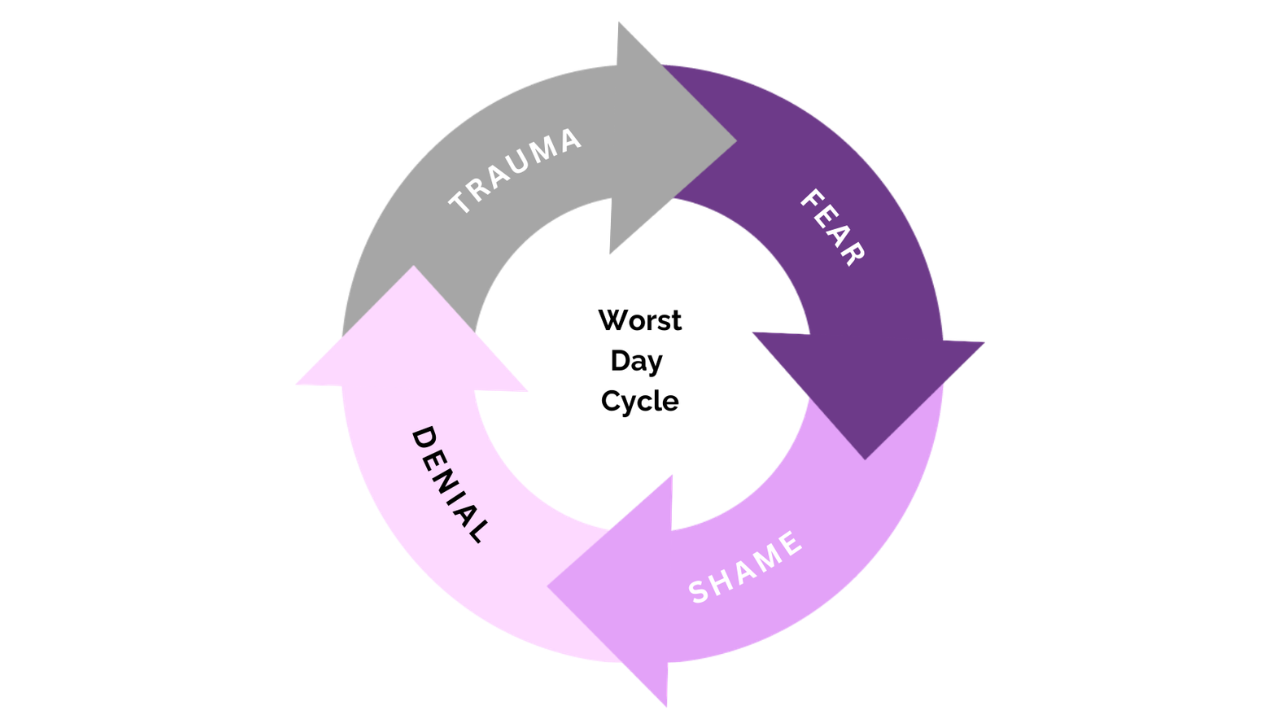
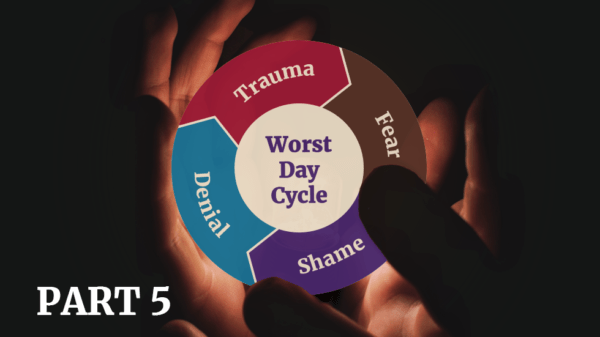
    Worst Day Cycle diagram showing how trauma fear shame denial creates and reinforces the survival persona

    The Worst Day Cycle™ has four stages: Trauma → Fear → Shame → Denial.

    Trauma: Any negative emotional experience in childhood that created painful meanings. It doesn’t have to be dramatic — it can be as subtle as a parent who was emotionally unavailable, a household where feelings were treated as weakness, or a caregiver whose love came with strings attached. These experiences create a massive chemical reaction in the brain and body. The hypothalamus generates chemical cocktails — cortisol, adrenaline, dopamine, oxytocin misfires — and the brain becomes addicted to these emotional states.

    That’s you — feeling most alive when you’re in crisis mode, because your nervous system was calibrated for chaos and the survival persona thrives there.

    Fear: Fear drives repetition. The brain thinks repetition equals safety. So you keep choosing the same patterns — the same overwork, the same people-pleasing, the same emotional suppression — not because you want to, but because your nervous system is terrified of the unknown. The survival persona IS the repetition. It’s the brain saying: “This is how we stayed safe before. Don’t change it.”

    Shame: This is where you lost your inherent worth. “I am the problem.” Not “I made a mistake” — but “I AM the mistake.” Shame is the core wound underneath every survival persona. You didn’t build the persona because you wanted to perform. You built it because deep down, you believed your authentic self wasn’t enough. Wasn’t lovable. Wasn’t safe.

    That’s the shame talking — the voice that convinced a child that who they really were would never be enough, so they’d better become someone impressive instead.

    Denial: Denial is the survival persona itself — the identity you created to survive the pain. It was brilliant in childhood — absolutely necessary. But in adulthood, it sabotages everything. It keeps you performing instead of feeling. Producing instead of connecting. Running instead of resting. And because the persona has been running for 20, 30, or 40 years, you can’t tell the difference between who you are and who you had to become.

    The Worst Day Cycle™ reveals that your survival persona is not a personality choice — it is a neurochemical loop created by childhood trauma that the brain repeats thousands of times per day, making overperformance, emotional suppression, and self-abandonment feel as natural as breathing.

    What Are the Three Survival Persona Types?

    Every survival persona falls into one of three types — or oscillates between them. Understanding which one runs your life is the first step toward reclaiming your authentic self.

    Emotional fitness icon representing the work of identifying and healing survival persona patterns in high achievers

    The Falsely Empowered: This persona controls, dominates, and rages. They look powerful on the outside — the CEO, the leader, the person who commands every room. But their power comes from fear, not strength. They control others to avoid feeling out of control inside. They perform strength instead of feeling anything real. They scan every room for problems — who’s upset? What’s broken? What needs managing? — because as children, being in charge was the only way they felt safe.

    That’s you — the fixer who scans every room for problems because as a child you learned: “If I’m not fixing it, I have no value.”

    The Disempowered: This persona collapses, people-pleases, and disappears. They make themselves small to stay safe. They grew up too fast — managing logistics, anticipating needs, picking up the slack. They say yes when their body screams no. They abandon their own needs to keep connection because they learned that if they stopped giving, they’d be left. Everyone leans on them. They’re steady, stoic, strong. But no one really knows them.

    That’s you — the responsible one who learned “If I don’t do it, nobody will. And if something goes wrong, it’s my fault” — so you became the emotional adult long before you were ready.

    The Adapted Wounded Child: This persona oscillates between both — raging one moment, collapsing the next. They overdeliver to the point of exhaustion, then shut down completely. They swing between “I don’t need anyone” and “please don’t leave me.” They never land in a stable sense of self because they never had one to begin with. Meeting expectations feels like failure, so they overprepare, overgive, and overfunction until they crash.

    Adapted wounded child icon showing oscillation between falsely empowered and disempowered survival persona types

    That’s you — the one who exhausts yourself trying to outrun invisibility, swinging between “The only way to stay safe is to be undeniably impressive” and “If I fall apart, everything falls apart.”

    The three survival persona types — falsely empowered, disempowered, and adapted wounded child — represent the brain’s three strategies for managing the shame created by childhood trauma, and every high achiever runs on one or a blend of these patterns without realizing it.

    How Your Survival Persona Shows Up in Every Area of Your Life

    Family: You’re the peacekeeper. You manage everyone’s emotions at every gathering — defusing tension, smoothing over conflicts, anticipating who’s about to blow up. You swallow your reactions at holiday dinners. You feel responsible for your parents’ happiness — even now, as an adult. And when you try to set a boundary, the guilt is so overwhelming that you cave. Your family doesn’t know you. They know your survival persona.

    That’s you — still playing the role your family assigned you at age six, wondering why family gatherings leave you feeling drained and invisible.

    Enmeshment icon showing how family systems create and reinforce survival persona patterns across generations

    Romantic Relationships: You choose partners who need you more than they love you. You tolerate behavior that crosses your boundaries because leaving feels more terrifying than staying. You confuse intensity with intimacy. You abandon your needs to keep the relationship “safe” — and then feel resentful when your partner doesn’t read your mind. The person your partner fell in love with isn’t you. It’s the persona.

    Sound familiar? The partner who gives everything and then wonders why they feel invisible — because the survival persona showed up to the relationship and left the real you at home.

    Friendships: You’re the friend everyone calls in a crisis but no one checks on. You listen for hours but never share your own struggles. You cancel your own plans when someone else needs you. You feel lonely even when surrounded by people — because no one actually knows you. They know the strong, capable, dependable version. The survival persona version.

    That’s you — surrounded by people who admire you and not one of them has ever seen you cry.

    Work: You overdeliver. You say yes to every project. You check email at midnight. You take on other people’s responsibilities because if you don’t do it, no one will — or it won’t be good enough. Your worth is measured in productivity, and rest feels like laziness. You’ve been promoted for your survival persona. Rewarded for it. Praised for the very pattern that’s destroying you.

    That’s you — getting promoted for the very survival strategy that’s keeping you disconnected from everyone who matters, including yourself.

    Body and Health: You ignore your body’s signals. You push through exhaustion, pain, hunger, and stress. You numb with food, alcohol, exercise, or scrolling. Your body has been trying to tell you something for years — but the survival persona means you’ve stopped listening. Chronic pain, digestive issues, insomnia, and autoimmune conditions are often the body’s last resort when emotional signals have been ignored for decades.

    Emotional absorption icon showing how the survival persona absorbs others' emotions while suppressing your own

    Why Do High Achievers Eventually Burn Out or Blow Up Their Lives?

    Survival personas create impressive lives. You may have a thriving career, a partner, children, status, financial success, and respect. But internally? There’s a void. That quiet, empty feeling you can’t explain. It’s not a lack of gratitude. It’s not a lack of discipline. It’s not that you need a bigger goal. It’s the grief of your authentic self being suppressed for decades.

    That’s you — the one who has everything and feels nothing, because the person everyone loves is the persona, and the real you has been hiding since childhood.

    Survival personas run on adrenaline and fear. And eventually, they run out of gas. The cycle looks like this: push, succeed, suppress, ignore, override your body, abandon yourself — until something breaks. Burnout. Infidelity. Addiction. Emotional shutdown. Explosive anger. Not because you’re weak. Because the persona was never meant to run your entire life. It was a child trying to do an adult’s job.

    That’s the truth nobody tells high achievers — your collapse isn’t a failure. It’s your authentic self finally demanding to be heard after decades of being silenced by the survival persona.

    High achievers burn out because the survival persona requires constant neurochemical fuel — cortisol, adrenaline, and shame — and the body can only sustain that chemical load for so long before it forces a collapse through burnout, illness, emotional explosion, or relationship destruction.

    Codependence icon showing how survival persona patterns create codependent relationships in high achievers

    How the Emotional Authenticity Method™ Dismantles the Survival Persona

    You don’t destroy the survival persona. You honor it — it was brilliant, it kept you safe — but you stop letting it run your emotional life. The Emotional Authenticity Method™ is the daily practice that rewires the emotional blueprint underneath the persona at the nervous system level.

    Emotional authenticity icon representing the practice of moving beyond the survival persona to your authentic self

    Step 1: Somatic Down-Regulation with optional Titration. Before you can see the survival persona clearly, you have to get your nervous system out of survival mode. Deep breathing, grounding, slowing down enough to feel your body. Titration means you go slowly — you don’t force yourself to feel everything at once. The persona has been protecting you for decades. You approach it with respect, not force.

    That’s you — learning that you don’t have to white-knuckle your way through healing the same way you white-knuckled your way through life.

    Step 2: What am I feeling? Most people living through a survival persona have no idea what they’re actually feeling. They’ve been disconnected from their emotions for so long that “fine” is their default answer. Using the Feelings Wheel, you develop emotional granularity — the ability to name specific emotions instead of lumping everything into “stressed” or “fine.”

    Step 3: Where in my body do I feel it? All emotional trauma is stored physically. Your chest tightens. Your stomach drops. Your jaw clenches. The survival persona keeps you in your head — analyzing, strategizing, controlling. This step moves you into your body, where the wound actually lives.

    Step 4: What is my earliest memory of this feeling? This is where the survival persona starts to lose its grip. You trace today’s reaction back to its childhood origin. You realize: this isn’t about today. My partner isn’t my parent. My boss isn’t my critical caregiver. My nervous system just thinks they are — and the survival persona activated to protect me the same way it did when I was five.

    That’s the moment the survival persona becomes visible — when you see that your reaction belongs to a child, not an adult, and the persona has been running a child’s program in an adult’s life.

    Step 5: Who would I be if I never had this feeling again? This is the vision step. It connects you to the Authentic Self Cycle™ and gives your nervous system a new destination — not more performance, not a better persona, but actual identity restoration. Who were you before the trauma taught you that you had to earn love?

    The Emotional Authenticity Method™ works because emotions are biochemical events — you cannot change the survival persona through thoughts alone. Thoughts originate from feelings, not the other way around. The persona was built by feelings, and it can only be dismantled by feeling what was never safe to feel as a child.

    How the Authentic Self Cycle™ Restores Your Real Identity

    The Authentic Self Cycle™ is the healing counterpart to the Worst Day Cycle™. Where the Worst Day Cycle™ traps you in Trauma → Fear → Shame → Denial, the Authentic Self Cycle™ restores your identity through Truth → Responsibility → Healing → Forgiveness.
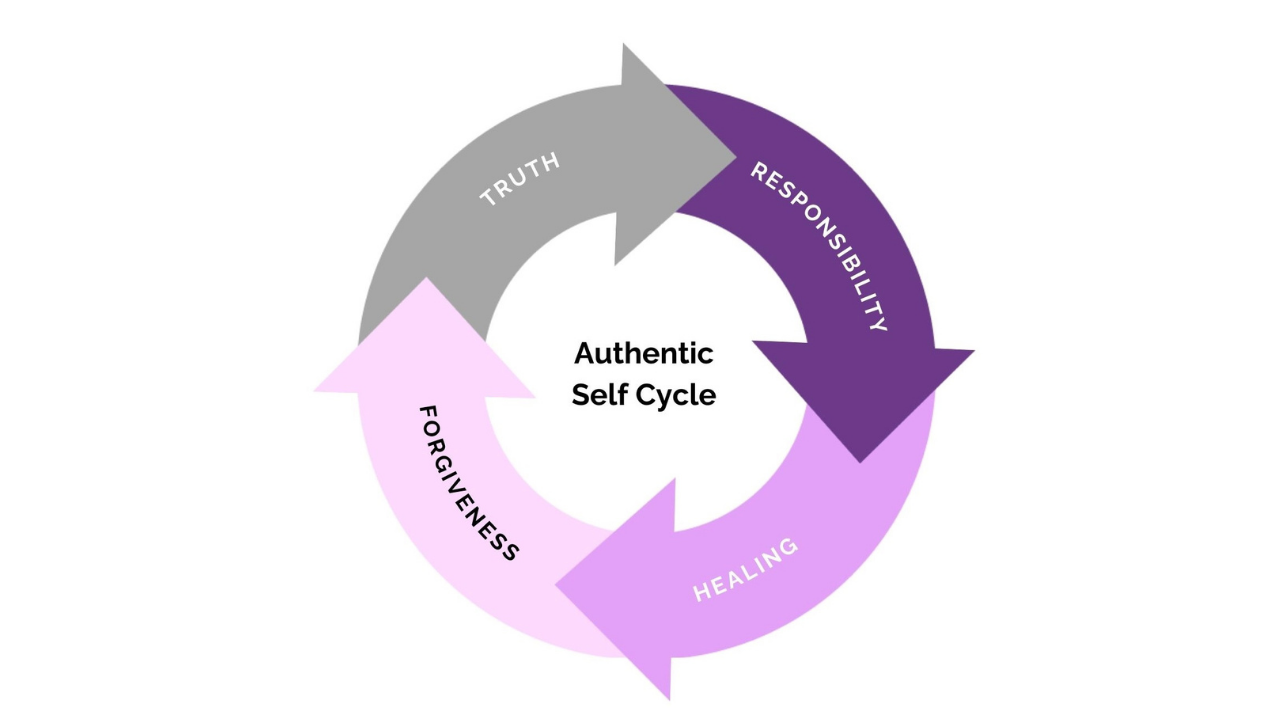
    Authentic Self Cycle diagram showing truth responsibility healing forgiveness as the path from survival persona to authentic self

    Truth: Name the blueprint. See that “this isn’t about today.” Recognize the survival persona for what it is — a brilliant childhood adaptation, not your identity. When you walk into a room scanning for threats, truth says: “That’s the survival persona. I’m safe now. I don’t need to perform.”

    That’s the first crack in the armor — and that crack isn’t weakness. It’s the beginning of coming home to yourself.

    Responsibility: Own your emotional reactions without blame. “My partner isn’t my parent — my nervous system just thinks they are.” This isn’t about fault. It’s about taking back your power from a childhood that stole it. The survival persona runs on blame — blaming others or blaming yourself. Responsibility says: “I see the pattern, and I’m choosing differently.”

    Healing: Rewire the emotional blueprint so conflict becomes uncomfortable but not dangerous, space isn’t abandonment, and intensity isn’t attack. This is where daily practice does its work — second by second, like the ticks of a clock. The second hand moves in tiny, almost insignificant ticks. But those ticks move the minute hand. The minutes move the hours. Healing works the same way. It’s not dramatic. It’s repetitive.

    Forgiveness: Release the inherited emotional blueprint and reclaim your authentic self. This creates a NEW emotional chemical pattern that replaces fear, shame, and denial with safety, worth, and connection. Forgiveness isn’t about the people who hurt you. It’s about releasing the shame for ever needing the survival persona in the first place.

    That’s you — not becoming someone new, but finally meeting who you always were underneath the persona you had to build to survive.

    Reparenting icon showing the process of replacing the survival persona with authentic self through daily practice

    The Authentic Self Cycle™ is an identity restoration system — it doesn’t teach you to build a better survival persona, it replaces the neurochemical pattern that created the persona with a new blueprint built on truth, responsibility, and emotional authenticity.

    Three Questions to Begin Seeing Your Survival Persona

    If you suspect you’re living through a survival persona, start with these three questions. Not to analyze yourself — but to begin noticing the pattern.

    1. What would you name your survival persona? Give it a name. “The Fixer.” “The Rock.” “The Overachiever.” “The Peacekeeper.” Naming it creates separation between who you are and who you had to become. That separation is where healing begins.

    That’s you — finally putting a name on the thing that’s been running your life so you can start seeing it instead of being it.

    2. Where has it recently overridden what you actually wanted or needed? Think about the last week. Where did you say yes when you wanted to say no? Where did you swallow your truth to avoid conflict? Where did you push through exhaustion instead of resting? Those are the moments the survival persona stepped forward and said: “I’ve got this. You go away.” And your authentic self retreated.

    3. When it takes over, what happens in your body? Tension? Numbness? Wired energy? A clenched jaw? A tightness in your chest? The survival persona lives in the body. Noticing the physical signature is how you catch it in real time instead of only recognizing it in hindsight.

    That’s you — learning to read your body’s signals instead of overriding them, because awareness is the first crack in the armor.

    Metacognition icon showing the awareness practice of observing your survival persona patterns in real time
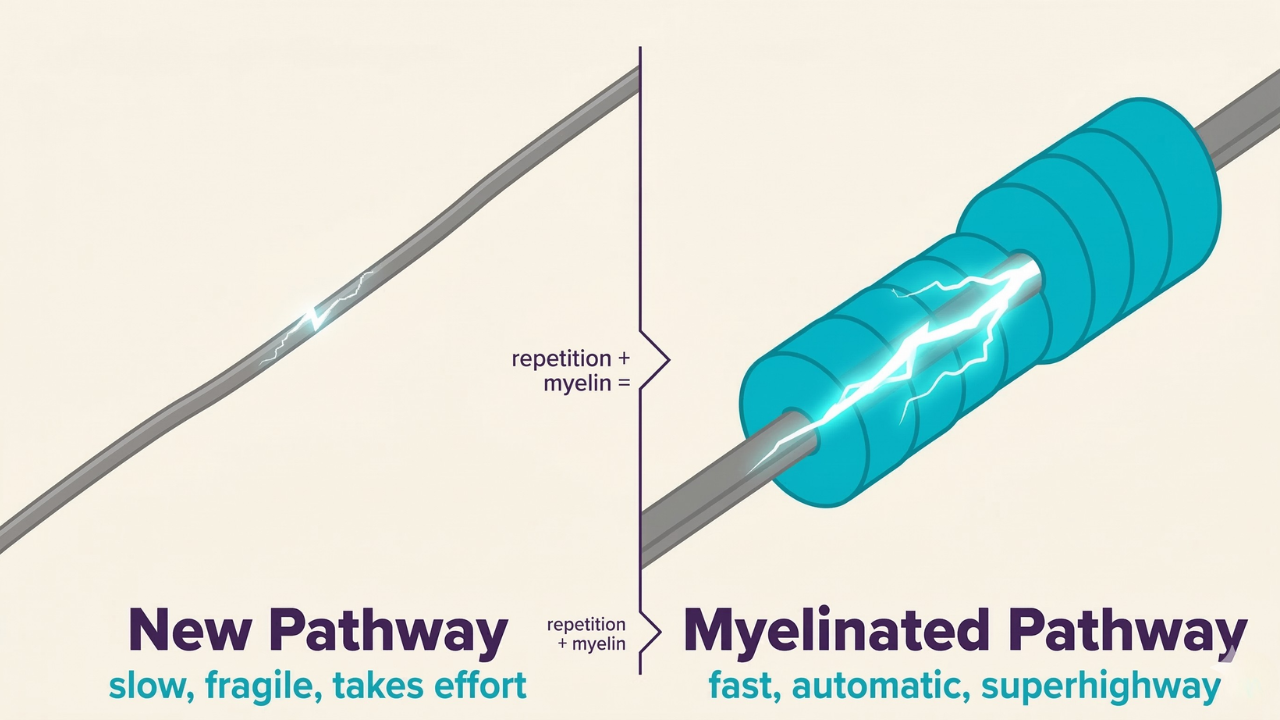
    Myelin and neural pathways icon showing how repetitive survival persona patterns become hardwired through neuroplasticity

    Frequently Asked Questions About Survival Personas

    What is a survival persona and how do I know if I have one?

    A survival persona is the identity your brain built in childhood to earn love, stay safe, and maintain control in an emotionally unpredictable environment. You likely have one if you’re a high achiever who feels empty despite success, if you scan rooms for problems, if you say yes when your body says no, or if people describe you as “strong” while you feel hollow inside. The survival persona feels like your personality — but it’s actually a trauma adaptation that the Worst Day Cycle™ keeps running on autopilot.

    What are the three types of survival personas?

    The three survival persona types are the falsely empowered (controls, dominates, rages — looks powerful but driven by fear), the disempowered (collapses, people-pleases, disappears — makes themselves small to stay safe), and the adapted wounded child (oscillates between both — overperforms then shuts down). Most high achievers run on one type or a blend. The Emotional Authenticity Method™ helps identify which pattern is running your life so you can begin rewiring it.

    Why do high achievers build survival personas instead of authentic identities?

    In the first seven years of life, the brain operates in a theta brainwave state — absorbing everything like hypnosis. If your environment taught you that love was conditional on performance, compliance, or emotional suppression, your brain built a survival strategy around those conditions. The brain can’t tell right from wrong — only known from unknown. Since most childhood messaging is negative and shaming, the brain automates the survival persona because it’s known, and known equals safe.

    Can a survival persona be healed or does it stay forever?

    The survival persona can absolutely be dismantled — but not through insight alone. Because the persona is stored in the body as a neurochemical pattern, healing requires somatic work, not just cognitive understanding. The Emotional Authenticity Method™ provides a 5-step daily practice that traces today’s survival reactions to their childhood origins and rewires the nervous system over time. The Authentic Self Cycle™ — Truth, Responsibility, Healing, Forgiveness — provides the long-term framework for identity restoration.

    How is the survival persona connected to the Worst Day Cycle™?

    The survival persona IS the denial stage of the Worst Day Cycle™. The cycle runs: Trauma → Fear → Shame → Denial. Denial is where the persona lives — it’s the identity you created to survive the pain of shame. The persona keeps the cycle running by suppressing authentic feelings, which prevents healing, which maintains the trauma response, which generates more fear and shame. Breaking the cycle requires moving into the Authentic Self Cycle™ through truth, responsibility, healing, and forgiveness.

    What is the difference between a survival persona and just having a strong personality?

    A strong personality comes from a secure emotional foundation — you’re strong because you can tolerate discomfort while staying connected to yourself. A survival persona looks strong but is driven by fear — you perform strength because vulnerability was never safe. The key difference: a strong person can rest, ask for help, say “I don’t know,” and show vulnerability without feeling like they’ll be abandoned. A survival persona can’t — because those actions trigger the childhood shame that created the persona in the first place.

    The Bottom Line

    You are not broken for becoming who you had to be. The survival persona you built was brilliant. It was necessary. It got you through a childhood that wasn’t emotionally safe. And it built an external life that looks impressive to everyone around you.

    But you don’t have to stay there.

    High achievement built your external world. Authenticity will build your internal one. And that’s the only place the void begins to soften.

    That’s you — not the persona everyone admires. The human being underneath who’s been waiting decades to finally be seen, to finally be known, to finally stop performing and start living.

    Your authentic self isn’t some perfect, enlightened version of you. It’s simply who you were before you were trained to earn love. From that place, you can say “I’m tired,” “I’m scared,” “I don’t know,” and “I need help” — without believing that makes you unlovable.

    The void doesn’t fill with achievement. It fills with truth. With feeling. With the willingness to finally stop running from yourself — and start running toward who you actually are.

    Perfectly imperfect icon showing that your authentic self doesn't need to perform to be worthy of love

    These books complement the frameworks in this article and deepen your understanding of how survival personas form and how to heal them:

    Facing Codependence by Pia Mellody — the foundational text on how childhood trauma creates the survival personas that drive overperformance and self-abandonment.

    The Body Keeps the Score by Bessel van der Kolk — the science of how trauma lives in the body, explaining why the survival persona can’t be dismantled through thought alone.

    When the Body Says No by Gabor Maté — how chronic survival persona activation manifests as physical illness and disease.

    Codependent No More by Melody Beattie — a practical guide to recognizing when your survival persona has created codependent patterns in your relationships.

    The Gifts of Imperfection by Brené Brown — how shame drives the survival persona and why vulnerability is the path back to your authentic self.

    Take the Next Step

    If you’re ready to stop living through your survival persona and start building a life from your authentic self, Kenny Weiss offers courses designed for high achievers who are done performing and ready to heal:

    Emotional Blueprint Starter Course — Individual ($79) — Your personal roadmap to identifying your survival persona and beginning the journey to your authentic self.

    Relationship Starter Course — Couples ($79) — For couples ready to see how their survival personas collide and learn to connect authentically.

    Why We Can’t Stop Hurting Each Other ($479) — Deep-dive into the Worst Day Cycle™ and how childhood trauma creates the survival personas that sabotage relationships.

    Why High Achievers Fail at Love ($479) — Built specifically for high achievers whose survival personas have mastered career but can’t figure out relationships.

    The Shutdown Avoidant Partner ($479) — Understanding avoidant attachment through the lens of trauma chemistry and survival personas.

    Tier 1: Mapping the Blueprint ($1,379) — The comprehensive program for learning and practicing the Emotional Authenticity Method™ to dismantle your survival persona.

    Download the Feelings Wheel — the free tool used in Step 2 of the Emotional Authenticity Method™ to build emotional granularity beyond the survival persona’s “I’m fine.”

    Explore more: The Signs of Enmeshment | 7 Signs of Relationship Insecurity | 7 Signs of High Self-Esteem | How to Determine Your Negotiables and Non-Negotiables | 10 Do’s and Don’ts for a Great Relationship

  • Denial in the Worst Day Cycle™: How Self-Deception Keeps You Trapped

    Denial in the Worst Day Cycle™: How Self-Deception Keeps You Trapped

    Denial is the fourth and final stage of the Worst Day Cycle™ — the unconscious self-deception system your brain built in childhood to protect you from unbearable emotional pain, and it is the single greatest barrier to healing because it guarantees the cycle repeats. If you’ve spent your life insisting “my childhood wasn’t that bad,” minimizing your pain, or wondering why you keep ending up in the same painful patterns despite years of therapy, you’re not lazy or broken. You’re experiencing the most sophisticated survival strategy the human brain can create — and it’s running your life without your permission.

    That’s you — the one who can see everyone else’s patterns clearly but can’t see your own.

    Denial isn’t lying. It’s not stupidity. It’s the brilliant emotional architecture your nervous system built when you were a child who had no other option. And understanding how it works is the most important step you will ever take toward reclaiming your authentic self.

    you created in childhood to protect yourself from shame. It’s not conscious lying — it’s an automated self-deception system that minimizes your pain, normalizes dysfunction, and keeps you performing instead of feeling. The Worst Day Cycle™ explains how denial locks you into repeating painful patterns. The Emotional Authenticity Method™ (6 steps including Feelization) and the Authentic Self Cycle™ provide the path to confronting denial and reclaiming who you actually are.

    Worst Day Cycle diagram showing how denial is the fourth stage that locks you into repeating trauma fear shame patterns

    What Is Denial in the Worst Day Cycle™?

    Denial is not what most people think it is. It’s not stubbornness. It’s not ignorance. It’s not choosing to look away from the truth. Denial is the survival persona you created in childhood to survive the unbearable pain of shame — an automated self-deception system that minimizes, normalizes, and protects you from facing the emotional reality of what happened to you.

    That’s you — the person who says “I’ve dealt with my childhood” while your body, your relationships, and your choices tell a completely different story.

    Self-deception and denial is the single greatest killer on the planet today. It’s not a virus. It’s not guns. It’s not any of the external threats we spend billions fighting. It’s this invisible internal mechanism that nobody talks about because the very nature of denial is to deny its own existence.

    In childhood, denial was genius. You couldn’t leave. You couldn’t fight back. You couldn’t speak the truth about what was happening in your family system. So your nervous system did the only thing it could do — it denied the truth hard enough to make the unbearable bearable. It minimized: “It wasn’t that bad.” It normalized: “All families are like this.” It suppressed: “I don’t remember much of my childhood.” It rationalized: “They did the best they could.”

    That’s the brilliance of denial — it kept a helpless child attached to the people they needed to survive.

    But the survival persona you created as a child becomes the prison you live in as an adult. Denial boomerangs back against you because you don’t realize you’re operating from your wounded child self. You keep choosing people who retraumatize you. You keep reenacting childhood patterns trying to “finally win.” You expect partners, friends, bosses, or even your own children to be the rescuing parent you never had.

    Denial makes you believe you’re an adult — when emotionally, you’re still the child who needed saving. Denial is the final stage of the Worst Day Cycle™ — the stage that guarantees the cycle repeats until you confront the truth and reclaim your authentic self.

    Survival persona icon showing how denial creates a false identity that replaces your authentic self

    How Does Denial and Self-Deception Actually Operate?

    Denial operates through three primary mechanisms, all of which begin in childhood and run automatically in adulthood. Understanding these mechanisms is essential because becoming an expert in your own denial and self-deception is the single most important skill you need to learn if you want to overcome the Worst Day Cycle™.

    Emotional blueprint icon showing how childhood denial patterns become automatic adult self-deception

    Mechanism 1: False Attachment Protection. As a species, we must attach to another human being or we will die. Because our parents are perfectly imperfect and human, they hurt us. To attach and survive, we create a survival persona. We had no choice — our life depended on it. The role of the survival persona is to minimize, suppress, repress, condone, justify, and deny that our parents hurt us. We create this self-deception to forge attachment with them. We subconsciously fear that if we accepted the truth, we would lose their attachment and die.

    That’s you — still protecting the image of your parents at age 40, 50, or 60 because your nervous system still believes the truth would kill the connection.

    Even if you’re aware of your parents’ imperfections, a false attachment seems better than no attachment. That furthers your resistance to admitting how they hurt you. Your inability to live in truth affects every single adult decision for the rest of your life until addressed.

    Mechanism 2: Blame Projection. We blame, judge, and criticize other people, places, and things so that we don’t have to admit the part that our shame-based survival persona played in setting up our own patterns in adult life. There is an added benefit to our self-deception — it shields us from having to face that we created a survival persona and therefore, we don’t know who we really are.

    Sound familiar? Pointing at your partner’s flaws so you don’t have to look at why you chose them in the first place.

    Mechanism 3: Brain Design Reinforcement. The left hemisphere of the brain becomes myopic and shuts out truth unless it confirms its current belief. The emotional right hemisphere’s ability to include context and diverse options makes for a more complete and precise intellectual thought and decision. In short, the more emotionally developed a person is, the better their thoughts and decisions. But the left hemisphere doesn’t want to hear what it takes to be reality. It blindly pushes on, always along the same track.

    That’s the neurological trap — your brain is literally designed to reinforce the self-deception that keeps you stuck.

    The combination of the Worst Day Cycle™, societal beliefs, and the brain’s design creates a formidable adversary to reclaiming your authentic self, accepting your perfect imperfections, and achieving your personal potential.

    How the Worst Day Cycle™ Creates and Sustains Denial

    The Worst Day Cycle™ has four stages: Trauma → Fear → Shame → Denial. Denial is the final stage — and it’s the stage that locks the entire cycle into permanent repetition.

    Trauma chemistry icon showing how childhood creates neurochemical addiction patterns that denial protects

    Trauma: Any negative emotional experience in childhood that created painful meanings. It doesn’t have to be dramatic — it can be as subtle as a parent who was emotionally unavailable, a household where feelings were treated as weakness, or love that was conditional on performance. These experiences create a massive chemical reaction in the brain and body. The hypothalamus generates chemical cocktails — cortisol, adrenaline, dopamine, oxytocin misfires — and the brain becomes addicted to these emotional states.

    That’s you — feeling most alive when you’re in crisis mode, because your nervous system was calibrated for chaos in childhood.

    Fear: Fear drives repetition. The brain conserves energy by repeating known patterns — it can’t tell right from wrong, only known from unknown. Since 70%+ of childhood messaging is negative and shaming, adults repeat these painful patterns in relationships, career, hobbies, health — everything. Fear says: “Don’t change. Don’t look. Stay where you are. At least this pain is familiar.”

    Shame: This is where you lost your inherent worth. “I am the problem.” Not “I made a mistake” — but “I AM the mistake.” Shame creates the core wound underneath all denial. You deny the truth because facing it means facing the shame — and the shame feels like annihilation.

    That’s the shame talking — the voice that says “if people really knew me, they’d leave.”

    Denial: Denial is the survival persona created to survive the pain of shame. It was brilliant in childhood — absolutely necessary. But in adulthood, it sabotages everything. The goal of denial is to keep the focus on managing the symptoms, keeping you in the survival persona, and preventing you from actually feeling the emotional weight from the original trauma and facing the emotional blueprint that was written in childhood.

    Denial can sound like: “My childhood wasn’t that bad.” “I’ve already dealt with all that.” “Other people had it worse.” “This is just how relationships are.” “If I could just stop being so sensitive, this would all be fine.” “I just have to try harder, be calmer, be more patient.” Whatever it may be, every form of denial keeps you from feeling what actually needs to be felt.

    That’s you — collecting new strategies, reading more books, attending more workshops, and never actually sitting with the feeling underneath all of it.

    Denial guarantees the Worst Day Cycle™ repeats because it prevents you from ever reaching the root cause — the childhood emotional blueprint that created your survival persona in the first place.

    How Your Survival Persona Uses Denial to Keep You Trapped

    Your survival persona is the identity you created in childhood to navigate an emotionally unsafe environment. It’s not who you are — it’s who you had to become. And denial is the engine that keeps the survival persona running.

    Adapted wounded child icon showing oscillation between falsely empowered and disempowered denial patterns

    There are three survival persona types, and each uses denial differently:

    The Falsely Empowered: This persona controls, dominates, and rages. They deny vulnerability. They deny need. They deny that their control is driven by terror. The falsely empowered survival persona’s denial sounds like: “I don’t need anyone.” “Emotions are weakness.” “I’ve got this handled.” Their denial keeps them performing strength instead of feeling anything real.

    That’s you — the one who built an empire but can’t have a vulnerable conversation with your partner without shutting down or exploding.

    The Disempowered: This persona collapses, people-pleases, and disappears. They deny their own worth. They deny their own anger. They deny that their constant giving is actually fear-driven, not love-driven. The disempowered survival persona’s denial sounds like: “I’m fine, really.” “Their needs are more important.” “I don’t mind — I like helping.” Their denial keeps them invisible and self-abandoning.

    That’s you — the one who gives everything to everyone and then wonders why you feel invisible and resentful.

    The Adapted Wounded Child: This persona oscillates between both — raging one moment, collapsing the next. They deny having a stable sense of self. They flip between overperforming and shutting down, between control and submission, never landing in their authentic self. Their denial sounds like: “I’m working on it” while nothing actually changes.

    That’s you — swinging between “I don’t need anyone” and “please don’t leave me” and calling both of them your “real self.”

    Here is the deeper truth about the survival persona and denial: when you start to succeed and your authentic self begins emerging, the survival persona activates shame to pull you back. The conflict is this — you’re starting to do better, starting to feel good, and then the shame-based persona says: “Wait. If you live in your authentic self, the connection with Mom and Dad is gone.” The other half of the fear: “If I actually succeed, it means the survival persona was always wrong. Who wants to admit at my age that I’ve lived my life as an imposter?”

    That’s the reason self-sabotage exists — your survival persona would rather destroy your success than face the truth about who you’ve been performing as your entire life.

    Your survival persona uses denial as a shield against the most terrifying truth of all: you don’t know who you really are underneath the performance — and facing that unknown feels more dangerous than repeating every painful pattern you’ve ever known.

    Emotional authenticity icon representing the path from denial and self-deception to truth and healing

    How Denial and Self-Deception Show Up in Every Area of Your Life

    Denial doesn’t stay in one lane. It’s a system-wide operating system that touches every area of your existence.

    Family: You defend your parents’ behavior. “They did the best they could.” “My childhood was normal.” You replay holiday dinners where you were criticized, dismissed, or emotionally abandoned — and you call it “family being family.” You feel anxious before family gatherings but can’t name why. You minimize the impact of childhood emotional neglect because “other people had it worse.”

    That’s you — still protecting the family narrative at the expense of your own truth.

    Romantic Relationships: You choose partners who recreate your childhood emotional environment. You stay in relationships where your needs are dismissed because it feels “normal.” You blame yourself when they can’t love you the way you need. You deny that you chose this person because your nervous system recognized the familiar pain — and familiar pain feels like home.

    Sound familiar? Choosing the same type of partner over and over and insisting “this time it’s different.”

    Friendships: You surround yourself with people who confirm your survival persona. If you’re falsely empowered, your friends admire your strength and never challenge you. If you’re disempowered, your friends lean on you constantly and never ask how you’re doing. You deny that your friendships are one-directional because admitting it would mean facing loneliness — and loneliness triggers the childhood abandonment wound.

    Work: You call workaholism “ambition.” You deny that your drive is fueled by shame — the belief that if you stop producing, you stop being worthy of existence. You tolerate toxic work environments because confrontation feels dangerous. You deny that your career is another survival persona performing worth instead of experiencing it.

    That’s you — being promoted for the very denial pattern that’s destroying your health, your relationships, and your connection to yourself.

    Body and Health: You ignore your body’s signals. Chronic pain, digestive issues, insomnia, autoimmune conditions — your body has been screaming the truth your denial won’t let you hear. You medicate symptoms instead of addressing roots. You push through exhaustion because rest feels like failure. Your body keeps the score even when your denial refuses to read it.

    Emotional fitness icon showing the work required to confront denial across all life areas

    Why Traditional Therapy Can’t Break Through Denial

    Here’s what most therapy gets wrong about denial: it tries to think its way through a feeling problem. Cognitive-behavioral therapy attempts to restructure your thoughts. Talk therapy gives you insight. Both are valuable — but neither touches the neurochemical pattern that denial is protecting.

    That’s the gap — you can understand your denial intellectually and still be completely run by it.

    Think of it like watching a 3D movie without the glasses. You’ve heard about relationships and careers and what it is to be human — you’re watching life, which is a 3D movie with all these different aspects to it. But since you don’t have the glasses, everything’s a bit fuzzy. The colors don’t line up, and you can’t make out everything exactly. But since you’ve heard about what life looks like, you can kind of piece together what’s happening. None of it’s clear. None of it makes total sense.

    Learning about the Worst Day Cycle™, the Authentic Self Cycle™, and Emotional Authenticity — that’s the glasses. All of a sudden, you see everything clearly for the first time. It all makes sense. Shame and denial keep us from seeing the world truly the way it is. The confrontation puts the glasses on, and the glasses are truth, responsibility, healing, and forgiveness.

    You cannot change emotional patterns through thoughts alone. Emotions are biochemical events. Thoughts originate from feelings, not the other way around. This is why cognitive approaches hit a ceiling with denial — they’re trying to use the thinking brain to override a survival program that runs below conscious awareness, in the body, in the nervous system, in the chemical patterns your brain has been repeating since childhood.

    Myelin and neural pathways icon showing how denial patterns become hardwired through neurological repetition

    Traditional therapy fails to break through denial because denial is a somatic and neurochemical pattern, not a cognitive one — it requires body-level, emotion-level intervention to rewire the survival program that has been running automatically since childhood.

    How the Emotional Authenticity Method™ Confronts Denial

    The Emotional Authenticity Method™ is a six-step somatic and emotional process that goes where denial doesn’t want you to go — into the body, into the feeling, into the childhood origin of the pattern. This is the daily practice that actually rewires denial at the nervous system level.

    Emotional regulation icon representing the Emotional Authenticity Method for confronting denial and self-deception

    Step 1: Somatic Down-Regulation (focus on what you can hear for 15-30 seconds; titration if highly dysregulated). Before you can confront denial, your nervous system needs to come down from activation. When denial is challenged, your body goes into survival mode — heart racing, chest tight, mind foggy. Down-regulation creates the safety your nervous system needs to let the truth in. For highly activated states, titration means going slowly — approaching the feeling in small doses so you don’t overwhelm your system.

    That’s you — learning that you don’t have to face everything at once. You can titrate the truth.

    Step 2: What am I feeling right now? Most people in denial can’t answer this question. They’ve been disconnected from their emotions for so long that “fine” or “stressed” is the best they can offer. Using the Feelings Wheel, you develop emotional granularity — the ability to name specific emotions instead of lumping everything into one vague category. “I’m not just stressed — I’m ashamed, I’m terrified, and underneath that, I’m grieving.”

    Step 3: Where in my body do I feel it? All emotional trauma is stored physically. Your chest tightens. Your stomach drops. Your jaw clenches. Your shoulders climb toward your ears. Locating the feeling in your body is how you move from intellectual understanding to somatic truth. This is where denial starts to crack — your body can’t lie the way your mind can.

    That’s the moment denial starts to dissolve — when your body tells the truth your mind has been hiding.

    Step 4: What is my earliest memory of having this exact feeling? This is where you trace today’s reaction back to its childhood origin. You realize: “This isn’t about today. My partner isn’t my parent. My boss isn’t my father. My nervous system just thinks they are.” This step confronts denial directly because it connects the adult pattern to the childhood blueprint. You can no longer deny that your childhood affects your present — the evidence is in your body.

    Step 5: Who would I be if I never had this thought or feeling again? What would be left over? This is the vision step. It connects you to the Authentic Self Cycle™ and gives your nervous system a new destination. Not more denial. Not better coping. Actual identity restoration. You begin to see who you are underneath the survival persona — and that vision becomes the motivation to keep confronting denial.

    Step 6: Feelization — Sit in the feeling of the Authentic Self and make it strong. Create a new emotional chemical addiction to replace the old blueprint. Ask: How would I respond to this situation from this feeling? What would I say? What would I do? Visualize and FEEL yourself operating from your Authentic Self. This is the emotional blueprint remapping and rewiring step. Your brain doesn’t distinguish between a vividly felt experience and a lived one. When you feelingly inhabit the Authentic Self, you’re building new myelin sheaths, new neural pathways, and a new emotional addiction to replace the old denial pattern.

    That’s when everything changes — not when you understand denial, but when you feel who you are without it.

    The Emotional Authenticity Method™ confronts denial by working at the somatic level where denial actually lives — you cannot think your way out of denial because denial is a biochemical survival pattern, not a cognitive choice.

    How the Authentic Self Cycle™ Replaces Denial With Truth

    The Authentic Self Cycle™ is the healing counterpart to the Worst Day Cycle™. Where the Worst Day Cycle™ traps you in Trauma → Fear → Shame → Denial, the Authentic Self Cycle™ restores your identity through Truth → Responsibility → Healing → Forgiveness.

    Authentic Self Cycle diagram showing truth responsibility healing forgiveness as the replacement for denial

    Truth: Name the blueprint. See that “this isn’t about today.” When your colleague gives you critical feedback and your chest tightens, truth says: “This feeling is from childhood. My colleague isn’t my critical parent — my nervous system just thinks they are.” Truth is the direct opposite of denial. It doesn’t minimize. It doesn’t normalize. It says: “This is what happened. This is how it affected me. This is the pattern it created.”

    That’s the first step out of denial — seeing the pattern instead of being trapped inside it.

    Responsibility: Own your emotional reactions without blame. “My partner isn’t my parent — my nervous system just thinks they are. I’m responsible for regulating my nervous system, not for controlling whether triggers happen.” This is radically different from denial, which says: “It’s their fault I feel this way.” Responsibility says: “I’m accountable for my healing and my nervous system’s response.”

    That’s the shift that changes everything — from “they did this to me” to “I inherited a blueprint and I’m choosing to rewire it.”

    Healing: Rewire the emotional blueprint so conflict becomes uncomfortable but not dangerous, space isn’t abandonment, and intensity isn’t attack. This is where the Emotional Authenticity Method™ does its work — second by second, like the ticks of a clock. The second hand moves in tiny, almost insignificant ticks. But those ticks move the minute hand. The minutes move the hours. Healing works the same way.

    Forgiveness: Release the inherited emotional blueprint and reclaim your authentic self. Forgiveness isn’t about the people who hurt you. It’s about releasing the blueprint they gave you. This creates a NEW emotional chemical pattern that replaces fear, shame, and denial with safety, worth, and connection. You don’t become someone new. You finally meet who you always were underneath the survival persona.

    That’s you — not the denial-protected performance. The real you underneath all of it.

    The Authentic Self Cycle™ is an identity restoration system — it doesn’t teach you to manage denial, it replaces the neurochemical pattern that created denial with a new blueprint built on truth, responsibility, healing, and forgiveness.

    Reparenting icon showing the process of replacing denial with authentic self-care and self-loyalty

    Frequently Asked Questions About Denial and Self-Deception

    What is denial in the context of childhood trauma and the Worst Day Cycle™?

    Denial is the fourth stage of the Worst Day Cycle™ — the survival persona your brain created in childhood to protect you from the unbearable pain of shame. It’s not conscious lying or stubbornness. It’s an automated self-deception system that minimizes, normalizes, and rationalizes your childhood experience so you could maintain attachment with your caregivers. In adulthood, this same denial system prevents you from seeing the patterns that keep you stuck in painful relationships, careers, and health choices.

    How do I know if I’m in denial about my childhood trauma?

    If you insist your childhood “wasn’t that bad” while your adult life is marked by repeating painful patterns — relationship dysfunction, workaholism, people-pleasing, chronic emptiness, or emotional shutdown — you’re likely in denial. Other signs include difficulty accepting compliments, defensive reactions to feedback, minimizing your own needs, and believing “other people had it worse.” The Worst Day Cycle™ explains how 70%+ of childhood messaging is negative and shaming, yet most adults deny this impacted them.

    Why is denial considered the most dangerous stage of the Worst Day Cycle™?

    Denial is the most dangerous stage because it’s the stage that locks the entire cycle into permanent repetition. Without denial, you would feel the shame, trace it to its childhood origin, and begin healing. But denial prevents you from ever reaching the root cause. It keeps you managing symptoms — through coping skills, therapy, positive thinking, or medication — without ever addressing the childhood emotional blueprint that created the pattern. Denial guarantees the Worst Day Cycle™ repeats.

    Can you break through denial on your own or do you need professional help?

    You can begin confronting denial with the Emotional Authenticity Method™ — a six-step somatic practice that includes down-regulation, emotional naming, body awareness, childhood tracing, vision work, and Feelization. Consistent daily practice creates measurable shifts within weeks. However, the depth of healing often depends on the depth of the original trauma. A skilled guide can accelerate the process by holding a mirror to denial patterns you genuinely cannot see on your own — because the nature of denial is to hide from itself.

    What is the relationship between denial and the three survival persona types?

    Each survival persona type uses denial differently. The falsely empowered persona denies vulnerability and need, using control and performance as shields. The disempowered persona denies their own worth and anger, using people-pleasing as a shield. The adapted wounded child oscillates between both, denying they have a stable identity at all. All three survival persona types were created in childhood as denial strategies — brilliant adaptations to emotionally unsafe environments that now sabotage adult relationships, health, and self-worth.

    How long does it take to move from denial to emotional authenticity?

    The shift from denial to emotional authenticity is not a single breakthrough — it’s a daily practice of confronting the survival persona through the Emotional Authenticity Method™. Most people notice significant shifts in self-awareness within weeks of consistent practice. Deeper patterns — especially those involving family-of-origin denial — can take months of consistent work. The Authentic Self Cycle™ (Truth → Responsibility → Healing → Forgiveness) provides the long-term framework for sustained identity restoration beyond the denial system.

    The Bottom Line

    Denial kept you alive. It was the most brilliant adaptation your childhood brain could create. It protected you when nothing else could. And it has been running your life — your relationships, your career, your health, your sense of self — ever since.

    But you’re here now. You’re reading this. And that means something inside you — your authentic self — is pushing against the denial. It’s asking to be seen. It’s asking for the truth.

    The truth is: your childhood affected you more than you’ve been willing to admit. The truth is: your survival persona is not who you are. The truth is: the patterns you keep repeating are not character flaws — they’re the Worst Day Cycle™ running on automatic, sustained by denial.

    That’s you — not the survival persona who has it all figured out. The real you underneath, who has been waiting decades to finally be met with truth instead of more denial.

    Confronting denial is terrifying. It means admitting that the life you built may have been built by a survival persona, not your authentic self. It means grieving the years spent in self-deception. It means sitting with shame that has been avoided since childhood.

    But on the other side of that confrontation is freedom. On the other side is who you actually are — not the performance, not the people-pleasing, not the control, not the collapse. The authentic, perfectly imperfect human being who deserves to live in truth.

    The glasses are available. The 3D movie of your life can come into focus. But you have to be willing to put the glasses on — and see what denial has been hiding.

    These books complement the frameworks in this article and can deepen your understanding of denial, self-deception, and the path to emotional authenticity:

    Facing Codependence by Pia Mellody — the foundational text on how childhood trauma creates the survival patterns that denial maintains.

    The Body Keeps the Score by Bessel van der Kolk — the science of how trauma lives in the body, explaining why cognitive approaches alone can’t break through denial.

    When the Body Says No by Gabor Maté — how chronic denial and emotional suppression manifest as physical illness and disease.

    Codependent No More by Melody Beattie — a practical guide to recognizing codependent denial patterns and beginning the journey to authenticity.

    The Gifts of Imperfection by Brené Brown — how shame drives denial and why vulnerability is the path back to your authentic self.

    The Master and His Emissary by Iain McGilchrist — the neuroscience of how the left and right brain hemispheres contribute to self-deception and denial.

    Take the Next Step

    If you’re ready to confront denial and begin reclaiming your authentic self, Kenny Weiss offers courses designed for people who are done managing symptoms and ready to heal the root cause:

    Emotional Blueprint Starter Course — Individual ($79) — Your personal roadmap to understanding the Worst Day Cycle™ and identifying your denial patterns.

    Relationship Starter Course — Couples ($79) — For couples ready to see how denial sabotages relationships and build authentic connection instead.

    Why We Can’t Stop Hurting Each Other ($479) — Deep-dive into the Worst Day Cycle™ and how denial keeps painful relationship patterns repeating.

    Why High Achievers Fail at Love ($479) — Built specifically for the falsely empowered survival persona whose denial looks like strength and ambition.

    The Shutdown Avoidant Partner ($479) — Understanding avoidant attachment through the lens of denial, trauma chemistry, and survival personas.

    Tier 1: Mapping the Blueprint ($1,379) — The comprehensive program for learning the Emotional Authenticity Method™ and beginning the journey from denial to truth.

    Download the Feelings Wheel — the free tool used in Step 2 of the Emotional Authenticity Method™ to build emotional granularity beyond the fog of denial.

    Explore more: The Signs of Enmeshment | 7 Signs of Relationship Insecurity | 7 Signs of High Self-Esteem | How to Determine Your Negotiables and Non-Negotiables | 10 Do’s and Don’ts for a Great Relationship

  • Why Stress Is Actually Fear

    Why Stress Is Actually Fear

    Stress is not a random force that attacks you — stress is fear, and that fear was learned in childhood when your nervous system was calibrated to treat the world as dangerous. If you’ve spent years managing stress with meditation apps, breathing exercises, and productivity hacks — and you still feel like your body is running on high alert — you’re not failing. You’re experiencing the limits of symptom management. The real issue isn’t stress. It’s the childhood emotional blueprint that taught your nervous system to live in a permanent state of fear, shame, and denial.

    That’s you — the one who can’t sit still on a Sunday morning without your brain inventing something to worry about, because your nervous system was never taught that stillness is safe.

    Stress isn’t something that happens to you. It’s something your body learned to create — and it started decades before your first deadline, your first argument, or your first panic attack.

    Emotional regulation icon showing how stress is actually a fear response rooted in childhood trauma

    What Is Stress — And Why Is It Actually Fear?

    Stress is the most misunderstood word in mental health. We use it casually — “I’m so stressed,” “work is stressful,” “the holidays are stressful” — as if stress is an external force that attacks us. But stress isn’t external. It’s internal. And when you look at what’s actually happening inside your brain and body during a “stress response,” you find something the mental health industry rarely names: fear.

    That’s you — telling everyone you’re “stressed” because saying “I’m terrified” would mean admitting something your survival persona refuses to acknowledge.

    When you experience stress, your amygdala — the brain’s fear center — activates your central stress response system. The hypothalamus generates a chemical cocktail of cortisol, adrenaline, and other stress hormones. Your heart rate increases. Your muscles tighten. Your breathing becomes shallow. Your digestion shuts down. Your immune system is suppressed.

    This is not a “stress response.” This is a fear response. Your body is preparing to fight, flee, freeze, or fawn — the same survival reaction that would activate if a predator were chasing you. And for most people, this response isn’t triggered by actual danger. It’s triggered by an email from your boss. A text from your partner. Silence from someone you love. A deadline. A disagreement. A quiet Sunday afternoon with nothing to do.

    Stress is a euphemism for fear — and by not naming it accurately, the mental health industry has left billions of people managing symptoms of a problem they haven’t been told the truth about, robbing them of the knowledge, skills, and tools to actually heal.

    Trauma chemistry icon showing how childhood fear creates neurochemical stress addiction in the adult body

    How Your Childhood Emotional Blueprint Created Your Stress Response

    Your stress response wasn’t created by your job, your relationship, or your bank account. It was created in childhood — when your nervous system was learning what the world felt like.

    That’s you — blaming your career for your anxiety when the real source is a six-year-old’s conclusion that the world isn’t safe.

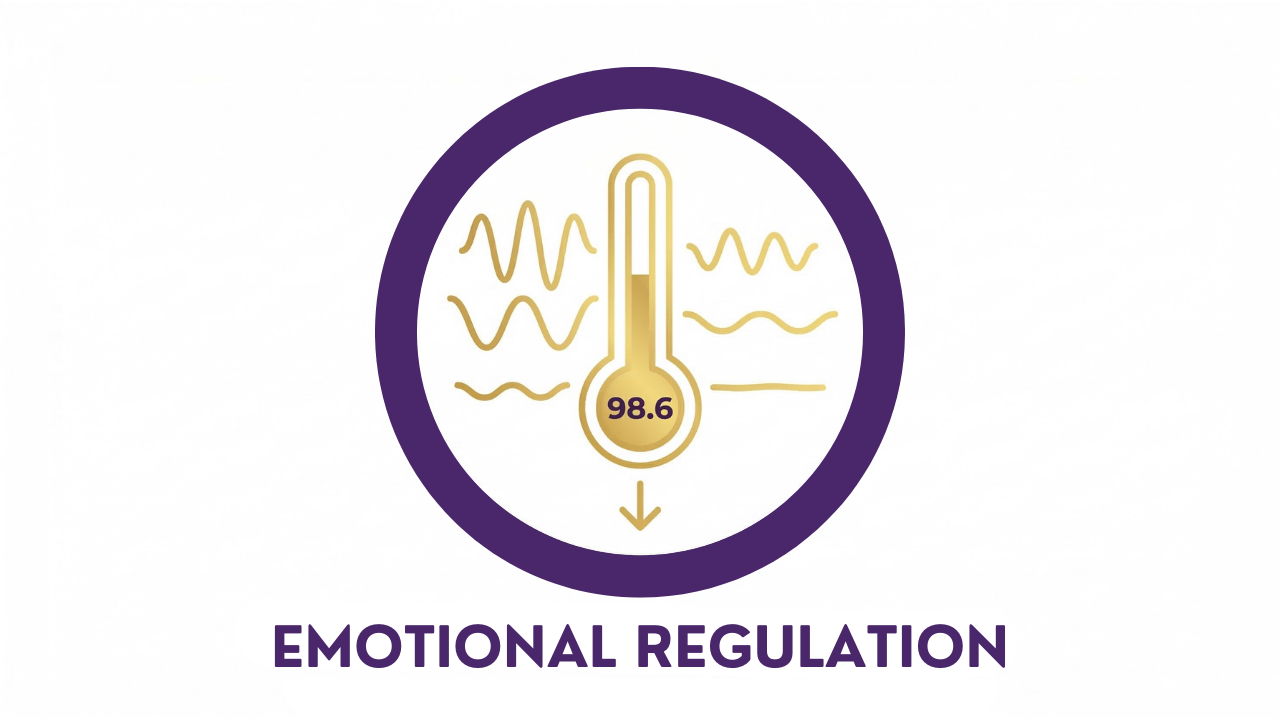
    Think of your nervous system like an emotional thermostat. A healthy person’s emotional thermostat should be set at around 98.6 degrees — regulated, calm, responsive. But if you grew up in a chaotic, emotionally unpredictable, or emotionally neglectful home, your emotional thermostat got permanently cranked up to 105 degrees. You’ve been walking around your entire adult life with an emotional fever, but because it happened so gradually throughout childhood, you didn’t notice. It became your “normal.”

    Emotional blueprint icon showing how childhood trauma calibrates the nervous system stress thermostat

    Traditional stress management is basically handing you a paper fan and saying, “Here, wave this in front of your face.” You can meditate, breathe, journal, and take bubble baths for the rest of your life — but if you don’t lower the internal emotional thermostat, you will never actually stop being “stressed.” You’ll just get better at performing calm while your body screams underneath.

    That’s you — meditating for twenty minutes every morning and still feeling like your chest is tight by noon, because meditation can’t rewire a nervous system that was calibrated for chaos before you could speak.

    Your brain learned emotions in childhood. It learned what danger feels like, what love feels like, what connection feels like, what rejection feels like. And if your childhood taught you that love was inconsistent, that emotions were dangerous, that your needs were a burden, or that your worth depended on performance — your brain wrote those rules into your emotional blueprint. And your adult stress response is just that blueprint running on autopilot, thousands of times per day.

    Your childhood emotional blueprint is the operating system running beneath every stress response you have — your nervous system isn’t reacting to today’s email or today’s argument, it’s reacting to the same fear, shame, and powerlessness it learned before you were old enough to spell your own name.

    How the Worst Day Cycle™ Keeps You Trapped in Chronic Stress

    To understand why your stress never goes away — no matter how much you manage it — you need to understand the Worst Day Cycle™. This is the neurochemical loop that runs beneath every stress response, every anxiety attack, every sleepless night.

    Worst Day Cycle diagram showing trauma fear shame denial loop that creates chronic stress

    The Worst Day Cycle™ has four stages: Trauma → Fear → Shame → Denial.

    Trauma: Any negative emotional experience in childhood that created painful meanings about yourself. It doesn’t have to be dramatic — a parent who was emotionally unavailable, a household where feelings were treated as weakness, a caregiver whose love was conditional on your behavior. These experiences create a massive chemical reaction in the brain and body. The hypothalamus generates chemical cocktails — cortisol, adrenaline, dopamine, oxytocin misfires — and the brain becomes addicted to these emotional states.

    That’s you — feeling most alive when you’re in crisis mode, because your nervous system was calibrated for chaos and interprets calm as boring or dangerous.

    Fear: Fear drives repetition. The brain conserves energy by repeating known patterns — it can’t tell right from wrong, only known from unknown. Since 70%+ of childhood messaging is negative and shaming, adults repeat these painful patterns in relationships, career, hobbies, health — everything. Your brain keeps pulling you back into the exact same pathways carved in childhood. Think of a sled track in fresh snow — after a few runs, the grooves are so deep that the sled can’t go anywhere else. That’s a neuropathway. You’ve been stuck on that sledding hill running the same neural pathway for decades.

    Shame: This is where you lost your inherent worth. “I am the problem.” Not “I made a mistake” — but “I AM the mistake.” This is the core wound underneath your stress. You’re not stressed about the deadline — you’re terrified that if you fail, it will confirm what shame has been telling you since childhood: that you’re not enough.

    That’s the shame talking — the voice that turns every minor setback into evidence that you’re fundamentally broken.

    Denial: Denial is the survival persona you created to survive the pain. It was brilliant in childhood — absolutely necessary. But in adulthood, it sabotages everything. Denial is what makes you call fear “stress.” Denial is what makes you believe the problem is external. Denial is what keeps you managing symptoms instead of healing the root.

    The Worst Day Cycle™ reveals why chronic stress never resolves through management alone — your brain created a neurochemical addiction to childhood emotional patterns, and it repeats those patterns thousands of times per day regardless of your current circumstances.

    The Three Root Fears Behind Every Stress Response

    Every stress response you’ve ever had can be traced to one of three root fears. These aren’t abstract concepts — they’re the actual nervous system patterns your body learned in childhood. Understanding them gives you the map to your own emotional blueprint.

    Emotional authenticity icon showing the three root fears behind every stress response: rejection, shame, powerlessness

    Fear of Rejection: The fear of rejection is one of our deepest fears. As a species, we will die if we don’t physically and emotionally attach to another human being. When you feel rejected — by a partner, a friend, a boss, a stranger — your nervous system doesn’t process it as an adult inconvenience. It processes it as a childhood survival threat. Because as a child, rejection by your caregivers didn’t just hurt your feelings — it threatened your existence.

    That’s you — checking your phone every three minutes because an unanswered text activates the same terror you felt when your parent’s love felt conditional.

    Here’s the truth nobody tells you: at no time are you ever actually rejected. A person may say they prefer something or someone else — but that’s their choice about what works for them. It has nothing to do with your worth. When you believe you’ve been rejected, you’ve placed the decision about whether you have inherent worth into another person’s hands. That’s not rejection — that’s the childhood blueprint running.

    Fear of Shame (Not Being Enough): The fear of shame is about feeling like you don’t have the knowledge, skills, or tools to handle what’s in front of you. It’s the underlying sense that you’re not capable enough, not smart enough, not prepared enough — that YOU are the problem. And it started when you were a child who genuinely didn’t have the resources to process what was happening — but instead of being given those resources, you were shamed for needing them.

    Sound familiar? The feeling that everyone else knows what they’re doing and you’re just faking it — not because you lack competence, but because your childhood taught you that needing help meant you were defective.

    Fear of Powerlessness: The fear of powerlessness is about anything you do not control — and your sense of safety disappearing. Think of powerlessness as an “I can’t” statement: “I can’t get someone to hear me, understand me, love me, give me what I need, or see my worth.” How many times did you feel those feelings in childhood? Powerlessness is probably the most devastating of all the fear reactions, because as an organism looking to survive, feeling powerless is primal.

    That’s you — lying awake at 2 AM obsessing over something you can’t control, because your nervous system learned in childhood that losing control means losing everything.

    Every stress response traces back to one of three childhood fears — rejection (I’ll be abandoned), shame (I’m not enough), or powerlessness (I can’t control this) — and each one was learned before you had the emotional resources to process it.

    How Your Survival Persona Uses Stress to Keep You Safe

    Your survival persona is the identity you created in childhood to navigate an emotionally unsafe environment. It’s not who you are — it’s who you had to become. And your survival persona uses stress as its primary operating fuel.

    Survival persona icon showing how the three persona types use stress as a control mechanism

    There are three survival persona types:

    The Falsely Empowered: This persona controls, dominates, and rages. They use stress as fuel — they’re addicted to urgency, crisis, and intensity because those states were the only ones that felt familiar in childhood. They work 80-hour weeks and call it ambition. They micromanage everything and call it leadership. They can’t delegate because trusting others feels dangerous. Their stress isn’t a problem to solve — it’s the only way they know how to feel alive.

    That’s you — the one who secretly believes that if you stop being stressed, you’ll stop being productive, and if you stop being productive, you’ll stop being loved.

    The Disempowered: This persona collapses, people-pleases, and disappears. They create stress by saying yes to everything, abandoning their own needs, and making everyone else’s emergencies their responsibility. They’re so overwhelmed they can barely function — but they can’t say no because no was never safe. Their stress comes from chronic self-abandonment: every time they swallow their feelings to keep the peace, their nervous system adds another layer of cortisol.

    That’s you — the one everyone calls “so selfless” while your body is falling apart from carrying everyone else’s weight.

    The Adapted Wounded Child: This persona oscillates between both — controlling one moment, collapsing the next. They swing between manic productivity and total shutdown. Their stress is unpredictable because their survival strategy is unpredictable. They rage, then apologize. They overcommit, then withdraw. They’re exhausted by their own inconsistency.

    Adapted wounded child icon showing oscillation between falsely empowered and disempowered stress responses

    That’s you — the one who swings between “I’ve got everything under control” and “I can’t handle any of this” and can’t figure out which version of yourself is real.

    Your survival persona creates and maintains stress because stress was the emotional environment your childhood nervous system learned to navigate — removing the stress would mean facing the underlying fear, shame, and grief that the persona was built to protect you from.

    How Stress Shows Up in Every Area of Your Life

    Family: You dread family gatherings. Your stomach tightens the moment you walk through your parents’ door. You manage everyone’s emotions, defuse every conflict, and leave feeling exhausted and invisible. You can’t set boundaries with your family because every time you try, guilt floods your body — the same guilt your childhood taught you to feel whenever you chose yourself over the family system.

    That’s you — still performing the role your family assigned you at age six, wondering why holidays feel like emotional combat zones.

    Romantic Relationships: Your stress skyrockets in intimate relationships because intimacy activates your deepest fears — rejection, shame, and powerlessness all at once. You either control (falsely empowered), collapse (disempowered), or oscillate between both (adapted wounded child). You confuse the intensity of stress with the intensity of love. You choose partners who activate your childhood blueprint and then wonder why your relationships feel like survival instead of connection.

    Sound familiar? The person who feels most “alive” in chaotic relationships because your nervous system mistakes fear for chemistry.

    Friendships: You’re the friend everyone calls in a crisis but no one checks on. You give endlessly and receive almost nothing — not because your friends are selfish, but because your survival persona trained you to believe that needing anything makes you a burden. You feel lonely surrounded by people because no one knows the real you. They know your performance.

    Work: You overwork because rest feels dangerous. You check email at midnight because disconnecting triggers anxiety. You say yes to every project because saying no might mean you’re not valuable. Your worth is measured in productivity, and your nervous system has convinced you that this is ambition. It’s not. It’s the shame engine running — the childhood belief that you have to earn your right to exist through output.

    That’s you — getting promoted for the very stress pattern that’s destroying your health, your relationships, and your sense of self.

    Body and Health: Your body has been trying to tell you something for years. Chronic tension in your neck and shoulders. Digestive issues. Insomnia. Jaw clenching. Autoimmune flares. Chronic fatigue. These aren’t random — they’re your nervous system’s last resort when emotional signals have been ignored for decades. Stress isn’t just in your head. It’s in your tissues, your gut, your immune system, your hormones. Your body keeps the score.

    Myelin and neural pathways icon showing how chronic stress creates physical health consequences through repeated nervous system activation

    Why Stress Management and Coping Skills Can’t Heal Your Nervous System

    Here’s the truth the wellness industry doesn’t want you to hear: stress management doesn’t work. Not because the techniques are bad — but because they address the wrong problem.

    That’s you — collecting stress management tools like trophies and wondering why your anxiety hasn’t actually changed in years.

    Meditation, deep breathing, journaling, exercise, therapy worksheets, gratitude lists — these are all forms of symptom management. They can temporarily calm the surface. But they cannot rewire the emotional thermostat that was set in childhood. You can’t fan your way out of a 105-degree emotional fever.

    Here’s why: stress (fear) is not a thought. It’s a biochemical event. Your emotions are neurochemical patterns stored in your body, not intellectual concepts stored in your mind. Thoughts originate from feelings, not the other way around. You cannot think your way out of a nervous system that was programmed for survival before you had language.

    That’s you — repeating affirmations while your body is still running the exact same stress chemicals it ran when you were five years old, because affirmations speak to the thinking brain and stress lives in the survival brain.

    By not calling stress what it really is — fear — the helping professions have advocated self-deception and false empowerment. We’ve created a culture where being “stressed” sounds impressive, even aspirational. Ask yourself what you assume when someone says they’re “stressed.” The universal implication is that they’re so important, so busy, so accomplished that the demands of their incredible life are overwhelming. We’ve turned a fear response into a status symbol.

    Coping skills fail for chronic stress because they manage the symptom (the stress response) without addressing the root cause (the childhood emotional blueprint that calibrated your nervous system to interpret ordinary life as a threat) — you cannot heal a biochemical pattern through intellectual techniques.

    How the Emotional Authenticity Method™ Rewires the Stress Response

    The Emotional Authenticity Method™ is the daily practice that actually changes your nervous system’s relationship to fear. It works because it targets the body — where stress actually lives — not just the mind.

    Emotional fitness icon representing the Emotional Authenticity Method for rewiring the stress response at the nervous system level

    Step 1: Somatic Down-Regulation. Focus on what you can hear for 15-30 seconds. This isn’t meditation — it’s a nervous system interrupt. You’re sending your body a signal that you’re safe enough to feel. If you’re highly dysregulated, use titration — go slowly, feel a little bit at a time. You’re teaching your nervous system that this feeling won’t destroy you.

    That’s you — learning that the first step isn’t “pushing through” the stress. It’s actually pausing long enough to let your body know it’s not in danger.

    Step 2: What am I feeling right now? Not “what should I feel?” Not “what’s the appropriate response?” But: what am I actually feeling? Most stressed people don’t know. They’ve been disconnected from their emotions for so long that “stressed” or “fine” is their only vocabulary. Using the Feelings Wheel, you develop emotional granularity — the ability to name specific emotions instead of lumping everything into “stressed.”

    Step 3: Where in my body do I feel it? All emotional trauma is stored physically. Your chest tightens. Your stomach drops. Your jaw clenches. Your shoulders climb toward your ears. Locating the feeling in your body is how you move from intellectual understanding to somatic processing — because stress lives in your body, not your thoughts.

    Step 4: What is my earliest memory of having this exact feeling? This is where the rewiring happens. You trace today’s stress back to its childhood origin. You realize: this isn’t about today’s deadline. This isn’t about the email. My nervous system is reliving a five-year-old’s terror — and no amount of time management can fix that.

    That’s the moment everything shifts — when you see that your “stress” about a work presentation is actually a child’s fear of not being enough, learned the first time your parent rolled their eyes at something you were excited about.

    Step 5: Who would I be if I never had this feeling again? This is the vision step. It connects you to the Authentic Self Cycle™ and gives your nervous system a new destination — not more coping, not better management, but actual identity restoration.

    Step 6: Feelization. Sit in the feeling of the Authentic Self and make it strong. Create a new emotional chemical addiction to replace the old blueprint. Ask: how would I respond to this situation from this feeling? What would I say? What would I do? Visualize and FEEL yourself operating from your Authentic Self. This is the emotional blueprint remapping and rewiring step — you’re not just imagining a different life, you’re creating a new neurochemical pattern that your brain can become addicted to instead of fear.

    The Emotional Authenticity Method™ works because emotions are biochemical events — you cannot change emotional patterns through thoughts alone. Thoughts originate from feelings, not the other way around. Stress management addresses thoughts about feelings. Emotional authenticity addresses the feelings themselves.

    How the Authentic Self Cycle™ Replaces Fear With Freedom

    The Authentic Self Cycle™ is the healing counterpart to the Worst Day Cycle™. Where the Worst Day Cycle™ traps you in Trauma → Fear → Shame → Denial, the Authentic Self Cycle™ restores your identity through Truth → Responsibility → Healing → Forgiveness.

    Authentic Self Cycle diagram showing truth responsibility healing forgiveness as the path from chronic stress to emotional freedom

    Truth: Name the blueprint. See that “this isn’t about today.” When your heart races before a meeting and your brain says “I’m so stressed,” truth says: “This feeling is from childhood. My boss isn’t my critical parent — my nervous system just thinks they are.” Truth is the moment you stop calling fear “stress” and start telling the truth about what’s actually happening in your body.

    That’s the first step out of chronic stress — seeing the pattern instead of being controlled by it.

    Responsibility: Own your emotional reactions without blame. “My partner isn’t my parent — my nervous system just thinks they are.” This isn’t about fault. It’s about taking back your power from a childhood that stole it. When you own your reactions, you stop waiting for external circumstances to change so you can feel better. You start changing internally — which is the only place real change happens.

    Healing: Rewire the emotional blueprint so conflict becomes uncomfortable but not dangerous, space isn’t abandonment, intensity isn’t attack, and rest isn’t laziness. This is where daily practice does its work — second by second, like the ticks of a clock. The second hand moves in tiny, almost insignificant ticks. But those ticks move the minute hand. The minutes move the hours. Healing works the same way. It’s not dramatic. It’s repetitive. And it’s built on small moments where you choose truth over fear.

    Forgiveness: Release the inherited emotional blueprint and reclaim your authentic self. This creates a NEW emotional chemical pattern that replaces fear, shame, and denial with safety, worth, and connection. You don’t become someone new. You finally meet who you always were underneath the survival persona and its addiction to stress.

    That’s you — not the stressed, overwhelmed person everyone sees. The calm, grounded human being who no longer needs stress as proof of their worth.

    The Authentic Self Cycle™ is an identity restoration system — it doesn’t teach you to manage stress, it replaces the neurochemical pattern that created chronic stress with a new blueprint built on truth, responsibility, and emotional authenticity.

    Frequently Asked Questions About Stress and Fear

    Is all stress really just fear?

    Yes — at the neurochemical level, what we call stress is the body’s fear response. When you experience stress, your amygdala activates the same survival system that responds to physical danger. The hypothalamus releases cortisol and adrenaline — the exact same chemicals produced during fear. The difference is linguistic, not biological. We call it “stress” because society has made fear taboo, especially for high achievers. But your body doesn’t know the difference between a tiger chasing you and a text message that triggers your childhood fear of rejection.

    Why does my body feel stressed even when nothing bad is happening?

    Your nervous system was calibrated in childhood to interpret the world as dangerous. If you grew up with emotional neglect, unpredictability, or conditional love, your emotional thermostat was set permanently high. Your body isn’t reacting to today — it’s reliving the unhealed emotions from childhood. The Worst Day Cycle™ explains how your brain becomes addicted to stress chemicals and repeats the pattern even in safe environments because familiar pain feels safer than unfamiliar peace.

    Can stress be fully healed or just managed?

    Chronic stress rooted in childhood trauma can be genuinely healed — not just managed. The Emotional Authenticity Method™ rewires the emotional blueprint at the nervous system level by tracing today’s stress response to its childhood origin and allowing the body to process what was never safe to process as a child. This creates actual neurological change. Management keeps you surviving. Healing lets you actually live.

    Why don’t meditation and breathing exercises fix my chronic stress?

    Meditation and breathing exercises are forms of symptom management — they temporarily calm the surface but don’t address the root cause. Chronic stress is a biochemical pattern stored in your nervous system, not a thinking error. You cannot think your way out of a body-based fear response. The Emotional Authenticity Method™ works because it targets the body — where trauma actually lives — through somatic processing, not cognitive reframing.

    What are the three root fears behind stress?

    Every stress response traces to one of three fears learned in childhood: the fear of rejection (I’ll be abandoned and alone), the fear of shame (I’m not enough and never will be), and the fear of powerlessness (I can’t control what happens to me). These fears were first experienced in childhood when you genuinely couldn’t protect yourself, and your adult nervous system continues to react as if those threats are still present. Understanding which fear drives your stress is the first step toward healing it.

    How long does it take to rewire a chronic stress response?

    Noticeable shifts can happen within weeks of consistent daily practice with the Emotional Authenticity Method™. But rewiring decades of nervous system conditioning takes months and years of repetition — not intensity. Think of a sled track carved into snow over decades. You can’t erase it in a day, but every time you choose a new track, the old one gets a little less deep. The Authentic Self Cycle™ provides the framework for long-term identity restoration beyond stress management.

    The Bottom Line

    You’re not stressed because life is hard. You’re stressed because your nervous system was programmed in childhood to treat life as a threat.

    Every racing heart, every sleepless night, every tight chest, every moment of overwhelm — that’s not a character flaw. That’s a six-year-old’s fear running through an adult’s body. A fear that was never named, never processed, never healed. A fear that got called “stress” because nobody was brave enough to call it what it actually is.

    Fear.

    And fear can be healed. Not managed. Not medicated. Not meditated away. Actually healed — at the nervous system level, through truth, through feeling, through the willingness to finally stop running from the emotions your body has been carrying since childhood.

    That’s you — not the stressed, overwhelmed person your survival persona has convinced you to be. The human being underneath who was born with inherent worth that no amount of childhood pain could actually destroy — only hide.

    The stress stops when you stop calling it stress and start calling it fear. The fear dissolves when you trace it to its childhood origin. The origin heals when you finally feel what you were never allowed to feel. And what’s left — underneath all the fear, all the shame, all the denial — is you. The real you. The one who’s been waiting your whole life for someone to say: “You don’t have to perform anymore. You can just be.”

    That’s not something you achieve. It’s something you remember.

    These books complement the frameworks in this article and deepen your understanding of why stress is fear and how to heal it:

    Facing Codependence by Pia Mellody — the foundational text on how childhood trauma creates the survival patterns that drive chronic stress.

    The Body Keeps the Score by Bessel van der Kolk — the science of how trauma lives in the body, not the mind, explaining why stress management has limits.

    When the Body Says No by Gabor Maté — how chronic stress manifests as physical illness when fear responses go unhealed for decades.

    In the Realm of Hungry Ghosts by Gabor Maté — the neuroscience of addiction, including the addiction to stress chemicals that the Worst Day Cycle™ creates.

    Codependent No More by Melody Beattie — a practical guide to recognizing how people-pleasing and self-abandonment create chronic stress.

    The Gifts of Imperfection by Brené Brown — how shame drives the performance-based identity that makes stress feel like proof of worth.

    Take the Next Step

    If you’re ready to stop managing stress and start healing the fear underneath it, Kenny Weiss offers courses designed for people who are done surviving and ready to live:

    Emotional Blueprint Starter Course — Individual ($79) — Your personal roadmap to understanding the Worst Day Cycle™ and identifying which of the three root fears drives your stress response.

    Relationship Starter Course — Couples ($79) — For couples ready to stop triggering each other’s childhood fear responses and build real connection.

    Why We Can’t Stop Hurting Each Other ($479) — Deep-dive into the Worst Day Cycle™ and how childhood trauma creates the stress patterns that destroy relationships.

    Why High Achievers Fail at Love ($479) — Built specifically for high achievers who use stress as fuel and can’t figure out why their relationships keep breaking.

    The Shutdown Avoidant Partner ($479) — Understanding avoidant attachment through the lens of trauma chemistry and survival personas.

    Tier 1: Mapping the Blueprint ($1,379) — The comprehensive program for learning and practicing the Emotional Authenticity Method™ to rewire your stress response at the nervous system level.

    Download the Feelings Wheel — the free tool used in Step 2 of the Emotional Authenticity Method™ to build emotional granularity beyond “stressed” and “fine.”

    Explore more: The Signs of Enmeshment | 7 Signs of Relationship Insecurity | 7 Signs of High Self-Esteem | How to Determine Your Negotiables and Non-Negotiables | 10 Do’s and Don’ts for a Great Relationship

  • How to Stop Self-Sabotage: The Childhood Trauma Pattern Keeping You Stuck

    How to Stop Self-Sabotage: The Childhood Trauma Pattern Keeping You Stuck

    Self-sabotage is the collision between your authentic self and your shame-based survival persona. It’s the pattern where you unconsciously work against your own success, relationships, and wellbeing—not because you want to fail, but because your nervous system learned to equate change with danger during your childhood.

    Table of Contents

    What Is Self-Sabotage Really?

    Self-sabotage is the collision between your authentic self and your shame-based survival persona. When you start to succeed, when you begin living differently, when you reach for something real—your adapted wounded child and shame-based survival persona pops up and says no.

    Here’s the truth that changes everything: Because if you live in your authentic self, the survival persona loses its connection to your mom and dad—the connection it was built to preserve.

    That survival persona? It’s brilliant. It kept you alive as a child when emotional safety was compromised. It learned which way to move, what to say, how to perform to get scraps of attention and avoid more pain. But now you’re an adult, and that child-level adaptation is sabotaging everything you build.

    Worst Day Cycle framework showing trauma fear shame denial cycle

    That’s you—working against yourself while telling yourself you want something different. Building something real, then sabotaging it right when it matters most. Choosing the familiar pain over the unfamiliar reward.

    Why You Self-Sabotage (Even When You Want to Succeed)

    Here’s what nobody talks about: Nobody is ever afraid to fail because in the moment you choose not to do something, you’ve chosen failure—and you’re totally comfortable with it. What we’re actually afraid of is success.

    Success requires you to become someone new. It requires you to leave behind the identity your nervous system built to survive your childhood. And the nervous system will fight that shift with everything it has.

    When you’re in the Worst Day Cycle™, your brain is flooded with the same emotional chemicals it learned to crave as a child. Cortisol. Adrenaline. Dopamine spikes. Oxytocin misfires. Your hypothalamus got addicted to that cocktail, and your brain conserves energy by repeating known patterns—not because they work, but because they’re known.

    The shame piece is critical: Self-sabotage is us choosing to victimize ourselves to get power. We want power and the best way we know how to get power is to be the instigator of our own demise. And the added benefit of that is it keeps me irresponsible, keeps me the child.

    That’s what’s really happening when you sabotage at the exact moment success is within reach. You’re not self-destructive—you’re actually choosing what feels powerful in a nervous system that learned to equate suffering with control.

    Childhood trauma chemistry emotional blueprint neural pathways brain chemistry

    Understanding the Worst Day Cycle™: The Four Stages of Sabotage

    The Worst Day Cycle™ has four stages, and understanding them is the foundation of healing. This isn’t clinical psychology—this is what’s actually happening in your nervous system.

    Stage 1: Trauma (The Foundation)

    Childhood trauma isn’t always a single catastrophic event. It’s any negative emotional experience that created painful meanings about yourself, others, or the world. That critical parent. That emotionally absent parent. That parent who weaponized shame. That parent whose unhealed pain got absorbed into you like a puppy eating rancid peas.

    When trauma occurs, the hypothalamus generates a massive chemical reaction. Your brain and body get flooded with neurochemicals designed for survival. The problem: that chemical cocktail becomes your baseline. And your brain, brilliant and efficient, learns to repeat patterns that recreate that chemistry.

    Stage 2: Fear (The Repetition Driver)

    Fear drives the repetition. Your brain can’t tell right from wrong—it only knows known versus unknown. Since roughly 70% of childhood messaging is negative and shaming, your adult nervous system treats repetition as safety. Even painful repetition.

    That’s you choosing the same type of partner. That’s you staying in the same soul-crushing situation. Staying in the same job despite hating it. Repeating the same arguments. Sabotaging at the same threshold of success. Your brain thinks: At least I know what this feels like.

    Stage 3: Shame (Where You Lost Your Worth)

    Shame is where the real damage happens. Shame is the moment you internalized the painful message and made it about who you are instead of what happened to you. “I am the problem.” “I am unlovable.” “I am not enough.” “I am the reason for everyone’s pain.” Sound familiar?

    This is the blueprint—the emotional truth your child-mind created to make sense of adult pain. And every time you self-sabotage, you’re verifying that blueprint. Listen to the words you say to yourself when you self-sabotage. The exact same emotional blueprint words you heard as a child.

    Survival persona false self coping mechanism adaptation strategy

    Stage 4: Denial (The Survival Persona)

    Here’s where the sabotage actually happens. Denial is the survival persona—the adapted identity you created to survive the pain. This persona is brilliant in childhood and absolutely sabotaging in adulthood. That’s you—living from an identity that was built for a child’s world, not the adult life you’re trying to create.

    The survival persona has one job: preserve the connection to mom and dad, no matter the cost. It will control, collapse, people-please, rage, disappear, or oscillate wildly between extremes. All of it is designed to keep you connected to your parents’ emotional frequency and your childhood’s familiar pain.

    The Three Survival Persona Types (And Which One Is Yours)

    Everyone develops a survival persona in response to childhood pain. There are three primary archetypes, and most people oscillate between them depending on the situation.

    The Falsely Empowered Persona

    The falsely empowered persona operates through control, dominance, and rage. This survival persona learned that if you’re powerful enough, loud enough, aggressive enough—nobody can hurt you.

    Sound familiar? You’re the person who needs to be right. You manage situations through control and criticism. You rage when things don’t go your way. You move fast and decisive, often leaving relational carnage in your wake. Your sabotage shows up as burning bridges right when things matter, destroying what you worked for through aggressive choices.

    The falsely empowered persona keeps you connected to an angry, controlling, or shaming parent—and keeps you in their power.

    The Disempowered Persona

    The disempowered persona operates through collapse, people-pleasing, and abdication. This survival persona learned that if you’re small enough, compliant enough, invisible enough—nobody will hurt you further.

    That’s you if you’re the person who can’t say no. You feel responsible for everyone’s emotions. You sabotage through inaction—you don’t apply for the job, you don’t have the conversation, you don’t take the leap. Your sabotage is passive but just as effective.

    The disempowered persona keeps you connected to a withdrawn, emotionally unavailable, or inadequate parent—and keeps you dependent on rescue.

    The Adapted Wounded Child

    The adapted wounded child oscillates wildly between falsely empowered and disempowered depending on perceived threat level. One moment you’re controlling; the next you’re collapsing. One moment you’re setting boundaries; the next you’re people-pleasing.

    Adapted wounded child oscillating between control and collapse dual personas

    That’s the person who sabotages in every life area because you can never get your nervous system settled enough to build something stable. You swing between codependency and narcissistic rage. You’re wildly inconsistent in relationships and career. Your sabotage is chaotic and unpredictable—sometimes self-directed, sometimes projected onto partners.

    The adapted wounded child keeps you connected to a parent (or parents) who were themselves oscillating—perhaps one falsely empowered and one disempowered, perhaps one parent with both personas, creating impossibly conflicting messages.

    The Authentic Self Cycle™: Your Path Out

    If the Worst Day Cycle™ is the prison, the Authentic Self Cycle™ is the key. This isn’t about positive thinking or willpower. This is about identity restoration—about reclaiming who you actually are underneath all the adaptation.

    The Authentic Self Cycle™ has four stages that directly counteract the Worst Day Cycle™.

    Stage 1: Truth (Naming the Blueprint)

    Truth is seeing your emotional blueprint clearly. It’s naming what happened. It’s understanding that this pattern isn’t about today—it’s about the child inside you trying to survive something that already happened. That’s you finally connecting today’s pain to yesterday’s wound.

    This is where you make the connection. “When I get close to success, I panic because my parent abandoned me every time I succeeded.” “When I reach for love, I sabotage because my parent humiliated me for having needs.” “When I set a boundary, I collapse because my parent made me responsible for their feelings.”

    Stage 2: Responsibility (Without Blame)

    Responsibility means owning your emotional reactions without blaming yourself or your parents. You’re not responsible for what happened to you. You are responsible for what you do with it now.

    That’s you starting to notice: “I sabotaged that relationship because I was scared, not because I’m unlovable.” “I stayed quiet in that meeting because my nervous system was flooded, not because I’m weak.” “I self-harmed through food/substances/shopping because I needed to regulate, not because I’m broken.”

    Stage 3: Healing (Rewiring the Blueprint)

    Healing means rewiring the emotional blueprint so conflict becomes uncomfortable but not dangerous. You’re building a new nervous system baseline where success feels safe, love feels sustainable, and authenticity feels possible. That’s you choosing discomfort over destruction.

    This is where the Emotional Authenticity Method™ becomes essential. You can’t think your way here. You have to feel your way here.

    Stage 4: Forgiveness (Reclaiming Your Self)

    Forgiveness is releasing the inherited emotional blueprint and reclaiming your authentic self. It’s not about absolving your parents of responsibility. It’s about releasing your body’s addiction to their pain.

    Authentic Self Cycle healing framework truth responsibility healing forgiveness

    The Emotional Authenticity Method™: The Six-Step Rewiring Process

    This is the practical framework for moving from self-sabotage to self-authorship. The Emotional Authenticity Method™ is based on a non-negotiable truth: You cannot change emotional patterns through thoughts alone. Emotions are biochemical events. Thoughts originate from feelings.

    Most people try to cognitive their way out of self-sabotage. “I’ll just think differently.” “I’ll just be more positive.” “I’ll just work harder.” But your nervous system doesn’t speak the language of thoughts—it speaks the language of sensation and emotion.

    Step 1: Somatic Down-Regulation

    Before you can access your authentic self, your nervous system has to be regulated. This means shifting out of your fight-flight-freeze response into your parasympathetic baseline. That’s you learning to slow down before the survival persona takes the wheel.

    Spend 15-30 seconds focusing on what you can hear. Just listen. If you’re highly dysregulated, start with titration—smaller amounts of time, more frequently.

    Step 2: Emotional Granularity

    Most people describe emotional states in massive categories: “sad,” “angry,” “anxious.” But your emotional blueprint is precise. Use the Feelings Wheel to get specific: Are you ashamed or embarrassed? Afraid or terrified? Disappointed or devastated?

    This specificity matters because it helps you trace the blueprint accurately.

    Step 3: Somatic Location

    Where in your body do you feel it? Emotions aren’t abstract—they’re biochemical and they live in your physical nervous system. Is your chest tight? Is your throat closed? Is your stomach clenched? Is your body frozen? That’s you beginning to decode the language your nervous system has been speaking your entire life.

    This is how you start listening to your body instead of just thinking about your feelings.

    Step 4: Tracing to Origin

    What is your earliest memory of having this exact feeling? Not something similar—something with the exact emotional signature. This is where the blueprint reveals itself.

    You’ll often find that the feeling you’re experiencing today is a perfect echo of something a child inside you learned about safety, love, and belonging.

    Step 5: The Authentic Self Question

    Who would I be if I never had this thought or feeling again? Not the false self. Not the survival persona. The actual person underneath—the one who wants things, who has preferences, who takes up space.

    Emotional Authenticity Method six steps somatic emotional blueprint rewiring

    Step 6: Feelization (Emotional Blueprint Remapping)

    This is the game-changer. Sit in the feeling of your Authentic Self and make it strong. Create a new emotional chemical addiction to replace the old blueprint. Visualize and FEEL yourself operating from your Authentic Self—not just imagining it, but generating the actual emotional and somatic experience of it.

    This is neural pathway rewiring at the biochemical level. Most people look at healing as trying to get the hour hand to move. But what makes the hour hand move? The second hand moves first. One second of effort toward something new—and the survival persona’s grip breaks.

    That’s you—learning to generate the feeling of your authentic self so consistently that your nervous system stops seeing success as danger.

    Self-Sabotage Signs by Life Area

    Self-sabotage doesn’t just show up in one life area. It’s a system-wide pattern because the emotional blueprint informs everything. Here’s how to recognize it:

    Family Sabotage

    That’s you reconnecting with family after setting a boundary, then immediately crossing it. You assert your need for space, then feel crushing guilt and cave. You try to have a healthy conversation, it triggers shame, and you either rage or disappear. You keep hoping this time will be different, but you repeat the same dynamic with your parents and siblings that you’ve been repeating since childhood.

    Romantic Sabotage

    You attract someone emotionally unavailable because that’s the only emotional frequency you learned to work with. Right when the relationship could deepen, you create distance or conflict. You self-protect by staying emotionally guarded. You test your partner’s love through pain. You sabotage through infidelity, financial irresponsibility, or emotional affairs. You want intimacy but you structure your life to guarantee isolation.

    This is the Victim Position Paradox—you want love so badly you sabotage it to prove you don’t deserve it.

    Friendship Sabotage

    You tell your friend everything, then pull back and ghost. You get close, feel unsafe, and engineer a conflict. You’re the person who only reaches out when you need something. You’re competitive with your friends’ success. You’re jealous of their happiness. You can’t celebrate them without diminishing yourself.

    Work/Career Sabotage

    You’re on the verge of promotion, then you miss deadlines or make costly mistakes. You set yourself up to fail before you have the chance to succeed. You undercharge your work or give it away. You stay in jobs that don’t pay or value you because leaving feels like abandonment. You build something, then burn it down right when it’s working.

    This is especially true if your parent told you that ambition was selfish, that success would isolate you, or that you’d abandoned them if you thrived.

    Body/Health Sabotage

    You start a fitness routine and abandon it. You lose weight, then sabotage the progress. You get into bed with your emotional thermostat and your body self-corrects back to the baseline trauma set. You know what your body needs and you do the opposite. You use food, substances, or behaviors to self-regulate but then shame yourself for it.

    Neural pathways myelin emotional blueprint repeated patterns brain wiring

    How to Actually Stop Self-Sabotaging: The Practical Steps

    Stopping self-sabotage isn’t about discipline or motivation. It’s about nervous system education and emotional blueprint rewiring. Here’s the actual path forward:

    1. Get Specific About Your Pattern

    Don’t say “I sabotage everything.” Name it: “Every time I get close to intimacy, I create a conflict that pushes my partner away.” “Every time I succeed, I create chaos that derails it.” “Every time I feel good about myself, I say something self-deprecating.”

    Specificity reveals the blueprint.

    2. Trace the Pattern to Childhood

    When did this first happen? Not as an adult—as a child. What did you learn about success, love, boundaries, or authenticity that made this pattern feel safe?

    That’s you understanding that your adult sabotage isn’t actually about today. It’s about a child inside you trying to keep you connected to your parents’ emotional frequency.

    3. Work the Emotional Authenticity Method™

    Don’t skip the steps. Your intellectual understanding of the pattern will not heal the pattern. You have to generate the feeling of your authentic self so your nervous system stops perceiving success as danger.

    You can access the complete Feelings Wheel exercise here.

    4. Build Tiny Authentic Actions

    One second at a time. Not a dramatic identity shift. A small choice in the direction of your authentic self. One vulnerable text. One boundary. One admission of a real feeling. One moment of letting someone see you.

    This rewires your nervous system’s association between authenticity and safety.

    5. Work with a Guide if Needed

    Some emotional blueprints are complex and layered. Some people need professional support to safely access these patterns. This isn’t weakness—this is self-awareness.

    FAQ: People Also Ask

    What causes self-sabotage according to psychology?

    Self-sabotage is a nervous system response to childhood emotional trauma. When a child experiences repeated shaming, emotional abandonment, or pain, their brain creates an emotional blueprint—a set of beliefs about safety, love, and belonging. The survival persona emerges to protect the child from further pain, but this adaptation becomes sabotaging in adulthood because it perceives success and authenticity as threats to the survival connection with parents.

    How do I stop self-sabotaging my relationships?

    Relationship sabotage follows a pattern: you either create distance when closeness threatens to disrupt your emotional blueprint, or you create chaos to maintain the familiar dynamic from childhood. The Emotional Authenticity Method™ is specifically designed to rewire this. Start by naming your pattern (“I push people away when they get close”), trace it to childhood (“My parent was emotionally unavailable”), and use somatic work to generate the feeling of your authentic self—the part that actually wants connection.

    Is self-sabotage a trauma response?

    Yes. Self-sabotage is not a character flaw or a sign of being broken. It’s a brilliant adaptation to childhood trauma that has outlived its usefulness. Your survival persona was designed in childhood to keep you connected to your parents and protect you from pain. In adulthood, it keeps you stuck in patterns that feel familiar but increasingly painful.

    Why do I keep sabotaging myself when things are going well?

    Because your nervous system learned in childhood that good things don’t last, or that success leads to abandonment, or that thriving equals selfishness. When things go well, your survival persona perceives it as a threat to the emotional connection that kept you alive as a child. Your body literally doesn’t know how to sustain that feeling, so it sabotages back to the familiar baseline of the Worst Day Cycle™.

    Can self-sabotage be cured?

    Yes, through nervous system rewiring and emotional blueprint remapping. This isn’t about positive thinking or willpower. It’s about generating a consistent enough feeling of your authentic self that your body stops perceiving it as dangerous. With sustained practice of the Emotional Authenticity Method™, your nervous system will start to default to your authentic self instead of your survival persona.

    What is the connection between shame and self-sabotage?

    Shame is the emotional core of self-sabotage. When your child-brain internalized the message “I am the problem,” shame became your emotional baseline. Self-sabotage is how you act on that shame—you prove the blueprint right by creating the failure you expect, which keeps you in the Victim Position Paradox. You get power by being the cause of your own suffering, and you stay connected to the parent who shamed you in the first place.

    The Bottom Line

    You’re not broken. You’re not inherently self-destructive. You’re carrying a nervous system that learned to equate survival with pain, authenticity with danger, and success with abandonment.

    Your survival persona is still doing what it was designed to do—trying to keep you connected to your parents. But you’re not a child anymore. You don’t need that connection the way you did. What you actually need is your authentic self.

    And that self is still in there. Under all the adaptation. Under all the shame. Under all the sabotage. That self is the one that wants real love. That wants meaningful work. That wants to show up as who you actually are.

    The Emotional Authenticity Method™ isn’t about forcing yourself to be different. It’s about consistently feeling what it’s like to be yourself. One second at a time. Until your nervous system stops fighting you. Until success feels safe. Until love feels possible. Until authenticity stops triggering your survival persona’s need to destroy what you’ve built.

    That’s the actual path. Not willpower. Not cognitive reframing. Not positive affirmations. But the feeling of your authentic self—generated so consistently that your body finally believes it’s safe to stop sabotaging and start living.

    Recommended Reading

    • Pia MellodyFacing Codependence (The survival persona model and childhood trauma patterns)
    • Melody BeattieCodependent No More (Understanding the roots of people-pleasing sabotage)
    • Gabor MatéWhen the Body Says No (The connection between unprocessed emotions and self-sabotage)
    • Melody BeattieThe Language of Letting Go (Daily work for breaking patterns)
    • Brené BrownDare to Lead (Shame resilience and authentic leadership)
    • Peter LevineWaking the Tiger (Somatic trauma processing)

    Next Steps: Work With Me

    If you’re ready to move from understanding your pattern to actually changing it, I have structured pathways depending on where you are:

    Or start with the Feelings Wheel exercise to begin identifying your emotional blueprint.

    Self-sabotage isn’t destiny. It’s a pattern. And patterns can change when you know how.

  • The Self-Sabotage Cycle: Why You Destroy What You Build

    The Self-Sabotage Cycle: Why You Destroy What You Build

    Self-sabotage is the unconscious pattern of destroying your own success, relationships, health, and happiness — not because you’re weak, lazy, or broken, but because your childhood emotional blueprint taught your nervous system that safety lives in the familiar pain, not in the unfamiliar success. Self-sabotage is the collision between the Authentic Self trying to emerge and the shame-based survival persona fighting to maintain attachment to the only identity you’ve ever known. When you start to succeed — when love gets close, when the promotion comes, when the relationship deepens — your survival persona panics and pulls you back into the Worst Day Cycle™ because success threatens the only connection to your parents’ emotional system you’ve ever had.

    Self-sabotage codependence emotional blueprint

    ™ (understanding), the Authentic Self Cycle™ (healing), and the Emotional Authenticity Method™ (daily practice).

    Table of Contents

    Why You Keep Destroying What You Build

    Emotional blueprint childhood trauma patterns self-sabotage

    You’ve been here before. You’re making progress — real progress — and then something shifts. Your foot goes on the brake. You self-destruct. You say something cruel, you miss the deadline, you don’t show up, you pick a fight with the one person who actually gets you. And afterward, you can’t even explain why.

    That’s you if you’re terrified of success, even though consciously you want it more than anything.

    Here’s what most people get wrong: Self-sabotage isn’t a character flaw. It’s not laziness, cowardice, or some deep inadequacy you need to therapy away. Self-sabotage is actually brilliant. It’s your nervous system’s attempt to keep you safe.

    In childhood, you learned that pain was predictable. You knew how to survive your parents’ anger, your caregiver’s withdrawal, the family chaos. That pain was familiar. Your nervous system became addicted to it because repetition equals safety in a child’s brain. You couldn’t change your parents, but you could control the pain by becoming predictable yourself.

    Sound familiar?

    Now, decades later, success arrives — the promotion, the healthy relationship, the body that finally feels good. But your nervous system doesn’t recognize success. Success is unknown territory. And unknown territory feels like death to a trauma-wired brain.

    So your survival persona — the brilliant, protective part of you that kept you alive in a painful home — springs into action. It sabotages the success. It pulls you back into the pain you know. Because in the twisted logic of your childhood nervous system, the pain you know is safer than the success you don’t.

    This isn’t broken. This is your superpower turned against you.

    Self-Sabotage Is Not Weakness — It’s a Survival Strategy

    Let me be clear: Your survival persona is not the enemy. It’s the part of you that survived an unsurvivable situation. It developed incredible skills — hypervigilance, people-pleasing, perfectionism, self-abandonment, control, dissociation — to keep you alive.

    That’s the real story.

    In childhood, those survival strategies were genius. They helped you navigate an unpredictable, potentially dangerous emotional landscape. You learned to read your parent’s mood before they entered the room. You developed an internal radar for danger. You became indispensable. You became invisible. You became whatever you needed to be to maintain attachment.

    But here’s what nobody tells you: Those same strategies that saved your life in childhood are now destroying it in adulthood.

    When you’re an adult in a healthy relationship with someone who actually loves you, your hypervigilance becomes anxiety. Your need to be indispensable becomes enmeshment. Your perfectionism becomes paralysis. Your self-abandonment becomes self-sabotage.

    The power reclamation moment happens when you stop blaming yourself and start recognizing: Your survival persona isn’t broken. It’s outdated. It was built for a world that no longer exists. Your job now is to upgrade the software without destroying the hardware that kept you alive.

    That’s the difference between shame and responsibility.

    The Worst Day Cycle™: The Four-Stage Engine of Self-Sabotage

    Worst Day Cycle trauma fear shame denial four stages

    Self-sabotage doesn’t happen randomly. It follows a predictable four-stage pattern that I call the Worst Day Cycle™. Understanding this cycle is the foundation of everything. It’s why you keep repeating the same painful patterns, and it’s also the map to break free.

    Stage 1: Trauma

    Childhood trauma is any negative emotional experience that created painful meanings. It’s not about what happened — it’s about what your young brain concluded about yourself, others, and the world based on what happened.

    Trauma chemistry cortisol adrenaline dopamine oxytocin addiction

    When trauma hits, your hypothalamus generates a chemical cocktail: cortisol (stress), adrenaline (fight-or-flight), dopamine (reward), oxytocin misfires (false connection). Your young brain becomes addicted to these emotional states because they’re all you know. The pain is overwhelming, yes, but it’s also a gateway to your parent’s attention, your family’s focus, your nervous system’s intensity.

    That’s the foundation of the entire cycle.

    Stage 2: Fear

    Fear drives repetition. Your brain’s primary job in childhood is safety. It doesn’t distinguish between right and wrong — it only recognizes known versus unknown. Since 70% of childhood messaging is negative (don’t, can’t, won’t, shouldn’t, wrong), your brain associates the known pain with safety.

    The moment you start to leave that pain — to succeed, to be loved, to break the pattern — fear hijacks you. Your survival persona activates. It whispers: This is dangerous. Go back. Repeat what you know.

    Sound familiar? That’s the voice of fear.

    Stage 3: Shame

    Shame is where you lost your inherent worth. It’s not guilt — guilt is “I did something bad.” Shame is “I am bad.” In this stage, you internalize the trauma. You believe your existence is the problem. Not your behavior, not your choices — you.

    This is where self-sabotage gets its teeth. You unconsciously prove the shame-based narrative: “I don’t deserve success. I will screw it up. I am broken.” And then you do sabotage it, which reinforces the shame, which feeds the cycle.

    Stage 4: Denial

    Denial is the survival persona created to survive the pain. This persona is brilliant. It’s adaptive, protective, and ingenious. But it’s also the source of self-sabotage in adulthood. The denial stage is where you reinforce the survival strategy: “This is just who I am. I’m not good enough. I always mess things up. Everyone leaves me.”

    That’s the story you tell yourself to avoid the pain of Stage 3.

    The Three Survival Personas That Drive Self-Sabotage

    Three survival personas falsely empowered disempowered adapted wounded child

    Not all self-sabotage looks the same. Your survival persona shapes how you destroy what you build. There are three primary types, and most of us have a dominant one (though we can move between them depending on context).

    The Falsely Empowered Survival Persona

    This persona says: “I’m fine. I don’t need anyone. I’ll do it myself.” In childhood, you learned that vulnerability was dangerous, so you became hypercompetent, perfectionist, and controlling. You can move mountains. You can solve any problem. You never let anyone see you struggle.

    Self-sabotage shows up as overcommitment, burnout, and sudden implosion. You push so hard that you crash. You don’t allow anyone close enough to support you, so when success demands collaboration or intimacy, you panic and self-destruct. That’s you if you’re terrified of being dependent on anyone.

    The Disempowered Survival Persona

    This persona says: “I can’t. Everyone else is smarter, stronger, more capable. Things always go wrong for me.” In childhood, you learned that your needs didn’t matter, so you became small, accommodating, and resigned to suffering. You don’t take action because action feels futile.

    Self-sabotage shows up as procrastination, paralysis, and self-abandonment. You don’t even try because failing is already assumed. You abandon yourself before anyone else can. Sound familiar? That’s learned helplessness.

    Adapted wounded child survival persona emotional confusion

    The Adapted Wound Child

    This persona is the chameleon. It says: “I’ll be whatever you need me to be.” In childhood, you learned to read the room, match the energy, and become the person your caregiver needed. You developed an external emotional barometer. You’re intuitive, empathetic, and highly attuned to other people’s feelings.

    Self-sabotage shows up as people-pleasing, enmeshment, and loss of self. You merge with others so completely that you disappear. When success means standing out, saying no, or owning your own power, you panic and sabotage it. That’s you if you feel like you don’t know who you are without another person to reflect.

    Fear of Success: The Truth Nobody Wants to Hear

    Let me say this plainly: You’re not afraid of failure. You’re afraid of success.

    Failure is comfortable. Failure confirms what your shame already believes about you. Failure keeps you connected to your parents’ emotional system (disappointment, frustration, pity). Failure keeps you in the Worst Day Cycle™.

    But success? Success threatens everything. Success says: “You’re capable. You’re worthy. You deserve good things.” Success would mean separating from the family narrative that you’re broken. Success would mean your parents were wrong about you. Success would mean you’d have to grieve all the years you wasted believing the lie.

    That’s the fear nobody wants to name.

    When your internal blueprint says “I am unworthy,” success creates cognitive dissonance. Your nervous system has to choose: Update the blueprint or reject the success. And updating the blueprint means confronting decades of pain, shame, and grief. Most people’s survival personas choose to sabotage the success instead.

    This is why you can be intellectually committed to success and still self-destruct. This is why you can read all the self-help books, do all the therapy, set all the goals, and still end up alone, broke, or broken.

    That’s you if you’ve sabotaged every relationship right when it got real.

    The good news: Once you understand this, you can rewire it. But first, you have to stop being angry at yourself for the sabotage and get curious about what success is threatening.

    How Self-Sabotage Shows Up Across Your Life

    Self-sabotage patterns family romantic work health relationships

    Self-sabotage isn’t one-dimensional. It shows up differently depending on which area of your life we’re looking at, but the root is always the same: your survival persona protecting you from success that threatens your childhood attachment.

    Family

    You get closer to a family member, start setting a boundary, and then abandon it. You try to heal the relationship with a parent, and when they show the tiniest bit of vulnerability back, you push them away. You’re caught between your need for connection and your survival persona’s need for control or distance. That’s the paradox of family sabotage.

    Romantic Relationships

    This is where self-sabotage does its most visible damage. You find someone healthy, someone who actually loves you, someone who doesn’t play games. And then, right when the relationship becomes real, you self-destruct. You cheat, you pick a fight, you withdraw, you become critical. You convince yourself they’re not right for you (even though they are) and leave them (even though they love you).

    Check out this article on the signs of enmeshment to understand how your childhood attachment style is showing up in your romantic relationships right now.

    That’s you if every relationship follows the same painful pattern.

    Friendships

    You develop a close friendship and then self-sabotage it by being needy, critical, or withdrawing. You share too much too fast or you guard yourself completely. You need your friends to prove their loyalty through endless accommodation, or you abandon the friendship before they can abandon you.

    Work

    The promotion is within reach and you suddenly miss a deadline. You’re building something that could change your life and you talk yourself out of it. You get close to success and your survival persona hijacks you — you say something inappropriate in a meeting, you don’t follow through, you quit right before the breakthrough.

    This is especially true for high achievers in insecure relationships where your success threatens your partner’s emotional stability, so you unconsciously dial it back.

    Body and Health

    You lose weight and then sabotage it by binge eating. You commit to exercise and then get injured or get sick. You finally get healthy and then you start smoking again. Your body literally self-sabotages because your nervous system associates thinness or health with abandonment or attention you’re not prepared for.

    Sound familiar?

    The Authentic Self Cycle™: Breaking the Loop

    Authentic Self Cycle truth responsibility healing forgiveness recovery

    The Worst Day Cycle™ describes how you got trapped. The Authentic Self Cycle™ is how you get out.

    This is not a one-time process. It’s not something you do in therapy and then you’re done. The Authentic Self Cycle™ is a practice you return to every single time your survival persona gets activated. Over time, the path becomes familiar. Your nervous system learns a new way home.

    Stage 1: Truth

    Name the blueprint. Get specific about what you’re actually afraid of. Not the surface fear (“I’m afraid I’ll fail”), but the deep fear (“I’m afraid if I succeed, my parents will feel threatened and abandon me”). This is where you separate the past from the present.

    “This isn’t about today. My partner isn’t my parent. My nervous system just thinks they are.”

    Stage 2: Responsibility

    Own your emotional reactions without blame. You’re not bad for being triggered. You’re not broken for self-sabotaging. But you are responsible for your nervous system. “I can feel triggered and still choose not to abandon myself. I can feel afraid and still move toward the success.”

    Stage 3: Healing

    Rewire the emotional blueprint. This is the neurological work. You practice new responses. You stay in the discomfort of success instead of sabotaging it. You show up in the healthy relationship even when your trauma says to run. You rewire success from “dangerous” to “uncomfortable but not dangerous.”

    Stage 4: Forgiveness

    Release the inherited emotional blueprint and reclaim your Authentic Self. This creates new emotional chemical patterns. You’re no longer addicted to the old pain because you’ve created a new addiction to the Authentic Self — to peace, to belonging, to being enough.

    The Emotional Authenticity Method™: Your 6-Step Practice

    Emotional Authenticity Method six steps somatic regulation feelings wheel

    Understanding the cycles is powerful, but knowledge alone doesn’t change your nervous system. You need a daily practice. The Emotional Authenticity Method™ is a six-step process you can use every time your survival persona gets triggered and wants to sabotage your success.

    Step 1: Somatic Down-Regulation

    Your survival persona lives in your body. So we start there. When you’re activated, triggered, or about to sabotage, pause. For 15-30 seconds, focus on what you can hear. Just sound. Not sight, not thought — sound. If you’re highly dysregulated, use titration: very small amounts of regulation exposure until your nervous system settles.

    This grounds you in the present moment.

    Step 2: What Am I Feeling Right Now?

    Use emotional granularity. Don’t just say “I’m upset.” Get specific. Are you angry, hurt, abandoned, rejected, ashamed, afraid? The Feelings Wheel is a powerful tool for this. The more precise you can be with your emotion, the more power you have over it.

    Step 3: Where in My Body Do I Feel It?

    All emotional trauma is stored physically. You might feel shame as a heaviness in your chest. Fear might be a constriction in your throat. Abandonment might be a hollow feeling in your stomach. Locate it. Don’t try to fix it yet. Just notice it.

    Emotional regulation somatic awareness body trauma storage

    Step 4: What Is My Earliest Memory of Having This Exact Feeling?

    Trace it back. This feeling you’re having right now? You’ve had it before. Probably many times. When’s the first time you remember feeling this exact sensation in your body? That’s your origin wound. That’s the childhood moment that taught your nervous system this is dangerous.

    That’s the connection between past and present.

    Step 5: Who Would I Be If I Never Had This Thought or Feeling Again?

    This is the vision step. This is the Authentic Self Cycle™ in action. What would be different? How would you show up? What would you do? This isn’t fantasy — it’s neurological rewiring. You’re training your nervous system to recognize a new possibility.

    Step 6: Feelization — Sit in the Feeling of the Authentic Self and Make It Strong

    This is where the magic happens. You don’t just think about the Authentic Self. You feel it. You sit in that feeling. You make it vivid, visceral, real. You’re creating a new emotional chemical addiction to replace the old blueprint. You’re training your body to recognize peace, belonging, and worthiness as home.

    This is a practice you return to every single day. Some days you’ll move through all six steps in five minutes. Some days it’ll take an hour. Over time, your nervous system learns this path. The Authentic Self becomes familiar. Success becomes safe.

    People Also Ask

    Why do I keep self-sabotaging even when I know better?

    Because knowledge lives in your neocortex (thinking brain), but self-sabotage lives in your limbic system and nervous system (feeling brain). You can intellectually know you deserve success, but your nervous system is still addicted to the chemical patterns of childhood pain. Breaking the pattern requires rewiring your nervous system, not just understanding it. That’s what the Emotional Authenticity Method™ does.

    Is self-sabotage a sign of low self-esteem?

    No. Self-sabotage is a sign that your nervous system is protecting you from something it perceives as dangerous. Low self-esteem is one symptom of that protection, but not the root cause. Check out what high self-esteem actually looks like and you’ll see that many self-sabotagers have high self-esteem in some areas and zero in others. The issue isn’t your self-worth — it’s your nervous system’s association between success and danger.

    How do I stop self-sabotaging my relationships?

    First, get honest about your Victim Position Paradox. Are you abandoning the relationship to avoid being abandoned? Are you pushing them away to maintain control? Are you becoming critical to prevent them from seeing the real you? Once you name the pattern, use the Emotional Authenticity Method™ every time you feel the urge to self-destruct. And read this on negotiables and non-negotiables to understand what boundaries actually look like in a healthy relationship.

    Can self-sabotage be unconscious?

    Absolutely. In fact, most self-sabotage is unconscious. You don’t wake up thinking, “Today I’m going to sabotage my success.” Your survival persona operates below conscious awareness. That’s why it’s so powerful and why it’s so hard to stop by willpower alone. You need to access the nervous system, not just the thinking brain.

    What is the root cause of self-sabotage?

    Childhood emotional trauma and the survival strategies you developed to survive it. Specifically, your nervous system became addicted to the chemical patterns of the Worst Day Cycle™ (trauma, fear, shame, denial) and learned to associate your parents’ emotional system with safety. Success threatens that attachment, so your survival persona sabotages it to keep you connected to the only safety you’ve ever known.

    How long does it take to break self-sabotage patterns?

    That depends on how deeply wired the pattern is and how consistently you practice. Some people shift in weeks. Most people need months or years of consistent practice with the Emotional Authenticity Method™. The key is consistency, not intensity. Daily practice rewires your nervous system faster than occasional deep work. Your nervous system learns through repetition — that’s how it got wired to self-sabotage in the first place.

    The Bottom Line

    Self-sabotage isn’t your fault. Your survival persona isn’t broken. Your nervous system isn’t damaged beyond repair. You’re not destined to repeat the painful patterns of your childhood forever.

    But it does require you to do something different. It requires you to stop blaming yourself and start getting curious about what success is threatening. It requires you to move from shame (I am bad) to responsibility (I can rewire this). It requires daily practice with the Emotional Authenticity Method™ until the Authentic Self becomes as familiar as the survival persona.

    That’s not weakness. That’s the bravest thing you can do.

    Every time you choose to stay in a healthy relationship instead of sabotaging it, every time you move toward success even though your nervous system says it’s dangerous, every time you practice the Emotional Authenticity Method™ instead of abandoning yourself — you’re rewiring your nervous system. You’re creating new neural pathways. You’re training your body to recognize safety in success.

    You’re reclaiming your Authentic Self.

    The person you were meant to be before the pain taught you otherwise.

    • Facing Codependence by Pia Mellody — The foundational work on codependence and how childhood patterns show up in adulthood.
    • The Body Keeps the Score by Bessel van der Kolk — The neuroscience of trauma and why your body remembers even when your mind forgets.
    • When the Body Says No by Gabor Maté — How self-abandonment and unprocessed emotion manifest as physical illness and self-sabotage.
    • Codependent No More by Melody Beattie — The classic on detaching with love and reclaiming your own power.
    • The Gifts of Imperfection by Brené Brown — How perfectionism and shame drive self-sabotage and what wholehearted living looks like instead.

    Transform Your Relationship to Success

    Understanding self-sabotage intellectually is one thing. Rewiring your nervous system so you can actually receive success is another. These courses will guide you through the complete journey:

    • Emotional Blueprint Starter Course — Individual ($79) — The foundational course on your emotional blueprint and survival persona. Start here.
    • Relationship Starter Course — Couples ($79) — How your survival persona shows up in romantic relationships and how to rewire it together.
    • Why We Can’t Stop Hurting Each Other ($479) — The deep dive into the Victim Position Paradox and the Worst Day Cycle™ in relationships.
    • Why High Achievers Fail at Love ($479) — Specifically for people who excel professionally but sabotage their intimate relationships.
    • The Shutdown Avoidant Partner ($479) — For anyone struggling with emotional unavailability, fear of intimacy, or the Falsely Empowered persona.
    • Tier 1: Mapping the Blueprint ($1,379) — The complete training in the Emotional Authenticity Method™. This is where the neurological rewiring happens.