Tag: narcissistic parent

  • 7 Signs of a Narcissistic Parent

    7 Signs of a Narcissistic Parent


    You Know Something Was Wrong, You Just Didn’t Have Words for It

    You remember his rage. Or maybe it was his coldness. The way he disappeared into himself when you needed him. Or the way he made everything about him, even your pain. Years later, you’re still waiting for an apology that never comes. You still feel that familiar knot in your chest when you hear his voice. You still find yourself performing, trying to be the right version of yourself to avoid his disappointment.

    That’s not just bad parenting. That’s what happens when your father has a narcissistic wound so deep that he can’t let you be separate from him. He doesn’t see you. He sees a reflection he can control, or a mirror he can break when he needs to feel powerful again.

    This post names the 7 signs that your father was a narcissistic parent. More importantly, it explains why those signs still run your life. And how to stop them.

    Quick Recognition: The 7 Signs of a Narcissistic Father

    If you’re reading this because you suspect your father is narcissistic, you’re not looking for a diagnosis. You’re looking for permission to stop blaming yourself for his emotional unavailability. Here are the core patterns:

    Sign 1: He Lacks Genuine Empathy (But Mimics It Perfectly)

    A narcissistic father can be charming in public. He’ll hug you in front of others, ask about your day, seem interested. But in private, he’s absent. Not just physically—emotionally unreachable.

    When you were hurt, he didn’t feel your pain. He felt inconvenienced by it. When you cried, he either rage-shamed you into silence or ignored you completely. His question “What’s wrong?” wasn’t an invitation to share; it was a demand to stop being a problem.

    This created a wound: you learned that your feelings don’t matter. They’re only important if they serve his image or his needs. Real empathy would require him to see you as a separate person with your own inner world. A narcissist can’t do that. It would threaten his sense of control.

    That’s you when you prioritize other people’s comfort over your own pain. That’s you when you apologize for being upset. That’s you when you believe that real love means not needing anything.
    Emotional Blueprint — how childhood experiences with a narcissistic father program your adult relationships

    Sign 2: He Demands Control and Punishes Disagreement

    There was a hierarchy in your house. His way. No negotiation. Disagreement wasn’t just wrong—it was a personal attack on him. If you questioned his decision, he heard it as “You’re not good enough.” And he punished that.

    The punishment was either rage or withdrawal. Maybe he exploded and made you feel small. Maybe he went silent and let you feel abandoned. Both work the same way: they teach you that having your own thoughts is dangerous.

    As an adult, you probably do one of two things. You either overcorrect and need to control everything (your partner, your children, your environment) to feel safe. Or you’ve become compliant—you go along with what others want and bury your own needs so deep you don’t remember what you want anymore.

    That’s you when you can’t say no without feeling guilty. That’s you when you need approval before you trust your own judgment. That’s you in relationships where you’re always adjusting yourself to keep the peace.

    Sign 3: He Requires Constant Validation and Makes You His Supply

    Your father needed you to admire him. Not because he loved you and wanted you to be proud of him—but because he didn’t believe in himself and needed you to believe in him instead. You became his emotional supply.

    This looked like endless conversations about his achievements, his struggles, his brilliance. Or it looked like him needing you to fix his mood. You became responsible for his emotional state. If he was angry, you tried to cheer him up. If he was disappointed, you tried to prove your worth. If he failed at something, you had to reassure him.

    Your own accomplishments only mattered if they reflected well on him. When you succeeded, it was about his parenting. When you failed, it was your shame to carry alone.

    That’s you when you’re exhausted from managing other people’s emotions. That’s you when you feel guilty for having your own life. That’s you when you can’t celebrate your own wins without minimizing them.
    Survival Persona — the identity children of narcissistic fathers create to avoid shame and punishment

    Sign 4: He Cannot Apologize (Because Apologies Require Shame Awareness)

    Your father harmed you. And he never said sorry. Maybe he said “I was just trying to teach you a lesson” or “I did the best I could” or “You’re too sensitive.” Maybe he said nothing at all and expected you to move on like it never happened.

    An apology requires three things a narcissist cannot do: acknowledge harm, take responsibility, and commit to change. Each one requires him to feel ashamed. And shame is the one thing he cannot tolerate. So instead, he re-writes the narrative. He was right. You misunderstood. You’re overreacting.

    This creates a specific trauma in you: the belief that harm never happened, or that you deserved it. You learn to gaslight yourself. You minimize his behavior. You make excuses for him to friends. And you feel insane, because deep down you know he hurt you, but you’ve been trained to deny it.

    That’s you when you defend your father to others even though he hurt you. That’s you when you question your own memory of events. That’s you when you apologize for things that weren’t your fault.

    Sign 5: He Uses Rage or Withdrawal as His Primary Weapons

    Some narcissistic fathers explode. The rage comes from nowhere—or from something tiny—and suddenly the house is a war zone. You walk on eggshells. You learn his moods. You become hypervigilant to the smallest sign that he’s getting angry so you can adjust yourself to prevent the explosion.

    Other narcissistic fathers are ice. They withdraw emotionally or physically. They punish through silence. Either way, the message is the same: “You made me do this. Your existence is a problem. The way to be safe is to make yourself smaller.”

    These are different tactics, but they create the same wound: you learned that relationships are dangerous. That love is conditional on your ability to read minds and prevent harm. That your presence alone is enough to trigger abandonment.

    That’s you when you’re always trying to anticipate what will upset your partner. That’s you when you’ve built walls to protect yourself from being abandoned. That’s you when you sabotage relationships because you expect them to fail.

    Sign 6: He Treats You as an Extension of Himself, Not a Separate Person

    A narcissistic father sees you as a tool for his own needs. Your job is to make him look good, make him feel powerful, validate his worldview, or carry his unfulfilled dreams.

    This might look like: forcing you into his career path, controlling your appearance, shaming your sexuality, requiring you to share his politics, or using you to compete against your mother. He couldn’t see you. He could only see what you could do for him.

    The deepest wound here is that you were never really known. Your preferences, your gifts, your truth—they only mattered if they aligned with his needs. So you learned to hide your real self and perform the version he wanted to see. Over time, you forgot who you actually were.

    That’s you when you don’t know what you want because you’ve always been living for other people. That’s you when you change yourself completely for each relationship. That’s you when you feel like a fraud because your inner world doesn’t match your outer presentation.
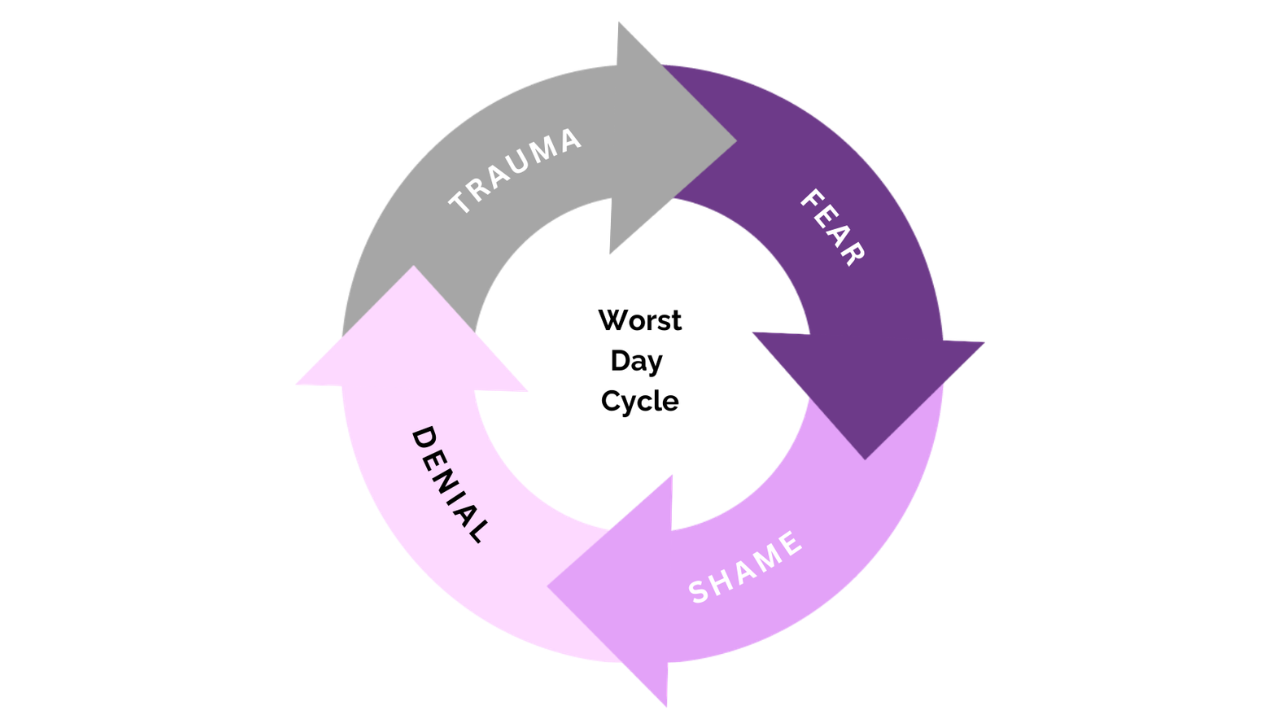
    Worst Day Cycle diagram — the loop of trauma, fear, shame, and denial programmed by narcissistic parenting

    Sign 7: He Alternates Between Idealization and Devaluation

    With a narcissistic father, you were either perfect or worthless. There was no middle ground. You were his favorite, his source of pride—until you weren’t. Then you became the problem, the disappointment, the reason his life didn’t turn out the way he wanted.

    These cycles whiplashed you. When you were idealized, you felt relieved—finally, you had his approval. But it was fragile. You were always one mistake away from being devalued. This taught you that love is conditional, unstable, and impossible to keep.

    In your adult relationships, you either recreate this pattern (seeking partners who idealize and devalue you) or you try to prevent it by staying perfect. Both are exhausting. Both are rooted in the same wound: you believe you have to earn the right to exist.

    That’s you when you’re addicted to the highs and lows of a relationship. That’s you when you stay with someone who alternates between cherishing you and punishing you. That’s you when you believe that if you just get better, the abuse will stop.


    Why This Pattern Is Still Running Your Life: The Worst Day Cycle™

    Your father was a narcissist. But the real problem isn’t him anymore. It’s the Worst Day Cycle™—the loop of trauma, fear, shame, and denial that he programmed into you.

    Here’s how it works:

    Trauma: Something triggers you. A comment from your partner. A moment where you’re invisible. A situation where you need someone and they’re not there. It echoes the original wound with your father.

    Fear: Your nervous system recognizes the pattern. You’re flooded with fear that this will end in abandonment, shame, or control loss. Your body goes into fight/flight/freeze.

    Shame: Instead of recognizing that your father hurt you, you blame yourself. You believe that if you were just better—smarter, prettier, more compliant, less needy—this wouldn’t be happening. The shame is old. It’s from childhood. But it feels present and true.

    Denial: The pain is too much, so you deny it. You tell yourself it wasn’t that bad. You make excuses for the other person. You reframe the situation to make sense of it. You deny what you felt. You deny what happened. You deny that you deserve better.

    Then something else triggers you, and the cycle repeats.

    This is why your relationships keep recreating the narcissistic dynamic. This is why therapy and self-help books haven’t fully fixed this. Because you’re not just dealing with memories of your father. You’re dealing with a nervous system that learned to expect harm, a psyche that learned to deny pain, and a survival persona that learned to be invisible.

    Why Therapy and Self-Help Haven’t Fixed This (Yet)

    You’ve probably tried therapy. Maybe you’ve read a dozen books about narcissistic parents. You understand intellectually that his behavior was wrong. You can articulate the ways he damaged you. You know the theory.

    But you still feel it. You still recreate it. You still shame yourself. You still attract narcissistic partners, or you’ve built walls so thick that real intimacy feels impossible.

    Here’s why: traditional therapy treats this as a thinking problem. It works from your prefrontal cortex—your rational brain. It asks you to process, to reframe, to logically understand that you weren’t to blame. And that’s necessary. But it’s not sufficient.

    The wound with your narcissistic father isn’t in your thinking. It’s in your body. It’s in your nervous system. It’s in the way your survival persona learned to operate to keep you safe. No amount of insight will change what your body learned in childhood.

    Self-help books promise that if you just practice self-love, set better boundaries, or work on your self-esteem, you’ll heal. But they skip over the core issue: you don’t have a self-esteem problem. You have a survival problem. You learned to survive by disappearing, by denying, by becoming what others needed. Your survival persona isn’t a character flaw. It’s evidence of your genius for staying alive in an impossible situation.

    What you need isn’t another framework for self-improvement. What you need is a somatic, emotion-centered approach that brings your whole self into alignment with your truth. That’s where the Emotional Authenticity Method™ comes in.

    The Shift: From Survival Persona to Emotional Authenticity

    The Emotional Authenticity Method™ is not a mental exercise. It’s a somatic process that realigns your nervous system with your truth. It brings your survival persona out of the shadows and helps it evolve into your authentic self.
    Emotional Authenticity Method — the 5-step somatic process for healing from narcissistic parenting

    Step 1: Feel, Don’t Think

    Stop analyzing. Start sensing. Where do you feel your father’s narcissism in your body right now? In your chest? Your stomach? Your throat? Don’t think about where you should feel it. Notice where you actually feel it. Your body knows the truth before your mind does.

    Step 2: Name the Survival Persona Type

    You created a survival persona to survive your father. Which one? The falsely empowered persona that learned to control and perform strength to avoid vulnerability? The disempowered persona that learned to disappear and comply to avoid punishment? Or the adapted wounded child persona that learned to take care of others and deny your own needs to earn belonging?

    Naming it is crucial. Because it’s not who you are. It’s who you had to become to survive.

    Step 3: Grieve What You Needed and Didn’t Get

    Your father owed you something. He owed you empathy, protection, attunement, and unconditional acceptance. He owed you the experience of being truly seen. You didn’t get it. That’s a loss. And losses need to be grieved.

    This isn’t about blaming him. It’s about acknowledging that what happened was real, it mattered, and it hurt. Your grief is justified.

    Step 4: Locate Your Authentic Truth

    Underneath the survival persona is your authentic self. The part of you that knows what you actually want, what matters to you, what feels true. This part has been hidden. Your job is to find it. To listen to it. To ask: What is true for me right now? Not what should be true. Not what he taught me is true. What is actually, genuinely true for me?

    Step 5: Reparent Yourself Into Integration

    Your nervous system learned that authority figures are dangerous. Now you get to become the authority figure who is safe. This is reparenting. This is you giving yourself what your father couldn’t: empathy, protection, attunement, and unconditional acceptance. This is you learning to move from your head into your body, from shame into truth, from denial into responsibility.
    Reparenting — learning to give yourself what your narcissistic father never could

    What Healing Actually Looks Like: The Authentic Self Cycle™

    The Authentic Self Cycle™ is the path from “my father’s narcissism is still running my life” to “I am free to be myself.” It has four stages.
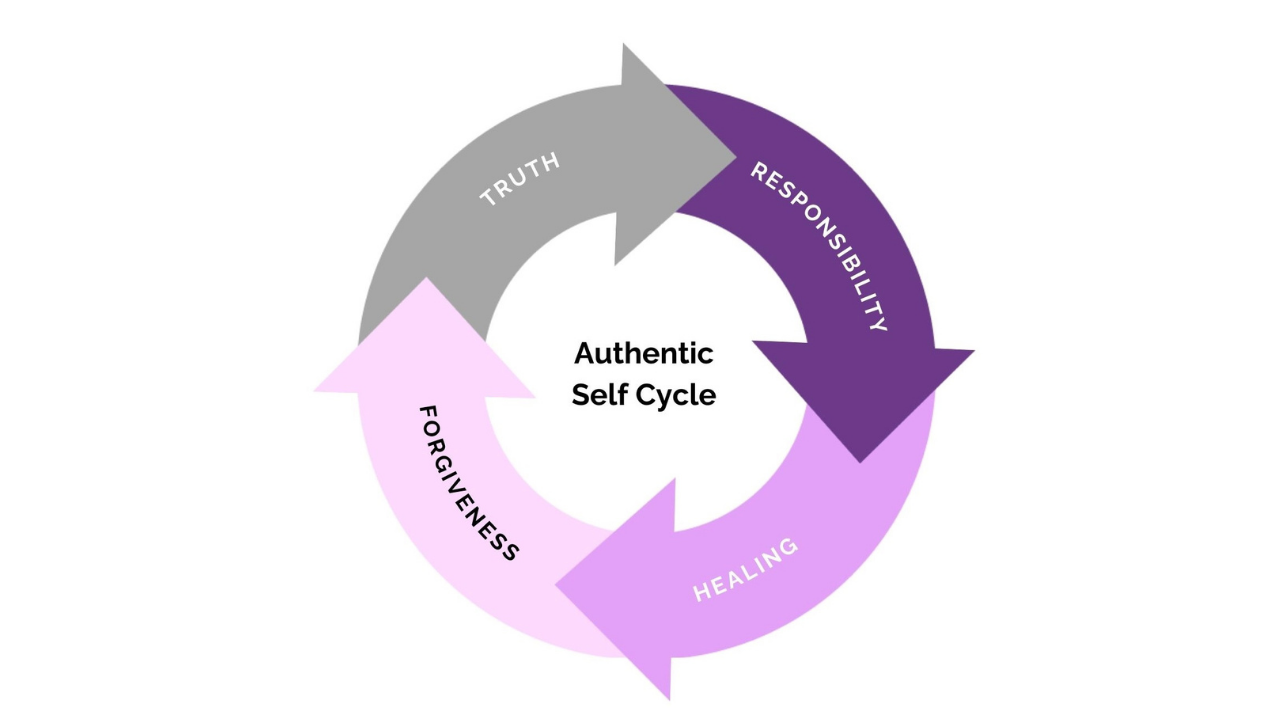
    Authentic Self Cycle — the pathway from narcissistic parent recovery through truth, responsibility, healing, and forgiveness

    Truth: You stop denying. You name what happened. You acknowledge the ways your father’s narcissism shaped you. Not to blame him. But to stop blaming yourself. Truth is the foundation of everything that follows.

    Responsibility: Here’s the hard part. Once you know the truth, you’re responsible for your own healing. Your father hurt you, yes. But he’s not the one stopping you from being authentic. Your survival persona is. Your denial is. Your fear is. Taking responsibility means acknowledging that you now have agency. You can change the patterns.

    Healing: This is the work. This is reparenting. This is the Emotional Authenticity Method™ applied consistently. This is teaching your nervous system that you’re safe. That your needs matter. That your truth is valid. That you don’t have to perform or disappear to be worthy.

    Forgiveness: Not of your father. Not yet, maybe not ever. Forgiveness of yourself. Forgiveness of the part of you that believed his lies about you. Forgiveness of the survival persona that did what it had to do to keep you alive. This is where freedom lives.

    What This Looks Like in Your Adult Life

    When your father’s narcissism was running your life, relationships were a series of compromises and denials. You either became the caretaker (managing everyone else’s emotions) or the avoider (afraid of real connection). You either recreated the narcissistic dynamic or built walls so high no one could get in.

    Here’s what changes when you move through the Authentic Self Cycle™:

    In Romantic Relationships: You stop choosing partners who remind you of your father. You stop performing versions of yourself to earn love. You can name what you actually want—and you can ask for it without shame. You recognize when a partner is being narcissistic, and you don’t normalize it. You can leave, without guilt. Or, if you choose to stay, you can do it from a place of authentic choice, not compulsion.

    In Parenting: You break the cycle. You don’t repeat your father’s patterns with your own children. You learn to see them as separate people. You provide the attunement, the unconditional acceptance, the emotional authenticity that you never received. This is reparenting them—and through them, reparenting yourself.

    In Your Body: Your nervous system stops living in survival mode. Your hypervigilance eases. You sleep better. You breathe easier. You feel safer in your own skin because you’ve become the safe parent you needed.

    In Your Self-Perception: You stop believing the lies your father taught you about yourself. You aren’t unworthy. You aren’t too needy. You aren’t selfish for having needs. You aren’t responsible for his emotional state. You’re allowed to exist. You’re allowed to want things. You’re allowed to be yourself.

    That’s you when you can say no without explaining. That’s you when you know what you want and you go after it. That’s you when you’re in a relationship and you’re still yourself. That’s you when your past doesn’t dictate your present.

    Related Articles on Narcissistic Parenting

    If you’re working through the impact of a narcissistic father, these resources dive deeper into specific patterns and recovery strategies:

    Frequently Asked Questions

    Q: What if my father was a covert narcissist—outwardly nice but emotionally unavailable?

    A: The damage is the same. Covert narcissists are often harder to identify because they don’t explode or dominate openly. They withdraw, subtly punish, and hide their contempt behind a nice facade. The wound they create is the same: the belief that you’re not worth genuine emotional connection. The 7 signs still apply—they just look quieter. Your job is the same: recognizing the pattern and healing your nervous system through the Emotional Authenticity Method™.

    Q: Am I a narcissist if I have some of these traits?

    A: Probably not. Children of narcissistic parents often develop narcissistic-like defenses. The falsely empowered survival persona, for example, can look narcissistic. But there’s a crucial difference: it comes from fear, not entitlement. A true narcissist lacks capacity for shame. You’re reading this because you feel shame. That’s a sign of your humanity, not your narcissism. Your task is to evolve that defense into genuine authenticity, not to shame yourself for having it.

    Q: Should I confront my father about his narcissism?

    A: This depends entirely on your situation. Some people find healing through direct conversation. Others find that confrontation triggers more harm or denial. What matters most is your own healing. If confrontation would serve that, and you’re emotionally resourced to handle his response, it might help. But healing does not require him to acknowledge his behavior. Healing requires you to acknowledge what happened and commit to your own recovery. That work happens inside you, regardless of whether he ever understands.

    Q: How long does it take to heal from a narcissistic father?

    A: This isn’t linear. You can have insights and breakthroughs and still find yourself back in the Worst Day Cycle™ when you’re triggered. That’s normal. That’s not failure. Healing is about moving through these cycles with more awareness, more compassion for yourself, and more ability to return to your truth. Most people notice significant shifts within months of consistent emotional authenticity work. But this is a lifetime practice. You’re not trying to get over it. You’re trying to learn to live from your authentic self regardless of your history.

    Q: What if my father is still alive and in my life?

    A: Your healing doesn’t depend on his death or his absence. It depends on your willingness to grieve what you needed and didn’t get, and to reparent yourself into wholeness. That said, managing ongoing contact with a narcissistic parent requires boundaries. These aren’t walls meant to punish him. They’re containers meant to protect your emotional authenticity. You might decide to maintain contact with strict boundaries, or you might decide that no contact is what your healing requires. Both are valid. The key is that this choice comes from your truth, not from guilt or obligation to him.

    Q: How do I know if my survival persona is falsely empowered, disempowered, or adapted wounded child?

    A: The falsely empowered persona is hypervigilant to control. It needs to be powerful, to be right, to prevent harm through force or dominance. The disempowered persona is hypervigilant to compliance. It learns to be invisible, to go along, to deny its own needs. The adapted wounded child persona is hypervigilant to caretaking. It learned that being needed is how you earn belonging. Pay attention to which patterns you default to under stress. That’s your primary survival strategy. Most of us have elements of all three, but one dominates. Identifying it is the first step to evolving it into genuine authenticity through the Emotional Authenticity Method™.

    Your Next Step: Move from Understanding to Healing

    Recognizing that your father is narcissistic is important. But it’s not enough. The goal isn’t understanding—it’s freedom. Freedom from his voice in your head. Freedom from the shame that isn’t yours. Freedom to be yourself in your relationships. Freedom to choose your own path.

    That freedom comes through the Emotional Authenticity Method™—through feeling, naming, grieving, locating your truth, and reparenting yourself into integration.

    If you’re ready to move beyond insight into actual transformation, I’ve created a comprehensive program at The Greatness U. This is where I teach the full methodology—the Worst Day Cycle™, the Authentic Self Cycle™, and the 5-step Emotional Authenticity Method™ that I’ve outlined in this post. You’ll work through real scenarios from your life, you’ll learn to recognize when you’re in your survival persona, and you’ll develop the capacity to return to your authentic self even when triggered.

    You’ll also have access to my book, “Your Journey to Success,” which goes deeper into the frameworks and the personal work required to move from survival to authenticity.

    This is the kind of work that changes lives. Not because it’s complicated, but because it’s honest. It meets you where you are—in the shame, the denial, the old patterns—and it shows you the path to the other side.

    The Bottom Line

    Your father’s narcissism was never about you. It was about his inability to see you as a separate person, to tolerate his own shame, to offer genuine empathy. The way he treated you was a reflection of his wound, not your worth.

    But his patterns have shaped you. They’ve programmed your nervous system. They’ve created your survival persona. And they’ve kept you locked in the Worst Day Cycle™—repeating the same dynamics in your adult relationships, your career, your parenting, your relationship with yourself.

    The good news: this is changeable. You have the capacity to break the cycle. You have the capacity to move from your survival persona into your authentic self. You have the capacity to build relationships where you’re genuinely seen and accepted. You have the capacity to be free.

    It starts with truth. It continues with responsibility. It moves through healing. And it culminates in forgiveness—of yourself, for doing what you had to do to survive.

    Your father may never understand what he did. But you will. And that understanding, paired with consistent emotional authenticity work, will set you free.

  • How to Deal With a Narcissistic Parent: From Survival to Authentic Healing

    How to Deal With a Narcissistic Parent: From Survival to Authentic Healing

    A narcissistic parent doesn’t just hurt you in the moment—they rewire your brain. Every time they gaslit you, raged at you, or made you responsible for their emotions, your nervous system learned to expect pain in relationships. You developed a survival persona to protect yourself, and now that same protective mechanism sabotages your adult relationships, career, and sense of self.

    A narcissistic parent uses emotional manipulation, lack of empathy, and grandiose behaviors to maintain control and power in the family system, creating childhood trauma that conditions your brain to repeat similar painful patterns in adulthood.

    Healing from a narcissistic parent requires understanding the Worst Day Cycle™ that keeps you trapped, identifying which survival persona you developed, and following the Emotional Authenticity Method™ to rewire your nervous system. This isn’t about forgiving them—it’s about reclaiming your authentic self.

    Table of Contents

    What a Narcissistic Parent Actually Does to Your Brain

    When you grow up with a narcissistic parent, your developing brain doesn’t learn about healthy love. Instead, it learns that relationships are about managing someone else’s emotions, protecting yourself from unpredictable rage, and proving your worth by performing perfection.

    Your hypothalamus—the part of your brain that controls your stress response—becomes hyperactive. It starts pumping out cortisol and adrenaline in response to normal emotional stimuli because your childhood taught you that emotion = danger. Your dopamine system gets rewired around intermittent reinforcement: sometimes the narcissistic parent is loving, sometimes they’re cruel, but you never know which version you’re getting. This creates an addiction-like pattern in your brain.

    That’s you — the one who still flinches when your partner raises their voice, even though they’re not angry at you.

    how childhood trauma with narcissistic parent rewires brain chemistry and stress response system

    Narcissistic abuse creates a specific kind of childhood trauma: you learned that your feelings don’t matter, your needs are selfish, and your job is to manage your parent’s emotional state. This isn’t because you were weak. It’s because your brain is supposed to adapt to survive. And it did. But the adaptation that saved you at age 8 is destroying your adult relationships now.

    The cruelest part? You probably internalized your narcissistic parent. That voice in your head that says you’re not good enough, that your needs are selfish, that you have to earn love—that’s them. You’re now doing to yourself what they did to you.

    The Three Survival Personas You Might Be Living

    When you’re a child with a narcissistic parent, you can’t leave. You can’t fight. You can’t reason with someone who has no empathy. So your nervous system creates a survival persona—a version of yourself that might keep you safe, earn crumbs of approval, or at least numb the pain.

    three survival personas developed in response to narcissistic parent: falsely empowered, disempowered, adapted wounded child

    There are three primary survival personas people develop. Most of us aren’t purely one—we oscillate between them depending on the situation, relationship, or stress level.

    The Falsely Empowered Persona

    This is the survivor who decided the best way to handle a narcissistic parent was to become more controlling, more dominant, more grandiose. You might be the overachiever, the perfectionist, the one who has to win every argument.

    That’s you — the one who has to be right, who can’t admit mistakes, who controls your relationships to prevent abandonment.

    The falsely empowered persona says: “If I can just be perfect, successful, and in control, I won’t be vulnerable to that pain again.” In childhood, this kept you safe. As an adult, it makes you exhausting to be around. You struggle with real intimacy because intimacy requires vulnerability, and vulnerability feels like death to your nervous system.

    You might rage at your partner for small things. You might dismiss their feelings as weakness. You might be unable to apologize genuinely. You’re not a bad person—you’re a person whose survival mechanism became a tyrant.

    The Disempowered Persona

    This is the survivor who decided the best way to handle a narcissistic parent was to become invisible. You learned that your needs were the problem, so you made yourself small, agreeable, and perpetually apologetic.

    That’s you — the one who can’t say no, who people-pleases to the point of self-abandonment, who feels guilty for having any need at all.

    The disempowered persona says: “If I just disappear, if I just make everyone else okay, I’ll be safe.” In childhood, this kept you alive. As an adult, it makes you invisible even to people who love you. You struggle to access your own anger because anger means you matter, and you don’t believe you do.

    You might collapse into depression or anxiety when your partner disagrees with you. You might spend your whole life fixing other people’s problems while ignoring your own. You’re not weak—you’re a person whose survival mechanism became a prison.

    The Adapted Wounded Child Persona

    This is the survivor who oscillates wildly between falsely empowered and disempowered, depending on the situation. One day you’re raging at your partner, the next day you’re dissolved in shame about it. One week you’re setting boundaries, the next week you’ve completely abandoned yourself.

    adapted wounded child survival persona oscillating between control and collapse in narcissistic family patterns

    That’s you — the one who doesn’t know who you are, who changes depending on who you’re around, who feels like you’re living multiple lives.

    The adapted wounded child persona is the exhausting pendulum swing between “I need to control everything” and “I need to disappear.” You might cycle through relationships quickly because you can’t maintain the energy required for either extreme. You’re often diagnosed with anxiety, depression, or borderline traits—not because those are your diagnosis, but because you’re literally running two opposite nervous system states on overdrive.

    You’re not broken—you’re a person whose survival mechanism is conflicted because both survival strategies were necessary at different times in your childhood.

    The Worst Day Cycle™: Why You Keep Repeating the Pattern

    You probably thought the narcissistic parent would be different once you became an adult. You probably thought distance, reasoning, or setting boundaries would help. And then you realized: you keep attracting similar people, or you keep recreating the same dynamic with partners, friends, or even your own children.

    This isn’t your fault. This is the Worst Day Cycle™.

    The Worst Day Cycle showing trauma, fear, shame, denial cycle in narcissistic family trauma

    Stage 1: Childhood Trauma

    Your narcissistic parent created a specific meaning for you: “I am not safe. My needs are selfish. I cannot trust anyone. My job is to manage other people’s emotions.” This isn’t a thought—it’s a cellular, neurobiological imprint.

    Every time they raged, gaslit, invalidated, or abandoned you emotionally, your nervous system recorded it as dangerous. Your brain literally changed its structure. Childhood trauma is real brain damage, not metaphorical.

    Stage 2: Fear (The Chemical Reaction)

    Your hypothalamus responds to this early trauma by creating a chemical cocktail: cortisol floods your system to prepare you for threat, adrenaline makes you hypervigilant, dopamine creates a craving for the unpredictable patterns that feel familiar, oxytocin misfires and makes you bond with the person who hurt you.

    That’s you — the one whose body goes into panic mode at the hint of abandonment, even though you’re 35 years old and safe.

    Your brain becomes chemically addicted to these emotional states because repetition signals safety to your developing nervous system. The brain can’t tell right from wrong—it can only tell familiar from unfamiliar. Known pain feels safer than unknown possibility.

    Stage 3: Shame (Where You Lost Your Worth)

    Over time, the repeated trauma creates a core wound: shame. Not embarrassment—shame. The belief that *you* are the problem. Not “I did something bad,” but “I am bad.”

    Your narcissistic parent probably blamed you for their emotions (“You made me angry,” “If you weren’t so difficult, I wouldn’t have to yell”). Your developing brain, which is 100% egocentric until about age 7, believed it. You internalized the belief that your existence causes problems.

    This shame becomes the engine of all your adult relationship patterns. You stay in relationships where you’re mistreated because shame says you deserve it. You leave relationships where you’re treated well because shame says you don’t deserve it. You sabotage your own success because shame says you’re not worthy of good things.

    Stage 4: Denial (Your Survival Persona)

    Your nervous system can’t survive in constant terror and shame, so it creates a denial mechanism—a persona that protects you from the pain. This is your survival persona: falsely empowered, disempowered, or adapted wounded child.

    That’s you — the one who says “it wasn’t that bad,” who defends your narcissistic parent, who can’t admit how deeply they hurt you.

    Denial is your brain’s survival mechanism, and it’s brilliant—but it keeps you trapped in the cycle. As long as you deny the original trauma, you can’t heal it. You just keep repeating it.

    And here’s where it loops: your survival persona creates new conflict, which triggers your nervous system to produce fear again, which triggers shame again, which requires more denial. And the cycle continues through every relationship you have.

    Signs You’re Still Controlled by a Narcissistic Parent (By Life Area)

    You might not think about your narcissistic parent every day anymore. But their imprint is still running your nervous system. Here’s how it shows up:

    In Your Family Relationships

    You might find yourself repeating your parent’s patterns with your own children. Or you might overcorrect and be so permissive that your kids have no structure. You might struggle to set boundaries with your narcissistic parent even now, or you might have cut them off completely but feel guilty about it.

    That’s you — the one who can’t say no to your parent’s boundary violations, who feels like a terrible person for not “honoring” the person who hurt you.

    A key sign is that you feel responsible for managing your parent’s emotions, even as an adult. You call them to check in when you’re stressed. You apologize for things that aren’t your fault. You still seek their approval.

    enmeshment patterns created by narcissistic parent emotional boundaries crossed in family system

    In Your Romantic Relationships

    You either attract narcissists (because they feel familiar) or you attract avoidants (because your survival persona is designed to manage someone else’s emotions). You might cycle through relationships quickly, or you might stay in one dysfunctional relationship for decades.

    That’s you — the one who can’t relax into a healthy relationship, who waits for the other shoe to drop, who doesn’t believe anyone could actually love you.

    The clearest sign is that you abandon yourself in relationships. You become who they need you to be. You don’t express your real needs. You’re constantly anxious about abandonment or suffocated by closeness. You can’t ask for what you want without shame.

    Learn more about the signs of insecurity in relationships created by this early trauma.

    In Your Friendships

    You might be the one who always listens but never shares. Or you might be the one who disappears from friendships when you need support. You might struggle to maintain friendships because vulnerability feels dangerous.

    That’s you — the one with no close friends, the one with lots of acquaintances but no one who really knows you.

    A key sign is that you don’t have people you can be authentic with. You perform in friendships the same way you performed for your narcissistic parent. The real you stays hidden.

    In Your Work Life

    Your survival persona is probably running your career. Falsely empowered types become workaholics, perfectionists, and people who can’t delegate or admit mistakes. Disempowered types become people-pleasers who are taken advantage of, who don’t get promoted, who do other people’s work.

    That’s you — the one who can’t take feedback without shame spiraling, the one who has to prove your worth through productivity, the one who burns out every few years.

    The narcissistic parent taught you that your worth depends on your performance. So your nervous system never lets you rest. You’re always achieving, always trying, always afraid it’s not enough.

    In Your Body and Health

    Unhealed narcissistic parent trauma lives in your nervous system, and your nervous system is connected to every part of your body. You might struggle with chronic pain, digestive issues, tension, autoimmune conditions, or persistent low energy.

    That’s you — the one who goes to doctor after doctor with mysterious symptoms that no one can diagnose.

    Your body is holding the emotional blueprint created by your narcissistic parent. You might dissociate during stress, leaving your body entirely. Or you might be hypervigilant, tense and ready for threat at all times. Your nervous system is running in survival mode even when you’re objectively safe.

    emotional regulation nervous system healing from narcissistic parent childhood trauma

    The Emotional Authenticity Method™: Your Path Out

    Here’s the truth that most therapy misses: you cannot think your way out of an emotional pattern. Your narcissistic parent didn’t create thoughts in you—they created *feelings* that live in your body. Until you address the feeling directly, no amount of cognitive reframing will help.

    The Emotional Authenticity Method™ is a five-step somatic process designed to rewire your emotional blueprint at the source: in your nervous system, in your body.

    Step 1: Somatic Down-Regulation (With Optional Titration)

    Before you can access the emotion, your nervous system needs to be resourced enough to tolerate the feeling. This is why trauma therapy sometimes fails—therapists push you to feel things before your nervous system can handle it.

    That’s you — the one who doesn’t need to “talk it out,” who needs to calm down first so your thinking brain can come back online.

    Down-regulation means sending a signal to your nervous system that you’re safe right now. You might do this through breathwork (4-count inhale, 6-count exhale), cold exposure (splash your face with cold water), movement (shake your body, go for a walk), or bilateral stimulation (cross-lateral exercises).

    This isn’t about pushing yourself to “be positive.” It’s about creating the physiological conditions where your nervous system believes it’s safe enough to process emotion.

    Step 2: What Am I Feeling?

    Most people with narcissistic parent trauma can only identify two emotions: fine and not-fine. This emotional illiteracy keeps you trapped because you can’t address what you can’t name.

    That’s you — the one who freezes when someone asks “what are you feeling?” and can only say “I don’t know.”

    The Feelings Wheel (available at the bottom of this post) breaks emotion into 12 primary feelings with gradations. Your job is to move past “sad” and get specific: are you disappointed, overwhelmed, heartbroken, or grieving? Are you angry, furious, resentful, or just irritated?

    This seems simple, but it’s revolutionary. When you can name the specific emotion your narcissistic parent created, you begin to separate from it. It’s no longer “I am sad”—it’s “I am feeling grief.”

    Step 3: Where In My Body Do I Feel It?

    All emotional trauma is stored as somatic memory—body memory. Your nervous system remembers what your mind forgot. When you feel grief about your narcissistic parent, where do you feel it? In your chest? Your throat? Your belly? Your legs?

    That’s you — the one who holds your breath when conflict starts, who tightens your shoulders when you need to speak up.

    Your body is not lying to you. The location of the feeling is significant because it’s where the emotional blueprint is encoded. When you locate the feeling somatically, you bypass the denial mechanisms and access the real wound.

    Many people find that when they sit with the physical sensation without judgment, it begins to shift. A tightness loosens. A heaviness lightens. You’re literally rewiring your nervous system’s response by staying present with the sensation.

    Emotional Authenticity Method 5 steps somatic healing from narcissistic parent trauma

    Step 4: What’s My Earliest Memory of This Feeling?

    Your nervous system doesn’t organize emotions by date—it organizes them by pattern. When you feel unsafe in your current relationship, your nervous system doesn’t pull up your partner’s action. It pulls up every time you felt unsafe with your narcissistic parent.

    That’s you — the one whose reaction is way bigger than the situation warrants, because you’re not actually responding to today.

    When you trace the current feeling back to its earliest memory, you separate past from present. You realize: my partner raised their voice, but my nervous system is responding as if I’m 6 years old and my parent is raging. This recognition is everything. It’s the beginning of choice.

    Your job isn’t to re-traumatize yourself by reliving the memory. Your job is simply to acknowledge: this feeling started then. It’s not about today.

    Step 5: Who Would I Be If I Never Had This Feeling Again?

    This is the vision step. Not “get over it” or “move on.” This is imagining yourself without the emotional blueprint created by your narcissistic parent. Who would you be? How would you move through the world differently?

    This isn’t fluffy visualization. This is your nervous system beginning to imagine a new pattern, a new chemical state. Your brain doesn’t know the difference between a vivid imagination and a real experience. When you imagine safety, your nervous system begins to rewire toward safety.

    That’s you — the one who could finally relax, finally trust, finally believe you’re worthy of love.

    This five-step process addresses the core truth: you cannot change what you don’t feel, and you cannot feel what you don’t locate in your body.

    The Authentic Self Cycle™: Breaking Free

    Once you understand the Worst Day Cycle™ that keeps you trapped, you’re ready for the counterpart: the Authentic Self Cycle™. This is the healing cycle that gradually replaces the trauma cycle.

    Authentic Self Cycle framework for healing from narcissistic parent emotional blueprint restoration

    Stage 1: Truth

    You name the blueprint. “My narcissistic parent taught me that I’m not safe. That my needs are selfish. That my job is to manage other people’s emotions.” This isn’t about blame—it’s about clarity.

    That’s you — the one who can finally say what actually happened, without minimizing or defending the person who hurt you.

    Truth is the antidote to denial. As long as you deny what happened, you stay stuck. The moment you tell yourself the truth—even if it’s just internally, even if it terrifies you—something shifts.

    Stage 2: Responsibility

    This doesn’t mean accepting blame. It means acknowledging: “My parent created this wound, but I’m the one maintaining it now. I’m the one choosing partners who recreate it. I’m the one using my survival persona. I’m responsible for my healing.”

    That’s you — the one who stops waiting for your parent to apologize or change, and realizes the only person who can heal this is you.

    Responsibility is powerful because it restores agency. You can’t control what your narcissistic parent did. You can control whether you keep the wound open through denial or close it through healing.

    Stage 3: Healing

    This is where the Emotional Authenticity Method™ comes in. You systematically rewire your emotional blueprint. You send new signals to your nervous system: this conflict isn’t dangerous, this space isn’t abandonment, this intensity isn’t attack.

    You reparent yourself—giving yourself the emotional attunement, consistency, and unconditional acceptance your narcissistic parent couldn’t provide. You learn that you can survive disappointment without collapsing. You learn that you can set boundaries without abandonment.

    reparenting self-compassion healing strategy for adult children of narcissistic parents

    Stage 4: Forgiveness

    Forgiveness doesn’t mean reconciliation. It doesn’t mean excusing what your narcissistic parent did. It means releasing the emotional blueprint they created and reclaiming your authentic self.

    That’s you — the one who can finally let them go, not for them, but for you.

    Forgiveness is the release of the inherited emotional blueprint. Your parent probably had a narcissistic parent too. The wound got passed down. Forgiveness means: I see how this cycle was created, and I’m choosing to end it with me.

    This is where the Authentic Self Cycle™ becomes real. You’re no longer running your parent’s emotional program. You’re running your own.

    Practical Strategies for Dealing With a Narcissistic Parent Now

    Set Boundaries (Or Cut Contact)

    You have two choices with your narcissistic parent: set firm boundaries or cut contact entirely. Both are legitimate. The guilt you feel doing either one? That’s the shame your parent installed. Ignore it.

    That’s you — the one who feels guilty for protecting yourself, as if your safety is selfish.

    If you choose to maintain contact, boundaries are non-negotiable. Not angry boundaries—calm, clear, emotional boundaries. “I won’t discuss my relationship.” “I won’t accept blame for your emotions.” “I won’t respond to guilt trips.”

    Boundaries fail when they’re delivered in anger or when you apologize for them. State them once, calmly, and enforce them consistently.

    Grieve Your Relationship

    You probably fantasize that one day your narcissistic parent will change, apologize, and you’ll have the relationship you always wanted. That’s grief talking. That’s the part of you that still needs them to be the parent you deserved.

    That’s you — the one who keeps hoping this time will be different, who still seeks their approval.

    You need to grieve the parent you needed and never got. This grief is necessary. It’s painful. And it’s the gateway to your authentic self, because your authentic self doesn’t need a narcissistic parent’s approval.

    Identify Your Survival Persona

    You can’t change what you don’t see. Which survival persona do you live in most? Falsely empowered (controlling, raging, needing to win)? Disempowered (collapsing, people-pleasing, abandoning yourself)? Adapted wounded child (oscillating between both)?

    That’s you — the one who finally understands why you’re exhausting in relationships, why you can’t relax, why you sabotage good things.

    Your survival persona isn’t your fault, but it is your responsibility now. Every time you notice it taking over—every time you rage, collapse, or oscillate—pause. Get curious. What triggered it? What scared your nervous system? This awareness is the first step toward integration.

    Work With the Emotional Authenticity Method™

    Use the five steps every time you feel triggered. Down-regulate. Name the emotion. Locate it in your body. Trace it back. Vision your authentic self. This becomes a muscle over time. Your nervous system learns a new response to old triggers.

    emotional fitness exercise building nervous system resilience after narcissistic parent trauma

    Address Your Codependence

    Learn the negotiables and non-negotiables of codependence recovery, because narcissistic parent trauma and codependence are usually intertwined. You learned to manage other people’s emotions as a survival strategy. You need to unlearn that.

    Get Into the Right Relationship Patterns

    Check out the essential dos and don’ts for great relationships so you can build something healthy instead of repeating the narcissistic dynamic.

    People Also Ask

    Can you ever have a healthy relationship with a narcissistic parent?

    Only if you fully separate your emotional blueprint from theirs. Most people can’t do this while in regular contact because the narcissistic parent will keep triggering the old wounds. Some people maintain superficial, boundaried contact. Others find healing requires distance or no contact. Both are valid. The key is that *you* get to decide what protects your healing—not guilt.

    What does it mean to reparent yourself?

    Reparenting means giving yourself what your narcissistic parent couldn’t: attunement to your emotional needs, unconditional acceptance, consistency, and safety. When you feel shame, you soothe it like a loving parent would. When you need comfort, you provide it. You become internally what your parent failed to be externally. This isn’t about self-indulgence—it’s about rewiring your nervous system’s expectation of care.

    How long does it take to heal from narcissistic parent trauma?

    There’s no timeline because you’re literally rewiring your brain. Some people feel major shifts in months. Others take years. The metric isn’t time—it’s change. Are you triggering less? Recovering faster from conflict? Able to be vulnerable? Able to set boundaries without guilt? If yes, you’re healing. If you’re still in the Worst Day Cycle™ and haven’t accessed your authentic self yet, you need support.

    Is it selfish to cut off a narcissistic parent?

    No. Self-protection is never selfish. Your nervous system was injured. Protecting that injury is an act of self-respect. The guilt you feel is the internalized voice of your narcissistic parent telling you that your needs don’t matter. Recognize it. Release it. Choose yourself.

    What if I’m starting to become like my narcissistic parent?

    This is actually a sign you’re aware. Most people with narcissistic parents either become codependent or unconsciously adopt narcissistic traits themselves. The falsely empowered survival persona often looks like narcissism. But awareness means you have choice. You can see the pattern before it damages your relationships. Use the Emotional Authenticity Method™ to process the survival persona before it acts. Seek support immediately. Healing is possible.

    What about extended family members who side with the narcissistic parent?

    Family systems are designed to maintain stability, even dysfunctional stability. When you stop playing your assigned role (the guilt-absorber, the fixer, the one who manages the narcissistic parent), the whole system feels threatened. People will pressure you to return to your role. This is normal. It doesn’t mean you’re wrong. It means your healing is challenging the family’s survival strategy. You may need to create distance from extended family too. Your healing comes first.

    The Bottom Line: Your Authentic Self Is Still In There

    Your narcissistic parent couldn’t destroy your authentic self. They just buried it under layers of survival personas, shame, and denial. But it’s still there—the part of you that knows you’re worthy, that has real needs, that deserves love.

    That’s you — the one who’s been trying to earn love from someone incapable of giving it, when the person you actually need love from is yourself.

    Healing from a narcissistic parent isn’t about forgetting what happened or pretending it didn’t matter. It’s about reclaiming your life from the emotional blueprint they created.

    The Worst Day Cycle™ taught you that you’re not safe, that your needs don’t matter, that you have to manage other people’s emotions to survive. The Authentic Self Cycle™ teaches you the opposite: you are safe, your needs matter, you’re allowed to be yourself.

    The Emotional Authenticity Method™ is how you make that transition real—not in your head, but in your nervous system, in your body, where the original wound lives.

    You don’t need your narcissistic parent’s permission to heal. You don’t need them to apologize or change. You just need to decide: today is the day I choose myself. And then do the work.

    Recommended Reading and Resources

    Deepen your understanding with these books from trauma-informed authors:

    • The New Codependency: Help and Guidance for Today’s Generation by Melody Beattie — Essential for understanding how narcissistic parent trauma manifests as codependence in your adult relationships.
    • The Body Keeps the Score by Bessel van der Kolk — The definitive guide to how trauma lives in your nervous system and how somatic healing works.
    • The Myth of Normal by Gabor Maté — Understand the deeper context of how childhood trauma becomes chronic illness and how to reverse it.
    • Bradshaw On: The Family by John Bradshaw — A classic on family systems and how narcissistic parents create dysfunctional patterns across generations.
    • Dare to Lead by Brené Brown — For building shame resilience and authentic leadership of your own life.

    Use the Feelings Wheel exercise daily to build emotional granularity and awareness.

    Ready to Go Deeper?

    Understanding your narcissistic parent trauma is the first step. Rewiring it requires support, structure, and someone who understands the neurobiology of healing.

    These courses will guide you through the Emotional Authenticity Method™ and help you build your Authentic Self Cycle™:

    • Emotional Blueprint Starter Course — Individual ($79) — A foundational 5-week course on understanding your emotional blueprint and the three survival personas. Start here if you’re just beginning to recognize the pattern.
    • Relationship Starter Course — Couples ($79) — For people in relationships who want to stop repeating narcissistic family patterns with their partners. Learn how to create earned security instead of inherited trauma.
    • Why We Can’t Stop Hurting Each Other ($479) — A comprehensive deep dive into how childhood trauma creates relationship conflict, how to interrupt the cycle, and how to build genuine intimacy.
    • Why High Achievers Fail at Love ($479) — Specifically for falsely empowered survivors who’ve built successful careers but can’t maintain relationships. Learn why achievement doesn’t fix the wound.
    • The Shutdown Avoidant Partner ($479) — If you’re in a relationship with someone whose trauma looks like emotional withdrawal, this course explains how their nervous system works and what actually helps them heal.
    • Tier 1: Mapping the Blueprint ($1,379) — The full-spectrum healing program combining the Emotional Authenticity Method™, the Worst Day Cycle™, and the Authentic Self Cycle™. This is the deepest work.

    Every course includes video instruction, journaling exercises, the Feelings Wheel, and lifetime access.

    See the signs of insecurity in relationships and understand how your narcissistic parent trauma shows up in your love life.

    Learn the signs of enmeshment and how emotional boundaries save relationships.

    Discover what genuine high self-esteem actually looks like (hint: it doesn’t look like your falsely empowered parent).

    understanding emotional blueprint created by narcissistic parent in childhood development

    FAQ Schema

    Article Schema

  • Narcissistic Family Dynamics: How Your Family System Created Your Survival Persona

    Narcissistic Family Dynamics: How Your Family System Created Your Survival Persona

    You’re sitting at the holiday dinner table and your mother is telling a story about your childhood — except it’s not how it happened. She’s rewriting it. She’s the hero. You’re the ungrateful one. And everyone at the table is nodding along because they’ve learned the same thing you learned at age five: don’t challenge her version. Don’t bring up the truth. Just smile.

    Your chest tightens. Your jaw clenches. A voice in your head says: “Just let it go.” And you do — because that’s what you’ve always done. That’s what you were trained to do.

    Narcissistic family dynamics are not just about one difficult parent. They are an entire family system organized around protecting one person’s emotional fragility at the expense of every other person’s authentic self — and the wounds created in that system follow you into every relationship, career, and decision you make as an adult.

    If you grew up in a narcissistic family, you didn’t just have a “tough childhood.” You grew up in a system where reality was negotiable, your feelings were inconvenient, and your worth was determined by how well you performed your assigned role. The golden child, the scapegoat, the invisible one — these aren’t personality types. They’re survival personas created by children who had no other option. And those survival personas are still running your life today.

    That’s you if you’ve spent decades questioning your own memory — wondering if it really was “that bad” or if you’re just being dramatic. That’s you if you can manage a crisis at work but fall apart the moment your parent calls. That’s you if the holidays fill you with dread disguised as obligation.

    This isn’t about labeling your parent. This is about understanding the system that shaped you — and finally seeing how it’s still shaping every relationship you have.

    emotional blueprint showing how narcissistic family dynamics create childhood trauma patterns

    What Are Narcissistic Family Dynamics?

    Most people think narcissistic family dynamics means “having a narcissistic parent.” That’s only part of it. A narcissistic family is an entire system — a structure where one person’s emotional needs become the organizing principle for everyone else’s existence. Every family member learns their role. Every interaction is filtered through the question: How do I keep the narcissistic parent comfortable?

    A narcissistic family system doesn’t just wound one child. It creates a blueprint where every member learns to abandon their authentic self in service of one person’s emotional fragility — and that blueprint becomes the template for every relationship that follows.

    What creates a narcissistic parent is childhood developmental trauma. This is not a genetic disorder. Based on all available science and studies, what creates a narcissist is childhood trauma — developmental trauma — almost always at the hands of the primary caregivers. That’s devastating, because if there’s anyone in this world we want complete love and acceptance from, it’s our parents. Your parents didn’t get it. And sadly, they couldn’t give it to you. They weren’t capable of it.

    That’s you if you’ve spent years trying to understand your parent — reading books, watching videos, analyzing their behavior — because some part of you still believes that if you just understand them well enough, you can fix it. That’s you if the phrase “they did their best” makes your stomach turn because you know their “best” left you shattered.

    At the core of a narcissist is deep, deep abandonment and rejection wounds. Narcissism is created in childhood by very erratic, chaotic parenting. They suffered severe abandonment and neglect — and abandonment isn’t just physical. A mother or father who enmeshes with the child, who smothers the child, who makes them the golden child — that is severe abandonment because they’re placing the child on a pedestal instead of treating the child as a child.

    enmeshment in narcissistic family dynamics where boundaries are dissolved

    How Narcissistic Families Actually Operate

    In a narcissistic family, the child exists to meet the selfish needs of the parent. The child is a prop — that’s it. Everything is about the parent. The child’s individuality, their thoughts, feelings, desires, dreams, needs, and wants are completely ignored. All of them are fashioned, controlled, and decided by the parent. They’re molded. It has to be to please the parent.

    The parent uses guilt as currency. If you try to go off on your own, they turn it on you: “You just don’t care about this family.” There’s always a double bind — if you pursue your authentic self, you’re letting the parent down. You’re always placed in that impossible position.

    That’s you if you feel guilty for having your own life. That’s you if pursuing something you want — a career move, a relationship, a boundary — feels like betrayal.

    The second part of this system is that you’re treated like an ornament. As the narcissistic parent pursues their status, their career, their social image, you’re propped up as a decoration. “Look at my child’s grades. Look at my child’s sport. Look at how great they look.” You’re not a person with an inner world — you’re a display piece that exists to elevate the parent’s self-importance.

    And if you weren’t the ornament? Then you were the one standing right there while the parent talked about the golden child — and said nothing about you. Because you weren’t the prop that could lift their self-image.

    That’s you if you were either the child who could do no wrong or the child who could do nothing right — and both positions left you without a self.

    With a narcissistic parent, the child’s authentic self is not just ignored — it is actively replaced with whatever version of the child serves the parent’s emotional needs. The child doesn’t lose their identity gradually. It is taken from them before they ever had a chance to discover it.

    survival persona types created by narcissistic family dynamics in childhood

    The Roles Children Are Forced to Play

    Every narcissistic family assigns roles. These aren’t chosen — they’re imposed. And every child in the system organizes their entire identity around the role they were given.

    The Golden Child

    The golden child is the parent’s extension — the ornament, the trophy, the proof that the parent is exceptional. This child receives conditional love in exchange for performance. They learn that their worth is entirely dependent on what they produce, how they look, and how much admiration they reflect back onto the parent. They appear confident, successful, and favored. Underneath, they’re terrified — because they know the love disappears the moment they stop performing.

    That’s you if you were the “successful” one in your family and you’ve never once felt like it was enough. That’s you if the praise always came with strings.

    The Scapegoat

    The scapegoat carries the family’s dysfunction. Every family system needs a place to put its shame, and the scapegoat is that place. This child gets blamed for everything — the tension, the conflict, the parent’s bad mood. They internalize the message that they are the problem. Many scapegoats either rebel outwardly or collapse inwardly, but both responses are survival strategies for an impossible position: being told you’re the reason the family hurts.

    That’s you if you were labeled the “difficult” one — and decades later, you still carry the belief that everything is your fault.

    The Invisible Child

    The invisible child disappears. They learn that the safest strategy is to need nothing, want nothing, and be nothing. They don’t cause problems. They don’t ask for help. They become so self-sufficient that no one in the family notices they’re drowning — because the family was never set up to notice anyone except the narcissist.

    That’s you if you learned to take care of yourself at an age when you shouldn’t have had to. That’s you if you still struggle to ask for anything — because in your family, having needs was a burden.

    codependence patterns originating from narcissistic family dynamics

    How Narcissistic Family Dynamics Show Up in Every Area of Adult Life

    The roles you were assigned in your narcissistic family didn’t stay in childhood. They followed you into every area of your adult life — because the emotional blueprint created in that family system became the template for how you relate to everyone and everything.

    Family

    You regress the moment you walk into your parents’ house. Decades of adulting disappear and you’re suddenly the child again — performing, people-pleasing, or shrinking. Family gatherings feel like walking through a minefield where one wrong word triggers the narcissistic parent’s rage or silent treatment. You rehearse conversations in advance. You manage everyone’s emotions. You leave exhausted and wonder why you keep going back.

    That’s you if you drive home from every family event feeling drained, confused, and questioning whether your experience was valid.

    Romantic Relationships

    You replicate the family dynamic in your romantic relationships — because the brain seeks what’s familiar, not what’s healthy. If your narcissistic parent required you to manage their emotions, you’ll attract partners who need the same thing. If you were the scapegoat, you’ll gravitate toward people who blame you. If you were the golden child, you’ll choose partners who only value your output. The Worst Day Cycle™ ensures you keep picking partners who confirm the emotional blueprint your family installed.

    That’s you if every relationship follows the same painful pattern — and you keep thinking the problem is that you haven’t found the right person, when the real problem is the blueprint you’re choosing from.

    Friendships

    You either overfunction in friendships — becoming the caretaker, the therapist, the one who holds everyone together — or you keep people at arm’s length because vulnerability was never safe in your family. You attract people who take more than they give, because that’s the relational dynamic you know. And when a friend actually shows up for you, it feels uncomfortable — even suspicious — because in your family, love always had a cost.

    That’s you if you have a reputation for being the “strong” friend and the loneliest part is that nobody asks how you’re doing.

    Work and Career

    The narcissistic family system taught you that your value comes from what you produce. At work, this shows up as overachievement driven by terror — not ambition. You overprepare. You can’t delegate. You take criticism as a personal attack because your childhood blueprint says feedback equals rejection. Or you underperform because the scapegoat in you believes you’ll fail anyway. Authority figures trigger you because your nervous system can’t tell the difference between your boss and your narcissistic parent.

    That’s you if a performance review sends you into a spiral — not because of what was said, but because of what your body remembers.

    Body and Health

    Growing up in a narcissistic family forces the body into a permanent state of hypervigilance — constantly scanning for danger, managing other people’s emotions, suppressing authentic responses — and that chronic stress doesn’t just stay emotional. It becomes autoimmune conditions, chronic pain, digestive issues, and exhaustion that no amount of sleep can fix.

    The cortisol from decades of walking on eggshells destroys cells over time. The tension you carry in your shoulders, the stomach problems, the insomnia, the migraines — your body has been absorbing the impact of your family’s dysfunction for years.

    That’s you if doctors can’t find what’s wrong with you — because what’s wrong isn’t in your bloodwork. It’s in your nervous system.

    Worst Day Cycle showing how narcissistic family trauma creates repeating patterns

    The Worst Day Cycle™: Why Your Family’s Patterns Keep Repeating

    To understand why you keep recreating your family’s dynamics in adult relationships, you need to understand the Worst Day Cycle™. This is the cycle that explains why the brain and body repeat painful patterns long after you’ve left the family home.

    The Worst Day Cycle™ has four stages: Trauma → Fear → Shame → Denial.

    Trauma is any negative emotional experience that created painful meanings. In a narcissistic family, trauma wasn’t necessarily dramatic. It was the daily reality of living in a system where your authentic self was rejected. Every time the narcissistic parent’s mood shifted, every time you were blamed for their unhappiness, every time your reality was overwritten with theirs — your brain experienced a massive chemical reaction. The hypothalamus generated chemical cocktails of cortisol, adrenaline, dopamine, and oxytocin misfires — and the brain became addicted to these emotional states.

    Fear drives the repetition. The brain conserves energy by repeating known patterns. It can’t tell right from wrong — only known from unknown. Since your childhood was organized around managing a narcissistic parent’s emotions, your brain treats hypervigilance as “normal” and relaxation as “dangerous.” Every time you meet someone new — a boss, a partner, a friend — your nervous system scans for the narcissistic dynamic, because that’s the only relational pattern it knows.

    Shame is where you lost your inherent worth. In a narcissistic family, the child doesn’t conclude “my parent can’t handle this.” The child concludes “I am the problem.” That shame went underground. And now it runs every self-doubting thought, every moment of people-pleasing, every time you abandon your own needs to make someone else comfortable.

    Denial is the survival persona you created to survive. It was brilliant in childhood — it kept you alive in an impossible system. But in adulthood, it’s the voice that says “my family wasn’t that bad” or “they did their best” or “I should just be grateful.” Denial keeps you from looking at the truth of what happened — because looking at it means feeling the original pain of having a parent who couldn’t love the real you.

    That’s you if you’ve minimized your childhood for years — telling yourself “other people had it worse” — because accepting the truth of your family feels like it would shatter something fundamental. That’s you if defending your parents is an automatic reflex, even when your body is telling you a different story.

    adapted wounded child oscillating between survival strategies from narcissistic family

    Three Survival Personas Born in Narcissistic Families

    The denial stage of the Worst Day Cycle™ doesn’t look the same for everyone. It shows up as one of three survival personas — patterns that were created in childhood to manage the overwhelming pain of growing up in a narcissistic family system. Each one keeps the family’s blueprint running in a different way.

    The Falsely Empowered Survival Persona

    This person controls, dominates, and rages. They look bulletproof — often becoming high achievers, leaders, or the person everyone else defers to. Underneath, they’re running from the same shame that was installed in their narcissistic family. They overpower conversations, dismiss vulnerability, and never admit uncertainty — because their childhood taught them that being soft gets you destroyed. Some children of narcissistic families actually become narcissistic themselves — not because it’s genetic, but because they learned that the person with power doesn’t get hurt.

    That’s you if you respond to any threat by getting louder, working harder, or dominating the room — because the alternative is feeling as powerless as you did at that dinner table.

    The Disempowered Survival Persona

    This person collapses and people-pleases. They give themselves away — going against their own morals, values, needs, and wants to keep the peace. Their body is in constant freeze or fawn mode. In the narcissistic family, they were the child who learned that having any need at all was dangerous. They absorbed the family’s pain. They became the emotional support for everyone — sometimes for both parents — and they never once learned that their feelings mattered too.

    That’s you if your first instinct in any conflict is to apologize — even when you’ve done nothing wrong — because in your family, keeping the narcissist calm was your only job.

    The Adapted Wounded Child

    This person oscillates between both — sometimes overcompensating with false confidence, sometimes collapsing into paralysis. One moment they’re setting a boundary; the next they’re apologizing for it. Their nervous system is the most dysregulated because it’s constantly switching between fight and freeze, between “I’ll never let anyone treat me like that again” and “maybe I’m the problem.” This pattern is especially common in children of narcissistic families because the family system was so unpredictable — the same parent who praised you could destroy you in the next breath.

    That’s you if you can’t predict which version of yourself will show up — the one who stands their ground or the one who crumbles the moment someone raises their voice.

    Emotional Authenticity Method six steps to heal from narcissistic family dynamics

    The Emotional Authenticity Method™: How to Heal From a Narcissistic Family

    You cannot think your way out of a wound that was created at the emotional and biochemical level. Affirmations don’t work. Journaling about your parent’s behavior doesn’t work. Understanding narcissism intellectually doesn’t heal the child inside you who is still performing for a parent who will never be satisfied. You cannot change emotional patterns through thoughts alone. Emotions are biochemical events. Thoughts originate from feelings.

    The Emotional Authenticity Method™ is a six-step process designed to trace the family wound back to its source and rewire the emotional pattern at the root.

    Step 1: Somatic Down-Regulation. The moment a family trigger fires — a phone call from your parent, a holiday obligation, a sibling conflict — focus on what you can hear for 15 to 30 seconds. Not what you’re thinking or feeling — what you can actually hear in the room right now. This engages your auditory system and interrupts the shame spiral that your narcissistic family installed. If you’re highly dysregulated, use titration — go back and forth between the distressing sensation and the neutral auditory focus until the intensity drops.

    Step 2: What am I feeling right now? Not “I’m triggered” — that’s a thought. Use a feelings wheel and get precise. Are you terrified? Abandoned? Furious? Ashamed? Invisible? Use emotional granularity — expand your vocabulary beyond “upset” or “stressed.” The more precisely you can name the feeling, the more power you reclaim from the family system that taught you to suppress it.

    Step 3: Where in my body do I feel it? Throat closing? Chest tightness? Stomach knot? Jaw clenching? All emotional trauma is stored physically in the body. Your body has been holding the pain of your narcissistic family for decades — waiting for you to finally notice.

    Step 4: What is my earliest memory of having this exact feeling? This is where the family dynamic reveals itself. Most people first remember a recent event — an argument with a sibling, a manipulative text from their parent. Keep tracing it back. Eventually you’ll arrive at a moment in childhood — maybe the first time your reality was overwritten, the first time you realized your feelings didn’t matter, the first time you understood that who you really were wasn’t welcome in this family.

    Step 5: Who would I be if I never had this thought or feeling again? What would be left over? This is the vision step. For the first time, you’re imagining an identity that isn’t organized around your narcissistic family’s blueprint. Who are you without the people-pleasing? Without the hypervigilance? Without the need to prove your worth to someone who was never capable of seeing it?

    Step 6: Feelization. This is the most important step. Sit in the feeling of your Authentic Self and make it strong. Create a new emotional chemical pattern to replace the one your family installed. Ask yourself: How would I respond to my parent from this feeling? What would I say to my sibling? How would I show up at the next family gathering? Visualize and FEEL yourself operating from your Authentic Self — setting the boundary without guilt, speaking the truth without performing, walking away without shame. This isn’t visualization — it’s Feelization. You’re creating a new biochemical pattern to replace the addiction your narcissistic family’s trauma installed. This is the emotional blueprint remapping and rewiring step.

    That’s you if you’ve read every book on narcissism and still freeze when your parent calls. That’s you if understanding the problem was never the issue — it’s that you can’t stop feeling the wound.

    Authentic Self Cycle for healing identity wounds from narcissistic family dynamics

    The Authentic Self Cycle™: Reclaiming the Self Your Family Couldn’t See

    The Worst Day Cycle™ explains why you’re stuck in your family’s patterns. The Authentic Self Cycle™ is how you break free. It’s the healing counterpart — an identity restoration system with four stages: Truth → Responsibility → Healing → Forgiveness.

    Truth: Name the blueprint. See that “this isn’t about today.” Your reaction to your parent’s phone call isn’t about the phone call. It’s about a childhood where your authentic self was systematically replaced with whatever version of you served the narcissistic parent’s needs. Naming the family dynamic — honestly, without minimizing — takes away its invisible power.

    Responsibility: Own your emotional reactions without blame. “My partner isn’t my narcissistic parent — my nervous system just thinks they are.” This is where healing gets uncomfortable. You have to accept that you picked relationships that recreated the family dynamic. Not because you’re broken — but because your brain was trained to seek what’s familiar. Responsibility means you stop pointing the finger exclusively at the narcissist and start looking at the blueprint inside you that keeps drawing you back into the pattern.

    Healing: Rewire the emotional blueprint so that setting a boundary doesn’t trigger a shame spiral. So that someone’s displeasure doesn’t feel life-threatening. So that being your authentic self in a room full of family members feels possible instead of dangerous. The brain learns new patterns. The chemistry changes. The family’s grip on your nervous system begins to loosen.

    Forgiveness: Release the inherited emotional blueprint and reclaim your Authentic Self. This doesn’t mean forgiving the narcissistic parent. It doesn’t mean excusing what happened. It means releasing the chemical pattern your body has been running since childhood — the one that says “I have to perform to have worth” or “my feelings don’t matter” or “I am the problem.” Forgiveness creates a new emotional chemical pattern that replaces fear, shame, and denial with presence, worth, and truth.

    That’s you if you’re ready to stop living your life organized around a family system that was never organized around you.

    trauma gut versus authentic gut in narcissistic family recovery

    The Victim Position Paradox: Why Blame Keeps You Stuck

    Here’s the hardest truth about healing from a narcissistic family: blaming the narcissist keeps you in the cycle.

    The victim position is a societal construct meant to protect victims, but in reality it has created a paradoxical falsely empowered position that nearly guarantees the victim will reexperience their childhood victimization, leaving them disempowered. When you stay in the position of “they destroyed me and it’s all their fault,” you feel powerful — but it’s false power. It’s the same survival persona pattern, just wearing different clothes.

    This doesn’t mean what happened to you wasn’t real. It doesn’t mean the narcissistic parent wasn’t harmful. It means that staying in blame — swimming in trying to figure out what’s inside the abuser’s head, whether they intended to hurt you, what their diagnosis is — is a defense mechanism that allows you to avoid dealing with the pain from childhood. It diverts you and keeps you ruminating on the problem instead of living in the solution.

    Every person who ends up in a relationship with a narcissist — whether that’s a parent, partner, or friend — arrived there through their own unhealed childhood blueprint. Not because they deserve the abuse, but because the brain repeats known patterns. Healing requires accepting both truths simultaneously: what they did was wrong, and your blueprint drew you to them.

    That’s you if you’ve spent years analyzing the narcissist — reading their texts, replaying their words, building a case — and the pain hasn’t lessened. That’s you if understanding their behavior became your full-time job while your own healing sat waiting.

    reparenting yourself after growing up in a narcissistic family system

    FAQ: Narcissistic Family Dynamics

    Are narcissistic family dynamics the same as having a narcissistic parent?

    No. Having a narcissistic parent is one element, but narcissistic family dynamics describes the entire system that forms around that parent. Every family member gets assigned a role — golden child, scapegoat, invisible child — and the whole family organizes around managing the narcissistic parent’s emotional needs. Siblings become competitors or allies based on their assigned roles. The non-narcissistic parent often becomes an enabler. The family develops unspoken rules about what can be said, felt, and remembered. Healing requires seeing the system, not just the individual parent.

    Can you develop narcissistic traits from growing up in a narcissistic family?

    Yes. Narcissism is not genetic — it is learned through childhood developmental trauma. Children who grow up in narcissistic families can develop narcissistic traits because that’s the relational model they internalized. The golden child, in particular, is at risk because they were taught that their worth comes from being superior, special, and performing for admiration. However, developing traits doesn’t mean becoming a full narcissist. The Emotional Authenticity Method™ and the Authentic Self Cycle™ can interrupt the pattern before it becomes a fixed identity.

    Why do I keep attracting narcissistic partners if I grew up with a narcissistic parent?

    Because your brain repeats known patterns. The Worst Day Cycle™ explains this: the emotional blueprint installed in your narcissistic family trained your nervous system to feel “comfortable” in dynamics where you manage someone else’s emotions, suppress your own needs, and earn love through performance. That’s not comfort — it’s familiarity. Your brain can’t tell right from wrong, only known from unknown. Breaking this pattern requires rewiring the blueprint itself, not just recognizing the pattern intellectually.

    Is going no-contact with a narcissistic family the only way to heal?

    No-contact can be a necessary boundary, but it’s not a healing strategy by itself. If you go no-contact without doing the internal work — without tracing the family wound back to its source, without recognizing your survival persona, without rewiring your emotional blueprint — you’ll carry the same patterns into every new relationship. The family’s influence doesn’t live in their phone number. It lives in your nervous system. Some people need distance to do the work safely. But the work itself is internal.

    How do narcissistic family dynamics affect parenting?

    If your narcissistic family blueprint goes unhealed, you will either replicate the same parenting style or overcompensate in the opposite direction — both of which create new wounds for your children. The parent who was controlled by a narcissist often becomes a helicopter parent, overprotecting their child from every discomfort because they never want their child to feel what they felt. But that overprotection is its own form of abandonment — it robs the child of learning to regulate emotions, tolerate disappointment, and develop genuine self-worth. Healing your own blueprint is the single most important thing you can do for your children.

    What is the difference between a narcissistic family and a dysfunctional family?

    All narcissistic families are dysfunctional, but not all dysfunctional families are narcissistic. The distinguishing feature of a narcissistic family is that one person’s emotional needs become the organizing principle for everyone else’s behavior. In a generally dysfunctional family, multiple members may contribute to the dysfunction without a single person dominating the system. In a narcissistic family, the roles are rigid, reality is controlled by the narcissist, and the children’s authentic selves are systematically replaced with survival personas that serve the narcissistic parent’s needs.

    The Bottom Line

    Your narcissistic family didn’t just give you a tough childhood. It gave you a blueprint — one that dictates how you relate to yourself, your partner, your children, your colleagues, and your own body. That blueprint says: your feelings don’t matter, your worth is conditional, and who you really are isn’t safe to show.

    That blueprint was installed by people who were themselves wounded. Your narcissistic parent didn’t choose to be this way — they were created by their own horrific childhood. And understanding that isn’t the same as excusing it. It’s seeing the full picture so you can finally stop the cycle.

    You can keep managing the family — showing up at holidays, performing your role, suppressing your truth. Or you can do the one thing the family system never allowed: stop, feel what’s underneath, and trace it back to the moment when your authentic self was replaced with a survival persona.

    The family won’t change. Your blueprint can.

    That’s you if something in this article made your throat tighten — and the voice is already saying “but they weren’t that bad.” That’s the survival persona protecting the family system. And you just caught it.

    emotional regulation tools for healing from narcissistic family dynamics

    Facing Codependence by Pia Mellody — the original framework for understanding how childhood experiences in dysfunctional families create adult relational patterns and the loss of authentic self.

    When the Body Says No by Gabor Maté — the connection between suppressed emotions in narcissistic family systems and physical illness, and why the body always tells the truth.

    The Body Keeps the Score by Bessel van der Kolk — the foundational text on how family trauma is stored physically in the body and why traditional talk therapy isn’t enough.

    Healing the Shame That Binds You by John Bradshaw — the definitive work on toxic shame, how narcissistic families install it, and what authentic healing requires.

    The Gifts of Imperfection by Brené Brown — how shame from narcissistic families drives us to hide our authentic selves, and what it takes to reclaim vulnerability as strength.

    Codependent No More by Melody Beattie — the classic guide to breaking the codependent patterns that narcissistic families create.

    Ready to Heal the Blueprint Your Family Installed?

    If this article found you, your nervous system already knows it’s time. The family system taught you to suppress that knowing. Today, you’re choosing to listen to it instead.

    Kenny Weiss’s courses at Greatness U give you the tools to trace the family wound back to its source and build a new emotional blueprint:

    Emotional Blueprint Starter Course — Individual ($79) — Identify your survival persona and map the narcissistic family blueprint driving your patterns today.

    Relationship Starter Course — Couples ($79) — Understand how two family blueprints collide in a relationship and learn to create safety together.

    Why We Can’t Stop Hurting Each Other ($479) — A deep dive into the Worst Day Cycle™ and how narcissistic family trauma keeps couples stuck in painful patterns.

    Why High Achievers Fail at Love ($479) — For the golden child whose career works but whose relationships keep falling apart — this is why.

    The Shutdown Avoidant Partner ($479) — Understand the survival persona that runs from intimacy and learn what’s actually driving the withdrawal.

    Tier 1: Mapping the Blueprint ($1,379) — The complete Emotional Authenticity Method™ with guided practice, community support, and direct access to the tools that rewire your emotional blueprint from the ground up.

    Related articles:
    The Signs of Enmeshment and How to Heal
    7 Signs of Insecurity in a Relationship
    Signs of High Self-Esteem (and What’s Actually Underneath)
    Negotiables and Non-Negotiables in Codependence Recovery
    10 Do’s and Don’ts for a Great Relationship