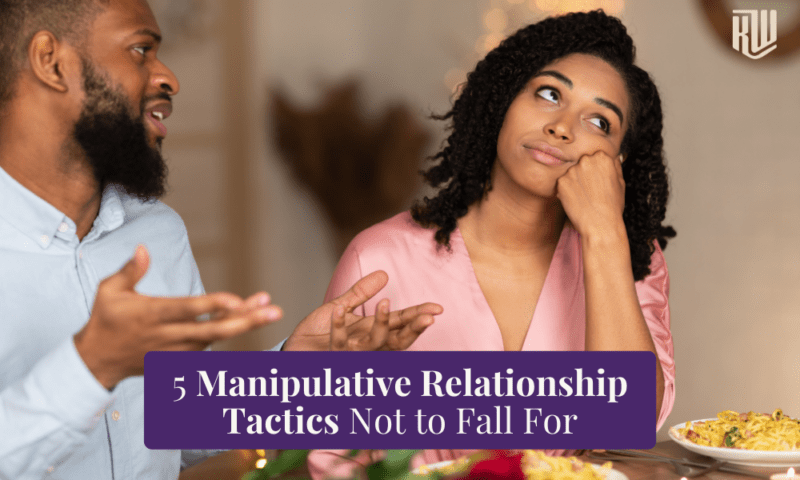
Tag: narcissist tactics

  • Manipulative Relationship Tactics: Why You Keep Falling for Them

    Manipulative Relationship Tactics: Why You Keep Falling for Them

    Manipulative relationship tactics are the patterns of control, deception, and emotional exploitation that one or both partners use — often unconsciously — to maintain power, avoid vulnerability, and repeat the childhood trauma blueprint that taught them relationships require manipulation to survive. If you’ve ever felt confused, drained, or like you’re constantly walking on eggshells in a relationship, you’re not dealing with a communication problem. You’re caught in a survival dynamic that was wired into both partners’ nervous systems decades before they ever met.

    That’s you — the one who keeps ending up with the same type of person, wondering why it always turns into the same painful cycle.

    The truth nobody tells you about manipulation in relationships is this: it’s not just one person doing the manipulating. Both partners are running childhood survival strategies — one from the falsely empowered position and one from the disempowered position. And until you understand that, you’ll keep falling for the same tactics, in the same kind of relationship, with the same kind of pain.
    Codependence icon showing how manipulative relationship tactics emerge from childhood trauma patterns

    What Are Manipulative Relationship Tactics?

    Manipulative relationship tactics are behaviors designed — consciously or unconsciously — to control another person’s actions, emotions, or perceptions in order to maintain power in a relationship. They include gaslighting, guilt-tripping, stonewalling, love-bombing, playing the victim, denying and projecting, isolating you from your support system, and using your fairness or kindness against you.

    That’s you — the one who keeps wondering “am I crazy?” after every argument, because somehow everything always ends up being your fault.

    But here’s what most articles about manipulative tactics get wrong: they focus entirely on identifying the manipulator. They create a checklist of “red flags” and tell you to run. And while protecting yourself is important, this approach misses the deeper question that actually changes your life: why are you attracted to manipulators in the first place?

    The answer isn’t that you’re naive. It isn’t that you have bad judgment. It’s that your childhood emotional blueprint taught your nervous system that manipulation feels like love — because in your earliest relationships, it was.
    Emotional blueprint icon showing how childhood patterns create vulnerability to manipulative relationship tactics

    Manipulative relationship tactics are not random acts of cruelty — they are automated survival strategies both partners learned in childhood, running on neurochemical patterns that equate control with safety and intensity with connection.

    Why Do You Keep Falling for Manipulative Relationship Tactics?

    You don’t fall for manipulation because you’re weak. You fall for it because your brain was trained to seek it out. The brain conserves energy by repeating known patterns — it can’t tell right from wrong, only known from unknown. Since 70%+ of childhood messaging is negative and shaming, adults repeat these painful patterns in relationships, career, hobbies, health — everything.

    That’s you — choosing the same kind of partner over and over, not because you want to, but because your nervous system is addicted to the chemistry of that dynamic.

    If you grew up with a parent who used conditional love — love that depended on your behavior, your performance, or how little you needed — your brain cataloged that dynamic as “what love feels like.” The intensity. The unpredictability. The walking on eggshells. The relief when they were finally kind to you. That roller coaster of fear and reward created a chemical pattern in your brain that you now seek out in adult relationships.
    Trauma chemistry icon showing how childhood creates neurochemical addiction to manipulative relationship dynamics

    The hypothalamus generates chemical cocktails — cortisol, adrenaline, dopamine, oxytocin misfires — and the brain becomes addicted to these emotional states. So when you meet someone who triggers that same chemical response, your body says “this is love.” It’s not. It’s recognition. Your nervous system recognizing the same dynamic it survived in childhood.

    That’s the trap — confusing familiarity with safety, and intensity with intimacy.

    You keep falling for manipulative relationship tactics because your childhood emotional blueprint created a neurochemical addiction to the very dynamics that hurt you — your brain doesn’t seek what’s healthy, it seeks what’s known, and what’s known is manipulation disguised as connection.

    How the Worst Day Cycle™ Creates Attraction to Manipulation

    To understand why manipulative tactics have such power over you, you need to understand the Worst Day Cycle™. This is the neurochemical pattern that runs underneath every relationship you’ve ever had — and it explains why you keep choosing partners who manipulate you.
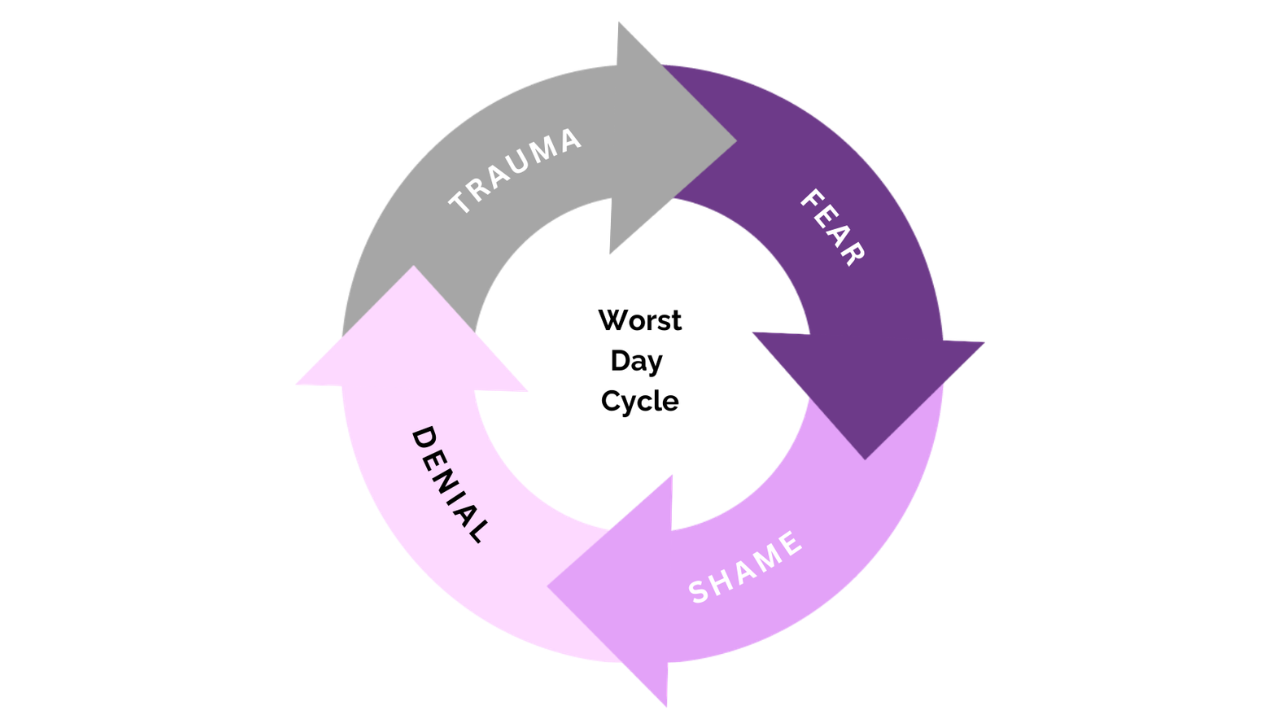
    Worst Day Cycle diagram showing trauma fear shame denial loop that creates vulnerability to manipulative relationship tactics

    The Worst Day Cycle™ has four stages: Trauma → Fear → Shame → Denial.

    Trauma: Any negative emotional experience in childhood that created painful meanings. It doesn’t have to be dramatic — it can be as subtle as a parent whose love was conditional, a household where your feelings were dismissed, or a caregiver who was emotionally unavailable. These experiences create a massive chemical reaction in the brain and body. The hypothalamus generates chemical cocktails — cortisol, adrenaline, dopamine, oxytocin misfires — and the brain becomes addicted to these emotional states.

    That’s you — feeling “butterflies” when you meet someone new, not realizing those butterflies are actually your nervous system recognizing danger and calling it excitement.

    Fear: Fear drives repetition. The brain thinks repetition equals safety. So you keep choosing the same relationships, the same dynamics, the same type of person — not because you want to, but because your nervous system is terrified of the unknown. A healthy, stable relationship feels boring to a nervous system calibrated for chaos. That “spark” you’re looking for? It’s usually your trauma recognizing itself in someone else.

    Shame: This is where you lost your inherent worth. “I am the problem.” Not “I made a mistake” — but “I AM the mistake.” This is why manipulative tactics work so well on you. When someone gaslights you, guilt-trips you, or tells you that you’re “too sensitive” — it lands. It lands because it confirms what shame has been whispering since childhood: you’re not enough, you’re the problem, you deserve this.

    That’s the shame talking — and it’s the reason you stay in relationships that anyone on the outside can see are destroying you.

    Denial: Denial is the survival persona you created to survive the pain. It was brilliant in childhood — absolutely necessary. But in adulthood, it’s the reason you can’t see the manipulation even when everyone around you can. Denial says: “They’re not that bad.” “They’re going through a hard time.” “If I just love them enough, they’ll change.” This is denial protecting the childhood blueprint — because admitting the relationship is toxic means admitting the pattern, and admitting the pattern means feeling the original wound.
    Survival persona icon showing how childhood denial keeps you trapped in manipulative relationship patterns

    The Worst Day Cycle™ explains why manipulative relationship tactics feel irresistible — your childhood trauma created a neurochemical loop that equates manipulation with love, intensity with connection, and walking on eggshells with “working hard on a relationship.”

    What Are the 5 Most Common Manipulative Relationship Tactics?

    These five manipulative tactics show up in nearly every unhealthy relationship — and they all exploit the childhood wounds created by the Worst Day Cycle™.

    Tactic 1: They exploit your fairness. You try to be reasonable. You try to see both sides. And they use that against you. In a disagreement, they bring up everything you “owe” them — favors, sacrifices, compromises — and weaponize your desire to be fair. They know that your childhood taught you to earn love through accommodation, so they create a dynamic where you’re always trying to make things “equal” while they take more and more.

    That’s you — keeping score in your head, bending over backward to be fair, while they keep moving the goalpost.

    Tactic 2: They deny and project. When caught in a lie or harmful behavior, they don’t own it. They explain it away, minimize it, or flat-out deny it happened. “You’re overreacting.” “That’s not what I said.” “You’re remembering it wrong.” This is gaslighting — and it works because your childhood shame already makes you doubt yourself. If you grew up in an environment where your feelings were dismissed, gaslighting doesn’t feel new. It feels normal.

    That’s you — walking out of every conversation wondering if maybe you really are crazy, because they seemed so sure.

    Tactic 3: They isolate you from your support system. This can be overt — “I don’t like your family” — or covert — subtle comments that make you question your relationships with the people who love you. They convince you that your friends don’t understand, your family is toxic, or that no one supports you the way they do. The goal is to make you dependent on them as your sole emotional connection.

    Sound familiar? Looking around one day and realizing you’ve pushed away everyone who used to be close to you?

    Tactic 4: They remove your ability to question them. When you bring up a concern, you’re met with rage, dismissal, or punishment. Over time, you learn to stop asking. You stop bringing up what’s bothering you. You walk on eggshells. You monitor their mood before you speak. This is exactly what you did as a child — reading the room, anticipating danger, suppressing your needs to keep the peace.

    That’s you — planning what to say for hours before a conversation, and then still not saying it because the risk feels too great.

    Tactic 5: They “play nice” to keep score. They do generous things — but there’s always a price. Every act of kindness becomes currency they’ll cash in later. “After everything I’ve done for you, how can you say that?” This conditional generosity mirrors conditional love from childhood — where you learned that giving and receiving always had strings attached.
    Emotional absorption icon showing how manipulative relationship tactics exploit childhood emotional patterns

    That’s you — feeling guilty every time they remind you of what they’ve done, even though something in your gut says this isn’t how love is supposed to work.

    The Uncomfortable Truth: Both Partners Manipulate

    This is the part nobody wants to hear. And it’s the part that will actually set you free.

    The person who gets attracted to the narcissist gets in a relationship, and they manipulate and control the narcissist just as much — but they do it from the victim position. This is Kenny’s lived experience: “I had to take ownership of that, of how I did that. The way we do it is we make ourselves helpless.”

    That’s the truth that changes everything — recognizing that manipulation isn’t something that happens to you. It’s a dynamic you’re participating in, from the other side.

    This is NOT victim-blaming. You are not to blame for what happened to you in childhood. You are not to blame for the patterns your brain created to survive. But you ARE responsible for what happens now that you know. The Victim Position Paradox explains this perfectly: The victim position is a societal construct meant to protect victims, but in reality it has created a paradoxical falsely empowered position that nearly guarantees the victim will reexperience their childhood victimization, leaving them disempowered.

    When we know somebody is manipulating us and we give into it, we join them in the manipulation. We become an enabler. Now it is a dual manipulation — both partners sharing equally in the harmful dynamic.

    That’s you — staying in the relationship not out of love, but because the victim position gives you something your childhood never did: power. Power through helplessness. Power through being the “good one.” Power through suffering.

    The covert manipulative dynamics from the disempowered position include: passive-aggressive comments in public, pouting and throwing fits when you don’t get your way, being “nice” to get something rather than being nice to be nice, refusing to set boundaries and then resenting the other person for crossing them, and using your suffering as leverage for sympathy from friends and family.

    Both partners in a manipulative relationship are running childhood survival strategies — one controls from the falsely empowered position and the other controls from the disempowered victim position, creating a dual manipulation dynamic that neither partner can see because both are operating from their childhood wounded self.

    How Your Survival Persona Makes You Vulnerable to Manipulation

    Your survival persona is the identity you created in childhood to navigate an emotionally unsafe environment. It’s not who you are — it’s who you had to become. And it determines which manipulative tactics you’ll use — and which ones you’ll fall for.
    Adapted wounded child icon showing how survival personas create vulnerability to manipulative relationship tactics

    There are three survival persona types:

    The Falsely Empowered: This persona controls, dominates, and rages. They’re the overt manipulator — the one who gaslights, stonewalls, and uses anger to maintain power. They look powerful on the outside, but their control comes from fear, not strength. They learned in childhood that the only way to be safe was to be in charge. Underneath the dominance is a terrified child who never felt safe.

    That’s you — if you’re the one who controls every conversation, every decision, every dynamic, and calls it “leadership” or “having high standards.”

    The Disempowered: This persona collapses, people-pleases, and disappears. They’re the covert manipulator — the one who uses helplessness, guilt, and suffering to maintain connection. They make themselves small to be safe. They learned in childhood that the only way to maintain attachment was to give up their needs, their voice, and their authentic self. They manipulate through accommodation and then resent the very person they’re accommodating.

    That’s you — if you’re the one who gives everything, says nothing, and then explodes or shuts down when you can’t take it anymore.

    The Adapted Wounded Child: This persona oscillates between both — raging one moment, collapsing the next. They swing between overt control and covert helplessness, never landing in their authentic self. In relationships, they’re the most unpredictable — falsely empowered when they feel safe, disempowered when they feel threatened.

    That’s you — swinging between “I don’t need anyone” and “please don’t leave me” and never knowing which one is the real you.
    Emotional authenticity icon representing the path from manipulative survival patterns to authentic connection

    Your survival persona is the engine that powers both sides of manipulation — it determines whether you control overtly or covertly, and it ensures that you’re attracted to the exact person whose survival persona perfectly mirrors the dynamic you learned in childhood.

    How Manipulation Shows Up in Every Area of Your Life

    Family: You play the peacekeeper at family gatherings, managing everyone’s emotions while suppressing your own. You can’t set boundaries with your parents because guilt floods your body every time you try. You either dominate family dynamics or disappear entirely. And you’ve been playing the same role since childhood — the responsible one, the invisible one, the difficult one — and no one questions it.

    That’s you — still performing the role your family assigned you at age six, wondering why holidays always leave you feeling empty.

    Romantic Relationships: You confuse intensity with intimacy. You choose partners who mirror your parents’ emotional patterns. You tolerate behavior that crosses your boundaries because leaving feels more terrifying than staying. You either over-give to earn love or withhold to maintain control. And when the relationship ends, you find the next person who triggers the exact same chemistry.

    Sound familiar? The person who’s been in three relationships that all ended the same way, with the same dynamic, and the same confusion?

    Friendships: You’re the friend everyone calls in crisis but no one checks on. You listen for hours but never share your own struggles. You keep score — who called last, who made the effort — and resent people for not meeting standards you never communicated. Or you dominate friendships, always steering the conversation, always in charge, never truly known.

    Work: You either over-deliver to prove your worth or underperform because you’ve given up trying to please people who can’t be pleased. You avoid conflict with bosses the way you avoided conflict with parents. You manipulate through overwork — making yourself indispensable so you can’t be abandoned. Or you manipulate through helplessness — performing incompetence so someone will rescue you.

    That’s you — using the same survival strategy at work that you used at the dinner table growing up.

    Body and Health: You ignore your body’s signals because you learned in childhood that your needs don’t matter. Chronic pain, digestive issues, insomnia, and autoimmune conditions are often the body’s last resort when emotional signals have been ignored for decades. You numb with food, alcohol, scrolling, shopping, or overexercise — anything to avoid sitting with the feelings that manipulation was designed to suppress.
    Emotional fitness icon representing the work of recognizing manipulative patterns across all life areas

    How the Emotional Authenticity Method™ Breaks the Manipulation Cycle

    You cannot think your way out of manipulative relationship patterns. Emotions are biochemical events. Thoughts originate from feelings, not the other way around. The Emotional Authenticity Method™ targets the body — where manipulation patterns are stored — not just the mind.
    Emotional regulation icon representing the Emotional Authenticity Method for breaking free from manipulative relationship patterns

    Step 1: Somatic Down-Regulation. Focus on what you can hear for 15-30 seconds. Before you can see manipulation clearly, you have to get your nervous system out of survival mode. When you’re dysregulated, your brain defaults to childhood patterns — which means you’ll either attack or accommodate. Neither leads to freedom. If you’re highly dysregulated, use titration — go slowly, process in small doses.

    That’s you — learning that you can’t make good decisions about a relationship when your nervous system is running in childhood survival mode.

    Step 2: What am I feeling right now? Use the Feelings Wheel to develop emotional granularity. Most people in manipulative relationships can only identify “angry” or “hurt” or “nothing.” But underneath those broad labels are specific emotions — betrayed, dismissed, invisible, trapped, ashamed — and naming them precisely is the first step to understanding what’s really happening.

    Step 3: Where in my body do I feel it? All emotional trauma is stored physically. Your chest tightens. Your stomach drops. Your jaw clenches. Your throat closes. Locating the feeling in your body is how you move from intellectual understanding to somatic processing — and it’s how you start telling the difference between a genuine threat and a childhood pattern being replayed.

    Step 4: What is my earliest memory of having this exact feeling? This is where everything changes. You trace today’s reaction back to its childhood origin. You realize: this isn’t about today. My partner isn’t my parent. My nervous system just thinks they are. That feeling of walking on eggshells? You’ve been doing it since you were five. The manipulation isn’t new. The dynamic is.

    That’s the moment the manipulation loses its power — when you see that your reaction belongs to a child, not to the adult you are today.

    Step 5: Who would I be if I never had this thought or feeling again? What would be left over? This is the vision step. It connects you to the Authentic Self Cycle™ and gives your nervous system a new destination — not another manipulative relationship, but genuine connection built on truth, boundaries, and emotional authenticity.

    Step 6: Feelization. Sit in the feeling of the Authentic Self and make it strong. Create a new emotional chemical addiction to replace the old blueprint. Ask: how would I respond to this manipulation from this feeling? What would I say? What would I do? Visualize and FEEL yourself operating from your Authentic Self. This is the emotional blueprint remapping and rewiring step — the step that replaces the neurochemical addiction to manipulation with a new pattern built on self-worth.

    The Emotional Authenticity Method™ works because emotions are biochemical events — you cannot break free from manipulative relationship patterns through thoughts alone. You have to rewire the nervous system that makes manipulation feel like love.

    How the Authentic Self Cycle™ Replaces Manipulation With Connection

    The Authentic Self Cycle™ is the healing counterpart to the Worst Day Cycle™. Where the Worst Day Cycle™ traps you in Trauma → Fear → Shame → Denial, the Authentic Self Cycle™ restores your identity through Truth → Responsibility → Healing → Forgiveness.
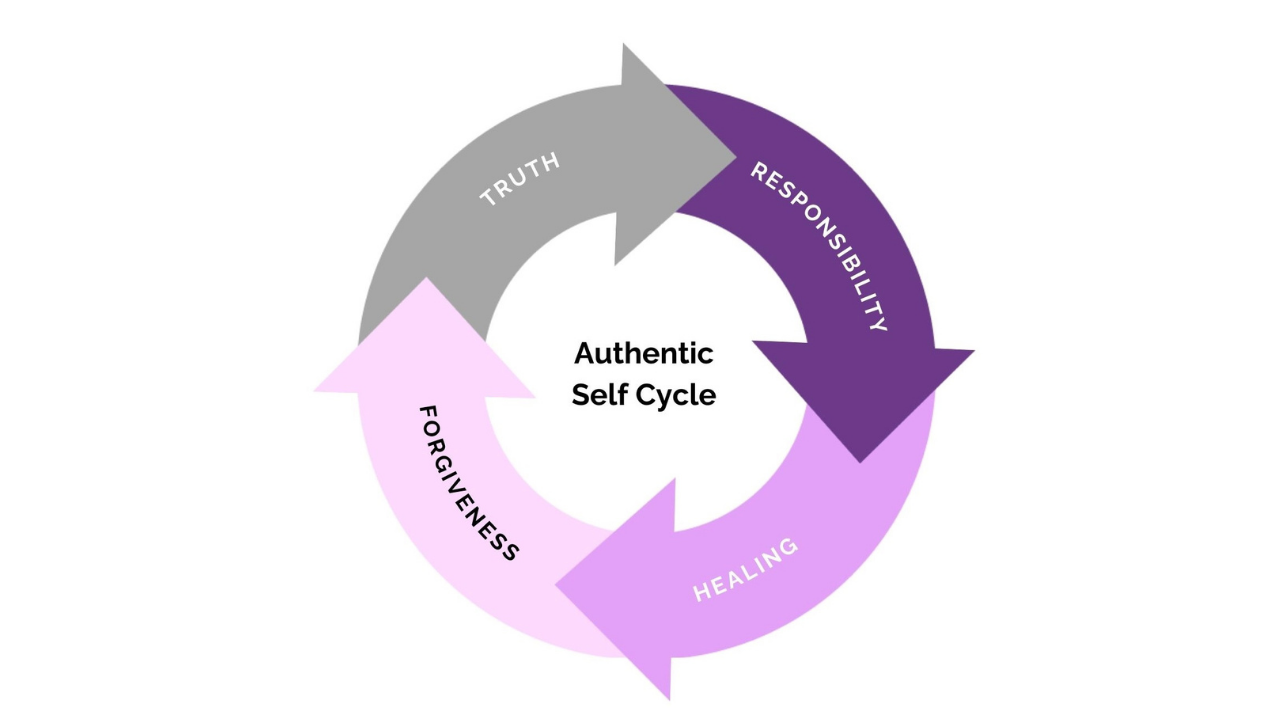
    Authentic Self Cycle diagram showing truth responsibility healing forgiveness as the path from manipulation to authentic connection

    Truth: Name the blueprint. See that “this isn’t about today.” When your partner uses a manipulative tactic and your body floods with the familiar mix of fear and accommodation, truth says: “This feeling is from childhood. My partner isn’t my parent — my nervous system just thinks they are.” Truth also means seeing your own manipulation — the covert tactics you use from the disempowered position.

    That’s the hardest truth — admitting that you’re not just the victim of manipulation. You’re a participant in a dance that both partners learned in childhood.

    Responsibility: Own your emotional reactions without blame. “My partner isn’t my parent — my nervous system just thinks they are.” This isn’t about fault. It’s about taking back your power from a childhood that stole it. Responsibility means: I can’t control their manipulation, but I can take ownership of why I’m attracted to it, why I tolerate it, and why I use my own version of it from the other side.

    Healing: Rewire the emotional blueprint so intensity isn’t mistaken for connection, control isn’t mistaken for love, and walking on eggshells isn’t mistaken for “working on the relationship.” This is where daily practice does its work — second by second, like the ticks of a clock. The second hand moves in tiny, almost insignificant ticks. But those ticks move the minute hand. The minutes move the hours. Healing works the same way.

    Forgiveness: Release the inherited emotional blueprint and reclaim your authentic self. This creates a NEW emotional chemical pattern that replaces fear, shame, and denial with safety, worth, and connection. You don’t become someone who can’t be manipulated. You become someone who doesn’t need manipulation — from either side — to feel loved.

    That’s you — not the person who finally spotted the manipulator. The person who finally understood why manipulation felt like home, and chose something different.

    The Authentic Self Cycle™ is an identity restoration system — it doesn’t just teach you to spot manipulative relationship tactics, it replaces the neurochemical pattern that made manipulation feel like love with a new blueprint built on truth, responsibility, and emotional authenticity.

    Frequently Asked Questions About Manipulative Relationship Tactics

    What are the most common manipulative tactics in relationships?

    The five most common manipulative relationship tactics are: exploiting your fairness (using your desire to be reasonable against you), denying and projecting (gaslighting you into questioning your own reality), isolating you from support (separating you from friends and family), removing your ability to question them (punishing you for speaking up), and keeping score with “generosity” (using acts of kindness as leverage). All five exploit childhood wounds created by the Worst Day Cycle™ — they work because they trigger the same shame, fear, and denial patterns you learned as a child.

    Why do I keep attracting manipulative partners?

    You attract manipulative partners because your childhood emotional blueprint created a neurochemical addiction to the dynamics of manipulation. The brain conserves energy by repeating known patterns — it can’t tell right from wrong, only known from unknown. If conditional love, emotional unpredictability, or walking on eggshells defined your childhood, your nervous system will seek partners who recreate those exact dynamics. The Worst Day Cycle™ explains how trauma creates fear, shame, and denial that automate this pattern without your conscious awareness.

    Is being manipulated in a relationship always the other person’s fault?

    Both partners in a manipulative relationship are running childhood survival strategies. The person who gets attracted to the narcissist manipulates from the victim position — using helplessness, guilt, and passive aggression to gain power — while the overt manipulator controls through dominance, gaslighting, and rage. This is not victim-blaming — neither partner chose their childhood wounds. But healing requires taking responsibility for your side of the dynamic. The Victim Position Paradox explains how the victim position can become a falsely empowered position that keeps you trapped in the cycle.

    How do I break the cycle of manipulation in my relationship?

    Breaking the manipulation cycle requires rewiring the emotional blueprint that makes manipulation feel like love. The Emotional Authenticity Method™ provides a 6-step daily practice: (1) somatically down-regulate your nervous system, (2) identify what you’re actually feeling, (3) locate it in your body, (4) trace it to your earliest childhood memory of that feeling, (5) envision who you’d be without this pattern, and (6) Feelization — sit in the feeling of the Authentic Self and create a new emotional chemical pattern. You cannot think your way out of a biochemical event.

    What is the difference between setting boundaries and being manipulative?

    A boundary is a statement of truth about what you need, delivered without attempting to control the other person’s response. Manipulation is an attempt to control someone else’s behavior to get your needs met indirectly. “I need you to stop yelling or I’m going to leave the room” is a boundary. Pouting, withdrawing affection, or giving the silent treatment until they behave the way you want is manipulation. The three survival persona types — falsely empowered, disempowered, and adapted wounded child — each blur this line in different ways, which is why learning to determine your negotiables and non-negotiables is essential.

    Can a manipulative person change?

    A manipulative person can change — but only if they’re willing to do the work of healing the childhood trauma that created the manipulative patterns. Manipulation is a survival strategy, not a permanent character trait. It was brilliant in childhood and destructive in adulthood. The Authentic Self Cycle™ provides the framework for identity restoration: Truth (seeing the pattern), Responsibility (owning your side), Healing (rewiring the blueprint through daily somatic practice), and Forgiveness (releasing the inherited emotional pattern and reclaiming your authentic self).

    The Bottom Line

    You don’t need another checklist of red flags. You don’t need to become a better detective of other people’s manipulation. You need to understand why manipulation feels like home — and choose something different.

    Every manipulative relationship you’ve been in was a recreation of a dynamic you learned in childhood. Every tactic that worked on you worked because it targeted a wound that was already there. And every time you stayed — hoping they’d change, believing you could love them enough, telling yourself it wasn’t that bad — you were running the same Worst Day Cycle™ that has been looping since before you could spell your own name.

    The way out isn’t spotting the manipulator faster. The way out is healing the part of you that believes manipulation is what love feels like. That happens in your body, not your head. In the feelings you’ve been managing instead of feeling. In the truth you’ve been avoiding instead of speaking.

    That’s you — not the person who was manipulated. The person who finally understood why, and chose to heal the blueprint that made it possible.

    The void doesn’t fill with a better partner. It fills with truth. With responsibility. With the willingness to see your own side of the dynamic — and the courage to change it. That’s not weakness. That’s the bravest thing you’ll ever do.
    Reparenting icon showing how healing childhood wounds breaks the cycle of manipulative relationship patterns

    These books complement the frameworks in this article and deepen your understanding of manipulative relationship dynamics and the childhood patterns that create them:

    Facing Codependence by Pia Mellody — the foundational text on how childhood trauma creates the codependent patterns that make us vulnerable to manipulation and create our own covert manipulative strategies.

    The Body Keeps the Score by Bessel van der Kolk — the science of how trauma lives in the body, not just the mind, explaining why you can’t think your way out of manipulative relationship patterns.

    When the Body Says No by Gabor Maté — how chronic emotional suppression in manipulative dynamics manifests as physical illness and disease.

    Codependent No More by Melody Beattie — a practical guide to recognizing codependent patterns and the covert manipulation that comes from the disempowered position.

    The Gifts of Imperfection by Brené Brown — how shame drives both sides of the manipulation dynamic and why vulnerability is the path beyond control.

    Take the Next Step

    If you’re ready to break free from manipulative relationship patterns and build connections based on truth instead of survival, Kenny Weiss offers courses designed for people who are done repeating the cycle:

    Emotional Blueprint Starter Course — Individual ($79) — Your personal roadmap to understanding the Worst Day Cycle™ and why you’re attracted to manipulative dynamics.

    Relationship Starter Course — Couples ($79) — For couples ready to see both sides of the manipulation dynamic and build interdependence instead.

    Why We Can’t Stop Hurting Each Other ($479) — Deep-dive into the Worst Day Cycle™ and the dual manipulation dynamic that keeps both partners stuck.

    Why High Achievers Fail at Love ($479) — Built for high achievers who keep choosing partners who trigger the same survival patterns.

    The Shutdown Avoidant Partner ($479) — Understanding avoidant attachment through the lens of trauma chemistry and survival personas.

    Tier 1: Mapping the Blueprint ($1,379) — The comprehensive program for learning and practicing the Emotional Authenticity Method™.

    Download the Feelings Wheel — the free tool used in Step 2 of the Emotional Authenticity Method™ to build emotional granularity and start naming what you’re actually feeling in manipulative dynamics.

    Explore more: The Signs of Enmeshment | 7 Signs of Relationship Insecurity | 7 Signs of High Self-Esteem | How to Determine Your Negotiables and Non-Negotiables | 10 Do’s and Don’ts for a Great Relationship
  • How to Recognize a Narcissist: 15 Warning Signs and How to Respond

    How to Recognize a Narcissist: 15 Warning Signs and How to Respond

    You already know something is wrong. You feel it in your body every time they walk into the room — that low-grade tension in your chest, the way your stomach tightens before they even speak. You’ve Googled “am I crazy” more times than you can count. You’ve replayed conversations in your head trying to figure out where it went sideways. You’ve apologized for things you didn’t do, questioned your own memory, and walked on eggshells so carefully that you’ve forgotten what solid ground feels like.

    That’s you, isn’t it?

    How do you recognize a narcissist? A true narcissist consistently displays a specific cluster of traits — grandiosity, lack of empathy, entitlement, exploitation, and an insatiable need for admiration — that show up reliably across every relationship and every situation, not just during moments of stress or conflict. These traits are not occasional bad days. They are permanent operating systems built on a foundation that cannot access genuine emotional connection. And understanding this distinction is the first step toward protecting yourself — and healing the part of you that keeps choosing this dynamic.

    But here’s what most narcissism content won’t tell you: recognizing the narcissist is only half the equation. The other half — the half that actually sets you free — is understanding why your brain chose them in the first place. That answer lives in your childhood, in a pattern called the Worst Day Cycle™, and it changes everything about how you respond.

    Survival persona icon — how narcissistic behavior develops from childhood survival strategies

    What Is Narcissism — And Why Most People Get It Wrong

    The internet has turned “narcissist” into a catchall for anyone who hurts your feelings. Your ex who ghosted you? Narcissist. Your mother-in-law who criticizes your cooking? Narcissist. Your coworker who takes credit for your ideas? Narcissist. But here’s the problem with that — when everyone is a narcissist, the word loses all meaning, and the people who are actually trapped with one can’t find the help they need.

    Narcissism originally had a clear, specific clinical definition — a consistent set of traits that showed up reliably and repeatedly in a person: grandiosity, lack of empathy, entitlement, exploitation, and an insatiable need for admiration. That original framework was valid. Those people exist. The DSM-5 requires five of nine specific criteria to be present — and they must be present nearly all the time, not just during moments of stress, intoxication, or conflict. These traits are relatively stable across time and consistent across situations. Rare exceptions are just that — rare.

    That’s you wondering — wait, does occasional bad behavior make someone a narcissist? No. And that distinction matters enormously. A person having a terrible day and snapping at you is not narcissism. A person who consistently lacks empathy, demands special treatment, exploits your emotions for their gain, and cannot tolerate the slightest criticism — across every relationship, every context, every day — that is narcissism.

    15 Warning Signs You’re Dealing with a Narcissist

    In my experience working with clients for over two decades, these fifteen signs show up regardless of whether someone is dealing with an overt, covert, or any other presentation of narcissism. There are probably thirty or more total indicators, but these are the core symptoms — the ones that appear in every single case.

    Emotional regulation icon — narcissists cannot regulate their own emotions

    1. They Lack Empathy — Completely

    You’re pouring your heart out and they appear to be listening, but when they respond, their reaction has nothing to do with what you just said. It’s not that they missed one thing — they didn’t absorb any of it. And if you call them on it, they’ll insist they were listening. That’s you replaying conversations trying to figure out why you feel so invisible. A narcissist doesn’t feel remorse because they are neurologically incapable of it. This isn’t a choice they’re making — it’s a permanent deficit.

    2. They Demand Special Treatment Everywhere

    Watch what happens at a restaurant when the order comes out wrong. Watch what happens at a mechanic, a clothing store, anywhere they interact with service workers. Are they constantly looking to be elevated? Do they explode over light ice when they asked for none? There’s a profound difference between calmly advocating for yourself and feeling entitled to perfection from every human being you encounter. That’s you noticing the waitress’s face change when your partner speaks to her.

    3. They Live in Grandiose Fantasies

    Everyone has ambitions. A narcissist has delusions. They will claim skills they don’t possess, promise achievements they can’t deliver, and construct a version of reality where they are exceptional at everything. These aren’t lies exactly — they are genuine beliefs. And those beliefs set impossible expectations in every relationship they enter.

    4. Appearance Is Everything

    The word “narcissism” comes from the Greek myth of Narcissus, who was obsessed with his own reflection — and that obsession with external appearance runs through every narcissist. Not just their own appearance — yours matters too. They want the people around them to be attractive because they equate beauty with power. That’s you feeling like you’re never quite put-together enough for them. The obsession with social media likes, the constant comparing of status and success to others — all of it is a desperate need for external validation.

    5. They Only Associate with the Powerful

    Narcissists climb social ladders the way other people breathe — constantly and unconsciously. They need proximity to power, fame, beauty, and influence because they see themselves as belonging to that tier. Anyone they perceive as beneath them gets dismissed or destroyed. That’s you watching them tear apart someone who can’t do anything for them.

    Trauma chemistry icon — the chemical bond that keeps you attracted to narcissistic partners

    6. They Cannot Regulate Their Emotions

    A narcissist’s emotional regulation is a rubber band stretched to its limit. They can hold it together — sometimes for impressively long stretches — but eventually, that rubber band snaps. The tantrum, the rage, the cold fury. And then they snap right back to the charming version of themselves, as if nothing happened. That’s you living with Dr. Jekyll and Mr. Hyde, never knowing which version you’ll get when they walk through the door.

    7. They Are Hypersensitive to Any Criticism

    They will critique everything about you — your appearance, your cooking, your parenting, your career — but the moment you offer even the gentlest suggestion that they might consider doing something differently? A wall goes up instantly. Or worse, volcanic rage. They view themselves as infallible. Suggesting otherwise is an attack on the carefully constructed identity they’ve built to survive.

    8. They Don’t Think They Need to Change

    Any suggestion that they might need help, that they could learn something, that the problem might partially reside in them — boom. A wall so high you can’t see over it. Their lack of empathy and their rage combine to shut down any conversation that threatens their grandiosity. That’s you walking out of couples therapy alone because they refused to go back.

    9. They Are Consumed by Jealousy

    They’re jealous of anyone you interact with — from a five-minute conversation with a coworker to an evening with your friends. They’re jealous of anyone who achieves more than them. Everyone gets envious occasionally, but for a narcissist, jealousy is the engine that drives their behavior. It triggers the rubber band. It makes them snap.

    10. They Gaslight You Until You Can’t Trust Yourself

    You start a conversation with a legitimate concern and by the end, you’re the one apologizing. You know what you said and what you meant, but somehow they’ve twisted reality so completely that you walk away wondering if you’re the problem. That’s you feeling like you need to secretly record your own conversations just to prove to yourself that you’re not crazy. Gaslighting is the most insidious weapon in the narcissist’s arsenal because it doesn’t just hurt you — it makes you doubt your own perception of reality.

    11. They Are Incapable of Loyalty

    A narcissist will leave you. Always. The moment a higher-status option, a more attractive supply, or a more advantageous situation presents itself, they’re gone. They will never put anyone before themselves — including you, including your children, including anyone they claim to love.

    12. They Get Pleasure from Your Pain

    When they cause you pain and you show it, watch their face. There’s a flicker — a moment of satisfaction, almost joy. They are feeding off your emotional reaction. Your hurt, your confusion, your tears — it’s fuel. That’s you recognizing that sickening moment when you realized they were enjoying watching you fall apart.

    Emotional blueprint icon — childhood creates the template for adult narcissistic relationship patterns

    The Part We Play — Three Signs Inside You

    13. You Think You Can Love Them Out of It

    When they show weakness or vulnerability — and they will, because it keeps you hooked — you start rationalizing what you can change. If I dress differently. If I’m less needy. If I’m more supportive. If I just love them enough, they’ll transform. That’s you spending all your energy trying to fix someone who doesn’t think they’re broken.

    14. You Believe You’re Not Good Enough

    “If I were thinner.” “If I made more money.” “If I weren’t so emotional.” You rationalize their behavior by blaming yourself — and that’s exactly what makes gaslighting so effective. This isn’t a character flaw in you. This is shame — deep childhood shame that was installed before you had any say in the matter — and the narcissist found it like a heat-seeking missile.

    15. You Obsessively Research Them Instead of Healing Yourself

    Here’s the hardest truth: if you’re spending 90% of your energy researching narcissism, replaying their behavior, and trying to figure them out — you’re staying stuck. That’s you reading your fifteenth article about narcissists this week while ignoring the wound inside you that attracted one in the first place. Every moment spent analyzing them is a moment you’re not spending on the only person you can actually change — yourself.

    How Narcissistic Abuse Shows Up in Every Area of Your Life

    Enmeshment icon — narcissistic relationships create enmeshed boundaries across all life areas

    In Family

    The narcissistic parent who made everything about them. The sibling who weaponized your vulnerabilities. The family system where your needs were invisible and their needs were the center of gravity. That’s you still performing at family holidays, pretending everything is fine while your stomach is in knots.

    In Romantic Relationships

    The idealization phase that felt like a fairy tale. The devaluation phase where nothing you did was right. The discard phase where they replaced you overnight. And then the hoovering — the desperate attempt to suck you back in when their new supply runs dry. That’s you checking their social media at 2 AM, wondering what you did wrong.

    In Friendships

    The friend who only calls when they need something. The one who takes credit for your ideas, dismisses your accomplishments, and always — always — redirects every conversation back to themselves. That’s you feeling drained after every coffee date.

    In Work

    The boss who takes credit for your projects and blames you for their failures. The colleague who charms leadership while terrorizing the team. The workplace where your boundaries are treated as insubordination. That’s you dreading Monday morning with a heaviness that has nothing to do with the work itself.

    In Your Body and Health

    Chronic anxiety. Insomnia. Digestive issues. Autoimmune flares. Your body has been keeping the score of every interaction, every lie, every moment you abandoned yourself to keep the peace. The physical symptoms are not separate from the emotional abuse — they are a direct expression of it.

    Why Your Brain Chose a Narcissist — The Worst Day Cycle™

    Worst Day Cycle icon — the four-stage trauma pattern that drives attraction to narcissists

    This is where most narcissism content stops — at the “recognize the signs and get out” stage. But that advice, while well-intentioned, misses the entire point. Because if you don’t understand why you chose a narcissist, you will choose another one. And another. And another. Different face, same dynamic, same pain.

    Your attraction to a narcissist is not random, not bad luck, and not a character flaw. It is a neurological pattern rooted in childhood trauma — a pattern I call the Worst Day Cycle™. The cycle has four stages: Trauma → Fear → Shame → Denial. And it explains everything.

    Stage 1 — Trauma: Any negative emotional experience in childhood that created painful meanings about who you are. This doesn’t require physical violence or sexual abuse. A parent rolling their eyes when you asked for homework help. A caregiver saying “what’s wrong with you?” when you spilled milk. Thousands of perfectly imperfect parenting moments across your first seven years that taught your nervous system one devastating lesson: something is fundamentally wrong with me.

    Stage 2 — Fear: The trauma creates a fear response that never resolves. Your nervous system becomes chemically addicted to the original wounding — the cortisol, the adrenaline, the hypervigilance. That’s you calling those butterflies in your stomach “chemistry” when it was actually your childhood alarm system recognizing danger as home. Your brain doesn’t know right from wrong. It only knows known versus unknown. And since you survived the original pattern, your brain concludes: this is safe. Let’s repeat it.

    Stage 3 — Shame: Shame takes what happened to you and turns it into who you are. Instead of “that was a painful experience,” the child concludes “I am the problem.” That’s you believing deep in your bones that if you were just better, thinner, smarter, calmer — they would love you the way you need. Seventy percent of all messaging children receive is negative and shame-based. Parents don’t correct behavior — they shame identity. And that shame becomes the lens through which every future relationship is filtered.

    Stage 4 — Denial: To survive the unbearable weight of shame, you build a survival persona — a version of yourself designed to hide the wound from the world and from yourself. This persona was brilliant in childhood. It kept you alive. But in adulthood, it is the very thing that draws you to narcissists and keeps you stuck in their orbit.

    The Three Survival Personas That Keep You Stuck with a Narcissist

    Everyone who stays in a narcissistic dynamic is operating from one of three survival personas. Understanding which one is yours is the key to breaking free.

    The Falsely Empowered Persona: This person controls, dominates, criticizes, and rages. They look powerful on the outside but underneath is the same shame wound as everyone else. In a narcissistic dynamic, the falsely empowered person may actually be the narcissist — or they may be the partner who fights back with matching intensity, creating an escalating cycle of mutual destruction. That’s you losing your temper in ways that scare you, then hating yourself for becoming just like them.

    The Disempowered Persona: This person collapses, people-pleases, absorbs blame, and makes themselves as small as possible to avoid conflict. They are the classic “empath” attracted to narcissists — endlessly giving, endlessly forgiving, endlessly hoping that enough love will fix the unfixable. That’s you pouring from an empty cup and calling it compassion.

    The Adapted Wounded Child: This person oscillates between both — raging one moment, collapsing the next. They can’t find stable ground because their childhood didn’t provide any. They’re the most confused because they can’t even predict their own reactions.

    Adapted wounded child icon — the survival persona that oscillates between falsely empowered and disempowered positions

    The empath and the narcissist are not predator and prey. They are a mirror — two sides of the same codependent spectrum. Both are operating from unhealed childhood shame. Both are manipulating from opposite ends of the same power dynamic. The narcissist manipulates through dominance and control from the falsely empowered position. The empath manipulates through niceness and moral superiority from the disempowered position. Until you can see your side of the mirror, you will keep repeating the dynamic with the next person and the next.

    How to Actually Respond to a Narcissist

    If you’ve recognized these signs in your partner, parent, boss, or friend, there are two honest options. Not easy options — honest ones.

    Option 1: Leave the Relationship

    The chances of a true narcissist doing genuine healing work are extremely slim. They can’t sustain it because they don’t see an advantage to it. I know your situation may be complicated — marriage, children, finances, religious beliefs, shared history. But if you are being consistently abused, getting out is the loving choice — for you and for anyone watching you accept treatment you would never want for them.

    Option 2: Radically Lower Your Expectations and Invest in Yourself

    If leaving isn’t possible right now, you must accept a painful truth: you will get almost nothing emotionally from this person. Stop trying to get them to meet your needs. Instead, build an entire infrastructure of support around yourself — friendships, therapy, groups, emotional fitness practices, and deep work on the childhood wound that trained you to accept this treatment.

    That’s you realizing that the only person you have control over is yourself.

    You cannot set boundaries WITH a narcissist. By definition, a narcissist is an abuser, and abusers don’t honor boundaries. The only boundary you can set is with yourself. Ask: “How often can I see this person without losing containment and without feeling abused?” Honor that answer. When they ask to do something and you don’t have the emotional reserves, say: “No, it doesn’t work for me.” No explanation needed.

    The Real Healing Path: The Emotional Authenticity Method™

    Emotional Authenticity Method icon — the six-step process for healing from narcissistic abuse

    Recognizing the narcissist is awareness. Responding to the narcissist is self-protection. But healing from the narcissist — healing the wound that drew you to them — requires something deeper. It requires rewiring the emotional blueprint that was installed in childhood. That’s what the Emotional Authenticity Method™ does.

    Step 1 — Somatic Down-Regulation: When you’re activated — heart racing, chest tight, mind spinning — pause. Focus on what you can hear around you for 15-30 seconds. Feel your feet on the floor. Feel your weight in the chair. This calms the nervous system enough for the thinking brain to come back online. You cannot communicate with somebody you’re trying to survive — and you can’t heal from a place of panic.

    Step 2 — What Am I Feeling Right Now? Not what they did. Not what they said. What are you feeling? Use the Feelings Wheel to expand your emotional vocabulary beyond “fine,” “angry,” and “anxious.” That’s you learning to name what lives inside you for the first time.

    Step 3 — Where in My Body Do I Feel It? All emotional trauma is stored physically. Tightness in the chest. Knot in the stomach. Heaviness in the shoulders. Heat in the face. Your body has been keeping the score long before you had words for what was happening.

    Step 4 — What Is My Earliest Memory of This Exact Feeling? This is the breakthrough question. Because the feeling you’re having right now with the narcissist? It didn’t start with them. Trace it back. The first time you felt invisible. The first time your needs were dismissed. The first time you concluded: “Something is wrong with me.” That’s you realizing this dynamic is decades older than this relationship.

    Step 5 — Who Would I Be Without This Feeling? If you had never had this thought or feeling, what would be left over? What would you do? How would you show up? This is the vision step — a glimpse of the Authentic Self that has been buried under decades of survival programming.

    Step 6 — Feelization: Sit in the feeling of that Authentic Self. Make it strong. Create a new emotional chemical state to replace the old blueprint. Ask: How would I respond to this situation from this feeling? What would I say? What would I do? Visualize and feel yourself operating from your Authentic Self. You cannot change emotional patterns through thoughts alone. Emotions are biochemical events. Thoughts originate from feelings — not the other way around. Feelization is how you build a new addiction — an addiction to your own wholeness instead of your own pain.

    Breaking Free: The Authentic Self Cycle™

    Authentic Self Cycle icon — the four-stage identity restoration system for healing from narcissistic abuse

    The Worst Day Cycle™ explains how you got here. The Authentic Self Cycle™ is how you get out. It has four stages that directly counteract the four stages of the WDC:

    Truth: Name the blueprint. See that this relationship dynamic isn’t about today — it’s about a childhood pattern playing out in an adult body. “My partner isn’t my parent. My nervous system just thinks they are.”

    Responsibility: Own your emotional reactions without blame. Not “they made me feel this way,” but “my childhood wound is activated and I am choosing how to respond.” This isn’t about letting them off the hook — it’s about taking your power back.

    Healing: Rewire the emotional blueprint so that conflict becomes uncomfortable but not dangerous. So that silence doesn’t feel like abandonment. So that intensity doesn’t feel like love. This is the deep neurological work of building new pathways — and it takes time, practice, and commitment.

    Forgiveness: Release the inherited emotional blueprint and reclaim your Authentic Self. Not forgiveness of the narcissist — forgiveness of the child who did the best they could with what they had. Forgiveness of yourself for not knowing sooner. That’s you putting down a weight you’ve been carrying since before you could walk.

    Frequently Asked Questions About Narcissism

    Can a narcissist ever truly change?

    True narcissism — the consistent, pervasive pattern defined by the DSM-5 — is extraordinarily resistant to change because the narcissist doesn’t believe they need to change. Therapy requires vulnerability, self-reflection, and the willingness to sit with shame — three things a narcissist’s entire personality structure was built to avoid. Some people labeled as narcissists are actually falsely empowered codependents who can heal when they’re given the right framework.

    Why do I keep attracting narcissists into my life?

    Your brain is running a pattern installed in childhood through the Worst Day Cycle™. The chemical cocktail of cortisol and adrenaline that accompanied your original trauma became what your brain labels as “normal” — and it seeks out that same chemistry in adult relationships. What feels like butterflies or an instant connection is actually your nervous system recognizing danger as home. Healing the childhood wound through the Emotional Authenticity Method™ is what changes the attraction pattern.

    Is the “empath and narcissist” dynamic real?

    The dynamic is real, but the framing is incomplete. The empath and the narcissist are not predator and prey — they are two sides of the same codependent mirror. Both carry unhealed childhood shame. Both are manipulating from opposite ends of the same spectrum. Until the so-called empath can see their own covert manipulation — the niceness as control, the moral superiority, the boundarylessness — they will keep finding narcissists because they need the dynamic as much as the narcissist does.

    What is the difference between a narcissist and a codependent who acts narcissistic?

    A true narcissist displays the full cluster of traits consistently and cannot access the shame underneath their behavior. A falsely empowered codependent may look identical on the surface — controlling, critical, rageful — but underneath there is a shame core and a capacity for change that the narcissist doesn’t have. Most clinicians miss this distinction because they aren’t trained in the codependence spectrum.

    How do I set boundaries with a narcissist?

    You can’t set boundaries with a narcissist — they won’t honor them. The only boundary you can set is with yourself. Decide how much contact you can handle without losing your emotional containment, and honor that decision. When you don’t have the reserves, say “No, it doesn’t work for me.” No explanation required. Stop trying to get them to respect your boundaries and start respecting your own.

    Can childhood trauma really cause me to choose narcissistic partners?

    Absolutely. Imagine walking into a room with 20,000 people — only one is a narcissist. Your brain locks onto that one person like a radar system. Why? Because your childhood conditioned your nervous system to recognize chaos, emotional unavailability, and control as home. That feeling gets labeled as “chemistry.” It’s not bad luck. It’s your brain doing exactly what it was trained to do. The Worst Day Cycle™ explains the mechanism, and the Authentic Self Cycle™ provides the way out.

    The Bottom Line

    Recognizing a narcissist is important. But it’s not where freedom lives. Freedom lives in the moment you stop asking “what’s wrong with them?” and start asking “what was it in me — what unhealed childhood wound, what survival persona, what emotional blueprint — that made me get into this dynamic in the first place?”

    That question isn’t blame. It’s power. Because the narcissist showed you the holes in your own love for yourself. And if you don’t do the work to fill those holes, you never outgrow the lesson.

    That’s you standing at the edge of something terrifying and beautiful — the moment you choose yourself for the first time.

    You deserve to be seen. You deserve to be heard. You deserve relationships that don’t require you to abandon yourself to keep the peace. And that starts with one radical, courageous act: healing the child inside you who learned that love always hurts.

    Recommended Reading

    Facing Codependence by Pia Mellody — The foundational text on codependence and the survival personas that drive narcissistic attraction patterns.

    When the Body Says No by Gabor Maté — How childhood emotional wounds manifest as physical illness and chronic stress.

    Codependent No More by Melody Beattie — The classic guide to recognizing codependent patterns and reclaiming your identity.

    The Gifts of Imperfection by Brené Brown — Research-backed guidance on releasing shame and embracing your authentic self.

    The Body Keeps the Score by Bessel van der Kolk — How trauma reshapes the brain and body, and what it takes to heal.

    Ready to Break the Cycle?

    If you’re done researching narcissists and ready to heal the wound that keeps attracting them, these courses will walk you through the exact frameworks described in this article:

    Emotional Blueprint Starter Course — Individual ($79) — Start mapping your own Worst Day Cycle™ and identify your survival persona.
    Relationship Starter Course — Couples ($79) — Understand how two survival personas collide in relationships.
    Why We Can’t Stop Hurting Each Other ($479) — Deep dive into the narcissist-codependent dynamic and how to heal both sides.
    Why High Achievers Fail at Love ($479) — For the falsely empowered persona who succeeds everywhere except relationships.
    The Shutdown Avoidant Partner ($479) — Understand the avoidant attachment pattern that pairs with narcissistic dynamics.
    Tier 1: Mapping the Blueprint ($1,379) — The complete Emotional Authenticity Method™ training for deep, lasting transformation.

    Take the Feelings Wheel exercise — it’s free, it takes five minutes, and it’s the first step toward emotional literacy that changes everything.