Tag: Love

  • Relationship Do’s and Don’ts: 10 Rules for Healthy Love

    Relationship Do’s and Don’ts: 10 Rules for Healthy Love

    You’ve read every relationship book. You’ve tried couples therapy. You’ve watched the TED talks, listened to the podcasts, and promised yourself — again — that this time will be different.

    But nothing changes. The same fights keep happening. The same walls go up. The same emptiness sits between you and the person you’re supposed to love.

    The relationship patterns you keep repeating are not communication problems, compatibility issues, or bad luck in love — they are childhood survival strategies running on autopilot in your adult relationships, and until you trace them back to the emotional blueprint that installed them, no amount of relationship advice will change anything.

    Here’s what nobody tells you: the problem isn’t your partner. It’s not your communication skills. It’s not even the specific things you fight about. The problem is the invisible blueprint you’re running — one that was installed in childhood, long before you ever chose a partner. Every one of the 10 Don’ts I’m about to share traces back to the Worst Day Cycle™ — a repeating loop of trauma, fear, shame, and denial that drives every unhealthy relationship pattern you’ve ever experienced.

    That’s you if you keep trying to fix your relationship without understanding what’s actually driving it.

    I’m going to give you 10 Do’s and 10 Don’ts for a great relationship. But more importantly, I’m going to show you why you keep falling into the Don’ts — and the exact path out through the Emotional Authenticity Method™ and the Authentic Self Cycle™.
    Emotional Blueprint icon representing the unconscious relationship patterns formed in childhood trauma

    The 10 Do’s: What Healthy Relationships Actually Look Like

    Before we get into what’s broken, let’s paint the picture of what’s possible. People in genuinely healthy relationships share these traits — not because they got lucky, but because they did the work to get there.

    1. They Know It’s Never Their Partner’s Job to Meet Their Needs

    This is the foundation. People in healthy relationships recognize that meeting their own needs and wants is their responsibility. Is it wonderful when their partner steps up? Absolutely. But they don’t expect it. They don’t demand it. They put a plan in place to meet their own needs — and that changes everything.

    That’s you if you’ve ever thought, “If they really loved me, they’d just know what I need.”

    2. They Don’t Live in Fear of Betrayal

    They aren’t snooping through phones. They aren’t checking location apps. They aren’t interrogating their partner after every night out. They have a basic, grounded security that their partner is invested in them — not because their partner is perfect, but because they trust themselves enough to handle whatever comes.

    3. They See the World as Basically Decent

    Sure, there are difficult people. But their default setting isn’t suspicion. Their general worldview is positive rather than negative. They don’t walk into every room scanning for threats. They don’t assume the worst about strangers, coworkers, or their partner’s intentions.

    4. They See Themselves as Lovable and Worthy

    They recognize their great qualities and their perfect imperfections. They don’t need constant external validation to feel OK about who they are. They’re open to the possibility that someone else out there feels the same way about themselves — and is willing to accept those imperfections.

    That’s you if you secretly believe something is fundamentally wrong with you — something that makes you undeserving of real love.
    Perfectly Imperfect icon representing self-acceptance and authentic self-worth in relationships

    5. They Don’t Allow Harmful Behaviors

    They don’t make excuses. They don’t minimize. They don’t say, “Well, they only act like that when they’re stressed.” They recognize harmful behaviors as intolerable and say no to them immediately — not from anger, but from self-respect.

    6. They Don’t Abandon Themselves to Be Loved

    They don’t give up friends, family, hobbies, or careers to keep the peace. They stay attached to what matters to them. And if someone asks them to sacrifice those things? They won’t. That’s what makes them available for a healthy relationship.
    Codependence icon representing the pattern of abandoning yourself to be loved by your partner

    7. They Know Their Morals, Values, Needs, Wants, Negotiables, and Non-Negotiables

    They’ve sat down and mapped it all out. They know what they stand for. They know what they need. They know what they’re willing to flex on — and what they’re not. And they communicate all of this openly, without expecting their partner to read their mind. If you haven’t done this work, here’s where to start: How to Determine Your Negotiables and Non-Negotiables.

    That’s you if you’ve never once sat down and asked yourself: What are my non-negotiables? What do I actually need from a partner?

    8. They Believe Saying “No” Is Loving

    They don’t see boundaries as cold or problematic. They understand that saying no removes the possibility of saying yes to things while expecting something in return — which is manipulation. Boundaries aren’t walls. They’re the foundation love is built on.

    That’s you if you keep saying yes when you mean no — and then keeping score of everything you’ve “sacrificed.”

    9. They Never Enable, Rescue, or Parent Their Partner

    They know their partner will struggle. They have faith their partner will figure it out. They don’t try to gain false power by fixing everything. Instead, they pick partners who can do it on their own.

    10. They Embrace That Relationships Are Difficult

    They don’t pull away, run, or quit when things get hard. They stay engaged. They recognize that the difficulties are exactly what create long-lasting intimacy and connection. They use challenges to learn about each other — and to build deeper trust.

    That’s you if your first instinct when things get hard is to shut down, pull away, or start planning your exit.

    That is the foundation. This is what people in healthy relationships believe about themselves, and they always return to that base. This is where they originate their relationships from.

    The 10 Don’ts: The Patterns That Destroy Relationships

    Now let’s get into the Don’ts — the polar opposite of everything above. You see these patterns in almost every movie, TV show, and social media post about love. What we’ve had modeled for us is deeply unhealthy.

    If you find yourself on this list, that doesn’t mean you’re a bad person. You can’t be blamed for doing things you were taught to do. If this is the first time you’re hearing these, then this is the first day you have a choice. You can choose to learn new information, gain new skills and tools, and build the relationship you actually deserve.
    Survival Persona icon representing the false identity created in childhood to cope with unmet emotional needs

    1. Believing Your Partner Should Meet All Your Needs

    This is the number one relationship killer. It shows up as the belief that your partner should know what you need without you ever asking — and that they should deliver it at all times. In almost every session, clients tell me they’ve told their partner what they want “a thousand times” and that they “should just know.”

    Here’s the truth: what’s important to you may not be important to them. That doesn’t make them bad people. Their life is filled with their own needs and wants. Our partners are human — they’re going to forget. That belief that they should be focused on us at all times is codependent, manipulative, destructive, and unhealthy.

    That’s you if you feel abandoned or unloved when your partner doesn’t anticipate what you need before you ask.

    2. No Trust — Controlling, Spying, and Snooping

    We put the latches on our partners because of our own fears, insecurities, and abandonment issues. But here’s what we don’t want to face: a lack of trust in others is hiding a lack of trust in ourselves for our previous choices. We project that lack of self-trust outward and convince ourselves that everyone is inherently bad, deceptive, or dangerous. For a deeper look at how relationship insecurity drives these controlling behaviors, that post will change your perspective.

    3. A Core Belief That You’re Unlovable

    This drives the first two Don’ts. If we’re controlling, demanding, and hypervigilant, it’s because deep down we believe something is defective in us. Instead of learning to love ourselves, we try to force the other person to love us. Oftentimes we’re completely detached from these deeper feelings and don’t even recognize our own behaviors.

    That’s you if you can’t sit alone with yourself for more than a few minutes without feeling empty, anxious, or worthless.

    4. Tolerating Abuse Because You Believe No One Else Will Love You

    I’ve had clients who call me every week saying they’ve broken up with their partner “for the last time.” The next session starts with how they got back together — and the partner is still saying and doing hurtful things. The violence only escalates, yet they keep going back. That going back is a product of the lack of love for themselves. They minimize the bad behaviors because the alternative — being alone — feels worse than being hurt.

    That’s you if you keep going back to someone who hurts you because the fear of being alone is worse than the pain of staying.

    5. Needing Constant Approval and Affirmation

    This shows up as the inability to take criticism or be wrong. It’s the belief that our partner must constantly have our back in any disagreement — that they must support us no matter what. Think about how absurd that is: if we believe our partner should support us at all times, what happens when we do something genuinely harmful? Are they supposed to support that too?

    Everyone is perfectly imperfect. Everyone has behaviors that shouldn’t be supported. It’s actually loving for a partner to kindly show us when we didn’t have a great moment.

    That’s you if you feel attacked or betrayed when your partner disagrees with you or points out something you could do differently.
    Adapted Wounded Child icon representing the survival response of people-pleasing and self-abandonment in relationships

    6. Sacrificing Everything for Your Partner

    Giving up friends, hobbies, family, career — all to keep the relationship alive. I did this in my first marriage. I went about 10 years without seeing my family because it was what she wanted. All I knew were the messages from movies, media, and TV: if I loved her, I had to sacrifice everything.

    That’s you if you look around and realize you’ve given up everything that used to matter to you — and you still feel empty.

    7. Not Knowing Your Morals, Values, Needs, Wants, Negotiables, and Non-Negotiables

    This was me. I remember laying on my bed as a kid, wondering who would marry me — if she’d be nice or pretty. I had no idea I could decide my morals, values, needs, wants, negotiables, and non-negotiables. I spent years waiting for someone to pick me up. Every area of my life didn’t line up with my first wife because I never sat down and mapped these things out — that’s on me. How could she meet my needs and wants if our morals and values were opposite?

    8. No Boundaries and the Inability to Say No

    You hear people exclaiming, “I did this and that for them, and look what they did to me!” That means we did all those things hoping to get something in return. That is manipulation. The proof is we’re throwing it in their face, keeping score, and resenting them.

    That’s why “no” is the most loving word a partner can tell us. When they say no, we know they won’t throw it in our face later. I used to go to garage sales with my first wife for hours — hating every minute — then come home and be passive-aggressive all night. Where’s the love in that?

    That’s you if you keep saying yes when you mean no — and then resenting your partner for “making” you do things you never wanted to do.

    9. Rescuing, Enabling, and Playing the Parent

    My ex was a pill addict. I’d drive all across the state, going to friends’ houses, lying to pharmacies and doctors, trying to get more pills. I was totally enabling her addiction — thinking I was rescuing her from being hurt. The truth? I thought if I did this, maybe she’d have sex with me. It was all manipulation.

    When people give themselves away to do for others, it’s a false power dynamic. They sit in the resentment, never having to face their own manipulation. I used to say, “I quit pro hockey. I gave up my family. I gave up sex. I changed careers. I changed my whole life for her — and she wouldn’t stop hitting me.” I’m not condoning any of her behaviors. But I was never taught about boundaries or healthy relationships. I was manipulative and I had to take responsibility for my part to change it.

    That’s you if you give everything away and then feel like a martyr when nobody appreciates the sacrifice.

    10. Avoiding Relationships Entirely

    These are the people who say, “I’m done with relationships! Men are all liars. Women are all cheaters.” If they are in a relationship, they won’t open up or be vulnerable. Because of the lack of knowledge, skills, and tools, they stay stuck in their pain, avoid connection, and project the problem onto everyone else.

    That’s you if you’ve built a wall so high that nobody can get in — and you tell yourself it’s because you’re “protecting yourself.”
    Trauma Chemistry icon representing the addictive biochemical patterns that keep you in unhealthy relationship cycles

    The Worst Day Cycle™: Why You Keep Repeating the Same Patterns

    Here’s where most relationship advice completely fails you. Therapists and self-help books give you communication techniques, love languages, and conflict resolution scripts. But none of that works if you don’t address the root cause.

    Every adult relationship pattern — every fight, every shutdown, every desperate attempt to control or please — is a direct replay of an unhealed childhood emotional blueprint. The brain doesn’t distinguish between past and present danger. It only recognizes known versus unknown. And since the known pattern was installed in childhood, the brain repeats it in every adult relationship, mistaking repetition for safety.

    The Worst Day Cycle™ operates in four stages:

    Stage 1 — Trauma: Childhood trauma isn’t limited to extreme abuse. Any negative emotional experience that created painful meanings — shame, neglect, enmeshment, emotional absence — qualifies. These experiences create a massive chemical reaction in the brain and body. The hypothalamus generates chemical cocktails of cortisol, adrenaline, dopamine, and oxytocin misfires, and the brain becomes addicted to these emotional states.

    Stage 2 — Fear: The brain conserves energy by repeating known patterns — it can’t tell right from wrong, only known versus unknown. Since 70%+ of childhood messaging is negative and shaming, adults repeat these painful patterns in relationships, career, hobbies, health — everything. Fear drives repetition because the brain thinks repetition equals safety.

    Stage 3 — Shame: This is where you lost your inherent worth. The core wound says “I am the problem.” Not “I made a mistake” — “I am the mistake.” This shame becomes the engine that drives every Don’t on the list above.

    Stage 4 — Denial: To survive the unbearable pain of shame, the brain creates a survival persona — a false version of yourself designed to manage the chaos. This denial is brilliant in childhood. It keeps you alive. But in adulthood, it becomes the very thing that destroys your relationships.
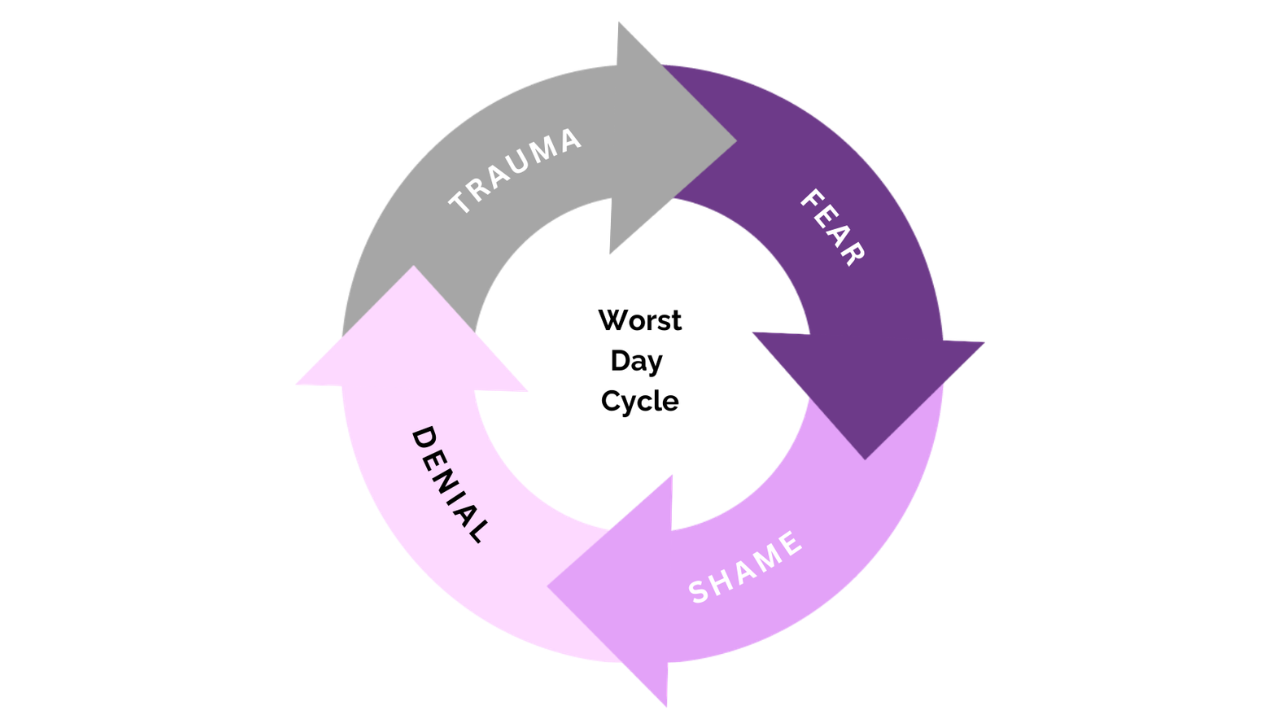
    Worst Day Cycle icon representing the repeating pattern of childhood trauma playing out in adult relationships

    The survival persona shows up in three types:

    The falsely empowered survival persona controls, dominates, rages, and demands. In relationships, this looks like jealousy, possessiveness, and emotional explosions.

    The disempowered survival persona withdraws, shuts down, disappears, and avoids. In relationships, this is the stonewaller — the person who goes silent when things get hard.

    The adapted wounded child survival persona people-pleases, sacrifices, enables, and rescues. In relationships, this is the person who gives everything away and then resents their partner for not reciprocating.

    That’s you if you recognize yourself in one — or all three — of those patterns, depending on the situation.

    The Worst Day Cycle™ keeps running because the survival persona was never designed to create healthy relationships. It was designed to survive childhood. But you’re not a child anymore — and the strategies that kept you safe then are destroying your relationships now.

    How the Don’ts Show Up in Every Area of Your Life

    These patterns don’t just wreck your romantic relationships. They bleed into everything.

    In your romantic relationship: You pick partners who recreate your childhood dynamics. You enable, control, or withdraw. You can’t resolve conflict without one of you shutting down or exploding. You feel like you’re walking on eggshells — or your partner does.

    That’s you if every relationship follows the same script — different person, same pain.

    In your friendships: You over-give, then resent. You keep score. You attract people who take advantage of your inability to say no. Or you keep everyone at arm’s length because you don’t trust anyone.

    At work: You people-please your boss. You take on extra work and then burn out. You can’t handle feedback without spiraling. Or you dominate and control — and wonder why your team doesn’t respect you.

    In your parenting: You repeat the very patterns your parents used on you — the ones you swore you’d never repeat. You control, enable, or emotionally withdraw from your children without realizing you’re doing it.

    In your body and health: The stress of living in the Don’ts shows up physically. Chronic pain, insomnia, digestive issues, autoimmune conditions. Your body keeps the score of every unprocessed emotion.

    That’s you if your body is screaming at you and you keep pushing through, ignoring what it’s trying to tell you.
    Emotional Regulation icon representing the somatic process of down-regulating the nervous system before making relationship decisions

    The Emotional Authenticity Method™: The 6-Step Path From the Don’ts to the Do’s

    So how do you actually get from the Don’ts to the Do’s? Not through willpower. Not through communication techniques. Not through finding a “better” partner. You get there through the Emotional Authenticity Method™ — a 6-step process for feeling your real feelings, tracing them to their origin, and rewiring the emotional blueprint that drives every relationship pattern.
    Emotional Authenticity icon representing the method for processing shame and building real connection in relationships

    You cannot change emotional patterns through thoughts alone. Emotions are biochemical events. Thoughts originate from feelings — not the other way around. This is why affirmations fail, why “just think positive” fails, and why cognitive techniques alone will never rewire the survival persona driving your relationship patterns.

    Step 1 — Somatic Down-Regulation: Focus on what you can hear for 15 to 30 seconds. This activates the auditory cortex and pulls the brain out of the emotional hijack. If you’re highly dysregulated, use titration — alternate between the triggering feeling and the grounding sound in small doses until the nervous system settles enough to think.

    Step 2 — What Am I Feeling Right Now? Use emotional granularity — expand your vocabulary beyond “bad” or “anxious.” The Feelings Wheel is one of the most powerful tools for this. Most people use five or six words for their entire emotional range. Real healing requires naming the specific feeling: abandoned, dismissed, invisible, suffocated, controlled, not enough.

    Step 3 — Where in My Body Do I Feel It? All emotional trauma is stored physically. The tightness in your chest, the knot in your stomach, the tension in your jaw — these are the body’s record of every childhood wound that was never processed. Locate it. Stay with it.

    Step 4 — What Is My Earliest Memory of Having This Exact Feeling? This is the step that changes everything. Trace the current feeling back to its childhood origin. When your partner forgets your birthday and you feel worthless, that’s not about the birthday. That’s about every time your needs were invisible as a child. This step breaks the illusion that the present moment is causing your pain.

    That’s you if you know your reactions are way too big for the situation — but you can’t figure out where the intensity is coming from.

    Step 5 — Who Would I Be If I Never Had This Thought or Feeling Again? What would be left over? This is the vision step. It connects directly to the Authentic Self Cycle™. Most people have never imagined themselves without the shame, without the fear, without the survival persona. This question opens the door to who you actually are underneath all of it.

    Step 6 — Feelization: Sit in the feeling of the Authentic Self and make it strong. Create a new emotional chemical addiction to replace the old blueprint. Ask: how would I respond to this situation from this feeling? What would I say? What would I do? Visualize and feel yourself operating from your Authentic Self. This is the emotional blueprint remapping and rewiring step — the moment where the brain starts building new neural pathways that override the childhood programming.

    That’s you if you know what you should do in your relationship — but your body keeps hijacking you into the same old reaction before your brain can catch up.
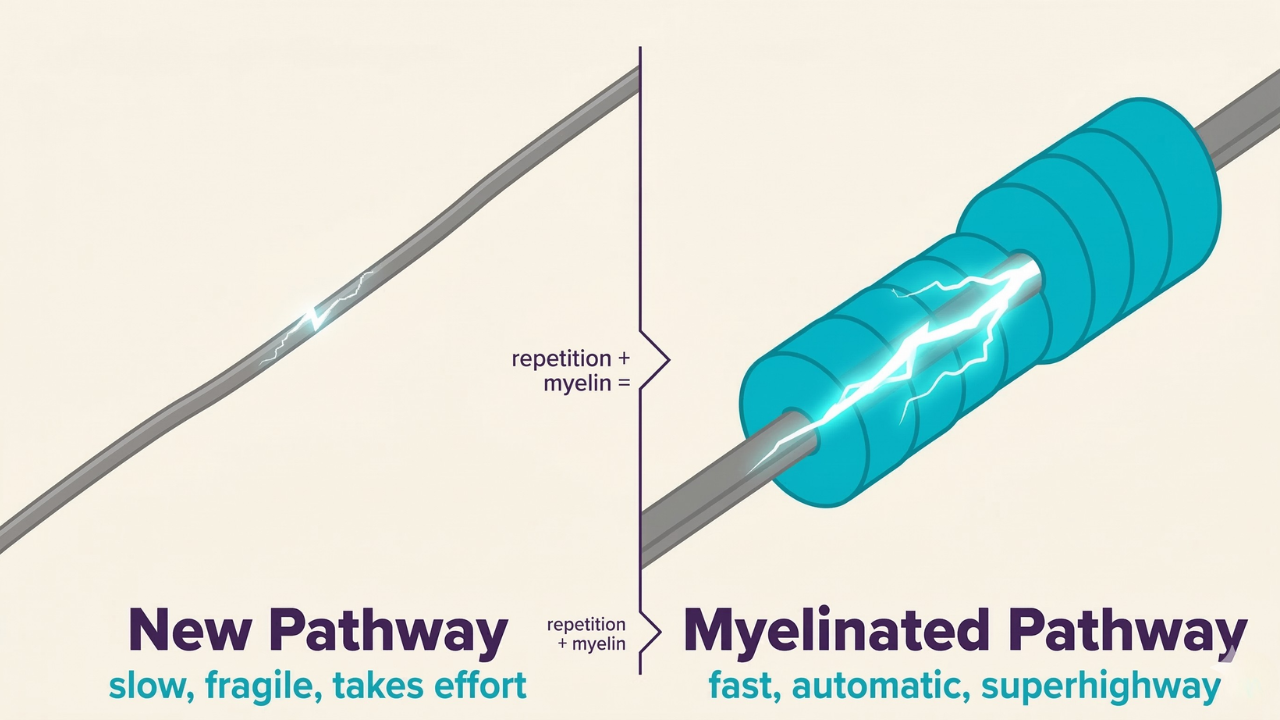
    Myelin neural pathways icon representing the neuroplasticity process of building new emotional patterns through Feelization

    The Authentic Self Cycle™: What Becomes Possible
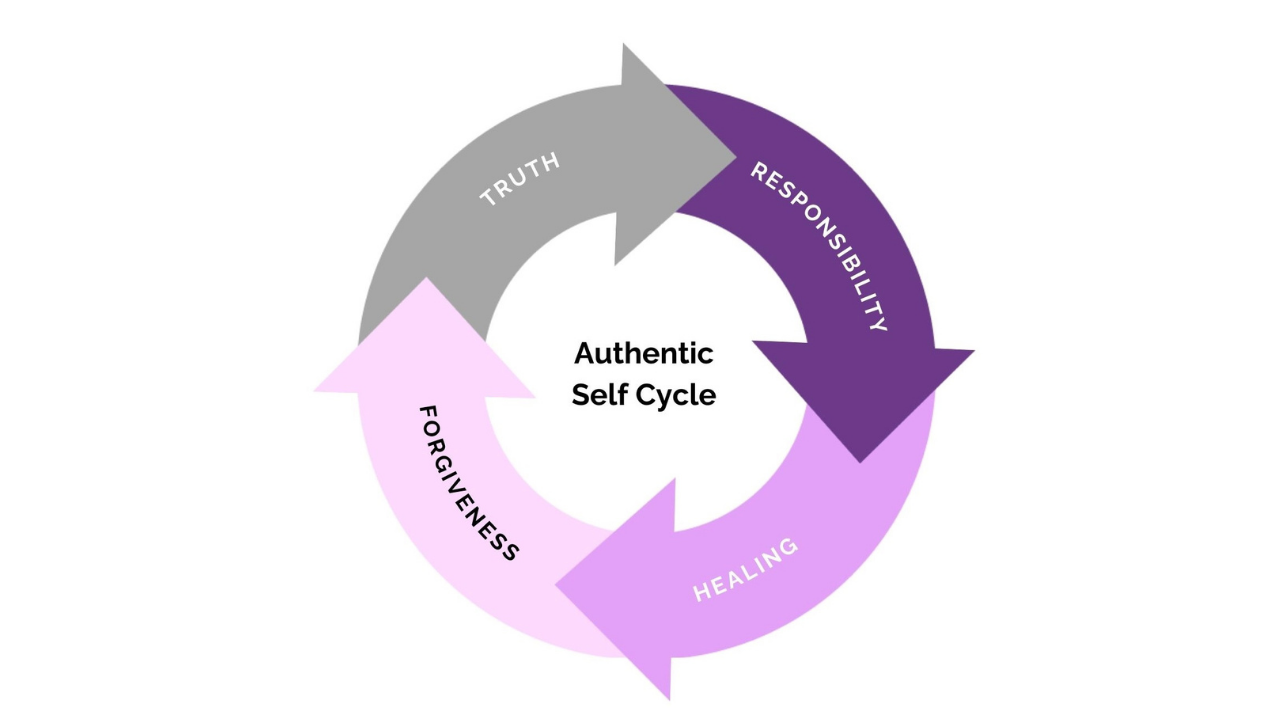
    Authentic Self Cycle icon representing the path from survival persona to genuine connection and healthy relationships

    When you start living from your authentic self instead of your survival persona, you enter the Authentic Self Cycle™ — the healing counterpart to the Worst Day Cycle™. This is an identity restoration system that operates in four stages:

    Truth: Name the blueprint. See “this isn’t about today.” Recognize that your partner isn’t your parent — your nervous system just thinks they are.

    Responsibility: Own your emotional reactions without blame. Stop pointing at your partner and start asking, “What childhood wound is running me right now?”

    Healing: Rewire the emotional blueprint so conflict becomes uncomfortable but not dangerous, space isn’t abandonment, and intensity isn’t attack. This is where the Emotional Authenticity Method™’s Feelization step creates a new emotional chemical pattern.

    Forgiveness: Release the inherited emotional blueprint and reclaim your authentic self. This isn’t about forgiving your parents’ behavior — it’s about releasing the grip the childhood wound has on your adult life.

    When couples each do this work independently — healing their own Worst Day Cycle™, identifying their own survival persona, and practicing the Emotional Authenticity Method™ — the relationship transforms. Not because the other person changed, but because two authentic selves showed up instead of two survival personas fighting each other’s childhood ghosts.

    In the Authentic Self Cycle™, you stop trying to get love and start being love. You stop demanding your partner meet your needs and start meeting your own. You stop fearing abandonment because you’ve stopped abandoning yourself. You stop controlling because you trust yourself to handle whatever comes.

    That’s you if you’re tired of surviving and ready to actually live — in your relationship and in every part of your life.

    It Starts With Your Childhood — And That’s Not a Blame Game

    I know it’s uncomfortable to look at our parents’ imperfections — or to admit our own as parents. I’m not trying to blame anyone. I believe it’s loving to hold our parents accountable without blaming them. My goal is to break the wall of denial down, and my heart is to do it lovingly.

    Every scientific process out there shows that our relationship patterns are a direct result of our childhood experiences. If we’re not addressing childhood trauma, we’re not addressing the core problem. We’re just rearranging deck chairs on the Titanic.

    That’s you if the phrase “look at your childhood” makes you tense up, shut down, or immediately think “my childhood was fine.”

    Your Next Step: Start Moving From the Don’ts to the Do’s

    If you recognized yourself in the Don’ts — and especially if you recognized yourself in all 10 — here’s where you start:

    For understanding your relationship patterns: The Relationship Starter Course — Couples ($79) walks you through exactly how your childhood blueprint is driving your current relationship — and what to do about it.

    For understanding yourself: The Emotional Blueprint Starter Course — Individual ($79) helps you identify your survival persona, map your emotional blueprint, and start building from your authentic self.

    For going deeper: Why We Can’t Stop Hurting Each Other ($479) and Why High Achievers Fail at Love ($479) are comprehensive courses that take you through the full Worst Day Cycle™ and into the Authentic Self Cycle™.

    For the avoidant dynamic: The Shutdown Avoidant Partner ($479) is specifically designed for couples trapped in the pursuer-distancer cycle.

    For complete transformation: Tier 1: Mapping the Blueprint ($1,379) is where the deepest work happens — the full Emotional Authenticity Method™ with guided practice, community support, and real transformation.

    If you want to understand the patterns driving your relationships at a deeper level, these books have been instrumental in my own work and in the lives of my clients:

    Facing Codependence by Pia Mellody — The foundational text on how childhood trauma creates codependent relationship patterns. Mellody’s framework for understanding carried shame and the five core symptoms of codependence is some of the most important work ever done in this field.

    When the Body Says No by Gabor Maté — How the stress of unprocessed emotions and unhealthy relationship patterns manifests in physical illness. Maté’s work on the mind-body connection shows why relationship patterns don’t just hurt emotionally — they hurt physically.

    Codependent No More by Melody Beattie — The classic guide to understanding and recovering from codependent patterns in relationships. If you recognized yourself in the Don’ts, start here.

    Daring Greatly by Brené Brown — Why vulnerability is the birthplace of connection and why the survival persona’s strategy of hiding, controlling, or people-pleasing will never create the intimacy you’re looking for.

    The Bottom Line

    The 10 Don’ts aren’t character flaws. They’re survival strategies — built in childhood, reinforced by culture, and running on autopilot in every relationship you’ve ever had. You didn’t choose them. But now that you see them, you can choose something different.

    The path from the Don’ts to the Do’s doesn’t run through better communication or a more compatible partner. It runs through your own childhood wounds, through the survival persona you built to manage those wounds, and into the authentic self that’s been waiting underneath all along.

    The relationship you want is on the other side of the work you’ve been avoiding.

    I’ll leave you with this: if you decide to face the pain from the past, I have yet to see one person whose life didn’t explode with joy, peace, and contentment. If that’s what you really want, this is the only way I have found that always works.

    Frequently Asked Questions

    Why do I keep attracting the same type of partner?

    You’re not “attracting” them — you’re choosing them. Your survival persona is drawn to partners who recreate the emotional dynamics of your childhood because those dynamics feel familiar. The Worst Day Cycle™ explains exactly how your childhood attachment patterns create a template that keeps pulling you toward the same relationship dynamics, no matter how different the person seems on the surface.

    Can I fix my relationship without my partner doing the work too?

    You can’t control whether your partner does the work. But when you start operating from your authentic self instead of your survival persona, the entire dynamic shifts. Many of my clients find that as they change, their partner either rises to meet them — or it becomes clear the relationship was built entirely on survival patterns. Either way, you win.

    What’s the difference between healthy boundaries and being cold or selfish?

    Your survival persona tells you that saying no is mean, selfish, or unloving. The truth is the opposite. Saying no is the most loving thing you can do — for yourself and for your partner. When you say yes and don’t mean it, you’re manipulating. You’re setting the stage for resentment, score-keeping, and passive aggression. Boundaries create safety. Lack of boundaries creates chaos.

    Is it really about my childhood even if my parents did their best?

    Your parents absolutely did their best with what they had. This isn’t about blame — it’s about truth. Every major framework in psychology and neuroscience confirms that our adult relationship patterns are formed in childhood. Holding your parents accountable isn’t the same as blaming them. It’s the doorway to healing. Without it, you stay stuck in denial — and denial keeps the Worst Day Cycle™ spinning.

    How do I know if I have a survival persona running my relationships?

    If you recognized yourself in any of the 10 Don’ts, your survival persona is running the show. The three types — falsely empowered (controlling, raging), disempowered (withdrawing, shutting down), and adapted wounded child (people-pleasing, enabling) — cover nearly every unhealthy relationship pattern. Most people flip between all three depending on the situation. The Emotional Authenticity Method™ teaches you to recognize which one is active in real time.

    What if I’ve already tried therapy and it didn’t work?

    Most therapy focuses on managing symptoms — better communication, coping strategies, conflict resolution techniques. Those are useful, but they don’t address the root cause. If you haven’t worked specifically on your childhood attachment wounds, your survival persona, and the Worst Day Cycle™ that’s driving everything, you haven’t done the work that actually changes things. The Emotional Authenticity Method™ goes where most therapy doesn’t — into the shame, the survival patterns, and the authentic self underneath.
  • Unconditional Love: The Four Pillars of Authentic Connection

    Unconditional Love: The Four Pillars of Authentic Connection

    You’ve probably heard the phrase “unconditional love” a thousand times—in movies, self-help books, relationship advice. But here’s what most people miss: unconditional love isn’t about pouring yourself endlessly into someone else. It’s about being safe within yourself first.

    For years, you may have thought unconditional love meant accepting everything, forgiving everything, staying no matter what. That’s not unconditional love—that’s abandonment of self. That’s codependence dressed up in spiritual language.

    The only way you get safety is by being safe within yourself. Until you’re actually safe internally, how can you bring unconditional love into your relationships? You can’t. What you bring instead is desperation, people-pleasing, resentment, and the unconscious patterns you learned as a child. That’s you if you’ve ever felt like you were performing love instead of feeling it.

    Real unconditional love requires four pillars: knowing your morals, values, needs, and non-negotiables; the ability to establish boundaries; a confrontation model for addressing harm; and healing the childhood trauma that drives your survival patterns. When these four pillars are in place, you become safe enough to love authentically—and you inspire the same in others.

    This isn’t theoretical. This is how people actually move from codependence to connection, from resentment to adoration, from performing love to feeling it.

    Emotional authenticity and unconditional love framework

    The Safety Foundation: Why Unconditional Love Starts With You

    Most relationship problems don’t start in the relationship. They start inside you.

    When you’re not safe within yourself—when you don’t know your values, can’t say no, fear abandonment, or carry unhealed trauma—you enter relationships in survival mode. You’re not choosing your partner; you’re choosing whoever can temporarily make you feel okay. You’re not loving; you’re clinging. You’re not connecting; you’re performing.

    That’s you if you find yourself tolerating behavior you hate, staying silent when you’re angry, or disappearing your own needs to keep the peace.

    Unconditional love requires personal safety first. Safety within yourself means you know who you are, what you need, what you won’t accept, and how to maintain those boundaries even when someone you love pushes against them. It means you can say no without guilt, express anger without shame, and ask for what you need without apologizing for existing.

    This foundation is non-negotiable. Build it first, and everything else—real connection, authentic vulnerability, genuine affection—becomes possible.

    Pillar One: Know Your Values, Needs, and Non-Negotiables

    You can’t protect what you don’t know. If you haven’t defined your values, you’ll adopt someone else’s. If you haven’t identified your needs, you’ll ignore them until resentment explodes. If you haven’t clarified your non-negotiables, you’ll compromise yourself into exhaustion.

    Start here: What are your core values? Not what you think they should be—what actually guides your decisions? Is it honesty? Loyalty? Growth? Independence? Write them down. Get specific.

    Next, what do you actually need to feel safe and loved? Not wants—needs. Do you need consistency? Respect? Emotional availability? Regular quality time? Space to be yourself?

    That’s you if you’ve never actually asked yourself these questions, and you’re operating on what you think love “should” look like.

    Finally, what are your non-negotiables—the things you absolutely won’t accept? These aren’t petty preferences. Non-negotiables are behaviors that tell you someone doesn’t respect you or your values. That’s you if you’ve been accepting behavior that violates your core values because you were afraid of being alone. Infidelity, dishonesty, disrespect, abandonment, abuse, substance problems—these are the line items that, if violated, mean this relationship doesn’t work for you.

    Knowing your non-negotiables isn’t rigid or unloving. It’s the clearest way to show up authentically. When your partner knows exactly where you stand—what you value, what you need, what you won’t tolerate—they can actually choose to stay with you. They’re not guessing. They’re not managing your moods. They’re choosing you, knowing all of you.

    Pillar Two: The Loving Power of No

    Somewhere along the way, you learned that love meant saying yes. Yes to requests that drain you. Yes to staying late. Yes to absorbing someone’s emotions. Yes to making their needs more important than your own.

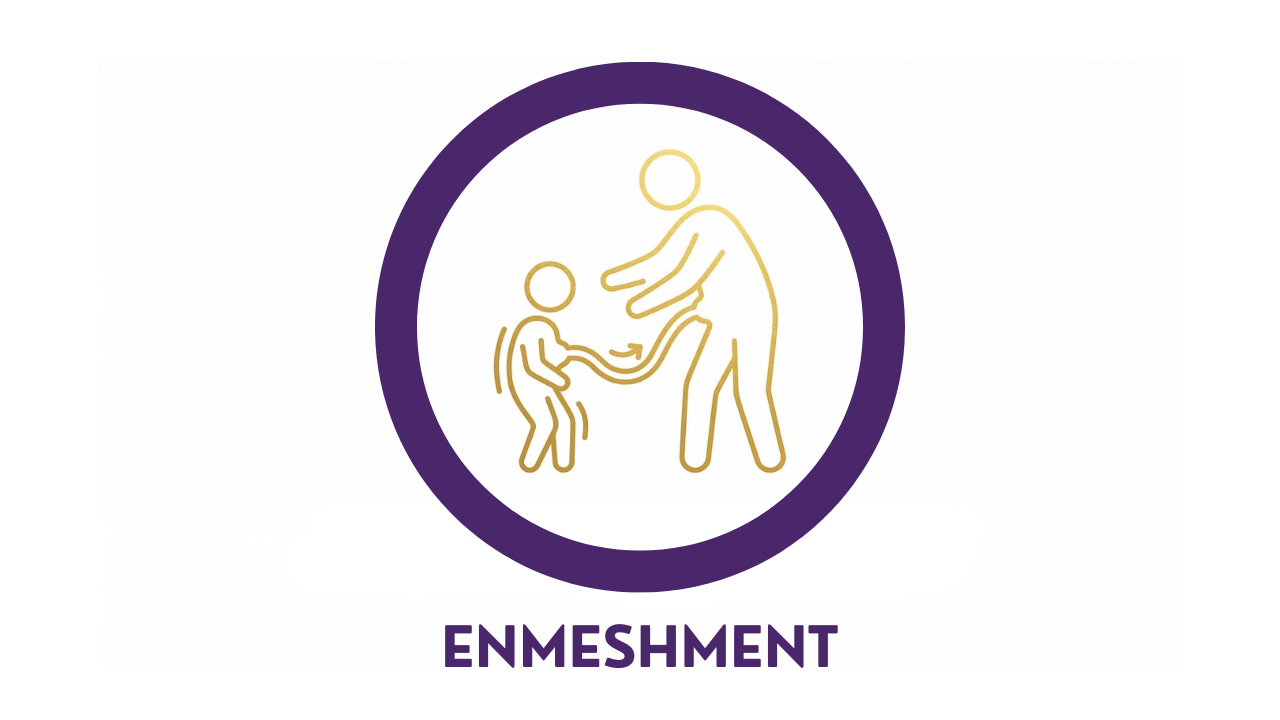
    That’s not love. That’s enmeshment.

    Enmeshment and codependent relationship patterns

    The most loving thing you can ever say to anyone is no. When you say no to what doesn’t work for you, you’re doing several things at once: you’re respecting yourself, you’re giving your partner accurate information about who you are, and you’re protecting the relationship by preventing resentment.

    Before you say yes to anything significant—staying late, lending money, managing someone’s emotions, giving up your plans—ask yourself three questions:

    1. Will I keep score? (Will you silently catalog this favor and expect repayment?)
    2. Will I bring it up later? (When you’re fighting, will you weaponize this sacrifice?)
    3. Will I have resentment? (In a month, will you resent this person for asking?)

    If the answer to any of these is yes—say no. Right now. Not in a mean way. Not with explanation or apology. Just: “I can’t do that. It doesn’t work for me.”

    That’s you if you say yes when you mean no, and then wonder why you’re bitter toward the people you love.

    Boundaries aren’t walls. They’re bridges—they tell your partner exactly how to stay in relationship with you. When you establish clear boundaries, you’re actually creating the conditions for deeper love. Your partner doesn’t have to guess. They don’t have to tiptoe. They can show up authentically because they know where they stand.

    Pillar Three: The Confrontation Model for Real Connection

    Conflict is inevitable. How you handle it determines whether your relationship becomes safer or more fractured.

    Most people either avoid confrontation entirely (storing resentment until they explode) or attack with blame and defensiveness (escalating the fight). Neither approach is safe. Neither creates connection.

    A functional confrontation model works like this:

    The Four-Step Confrontation

    1. Name the behavior, not the person. “When you said X…” not “You’re always so dismissive.”
    2. Describe the impact on you. “That made me feel…” not “You made me feel…”
    3. Ask for what you need going forward. “I need…” not “You should…”
    4. Listen to their perspective without defending. They may have context you don’t. Stay curious.

    This isn’t about being nice. It’s about being clear. When you confront with kindness and specificity, your partner can actually hear you. They don’t go into defensive mode. They can take responsibility and change.

    That’s you if you avoid conflict until you explode, or if you argue in circles without ever actually resolving anything.

    The ability to confront with love is what separates authentic relationships from codependent ones. In codependent dynamics, you suppress, then explode, then apologize and pretend it didn’t happen. In authentic relationships, you speak up when something hurts, you listen to what your partner experienced, and you both adjust.

    Pillar Four: Healing Childhood Trauma

    Here’s what most people don’t realize: your unconscious is running your relationships.

    When you were a child, your nervous system learned survival strategies. Maybe you learned to be invisible so you didn’t trigger a parent’s rage. Maybe you learned to perform happiness to make a depressed parent feel better. Maybe you learned that love was conditional—only there when you behaved right. Maybe you learned that your needs weren’t important.

    Your brain is still using those strategies. And now you’re using them on your partner.

    How childhood trauma patterns repeat in adult relationships

    Childhood trauma creates an emotional chemical addiction. Your brain learned a pattern—abandonment, betrayal, dismissal, shame—and now it’s seeking that pattern again and again in your relationships. You’re not choosing your partner consciously. Your unconscious is choosing someone who will teach you the same lessons your parents did.

    This is why your fights feel so intense. You’re not fighting about the dishes or the forgotten birthday. You’re fighting to reconcile the unhealed abandonment you experienced as a child. You’re using your partner as a proxy to finally get it right, finally prove you’re lovable, finally earn the love you should have gotten automatically.

    That’s you if you notice the same pattern repeating across relationships, or if your fights feel disproportionately intense compared to the actual issue.

    The path forward is healing. Not talking about your trauma. Not understanding it intellectually. But actually feeling the wounds, grieving what you didn’t get, and reorganizing your nervous system so you’re not running childhood survival patterns anymore.

    Once you heal, something miraculous happens. You see your partner differently. The person you thought betrayed you, dismissed you, didn’t love you—suddenly you see they were loving you exactly as they could at the time. They were your teacher. And in healing, you adore them not because they fixed you, but because you finally see you were always lovable.

    Understanding the Worst Day Cycle™

    The Worst Day Cycle™ is how trauma stays active in your body and relationships.

    Worst Day Cycle showing how trauma patterns repeat

    How the Worst Day Cycle™ Works

    The cycle starts when something triggers your childhood wound—real or perceived rejection, criticism, or abandonment. Your survival persona activates. You either become falsely empowered (controlling, aggressive, dismissive), disempowered (withdrawn, passive, depressed), or the adapted wounded child (performing, people-pleasing, abandoning yourself).

    From this survival state, you interpret everything your partner does through the lens of your trauma. They’re distant? That means they don’t love you. They’re busy? That’s rejection. They disagree with you? That’s betrayal. You’re not seeing them clearly—you’re seeing the parent who hurt you.

    So you respond from that wound. Maybe you attack. Maybe you shut down. Maybe you chase. And your partner, feeling blamed or pushed away, responds defensively. The fight escalates. You both end up hurt and further apart.

    The cycle repeats until someone breaks it—usually by healing their trauma enough to see their partner clearly again.

    That’s you if you notice your fights follow a pattern—same escalation, same breakdown, same making up, same two weeks of peace before it happens again.

    The Authentic Self Cycle™ Path Forward

    The Authentic Self Cycle™ is what happens when you break free from trauma patterns.

    Authentic Self Cycle showing healthy relationship patterns

    Steps in the Authentic Self Cycle™

    1. Trigger arrives (same as before). Something happens that would normally activate your wound.
    2. But now you pause. Instead of automatically reacting, you notice what’s happening. You have enough healing that you can create space between stimulus and response.
    3. You get curious instead of reactive. “Why am I interpreting this as rejection? What’s actually happening here? What did my partner actually say/do?”
    4. You show up authentically. From your whole self, not your survival persona. You can express what you’re feeling without blaming them for it.
    5. Your partner can actually hear you. Because you’re not attacking or withdrawing, they don’t have to defend. They can listen.
    6. Real connection happens. You both feel seen, understood, and safe. The relationship deepens.

    This is what unconditional love actually looks like. Not performing love. Not sacrificing yourself. Not tolerating disrespect. But showing up as your authentic self, with boundaries and values intact, and allowing your partner to do the same.

    The Emotional Authenticity Method™: 6-Step Framework for Healing

    If you’re ready to actually heal, the Emotional Authenticity Method™ gives you a concrete path.

    Emotional Authenticity Method framework for healing and connection

    The Six Steps of Emotional Authenticity™

    1. Awareness. Notice what you’re actually feeling. Not what you think you should feel. Not what makes sense. What’s really there? Anger? Fear? Longing? Name it without judgment.
    2. Acknowledgment. Give yourself permission to feel it. “It makes sense that I’m scared. I was abandoned as a kid. Of course I’m scared now.”
    3. Acceptance. Stop fighting the feeling. Let it be there. You don’t have to act on it. You don’t have to change it. Just let it exist.
    4. Feelization. This is the crucial step most people skip. You don’t just think about your feelings—you feel them in your body. Where is the fear? What does it feel like? Get curious about the sensation. Let yourself actually experience it, fully and completely. This is how your nervous system reorganizes.
    5. Expression. Once you’ve felt the emotion, you can express it authentically. Not from the survival persona. From the real you. To the right person, at the right time, in a way that creates connection.
    6. Evolution. As you move through emotions authentically instead of suppressing or acting them out, you change. You become someone who can love unconditionally because you’re not running from your own feelings anymore.

    Most personal development gets stuck at awareness or acknowledgment. People understand their patterns intellectually but never actually heal because they skip the embodiment step. That’s why Feelization matters so much—it’s where the actual neurological change happens.

    That’s you if you understand your trauma intellectually but still react the same way in relationships.

    Recognizing Your Survival Persona

    Your survival persona is the version of you that kept you safe as a child. It’s not fake—it’s adaptive. But it’s also still running, even though you’re not a kid anymore and you’re not in danger.

    Survival persona types in relationships

    There are three primary survival persona types:

    The Three Survival Persona Types

    1. The Falsely Empowered

    You learned that the only way to be safe was to be in control. You became dominant, commanding, sometimes aggressive. You made decisions unilaterally. You couldn’t let anyone see vulnerability. In relationships, this shows up as criticism, dismissiveness, or emotional distance. You’re the strong one. Everyone else needs to be fixed. Sound like you? Your childhood probably taught you that dependence meant pain.

    2. The Disempowered

    You learned that safety meant disappearing. You became quiet, withdrawn, compliant. You didn’t have your own opinions—you absorbed whatever kept the peace. In relationships, this shows up as passivity, depression, or chronic self-abandonment. You say yes to everything, resent everything, and wonder why you’re exhausted. Your childhood probably taught you that your needs were burdensome.

    3. The Adapted Wounded Child

    You learned that love was conditional and you had to earn it. So you became the performer. You read the room constantly, adjusted yourself to get approval, abandoned your own needs to make others comfortable. In relationships, this shows up as people-pleasing, codependence, and the constant sacrifice of self. You’re the “good” one everyone relies on. Your childhood probably taught you that you had to fix other people’s emotions to be loved.

    That’s you if you recognize yourself in one of these descriptions and suddenly understand why your relationships follow the same patterns.

    The healing happens when you recognize your survival persona as exactly what it is: a brilliant adaptation that protected you once and now limits you. You don’t have to destroy it. You integrate it. You thank it for protecting you, and then you practice responding from your authentic self instead.

    What Unconditional Love Actually Means

    Here’s the definition that changes everything:

    Unconditional love is the recognition that the best you can ever do and expect is that today you love someone. You can only guarantee today because you’re ever-evolving. You’re not the same person you were last year. You won’t be the same person next year.

    This is radically different from what most people think unconditional love means. It’s not about loving someone no matter how they treat you. It’s not about sacrificing yourself endlessly. It’s not about staying in a relationship that’s unhealthy.

    It’s about showing up today—fully, authentically, with all of you—and releasing the expectation that this will be forever or that your love should fix anything. The best you can give anyone is today. Nothing more. When that becomes your view of unconditional love, you’ve arrived.

    That’s you if you’ve been trying to love someone “right” and still feeling like you’re failing because the relationship isn’t working out.

    That’s you if you’ve been clinging to the fantasy that love means forever, and the fear of losing it controls everything you do.

    This perspective dissolves so much pain. You’re not responsible for whether your partner stays or leaves. You’re not responsible for whether your love “works.” You’re only responsible for whether you’re showing up authentically today. And your partner is only responsible for whether they can show up authentically today with you.

    Some days, that’s yes. Some days, it’s no. And both are valid.

    Being perfectly imperfect in relationships and love

    Signs You’re Living in Conditional Love Patterns

    Conditional love shows up differently depending on the context. Here’s what to look for:

    Family Relationships

    • You change who you are around your parents to keep the peace
    • You still seek their approval for major decisions, even as an adult
    • You resent them but feel obligated to stay close
    • You don’t share your real self with them; you manage their perception of you
    • You feel guilty for setting boundaries
    • You sacrifice your own needs “for family”

    Romantic Relationships

    • You suppress your needs and preferences to avoid conflict
    • You stay in situations that don’t work because you fear abandonment
    • You resent your partner for not reading your mind
    • Your worth depends on whether your partner loves you back
    • You try to change yourself to be “the right” partner
    • You keep score of sacrifices and expect repayment

    Friendships

    • You’re the emotional support person but can’t ask for support
    • You abandon your plans when friends need you
    • You feel resentful but continue the pattern anyway
    • You stay friends with people who don’t respect you
    • You hide your real struggles because you’re afraid they’ll leave

    Work

    • You work beyond your capacity to prove your worth
    • You struggle to advocate for yourself or ask for raises
    • You take on everyone else’s emotional labor
    • You feel responsible for your manager’s or team’s feelings
    • You can’t say no without guilt

    Body and Health

    • You ignore your own needs until you’re in crisis
    • You use food, substances, or other numbing strategies to manage emotions
    • You punish your body instead of caring for it
    • You feel shame about your body, needs, or desires
    • You prioritize others’ comfort over your physical safety

    People Also Ask

    How do I know if I’m in a codependent relationship?

    Codependence is when you’ve lost yourself in the relationship. You’re managing your partner’s emotions, abandoning your own needs, staying in situations that hurt you, and feeling responsible for their happiness. The signs of codependence include chronic resentment, self-abandonment, difficulty saying no, and the belief that your love should fix them. If you’re sacrificing yourself and expecting gratitude in return, that’s a sign. The path forward is reclaiming yourself through the four pillars: knowing your values, establishing boundaries, learning confrontation, and healing childhood trauma.

    What if my partner won’t work on healing their trauma?

    You can only control yourself. You can’t force anyone to heal. What you can do is heal yourself, set clear boundaries about what you will and won’t accept, and then observe. Does your partner respond to your boundary-setting by being curious? Or defensive? Do they make changes, even small ones? Or do they continue the same patterns? Your partner’s willingness to grow is their choice. Your job is to decide what you’re willing to accept, knowing that love alone won’t change them.

    Is unconditional love the same as staying in a bad relationship?

    No. Unconditional love doesn’t mean tolerating disrespect, betrayal, or harm. The most loving thing you can do for yourself and your partner is walk away if the relationship is unhealthy. Real love includes the ability to say “I love you, and this doesn’t work for me.” Love doesn’t require staying. It requires honesty, boundaries, and the willingness to walk if necessary. Your non-negotiables matter.

    How long does it take to heal from childhood trauma?

    There’s no timeline. Healing isn’t linear. You might feel transformed in months, and then six months later you’ll trigger on something and realize you have more work to do. That’s not failure—that’s how integration works. The goal isn’t to never be triggered. The goal is to have more space between the trigger and your response, to understand what’s happening, and to respond authentically instead of reactively. That space grows over time, with consistent work.

    Can I love someone unconditionally if I’m still healing?

    Yes, but the quality of that love will be limited by the wounds you haven’t healed yet. That’s not judgment—that’s reality. As you heal, your capacity for authentic love grows. You’ll be able to stay present longer. You’ll have fewer reactive moments. You’ll listen better. You’ll hurt less. The healing and the loving happen simultaneously. You don’t have to be “done” healing to start loving better, but the more you heal, the better you can love.

    What if I’m the one with insecure high self-esteem and my partner is the one struggling?

    First, check whether that perception is accurate. Sometimes secure people mistake their own avoidance patterns for strength. But if you’re genuinely healthier than your partner, the question is: can they take responsibility for their healing? Are they willing to work? Or are they staying stuck and expecting you to fix it? You can support someone’s healing without carrying it. You can love someone in their struggle without drowning in it. Set clear boundaries about what you’re willing to do, and let them take responsibility for the rest.

    The Bottom Line

    That’s you if you’re finally ready to stop performing love and start living it.

    Unconditional love isn’t a fairy tale where everything works out forever. It’s something you create today, with someone you choose, from your authentic self.

    It requires you to be safe within yourself first—knowing your values, setting boundaries, learning how to confront with kindness, and healing the childhood wounds that drive your patterns. It requires you to see your partner clearly, not through the lens of your trauma. It requires you to show up today, fully, and release the need to control whether they stay or whether your love “works.”

    When you do this work—when you move from the Worst Day Cycle™ to the Authentic Self Cycle™, when you recognize and integrate your survival persona, when you start living from your authentic self—something changes. Your relationships deepen. Your capacity for real connection expands. You stop performing love and start feeling it.

    And sometimes, in the midst of that authentic connection, the person across from you will finally feel safe enough to be themselves too. They’ll see that you’re not keeping score. You’re not punishing them for being human. You’re not abandoning them for being imperfect. And in that safety, real love becomes possible.

    That’s unconditional love. That’s worth the work.

    Recommended Reading

    • The Language of Letting Go by Melody Beattie — A daily reader on releasing codependence and finding peace
    • Scattered Minds by Gabor Maté — Understanding how childhood trauma becomes adult patterns
    • The Body Keeps the Score by Bessel van der Kolk — How trauma lives in your nervous system and how to heal it
    • Facing Love Addiction by Pia Mellody — The definitive book on codependent patterns in relationships
    • Daring Greatly by Brené Brown — Vulnerability and shame resilience as the foundation for real connection
    • Attached by Amir Levine and Rachel Heller — Understanding attachment styles and how they show up in your relationships

    Ready to Create Unconditional Love?

    These four pillars—knowing yourself, setting boundaries, learning confrontation, and healing trauma—are foundational. The courses below teach you how to actually implement them in your real relationships.

    • Emotional Blueprint Starter Course — Individual ($79) — Build the foundation: values, non-negotiables, and emotional authenticity
    • Relationship Starter Course — Couples ($79) — Applied frameworks for two people healing together
    • Why We Can’t Stop Hurting Each Other ($479) — Deep dive into trauma patterns and the Authentic Self Cycle™
    • Why High Achievers Fail at Love ($479) — For high-functioning people who excel at work but struggle in relationships
    • The Shutdown Avoidant Partner ($479) — Specific strategies for relationships with avoidant attachment styles
    • Tier 1: Mapping the Blueprint ($1,379) — The complete framework including Feelization and the six-step method

    Start with the Emotional Blueprint Starter Course — Individual if you’re new to this work. It builds the foundation everything else is based on. If you’re in a relationship and want to work together, the Relationship Starter Course — Couples is your next step.

    Explore All Courses

    Use this exercise to start identifying your values and non-negotiables:
    Download the Feelings Wheel and Self-Discovery Guide

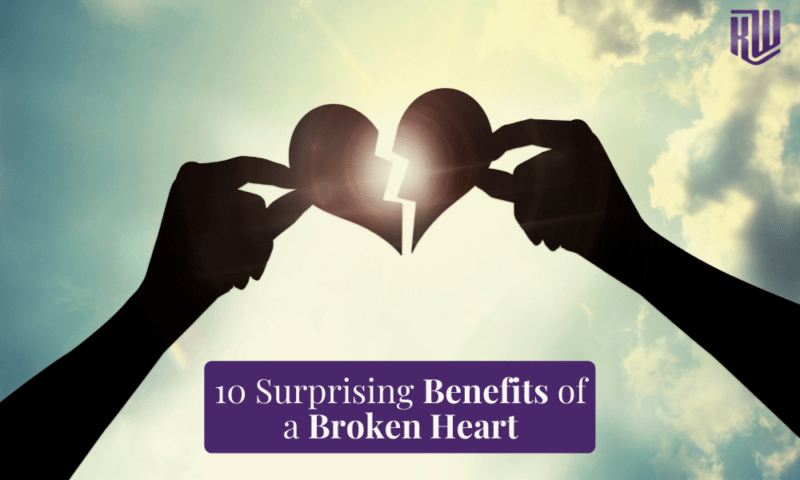
  • Benefits of a Broken Heart: 3 Empowering and 7 Disempowering Responses to Heartbreak

    Benefits of a Broken Heart: 3 Empowering and 7 Disempowering Responses to Heartbreak

    A broken heart is one of the most painful experiences you will ever have — and it is also one of the most powerful catalysts for transformation you will ever be given. If you are reading this after a breakup, a betrayal, or the slow collapse of a relationship you poured everything into, you already know: the pain is physical. It lives in your chest. It wakes you at 3 AM. It turns eating into a chore and breathing into something you have to remember to do. But here is what most people miss entirely — your broken heart is not random suffering. It is your nervous system delivering a message that has been waiting years to be heard.

    The heartbreak you are feeling right now did not start with your ex. It started in childhood — when your emotional blueprint was written, when you learned what love looks like, what safety feels like, and what you are worth. Your partner did not break your heart. They exposed the places where it was already fractured, where old wounds were waiting beneath a survival persona that told you everything was fine.

    That’s you if you have been through this before — different person, same devastation, same hollow feeling that nothing will ever be okay again. That pattern is not bad luck. That is your Worst Day Cycle™ running a childhood program on repeat.

    The real benefits of a broken heart have nothing to do with “becoming stronger” or “learning what you don’t want.” The real benefits come when heartbreak forces you to finally face the childhood emotional blueprint that has been choosing your partners, collapsing your boundaries, and abandoning your authentic self since before you could drive a car.

    Table of Contents

    Emotional blueprint showing how childhood patterns create repeated heartbreak

    The 3 Empowering Benefits of a Broken Heart

    Not all responses to heartbreak are created equal. Three of the benefits that come from a broken heart are genuinely empowering — they propel you forward and allow you to find the love and healing you deserve. The remaining seven are the ones most people use. There is benefit in them, but they are disempowering and self-sabotaging. Unfortunately, most of society uses the disempowering ones without even realizing it.

    That’s you if you have been through a breakup and spent weeks telling the story to everyone who would listen — getting sympathy, getting validation, getting comfort — but nothing actually changing in your life or your patterns.

    The distinction between empowering and disempowering responses to heartbreak is the difference between healing and staying stuck. Let us start with the three that actually transform you.

    Benefit 1: Heartbreak Forces You to Seek Real Help and Gain Self-Awareness

    For many people, a broken heart is the first time they seek genuine professional support. When the pain gets unbearable enough, when the pattern repeats enough times, when you finally cannot pretend everything is fine — you reach out. And that reaching out changes everything, because an outside perspective can see what you cannot see from inside the fog of your own survival persona.

    Emotional Authenticity Method for gaining self-awareness after heartbreak

    The narcissist strips us so much of our identity that our solutions and thinking processes are very distorted. You need someone outside the fog to help you see clearly. Not because you are broken, but because the pain literally scrambles your perception.

    Consider what happens when people actually seek help: anxiety that has persisted for decades begins to dissolve as you trace it back to childhood. Patterns you thought were personality traits turn out to be survival adaptations. Relationships that felt impossible suddenly make sense when you understand the emotional blueprint driving them. The broken heart becomes the doorway to self-awareness — the most valuable asset you will ever possess.

    That’s you if you have been white-knuckling your way through life, convinced you should be able to figure this out on your own — when the truth is that the survival persona running your decisions is the very thing preventing you from seeing clearly.

    Benefit 2: You Finally Learn Your Needs, Wants, and Non-Negotiables

    Most of us enter relationships without ever having mapped out our morals, values, needs, wants, negotiables, and non-negotiables. We get wrapped up in the chemistry of attraction and wake up months or years later in a relationship with someone whose values conflict with ours — wondering how we got here.

    Codependence patterns showing how heartbreak reveals unspoken needs and wants

    Heartbreak teaches you what you do not want — and more importantly, it creates the opening to discover what you actually need. When you have been devastated by someone who crossed your boundaries, you finally have the motivation to define those boundaries. When you have been abandoned by someone who could not meet your needs, you finally have the clarity to name those needs out loud.

    That’s you if your partner “should have known” what you needed — but you never actually told them, because your childhood taught you that having needs makes you a burden.

    It is always our responsibility to continually ask for our needs and wants. It is not anyone else’s job to read our minds. As you gain maturity and emotional authenticity and learn to ask for your needs and wants directly, your relationships transform. A man who stands up for his needs and wants becomes safe, powerful, and genuinely attractive — not through dominance, but through clarity. A woman who names her non-negotiables without apology creates the conditions for authentic love rather than codependent performance.

    Before you go on another date, before you enter another relationship, map out your negotiables and non-negotiables. This is the homework heartbreak assigns you — and it is the most important assignment you will ever complete.

    That’s you if you kept saying yes when you meant no, kept tolerating behavior that violated your values, kept shrinking yourself to fit someone else’s expectations — and then wondering why you ended up heartbroken again.

    Benefit 3: You Discover That Everything Started in Childhood — and You Do the Work to Heal

    This is the most transformative benefit of all. Heartbreak, when you follow the pain to its source, always leads back to childhood. Your nervous system chose this person. Your emotional blueprint recognized their emotional signature as “home” — and home means familiar, not safe.

    Trauma chemistry showing how childhood patterns drive partner selection and heartbreak

    If your heart keeps breaking, you are repeating the pain from your childhood. It has nothing to do with the other person. Science proves it — your brain becomes addicted to the emotional chemical cocktails it learned in childhood, and it seeks relationships that produce those same chemicals.

    When you trace the heartbreak back to its origin — when you stop focusing on what they did and start exploring why you allowed it — everything shifts. You discover that the abandonment you felt when they left echoes the abandonment you felt as a child. You discover that the unworthiness their rejection triggered was installed decades before you ever met them. You discover that the survival persona you used to manage the relationship is the same one you built to survive your family of origin.

    That’s you if you have had the same heartbreak with different people — same pattern of choosing emotionally unavailable partners, same cycle of giving everything and receiving crumbs, same devastating ending. That is not coincidence. That is your emotional blueprint running the same program on repeat.

    The people who do this deeper work — who follow the heartbreak back to childhood and rewire the blueprint — do not just heal from the breakup. They transform their entire relationship with love, intimacy, boundaries, and self-worth. They stop choosing partners who replicate their childhood pain and start choosing partners who reflect their authentic value.

    Sound familiar? That shift from heartbreak as disaster to heartbreak as education is the difference between staying stuck in the Worst Day Cycle™ and stepping into the Authentic Self Cycle™.

    The Worst Day Cycle™: Why Heartbreak Keeps Repeating

    The Worst Day Cycle™ is the four-stage neurological loop that explains why you keep getting your heart broken by the same type of person: Trauma → Fear → Shame → Denial.

    The Worst Day Cycle showing trauma fear shame denial loop driving repeated heartbreak

    Stage 1: Trauma. Childhood trauma is any negative emotional experience that created painful meanings about yourself, others, or the world. Your parent withdrew during conflict, so you learned love is unreliable. Your sibling was favored, so you learned you are not enough. Your emotions were dismissed, so you learned your feelings do not matter. The hypothalamus generates chemical cocktails — cortisol, adrenaline, dopamine misfires, oxytocin disruptions — and your brain becomes addicted to these emotional states.

    Stage 2: Fear. Fear drives repetition. Your brain conserves energy by repeating known patterns. It cannot tell right from wrong — only known versus unknown. Since approximately 70% of childhood messaging is negative and shaming, adults repeat these painful patterns in relationships, career, hobbies, health — everything. That’s you if unfamiliar peace feels scarier than familiar heartbreak.

    Stage 3: Shame. Shame is where you lost your inherent worth. Where you decided “I am the problem.” Not “I made a mistake” (which is healthy responsibility), but “I AM a mistake” (which is toxic shame). After heartbreak, shame whispers: “Nobody will ever love me.” “I am too much.” “I am not enough.” “I deserved this.”

    Stage 4: Denial. To survive unbearable shame, your psyche creates a survival persona — a false identity that protects you from the truth. This is where you minimize the pain, romanticize the relationship, or tell yourself “I am fine” while your body holds the grief you refuse to feel. Three survival persona types emerge: falsely empowered (controls, dominates, rages), disempowered (collapses, people-pleases), adapted wounded child (oscillates between both).

    That’s you if you have ever told your friends “I am over it” while secretly checking your ex’s social media at midnight. That is denial keeping the cycle spinning.

    The Three Survival Personas That Keep You Heartbroken

    Your response to heartbreak reveals which survival persona is running your life. These adaptive identities were brilliant in childhood — they kept you alive. But in adult relationships, they guarantee you will repeat the pattern.

    Three survival persona types showing how childhood adaptations create repeated heartbreak patterns

    The Falsely Empowered Persona responds to heartbreak with rage, blame, and control. You become the person who tells the story from a position of righteous anger — “they were a narcissist,” “they were toxic,” “I am better off.” This persona protects you from grief by replacing sadness with fury. But underneath the anger is devastation you refuse to feel. That’s you if you skipped straight from heartbreak to rage — because rage feels powerful and grief feels like drowning.

    The Disempowered Persona responds to heartbreak with collapse, obsession, and self-abandonment. You become the person who cannot eat, cannot sleep, cannot function. You replay every conversation. You analyze what you did wrong. You beg them to come back. This persona keeps you stuck because you hand all your power to the person who left. That’s you if you have been unable to stop thinking about them — if you have been reading articles about heartbreak at 2 AM looking for an answer that will make the pain stop.

    The Adapted Wounded Child oscillates between both. One day you are furious and swearing you will never speak to them again. The next day you are sobbing and composing a text you know you should not send. You flip between rage and collapse, performing strength in public and crumbling in private. That’s you if your friends are exhausted from the whiplash — “I am done with them” on Monday, “I miss them” on Wednesday.

    Adapted wounded child survival persona oscillating between rage and collapse after heartbreak

    Sound familiar? Most of us recognize ourselves in all three at different times — because they were all brilliant childhood survival strategies that now run our adult heartbreak without our permission.

    The 7 Disempowering “Benefits” That Keep You Stuck After Heartbreak

    These seven patterns look like coping. They feel like healing. But they are actually the survival persona’s way of keeping you in the Worst Day Cycle™ — avoiding the real grief work that would set you free. Most people are completely unaware they are doing these things. Even when it is pointed out, the survival persona will deny it.

    1. Attention. When you tell everyone about your breakup — when you post on social media, call every friend, tell the story to anyone who will listen — you receive a flood of validation. “You poor thing.” “You are so amazing, they did not deserve you.” “You are better off.” This attention fills the void the relationship left. But it becomes addictive. That’s you if you noticed the attention felt good — and if you are honest, part of you does not want to let go of it.

    2. Power and control. Staying in victim position gives you tremendous power over others. People rush to help you. They manage your emotions. They take responsibility for making you feel better. You get control without having to be vulnerable. That’s you if you have noticed that the people around you are more invested in fixing your heartbreak than you are.

    3. Avoiding responsibility. If you stay stuck, you never have to take responsibility for your role in the pattern. Your friends care more about fixing your problem than you do. That’s you if the second someone offers a real solution — therapy, self-work, actually making a change — you find a reason why it will not work.

    4. Avoiding vulnerability. If you do not do the healing work, you never have to be vulnerable. You get to stay in self-deception, claiming you want a relationship while your actions make it impossible. That’s you if you say you want love but your survival persona ensures every relationship ends the same way.

    5. Avoiding self-knowledge. If you do not know yourself — your needs, your values, your non-negotiables, your childhood wounds — you can never be in a real relationship. Which protects you from being truly seen by another person. That’s you if being fully known by someone feels more terrifying than being alone.

    Enmeshment patterns showing how avoiding self-knowledge prevents healing after heartbreak

    6. False freedom. If your pattern guarantees the relationship will end, you get freedom — freedom from intimacy, freedom from commitment, freedom from the vulnerability that real love requires. That’s you if you secretly feel relief when relationships end — even though the pain is crushing, there is a part of you that can finally breathe.

    7. Staying as the adapted wounded child. All six patterns above serve a single purpose: they keep you in the adapted wounded child position. To survive your parents’ imperfect parenting, you developed victim tendencies as a survival mechanism to create a connection with your caregivers. As an adult, you will not get help, learn, and heal wounds from childhood for fear of losing the adapted false survival connection you developed with your parents. That’s you if the idea of actually healing — of becoming a different person who does not need the old patterns — feels like losing something essential about who you are.

    The avoidance of pain creates more pain. The only way to liberate pain is to become an expert in it. The solution is in your pain and darkness — not in the sympathy, the attention, or the distraction.

    The Victim Position Paradox: Why Sympathy Keeps You Trapped

    The Victim Position Paradox is one of the most important concepts in heartbreak recovery: The victim position is a societal construct meant to protect victims, but in reality it has created a paradoxical falsely empowered position that nearly guarantees the victim will reexperience their childhood victimization, leaving them disempowered.

    Metacognition and the Victim Position Paradox in heartbreak recovery

    When you stay in the victim position after heartbreak, the narrative is: “This was done to me. I am helpless. I did not deserve this.” This narrative gets you sympathy and support. But it also keeps you powerless. If the breakup is entirely their fault, then you have zero power to prevent it from happening again. You are waiting for someone else to be different — and they never will be.

    That’s you if you have been telling the same heartbreak story to the same people for months — getting the same sympathy, the same validation — and nothing has actually changed.

    Nobody, no person, place, or thing gets near our life unless we allow it. Therefore we played a part in it. This is not blame. This is power. The moment you own your role — not the abuse itself, but why you stayed, why you tolerated it, why your nervous system chose this person — you reclaim the agency to choose differently.

    The Emotional Authenticity Method™: 6 Steps to Transform Heartbreak Into Healing

    The Emotional Authenticity Method™ is a six-step process that takes the raw material of heartbreak and uses it to literally rewire your nervous system. This is not talk therapy. This is somatic, chemical, neurological transformation.

    Emotional regulation through the Emotional Authenticity Method for healing heartbreak

    Step 1: Somatic Down-Regulation. When the grief wave hits — when you are sobbing in your car or frozen on the couch or spiraling into obsessive thoughts about what went wrong — pause. Focus on what you can hear for 15-30 seconds. Wind. Traffic. A clock ticking. Your own breath. If you are highly dysregulated, use titration: cold water on your face, step outside, hold ice. Your thinking brain cannot come online while your amygdala is running the show.

    Step 2: What am I feeling right now? Not “I miss them.” Not “I feel bad.” Use the Feelings Wheel for emotional granularity. Are you feeling abandoned? Ashamed? Terrified? Lonely? Furious? Rejected? Desperate? The more specific you are, the more you interrupt the survival persona’s vague numbness.

    Step 3: Where in my body do I feel it? All emotional trauma is stored physically. The ache in your chest is not metaphor — it is your nervous system holding decades of unprocessed grief. Heaviness in your stomach. Tightness in your throat. Heat in your face. Locate the feeling. This grounds you in the present moment and connects you to the actual biochemical pattern. That’s you if you have been “in your head” trying to think your way through heartbreak — you cannot think your way out of a feeling.

    Step 4: What is my earliest memory of having this exact feeling? The heartbreak you feel today echoes something much older. When was the first time you felt this abandoned? This unworthy? This invisible? The first time love disappeared. Your ex did not create this feeling — they activated a blueprint that was already there. That’s you if you can trace the exact same hollow feeling back to a moment in childhood — a parent’s withdrawal, a sibling’s cruelty, a caregiver’s absence.

    Step 5: Who would I be if I never had this thought or feeling again? Not “I would be happy.” Specific: “I would be someone who does not check their ex’s social media. Someone who does not stay in relationships past their expiration date. Someone who believes they deserve consistent, available love. Someone who can be alone without panic.” This plants the seed of your authentic self — the vision step that connects you to the Authentic Self Cycle™.

    Step 6: Feelization — The New Chemical Addiction. Sit in the feeling of who you would be — the authentic self. Make it strong. Feel it in your body. The confidence. The groundedness. The worthiness. The peace. Create a new emotional chemical addiction to replace the old heartbreak blueprint. Ask yourself: “How would I respond to this grief from this feeling? What would I say? What would I do?” Visualize and FEEL yourself operating from your Authentic Self. This is the emotional blueprint remapping and rewiring step. You cannot change emotional patterns through thoughts alone — emotions are biochemical events, and thoughts originate from feelings.

    That’s you if you have never been taught that you can literally rewire your nervous system by changing what you practice feeling — that heartbreak addiction is chemical, not destiny.

    The Authentic Self Cycle™: From Broken Heart to Whole Heart

    The Authentic Self Cycle™ is the healing counterpart to the Worst Day Cycle™ — a four-stage identity restoration system: Truth → Responsibility → Healing → Forgiveness. This is how heartbreak becomes the curriculum for reclaiming your authentic self.

    The Authentic Self Cycle showing truth responsibility healing forgiveness for heartbreak recovery

    Stage 1: Truth. Name the blueprint. “This heartbreak is not just about losing this person. My nervous system chose them because their emotional unavailability matched my childhood. The intensity I felt was not love — it was my Worst Day Cycle™ recognizing home.” That’s you if you are finally seeing the pattern — the same type of person, the same arc of hope and devastation, the same ending.

    Stage 2: Responsibility. Own your emotional reactions without blame. “My partner is not my parent — my nervous system just thinks they are. I stayed because my blueprint said earning unavailable love is how connection works. I can see that now, and I can choose differently.” This is not self-blame. This is self-empowerment.

    Stage 3: Healing. Rewire the emotional blueprint so that consistent, available love stops feeling boring and starts feeling like home. When boring people become attractive — when stability feels safe instead of suffocating — that is when you know you have healed. Creates a NEW emotional chemical pattern that replaces the old fear, shame, and denial.

    Stage 4: Forgiveness. Release the inherited emotional blueprint and reclaim your authentic self. You will know you have broken the cycle when you adore the person who broke your heart — not that you condone what they did, but you see they were your greatest teacher. The pain was the education. The relationship was the curriculum for healing your childhood. That’s you if you are beginning to sense that this heartbreak might have a purpose larger than the pain.

    When you went through the healing process — when you faced the fear, sat with the grief, and did the work — the exact opposite of everything you feared happened. You felt relief. You felt safe. Pure joy. But most of all, the biggest feeling was lighter. You were lighter because you were not carrying the pain from the past anymore. You ended up feeling closer to the people who hurt you, even if they never changed.

    Perfectly imperfect self-acceptance and healing after heartbreak

    How Unhealed Heartbreak Shows Up Across Your Life

    Unhealed heartbreak does not stay contained to your romantic life. It bleeds into every area because the emotional blueprint runs beneath every decision you make.

    Family Relationships

    You seek approval from family members who give it conditionally. You replay family dynamics in romantic relationships. You cannot set boundaries with parents without guilt. You manage everyone’s emotions while ignoring your own. That’s you if your parent’s mood still determines your entire day — even though you are a grown adult with your own life.

    Romantic Relationships

    You choose the same type of partner repeatedly. You fall hard and fast for emotionally unavailable people. You stay past the expiration date. You sacrifice yourself to prove your worth. You experience cycles of hope and devastation that mirror your childhood exactly. Learn the signs of relationship insecurity to recognize this pattern. That’s you if your friends have said “why do you always pick the same type?” — because your nervous system is running the same blueprint on repeat.

    Friendships

    You are the emotional caretaker. You give more than you receive. You attract friendships where you are needed but never nourished. You cannot ask for support because your survival persona says your needs are a burden. That’s you if you are everyone’s therapist but have no one holding space for you.

    Work and Achievement

    You overwork to prove your worth. You tolerate being undervalued because intermittent praise keeps you hooked — just like intermittent love in your relationships. You use achievement to medicate the emptiness that heartbreak exposed. Build genuine self-esteem that does not depend on productivity. That’s you if you have been promoted for the very pattern that is destroying you — your survival persona’s perfectionism is your company’s greatest asset and your nervous system’s greatest prison.

    Body and Health

    Your body holds every heartbreak you never fully grieved. Chronic tension, digestive issues, insomnia, autoimmune responses. You disconnect from physical signals. You use food, substances, exercise, or work to numb the feelings. That’s you if your body has been screaming for attention and you keep telling it to be quiet — because your survival persona says grief is weakness.

    Reparenting yourself to heal unprocessed heartbreak across all life areas

    Frequently Asked Questions

    How long does it take to heal from a broken heart?

    There is no timeline. Healing is not about the passage of time — it is about the depth of the work. Some people move through the stages in months with consistent practice of the Emotional Authenticity Method™. Others take years because they stay in the disempowering benefits without realizing it. The speed depends on how much professional support you get, how deep your childhood wounds run, and how willing you are to stop using the seven disempowering patterns and start doing the real grief work.

    Is it normal to feel worse before feeling better after heartbreak?

    Yes. When you stop using the disempowering coping strategies — the attention-seeking, the victim position, the denial — the raw grief surfaces. This is not regression. This is progress. You are finally feeling what your survival persona has been protecting you from. The Emotional Authenticity Method™ gives you the tools to move through this grief instead of getting stuck in it.

    Why do I keep attracting people who break my heart?

    Your emotional blueprint — the nervous system’s learned pattern for what love feels like — was set in childhood. If your childhood contained abandonment, your blueprint says abandonment is home. Your brain cannot tell right from wrong, only known versus unknown. You keep attracting heartbreak because your nervous system is seeking the familiar chemical cocktail of hope, disappointment, and loss that it learned decades ago. The Emotional Authenticity Method™ rewires this pattern at the neurological level.

    Can a broken heart actually make you physically sick?

    Absolutely. Heartbreak triggers the same neurochemical cascades as physical pain. Cortisol floods your system. Your immune function drops. Chronic heartbreak — repeated cycles of the Worst Day Cycle™ — can manifest as autoimmune conditions, digestive disorders, chronic fatigue, and cardiovascular issues. Your body keeps the score of every heartbreak you never fully processed.

    How do I know if I am truly healing or just numbing the pain?

    Healing feels like grief. Numbing feels like nothing. If you can think about your ex without rage, obsession, or longing — and feel genuine sadness followed by peace — you are healing. If you feel nothing at all, or if you feel fine during the day but are flooded with emotion at night, your survival persona is suppressing the grief. The Emotional Authenticity Method™ teaches you to move through emotion rather than around it.

    Should I stay friends with the person who broke my heart?

    Only if you have genuinely healed — not if you are using friendship as a way to stay connected to someone your nervous system is addicted to. For most people, maintaining contact keeps the Worst Day Cycle™ active. Distance is not about them. It is about giving yourself the space to rebuild your emotional blueprint. Later, if you are secure enough, friendship might be possible. But not as a replacement for actual healing.

    The Bottom Line

    A broken heart is not the end of your story. It is the beginning of the most important chapter — if you choose to read it honestly.

    There are three empowering responses to heartbreak: seeking genuine help and gaining self-awareness, learning your needs, wants, and non-negotiables, and discovering that the pattern started in childhood and doing the deep work to heal it. These three responses transform you. They break the cycle. They lead you to the love you actually deserve.

    And there are seven disempowering responses that feel like healing but keep you stuck: seeking attention, gaining power through victimhood, avoiding responsibility, avoiding vulnerability, avoiding self-knowledge, creating false freedom, and staying trapped as the adapted wounded child. These seven patterns are running most of society — and most people have no idea they are doing it.

    The pain of heartbreak is not optional. But how you use it is your choice. You can use it to confirm what your survival persona has always believed — that love is dangerous, that you are not enough, that the world is cruel. Or you can use it to finally face the childhood blueprint that has been choosing your partners, collapsing your boundaries, and breaking your heart since before you had any say in the matter.

    That’s you if you are finally ready to stop repeating the cycle and start transforming it.

    Pain is growth. The avoidance of pain creates more pain. The only way to liberate pain is to become an expert in it. The solution is in your pain and darkness. The nine people in this post who went headfirst into the pain changed their lives. The seven disempowering benefits are what keeps the rest of society stuck, heartbroken, and alone.

    Your authentic self — the one beneath the survival persona, beneath the shame, beneath the heartbreak — already knows you are worthy of love that does not require you to abandon yourself. Your only job is to clear the path back to that truth.

    Start with the Feelings Wheel exercise to rebuild your emotional vocabulary. Explore the signs of enmeshment to understand how your boundaries collapsed. Learn your negotiables and non-negotiables. And discover the do’s and don’ts for great relationships so you have a template for what love actually looks like.

    Emotional fitness and resilience after transforming heartbreak into healing

    Recommended Reading

    • Facing Codependence by Pia Mellody — The foundational text on how childhood trauma creates survival personas, codependent patterns, and the loss of authentic self.
    • The Body Keeps the Score by Bessel van der Kolk — Essential reading on how heartbreak and trauma live in your nervous system and why healing requires more than talk therapy.
    • When the Body Says No by Gabor Maté — How emotional repression and unresolved heartbreak manifest as physical illness.
    • Codependent No More by Melody Beattie — The classic guide to setting boundaries and stopping the cycle of self-abandonment in relationships.
    • The Gifts of Imperfection by Brené Brown — A guide to wholehearted living that directly counters the shame keeping you bonded to patterns of heartbreak.

    Ready to Transform Your Heartbreak?