It’s better to be liked than loved — and that one idea will transform every relationship you have. If you’ve spent your life chasing the feeling of being loved — the intensity, the passion, the grand declarations — and it still hasn’t brought you lasting peace, safety, or genuine connection, you’re not failing at love. You’re chasing a version of love that was designed in childhood to keep you performing, not to keep you whole. The truth is, most of what we call “love” is a conditional, perfectionist, survival-driven dynamic that demands intensity, punishes imperfection, and collapses the moment the feeling fades. Being liked is something entirely different — and something most people have never experienced because their emotional blueprint doesn’t even know it exists.
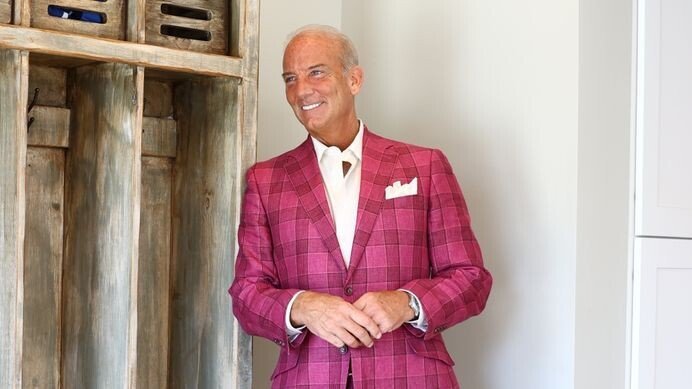
Nearly twenty years ago, when Kenny Weiss was working with his counselor and they started talking about dating again, the counselor gave him a homework assignment: come back with a list of what you want in a partner. Kenny came back with the standard list — attractive, kind, smart, adventurous. The counselor listened, paused, and asked one question that changed everything: “What about a woman who likes you?” The concept of being liked had never entered his mind. That single question created a massive shift — because it exposed the truth that Kenny, like most people raised in codependent family systems, had never been taught that someone could accept all of him, not just the performance version.
That’s you if you’ve spent your entire dating life building a list of what you want in a partner — their looks, their career, their hobbies — without ever once asking: “Do they actually like me? All of me? The messy, imperfect, real version of me that I hide from everyone?”
Table of Contents
- The Difference Between Being Loved and Being Liked
- Why “Love” Is Almost Always Conditional
- Four Qualities of Being Liked That Change Everything
- The Worst Day Cycle™: Why You Chase Love Instead of Like
- The Three Survival Personas and How They Sabotage Connection
- The Attachment-Authenticity Bind: Why You Show a Fake Self
- The Emotional Authenticity Method™: 6 Steps to Become Likeable to Yourself
- The Authentic Self Cycle™: From Performing Love to Feeling It
- Signs You’re Chasing Love Instead of Like Across Your Life
- Frequently Asked Questions
- The Bottom Line
- Recommended Reading
- Courses
The Difference Between Being Loved and Being Liked
When you think about what you want in a partner, what comes to mind first? Someone who looks a certain way. Acts a certain way. Has the right career, the right politics, the right hobbies. Someone kind, athletic, adventurous, powerful, successful. You build this list — and you also build the anti-list: not boring, not lazy, not insecure, not divorced, not addicted. What you’ve done, without realizing it, is split your vision of love into perfection and imperfection. You welcome the perfections. You shame the imperfections. And love becomes this conditional agreement: I will love you despite how horrible you are, as long as you mostly stay on the perfection side of the list.
That’s you if you’ve ever thought “I love them, but…” — and the “but” is a list of imperfections you’re tolerating, not accepting. That’s you if the word “love” in your vocabulary comes with conditions attached.
Love, as most people have been taught to experience it, is conditional, perfection-demanding, and intensity-dependent. It demands a magical feeling. It holds the other person to an impossible standard. And the moment that standard is violated — the moment the feeling fades or the imperfections show — love collapses. This is not a relationship problem. This is a childhood emotional blueprint problem.
Being liked is fundamentally different. Think about your best friend. They know your imperfections — your quirky habits, your relationship disasters, your career struggles, your worst moments. They’ve seen you at your lowest. They know parts of you that strangers never will. And despite all of it, they still like you. They accept your perfect imperfections. They don’t demand that you perform. They don’t withdraw when you’re messy. They don’t keep score.
That’s you if your best friend knows everything about you and still chooses to be in your life — and yet you’ve never once expected a romantic partner to offer that same level of acceptance.
Why “Love” Is Almost Always Conditional
Here is what most people never examine: when you say “I love you,” what are you actually saying? For most people raised in codependent family systems — and that’s nearly everyone — “I love you” means “I love the version of you that matches my expectations.” It means “I love you when you’re being the person I need you to be.” It means “I love you conditionally, and the conditions are the perfection list I built in childhood.”
This isn’t cruelty. It’s programming. Your emotional blueprint — the nervous system’s learned pattern for what love, safety, and connection feel like — was set in childhood. If your childhood contained conditional love, your blueprint says love must be earned through performance. If your childhood contained intensity and chaos, your blueprint says love should feel electric, dramatic, consuming. If your childhood contained criticism and high standards, your blueprint says love means tolerating imperfection while secretly resenting it.
That’s you if you’ve ever felt the “spark” with someone who turned out to be emotionally unavailable — and felt nothing with someone who was genuinely kind, stable, and present. That’s not chemistry. That’s your Worst Day Cycle™ recognizing childhood.
Everyone on this planet is living out of a survival persona. It takes tremendous work to discover our true authenticity, our inherent authentic self. When two people come together showing their survival personas — desperate for attachment because they didn’t get it as children — they immediately start adjusting to the other person. Both sides do it. Then commitment happens, the adrenaline ends, and the authentic desires, needs, and non-negotiables start surfacing. And both people say: “You’re a stranger to me. This is not who I wanted to be with.” The truth is, both of them performed love instead of offering the real person.
Sound familiar? That’s you if you’ve ever felt blindsided by who your partner “really was” after the honeymoon phase ended — or if a partner has ever said the same about you.
Four Qualities of Being Liked That Change Everything
Being liked has four qualities that love, as most people practice it, simply does not have.
First: Liking encompasses the whole person — the perfect imperfections. When you like someone, you don’t split them into acceptable and unacceptable parts. You see the complete picture — their strengths and their struggles, their beauty and their messiness — and you choose them anyway. Not despite their imperfections. Including them.
That’s you if you’ve never had a partner who actually knew the real you — because you’ve been hiding the parts you thought would make them leave.
Second: Liking is quiet. Love demands intensity — this supercharged feeling that most people mistake for connection. And when that feeling fades, most couples say “the feeling’s gone” and assume the relationship is over. But when you like someone, you’re perfectly comfortable with the quiet. You can sit in silence together and still enjoy their presence. It doesn’t require performance or perfection. It doesn’t need the drama to feel alive.
That’s you if silence with your partner feels uncomfortable — if you need constant intensity, conversation, or activity to feel connected. That discomfort isn’t about them. It’s about what your nervous system learned connection should feel like.
Third: Liking is accepting and forgiving. It doesn’t have demands. You give so much more grace to the people you like than to those you love. Think about that — you’re harder on the person you love than on anyone else in your life. You have more expectations, more conditions, more resentment. But the people you like? You forgive them easily. You don’t keep score. You don’t punish them for being human.
That’s you if you’ve noticed you’re more patient, more understanding, more compassionate with your friends than with your romantic partner — and you’ve never asked yourself why.
Fourth: When someone likes you, they accept your perfect imperfections. They see you — all of you — and they stay. Not because they’re tolerating you. Not because they’re performing devotion. But because who you actually are, imperfections included, is someone they genuinely enjoy being around.
That’s you if you’ve never experienced being fully known and fully accepted at the same time — because your childhood taught you that being known means being judged.
The Worst Day Cycle™: Why You Chase Love Instead of Like
The Worst Day Cycle™ explains why you keep pursuing intensity instead of acceptance, performance instead of presence, and conditional love instead of genuine liking. It’s a four-stage neurological loop — Trauma → Fear → Shame → Denial — that repeats endlessly until you interrupt it.
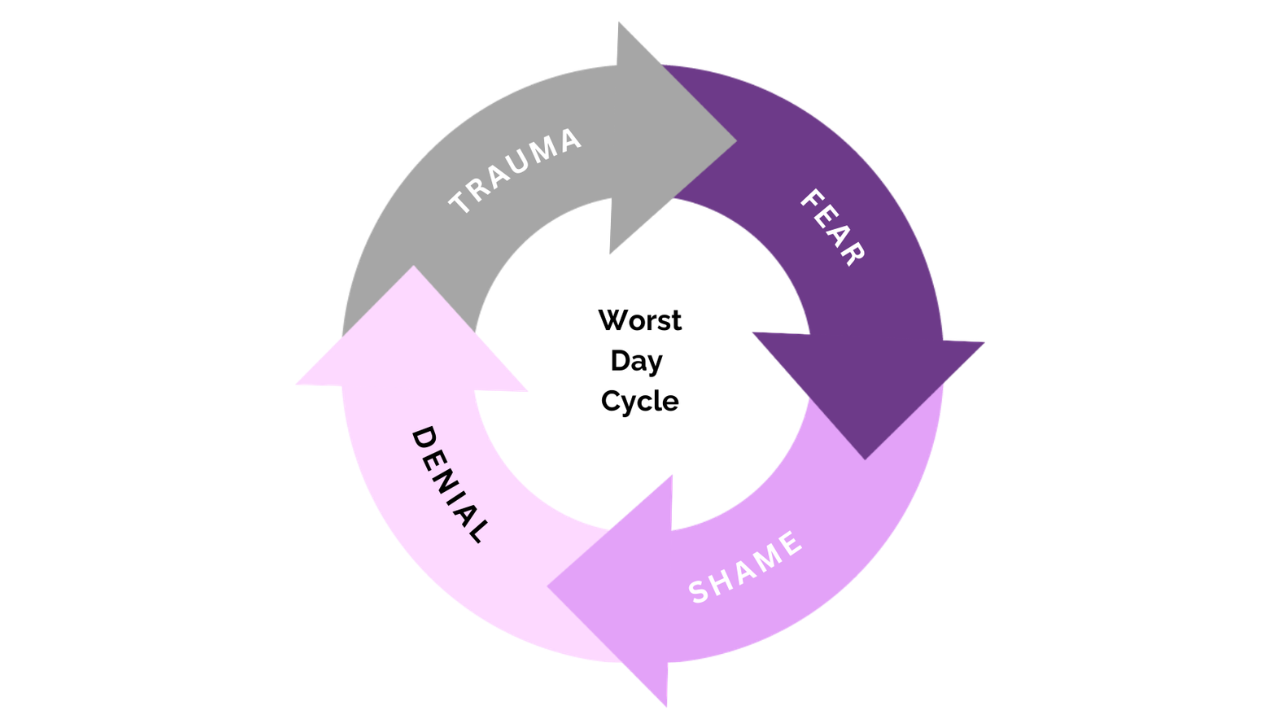
Stage 1: Trauma. Childhood trauma is any negative emotional experience that created painful meanings. Your parent only showed affection when you performed. Your caregiver withdrew when you had needs. Your worth was tied to achievement, obedience, or being easy. The hypothalamus generated chemical cocktails — cortisol, adrenaline, dopamine misfires, oxytocin disruptions — and your brain became addicted to these emotional states because the brain conserves energy by repeating known patterns. It can’t tell right from wrong, only known versus unknown.
Stage 2: Fear. Fear drives repetition. Since approximately 70% of childhood messaging is negative and shaming, adults repeat these painful patterns in relationships, career, hobbies, health — everything. Your brain thinks repetition equals safety. So you keep choosing partners who demand perfection, because perfection-demanding love is what your nervous system recognizes as “home.”
That’s you if you feel uncomfortable when someone is simply kind to you without wanting anything in return — because your nervous system doesn’t recognize unconditional acceptance.
Stage 3: Shame. This is where you lost your inherent worth. Where you decided “I am the problem.” Not “I made a mistake” (which is healthy responsibility) but “I AM a mistake” (which is toxic shame). Shame is what makes you believe you have to earn love through performance rather than receive liking through authenticity.
Stage 4: Denial. To survive unbearable shame, your psyche creates a survival persona — a false identity that performs worthiness, hides imperfection, and chases the conditional love that feels familiar. Three survival persona types emerge: falsely empowered (controls, dominates, performs strength), disempowered (collapses, people-pleases, disappears), adapted wounded child (oscillates between both).
That’s you if you show a different version of yourself on a first date than you do six months into a relationship — because the survival persona runs the early phase and the real you eventually leaks through.
The Three Survival Personas and How They Sabotage Being Liked
The Falsely Empowered Persona chases love through control, achievement, and dominance. This person builds the perfection list and holds their partner to impossible standards. They pursue love as a project — something to manage, optimize, and control. They can’t let themselves be liked because being liked requires vulnerability, and vulnerability in childhood meant being consumed, enmeshed, or exploited.
That’s you if you’re the one who always has it together, who manages the relationship, who has the plan — and who secretly feels exhausted because you can never just be yourself and rest.
The Disempowered Persona chases love through self-abandonment, people-pleasing, and performance. This person becomes whoever the other person needs them to be. They morph, adjust, sacrifice, and disappear — all to earn the love they believe they don’t inherently deserve. They can’t let themselves be liked because they don’t believe the real version of themselves is likeable.
That’s you if you’ve lost yourself in every relationship — changed your hobbies, your friends, your opinions, your entire identity to match what you thought your partner wanted.
The Adapted Wounded Child oscillates between both. One moment they’re controlling and rigid. The next they’re collapsing and people-pleasing. They shift constantly depending on who’s in the room, reading emotions like a survival manual, performing whatever version of themselves seems safest in the moment. They can’t be liked because nobody knows who they actually are — including themselves.

That’s you if you feel like a different person depending on who you’re with — confident at work, insecure at home, charming with strangers, shut down with family. That’s the adapted wounded child performing safety instead of living authentically.
The Attachment-Authenticity Bind: Why You Show a Fake Self
There’s a reason you perform instead of show up authentically: the attachment-authenticity bind. In childhood, you learned that attachment (love, safety, connection) required abandoning your authenticity (your real thoughts, feelings, needs, and wants). If expressing your authentic self created conflict, withdrawal, or punishment, your nervous system made a choice: suppress the real you and project whatever version of yourself keeps the attachment intact.
Look through your life — every interaction with friends, family, your children, your partner. Unless you feel overwhelmingly safe, you’re withholding something. You’re not sharing your true thoughts, your true feelings, the full story of what you’ve been through. You’re projecting a survival persona for the need to get attachment. The problem is it can’t work, because you’re projecting something you’re not.
That’s you if you rehearse conversations in your head, edit your texts before sending, or carefully manage what your partner knows about your past — because your nervous system still believes that being fully known means being abandoned.
This is why most marriages collapse. Two people come together showing survival personas. They’re desperate for connection because they didn’t get it as children, so they immediately start adjusting to the other person. Both sides do it. Then commitment happens, the adrenaline fades, and all the authentic desires, needs, negotiables and non-negotiables start surfacing. And both people look at each other and think: “Who are you?”
That’s you if a partner has ever said “you’ve changed” — when the truth is you just finally stopped performing.
The Emotional Authenticity Method™: 6 Steps to Become Likeable to Yourself
Before anyone else can genuinely like you, you have to like yourself. Not the performance version. Not the survival persona. The real you — imperfections included. The Emotional Authenticity Method™ is a six-step process that rewires your nervous system so you can actually show up as yourself in relationships.
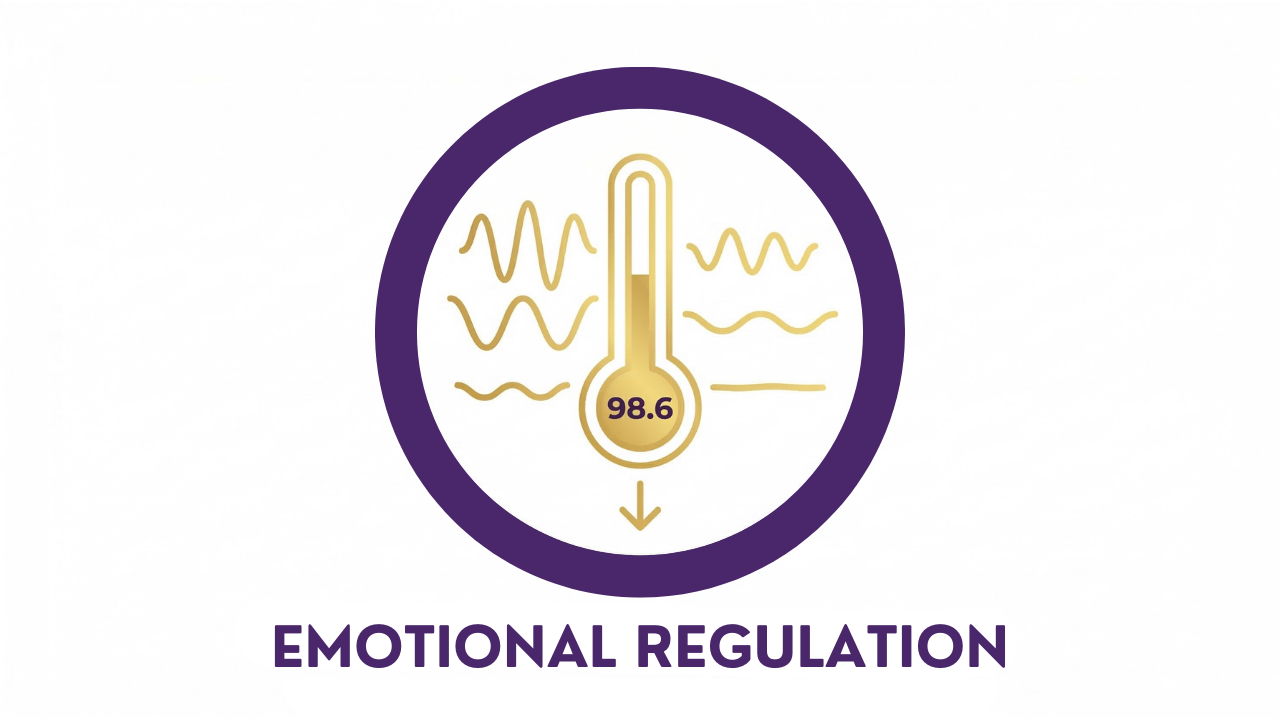
Step 1: Somatic Down-Regulation. When you feel the urge to perform — to adjust yourself, people-please, or hide an imperfection — pause. Focus on what you can hear for 15-30 seconds. Wind. Traffic. Your breath. If you’re highly dysregulated, use titration: cold water on your face, step outside, hold ice. Your prefrontal cortex cannot come online while your amygdala is running the show.
Step 2: What am I feeling right now? Not “I’m fine.” Use the Feelings Wheel to name it with emotional granularity. Are you feeling afraid of rejection? Ashamed of an imperfection? Anxious about being seen? The more specific you get, the more you interrupt the survival persona’s automatic programming.
Step 3: Where in my body do I feel it? All emotional trauma is stored physically. The tightness when you’re about to reveal something real. The knot when someone sees past your performance. The heaviness when you can’t keep pretending everything is fine. Locate the sensation. This grounds you in the present moment.
That’s you if you’ve been “in your head” trying to figure out relationships intellectually — analyzing, strategizing, planning — instead of feeling what’s actually happening in your body.
Step 4: What is my earliest memory of having this exact feeling? The fear of being disliked didn’t start with your partner. It started in childhood — the first time showing your real self resulted in withdrawal, punishment, or rejection. Your ex didn’t create this fear. They activated the blueprint that was already there.
Step 5: Who would I be if I never had this thought or feeling again? Not “I’d be happy.” Specific: “I’d be someone who doesn’t edit themselves. Someone who shares their real opinion without bracing for rejection. Someone who believes their imperfections are part of their appeal, not liabilities to hide.” This plants the seed of your authentic self.
Step 6: Feelization — The New Chemical Addiction. Sit in the feeling of who you’d be — the authentic self. Make it strong. Feel the confidence, the groundedness, the worthiness of being liked as you actually are. Create a new emotional chemical addiction to replace the old blueprint of performance and conditional love. Ask yourself: “How would I show up in this relationship from this feeling? What would I say? What would I do?” Visualize and FEEL yourself being authentic. This is the emotional blueprint remapping and rewiring step. You cannot change emotional patterns through thoughts alone — emotions are biochemical events, and thoughts originate from feelings.
That’s you if you’ve never been taught that you can literally rewire your nervous system by changing what you practice feeling — that the compulsion to perform love is a chemical addiction, not a personality trait.
The Authentic Self Cycle™: From Performing Love to Feeling It
The Authentic Self Cycle™ is the healing counterpart to the Worst Day Cycle™ — a four-stage identity restoration system: Truth → Responsibility → Healing → Forgiveness. This is how you move from chasing conditional love to creating genuine connection where both people are actually liked.
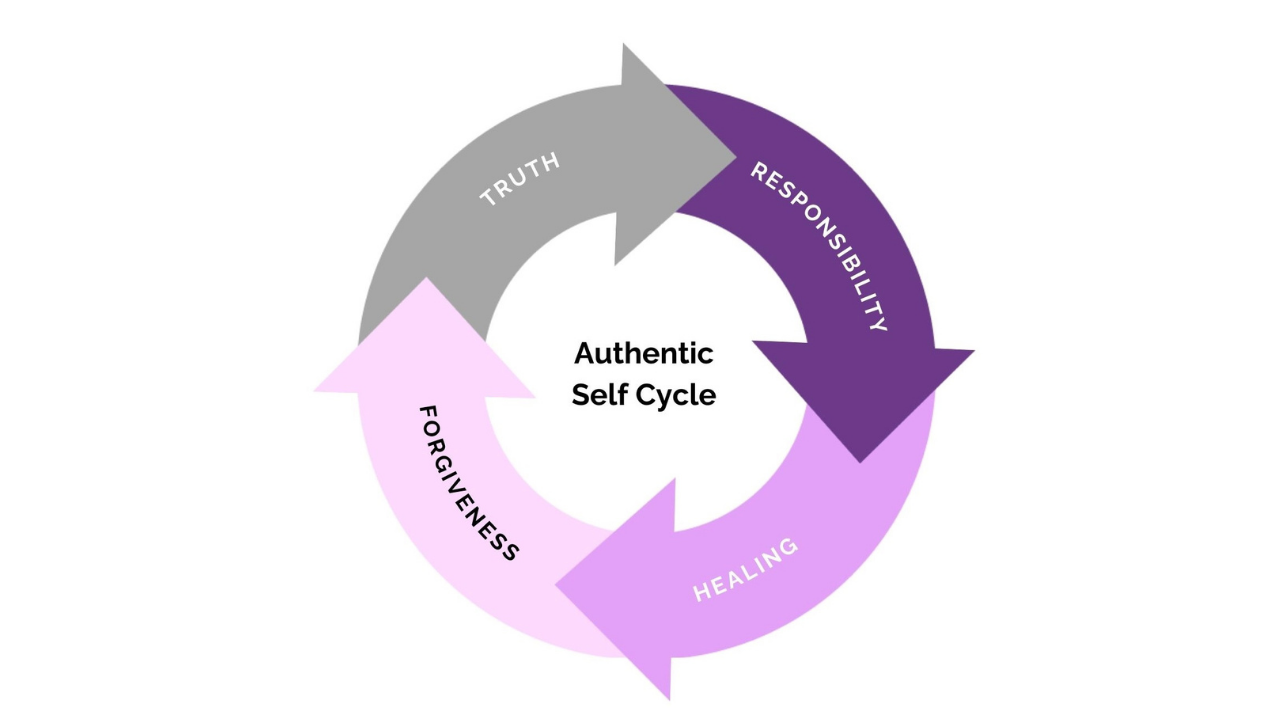
Stage 1: Truth. Name the blueprint. “The version of love I’ve been chasing isn’t love — it’s a childhood survival strategy. I’ve been performing to earn attachment, not showing up to be known. My partner isn’t rejecting the real me — they’ve never met the real me because I’ve been too afraid to show up.”
Stage 2: Responsibility. Own your emotional reactions without blame. “My partner isn’t my parent — my nervous system just thinks they are. The performance, the people-pleasing, the perfection-demanding — that’s mine to heal. It’s not their job to make me feel liked. It’s mine to become someone I like first.”
That’s you if you’re finally seeing the pattern — the same performance running in every relationship, every job interview, every family dinner, every first date.
Stage 3: Healing. Rewire the emotional blueprint so that quiet acceptance stops feeling boring and starts feeling like home. When boring people become attractive — when stability, consistency, and genuine liking feel safe instead of suffocating — that’s when you know you’re healing. Creates a NEW emotional chemical pattern that replaces fear, shame, and denial.
Stage 4: Forgiveness. Release the inherited emotional blueprint and reclaim your authentic self. Not forgiving others for the conditional love they modeled. Forgiving yourself for the decades you spent performing instead of living. When you can look at your past relationships without rage or shame and see them as the curriculum for discovering your authentic self — you’ve graduated from this lesson.
The best you can ever do and expect is that today you like someone. You can only guarantee today because you’re ever-evolving. When that becomes your view of relationship — showing up authentically today, releasing the demand for forever, allowing both people to be perfectly imperfect — you’ve arrived at something most people never experience.
Signs You’re Chasing Love Instead of Like Across Your Life
Family Relationships
You perform a version of yourself around family that doesn’t match who you actually are. You manage your parents’ perceptions. You hide your real struggles, your real beliefs, your real life. You seek their approval for major decisions even as an adult. You feel guilty for setting boundaries because boundary-setting wasn’t safe in childhood.
That’s you if your parents still don’t know the real you — because the real you was never safe enough to show them.
Romantic Relationships
You fall hard and fast based on intensity, not compatibility. You suppress your needs to avoid conflict. Your worth depends on whether your partner loves you back. You try to change yourself to be “the right” partner. You keep score of sacrifices and expect repayment. The honeymoon ends and you both feel blindsided by who the other person “really is.” Explore the signs of relationship insecurity to understand this pattern.
That’s you if every relationship starts with fireworks and ends with “I don’t even know who you are anymore” — because both of you were performing survival personas, not showing authentic selves.
Friendships
You have one or two friends who actually know you — and dozens who know the performance version. You’re the emotional support person who can’t ask for support. You stay friends with people who don’t actually like you; they like what you do for them. You hide your struggles because vulnerability feels dangerous.
That’s you if your friendships feel one-directional — you give, they take, and nobody actually knows who you are underneath the helpfulness.
Work and Achievement
You work beyond your capacity to prove your worth. You equate productivity with lovability. You struggle with imposter syndrome because you’ve been performing competence the same way you perform love. You can’t say no to requests because your survival persona says compliance equals safety. Build genuine self-esteem that doesn’t depend on achievement.
That’s you if you’ve been promoted for the very pattern that’s destroying you — your survival persona’s perfectionism is your company’s greatest asset and your nervous system’s greatest prison.
Body and Health
You ignore your body’s signals because your survival persona says rest is weakness. You use food, substances, exercise, or work to numb the feelings your authentic self is trying to express. You push through exhaustion because performing wellness is easier than feeling the truth underneath.
That’s you if you have a morning routine, a workout schedule, and a wellness tracker — but you can’t tell a friend you’re having a bad day because vulnerability still feels dangerous.
Frequently Asked Questions
What does it mean to be liked instead of loved?
Being liked means someone accepts your complete self — perfections and imperfections — without demanding that you perform, change, or earn their approval. Love, as most people practice it, is conditional and intensity-dependent. Liking is quiet, accepting, forgiving, and encompassing of the whole person. Being liked creates safety because the other person knows you fully and chooses you anyway — not despite your imperfections, but including them.
How do I know if my partner actually likes me or just loves me?
Ask yourself: does your partner know the real you? Do they know your struggles, your childhood wounds, your worst moments — and still choose to be with you? Or are they in love with a version of you that you carefully curated? If they only know the performance, they love a character. If they know the whole person and still show up with acceptance, they like you. The difference is whether you feel safe being imperfect around them.
Can you have both love and like in a relationship?
Absolutely — and that’s the goal. The healthiest relationships have both. But like must come first. Without genuine liking — without the quiet acceptance of the whole person — love becomes a performance that eventually collapses under its own weight. When you build a relationship on liking first, the love that develops is authentic, sustainable, and doesn’t require intensity to survive. Learn the do’s and don’ts for great relationships to build this foundation.
Why does being liked feel harder to find than being loved?
Because being liked requires you to show up as yourself — and your survival persona has spent decades making sure that doesn’t happen. Being loved only requires you to perform well enough to match someone’s expectations. Being liked requires vulnerability, authenticity, and the willingness to be seen fully. Most people never experience being liked because they never let anyone see the real version of themselves.
Is it possible to like yourself if your childhood taught you that you’re unlovable?
Yes. Self-liking is a skill that can be built through the Emotional Authenticity Method™. Your childhood taught you that your worth was conditional — tied to performance, obedience, or achievement. The Authentic Self Cycle™ rewires that blueprint by moving through truth, responsibility, healing, and forgiveness until your nervous system recognizes that you have inherent value — not because of what you do, but because of who you are.
How long does it take to move from performing love to genuine connection?
There’s no fixed timeline. Most people report significant shifts within 6-12 months of consistent work with the Emotional Authenticity Method™. The timeline depends on how deep the childhood conditioning runs, how much professional support you get, and how willing you are to show up imperfectly in your relationships. Every time you practice being authentic instead of performing, you’re building new neural pathways. The performance weakens. The authentic self strengthens.
The Bottom Line
You’ve been chasing the wrong thing. The intensity you thought was love was actually your nervous system recognizing childhood. The performance you thought was connection was actually your survival persona earning attachment. The conditions you placed on your partner — and the conditions they placed on you — were childhood blueprints running adult relationships.
Being liked is quieter. It’s less dramatic. It doesn’t come with fireworks or grand declarations. But it comes with something love rarely delivers: safety. The safety to be imperfect. The safety to show your real self. The safety to sit in silence and know that who you are — not who you perform to be — is enough.
That’s the shift. From performing love to feeling connection. From chasing intensity to choosing acceptance. From hiding your imperfections to discovering that your imperfections are the very things that make you likeable.
Can you see why it’s better to be liked much more than loved? It’s a much safer, more complete, honest, vulnerable, and transparent dynamic than to be loved. And it starts with one decision: to stop performing and start showing up as yourself. Imperfect. Real. Likeable.
Recommended Reading
- Facing Codependence by Pia Mellody — The foundational text on how childhood creates the performance of love, survival personas, and the loss of authentic self.
- The Body Keeps the Score by Bessel van der Kolk — Essential reading on how conditional love patterns live in your nervous system and why healing requires more than understanding.
- When the Body Says No by Gabor Maté — How emotional repression and the performance of perfection manifest as physical illness.
- Codependent No More by Melody Beattie — The classic guide to stopping the cycle of self-abandonment and earning love through sacrifice.
- The Gifts of Imperfection by Brené Brown — A guide to wholehearted living that directly counters the perfectionism keeping you from being genuinely liked.
Ready to Be Liked Instead of Performed For?
- Emotional Blueprint Starter Course — Individual ($79) — Your personal roadmap to understanding your emotional blueprint and discovering who you are beneath the survival persona.
- Relationship Starter Course — Couples ($79) — If you’re in a relationship and want to move from performing love to genuinely liking each other.
- Why We Can’t Stop Hurting Each Other ($479) — A deep dive into why relationships built on survival personas collapse and how to rebuild from authenticity.
- Why High Achievers Fail at Love ($479) — For the falsely empowered survival persona who performs excellence everywhere but can’t be liked because they won’t be known.
- The Shutdown Avoidant Partner ($479) — Understanding why emotional distance prevents genuine liking and how to heal avoidant attachment.
- Tier 1: Mapping the Blueprint ($1,379) — The comprehensive program for deep rewiring of your emotional blueprint so you can finally show up as yourself.
Start with the Feelings Wheel exercise to begin reconnecting with your emotional life today. Then explore the signs of enmeshment to understand how your boundaries collapsed under conditional love. Your authentic self — the one beneath the performance, beneath the perfection, beneath the survival persona — is ready to be liked.