
Ghosting is the act of abruptly cutting off all communication with someone without explanation — and if it keeps happening to you, the pattern isn’t random. It’s rooted in your childhood emotional blueprint. The person who ghosted you has their own unhealed trauma driving their behavior. But here’s what no one tells you: the reason you keep attracting ghosters — and the reason it devastates you every single time — lives in the same place. Your nervous system learned in childhood what “love” looks like, and if love looked like inconsistency, emotional unavailability, or abandonment, your brain will keep choosing partners who deliver exactly that.
That’s you — the one who keeps showing up with your whole heart and wondering why they disappear without a word.
This isn’t a dating problem. It’s a trauma pattern. And understanding it is the first step to breaking it.
Ghosting is a predictable outcome of unhealed childhood attachment wounds — both the ghoster and the person being ghosted are operating from survival personas created in childhood, repeating the Worst Day Cycle™ of trauma, fear, shame, and denial in their adult relationships.
What Is Ghosting and Why Does It Hurt So Much?
Ghosting is the sudden, unexplained disappearance of someone you’re in a relationship with — romantic, friendship, or otherwise. No goodbye. No explanation. No closure. One day they’re texting you back, and the next day they’re gone. And you’re left staring at your phone, replaying every conversation, wondering what you did wrong.
That’s you — checking your phone for the hundredth time, convinced that if you just figure out what you said wrong, you can fix it.
Here’s why ghosting hurts so much: it doesn’t just trigger today’s pain. It triggers your oldest pain. For anyone who experienced emotional unavailability, inconsistency, or abandonment in childhood, ghosting doesn’t feel like a dating disappointment. It feels like the original wound ripping back open. Your nervous system doesn’t know the difference between your partner disappearing today and your parent disappearing emotionally when you were five.
That’s the real pain — not that this person left, but that your body remembers every time someone left before, and it’s feeling all of it at once.
The intensity of your reaction to ghosting is the clearest sign that this pattern lives deeper than dating. It lives in your childhood emotional blueprint — the set of meanings your brain created about love, safety, and worth before you were old enough to question them.
Why Do People Ghost? The Childhood Trauma Behind Disappearing
People who ghost aren’t evil. They’re terrified. Ghosting is a survival strategy — a way to escape vulnerability, conflict, and emotional intimacy without having to feel the feelings that come with honest communication.
That’s the truth nobody wants to hear — the person who ghosted you is running from their own pain, not from you.
Here’s what actually happened to the person who ghosts: as a child, they learned that emotional closeness was dangerous. Maybe their parent was unpredictable — loving one moment, raging or withdrawing the next. Maybe vulnerability was punished. Maybe they learned that the safest strategy was to disappear before they could be hurt.
Their brain built a survival persona around denial, detachment, and control through disappearance. And that persona was brilliant in childhood — it kept them safe when staying emotionally present was dangerous. But in adult relationships, that same survival strategy destroys connection, trust, and intimacy.
That’s the ghoster — not a villain, but a wounded child in an adult body who never learned that love doesn’t have to be terrifying.
The brain conserves energy by repeating known patterns. It can’t tell right from wrong — only known from unknown. If the ghoster’s childhood taught them that intimacy leads to pain, their brain will keep choosing disappearance over vulnerability — because disappearance is known, and vulnerability is unknown. And to the brain, unknown means dangerous.
People ghost because their childhood trauma created a neurochemical pattern that equates emotional vulnerability with danger — their brain automates the disappearing act as a survival response, choosing the familiar pain of disconnection over the terrifying unknown of authentic intimacy.
How the Worst Day Cycle™ Explains Ghosting
Ghosting — both doing it and attracting it — follows a predictable neurochemical pattern called the Worst Day Cycle™. Understanding this cycle is the key to breaking the pattern.
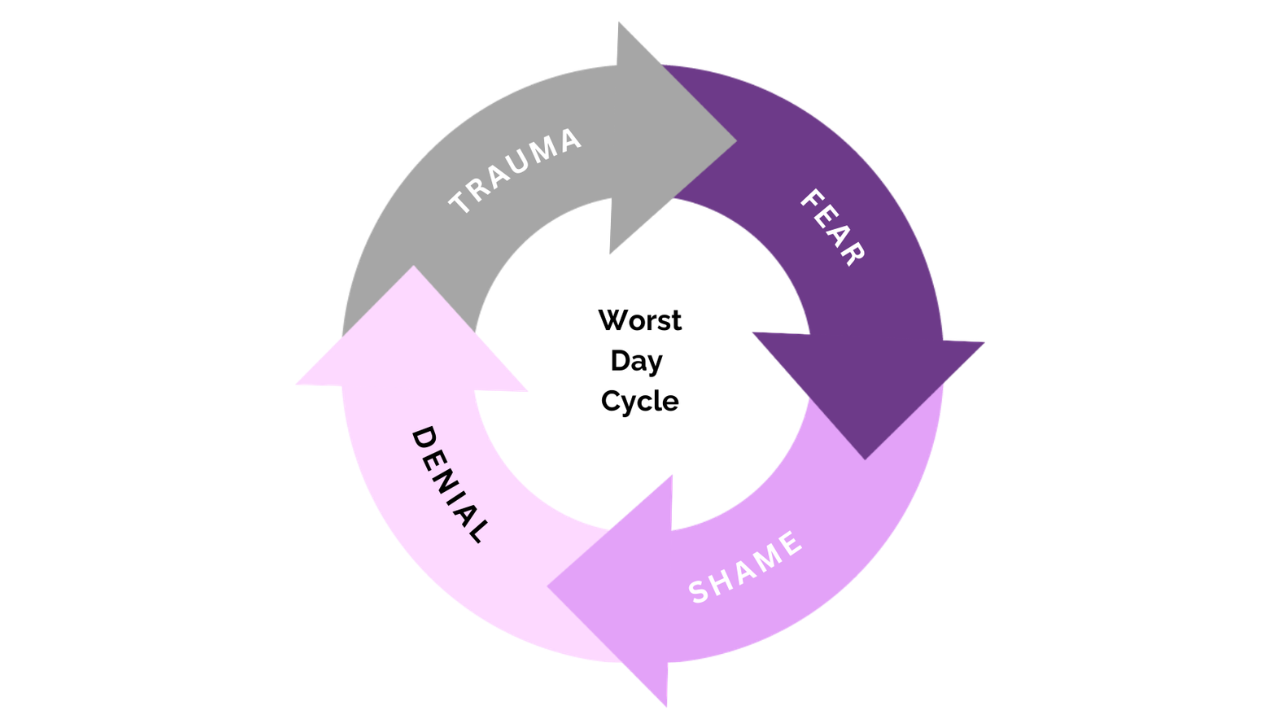
The Worst Day Cycle™ has four stages: Trauma → Fear → Shame → Denial.
Trauma: Any negative emotional experience in childhood that created painful meanings. For the ghoster, this might be a parent who was emotionally unavailable, a caregiver who withdrew love as punishment, or a household where vulnerability was treated as weakness. For the person being ghosted, the trauma might be inconsistent love — a parent who was present sometimes and absent other times, teaching the child that love is something you have to chase. These experiences create a massive chemical reaction in the brain and body. The hypothalamus generates chemical cocktails — cortisol, adrenaline, dopamine, oxytocin misfires — and the brain becomes addicted to these emotional states.
That’s you — feeling that sick rush of anxiety when someone doesn’t text back, because your nervous system was calibrated for emotional inconsistency in childhood.
Fear: Fear drives repetition. The brain thinks repetition equals safety. So the ghoster keeps disappearing — because disappearing feels safer than staying and being vulnerable. And you keep choosing people who are emotionally unavailable — because unavailable love is what your nervous system recognizes as “love.” Since 70%+ of childhood messaging is negative and shaming, adults repeat these painful patterns in relationships, career, hobbies, health — everything.
Sound familiar? You swore you’d never date someone unavailable again — and then you did. That’s not weakness. That’s your nervous system doing exactly what it was trained to do.
Shame: This is where you lost your inherent worth. “I am the problem.” When someone ghosts you, shame says: “There must be something wrong with me. I’m too much. I’m not enough. If I were more attractive, more interesting, more lovable — they wouldn’t have left.” This isn’t a rational thought. It’s a childhood wound that ghosting rips back open.
That’s the shame talking — the voice that says “they left because of who I am” when the truth is they left because of who THEY are.
Denial: Denial is the survival persona you created to survive the pain. After being ghosted, denial looks like: making excuses for the ghoster (“they’re just busy”), blaming yourself (“I should have played it cooler”), immediately jumping into the next relationship to avoid the pain, or telling yourself “it doesn’t bother me” while your body tells a completely different story.
The Worst Day Cycle™ explains why ghosting is never a one-time event — both the ghoster and the person being ghosted are running automated neurochemical programs from childhood, repeating the same attachment pattern until the root trauma is addressed.
How Your Survival Persona Attracts Ghosters
Your survival persona is the identity you created in childhood to navigate an emotionally unsafe environment. It’s not who you are — it’s who you had to become. And each survival persona type has a specific relationship to the ghosting pattern.
There are three survival persona types:
The Falsely Empowered: This persona controls, dominates, and rages. In the ghosting dynamic, the falsely empowered person may actually be the ghoster — using disappearance as a power move. Or they respond to being ghosted with rage, revenge, and attempts to regain control. They text repeatedly. They show up uninvited. They refuse to accept that someone could just leave. Their ghosting response is driven by the belief: “No one leaves ME.”
That’s you — the one who sent 47 texts after being ghosted, not because you’re “crazy” but because your survival persona cannot tolerate feeling powerless.
The Disempowered: This persona collapses, people-pleases, and disappears. In the ghosting dynamic, the disempowered person is almost always the one being ghosted — repeatedly. They attract ghosters because they give too much, too fast, abandoning their own needs to keep the other person comfortable. They tolerate red flags. They make excuses. They blame themselves when the person vanishes. Their ghosting response is driven by the belief: “If I had been better, they wouldn’t have left.”
That’s you — the one who gave everything and then sat alone wondering what was wrong with you, when the truth is you were choosing people who were never available in the first place.
The Adapted Wounded Child: This persona oscillates between both — raging one moment, collapsing the next. After being ghosted, they swing between “I don’t care, I’m better off” and “please come back, I’ll do anything.” They might block the ghoster, then unblock them three days later. They oscillate between self-blame and other-blame without ever landing on the truth: this pattern started long before this relationship.
That’s you — blocking their number on Monday, checking if they viewed your story on Tuesday, and telling your friends you’re “totally fine” on Wednesday.
Your survival persona is the reason you keep finding yourself in the ghosting dynamic — it unconsciously selects partners whose attachment style matches your childhood blueprint, creating a neurochemical familiarity that your brain misinterprets as love.
How Ghosting Patterns Show Up in Every Area of Your Life
Family: The original ghosting happened in your family — not with a dating app, but with a parent or caregiver who was emotionally unavailable. Maybe they were physically present but emotionally gone. Maybe they gave love inconsistently — warm and connected one day, cold and withdrawn the next. That inconsistency trained your nervous system to chase, to wait, to hope. And now you repeat that pattern with everyone.
That’s you — still waiting for the parent who emotionally ghosted you at age five to finally show up.
Romantic Relationships: This is where the ghosting pattern is most visible. You choose partners who mirror your childhood attachment wound. If love was inconsistent, you choose inconsistent partners. If love required chasing, you choose partners who pull away. If love was conditional on your performance, you overperform in relationships — giving everything, losing yourself, and then being devastated when they disappear. The chemistry you feel with unavailable people isn’t love. It’s trauma recognition.
That’s the hardest truth — the “spark” you feel with people who eventually ghost you is your nervous system recognizing the emotional pattern it learned in childhood.
Friendships: Ghosting doesn’t just happen in dating. You’ve had friends who slowly faded away without explanation. You’ve been the friend who gives everything and then gets dropped when someone more exciting comes along. Or you’ve been the one who withdraws from friendships when they get too close — ghosting others because intimacy feels threatening.
Sound familiar? You have a hundred acquaintances and zero people who actually know you.
Work: The ghosting pattern shows up at work as inconsistent engagement — throwing yourself into projects and then burning out and withdrawing. Or it shows up as choosing bosses and colleagues who are emotionally unavailable, hoping to finally earn the approval you never got in childhood. You might even ghost opportunities — self-sabotaging by disappearing from promising situations because success feels as unsafe as intimacy.
That’s you — the one who gets close to a breakthrough and then mysteriously pulls back, because your nervous system can’t tolerate the vulnerability of actually getting what you want.
Body and Health: Every time you get ghosted, your body doesn’t just feel sad. It goes into a full trauma response — insomnia, loss of appetite, chest tightness, nausea, obsessive thinking. These aren’t overreactions. They’re your body reliving the original abandonment wound. Chronic ghosting patterns lead to elevated cortisol, disrupted sleep, digestive issues, and a nervous system stuck in fight-or-flight — because your body can’t tell the difference between being abandoned by a partner at thirty and being abandoned by a parent at three.
Why Do You Keep Attracting People Who Ghost?
Here’s what nobody wants to hear: you’re not just unlucky. You’re not just picking the wrong people. Your nervous system is specifically calibrated to feel “chemistry” with people who will eventually become unavailable — because that’s what love felt like in your childhood.
That’s you — mistaking anxiety for attraction, mistaking inconsistency for excitement, mistaking the desperate hope that they’ll change for love.
When someone is consistently available, present, and communicative, your nervous system reads it as boring. Flat. No spark. Because available love is UNKNOWN to your system — and the brain interprets unknown as dangerous. So you gravitate toward the person who texts back sometimes, who’s hot and cold, who keeps you guessing. Not because you want drama. Because your nervous system was programmed for drama in childhood, and it keeps seeking what it knows.
The other piece nobody talks about: there are subconscious benefits to attracting ghosters. Inconsistent relationships give you freedom without commitment. They give you the excitement of pursuit without the vulnerability of true intimacy. They let you have one foot in and one foot out — just like your survival persona wants. You get to say you want connection while your nervous system ensures you never actually have to be fully seen.
That’s the denial — telling yourself you want a committed relationship while unconsciously choosing people who will never commit.
You attract ghosters because your childhood emotional blueprint set your “love thermostat” to match inconsistent attachment — your brain chemically rewards you for choosing unavailable partners because that pattern matches the original neurochemical cocktail of childhood love mixed with fear, hope, and abandonment.
How the Emotional Authenticity Method™ Breaks the Ghosting Pattern
The Emotional Authenticity Method™ is the daily practice that rewires the attachment blueprint underneath the ghosting pattern. It works because it targets the body — where trauma lives — not just the mind where dating advice lives.
Step 1: Somatic Down-Regulation with optional Titration. When you’ve been ghosted, your nervous system is in full survival mode — fight, flight, or freeze. Before you can process anything, you have to get out of that state. This might mean deep breathing, grounding, cold water on your wrists, or simply slowing down enough to feel your body instead of spiraling in your thoughts. Titration means you go slowly — you don’t force yourself to feel everything at once.
That’s you — learning to put the phone down and breathe instead of sending the eleventh text.
Step 2: What am I feeling? Not “why did they ghost me?” Not “what did I do wrong?” But: what am I FEELING right now? Using the Feelings Wheel, you develop emotional granularity — the ability to name specific emotions instead of lumping everything into “devastated.” You might discover that underneath the pain of being ghosted, there’s terror. Underneath the terror, there’s shame. Underneath the shame, there’s a tiny child who believed they were abandoned because they weren’t enough.
Step 3: Where in my body do I feel it? All emotional trauma is stored physically. When you get ghosted, where does it land? Your chest? Your stomach? Your throat? Locating the feeling in your body is how you move from the obsessive mental loop (“why did they leave?”) to actual somatic processing.
Step 4: What is my earliest memory of this feeling? This is where the pattern breaks. You trace today’s devastation back to its childhood origin. You realize: this isn’t about the person who ghosted me. This feeling is from when I was small. My parent’s emotional unavailability. The inconsistency. The waiting. The hoping. My nervous system just thinks this person IS my parent.
That’s the moment everything shifts — when you realize you’re not grieving a three-month relationship. You’re grieving the childhood attachment wound that three-month relationship triggered.
Step 5: Who would I be if I never had this feeling again? This is the vision step. It connects you to the Authentic Self Cycle™ and gives your nervous system a new destination. Who would you be if love didn’t feel like chasing? If connection didn’t require performing? If you could be fully seen and know — in your body, not just your mind — that you wouldn’t be abandoned?
The Emotional Authenticity Method™ works because emotions are biochemical events — you cannot change the ghosting pattern through dating strategies alone. Thoughts originate from feelings, not the other way around. Until you heal the feeling underneath the pattern, you’ll keep choosing the same people.
How the Authentic Self Cycle™ Replaces the Ghosting Pattern
The Authentic Self Cycle™ is the healing counterpart to the Worst Day Cycle™. Where the Worst Day Cycle™ traps you in Trauma → Fear → Shame → Denial, the Authentic Self Cycle™ restores your identity through Truth → Responsibility → Healing → Forgiveness.
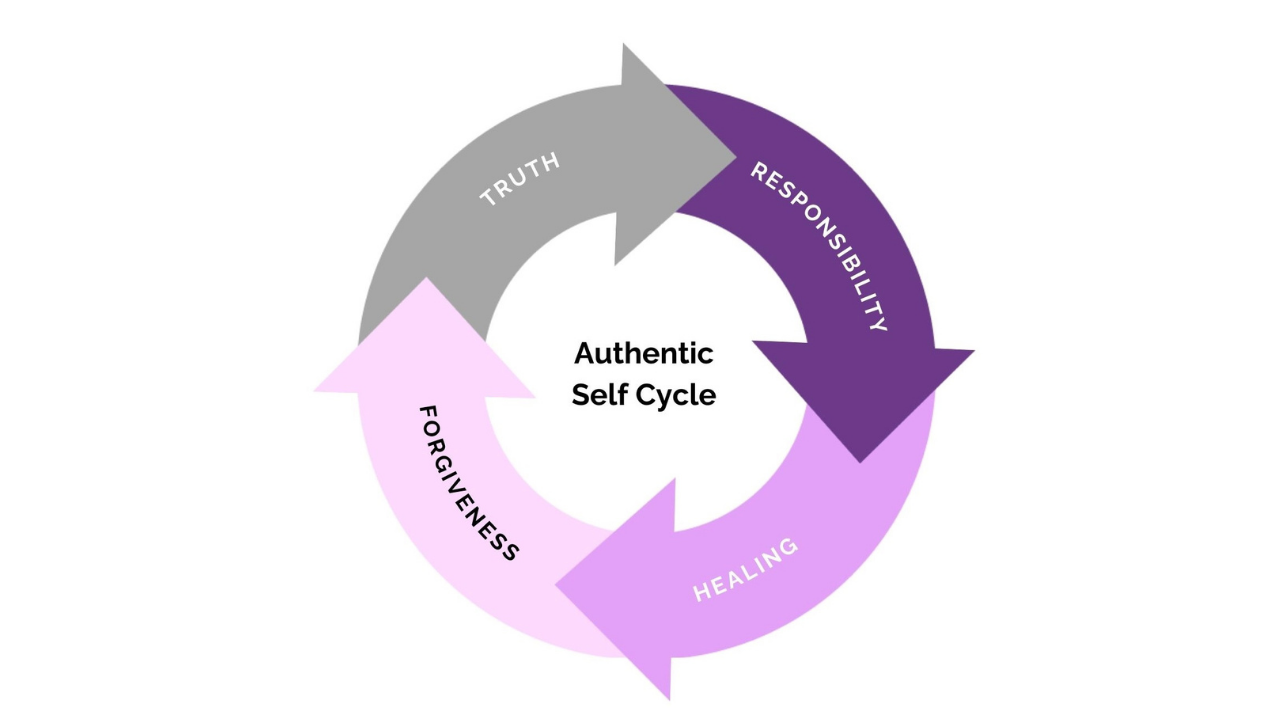
Truth: Name the blueprint. See that “this isn’t about today.” When someone doesn’t text back and your chest tightens, truth says: “This feeling is from childhood. This person’s silence isn’t abandonment — my nervous system just thinks it is because it’s running the same program it learned when I was a child waiting for my parent to come back.”
That’s the first step out of the ghosting spiral — seeing the pattern instead of being trapped inside it.
Responsibility: Own your emotional reactions without blame. “This person isn’t my parent — my nervous system just thinks they are.” This isn’t about excusing the ghoster’s behavior. Ghosting is cruel. But responsibility means you stop making their behavior mean something about YOUR worth. Their disappearance is about their trauma. Your devastation is about yours.
That’s you — finally separating their wound from your wound, and taking responsibility for healing yours.
Healing: Rewire the emotional blueprint so another person’s withdrawal becomes uncomfortable but not catastrophic. So silence isn’t abandonment. So inconsistency is a red flag you walk away from, not a pattern you chase. This is where daily practice does its work — second by second, like the ticks of a clock. Each time you choose not to text the person who ghosted you, not to make excuses for unavailable people, not to abandon yourself to keep someone else — you’re rewiring.
Forgiveness: Release the inherited emotional blueprint and reclaim your authentic self. This creates a NEW emotional chemical pattern that replaces the fear-shame-denial loop with safety, worth, and genuine connection. Forgiveness doesn’t mean the ghoster was right. It means you stop carrying the weight of their wound as if it’s yours. And you stop carrying the weight of your childhood wound as if it defines you.
That’s you — not the person who keeps getting ghosted. The person who healed the wound that made ghosting feel like the end of the world.
The Authentic Self Cycle™ is an identity restoration system — it doesn’t teach you better dating strategies, it replaces the neurochemical pattern that draws you to unavailable people with a new blueprint built on truth, responsibility, and emotional authenticity.
Frequently Asked Questions About Ghosting
Why do people ghost instead of just telling you the truth?
People ghost because their childhood trauma created a survival persona that avoids vulnerability at all costs. Honest communication requires emotional intimacy — the ability to sit with discomfort, say difficult things, and tolerate another person’s pain. For someone whose nervous system was wired in childhood to equate vulnerability with danger, ghosting feels safer than truth. Their disappearance is a trauma response, not a commentary on your worth.
Why does being ghosted hurt so much more than a normal breakup?
Being ghosted triggers the original attachment wound from childhood — the experience of being abandoned without explanation. A normal breakup, while painful, gives you closure and information. Ghosting gives you nothing, which forces your brain to fill in the blanks with its oldest, most shame-filled stories: “I wasn’t enough.” “I’m unlovable.” The Worst Day Cycle™ explains how this shame response was automated in childhood and gets reactivated by any experience of unexplained abandonment.
How do I stop attracting people who ghost me?
You stop attracting ghosters by healing the childhood emotional blueprint that draws you to unavailable people. Your nervous system currently interprets inconsistency as “chemistry” because that’s what love felt like growing up. The Emotional Authenticity Method™ rewires this pattern by tracing your attraction to unavailable people back to its childhood origin and creating a new neurochemical association with safe, consistent love. You don’t need better dating strategies — you need a different emotional blueprint.
Is ghosting a form of emotional abuse?
Ghosting is a form of emotional abandonment. Whether it rises to abuse depends on context — a single ghost after two dates is different from repeated cycles of connection and disappearance within an established relationship. Repeated ghosting — where someone disappears and returns, disappears and returns — is a particularly damaging pattern because it keeps your nervous system in a constant state of hypervigilance and hope, replicating the childhood dynamic of inconsistent love.
Can a ghoster change their behavior?
A ghoster can change, but only by addressing the childhood trauma that created the pattern. Ghosting is a survival persona behavior — an automated response to emotional vulnerability that was programmed in childhood. Changing it requires the same deep work as any trauma pattern: somatic processing, tracing the behavior to its childhood origin, and rewiring the nervous system’s relationship to intimacy and vulnerability through the Authentic Self Cycle™.
What should I do immediately after being ghosted?
First, do NOT chase. The urge to text repeatedly, to show up uninvited, to demand answers — that’s your survival persona trying to recreate the childhood dynamic of chasing unavailable love. Instead, use Step 1 of the Emotional Authenticity Method™: somatic down-regulation. Get your nervous system out of survival mode. Then ask yourself: “What am I feeling?” and “Where in my body do I feel it?” This shifts you from the obsessive mental loop into your body — where actual healing happens.
The Bottom Line
The person who ghosted you didn’t leave because of who you are. They left because of who they are — a wounded person running a childhood survival program that says vulnerability is more dangerous than disappearing.
And the reason it destroyed you isn’t because you’re weak or dramatic or “too much.” It’s because your nervous system recognizes this pattern. It’s been here before. It knows this pain. And every time someone ghosts you, it’s not just processing today’s loss — it’s processing every loss that came before it, all the way back to the first time love disappeared without warning.
That’s you — not the person who keeps getting ghosted. The person who’s been carrying a childhood wound that ghosting keeps ripping open.
You don’t need better dating apps. You don’t need to play harder to get. You don’t need to figure out the perfect text to prevent people from leaving.
You need to heal the wound that makes leaving feel like dying. You need to rewire the blueprint that mistakes anxiety for attraction and inconsistency for love. You need to build a nervous system that recognizes safe, available, consistent love as HOME — not as boring.
That work doesn’t happen in your head. It happens in your body. In the feelings you’ve been running from. In the truth you’ve been too afraid to speak. In the five steps of the Emotional Authenticity Method™, practiced daily, until your body learns what your mind already knows: you are worthy of love that stays.
That’s you — not the person they ghosted. The person who finally stopped chasing and started healing.
Recommended Reading
These books complement the frameworks in this article and deepen your understanding of why you attract ghosters and how to break the pattern:
Facing Codependence by Pia Mellody — the foundational text on how childhood attachment wounds create the codependent patterns that draw you to unavailable partners.
The Body Keeps the Score by Bessel van der Kolk — the science of how attachment trauma lives in the body, explaining why the pain of ghosting feels physical, not just emotional.
When the Body Says No by Gabor Maté — how chronic relationship stress from repeated abandonment patterns manifests as physical illness.
Codependent No More by Melody Beattie — a practical guide to recognizing when your “love” for unavailable people is actually a codependent survival strategy.
The Gifts of Imperfection by Brené Brown — how shame drives the belief that you were ghosted because you aren’t enough, and how vulnerability is the path back to authentic connection.
Take the Next Step
If you’re ready to stop attracting people who ghost and start building relationships from your authentic self, Kenny Weiss offers courses designed for people who are done chasing and ready to heal:
Emotional Blueprint Starter Course — Individual ($79) — Your personal roadmap to understanding the Worst Day Cycle™ and why your attachment patterns keep drawing you to unavailable people.
Relationship Starter Course — Couples ($79) — For couples ready to break the cycle of emotional unavailability and build genuine interdependence.
Why We Can’t Stop Hurting Each Other ($479) — Deep-dive into the Worst Day Cycle™ and how childhood trauma creates the relationship pain that leads to ghosting dynamics.
Why High Achievers Fail at Love ($479) — For high achievers who keep choosing unavailable partners and can’t figure out why success hasn’t translated to love.
The Shutdown Avoidant Partner ($479) — Understanding avoidant attachment — the attachment style most likely to ghost — through the lens of trauma chemistry and survival personas.
Tier 1: Mapping the Blueprint ($1,379) — The comprehensive program for learning and practicing the Emotional Authenticity Method™ and rewiring your attachment blueprint.
Download the Feelings Wheel — the free tool used in Step 2 of the Emotional Authenticity Method™ to build emotional granularity and move beyond “I feel devastated” to the specific emotions underneath the ghosting pain.
Explore more: The Signs of Enmeshment | 7 Signs of Relationship Insecurity | 7 Signs of High Self-Esteem | How to Determine Your Negotiables and Non-Negotiables | 10 Do’s and Don’ts for a Great Relationship