Tag: fear of success

  • Fear in the Worst Day Cycle: Why Your Brain Repeats Painful Patterns

    Fear in the Worst Day Cycle: Why Your Brain Repeats Painful Patterns

    Fear is the second stage of the Worst Day Cycle™ — it is the neurochemical survival response that keeps your brain repeating painful childhood patterns because your nervous system cannot tell the difference between safe and unsafe, only between known and unknown. If you’ve ever wondered why you keep choosing the same relationships, the same conflicts, the same self-sabotaging patterns — even when you know better — fear is the answer. Not the fear you think of. Not the fear of failure. The fear of success. The fear of becoming who you actually are.

    That’s you — the one who knows exactly what you need to do but can’t make yourself do it, and then shames yourself for not doing it.

    This isn’t weakness. This isn’t laziness. This is neuroscience. Your brain became chemically addicted to the emotional states of your childhood trauma, and fear is the engine that keeps that addiction running. Understanding how fear operates in the Worst Day Cycle™ is the first step to breaking free from the patterns that have been controlling your life since before you could spell your own name.
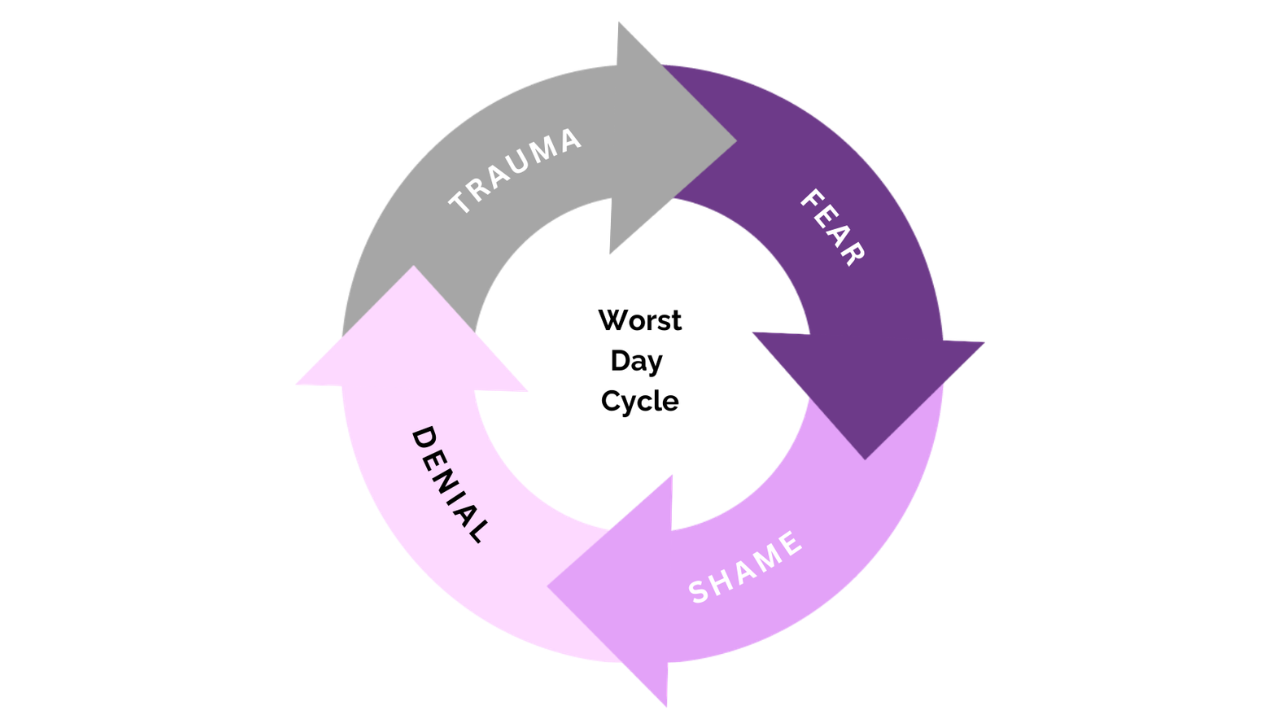
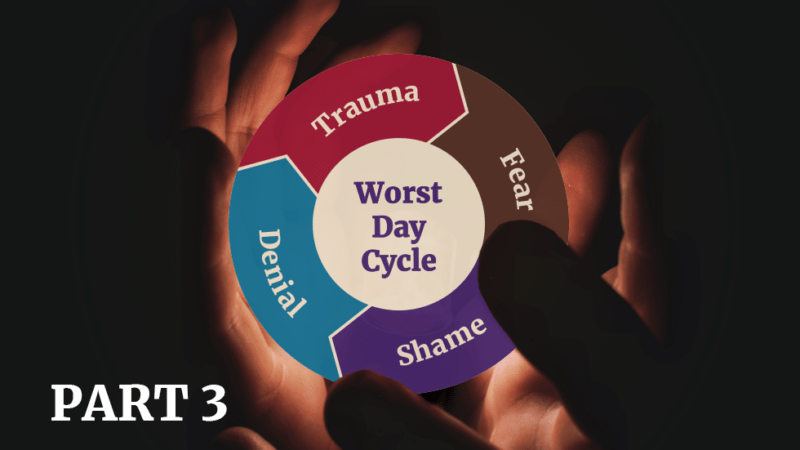
    Worst Day Cycle diagram showing how fear drives repetition of childhood trauma patterns

    What Is Fear in the Worst Day Cycle™?

    Fear in the Worst Day Cycle™ is the neurochemical survival response that emerges from childhood trauma — it is the brain’s chemical addiction to repeating known emotional patterns because the nervous system equates familiar pain with safety and unfamiliar growth with danger.

    The Worst Day Cycle™ has four stages: Trauma → Fear → Shame → Denial. Fear is Stage 2 — the stage where your brain takes the original childhood wound and turns it into a lifelong operating system.

    Here’s what happens: when you experience trauma as a child — any negative emotional experience that created painful meanings about yourself — your hypothalamus generates a chemical cocktail. Cortisol floods your system. Adrenaline spikes. Dopamine misfires. Oxytocin gets dysregulated. Your brain doesn’t just experience pain — it becomes chemically addicted to that pain.

    That’s you — feeling most alive when you’re in crisis mode, because your nervous system was calibrated for chaos in childhood and it literally doesn’t know how to operate without it.
    Trauma chemistry icon showing how childhood fear creates neurochemical addiction patterns

    Fear doesn’t feel like what you think fear feels like. It doesn’t always show up as shaking hands or a racing heart. Sometimes it shows up as procrastination. Sometimes it shows up as perfectionism. Sometimes it shows up as that inexplicable resistance you feel when you’re about to do something that would actually change your life.

    That’s you — putting off the hard conversation, the career change, the boundary you need to set — not because you’re lazy, but because your nervous system is terrified of what happens when you stop repeating the old pattern.

    Fear in the Worst Day Cycle™ is not a feeling you choose — it is an automated neurochemical response that your brain runs thousands of times per day without your conscious awareness, ensuring that you repeat the emotional patterns of your childhood in relationships, career, health, and every other area of your adult life.

    Why Does Your Brain Repeat Painful Patterns?

    It takes tremendous energy for your brain to do anything. Scientists estimate that 25% of the calories you ingest go straight to powering your brain. So your brain developed an ingenious energy-conservation strategy: it repeats what it already knows.

    Scientists estimate that 95% to 99% of your daily life is run by your subconscious — repeating patterns learned in the first seven years of life. Your brain doesn’t care whether something is good or bad for you. Its primary concern is energy conservation and survival. Known equals safe. Unknown equals dangerous.
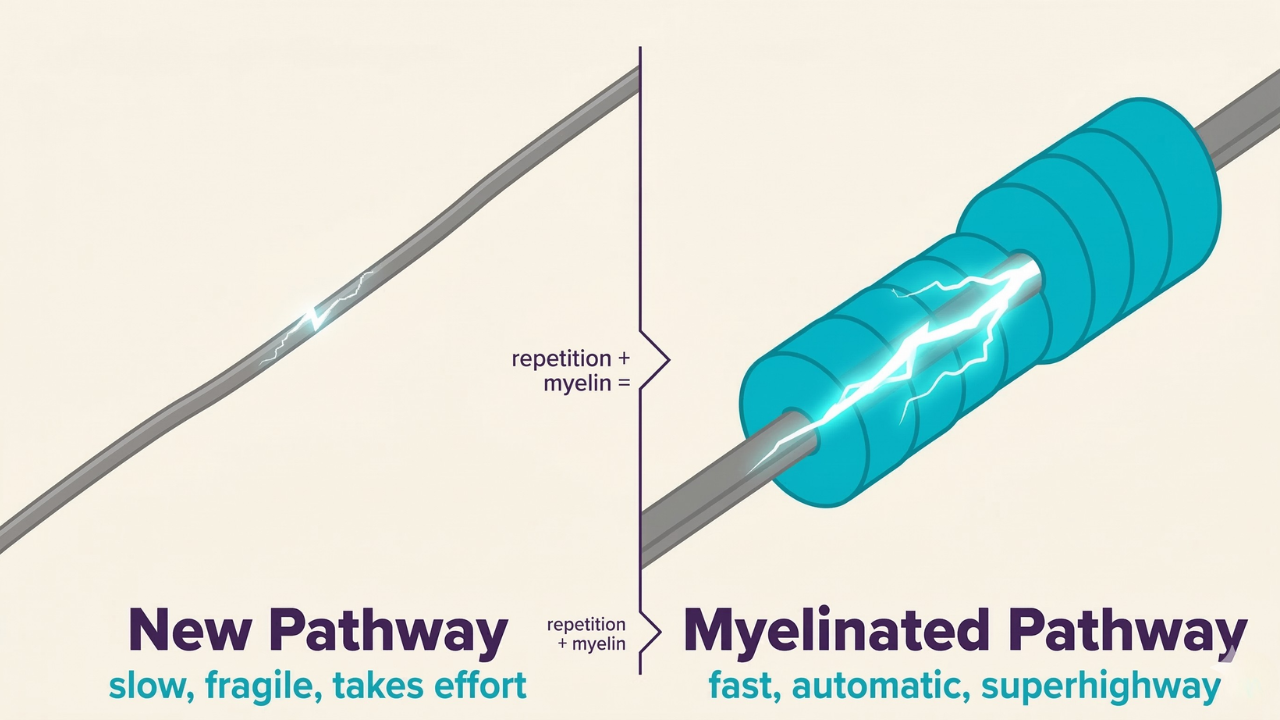
    Myelin and neural pathways icon showing how the brain automates fear-based patterns through repetition

    That’s you — choosing the same type of partner for the third time, knowing it won’t work, but feeling magnetically pulled toward them anyway. Your brain isn’t broken. It’s doing exactly what it was designed to do.

    Think of it like a golf swing. You’re on the driving range, your fingers are calloused, your shirt soaked through. You know there’s a hitch in your swing. You can feel it coming. You’re determined to fix it this time. But as you take the club back, the fear escalates, your body stiffens, and the old pattern takes over. The ball sails right — again. You slam the club down and mutter something about being an idiot. Then you grab another ball and do it again. That’s the Worst Day Cycle™ in miniature — fear of the new movement, repetition of the old one, shame about the result, and then hope that next time will be different.

    The brain conserves energy by repeating known patterns. It can’t tell right from wrong — only known from unknown. Since 70%+ of childhood messaging is negative and shaming, adults repeat these painful patterns in relationships, career, hobbies, health — everything. Your brain is literally choosing pain because pain is what it knows.

    Sound familiar? The person who knows exactly what a healthy relationship looks like — and then dates the opposite?

    This is also why healthy relationships feel boring. When you meet someone who is stable, available, and consistent, your nervous system doesn’t register safety. It registers the absence of the chemical cocktail it’s addicted to. The stable person feels flat. The consistent one feels foreign. The available one feels like something is wrong. Your nervous system isn’t seeking love — it’s seeking what it survived.
    Emotional blueprint icon showing how childhood patterns create fear-driven repetition in adult life

    That’s you — calling someone “boring” because they don’t activate your childhood wound, not realizing that what you’re actually experiencing is withdrawal from trauma chemistry.

    Your brain repeats painful patterns not because you lack willpower or intelligence — it repeats them because the neurochemical addiction created by childhood trauma makes the familiar pattern feel like safety and any deviation from that pattern feel like a threat to survival.

    Why Are You Afraid of Success, Not Failure?

    Here’s something that will shake up everything you’ve always believed: not a single person on this planet is afraid to fail. Every person on this planet is afraid to succeed.

    The proof? Have you ever found yourself procrastinating? When you think about making a change — whether it’s getting out of bed, sending the email, leaving the relationship, starting the business — what comes up? Thoughts like “I don’t feel like it.” “I’ll start tomorrow.” “I’ll do it later.” In that moment, you’ve chosen failure. And you’re completely comfortable with it.

    That’s you — choosing failure a hundred times a day and not even noticing, because failure is the known. Failure is what your brain has been rehearsing since childhood.
    Emotional authenticity icon representing the shift from fear-based survival to authentic self

    Nobody is ever afraid to fail because in the moment you choose not to do something, you’ve chosen failure — and you’re totally comfortable with it. What you’re actually afraid of is success. Because if you succeed, the survival persona says you’re going to lose connection with mom and dad. Success means you’ve lived your life as a fraud. The fear is of the authentic self, not of failure.

    Self-sabotage is the collision between the authentic self and the shame-based survival persona. When you start to succeed, your adapted wounded child and shame-based survival persona pop up and say no. Because if you live in your authentic self, the survival persona loses its connection to mom and dad — the connection it was built to preserve. And if you actually succeed, it means the survival persona side was always wrong and bad. So the persona tries to pull you back into the Worst Day Cycle™ — Trauma → Fear → Shame → Denial — to keep you stuck.

    That’s the fear nobody talks about — the fear that if you actually became your authentic self, you’d have to admit that everything you’ve been doing for 20, 30, 40 years was a performance. And who wants to face that?

    There’s a second way fear sabotages you. When you experience fear, it stops blood from flowing to the prefrontal cortex — the thinking, decision-making part of your brain. Fear literally shuts down your ability to think clearly. That’s why you can’t access logic or make good decisions when you’re triggered. Your survival brain has taken over, and it doesn’t care about your goals, your values, or your plans. It cares about one thing: repeating the known.

    That’s you — making terrible decisions at midnight, sending the text you know you shouldn’t send, because your prefrontal cortex is offline and your survival brain is running the show.

    You are not afraid of failure — you are afraid of success because success requires abandoning the survival persona that was built to keep you safe in childhood, and your nervous system interprets that abandonment as a threat to its most fundamental attachment bond.

    How Your Survival Persona Uses Fear to Keep You Stuck

    Your survival persona is the identity you created in childhood to navigate an emotionally unsafe environment. It’s not who you are — it’s who you had to become. And fear is the fuel that keeps it running.
    Survival persona icon showing how fear drives three survival types in the Worst Day Cycle

    There are three survival persona types, and each one uses fear differently:

    The Falsely Empowered: This persona controls, dominates, and rages. Fear tells the falsely empowered: “If you’re not in control, you’ll be destroyed. If you show vulnerability, you’ll be abandoned. If you’re not the best, you’re worthless.” So this person overworks, overachieves, and over-controls. They look fearless on the outside. Inside, they’re terrified. Every decision is driven by the fear of being exposed as inadequate.

    That’s you — the one who’d rather burn out than slow down, because slowing down feels like dying.

    The Disempowered: This persona collapses, people-pleases, and disappears. Fear tells the disempowered: “If you have needs, you’ll be a burden. If you say no, you’ll be abandoned. If you take up space, you’ll be rejected.” So this person shrinks. They make everyone else’s needs more important than their own. They abandon themselves to maintain connection — because their childhood taught them that self-abandonment is the price of love.

    Sound familiar? The person who says yes to everything and then feels invisible, wondering why nobody ever checks on them?

    The Adapted Wounded Child: This persona oscillates between both — raging one moment, collapsing the next. Fear drives the oscillation. When the adapted wounded child feels out of control, they rage (falsely empowered). When the rage fails, they collapse (disempowered). They swing between “I don’t need anyone” and “please don’t leave me” — and can’t figure out which one is real.
    Adapted wounded child icon showing oscillation between falsely empowered and disempowered fear responses

    That’s you — unpredictable even to yourself, exhausted by your own emotional whiplash, wondering why you can’t just pick a lane and stay in it.

    When your childhood wound gets activated, your brain doesn’t react like a 40-year-old adult. It reacts like a five-year-old child. Fear spike. Shame collapse. Emotional freeze. Fawn response. Helplessness. Catastrophic thinking. These aren’t character flaws — they’re survival reflexes. Your brain pulls you into the child version of you, not because you’re weak, but because that version once kept you alive. This is emotional time travel. And it happens thousands of times per day without your conscious awareness.

    That’s the survival persona in action — and until you see it, you’ll keep mistaking its fear for your own truth.

    Your survival persona uses fear as its primary control mechanism — it convinces your nervous system that any deviation from the childhood pattern means loss of attachment, loss of identity, and loss of safety, keeping you trapped in the Worst Day Cycle™ indefinitely.

    How Fear Shows Up in Every Area of Your Life

    Family: Fear keeps you enmeshed with the people who wounded you. You can’t set boundaries because boundaries feel like abandonment. You overfunction — managing your parent’s emotions, solving your sibling’s problems, keeping the peace at every family gathering. Or you underfunction — disappearing, going numb, becoming the invisible one who “doesn’t cause problems.” Either way, fear is running the show. Your nervous system still believes that rocking the boat means being rejected or abandoned.

    That’s you — still playing the same role your family assigned you at age six, even though you’re 45 years old and run a business.

    Romantic Relationships: Fear makes you choose partners who replicate your childhood wound. The avoidant who triggers your abandonment terror. The controller who mirrors your critical parent. The charmer whose inconsistency activates the same fear-hope-disappointment cycle you grew up with. When they pull away, your nervous system doesn’t register a normal boundary. It registers the beginning of the end — the same feeling you had when your parent withdrew love. So you chase. Or you shut down. Or you rage. All of it is fear.

    That’s you — terrified of the silence between texts, interpreting normal space as evidence that you’ve been abandoned, because your childhood taught you that distance means danger.

    Friendships: Fear makes you the friend who gives everything and receives nothing. You listen for hours but never share your own struggles. You cancel your plans when someone else needs you. You monitor social media for signs of exclusion. And when a friend doesn’t text back immediately, the fear spike hits — the same spike you felt as a child when you couldn’t read the room fast enough.

    Sound familiar? The person who has fifty friends and still feels completely alone?

    Work: Fear shows up as workaholism for the falsely empowered and as underearning for the disempowered. If you’re falsely empowered, you say yes to every project, check email at midnight, and measure your worth in productivity — because your childhood taught you that your value equals your output. If you’re disempowered, you accept terrible treatment, undersell yourself, and stay in jobs that exploit you — because your childhood taught you that asking for more means being rejected.

    That’s you — either working 80 hours a week to prove you’re enough, or accepting 30% less than your market value because you don’t believe you deserve it.

    Body and Health: Fear creates chronic disconnection from your body. You push through exhaustion, pain, and illness (falsely empowered) or you abandon self-care entirely (disempowered). Your body has been trying to send you signals for years — chronic tension, digestive issues, insomnia, autoimmune conditions — but fear keeps you from listening. Because listening to your body means slowing down. And slowing down means feeling. And feeling means facing the childhood wound your survival persona was built to avoid.
    Emotional regulation icon showing how fear creates disconnection from the body across all life areas

    That’s you — jittery on coffee, unable to sleep, with a stomach that hasn’t felt right in years, wondering why your body won’t cooperate with your mind’s plans.

    How the Emotional Authenticity Method™ Rewires the Fear Response

    You cannot think your way out of fear. Your emotions are biochemical events — not thoughts. Thoughts originate from feelings, not the other way around. Willpower, affirmations, and positive thinking cannot override a nervous system that has been running a fear program since childhood. You need a method that works at the level where the pattern was created: the nervous system.

    The Emotional Authenticity Method™ is a six-step process that rewires the fear response at the body level — where trauma actually lives.
    Emotional fitness icon representing the daily practice of the Emotional Authenticity Method for fear

    Step 1: Somatic Down-Regulation. Focus on what you can hear for 15 to 30 seconds. This sends a safety signal to your nervous system and begins to calm the fear response. If you’re highly dysregulated, use titration — touch the edge of the feeling without drowning in it. Think of it as a staircase: you start with hearing, then add sight, touch, smell, and taste as you get stronger. Each sense you add creates another neural pathway for regulation.

    That’s you — learning that you don’t have to white-knuckle your way through fear. You can start with 15 seconds of listening.

    Step 2: What am I feeling right now? Use the Feelings Wheel to develop emotional granularity. Instead of “I’m stressed” or “I’m anxious,” get specific: “I’m terrified of being abandoned.” “I’m ashamed of needing help.” “I’m grieving a childhood that never existed.” Specificity is where healing begins.

    Step 3: Where in my body do I feel it? All emotional trauma is stored physically. Your chest tightens. Your stomach drops. Your jaw clenches. Locating the feeling in your body moves you from intellectual understanding to somatic processing — which is where the real rewiring happens.

    Step 4: What is my earliest memory of having this exact feeling? Trace today’s fear back to its childhood origin. You realize: this isn’t about today. My partner isn’t my parent. My boss isn’t my father. My nervous system just thinks they are. This is the moment everything shifts — when you separate the old file from the present moment.

    That’s the moment you see it — the fear driving you right now belongs to a five-year-old, not a forty-year-old. And the five-year-old needs something completely different than what the survival persona has been providing.

    Step 5: Who would I be if I never had this thought or feeling again? What would be left over? This is the vision step. It connects you to the Authentic Self Cycle™ and gives your nervous system a new destination — not more fear management, but actual identity restoration.

    Step 6: Feelization. Sit in the feeling of the Authentic Self and make it strong. Create a new emotional chemical addiction to replace the old blueprint. Ask: how would I respond to this situation from this feeling? What would I say? What would I do? Visualize and FEEL yourself operating from your Authentic Self. This is the emotional blueprint remapping and rewiring step — the step that creates lasting neurological change.

    That’s the difference between understanding your fear and actually rewiring it — Feelization is where you build the new neural pathway that replaces the old one.

    The Emotional Authenticity Method™ works because emotions are biochemical events — you cannot change emotional patterns through thoughts alone. Thoughts originate from feelings, not the other way around. This method speaks the nervous system’s language, creating a new emotional chemical pattern that gradually replaces the fear-based pattern of childhood.

    How the Authentic Self Cycle™ Replaces Fear With Truth

    The Authentic Self Cycle™ is the healing counterpart to the Worst Day Cycle™. Where the Worst Day Cycle™ traps you in Trauma → Fear → Shame → Denial, the Authentic Self Cycle™ restores your identity through Truth → Responsibility → Healing → Forgiveness.
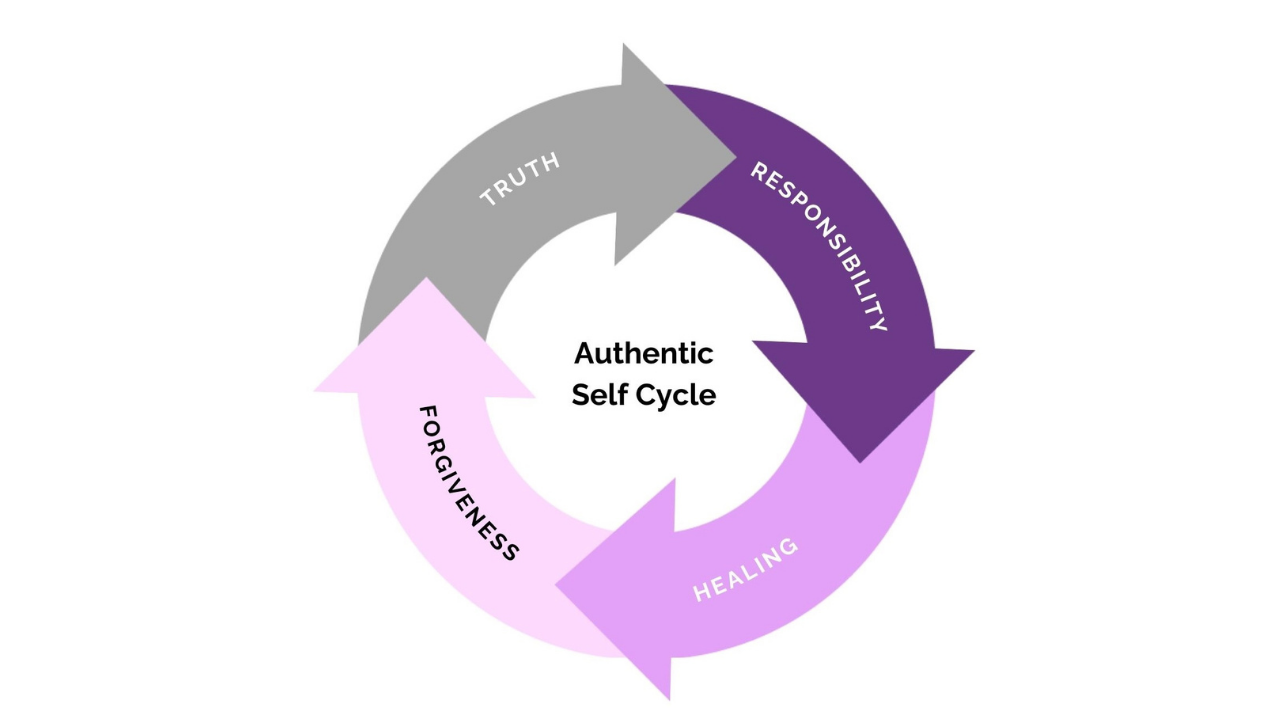
    Authentic Self Cycle diagram showing truth responsibility healing forgiveness as the path out of fear

    Truth: Name the blueprint. See that “this isn’t about today.” When your partner asks for space and your chest tightens with fear, truth says: “This feeling is from childhood. My partner isn’t abandoning me — my nervous system just thinks they are.” Truth is the moment you stop being trapped inside the pattern and start seeing it from the outside.

    That’s the first step out of fear — seeing the pattern instead of being controlled by it.

    Responsibility: Own your emotional reactions without blame. “My partner isn’t my parent — my nervous system just thinks they are.” This isn’t about fault. It’s about taking back your power from a childhood that stole it. Responsibility means: “This is my pattern. This is my fear. I’m responsible for rewiring it.”

    Healing: Rewire the emotional blueprint so conflict becomes uncomfortable but not dangerous, space isn’t abandonment, and intensity isn’t attack. This happens through repeated moments where your nervous system learns something new. Like the second hand on a clock — tiny, almost insignificant ticks that move the minute hand, that moves the hour hand, that changes your entire day. Healing works the same way.

    Forgiveness: Release the inherited emotional blueprint and reclaim your authentic self. This creates a NEW emotional chemical pattern that replaces fear, shame, and denial with safety, worth, and connection. You don’t become someone new. You finally meet who you always were underneath the survival persona.

    That’s you — not the fearful person who’s been repeating the same pattern for decades. The authentic self who was there all along, waiting for the fear to stop running the show.

    The Authentic Self Cycle™ is an identity restoration system — it doesn’t teach you to manage fear, it replaces the neurochemical pattern that created the fear with a new blueprint built on truth, responsibility, and emotional authenticity.
    Reparenting icon showing how the Authentic Self Cycle replaces childhood fear with safety

    Frequently Asked Questions About Fear and the Worst Day Cycle™

    Why does my brain repeat painful patterns when I know they’re harmful?

    Your brain doesn’t evaluate patterns based on whether they’re good or bad — it evaluates them based on whether they’re known or unknown. Since most childhood emotional experiences were negative, your brain’s “known” category is filled with painful patterns. It repeats them because repetition feels safe and change feels dangerous. The brain conserves energy by defaulting to what it has already survived, even if what it survived was traumatic.

    How is fear of success different from fear of failure?

    Nobody is afraid to fail. In the moment you choose not to do something — procrastinate, avoid, put it off — you’ve chosen failure, and you’re completely comfortable with it. The real fear is success, because success means abandoning the survival persona that was built for childhood attachment. If you succeed as your authentic self, it means the survival persona was never who you really were — and admitting that after 20, 30, or 40 years feels unbearable. The Worst Day Cycle™ keeps you stuck in fear of success to preserve the survival persona’s connection to the original attachment bond.

    Can fear be rewired without therapy?

    The Emotional Authenticity Method™ is a self-directed practice that can begin the rewiring process. The six steps — somatic down-regulation, naming the feeling, locating it in the body, tracing it to childhood, envisioning the Authentic Self, and Feelization — create real neurological change through repetition. A skilled guide can accelerate the process, but the daily practice is what creates lasting transformation. Your nervous system learned fear patterns in relationship, so it heals most powerfully in relationship — whether that’s therapy, coaching, or a partner committed to doing their own work.

    Why does a healthy relationship feel boring?

    When your nervous system is addicted to the chemical cocktail of childhood trauma — cortisol, adrenaline, dopamine misfires — a stable, available partner doesn’t activate those chemicals. Your brain registers the absence of chaos as the absence of connection. The stable person feels flat. The consistent one feels foreign. This isn’t incompatibility — it’s withdrawal from trauma chemistry. Just as someone detoxing from a substance feels terrible before they feel better, your nervous system must detox from chaos before it can feel attraction to safety.

    How long does it take to rewire the fear response?

    The behavioral patterns can begin shifting within weeks of consistent daily practice. The neurological rewiring takes months and years. Think of the clock metaphor: the second hand moves in tiny, almost insignificant ticks. But those ticks move the minute hand. The minutes move the hours. Every moment where you choose authenticity over your survival persona — where you stay present instead of shutting down, where you feel instead of numbing — strengthens the new neural pathway. The key is repetition, not intensity.

    What if I don’t have any childhood trauma?

    Childhood trauma isn’t just abuse or neglect. It’s any negative emotional experience that created painful meanings about yourself. A parent who was emotionally unavailable. A household where feelings were treated as weakness. A message that your worth depended on performance. A moment of public humiliation. A caregiver whose love was conditional. The only way you could not have experienced childhood trauma is if a perfect being raised you. Since that’s impossible, everyone has an emotional blueprint formed by their childhood experiences — and everyone’s brain runs that blueprint through the Worst Day Cycle™ until they do the healing work.

    The Bottom Line

    Fear isn’t your enemy. Fear was your protector. It kept you alive in a childhood that didn’t feel safe. It taught your brain to repeat the patterns that helped you survive — even when those patterns caused pain. It created a survival persona so brilliant that it fooled everyone, including you.

    But you’re not a child anymore. You don’t need that level of protection. And the fear that once saved your life is now running it — keeping you stuck in the same relationships, the same patterns, the same self-sabotage loops that have been cycling since before you had words for what was happening.

    The good news: fear is not permanent. It’s a neural pathway. And neural pathways can be rewired. Not through willpower. Not through positive thinking. Not through one dramatic breakthrough. Through the slow, consistent, daily practice of feeling what your survival persona has spent decades avoiding.

    That’s you — not the person trapped in the Worst Day Cycle™. The person who finally sees the pattern, names it, and begins the work of building something new. One second-hand tick at a time.

    The fear was brilliant. The survival persona was genius. And now it’s time to build something even more powerful: your authentic self.

    These books complement the frameworks in this article and deepen your understanding of how fear drives the Worst Day Cycle™:

    Facing Codependence by Pia Mellody — the foundational text on how childhood trauma creates the survival patterns that fear perpetuates.

    The Body Keeps the Score by Bessel van der Kolk — the science of how fear and trauma live in the body, not just the mind.

    When the Body Says No by Gabor Maté — how chronic fear and stress manifest as physical illness and disease.

    Codependent No More by Melody Beattie — a practical guide to recognizing when fear drives self-abandonment in relationships.

    The Gifts of Imperfection by Brené Brown — how fear of vulnerability keeps you trapped in the survival persona.

    Take the Next Step

    If you’re ready to rewire the fear response and break free from the Worst Day Cycle™, Kenny Weiss offers courses designed for people who are done repeating the same patterns and ready to heal:

    Emotional Blueprint Starter Course — Individual ($79) — Your personal roadmap to understanding the Worst Day Cycle™ and the fear patterns keeping you stuck.

    Relationship Starter Course — Couples ($79) — For couples ready to break the fear-driven cycle of reactivity and build interdependence.

    Why We Can’t Stop Hurting Each Other ($479) — Deep-dive into the Worst Day Cycle™ and how childhood fear creates relationship pain.

    Why High Achievers Fail at Love ($479) — Built for high achievers whose falsely empowered survival persona uses fear of vulnerability to sabotage intimacy.

    The Shutdown Avoidant Partner ($479) — Understanding avoidant attachment through the lens of trauma chemistry and fear-based survival personas.

    Tier 1: Mapping the Blueprint ($1,379) — The comprehensive program for learning and practicing the Emotional Authenticity Method™.

    Download the Feelings Wheel — the free tool used in Step 2 of the Emotional Authenticity Method™ to develop the emotional granularity that fear has been suppressing.

    Explore more: The Signs of Enmeshment | 7 Signs of Relationship Insecurity | 7 Signs of High Self-Esteem | How to Determine Your Negotiables and Non-Negotiables | 10 Do’s and Don’ts for a Great Relationship
  • How to Stop Holding Yourself Back: Why You Self-Sabotage and How to Break the Pattern

    How to Stop Holding Yourself Back: Why You Self-Sabotage and How to Break the Pattern

    How to stop holding yourself back starts with understanding a truth that will change everything: you are not afraid of failure. Not a single person on this planet has ever been afraid to fail. That sounds provocative, but think about it — in every area of your life, you know exactly what to do. You know you need to send the email, have the conversation, set the boundary, start the project, leave the relationship that’s draining you. You lay in bed thinking about it. You drive to work planning it. You know your life would get better if you just did it. But then a feeling comes up — a heaviness in your chest, a tightness in your stomach, a voice that whispers I just don’t feel like it — and you stop. In that moment, you’ve chosen failure. You’re perfectly comfortable with it.

    That’s you if you’ve ever had the plan, the motivation, and the clarity — and still couldn’t move. That feeling that stops you isn’t laziness. It’s unhealed childhood trauma running your nervous system without your permission.

    What actually terrifies you is success. Because success means change. Success means becoming someone your survival persona doesn’t recognize. Success means stepping into adulthood — into truth, responsibility, healing, and forgiveness — and your nervous system has been trained since childhood to avoid exactly that. The pattern that holds you back isn’t a character flaw. It’s a neurological loop called the Worst Day Cycle™, and it can be broken.

    How your survival persona holds you back from success and authentic living

    Table of Contents

    Why You’re Afraid of Success, Not Failure

    This is the teaching that changes everything for people who feel stuck: nobody on this planet has ever been afraid to fail. What we’re actually afraid of is success — because success means confronting the unhealed trauma that our survival persona was built to protect us from.

    Here’s how it works. You’re sitting in your office chair, about to start on something important. Maybe it’s launching a business, making a phone call, writing the email, starting the workout. You know exactly what to do. But the moment your hand reaches for the keyboard, a feeling rises in your body — dread, heaviness, a sick sensation in your stomach. Your brain says: I don’t feel like it. I’ll do it tomorrow. It probably won’t work anyway.

    How your childhood emotional blueprint creates self-sabotage patterns

    In that moment, you’ve chosen failure — and you’re completely comfortable with it. What you’re not comfortable with is what would happen if you succeeded. Because success brings up a feeling that’s identical to the feeling you had as a child when you tried to claim yourself, express yourself, or stand up for yourself — and were met with rejection, punishment, or indifference.

    That’s you if you’ve ever had a great idea, felt a surge of excitement, and then watched yourself talk yourself out of it within minutes. That collapse isn’t rational. It’s your nervous system replaying a childhood moment where standing up for yourself was dangerous.

    The fear response and the excitement response are neurologically identical. Your brain and body cannot tell the difference. So when you’re on the verge of something great — a promotion, a new relationship, a creative breakthrough — your nervous system gets flooded with the same chemical cocktail it experienced during childhood trauma. And since your brain conserves energy by repeating known patterns, it chooses the known pain of failure over the unknown territory of success.

    That’s you if you’ve noticed that every time something good starts happening, you find a way to sabotage it — pick a fight, miss the deadline, push the person away. Your survival persona is running the show.

    The Shame Engine: Why Self-Sabotage Feels Automatic

    Self-sabotage isn’t a choice you’re making consciously. It’s driven by shame — the deep, core belief installed in childhood that says I am not worthy of having what I want.

    What creates the need and the repetitive nature of sabotaging ourselves is that we were told — either directly or indirectly — that we had no worth as a child. Think about it: why would you sabotage yourself? Because at the deepest level, you don’t believe you have the value to achieve what you want. That sense of dread, that procrastination, that feeling of “I can’t do this” — that’s shame. It’s the feeling that says I can’t claim myself. I can’t stand up, pursue what I want, and claim what I want.

    Trauma chemistry and shame driving self-sabotage and holding yourself back

    Shame is different from guilt. Guilt says “I did something bad.” Shame says “I am bad.” And when shame runs your operating system, every attempt at success triggers the belief that you don’t deserve it — that claiming your life would somehow be fraudulent, selfish, or dangerous.

    That’s you if you feel like an imposter every time something goes right. That’s you if you downplay your achievements, deflect compliments, or secretly believe that if people really knew you, they’d see you don’t deserve any of it.

    The shame engine works like this: approximately 70% of childhood messaging is negative and shaming. You learned not just that you made mistakes, but that you are a mistake. That belief became your emotional baseline — the chemical state your nervous system returns to automatically. And every time you try to rise above it, the shame pulls you back like gravity.

    That’s you if success feels heavier than failure — like you’re carrying a weight that gets worse the higher you climb. That weight is shame, and it was placed in you before you had words for it.

    The Hidden Benefits of Holding Yourself Back

    Here’s the part nobody wants to hear: you get enormous benefits from staying stuck. Not consciously — but your survival persona has calculated that holding yourself back is safer than moving forward.

    When your relationship breaks, when you lose a career opportunity, when you’re struggling financially — all you have to do is share your story, and people rally around you. You get attention. You get sympathy. You get people offering solutions, which gives you power — because now they want to fix your problem more than you do. You get freedom from responsibility. If everything is happening to you, then you don’t have to take ownership of what happens next.

    Metacognition and self-awareness about the hidden benefits of staying stuck

    That’s you if you tell the same struggle story to the same people, getting the same sympathy — but nothing in your life actually changes. The story has become your identity, and your survival persona won’t let it go because it’s working.

    Attention. Power. Freedom from responsibility. These are massive neurochemical rewards. Your brain is addicted to the pattern of failure because it delivers a reliable payoff — even though that payoff costs you your relationships, your career, your health, and your authentic self.

    Sound familiar? That’s the Victim Position Paradox at work. The victim position is a societal construct meant to protect victims, but in reality it has created a paradoxical falsely empowered position that nearly guarantees the victim will reexperience their childhood victimization, leaving them disempowered. As long as you’re in the victim position, you have sympathy but no power. You have an explanation but no solution. You have a story but no growth.

    That’s you if you’ve been told you have “so much potential” for years — and part of you loves hearing it because it confirms you’re special without requiring you to actually do anything with it.

    Learned Helplessness: The Collapse That Keeps You Stuck

    Learned helplessness was discovered by accident in a laboratory. During a flood, dogs became trapped in their kennels. The water rose to their chins. If you or I were in that situation, we’d fight to escape. The dogs couldn’t. When the water receded and the kennel doors were opened, the dogs wouldn’t leave. They had collapsed into the futility of believing nothing they did would make a difference.

    Emotional fitness and overcoming learned helplessness to stop holding yourself back

    That’s the essence of what happens when you hold yourself back. Your childhood taught you — through repeated experiences of powerlessness, dismissed emotions, and conditional love — that nothing you do will change the outcome. So you stopped trying. Not because you’re lazy. Because your nervous system learned that effort leads to more pain.

    That’s you if you don’t see the point. If you think you’ll never be successful, never make enough money, never have someone truly love you. You’ve collapsed into learned helplessness — and your survival persona keeps you there because at least the pain is predictable.

    Think about your childhood: if your parents ever said or did anything that made you feel sad, scared, or angry — could you do or say anything about it? Every parent’s response was some version of “get in your room” or “I don’t want to talk about it.” That’s the training. That’s where the helplessness was installed. You learned that your voice doesn’t matter, your feelings are inconvenient, and standing up for yourself creates more danger than it resolves.

    That’s you if you’ve been sitting in the same stuck place for months or years, knowing exactly what would help but unable to take the first step. The kennel door is open. But your nervous system doesn’t believe it.

    The Worst Day Cycle™: The Four-Stage Loop Behind Self-Sabotage

    The Worst Day Cycle™ is the neurological loop that makes self-sabotage feel automatic. It has four stages — Trauma → Fear → Shame → Denial — and it runs on repeat until you interrupt it.

    The Worst Day Cycle showing trauma fear shame denial loop driving self-sabotage

    Stage 1: Trauma. Childhood trauma is any negative emotional experience that created painful meanings about yourself, others, or the world. Your parent dismissed your feelings. Your sibling was always favored. You had to be perfect to receive love. Your emotions were mocked. Any of these creates a massive chemical reaction in your nervous system — the hypothalamus generates chemical cocktails of cortisol, adrenaline, dopamine, and oxytocin misfires. And your brain becomes addicted to these states.

    Stage 2: Fear. Fear drives repetition. Your brain conserves energy by repeating known patterns — it can’t tell right from wrong, only known versus unknown. Since 70%+ of childhood messaging is negative and shaming, adults repeat these painful patterns in relationships, career, hobbies, health — everything. The fear isn’t about the task in front of you. It’s about the feeling the task activates — the same feeling you had as a child when you tried to claim yourself and were shut down.

    That’s you if unfamiliar success feels scarier than familiar failure. Your nervous system is choosing known pain over unknown possibility.

    Stage 3: Shame. Shame is where you lost your inherent worth. Where you decided “I am the problem.” Not “I made a mistake” — “I AM a mistake.” This is the core belief that makes you hold yourself back. Shame whispers: Who do you think you are? You don’t deserve this. You’ll lose it anyway. Better not to try than to be exposed as a fraud.

    Stage 4: Denial. To survive unbearable shame, your nervous system creates a survival persona — a false identity that protects you from the truth. The denial stage looks like procrastination, rationalization, distraction, substance use, or simply going numb. You’re not avoiding the task. You’re avoiding the feeling the task would require you to face.

    That’s you if you’ve ever said “I work better under pressure” — that’s denial. You don’t work better under pressure. You only work under pressure because that’s the only state intense enough to override the shame that blocks you the rest of the time.

    The Three Survival Personas That Block Your Potential

    Your survival persona is the identity you built in childhood to keep yourself safe. It was brilliant then. It’s sabotaging you now. There are three primary types, and each one holds you back in a different way.

    Three survival persona types that hold you back: falsely empowered, disempowered, adapted wounded child

    The Falsely Empowered Persona holds you back through control. You become a workaholic, a perfectionist, a micromanager. You stay busy constantly — not because you’re productive, but because busyness is your defense against feeling. You hold yourself back from vulnerability, intimacy, and real connection by always needing to be in charge. Your version of self-sabotage looks like burnout, isolation, and relationships that never go deeper than surface level.

    That’s you if you’re the one everyone relies on — the strong one, the successful one — but secretly you’re exhausted, lonely, and terrified that if you slow down, the feelings will catch you.

    The Disempowered Persona holds you back through collapse. You don’t try because you’ve already decided you’ll fail. You stay in situations that are beneath you — jobs, relationships, friendships — because your shame says you don’t deserve better. You procrastinate, withdraw, and wait for someone else to rescue you. Your self-sabotage looks like passivity, depression, and the slow erosion of dreams you once believed in.

    That’s you if you’ve been sitting on a dream for years — telling yourself “someday” while watching other people live the life you want. The disempowered persona has convinced you that you’re not capable, not ready, not enough.

    The Adapted Wounded Child holds you back through performance. You do what others expect. You shape-shift to fit every room. You’re the “good one” who never makes waves. You hold yourself back from your authentic desires because pursuing what you want — not what makes other people comfortable — feels selfish and terrifying. Your self-sabotage looks like people-pleasing, overcommitting, and living someone else’s life while your own quietly disappears.

    Adapted wounded child survival persona oscillating between people-pleasing and collapse

    That’s you if you’ve built a life that looks perfect from the outside but feels hollow on the inside — because none of it was actually chosen by your authentic self. It was chosen by the survival persona who learned that the only way to be loved was to be useful.

    The Emotional Authenticity Method™: 6 Steps to Break Through Self-Sabotage

    The Emotional Authenticity Method™ is a 6-step process that rewires the neurological pattern driving your self-sabotage. This isn’t positive thinking. This isn’t willpower. This is somatic, chemical, neurological rewiring.

    Six steps of the Emotional Authenticity Method for overcoming self-sabotage

    Step 1: Somatic Down-Regulation. The next time you feel that heaviness, that dread, that “I don’t feel like it” — don’t push through it and don’t collapse into it. Pause. Focus on what you can hear for 15-30 seconds. Wind. Traffic. Your own breath. This simple act activates your parasympathetic nervous system and brings your prefrontal cortex back online. If you’re highly dysregulated, use titration — cold water on your face, step outside, hold ice. You cannot make clear decisions from a triggered state.

    Step 2: What am I feeling right now? Not “I don’t feel like it.” Use the Feelings Wheel for emotional granularity. Are you feeling afraid? Ashamed? Overwhelmed? Hopeless? Trapped? The more specific you are, the more you interrupt the survival persona’s vagueness — because vagueness is how denial operates.

    Step 3: Where in my body do I feel it? All emotional trauma is stored physically. The heaviness in your chest. The knot in your stomach. The tightness in your throat. The numbness in your limbs. Locate the feeling. This grounds you in the present moment and breaks the pattern of living in your head.

    That’s you if you’ve been “in your head” trying to think your way through being stuck — making plans, reading books, watching videos — but never actually feeling the feeling that’s holding you back. Thoughts originate from feelings. You cannot change emotional patterns through thoughts alone.

    Step 4: What is my earliest memory of having this exact feeling? Trace it back. The dread you feel about starting a project — when did you first feel that? Was it the first time you showed your parent something you were proud of and they dismissed it? The first time you tried something new and were mocked? The first time you expressed enthusiasm and were told to be quiet? Your self-sabotage today is a direct echo of that childhood moment.

    Step 5: Who would I be if I never had this thought or feeling again? Not “I’d be successful.” Specific: “I’d be someone who starts projects without dread. Someone who doesn’t talk themselves out of opportunities. Someone who trusts that I can handle what comes next. Someone who believes I deserve to succeed.” This plants the seed of your authentic self — the vision step that connects you to the Authentic Self Cycle™.

    Step 6: Feelization — The New Chemical Addiction. Your survival persona is a chemical addiction to old emotional states — shame, helplessness, unworthiness. To break it, you need a new addiction. Sit in the feeling of who you’d be — the authentic self. Make it strong. Feel it in your body. Feel the confidence, the groundedness, the worthiness, the excitement. Ask yourself: How would I approach this task from this feeling? What would I do first? How would I respond to the setback? Visualize and FEEL yourself operating from your authentic self. This creates a new emotional chemical pattern that replaces the old blueprint. This is the emotional blueprint remapping and rewiring step.

    That’s you if you’ve never been taught that you can literally rewire your nervous system by changing what you practice feeling — that the dread you feel before doing something meaningful is a chemical addiction, not a character flaw.

    The Authentic Self Cycle™: From Self-Sabotage to Self-Trust

    The Authentic Self Cycle™ is the healing counterpart to the Worst Day Cycle™ — a four-stage identity restoration system: Truth → Responsibility → Healing → Forgiveness.

    Authentic Self Cycle showing truth responsibility healing forgiveness for overcoming self-sabotage

    Stage 1: Truth. Name the blueprint. “I’m not lazy. I’m not broken. My nervous system learned in childhood that claiming myself was dangerous. The dread I feel before starting something important is the same feeling I had when I tried to express myself as a child and was shut down. This isn’t about today — it’s about a meaning I created decades ago.”

    Stage 2: Responsibility. Own your emotional reactions without blame. “I’ve been choosing failure because it’s familiar. I’ve been getting benefits from staying stuck — attention, sympathy, freedom from accountability. I can see that pattern now, and I can choose differently.” This is not self-blame. This is power. That’s you if you’re finally seeing that nobody else is holding you back — your survival persona is.

    Stage 3: Healing. Rewire the emotional blueprint so success becomes uncomfortable but not dangerous. So starting a project feels exciting, not terrifying. So claiming your worth feels natural, not fraudulent. This is where the Emotional Authenticity Method™ does its deepest work — creating a NEW emotional chemical pattern that replaces fear, shame, and denial with trust, worthiness, and authentic motivation.

    Stage 4: Forgiveness. Release the inherited emotional blueprint and reclaim your authentic self. Forgiveness isn’t about excusing what happened in childhood. It’s about releasing your attachment to the story that says you can’t succeed. When you can look at your patterns without shame — when you can see your survival persona as a brilliant adaptation that protected you and now needs to evolve — you’ve graduated from the Worst Day Cycle™.

    That’s the shift: from “I’m afraid of adulthood” to “I’m ready for it.” From self-sabotage to self-trust. From the survival persona to the authentic self.

    How Holding Yourself Back Shows Up Across Your Life

    Family Relationships

    You hold yourself back from setting boundaries with parents because the survival persona says their approval is still necessary for your safety. You tolerate treatment you wouldn’t accept from anyone else. You suppress your real opinions at family gatherings. You revert to a child-like version of yourself the moment you walk through their door. Understanding the signs of enmeshment helps you see where family patterns keep you stuck.

    That’s you if your parent’s reaction still determines whether you feel good or bad about a decision you’ve already made as an adult.

    Romantic Relationships

    You hold yourself back from real intimacy by choosing unavailable people, staying in relationships that are beneath you, or sabotaging good relationships by picking fights when things get close. You stay in situations where your needs aren’t met because your shame says this is all you deserve. Recognize the signs of relationship insecurity and how they keep you from authentic connection.

    That’s you if you’ve ever pushed away someone who actually treated you well — because their kindness felt unfamiliar and your nervous system didn’t trust it.

    Friendships

    You hold yourself back from being seen by keeping friendships shallow. You’re the listener, the advice-giver, the one who holds space — but you never let anyone hold space for you. You avoid vulnerability because your survival persona says that being known means being rejected.

    That’s you if you have many acquaintances but few people who actually know what’s going on inside you.

    Work and Achievement

    You hold yourself back from promotions, raises, and opportunities by procrastinating, under-performing, or staying in positions that don’t match your capability. You might overwork to the point of burnout — which is its own form of self-sabotage, because burnout guarantees you’ll eventually collapse. Build genuine self-esteem that doesn’t require external validation to feel real.

    That’s you if you’ve been told you have “so much potential” your entire life — and the gap between your potential and your actual results is the exact width of your unhealed shame.

    Body and Health

    You hold yourself back from taking care of your body by ignoring signals, overriding exhaustion, using food or substances to numb emotions, or treating exercise as punishment rather than care. Your body has been holding the score of every moment you abandoned yourself — chronic tension, digestive issues, insomnia, unexplained pain.

    That’s you if you know exactly what your body needs but consistently refuse to give it — because your survival persona learned in childhood that your physical needs were inconvenient.

    Embracing perfectly imperfect authentic self after overcoming self-sabotage

    Five Solutions to Stop Holding Yourself Back Today

    Solution 1: Make the Choice — “I’m Done”

    Making a choice sounds simple, but choices are motivated by feelings, not thoughts. You can tell yourself all day that you’re going to change, but until you feel the decision in your body, nothing shifts. The Emotional Authenticity Method™ Step 6 — Feelization — is how you create that felt shift. Don’t just decide to stop holding yourself back. Feel what it would be like to be free of it.

    Solution 2: Calculate the Cost

    Ask yourself: how much has holding myself back cost me? Make a list across every area — financially, relationally, emotionally, spiritually, professionally, intellectually. Total it up. Then future-cast: one month from now, six months, twelve months, five years — how high will the cost be then? And here’s the hardest question: now that you know the solution, could you live with the burden of knowing you could have ended it and chose not to?

    That’s you if the cost of staying stuck has finally become higher than the payoff. That’s the emotional shift that creates real change.

    Solution 3: Use Titration to Build Momentum

    When you’re sitting in the pain of holding yourself back, flip to the feeling of who you’d be without it. Spend 30 seconds in the pain, then 30 seconds in the freedom. Bounce between the two. You’re slowly titrating yourself — pulling yourself in and out of the cage. The pain starts to feel lighter and smaller. The good starts to feel stronger and more prominent. This is the 1% change principle — small shifts that compound into transformation.

    Solution 4: Take the Smallest Possible Step

    Ask yourself: what is the smallest thing I can do right now to move toward what I want? Some days, the smallest step is literally getting out of bed. Some days it’s taking a shower. Some days it’s reaching for the file cabinet. The moment your hand touches it — the moment you take any action at all — the feeling changes. The dread is replaced by something lighter. That’s when you learn the difference between trauma gut and authentic gut. Trauma gut says “don’t do it.” Authentic gut says “this is exactly right.”

    That’s you if you’ve been waiting for motivation to arrive before you start — but motivation doesn’t precede action. Action precedes motivation. The smallest step is always enough.

    Solution 5: Get Professional Support

    Self-sabotage is sophisticated. Your survival persona has been running your life for decades, and it’s very good at convincing you that you can figure this out alone. But the patterns that hold you back were installed in relationship — and they heal in relationship. A skilled coach or therapist can see the blind spots your survival persona hides from you. Map out your negotiables and non-negotiables so you know exactly what you’re working toward.

    Reparenting yourself to overcome self-sabotage and stop holding yourself back

    Frequently Asked Questions

    Why do I keep sabotaging myself even when I know what I should do?

    Because self-sabotage isn’t a thinking problem — it’s a feeling problem. Your survival persona operates below conscious awareness, driven by shame and unhealed childhood trauma. You can’t think your way out of a neurological loop. The Emotional Authenticity Method™ addresses self-sabotage at the somatic level, where the pattern actually lives. Until you feel the original wound and rewire the emotional blueprint, your nervous system will keep choosing the known pattern of failure over the unknown territory of success.

    Is self-sabotage the same as laziness?

    No. Laziness is a myth. What looks like laziness is actually a trauma response — learned helplessness, shame-based collapse, or the survival persona’s strategy for avoiding the feeling that success would bring up. Nobody who is holding themselves back is doing it because they don’t care. They’re doing it because their nervous system has calculated that staying stuck is safer than moving forward. The solution isn’t discipline. It’s healing.

    How long does it take to stop holding yourself back?

    Most people see significant shifts within weeks of consistent practice with the Emotional Authenticity Method™. The timeline depends on how deep the pattern runs, how much professional support you have, and how willing you are to face the underlying shame. The good news is that every small action — every time you take the smallest step instead of collapsing — builds new neural pathways. Change compounds.

    Can high achievers still be holding themselves back?

    Absolutely. High achievement is often the falsely empowered survival persona’s version of holding yourself back. You’re successful by every external measure, but you’re holding yourself back from vulnerability, intimacy, rest, and authentic connection. You’ve built an impressive life that’s organized entirely around avoiding the feelings you couldn’t face as a child. The achievement is real. The fulfillment is missing. That’s self-sabotage in a three-piece suit.

    What if I’ve tried everything and nothing works?

    If you’ve tried everything and nothing has worked, you’ve been addressing symptoms instead of the root cause. Motivational content, productivity systems, and accountability partners all fail because they operate at the level of behavior — and behavior is driven by the emotional blueprint installed in childhood. Until you go back and heal the original trauma, the pattern will reassert itself no matter how many strategies you layer on top. The Emotional Authenticity Method™ addresses the root, not the surface.

    What’s the difference between fear of failure and fear of success?

    Fear of failure is a story your survival persona tells you to keep you stuck. Fear of success is the actual neurological event happening in your body. In the moment you choose not to do something you know would help you, you’ve chosen failure — and you’re completely comfortable with it. What terrifies your nervous system is what would happen if you succeeded: you’d have to become someone your childhood didn’t prepare you to be. You’d have to face feelings your survival persona was built to avoid. That’s the real fear — and it’s healable.

    The Bottom Line

    You’re not holding yourself back because you’re lazy, weak, or broken. You’re holding yourself back because your nervous system learned in childhood that claiming yourself — expressing your needs, pursuing your desires, standing in your worth — was dangerous. Your survival persona built a brilliant system to protect you from that danger. And now that system is the very thing keeping you stuck.

    But here’s what matters: the pattern is not your destiny. You can rewire your nervous system. You can interrupt the Worst Day Cycle™. You can step out of survival personas and into authentic power. You can learn the difference between trauma gut — the feeling that says “don’t do it” — and authentic gut — the feeling that says “this is exactly right.”

    The self-sabotage was never about the task. It was always about the feeling the task would require you to face. And now you have a method for facing it — not by pushing through, not by shaming yourself into action, but by actually healing the wound that created the pattern in the first place.

    You deserve to stop holding yourself back. Not someday. Now. The kennel door is open. Your nervous system just hasn’t caught up yet. But it will — one small step, one Feelization, one moment of choosing your authentic self over your survival persona at a time.

    Start with the Feelings Wheel exercise to rebuild your emotional vocabulary and begin recognizing what’s actually happening inside you. Then explore the do’s and don’ts for healthy relationships — because the relationship you have with yourself follows the exact same principles.

    Recommended Reading

    • Facing Codependence by Pia Mellody — The foundational text on how childhood trauma creates survival personas, self-sabotage patterns, and the loss of authentic self.
    • The Body Keeps the Score by Bessel van der Kolk — Essential reading on how trauma lives in the nervous system and why healing requires more than understanding the problem intellectually.
    • When the Body Says No by Gabor Maté — How emotional repression and unresolved patterns manifest as physical illness and chronic self-sabotage.
    • Atomic Habits by James Clear — The science of small changes that compound into transformation, aligned with the titration approach to breaking patterns.
    • The Gifts of Imperfection by Brené Brown — A guide to wholehearted living that directly counters the shame keeping you trapped in self-sabotage.

    Ready to Stop Holding Yourself Back?

  • The Self-Sabotage Cycle: Why You Destroy What You Build

    The Self-Sabotage Cycle: Why You Destroy What You Build

    Self-sabotage is the unconscious pattern of destroying your own success, relationships, health, and happiness — not because you’re weak, lazy, or broken, but because your childhood emotional blueprint taught your nervous system that safety lives in the familiar pain, not in the unfamiliar success. Self-sabotage is the collision between the Authentic Self trying to emerge and the shame-based survival persona fighting to maintain attachment to the only identity you’ve ever known. When you start to succeed — when love gets close, when the promotion comes, when the relationship deepens — your survival persona panics and pulls you back into the Worst Day Cycle™ because success threatens the only connection to your parents’ emotional system you’ve ever had.

    Self-sabotage codependence emotional blueprint

    ™ (understanding), the Authentic Self Cycle™ (healing), and the Emotional Authenticity Method™ (daily practice).

    Table of Contents

    Why You Keep Destroying What You Build

    Emotional blueprint childhood trauma patterns self-sabotage

    You’ve been here before. You’re making progress — real progress — and then something shifts. Your foot goes on the brake. You self-destruct. You say something cruel, you miss the deadline, you don’t show up, you pick a fight with the one person who actually gets you. And afterward, you can’t even explain why.

    That’s you if you’re terrified of success, even though consciously you want it more than anything.

    Here’s what most people get wrong: Self-sabotage isn’t a character flaw. It’s not laziness, cowardice, or some deep inadequacy you need to therapy away. Self-sabotage is actually brilliant. It’s your nervous system’s attempt to keep you safe.

    In childhood, you learned that pain was predictable. You knew how to survive your parents’ anger, your caregiver’s withdrawal, the family chaos. That pain was familiar. Your nervous system became addicted to it because repetition equals safety in a child’s brain. You couldn’t change your parents, but you could control the pain by becoming predictable yourself.

    Sound familiar?

    Now, decades later, success arrives — the promotion, the healthy relationship, the body that finally feels good. But your nervous system doesn’t recognize success. Success is unknown territory. And unknown territory feels like death to a trauma-wired brain.

    So your survival persona — the brilliant, protective part of you that kept you alive in a painful home — springs into action. It sabotages the success. It pulls you back into the pain you know. Because in the twisted logic of your childhood nervous system, the pain you know is safer than the success you don’t.

    This isn’t broken. This is your superpower turned against you.

    Self-Sabotage Is Not Weakness — It’s a Survival Strategy

    Let me be clear: Your survival persona is not the enemy. It’s the part of you that survived an unsurvivable situation. It developed incredible skills — hypervigilance, people-pleasing, perfectionism, self-abandonment, control, dissociation — to keep you alive.

    That’s the real story.

    In childhood, those survival strategies were genius. They helped you navigate an unpredictable, potentially dangerous emotional landscape. You learned to read your parent’s mood before they entered the room. You developed an internal radar for danger. You became indispensable. You became invisible. You became whatever you needed to be to maintain attachment.

    But here’s what nobody tells you: Those same strategies that saved your life in childhood are now destroying it in adulthood.

    When you’re an adult in a healthy relationship with someone who actually loves you, your hypervigilance becomes anxiety. Your need to be indispensable becomes enmeshment. Your perfectionism becomes paralysis. Your self-abandonment becomes self-sabotage.

    The power reclamation moment happens when you stop blaming yourself and start recognizing: Your survival persona isn’t broken. It’s outdated. It was built for a world that no longer exists. Your job now is to upgrade the software without destroying the hardware that kept you alive.

    That’s the difference between shame and responsibility.

    The Worst Day Cycle™: The Four-Stage Engine of Self-Sabotage

    Worst Day Cycle trauma fear shame denial four stages

    Self-sabotage doesn’t happen randomly. It follows a predictable four-stage pattern that I call the Worst Day Cycle™. Understanding this cycle is the foundation of everything. It’s why you keep repeating the same painful patterns, and it’s also the map to break free.

    Stage 1: Trauma

    Childhood trauma is any negative emotional experience that created painful meanings. It’s not about what happened — it’s about what your young brain concluded about yourself, others, and the world based on what happened.

    Trauma chemistry cortisol adrenaline dopamine oxytocin addiction

    When trauma hits, your hypothalamus generates a chemical cocktail: cortisol (stress), adrenaline (fight-or-flight), dopamine (reward), oxytocin misfires (false connection). Your young brain becomes addicted to these emotional states because they’re all you know. The pain is overwhelming, yes, but it’s also a gateway to your parent’s attention, your family’s focus, your nervous system’s intensity.

    That’s the foundation of the entire cycle.

    Stage 2: Fear

    Fear drives repetition. Your brain’s primary job in childhood is safety. It doesn’t distinguish between right and wrong — it only recognizes known versus unknown. Since 70% of childhood messaging is negative (don’t, can’t, won’t, shouldn’t, wrong), your brain associates the known pain with safety.

    The moment you start to leave that pain — to succeed, to be loved, to break the pattern — fear hijacks you. Your survival persona activates. It whispers: This is dangerous. Go back. Repeat what you know.

    Sound familiar? That’s the voice of fear.

    Stage 3: Shame

    Shame is where you lost your inherent worth. It’s not guilt — guilt is “I did something bad.” Shame is “I am bad.” In this stage, you internalize the trauma. You believe your existence is the problem. Not your behavior, not your choices — you.

    This is where self-sabotage gets its teeth. You unconsciously prove the shame-based narrative: “I don’t deserve success. I will screw it up. I am broken.” And then you do sabotage it, which reinforces the shame, which feeds the cycle.

    Stage 4: Denial

    Denial is the survival persona created to survive the pain. This persona is brilliant. It’s adaptive, protective, and ingenious. But it’s also the source of self-sabotage in adulthood. The denial stage is where you reinforce the survival strategy: “This is just who I am. I’m not good enough. I always mess things up. Everyone leaves me.”

    That’s the story you tell yourself to avoid the pain of Stage 3.

    The Three Survival Personas That Drive Self-Sabotage

    Three survival personas falsely empowered disempowered adapted wounded child

    Not all self-sabotage looks the same. Your survival persona shapes how you destroy what you build. There are three primary types, and most of us have a dominant one (though we can move between them depending on context).

    The Falsely Empowered Survival Persona

    This persona says: “I’m fine. I don’t need anyone. I’ll do it myself.” In childhood, you learned that vulnerability was dangerous, so you became hypercompetent, perfectionist, and controlling. You can move mountains. You can solve any problem. You never let anyone see you struggle.

    Self-sabotage shows up as overcommitment, burnout, and sudden implosion. You push so hard that you crash. You don’t allow anyone close enough to support you, so when success demands collaboration or intimacy, you panic and self-destruct. That’s you if you’re terrified of being dependent on anyone.

    The Disempowered Survival Persona

    This persona says: “I can’t. Everyone else is smarter, stronger, more capable. Things always go wrong for me.” In childhood, you learned that your needs didn’t matter, so you became small, accommodating, and resigned to suffering. You don’t take action because action feels futile.

    Self-sabotage shows up as procrastination, paralysis, and self-abandonment. You don’t even try because failing is already assumed. You abandon yourself before anyone else can. Sound familiar? That’s learned helplessness.

    Adapted wounded child survival persona emotional confusion

    The Adapted Wound Child

    This persona is the chameleon. It says: “I’ll be whatever you need me to be.” In childhood, you learned to read the room, match the energy, and become the person your caregiver needed. You developed an external emotional barometer. You’re intuitive, empathetic, and highly attuned to other people’s feelings.

    Self-sabotage shows up as people-pleasing, enmeshment, and loss of self. You merge with others so completely that you disappear. When success means standing out, saying no, or owning your own power, you panic and sabotage it. That’s you if you feel like you don’t know who you are without another person to reflect.

    Fear of Success: The Truth Nobody Wants to Hear

    Let me say this plainly: You’re not afraid of failure. You’re afraid of success.

    Failure is comfortable. Failure confirms what your shame already believes about you. Failure keeps you connected to your parents’ emotional system (disappointment, frustration, pity). Failure keeps you in the Worst Day Cycle™.

    But success? Success threatens everything. Success says: “You’re capable. You’re worthy. You deserve good things.” Success would mean separating from the family narrative that you’re broken. Success would mean your parents were wrong about you. Success would mean you’d have to grieve all the years you wasted believing the lie.

    That’s the fear nobody wants to name.

    When your internal blueprint says “I am unworthy,” success creates cognitive dissonance. Your nervous system has to choose: Update the blueprint or reject the success. And updating the blueprint means confronting decades of pain, shame, and grief. Most people’s survival personas choose to sabotage the success instead.

    This is why you can be intellectually committed to success and still self-destruct. This is why you can read all the self-help books, do all the therapy, set all the goals, and still end up alone, broke, or broken.

    That’s you if you’ve sabotaged every relationship right when it got real.

    The good news: Once you understand this, you can rewire it. But first, you have to stop being angry at yourself for the sabotage and get curious about what success is threatening.

    How Self-Sabotage Shows Up Across Your Life

    Self-sabotage patterns family romantic work health relationships

    Self-sabotage isn’t one-dimensional. It shows up differently depending on which area of your life we’re looking at, but the root is always the same: your survival persona protecting you from success that threatens your childhood attachment.

    Family

    You get closer to a family member, start setting a boundary, and then abandon it. You try to heal the relationship with a parent, and when they show the tiniest bit of vulnerability back, you push them away. You’re caught between your need for connection and your survival persona’s need for control or distance. That’s the paradox of family sabotage.

    Romantic Relationships

    This is where self-sabotage does its most visible damage. You find someone healthy, someone who actually loves you, someone who doesn’t play games. And then, right when the relationship becomes real, you self-destruct. You cheat, you pick a fight, you withdraw, you become critical. You convince yourself they’re not right for you (even though they are) and leave them (even though they love you).

    Check out this article on the signs of enmeshment to understand how your childhood attachment style is showing up in your romantic relationships right now.

    That’s you if every relationship follows the same painful pattern.

    Friendships

    You develop a close friendship and then self-sabotage it by being needy, critical, or withdrawing. You share too much too fast or you guard yourself completely. You need your friends to prove their loyalty through endless accommodation, or you abandon the friendship before they can abandon you.

    Work

    The promotion is within reach and you suddenly miss a deadline. You’re building something that could change your life and you talk yourself out of it. You get close to success and your survival persona hijacks you — you say something inappropriate in a meeting, you don’t follow through, you quit right before the breakthrough.

    This is especially true for high achievers in insecure relationships where your success threatens your partner’s emotional stability, so you unconsciously dial it back.

    Body and Health

    You lose weight and then sabotage it by binge eating. You commit to exercise and then get injured or get sick. You finally get healthy and then you start smoking again. Your body literally self-sabotages because your nervous system associates thinness or health with abandonment or attention you’re not prepared for.

    Sound familiar?

    The Authentic Self Cycle™: Breaking the Loop

    Authentic Self Cycle truth responsibility healing forgiveness recovery

    The Worst Day Cycle™ describes how you got trapped. The Authentic Self Cycle™ is how you get out.

    This is not a one-time process. It’s not something you do in therapy and then you’re done. The Authentic Self Cycle™ is a practice you return to every single time your survival persona gets activated. Over time, the path becomes familiar. Your nervous system learns a new way home.

    Stage 1: Truth

    Name the blueprint. Get specific about what you’re actually afraid of. Not the surface fear (“I’m afraid I’ll fail”), but the deep fear (“I’m afraid if I succeed, my parents will feel threatened and abandon me”). This is where you separate the past from the present.

    “This isn’t about today. My partner isn’t my parent. My nervous system just thinks they are.”

    Stage 2: Responsibility

    Own your emotional reactions without blame. You’re not bad for being triggered. You’re not broken for self-sabotaging. But you are responsible for your nervous system. “I can feel triggered and still choose not to abandon myself. I can feel afraid and still move toward the success.”

    Stage 3: Healing

    Rewire the emotional blueprint. This is the neurological work. You practice new responses. You stay in the discomfort of success instead of sabotaging it. You show up in the healthy relationship even when your trauma says to run. You rewire success from “dangerous” to “uncomfortable but not dangerous.”

    Stage 4: Forgiveness

    Release the inherited emotional blueprint and reclaim your Authentic Self. This creates new emotional chemical patterns. You’re no longer addicted to the old pain because you’ve created a new addiction to the Authentic Self — to peace, to belonging, to being enough.

    The Emotional Authenticity Method™: Your 6-Step Practice

    Emotional Authenticity Method six steps somatic regulation feelings wheel

    Understanding the cycles is powerful, but knowledge alone doesn’t change your nervous system. You need a daily practice. The Emotional Authenticity Method™ is a six-step process you can use every time your survival persona gets triggered and wants to sabotage your success.

    Step 1: Somatic Down-Regulation

    Your survival persona lives in your body. So we start there. When you’re activated, triggered, or about to sabotage, pause. For 15-30 seconds, focus on what you can hear. Just sound. Not sight, not thought — sound. If you’re highly dysregulated, use titration: very small amounts of regulation exposure until your nervous system settles.

    This grounds you in the present moment.

    Step 2: What Am I Feeling Right Now?

    Use emotional granularity. Don’t just say “I’m upset.” Get specific. Are you angry, hurt, abandoned, rejected, ashamed, afraid? The Feelings Wheel is a powerful tool for this. The more precise you can be with your emotion, the more power you have over it.

    Step 3: Where in My Body Do I Feel It?

    All emotional trauma is stored physically. You might feel shame as a heaviness in your chest. Fear might be a constriction in your throat. Abandonment might be a hollow feeling in your stomach. Locate it. Don’t try to fix it yet. Just notice it.

    Emotional regulation somatic awareness body trauma storage

    Step 4: What Is My Earliest Memory of Having This Exact Feeling?

    Trace it back. This feeling you’re having right now? You’ve had it before. Probably many times. When’s the first time you remember feeling this exact sensation in your body? That’s your origin wound. That’s the childhood moment that taught your nervous system this is dangerous.

    That’s the connection between past and present.

    Step 5: Who Would I Be If I Never Had This Thought or Feeling Again?

    This is the vision step. This is the Authentic Self Cycle™ in action. What would be different? How would you show up? What would you do? This isn’t fantasy — it’s neurological rewiring. You’re training your nervous system to recognize a new possibility.

    Step 6: Feelization — Sit in the Feeling of the Authentic Self and Make It Strong

    This is where the magic happens. You don’t just think about the Authentic Self. You feel it. You sit in that feeling. You make it vivid, visceral, real. You’re creating a new emotional chemical addiction to replace the old blueprint. You’re training your body to recognize peace, belonging, and worthiness as home.

    This is a practice you return to every single day. Some days you’ll move through all six steps in five minutes. Some days it’ll take an hour. Over time, your nervous system learns this path. The Authentic Self becomes familiar. Success becomes safe.

    People Also Ask

    Why do I keep self-sabotaging even when I know better?

    Because knowledge lives in your neocortex (thinking brain), but self-sabotage lives in your limbic system and nervous system (feeling brain). You can intellectually know you deserve success, but your nervous system is still addicted to the chemical patterns of childhood pain. Breaking the pattern requires rewiring your nervous system, not just understanding it. That’s what the Emotional Authenticity Method™ does.

    Is self-sabotage a sign of low self-esteem?

    No. Self-sabotage is a sign that your nervous system is protecting you from something it perceives as dangerous. Low self-esteem is one symptom of that protection, but not the root cause. Check out what high self-esteem actually looks like and you’ll see that many self-sabotagers have high self-esteem in some areas and zero in others. The issue isn’t your self-worth — it’s your nervous system’s association between success and danger.

    How do I stop self-sabotaging my relationships?

    First, get honest about your Victim Position Paradox. Are you abandoning the relationship to avoid being abandoned? Are you pushing them away to maintain control? Are you becoming critical to prevent them from seeing the real you? Once you name the pattern, use the Emotional Authenticity Method™ every time you feel the urge to self-destruct. And read this on negotiables and non-negotiables to understand what boundaries actually look like in a healthy relationship.

    Can self-sabotage be unconscious?

    Absolutely. In fact, most self-sabotage is unconscious. You don’t wake up thinking, “Today I’m going to sabotage my success.” Your survival persona operates below conscious awareness. That’s why it’s so powerful and why it’s so hard to stop by willpower alone. You need to access the nervous system, not just the thinking brain.

    What is the root cause of self-sabotage?

    Childhood emotional trauma and the survival strategies you developed to survive it. Specifically, your nervous system became addicted to the chemical patterns of the Worst Day Cycle™ (trauma, fear, shame, denial) and learned to associate your parents’ emotional system with safety. Success threatens that attachment, so your survival persona sabotages it to keep you connected to the only safety you’ve ever known.

    How long does it take to break self-sabotage patterns?

    That depends on how deeply wired the pattern is and how consistently you practice. Some people shift in weeks. Most people need months or years of consistent practice with the Emotional Authenticity Method™. The key is consistency, not intensity. Daily practice rewires your nervous system faster than occasional deep work. Your nervous system learns through repetition — that’s how it got wired to self-sabotage in the first place.

    The Bottom Line

    Self-sabotage isn’t your fault. Your survival persona isn’t broken. Your nervous system isn’t damaged beyond repair. You’re not destined to repeat the painful patterns of your childhood forever.

    But it does require you to do something different. It requires you to stop blaming yourself and start getting curious about what success is threatening. It requires you to move from shame (I am bad) to responsibility (I can rewire this). It requires daily practice with the Emotional Authenticity Method™ until the Authentic Self becomes as familiar as the survival persona.

    That’s not weakness. That’s the bravest thing you can do.

    Every time you choose to stay in a healthy relationship instead of sabotaging it, every time you move toward success even though your nervous system says it’s dangerous, every time you practice the Emotional Authenticity Method™ instead of abandoning yourself — you’re rewiring your nervous system. You’re creating new neural pathways. You’re training your body to recognize safety in success.

    You’re reclaiming your Authentic Self.

    The person you were meant to be before the pain taught you otherwise.

    • Facing Codependence by Pia Mellody — The foundational work on codependence and how childhood patterns show up in adulthood.
    • The Body Keeps the Score by Bessel van der Kolk — The neuroscience of trauma and why your body remembers even when your mind forgets.
    • When the Body Says No by Gabor Maté — How self-abandonment and unprocessed emotion manifest as physical illness and self-sabotage.
    • Codependent No More by Melody Beattie — The classic on detaching with love and reclaiming your own power.
    • The Gifts of Imperfection by Brené Brown — How perfectionism and shame drive self-sabotage and what wholehearted living looks like instead.

    Transform Your Relationship to Success

    Understanding self-sabotage intellectually is one thing. Rewiring your nervous system so you can actually receive success is another. These courses will guide you through the complete journey:

    • Emotional Blueprint Starter Course — Individual ($79) — The foundational course on your emotional blueprint and survival persona. Start here.
    • Relationship Starter Course — Couples ($79) — How your survival persona shows up in romantic relationships and how to rewire it together.
    • Why We Can’t Stop Hurting Each Other ($479) — The deep dive into the Victim Position Paradox and the Worst Day Cycle™ in relationships.
    • Why High Achievers Fail at Love ($479) — Specifically for people who excel professionally but sabotage their intimate relationships.
    • The Shutdown Avoidant Partner ($479) — For anyone struggling with emotional unavailability, fear of intimacy, or the Falsely Empowered persona.
    • Tier 1: Mapping the Blueprint ($1,379) — The complete training in the Emotional Authenticity Method™. This is where the neurological rewiring happens.