Your partner walks through the door after a hard day at work. Before they say a word, you feel it. The weight. The frustration. The exhaustion that clings to them like smoke. Without thinking, you absorb it all. Their tension becomes your tension. Their disappointment becomes your failure. By the time they sit down, you’re already rearranging the evening to make them feel better, to manage their mood, to fix what you’ve absorbed from them.
A friend texts you about a conflict with their boss. You don’t just sympathize — you become their anxiety. For the next three hours, their problem is your problem. Your stomach is in knots. You can’t focus on your own work. You replay their situation obsessively, searching for solutions, carrying their emotional weight as if it’s yours to carry.
You’re at the grocery store. A stranger nearby is upset — maybe sad, maybe angry, you can’t quite tell. But you feel it. You absorb it. You leave the store emotionally drained, spent, wondering why you’re so exhausted when you came in for milk and bread.
This is your life. You’re constantly overwhelmed. You pride yourself on being “the sensitive one,” the one who cares so deeply, the one people come to because you truly get them. There’s a secret pride in that identity. You’re special. You’re gifted. You feel more than everyone else. But underneath the pride? You’re exhausted. You have no idea where you end and other people begin. You collapse at night, your nervous system fried. You get sick more often than you should. You feel guilty when you’re not absorbing someone else’s emotions — like you’re being selfish, like you’re failing at the one thing you’re supposedly good at.
Here’s the truth nobody tells you: this is not a gift. This is a wound. The empath identity isn’t something you were born with — it’s untreated codependency from childhood, a survival strategy disguised as a superpower.
Table of Contents
- What Being an Empath Actually Is (And What the Experts Won’t Tell You)
- The Myth of “I Was Born This Way”
- Why You Can’t Just “Protect Your Energy”
- What Actually Creates an Empath
- How the Empath Identity Shows Up in Your Life
- The Empath-Narcissist Dance
- The Worst Day Cycle™ Running the Empath Pattern
- The Emotional Authenticity Method™ for Empaths
- The Authentic Self Cycle™ for Empaths
- Frequently Asked Questions
What Being an Empath Actually Is (And What the Experts Won’t Tell You)
Let’s start with definitions, because they matter.
Empathy is the capacity to understand another person’s experience through your own emotional understanding. You’ve felt pain, so you can relate to someone else’s pain while remaining emotionally separate from them. You can say, “I understand you’re struggling,” while staying contained in your own nervous system. That’s empathy. That’s healthy.
An “empath,” by contrast, is someone who doesn’t just understand other people’s emotions — they literally absorb them. You walk into a room and immediately download everyone else’s feeling state. You don’t just know someone is anxious; you become anxious. You don’t just recognize someone is sad; you feel their sadness as your own. There’s no boundary between your emotional experience and theirs. That’s you, describing the exact mechanism of emotional enmeshment that your nervous system learned in childhood to survive.
Here’s what nobody wants to say out loud: that’s not a superpower. That’s codependency. Go ahead. Google “empath traits.” Then google “codependent traits.” Read them side by side. They’re identical. According to Pia Mellody, the expert on codependency, the five core symptoms are: difficulty identifying what you’re feeling, difficulty asking for what you need, difficulty setting boundaries, difficulty tolerating people who behave poorly, and difficulty taking care of yourself. Every single trait labeled as an “empath gift” is actually a codependent symptom that was trained into you in childhood to help you survive an unsafe emotional environment.
The word “empath” is a rebranding of untreated codependency. It’s taking a wound and calling it a superpower. And the tragedy is that the moment you accept that label, you stop doing the healing work. Why heal something you’ve been convinced is a gift?
The Myth of “I Was Born This Way”
Every empath I’ve ever worked with tells me the same thing: “I was born like this. I’ve always been this way. It’s just who I am.”
Here’s the problem with that: you have no memory of being born. You have no access to your feeling state as an infant or toddler. Claiming you were born an empath isn’t remembering your birth — it’s being out of touch with your actual history. And being out of touch with reality? That’s a core symptom of denial, which is the fourth stage of the Worst Day Cycle™.
Humans are born with affect — the raw capacity for physical sensation and emotional reactions. But emotions and feelings? Those are constructed. They’re learned. They’re downloaded from your environment in the first seven years of life when your brain is in a theta state — essentially hypnotic, with zero cognitive defenses and zero emotional boundaries. You weren’t born an empath. You were born sensitive to your environment, and that environment trained you to absorb other people’s emotions to survive.
Your parents’ marital conflict, your mother’s anxiety, your father’s rage, your sibling’s pain — you learned to track these feelings obsessively because your safety depended on it. Predict the mood shift. Absorb the emotion. Manage the household. Survive another day. That’s you, learning before age seven that your job was to read the room and manage the nervous systems of the adults around you.
That’s not a superpower. That’s survival training. And the sooner you stop romanticizing it, the sooner you can actually heal.
Why You Can’t Just “Protect Your Energy”
You’ve tried everything. Crystals. Energy shields. Smudging with sage. Avoiding crowds. Staying home. Journaling. Cold showers. Meditation. Sound baths. You’ve read every article about protecting your energy, and none of it works — not because you’re doing it wrong, but because you’re treating the wrong problem.
The conventional wisdom about empaths goes like this: “Your energy is porous. Other people’s energy is leaking into your field. You need to protect yourself.” So you build an energetic shield, and for about twenty minutes after meditation, you feel lighter. Then someone texts you with bad news, and you’re back where you started. The shield didn’t work. That’s you, discovering that spiritual bypassing doesn’t heal nervous system wiring.
Why? Because the problem isn’t external energy. The problem isn’t that other people’s emotions are attacking you from outside your body. The problem is that you have no emotional boundaries, and your nervous system was trained in childhood to absorb everyone else’s feelings as a survival mechanism. No amount of sage will rewire your nervous system. You can’t protect against something that you’re actively pulling toward yourself. And you are. Every time someone is upset, your nervous system activates. Your body recognizes it as a threat — not because you’re empathic, but because in your childhood, other people’s emotional dysregulation meant danger. So you instinctively absorb their feeling to try to manage the threat. It’s automatic. It’s subconscious. And no crystal bracelet will change it.
The reason energy protection techniques fail is because they’re treating a symptom while ignoring the source. You don’t need to protect your energy. You need to build real emotional boundaries. And real boundaries come from understanding why you lost them in the first place.
What Actually Creates an Empath
Two things create an empath: childhood trauma and shame.
In your first seven years of life, your brain spends most of its time in theta — a hypnotic, suggestible state. During this window, you have no cognitive filters. You have no emotional boundaries. Your nervous system is literally downloading the feeling state of whoever is raising you. If your mother is anxious, you become anxious. If your father is rageful, you become hypervigilant. If the house is in conflict, you become conflict-sensitive. Your developing brain absorbs everything, without the ability to filter or protect itself.
More than that: you learn that your safety depends on tracking these feelings. You become obsessively attuned to micro-shifts in your parent’s mood. A slight tone change in their voice sends you into alert mode. You learn to absorb their emotional state and adjust your own behavior to manage theirs. You become the emotional thermostat of the household. And over years, this becomes your operating system. This becomes you. That’s you, at age four, learning that your job is to feel what your parent feels so you can predict what comes next.
Underneath this hyper-awareness is profound shame. Shame that you can’t make anyone happy. Shame that you feel too much. Shame that you’re somehow broken for being so affected by others. So you develop a defense mechanism — a survival persona. The kindness defense. The helper defense. “I’ll be so kind, so attuned, so responsive that nobody will leave. Nobody will be angry. Everything will be okay.”
John Bradshaw called this “thinly sadistic” kindness — unconscious, coercive, designed not to express genuine care but to control the emotional environment. You’re not actually being kind. You’re being strategic. You’re trying to manage a threat with your sensitivity. And the world reinforces this. People love it. They call you empathic. They call you special. They come to you with their problems because you make them feel understood. And you feel valuable for the first time — not because you’re being authentic, but because you’re being useful. That’s you. Building an entire identity around managing other people’s emotions so you could survive in an unsafe home.
How the Empath Identity Shows Up in Your Life
In Your Romantic Relationships
You’re attracted to people who are struggling. Someone with problems, emotional intensity, unresolved trauma — they feel familiar. Because on some level, they feel like your parents. Your nervous system recognizes the pattern: an emotionally dysregulated person who needs you to absorb and manage their feelings. So you choose them. And you spend years trying to heal them, absorb them, fix them, manage them — while losing yourself in the process.
You lose track of what you want. Your preferences don’t matter. Your needs are secondary. You manage your partner’s moods like your survival depended on it — because at one point, it did. When they’re upset, you panic. When they’re distant, you pursue. When they’re angry, you become small and conciliatory. That’s you. Recreating the exact dynamic from your childhood because that’s all you know about how to connect with someone. The relationship isn’t a partnership. It’s a survival strategy. And it’s one of the clearest signs you’re dealing with enmeshment patterns.
In Your Friendships
You’re the therapist friend. The one people call when they’re hurting. The one who’s always available. The one who remembers everyone’s problems and follows up and holds space and never burdens anyone with your own struggles. You say yes to everything, even when you’re exhausted, because saying no feels like abandonment. You feel responsible for managing your friends’ emotional states. If a friend seems down, you feel you’ve failed somehow. If they’re going through something hard, you absorb their difficulty as if it’s yours to carry.
And here’s the insidious part: you feel valuable in this role. People need you. People come to you. You’re the one they trust. That’s you. Choosing friendships where you’re the giver and everyone else is the receiver, because that’s the only way you know to matter. It feels like love, but it’s actually an echo of your childhood survival strategy. The exhaustion you feel isn’t because you care too much. It’s because you have no boundaries between yourself and your friends’ emotional lives.
At Work
You’re the employee who absorbs everyone’s stress. A coworker makes a snide comment, and you spend the rest of the day replaying it, wondering what you did to upset them. Your boss is in a bad mood, and suddenly you’re hypervigilant, trying to anticipate what they need before they ask. You can’t say no to projects, even when you’re drowning. You manage your manager’s expectations and emotions like their wellbeing is your responsibility.
You’re also the person who burns out. You can’t maintain this level of emotional labor indefinitely. Your nervous system wasn’t designed to run this hard. So you collapse. And then you take time off to “recharge your energy,” only to return to the exact same dynamic. That’s you. Treating your workplace like another family system where your job is to absorb and manage everyone else’s emotions.
In Your Body and Health
You’re exhausted all the time. Not from your own life, but from carrying everyone else’s emotional weight. Your immune system is depleted. You catch every cold, every flu. You get migraines, chronic pain, autoimmune conditions. Your body is literally somatizing the emotional labor you’ve been doing since childhood. Your nervous system is in constant activation, always scanning for threats, always ready to absorb the next emotional emergency.
You might have adrenal fatigue. Chronic fatigue. Fibromyalgia. Digestive issues. Insomnia. The doctors run tests and find nothing. Because the problem isn’t physiological — it’s neurological. Your body has learned to absorb stress as a survival mechanism, and now it’s destroying you from the inside. That’s you. Your body carrying what your mind won’t acknowledge.
In Your Identity and Self-Perception
You wear “empath” like a badge of honor. It’s the best explanation for why you’re different, why you’re more feeling, why everyone’s problems stick to you. It makes you special. It makes the exhaustion meaningful. It makes the loneliness — because you’re always alone with everyone else’s emotions — feel like a price worth paying for being “gifted.”
But here’s what that badge actually is: a way to avoid the truth. The truth that you have no boundaries. The truth that you were harmed. The truth that you need to do deep healing work. The truth that the identity you’ve built your entire life around is actually a survival mechanism that’s slowly killing you. That’s you. Wearing a wound as a crown and calling it a superpower.
The Empath-Narcissist Dance
Empaths and narcissists aren’t opposites. They’re two sides of the same wound. Both are covering profound shame. The empath covers it with kindness, with responsiveness, with the sacrifice of self. The narcissist covers it with control, with grandiosity, with the inflation of self. But underneath? The same terror. The same feeling of fundamental unworthiness. The same need to manage the emotional environment to survive.
That’s why they find each other. The empath’s willingness to absorb and manage perfectly aligns with the narcissist’s need to be managed and catered to. The empath can finally be valuable. The narcissist can finally be the center of attention. It’s a perfect storm. And it’s deeply destructive. That’s you. Finding someone whose dysfunction mirrors your own and calling it love.
If you’ve consistently found yourself in relationships with narcissists, the issue isn’t that you’re too sensitive. It’s that you don’t have boundaries. And narcissists can smell that from a mile away. Your codependency is catnip to them. The way out isn’t cutting off all narcissists from your life. It’s building real emotional boundaries so you stop attracting them in the first place. Learn more about emotional insecurity and relationship patterns.
The Worst Day Cycle™ Running the Empath Pattern
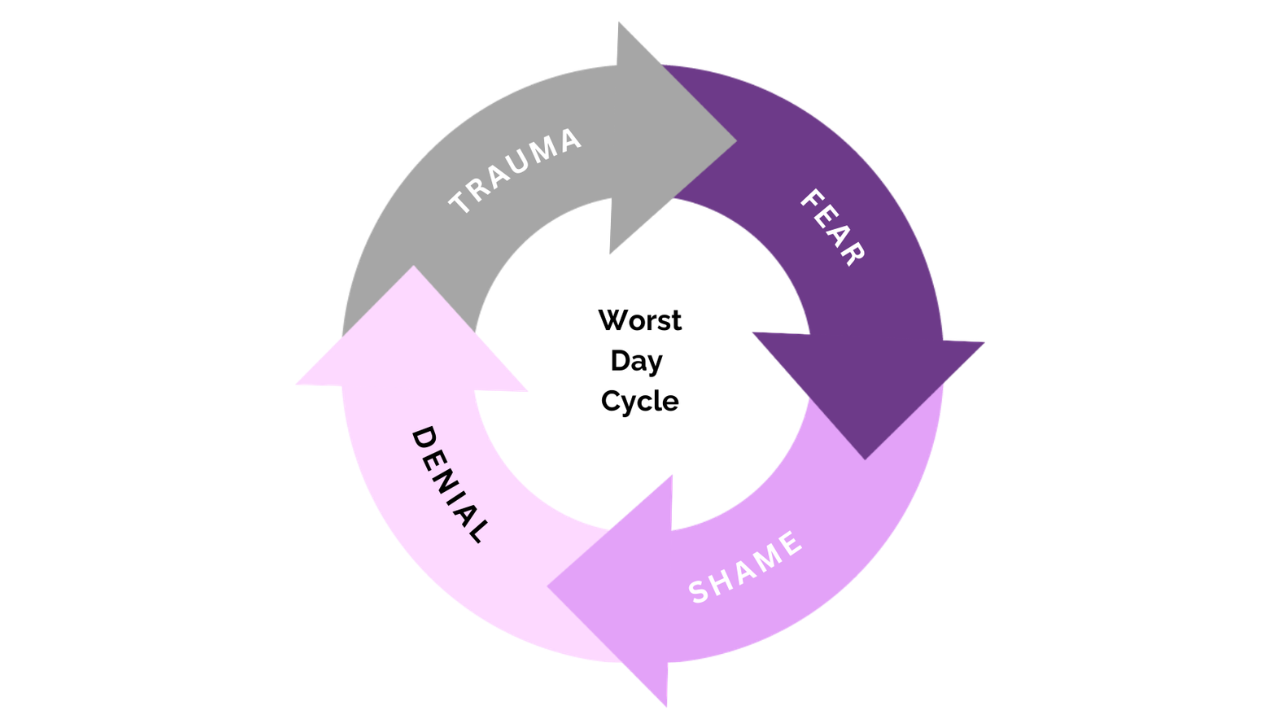
Your nervous system runs on a cycle. It’s predictable. It’s automatic. And understanding it is the first step to breaking it. This is the Worst Day Cycle™, the four-stage pattern that keeps codependency locked in place.
Stage One: Trauma
Someone’s mood shifts. A loved one is upset. A coworker makes a comment. The emotional climate changes. Your nervous system registers this as a threat — because in your childhood, emotional dysregulation in your environment meant danger. That’s you. Your nervous system still believing that other people’s emotions are about your safety.
Stage Two: Fear
Your body activates. If you don’t absorb this emotion, manage it, fix it, you’ll be rejected. Abandoned. You’ll be unlovable. The fear is primal. It’s not about this moment. It’s about survival. Your nervous system is running code that says: “If I don’t manage their emotion, I will not be safe.”
Stage Three: Shame
You feel ashamed that you’re this affected. Something is wrong with you for feeling this much. Why can’t you be normal? Why does everything hit you so hard? The shame deepens the wound. It convinces you that you should be able to handle this, that your sensitivity is a personal failing, that you’re broken. That’s you. Shaming yourself for having the nervous system that was trained into you.
Stage Four: Denial
And here’s where the cycle locks in. You reframe the wound as a gift. “I’m just an empath. I was born this way. This is my superpower.” The denial is the trap. Because as long as you believe the wound is a gift, you won’t heal it. You’ll keep running the same cycle, over and over, wondering why protecting your energy doesn’t work. The Worst Day Cycle™ keeps you trapped in codependency. And the empath identity is the denial that keeps the cycle spinning.
The Emotional Authenticity Method™ for Empaths
Real healing starts here. Not with energy protection. Not with crystals or sage or avoidance. With a somatic process that rewires your nervous system to stop absorbing and start containing. The Emotional Authenticity Method™ is a five-step framework that moves you from emotional fusion to emotional regulation.
Step 1: Somatic Down-Regulation
The moment you feel yourself absorbing someone else’s emotion — that moment when you’re about to step into their feeling — pause. Literally stop. Feel your feet on the ground. Feel your back against the chair. Feel the temperature of the air. 15-30 seconds. Just come back into your body. Your nervous system is about to hijack you, and you’re interrupting that pattern.
Step 2: What Am I Feeling Right Now?
Not what are they feeling. What are you feeling? This is harder than it sounds. You’ve spent your whole life tracking other people’s emotions. Locating your own is like finding a path that’s overgrown. But it’s there. That’s you. For the first time, asking what your body actually needs instead of what someone else needs from you. Get specific. Not “bad.” Anxious? Rejected? Unworthy? Name it.
Step 3: Where in My Body Do I Feel It?
Emotions aren’t in your head. They’re in your nervous system. Chest? Stomach? Throat? The absorption has a physical location. The more specific you are, the more you’re disengaging from the story your mind is telling and connecting to the actual sensation in your body. This grounds you in present-moment awareness instead of the projection and anxiety that usually governs your attention.
Step 4: What Is My Earliest Memory of This Exact Feeling?
Take yourself back. This feeling didn’t start today. Usually, it goes back to childhood. Usually, it’s a parent whose emotions you had to track obsessively to stay safe. Maybe your mother’s sadness. Maybe your father’s rage. Let yourself remember. That’s you. Connecting the dots between the present trigger and the original wound. The memory is the doorway to understanding why your nervous system is responding this way now.
Step 5: Who Would I Be If I Never Had This Thought or Feeling Again?
This is the question that cracks open the cage. If you didn’t need to absorb to belong, who would you be? If you didn’t have to manage other people’s emotions to matter, what would you want? This question points toward your authentic self — the person underneath the survival persona. It’s the feeling of what freedom actually tastes like.
Step 6: Feelization — Creating the New Emotional Chemical Addiction
This is the step that changes everything. Sit in the feeling of your authentic self — the person you just glimpsed in Step 5. Make it strong. Make it vivid. Ask yourself: how would I respond to this situation from this feeling? What would I say? What would I do? Visualize and feel yourself operating from your authentic self. Let the new feeling become more real than the old one. This is not visualization. This is emotional blueprint remapping. You are creating a new emotional chemical addiction to replace the one your childhood installed. You cannot change emotional patterns through thoughts alone. Emotions are biochemical events. Thoughts originate from feelings — and Feelization rewires the feeling that generates the thought. That’s you. For the first time, building a new emotional home inside yourself instead of absorbing everyone else’s.
The Authentic Self Cycle™ for Empaths
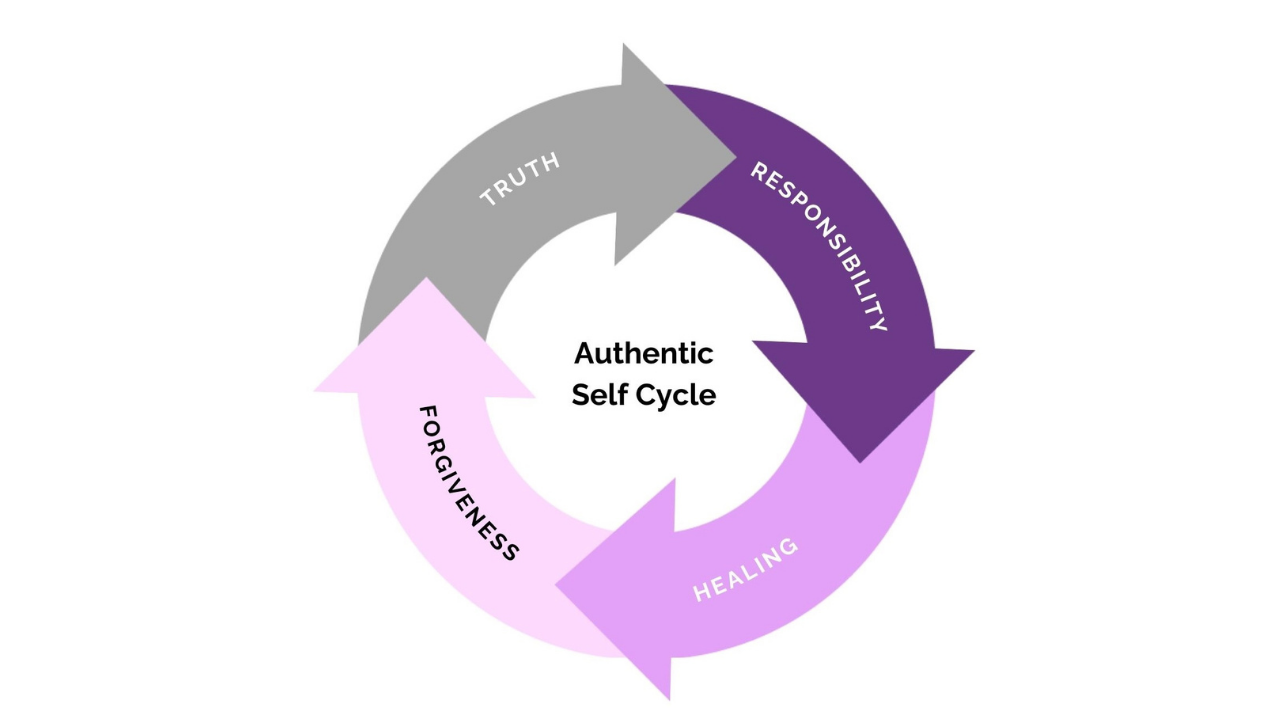
As you practice the Emotional Authenticity Method™, you’ll cycle through four phases of real healing. The Authentic Self Cycle™ is the path from trauma to wholeness. It’s not linear. It’s iterative. And each time you move through it, you integrate more of who you actually are.
Phase One: Truth
“I’m not an empath. I’m a codependent with no emotional boundaries.” This is the hardest step because you have to release the identity that’s protected you. But the truth is the foundation. Without it, healing is impossible. The empath has no protective bubble. They suck in everything because they lack the internal boundary structure that healthy development would have provided. Saying this truth out loud is the beginning of liberation.
Phase Two: Responsibility
“I was taught to absorb. I can learn to contain.” This isn’t blame. This is ownership. Your parents’ behavior isn’t your fault. But your healing is your responsibility. That’s you. For the first time, claiming agency in your own recovery. You’re not a victim anymore. You’re someone who’s choosing to rewire their nervous system. This is where real power begins.
Phase Three: Healing
The actual somatic work. Using the Emotional Authenticity Method™. Building real boundaries from your authentic self, not from a place of fear or shame. Learning to say no. Learning to feel your own feelings without absorbing others. Learning to tolerate being present with someone else’s pain without making it yours to fix. This is the work. It takes time. But it works.
Phase Four: Forgiveness
Forgiving yourself for the years you wore a wound as a crown. For the times you stayed in harmful relationships because your codependency aligned with their narcissism. For the years you thought you were gifted when you were actually hurt. The forgiveness isn’t for them — it’s for you. It’s the permission to move forward without carrying the weight of the past. That’s you. Releasing the shame that kept you in survival mode.
Understanding the Three Survival Persona Types
As you moved through the Worst Day Cycle™ in your childhood, you developed a survival persona — a character you created to manage the emotional threat. Most empaths develop one of three types:
The Disempowered Persona
This is the version of you that shrinks. You become small, compliant, agreeable. You absorb the emotion and then become invisible so you won’t be a further burden. This persona believes that if you’re small enough, quiet enough, helpful enough, nobody will hurt you. The disempowered empath often becomes the scapegoat in the family system — somehow responsible for everyone’s pain while simultaneously taking up no space.
The Falsely Empowered Persona
This is the version of you that overextends. You become the helper, the healer, the therapist. You absorb the emotion and then become obsessively focused on managing and fixing it. This persona believes that if you can just be helpful enough, responsive enough, fixing enough, nobody will leave. The falsely empowered empath often becomes the family counselor or the martyr — sacrificing constantly while secretly resenting it.
The Adapted Wounded Child Persona
This is the version of you that fragments. You become whatever you need to be in each moment to survive. You absorb the emotion, recognize the threat, and then shift your entire personality to manage it. This persona is the most exhausting because it requires constant recalibration. The adapted wounded child is often the chameleon — the person who has no consistency because consistency would mean being visible, and visibility meant danger.
Most empaths rotate between all three of these survival personas depending on the context. But the through-line is the same: you have no access to your authentic self. You’re always a reaction to someone else’s emotional state. That’s the definition of codependency. And that’s what the Authentic Self Cycle™ is designed to interrupt.
Recommended Reading
If you’re serious about healing from the empath pattern, these books are essential. They’re the foundation of understanding what codependency actually is and how to untangle it:
Facing Codependence by Pia Mellody — This is the definitive guide to understanding what codependency actually is, where it comes from, and how to heal it. Mellody’s framework of the five core symptoms of codependence is the clearest explanation I’ve encountered. When you read her descriptions of emotional absorption and boundary dysfunction, you’ll finally have language for what you’ve been experiencing.
Healing the Shame That Binds You by John Bradshaw — Shame is the foundation of codependency. This book walks you through understanding the specific shame patterns that were installed in your childhood and shows you how to unwind them. Bradshaw’s work on shame recovery and reclaiming your authentic self is foundational.
When the Body Says No by Gabor Maté — This book explains what happens when you spend your whole life absorbing other people’s emotions and suppressing your own. Why your immune system is compromised. Why you get sick all the time. Why your body is breaking down. Maté connects the body’s somatic response to emotional suppression in a way that finally makes sense of all those health issues empaths struggle with.
Codependent No More by Melody Beattie — This book gives you practical, actionable steps for stopping the codependent cycle. It’s about detachment without abandonment, about letting go of the responsibility for managing other people’s emotions while staying present with compassion.
The Gifts of Imperfection by Brené Brown — Brown’s work on vulnerability and belonging speaks directly to the empath’s wound. The research on shame, belonging, and authenticity helps you understand why you traded your authentic self for the appearance of connection.
That’s you. Finally reading the books that explain what’s actually been happening inside you all these years.
Frequently Asked Questions
Is being an empath the same as having empathy?
No. Empathy is the ability to understand and relate to someone else’s experience while staying emotionally contained. An “empath” absorbs other people’s emotions without boundaries. That’s not empathy — that’s codependency. Real empathy requires emotional boundaries.
Was I born an empath?
No. You have no memory of your feeling state at birth. Claiming you were born this way is being out of touch with reality. Your sensitivity was trained into you in childhood through repeated exposure to an emotionally dysregulated environment. You learned to absorb to survive. That’s not innate — that’s learned.
Why do empaths attract narcissists?
Because both are covering the same wound. Empaths don’t have boundaries. Narcissists are drawn to people without boundaries. The empath’s willingness to absorb and manage perfectly aligns with the narcissist’s need to be central. For more on this dynamic, see negotiables and non-negotiables in codependence recovery.
Can I heal from being an empath?
You can heal from codependency. The empath identity will dissolve as you build real emotional boundaries and reconnect with your authentic self. The sensitivity doesn’t disappear — it transforms into genuine empathy, where you can understand someone’s pain without absorbing it.
What’s the difference between emotional absorption and true empathy?
Emotional absorption means you take on someone else’s feeling state as your own. Your nervous system merges with theirs. You lose your sense of separate identity. True empathy means you understand their experience through your own emotional understanding, while staying separate and contained. One is porous. One is boundaried.
What’s the first step to healing the empath pattern?
Releasing the identity. Stop calling yourself an empath. Start calling yourself what you are: someone with codependent patterns that developed as a survival strategy. That truth is uncomfortable, but it’s the door to real healing. Once you stop defending the wound, you can finally treat it. Use the Feelings Wheel to start identifying your actual emotions instead of others’.
Your Next Step: Healing Through Emotional Authenticity
If you’re ready to move beyond the empath identity and actually heal the codependency underneath it, I want to invite you into The Greatness U. This is where I teach the deep work — the somatic practices, the emotional authenticity framework, the boundary-building skills that actually rewire your nervous system. You’ll learn the same methods in this post, but with the guidance and community support to actually integrate them into your life. Not in someday. In now.
Here are the courses that will specifically help you heal from the empath pattern:
- Emotional Blueprint Starter Course — Individual ($79) — The foundation course for understanding how the Worst Day Cycle™ has shaped your life and learning the Emotional Authenticity Method™ to break free.
- Tier 1: Mapping the Blueprint ($1,379) — The comprehensive program where you go deep into somatic healing, nervous system rewiring, and building authentic boundaries that actually hold.
- Why We Can’t Stop Hurting Each Other ($479) — This course decodes the empath-narcissist dance and shows you how to break the pattern.
- Why High Achievers Fail at Love ($479) — For empaths who achieve externally but stay trapped in codependent relationships, this course shows the connection between achievement and emotional dysfunction.
- Relationship Starter Course — Couples ($79) — If you’re in a relationship and want to transform the dynamic from codependency to real partnership.
Your healing is waiting. Your authentic self is waiting. Let’s go to work.
The Bottom Line
Your sensitivity was real. Your pain was real. You felt everything because you had to. In an emotionally unsafe environment, absorbing other people’s feelings was how you stayed alive. It worked. It kept you safe when nothing else could. But that’s not who you are. That’s who you became to survive. And you don’t have to stay that person anymore.
On the other side of this work is a person with genuine empathy. Someone who can feel deeply without drowning. Someone who understands other people’s pain because she’s done her own healing work, not because she’s absorbing theirs. Someone with real boundaries, real self-respect, real agency. Someone who can say no without guilt. Someone who can be present with another person’s suffering without making it hers to fix. Someone who finally knows where she ends and other people begin.
That’s not weakness. That’s the beginning of strength you’ve never known.