Emotional intelligence is the ability to recognize, understand, and manage emotions — but for high achievers running on childhood trauma, emotional intelligence alone cannot heal the void because it manages symptoms without addressing the root cause. If you’ve spent years developing your emotional intelligence — reading the room, regulating your reactions, staying composed under pressure — and you still feel empty, disconnected, or like something fundamental is missing, you’re not failing. You’re experiencing the limits of a system that was never designed to heal you.
That’s you — the one who can name every emotion in the room except your own.
The difference between emotional intelligence and emotional authenticity is the difference between managing pain and healing it. And that difference changes everything.
Emotional intelligence teaches you to manage emotions — but management isn’t healing. High achievers use emotional intelligence as another performance tool, suppressing their authentic feelings while appearing regulated. The Emotional Authenticity Method™ goes deeper: it traces today’s reactions to their childhood origins and rewires the emotional blueprint that created the void. You can’t think your way out of a biochemical event.
What Is Emotional Intelligence — And Why Isn’t It Enough?
Emotional intelligence is the skill of recognizing emotions in yourself and others, understanding what those emotions mean, and using that understanding to guide your behavior. It’s a real skill. It matters. And for high achievers, it often becomes yet another form of performance.
That’s you — scoring high on every emotional intelligence assessment while your body is screaming for help underneath.
Here’s what emotional intelligence teaches you: regulate yourself so you can function. Stay composed. Read the room. Respond appropriately. Don’t let your emotions control you.
And here’s what it doesn’t teach you: why you’re having those emotions in the first place. Where they actually come from. What childhood experience wired them into your nervous system. And how to actually heal the pattern instead of just managing it.
Emotional intelligence without emotional authenticity is symptom management disguised as growth — it teaches high achievers to perform regulation rather than experience genuine healing, leaving the original childhood wound untouched and the void unfilled.
The problem isn’t that emotional intelligence is wrong. The problem is that for people running on childhood trauma, emotional intelligence becomes another tool in the survival toolkit — another way to control, manage, and suppress. Another way to look healed without being healed.
That’s you — using emotional intelligence the way you use everything else: to perform, to control, to make sure nobody sees what’s really going on inside.
What Is the Difference Between Emotional Intelligence and Emotional Authenticity?
Emotional intelligence says: “Regulate yourself so you can function.”
Emotional authenticity asks: “What happened to you that makes this reaction make sense?”
One manages symptoms. The other heals roots.
That’s the difference nobody talks about — and it’s the reason you can be the most emotionally intelligent person in the room and still feel completely empty.
Emotional intelligence keeps you in your head. It’s cognitive. It’s strategic. It asks: what’s the best response here? How do I de-escalate? How do I stay composed?
Emotional authenticity moves you into your body. It’s somatic. It’s honest. It asks: what am I actually feeling? Where do I feel it? And when is the first time I ever felt this way?
High achievers are drawn to emotional intelligence because it fits their operating system — analyze, strategize, perform. Emotional authenticity terrifies them because it requires something they’ve spent their entire lives avoiding: vulnerability. Truth. Feeling the feelings they’ve been running from since childhood.
Emotional authenticity is the practice of telling the truth about what you feel, tracing that feeling to its childhood origin, and allowing your nervous system to process what was never safe to process as a child — it heals the root, not just the reaction.
That’s you — finally understanding why all that emotional intelligence work didn’t fill the void. It wasn’t designed to.
How the Worst Day Cycle™ Explains Why Emotional Intelligence Fails
To understand why emotional intelligence isn’t enough, you need to understand the Worst Day Cycle™. This is the neurochemical pattern that runs underneath every emotional reaction you have — and emotional intelligence doesn’t touch it.
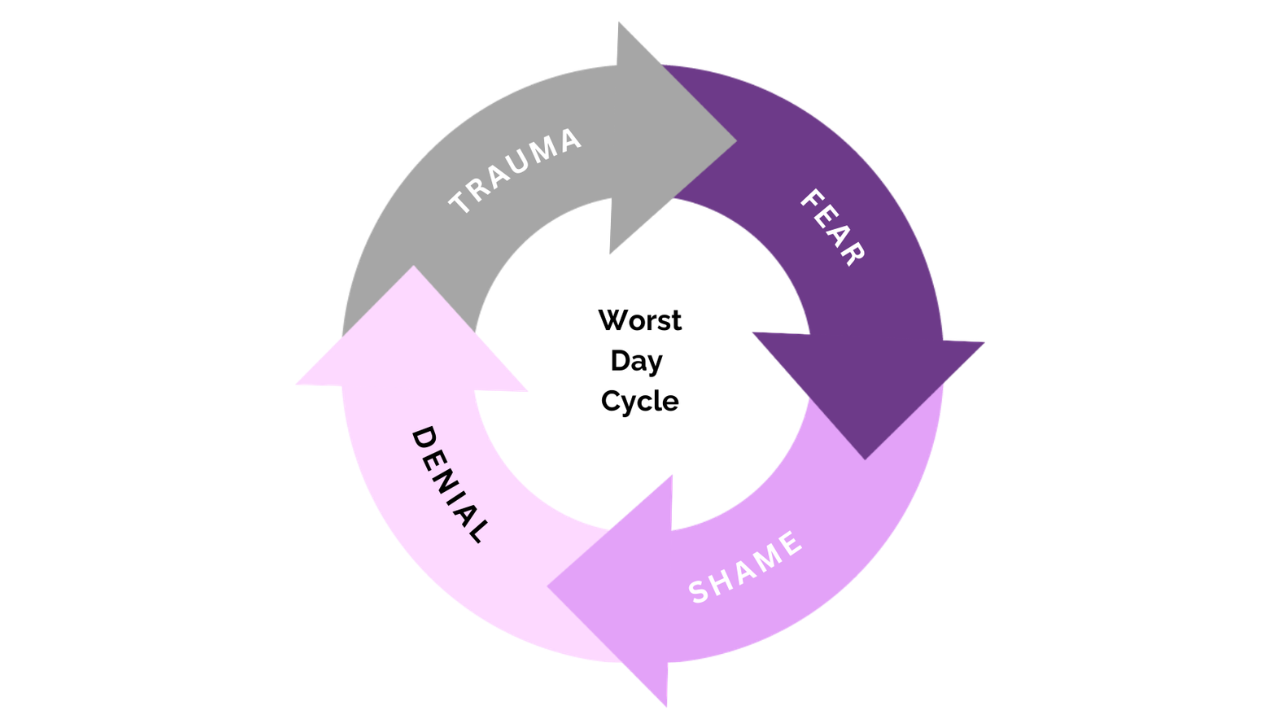
The Worst Day Cycle™ has four stages: Trauma → Fear → Shame → Denial.
Trauma: Any negative emotional experience in childhood that created painful meanings. It doesn’t have to be dramatic — a parent who was emotionally unavailable, a household where feelings were treated as weakness, a caregiver whose love was conditional on performance. These experiences create a massive chemical reaction in the brain and body. The hypothalamus generates chemical cocktails — cortisol, adrenaline, dopamine, oxytocin misfires — and the brain becomes addicted to these emotional states.
That’s you — feeling most alive when you’re in crisis mode, because your nervous system was calibrated for chaos in childhood and emotional intelligence just taught you to manage the chaos more efficiently.
Fear: Fear drives repetition. The brain conserves energy by repeating known patterns — it can’t tell right from wrong, only known from unknown. Since 70%+ of childhood messaging is negative and shaming, adults repeat these painful patterns in relationships, career, hobbies, health — everything. Emotional intelligence teaches you to recognize the fear. It doesn’t teach you to trace it to its origin and rewire it.
Shame: This is where you lost your inherent worth. “I am the problem.” Not “I made a mistake” — but “I AM the mistake.” This is the core wound underneath every high achiever’s drive. You don’t achieve because you’re ambitious. You achieve because deep down, you believe your authentic self isn’t enough. And emotional intelligence can’t touch that belief because it lives in your body, not your mind.
That’s the shame talking — the voice that says “if I just get better at managing my emotions, I’ll finally feel okay.” But management was never the answer.
Denial: Denial is the survival persona you created to survive the pain. It was brilliant in childhood — absolutely necessary. But in adulthood, it sabotages everything. For high achievers, emotional intelligence often becomes part of the denial — another layer of performance that says “look how regulated I am” while the authentic self stays buried.
The Worst Day Cycle™ reveals why emotional intelligence fails for trauma survivors — it addresses the cognitive layer of emotional response while leaving the neurochemical addiction to childhood emotional patterns completely intact.
How Your Survival Persona Uses Emotional Intelligence Against You
Your survival persona is the identity you created in childhood to navigate an emotionally unsafe environment. It’s not who you are — it’s who you had to become. And for high achievers, emotional intelligence becomes one of the survival persona’s most powerful tools.
There are three survival persona types:
The Falsely Empowered: This persona controls, dominates, and rages. They use emotional intelligence to read the room and maintain power. They know exactly what everyone is feeling — and they use that knowledge to stay in control. They look emotionally sophisticated, but their regulation is driven by fear, not healing. They manage others’ emotions to avoid feeling their own.
That’s you — the leader who can de-escalate any conflict at work but explodes at home when your partner asks a simple question.
The Disempowered: This persona collapses, people-pleases, and disappears. They use emotional intelligence to anticipate everyone else’s needs and keep themselves safe through accommodation. They’re so attuned to others’ emotions that they’ve completely lost touch with their own. They confuse hypervigilance with empathy.
That’s you — the one everyone calls “so empathetic” when really you’re just terrified of what happens if you stop monitoring everyone’s emotional state.
The Adapted Wounded Child: This persona oscillates between both — controlling one moment, collapsing the next. They use emotional intelligence inconsistently — brilliant at regulation in professional settings, completely dysregulated in intimate relationships. They swing between “I don’t need anyone” and “please don’t leave me.”

That’s you — emotionally intelligent enough to see the pattern but not emotionally authentic enough to break it.
Your survival persona weaponizes emotional intelligence — it uses your awareness of emotions as a control mechanism rather than a healing pathway, keeping you performing emotional regulation instead of experiencing genuine emotional truth.
How Emotional Intelligence Masks Pain in Every Area of Your Life
Family: You’re the peacekeeper at every family gathering. You use your emotional intelligence to manage everyone’s reactions — defusing tension, smoothing over conflicts, anticipating who’s about to blow up. You read the room better than anyone. But you haven’t expressed a genuine feeling at a family event in years. Your emotional intelligence keeps the system running. Your authentic self stays silent.
That’s you — managing your family’s emotions like a full-time job while your own feelings sit in the basement, unvisited.
Romantic Relationships: You’re the “healthy communicator.” You use “I” statements. You regulate during conflict. You read your partner’s emotional cues. But underneath all that emotional intelligence, you’re terrified. Terrified of abandonment. Terrified of rejection. Terrified that if they saw the real you — not the emotionally intelligent performance — they’d leave. You confuse emotional management with emotional intimacy.
Sound familiar? The partner who does everything “right” in therapy but still feels completely alone in the relationship?
Friendships: You’re the friend everyone calls in a crisis. You listen, you validate, you hold space. But no one holds space for you — because you never let them. Your emotional intelligence makes you an exceptional listener and an invisible human being. You know how everyone else feels. Nobody knows how you feel.
Work: You’re the emotionally intelligent leader. You give great feedback. You manage difficult conversations. You stay composed under pressure. But you’re running on empty. You use emotional intelligence to perform at a level that earns praise and promotions while your body screams for rest, your relationships deteriorate, and the void grows deeper every year.
That’s you — getting praised for the very emotional intelligence skills that keep you disconnected from yourself.
Body and Health: You intellectualize your body’s signals. You know you’re stressed — your emotional intelligence told you that. But instead of feeling the stress, tracing it to its source, and processing it somatically, you “manage” it. You meditate. You exercise. You breathe. And you wonder why the chronic tension, the insomnia, the digestive issues, the autoimmune flares — they never fully resolve. Because emotional intelligence addresses the mind. Trauma lives in the body.
How the Emotional Authenticity Method™ Goes Beyond Emotional Intelligence
The Emotional Authenticity Method™ is what happens when you stop managing emotions and start healing them. It’s the daily practice that rewires the emotional blueprint at the nervous system level — where emotional intelligence can’t reach.
Step 1: Somatic Down-Regulation with optional Titration. Before you can process anything, you have to get your nervous system out of survival mode. This is where most emotional intelligence training stops — it teaches regulation as the destination. The Emotional Authenticity Method™ uses regulation as the starting point. Titration means you go slowly — you don’t force yourself to feel everything at once.
That’s you — learning that regulation isn’t the goal. It’s the doorway.
Step 2: What am I feeling? Not “what should I feel?” Not “what’s the appropriate response?” But: what am I actually feeling right now? Using the Feelings Wheel, you develop emotional granularity — the ability to name specific emotions instead of lumping everything into “stressed” or “fine.” Most emotionally intelligent people can name others’ emotions perfectly. They struggle to name their own.
Step 3: Where in my body do I feel it? All emotional trauma is stored physically. Your chest tightens. Your stomach drops. Your jaw clenches. Your shoulders climb toward your ears. Emotional intelligence stays in the head. Emotional authenticity moves into the body — because that’s where the wound actually lives.
Step 4: What is my earliest memory of this feeling? This is the step that changes everything. You trace today’s reaction back to its childhood origin. You realize: this isn’t about today. My partner isn’t my parent. My boss isn’t my father. My nervous system just thinks they are. Emotional intelligence never asks this question. And that’s why it can’t heal you.
That’s the moment the void starts to make sense — when you see that your emotional intelligence has been managing a five-year-old’s pain with an adult’s strategy, and the five-year-old needs something completely different.
Step 5: Who would I be if I never had this feeling again? This is the vision step. It connects you to the Authentic Self Cycle™ and gives your nervous system a new destination — not more management, not better performance, but actual identity restoration.
The Emotional Authenticity Method™ works because emotions are biochemical events — you cannot change emotional patterns through thoughts alone. Thoughts originate from feelings, not the other way around. Emotional intelligence addresses thoughts about feelings. Emotional authenticity addresses the feelings themselves.
How the Authentic Self Cycle™ Replaces Performance With Healing
The Authentic Self Cycle™ is the healing counterpart to the Worst Day Cycle™. Where the Worst Day Cycle™ traps you in Trauma → Fear → Shame → Denial, the Authentic Self Cycle™ restores your identity through Truth → Responsibility → Healing → Forgiveness.
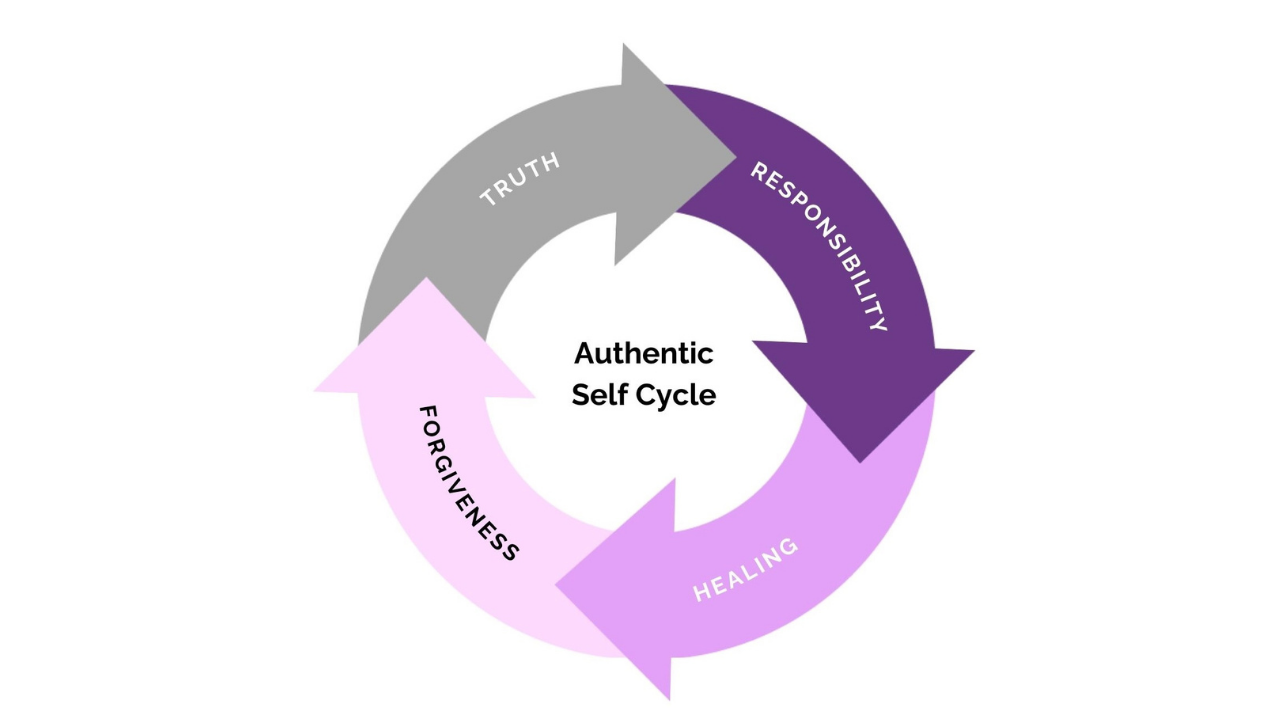
Truth: Name the blueprint. See that “this isn’t about today.” When your colleague gives you critical feedback and your chest tightens, truth says: “This feeling is from childhood. My colleague isn’t my critical parent — my nervous system just thinks they are.” Emotional intelligence would tell you to regulate. Truth tells you to investigate.
That’s the first step beyond emotional intelligence — seeing the pattern instead of managing it.
Responsibility: Own your emotional reactions without blame. “My partner isn’t my parent — my nervous system just thinks they are.” This isn’t about fault. It’s about taking back your power from a childhood that stole it. Emotional intelligence often stops at “I need to manage my reaction.” Responsibility says “I need to understand where this reaction was born.”
Healing: Rewire the emotional blueprint so conflict becomes uncomfortable but not dangerous, space isn’t abandonment, and intensity isn’t attack. This is where daily practice does its work — second by second, like the ticks of a clock. The second hand moves in tiny, almost insignificant ticks. But those ticks move the minute hand. The minutes move the hours. Healing works the same way.
Forgiveness: Release the inherited emotional blueprint and reclaim your authentic self. This creates a NEW emotional chemical pattern that replaces fear, shame, and denial with safety, worth, and connection. You don’t become someone new. You finally meet who you always were underneath the survival persona and its emotional intelligence performance.
That’s you — not the emotionally intelligent performer. The emotionally authentic human being who no longer needs to manage feelings because they’ve actually healed them.
The Authentic Self Cycle™ is an identity restoration system — it doesn’t teach you to be more emotionally intelligent, it replaces the neurochemical pattern that made emotional intelligence necessary as a survival tool with a new blueprint built on truth, responsibility, and emotional authenticity.
Why High Achievers Resist Emotional Authenticity
High achievers resist emotional authenticity for the same reason they resist rest: it feels dangerous. Their entire identity has been built on performance — including their emotional performance. Dropping into emotional authenticity means admitting that all that emotional intelligence work was another layer of the survival persona.
That’s you — the person who’d rather read another emotional intelligence book than sit with the feeling in your chest for 60 seconds.
The brain conserves energy by repeating known patterns. If you grew up in an environment where managing emotions was the path to safety, your brain will keep choosing management over authenticity — because management is known, and authenticity is unknown. And to the brain, unknown means dangerous.
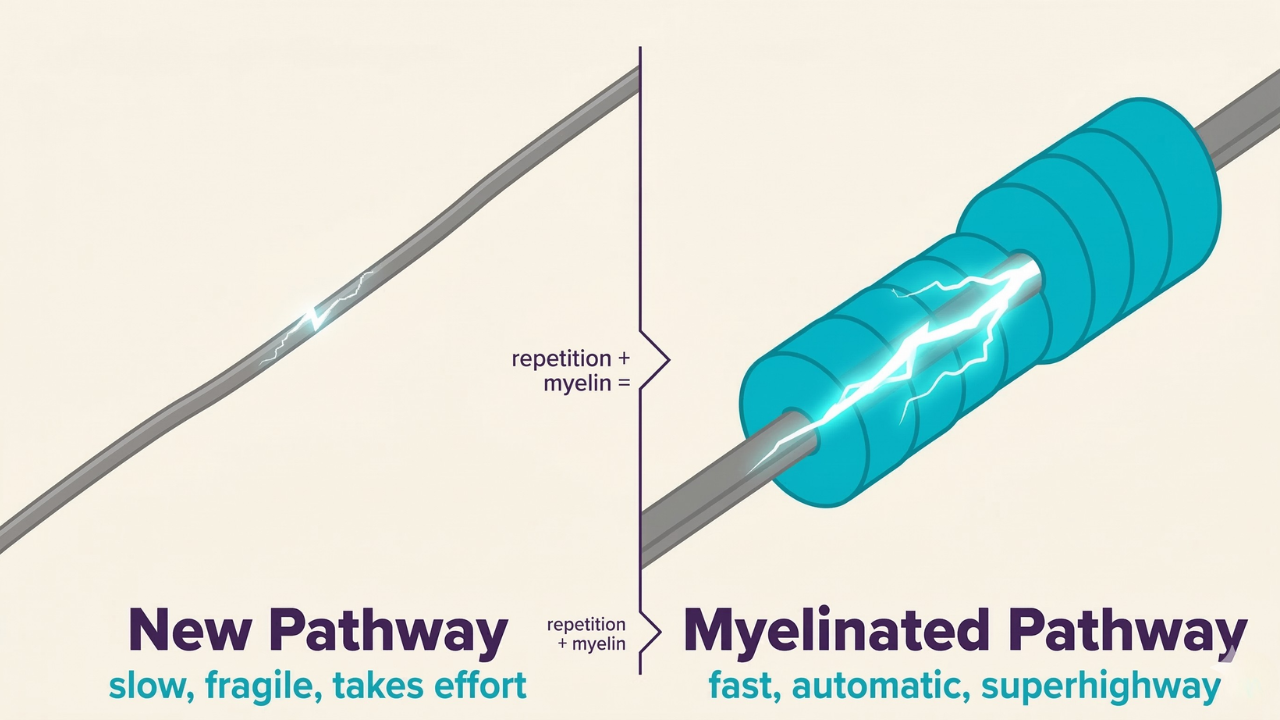
This is why insight alone doesn’t change the pattern. You can understand intellectually that your emotional intelligence is a survival strategy. But understanding doesn’t rewire the nervous system. Only repeated somatic experience does. Only feeling the feeling — in your body, not just your mind — creates the neurological change that shifts the pattern.
That’s the hardest truth for high achievers — you can’t achieve your way to healing. You can’t manage your way to authenticity. You have to feel your way there.
Frequently Asked Questions
Why isn’t emotional intelligence enough to heal trauma?
Emotional intelligence operates at the cognitive level — it teaches you to recognize and manage emotions. But trauma is stored in the body as a neurochemical pattern, not as a thought. The Worst Day Cycle™ shows how childhood trauma creates an automated loop of fear, shame, and denial that runs below conscious awareness. Emotional intelligence manages the symptoms of this loop. Emotional authenticity heals the root.
What is the difference between emotional intelligence and emotional authenticity?
Emotional intelligence teaches you to regulate emotions so you can function effectively. Emotional authenticity teaches you to tell the truth about what you feel, trace it to its childhood origin, and allow your nervous system to process what was never safe to process as a child. One manages the surface. The other heals the foundation. The Emotional Authenticity Method™ provides a 5-step daily practice for this deeper work.
Can you be emotionally intelligent and still have unhealed trauma?
Yes — and this is extremely common among high achievers. In fact, emotional intelligence often becomes part of the survival persona. You learn to read rooms, manage reactions, and perform regulation — all while the original childhood wound remains untouched. The void persists because emotional intelligence addresses the thinking brain, not the nervous system where trauma actually lives.
How do high achievers use emotional intelligence as a survival strategy?
High achievers who grew up in emotionally unsafe environments learned to read emotions for survival — anticipating a parent’s mood, de-escalating conflict, performing the “right” emotion to stay safe. As adults, they refine this into emotional intelligence. But the motivation hasn’t changed: it’s still about control, safety, and preventing abandonment. The three survival persona types — falsely empowered, disempowered, and adapted wounded child — each use emotional intelligence differently to maintain their survival strategy.
What does the Emotional Authenticity Method™ do that emotional intelligence training doesn’t?
The Emotional Authenticity Method™ is a 5-step somatic practice: (1) down-regulate the nervous system, (2) name the specific feeling, (3) locate it in the body, (4) trace it to the earliest childhood memory, and (5) envision who you’d be without this pattern. Unlike emotional intelligence training, it targets the body — where trauma is stored — and rewires the neurochemical blueprint that creates automatic emotional reactions.
How long does it take to move from emotional intelligence to emotional authenticity?
The shift from emotional intelligence to emotional authenticity is not a single breakthrough — it’s a daily practice. Noticeable changes can happen within weeks of consistent work with the Emotional Authenticity Method™. The key is repetition, not intensity. Like the second hand on a clock, each small moment of emotional truth moves the larger pattern. The Authentic Self Cycle™ provides the framework for long-term identity restoration beyond emotional management.
The Bottom Line
You’re not failing because you’re not emotionally intelligent enough. You’re struggling because emotional intelligence was never designed to heal what happened to you in childhood.
Every emotional intelligence skill you’ve developed was brilliant. It helped you navigate a world that didn’t feel safe. It got you promotions, relationships, respect. It made you the person everyone admires.
But it didn’t fill the void. And it won’t.
Because the void doesn’t respond to management. It responds to truth. To feeling. To the willingness to finally stop performing emotional health and start experiencing it.
That’s you — not the emotionally intelligent performer who has it all together. The human being underneath who’s been waiting decades for someone to ask: “How are you really feeling?”
The answer to that question — the honest, messy, terrifying answer — is where healing begins. Not in your head. In your body. In the feelings you’ve been managing instead of feeling. In the truth you’ve been regulating instead of speaking.
You don’t need more emotional intelligence. You need emotional authenticity. And that starts with one brave, honest moment — today.
Recommended Reading
These books complement the frameworks in this article and deepen your understanding of why emotional intelligence alone isn’t enough:
Facing Codependence by Pia Mellody — the foundational text on how childhood trauma creates the survival patterns that emotional intelligence manages but doesn’t heal.
The Body Keeps the Score by Bessel van der Kolk — the science of how trauma lives in the body, not the mind, explaining why cognitive approaches like emotional intelligence training have limits.
When the Body Says No by Gabor Maté — how chronic emotional suppression — even “intelligent” suppression — manifests as physical illness.
Codependent No More by Melody Beattie — a practical guide to recognizing when emotional awareness becomes emotional overfunction.
The Gifts of Imperfection by Brené Brown — how shame drives performance-based identity and why vulnerability is the path beyond emotional management.
Take the Next Step
If you’re ready to move beyond emotional intelligence and into emotional authenticity, Kenny Weiss offers courses designed for high achievers who are done performing and ready to heal:
Emotional Blueprint Starter Course — Individual ($79) — Your personal roadmap to understanding the Worst Day Cycle™ and beginning the shift from emotional management to emotional truth.
Relationship Starter Course — Couples ($79) — For couples ready to move beyond emotionally intelligent conflict management into genuine emotional connection.
Why We Can’t Stop Hurting Each Other ($479) — Deep-dive into the Worst Day Cycle™ and how childhood trauma creates the patterns that emotional intelligence manages but can’t resolve.
Why High Achievers Fail at Love ($479) — Built specifically for high achievers who’ve mastered emotional intelligence in their career but can’t figure out emotional authenticity in relationships.
The Shutdown Avoidant Partner ($479) — Understanding avoidant attachment through the lens of trauma chemistry and survival personas.
Tier 1: Mapping the Blueprint ($1,379) — The comprehensive program for learning and practicing the Emotional Authenticity Method™.
Download the Feelings Wheel — the free tool used in Step 2 of the Emotional Authenticity Method™ to build emotional granularity beyond surface-level emotional intelligence.
Explore more: The Signs of Enmeshment | 7 Signs of Relationship Insecurity | 7 Signs of High Self-Esteem | How to Determine Your Negotiables and Non-Negotiables | 10 Do’s and Don’ts for a Great Relationship