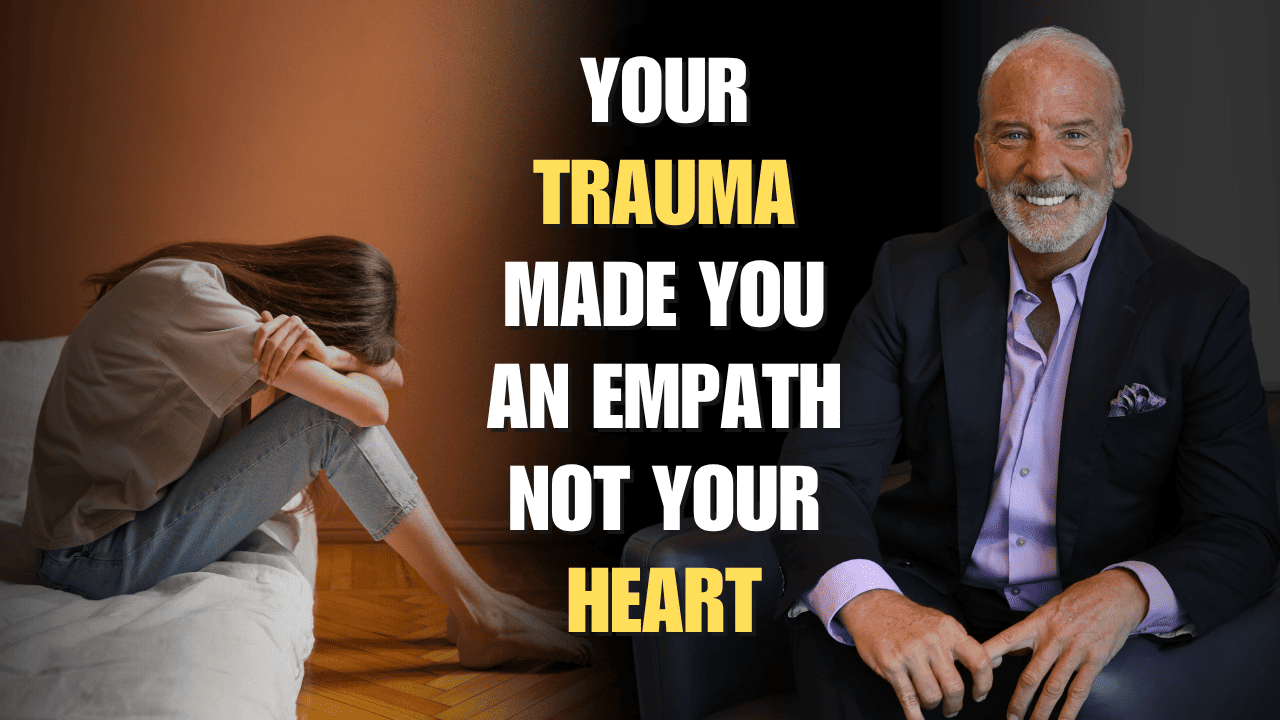
Being an “empath” is not a personality gift — it is a trauma response. What most people call empathic sensitivity is actually hypervigilance, a survival strategy your nervous system built in childhood to detect emotional danger in an unsafe environment. If you grew up scanning your parent’s face for signs of rage, monitoring your mother’s mood before you walked in the room, or absorbing everyone’s emotions because you learned that their feelings were more important than yours — you didn’t develop a superpower. You developed a survival persona. And that survival persona is now running your adult life, keeping you exhausted, codependent, and trapped in the very patterns you’re trying to escape.
That’s you — the one who walks into a room and immediately knows who’s upset, who’s angry, who needs something. And you think that’s a gift. It’s not. It’s your five-year-old scanning for danger.
This isn’t about blaming you. This is about telling you the truth that the wellness industry won’t — so you can actually heal instead of celebrating the wound.
Why Empaths Aren’t Gifted — They’re Traumatized
If you identify as an empath, you’ve probably been told your whole life: “You’re so sensitive. You feel everything. You’re special.” And you believed it — because it felt better than the alternative.
That’s you — the one who’s been calling a wound a gift because nobody ever told you the truth.
Recent estimates show that roughly 30% of the population now identifies as a Highly Sensitive Person or empath. That’s a massive number of people who have been misled into celebrating a trauma response instead of healing it. And it saddens me deeply, because these people are suffering needlessly.
You didn’t become an empath by accident. A deeply sensitive person develops this hyper-awareness only when their childhood environment demands it. Think of a child’s emotional landscape as an open, unshielded canvas. Whatever emotions your parents felt — their anxieties, their unexpressed anger, their fears — you absorbed them. You became a mirror of their emotional state. Not because you’re gifted. Because you had no choice.
The empath identity is a misdiagnosis of childhood trauma — what most people call “empathic sensitivity” is actually a nervous system that was trained in childhood to scan for emotional danger, and that hypervigilance pattern continues running automatically in adulthood long after the original threat is gone.
How Dr. Elaine Aron Misdiagnosed Her Own Wound
Dr. Elaine Aron, the psychologist who coined the term “Highly Sensitive Person” in the 1990s, did groundbreaking research. But she made a critical error: she misdiagnosed her own childhood trauma as a personality trait.
That’s the problem at the root of the entire empath movement — the person who defined it didn’t recognize her own wound.
What Dr. Aron labeled as “sensitivity” was actually hypervigilance — a nervous system that learned to pay attention to emotional shifts because her childhood environment required it. Instead of asking “Why did I develop this sensitivity?”, she asked “How can people like me protect our sensitive nature?” That question sent millions of people down the wrong path.
By framing hypervigilance as an identity rather than a trauma response, the entire wellness industry gave people permission to never heal. They created retreats, crystals, boundaries workshops, and “empath protection” techniques — all of which manage the symptom without ever touching the root. The root is childhood trauma. The root is shame. And until you address both, you’ll stay trapped.
The Two Forces Beneath Every Empath: Childhood Trauma and Shame
If you identify as an empath, two colossal forces are driving everything beneath the surface:
Force 1: Childhood Trauma. Trauma isn’t just abuse. It’s any negative emotional experience that created painful meanings about you. Maybe your parent said “Why are you so sensitive?” and you decided I’m broken. Maybe your mother’s anxiety consumed the house and you decided My feelings don’t matter. Maybe your father’s rage taught you I need to control everything to stay safe. These experiences create actual neurochemical changes in your developing brain.
That’s you — the one who thinks your childhood was “fine” while your nervous system is still running on the cortisol from those dinner table silences.
Force 2: Debilitating Shame. Shame isn’t guilt. Guilt says “I made a mistake.” Shame says “I AM the mistake.” Shame is where you lost your inherent worth. If your childhood required you to be “good,” “quiet,” “understanding,” or “kind” in order to be loved, then your natural emotions — anger, need, desire, disappointment — became sources of shame. You learned that your authentic self was dangerous.
The empath personality is the predictable result of childhood trauma combined with shame — the child learns that their authentic emotional needs are dangerous, so they suppress those needs and become hyper-attuned to everyone else’s emotions as a survival strategy.
What Is Hypervigilance and Why Do Empaths Have It?
Picture yourself as a child. Your emotional landscape is completely open, unshielded, porous. Whatever emotions your parents felt — their anxiety, their rage, their numbness — you absorbed them like a sponge. To survive, you learned to be hyper-attuned. You became a human lie detector, constantly scanning for emotional shifts.
That’s you — the one who knew your mother’s mood before she opened her mouth, who could feel your father’s anger from three rooms away, who learned to read the room before you learned to read books.
For me personally, growing up with a mother battling alcoholism and a father consumed by rage, survival meant exactly this — constant scanning. This was a brilliant, life-saving skill in childhood. It protected me. But like an old survival kit, it becomes a burden in adulthood.
Now you’re walking into a coffee shop and reading every customer’s emotional state. You’re in a work meeting and hyper-focused on your boss’s micro-expressions. You’re at a dinner party and completely drained because your nervous system never stopped scanning.
That’s you — still doing at age 40 what kept you alive at age 6, except now it’s destroying your relationships, your energy, and your health.
The reason empaths feel constantly drained isn’t because they’re picking up on “everyone’s emotions.” It’s because their nervous system never learned to regulate itself. The survival mechanism of constant vigilance runs on overdrive, burning through energy reserves that were meant for living, not surviving.
Empaths are not absorbing other people’s emotions — they are avoiding their own. The hypervigilant focus on others’ feelings is a defense mechanism that prevents the empath from sitting with their own unprocessed childhood pain.
How the Worst Day Cycle™ Keeps Empaths Trapped
The empath pattern isn’t random. It follows a predictable neurochemical loop called the Worst Day Cycle™. Understanding this cycle is the first step to breaking free.
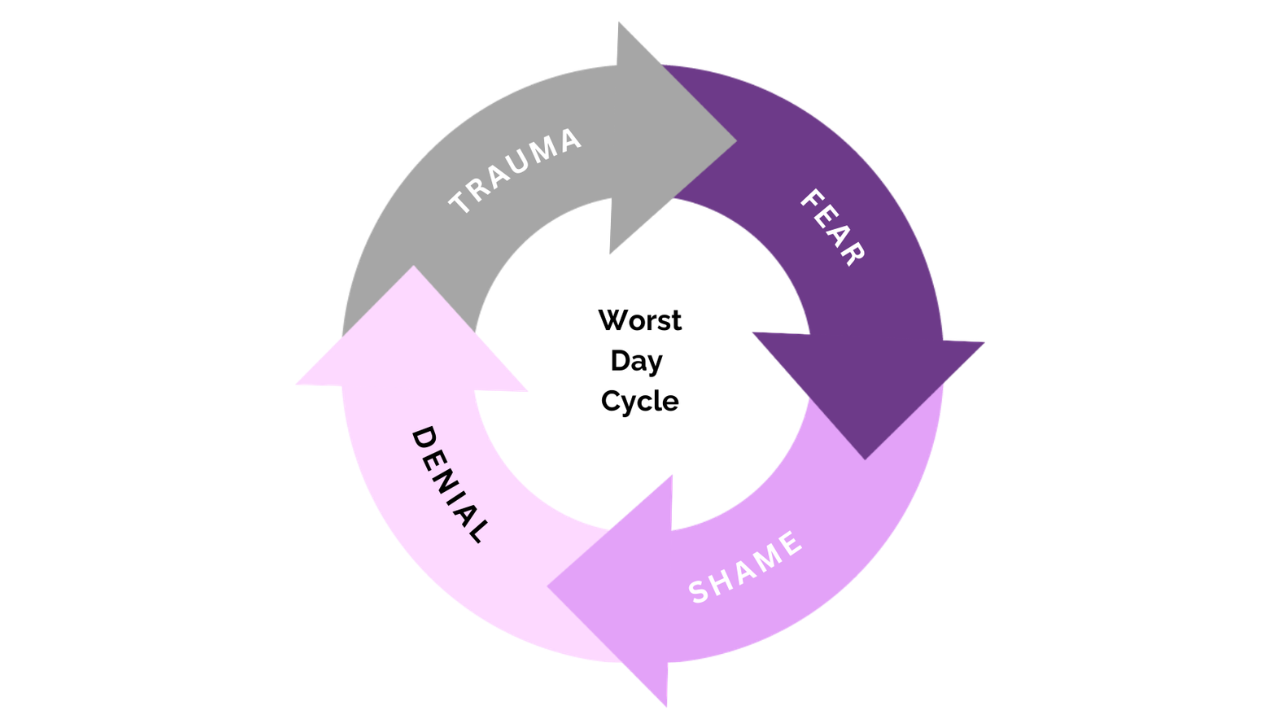
The Worst Day Cycle™ has four stages: Trauma → Fear → Shame → Denial.
Trauma: Any negative emotional experience in childhood that created painful meanings. These experiences create a massive chemical reaction in the brain and body. The hypothalamus generates chemical cocktails — cortisol, adrenaline, dopamine, oxytocin misfires — and the brain becomes addicted to these emotional states.
Fear: Fear drives repetition. The brain conserves energy by repeating known patterns — it can’t tell right from wrong, only known vs. unknown. Since 70%+ of childhood messaging is negative and shaming, adults repeat these painful patterns in relationships, career, hobbies, health — everything. The brain thinks repetition equals safety.
That’s you — choosing the same emotionally unavailable partner, the same draining friendships, the same self-sacrificing work patterns. Not because you want to. Because your nervous system is terrified of the unknown.
Shame: This is where you lost your inherent worth. “I am the problem.” Not “I made a mistake” — but “I AM the mistake.” This is the core wound underneath the empath identity. You scan others’ emotions because deep down, you believe your own feelings are dangerous, selfish, or too much.
Denial: Denial is the survival persona created to survive the pain — brilliant in childhood, sabotaging in adulthood. For empaths, the denial stage IS the empath identity itself. Calling yourself an “empath” is the final layer of denial — it reframes the wound as a gift, ensuring you never have to face the trauma and shame underneath.
That’s the darkest truth about empaths — the empath label itself is the denial stage of the Worst Day Cycle™, keeping you trapped in the very pattern you’re trying to escape.
What Is Reaction Formation and How Does It Create Excessive Kindness?
Here’s where it gets uncomfortable. And this is the part nobody wants to talk about.
When you experience severe trauma and shame, you often develop what psychology calls a reaction formation. This is an unconscious defense mechanism where you repress a disturbing, painful feeling and express the exact opposite.
That’s you — the one whose kindness has become so rigid, so automatic, so compulsive that it stopped being a choice a long time ago.
Underneath that excessive kindness lies a deep reservoir of unexpressed hurt, anger, and sadness. As a child, expressing that raw emotion would have been “bad” or unsafe — it would have reinforced the shame. So you repressed it. You became relentlessly kind instead.
John Bradshaw called this “thinly sadistic” kindness. Think about it: how truly authentic or loving is it to be “nice” to someone who doesn’t deserve it, or to give of yourself until you’re depleted, all while secretly resenting it? That’s not generosity. That’s coercion born from unaddressed trauma and shame.
That’s you — the one everyone calls “so giving” while inside you’re drowning in resentment you can’t even admit to yourself.
This is why many empaths repeatedly find themselves in relationships with narcissists. The narcissist needs supply. The empath needs to perform kindness to avoid shame. It’s a perfect, devastating match. Two survival personas locked in a dance neither chose.
Excessive kindness in empaths is not authentic generosity — it is a reaction formation, an unconscious defense mechanism that represses buried rage and shame by expressing the opposite emotion, creating codependent relationship patterns that feel like love but are actually trauma bonds.
The Three Survival Persona Types in Empaths
Not all empaths look the same. Your survival persona — the identity you created in childhood to navigate an emotionally unsafe environment — shows up in one of three patterns.
The Falsely Empowered: This persona controls, dominates, and rages. They use their empathic awareness to read the room and maintain power. They know exactly what everyone is feeling — and they use that knowledge to stay in control. They look strong on the outside, but their power comes from fear, not strength.
That’s you if you’re the “strong empath” — the one who takes charge, who manages everyone’s emotions, who never lets anyone see vulnerability because vulnerability was never safe.
The Disempowered: This persona collapses, people-pleases, and disappears. This is the classic “empath” — endlessly kind, endlessly giving, endlessly drained. They make themselves small to be safe. They confuse hypervigilance with empathy and self-abandonment with love.
That’s you if you’re the “sensitive empath” — the one who absorbs everyone’s pain, can’t say no, and then wonders why you’re exhausted and invisible.
The Adapted Wounded Child: This persona oscillates between both — raging one moment, collapsing the next. They swing between controlling and people-pleasing, never landing in their authentic self. They’re exhausted by their own unpredictability.
That’s you if you’re the “unpredictable empath” — the one who explodes at your partner one moment and then spends three days apologizing and overgiving to make up for it.
How the Empath Trauma Response Shows Up in Every Area of Your Life
Family: You’re the emotional regulator. You manage your parents’ feelings. You keep the peace at holiday dinners. You feel guilty for having boundaries. You’re still playing the role your family assigned you at age six — and calling it “being the empathic one.”
That’s you — absorbing your mother’s anxiety at Sunday dinner and calling it sensitivity when it’s actually a childhood survival pattern on autopilot.
Romantic Relationships: You choose partners who need saving. You do all the emotional labor. You tolerate behavior that crosses your boundaries because their pain feels more important than yours. You confuse intensity with intimacy and codependence with connection. Read more about how these patterns play out in the 7 signs of relationship insecurity.
Sound familiar? The one who gives everything and then feels invisible?
Friendships: You’re the therapist friend. Everyone calls you in a crisis. Nobody checks on you. You listen for hours but never share your own struggles. You feel lonely even when surrounded by people because no one actually knows you — they know your survival persona.
Work: You absorb your colleagues’ stress. You can’t set boundaries. You say yes to every request. You take on emotional labor that isn’t yours. You’re praised for being “so attuned to the team” — which is really just your hypervigilance being rewarded professionally.
That’s you — getting promoted for the very trauma response that’s destroying your health.
Body and Health: You have chronic pain, tension, digestive issues, or autoimmune conditions. You get sick after conflict. You feel physically drained in crowds. Your body has been keeping score of every emotion you’ve suppressed, every boundary you haven’t set, every need you’ve ignored. These aren’t empath symptoms. They’re trauma symptoms.
How the Authentic Self Cycle™ Replaces the Empath Identity With Healing
The Authentic Self Cycle™ is the healing counterpart to the Worst Day Cycle™. Where the Worst Day Cycle™ traps you in Trauma → Fear → Shame → Denial, the Authentic Self Cycle™ restores your identity through Truth → Responsibility → Healing → Forgiveness.
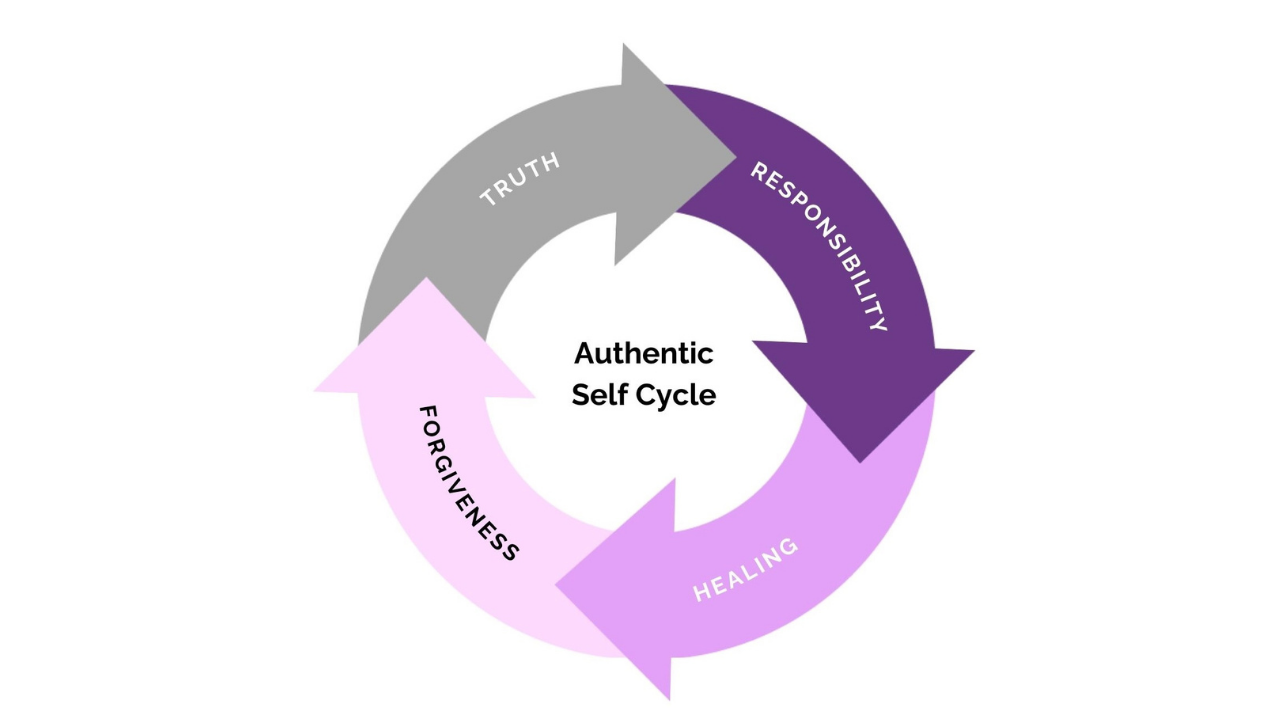
Truth: Name the blueprint. See that “this isn’t about today.” When you walk into a room and immediately scan every person’s emotional state, truth says: “This is my childhood survival pattern. I’m not reading the room because I’m gifted — I’m reading the room because my nervous system thinks I’m still that child who needed to predict danger.”
That’s the first step out of the empath trap — seeing the pattern instead of celebrating it.
Responsibility: Own your emotional reactions without blame. “My partner isn’t my parent — my nervous system just thinks they are.” This isn’t about fault. It’s about taking back your power from a childhood that stole it. Stop blaming your sensitivity. Start owning your healing.
Healing: Rewire the emotional blueprint so other people’s emotions don’t feel like emergencies. So conflict becomes uncomfortable but not dangerous. So boundaries don’t feel like cruelty. So your own feelings become as important as everyone else’s. This creates a NEW emotional chemical pattern that replaces fear, shame, and denial.
Forgiveness: Release the inherited emotional blueprint and reclaim your authentic self. You’re not becoming someone new. You’re finally meeting who you always were underneath the empath survival persona — someone capable of genuine empathy, healthy boundaries, and authentic connection.
That’s you — not the “empath” who absorbs everyone’s pain. The authentic human being who can be present with others without losing yourself.
The Authentic Self Cycle™ is an identity restoration system — it doesn’t teach you to “protect your empath energy,” it replaces the neurochemical pattern that created the empath survival persona with a new blueprint built on truth, responsibility, and emotional authenticity.
How the Emotional Authenticity Method™ Rewires the Empath Wound
The Emotional Authenticity Method™ is the daily practice that actually rewires the empath trauma response at the nervous system level. It works because it targets the body — where trauma lives — not just the mind.
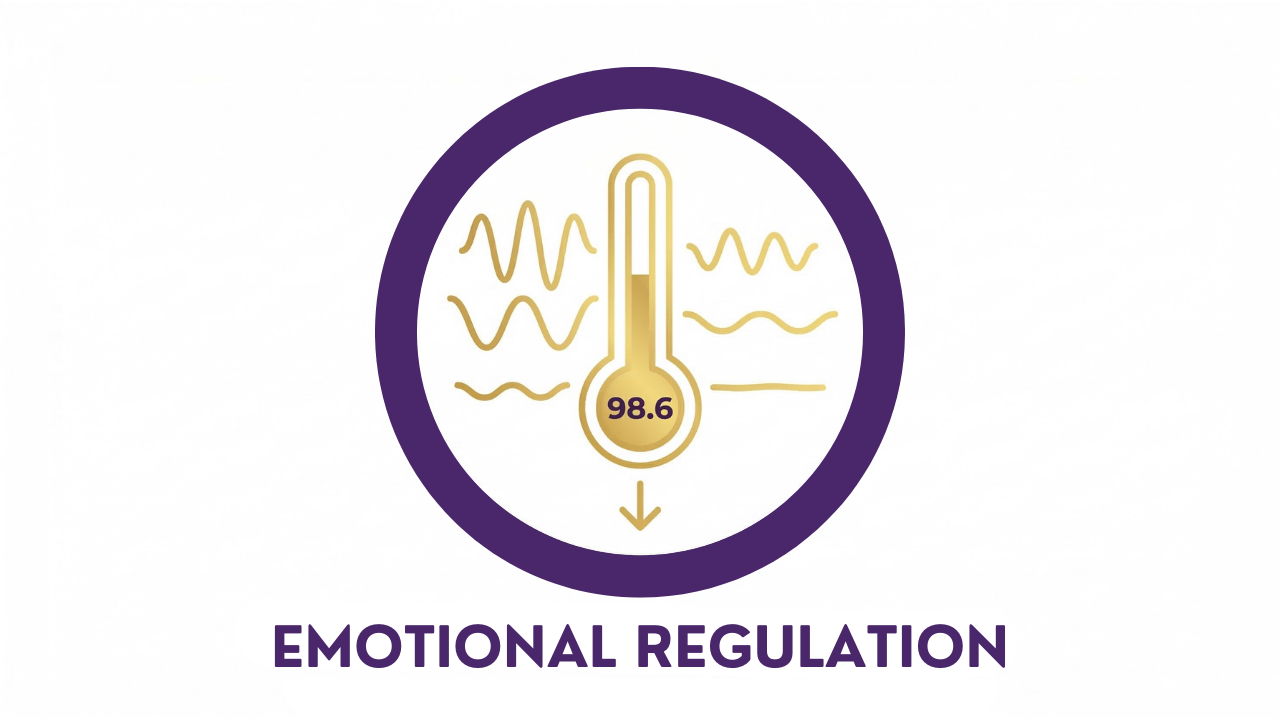
Step 1: Somatic Down-Regulation with optional Titration. Before you can process anything, get your nervous system out of survival mode. Deep breathing, grounding, or simply slowing down enough to feel your body. Titration means you go slowly — you don’t force yourself to feel everything at once.
That’s you — learning that healing doesn’t mean white-knuckling your way through every emotion at once.
Step 2: What am I feeling? Most empaths can tell you exactly what everyone else is feeling. But ask them what THEY feel and they go blank. Using the Feelings Wheel, you develop emotional granularity — the ability to name specific emotions instead of defaulting to “overwhelmed” or “drained.”
Step 3: Where in my body do I feel it? All emotional trauma is stored physically. Your chest tightens. Your stomach drops. Your jaw clenches. Locating the feeling in your body moves you from intellectual understanding to somatic processing — which is where actual healing happens.
Step 4: What is my earliest memory of this feeling? This is where everything shifts. You trace today’s reaction back to its childhood origin. You realize: this isn’t about today. My partner’s frustration isn’t my parent’s rage. My nervous system just thinks it is.
That’s the moment the empath identity cracks open — when you see that you’re not “absorbing their energy.” You’re reliving a five-year-old’s terror.
Step 5: Who would I be if I never had this feeling again? This is the vision step. It connects you to the Authentic Self Cycle™ and gives your nervous system a new destination — not more “empath protection,” but actual identity restoration.
The Emotional Authenticity Method™ works because emotions are biochemical events — you cannot change emotional patterns through thoughts alone. Thoughts originate from feelings, not the other way around. No amount of “empath shielding” will heal what lives in your nervous system.
Frequently Asked Questions About Empaths and Trauma
Are empaths just codependent?
Yes — unhealed empaths are operating in codependency patterns because the survival persona that created the empath identity is inherently codependent. True empathy requires healthy boundaries and authentic emotional expression. Most self-identified empaths confuse absorption and people-pleasing with genuine empathy. Learn more about the signs of enmeshment to see how these patterns overlap. Also read why being an empath isn’t good for a deeper exploration.
Can someone be both an empath and a narcissist?
Yes. Some narcissists have highly attuned empathic abilities — they use them to manipulate more effectively. They read emotional rooms perfectly but don’t care about others’ pain. Conversely, some empaths use their “sensitivity” as a superiority narrative. The empath/narcissist binary is misleading — both are survival personas created in childhood. Read about the 7 signs of high self-esteem to see what genuine emotional health looks like.
What is the difference between being an empath and having an anxious attachment style?
There isn’t a meaningful difference. Anxious attachment is the nervous system response to childhood trauma. “Empath” is the narrative overlay that makes it sound like a gift. Both describe hypervigilance, people-pleasing, absorption of others’ emotions, and fear of abandonment. The healing path is identical — rewire the childhood emotional blueprint through the Emotional Authenticity Method™.
If I stop identifying as an empath, will I stop caring about people?
No — you’ll care about people more authentically. True compassion doesn’t require self-abandonment. True empathy has boundaries. Right now, your “caring” is often controlling through codependence. Real empathy says: “I care about you AND I have limits. I love you AND I have needs.” That’s not less empathic. That’s more honest.
Why do empaths attract narcissists?
Because both are running complementary survival personas from the Worst Day Cycle™. The narcissist’s falsely empowered persona needs supply — attention, validation, control. The empath’s disempowered persona needs to perform kindness to avoid shame. It’s not a cosmic match. It’s two childhood wounds locking together. Breaking this pattern requires healing your own blueprint, not just avoiding narcissists.
How long does it take to heal from the empath trauma response?
There’s no fixed timeline. With consistent daily practice using the Emotional Authenticity Method™, most people notice significant shifts within weeks — your reactions become less automatic, your boundaries become clearer. Deeper neurological rewiring takes months and years. The key is repetition, not intensity. Small moments of emotional truth create cumulative change. The Authentic Self Cycle™ provides the framework for long-term identity restoration.
The Bottom Line
The empath identity feels like an explanation. It feels validating. It tells you why you’re exhausted, why you attract difficult people, why you can’t say no, why the world feels too loud. And for a while, that explanation feels like enough.
But the explanation is the prison.
Your “sensitivity” is a nervous system that never learned to regulate because it was too busy scanning for danger. Your “kindness” is a reaction formation hiding decades of unexpressed rage and grief. Your “gift” is a survival persona that was brilliant at age six and is destroying you at forty.
The moment you stop identifying as an empath and start seeing yourself as someone healing from childhood trauma, everything changes. Your hypervigilance becomes a nervous system you can regulate. Your kindness becomes a choice rather than a compulsion. Your relationships become authentic instead of codependent.
That’s you — not the empath who absorbs everyone’s pain. The whole, worthy human being underneath the survival persona who’s been waiting decades to finally be seen, to finally be felt, to finally come home.
You don’t need more protection. You need more truth. And that truth starts with the willingness to stop celebrating the wound and start healing it.
Recommended Reading
These books complement the frameworks in this article and can deepen your understanding of the empath trauma response, codependence, and authentic healing:
Facing Codependence by Pia Mellody — the foundational text on how childhood trauma creates codependent patterns and survival personas.
The Body Keeps the Score by Bessel van der Kolk — the science of how trauma lives in the body, not just the mind.
When the Body Says No by Gabor Maté — how chronic self-abandonment and emotional suppression manifest as physical illness.
Codependent No More by Melody Beattie — a practical guide to recognizing and healing codependent patterns.
The Gifts of Imperfection by Brené Brown — how shame drives performance-based identity and why vulnerability is the path to authenticity.
Take the Next Step
If you’re ready to stop performing the empath identity and start building a life from your authentic self, Kenny Weiss offers courses designed for people who are done surviving and ready to heal:
Emotional Blueprint Starter Course — Individual ($79) — Your personal roadmap to understanding the Worst Day Cycle™ and your survival persona.
Relationship Starter Course — Couples ($79) — For couples ready to break the cycle of reactivity and build interdependence.
Why We Can’t Stop Hurting Each Other ($479) — Deep-dive into the Worst Day Cycle™ and how childhood trauma creates relationship pain.
Why High Achievers Fail at Love ($479) — Built for people who’ve mastered their career but can’t figure out relationships.
The Shutdown Avoidant Partner ($479) — Understanding avoidant attachment through the lens of trauma chemistry and survival personas.
Tier 1: Mapping the Blueprint ($1,379) — The comprehensive program for learning and practicing the Emotional Authenticity Method™.
Download the Feelings Wheel — the free tool used in Step 2 of the Emotional Authenticity Method™ to build emotional granularity.
Explore more: The Signs of Enmeshment | 7 Signs of Relationship Insecurity | 7 Signs of High Self-Esteem | How to Determine Your Negotiables and Non-Negotiables | 10 Do’s and Don’ts for a Great Relationship