Having a relationship with an addict who is active in their addiction is one of the most painful, confusing, and isolating experiences you can have. You love them. You see flashes of who they really are underneath the substance, the behavior, the chaos. You hold onto those flashes like oxygen. And every time they promise to change, every time they have a good week, your nervous system floods with hope — the same hope you felt as a child when your parent finally showed up for you, even if just for a moment. But the pattern repeats. The lies return. The instability crashes back. And you find yourself asking the question that brought you here: Is it even possible to have a real relationship with someone who is actively addicted?
The honest answer is no. Not because the addict is a bad person — but because addiction hijacks the brain’s capacity for authentic connection. The addict isn’t choosing the substance over you. Their nervous system is choosing survival over everything. And until the addiction is addressed at its root — the childhood trauma that created the unbearable pain the addiction was built to medicate — no amount of love, patience, or sacrifice from you will change the dynamic.
That’s you if you’ve been telling yourself “they’ll change” for months or years — and nothing has changed except how much of yourself you’ve lost in the process.
Why a Real Relationship With an Active Addict Is Impossible
Addiction is not a choice problem. It’s a pain problem. At the core of every addiction — whether it’s alcohol, drugs, food, sex, gambling, work, exercise, or even obsessive caretaking — is intolerable emotional pain that originated in childhood. The addiction exists because the person’s nervous system found a way to medicate that pain without having to feel it. The substance or behavior becomes the only reliable source of relief in a world that felt emotionally unsafe from the very beginning.
A relationship with an active addict is not a partnership between two whole people. It is a codependent system where one person medicates their pain through the addiction and the other person medicates their pain through trying to fix, rescue, and control the addict. Both people are running from the same thing: unbearable childhood wounds they never learned to process. Both people are stuck in their own version of the Worst Day Cycle™. And neither person can access their authentic self while the dynamic continues.
That’s you if you spend more energy managing their addiction than you spend managing your own emotional life.
This isn’t about blame. The addict didn’t wake up one morning and decide to destroy their life. And you didn’t wake up one morning and decide to lose yourself in someone else’s destruction. Both of you are replaying childhood blueprints — neurological patterns installed before you had any say in the matter. But understanding the mechanism is the first step to breaking free.
The 7 Reasons Authentic Connection Cannot Exist With Active Addiction
Reason 1: There Is No Mutual Sharing
Authentic intimacy requires two people who can share their inner world — their fears, their hopes, their pain, their joy. Addicts in active addiction are self-absorbed by neurological necessity. The addiction runs everything. Any sharing they do is filtered through the addiction’s need to survive. They share what keeps the system intact, not what’s true. The manipulation isn’t always conscious — their survival persona has been running the show so long they may not even recognize the difference between authentic expression and strategic performance.
That’s you if every conversation eventually circles back to their needs, their crisis, their promises — and your inner world stays unexplored, unasked about, invisible.
Reason 2: There Is No Stability
Addiction creates an environment of constant intensity. Everything is extreme — extreme highs when things are “good,” extreme lows when the addiction takes over. The addict is completely impulsive and compulsive, which eliminates the possibility of stability. When there’s no stability in a relationship, it creates a perpetual state of stress, fear, and hypervigilance in the partner. Your nervous system never rests because it can never predict what’s coming next.
That’s you if you walk on eggshells every day — reading their mood the moment they walk through the door, calculating whether tonight will be calm or catastrophic.
Reason 3: There Is No Trust
Addicts lie. They manipulate. They hide. They’ll do anything to protect the addiction because the addiction is their survival mechanism — it’s the only thing standing between them and the unbearable pain underneath. They’ll convince you the problem isn’t as bad as you think. They’ll gaslight you into questioning your own perception. They’ll make promises they genuinely believe in the moment but cannot keep because the addiction is stronger than their intention.
That’s you if you’ve become a detective in your own home — checking bottles, reading texts, counting pills, monitoring bank accounts — because your gut knows the truth even when their words deny it.
Reason 4: There Is No Emotional Connection
At the heart of addiction is intolerable emotional pain. The addiction exists specifically so the addict doesn’t have to feel that pain. But if they can’t feel their own pain, they can’t feel you either. They can’t be present. They can’t empathize. They can’t hold space for your emotions because they’re using every ounce of energy to avoid their own. Healthy relationships require two people who can access and express their feelings. An active addict has built their entire survival system around not feeling.
That’s you if you’ve poured your heart out to them and watched their eyes glaze over — not because they don’t care, but because their nervous system literally cannot receive what you’re offering.
Reason 5: There Is Profound Self-Loathing
Every addict goes against their own morals, values, needs, and wants. They violate their own non-negotiables daily. This creates a crushing cycle of shame and self-loathing that feeds the addiction further. They don’t want to be an addict — even when they say “I’m fine” or “it’s not a big deal.” Those statements are denial, and denial is the fourth stage of the Worst Day Cycle™. The self-loathing they carry gets projected onto you. Their inability to face their own shame becomes criticism, blame, withdrawal, and emotional punishment directed at the person closest to them.
That’s you if you’ve started to believe their criticisms — if their shame has become your shame, if you’ve internalized the message that you’re the problem.
Reason 6: There Is Delusion
Addicts operate from a distorted reality. They’ve convinced themselves — and often you — that the addiction is manageable, normal, or even beneficial. This delusion isn’t stupidity; it’s a survival mechanism. Their denial is so sophisticated that they genuinely believe their own narrative. And here’s what makes it dangerous: addicts are extremely convincing. They’ve had a lifetime of practice performing normalcy while their internal world burns.
That’s you if you’ve ever questioned your own sanity — wondering if maybe they’re right, maybe you are overreacting, maybe the problem really isn’t that bad.
Reason 7: There Is Complete Detachment
Addicts survive their unhealed pain by detaching from reality. They aren’t fully present in the world, which means they aren’t present in the relationship. When you’re in a relationship with an active addict, you’re essentially in a relationship with a performance — a survival persona playing the role of partner while the real person hides behind the substance. Can you have authentic intimacy with a performance? You cannot.
Sound familiar? That’s you if you feel lonely in the relationship — if you miss someone who’s sitting right next to you.
The Worst Day Cycle™: Why Addiction Exists in the First Place
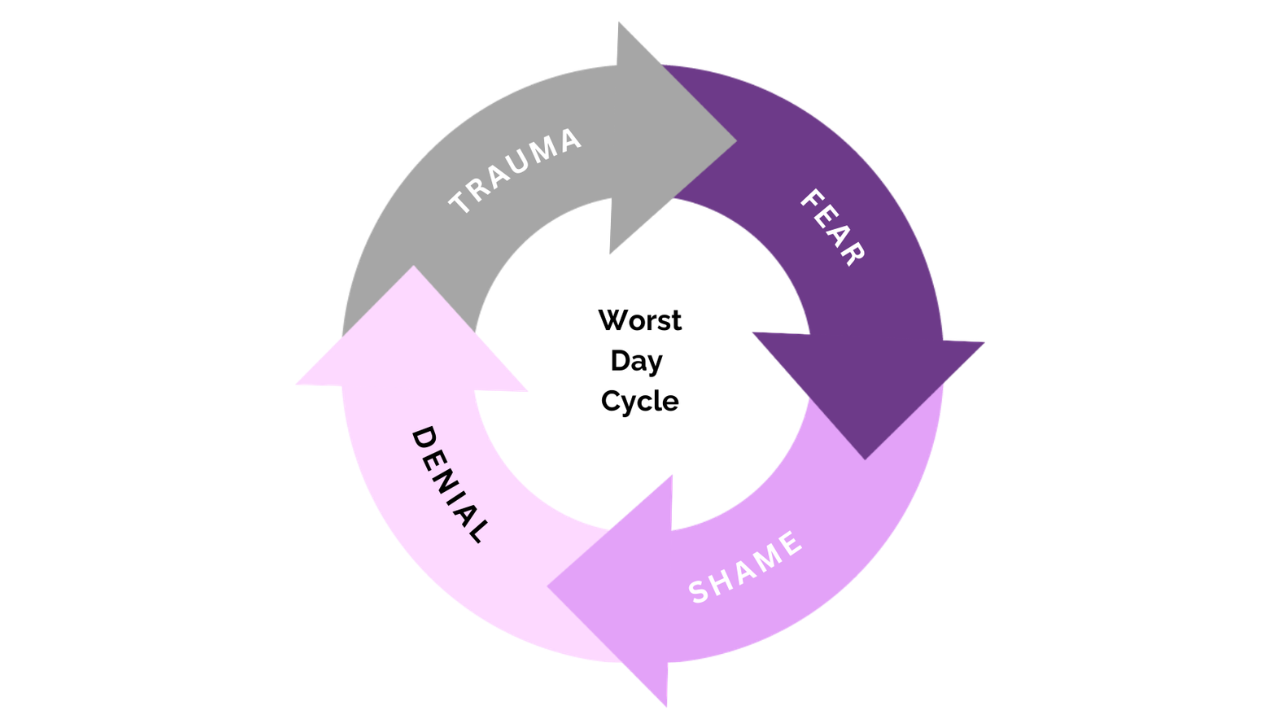
To understand why you can’t have a real relationship with an addict, you need to understand what created the addiction. The Worst Day Cycle™ is a four-stage neurological loop that drives all addictive behavior: Trauma → Fear → Shame → Denial.
Stage 1: Trauma. Childhood trauma is any negative emotional experience that created painful meanings. The addict’s childhood contained experiences so painful — abuse, neglect, abandonment, conditional love, chaos, emotional unavailability — that their nervous system couldn’t process the pain. The hypothalamus generates chemical cocktails (cortisol, adrenaline, dopamine misfires, oxytocin disruptions) and the brain becomes addicted to these emotional states because the brain conserves energy by repeating known patterns. It can’t tell right from wrong — only known versus unknown.
Stage 2: Fear. Fear drives repetition. Since 70%+ of childhood messaging is negative and shaming, the brain repeats painful patterns in relationships, career, health — everything. The addict’s brain learned that pain is the baseline. Anything different feels dangerous. So the brain keeps seeking the familiar chemical state, even when it’s destroying the person’s life.
Stage 3: Shame. This is where the addict lost their inherent worth. Not “I made a mistake” (that’s responsibility) — but “I AM a mistake” (that’s shame). This core shame is so unbearable that the entire addiction exists to avoid feeling it. Every relapse, every lie, every broken promise adds more shame, which demands more medication, which creates more shame. The cycle accelerates.
Stage 4: Denial. To survive the unbearable shame, the psyche creates a survival persona — a false identity that says “I’m fine,” “I can quit anytime,” “it’s not that bad.” The denial isn’t a choice. It’s a neurological protection system. Three survival persona types emerge: the falsely empowered (controls, dominates, rages), the disempowered (collapses, people-pleases, becomes helpless), and the adapted wounded child (oscillates between both, never grounded in authentic self).
That’s you if you can now see that their addiction isn’t about you — it’s about pain that existed long before you entered their life.
The Three Survival Personas in Addiction Dynamics
Both the addict and the partner operate from survival personas. Understanding which persona is running your life is critical to breaking free from the addiction dynamic.
The Falsely Empowered Survival Persona
In the addict: this is the person who controls through rage, intimidation, or cold withdrawal. They dominate conversations. They punish you for bringing up the addiction. They make you feel like the problem. Their falsely empowered persona is a fortress built to keep shame at bay.
In the partner: this is the fixer, the rescuer, the over-functioner. You manage their appointments. You make excuses to their employer. You pour out the bottles and monitor their phone. You believe that if you just try hard enough, love hard enough, control the environment thoroughly enough, you can save them.
That’s you if you’ve become the manager of their addiction — running their recovery while they resist every step.
The Disempowered Survival Persona
In the addict: this is helplessness, victimhood, and collapse. “I can’t help it.” “You don’t understand how hard it is.” They use your empathy against you — not maliciously, but because their disempowered persona learned in childhood that helplessness gets needs met.
In the partner: this is the person who disappears. You stop having opinions. You stop having needs. You make yourself invisible to avoid triggering their next episode. You’ve given up your friends, your hobbies, your identity — all to keep the peace in a war you didn’t start.
That’s you if you can’t remember the last time you did something just for yourself — because every ounce of your energy goes to surviving their chaos.
The Adapted Wounded Child Survival Persona
This persona oscillates between both extremes. One day you’re raging — threatening to leave, issuing ultimatums, pouring their stash down the drain. The next day you’re collapsed — apologizing, making excuses, wondering if you were too harsh. You flip between fury and surrender because your nervous system learned both strategies in childhood and deploys whichever one it thinks might work in the moment. Neither does.
That’s you if your friends are exhausted by the back and forth — “I’m done with them” on Monday, “but they’re really trying” on Wednesday. That’s the adapted wounded child cycling through every survival strategy it learned.
The Enabler’s Role: Why You Stay and What It Costs
Here’s the part nobody wants to hear: if you are in a relationship with an active addict, you are not simply a victim of their addiction. You are a participant in a codependent system that serves both of your survival personas. This isn’t blame. This is the mechanism of codependence — and seeing it clearly is the only path to freedom.
The enabler stays because the addict’s chaos provides a purpose. As long as you’re focused on fixing them, you don’t have to face your own unhealed wounds. Their dysfunction becomes your distraction. Their crisis becomes your identity. Their need for rescue becomes your proof of worth. And every time you pour out a bottle, cover for them at work, or forgive another broken promise, you’re not helping them — you’re feeding the system that keeps both of you stuck.
That’s you if the thought of them getting sober terrifies you — because without their problem to solve, you’d have to face your own emptiness.
Enabling is not love. Enabling is codependence disguised as compassion. True love has boundaries. True love says: “I refuse to participate in your self-destruction. I refuse to make it easier for you to avoid your pain. And I refuse to lose myself in the process of trying to save you.” That’s not cruel. That’s the most loving thing you can ever do — for them and for yourself.
The addict will only face their addiction when the consequences of continuing become more painful than the addiction itself. Every time you soften the consequences — every time you forgive without accountability, every time you absorb the chaos without setting a boundary — you’re extending their timeline to rock bottom. You’re robbing them of the pain that could save their life.
That’s you if you’ve been the safety net that keeps them from hitting the ground — and you’re starting to realize the net is destroying you both.
Signs of Addiction-Driven Dysfunction Across Your Life
Family
Your family has normalized the addiction. Everyone knows but nobody talks about it directly. You’ve taken on the caretaker role — managing holidays around their episodes, making excuses to extended family, shielding children from the reality. Your family relationships have become performative — everyone pretending things are fine while the addiction destroys the family from within. Learn more about how family systems create these patterns in the signs of enmeshment.
That’s you if you’ve rehearsed the “everything’s fine” speech so many times you almost believe it yourself.
Romantic Relationship
Intimacy has disappeared. Sex is either non-existent or compulsive. Communication has become transactional — logistics and crisis management, never depth or vulnerability. You feel more like a parent than a partner. Trust has eroded to the point where you second-guess everything they say. The relationship revolves around the addiction’s schedule, not around genuine connection. Check out signs of insecurity in relationships for more on these patterns.
That’s you if “date night” means an evening where they don’t use — and even that feels like a miracle.
Friendships
You’ve isolated yourself. You stopped accepting invitations because you can’t predict their behavior in social settings. Your friendships have become therapy sessions where you vent about the addict but never take action. You’ve lost friends who got tired of watching you stay. The friends who remain are either enablers themselves or have pulled back to protect their own boundaries.
That’s you if your social life has shrunk to the size of the addiction — small, controlled, and deeply lonely.
Work and Career
Your performance is declining because your energy goes to managing the home crisis. You’ve missed work to handle their emergencies. You can’t focus because your phone might buzz with the next catastrophe at any moment. Or conversely — you’ve become a workaholic yourself, using career success as your own addiction to avoid the pain waiting at home. Explore this pattern in signs of high self-esteem versus achievement from shame.
That’s you if work has become your escape from home — the one place where you feel competent and in control.
Body and Health
Chronic stress has manifested physically. You’re not sleeping. You’re stress-eating or not eating at all. Anxiety lives in your chest. Headaches are constant. Your immune system is compromised. Your body is keeping the score of every sleepless night, every screaming match, every morning wondering if today is the day everything falls apart.
That’s you if your doctor has told you to reduce stress and you almost laughed — because stress isn’t something you experience, it’s something you live inside of.
The Emotional Authenticity Method™: 6 Steps to Reclaim Yourself
Whether the addict chooses recovery or not, you can choose yours. The Emotional Authenticity Method™ is a six-step process that rewires your nervous system and rebuilds your capacity for authentic emotional experience — the capacity that codependent enabling has been slowly eroding.
Step 1: Somatic Down-Regulation. When you’re in crisis mode — when they’ve relapsed again, when you’ve found the hidden bottles, when the rage or despair is flooding your body — your prefrontal cortex goes offline. You can’t think clearly. You can’t make good decisions. Focus on what you can hear for 15–30 seconds. Wind. Traffic. Your breath. If you’re highly dysregulated, use titration — cold water on your face, step outside, hold ice. This activates your parasympathetic nervous system and brings your thinking brain back online.
Step 2: What am I feeling right now? Not “I’m angry at them” — that’s a thought about them. What are you actually feeling? Use the Feelings Wheel to get specific. Are you feeling betrayed? Terrified? Helpless? Ashamed? Exhausted? Grieving? Emotional granularity breaks the reactive cycle and moves you from survival mode to awareness.
Step 3: Where in my body do I feel it? All emotional trauma is stored physically. The knot in your stomach. The heaviness in your chest. The tightness in your throat. Locate the feeling in your body. This grounds you in the present moment and interrupts the mental spiral.
Step 4: What is my earliest memory of having this exact feeling? This is where the breakthrough happens. The helplessness you feel with the addict likely echoes a much older helplessness — a childhood moment when someone you loved was unavailable, unpredictable, or lost to their own pain. The addict didn’t create this feeling. They activated an existing blueprint.
Step 5: Who would I be if I never had this thought or feeling again? Envision your authentic self — the version of you who doesn’t organize their life around someone else’s addiction. What would that person do? Where would they live? How would they spend their energy? What would their boundaries look like? This plants the seed of the Authentic Self Cycle™.
Step 6: Feelization — the new chemical addiction. Sit in the feeling of the authentic self and make it strong. Don’t just picture it — feel it. Feel the peace. The clarity. The self-respect. The groundedness. Create a new emotional chemical addiction to replace the old blueprint of crisis and caretaking. Ask yourself: “How would I respond to this situation from this feeling? What would I say? What would I do?” Visualize and FEEL yourself operating from your authentic self. This is the emotional blueprint remapping and rewiring step.
That’s you if you’ve never been taught that you can literally rewire your nervous system — that the enabling pattern isn’t permanent, that your identity as “the one who holds everything together” can be replaced with something far more powerful: your authentic self.
The Authentic Self Cycle™: From Codependent Enabling to Authentic Love
The Authentic Self Cycle™ is the healing counterpart to the Worst Day Cycle™ — a four-stage identity restoration system that transforms how you relate to the addict, to yourself, and to love itself.
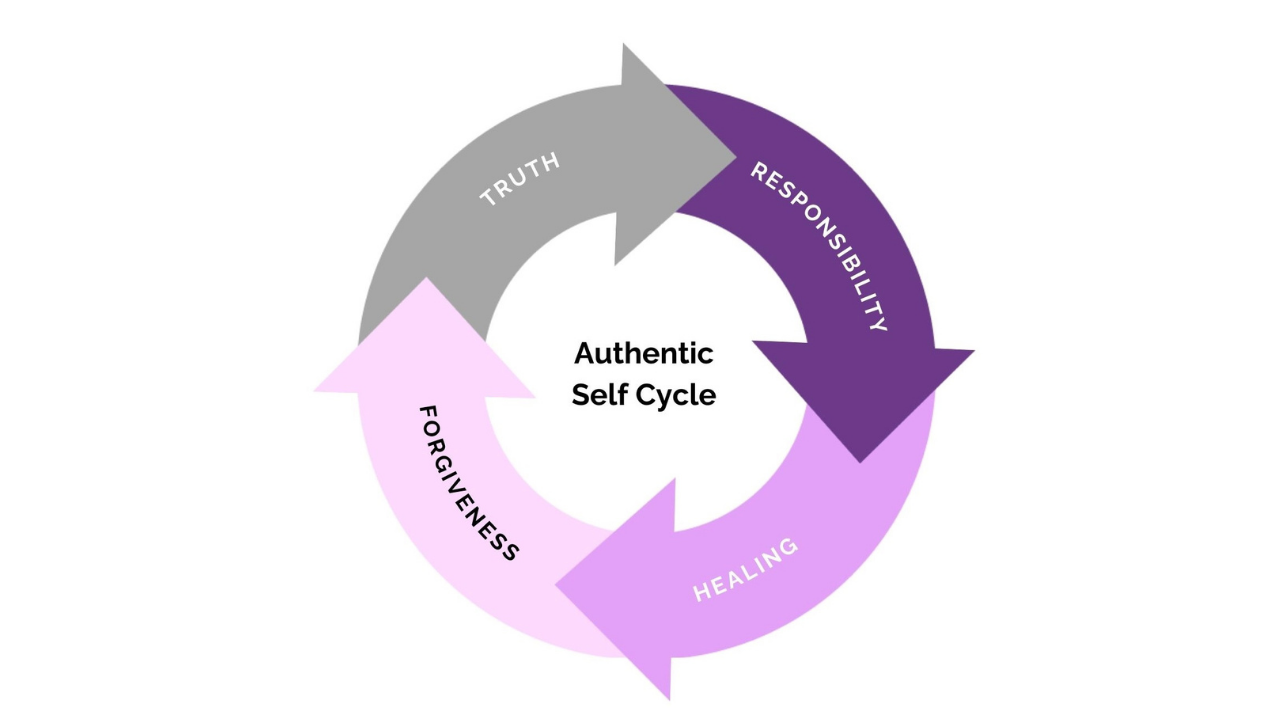
Stage 1: Truth. Name the blueprint. “This isn’t about today. I’m not just dealing with their addiction — I’m reliving my childhood. My parent was unavailable, unpredictable, or lost in their own pain. I learned that my job was to manage their chaos. My partner isn’t my parent — but my nervous system thinks they are.”
Stage 2: Responsibility. Own your role without blame. “I chose to stay. I chose to enable. I chose to make their recovery my project. Not because I’m weak — but because my survival persona was trained for exactly this dynamic. I can see the pattern now. And I can choose differently.” This is where you reclaim agency — not by fixing them, but by fixing the blueprint that draws you to what needs fixing.
Stage 3: Healing. Rewire the emotional blueprint so that your worth is no longer tied to your usefulness. So that peace doesn’t feel boring. So that a calm evening doesn’t feel suspicious. So that love without crisis doesn’t feel empty. Creates a NEW emotional chemical pattern that replaces the fear, shame, and denial of codependent enabling.
Stage 4: Forgiveness. Release the inherited emotional blueprint and reclaim your authentic self. Forgiveness here doesn’t mean condoning the addiction or the damage it caused. It means releasing your attachment to the role of rescuer. It means forgiving yourself for the years you spent pouring love into a system that couldn’t receive it. It means recognizing that both you and the addict were doing the best you could with unhealed childhood wounds — and choosing to heal yours regardless of what they choose.
That’s you if you’re ready to stop waiting for them to change and start changing the only person you can: yourself.
Frequently Asked Questions
Can you have a healthy relationship with a recovering addict?
Yes — if both people are committed to individual healing work. Recovery from addiction is not just about stopping the substance or behavior. It’s about addressing the childhood trauma that created the need for the addiction in the first place. A recovering addict who is actively working through their Worst Day Cycle™, building their Authentic Self Cycle™, and developing emotional authenticity can absolutely be a present, connected, loving partner. The key is sustained action, not just sobriety.
How do I know if I’m enabling an addict?
If you’re making it easier for them to continue the addiction without facing consequences, you’re enabling. This includes making excuses for them, covering their responsibilities, softening the impact of their behavior on their life, managing their recovery for them, or staying in the relationship without clear boundaries. Enabling feels like love — but it’s actually codependence. True love has boundaries that protect both people.
What should I do if my partner is an active addict?
The only boundary you can truly set with an addict is with yourself. You cannot control their addiction. You cannot force them into recovery. You can decide what you will and will not accept in your life. The addict will face their addiction when the consequences become more painful than the addiction itself. Every time you soften those consequences, you extend their suffering. Seek professional support for yourself — not to learn how to save them, but to heal the wounds that keep you in the dynamic.
Why do addicts shift from one addiction to another?
Addicts often shift addictions — alcohol to exercise, food to work, pills to obsessive relationships — because the underlying pain has never been addressed. The addiction is the symptom, not the disease. Until the childhood trauma driving the Worst Day Cycle™ is healed, the nervous system will find new ways to medicate the pain. A healthy adult is moderate. They don’t live in the extremes. Enmeshed codependent people live in the extremes.
Is it possible to love an addict without losing yourself?
Only if you have strong internal and external boundaries and are committed to your own emotional work. Most people in relationships with addicts lose themselves because the dynamic activates their childhood survival persona — the caretaker, the fixer, the one who earned love through self-sacrifice. Loving an addict without losing yourself requires maintaining your negotiables and non-negotiables and practicing the Emotional Authenticity Method™ consistently.
How do I stop attracting addicts into my life?
You stop attracting addicts by healing the childhood blueprint that makes dysfunction feel like home. Your nervous system has been trained to recognize chaos, unpredictability, and emotional unavailability as “normal.” The Emotional Authenticity Method™ rewires this blueprint. As you change your baseline emotional state, you’ll find that calm, stable, present people become attractive instead of boring. That’s when you know you’ve broken the cycle. Read more about this in the do’s and don’ts for a great relationship.
The Bottom Line
If you’re in a relationship with an active addict, you’re not really in a relationship. You’re in a codependent system — two people doing the best they can with where they are in the moment, both of them hurting, both of them perfectly imperfect. There is no authentic relationship or authentic intimacy when addiction is active. It’s not possible — not because the addict doesn’t love you, but because addiction hijacks the nervous system’s capacity for genuine connection.
But here’s what matters: you don’t have to wait for them to change before you start healing. Your recovery doesn’t depend on theirs. Your worth doesn’t depend on saving them. Your authentic self is still there — underneath the enabling, the caretaking, the crisis management, the exhaustion.
The most loving thing you can do for an addict is to stop enabling their denial. Set boundaries. Hold consequences. Take care of yourself. And if they choose recovery, you can walk that path alongside them — not as their rescuer, but as a whole person who chose to heal their own wounds first.
Both of you are hurting. Both of you are stuck in childhood patterns. Both of you deserve healing. But healing starts with one person choosing to break the cycle — and that person can be you, starting today.
Recommended Reading
- Facing Codependence by Pia Mellody — The foundational text on how childhood trauma creates codependent patterns, survival personas, and the loss of authentic self that drives addiction dynamics.
- The Body Keeps the Score by Bessel van der Kolk — Essential reading on how trauma lives in the nervous system and why healing requires more than talk therapy or willpower.
- When the Body Says No by Gabor Maté — How emotional repression and unresolved relationship patterns manifest as addiction and physical illness.
- Codependent No More by Melody Beattie — The classic guide to setting boundaries with addicts and stopping the cycle of self-abandonment and enabling.
- The Gifts of Imperfection by Brené Brown — A guide to wholehearted living that directly counters the shame keeping both addicts and their partners stuck in destructive cycles.
Ready to Break the Codependent Addiction Cycle?
If you’re ready to stop managing someone else’s addiction and start healing your own emotional blueprint, here are the pathways:
- Emotional Blueprint Starter Course — Individual ($79) — Your personal roadmap to understanding your emotional blueprint and identifying the survival persona that keeps you in codependent dynamics.
- Relationship Starter Course — Couples ($79) — If both partners are committed to healing, this maps the path to authentic connection beyond the addiction dynamic.
- Why We Can’t Stop Hurting Each Other ($479) — A deep dive into the Worst Day Cycle™ and how childhood trauma creates the codependent patterns that fuel addiction dynamics.
- Why High Achievers Fail at Love ($479) — For the falsely empowered partner who succeeds at work but can’t stop rescuing at home.
- The Shutdown Avoidant Partner ($479) — Understanding the love-avoidant addiction dynamic and how to heal it.
- Tier 1: Mapping the Blueprint ($1,379) — The comprehensive program for deep rewiring of your emotional blueprint with all three frameworks and live coaching.
Start with the Feelings Wheel exercise to begin reconnecting with your emotional life today. Your healing doesn’t wait for anyone else’s timeline.