
Criticism stings. When someone attacks you—whether directly to your face or through a casual insult—the pain can feel disproportionate to what was actually said. You replay the comment over and over. You defend yourself in imaginary conversations. You lose sleep. But here’s what most people don’t realize: that sting you feel isn’t about them. It’s about you. When you learn to recognize what’s happening at the psychological level, insults transform from wounds into gifts. This is about understanding denial and projection—the twin forces that make us see in others what we haven’t yet healed in ourselves. In this article, you’ll discover exactly why criticism hits so hard, what it actually reveals about both the person delivering it and the person receiving it, and how to use the Emotional Authenticity Method™ to turn any insult into a blessing that accelerates your healing.
Table of Contents
- Denial and Projection: The Core of How Criticism Works
- Direct vs. Indirect Projection: Two Paths to Self-Revelation
- The Driving Metaphor: How I Discovered This Truth
- The Facebook Comment Story: Flipping the Script
- 5 Steps to Turn Any Insult Into a Blessing
- Understanding the Worst Day Cycle™
- The Three Survival Persona Types
- The Authentic Self Cycle™: The Path Forward
- The Emotional Authenticity Method™: 6 Steps to Transform Criticism
- How Denial and Projection Show Up Across Your Life
- Frequently Asked Questions
- The Bottom Line
- Recommended Reading
- Start Your Healing Journey Today

Denial and Projection: The Core of How Criticism Works
Whenever we judge, blame, criticize, or hate anyone or anything, all we’re ever doing is talking about ourselves. A piece of ourselves we’re not aware of and ultimately we haven’t forgiven. This is the foundational truth that changes everything.
Now, it may be true that the other person or situation is actually doing what we’re criticizing them for. But here’s the critical insight: the only reason we can see it in them is because it’s operating in us as well. We’re neurologically blind to what we haven’t done the internal work to recognize. When someone attacks you, they’re revealing their own unhealed wounds through the language of judgment.
Think about the last time someone said something truly hurtful to you. Consider what emotional word they used to degrade you—”stupid,” “selfish,” “inadequate,” “broken.” That word is a window into their shame. They’re telling you about a part of themselves they haven’t forgiven. They’re projecting their internal pain onto you because it’s too much to look at in the mirror.
That’s you when you judge someone else too. You’re unconsciously revealing what you haven’t healed.
Direct vs. Indirect Projection: Two Paths to Self-Revelation
Denial and projection work in two distinct ways, and understanding both is essential to recognizing yourself in every criticism you receive.
Direct Projection
This is the easiest to spot. Someone criticizes you for something they’re actively doing themselves. I use this example often: imagine someone saying, “I can’t stand men who wear bright colored suits, decorate their house with bold colors, wear these silly pocket squares. Oh my God, they drive me nuts. They’re so stupid.”
Who are they talking about? Themselves. If you look at their closet and their home, you’ll see exactly what they’re judging. That’s you when you criticize someone for being too emotional while you’re emotionally reactive yourself. Direct denial is straightforward because the behavior is visible.
Indirect Projection
This is where most people get confused—and where the real power lies. Indirect projection is metaphorical. Someone might say, “I hate stupid drivers,” but they don’t necessarily drive recklessly. The operative word is “stupid.” Every judgment contains a heavy emotional word—something degrading. And that emotional word is the clue.
When they call a driver “stupid,” what they’re revealing is that somewhere in their own life, they feel stupid. Not necessarily about driving, but about something. Maybe it’s their career, their parenting, their finances. The metaphor is how their unconscious self communicates what they’re judging in themselves.
That’s you when you judge your partner for being “irresponsible” but you’re actually terrified of your own financial instability. You’re not talking about them—you’re metaphorically describing your own shame.
This is why defensiveness is so revealing. When somebody immediately becomes defensive, it typically means you’ve touched on something that’s true inside them. Their denial is being threatened. And denial is powerful—it’s the mechanism that allows us to survive the unbearable.
The Driving Metaphor: How I Discovered This Truth
I figured this out years ago while driving. I realized I was constantly angry at other drivers. “These stupid drivers!” “Look at that moron!” “What an idiot!” I was furious, judging everyone on the road.
One day I had an insight: I wasn’t actually driving differently than they were. I was breaking the same rules, making the same mistakes. But I was in complete denial about it. Every time I judged another driver, I was unconsciously revealing that I felt stupid about something in my own life. Driving was just the metaphor my unconscious mind chose.
That’s when everything clicked. If I can only see what’s operating inside me, then every single judgment I make is literally a mirror of my own denial. That’s you when you watch the news and get enraged at “those people.” You’re not just angry at them—you’re unconsciously identifying a part of yourself you haven’t healed.
Once I understood this, I stopped being so angry at other drivers. Instead, I got curious: What part of me feels stupid? What haven’t I forgiven myself for? And that curiosity opened the door to actual healing.
The Facebook Comment Story: Flipping the Script
A client of mine shared a devastating text she received from her ex-husband after she delivered the eulogy at her father’s funeral. The message was cruel, dismissive, and filled with harsh judgments. Rather than defend herself against his attacks, she did something remarkable: she flipped every statement to reveal what he was actually saying about himself.
His original text said: “It’s just like you to start an argument and not listen; it’s all about you. You need to hear the truth but you can’t.”
When flipped to reveal his projection, it became: “It’s just like me to start an argument and not listen; it’s all about me. I need to hear the truth but I can’t.”
He accused her of being self-centered. When she flipped it: “I am the most self-centered person in this situation.” He said her eulogy was “all about you.” When flipped: “My criticism of this moment is all about me.”
That’s you when your partner says you’re “too needy” and you realize they’re actually terrified of intimacy. The criticism is their confession. And here’s the beautiful part: once you realize that, the sting disappears. Instead of feeling attacked, you see vulnerability. You see pain. You see someone doing their best with the emotional tools they have.
My client did something even more powerful at the end of the conversation with her ex. She wrote: “I’m very thankful that you see so much of me. It’s always a tremendous gift when someone invests their valuable time in seeing me.” She was acknowledging his vulnerability, his courage in being so transparent about his inner world—even if he didn’t realize that’s what he was doing.
That’s the turnaround. That’s how you transform an insult from a wound into a blessing.
5 Steps to Turn Any Insult Into a Blessing
Now that you understand denial and projection, here’s the practical framework for transforming criticism into a healing tool.
Step 1: Name the Insult Without Defending
The first instinct when insulted is to defend yourself, argue, correct them, prove them wrong. But that never works. Has it ever worked for you? Have you ever convinced someone who judged you to suddenly see your perspective? In my experience, the answer is almost always no.
Instead, simply name what they said without immediately defending against it. Agree with them. Yes, I hear what you’re saying. That’s you letting go of the need to convince them of your truth. You release the exhausting work of being their teacher.
Step 2: Identify the Emotional Word
What word did they use to degrade you? “Stupid,” “selfish,” “weak,” “crazy,” “broken,” “manipulative”? Extract that emotional word—that’s your clue.
This emotional word is not about you. It’s the metaphorical language of their own shame. They’ve chosen a word that carries weight in their internal world. That’s you recognizing that their vocabulary of shame is their confession, not your diagnosis.
Step 3: Flip the Statement to Reveal Their Projection
Rewrite their criticism by changing “you” to “me.” If they said, “You’re so selfish and you only think about yourself,” flip it to: “I’m so selfish and I only think about myself.” Read that version. Does it ring true for them? Almost certainly, yes.
This isn’t about mocking them. It’s about seeing the truth of their projection. That’s you developing the neural capacity to see criticism as feedback about the person speaking, not about you.
Step 4: Check Yourself for Any Truth on Your Side
While their criticism is about them, it’s worth asking: Is there any truth here for me? Am I actually being selfish in some way? Not in the way they defined it, but genuinely? If yes, note that and work on it privately. Separately. Not in the conversation with them.
That’s you doing your own internal work without needing validation or agreement from the person who hurt you. You’re taking responsibility for your part without entering what I call a “reality argument”—that exhausting cycle where two people race to the victim position, each demanding the other act as their parent.
Step 5: Offer Them Gratitude for Their Vulnerability
This is the transformation. Instead of seeing the person who insulted you as cruel, recognize them as vulnerable. They just told you something deeply true about themselves. They revealed their shame, their unhealed wounds, their perfect imperfection.
You can even say it: “Thank you for being so vulnerable with me. I can see how much pain you’re carrying.” Or simply: “I’m grateful you see me so clearly. That takes courage.”
That’s you meeting their broken part with compassion instead of defensiveness. And when you do that consistently, something miraculous happens: you stop being triggered. The insult loses its power.
Understanding the Worst Day Cycle™
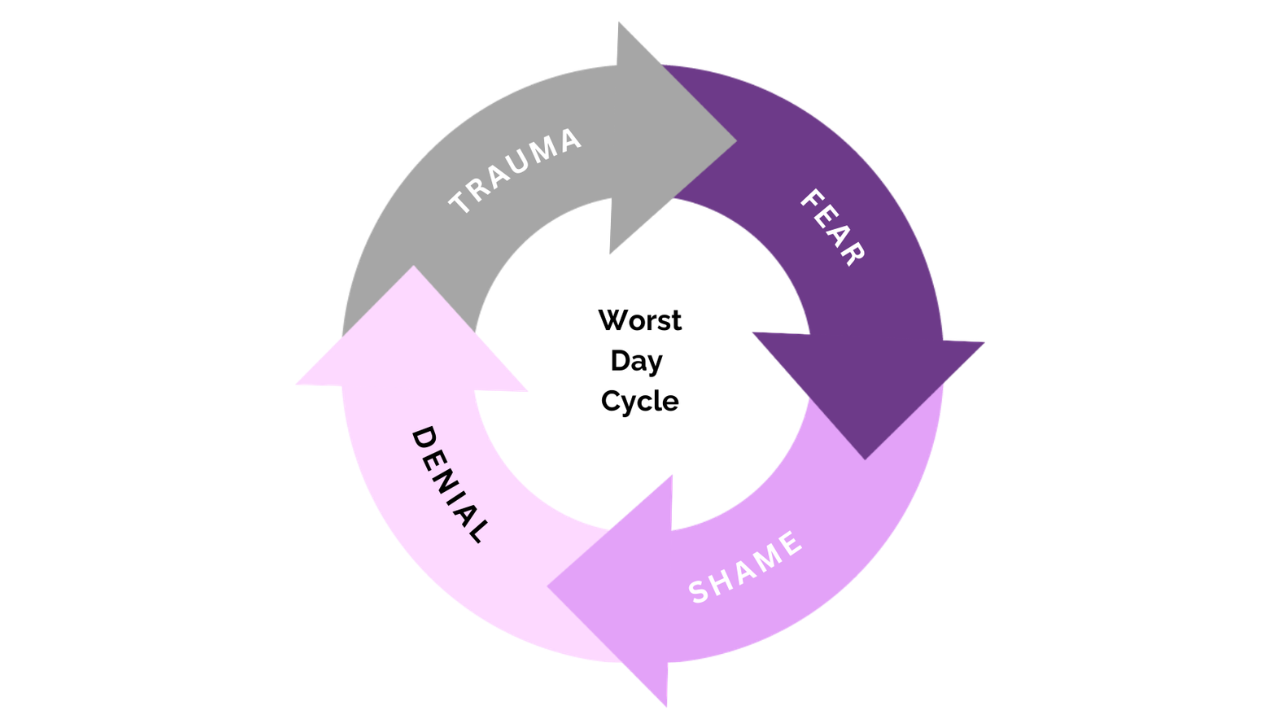
To truly heal from the impact of criticism and judgment, you need to understand the framework that created your defensive response in the first place. That’s the Worst Day Cycle™.
The Worst Day Cycle™ (WDC) is a trauma-driven loop that starts in childhood and continues into adulthood. Here’s how it works:
Trauma → Your early environment creates painful experiences—rejection, neglect, criticism, abuse, or conditional love.
Fear → Your nervous system responds to protect you. Cortisol and adrenaline flood your system. You become hypervigilant to threats.
Shame → Over time, you internalize the message that you’re wrong, broken, inadequate. Your brain receives 70% negative messaging during childhood. You encode shame as identity.
Denial → To survive this unbearable emotional state, your brain develops denial mechanisms. You push the pain down, rationalize it away, project it onto others, or dissociate from it entirely.
But here’s the problem: your brain becomes neurologically addicted to these states. Cortisol, adrenaline, dopamine, oxytocin—they all dysregulate. Your brain can’t tell right from wrong anymore. It only knows familiar from unfamiliar. And trauma is familiar.
That’s you when criticism triggers you far more than it should, when you ruminate for days, when you can’t let it go. Your Worst Day Cycle™ is running. Your survival persona has taken over.
The Three Survival Persona Types
Within the Worst Day Cycle™, your brain developed a survival persona—a false self designed to keep you safe. There are three primary types, and most people recognize themselves in at least two.
The Falsely Empowered Persona
This persona says, “I don’t need anyone. I’m tough. I’m independent. I’ll just push through.” The falsely empowered person appears confident and self-sufficient on the outside, but internally they’re driven by shame and the fear of being seen as weak. They judge others for being vulnerable. They shame people for needing help. They control situations because vulnerability feels like death.
That’s you when you pride yourself on “never asking for help” and you judge your partner for needing emotional support. You’re projecting your own terror of vulnerability onto them.
The Disempowered Persona
This persona says, “I can’t do anything right. I’m broken. Someone else will have to fix me.” The disempowered person appears helpless and victimized. They give their power away. They wait for rescue. They’re controlled by the shame belief that they’re incapable. They judge others for being “selfish” when really they’re terrified of their own capability.
That’s you when you believe your trauma defines your limitations and you resent others for their independence. You’re projecting your own terror of responsibility onto them.
The Adapted Wounded Child
This persona is a hybrid. The adapted wounded child has learned to survive by becoming whatever the environment needed them to be. They’re the peacekeeper, the caretaker, the performer. They sacrifice their authentic self to manage other people’s emotions. They judge others who have boundaries as “selfish” because boundaries feel like abandonment to them.
That’s you when you lose yourself in relationships and resent others for not doing the same. You’re projecting your own loss of self onto them, confusing merger with love.
Most people operate from all three survival personas at different times, with one being dominant. The problem is: these personas are running denial protocols 24/7. They’re protecting you from shame at all costs. And that’s why criticism hits so hard—it threatens the survival persona’s illusion of safety.

The Authentic Self Cycle™: The Path Forward
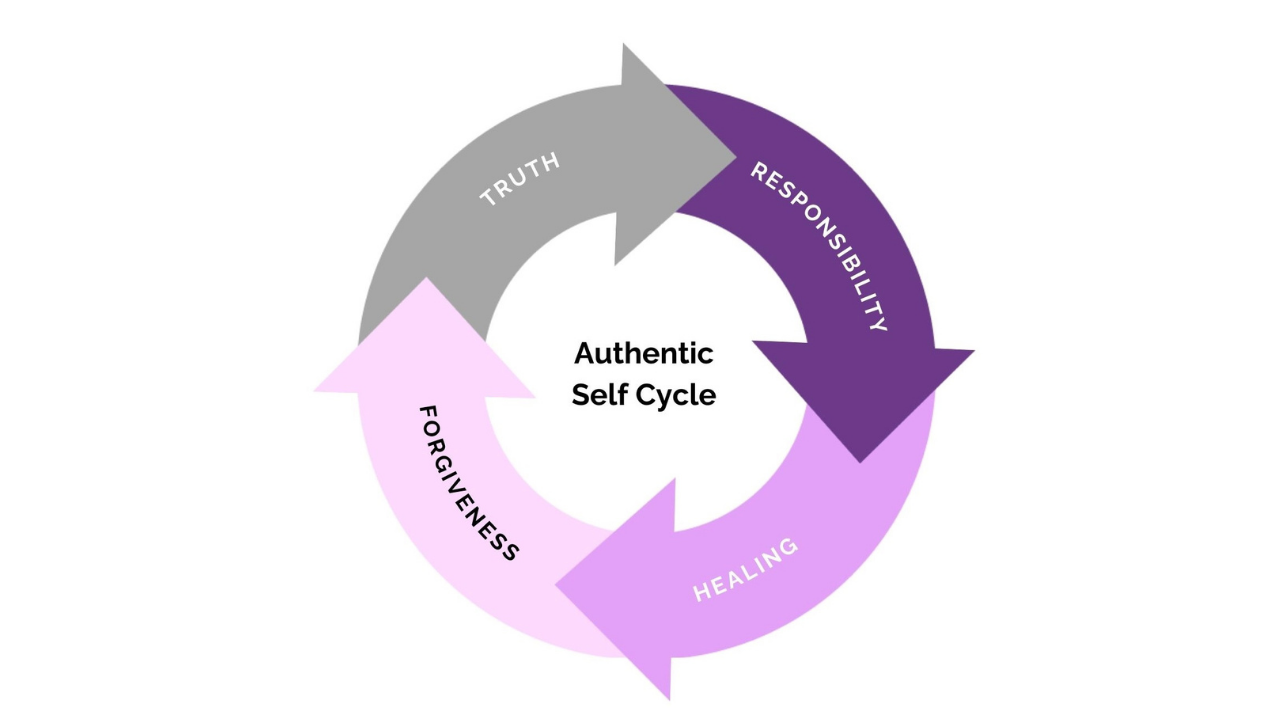
The Worst Day Cycle™ is how you survived. The Authentic Self Cycle™ is how you heal. This framework offers a path out of denial and into truth.
The Authentic Self Cycle™ has four steps:
Truth → Name your actual blueprint. Not the story you tell yourself, but the truth of what you learned in childhood. “My parents were critical. I learned that love was conditional on performance.” Name it.
Responsibility → Own your reactions without blame. Not “They made me this way” but “I learned to respond this way to survive, and now it’s running my life.” Take ownership of your survival mechanisms.
Healing → Rewire the blueprint. This isn’t talk therapy alone. This is somatic work, emotional regulation, changing the chemical addiction in your nervous system. This is the Emotional Authenticity Method™.
Forgiveness → Release the inherited blueprint. Not forgive the people who hurt you (though that may come). But forgive the blueprint itself. Accept that you’re not broken—you’re human.
That’s you when you stop blaming your past and start taking responsibility for your present. That’s when your nervous system begins to rewire. That’s when criticism stops triggering your survival persona and starts activating your authentic self.
The Emotional Authenticity Method™: 6 Steps to Transform Criticism
Now, when criticism comes—and it will—how do you move from your survival persona into your authentic self in real time? That’s what the Emotional Authenticity Method™ does. This is the practical, somatic framework that rewires your nervous system response.
Step 1: Somatic Down-Regulation (15–30 Seconds)
When you’re triggered, your nervous system is in fight-flight-freeze. You can’t think clearly. You’re flooded with adrenaline. The first step is to down-regulate your autonomic nervous system.
Focus on what you can hear for 15–30 seconds. Just listen. Ambient sounds, the room around you, your breath. This shifts your brain from the emotional processing center (amygdala) to the sensing center. Your nervous system begins to calm.
That’s you interrupting the automatic reaction pattern before it hijacks your response.
Step 2: Name the Feeling
Once you’re regulated, ask yourself: What am I feeling right now? Not “What is the situation?” but “What is the emotion in my body?” Anger, sadness, shame, fear, embarrassment?
Use granular emotional language. Not just “sad,” but “betrayed.” Not just “angry,” but “humiliated.” The more specific you can be, the more you activate the language centers of your brain, which calms the emotional centers.
I recommend exploring the Feelings Wheel to build your emotional vocabulary. This is non-negotiable for the Method™ to work.
Step 3: Locate the Feeling in Your Body
Where do you feel this emotion physically? Chest? Throat? Stomach? Limbs? Don’t intellectualize it. Just notice where the sensation lives.
That’s you anchoring the emotion in your somatic reality, making it real and manageable instead of all-consuming.
Step 4: Remember the Origin
What is your earliest memory of feeling exactly this? Not just similar—this exact feeling. When did you first learn this response? This is often a moment from childhood where you felt unsafe, judged, shamed, or abandoned.
Don’t re-traumatize yourself. Just notice. “Oh, I felt this way when my father criticized me in front of my friends.” That’s the moment. That’s the blueprint.
Step 5: Vision Your Authentic Self
Ask: Who would I be if I never had this thought or feeling again? What would be possible? Not delusion—genuine possibility. What would you do differently? How would you show up? Who would you become?
That’s you accessing the neural pathways of your authentic self before you’ve fully healed. You’re creating a template for who you’re becoming.
Step 6: Feelization – Rewire Your Nervous System
This is the most powerful step. Close your eyes. Sit in the feeling of that authentic self. Make it strong. Feel what it feels like to be that version of you—confident, unbothered by the criticism, seeing it as their projection. Not thinking about it. Feeling it. Embodying it.
Stay here for 2–3 minutes. This is where you create a new chemical addiction. Your brain will start associating this new self with dopamine, oxytocin, and serotonin instead of cortisol and adrenaline.
That’s you literally rewiring your nervous system response to criticism in real time. Over time, this becomes your default.
The Emotional Authenticity Method™ is not about avoiding difficult emotions. It’s about moving through them with precision, landing in your authentic self, and creating new neural pathways that serve you.

How Denial and Projection Show Up Across Your Life
Denial and projection aren’t confined to romantic relationships or family. They show up everywhere—because your survival persona is running in all domains. Here’s how to recognize them:
In Family Relationships
Your parent criticizes you for being “selfish.” What they’re revealing: they can’t maintain boundaries and they resent you for having them. Your sibling judges you for being “too ambitious.” What they’re revealing: they feel small and threatened by your growth. That’s you when you judge your adult child for moving away, unconsciously revealing your abandonment wounds. You’re not protecting them. You’re protecting your denial.
In Romantic Relationships
Your partner says you’re “too emotional” or “never available.” What they’re revealing: they’re terrified of vulnerability and connection. Your ex told you that you’re “controlling.” What they’re revealing: they gave away their power and resented you for not making it safe. That’s you when you attract partners who judge you for your wounds because those wounds are mirrors of your own unhealed family trauma. You’re not in a relationship problem. You’re in a blueprint problem. See the signs of enmeshment and insecurity in relationships for deeper work.
In Friendships
Your friend says you’re “flaky” or “don’t show up.” What they’re revealing: they have abandonment wounds and they’re testing whether you’ll leave. Your acquaintance judges you for being “too nice.” What they’re revealing: they operate from a false persona and they resent authenticity. That’s you when you judge people who set boundaries as “cold” or “unfriendly.” You’re projecting your own terror of being rejected if you say no.
In Work Environments
Your boss says you’re “not a team player.” What they’re revealing: they need control and they resent your autonomy. A colleague judges you for your communication style. What they’re revealing: they’re insecure about being heard. That’s you when you judge a coworker’s success as “luck” or “unfair advantage.” You’re projecting your own shame about not being good enough.
You can also check signs of high self-esteem and explore negotiables and non-negotiables to build your own framework around work boundaries.
In Physical Health and Body Image
When someone judges your body, diet, or health choices, what are they really saying? That they’re at war with their own body. That they have shame about their own health. That they’ve bought into a cultural narrative and they’re projecting that standard onto you. That’s you when you judge someone for gaining weight and you unconsciously reveal your own body terror. Their shape is triggering your shape-related shame.
In every domain of life, projection is the same: they’re talking about themselves. They’re revealing their unhealed blueprint. And once you see this pattern clearly, criticism transforms from attack to information.
Frequently Asked Questions
What if the criticism is actually true?
Great question. Two things can be true at once: (1) There may be legitimate feedback about your behavior, and (2) The way they delivered it, the emotional word they used, the intensity—that’s about them. Separate the feedback from the delivery. If there’s truth, you can work on it privately without entering a debate about whether you’re a “bad person.” You’re not. You’re human.
How do I handle criticism from someone I care about?
The fact that you care about them makes it harder, not easier. Your survival persona is activated because you fear abandonment. Use the Emotional Authenticity Method™. Down-regulate. Name the feeling. Find the origin. Then decide: Is this feedback worth taking, or is this their projection? Often it’s both. Take what’s yours, leave what’s theirs.
Can I use this understanding in conversations with the person who hurt me?
Proceed with caution. If the person is emotionally mature and capable of self-reflection, you can gently mirror their projection back to them—like the “flipping” technique. But if they’re in active denial or narcissistic defense, sharing your insight will only trigger them. Save your energy for your own healing work.
What if I’m the one projecting? How do I stop?
First, congratulate yourself on the self-awareness. That’s the hardest part. Second, every time you feel rage toward someone, get curious: What am I judging in them that I haven’t healed in myself? Use that anger as a diagnostic tool. It’s showing you your next healing frontier. Finally, practice the Emotional Authenticity Method™ regularly to rewire your default response.
Does this mean I should tolerate abuse?
Absolutely not. Understanding that someone’s criticism is about them doesn’t mean you accept ongoing harm. You can recognize their projection and still set a boundary: “I love you, and this dynamic isn’t working for me. I’m moving on.” Understanding projection is about your healing, not about condoning their behavior. See the dos and don’ts for a great relationship for clarity on healthy boundaries.
How long does it take to stop being triggered by criticism?
It depends on your nervous system history and your practice consistency. Some people see shifts in weeks. Others take months. The Emotional Authenticity Method™ creates neurological change, but your brain needs repetition to rewire. Use it every single time you’re triggered. Over time, you’ll notice that criticism triggers you less and less. Eventually, it becomes information instead of threat.

The Bottom Line
Criticism stings because your survival persona is built on the foundation of childhood shame. When someone judges you, they’re triggering the exact wounds that your false self was designed to protect. But here’s the liberation: once you understand that their criticism is projection—once you see it as a confession rather than a condemnation—the power dynamic shifts entirely.
They’re no longer the authority on your worth. They’re just a person revealing their own unhealed blueprint. And you? You become the scientist of your own healing.
Use the five steps. Practice the Emotional Authenticity Method™. Recognize your survival persona. Understand the Worst Day Cycle™ that created it and the Authentic Self Cycle™ that will heal it. Over time, your nervous system will rewire. Criticism will become a diagnostic tool instead of a threat. And insults will transform into blessings—evidence of how much work you still get to do, and how capable you are of doing it.
Recommended Reading
To deepen your understanding of denial, projection, shame, and healing, I recommend these foundational works:
- Facing Codependence by Mellody Beattie—The definitive exploration of how childhood trauma creates adult codependence patterns and denial mechanisms.
- The Body Keeps the Score by Bessel van der Kolk—Essential for understanding how trauma is stored somatically and why the Emotional Authenticity Method™ works through somatic work.
- Scattered Minds by Gabor Maté—A brilliant exploration of how shame and unmet needs create behavioral patterns and disease.
- Braving the Wilderness by Brené Brown—The intersection of shame, belonging, and authenticity. Critical for understanding why vulnerability feels dangerous.
- Codependent No More by Melody Beattie—A practical guide to recognizing projection and taking your power back in relationships.
Start Your Healing Journey Today
Understanding denial and projection is the first step. But knowledge alone doesn’t rewire your nervous system. Action does. That’s why I’ve created comprehensive courses to guide you through the Emotional Authenticity Method™ and the Worst Day Cycle™ frameworks with precision.
Self-Healing Path
Emotional Blueprint Starter Course — Individual ($79) — A guided video course walking you through your personal Worst Day Cycle™, identifying your survival persona, and practicing the six steps of the Emotional Authenticity Method™. This is your foundation.
Why We Can’t Stop Hurting Each Other ($479) — A deep dive into how the Worst Day Cycle™ shows up in relationships, how projection creates conflict, and how to break the cycle with your partner.
Why High Achievers Fail at Love ($479) — Specifically designed for ambitious people whose falsely empowered survival persona is sabotaging their relationships. This course teaches you how to integrate achievement with authenticity.
Tier 1: Mapping the Blueprint ($1,379) — My most comprehensive program. Six weeks of daily video lessons, somatic practices, and real-time application of the Method™. This is where transformation happens.
Relationship-Focused Path
Relationship Starter Course — Couples ($79) — A shared course designed for couples who want to understand each other’s projections, break the Victim Position Paradox, and heal together.
The Shutdown Avoidant Partner ($479) — If your partner runs from intimacy, withdraws, or uses criticism as a defense mechanism, this course explains exactly why and how to respond without triggering their survival persona further.
Each course includes video instruction, workbooks, bonus content, and lifetime access. You work at your pace. But I recommend committing to one framework for at least 30 days before moving to the next, allowing your nervous system time to integrate.
The question isn’t whether you can transform your relationship with criticism. The question is: How much longer are you willing to let other people’s projections run your life? Your authentic self is waiting. Your nervous system is ready. The tools are here.
Start with the Emotional Blueprint Starter Course — Individual. Begin this week. Your future self will thank you.