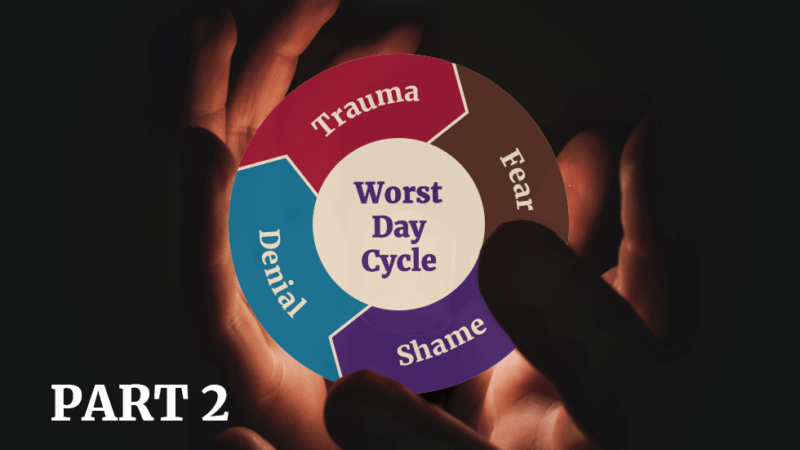
Childhood trauma isn’t about the big, dramatic events. It’s about the emotional definition of love that your nervous system absorbed before you had language—the accumulated weight of millions of small moments when your parents’ emotional state, their tone, their withdrawal, their shame became your emotional blueprint. Every negative childhood experience, no matter how small it seemed, creates a neural pathway. That pathway becomes a survival mechanism. And that survival mechanism, decades later, is the Worst Day Cycle™ running your adult relationships, your career, and your emotional life. This article explains exactly how childhood trauma creates this cycle, why your body keeps recreating it, and how to finally break free.
If you’re tired of repeating the same painful patterns, you’re not broken—your nervous system is trying to finish an incomplete story from childhood.
What Is Childhood Trauma and How Does It Create the Worst Day Cycle™?
When most people hear “childhood trauma,” they think of abuse, abandonment, or major disasters. But trauma isn’t the big stuff. Trauma is any negative emotional experience in childhood—and there are millions of them. A parent’s tone of voice. A moment of feeling invisible. Being told your feelings were wrong. A sibling getting preferred. Emotional withdrawal. Parental disappointment. Conditional love. The message that you had to earn your place in the family.
That’s you. You absorbed a million small moments and built an entire emotional belief system around them.
Here’s what Kenny Weiss teaches: “Your childhood emotional blueprint isn’t made up of your memories. It’s the emotional definition of love that your nervous system absorbed. And almost all of this happened before you even had language, before you even had memories.”
When you were a child, you didn’t have logic. You had absorption. Your brain and nervous system absorbed your parents’ emotional tone, their facial expressions, their energy, their tension, their fear, their shame, their silence, their emotional withdrawal, their disappointment. Like a straw, you sucked up whatever emotional condition they existed in—and that became your blueprint for what love is, what safety feels like, and who you are.
In that moment when you experienced that first hurtful moment—rejection, shame, abandonment, conditional love—your brain and body drew conclusions about yourself:
- I’m too much.
- I’m not enough.
- Love has to be earned.
- I have to fix everything.
- My feelings aren’t safe.
- Connection is conditional.
- I’m only lovable when I perform.
These beliefs become neural pathways. Every time the childhood wound gets triggered in adulthood, your nervous system reactivates that same pathway—and the cycle begins.
The pain you keep experiencing in adulthood is not because you’re broken or dysfunctional. It’s because your body is trying to finish a story that began when you were too young to understand, speak, protect yourself, or choose differently.
How Does Childhood Trauma Rewire Your Brain and Body?
This isn’t metaphorical. Childhood trauma literally changes your neurobiology. When you experience repeated emotional pain as a child, your brain doesn’t develop the neural architecture for safety, trust, and secure attachment. Instead, it builds pathways for hypervigilance, threat detection, and self-protection.
Your hypothalamus—the part of your brain that regulates your stress response—becomes sensitized. It learns to interpret situations through the lens of your childhood wound. A partner’s silence feels like abandonment because your parents’ emotional withdrawal meant rejection. A critical comment feels like annihilation because your childhood told you that you weren’t good enough. A moment of not being heard feels like invisibility because that’s what your family’s attention dynamic taught you.
Your body creates a chemical cocktail in response. Stress hormones flood your system. Cortisol and adrenaline spike. Your nervous system shifts into survival mode. Your prefrontal cortex—the rational thinking part—goes offline. You’re no longer in the present moment with your partner, your boss, or your friend. You’re a 6-year-old again, experiencing the original wound.
That’s the thing about trauma: Your body doesn’t distinguish between the past and the present. It only knows threat.
Childhood trauma rewires your hypothalamus, amygdala, and prefrontal cortex to interpret present relationships through the lens of past wounds. Your nervous system becomes hypervigilant, threat-focused, and reactive—turning everyday relationship moments into full-body fear responses rooted in childhood patterns.
What Is the Emotional Blueprint and How Does It Control Your Adult Life?
Your emotional blueprint is the sum total of what your nervous system learned about love, safety, connection, and your worth. It’s not conscious. It’s not rational. It’s a feeling-based operating system built from millions of micro-moments before you had language to process them.
Children have no emotional boundaries. They’re like straw sucking up whatever emotional condition the adults around them are in. If your parent was anxious, your blueprint learned that the world is unsafe. If your parent was controlling, your blueprint learned that love is conditional on compliance. If your parent was withdrawn, your blueprint learned that connection is impossible. If your parent was critical, your blueprint learned that you’re fundamentally flawed.
Here’s the problem: 70% of childhood messaging is negative and shaming. Your parent said it 100 times. Your sibling said it 500 times. Your teacher said it. Your church said it. Your body absorbed all of it and created a chemical addiction to the feeling that comes with that message. Now, decades later, your nervous system literally craves the familiar pain because it’s familiar.
That’s you in every relationship, isn’t it? You find yourself in situations that feel exactly like the painful feeling from childhood. And part of you doesn’t know how to leave because that feeling is your normal.
Your emotional blueprint is the automated operating system your nervous system created in childhood to survive your family. It controls who you’re attracted to, how you communicate, what you believe about yourself, how you handle conflict, and why you keep repeating the same painful patterns in adulthood.
How Does the Worst Day Cycle™ Keep You Trapped in Childhood Patterns?
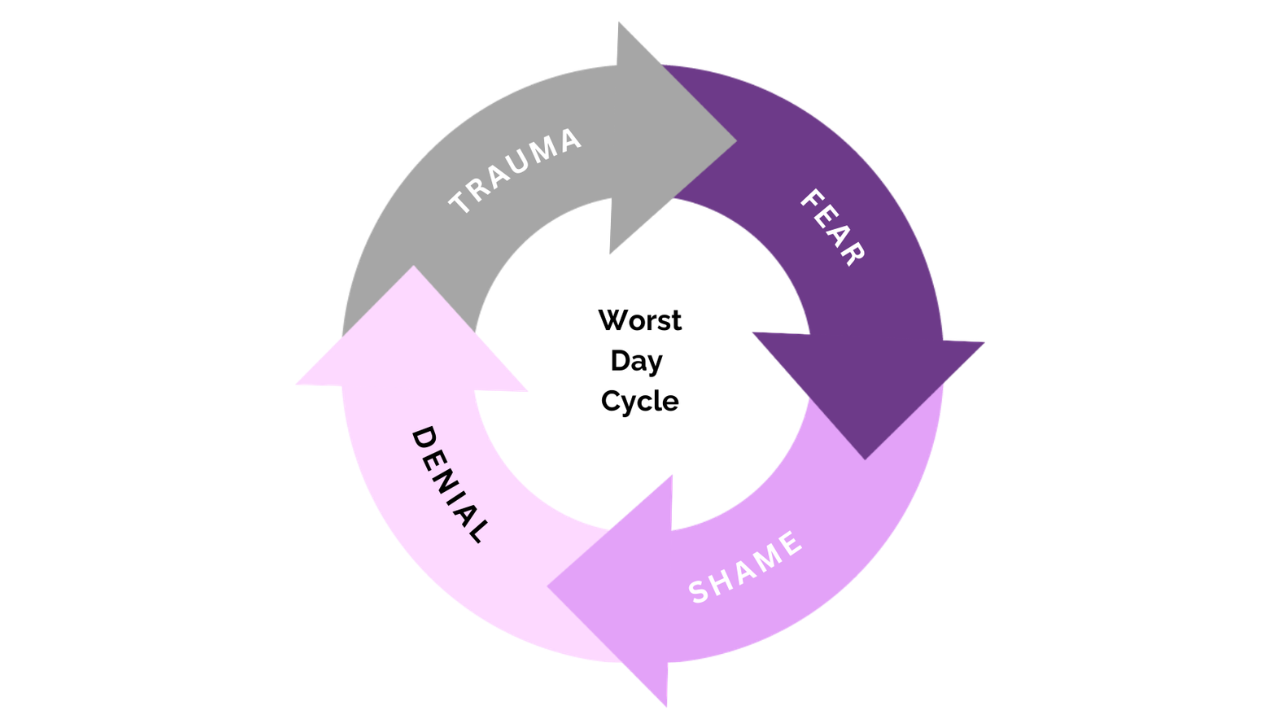
The Worst Day Cycle™ is a four-stage neurological loop that keeps trauma alive in your present relationships. Once you understand it, you’ll recognize it playing out in your life over and over—sometimes in a day, sometimes in a year, but always following the same pattern that started in childhood.
Stage 1: Trauma (The Trigger)
Something happens. Your partner doesn’t text back. Your boss gives critical feedback. Your friend cancels plans. Your family member says something dismissive. In isolation, it’s a minor moment. But your nervous system doesn’t see isolation. It sees the trigger—something that mirrors the original childhood wound.
This activates the neural pathway built in childhood. Your hypothalamus receives the signal: You’re in danger. Your amygdala fires. Your stress response ignites.
That’s the trigger moment. It feels like something is happening now, but your body is responding to something that happened 30 years ago.
Stage 2: Fear (The Nervous System Response)
Your body floods with cortisol and adrenaline. Your heart races. Your palms sweat. Your thoughts become scattered. You’re in full fight-flight-freeze mode. Your prefrontal cortex goes offline. You can’t think rationally. You can’t access nuance. You’re operating from pure survival instinct.
The fear isn’t about the current situation. The fear is the body’s memory of the original trauma. The pain I felt when my parent rejected me. The powerlessness I felt when my family didn’t value me. The invisibility I felt when no one noticed I was struggling.
Your nervous system is trying to protect you from feeling that pain again. But in doing that, it creates the very pain it’s trying to prevent.
Stage 3: Shame (The Core Belief Activation)
As the fear floods your system, the core childhood belief activates: I’m not good enough. I’m too much. I’m unlovable. I’m broken. This isn’t logical thinking—this is the emotional truth your body learned in childhood.
Shame is different from guilt. Guilt says “I did something bad.” Shame says “I AM bad.” And in this stage, shame tells you that the trigger happened because of who you fundamentally are. If only I was better, my partner would text back. If only I was smarter, my boss wouldn’t criticize me. If only I was more lovable, my friend wouldn’t cancel.
The shame locks the fear in place. It says: This is your fault. This is who you are. This will never change.
Stage 4: Denial (The Cycle Perpetuation)
Now comes the coping mechanism. Instead of feeling the fear and shame directly, you deny them. You tell yourself the situation isn’t that bad. You minimize the hurt. You make excuses for the other person. You blame yourself to stay in control. You numb with food, alcohol, work, sex, scrolling, or distraction.
Sound familiar? Denial feels like relief. In that moment, you’re not feeling the childhood pain. But denial doesn’t resolve anything. It just pushes the unprocessed fear and shame deeper into your nervous system, creating a debt that will come due.
That’s you saying “it’s fine” when it’s not fine. Staying in the situation. Accepting less. Apologizing for things that aren’t your fault. Making yourself smaller. Performing harder. Trying to prove your worth.
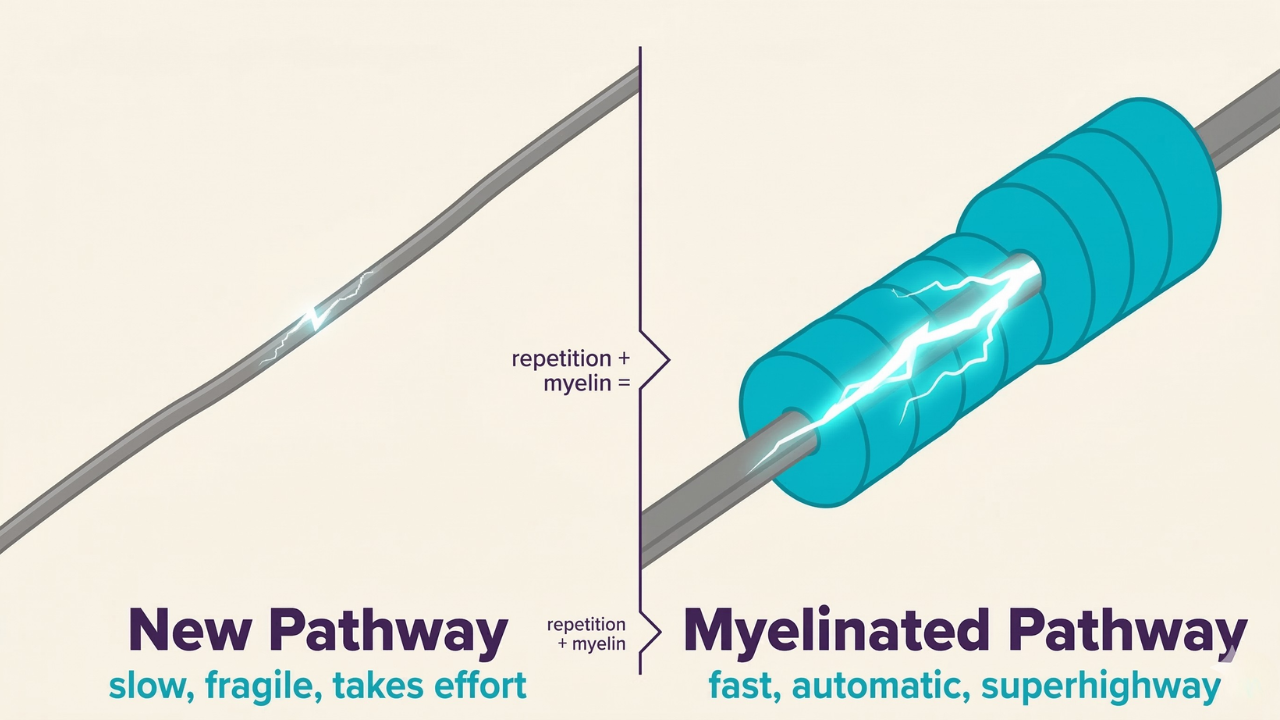
And then, inevitably, the trigger returns. The cycle repeats. And your nervous system gets stronger in the pattern.
The Worst Day Cycle™ is a four-stage neurological loop: Trauma (trigger activates childhood wound), Fear (nervous system floods with stress chemicals), Shame (core childhood belief of unworthiness activates), and Denial (you numb and minimize instead of heal). Every repetition strengthens the neural pathway, making it harder to break the pattern without intervention.
How Does Your Survival Persona Hide Childhood Trauma?
Your survival persona is the adaptive self you created in childhood to survive your family system. It’s not your authentic self—it’s a protective mechanism. And it’s still running the show in your adult relationships.
There are three primary survival persona types:
The Falsely Empowered Survival Persona
If your childhood taught you that vulnerability was weakness, you created an over-functioning, high-control self. You became the fixer, the caretaker, the one who had to hold everything together. You learned that you only had value through performance and control.
In adulthood, this looks like perfectionism, workaholism, control-seeking, and difficulty asking for help. You keep achieving but feel empty. You control your partner or friends to feel safe. You can’t rest because resting means falling apart. That’s you sacrificing your own needs because you’re convinced that’s what love looks like.
The Disempowered Survival Persona
If your childhood taught you that your needs weren’t important, you created a shrinking self. You learned to make yourself small, to disappear, to prioritize others’ emotions above your own. You became the people-pleaser, the invisible family member, the one who absorbed others’ feelings.
In adulthood, this looks like self-abandonment, difficulty setting boundaries, chronic anxiety about others’ approval, and attraction to controlling partners. You give constantly but feel resentful. You can’t say no. You apologize for existing. That’s the thing about the disempowered persona: It looks passive, but it’s actually a highly active survival strategy.
The Adapted Wounded Child Survival Persona
If your childhood was unpredictable—sometimes safe, sometimes dangerous—you learned to oscillate between both strategies. One moment you’re raging and controlling like the falsely empowered. The next you’re collapsed and people-pleasing like the disempowered. You swing between “I don’t need anyone” and “please don’t leave me” and can’t figure out which one is real.
In adulthood, this looks like emotional volatility, inconsistency in relationships, swinging between overperforming and shutting down, and never having a stable sense of self. You’re unpredictable even to yourself. That’s you—the one who can command a boardroom on Monday and collapse in your car on Tuesday, wondering which version is the real you.
Your survival persona is the adaptive self that kept you safe in your family system. It’s three types: Falsely Empowered (over-functioning controller), Disempowered (shrinking people-pleaser), and Adapted Wounded Child (oscillates between both). In adulthood, your survival persona controls how you relate, what you believe about yourself, and what relationships you create.
How Does Childhood Trauma Show Up in Every Area of Your Life?
Family Relationships
You find yourself replicating your family dynamics with your own family. If your parent was critical, you’re critical with your kids or partner. If your parent was absent, you struggle to be present. If your family was enmeshed, you can’t maintain healthy boundaries. That’s you telling yourself you’ll never be like your parent, then realizing you are.
The emotional blueprint doesn’t distinguish between “healthy” and “unhealthy”—it only knows “familiar.” So you recreate the familiar dynamic to get resolution on the original wound. It never works, but your nervous system keeps trying.
Romantic Relationships
This is where childhood trauma shows up most vividly. You’re attracted to partners who trigger your core wound. Your nervous system recognizes the energy of the original trauma and feels like that’s love. You recreate the same dynamic you had with your parents—seeking the impossible resolution.
If your parent was emotionally unavailable, you choose an emotionally unavailable partner and spend years trying to make them available. If your parent was controlling, you choose a controlling partner and spend years trying to earn your freedom. If your parent was abandoning, you choose someone who keeps leaving and spend years trying to be worth staying for.
That’s the the thing about trauma bonds: They feel like the deepest love because they’re the deepest pain.
Friendships
Your survival persona determines your friend role. If you’re falsely empowered, you’re the one everyone relies on but nobody really knows. If you’re disempowered, you’re the one everyone takes from and nobody values. If you’re the adapted wounded child, your friendships revolve around your crisis and others’ caretaking.
That’s you—the friend everyone calls in a crisis but nobody checks on. You struggle to have reciprocal friendships where both people matter equally. You either overfunction or disappear.
Work and Career
Your childhood wound follows you into every job. If you grew up feeling you had to earn your place, you overwork, take on too much, and feel like a fraud despite achievements. If you grew up feeling invisible, you struggle to advocate for yourself, accept less pay, and don’t speak up in meetings.
Sound familiar? Your boss becomes a transference figure. A critical comment triggers your childhood shame. Feedback feels like abandonment. Success feels dangerous because it means you might be vulnerable.
Body and Health
Childhood trauma literally lives in your body. Unprocessed fear becomes chronic tension. Shame becomes eating disorders or body dysmorphia. Denial becomes numbing behaviors—overeating, excessive exercise, substance use, sexual numbing.
That’s you—ignoring your body’s signals for years and wondering why it finally broke down. Your body is trying to tell you what your mind won’t acknowledge. The chronic pain. The autoimmune issues. The weight that won’t shift. The sexual dysfunction. All of it is your nervous system holding the trauma.
Childhood trauma doesn’t stay in childhood—it shows up in your family relationships, romantic partnerships, friendships, career, and physical body. Every area of your life is shaped by the survival strategies you developed in your family system.
How Does the Emotional Authenticity Method™ Heal Childhood Trauma?
The Emotional Authenticity Method™ is a six-step process that rewires your nervous system from the survival response back to authentic living. This isn’t therapy. It’s a direct neural intervention that reconnects you to your true emotional self—the self your childhood wounds covered up.
Step 1: Somatic Down-Regulation
Before you can process anything, you have to get your nervous system out of survival mode. Focus on what you can hear for 15-30 seconds. This simple practice shifts your brain out of threat-detection and into present-moment awareness. If you’re highly dysregulated, use titration—go slowly, feel a little bit at a time, then regulate, then feel a little more.
That’s you—learning that you don’t have to white-knuckle through your feelings. You can start by simply listening to the sounds around you.
Step 2: What Am I Feeling Right Now?
Most people answer “stressed” or “fine.” That’s not a feeling—that’s a survival response. Using the Feelings Wheel, you develop emotional granularity—the ability to name specific emotions instead of lumping everything into one generic word. Are you feeling abandoned? Dismissed? Invisible? Controlled? Each feeling carries different information about your childhood wound.
That’s the moment when you realize you’ve been numb to your own emotions for decades—and naming them is the first step back to yourself.
Step 3: Where in My Body Do I Feel It?
All emotional trauma is stored physically. Your chest tightens. Your stomach drops. Your jaw clenches. Your shoulders climb toward your ears. Locating the feeling in your body moves you from intellectual understanding to somatic processing—where real healing happens.
Step 4: What Is My Earliest Memory of Having This Exact Feeling?
This is where everything shifts. You trace today’s reaction back to its childhood origin. You realize: this isn’t about today. My partner isn’t my parent. My boss isn’t my critical father. My nervous system just thinks they are. This step breaks the illusion that the present moment is the problem.
That’s you—suddenly seeing that your 40-year-old reaction belongs to a five-year-old who never got to process the original wound.
Step 5: Who Would I Be If I Never Had This Thought or Feeling Again?
This is the vision step. It connects you to the Authentic Self Cycle™ and gives your nervous system a new destination—not more coping, but actual identity restoration. What would be left over if this childhood wound didn’t run your life? That’s your authentic self. That’s who you were before the blueprint was installed.
Step 6: Feelization — Sit in the Feeling of the Authentic Self
This is the step most approaches miss entirely. You don’t just think the new truth—you feel it. You sit in the feeling of your Authentic Self and make it strong. You ask: How would I respond to this situation from this feeling? What would I say? What would I do? You visualize and FEEL yourself operating from your Authentic Self. This is the emotional blueprint remapping and rewiring step—creating a new emotional chemical addiction to replace the old one.
That’s you—not just understanding who you could be, but actually feeling it in your body until your nervous system believes it’s safe to be that person.
The Emotional Authenticity Method™ is a six-step somatic intervention: (1) Somatic Down-Regulation, (2) What am I feeling right now?, (3) Where in my body do I feel it?, (4) What is my earliest memory of this exact feeling?, (5) Who would I be if I never had this feeling again?, and (6) Feelization — sit in the feeling of the Authentic Self and make it strong. These steps rewire your nervous system from survival mode to authentic living because emotions are biochemical events — you cannot change emotional patterns through thoughts alone.
How Does the Authentic Self Cycle™ Replace the Worst Day Cycle™?
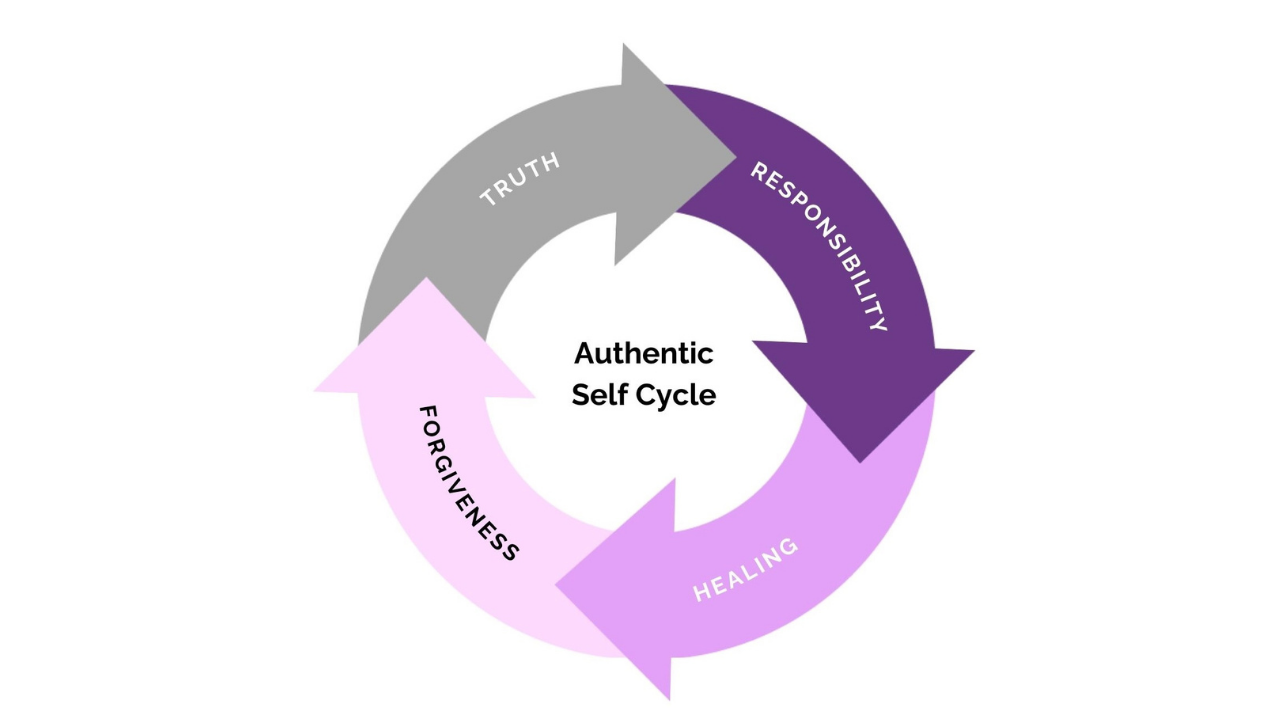
The Authentic Self Cycle™ is the opposite trajectory—what your nervous system can become when you heal childhood trauma. Instead of Trauma → Fear → Shame → Denial, it becomes Truth → Responsibility → Healing → Forgiveness.
Stage 1: Truth (Seeing Reality Clearly)
Instead of triggers activating childhood wounds, you can see situations clearly. Your boss’s feedback is feedback, not rejection. Your partner’s silence is tiredness, not abandonment. Your friend’s cancellation is a schedule conflict, not proof that you’re unlovable.
That’s you—learning to see your partner as your partner, not as the parent who hurt you. You’re no longer seeing the present through the lens of the past. You’re seeing what’s actually happening. This is radical and terrifying for a nervous system trained to see danger everywhere.
Stage 2: Responsibility (You Choose Your Response)
From the place of truth, you’re responsible for your response. You don’t blame the other person for triggering you. You don’t blame your childhood for limiting you. You acknowledge the pain and ask: What do I actually want? What will I accept? What am I no longer willing to tolerate?
This is where you become the author of your own story instead of the character in your childhood’s story.
Stage 3: Healing (Completing the Old Wound)
You finally give yourself what your childhood didn’t. You feel your own presence. You validate your own feelings. You show up for yourself the way you needed your parent to show up for you. You hold your own hand through the fear. You speak to yourself with the compassion you deserved.
This is reparenting. This is the nervous system finally getting the message: You’re safe. You’re worthy. You matter. You’re not responsible for fixing everything. You can rest. You can be yourself.
Stage 4: Forgiveness (Release the Grip of the Past)
This isn’t about excusing what happened. It’s about releasing your nervous system’s grip on the story. You understand that your parents did the best they could with what they had. You understand that your childhood was their trauma wound too. You understand that forgiveness is about freedom—your freedom.
Forgiveness is the point where your nervous system finally stops trying to get the resolution that never came. You accept what happened, honor what it taught you, and release the hope that you can change the past.
The Authentic Self Cycle™ is the healed nervous system trajectory: Truth (seeing reality clearly), Responsibility (choosing your response), Healing (completing the original wound through self-presence), and Forgiveness (releasing the past’s grip). This cycle becomes stronger with each repetition, creating a new emotional baseline of safety, authenticity, and genuine connection.
Frequently Asked Questions
How do I know if childhood trauma is affecting my adult relationships?
If you find yourself in repeating relationship patterns, if you’re attracted to people who feel familiar but painful, if you struggle to set boundaries, if you overfunction or disappear in relationships, if you feel unlovable despite accomplishments, or if you cycle between hope and despair—childhood trauma is likely active. Take Kenny’s Feelings Wheel assessment at kennyweiss.net/life-changing-exercise to identify your specific pattern.
Can I heal childhood trauma on my own, or do I need professional help?
You can begin your healing through awareness and the Emotional Authenticity Method™. But deep trauma work—especially with attachment wounds—benefits from guided coaching. Kenny’s Emotional Blueprint Starter Course — Individual course ($79) is specifically designed for self-directed healing. For couples where both partners are committed, the Relationship Starter Course — Couples ($79) accelerates the process.
How long does it take to heal childhood trauma?
Healing isn’t linear. You don’t resolve it once and move on. You rewire your nervous system through repeated practice of the Authentic Self Cycle™. Most people notice significant shifts in 90 days of consistent work. Deep integration takes 6-12 months. But the process becomes easier as you strengthen the new neural pathway.
Why do I keep attracting the same type of partner if childhood trauma is the root?
Your nervous system recognizes the energy of your original trauma and interprets it as love. If your parent was emotionally unavailable, unavailability feels like home. Your body creates the chemistry of the familiar, even when that familiar is painful. This is why Ken teaches that healing codependency requires breaking the attraction pattern itself. Why High Achievers Fail at Love ($479) directly addresses this.
Is my survival persona bad? Do I need to get rid of it?
Your survival persona isn’t bad—it kept you alive. But it’s not who you are. Healing isn’t about destroying the survival persona; it’s about having choice. You can access the strength of the falsely empowered persona when you need it. You can access the sensitivity of the disempowered persona when appropriate. But you’re no longer trapped in it. You’re not defensively identified with it.
Can I heal childhood trauma if my parents won’t acknowledge what happened?
You don’t need your parents’ validation to heal. The wound happened to your nervous system. Your healing is about your nervous system—not about getting your parents to admit, apologize, or change. This is one of the hardest truths for adult children to accept. Your healing is your responsibility now.
The Bottom Line
Childhood trauma isn’t something that happened to you decades ago and you should just move past. It’s something your nervous system is actively recreating in your current relationships, your career, your body, and every relationship you form.
The emotional blueprint your parents installed before you had language is still running in the background. It’s still telling you stories about who you are, what love looks like, and whether you’re worthy of real connection. And until you heal that blueprint, you’ll keep repeating the same Worst Day Cycle™ with different people in different contexts.
But here’s what Kenny knows: The pain you keep experiencing is not because you’re broken. It’s because your body is trying to finish an unfinished story. Your nervous system is trying to get the resolution that never came. And once you understand that, healing becomes possible.
The Authentic Self Cycle™ is available to you. The Emotional Authenticity Method™ is a direct intervention. And the version of you that exists beyond childhood survival is waiting. Not perfect. Not healed from everything. But real. Authentic. Free to choose. Free to love. Free to be yourself.
Your childhood doesn’t have to define your adulthood. But first, you have to see how completely it does.
Recommended Reading
Facing Codependence by Pia Mellody — the foundational text on how childhood trauma creates codependent patterns and the loss of authentic self.
The Body Keeps the Score by Bessel van der Kolk — the science of how trauma lives in the body, not just the mind.
When the Body Says No by Gabor Maté — how chronic emotional suppression from childhood manifests as physical illness and disease.
Codependent No More by Melody Beattie — a practical guide to recognizing and healing codependent patterns rooted in childhood trauma.
The Gifts of Imperfection by Brené Brown — how shame drives self-abandonment and why vulnerability is the path back to authenticity.
Ready to Heal Your Childhood Trauma and Break the Worst Day Cycle™?
Start with your specific situation:
- For self-directed healing: Emotional Blueprint Starter Course — Individual ($79) — A complete roadmap for rewiring your emotional blueprint through the Emotional Authenticity Method™.
- For couples ready to heal together: Relationship Starter Course — Couples ($79) — Both partners learn to recognize and break the Worst Day Cycle™ patterns.
- For high achievers stuck in the cycle: Why High Achievers Fail at Love ($479) — Deep work on how success and survival personas sabotage authentic connection.
- For those trapped in painful attachments: Why We Can’t Stop Hurting Each Other ($479) — Complete intervention for breaking trauma bonds and recreating them.
- For partners who seem unavailable: The Shutdown Avoidant Partner ($479) — Understand and heal the attachment wound beneath avoidance.
- For complete nervous system rewiring: Tier 1: Mapping the Blueprint ($1,379) — The comprehensive program that takes you from Worst Day Cycle™ to Authentic Self Cycle™.
Before you choose: Complete the Feelings Wheel assessment at kennyweiss.net/life-changing-exercise to identify your specific trauma pattern and survival persona.
You’ve been living as your survival persona long enough. It’s time to meet who you actually are beneath the childhood wounds.
Your authentic self is waiting. Your Authentic Self Cycle™ is waiting. And your future relationships—the ones built on real connection, not nervous system survival—are waiting for you to show up as you.
See Also:
- The Signs of Enmeshment: How Blurred Boundaries in Your Family Create Codependence
- 7 Signs of Insecurity in Your Relationship (And Why They Always Lead Back to Childhood)
- What Real Self-Esteem Looks Like (It’s Not What Your Survival Persona Told You)
- Negotiables vs Non-Negotiables: How to Set Boundaries When Your Childhood Never Taught You How
- 10 Dos and Don’ts for a Great Relationship (And Why Your Childhood Taught You the Opposite)