
Closure from a narcissist is the emotional release you seek after a narcissistic relationship — but true closure never comes from the narcissist, because they will never give it to you. If you’ve been waiting for an apology, an explanation, or a moment of accountability from a narcissist, you are waiting for something that will never arrive. The narcissist keeps you hooked precisely because unanswered questions keep you tethered. And that tether isn’t accidental — it’s the same childhood trauma pattern that attracted you to the narcissist in the first place.
That’s you — the one who replays every conversation in your head, searching for the moment it all went wrong, hoping that if you just understand enough, the pain will stop.
The truth is: closure doesn’t come from understanding the narcissist. It comes from understanding yourself — the childhood emotional blueprint that made you vulnerable to narcissistic abuse, and the survival persona that kept you trapped long after you knew something was wrong.
What Is Closure From a Narcissist and Why Can’t You Get It?
Closure is the emotional resolution you seek after a relationship ends — the feeling that you understand what happened, that it makes sense, and that you can move forward. In healthy relationships, closure often comes through honest conversation, mutual accountability, and shared grief. In narcissistic relationships, none of that exists.
That’s you — sitting in your car at 2 AM, composing the perfect text that will finally make them understand what they did to you.
You will never, ever get closure from a narcissist. They won’t give it to you because they want to keep you on the line. They want you hooked. All the questions you want answered, all the things that don’t make sense, the confusion — you just want to sit down and have a conversation: “Why did you do this?” or “What were you thinking?” That will never happen.
And that powerlessness — the recognition that you will never get an answer — is one of the most difficult things to accept. The only way you can get closure is from inside yourself.
That’s you — still waiting for the narcissist to validate your pain, when validation is the one thing they are designed never to give.
Closure from a narcissist is impossible because the narcissist’s power depends on keeping you in a perpetual state of confusion — your unanswered questions are not a bug in the relationship, they are the feature that keeps the trauma bond alive.
How the Worst Day Cycle™ Explains Why You Can’t Let Go of a Narcissist
The reason you can’t let go of a narcissist isn’t weakness. It isn’t stupidity. It’s neuroscience. The Worst Day Cycle™ explains exactly why your brain keeps pulling you back to someone who hurt you — and why no amount of logic can break the pattern.
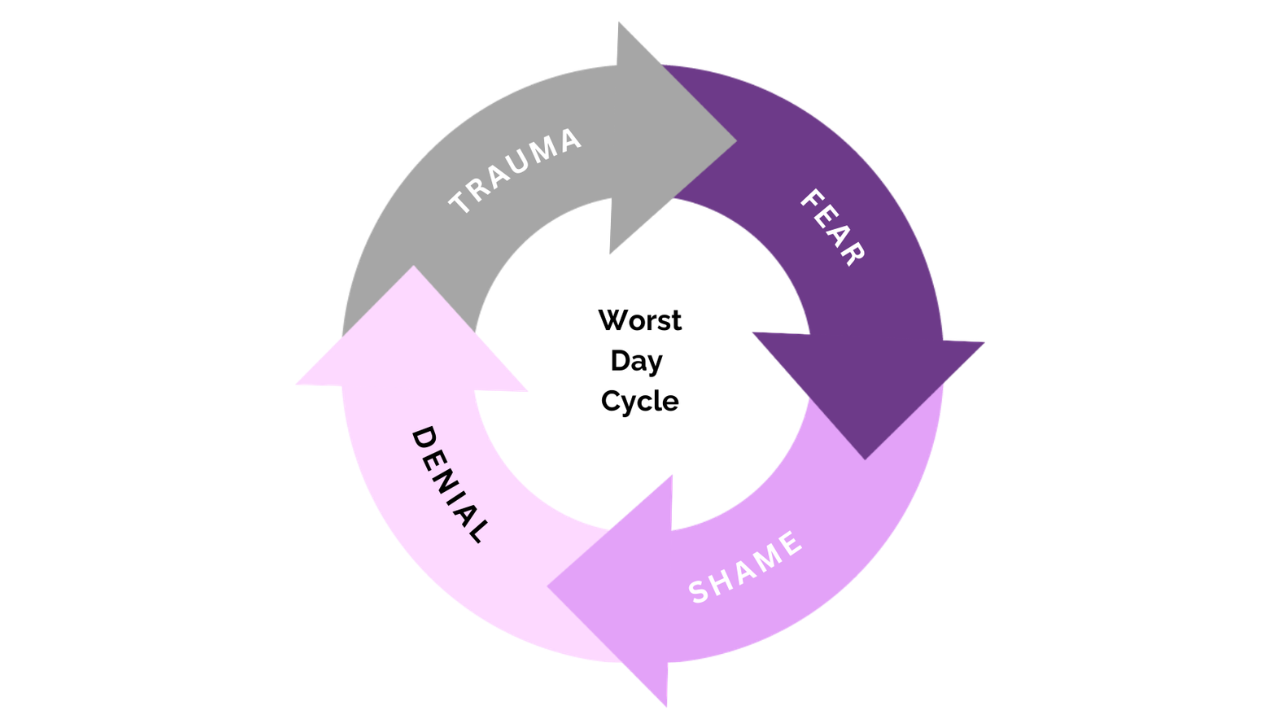
The Worst Day Cycle™ has four stages: Trauma → Fear → Shame → Denial.
Trauma: Any negative emotional experience in childhood that created painful meanings. For people who end up in narcissistic relationships, childhood trauma often looked like emotional neglect, conditional love, or a household where your feelings were dismissed. These experiences create a massive chemical reaction in the brain and body. The hypothalamus generates chemical cocktails — cortisol, adrenaline, dopamine, oxytocin misfires — and the brain becomes addicted to these emotional states.
That’s you — feeling most alive during the chaos of the narcissistic relationship, because your nervous system was calibrated for intensity in childhood.
Fear: The brain conserves energy by repeating known patterns. It can’t tell right from wrong — only known from unknown. Since 70%+ of childhood messaging is negative and shaming, adults repeat these painful patterns in relationships, career, hobbies, health — everything. Fear drives repetition. Your brain thinks repetition equals safety. So you keep going back to the narcissist — or to the obsessive thoughts about them — not because you’re weak, but because your nervous system is terrified of the unknown.
Shame: This is where you lost your inherent worth. “I am the problem.” Not “I made a mistake” — but “I AM the mistake.” This is the core wound that made you vulnerable to the narcissist in the first place. You chose someone who confirmed what you already believed about yourself — that you aren’t enough, that you have to earn love, that your needs are a burden.
That’s the shame talking — the voice that says “maybe if I had been different, they wouldn’t have treated me that way.” But the narcissist didn’t create your shame. They exploited the shame that was already there.
Denial: Denial is the survival persona you created to survive the pain. It was brilliant in childhood — absolutely necessary. But in adulthood, it sabotages everything. Denial is what kept you in the relationship long after you knew something was wrong. Denial is what makes you romanticize the good moments. Denial is what has you believing that the next conversation, the next text, the next encounter will finally give you the closure you need.
The Worst Day Cycle™ reveals why you can’t stop thinking about the narcissist — your brain created a neurochemical addiction to the emotional chaos of the relationship, and seeking closure is just another way your nervous system tries to get its next fix of the familiar pain pattern.
Why the Trauma Bond Keeps You Seeking Closure
The reason you can’t stop thinking about the narcissist isn’t love. It’s chemistry. Specifically, it’s trauma chemistry — the same neurochemical pattern that was wired into your nervous system in childhood.
That’s you — knowing they’re toxic, knowing they hurt you, and still feeling physically pulled back to them like gravity.
A trauma bond forms when intermittent reinforcement — the cycle of love-bombing, devaluation, and discarding — hijacks your brain’s dopamine system. The narcissist trained your nervous system the same way a slot machine trains a gambler: unpredictable rewards create the strongest addictions. You don’t go back for the pain. You go back for the possibility that this time, you’ll finally get the love you’ve been chasing since childhood.
This is what Kenny’s metaphor “The Snake Behind the Sweet Mask” reveals: narcissists use words to hide their actions. They can be gaslighting you, manipulating you, blame-shifting — but they do it with a smile, very kind and loving words, as they completely denigrate you. You’re sitting there confused because the packaging says “love” but the content is poison. That confusion is the trauma bond in action.
Sound familiar? The person who treats you terribly but says all the right things — and your body believes the words instead of the actions.
The 90/10 rule explains why: you’re in a relationship with a narcissist because 90% of your thoughts, feelings, and behaviors are focused on the narcissist, while only 10% focus on you. That dynamic has to flip. People who end up with narcissists are severely codependent — 90% of their life revolves around the narcissist. Healing means dedicating 90% of your energy to recovering yourself, building your self-love, your self-esteem, doing the recovery work.
The trauma bond keeps you seeking closure because your nervous system is chemically addicted to the intermittent reinforcement pattern of the narcissistic relationship — your brain doesn’t distinguish between seeking closure and seeking another hit of the same emotional drug that has been running since childhood.
How Your Survival Persona Keeps You Trapped in the Narcissistic Cycle
Your survival persona is the identity you created in childhood to navigate an emotionally unsafe environment. It’s not who you are — it’s who you had to become. And it’s the reason you ended up with a narcissist in the first place.
There are three survival persona types:
The Falsely Empowered: This persona controls, dominates, and rages. In the narcissistic dynamic, this is often the narcissist’s position — but here’s the truth nobody tells you: both partners in a narcissistic relationship are operating from survival personas. The falsely empowered position uses power to avoid vulnerability. They seek closure through control — “If I can just make them admit what they did, I’ll feel better.”
That’s you — the one who writes the long, detailed text exposing every lie, every manipulation, every betrayal — because proving you were right feels like power.
The Disempowered: This persona collapses, people-pleases, and disappears. In the narcissistic dynamic, this is often the codependent position — the one who gave everything and got destroyed. They seek closure through understanding — “If I can just understand why they did it, the pain will make sense.” They stay focused on the narcissist’s psychology, reading every article about narcissism, watching every video, analyzing every interaction — all to avoid looking at their own childhood wound.
That’s you — spending hours reading about narcissistic personality disorder instead of asking the real question: what in my childhood made me choose this person?
The Adapted Wounded Child: This persona oscillates between both — raging one moment, collapsing the next. They swing between wanting to destroy the narcissist and wanting them back. They seek closure through oscillation — angry texts followed by vulnerable pleas, boundaries followed by complete surrender.
That’s you — blocking them on Monday, unblocking them by Wednesday, and hating yourself by Friday.
Here’s the insight that changes everything: once you learn the truth — that you are controlling, that you’re doing many of the same things the narcissist does, just from the victim position — then you can learn to stop it. And once you stop, the narcissist loses their power. You just don’t care anymore. You start to heal. You start to give the love to yourself instead of looking for someone else to do the job for you.
Your survival persona keeps you trapped in the narcissistic cycle because it uses the search for closure as a way to avoid confronting the real wound — the childhood trauma that created the survival persona in the first place.
The Victim Position Paradox: Why Blaming the Narcissist Keeps You Stuck
The Victim Position Paradox is one of the most important concepts to understand when seeking closure from a narcissist. The victim position is a societal construct meant to protect victims, but in reality it has created a paradoxical falsely empowered position that nearly guarantees the victim will reexperience their childhood victimization, leaving them disempowered.
That’s you — feeling powerful when you tell the story of what they did to you, while simultaneously staying completely stuck in the pain.
Here’s what most narcissistic abuse content won’t tell you: if you are stuck in a place where you hate, judge, blame, and criticize the narcissist, what that means is you haven’t forgiven yourself. The biggest struggle for someone who can’t find closure is being unable to take responsibility for their part in the relationship.
This is NOT victim-blaming. The narcissist is absolutely to blame. But those attracted to narcissists are responsible for their attraction to them. We can never divorce ourselves from our responsibility in choosing a narcissist and allowing them into our lives. We chose them out of the millions of people we could have chosen.
That’s the hardest truth — recognizing that the narcissist was the symptom, not the cause. The cause was a childhood that didn’t teach you what healthy love looks like.
When you hit the sadness and depression of truly confronting your childhood wound, you can accept your pain, work through it, grieve it. That allows acceptance, and then forgiveness — not of the narcissist, but of yourself. And then something shifts: “My God, the narcissist was actually the key to my healing. They exposed the underlying pain that made me susceptible to their games. What a gift. Now I can forgive because I’ve forgiven myself. I recognize I had no shot — my childhood trauma primed me for it.”
That’s empowerment. That’s real closure.
The Victim Position Paradox keeps you seeking external closure because blaming the narcissist provides a temporary sense of power that masks the real wound — but genuine closure only arrives when you take responsibility for the childhood pattern that made you vulnerable, without blaming yourself for what happened.
How the Need for Narcissist Closure Shows Up in Every Area of Your Life
Family: You replay childhood dynamics with your family of origin, seeking the closure from your parents that the narcissist couldn’t give. You over-function at family gatherings, manage everyone’s emotions, and swallow your own reactions. You might even recognize narcissistic patterns in your parents — and realize the narcissistic relationship you’re trying to get closure from was a repetition of the one you grew up in.
That’s you — still trying to get the love from your partner that your parent never gave you, and calling it closure when it’s actually the original wound.
Romantic Relationships: You either avoid relationships entirely — using the narcissist’s betrayal as proof that love is dangerous — or you jump into a new relationship seeking the validation the narcissist denied you. Both responses are the Worst Day Cycle™ in action. You confuse intensity with intimacy. You mistake anxiety for attraction. And you remain hypervigilant, scanning every new partner for narcissistic red flags while ignoring your own unhealed patterns.
Sound familiar? The person who can spot a narcissist from a mile away but has no idea what a healthy relationship actually feels like.
Friendships: You become the friend who tells the narcissist story to everyone who will listen. You analyze the relationship endlessly. You seek validation from friends who confirm the narcissist was terrible. And while all of that feels like healing, it’s actually keeping you in the relationship — because 90% of your thoughts are still about them.
Work: You either throw yourself into work to numb the pain — becoming a high achiever who uses productivity as a drug — or you can’t focus because your mind is consumed with the narcissist. You might recreate the narcissistic dynamic with a controlling boss or dominating colleague, because your nervous system seeks the familiar pattern.
That’s you — getting promoted for the same codependent pattern that kept you in the narcissistic relationship.
Body and Health: Your body keeps the score. The obsessive thoughts about the narcissist live in your nervous system as chronic tension, insomnia, digestive issues, exhaustion, and autoimmune flares. You can’t “think” your way to closure because the trauma bond isn’t stored in your thoughts — it’s stored in your body. Every time you ruminate about the narcissist, your body floods with the same stress chemicals it produced during the relationship.
How the Emotional Authenticity Method™ Creates Real Closure
The Emotional Authenticity Method™ is the daily practice that creates the closure the narcissist never will. It works because it targets the body — where the trauma bond lives — not just the mind where you’ve been endlessly analyzing the relationship.
Step 1: Somatic Down-Regulation. Focus on what you can hear for 15-30 seconds. When you’re spiraling about the narcissist — replaying conversations, composing texts, analyzing their behavior — your nervous system is in survival mode. Before you can process anything, you have to get out of fight-or-flight. If you’re highly dysregulated, use titration — go slowly, don’t force yourself to feel everything at once.
That’s you — learning that the obsessive thoughts about the narcissist are your nervous system’s way of staying in survival mode, not your mind’s way of finding answers.
Step 2: What am I feeling right now? Not “what did the narcissist do?” Not “why are they like this?” But: what am I actually feeling in this moment? Using the Feelings Wheel, develop emotional granularity — the ability to name specific emotions beyond “angry” or “hurt.” You might discover that underneath the anger at the narcissist is grief, abandonment, terror, or shame that has nothing to do with them.
Step 3: Where in my body do I feel it? All emotional trauma is stored physically. Your chest tightens. Your stomach drops. Your throat closes. Locating the feeling in your body is how you move from intellectual analysis of the narcissist to somatic processing of your own wound.
Step 4: What is my earliest memory of having this exact feeling? This is where real closure begins. You trace today’s obsession with the narcissist back to its childhood origin. You realize: this isn’t about the narcissist. This feeling was there before they arrived. My partner isn’t my parent — my nervous system just thinks they are.
That’s the moment everything shifts — when you see that the closure you’ve been seeking from the narcissist is actually the closure you never got from childhood.
Step 5: Who would I be if I never had this thought or feeling again? What would be left over? This is the vision step. It connects you to the Authentic Self Cycle™ and gives your nervous system a new destination — not another narcissist, not another obsessive thought loop, but your actual identity.
Step 6: Feelization. Sit in the feeling of the Authentic Self and make it strong. Create a new emotional chemical addiction to replace the old blueprint. Ask: how would I respond to this situation from this feeling? What would I say? What would I do? Visualize and FEEL yourself operating from your Authentic Self. This is the emotional blueprint remapping and rewiring step — the step where the trauma bond to the narcissist actually breaks.
That’s you — not reading another article about narcissism, but actually sitting with the feeling in your body and letting it show you where the real wound is.
The Emotional Authenticity Method™ creates real closure because emotions are biochemical events — you cannot change emotional patterns through thoughts alone. Thoughts originate from feelings, not the other way around. Analyzing the narcissist changes your thoughts. The EAM™ changes your feelings.
How the Authentic Self Cycle™ Replaces the Need for External Closure
The Authentic Self Cycle™ is the healing counterpart to the Worst Day Cycle™. Where the Worst Day Cycle™ traps you in Trauma → Fear → Shame → Denial, the Authentic Self Cycle™ restores your identity through Truth → Responsibility → Healing → Forgiveness.
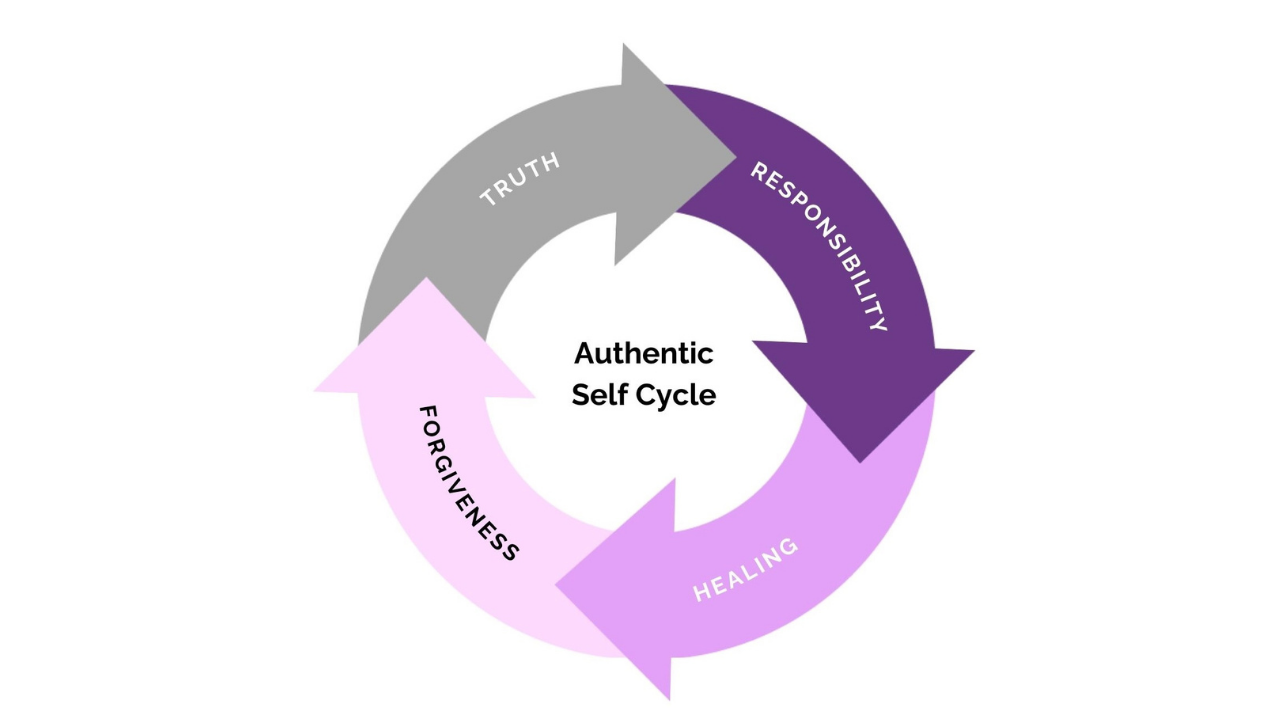
Truth: Name the blueprint. See that “this isn’t about the narcissist.” When you feel the pull to text them, to check their social media, to replay the relationship — truth says: “This feeling is from childhood. The narcissist isn’t my parent — my nervous system just thinks they are.” Truth means getting honest about your own role: your situation with the narcissist repeated what happened in childhood. You neglected yourself because you were taught to neglect yourself.
That’s the first step toward real closure — seeing the narcissist as a mirror of your childhood wound, not the cause of your pain.
Responsibility: Own your emotional reactions without blame. “I chose this person. Not because I’m broken, but because my childhood trauma primed me for it.” Responsibility doesn’t mean the narcissist wasn’t abusive. It means recognizing that the only way to fix the pattern is to become your own parent and stop neglecting yourself.
Healing: Rewire the emotional blueprint so the narcissist’s behavior becomes uncomfortable but not devastating, their silence isn’t abandonment, and their manipulation doesn’t feel like love. This is where daily practice does its work — second by second, like the ticks of a clock.
Forgiveness: Release the inherited emotional blueprint and reclaim your authentic self. This creates a NEW emotional chemical pattern that replaces fear, shame, and denial with safety, worth, and connection. Forgiveness doesn’t mean condoning what the narcissist did. It means releasing the grip their behavior has on your nervous system. When you forgive yourself for the childhood wound that made you vulnerable, the need for the narcissist’s closure dissolves.
That’s you — not the person who got conned by a narcissist. The person who finally understands why, and is building something entirely new.
The Authentic Self Cycle™ is an identity restoration system — it doesn’t give you closure from the narcissist, it eliminates the need for it by replacing the neurochemical pattern that created the attraction with a new blueprint built on truth, self-responsibility, and emotional authenticity.
What Are the Steps to Getting Closure Without the Narcissist?
These aren’t tips. They’re rewiring practices. Each one breaks the trauma bond a little more and builds your authentic self a little stronger.
Cut all contact. Delete them off social media. Block them. Remove all pictures, mementos, music, and reminders. Every time you check their profile or reread their messages, you’re back in the relationship. You haven’t left. Choosing to leave means leaving all of it.
That’s you — knowing you should block them but keeping one channel open “just in case.” That “just in case” is the trauma bond talking.
Stop analyzing the narcissist. The obsessive analysis — what did this mean, why did they say that, were they ever real — is not healing. It’s denial. You analyze the narcissist to deny the truth about yourself. Every minute spent decoding their behavior is a minute stolen from your own recovery. When the rumination starts, redirect: focus on what you can see and hear around you right now. Get present. Don’t give your power away.
Flip the 90/10 rule. Dedicate 90% of your energy to your own healing, self-love, and recovery. Stop talking about the narcissist. Stop commenting about them. Make everything about your progress on your own journey.
Work through the grief process. Shock, anger, bargaining, depression, acceptance. Most people get stuck at bargaining — cycling through the first three stages to avoid the depression. They don’t want to feel the pain that was there before the narcissist came along. The narcissist didn’t create the pain. They activated it.
That’s you — cycling between anger and bargaining, never letting yourself sink into the grief because the grief isn’t about the narcissist. It’s about your childhood.
Take responsibility. Not blame. Responsibility. The narcissist is to blame for their behavior. You are responsible for understanding why you chose them. If you don’t acknowledge that childhood trauma primed you for this relationship, you are likely to choose another narcissist in the future.
Practice the Emotional Authenticity Method™ daily. Every time the obsessive thoughts start, run the 6-step process. Down-regulate. Name the feeling. Find it in your body. Trace it to childhood. Envision your authentic self. Feelize it into your nervous system. This is how the trauma bond breaks — not through understanding the narcissist, but through rewiring your own emotional blueprint.
That’s you — finally becoming the expert on yourself instead of the expert on narcissism.
Frequently Asked Questions About Closure From a Narcissist
Why can’t I get closure from a narcissist?
You can’t get closure from a narcissist because closure requires honesty, accountability, and mutual vulnerability — none of which a narcissist can provide. The narcissist’s power depends on keeping you confused and tethered through unanswered questions. The Worst Day Cycle™ explains how childhood trauma creates a neurochemical addiction to the chaos, making the search for closure feel urgent even though the narcissist will never provide it. Real closure comes from healing the childhood wound, not from the narcissist’s admission.
How long does it take to get over a narcissist?
The timeline depends on the depth of the childhood trauma that made you vulnerable to the narcissist. Surface-level recovery — going no contact, stopping the obsessive thoughts — can happen within weeks with consistent practice of the Emotional Authenticity Method™. Deeper rewiring of the emotional blueprint that attracted you to the narcissist takes longer and requires daily repetition. The key is understanding that you’re not getting over the narcissist — you’re healing the childhood wound that created the attraction.
Is it normal to still think about a narcissist years later?
Yes — and it’s a sign that the underlying childhood trauma hasn’t been processed. Persistent thoughts about the narcissist are your nervous system’s way of staying in the Worst Day Cycle™ — repeating the known pattern because the unknown feels dangerous. The three survival persona types each ruminate differently: the falsely empowered replays anger, the disempowered replays loss, and the adapted wounded child oscillates between both. The Emotional Authenticity Method™ breaks this loop by redirecting the processing from the narcissist to the childhood origin.
What is the difference between blame and responsibility after narcissistic abuse?
Blame says the narcissist caused your pain. Responsibility says your childhood trauma made you vulnerable to their tactics. Both are true simultaneously. The narcissist is to blame for their abusive behavior. You are responsible for understanding why you chose them and for healing the pattern so you don’t choose another one. The Victim Position Paradox explains how staying in blame provides temporary power but prevents genuine healing — the Authentic Self Cycle™ moves you from blame through truth and responsibility to actual forgiveness and freedom.
Can you heal from narcissistic abuse without therapy?
You can begin healing with daily somatic practices like the Emotional Authenticity Method™, which targets the body where the trauma bond lives. The six steps — somatic down-regulation, naming feelings, locating them in the body, tracing to childhood, envisioning the authentic self, and Feelization — create real neurological change. A skilled guide can accelerate the process, especially for deep childhood trauma, but the daily work is what creates lasting transformation. The most important step is becoming an expert in your own patterns rather than an expert in narcissism.
Why am I attracted to narcissists?
You’re attracted to narcissists because your childhood emotional blueprint taught you that love requires intensity, chaos, conditional approval, and earning someone’s affection. The Worst Day Cycle™ explains how the brain becomes addicted to the chemical cocktails produced by these painful patterns and seeks relationships that reproduce them. Your attraction to the narcissist wasn’t random — it was your nervous system recognizing a familiar pattern and calling it love. Healing this attraction requires rewiring the blueprint itself through the Authentic Self Cycle™, not just avoiding narcissists.
The Bottom Line
You will never get closure from the narcissist. Not because there’s something wrong with you. Not because you haven’t found the right words. But because the narcissist’s entire strategy depends on your questions staying unanswered.
And here’s the truth that sets you free: the closure you’re seeking from the narcissist isn’t really about the narcissist. It’s about a child who never got answers either. A child who was told their feelings didn’t matter. A child who learned that love meant confusion, intensity, and pain.
That child is still waiting for closure. And only you can give it to them.
Not through one more text. Not through one more conversation. Not through one more article about narcissism. But through the daily, quiet, brave practice of turning inward — feeling the feeling, tracing it back, and choosing yourself.
That’s you — not the person who was broken by a narcissist. The person who is finally healing the wound the narcissist exposed. And that wound was never about them. It was always about you learning to give yourself what nobody gave you as a child.
The void doesn’t fill with answers from the narcissist. It fills with truth. With self-responsibility. With the willingness to grieve what happened in childhood, forgive yourself for what you didn’t know, and build a life from your authentic self — not the survival persona that chose the narcissist in the first place.
Real closure isn’t something they give you. It’s something you become.
Recommended Reading
These books complement the frameworks in this article and deepen your understanding of narcissistic relationship patterns and healing:
Facing Codependence by Pia Mellody — the foundational text on how childhood trauma creates the codependent patterns that make you vulnerable to narcissistic relationships.
The Body Keeps the Score by Bessel van der Kolk — the science of how trauma bonds live in the body, not the mind, explaining why analyzing the narcissist doesn’t create closure.
When the Body Says No by Gabor Maté — how chronic emotional suppression during and after narcissistic relationships manifests as physical illness.
Codependent No More by Melody Beattie — a practical guide to recognizing and healing the codependent patterns that attracted you to the narcissist.
The Gifts of Imperfection by Brené Brown — how shame drives the need for external validation and why vulnerability is the path to authentic closure.
Take the Next Step
If you’re ready to stop seeking closure from the narcissist and start building real healing from within, Kenny Weiss offers courses designed for people who are done analyzing the narcissist and ready to heal themselves:
Emotional Blueprint Starter Course — Individual ($79) — Your personal roadmap to understanding the Worst Day Cycle™ and why you were attracted to the narcissist.
Relationship Starter Course — Couples ($79) — For couples ready to break the cycle of narcissistic and codependent dynamics and build interdependence.
Why We Can’t Stop Hurting Each Other ($479) — Deep-dive into the Worst Day Cycle™ and how childhood trauma creates narcissistic and codependent relationship patterns.
Why High Achievers Fail at Love ($479) — Built for high achievers who keep choosing narcissistic partners because their childhood taught them love requires earning.
The Shutdown Avoidant Partner ($479) — Understanding avoidant attachment and narcissistic dynamics through the lens of trauma chemistry and survival personas.
Tier 1: Mapping the Blueprint ($1,379) — The comprehensive program for learning and practicing the Emotional Authenticity Method™ so you never need a narcissist’s closure again.
Download the Feelings Wheel — the free tool used in Step 2 of the Emotional Authenticity Method™ to move beyond “angry” and “hurt” into real emotional granularity.
Explore more: The Signs of Enmeshment | 7 Signs of Relationship Insecurity | 7 Signs of High Self-Esteem | How to Determine Your Negotiables and Non-Negotiables | 10 Do’s and Don’ts for a Great Relationship