Category: Trauma Recovery

  • Communication Mistakes in Relationships: Why Every Conversation Turns Into a Fight

    Communication Mistakes in Relationships: Why Every Conversation Turns Into a Fight

    Communication mistakes in relationships are the invisible bridge between a passing comment and a full-blown argument. You say something that feels reasonable to you. Your partner hears something completely different. Two people, same conversation, two entirely different realities. Within minutes, you’re in a fight neither of you intended. The worst part? You’re not even fighting about the original topic anymore. You’re fighting about whether the fight is even valid. Communication mistakes in relationships aren’t about what you’re saying—they’re about what’s happening beneath the surface, in the nervous systems and survival patterns that took decades to build. When you understand the roots of these mistakes, you can finally stop the cycle.

    That’s you if every conversation with your partner feels like you’re speaking different languages.

    Table of Contents

    What Are the Most Common Communication Mistakes in Relationships?

    There are two communication mistakes that sit at the root of nearly every fight couples have. The first is what I call a reality argument. The second is taking inventory. Most couples don’t even know these have names. They just know that conversations spiral.

    Sound familiar: you’re explaining your perspective and your partner keeps insisting you’re wrong about your own experience?

    Reality arguments happen when two people see the same situation and both believe their version of what happened is objectively correct. It’s not about opinion. It’s about fact. He thinks she was dismissive in that conversation last week. She knows she wasn’t. She was just tired. Not dismissive—tired. He felt dismissed. She knows the truth about her own intentions. Two realities. One situation. Both certain.
    emotional authenticity communication mistakes in relationships

    That’s the dance where you’re explaining yourself and your partner is building a case against you.

    The second mistake is taking inventory. This is when you tell your partner what they should think, feel, or do. Not once, but as a pattern. “You never listen.” “You always get defensive.” “You’re just like your mother.” “You need to be more grateful.” “You shouldn’t feel that way.” These aren’t invitations to change—they’re verdicts. They’re evidence in an ongoing trial where your partner is the defendant and you’re the prosecutor.

    Taking inventory is the slow erosion of intimacy disguised as feedback. It tells your partner that who they are isn’t enough. What they feel isn’t valid. How they see things is wrong. Over time, your partner doesn’t argue back about the inventory. They just disappear into it. They get quieter. Smaller. More defended.

    Sound familiar: the look in your partner’s eyes when they realize you’re building a case against them, not building a bridge toward them?
    codependence communication mistakes relational patterns

    Why Do Conversations Turn Into Fights? Reality Arguments Explained

    A reality argument isn’t a disagreement. It’s a collision. You’re both right, from where you’re standing. And that’s the problem.

    Your felt experience is your truth. When your partner dismisses it, they’re not disagreeing with your opinion—they’re dismissing your experience. That lands as a threat. To your nervous system, being told “that didn’t happen” or “you’re overreacting” is being told “your reality doesn’t matter.” Your brain doesn’t parse the philosophical nuance. It just knows: I’m not safe. My world doesn’t match his world. One of us is lying.

    That’s you thinking: if he really loved me, he’d believe me without question.

    The fight escalates because both of you are now in a defensive crouch. You’re not trying to understand anymore. You’re trying to prove. Prove what happened. Prove your intentions. Prove you’re not the bad guy. The more you prove, the more defensive your partner becomes, which makes you feel even more unheard, which makes you prove harder.

    A reality argument is two people caught in the same moment, experiencing two completely different realities, and both convinced the other person is either crazy, dishonest, or doesn’t care. By the time you’re thirty minutes into it, the original moment doesn’t even matter. What matters is: will my partner ever understand me?

    The answer is: not while you’re both in fight mode. Fight mode is a nervous system state. Logic can’t touch it. Evidence can’t touch it. Only safety touches it.
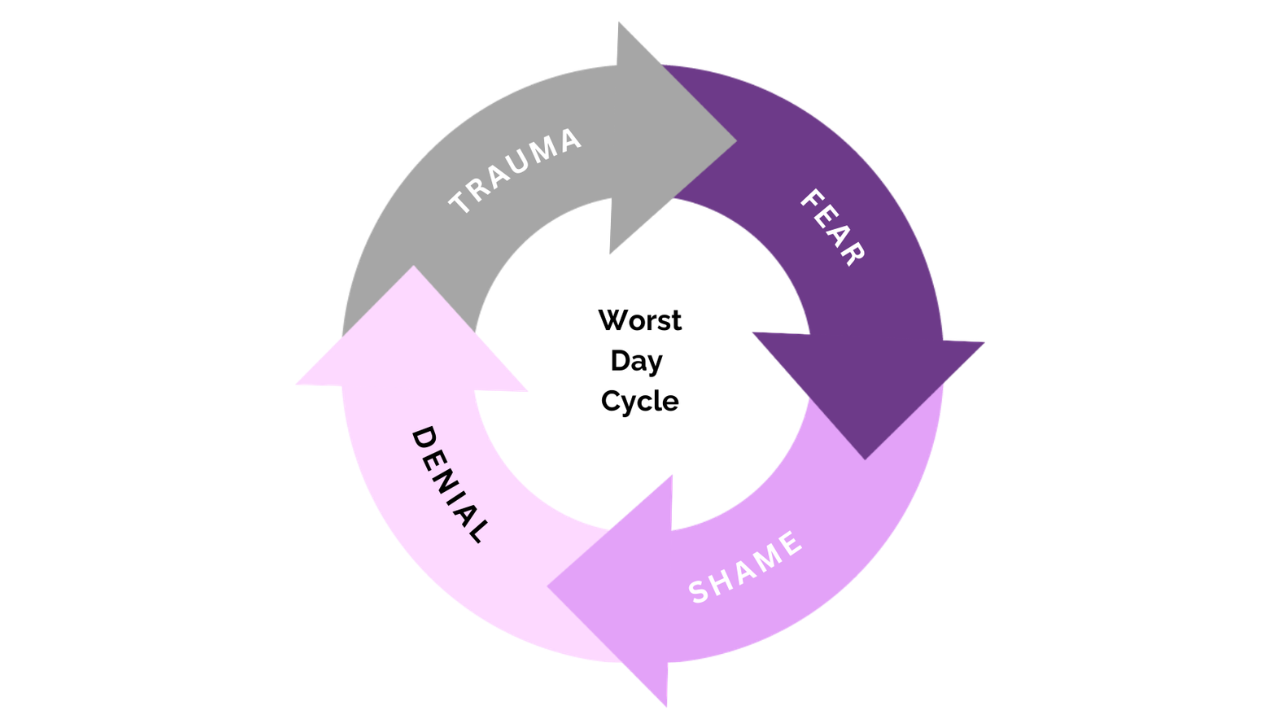
    worst day cycle trauma communication breakdown

    What Is “Taking Inventory” and Why Does It Destroy Relationships?

    Taking inventory is the habit of keeping score. It’s cataloging your partner’s failures, flaws, and shortcomings. It’s the mental list that grows every time they disappoint you. And when you’re angry or hurt, you pull out that list and read it to them like an indictment.

    That’s the moment you say: “This is exactly what you always do. You never think about my feelings. You’re just like your father. You don’t deserve to be in a relationship.”

    Taking inventory usually starts as protection. You’ve been hurt. You’re looking for patterns so you can predict the pain and maybe avoid it next time. But prediction becomes judgment. You start assuming your partner’s motives. He’s not listening because he doesn’t care. She’s defensive because she’s controlling. He’s withdrawn because he’s selfish. These aren’t observations anymore. They’re stories. And once a story hardens into fact, your partner becomes a character in a narrative where they’re always the villain.

    When you take inventory on your partner, you’re not describing who they are—you’re describing who your survival persona needs them to be. Your falsely empowered self needs a villain to prove you’re right. Your disempowered self needs to confirm that you’re stuck with someone incapable of change. Your adapted wounded child needs to prove that vulnerability will always be punished.

    The inventory never stops at one conversation. It bleeds into the next fight, the next disappointment, the next morning when your partner does something small that activates the whole pattern again. Your partner feels the accumulated weight of every mistake they’ve made, every character flaw you’ve assigned to them, every time they’ve been found guilty without trial.

    Sound familiar: your partner saying “you always bring up the past” and you insisting that history matters?

    History matters. But history becomes a weapon when it becomes inventory. When it becomes evidence instead of context. The difference is everything.

    How the Worst Day Cycle™ Drives Communication Breakdown

    Behind every reality argument and every inventory session is the Worst Day Cycle™. This is the neurobiological pattern that hijacks your nervous system and transforms a conversation into a courtroom.

    The Worst Day Cycle™ has four stages: Trauma, Fear, Shame, and Denial. Let me walk you through it.

    Stage 1: Trauma

    Trauma here doesn’t mean only big events. It means moments where you weren’t safe—physically, emotionally, or psychologically. Maybe your parent was unpredictable. Maybe you were betrayed by someone you trusted. Maybe you grew up in a house where you had to be perfect to avoid punishment. Maybe you learned that your emotions were inconvenient. These moments are encoded in your nervous system. They’re not just memories. They’re templates.

    That’s you if you flinch when your partner raises their voice, even though they’ve never hit you.

    Stage 2: Fear

    Years later, your partner does something that echoes that original trauma. It might be small. They sigh during a conversation. They check their phone while you’re talking. They disagree with you. Your nervous system doesn’t distinguish between the original trauma and this echo. It just knows: danger. Your amygdala—the fear center in your brain—floods your body with cortisol and adrenaline. Your rational mind goes offline. You’re in fight, flight, or freeze mode.

    Fear in the Worst Day Cycle™ is the nervous system’s way of trying to protect you from a threat it perceives as imminent. Your partner isn’t actually threatening you. But your nervous system learned a long time ago that situations like this one end in pain.
    trauma chemistry neurobiological response fight or flight

    Stage 3: Shame

    Once fear takes over, shame arrives quickly. Shame is the feeling that something is wrong with you. Not that you did something wrong—that you ARE something wrong. In this moment, your partner has confirmed what you suspected all along: you’re not worthy of being treated well. You’re not lovable. You’re not safe. You’re the problem.

    That’s the voice that says: he doesn’t really love you, he’s just tolerating you.

    Shame is a chemical state. When shame floods your system, you can’t access the part of your brain that remembers you’re loved. You can’t remember your partner’s good intentions. You can’t think clearly. You can only feel: small, wrong, unworthy.

    Stage 4: Denial

    The last stage is denial—or what I call self-deception. This is where your nervous system tries to escape the unbearable feeling of shame by denying the reality that caused it. You deny your own feelings. “I’m not upset.” You deny the situation. “That didn’t even happen.” You deny your partner’s perspective. “You’re just being dramatic.” Denial is the nervous system’s attempt to go numb, to escape the pain of shame by refusing to feel it.

    Denial in the context of communication mistakes looks like stonewalling, dismissing, minimizing, or refusing to acknowledge what just happened. It’s not conscious dishonesty. It’s a survival mechanism. Feeling the shame is too much. So the nervous system just… stops.

    Sound familiar: the moment you shut down and your partner can’t reach you?
    survival persona communication patterns falsely empowered disempowered

    The Worst Day Cycle™ completes in seconds. From the moment your partner sighs to the moment you’re in denial about the whole thing happening—it’s neurobiological speed. You don’t have time to think. You only have time to survive. And once you’re both in the cycle, communication stops. What’s left is two nervous systems in fight mode, trying to prove they’re not the villain in each other’s survival story.

    How Your Survival Persona Hijacks Communication

    A survival persona is who you learned to be in order to stay safe. It’s not a conscious choice. It’s a brilliant adaptation. When you were young and the world felt dangerous, you became someone who could manage that danger. That persona worked. It kept you alive. It kept you functioning. But now it’s running the show in your relationship, and it’s terrible at intimacy.

    There are three primary survival personas: the falsely empowered, the disempowered, and the adapted wounded child.

    The Falsely Empowered Survival Persona

    If you developed the falsely empowered persona, you learned that the world respected strength and dismissed weakness. So you became strong. Competent. In control. You don’t ask for help. You don’t show vulnerability. You know what’s best, and you’re usually right. When communication breaks down, your falsely empowered self goes into overdrive. You take inventory to prove you’re the reasonable one. You engage in reality arguments to establish that your way of seeing things is the correct way. You lead with certainty because certainty feels like safety.

    That’s you if you’re the one who usually “wins” arguments but feel more alone after winning them.

    The falsely empowered survival persona believes that love means being right, being in control, being the strong one. It doesn’t know how to be vulnerable. Vulnerability feels like weakness. And weakness feels like death.

    The Disempowered Survival Persona

    The disempowered persona learned the opposite lesson. You learned that the world had all the power, and you had none. So you became small. Accommodating. You learned to read people and adjust yourself accordingly. You became an expert at knowing what others wanted and trying to provide it. In relationships, your disempowered self tends toward compliance. You go along with your partner’s reality even when it doesn’t match yours. You don’t argue back in reality arguments—you just accept the verdict. You accept the inventory. You internalize the criticism. Your shame is already so big that your partner’s judgment just confirms what you already believe about yourself.

    Sound familiar: staying silent when you disagree, nodding along, then feeling a slow burn of resentment?

    The disempowered survival persona believes that love means disappearing into what your partner needs, making yourself small enough to fit. By the time you realize you’ve lost yourself, you’re not sure how to find your way back.

    The Adapted Wounded Child Survival Persona

    The adapted wounded child learned that emotions were dangerous. Maybe they were mocked. Maybe they were punished. Maybe they were simply ignored. So this persona learned to hide feelings. To keep the peace. To be “the easy one.” In relationships, the adapted wounded child gets very good at managing everyone else’s emotions while abandoning their own. Communication breaks down because you’re not actually communicating. You’re performing. You’re showing your partner the version of you that you think will keep them from leaving. When conflict arises, the adapted wounded child either shuts down completely or explodes—there’s usually no middle ground because there’s been no practice in the middle ground.

    That’s the one who says “I’m fine” while crying, or who seems calm right before they lose it completely.
    adapted wounded child survival persona emotional suppression

    The adapted wounded child survival persona believes that love means feeling nothing, staying small, and keeping everyone comfortable at the cost of your own authenticity.

    Most of us aren’t just one survival persona. We’re a blend. And in relationships, two blended survival personas collide. A falsely empowered person meets a disempowered person. A falsely empowered person meets an adapted wounded child. Two adapted wounded children. Whatever the combination, the communication becomes about managing the personas instead of meeting the people underneath them.

    How Communication Mistakes Show Up in Every Area of Your Life

    Communication mistakes don’t stay confined to your romantic relationship. They ripple through every connection you have.

    That’s you if you’re realizing the same fight happens at work, with your family, and in friendships.

    In Family Relationships

    With your parents and siblings, communication mistakes often look like the original trauma replayed. You’re fighting about the same things you’ve always fought about. Your parent dismisses your perspective the way they always have. You defend yourself the way you always have. Nothing changes because the neurobiological patterns are decades old. Your survival persona was literally built to manage this specific dynamic.

    In Romantic Relationships

    This is where the stakes feel highest. You’re not just communicating with someone—you’re trying to build a life with them. Communication mistakes here become a slow erosion of intimacy. Each reality argument, each inventory session, each moment of denial pushes your partner further away. The relationship doesn’t usually end in a dramatic blowup. It ends in slow disconnect. You’re both still there, but you’re speaking different languages.

    In Friendships

    Friendships often become a place where your survival persona feels safer because there’s less at stake. But the communication mistakes are still there. You might be the friend who takes inventory on others, always ready to point out what they’re doing wrong. Or you might be the friend who disappears into what others need, never asking for anything yourself. Real friendship requires the same authenticity that real romance does, and communication mistakes corrode that just as effectively.

    At Work

    Your survival persona runs your professional relationships too. The falsely empowered persona becomes the overcontrolling manager. The disempowered persona becomes the person who gets walked over. The adapted wounded child becomes the person everyone likes because they never rock the boat. Communication mistakes at work look like misalignment, conflict, and a work culture where people hide who they really are.

    In Your Relationship With Your Body and Health

    Communication mistakes extend even to how you talk to yourself about your body. Your survival persona has opinions about your health. Strong opinions. If you’re falsely empowered, you might push your body too hard, dismissing its signals. If you’re disempowered, you might abandon your body’s needs entirely. If you’re an adapted wounded child, you might use food or exercise to manage emotions instead of feeling them. The communication between you and your body is a reflection of the communication between your parts.
    emotional fitness health communication with your body

    Communication mistakes are a systemic pattern, not a relational glitch. They show up everywhere because they’re hardwired into your nervous system. Fixing them in one area means fixing them everywhere.

    How the Emotional Authenticity Method™ Transforms Communication

    The Emotional Authenticity Method™ is a five-step process that interrupts the Worst Day Cycle™ before it hijacks your communication. It’s not about changing what you say. It’s about changing what’s happening in your nervous system before you say it.

    Step 1: Somatic Down-Regulation

    The first step is bringing your nervous system back online. When you’re in the Worst Day Cycle™, your rational brain is offline. You’re running on pure survival instinct. You can’t think clearly. You can’t access empathy. You can’t remember that your partner loves you. So the first step is: stop talking. Get your body regulated.

    That’s the moment you step away from the conversation and take five deep breaths.

    Down-regulation looks different for different people. For some, it’s cold water on your face. For others, it’s a walk. For others, it’s breathwork. The goal is simple: bring your nervous system from fight/flight/freeze mode back to a state where your prefrontal cortex is online. Where you can think. Where you can feel without being consumed by fear.

    Step 2: What Am I Feeling?

    Once your nervous system is regulated, the next step is to identify the feeling. Not the story. The feeling. You’re not asking “what happened?” You’re asking “what am I experiencing right now?” Anger? Fear? Shame? Loneliness? Rejection?

    Most of us have been taught to skip this step entirely, to move straight from emotion to action. We feel hurt and we attack. We feel fear and we defend. We skip the part where we actually sit with what we’re feeling. The Emotional Authenticity Method™ says: pause. Name it. What’s happening in you right now?

    Step 3: Where In My Body Am I Feeling This?

    Emotions are not abstract. They’re physical. Fear lives in your chest. Shame lives in your throat. Anger lives in your hands. When you locate the feeling in your body, you’re doing something powerful: you’re connecting your mind to your nervous system. You’re bringing awareness to the physical reality of what you’re experiencing. This is where healing begins—in the body, not in the story.

    That’s you if you’ve never noticed where anger actually lives in your body.

    Step 4: What’s the Earliest Memory of This Feeling?

    This step is the bridge between your present moment and your past. The feeling you’re having right now isn’t just about this conversation. It’s connected to something older. Your nervous system recognized an echo of an old threat. So you ask: when did I first feel this? What was happening? This isn’t about blame. It’s about understanding that your nervous system is trying to protect you from something that happened long ago.

    When you connect your present feeling to its earliest origin, you break the spell of immediacy. You realize: oh, I’m not just reacting to what my partner did right now. I’m reacting to who I had to become to survive my past.

    Step 5: Who Would I Be Without This Survival Pattern?

    This is the question that changes everything. Without the falsely empowered need to be right. Without the disempowered need to disappear. Without the adapted wounded child need to feel nothing. Who would you actually be? What would you want to say? How would you want to show up in this conversation?

    Sound familiar: realizing that what you want to say and what your survival persona is forcing you to say are completely different things?

    The Emotional Authenticity Method™ doesn’t give you a script. It gives you access to yourself. To your actual wants. Your actual feelings. Your actual perspective. Not the persona-protected version. The real version.
    emotional regulation authenticity method nervous system

    Once you’ve worked through these five steps, you’re no longer in the Worst Day Cycle™. You’re regulated. You’re connected to your actual feelings. You understand what’s being activated. You have access to who you actually want to be. Now you can communicate from authenticity instead of from survival.

    How the Authentic Self Cycle™ Replaces Conflict With Connection

    Once you can access your authenticity through the Emotional Authenticity Method™, the next move is the Authentic Self Cycle™. This is what happens when both people in a relationship show up from their actual selves instead of from their survival personas.

    The Authentic Self Cycle™ has four stages: Truth, Responsibility, Healing, and Forgiveness.

    Stage 1: Truth

    Truth means telling your actual reality. Not the defended version. Not the version designed to win the argument. Not the version designed to protect you. Your actual reality. “I felt hurt when you said that” instead of “you’re always hurting me.” “I was scared you didn’t care” instead of “you never think about my feelings.” “I didn’t know how to tell you” instead of “you’re impossible to talk to.”

    That’s you if you’ve never actually told your partner what you’re really feeling, underneath all the defense.

    Truth in the Authentic Self Cycle™ is risky because it requires vulnerability. It means your partner might reject you. Might dismiss you. Might use this against you. But it’s also the only place real connection can happen. Connection requires that you be known. And you can’t be known if you’re always performing.

    Stage 2: Responsibility

    Responsibility means owning your part. Not your partner’s part. Your part. How did your survival persona show up? What did you do to protect yourself that might have hurt your partner? Where did you take inventory instead of building a bridge? Where did you engage in a reality argument instead of trying to understand?

    This isn’t about blame. It’s not about flagellating yourself. It’s about recognizing that you had a part in how this unfolded. That you’re not helpless. That your choices matter.

    Sound familiar: the moment you realize your survival persona’s protection mechanism became your partner’s wounding?

    Stage 3: Healing

    Healing means turning toward your partner instead of away. It means creating the safety that allows both of you to come out of survival mode. It means saying “I’m sorry” and actually meaning it. Not a defensive sorry. Not a sorry designed to move past this quickly. A sorry that acknowledges: I did something that hurt you, and I’m committed to understanding what happened and doing it differently.

    Healing in the Authentic Self Cycle™ is the moment the nervous system finally feels safe enough to soften. It’s the moment you can actually listen to your partner’s perspective without immediately constructing a counter-argument. It’s the moment you can hold their pain without it threatening your sense of self.

    Stage 4: Forgiveness

    Forgiveness isn’t about condoning. It’s not about pretending it didn’t hurt. It’s about releasing the grip of the past on the present. It’s about recognizing that your partner, like you, was doing the best they could with the nervous system they had. That they weren’t trying to hurt you—they were trying to survive. That underneath the defense, underneath the survival persona, is a person who loves you.

    That’s the moment you can finally see your partner as a whole human being instead of as a character in your survival story.
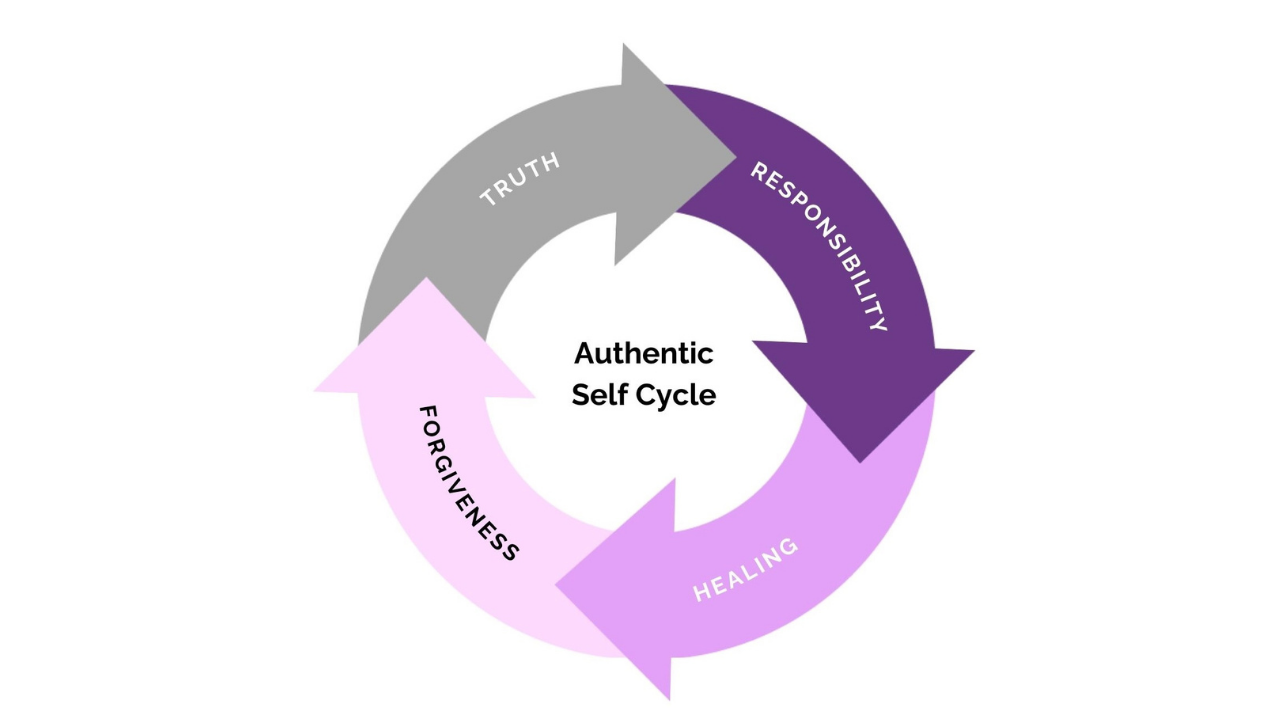
    authentic self cycle healing forgiveness connection

    The Authentic Self Cycle™ is where real intimacy lives. Not in being right. Not in winning arguments. Not in proving that your reality is the correct reality. In being seen. Being known. Being loved for who you actually are, not for the person your survival persona learned to be.

    Frequently Asked Questions About Communication Mistakes in Relationships

    How do I know if I’m in a reality argument?

    You’re in a reality argument when both people are insisting they’re right about what happened, what was intended, or what was said. You’re not debating ideas. You’re debating facts. The conversation sounds like: “You said this.” “No, I didn’t.” “Yes, you did.” “You’re lying.” The goal has shifted from understanding to proving. If you’re trying to get your partner to admit they were wrong, you’re in a reality argument.

    Is taking inventory ever okay in a relationship?

    There’s a difference between noticing patterns and taking inventory. Noticing a pattern is internal awareness: “I’ve noticed that when I express a need, my partner often gets defensive. I want to understand why.” Taking inventory is external judgment: “You always get defensive when I need something. It’s just like when your mother wouldn’t listen to you.” One is self-awareness. The other is prosecution. The line is: are you trying to understand, or are you building a case?

    Can someone have more than one survival persona?

    Most people are a blend. You might be falsely empowered at work and disempowered at home. You might be an adapted wounded child in your romantic relationships but falsely empowered in your friendships. The personas aren’t fixed identities—they’re adaptive strategies. You became different things in different contexts because different contexts required different survival mechanisms. Understanding which persona shows up in which situation is part of the healing work.

    What if my partner won’t do the Emotional Authenticity Method™?

    You can’t force your partner to do this work. But here’s what’s true: when you change how you show up, the dynamic shifts. When you stop taking inventory, your partner has less to defend against. When you speak from your actual feelings instead of from your survival persona, your partner has a real person to relate to instead of a defensive wall. Change doesn’t always require both people to commit at the same time. It often requires one person to commit first, and watch what happens when they do.

    How long does it take to break these patterns?

    It depends on how long you’ve been building them. If your nervous system has been running the same survival strategy for thirty years, your brain has built actual neural pathways around that strategy. You’re not just changing your mind. You’re rewiring your brain. That’s weeks and months and years of consistent practice. But the good news is: every single time you interrupt the pattern, you’re building a new neural pathway. Every time you choose authenticity over defense, you’re making a deposit in a new account. The patterns loosen faster than you think once you start noticing them.

    What if I realize I’ve been taking inventory on my partner for years?

    First: awareness is everything. You can’t change what you can’t see. Second: your partner probably already knows. They’ve felt it. The weight of being continuously judged erodes a relationship slowly. But here’s the repair: you acknowledge it. You take responsibility for it. You recognize what you were doing and why your survival persona felt the need to do it. And you commit to doing something different. That conversation—that real conversation where you’re vulnerable about your own fear and shame instead of prosecuting their flaws—is where the repair begins. Go through the 10 Do’s and Don’ts for a Great Relationship to see what shifts.

    The Bottom Line

    Communication mistakes in relationships aren’t about being a bad communicator. They’re about a nervous system that learned to survive by doing certain things—being right, being small, being numb. Those strategies kept you alive. They kept you functioning. But they’re terrible at creating intimacy.

    The path forward isn’t about becoming a better arguer. It’s about becoming more authentic. It’s about understanding that beneath every reality argument is a person terrified that their reality doesn’t matter. Beneath every inventory session is a person protecting themselves against more pain. Beneath every moment of denial is a nervous system that can’t handle another drop of shame.

    Sound familiar: the moment you realize that every fight with your partner is actually a conversation between two survival personas that are terrified of being seen?

    When you understand that, everything changes. You stop trying to win. You start trying to heal. You stop trying to prove your partner wrong. You start trying to help them feel safe enough to be right about their own experience. You stop taking inventory. You start taking responsibility. You stop living in the Worst Day Cycle™. You start living in the Authentic Self Cycle™.

    That’s where real communication begins. That’s where real intimacy is possible. That’s where your partner gets to meet the actual you instead of the survival persona you’ve been performing your whole life.

    And that changes everything.
    emotional blueprint transformation healing relationships

    Recommended Reading

    If you’re ready to go deeper into understanding communication mistakes and healing relationship patterns, these resources have shaped my work and my clients’ transformations:

    • Facing Codependence by Pia Mellody — the foundational text on how childhood trauma creates codependent communication patterns and survival personas.
    • When the Body Says No by Gabor Maté — how chronic emotional suppression and communication breakdown manifest as physical illness.
    • Codependent No More by Melody Beattie — the classic guide to recognizing when you’re taking inventory instead of taking responsibility.
    • The Gifts of Imperfection by Brené Brown — how shame drives defensive communication and why vulnerability is the path to real connection.
    • The Body Keeps the Score by Bessel van der Kolk — the neuroscience of how trauma lives in the body and hijacks communication.

    Start with The Feelings Wheel to build awareness of what you’re actually feeling beneath the survival persona’s story.

    Take the Next Step

    Understanding communication mistakes is the first step. Doing the work to rewire your nervous system is the second. I’ve built several paths for you depending on where you are right now:

    Emotional Blueprint Starter Course — Individual ($79) — A guided journey through understanding your survival persona, the Worst Day Cycle™, and how to access your Authentic Self. Start here if you want to understand yourself before trying to fix your relationships.

    Relationship Starter Course — Couples ($79) — Built for both partners. Walk through the Emotional Authenticity Method™ together. Learn how to interrupt reality arguments before they escalate.

    Why We Can’t Stop Hurting Each Other ($479) — The deepest couples work. Tools, frameworks, and daily practices to rewire how you communicate.

    Why High Achievers Fail at Love ($479) — For the falsely empowered. Learn why being right is destroying your relationships.

    The Shutdown Avoidant Partner ($479) — For those who shut down, check out emotionally, or disappear into work.

    Tier 1: Mapping the Blueprint ($1,379) — The full integration. Deep work for those ready to fundamentally rewire how they show up in every relationship.

    Download the Feelings Wheel — the free tool used in Step 2 of the Emotional Authenticity Method™ to build emotional granularity.

    Explore more: The Signs of Enmeshment | 7 Signs of Relationship Insecurity | 7 Signs of High Self-Esteem | How to Determine Your Negotiables and Non-Negotiables | 10 Do’s and Don’ts for a Great Relationship
  • 5 Ways Pets Can Damage Relationships: The Childhood Trauma Pattern

    5 Ways Pets Can Damage Relationships: The Childhood Trauma Pattern

    Pets can damage relationships when they become an unconscious substitute for emotional intimacy — replacing the vulnerability, reciprocity, and conflict that healthy adult connection requires with the safe, one-directional comfort of an animal that never challenges your survival persona. If you adore your pet but struggle with romantic relationships, feel more emotionally available to your dog than your partner, or can’t understand why your love life keeps falling apart despite having “so much love to give,” the answer isn’t about your pet. It’s about what your pet is protecting you from feeling.

    That’s you — the one who can pour unconditional love into a four-legged creature but freezes up the moment a human being asks for the same thing.

    This isn’t about being a “bad pet owner” or choosing animals over people. It’s about understanding how childhood trauma creates emotional patterns that make pets feel safer than partners — and how to heal the root cause so you can have both.

    Codependence icon showing how pets can become codependent substitutes for emotional intimacy in relationships

    How Can Pets Damage Relationships?

    Pets are wonderful. They bring joy, companionship, and genuine healing. Nothing in this article is anti-pet. But in my decades of coaching, I’ve seen the same pattern hundreds of times: a person who gives extraordinary love to their animal but cannot sustain emotional intimacy with another human being.

    That’s you — the one whose dog gets the soft voice, the patience, and the presence that your partner has been begging for.

    Pets can damage relationships when they become the primary emotional outlet — when all the love, tenderness, and vulnerability that should also flow toward a partner gets redirected to an animal that will never ask you to be vulnerable back. The pet becomes the emotional spouse. The partner becomes the logistical roommate.

    This isn’t the pet’s fault. It’s an unconscious trauma pattern. And understanding it is the first step toward having both — a pet you love and a relationship that actually works.

    Pets damage relationships not because animals are harmful, but because unhealed childhood trauma creates an emotional blueprint that makes one-directional love feel safer than the mutual vulnerability that adult intimacy requires — and pets become the perfect vehicle for that avoidance.

    Why Do Pets Replace Emotional Intimacy in Relationships?

    A recent Pew Research trend reveals a significant shift: 57% of women now view their pet as equal to a family member, compared to 43% of men. That’s a massive difference — and it points to something deeper than preference. It points to emotional need.

    That’s you — treating your pet like a partner because your pet never triggers the childhood wounds that a real partner does.

    Here’s what’s actually happening: a relationship with a pet is emotionally one-directional. You give love when you want to. You receive affection when you need it. And when you’re overwhelmed, exhausted, or emotionally flooding — you can check out without consequence. The pet doesn’t feel rejected. The pet doesn’t bring up what happened last Tuesday. The pet doesn’t ask you to be vulnerable.

    Human intimacy doesn’t work that way. Healthy adult connection requires vulnerability, reciprocity, open-hearted communication, and mutual presence. It requires you to be seen — really seen — including the parts of yourself you’ve been hiding since childhood.

    That’s you — the one who can curl up with your dog and feel completely safe, but the moment your partner wants to “talk about feelings,” your entire body tightens up.

    Emotional authenticity icon showing why pets feel emotionally safer than vulnerable human relationships

    Children bond deeply with stuffed animals for the same reason — stuffed animals give comfort without demanding anything in return. Many adults accidentally recreate this dynamic with their pets. The comfort is real. The safety is real. But the growth that comes from genuine human connection — the kind that actually heals the void — is missing.

    Pets replace emotional intimacy because childhood trauma wired your nervous system to equate vulnerability with danger — and pets provide the illusion of deep connection without ever requiring the one thing that terrifies you: being fully known by another human being.

    How the Worst Day Cycle™ Explains Why Pets Feel Safer Than Partners

    To understand why pets become emotional substitutes, you need to understand the neurochemical pattern that drives it — the Worst Day Cycle™.

    Worst Day Cycle diagram showing trauma fear shame denial loop that makes pets feel safer than human partners

    The Worst Day Cycle™ has four stages: Trauma → Fear → Shame → Denial.

    Trauma: Any negative emotional experience in childhood that created painful meanings. It doesn’t have to be dramatic — a parent who was emotionally unavailable, a household where feelings were treated as weakness, a caregiver whose love was conditional on performance. These experiences create a massive chemical reaction in the brain and body. The hypothalamus generates chemical cocktails — cortisol, adrenaline, dopamine, oxytocin misfires — and the brain becomes addicted to these emotional states.

    That’s you — feeling more relaxed with your cat than with any human being, because your nervous system was calibrated for emotional danger in every human relationship since childhood.

    Fear: Fear drives repetition. The brain conserves energy by repeating known patterns — it can’t tell right from wrong, only known from unknown. Since 70%+ of childhood messaging is negative and shaming, adults repeat these painful patterns in relationships, career, hobbies, health — everything. Your brain learned that human connection equals pain. So it steers you toward the safest form of connection available — your pet.

    Shame: This is where you lost your inherent worth. “I am the problem.” Not “I made a mistake” — but “I AM the mistake.” This is the core wound underneath the pet-over-partner pattern. You choose your pet because deep down, you believe that if a partner really knew you — the real you, not the survival persona — they would leave. But the pet? The pet stays no matter what.

    That’s the shame talking — the voice that says “my dog loves me unconditionally” while really meaning “my dog is the only one who could.”

    Denial: Denial is the survival persona you created to survive the pain. It was brilliant in childhood — absolutely necessary. But in adulthood, it sabotages your relationships. Denial sounds like: “I’m just a pet person.” “I prefer animals to people.” “Pets love you more than humans ever will.” These aren’t preferences — they’re survival strategies disguised as personality traits.

    Trauma chemistry icon showing how childhood creates neurochemical patterns that make pets feel safer than partners

    The Worst Day Cycle™ reveals why pets feel safer than partners — your brain created a neurochemical loop in childhood that equates human intimacy with danger, and pets provide the only form of connection that doesn’t trigger that loop.

    What Are the 5 Ways Pets Can Damage Your Relationship?

    These aren’t judgments. They’re patterns. And recognizing them is the first step toward healing.

    1. When the pet becomes the emotional spouse. Everything revolves around the pet. Before you go anywhere: “Wait — we have to walk the dog!” Spontaneous weekend away? Not without 24 hours’ notice and a pet sitter. A romantic overnight after a beautiful day trip? Impossible if the dog hasn’t been let out. The pet becomes the priority. The partner becomes the afterthought.

    That’s you — canceling date night for the third time because the dog “seems anxious” while your partner sits in silence wondering where they rank.

    2. When the pet replaces vulnerability. Sad? Snuggle the dog. Angry? Take the cat for a long cuddle. Hurt by your partner? Retreat into the pet’s unconditional acceptance. Every time you turn to your pet instead of turning toward your partner with honesty, you’re choosing comfort over connection. It feels soothing. But it’s keeping you from the deeper intimacy you actually need.

    That’s you — using your pet as an emotional escape hatch every time a conversation gets uncomfortable.

    3. When the pet reinforces love avoidance. Love avoidance stems from childhood environments where a child was emotionally smothered, over-relied on, or forced into adult responsibilities too young. For people with this pattern, closeness feels dangerous. Independence feels safe. And pets are the perfect “safe closeness” — you can love them without getting overwhelmed. They never burden you. You choose the distance.

    Emotional absorption icon showing how pets absorb the emotional energy that should flow into human relationships

    Sound familiar? The person who has room in their heart for every stray animal but can’t make room for a partner who wants to get closer?

    4. When pets create a hierarchy that displaces the partner. I once worked with a man whose childhood still echoed with his mother’s nightly mantra: “Kids, wait — I have to feed the pets first.” The message was clear: your needs come second. Decades later, he dated women who treated him the same way. Not because they were unkind, but because our brains, craving familiarity, unconsciously pull us toward what we know — even when it hurts.

    That’s you — if your partner has ever said “I feel like I come after the dog” and you dismissed it as dramatic.

    5. When “pet person” becomes an identity that blocks growth. Society reinforces this. Commercials portray partners as annoyances while pets are the loyal, loving companions. Social media celebrates “dog mom” culture while mocking relationship struggles. We’re subtly taught that humans disappoint, but pets never do. It’s a comforting story — and it’s a limiting one. When “I’m a pet person” becomes an identity, it becomes a wall. And behind that wall is a person who’s terrified of being hurt by another human being.

    That’s you — wearing your “dog mom” identity like armor, not because you love dogs more than people, but because dogs never made you feel the way your parent did.

    How Your Survival Persona Uses Pets to Avoid Vulnerability

    Your survival persona is the identity you created in childhood to navigate an emotionally unsafe environment. It’s not who you are — it’s who you had to become. And for many people, pets become a central tool of the survival persona.

    Survival persona icon showing how each persona type uses pets differently to avoid emotional vulnerability

    There are three survival persona types:

    The Falsely Empowered: This persona controls, dominates, and rages. They use pets to maintain emotional control. The pet obeys. The pet doesn’t challenge. The pet doesn’t have needs that conflict with theirs. The falsely empowered can be tender and loving with their animal — but that tenderness is conditional on the animal not making demands. When a human partner asks for vulnerability, the falsely empowered shuts down or explodes. The pet never triggers that response.

    That’s you — gentle and patient with your dog but rigid and dismissive the moment your partner needs emotional space.

    The Disempowered: This persona collapses, people-pleases, and disappears. They use pets to feel needed without the risk of rejection. The pet always needs them. The pet always comes to them. The pet provides the validation and purpose that the disempowered can’t find within themselves. They pour their entire emotional reservoir into the animal — and have nothing left for a human partner.

    That’s you — the one who rescues every animal but can’t rescue yourself from relationships that leave you empty.

    The Adapted Wounded Child: This persona oscillates between both — controlling one moment, collapsing the next. They use pets as emotional regulators. When they feel powerful, the pet is a companion. When they feel collapsed, the pet is a lifeline. They swing between “I don’t need anyone” and “at least my dog loves me” without ever landing in their authentic self.

    Adapted wounded child icon showing oscillation between using pets for control and using pets for comfort

    That’s you — swinging between “my dog is my everything” and “why can’t I make a relationship work?” and not seeing the connection between the two.

    Your survival persona uses pets to avoid the vulnerability that human connection demands — not because you love animals too much, but because your childhood taught you that being fully known by another person is the most dangerous thing in the world.

    How Pet-Centered Avoidance Shows Up in Every Area of Your Life

    Family: You’re more emotionally present with your pet than with your parents or siblings. Family gatherings feel like performances — but the moment you get home and sit with your dog, you exhale. You use your pet as an excuse to leave family events early. “I have to get back — the dog needs to go out.” The dog doesn’t need to go out. You need to escape.

    That’s you — using your pet as a socially acceptable exit strategy from every emotionally overwhelming family situation.

    Romantic Relationships: Your partner competes with the pet for your attention and loses. You share more physical affection with your animal than with your partner. You talk to your pet about your day but shut down when your partner asks “how are you?” You choose the pet’s comfort over the partner’s need for connection — every time.

    Sound familiar? The person who sleeps curled up with their dog while their partner lies awake on the other side of the bed?

    Friendships: You’d rather spend a Saturday with your pet than with friends. You cancel plans to stay home with your animal. Your social media is exclusively pet content. You connect with other “pet people” because the shared identity keeps conversations surface-level and safe.

    Work: You rush through meetings to get home to your pet. You work from home not for productivity but because being near your animal regulates your nervous system. You use your pet as the reason you can’t travel, can’t stay late, can’t attend the team dinner — when the real reason is that human interaction drains you because your nervous system treats it as a threat.

    That’s you — building your entire life around your pet’s schedule because your pet’s world is the only one where you feel emotionally safe.

    Body and Health: You walk your dog religiously but haven’t been to the doctor in years. You prepare organic meals for your pet but eat takeout standing over the sink. You prioritize your animal’s health because caring for something else is easier than caring for yourself — because caring for yourself means being alone with your own feelings.

    Emotional blueprint icon showing how childhood patterns create pet-centered avoidance across all life areas

    How the Emotional Authenticity Method™ Heals the Pattern Behind Pet Dependence

    The solution isn’t giving up your pet. It’s healing the emotional blueprint that makes your pet the safest relationship in your life. The Emotional Authenticity Method™ does this by targeting the nervous system — where the avoidance pattern actually lives.

    Emotional regulation icon representing the Emotional Authenticity Method for healing pet-based relationship avoidance

    Step 1: Somatic Down-Regulation with optional Titration. Before you can process the pattern, you have to get your nervous system out of survival mode. When your partner asks for closeness and your body tightens, that’s your nervous system treating intimacy as danger. Down-regulation is the starting point — not the destination.

    That’s you — learning that the tightness in your chest when your partner says “we need to talk” isn’t about your partner. It’s about your five-year-old self who learned that human connection means pain.

    Step 2: What am I feeling? Most people who over-bond with pets have no idea what they’re actually feeling in human relationships. They know they feel “comfortable” with their pet and “stressed” with people — but that’s not emotional granularity. Using the Feelings Wheel, you learn to name the specific emotion: not “stressed” but terrified. Not “comfortable” but relieved. The specificity changes everything.

    Step 3: Where in my body do I feel it? All emotional trauma is stored physically. Your chest tightens when your partner wants to talk. Your stomach drops when someone gets too close. Your shoulders climb when intimacy is on the table. Locating the feeling in your body moves you from intellectual understanding to somatic processing.

    Step 4: What is my earliest memory of this feeling? This is where the breakthrough happens. You trace today’s avoidance back to its childhood origin. Maybe your earliest memory is a parent who was emotionally unavailable. Maybe it’s a household where feelings were mocked. Maybe it’s the moment you realized that the family pet was the only one who was consistently kind to you. You realize: this isn’t about my partner. My nervous system just thinks they’re my parent.

    That’s the moment — when you see that your pet isn’t your best relationship. It’s your safest one. And safety isn’t the same as healing.

    Step 5: Who would I be if I never had this feeling again? This is the vision step. It connects you to the Authentic Self Cycle™ and gives your nervous system a new destination — a life where you can love your pet AND love a partner without your survival persona choosing one over the other.

    The Emotional Authenticity Method™ works because emotions are biochemical events — you cannot change the pattern of choosing pets over people through thoughts alone. Thoughts originate from feelings, not the other way around.

    How the Authentic Self Cycle™ Creates Space for Both Pets and Partners

    The Authentic Self Cycle™ is the healing counterpart to the Worst Day Cycle™. Where the Worst Day Cycle™ traps you in Trauma → Fear → Shame → Denial, the Authentic Self Cycle™ restores your identity through Truth → Responsibility → Healing → Forgiveness.

    Authentic Self Cycle diagram showing truth responsibility healing forgiveness as the path to balanced pet and partner relationships

    Truth: Name the blueprint. See that “this isn’t about today.” When your partner asks for closeness and you retreat to your pet, truth says: “I’m not choosing my dog over my partner. I’m choosing safety over vulnerability because that’s what my childhood taught me.”

    That’s the first step — seeing the pattern instead of being trapped inside it.

    Responsibility: Own your emotional reactions without blame. “My partner isn’t my parent — my nervous system just thinks they are.” This isn’t about fault. It’s about taking back your power from a childhood that stole it. Your partner asking for closeness isn’t the threat. Your nervous system’s memory of closeness equaling pain — that’s what’s driving the retreat.

    Healing: Rewire the emotional blueprint so human intimacy becomes uncomfortable but not dangerous, closeness isn’t engulfment, and vulnerability isn’t annihilation. This is where daily practice does its work — second by second, like the ticks of a clock. Each moment of choosing your partner AND your pet, instead of your pet INSTEAD of your partner, rewires the pattern.

    Forgiveness: Release the inherited emotional blueprint and reclaim your authentic self. This creates a NEW emotional chemical pattern that replaces fear, shame, and denial with safety, worth, and connection. You don’t lose your love for your pet. You gain the capacity to love a human being with the same openness.

    That’s you — not the person who had to choose between their pet and their partner. The person who finally has enough love for both because the survival persona isn’t hoarding all of it anymore.

    The Authentic Self Cycle™ is an identity restoration system — it doesn’t ask you to give up your pet, it replaces the neurochemical pattern that made your pet the only safe relationship with a new blueprint built on truth, responsibility, and emotional authenticity.

    Frequently Asked Questions About Pets and Relationships

    Can pets actually damage a romantic relationship?

    Yes — not because pets are harmful, but because unhealed childhood trauma can turn pets into emotional substitutes for human intimacy. When a pet becomes the primary source of comfort, affection, and connection, the romantic partner gets displaced. The Worst Day Cycle™ explains how the brain creates a neurochemical preference for safe, one-directional love over the vulnerable, reciprocal love that adult relationships require.

    Why do I feel more connected to my pet than my partner?

    Because your pet never triggers your childhood wounds. Pets don’t criticize, reject, abandon, or require vulnerability. If your childhood taught you that human connection equals pain, your nervous system will naturally gravitate toward the relationship that feels safest — your pet. The Emotional Authenticity Method™ helps you trace this preference to its origin and rewire it at the nervous system level.

    Is it codependent to prioritize your pet over your partner?

    It can be. When the pet becomes a vehicle for avoiding emotional intimacy, it functions like any other codependent pattern — it substitutes a safe, controllable relationship for the messy, vulnerable, growth-producing one. The three survival persona types — falsely empowered, disempowered, and adapted wounded child — each use pets differently to maintain their survival strategy and avoid authentic connection.

    How do I know if my love for my pet is healthy or avoidant?

    Ask yourself: does my pet add to my human relationships, or replace them? Do I turn to my pet instead of my partner when I’m hurting? Do I use my pet as a reason to avoid intimacy, travel, or social connection? Healthy pet love enhances your life. Avoidant pet love protects you from the vulnerability your survival persona can’t tolerate. The Authentic Self Cycle™ helps you see the difference.

    What should I do if my partner says I prioritize my pet over them?

    Listen — because they might be seeing something your survival persona is hiding from you. Instead of defending, use the Emotional Authenticity Method™: down-regulate, name what you’re feeling, locate it in your body, and trace it to its earliest memory. Your partner’s complaint might be the most honest feedback you’ve received about a pattern you can’t see from inside it.

    Can I heal my relationship patterns without giving up my pet?

    Absolutely. This is not about choosing between your pet and your partner. It’s about healing the childhood emotional blueprint that makes your pet the only safe relationship. When you rewire the Worst Day Cycle™ through the Authentic Self Cycle™, you create enough emotional capacity for both — a pet you adore and a partner you can actually let in.

    The Bottom Line

    Your pet isn’t the problem. Your pet is the solution your nervous system found to a problem that started decades ago.

    Somewhere in childhood, you learned that human connection was dangerous. That being known meant being hurt. That vulnerability was a liability, not a gift. And so your brilliant, adaptive brain found the safest way to get love without risking pain — a four-legged creature who never judges, never leaves, and never asks you to be anything other than what you are.

    That was brilliant. And it’s not enough anymore.

    Because the void doesn’t fill with pet cuddles. It fills with the terrifying, beautiful, messy experience of being truly seen by another human being — and surviving it. Of saying “I’m scared” instead of retreating to the couch with your dog. Of staying in the conversation instead of checking out. Of choosing vulnerability even when every cell in your body screams to run.

    That’s you — not the “pet person” who doesn’t need people. The human being underneath who’s been hiding behind the safest love they could find, waiting for someone to say: “You can have both. You just have to stop running.”

    You can have both. You just have to stop running.

    These books complement the frameworks in this article and deepen your understanding of why pets become emotional substitutes and how to heal the pattern:

    Facing Codependence by Pia Mellody — the foundational text on how childhood trauma creates the codependent patterns that make one-directional relationships (including with pets) feel safer than mutual adult intimacy.

    The Body Keeps the Score by Bessel van der Kolk — the science of how trauma lives in the body, explaining why your nervous system chooses your pet over your partner.

    When the Body Says No by Gabor Maté — how chronic emotional avoidance manifests as physical illness and relational disconnection.

    Codependent No More by Melody Beattie — a practical guide to recognizing when emotional patterns disguise themselves as personality preferences.

    The Gifts of Imperfection by Brené Brown — how shame drives avoidance and why vulnerability is the path back to authentic connection with both animals and humans.

    Take the Next Step

    If you recognize yourself in this article — if you’ve been using your pet as emotional armor and you’re ready to learn how to love both your animal and a partner — Kenny Weiss offers courses designed for people who are done avoiding and ready to heal:

    Emotional Blueprint Starter Course — Individual ($79) — Your personal roadmap to understanding the Worst Day Cycle™ and the emotional patterns that make pets feel safer than partners.

    Relationship Starter Course — Couples ($79) — For couples ready to address the avoidance patterns that create distance in their relationship.

    Why We Can’t Stop Hurting Each Other ($479) — Deep-dive into the Worst Day Cycle™ and how childhood trauma creates the patterns that keep you choosing safety over vulnerability.

    Why High Achievers Fail at Love ($479) — Built specifically for high achievers who have mastered control in every area of life except intimate relationships.

    The Shutdown Avoidant Partner ($479) — Understanding avoidant attachment through the lens of trauma chemistry and survival personas.

    Tier 1: Mapping the Blueprint ($1,379) — The comprehensive program for learning and practicing the Emotional Authenticity Method™.

    Download the Feelings Wheel — the free tool used in Step 2 of the Emotional Authenticity Method™ to build emotional granularity.

    Explore more: The Signs of Enmeshment | 7 Signs of Relationship Insecurity | 7 Signs of High Self-Esteem | How to Determine Your Negotiables and Non-Negotiables | 10 Do’s and Don’ts for a Great Relationship
  • Codependency in Parenting: Breaking the Inherited Trauma Cycle

    Codependency in Parenting: Breaking the Inherited Trauma Cycle

    You’ve built an incredible life. You’re driven, accomplished, maybe even enviable to those around you. Yet when you become a parent, something shifts. You find yourself saying the exact words your mother said. You feel the same overwhelm, the same enmeshment with your child’s emotions. You realize with a jolt: I’m becoming my parents.

    Codependency in parenting is not a choice—it’s a blueprint inherited from childhood trauma, written into your nervous system through patterns of shame, denial, and emotional enmeshment that taught you to abandon your authentic self to keep your family intact. This isn’t about blame. It’s about understanding that what happened to you was not normal, and the way you’re now parenting your children—despite your best intentions—is repeating that same cycle.

    This post breaks down exactly how codependent parenting patterns form, how they’re transmitted across generations, and—most importantly—how you can interrupt this cycle using Kenny Weiss’s three proven frameworks: the Worst Day Cycle™, the Authentic Self Cycle™, and the Emotional Authenticity Method™.

    Codependent parenting stems from childhood trauma that taught you your feelings don’t matter, secrets are safety, and family harmony is your responsibility. You now parent your own children from the same fear, shame, and denial, creating the same emotional environment. Breaking this requires naming the blueprint, taking responsibility without blame, and rewiring your emotional authenticity.

    Table of Contents

    What Is Codependency in Parenting?

    Codependency in parenting is a relational pattern where you’ve made your child’s emotions, behaviors, and well-being your primary responsibility—sometimes at the expense of your own emotional integrity. You manage their feelings instead of letting them sit with natural consequences. You hide your authentic self to keep the peace. You feel responsible for their happiness, their achievements, their pain.

    That’s you if you find yourself obsessing over whether your 8-year-old “gets you,” or you tell your teenager about adult stressors you should be processing with a therapist, not your child.

    Enmeshment diagram showing codependent parenting boundaries

    This pattern wasn’t something you chose. It’s the direct result of how you were parented. Your parents (or guardians) operated from their own trauma, their own fear, and their own survival strategies. They passed down a blueprint—an emotional template—that taught you:

    • Your feelings are less important than keeping others comfortable
    • It’s your job to manage other people’s emotions
    • Being your authentic self is dangerous
    • Love means sacrifice of your own needs and boundaries
    • Secrets protect people (even though they isolate them)

    Now, as a parent, you’re unconsciously recreating this same environment for your children. And they’re absorbing the same message you did: Your authentic self is the problem.

    Codependence cycle diagram for parenting patterns

    Five Critical Questions That Reveal Your Codependent Blueprint

    The original post asked five questions that have helped thousands recognize themselves in codependent patterns. These questions work because they tap directly into the behaviors that codependency creates. Let’s walk through them with fresh understanding:

    Question One: Could You Express Your Authentic Feelings to Your Parents?

    “When you were a child and you felt angry, sad, or scared—when your parents did something that hurt you—could you talk to them about it? Could you have a real conversation about how you felt?”

    If you couldn’t, you learned early that your feelings weren’t welcome. So you adapted. You created a survival persona—a mask—that was easier for your parents to be around. That’s you if you’re now doing the same thing with your kids: shutting down their emotional expression because it feels threatening or overwhelming.

    The codependent parent typically responds to a child’s big feelings by:

    • Dismissing them: “You’re overreacting”
    • Making them about the parent: “You’re making me look like a bad parent”
    • Trying to fix them immediately: “Here, this will make it better”
    • Becoming emotionally flooded and unable to regulate

    What your child learns: My feelings are a problem. When I’m authentic, I create chaos. And the cycle continues.

    Question Two: Do You Still Keep Secrets from Your Parents (or Find Yourself Keeping Secrets from Your Kids)?

    “Having secrets shows that to be your authentic self—even now as an adult—is not safe.”

    This is one of the most painful recognitions. You might be an adult with grown children, yet you still can’t tell your parents what you really think, believe, or feel. Because somewhere in your nervous system, the message persists: If they knew who I really am, they would reject me.

    That’s you if you’re now doing this with your own children—keeping them out of your authentic self, managing their perception of you, staying hidden.

    The tragedy is this: when children can’t access their parent’s authentic self, they learn that authenticity is dangerous. They develop their own survival personas. They become codependent too.

    Survival persona types falsely empowered disempowered adapted wounded child

    Question Three: Can You Have an Open Discussion About Your Parents’ Imperfections?

    “Could you sit with your parents and talk honestly about what happened in your childhood—and feel that they would take responsibility, or at least acknowledge what you’re saying?”

    Most people can’t. Because denial is their parent’s survival mechanism too. The parent who can’t acknowledge their own failures, their own limitations, their own trauma—that parent is frozen in the Worst Day Cycle™, unable to move toward healing.

    And now, that’s you with your children. You can’t admit when you’ve been harsh, enmeshed, or wrong, because that would crack the survival persona you’ve constructed. It would require vulnerability. It would mean your child might see you as imperfect, and the fear of that is intolerable.

    Your child learns: Adults don’t take responsibility. Mistakes are shameful. Honesty isn’t safe.

    Question Four: Do You Excuse, Minimize, or Justify Your Parents’ Harmful Behavior?

    “‘They were young.’ ‘They did the best they could.’ ‘It made me stronger.’ ‘That was normal back then.’”

    These are the words of someone still in denial. Denial—self-deception—is the fourth stage of the Worst Day Cycle™, the final protection mechanism that keeps people trapped.

    When you can’t speak the truth about what was done to you, you can’t heal from it. And you can’t stop yourself from repeating it. The best-intentioned parent who says “My parents did their best” while unconsciously replicating their emotional patterns is still passing the trauma forward.

    Emotional blueprint diagram showing inherited trauma patterns

    Question Five: Do You Use “Should,” “Could,” and “If” Statements?

    “‘I should have…’ ‘I could have…’ ‘If only I had…’”

    These are shame-based statements. They come from childhood messaging that said: You’re not okay as you are. You must earn your worth through perfect performance.

    That’s you if you tell your children “You should have known better” instead of “Let’s figure this out together.” You’re transmitting the same conditional love you received: I love you if you’re perfect. I love you if you don’t make mistakes.

    The healing marker? When “shoulds” become “woulds”: “I would have liked to handle that differently.” That’s self-acceptance. That’s the beginning of breaking the cycle.

    The Worst Day Cycle™: How Childhood Trauma Becomes Parenting Behavior

    To interrupt codependent parenting, you must understand how it gets hard-wired into your neurology. This is where the Worst Day Cycle™ becomes essential.

    The Worst Day Cycle™ has four stages: Trauma → Fear → Shame → Denial. Understanding each stage is the first step to escaping it.

    Stage One: The Original Trauma

    Your childhood trauma wasn’t necessarily dramatic. It could be a parent who couldn’t handle your feelings. A parent who used you as an emotional support system. A parent who punished you for being imperfect. A parent who was absent. A parent who was suffocating.

    Your brain experienced these moments as threats to survival because, developmentally, you depend on your parents for literal survival. When they withdraw emotionally or become frightening, your nervous system treats it like a life-or-death crisis. This triggers the release of cortisol and adrenaline—stress chemicals that flood your system and create lasting neural pathways.

    Research shows that 70% of us experienced severe childhood trauma (the ACE study). This isn’t rare. This is the human condition.

    Stage Two: Fear—The Survival Response

    After trauma, fear becomes the operating system. Your brain learned: This situation is dangerous. I must prevent it from happening again.

    That’s you if you find yourself unable to relax with your children, always braced for the next thing to go wrong, unable to enjoy the present moment because you’re managing potential disasters.

    Your nervous system is still running the survival script from childhood. It’s trying to protect you. But now it’s protecting you from shadows—from situations that aren’t actually dangerous, because they’re not happening today.

    Stage Three: Shame—The Belief That You Are the Problem

    Shame is the critical stage where the damage deepens. Shame is the felt sense that I am the problem. Not my behavior—my self.

    Most parents received shaming as their primary feedback mechanism. “You should know better.” “Why would you do that?” “You’re so stupid/lazy/selfish.” Over time, the child internalizes this: There’s something fundamentally wrong with me.

    Now, as a parent, you transmit shame to your children in identical ways. You don’t do it on purpose. You do it because shame is the only language you learned. You shame them for emotions you find threatening. You shame them for needs. You shame them for being imperfect.

    Worst Day Cycle showing trauma fear shame denial cycle

    Stage Four: Denial—The Survival Persona Takes Over

    Denial—also called self-deception—is the final stage. It’s when the pain becomes unbearable and the mind says: This isn’t happening. This is normal. This was good for me.

    Denial creates the survival persona. Instead of staying in the devastating truth that your parents didn’t adequately nurture you, your mind creates a character: the Falsely Empowered Person (“I’m fine, I don’t need anyone”), the Disempowered Person (“I’m too broken to be loved”), or the Adapted Wounded Child (“I’ll be perfect and earn their love”).

    This survival persona becomes so integrated that you forget it’s a mask. You think it’s your authentic self. And you pass it directly to your children.

    The Three Survival Personas: How You Learned to Hide Your Authentic Self

    There are three primary ways people respond to childhood trauma and shame. Understanding which one you adopted is essential to recognizing your parenting patterns.

    The Falsely Empowered Survival Persona

    This person learned early that vulnerability was dangerous. So they built a wall. They became the achiever, the caretaker, the one who “doesn’t need anyone.” They learned to disconnect from their feelings and operate from pure willpower.

    That’s you if you’re the parent who says “I’m fine, I’ll handle it” while drowning. Your child learns that emotions are weakness, that they should handle everything alone, that asking for help is failure.

    The falsely empowered persona parenting style: You’re competent and in control, but emotionally unavailable. You may be critical of others’ emotions because you’ve had to amputate your own. Your children feel they have to be perfect and self-sufficient to deserve your love.

    The Disempowered Survival Persona

    This person internalized the message: I’m fundamentally broken. I can’t handle life. They learned helplessness as a survival strategy. If they expected nothing of themselves, they couldn’t be disappointed.

    That’s you if you parent from a place of “I’m doing my best but I’m a mess.” Your child inherits your anxiety about your own adequacy. They become your emotional support system, role-reversed into parenthood.

    The disempowered persona parenting style: You’re emotionally flooded and unpredictable. You make your children responsible for your emotional regulation. They learn that they must take care of you to be safe.

    The Adapted Wounded Child Survival Persona

    This person learned that earning love is the path to safety. They became the people-pleaser, the high achiever, the one who reads the room and adapts. They abandoned their authentic self in exchange for the conditional approval of others.

    That’s you if you parent by controlling your child’s behavior so they’ll be “likable,” or if you create enmeshment by making their achievements your measure of success.

    The adapted wounded child parenting style: You’re invested in your child being “good” because their goodness feels like proof that you’re a good parent. You’re enmeshed in their identity. They learn that their worth depends on performance and pleasing others.

    Adapted wounded child survival persona

    How Codependent Parenting Shows Up in Every Life Area

    In Family Relationships

    • You can’t have honest conversations with your children about your needs
    • You feel responsible for your child’s emotions
    • You become flooded or defensive when your child is upset
    • You make decisions based on what keeps family peace, not what’s healthy
    • You hide your authentic self to maintain the family image
    • Your children don’t really know who you are

    In Romantic Relationships

    • You abandon your own needs in service of keeping the relationship intact
    • You can’t receive criticism without taking it as evidence you’re fundamentally flawed
    • You manipulate outcomes through people-pleasing rather than honest communication
    • You’re enmeshed with your partner’s emotions and feel responsible for their happiness
    • You repeat the same dynamics you witnessed in your parents’ marriage

    In Friendships

    • You’re the giver; friendships feel transactional
    • You stay in relationships that are one-sided out of fear of abandonment
    • You can’t express your authentic needs or opinions
    • You collect evidence that you’re not worthy of friendship

    In Work/Achievement

    • Your self-worth is entirely dependent on external achievement
    • You overfunction and burn out regularly
    • You’re unable to rest because rest feels like failure
    • You’re hypersensitive to feedback and take criticism as personal rejection

    In Body/Health

    • You disconnect from your body’s signals (hunger, fatigue, pain, arousal)
    • You prioritize others’ comfort over your physical needs
    • You use food, alcohol, or other substances to regulate emotions
    • You experience chronic stress-related illness (headaches, digestive issues, autoimmune flares)
    Emotional fitness framework for healthy parenting

    The Authentic Self Cycle™: Breaking Free from Inherited Patterns

    You can interrupt the Worst Day Cycle™. Breaking free from codependent parenting requires moving through four stages of the Authentic Self Cycle™: Truth → Responsibility → Healing → Forgiveness.

    Stage One: Truth—Name the Blueprint

    Truth means saying it plainly: I was harmed. My parents’ way of relating was not healthy. I absorbed a blueprint that is now harming my children.

    This isn’t blame. Blame is shame looking for a target. Truth is just reality. Your parents did the best they could with the information they had (probably). And they still harmed you. Both things can be true.

    Truth requires getting out of denial. It requires saying the things you’ve been trained to minimize:

    • “I was emotionally neglected, and that hurt me.”
    • “My parent used me as their emotional support system, and that was enmeshment.”
    • “I was shamed for my feelings, and now I shame my children the same way.”
    • “I keep secrets from my parents because it still isn’t safe to be authentic with them.”

    That’s you if you’re willing to name what actually happened instead of reframing it as “character-building.”

    Stage Two: Responsibility—Own Your Reactions Without Blame

    Responsibility says: I was harmed AND I am responsible for healing. I cannot change what was done to me, but I can choose what I do with it.

    This is where you stop waiting for your parents to acknowledge what they did. Stop expecting them to apologize or take responsibility. That might never happen. And waiting for it freezes you in victim status.

    Instead, you take responsibility for your own healing. You acknowledge: I parent my children from a blueprint I inherited. I can’t blame them for what I didn’t know. But now I know. Now I’m responsible for changing it.

    Taking responsibility in parenting means: You stop pointing at your childhood as an excuse and start treating your codependency as your work to do. You become willing to feel the discomfort of being different from your parents. You tolerate your children’s authentic emotions even though they trigger you. You admit when you’re wrong. You do the hard internal work instead of expecting others to accommodate your emotional dysregulation.

    Stage Three: Healing—Rewire Your Emotional Blueprint

    Healing is the work of rewiring. Your emotional blueprint—the neural pathways, the shame messages, the fear responses—was built over years of childhood. It won’t change through insight alone. It changes through new experiences that contradict the old blueprint.

    Healing happens when you:

    • Regulate your nervous system instead of being ruled by it
    • Experience yourself as worthy without earning it
    • Express authentic feelings without the family unit collapsing
    • Set boundaries and aren’t abandoned for doing so
    • Receive love while being imperfect

    This rewiring happens in relationship—especially in your parenting. When you stay regulated while your child has big feelings, their brain learns: Emotions are safe. My parent can handle me.

    That’s you if you’re willing to be the parent to your child that you didn’t have. To model emotional authenticity instead of survival personas.

    Stage Four: Forgiveness—Release the Inherited Blueprint

    Forgiveness is the final stage, and it’s not what you think. It’s not pretending nothing happened. It’s not excusing the harm. It’s not even necessarily reconciliation with your parents.

    Forgiveness is releasing the grip of your inherited blueprint on your future. It’s saying: I understand how you came to parent this way. I release my expectation that you could have been different. And I’m no longer going to parent my children the way you parented me.

    Forgiveness is sovereignty. It’s the moment when you stop being defined by what was done to you and become defined by what you choose.

    Authentic Self Cycle showing truth responsibility healing forgiveness

    The Emotional Authenticity Method™: Five Steps to Rewire Your Blueprint

    Understanding the frameworks is one thing. But how do you actually rewire your nervous system when you’re triggered by your child, flooded with shame, running your survival persona?

    The Emotional Authenticity Method™ is the practical tool. It has five steps:

    Step One: Somatic Down-Regulation (With Optional Titration)

    When you’re flooded, your prefrontal cortex—the part that thinks, reasons, and connects—goes offline. You’re running from your limbic system and brainstem. You need to get back into your body.

    Somatic down-regulation means returning to your physical sensations. Cold water on your face. Grounding (feet on earth). Deep breathing. Progressive muscle relaxation. Movement.

    Titration is the more subtle version: noticing just enough of the trigger to feel it, then pulling back. Slightly increasing the activation, then pulling back. This teaches your nervous system that you can tolerate the sensation without being consumed by it.

    That’s you if you pause mid-argument with your child, excuse yourself for 5 minutes, and come back regulated. That pause is everything.

    Step Two: What Am I Feeling? (Use the Feelings Wheel)

    Most codependent people have learned to suppress feelings. You need a map. The Feelings Wheel gives you one. It breaks down emotions into primary feelings (anger, sadness, fear, joy, trust, surprise) and their subtler variations.

    Instead of “I’m stressed,” you identify: “I’m anxious about losing control.” That specificity is where the power is.

    Step Three: Where in My Body Do I Feel This?

    Emotions live in your body. Shame might be a tightness in your chest. Fear might be a knot in your stomach. Anger might be heat in your face.

    When you locate the feeling somatically, you’re moving it from the abstract (“I’m a bad parent”) to the physical (“There’s a tight knot in my chest when I raised my voice”). This is crucial because you can work with physical sensations in ways you can’t work with stories.

    Step Four: What’s the Earliest Memory of This Feeling?

    Often, the feeling you’re experiencing in the present moment with your child is not actually about today. It’s a memory. Your nervous system is responding to something from your past.

    Maybe your child’s eye roll reminds you of the look your mother gave when you disappointed her. Maybe their defiance feels like abandonment because your father withdrew when you didn’t obey.

    When you can trace the feeling back to its origin, you’ve separated the past from the present. That’s you if you can say: “I’m reacting to something that happened 35 years ago, not to what my child just did.”

    Step Five: Who Would I Be Without This Feeling?

    This final step invites imagination. If you released the fear, the shame, the obligation—who would you become? What would you do differently as a parent?

    This is the bridge to your authentic self. This is where you step into possibility.

    Emotional regulation techniques for parents

    People Also Ask: 6 Questions About Codependent Parenting

    Are parents to blame for codependency?

    No. Blame is just shame looking for a target. Your parents did the best they could with the information they had at the time. Most parents were never taught healthy emotional parenting. They inherited codependency from their parents, who inherited it from theirs.

    However—and this is critical—your parents are responsible. Responsibility means acknowledging that they chose not to educate themselves, not to seek help, not to break the cycle. You cannot blame them. You can hold them responsible. And you can make a different choice.

    Can you be codependent if you came from a “good family”?

    Absolutely. Codependency doesn’t always look like abuse. It can look like enmeshment (healthy-seeming closeness that’s actually fusion). It can look like a parent who’s always available but never sets boundaries. It can look like a parent who sacrificed everything and expects gratitude in return.

    The ACE study shows that 70% of people experienced significant childhood trauma. Most of that doesn’t look dramatic from the outside.

    How do you break codependency without cutting off your family?

    Breaking codependency means changing the relationship structure, not necessarily ending the relationship. You set boundaries. You stop managing your family members’ emotions. You speak your truth, knowing they might respond with anger or withdrawal. You tolerate their discomfort without stepping in to fix it. You remain in relationship, but you’re no longer enmeshed.

    Sometimes, after you set boundaries and start being authentic, family members choose to leave. That’s their choice, and it’s painful, but it’s not your responsibility to prevent.

    Can you change codependent parenting patterns if you’re already doing them?

    Yes. Your children’s brains are neuroplastic. They’re building neural pathways right now, but those pathways aren’t permanent. When you change your parenting today—when you admit you were wrong, when you regulate yourself, when you let them have feelings—you’re literally rewiring their brains.

    It’s never too late. A parent who acknowledges their patterns and makes amends is infinitely more powerful than a parent who claims to be perfect.

    What if your co-parent is codependent and won’t change?

    You can only change yourself. You cannot make your co-parent break their codependency. You can model healthy behavior. You can set boundaries on what you will and won’t tolerate in your children’s presence. You can make clear agreements about parenting.

    But ultimately, you’re responsible for your own healing and your own parenting. You can’t fix your co-parent’s blueprint. You can only protect your children from the fallout while modeling a different way.

    How long does it take to rewire codependency in parenting?

    Codependency was built over years (or decades) of conditioning. Rewiring takes consistent work. Most people see significant shifts within 6-12 months of intentional practice. But complete rewiring—full integration of emotional authenticity—is a lifelong process.

    The good news: you don’t have to be fully healed to start breaking the cycle. You just have to be willing.

    The Bottom Line: What Happens When You Stop the Cycle

    When you interrupt the codependent parenting cycle, everything changes. Not just for you—for your children, and for their children.

    Your children learn that their feelings matter. They learn that authenticity is safe. They learn that love isn’t transactional, that mistakes are survivable, that they’re worthy simply by existing—not through earning it.

    Your nervous system begins to regulate. The constant vigilance, the bracing for disaster, the hyperresponsibility—it starts to dissolve. You remember what rest feels like. You remember who you are separate from your family system.

    Your relationships deepen because they’re built on truth instead of survival personas. You can be genuinely close to people because you’re not managing their emotions or hiding your own.

    And perhaps most importantly: you reclaim your authentic self. The one that was too terrifying to show to your parents. The one you’ve been hiding from your children. That’s your real self. And it’s the greatest gift you can give them—the permission to be their real selves too.

    Recommended Reading & Next Steps

    Books That Will Change Your Understanding

    • Facing Codependence by Pia Mellody — The definitive text on codependency patterns and recovery. Essential reading.
    • The Body Keeps the Score by Bessel van der Kolk — Understanding trauma’s impact on the nervous system and how to heal it.
    • Scattered by Gabor Maté — How childhood disconnection becomes adulthood dysregulation and disease.
    • Dare to Lead by Brené Brown — The role of vulnerability and shame resilience in authentic leadership and parenting.
    • Your Journey to Success by Kenny Weiss — Understanding the Worst Day Cycle™ and how to break it.

    Take the ACE Quiz

    The Adverse Childhood Experiences (ACE) quiz measures the cumulative impact of trauma. Taking it clarifies just how much your nervous system is still responding to childhood harm.

    Ready to Start Healing?

    These courses will guide you through the frameworks and provide structure for your rewiring:

    Start Here: The Feelings Wheel Exercise

    Use this simple but profound exercise to begin reconnecting with your emotional authenticity. It takes 10 minutes and can completely shift how you understand yourself.

    Related Articles Worth Reading


    The Video That Started It All

    Thousands of people have watched this video and recognized themselves in the five questions. If this post has resonated with you, watch this too. Then start your healing journey.


  • Two Types of Codependents and Five Traits of Codependency

    Two Types of Codependents and Five Traits of Codependency

    Codependency is a learned emotional survival strategy shaped by childhood trauma that causes adults to abandon their own needs, over-function in relationships, and compulsively seek external validation and control. It’s not a personal weakness — it’s your nervous system’s brilliant adaptation to an unsafe childhood. The five core traits of codependency are over-responsibility, difficulty with boundaries, over-functioning, shame-based identity, and emotional caretaking. There are two primary codependent operating systems: falsely empowered (controllers who dominate to feel safe) and disempowered (people-pleasers who collapse to avoid conflict). Understanding which type you are is the first step toward breaking the cycle and reclaiming emotional authenticity.

    Table of Contents

    What Is Codependency (Really)?

    Codependency isn’t about loving someone too much. It’s not a character flaw. That’s you trying to make sense of behavior that actually comes from your nervous system’s survival strategy.

    Codependency is an emotional and relational pattern where you’ve learned to prioritize other people’s emotional safety, happiness, and needs over your own. You’ve trained yourself to read others’ emotions like a smoke detector reads smoke — hyperaware, hyperresponsive, hyperresponsible. Your childhood taught you that your needs were dangerous, burdensome, or irrelevant. So you learned to shrink yourself, anticipate others’ needs, and over-function to earn your place at the table.

    The core belief underneath codependency: “I am only worthy if I’m useful to others.”

    This belief wasn’t your idea. It was installed through years of implicit messaging: your parent’s emotional fragility, their addiction, their rage, their sadness. You learned that your job was to manage their emotional state. If they were happy, you were safe. If they were upset, you caused it. If they were hurting, you could fix it — or should try.

    Codependency pattern showing emotional abandonment of self and compulsive caretaking of others

    By adulthood, this survival strategy is wired into your nervous system as deeply as your heartbeat. That’s not weakness — that’s neurobiology.

    The Five Traits Of Codependency

    Codependency expresses itself through five consistent, identifiable traits. These traits appear across all codependents — whether they’re falsely empowered controllers or disempowered people-pleasers. Understanding these traits helps you see the pattern clearly and recognize when you’re operating from your survival persona rather than your authentic self.

    Trait #1: Extreme Over-Responsibility

    You feel responsible for other people’s emotions, choices, failures, and happiness. If your partner is upset, you caused it. If your friend is struggling, you should fix it. If your parent is lonely, you owe them constant connection. That’s you accepting emotional responsibility that was never yours to carry.

    Over-responsibility means you blame yourself for things completely outside your control. Your partner drinks too much, and you think, “I should have been more supportive.” Your boss is stressed, and you work late unpaid trying to ease the pressure. Your parent yells at you, and you apologize for triggering them.

    The codependent brain calculates: “If I’m responsible, I have control. If I have control, I’m safe.” But you don’t have control, and you never did.

    Trait #2: Weak, Shifting Boundaries

    Boundaries are the edge between your emotional responsibility and someone else’s. Codependents struggle to maintain boundaries because boundaries feel like abandonment or rejection. That’s you confusing healthy separation with cruelty.

    You say “yes” when you mean “no.” You share information you regret sharing. You allow disrespect, broken promises, and emotional unavailability because you’re afraid setting a boundary will cause abandonment. You apologize for having needs. You shrink your expectations and pretend you don’t mind being treated poorly.

    Weak boundaries aren’t a personal failing — they’re the predictable outcome of a childhood where your needs were either punished, ignored, or used against you.

    Emotional blueprint showing how childhood patterns create adult relationship patterns in codependency

    Trait #3: Compulsive Over-Functioning

    You do more than your fair share. You manage the relationship, the household, the emotional labor, the planning, the problem-solving. You take on responsibilities that belong to other adults because you believe that if you don’t do it, it won’t get done. Or worse — something terrible will happen.

    That’s you running an invisible economy where love is earned through exhaustion.

    Over-functioning means you stay in high-alert mode constantly. Your nervous system never downregulates because there’s always something to manage, fix, anticipate, or prevent. This is not generosity — this is survival mode masquerading as care.

    Trait #4: Shame-Based Identity

    Shame is the message embedded in your core identity: “I am the problem.” Not “I made a mistake” — “I am broken, flawed, unworthy, too much, not enough.” This shame doesn’t come from something you did. It comes from the way your caregivers made you feel about who you are.

    Shame lives underneath codependency like a foundation. It’s why you over-function — trying to prove your worth. It’s why your boundaries are weak — you don’t feel entitled to protection. It’s why you over-apologize, over-explain, and over-accommodate. You’re trying to earn back the worthiness that was never actually taken from you.

    The codependent brain thinks: “If I’m good enough, smart enough, helpful enough, they’ll finally see my value.” But your value was never in question. It was only your caregivers’ emotional capacity that was limited.

    Trait #5: Emotional Caretaking (The Hidden Burden)

    You’re the emotional manager in relationships. You read the room, sense others’ moods, and adjust your own behavior to manage their emotional state. You’re responsible for keeping the peace, soothing the upset, and preventing the explosion. That’s you playing therapist in relationships where you should be a peer.

    Emotional caretaking is particularly insidious because it’s invisible. Nobody sees the exhaustion of constantly monitoring someone else’s emotional weather. But you feel it — the vigilance, the tension, the impossible burden of managing someone else’s internal world.

    This trait shows up most severely with emotionally unavailable, addicted, or narcissistic partners — and with parents who never emotionally nurtured you in the first place.

    The Two Types Of Codependents (Plus One Oscillator)

    Not all codependents look the same. In fact, codependency expresses itself through two fundamentally different behavioral types — and a third type that oscillates between both. Understanding which type you are illuminates why your relationships pattern the way they do and what nervous system state dominates your survival strategy.

    Type 1: The Falsely Empowered Codependent

    Falsely empowered codependents manage anxiety through control, dominance, and assertion of their will. They’re often the “strong ones” in relationships — the providers, the decision-makers, the ones who “hold it together.” That’s you confusing control with safety.

    What they look like:

    • Controlling partners who need things done their way
    • Parents who micromanage their children into adulthood
    • Workaholics who over-function through achievement
    • People who rage when their partner’s choices feel unsafe or unpredictable
    • Those who criticize, correct, and advise constantly
    • Partners who manage finances, social calendars, and major decisions unilaterally

    The falsely empowered codependent’s core belief is: “If I’m in control, I can prevent pain.” Their childhood taught them that the world was chaotic or dangerous, so they learned to organize it. They learned to anticipate problems and prevent them through vigilance and control. They’re not trying to be controlling — they’re trying to be safe.

    Sound familiar? You believe that if you just manage enough variables, predict enough problems, and stay focused enough, you can prevent loss, abandonment, or catastrophe. But you can’t. And the attempt to control exhausts everyone around you.

    Survival persona types showing falsely empowered, disempowered, and adapted wounded child patterns

    Type 2: The Disempowered Codependent

    Disempowered codependents manage anxiety through collapse, accommodation, and the abandonment of their own needs. They’re often the “supportive ones” — the listeners, the servers, the ones who think everyone else’s needs matter more than their own. That’s you confusing self-abandonment with love.

    What they look like:

    • Partners who absorb their partner’s mood and emotional state
    • People-pleasers who can’t say “no” without tremendous guilt
    • Those who collapse when faced with conflict or emotional intensity
    • Partners who lose themselves entirely in relationships
    • Employees who volunteer for extra work and never ask for raises
    • Friends who are always available but rarely ask for support

    The disempowered codependent’s core belief is: “If I make myself small, I’ll be safe from harm.” Their childhood taught them that their needs were dangerous or unwelcome, so they learned to disappear. They learned that conflict came when they asked for things, so they stopped asking. They learned that other people’s happiness was the price of their survival, so they paid it constantly.

    Sound like you? You believe that if you just accommodate enough, sacrifice enough, and ask for nothing, you’ll prevent abandonment. But you don’t prevent it — you guarantee it, because nobody can truly know or love a person who isn’t there.

    Type 3: The Adapted Wounded Child (The Oscillator)

    Some codependents oscillate between falsely empowered and disempowered modes depending on the relationship, the stakes, or the nervous system state. This is the “adapted wounded child” — the person who learned to read which survival mode would work best in each moment. That’s you shape-shifting to survive.

    You might be disempowered with your partner (collapsing, accommodating) but falsely empowered with your children (controlling, managing). You might be disempowered at work (over-functioning without asking for recognition) but falsely empowered in your friendships (giving advice, managing others’ lives). This flexibility is actually a trauma response — evidence of your nervous system’s adaptive capacity.

    The adapted wounded child oscillates because they’re reading environmental threat constantly. “Which mode will keep me safe right now? Which version of myself survives this particular relationship?”

    Adapted wounded child survival persona oscillating between control and collapse patterns

    The Worst Day Cycle™: How Trauma Creates Codependency

    Codependency doesn’t exist in a vacuum. It’s the visible expression of a much deeper emotional system called the Worst Day Cycle™ — a four-stage loop where childhood trauma rewires your nervous system to repeat familiar painful patterns in relationships, work, hobbies, health, and every other domain of life.

    Understanding the Four Stages of the Worst Day Cycle™

    Stage 1: Childhood Trauma (The Installation)

    Childhood trauma is any negative emotional experience that created painful meanings about yourself, others, or the world. It doesn’t have to be “big” — a parent’s addiction, their emotional unavailability, their rage, their depression, their inconsistency — all of these create trauma.

    When trauma occurs, your hypothalamus generates a chemical cocktail: cortisol (the stress hormone), adrenaline (the fight/flight molecule), dopamine (the reward chemical), and oxytocin (the bonding hormone, misfired). Your brain becomes addicted to this emotional state because it’s the only one it knows. Your nervous system learned to live in this chemistry.

    Stage 2: Fear (The Repetition Driver)

    Fear keeps the cycle alive. Your brain learned that repetition equals safety — a known pattern, however painful, is safer than an unknown one. That’s why you keep choosing emotionally unavailable partners. That’s why you keep accepting disrespect. That’s why conflict triggers the same childhood panic.

    Your brain cannot tell right from wrong. It can only tell known from unknown. Since 70% or more of your childhood messaging was negative and shaming, adults unconsciously recreate these painful patterns. You’re not masochistic — you’re pattern-loyal. Your nervous system is seeking homeostasis in familiar pain.

    Stage 3: Shame (The Worth Erasure)

    Shame is where you lost your inherent worth. Not “I made a mistake” — “I am the mistake.” Shame is the message that something is fundamentally wrong with you. And shame is the foundation of codependency. Because if you’re broken, you have to work harder to earn your place. You have to over-function. You have to manage others’ emotions. You have to abandon yourself.

    Shame says: “This is who you are — inadequate, unworthy, unlovable.” Codependency is your nervous system’s response to shame.

    Stage 4: Denial (The Survival Persona)

    Denial is the fourth stage — the creation of your survival persona. Your falsely empowered self that controls everything. Your disempowered self that accommodates everything. These weren’t chosen — they were brilliant adaptations to an unsafe emotional environment.

    Your survival persona kept you alive. In childhood, it was genius. But in adulthood, it’s sabotaging everything. Your controlling nature drives partners away. Your people-pleasing guarantees that your needs never get met. Your over-functioning means you never develop real reciprocal relationships. Your shame means you accept treatment that wounds your soul.

    The survival persona created to survive your childhood is now the primary obstacle to the adult life you want.

    Worst Day Cycle diagram showing the four stages of trauma, fear, shame, and denial that create codependency patterns

    Why Your Brain Repeats These Patterns

    Your brain conserves energy by repeating known patterns. Neuroplasticity (your brain’s ability to rewire itself) is real, but it requires deliberate, uncomfortable practice. Without intervention, your brain will choose the familiar pathway every single time.

    That’s why willpower alone doesn’t work. That’s why you know better but do it anyway. That’s why you’ve tried to change and ended up in the same relationship pattern three times over. You’re fighting neurobiology with intention. You’ll lose that fight every time.

    You need a system to rewire the emotional blueprint itself — not just change your thinking.

    The Three Survival Persona Types (Your Adaptive Selves)

    Your survival persona is the version of yourself that learned to survive an unsafe childhood. It’s not your authentic self — it’s your protective self. Understanding your survival persona helps you see that the parts of you that are “broken” are actually the parts that kept you alive.

    Survival Persona #1: Falsely Empowered (The Controller)

    The falsely empowered survival persona learned to manage anxiety through dominance, control, and assertion. That’s you believing that if you can just organize enough variables, you can prevent pain.

    Core operating principles:

    • If I’m in control, I’m safe
    • If I predict the problem, I can prevent it
    • Others’ incompetence is a threat I must manage
    • Vulnerability is dangerous; strength is survival
    • My way is the right way; other ways lead to disaster

    This persona shows up as the controlling partner, the micromanaging parent, the workaholic, the critical friend. That’s you trying to solve the unsolvable problem of making other people safe and predictable.

    Survival Persona #2: Disempowered (The Accommodator)

    The disempowered survival persona learned to manage anxiety through accommodation, collapse, and the abandonment of self. That’s you believing that if you make yourself small enough, you won’t get hurt.

    Core operating principles:

    • If I make myself small, I’m safe from harm
    • My needs are dangerous or unwelcome
    • Other people’s happiness is my responsibility
    • Conflict is unbearable; accommodation is survival
    • I don’t deserve to ask for what I need

    This persona shows up as the people-pleaser, the enabler, the one who’s always available, the one who never asks for anything. That’s you guaranteeing the abandonment you’re terrified of because nobody can love a person who isn’t present.

    Survival Persona #3: Adapted Wounded Child (The Shape-Shifter)

    The adapted wounded child oscillates between falsely empowered and disempowered modes depending on the relationship, the stakes, and the perceived threat level. That’s you reading environmental danger constantly and shape-shifting to survive it.

    You might be disempowered with your emotionally volatile parent (accommodating their moods) but falsely empowered with your children (controlling their behavior). You might be disempowered with your partner (collapsing, people-pleasing) but falsely empowered at work (micromanaging, controlling). Your flexibility is a testament to your nervous system’s adaptive brilliance — and a sign that your survival depends on reading and responding to threat.

    The adapted wounded child is the most exhausting survival persona because you’re constantly code-switching. You’re reading threat. You’re adjusting. You’re managing. You never get to just be yourself.

    Trauma chemistry showing how childhood trauma creates nervous system addiction to familiar emotional patterns

    Codependency Across Life Domains: Where It Shows Up

    Codependency doesn’t exist only in romantic relationships. It’s a systemic pattern that shows up across every domain of your life. Understanding where codependency is active helps you see the full scope of what you’re up against.

    Codependency in Family Relationships

    Family codependency looks like:

    • Assuming responsibility for a parent’s emotional state or recovery
    • Enabling a sibling’s addiction or poor choices
    • Managing conflict between family members
    • Staying in contact with family members who hurt you because you feel responsible for their feelings
    • Micromanaging adult children’s lives (falsely empowered codependency)
    • Over-accommodating family demands and never setting boundaries

    That’s you still trying to fix the family system that broke you. You’re still trying to make your emotionally unavailable parent feel loved. You’re still trying to prevent your sibling’s self-destruction. You’re still managing the family emotional temperature. And it’s costing you everything.

    Codependency in Romantic Relationships

    Romantic codependency looks like:

    • Choosing emotionally unavailable, addicted, or narcissistic partners (matching your childhood)
    • Over-functioning in the relationship while your partner under-functions
    • Managing your partner’s emotions, moods, and reactions
    • Losing yourself entirely in the relationship
    • Controlling your partner’s behavior (falsely empowered) or accepting disrespect (disempowered)
    • Staying in relationships long after they stop serving you because you feel responsible for your partner’s wellbeing

    Sound familiar? You chose a partner who reminds you of your emotionally unavailable parent. You’re trying to get from them what you never got from your childhood — unconditional love, emotional attunement, consistent presence. But they can’t give it because they’re unavailable, just like your parent was. So you over-function, over-accommodate, and over-give. And they under-function, under-contribute, and under-appreciate. This is the codependent dance, and it ends in heartbreak — unless you break the pattern.

    Codependency in Friendships

    Friendship codependency looks like:

    • Being the friend who’s always available but never asks for support
    • Taking on others’ problems as your own responsibility
    • Giving advice constantly (falsely empowered)
    • Losing friendships because you accommodated too much and never shared your real needs
    • Choosing friendships with people who are needy or struggling because caregiving feels like love
    • Feeling responsible for your friend’s happiness

    That’s you mistaking one-directional caretaking for friendship. True friendship has reciprocity, mutuality, and balanced emotional labor. Codependent friendships are exhausting because you’re carrying all the weight.

    Codependency at Work

    Work codependency looks like:

    • Over-functioning without asking for raises or recognition
    • Taking on responsibilities that belong to managers or colleagues
    • Managing your boss’s mood or emotional state
    • Unable to set boundaries around work hours or workload
    • Micromanaging colleagues (falsely empowered) or taking blame for team failures (disempowered)
    • Staying in jobs that exploit you because you feel responsible for the company’s success

    Work codependency often masquerades as “dedication” or “strong work ethic.” But it’s really you proving your worth through exhaustion, just like you learned in childhood.

    Codependency in Health and Body

    Health and body codependency looks like:

    • Ignoring your own health needs while managing others’ health
    • Prioritizing others’ comfort over your own physical wellbeing
    • Using food, substances, or behaviors to manage emotional pain instead of processing it
    • Chronic stress-related illness from over-functioning
    • Unable to rest because you feel responsible for maintaining family equilibrium
    • Abandoning self-care practices because they feel “selfish”

    That’s your nervous system paying the price for decades of emotional over-responsibility. Your body holds the trauma. Your body holds the shame. Your body holds the fear. And your body will keep breaking down until you address the emotional blueprint underneath.

    The Emotional Authenticity Method™: Your Path Out Of Codependency

    You cannot change emotional patterns through thoughts alone. Emotions are biochemical events. Your feelings originate in your body and nervous system — your amygdala, your hippocampus, your vagus nerve. Thoughts originate from feelings, not the other way around. This is why positive affirmations fail and willpower doesn’t work.

    The Emotional Authenticity Method™ is a five-step system designed to rewire your emotional blueprint at the source — in your body and nervous system. It moves you from survival mode to authentic presence.

    Step 1: Somatic Down-Regulation (With Optional Titration)

    Before you can access truth, you must calm your nervous system. Somatic down-regulation means bringing your nervous system out of fight/flight/freeze and into a state where thinking and feeling are possible.

    This might include:

    • Box breathing (4 counts in, 4 counts hold, 4 counts out)
    • Progressive muscle relaxation (tensing and releasing muscle groups)
    • Cold water immersion (30 seconds on your face)
    • Grounding techniques (5-4-3-2-1 sensory awareness)
    • Movement (walking, shaking, dancing)

    Titration is the practice of slowly bringing awareness to the edge of discomfort without triggering full activation. You’re teaching your nervous system that you can touch the wound without being overwhelmed by it.

    Emotional Authenticity Method showing the five-step process for rewiring emotional patterns

    Step 2: What Am I Feeling? (Emotional Granularity)

    Most people operate with a vocabulary of three emotions: fine, stressed, and angry. This is emotional poverty. You cannot change what you cannot name.

    Emotional granularity means developing precision in how you experience and name your internal emotional world. Instead of “I feel bad,” you feel disappointed, unheard, unsafe, betrayed, misunderstood. That’s you getting honest with yourself about what’s really happening inside.

    The Feelings Wheel is the tool I recommend. It maps 160+ emotions arranged by intensity and parent emotion. Using the Feelings Wheel, you can move from vague emotional awareness to precise naming. And naming your emotion is the first step toward changing it.

    Step 3: Where In My Body Do I Feel It?

    All emotional trauma is stored physically. The betrayal lives in your chest. The shame lives in your throat. The abandonment lives in your belly. The powerlessness lives in your legs. Your body is the archive of your emotional history.

    In this step, you locate the physical sensation of the emotion. You might feel tightness, heaviness, heat, cold, numbness, vibration. You stay with that sensation without trying to change it. You develop what Bessel van der Kolk calls “somatic awareness” — the ability to feel your body as it actually is, not as your survival strategy tells you it should be.

    This is where the actual rewiring happens. Not in your thoughts. In your body. In your nervous system’s lived experience.

    Step 4: What Is My Earliest Memory Of This Feeling?

    Your current triggers are rarely about today. Your partner isn’t your parent, but your nervous system thinks they are. Your boss isn’t your critical parent, but your body remembers the voice. Your friend’s distance isn’t abandonment, but your childhood learned it as such.

    In this step, you trace the current feeling back to its origin. You ask yourself: “When was the first time I felt this exact sensation in my body?” You’re not looking for a story. You’re looking for a memory, an image, a moment. A flashback. A knowing.

    Once you locate the origin, the current trigger loses its charge. Because now you can tell yourself the truth: “This isn’t about today. This is about 1992. This is about my parent’s addiction. This is about my childhood. And I’m not a child anymore.”

    Step 5: Who Would I Be If I Never Had This Feeling Again? (The Vision Step)

    This is where you access the Authentic Self Cycle™. You imagine yourself liberated from this particular emotional wound. How would you move through the world differently? What would be possible? What would you do, say, choose, risk?

    That’s you beginning to imagine an identity not built on fear, shame, and denial. That’s you accessing the version of yourself that’s been buried under your survival persona for decades.

    This vision becomes your North Star. It’s the direction your nervous system rewires toward. Every time you practice this method, you strengthen the neural pathways that lead to your authentic self instead of your survival persona.

    Reparenting practice showing how to provide yourself the emotional safety your childhood did not offer

    The Authentic Self Cycle™: Reclaiming Your Inherent Worth

    The Worst Day Cycle™ creates codependency. The Authentic Self Cycle™ unravels it. This is the healing counterpart — the identity restoration system that moves you from survival mode to authentic presence, from shame to inherent worth.

    The Authentic Self Cycle™ has four stages: Truth, Responsibility, Healing, and Forgiveness.

    Stage 1: Truth (Naming the Blueprint)

    Truth is the first step toward freedom. You name what’s actually happened. You name your parents’ limitations, your childhood wounds, the shame that was installed. You stop minimizing. You stop making excuses. You name it clearly.

    The truth sounds like: “My parent was emotionally unavailable. My childhood wasn’t safe. I learned to abandon myself to survive. I was a child — this wasn’t my fault. But now I’m an adult — it’s my responsibility.”

    Truth is not blame. Truth is clarity. And clarity is the foundation of change.

    Stage 2: Responsibility (Owning Your Reactions Without Shame)

    Responsibility means recognizing that while your patterns weren’t your choice, how you move forward is. Your partner isn’t your parent, but your nervous system thinks they are — and that’s your responsibility to rewire. Your boss isn’t your critical parent, but your body responds as if they are — and that’s your work to do.

    Responsibility doesn’t mean shame. It means agency. It means you’re not a victim of your nervous system forever. You can change it. It will be uncomfortable. It will take time. But you can do it.

    This is where you stop waiting for your parents to change so you can finally be okay. This is where you stop expecting your partner to be different so you can finally relax. This is where you own your emotional state as your own creation — not inherited, not permanent, not unchangeable.

    Stage 3: Healing (Rewiring Your Emotional Blueprint)

    Healing is where you practice the Emotional Authenticity Method™ repeatedly, consistently, until your nervous system learns a new pattern. You teach your nervous system that conflict isn’t dangerous. Space isn’t abandonment. Intensity isn’t attack. Vulnerability isn’t weakness.

    Healing rewires the emotional chemistry. Instead of the trauma cocktail (cortisol + adrenaline + misfired oxytocin), you generate new chemistry: serotonin (calm), oxytocin (genuine bonding), GABA (peace). Your nervous system learns to downregulate in relationships. Your body learns to be present instead of in constant defensive mode.

    Healing takes time because you’re literally rewiring your brain. Every time you stay calm during conflict instead of raging or collapsing, you’re building a new neural pathway. Every time you set a boundary without shame, you’re challenging the old belief that your needs are dangerous. Every time you choose authentic expression over survival mode, you’re strengthening the nervous system patterns of your authentic self.

    Stage 4: Forgiveness (Releasing the Inherited Emotional Blueprint)

    Forgiveness is not about excusing what happened. Forgiveness is about releasing the emotional charge of the past so you can move forward unburdened. It’s about understanding that your parents did the best they could with the emotional resources they had. And it’s about choosing not to carry their limitations as your identity anymore.

    Forgiveness is the final reclamation of your inherent worth. It says: “I am not defined by what was done to me. I am not responsible for my parents’ emotional limitations. I am not broken because of my childhood. I am healing. And I am worthy exactly as I am.”

    This is where you truly leave codependency behind. Not because your family changes. Not because you finally fix your parents. But because you release the need for them to be different in order for you to be okay.

    Authentic Self Cycle showing the four stages of truth, responsibility, healing, and forgiveness for recovering from codependency

    Frequently Asked Questions About Codependency

    What is the difference between codependency and healthy interdependence?

    Codependency is one-directional. You give without receiving. You accommodate without asking. You over-function while your partner under-functions. You manage their emotions. You’ve abandoned your own needs to care for theirs.

    Healthy interdependence is reciprocal. Both people contribute. Both people ask for what they need. Both people take responsibility for their own emotions. You support each other, but you don’t complete each other. You enhance each other’s life, but you don’t create each other’s sense of worth.

    In codependency, you lose yourself. In healthy interdependence, you find more of yourself because your partner sees you clearly.

    Can codependent people have healthy relationships?

    Yes, but not without working on themselves first. Codependency is a pattern that will repeat in every relationship until the underlying emotional blueprint is rewired. You’ll choose the same type of partner. You’ll create the same dynamic. You’ll re-enact the same wound.

    The good news is that the Emotional Authenticity Method™ and the Authentic Self Cycle™ work. You can rewire your nervous system. You can build the capacity for genuine intimacy. You can have relationships where you’re not abandoning yourself. It takes commitment and practice, but it’s absolutely possible.

    Is codependency a mental illness or a trauma response?

    Codependency is a trauma response. It’s your nervous system’s adaptation to an unsafe emotional environment. It’s not a mental illness — it’s a symptom of unhealed childhood trauma. This is actually good news, because trauma can be healed. Your nervous system can be rewired. Your emotional blueprint can be rewritten.

    The DSM-5 doesn’t list codependency as a diagnosis, but most therapists recognize it as a pattern that emerges from childhood trauma and insecure attachment.

    Why do codependents keep choosing the same type of partner?

    Because your partner matches your childhood emotional template. Your brain recognizes the familiar abandonment, the familiar unavailability, the familiar chaos — and it mistakes that recognition for love. You’re not attracted to them because they’re healthy. You’re attracted to them because they feel like home. And home was never emotionally safe.

    Until you heal your emotional blueprint, you’ll keep choosing partners who trigger your old wounds. Because part of you believes that if you finally get it right with this person, you’ll retroactively heal your childhood.

    You won’t. Only healing yourself will do that.

    Can someone with codependency recover without therapy?

    Self-awareness + consistent practice + a solid framework can create significant change. But most people benefit from professional support — especially if their childhood was significantly traumatic or if they’re in a relationship with someone who is actively harmful (addict, narcissist, abuser).

    Therapy provides external accountability, professional guidance, and a corrective emotional relationship where you experience being truly seen and valued. That corrective relationship begins rewiring your nervous system in ways self-help alone might not.

    You don’t have to choose between therapy and self-directed work. The best healing usually includes both.

    Is codependency hereditary?

    Not genetically, but generationally. Your parent’s emotional patterns became your emotional template. If they were codependent — over-functioning, managing others’ emotions, abandoning their own needs — you learned that as normal. You replicated it.

    The good news? This pattern ends with you. When you heal your emotional blueprint, you stop passing the wound to the next generation. Your children will learn from your emotional authenticity, not your survival persona.

    The Bottom Line: Your Codependency Is Not A Life Sentence

    Codependency is real. It’s painful. It’s exhausting. It’s devastating to your relationships, your career, your health, your sense of self. And it can be healed.

    You learned codependency in relationship. You will unlearn it in relationship — first with yourself, then with safe others. When you practice the Emotional Authenticity Method™ consistently, when you move through the Authentic Self Cycle™ with intention, when you rewire your nervous system’s response to fear and shame, something miraculous happens.

    You stop choosing partners who abandon you. You stop over-functioning in relationships. You stop managing others’ emotions. You stop apologizing for having needs. You stop making yourself small to earn love. You become present. You become real. You become authentically you.

    Your survival persona protected you. Thank it. Acknowledge its brilliance. And then choose something different.

    Choose your authentic self. Choose emotional authenticity. Choose the belief that you are worthy exactly as you are — not because of what you do, but because of who you are. That worthiness was never lost. It was only buried under layers of shame and survival strategy.

    It’s time to excavate it.

    Recommended Reading

    • Pia MellodyFacing Codependence (the definitive clinical text on how childhood trauma creates the five core codependency symptoms)
    • Melody BeattieCodependent No More (the foundational text on codependency)
    • Gabor MatéWhen the Body Says No (trauma’s impact on nervous system and body)
    • Bessel van der KolkThe Body Keeps the Score (somatic trauma healing)
    • Brené BrownDare to Lead (vulnerability and authentic leadership)
    • Harriet LernerWhy Won’t You Apologize? (how codependents weaponize apologies)
    • Thich Nhat HanhThe Miracle of Mindfulness (somatic awareness and presence)
    • Peter LevineWaking the Tiger (trauma resolution and nervous system healing)

    Next Steps: Your Recovery Path

    Understanding codependency is the first step. Acting on that understanding is where transformation happens. Here are your options:

    Self-Guided Recovery

    Start with the Feelings Wheel — the foundational tool of the Emotional Authenticity Method™. Spend 5 minutes daily with this exercise. Track your emotional patterns. Learn emotional granularity. This single practice begins rewiring your nervous system.

    Investment: Free

    Self-Paced Learning (Individual)

    Emotional Blueprint Starter Course — Individual ($79) — A self-paced course that guides you through your emotional blueprint, shows you where codependency shows up in your life, and teaches you the Emotional Authenticity Method™ step by step. Perfect for independent learners ready to do the work alone.

    Investment: $79 (one-time)

    Self-Paced Learning (Couples)

    Relationship Starter Course — Couples ($79) — If you’re in a relationship and want to heal codependency patterns together, this course teaches both of you how to break the dynamic. It’s about building genuine intimacy instead of codependent enmeshment.

    Investment: $79 (one-time)

    Deep Dives (All Survival Personas)

    If you want to understand exactly why you keep sabotaging your relationships, explore these courses tailored to your survival persona type:

    • Why We Can’t Stop Hurting Each Other ($479) — For codependents who keep choosing the same type of partner and recreating the same dynamic
    • Why High Achievers Fail at Love ($479) — For falsely empowered codependents (controllers) who struggle to be vulnerable or ask for help
    • The Shutdown Avoidant Partner ($479) — For disempowered codependents who collapse in relationships and struggle with emotional expression

    The Gold Standard: Master Training

    Tier 1: Mapping the Blueprint ($1,379) — The most comprehensive training in the Emotional Authenticity Method™. This is for those ready to fundamentally rewire their nervous system and reclaim their authentic self. Includes the 5-step EAM protocol, the Worst Day Cycle™ map, the Authentic Self Cycle™ system, and the practical tools to implement them daily.

    Investment: $1,379 (one-time)

    The question isn’t whether you can afford to invest in your healing. It’s whether you can afford not to. Every day you stay in codependency costs you peace, authenticity, and the possibility of genuine love. Every day you wait, your nervous system gets more entrenched in survival mode.

    Your healing is not selfish. It’s essential. Start today.

    Related Articles

    Emotional fitness framework showing the integration of emotional awareness, nervous system regulation, and authentic self-expression

  • How to Keep Your Boundaries: 3 Steps That Actually Work

    How to Keep Your Boundaries: 3 Steps That Actually Work

    Keeping your boundaries is the daily practice of honoring your own feelings, needs, and limits — even when the people around you pressure you to abandon them — because boundaries aren’t walls you build once, they’re choices you make every single day. If you’ve ever set a boundary only to watch yourself crumble the moment someone pushes back, guilt-trips you, or gives you the silent treatment, you’re not weak. You’re running a childhood pattern that taught you that your boundaries were dangerous — and that pattern has been operating on autopilot ever since.

    That’s you — the one who can articulate the perfect boundary in therapy but can’t hold it for five minutes when your mother calls.

    The reason most people can’t keep their boundaries isn’t a lack of willpower. It’s a nervous system that was trained in childhood to believe that boundaries equal abandonment. And until you understand the emotional blueprint underneath your boundary failures, no amount of scripts, tips, or assertiveness training will stick.

    Most people can’t keep their boundaries because their childhood trauma wired their nervous system to equate self-protection with abandonment. The Worst Day Cycle™ explains how fear, shame, and denial sabotage boundaries automatically. The Emotional Authenticity Method™ rewires the emotional blueprint so boundaries become natural — not forced. You can’t think your way into boundaries. You have to feel your way there.

    Codependence icon showing how broken boundaries create codependent relationship patterns

    What Are Boundaries and Why Can’t You Keep Them?

    A boundary is the line between where you end and another person begins. It’s the internal knowing of what is yours to carry and what belongs to someone else. It protects your feelings, your time, your energy, your body, and your sense of self. Without boundaries, you lose yourself — in relationships, in family dynamics, in work, in everything.

    That’s you — the one who knows exactly what a healthy boundary looks like but dissolves the second someone needs you.

    Here’s what nobody tells you about boundaries: the problem isn’t that you don’t know how to set them. The internet is full of boundary scripts. You’ve probably memorized a dozen of them. The problem is that your nervous system won’t let you keep them. The moment you try to hold a boundary, your body floods with guilt, fear, anxiety, or shame — and you fold. Not because you’re weak. Because your body learned in childhood that boundaries were dangerous.

    Boundaries fail not because of a lack of knowledge or willpower, but because the childhood emotional blueprint taught the nervous system that self-protection triggers abandonment — and the brain will always choose connection over self-preservation when it believes survival is at stake.

    When you were a child and you tried to say no — to a parent’s demand, to an unfair situation, to emotional overwhelm — what happened? In most cases, your boundary was met with anger, withdrawal, guilt-tripping, or punishment. Your brain recorded a clear message: boundaries equal danger. And that message is still running your life today.

    That’s you — saying yes when every cell in your body is screaming no, because the last time you said no as a child, someone you loved made you pay for it.

    Emotional blueprint icon showing how childhood boundary violations create lifelong patterns of people-pleasing

    Why Do Your Boundaries Fail Every Time?

    You don’t have a boundary problem. You have a nervous system problem. Every time you try to hold a boundary, your brain runs a lightning-fast calculation: “Is this safe? What happened last time I said no? Will they leave? Will they rage? Will I be alone?” And before your conscious mind can even finish the sentence, your body has already surrendered.

    That’s you — rehearsing the boundary in the car, then abandoning it the moment you walk through the door.

    This happens because emotions are biochemical events. They aren’t thoughts you can override with logic. When your partner pushes back on a boundary, your hypothalamus generates a chemical cocktail — cortisol, adrenaline, dopamine misfires — that recreates the exact feeling you had as a child when your boundary was punished. Your body doesn’t know the difference between your mother’s disapproval in 1992 and your partner’s frustration today. It just knows: this feeling is known, and known means survival.

    The brain conserves energy by repeating known patterns. It can’t tell right from wrong — only known from unknown. Since 70%+ of childhood messaging is negative and shaming, adults repeat these painful patterns in relationships, career, hobbies, health — everything. Your boundary collapse isn’t a choice. It’s a neurochemical event that was automated decades ago.

    That’s you — not choosing to fold. Being hijacked by a nervous system that still thinks you’re seven years old and saying no means losing the only people who keep you alive.

    Trauma chemistry icon showing how childhood boundary violations create neurochemical addiction to people-pleasing

    Boundaries fail because the nervous system was trained in childhood to interpret self-protection as a threat to attachment — every boundary attempt triggers the same neurochemical cascade that was originally paired with parental rejection, creating an automatic surrender response that bypasses conscious intention.

    How the Worst Day Cycle™ Sabotages Your Boundaries

    To understand why your boundaries collapse, you need to understand the Worst Day Cycle™. This is the neurochemical pattern that runs underneath every boundary failure — and it’s been running since childhood.

    Worst Day Cycle diagram showing trauma fear shame denial loop that destroys boundaries

    The Worst Day Cycle™ has four stages: Trauma → Fear → Shame → Denial.

    Trauma: Any negative emotional experience in childhood that created painful meanings. It doesn’t have to be dramatic — a parent who raged when you said no, a household where your needs were treated as selfish, a caregiver who withdrew love when you didn’t comply. These experiences create a massive chemical reaction in the brain and body. The hypothalamus generates chemical cocktails — cortisol, adrenaline, dopamine, oxytocin misfires — and the brain becomes addicted to these emotional states.

    That’s you — feeling the same gut-punch of terror when your boss asks “can we talk?” that you felt when your father’s tone changed at the dinner table.

    Fear: Fear drives repetition. The brain thinks repetition equals safety. So you keep saying yes when you mean no. You keep tolerating behavior that crosses your limits. You keep choosing relationships that require you to shrink — not because you want to, but because your nervous system is terrified of the unknown. An unknown where you say no and someone still loves you? Your brain has never experienced that. So it won’t let you try.

    Shame: This is where you lost your inherent worth. “I am the problem.” Not “I have a right to say no” — but “who am I to have boundaries? I’m not worth protecting.” This is the core wound underneath every boundary failure. You don’t hold boundaries because deep down, you believe you don’t deserve them.

    That’s the shame talking — the voice that says “you’re being selfish” every time you try to protect yourself. That voice isn’t yours. It was installed in childhood.

    Denial: Denial is the survival persona you created to survive the pain. It was brilliant in childhood — absolutely necessary. But in adulthood, it sabotages everything. It tells you “it’s not that bad” or “I can handle it” or “they didn’t mean it.” Denial is the reason you minimize boundary violations and make excuses for people who hurt you.

    The Worst Day Cycle™ reveals why boundary-setting techniques fail — they address the conscious mind while the neurochemical loop of trauma, fear, shame, and denial operates below awareness, automatically collapsing every boundary before the thinking brain can intervene.

    How Your Survival Persona Destroys Your Boundaries

    Your survival persona is the identity you created in childhood to navigate an emotionally unsafe environment. It’s not who you are — it’s who you had to become. And it’s the reason you can’t keep boundaries no matter how hard you try.

    Survival persona icon showing how childhood identity adaptations destroy adult boundary-keeping

    There are three survival persona types, and each one destroys boundaries in a different way:

    The Falsely Empowered: This persona controls, dominates, and rages. They don’t lose boundaries by caving — they lose them by bulldozing. They violate other people’s boundaries while maintaining iron walls around their own. They confuse aggression with strength. They use anger to keep people at a distance so they never have to be vulnerable enough to have a real boundary conversation.

    That’s you — the one who thinks you have strong boundaries because nobody crosses you, when really you’ve just built a fortress that keeps everyone out, including the people you love.

    The Disempowered: This persona collapses, people-pleases, and disappears. They lose boundaries by making themselves invisible. They say yes to everything. They absorb other people’s emotions. They make everyone else’s needs more important than their own — not out of love, but out of terror. They believe that if they stop giving, they’ll be abandoned.

    That’s you — the one who can’t say no without a tidal wave of guilt so overwhelming that you’d rather suffer than disappoint anyone.

    The Adapted Wounded Child: This persona oscillates between both — raging one moment, collapsing the next. They set a boundary with fury, then feel so guilty they apologize and undo it. They swing between “I don’t need anyone” and “please don’t leave me.” Their boundaries are wildly inconsistent because their sense of self is unstable.

    Adapted wounded child icon showing oscillation between rigid walls and no boundaries at all

    That’s you — setting a fierce boundary on Monday and apologizing for it by Wednesday because the guilt became unbearable.

    Your survival persona is the hidden saboteur of every boundary you’ve ever tried to set — it replaces authentic self-protection with a childhood performance that either bulldozes others or surrenders yourself, and neither one is a real boundary.

    How Broken Boundaries Show Up in Every Area of Your Life

    Family: You answer every call. You show up to every event. You manage everyone’s emotions at holiday dinners. When a family member crosses a line, you swallow your reaction because “that’s just how they are.” You feel responsible for your parents’ happiness — even now, decades later. You’ve never said no to a family obligation without drowning in guilt for days afterward.

    That’s you — still playing the role your family assigned you before you were old enough to choose it.

    Romantic Relationships: You tolerate behavior that violates your values because leaving feels more terrifying than staying. You abandon your own needs to keep the relationship “safe.” When your partner crosses a boundary, you bring it up once, get met with defensiveness, and never mention it again. You confuse tolerating pain with being a good partner. You give and give until resentment builds to an explosion — then you feel guilty for the explosion.

    Sound familiar? The partner who absorbs everything until they finally snap, then apologizes for having feelings at all?

    Emotional absorption icon showing how absorbing others emotions destroys personal boundaries

    Friendships: You’re the friend who listens for hours but never shares your own struggles. You cancel your own plans when someone else needs you. You say “it’s fine” when it isn’t. You let people take from you without reciprocating because asking for reciprocity feels selfish. You feel lonely even when surrounded by people because no one actually knows you — they know your survival persona.

    Work: You say yes to every project. You check email at midnight. You take on other people’s responsibilities because “if I don’t do it, no one will.” Your boss knows you’re the one who will never push back. You’ve been promoted for your lack of boundaries — rewarded for the very pattern that’s burning you out.

    That’s you — getting promoted for the same boundarylessness that’s destroying your health, your relationships, and your sense of self.

    Body and Health: You ignore your body’s signals. You push through exhaustion, pain, and stress. You numb with food, alcohol, scrolling, or overwork when emotions get too big. Chronic pain, digestive issues, insomnia, and autoimmune conditions are often the body’s final boundary — the one it sets when you refuse to set your own.

    3 Steps to Keep Your Boundaries (That Actually Work)

    These aren’t scripts. They’re nervous system practices. Each one sends your body a new message: “I can protect myself and still be loved.”

    Emotional fitness icon representing the daily practice of boundary-keeping as emotional strength

    Step 1: Focus on Your Part — Get Into Reality. Before you can hold a boundary with someone else, you have to tell yourself the truth. Most boundary failures start with self-deception — minimizing how much something hurt, pretending you’re “fine,” or convincing yourself the other person didn’t mean it. Psychologist Jerry Jellison showed that the average person lies to themselves and others 200 times a day. Pia Mellody identified being out of reality as one of the five core symptoms of codependence.

    That’s you — telling yourself “it’s not that bad” when your body is screaming that it is.

    When someone says or does something that crosses your boundary, ask three questions: Is any part of what they’re saying true? If so, take ownership of your part — openly admit your imperfections and put a plan in place. Then ask: why is this true? Trace it back to your childhood. This step requires you to investigate how the pain from your past created this pattern. Once discovered, you can do the healing work and forgive yourself for doing the best you could.

    Step 2: Focus on Their Part — Understand Their Reality. If all or part of what they said is untrue, shift your focus to what might be happening inside them. Most people who violate your boundaries are projecting their own unhealed pain. Look at how they delivered their message — with sarcasm, anger, or fear. Sarcasm masks anger. Anger masks fear. Fear masks sadness. At the heart of every boundary violation is someone else’s unhealed sadness.

    That’s you — learning to see the wounded child behind the person who just crossed your line, without making their wound your responsibility to fix.

    This creates the distance between what someone is saying and who you are. It breaks the codependent pattern of “they made me feel this way.” Nobody makes you feel anything unless you lose your internal boundary. Understanding their reality doesn’t mean excusing their behavior — it means you stop carrying their sadness for them.

    Step 3: Make an Empowered Choice — Nobody Makes You Feel Anything Unless You Give Them That Power. Now you choose: Am I going to surrender my worth and let another person’s reality determine who I am? Or am I going to love myself and them by honoring my reality and keeping my internal boundary?

    That’s you — choosing yourself for the first time, not because you’re selfish, but because you finally understand that self-abandonment isn’t love. It’s a trauma response.

    This choice gets easier with practice. Not because the guilt disappears — it doesn’t, not at first. But because each time you choose yourself, your nervous system gets a new data point: “I said no, and I survived.” Over time, those data points rewrite the childhood message that boundaries equal danger.

    Perfectly imperfect icon showing how self-acceptance enables authentic boundary-keeping

    These three steps work because they address the internal boundary — the relationship you have with yourself — not just the external script you deliver to someone else. You cannot keep a boundary with another person if you haven’t first stopped lying to yourself about what you feel and what you need.

    How the Emotional Authenticity Method™ Rewires Boundary Patterns

    The Emotional Authenticity Method™ is the daily practice that rewires the nervous system’s relationship to boundaries. It works because it targets the body — where the boundary collapse actually happens — not just the mind.

    Emotional authenticity icon representing the practice of feeling your feelings to build unshakeable boundaries

    Step 1: Somatic Down-Regulation with optional Titration. When a boundary is crossed and your body floods with guilt or fear, the first step is to get your nervous system out of survival mode. Deep breathing, grounding, or simply slowing down enough to feel your body. Titration means you go slowly — you don’t force yourself to feel everything at once. You can’t make a boundary decision from a hijacked nervous system.

    That’s you — learning to pause before you fold, because that pause is where your power lives.

    Step 2: What am I feeling? Most people who can’t keep boundaries have no idea what they’re actually feeling in the moment. They default to “guilty” or “anxious” or “I should just let it go.” Using the Feelings Wheel, you develop emotional granularity — the ability to name the specific emotion underneath the urge to cave. Maybe it’s not guilt. Maybe it’s terror. Maybe it’s grief. Naming it changes your relationship to it.

    Step 3: Where in my body do I feel it? All emotional trauma is stored physically. When someone pushes back on your boundary, your chest tightens. Your stomach drops. Your throat closes. Locating the feeling in your body moves you from the thinking brain — which will rationalize the boundary away — into the somatic experience where actual change happens.

    Step 4: What is my earliest memory of this feeling? This is where the rewiring happens. You trace the guilt, fear, or shame back to its childhood origin. You realize: this isn’t about today. My partner pushing back isn’t my parent punishing me for saying no. My nervous system just thinks they are. That recognition breaks the automatic pattern.

    That’s the moment everything shifts — when you see that your boundary collapse belongs to a five-year-old who was punished for having needs, not to the adult you are today.

    Step 5: Who would I be if I never had this feeling again? This is the vision step. It connects you to the Authentic Self Cycle™ and gives your nervous system a new destination — a version of you who keeps boundaries not because you memorized a script, but because you know in your body that you’re worth protecting.

    The Emotional Authenticity Method™ works because emotions are biochemical events — you cannot keep boundaries through thoughts alone. Thoughts originate from feelings. The guilt that collapses your boundaries is a neurochemical event from childhood, and only somatic processing can rewire it.

    How the Authentic Self Cycle™ Makes Boundaries Natural

    The Authentic Self Cycle™ is the healing counterpart to the Worst Day Cycle™. Where the Worst Day Cycle™ traps you in Trauma → Fear → Shame → Denial, the Authentic Self Cycle™ restores your identity through Truth → Responsibility → Healing → Forgiveness.

    Authentic Self Cycle diagram showing truth responsibility healing forgiveness as the path to natural boundary-keeping

    Truth: Name the blueprint. See that “this isn’t about today.” When your mother guilt-trips you for saying no to Thanksgiving and your body floods with shame, truth says: “This feeling is from childhood. My mother’s disappointment today isn’t the same as her rejection when I was six. My nervous system just thinks it is.”

    That’s the first step to boundaries that hold — seeing the pattern instead of drowning in it.

    Responsibility: Own your emotional reactions without blame. “My partner isn’t my parent — my nervous system just thinks they are.” This isn’t about fault. It’s about taking back your power from a childhood that stole it. When you stop blaming others for “making you” feel guilty, you reclaim the ability to choose how you respond.

    Healing: Rewire the emotional blueprint so conflict becomes uncomfortable but not dangerous, saying no doesn’t feel like abandonment, and someone else’s disappointment doesn’t feel like your death sentence. This is where the daily practice does its work — second by second, like the ticks of a clock. The second hand moves in tiny, almost insignificant ticks. But those ticks move the minute hand. The minutes move the hours.

    Forgiveness: Release the inherited emotional blueprint and reclaim your authentic self. This creates a NEW emotional chemical pattern that replaces fear, shame, and denial with safety, worth, and connection. You don’t become someone new. You finally meet who you always were underneath the survival persona that couldn’t say no.

    That’s you — not the person who memorized boundary scripts. The person whose body finally knows it’s safe to say no and still be loved.

    Reparenting icon showing how healing the inner child creates natural boundaries in adult relationships

    The Authentic Self Cycle™ is an identity restoration system — it doesn’t teach you boundary scripts, it replaces the neurochemical pattern that made boundaries feel dangerous with a new blueprint built on truth, responsibility, and the deep knowing that you are worth protecting.

    Frequently Asked Questions About Keeping Boundaries

    Why can’t I keep my boundaries even when I know I should?

    You can’t keep boundaries because the pattern isn’t in your thinking brain — it’s in your nervous system. Childhood trauma taught your body that boundaries equal danger, abandonment, or punishment. When you try to hold a boundary, your hypothalamus floods you with the same neurochemicals you experienced as a child when saying no was punished. The Worst Day Cycle™ explains how this automatic loop of trauma, fear, shame, and denial overrides your conscious intentions every time.

    How do I set boundaries without feeling guilty?

    The guilt isn’t a sign that your boundary is wrong — it’s a trauma response from childhood. You felt guilty because as a child, saying no threatened your connection to the people you depended on for survival. Healing boundary guilt requires somatic work, not cognitive reframing. The Emotional Authenticity Method™ teaches you to feel the guilt, locate it in your body, trace it to its childhood origin, and process it — rather than letting it collapse your boundary.

    What is the difference between a wall and a boundary?

    A wall keeps everyone out. A boundary lets the right people in. Walls are built from fear — they’re the falsely empowered survival persona’s version of self-protection. Boundaries are built from worth — they come from knowing you deserve to be treated with respect while staying open to genuine connection. If you can’t let anyone close, you don’t have strong boundaries. You have walls built by a wounded child who decided that closeness was too dangerous.

    Why do I keep attracting people who violate my boundaries?

    You attract boundary violators because your nervous system is drawn to the familiar, not the healthy. The brain conserves energy by repeating known patterns — it can’t tell right from wrong, only known from unknown. If boundary violation was your normal in childhood, your adult brain will interpret boundary-respecting people as boring or “lacking chemistry.” The Worst Day Cycle™ explains this as the fear stage — your brain mistakes danger for safety because danger is what it knows.

    Can I learn to keep boundaries as an adult if I never had them growing up?

    Yes — but not through willpower or scripts alone. Boundary-keeping requires rewiring the emotional blueprint at the nervous system level. The Emotional Authenticity Method™ provides a 5-step daily practice that rewires the body’s automatic surrender response. The Authentic Self Cycle™ provides the identity restoration framework that makes boundaries feel natural. It takes consistent daily practice — like the ticks of a clock — but the nervous system can learn new patterns at any age.

    How long does it take to build strong boundaries?

    Boundary patterns that have been running for 20, 30, or 40 years don’t reverse overnight. But noticeable shifts can happen within weeks of consistent daily practice with the Emotional Authenticity Method™. The key is repetition, not intensity. Each time you hold a micro-boundary — saying no to something small, waiting before responding, honoring your own need — your nervous system gets new evidence that boundaries are safe. Over time, those micro-moments rewire the childhood blueprint.

    The Bottom Line

    You don’t need another boundary script. You don’t need to rehearse your words one more time. You don’t need to become more assertive, more confident, or tougher.

    You need to heal the part of you that believes you’re not worth protecting.

    Every boundary you’ve ever failed to keep was a moment when your nervous system chose survival over self-respect — because that’s what it was trained to do in childhood. That training wasn’t your fault. But rewiring it is your responsibility. Not as blame. As freedom.

    Boundaries don’t come from scripts. They come from worth. From the deep, body-level knowing that you deserve to take up space, to have needs, to say no without apologizing for existing.

    That’s you — not the person who memorized the perfect boundary phrase. The person who finally knows, in their bones, that they’re worth protecting. Even when it’s hard. Even when someone is disappointed. Even when the guilt shows up. You hold the boundary anyway — because you’ve met yourself, and you’ve decided you’re not leaving again.

    The guilt will come. The fear will come. They’re old visitors from an old blueprint. But this time, you don’t let them run the show. You feel them. You name them. You trace them back to where they started. And you choose yourself anyway.

    That’s not selfish. That’s the most loving thing you’ll ever do — for yourself, and for everyone who gets the real you instead of the survival persona.

    These books complement the frameworks in this article and deepen your understanding of why boundaries fail and how to build real ones:

    Facing Codependence by Pia Mellody — the foundational text on how childhood trauma creates the boundary failures and codependent patterns that run adult relationships.

    The Body Keeps the Score by Bessel van der Kolk — the science of how trauma lives in the body, explaining why boundary scripts fail when the nervous system hasn’t been rewired.

    When the Body Says No by Gabor Maté — how chronic boundary violations and self-abandonment manifest as physical illness when the body finally sets the boundary you wouldn’t.

    Codependent No More by Melody Beattie — a practical guide to recognizing codependent patterns and building the internal boundary that makes external boundaries possible.

    The Gifts of Imperfection by Brené Brown — how shame destroys boundaries and how vulnerability is the path back to authentic self-worth.

    Take the Next Step

    If you’re ready to stop collapsing your boundaries and start building a life from your authentic self, Kenny Weiss offers courses designed for people who are done people-pleasing and ready to heal:

    Emotional Blueprint Starter Course — Individual ($79) — Your personal roadmap to understanding the Worst Day Cycle™ and beginning the journey from boundaryless survival to authentic self-protection.

    Relationship Starter Course — Couples ($79) — For couples ready to break the cycle of boundary violations and build interdependence.

    Why We Can’t Stop Hurting Each Other ($479) — Deep-dive into the Worst Day Cycle™ and how childhood trauma creates the boundary failures that destroy relationships.

    Why High Achievers Fail at Love ($479) — Built for high achievers who have mastered their career boundaries but can’t figure out emotional ones.

    The Shutdown Avoidant Partner ($479) — Understanding avoidant attachment through the lens of trauma chemistry and survival personas — including why avoidants build walls instead of boundaries.

    Tier 1: Mapping the Blueprint ($1,379) — The comprehensive program for learning and practicing the Emotional Authenticity Method™ to rewire boundary patterns at the nervous system level.

    Download the Feelings Wheel — the free tool used in Step 2 of the Emotional Authenticity Method™ to build the emotional granularity that makes boundary-keeping possible.

    Explore more: The Signs of Enmeshment | 7 Signs of Relationship Insecurity | 7 Signs of High Self-Esteem | How to Determine Your Negotiables and Non-Negotiables | 10 Do’s and Don’ts for a Great Relationship
  • Codependence vs Interdependence: The Difference That Changes Everything

    Codependence vs Interdependence: The Difference That Changes Everything

    You know something is off in your relationship, but you can’t quite name it. You give everything — your time, your energy, your emotional reserves — and somehow you still feel empty. You keep showing up, keep sacrificing, keep abandoning yourself, and the person across from you either demands more or pulls further away. You tell yourself this is what love looks like. You tell yourself good partners do this. But deep in your body, something knows this isn’t working.

    That’s you if you’ve ever felt like you’re losing yourself inside a relationship.

    The difference between codependence and interdependence is this: codependence demands. Interdependence deposits. Codependence says, “You come do what I want. You give me these things, and if you don’t, I’m leaving.” Interdependence says, “I’m willing to make relationship deposits into our shared space — and I’m looking for someone willing to do the same.” That single distinction changes everything about how you show up in love, friendship, family, and work. And understanding it is the first step toward building the kind of relationship you actually deserve — one where both people get to be whole.

    If you’ve been stuck in a cycle of over-giving, people-pleasing, controlling, or silently resenting the person you love most, this isn’t a character flaw. It’s a childhood blueprint running on autopilot. The Worst Day Cycle™ created this pattern, and the Authentic Self Cycle™ is how you break it. Let me walk you through exactly how codependence works, what interdependence actually looks like, and the steps to get from one to the other.

    Codependence recovery and healing from codependent relationship patterns

    What Is Codependence? The Loss of Two Individual Selves

    Codependence is the loss of individuality inside a relationship. It happens when two people stop being two whole human beings and instead melt into one fused unit — where your mood depends on their mood, your worth depends on their approval, and your sense of self disappears the moment conflict arises.

    That’s you if you’ve ever stopped going to the gym, stopped seeing friends, or stopped doing the things that brought you joy the moment you got into a relationship.

    Here’s what most people don’t understand: every single person on this planet is codependent. It’s not possible to escape it. The parenting and relationship models we’ve been shown for centuries are codependent models. Everything we see in movies, TV, social media — all of it portrays a fantasy version of love that is actually dysfunction dressed up as romance. Codependence wasn’t even identified as a concept until about fifty years ago. We are all just now learning what healthy relationships actually look like.

    That’s you if you grew up believing that real love means giving up everything for the other person.

    Codependence is not a personality defect — it is a survival strategy created in childhood to manage emotional pain that was never supposed to be yours to carry. When your earliest relationships taught you that love required self-abandonment, your brain encoded that blueprint as “normal.” Now, as an adult, your nervous system keeps running that same program in every relationship you enter — romantic, family, friendship, and work.

    The words “should” and “could” are dead giveaways of codependence. When you hear yourself saying, “He should know what I need by now,” or “She could try harder if she really loved me,” you are living in a denial of reality. You are refusing to accept your partner as they actually are and instead demanding they become someone they are not. That’s not love. That’s control.

    That’s you if you’ve ever thought, “If they really loved me, they would just know.”

    Survival persona types in codependent relationships - falsely empowered and disempowered

    Signs of Codependence by Life Area

    Family

    You feel responsible for your parents’ emotions. You mediate every conflict. You abandon your own plans to manage a sibling’s crisis. You cannot say no to a family request without being consumed by guilt. Holidays feel like performances where you manage everyone’s experience except your own.

    That’s you if you leave family gatherings feeling drained, invisible, and somehow still guilty for not doing enough.

    Romantic Relationships

    You lose yourself within the first three months. You stop pursuing your hobbies. You gain weight. You stop calling friends. Your entire identity becomes “partner.” When conflict arises, you either collapse and people-please or you escalate and try to control the outcome. You demand your partner “have your back” at all times — which really means you demand they abandon themselves to serve your needs.

    That’s you if you look back at who you were before the relationship and barely recognize that person.

    Friendships

    You over-give. You’re the one everyone calls when they’re in crisis, but nobody checks on you. You say yes when your body screams no. You resent the imbalance but never speak up because you’re terrified of being abandoned.

    That’s you if you’ve ever thought, “I do everything for everyone and nobody does anything for me.”

    Work

    You take on everyone else’s responsibilities. You stay late to prove your worth. You can’t delegate because you don’t trust anyone to do it right — or because being indispensable is the only way you feel safe. You confuse being needed with being valued.

    That’s you if your identity at work is “the one who holds everything together.”

    Body and Health

    Your body stores the score. Chronic tension in your jaw, shoulders, stomach. Digestive problems. Insomnia. Exhaustion that no amount of sleep fixes. You ignore your body’s signals because you learned early that your needs don’t matter. Your nervous system is stuck in fight-or-flight because your relationships feel like survival, not safety.

    That’s you if your body has been screaming at you and you’ve been too busy taking care of everyone else to listen.

    Adapted wounded child survival persona oscillating between falsely empowered and disempowered codependence

    The Three Survival Personas That Drive Codependence

    Codependence doesn’t look the same in everyone. It expresses itself through three distinct survival personas — brilliant adaptations your child-self created to survive emotional pain:

    The Falsely Empowered Codependent (Love Avoidant) — This person controls, dominates, and keeps emotional distance. They want the relationship circles to barely overlap. They don’t respond to texts. They avoid vulnerability. They keep people at arm’s length because closeness feels dangerous. In relationships, they look like the “strong one,” but underneath is a terrified child who learned that needing anyone leads to pain.

    That’s you if people describe you as “independent” but you know the truth is you’re terrified of being seen.

    The Disempowered Codependent (Love Addict) — This person collapses, people-pleases, and pursues closeness at any cost. They want those circles to overlap almost completely. They abandon their own morals, values, needs, and wants to keep their partner close. They over-give, over-accommodate, and then silently build resentment that eventually explodes.

    That’s you if you’ve ever bent yourself into a pretzel to keep someone who wasn’t bending at all for you.

    The Adapted Wounded Child — This person oscillates between falsely empowered and disempowered. They can be the love avoidant in one relationship and the love addict in another. They might be controlling at work and collapsing at home. They bounce between both survival strategies depending on which relationship triggers which childhood wound.

    That’s you if you’ve ever wondered why you show up so differently in different relationships — powerful in one, powerless in another.

    Every codependent pattern traces back to a survival persona that was created in childhood. The persona was never the problem — it kept you alive. The problem is that it’s still running your adult relationships on a program designed for a five-year-old’s world.

    Worst Day Cycle diagram showing trauma fear shame denial pattern creating codependence

    How the Worst Day Cycle™ Creates Codependence

    The Worst Day Cycle™ explains exactly why codependence happens. It moves through four stages: Trauma → Fear → Shame → Denial.

    Childhood trauma — any negative emotional experience that created painful meanings about who you are — triggers a massive chemical reaction in the brain and body. The hypothalamus generates chemical cocktails of cortisol, adrenaline, dopamine, and oxytocin misfires. Your brain becomes addicted to these emotional states. It conserves energy by repeating known patterns because it cannot tell right from wrong — only known versus unknown.

    Since over seventy percent of childhood messaging is negative and shaming, your adult brain keeps repeating painful patterns in relationships, career, health, and every area of life. Fear drives the repetition because your brain equates repetition with safety. Shame is where you lost your inherent worth — the moment you internalized “I am the problem.” Denial is the survival persona you created to survive the pain — brilliant in childhood, sabotaging in adulthood.

    That’s you if you keep picking the same type of partner, having the same fights, and feeling the same emptiness — no matter how many times you promise yourself “never again.”

    Codependence is not a choice. It is the predictable outcome of the Worst Day Cycle™ running unchecked in your nervous system. Your brain literally cannot tell the difference between your partner and your parent — it just knows the emotional pattern feels familiar, and familiar equals safe.

    Perfectly imperfect concept in healthy interdependent relationships

    What Is Interdependence? Two Whole People Making Deposits

    Interdependence is what healthy love actually looks like. Picture two circles, each representing a whole individual. The place where they overlap is the relationship. In interdependence, each person lives a complete life — their own hobbies, friendships, goals, identity — and they share that life with their partner when both people mutually choose to.

    Rather than demanding your partner join you in the shared space at all times, interdependent partners make “relationship deposits” into that space. You enjoy hobbies together. You spend quality time doing things you both want to do. And sometimes, you choose to do something your partner wants — not because you “should” if you love them, but because you genuinely want to make a loving deposit.

    That’s you if you’ve ever done something for your partner from a genuine place of wanting to — not from guilt, obligation, or fear of abandonment.

    Here’s the part that changes everything: some people want those circles to overlap a lot. They need lots of time together, lots of physical touch, lots of communication. Other people want very little overlap. They need space, independence, quiet. Neither one is better than the other. Neither is right or wrong. It’s pizza toppings. The question isn’t “how much overlap is correct?” — it’s “do I know which one I am, and have I found someone whose preference is compatible with mine?”

    An interdependent person is comfortable admitting and owning their perfect imperfections because they recognize that we are all human. We all make mistakes. We all can inadvertently cause hurt and pain to others. A surefire sign of codependence is not being able to admit your flaws for fear of being shamed, abandoned, or rejected.

    That’s you if you’ve ever pretended to be fine when you weren’t, because showing vulnerability felt more dangerous than suffering in silence.

    Trauma chemistry and trauma bonding in codependent relationship patterns

    Codependence vs Interdependence: The Core Differences

    Codependence demands. “You come do what I want. You give me these things, and if you don’t, I’m leaving.” It’s authoritative. It lacks love. It requires your partner to abandon themselves completely to serve your needs.

    Interdependence deposits. “I’m willing to make these types of relationship deposits. And I’m looking for someone who is also willing to make similar deposits.” It’s two whole people choosing to show up — not two broken halves demanding the other person make them whole.

    That’s you if you’ve ever ended a relationship saying, “I did everything for them and they couldn’t even do this one thing for me.”

    That statement — “I did all this for them” — is the hallmark of codependence. Every single time. Because what it really means is: I went against my own morals and values. I didn’t have the reserves. I went against my non-negotiables. I made deposits with an expectation attached: you owe me. That’s not love. That’s manipulation.

    Interdependence also recognizes that we can only promise today. This isn’t a lack of commitment — it’s radical honesty. An interdependent person wakes up each day and asks, “Am I still in this relationship from a place of will? Am I willing to make relationship deposits?” And their partner accepts this truth rather than trying to force the relationship to continue through guilt or fear.

    That’s you if the idea of your partner choosing you freely every day feels scarier than them being trapped by obligation.

    The moment you tell someone what they think, feel, believe, or should be doing, you drop out of interdependence and into codependence. Relationship becomes impossible from that position because you are no longer making deposits — you are extracting.

    Why You Need Your Morals, Values, Needs, Wants, Negotiables, and Non-Negotiables

    We all have morals and values, needs and wants, negotiables and non-negotiables. While many people believe they know what theirs are, they do not. This is an intense process that requires skills we were never taught. And if you haven’t done the work to lay yours out clearly, you have no shot at a healthy interdependent relationship.

    That’s you if you’ve ever said “I don’t know what I want” or stayed in a situation that violated something deep inside you because you couldn’t name what it was violating.

    In a healthy, interdependent relationship, both people’s morals and values, needs and wants, and negotiables and non-negotiables are understood by each side. The boundaries around these are honored — not to restrict the relationship, but to create a space that supports rather than expects.

    An interdependent person is comfortable sharing these because they aren’t afraid of being rejected or abandoned. A codependent person uses manipulation and a lack of boundaries to keep their partner close, regardless of what their partner wants or needs. You can learn more about this critical process through my negotiables and non-negotiables recovery framework.

    Emotional Authenticity Method for healing codependence and building interdependent relationships

    How to Move From Codependence to Interdependence: The Emotional Authenticity Method™

    You cannot think your way out of codependence. Emotions are biochemical events. Thoughts originate from feelings — not the other way around. This is why talk therapy alone often fails for codependence recovery. You need a process that works at the level of the nervous system, not just the mind. That process is the Emotional Authenticity Method™.

    Step 1: Somatic Down-Regulation. Focus on what you can hear for fifteen to thirty seconds. If you’re highly dysregulated, use titration — alternate between the distressing sensation and a neutral or pleasant one. This interrupts the trauma chemistry flooding your system.

    Step 2: What am I feeling right now? Use emotional granularity. Expand your vocabulary beyond “bad” or “anxious.” Use the Feelings Wheel to name the specific emotion. “Abandoned” is different from “disappointed” is different from “invisible.”

    Step 3: Where in my body do I feel it? All emotional trauma is stored physically. Your chest, your throat, your stomach — your body is holding what your mind won’t let you see.

    Step 4: What is my earliest memory of having this exact feeling? Trace it back to the childhood origin. The fight you’re having with your partner isn’t about the dishes. It’s about the moment you learned that your needs don’t matter.

    Step 5: Who would I be if I never had this thought or feeling again? What would be left over? This is the vision step. It connects you to your Authentic Self — the person you were before the survival persona took over.

    Step 6: Feelization. Sit in the feeling of your Authentic Self and make it strong. Create a new emotional chemical pattern to replace the old blueprint. Ask yourself: How would I respond to this situation from this feeling? What would I say? What would I do? Visualize and feel yourself operating from your Authentic Self. This is the emotional blueprint remapping and rewiring step.

    That’s you if you’ve tried affirmations, journaling, and positive thinking — and none of it stuck — because you were trying to change emotions with thoughts, and that’s not how the brain works.

    Authentic Self Cycle diagram showing truth responsibility healing forgiveness for codependence recovery

    The Authentic Self Cycle™: Your Path to Healthy Love

    The Authentic Self Cycle™ is the healing counterpart to the Worst Day Cycle™. It’s an identity restoration system that moves through four stages: Truth → Responsibility → Healing → Forgiveness.

    Truth: Name the blueprint. See that “this isn’t about today.” The fight with your partner, the resentment toward your friend, the people-pleasing at work — all of it traces back to a childhood emotional pattern that’s running on autopilot.

    Responsibility: Own your emotional reactions without blame. “My partner isn’t my parent. My nervous system just thinks they are.” This isn’t about fault. It’s about recognizing that you are the only person who can interrupt your own Worst Day Cycle™.

    Healing: Rewire the emotional blueprint so that conflict becomes uncomfortable but not dangerous. So that space isn’t abandonment. So that intensity isn’t attack. This is where the Emotional Authenticity Method™ does its deepest work.

    Forgiveness: Release the inherited emotional blueprint and reclaim your Authentic Self. This creates a new emotional chemical pattern that replaces fear, shame, and denial with presence, worth, and truth.

    That’s you if you’re ready to stop repeating your parents’ relationship and start building something that actually works.

    Codependence is the Worst Day Cycle™ playing out in your relationships. Interdependence is the Authentic Self Cycle™ brought to life between two people. You don’t heal codependence by finding the right partner — you heal it by becoming the right person, and then choosing someone who has done the same work.

    Emotional blueprint from childhood creating codependent relationship patterns in adulthood

    FAQ: Codependence and Interdependence

    Is everyone really codependent?

    Yes. There is not a single person on this planet who is not codependent. The parenting and relationship models we have been shown for centuries are codependent models. Everything portrayed in movies, TV, and social media is codependence dressed up as romance. Codependence wasn’t even identified as a concept until about fifty years ago. The question isn’t whether you’re codependent — it’s where you fall on the spectrum and which survival persona is driving your patterns.

    Can a codependent relationship become interdependent?

    Yes, but only when both people commit to doing their own individual healing work. You cannot fix a codependent relationship by working on “the relationship.” Each person must identify their own survival persona, trace their patterns back to childhood origins using the Emotional Authenticity Method™, and begin the Authentic Self Cycle™. When two people do this work independently and then come together, the relationship transforms from extraction to deposits.

    What is the difference between healthy dependence and codependence?

    Healthy dependence — interdependence — means two whole people choosing to rely on each other within their morals, values, needs, wants, negotiables, and non-negotiables. Codependence means demanding that another person fill a void inside you that was created by childhood trauma. In interdependence, you depend on your partner because it enriches your already-whole life. In codependence, you depend on them because without them, you feel like you don’t exist.

    How do I know if I’m the falsely empowered or disempowered codependent?

    The falsely empowered codependent (love avoidant) controls, keeps distance, avoids vulnerability, and wants very little overlap in the relationship circles. The disempowered codependent (love addict) collapses, over-gives, abandons their own needs, and wants the circles to overlap almost completely. Most people have elements of both — they can be the love addict in their romantic relationship and the love avoidant with a friend, or they can switch roles within the same relationship. That’s the adapted wounded child pattern.

    Why do I keep ending up in codependent relationships?

    Because your brain is addicted to the emotional chemistry of your childhood. The Worst Day Cycle™ explains this: childhood trauma creates chemical cocktails in the brain — cortisol, adrenaline, dopamine, oxytocin misfires — and your brain becomes addicted to these emotional states. It repeats known patterns because it equates familiarity with safety. You keep choosing partners who trigger the same wounds because your nervous system is wired to seek what it knows, not what is healthy.

    What is the first step to healing codependence?

    The first step is somatic down-regulation — the opening move of the Emotional Authenticity Method™. Focus on what you can hear for fifteen to thirty seconds. This interrupts the trauma chemistry flooding your nervous system and creates a moment of space between your trigger and your reaction. From that space, you can begin to identify what you’re actually feeling, where it lives in your body, and where it originated in your childhood. Healing codependence starts in the body, not the mind.

    The Bottom Line

    Codependence is not your fault. It was wired into you by a childhood you didn’t choose, reinforced by a culture that romanticizes self-abandonment, and maintained by a nervous system that mistakes familiarity for love. But it is your responsibility to heal it. Not for your partner. Not for your kids. For you.

    That’s you if you’re tired of surviving and ready to start living.

    The path from codependence to interdependence isn’t about becoming “independent” — it’s about becoming whole. Two whole people, each living a full life, choosing to make deposits into a shared space from a place of will rather than obligation. That’s what real love looks like. And it’s available to you — not someday, but now.

    Recommended Reading

    Pia MellodyFacing Codependence, Facing Love Addiction, and The Intimacy Factor. Mellody is the authority on codependence and her work is the foundation for understanding both the falsely empowered and disempowered codependent. I believe these three books should be required reading before ever pursuing any relationship.

    Gabor MatéWhen the Body Says No and In the Realm of Hungry Ghosts. Maté’s work on the connection between emotional stress, trauma, and physical illness is essential reading for anyone whose body is keeping the score of their codependent patterns.

    Melody BeattieCodependent No More. The classic text on codependence recovery that has helped millions begin their healing journey.

    Brené BrownDaring Greatly and The Gifts of Imperfection. Brown’s research on vulnerability and shame connects directly to the shame stage of the Worst Day Cycle™ and why owning your perfect imperfections is essential to interdependence.

    Ready to Break the Codependent Pattern?

    If you’re ready to move from codependence to interdependence, here are the resources I’ve created specifically for this work:

    Start your healing today with the Feelings Wheel — a free tool to build the emotional granularity that is the foundation of Step 2 of the Emotional Authenticity Method™.

    For more on building healthy relationships, read about the signs of enmeshment, explore the 7 signs of relationship insecurity, discover what healthy self-esteem actually looks like, and learn the 10 do’s and don’ts for a great relationship.

  • How to Overcome the Fear of Change: Why Your Brain Resists Growth

    How to Overcome the Fear of Change: Why Your Brain Resists Growth

    The fear of change is a biochemical event rooted in your childhood emotional blueprint—not a character flaw or weakness. Your brain learned to associate change with threat during formative trauma, creating a Worst Day Cycle™ of fear, shame, and denial that keeps you stuck in familiar pain. By understanding the three survival personas and applying the Authentic Self Cycle™, you can rewire your relationship with change and reclaim authentic freedom.

    That’s you: You know change is necessary, but the moment you consider it—a new job, ending a relationship, moving, starting therapy—you feel a wave of panic, numbness, or sabotage. Something inside says “stay small, stay familiar, stay safe.”

    Emotional fitness and overcoming fear of change through nervous system healing

    What Is Fear of Change? (And Why It’s Not Your Fault)

    Fear of change isn’t laziness, lack of motivation, or personal failure. It’s a survival mechanism—your nervous system doing exactly what it was designed to do: protect you from perceived danger.

    When you were a child, negative experiences created emotional imprints. Maybe a parent’s abandonment taught you that change = loss. Maybe instability meant chaos and pain. Maybe criticism made you believe you’d fail at anything new. Your brain absorbed these messages and built an emotional blueprint—a set of unconscious rules that still run your decision-making today.

    That’s you: You’ve quit before you started. You’ve stayed in jobs, relationships, or situations that drain you because the devil you know feels safer than the unknown. Somewhere inside, change = danger.

    Here’s the neurochemistry: Childhood trauma triggers the hypothalamus to release a chemical cocktail—cortisol, adrenaline, dopamine, and misfiring oxytocin. Your brain becomes addicted to these emotional states and actively seeks repetition of familiar patterns, even painful ones, because repetition signals safety to the unconscious mind. The brain can’t tell right from wrong; it only knows known versus unknown.

    This isn’t broken neurology—it’s survival intelligence. Your fear of change protected you when you were small and vulnerable. But in adulthood, that same protection has become a prison.

    The Worst Day Cycle™: Why Change Triggers Your Survival Persona

    The Worst Day Cycle™ is a four-stage feedback loop that explains why change feels so dangerous and why you keep repeating familiar pain.

    Worst Day Cycle framework showing trauma, fear, shame, and denial in healing emotional blueprints

    Stage 1: Childhood Trauma Creates the Blueprint

    Trauma doesn’t require abuse. Trauma is any negative emotional experience that created painful meanings about yourself, others, or the world. It could be a parent’s unpredictable anger, a sibling’s betrayal, divorce, critical feedback, enmeshment, abandonment, or unmet emotional needs.

    In that moment, your developing brain made survival conclusions: “If I change, I’ll lose control and people will abandon me.” Or: “If I try something new, I’ll fail and prove I’m not good enough.” Or: “If I speak up, I’ll be punished.” These conclusions became hardwired in your nervous system.

    That’s you: You remember the exact moment you decided it wasn’t safe to try. Now every big life change feels like stepping toward that same danger.

    Stage 2: Fear Keeps the Cycle Running

    Fear is the activation signal. When you consider change—a new relationship, a career pivot, moving away from family, starting therapy—your nervous system screams: “Danger! This is how it started last time!”

    Your body floods with cortisol and adrenaline. Your chest tightens. Your mind races through catastrophe scenarios. You feel unsafe, even though objectively you’re safe in your current moment.

    Fear is biochemical panic rooted in an old survival blueprint, not accurate information about current reality. Your nervous system is running a program from age 7, but you’re living in 2026.

    The fear doesn’t feel irrational—it feels absolutely true. And that’s the problem. Fear becomes the lens through which you evaluate whether change is worth the risk. Spoiler alert: when fear is running the show, the answer is always “no.”

    Stage 3: Shame Anchors You to Denial

    Shame is the moment you internalize the fear as identity. Fear says: “Change is dangerous.” Shame says: “I am the problem. I’m broken. I’m not capable of handling change. Something is wrong with me.”

    You’ve lost your inherent worth. You no longer believe you deserve better or can create different. Shame is the deepest wound because it’s not about behavior—it’s about being.

    That’s you: You feel defective. You tell yourself: “Other people can handle change. Why can’t I? There must be something wrong with me.”

    Shame is where the Worst Day Cycle™ locks in. Because once you believe you’re the problem, you stop trying. You accept limitation as identity. You create internal narratives that justify staying stuck: “I’m not a risk-taker. I’m not brave. I’m not built for change.”

    Stage 4: Denial Forms Your Survival Persona

    Denial is the brilliant adaptation your nervous system created to survive unbearable shame and fear. It’s not conscious lying—it’s a complete shift in identity and behavior designed to feel safe and avoid the pain.

    Your survival persona is the character you became to survive childhood. It’s not your authentic self—it’s the protection strategy that kept you alive. And it works. For a while.

    But in adulthood, that survival persona becomes the main barrier to change. It’s the voice that sabotages new relationships, talks you out of the job interview, convinces you that your situation isn’t that bad. It’s not trying to hurt you—it’s trying to keep you alive by keeping you small and familiar.

    Here’s the cycle: Trauma → Fear (your nervous system protects) → Shame (you internalize the fear as broken identity) → Denial (you create a survival persona) → Repetition of familiar pain (the cycle reinforces itself).

    The Three Survival Personas: Which One Are You?

    When childhood trauma taught your nervous system that the world wasn’t safe, you developed a survival persona—a protective identity that helped you manage unbearable pain, shame, and fear. That persona is still running the show in adulthood.

    The three survival persona types exist on a spectrum: Falsely Empowered (over-controlling), Disempowered (collapsed), and Adapted Wounded Child (oscillating between both). Most people don’t fit neatly into one—they oscillate or blend, depending on context.

    Three survival persona types: Falsely Empowered, Disempowered, and Adapted Wounded Child in trauma recovery

    Falsely Empowered (The Controller)

    The Falsely Empowered persona protects by controlling, dominating, raging, or perfectionism. In childhood, you learned that safety came from controlling outcomes and other people’s behavior. Vulnerability equaled danger.

    As an adult, your fear of change manifests as rigidity. You micromanage. You resist flexibility. You rationalize why change is impossible or unnecessary. You catastrophize others’ change decisions. You maintain the illusion of control by keeping everything—and everyone—in place.

    That’s you: You say “I have everything under control” while relationships suffer and opportunities pass by. You know what needs to change, but the thought of surrendering control feels like drowning.

    The Falsely Empowered persona can look like ambition, strength, and leadership on the surface. But underneath, it’s panic and shame. The moment control is threatened, rage or shutdown appears. Change feels like losing yourself entirely.

    Disempowered (The Collapser)

    The Disempowered persona protects by collapsing, people-pleasing, and abandoning your own needs. In childhood, you learned that the only way to survive was to make yourself small, compliant, and emotionally attuned to others. Your safety depended on being needed, invisible, or helpful.

    As an adult, your fear of change manifests as paralysis. You say “yes” to things you don’t want. You stay in harmful situations because leaving feels selfish. You wait for permission that never comes. You sabotage positive change because growth feels disloyal to the family or belief system that raised you.

    That’s you: You’ve spent years adapting to everyone else’s needs. The idea of choosing yourself—changing careers, ending a relationship, setting a boundary—triggers guilt and terror. Who are you if you’re not taking care of others?

    The Disempowered persona can look like kindness and selflessness. But underneath, it’s self-abandonment and invisible rage. You’re not genuinely giving—you’re protecting yourself by making sure no one abandons you first.

    Adapted Wounded Child (The Oscillator)

    The Adapted Wounded Child persona oscillates between Falsely Empowered and Disempowered, depending on the perceived threat level. You can be rigidly controlling one moment and completely collapsed the next. You’re the chameleon, the code-switcher, the person who reads the room and becomes whoever’s needed.

    In childhood, unpredictability forced you to develop extreme flexibility. You had to sense danger and shift strategies constantly. Your survival depended on being able to control when necessary and collapse when necessary.

    As an adult, change triggers rapid oscillation. You plan a big shift, feel excited, then panic and abandon the plan. You’re in a conversation about your needs, you start advocating for yourself, then you collapse back into people-pleasing. You want to leave a relationship, then you convince yourself you’re being ungrateful. This oscillation is exhausting and deeply confusing to others.

    That’s you: People say you’re inconsistent or moody. You feel like you’re being torn in two directions constantly. One minute you’re ready for change, the next you’re drowning in doubt and shame.

    All three survival personas are brilliant adaptations. They kept you alive. The problem isn’t that they exist—it’s that they’re still running your adult life and blocking your capacity for authentic change.

    Adapted Wounded Child survival persona oscillating between control and collapse in emotional recovery

    The Authentic Self Cycle™: How to Heal

    If the Worst Day Cycle™ explains the problem, the Authentic Self Cycle™ is the solution. It’s an identity restoration system—a four-stage process that rewires your emotional blueprint and reclaims your authentic self from underneath the survival persona.

    Authentic Self Cycle framework for emotional healing and authentic identity restoration

    Stage 1: Truth — Name the Blueprint

    Truth means seeing the emotional blueprint clearly. It’s naming where your fear came from, what painful meanings you made about change, and how those meanings have run your life.

    This isn’t blame or victimhood—it’s clarity. You’re not saying “My parent’s abandonment ruined me forever.” You’re saying “My parent’s abandonment taught my nervous system that I’m not safe when things change. That’s the blueprint I’m carrying. That blueprint is no longer serving me.”

    That’s you: You stop telling yourself “I’m just not a risk-taker” and start seeing “I was trained to fear change because change meant danger.”

    Truth is the first step because you cannot change what you cannot see. The survival persona stays invisible by convincing you it’s just “who you are.” Truth breaks that invisibility.

    Stage 2: Responsibility — Own Your Emotional Reactions

    Responsibility doesn’t mean blame. It means reclaiming your power by owning that your emotional reactions to change are coming from your blueprint, not from current reality.

    This is the pivot point: Your partner isn’t your abandoning parent. Your new job opportunity isn’t a setup for failure. Your nervous system just thinks they are because you’re running an old program.

    Responsibility means: “When I consider leaving this job, I feel terror. That terror isn’t information about the job—it’s information about my blueprint. My nervous system learned that change = danger. That’s not the job’s fault. That’s not my weakness. That’s my blueprint. And I’m responsible for healing it.”

    This shift is radical. It moves you from victim (“This is happening to me”) to agent (“I’m responsible for my own healing”). You reclaim your power.

    Stage 3: Healing — Rewire Your Nervous System

    Healing means creating new neural pathways. It means experiencing change in small, regulated doses so your nervous system learns: “Change is uncomfortable, but I survive. Change is unfamiliar, but it’s not dangerous. I can handle uncertainty.”

    Healing isn’t intellectual. You can’t think your way out of emotional patterns. You have to feel your way through them. This is where the Emotional Authenticity Method™ comes in—it’s a somatic process that works with your body and emotions, not just your thoughts.

    As your nervous system learns safety in the face of change, space stops meaning abandonment. Intensity stops meaning attack. Uncertainty stops triggering survival panic. A new emotional chemistry replaces fear and shame.

    Stage 4: Forgiveness — Release the Inherited Blueprint

    Forgiveness is releasing the inherited emotional blueprint so you can build your own. This doesn’t mean condoning harm or staying in contact with people who hurt you.

    It means: “My parents did the best they could with the emotional blueprints they inherited. The pain they passed to me wasn’t personal—it was inherited. I can acknowledge that and choose differently for myself.”

    That’s you: You stop seeing yourself as damaged by your past and start seeing yourself as responsible for your future. You reclaim your authentic identity.

    Forgiveness is where you truly become free. Not free from the past—but free from letting the past dictate your present and future.

    The Emotional Authenticity Method™: Five Steps to Rewire Your Blueprint

    The Emotional Authenticity Method™ is how you execute the Authentic Self Cycle™. It’s a five-step somatic process that rewires your emotional blueprint by working with your body, not just your thoughts.

    You cannot change emotional patterns through thoughts alone. Emotions are biochemical events. Thoughts originate from feelings, not the other way around. This is why positive affirmations don’t work if your nervous system still believes you’re in danger.

    Emotional Authenticity Method for rewiring trauma and fear-based emotional patterns

    Step 1: Somatic Down-Regulation (with Optional Titration)

    Before you can access truth, you have to calm your nervous system. If you’re in fight-flight-freeze mode, your prefrontal cortex (the thinking brain) is offline. You can’t access clarity or wisdom from a dysregulated state.

    Down-regulation might look like: deep breathing, cold water on your face, grounding techniques (5-4-3-2-1 sensory awareness), movement, bilateral stimulation, or simply slowing down.

    Titration means doing this in small doses. You don’t try to calm completely—you gently lower the activation level so you’re accessible but still connected to the feeling. If you fully suppress the emotion, you can’t access it for healing.

    That’s you: When you think about change, panic floods your system. Step 1 is: “Okay, I’m going to breathe slowly for 60 seconds. I’m going to feel my feet on the ground. Now I’m calm enough to actually think.”

    Step 2: What Am I Feeling? (Emotional Granularity)

    Most people collapse all difficult feelings into “anxiety” or “stress.” But your nervous system is far more specific. Is it shame? Terror? Sadness? Rage? Helplessness? Betrayal? Loneliness?

    The more granular you can get, the more information the emotion reveals. Shame says: “I’m the problem.” Rage says: “Someone violated my boundary.” Sadness says: “I’ve lost something.” They require different responses.

    Use the Feelings Wheel to expand your emotional vocabulary. Start with the primary emotion (fear, sadness, anger, joy, disgust, surprise) and spiral inward to find the specific shade of the feeling you’re experiencing. This alone is healing—our nervous systems calm when we name the experience accurately.

    We offer a free interactive Feelings Wheel at kennyweiss.net/life-changing-exercise to help you build this emotional literacy.

    Step 3: Where in My Body Do I Feel It?

    All emotional trauma is stored in the body. When you avoided your feelings, your nervous system stored the incomplete experience as physical sensation. Until you process it somatically, your body keeps trying to complete the experience.

    Locate the feeling: Does your chest tighten? Does your throat close? Does your belly clench? Does your skin flush? Does your jaw clench? What part of your body is holding this emotion?

    This is crucial information. Your body is the gateway to your emotional blueprint. The nervousness about change might feel like throat closure (can’t speak your truth) or chest tightness (can’t breathe/move forward) or stomach clenching (can’t trust your gut instinct).

    That’s you: You notice that when you think about changing careers, your chest immediately tightens and you feel suffocated. That’s not a heart attack—that’s your nervous system saying “This change feels like suffocation because of what you experienced before.”

    Step 4: What Is My Earliest Memory of This Feeling?

    This is the trace step. You follow the feeling backward to its origin in your childhood blueprint. This feeling of panic about change—when’s the first time you felt it? How old were you? What was happening?

    You might trace terror about change back to the day your parent said they were leaving. You might trace paralysis back to a teacher’s harsh criticism of your work. You might trace rage back to feeling invisible in your chaotic family.

    This isn’t about reliving trauma—it’s about connecting the dots. Your nervous system responds to change with such intensity because change has been dangerous before. You’re not broken. You’re responding logically to past experience.

    When you trace the feeling to its origin, something shifts. You literally see: “This response made sense when I was seven. I was protecting myself from actual danger. That danger is no longer present, but my nervous system is still running that old program.”

    Step 5: Who Would I Be If I Never Had This Feeling Again?

    This is the vision step. It’s not positive affirmation—it’s genuine imagination of your authentic self, free from this specific emotional pattern.

    If you didn’t feel terror when you considered change, who would you be? What would you do? What would you try? What would you create? How would you move through the world differently?

    That’s you: “If I wasn’t terrified of change, I would leave this job I hate. I would tell my partner the truth. I would start that creative project. I would trust myself.”

    This vision step connects you to the Authentic Self Cycle™. It shows you what’s possible on the other side of healing. It’s not a fantasy—it’s a preview of your authentic self once the survival persona releases its grip.

    Repeat this process as often as needed. Each cycle weakens the emotional pattern and strengthens your capacity for change. Over time, your nervous system rewires. Change becomes uncomfortable but not dangerous. You access your authentic agency.

    Signs of Fear-Based Resistance by Life Area

    Fear of change manifests differently across life domains. Here’s how to recognize it in the areas where you feel most stuck.

    Family & Origin Dynamics

    • You stay entangled with family patterns even though they cause pain
    • You can’t set boundaries because change in family dynamics feels unsafe
    • You replay childhood roles (caretaker, scapegoat, invisible one) even as an adult
    • You feel obligated to stay the same so family members feel comfortable
    • You tell yourself “my family will never change” and accept dysfunction as permanent
    • You avoid therapy or healing work because it might change the family dynamic

    That’s you: You know the family dynamic is unhealthy, but the thought of changing it—setting a boundary, speaking the truth, reducing contact—triggers overwhelming guilt and terror. Who are you if you’re not the person they need you to be?

    Romantic Relationships

    • You stay in relationships that drain you because leaving feels like abandonment (of them or by them)
    • You sabotage good relationships because they’re unfamiliar and therefore feel unsafe
    • You repeat the same dysfunctional pattern in every relationship
    • You can’t communicate your needs because vulnerability feels dangerous
    • You choose partners who are unavailable or harmful because that dynamic is familiar
    • You feel paralyzed when a partner wants to deepen intimacy (that’s too much change)

    Explore this deeper in our post on insecurity in relationships and how trauma patterns show up in partnerships.

    Friendships & Social Connection

    • You maintain friendships that are one-sided or harmful because ending them feels disloyal
    • You don’t speak up when a friend hurts you because conflict means loss
    • You’re isolated because making new friends requires vulnerability and risk
    • You people-please in friendships, never showing your authentic self
    • You disappear when friendships naturally evolve because change in closeness triggers fear
    • You feel unable to ask for support because you learned that needing others is dangerous

    Career & Creative Work

    • You stay in jobs that don’t align with your values because change feels risky
    • You sabotage promotions or opportunities because visibility triggers shame
    • You don’t pursue creative work because failure would confirm you’re not good enough
    • You tell yourself you’re “not that person” who takes risks or pursues passion
    • You’re over-cautious, over-prepared, perfectionist (trying to control the outcome)
    • You shrink yourself to fit the expectations of others rather than creating on your terms

    That’s you: You have a business idea, a creative dream, a career change waiting inside you. But every time you consider it, panic and self-doubt paralyze you. You tell yourself “I’m not brave enough” or “It’s too risky.” The real fear: “If I try and fail, I’m a failure. If I try and succeed, I have to be visible and that’s not safe.”

    Body & Health

    • You avoid medical care because the unknown feels dangerous
    • You stay in harmful physical patterns (sedentary, eating habits, substance use) because change feels threatening
    • You can’t sustain exercise or nutrition changes because your nervous system sabotages progress
    • You ignore body signals and stay disconnected from physical sensation
    • You punish your body through stress or neglect as a way to feel in control
    • You fear the vulnerability of asking for help or admitting you’re struggling
    Trauma chemistry and nervous system activation in fear response to change

    People Also Ask

    Why does change trigger such intense fear if the danger is no longer present?

    Your nervous system doesn’t distinguish between past and present. It only knows “pattern matches = safety, unknown = danger.” When you were seven and your parent abandoned the family, change was genuinely dangerous. Your nervous system learned: change = loss, separation, danger. Now, decades later, your body still treats all change as a threat signal, even though the actual danger is no longer present. This is why logical reassurance doesn’t work—the fear is biochemical, not rational. Your nervous system needs to learn through repeated safe experiences of change that you can handle uncertainty. That’s why the Emotional Authenticity Method™ works—it rewires your nervous system somatically, not just mentally.

    I’ve tried therapy and self-help books, but nothing changes. Why am I still stuck?

    Most traditional talk therapy and self-help focus on thoughts and behavior. But your emotional blueprint is biochemical and somatic. You can understand intellectually that change is safe while your nervous system still believes it’s dangerous. The disconnect between what you know and what you feel is maddening because your emotions are running the show, not your thoughts. The Emotional Authenticity Method™ is different—it doesn’t ask you to think your way out. It works with your body and emotions directly. You calm your nervous system first, then trace the feeling to its origin, then create new neural pathways through somatic practice. This takes longer than a self-help book, but it actually creates lasting change.

    How do I know if I’m a Falsely Empowered, Disempowered, or Adapted Wounded Child survival persona?

    Most people aren’t purely one type—they oscillate or blend depending on context. But you can identify your primary patterns by noticing: When you’re anxious about change, do you try to control (Falsely Empowered), collapse and people-please (Disempowered), or oscillate between the two (Adapted Wounded Child)? A Falsely Empowered person might rigidly maintain their job and relationship because leaving feels like losing control. A Disempowered person might stay in a bad situation and people-please their way through it. An Adapted Wounded Child might want to leave, start planning, then suddenly decide to stay, then want to leave again. All three are protecting against the same core fear of change—just using different strategies.

    Can I overcome fear of change without addressing my childhood trauma?

    Not fully. You can develop coping strategies that make change feel more manageable, but you’ll always be managing from a place of underlying fear. True freedom from fear-based resistance requires understanding and rewiring your emotional blueprint—the survival conclusions you made as a child that still run your nervous system. That’s what the Emotional Authenticity Method™ does. It connects your current fear of change to the childhood experience that created it, then uses somatic practice to rewire your nervous system so change becomes uncomfortable but not dangerous.

    What’s the difference between healthy caution about change and fear-based resistance?

    Healthy caution is thoughtful and measured. You consider the risks, gather information, make a deliberate choice, and move forward even with uncertainty. Fear-based resistance is paralyzing. You can’t move forward. You sabotage positive change. You rationalize staying stuck. You feel shame about your inability to change. If you’re considering a big life change and your entire body is screaming “no” while your mind is saying “yes, you should do this,” that’s a sign your nervous system is running an old survival program.

    How long does it take to rewire fear of change?

    There’s no fixed timeline. It depends on the depth of your childhood trauma, how long you’ve been stuck in the pattern, and how committed you are to the healing work. Some people experience shifts in weeks—a few rounds of the Emotional Authenticity Method™ and they’re noticeably more capable of handling change. Others need months or longer of consistent practice to rewire deep patterns. What’s important: every time you practice the method, you’re creating new neural pathways. Your brain is literally building new tissue (myelin) around new patterns of response. Daily practice accelerates healing far more than sporadic effort.

    The Bottom Line: Fear of Change Is Grief in Disguise

    Your fear of change isn’t weakness or broken neurology. It’s your nervous system mourning the loss of the familiar, even when the familiar causes pain.

    Change means letting go—of identity, of roles, of the world as you’ve known it. That’s a real loss, and your system is wise to grieve it. The problem isn’t the grief. The problem is when grief becomes paralysis, when mourning the loss of the familiar keeps you from stepping into authentic possibility.

    That’s you: You’re standing at the threshold of change. One foot wants to move forward. One foot is cemented in the past. You’re torn. Exhausted. Ashamed of how stuck you are.

    Here’s what I want you to know: Every single person who has healed their fear of change has felt exactly what you’re feeling right now. That terror isn’t a sign you shouldn’t change. It’s a sign your nervous system needs to learn that change is safe. The Worst Day Cycle™ isn’t permanent. It’s a pattern—and patterns can be rewired.

    Your authentic self is waiting on the other side of this fear. Not a perfect self—an imperfect, vulnerable, real self who gets to choose. Who gets to speak. Who gets to try. Who gets to fail and try again. Who gets to move forward even when it’s scary.

    The Authentic Self Cycle™ is the path. The Emotional Authenticity Method™ is the map. Your job is to show up consistently, trace your fear to its origin, and practice moving forward in small, regulated doses until your nervous system learns: “I am safe. Change is uncomfortable, but I can handle it. I am worthy of the life I actually want.”

    You don’t have to stay afraid. Not because fear will disappear—but because you’ll become someone who moves forward anyway.

    • Codependent No More by Melody Beattie — Understanding how to stop abandoning yourself to please others
    • The Body Keeps the Score by Bessel van der Kolk — How trauma is stored in the nervous system and how somatic healing works
    • Attached by Amir Levine & Rachel Heller — Understanding attachment styles and how childhood patterns show up in adult relationships
    • The Gifts of Imperfection by Brené Brown — Releasing perfectionism and shame to show up authentically
    • Facing Codependence by Pia Mellody — The foundational text on how childhood trauma creates survival personas and codependent patterns
    • When the Body Says No by Gabor Maté — How chronic emotional suppression manifests as physical illness
    • It Didn’t Start With You by Mark Wolynn — Understanding inherited emotional patterns and transgenerational trauma

    Take the Next Step

    You don’t have to figure this out alone. Kenny Weiss has created courses specifically designed to help you understand your emotional blueprint and practice the Emotional Authenticity Method™.

    Emotional Blueprint Starter Course — Individual ($79) — Understand your emotional blueprint, identify your survival persona, and create a personalized healing roadmap.

    Relationship Starter Course — Couples ($79) — If your fear of change shows up in your romantic relationship, understand the dynamic with your partner.

    Why We Can’t Stop Hurting Each Other ($479) — How emotional blueprints create relationship patterns and how to break them.

    Why High Achievers Fail at Love ($479) — Understanding why success in career feels impossible in relationships.

    The Shutdown Avoidant Partner ($479) — How to show up and stay connected when change threatens your stability.

    Tier 1: Mapping the Blueprint ($1,379) — The most comprehensive program: Master the Emotional Authenticity Method™.

    Download the Feelings Wheel — the free tool used in Step 2 of the Emotional Authenticity Method™ to build emotional granularity.

    Explore more: The Signs of Enmeshment | 7 Signs of Relationship Insecurity | 7 Signs of High Self-Esteem | How to Determine Your Negotiables and Non-Negotiables | 10 Do’s and Don’ts for a Great Relationship
  • Empath Meaning: Why Being an Empath Is a Trauma Response, Not a Gift

    Empath Meaning: Why Being an Empath Is a Trauma Response, Not a Gift

    Your partner walks through the door after a hard day at work. Before they say a word, you feel it. The weight. The frustration. The exhaustion that clings to them like smoke. Without thinking, you absorb it all. Their tension becomes your tension. Their disappointment becomes your failure. By the time they sit down, you’re already rearranging the evening to make them feel better, to manage their mood, to fix what you’ve absorbed from them.

    A friend texts you about a conflict with their boss. You don’t just sympathize — you become their anxiety. For the next three hours, their problem is your problem. Your stomach is in knots. You can’t focus on your own work. You replay their situation obsessively, searching for solutions, carrying their emotional weight as if it’s yours to carry.

    You’re at the grocery store. A stranger nearby is upset — maybe sad, maybe angry, you can’t quite tell. But you feel it. You absorb it. You leave the store emotionally drained, spent, wondering why you’re so exhausted when you came in for milk and bread.

    This is your life. You’re constantly overwhelmed. You pride yourself on being “the sensitive one,” the one who cares so deeply, the one people come to because you truly get them. There’s a secret pride in that identity. You’re special. You’re gifted. You feel more than everyone else. But underneath the pride? You’re exhausted. You have no idea where you end and other people begin. You collapse at night, your nervous system fried. You get sick more often than you should. You feel guilty when you’re not absorbing someone else’s emotions — like you’re being selfish, like you’re failing at the one thing you’re supposedly good at.

    Here’s the truth nobody tells you: this is not a gift. This is a wound. The empath identity isn’t something you were born with — it’s untreated codependency from childhood, a survival strategy disguised as a superpower.

    Table of Contents

    Emotional absorption icon — understanding how empaths absorb others' emotions as a childhood survival strategy

    What Being an Empath Actually Is (And What the Experts Won’t Tell You)

    Let’s start with definitions, because they matter.

    Empathy is the capacity to understand another person’s experience through your own emotional understanding. You’ve felt pain, so you can relate to someone else’s pain while remaining emotionally separate from them. You can say, “I understand you’re struggling,” while staying contained in your own nervous system. That’s empathy. That’s healthy.

    An “empath,” by contrast, is someone who doesn’t just understand other people’s emotions — they literally absorb them. You walk into a room and immediately download everyone else’s feeling state. You don’t just know someone is anxious; you become anxious. You don’t just recognize someone is sad; you feel their sadness as your own. There’s no boundary between your emotional experience and theirs. That’s you, describing the exact mechanism of emotional enmeshment that your nervous system learned in childhood to survive.

    Here’s what nobody wants to say out loud: that’s not a superpower. That’s codependency. Go ahead. Google “empath traits.” Then google “codependent traits.” Read them side by side. They’re identical. According to Pia Mellody, the expert on codependency, the five core symptoms are: difficulty identifying what you’re feeling, difficulty asking for what you need, difficulty setting boundaries, difficulty tolerating people who behave poorly, and difficulty taking care of yourself. Every single trait labeled as an “empath gift” is actually a codependent symptom that was trained into you in childhood to help you survive an unsafe emotional environment.

    The word “empath” is a rebranding of untreated codependency. It’s taking a wound and calling it a superpower. And the tragedy is that the moment you accept that label, you stop doing the healing work. Why heal something you’ve been convinced is a gift?

    Codependence icon — the empath identity is untreated codependency that was created in childhood

    The Myth of “I Was Born This Way”

    Every empath I’ve ever worked with tells me the same thing: “I was born like this. I’ve always been this way. It’s just who I am.”

    Here’s the problem with that: you have no memory of being born. You have no access to your feeling state as an infant or toddler. Claiming you were born an empath isn’t remembering your birth — it’s being out of touch with your actual history. And being out of touch with reality? That’s a core symptom of denial, which is the fourth stage of the Worst Day Cycle™.

    Humans are born with affect — the raw capacity for physical sensation and emotional reactions. But emotions and feelings? Those are constructed. They’re learned. They’re downloaded from your environment in the first seven years of life when your brain is in a theta state — essentially hypnotic, with zero cognitive defenses and zero emotional boundaries. You weren’t born an empath. You were born sensitive to your environment, and that environment trained you to absorb other people’s emotions to survive.

    Your parents’ marital conflict, your mother’s anxiety, your father’s rage, your sibling’s pain — you learned to track these feelings obsessively because your safety depended on it. Predict the mood shift. Absorb the emotion. Manage the household. Survive another day. That’s you, learning before age seven that your job was to read the room and manage the nervous systems of the adults around you.

    That’s not a superpower. That’s survival training. And the sooner you stop romanticizing it, the sooner you can actually heal.

    Emotional blueprint showing how childhood programming creates the empath identity and codependent patterns

    Why You Can’t Just “Protect Your Energy”

    You’ve tried everything. Crystals. Energy shields. Smudging with sage. Avoiding crowds. Staying home. Journaling. Cold showers. Meditation. Sound baths. You’ve read every article about protecting your energy, and none of it works — not because you’re doing it wrong, but because you’re treating the wrong problem.

    The conventional wisdom about empaths goes like this: “Your energy is porous. Other people’s energy is leaking into your field. You need to protect yourself.” So you build an energetic shield, and for about twenty minutes after meditation, you feel lighter. Then someone texts you with bad news, and you’re back where you started. The shield didn’t work. That’s you, discovering that spiritual bypassing doesn’t heal nervous system wiring.

    Why? Because the problem isn’t external energy. The problem isn’t that other people’s emotions are attacking you from outside your body. The problem is that you have no emotional boundaries, and your nervous system was trained in childhood to absorb everyone else’s feelings as a survival mechanism. No amount of sage will rewire your nervous system. You can’t protect against something that you’re actively pulling toward yourself. And you are. Every time someone is upset, your nervous system activates. Your body recognizes it as a threat — not because you’re empathic, but because in your childhood, other people’s emotional dysregulation meant danger. So you instinctively absorb their feeling to try to manage the threat. It’s automatic. It’s subconscious. And no crystal bracelet will change it.

    The reason energy protection techniques fail is because they’re treating a symptom while ignoring the source. You don’t need to protect your energy. You need to build real emotional boundaries. And real boundaries come from understanding why you lost them in the first place.

    What Actually Creates an Empath

    Two things create an empath: childhood trauma and shame.

    In your first seven years of life, your brain spends most of its time in theta — a hypnotic, suggestible state. During this window, you have no cognitive filters. You have no emotional boundaries. Your nervous system is literally downloading the feeling state of whoever is raising you. If your mother is anxious, you become anxious. If your father is rageful, you become hypervigilant. If the house is in conflict, you become conflict-sensitive. Your developing brain absorbs everything, without the ability to filter or protect itself.

    More than that: you learn that your safety depends on tracking these feelings. You become obsessively attuned to micro-shifts in your parent’s mood. A slight tone change in their voice sends you into alert mode. You learn to absorb their emotional state and adjust your own behavior to manage theirs. You become the emotional thermostat of the household. And over years, this becomes your operating system. This becomes you. That’s you, at age four, learning that your job is to feel what your parent feels so you can predict what comes next.

    Underneath this hyper-awareness is profound shame. Shame that you can’t make anyone happy. Shame that you feel too much. Shame that you’re somehow broken for being so affected by others. So you develop a defense mechanism — a survival persona. The kindness defense. The helper defense. “I’ll be so kind, so attuned, so responsive that nobody will leave. Nobody will be angry. Everything will be okay.”

    John Bradshaw called this “thinly sadistic” kindness — unconscious, coercive, designed not to express genuine care but to control the emotional environment. You’re not actually being kind. You’re being strategic. You’re trying to manage a threat with your sensitivity. And the world reinforces this. People love it. They call you empathic. They call you special. They come to you with their problems because you make them feel understood. And you feel valuable for the first time — not because you’re being authentic, but because you’re being useful. That’s you. Building an entire identity around managing other people’s emotions so you could survive in an unsafe home.

    Survival persona — the empath identity is a disempowered survival persona created in childhood to stay safe

    How the Empath Identity Shows Up in Your Life

    In Your Romantic Relationships

    You’re attracted to people who are struggling. Someone with problems, emotional intensity, unresolved trauma — they feel familiar. Because on some level, they feel like your parents. Your nervous system recognizes the pattern: an emotionally dysregulated person who needs you to absorb and manage their feelings. So you choose them. And you spend years trying to heal them, absorb them, fix them, manage them — while losing yourself in the process.

    You lose track of what you want. Your preferences don’t matter. Your needs are secondary. You manage your partner’s moods like your survival depended on it — because at one point, it did. When they’re upset, you panic. When they’re distant, you pursue. When they’re angry, you become small and conciliatory. That’s you. Recreating the exact dynamic from your childhood because that’s all you know about how to connect with someone. The relationship isn’t a partnership. It’s a survival strategy. And it’s one of the clearest signs you’re dealing with enmeshment patterns.

    In Your Friendships

    You’re the therapist friend. The one people call when they’re hurting. The one who’s always available. The one who remembers everyone’s problems and follows up and holds space and never burdens anyone with your own struggles. You say yes to everything, even when you’re exhausted, because saying no feels like abandonment. You feel responsible for managing your friends’ emotional states. If a friend seems down, you feel you’ve failed somehow. If they’re going through something hard, you absorb their difficulty as if it’s yours to carry.

    And here’s the insidious part: you feel valuable in this role. People need you. People come to you. You’re the one they trust. That’s you. Choosing friendships where you’re the giver and everyone else is the receiver, because that’s the only way you know to matter. It feels like love, but it’s actually an echo of your childhood survival strategy. The exhaustion you feel isn’t because you care too much. It’s because you have no boundaries between yourself and your friends’ emotional lives.

    At Work

    You’re the employee who absorbs everyone’s stress. A coworker makes a snide comment, and you spend the rest of the day replaying it, wondering what you did to upset them. Your boss is in a bad mood, and suddenly you’re hypervigilant, trying to anticipate what they need before they ask. You can’t say no to projects, even when you’re drowning. You manage your manager’s expectations and emotions like their wellbeing is your responsibility.

    You’re also the person who burns out. You can’t maintain this level of emotional labor indefinitely. Your nervous system wasn’t designed to run this hard. So you collapse. And then you take time off to “recharge your energy,” only to return to the exact same dynamic. That’s you. Treating your workplace like another family system where your job is to absorb and manage everyone else’s emotions.

    In Your Body and Health

    You’re exhausted all the time. Not from your own life, but from carrying everyone else’s emotional weight. Your immune system is depleted. You catch every cold, every flu. You get migraines, chronic pain, autoimmune conditions. Your body is literally somatizing the emotional labor you’ve been doing since childhood. Your nervous system is in constant activation, always scanning for threats, always ready to absorb the next emotional emergency.

    You might have adrenal fatigue. Chronic fatigue. Fibromyalgia. Digestive issues. Insomnia. The doctors run tests and find nothing. Because the problem isn’t physiological — it’s neurological. Your body has learned to absorb stress as a survival mechanism, and now it’s destroying you from the inside. That’s you. Your body carrying what your mind won’t acknowledge.

    In Your Identity and Self-Perception

    You wear “empath” like a badge of honor. It’s the best explanation for why you’re different, why you’re more feeling, why everyone’s problems stick to you. It makes you special. It makes the exhaustion meaningful. It makes the loneliness — because you’re always alone with everyone else’s emotions — feel like a price worth paying for being “gifted.”

    But here’s what that badge actually is: a way to avoid the truth. The truth that you have no boundaries. The truth that you were harmed. The truth that you need to do deep healing work. The truth that the identity you’ve built your entire life around is actually a survival mechanism that’s slowly killing you. That’s you. Wearing a wound as a crown and calling it a superpower.

    Enmeshment icon — the loss of emotional boundaries that creates emotional absorption and the empath identity

    The Empath-Narcissist Dance

    Empaths and narcissists aren’t opposites. They’re two sides of the same wound. Both are covering profound shame. The empath covers it with kindness, with responsiveness, with the sacrifice of self. The narcissist covers it with control, with grandiosity, with the inflation of self. But underneath? The same terror. The same feeling of fundamental unworthiness. The same need to manage the emotional environment to survive.

    That’s why they find each other. The empath’s willingness to absorb and manage perfectly aligns with the narcissist’s need to be managed and catered to. The empath can finally be valuable. The narcissist can finally be the center of attention. It’s a perfect storm. And it’s deeply destructive. That’s you. Finding someone whose dysfunction mirrors your own and calling it love.

    If you’ve consistently found yourself in relationships with narcissists, the issue isn’t that you’re too sensitive. It’s that you don’t have boundaries. And narcissists can smell that from a mile away. Your codependency is catnip to them. The way out isn’t cutting off all narcissists from your life. It’s building real emotional boundaries so you stop attracting them in the first place. Learn more about emotional insecurity and relationship patterns.

    Trauma chemistry — how empaths and narcissists are attracted to each other through shared shame wounds

    The Worst Day Cycle™ Running the Empath Pattern

    Your nervous system runs on a cycle. It’s predictable. It’s automatic. And understanding it is the first step to breaking it. This is the Worst Day Cycle™, the four-stage pattern that keeps codependency locked in place.

    Stage One: Trauma

    Someone’s mood shifts. A loved one is upset. A coworker makes a comment. The emotional climate changes. Your nervous system registers this as a threat — because in your childhood, emotional dysregulation in your environment meant danger. That’s you. Your nervous system still believing that other people’s emotions are about your safety.

    Stage Two: Fear

    Your body activates. If you don’t absorb this emotion, manage it, fix it, you’ll be rejected. Abandoned. You’ll be unlovable. The fear is primal. It’s not about this moment. It’s about survival. Your nervous system is running code that says: “If I don’t manage their emotion, I will not be safe.”

    Stage Three: Shame

    You feel ashamed that you’re this affected. Something is wrong with you for feeling this much. Why can’t you be normal? Why does everything hit you so hard? The shame deepens the wound. It convinces you that you should be able to handle this, that your sensitivity is a personal failing, that you’re broken. That’s you. Shaming yourself for having the nervous system that was trained into you.

    Stage Four: Denial

    And here’s where the cycle locks in. You reframe the wound as a gift. “I’m just an empath. I was born this way. This is my superpower.” The denial is the trap. Because as long as you believe the wound is a gift, you won’t heal it. You’ll keep running the same cycle, over and over, wondering why protecting your energy doesn’t work. The Worst Day Cycle™ keeps you trapped in codependency. And the empath identity is the denial that keeps the cycle spinning.

    Worst Day Cycle™ showing how the empath identity keeps trauma, fear, shame, and denial running in a loop

    The Emotional Authenticity Method™ for Empaths

    Real healing starts here. Not with energy protection. Not with crystals or sage or avoidance. With a somatic process that rewires your nervous system to stop absorbing and start containing. The Emotional Authenticity Method™ is a five-step framework that moves you from emotional fusion to emotional regulation.

    Step 1: Somatic Down-Regulation

    The moment you feel yourself absorbing someone else’s emotion — that moment when you’re about to step into their feeling — pause. Literally stop. Feel your feet on the ground. Feel your back against the chair. Feel the temperature of the air. 15-30 seconds. Just come back into your body. Your nervous system is about to hijack you, and you’re interrupting that pattern.

    Step 2: What Am I Feeling Right Now?

    Not what are they feeling. What are you feeling? This is harder than it sounds. You’ve spent your whole life tracking other people’s emotions. Locating your own is like finding a path that’s overgrown. But it’s there. That’s you. For the first time, asking what your body actually needs instead of what someone else needs from you. Get specific. Not “bad.” Anxious? Rejected? Unworthy? Name it.

    Step 3: Where in My Body Do I Feel It?

    Emotions aren’t in your head. They’re in your nervous system. Chest? Stomach? Throat? The absorption has a physical location. The more specific you are, the more you’re disengaging from the story your mind is telling and connecting to the actual sensation in your body. This grounds you in present-moment awareness instead of the projection and anxiety that usually governs your attention.

    Step 4: What Is My Earliest Memory of This Exact Feeling?

    Take yourself back. This feeling didn’t start today. Usually, it goes back to childhood. Usually, it’s a parent whose emotions you had to track obsessively to stay safe. Maybe your mother’s sadness. Maybe your father’s rage. Let yourself remember. That’s you. Connecting the dots between the present trigger and the original wound. The memory is the doorway to understanding why your nervous system is responding this way now.

    Step 5: Who Would I Be If I Never Had This Thought or Feeling Again?

    This is the question that cracks open the cage. If you didn’t need to absorb to belong, who would you be? If you didn’t have to manage other people’s emotions to matter, what would you want? This question points toward your authentic self — the person underneath the survival persona. It’s the feeling of what freedom actually tastes like.

    Step 6: Feelization — Creating the New Emotional Chemical Addiction

    This is the step that changes everything. Sit in the feeling of your authentic self — the person you just glimpsed in Step 5. Make it strong. Make it vivid. Ask yourself: how would I respond to this situation from this feeling? What would I say? What would I do? Visualize and feel yourself operating from your authentic self. Let the new feeling become more real than the old one. This is not visualization. This is emotional blueprint remapping. You are creating a new emotional chemical addiction to replace the one your childhood installed. You cannot change emotional patterns through thoughts alone. Emotions are biochemical events. Thoughts originate from feelings — and Feelization rewires the feeling that generates the thought. That’s you. For the first time, building a new emotional home inside yourself instead of absorbing everyone else’s.

    Emotional Authenticity Method™ — the complete 6-step somatic process for empaths to stop absorbing and start healing

    The Authentic Self Cycle™ for Empaths

    As you practice the Emotional Authenticity Method™, you’ll cycle through four phases of real healing. The Authentic Self Cycle™ is the path from trauma to wholeness. It’s not linear. It’s iterative. And each time you move through it, you integrate more of who you actually are.

    Phase One: Truth

    “I’m not an empath. I’m a codependent with no emotional boundaries.” This is the hardest step because you have to release the identity that’s protected you. But the truth is the foundation. Without it, healing is impossible. The empath has no protective bubble. They suck in everything because they lack the internal boundary structure that healthy development would have provided. Saying this truth out loud is the beginning of liberation.

    Phase Two: Responsibility

    “I was taught to absorb. I can learn to contain.” This isn’t blame. This is ownership. Your parents’ behavior isn’t your fault. But your healing is your responsibility. That’s you. For the first time, claiming agency in your own recovery. You’re not a victim anymore. You’re someone who’s choosing to rewire their nervous system. This is where real power begins.

    Phase Three: Healing

    The actual somatic work. Using the Emotional Authenticity Method™. Building real boundaries from your authentic self, not from a place of fear or shame. Learning to say no. Learning to feel your own feelings without absorbing others. Learning to tolerate being present with someone else’s pain without making it yours to fix. This is the work. It takes time. But it works.

    Phase Four: Forgiveness

    Forgiving yourself for the years you wore a wound as a crown. For the times you stayed in harmful relationships because your codependency aligned with their narcissism. For the years you thought you were gifted when you were actually hurt. The forgiveness isn’t for them — it’s for you. It’s the permission to move forward without carrying the weight of the past. That’s you. Releasing the shame that kept you in survival mode.

    Authentic Self Cycle™ — the path from empath identity through truth, responsibility, healing, and forgiveness

    Understanding the Three Survival Persona Types

    As you moved through the Worst Day Cycle™ in your childhood, you developed a survival persona — a character you created to manage the emotional threat. Most empaths develop one of three types:

    The Disempowered Persona

    This is the version of you that shrinks. You become small, compliant, agreeable. You absorb the emotion and then become invisible so you won’t be a further burden. This persona believes that if you’re small enough, quiet enough, helpful enough, nobody will hurt you. The disempowered empath often becomes the scapegoat in the family system — somehow responsible for everyone’s pain while simultaneously taking up no space.

    The Falsely Empowered Persona

    This is the version of you that overextends. You become the helper, the healer, the therapist. You absorb the emotion and then become obsessively focused on managing and fixing it. This persona believes that if you can just be helpful enough, responsive enough, fixing enough, nobody will leave. The falsely empowered empath often becomes the family counselor or the martyr — sacrificing constantly while secretly resenting it.

    The Adapted Wounded Child Persona

    This is the version of you that fragments. You become whatever you need to be in each moment to survive. You absorb the emotion, recognize the threat, and then shift your entire personality to manage it. This persona is the most exhausting because it requires constant recalibration. The adapted wounded child is often the chameleon — the person who has no consistency because consistency would mean being visible, and visibility meant danger.

    Most empaths rotate between all three of these survival personas depending on the context. But the through-line is the same: you have no access to your authentic self. You’re always a reaction to someone else’s emotional state. That’s the definition of codependency. And that’s what the Authentic Self Cycle™ is designed to interrupt.

    Recommended Reading

    If you’re serious about healing from the empath pattern, these books are essential. They’re the foundation of understanding what codependency actually is and how to untangle it:

    Facing Codependence by Pia Mellody — This is the definitive guide to understanding what codependency actually is, where it comes from, and how to heal it. Mellody’s framework of the five core symptoms of codependence is the clearest explanation I’ve encountered. When you read her descriptions of emotional absorption and boundary dysfunction, you’ll finally have language for what you’ve been experiencing.

    Healing the Shame That Binds You by John Bradshaw — Shame is the foundation of codependency. This book walks you through understanding the specific shame patterns that were installed in your childhood and shows you how to unwind them. Bradshaw’s work on shame recovery and reclaiming your authentic self is foundational.

    When the Body Says No by Gabor Maté — This book explains what happens when you spend your whole life absorbing other people’s emotions and suppressing your own. Why your immune system is compromised. Why you get sick all the time. Why your body is breaking down. Maté connects the body’s somatic response to emotional suppression in a way that finally makes sense of all those health issues empaths struggle with.

    Codependent No More by Melody Beattie — This book gives you practical, actionable steps for stopping the codependent cycle. It’s about detachment without abandonment, about letting go of the responsibility for managing other people’s emotions while staying present with compassion.

    The Gifts of Imperfection by Brené Brown — Brown’s work on vulnerability and belonging speaks directly to the empath’s wound. The research on shame, belonging, and authenticity helps you understand why you traded your authentic self for the appearance of connection.

    That’s you. Finally reading the books that explain what’s actually been happening inside you all these years.

    Frequently Asked Questions

    Is being an empath the same as having empathy?

    No. Empathy is the ability to understand and relate to someone else’s experience while staying emotionally contained. An “empath” absorbs other people’s emotions without boundaries. That’s not empathy — that’s codependency. Real empathy requires emotional boundaries.

    Was I born an empath?

    No. You have no memory of your feeling state at birth. Claiming you were born this way is being out of touch with reality. Your sensitivity was trained into you in childhood through repeated exposure to an emotionally dysregulated environment. You learned to absorb to survive. That’s not innate — that’s learned.

    Why do empaths attract narcissists?

    Because both are covering the same wound. Empaths don’t have boundaries. Narcissists are drawn to people without boundaries. The empath’s willingness to absorb and manage perfectly aligns with the narcissist’s need to be central. For more on this dynamic, see negotiables and non-negotiables in codependence recovery.

    Can I heal from being an empath?

    You can heal from codependency. The empath identity will dissolve as you build real emotional boundaries and reconnect with your authentic self. The sensitivity doesn’t disappear — it transforms into genuine empathy, where you can understand someone’s pain without absorbing it.

    What’s the difference between emotional absorption and true empathy?

    Emotional absorption means you take on someone else’s feeling state as your own. Your nervous system merges with theirs. You lose your sense of separate identity. True empathy means you understand their experience through your own emotional understanding, while staying separate and contained. One is porous. One is boundaried.

    What’s the first step to healing the empath pattern?

    Releasing the identity. Stop calling yourself an empath. Start calling yourself what you are: someone with codependent patterns that developed as a survival strategy. That truth is uncomfortable, but it’s the door to real healing. Once you stop defending the wound, you can finally treat it. Use the Feelings Wheel to start identifying your actual emotions instead of others’.

    Your Next Step: Healing Through Emotional Authenticity

    If you’re ready to move beyond the empath identity and actually heal the codependency underneath it, I want to invite you into The Greatness U. This is where I teach the deep work — the somatic practices, the emotional authenticity framework, the boundary-building skills that actually rewire your nervous system. You’ll learn the same methods in this post, but with the guidance and community support to actually integrate them into your life. Not in someday. In now.

    Here are the courses that will specifically help you heal from the empath pattern:

    • Emotional Blueprint Starter Course — Individual ($79) — The foundation course for understanding how the Worst Day Cycle™ has shaped your life and learning the Emotional Authenticity Method™ to break free.
    • Tier 1: Mapping the Blueprint ($1,379) — The comprehensive program where you go deep into somatic healing, nervous system rewiring, and building authentic boundaries that actually hold.
    • Why We Can’t Stop Hurting Each Other ($479) — This course decodes the empath-narcissist dance and shows you how to break the pattern.
    • Why High Achievers Fail at Love ($479) — For empaths who achieve externally but stay trapped in codependent relationships, this course shows the connection between achievement and emotional dysfunction.
    • Relationship Starter Course — Couples ($79) — If you’re in a relationship and want to transform the dynamic from codependency to real partnership.

    Your healing is waiting. Your authentic self is waiting. Let’s go to work.

    The Bottom Line

    Your sensitivity was real. Your pain was real. You felt everything because you had to. In an emotionally unsafe environment, absorbing other people’s feelings was how you stayed alive. It worked. It kept you safe when nothing else could. But that’s not who you are. That’s who you became to survive. And you don’t have to stay that person anymore.

    On the other side of this work is a person with genuine empathy. Someone who can feel deeply without drowning. Someone who understands other people’s pain because she’s done her own healing work, not because she’s absorbing theirs. Someone with real boundaries, real self-respect, real agency. Someone who can say no without guilt. Someone who can be present with another person’s suffering without making it hers to fix. Someone who finally knows where she ends and other people begin.

    That’s not weakness. That’s the beginning of strength you’ve never known.

  • How to Deal With a Narcissistic Parent: From Survival to Authentic Healing

    How to Deal With a Narcissistic Parent: From Survival to Authentic Healing

    A narcissistic parent doesn’t just hurt you in the moment—they rewire your brain. Every time they gaslit you, raged at you, or made you responsible for their emotions, your nervous system learned to expect pain in relationships. You developed a survival persona to protect yourself, and now that same protective mechanism sabotages your adult relationships, career, and sense of self.

    A narcissistic parent uses emotional manipulation, lack of empathy, and grandiose behaviors to maintain control and power in the family system, creating childhood trauma that conditions your brain to repeat similar painful patterns in adulthood.

    Healing from a narcissistic parent requires understanding the Worst Day Cycle™ that keeps you trapped, identifying which survival persona you developed, and following the Emotional Authenticity Method™ to rewire your nervous system. This isn’t about forgiving them—it’s about reclaiming your authentic self.

    Table of Contents

    What a Narcissistic Parent Actually Does to Your Brain

    When you grow up with a narcissistic parent, your developing brain doesn’t learn about healthy love. Instead, it learns that relationships are about managing someone else’s emotions, protecting yourself from unpredictable rage, and proving your worth by performing perfection.

    Your hypothalamus—the part of your brain that controls your stress response—becomes hyperactive. It starts pumping out cortisol and adrenaline in response to normal emotional stimuli because your childhood taught you that emotion = danger. Your dopamine system gets rewired around intermittent reinforcement: sometimes the narcissistic parent is loving, sometimes they’re cruel, but you never know which version you’re getting. This creates an addiction-like pattern in your brain.

    That’s you — the one who still flinches when your partner raises their voice, even though they’re not angry at you.

    how childhood trauma with narcissistic parent rewires brain chemistry and stress response system

    Narcissistic abuse creates a specific kind of childhood trauma: you learned that your feelings don’t matter, your needs are selfish, and your job is to manage your parent’s emotional state. This isn’t because you were weak. It’s because your brain is supposed to adapt to survive. And it did. But the adaptation that saved you at age 8 is destroying your adult relationships now.

    The cruelest part? You probably internalized your narcissistic parent. That voice in your head that says you’re not good enough, that your needs are selfish, that you have to earn love—that’s them. You’re now doing to yourself what they did to you.

    The Three Survival Personas You Might Be Living

    When you’re a child with a narcissistic parent, you can’t leave. You can’t fight. You can’t reason with someone who has no empathy. So your nervous system creates a survival persona—a version of yourself that might keep you safe, earn crumbs of approval, or at least numb the pain.

    three survival personas developed in response to narcissistic parent: falsely empowered, disempowered, adapted wounded child

    There are three primary survival personas people develop. Most of us aren’t purely one—we oscillate between them depending on the situation, relationship, or stress level.

    The Falsely Empowered Persona

    This is the survivor who decided the best way to handle a narcissistic parent was to become more controlling, more dominant, more grandiose. You might be the overachiever, the perfectionist, the one who has to win every argument.

    That’s you — the one who has to be right, who can’t admit mistakes, who controls your relationships to prevent abandonment.

    The falsely empowered persona says: “If I can just be perfect, successful, and in control, I won’t be vulnerable to that pain again.” In childhood, this kept you safe. As an adult, it makes you exhausting to be around. You struggle with real intimacy because intimacy requires vulnerability, and vulnerability feels like death to your nervous system.

    You might rage at your partner for small things. You might dismiss their feelings as weakness. You might be unable to apologize genuinely. You’re not a bad person—you’re a person whose survival mechanism became a tyrant.

    The Disempowered Persona

    This is the survivor who decided the best way to handle a narcissistic parent was to become invisible. You learned that your needs were the problem, so you made yourself small, agreeable, and perpetually apologetic.

    That’s you — the one who can’t say no, who people-pleases to the point of self-abandonment, who feels guilty for having any need at all.

    The disempowered persona says: “If I just disappear, if I just make everyone else okay, I’ll be safe.” In childhood, this kept you alive. As an adult, it makes you invisible even to people who love you. You struggle to access your own anger because anger means you matter, and you don’t believe you do.

    You might collapse into depression or anxiety when your partner disagrees with you. You might spend your whole life fixing other people’s problems while ignoring your own. You’re not weak—you’re a person whose survival mechanism became a prison.

    The Adapted Wounded Child Persona

    This is the survivor who oscillates wildly between falsely empowered and disempowered, depending on the situation. One day you’re raging at your partner, the next day you’re dissolved in shame about it. One week you’re setting boundaries, the next week you’ve completely abandoned yourself.

    adapted wounded child survival persona oscillating between control and collapse in narcissistic family patterns

    That’s you — the one who doesn’t know who you are, who changes depending on who you’re around, who feels like you’re living multiple lives.

    The adapted wounded child persona is the exhausting pendulum swing between “I need to control everything” and “I need to disappear.” You might cycle through relationships quickly because you can’t maintain the energy required for either extreme. You’re often diagnosed with anxiety, depression, or borderline traits—not because those are your diagnosis, but because you’re literally running two opposite nervous system states on overdrive.

    You’re not broken—you’re a person whose survival mechanism is conflicted because both survival strategies were necessary at different times in your childhood.

    The Worst Day Cycle™: Why You Keep Repeating the Pattern

    You probably thought the narcissistic parent would be different once you became an adult. You probably thought distance, reasoning, or setting boundaries would help. And then you realized: you keep attracting similar people, or you keep recreating the same dynamic with partners, friends, or even your own children.

    This isn’t your fault. This is the Worst Day Cycle™.

    The Worst Day Cycle showing trauma, fear, shame, denial cycle in narcissistic family trauma

    Stage 1: Childhood Trauma

    Your narcissistic parent created a specific meaning for you: “I am not safe. My needs are selfish. I cannot trust anyone. My job is to manage other people’s emotions.” This isn’t a thought—it’s a cellular, neurobiological imprint.

    Every time they raged, gaslit, invalidated, or abandoned you emotionally, your nervous system recorded it as dangerous. Your brain literally changed its structure. Childhood trauma is real brain damage, not metaphorical.

    Stage 2: Fear (The Chemical Reaction)

    Your hypothalamus responds to this early trauma by creating a chemical cocktail: cortisol floods your system to prepare you for threat, adrenaline makes you hypervigilant, dopamine creates a craving for the unpredictable patterns that feel familiar, oxytocin misfires and makes you bond with the person who hurt you.

    That’s you — the one whose body goes into panic mode at the hint of abandonment, even though you’re 35 years old and safe.

    Your brain becomes chemically addicted to these emotional states because repetition signals safety to your developing nervous system. The brain can’t tell right from wrong—it can only tell familiar from unfamiliar. Known pain feels safer than unknown possibility.

    Stage 3: Shame (Where You Lost Your Worth)

    Over time, the repeated trauma creates a core wound: shame. Not embarrassment—shame. The belief that *you* are the problem. Not “I did something bad,” but “I am bad.”

    Your narcissistic parent probably blamed you for their emotions (“You made me angry,” “If you weren’t so difficult, I wouldn’t have to yell”). Your developing brain, which is 100% egocentric until about age 7, believed it. You internalized the belief that your existence causes problems.

    This shame becomes the engine of all your adult relationship patterns. You stay in relationships where you’re mistreated because shame says you deserve it. You leave relationships where you’re treated well because shame says you don’t deserve it. You sabotage your own success because shame says you’re not worthy of good things.

    Stage 4: Denial (Your Survival Persona)

    Your nervous system can’t survive in constant terror and shame, so it creates a denial mechanism—a persona that protects you from the pain. This is your survival persona: falsely empowered, disempowered, or adapted wounded child.

    That’s you — the one who says “it wasn’t that bad,” who defends your narcissistic parent, who can’t admit how deeply they hurt you.

    Denial is your brain’s survival mechanism, and it’s brilliant—but it keeps you trapped in the cycle. As long as you deny the original trauma, you can’t heal it. You just keep repeating it.

    And here’s where it loops: your survival persona creates new conflict, which triggers your nervous system to produce fear again, which triggers shame again, which requires more denial. And the cycle continues through every relationship you have.

    Signs You’re Still Controlled by a Narcissistic Parent (By Life Area)

    You might not think about your narcissistic parent every day anymore. But their imprint is still running your nervous system. Here’s how it shows up:

    In Your Family Relationships

    You might find yourself repeating your parent’s patterns with your own children. Or you might overcorrect and be so permissive that your kids have no structure. You might struggle to set boundaries with your narcissistic parent even now, or you might have cut them off completely but feel guilty about it.

    That’s you — the one who can’t say no to your parent’s boundary violations, who feels like a terrible person for not “honoring” the person who hurt you.

    A key sign is that you feel responsible for managing your parent’s emotions, even as an adult. You call them to check in when you’re stressed. You apologize for things that aren’t your fault. You still seek their approval.

    enmeshment patterns created by narcissistic parent emotional boundaries crossed in family system

    In Your Romantic Relationships

    You either attract narcissists (because they feel familiar) or you attract avoidants (because your survival persona is designed to manage someone else’s emotions). You might cycle through relationships quickly, or you might stay in one dysfunctional relationship for decades.

    That’s you — the one who can’t relax into a healthy relationship, who waits for the other shoe to drop, who doesn’t believe anyone could actually love you.

    The clearest sign is that you abandon yourself in relationships. You become who they need you to be. You don’t express your real needs. You’re constantly anxious about abandonment or suffocated by closeness. You can’t ask for what you want without shame.

    Learn more about the signs of insecurity in relationships created by this early trauma.

    In Your Friendships

    You might be the one who always listens but never shares. Or you might be the one who disappears from friendships when you need support. You might struggle to maintain friendships because vulnerability feels dangerous.

    That’s you — the one with no close friends, the one with lots of acquaintances but no one who really knows you.

    A key sign is that you don’t have people you can be authentic with. You perform in friendships the same way you performed for your narcissistic parent. The real you stays hidden.

    In Your Work Life

    Your survival persona is probably running your career. Falsely empowered types become workaholics, perfectionists, and people who can’t delegate or admit mistakes. Disempowered types become people-pleasers who are taken advantage of, who don’t get promoted, who do other people’s work.

    That’s you — the one who can’t take feedback without shame spiraling, the one who has to prove your worth through productivity, the one who burns out every few years.

    The narcissistic parent taught you that your worth depends on your performance. So your nervous system never lets you rest. You’re always achieving, always trying, always afraid it’s not enough.

    In Your Body and Health

    Unhealed narcissistic parent trauma lives in your nervous system, and your nervous system is connected to every part of your body. You might struggle with chronic pain, digestive issues, tension, autoimmune conditions, or persistent low energy.

    That’s you — the one who goes to doctor after doctor with mysterious symptoms that no one can diagnose.

    Your body is holding the emotional blueprint created by your narcissistic parent. You might dissociate during stress, leaving your body entirely. Or you might be hypervigilant, tense and ready for threat at all times. Your nervous system is running in survival mode even when you’re objectively safe.

    emotional regulation nervous system healing from narcissistic parent childhood trauma

    The Emotional Authenticity Method™: Your Path Out

    Here’s the truth that most therapy misses: you cannot think your way out of an emotional pattern. Your narcissistic parent didn’t create thoughts in you—they created *feelings* that live in your body. Until you address the feeling directly, no amount of cognitive reframing will help.

    The Emotional Authenticity Method™ is a five-step somatic process designed to rewire your emotional blueprint at the source: in your nervous system, in your body.

    Step 1: Somatic Down-Regulation (With Optional Titration)

    Before you can access the emotion, your nervous system needs to be resourced enough to tolerate the feeling. This is why trauma therapy sometimes fails—therapists push you to feel things before your nervous system can handle it.

    That’s you — the one who doesn’t need to “talk it out,” who needs to calm down first so your thinking brain can come back online.

    Down-regulation means sending a signal to your nervous system that you’re safe right now. You might do this through breathwork (4-count inhale, 6-count exhale), cold exposure (splash your face with cold water), movement (shake your body, go for a walk), or bilateral stimulation (cross-lateral exercises).

    This isn’t about pushing yourself to “be positive.” It’s about creating the physiological conditions where your nervous system believes it’s safe enough to process emotion.

    Step 2: What Am I Feeling?

    Most people with narcissistic parent trauma can only identify two emotions: fine and not-fine. This emotional illiteracy keeps you trapped because you can’t address what you can’t name.

    That’s you — the one who freezes when someone asks “what are you feeling?” and can only say “I don’t know.”

    The Feelings Wheel (available at the bottom of this post) breaks emotion into 12 primary feelings with gradations. Your job is to move past “sad” and get specific: are you disappointed, overwhelmed, heartbroken, or grieving? Are you angry, furious, resentful, or just irritated?

    This seems simple, but it’s revolutionary. When you can name the specific emotion your narcissistic parent created, you begin to separate from it. It’s no longer “I am sad”—it’s “I am feeling grief.”

    Step 3: Where In My Body Do I Feel It?

    All emotional trauma is stored as somatic memory—body memory. Your nervous system remembers what your mind forgot. When you feel grief about your narcissistic parent, where do you feel it? In your chest? Your throat? Your belly? Your legs?

    That’s you — the one who holds your breath when conflict starts, who tightens your shoulders when you need to speak up.

    Your body is not lying to you. The location of the feeling is significant because it’s where the emotional blueprint is encoded. When you locate the feeling somatically, you bypass the denial mechanisms and access the real wound.

    Many people find that when they sit with the physical sensation without judgment, it begins to shift. A tightness loosens. A heaviness lightens. You’re literally rewiring your nervous system’s response by staying present with the sensation.

    Emotional Authenticity Method 5 steps somatic healing from narcissistic parent trauma

    Step 4: What’s My Earliest Memory of This Feeling?

    Your nervous system doesn’t organize emotions by date—it organizes them by pattern. When you feel unsafe in your current relationship, your nervous system doesn’t pull up your partner’s action. It pulls up every time you felt unsafe with your narcissistic parent.

    That’s you — the one whose reaction is way bigger than the situation warrants, because you’re not actually responding to today.

    When you trace the current feeling back to its earliest memory, you separate past from present. You realize: my partner raised their voice, but my nervous system is responding as if I’m 6 years old and my parent is raging. This recognition is everything. It’s the beginning of choice.

    Your job isn’t to re-traumatize yourself by reliving the memory. Your job is simply to acknowledge: this feeling started then. It’s not about today.

    Step 5: Who Would I Be If I Never Had This Feeling Again?

    This is the vision step. Not “get over it” or “move on.” This is imagining yourself without the emotional blueprint created by your narcissistic parent. Who would you be? How would you move through the world differently?

    This isn’t fluffy visualization. This is your nervous system beginning to imagine a new pattern, a new chemical state. Your brain doesn’t know the difference between a vivid imagination and a real experience. When you imagine safety, your nervous system begins to rewire toward safety.

    That’s you — the one who could finally relax, finally trust, finally believe you’re worthy of love.

    This five-step process addresses the core truth: you cannot change what you don’t feel, and you cannot feel what you don’t locate in your body.

    The Authentic Self Cycle™: Breaking Free

    Once you understand the Worst Day Cycle™ that keeps you trapped, you’re ready for the counterpart: the Authentic Self Cycle™. This is the healing cycle that gradually replaces the trauma cycle.

    Authentic Self Cycle framework for healing from narcissistic parent emotional blueprint restoration

    Stage 1: Truth

    You name the blueprint. “My narcissistic parent taught me that I’m not safe. That my needs are selfish. That my job is to manage other people’s emotions.” This isn’t about blame—it’s about clarity.

    That’s you — the one who can finally say what actually happened, without minimizing or defending the person who hurt you.

    Truth is the antidote to denial. As long as you deny what happened, you stay stuck. The moment you tell yourself the truth—even if it’s just internally, even if it terrifies you—something shifts.

    Stage 2: Responsibility

    This doesn’t mean accepting blame. It means acknowledging: “My parent created this wound, but I’m the one maintaining it now. I’m the one choosing partners who recreate it. I’m the one using my survival persona. I’m responsible for my healing.”

    That’s you — the one who stops waiting for your parent to apologize or change, and realizes the only person who can heal this is you.

    Responsibility is powerful because it restores agency. You can’t control what your narcissistic parent did. You can control whether you keep the wound open through denial or close it through healing.

    Stage 3: Healing

    This is where the Emotional Authenticity Method™ comes in. You systematically rewire your emotional blueprint. You send new signals to your nervous system: this conflict isn’t dangerous, this space isn’t abandonment, this intensity isn’t attack.

    You reparent yourself—giving yourself the emotional attunement, consistency, and unconditional acceptance your narcissistic parent couldn’t provide. You learn that you can survive disappointment without collapsing. You learn that you can set boundaries without abandonment.

    reparenting self-compassion healing strategy for adult children of narcissistic parents

    Stage 4: Forgiveness

    Forgiveness doesn’t mean reconciliation. It doesn’t mean excusing what your narcissistic parent did. It means releasing the emotional blueprint they created and reclaiming your authentic self.

    That’s you — the one who can finally let them go, not for them, but for you.

    Forgiveness is the release of the inherited emotional blueprint. Your parent probably had a narcissistic parent too. The wound got passed down. Forgiveness means: I see how this cycle was created, and I’m choosing to end it with me.

    This is where the Authentic Self Cycle™ becomes real. You’re no longer running your parent’s emotional program. You’re running your own.

    Practical Strategies for Dealing With a Narcissistic Parent Now

    Set Boundaries (Or Cut Contact)

    You have two choices with your narcissistic parent: set firm boundaries or cut contact entirely. Both are legitimate. The guilt you feel doing either one? That’s the shame your parent installed. Ignore it.

    That’s you — the one who feels guilty for protecting yourself, as if your safety is selfish.

    If you choose to maintain contact, boundaries are non-negotiable. Not angry boundaries—calm, clear, emotional boundaries. “I won’t discuss my relationship.” “I won’t accept blame for your emotions.” “I won’t respond to guilt trips.”

    Boundaries fail when they’re delivered in anger or when you apologize for them. State them once, calmly, and enforce them consistently.

    Grieve Your Relationship

    You probably fantasize that one day your narcissistic parent will change, apologize, and you’ll have the relationship you always wanted. That’s grief talking. That’s the part of you that still needs them to be the parent you deserved.

    That’s you — the one who keeps hoping this time will be different, who still seeks their approval.

    You need to grieve the parent you needed and never got. This grief is necessary. It’s painful. And it’s the gateway to your authentic self, because your authentic self doesn’t need a narcissistic parent’s approval.

    Identify Your Survival Persona

    You can’t change what you don’t see. Which survival persona do you live in most? Falsely empowered (controlling, raging, needing to win)? Disempowered (collapsing, people-pleasing, abandoning yourself)? Adapted wounded child (oscillating between both)?

    That’s you — the one who finally understands why you’re exhausting in relationships, why you can’t relax, why you sabotage good things.

    Your survival persona isn’t your fault, but it is your responsibility now. Every time you notice it taking over—every time you rage, collapse, or oscillate—pause. Get curious. What triggered it? What scared your nervous system? This awareness is the first step toward integration.

    Work With the Emotional Authenticity Method™

    Use the five steps every time you feel triggered. Down-regulate. Name the emotion. Locate it in your body. Trace it back. Vision your authentic self. This becomes a muscle over time. Your nervous system learns a new response to old triggers.

    emotional fitness exercise building nervous system resilience after narcissistic parent trauma

    Address Your Codependence

    Learn the negotiables and non-negotiables of codependence recovery, because narcissistic parent trauma and codependence are usually intertwined. You learned to manage other people’s emotions as a survival strategy. You need to unlearn that.

    Get Into the Right Relationship Patterns

    Check out the essential dos and don’ts for great relationships so you can build something healthy instead of repeating the narcissistic dynamic.

    People Also Ask

    Can you ever have a healthy relationship with a narcissistic parent?

    Only if you fully separate your emotional blueprint from theirs. Most people can’t do this while in regular contact because the narcissistic parent will keep triggering the old wounds. Some people maintain superficial, boundaried contact. Others find healing requires distance or no contact. Both are valid. The key is that *you* get to decide what protects your healing—not guilt.

    What does it mean to reparent yourself?

    Reparenting means giving yourself what your narcissistic parent couldn’t: attunement to your emotional needs, unconditional acceptance, consistency, and safety. When you feel shame, you soothe it like a loving parent would. When you need comfort, you provide it. You become internally what your parent failed to be externally. This isn’t about self-indulgence—it’s about rewiring your nervous system’s expectation of care.

    How long does it take to heal from narcissistic parent trauma?

    There’s no timeline because you’re literally rewiring your brain. Some people feel major shifts in months. Others take years. The metric isn’t time—it’s change. Are you triggering less? Recovering faster from conflict? Able to be vulnerable? Able to set boundaries without guilt? If yes, you’re healing. If you’re still in the Worst Day Cycle™ and haven’t accessed your authentic self yet, you need support.

    Is it selfish to cut off a narcissistic parent?

    No. Self-protection is never selfish. Your nervous system was injured. Protecting that injury is an act of self-respect. The guilt you feel is the internalized voice of your narcissistic parent telling you that your needs don’t matter. Recognize it. Release it. Choose yourself.

    What if I’m starting to become like my narcissistic parent?

    This is actually a sign you’re aware. Most people with narcissistic parents either become codependent or unconsciously adopt narcissistic traits themselves. The falsely empowered survival persona often looks like narcissism. But awareness means you have choice. You can see the pattern before it damages your relationships. Use the Emotional Authenticity Method™ to process the survival persona before it acts. Seek support immediately. Healing is possible.

    What about extended family members who side with the narcissistic parent?

    Family systems are designed to maintain stability, even dysfunctional stability. When you stop playing your assigned role (the guilt-absorber, the fixer, the one who manages the narcissistic parent), the whole system feels threatened. People will pressure you to return to your role. This is normal. It doesn’t mean you’re wrong. It means your healing is challenging the family’s survival strategy. You may need to create distance from extended family too. Your healing comes first.

    The Bottom Line: Your Authentic Self Is Still In There

    Your narcissistic parent couldn’t destroy your authentic self. They just buried it under layers of survival personas, shame, and denial. But it’s still there—the part of you that knows you’re worthy, that has real needs, that deserves love.

    That’s you — the one who’s been trying to earn love from someone incapable of giving it, when the person you actually need love from is yourself.

    Healing from a narcissistic parent isn’t about forgetting what happened or pretending it didn’t matter. It’s about reclaiming your life from the emotional blueprint they created.

    The Worst Day Cycle™ taught you that you’re not safe, that your needs don’t matter, that you have to manage other people’s emotions to survive. The Authentic Self Cycle™ teaches you the opposite: you are safe, your needs matter, you’re allowed to be yourself.

    The Emotional Authenticity Method™ is how you make that transition real—not in your head, but in your nervous system, in your body, where the original wound lives.

    You don’t need your narcissistic parent’s permission to heal. You don’t need them to apologize or change. You just need to decide: today is the day I choose myself. And then do the work.

    Recommended Reading and Resources

    Deepen your understanding with these books from trauma-informed authors:

    • The New Codependency: Help and Guidance for Today’s Generation by Melody Beattie — Essential for understanding how narcissistic parent trauma manifests as codependence in your adult relationships.
    • The Body Keeps the Score by Bessel van der Kolk — The definitive guide to how trauma lives in your nervous system and how somatic healing works.
    • The Myth of Normal by Gabor Maté — Understand the deeper context of how childhood trauma becomes chronic illness and how to reverse it.
    • Bradshaw On: The Family by John Bradshaw — A classic on family systems and how narcissistic parents create dysfunctional patterns across generations.
    • Dare to Lead by Brené Brown — For building shame resilience and authentic leadership of your own life.

    Use the Feelings Wheel exercise daily to build emotional granularity and awareness.

    Ready to Go Deeper?

    Understanding your narcissistic parent trauma is the first step. Rewiring it requires support, structure, and someone who understands the neurobiology of healing.

    These courses will guide you through the Emotional Authenticity Method™ and help you build your Authentic Self Cycle™:

    • Emotional Blueprint Starter Course — Individual ($79) — A foundational 5-week course on understanding your emotional blueprint and the three survival personas. Start here if you’re just beginning to recognize the pattern.
    • Relationship Starter Course — Couples ($79) — For people in relationships who want to stop repeating narcissistic family patterns with their partners. Learn how to create earned security instead of inherited trauma.
    • Why We Can’t Stop Hurting Each Other ($479) — A comprehensive deep dive into how childhood trauma creates relationship conflict, how to interrupt the cycle, and how to build genuine intimacy.
    • Why High Achievers Fail at Love ($479) — Specifically for falsely empowered survivors who’ve built successful careers but can’t maintain relationships. Learn why achievement doesn’t fix the wound.
    • The Shutdown Avoidant Partner ($479) — If you’re in a relationship with someone whose trauma looks like emotional withdrawal, this course explains how their nervous system works and what actually helps them heal.
    • Tier 1: Mapping the Blueprint ($1,379) — The full-spectrum healing program combining the Emotional Authenticity Method™, the Worst Day Cycle™, and the Authentic Self Cycle™. This is the deepest work.

    Every course includes video instruction, journaling exercises, the Feelings Wheel, and lifetime access.

    See the signs of insecurity in relationships and understand how your narcissistic parent trauma shows up in your love life.

    Learn the signs of enmeshment and how emotional boundaries save relationships.

    Discover what genuine high self-esteem actually looks like (hint: it doesn’t look like your falsely empowered parent).

    understanding emotional blueprint created by narcissistic parent in childhood development

    FAQ Schema

    Article Schema

  • Depression Solutions Without Medication: Heal the Root Cause

    Depression Solutions Without Medication: Heal the Root Cause

    Depression isn’t a chemical imbalance that requires medication — it’s a trauma response your body learned in childhood to protect you from emotional pain. When you experience trauma, abandonment, or rejection as a child, your nervous system creates neural patterns that feel like depression in adulthood: numbness, hopelessness, exhaustion. These aren’t symptoms of a broken brain. They’re evidence of a brilliant system that adapted to survive. The good news? That same adaptive system can be rewired through emotional authenticity and trauma processing, without pills.

    Why Depression Isn’t About Brain Chemistry

    For decades, we’ve been told depression is a serotonin deficiency. Take an SSRI, balance your brain chemicals, and you’ll feel better. But the research doesn’t hold up. Studies show antidepressants work no better than placebo for mild-to-moderate depression. And they don’t address the root cause.

    That’s you if you’ve tried medication and felt like something was still missing.

    Depression is the nervous system’s adaptive response to chronic emotional pain in childhood. When a child experiences repeated rejection, abandonment, abuse, or emotional neglect, their developing brain creates a survival pattern: if I stop feeling, I stop hurting. This pattern becomes hardwired in the body—in the vagus nerve, the receptor sites at the cellular level, the neural pathways that light up when threat is perceived.

    Trauma Chemistry: How childhood trauma creates depression at the cellular and neurological level

    Medication doesn’t rewire these patterns. It mutes them. You still carry the nervous system dysregulation, the shame, the fear. You’re just numb to it. And the moment you stop the pills, the pattern returns—often stronger.

    Sound familiar? That feeling of being stuck in the same loop even though you’re medicated?

    The Trauma Signal Your Body Is Sending

    Your depression isn’t a malfunction. It’s a message. Your body is saying: “I learned how to survive by shutting down. I learned that my feelings weren’t safe. I learned to disappear to avoid pain.”

    That’s brilliant adaptation. As a child, it kept you safe. As an adult, it keeps you trapped.

    The body’s stress response system—the sympathetic nervous system—is designed for acute threats: a predator, a fire, a car accident. For 10 minutes of terror, it saves your life. But when you grow up in an environment where emotional pain is constant and inescapable, your nervous system stays switched on for years. Decades, even.

    That’s the depression you feel when you wake up at 3 AM with dread for no reason.

    Your body is still protecting you from a threat that no longer exists. The child you were needed that protection. The adult you are needs something different: activation, choice, emotional truth.

    Emotional Regulation: The pathway from dysregulation to nervous system calm

    Understanding the Worst Day Cycle™

    The Worst Day Cycle™ is the neurochemical pattern that creates depression. It has four stages, and if you’ve ever felt truly depressed, you’ve lived this cycle hundreds of times.

    Stage 1: The Trigger (Trauma Activation)

    Something happens. A partner doesn’t text back. A boss gives you critical feedback. A memory surfaces. Your nervous system registers this as the same threat you faced in childhood. Your amygdala—the brain’s threat detector—fires.

    That’s you when you interpret your partner’s silence as abandonment because your parent ignored you for days when they were angry.

    Stage 2: Fear and Hypervigilance

    Your body floods with cortisol and adrenaline. Your heart races. You become hypervigilant—scanning for danger, looking for proof that your fear is justified. Your prefrontal cortex (the thinking brain) goes offline. You’re now in survival mode.

    This is where most people medicate. They take a pill hoping to skip stages 3 and 4. But the cycle completes anyway, just slower and less consciously.

    Stage 3: Shame and Self-Blame

    As the fear peaks, something shifts. You can’t stay in terror forever. Your mind turns the fear inward. “I’m broken. I’m overreacting. I’m too sensitive. What’s wrong with me?” Shame floods in. This is the crash—the moment the nervous system says: “I can’t handle this. I have to shut down.”

    That’s the shame that makes you not want to leave the house, not want to reach out, not want to be seen.

    Stage 4: Denial and Dissociation

    To escape the unbearable feelings of shame and fear, your nervous system dissociates. You go numb. You don’t remember the cycle happened. You feel nothing. And nothing feels safer than pain.

    This numb stage is what we call depression. It’s not your natural state. It’s a dissociative response to unbearable feelings.

    Worst Day Cycle: The four-stage trauma response pattern that creates depression (Trauma, Fear, Shame, Denial)

    The Worst Day Cycle™ is Trauma (amygdala activation and nervous system dysregulation) → Fear (hypervigilance and threat scanning) → Shame (internalized fear and self-blame) → Denial (dissociation and numbness). This cycle repeats until you break the pattern at the nervous system level, which requires emotional authenticity work, not medication.

    Most depression treatment stops here. Therapists talk about the cycle. Psychiatrists prescribe pills to flatten it. But neither addresses the core mechanism: the survival persona that’s preventing you from moving through the cycle consciously.

    The Three Survival Personas That Keep Depression Locked In

    When you survived childhood trauma, your personality adapted. You created what I call a survival persona—a false version of yourself designed to keep you safe and keep others happy.

    There are three main survival personas. Almost everyone with depression operates from at least one of them.

    Survival Personas: The three adaptive identities created to survive childhood trauma

    The Falsely Empowered Persona

    This is the person who learned early: “If I take care of everyone else, I’ll be safe. If I’m the strong one, I won’t be abandoned. If I’m perfect, I’ll finally be loved.”

    You’re driven. Productive. High-achieving. You get things done. But internally, you’re running on fumes. You’re exhausted from proving your worth. You dismiss your own needs as weakness. You can’t ask for help because asking for help means you’re failing.

    That’s you when you’re burned out but can’t admit it because admitting it means you’re not good enough.

    The falsely empowered persona creates depression through relentless self-criticism and the impossible standard of being perfect for others.

    The Disempowered Persona

    This is the person who learned: “I can’t do anything right. I’m broken. I’m the problem. I might as well give up.” You’ve internalized the blame. You believe the narrative: you’re too much, not enough, fundamentally defective.

    You don’t try because trying means risking failure, and failure confirms what you already believe about yourself. You isolate. You ruminate. You sabotage good things because you don’t believe you deserve them.

    That’s the depression that whispers: “What’s the point? You’ll just mess it up anyway.”

    The disempowered persona is the most obviously depressed of the three. It matches our cultural image of depression perfectly.

    The Adapted Wounded Child Persona

    This is the person who learned: “I’ll be small, invisible, and compliant. If I don’t have needs, I can’t be hurt. If I’m flexible, I can’t be rejected.” You’re the peacekeeper. The people-pleaser. You read the room obsessively. You shift your personality based on who you’re with.

    Adapted Wounded Child Persona: The survival strategy of invisibility, compliance, and emotional flexibility

    You have no clear identity. You’re a mirror, reflecting back what people need from you. This feels like depression because there’s no one home—no real you underneath all the adaptation.

    That’s you when you realize you don’t actually know what you want because you’ve spent your whole life wanting what others want.

    The adapted wounded child creates depression through chronic enmeshment and the slow disappearance of self.

    Most people have a blend of all three personas, activated in different relationships and contexts. To heal depression, you need to recognize which persona is active, understand what trauma created it, and then begin the process of reclaiming your authentic self.

    Where Depression Shows Up: Five Life Areas

    Depression doesn’t just feel like sadness. It shows up in your behavior, your relationships, your body, your work. Here’s where to look.

    Family: The Pattern of Invisibility or Conflict

    In your family of origin, depression often shows up as you either being the invisible peacekeeper or the identified problem. You either fade into the background or you’re blamed for everything that goes wrong. Either way, your authentic needs never get met.

    That’s you when you go home and immediately become the version of yourself your family expects, and you feel your authentic self shrink away.

    Romantic Relationships: Abandonment Anxiety or Emotional Withdrawal

    Depression in romantic relationships shows up as either desperate clinging (if you have an abandonment wound) or cold withdrawal (if you have a rejection wound). You either chase intimacy and feel rejected, or you sabotage it before it gets too close. You rarely feel secure.

    That’s the anxiety that wakes you up at 3 AM wondering if your partner is going to leave you, or the numbness that makes you not care either way.

    Friendships: Isolation or Enmeshment

    Your friendships either feel surface-level and lonely, or they’re so fused that you’ve lost your boundaries. You either don’t let people in, or you let them in too much and lose yourself. Depression whispers that you don’t deserve real friendship, so you don’t invest.

    Sound familiar? Feeling alone in a room full of people because no one really knows you?

    Work: Perfectionism or Apathy

    At work, depression shows up as either compulsive overwork (proving your worth) or complete apathy (why bother). You either burn out from trying too hard or feel numb and unmotivated. There’s no middle ground where you’re engaged and energized.

    That’s you when you’re checking boxes but not actually present, or when you’re driving yourself into the ground to prove you matter.

    Body and Health: Numbness or Hypervigilance

    Depression disconnects you from your body. You either don’t notice physical signals (hunger, pain, pleasure, fatigue) or you’re hypervigilant to every ache and pain. You might struggle with sleep, appetite, or chronic pain that no doctor can explain. Your body is trying to tell you something, and depression is the static that drowns out the signal.

    That’s the exhaustion that sleep doesn’t fix, or the pain that moves around your body looking for a home.

    The Emotional Authenticity Method™: Your Daily Healing Practice

    Here’s the truth: you can’t think your way out of depression. Antidepressants can’t medicate it away. You can only move through it by feeling it, understanding it, and integrating it into your nervous system at the somatic level.

    The Emotional Authenticity Method™ is a five-step daily practice that moves you from dissociation (denial) back into feeling (authenticity).

    Emotional Authenticity Method: Five-step pathway from nervous system dysregulation to emotional truth and healing

    The Emotional Authenticity Method™ comprises five steps: Somatic Down-Regulation (calming the nervous system through breath and body awareness), What Am I Feeling? (naming emotions without judgment), Where in My Body? (locating the sensation), Earliest Memory? (tracing the emotion back to its origin in childhood), and Who Would I Be? (imagining your authentic self without the survival persona). This five-step daily practice rewires the nervous system’s response to fear and shame, breaking the Worst Day Cycle™ at the cellular level.

    Step 1: Somatic Down-Regulation

    Before you can think or feel clearly, your nervous system has to be calm enough to access your prefrontal cortex. When you’re in fight-flight-freeze, your amygdala is running the show. You’re not in a place to process anything except survival.

    Somatic down-regulation is simple: box breathing, progressive muscle relaxation, cold water on your face, vigorous movement, or slow, intentional stretching. The goal is to signal to your body: “The threat has passed. We’re safe now.”

    That’s you when you take five minutes before responding to the text message that triggered you, instead of sending a response you’ll regret.

    Step 2: What Am I Feeling?

    Once your nervous system is regulated, ask yourself: “What am I actually feeling?” Not what should I feel. Not what will make others comfortable. What are you actually experiencing?

    Use the Feelings Wheel. There are probably 60+ emotion words on it, and most of us cycle through the same 3-4 (fine, okay, sad, angry). The more precise you can be with the emotion, the more information you unlock.

    Are you feeling abandoned? Powerless? Unseen? Unworthy? These are not the same as “sad,” and the specificity matters.

    That’s you when you realize what you thought was sadness was actually rage, and suddenly everything makes sense.

    Step 3: Where in My Body?

    Emotions are not abstract. They live in your body. Fear lives in your chest. Shame lives in your face and throat. Grief lives in your gut. Anger lives in your jaw and fists.

    Where in your body are you feeling this emotion right now? Don’t think about where it “should” be. Feel where it actually is. What’s the sensation? Heaviness? Tightness? Burning? Numbness?

    This step brings you fully into the present moment and out of your thinking mind. Your nervous system can’t stay in dissociation when you’re fully present in your body.

    Sound familiar? That moment when you stop thinking about your feelings and start actually feeling them, and everything shifts?

    Step 4: Earliest Memory?

    Now ask: “When is the first time I felt this feeling in my body?” Not the most recent trigger. The original time. The prototype of this feeling in your nervous system.

    You might remember a specific moment from childhood: your parent’s face when they were angry, the silence after they left the room, the feeling of being completely alone. Or you might just sense a feeling—terror, rejection, invisibility—without a specific memory. Both are valid.

    This step connects your present-day depression to its roots in childhood trauma. It transforms the feeling from “something’s wrong with me” to “my nervous system learned something in childhood that still runs today.”

    That’s the moment when you realize your anxiety about your partner isn’t really about your partner—it’s about your parent, and suddenly you can actually separate the two.

    Step 5: Who Would I Be?

    Finally, ask: “Who would I be without this survival persona? What would I want if I wasn’t afraid? What would I choose if I wasn’t ashamed?”

    This is the authentic self beneath the depression. This is the person you were before trauma asked you to disappear. This is who you’re becoming as you do this work.

    You don’t need to know the answer fully. Just begin to ask the question. Just begin to imagine what you might be without all the protection.

    That’s you when you feel the first whisper of aliveness—the sense that there’s someone real under all the numbness.

    The Authentic Self Cycle™: Restoring Your Real Identity

    Once you start moving through the Emotional Authenticity Method™, you encounter something that might feel dangerous: the real you. The authentic self beneath the survival persona. This is where many people get stuck. The authentic self feels vulnerable, unfamiliar, even terrifying.

    The Authentic Self Cycle™ is the framework for integrating this real self back into your life and identity.

    Authentic Self Cycle: Four-stage integration of truth, responsibility, healing, and forgiveness

    The Authentic Self Cycle™ is a four-stage integration process: Truth (acknowledging what actually happened in your childhood, without minimizing or exaggerating), Responsibility (claiming ownership of your healing as an adult, separate from your childhood caretaker’s failures), Healing (processing trauma at the nervous system level through emotional authenticity), and Forgiveness (releasing the grip of the past on your present, not for the person who harmed you, but for your own freedom). This cycle restores your genuine identity and ends the depression that comes from living as a survival persona.

    Stage 1: Truth

    Depression thrives in denial. Your survival persona is built on the lie: “What happened wasn’t that bad. I’m overreacting. It was my fault. They did the best they could.”

    The first stage of the Authentic Self Cycle™ is telling the truth about what happened. Not the sanitized version. Not the version that protects your parents’ feelings. The actual truth about what you experienced.

    That’s you when you finally admit: “My parent was emotionally absent” or “They were physically there but completely unavailable” or “They used me to manage their emotions.”

    This is where people resist. Admitting the truth means admitting you didn’t deserve what happened. You weren’t bad. You weren’t the problem. It wasn’t your fault. And that truth is actually harder to live with than the blame, because blame at least gave you control.

    Stage 2: Responsibility

    Here’s where people get confused. Responsibility doesn’t mean: “It was actually my fault for being too sensitive.” It means: “As an adult, the healing of my nervous system is my responsibility, not theirs.”

    Your parent couldn’t give you what they didn’t have. That’s sad. That’s tragic. That’s not your fault. But as an adult, you can’t wait for them to heal you. You can’t keep hoping they’ll finally give you the emotional attunement you needed. You have to become your own secure base.

    That’s you when you stop waiting for permission or apology and start doing the work yourself.

    This is where depression often shifts. You stop blaming yourself and you stop waiting to be rescued. You get your power back.

    Stage 3: Healing

    With truth acknowledged and responsibility claimed, you can actually heal. This is the emotional authenticity work. This is the nervous system rewiring. This is where the depression begins to lift because you’re not fighting against your own survival mechanism anymore—you’re working with it.

    Healing isn’t linear. You don’t do the five steps of the Emotional Authenticity Method™ once and you’re done. You do them daily, for months, for years, as new triggers emerge and new layers of the pattern become conscious.

    Sound familiar? The feeling that you’re going in circles, but each spiral takes you deeper and you understand more?

    Stage 4: Forgiveness

    Forgiveness doesn’t mean: “What you did was okay.” It means: “I’m releasing the grip this has on me.” Forgiveness is not for them. It’s for you. It’s the moment when the past stops running your present.

    You might forgive your parent. You might forgive yourself. You might forgive the version of you that had to survive by shutting down. Forgiveness is the moment depression finally loses its anchor, because you’ve moved from victim (it happened to me) through fighter (I’m going to fix this) to integrator (this happened, and I survived, and I’m whole).

    Emotional Blueprint: Understanding how childhood emotional patterns create adult relationship and life patterns

    First Steps You Can Take Today

    You don’t need to overhaul your entire life or drop thousands of dollars on therapy to start healing depression. You can begin today, right now, with these concrete steps.

    1. Download the Feelings Wheel

    Go to kennyweiss.net/life-changing-exercise and download the Feelings Wheel. Print it out. Put it on your fridge. When you notice you’re numb or “just okay,” pull out the wheel and ask yourself: “What’s one of these feelings that’s actually here?”

    Precision with emotion is precision with healing. The more specific you can be, the more you can process.

    2. Start the Emotional Authenticity Method™ Daily

    Tomorrow morning, before you do anything else, spend 10 minutes on the five steps. Somatic down-regulation (3 minutes). What am I feeling? (2 minutes). Where in my body? (2 minutes). Earliest memory? (2 minutes). Who would I be? (1 minute).

    That’s you when you notice that depression starts to lift not when you think differently, but when you feel differently.

    3. Identify Your Survival Persona

    Which one are you? Falsely empowered, disempowered, or adapted wounded child? If you’re not sure, ask someone who knows you well: “When I’m stressed, what do I do? Do I take over, shut down, or disappear?”

    Naming your survival persona is the first step to stepping outside of it.

    4. Read Gabor Maté

    Pick up When the Body Says No or The Myth of Normal. Maté’s research on how childhood trauma gets stored in the body will change how you understand your depression. You’re not broken. You’re brilliant. You adapted to survive.

    5. Explore Your Enmeshment Patterns

    Depression is often rooted in enmeshment—the loss of self in relationship to caretakers or partners. Read about the signs of enmeshment and identify where you’ve fused with others’ emotions, needs, and identities.

    Reparenting: The process of becoming your own secure, emotionally attuned caregiver in adulthood

    People Also Ask

    Can depression really heal without medication?

    Yes, if it’s rooted in trauma and survival adaptation, which most depression is. Medication can reduce symptoms temporarily, but it doesn’t address the nervous system dysregulation that creates the depression. Healing requires nervous system rewiring through emotional authenticity work, which medication actually prevents by suppressing the feeling you need to move through. That said, if you’re currently on medication, don’t stop without medical supervision. The work is about whether long-term healing requires pills, and for most people with trauma-rooted depression, it doesn’t.

    What if I’ve been diagnosed with clinical depression?

    Clinical depression is a legitimate nervous system state. The question isn’t whether it’s real—it absolutely is. The question is whether the cause is brain chemistry or trauma and adaptation. If you can trace your depression back to childhood emotional pain, abandonment, abuse, or neglect, then the root is trauma, not a chemical deficiency. The treatment should address the root.

    How long does it take to heal depression with this method?

    Nervous system patterns typically take 6-18 months to begin rewiring significantly. Some people feel shifts within weeks. Some take years. The timeline depends on how deeply the trauma is encoded, how long you’ve lived in the survival persona, and how consistently you do the work. Depression is not a quick fix, whether you’re medicating or processing. But the difference is that with emotional authenticity work, you’re actually addressing the root, not just managing symptoms.

    What if I have trauma but no depression?

    Not all trauma manifests as depression. Some people dissociate into hyperactivity, perfectionism, or addiction. Some develop anxiety instead. Some develop chronic physical illness. The nervous system adapts in many ways. But if you have a survival persona and unprocessed childhood pain, depression is often lurking beneath the surface, waiting for a big enough trigger to activate.

    Can I do this work alone, or do I need a therapist?

    You can begin alone with the Emotional Authenticity Method™ and the frameworks in this post. But trauma is relational—it happens in relationship, and healing also happens best in relationship. A skilled trauma-informed therapist, coach, or somatic practitioner can help you move through the process faster and deeper. The tools here are real. But having a witness to your process accelerates everything.

    Is this the same as acceptance and commitment therapy or cognitive behavioral therapy?

    No. ACT and CBT focus on changing thoughts and building coping strategies. This work is about somatic processing and nervous system rewiring. You’re not trying to think your way out of depression. You’re feeling your way through it. You’re not building better coping mechanisms. You’re processing the trauma so you don’t need coping mechanisms. The approaches are fundamentally different in both theory and practice.

    The Bottom Line

    Depression isn’t a defect in your brain chemistry. It’s evidence that your nervous system is still protecting you from a pain you experienced in childhood. That protection kept you alive. It made sense at the time. But it’s costing you your life now.

    The path forward isn’t medication. It’s truth. It’s feeling. It’s moving through the Worst Day Cycle™ consciously instead of being moved through it unconsciously. It’s practicing emotional authenticity daily until your nervous system believes that it’s safe to feel again. It’s rebuilding your authentic self through the Authentic Self Cycle™ until you remember who you actually are beneath all the protection.

    This work is hard. Harder than taking a pill. But it’s also real. And real healing is the only kind that lasts.

    You don’t have to stay numb. You don’t have to choose between depression and medication. There’s a third way: the authentic way. Your nervous system is waiting for you to find it.

    Recommended Reading

    These books will deepen your understanding of how trauma creates depression and how to heal it:

    • Mellody, P., Miller, A., & Miller, J. L. (1989). Facing Codependence. This is the foundational text on how childhood abandonment creates adult relational patterns and depression. Mellody’s framework on how children adapt to emotionally unavailable parents is essential reading.
    • Maté, G. (2003). When the Body Says No. Maté connects childhood stress and emotional suppression to physical illness and depression. His research on the mind-body connection will change how you understand your symptoms.
    • Beattie, M. (1989). Beyond Codependency. This book addresses the internal shame work that’s essential for healing depression rooted in childhood emotional neglect.
    • Brown, B. (2015). Daring Greatly. Brown’s research on vulnerability and shame is crucial for understanding why depression feels safer than authenticity, and how to rewire that response.

    Transform Your Life: Courses That Work

    The frameworks in this post are powerful. But they’re exponentially more powerful when you have guidance, accountability, and a community of people doing the same work.

    These courses walk you through the process step by step:

    • Emotional Blueprint Starter Course — Individual — $79
      A self-guided introduction to the Emotional Authenticity Method™ and the Worst Day Cycle™. Start here if you want to begin the work on your own timeline.
    • Relationship Starter Course — Couples — $79
      If your depression shows up in your romantic relationship, this course walks you through how to use emotional authenticity to repair ruptures and build real intimacy with your partner.
    • Why We Can’t Stop Hurting Each Other — $479
      A deep dive into how survival personas create relationship conflict, how the Worst Day Cycle™ repeats in partnership, and how the Authentic Self Cycle™ creates real healing. This course is for people ready to do serious work.
    • Why High Achievers Fail at Love — $479
      Specifically designed for the falsely empowered persona. If you’re burning out trying to prove your worth while your relationships crumble, this course addresses the exact pattern keeping you trapped.
    • The Shutdown Avoidant Partner — $479
      If you or your partner has an avoidant attachment style rooted in rejection or abandonment trauma, this course explains why the pattern exists and how to break it through emotional authenticity.
    • Tier 1: Mapping the Blueprint — $1,379
      The comprehensive deep-dive program. Six weeks, daily practices, live group sessions, personalized feedback. This is where real transformation happens. This is the work that changes your life.

    Related Articles You’ll Want to Read

    Codependence and Emotional Enmeshment: How loss of self creates depression and relationship dysfunction
    Emotional Fitness: Daily nervous system practices that build resilience and rewire depression

    A Final Word

    Depression has told you a lie: that you’re broken, that you can’t heal, that the best you can do is numb it down. That’s not true. You’re not broken. You’re brilliant. You adapted to survive. And now you can adapt again—this time toward aliveness, toward authenticity, toward the real you underneath all the protection.

    The Worst Day Cycle™ can be broken. The survival persona can be released. The authentic self can be reclaimed. And depression—the symptom of all that unexpressed, unprocessed pain—can finally lift.

    The question isn’t whether you can heal without medication. The question is whether you’re ready to feel what you’ve been running from, face the truth of what happened, and reclaim yourself in the process. That’s harder than pills. But it’s real. And it’s yours.