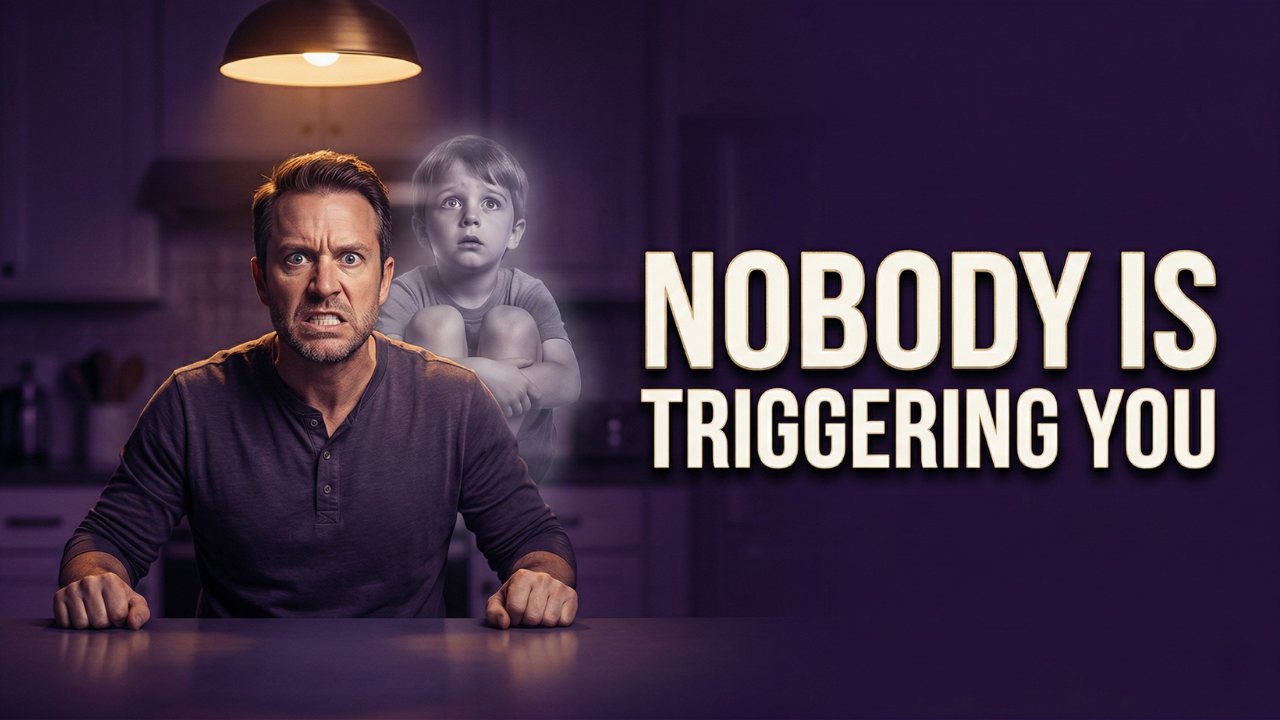
Emotional triggers are not real because neuroscience proves that emotions are predictions, not reactions. Dr. Lisa Feldman Barrett’s research demonstrates that your brain does not react to the present moment — it constructs emotions by predicting what will happen next based on your childhood emotional blueprint. When you say “I’m triggered,” you are actually experiencing a prediction from Emotional Definitions you created as a child. The Emotional Authenticity Method™ created by Kenny Weiss rewrites those predictions at the root.
“I’m so triggered right now.” We hear it everywhere. It has become the ultimate buzzword in modern psychology and relationships. Your partner uses a certain tone of voice, and you say, “You’re triggering me.” Your boss sends a vague email, and you say, “That triggered my anxiety.” We use the word “trigger” to describe any moment where we feel overwhelmed, defensive, panicked, or emotionally out of control.
That’s you… using the word “triggered” ten times a day while having no idea what’s actually happening inside your body.
And the self-help industry has taught us that the way to fix a trigger is to identify what caused it—the person, the word, the environment—and then either communicate a boundary to stop them from doing it again, or simply avoid that situation altogether.
But almost everything you have been taught about being “triggered” is scientifically false. You are not being triggered, and you are not reacting to what your partner or your boss just said.
That’s you… rearranging your entire life to avoid situations that “trigger” you — and still getting triggered anyway.
If you are constantly trying to manage your triggers and tiptoeing around your life trying to avoid the people and situations that set you off, you are living in an emotional prison. Here is the latest neuroscience to explain exactly why you aren’t actually triggered, what is really happening inside your body, and how to use the Emotional Authenticity Method™ to stop managing your emotional environment and start healing at the root.
Why Does Neuroscience Prove That Emotions Are Predictions, Not Reactions?
To understand why the concept of being “triggered” is a myth, we have to look at the groundbreaking work of Dr. Lisa Feldman Barrett, one of the top neuroscientists in the world.
For decades, classical psychology told us that emotions were hardwired reactions built into our brains. The theory was that a stimulus happens in the outside world—like a tiger jumping out of the bushes, or your spouse raising their voice—and your brain automatically reacts by flipping an “anger” switch or a “fear” switch. The outside world pulled the trigger, and your brain fired the bullet.
Dr. Barrett’s research proved that this entire model is wrong: emotions are not reactions to the present moment. They are constructed predictions based on your past.
That’s you… thinking your partner “made” you angry when your brain actually manufactured the anger before you even processed what they said.
Your brain’s primary job is to keep you alive by managing your body’s energy budget. To do this efficiently, it doesn’t wait to see what happens and then react; it emotionally predicts what is going to happen next based on what happened before.
So, when your partner raises their voice, your brain doesn’t wait to analyze the context of the argument. In milliseconds, your brain searches its massive database of past emotional experiences—specifically, your childhood emotional blueprint.
It finds a memory of a time when an adult raised their voice, and it recalls the physiological state you were in during that childhood moment: the tight chest, the dropping stomach, the flushed face. Your brain then constructs an emotion in the present moment, based entirely on that past data, to prepare your body to survive.
That means when you get “triggered,” you are not reacting to your partner. You are predicting danger based on the emotional definitions you learned when you were an infant, five, seven, or ten years old.
That’s you… having a full-body panic response to a sigh — because your brain doesn’t hear your partner sighing. It hears your mother sighing before the punishment started.
When you say, “You triggered me,” you are giving away your emotional power. You are telling the other person that they control your emotional state. But science proves that nobody can make you feel anything. Your brain is generating the feeling based on its own historical data.
What Are Childhood Emotional Definitions and How Do They Create the Worst Day Cycle™?
If you aren’t reacting to the present, what exactly is your brain predicting? It is predicting based on your Emotional Definitions.
Children do not understand the world through logic; they understand it through emotion. When a child experiences trauma—which is any negative emotional event that overwhelms their nervous system—they have to make sense of it. Because a child cannot say, “My parent is emotionally immature and overwhelmed,” the child simply internalizes it. You absorb your parents’ shame, their anger, their anxiety, or their depression… and then you blame yourself. You create an Emotional Definition to explain the pain.
That’s you… still living by a definition of love that was written by a five-year-old who had no other choice.
For example, if you had a parent who was highly critical, you created an Emotional Definition that said: “I am inadequate. If I make a mistake, I am not safe.” If you had an emotionally unavailable parent, you created an Emotional Definition that said: “I am invisible. I don’t matter. I have to perform to be seen.”
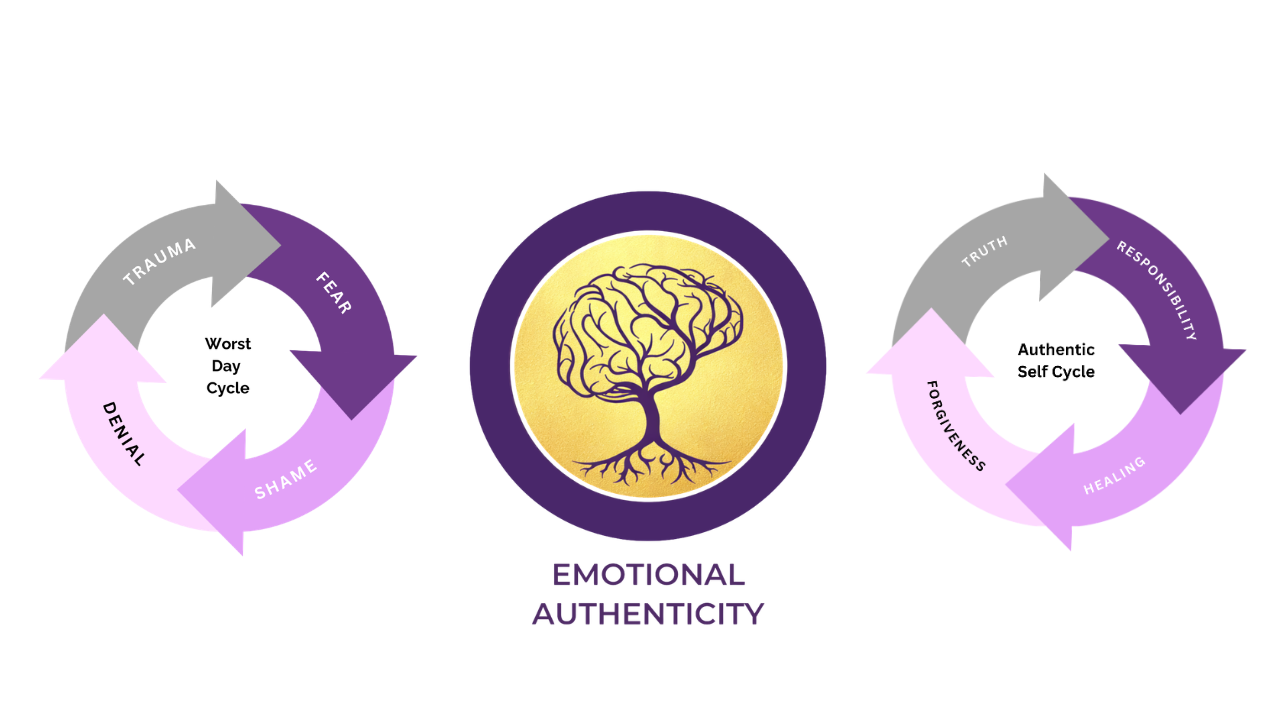
These definitions become the foundation of your Worst Day Cycle™.
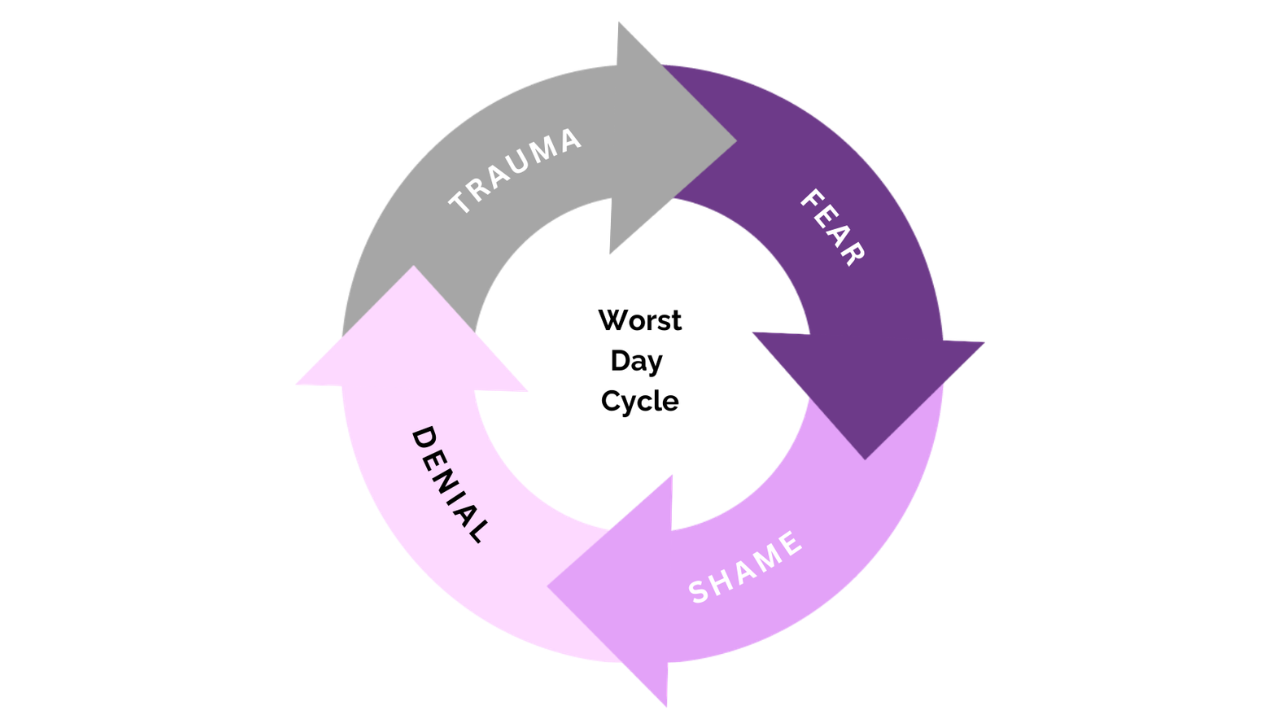
When that childhood trauma happened, it created Fear. That fear morphed into the Shame identity—the belief that you are the problem. And to survive that shame, you went into Denial and created a Survival Persona to emotionally protect yourself from other people’s unhealed emotional pain.
Your Survival Persona takes one of three forms. The Falsely Empowered type rages, controls, and dominates — their Emotional Definition says “I must be in control or I’m not safe.” The Disempowered type collapses, people-pleases, and abandons their own needs — their Emotional Definition says “I must make everyone happy or I’ll be abandoned.” The Adapted Wounded Child oscillates between both depending on who they’re with — controlling at work and collapsing at home, or vice versa.
That’s you… wondering why you’re a completely different person depending on who you’re standing in front of — because each relationship activates a different childhood Emotional Definition.
As an adult, you are walking around with these deeply embedded, unhealed Emotional Definitions that were transferred into you. When your spouse sighs heavily because they had a long day at work, your brain doesn’t see a tired spouse. Your brain predicts danger. It accesses your childhood definition—”A sigh means someone is disappointed in me, which means I am not good enough, which means I am unsafe”—and it instantly throws you into a panic or a defensive rage.
You aren’t triggered; your Worst Day Cycle™ is simply running its emotional blueprint programming. Your Adult Authentic Self gets shoved in the trunk, and the terrified, shame-based child inside of you takes the steering wheel.
That’s you… hijacked by a five-year-old’s prediction engine and calling it “being triggered.”
Why Does Your Childhood Emotional Blueprint Keep You Crashing Into the Same Reactions?
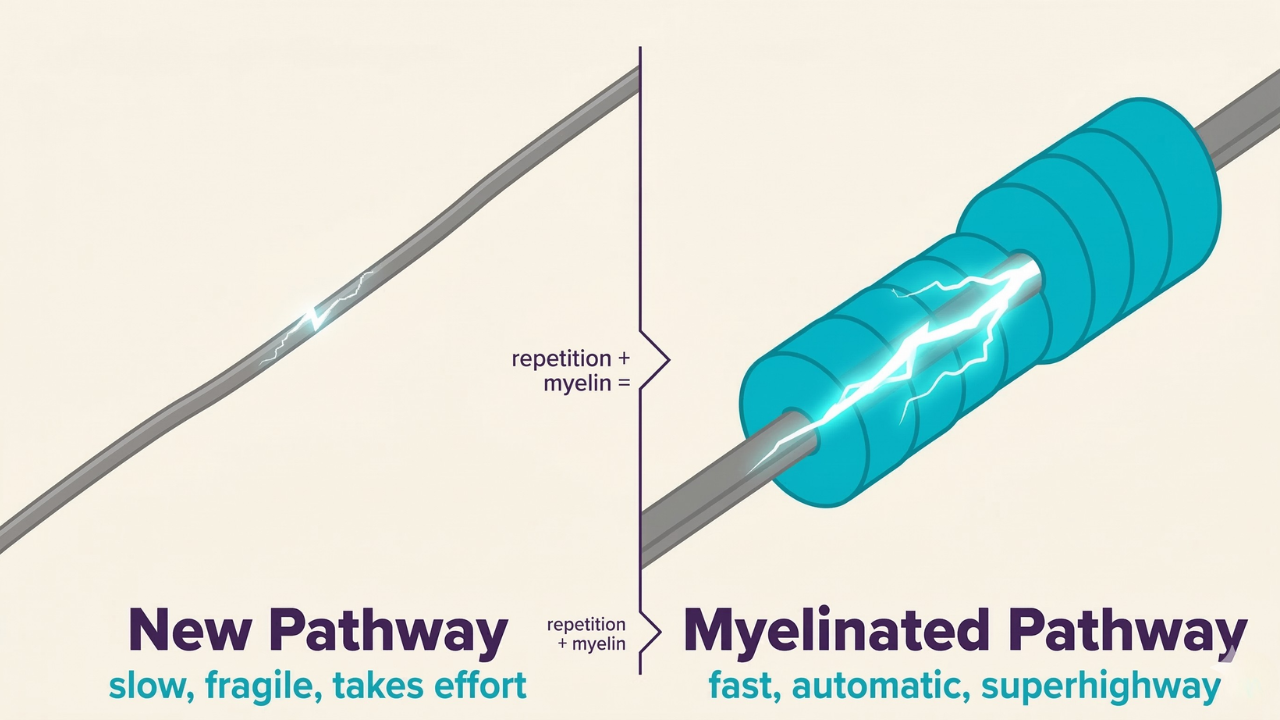
Visualize your emotional blueprint like a sled track on a snowy hill. When you were a child, you walked up to the top of the hill and went down in the fresh powder. You experienced an emotional event, you created a definition, and you slid down the hill. You did this over and over, thousands of times throughout your childhood. Every time you felt criticized, you slid down the path of defensiveness or people-pleasing.
Eventually, you compacted the snow and created deep, icy ruts in that hill.
That’s you… knowing exactly how every argument is going to end before it even starts — because the rut was carved thirty years ago.
Now, as an adult, when you encounter a stressful moment, your brain doesn’t want to burn energy forging a new path. To conserve energy, it automatically places your sled into the exact same icy rut you created the very first time you learned how to react to stress. That is why you keep flying down the hill at lightning speed, crashing into the same emotional reactions of panic, shutdown, or anger.
You think the event at the top of the hill triggered the crash at the bottom, but it didn’t. The rut in the snow—the neural pathway created by your childhood Emotional Definitions—dictated exactly where the sled was going to go.
None of the modern quick-and-easy, life-hack psychological tips and tricks will steer you out of an icy rut halfway down the hill. You cannot use a communication script or a breathing exercise while you are flying down the track. You have to go back to the top of the mountain and forge a completely new emotional blueprint path.
How Does the Emotional Authenticity Method™ Rewrite Your Childhood Predictions and Stop Triggers at the Root?
How do we get out of the rut, rewrite these childhood predictions, and stop the Worst Day Cycle™?
We do it by activating the anterior prefrontal cortex through metacognition. Metacognition is the highest form of intellect because it is the space between intellect and emotion. And we access this space using the Emotional Authenticity Method™.
The next time you feel that surge in your body—the tight chest, the flushed face, the sudden urge to yell or run away—stop focusing on the person in front of you. Stop trying to figure out what they meant, and stop telling them they triggered you.
Instead, take 15 to 30 seconds to focus on your environment. What can you hear? The hum of the refrigerator? The traffic outside? Ground yourself somatically to open the door to metacognition.
Then, ask yourself these four questions:
Number One: What am I feeling right now? Drop the story and name the core emotion. “I feel invisible. I feel neglected. I feel dismissed.”
That’s you… realizing the feeling has a name that has nothing to do with your partner and everything to do with your childhood.
Number Two: Where in my body do I feel it? “My head hurts. My shoulders are tense.” This connects your conscious mind to the somatic prediction your body learned to make as a child.
Number Three: What is my earliest memory of having this exact feeling and sensation? This is the breakthrough where you find the emotional rut in the snow. You trace the feeling back to its origin. That is when you can see clearly: “This isn’t about my spouse sighing. This is the exact same feeling I had when my mother would withdraw her affection when I didn’t get straight A’s.” When you name the origin, you separate the past from the present, realizing the ghost of your childhood is in the room.
That’s you… finally seeing that you’ve been fighting a ghost wearing your partner’s face for the entire relationship.
Number Four: What would I think and feel if I never had this negative thought or feeling ever again? Imagine if this feeling of being dismissed could be wiped off the face of the earth. If it were physically impossible for any human to ever feel it again, what would be left over? What would you feel?
Do it right now. You feel lighter, free, grounded, safe, confident, and peaceful. That is your Authentic Self before other people’s unhealed pain and shame were dumped and transferred into you. Congratulations, you have just carved your new emotional sled track in a brand-new emotional operating system and protected your wounded child.
That’s you… meeting yourself — maybe for the first time — without the weight of predictions you didn’t choose.
What Does the Trigger Myth Look Like Across Your Entire Life?
If you’re still not sure this applies to you, let me show you what the trigger myth looks like when it runs across every area of your life — because your childhood Emotional Definitions don’t stay in one relationship. They predict danger everywhere.
Family: You go home for the holidays and within minutes you’re “triggered” by your mother’s tone. But she used that exact tone a thousand times when you were seven. Your brain isn’t reacting to a sixty-five-year-old woman making a comment about the turkey. Your brain is predicting the shame of never being good enough for a parent whose approval was the only currency that bought emotional enmeshment safety.
That’s you… avoiding your own family because you think they “trigger” you — when really, your childhood predictions never got updated.
Romantic Relationships: Your partner asks for space and your body floods with panic. You say they “triggered your abandonment wound.” But your partner isn’t abandoning you. Your brain is predicting abandonment based on the Emotional Definition you created when your parent withdrew love as punishment. Every relationship conflict is a codependent collision between two people’s childhood predictions, not two adults reacting to the present.
That’s you… begging your partner to “stop triggering you” when the real trigger is thirty years old and lives inside your nervous system.
Friendships: A friend cancels plans and you spiral into “nobody cares about me.” That’s not a trigger — that’s a prediction. Your childhood Emotional Definition decided that cancelled plans = “I’m not important.” So you over-give to prove your worth, or withdraw entirely to protect yourself from the predicted rejection.
Work and Career: Your boss gives constructive feedback and your body floods with shame. You say the feedback “triggered” you. But your brain is predicting the exact same danger it predicted when your parent criticized your report card. Your Falsely Empowered survival persona built the career to prove the childhood prediction wrong — but one piece of feedback and the prediction wins. Your self-esteem was never based on your performance. It was based on a child’s definition of worth.
That’s you… crushing it at work and still feeling like a fraud — because the prediction says performance never equals enough.
Body and Health: Chronic tension, insomnia, gut issues. Your body is running childhood predictions 24/7. Every unexplained symptom is your nervous system predicting danger based on Emotional Definitions that were written before you could walk. You can’t meditate away a prediction. You can’t supplement away a definition. You have to rewrite the blueprint.
That’s you… your body screaming a warning about danger that ended decades ago.
What Is Your Next Step to Stop Managing Triggers and Start Healing Your Blueprint?
You are not a victim to your triggers; you are a powerful adult who has been operating on outdated childhood emotional software. It is time to stop blaming the outside world, stop managing and controlling your environment, and start taking radical responsibility for your own emotional healing, which are the first two steps in the Authentic Self Cycle™.
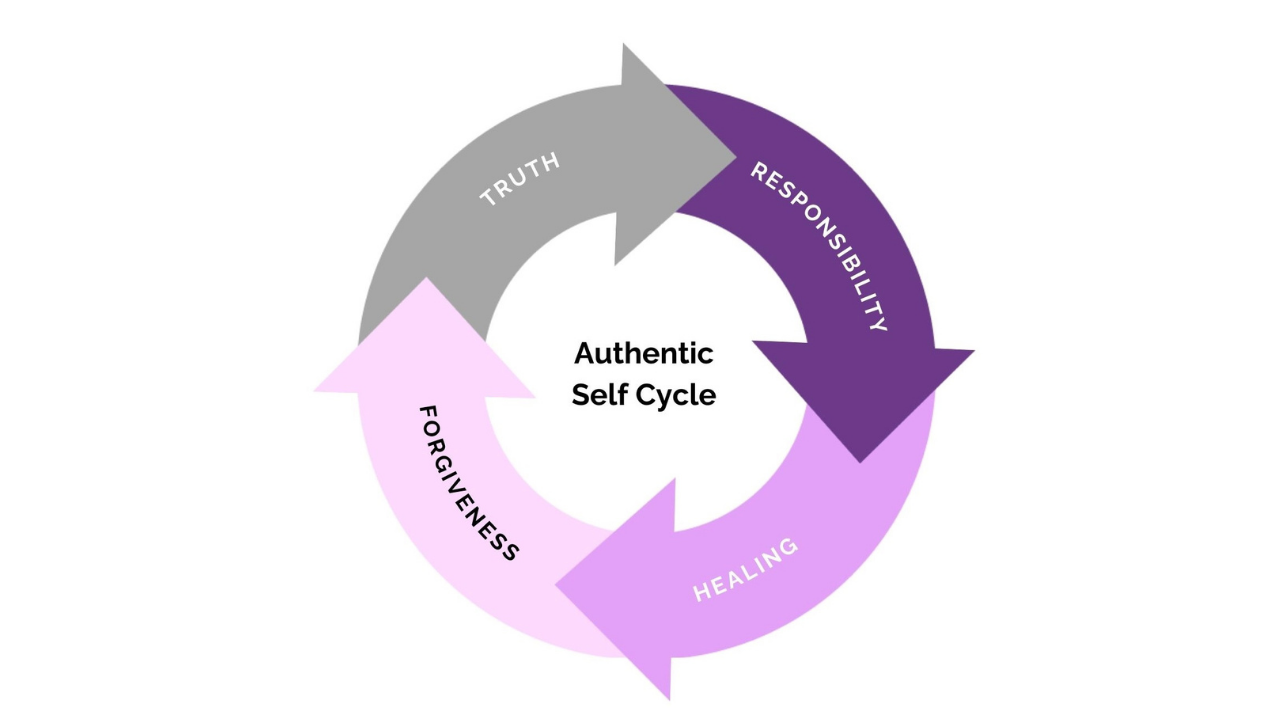
That’s you… ready to stop managing triggers and start rewriting the predictions that created them.
When combined with the Emotional Authenticity Method™, this provides you with the complete healing system to stop your triggers, change your emotional predictions, rewrite your emotional blueprint, and put an end to your Worst Day Cycle™.
And if you are sitting there right now, feeling overwhelmed and needing immediate guidance, I have something that will really help you. Go to my website, KennyWeiss.net, and talk to my brand-new AI clone. I have uploaded my entire brain—every book, every framework, and every solution you need directly into this AI. It is completely free to use, and it is literally like having a one-on-one conversation with me. You can ask it about your triggers, your relationship struggles, or your Worst Day Cycle™, and it will give you the exact, root-cause feedback I would give you. Go test it out and get the help you need right now.
While you are there, you can also take my completely free Childhood Assessment to help you identify the exact emotional origins of your Worst Day Cycle™. For those of you who are ready to map out your specific triggers and stop this loop for good, check out my books, my other classes, my emotional freedom assessments, and my private coaching, and pick the one that fits where you are in your emotional blueprint remapping journey.
Whatever choice you make, just know that when you are ready, you now have a root-level solution, not a symptom-based topical band-aid approach, that will provide you with the root-level emotional regulation you are looking for when you are ready for it.
And don’t forget. You are not to blame, and you are not broken. You did the best you could with the information you had at the time. But now that you know more, you can equip yourself with the tools to do more. You were just programmed, and programs can be rewritten.
That’s you… finally understanding that you were never “triggered” — you were just running predictions that can be rewritten.
If This Article Hit Home, the Book Goes Deeper
Everything I write about on this site — the Worst Day Cycle™, your childhood emotional blueprint, why you keep repeating the same patterns no matter how hard you try — it all started with my first book, Your Journey To Success: How to Accept the Answers You Discover Along the Way.
This is the book readers call “the first time I found a roadmap I could actually understand and that seemed attainable.” It is the book that walks you through WHY your life hasn’t changed despite all the work you’ve done — and shows you, step by step, exactly how to break free. No fluff. No motivational hype. Just the truth about what was done to you, why it stuck, and what to do about it.
If you’ve read this far, you already know something needs to change. This book is where that change starts.
Ready to Stop Understanding the Problem and Start Rewiring It?
The article you just read scratches the surface. My new book, Your Journey To Being Yourself: How to Overcome the Worst Day Cycle & Reclaim Your Authentic Self with Emotional Authenticity, gives you the complete system — the Worst Day Cycle™, the Authentic Self Cycle™, and the full Emotional Authenticity Method™ — all in one place, with the neuroscience behind every step.
This is the book readers call “a genius piece of art in mastering emotion and the art of healing.” It speaks directly to the person who feels stuck, overwhelmed, and confused by the same repeating patterns — the same arguments, the same relationship breakdowns, the same shame — and is done accepting surface-level answers. Every chapter combines powerful stories, clear steps, and practical tools that show you how to rewire your emotional patterns from the inside out.
You are not broken. You were programmed. And this book shows you exactly how to rewrite the program.
Frequently Asked Questions
Are emotional triggers real or a myth?
The concept of emotional triggers as reactions to present-moment events is scientifically inaccurate. Dr. Lisa Feldman Barrett’s neuroscience research proves that emotions are constructed predictions, not automatic reactions. When you feel “triggered,” your brain is predicting danger based on Emotional Definitions created in your childhood emotional blueprint — not responding to what’s happening right now. The Emotional Authenticity Method™ addresses these predictions at their root.
What does neuroscience say about emotional triggers?
Dr. Lisa Feldman Barrett’s constructed emotion theory proves that your brain doesn’t react to stimuli with pre-wired emotional responses. Instead, it uses past emotional experiences — primarily from your childhood emotional blueprint — to predict what will happen next and constructs an emotion to prepare your body. This means nobody can “trigger” you; your brain is generating feelings from its own historical data. Kenny Weiss’s Worst Day Cycle™ framework explains how these predictions keep repeating.
Why do I keep getting triggered by the same things?
You keep experiencing the same emotional reactions because your brain has created deep neural pathways — like icy sled ruts on a snowy hill — based on your childhood Emotional Definitions. To conserve energy, your brain automatically places every new experience into the same rut, producing the same prediction. The Emotional Authenticity Method™ helps you trace the prediction back to its childhood origin and forge an entirely new neural pathway.
What are Emotional Definitions and how do they affect relationships?
Emotional Definitions are the meanings your childhood brain assigned to emotional experiences before you had language or logic. For example, a critical parent creates the definition “I am not good enough,” and an emotionally unavailable parent creates “I am invisible.” As an adult, these definitions run automatically — when your partner sighs, your brain doesn’t see a tired person; it predicts the danger your childhood definition associated with that sound. Every relationship conflict is a collision between two people’s childhood predictions.
How can I stop being triggered by my partner?
You can’t “stop being triggered” by managing your partner’s behavior — because your partner isn’t the source. The source is your childhood emotional blueprint and the Emotional Definitions it contains. The Emotional Authenticity Method™ uses metacognition to help you identify the core emotion, locate it in your body, trace it to its earliest childhood memory, and then create a new neural pathway. This rewrites the prediction so your brain stops projecting childhood danger onto present-moment interactions.
What is the difference between a trigger and an emotional prediction?
A “trigger” implies that something external caused your emotional reaction — that the other person pulled the trigger and your brain fired the bullet. An emotional prediction, based on Dr. Lisa Feldman Barrett’s neuroscience, recognizes that your brain constructed the emotion before you even processed what the other person said, using data from your childhood emotional blueprint. This distinction matters because it moves responsibility from the external world to the internal blueprint — which is the only place healing can happen.
The Bottom Line
You have spent years trying to manage, avoid, and control the people and situations that “trigger” you. Every boundary script, every escape strategy, every “I need you to stop doing that” conversation — they were all aimed at the external world while the real source sat untouched inside your nervous system, running childhood predictions that were written before you could speak.
The fact that you’ve read this far tells me something important about you. It tells me you suspected the trigger model was incomplete. Something in you recognized that avoiding situations and controlling other people’s behavior was never going to bring you peace. That recognition is your Authentic Self breaking through the noise of your Survival Persona.
Here’s what becomes possible when you stop managing triggers and start rewriting predictions: You stop seeing ghosts and start seeing the actual person standing in front of you. You stop giving your emotional power to the outside world and start taking radical responsibility for the blueprint inside. You stop surviving your relationships and start actually living in them. Not because you found a better boundary script — but because you rewrote the childhood Emotional Definition that was generating the prediction in the first place.
You are not broken. You are not “too sensitive.” You are not a victim to your triggers. You were just running predictions that were installed before you had a choice — and predictions can be rewritten. When you’re ready, the Emotional Authenticity Method™ will meet you exactly where you are.
Recommended Reading
These books deepen the neuroscience of why emotional triggers are predictions, not reactions:
Lisa Feldman Barrett — How Emotions Are Made
The foundational neuroscience proving that emotions are constructed predictions based on past experience — the scientific basis for why the trigger model is wrong.
Bessel van der Kolk — The Body Keeps the Score
How trauma predictions are stored in the body, not just the mind — and why cognitive approaches alone cannot rewrite them.
Pete Walker — Complex PTSD: From Surviving to Thriving
Understanding the survival responses that childhood Emotional Definitions create and how they persist into adulthood.
Gabor Maté — When the Body Says No
The devastating physical cost of running childhood predictions for decades without healing the blueprint.
Take Your Next Step With Kenny Weiss
If this article helped you understand that your triggers are childhood predictions, and you’re ready to rewrite your blueprint, explore these resources:
Start Here:
• Emotional Blueprint Starter Course — Individual ($79) — Identify your Worst Day Cycle™ patterns and the Emotional Definitions driving your predictions
• Relationship Starter Course — Couples ($79) — Map the collision between both partners’ childhood emotional blueprints
Go Deeper:
• Why We Can’t Stop Hurting Each Other ($479) — Understand the Worst Day Cycle™ collision between partners’ predictions
• Why High Achievers Fail at Love ($479) — For the Falsely Empowered survival persona running “I must be in control” predictions
• The Shutdown Avoidant Partner ($479) — Root-cause work for avoidant predictions and emotional withdrawal
Full Transformation:
• Tier 1: Mapping the Blueprint ($1,379) — The comprehensive program for rewriting your childhood emotional predictions
Download Kenny’s free Feelings Wheel to begin building emotional granularity — the foundation of naming your predictions accurately.
Explore Kenny’s articles on insecurity in relationships, signs of high self-esteem, and 10 do’s and don’ts for a great relationship for more on how childhood emotional predictions shape every area of your life.