Category: Self-Esteem

  • How to Keep Your Boundaries: 3 Steps That Actually Work

    How to Keep Your Boundaries: 3 Steps That Actually Work

    Keeping your boundaries is the daily practice of honoring your own feelings, needs, and limits — even when the people around you pressure you to abandon them — because boundaries aren’t walls you build once, they’re choices you make every single day. If you’ve ever set a boundary only to watch yourself crumble the moment someone pushes back, guilt-trips you, or gives you the silent treatment, you’re not weak. You’re running a childhood pattern that taught you that your boundaries were dangerous — and that pattern has been operating on autopilot ever since.

    That’s you — the one who can articulate the perfect boundary in therapy but can’t hold it for five minutes when your mother calls.

    The reason most people can’t keep their boundaries isn’t a lack of willpower. It’s a nervous system that was trained in childhood to believe that boundaries equal abandonment. And until you understand the emotional blueprint underneath your boundary failures, no amount of scripts, tips, or assertiveness training will stick.

    Most people can’t keep their boundaries because their childhood trauma wired their nervous system to equate self-protection with abandonment. The Worst Day Cycle™ explains how fear, shame, and denial sabotage boundaries automatically. The Emotional Authenticity Method™ rewires the emotional blueprint so boundaries become natural — not forced. You can’t think your way into boundaries. You have to feel your way there.
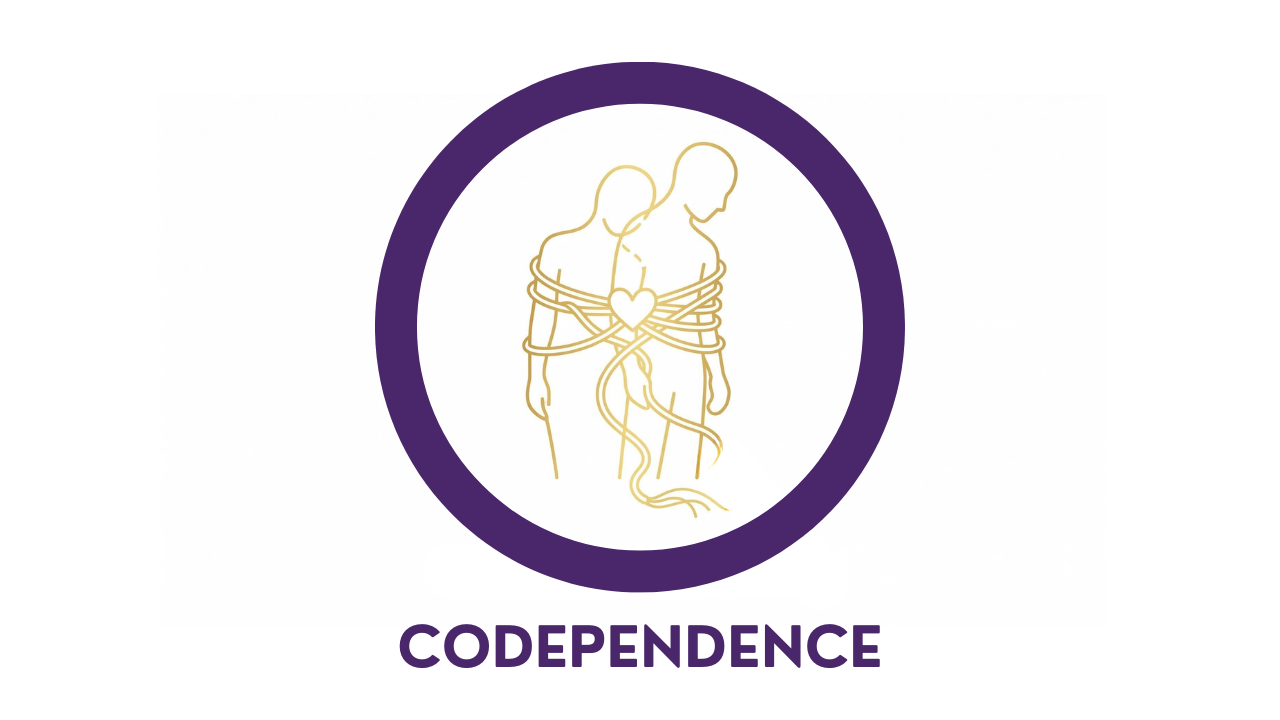
    Codependence icon showing how broken boundaries create codependent relationship patterns

    What Are Boundaries and Why Can’t You Keep Them?

    A boundary is the line between where you end and another person begins. It’s the internal knowing of what is yours to carry and what belongs to someone else. It protects your feelings, your time, your energy, your body, and your sense of self. Without boundaries, you lose yourself — in relationships, in family dynamics, in work, in everything.

    That’s you — the one who knows exactly what a healthy boundary looks like but dissolves the second someone needs you.

    Here’s what nobody tells you about boundaries: the problem isn’t that you don’t know how to set them. The internet is full of boundary scripts. You’ve probably memorized a dozen of them. The problem is that your nervous system won’t let you keep them. The moment you try to hold a boundary, your body floods with guilt, fear, anxiety, or shame — and you fold. Not because you’re weak. Because your body learned in childhood that boundaries were dangerous.

    Boundaries fail not because of a lack of knowledge or willpower, but because the childhood emotional blueprint taught the nervous system that self-protection triggers abandonment — and the brain will always choose connection over self-preservation when it believes survival is at stake.

    When you were a child and you tried to say no — to a parent’s demand, to an unfair situation, to emotional overwhelm — what happened? In most cases, your boundary was met with anger, withdrawal, guilt-tripping, or punishment. Your brain recorded a clear message: boundaries equal danger. And that message is still running your life today.

    That’s you — saying yes when every cell in your body is screaming no, because the last time you said no as a child, someone you loved made you pay for it.
    Emotional blueprint icon showing how childhood boundary violations create lifelong patterns of people-pleasing

    Why Do Your Boundaries Fail Every Time?

    You don’t have a boundary problem. You have a nervous system problem. Every time you try to hold a boundary, your brain runs a lightning-fast calculation: “Is this safe? What happened last time I said no? Will they leave? Will they rage? Will I be alone?” And before your conscious mind can even finish the sentence, your body has already surrendered.

    That’s you — rehearsing the boundary in the car, then abandoning it the moment you walk through the door.

    This happens because emotions are biochemical events. They aren’t thoughts you can override with logic. When your partner pushes back on a boundary, your hypothalamus generates a chemical cocktail — cortisol, adrenaline, dopamine misfires — that recreates the exact feeling you had as a child when your boundary was punished. Your body doesn’t know the difference between your mother’s disapproval in 1992 and your partner’s frustration today. It just knows: this feeling is known, and known means survival.

    The brain conserves energy by repeating known patterns. It can’t tell right from wrong — only known from unknown. Since 70%+ of childhood messaging is negative and shaming, adults repeat these painful patterns in relationships, career, hobbies, health — everything. Your boundary collapse isn’t a choice. It’s a neurochemical event that was automated decades ago.

    That’s you — not choosing to fold. Being hijacked by a nervous system that still thinks you’re seven years old and saying no means losing the only people who keep you alive.
    Trauma chemistry icon showing how childhood boundary violations create neurochemical addiction to people-pleasing

    Boundaries fail because the nervous system was trained in childhood to interpret self-protection as a threat to attachment — every boundary attempt triggers the same neurochemical cascade that was originally paired with parental rejection, creating an automatic surrender response that bypasses conscious intention.

    How the Worst Day Cycle™ Sabotages Your Boundaries

    To understand why your boundaries collapse, you need to understand the Worst Day Cycle™. This is the neurochemical pattern that runs underneath every boundary failure — and it’s been running since childhood.
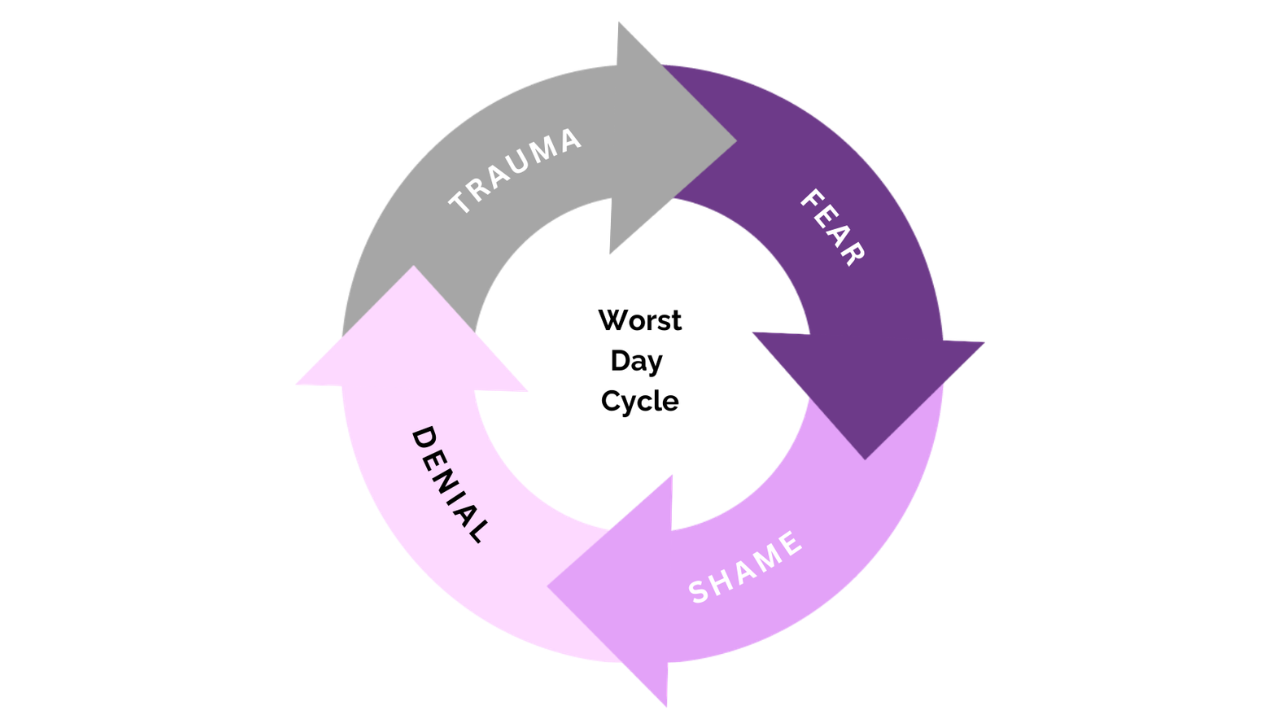
    Worst Day Cycle diagram showing trauma fear shame denial loop that destroys boundaries

    The Worst Day Cycle™ has four stages: Trauma → Fear → Shame → Denial.

    Trauma: Any negative emotional experience in childhood that created painful meanings. It doesn’t have to be dramatic — a parent who raged when you said no, a household where your needs were treated as selfish, a caregiver who withdrew love when you didn’t comply. These experiences create a massive chemical reaction in the brain and body. The hypothalamus generates chemical cocktails — cortisol, adrenaline, dopamine, oxytocin misfires — and the brain becomes addicted to these emotional states.

    That’s you — feeling the same gut-punch of terror when your boss asks “can we talk?” that you felt when your father’s tone changed at the dinner table.

    Fear: Fear drives repetition. The brain thinks repetition equals safety. So you keep saying yes when you mean no. You keep tolerating behavior that crosses your limits. You keep choosing relationships that require you to shrink — not because you want to, but because your nervous system is terrified of the unknown. An unknown where you say no and someone still loves you? Your brain has never experienced that. So it won’t let you try.

    Shame: This is where you lost your inherent worth. “I am the problem.” Not “I have a right to say no” — but “who am I to have boundaries? I’m not worth protecting.” This is the core wound underneath every boundary failure. You don’t hold boundaries because deep down, you believe you don’t deserve them.

    That’s the shame talking — the voice that says “you’re being selfish” every time you try to protect yourself. That voice isn’t yours. It was installed in childhood.

    Denial: Denial is the survival persona you created to survive the pain. It was brilliant in childhood — absolutely necessary. But in adulthood, it sabotages everything. It tells you “it’s not that bad” or “I can handle it” or “they didn’t mean it.” Denial is the reason you minimize boundary violations and make excuses for people who hurt you.

    The Worst Day Cycle™ reveals why boundary-setting techniques fail — they address the conscious mind while the neurochemical loop of trauma, fear, shame, and denial operates below awareness, automatically collapsing every boundary before the thinking brain can intervene.

    How Your Survival Persona Destroys Your Boundaries

    Your survival persona is the identity you created in childhood to navigate an emotionally unsafe environment. It’s not who you are — it’s who you had to become. And it’s the reason you can’t keep boundaries no matter how hard you try.
    Survival persona icon showing how childhood identity adaptations destroy adult boundary-keeping

    There are three survival persona types, and each one destroys boundaries in a different way:

    The Falsely Empowered: This persona controls, dominates, and rages. They don’t lose boundaries by caving — they lose them by bulldozing. They violate other people’s boundaries while maintaining iron walls around their own. They confuse aggression with strength. They use anger to keep people at a distance so they never have to be vulnerable enough to have a real boundary conversation.

    That’s you — the one who thinks you have strong boundaries because nobody crosses you, when really you’ve just built a fortress that keeps everyone out, including the people you love.

    The Disempowered: This persona collapses, people-pleases, and disappears. They lose boundaries by making themselves invisible. They say yes to everything. They absorb other people’s emotions. They make everyone else’s needs more important than their own — not out of love, but out of terror. They believe that if they stop giving, they’ll be abandoned.

    That’s you — the one who can’t say no without a tidal wave of guilt so overwhelming that you’d rather suffer than disappoint anyone.

    The Adapted Wounded Child: This persona oscillates between both — raging one moment, collapsing the next. They set a boundary with fury, then feel so guilty they apologize and undo it. They swing between “I don’t need anyone” and “please don’t leave me.” Their boundaries are wildly inconsistent because their sense of self is unstable.
    Adapted wounded child icon showing oscillation between rigid walls and no boundaries at all

    That’s you — setting a fierce boundary on Monday and apologizing for it by Wednesday because the guilt became unbearable.

    Your survival persona is the hidden saboteur of every boundary you’ve ever tried to set — it replaces authentic self-protection with a childhood performance that either bulldozes others or surrenders yourself, and neither one is a real boundary.

    How Broken Boundaries Show Up in Every Area of Your Life

    Family: You answer every call. You show up to every event. You manage everyone’s emotions at holiday dinners. When a family member crosses a line, you swallow your reaction because “that’s just how they are.” You feel responsible for your parents’ happiness — even now, decades later. You’ve never said no to a family obligation without drowning in guilt for days afterward.

    That’s you — still playing the role your family assigned you before you were old enough to choose it.

    Romantic Relationships: You tolerate behavior that violates your values because leaving feels more terrifying than staying. You abandon your own needs to keep the relationship “safe.” When your partner crosses a boundary, you bring it up once, get met with defensiveness, and never mention it again. You confuse tolerating pain with being a good partner. You give and give until resentment builds to an explosion — then you feel guilty for the explosion.

    Sound familiar? The partner who absorbs everything until they finally snap, then apologizes for having feelings at all?
    Emotional absorption icon showing how absorbing others emotions destroys personal boundaries

    Friendships: You’re the friend who listens for hours but never shares your own struggles. You cancel your own plans when someone else needs you. You say “it’s fine” when it isn’t. You let people take from you without reciprocating because asking for reciprocity feels selfish. You feel lonely even when surrounded by people because no one actually knows you — they know your survival persona.

    Work: You say yes to every project. You check email at midnight. You take on other people’s responsibilities because “if I don’t do it, no one will.” Your boss knows you’re the one who will never push back. You’ve been promoted for your lack of boundaries — rewarded for the very pattern that’s burning you out.

    That’s you — getting promoted for the same boundarylessness that’s destroying your health, your relationships, and your sense of self.

    Body and Health: You ignore your body’s signals. You push through exhaustion, pain, and stress. You numb with food, alcohol, scrolling, or overwork when emotions get too big. Chronic pain, digestive issues, insomnia, and autoimmune conditions are often the body’s final boundary — the one it sets when you refuse to set your own.

    3 Steps to Keep Your Boundaries (That Actually Work)

    These aren’t scripts. They’re nervous system practices. Each one sends your body a new message: “I can protect myself and still be loved.”
    Emotional fitness icon representing the daily practice of boundary-keeping as emotional strength

    Step 1: Focus on Your Part — Get Into Reality. Before you can hold a boundary with someone else, you have to tell yourself the truth. Most boundary failures start with self-deception — minimizing how much something hurt, pretending you’re “fine,” or convincing yourself the other person didn’t mean it. Psychologist Jerry Jellison showed that the average person lies to themselves and others 200 times a day. Pia Mellody identified being out of reality as one of the five core symptoms of codependence.

    That’s you — telling yourself “it’s not that bad” when your body is screaming that it is.

    When someone says or does something that crosses your boundary, ask three questions: Is any part of what they’re saying true? If so, take ownership of your part — openly admit your imperfections and put a plan in place. Then ask: why is this true? Trace it back to your childhood. This step requires you to investigate how the pain from your past created this pattern. Once discovered, you can do the healing work and forgive yourself for doing the best you could.

    Step 2: Focus on Their Part — Understand Their Reality. If all or part of what they said is untrue, shift your focus to what might be happening inside them. Most people who violate your boundaries are projecting their own unhealed pain. Look at how they delivered their message — with sarcasm, anger, or fear. Sarcasm masks anger. Anger masks fear. Fear masks sadness. At the heart of every boundary violation is someone else’s unhealed sadness.

    That’s you — learning to see the wounded child behind the person who just crossed your line, without making their wound your responsibility to fix.

    This creates the distance between what someone is saying and who you are. It breaks the codependent pattern of “they made me feel this way.” Nobody makes you feel anything unless you lose your internal boundary. Understanding their reality doesn’t mean excusing their behavior — it means you stop carrying their sadness for them.

    Step 3: Make an Empowered Choice — Nobody Makes You Feel Anything Unless You Give Them That Power. Now you choose: Am I going to surrender my worth and let another person’s reality determine who I am? Or am I going to love myself and them by honoring my reality and keeping my internal boundary?

    That’s you — choosing yourself for the first time, not because you’re selfish, but because you finally understand that self-abandonment isn’t love. It’s a trauma response.

    This choice gets easier with practice. Not because the guilt disappears — it doesn’t, not at first. But because each time you choose yourself, your nervous system gets a new data point: “I said no, and I survived.” Over time, those data points rewrite the childhood message that boundaries equal danger.
    Perfectly imperfect icon showing how self-acceptance enables authentic boundary-keeping

    These three steps work because they address the internal boundary — the relationship you have with yourself — not just the external script you deliver to someone else. You cannot keep a boundary with another person if you haven’t first stopped lying to yourself about what you feel and what you need.

    How the Emotional Authenticity Method™ Rewires Boundary Patterns

    The Emotional Authenticity Method™ is the daily practice that rewires the nervous system’s relationship to boundaries. It works because it targets the body — where the boundary collapse actually happens — not just the mind.
    Emotional authenticity icon representing the practice of feeling your feelings to build unshakeable boundaries

    Step 1: Somatic Down-Regulation with optional Titration. When a boundary is crossed and your body floods with guilt or fear, the first step is to get your nervous system out of survival mode. Deep breathing, grounding, or simply slowing down enough to feel your body. Titration means you go slowly — you don’t force yourself to feel everything at once. You can’t make a boundary decision from a hijacked nervous system.

    That’s you — learning to pause before you fold, because that pause is where your power lives.

    Step 2: What am I feeling? Most people who can’t keep boundaries have no idea what they’re actually feeling in the moment. They default to “guilty” or “anxious” or “I should just let it go.” Using the Feelings Wheel, you develop emotional granularity — the ability to name the specific emotion underneath the urge to cave. Maybe it’s not guilt. Maybe it’s terror. Maybe it’s grief. Naming it changes your relationship to it.

    Step 3: Where in my body do I feel it? All emotional trauma is stored physically. When someone pushes back on your boundary, your chest tightens. Your stomach drops. Your throat closes. Locating the feeling in your body moves you from the thinking brain — which will rationalize the boundary away — into the somatic experience where actual change happens.

    Step 4: What is my earliest memory of this feeling? This is where the rewiring happens. You trace the guilt, fear, or shame back to its childhood origin. You realize: this isn’t about today. My partner pushing back isn’t my parent punishing me for saying no. My nervous system just thinks they are. That recognition breaks the automatic pattern.

    That’s the moment everything shifts — when you see that your boundary collapse belongs to a five-year-old who was punished for having needs, not to the adult you are today.

    Step 5: Who would I be if I never had this feeling again? This is the vision step. It connects you to the Authentic Self Cycle™ and gives your nervous system a new destination — a version of you who keeps boundaries not because you memorized a script, but because you know in your body that you’re worth protecting.

    The Emotional Authenticity Method™ works because emotions are biochemical events — you cannot keep boundaries through thoughts alone. Thoughts originate from feelings. The guilt that collapses your boundaries is a neurochemical event from childhood, and only somatic processing can rewire it.

    How the Authentic Self Cycle™ Makes Boundaries Natural

    The Authentic Self Cycle™ is the healing counterpart to the Worst Day Cycle™. Where the Worst Day Cycle™ traps you in Trauma → Fear → Shame → Denial, the Authentic Self Cycle™ restores your identity through Truth → Responsibility → Healing → Forgiveness.
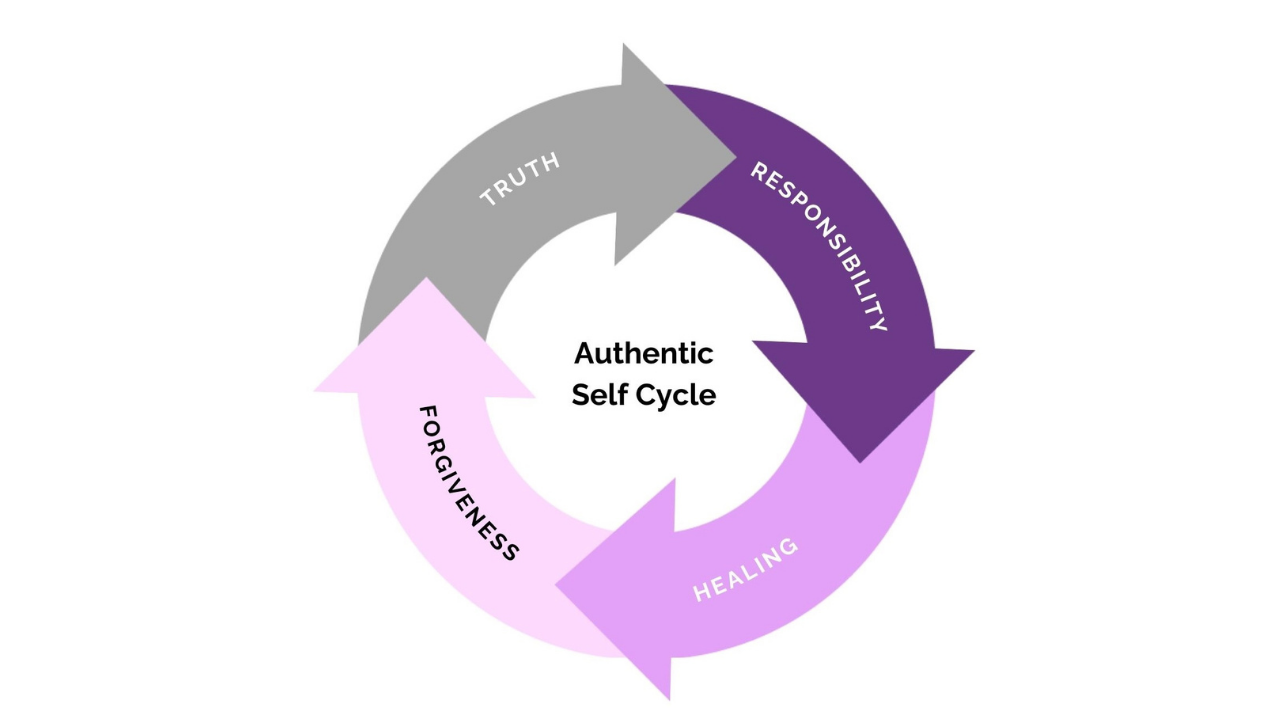
    Authentic Self Cycle diagram showing truth responsibility healing forgiveness as the path to natural boundary-keeping

    Truth: Name the blueprint. See that “this isn’t about today.” When your mother guilt-trips you for saying no to Thanksgiving and your body floods with shame, truth says: “This feeling is from childhood. My mother’s disappointment today isn’t the same as her rejection when I was six. My nervous system just thinks it is.”

    That’s the first step to boundaries that hold — seeing the pattern instead of drowning in it.

    Responsibility: Own your emotional reactions without blame. “My partner isn’t my parent — my nervous system just thinks they are.” This isn’t about fault. It’s about taking back your power from a childhood that stole it. When you stop blaming others for “making you” feel guilty, you reclaim the ability to choose how you respond.

    Healing: Rewire the emotional blueprint so conflict becomes uncomfortable but not dangerous, saying no doesn’t feel like abandonment, and someone else’s disappointment doesn’t feel like your death sentence. This is where the daily practice does its work — second by second, like the ticks of a clock. The second hand moves in tiny, almost insignificant ticks. But those ticks move the minute hand. The minutes move the hours.

    Forgiveness: Release the inherited emotional blueprint and reclaim your authentic self. This creates a NEW emotional chemical pattern that replaces fear, shame, and denial with safety, worth, and connection. You don’t become someone new. You finally meet who you always were underneath the survival persona that couldn’t say no.

    That’s you — not the person who memorized boundary scripts. The person whose body finally knows it’s safe to say no and still be loved.
    Reparenting icon showing how healing the inner child creates natural boundaries in adult relationships

    The Authentic Self Cycle™ is an identity restoration system — it doesn’t teach you boundary scripts, it replaces the neurochemical pattern that made boundaries feel dangerous with a new blueprint built on truth, responsibility, and the deep knowing that you are worth protecting.

    Frequently Asked Questions About Keeping Boundaries

    Why can’t I keep my boundaries even when I know I should?

    You can’t keep boundaries because the pattern isn’t in your thinking brain — it’s in your nervous system. Childhood trauma taught your body that boundaries equal danger, abandonment, or punishment. When you try to hold a boundary, your hypothalamus floods you with the same neurochemicals you experienced as a child when saying no was punished. The Worst Day Cycle™ explains how this automatic loop of trauma, fear, shame, and denial overrides your conscious intentions every time.

    How do I set boundaries without feeling guilty?

    The guilt isn’t a sign that your boundary is wrong — it’s a trauma response from childhood. You felt guilty because as a child, saying no threatened your connection to the people you depended on for survival. Healing boundary guilt requires somatic work, not cognitive reframing. The Emotional Authenticity Method™ teaches you to feel the guilt, locate it in your body, trace it to its childhood origin, and process it — rather than letting it collapse your boundary.

    What is the difference between a wall and a boundary?

    A wall keeps everyone out. A boundary lets the right people in. Walls are built from fear — they’re the falsely empowered survival persona’s version of self-protection. Boundaries are built from worth — they come from knowing you deserve to be treated with respect while staying open to genuine connection. If you can’t let anyone close, you don’t have strong boundaries. You have walls built by a wounded child who decided that closeness was too dangerous.

    Why do I keep attracting people who violate my boundaries?

    You attract boundary violators because your nervous system is drawn to the familiar, not the healthy. The brain conserves energy by repeating known patterns — it can’t tell right from wrong, only known from unknown. If boundary violation was your normal in childhood, your adult brain will interpret boundary-respecting people as boring or “lacking chemistry.” The Worst Day Cycle™ explains this as the fear stage — your brain mistakes danger for safety because danger is what it knows.

    Can I learn to keep boundaries as an adult if I never had them growing up?

    Yes — but not through willpower or scripts alone. Boundary-keeping requires rewiring the emotional blueprint at the nervous system level. The Emotional Authenticity Method™ provides a 5-step daily practice that rewires the body’s automatic surrender response. The Authentic Self Cycle™ provides the identity restoration framework that makes boundaries feel natural. It takes consistent daily practice — like the ticks of a clock — but the nervous system can learn new patterns at any age.

    How long does it take to build strong boundaries?

    Boundary patterns that have been running for 20, 30, or 40 years don’t reverse overnight. But noticeable shifts can happen within weeks of consistent daily practice with the Emotional Authenticity Method™. The key is repetition, not intensity. Each time you hold a micro-boundary — saying no to something small, waiting before responding, honoring your own need — your nervous system gets new evidence that boundaries are safe. Over time, those micro-moments rewire the childhood blueprint.

    The Bottom Line

    You don’t need another boundary script. You don’t need to rehearse your words one more time. You don’t need to become more assertive, more confident, or tougher.

    You need to heal the part of you that believes you’re not worth protecting.

    Every boundary you’ve ever failed to keep was a moment when your nervous system chose survival over self-respect — because that’s what it was trained to do in childhood. That training wasn’t your fault. But rewiring it is your responsibility. Not as blame. As freedom.

    Boundaries don’t come from scripts. They come from worth. From the deep, body-level knowing that you deserve to take up space, to have needs, to say no without apologizing for existing.

    That’s you — not the person who memorized the perfect boundary phrase. The person who finally knows, in their bones, that they’re worth protecting. Even when it’s hard. Even when someone is disappointed. Even when the guilt shows up. You hold the boundary anyway — because you’ve met yourself, and you’ve decided you’re not leaving again.

    The guilt will come. The fear will come. They’re old visitors from an old blueprint. But this time, you don’t let them run the show. You feel them. You name them. You trace them back to where they started. And you choose yourself anyway.

    That’s not selfish. That’s the most loving thing you’ll ever do — for yourself, and for everyone who gets the real you instead of the survival persona.

    These books complement the frameworks in this article and deepen your understanding of why boundaries fail and how to build real ones:

    Facing Codependence by Pia Mellody — the foundational text on how childhood trauma creates the boundary failures and codependent patterns that run adult relationships.

    The Body Keeps the Score by Bessel van der Kolk — the science of how trauma lives in the body, explaining why boundary scripts fail when the nervous system hasn’t been rewired.

    When the Body Says No by Gabor Maté — how chronic boundary violations and self-abandonment manifest as physical illness when the body finally sets the boundary you wouldn’t.

    Codependent No More by Melody Beattie — a practical guide to recognizing codependent patterns and building the internal boundary that makes external boundaries possible.

    The Gifts of Imperfection by Brené Brown — how shame destroys boundaries and how vulnerability is the path back to authentic self-worth.

    Take the Next Step

    If you’re ready to stop collapsing your boundaries and start building a life from your authentic self, Kenny Weiss offers courses designed for people who are done people-pleasing and ready to heal:

    Emotional Blueprint Starter Course — Individual ($79) — Your personal roadmap to understanding the Worst Day Cycle™ and beginning the journey from boundaryless survival to authentic self-protection.

    Relationship Starter Course — Couples ($79) — For couples ready to break the cycle of boundary violations and build interdependence.

    Why We Can’t Stop Hurting Each Other ($479) — Deep-dive into the Worst Day Cycle™ and how childhood trauma creates the boundary failures that destroy relationships.

    Why High Achievers Fail at Love ($479) — Built for high achievers who have mastered their career boundaries but can’t figure out emotional ones.

    The Shutdown Avoidant Partner ($479) — Understanding avoidant attachment through the lens of trauma chemistry and survival personas — including why avoidants build walls instead of boundaries.

    Tier 1: Mapping the Blueprint ($1,379) — The comprehensive program for learning and practicing the Emotional Authenticity Method™ to rewire boundary patterns at the nervous system level.

    Download the Feelings Wheel — the free tool used in Step 2 of the Emotional Authenticity Method™ to build the emotional granularity that makes boundary-keeping possible.

    Explore more: The Signs of Enmeshment | 7 Signs of Relationship Insecurity | 7 Signs of High Self-Esteem | How to Determine Your Negotiables and Non-Negotiables | 10 Do’s and Don’ts for a Great Relationship
  • How to Heal Attachment Wounds: Rewire Your Emotional Blueprint | Kenny Weiss

    How to Heal Attachment Wounds: Rewire Your Emotional Blueprint | Kenny Weiss

    Attachment wounds don’t just happen at birth. They happen every time a parent dismisses your feelings, every time your need for closeness was met with coldness or control, every time you learned that safety meant staying small and disconnected. A lack of attachment—or what we more accurately call “insecure attachment” rooted in childhood emotional abandonment—leaves you unable to trust, unable to rest in a relationship, unable to believe you’re lovable as you are. You learned early: other people aren’t safe. And now, decades later, that blueprint still runs the show.

    The good news? Attachment wounds are not destiny. They’re patterns—learned responses written into your nervous system and your emotional chemistry. And patterns can be rewritten.

    Attachment wounds are unmet emotional needs in childhood that create a neural blueprint where the brain perceives intimacy as dangerous, dependency as weakness, or closeness as suffocation. This blueprint drives reactive behaviors—withdrawal, hypervigilance, people-pleasing, or control—that repeat in adult relationships and create the very disconnection that was originally feared.

    Table of Contents

    What Is an Attachment Wound?

    An attachment wound isn’t about whether your parents loved you. It’s about whether you felt safe depending on them. It’s about whether your emotional needs were honored or dismissed. It’s about whether the adults in your life taught you that closeness was safe—or dangerous.

    That’s you if you grew up with: a parent who was emotionally unavailable (physically present, emotionally absent); a parent who responded to your pain with judgment or coldness; a parent who made your feelings about them (“You’re making me upset”); a parent who was enmeshed and you became their emotional support; a parent who controlled you through shame or silent treatment.

    Enmeshment: emotional boundary confusion and emotional parentification in childhood

    The wound creates a blueprint in your nervous system: Closeness = pain. Needing people = weakness. Trust = vulnerability = destruction.

    That’s the thing about attachment wounds—they look different from person to person. For some, it becomes a fierce independence: “I don’t need anyone.” For others, it becomes a desperate clinging: “Don’t leave me, even though I push you away.” For most, it’s both—oscillating between cold distance and frantic pursuit.

    Sound familiar? That oscillation is your attachment wound trying to solve the original problem—the broken safety system—with the only tools childhood gave you.

    The Neuroscience Behind Detachment: Why Your Brain Chose Distance

    Your brain is not broken. It’s brilliant. It learned that distance equals survival.

    When you experience emotional abandonment or intrusion in childhood, your nervous system goes into a state of threat. The hypothalamus—your brain’s chemical factory—floods your body with cortisol, adrenaline, and dopamine. These chemicals create a powerful feedback loop: fear → shame → disconnection → fear again. Over time, your brain literally becomes addicted to these chemical states because they’re “known” and known feels safe.

    Trauma chemistry: cortisol and adrenaline feedback loops created by childhood attachment wounds

    The brain also conserves energy by repeating established neural pathways. It can’t tell right from wrong—it can only tell known from unknown. Since 70%+ of childhood messaging is negative and shaming, your adult brain repeats these patterns in relationships, career, body, finances—everywhere.

    That’s you if you notice: You distance when someone gets close. You sabotage relationships when they’re finally safe. You attract partners who are emotionally unavailable (because it’s familiar). You can’t receive love without questioning it.

    Childhood attachment wounds create a persistent neurochemical loop where fear-based thinking and shame become the default setting of the nervous system. The brain treats closeness and vulnerability as threat signals, activating the same survival chemistry that protected you in childhood but now prevents you from experiencing secure attachment in adulthood.

    Emotional regulation and nervous system reset: nervous system healing from attachment trauma

    The Worst Day Cycle™: How Attachment Wounds Repeat

    The Worst Day Cycle™ is not a punishment. It’s a blueprint. It’s how your childhood emotional logic still runs your adult life.

    The Worst Day Cycle™ has four stages: Trauma, Fear, Shame, and Denial. Understanding this cycle is the first step to breaking it.

    Stage 1: Trauma (The Original Blueprint)

    Trauma isn’t always big. It’s any negative emotional experience that created a painful meaning about yourself or the world. For you, it might be: a parent who never asked how your day was, a parent whose mood swings you learned to manage, a parent who said “I’m disappointed in you” instead of “I’m concerned about this choice,” a parent who was more comfortable with your silence than your truth.

    That’s the original wound—the moment your brain learned that your emotional needs weren’t welcome. Your nervous system encoded this as: I am alone. I cannot depend on others. My needs are a burden.

    Stage 2: Fear (The Vigilance)

    Fear is the secondary chemical reaction. Now, in adulthood, anytime someone gets close—a partner leans in, a friend shares vulnerability, a boss gives feedback—your amygdala fires. Your nervous system runs a microsecond scan: Is this a threat? Is this going to hurt me?

    Because your childhood taught you that closeness = pain, your nervous system defaults to YES. Fear floods in. Your body tenses. Your thoughts race: They’re going to leave. They don’t really care. I need to get out first. I need to protect myself.

    Sound familiar? That hypervigilance in relationships is Stage 2 of your Worst Day Cycle™.

    Stage 3: Shame (The Broken Core)

    Fear is about what might happen. Shame is about who you are. Shame is where you decided: I am the problem. I am unlovable. I am too much / not enough. I am broken.

    In Stage 3, your attachment wound tells you that the reason you can’t have close relationships is not because of what happened to you—it’s because of who you are. Your distance isn’t a protective strategy; it’s proof that you’re incapable of connection. Your inability to trust isn’t a response to abandonment; it’s proof that you’re fundamentally flawed.

    That’s the lie that shame tells. And you believe it because it’s been 30 years of evidence—relationships failing, distance growing, proof accumulating.

    Worst Day Cycle: trauma fear shame denial attachment blueprint repeating in relationships

    Stage 4: Denial (The Survival Persona)

    Denial is brilliant and sabotaging. Denial is your survival persona—the version of you that learned how to survive childhood by being small, distant, independent, controlled, numb, or hypervigilant.

    In Stage 4, instead of feeling the unbearable truth (“My parent wasn’t emotionally available and that broke my ability to trust”), you deny it and create a story: “I don’t need people anyway. Relationships are pointless. I’m better off alone. Love is for other people.”

    Or: “I’m fine. Nothing’s wrong. I can fix this relationship if I just work harder, give more, manage their emotions better.”

    The denial feels like protection. It lets you not feel the original pain. But denial also keeps you trapped in the cycle because you never actually see or challenge the blueprint—you just keep repeating it.

    The Worst Day Cycle™ demonstrates how childhood attachment trauma creates a four-stage loop: an original wounding (trauma) triggers nervous system protection (fear), which activates a core belief of unworthiness (shame), which prompts a defensive identity (denial/survival persona). This cycle repeats in adult relationships until the underlying blueprint is consciously identified and rewired.

    Then the cycle repeats. Your partner leans in for intimacy, fear fires, shame activates, you deny and withdraw, the relationship destabilizes, you have your “proof” that closeness doesn’t work—and the cycle confirms itself. Again. And again.

    Three Survival Persona Types: Which One Are You?

    Your survival persona is not your real self. It’s the version of you that childhood built to survive emotional pain. Understanding your persona is like understanding the character you’ve been playing for decades—and realizing that the character’s strategies don’t work in relationships between equals.

    Survival persona types: falsely empowered disempowered adapted wounded child attachment response

    The Falsely Empowered Persona

    The falsely empowered persona responded to emotional abandonment by taking control. If you lived with a parent who was unavailable or chaotic, you learned early: If I control the situation, I control the pain.

    That’s you if: You manage everyone’s emotions in relationships. You’re the planner, the problem-solver, the one who knows what everyone needs. You move toward conflict aggressively—anger feels more powerful than fear. You rage when you feel abandoned because anger is strength and hurt is weakness. You can’t ask for help without feeling weak. You’re driven, achieving, outwardly confident—but underneath is a terror of dependency.

    The falsely empowered persona looks strong. But the strength is a mask for deep fear. And in intimate relationships, it pushes people away because there’s no room for your partner to have power, agency, or voice.

    The Disempowered Persona

    The disempowered persona responded to emotional abandonment by collapsing. If you lived with a parent who was enmeshed or needed you emotionally, you learned: If I make myself small and manage their emotions, maybe I’ll be safe. Maybe I’ll be loved.

    That’s you if: You become a people-pleaser in relationships. You silence your own needs to keep the peace. You ask permission for your own life. You feel guilty when your partner is disappointed, even when the disappointment isn’t about you. You apologize for taking up space. You’re drawn to people who need you to fix them. You stay in relationships long past the point of respect because leaving feels selfish or cruel.

    The disempowered persona looks selfless. But the selflessness is a strategy for survival—a desperate attempt to earn love by erasing yourself.

    The Adapted Wounded Child Persona

    The adapted wounded child oscillates between falsely empowered and disempowered. You move between control and collapse, dominance and submission, rage and tears, independence and desperate clinging.

    That’s you if: Your relationships feel chaotic—you’re hot and cold, near and far, giving and withdrawn. You can be controlling one moment and codependent the next. People describe you as “intense” or “hard to predict.” You swing between “I don’t need anyone” and “Why won’t you save me?” You push people away and then punish them for leaving.

    The adapted wounded child is the survival persona that couldn’t choose between control and surrender—so it became both.

    Adapted wounded child: oscillating survival persona between control and collapse in relationships

    Sound familiar? Your persona isn’t a character flaw. It’s evidence of brilliance—your childhood self survived what was actually unsafe. The work now is recognizing that the strategies that protected you then are harming you now.

    Seven Signs You Have an Attachment Wound

    In Family Relationships

    You notice: Contact with your family of origin triggers intense emotions—anger, numbness, or desperate people-pleasing. You still feel like a child around your parents, even though you’re an adult. You can’t set boundaries without guilt or rage. You’re still managing a parent’s emotions or you’ve completely cut them off. You either over-share or share nothing—there’s no middle ground of appropriate vulnerability.

    Codependence: family enmeshment and emotional boundary confusion from childhood attachment patterns

    In Romantic Relationships

    You notice: You’re drawn to emotionally unavailable partners (because that’s familiar). Or you’re so needy that partners feel suffocated. Or you oscillate between both—pursuing then fleeing. You can’t receive compliments or affection without doubting them. You catastrophize small conflicts. You test your partner’s commitment by pushing them away or creating drama. You stay in relationships despite disrespect because the abandonment fear is stronger than the self-respect fear.

    That’s you if you read the 7 signs of insecurity in relationships and recognized yourself in all of them.

    In Friendships

    You notice: You have acquaintances but no real intimate friendships. Or you’re intensely attached to one friend and abandoned when they don’t reciprocate the same intensity. You don’t ask for support because asking feels like burden. You’re the giver, never the receiver. You ghost friendships when they get too real or you sense any rejection. You’re afraid of being boring or unlovable if you show your real self.

    In Work

    You notice: You seek approval from authority figures in compulsive ways—overworking, seeking validation, or being unable to take feedback. Or you rebel against authority because control triggers your need to resist. You’re uncomfortable being led or being led by others—you need to be the expert. You can’t collaborate without feeling threatened. You struggle to ask for what you need, so your work becomes invisible or undervalued.

    In Your Body and Health

    You notice: You disconnect from physical sensations—you don’t notice hunger, exhaustion, or pain until it’s extreme. Or you’re hyperaware of every physical sensation and interpret it as danger. You use food, substances, sex, or exercise to numb emotions or feel alive. You struggle to maintain consistent self-care because you don’t feel like you deserve it. You have chronic tension, digestive issues, or immune problems that medical doctors can’t explain—they’re rooted in your nervous system’s chronic stress state.

    Emotional fitness: nervous system health and attachment-based body awareness

    In Your Money and Resources

    You notice: You give money away compulsively (disempowered persona) or you hoard it obsessively (falsely empowered persona). You can’t ask for a raise without crushing shame or aggressive entitlement. You sabotage financial success because you don’t feel worthy of abundance. You’re either financially enmeshed with family or completely cut off.

    In Your Spiritual or Personal Practice

    You notice: You use spirituality to escape (“I’m detached and that’s enlightenment”) or you use it as another performance (being the “best” meditator, the “most” conscious). You can’t access genuine connection to faith, body, or authentic desire because you’re disconnected from yourself. Or you’re rigidly attached to a belief system that keeps you small and obedient.

    Attachment wounds manifest across all life domains—as avoidance in intimate relationships, over-functioning in work and family, emotional numbing or hypervigilance in the body, and defensive relationship patterns with authority or peers. The pervasiveness of these signs indicates the wound is not situational but embedded in the nervous system itself.

    The Authentic Self Cycle™: Breaking Free from Your Attachment Blueprint

    The Worst Day Cycle™ is how you got stuck. The Authentic Self Cycle™ is how you get free. This is the opposite spiral—the upward cycle that rewires your nervous system and your core beliefs about attachment and safety.

    The Authentic Self Cycle™ has four stages: Truth, Responsibility, Healing, and Forgiveness.

    Stage 1: Truth (See the Blueprint)

    Truth means naming what happened. Not forgiving it yet. Not understanding why your parents did it. Just naming: My parent was emotionally unavailable. My parent made my feelings about them. My parent made me responsible for their emotions. My parent chose control over connection.

    That’s you if you’re willing to stop defending your parents and start seeing clearly. Truth is the first step because you cannot change what you cannot see.

    When you speak Truth, your nervous system gets a message: This is not about today. This is about what happened then. I’m safe now. This simple act—naming what actually happened—begins to separate the past from the present.

    Stage 2: Responsibility (Own Your Reactions)

    Responsibility does NOT mean blame. It means: My partner isn’t my parent. My nervous system just thinks they are. I am responsible for rewiring my nervous system.

    In Stage 2, you own that your reaction to your partner’s distance isn’t about their abandonment—it’s about your childhood. Your rage when they don’t anticipate your needs isn’t about their failure—it’s about your blueprint. Your desperate people-pleasing isn’t about their worth—it’s about your survival strategy.

    That’s the breakthrough moment. When you realize: I’ve been treating my partner like my parent. I’ve been trying to get them to be the available, attuned, loving parent I never had. And they can never be that, because they’re not that person.

    Responsibility is the moment you stop blaming your partner for not healing your attachment wound and start owning that only you can rewire your nervous system.

    Stage 3: Healing (Rewire the Blueprint)

    Healing means your nervous system learns: Closeness is safe. Space is not abandonment. Conflict is not attack. Intensity is not danger.

    This is where the real work happens. Your nervous system has 30+ years of evidence that closeness = pain. Healing means accumulating new evidence that closeness = safety. This takes time. It happens through repeated experiences of being close without being harmed, of having conflict without being destroyed, of needing someone without being rejected.

    Healing also means practicing the Emotional Authenticity Method™ (we’ll get to that soon). It means rewiring your survival persona so that vulnerability isn’t weakness and independence isn’t strength—both are just honest expressions of your current need.

    Authentic Self Cycle: truth responsibility healing forgiveness attachment healing spiral

    Stage 4: Forgiveness (Release the Blueprint)

    Forgiveness is not saying what happened was okay. It’s not even saying you forgive your parents. Forgiveness in the Authentic Self Cycle™ means: I release the blueprint I inherited. I reclaim my authentic self. I stop letting this wound define my capacity for love.

    Forgiveness is the moment you realize: I am not my parents’ mistakes. I am not my childhood. I am the adult who gets to choose what happens next.

    And that’s the freedom. That’s when your nervous system gets the message: The past is the past. I’m not living there anymore.

    The Authentic Self Cycle™ reverses the neurochemical loop of attachment wounds by first identifying the original blueprint (Truth), then separating past from present (Responsibility), then accumulating new nervous system evidence through repeated safe experiences (Healing), and finally releasing the inherited pattern (Forgiveness). This creates a new emotional chemistry rooted in genuine safety rather than survival.

    The Emotional Authenticity Method™: Five Steps to Rewire Your Nervous System

    Here’s the truth nobody tells you about attachment wounds: You cannot think your way out of them. You cannot meditate them away. You cannot understand them into healing.

    Why? Because emotions are not thoughts. Emotions are biochemical events. Your attachment wound isn’t stored in your rational mind—it’s stored in your nervous system. And the nervous system doesn’t speak the language of logic. It speaks the language of somatic experience.

    Emotional authenticity method: somatic nervous system healing and feelings wheel practice

    The Emotional Authenticity Method™ is a five-step process that rewires your nervous system from the inside out. This is where you stop managing emotions and start authentically feeling them.

    Step 1: Somatic Down-Regulation (Nervous System Reset)

    Before you can feel anything authentically, your nervous system has to feel safe enough to feel. If you’re in fight/flight/freeze mode, your body is protecting you—not healing you.

    Somatic down-regulation means: Box breathing (4 counts in, 4 counts hold, 4 counts out, 4 counts hold). Cold water on your face (triggers the dive reflex). Grounding (name 5 things you see, 4 you can touch, 3 you hear, 2 you smell, 1 you taste). Bilateral stimulation (walking, tapping alternately on your knees).

    Optional: Titration. If the emotion feels too big, titrate it—feel 20% of the feeling for a few seconds, then pause. Feel 40%, pause. Feel 60%. This teaches your nervous system that you can feel difficult emotions without being destroyed by them.

    Sound familiar? That’s your nervous system learning that it’s safe to be present with what you actually feel.

    Step 2: What Am I Feeling? (The Feelings Wheel)

    Most people with attachment wounds have a limited emotional vocabulary. You feel “bad” or “fine.” You don’t distinguish between anger and hurt, fear and shame, loneliness and rejection.

    The Feelings Wheel teaches you the nuance. Is what you’re feeling rage or frustration? Despair or disappointment? Jealousy or fear? Resentment or grief? The specificity matters because each emotion tells a different story and points to a different need.

    Use the Feelings Wheel here. This is a life-changing exercise.

    Step 3: Where In My Body Do I Feel It?

    Emotions are not abstract. They live in your body. Shame tightens your chest. Fear lives in your stomach. Grief sits in your throat. Anger radiates from your solar plexus.

    In this step, you locate the feeling. Close your eyes. Where do you notice this emotion in your body? Is it tight or loose? Hot or cold? Pulsing or static? Does it have a shape or color?

    This step is crucial because it breaks the habit of intellectualizing emotions. You’re teaching your body that you see it. You’re teaching your nervous system that feelings are normal and locatable, not overwhelming and all-consuming.

    Trauma gut versus authentic gut: nervous system distinction between fear-based and wisdom-based intuition

    Step 4: What Is My Earliest Memory of This Feeling?

    This is where the attachment wound becomes visible. When you feel this specific emotion now—this shame, this loneliness, this rage—your nervous system often isn’t responding to your current situation. It’s responding to an old one.

    Ask yourself: When did I feel this way before? Where am I? How old am I? Who is there? What is the original painful meaning I made from this experience?

    You might discover: This rage I feel when my partner doesn’t answer my texts is the same rage I felt when my parent ignored me. This shame I feel when someone disagrees with me is the same shame I felt when my parent said I was wrong. This panic I feel when someone gets close is the same panic I felt when my parent was enmeshed.

    That’s you if you realize: I’m not actually reacting to today. I’m reacting to then.

    Step 5: Who Would I Be If I Never Had This Feeling Again?

    This is the vision step. Not toxic positivity. Not spiritual bypassing. Just honest imagination: If this emotional pattern—this fear, this shame, this protective rage—was healed, who would you actually be?

    How would you show up in relationships? What would you risk? What would you ask for? How would you move through the world? What would become possible?

    This step matters because it clarifies the vision you’re moving toward. You’re not healing your attachment wound to be “better.” You’re healing it to be free. To be authentic. To finally live as yourself.

    The Emotional Authenticity Method™ bypasses cognitive resistance by addressing emotions as somatic experiences rather than thoughts. By sequencing nervous system regulation, precise emotional identification, body location, origin memory, and authentic vision, the method rewires the attachment blueprint at the neurochemical level where it actually lives.

    Reparenting: Becoming Your Own Secure Base

    You cannot change what happened to you. But you can become the parent you needed.

    Reparenting is the practice of internally providing what your attachment figures couldn’t. It’s not denying what happened. It’s not spiritual bypassing. It’s actively rewiring your nervous system by becoming the attuned, responsive, emotionally available presence that your childhood self never had.

    Reparenting: becoming your own secure base and emotional parent to rewire attachment patterns

    What does reparenting actually look like?

    When you feel shame: Instead of your parent’s voice (“You’re broken”), your reparenting voice says: “I see you’re hurting. This makes sense given what happened. You’re not broken. You’re human and you’re learning.”

    When you feel fear of abandonment: Instead of your parent’s withdrawal, you practice staying present with yourself. You breathe. You say: “I’m here. I’m not leaving you. We’re going to figure this out together.”

    When you feel unheard: Instead of your parent’s dismissal, you practice listening to yourself. You journal. You check in with your own needs. You say: “Your feelings matter. Your voice matters. I hear you.”

    When you feel unsafe: Instead of your parent’s coldness, you practice self-soothing. Cold water. Movement. Your own hand on your chest. You say: “You’re safe now. That was then. This is now.”

    Sound familiar? That’s the internal work of reparenting—literally becoming the secure base that your nervous system never experienced.

    And here’s what’s wild: When you reparent yourself, you stop needing your partner to be your parent. You stop testing them with abandonment. You stop demanding they fix what only you can heal. You finally have room to actually love them.

    FAQ: People Also Ask

    Can attachment wounds be healed without therapy?

    Therapy can accelerate healing, especially trauma-informed therapy (EMDR, somatic experiencing, Internal Family Systems). But many people heal attachment wounds through self-directed practice using frameworks like the ones in this article, journaling, reparenting, and the Emotional Authenticity Method™. The key is consistency and willingness to feel what you’ve been avoiding. Many people find the combination of self-directed work + courses + community more effective than therapy alone.

    How long does it take to heal an attachment wound?

    It depends on the depth of the wound and your consistency with the work. Most people notice shifts in 3-6 months. Genuine rewiring typically takes 12-24 months of consistent practice. Your brain and nervous system need repeated experiences of safety to update the blueprint. There’s no fast-track. But there is a real path forward.

    What’s the difference between attachment wounds and attachment styles?

    Attachment styles (secure, anxious, avoidant, disorganized) describe your behavioral patterns in relationships. Attachment wounds are the underlying blueprint—the unmet emotional needs that created those patterns. Healing attachment wounds changes your attachment style. You can move from anxious or avoidant toward earned security.

    Can I heal my attachment wounds if my parents won’t acknowledge what they did?

    Yes. This is actually the most common scenario. Your parents may never understand the impact of what happened. You don’t need their acknowledgment to heal. You need your own. The Authentic Self Cycle™ works regardless of whether your parents ever take responsibility. You’re not healing for them. You’re healing for you.

    Is reparenting the same as self-love?

    Self-love is often too vague—it can mean anything from positive affirmations to toxic self-centeredness. Reparenting is specific: It’s actively being the attuned, responsive, emotionally available parent to your own nervous system. It’s the behavioral practice that creates genuine safety in your body. So reparenting is how you practice real self-love.

    Will healing my attachment wound guarantee my relationship works out?

    Healing your attachment wound changes you. You become more secure, more authentic, more capable of genuine intimacy. Some relationships deepen when you heal. Some end because they were based on your wound patterns. Some relationships can’t handle your growth. The guarantee is not about your relationship—it’s about you: You will finally be free to choose relationships based on health, not on healing your childhood.

    Understanding the Neuroscience: Myelin and Neural Pathways

    Your attachment wound isn’t just in your mind. It’s written into the myelin sheaths around your neurons—the insulation that allows electrical signals to fire faster and more efficiently through your neural pathways.

    Myelin: neural pathway insulation and how repeated emotional patterns become hardwired in the brain

    Every time you repeat an emotional pattern—every time you withdraw when your partner gets close, every time you rage when you feel abandoned, every time you people-please to avoid conflict—you’re adding myelin to that pathway. You’re making that pattern faster, more automatic, more “true.”

    But here’s the good news: Myelin isn’t permanent. Neuroscience has proven that the brain rewires throughout life (neuroplasticity). When you practice new patterns—when you stay present instead of withdraw, when you set a boundary instead of rage, when you ask for what you need instead of disappear—you’re building myelin on new pathways.

    It takes repetition. It takes time. But it’s genuinely possible to rewire your nervous system and literally change the architecture of your brain.

    Neuroplasticity research demonstrates that repeated emotional experiences build myelin insulation around activated neural pathways, making trauma responses automatic and reflexive. Conscious practice of alternative responses builds competing pathways, eventually creating new default patterns. This neurobiological process means attachment wounds can be genuinely rewired through consistent behavioral and somatic practice.

    The Relationship Between Attachment Wounds and Codependence

    Many people with attachment wounds also develop codependent patterns—making other people’s emotions their responsibility, losing themselves in relationships, unable to set boundaries.

    But they’re not the same thing. An attachment wound is: I learned that closeness is dangerous. Codependence is: I learned that my worth comes from managing other people. An attachment wound might push you away. Codependence pulls you in and never lets go.

    That’s the thing about these patterns—they often show up together. If you want to heal both, read about negotiables and non-negotiables in codependence recovery. And check out the signs of enmeshment to see if that’s part of your story.

    The same frameworks work for both. The Worst Day Cycle™, the Authentic Self Cycle™, and the Emotional Authenticity Method™ address codependence and attachment wounds together—they’re often branches of the same tree.

    Building Secure Attachment in Adult Relationships

    So here’s what nobody tells you: You can’t heal your attachment wounds alone in therapy or self-reflection. You have to heal them in relationships.

    Your attachment wound was created in relationships (with your parents). It’s activated in relationships (with your partner, your friends). And it can only be genuinely healed in relationships—with people who stay when you’re scared, who don’t punish you for having needs, who prove through their consistency that closeness is actually safe.

    This doesn’t mean your partner should be your therapist. It means: The more you practice emotional authenticity with your partner (the five-step method), the more you reparent yourself, the more you use the Authentic Self Cycle™ to separate past from present—the more your nervous system updates its beliefs about attachment and safety.

    And your partner, witnessing this, also gets to experience you differently. They get to experience you as someone who can be close without controlling, who can be vulnerable without collapsing, who can love them without needing them to be your parent.

    That’s earned security. That’s what healing actually looks like.

    Want to learn how to create this with your partner? Read about 10 dos and don’ts for a great relationship. The framework there assumes you’re already doing your personal work—and now you’re learning how to bring your authentic self into the relationship.

    How High Achievers Get Trapped in Attachment Wounds

    There’s a specific pattern: High achievers with attachment wounds. The falsely empowered persona becomes a driver—you achieve, accomplish, excel, control everything. Outwardly successful. Inwardly terrified.

    Because what you’re actually doing is trying to achieve your way to worthiness. Trying to prove that you’re not the unlovable, broken child your parents made you feel like. And no amount of achievement ever fills that gap.

    And then your intimate relationships suffer because you can’t turn off the achievement drive—you’re still trying to control, win, be the best. Your partner becomes another project to optimize instead of a person to connect with.

    If this is you, there’s something specific you need to understand about why high achievers fail at love. Real self-esteem isn’t about achievement. It’s about knowing you’re worthy exactly as you are. That’s the shift that changes everything.

    The Bottom Line: You Are Not Your Wound

    An attachment wound tells you: I cannot be close. I cannot be known. I cannot be loved. It tells you this so convincingly that you believe it’s the truth about who you are.

    But it’s not. It’s the truth about what happened to you. It’s the brilliant protective strategy your childhood self created. It’s the neural pathway your brain repeated ten thousand times until it felt like destiny.

    But it’s not destiny. It’s a pattern. And patterns can change.

    Your authentic self—the you that exists beneath the wound, beyond the survival persona—is capable of genuine intimacy. Is capable of receiving love. Is capable of being known and staying present. That self has been waiting for you to finally see that you’re safe enough now to come home.

    That’s the work. Not fixing the wound. But remembering that the wound was never the whole story about you. It was just the story you had to tell yourself to survive.

    And now? Now you get to tell a different story. You get to write your own ending. And it starts the moment you decide you’re willing to feel what you’ve been avoiding, to challenge what you’ve been believing, and to reparent the part of you that never got to be a child.

    You’ve already survived the worst. Everything from here is actually living.

    Recommended Reading for Deep Dives

    • Mellody, Pia. Facing Codependence. Find your core wounds and attachment patterns in clear, practical language.
    • Maté, Gabor. The Myth of Normal. Understand how childhood disconnection becomes chronic disease and why the nervous system matters more than the mind.
    • Beattie, Melody. Codependent No More. A practical guide to releasing what you cannot control, especially other people.
    • Brown, Brené. Dare to Lead. How to practice genuine vulnerability and authenticity in relationships and leadership.
    • van der Kolk, Bessel. The Body Keeps the Score. The neuroscience of trauma and why somatic work matters more than talk therapy alone.

    Ready to Go Deeper? Your Next Steps

    Understanding your attachment wound is the first step. But understanding isn’t healing. Healing requires practice, community, and frameworks that actually work.

    Here are your options:

    Start with Self-Discovery

    Emotional Blueprint Starter Course — Individual ($79) — A guided course that maps your specific emotional blueprint, identifies your survival persona, and shows you exactly where your attachment wounds are operating. This is where most people start. You’ll understand yourself in ways you’ve never understood yourself before.

    If You’re in a Relationship

    Relationship Starter Course — Couples ($79) — Learn how your attachment wound meets your partner’s attachment wound, where you’re recreating childhood dynamics, and the specific practices that heal relationships from the inside out.

    Why We Can’t Stop Hurting Each Other ($479) — A deep-dive course on the exact mechanics of how attachment wounds sabotage relationships and the step-by-step process to break the cycle. For couples serious about transformation.

    If You’re a High Achiever Struggling with Love

    Why High Achievers Fail at Love ($479) — Specifically designed for driven people who excel at work but can’t figure out relationships. Understand why achievement can’t fill the attachment wound and what actually can.

    If Your Partner Is Avoidant

    The Shutdown Avoidant Partner ($479) — If you’re dealing with someone whose attachment wound makes them run—or someone who won’t even acknowledge there’s a problem—this course teaches you how to stop chasing, how to set boundaries, and whether the relationship is actually healable.

    For Complete Transformation

    Tier 1: Mapping the Blueprint ($1,379) — The most comprehensive program, teaching you to rewire your entire nervous system. This is where you learn to practice the Emotional Authenticity Method™ with mastery, understand your emotional blueprint at every level, and build genuine security from the inside out. Six weeks of video content, worksheets, and guided practices.

    Start with Emotional Blueprint Starter Course — Individual if you want clarity. Choose Relationship Starter Course — Couples if you’re in a relationship. Choose one of the specialized courses if you have a specific dynamic to understand. Commit to Tier 1: Mapping the Blueprint if you’re ready to truly transform.

    Your attachment wound shaped your whole life. But it doesn’t have to shape your future. Not anymore.

  • How to Heal Toxic Shame: 7 Steps to Reclaim Your Self-Worth

    How to Heal Toxic Shame: 7 Steps to Reclaim Your Self-Worth

    Toxic shame is the internalized belief that you — not your behavior, but your very self — are fundamentally broken, defective, and unworthy of love. It is not guilt, which says “I did something wrong.” Toxic shame says “I AM something wrong.” This core wound originates in childhood trauma — any negative emotional experience that created painful meanings about who you are — and it becomes the invisible engine driving self-sabotage, codependence, perfectionism, and the void that no amount of achievement can fill.

    That’s you — the one who can list every mistake you’ve ever made but can’t name a single thing you love about yourself without feeling like a fraud.

    Toxic shame isn’t a character flaw. It’s a neurochemical pattern your brain built in childhood to survive an emotionally unsafe environment. And the seven steps in this article will show you how to heal it — not by thinking differently, but by rewiring the emotional blueprint that created it.

    Emotional authenticity icon representing the path to healing toxic shame through feeling your feelings

    What Is Toxic Shame and How Is It Different From Guilt?

    Toxic shame and guilt sound similar, but they operate in completely different ways inside your nervous system. Understanding the difference is the first step toward healing.

    Guilt is healthy. Guilt says: “I did something that doesn’t align with my values, and I want to make it right.” Guilt is external — it’s about a behavior, a choice, an action. Guilt keeps your sense of self intact. You made a mistake. You are not a mistake.

    Toxic shame is the opposite. Toxic shame says: “I AM the mistake. I am fundamentally broken. There is something wrong with me at my core.” It’s not about what you did — it’s about who you believe you are. And that belief was installed in childhood, long before you had the cognitive ability to question it.

    That’s you — the one who can’t make a simple mistake without your entire identity collapsing, because somewhere deep inside, every mistake confirms what you’ve always believed: you’re not enough.

    Here’s how toxic shame gets installed: as a child, your perfectly imperfect parents couldn’t always separate YOU from your BEHAVIOR. Instead of saying “your choice was imperfect,” the message you received — through words, tone, withdrawal, or silence — was “YOU are defective.” A child’s brain can’t distinguish between “I did something bad” and “I am bad.” So the brain made the only conclusion available: I am the problem.

    Toxic shame is the internalized belief that your very self is defective — installed in childhood when your developing brain couldn’t distinguish between imperfect behavior and an imperfect identity, creating a core wound that drives every pattern of self-sabotage, people-pleasing, and perfectionism in your adult life.

    Emotional blueprint icon showing how childhood shame creates the core wound driving adult self-sabotage

    How Does the Worst Day Cycle™ Create Toxic Shame?

    Toxic shame doesn’t exist in isolation. It’s one stage of a larger neurochemical pattern called the Worst Day Cycle™ — and understanding this cycle is essential to breaking free from it.

    Worst Day Cycle diagram showing trauma fear shame denial loop that creates and perpetuates toxic shame

    The Worst Day Cycle™ has four stages: Trauma → Fear → Shame → Denial.

    Trauma: Any negative emotional experience in childhood that created painful meanings about you. It doesn’t have to be dramatic — it can be a parent who was emotionally unavailable, a household where feelings were treated as weakness, a caregiver whose love was conditional on performance, or a moment when you were told “stop crying” or “you’re too sensitive.” These experiences create a massive chemical reaction in the brain and body. The hypothalamus generates chemical cocktails — cortisol, adrenaline, dopamine, oxytocin misfires — and the brain becomes addicted to these emotional states.

    That’s you — still carrying the weight of a moment that lasted ten seconds when you were six years old, because your nervous system never processed it.

    Fear: Fear drives repetition. The brain conserves energy by repeating known patterns — it can’t tell right from wrong, only known from unknown. Since 70%+ of childhood messaging is negative and shaming, adults repeat these painful patterns in relationships, career, hobbies, health — everything. Your brain thinks repetition equals safety. So you keep choosing partners who confirm your shame, jobs that recreate the pressure, and situations that trigger the same wound — not because you’re broken, but because your nervous system is terrified of the unknown.

    Shame: This is where you lost your inherent worth. “I am the problem.” Not “I made a mistake” — but “I AM the mistake.” This is the core wound underneath every pattern of self-sabotage, codependence, and perfectionism. Toxic shame tells you that your authentic self isn’t worth keeping — that the only way to be safe is to perform, produce, and prove your worth through external validation.

    That’s the shame talking — the voice that wakes you at 3 AM replaying a conversation from two years ago, because deep down you believe every interaction is evidence of your defectiveness.

    Denial: Denial is the survival persona you created to survive the pain. It was brilliant in childhood — absolutely necessary. But in adulthood, it sabotages everything. Your survival persona is the mask you wear to avoid feeling the shame. Some people perform strength. Some people perform smallness. Some swing between both. But all of them are running from the same core wound.

    Trauma chemistry icon showing how childhood shame creates neurochemical addiction patterns in the brain

    The Worst Day Cycle™ explains why toxic shame feels permanent — your brain created a neurochemical loop in childhood that equates your identity with defectiveness, and it repeats that loop thousands of times per day without your conscious awareness, making shame feel like truth rather than a pattern.

    How Do the Three Survival Personas Express Toxic Shame?

    Your survival persona is the identity you created in childhood to navigate an emotionally unsafe environment. It’s not who you are — it’s who you had to become. And it’s the way toxic shame expresses itself in your adult life.

    Survival persona icon showing the three types of shame-driven identities created in childhood

    There are three survival persona types:

    The Falsely Empowered: This persona controls, dominates, and rages. Their toxic shame says: “If I’m perfect, if I’m powerful, if I’m in control, no one can see how broken I really am.” They run from shame by performing strength. They’re the perfectionist, the workaholic, the person who never asks for help. Their shame manifests as relentless self-criticism disguised as “high standards,” rage when things go wrong, and deep loneliness underneath external success.

    That’s you — the one who’d rather burn out than admit you’re struggling, because admitting weakness feels like proving the shame is true.

    The Disempowered: This persona collapses, people-pleases, and disappears. Their toxic shame says: “If I make myself small enough, if I sacrifice everything, if I’m always available, maybe people won’t leave me.” They run from shame by making themselves invisible. Their shame manifests as chronic resentment, depression, health issues from self-abandonment, and relationships where they’re completely unvalued.

    Sound familiar? The person who gives everything to everyone else and then wonders why they feel invisible, worthless, and empty?

    The Adapted Wounded Child: This persona oscillates between both — raging one moment, collapsing the next. They swing between “I don’t need anyone” and “please don’t leave me.” Their shame manifests as unpredictability, emotional exhaustion, and the feeling that they don’t know who they really are underneath all the switching.

    Adapted wounded child icon showing oscillation between falsely empowered and disempowered survival personas driven by toxic shame

    That’s you — the one who can’t understand why you explode at your partner one moment and become a doormat the next, wondering which version of you is the real one.

    All three survival personas are brilliant childhood adaptations to toxic shame — they protected you from feeling the full weight of “I am defective” by giving you a role to perform, but in adulthood, the performance itself becomes the prison.

    How Does Toxic Shame Show Up in Every Area of Your Life?

    Family: You’re still playing the role your family assigned you at age six. You manage everyone’s emotions at holiday dinners. You swallow your needs to keep the peace. You feel responsible for your parents’ happiness — even now, as an adult. When you try to set a boundary, the guilt is so overwhelming that you cave. That guilt isn’t really guilt — it’s toxic shame telling you that having needs makes you selfish, ungrateful, or bad.

    That’s you — the one who can’t say “no” to your mother without feeling like you’ve committed a crime against humanity.

    Romantic Relationships: You choose partners who confirm your toxic shame. You tolerate behavior that crosses every boundary because leaving feels more terrifying than staying. You confuse intensity with intimacy. You abandon your needs to keep the relationship “safe” — and then feel resentful when your partner doesn’t read your mind. Or you control, criticize, and rage to keep yourself from ever being vulnerable enough to be hurt.

    That’s you — either the one who gives everything and gets nothing, or the one who demands everything and gives nothing. Both patterns are shame driving the wheel.

    Friendships: You’re the friend everyone calls in a crisis but no one checks on. You listen for hours but never share your own struggles. You feel lonely even when surrounded by people because no one actually knows you — they know your survival persona. Your toxic shame convinced you that if anyone saw the real you, they’d leave.

    Work: The falsely empowered shame engine shows up as burnout, perfectionism, and inability to delegate. The disempowered shame engine shows up as underearning, underselling yourself, and accepting terrible treatment. Either way, you’re not working from authentic motivation — you’re working from shame. You’re proving something instead of creating something.

    Sound familiar? Working 60+ hours a week because you believe that’s the only way you’re valuable — or staying in a job that pays you 30% less than your worth because you don’t think you deserve better?

    Body and Health: You push through exhaustion, pain, hunger, and stress. You numb with food, alcohol, exercise, or scrolling. Your body has been trying to tell you something for years — chronic pain, digestive issues, insomnia, autoimmune conditions — but toxic shame taught you to ignore your body’s signals. Your body became something to fix, control, or override — never something to listen to.

    Emotional regulation icon showing how healing toxic shame requires listening to your body's signals

    Why Can’t Positive Thinking or Affirmations Heal Toxic Shame?

    You’ve probably already tried affirmations. You’ve stood in front of the mirror and said “I am worthy.” You’ve read the books. You’ve done the gratitude journals. And you probably still feel the shame.

    Here’s why: toxic shame is not a thought — it’s a nervous system state. Emotions are biochemical events, not intellectual ones. Thoughts originate from feelings, not the other way around. You cannot think your way out of a biochemical pattern that has been running since childhood.

    That’s you — repeating “I am enough” while your nervous system screams that you’re not, and then shaming yourself for not being “positive enough” to make the affirmations work.

    When your nervous system is locked in the shame state, it doesn’t care what your conscious mind says. It’s running survival code written when you were four years old. That code says: “I am defective. I must perform to earn love. If I stop performing, I will be abandoned.” Affirmations can’t reprogram that. Willpower can’t override that. Your conscious mind is no match for your nervous system’s survival patterns.

    Positive thinking fails for toxic shame because shame lives in the body’s neurochemistry, not in the mind’s narrative — you cannot affirm your way out of a biochemical event that was automated in childhood and reinforced through decades of repetition.

    Myelin and neural pathways icon showing why toxic shame requires neurological rewiring not just positive thinking

    What Are the 7 Steps to Heal Toxic Shame?

    These seven steps work because they address toxic shame where it actually lives — in your nervous system, your body, and your emotional blueprint — not just in your thoughts.

    Step 1: Recognize the Difference Between Shame and Guilt. Before you can heal toxic shame, you have to see it for what it is. Every time you catch yourself saying “I’m so stupid” or “I’m such an idiot” or “I’m the worst,” stop. That’s shame talking — not reality. Guilt says “my choice was imperfect.” Shame says “I am defective.” Start noticing the difference. This awareness alone begins to loosen shame’s grip.

    That’s you — finally hearing the voice that’s been narrating your life since childhood and realizing: that’s not my voice. That’s my shame.

    Step 2: Trace the Shame to Its Childhood Origin. Toxic shame didn’t start with you. It was inherited — passed down from your perfectly imperfect parents, who inherited it from theirs. Ask yourself: when is the first time I felt this feeling? Not today’s version — the original version. The moment your developing brain decided “I am the problem.” Your partner isn’t your parent. Your boss isn’t your father. Your nervous system just thinks they are.

    That’s the moment everything shifts — when you see that your shame belongs to a five-year-old, not a forty-year-old.

    Step 3: Learn the Worst Day Cycle™ and Identify Your Survival Persona. Once you see the origin, map the pattern. Which stage of the Worst Day Cycle™ are you most stuck in — trauma, fear, shame, or denial? Which survival persona do you default to — falsely empowered, disempowered, or adapted wounded child? Naming the pattern is the beginning of freedom from it.

    Step 4: Develop Emotional Granularity Using the Feelings Wheel. Most people living in toxic shame have two emotional settings: “fine” and “not fine.” That’s not enough information for your nervous system to heal. Using the Feelings Wheel, practice naming the specific emotion underneath the shame. Is it grief? Terror? Abandonment? Rage? Loneliness? Each emotion carries different information and requires a different response.

    Sound familiar? — going through life saying “I’m fine” when you’re actually drowning, because toxic shame taught you that having feelings makes you a burden?

    Step 5: Practice the Emotional Authenticity Method™ Daily. This is the core practice that actually rewires toxic shame at the nervous system level. The five steps — somatic down-regulation, naming the feeling, locating it in your body, tracing it to childhood, and envisioning who you’d be without it — create the neurological change that thoughts alone cannot produce. This is where healing actually happens.

    Emotional fitness icon representing the daily practice required to heal toxic shame through the Emotional Authenticity Method

    Step 6: Develop Your Own Morals, Values, Needs, and Non-Negotiables. Toxic shame erased your sense of self. You were raised to meet your parents’ morals and values, needs and wants — and were never given permission to discover your own. That’s why 99% of people can’t quickly list their morals, values, negotiables and non-negotiables. Reclaiming these isn’t selfish — it’s the foundation of identity restoration.

    That’s you — knowing exactly what everyone else needs and having absolutely no idea what you need, because toxic shame taught you that your needs don’t matter.

    Step 7: Forgive Yourself — You Were Never the Problem. Forgiveness doesn’t mean condoning what happened. It means releasing the inherited emotional blueprint. Your parents placed their unhealed pain, their shame, and their survival personas on you — not because they were evil, but because they were doing the best they could with their own unhealed wounds. You are not defective. You never were. You are perfectly imperfect — pure worth, born into a world that didn’t know how to honor it.

    That’s you — finally understanding that you were never the problem. The shame was never yours to carry. And today, for the first time, you have a choice to put it down.

    These seven steps work because they address toxic shame at every level — cognitive awareness, somatic processing, emotional granularity, and identity restoration — creating cumulative neurological change that replaces the shame blueprint with one built on inherent worth.

    How Does the Emotional Authenticity Method™ Rewire Toxic Shame?

    The Emotional Authenticity Method™ is the daily practice that rewires toxic shame at the nervous system level — where it actually lives. It works because it targets the body, not just the mind.

    Step 1: Somatic Down-Regulation with optional Titration. Before you can process shame, you have to get your nervous system below threat level. This might mean deep breathing, grounding, movement, or simply slowing down enough to feel your body. Titration means you go slowly — you don’t force yourself to feel everything at once. You feel a little, regulate, feel a little more.

    That’s you — learning that you don’t have to white-knuckle your way through healing. You can go slowly. Your nervous system needs permission to feel safe first.

    Step 2: What am I feeling? Most people stuck in toxic shame have been disconnected from their emotions for so long that “fine” is their default answer. Using the Feelings Wheel, you develop emotional granularity — the ability to name specific emotions instead of lumping everything into “stressed” or “fine” or “bad.”

    Step 3: Where in my body do I feel it? All emotional trauma is stored physically. Your chest tightens. Your stomach drops. Your jaw clenches. Your shoulders climb toward your ears. Locating the feeling in your body is how you move from intellectual understanding to somatic processing — from “I know I have shame” to “I feel the shame in my chest, and it’s heavy, and it’s been there since I was four.”

    Step 4: What is my earliest memory of this feeling? This is where the magic happens. You trace today’s shame reaction back to its childhood origin. You realize: this isn’t about today. This feeling was installed decades ago. My partner’s criticism isn’t my parent’s rejection — my nervous system just thinks it is.

    That’s the moment toxic shame starts to lose its power — when you see it as a pattern, not a truth.

    Step 5: Who would I be if I never had this feeling again? This is the vision step. It connects you to the Authentic Self Cycle™ and gives your nervous system a new destination — not more coping, not better management, but actual identity restoration. Who are you without the shame? What would you create, ask for, risk, love?

    The Emotional Authenticity Method™ works because emotions are biochemical events — you cannot change emotional patterns through thoughts alone. Thoughts originate from feelings, not the other way around. By processing shame somatically, you create a new neurochemical pattern that gradually replaces the old one.

    Reparenting icon showing how the Emotional Authenticity Method helps you become the parent you never had

    How Does the Authentic Self Cycle™ Replace Shame With Worth?

    The Authentic Self Cycle™ is the healing counterpart to the Worst Day Cycle™. Where the Worst Day Cycle™ traps you in Trauma → Fear → Shame → Denial, the Authentic Self Cycle™ restores your identity through Truth → Responsibility → Healing → Forgiveness.

    Authentic Self Cycle diagram showing truth responsibility healing forgiveness as the path from toxic shame to inherent worth

    Truth: Name the blueprint. See that “this isn’t about today.” When your partner gives you feedback and your stomach drops, truth says: “This feeling is from childhood. My partner isn’t my critical parent — my nervous system just thinks they are.” Truth is the moment you stop believing shame’s narrative and start seeing the pattern.

    That’s the first step out of toxic shame — seeing it as a pattern instead of being trapped inside it.

    Responsibility: Own your emotional reactions without blame. “My partner isn’t my parent — my nervous system just thinks they are.” This isn’t about fault. It’s about taking back your power from a childhood that stole it. Responsibility says: I can’t control what happened to me, but I can own how I respond to it now.

    Healing: Rewire the emotional blueprint so conflict becomes uncomfortable but not dangerous, space isn’t abandonment, and intensity isn’t attack. This happens through repeated somatic practice — second by second, like the ticks of a clock. The second hand moves in tiny, almost insignificant ticks. But those ticks move the minute hand. The minutes move the hours. Healing works the same way.

    Forgiveness: Release the inherited emotional blueprint and reclaim your authentic self. This creates a NEW emotional chemical pattern that replaces fear, shame, and denial with safety, worth, and connection. You don’t become someone new. You finally meet who you always were underneath the survival persona.

    That’s you — not becoming someone different. Becoming who you always were before toxic shame told you that person wasn’t worth keeping.

    The Authentic Self Cycle™ is an identity restoration system — it doesn’t teach you to cope with toxic shame, it replaces the neurochemical pattern that created it with a new blueprint built on truth, responsibility, and the inherent worth you were born with.

    Frequently Asked Questions About Toxic Shame

    What is toxic shame and how is it different from healthy shame?

    Toxic shame is the internalized belief that you — as a person — are fundamentally defective and unworthy. It says “I AM the problem.” Healthy shame doesn’t exist in Kenny Weiss’s framework — what people call “healthy shame” is actually guilt, which says “I DID something that doesn’t align with my values.” Guilt keeps your identity intact. Toxic shame destroys it. The distinction matters because guilt motivates change while toxic shame paralyzes you in a cycle of self-punishment.

    What causes toxic shame in childhood?

    Toxic shame is caused by any childhood experience where a child’s developing brain couldn’t separate their behavior from their identity. When a parent says “you’re bad” instead of “your choice was imperfect,” the child internalizes: “I AM defective.” This can come from overt abuse, but more commonly it comes from emotional neglect, conditional love, dismissive parenting, or households where feelings were treated as weakness. The Worst Day Cycle™ shows how these experiences create neurochemical patterns that automate shame throughout adulthood.

    Can toxic shame be healed without therapy?

    You can begin healing toxic shame with daily somatic practices like the Emotional Authenticity Method™. The seven steps in this article provide a framework for real neurological change. However, because toxic shame was created in relationship — through your childhood attachment experiences — it often heals most powerfully in relationship. A skilled guide, coach, or therapist can accelerate the process by providing the safe attachment your nervous system needs to risk vulnerability.

    How long does it take to heal toxic shame?

    Toxic shame patterns that have been running for 20, 30, or 40 years don’t reverse overnight. But noticeable shifts can happen within weeks of consistent daily practice using the Emotional Authenticity Method™. The key is repetition, not intensity. Like the second hand on a clock, each small moment of emotional truth moves the larger pattern. The Authentic Self Cycle™ provides the framework for long-term identity restoration.

    Why do affirmations and positive thinking fail to heal toxic shame?

    Affirmations target the thinking brain, but toxic shame lives in the nervous system as a biochemical pattern. Emotions are biochemical events — thoughts originate from feelings, not the other way around. You cannot think your way out of a nervous system state that was automated in childhood. The Emotional Authenticity Method™ works because it addresses the body — where trauma is actually stored — creating new neurochemical patterns through somatic processing rather than cognitive override.

    Is toxic shame the same as low self-esteem?

    Low self-esteem is a symptom of toxic shame, not the cause. Toxic shame is the core wound — the belief that “I AM defective.” Low self-esteem is one of the many ways that wound expresses itself. You can build high self-esteem temporarily through achievement and validation, but if the underlying toxic shame remains, the self-esteem collapses every time you make a mistake. True self-esteem comes from healing the shame wound and reconnecting with your inherent worth.

    The Bottom Line

    You are not defective. You never were.

    That voice in your head — the one that says you’re not enough, not worthy, not lovable — that’s not your voice. That’s your toxic shame. It was installed by perfectly imperfect parents who were carrying their own unhealed shame, passed down from their parents, and theirs before them.

    You didn’t choose it. You couldn’t have prevented it. And you are not to blame for it.

    But today — right now — you have something you didn’t have as a child: a choice. You can choose to see the pattern. You can choose to trace it to its origin. You can choose to feel what you’ve been running from. You can choose to rewire the blueprint, one small moment at a time.

    That’s you — not the defective person your shame told you that you were. The perfectly imperfect human being who survived something painful, built a brilliant survival strategy to cope with it, and is now brave enough to let that strategy go.

    Healing toxic shame isn’t about becoming someone new. It’s about meeting who you always were — underneath the survival persona, underneath the performance, underneath the decades of “I’m fine.” That person has been waiting for you. And they’re worth meeting.

    The void doesn’t fill with achievement. It fills with truth. With feeling. With the willingness to finally stop running from yourself — and start running toward who you actually are.

    Perfectly imperfect icon reminding you that inherent worth exists beneath toxic shame

    These books complement the frameworks in this article and deepen your understanding of toxic shame and its healing:

    Facing Codependence by Pia Mellody — the foundational text on how childhood trauma creates shame-based identity and codependent patterns.

    Healing the Shame That Binds You by John Bradshaw — the original work on toxic shame and how it becomes internalized as identity.

    The Body Keeps the Score by Bessel van der Kolk — the science of how trauma and shame live in the body, not just the mind.

    When the Body Says No by Gabor Maté — how chronic shame and emotional suppression manifest as physical illness.

    Codependent No More by Melody Beattie — a practical guide to recognizing and healing the codependent patterns that toxic shame creates.

    The Gifts of Imperfection by Brené Brown — how shame drives performance-based identity and why vulnerability is the path back to worth.

    Take the Next Step

    If you’re ready to heal toxic shame and reclaim the inherent worth you were born with, Kenny Weiss offers courses designed to guide you through the Emotional Authenticity Method™ and the Authentic Self Cycle™:

    Emotional Blueprint Starter Course — Individual ($79) — Your personal roadmap to understanding the Worst Day Cycle™ and identifying your survival persona.

    Relationship Starter Course — Couples ($79) — For couples ready to see how toxic shame drives conflict and build interdependence instead.

    Why We Can’t Stop Hurting Each Other ($479) — Deep-dive into the Worst Day Cycle™ and how childhood shame creates relationship pain.

    Why High Achievers Fail at Love ($479) — Built for the falsely empowered survival persona who uses achievement to outrun toxic shame.

    The Shutdown Avoidant Partner ($479) — Understanding avoidant attachment through the lens of trauma chemistry and survival personas.

    Tier 1: Mapping the Blueprint ($1,379) — The comprehensive program for learning and practicing the Emotional Authenticity Method™.

    Download the Feelings Wheel — the free tool used in Step 2 of the Emotional Authenticity Method™ to build emotional granularity and move beyond “I’m fine.”

    Explore more: The Signs of Enmeshment | 7 Signs of Relationship Insecurity | 7 Signs of High Self-Esteem | How to Determine Your Negotiables and Non-Negotiables | 10 Do’s and Don’ts for a Great Relationship
  • Toxic Shame and the Survival Persona: How Childhood Shame Creates Your Protective Identity

    Toxic Shame and the Survival Persona: How Childhood Shame Creates Your Protective Identity

    Toxic shame isn’t just feeling bad about yourself—it’s the devastating belief that you ARE the problem. This core wound, formed in childhood trauma, splits your personality into a “survival persona” that kept you safe back then but now sabotages your relationships, career, and health. In this article, you’ll learn exactly how toxic shame creates these three distinct survival personas, why willpower and affirmations fail to fix it, and the precise steps to reclaim your authentic self.

    Toxic shame develops from childhood trauma when you internalize the message “I am bad/unlovable/wrong.” Your brain creates a survival persona (one of three types) to protect you from that pain. This persona works brilliantly for a traumatized child but catastrophically fails in adult relationships, work, and health. The Emotional Authenticity Method™ and Authentic Self Cycle™ rewire your emotional blueprint so you can release this protective mask and become whole.

    What Is Toxic Shame? (And Why You Might Not Know You Have It)

    Toxic shame is different from regular guilt. Guilt says “I did something bad.” Toxic shame says “I AM bad.” It’s the core belief that you are fundamentally flawed, unlovable, or defective—and that belief was installed in your nervous system before you were old enough to question it.

    That’s you… if you’ve always felt like there’s something wrong with you that everyone else just doesn’t see yet.

    Childhood trauma creates a chemical cascade in the brain that becomes your emotional blueprint

    Unlike acute shame (which you feel and then move on from), toxic shame is chronic. It’s baked into your neurobiology. Your nervous system genuinely believes you are the problem—and it runs this belief 24/7, whether you’re consciously aware of it or not.

    Here’s the thing: Toxic shame doesn’t feel like shame. It feels like truth. It feels like “just knowing” you’re not enough, not worthy, too much, not enough of the right thing. It’s the whisper that says “if people really knew you, they’d leave.” It’s the underlying current beneath everything you do.

    That’s you… if you’re always waiting for the other shoe to drop, even when things are going well.

    The Anatomy of Toxic Shame

    Toxic shame has specific markers. You might experience:

    • A feeling of being “found out” — terrified that people will discover who you really are
    • Chronic self-consciousness — always aware of how you’re being perceived
    • Perfectionism or rebellious chaos — trying to prove you’re either perfect or beyond the rules
    • Deep isolation — feeling like you have to handle everything alone
    • Hypersensitivity to criticism — criticism feels like proof of what you already believe about yourself
    • Difficulty receiving compliments — deflecting kindness because you don’t believe it
    • Compulsive self-judgment — narrating every “mistake” you make

    That’s you… if someone compliments you and your first instinct is to argue with them or minimize what they said.

    How Childhood Trauma Creates Your Emotional Blueprint

    Here’s what most people don’t understand: Your childhood wasn’t neutral. Every negative message you received didn’t just pass through you like wind. It got encoded into your nervous system as THE TRUTH about who you are, who other people are, and how the world works.

    That’s you… if you’re repeating patterns you swore you’d never repeat—the same fights with partners, the same conflicts at work, the same health issues—and you have no idea why you can’t just stop.

    Your emotional blueprint was written in childhood trauma and is now running your adult life

    Research shows that 70% or more of childhood messaging is negative, shaming, or critical. Your parents (usually doing the best they could with what they had) said things like:

    • “What’s wrong with you?”
    • “You should be ashamed of yourself.”
    • “You’re too much / not enough.”
    • “If you were a better kid, I wouldn’t have to…”
    • “You always ruin everything.”
    • “Nobody’s going to love you if you keep acting like that.”

    Your brain, which is literally designed to survive, took these messages and created a story: “I am the problem. There’s something fundamentally wrong with me.” This isn’t a thought—it’s a neural pathway. A belief. An identity.

    Citation: Childhood emotional experiences create lasting neural patterns through a process called “emotional encoding.” When a child experiences repeated trauma or shaming messages paired with fear and pain, the amygdala (emotional processing center) and hypothalamus (stress response center) create deep neurochemical associations. The child’s developing brain conserves cognitive energy by automating these patterns, making them feel automatic and “true” in adulthood, even when circumstances have completely changed.

    That’s you… if you find yourself reacting to your adult partner like they’re your parent, or to your boss like they’re your critical father, even though you rationally know they’re different people.

    The Chemical Cascade of Childhood Trauma

    When a child experiences trauma (any negative emotional experience that creates painful meanings), the hypothalamus releases a chemical cocktail: cortisol (the stress hormone), adrenaline (the fight/flight chemical), dopamine (often dysregulated in trauma), and misfiring oxytocin (the connection chemical, now twisted with fear).

    Your brain becomes chemically addicted to these emotional states because they become associated with survival. Your nervous system literally can’t tell right from wrong—it only knows familiar versus unfamiliar. And since the painful patterns are familiar, the brain perceives them as safe.

    That’s you… if you feel more comfortable in conflict or crisis than in peace and calm—like something’s missing when things are actually going okay.

    The Three Survival Persona Types (And Which One Are You?)

    When a child is drowning in shame, the psyche does something brilliant: it creates a survival persona—a protective identity that helps the child endure the unbearable. This persona was never meant to be permanent. It was a lifesaving invention. But then the child grows up, and the persona stays in the driver’s seat, sabotaging every relationship, career move, and attempt at intimacy.

    Survival personas protect children from shame but sabotage adults in relationships and careers

    That’s you… if you’ve ever caught yourself acting in a way that doesn’t feel like the real you, but you can’t seem to stop.

    There are three primary survival persona types:

    The Falsely Empowered Persona

    This persona says “I won’t be vulnerable or controlled.” In childhood, this kid learned that love comes with pain, so they decided to never need anyone. They became the controller, the executor, the one who dominates situations and relationships.

    Adults with this persona tend to:

    • Control their partners, friends, or team members
    • Rage when they don’t get their way
    • Present as confident but live in fear of being exposed as a fraud
    • Achieve a lot externally but feel empty inside
    • Have intense, short-lived relationships that blow up
    • Struggle with true intimacy because vulnerability feels dangerous

    That’s you… if people describe you as intimidating, or if you’ve noticed that the more successful you become, the more alone you feel.

    The Disempowered Persona

    This persona says “I won’t take up space or have needs.” In childhood, this kid learned that their feelings were too much, too loud, or not valued. They became the people-pleaser, the one who collapses, the one who disappears into what everyone else needs.

    Adults with this persona tend to:

    • Say yes to everything even when they’re drowning
    • Lose track of what they actually want or need
    • Feel resentful because nobody asks them what they need
    • Get depressed or anxious easily
    • Attract partners or friends who take advantage of their generosity
    • Feel like victims of everyone else’s demands

    That’s you… if you’ve realized you don’t even know what you want anymore, or if people describe you as “always there for everyone.”

    The Adapted Wounded Child Persona

    This persona oscillates. Sometimes it’s Falsely Empowered (controlling, raging), sometimes it’s Disempowered (collapsing, people-pleasing). These folks flip between the two depending on stress levels, relationship dynamics, or nervous system state.

    The Adapted Wounded Child oscillates between control and collapse, creating chaos in relationships

    Adults with this persona tend to:

    • Have intense, chaotic relationships where things go from great to terrible unpredictably
    • Feel confused about who they actually are
    • Have inconsistent career trajectories (great success followed by burnout)
    • Experience extreme mood swings
    • Feel desperate for connection but sabotage it when it gets close
    • Have a hard time setting boundaries (or setting them too rigidly)

    That’s you… if your friends say “I never know which version of you I’m going to get,” or if your relationships feel like a roller coaster.

    The Worst Day Cycle™: How Shame Becomes Your Default

    The Worst Day Cycle™ (WDC) explains exactly how childhood trauma keeps you locked in patterns that no amount of willpower can break.

    The Worst Day Cycle demonstrates how trauma, fear, shame, and denial create repeating patterns

    The WDC has four stages:

    Stage 1: Trauma

    Childhood trauma (any negative emotional experience that created painful meanings about yourself, relationships, or safety). This isn’t just “big” trauma—it includes emotional neglect, criticism, parentification, enmeshment, abandonment, or conditional love.

    That’s you… if you minimize your childhood pain because “it wasn’t that bad” compared to other people’s stories.

    Stage 2: Fear

    The trauma creates fear, and the brain becomes addicted to fear-based chemistry. Fear is the brain’s way of saying “This is how you survive.” Your nervous system gets locked into hypervigilance—always scanning for danger, always ready to protect you.

    That’s you… if you’re exhausted even when nothing’s wrong, or if you find yourself bracing for impact in situations that should feel safe.

    Stage 3: Shame

    Over time, fear becomes internalized as shame. “I’m afraid” becomes “I’m the problem.” Shame is where you lost your inherent worth. It’s the belief that something is fundamentally, unfixably wrong with you.

    That’s you… if you feel like an imposter, like you don’t deserve good things, or like you’re broken.

    Stage 4: Denial (The Survival Persona)

    Shame is unbearable, so the psyche creates a survival persona—a protective identity that denies the pain underneath. This persona becomes your default way of being in the world.

    That’s you… if your survival persona feels like who you are, not like something you’re doing.

    Here’s the critical part: The survival persona was brilliant in childhood. It kept you safe. It helped you survive unbearable circumstances. But now you’re an adult in an adult situation, and the survival persona is running your life like you’re still six years old and your parent is still threatening to leave.

    Citation: The Worst Day Cycle™ represents a neurobiological feedback loop where childhood trauma becomes encoded in the amygdala and creates automatized threat-detection patterns. Fear-based responses become the nervous system’s default because the brain prioritizes familiar patterns over accuracy. The survival persona (what some call the “protective self”) is a dissociative adaptation that allowed the child to function despite overwhelming pain, but in adulthood, these same protective mechanisms prevent genuine connection, emotional healing, and authentic self-expression.

    How Your Survival Persona Shows Up in Every Area of Your Life

    Toxic shame and your survival persona don’t just affect one area. They contaminate everything. Here’s how:

    In Romantic Relationships

    Your survival persona is running the show. If you’re Falsely Empowered, you might control your partner or rage when they want independence. You keep them at arm’s length because intimacy feels dangerous. If you’re Disempowered, you might lose yourself entirely in the relationship, becoming whoever your partner needs you to be. You accept treatment you wouldn’t accept from anyone else. If you’re Adapted Wounded Child, you cycle between closeness and distance, creating chaos and confusion.

    That’s you… if your relationships always seem to follow the same painful pattern, no matter who the partner is.

    Internal Link: If you’re struggling with enmeshment or codependency patterns, read The Signs of Enmeshment for deeper insight into how your survival persona shows up in your closest relationships.

    In Friendships

    Your survival persona determines the friendships you attract and how you show up in them. The Falsely Empowered person often has surface-level friendships and struggles with true vulnerability. The Disempowered person may have friendships where they give constantly and receive rarely. The Adapted Wounded Child oscillates between being the hero and the victim.

    That’s you… if your friendships feel one-sided, or if you can’t remember the last time you asked a friend for help.

    In Your Career

    Shame shows up as the imposter syndrome that makes you work twice as hard for half the recognition. It shows up as the tendency to either overextend yourself (proving your worth) or sabotage your success (because you don’t deserve it). It shows up as difficulty with authority figures or as struggling to set boundaries with your team.

    That’s you… if you’ve achieved significant success but feel like a fraud, or if you self-sabotage right when things are about to break through.

    In Your Health and Body

    Chronic shame creates chronic stress, which becomes chronic inflammation, which becomes chronic illness. Your survival persona may manifest as eating disorders, addiction, or compulsive behaviors—using food, alcohol, sex, work, or other substances to numb the pain. Or it may manifest as hyper-awareness of your body, perfectionist exercise routines, or complete disconnection from your body.

    That’s you… if you use substances, food, or behaviors to manage difficult emotions, or if you’ve noticed that your health seems to decline during high-stress periods.

    In Your Family of Origin

    If you grew up in a shame-based family, your survival persona might mean you either repeat the cycle with your own children or overcorrect and fail to set any boundaries at all. You might oscillate between enabling family dysfunction and distancing yourself entirely.

    That’s you… if you feel insecure even with your own family, or if you’re terrified of becoming your parent.

    Why Positive Thinking and Affirmations Can’t Heal Toxic Shame

    Here’s what doesn’t work: “You are enough” affirmations.

    Why? Because you don’t actually believe them. Your nervous system doesn’t believe them. Affirmations are like putting a new bumper sticker on a car that’s fundamentally broken. They might feel good for five minutes, but they don’t change the underlying blueprint.

    That’s you… if you’ve tried all the affirmations, journaling, vision boards, and meditation—and you still feel broken underneath.

    The Emotional Authenticity Method rewires your emotional blueprint at the nervous system level

    The reason affirmations fail is neurobiology. Your nervous system is literally running an old operating system. When you try to override it with positive thinking, the nervous system perceives positive thoughts as lies. This creates what psychologists call “cognitive dissonance”—the discomfort of holding two conflicting beliefs. Your nervous system resolves this by rejecting the new belief and strengthening the old one.

    You need to rewire the blueprint itself. And that requires understanding and working with your nervous system, not against it.

    Citation: Positive affirmations without nervous system regulation fail because they attempt to override limbic system encoding through cortical processing. The amygdala (emotional processing center) and neural pathways that store trauma memories operate below conscious awareness and cannot be contradicted by rational thought alone. Genuine healing requires somatic (body-based) processing, emotional integration, and nervous system recalibration—not cognitive reframing alone. This is why willpower-based approaches to healing shame are neurobiologically ineffective.

    The Emotional Authenticity Method™: Five Steps to Release the Pain

    The Emotional Authenticity Method™ (EAM) is a five-step process that works at the nervous system level, not just the thinking level.

    Reparenting yourself through the Emotional Authenticity Method to heal toxic shame and reclaim your authentic self

    Step 1: Somatic Down-Regulation with Optional Titration

    Before you can think clearly, your nervous system needs to feel safe. This means bringing your body down from hypervigilance. You might use breathwork, movement, progressive muscle relaxation, or cold water immersion. Titration means doing this gently—just enough to calm the nervous system, not so much that you dissociate or go numb.

    That’s you… if you’ve tried to “talk” your way out of anxiety and found that thinking harder just made it worse.

    Step 2: What Am I Feeling? (Emotional Granularity via the Feelings Wheel)

    Most people experiencing toxic shame collapse all their emotions into “bad,” “broken,” or “wrong.” The Feelings Wheel helps you get specific. Are you angry? Scared? Lonely? Sad? Disappointed? Getting specific is neurobiology—the more precise you are about what you’re feeling, the more your cortex (thinking brain) can engage, and the less your amygdala (panic center) hijacks you.

    That’s you… if someone asks “How are you feeling?” and you draw a blank or say “fine” even when you’re clearly struggling.

    Access the Feelings Wheel and other life-changing exercises to develop emotional granularity and start rewiring your emotional blueprint today.

    Step 3: Where in My Body Do I Feel It?

    Emotions aren’t just thoughts—they’re sensations. The shame might be in your throat (constriction), your chest (heaviness), your stomach (knot), or your limbs (paralysis). When you locate the emotion in your body, you’re creating a bridge between your thinking brain and your feeling/sensing brain. This integration is where real healing happens.

    That’s you… if you get criticized and immediately feel like you can’t breathe, or if fear shows up as a knot in your stomach.

    Step 4: What Is My Earliest Memory of This Feeling?

    Here’s where the magic happens. This feeling—this exact sensation and emotion—likely shows up in your current life because it’s familiar from childhood. By connecting the dots between the past and present, you create what’s called “narrative integration.” Your cortex (thinking brain) realizes “Oh. I’m not actually in danger right now. This is a memory.” This realization, held in your body, begins to rewire the emergency system.

    That’s you… if you suddenly understand why your partner’s tone reminds you of your critical parent, even though they’re saying something kind.

    Step 5: Who Would I Be If I Never Had This Feeling Again?

    This is the vision question. Not “Who do I want to be?” (which can feel fake), but “Who would I be if this particular pain wasn’t driving my choices?” This opens up possibility. It lets your nervous system practice being something other than afraid, ashamed, or defended.

    That’s you… if you’ve never really imagined a life where you don’t feel broken, unworthy, or like you’re one mistake away from being abandoned.

    The Authentic Self Cycle™: From Survival to Wholeness

    While the Worst Day Cycle™ shows you how you got stuck, the Authentic Self Cycle™ (ASC) is the healing counterpart—the identity restoration system that leads you out.

    The Authentic Self Cycle is the healing counterpart to the Worst Day Cycle, restoring your authentic identity

    The ASC has four stages:

    Stage 1: Truth

    Name the blueprint. See that “this isn’t about today.” You’re not broken because of what happened yesterday or this morning—you’re responding from an old operating system. The truth is that the survival persona was a brilliant invention by a child who was trying to survive an impossible situation. The truth is that you internalized shame messages that were never about you.

    That’s you… if recognizing the blueprint for the first time feels like you’ve suddenly put on glasses and the world comes into focus.

    Stage 2: Responsibility

    Own your emotional reactions without blame. This is the critical step that separates accountability from shame. “My partner isn’t my parent, but my nervous system just thinks they are” is responsibility. It’s not “Your fault your partner triggered you,” and it’s not “You’re a bad partner for reacting.” It’s “My reaction makes sense given my blueprint, and I’m responsible for rewiring it.”

    That’s you… if you find yourself defending your survival persona instead of taking ownership for how it affects other people.

    Stage 3: Healing

    Rewire the emotional blueprint so conflict becomes uncomfortable but not dangerous. You’re literally teaching your nervous system that it’s safe to be vulnerable, that disagreements don’t mean abandonment, that your authentic self won’t be abandoned for existing. This is where the Emotional Authenticity Method™ comes in—the somatic, body-based work that changes your nervous system, not just your thoughts.

    That’s you… if you’re starting to notice that situations that used to trigger a full panic response now just feel uncomfortable—which means you’re rewiring.

    Stage 4: Forgiveness

    Release the inherited emotional blueprint and reclaim your authentic self. This isn’t about forgiving the people who hurt you (though that may happen). It’s about forgiving yourself for the ways you’ve had to protect yourself. It’s about releasing the grip of the survival persona and stepping into a life where you don’t have to work so hard to be lovable—you already are.

    That’s you… if you’re starting to imagine a life where you don’t have to prove your worth, manage other people’s emotions, or perform to deserve love.

    Citation: The Authentic Self Cycle™ represents a neuroscience-informed healing pathway that moves from cognitive awareness (truth-naming) through nervous system responsibility to somatic integration (healing through rewiring) and finally to identity restoration (forgiveness and reclamation). This progression aligns with modern trauma treatment protocols that integrate cognitive, somatic, and relational processing. The cycle works because it addresses all three levels: the story (truth), the body (responsibility and healing), and the identity (forgiveness and wholeness).

    People Also Ask (FAQ)

    Is toxic shame the same as low self-esteem?

    No. Low self-esteem is thinking “I’m not doing things well.” Toxic shame is believing “I AM not well—I’m fundamentally broken.” Low self-esteem responds to achievement and affirmation. Toxic shame persists even when you’re objectively successful because it’s not about your performance—it’s about your perceived worth as a human being.

    Can you have a high-achieving career and still have toxic shame?

    Absolutely. In fact, high achievers often use achievement to try to outrun or overcome their shame. They climb the ladder, get the promotion, make the money—and then find themselves depressed and isolated at the top because the external success never healed the internal wound. Their survival persona (usually the Falsely Empowered type) is actually their shame, dressed up.

    If my survival persona kept me safe as a child, is it bad?

    No, it’s not bad—it was brilliant. But brilliant then doesn’t mean wise now. Your survival persona was a lifesaving adaptation. The problem is that it’s still in charge, making adult decisions based on childhood logic. It’s like trying to navigate modern relationships using a map drawn by a six-year-old. The map was perfectly appropriate at the time. It’s just outdated now.

    Can the Emotional Authenticity Method™ work if my trauma is really severe?

    Yes, but often with professional support. The EAM works at the nervous system level and can be profound for anyone, but severe trauma often requires a trained therapist or coach to guide the process safely. The five steps work, but they work faster and deeper when you have someone who understands complex trauma holding space for you.

    How long does it take to rewire your emotional blueprint?

    Rewiring happens gradually. Some people notice shifts within days (the nervous system can learn quickly). Some changes take weeks or months. Deep identity shifts often take 6-18 months of consistent practice. The timeline depends on how deeply encoded the blueprint is, how much support you have, and how consistently you practice. But here’s the thing: you don’t have to wait until you’re “fixed” to start feeling better. Relief often comes in the first few weeks as your nervous system begins to recognize that it’s safe.

    What if my survival persona is all I know? Who am I without it?

    That’s the question, isn’t it? And it’s terrifying. But here’s what people discover: underneath the survival persona is your authentic self—the part of you that existed before the shame, before the fear. You don’t have to invent a new person. You just have to remember who you were before you learned to protect yourself. The authentic self isn’t an achievement—it’s a return home.

    The Bottom Line

    Toxic shame created your survival persona as a lifesaving adaptation to childhood trauma. That survival persona kept you safe, and for that, it deserves gratitude. But it’s still treating you like you’re six years old, traumatized, and in danger.

    You’re not. You’re an adult with the capacity to feel, to choose, to connect authentically. You don’t have to prove your worth. You don’t have to control everything or disappear or oscillate between the two. You don’t have to spend your life in the Worst Day Cycle™.

    The Emotional Authenticity Method™ gives you the neurobiological tools to rewire your emotional blueprint. The Authentic Self Cycle™ shows you the path from survival to wholeness. And your authentic self—the part of you that’s whole, lovable, and genuinely you—is waiting on the other side of this healing.

    It’s time to come home to yourself.

    Recommended Reading

    • Mellody, P. (1992). Facing Codependence — The foundational framework for understanding how childhood trauma creates adult relational patterns.
    • Maté, G. (2003). When the Body Says No — How suppressed emotions and shame become illness; the body-mind connection explained.
    • Beattie, M. (1989). Beyond Codependency — Moving from codependent patterns toward authentic self.
    • Brown, B. (2012). Daring Greatly — The power of vulnerability and how shame disconnects us from connection.
    • Van der Kolk, B. (2014). The Body Keeps the Score — How trauma is stored in the nervous system and why traditional talk therapy often isn’t enough.

    Start Your Healing Journey Today

    Ready to move from survival to authenticity?

    Start with our foundational courses designed to rewire your emotional blueprint and reclaim your authentic self:

    Each course includes video modules, workbooks, and the proven frameworks that have helped thousands reclaim their authentic selves.

    Internal Navigation

    Codependence icon showing how toxic shame creates codependent relationship patterns

    Explore more on related topics:
    Negotiables and Non-Negotiables in Codependence Recovery — Setting boundaries from your authentic self
    Signs of High Self-Esteem — What genuine confidence looks like beyond the survival persona
    10 Dos and Don’ts for a Great Relationship — Applying these principles to partnership

  • What Is Toxic Shame? How Childhood Abandonment Creates the Core Wound

    What Is Toxic Shame? How Childhood Abandonment Creates the Core Wound

    Toxic shame is the internalized belief that you are fundamentally defective, unlovable, and unworthy of authentic connection. Unlike healthy shame—which teaches us that mistakes are human—toxic shame makes you the mistake. It’s not about what you did; it’s about who you believe you are. This pervasive sense of worthlessness originates in childhood through emotional abandonment and develops into a survival persona that sabotages relationships, careers, health, and every area of adult life.

    Table of Contents

    Toxic Shame Defined: The Loss of Your Authentic Self

    When you carry toxic shame, you’ve lost the ability to distinguish between what you did and who you are. A child who makes a mistake hears from a shaming parent: “You’re stupid,” not “That was a poor choice.” The behavior becomes fused with identity.

    As author John Bradshaw wrote, “When we are continuously overexposed without protection, shame becomes toxic. The self becomes an object of its own contempt, an object that can’t be trusted.” This is the essence of toxic shame—your nervous system learned early that you are the problem, not the circumstance.

    emotional blueprint showing toxic shame formation from childhood trauma

    Unlike guilt—which says “I made a mistake”—shame says “I am a mistake.” Guilt is temporary and correctable. Shame is permanent and pervasive. It lives in your body as a chemical cocktail your brain released during your most vulnerable moments, and your nervous system learned to repeat this pattern as a way to stay safe.

    Toxic shame is the fundamental belief—held in your nervous system—that your authentic self is defective, that your emotions are too much, that you need to hide who you really are to be acceptable. It’s the deep conviction that if people truly knew you, they would abandon you.

    How Toxic Shame Forms in Childhood: The Mirroring Mirror Lost

    Children cannot know who they are without mirrors. These mirrors are your primary caregivers. In the first years of life, a caregiver’s job is to reflect back to the child: “I see you. Your emotions matter. You are safe. You belong.”

    When this mirroring fails—through emotional abandonment, enmeshment, perfectionist demands, or neglect—the child internalizes a different message: “I’m too much. I’m not enough. I’m unlovable. I need to hide.”

    The child then creates a survival persona — an identity designed to be acceptable, to earn love, to prevent abandonment. That’s you if you’re a people-pleaser, a high achiever, a caretaker, a controller, or someone who goes numb when conflict arises. Your survival persona isn’t weakness—it was brilliant in childhood. Now it’s sabotaging you.

    survival persona types falsely empowered disempowered adapted wounded child

    The Root: Emotional Abandonment (It’s More Common Than You Think)

    Emotional abandonment doesn’t require absence. Your parent could be physically present but emotionally shut down—unable to attune to your feelings because they never learned how. They might shame you for crying, for being “too sensitive,” for needing anything. They might use you to meet their emotional needs instead of meeting yours.

    As Pia Mellody teaches, emotional abandonment includes:

    • Enmeshment: Parent uses child as emotional support, making child responsible for parent’s feelings. “You’re my rock.” “Without you, I couldn’t survive.” That’s you becoming the surrogate spouse.
    • Perfectionism: Parent demands flawlessness. Mistakes mean rejection. You learn: “I must be perfect to be worthy.”
    • Emotional Unavailability: Parent is shut down, dismissive, or cold. “Stop crying. Toughen up. I don’t have time for this.” The message: your emotions are burdensome.
    • Parentification: Child is forced to grow up too fast, manage household, caretake younger siblings or the parent. Childhood is sacrificed for adult responsibility. “Act your age—you’re 8 but you’re my little helper.”
    • Neglect: Caregiving is inconsistent or absent. Child is left in daycare without secure attachment, or literally parentless. The repeated message: nobody’s coming.

    The result? That’s you— the adult who still doesn’t believe you’re worth protecting. The one who settles in relationships because you don’t expect better. The one who overworks to prove your value. The one who goes numb when intimacy is offered because connection feels dangerous.

    enmeshment enmeshed parent child emotional abandonment toxic shame

    The Worst Day Cycle™: How Shame Becomes a Life Pattern

    Here’s what nobody teaches you: your brain becomes chemically addicted to the emotional states of your childhood. Trauma creates a specific neurochemical pattern—cortisol, adrenaline, dopamine dysregulation, oxytocin misfires. Your hypothalamus released these chemicals during your most painful moments. Your brain learned: this is what safety feels like.

    This is the Worst Day Cycle™—a four-stage loop that explains why you keep repeating the same painful patterns despite consciously wanting something different.

    worst day cycle trauma fear shame denial survival persona

    Stage 1: Trauma (The Blueprint)

    Childhood emotional experience (any moment of shame, abandonment, enmeshment) creates painful meanings: “I’m not safe. I’m unlovable. I’m alone. I’m responsible for others’ emotions.”

    Stage 2: Fear (The Repetition Compulsion)

    Your nervous system learned that repetition = safety. Your brain cannot tell right from wrong—it only knows familiar vs. unfamiliar. So you unconsciously recreate childhood dynamics in adult relationships. That’s you— choosing partners who abandon you like your parents did, or becoming the abandoner before they can leave.

    Stage 3: Shame (The Identity Collapse)

    When the painful pattern repeats, shame hits: “I’m the problem. I’m defective. There’s something fundamentally wrong with me that makes people leave.” This isn’t situational shame about a mistake—this is identity shame. You don’t just feel bad; you feel bad about who you are.

    Stage 4: Denial (The Survival Persona Activation)

    To survive the unbearable feeling of being fundamentally flawed, you unconsciously activate your survival persona. You control, perform, numb, collapse, or disappear. The survival persona says: “If I just become who they need, maybe I won’t be abandoned again.” It’s brilliant protection. It’s also keeping you stuck.

    The Worst Day Cycle™ perpetuates because 70%+ of childhood messaging is negative and shaming. Your brain wired these neural pathways so efficiently that now, as an adult, you activate them automatically—in seconds—when triggered. You’re not choosing this pattern. Your nervous system is.

    Three Survival Persona Types: How Toxic Shame Shapes Your Identity

    Your survival persona is not your personality—it’s a brilliant adaptation to childhood pain. Identifying your type is step one toward reclaiming your authentic self.

    The Falsely Empowered Persona (The Controller)

    That’s you— if you rage, dominate, control, achieve obsessively, or manage everyone around you. Your childhood message was: “Vulnerability means death. Only the strong survive.” So you learned to never be soft, never need, never ask for help. You’re the caretaker, the high achiever, the “I don’t need anybody” person.

    Your shadow: beneath the control is terror. You rage because you feel helpless. You achieve because you believe you’re only worthy if you’re producing. You can’t receive love because it requires vulnerability.

    emotional regulation control shame falsely empowered survival persona

    The Disempowered Persona (The Collapser)

    That’s you— if you people-please, apologize for existing, abandon yourself to keep the peace, or collapse when conflict arises. Your childhood message was: “Your needs don’t matter. Your emotions are too much. Disappear and you’ll be safe.” So you learned to shrink, accommodate, and make yourself small. You’re the “nice” one. You’re the rescuer. You don’t know what you want because your wants were never welcomed.

    Your shadow: beneath the niceness is rage that you’ve never permitted yourself to feel. You resent those you’ve sacrificed for. You feel invisible and exploited. You can’t say no because rejection of your request feels like rejection of you.

    The Adapted Wounded Child (The Oscillator)

    That’s you— if you swing between falsely empowered and disempowered depending on context. You’re the rigid controller at work and the people-pleaser at home. You’re explosive one moment and collapsed the next. You never found a stable survival persona, so you oscillate between both poles—exhausting and confusing.

    Your shadow: you’ve adapted to unpredictability. Your childhood was chaotic. One parent might have been empowered, the other disempowered. You learned to mirror whichever persona would keep you safe in that moment.

    adapted wounded child oscillating survival persona toxic shame

    24 Signs of Toxic Shame (By Life Area)

    Toxic shame doesn’t show up the same way in everyone. Here’s how it manifests across different areas of your adult life:

    In Family Relationships

    • Feeling used, treated with little or no respect by parents or siblings
    • Enmeshment: you’re responsible for parents’ emotional wellbeing
    • Inability to set boundaries without excessive guilt
    • Feeling like an outsider or the “scapegoat” in your family of origin

    In Romantic Relationships

    • Poor relationship stability, repeated patterns of conflict or abandonment
    • Triggered by perceived criticism, disapproval, or rejection
    • Can’t be your true self with your partner; hiding parts of yourself
    • Codependence: over-accommodating, losing yourself in the relationship
    • Worrying constantly about what your partner thinks of you
    • Fear of intimacy; vulnerability feels dangerous

    Sound familiar? The person who gives everything in a relationship and then wonders why they feel invisible — that’s the toxic shame pattern running your love life.

    In Friendships

    • Suspicion and distrust; difficulty believing others genuinely care
    • Feeling like you don’t belong or are different from everyone else
    • Fear of exposure—hiding your true thoughts and feelings to avoid embarrassment
    • Wallflower tendency; not wanting to be center of attention, withdrawing
    • Wanting to have the last word in disagreements (shame-driven need to prove yourself)

    In Work/Achievement

    • Perfectionism: making mistakes feels like personal failure
    • Workaholism: proving your worth through productivity
    • Grandiosity: overcompensation through arrogance or superiority
    • Feeling like an imposter despite accomplishments
    • Fear that you don’t have real impact or that you’re not good enough

    That’s you — the one who built an empire on shame and calls it ambition.

    In Body/Health & Emotional Life

    • Addiction (drugs, alcohol, sex, food, shopping, work)
    • Self-loathing: internal narrative of “I’m stupid, defective, a failure, unlovable, shouldn’t have been born”
    • Anger toward yourself and others
    • Worry, anxiety, and pervasive fear
    • Feeling numb or dissociated from your emotions (can’t feel anything)
    • Regret, rumination about past mistakes
    • Secrecy and isolation; fear of exposure

    That’s you — the person who numbs with food, scrolling, or alcohol because feeling anything fully was never safe.

    If you resonate with multiple signs across life areas, you’re not broken—you’re carrying an emotional blueprint from childhood. Your nervous system learned this language early. The good news: nervous systems can rewire.

    codependence codependency toxic shame emotional boundaries

    From Worst Day Cycle™ to Authentic Self Cycle™: The Path Forward

    The Worst Day Cycle™ is not permanent. It’s a pattern your nervous system learned because it once meant survival. Now it means suffering. The antidote is the Authentic Self Cycle™.

    The Authentic Self Cycle™: Four Stages of Reclamation

    authentic self cycle truth responsibility healing forgiveness recovery framework

    Stage 1: Truth

    Name the blueprint. See the pattern clearly: “This anger I feel toward my partner isn’t about today—it’s about my father’s abandonment. My nervous system believes this is happening again.” Truth isn’t blame. It’s clarity. You’re not blaming your parents for your adult patterns; you’re acknowledging where they originated.

    Stage 2: Responsibility

    Own your nervous system’s reactivity without blame. “I choose to take responsibility for my emotional reactions without making it my partner’s fault or my fault for ‘being broken.’” Responsibility is the bridge between victim consciousness and empowerment. You’re not responsible for your nervous system’s encoding—but you are responsible for rewiring it now.

    Stage 3: Healing

    Rewire the emotional blueprint so that conflict becomes uncomfortable but not dangerous, space isn’t abandonment, intensity isn’t attack. This happens through the Emotional Authenticity Method™ (see below).

    Stage 4: Forgiveness

    Release the inherited emotional blueprint. Forgive your parents not because they deserve it, but because carrying resentment keeps you chemically bound to them. Forgiveness is freedom—you’re choosing to stop letting their emotional wounds run your life.

    That’s you— moving from “my parents ruined me” to “my parents did the best they could with their own unhealed wounds, and now I choose to heal mine.”

    The Emotional Authenticity Method™: Your Healing Path

    You cannot heal toxic shame through thoughts alone. Toxic shame is not a cognitive problem—it’s a biochemical problem. Your emotions are not thoughts; thoughts originate from feelings. This is why willpower fails. This is why positive affirmations don’t work. You’re trying to think your way out of something your body remembers.

    The Emotional Authenticity Method™ is a somatic (body-based) five-step process designed to rewire your emotional blueprint from the nervous system up:

    Step 1: Somatic Down-Regulation (With Optional Titration)

    When shame activates, your nervous system floods with cortisol and adrenaline. You’re in fight-or-flight. You cannot think, cannot access wisdom, cannot connect. First, you regulate your nervous system back to the window of tolerance—the zone where healing is possible.

    Techniques: box breathing, cold water immersion, bilateral stimulation, grounding (5-4-3-2-1 sensory awareness). Titration means working with small doses of the activation so your system doesn’t get re-traumatized during healing work.

    That’s you— learning that you can’t resolve the conflict until your nervous system is calm. That’s maturity. That’s emotional intelligence.

    Step 2: Name the Feeling (Emotional Granularity)

    Most people say “I feel bad” or “I feel angry.” This is vague. The Feelings Wheel teaches emotional granularity. Instead of “angry,” you might identify: “I feel disrespected. I feel powerless. I feel betrayed.”

    Granularity activates your prefrontal cortex and shifts you from pure emotion into awareness. Naming is the beginning of power.

    emotional fitness feelings wheel emotional granularity awareness

    Step 3: Locate It in Your Body (Somatic Memory)

    All emotional trauma is stored physically. You might feel shame as tightness in your chest, a lump in your throat, heaviness in your stomach, numbness in your limbs. These somatic markers are how your body remembers what your mind has tried to forget.

    That’s you — wondering why your chest tightens every time your partner raises their voice, even though you know they’re not your parent.

    Ask yourself: “Where in my body do I feel this shame?” Then place your hand there. Breathe into it. This is not painful catharsing—this is gentle witnessing. You’re telling your nervous system: “I see you. This makes sense. You learned this to protect me.”

    Step 4: Trace to Origin (The Childhood Connection)

    Ask: “What’s my earliest memory of feeling this way?” Suddenly you’re not dealing with your partner’s minor comment; you’re dealing with the moment your mother gave you that look. That moment your father ignored your raised hand. That moment you realized you weren’t safe.

    This is the bridge: “My partner isn’t my parent. My nervous system is responding to my childhood blueprint, not to today.” This clarity is liberating.

    Step 5: Envision the Authentic Self (The Vision Step)

    Ask: “Who would I be if I never had this feeling again? What would I do? What would I say? How would I show up in relationships?”

    This isn’t toxic positivity or denial. This is your nervous system learning a new pattern. You’re literally building new neural pathways—myelin sheaths—around a healthier version of yourself.

    You cannot think your way to healing, but you can feel your way there. The Emotional Authenticity Method™ works because it addresses the root: your nervous system’s emotional blueprint.

    myelin neural pathways emotional rewiring brain healing neuroplasticity

    Toxic Shame vs. Healthy Shame: The Crucial Difference

    Not all shame is toxic. Healthy shame is not a weakness; it’s a feature of emotional maturity.

    Healthy Shame

    • Sees mistakes as gifts and best teachers
    • Contains grace, self-forgiveness, and acceptance of humanity
    • Recognizes when help is needed and acknowledges limits
    • Is creative: learns from others’ views rather than canceling those who trigger you
    • Allows you to repair after conflict
    • Is temporary and specific: “I made a poor choice in that moment”

    Toxic Shame

    • Sees mistakes as proof you’re defective
    • Contains harsh self-criticism, perfectionism, and condemnation of your humanity
    • Refuses help; must do everything alone to prove worth
    • Is rigid: anyone who triggers you must be wrong or bad
    • Makes repair impossible because admitting fault feels like annihilation
    • Is pervasive and identity-based: “I am the problem”

    Moving from toxic to healthy shame is the goal. You don’t eliminate shame—you integrate it. Learn more about healthy shame here.

    trauma gut vs authentic gut intuition shame healing

    How Toxic Shame Shows Up in Your Most Important Relationships

    In Romantic Partnership

    Toxic shame makes healthy intimacy nearly impossible. You either become the falsely empowered partner who controls and distances, or the disempowered partner who disappears and abandons yourself.

    You pick partners who confirm your core shame belief: “See? I was right. I’m unlovable.” Then when they treat you poorly, you stay because part of you believes that’s what you deserve. Learn the 7 signs of insecurity in relationships here.

    That’s you— recreating your parents’ dynamic even though you swore you’d never do that.

    In Family Relationships

    If your parents were emotionally unavailable, you might stay enmeshed—still responsible for their emotional wellbeing as an adult. Or you might cut contact entirely, which is sometimes necessary but often driven by shame and anger rather than healthy boundaries.

    That’s you— managing your parent’s emotions while your own go unattended.

    In Work/Achievement

    Toxic shame drives two extremes: burnout through overachievement (proving your worth through productivity), or self-sabotage (unconsciously ensuring you never fully succeed because deep down you believe you don’t deserve it).

    Discover the signs of genuine high self-esteem here. They look nothing like the false confidence of shame-driven achievement.

    trauma chemistry brain nervous system toxic shame emotional wounds

    People Also Ask: FAQ About Toxic Shame

    1. Is toxic shame the same as low self-esteem?

    No. Low self-esteem is about not thinking much of yourself. Toxic shame is about believing you’re defective at your core. Someone with low self-esteem might say, “I’m not good at public speaking.” Someone with toxic shame says, “I’m not good at public speaking because I’m inherently flawed.” The difference is subtle but massive. Toxic shame contaminates every area of life because it’s identity-based.

    2. Can toxic shame be healed?

    Yes. Absolutely. It requires rewiring your nervous system’s emotional blueprint, which takes time and consistent effort, but thousands of people have moved from toxic shame to healthy self-awareness. The Authentic Self Cycle™ and Emotional Authenticity Method™ provide the roadmap.

    3. Is it my parent’s fault that I have toxic shame?

    Your parents did not intentionally create toxic shame in you. They passed down their own unhealed emotional blueprints. That said, the impact of their emotional unavailability is real and has shaped your life. The question isn’t blame—it’s: what are you going to do about it now? Healing requires acknowledging how childhood shaped you while taking responsibility for rewiring your adult patterns.

    4. Why do I keep picking the same toxic people in relationships?

    Because your nervous system recognizes the familiar pain of childhood. Your brain thinks, “This feels like home because it feels like my parents.” You’re unconsciously recreating childhood dynamics to try to get a different outcome. Until you rewire your emotional blueprint, you’ll keep attracting the same type of person.

    5. Can I heal toxic shame on my own?

    You can do some healing work alone through self-awareness and tools like the Emotional Authenticity Method™. However, because toxic shame often involves abandonment trauma, you heal fastest with safe, attuned relationships—whether that’s a therapist, coach, support group, or healing community. You need to experience what safety and attunement feel like from another person. Your nervous system learns through relational connection.

    6. What’s the difference between shame and guilt, and why does it matter?

    Guilt says, “I did something bad.” Shame says, “I am bad.” Guilt is about behavior and is correctable. Shame is about identity and is pervasive. Someone who feels guilt can apologize, make amends, and move forward. Someone in toxic shame cannot apologize without feeling like they’re confirming their unworthiness. This is why shame drives hiding and denial instead of accountability.

    metacognition awareness toxic shame healing emotional patterns

    The Bottom Line: Your Authentic Self Is Still There

    Toxic shame isn’t a character flaw. It’s not a sign that something is permanently broken inside you. It’s evidence that your nervous system learned to protect itself brilliantly in an environment where you felt unsafe.

    Your survival persona—whether you’re a controller, a collapser, or an oscillator—saved your life as a child. It made you acceptable when you felt fundamentally unacceptable. That’s not weakness. That’s adaptation.

    But that survival persona is also sabotaging you now. It’s keeping you isolated in relationships where you can’t be fully known. It’s keeping you from taking risks that could fulfill you. It’s keeping you from your authentic self—the part of you that knows you’re worthy simply because you exist.

    The good news: your authentic self never disappeared. It’s still there, waiting beneath the layers of protection. It’s waiting for you to feel safe enough to emerge.

    That safety comes through understanding your Worst Day Cycle™, identifying your survival persona, and rewiring your emotional blueprint with the Emotional Authenticity Method™. It comes through truth about where shame originated, responsibility for your nervous system, healing of your emotional wounds, and forgiveness of those who couldn’t give you what you needed.

    That’s you— moving from “something’s wrong with me” to “something happened to me, and I choose to heal it.”

    perfectly imperfect authentic self healthy shame acceptance

    To deepen your understanding of toxic shame and recovery, these books and resources are foundational:

    • Pia Mellody — “Facing Codependence” and “The Intimacy Factor” (the framework for understanding emotional abandonment)
    • John Bradshaw — “Healing the Shame That Binds You” (the seminal work on toxic shame)
    • Gabor Maté — “The Myth of Normal” (how childhood trauma becomes adult illness)
    • Melody Beattie — “Codependent No More” (breaking the cycle of self-abandonment)
    • Brené Brown — “Dare to Lead” (shame resilience and vulnerability)
    • Ken Wilber — Understanding shadow work and emotional integration
    • Kenny Weiss — “Your Journey to Success” (the comprehensive guide to the Worst Day Cycle™)

    Free resource: Download the Feelings Wheel exercise to develop emotional granularity.

    Next Steps: Start Your Healing Today

    Understanding toxic shame is the first step. Taking action is the next. Here’s where to start based on your situation:

    If you’re just beginning to explore this:

    Emotional Blueprint Starter Course — Individual ($79) — A foundational 6-week course that teaches you the Worst Day Cycle™, identifies your survival persona type, and introduces the Emotional Authenticity Method™. This is the essential starting point.

    If you’re in a relationship struggling with shame patterns:

    Relationship Starter Course — Couples ($79) — Learn how toxic shame shows up in romantic partnership and how to break the cycle together. This course teaches both partners to move from the Worst Day Cycle™ to the Authentic Self Cycle™.

    If you’re ready for deep, comprehensive healing:

    Tier 1: Mapping the Blueprint ($1,379) — The complete training in the Emotional Authenticity Method™. This is where real rewiring happens. You’ll learn the somatic techniques, practice with real-life scenarios, and begin genuinely healing your emotional blueprint.

    If you’re struggling with specific relationship patterns:

    Why We Can’t Stop Hurting Each Other ($479) — Deep dive into how toxic shame creates relationship sabotage and how to break the pattern.

    The Shutdown Avoidant Partner ($479) — If you’re with someone who withdraws, numbs, or distances when things get real, this course explains why and what to do about it.

    Why High Achievers Fail at Love ($479) — For the driven, accomplished person who excels at work but crashes in relationships. Learn how achievement addiction masks shame.

    If you need personal guidance:

    Private Coaching — Work one-on-one with Kenny in a 60-minute intensive session. Perfect for getting clarity on your specific patterns and creating a personalized healing roadmap.

    The choice is yours. But know this: staying in toxic shame is a choice too. And it will continue to cost you in relationships, achievement, health, and joy.

    Your authentic self is worth reclaiming. Let’s get started.


  • Why People Ghost You: The Childhood Trauma Pattern Behind Ghosting

    Why People Ghost You: The Childhood Trauma Pattern Behind Ghosting

    Ghosting is the act of abruptly cutting off all communication with someone without explanation — and if it keeps happening to you, the pattern isn’t random. It’s rooted in your childhood emotional blueprint. The person who ghosted you has their own unhealed trauma driving their behavior. But here’s what no one tells you: the reason you keep attracting ghosters — and the reason it devastates you every single time — lives in the same place. Your nervous system learned in childhood what “love” looks like, and if love looked like inconsistency, emotional unavailability, or abandonment, your brain will keep choosing partners who deliver exactly that.

    That’s you — the one who keeps showing up with your whole heart and wondering why they disappear without a word.

    This isn’t a dating problem. It’s a trauma pattern. And understanding it is the first step to breaking it.

    Ghosting is a predictable outcome of unhealed childhood attachment wounds — both the ghoster and the person being ghosted are operating from survival personas created in childhood, repeating the Worst Day Cycle™ of trauma, fear, shame, and denial in their adult relationships.

    Trauma chemistry icon showing how childhood attachment wounds create the pattern of attracting ghosters

    What Is Ghosting and Why Does It Hurt So Much?

    Ghosting is the sudden, unexplained disappearance of someone you’re in a relationship with — romantic, friendship, or otherwise. No goodbye. No explanation. No closure. One day they’re texting you back, and the next day they’re gone. And you’re left staring at your phone, replaying every conversation, wondering what you did wrong.

    That’s you — checking your phone for the hundredth time, convinced that if you just figure out what you said wrong, you can fix it.

    Here’s why ghosting hurts so much: it doesn’t just trigger today’s pain. It triggers your oldest pain. For anyone who experienced emotional unavailability, inconsistency, or abandonment in childhood, ghosting doesn’t feel like a dating disappointment. It feels like the original wound ripping back open. Your nervous system doesn’t know the difference between your partner disappearing today and your parent disappearing emotionally when you were five.

    That’s the real pain — not that this person left, but that your body remembers every time someone left before, and it’s feeling all of it at once.

    The intensity of your reaction to ghosting is the clearest sign that this pattern lives deeper than dating. It lives in your childhood emotional blueprint — the set of meanings your brain created about love, safety, and worth before you were old enough to question them.

    Why Do People Ghost? The Childhood Trauma Behind Disappearing

    People who ghost aren’t evil. They’re terrified. Ghosting is a survival strategy — a way to escape vulnerability, conflict, and emotional intimacy without having to feel the feelings that come with honest communication.

    That’s the truth nobody wants to hear — the person who ghosted you is running from their own pain, not from you.

    Here’s what actually happened to the person who ghosts: as a child, they learned that emotional closeness was dangerous. Maybe their parent was unpredictable — loving one moment, raging or withdrawing the next. Maybe vulnerability was punished. Maybe they learned that the safest strategy was to disappear before they could be hurt.

    Survival persona icon showing how ghosters developed a disappearing pattern as a childhood survival strategy

    Their brain built a survival persona around denial, detachment, and control through disappearance. And that persona was brilliant in childhood — it kept them safe when staying emotionally present was dangerous. But in adult relationships, that same survival strategy destroys connection, trust, and intimacy.

    That’s the ghoster — not a villain, but a wounded child in an adult body who never learned that love doesn’t have to be terrifying.

    The brain conserves energy by repeating known patterns. It can’t tell right from wrong — only known from unknown. If the ghoster’s childhood taught them that intimacy leads to pain, their brain will keep choosing disappearance over vulnerability — because disappearance is known, and vulnerability is unknown. And to the brain, unknown means dangerous.

    People ghost because their childhood trauma created a neurochemical pattern that equates emotional vulnerability with danger — their brain automates the disappearing act as a survival response, choosing the familiar pain of disconnection over the terrifying unknown of authentic intimacy.

    How the Worst Day Cycle™ Explains Ghosting

    Ghosting — both doing it and attracting it — follows a predictable neurochemical pattern called the Worst Day Cycle™. Understanding this cycle is the key to breaking the pattern.

    Worst Day Cycle diagram showing how trauma fear shame denial creates the ghosting pattern in relationships

    The Worst Day Cycle™ has four stages: Trauma → Fear → Shame → Denial.

    Trauma: Any negative emotional experience in childhood that created painful meanings. For the ghoster, this might be a parent who was emotionally unavailable, a caregiver who withdrew love as punishment, or a household where vulnerability was treated as weakness. For the person being ghosted, the trauma might be inconsistent love — a parent who was present sometimes and absent other times, teaching the child that love is something you have to chase. These experiences create a massive chemical reaction in the brain and body. The hypothalamus generates chemical cocktails — cortisol, adrenaline, dopamine, oxytocin misfires — and the brain becomes addicted to these emotional states.

    That’s you — feeling that sick rush of anxiety when someone doesn’t text back, because your nervous system was calibrated for emotional inconsistency in childhood.

    Fear: Fear drives repetition. The brain thinks repetition equals safety. So the ghoster keeps disappearing — because disappearing feels safer than staying and being vulnerable. And you keep choosing people who are emotionally unavailable — because unavailable love is what your nervous system recognizes as “love.” Since 70%+ of childhood messaging is negative and shaming, adults repeat these painful patterns in relationships, career, hobbies, health — everything.

    Sound familiar? You swore you’d never date someone unavailable again — and then you did. That’s not weakness. That’s your nervous system doing exactly what it was trained to do.

    Shame: This is where you lost your inherent worth. “I am the problem.” When someone ghosts you, shame says: “There must be something wrong with me. I’m too much. I’m not enough. If I were more attractive, more interesting, more lovable — they wouldn’t have left.” This isn’t a rational thought. It’s a childhood wound that ghosting rips back open.

    That’s the shame talking — the voice that says “they left because of who I am” when the truth is they left because of who THEY are.

    Denial: Denial is the survival persona you created to survive the pain. After being ghosted, denial looks like: making excuses for the ghoster (“they’re just busy”), blaming yourself (“I should have played it cooler”), immediately jumping into the next relationship to avoid the pain, or telling yourself “it doesn’t bother me” while your body tells a completely different story.

    The Worst Day Cycle™ explains why ghosting is never a one-time event — both the ghoster and the person being ghosted are running automated neurochemical programs from childhood, repeating the same attachment pattern until the root trauma is addressed.

    How Your Survival Persona Attracts Ghosters

    Your survival persona is the identity you created in childhood to navigate an emotionally unsafe environment. It’s not who you are — it’s who you had to become. And each survival persona type has a specific relationship to the ghosting pattern.

    There are three survival persona types:

    The Falsely Empowered: This persona controls, dominates, and rages. In the ghosting dynamic, the falsely empowered person may actually be the ghoster — using disappearance as a power move. Or they respond to being ghosted with rage, revenge, and attempts to regain control. They text repeatedly. They show up uninvited. They refuse to accept that someone could just leave. Their ghosting response is driven by the belief: “No one leaves ME.”

    That’s you — the one who sent 47 texts after being ghosted, not because you’re “crazy” but because your survival persona cannot tolerate feeling powerless.

    Codependence icon showing how codependent patterns attract unavailable partners who ghost

    The Disempowered: This persona collapses, people-pleases, and disappears. In the ghosting dynamic, the disempowered person is almost always the one being ghosted — repeatedly. They attract ghosters because they give too much, too fast, abandoning their own needs to keep the other person comfortable. They tolerate red flags. They make excuses. They blame themselves when the person vanishes. Their ghosting response is driven by the belief: “If I had been better, they wouldn’t have left.”

    That’s you — the one who gave everything and then sat alone wondering what was wrong with you, when the truth is you were choosing people who were never available in the first place.

    The Adapted Wounded Child: This persona oscillates between both — raging one moment, collapsing the next. After being ghosted, they swing between “I don’t care, I’m better off” and “please come back, I’ll do anything.” They might block the ghoster, then unblock them three days later. They oscillate between self-blame and other-blame without ever landing on the truth: this pattern started long before this relationship.

    Adapted wounded child icon showing oscillation between rage and collapse after being ghosted

    That’s you — blocking their number on Monday, checking if they viewed your story on Tuesday, and telling your friends you’re “totally fine” on Wednesday.

    Your survival persona is the reason you keep finding yourself in the ghosting dynamic — it unconsciously selects partners whose attachment style matches your childhood blueprint, creating a neurochemical familiarity that your brain misinterprets as love.

    How Ghosting Patterns Show Up in Every Area of Your Life

    Family: The original ghosting happened in your family — not with a dating app, but with a parent or caregiver who was emotionally unavailable. Maybe they were physically present but emotionally gone. Maybe they gave love inconsistently — warm and connected one day, cold and withdrawn the next. That inconsistency trained your nervous system to chase, to wait, to hope. And now you repeat that pattern with everyone.

    That’s you — still waiting for the parent who emotionally ghosted you at age five to finally show up.

    Romantic Relationships: This is where the ghosting pattern is most visible. You choose partners who mirror your childhood attachment wound. If love was inconsistent, you choose inconsistent partners. If love required chasing, you choose partners who pull away. If love was conditional on your performance, you overperform in relationships — giving everything, losing yourself, and then being devastated when they disappear. The chemistry you feel with unavailable people isn’t love. It’s trauma recognition.

    That’s the hardest truth — the “spark” you feel with people who eventually ghost you is your nervous system recognizing the emotional pattern it learned in childhood.

    Friendships: Ghosting doesn’t just happen in dating. You’ve had friends who slowly faded away without explanation. You’ve been the friend who gives everything and then gets dropped when someone more exciting comes along. Or you’ve been the one who withdraws from friendships when they get too close — ghosting others because intimacy feels threatening.

    Sound familiar? You have a hundred acquaintances and zero people who actually know you.

    Work: The ghosting pattern shows up at work as inconsistent engagement — throwing yourself into projects and then burning out and withdrawing. Or it shows up as choosing bosses and colleagues who are emotionally unavailable, hoping to finally earn the approval you never got in childhood. You might even ghost opportunities — self-sabotaging by disappearing from promising situations because success feels as unsafe as intimacy.

    That’s you — the one who gets close to a breakthrough and then mysteriously pulls back, because your nervous system can’t tolerate the vulnerability of actually getting what you want.

    Body and Health: Every time you get ghosted, your body doesn’t just feel sad. It goes into a full trauma response — insomnia, loss of appetite, chest tightness, nausea, obsessive thinking. These aren’t overreactions. They’re your body reliving the original abandonment wound. Chronic ghosting patterns lead to elevated cortisol, disrupted sleep, digestive issues, and a nervous system stuck in fight-or-flight — because your body can’t tell the difference between being abandoned by a partner at thirty and being abandoned by a parent at three.

    Emotional blueprint icon showing how childhood abandonment patterns create vulnerability to ghosting across all life areas

    Why Do You Keep Attracting People Who Ghost?

    Here’s what nobody wants to hear: you’re not just unlucky. You’re not just picking the wrong people. Your nervous system is specifically calibrated to feel “chemistry” with people who will eventually become unavailable — because that’s what love felt like in your childhood.

    That’s you — mistaking anxiety for attraction, mistaking inconsistency for excitement, mistaking the desperate hope that they’ll change for love.

    When someone is consistently available, present, and communicative, your nervous system reads it as boring. Flat. No spark. Because available love is UNKNOWN to your system — and the brain interprets unknown as dangerous. So you gravitate toward the person who texts back sometimes, who’s hot and cold, who keeps you guessing. Not because you want drama. Because your nervous system was programmed for drama in childhood, and it keeps seeking what it knows.

    Trauma gut vs authentic gut icon showing how childhood programming makes unavailable partners feel like the right choice

    The other piece nobody talks about: there are subconscious benefits to attracting ghosters. Inconsistent relationships give you freedom without commitment. They give you the excitement of pursuit without the vulnerability of true intimacy. They let you have one foot in and one foot out — just like your survival persona wants. You get to say you want connection while your nervous system ensures you never actually have to be fully seen.

    That’s the denial — telling yourself you want a committed relationship while unconsciously choosing people who will never commit.

    You attract ghosters because your childhood emotional blueprint set your “love thermostat” to match inconsistent attachment — your brain chemically rewards you for choosing unavailable partners because that pattern matches the original neurochemical cocktail of childhood love mixed with fear, hope, and abandonment.

    How the Emotional Authenticity Method™ Breaks the Ghosting Pattern

    The Emotional Authenticity Method™ is the daily practice that rewires the attachment blueprint underneath the ghosting pattern. It works because it targets the body — where trauma lives — not just the mind where dating advice lives.

    Emotional authenticity icon representing the method that breaks the cycle of attracting ghosters

    Step 1: Somatic Down-Regulation with optional Titration. When you’ve been ghosted, your nervous system is in full survival mode — fight, flight, or freeze. Before you can process anything, you have to get out of that state. This might mean deep breathing, grounding, cold water on your wrists, or simply slowing down enough to feel your body instead of spiraling in your thoughts. Titration means you go slowly — you don’t force yourself to feel everything at once.

    That’s you — learning to put the phone down and breathe instead of sending the eleventh text.

    Step 2: What am I feeling? Not “why did they ghost me?” Not “what did I do wrong?” But: what am I FEELING right now? Using the Feelings Wheel, you develop emotional granularity — the ability to name specific emotions instead of lumping everything into “devastated.” You might discover that underneath the pain of being ghosted, there’s terror. Underneath the terror, there’s shame. Underneath the shame, there’s a tiny child who believed they were abandoned because they weren’t enough.

    Step 3: Where in my body do I feel it? All emotional trauma is stored physically. When you get ghosted, where does it land? Your chest? Your stomach? Your throat? Locating the feeling in your body is how you move from the obsessive mental loop (“why did they leave?”) to actual somatic processing.

    Step 4: What is my earliest memory of this feeling? This is where the pattern breaks. You trace today’s devastation back to its childhood origin. You realize: this isn’t about the person who ghosted me. This feeling is from when I was small. My parent’s emotional unavailability. The inconsistency. The waiting. The hoping. My nervous system just thinks this person IS my parent.

    That’s the moment everything shifts — when you realize you’re not grieving a three-month relationship. You’re grieving the childhood attachment wound that three-month relationship triggered.

    Step 5: Who would I be if I never had this feeling again? This is the vision step. It connects you to the Authentic Self Cycle™ and gives your nervous system a new destination. Who would you be if love didn’t feel like chasing? If connection didn’t require performing? If you could be fully seen and know — in your body, not just your mind — that you wouldn’t be abandoned?

    The Emotional Authenticity Method™ works because emotions are biochemical events — you cannot change the ghosting pattern through dating strategies alone. Thoughts originate from feelings, not the other way around. Until you heal the feeling underneath the pattern, you’ll keep choosing the same people.

    How the Authentic Self Cycle™ Replaces the Ghosting Pattern

    The Authentic Self Cycle™ is the healing counterpart to the Worst Day Cycle™. Where the Worst Day Cycle™ traps you in Trauma → Fear → Shame → Denial, the Authentic Self Cycle™ restores your identity through Truth → Responsibility → Healing → Forgiveness.

    Authentic Self Cycle diagram showing truth responsibility healing forgiveness as the path out of the ghosting pattern

    Truth: Name the blueprint. See that “this isn’t about today.” When someone doesn’t text back and your chest tightens, truth says: “This feeling is from childhood. This person’s silence isn’t abandonment — my nervous system just thinks it is because it’s running the same program it learned when I was a child waiting for my parent to come back.”

    That’s the first step out of the ghosting spiral — seeing the pattern instead of being trapped inside it.

    Responsibility: Own your emotional reactions without blame. “This person isn’t my parent — my nervous system just thinks they are.” This isn’t about excusing the ghoster’s behavior. Ghosting is cruel. But responsibility means you stop making their behavior mean something about YOUR worth. Their disappearance is about their trauma. Your devastation is about yours.

    That’s you — finally separating their wound from your wound, and taking responsibility for healing yours.

    Healing: Rewire the emotional blueprint so another person’s withdrawal becomes uncomfortable but not catastrophic. So silence isn’t abandonment. So inconsistency is a red flag you walk away from, not a pattern you chase. This is where daily practice does its work — second by second, like the ticks of a clock. Each time you choose not to text the person who ghosted you, not to make excuses for unavailable people, not to abandon yourself to keep someone else — you’re rewiring.

    Forgiveness: Release the inherited emotional blueprint and reclaim your authentic self. This creates a NEW emotional chemical pattern that replaces the fear-shame-denial loop with safety, worth, and genuine connection. Forgiveness doesn’t mean the ghoster was right. It means you stop carrying the weight of their wound as if it’s yours. And you stop carrying the weight of your childhood wound as if it defines you.

    That’s you — not the person who keeps getting ghosted. The person who healed the wound that made ghosting feel like the end of the world.

    The Authentic Self Cycle™ is an identity restoration system — it doesn’t teach you better dating strategies, it replaces the neurochemical pattern that draws you to unavailable people with a new blueprint built on truth, responsibility, and emotional authenticity.

    Reparenting icon showing how healing your attachment wound stops the pattern of attracting ghosters

    Frequently Asked Questions About Ghosting

    Why do people ghost instead of just telling you the truth?

    People ghost because their childhood trauma created a survival persona that avoids vulnerability at all costs. Honest communication requires emotional intimacy — the ability to sit with discomfort, say difficult things, and tolerate another person’s pain. For someone whose nervous system was wired in childhood to equate vulnerability with danger, ghosting feels safer than truth. Their disappearance is a trauma response, not a commentary on your worth.

    Why does being ghosted hurt so much more than a normal breakup?

    Being ghosted triggers the original attachment wound from childhood — the experience of being abandoned without explanation. A normal breakup, while painful, gives you closure and information. Ghosting gives you nothing, which forces your brain to fill in the blanks with its oldest, most shame-filled stories: “I wasn’t enough.” “I’m unlovable.” The Worst Day Cycle™ explains how this shame response was automated in childhood and gets reactivated by any experience of unexplained abandonment.

    How do I stop attracting people who ghost me?

    You stop attracting ghosters by healing the childhood emotional blueprint that draws you to unavailable people. Your nervous system currently interprets inconsistency as “chemistry” because that’s what love felt like growing up. The Emotional Authenticity Method™ rewires this pattern by tracing your attraction to unavailable people back to its childhood origin and creating a new neurochemical association with safe, consistent love. You don’t need better dating strategies — you need a different emotional blueprint.

    Is ghosting a form of emotional abuse?

    Ghosting is a form of emotional abandonment. Whether it rises to abuse depends on context — a single ghost after two dates is different from repeated cycles of connection and disappearance within an established relationship. Repeated ghosting — where someone disappears and returns, disappears and returns — is a particularly damaging pattern because it keeps your nervous system in a constant state of hypervigilance and hope, replicating the childhood dynamic of inconsistent love.

    Can a ghoster change their behavior?

    A ghoster can change, but only by addressing the childhood trauma that created the pattern. Ghosting is a survival persona behavior — an automated response to emotional vulnerability that was programmed in childhood. Changing it requires the same deep work as any trauma pattern: somatic processing, tracing the behavior to its childhood origin, and rewiring the nervous system’s relationship to intimacy and vulnerability through the Authentic Self Cycle™.

    What should I do immediately after being ghosted?

    First, do NOT chase. The urge to text repeatedly, to show up uninvited, to demand answers — that’s your survival persona trying to recreate the childhood dynamic of chasing unavailable love. Instead, use Step 1 of the Emotional Authenticity Method™: somatic down-regulation. Get your nervous system out of survival mode. Then ask yourself: “What am I feeling?” and “Where in my body do I feel it?” This shifts you from the obsessive mental loop into your body — where actual healing happens.

    The Bottom Line

    The person who ghosted you didn’t leave because of who you are. They left because of who they are — a wounded person running a childhood survival program that says vulnerability is more dangerous than disappearing.

    And the reason it destroyed you isn’t because you’re weak or dramatic or “too much.” It’s because your nervous system recognizes this pattern. It’s been here before. It knows this pain. And every time someone ghosts you, it’s not just processing today’s loss — it’s processing every loss that came before it, all the way back to the first time love disappeared without warning.

    That’s you — not the person who keeps getting ghosted. The person who’s been carrying a childhood wound that ghosting keeps ripping open.

    You don’t need better dating apps. You don’t need to play harder to get. You don’t need to figure out the perfect text to prevent people from leaving.

    You need to heal the wound that makes leaving feel like dying. You need to rewire the blueprint that mistakes anxiety for attraction and inconsistency for love. You need to build a nervous system that recognizes safe, available, consistent love as HOME — not as boring.

    That work doesn’t happen in your head. It happens in your body. In the feelings you’ve been running from. In the truth you’ve been too afraid to speak. In the five steps of the Emotional Authenticity Method™, practiced daily, until your body learns what your mind already knows: you are worthy of love that stays.

    That’s you — not the person they ghosted. The person who finally stopped chasing and started healing.

    These books complement the frameworks in this article and deepen your understanding of why you attract ghosters and how to break the pattern:

    Facing Codependence by Pia Mellody — the foundational text on how childhood attachment wounds create the codependent patterns that draw you to unavailable partners.

    The Body Keeps the Score by Bessel van der Kolk — the science of how attachment trauma lives in the body, explaining why the pain of ghosting feels physical, not just emotional.

    When the Body Says No by Gabor Maté — how chronic relationship stress from repeated abandonment patterns manifests as physical illness.

    Codependent No More by Melody Beattie — a practical guide to recognizing when your “love” for unavailable people is actually a codependent survival strategy.

    The Gifts of Imperfection by Brené Brown — how shame drives the belief that you were ghosted because you aren’t enough, and how vulnerability is the path back to authentic connection.

    Take the Next Step

    If you’re ready to stop attracting people who ghost and start building relationships from your authentic self, Kenny Weiss offers courses designed for people who are done chasing and ready to heal:

    Emotional Blueprint Starter Course — Individual ($79) — Your personal roadmap to understanding the Worst Day Cycle™ and why your attachment patterns keep drawing you to unavailable people.

    Relationship Starter Course — Couples ($79) — For couples ready to break the cycle of emotional unavailability and build genuine interdependence.

    Why We Can’t Stop Hurting Each Other ($479) — Deep-dive into the Worst Day Cycle™ and how childhood trauma creates the relationship pain that leads to ghosting dynamics.

    Why High Achievers Fail at Love ($479) — For high achievers who keep choosing unavailable partners and can’t figure out why success hasn’t translated to love.

    The Shutdown Avoidant Partner ($479) — Understanding avoidant attachment — the attachment style most likely to ghost — through the lens of trauma chemistry and survival personas.

    Tier 1: Mapping the Blueprint ($1,379) — The comprehensive program for learning and practicing the Emotional Authenticity Method™ and rewiring your attachment blueprint.

    Download the Feelings Wheel — the free tool used in Step 2 of the Emotional Authenticity Method™ to build emotional granularity and move beyond “I feel devastated” to the specific emotions underneath the ghosting pain.

    Explore more: The Signs of Enmeshment | 7 Signs of Relationship Insecurity | 7 Signs of High Self-Esteem | How to Determine Your Negotiables and Non-Negotiables | 10 Do’s and Don’ts for a Great Relationship
  • How to Overcome Limiting Beliefs: Why Positive Thinking Fails

    How to Overcome Limiting Beliefs: Why Positive Thinking Fails

    Limiting beliefs are deeply held convictions about yourself — “I’m not enough,” “I’m not lovable,” “I don’t deserve success” — that originated in childhood trauma and now run your life on autopilot, sabotaging your relationships, career, health, and self-worth. They aren’t thoughts you chose. They’re emotional blueprints that were installed before you could read, and they’ve been dictating your decisions ever since. If you’ve tried affirmations, positive thinking, and personal development programs and nothing sticks — it’s not because you’re broken. It’s because you’ve been trying to think your way out of a feeling problem.

    That’s you — the one who can list everything wrong with yourself in five seconds flat but can’t accept a compliment without deflecting it.

    Limiting beliefs don’t live in your thoughts. They live in your body, in your nervous system, in the chemical patterns your brain has been running since childhood. And until you address what created them — not just what they say — no amount of positive thinking will set you free.

    Emotional authenticity icon representing the path to overcoming limiting beliefs through feeling rather than thinking

    What Are Limiting Beliefs and Where Do They Come From?

    A limiting belief is a deeply held conviction about yourself or the world that constrains your choices, your relationships, and your sense of possibility. “I’m not smart enough.” “I don’t deserve love.” “If I let my guard down, I’ll get hurt.” “I’m too much.” “I’m not enough.” These aren’t random thoughts. They’re emotional conclusions your brain drew in childhood — and they’ve been running your life ever since.

    That’s you — carrying a belief about yourself that was written by a five-year-old in a moment of pain, and treating it like absolute truth at forty.

    Here’s what most personal development programs get wrong: they treat limiting beliefs as a thinking problem. “Just change the thought! Replace the negative belief with a positive one!” But here’s what actually happens in the brain. With every piece of information you take in — whether you see it, hear it, touch it, or smell it — you first have an emotional reaction. All incoming information checks your emotional centers first. Your brain is checking previous emotional experiences so they can be categorized. All of this happens well before you’re cognitively aware.

    Limiting beliefs are not thoughts that create feelings — they are childhood emotional experiences that generate automatic thoughts. You become what you feel, not what you think. Until you heal the feeling underneath the belief, no amount of cognitive restructuring will produce lasting change.

    Because in the past, you received the message that you’re not capable, not smart, not beautiful, not worthy. You are replaying those feelings. That is why when you try to talk positively to yourself, you can’t believe it. The previously unhealed feeling is more powerful than any affirmation you can construct.

    That’s you — telling yourself “I am worthy” in the mirror while your body screams “no, you’re not” — and your body always wins.

    Emotional blueprint icon showing how childhood experiences create limiting beliefs that run on autopilot

    Why Can’t Positive Thinking and Affirmations Fix Limiting Beliefs?

    Think about a limiting belief you have right now. “I’m not attractive.” “I’m not smart.” “I’m not thin enough.” “I don’t make enough money.” Whatever it is — notice when you think about that limiting belief that the feeling is deeply negative. The feeling matches the thought. That’s because a belief is when your thoughts and your feelings line up.

    Now try to change it. Tell yourself “I’m beautiful.” “I’m intelligent.” “I’m powerful.” Notice the feeling hasn’t changed. You don’t feel more attractive, smart, or powerful. The words bounce off the wall of the original emotional experience like tennis balls off concrete.

    That’s you — buying the self-help book, doing the exercises, reciting the affirmations for three weeks, and then feeling worse than when you started because nothing changed.

    This is why personal development programs produce limited results. They all teach that you need to change the way you think about yourself. But no amount of thinking will change what you feel. The feeling was installed first. The thought was generated by the feeling. Trying to change the belief by changing the thought is like trying to change the weather by moving the thermometer.

    Metacognition icon showing awareness of how thoughts originate from feelings not the other way around

    Positive thinking and affirmations fail because they target the cognitive output of a limiting belief while leaving the emotional source — the childhood trauma that created the belief — completely untouched. The brain processes emotion before cognition, which means feelings generate thoughts, not the reverse.

    That’s the reason every “mindset shift” you’ve tried has had an expiration date — you were trying to overwrite software while the hardware kept running the original program.

    How the Worst Day Cycle™ Creates and Maintains Limiting Beliefs

    Limiting beliefs aren’t random. They follow a predictable neurochemical pattern called the Worst Day Cycle™. Understanding this cycle is the first step to finally breaking free from beliefs that have controlled you for decades.

    Worst Day Cycle diagram showing trauma fear shame denial loop that creates and maintains limiting beliefs

    The Worst Day Cycle™ has four stages: Trauma → Fear → Shame → Denial.

    Trauma: Any negative emotional experience in childhood that created painful meanings. It doesn’t have to be dramatic — a parent who was emotionally unavailable, a household where feelings were treated as weakness, a caregiver whose love was conditional on performance, a sibling who got more attention. These experiences create a massive chemical reaction in the brain and body. The hypothalamus generates chemical cocktails — cortisol, adrenaline, dopamine, oxytocin misfires — and the brain becomes addicted to these emotional states.

    That’s you — wondering why you keep choosing the same painful patterns even though you “know better.” Your brain doesn’t care what you know. It cares what it’s addicted to.

    Fear: Fear drives repetition. The brain conserves energy by repeating known patterns — it can’t tell right from wrong, only known from unknown. Since 70%+ of childhood messaging is negative and shaming, adults repeat these painful patterns in relationships, career, hobbies, health — everything. Your limiting belief is the brain’s way of keeping you in known territory. “I’m not enough” keeps you small. Small is familiar. Familiar feels safe — even when it’s destroying you.

    Shame: This is where you lost your inherent worth. “I am the problem.” Not “I made a mistake” — but “I AM the mistake.” This is the core wound underneath every limiting belief. You don’t believe you’re not enough because of evidence. You believe it because shame rewired your sense of self before you could defend against it. Shame is the soil that every limiting belief grows in.

    That’s the shame talking — the voice that installed the belief so early and so deeply that you can’t tell the difference between the belief and who you actually are.

    Denial: Denial is the survival persona you created to survive the pain. It was brilliant in childhood — absolutely necessary. But in adulthood, it sabotages everything. Your survival persona protects the limiting belief by making sure you never go deep enough to question where it actually came from. It keeps you in your head — thinking about the belief instead of feeling into its origin.

    Trauma chemistry icon showing how childhood creates neurochemical addiction patterns that maintain limiting beliefs

    The Worst Day Cycle™ reveals that limiting beliefs are not cognitive errors — they are neurochemical addictions created by childhood trauma. The brain became chemically dependent on the emotional state that produced the belief, and it repeats the pattern thousands of times per day without your conscious awareness.

    How Your Survival Persona Protects Your Limiting Beliefs

    Your survival persona is the identity you created in childhood to navigate an emotionally unsafe environment. It’s not who you are — it’s who you had to become. And it is the guardian of your limiting beliefs. It makes sure you never challenge them, because challenging the belief means challenging the survival strategy — and to the brain, that feels like death.

    Survival persona icon showing three types of protective identities that maintain limiting beliefs

    There are three survival persona types:

    The Falsely Empowered: This persona controls, dominates, and rages. Their limiting belief is usually “I have to be in control or I’ll be destroyed.” They overcompensate for the belief by becoming the most powerful person in every room. They don’t look like they have limiting beliefs — they look like they have no limits at all. But underneath the dominance is a terrified child who believes they’re only safe when they’re in charge.

    That’s you — the one who built an empire to prove “I’m not enough” wrong, and discovered the empire didn’t change the feeling.

    The Disempowered: This persona collapses, people-pleases, and disappears. Their limiting belief is usually “I’m not worth taking up space.” They make themselves invisible to stay safe. They don’t pursue their abilities, don’t ask for their needs, don’t assert their worth — because the childhood blueprint says doing any of those things leads to rejection, punishment, or abandonment.

    That’s you — the one who dims your light in every room so nobody feels threatened, and then wonders why nobody sees you.

    The Adapted Wounded Child: This persona oscillates between both — controlling one moment, collapsing the next. Their limiting beliefs shift depending on which mode they’re in. In falsely empowered mode: “I don’t need anyone.” In disempowered mode: “Please don’t leave me.” They never land in their authentic self because the limiting beliefs keep pulling them between extremes.

    Adapted wounded child icon showing oscillation between falsely empowered and disempowered survival personas driven by limiting beliefs

    That’s you — swinging between “I can do anything” and “I can’t do anything right” and never knowing which voice is telling the truth.

    Your survival persona is the enforcement mechanism for your limiting beliefs — it was designed in childhood to keep you safe by keeping you small, controlled, or compliant, and it will resist any attempt to change the belief because change represents the unknown, and to the brain, unknown equals dangerous.

    How Limiting Beliefs Sabotage Every Area of Your Life

    Family: You replay your childhood role at every family gathering. If your limiting belief is “my needs don’t matter,” you over-function for everyone. You manage your parents’ emotions. You swallow your reactions. You give and give and give — and then feel resentful when nobody gives back. Your family reinforced the limiting belief, and every interaction with them reactivates the original blueprint.

    That’s you — still performing the role your family assigned you at age six, wondering why you feel like a child every time you go home for the holidays.

    Romantic Relationships: If your limiting belief is “I’m not lovable,” you choose partners who confirm it. You tolerate behavior that crosses your boundaries because the belief says you don’t deserve better. You confuse intensity with intimacy. You give everything to prove your worth — and then feel devastated when it’s not enough. Or you avoid intimacy entirely because the belief says vulnerability will get you destroyed.

    Sound familiar? The person who either gives too much or walls off completely — and can’t figure out why neither approach creates the love they want?

    Friendships: Your limiting beliefs determine who you befriend and how you show up. “I’m too much” makes you dim yourself. “I’m not interesting” makes you the permanent listener. “People always leave” makes you keep everyone at arm’s length. You feel lonely even when surrounded by people because the belief won’t let anyone get close enough to actually know you.

    Work: “I’m not smart enough” makes you overwork to compensate. “I don’t deserve success” makes you self-sabotage right before the breakthrough. “I have to be perfect” makes you paralyzed by decisions. Your career is a direct reflection of your limiting beliefs — every promotion you didn’t go for, every raise you didn’t ask for, every idea you didn’t share was a limiting belief making your choices for you.

    That’s you — watching people with half your talent get ahead because they don’t carry the belief that they’re not allowed to take up space.

    Body and Health: Limiting beliefs don’t just live in your mind — they live in your body. “I’m not worth caring for” shows up as ignoring your body’s signals, pushing through exhaustion, numbing with food or alcohol. Chronic stress from limiting beliefs produces sustained cortisol, which damages the immune system, digestive system, and cardiovascular system. Your body has been trying to tell you about your limiting beliefs for years — through tension, pain, insomnia, and illness.

    Emotional fitness icon representing the whole-life impact of overcoming limiting beliefs

    How the Emotional Authenticity Method™ Rewires Limiting Beliefs

    The Emotional Authenticity Method™ is the daily practice that actually rewires limiting beliefs at the nervous system level. It works because it targets the body — where the belief actually lives — not just the mind.

    Emotional regulation icon representing the Emotional Authenticity Method for rewiring limiting beliefs at the nervous system level

    Step 1: Somatic Down-Regulation with optional Titration. Before you can challenge any limiting belief, you have to get your nervous system out of survival mode. When you’re activated — heart racing, chest tight, stomach clenched — your brain is in threat response and cannot process new information. Down-regulation calms the system enough to begin. Titration means you go slowly — you don’t force yourself to confront the deepest belief all at once.

    That’s you — learning that you don’t have to white-knuckle your way through healing. You can go at the pace your nervous system can actually handle.

    Step 2: What am I feeling? Most people with deeply held limiting beliefs have lost connection with their emotions. “Fine” is their default answer. Using the Feelings Wheel, you develop emotional granularity — the ability to name specific emotions instead of lumping everything into “stressed” or “anxious.” When you can name the specific feeling underneath a limiting belief — not just the belief itself, but the feeling that powers it — you’ve taken the first real step toward freedom.

    Step 3: Where in my body do I feel it? All emotional trauma is stored physically. When the limiting belief activates, your chest tightens. Your stomach drops. Your throat closes. Your shoulders climb. Locating the feeling in your body is how you move from intellectual awareness to somatic processing — from knowing about the belief to actually meeting it where it lives.

    Step 4: What is my earliest memory of this feeling? This is where the rewiring happens. You trace today’s limiting belief back to its childhood origin. You ask: when is the first time I ever felt “not enough”? And you follow the feeling backward — five years ago, ten years ago, fifteen, twenty — until you arrive at the original moment when that belief was installed. Usually by a parent or caregiver who was passing on their own unhealed pain.

    That’s the moment everything shifts — when you realize your limiting belief was never your truth. It was somebody else’s pain that was placed into you, and you’ve been carrying it for them your entire life.

    Step 5: Who would I be if I never had this feeling again? This is the vision step. It connects you to the Authentic Self Cycle™ and gives your nervous system a new destination — not a positive affirmation plastered over an unhealed wound, but an actual felt experience of who you are without the limiting belief. When the feeling underneath the belief heals, the belief dissolves on its own. You don’t have to argue with it. You don’t have to replace it. It simply loses its power.

    The Emotional Authenticity Method™ works because emotions are biochemical events — you cannot change limiting beliefs through thoughts alone. Thoughts originate from feelings, not the other way around. When you heal the feeling, the limiting thought has no fuel to run on.

    How the Authentic Self Cycle™ Replaces Limiting Beliefs With Truth

    The Authentic Self Cycle™ is the healing counterpart to the Worst Day Cycle™. Where the Worst Day Cycle™ traps you in Trauma → Fear → Shame → Denial, the Authentic Self Cycle™ restores your identity through Truth → Responsibility → Healing → Forgiveness.

    Authentic Self Cycle diagram showing truth responsibility healing forgiveness as the path to overcoming limiting beliefs

    Truth: Name the blueprint. See that “this isn’t about today.” When the limiting belief fires — “I’m not enough,” “I don’t deserve this,” “something bad is about to happen” — truth says: “This belief is from childhood. This feeling was installed by someone who was in their own pain. It was never mine.” This isn’t denial or dismissal. It’s the radical honesty of seeing the pattern instead of being trapped inside it.

    That’s the first step out of a limiting belief — recognizing that it’s a recording, not reality.

    Responsibility: Own your emotional reactions without blame. “My partner isn’t my parent — my nervous system just thinks they are.” “My boss isn’t the teacher who humiliated me — my body just responds as if they are.” Responsibility means you stop waiting for someone else to disprove your limiting belief. You take back the power that was stolen in childhood by owning the fact that the belief is yours to heal — even though it wasn’t yours to create.

    Healing: Rewire the emotional blueprint so the old triggers lose their charge. Conflict becomes uncomfortable but not dangerous. Rejection stings but doesn’t annihilate. Success feels earned, not like something that’s about to be taken away. This is where daily practice does its work — second by second, like the ticks of a clock. The second hand moves in tiny, almost insignificant ticks. But those ticks move the minute hand. The minutes move the hours. Healing works the same way.

    That’s you — not looking for the one big breakthrough that changes everything, but showing up for the thousand small moments that actually do.

    Forgiveness: Release the inherited emotional blueprint and reclaim your authentic self. This creates a NEW emotional chemical pattern that replaces fear, shame, and denial with safety, worth, and connection. Forgiveness isn’t saying what happened was okay. It’s saying you’re done carrying someone else’s pain as your identity.

    It was somebody else’s pain that was placed into you. You’ve been carrying it for far too many years. With the Authentic Self Cycle™, you learn to give it back — not with anger, but with clarity: “I love you. I know you were doing the best you could. But this is your pain, and I will not carry it for you anymore.”

    That’s you — not becoming someone new, but finally meeting who you always were underneath the limiting beliefs your family installed.

    The Authentic Self Cycle™ is an identity restoration system — it doesn’t paste positive beliefs over negative ones, it heals the emotional wound that made the limiting belief necessary as a survival strategy, replacing the entire neurochemical pattern with one built on truth, worth, and authentic self-connection.

    Perfectly imperfect icon showing that healing limiting beliefs means accepting your humanity not achieving perfection

    Why Knowing Your Limiting Beliefs Isn’t Enough to Change Them

    You probably already know what your limiting beliefs are. You’ve done the worksheets. You’ve identified the patterns. You’ve had the insight. And yet — the beliefs persist. Here’s why.

    Knowledge is cognitive. Limiting beliefs are somatic. Knowing that “I’m not enough” came from your father’s criticism doesn’t change the fact that your body still floods with shame every time you make a mistake. Insight without somatic processing is like reading a map without taking a step. It’s useful — but it doesn’t move you anywhere.

    That’s you — the person who can articulate their trauma perfectly in therapy and still gets triggered by a single text message.

    The brain conserves energy by repeating known patterns. If “I’m not enough” has been running for 20, 30, or 40 years, your neural pathways have been myelinated — literally reinforced with a fatty sheath that makes the signal travel faster and more efficiently. Your limiting belief has a superhighway in your brain. The new belief has a dirt path. That’s why insight alone doesn’t change the pattern. You need repetition — daily, somatic, embodied practice — to build a new neural pathway strong enough to compete with the old one.

    Myelin and neural pathways icon showing how repetition builds new neural pathways to overcome limiting beliefs

    That’s why healing isn’t a breakthrough — it’s a practice. Not dramatic. Not glamorous. But the only thing that actually works.

    Reparenting icon showing the process of becoming the safe parent you never had to overcome limiting beliefs

    Frequently Asked Questions About Limiting Beliefs

    What are limiting beliefs and where do they come from?

    Limiting beliefs are deeply held convictions about yourself — such as “I’m not enough,” “I’m not lovable,” or “I don’t deserve success” — that originated in childhood emotional experiences. They are not thoughts you chose; they are emotional conclusions your brain drew during trauma and encoded into your nervous system. The Worst Day Cycle™ shows how childhood trauma creates a loop of fear, shame, and denial that installs and maintains these beliefs automatically.

    Why don’t affirmations work to overcome limiting beliefs?

    Affirmations target the cognitive layer of a limiting belief while leaving the emotional root untouched. Since the brain processes emotion before cognition — feelings generate thoughts, not the reverse — repeating a positive thought cannot override the deeper emotional pattern that produced the limiting belief. The Emotional Authenticity Method™ addresses the feeling underneath the belief, which is why it produces lasting change where affirmations cannot.

    Can limiting beliefs be completely eliminated?

    Limiting beliefs can be fundamentally rewired through consistent somatic practice. The Emotional Authenticity Method™ traces the belief to its childhood origin, processes the unhealed emotion underneath it, and creates a new neurochemical pathway. As the emotional charge diminishes, the belief loses its power. It doesn’t disappear overnight — patterns that have been running for decades require daily repetitive practice — but real, measurable shifts happen within weeks of consistent work.

    What is the connection between limiting beliefs and childhood trauma?

    Limiting beliefs are the cognitive output of childhood trauma. When a child experiences emotional pain — abandonment, criticism, conditional love, emotional neglect — the brain creates a meaning: “I am the problem.” This meaning becomes chemically encoded in the nervous system through the Worst Day Cycle™ of trauma, fear, shame, and denial. The brain then repeats this pattern to conserve energy, creating a lifelong loop that feels like truth but is actually an inherited survival strategy.

    How long does it take to overcome a limiting belief?

    Limiting beliefs that have been running for decades don’t reverse overnight. But the Emotional Authenticity Method™ produces noticeable shifts within weeks of consistent daily practice. The key is repetition, not intensity — like the second hand on a clock, each small moment of emotional truth moves the larger pattern. The Authentic Self Cycle™ provides the framework for long-term identity restoration beyond surface-level belief change.

    What is the difference between a limiting belief and low self-esteem?

    Low self-esteem is the overall experience of not feeling worthy. Limiting beliefs are the specific statements that create and maintain low self-esteem — “I’m not smart enough,” “I’m not lovable,” “I don’t deserve success.” Low self-esteem is the landscape; limiting beliefs are the individual weeds growing in it. The three survival persona types — falsely empowered, disempowered, and adapted wounded child — each produce different patterns of limiting beliefs that all lead to the same core wound: shame.

    The Bottom Line

    Your limiting beliefs are not your truth. They are somebody else’s pain — placed into you before you could defend against it, automated by a brain that was trying to keep you safe, and reinforced by decades of repetition until they felt like who you are.

    They are not who you are.

    You didn’t choose them. You didn’t earn them. And you are not defined by them. But you are the only one who can heal them — not by thinking harder, not by affirming louder, not by achieving more, but by feeling into the wound underneath the belief and finally letting it be seen, named, and released.

    You become what you feel, not what you think. When you learn to change what you feel — when the feeling underneath “I’m not enough” dissolves because you traced it to its origin and processed it in your body — the belief that grew from it has nowhere to live.

    That’s you — not the collection of limiting beliefs that were installed in childhood. The authentic human being underneath who has been waiting their entire life for someone to say: “That belief was never yours. And you can put it down.”

    You can put it down. Today. Not through willpower. Through truth. Through feeling. Through the brave, daily practice of meeting yourself exactly where you are — and choosing to stay.

    These books complement the frameworks in this article and deepen your understanding of how limiting beliefs form and how to heal them:

    Facing Codependence by Pia Mellody — the foundational text on how childhood trauma creates the core wounds that produce limiting beliefs and codependent patterns.

    The Body Keeps the Score by Bessel van der Kolk — the science of how trauma lives in the body, not the mind, explaining why cognitive approaches to limiting beliefs have fundamental limits.

    When the Body Says No by Gabor Maté — how chronic emotional suppression and unhealed limiting beliefs manifest as physical illness and disease.

    Codependent No More by Melody Beattie — a practical guide to recognizing how limiting beliefs drive codependent patterns in relationships.

    The Gifts of Imperfection by Brené Brown — how shame drives limiting beliefs and why vulnerability is the path back to authenticity and self-worth.

    Take the Next Step

    If you’re ready to stop managing limiting beliefs and start healing them at the root, Kenny Weiss offers courses designed for people who are done with surface-level solutions and ready for real transformation:

    Emotional Blueprint Starter Course — Individual ($79) — Your personal roadmap to understanding the Worst Day Cycle™ and discovering which limiting beliefs are running your life.

    Relationship Starter Course — Couples ($79) — For couples ready to see how each partner’s limiting beliefs create the cycle of conflict and disconnection.

    Why We Can’t Stop Hurting Each Other ($479) — Deep-dive into the Worst Day Cycle™ and how childhood limiting beliefs create relationship pain.

    Why High Achievers Fail at Love ($479) — Built specifically for high achievers whose limiting beliefs created career success but relationship failure.

    The Shutdown Avoidant Partner ($479) — Understanding avoidant attachment through the lens of limiting beliefs, trauma chemistry, and survival personas.

    Tier 1: Mapping the Blueprint ($1,379) — The comprehensive program for learning and practicing the Emotional Authenticity Method™ to rewire limiting beliefs at the nervous system level.

    Download the Feelings Wheel — the free tool used in Step 2 of the Emotional Authenticity Method™ to build emotional granularity and reconnect with the feelings underneath your limiting beliefs.

    Explore more: The Signs of Enmeshment | 7 Signs of Relationship Insecurity | 7 Signs of High Self-Esteem | How to Determine Your Negotiables and Non-Negotiables | 10 Do’s and Don’ts for a Great Relationship
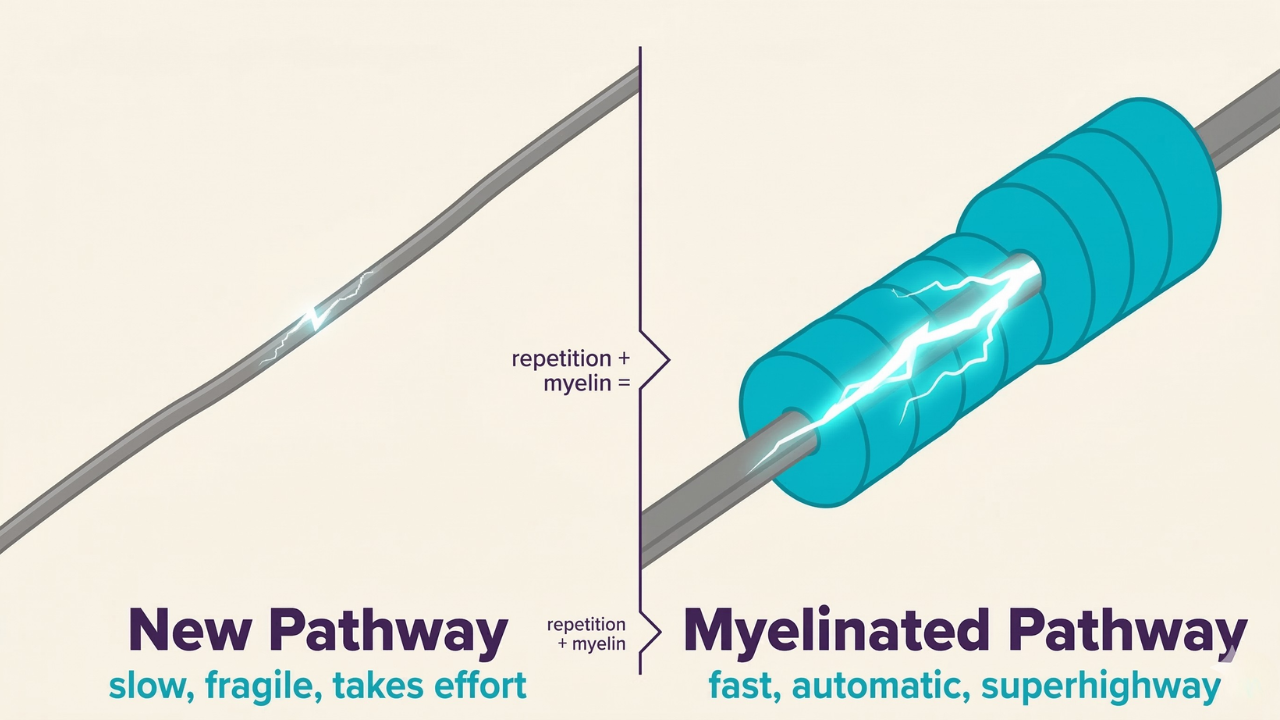
  • How to Raise Your Self-Esteem: Why Affirmations Fail and What Actually Works

    How to Raise Your Self-Esteem: Why Affirmations Fail and What Actually Works

    Self-esteem is not confidence, positive thinking, or the ability to feel good about yourself — it is the felt sense of inherent worth that exists independent of your achievements, appearance, relationships, or productivity, and for most adults, it was stolen in childhood before you had any say in the matter. If you’ve spent years trying to raise your self-esteem through affirmations, accomplishments, or other people’s approval — and it still doesn’t stick — you’re not broken. Your emotional blueprint was set in childhood, and no amount of surface-level work can override it.

    That’s you — the one who can list everything you’ve accomplished and still feel like it’s never enough.

    This isn’t about thinking more positively. It isn’t about collecting more wins. It’s about understanding that your self-esteem was hijacked by childhood trauma — and that the only way to rebuild it is to rewire the emotional blueprint that destroyed it in the first place.

    Perfectly imperfect icon representing inherent self-esteem and worth beyond achievement

    What Is Self-Esteem and Why Is Yours So Low?

    Self-esteem is the internal felt sense of your own value and worth — not as something earned through performance, but as something inherent to your existence. True self-esteem doesn’t fluctuate based on what you accomplished today or who approved of you. It’s a stable, grounded knowing that you matter — regardless of what you’re thinking, feeling, believing, or doing.

    That’s you — confusing confidence with self-esteem, thinking that if you could just achieve enough, you’d finally feel worthy.

    But here’s what nobody tells you: most people don’t have low self-esteem because they haven’t achieved enough. They have low self-esteem because their childhood emotional environment taught them that their worth was conditional. Conditional on being good enough, quiet enough, productive enough, perfect enough. And that conditional worth became the emotional blueprint your brain has been running ever since.

    Low self-esteem is not a character flaw or a lack of effort — it is a childhood emotional meaning that hardened into identity, teaching your nervous system that your worth must be constantly earned, proved, and defended rather than simply existing as an inherent part of who you are.

    Emotional authenticity icon representing the path from conditional worth to inherent self-esteem

    At all times, no matter what you’re thinking, feeling, believing, or doing — you always have value and worth. That’s not a platitude. That’s the foundational truth that childhood stole from you. And rebuilding self-esteem starts with understanding exactly how it was taken.

    How Did Childhood Trauma Destroy Your Self-Esteem?

    Your self-esteem wasn’t destroyed in a single moment. It was eroded over thousands of small interactions — interactions that taught you painful meanings about yourself before you had the cognitive ability to question them.

    That’s you — still carrying the emotional conclusions of a five-year-old and wondering why you can’t just “think positive” your way out of feeling worthless.

    When a child experiences emotional neglect, criticism, conditional love, or any environment where their feelings don’t matter and their needs are treated as a burden, the child doesn’t think “my parent has a problem.” The child thinks “I am the problem.” That’s not a thought — it’s an emotional meaning that becomes the foundation of identity.

    Emotional blueprint icon showing how childhood meanings create the foundation for low self-esteem

    Worthlessness is not a fact. Worthlessness is a childhood emotional meaning. It forms when the child experiences emotional overwhelm, rejection, abandonment, neglect, manipulation, comparison, shame, emotional volatility, or parents in survival mode who lacked the emotional skills to mirror the child’s inherent value. The child concludes: “I’m the problem.” “I’m not wanted.” “I have no value.” “I’m unlovable.” And these meanings harden into identity.

    That’s the voice — the one that wakes you at 3 AM telling you that you’re not good enough, not far enough along, not worthy of the life you’ve built. That voice isn’t yours. It’s your childhood’s.

    Here’s what Kenny teaches in his practice: whether at your worst or best, you always have inherent worth and value. Childhood taught something different — “worth equals being a certain way.” But the truth is that your behavior changes while your worth doesn’t. Shame says: “I did X, so I am bad.” The Authentic Self says: “I did X, and I’m still worthy — I’ll own it and repair.”

    Worthlessness is the emotional residue of a child who concluded “if I was worthy, they wouldn’t treat me this way” — but the child didn’t realize that the parent’s pain didn’t belong to them, that the chaos wasn’t their fault, and that the neglect was never a judgment of their worth.

    How Does the Worst Day Cycle™ Keep Your Self-Esteem Trapped?

    Low self-esteem isn’t random. It follows a predictable neurochemical pattern called the Worst Day Cycle™. Understanding this cycle is the first step to breaking free from it — because you can’t change what you can’t see.

    Worst Day Cycle diagram showing how trauma fear shame denial destroy self-esteem

    The Worst Day Cycle™ has four stages: Trauma → Fear → Shame → Denial.

    Trauma: Any negative emotional experience in childhood that created painful meanings about you. It doesn’t have to be dramatic — it can be as subtle as a parent who never said “I’m proud of you,” a household where emotions were treated as weakness, or a caregiver whose love was conditional on performance. These experiences create a massive chemical reaction in the brain and body. The hypothalamus generates chemical cocktails — cortisol, adrenaline, dopamine, oxytocin misfires — and the brain becomes addicted to these emotional states.

    That’s you — addicted to the stress of proving yourself because your nervous system was calibrated for conditional worth in childhood.

    Fear: Fear drives repetition. The brain conserves energy by repeating known patterns — it can’t tell right from wrong, only known from unknown. Since 70%+ of childhood messaging is negative and shaming, adults repeat these painful patterns in relationships, career, hobbies, health — everything. Your low self-esteem doesn’t just feel familiar — it feels safe. And that’s terrifying to realize.

    Shame: This is where you lost your inherent worth. “I am the problem.” Not “I made a mistake” — but “I AM the mistake.” This is the core wound underneath low self-esteem. Every time you belittle your worth by saying “I was so stupid” or “why didn’t I do that differently,” you’ve just said: I don’t have value and worth unless I do this perfectly.

    That’s the shame — and it’s been running your self-esteem since before you could spell your own name.

    Denial: Denial is the survival persona you created to survive the pain of shame. It was brilliant in childhood — absolutely necessary. But in adulthood, it creates a false version of self-esteem built on achievement, control, or people-pleasing rather than inherent worth. Three survival persona types emerge: Falsely Empowered (controls, dominates, rages), Disempowered (collapses, people-pleases), and Adapted Wounded Child (oscillates between both).

    Trauma chemistry icon showing how childhood creates neurochemical addiction to low self-esteem patterns

    The Worst Day Cycle™ explains why low self-esteem feels permanent — your brain created a neurochemical loop in childhood that equates your worth with external validation, and it repeats that loop thousands of times per day without your conscious awareness.

    How Does Your Survival Persona Fake Self-Esteem?

    Your survival persona is the identity you created in childhood to navigate an emotionally unsafe environment. It’s not who you are — it’s who you had to become. And for most people struggling with self-esteem, their survival persona is either performing confidence or collapsing into invisibility.

    Survival persona icon showing how childhood creates false self-esteem through three survival types

    The Falsely Empowered: This persona controls, dominates, and rages. They look like they have the highest self-esteem in the room — confident, decisive, unstoppable. But their “confidence” is built on fear, not worth. They achieve relentlessly because deep down they believe they’re worthless without their accomplishments. They can’t tolerate criticism because it confirms what they already believe about themselves. They’re hiding that they feel shame and less than by being falsely empowered and better than.

    That’s you — the one everyone thinks has it all together while you’re secretly terrified that if you stopped performing, everyone would see you’re a fraud.

    The Disempowered: This persona collapses, people-pleases, and disappears. Their low self-esteem is visible — they don’t ask for what they need, they tolerate mistreatment, they make themselves small. They believe their worth is conditional on what they give to others. They abandon their own needs, boundaries, and voice to maintain connection — because being alone feels like proof that they’re unlovable.

    That’s you — the one who gives everything to everyone else and then wonders why you feel invisible, unvalued, and empty.

    The Adapted Wounded Child: This persona oscillates between both — raging one moment, collapsing the next. One day they feel unstoppable; the next day they can’t get out of bed. Their self-esteem is wildly inconsistent because they never developed a stable sense of inherent worth. They flip between overperforming and shutting down, between “I don’t need anyone” and “please don’t leave me.”

    Adapted wounded child icon showing oscillation between falsely empowered and disempowered self-esteem

    That’s you — swinging between feeling like you can conquer the world and feeling like you’re fundamentally broken, never landing in a stable sense of your own worth.

    All three survival personas use shame as a control mechanism — they tell you that if you step out of your survival role, if you become vulnerable, if you rest without earning it, you’ll be exposed as the worthless person you secretly believe you are. The survival persona doesn’t build self-esteem — it performs it.

    How Does Low Self-Esteem Show Up in Every Area of Your Life?

    Family: You’re still trying to earn the approval you never got as a child. You over-function at family gatherings, manage everyone’s emotions, and swallow your own feelings to keep the peace. You can’t set boundaries because saying no feels like confirming that you’re the selfish, ungrateful child your family always implied you were. Or you’ve cut off entirely — because the pain of never being enough was unbearable.

    That’s you — a grown adult still performing for people who couldn’t see your worth when you were seven.

    Romantic Relationships: You choose partners who confirm your childhood belief about yourself. If you believe you’re not enough, you’ll choose someone who treats you like you’re not enough — because your nervous system recognizes that dynamic as “home.” You confuse intensity with love. You tolerate behavior that crosses your boundaries because leaving feels like proof that you don’t deserve better. Or you control everything to avoid the vulnerability that real intimacy requires.

    Sound familiar? The person who gives everything in relationships but never feels truly seen or valued?

    Friendships: You’re the friend everyone leans on but no one checks on. Your low self-esteem makes you the listener, the helper, the one who shows up for everyone else’s crisis. But you never share your own struggles — because deep down, you believe your pain isn’t important enough, that you’d be a burden, that if people saw the real you, they’d leave.

    That’s you — surrounded by people and still fundamentally alone, because the person you hide most from is yourself.

    Work: You either overdeliver compulsively — staying late, saying yes to everything, checking email at midnight — because your worth is measured in productivity. Or you underperform and undersell yourself, accepting less than you deserve because you genuinely believe you don’t deserve more. Either way, your career is being driven by your childhood emotional blueprint, not your authentic desires.

    That’s you — getting promoted for your survival persona’s performance while your authentic self sits in the corner, exhausted and unseen.

    Body and Health: Low self-esteem disconnects you from your body. You push through exhaustion, ignore pain signals, numb with food or scrolling or alcohol. You treat your body as something to control rather than something to listen to. Chronic stress, digestive issues, insomnia, and autoimmune conditions are often the body’s final attempt to get your attention after decades of being ignored.

    Emotional regulation icon showing how body awareness rebuilds self-esteem from the nervous system up

    Why Can’t Affirmations and Positive Thinking Fix Your Self-Esteem?

    You’ve tried the affirmations. You’ve stood in front of the mirror and said “I am worthy.” You’ve read the books, attended the seminars, collected the insights. And nothing sticks. Here’s why: you cannot think your way out of a biochemical event.

    That’s you — repeating “I am enough” while your nervous system is screaming that you’re not, and then shaming yourself for not being “positive enough.”

    Emotions are biochemical events, not intellectual ones. Thoughts originate from feelings, not the other way around. Your low self-esteem doesn’t live in your thoughts — it lives in your body. In the tightening in your chest when someone criticizes you. In the hollow feeling in your stomach when you’re alone. In the surge of panic when you make a mistake. Those responses are neurochemical — and no affirmation can override them.

    Think of the second hand on a clock. It moves in tiny, almost insignificant ticks. But those ticks move the minute hand. The minutes move the hours. Healing self-esteem works the same way. It’s not about the big breakthrough or the perfect affirmation. It’s about tiny, repeated moments where your nervous system experiences something different — where you feel your worth instead of just thinking about it.

    That’s the truth nobody tells you — you don’t need a bigger insight. You need a smaller, more consistent practice that speaks to your body, not just your mind.

    Affirmations cannot rebuild self-esteem because low self-esteem is stored in the body’s neurochemistry as an automated survival pattern — the brain doesn’t respond to what you tell it, it responds to what it feels, and what it feels was programmed in childhood.

    How Does the Emotional Authenticity Method™ Rebuild Real Self-Esteem?

    The Emotional Authenticity Method™ is the practice that actually rebuilds self-esteem at the nervous system level. It works because it targets the body — where the wound lives — not just the mind where you’ve been trying to fix it.

    Emotional fitness icon representing the daily practice of rebuilding self-esteem through the Emotional Authenticity Method

    Step 1: Somatic Down-Regulation. Before you can rebuild anything, you have to get your nervous system out of survival mode. Focus on what you can hear for 15-30 seconds. If you’re highly dysregulated, use titration — feel a little bit, regulate, feel a little more. You’re teaching your body that it’s safe enough to feel what’s underneath the survival persona.

    That’s you — learning that the first step to self-esteem isn’t thinking differently, it’s calming your nervous system enough to feel what’s actually there.

    Step 2: What am I feeling right now? Most people with low self-esteem have no idea what they’re actually feeling. They’ve been disconnected from their emotions for so long that “fine” is their default. Using the Feelings Wheel, you develop emotional granularity — the ability to name specific emotions instead of lumping everything into “stressed” or “fine” or “I’m not good enough.”

    Step 3: Where in my body do I feel it? All emotional trauma is stored physically. Your chest tightens. Your stomach drops. Your jaw clenches. Locating the feeling in your body is how you move from intellectual understanding to somatic processing — from thinking about self-esteem to actually feeling your worth.

    Step 4: What is my earliest memory of having this exact feeling? This is where everything changes. You trace today’s feeling of worthlessness back to its childhood origin. You realize: this isn’t about today. This isn’t about the criticism I just received. My nervous system is replaying a childhood moment when I learned that my worth was conditional.

    That’s the moment — when you see that the voice saying “you’re not enough” belongs to your childhood, not your present reality.

    Step 5: Who would I be if I never had this thought or feeling again? What would be left over? This is the vision step. It connects you to the Authentic Self Cycle™ and gives your nervous system a destination — not more coping, not better affirmations, but actual identity restoration. What would you create? How would you show up? What risks would you take if you knew, deep in your body, that your worth was inherent?

    Step 6: Feelization. This is the emotional blueprint remapping and rewiring step. Sit in the feeling of the Authentic Self and make it strong. Ask: how would I respond to this situation from this feeling? What would I say? What would I do? Visualize and FEEL yourself operating from your Authentic Self — from inherent worth, not earned worth. Create a new emotional chemical addiction to replace the old blueprint of shame and conditional value.

    That’s you — not just imagining a more confident version of yourself, but actually creating the neurochemical experience of being that person, one practice at a time.

    The Emotional Authenticity Method™ rebuilds self-esteem because emotions are biochemical events — you cannot change emotional patterns through thoughts alone. Thoughts originate from feelings, not the other way around. Real self-esteem is felt, not thought.

    How Does the Authentic Self Cycle™ Restore Your Inherent Worth?

    The Authentic Self Cycle™ is the healing counterpart to the Worst Day Cycle™. Where the Worst Day Cycle™ traps you in Trauma → Fear → Shame → Denial, the Authentic Self Cycle™ restores your identity through Truth → Responsibility → Healing → Forgiveness.

    Authentic Self Cycle diagram showing truth responsibility healing forgiveness as the path to real self-esteem

    Truth: Name the blueprint. See that “this isn’t about today.” When someone criticizes you and your entire sense of self collapses, truth says: “This reaction is from childhood. This person’s feedback isn’t defining my worth — my nervous system just thinks it is because that’s what happened with my parents.”

    That’s the first step to real self-esteem — seeing the pattern instead of being trapped inside it.

    Responsibility: Own your emotional reactions without blame. “My partner isn’t my parent — my nervous system just thinks they are.” This isn’t about fault. It’s about reclaiming your power. As long as your self-esteem depends on how others treat you, you’re still operating from the child’s definition of worth: borrowed, conditional, revocable. Adults never place the responsibility of determining their worth in others’ hands.

    Healing: Rewire the emotional blueprint so criticism becomes uncomfortable but not identity-destroying, rejection doesn’t mean you’re worthless, and making mistakes doesn’t collapse your entire sense of self. This is where repeated practice creates new neural pathways — second by second, like the ticks of a clock, building a new emotional foundation.

    Forgiveness: Release the inherited emotional blueprint and reclaim your authentic self. This creates a NEW emotional chemical pattern that replaces fear, shame, and denial with safety, worth, and connection. You don’t become someone new — you finally meet who you always were underneath the survival persona.

    That’s you — discovering that your worth was never lost. It was buried under layers of childhood shame that were never yours to carry.

    The Authentic Self Cycle™ is an identity restoration system — it doesn’t teach you to perform higher self-esteem, it replaces the neurochemical pattern that destroyed your inherent worth with a new blueprint built on truth, responsibility, and emotional authenticity.

    Reparenting icon showing the process of rebuilding self-esteem through the Authentic Self Cycle

    What Is the Micro-Worth Inventory Practice?

    One of the most powerful daily practices for rebuilding self-esteem is the Micro-Worth Inventory. It’s deceptively simple — and it works precisely because it bypasses the thinking mind and speaks directly to the body.

    Here’s how it works: every day, list one to five things you genuinely like or appreciate about yourself. No “shoulds.” No forced affirmations. Only felt truths. The key word is genuinely — you have to actually feel it, not just think it.

    That’s you — starting where you actually feel it, not where you think you should feel it.

    It doesn’t have to be deep or lofty. Kenny teaches his clients to start with the most basic, embodied experience of appreciating something real about themselves. “I have great feet.” “I’m kind to my friends.” “I show up on time.” “I make people laugh.” These aren’t Instagram affirmations — they’re micro-evidence of worth that your nervous system can actually accept.

    Inherent worth is rebuilt in micro-evidence, not grand affirmations. Because your nervous system doesn’t trust grand declarations — it was trained to distrust them by a childhood that promised love and delivered conditions. But small, felt truths? Those slip past the survival persona’s defenses and land in the body where real self-esteem lives.

    That’s how self-esteem actually rebuilds — not through dramatic breakthroughs, but through daily moments of honest self-appreciation that your body believes.

    Myelin and neural pathways icon showing how daily micro-worth practice builds new self-esteem neural pathways

    Frequently Asked Questions About Self-Esteem

    What is self-esteem and where does it come from?

    Self-esteem is the felt sense of inherent worth — the internal knowing that you have value regardless of your accomplishments, appearance, or relationships. True self-esteem originates in childhood, when a child’s emotional environment either mirrors their inherent worth or teaches them that worth is conditional. When childhood trauma, neglect, or conditional love damages this foundation, the Worst Day Cycle™ creates a neurochemical pattern that makes low self-esteem feel permanent.

    Why do affirmations and positive thinking fail to build self-esteem?

    Affirmations target the thinking brain, but low self-esteem lives in the body as a neurochemical pattern. Emotions are biochemical events — thoughts originate from feelings, not the other way around. You cannot override a nervous system running on childhood shame with words alone. The Emotional Authenticity Method™ rebuilds self-esteem at the somatic level where the wound actually exists.

    Can high achievers have low self-esteem?

    Yes — and this is extremely common. High achievers often operate from a falsely empowered survival persona that performs confidence while running on shame underneath. Their achievement is driven by the belief that their worth equals their output. The Worst Day Cycle™ explains how childhood trauma creates a neurochemical addiction to the stress-performance-validation loop that looks like confidence but feels like emptiness.

    How long does it take to rebuild self-esteem?

    Self-esteem patterns that have been running for decades don’t reverse overnight. But noticeable shifts can happen within weeks of consistent daily practice with the Emotional Authenticity Method™ and the Micro-Worth Inventory. The key is repetition, not intensity — small moments of felt worth create cumulative neurological change. The Authentic Self Cycle™ provides the framework for long-term identity restoration.

    What is the difference between self-esteem and confidence?

    Confidence is situational — you can be confident in your skills, your knowledge, or your ability to perform. Self-esteem is foundational — it’s the felt sense that you have inherent worth regardless of performance. Many people have high confidence and low self-esteem, which creates the paradox of external success and internal emptiness. True self-esteem doesn’t require achievement to sustain itself.

    Is low self-esteem connected to codependency?

    Low self-esteem is the foundation of codependence. When you don’t believe you have inherent worth, you try to earn worth through what you do for others — giving too much, tolerating too much, abandoning yourself to maintain connection. The three survival persona types — falsely empowered, disempowered, and adapted wounded child — each express low self-esteem differently in relationships.

    The Bottom Line

    Your self-esteem was never broken by a lack of effort. It was broken by a childhood that taught you your worth was conditional — and then your brain automated that belief into a neurochemical pattern that has been running your life ever since.

    No affirmation can fix this. No achievement can fill this. No relationship can complete this.

    But you can rebuild it. Not through thinking differently, but through feeling differently — one micro-moment of honest self-appreciation at a time. One practice of the Emotional Authenticity Method™ at a time. One step through the Authentic Self Cycle™ at a time.

    Worth does not come from approval, performance, attraction, success, productivity, or perfection. Worth comes from existing. Your worth is not negotiable. It never was.

    There is nothing you’ve done to lose your worth. No matter how imperfect, how messy, how human you’ve been — your inherent value was never lost. It was just buried under layers of childhood shame that were never yours to carry in the first place.

    That’s you — not the person who needs to achieve more to feel worthy. The person who was always worthy, and is finally ready to feel it.

    These books complement the frameworks in this article and deepen your understanding of self-esteem, shame, and childhood trauma recovery:

    Facing Codependence by Pia Mellody — the foundational text on how childhood trauma creates conditional worth and the survival personas that destroy self-esteem.

    The Body Keeps the Score by Bessel van der Kolk — the science of how trauma lives in the body and why cognitive approaches alone can’t rebuild self-esteem.

    When the Body Says No by Gabor Maté — how chronic self-abandonment and suppressed worth manifest as physical illness and disease.

    Codependent No More by Melody Beattie — a practical guide to recognizing when low self-esteem drives codependent patterns in relationships.

    The Gifts of Imperfection by Brené Brown — how shame destroys self-esteem and how vulnerability is the path back to inherent worth.

    Healing the Shame That Binds You by John Bradshaw — foundational work on how toxic shame becomes internalized identity and destroys self-worth.

    Take the Next Step

    If you’re ready to stop performing self-esteem and start feeling it, Kenny Weiss offers courses designed for people who are done chasing worth through achievement and ready to reclaim what was always theirs:

    Emotional Blueprint Starter Course — Individual ($79) — Your personal roadmap to understanding the Worst Day Cycle™ and beginning the journey to inherent worth.

    Relationship Starter Course — Couples ($79) — For couples ready to stop triggering each other’s shame and build relationships from authentic self-esteem.

    Why We Can’t Stop Hurting Each Other ($479) — Deep-dive into the Worst Day Cycle™ and how childhood shame creates relationship pain.

    Why High Achievers Fail at Love ($479) — Built specifically for high achievers whose falsely empowered survival persona has been performing confidence while their self-esteem crumbles.

    The Shutdown Avoidant Partner ($479) — Understanding avoidant attachment through the lens of trauma chemistry and the survival personas that mask low self-esteem.

    Tier 1: Mapping the Blueprint ($1,379) — The comprehensive program for learning and practicing the Emotional Authenticity Method™ and rebuilding self-esteem from the nervous system up.

    Download the Feelings Wheel — the free tool used in Step 2 of the Emotional Authenticity Method™ to build the emotional granularity that self-esteem requires.

    Explore more: The Signs of Enmeshment | 7 Signs of Relationship Insecurity | 7 Signs of High Self-Esteem | How to Determine Your Negotiables and Non-Negotiables | 10 Do’s and Don’ts for a Great Relationship

  • Manipulative Relationship Tactics: Why You Keep Falling for Them

    Manipulative Relationship Tactics: Why You Keep Falling for Them

    Manipulative relationship tactics are the patterns of control, deception, and emotional exploitation that one or both partners use — often unconsciously — to maintain power, avoid vulnerability, and repeat the childhood trauma blueprint that taught them relationships require manipulation to survive. If you’ve ever felt confused, drained, or like you’re constantly walking on eggshells in a relationship, you’re not dealing with a communication problem. You’re caught in a survival dynamic that was wired into both partners’ nervous systems decades before they ever met.

    That’s you — the one who keeps ending up with the same type of person, wondering why it always turns into the same painful cycle.

    The truth nobody tells you about manipulation in relationships is this: it’s not just one person doing the manipulating. Both partners are running childhood survival strategies — one from the falsely empowered position and one from the disempowered position. And until you understand that, you’ll keep falling for the same tactics, in the same kind of relationship, with the same kind of pain.

    Codependence icon showing how manipulative relationship tactics emerge from childhood trauma patterns

    What Are Manipulative Relationship Tactics?

    Manipulative relationship tactics are behaviors designed — consciously or unconsciously — to control another person’s actions, emotions, or perceptions in order to maintain power in a relationship. They include gaslighting, guilt-tripping, stonewalling, love-bombing, playing the victim, denying and projecting, isolating you from your support system, and using your fairness or kindness against you.

    That’s you — the one who keeps wondering “am I crazy?” after every argument, because somehow everything always ends up being your fault.

    But here’s what most articles about manipulative tactics get wrong: they focus entirely on identifying the manipulator. They create a checklist of “red flags” and tell you to run. And while protecting yourself is important, this approach misses the deeper question that actually changes your life: why are you attracted to manipulators in the first place?

    The answer isn’t that you’re naive. It isn’t that you have bad judgment. It’s that your childhood emotional blueprint taught your nervous system that manipulation feels like love — because in your earliest relationships, it was.

    Emotional blueprint icon showing how childhood patterns create vulnerability to manipulative relationship tactics

    Manipulative relationship tactics are not random acts of cruelty — they are automated survival strategies both partners learned in childhood, running on neurochemical patterns that equate control with safety and intensity with connection.

    Why Do You Keep Falling for Manipulative Relationship Tactics?

    You don’t fall for manipulation because you’re weak. You fall for it because your brain was trained to seek it out. The brain conserves energy by repeating known patterns — it can’t tell right from wrong, only known from unknown. Since 70%+ of childhood messaging is negative and shaming, adults repeat these painful patterns in relationships, career, hobbies, health — everything.

    That’s you — choosing the same kind of partner over and over, not because you want to, but because your nervous system is addicted to the chemistry of that dynamic.

    If you grew up with a parent who used conditional love — love that depended on your behavior, your performance, or how little you needed — your brain cataloged that dynamic as “what love feels like.” The intensity. The unpredictability. The walking on eggshells. The relief when they were finally kind to you. That roller coaster of fear and reward created a chemical pattern in your brain that you now seek out in adult relationships.

    Trauma chemistry icon showing how childhood creates neurochemical addiction to manipulative relationship dynamics

    The hypothalamus generates chemical cocktails — cortisol, adrenaline, dopamine, oxytocin misfires — and the brain becomes addicted to these emotional states. So when you meet someone who triggers that same chemical response, your body says “this is love.” It’s not. It’s recognition. Your nervous system recognizing the same dynamic it survived in childhood.

    That’s the trap — confusing familiarity with safety, and intensity with intimacy.

    You keep falling for manipulative relationship tactics because your childhood emotional blueprint created a neurochemical addiction to the very dynamics that hurt you — your brain doesn’t seek what’s healthy, it seeks what’s known, and what’s known is manipulation disguised as connection.

    How the Worst Day Cycle™ Creates Attraction to Manipulation

    To understand why manipulative tactics have such power over you, you need to understand the Worst Day Cycle™. This is the neurochemical pattern that runs underneath every relationship you’ve ever had — and it explains why you keep choosing partners who manipulate you.

    Worst Day Cycle diagram showing trauma fear shame denial loop that creates vulnerability to manipulative relationship tactics

    The Worst Day Cycle™ has four stages: Trauma → Fear → Shame → Denial.

    Trauma: Any negative emotional experience in childhood that created painful meanings. It doesn’t have to be dramatic — it can be as subtle as a parent whose love was conditional, a household where your feelings were dismissed, or a caregiver who was emotionally unavailable. These experiences create a massive chemical reaction in the brain and body. The hypothalamus generates chemical cocktails — cortisol, adrenaline, dopamine, oxytocin misfires — and the brain becomes addicted to these emotional states.

    That’s you — feeling “butterflies” when you meet someone new, not realizing those butterflies are actually your nervous system recognizing danger and calling it excitement.

    Fear: Fear drives repetition. The brain thinks repetition equals safety. So you keep choosing the same relationships, the same dynamics, the same type of person — not because you want to, but because your nervous system is terrified of the unknown. A healthy, stable relationship feels boring to a nervous system calibrated for chaos. That “spark” you’re looking for? It’s usually your trauma recognizing itself in someone else.

    Shame: This is where you lost your inherent worth. “I am the problem.” Not “I made a mistake” — but “I AM the mistake.” This is why manipulative tactics work so well on you. When someone gaslights you, guilt-trips you, or tells you that you’re “too sensitive” — it lands. It lands because it confirms what shame has been whispering since childhood: you’re not enough, you’re the problem, you deserve this.

    That’s the shame talking — and it’s the reason you stay in relationships that anyone on the outside can see are destroying you.

    Denial: Denial is the survival persona you created to survive the pain. It was brilliant in childhood — absolutely necessary. But in adulthood, it’s the reason you can’t see the manipulation even when everyone around you can. Denial says: “They’re not that bad.” “They’re going through a hard time.” “If I just love them enough, they’ll change.” This is denial protecting the childhood blueprint — because admitting the relationship is toxic means admitting the pattern, and admitting the pattern means feeling the original wound.

    Survival persona icon showing how childhood denial keeps you trapped in manipulative relationship patterns

    The Worst Day Cycle™ explains why manipulative relationship tactics feel irresistible — your childhood trauma created a neurochemical loop that equates manipulation with love, intensity with connection, and walking on eggshells with “working hard on a relationship.”

    What Are the 5 Most Common Manipulative Relationship Tactics?

    These five manipulative tactics show up in nearly every unhealthy relationship — and they all exploit the childhood wounds created by the Worst Day Cycle™.

    Tactic 1: They exploit your fairness. You try to be reasonable. You try to see both sides. And they use that against you. In a disagreement, they bring up everything you “owe” them — favors, sacrifices, compromises — and weaponize your desire to be fair. They know that your childhood taught you to earn love through accommodation, so they create a dynamic where you’re always trying to make things “equal” while they take more and more.

    That’s you — keeping score in your head, bending over backward to be fair, while they keep moving the goalpost.

    Tactic 2: They deny and project. When caught in a lie or harmful behavior, they don’t own it. They explain it away, minimize it, or flat-out deny it happened. “You’re overreacting.” “That’s not what I said.” “You’re remembering it wrong.” This is gaslighting — and it works because your childhood shame already makes you doubt yourself. If you grew up in an environment where your feelings were dismissed, gaslighting doesn’t feel new. It feels normal.

    That’s you — walking out of every conversation wondering if maybe you really are crazy, because they seemed so sure.

    Tactic 3: They isolate you from your support system. This can be overt — “I don’t like your family” — or covert — subtle comments that make you question your relationships with the people who love you. They convince you that your friends don’t understand, your family is toxic, or that no one supports you the way they do. The goal is to make you dependent on them as your sole emotional connection.

    Sound familiar? Looking around one day and realizing you’ve pushed away everyone who used to be close to you?

    Tactic 4: They remove your ability to question them. When you bring up a concern, you’re met with rage, dismissal, or punishment. Over time, you learn to stop asking. You stop bringing up what’s bothering you. You walk on eggshells. You monitor their mood before you speak. This is exactly what you did as a child — reading the room, anticipating danger, suppressing your needs to keep the peace.

    That’s you — planning what to say for hours before a conversation, and then still not saying it because the risk feels too great.

    Tactic 5: They “play nice” to keep score. They do generous things — but there’s always a price. Every act of kindness becomes currency they’ll cash in later. “After everything I’ve done for you, how can you say that?” This conditional generosity mirrors conditional love from childhood — where you learned that giving and receiving always had strings attached.

    Emotional absorption icon showing how manipulative relationship tactics exploit childhood emotional patterns

    That’s you — feeling guilty every time they remind you of what they’ve done, even though something in your gut says this isn’t how love is supposed to work.

    The Uncomfortable Truth: Both Partners Manipulate

    This is the part nobody wants to hear. And it’s the part that will actually set you free.

    The person who gets attracted to the narcissist gets in a relationship, and they manipulate and control the narcissist just as much — but they do it from the victim position. This is Kenny’s lived experience: “I had to take ownership of that, of how I did that. The way we do it is we make ourselves helpless.”

    That’s the truth that changes everything — recognizing that manipulation isn’t something that happens to you. It’s a dynamic you’re participating in, from the other side.

    This is NOT victim-blaming. You are not to blame for what happened to you in childhood. You are not to blame for the patterns your brain created to survive. But you ARE responsible for what happens now that you know. The Victim Position Paradox explains this perfectly: The victim position is a societal construct meant to protect victims, but in reality it has created a paradoxical falsely empowered position that nearly guarantees the victim will reexperience their childhood victimization, leaving them disempowered.

    When we know somebody is manipulating us and we give into it, we join them in the manipulation. We become an enabler. Now it is a dual manipulation — both partners sharing equally in the harmful dynamic.

    That’s you — staying in the relationship not out of love, but because the victim position gives you something your childhood never did: power. Power through helplessness. Power through being the “good one.” Power through suffering.

    The covert manipulative dynamics from the disempowered position include: passive-aggressive comments in public, pouting and throwing fits when you don’t get your way, being “nice” to get something rather than being nice to be nice, refusing to set boundaries and then resenting the other person for crossing them, and using your suffering as leverage for sympathy from friends and family.

    Both partners in a manipulative relationship are running childhood survival strategies — one controls from the falsely empowered position and the other controls from the disempowered victim position, creating a dual manipulation dynamic that neither partner can see because both are operating from their childhood wounded self.

    How Your Survival Persona Makes You Vulnerable to Manipulation

    Your survival persona is the identity you created in childhood to navigate an emotionally unsafe environment. It’s not who you are — it’s who you had to become. And it determines which manipulative tactics you’ll use — and which ones you’ll fall for.

    Adapted wounded child icon showing how survival personas create vulnerability to manipulative relationship tactics

    There are three survival persona types:

    The Falsely Empowered: This persona controls, dominates, and rages. They’re the overt manipulator — the one who gaslights, stonewalls, and uses anger to maintain power. They look powerful on the outside, but their control comes from fear, not strength. They learned in childhood that the only way to be safe was to be in charge. Underneath the dominance is a terrified child who never felt safe.

    That’s you — if you’re the one who controls every conversation, every decision, every dynamic, and calls it “leadership” or “having high standards.”

    The Disempowered: This persona collapses, people-pleases, and disappears. They’re the covert manipulator — the one who uses helplessness, guilt, and suffering to maintain connection. They make themselves small to be safe. They learned in childhood that the only way to maintain attachment was to give up their needs, their voice, and their authentic self. They manipulate through accommodation and then resent the very person they’re accommodating.

    That’s you — if you’re the one who gives everything, says nothing, and then explodes or shuts down when you can’t take it anymore.

    The Adapted Wounded Child: This persona oscillates between both — raging one moment, collapsing the next. They swing between overt control and covert helplessness, never landing in their authentic self. In relationships, they’re the most unpredictable — falsely empowered when they feel safe, disempowered when they feel threatened.

    That’s you — swinging between “I don’t need anyone” and “please don’t leave me” and never knowing which one is the real you.

    Emotional authenticity icon representing the path from manipulative survival patterns to authentic connection

    Your survival persona is the engine that powers both sides of manipulation — it determines whether you control overtly or covertly, and it ensures that you’re attracted to the exact person whose survival persona perfectly mirrors the dynamic you learned in childhood.

    How Manipulation Shows Up in Every Area of Your Life

    Family: You play the peacekeeper at family gatherings, managing everyone’s emotions while suppressing your own. You can’t set boundaries with your parents because guilt floods your body every time you try. You either dominate family dynamics or disappear entirely. And you’ve been playing the same role since childhood — the responsible one, the invisible one, the difficult one — and no one questions it.

    That’s you — still performing the role your family assigned you at age six, wondering why holidays always leave you feeling empty.

    Romantic Relationships: You confuse intensity with intimacy. You choose partners who mirror your parents’ emotional patterns. You tolerate behavior that crosses your boundaries because leaving feels more terrifying than staying. You either over-give to earn love or withhold to maintain control. And when the relationship ends, you find the next person who triggers the exact same chemistry.

    Sound familiar? The person who’s been in three relationships that all ended the same way, with the same dynamic, and the same confusion?

    Friendships: You’re the friend everyone calls in crisis but no one checks on. You listen for hours but never share your own struggles. You keep score — who called last, who made the effort — and resent people for not meeting standards you never communicated. Or you dominate friendships, always steering the conversation, always in charge, never truly known.

    Work: You either over-deliver to prove your worth or underperform because you’ve given up trying to please people who can’t be pleased. You avoid conflict with bosses the way you avoided conflict with parents. You manipulate through overwork — making yourself indispensable so you can’t be abandoned. Or you manipulate through helplessness — performing incompetence so someone will rescue you.

    That’s you — using the same survival strategy at work that you used at the dinner table growing up.

    Body and Health: You ignore your body’s signals because you learned in childhood that your needs don’t matter. Chronic pain, digestive issues, insomnia, and autoimmune conditions are often the body’s last resort when emotional signals have been ignored for decades. You numb with food, alcohol, scrolling, shopping, or overexercise — anything to avoid sitting with the feelings that manipulation was designed to suppress.

    Emotional fitness icon representing the work of recognizing manipulative patterns across all life areas

    How the Emotional Authenticity Method™ Breaks the Manipulation Cycle

    You cannot think your way out of manipulative relationship patterns. Emotions are biochemical events. Thoughts originate from feelings, not the other way around. The Emotional Authenticity Method™ targets the body — where manipulation patterns are stored — not just the mind.

    Emotional regulation icon representing the Emotional Authenticity Method for breaking free from manipulative relationship patterns

    Step 1: Somatic Down-Regulation. Focus on what you can hear for 15-30 seconds. Before you can see manipulation clearly, you have to get your nervous system out of survival mode. When you’re dysregulated, your brain defaults to childhood patterns — which means you’ll either attack or accommodate. Neither leads to freedom. If you’re highly dysregulated, use titration — go slowly, process in small doses.

    That’s you — learning that you can’t make good decisions about a relationship when your nervous system is running in childhood survival mode.

    Step 2: What am I feeling right now? Use the Feelings Wheel to develop emotional granularity. Most people in manipulative relationships can only identify “angry” or “hurt” or “nothing.” But underneath those broad labels are specific emotions — betrayed, dismissed, invisible, trapped, ashamed — and naming them precisely is the first step to understanding what’s really happening.

    Step 3: Where in my body do I feel it? All emotional trauma is stored physically. Your chest tightens. Your stomach drops. Your jaw clenches. Your throat closes. Locating the feeling in your body is how you move from intellectual understanding to somatic processing — and it’s how you start telling the difference between a genuine threat and a childhood pattern being replayed.

    Step 4: What is my earliest memory of having this exact feeling? This is where everything changes. You trace today’s reaction back to its childhood origin. You realize: this isn’t about today. My partner isn’t my parent. My nervous system just thinks they are. That feeling of walking on eggshells? You’ve been doing it since you were five. The manipulation isn’t new. The dynamic is.

    That’s the moment the manipulation loses its power — when you see that your reaction belongs to a child, not to the adult you are today.

    Step 5: Who would I be if I never had this thought or feeling again? What would be left over? This is the vision step. It connects you to the Authentic Self Cycle™ and gives your nervous system a new destination — not another manipulative relationship, but genuine connection built on truth, boundaries, and emotional authenticity.

    Step 6: Feelization. Sit in the feeling of the Authentic Self and make it strong. Create a new emotional chemical addiction to replace the old blueprint. Ask: how would I respond to this manipulation from this feeling? What would I say? What would I do? Visualize and FEEL yourself operating from your Authentic Self. This is the emotional blueprint remapping and rewiring step — the step that replaces the neurochemical addiction to manipulation with a new pattern built on self-worth.

    The Emotional Authenticity Method™ works because emotions are biochemical events — you cannot break free from manipulative relationship patterns through thoughts alone. You have to rewire the nervous system that makes manipulation feel like love.

    How the Authentic Self Cycle™ Replaces Manipulation With Connection

    The Authentic Self Cycle™ is the healing counterpart to the Worst Day Cycle™. Where the Worst Day Cycle™ traps you in Trauma → Fear → Shame → Denial, the Authentic Self Cycle™ restores your identity through Truth → Responsibility → Healing → Forgiveness.

    Authentic Self Cycle diagram showing truth responsibility healing forgiveness as the path from manipulation to authentic connection

    Truth: Name the blueprint. See that “this isn’t about today.” When your partner uses a manipulative tactic and your body floods with the familiar mix of fear and accommodation, truth says: “This feeling is from childhood. My partner isn’t my parent — my nervous system just thinks they are.” Truth also means seeing your own manipulation — the covert tactics you use from the disempowered position.

    That’s the hardest truth — admitting that you’re not just the victim of manipulation. You’re a participant in a dance that both partners learned in childhood.

    Responsibility: Own your emotional reactions without blame. “My partner isn’t my parent — my nervous system just thinks they are.” This isn’t about fault. It’s about taking back your power from a childhood that stole it. Responsibility means: I can’t control their manipulation, but I can take ownership of why I’m attracted to it, why I tolerate it, and why I use my own version of it from the other side.

    Healing: Rewire the emotional blueprint so intensity isn’t mistaken for connection, control isn’t mistaken for love, and walking on eggshells isn’t mistaken for “working on the relationship.” This is where daily practice does its work — second by second, like the ticks of a clock. The second hand moves in tiny, almost insignificant ticks. But those ticks move the minute hand. The minutes move the hours. Healing works the same way.

    Forgiveness: Release the inherited emotional blueprint and reclaim your authentic self. This creates a NEW emotional chemical pattern that replaces fear, shame, and denial with safety, worth, and connection. You don’t become someone who can’t be manipulated. You become someone who doesn’t need manipulation — from either side — to feel loved.

    That’s you — not the person who finally spotted the manipulator. The person who finally understood why manipulation felt like home, and chose something different.

    The Authentic Self Cycle™ is an identity restoration system — it doesn’t just teach you to spot manipulative relationship tactics, it replaces the neurochemical pattern that made manipulation feel like love with a new blueprint built on truth, responsibility, and emotional authenticity.

    Frequently Asked Questions About Manipulative Relationship Tactics

    What are the most common manipulative tactics in relationships?

    The five most common manipulative relationship tactics are: exploiting your fairness (using your desire to be reasonable against you), denying and projecting (gaslighting you into questioning your own reality), isolating you from support (separating you from friends and family), removing your ability to question them (punishing you for speaking up), and keeping score with “generosity” (using acts of kindness as leverage). All five exploit childhood wounds created by the Worst Day Cycle™ — they work because they trigger the same shame, fear, and denial patterns you learned as a child.

    Why do I keep attracting manipulative partners?

    You attract manipulative partners because your childhood emotional blueprint created a neurochemical addiction to the dynamics of manipulation. The brain conserves energy by repeating known patterns — it can’t tell right from wrong, only known from unknown. If conditional love, emotional unpredictability, or walking on eggshells defined your childhood, your nervous system will seek partners who recreate those exact dynamics. The Worst Day Cycle™ explains how trauma creates fear, shame, and denial that automate this pattern without your conscious awareness.

    Is being manipulated in a relationship always the other person’s fault?

    Both partners in a manipulative relationship are running childhood survival strategies. The person who gets attracted to the narcissist manipulates from the victim position — using helplessness, guilt, and passive aggression to gain power — while the overt manipulator controls through dominance, gaslighting, and rage. This is not victim-blaming — neither partner chose their childhood wounds. But healing requires taking responsibility for your side of the dynamic. The Victim Position Paradox explains how the victim position can become a falsely empowered position that keeps you trapped in the cycle.

    How do I break the cycle of manipulation in my relationship?

    Breaking the manipulation cycle requires rewiring the emotional blueprint that makes manipulation feel like love. The Emotional Authenticity Method™ provides a 6-step daily practice: (1) somatically down-regulate your nervous system, (2) identify what you’re actually feeling, (3) locate it in your body, (4) trace it to your earliest childhood memory of that feeling, (5) envision who you’d be without this pattern, and (6) Feelization — sit in the feeling of the Authentic Self and create a new emotional chemical pattern. You cannot think your way out of a biochemical event.

    What is the difference between setting boundaries and being manipulative?

    A boundary is a statement of truth about what you need, delivered without attempting to control the other person’s response. Manipulation is an attempt to control someone else’s behavior to get your needs met indirectly. “I need you to stop yelling or I’m going to leave the room” is a boundary. Pouting, withdrawing affection, or giving the silent treatment until they behave the way you want is manipulation. The three survival persona types — falsely empowered, disempowered, and adapted wounded child — each blur this line in different ways, which is why learning to determine your negotiables and non-negotiables is essential.

    Can a manipulative person change?

    A manipulative person can change — but only if they’re willing to do the work of healing the childhood trauma that created the manipulative patterns. Manipulation is a survival strategy, not a permanent character trait. It was brilliant in childhood and destructive in adulthood. The Authentic Self Cycle™ provides the framework for identity restoration: Truth (seeing the pattern), Responsibility (owning your side), Healing (rewiring the blueprint through daily somatic practice), and Forgiveness (releasing the inherited emotional pattern and reclaiming your authentic self).

    The Bottom Line

    You don’t need another checklist of red flags. You don’t need to become a better detective of other people’s manipulation. You need to understand why manipulation feels like home — and choose something different.

    Every manipulative relationship you’ve been in was a recreation of a dynamic you learned in childhood. Every tactic that worked on you worked because it targeted a wound that was already there. And every time you stayed — hoping they’d change, believing you could love them enough, telling yourself it wasn’t that bad — you were running the same Worst Day Cycle™ that has been looping since before you could spell your own name.

    The way out isn’t spotting the manipulator faster. The way out is healing the part of you that believes manipulation is what love feels like. That happens in your body, not your head. In the feelings you’ve been managing instead of feeling. In the truth you’ve been avoiding instead of speaking.

    That’s you — not the person who was manipulated. The person who finally understood why, and chose to heal the blueprint that made it possible.

    The void doesn’t fill with a better partner. It fills with truth. With responsibility. With the willingness to see your own side of the dynamic — and the courage to change it. That’s not weakness. That’s the bravest thing you’ll ever do.

    Reparenting icon showing how healing childhood wounds breaks the cycle of manipulative relationship patterns

    These books complement the frameworks in this article and deepen your understanding of manipulative relationship dynamics and the childhood patterns that create them:

    Facing Codependence by Pia Mellody — the foundational text on how childhood trauma creates the codependent patterns that make us vulnerable to manipulation and create our own covert manipulative strategies.

    The Body Keeps the Score by Bessel van der Kolk — the science of how trauma lives in the body, not just the mind, explaining why you can’t think your way out of manipulative relationship patterns.

    When the Body Says No by Gabor Maté — how chronic emotional suppression in manipulative dynamics manifests as physical illness and disease.

    Codependent No More by Melody Beattie — a practical guide to recognizing codependent patterns and the covert manipulation that comes from the disempowered position.

    The Gifts of Imperfection by Brené Brown — how shame drives both sides of the manipulation dynamic and why vulnerability is the path beyond control.

    Take the Next Step

    If you’re ready to break free from manipulative relationship patterns and build connections based on truth instead of survival, Kenny Weiss offers courses designed for people who are done repeating the cycle:

    Emotional Blueprint Starter Course — Individual ($79) — Your personal roadmap to understanding the Worst Day Cycle™ and why you’re attracted to manipulative dynamics.

    Relationship Starter Course — Couples ($79) — For couples ready to see both sides of the manipulation dynamic and build interdependence instead.

    Why We Can’t Stop Hurting Each Other ($479) — Deep-dive into the Worst Day Cycle™ and the dual manipulation dynamic that keeps both partners stuck.

    Why High Achievers Fail at Love ($479) — Built for high achievers who keep choosing partners who trigger the same survival patterns.

    The Shutdown Avoidant Partner ($479) — Understanding avoidant attachment through the lens of trauma chemistry and survival personas.

    Tier 1: Mapping the Blueprint ($1,379) — The comprehensive program for learning and practicing the Emotional Authenticity Method™.

    Download the Feelings Wheel — the free tool used in Step 2 of the Emotional Authenticity Method™ to build emotional granularity and start naming what you’re actually feeling in manipulative dynamics.

    Explore more: The Signs of Enmeshment | 7 Signs of Relationship Insecurity | 7 Signs of High Self-Esteem | How to Determine Your Negotiables and Non-Negotiables | 10 Do’s and Don’ts for a Great Relationship
  • People Pleasing Is a Trauma Response: Why You Can’t Stop Giving Yourself Away

    People Pleasing Is a Trauma Response: Why You Can’t Stop Giving Yourself Away

    You say yes when every cell in your body is screaming no. You volunteer for the project you don’t have time for. You apologize for something that wasn’t your fault — again. You rearrange your entire schedule because someone else “really needs” you, and the knot in your stomach gets a little tighter, but you smile through it because that’s what you do. That’s who you are. The helpful one. The reliable one. The one who never lets anyone down.

    Except yourself. You let yourself down every single time.

    People pleasing is not a personality trait. It is a trauma response — a survival persona created in childhood to manage the terror of powerlessness, and it has been running your nervous system on autopilot ever since.

    The fear of powerlessness is the most prevalent and most destructive pattern that comes out of childhood. When you were a child, your survival depended on your caregivers. You couldn’t feed yourself, protect yourself, or leave. If your authentic self was rejected — if your feelings were dismissed, your needs were ignored, or your voice was silenced — you learned one devastating lesson: who I really am isn’t safe to show. And so you created an identity organized around making other people comfortable, because in childhood, that was how you stayed alive.

    That’s you if you’ve spent your whole life taking care of everyone else and can’t remember the last time someone asked what you need. That’s you if the word “no” gets stuck in your throat like it’s a foreign language. That’s you if you’re exhausted, resentful, and you don’t even know how you got here — because you were too busy making sure everyone else was okay.

    This isn’t about learning to “set boundaries” or practicing saying no in a mirror. This is about what your brain did with pain it couldn’t process — and what happens when you finally understand why you can’t stop giving yourself away.

    codependence and people pleasing as a childhood trauma response

    What Is People Pleasing Really? (It’s Not Kindness)

    Most articles about people pleasing will tell you it’s about “having trouble with boundaries.” They’ll give you scripts, assertiveness exercises, and tips on saying no. And none of it works — because they’re treating a biochemical survival pattern with cognitive strategies that can’t reach the wound.

    You cannot change emotional patterns through thoughts alone. Emotions are biochemical events. Thoughts originate from feelings. People pleasing isn’t a boundary problem — it’s a shame problem that started before you ever had the power to draw a boundary.

    People pleasing is what happens when a child learns that their authentic self — their real feelings, real needs, real desires — will be met with rejection, punishment, or abandonment. The child doesn’t conclude “my parent can’t handle my emotions.” The child concludes “something is wrong with me.” And from that moment, the child begins performing. Smiling when they’re hurt. Agreeing when they disagree. Helping when they’re depleted. Because performing kept the attachment intact. And attachment meant survival.

    That’s you if you learned early that love was conditional — that you had to earn it by being good, quiet, helpful, easy, or invisible.

    The brain conserves energy by repeating known patterns. It can’t tell right from wrong — only known from unknown. Since 70% or more of childhood messaging is negative and shaming, the brain treats self-abandonment as “normal” and self-advocacy as “dangerous.” Your people pleasing isn’t generosity. It’s your nervous system replaying the only survival strategy it ever learned.

    emotional blueprint showing how childhood shame creates people pleasing patterns

    Where People Pleasing Actually Comes From

    People pleasing doesn’t appear out of nowhere in adulthood. It was installed in childhood — during the moments when your authentic self was met with rejection instead of affirmation.

    We are the only species on this planet where we must physically and emotionally attach to another human being or we will die. Our survival depends on it. There are tremendous moments in childhood where our sense of self — our authenticity — is challenged. Our parents impart their views on us. “If you don’t stop crying, I’ll give you something to really cry about.” “Children are to be seen and not heard.” Comments like these make it clear we cannot express our authentic selves. And we are powerless to prevent them.

    Trauma and shame are conditions of powerlessness. We lose our inherent power because we are an infant, a young child, a developing child — survival depends on our caregivers. If we don’t adapt in that moment, if we don’t create a survival persona that gives us away and puts us in the position of pleasing, we won’t survive.

    So the child creates a strategy. The child who got shamed for having needs learns to never ask. The child who got punished for saying no learns to always agree. The child who got rewarded for caretaking learns that their only value is in what they do for others. And the child who watched a parent’s mood swing like a wrecking ball learns to scan every room, read every face, and adjust their entire being to keep things calm.

    That’s you if you can feel the emotional temperature of a room before you’ve said a word. That’s you if your radar for other people’s feelings is flawless — but you can’t name your own.

    The hypothalamus generates chemical cocktails of cortisol, adrenaline, dopamine, and oxytocin misfires in response to those childhood moments — and the brain becomes addicted to these emotional states. Self-sacrifice feels “normal.” Being chosen for who you actually are feels terrifying. The fear of powerlessness from childhood becomes the operating system of your adult life, and people pleasing is the software it runs.

    trauma chemistry showing how childhood powerlessness creates people pleasing through cortisol and shame

    Four Signs You’re Trapped in the Fear of Powerlessness

    The fear of powerlessness is the engine underneath people pleasing. It doesn’t always look like what you’d expect. Here are the four signs that you’re living inside it.

    You Focus on What You Can’t Control Instead of What You Can

    You spend all day worrying about what other people think, feel, or might do. You rehearse conversations. You catastrophize. You try to control outcomes that were never yours to control — because as a child, you had no control over your parents’ abandonment, addiction, divorce, moods, or rules. Your nervous system is still operating from that childlike state, stuck reliving the problem instead of focusing on a solution. The powerlessness you feel today is the powerlessness you felt then — you just don’t realize it’s a memory.

    That’s you if you spend more energy managing other people’s feelings than living your own life. That’s you if “what if” runs on a loop in your head from the moment you wake up.

    You Give Yourself Away

    You go against your own morals, values, needs, wants, negotiables, and non-negotiables to keep the peace, avoid conflict, or make someone else happy. You don’t even know you’re doing it most of the time — because you’ve been doing it since childhood. The pattern is so deeply wired that self-betrayal feels like love and self-advocacy feels like selfishness.

    That’s you if you’ve ever said “I’m fine” when you were falling apart inside — because someone else’s comfort mattered more than your truth.

    You Cannot Say No

    Most people can’t say no because they think it’s rude, mean, or selfish. But this belief originated in childhood — because in essence, you could never say no to your parents. You were powerless. A child who says no risks losing the attachment they need to survive. So “no” became coded as dangerous in your nervous system. And now, decades later, the word still gets stuck in your throat.

    That’s you if you’ve agreed to things that made you sick inside — and then hated yourself for not speaking up.

    You Don’t Trust the Process of Life

    You try to control everything because trusting anything — any person, any situation, any outcome — means surrendering the vigilance that kept you alive as a child. People pleasers don’t trust life because trusting life requires trusting yourself, and you were taught that who you are can’t be trusted. So you micromanage, overfunction, and exhaust yourself trying to make sure nothing goes wrong — because if something goes wrong, your childhood blueprint says it will be your fault.

    That’s you if relaxation feels more dangerous than chaos. That’s you if you can’t sit still without the anxiety that something bad is about to happen.

    survival persona types created by childhood powerlessness that fuel adult people pleasing

    How People Pleasing Shows Up in Every Area of Life

    People pleasing doesn’t stay in one relationship. It infiltrates everything — because the shame blueprint that created it touches every area of your life.

    Family

    You revert to the child you were the moment you walk through your parents’ door. You bite your tongue at dinner. You absorb their criticism without responding. You take on their emotions, their problems, their moods — because that was your role. The people pleasing started here, and it’s strongest here, because these are the people who installed the powerlessness in the first place.

    That’s you if you leave family gatherings emotionally drained and wondering why you didn’t say any of the things you rehearsed on the drive over.

    Romantic Relationships

    You lose yourself in relationships. You abandon your morals, values, needs, and wants to keep your partner happy — or to keep them from leaving. You attract partners who take without giving, who need you to perform, who confirm the childhood belief that your value lies only in what you provide. And when they pull away, you chase harder — because your nervous system reads their distance as the abandonment that almost killed you in childhood.

    That’s you if you’ve ever looked up in the middle of a relationship and realized you have no idea who you are anymore. That’s you if you give and give and give — and then resent them for not giving back.

    Friendships

    You’re the listener, the planner, the emotional garbage disposal for everyone else’s pain. You cancel your own plans to show up for theirs. You perform being “fine” so convincingly that nobody ever asks if you’re okay — and the loneliest part is that everyone believes the performance. You don’t share what’s really going on because you’re terrified that if they saw the real you, they’d leave.

    That’s you if your friendships feel more like a job than a connection — and you’re the only one on the clock.

    Work and Career

    You say yes to every project. You stay late while everyone else goes home. You absorb criticism without defending yourself and deflect praise like it’s an accusation. Your childhood blueprint for “my worth comes from what I produce” now runs your entire professional identity. You overfunction so no one can ever say you didn’t do enough — because “not enough” is the shame wound that runs everything.

    That’s you if you’ve burned out multiple times and each time told yourself “I just need to try harder.” That’s you if you can’t accept a compliment from your boss without immediately listing what you should have done better.

    Body and Health

    Every chronic pattern of people pleasing is the mind’s attempt to manage a powerlessness wound the body has been carrying since childhood — and when that wound goes unaddressed, it doesn’t just stay emotional. It becomes physical.

    The cortisol from chronic self-abandonment breaks down cells over time. The tight jaw, the stomach problems, the tension headaches, the insomnia, the autoimmune flares — your body has been absorbing the impact of saying yes when you mean no for years. People pleasing isn’t just exhausting mentally. It’s destroying you physically. Your body is keeping score even when your mind refuses to.

    That’s you if your body has been trying to tell you something for years — and you keep overriding it because someone else needs you more.

    Worst Day Cycle showing trauma fear shame denial loop that creates people pleasing

    The Worst Day Cycle™: Why Your Brain Keeps Giving You Away

    To understand why you can’t stop people pleasing — even when you know it’s destroying you — you need to understand the Worst Day Cycle™. This is the cycle that explains why the brain and body keep repeating painful patterns long after the original event is over.

    The Worst Day Cycle™ has four stages: Trauma → Fear → Shame → Denial.

    Trauma is any negative emotional experience that created painful meanings. It doesn’t have to be dramatic. It could be the constant pressure to perform, a parent’s disappointment when you expressed a need, or the chronic feeling that who you were wasn’t welcome unless you were useful. That experience triggered a massive chemical reaction in the brain and body. The hypothalamus generated chemical cocktails of cortisol, adrenaline, dopamine, and oxytocin misfires — and the brain became addicted to these emotional states.

    Fear drives the repetition. The brain conserves energy by repeating known patterns. It can’t tell right from wrong — only known from unknown. Since 70% or more of childhood messaging is negative and shaming, your brain learned that self-abandonment is “safe” and self-assertion is “dangerous.” Every time you say yes when you mean no, that’s your brain choosing the known pattern of compliance over the terrifying unknown of speaking your truth.

    Shame is where you lost your inherent worth. “I am the problem.” When your authentic self was rejected in childhood — when having needs was punished, saying no was dangerous, or your feelings were dismissed — you didn’t conclude “my parents couldn’t handle this.” You concluded “something is wrong with me.” That shame went underground and became the silent engine that drives every act of self-betrayal.

    Denial is the survival persona you created to survive the pain. For the people pleaser, denial sounds like “I just like helping people” or “I’m just a giving person” or “it’s easier to just go along.” Denial keeps you from looking at what’s actually underneath the pleasing — because looking at it means feeling the original powerlessness, and that feels like it could destroy you.

    That’s you if you’ve justified the people pleasing as “who I am.” That’s you if someone suggesting you’re a people pleaser makes you defensive — because the survival persona can’t afford to be seen through.

    adapted wounded child survival persona oscillating between people pleasing and overcompensation

    Three Survival Personas That Keep People Pleasing Alive

    The denial stage of the Worst Day Cycle™ doesn’t look the same for everyone. It shows up as one of three survival personas — patterns that were created in childhood to manage the overwhelming powerlessness. Each one keeps the pattern running in a different way.

    The Disempowered Survival Persona

    This is the classic people pleaser. They collapse, people-please, and give themselves away. They were given no power in childhood — usually the scapegoat, the black sheep, or the one who was always in trouble. This type of abandonment and powerlessness gets manifested by being a people-pleaser or being frozen and helpless. They learned they could not ask for what they needed. They learned they could not say no. They go against their own morals, values, needs, and wants. The confluence of these two factors means they “give themselves away,” which leaves them feeling powerless, out of control, and thus disempowered.

    That’s you if your first instinct in any situation is to ask someone else what you should do — because trusting your own judgment feels impossible. That’s you if you apologize for existing.

    The Falsely Empowered Survival Persona

    This person doesn’t look like a people pleaser — they look bulletproof. They control, dominate, and rage. But underneath the confidence is the same powerlessness wound, just managed differently. They were given too much power in childhood — usually the golden child, the confidant, or the one made to take care of siblings or the parents themselves. While society celebrates the overworked high achiever, they feel just as powerless and empty as the more frozen and helpless. Their people pleasing is hidden inside performance — they please through achievement, through being indispensable, through making sure no one can ever say they didn’t deliver.

    That’s you if you respond to the fear of powerlessness by becoming the most powerful person in the room — and the emptiness is still there when the applause stops.

    The Adapted Wounded Child

    This person oscillates between both — sometimes collapsing into people pleasing, sometimes overcompensating with false power. They can people-please all day at work and then rage at their partner that night. The pattern shifts based on which survival strategy feels safest in the moment. Their nervous system is the most dysregulated because it’s constantly switching between fawn and fight — between “I’ll do anything to keep the peace” and “I can’t take this anymore.”

    That’s you if your response to powerlessness depends entirely on who you’re with — and you never know which version of yourself is going to show up.

    Emotional Authenticity Method six steps to heal people pleasing at the root

    The Emotional Authenticity Method™: How to Stop People Pleasing at the Root

    Boundary scripts don’t work when your entire emotional system is organized around the belief that asserting yourself will destroy your most important relationships. Saying “no” in a therapist’s office feels doable. Saying it to the person your nervous system has coded as essential to survival — that’s where the real work lives.

    You cannot heal people pleasing through boundary worksheets, assertiveness training, or self-help mantras — because the pattern is biochemical, not cognitive, and it will persist until the original powerlessness wound is addressed at the body level where it lives.

    The Emotional Authenticity Method™ is a six-step process designed to trace the people-pleasing pattern back to its source and rewire the emotional blueprint at the root.

    Step 1: Somatic Down-Regulation. The moment you feel the pull to say yes against your will — before you volunteer, before you apologize, before you rearrange your life for someone else — focus on what you can hear for 15 to 30 seconds. Not what you’re thinking — what you can actually hear in the room right now. This engages your auditory system and interrupts the fawn response. If you’re highly dysregulated, use titration — go back and forth between the distressing sensation and the neutral auditory focus until the intensity drops.

    Step 2: What am I feeling right now? Not “I should help them” — that’s a thought born from the survival persona. Use a feelings wheel and get precise. Anxious? Terrified? Ashamed? Trapped? Resentful? Use emotional granularity — expand your vocabulary beyond “stressed” or “overwhelmed.” The more precisely you can name the feeling, the more power you have over it.

    Step 3: Where in my body do I feel it? Chest tightness? Stomach dropping? Throat closing? Shoulders rising to your ears? All emotional trauma is stored physically in the body — your body has been holding the powerlessness for you, and the tension you feel before saying yes is the stored sensation of a child who couldn’t say no.

    Step 4: What is my earliest memory of having this exact feeling? Not the feeling of wanting to help — the feeling of being unable to refuse. The feeling of having to give yourself away to stay safe. Keep tracing it back. Eventually you’ll arrive at a moment in childhood where you realize: “That’s where I first learned that my needs didn’t matter.” Some people don’t remember a specific event — they just remember a feeling in the house. A mood. A tension. That’s enough.

    Step 5: Who would I be if I never had this thought or feeling again? What would be left over? This is the vision step. It moves you from the Worst Day Cycle™ into the Authentic Self Cycle™. For the first time, you’re imagining an identity that isn’t organized around pleasing, performing, and self-abandonment. Who are you when you’re not managing everyone else’s emotional experience?

    Step 6: Feelization. This is the most important step. Sit in the feeling of your Authentic Self and make it strong. Create a new emotional chemical pattern to replace the old blueprint. Ask yourself: How would I respond to this request from this feeling? What would I say? What would I do? Visualize and FEEL yourself saying no without guilt, choosing yourself without shame, letting someone else be uncomfortable without rushing to fix it. This isn’t visualization — it’s Feelization. You’re creating a new biochemical pattern to replace the one your childhood powerlessness installed. This is the emotional blueprint remapping and rewiring step.

    That’s you if you’ve read every boundaries book and nothing stuck — because the information went to your head, and the wound lives in your body. That’s you if you’re ready to stop managing the symptom and start healing the cause.

    Authentic Self Cycle for healing people pleasing and restoring authentic power

    The Authentic Self Cycle™: Replacing People Pleasing With Authentic Connection

    The Worst Day Cycle™ explains why you’re stuck in people pleasing. The Authentic Self Cycle™ is how you get unstuck. It’s the healing counterpart — an identity restoration system with four stages: Truth → Responsibility → Healing → Forgiveness.

    Truth: Name the blueprint. See that “this isn’t about today.” Your people pleasing isn’t about the favor someone just asked for or the conflict you’re trying to avoid. It’s about a childhood where your authentic self was rejected and your worth became conditional on compliance. Naming the pattern takes away its invisible power.

    Responsibility: Own your emotional reactions without blame. “My friend isn’t my parent — my nervous system just thinks they are.” The person asking for help isn’t taking your power. Your childhood blueprint is interpreting every request through the lens of the original wound. Responsibility means you stop blaming others for “making” you people-please and start looking at why you can’t stop.

    Healing: Rewire the emotional blueprint so that saying no becomes uncomfortable but not dangerous. So that someone else’s disappointment doesn’t trigger a shame spiral. So that being yourself — truly yourself — feels safe instead of terrifying. The brain learns new patterns. The chemistry changes. The survival persona loosens its grip.

    Forgiveness: Release the inherited emotional blueprint and reclaim your Authentic Self. This doesn’t mean forgiving the people who installed the powerlessness. It means releasing the chemical pattern your body has been running on autopilot — the one that says “give yourself away to stay safe.” Forgiveness creates a new emotional chemical pattern that replaces fear, shame, and denial with presence, worth, and truth.

    That’s you if you’re exhausted from a lifetime of earning love that should have been free. That’s you if you’re ready to find out who you are when you stop performing.

    perfectly imperfect teaching that people pleasers can stop pursuing perfection for others

    The Three Questions That Change Everything Before You Say Yes

    While you’re doing the deeper healing work, there’s a practical tool that can interrupt the people-pleasing pattern in real time. Before you ever say yes to anyone for anything, ask yourself these three questions:

    1. Am I going to keep score?
    If you’re going to mentally track what you gave and what you got back, you’re not giving from love. You’re giving from the survival persona’s need to control the outcome.

    2. Am I going to throw it in their face?
    If there’s even a chance you’ll bring this up later in a moment of resentment — “After everything I did for you” — then the yes isn’t a gift. It’s a transaction disguised as generosity.

    3. Will this ever lead to resentment?
    If the answer is yes to any of these three, you need to say no. Otherwise, you’re making yourself powerless. You’re giving your power away and setting up the exact dynamic your childhood blueprint keeps repeating — give, resent, feel used, give again.

    And if you have a hard time saying the word “no,” there’s a phrase that works every time: “That doesn’t work for me.” It’s powerful because they can’t argue with it. “What do you mean it doesn’t work for you?” — “It just doesn’t work for me.” “So what part doesn’t work?” — “It just doesn’t work for me.” You don’t have to explain. You don’t have to justify. You are no longer a child. You don’t have to defend why you don’t want to do something. It is enough that it just doesn’t work for you.

    That’s you if you’ve never had permission to say no without a detailed explanation. That’s you if “that doesn’t work for me” feels revolutionary — and terrifying — at the same time.

    reparenting yourself to build authentic power and stop people pleasing
    emotional regulation as a tool to interrupt the people pleasing fawn response

    FAQ: People Pleasing and Trauma

    Is people pleasing a trauma response?

    Yes. People pleasing is a survival persona created in childhood to manage the fear of powerlessness. When a child’s authentic self — their real feelings, needs, and desires — is met with rejection, punishment, or conditional love, the child creates an identity organized around making others comfortable. This pattern becomes biochemically wired through cortisol, adrenaline, and shame chemistry. It’s not a personality trait or a choice. It’s an automatic nervous system response that was installed before you had the language to name it or the power to resist it.

    Why can’t I stop people pleasing even when I know I’m doing it?

    Because awareness lives in the brain, but people pleasing lives in the body. The pattern is biochemical — your nervous system fires a fear response the moment you consider saying no, and the survival persona overrides your conscious decision within milliseconds. You cannot change emotional patterns through thoughts alone, because emotions are biochemical events and thoughts originate from feelings. Stopping people pleasing requires a process like the Emotional Authenticity Method™ that addresses the powerlessness wound at the body level where it actually lives. A feelings wheel is a better starting point than a willpower exercise.

    What is the connection between people pleasing and codependence?

    People pleasing is one of the primary expressions of the disempowered codependent survival persona. Codependence is a relational pattern born from childhood powerlessness where a person abandons their authentic self to maintain attachment. The people pleaser specifically manages this by over-giving, over-functioning, and going against their own morals, values, needs, and wants to keep the peace. They are the Love-Addict pole of the codependent polarity — chasing connection, self-abandoning, and mistaking intensity for love, all because childhood taught them that “if I assert myself, love disappears.”

    Can people pleasing cause physical health problems?

    Absolutely. Chronic people pleasing keeps the body in a perpetual stress response — elevated cortisol, suppressed immune function, and constant hyperarousal. Over time, this manifests as tension headaches, digestive issues, jaw clenching, insomnia, chronic fatigue, and autoimmune conditions. The body is absorbing the impact of every yes that should have been a no. As Gabor Maté documents extensively, when we suppress our authentic emotional responses to maintain relationships, the body eventually says what the mouth won’t.

    How do I stop being a people pleaser in relationships?

    People pleasing in relationships is rooted in a childhood attachment wound where love was conditional on compliance. The first step isn’t better boundaries — it’s understanding why boundaries feel like they’ll destroy the relationship. The Authentic Self Cycle™ teaches you to name the childhood blueprint running your relationship pattern, own your reactions without blaming your partner, rewire the emotional response so that asserting yourself doesn’t trigger abandonment terror, and release the inherited belief that you have to earn love through self-sacrifice.

    What’s the difference between being kind and being a people pleaser?

    Kindness comes from fullness — you give because you want to, and you feel good afterward. People pleasing comes from emptiness — you give because you’re afraid of what happens if you don’t, and you feel depleted afterward. The test is simple: if you’re keeping score, if you’ll throw it in their face, or if it will lead to resentment, it’s not kindness. It’s the survival persona managing the fear of powerlessness. True kindness has no strings attached. People pleasing is a transaction with a hidden price tag — and the person paying the highest price is always you.

    The Bottom Line

    Your people pleasing is not kindness. It’s not generosity. It’s not “just who you are.” It’s your nervous system running a program that was installed in childhood — a program that says “give yourself away or lose the attachment you need to survive.”

    That program was brilliant when you were a child. It kept you alive. It helped you navigate a world where having needs was dangerous and saying no could cost you everything. But you’re not a child anymore. And the people pleasing that once protected you is now the thing standing between you and the life you were meant to live.

    You can keep performing — keep saying yes, keep sacrificing, keep earning love that should have been free. Or you can do the one thing the survival persona doesn’t want you to do: stop, feel what’s underneath the compliance, and trace it back to the moment you first learned that your authentic self wasn’t safe.

    The people pleasing will quiet when the powerlessness gets heard. Not before.

    That’s you if something in this article landed — and the survival persona is already trying to talk you out of believing it. That’s you if the voice is saying “but I really am just a kind person.” That’s the denial stage doing its job. And you just caught it.

    Facing Codependence by Pia Mellody — the original framework for understanding how childhood experiences create adult relational patterns and the loss of authentic self.

    When the Body Says No by Gabor Maté — the connection between suppressed emotions, people pleasing, and physical illness, and why the body always tells the truth when we won’t.

    The Body Keeps the Score by Bessel van der Kolk — the foundational text on how trauma is stored physically in the body and why cognitive approaches alone can’t heal survival patterns.

    Healing the Shame That Binds You by John Bradshaw — the definitive work on toxic shame, how it creates the survival persona, and what authentic healing requires.

    The Gifts of Imperfection by Brené Brown — how shame drives us to hide our authentic selves behind performance and what it takes to reclaim vulnerability as strength.

    Codependent No More by Melody Beattie — the classic guide to breaking the patterns of people pleasing and self-abandonment that fuel chronic powerlessness.

    Ready to Heal What’s Underneath the People Pleasing?

    If this article found you, your people pleasing has already done the hard part — it got your attention. Now it’s time to do the work that actually changes the pattern.

    Kenny Weiss’s courses at Greatness U give you the tools to trace the people pleasing back to its source and build a new emotional blueprint:

    Emotional Blueprint Starter Course — Individual ($79) — Identify your survival persona and map the childhood blueprint driving your people pleasing today.

    Relationship Starter Course — Couples ($79) — Understand how two powerlessness blueprints collide in a relationship and learn to create safety together instead of performing for each other.

    Why We Can’t Stop Hurting Each Other ($479) — A deep dive into the Worst Day Cycle™ and how trauma chemistry keeps us stuck in painful patterns with the people we love.

    Why High Achievers Fail at Love ($479) — For the falsely empowered people pleaser whose career works but whose relationships keep falling apart — this is why.

    The Shutdown Avoidant Partner ($479) — Understand the survival persona that runs from intimacy and learn what’s actually driving the withdrawal that makes the people pleaser chase harder.

    Tier 1: Mapping the Blueprint ($1,379) — The complete Emotional Authenticity Method™ with guided practice, community support, and direct access to the tools that rewire your emotional blueprint from the ground up.

    Related articles:
    The Signs of Enmeshment and How to Heal
    7 Signs of Insecurity in a Relationship
    Signs of High Self-Esteem (and What’s Actually Underneath)
    Negotiables and Non-Negotiables in Codependence Recovery
    10 Do’s and Don’ts for a Great Relationship