Perfectionism is a trauma response — a survival strategy your brain built in childhood to earn love, stay safe, and avoid the shame of being seen as flawed. It is not discipline. It is not high standards. It is the desperate, exhausting, never-ending attempt to perform your way out of a core belief that was installed before you could spell your own name: “I am not enough as I am.” And until you understand where that belief came from, you will keep chasing perfection — and the void will keep growing.
That’s you — the one who can accomplish extraordinary things and still feel like a fraud the moment you make a single mistake.
The truth nobody tells you about perfectionism is this: your imperfections are not the problem. They are the doorway. In your imperfections lies your greatness — because self-esteem isn’t the ability to accept your perfection. It’s the ability to accept all the things you’re not good at and still know you have inherent worth.
What Is Perfectionism and Why Is It a Trauma Response?
Perfectionism is the compulsive need to appear flawless, perform flawlessly, and avoid any exposure of weakness, mistakes, or vulnerability. It masquerades as ambition. It hides behind phrases like “I just have high standards” and “I’m detail-oriented.” But underneath that performance is a terrified child who learned that love, safety, and acceptance were conditional — and the only way to earn them was to never, ever be imperfect.
That’s you — rewriting the email seventeen times, rehearsing conversations in your head, and lying awake at night replaying the one thing you said wrong at dinner.
Here’s what actually happened: in childhood, you received the message — through words, silence, expressions, or absence — that your worth depended on your performance. Maybe your parent praised you only when you got A’s. Maybe mistakes were met with rage, withdrawal, or cold silence. Maybe you were parentified — forced to be the responsible one, the competent one, the one who held the family together. And your brain, brilliant as it is, built a survival strategy: be perfect. Never let them see a crack.
Perfectionism is the predictable outcome of childhood emotional trauma — the brain learns that flawlessness is the price of love, and it automates that pattern so completely that by adulthood, you genuinely believe your worth depends on your output.
That’s you — not choosing perfectionism. Running on a program that was installed before you had any say in the matter.
How the Worst Day Cycle™ Creates Perfectionism
Perfectionism doesn’t come from nowhere. It follows a predictable neurochemical pattern called the Worst Day Cycle™. Understanding this cycle is the first step to breaking free from the exhausting chase for flawlessness.
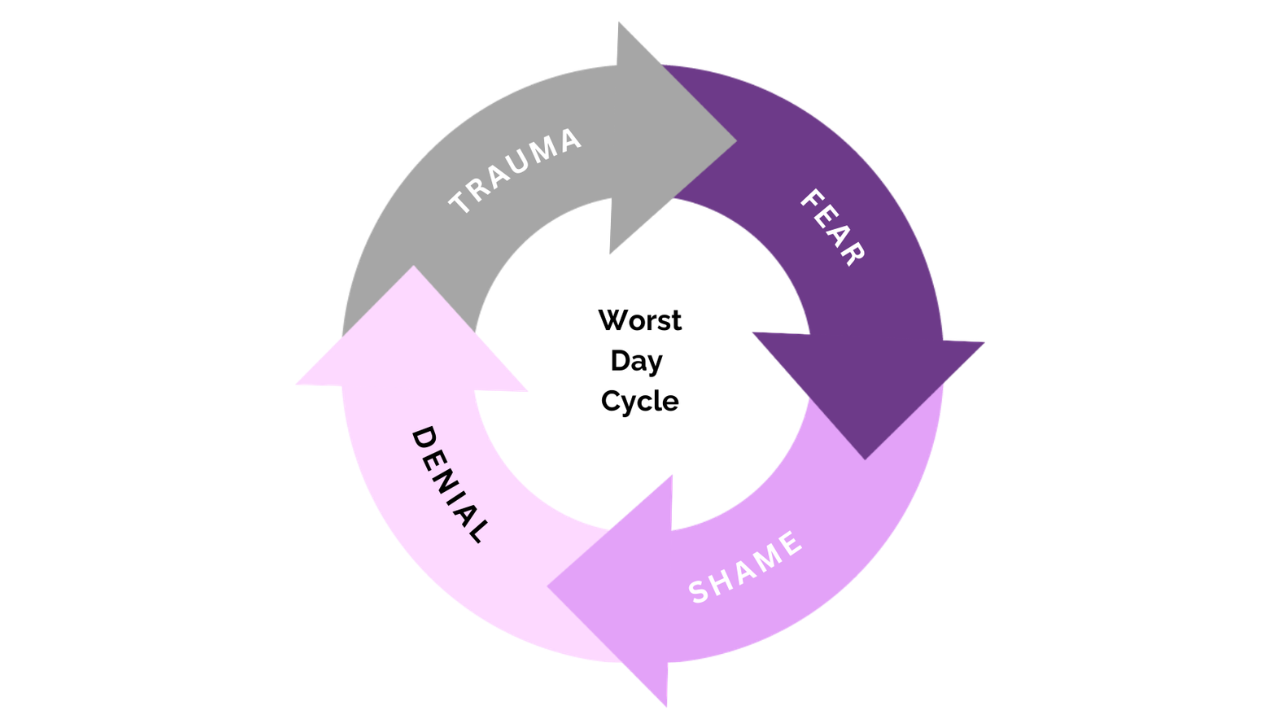
The Worst Day Cycle™ has four stages: Trauma → Fear → Shame → Denial.
Trauma: Any negative emotional experience in childhood that created painful meanings. It doesn’t have to be dramatic — it can be as subtle as a parent who withdrew love after a bad report card, or a household where emotions were treated as weakness. These experiences create a massive chemical reaction in the brain and body. The hypothalamus generates chemical cocktails — cortisol, adrenaline, dopamine, oxytocin misfires — and the brain becomes addicted to these emotional states.
That’s you — feeling a spike of panic when you notice a typo in an email you already sent, because your nervous system learned that mistakes equal danger.
Fear: Fear drives repetition. The brain conserves energy by repeating known patterns — it can’t tell right from wrong, only known from unknown. Since 70%+ of childhood messaging is negative and shaming, adults repeat these painful patterns in relationships, career, hobbies, health — everything. You keep perfecting, controlling, and performing because your nervous system is terrified of what happens when you stop.
Shame: This is where you lost your inherent worth. “I am the problem.” Not “I made a mistake” — but “I AM the mistake.” This is the engine of perfectionism. Every time you demand flawlessness from yourself, you’re running from shame. Every time you hide a weakness, you’re confirming the belief that your imperfections make you unworthy. Shame says: “I did something wrong, so I am wrong.” The Authentic Self says: “I did something wrong, and I’m still worthy — I’ll own it and repair.”
That’s the shame talking — the voice that tells you one mistake erases everything you’ve ever accomplished, because somewhere in childhood, that’s exactly what happened.
Denial: Denial is the survival persona you created to survive the pain. It was brilliant in childhood — absolutely necessary. But in adulthood, it sabotages everything. For perfectionists, denial looks like calling the compulsion “high standards.” It looks like reframing exhaustion as “dedication.” It looks like genuinely believing that if you just achieve one more thing, you’ll finally feel enough.
The Worst Day Cycle™ reveals why perfectionism feels automatic — your brain created a neurochemical loop in childhood that equates flawlessness with safety, and it repeats that loop thousands of times per day without your conscious awareness.
How Your Survival Persona Uses Perfectionism to Hide Shame
Your survival persona is the identity you created in childhood to navigate an emotionally unsafe environment. It’s not who you are — it’s who you had to become. And perfectionism is one of its most powerful tools.
There are three survival persona types:
The Falsely Empowered: This persona controls, dominates, and rages. Their perfectionism looks like demanding flawlessness from everyone — including themselves. They micromanage. They criticize. They hold impossible standards and punish anyone who falls short. Their perfectionism is about control — if everything is perfect, nothing can hurt them. But underneath the control is a terrified child who learned that imperfection meant rejection.
That’s you — the leader whose team walks on eggshells because your standard for “good enough” doesn’t exist.
The Disempowered: This persona collapses, people-pleases, and disappears. Their perfectionism looks like never putting anything out into the world until it’s flawless. They procrastinate — not from laziness, but from terror that their imperfection will be exposed. They say yes to everything because saying no might reveal that they have limits. Their perfectionism is about hiding — if they never show their real self, they can never be rejected.
That’s you — the one with a novel in a drawer, a business idea in your head, and a life unlived because nothing ever feels ready enough to share.
The Adapted Wounded Child: This persona oscillates between both — demanding perfection from others one moment, paralyzed by their own imperfection the next. They swing between “I’m the best” and “I’m worthless” with no stable ground in between. Their perfectionism is a pendulum that never rests.

That’s you — crushing it at work on Monday and unable to get out of bed on Saturday, swinging between superhuman performance and complete shutdown.
Your survival persona uses perfectionism as armor — it performs flawlessness to prevent the world from seeing what shame convinced you of in childhood: that your authentic, imperfect self isn’t worthy of love.
Why Self-Esteem Is the Ability to Accept Your Imperfections
Here’s the truth that changes everything: self-esteem isn’t the ability to accept your perfection — all the things you’re good at. Self-esteem is the ability to accept all the things you’re not good at. It’s the belief that no matter what — whether you have a great career, money, the trophy partner, impressive kids, or any of it — you instinctively and inherently have worth. Just the fact that you were born makes you worthy.
That’s you — reading those words and feeling your chest tighten, because some part of you still doesn’t believe them.
Whether at your worst or your best, your worth doesn’t change. Your behavior changes. Your worth is constant. You don’t have to do or be or accomplish anything for this to be true. But perfectionism tells you the opposite. Perfectionism says your worth is earned, measured, and revocable. And that lie was installed in childhood.
When you try to be perfect, you are creating your own lack of control. You are making yourself powerless. You are choosing to give up your own identity. You are actually self-rejecting — because perfection demands that you hide, suppress, or destroy everything about yourself that doesn’t match an impossible standard. And that hiding is the deepest form of self-abandonment there is.
That’s the paradox — perfectionism promises control, but it actually strips you of your power by making your worth dependent on something you can never fully achieve.
The real question is: are you willing to accept that in your imperfections lies your greatness? That’s the best part of you. Not the polished presentation. Not the flawless performance. The messy, real, human part of you that makes mistakes and still has inherent worth — that is where self-love lives.
Self-esteem is not built by achieving perfection — it is restored by embracing imperfection. When you can love, forgive, and share how imperfect you are, you reclaim the worth that shame stole from you in childhood.
How Perfectionism Shows Up in Every Area of Your Life
Family: You’re the one who hosts the flawless holiday dinner while dying inside. You manage every detail, anticipate every conflict, and present a picture-perfect family that doesn’t exist. You can’t tolerate your children making the same mistakes you made — because watching their imperfection triggers your own shame. You overparent, overfunction, and over-control — not because you’re a control freak, but because imperfection in your family feels like a direct reflection of your worth.
That’s you — micromanaging your children’s lives because you’re terrified they’ll experience the same shame you did when you weren’t perfect enough.
Romantic Relationships: You demand perfection from your partner — or you demand it from yourself in the relationship. You keep score. You notice every flaw, every misstep, every moment they don’t meet your unspoken expectations. Or you bend yourself into impossible shapes to be the “perfect partner” — losing yourself entirely in the process. Either way, intimacy suffers because perfectionism and vulnerability cannot coexist.
Sound familiar? The partner who does everything “right” but still feels completely alone in the relationship because they won’t let anyone see the real, imperfect them?
Friendships: You curate which version of yourself people get to see. You share accomplishments but hide struggles. You cancel plans when you’re not feeling “together enough” to perform. Your friendships feel shallow — not because your friends don’t care, but because you’ve never let them see the real you. Perfectionism says: “If they knew the truth, they’d leave.”
Work: You overdeliver on every project. You rewrite reports five times. You check email obsessively because a missed message feels catastrophic. You take criticism as a personal attack — not because you’re sensitive, but because your nervous system interprets feedback as the same message you got in childhood: “You’re not good enough.” You’ve been promoted for your perfectionism — and destroyed by it.
That’s you — getting rewarded for the very pattern that’s burning you out, because the workplace celebrates what childhood trauma created.
Body and Health: Your relationship with your body is another arena for perfectionism. You control your eating, punish yourself through exercise, or numb with substances when the body doesn’t meet the standard. Chronic tension, jaw clenching, insomnia, digestive issues — these are your body screaming for the acceptance your mind refuses to give it. Your body has been trying to tell you something for years: stop trying to be perfect. Start being real.
Kenny Weiss’s 3-Step Process to Love Your Perfect Imperfections
Loving your perfect imperfections is a three-step process — and this is the doorway into emotional authenticity, being able to heal the pain from your past and reclaim your authentic self.
Step 1: Admit Them. This is the hardest step, right out of the gate. You have to become an expert in your own self-deception — how you deny and hide your imperfections from yourself. Not just from others — mostly from yourself. Your perfect imperfections are all the things you don’t want anyone to know about. All of your scabs, all of your skeletons. The dirty dark secret in the closet. The behaviors you hide — the drinking too much wine, the checking out, the affairs, the numbing, the lying. These are perfect imperfections that you don’t even want to admit to yourself, and you definitely don’t want to admit to someone else.
That’s you — keeping a carefully curated version of yourself on display while the real you hides in the dark, terrified of being found out.
Step 2: Love and Forgive Them. Once you’ve named your imperfections — really named them, without the spin, without the justification — the next step is radical self-acceptance. Not “I’ll accept myself when I fix this.” Not “I’ll love myself once I get past this flaw.” Right now. In the mess. With the imperfection fully visible. You allow yourself to be human and limited, and you still have value and worth even if you know what to do and you can’t do it. You are perfectly imperfect — and so you let yourself off the hook. You take ownership: “Oops, that wasn’t my best. What do I need to practice so that next time I can do it a little bit better?” And even if you don’t — you will still love and value yourself. You will not shame and belittle yourself.
That’s you — finally letting go of the impossible standard and discovering that the imperfect version of you is actually the most lovable one.
Step 3: Share Them. This is where the magic happens. When you can share your imperfections with another human being — vulnerably, honestly, without performing — you break the isolation that shame depends on. Shame thrives in secrecy. It dies in connection. When you say “This is who I really am — messy, flawed, imperfect — and I’m not hiding anymore,” you reclaim a power that perfectionism stole from you decades ago.
That’s you — discovering that the people who love you don’t love the performance. They love the person you’ve been hiding.
The three-step process of admitting, loving, and sharing your perfect imperfections is the foundation of self-esteem — because when you can embrace what shame told you to hide, you prove to your nervous system that your worth was never conditional on being flawless.
How the Emotional Authenticity Method™ Heals Perfectionism
The Emotional Authenticity Method™ is the daily practice that rewires the perfectionism pattern at the nervous system level. It works because it targets the body — where the shame behind perfectionism lives — not just the mind.
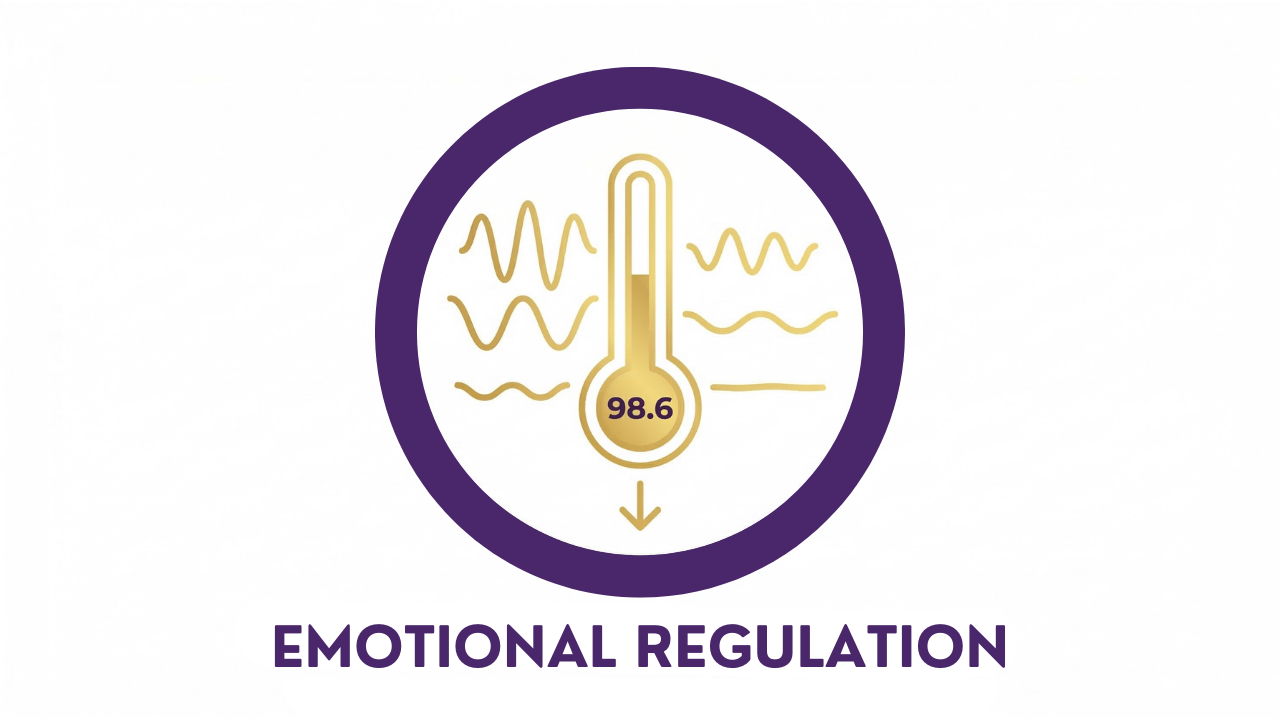
Step 1: Somatic Down-Regulation. Focus on what you can hear for 15-30 seconds. Before you can process the shame underneath your perfectionism, you have to get your nervous system out of survival mode. If you’re highly dysregulated — spiraling over a mistake, frozen by fear of imperfection — use titration. Go slowly. You don’t have to feel everything at once.
That’s you — learning that healing doesn’t require perfection either.
Step 2: What am I feeling right now? Most perfectionists have no idea what they’re actually feeling. They’ve been disconnected from their emotions for so long that “fine” or “stressed” are their only answers. Using the Feelings Wheel, develop emotional granularity — the ability to name specific emotions instead of lumping everything into “anxious” or “fine.”
Step 3: Where in my body do I feel it? All emotional trauma is stored physically. The tightness in your chest when you make a mistake. The knot in your stomach before a presentation. The clenched jaw during criticism. Locating the feeling in your body moves you from intellectual understanding to somatic processing.
Step 4: What is my earliest memory of having this exact feeling? This is where the rewiring happens. You trace today’s perfectionism back to its childhood origin. You realize: this isn’t about today. This isn’t about the typo or the missed deadline. My nervous system is replaying a five-year-old’s terror of being punished for imperfection.
That’s the moment everything shifts — when you see that your perfectionism belongs to a child who was taught that mistakes meant losing love, not to the adult you are today.
Step 5: Who would I be if I never had this thought or feeling again? What would be left over? This is the vision step. It connects you to the Authentic Self Cycle™ and gives your nervous system a new destination — not more perfection, but actual identity restoration.
Step 6: Feelization — Sit in the feeling of the Authentic Self and make it strong. Create a new emotional chemical addiction to replace the old perfectionism blueprint. Ask: how would I respond to this mistake from my Authentic Self? What would I say? What would I do? Visualize and FEEL yourself operating from self-acceptance instead of shame. This is the emotional blueprint remapping and rewiring step — building new neural pathways that replace the perfectionism loop with genuine self-worth.
That’s where freedom from perfectionism is actually born — not in a thought, but in a felt experience of your own worth that exists regardless of your performance.
The Emotional Authenticity Method™ heals perfectionism because emotions are biochemical events — you cannot change the shame pattern through thoughts alone. Thoughts originate from feelings, not the other way around. When you change the feeling, the need for perfection dissolves naturally.
How the Authentic Self Cycle™ Replaces Perfectionism With Self-Love
The Authentic Self Cycle™ is the healing counterpart to the Worst Day Cycle™. Where the Worst Day Cycle™ traps you in Trauma → Fear → Shame → Denial, the Authentic Self Cycle™ restores your identity through Truth → Responsibility → Healing → Forgiveness.
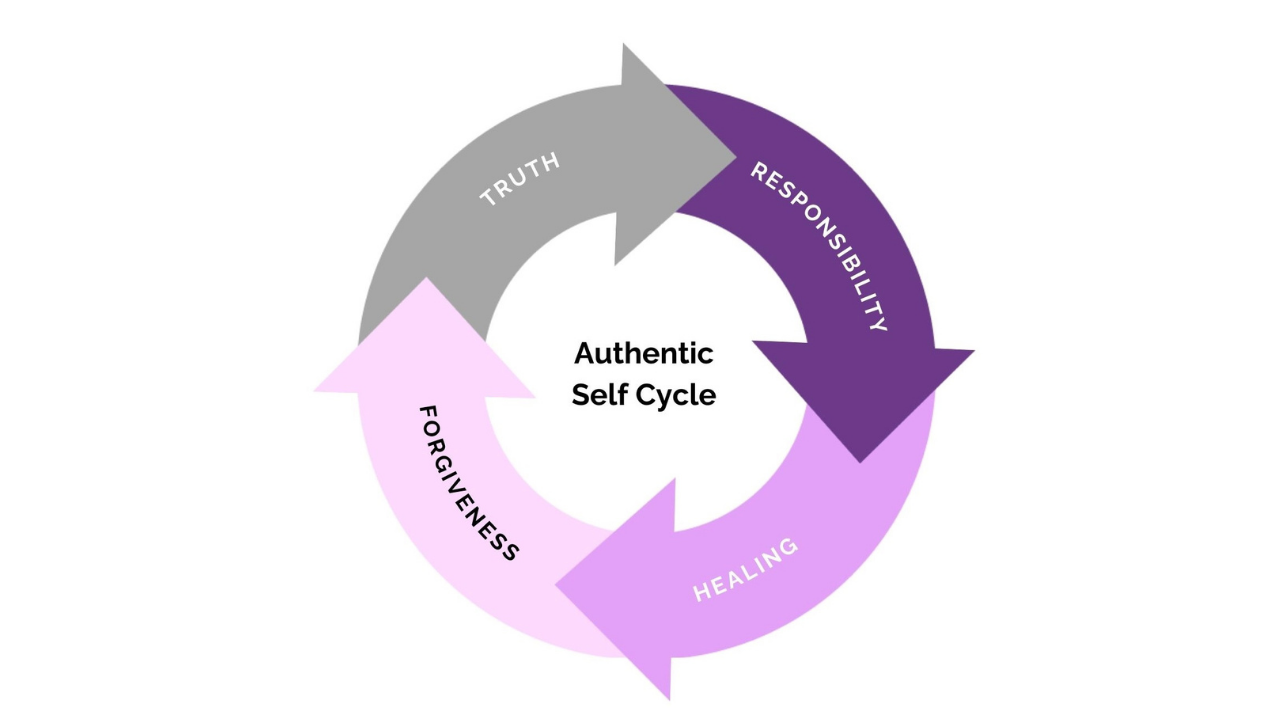
Truth: Name the blueprint. See that “this isn’t about today.” When you make a mistake and the shame tsunami hits, truth says: “This panic is from childhood. This mistake is not dangerous — my nervous system just thinks it is because imperfection meant losing love when I was a child.”
That’s the first step out of perfectionism — seeing the pattern instead of being controlled by it.
Responsibility: Own your emotional reactions without blame. “My reaction to this mistake is disproportionate — my nervous system is replaying a childhood script, not responding to reality.” This isn’t about fault. It’s about taking back your power from a childhood that taught you imperfection was unforgivable.
Healing: Rewire the emotional blueprint so mistakes become uncomfortable but not catastrophic, imperfection isn’t shameful, and vulnerability isn’t dangerous. This is where daily practice does its work — second by second, like the ticks of a clock. The second hand moves in tiny, almost insignificant ticks. But those ticks move the minute hand. The minutes move the hours. Healing perfectionism works the same way.
Forgiveness: Release the inherited emotional blueprint and reclaim your authentic self. This creates a NEW emotional chemical pattern that replaces the shame-perfection-denial loop with safety, worth, and genuine self-acceptance. It is the ultimate forgiveness of our humanness and how perfectly imperfect all of us are. A key ingredient of the Authentic Self is that it recognizes at all times — whether living its perfection or its imperfection — it has inherent value and worth.
That’s you — not becoming someone new, but finally meeting who you always were underneath the perfectionism. The person whose worth was never actually earned — it was always there.
The Authentic Self Cycle™ is an identity restoration system — it doesn’t teach you to manage perfectionism or cope with it, it replaces the neurochemical pattern that created it with a new blueprint built on truth, responsibility, and the radical acceptance that you are perfectly imperfect.
Frequently Asked Questions About Perfectionism and Imperfections
Is perfectionism really a trauma response?
Yes. Perfectionism develops when a child learns that love, safety, or acceptance are conditional on flawless performance. The brain builds an automated survival strategy — perform perfectly to avoid shame and rejection. The Worst Day Cycle™ explains how childhood trauma creates a neurochemical loop of fear, shame, and denial that drives perfectionism in adulthood, long after the original threat is gone.
What does it mean to accept your perfect imperfections?
Accepting your perfect imperfections means recognizing that your flaws, mistakes, and limitations are not evidence of unworthiness — they are evidence of your humanity. It’s a three-step process: admit your imperfections honestly (especially to yourself), love and forgive yourself for them, and share them with trusted people. This breaks the isolation that shame depends on and rebuilds genuine self-esteem.
Why can’t positive thinking or affirmations cure perfectionism?
Affirmations target the thinking brain, but perfectionism is stored in the body as a neurochemical pattern. You can say “I am enough” every morning while your nervous system screams “liar.” The Emotional Authenticity Method™ works because it addresses the somatic root — the actual feelings stored in your body since childhood — not just the thoughts about those feelings. You cannot think your way out of a biochemical event.
How do the three survival persona types experience perfectionism differently?
The falsely empowered persona demands perfection from everyone around them as a way to maintain control. The disempowered persona paralyzes themselves with perfectionism — never starting, never sharing, never risking exposure. The adapted wounded child oscillates between demanding perfection and collapsing under the weight of imperfection. All three are running from the same childhood shame — they just express it differently.
How long does it take to heal perfectionism?
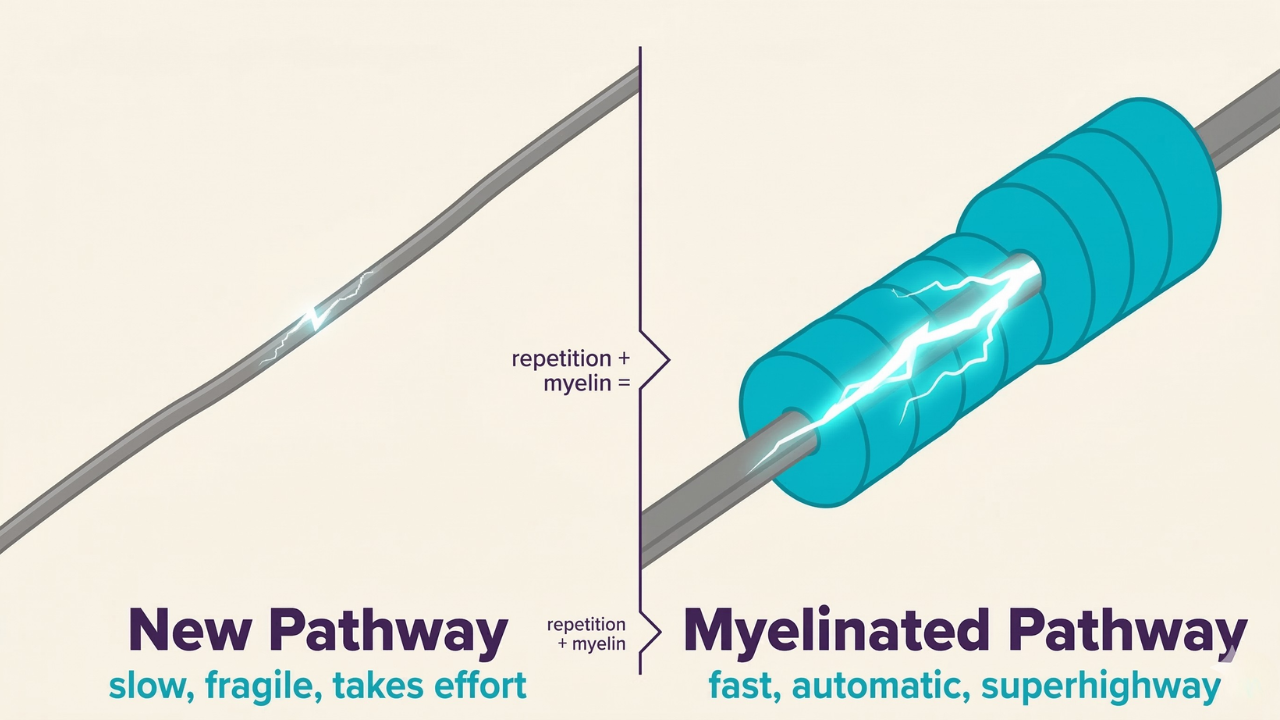
Perfectionism patterns that have been running for decades don’t reverse overnight. But noticeable shifts can happen within weeks of consistent daily practice with the Emotional Authenticity Method™. The key is repetition, not intensity. Small moments of self-acceptance — letting a mistake stand without fixing it, sharing a vulnerability, resting without guilt — create cumulative neurological change. The Authentic Self Cycle™ provides the framework for long-term identity restoration.
What is the connection between perfectionism and codependence?
Perfectionism and codependence share the same root: childhood emotional trauma that taught you your worth is conditional. Codependence says “I’ll earn love by meeting your needs.” Perfectionism says “I’ll earn love by being flawless.” Both are survival strategies. Both abandon the authentic self. And both heal through the same pathway: learning to accept your inherent worth regardless of performance, using the Emotional Authenticity Method™ and the Authentic Self Cycle™.
The Bottom Line
You were not born a perfectionist. You were made one. And the thing that made you one — childhood shame — is the same thing that can unmake it, once you understand how it works.
It’s so easy to shame ourselves for imperfections that we forget to love ourselves when we are perfect. So hang your hat on that. Please don’t forget to love yourself when you do get it right. And please — please — learn to love yourself when you don’t.
Your imperfections are not your weakness. They are your doorway to self-esteem, to authenticity, to the kind of self-love that doesn’t depend on performance. In your imperfections lies your greatness. That’s the best part of you.
Every time you admit an imperfection instead of hiding it, you choose self-love. Every time you forgive yourself instead of shaming yourself, you choose healing. Every time you share your messy, real, imperfect self with another human being, you break the power that shame has held over you since childhood.
That’s you — not the person who performed their way to worth. The person who finally stopped performing and discovered that underneath all the perfectionism, there was always someone worth loving. Perfectly imperfect. And that is enough.
Recommended Reading
These books complement the frameworks in this article and can deepen your understanding of perfectionism, shame, and self-acceptance:
Facing Codependence by Pia Mellody — the foundational text on how childhood trauma creates the shame patterns that drive perfectionism and conditional self-worth.
The Body Keeps the Score by Bessel van der Kolk — the science of how trauma lives in the body, not just the mind, explaining why cognitive approaches to perfectionism have limits.
When the Body Says No by Gabor Maté — how chronic perfectionism and emotional suppression manifest as physical illness and disease.
Codependent No More by Melody Beattie — a practical guide to recognizing the codependent patterns that fuel perfectionism.
The Gifts of Imperfection by Brené Brown — how shame drives perfectionism and why vulnerability is the path back to authenticity and self-love.
Take the Next Step
If you’re ready to stop performing perfection and start embracing your perfectly imperfect self, Kenny Weiss offers courses designed for people who are done chasing worth through flawlessness and ready to heal:
Emotional Blueprint Starter Course — Individual ($79) — Your personal roadmap to understanding the Worst Day Cycle™ and beginning the journey from perfectionism to your authentic self.
Relationship Starter Course — Couples ($79) — For couples ready to stop demanding perfection from each other and build interdependence.
Why We Can’t Stop Hurting Each Other ($479) — Deep-dive into the Worst Day Cycle™ and how childhood trauma creates perfectionism in relationships.
Why High Achievers Fail at Love ($479) — Built specifically for high achievers whose perfectionism has mastered their career but destroyed their relationships.
The Shutdown Avoidant Partner ($479) — Understanding avoidant attachment through the lens of trauma chemistry and survival personas.
Tier 1: Mapping the Blueprint ($1,379) — The comprehensive program for learning and practicing the Emotional Authenticity Method™.
Download the Feelings Wheel — the free tool used in Step 2 of the Emotional Authenticity Method™ to build emotional granularity.
Explore more: The Signs of Enmeshment | 7 Signs of Relationship Insecurity | 7 Signs of High Self-Esteem | How to Determine Your Negotiables and Non-Negotiables | 10 Do’s and Don’ts for a Great Relationship