Category: Narcissist

  • Why Am I Attracted to Bad Men?

    Why Am I Attracted to Bad Men?

    Do you ever wonder why it’s so easy for you to see that a man or woman is terrible for someone you care about, but you’re unsure when it comes to yourself? You’re certainly not alone. Today, we will explore where that Why Am I Attracted to Bad Men and what you can do to make that a little bit easier on yourself.

    Why does this happen?

    Despite the several apparent clues that tell us someone is interested in us.We often question it because of nerves. Does he like me? Is he interested? This is because of something quite sad: it’s because of developmental trauma.

    Everyone has been through childhood trauma. The types and severity of these traumas vary, but everyone has experienced childhood trauma.

    That’s a given. So, what happens in this dynamic of “does he or doesn’t he like me” is that the part of our brain that allows us to pick up on social cues is damaged.

    When you’re on the outside of a relationship like your friend’s, it’s easy to see whether a person is good or bad for them because you have no emotional investment.

    But, once invested personally, it becomes almost impossible now that you have your skin in the game.

    Conflicting messages

    That is because as a child, our parents gave us conflicting messages. An example is a parent viewing their child as perfect and wonderful but also relying on them for their emotional well-being because of their unhealed traumas.

    For instance, they might ask the child for a hug whenever they feel emotionally inadequate. Thus turning the child into an adult by making the child responsible for their well-being.

    But, unfortunately, that results in an adult who constantly questions physical intimacy. is he hugging me because he likes me or needs something from me?

    What is his motivation for showing me affection? What do his actions actually mean?

    Show affection

    When someone starts to show affection that is clear as day to everyone except you, you don’t take it at face value because, as a child, you received conflicting messages.

    The second we have an emotional investment in the relationship, it triggers the childhood confusing, conflicting messages. We can no longer see for ourselves what was so easy for us to see in others.

    Those traumatic moments from childhood affect all of us . Those subconscious burdens our parents place on us to help them heal from their childhood traumas.

    A parent placing that pressure on you creates a tremendous sense of fear.

    You don’t want to continue caring for someone in the same way you were forced to care for your parents as a kid. No child should have that responsibility.

    Which keeps us, adults, from wanting to invest in a similar relationship.

    It means that for us to become aware of how a person feels about us, we need them to go above and beyond just to prove that they want to be with us and will not abandon us.

    This puts undue stress on our potential partners because of our fear that they will become bored with us or leave us.

    we need them to be wholly invested in us before we feel safe to continue with the relationship. But people want a partner who is not going to be fearful that they will leave.

    How do we heal?

    1. The most important way to heal from this and become better judges of a love interest’s intentions is to become experts in our childhood trauma.
    2. Understanding why and how we act the way we do will help us become more aware of these behaviors as we move forward.
    3. To further your healing, gather information. Explicitly ask if someone is attracted to you. Even a question prefaced with “I know this might sound crazy” is better than just playing guessing games.
    4. If you’re unsure or suspect they do, there is no easier way than to ask to get the answer you need whether it’s affirmative or otherwise. It’s essential to do for you what will best create a sense of safety. Sometimes that means making yourself vulnerable and feeling scared for a moment, but the payoff is worth it.
    5. Neurofeedback is another way to help you heal and understand your relationships better. When we go through developmental trauma, our brain waves get distorted, which means things don’t connect properly. Neurofeedback helps us fix those connections in a way that no medication, coaching, or therapy could ever do. It’s a process that has an effect, unlike any other treatment. It needs to be at the forefront of how we treat mental and emotional disorders in psychology.

    How to learn more

    You can use several books to help you become an expert in your developmental trauma: my book, Your Journey to Success, to help you learn how you are repeating your trauma, and three from Pia Mellody — Facing Love Addiction, Facing Codependence, and Intimacy Factor. All of these books can be found at www.thegreatnessuniversity.com under the book section for direct links.

    If you’re struggling to understand attraction or why you’re attracting the wrong people. Or if your social cues are distorted, these will help you get started on your journey to healing.

    Enjoy The Journey

    To learn more, check out the video here:

  • How To Get Closure From A Narcissist

    How To Get Closure From A Narcissist

    Would you like to know how to get closure from a narcissist? Below are ten ways that have worked for those wanting to move past their relationships with narcissists.


    1. Find closure from within


    No matter how much you try, you will never get closure from the narcissist. They will never give it to you because they want to keep you on the line. So, all the questions you want to ask them and all the things you want an explanation for will get you nowhere. Realizing this is one of the most challenging things because it makes us feel powerless. However, truly understanding that closure needs to come from within is the first step in moving forward.


    2. Stop obsessing


    This means that you must eliminate everything – pictures, videos, souvenirs, and any reminders of them. Throw it all away. It’s key to also do away with those obsessive thoughts, which will take a little more discipline and effort.

    The second you start thinking about any relationship aspect, focus on things you can see around you – chair, rug, lamp, etc. This will help distract you from those obsessive thoughts; you cannot allow any of them to make a home in your mind. Finally, you have to make the conscious choice to stop. Every time we think about them, we are back in that relationship again; we haven’t left. Choosing to leave the relationship means leaving all of it.


    3. Resist the temptation to learn about narcissism


    While many experts believe the opposite, it is actually more important to focus on you and your recovery first and learn about everything else later. Knowing how to identify narcissism and narcissistic behaviors is essential, but not until further along in your recovery journey. Several steps need to be taken before you do that.

    If you obsessively learn about narcissism initially, you’re going to spend most of your energy comparing every piece of information you get against your narcissist. You will be stuck in the relationship and focusing too much on them rather than yourself; the toxicity levels are way too high with this kind of thinking. You will lose yourself and stay stuck in the narcissist’s web if you spend so much time learning about them.


    4. Pay attention to the media you consume


    Become aware of what kind of television you’re watching and the music you’re listening to. A show like American Greed, for example, is all about narcissistic sociopaths. So many people watch these shows and try to figure out how a person could do something like that. Or how could someone fall for X? You’re trying to make sense of whether you would fall victim to people like that.

    Television like this, including that fascination with narcissists, is a sign that you’re still stuck; you’re reliving your narcissist’s experience in an absent-minded way. Sad, victim-oriented music is the same way and can impact your behavior and thought processes. Conversely, ridiculous shows and uplifting music can have tremendous impacts on your ability to heal and move on.


    5. Follow the 90/10 rule


    You’re in a relationship with a narcissist because 90% of your thoughts, feelings, and behaviors focus on the narcissist, while 10% focus on yourself. That’s common with people who end up with narcissists – they’re severely codependent. This dynamic needs to flip.

    We need to learn to love and care for ourselves and also achieve that by focusing 90% of our thoughts, feelings, and behaviors on healing, loving and recovering ourselves. They build up our self-love and self-esteem by focusing almost entirely on ourselves.


    6. Work through the grief process


    The stages of grief are shock/denial, anger, bargaining, depression, and acceptance. Most people get stuck at the bargaining stage, cycling through the first three steps to avoid that depressive stage. They don’t want to feel the pain that comes from being with a narcissist, which is a feeling that was there before the narcissist came along. This is ultimately what every person who has been in a relationship with a narcissist is avoiding. They chose the narcissist because of the underlying pain they have yet to heal.


    7. Take responsibility


    The biggest struggle for someone who can’t find closure is being unable to take responsibility for their part in the relationship. Do not buy into false messaging that the narcissists are the only ones with a problem. Narcissists are undeniably the ones to blame, but those attracted to narcissists are responsible for their attraction to them.

    We can never divorce ourselves from our responsibility in choosing a narcissist and allowing them into our lives. It didn’t happen by magic, after all. We chose them out of the millions of people we could have chosen.

    We will know we haven’t worked through the grief process if we still blame the narcissist for everything and feel anger towards them. If we’re doing that, we’re once again stuck; we’re not taking any responsibility for our part. Attraction to a narcissist comes from childhood trauma that we haven’t healed. We avoid responsibility so we can avoid facing this underlying trauma. Therefore, we need to put in the work to heal ourselves if we want to move forward. If we don’t acknowledge this fact about ourselves, we’re likely condemned to choose another narcissist in the future.


    8. Get help for our codependency


    Any person who is with a narcissist is codependent. One of the core symptoms of codependency is immaturity.

    What does that look like? It means failing to take responsibility for our thoughts, feelings, behaviors, and actions, much like a child. When we don’t address our underlying pain and codependence and continually place all the responsibility at the narcissist’s feet, we remain stagnant in our immaturity and codependence. I offer several free downloads to help you heal your codependence here: http://kennyweiss.net/resources/


    9. Love the memories, not the person


    Narcissists are gifted with creating magical moments filled with everything we could ever want, which can be confusing. It can be tough to let go because these experiences play into the fantasy we may have always had. We start to question what was real or fake or whether we had imagined the love we felt.

    However, we can love the memories without needing to love the person any longer. We can hold onto that memory of ‘God. I felt loved at that moment and know that we felt tremendous without analyzing whether that love was real or not. The way it made you feel is real. So please do not take those beautiful moments away from yourself; revel in them.

    When we can reconcile the idea that a moment is not a person, we’ll be able to start creating closure within ourselves.


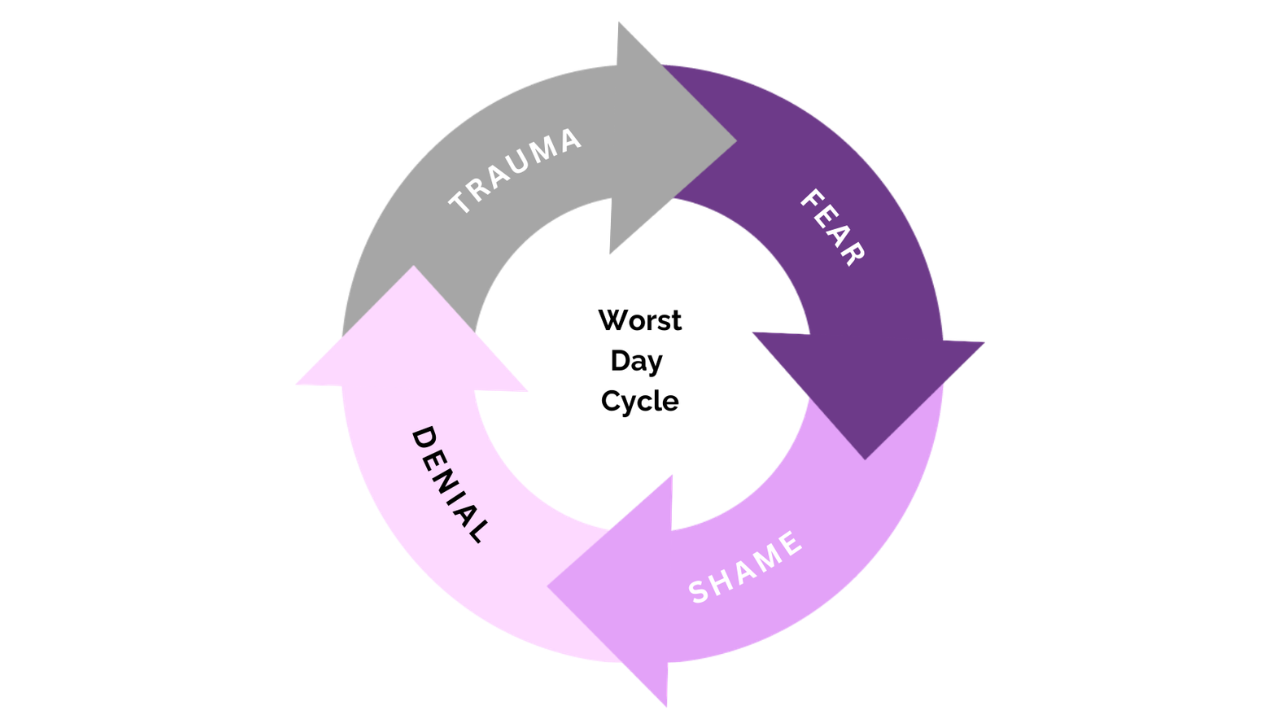
    10. Learn about the worst day cycle


    In basic terms, the worst day cycle is responsible for every individual’s pain in their life. Nobody’s immune from reliving their worst day cycle, regardless of income or station in life.

    The worst day cycle is a maladaptive, self-victimizing, emotionally addictive process that humans have created in response to childhood trauma. Because of the societal lack of knowledge, skills, and tools in parenting, trauma, and Emotional Authenticity, no one is immune from this process. By understanding the worst day cycle, we remove the mystery of the narcissist and relationships and of life itself. Having this understanding and moving through the process of recovery allows you a roadmap to achieve the life you want.

    You can learn more about the worst day cycle in my book Your Journey to Success and can watch my five-part video series on Youtube so that you can start doing the work and moving forward.

    If you are ready for help healing, you can set a private appointment with me, enroll in my online masterclasses or join my private group here. http://kennyweiss.net/coaching/


    Enjoy The Journey


    To learn more, check out the video here:

  • How to Recognize and Respond to a Narcissist

    How to Recognize and Respond to a Narcissist

    How to Recognize and Respond to a Narcissist


    It can be challenging to identify a narcissist at first glance. Narcissism often comes across as confidence or enthusiasm, but when you know what to look for, you will be able to recognize the signs. To learn more, make sure you subscribe to my Youtube channel and check out my Narcissism playlist to learn more.

    The signs below define the characteristics of a narcissist. The first twelve are about the narcissists themselves, while the final three are about the kind of people attracted to them.

    Recognize the signs


    1. They lack empathy


    When you speak to someone and they seem to be listening to what you are saying, but they don’t hear what you have said, this could be a lack of empathy. This might look like someone failing to react to what you have said. They may claim they were listening, but their reaction doesn’t mesh with the information you shared.

    Now, this doesn’t mean that a person failing to listen is a narcissist. Sometimes our attention is not where it should be. However, if the behavior is consistent or the empathy seems fake or forced, the person is exhibiting narcissistic behavior. They do not feel remorse because they are incapable of it.


    2. They feel entitled to special treatment


    When you go out with someone, are they constantly looking for ways to receive special treatment from the employees? Whether in a restaurant, from a mechanic, or any store, this entitlement signifies narcissism. Things like receiving the wrong order at a restaurant will set a narcissist off. They will constantly feel they have the right to be elevated above everyone else.

    Someone who advocates for themselves and speaks up against mistreatment calmly and leveled way is not a narcissist. On the other hand, responding to mistakes and perceived mistreatments in a violent or abusive way because they feel entitled to perfection makes someone narcissistic.


    3. They have grandiose fantasies


    Everyone has an idea of what they want to achieve and do in life, but a narcissist is rarely realistic. They will often claim they are going to do something huge but fail to deliver. Or they will claim they have skills that they don’t. These aren’t lies but rather delusional beliefs. This is grandiosity and can set unrealistic expectations in a relationship.


    4. They put appearance above everything else


    A narcissist’s appearance matters to them more than anything else. The term itself comes from Greek mythology’s Narcissus, who was obsessed with his reflection. Even the appearance of those they associate with is paramount to them – they want those around them to be beautiful because they equate beauty to power.

    Obsession with social media comments and likes is a form of narcissism. It is prevalent for narcissists to compare their appearances and social standings, and success to others. It becomes obsessive for them to be externally validated as better than everyone else.


    5. They only associate with the powerful


    Narcissists are invested in social connections and how they can climb the social ladder. This is common in social media as well. They need to be around powerful, attractive, famous people because they see themselves as the same.

    They will make snap judgments about people based on external factors such as social standing, appearance, popularity, or any number of other superficial things. A narcissist will tear down anything they don’t view as worthy.


    6. They are incapable of regulating their emotions


    Narcissists are easily angered and will often throw tantrums if they are upset. However, they are so skilled at manipulation that they can appear to be keeping it together.

    Psychologist and narcissist specialist Dr. Ramani Durvasula uses the analogy of a rubber band. If you stretch out a rubber band far enough, it will eventually snap; that is the temper tantrum and anger. They can never sustain their deception and will always bounce back to who they are.


    7. They are highly sensitive to criticism


    Narcissists do not like to be critiqued or criticized but will have no problem being highly critical of you and everybody else. They view themselves as infallible; suggesting otherwise is an insult to their carefully curated perception of themselves. If they feel like they are being criticized, they will lash out.


    8. They don’t think they need to change


    A suggestion that they may need help or may need to learn more – than the problem somehow resides in them – will shut them down immediately. Their lack of empathy comes into play here as they refuse to listen to anything more than you have to say. All their dysfunctions, including rage, will come out to protect that sense of grandiosity.


    9. They tend to be extremely jealous


    They tend to be jealous of anyone you interact with – from a simple conversation to time spent. People of higher statuses than them are also a great source of jealousy for a narcissist. The idea that there is someone out there who might be better than them threatens their image of themselves.

    Everyone gets envious now and then, but narcissists tend to be driven by jealousy, which triggers that rubber band and causes them to snap. Their jealousy consumes them.


    10. They gaslight people


    When you start to feel like you must record your conversations with a narcissist, you are likely being gaslighted. You begin to question yourself and think negatively about yourself because of their effect on you.

    If you start a conversation with a critique, suggestion, or request aimed at a narcissist, they will find a way to turn it around on you so that, by the end of the conversation, you are the one apologizing because you were so wrong and out of place. It’s tough to protect yourself against a narcissist who is gaslighting you.


    11. They are disloyal


    A narcissist will leave you. Always. At any opportunity for higher status or anything advantageous to them, they are out the door. They will never put anyone before themselves, including you.


    12. They get pleasure from others’ misery


    When they cause you discomfort, anger, or pain, they will feel joy. For them, it feels like receiving that one Christmas gift they’ve been eyeing all year. If a narcissist does something to hurt you, you will generally understand that they are enjoying seeing that hurt in you. This is when you know it is time to get out.


    The part we play


    We always must take ownership of who we allow into our lives. We need to understand that we are not innocent bystanders in a relationship with a narcissist; we have a say about who can influence our lives.

    Refusing to take ownership of all aspects of our lives is inherently narcissistic in and of itself. The following three behaviors inside us are part of the reason we are in a relationship with a narcissist to start with:


    1. We think we can love them out of it


    When they feign weakness or hurt, we start rationalizing what we can do to make it better. We may think that dressing or acting a certain way or changing some other part of ourselves is how we will get them to love us.


    2. We think that we’re not good enough


    With this mindset, we fall into the trap of thinking things like “if I were better looking” or “if I were thinner” or “if I wasn’t so needy” or “if I had more money” to rationalize away their behavior. This is based on low self-worth and a sense of shame, which makes gaslighting so easy for a narcissist. We internalize their behavior and blame ourselves.


    3. We look for ways to change


    A key indicator that we’re with a narcissist is researching, reading, and resourcing everything we can, not to learn how to save ourselves, but to figure out the narcissist and how we can get them to like us.

    So, essentially, a person attracted to a narcissist is putting 90% of their energy into the relationship instead of themselves.


    So, how do you respond?


    If you have realized that you’re in a relationship with a narcissist, there are two options for how you can respond:


    1. Get out


    The chances of a narcissist ever doing work and healing are slim to none. But, just like that rubber band effect, they might do some of it, but they don’t see an advantage to it and are likely to snap or bounce back to who they indeed are.

    Your situation may be complicated; marriage, kids, religion, finances, etc., can make it difficult for you to get out. But, in that case, you must.


    2. Lower your expectations


    Realize that 90% of the time, you will get nothing from them. So, you need to cope in other ways and practice massive self-care. Instead of making your whole life about them, you need to make most of your life about you.

    The only person you have control of is yourself. So, practice self-care by creating friendships, joining groups, and getting into therapy; you need to see how your childhood trained you to spend so much of your energy putting others ahead of yourself. You’re replaying behavior learned as a child, and you need to know how to heal from this.

    Learn to meet your needs and stop trying to get them to do that for you. At this point, you have been with this behavior for years and know it isn’t going to change, so don’t fight it. Instead, embrace yourself and discover how to find happiness in meeting your needs by yourself.


    Are you looking for more solutions? Pick the one that suits your needs best!


    1- My Book, Your Journey To Success
    2- My Complete Emotional Authenticity Method
    3- My Perfectly Imperfect Private Group
    4- My Private Coaching


    Enjoy The Journey ??


    To learn more, check out the video here:


  • How To Know The Difference Between Narcissists, Sociopaths and Borderline Personalities.

    How To Know The Difference Between Narcissists, Sociopaths and Borderline Personalities.

    How To Know The Difference Between Narcissists, Sociopaths and Borderline Personalities.


    “Narcissist” is a common buzzword today – so are words like “sociopath” and “psychopath.” Unfortunately, people throw these words around without really knowing what they entail, which can be dangerous. Today, we will break down the differences between narcissists, sociopaths, psychopaths, and borderline personalities. Some intertwine, but there are clear distinctions between them.

    Narcissists


    The first thing to understand: all of us are narcissists. Narcissism is a spectrum, and your extent depends on how far along you are on that spectrum. Some narcissism is healthy – we need it to survive and self-advocate. However, as you go further along on the narcissistic spectrum, the traits become abusive.


    Narcissism is a trait not a disorder


    Secondly, narcissism is a trait, not a disorder. It’s not a chemical imbalance or psychological disorder. Narcissism stems from severe childhood abuse and neglect, leaving the Narcissist insecure and needing constant outside validation. Narcissists will feel guilt and shame (primarily shame) when they do something wrong because they fear others’ thoughts. It’s an external condition, not an internal condition. That’s why we see such heavy narcissism in the social media generations – the need for external validation (via likes and comments) is only increasing.


    Narcissists are made, not born. 


    The third and most significant distinction: narcissists are made, not born. Parents create narcissists by either being extremely overindulging/spoiling or significantly under indulging. The spoiling parents give their kids whatever they want, and they rescue them (I’m sure you’re picturing a few people you know). The child never feels any public discomfort. The parents frequently focus heavily on appearance and achievements. Telling every child will be the best creates an overindulgence in the sense of superiority. We must hold our kids responsible and let them suffer consequences (to an extent, of course).


    Narcissists hate to be left.


    Even if they are mistreating you, it is never OK for you to go. They could become mean and violent, depending on where they are on the continuum. Narcissists also lack empathy and the ability to listen. They’ll go on about what’s important to them but are disinterested in what you have to say. They’re grandiose with their ideas and accomplishments, saying things like “Yeah, I ran for office,” while in reality, they ran for treasurer in high school. Finally, narcissists are incredibly superficial, caring only about how they look and who they socialize with. They like to name-drop, describe the parties they attend, and brag.


    Narcissists will throw tantrums


    if they don’t get their way. We see entitlement quite frequently in the millennial generation. I’ve had a millennial client be unaware she had to pay for an appointment with me! It’s a perfect example of millennial narcissism and entitlement. “Safe spaces,” now common on college campuses, are another example of overindulgent parenting and children who never experienced uncomfortable environments. Narcissists are incredibly jealous people. They have to be the center of attention at all times. They will also gaslight you, convincing you that what you see, feel, or believe is wrong. Narcissists on the far end of the spectrum enjoy gaslighting and get pleasure from hurting others.

    The Narcissist is the one who will sit at a cocktail party and rip apart everyone and everything. They lack empathy. But here’s the beauty: self-awareness is possible for those of us not very far on the spectrum. I’m an example. I was pretty far out when I was younger, but I’ve significantly improved, sharing the truth about my life. And that’s what set me free. I believe that our inherent greatness and success can be achieved when we overcome how broken we are and are willing to share it.


    Sociopaths


    The critical distinction here is: to be a sociopath, there must involve a criminal element. So you can have all these other traits, but if they aren’t breaking the law, they aren’t a sociopath. Killing people, robbing banks, etc., are all obvious crimes of sociopaths, but there are many more closeted examples: tax evasion, escorting, the sex industry, and more. Even in Nevada, escorts will cover themselves by claiming it’s legal. Sex workers are prevalent sociopaths in our society – even those involved in “sugar baby – sugar daddy” relationships could fall under this category.


    They (narcissistically) re-define what they do so it’s perceived better by the public.


    Like the Narcissist, the sociopath is not born that way; they are made. They learn to be con artists, and they get trained not to be aroused by or empathetic towards others. The trainer could be a father who hits his kid and tells them not to cry. Their reality and emotions get stripped. They act first, think later. They have inconsistent work histories. Narcissists are purely self-indulgent while sociopaths take it to the next level – in a way, they’re out to get you. Sociopaths often use aliases, including on social media. Everything for them is a game – they love to outthink you. They are chameleons, and sometimes they’ll even admit it. My second wife was like this; she’d find what she liked about someone and suck it dry. They gaslight to the point where you may feel you need to record your conversations.

    Then, when you narrow down the problem, they’ll start all over again. Sociopaths will have no problem up and leaving a relationship with no emotion – done and over.


    Psychopaths


    Every psychopath is a narcissist – but not every Narcissist is a psychopath. Psychopaths are killers or commit other serious crimes. They completely lack empathy. They’d be able to pass a polygraph test completely lying. That part of their brain, the chemical reaction when you lie, doesn’t happen. Completely entitled, lack self-esteem, all of the above traits. The key difference is they lack shame, remorse, and guilt entirely. Psychopaths will lie and gaslight even beyond narcissists. Their autonomic nervous system, which controls the sympathetic, doesn’t get aroused at all. They do not feel fear or stress. They can watch death right in front of them and not flinch. In brain scans, there is absolutely no empathetic activity.

    Here’s the thing with psychopaths: they will show a pattern of truancy, skipping school, setting fires, or the like before the age of 15. They are born like this.


    Borderline Personalities


    The final term we will touch on, Borderlines, is the only condition that you really cannot treat. Borderlines were abandoned so heavily that the authentic person cannot be found. Primarily women and gay men are borderline personalities, rarely straight men. These people are highly victim-oriented, use medication, are constantly sick and hurt, and cannot hold a job. They are extreme hypochondriacs and have learned helplessness. They’ll doctor shop and have phantom illnesses from firing so much fear in their body. Since they are so focused on being a victim. They are untreatable and unwilling to do the work. As a result, it is nearly impossible for them to see their true selves. Bear in mind that, as a society, we are very victim-minded.


    Many people think they are with a sociopath or borderline personality or Narcissist, but it’s their victimhood and projections.


    We always play a part in the relationship, and we allow the person into our life. I’m not blaming you, but you must remember a relationship is a two-way street.


    Be wary before labeling someone as one of these – you may be the one who needs help?

    On the other hand, if another is constantly pointing the finger at you. Would you please reach out to someone for help

    Are you looking for more solutions? Pick the one that suits your needs best!


    1- My Book, Your Journey To Success
    2- My Complete Emotional Authenticity Method
    3- My Perfectly Imperfect Private Group
    4- My Private Coaching


    To learn more, watch the video here: 

    [embedyt] https://www.youtube.com/watch?v=epfiUE8DR80[/embedyt]


    *Disclaimer-In no way should this article or video be used as a means to diagnose others or self-assess. This is a very cursory explanation of these dynamics. They have many subtleties and variants. It is encouraged that any assessments be made by a professional.

  • 7 Steps For Healing From Narcissistic Abuse

    7 Steps For Healing From Narcissistic Abuse

    7 Steps For Healing From Narcissistic Abuse

    Today I will share the seven steps to heal from narcissistic abuse and how we know we’ve broken the Worst Day Cycle. This article could be a book – there are thousands of resources and people breaking down this sort of recovery. Instead, I’ve just picked out what I feel to be the highlights. Make sure you take advantage of all the free downloads I have created to help you heal. They can be found here: http://kennyweiss.net/resources/

    1. Grieving. There is so much pain that we experience from narcissists.
    2. I believe grieving is the single greatest step to break the cycle. This could mean bawling your eyes out!Making a list of all the things I’d miss would be a good way for me to process my loss.
      I had to come to terms with the fact that there is a time limit on how long I could sit in grief before I sank into a state of learned helplessness and melancholy.
      Once I figured out that 30 minutes was the maximum amount of time I could focus on anything, I had to take care of myself afterwards (paint, go on a walk, etc.). Every now and again, I’d take a deep breath and pull myself back into the present moment.
      A safe spot to rest may be your only refuge from the world.

    You don’t think about it or feel it when you’re asleep.


    1. Yet sometimes, I would wake myself from crying in my sleep.
    2. The pain is overwhelming but must be grieved. If you are filled with rage, anger, or resentment: you have not grieved, and you need to.
    3. If you still have rage, the Narcissistic owns and controls you without even being with you.
    4. Support. It’s a must. A Narcissistic alienated us, shamed us, and belittled us.
      Whether it’s a support group, a family member, or a professional, we all require some sort of safety net. I believe this type and extent of trauma requires professional support and help.
    5. The Narcissistic strips us so much of our identity that our solutions and thinking processes are very distorted.

    That’s why we need a caring professional to guide us through it.


    1. Expertise. Become an expert on relationships, parenting, codependence, grief, etc. We don’t teach these things as a society .
    2. please don’t assume that it’s our fault we don’t know them, but we need to learn. The only examples of relationships we see are in TV shows and movies, which are massively dysfunctional .
    3. you will recognize this when you become an expert. What areas must we become an expert in?
    4. My opinion is primarily codependence.
    5. I think Facing Codependence by Pia Mellody should be on everyone’s bookshelf.

    This book will blow your doors off.


    1. PTSD Recovery. A relationship with a narcissist creates PTSD, whether we like to acknowledge it or not.
    2. COMPLEX PTSD: From Surviving to Thriving by Pete Walker is wonderful for learning – you will learn that nearly everyone on this planet is walking around with PTSD from childhood trauma.
    3. Imperfect Parenting. Nobody is a perfect parent, and no one came from a perfect childhood.
    4. Parents adore us and do wonderful things most of the time, but they are perfectly imperfect.
    5. A common trait of narcissists is they were spoiled growing up – this is horrifically abusive.
    6. The Emotionally Abusive Relationship by Beverly Engel breaks down different parenting styles – you will be able to look at your own childhood and evaluate.
    7. Parents don’t know that what they think is loving is actually hurtful.
    8. Denial Work. We cannot remove ourselves from responsibility for the part we played. Saying we had nothing to do with what happened is disempowering and allows it to happen again. No person, place, or thing gets near our life unless we allow it to.
    9. Your Journey to Success. My book, Your Journey to Success, is a mix of all I’ve discussed here. You will discover how your childhood created your attraction to a narcissist and how to heal.


    How to know you’ve recovered from narcissistic abuse:


    1. Boring people are attractive. Our excitement with a narcissist, the butterfly feeling, is a result of trauma.
    2. When that tingly feeling goes away, we know we’ve healed and are ready for a real relationship.
    3. You adore your narcissist.
    4. This is not saying you condone the behavior, that you go near them, or that you would be in a relationship with them.
    5. Instead, you realize you’ve picked this person so that you could learn about your own perfect imperfections. You see them as your greatest teacher and that they helped you discover the best part of yourself that was hidden under all the pain you didn’t know you had or needed to deal with.

    My counselor once said to me:


    if you take a Labrador puppy, the sweetest and most gentle animal on the planet. And chain it up to a fence, starve it, and mistreat it – it will bite you.This happened to you. When you put in the work and see your part in the relationship, you will learn to adore the narcissist and recover.When we no longer resent, loathe or hate them, we have broken the cycle.


    Are you looking for more solutions? Pick the one that suits your needs best!


    1- My Book, Your Journey To Success
    2- My Complete Emotional Authenticity Method
    3- My Perfectly Imperfect Private Group
    4- My Private Coaching


    To Learn more, watch the video here: 

  • How Narcissists are Made

    How Narcissists are Made

    How Narcissists are Made

    There is much confusion surrounding narcissists and what makes a narcissist in the modern-day. Keep in mind that not everyone who experiences what I’m about to describe becomes a narcissist – everyone creates their own process to cope and survive. However, these characteristics are always present in what created the narcissist. I am not defending narcissists. The point is to show how they developed their characteristics.


    What creates the narcissist


    1. Adverse childhood experiences. There’s always neglect, abuse, abandonment. The attachment style in their childhood is chaotic and insecure.
    2. The parents could have been neglectful, over-protective.
    3. “helicopter” parents, and more. Overprotective parents lead to children being unable to regulate their emotions.
    4. Narcissists could have had entitled parents.
    5. Narcissism develops as a result of a lack of self-worth in the parents. Who are unable to endure their children having any bad emotions.
    6. A great example is the recent college admissions scandal .
    7. This type of parenting can have serious negative effects on the children.

    Conditional love.


    1. If the child only has value if they do something that makes mom and dad feel good about themselves, narcissism can very likely develop.
    2. Spoiling a child is not loving a child .
    3. It is essentially abandoning the child.
    4. The spoiled child never learns disappointment or how to regulate emotions.
    5. We want the child to make mistakes when they are young when the mistakes are just bruised knees.
    6. Spoiling is deprivation.
    7. Oftentimes, the parents will continue to enable the behavior into early adulthood and beyond.
    8. Social media. It’s becoming the new (external) way we validate ourselves.
    9. The parents were narcissists. A child will model what their parents do, so they are far more likely to become narcissistic if they grow up with narcissistic parents.

    Each child responds differently, so children from the same adverse household may not all become narcissists. It’s the same with habits and addictions present in households. We all develop our own unique, dysfunctional coping skills and solutions to adverse childhoods.


    There is an overwhelming collective denial in a society where many people think their childhood was “perfect.”


    That would mean your parents made zero mistakes – it’s impossible. We are all perfectly imperfect, and we all make mistakes as parents. Every single one of us has experienced adverse childhood experiences. Don’t blame or hate your parents – acknowledge and accept the truth.


    Nobody escapes childhood without pain. Nobody.


    The final thing to touch on: genetics. While genetics can be a factor, genetics do not determine narcissism. In his groundbreaking research on genetics. Dr. Bruce Lipton pointed out that only three disorders or diseases can 100% be determined by genetics without any external factors, and narcissism is certainly not one. Genes are only activated when something triggers them in their environment. The emotional environment that the individual was raised in is the most important. If there’s a genetic predisposition in the family history for narcissism. But the parents don’t “turn it on” with their parenting style and emotional condition. The child will not become a narcissist. It’s like this with many other genetic ailments, like cancer. If you would like to learn more about his groundbreaking research on genes, you can read his seminal book, The Biology Of Belief.


    What creates a narcissist is nearly always childhood and parenting.


    This is not to blame parents, but please remember: none of us have been raised by Jesus. We don’t blame our parents, but we accept the reality that they were perfectly imperfect. We must admit that and do the work to overcome it to reach our full potential.


    Are you looking for more solutions? Pick the one that suits your needs best!

    1- My Book, Your Journey To Success
    2- My Complete Emotional Authenticity Method
    3- My Perfectly Imperfect Private Group
    4- My Private Coaching

    To learn more watch the video here: 

  • 13 Signs You Are In a Relationship With a Narcissist

    13 Signs You Are In a Relationship With a Narcissist

    13 Signs You Are In a Relationship With a Narcissist


    The first thing to realize about narcissism is:It’s something that’s learned – you are not born a narcissist. Dr. Bruce Lipton discovered in his groundbreaking research over twenty years ago that our genes only mean we have a predisposition for a particular ailment. Still, it takes the environment (in the narcissist’s case, the childhood environment) to activate that gene. To learn more about how genes work. You can pick up his seminal book, The Biology Of Belief.

    Therefore, narcissism results from a dysfunctional childhood and perfectly imperfect parenting. It’s a maladaptive coping mechanism and a disorder of self-esteem. That is why narcissists are massively insecure and have an insistent need for validation. They lack empathy but are great at pretending they have it. Narcissists love the game, and they love winning with manipulation. They will adapt, form to the environment, and suck everything they can out of you. You are an emotional supply for a narcissist.

    Remember: everything with a narcissist is crazy-making. You are constantly confused, and the narcissist causes the confusion. They will isolate you, and your self-worth will decrease. They will take credit for knowing everything about you and accuse you of behaviors they exhibit. I’m going to walk you through the key 13 traits that create the crazy-making experience.


    The 13 signs:


    1. They’re charming. They’ll compliment you, and you’ll have an immediate emotional connection. But, the truth is: they don’t think you’re unique. It’s a smokescreen put up due to their low self-esteem. If they believe you are amazing, it feeds them and makes them feel better. They want to elevate you and give you value, so when they conquer you, they have power. The charm is to elevate you and then strip you.
    2. They talk about themselves constantly. They’ll rarely ask questions about you or attempt to learn more about you. Remember, we all have some narcissism in us – it’s a spectrum. What we are talking about is the far end of the spectrum. A narcissist will never see these traits, like constantly talking about themselves, and admit them.
    3. You’ll feel crazy and confused almost all the time. They’ll accuse you of things that they do. While i spent hours with my first wife, figuring out what she wanted and how to fix it. Then, the second I got it narrowed down, we’d start all over again. She was belittling me and criticizing me, and I would walk away confused and debased.
    4. They’ll ignore your needs and wants. If you start talking about your life and problems, they’ll get bored, so everything must be brought back to them, their story and their lives.
    5. They constantly need their ego stroked. If you are familiar with love languages – keep an eye out for someone whose love language is words of affirmation. If you like words of affirmation, I’m not saying you’re a narcissist. It is just a common trait of narcissists.
    6. They tend to have very few long-term friends. At the same time, It’s difficult for narcissists to maintain friends. In contrast, it’s hard for people to stay around others who are incredibly self-absorbed. Often they will be sarcastic. They’ll have demeaning names for you and mean one-liners. They criticize all you do, shrugging it off as sarcasm and telling you not to be sensitive.
    7. They feel entitled to respect and immediate compliance. While they’re terrible to waiters and waitresses and will give you inappropriate opinions and declare it “the truth.”
    8. They resent the success of others, a common trait in many people, even myself. I’m passionate about the field I work in, and I see myself resenting others when I see their success from superficial teachings. That is just a sign of my low self-esteem. What they teach is fine. I am the problem. While my view self-absorbed, I am aware and can own it and work on healing it. A narcissist can not see or admit that to themselves.
    9. They’re moody. They’re very passive-aggressive, being kind one minute and then mean the next. Their opinions can change because they want the approval of other people. Sometimes they will humiliate you when they change their opinion in front of you, making you feel dumb. You never really know who they are because it’s constantly evolving, so they keep power.
    10. They’re hypersensitive to criticism. The second you give them any feedback or solution, they feel threatened and insulted. They become massively upset at any suggestion that’s contrary to what they are or say.
    11. They’re very manipulative. While they’ll promise to go to therapy to get you to stay, then find a reason not to go. They might threaten to harm themselves to make you stay. They’ll want to stay friends after a breakup. All classic manipulation tactics.
    12. They’ll accuse you of something random. Usually, it’s the exact behaviors they’re doing. At the same time, they’ll call you manipulative, mean, controlling, and selfish. It’s all projections.
    13. They gaslight. Gaslighting is a form of brainwashing where a person convinces you you’re crazy for not seeing something they claim to see. Then, you start questioning yourself, find a way to agree, and become gaslit. What are the signs you are gaslit? You don’t feel like the person you used to be; you feel more anxious and less confident. You wonder if you’re too sensitive, you feel like everything you do is wrong, you always think it’s your fault when things go wrong, you apologize for things most of the time, you sense something’s wrong in the relationship but can’t put your finger on it, you’ll question if your response to them is appropriate. Finally, you make excuses for their behavior to protect them.


    How do you outsmart the narcissist?


    A question I often get is, “how do you outsmart a narcissist?” Yes, there are short-term manipulations you can employ but ultimately, long-term, the only way is to become one. I wouldn’t recommend that. Think of the consequences. You have to get out and run. The most important step is to accept that you can never have a relationship with a narcissist. If they go to therapy, they will use it as manipulation against you. Couples Therapy is a show on Showtime that will show you how narcissists use therapy as manipulation – even the therapist in the show buys into a narcissist’s tricks! You can’t win with a narcissist. You must set firm boundaries, stick with them, and remove all contact and face reality. They will most likely never change. To learn boundaries and how to protect yourself, take advantage of my free downloads here: http://kennyweiss.net/resources/


    Looking for more solutions? Pick the one that suits your needs best: 


    1- My Book, Your Journey To Success
    2- My Complete Emotional Authenticity Method
    3- My Perfectly Imperfect Private Group
    4- My Private Coaching

    Enjoy The Journey ??

    If you would like to learn more, check out the video:


    Narcissism is a defense mechanism borne out of low self-esteem and based on power. The chances of them giving it up are slim to none. But, you can never let your guard down with them and, it would be best if you faced reality: they will never change.

  • 7 Ways We Attract A Narcissist

    7 Ways We Attract A Narcissist

    Have you ever been in a relationship with someone who is Narcissist? If so, I feel for you. The turmoil, gaslighting, games, and manipulation are overwhelming! I know because I’ve married two of them!

    Sadly, the main source of the continued confusion is that nearly all books, chatlines, and even experts focus all of their efforts on figuring out the narcissist. How to handle one, how to spot one, and what causes one. But I want to talk about the person that’s attracted to the narcissist, which might be you? This will be groundbreaking for you because very little has been written about what really causes our attraction to one.

    Before we start, I want to clarify that I am not making excuses for the narcissist’s behavior or advocating that we should minimize the pain they cause. I know that pain all too well. The withdrawal from my second narcissist wife nearly caused me to take my life. Instead, I am advocating for those of us who have fallen prey to their deception. In my experience the best way to advocate for anyone is to empower them. Facing our own deception generates that empowerment.

    The first hard truth to accept is that we play an equal part in the relationship and the dysfunctional dynamic with the narcissist. We cannot divorce ourselves from the truth and responsibility we chose to be with a narcissistic individual. Take me – like all men, there are millions of women to “chase,” yet I chose two narcissistic women. That is my responsibility. I am the one constant in both relationships. We all have the responsibility and ownership for who we allow into our life. Though we are not to blame, we were doing the best we could with what we knew at the time; we are still responsible. We must resist the temptation to deceive ourselves and place all of the responsibility on the narcissist. This is the first truth we must accept to get what we really desire: love.

    So what makes us attracted to a narcissist? To discover what creates the attraction, we need to understand that Narcissists are created, not born. They experienced massive trauma as children, and developed a maladaptive personality to survive. They may have experienced neglect, abuse, over-indulgence, or under indulgence, to name a few. Unfortunately, the adaptation they developed was to become falsely empowered to avoid feeling the original pain.

    The reverse is true for people like myself and those of us who have been with a narcissist. We, too, have gone through horrific childhood trauma, which was primarily experienced as abandonment. This created the polar opposite adaptation, disempowerment. As disempowered people, we were so love-starved and hungry for affection that we become willing to accept almost anything to get it. That’s why the charm, sexuality, intellect, challenging, powerful, and manipulative allure of the narcissist attracts us so much. The chase to figure them out satiates our hunger to regain our lost power.

    Unfortunately, because of the lack of teaching and information around what constitutes healthy parenting and what creates childhood trauma, nearly 80% of people will exclaim, “that can’t be true; my childhood was great.” Many aren’t aware that growing up in a single-parent home, having a family member we had to take care of physically or emotionally, being a latch key child, having a parent who had to work constantly to keep food on the table, an addiction, divorce, what people would call “normal parenting” can create the disempowerment. The groundbreaking Adverse Childhood Experiences study (https://www.cdc.gov/violenceprevention/aces/index.html) concluded that nearly 70% of adults had experienced at least one traumatic childhood event.  In other words, trauma is the rule not the exception for nearly all of us.

    Finally, to understand this attraction completely, we need to understand how the brain and body function. For decades, behavioral psychology has shown that we all become the subconscious programming we experienced in the first seven years of our lives. Famed biologist, genetic researcher, and author of The Biology Of Belief, Dr. Bruce Lipton, points out that 95% of our adults lives, we are just reliving the subconscious programming from our childhood. What makes it into our subconscious are the most emotionally impactful moments in those first seven years. Dr. Lipton points out that even in the best home 70% of those messages are negative, disempowering and even self sabotaging.

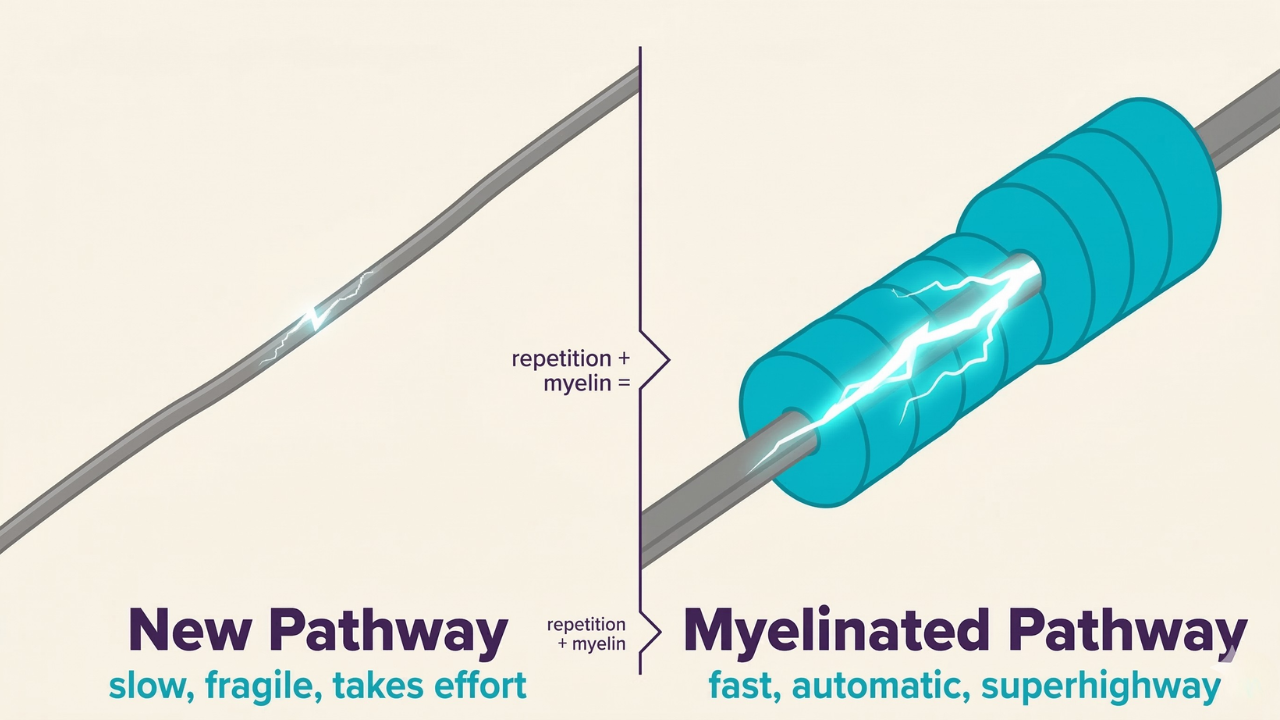
    In addition, the design of our brain works against us in two ways. Firstly, it doesn’t not know the difference between right and wrong. We all can relate to knowing the “right” thing to do but not being able to do it. And secondly, it takes tremendous energy for our brain to do anything. Its solution to these problems is to conserve energy by seeking to repeat what it already knows. Basically, our brain and body get addicted to replaying our known emotional subconscious experiences from childhood, most of which were hurtful. I call this process “The Worst Day Cycle.”

    Still unsure if this is true? Think about the last time you swiped left on a dating app. Your brain and body felt no electrical connection. Most likely, you even said,

    “They seem attractive and nice but kind of boring.”

    We are bored by them because our subconscious has no known experience with a healthier, more stable person. This stable person will not allow our brain to repeat what it knows, the emotionally hurtful drama of our childhood. Simply put, our attraction to the narcissist comes from our unhealed childhood trauma.

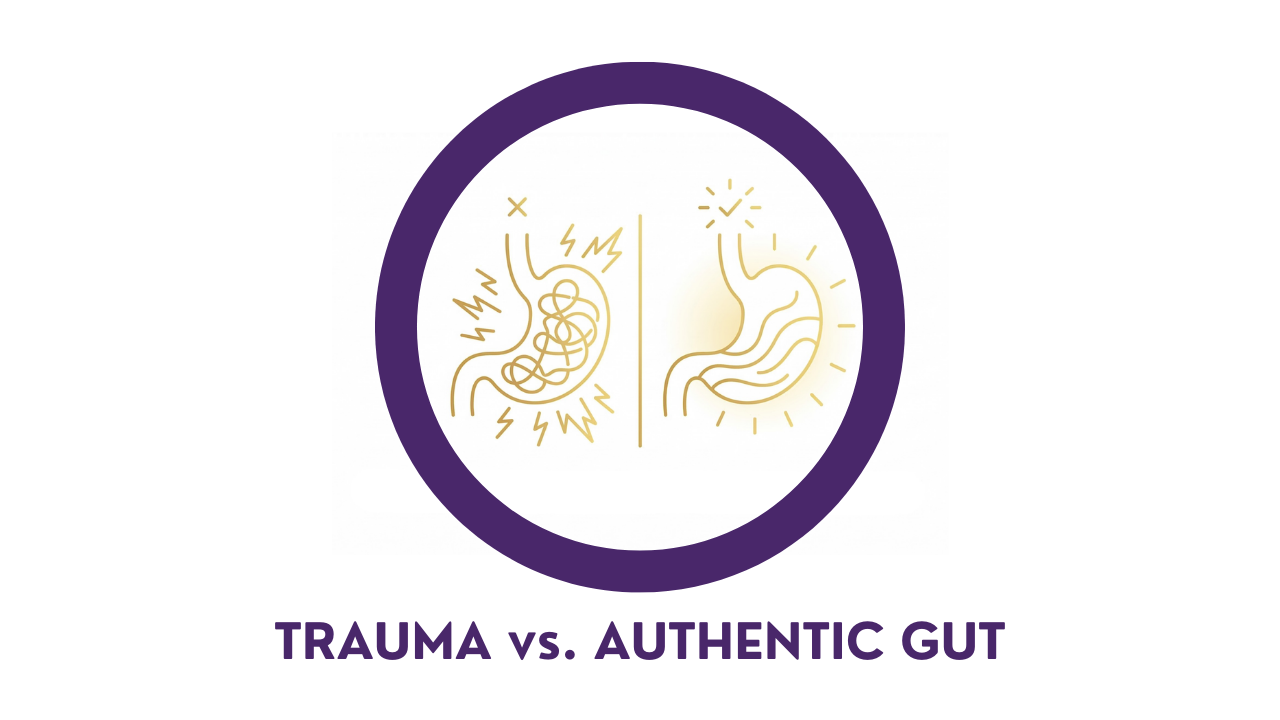
    I experienced the electrical explosion the day I met my second narcissistic wife. I was standing outside the restaurant on the evening we met for our first date. When I turned around, and saw her walking towards me I felt hit in the gut, took a step back and heard myself say;

    “Oh, My God, she’s the devil”!

    Was she actually the devil? Of course not. Narcissists are not evil. My brain and body instinctively knew this would be crazy and chaotic, and I could not stop myself from pursuing the relationship.

    The brains design, our childhood trauma and the resulting hunger to regain our lost power create the 7 ways we attract a narcissist?

    1. We knew from the beginning. We see the red flags. And we ignore them. I have found this to be true with every disempowered client attracted to a narcissist. They all saw the red flags, but the brain and body could not resist the temptation to relive their childhood trauma.
    2. We think we can fix them. We see their potential through their flaws, and we try to gain power by being the ones to fix them. Like the parent we couldn’t heal or get love and attention from. Trying to fix the narcissist helps us hide the disempowered pain from our childhood. It is a learned subconscious manipulative attempt to get our power back. If I can heal you, I am powerful.
    3. We do everything we can to control their actions and behavior to get them to stop. We throw fits, we complain, we throw it in their face. Some of us are aggressive. This is another attempt to regain the power we lost in childhood.
    4. We try to become whatever the narcissist wants. We become chameleons. In my case, I changed the way I dressed, my career choices, and more to appease my first narcissistic wife. This creates the self deception that we are “nice.” And sometimes, we want to change, but the disempowerment learned in childhood taught us that we can not voice our desires. Like me, we then pick a narcissist who will demand the change we wanted, but since we never mentioned it, we can then blame them for making us change.
    5. We keep going back to them, but we keep blaming them. We are unaware that it is our childhood that has created this compulsion to self-victimize. It is all we know. Society has not told us that this is a two-sided dynamic where both parties have responsibility. We are unaware that if there are perfect imperfections in one person, there have to be compatible perfect imperfections in the other person and the unhealed brain is drawn to them.
    6. Society has taught us to deceive ourselves by not taking ownership for our part. Society has failed to teach people that no one enters our life unless we allow them. Instead it focuses on blaming the narcissist and celebrating the role of the victim. Being the victim also garners attention and care. The care we did not receive in our childhood. As the victim, the unspoken inference is that I am nicer and kinder, and therefore I am better than the narcissist. This deceptive viewpoint strips the individual of their authentic power and keeps the abuse cycle alive. Society never taught us that ownership and honesty with ourselves provides us the agency to create change and is the only way to authentically reclaim our lost power.

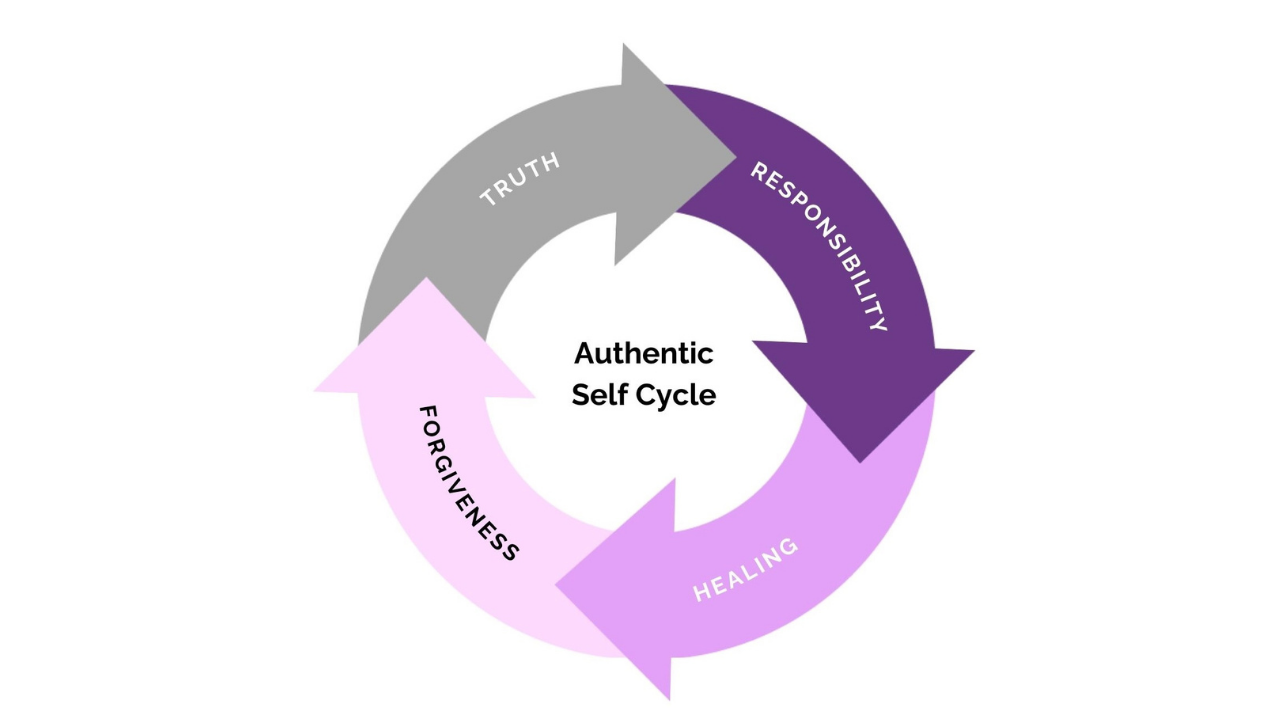
    While it is disheartening to recognize that our childhood and society conditioned our brains to believe that we must manipulate for power from the disempowered position, there is hope because disempowered people are capable of empathy, and so, unlike the narcissist, they can recover. We only need new knowledge, skills, and tools to stop the subconscious self-victimization and learn how to express healthy empathy towards ourselves and others. That healthy empathy needs to start with not blaming ourselves.

    I always remind my clients

    “We can only do what we know. As we know better, we can do better.”

    If you have never been able to find the source of your attraction before, then this is a momentous occasion. You now know there are things in your past you can address and heal so that future attractions will be healthy ones. By doing so with an expert like myself or many others out there who specialize in these matters, we will become authentically empowered .

    All worth exploring because everyone deserves a brain and body capable of being attracted to someone kind-hearted enough for true intimacy!

    ENJOY THE JOURNEY ??

    CLICK THE IMAGE TO LEARN MORE

    Are You Tired of Being in a Toxic Relationship?

    You’re not alone. Millions of people are stuck in codependent relationships that make them feel bad about themselves, and don’t know how to break free. We’ve all been there.

    Or maybe you find yourself always attracted to someone who is not good for you, and the cycle starts again.

    But it doesn’t have to be this way! There is hope! We will help you find your way out of the darkness and into the light.

    If you are single, you deserve better than being stuck in a cycle of narcissistic abuse or neglect. You deserve love and kindness! Don’t let another day go by where someone else controls your happiness or self-worth. Take control today with this course and start living life on your terms again! Save yourself from heartache and take back control over your life with this course now!

    If you have a partner, it’s time to take back control of your life and start learning how to save and resurrect a toxic, broken, codependent relationship. Fill it with love, safety, affection, kindness, understanding intimacy, and mutual connection. Start living the romantic life you deserve by breaking free from your toxic codependent relationship patterns today.

    It doesn’t have to be like this forever – we want to show you how it could be different for you now. All it takes is one step at a time…and we’ll walk with you every step of the way on your journey to the loving relationship you deserve.

    The sooner you take action, the sooner your life will get back on track. Join our community and learn how to heal yourself from codependence so that you can find happiness again.

    You are worth it!

    Sign up NOW!

    How To Break Free From Toxic Relationship Patterns


  • Coparenting With A Narcissist

    Coparenting With A Narcissist

    Hello and welcome back. I have received a lot of requests on this topic: “How do I protect my kids from a Narcissist ex?” I have lived through the same challenging experience. So I’m going to share with you what I did and what I tell my clients. I’ll provide you with what I think are the three best things to do, and also some great resources with you, so please read to the end.

    The first step in this process is to become an expert in a few areas! Unfortunately, we are not taught how to navigate something like this. We can’t make sense of a narcissist or anything else in life until we gain the knowledge, skills, and tools.

    Become an expert in parenting. One of the key aspects to learn about in parenting is: children need attunement. That’s not attention; it’s attunement. Kids need focused attention, which means we as adults have to put aside our emotional condition (our internal struggles from jobs, relationships, etc.) to sit in front of the child and ask them about their day, interests, feelings, etc. Attunement is all about “I am here for you.” Our children don’t need expensive or grand things, they need our focused emotional connection. Unfortunately, daily life as a parent most often consists of  asking where their homework is, yelling to get in the car. Quite often there’s very little sitting down and attuning with our child.

    Coparenting With A Narcissist

    The second expertise we need to gain is around the topic of parental alienation. This is the single most significant cause of hurting our children in a dynamic like this. We often have a narcissistic ex that’s being awful, and we inadvertently drag the kids in, telling them, “your mom/dad is…”, saying that their other parent is wrong in some fashion. This is a hard and fast rule, black and white. We never, ever, ever, ever (before the age of 18) say anything negative about the ex. EVER!

    No matter what they do. The second we do that, we’ve inflicted trauma on the child. Every child wants and deserves to adore their mother or father regardless of that parents behavior. It’s our child’s choice, not ours. The second we tell our kids the bad things about the ex or current spouse: we’ve placed them in a double bind. Now they’re in the middle. Whichever parent they choose, they lose. Doing so is abusive to our child.

    Parental alienation is one of the most common and destructive things that happens in this dynamic. We might convince ourselves that it is important our child hears the truth but this is adult information and a child does not have the emotional development to navigate this information.

    Here’s what I learned to do: my response to my kids was always,

    “I hear that you’re really upset. I just want you to know both your mom and dad love you. Therefore, We see things differently. Your mom gets to parent and will believe things she wants. I have my own beliefs, and sometimes we disagree. Your job isn’t to worry about that adult stuff. Your job is to be a kid. That’s it. Your mom and dad are doing their best to figure it out.”

    That was my go-to response every single time. If my kid exclaimed, my ex said this or that about me; I would do my best not to bite. Narcissist learn that mantra. Say it every time. It’s too much information for them to process. When they are adults and if they decide, you can have more transparent discussions when they’re over 18, but not when they’re a child.

    Coparenting With A Narcissist

    The next thing to learn about is Stockholm syndrome: the term comes from a bank robbery in Stockhom where the hostages became emotionally attached to the robbers. This happens to children: many times, they will connect to the abusive spouse. For instance i had to learn that part of my kids assaulting me was because they felt safe with me. They knew I would protect them. While children are just trying to survive, so they attach to the abuser to save their lives. That’s OK. Don’t give into fighting and alienation. Be patient. Wait. As long as you don’t do the alienation, when they get older, they’ll see it. It’s your only chance to save them. If you give in to alienation, you will play a part in the destruction of your child. I beg you: become an expert in parenting, parental alienation, and Stockholm syndrome.

    After you become an expert in parenting, become an expert in codependence. The only reason we ended up in a relationship with a narcissist is that we’re codependent and lack boundaries and the ability to say no. However we have a lot of our own pain and perfect imperfections to heal. While this healing is important because a codependent person will need their child to know the truth to get their child’s approval of and love. It becomes about the parent, not the child. While that’s not loving: it’s using the child as a pawn. It’s also passive aggressive and thinly narcissistic. Becoming an expert in healing our codependence is vital to help our children.

    The final step is the most critical: we need to become an expert in healing our pain. People don’t like hearing this, but not a single person enters our lives unless we say yes to them. I don’t condone or excuse a narcissist’s behavior. It’s not OK. But if we don’t take ownership of allowing them into our lives, we are out of reality and we lose our inherent power. While It is critical that we learn that we allowed them in because we went through horrific childhood pain, and that pain created the attraction. Many will believe they had a great childhood – that shows me how painful their childhood indeed was.

    Coparenting With A Narcissist

    No childhood was perfect – we are all left with wounds because no parent is a God or perfect. Narcissist basic psychology shows that our children become our emotional condition – if we don’t heal, our child has no model for what a healthy state looks like. Children learn most not by what we say or demand but by modeling and taking on our emotional condition. That’s why this is so important. If I haven’t healed me, how can my child heal themselves? So until we become an expert in healing our pain, we are just going to pass it to our children.

    Here are some great books and resources to help you:

    Hold On to Your Kids by Gordon Neufeld and Gabor Mate. This will help you learn about attunement and how to build a connection with your child.

    Parenting With Love And Logic by Foster Cline and Jim Fay. While they have this for teens and various ages. So start with attunement before going to this one.

    The Emotionally Abusive Relationship by Beverly Engel. This will help you work on codependence and learn about your childhood and pain. You’ll see the less than nurturing environments we were all raised in.

    Facing Codependence by Pia Mellody. While heal your codependence, so your child doesn’t grow up with the same dynamics.

    Your Journey To Success by Kenny Weiss. This is my book. It will help you unearth and conquer your pain from the past.

    Finally, I have a whole course to walk you through the steps of the entire recovery process.

    Thank you all for bringing up this important topic. You’re a great parent, and you adore your kids. Do the work, let them feel it, and give them the best chance possible to be the child and the adult you so desperately want for them. Parenting is a challenging narcissist process but a feasible process.

    Enjoy The Journey!

    CLICK THE IMAGE TO LEARN MORE

    Are You Tired of Being in a Toxic Relationship?

    You’re not alone. Millions of people are stuck in codependent Narcissist relationships that make them feel bad about themselves, and they don’t know how to break free. We’ve all been there.

    Or maybe you find yourself always attracted to someone who is not good for you, and the cycle starts again.

    But it doesn’t have to be this way! For instance, there is hope! In other words, we will help you find your way out of the darkness and into the light.

    If you are single, you deserve better than being stuck in a cycle of narcissistic abuse or neglect. For instance, you deserve love and kindness! Don’t let another day go by where someone else controls your happiness or self-worth. While Take control today with this course and start living life on your terms again! Save yourself from heartache and take back control over your life with this course now!

    If you have a partner, it’s time to take back control of your life and start learning how to save and resurrect a toxic, broken codependent relationship. Fill it with love, safety, affection, kindness, understanding intimacy, and mutual connection. Start living the romantic life you deserve by breaking free from your toxic codependent relationship patterns today.

    It doesn’t have to be like this forever – we want to show you how it could be different for you now. All it takes is one step at a time…and we’ll walk with you every step of the way on your journey to the loving relationship you deserve.

    The sooner you take action, the sooner your life will get back on track. So join our community and learn how to heal yourself from codependence so that you can find happiness again.

    You are worth it!

    Sign up NOW!

    How To Break Free From Toxic Relationship Patterns