Deciding to leave a relationship with a narcissist is a profound and often challenging choice. The consequences of such a decision depend on the circumstances and the depth of understanding you have about the narcissistic dynamic. Whether you’re planning a short-term separation or a complete exit from the relationship, being informed is crucial to navigating the road ahead with confidence and hope.
Are They Truly a Narcissist?
Before making any decisions, it’s essential to identify whether your partner is genuinely a narcissist or if you might be dealing with a falsely empowered codependent. Sadly, many people misdiagnose or mislabel their partners due to a lack of awareness about the nuanced nature of codependency.
A key distinction lies in behavioral patterns. Narcissists tend to display consistent behavior, resembling a desert’s relentless heat—day after day, the same, unchanging. In contrast, a falsely empowered codependent is more like Colorado’s seasons—long periods of harmony and joy, suddenly followed by colder, more distant phases, then renewed warmth. Recognizing these patterns helps you determine the actual nature of your relationship, which directly influences your approach to healing and decision-making.
Understanding this helps us foster compassion while maintaining healthy boundaries. It’s vital to recognize that the narcissist’s behavior is often a protective mechanism, not an indictment of your worth. Compassion can coexist with firmness in your boundaries—your primary responsibility is to care for your own healing journey.
The Consequences of Leaving — Short-Term and Long-Term
If you’re contemplating a brief separation—say, a few days or weeks—the immediate challenge is managing the narcissist’s reaction. Deep inside, narcissists carry significant abandonment wounds. When you step back, their defense is often anger—manifesting as criticism, hypersensitivity, or provocative arguments. They may attempt to punish or guilt-trip you, showing their distress through rage or manipulative behaviors.
Recognizing this pattern allows you to stay grounded. Remember, these reactions stem from their unresolved pain, not from any inadequacy on your part. Your role is to protect your emotional well-being, seek support, and avoid becoming entangled in their attempts to manipulate.
In contrast, fully leaving the relationship—especially if children are involved—requires strategic planning and self-awareness. Narcissists often respond with parental alienation tactics, working to turn children against the other parent by disparaging, criticizing, or even emotionally manipulating them. This insidious form of control aims to erode your relationship with your children and destabilize your efforts to move forward.
Create a Robust Plan: Before you leave, establish a safe, financial, and legal plan. Secure your funds, close or transfer accounts discreetly, and consider involving professionals to ensure you’re protected from financial exploitation or character defamation.
Limit Conflict and Character Attacks: Narcissists often resort to public shaming, online smear campaigns, or damaging your reputation to regain control. Be prepared and maintain your integrity.
Prioritize Self-Healing: The desire to fix or heal the narcissist often masks unresolved childhood wounds of your own. Working with mental health professionals can help you process trauma, reset boundaries, and reclaim your power.
Hope and Empowerment Forward
While leaving a narcissist can be fraught with pain and challenges, it is also an act of profound self-empowerment. By understanding the dynamics at play, you can make informed decisions that prioritize your health, happiness, and that of your children.
Remember, healing is possible. Striving for awareness and compassion—both for yourself and others—will guide you through this journey. You are not alone, and brighter days lie ahead.
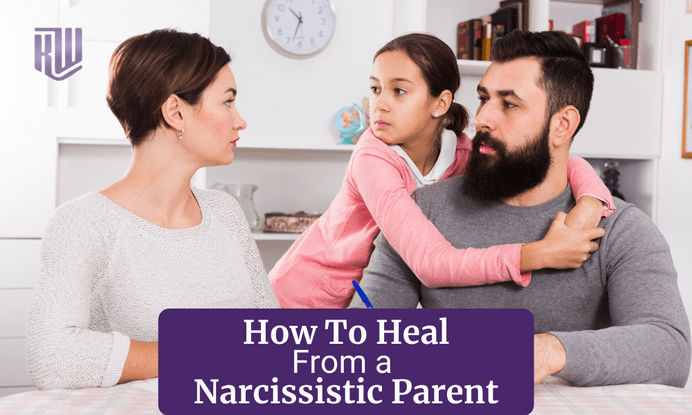
Have you always been curious about whether a narcissistic parent raised you? In today’s Best Day Blog article, we will look at the characteristics of a narcissistic parent and how being raised by a narcissistic parent translates into adult life. We’ll also look at what you can do to begin the recovery process to get your life back.
Before continuing, it’s a good idea to check Are They a Narcissist or a Codependent? to understand the difference between a narcissist and a falsely empowered codependent. You wouldn’t have ankle surgery for a broken arm, and you can’t heal from something you don’t struggle with; you want the solutions you are getting to be helpful to you.
Whatever is going on, the child is a prop and nothing more. Everything is about the parent.
Many of us have been raised by falsely empowered parents and have moments like that. The difference is that this behavior will be consistent in a narcissist rather than moments as in a falsely empowered codependent.
One of the ways narcissistic parent uses their child is to fulfill their unrealized dreams so they can live vicariously through them. So, the child’s individuality, thoughts, dreams, feelings, desires, needs, and wants are entirely ignored. All of these things are fashioned and controlled and decided by the parent. It all must be to please the parent.
Generally, a narcissistic parent will use a lot of guilt. They may try to stop you from going off on your own, telling you that you don’t care about them because you want to leave them. You, as the child, are always placed in a double bind. If you go and pursue your interests, you feel like you’re letting your parent down. So, your parent is always making these decisions for you.
As a child of a narcissist, you’re treated like an ornament. While the parent pursues their status, career, activities, or promotion of their self-importance through charities or social media, you’re propped up as an ornament. They highlight how well you’re doing in school or your athletic pursuits and how great you make them look. It might even be that only one of their children is highlighted as the ornament while the others are never featured because they aren’t as ‘good’ in the eyes of a narcissist.
Again, many parents may have moments like this, but that doesn’t mean they are narcissists. If this is consistent behavior across time, situation, and activity, that is the signifier for narcissism.
2. The narcissistic parents are always superior and will fight for their superiority
Their children can never eclipse them, which means the parent is always in competition with their child. An example of this could be a parent and child sharing the same hobby or cooking a festive family dinner; the parent will constantly belittle and criticize what the child has done, regardless of their age or talent. This is something that continues into adulthood. The narcissistic parent will always have to be better than their child, irrespective of the actual quality of the parent’s work.
These parents are possessive, competitive, and critical and will constantly compete with your friends and whoever you date or marry. That’s because they feel the need to always be above them. You’ll often see this with people who are new to the family, and your parent is likely to tell you or even your partner that they are not good enough for you. They’re always in a constant state of complaining. A narcissistic parent will try to segregate you from your friends or partners because they need their position of superiority.
3. Narcissistic parents seek external validation
They will parade their accomplishments – their life, trophy husband or wife, trophy kids, trophy associations – in front of others all the time. They seek a ‘better than’ position – ‘this is less than, that is better than.’ Everything is a comparison, and it’s all predicated on external validation. Sharing any personal information that makes them look bad is the worst thing someone could do to them, regardless of how their child’s feelings might be impacted. Parents like this will place themselves in positions where they can be recognized and validated.
4. A narcissistic parent will use shame, blame, manipulation, and coercion
They work to control you and always keep you beneath them. The way you dress, the way you act, or the way you perform is an embarrassment to them all the time. One way they do this is by boasting about how much they’ve done for you. This becomes even more prevalent when you try to move away from home. You can see this in parents who guilt their child for leaving by essentially listing all that they’ve done for them in their life as if it was out of the kindness of their hearts rather than the obligation and legal duty they have for bringing a child into the world. As a parent, it’s their job to take care of their child without expecting anything in return.
Narcissistic parents will often blame their children for their unhappiness. This can extend beyond the parent-child relationships and into the parent’s troubles with their partner or loneliness. These parents will manipulate you with money or vice to get you to do what they want. This might be in the form of paying for rent, bills, and everything else so that their money can control you, especially if they threaten to cut you off as a way to get you to do what they want.
In trying to coerce you into doing something immediately, they might barge into your house unannounced and uninvited. Or they will put you in a position where you need to make a difficult decision to please them and put them in a place of being your priority. If you don’t make them your preference, then they tell you you’re a terrible child.
5. They are rigidly controlling and highly sensitive
This is expressed as the adage, ‘it’s my way or the highway.’ No matter what, you, as a child, are always wrong. Any thought, feeling, action, or belief must always align with them. Any disagreement creates explosiveness. Remember that narcissists have severe shame and tremendously low self-esteem, so they can never be labeled as wrong. Unlike a falsely empowered codependent, a narcissist is never aware of this. Instead, they continuously negate any flaws within themselves.
6. These parents lack empathy
With an inability to register their child’s thoughts or feelings, they can’t understand that the child is inherently meaningful and worth something. That’s that lack of empathy; the only feelings that matter are their own. This is why if you’re having a bad day, they immediately turn the attention towards themselves and how their day was. It is a constant competition for them to be the center of the conversation.
7. A narcissistic parent expects their child to take care of them
This starts in childhood but then extends into adulthood and beyond. It encompasses emotional, physical, and, in many instances, financial care in virtually every area. They want you to put them above even your kids and family. Because, after all, they believe that you owe them something for everything they gave you growing up.
There’s a misconception that we must take care of our parents, but it’s our parents’ job to take care of us and to have worked in a position where they can take care of themselves as they grow old. Life may be difficult, and many parents work hard under circumstances that disallowed them from creating a comfortable nest egg to retire on; that shouldn’t be held against them. However, while children will often have to chip in at the end, parents who aren’t narcissistic will not believe that they deserve to be cared for in this way. With narcissism, parents expect to be cared for even if they can care for themselves.
The common thread within all seven of these characteristics is that narcissistic parents are the mountaintop with everything else revolving around them, not in moments but all the time.
What does this look like in adulthood?
If a narcissist raised you, there are several ways it would manifest as an adult, including low self-esteem, anxiety, or depression. You will be codependent in many or all of your relationships, have poor boundaries, and tend to be a people pleaser. It’s almost impossible for you to say no.
Children of narcissistic parents tend to be racked with chronic guilt if they’ve managed to say no, and they tend to be left with a tremendous feeling of emptiness. They may not feel it or medicate it away, which is why they won’t seek recovery—seeking recovery means feeling that void, and who wants that? This is the biggest struggle for many trying to recover; it can be isolating and intensely lonely. It’s an uncomfortable feeling to make peace with. But this is where the healing is.
A person raised by a narcissist cannot express or even handle their emotions. They can be all over the place and react quickly or shut down and shut off. Trust issues and indecision are often very prevalent as well; they will relinquish decision-making power to others.
Sadly, children of narcissists tend to pick partners who are also narcissistic. You do not end up in a narcissistic adult relationship unless you have suffered severe trauma in childhood. Many people push back on that, but they tend to be detached from the reality of their childhood abuse. Malcolm Gladwell points out that it takes 10,000 hours to become proficient at something. Few of us ever take a class on how to be a parent or have a relationship, but everyone thinks they are an expert. Everyone thinks they know their childhood without delving into it even a little bit. Therefore, everyone has a deep level of disconnect from reality about the truth of their childhoods. If they do the work, they will realize the truth about their parents and their perfect imperfections.
What are the solutions?
1. The first thing is trauma recovery. If you know that a narcissistic parent raised you, you went through horrific and unspeakable trauma. You may not feel or notice it yet, but that’s a defense mechanism you used throughout childhood to survive. However, you will have to address all of this to get your life back.
The second thing you need is codependence recovery. As you can see, because of many of these dynamics, it became your job to care for your parent; you had to give up your life. You were an ornament and a possession for them to use as they saw fit. That left you in a place where you’re now dependent on others to get validation. This needs to be dealt with.
The third thing you need to do is seek out an expert. This is not something that you can navigate by yourself. You can’t recover just by watching videos or reading books. Sure, you can gain information, skills, and tools using these mediums, but you will never heal. We need outside experts to teach us. I always suggest a person find an expert in childhood trauma recovery and codependence recovery.
Beginning your recovery journey.
If you’re not in a financial place to work with a professional, take advantage of my free resources here. http://kennyweiss.net/resources/
For those that are ready for the complete healing journey, here or four suggestions I invite you to get started with today:
Are you trying to figure out how to navigate and deal with a narcissistic parent or family member? Then today’s Best Day Blog article for you. I’m going to be showing you five ways to deal with a narcissistic parent.
Tip #1 Acceptance
What keeps us from being able to deal with a narcissistic parent is that we keep trying to fix or figure out what’s going on. To accept that it can’t be figured out due to the narcissistic tendencies being created in their own childhoods, and therefore being out of your control, a few things have to be accepted about the parent:
They will never listen
They will never admit that they’re the problem (classic narcissistic trait)
They will never compromise
They will never care about you or care about the family truthfully in the way you hope.
They will only care about power.
Narcissists only care about the world revolving around them and creating power for themselves. As sad as it may be, accepting that they will not love, adore and connect with you in the way that you deserve helps you move forward. To allow this to be accepted is devastating and very difficult to make peace with. Working through these emotions is important because you will not get the parenting you deserve. To read and understand this first point will be difficult, it can feel very final, and this will likely hit some tender points within yourself. It’s important to honor these feelings that are roused by understanding this. A small condolence in this realization is to remember that the cause of this is trauma that hasn’t been dealt with in the parent’s own life, which cannot be changed by you.
Tip #2 Turn everything around
This is a really powerful step that can help to create a separation between you feeling responsible for your parent’s pain and the truth that you are not – turn everything around. The negativity, insults, blame, manipulation, belittling, and anger are all a projection of their own self-loathing and pain. It is not yours. It has never been yours, and it is not your burden to carry. A great way to move through this is to write down all the ways they have blamed, shamed, guilted, and criticized you. Then flip it and write it in the first person from their point of view. This turns what is being said that’s hurtful from ‘You are to blame for my misery’ to ’I am to blame for my misery’ (which is, in fact, accurate). So, turn every ‘You’ statement that has tried to make you the problem into an ‘I’ statement.
This can provide a very visceral understanding of how your parent feels about themselves. While we may empathize, it is critical that we don’t excuse or minimize or condone their choice not to seek help and heal their pain. Again, it is their pain to carry, and it is their job to heal it, not ours.
Tip #3 Don’t stand in front of the abuse any longer
You’ve likely been trying, for years, to work it out with your parent. This has to end for your own benefit. Creating a boundary that says you will not stand in front of this abuse any longer is powerful. To do this, the moment it feels as though negative comments are going to come up, a simple statement such as ‘This conversation is no longer working for me, I’m going to leave’ will create a wall of pleasantness and a boundary that protects yourself. No longer try to engage or reason with them, as this won’t work. Leave, get out and commit to no longer standing in front of the abuse.
Tip #4 Set boundaries with them
As you would a child, you must set boundaries with narcissists. The emotional capabilities of a narcissist are somewhat regressed from that of a non-narcissistic adult because they become stuck in the usually healthy stage of narcissistic development that happens around age 3-6. While most children grow out of this, those that become narcissists in adult life become get stuck here. Therefore, you must be firm with the boundaries you set and enact consequences immediately. It may feel a lot like you’re disciplining a child, and in effect, this is because you are. You must put your foot down and take responsibility for the boundaries you’re setting.
A key to this is instead of making your boundary about them (i.e., ‘You’re making me feel this way, so I need to leave’), it must be about yourself (‘This behavior doesn’t work for me, and I won’t tolerate it’), so that it’s really clear. You can let them know that if they do decide to stop using offensive or abusive language, you are open to talking to them, but until then, your boundary will stop you from interacting with them – and then stick to your boundary and leave. To learn more about boundaries, take advantage of my free download, How To Keep Our Boundaries In 3 Simple Steps.
Tip #5 Start prioritizing yourself
Get into recovery. This requires working with trauma and codependency recovery specialists to get the healing your parents have never pursued. This work will allow you to reparent yourself because you weren’t parented as you deserved. You are allowing somebody to teach you how to heal and parent yourself will greatly benefit you on this journey. Develop self-love. Accomplish this by learning how to say no and releasing guilt around loving yourself. I have a whole section on self-love on my website here: http://kennyweiss.net/category/self-love/ Here, you will find helpful material that can teach you how to prioritize yourself, as well as free exercises.
These five tips will help you on your way to dealing with a narcissistic parent. Take advantage of the free downloads and exercises I have provided for you here – http://kennyweiss.net/resources/
Looking for more solutions? Pick the one that suits your needs best:
The Tinder Swindler on Netflix showed us how women worldwide are susceptible to being conned in life because they don’t realize how they can play an equally responsible role in the dynamic.
Unfortunately, this is not often discussed in documentaries such as the Tinder Swindler and it’s certainly not something we’re taught growing up so that is what we are going to tackle in today’s Best Day Blog article.
Before we dive in, though, there are some crucial points to bear in mind:
1- The Tinder Swindler. aka Simon Leviev was consciously aware that he was conning these women. The women were NOT consciously aware they were conning themselves.
2-The women are NOT to blame, and they are responsible – I will show you how both are true.
3-If you notice anger surfacing over the prospect that the women conned themselves, that is a great opportunity to learn how you con yourself!
4-If you choose not to read the full article due to feeling anger at the content, you will rob yourself of the opportunity to learn how to protect yourself from a similar situation.
Don’t take the easy route and mistake this for victim-blaming. On the contrary, if you are open to a deeper understanding of human and relationship dynamics, what I am about to share empowers the victims of such crimes, sets them free, and raises people’s ability to create healthy relationships, find love, and defend themselves against predators.
For many, what I am about to share will challenge most of your current emotions and cultural beliefs. At first, it will be quite a mouthful, but if you stick with it, you realize it was good for you, because it is healthy and based on truth.
The explanation for how the women conned themselves comes down to two advances in neuroscience and psychology. The first is by Lisa Feldman Barrett, who shared her discovery in 2017 with her book ‘How Emotions Are Made.’ Her work transformed previous theories on emotions and how our brain processes information.
Secondly, my development of what I call the Worst Day Cycle, which is a self victimizing process we all live out until we heal the childhood trauma that created it. Coincidentally, our books came out around the same time, and both combine to create a scientific understanding as to why and how these women conned themselves.
We Create Our Emotions. Nobody makes us feel anything.
Lisa Feldman Barrett’s work shows that we create emotions in three ways. Our physiology, the cultural and societal beliefs we are exposed to, and our childhood experiences. In this way, often, our very first experience of feeling a certain way will dictate our future reactions, as our brain assumes that any time we feel that same way, the same events will unfold. You may think you are an adult making decisions but in fact, it is the child inside you that is making the decision.
For example, suppose you grew up in a physically violent family. In that case, when you are exposed to violence in your relationships, you’ll associate this with family and love – you’ll believe, based on your earliest experiences, that violence=love.
Below is an excerpt from How Emotions are Made to explain how we are responsible for creating our own emotions. You may often hear people saying things such as ‘You made me feel like this,’ She made me feel this,’ but these are disproven in Barrett’s work, emotions – are not, and cannot be, forced upon us by other people.
“Emotions are not built-in. They are not universal but vary from culture to culture. They emerge as a combination of the physical properties of your body, a brain that wires itself to adhere to whatever environment it develops in, and your culture and upbringing, which provide that environment. Emotions are not reactions to the world. From sensory input and past experience, your brain constructs meaning and prescribes action.”
This is so important when analyzing the Tinder Swindler case because it helps to set the scene of understanding as to why these women were able to be conned and unknowingly conned themselves. Their brains made predictive assumptions from their histories that created the illusion that they were innocently duped when in actuality, they played an active role in the duping.
How do emotions create the women’s conning of themselves?
Her opening statement below gives a lot of insight into her emotional thinking and how she planted the seeds for her own self-conning:
“The moment I get nervous, then I know there is something special here. I’m after that all-consuming, kind of what you’ve grown up with. The first memory I have of love is Disney. I had memorized the entire beauty and the beast cassette. I love how she’s just a small-town girl just like me, hoping for something bigger. She meets this person, then she saves him in a sense, and he saves her. They go into a different life together. It just sticks with you like the feeling of a prince coming to save you. I think that even though you know it’s not real, it’s still with you. I think everyone has that little bit of hope deep down inside. It will be as magical as they are portraying it to be.”
The feeling of nervousness she mentions is a prime example of physiological learning. She formed a prediction in her mind that this was a feeling of love towards Leviev. Because this was a feeling she had experienced previously, her mind immediately associated this sensation of nervousness with love – even though, on this occasion, it could have been a different indicator of fear or worry.
In particular, the reference to Disney, the Beast in Beauty and the Beast. She was looking for a beast – or a narcissist in today’s terms. Simon Leviev certainly has many narcissistic traits; She believes that Simon (The Beast) is the Prince that she can save, and the way to do this is by giving him money.
The belief that a person is powerful enough to save another is a God complex. It is also a narcissistic trait but from the disempowered victim position. Her idea that she can save Leviev and change who he is as a person is a crucial part of her swindling herself – it’s important, again, to remember that she is not to blame as this was an unconscious feeling, whereas Simon’s behavior was conscious. She unconsciously believes that she has enough power (a disempowered narcissistic trait) to change him. It is her Disney childhood dream to rescue a beastly man.
Furthermore, there is such a thing as ‘love addiction,’ which is the fantasy-like creation of a super love for someone in your mind. In her eyes, Simon became the Prince, and she believed they could both save each other. Here she’s creating a fantasy based on a construct of emotions. She has implanted in her mind due to memorizing the Disney story.
Remember, this is all unconscious to her, but she wants her Disney dream and will do anything she can to have it. Unfortunately, Disney trained her to look for a beast and skewed her view that love is based on intensity and trauma. She’s not to blame for this, and she is responsible on an unconscious level – she’s participating through the false belief that she can save a man by financially conning him to get what she wants. To be the beauty that loves and nurtures the beast into a prince.
So, to recap, her brain created the following emotional predictions and assumptions:
1- She equated danger/fear with love – the Beast
2- The Beast, or Simon, is a prince that she can save
3- A God complex to get her power back over her fear
4- She created a love-addicted fantasy of Simon.
5- She conned herself unknowingly based on her learned emotional experiences
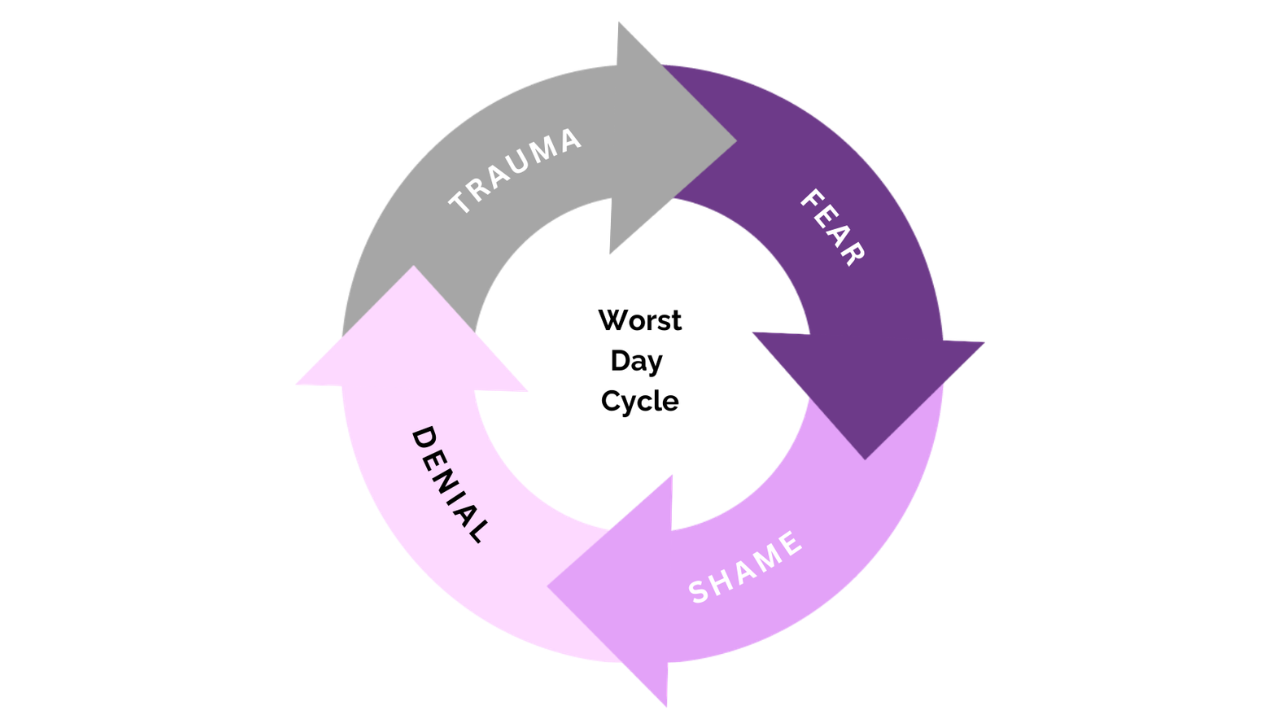
Trauma in childhood is inevitable simply because we are all human and perfectly imperfect. Each parent will make mistakes that leave wounds in us. It’s important to remember that trauma does not have to be a huge event. Trauma is any experience in life that creates a negative response or feeling. Trauma is the first stage of the cycle. It generates feelings of fear, which is stage two.
The third stage of the cycle is shame which is a loss of our authentic power. A prominent way parents traumatize us and place this shame in us happens when we make a simple mistake. It was simply the act or behavior that was bad. To solve this dilemma, we create a false self to get our power back.. It becomes a learned emotional response. It is actually a survival instinct. I go into much more detail about this process in my book, ‘Your Journey To Success.’
In addition, we learn from our parents how relationships work. Therefore, the adult relationships we pursue reflect the relationships we experienced as children.
Shame turns into false victim power.
In our culture, there is an unintended consequence to protecting them. Our culture now absolves the victim from any responsibility. This has created tremendous power from the disempowered victim position. Instead of the media and society teaching the public that we make our emotions, that we are all stuck in The Worst Day Cycle and reliving our unhealed pain from childhood, and seeking out the same perfectly imperfect hurtful relationships we experienced as children, they are celebrated. The women now hold power over Simon Leviev and society. Reliving our Worst Day Cycle is a tremendous payoff for us all. Being the victim gives us the power that we lost as children. No one will hold us responsible for the part we played. It WORKS!
In conclusion
These women are not to blame. Bypassing responsibility for their feelings, thoughts, and actions onto others.
Therefore, if we genuinely want to protect victims and take away the predator’s power, we need to start teaching everyone that our upbringing, beliefs, and manufactured emotional projections that create our Worst Day Cycle play a part in our being responsible.
This Best Day Blog article and accompanying video is an analysis of the happenings that took place in the Netflix docu-series Bad Vegan – Fame. Fraud. Fugitives.
In this article, I will be discussing what created the attraction between the ‘meat suit’. Otherwise known as Anthony Strangis, and the bad vegan, Sarma Melngailis. Having this information will allow you to protect yourself from falling for a ‘meat suit’ yourself! Throughout the article I’ll be sharing lots of helpful resources so that you can gain the knowledge, skills, and tools that you need so that you don’t ever fall prey to a situation like this.
What creates a ‘meat suit’ and what creates the vegan who is attracted to them?
For those who haven’t yet watched the documentary, the ‘meat suit’ is what Strangis calls his human form, his vessel. He believes he is a ‘non-human’ and that his body is simply here as a physical representation of himself – his meat suit. I will refer to him as the ‘meat suit’ from here on out.
What created the personality of the meat suit, though? Well, it is something I call The Worst Day Cycle. The Worst Day Cycle explains how we end up in relationships like these. Furthermore, it explains how we fall short in reaching our potential. If you would like to learn the full process and how it is operating in your life because yes, it is operating in all of our lives, I discuss it at length in my book ‘Your Journey to Success’. Your cycle may not be as extreme as what was portrayed in Bad Vegan, but everybody on this planet is caught living in The Worst Day Cycle.
What is the Worst Day Cycle (WDC)?
On my YouTube channel, I have a 5-part video series which takes you through the WDC called ‘Reclaim Your Authentic Self By Becoming Trauma Informed. You will find that series within my WDC playlist.
The WDC consists of four parts, trauma, fear, shame and denial. This might be hard to swallow but every single one of us experiences trauma in childhood – this is unavoidable. For the Meat Suit in Bad Vegan he experienced significant neglect and abandonment from his father who often took him gambling when he was a child. He and his mother were also held hostage and he watched as his father held a gun to her head. While many of us do not experience this level of trauma. We do experience emotional injuries from our perfectly imperfect caregivers.
Worst Day Cycle
For Sarma the ‘Bad Vegan’, she experienced her parents divorcing at 9 years old which is a difficult experience for anyone to go through and her sister, with all best intention, took on a protective role for her, often talking for Sarma and becoming her voice – this is also what happened in the relationship with Anthony – he became her voice. Sarma ended up playing the prisoner just as she had as a child and therefore subconsciously looked for this in her partners. Someone who could talk for her and ‘protect’ her – the trauma cycle repeats.
Many people don’t realize that they’ve experienced trauma in their childhoods. They believe they are completely recovered from it, but most often this isn’t the case. My video ‘The Wounded Inner Child’ will help you to understand more about this. When you are living in denial and not accepting that your childhood was less than perfect. You can’t recover or prevent similar events like those that took place in ‘Bad Vegan’ from happening.
Worst Day Cycle
When we go through these emotional and traumatic experiences our brain actually becomes emotionally addicted to the explosion of fear chemicals and hormones that are released – we become addicted to the trauma – my video on ‘The Tinder Swindler’ goes into this phenomena in some depth. Because we have been conditioned to minimize and suppress our fears, we are all stuck in it. We’ve never been taught the Emotional Authenticity Method I teach to cope with these difficult emotional life experiences.
There is a great deal of work in science, medicine and society that has taken place around emotions because we now know that, actually, emotions do run our lives – not our intellect. Emotions come first – every thought we have starts with a feeling, and because we haven’t developed the Emotional Authenticity that we need, our brains automatically replay the unhealed emotions from the past when we experience new things or things that subconsciously trigger the same feelings we experienced as children.
The Third Stage
The third stage of the cycle is shame. As a child we must physically and emotionally connect to another human being to survive. Therefore when our parents are imperfect and create emotional injuries inside of us. We adapt and create a false persona to fit in. It is a survival mechanism to protect ourselves. Because it happens so young, we believe it is the real “us”. This loss of the authentic self creates a power vacuum. Shame is ultimately a power dynamic. We use this deep shame core as adults to regain our power. How do we do that? By choosing hobbies, friends, careers and relationships that mirror the injuries of our childhood. We do this because even though we have been hurt, who is responsible for the hurt? Ourselves, we CHOSE, this person place or thing. The overwhelming truth that we are responsible for our self-victimization send us into denial.
About Denial
Denial is the single greatest killer on the planet today. He is the main reason you don’t have the relationship, career or life you want. This is exactly what Sarma was caught in – the shame and denial portions of the cycle. She kept going back, choosing to re-victimize herself (shame) by denying the abuse and lies that were right in front of her. Not because she is a bad person but because as a society we don’t teach about The Worst Day Cycle or how to attain Emotional Authenticity.
To dive deeper into how denial is the single greatest killer on the planet today, I really recommend checking out my ‘Self-Deception/Denial’ playlist on YouTube so you can learn how your denial is affecting your life and begin the healing journey.
The Worst Day Cycle is incredibly powerful. People often think that these sorts of experiences can only happen to people who aren’t smart or are defective in some way, but Sarma was a very clever woman. It happens to all of us. Many people find this very difficult to accept – that even the ‘victim’ could be responsible for bad things happening to them, but learning to accept responsibility for this is the only way to heal. Sarma wanted money, she wanted her dog to be saved and she made the choice to stay. She did these things because of The Worst Day Cycle and her lack of Emotional Authenticity.
Resources and links to help you
We must become an expert in the worst day cycle and how trauma, fear, shame and denial operate in our lives. My book ‘Your Journey to Success’ goes through this in detail.
If you would like to start your healing journey then sign up to my free masterclass ‘Your Journey to Emotional Authenticity.’ Learning my Emotional Authenticity method does not take long and you will see very quickly how much better your life becomes and when you have the knowledge, skills, and tools, how easy it is to avoid being eaten by a meat suit!
Are you looking for more solutions? Pick the one that suits your needs best!
It can be very difficult to discover that you have an adult Narcissistic Child and equally as difficult to know how to deal with them because as parents, we will do nearly anything to support and love our children.
There are many different ways that an adult Narcissistic Child can be managed, but in this article, I’ve picked out five solid suggestions to help you manage your child’s demanding and often selfish ways.
As a bonus, I will share 3 of the best things you can do to help yourself because this issue can cause a lot of pain and anguish, so finding a way to allow yourself some time to rest and do some introspection is just as important to ensure you remain in the best frame of mind to help both you and your child.
It’s also important to note the fact that at the development age of around 3-6 years every child goes through what would be described as a narcissistic phase. At this age, it’s normal for them to believe the world really does revolve around them. This is an important part of child development and figuring out their place in the world. This becomes a problem when the child gets stuck in this phase and cannot appropriately develop. That is also why a child can not be diagnosed as a narcissist. As such, this article is aimed toward those who would be classed as adult children, eighteen and older.
5 Tips For How to Deal with a Narcissistic Child
#1 Boundaries don’t work
Unfortunately, narcissists will not respect any boundaries you put in place because they don’t think they matter. Narcissists, by nature, are abusive, and abusers do not respect boundaries. Remember, narcissists believe it’s all about them, so unless the boundary benefits them somehow, it won’t work. This is where many people can go wrong in believing that by setting boundaries, they will be able to change the narcissist’s behavior. However, recognizing and accepting those boundaries won’t work is important. Boundaries can be helpful for you personally, but they must be for your own happiness and peace only. Your child won’t adjust their actions based on your boundaries. To learn more about boundaries take advantage of my free download, How To Keep Our Boundaries In 3 Simple Steps.
#2 Accept the scraps
As difficult as it may be to accept that in a relationship with a narcissistic child, you will not receive the love, attention, or affection that you may desire. You will only ever get the small scraps of attention or love they wish to give you, and there’s not a lot you can do to change this. In this relationship, the child is in control; no matter how much you want things to change, the child is the one to decide how things will work.
As parents, we want to teach or figure out our child’s behavior, so we can improve it. This plays right into their hands and the power they crave. Therefore, It is important that you try to keep hold of a certain amount of self-esteem and power – don’t waste time trying to reason with the child or trying to figure them out, as this will be wasted energy. Instead, moving on to tip three, try turning everything into a question.
#3 Turn everything into a question
A good rule for parenting in general, particularly with a narcissistic child, is to ask them a question instead of telling them something. For example, when your child is treating you badly, instead of saying something like ‘Stop treating me that way, it’s not nice’, ask a question such as ‘I’m curious, what advantage do you get from treating me that way?’ This way, you’re staying contained and placing a boundary within the question at the same time. You have to remember that the child doesn’t care how you feel naturally, so turning the question around to be about them rather than you invite them to be introspective and more likely to be interested in finding the answer as it’s related to them.
Another great question would be to ask them what they think about a certain behavior. For example, ‘Do you think that is kind or do you think that is hurtful?’ which is good for getting them to explain themselves. Whilst, they may not answer the question and may even get defensive about the question itself, keep doing this and reflecting back to them in this way. This is a method of deflecting and shielding yourself by creating a ‘Wall of Pleasantness,’ which stops you from falling back into the trap of investing your time and energy into trying to change their behavior. This can create a form of connection and potential insight in a way that hands back the responsibility to them.
#4 Put the responsibility on Narcissistic Child:
Following this, turning their comments into questions is a way of giving responsibility back to them – both protecting you and making them think about their actions. If your child is unhappy with the way things are, then you can ask ‘Why do you think you want things another way?” Or, “why would you choose that?’ – it’s about making them responsible, rather than trying to defend yourself or get into a debate. For example, if they’re saying somewhat derogatory things to you, rather than becoming defensive, flip it back on them and say, ‘Ok, that’s an interesting perspective. Why would you want something like that in your life then?’The secret is to create questions that place the responsibility for their behavior and their outcomes squarely on their shoulders. This protects you from avoiding sucking into investing your own thoughts and feelings into the situation.
#5 Safeguard your money, possessions, and heart
It’s not uncommon for narcissistic children to steal from you. Often because it feels as though they are entitled to anything they want, they prey on your desire to fix and help them. Maybe they’ll even make you believe it will be different this time. But it’s important to remember that this is all part of their game. They can be very cunning in order to get hold of what they want. It’s not easy, but it’s important to remember that it’s not real. Remind yourself to accept the scraps and to place responsibility on their shoulders.
It’s your turn
Part of what can cause parents of narcissistic children to become tired, fraught, and disheveled is that they have been spending all their time trying to help the child not to be a narcissist, which is, unfortunately, an uphill battle. Spending time trying to figure out what the child is saying or meaning is often fruitless. These next three steps flip the attention onto you so that you can heal yourself. It can also help better be there for your child in the right way.
#1 You’re number one
The first step is making your recovery your priority and taking your focus off the narcissist. It’s a red flag to be spending all of your time and energy trying to ’fix’ them. Instead, invest time in self-care for yourself and prioritize yourself so that when you interact with your child, you come to the interaction in a much more positive and stable frame of mind.
#2 Watch their actions, not their words
If and when there is time and space for you to focus on the narcissist. It’s important to look at their actions rather than their words because the words they speak don’t matter. The narcissist’s main goal is always to get what they want when they want it. So they will tell you what they think you want to hear only for their own benefit. Keep a closer eye on what they’re actually doing. Actions never lie, and are never up for debate. A person is the sum of their actions!
#3 Accept that you played a part in your child’s behavior
This is the toughest but also most loving thing you can do for yourself. Be willing to accept that you have unhealed trauma that will have contributed to your child’s behavior. Ironically, to not accept this is narcissistic in itself – the inability to accept the truth. The self-esteem wound is truly at the core of narcissistic behavior. Narcissists are unable to accept the truth and look at themselves honestly. Narcissism is primarily a learned behavior from the type of childhood they experienced with their caregivers. This can be a difficult truth to accept, but it shouldn’t be. We are all human and perfectly imperfect. Since we don’t teach parenting skills, most of us are just winging it with no idea if what we are doing is helpful or hurtful. That doesn’t make any of us bad. It is just the truth. The key to healing from anything is truth.
What is the primary cause of becoming a Narcissistic Child?
This is a sensitive and emotive topic to discuss, especially for the parent of a narcissistic child. It can be very difficult at first to accept that your child may be this way or that you have played a part in how they are. The natural inclination is to believe it is genetic in nature. Scientifically it has been proven that genes become activated through the environment they are placed in. A child might be born with a specific gene for a disease or illness, but that is not enough for the gene to activate. We all have genes that carry the potential for illness and disease. As long as we don’t experience the environment for the genetic factors to activate, they won’t. Famed cell biologist Bruce Lipton discovered this years ago and shared how it all works in his book ‘The Biology of Belief.’
I personally don’t feel any parent is to blame, and they are responsible. It is both. A quote from Gabor Mate that addresses the difference between blame and responsibility is helpful here to understand that while you may have played a part, it’s not you who is to blame.
Gabor Mate Quote:
“I need to make the distinction between blame and responsibility. Blame says that you did something wrong. You did something that you could’ve done differently, and therefore you are at fault. Responsibility says yes, I played a part in creating this in my child but not consciously or deliberately. I did it because I was programmed to do it by my own childhood experience which in turn was programmed by my parent’s childhood experience. Therefore, nobody is at fault. Everybody does their best, but we do pass these unconscious patterns on. And we don’t blame people for having unconscious patterns. Instead, we try to make them conscious of it so that they can take responsibility for it.
Therefore, there’s no responsibility without consciousness and that also means there is no blame. So I don’t blame the person or their parents for their perfectly imperfect parenting, but I do say that the unconscious patterns they learned in their childhood have an impact on every area of their life. So if they want to have a better life and want to help their child they have to get conscious. They have to face the self-deception and get into the reality of what they have been doing so they can stop doing it or do it differently. Doing this liberates people from blame and empowers them to be response-able! Which means they are able to respond appropriately, lovingly, and confidently to events in their life and in this case, their children.”
How to Help Narcissistic Child:
If you want to help your narcissistic child, becoming conscious and taking responsibility for how you played a part in the relationship and upbringing, rather than focusing on them wholly, will do this. Don’t avoid yourself and your part in this – place the focus back on yourself and on your unconscious patterns that have added to the dynamic so that you may heal them. By modeling your ability to heal the unconscious traits that have contributed to your child’s development. It will be easier for your child to start doing the same.
Are you looking for more solutions? Pick the one that suits your needs best!
The experience of being raised by a narcissistic parent is just devastating and the consequences and effects last a lifetime. It is devastating to be left with feelings of emptiness – or filled with confusion and sadness, or the sense that we’re unlovable by those who are supposed to be our greatest protectors.
This article will offer suggestions that will help you heal from this dynamic and provide you with some tips to get started on the recovery process.
1. Educate yourself (what you’re doing right now)
You’re already making a great start. Educating yourself is important and here’s why: studies show that the biggest boost of self-esteem we get comes from learning.
The core wound for those raised by a narcissistic parent is low self-worth and low self-esteem. Our identity and worth come from our parents and if they’re incapable of giving that — of creating that healthy attachment and bonding that every human being needs — it leaves us with a gaping, empty hole we then have to fix. Learning is a great way to start filling that hole.
Whenever we learn something new, there’s this massive chemical reaction inside of us — we love ourselves more for learning well. Therefore, make learning a priority. Learn about the negatives like how bad narcissistic parents are, but also learn about the positives like recovery and the journey into yourself. Don’t stop there, learn about new hobbies like ballroom dancing or painting or any other hobby; the point is to learn. Make sure you also take advantage of my free downloads here: http://kennyweiss.net/resources/
2. Seek trauma recovery
We can’t get out of this on our own. In life, if we want to achieve anything, we have to take classes with a teacher to guide us. We need someone who has the skills and tools that our parents never had to guide us along that journey. Find somebody and make that investment in yourself.
Sadly, many people will define that as a cost and have many reasons or excuses to avoid this step, but what they’re avoiding is their worth and their recovery. They’re avoiding the ability to love themselves and the ability to love their own children or spouse or anyone else. Unless we pursue trauma recovery, we are severely limiting our life capabilities. I personally don’t see any o us as a “post.” I believe we are all worth the investment.
3. Do grief work
There are five stages of grief, right? Shock/denial, anger, bargaining, sadness/depression, and acceptance. Most people live their life in the first three stages. They don’t let in the weight of what they have experienced. That then expresses itself in anger, which manifests in poor relationships, being shut down, addictions, and similar things. Then with bargaining, they look for any excuse or reason not to do the work because they’re trying to avoid step number four, the sadness. Society tends to manipulate people into a false sense of nirvana when there’s really a lot more pain and dysfunction than we ever talk about or deal with. This is how we minimize the effect of what we experienced in childhood.
This is why grief work is so important — it recognizes in all of us the part of ourselves we’ve neglected, our pain. Our denial of that pain is robbing all of us of true health. Instead, society keeps projecting the need for perfection when what we need to be dealing with is our imperfection. The day we learn how to heal our pain and imperfections is the day we start achieving acceptance and freedom.
4. Stop the self-abuse
Because of developmental trauma, we are all stuck in a cycle where we project perfection and hide imperfection. We need to rip off the band-aid and confront the denial of these imperfections. We do this by becoming an expert in our imperfections. When we can accept the deepest, darkest, most broken pieces of ourselves how could we not love ourselves? Do you see that when we can accept the most horrible thing that we never want anyone to know, it is proof of our self-love because we no longer care if others know? You can read more about this concept in my book, Your Journey to Success.
5. You need to reparent yourself
A narcissistic parent is immature; they never matured out of the narcissistic stage we all go through in early childhood development. So we need to learn how to parent ourselves. How do we do that? We need an expert. That’s part of why we have to hire somebody to help us with the trauma recovery. They also need to teach us what developmental deficiencies are. We need to use experts to help us become aware of them and essentially need to find a surrogate parent. That can be done through the use of support groups, coaches, counselors, and therapists. They become the trusted advisor we never had until we can become it for ourselves.
So if you have been raised by a narcissistic parent, it’s incumbent on you now that you’re the adult to go heal yourself. I offer plenty of free content for those looking to heal on my free online magazine site, www.thegreatnessuniversity.com. It’s perfect for those who are in the discovery phase of the process and are ready to take action. There is plenty of content on self-love, codependence recovery, narcissism recovery, and more with options to watch videos, read, or a combination of the two. There are also a ton of free exercises to download.
If you feel you are ready for the full process I would suggest looking for a trusted expert in the field to guide you along the journey of recovery. If you would like to learn more about all the different ways I help people which include online masterclasses, private groups, and private sessions, you may email me directly at kw@kennyweiss.net.
Are you looking for more solutions? Pick the one that suits your needs best!
That’s a bold proposition. you might think, but keep on reading to find out how childhood, society, and culture created the perfect storm for these women to, unknowingly, be swindled and swindle themselves.
Before we dive in, though, there are some crucial points to bear in mind:
1-The Tinder-Swindler, aka Simon Leviev, was consciously aware that How The Women Conned Themselves. The women were NOT consciously aware they were conning themselves.
2-The women are NOT to blame, and they are responsible – I will show you how both are true.
3-If you notice anger surfacing over the prospect that the women conned themselves. That is a great opportunity to learn how you con yourself!
4-If you choose not to read the full article due to feeling anger at the content. You will rob yourself of the opportunity to learn how to protect yourself from a similar situation.
Don’t take the easy route and mistake this for victim-blaming.
On the contrary, if you are open to a deeper understanding of human and relationship dynamics.
what I am about to share empowers the victims of such crimes. Sets them free, and raises people’s ability to create healthy relationships.
Find love, and defend themselves against predators.
For many, what I am about to share will challenge most of your current emotions and cultural beliefs.
Therefore, it will feel like you are being waterboarded with spinach.
At first, it will be quite a mouthful, but if you stick with it. you realize it was good for you because it is healthy and based on truth.
Men and women worldwide are open to being conned in life because they don’t realize how they can play an equally responsible role in the dynamic.
Unfortunately, this is not often discussed in documentaries such as the Tinder Swindler, and it’s certainly not something we’re taught growing up – how all of us can play a part in being conned.
Explanation
The explanation for how the women conned themselves comes down to two advances in neuroscience and psychology. The first is by Lisa Feldman Barrett, who shared her discovery in 2017 with her book ‘How Emotions Are Made.’ Her work transformed previous theories on emotions and how our brain processes information. She is now in the top 1% of scientists most commonly cited for their work.
Secondly, my development of what I call the ‘Worst Day Cycle,’ which is a self victimizing process we all live out until we heal the childhood trauma that created it.
Coincidentally, our books came out around the same time, and both combine to create a scientific understanding as to why and how these women conned themselves.
We Create Our Emotions. Nobody makes us feel anything.
Lisa Feldman Barrett’s work shows that we create emotions in three ways. physiology, the cultural and societal beliefs we are exposed to, and our childhood experiences.
Our brains learn to make assumptions based on previous life experiences and the definitions we created based on our culture and the messaging from our caregivers.
Our brains than use those past experiences, our current physiology, and cataloged information to project and predict what will happen next.
In this way, often, our very first experience of feeling a certain way will dictate our future reactions, as our brain assumes that any time we feel that same way.
The same events will unfold. You may think you are an adult making decisions but in fact, it is the child inside you that is making the decision.
Example
For example, suppose you grew up in a physically violent family. In that case, when you are exposed to violence in your relationships.
you’ll associate this with family and love – you’ll believe, based on your earliest experiences, that violence=love.
Below is an excerpt from How Emotions are Made to explain how we are responsible for creating our own emotions.
You may often hear people saying things such as ‘You made me feel like this,’ She made me feel this. But these are disproven in Barrett’s work, emotions – are not, and cannot be, forced upon us by other people.
“Emotions are not built-in. They are not universal but vary from culture to culture.
They are not triggered; you create them. They emerge as a combination of the physical properties of your body. A brain that wires itself to adhere to whatever environment it develops in, and your culture and upbringing, provide that environment.
Emotions are not reactions to the world. You are not a passive receiver of sensory input but an active constructor of your emotions.
From sensory input and past experience, your brain constructs meaning and prescribes action.”
This is so important when analyzing the Tinder Swindler case because it helps to set the scene of understanding as to why these women were able to be conned and unknowingly conned themselves.
Their brains made predictive assumptions from their histories that created the illusion that they were innocently duped when in actuality, they played an active role in the duping.
How do emotions create the women’s conning of themselves?
From the very beginning, the first lady who was conned begins to tell us of her dreams of romance.
How she felt physiologically upon meeting Leviev, and her first memories of love. Her opening statement below gives a lot of insight into her emotional thinking and how she planted the seeds for her own self-conning:
“The moment I get nervous, then I know there is something special here. I’m after that all-consuming, kind of what you’ve grown up with.
The first memory I have of love is Disney. I had memorized the entire beauty and the beast cassette. I love how she’s just a small-town girl just like me, hoping for something bigger.
she meets this person, then she saves him in a sense, and he saves her.
They go into a different life together. It just sticks with you like the feeling of a prince coming to save you.
I think that even though you know it’s not real, it’s still with you. I think everyone has that little bit of hope deep down inside it will be as magical as they are portraying it to be.”
The feeling of nervousness she mentions is a prime example of physiological learning. She formed a prediction in her mind that this was a feeling of love towards Leviev. Because this was a feeling she had experienced previously.
Her mind immediately associated this sensation of nervousness with love – even though, on this occasion.
It could have been a different indicator of fear or worry. Again, this was an unconscious reaction that she cannot be blamed for, and it was a contributing factor to her conning herself.
Beast in Beauty and the Beast
In particular, the reference to Disney, the Beast in Beauty and the Beast, shows that she was taught that fear and attraction go hand-in-hand.
She was looking for a beast – or a narcissist in today’s terms. Simon Leviev certainly has many narcissistic traits.
However, due to this woman’s construction of what love looks like, she believes this is what she should be attracted to – the physiological reactions of nervousness have certainly proven this to her.
She believes that Simon (The Beast) is the Prince that she can save, and the way to do this is by giving him money.
The belief that a person is powerful enough to save another is a God complex. It is also a narcissistic trait but from the disempowered victim position.
Her idea that she can save Leviev and change who he is as a person is a crucial part of her swindling herself.
it’s important, again, to remember that she is not to blame as this was an unconscious feeling.
whereas Simon’s behavior was conscious. She unconsciously believes that she has enough power (a disempowered narcissistic trait) to change him.
It is her Disney childhood dream to rescue a beastly man.
Love addiction
Furthermore, there is such a thing as ‘love addiction,’ which is the fantasy-like creation of a super love for someone in your mind. In her eyes.
Simon became the Prince, and she believed they could both save each other. Here she’s creating a fantasy based on a construct of emotions that she has implanted in her mind due to memorizing the Disney story.
Remember, this is all unconscious to her, but she wants her Disney dream and will do anything she can to have it. Unfortunately.
Disney trained her to look for a beast and skewed her view that love is based on intensity and trauma. She’s not to blame for this, and she is responsible on an unconscious level.
she’s participating through the false belief that she can save a man by financially conning him to get what she wants. To be the beauty that loves and nurtures the beast into a prince.
Emotional predictions and assumptions
So, to recap, her brain created the following emotional predictions and assumptions:
1- She equated danger/fear with love – the Beast
2- The Beast, or Simon, is a prince that she can save
3- A God complex to get her power back over her fear
4- She created a love-addicted fantasy of Simon.
5- She conned herself unknowingly based on her learned emotional experiences
6- She is not to blame because she was never taught this is how we create our emotions
Trauma in childhood is inevitable simply because we are all human and perfectly imperfect. Each parent will make mistakes that leave wounds in us.
It’s important to remember that trauma does not have to be a huge event. Trauma is any experience in life that creates a negative response or feeling. Trauma is the first stage of the cycle. It generates feelings of fear, which is stage two. Her “nervousness” shows her cycle has been triggered.
The third stage of the cycle
The third stage of the cycle is a shame which is a loss of our authentic power. A prominent way parents traumatize us and place this shame on us happens when we make a simple mistake. The message is sent that we as people are bad when it was simply the act or behavior that was bad.
This perfectly imperfect parenting where the message is misappropriated creates our shame core, the belief that we are defective. To solve this dilemma.
we create a false self to get our power back. Inherently since it is not authentic and it is derived to create a connection with our parents which we need to survive, it is self-victimizing. It becomes a learned emotional response. It is actually a survival instinct. I go into much more detail about this process in my book, ‘Your Journey To Success.’
In addition, we learn from our parents how relationships work. Therefore, the adult relationships we pursue reflect the relationships we experienced as children. We’re attracted to what we know – this explains why these women were drawn to the ‘Beast’!
Shame turns into false victim power.
In our culture, victims rightly need to be protected, and there is an unintended consequence to protecting them. Our culture now absolves the victim from any responsibility.
This has created tremendous power from the disempowered victim position. Instead of the media and society teaching the public that we make our emotions, that we are all stuck in The Worst Day Cycle and reliving our unhealed pain from childhood, and seeking out the same perfectly imperfect hurtful relationships we experienced as children, they are celebrated.
The women now hold power over Simon Leviev and society. Reliving our Worst Day Cycle is a tremendous payoff for us all. Being the victim gives us the power that we lost as children, and no one will hold us responsible for the part we played. It WORKS!
In conclusion
These women are not to blame. They can’t be blamed for how society, culture, and their childhood experiences trained them to play the victim, bypassing responsibility for their feelings, thoughts, and actions onto others. They can’t be blamed that although the science is out there, the media, society, and culture.
in this case, Netflix is still telling the same old story. They can only do what they know, and all they know is how to play an unconscious part in their being victimized. That is a societal failure and not theirs.
Therefore, if we genuinely want to protect victims and take away the predator’s power, we need to start teaching everyone that our upbringing, beliefs, and manufactured emotional projections that create our Worst Day Cycle play a part in our being responsible.
Unfortunately, for these women, the lack of information on How the Women Conned Themselves and how emotions are made and The Worst Day Cycle enabled Simon Leviev to consciously con them while unconsciously conning themselves.
Then, check out the ‘Worst Day Cycle’ playlist on my YouTube channel, pick up my book ‘Your Journey To Success,’ and dive in even further with my free masterclass, ‘Your Journey To Emotional Authenticity’!
Are you looking for more solutions? Pick the one that suits your needs best!
Did you know that many people confuse a subtype of codependency with Narcissist?
It is critically important to know the difference between the two because you can save a relationship with a codependent, but you can’t keep a relationship with a narcissist.
What’s creating this confusion?
Why do people get codependency and narcissism mixed up? Well, first simple answer is the internet.
When you view informative content on any platform, you’re only getting a snapshot of the whole truth. No one would be receptive to content spanning ten or twelve hours – our attention spans aren’t that long! We prefer content that is short and to the point. It’s impossible to cover all of the subtleties and intricacies of a dynamic in such a short amount of time or a passing post on social media.
People watch several videos or view content and become self-professed experts on the content, not realizing that there is so much to it that they have missed. They then pass this incomplete information along, leading to a lack of clarity and misunderstanding of the distinctions. It actually requires a lot of invested time and effort to become an expert in something.
So, even this content that I will share will not give you a complete picture of the differences between codependency and narcissism. Still, it will provide you with a basic understanding that you can explore and, if you like, delve deeper.
The second reason is the lack of understanding in regards to codependence. Sadly, most professionals only know or speak about the typical disempowered, needy, type we are all familiar with. Many are not aware of Pia Mellody’s work which shows that in fact, there is not only the standard disempowered, but also it’s polar opposite, the falsely empowered. To learn more about this relatively unknown side of codependence I suggest you pick up her book, Facing Codependence and subscribe to my Youtube channel. I have several videos on my Codependence playlist which will provide you the complete understanding of Codependence.
What is a narcissist?
According to the DSM, for someone to be considered a narcissist, they must have at least five of the following nine characteristics:
A grandiose sense of self-importance. They exaggerate their talents and achievements to seem superior.
A preoccupation with fantasies of unlimited power, success, brilliance, beauty, or ideal love.
A belief that they are special or unique can only be understood by or associated with people or institutions with high statuses.
Requirements of excessive admiration; attempts to attract others and be their focus of attention.
A sense of entitlement such as unreasonable expectations of favorable treatment or automatic compliance with their expectations.
Exploits others to achieve their own ends; relationships are largely superficial and exist for their own self-esteem.
A lack of empathy with an unwillingness to recognize or identify with the feelings of others.
Envious of others or believes others are envious of them.
Arrogant, haughty attitudes or behaviors.
If someone has at least five of these characteristics without any external factors such as addictions, alcohol, or drugs, they may be a narcissist. In addition, these traits must be relatively stable and consistent across time and situations – they don’t just have moments of these characteristics that come and go.
Falsely empowered codependent?
This subtype of codependence is often mistaken for narcissism. In some ways, they look exactly the same, but not in all ways, and the critical part is the stability of these traits across situations.
Most people teach codependence as one overarching concept, leaving people with the impression that codependent people are whiny, spineless, and weak. That’s the disempowered side of the dynamic. The other side is linked to some of the most successful people on the planet. This is not to say that some successful and powerful people are not narcissistic, but what we celebrate as a successful person in our society is often actually a falsely empowered codependent.
This subtype of codependent is arrogant, grandiose, invulnerable, anti-dependent, a perfectionist, walled-off, and controlling. This is the CEO, lawyer, banker, finance type, social media star, and actor. These people rely on grandiosity, admiration, entitlement and demand the attention of others to succeed in their career, social status, or achievements. Can you see how this could be mistaken for narcissism?
Falsely Empowered Codependents
Falsely empowered codependents minimize and deny their own feelings, seeing them as weaknesses; they lack empathy for others’ emotions. This is because they are so invested in achieving what is called ‘outside pursuits’ such as their career, they can only focus on themselves and their achievement. They need approval and validation just like a narcissist and persistently label, judge, and criticize others. They might use sex, money, intellect, and charm or gifts to manipulate, control, and have power over others. Or they might be indifferent, authoritative, or enraged as a means to control people.
This type of codependent will try to control and shape others’ thoughts, feelings, and actions. They will avoid emotional, physical, intellectual, and sexual intimacy to keep control and distance. Illness, addiction, and outside hobbies or interests will be used to avoid reality. This subtype believes they have everything together and don’t have any issues; any perceived problems are because of other people. These codependents are also created by their childhood trauma. Unfortunately, they will likely say that their childhood and parents were perfect; there were no problems growing up.
However, despite how similar this is to narcissism, some differences set them apart.
The difference between narcissism and falsely empowered codependence
Although falsely empowered codependents will rarely admit their mistake, they are aware they have made a mistake. They will rarely cooperate, negotiate, or discuss a problem, but they are usually aware that they can avoid the problem. On the other hand, the narcissist thinks that they are faultless and that you are the crazy one for seeing any kind of fault with them.
Similarly, the codependent will feel superior to others to hide their shame while the narcissist lacks that awareness. The codependent might be aware that they need help but will never ask for it, and they will be resistant to professional help.
Something commonly found in the falsely empowered codependent is addiction. That doesn’t just mean alcohol, drugs, gambling, or other typically ‘addictive’ things. It can be an addiction to food or working out, for example, or other more ‘acceptable’ things; it doesn’t have to be an addiction to illicit things. With a narcissist, addiction is not always the present. These traits are almost always present in narcissism, while the falsely empowered codependent almost always has an addiction present, which is partially to blame for the behavior. While it is true that some narcissists do have addictions, the narcissist’s primary addiction, usually, is themselves. In many cases they don’t need an outside substance. Finally, they are not present enough in themselves to observe their dysregulation while a falsely empowered codependent is.
So, the three main distinctions between the narcissist and the falsely empowered codependent are awareness, addiction, and consistency.
Three Main Distinctions
The falsely empowered codependent may not admit their dysfunction, but they are aware of it, while the narcissist is entirely oblivious. You may as well be speaking a different language. The codependent almost always has an addiction, while the narcissist sometimes does. And all of the personality traits discussed above that show up in narcissism are consistent across time and situations. One narcissistic moment at one point does not mean a person is a narcissist.
Take Phoenix, Arizona, and Denver, Colorado as comparisons. Phoenix is a desert – it’s always hot, the skies are usually blue, clouds rarely form, or rain falls; it’s unchanging like a narcissist with only occasional dips. On the other hand, Denver has multiple seasons with long winters that seem almost endless, but they do end. This is an example of consistency differences. You can think of the narcissists as Phoenix and the falsely empowered codependent as Denver. One’s behavior is constant, while the other has seasons.
So, when people watch a fifteen-minute video and become an ‘expert,’ they’re missing out on the inconsistencies of narcissistic traits found in the codependent. Instead, they mistake falsely empowered codependence as narcissism.
Seek Professional Help
This is why it is so important to seek professional help when dealing with these dynamics. Then, when you start to discover the subtleties truly, you’ll realize the difference between the two, which could be the key to saving your relationships.
If you are not ready to do that, you can go to my Youtube channel, you will find the Codependent and Narcissism playlists. In my opinion, it is critical to understand codependence because it is so prevalent in daily life and relationships. People underestimate how vital codependence recovery is to navigate anything.Gaining the knowledge, skills, and tools to overcome codependence might save a relationship. To get more help with setting boundaries and healing from Codependence, take advantage of my FREE downloads here: http://kennyweiss.net/resources/
Are you looking for more solutions? Pick the one that suits your needs best!
I cannot stress this enough. Parents are NOT to “blame.”
We are all just human and perfectly imperfect. We will make mistakes not because we’re bad people or bad parents but because we don’t even teach how to be a parent. How could anyone expect not to make mistakes when none of us have taken a single class. Therefore we can’t be blamed for doing something imperfect when we weren’t even aware it was imperfect.in this article we will look at Why We Are Attracted To A Narcissist?
I say this all the time. Tom Brady might be one of the greatest athletes that ever walked this planet. For nearly 40 years, he’s had experts walking around with him daily, teaching him how to play football. Yet every single day, he fumbles and throws incompletions and interceptions. In other words, he makes mistakes nonstop, and for that, we offer him forgiveness. We don’t judge him or think negatively of him. We still recognize his greatness. We accept ALL of him—both his perfection and his imperfection. We need to do that with our parents as well.
Yet, we can’t even entertain the idea that our parents might’ve made a mistake?
It is ludicrous to think our parents never made mistakes when they had no teaching or training. That belief is a complete disconnection from truth and reality. Those beliefs guarantee that pain is passed down.
It also places an absolutely unrealistic demand and expectation on ourselves to be perfect. That is so unfair. Unfortunately, we place that demand on ourselves because of our own childhood and what happened to us when we were “wrong.” We all leave childhood with the need to feel perfect, or we wouldn’t get our parent’s love. That is the pain we haven’t healed, and our parents haven’t healed, their parents, and on and on and on.
That’s why we don’t want to talk about this topic or admit these truths? We’d have to face that feeling of imperfection, and we will do anything to avoid feeling imperfect, but that avoidance keeps us all trapped in pain narcissist, and then we become attracted to narcissist and pick a partner to relieve that pain. It is all our brain and body knows, so it feels like home.
Therefore, the solution is to face that feeling of imperfection and to sit down with our kids and say,
“I love you so much. Tell me how I was perfectly imperfect? I want to hear your pain. I want to hug you and hold you and let you know that I did the best I could with where I was at the time. If I had known better, I would’ve done better, but I’m so thankful that you’re willing to be open and vulnerable and share your heart and pain with me.
I love you for your vulnerability and your strength and courage to tell me how I was perfectly imperfect as your parent.”
In my book, that is parenting, that is love, and that is how we stop our attraction to toxic people.
Someone else may disagree and decide they have a different view of parenting. They get to have that view.