Why Do I Keep Attracting Narcissists?
Why do I keep attracting narcissists? This is one of the most common questions in trauma recovery — and the answer will challenge everything you’ve been told. You don’t attract narcissists because you’re too nice, too empathetic, or too loving. You attract narcissistic partners because your childhood emotional blueprint created a neurological pattern that draws you toward people who replicate your earliest pain.
Core definition: Narcissistic relationship attraction is a trauma-driven pattern rooted in childhood emotional neglect, shame, and the survival personas created to manage unbearable pain. Your nervous system bonds to what feels familiar — not what feels safe — creating a cycle where toxic relationships feel like “home” because they mirror the emotional environment you grew up in.
This isn’t victim-blaming. This is the most empowering truth you’ll ever hear: if your childhood created the attraction pattern, then healing that childhood wound gives you the power to change who you’re drawn to. The problem was never that you loved too much. The problem is that your brain was never taught the difference between trauma chemistry and genuine connection.
That’s you if you keep ending up with the same type of person — different face, same pain — and you can’t figure out why.
Here’s what most people miss: the person who ends up with a narcissist is not an innocent bystander who accidentally stumbled into a toxic relationship. They were drawn to that specific person like radar — unconsciously, powerfully, and for reasons rooted in their childhood. Understanding this dynamic is the beginning of freedom.
Trauma Chemistry: Why Your Body Mistakes Pain for Love
Put a person who grew up with a narcissistic parent in a room with 20,000 people — only one of them a narcissist — and like radar, their brain would scan the entire room and land on that one person. Not because they’re broken or stupid, but because their nervous system was trained in childhood to read the emotional frequency of chaos, intensity, and intermittent affection as “love.”
This is trauma chemistry — and it’s the engine behind every narcissistic relationship pattern. Your brain bonds to what it knows, not what it needs. When 70% or more of your childhood messaging was negative, critical, or conditional, your nervous system learned that this is what connection feels like. The hypothalamus floods your body with cortisol, adrenaline, dopamine misfires, and oxytocin confusion every time you encounter that familiar pattern. And your brain, being the energy-conserving prediction machine it is, tells you: “This feels like home.”
That’s you — feeling that inexplicable “chemistry” with someone who makes your stomach drop, your heart race, and your palms sweat. That’s not love. That’s your childhood nervous system activating.
The truth that nobody tells you: the love addict and the love avoidant are mirror images of each other. The love addict’s conscious fear is abandonment — “Don’t leave me.” Their subconscious fear is intimacy. The love avoidant is the polar opposite: their conscious fear is intimacy, their subconscious fear is abandonment. Both carry the same two fears. Both are codependent. The difference is which fear is running the show.
This mirror structure is why they are magnetically drawn to each other — and why the relationship becomes an endless cycle of chase and retreat. You’re not in love with each other. You’re in love with your childhood trauma replaying itself.
Sound familiar? That’s trauma chemistry at work — your body saying “this is love” when really it’s your childhood pain finding a new stage to perform on.
Healthy love feels “boring” at first because it doesn’t match the chaos your body learned to chase. The nervousness, the intensity, the desperate longing — that’s not passion. That’s your Worst Day Cycle™ activating. And until you heal the childhood wound that created the attraction, you’ll keep picking the same person with a different face.
The Worst Day Cycle™: The Four-Stage Loop Behind Every Toxic Relationship
The Worst Day Cycle™ is the neurological loop that explains why you keep ending up in narcissistic relationships — and why you can’t seem to leave them. It has four stages: Trauma, Fear, Shame, and Denial. Once you see it, you can’t unsee it.
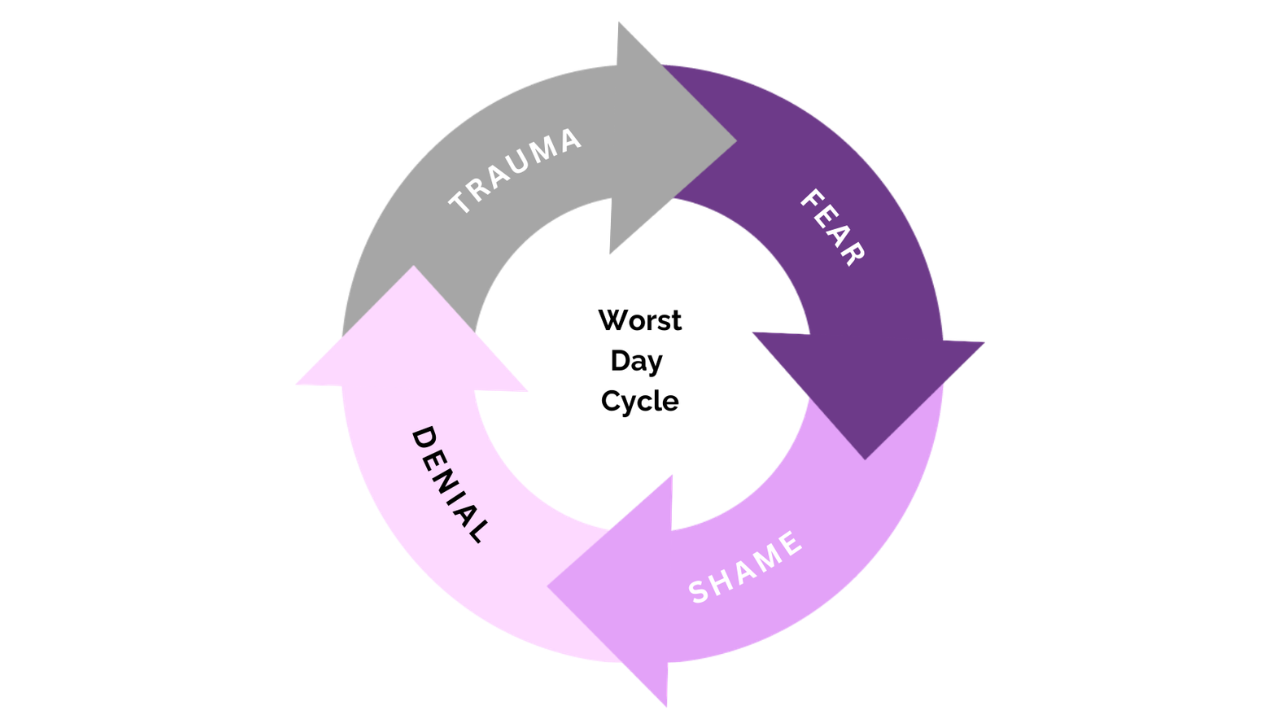
Stage 1: Trauma. Childhood trauma is any negative emotional experience that created painful meanings about yourself, others, or the world. It doesn’t have to be a dramatic event. It can be a parent who criticized you for crying, a family where anger was punished, an environment where your job was to keep the peace. Every time your authentic feelings weren’t honored, your nervous system stored it as threat. In adulthood, a partner’s tone of voice, a moment of silence, a perceived rejection — these activate your threat response as if you’re a child again, helpless and unsafe.
Stage 2: Fear. Once trauma is triggered, fear floods your body. Your hypothalamus generates a massive chemical cocktail — cortisol, adrenaline, dopamine misfires. Your thinking brain goes offline. Your amygdala takes over. You’re now in fight, flight, freeze, or fawn mode. And here’s the critical piece: your brain can’t tell the difference between a genuine present-day threat and the activation of an old childhood pattern. It treats both identically.
That’s you — your heart racing when your partner doesn’t text back, your stomach dropping when they seem distant, your entire body going into panic at the thought of being left.
Stage 3: Shame. Fear morphs into shame — the belief that you are inherently defective, unlovable, or wrong. Not that you made a mistake, but that you ARE the mistake. This is where codependency locks in. Shame says: “If I were better, smarter, thinner, more accommodating — they wouldn’t treat me this way.” So you try harder. Give more. Need less. Abandon yourself more completely.
The Shame → Story → Wound loop is the engine of the Worst Day Cycle™. Something is wrong with me. I’m not enough. I’m too much. My needs cause problems. I’m unlovable. I’m a burden. These shame conclusions form instantly as a survival reflex — not a conscious choice. And they crystallize into a wound that repeats in every adult relationship.
Stage 4: Denial. To survive unbearable shame, your psyche creates a survival persona — a false identity that says “I’m fine,” “I can handle this,” “I’ll fix them,” or “I don’t have needs.” Denial is the self-deception that keeps the cycle running. It’s the inability to see your own part in the pattern. And it is the single greatest obstacle to healing.
That’s the Worst Day Cycle™ — the invisible program running your relationship choices without your permission, pulling you toward the same pain disguised as new love.
The Three Survival Persona Types in Narcissistic Relationships
Everyone who ends up in a narcissistic relationship dynamic is operating from a survival persona — a false identity created in childhood to manage unbearable emotional pain. There are three types, and understanding yours is essential to breaking the pattern.
The Falsely Empowered Survival Persona
This persona says “I’m in control. I’m strong. I don’t need anyone.” On the surface, it looks like confidence — maybe even narcissism. In reality, it’s a hypervigilant defense against the shame and abandonment you experienced as a child. You over-function, over-give, and over-achieve because being needed feels like being loved.
In narcissistic relationship dynamics, the falsely empowered person often takes on the “fixer” or “savior” role. They believe — unconsciously — that they have the power to change their partner. This is a god complex operating from the disempowered position. They think: “If I love them enough, give them enough, sacrifice enough — I can save them.” This is not love. This is a survival strategy.
That’s you if you’ve ever thought “I can change them” or “Nobody understands them like I do” — that’s your survival persona running a childhood rescue mission.
The Disempowered Survival Persona
This persona says “I can’t. I’m not enough. I need you to survive.” It emerges from environments where your voice was silenced, your opinions minimized, and your needs treated as an inconvenience. You learned that small, quiet, compliant people are safer. In narcissistic relationships, the disempowered persona abandons all agency — suppressing preferences, avoiding conflict at any cost, and interpreting every disagreement as evidence of impending abandonment.
That’s you — the one who says “I’m fine” while silently drowning, because showing your real needs felt like begging as a child.
The Adapted Wounded Child Survival Persona
This persona oscillates between falsely empowered and disempowered — sometimes controlling, sometimes collapsing. The adapted wounded child forms between ages six and seventeen, once logic and reason develop. This is where the child figures out: “This is how I’m going to survive in my family system.” They develop survival strategies and then confuse those adaptations with their authentic self.
In narcissistic relationships, the adapted wounded child creates a dynamic where the partner becomes the parent — the rescuer, the decision-maker, the emotional authority. You may feel genuinely confused or incompetent in areas where you’re actually capable, because your nervous system regresses to the child state whenever the relationship triggers your original wound.
That’s the adapted wounded child — waiting for permission to have needs, opinions, or a voice of your own.
The Victim Position Paradox: Why Staying a Victim Keeps You Stuck
Here’s the truth that will feel like being waterboarded with spinach: the person who ends up with a narcissist plays a role in the dynamic. They are not to blame — but they are responsible. Both things are true simultaneously. And until you understand the Victim Position Paradox, you will keep repeating the pattern.
The Victim Position Paradox is this: the victim position is a societal construct meant to protect victims, but in reality it has created a paradoxical falsely empowered position that nearly guarantees the victim will reexperience their childhood victimization, leaving them disempowered.
Our culture rightly protects victims. But an unintended consequence of that protection is that it absolves victims from examining their own patterns. Instead of teaching people that their childhood emotional blueprint creates unconscious attraction to familiar pain, society celebrates the victim narrative. The result? Tremendous power from the disempowered position — and zero incentive to look at your own part in the dynamic.
That’s you if you’ve spent years telling the story of what they did to you — but never once asked yourself why you chose them, why you stayed, and what childhood wound kept you locked in.
This is not about condoning abuse. This is about giving you your power back. The problem is not that you need to be protected from narcissists. The problem is that you haven’t been taught how your own emotional blueprint draws you to them. And until you make yourself the focus — until you look at how you’re playing a part — the pattern will continue. You will keep picking the same person with a different face.
Even those of us who end up in narcissistic relationships can be equally manipulative from the victim position. That is tough to admit. But until you confront that denial, your life will suffer. You will end up with these types of people over and over.
Sound familiar? That’s the Victim Position Paradox — the very identity that promises protection is the one that keeps you trapped.
Self-Deception and Denial: The Part Nobody Wants to Hear
The single greatest obstacle to healing from narcissistic relationship patterns is self-deception. Not the narcissist. Not the abuse. Not the trauma. Self-deception — the inability to own and take responsibility for the part you play.
Self-deception shows up in these ways after a narcissistic relationship:
— You focus entirely on diagnosing your ex (“They’re a narcissist!”) without examining your own patterns
— You believe you were a passive recipient of abuse with zero role in the dynamic
— You move on to the next relationship without healing the childhood wound that created the attraction
— You use the victim identity as a shield against accountability
— You stay angry at them instead of doing your own work
Here’s what frees you: when you deal with the self-deception and denial, when you turn the spotlight on yourself, the resentment and blame disappear. Not because what they did was acceptable — but because you see your part. You understand what your childhood set you up for. You forgive yourself for not knowing what you didn’t know. And you stop needing them to be wrong so you can be right.
That’s you if you’ve been free from the narcissist for years but you’re still carrying rage, blame, and the inability to trust — the relationship ended, but the Worst Day Cycle™ never did.
The problem isn’t the other person. It’s that you haven’t become an expert in the trauma you experienced. You’re responsible for who you pick. That doesn’t condone what they did — but you chose them for a reason, and that reason lives in your childhood. Until you heal that wound, you’ll keep being attracted to the same type.
Signs You’re Repeating Narcissistic Relationship Patterns Across Your Life
Narcissistic relationship patterns don’t exist in one relationship. They bleed into every area of your life. Here are the signs that your childhood emotional blueprint is running the show:
Family Signs
— You still manage a parent’s emotions, moods, or well-being as an adult
— You accept criticism, control, or disrespect from family members without setting boundaries
— You play the mediator, peacekeeper, or emotional caretaker in your family system
— You hide your accomplishments, opinions, or authentic self to avoid triggering family conflict
— Insecurity appears whenever a family member expresses disappointment
— You seek constant reassurance from parents that you’re enough
That’s you — if your parent’s mood still determines your entire day, you’re operating from the same survival persona you created at age seven.
Romantic Relationship Signs
— You’re drawn to intensity, chaos, and emotional volatility — and call it “chemistry”
— You abandon your needs, preferences, and voice to keep the relationship alive
— You stay in relationships where you’re disrespected, controlled, or emotionally starved
— You interpret your partner’s withdrawal as evidence of your failure
— You obsess about your partner’s emotions and neglect your own
— You believe you can “save” or “fix” your partner if you just love them hard enough
— Boundaries are unclear or nonexistent — you can’t say no without guilt
That’s the trauma chemistry speaking — you keep chasing the emotional rollercoaster because your body learned in childhood that chaos equals connection.
Friendship Signs
— You attract friends who take advantage of your generosity and emotional labor
— You’re always the listener, the advisor, the one who shows up — with little reciprocation
— You tolerate disrespect, flakiness, or one-sided dynamics because you fear losing the friendship
— You hide your authentic opinions and preferences to be more likable
That’s you — exhausted from being everyone’s emotional support while nobody holds space for you.
Work Signs
— You over-function: taking on too many projects, working late, never asking for help
— You tolerate disrespect from bosses or colleagues because confrontation feels dangerous
— Your self-worth is entirely dependent on productivity, performance, or being needed
— You manage your boss’s moods the same way you managed your parent’s moods
That’s you — getting promoted for the very pattern that’s destroying you from the inside out.
Body and Health Signs
— You ignore your body’s signals: hunger, fatigue, pain, sexual boundaries
— You use food, sex, substances, or work to numb emotional pain
— You have difficulty being present in your body — dissociation is common
— You prioritize everyone else’s health over your own
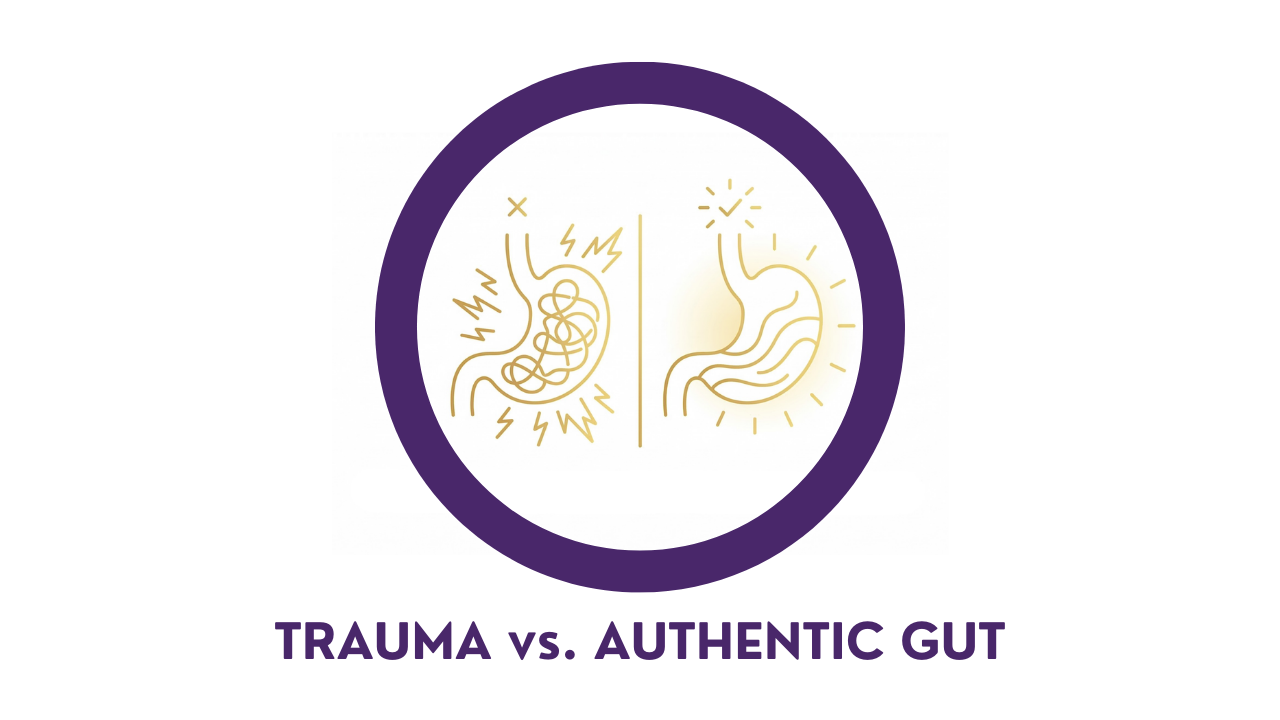
— You carry chronic tension, gut issues, or unexplained pain
That’s your body keeping score — it’s been screaming what your survival persona refuses to acknowledge.
The Authentic Self Cycle™: How to Break the Pattern
Understanding the Worst Day Cycle™ immediately reveals the exit. The Authentic Self Cycle™ is the direct inverse — a four-stage healing path that reverses narcissistic attraction patterns at the neurological level: Truth, Responsibility, Healing, and Forgiveness.
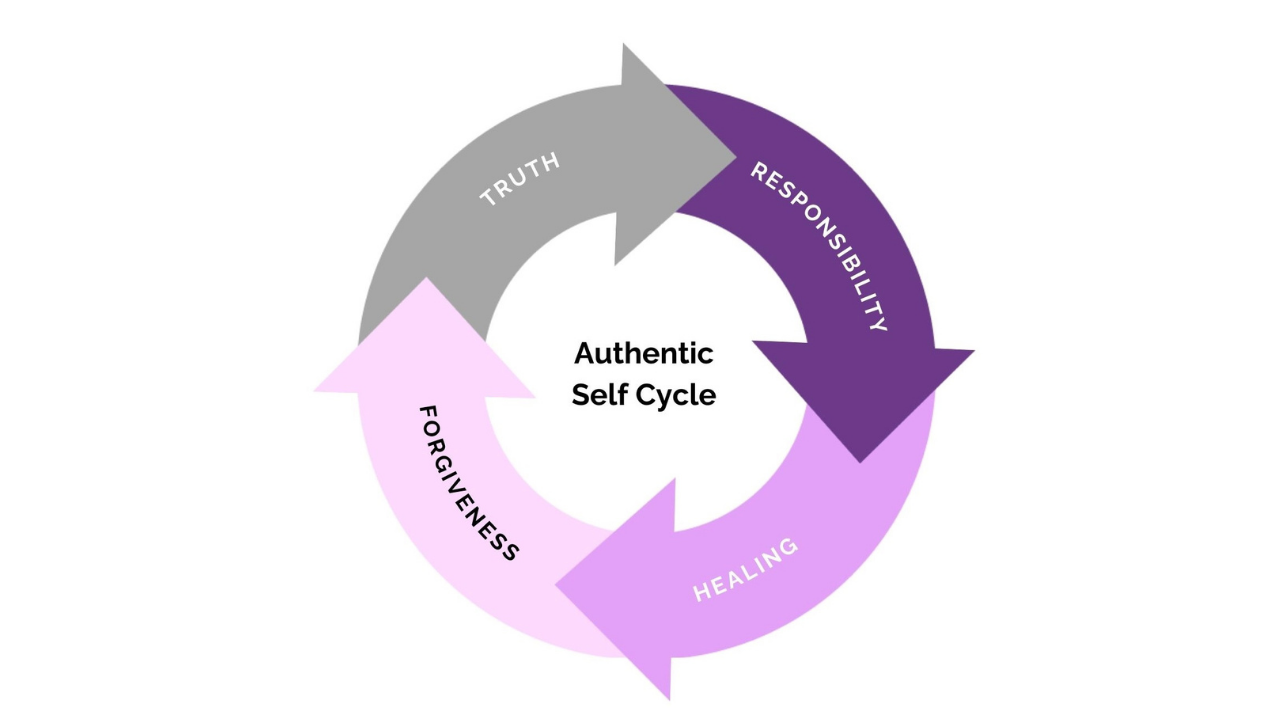
Stage 1: Truth. Name the blueprint. See it clearly. “This isn’t about my ex. My nervous system drew me to them because they replicate the emotional environment of my childhood. The attraction I felt wasn’t love — it was my Worst Day Cycle™ activating.” Truth is the flashlight you shine on your own neurobiology. It’s not blame. It’s compassionate realism.
Stage 2: Responsibility. This is the hardest stage — and the most liberating. Own your emotional reactions without blame. Not blaming yourself, not blaming your ex, not blaming your parents. “I picked this person because my brain and body are addicted to what I know. My childhood set me up for this attraction. Until I heal that wound, I’ll keep being attracted to the same type.” Responsibility gives you back the power the victim position took away.
That’s the truth that sets you free — you can’t divorce yourself from the responsibility of who you allow into your life.
Stage 3: Healing. Rewire the emotional blueprint. This means teaching your nervous system that conflict is uncomfortable but not dangerous, that disagreement doesn’t mean abandonment, that healthy love doesn’t require chaos or intensity. Healing is building new emotional associations through deliberate practice — not through willpower or self-judgment.
Stage 4: Forgiveness. Release the inherited emotional blueprint. Forgive yourself for the survival strategies you developed. Forgive your nervous system for its brilliant, protective repetitions. Reclaim your authentic self as the foundation of your identity. When you stop needing to be angry at the narcissist, you’re free.
That’s the Authentic Self Cycle™ — the way out of narcissistic relationship patterns is through your own healing, not through diagnosing your ex.
The Emotional Authenticity Method™: Your 6-Step Recovery Practice
Understanding the pattern is one thing. Rewiring your nervous system requires a concrete daily practice. The Emotional Authenticity Method™ is a six-step process that breaks the trauma chemistry that pulls you toward narcissistic partners and rebuilds your relationship with your authentic self.
Step 1: Somatic Down-Regulation. When you’re triggered — when you feel the pull toward that familiar person, when your body floods with trauma chemistry — pause. Focus on what you can hear for 15-30 seconds. If you’re highly dysregulated, use titration: slightly lower your shoulders, soften your jaw, take one deeper breath. Your nervous system will follow these micro-signals of safety before your thinking brain can even engage.
Step 2: What Am I Feeling Right Now? Name the emotion with granularity. Not “I feel bad.” Use the Feelings Wheel to identify whether you’re feeling longing, panic, desperate, abandoned, ashamed, or furious. People who end up in narcissistic relationships were trained in childhood to ignore their emotional life. Naming your feelings with precision reconnects you to your authentic self.
Step 3: Where in My Body Do I Feel It? Emotions aren’t abstract — they’re somatic. All emotional trauma is stored physically. Where is the feeling? Tightness in your chest? Heat in your face? A pit in your stomach? This grounds you in the present moment and breaks the dissociation that narcissistic relationship patterns create.
Step 4: What Is My Earliest Memory of This Feeling? Trace the feeling to its childhood origin. The desperate longing you feel for your ex? Where did you feel that first? The panic when someone goes silent? When did your nervous system learn that silence means danger? Often, it’s not your partner that’s the problem — it’s that they remind your nervous system of an old, unhealed wound.
That’s where the real work lives — in the space between “I miss them” and “I miss the parent I never had.”
Step 5: Who Would I Be If I Never Had This Feeling Again? This is the visioning step. Not pushing the feeling away — but asking: “What would my life look like if this childhood wound was healed? Who would I choose as a partner? What kind of love would I accept? What would I no longer tolerate?” This reconnects you to your authentic self — the you that exists beneath the survival persona.
Step 6: Feelization. This is the emotional blueprint remapping step. Sit in the feeling of your authentic self and make it strong. Ask: “How would I respond to this situation from this feeling? What would I say? What would I do?” Visualize and FEEL yourself operating from your authentic self. Create a new emotional chemical pattern to replace the old blueprint. You cannot change emotional patterns through thoughts alone. Emotions are biochemical events — and this step rewires the chemistry that has been pulling you toward narcissistic partners your entire life.
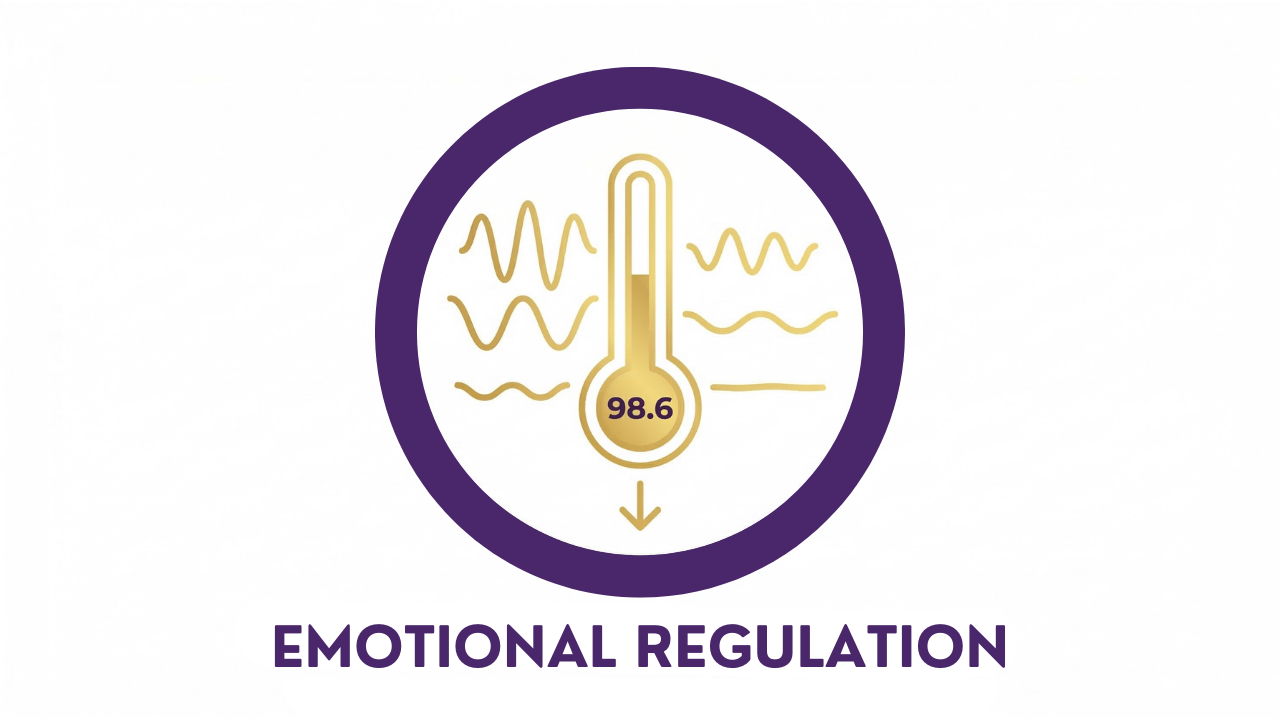
That’s the Emotional Authenticity Method™ — six steps to rewire the trauma chemistry that keeps you locked in narcissistic relationship patterns and rebuild your emotional foundation from the inside out.
Breaking Free: From Trauma Chemistry to Authentic Connection
Recovery from narcissistic relationship patterns is possible — and it doesn’t require becoming anti-relationship, anti-love, or anti-trust. It requires becoming an expert in your own emotional blueprint.
Breaking free requires three non-negotiable elements:
First: Awareness. You can’t change what you can’t see. The Worst Day Cycle™ runs in the background of your consciousness, autopiloting your partner choices. Seeing it — naming it — is the beginning of freedom. You’re reading this article, which means awareness is already starting.
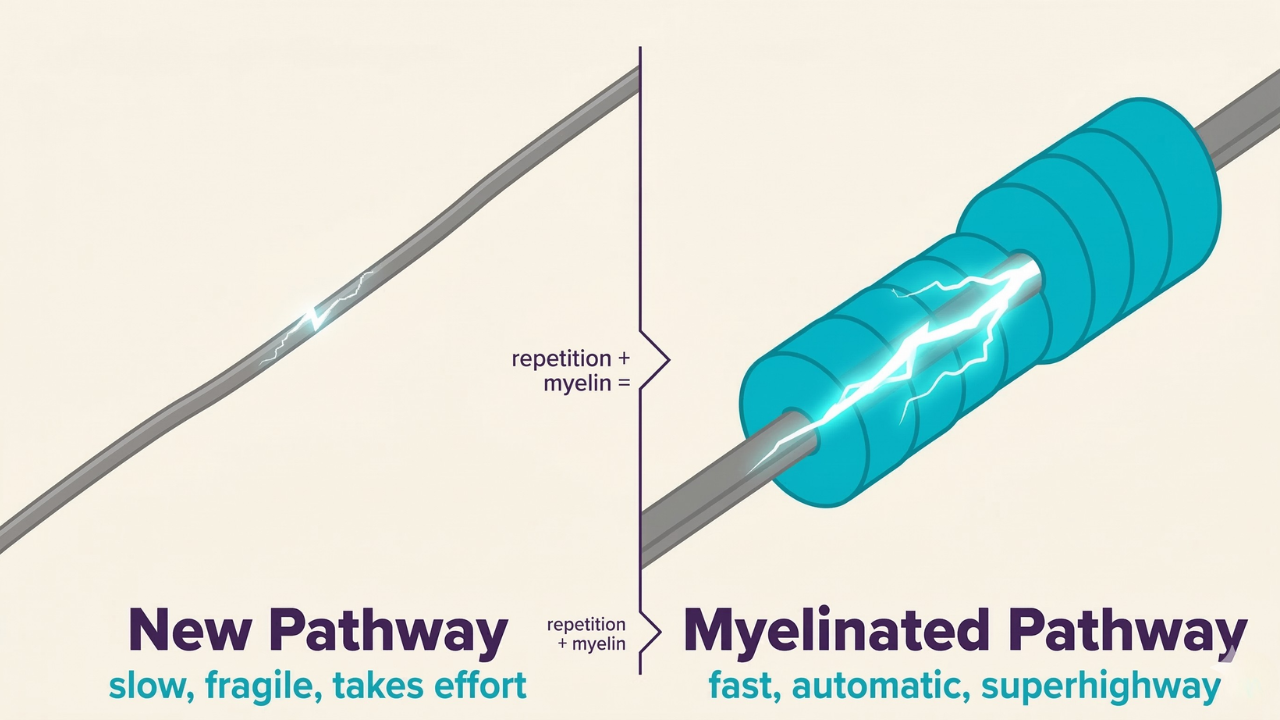
Second: Rewiring. Awareness without rewiring creates guilt. “I see the pattern. Why can’t I stop?” Because your nervous system is still wired for what it knows. Rewiring happens through the Emotional Authenticity Method™ and deliberate nervous system work — not through willpower, affirmations, or reading another article about narcissism.
Third: Reclamation. Rebuild your identity around your authentic self, not your survival persona. Discover what you actually want — independent of your childhood programming. Practice genuine self-esteem — not narcissistic confidence, but quiet knowing of your own worth. Learn to sit in healthy love without running toward chaos.
The paradox: the thing you fear most — being alone, being abandoned — becomes less likely when you stop abandoning yourself. When you have clear boundaries and emotional authenticity, you attract healthier people. When you’re whole, you stop needing someone else to complete you. And that’s when real love becomes possible.
That’s the promise — not that you’ll never feel pain again, but that you’ll stop choosing pain disguised as love.
People Also Ask
You attract narcissists because your childhood emotional blueprint created a neurological pattern that draws you toward people who replicate your earliest pain. Your brain bonds to what feels familiar — not what feels safe. This isn’t a character flaw; it’s trauma chemistry that can be rewired through the Emotional Authenticity Method™ and the Authentic Self Cycle™.
No — and you are responsible. Both things are true. You are not to blame because nobody taught you about the Worst Day Cycle™, trauma chemistry, or how your childhood survival persona draws you toward familiar pain. You are responsible because healing the pattern is your work to do. This distinction is the most empowering truth in recovery: if your childhood created it, you can heal it.
Stopping the attraction requires healing the childhood wound that created it — not just avoiding narcissistic people. Use the Emotional Authenticity Method™ to rewire your nervous system, learn to distinguish trauma chemistry from genuine connection, and rebuild your identity around your authentic self rather than your survival persona. When the blueprint changes, the attraction changes.
A narcissist is like the desert — their behavior is consistent across time and situations. A falsely empowered codependent is like Denver, Colorado — they go through seasons, with periods of warmth, connection, and genuine empathy that a true narcissist cannot sustain. Many people misdiagnose their partner as a narcissist when they are actually a falsely empowered codependent who, given the right information, can heal and change.
Self-awareness and intentional practice — like the six-step Emotional Authenticity Method™ — can create significant shifts. However, most people benefit from professional support with someone who understands trauma, nervous system healing, and the Worst Day Cycle™. The key is addressing the root cause (your childhood emotional blueprint) rather than just managing symptoms.
You know you’re healing when: intensity stops feeling like love, you can disagree without fear of abandonment, you recognize trauma chemistry before acting on it, you choose partners based on safety rather than excitement, and you no longer need to be angry at your ex to feel powerful. Healthy relationships become your baseline — not your exception.
Recommended Reading
- Facing Codependence by Pia Mellody — The foundational text on how childhood trauma creates codependent patterns, survival personas, and the loss of authentic self. Essential for understanding why you attract narcissistic partners.
- The Body Keeps the Score by Bessel van der Kolk — Essential for understanding how trauma lives in the nervous system and why healing narcissistic relationship patterns requires more than talk therapy.
- When the Body Says No by Gabor Maté — Explores how emotional repression and self-abandonment in toxic relationships manifest as physical illness and chronic stress.
- Codependent No More by Melody Beattie — The classic that helped countless people recognize their role in codependent dynamics and begin setting boundaries.
- The Gifts of Imperfection by Brené Brown — A guide to wholehearted living that directly counters the shame that keeps narcissistic relationship patterns locked in place.
The Bottom Line
You didn’t attract narcissists because you’re too nice, too empathetic, or too loving. You attracted them because your childhood emotional blueprint — the Worst Day Cycle™ — created a neurological radar for the very pain you grew up with. Trauma chemistry pulled you toward partners who felt like “home” — but home was unsafe.
This is not your fault. And it is your responsibility to heal. That’s not a contradiction — it’s the most empowering truth in recovery. The problem was never them. The problem is the unhealed childhood wound that made them feel like love.
When you understand the Worst Day Cycle™, recognize your survival persona, confront the Victim Position Paradox, and practice the Emotional Authenticity Method™, you stop repeating the pattern. You stop picking the same person with a different face. You start choosing partners from wholeness instead of from your wounded child.
Your authentic self is still in there — beneath the survival persona, beyond the shame, underneath the trauma chemistry. That version of you — the one who knows what they want, honors their own needs, and chooses love from a place of strength instead of desperation — is waiting.
The healing starts when you stop looking at them and start looking at you. It starts now.
Next Steps: Courses for Your Recovery
Ready to Break Free From Narcissistic Relationship Patterns?
Understanding your patterns is the beginning. Rewiring your nervous system and rebuilding your identity is the work. These courses guide you through the entire journey with video lessons, worksheets, live trainings, and community support.
A 6-week self-guided course on understanding your emotional blueprint, identifying your survival persona, and the first steps toward nervous system healing.
$79
For partners who want to heal the relationship together. Learn how to break codependent patterns, communicate authentically, and rebuild intimacy from a foundation of self-awareness.
$79
A comprehensive deep-dive into how childhood trauma creates adult relationship pain, the neurobiology of conflict, and the complete pathway to healing.
$479
For high-functioning codependents who succeed at work but struggle in relationships. Understand how achievement masks the same survival persona that sabotages your love life.
$479
If you’re in a relationship with someone who pulls away, shuts down, or refuses intimacy — understand the love avoidant’s childhood wound and what you can actually control.
$479
The complete mastermind experience. Live monthly calls, personalized feedback, access to all courses, and a community of people doing the deep work alongside you.
$1,379
Continue Your Learning
The Emotional Authenticity Method™ requires practice. Start with the Feelings Wheel exercise to reconnect with your emotional life. Then explore these related topics:
- Enmeshment: Signs, Meaning, and How to Heal From Enmeshed Relationships
- 7 Signs of Relationship Insecurity (And What They Actually Mean)
- Real Self-Esteem: Signs You’re Building It (Not Faking It)
- Negotiables and Non-Negotiables: Setting Boundaries in Codependency Recovery
- 10 Do’s and Don’ts for a Healthy, Authentic Relationship