Category: Mental Health

  • How To Stop Stress | Step 4

    How To Stop Stress | Step 4

    In Part IV, we will cover the most prevalent fear of all, the fear of powerlessness. I will explain the three signs of experiencing a period of powerlessness and the solutions to get through them.

    So, what is fear powerlessness, and where does it come from? Well, it comes from attachment. You see, we are the only species on this planet where we must be physically and emotionally attached to another human being, or we will die; our survival depends on it. There are many moments in childhood where our sense of self, what I call our authenticity, is challenged. In other words, our parents imparted their views on us. For instance, so many of us heard things like, “If you don’t stop crying, I will give you something to really cry about!” Or, “Children are to be seen and not heard.” Comments like these make it clear we cannot express our authentic selves. But, of course, we could not prevent these events, and that’s where we learned the fear of powerlessness for the first time.

    What are the three signs that we are experiencing the fear of powerlessness?

    The first sign is that we focus on what we can’t control and not what we can control. For example, we are having money trouble, and we spend all day long worrying, “Oh my Gosh, I’m going to go broke and be on the street!” Instead of focusing on a solution. We are stuck reliving the problem, just like when we were a child, believing we have no recourse to defend ourselves. As a result, we find ourselves stuck in the powerless, childlike state, the victim-side of the problem.

    The second sign is that we’re giving ourselves away, and going against our morals, values, needs, and wants negotiable’s, and non-negotiables. I will share a story about a client of mine to show how this works. He’s a mortgage guy and gives out gifts to his clients. This week, he came in with some gift ideas; he found someone who sells these nice designer knives. He thought that might be a neat gift. Well, the salesperson was a woman who kept pressuring him to buy. Finally, he started getting afraid and started to back off. I already know his story. His mother controlled every feeling, every action he ever took.

    As he tells the story, he is not aware that the pushy saleswoman is triggering memories of his mother, which is why he wants to back off. So he tells her, “I need to talk this over with my wife.” He then goes to his wife and asks her, “Hey, I have an idea about these designer knives. What do you think?” She immediately says, “No.” I asked him, “So, what did you do?” He says, “Oh, I didn’t do it.” I asked him, “Did you see what just happened?“.

    He was just in a position with two women, and he gave himself away. His morals and values were in line with the knives being a great gift. It was his need and want to share that gift with his clients. It was negotiable and the right thing to do for him. Instead of honoring himself, he acted just like he had as a child and repeated his fear of powerlessness. He gave himself away to please the woman in his life (now his wife) and never realized he was acting just like he did as a child.

    The final way powerlessness expresses itself is the inability to say no. Most people can’t say no to others because they feel it’s rude, think it’s mean, or selfish. This belief originated in childhood because, in essence, we could never say no to our parents. This leaves us feeling that we are selfish or bad if we think of ourselves or that all we’re ever supposed to do are things for other people.

    What is the solution?

    The first thing to do is to make two lists. On one, we list all of the people, places, and things we can’t control. We can’t control people’s actions, choices, or feelings, nor can we control how the world works. But I can control my thoughts, my feelings, and my actions. I am responsible for everything I do, and those items go on the second list. We do this so that when we are stuck in the self victimizing powerless state of thinking.

    “Oh my Gosh! I’m going to go broke.” Next, we can switch to questions that empower us and focus on what we can control. Questions like, “how can I make money?  What are my options? What can I control?” I can reach out to previous clients, check-in, and see how they’re doing in my situation. They might respond, “Oh my Gosh! My husband and I just got in a fight. Can we come and see you?” I have just generated a solution and empowered myself by focusing on what I can control and not what I can’t control.

    The second solution is to define my morals, values, needs, wants, negotiables, and non-negotiables. This works because we go through every area of our life, friendships, relationships, career, hobbies, spirituality, and every aspect of our life. Such as, do you believe in monogamy? Do you think you’re supposed to live together before you get married? Is it okay to have sex before marriage or wait until marriage? Do you want to have sex once a week, once a year, once a day? Sadly, most people don’t know their morals, values, needs, and wants and just relive what their parents told them to believe. No wonder so many people feel powerless.

    The second solution is learning the criteria for when to say no. The key is a shift in what it means to be kind and loving. Most relationships, whether they’re business or personal, end with both sides lamenting, “I did this for them, and they never gave me that.” In other words, both feel they were the giving one, and it wasn’t returned. So what does that tell you? All of those things we’re doing are in the hopes that we get something in return. To put it bluntly, that means we have all been taught to do things for others to manipulate, getting something in return. That’s not doing something for someone else out of kindness or love because unless it is returned, we’re going to make them pay for it. That is how we make ourselves powerless.

    Therefore, before we ever say yes to anyone for anything, we need to ask ourselves these three questions:

    1.) Am I going to keep score?

    2.) Am I going to throw it in their face?

    3.) Will this ever lead to resentment?

    If we think any of those things will happen, we need to say no! Otherwise, we’re going to throw it back in their face, and we’ll realize we gave our power away.

    If you have a hard time saying the word no, I will share a magic phrase that works every time.  Instead of saying no, you can just say, “That doesn’t work for me.” It is magic because they can’t argue with that. Let me show you. They might say things like, “What do you mean it doesn’t work for?” You just say, “Well, it just doesn’t work for me.” They may ask, “So what part of it doesn’t work for you?” You can reaffirm, “It just doesn’t work for me.” You don’t have to explain yourself because you’re no longer a child. We don’t have to defend why we don’t want to do something. It is enough that it just doesn’t work for us. It gives us complete ownership and prevents us from giving ourselves away. Taking responsibility is empowering. So, there are your solutions to the fear of powerlessness.

    I will combine these concepts and tie them up with a bow in Part 5. So, don’t miss the final segment of this 5 Part Series on how to stop the stress!

    Are you looking for more solutions? Pick the one that suits your needs best!

    1- My Book, Your Journey To Success
    2- My Complete Emotional Authenticity Method
    3- My Perfectly Imperfect Private Group
    4- My Private Coaching

    Learn more here:


  • How To Stop Stress | Step 3

    How To Stop Stress | Step 3

    In Part III of this 5-part series to stop stress, we will cover what causes the fear of inadequacy, the main signs, and the solutions to getting out of the fear of inadequacy.

    What causes the fear of inadequacy?

    In those moments when we’re stressed and afraid, what we’re fearing is that we don’t feel we have the skills, tools, or knowledge to do something.  This fear originated in childhood when we were told directly or indirectly that we were somehow incapable of doing something. For many of us, we were left with the feeling that we might be stupid or not “enough.”

    Due to our parent’s perfect imperfection, their lack of recognition when we were in our developmental stages is detrimental. I know for me, inadequacy was born with my father. I’ll never forget, I was great in math, so my dad used to say, “You’re going to be an engineer just like me!” But then, once I got into theory, algebra, and geometry, I just couldn’t do it. I’ll never forget the look on my dad’s face while helping me with homework!  I could see his disappointment in me when he looked at me and said, “don’t you get it?”. So I felt so stupid, so inadequate, and I thought, “God, I’m letting my father down! I am just not good enough for him.” But, you see, my father didn’t directly say I was stupid; it was the look on his face—the incredulous tone he used to talk to me that sent that message. Therefore our current stress is pain from our past being brought forth and relived in the present moment. So, think through your own life; where were you sent those messages?

    What is the most common way the fear of inadequacy is expressed?

    Procrastination is the most common way the fear of inadequacy is expressed. We avoid a task because we ultimately don’t want to experience that inadequate feeling again. Personally, I relive this experience when it comes to marketing my business. I don’t enjoy the process, so I choose not to learn how to do it well. If we lack the knowledge, skills, and tools to do something, the chances are highly likely that we won’t do it well.

    How do we overcome the fear of inadequacy?

    First Step:

    The first step is to identify the source. We accomplish that by making a list of all the feelings that arise whenever we consider learning something new. Then we trace the feelings back to our first experience. What you’re going to find is that they go back to a childhood moment where a parent, a teacher, a football coach, or someone you know said directly or indirectly, “you’re stupid, you’re wrong, or you’re dumb.” Or their expressions, their attitude, and nonverbal communication expressed that sentiment. With this new awareness, we can recognize that procrastinating to learn a new skill or do something new isn’t that we are afraid of learning this new skill or new experience. It’s that we don’t want to relive the feeling of inadequacy. Therefore the solution is to heal the root experience causing the feeling.

    Second Step:

    The second step requires us to contemplate who’s voice it is so we can give the shame they placed in us back to them! For me, when it comes up in my life, I picture myself right there doing homework. As children, we can’t talk back to our parents, but I imagine myself at that moment looking up at my father, saying, “Dad, I love you, but you can’t talk to me that way; it really hurts me. Can you give me the help that I need and talk to me in a way that’s more kind and loving?” Then, the feeling – I give it back, I protect myself, and say, “No, dad, this doesn’t work for me, this is yours.” It is a reparenting of ourselves, and we regather our self-esteem, which we lost.

    Third Step:

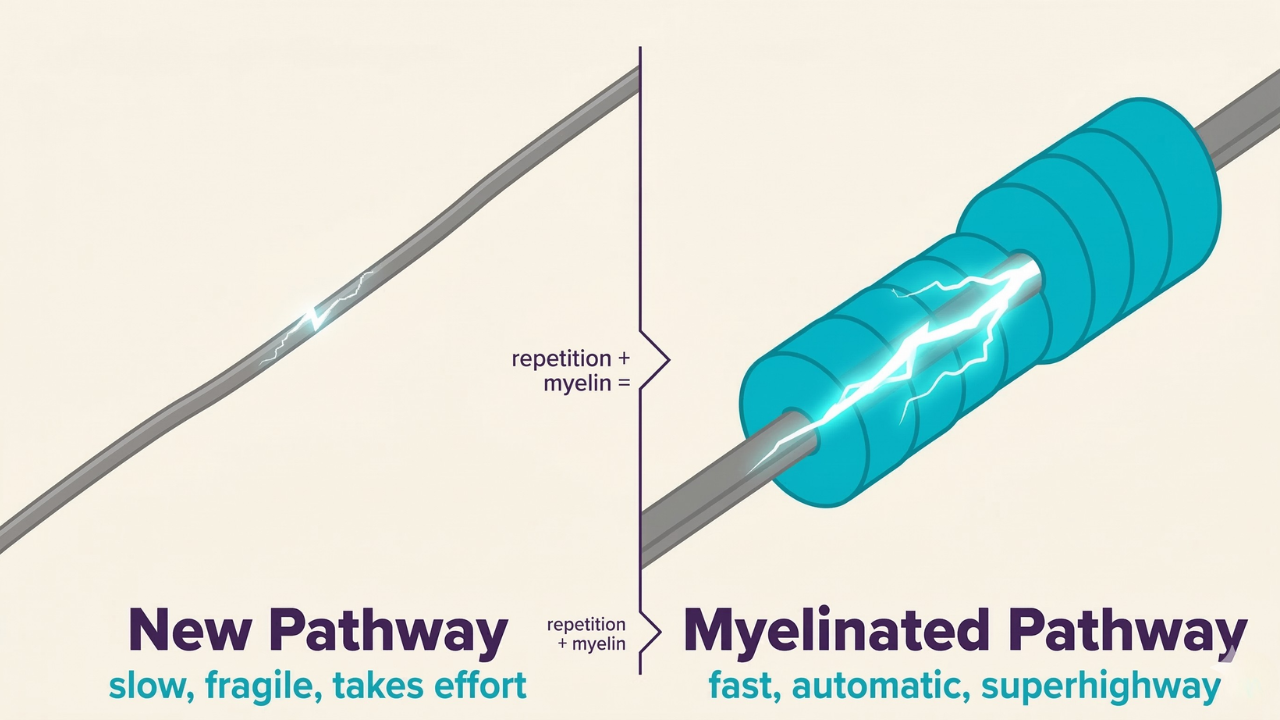
    Finally, the third step to overcome and stop stress inadequacy fears is to become an expert. To learn about the topics you don’t currently possess, the adequate knowledge, skills, and tools. Studies show that the act of learning is a great way to shift our subconscious, generate a new neural pathway and create a new empowering feeling experience.

    Now you have a three-step process to conquer inadequacy. Next, I will be sharing the solutions to the fear of powerlessness. I hope you are enjoying the journey to stop your stress! Here is part 4 related to stop stress.

    Are you looking for more solutions? Pick the one that suits your needs best!

    1- My Book, Your Journey To Success
    2- My Complete Emotional Authenticity Method
    3- My Perfectly Imperfect Private Group
    4- My Private Coaching

    Learn more here:

  • How To Stop Stress | Step 2

    How To Stop Stress | Step 2

    As you may recall, during Part 1 of this special 5-part series top stop stress, we discovered that both the media and the medical community are misleading us about what stress is. Stress is an emotional condition. Therefore, whenever we experience “stress,” we are experiencing fear we should stop stress.

    The next aspect they will not tell you is that fear is always one of these three things: Fear of rejection, inadequacy, or powerlessness. Rest In Peace (R.I.P.) is the acronym to remember. That way, whenever you’re stressed or afraid, you can ask yourself, “Do I fear Rejection, Inadequacy, or Powerlessness?”

    Today, we will tackle the fear of rejection and what to do when you feel this emotion. To do that, we will focus on three things.

    1.) What causes the fear of rejection.

    2.) The seven signs of low self-esteem – (Now, please stay open-minded. If you are uncomfortable with the phrase low self-esteem, then perhaps self-confidence may resonate better with some of you.) No one wants to have low self-esteem. So don’t be hard on yourself. That’s why we’re learning about the fear of rejection.

    3.) The solutions to move out of the fear of rejection and deal with this form of stress and should stop stress.

    So, let’s talk about what causes the fear of rejection? It comes from looking outside of ourselves for validation. You see, the truth is, no one ever rejects us, ever! It’s not possible! People are just acting on what they believe to be in their best interest. Think about it. If you have ever been dumped, what did they complain about oct reason did they give? They might have said they wanted to have more intimacy or wanted to go on more vacations, or wanted somebody who had this skill or that skill? That’s not a rejection of us; that’s them pursuing their own needs and wants.

    So then, why do we feel they are rejecting us? To survive as a species, we must attach to another human being physically and emotionally. The overwhelming responsibility of being a parent means that each parent will experience perfectly imperfect moments when they aren’t available to substantiate us. In those moments, we experienced abandonment. The only solution we had as a child to reconcile that pain was to blame ourselves.

    You see, if I blame myself, that means I might be able to fix it, right? It gives me hope that my perfectly imperfect parents will not abandon me if I change. Now, as adults, the thought that “If I’m rejected, I can change or fix it and make you like me” may feel like we have power, but it is false power. It really means we gave away our power to the other person. We just placed their wants and needs above ours, and by pursuing being someone different, we are looking outside of ourselves to validate our worth. Well, the only person that can ever validate us is ourselves. Therefore, by deciding something is wrong with us and blaming ourselves, we are enacting a self-sabotaging process to get power over our childhood pain of abandonment.

    Now that we understand how we created our rejection let’s look at how it expresses itself in low self-esteem.

    Seven Signs of low self-esteem:

    1.) Self-criticism – When a simple mistake is made, a person’s self-talk is highly negative and critical.

    2.) Chaotic relationships – due to the unhealed abandonment wound, they experience frequent chaos in relationships.

    3.) Defensiveness – The primary instinctual response to feedback or differing opinions becomes defensive.

    4.) Chronic Indecision – Not wanting to decide for fear of being wrong. To be “wrong” would trigger the unhealed childhood abandonment.

    5.) Perfectionism – The need to be perfect places our value outside ourselves onto someone else. In addition, since perfection is unattainable, we have rejected ourselves before the other person has a chance. The act of self-rejection places us in power.

    6.) Feeling anxious, fearful, or angry – Experiencing these feelings in moments is healthy. However, a red flag is getting stuck in them with the inability to process or move through them with moderation.

    7.) Poor Communication Skills – This looks like not telling our partner or friends precisely what we need, think, and feel. We also tend to be unable to say “No.” We give ourselves away. We give into things because we fear the loss of the relationship. Again, that’s the need for external validation.

    To regain our self-esteem, we have to recognize how we were intentionally or unintentionally abandoned by our perfectly imperfect parents and accept that we are looking outside ourselves for that validation as adults.

    To begin developing that validation from within, I suggest doing affirmations. There are two crucial keys to affirmations that some people are unaware of. The first key involves how we write down our affirmations. We don’t want to write, “I want to,” or “I will.” That puts the acknowledgment in the future, which means we will never attain it. Instead, we want to begin the affirmation with, “I have” or “I am.” We have to declare it as truth. We can’t lie to ourselves for those areas we want to gain acceptance of. For instance, if in our view we are overweight, we can’t declare,” I’m skinny.” Instead, we would want to say, “I am willing to be thin.” See the difference?

    The second key to using affirmations that many are unaware of is the need to feel them. Because we were abandoned as a child, that feeling is still strong within us. So, we have to replace that negative feeling and soak up the positive feeling of the affirmation.

    The second step is to list your accomplishments throughout the day. Because of perfectionism and the inability to make our own choices, we end our day rejecting ourselves by focusing on the minor things we didn’t finish. So, we list our accomplishments at the end of the day to realize how much we have accomplished. I have a client who does this, and she takes it one step further. Throughout her day, she lists everything she does. Simple things like she took a shower. She mopped the floor she answered 15 emails. Every little thing, she affirms herself and no longer rejects herself. She doesn’t expect perfectionism anymore. She can see that she is doing a lot throughout her day.

    The third step is self-care. When we fear rejection, we want someone or something to fill the hole inside of ourselves. It is our job to fill that need. Therefore we want to list all the things that bring us joy and do not require others to do for us. Then, the next time that feeling comes up, we want to look at our list and take action on meeting our needs and wants.

    You now have the process to overcome the fear of rejection. Coming up next in Part III to stop stress, we will tackle conquering the fear of inadequacy. Here is part 3 to stop stress.

    Learn more here:

  • How To Stop Stress | Step 1

    How To Stop Stress | Step 1

    In today’s world, we are facing extremely high levels of stress. We experience it at work, school, and relationships. Not to mention we are living through a pandemic, have financial strains, and working through political issues. As a result, many of us may self-medicate to “check out” for a while. That is why I have created this special 5-part series to stop stress and how to conquer it.

    In part 1, I will share some vital information that both the media and the medical community are hiding from you. Because of the misinformation, they are spreading, stress is increasing, and more importantly, you can’t experience the quiet, pleasant life you deserve.

    Before I get started, a slight caveat, when I share this information, pay attention to your emotions. If you want to stop reading or feel you disagree, please keep reading! Because those feelings are most likely what is causing your stress you should stop strss. By continuing to read, you will discover the solution you have been looking for to lower your stress.

    The single greatest way that the medical community and the media are depriving you of the ability to conquer and stop stress is they aren’t telling you what stress is and where it comes from. The stress response is activated when anything in our life becomes demanding or overwhelming. It could be our personal life, business life, relationships, parenting, etc.  When our perception of a life situation is overwhelming, it triggers our fight-or-flight response.

    What is fight or flight?

    Well, it’s an automatic physiological reaction that prepares our body to either fight or run away. So, the truth is, when we are ‘stressed,” we are all actually afraid. This leads to the second way the media and medical community are abandoning us. They have not informed us that we are scared because of previous life experiences, where we developed a negative emotional response to fundamental life challenges or perceived threats. When we experience a similar scenario to our past, it triggers that same emotional response.

    Therefore, we are bringing the unhealed pain from the past and reliving it in the present moment.  That leads us to the final way we are misinformed; they are not telling you how to conquer stress. For centuries, we have downplayed the importance of emotions, especially in our medical communities. They still refuse to see our health as a by-product of biology, psychology, and social experiences. They ignore our life experiences and instead treat us like a car engine.

    That works great when you have a broken arm, but when it comes to stress/fear, it is akin to a car being out of gas and our Doctor prescribing the spark plugs be changed. They won’t prescribe what we need because medical schools provide no training on trauma, or emotions which we now know play a significant role in all illnesses and diseases. Pills are not the solution. To conquer stress, we need Emotional Authenticity.

    Emotional Authenticity:

    1.) When we are stressed, we are in fear. It’s an emotional condition.

    2.) It starts with emotional experiences endured earlier in life, namely childhood. However, those experiences have never been addressed, so they are brought into the current moment.

    3.) The media and medical community deprive us of the real solutions. Because everywhere we look to find ways to deal with and stop stress, there are superficial remedies. None of the television shows, social media sites, or search engines reveal what I just talked about, the root cause.

    The real solution is the need for Emotional Authenticity. First, we need to recognize that stress is fear and should stop stress. Then, we need to start calling it what it is – fear. We are afraid.

    Remember earlier? I said you might feel the need to stop reading, and I asked you to read until the end. So what did you feel?  Anger, disinterest, skeptical, numb, blank, overwhelmed? Whatever feeling it was, this is your doorway into healing your stress. That is because whenever we see, touch, taste, smell, or hear new information, it automatically triggers the fear response in our brain. We can’t stop that process from happening. So let’s step through that doorway now by learning about the three levels of fear.

    Fear is always one of three things:

    1.) Fear of rejection.

    2.) Fear of inadequacy – meaning we don’t think we have the skills, tools, or knowledge to do something.

    3.) Fear of powerlessness.

    Now, let’s think about all this new information. What emotion could cause us to want to stop reading? Well, maybe you’re thinking,

    “I don’t have the skills, tools, or knowledge to trust this new information.”

    This can cause fear of inadequacy. By recognizing that,

    “I have never heard this from the media, my doctor, etc.”

    Then there might be the thought of not knowing this about myself, or even worse, my Doctor doesn’t have all the training and expertise I thought they had?

    “Gosh, I should have known this. If somebody found out I didn’t realize this, they might reject me.

    Then, you can ask yourself, when was the first time I felt shame or embarrassment for not having the answer as a child? How was I rejected or shunned for not being perfect?

    Now, if we feel inadequate and rejected, what does that make us feel? Powerless! Now look through your life and consider how the dynamics of rejection, inadequacy, and powerlessness are at play in nearly every life experience. Our doctors need to be providing us with this prescription, not pills.

    Some of you might be thinking, “Oh my gosh, this resonates with me. What can I do about it?”

    In this series, I will provide you with the knowledge, skills, and tools to conquer stress. To start, I want you to think of this as an acronym. Whenever we are stressed, we are afraid, and it is always one of these three fears.

    1-The Fear of Rejection

    2-The Fear of Inadequacy

    3-The Fear of Powerlessness.

    R.I.P. Rest In Peace.

    Through the rest of this series, I will break down each fear. Then I will give you solutions when any of those “fears” appear in your life. Having this process, the answer the media and medical community won’t give you will make it possible for you to navigate stress/fear and remove it from your life for good.

    So, tune in, follow the series, and you will be able to put an end to stress finally!

    Learn more here:

  • How to be “The Shark” in a Room Full of Sharks!

    How to be “The Shark” in a Room Full of Sharks!

    As our business culture continues to change and become less and less people-focused with the use of the internet and cell phones. Face-to-face interactions are becoming increasingly pivotal to our success.

    However, if we aren’t sufficiently prepared and equipped, our chances of thriving in a room full of Sharks are severely compromised. Do you think you have what it takes to keep from being their chum? Today I will show you how to become the Shark in every room you enter.

    How to defeat a Shark?

    To understand how to defeat a Shark, we have to understand what makes us fail in their presence. There are primarily two reasons.

    First mistake

    The first mistake is the most common. This happens when we try and overpower or make ourselves more significant than the other Sharks by talking louder, talking over, or employing any maneuver that publicly tries to shame or humiliate the other Sharks.

    Ask yourself a question, “Who is my best friend, and more importantly, why?” The simple answer is that their actions showed you they were solid, reliable, and we feel a sense of safety, of being known.

    As a result, we all instinctively pull away and become guarded around anyone who makes it all about them. The consequence of making it all about ourselves is that the brightest Shark now knows we’re the weaker.

    The one trying to be the biggest is synonymous with the schoolyard bully. While the bully was scary when we were younger, as adults, we all know that it only takes the smallest of pricks to pop their balloons.

    Most common mistake

    The other most common mistake is feeling insecure. How often have you found yourself questioning whether you even belong?

    This is common for us all, and when we are stuck in this shameful state, the resulting internal thoughts and questions are so negative we become certain every Shark can see right through us.

    These thoughts and feelings lead us to avoid direct contact, put off communications, meetings, share information, or anything that we think might expose us to being found out.

    We are convinced she will know we are a fraud, so we decide, “what’s the point? Why should I even try? I can’t ever be like her!” Or the most common phrase I hear from even my most successful clients, “I feel like I don’t deserve it!”

    5 step process – Room full of sharks

    To overcome being the chum in the water for other Sharks requires Emotional Authenticity. Here is 5 step process that you can start to employ on your journey to gain it.

    Step 1

    Step 1 takes place before we even enter the room. The adage holds for a reason, It’s TRUE! We become whom we associate with.

    If you can’t find quality people around you, then you need to borrow some. Find a Shark you want to emulate or find an expert to teach you how to overcome your feelings of insecurity. The internet is a great place to start. Sharks like Warren Buffet, Mark Cuban, Tony Robbins, Oprah…the list is endless.

    There are thousands of Sharks prowling the waters of the internet. Consume everything they say and do, watch them, become them in your version.

    If you have a weakness in a specific area, hire an expert to teach you. Studies show visual learning or modeling of others is the quickest way to learn a new skill. Learn by sitting across from the skill you want to become.

    Step 2

    The next step is both subtle and cunning. The most important thing we can do upon entering a room of Sharks to disarm them has to do with our physicality. Only 7% of all communication is verbal, more than 50% is done with our bodies.

    If we don’t know how to walk, stand or project ourselves, too “Be” and feel our body, every Shark in the room will instinctively take bites out of us as we walk past. They will feel our insecurity.

    We can lock their jaws simply by the way we enter the room. Once there, settle into a group or even a single Shark and further your disarming by mirroring and matching their body language, tone and dialect so you can silently and instantly gain rapport.

    After a few minutes of following their lead, initiate a subtle physical movement or dialect change and see if they follow. If they follow. you have them completely disarmed, and like a snake charmer, you can begin extracting their venom without their realizing it.

    Step 3

    Step three swims in unison with the previous two. While we are mirroring and matching, If we feel negative about ourselves, our self-talk will be negative, and they will feel it.

    You see, our amygdala is specifically designed to sense fear subconsciously even before we ever register it consciously. We have all had the experience of walking past a stranger and just feeling something was “off.”

    That is precisely the message you will be sending the other Shark if you don’t make Emotional Authenticity the cornerstone of your preparation.

    Step 4

    Now that we have raised your standards, our presence is commanding, and our feelings are clear, you are ready to circle your prey once again. This next circling is done when we learn how to listen correctly. It starts with the realization that if we’re the ones talking, we’re also the ones bleeding! He who speaks the least bleeds the least!

    Step 5

    Remember, only 7% of all communication is verbal, but if we listen carefully, that 7% can tell us almost everything we need to know. Here is the trick to understanding words.

    Nearly every word we choose is chosen to communicate an emotion, a feeling but since most of us were raised to avoid emotions, we don’t know this. Think back to your last business conversation. Even as they discussed their sales process, buying process, and decision-making process.

    whatever process it was, how many times did they pick a word that communicated a feeling? If you replay the conversation, you will see it was countless times because, as humans, nearly every thought is started by a feeling, which gets intellectualized by thoughts, and from those thoughts, we choose an action. We relate to this constant loop of feeling, then thought, then action.

    Examples

    One of the most straightforward examples to demonstrate this is the Shark, who says, “I never let emotions get in the way of business.”

    Wow, he just completely exposed his flank to you. Look at the words he chose. “Get in the way.” He just told you that he sees his emotions as a roadblock. Our single greatest asset in the decision-making process he feels afraid of, so he avoids the construction zone.

    But, in a pressure situation, he just told you that because he has no mastery of his emotions, his emotions WILL get the best of him, and he will only be able to arrive at a few limited answers.

    Is that someone you want to partner with or do business with? By being in touch with your own emotions and knowing how to listen correctly, you have just witnessed a Shark gut itself for you.

    Now that the water is nearly crimson, we move on to the final step. As a general rule, Sharks are inherently self-focused. These traits are often born out of a tremendous sense of inadequacy, a feeling of not being good enough, and a fear of letting anyone find that out.

    That is not a criticism but a reality born out of the human condition.

    We have all experienced tremendous pain in our lives. Therefore narcissistic traits become a natural survival/coping skill to protect us from the devastating effects and feelings of that pain.

    I know because I struggled with this myself. The resulting shame, anger, fear, and denial become excellent short-term motivators and create a tremendous drive to quench our thirst for the relevance we did not get as children.

    But like the rocket boosters on the space shuttle, shame, anger, fear, and denial are a limited fuel sources, and eventually, they burn out, and everything comes crashing back to earth!

    Unhealed feelings

    Those unhealed feelings are the single reason our lives are where they are today. See, every one of us chooses our spouse, career, hobbies…everything we do to reconcile an emotion that we haven’t yet reconciled from our childhood. Ever notice how we all pick the same “type’ of a partner who reminds us of the powerlessness of our youth?

    How about situations in business?

    Do our deals, coworkers, partners, and adversaries trigger the same frustrations as our childhood? All of those directly result from our subconscious screaming at us to reconcile a trauma we experienced and have yet to gain Emotional Authenticity over. Until we face and deal with those hurts.

    We will set our lives up in a way that forces us to relive them. Sadly, most of us never address them because we were told things like “don’t show your emotions, don’t have them, and by God, don’t you dare talk about them.”

    So ultimately, if we want to be “The Shark” and set ourselves apart, the answer lies in our ability to face and overcome the painful feelings from our past.

    So how do we do that?

    We begin by asking ourselves questions about every action we take. Questions like:

    What did I feel when I made that choice?

    When was the first time I felt this?

    Why does this current feeling mirror the powerlessness, frustration, and abandonment…just like the first time I experienced it?

    is that affecting my ability to perform and make the right decisions in my business?

    How much more will it cost me if I continue to deny, suppress, justify, minimize, and ignore healing this painful feeling from my past?

    If I continue to put off gaining Emotional Authenticity over it for another month, six months, 12 months? Am I willing to pay that cost?”

    These types of thought-provoking questions allow us to gain tremendous clarity into exactly how the unhealed emotions from the past impact every decision we make in every area of our lives.

    They force us to make a choice. Are we ready to do what it takes to become the Shark we know we are capable of being?

    New studies show that 90% of all top performers score high on emotional intelligence. Emotional Authenticity is the “It Factor” only a top Shark will possess. If we have Emotional Authenticity, others will FEEL our power as we swim past.

    All corny metaphors aside, If you are looking for more information on how I can help you achieve more success personally and professionally, it can be found at:

    https://www.thegreatnessuniversity.com/

    or

    http://kennyweiss.net/

  • What Are The Benefits of Neurofeedback?

    What Are The Benefits of Neurofeedback?

    Let me begin with a part of my personal story as a clinician. I have been a clinician in the counseling field for a little over 40 years. In my practice, I have always worked with individuals with more complex issues, usually relating to emotional, physical, and sexual trauma. In addition, I have worked to find better tools to help heal people more effectively and more efficiently throughout my career in this article we will look at the benefits of Neurofeedback.

    So a person walks into my office with depression. In my opinion, depression is usually related to trauma or head injury. The idea that depression is a chemical imbalance came from a TV commercial. Regardless, my standard protocol when they came in for treatment was to send them to their doctor or a psychiatrist, and they would be put on anti-depressants- many for the rest of their lives. I won’t get into the problems of psychiatric medications, but I am not a fan. There are multiple side effects, and in recent studies, both longitudinal and re-testing the effectiveness, most drugs are no better than placebo except in very severe cases. I believe that Big Pharma has done a marvelous job marketing the medical community and the general population while skewing their studies and results.

    Devastating Story:

    So one day, a client walked in telling me a devastating story. But, as I listened, I noticed a real difference. I had previously worked with this person for years. They were exceptional at working on their issues, but this was not an everyday problem; however, they did so with balance, appropriateness, and moderation as they talked about this crisis. I was shocked by the story I heard, but I was more shocked by the change that had taken place in my client. So I asked them! “What happened to you?” The long and the short of it was they had begun treatment doing Neurofeedback. At that time, I had been a clinician for 30 years. I had no clue what they were even talking about. So I asked, “How, what, when, and where? (If you want to read more detail about this story, you can go back and read my first blog on Kenny’s website.)

    Well, that began a journey, and essentially, a new career for me. I learned that this process called Neurofeedback started in the sixties with a NASA scientist. I won’t go into the history here, but it was not a treatment. It was a type of brain training where individuals could learn to self-regulate and change their brains significantly that most no longer had their disorder. Furthermore, it did this without any adverse side effects. The training took from 3-6 months, and when most people finished, they were done….forever.

    This process was not a hoax without a scientific basis. In fact, it is an evidence-based treatment that was built on years of scientific study, and not just a few studies, but thousands. The studies weren’t from a remote individual like many options today, but from major universities like Harvard, Stanford, UCLA. It was a well-known and well-studied process in top universities in Europe and Russia.

    Education:

    So I jumped in with both feet. I found the best education. I found the best mentors, including Dr. Joel Lubar. Dr. Lubar was one of the individuals who started neurofeedback treatment at the University of Tennessee in the late sixties. I also got the highest level of certification possible and purchased the best equipment and software available. I maintained these standards from the first day until now. Ten years ago, I began treating people in my clinic at Heart Matters.

    Here is what I discovered. As the saying goes, the proof is in the pudding. I have seen a woman who couldn’t talk without stammering and stuttering speak seamlessly in 5 weeks of training. We didn’t do speech therapy. We trained her brain’s speech networks. She had been in this condition for seven years.

    I saw another person who experienced the loss of feeling in her left arm and hand due to a stroke twenty years previously. She couldn’t hold anything in her hand when she came in unless she looked at her hand. When she quit looking, she dropped whatever she was holding. When she left Heart Matters, she could hold onto whatever was in her hand because she could feel it, whether she looked or not.

    I would estimate that 95% of the people who have come into my office on medication for depression or anxiety leave training off medication and symptom-free. They become self-regulated over their moods.

    Bipolar:

    I have treated seven patients with bipolar. Of those seven, five have been symptom-free and off medication now for years. I used to say six, but one person had chosen to stay on medication, although he had been on meds for over a year when he came to me. Just before seeing us, he was averaging three psychotic episodes a week. He came to us from a mental hospital, and was symptom-free after ten training sessions with us and He has had no further symptoms since leaving us except memory issues from his medication.

    Furthermore, he has returned to work as an accountant without any interruption for the past three years. I have treated a multitude of people with PTSD successfully. Likewise, I have treated tic disorders successfully.

    T

    One area that we have had great success with is learning disorders like dyslexia and ADHD. I cannot tell you the number of people who come to us with an ADHD diagnosis who do not have ADHD. So one of the benefits of working with EEG is that we can see what is going on in an individual’s brain. ADHD is primarily caused by a slowing in the frontal lobes and the midline of the brain. Often people come in with this diagnosis after being put on medication to speed up the slow activity when they don’t have slow activity. These medications are akin to speed. It will sharpen focus for anyone, but there is also a high, which I do not think is good, especially for kids. Regardless, most people come into our clinic having an issue with anxiety. Their brains are not too slow. Their brains are too fast. Adding speed to this brain often creates several side effects like irritability and anger outbursts. An anxious brain lacks focus and concentration, so it is an honest mistake by those diagnosticians. The symptoms fit both categories, but the treatments are very different.

    Story of 9 Year Old Girl:

    I want to tell a story about a 9-year-old girl who came to see us at Heart Matters. She came in with a diagnosis of ADHD and ODD (Oppositional Defiant Disorder). We did our assessment called a QEEG. She did not have a slow brain nor a brain characteristic of ODD. Instead, she had a fast anxious brain and an auditory sequencing issue. The auditory sequencing problem caused her to hear delayed. Imagine this girl’s daily life in class. She is trying to pay attention and on the front row in her classroom. She is anxious because she doesn’t hear in real-time (although she doesn’t know it) and is afraid she will miss being called on by her teacher, and then she will be in trouble.

    This scenario plays out day after day. She and her teacher are frustrated. They send her to the doctor, who puts her on medication—the meds don’t help. Finally, her parents are at their wit’s end. They bring her to Heart Matters. We correctly assess her using QEEG. We begin brain training. Her anxiety is significantly reduced, her auditory condition is corrected and her dad calls me up and tells me she has just read a nine hundred-page book in two days. Does that sound like focus and concentration to you? She started the following year in a new class with a different teacher. The teacher thinks she’s a rock star!

    So here is the question. Since Neurofeedback is a process backed by 60 years of clinical science and research that is effective for most people to treat many psychological and learning disorders without side effects, and most people no longer need further treatment. Why wouldn’t you try it?

    I realize that many of you are not in my area in Colorado, and Neurofeedback, for the most part, requires in-person treatment (some providers can train with Neurofeedback remotely.) So what should you look for in a clinician as far as training and experience? I will answer these questions in the next blog segment.

    About The Author Mike Pinkston:

    For nearly 40 years, Mike has been helping others heal from complex emotional, physical, and sexual trauma and abuse. He is also an expert in diagnosing and treating PTSD, Dissociative Disorders, as in multiple personalities, sex addiction, Love addiction, love avoidance, and Codependence.

    He is also an expert in parenting and marriage, and family structures. Mike has advanced certification in EMDR and clinical hypnosis. Mike is also a leading expert in Neurofeedback training, a cutting-edge treatment for many emotional and psychological difficulties that regular talk therapy and medication can not find solutions for. Things like ADHD, Bipolar, Anxiety, depression, PTSD, Addiction, and much more.

    Finally, Mike has also spent over 25 years supervising and mentoring other clinicians.

    If you are looking for more information about Neurofeedback or want to contact Mike for an appointment, contact at:

    Mike@theheartmatters.org

    719-257-3488

    www.theheartmatters.org

    I am fortunate to have called Mike my counselor and now my friend and colleague and am forever indebted for how he helped me save my life.

    I am also the client Mike refers to in this article who walked into his office so drastically different which led him to become an expert in Neurofeedback.

  • How To Protect Your Mental Health From Covid Criticism

    How To Protect Your Mental Health From Covid Criticism

    Everywhere you turn it seems like there are more insults than ever flying around. With all of the attacks it can be very difficult to protect your mental health.

    But what if I told you there is a way to turn the insults and criticism into blessings? What if instead of getting angry at the person who criticized you or feeling bad about yourself for being so sensitive, you could turn their words into deeper self-love? Even better, the solution will end the strife and create deeper empathy and connection for you both!

    I know that sounds impossible, but I will show you a foolproof way that works every time.

    The first thing to recognize:

    whenever we judge, blame, criticize, or hate anyone and anything, all we are ever doing is talking about ourselves. A piece of ourselves we are not aware of, and ultimately we haven’t forgiven. That is because at the core of our criticism and insult are denial and projection.

    It may be true that this other person is doing something we disapprove of, but the only reason we can see it in them is that the same perfect imperfection is operating in us as well.

    It happens in one of two ways: directly or indirectly.

    Discovering how we are directly caught in our denial and projecting that onto others is very simple to uncover. What if I said to you, “I can’t stand men who wear bright-colored suits and decorate their house in all these bright colors”? Who am I describing? Myself! Look at my videos, see how I dress and decorate. Sometimes when we criticize others, we’re directly doing it to ourselves. Unless our denial is severe, that’s easy for us to see.

    Discovering how we are indirectly caught in denial and projection is more challenging to see and requires a bit of self-discovery and practice.

    I’m going to give you the secret and tell you about the day I discovered the indirect. I’ve always had this frustration with the way people drive: merging on the highway to slow, people in the left lane going too slow, and various other ways people don’t abide by the rules of the road. I would scream, exclaiming others’ stupidity. One day I was at a light and found myself yelling at this truck in front of me,

    “Why won’t you go? I hate stupid drivers!”

    I paused to remind myself that the screaming, judging, criticizing, and blaming I was doing were really about me. But I was confused and thought out loud,

    “This can’t be about me. I would never do what he is doing?”

    That is when the secret finally came to me. I reminded myself that modern neuroscience now shows that the old paradigm is wrong. We don’t actually become what we think. Instead, we feel before we think in almost every instance, and therefore, we all become our emotions.

    I then pondered

    “What am I feeling, and what emotional words am I using to communicate what is inside me?”

    Specifically, I asked myself,

    “What is the emotional content of the words I am using to judge, blame and criticize him?”

    It was “I hate stupid drivers.” Do you see it? “Stupid.”

    Maybe you don’t know my life story, so here is some insight into how I discovered my indirect denial and projection. I have struggled with multiple addictions, married two narcissistic women, one of which was physically and verbally abusive, played two professional sports I never wanted to play, filed bankruptcy, and at one point nearly took my life.

    As the awareness hit, I felt this blow deep in my stomach when I recognized,

    I’m literally the dumbest person I’ve ever met. Look at all of those stupid decisions. No wonder I can’t stand the way people drive. I have no clue how to drive my own life!”

    I was never aware that I was using the way other people drive to scream back at me until that moment. Nor was I aware that I was begging myself to do even deeper work to heal my pain. But, most importantly, I was desperate to send myself the message that I am not stupid, just perfectly imperfect, and I must learn to forgive myself.

    I am happy to share that now, I rarely notice if a person doesn’t follow the rules of the road. By healing the pain from the past and forgiving myself, I’m done with shaming and inflicting pain upon myself.

    I want you to have this same freedom, so now I want to show you:

    The 5 Steps To Turn An Insult Into a Blessing.

    1- Everything we judge, blame, hate, or criticize is an attempt to help ourselves, see, admit, and heal the pain from our past and forgive our perfect imperfections.

    2-Look for the emotional content. Focus on the emotional words you are using to criticize the person, place, or thing? You may not be doing the exact thing, but the emotional words allow you to see what you are doing.

    3- Look for the metaphor. In my case the way others drove was a metaphor for my life decisions. I couldn’t “drive” my own life.

    4- Once the awareness arrives, recognize you are trying to communicate to yourself how passionate you are about healing the pain from your past and you are imploring yourself to put a plan in place to achieve that recovery.

    5- Give yourself grace and forgiveness. We are all perfectly imperfect, and as a society, we have never been taught how to be a parent, have a relationship, or been given these essential life skills. Our parents were not taught either. Life and relationship skills are the least taught and, therefore, most deficient in us all. None of us can be blamed for doing the best we could with the information we have been given. If we do step four, we can change that because as we know more, we can do more.But, that is only half of the process.

    What about when someone insults us? How Kenny, do we turn that into a blessing?

    I am so happy you asked. To show you that, I’m going to share a comment I received on Facebook on one of my videos about a year ago. The watcher said the following:

    “You are an esoteric, egocentric con man trying to convince yourself that you are something other than a garden variety personality, coupled with an average wit. Unfortunately, those you would most like to convince of your worth are the ones that most easily recognize how basic you are.”

    And here was my reply:

    “I would agree that yes, I can be egocentric. It’s something I’m always working on. You’re also correct that, unfortunately, I do have an average wit. My older brother is much funnier than I am, and I’ve always been jealous of that. I also think it’s true that I was quite the con man, especially when I was younger. It was just the best I could do. I didn’t have any self-esteem, so everything had to be a con. I can definitely own those traits. I know that I’m very thankful that you see so much of me. It’s always a tremendous gift when somebody invests their valuable time in seeing all of me.”

    Why did I choose to respond this way?

    For one, I felt defensive which let’s me know the commenter is correct. I do struggle with my ego, and I do wish I had a better wit. So I owned my perfect imperfections! It is no different than saying I have blue eyes and the sun rises in the east. Healing the pain from the past and forgiving ourselves allows us to hear the truth from others. As I always say,

    “When we learn to forgive our perfect imperfections, they can’t hurt us with them anymore.”

    I chose not to respond to this portion of his comment, “those you would most like to convince of your worth are the ones that most easily recognize how basic you are.” Because for me, it did not ring true. I know that because I did not feel defensive about it, I felt nothing. So, that means one of two things. It is not accurate, or as I progress on my healing journey, I will become aware that he was correct. But, since it is not valid for me at this point in my journey, I just allowed him to have his reality.

    While the commentator correctly saw imperfections in me, his authentic self is desperate for someone to make him aware of the five steps to turn an insult into a blessing so he could finally not only hear but heal and forgive himself. To understand how the insulter is trying to communicate to himself, just flip the “you” into an “I”.;

    I am an esoteric, egocentric con man trying to convince you that I am something other than a garden variety personality, coupled with an average wit. Unfortunately, those I would most like to convince of my worth are the ones that most easily recognize how basic I am.”

    What is the lifelong quest of the human being? Connection, authenticity, and vulnerability. This man could not have been more authentic and vulnerable, and all he is missing is a society that advocates teaching us basic life skills. That is the blessing. Insults, criticism, blame, and hatred of any person, place, or thing is each individual’s attempt to share the deepest darkest, most heartbroken, and perfectly imperfect part of themselves.

    3 Steps To Never Miss The Blessing.

    1. Own your side of the street- Look for defensiveness and allow yourself to accept truth.
    2. Turn it around.
    3. Empathize and appreciate.

    What the commentator said about me had truth! At first, I was upset – of course, I was, I am human and because of my ego problems, in moments I am insecure. But when we get that defensive reaction, it is a sign of denial which means we are trying to hide from the truth. So I paused, asked myself what was true, and forgave myself for being perfectly imperfect in those areas. His so-called insult gave me the blessing of loving and forgiving myself more. So how could I be even remotely upset at him? Remember, when we shout at others, we’re really screaming at ourselves – and when others scream at us, they’re doing the same.

    Empathize and appreciate.

    This gets to step 3: empathize and appreciate. When people insult, they share a deep, dark, perfectly imperfect part of themselves they’ve never healed or forgiven. This man isn’t these things – those thoughts were placed in him as a child, and he’s carried them his whole life. My heart breaks for him! He doesn’t even know that’s how he sees himself. He’s in tremendous pain, and I wouldn’t wish that on anyone.

    Can you now see the blessing that insults provide us all? Either a person is seeing our perfect imperfections which allow us to heal and forgive ourselves more deeply or the insulter is expressing their unhealed pain and being incredibly vulnerable with us. Connection and intimacy are now possible for us both.

    Imagine if both political parties and activists on all sides were aware that while there may be a fault on the other side, the perfect imperfection they are most desperate to change resides in themselves? Imagine if in a relationship, both parties knew this as well? Imagine if everyone knew that their judging, blaming, hating, insulting, and criticizing was really a request to heal and forgive themselves and a request for empathy, understanding, and connection?

    Enjoy The Journey!

    If you want to gain Emotional Authenticity so that your thoughts are not filled with painful emotions, I have created this masterclass for you!

    CLICK THE IMAGE TO LEARN MORE

    To learn more, check out the video here:

  • How neurofeedback achieves what medication and therapy cannot!

    How neurofeedback achieves what medication and therapy cannot!

    I was reading in the preface of Sebern Fisher’s book Neurofeedback and the Treatment of Developmental Trauma: Calming the Fear Driven Brain comments made by her friend and mentor Bessel A. Van der Kolk, MD. Just a little background on me and Dr. Van der Kolk.

    I have been involved in the field of trauma almost from the beginning of my clinical career, which began over forty years ago. Before Dr. Van der Kolk had published books

    .I discovered papers he had written on PTSD and trauma resolution. The one that comes to mind is The compulsion to repeat the trauma: Re-enactment, revictimization, and masochism (1989). Dr. Van der Kolk may be the foremost expert in the world.

    on trauma, its effects, and its resolution. So it caught my eye that he was writing the Foreword to this humble clinician’s book. In the Foreword, he makes this comment:

    “Neurofeedback training has been shown to improve cognitive flexibility, creativity, athletic control, and inner awareness. I do not know of any other psychiatric treatment that can do this.” (Emphasis is by me).

    What astounds me about this statement is that Van der Kolk is a psychiatrist. I naturally assumed he would say that psychiatrists are trained to treat an individual’s disorders with medication.

    The context of this statement was describing peak performance for athletes using brain training with neurofeedback.

    However, the larger context was developmental trauma and how it handicaps its victims from interaction with the world and creates debilitating fear in its victims. He defines this all-encompassing fear as being

    “…usually the result of severe childhood abuse and neglect- otherwise known as developmental trauma- in which lack of synchronicity in the primary caregiver relationship leads to abnormal rhythms of the brain, mind, and body.”

    My astonishment subsided when I remembered reading in the early 1990s Van der Kolk encouraging his fellow professionals by saying,

    “don’t medicate your clients. Instead, learn and do EMDR.”

    This created vast waves of criticism from his peers. This was before he went to neurofeedback.

    For those who do not know what EMDR is, it stands for Eye Movement Desensitization and Reprocessing, and Dr. Francine Shapiro discovered it in the 1980s.

    I was working with a population of clients crushed by childhood trauma and was looking for any way to help them more effectively.

    I was amazed at how quickly these damaged individuals began to respond and become better equipped in their lives. It was faster and easier on them than the prevalent theories of trauma therapy of the day. It is now considered a standard and effective treatment for treating trauma.

    I’m getting off track, but suffice it to say, I have great respect for the courage of Dr. Van der Kolk for continuing to pursue different and effective modalities of treatment for those who have been harmed the most by life’s events.

    Effective treatment than EMDR

    In 1998 I was challenged to pray for even more effective treatment than EMDR for not only trauma-related disorders like PTSD, depression, and anxiety but for anyone who walked into my door.

    So I prayed every day for something better. Then about ten years ago, it walked into my door.

    A former client came to see me. I had known this individual for about ten years.

    He was an elite athlete but had suffered from childhood trauma. When he sat down, he began to unfold the story of great sadness and disappointment. What was different was how balanced and emotionally regulated he was. He was so different that I finally asked him why.

    He went on to tell me another story of meeting an individual on the golf course, a cart girl, who told him about neurofeedback. Since I knew where he played, I had an inkling of who that young woman was. He thought I was a psychic because I was correct. He went on to tell me that he went to the clinic where she was a neurofeedback tech and started the process.

    My only exposure to neurofeedback was that young lady’s experience years before. She just happened to be the daughter of a dear friend who was also a clinician.

    Psychotic Break

    When she was a teen, she had her first psychotic break. I had known her father since I was a teen, and I knew his brother suffered from the same issue- manic, psychotic breaks, then deep dark depression.

    I called my friend and asked him how his daughter was. He told me they sent her for neurofeedback treatments. She came back well, had never been on medications, and had never suffered a reoccurrence of the disorder.

    I was dumbstruck. I asked myself, “Is that even possible?” To make a long story short, I called the clinician who trained my client’s brain with LORETA Z-Score neurofeedback.

    I spent several hours with this remarkable clinician. I even had a neurofeedback session.

    Finally, I decided to go all in. Was it possible that this could be the answer to my prayer and longing for something better to help the people who walked into my office?

    I think after ten years of clinically treating people with neurofeedback, the answer is “yes.”

    One more piece of background about me.

    I am a clinician’s clinician. Although I do a ton of research, I am not a researcher. I have never published a study, although I have read thousands.

    I believe I am built to help others heal. Although I am interested in the theoretical, I am much more interested in what works to heal people and help them be transformed into the people they were meant to be. I believe that is who I am called to be.

    Before I began practicing neurofeedback, I saw my patients heal substantially. They were less depressed, less anxious, and more engaged in the present in their life’s pursuit.

    Their relationships, and their families. They were better parents, better employees, and better spouses; however, if they had depression, it was more likely than not that they would spend the rest of their lives on medication.

    I believe that psychiatric medication is a stop-gap treatment that may help individuals get back on the horse if they have fallen off. Still, it does not cure or resolve the underlying issues which are under treatment.

    Medication

    Sometimes, however, individuals temporarily need the help medication provides. Psychiatric medication is not like a cancer therapy that successfully treats cancer and allows people to return to their pre-cancer lives.

    Can you imagine being forty and being told you have cancer, and then being told you will have to be on chemotherapy for the next 30 years? Yet, this is often what patients with depression are expected to do.

    And that was what my patients also experienced when they came in with depression. I would send them off to a psychiatrist or doctor. They must tell medication and still be on it and probably, even more, ten years later.

    I would counsel them and help them heal, but they would still be assigned a life where they would take a pill in order to live their lives, often with side effects from those pills. That is until I began treating people with neurofeedback

    Neurofeedback.

    When I began treating my patients with neurofeedback, they came in with complaints, and after treatment, they no longer had those complaints.

    They left emotionally regulated. We taught them how to literally change their brains so that they could control how they felt, how they thought, and even how to regulate different issues in their bodies. As a result, their lives can change.

    I’ll give you some examples of the powerful transformations I have witnessed since I began treating clients with neurofeedback. I had one client who had been a talk therapy client for several years.

    He had been sexually abused as a child, and besides suffering from PTSD with horrendous intrusive memories, he also had been on antidepressants for about twenty years for dark depression.

    Even on medication, he would have periods of debilitating depression. I offered him the opportunity to try neurofeedback.

    Unfortunately, he had to move away for personal reasons and did not complete our protocol, but we stayed in contact. He would tell me that he has no depression.

    I can’t get out of bed depression, to short episodes of what he called low-grade depression and anxiety. Finally, he came back. After the subsequent ten sessions, he called me up and said,

    “It’s gone! I am not in depresion at all, and I have no anxiety!”

    We finished his training with another ten sessions to ensure the brain had learned to continue regulating itself. But, again, it has never come back, which is consistent with the longitudinal studies on neurofeedback.

    I will give you another example. We had a young woman come in who was on the autistic spectrum. She was a computer scientist and a wiz at her job.

    However, she suffered from acute anxiety and panic attacks. We treated her for these issues, and she improved dramatically.

    We had a significant software update that allowed us to see how 8000 connections and 450 different metrics in the brain were communicating.

    Since autism is partially due to poor connectivity between the left and right hemispheres (autistic people are very left hemispheric dominant, which makes them great at repetitive factual detail.

    But makes them poor at gathering new and novel information), I asked her if she wanted to train the autistic network and see if we could create a new dialogue in her brain between the right and left brains.

    She said, “yes”! What happened after five sessions were totally different for us both. She wrote me this text that said something like this.

    “I am so excited. I feel like a whole new wonderful world has opened up to me. Besides being even calmer internally, I can see, hear, and feel things I have never experienced before! This is amazing!”

    She wanted to write a case study on her experience and present it for publication. She has also decided to consider going back to school and seeking a degree in neuropsychology.

    In my initial paragraph, I quoted the most prominent researcher in the world of PTSD.

    “Neurofeedback training is able to improve cognitive flexibility, creativity, athletic control, and inner awareness. I do not know of any other psychiatric treatment that can do this.”

    I have been a clinician for over 40 years. It offers individuals a new lease on life- free of emotional turmoil, life-long medication with side effects.

    About The Author Mike Pinkston:

    Mike received his Master’s degree in 1980 from Denver Seminary and has done extensive post-graduate work. He was certified as a Licensed Professional Counselor in 1995 in the state of Texas and in Colorado in 1998.

    Most of his practice throughout the years has been centered on helping individuals through complex trauma issues- Including sexual trauma, violent mental, and physical abuse to sexual addiction and sexual criminal behavior.

    As a member of the Tarrant Counsel on Sexual Abuse.

    Mike chaired a multi-modal committee of doctors, lawyers, psychologists, psychiatrists, and child protective services to create a screening and treatment protocol adopted by the state of Texas for the treatment of adolescent sex offenders.

    But that is not all, Mike also has expertise in PTSD and Dissociative Disorders, Codependence, Love addiction and love avoidance, parenting, and marriage and family structures.

    He has advanced certification in EMDR and clinical hypnosis. Mike has also spent over 25 years supervising and mentoring other clinicians.

    Mike changed the emphasis

    In 2012, Mike changed the emphasis of his practice from clinical counseling to clinical neurofeedback.

    After seeing the great benefits of teaching individuals how to change their brain functioning to overcome psychological and learning disorders, he jumped into this field with both feet.

    He has trained extensively with the top leaders in this field including Dr. Joel Lubar, Dr. Robert Thatcher, Dr. John Demos, Dr. Stephen Stockdale, and Jay Gunkelman.

    His primary expertise is in the quantitative assessment of an individual’s brain activity (QEEG), and retraining the brain back into normalcy using LORETA Z-Score Neurofeedback.

    He is board certified by the International QEEG Certification Board as a QEEG-Diplomate and is now an executive member of the IQCB.

    He is also a member of other professional societies like the International Society of Neurofeedback Research (ISNR) and the Society for Brain Mapping and Therapeutics. He’s also mentors medical professionals, psychologists,  psychiatrists, and other clinicians in learning how to accurately assess patients using QEEG, and then applying the assessments to practical treatment using neurofeedback.

    If you are looking for more information about neurofeedback or want to contact Mike for an appointment, contact at:

    mike@theheartmatters.org

    719-257-3488

    www.theheartmatters.org

    I am fortunate to have called Mike my counselor, and now my friend and colleague. I’m forever indebted for how he helped me save my life.

    I am also the client Mike is referring to in this article who walked into his office so drastically different which led him to become an expert in neurofeedback.

  • How To Stop Feeling Powerless

    How To Stop Feeling Powerless

    Hello and welcome back! Today we’re talking about how to conquer powerlessness.

    I’ll be talking about what creates the feeling of powerlessness, the two forms of powerless, and the solution, so you have the knowledge, skills, and tools to conquer powerlessness and have the safety in your life we all deserve. This topic comes from a loyal follower, Kim. If you’re a faithful watcher and reader, please get in touch with me about ideas – all of this is meant to help you.

    Let’s get started with where powerlessness originates? Life. Let’s face it. The process of life is overwhelming. There is so much to learn and navigate, from figuring out how to be a parent to relationships to careers. We all go to school for decades to gain knowledge and skills, yet at the heart of powerlessness is a lack of knowledge. If we don’t have that knowledge, we don’t know what to do. That’s an overwhelming powerless position we are all in. That’s why I’m always saying there is one solution to these problems: become an expert. Gain the knowledge to develop a skill that evolves into a tool that operates in your life to conquer the problem.

    Powerlessness is just a fact of life, but where do we learn the deeper essences of it? Childhood. Parenting. Let’s face it: everyone’s human and perfectly imperfect. We have all experienced less-than-loving moments in our childhood.

    Client Childhood

    A client was once telling me her childhood was great. She got in touch with me because she’s dating men that abandon her. One man forced her out of the car in a snowstorm – she had to walk home. I dug into her childhood: she was raised by a single mother. She said she was abandoned by her mother and raised by her loving aunts. I was struck. Do you see what she said? “I was abandoned by my mother BUT…” There’s the minimization. We justify and condone it. We suppress and repress. She is picking men that let her relive the dynamic of her childhood. Did her mother consciously choose to abandon her?

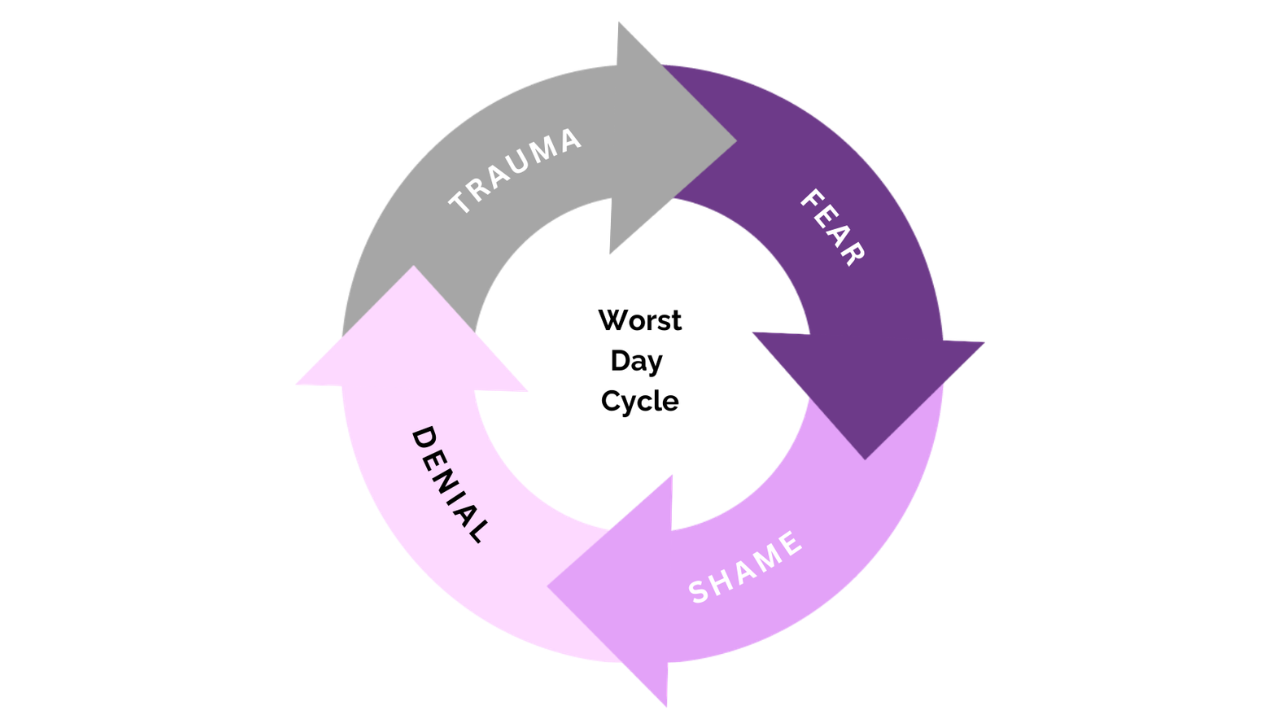
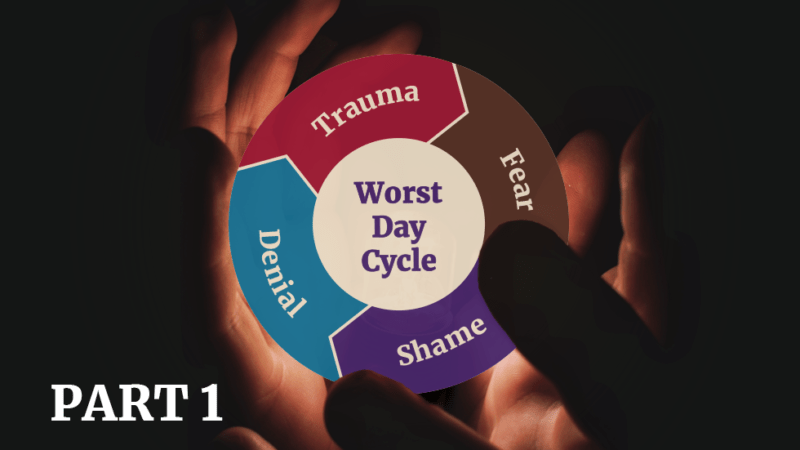
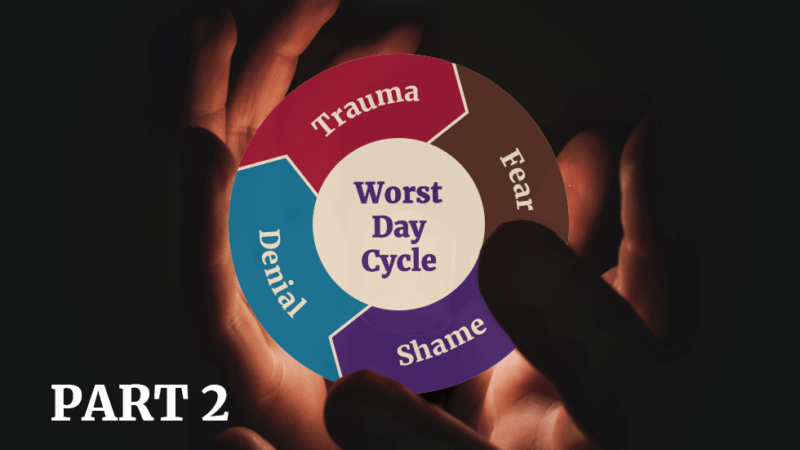
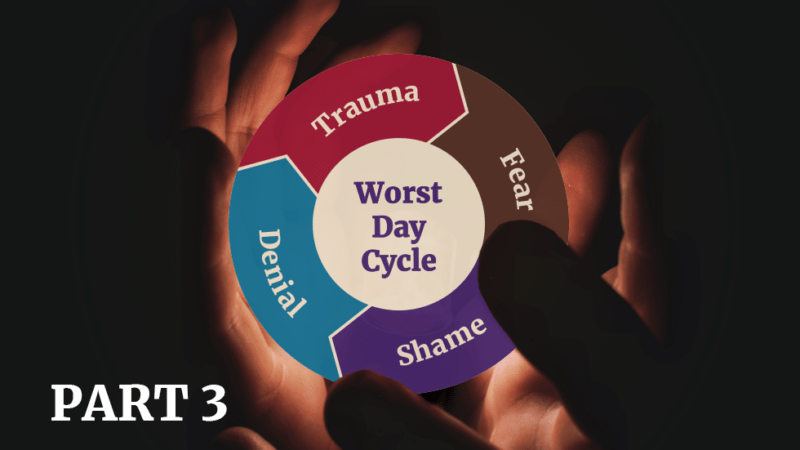
    Of course not; she had no choice but to go to work. This is what I mean – we are all perfectly imperfect. Her mother had to put food on the table, but her absence left her child feeling abandoned. While my client was telling me of her relationships, she was actually describing her childhood. She just didn’t know it. That’s why she keeps picking those men. This happens to all of us – it’s called The Worst Day Cycle. We all must get over denial and into the truth that we all experienced less-than-nurturing moments in childhood, and they are all replaying in our lives until we heal them.

    My Experience

    I experienced this myself. When I was 10, I woke up in the middle of the night to use the bathroom. I found my mom passed out naked on the toilet. It’s the day I discovered she was an alcoholic. I was horrifically powerless. I spent my teenage years throwing out alcohol, trying to control her drinking. If you’ve lived with an addict, you know this doesn’t work. On the other side, my father always had to be right. He would argue and gaslight me. It was his defense mechanism from his less than loving childhood. It made me totally powerless when I had no way to challenge him. He would make rules and then change them so he could never be wrong – I was utterly powerless. Childhood is the ultimate birthplace of powerlessness – if you look, you will see your current powerlessness is precisely like your childhood.

    There’s another aspect of parenting most people don’t consider. Throughout childhood, all we are told is “no.” What do we have to do in those moments? We have to agree. Almost all the time, they’re telling us good things! Wishing to protect us, but they’re like my father many times – they don’t want to be wrong. We learn that if we ever say “no,” we’re bad. This has devastating consequences.

    If you want to dig deeper, check out my book Your Journey To Success, where I go into the power of saying no more deeply.

    We have two forms of powerlessness: The first happens when we focus on what we can’t control rather than what we can. The second form of powerlessness is the inability to say “no.”

    To solve the first example, the first thing to do is:

    1. Get a piece of paper.
    2. On one side, put what you can control.
    3. On the other, put what you can’t control. You may want to have separate papers for each topic.
    4. List out everything.

    There are millions of things we have no control over. Yet, we keep trying to control them, which is our problem. Do you see what you can control? Ourselves. Our thoughts, feelings, and actions. That’s it. So we create a list to see what sort of things we can see, think, and feel to regain power. There are a million things. Meditate, go on a walk, participate in hobbies that bring joy, work on something that fills your soul. Here’s why: when we get in the powerlessness of what we can’t control, we go look at the list of what we can control. We should constantly be reminding ourselves what we do have control over and take action. To stop replaying what we can’t do, focus on what we can control at that exact moment.

    Learning Process

    When I was learning about this process, I was going through a divorce. My ex was a narcissist and stealing all the money, so naturally, I was worried. My counselor said one phrase: what can you control? I replied, “the credit cards and the business.” I made a plan with what I could control. I opened up new accounts and moved everything over. I took control of anything that was mine. I focused on what I can control. I stopped playing the victim and saying there’s nothing I can do. That’s just not true! It’s all a choice. The second I shifted, my feeling changed, and I became empowered. I saw ideas and solutions and executed them with my behaviors. Powerlessness is gone. Everything turned around. My business was saved.

    There’s one aspect to the “what I can and can’t control” that takes a tremendous amount of patience. Sometimes when we’re doing everything right and the problem isn’t going away – that means there’s a life experience waiting for us, and there’s nothing we can do until that happens.

    30 Years Spent of Powerless

    I’ll give you an example: I have spent 30 years working on myself. The majority started 17 years ago when I met my mentor. Over ten years, I saw him probably seven years straight. I was working my tail off, but I couldn’t get out of all the pain. My life was better, but there was some pain I hadn’t healed. During this time, my second wife and I got engaged – my counselor was also a pastor. I asked him if he’d marry us. He said he’d think about it and get back to me. My fiancé at the time was seeing his wife, who was also an expert in this – we were learning the same tools and language, helping our relationship. The following week he says he thought about it and thinks my fiancé and I have a lot of pain to work through, but he’d do it.

    Initial Thoughts

    My initial thought was that he’s exercising boundaries and letting us fix it ourselves. Instead, he’s appropriately codependent-guarded. What I didn’t realize (and I don’t think he did either) as if it hadn’t been for my second marriage and nearly killing myself, I would have never figured all this out and found peace and freedom. I needed to break myself so severely for me to get peace finally. The divorce was so desperately nasty it made me stop controlling things. I was hyper-vigilant as a kid, trying to figure everything out before it happened. That level of control was killing me.

    I had done all the recovery work but never given that piece up. Being suicidal made me realize I would die if I didn’t give it up. The following two years were spiritual unloading. I saw all the answers. If you’re doing all this and it’s not working out, you may have a life experience waiting for you. Sit back in your chair and let it come. Focus on what you can control, then let it come.

    Solution two is: saying “no.” I’m going to give you a couple of magic phrases, and by the end, while, you’ll see they work every time and put an end to people-pleasing.

    The first thing to do when a request comes in for anything is say,

    “Let me think about it, and I’ll get back to you.”

    You don’t have to say yes right away – you owe them nothing. It’s your life and decision, so buy yourself some time. Then you have time to work through the process. Now you ask yourself three critical questions:

    1- Will I ever keep score that I did this for them?

    2- Will I ever throw it in their face that I did this for them?

    3- Will I ever have any resentment that I did this for them?

    They all mean the same thing, but each person has their way of expressing it – so one of these will work for you. These feelings of resentment are from childhood. We are stuffed with resentment, keeping score and throwing it in their face from childhood. If we ask ourselves these questions and decide we would never do these things – we can say yes. And do it freely – we won’t feel powerless.

    If you’ve gone through the process and recognize you may hold whatever it is against them, you use magic phrase number two,

    “I’ve thought about it, and it just doesn’t work for me.”

    Isn’t that beautiful? How do you feel when someone says no to you? You feel attacked because of childhood – you felt attacked back then, and it’s the same thing now. If you use this phrase, the other person isn’t attacked because you make it about yourself. No matter what they say, they can’t talk you out of it – which is a prevalent defense when someone says “no.” If someone asks you, “why not?” or “what does that mean?” you can simply keep repeating the phrase. While, It’s magic! I don’t care what they throw at you – keep repeating it. They’re not your mother or father. Even if they are, you’re an adult now. You get to make your own decisions and simply say, “it just doesn’t work for me.” You don’t owe them an explanation unless you want to give it.

    Can you feel how powerful that is? It’s not condescending or rude, and it has nothing to do with the person making the request. For instance, If you say yes, you will resent them, which will create a block to intimacy, and you will be the only one to blame. Realizing that is power, love, and kindness. That is why I always say, “No” is the most loving thing you can speak to someone.

    Your solutions to feeling powerless are ways to help you overcome it and live in the empowered state we all deserve. Kim, thank you for a beautiful question. If you want to learn about something, send it to me.

    As I always say:

    Enjoy The Journey! ??

    CLICK THE IMAGE TO LEARN MORE

    Are You Ready to Break The Chains of Fear and Achieve Your Dreams?


    Fear is a natural human emotion. But it doesn’t have to hold you back from achieving what you want in life. You can learn how to use it as fuel for success, rather than letting it keep you stuck in place.

    This class will teach you everything about fear that no one else will tell you – including how to conquer any type of anxiety or fear quickly and easily with the right tools.

    It also includes new perspectives on anger, rejection, and self-sabotage that will transform your life forever!

    You deserve the best possible version of yourself – one who lives without fear or self-sabotage holding them back from their potential!

    Let me show you how to take control of your emotions and start living an empowered life today! I’m here for you every step of the way


    Sign up now for this empowering master class so we can help make your dreams come true!

    The sooner we start the journey together, the sooner your dreams will become reality!

    How To Break The Chains Of Fear And Achieve Your Dreams


  • 7 Steps For Balance And Stability In Your Life

    7 Steps For Balance And Stability In Your Life

    We all have moments in our lives where we feel unbalanced – so today, I’m sharing the seven steps to get the balance back in your life. I’m also going to discuss the science behind why I’ve chosen these steps, so make sure to read to the end.

    The first question to ask is: what is a lack of balance? This awareness leads right into step 1.

    Steps

    1. Go to my website and get the Feelings Wheel – I provide a free download. Over the next several days, use it to keep track of your feelings. I suggest stopping five times a day and asking yourself what you are feeling. Sensitive, trusting, indignant, etc. Whatever it is, you may be feeling? The first step in this process is to become aware and to do that. We must track what we feel.
    2. Ask yourself where in your body you feel this feeling? Is it your neck, shoulders, chest, or stomach? Make a note of that.
    3. Ask yourself what happened just before you felt unbalanced. If you’ve felt it for a while, what happened a day or two before that? If it’s just this moment, what triggered it? Make a note of that.
    4. Ask yourself how do you respond once you start feeling unbalanced. Ask yourself five questions: Did I sabotage myself? Did I get needy or manipulative? Did I do the opposite, shut down and run away? What coping skill did I use to help medicate this unbalance away (work, relationships, etc.)? Make a note of what’s positive and negative.

    Steps

    1. Ask yourself when your earliest recollection was of having this feeling of unbalance? You’ll draw not only on the feelings you categorized but also where you feel it in your body. Once you see the earliest instance, you will see the repetition, triggers, and common responses.
    2. Ask yourself how you are repeating this thought and feeling? Now you can see how the imbalance has shown up repeatedly in your life. More importantly, you have just discovered something I call The Worst Day Cycle. We all repeat the pain from the past until we heal it.
    3. Now that you’ve gained awareness become an expert in healing the feelings of imbalance that have plagued us all for days, years, and decades.

    Now I’m going to dive into the science of why learning this process is so important.

    Our subconscious is formed in childhood, and it is made up of the most intensely emotional experiences we have. Modern science shows that 70% of all messages we received in childhood (whether from family, friends, teachers, coaches, etc.) are negative, disempowering, and self-sabotaging. These experiences create an emotional chemical addiction in our brain and body. Add in what we have all been taught about emotions? Don’t have them, don’t talk about them, don’t deal with them. Now you can begin to see why you repeatedly feel unbalanced emotionally.

    It becomes even more evident when we acknowledge how the brain works.

    Because it takes tremendous energy for our brain to do anything, it is constantly seeking to conserve energy. Its solution is to repeat what it already “knows” by reliving what has been placed in the subconscious. Our brain repeating what it knows is a problem because remember what has been placed in the subconscious? The most emotional experiences we have from childhood– 70% of which were negative, disempowering, and self-sabotaging. If you have pursued CBT, thinking positive, or any thought-based solution and haven’t achieved much success, now you know why. To bring balance into our lives, trying to change our thoughts won’t help. Modern science shows almost every thought we have starts with a feeling. We need Emotional Authenticity.

    Negative Childhood Experiences

    Finally, because of our negative childhood experiences and the brain’s design, studies show that we are not present in 95% of our daily lives as an adult. Daily our thoughts, feelings, and behaviors are just the subconscious patterns our brain learned in childhood. We think we are in the moment and making decisions, but we’re not. Our brain is inherently biased to repeat the same negative, disempowering, and self-sabotaging messages we received as a child. We all are completely unaware that our pain from our childhood is still running our adult lives.

    Now you can see the value of the seven questions I gave you. They bring science to life and prove to ourselves why we have repeated the same negative, thoughts feelings, and behaviors our whole life. As adults, all of us are reliving and replaying the painful moments from our childhood. We are all stuck in The Worst Day Cycle.

    Emotions

    Sadly, because we have consistently downplayed emotions and the impact of our childhood, most are completely unaware that they are stuck in pain from the past. This lack of teaching and awareness has us all living a life out of balance.

    The solution is to become an expert in healing the pain from the past. The first step is to create a new emotional and chemical addiction in our brain and body to replace what was implanted in our subconscious. Our brains need a new “known.”

    If you want the entire process, I lay out how to achieve this awareness, shift and heal those feelings and create a new “known” in the subconscious brain in my book, Your Journey To Success, and my online courses.

    Enjoy The Journey� ?

    Are you feeling stuck?

    Is your life just not working out the way you hoped?


    You’ve come to the right place.

    The Greatness University is a safe space for you to get back on track and achieve your dreams by offering online masterclasses that provide you with the knowledge, skills, and tools to become the greatest version of yourself!

    Through developing Emotional Authenticity, you will accept your perfect imperfections and attain self-love! Break the chains of fear, put an end to people-pleasing, and say no with ease! Break free from toxic relationships by learning to set and negotiate healthy boundaries and create the lasting love and connection you deserve.

    You deserve to be happy and have a life where you feel safe enough to show up as your authentic self.

    And we know that it takes courage – but we also know that it’s worth every single step on this journey.

    You deserve a life free from toxic people, pain, and frustration. It doesn’t matter if you’re just starting out or have already walked a long way down this path – our courses will help you take the next step in your journey to the greatest version of yourself. Join us today!


    It’s YOUR turn to be Great!

    Enjoy The Journey!

    Greatness U
    Guiding You To Be The Greatest Version of Yourself!