Category: Mental Health

  • That Dark Truth About Empaths: What Nobody Tells You!

    That Dark Truth About Empaths: What Nobody Tells You!

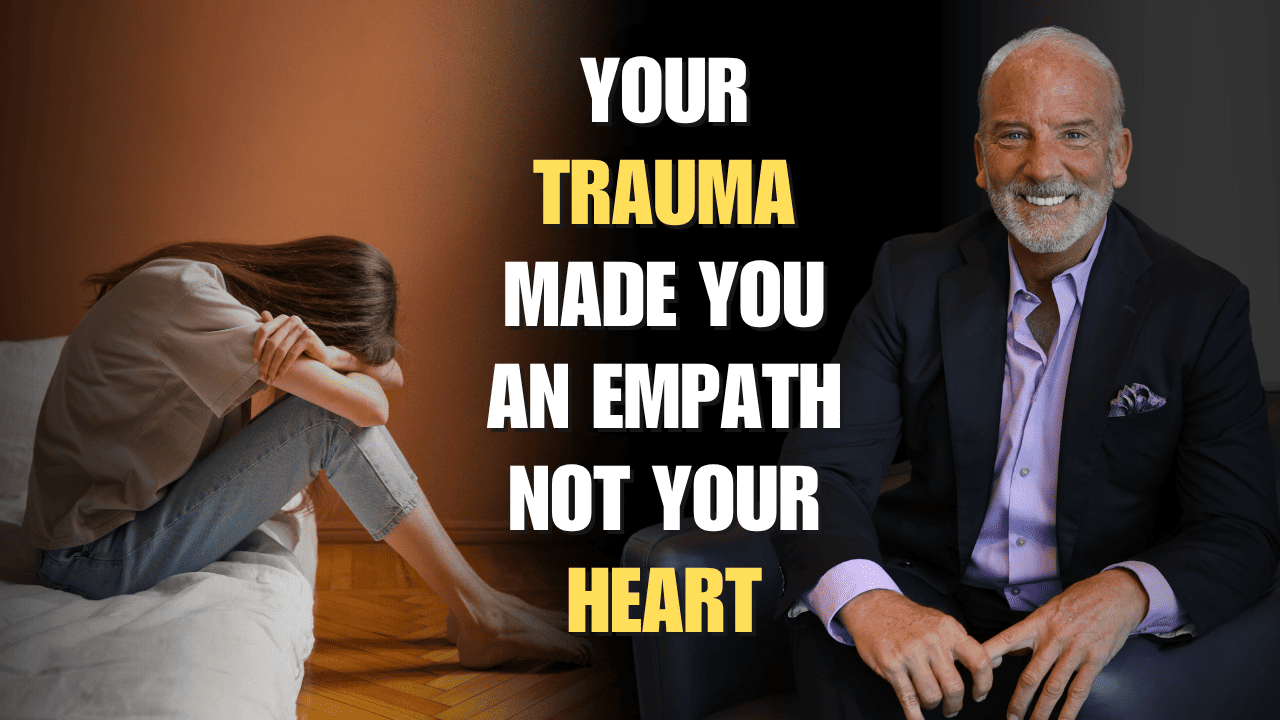
    The Empath’s Hidden Burden: Unpacking Trauma, Shame, and the Illusion of Kindness

    If you often find yourself stressed, overwhelmed, or feeling like you’re carrying the weight of the world for others, it’s time to get real about something many kind, empathetic souls struggle with: the truth you might be unconsciously avoiding, and it is not your fault.

    Sadly, Dr. Elaine Aron, the creator of the term “empath,” misdiagnosed her own childhood trauma and created a false narrative that has left these poor souls fighting the wrong demon. Recent estimates show that 30% of the population now identifies as a Highly Sensitive Person or Empath. That is a whole swath of the population that has been misled and is suffering needlessly. I find that very sad.

    The Core of the Empathic Struggle

    You see, for those who identify as empaths, there are two colossal forces bubbling beneath the surface: horrific childhood trauma and debilitating shame. Understanding these isn’t about blaming; it’s about illuminating the path to genuine healing and emotional safety, and liberation.

    Trauma: The Childhood Foundation

    Now, if you’re thinking, “Trauma? My childhood was great!” I hear you. But here’s the thing: you don’t become an empath by accident. A deeply sensitive person only develops this hyper-awareness in childhood because their environment demanded it. Think of a child’s emotional landscape as an open, unshielded canvas. Whatever emotions our parents felt — their anxieties, their unexpressed anger, their fears — we absorbed them. We became mirrors of their emotional state.

    To survive, we learned to be hyper-attuned. For me, with a mother battling alcoholism and a father consumed by rage, survival meant becoming a human lie-detector, constantly scanning for emotional shifts. This was a brilliant, life-saving skill in childhood. It protected me. But, like an old survival kit, it becomes a burden in adulthood. The very mechanism that saved us then can now keep us from truly living. It’s why so many empaths feel overwhelmed in crowds, struggle in relationships, and constantly feel drained — the trauma of childhood is boomeranging back, keeping them stuck.

    Shame: The Silent Driver Behind Inauthentic Kindness

    And then there’s the second piece: debilitating shame.

    Have you ever heard the phrase “kill someone with kindness”? That’s a perfect description for some empaths. Many wear their extreme kindness like a badge of honor, almost saying, “Oh, I’m just too kind, that’s why people hurt me.”

    But here’s a powerful truth from the world of human behavior: when we experience severe trauma and shame, we often develop what’s called a reaction formation. This is an unconscious defense mechanism where we repress a disturbing, painful feeling and express the exact opposite.

    So, when an empath is excessively kind, it’s often a defense against a buried impulse to be “cruel.” Not because their heart is inherently cruel, but because underneath that shame and trauma lies a deep reservoir of unexpressed hurt, anger, and sadness. As children, they couldn’t stand up for themselves; expressing that raw emotion would have been “bad” or unsafe, reinforcing their shame.

    The “Thinly Sadistic” Nature of Avoidance

    Imagine all that unprocessed anger and pain building up. If an empath were to truly express that deep-seated rage, it would trigger that original shame and wounding they’ve spent a lifetime avoiding. So, what do they do? They double down on kindness. It becomes a rigid, almost inappropriate trait. This extreme kindness acts as a shield, ensuring they never have to feel that inner “cruelty” — that deep, raw anger — and therefore, never have to face the underlying shame.

    This is why many empaths find themselves repeatedly in relationships with narcissists. This “kindness” isn’t a freely given, authentic gift. It’s often coercive, manipulative, and yes, thinly sadistic (a term coined by John Bradshaw). Think about it: how truly authentic or loving is it to be “nice” to someone who doesn’t deserve it, or to give of yourself until you’re depleted, all while secretly resenting it? This isn’t a genuine connection; it’s a dynamic born from unaddressed trauma and shame.

    Finding Your Authentic Power

    This relentless kindness, in its most extreme form, is an empath’s way of hiding their own “darkness” — the very hurt and anger that, if faced, could lead to their greatest liberation. It’s time to recognize that true healing begins not by perpetuating the cycle with forced kindness but by acknowledging the full spectrum of emotions within and learning to be authentically imperfect. This is the first step on your journey to Emotional Authenticity.If this resonates with you and you’re curious about taking those next steps to heal childhood wounds and overcome shame, my book, Your Journey to Success, could be a helpful guide.

    To watch the video and learn more click here:

  • Depression Solutions Without Medication

    Depression Solutions Without Medication

    Depression Solutions Without Medication

    Depression is a debilitating condition that affects millions of Americans. If you’re feeling the burden of depression, today’s Best Day Blog article will provide you with depression solutions without medication. Make sure to check out the in-depth video linked at the bottom.

    In it, we’ll discuss tips and tricks to help those dealing with depression or living with anxiety cope in their day-to-day life. These strategies for coping will work whether you have depression, anxiety, PTSD, or another mental or emotional illness. Unfortunately, in almost all cases, depression medication doesn’t solve depression. In many, it makes the depression worse, and in almost all cases, when coming off it, this is undoubtedly so.

    Medication only medicates the symptoms, but it doesn’t deal with the root cause – and this goes for all depression medications, of which many work only on a psychosomatic basis. There can also be significant negative side effects from depression medication, so you’re in the right place to look for real solutions and answers.

    There are several contributing factors to the issues with depression treatment: problems in the medical community and problems with the way we look at treating mental and emotional health. 

    What are some of the myths and facts about depression?

    Modern research into how the brain works shows us that the way we feel and think creates our biology, which means the old adage that faulty brain chemistry creates depression is mostly wrong. You might be genetically predisposed, but that does not mean it is predetermined. It takes faulty feeling and thinking to trigger that gene of depression to activate. One of the medical issues is that it only looks at biology – take this anecdote as a way of explaining this:

    A car has many different components that make it run smoothly – an engine, tires, windows, batteries, oil, gas, clutches, etc. – but using the anecdote of the car in medicine, they only look at the engine. If the car has a flat tire, prescribing a pill would be akin to ‘Put more gas in the tank!’ rather than looking at the actual issue causing the car to run dysfunctionally. The car will still run, but the root cause of the issue has not been addressed. Pills are not always the most effective treatment for depression. They might be an initial starting point so a person can begin addressing unhealed emotional pain’s root cause.  

    Why won’t your doctor tell you this? Medical research and medical schools are funded by huge pharmaceutical companies, meaning that most doctors are trained to become simply a ‘pill mill.’

    How does illness happen?

    Illness happens when cells break down and cells have receptors. Think of it like the texture of an orange, all the little bumps. Those bumps are the receptors. If there are 1 million receptors on the cell, depression might only 500 of those receptors. Sadly, medication doesn’t just attach to the “depressed” receptors. It attaches to ALL of the receptors This is what causes significant side effects and leads to an activation of the ‘healthy’ cells unnecessarily. So now, all of the latent conditions that may be sitting in the cell receptors that weren’t activated become activated and cause other issues on top of the one you were initially trying to deal with. This leads to further prescribed medication and the start of a long journey of living in a medicated state – this isn’t helpful for a happy and healthy life. 

    Health needs to be bio-psycho-social, a holistic approach that understands that our health isn’t predetermined. We must start bringing in the psychological and emotional factors that create our medical conditions because stored emotional energy creates illness. This is what Candace Pert talks about in her book ‘Molecules of Emotion’, stating ‘If you look underneath your depression, you’ll find anger, If you look underneath your anger, you’ll find sadness, and under sadness is the root of it all – what’s really masquerading all the while – fear.’

    Where did we learn to be afraid?

    Childhood. We’ve all been through perfectly imperfect parenting, and while many believe their childhoods were perfect, it’s not true. Every single one of us has been through levels of shame and trauma, even when a parent was trying their hardest with our upbringing. We are all human. We all make many daily mistakes, even loving parents. Parents are not perfect, and those imperfections leave lasting wounds. Depression results from attempting to minimize, justify and ignore this fact and truth.

    But what happens to a child experiencing that? Alice Miller has several books that provide a deeper understanding that at the heart of this depression is the inability to express emotions. In ‘The Body Never Lies,’ she says. “The point is that the fatigue characteristic of such depression reasserts itself every time we repress strong emotions when we play down the memories stored in the body and refuse them the attention they clamor for.”

    We are depressed because we have suppressed, repressed, minimized, and ignored the anger, sadness, and pain of our childhood. Almost everyone is told growing up that it is not okay for you to be a child, to be imperfect, to feel – most often, children are told to shut down their feelings. 

    The Solutions For Depression

    If you’re here reading this, you know medication has not solved this for you. Because you’ve lived it and know the truth, let’s get to the solutions. 

    Depression Solution Number One:

    Pick up Beverly Engel’s book ‘The Emotionally Abusive Relationship.’ This will help those who are finding it difficult to stomach the truth that you learned this in childhood. Most likely, you may not be aware of what creates perfectly imperfect and dysfunctional parenting. This book will help you understand the different parenting styles and learn more about how they impact you today.

    Depression Solution Number Two:

    Purchase Alice Miller’s books ‘Free From Lies: Discovering Your True Needs.’ ‘The Drama of the Gifted Child, and ‘The Body Never Lies. These three books will help you to discover how the trauma from your childhood is the cause of your depression. 

    It has been proven that genes do not predetermine our life.  The emotional environment the gene is placed into that triggers and activates a gene to ‘switch on and create illness. Therefore, healing depression requires developing new tools, skills, and knowledge to create a new emotional environment to change the cell’s genetic makeup.

    Depression Solution Number Three:

    Go to this link to access my free resources on my website. Look at the Feelings Wheel and the ‘10 Simple Steps to Heal Emotional Pain’. These will help you become an expert in Emotional Authenticity. Understanding how these emotions create biology, realizing that you cannot change depression with THOUGHT! You can only change it with emotion.

    So use the feelings wheel to track your feelings for the next few days. Start with tracking how you feel and where in your body you’re feeling it 3-5 times a day. We store emotional trauma within our body physically, which leads to illness. Becoming aware of where it is in your body will really help.

    Ask yourself when the first time you had this feeling was. Can you remember and trace it back to childhood – that moment you experienced the sentinel feeling? These emotional expressions have been diminished, and part of the healing journey is learning to express these emotions healthily. 

    My ‘10 Simple Steps to Heal Emotional Pain download walks you through the complete healing journey. It gets to the core solution rather than attempting to medicate the symptoms. 

    My video ‘How to Release Emotional Pain’ works together with the above printout. 

    These three free resources will help you to get off the medication and deal with the source of the problem. 

    [embedyt] https://www.youtube.com/watch?v=VFAB-7OmkVo[/embedyt]

  • Three Mental Health Awareness Tips

    Three Mental Health Awareness Tips

    It’s no secret that more and more people are struggling with mental health issues these days, and frankly, most people do not see results when they try to address this. So in today’s Best Day Blog article, I’m going to share three counterintuitive tips to train your mental health awareness.

    What’s the first thing we’re all trying to achieve? A life with no pain. And how do we try to do that? By trying to cancel out anything and everything that could cause pain! And this is the problem! The problem with the mental health industry is that they are trying to get you to avoid pain when in fact, the solution is quite the opposite – we must become experts in seeking out pain – let’s get into that.

    1- Seek Out Pain and Become an Expert

    Don’t believe me? Let me share three reasons why this is the key to your positive mental health journey. Firstly, what does every CEO, athlete, politician, actor/actress – anyone who has ever achieved anything significant – tell you about how they achieved it? More often than not, it’s a huge, painful event in their life that led them to figure out a solution – their pain led them to success.

    The problem is that once you’ve been through an experience like this, most people say that they would never want their kids to experience that sort of pain! This is incredibly ironic because they know that they only got to where they are today because of the experience and growth that came from their distress. Of course, it is not the intent to stop people from growing and being successful, but what people don’t realize is that by shielding yourself from pain, you are stunting your growth and development and may never reach your full potential.

    As well as this, it is simply not realistic. The solution to life always has, and always will be, to conquer our pain. The world suffers because no one has taught us how to deal with it.

    The story of Jesus is the perfect example of this and also an example of a misunderstanding of the message being shared. Jesus is revered as, in many religions and cultures, the ideal person being under the watchful eye of God Almighty. However, even under God’s guidance, Jesus suffered horrifically but was able to move through his pain and was still viewed as perfect, as someone who never made a mistake. This pain all leads him to be nailed to the cross, and at this moment, he shouts ‘”My God, my God, why have you forsaken me?’. At this moment, Jesus had admitted the truth, that even he did not believe in his Father, in God, and that he had to have a cataclysmic event to see the truth – the solution was to admit that even he did not trust his Father. The moment he did, he was able to surrender to the cross and rise again.

    Whether you are agnostic or atheist, the same is true. The resurrection happens for all of us when we get to the other side of the pain, yet everyone avoids pain at any cost. However, you cannot become an expert until you learn Emotional Authenticity and how to journey through the pain (not around it). My book ‘Your Journey to Success‘ takes you through this journey and shows you how to face your pain.

    The pills and medicine and advancements in medical care are not helping. On the contrary, the mental health crisis is getting worse – because we keep teaching people not to face their pain. The bottom line is this – for every person who has ever succeeded, the happiest moment of their life was when they conquered what they were struggling with. As such, the solution is not to deny pain. It is to embrace it.

    It’s time to develop the knowledge, skills, and tools to help you navigate your pain. Find teachers and experts that provide you with these. Anyone who claims to be an expert but tells you to run from the pain is a person to be avoided! It would be best to have a teacher who will show you how to go through it and become an expert in overcoming it.

    2- Weight is about pain.

    Weight management would seem to be a physical thing – something you manage by eating in balance and moving your body, but so many people don’t understand that weight is about pain. Dr. Felitti started a study on people who would yoyo in their weight repeatedly and figured out that people eat because they are in pain. Much like medication, food is used to alleviate symptoms. However, neither heals the root cause of internal issues. A research patient said to Felitti,’ you know we eat because we’re in pain?’ and the Adverse Childhood Experience study was born from that moment on.

    The study has been replicated multiple times worldwide with the same results, and those results show that nearly 70% of us have been through childhood trauma and, of that, almost 70%, 88% of them have been through 2 or more experiences of childhood trauma. The problem is that no one talks about this or the side effects of this trauma on us. As such, no one has the knowledge, skills, or tools to deal with it proactively and productively. So instead, many try to medicate it away will food and medications.

    So, the counterintuitive step number two is that we need to become emotionally literate to work with the pain. Most people don’t even know what childhood trauma is – from simple, unintentional abandonment to catastrophic abuse. Almost everybody has experienced trauma of some sort that is, on the whole, unhealed. Studies have shown that up to 70% of adults don’t even feel. They are not in touch with what’s happening inside them, and to the childhood trauma they are carrying around – they are detached.

    This unhealed trauma the majority of people carry causes people to binge eat, drink too much, and generally live unhealthy lives and make unhealthy choices. It’s childhood trauma. It’s not mental health awareness. It’s our feelings that we’re struggling with! We are sad, anxious, depressed, or low – these are all healthy feelings to feel. We can start healing when we can label them as feelings rather than the more obscure or often-stigmatized ‘mental health.’ In my opinion, the struggle is with emotional health – it’s not mental health.

    The Scales of Injustice

    We create what I call the Scales of Injustice because we won’t admit what things are – i.e., calling fear – stress, and emotional health – mental health. On one side, we are all in massive denial because we won’t deal with the truth. When we are not in the truth, we don’t know who we are, so the other side of the scale is low self-esteem. None of us want to admit our true feelings to ourselves, let alone others, and none of us have the self-love and self-esteem to face up to what is the truth.

    As such, addiction, obesity, gambling, illness, and disease are all on the rise. If we could face our denial and tell the truth- ‘I’m scared,’ or ‘I’m feeling inadequate’ – look at what happens. Our self-esteem rises because we can admit that we have weaknesses and perfect imperfections. Truth creates justice.

    Emotional Authenticity creates the truth we need by showing us how to admit that we have feelings and stop sugar-coating those feelings with ambiguity.

    3- Become Negative to Be Truly Positive

    False positivity is not the answer. Studies have shown that if you tell a depressed person to use affirmations, for example, their depression skyrockets – it has the opposite effect – because it is a lie. The Scales of Injustice are swayed towards denial and, therefore, low self-esteem.

    Yes, depression is a chemical imbalance, but the chemical imbalance most often comes from childhood trauma that has never been healed. The repeated firing of the emotional trauma is what causes depression, as well as anxiety – this is what the ACE study by Dr. Felitti shows. However, we are not making progress because we’re not talking about the real issue – that childhood trauma is at the heart of all of this. Instead, with each year, we become more obese and more drugged.

    With Emotional Authenticity, a person can get excited about feeling the pain! Because when you face it head-on, you grow the most. So you start to look forward to uncovering new parts of yourself and conquering things you could never have before. You then create a new definition and relationship with pain – this is a massive part of the mindfulness movement, an understanding that you can allow pain to flow through you and let it go, rather than resisting and denying it.

    To continue avoiding pain is to aid in escalating addiction, health problems, illness, and diseases. So instead, learn Emotional Authenticity and learn to navigate pain, remembering that going through the pain will teach you much more than hiding from it. Once you’ve done this, you’ll no longer worry about pain, you’ll no longer avoid it, and your life will change for the better.

    Are you looking for more solutions? Pick the one that suits your needs best!

    1- My book, Your Journey To Success

    2- My Complete Emotional Authenticity Method

    3- My Perfectly Imperfect Private Group

    4- My Private Coaching

    Learn more here:

    [embedyt] https://www.youtube.com/watch?v=41qt0h3aqao[/embedyt]

  • How To Forgive Yourself

    How To Forgive Yourself

    Are you sick and tired of now knowing how to forgive yourself? I truly believe that nobody deserves to live with that sort of pain, so I will share two different ways to help heal your heart and soul by releasing the guilt and shame you feel.

    We’re all perfectly imperfect, and learning how to embrace this, along with the tips I’m going to give you in today’s Best Day Blog article, will help you start the journey of forgiveness to have a happier life!

    How to start forgiving

    Firstly, I recommend thinking of your favorite animal! What animal do you love – a cat, a dog, a rabbit, a horse? I love Labrador puppies – to me, they are soft, cuddly, and filled with unbridled joy! Picture taking the animal of your choice as a youngster, chaining it up, and leaving it outside. Never touching it or petting it, or providing that baby animal any food, water, love, or sense of care. If you did this to this sweet, innocent animal and mistreated it day after day, what do you think would happen to it? What do you think it would do?

    It would attack you because it has no sense of being cared for, nurtured, and treated with respect. This analogy is very much what you are doing by not forgiving yourself. You’re chaining yourself up and starving yourself of the love, attention, and care you deserve. Your lack of forgiveness is like mini attacks on your soul.

    Forgiveness tip #1 Touch

    For the puppy and you to recover from this mistreatment, you need touch and kind words. If you have been starving yourself of love, affection, and kindness because you can’t forgive yourself for your perfect imperfection, then hug yourself. Depending on how severe your lack of love has been, this may be difficult for you. If you’re not ready to give this to yourself, try getting a massage to introduce this sensation of touch or ask someone close to you to provide you with a hug. If even this is too much, start by simply placing one hand on top of the other in a loving manner and then recognize that the way you’ve been talking to yourself is starving you and leaving you neglected.

    A pervasive example of how you might be chaining yourself up is to blame yourself for how you allowed yourself to get into and stay in a toxic relationship. During the relationship, maybe you experienced physical – neglect or abuse? Now that that relationship is over, you might struggle to forgive yourself for not leaving or ignoring your initial gut feeling? If that sounds like you, guess what? You’re now abusing yourself – you’ve taken on the role of the abuser. When we can’t forgive ourselves, we have chosen to be our abusers.

    So make a new choice now and start the journey to forgiveness. Treat yourself as you would your favorite animal who had been starved of loving care.

    Forgiveness tip #2 Don’t play God!

    Whether you are spiritually minded, this next tip still holds. By not forgiving yourself, you are placing yourself above God. One of the most fundamental underpinnings for many religions is that we are always forgiven no matter what we have done. So, to believe that what we did is unforgivable implies that we know better than God! If the thought of placing yourself in a God-like position goes against your values, this truthful perspective should snap you right into the ability to forgive yourself.

    It’s essential to recognize that there is nothing you did to deserve being chained up and treated as a neglected animal. So today is the day to set yourself free and remove the chain. Give yourself kind love, words, and touch, and nurture yourself. Let the tears stream as you set yourself free and recognize that you are worthy of love, care, and acceptance from everyone and everything.

    Click here to learn 3 simple ways to love yourself!

    Additional solutions:

    4- My Private Coaching

    To learn more, watch the video here:

    [embedyt] https://www.youtube.com/watch?v=E2qMyHsITrc[/embedyt]

  • How To Avoid Suffering

    How To Avoid Suffering

    Suffering is a natural part of life but it doesn’t have to be your entire life. In today’s Best Day Blog article, I’ll share three ways that can help you avoid suffering so you can live a happier, more fulfilling life!

    Step 1- Acceptance

    When it comes to suffering the first step is to accept it! The journey of life is a journey of learning how to get better at handling our suffering. Therefore, complete acceptance is the first key to overcoming it. Accepting that we’re codependent, we attract narcissists, we medicate with pills, food, pot, relationships, whatever it may be, but committing to no longer shaming ourselves for being perfectly imperfect is the first key step. Drop the ‘shoulds’ and ‘coulds.’ ‘I should stop eating too much,’ ‘I should exercise more’ etc. What if, for now, you just accepted that this is how you are and release the pressure and shame for a moment? The truth of the matter is at this moment you are doing the best you can. If you were really capable of doing more you would. Learn to accept the level of perfect imperfection you are currently operating in.

    Underneath, you may not be completely ok with it, but it has not risen to a level where you are ready to make a change.  Until that starts to shift and becomes more weighted the other way, learn to accept yourself for where you are in your journey.

    Step 2- Stop Avoiding

    The second step is to consciously admit that for a period of time we can all be somewhat comfortable living in a way that doesn’t align with our morals and values. The things we do that go against our moral compass and leave us feeling less than loving inside – the overeating, the addiction, the bad relationships – are being used as a tool to avoid what’s underneath. We do these because we fear pursuing the change will cause more suffering than the negative act we are using to cover up our pain.

    The biggest realization I had, and that you can have too, is that it’s the avoidance of pain that creates the pain. This links in with my 5 stages of grief, the first 3 stages of which many people will live their entire lives are shock and denial, bargaining, and then anger. Many will ruminate in the first three stages in order to avoid the final two steps, depression and acceptance.

    This is where the true pain lies and this is where the suffering is. We use the bad habits and addictions in order to avoid the suffering that is in step 4, but everything we are using to cope is, in fact, creating more of it.

    If you feel as though facing the depression and the trauma is too much, you may be projecting onto the depression the idea of it being ‘too big.’ This is normal but it is not true. Sadly, the only way we discover that it is false is by committing to face it. Once we do, that is when we understand the concept of the avoidance of pain creates the pain.

    Step 3- Go right at the suffering?

    Go right at the heart of the suffering.

    When we go towards the pain we discover that often, it’s not as painful as we thought it would be. The amount of joy that can be found in the suffering, once we’ve worked through it, is much, much more than ever could be found in the avoidance. Often, underlying our avoidance is how scared we are to love ourselves – that’s our greatest fear.  A poem by Maryanne Williamson explains this better than anything I’ve ever heard, here is an excerpt from her poem:

    Our deepest fear is not that we are inadequate. Our deepest fear is that we are powerful beyond measure. It is our light, not our darkness that most frightens us. We ask ourselves who am I to be brilliant gorgeous talented and fabulous? Actually who are you not to be all of those things you’re playing small does not serve the world. There is nothing enlightening about shrinking so that other people won’t feel unsure around you. We were born to make manifest the greatness that is within all of us. It is not in just some of us, it is in everyone. As we let our own light shine we consciously give other people permission to do the same. As we are liberated from our own fear, our presence automatically liberates others.

    That is petrifying! To end suffering we have to accept how great we are. That is the journey of life – to make manifest the greatness that lies inside all of us. To admit and acknowledge that we are powerful beings with the capability to change our lives and others’ lives can feel like a lot of responsibility, but when we can learn to understand and appreciate this, we can learn to end the suffering.

    If you would like to learn how to turn this type of emotional misery into Emotional Authenticity I invite you to try out My Complete Emotional Authenticity Method.

    Additional solutions:

    1- My book, Your Journey To Success

    2- My Youtube Channel

    3- My Blog

    4- My Complete Emotional Authenticity Method

    5- My Perfectly Imperfect Private Group

    6- My Private Coaching

    Watch the video and learn even more:

    [embedyt] https://www.youtube.com/watch?v=NIJYNrO1fiM[/embedyt]

  • How To Silence Your Inner Critic

    How To Silence Your Inner Critic

    it is human to make mistakes. But for many of us, we get caught belittling and demeaning ourselves internally for these perfect imperfections. Yet, being able to admit and accept them is part of the healing journey. So, in today’s Best Day Blog article, I will help you move from emotional misery to Emotional Authenticity.

    To achieve this we will look back on how you categorized your memories with messages that you were somehow bad, broken, or not good enough. We will use the ‘3 R’s’ and the ‘3 C’s’ to help help you see them for what they really were – perfectly imperfect moments in your life.

    The 3 R’s

    They are: remove, remedy, and recognize.

    Remove the mantras.

    When we have an inner critic, we have specific mantras that we say to ourselves repeatedly – things like ‘What were you thinking?’ ‘Why did I do that?’ These are self-shaming and victimizing mantras and phrases that we belittle ourselves with. These are things that we have learned from our parents – more so, they are usually things that your parents have said to you when growing up – ‘You’re smarter than that!’, ‘Don’t be stupid!’. Perhaps you’ve not been aware of these at all before, so if you have become entirely detached from this, then I recommend, for the next week, every time you make a mistake, pay attention to what you say to yourself and write down the phrase or mantra that runs through your mind. There will be around 3-5 that they use all the time for most. These mantras have become what they believe is their truth about themselves and how they are.

    Remedy the problem.

    Once you’ve made your list of mantras, it’s time to give them back – to give the pain back – to your parents. Not because you want them to feel pain, but because it was never yours to carry. Spend some time thinking about which mantras you have created from an inner knowing. For example, I always knew my father would not be able to have an open and frank discussion with me, so, if I was upset, my mantra became ‘What’s the point?’

    So when I find myself thinking, ‘what’s the point?’ I give the pain back by saying something like, ‘I love you, Dad. I know you were doing the best you could, but this is your pain, and I will not carry it for you anymore. I’m sad you were never taught or allowed to heal your pain, but this is not my responsibility. It is yours, so I give it back to you.’

    Recognize yourself.

    Now that you’ve cleared away the emotional misery from the past, it’s time to replace it and bring in our authentic selves. The way we do this is by recognizing ourselves. I suggest creating gratitude and accomplishment lists. Express gratitude for everything great in your life AND everything about who you are. If you feel like there isn’t anything you like about yourself, here is a tip, even the act of undertaking this work, is commendable! Be grateful that you’re trying and add this to your list.

    If you feel there is nothing to be grateful for, particularly about yourself, take a moment to pause. This is not true. That is a mantra you are using that needs to be given back. First, recognize this fact and give it back to whoever gave it to you. Then, ask, ‘If I was never to think or feel this mantra again, what would I recognize and be grateful for?’. Try listing 3 of these each day.

    The 3 C’s

    They are: confirm your with, connect with your abilities and clarity.

    Confirm your worth.

    When we get shamed, we get sent a message that we do not have worth and that our needs and wants don’t matter. Make a list of your needs and wants, and think about the times you asked for your needs and wants but were rebuffed. Then, put a plan in place to give yourself these things and confirm your worth to yourself – whatever makes you feel worthy, do it.

    Connect with your abilities.

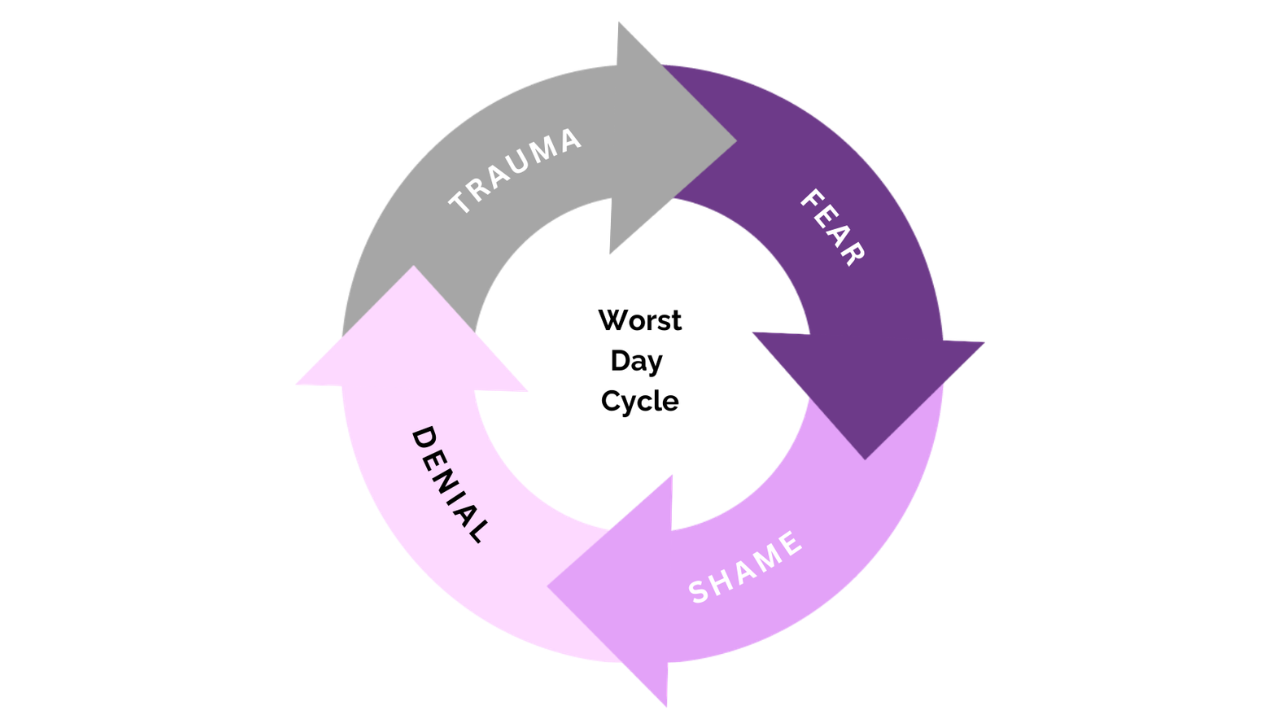
    When a child is shamed or belittled, as well as suppressing their needs and wants, they also learn that it’s not ok to pursue their abilities – this is part of The Worst Day Cycle which causes us to suppress who we are to survive. Think back – can you remember when your parents shouted at you when you wanted their attention? Do you see you attempted to express your needs and wants? The yelling made it clear, that your needs and wants are a problem for them. As such, you start to learn not to ask for your needs and wants, which leads to an inability to connect with your abilities.

    So, now you have your gratitude and accomplishments written down and understand your needs and wants, you can start to put a plan in place to reconnect with yourself and your abilities. Pick one small thing you can do each day to reconnect with yourself, and you will start to understand your needs and wants more and more. This is all about taking small steps to begin re-loving yourself.

    Clarity.

    Learn about The Worst Day Cycle – I write about it in my book ‘Your Journey to Success’ because we have to know what causes the inner critic, where it came from, why we have it and how to stop it and turn it around. This book will provide clarity on The Worst Day Cycle, and the only way to gain clarity is to gain knowledge! If you’re not sure about the book just yet, I have many videos on my YouTube channel that will help you understand more. In addition, my 5-part series, called ‘Reclaim Your Authentic Self by Becoming Trauma-Informed,’ will take you through aspects of The Worst Day Cycle and clarify the who, what, why, when, and how of the inner critic.

    Ultimately, letting go of our inner critic is all about converting the emotional misery of the past into Emotional Authenticity in the present. When we put a plan in place and become experts, we regain ourselves and our lives. If you are struggling to accomplish this and want to learn the entire process of Emotional Authenticity, this will show you how. The Complete Emotional Authenticity Method

    Additional solutions:

    1- My book, Your Journey To Success

    2- My Youtube Channel

    3- My Blog

    4- My Complete Emotional Authenticity Method

    5- My Perfectly Imperfect Private Group

    6- My Private Coaching

    Watch the Inner Critic video here:

    [embedyt] https://www.youtube.com/watch?v=o9Oigg5OSj8[/embedyt]

  • How To Pick The Right Neurofeedback Clinician

    How To Pick The Right Neurofeedback Clinician

    Who should you seek out for neurofeedback training? There are four keys a person should be aware of when selecting a neurofeedback clinician.

    • Licensed Clinicians
    • Certified Clinicians
    • QEEG
    • Types of Neurofeedback
    • Conclusion

    In my last blog, I talked about why someone would consider training with Neurofeedback.

    This article will talk about what one should look for in a competent neurofeedback clinician. If you do not have time to read this entire blog, feel free to skip to the end.

    Licensed Clinician:

    The first criteria I would consider is seeing a licensed clinician. This can be a licensed professional counselor like myself, a licensed social worker. A licensed psychologist, or a licensed medical professional registered nurse, nurse practitioner, physician’s assistant.

    chiropractor, psychiatrist, a medical doctor (MD or DO), or a neurologist. Why?Each group will have training and experience in psychological and learning disorders.

    Neurofeedback is not only a training program. There are times when individuals may need to process their experiences. Especially those with a trauma background or PTSD.

    If you have a trauma history, I highly recommend seeing someone who specializes in complex PTSD. Some types of Neurofeedback can trigger painful memories as a part of the process.

    Now Neurofeedback can be extremely helpful in giving trauma victims relief and healing, minimizing triggers. Still, it depends on the individual, their history, and where they are in their therapeutic process.‌‌

    For example, I had a client with PTSD. He was a war veteran. After returning home, he became a police officer.

    When he entered my office the first time, I quickly learned that he was very hyper-vigilant.

    Initially, I could not acquire EEG from him because he reacted so strongly to the sound of footsteps in the lobby of Heart Matters outside of my neurofeedback office, even though the door was shut and locked.

    So we talked. I heard many of his horrible war experiences. I also learned about some of the awful experiences he went through as a police officer.

    He told me the primary impetus for his desire for treatment was his children. Several times his children came into his room while he was asleep.

    He awoke with a start, ready for a fight. He was terrified he was going to hurt his children.

    So we had him come after hours when no one else was in the office to acquire EEG. I could then do a QEEG assessment and set up a protocol for his neurofeedback training.

    Once, while he was training, he began to flood with memories of atrocities he saw while in the war. We stopped the training, and I gently debriefed him until he re-attached to the present.

    By the way, it was not the Neurofeedback that triggered these memories.

    We switched to another stimulus, and he continued training with little problem. I did recognize that he needed some out of neurofeedback therapy.

    So we had several sessions to help him process and de-escalate his trauma. He left our center a happy guy. Also no longer hyper-vigilant.

    Intrusive Memories

    He was no longer flooded or triggered with intrusive memories, and he felt safe in his skin. Can you see why it may be essential to have someone with my background for his treatment‌‌

    One crucial characteristic is the type of person you want as your clinician. Are they learners? What I mean by that is do they continue to pursue new knowledge. I am not a researcher, but I am a learner, and from the very beginning of my career, I continued to find something better to help my clients. There is no way to master the brain, but I will try. I am the type of person that has to understand how things work and how they fit together.

    So I have continued being mentored by the tops in this field. I continue to go to classes and seminars. I read studies and clinical information every day. Even listen to neuroscience podcasts while cycling. Why? I want results. We are constantly seeking to improve our neurofeedback practice at Heart Matters. I meet with my techs every week. We are doing neurofeedback training so we can heal, but also so we can learn directly from the process and have more empathy with our clients, and get better results.

    Certifications:

    In the neurofeedback field, there are two significant certifications. One is more basic, and the other is more advanced. The first one is called BCIA and is sponsored by the International Society of Neurofeedback Research (ISNR). BCIA certification requires, what I consider, a minimum of classwork and mentoring. The standards and education are more basic concepts. I chose not to get BCIA at the advice of two of my mentors and my educational background. However, this certification does guarantee that a provider does have some background and training in Neurofeedback.

    The second, more advanced certification is sponsored by the International QEEG Certification Board (IQCB). This certification has months of classwork and mentoring. Certificants have to exhibit mastery and a comprehensive understanding of EEG and quantitative analysis. The board exam is extensive. Those who pass all the requirements are designated as a QEEG-Diplomate (QEEG-D). Everyone that has this designation is also a confirmed licensed professional. There is also a designation for non-licensed professionals called a QEEG-Technician (QEEG-T). Individuals with QEEG-T do the exact requirements but are not licensed. They may be pursuing a license or still getting their education. Regardless, they are well prepared and well-trained professionals.

    I am now an executive member of the board. Part of my responsibilities is to review potential candidates’ backgrounds, coursework, exam, and mentoring. I approve of every candidate. I can say without question that these people are top-notch.

    QEEG

    QEEG stands for Quantitative Electroencephalogram. A clinician who uses QEEG is usually trained in brain phenotypes (locations and patterns for specific issues and symptoms) and brain networks and how they impact the clients’ symptoms. This is where the science is in training people with Neurofeedback.

    Unfortunately, some companies are great at marketing and poor at training and understanding brain circuitry. Most of these approaches, like NeuroOptimal, have a one size fits all strategy. As a result, their clinicians often don’t understand the brain nor how brain circuity works to create negative symptoms. This approach is going to help some people, but not most. I personally would discourage people from this type of brain training, not because it is dangerous, but because it will probably be a waste of money and time. Instead, I would look for a practitioner who has certification in QEEG and uses QEEG as an assessment tool for training the brain. I have had numerous people come in after doing this kind of training. They were not helped, felt disappointed, and were even skeptical of all Neurofeedback due to their bad experience.‌‌

    QEEG

    QEEG is what allows Neurofeedback to be specialized and individualized for the client’s unique brain and unique symptoms. Without it, the clinician is only guessing what needs to happen in training. That is not the approach I want for myself or my clients. I like the protocols to be specifically tailored for my client’s needs. For example, I am often referred young clients who have a diagnosis of ADHD.

    They are often diagnosed using a questionnaire that is based on symptoms. Sometimes they are diagnosed by a teacher because they struggle to stay focused in class or are disruptive. They are often sent to a doctor or psychiatrist and prescribed medication. In a QEEG, there are four patterns for ADHD. These patterns are called phenotypes. They are specific and indicate whether medication would be helpful or worsen the issue. If a child does not have this pattern, they mostly do not have ADHD. I often see children with an ADHD diagnosis that do not have ADHD.

    They may have an anxiety issue. We treat that with Neurofeedback, and they become rock stars in their classes. I had an adult patient who was convinced they had ADHD, and they happened to be a physician. They were on Adderall, which speeds up the brain because it is essentially speed. When I looked at their EEG and QEEG. I noticed two things. This is not a characteristic of ADHD. The second thing I noticed was a sleep problem.

    EEG

    The patient fell asleep during every EEG we acquired, whether her eyes were closed or open. I presented her EEGs to Jay Gunkelman. Jay has been an international expert on evaluating raw EEG for 60 years. He also owned and ran a sleep clinic for 15 years. He has seen thousands of sleep-disordered EEGs over his career. Without hearing a word from me about my patient, he determined she had a pretty severe sleep disorder. Jay has also been a consultant to neurologists and psychiatrists for most of his career. He advises them on appropriate medication for specific disorders. After his determination, he asked me about the patient. He not only confirmed my findings but was concerned about the medication they were on. He said the medication might help them stay awake initially during the day but eventually, it would become harmful to my patient, and interfere with their sleep.

    EEG

    The biggest problem is that the general public does not know the difference. The companies that practice without QEEG are often highly trained in sales techniques. I wish they were trained in QEEG and brain science. They have been trained to handle objections to questions like, “Do you use a QEEG?” There reply, “Well, we could, but that would raise the costs of your brain training. Would you rather spend your money on something designed to make you feel like something is wrong with you, or would you want to spend your money on training your brain?” I actually heard this response with my own ears. The fact is they most likely have no idea how to do a QEEG, and their price for brain training may be more than those who perform a QEEG assessment.‌‌

    Although there may be exceptions, stick with a clinician who uses QEEG to assess your brain.

    Types of Neurofeedback:

    There are multiple types of Neurofeedback that get excellent results.

    Traditional Surface Neurofeedback:

    There is traditional surface neurofeedback, which is where this industry began in the 60s and 70s. It is called surface because the emphasis is on the surface structures of the brain. The vast majority of neurofeedback practitioners do this type of Neurofeedback, and the good ones utilize QEEG. The particular focus of this type is to train brain rhythms. This place one or two electrodes on the patient’s scalp in specific locations and reward certain frequencies and inhibit others. They often use head maps to pick their locations but do not train using a normative database. This can be a very effective way to train the brain and has some benefits that other types of Neurofeedback do not have.‌‌

    swLORETA Z-Score Neurofeedback:

    I could do a blog on this alone. This is the type of training we mostly do at Heart Matters. The science is vast, and it is complex. The basic premise is location, location, location. In the 90s, technology advanced to the point that we could determine the sources of dysregulation down in the brain using EEG. That is a mouth full for sure. The basic principle is the surface sensors from a standard EEG cap can be used to triangulate locations down in the brain, much like your cell phone company can track your location by triangulating satellite signals in space. When these specific locations have issues, they disrupt the rhythms and the communication in the brain’s networks, and that causes symptoms like depression, anxiety, ADHD, and others.‌‌

    This type of training is called whole head (or brain) training because we can train multiple locations at once. The net effect is we can train more conditions with more specificity faster. Our average patient’s training is about a third of the average Traditional Surface neurofeedback sessions. We also are effective with conditions that surface neurofeedback is not.


    LORETA-Z

    LORETA Z-Score training also compares and trains our patients based on a normative database. The concept of training to a norm makes sense to me scientifically. For example, when we go to a doctor, and he tells us that we have high cholesterol, and we ask him how he knows, he simply states something like, “When we did your blood work, your cholesterol levels were above the norm.” He then may show you your metrics comparing your blood work to the norm. We do this as well with our Neurofeedback by using QEEG to assess our patient’s brain followed by training with Z-scores. . I have trained hundreds of people and have never seen a negative side effect. On the contrary, I have seen positive side effects, like an anxious kid who also quit wetting the bed.‌‌

    LORETA-Z

    I have heard the same salespeople ask, “Why would you train someone towards a norm when they are already exceptional?” They propose that normalizing a brain might remove someone’s giftedness. First, I have never seen this happen, nor have my mentors. A gifted artist does not lose their talent when their brain has been trained to reduce anxiety or depression. As one of my mentors stated, “When you learned to ride a bike, did you forget how to walk?” I have seen gifted people become more focused in their gifted areas after doing Z-Score training. I believe in the science behind Z-Score training because it is safer and reduces the chances of adverse side effects.


    Neurofeedback

    So there are various forms of neurofeedback training. They all have their advantages and disadvantages. There are things traditional surface neurofeedback can do to help you that swLORETA Z-Score can’t. There are things that swLORETA Z-Score can help you with that traditional surface neurofeedback can’t. swLORETA Neurofeedback helps faster than traditional. On the surface of things, traditional seems cheaper, but it probably isn’t because more sessions are needed over the course of treatment. I believe that swLORETA requires more extensive training and knowledge of the brain’s circuitry, which is why I continue weekly mentoring with Dr. Lubar, who knows it all. He was one of the first to do traditional surface neurofeedback, is a consummate scholar and practioner, and he now does swLORETA. There are also consummate scholars on the traditional side, which is why I study with Jay Gunkelman biweekly.

    Conclusion

    In conclusion, I believe the critical thing in seeking out a neurofeedback practitioner is to find a well-trained licensed clinician who has certification at least with the BCIA, but preferably QEEG-D, who utilizes QEEG assessments. But I think having a qualified practitioner is the main starting point. You may not have the choice of a clinician, such as myself, in your area who does swLORETA. Stay away from practitioners that do not require certification and do not use QEEGs.

    So what do you do when you don’t know? Feel free to send me an email. I probably won’t be able to treat you if you are not in Colorado Springs, but I can refer you to someone who is reputable in your area 9 times out of 10, or at least help you ask the right questions.

    About The Author Mike Pinkston:

    For nearly 40 years, Mike has been helping others heal from complex emotional, physical, and sexual trauma and abuse. He is also an expert in diagnosing and treating PTSD, Dissociative Disorders, as in multiple personalities, sex addiction, Love addiction, love avoidance, and Codependence.

    He is also an expert in parenting and marriage, and family structures. In addition, Mike has advanced certification in EMDR and clinical hypnosis. Mike also specializes in Neurofeedback training, a cutting-edge treatment for many emotional and psychological difficulties that regular talk therapy and medication can not find solutions for. Things like ADHD, Bipolar, Anxiety, depression, PTSD, Addiction, and much more.

    Finally, Mike has also spent over 25 years supervising and mentoring other clinicians.

    If you are looking for more information about Neurofeedback or want to contact Mike for an appointment, he can be reached at:

    mike@theheartmatters.org

    719-257-3488

    www.theheartmatters.org

    I am fortunate to have called Mike my counselor and now my friend and colleague. I am forever indebted for how he helped me save my life—so much of what I currently teach and continue to learn from Mike.

  • How to Overcome Your Limiting Beliefs

    How to Overcome Your Limiting Beliefs

    Think about a limiting belief you have right now. What is it? “I’m not attractive,” “I’m not smart,” “I’m not thin enough,” “I don’t make enough money,” whatever it may be. Do you notice when you think about that limiting belief that the feeling is very negative? It matches with the negative thought. That is because a belief is when our thoughts and our feelings line up.

    Now try and change it. Tell yourself “I’m beautiful,” “I’m intelligent,” “I’m sexy,” “I’m rich,” whatever – you’ll notice the feeling hasn’t changed. You don’t feel more attractive, smart, fit, powerful. That’s at the heart of every limiting belief and this is why personal development programs produce limited results. They all teach that we need to change the way we think about ourselves, but no amount of thinking will change what we feel; until we gain Emotional Authenticity, we will never conquer our limiting beliefs.

    Why do limiting beliefs happen?

    The first thing to recognize is how the brain and bodywork. With every piece of information we ever take in, whether we see, smell, touch or taste it, we first have an emotional reaction. That is because all incoming information checks our emotional centers first. Our brain is checking our previous emotional experiences so they can be categorized. All this happens well before we are cognitively aware. Because in the past you got sent the message that you’re not capable or smart or beautiful. You are replaying those feelings. That is why when you try to talk positively, you can’t believe it. The previously unhealed feeling is more powerful. Therefore, we all become what we feel, not what we think. If you have limiting beliefs, you have to shift the way you feel. Limiting beliefs are part of The Worst Day Cycle. I share that full process in my book, Your Journey To Success.

    How do you change previous emotional experiences? Begin healing The Worst Day Cycle!

    Step one

    Step one is to learn about your feelings. At the top of my website www.thegreatnessuniversity.com inside the tab titled “free content,” you’ll find a feelings wheel. Print it off and start tracking your feelings a few times a day over the next 3-5 days. This will help you become able to identify how your limiting beliefs are associated with emotion and will help you put a name to those emotions. When you become aware of which feelings are creating your thoughts, you become more able to start progressing in the process of healing your pain.

    Step Two

    Once you check in on your feelings ask yourself where in your body you are feeling those emotions. This step is critical because we store those traumatic emotional memories physically in our bod. Our physical and mental health are so closely entwined to negative feelings, we start to feel them in places in our bodies. This could be the tension that you hold in your shoulders when the limiting belief presents itself or it could be a stomachache, which is really common in anxious children. It could be a headache, cold-like symptoms, fatigue, muscle strain, arthritis, chronic pain or any number of other ailments. Become aware of how these feelings are actually affecting your health.

     Step three

    3. The third step is to ask yourself when was your first memory of that feeling associated with your limiting belief? For most people over thirty, you’ll remember something within the last one to five years. Write it down. Then ask yourself about your next memory and write it down, and then your next and your next until you can’t go any further. You’re going to see you’ve been repeating this limiting belief for decades. Eventually, you’re going to arrive at an original moment in childhood when you experienced this hurtful emotional event that has caused you to create your limiting belief. It’s likely to have been your parents or caregivers who taught you to have these feelings. This means your parent’s perfect imperfections and their own unhealed pain was placed into you, it created this limiting belief that you have been carrying for them all of these years. You have just discovered  The Worst Day Cycle and how you have been replaying the pain from the past for most of your life.

     Journey To Success

    Unfortunately, the process is far too long to go through in a single article, I wrote my book Your Journey To Success based on this cycle. But, I have resources to help. If you go back to my website www.thegreatnessuniversity.com and the same tab “free content,”  you’ll find another free download called 10 Simple Steps to Heal Emotional Pain. It walks you through the complete process to heal and shift that emotional pain.

    You’re going to learn to take those hurtful moments that have left you defeated, frustrated, and stuck for decades and create new feelings, thoughts, and beliefs that work for you. It was somebody else’s pain that was dumped into you, and you’ve been carrying it for far too many years. You’re going to learn how to give it back to them. With those feelings no longer plaguing you, it becomes possible to say, “I’m beautiful,” “I’m intelligent,” “I’m sexy,” “I’m rich,” or whatever else you desire and believe them. You’ll now be able to create the appropriate feeling authentically.

    Remember: we become what we feel, not what we think. The Emotional Authenticity process of healing The Worst Day Cycle provides you with the knowledge, skills, and tools to create the beliefs that can change your life for the better and overcome your limiting beliefs.

    Are you looking for more solutions? Pick the one that suits your needs best!

    1- My Book, Your Journey To Success
    2- My Complete Emotional Authenticity Method
    3- My Perfectly Imperfect Private Group
    4- My Private Coaching

    Learn more here:

  • The Signs Of Childhood Emotional Neglect

    The Signs Of Childhood Emotional Neglect

    Childhood emotional neglect can show up in your life in 15 ways. Contrary to belief, we may think some signs are “proof” that we didn’t experience childhood emotional neglect, but they are proof that we did.

    What creates emotional neglect? When a parent doesn’t meet a child’s attunement needs. The child’s attunement needs are often repeatedly ignored, or their feelings are invalidated. As loving parents, we may say we love our children; although we say it, children may not just know that we love them. For our children to not feel emotionally neglected, they require focused emotional attention. The best way to describe that is the ability to, as a parent, defer your life stress, relationship problems, addiction problems, emotional problems, everything that we adults usually struggle with, and be entirely emotionally present for your child. Basically, “Hey, I’m here for you.”

    Childhood Emotional Neglect

    Let’s be honest; most of us parent with other things on our minds. We’re constantly multitasking. We’re running businesses, pleasing our spouses, feeding the dogs, and doing all these things where we are just dragging our kids along. So then the attention is no longer considered focused attuned attention, more like co-opted attention or multitasking attention. That contributes to the feeling of emotional neglect. Our children are a partial thought and many times an afterthought.

    That is why I say, in my experience, I have yet to meet a single person who has not experienced childhood emotional neglect. Although some may argue that they didn’t experience emotional neglect, it’s just not possible. We’re all human, and every parent, at times, will try and multitask their parenting, and when they do that, they are emotionally invalidating and ignoring their child’s attunement needs. It doesn’t make parents bad parents. It is just a fact of life, parenting is hard, and life has many demands. Therefore this isn’t about blame. It is about admitting the truth and taking responsibility. So now that we are in reality and recognize this is a universal dynamic let’s get into the characteristics.

    What are some characteristics that show up as an adult?

    1- Few childhood memories

    Having big blank spots in our childhood, memory is a prevalent indicator of emotional trauma. It’s a self-defense technique, a dissociative technique. To dissociate, we block things out. We don’t want to feel the pain of those moments, so we have big blank spots. The reality that most people remember very little of their childhood shows how prevalent neglect is for us all.

    2. Saying, “I don’t know a lot.”

    This tells us that, as a child, the parent did not allow the child to express or choose their morals, values, needs, wants, negotiables, and non-negotiables. That is why subconsciously, they feel as though they aren’t allowed to make a choice, even as adults.

    3. Perfectionism

    We all know what that means, believing that we won’t get any attention if we’re not perfect. Perfectionism is a direct attempt to avoid feeling worth “less.”

    4. Feeling Blank, numb, empty.

    70% of the population does not feel, which shows us that 70% feel detached and dissociated from their childhood emotions. Dissociating from feelings of neglect for many is their only solution.

    5. Low Self-Esteem

    How are we expected to have high self-esteem when our parents were imperfect and couldn’t attune to us because of multitasking and having other things on their minds? Not that we weren’t loved, but it just happens to be the case that parenting requires a lot. Unfortunately, the defense mechanism was to blame themselves when something couldn’t be fixed in their life.

    6. Can’t ask for needs and wants or help

    When our parents are too busy to attune to us, they invariably ignore our needs and wants. Therefore as a child, we learn to ask is to be rejected. This becomes an ingrained belief. Now, as adults, when the prospect of making a request presents itself, we become blank, numb or terrified.

    7. Can’t say no or feel guilty for saying it. People pleasers

    Because we had to put our needs and wants aside, many of us became people-pleasers because we also weren’t allowed to say no! When we did, usually around the age of two, it was followed by punishment. As an adult, there is a direct correlation between saying no and punishment.

    8. Relationship instability – fear rejection, reject others easily.

    Is relationship stability possible? Or have older generations with 60-yearlong marriages just found a way to suffer through intolerable pain with each other? Most of us have been through a marriage, multiple marriages, or breakups after just 6 months to a year. We learn how to have relationships from our parents and childhood relational environment. That shows us how emotionally abandoned we all are. As a result, people with relationship instability will fear rejection or reject people easily. Easily rejecting people shows that a person is dealing with false empowerment and detachment and they were never present in the relationship. That maladaptive coping skill is learned in childhood. Typically, our society celebrates and promotes the falsely empowered side as success. Most are unaware that it’s just as dysfunctional and results from emotional hurt.

    9. Believe they can change a person.

    As adults, we place ourselves in a God-like position when we believe that we really have enough power over someone to make them change. We even stay in abusive relationships because we assume we can change someone. All because of the severe emotional neglect that we had to cover up with false power as a child.

    10. Stay so busy they can’t feel.

    I love Gary Vaynerchuck, he’s a beautiful human being who’s done a lot to help people, but when you hear him talk about his childhood, you’ll find that it was brutal. He has many businesses and keeps himself busy, he never sleeps, and I believe this is done so that he doesn’t have to feel he is running from the pain of his childhood. So many of us keep busy with activities, parenting, working out, careers, etc., but it’s always extreme, so the pain from childhood isn’t felt.

    11. Grandiose – Better than/false esteem.

    Again, this stems from the false empowerment side. Usually shown by successful athletes, actors, politicians, and those we say have “succeeded.” The internal subconscious belief is that I have become something if I achieve these things and am now worthy of love. I am no exception. Part of my career is based on this; however, I have to remind myself to stay accountable and that this is one of the falsely empowered ways to deal with my emotional neglect.

    12. Domineering and controlling

    This is a sign of success, the newly emerging “boss bitch babe” and the classic “dominant controlling man” not taking anything from anybody. But, remember, this is hiding something. It disguises how small and insignificant we can feel. This holds true for me, too; remember, I am pointing my finger at myself first. I’ve had to tear myself down and realize this also relates to me.

    13. Success or achievement-oriented

    Do you often wonder why some successful or wealthy people are the most miserable or take their own lives? They’re feeling tremendous neglect and covering over it by pursuing outside esteem to fill the hole within themselves. True success is the ability to overcome our demons, whether or not we have the money or accolades. It’s internal, not external. Unfortunately, people who have suffered childhood neglect and have not healed are pursuing the external.

    14. Critical and judgmental

    I have several videos that may be a little critical and judgmental, I try my best to be kind and loving, but I am giving critiques and judgments. Critical and judgmental people do that because they were critiqued and judged when they were young. People like me that push an agenda. While there’s nobility, we cannot separate ourselves from the truth that the drive to fix an issue comes from the pain we felt as children. We are using society and the world to heal a piece of ourselves. Like me, I’m trying to bring to reality that our childhood affects everything because my childhood affected everything. This is my passion because it’s my pain. Agendas are pushed because of internalized pain.

    15. Needless and wantless

    We send the message that neither a man nor a woman needs a relationship with the other. The falsely empowered believe they can navigate life on their own. To be open, vulnerable, or emotional is to be weak. This is a direct result of being emotionally neglected as a child.

    All of our parents were perfectly imperfect, so we suffered childhood emotional neglect at times. The first step in healing this is to accept that reality. We must be willing to live in truth. Once admitted, we can begin taking ownership by developing the skills and tools to provide the emotional care we never received.

    Are you looking for more solutions? Pick the one that suits your needs best!

    1- My Book, Your Journey To Success
    2- My Complete Emotional Authenticity Method
    3- My Perfectly Imperfect Private Group
    4- My Private Coaching

    Learn more here:

  • How To Stop Stress | Step 5

    How To Stop Stress | Step 5

    This is the fifth and final segment in the series on stopping stress. We’ve come a long way so far! In the first segment, we learned that the clinical definition of stress is actually fear. That’s why people are not overcoming their stress, or I should say fear because the media and medical communities are not dealing with the root problem. Instead, they offer topical solutions like pills and other “band-aids” Instead of providing us with Emotional Authenticity.

    We then learned that fear is always one of three things;

    1- The fear of rejection.

    2- The fear of inadequacy.

    3- The fear of powerlessness.

    In the previous segments, we walked through what causes these fears and how to overcome them.

    In this final article, I want to give you real-life examples of how you can use the R.I.P. acronym to help you conquer stress at any point in life.

    The first example I will use is the mask debate. Should we wear one? Should we not wear one? Everyone’s on different sides. People get very stressed out when someone either wears a mask or doesn’t wear one. So, the first thing we do is use the R.I.P. acronym. If someone is or isn’t wearing a mask, ultimately ask what am I feeling? Is it rejection, inadequacy, or powerlessness? Primarily this would fall under powerlessness. Remember, we can’t control others. So, we will need to shift our focus from what we can’t control to what we can.

    Now that I recognize I am feeling powerless, what else might I be feeling? Inadequate because I don’t have the skills, tools, and knowledge to convince this person whether they should wear a mask or not. Ultimately, along with the inadequacy and powerlessness, now I am feeling rejection. This is my internal process showing me how I feel about myself and is predicated on whether they accept my reality of the mask debate as to their own.

    What’s the solution when we start to feel powerless? Every time we want to control someone and have them do what we want, we focus on what we can’t change. Remember, we can’t control people, places, or things. The only person, place, or thing we can control is ourselves. The first place to start is to focus on when we are upset by someone going against what we want them to do. We stop and switch our focus from controlling them to controlling ourselves. Instead of getting them to wear a mask or not wearing a mask,  we could decide to go to places where people wear masks or places where people don’t.

    Now that we control ourselves, we eliminate the stressful situation by focusing on what we can change. Therefore we never put ourselves in that stressful situation. Now I no longer feel inadequate. I have the skills, tools, and knowledge to do what is right for me. I have created recognition within myself, and therefore, I no longer fear rejection.

    The following example is about relationships. I struggled with relationships before I did years of research and self-reflection work. If we are dating someone and they start ghosting or not returning messages, this can stir up feelings of rejection. My biggest fear would be the thought, “What if she doesn’t like me?” I would start feeling inadequate because I couldn’t figure out what she wanted so I could try to get her to like me. Then I would begin to feel powerless! All three fears can be experienced in these situations and really get us worked up.

    This is the point where we need to do some work on ourselves. We must recognize we are powerless over others and need to get back to focusing on what we can control. Like choosing to pursue someone who returns our calls and maybe even promptly! We mustn’t give ourselves away by chasing them and doing things against our morals and values. We try so hard to get them to like us that we end up lowering our self-esteem! Now, we are learning the skills, tools, and knowledge to fulfill our own needs and wants adequately. We are also learning how to stay in line with our morals and values. This will cause the stress to melt away, and a new you will emerge. Doing what works best for us gives us our power back.

    This last example is one that I really struggled with, and it is about finances. I would get caught up in thinking, “I need more work, need to work harder, need more clients, how do I generate more cash flow?” and would find myself spiraling into the fear of rejection and powerlessness. I realized that I couldn’t control whether people wanted to get help or not; there was nothing I could do about that.

    I am all too familiar with waiting until the pain is so overwhelming that we finally are motivated to do something about it. That’s how I started researching and working on myself. So, I learned that I would have to focus on what I can control. That’s why I wrote a book, “Your Journey to Success,” why I do videos, started recovery groups, and write these articles. I enjoy talking about how to heal the pain and overcome obstacles that keep us stuck, also passionate about it; talk about it non-stop.

    I have attained the skills, tools, and knowledge to talk about these topics and feel that I am walking in my destiny. My life has changed so much. I want to shout it from the rooftop! It truly brings me joy to share the knowledge that I have acquired. Therefore, when I find myself in fear of R.I.P. I focus my attention on what I can control. I can do a video, do more research, or reach out to a client I haven’t heard from in a while. When I focus on what I can control, my finances take care of themselves.

    That’s a wrap. You now have the simple to use steps to stop stress as you embark on your Emotional Authenticity journey.‌‌

    Are you looking for more solutions? Pick the one that suits your needs best!

    1- My Book, Your Journey To Success
    2- My Complete Emotional Authenticity Method
    3- My Perfectly Imperfect Private Group
    4- My Private Coaching

    Learn more here: