Category: Healing Trauma

  • Abandonment Anxiety: Why Your Fear of Being Left Is a Childhood Trauma Response

    Abandonment Anxiety: Why Your Fear of Being Left Is a Childhood Trauma Response

    Your partner is ten minutes late and your chest is already tight. You check your phone — nothing. You check again. Your mind starts building the case: “They forgot. They don’t care. They’re pulling away.” By the time they walk in the door, apologizing for traffic, you’re already somewhere else emotionally — you’re six years old, standing at the school pickup line, watching every other car leave except yours.

    That reaction isn’t about tonight. It isn’t about the ten minutes. Abandonment anxiety is the nervous system’s alarm from childhood firing in your adult relationships — and it has been running on autopilot for decades, hijacking your ability to feel safe with the people you love most.

    Abandonment anxiety isn’t a personality flaw or “being too needy.” It’s the emotional residue of a childhood where your attachment to your caregivers was unpredictable, conditional, or interrupted. Every parent, because they are perfectly imperfect, could not consistently be there for you. They just couldn’t. Life is difficult. No parent can be one hundred percent attuned to their child — that’s not possible. But in those moments of disconnection, a child doesn’t think “my parent is overwhelmed.” A child thinks: “I’m the problem. Something is wrong with me.” And the brain gets addicted to that conclusion.

    That’s you if a delayed text message can send you into a spiral. That’s you if you rehearse breakup conversations that haven’t happened. That’s you if the people closest to you keep telling you “I’m not going anywhere” — and you can’t believe them.

    This isn’t about learning to “trust more” or “stop overthinking.” This is about what your brain did with pain it couldn’t process in childhood — and what happens when you finally trace that pain back to where it started.

    emotional blueprint showing how childhood abandonment creates anxiety patterns in adult relationships

    What Is Abandonment Anxiety? (It’s Not What You Think)

    Most articles about abandonment anxiety will tell you it’s an “attachment style” problem. They’ll give you communication tips, reassurance scripts, and advice to “work on your self-esteem.” And none of it reaches the actual wound — because they’re treating a biochemical pattern with cognitive Band-Aids.

    Abandonment anxiety is not a thinking problem. It is a feeling problem that originated in childhood — and you cannot change emotional patterns through thoughts alone, because emotions are biochemical events and thoughts originate from feelings.

    Abandonment anxiety is what happens when a child’s need for secure attachment is met with inconsistency, absence, or emotional unavailability. It doesn’t have to be dramatic — it can be a tone of voice that said “not now,” a parent who was physically present but emotionally checked out, a household where love had conditions attached, or a divorce that split the child’s world in half. In those moments, the child’s hypothalamus generated a massive chemical reaction — cortisol, adrenaline, dopamine misfires — and the brain became addicted to that emotional state.

    That’s you if you learned early that love could disappear without warning. That’s you if you’ve spent your whole life scanning for signs that someone is about to leave — and finding them everywhere, even when they’re not there.

    Here’s what makes abandonment anxiety so persistent: the brain conserves energy by repeating known patterns. It can’t tell right from wrong — only known from unknown. Since 70% or more of childhood messaging is negative and shaming, the brain treats hypervigilance as “safe” and relaxation as “dangerous.” Your anxiety isn’t protecting you. Your anxiety is your brain repeating the only pattern it knows.
    trauma chemistry showing how childhood abandonment creates anxiety through cortisol and shame addiction

    Where Abandonment Anxiety Actually Comes From

    Abandonment anxiety doesn’t appear in adulthood out of nowhere. It was installed in childhood — during the moments when your need for connection was met with absence, inconsistency, or rejection.

    Every child must attach to another human being physically and emotionally to survive as a species. The overwhelming responsibility of being a parent means that each parent will experience perfectly imperfect moments when they aren’t available to substantiate their child. In those moments, the child experiences abandonment. And the only solution available to a child — who has limited power, limited knowledge, and limited emotional capacity — is to blame themselves.

    When a child is abandoned — emotionally or physically — they don’t conclude “my parent couldn’t handle this.” They conclude “I am the problem.” And that conclusion becomes the emotional blueprint that runs every relationship for the rest of their life, until it’s consciously interrupted and rewired.

    Here’s how it works: if I blame myself, that means I might be able to fix it. It gives me hope that my perfectly imperfect parents will not abandon me if I change. As an adult, the thought “if I’m rejected, I can change or fix it and make you like me” may feel like power — but it is false power. It means you gave away your power to the other person. You placed their wants and needs above yours. You decided something is wrong with you. And by pursuing being someone different, you are looking outside of yourself to validate your worth.

    That’s you if you shape-shift in every relationship — becoming whoever the other person needs you to be, losing yourself a little more each time. That’s you if you can’t remember the last time you said what you actually wanted without checking someone else’s reaction first.

    The truth is no one ever rejects us. Ever. It’s not humanly possible. People are acting on what they believe to be in their best interest. When someone leaves, they’re pursuing their own needs and wants — that’s not a rejection of who you are. But your childhood blueprint can’t see that. Your nervous system interprets every departure through the lens of the original wound: “I am being abandoned again because I am not enough.”
    survival persona types created by childhood abandonment that fuel adult anxiety

    Shame: The Engine That Powers Every Anxious Thought

    Underneath every abandonment fear is a single emotion: shame. Not guilt — guilt says “I did something bad.” Shame says “I am bad.” And that distinction changes everything about how you experience relationships.

    Shame is where you lost your inherent worth. It’s the moment in childhood where you stopped believing you had value simply for existing and started believing you had to earn the right to take up space. The anxious voice that says “they’re going to leave” isn’t anxiety talking — it’s shame talking. And it has been talking since childhood.

    Shame strips you of inherent power, inherent value and worth, the ability to ask for your needs and wants, and the ability to choose direction and be the author of your own life. Abandonment anxiety is not a fear of being alone — it is the shame-based belief that you are not enough to keep anyone from leaving, and that belief was installed before you ever had a chance to prove otherwise.

    This is why reassurance doesn’t work. Your partner can tell you “I love you” a thousand times, and the shame underneath whispers: “They just don’t know the real you yet.” You can’t absorb love when the emotional system receiving it believes it’s undeserved. The reassurance bounces off the shame wound like rain off concrete.

    That’s you if you need to hear “I love you” multiple times a day and it still doesn’t land. That’s you if you interpret silence as rejection, space as abandonment, and independence as proof that you’re not needed.

    The most paradoxical aspect of shame is that it is the core motivator of the super-achiever. People who appear the most confident on the outside are often running the loudest abandonment soundtrack on the inside — because they use over-functioning, people-pleasing, and hyper-independence to control the one thing they can’t control: whether someone stays. They become human doings instead of human beings, constantly earning love that was supposed to be free.

    That’s you if you’ve built your entire personality around being indispensable — because if they need you, they can’t leave you. That’s you if the idea of having nothing to offer someone terrifies you more than any breakup ever could.
    perfectly imperfect teaching that abandonment anxiety comes from trying to be enough to prevent loss

    How Abandonment Anxiety Shows Up in Every Area of Life

    Abandonment anxiety doesn’t stay in your relationships. It infiltrates every area of your life — because the shame blueprint that created it touches everything.

    Family

    You revert to childhood the moment you’re around your parents. You monitor their tone, their mood, their body language — scanning for signs that you’ve disappointed them. You overfunction at family gatherings, managing everyone’s emotions, making sure nobody is upset. The original abandonment happened in this system, so your nervous system is on highest alert in this system. You can be a CEO in the boardroom and a terrified child at the dinner table.

    That’s you if holidays feel like emotional minefields — and you spend the drive home dissecting every interaction for proof that you did something wrong.

    Romantic Relationships

    This is where abandonment anxiety is loudest. You track your partner’s energy like a weather system. A shift in tone becomes evidence. A cancelled plan becomes proof. You create tests — sometimes consciously, sometimes not — to see if they’ll stay. You push them away to see if they’ll fight to come back. You cling and then withdraw. Your nervous system is running the same alarm it learned in childhood every time closeness is followed by distance.

    That’s you if you’ve been told you’re “too much” or “too intense” in relationships — and you know they’re right but you can’t stop, because underneath the intensity is a terror that predates this relationship by decades.

    Friendships

    You overfunction in friendships — always available, always the one who reaches out first, always the one holding the group together. When a friend doesn’t text back, the spiral starts. You replay conversations looking for the moment you said the wrong thing. You give more than you have, hoping that if you’re useful enough, indispensable enough, they won’t disappear.

    That’s you if you have a hundred contacts in your phone and still feel profoundly alone — because none of them know the real you, only the version you built to keep them close.

    Work and Career

    Abandonment anxiety at work looks like never saying no, overdelivering on every project, and interpreting constructive feedback as the beginning of being pushed out. You stay late. You volunteer for everything. You obsessively check your standing with your boss. Your childhood blueprint for “if I don’t perform, I lose love” now runs your entire professional identity — and you’re exhausted by it.

    That’s you if losing a job feels like losing your identity — because without the role, who are you? That’s you if every performance review triggers a shame spiral that lasts for days.

    Body and Health

    Every chronic pattern of abandonment anxiety is the mind’s attempt to communicate a shame wound the body has been carrying since childhood — and when that wound goes unaddressed, it doesn’t just stay emotional. It becomes physical.

    The cortisol from chronic hypervigilance breaks down cells over time. The knot in your stomach, the chest tightness, the jaw clenching, the insomnia — your body has been running an emergency broadcast for years. Abandonment anxiety isn’t just emotionally exhausting. It is physically destroying you — because the nervous system cannot sustain a state of perpetual threat without consequences.

    That’s you if your body is always braced for impact — even when nothing is happening. That’s you if the doctor says “stress” but what they mean is: your nervous system hasn’t felt safe since childhood.
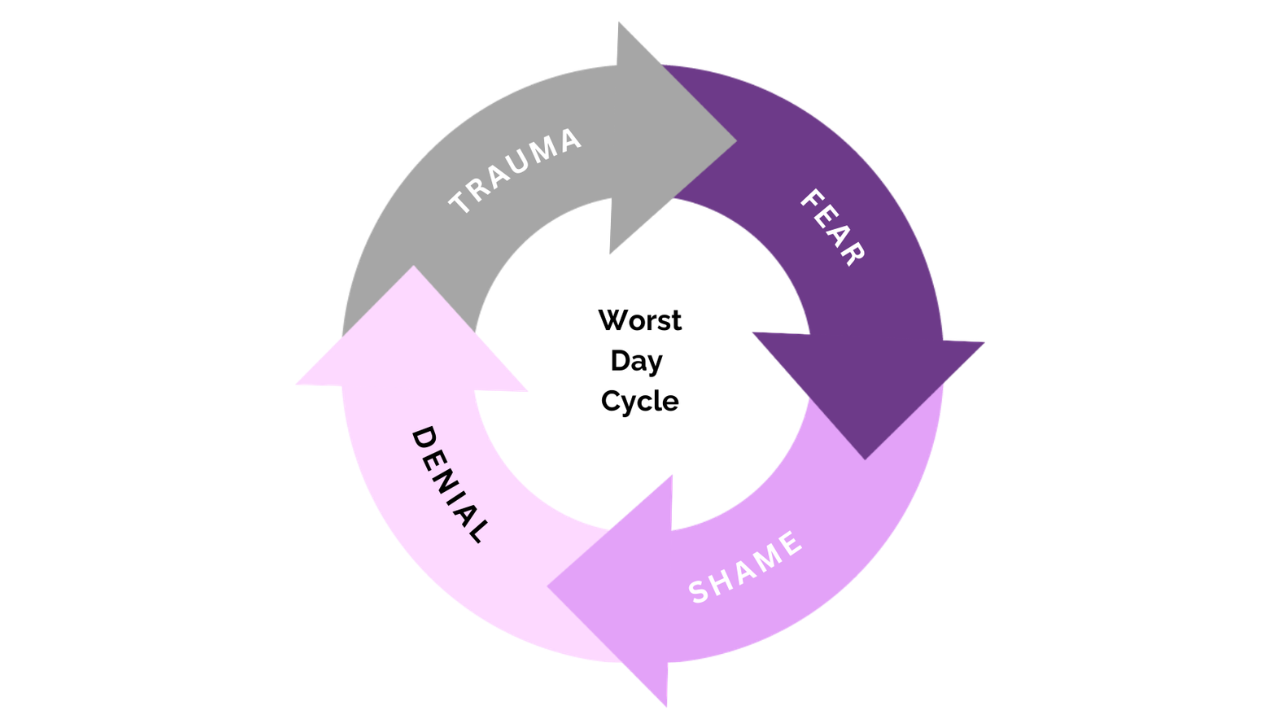
    Worst Day Cycle showing trauma fear shame denial loop that creates abandonment anxiety

    The Worst Day Cycle™: Why Your Brain Keeps Repeating the Pattern

    To understand why abandonment anxiety has been running your relationships for years — maybe decades — you need to understand the Worst Day Cycle™. This is the cycle that explains why the brain and body keep repeating painful patterns long after the original event is over.

    The Worst Day Cycle™ has four stages: Trauma → Fear → Shame → Denial.

    Trauma is any negative emotional experience that created painful meanings. For abandonment anxiety, the trauma doesn’t have to be a parent walking out. It could be emotional unavailability, unpredictability, a household where you never knew which version of your parent would come home, or the quiet devastation of being physically present with a caregiver who was emotionally absent. That experience triggered a massive chemical reaction in the brain and body. The hypothalamus generated chemical cocktails of cortisol, adrenaline, dopamine, and oxytocin misfires — and the brain became addicted to these emotional states.

    Fear drives the repetition. The brain conserves energy by repeating known patterns. It can’t tell right from wrong — only known from unknown. Since your childhood wired hypervigilance as “normal,” your brain treats scanning for abandonment as “safe” and relaxation in love as “dangerous.” Every time you panic when your partner doesn’t respond immediately, that’s your brain choosing the known pattern of fear over the unknown experience of secure attachment.

    Shame is where you lost your inherent worth. “I am the problem.” When your need for consistent attachment was unmet in childhood — when a parent left, checked out, or made love conditional — you didn’t conclude “my parents couldn’t handle this.” You concluded “something is wrong with me that makes people leave.” That shame went underground. And now it runs your inner monologue in every relationship.

    Denial is the survival persona you created to survive the pain. It was brilliant in childhood — it kept you alive. But in adulthood, it’s the thing telling you “I just need more reassurance” or “I’m just a sensitive person” or “I need to find someone who won’t trigger me.” Denial keeps you from looking at what’s actually underneath the anxiety, because looking at it means feeling the original pain of being a child who couldn’t make their parent stay.

    That’s you if you’ve blamed every partner for your anxiety instead of tracing it back to the childhood wound that created it. That’s you if the idea of looking at your childhood makes your chest tighten — because the survival persona knows that looking at the truth means the denial can’t hold.
    adapted wounded child survival persona oscillating between anxious clinging and emotional withdrawal

    Three Survival Personas That Keep Abandonment Anxiety Alive

    The denial stage of the Worst Day Cycle™ doesn’t look the same for everyone. It shows up as one of three survival personas — patterns that were created in childhood to manage the overwhelming pain of abandonment. Each one keeps the anxiety running in a different way.

    The Falsely Empowered Survival Persona

    This person controls, dominates, and rages. They don’t look anxious — they look bulletproof. But underneath the armor is a terror of abandonment so deep that they built an entire identity to make sure they never feel it. They leave before they can be left. They push people away before people can pull away. They control every variable in a relationship — because if they’re in control, abandonment can’t happen. Their anxiety is invisible because they converted it into aggression.

    That’s you if you’ve ended relationships the moment they got real — because closeness means vulnerability and vulnerability means someone has the power to leave you.

    The Disempowered Survival Persona

    This person collapses and people-pleases. Their abandonment anxiety is visible — they cling, pursue, apologize constantly, and give themselves away. They go against their own morals, values, needs, and wants to keep the peace and maintain connection. Their body is in constant freeze or fawn mode. They cannot tolerate space, silence, or distance — because in childhood, space meant someone was about to disappear.

    That’s you if you’ve stayed in relationships that were destroying you because leaving felt more terrifying than staying — because at least if they’re here, even if they’re hurting you, you’re not alone.

    The Adapted Wounded Child

    This person oscillates between both — sometimes pushing away in false independence, sometimes collapsing into desperate pursuit. They can be calm and secure in one moment and spiraling in the next. The pattern shifts based on which survival strategy feels safest in the moment. Their nervous system is the most dysregulated because it’s constantly switching between fight and freeze — between “I don’t need anyone” and “please don’t leave me.”

    That’s you if your partner has said “I never know which version of you I’m going to get” — and neither do you, because the survival persona changes based on how threatened the abandonment wound feels in any given moment.
    Emotional Authenticity Method six steps to heal abandonment anxiety at the root

    The Emotional Authenticity Method™: How to Actually Heal the Wound

    Telling yourself “they’re not going to leave” doesn’t work when your entire emotional system is organized around the belief that everyone leaves. Reassurance bounces off a shame wound like rain off concrete — because you cannot change emotional patterns through thoughts alone. Emotions are biochemical events. Thoughts originate from feelings.

    You cannot heal abandonment anxiety through reassurance, communication tools, or attachment theory worksheets — because the pattern is biochemical, not cognitive, and it will persist until the original emotional wound is addressed at the body level where it has been stored since childhood.

    The Emotional Authenticity Method™ is a six-step process designed to trace the anxious response back to its source and rewire the emotional pattern at the root.

    Step 1: Somatic Down-Regulation. The moment abandonment anxiety spikes — when they don’t text back, when they mention needing space, when a friend cancels plans — focus on what you can hear for 15 to 30 seconds. Not what you’re thinking — what you can actually hear in the room right now. This engages your auditory system and interrupts the shame spiral before it takes over. If you’re highly dysregulated, use titration — go back and forth between the distressing sensation and the neutral auditory focus until the intensity drops.

    Step 2: What am I feeling right now? Not “I think they’re pulling away” — that’s a thought, not a feeling. Use a feelings wheel and get precise. Terrified? Panicked? Ashamed? Furious? Use emotional granularity — expand your vocabulary beyond “anxious” or “worried.” The more precisely you can name the feeling, the more power you have over it.

    Step 3: Where in my body do I feel it? Chest tightening? Stomach dropping? Throat closing? Hands shaking? All emotional trauma is stored physically in the body — your body has been holding this abandonment wound for you, waiting for you to notice.

    Step 4: What is my earliest memory of having this exact feeling? Most people first remember something recent — a partner pulling away, a friend not calling back, a boss being distant. Write it down. Then ask: what’s my next memory before that? And before that? Keep tracing it back. Eventually you’ll arrive at a moment in childhood: standing at the school pickup line, waiting in your room for a parent who never came to check on you, watching a suitcase go out the door. Some people don’t remember a specific event — they just remember a feeling in the house. A feeling of not being enough to make someone stay. That’s enough.

    Step 5: Who would I be if I never had this thought or feeling again? What would be left over? This is the vision step. It moves you from the Worst Day Cycle™ into the Authentic Self Cycle™. For the first time, you’re imagining an identity that isn’t organized around preventing abandonment — an identity that can experience space without terror and closeness without desperation.

    Step 6: Feelization. This is the most important step. Sit in the feeling of your Authentic Self and make it strong. Create a new emotional chemical pattern to replace the old blueprint. Ask yourself: How would I respond to this situation from this feeling? What would I say? What would I do? Visualize and FEEL yourself operating from your Authentic Self — receiving a delayed text without spiraling, allowing your partner space without panic, trusting that someone can leave the room and still come back. This isn’t visualization — it’s Feelization. You’re creating a new biochemical addiction to replace the one your trauma installed. This is the emotional blueprint remapping and rewiring step.

    That’s you if you’ve read every book on attachment theory and nothing changed. That’s you if you’re ready to stop managing the symptom and start healing the cause.
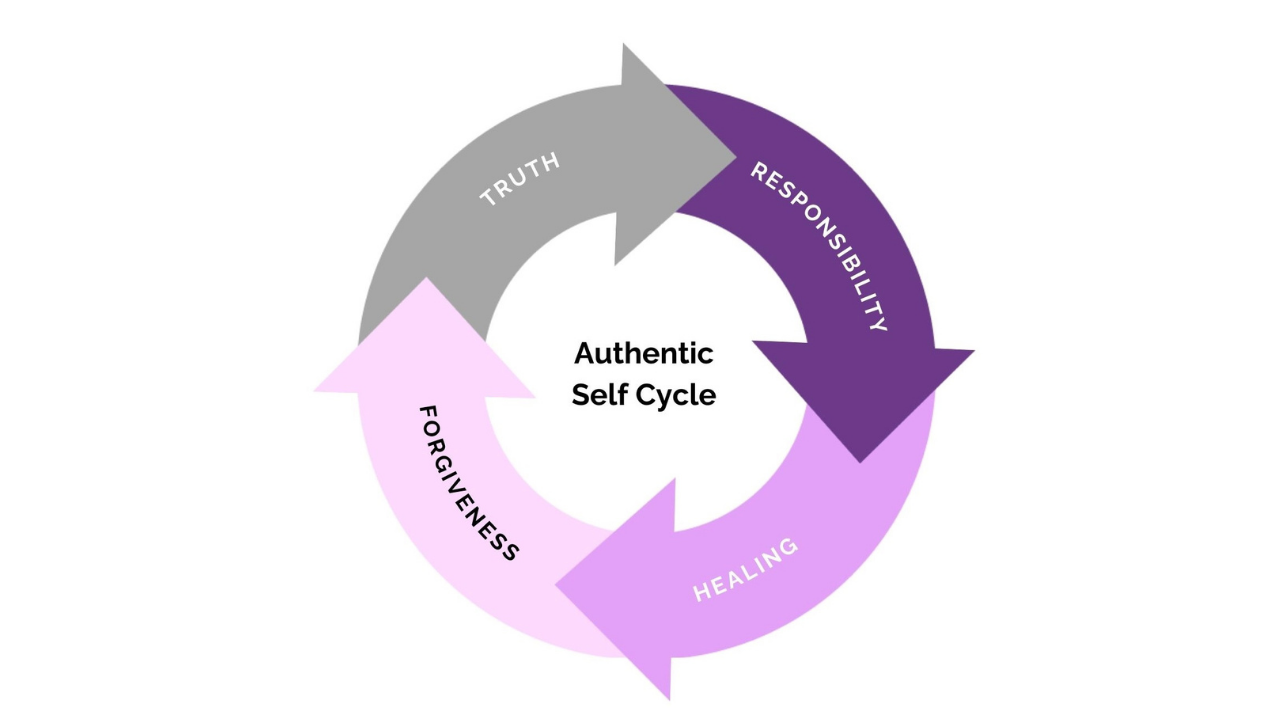
    Authentic Self Cycle for healing abandonment anxiety and building secure attachment

    The Authentic Self Cycle™: Replacing Anxiety With Secure Attachment

    The Worst Day Cycle™ explains why you’re stuck in the loop. The Authentic Self Cycle™ is how you get unstuck. It’s the healing counterpart — an identity restoration system with four stages: Truth → Responsibility → Healing → Forgiveness.

    Truth: Name the blueprint. See that “this isn’t about today.” Your abandonment anxiety isn’t about this partner, this friendship, or this situation. It’s about a childhood where your need for consistent, unconditional attachment wasn’t met — and the meaning you made from that absence. Naming the pattern takes away its invisible power.

    Responsibility: Own your emotional reactions without blame. “My partner isn’t my parent — my nervous system just thinks they are.” The person asking for space isn’t abandoning you. Your childhood blueprint is interpreting everything through the lens of the original wound. Responsibility means you stop waiting for someone to prove they won’t leave and start looking at why you need them to.

    Healing: Rewire the emotional blueprint so that space becomes uncomfortable but not dangerous, so that someone going quiet doesn’t trigger a shame spiral, so that closeness doesn’t require constant monitoring to feel safe. The brain learns new patterns. The chemistry changes. The hypervigilance loosens its grip.

    Forgiveness: Release the inherited emotional blueprint and reclaim your Authentic Self. This doesn’t mean forgiving the parents who installed the wound. It means releasing the chemical pattern your body has been running on autopilot. You had no shot because of the way you were raised. You’re not bad, you’re not stupid — you were trained. Forgiveness creates a new emotional chemical pattern that replaces fear, shame, and denial with presence, worth, and trust.

    That’s you if you’re exhausted from a lifetime of trying to keep people close enough to feel safe — and it’s never enough. That’s you if you’re ready to find out what love feels like when it isn’t fueled by fear.
    enmeshment pattern showing how abandonment anxiety creates codependent attachment in relationships

    The Deepest Betrayal: How You Abandon Yourself

    Here is the part nobody talks about. While you’re terrified of other people abandoning you, you are abandoning yourself every single day. Every time you say yes when you mean no. Every time you suppress what you actually feel to keep someone comfortable. Every time you go against your own morals, values, needs, and wants to maintain a connection — you are the one doing the abandoning.

    It’s really hard to set boundaries when you’re so deeply afraid of being abandoned and left alone — afraid you’ll have nobody. But here’s what the pattern reveals every single time: one, it never works. You never get the closeness, attachment, or recognition you’re chasing. And two, something worse happens. You abandon yourself. And that’s what creates the deepest shame.

    Self-abandonment is the deepest betrayal — committed not by the people who leave, but by you against yourself. It’s bad enough that the other person won’t acknowledge you. But when you stop acknowledging yourself — when you betray your own needs to chase connection that never comes — you become your own perpetrator.

    Every people-pleasing move does two harms: others still don’t show up the way you need them to, and you betray yourself in the process. The abandonment you fear from others is already happening — from you, to you, every day.

    That’s you if you’ve given everything to someone and felt emptier than when you started. That’s you if the angriest you’ve ever been was at yourself — for knowing better and doing it anyway. That’s you if the voice that says “something is wrong with me” gets loudest after you abandon yourself for someone who didn’t ask you to.

    Recognizing the self-abandonment pattern is actually the first step toward healing. The real victory isn’t getting the other person to do the right thing. The real victory is: “I don’t pick it up. I don’t abandon me.” When you stop abandoning yourself — when you start choosing your own truth, your own needs, your own worth — the desperate need for external validation begins to quiet. Not because someone finally proved they’d stay, but because you finally proved that you would.
    reparenting yourself to build secure attachment and stop abandonment anxiety
    trauma gut versus authentic gut showing how abandonment anxiety distorts intuition

    FAQ: Abandonment Anxiety and Fear of Rejection

    Is abandonment anxiety the same as anxious attachment?

    Abandonment anxiety and anxious attachment overlap significantly, but anxious attachment is a description of the pattern while abandonment anxiety reveals the cause. Attachment theory maps the behavior — the clinging, the pursuit, the hypervigilance. The Worst Day Cycle™ explains why the behavior exists: childhood trauma created a shame wound that says “I am not enough to keep someone here,” and the brain became addicted to the chemical cocktail of fear that drives the pattern. Healing doesn’t come from learning to “act more secure.” It comes from tracing the anxiety back to the childhood origin and rewiring the emotional blueprint at the body level through a process like the Emotional Authenticity Method™.

    Why does abandonment anxiety get worse in good relationships?

    Because the brain treats unfamiliar experiences as dangerous — and for someone with an abandonment wound, consistent love is unfamiliar. Your nervous system was wired for unpredictability, not safety. When a partner shows up reliably, the brain panics: “This isn’t what I know. Something must be wrong. They must be about to leave.” Good relationships expose the wound instead of confirming it, which makes the survival persona work harder to protect you from the very thing you want. This is why people sabotage loving relationships — the shame underneath says you don’t deserve them.

    Can abandonment anxiety cause physical symptoms?

    Absolutely. Abandonment anxiety is a chronic nervous system activation — your body is running a survival response that was designed for short-term emergencies, not decades of hypervigilance. The cortisol from constant scanning breaks down cells over time. Common physical symptoms include chest tightness, stomach problems, jaw clenching, insomnia, chronic fatigue, headaches, and autoimmune flare-ups. Your body has been absorbing the impact of this fear for years. A feelings wheel can help you connect the physical sensation to the emotional root.

    How do I stop being so clingy in relationships?

    The question itself reveals the shame wound — you’re framing your need for connection as a flaw rather than a wound. Clinginess is the disempowered survival persona’s response to abandonment terror. You’re not “too clingy” — your nervous system is replaying the childhood moment when attachment was threatened. Telling yourself to “stop being clingy” is like telling yourself to stop bleeding. The Authentic Self Cycle™ teaches you to name the pattern, own your reaction without shaming yourself for it, and heal the original wound so that closeness no longer requires desperation to feel safe.

    Is there a connection between childhood abandonment and codependence?

    Codependence is abandonment anxiety wearing a relational costume. When a child’s authentic self is rejected, abandoned, or conditionally accepted, they create a survival persona organized around managing other people’s emotions to prevent loss. That’s codependence — the systematic abandonment of self to maintain connection with others. The caretaking, the people-pleasing, the inability to say no — all of it is the child’s strategy for preventing the one thing that terrified them most: being left alone. Healing codependence requires healing the abandonment wound that created it, not just learning “better boundaries.”

    Will abandonment anxiety ever fully go away?

    The wound may always be part of your story, but it doesn’t have to run your life. Healing doesn’t mean the feeling never comes back — it means the feeling no longer hijacks your nervous system and dictates your behavior. Through the Emotional Authenticity Method™, you rewire the emotional blueprint so that when the anxiety surfaces, you can recognize it as the childhood echo it is, locate it in your body, trace it to its origin, and respond from your Authentic Self instead of your survival persona. The alarm still sounds occasionally — but you learn to hear it without obeying it.

    The Bottom Line

    Your abandonment anxiety is not a flaw. It’s not neediness. It’s not a personality trait you’re stuck with. It’s your nervous system running a program that was installed in childhood — a program that says “if I’m not perfect, if I’m not needed, if I stop performing, they will leave.”

    That program was brilliant when you were a child. It helped you survive a world where attachment was uncertain. But you’re not a child anymore. And the anxiety that once protected you is now the thing standing between you and the love you were meant to experience — including love for yourself.

    You can keep managing it — keep scanning, keep pursuing, keep accommodating. Or you can do the one thing the anxiety doesn’t want you to do: stop, feel what’s underneath, and trace it back to where it started.

    The anxiety will quiet when the abandonment wound gets heard. Not before.

    That’s you if something in this article landed — and the anxiety is already trying to convince you it doesn’t apply to you. That’s the survival persona doing its job. And you just caught it.

    Facing Codependence by Pia Mellody — the original framework for understanding how childhood abandonment creates adult relational patterns, including the loss of authentic self and the development of survival personas.

    When the Body Says No by Gabor Maté — the connection between suppressed emotions, abandonment anxiety, and physical illness, and why the body always tells the truth about what the mind refuses to feel.

    The Body Keeps the Score by Bessel van der Kolk — the foundational text on how trauma is stored physically in the body and why traditional talk therapy isn’t enough to heal abandonment wounds.

    Healing the Shame That Binds You by John Bradshaw — the definitive work on toxic shame, how it creates the survival persona, and what authentic healing from abandonment wounds requires.

    The Gifts of Imperfection by Brené Brown — how shame drives us to hide our authentic selves and what it takes to reclaim vulnerability as strength in the face of abandonment fear.

    Codependent No More by Melody Beattie — the classic guide to breaking the patterns of self-abandonment and people-pleasing that fuel chronic abandonment anxiety.

    Ready to Heal What’s Underneath the Anxiety?

    If this article found you, your abandonment wound has already done the hard part — it got your attention. Now it’s time to do the work that actually changes the pattern.

    Kenny Weiss’s courses at Greatness U give you the tools to trace the anxiety back to its source and build a new emotional blueprint:

    Emotional Blueprint Starter Course — Individual ($79) — Identify your survival persona and map the childhood blueprint driving your abandonment anxiety today.

    Relationship Starter Course — Couples ($79) — Understand how two abandonment wounds collide in a relationship and learn to create safety instead of survival.

    Why We Can’t Stop Hurting Each Other ($479) — A deep dive into the Worst Day Cycle™ and how trauma chemistry keeps two people locked in the pursuit-withdrawal dance of abandonment.

    Why High Achievers Fail at Love ($479) — For the person whose career works but whose relationships keep falling apart — this is why the abandonment wound sabotages your closest connections.

    The Shutdown Avoidant Partner ($479) — Understand the survival persona that runs from intimacy and learn what’s actually driving the withdrawal that triggers your abandonment fear.

    Tier 1: Mapping the Blueprint ($1,379) — The complete Emotional Authenticity Method™ with guided practice, community support, and direct access to the tools that rewire your emotional blueprint from the ground up.

    Related articles:
    The Signs of Enmeshment and How to Heal
    7 Signs of Insecurity in a Relationship
    Signs of High Self-Esteem (and What’s Actually Underneath)
    Negotiables and Non-Negotiables in Codependence Recovery
    10 Do’s and Don’ts for a Great Relationship
  • Chronic Stress Is a Trauma Response: Why You Can’t Stop Stress Until You Heal the Childhood Wound

    Chronic Stress Is a Trauma Response: Why You Can’t Stop Stress Until You Heal the Childhood Wound

    You’re lying in bed at 2 a.m. and your mind won’t stop. Tomorrow’s meeting. The email you forgot to send. The thing your partner said three days ago that you can’t shake. Your jaw is clenched, your shoulders are up by your ears, and your chest feels like someone parked a car on it. You tell yourself to relax — and the tension gets worse.

    You’ve tried the breathing apps. The meditation. The “just think positive” advice. None of it worked — because none of it touched the actual problem.

    Stress is not caused by your job, your bills, or your relationship. Stress is a fear response — and that fear was learned in childhood, stored in your body, and has been running your nervous system on autopilot ever since.

    The reason you can’t stop stress isn’t because you haven’t found the right technique. It’s because what you’re calling “stress” is actually unhealed childhood pain being triggered by present-day situations that remind your nervous system of the original wound. Your brain can’t tell the difference between your boss’s disapproving tone and your father’s disappointment when you were seven. It fires the same alarm, releases the same cortisol flood, and locks your body into the same survival state it learned decades ago.

    That’s you if you’ve tried everything to manage stress and nothing sticks. That’s you if the tension comes back no matter how many vacations you take, lists you make, or deep breaths you force. That’s you if you have a nagging sense that the stress isn’t really about what’s happening right now — it’s about something older, something deeper, something you can’t quite name.

    This isn’t about stress management. This is about understanding what stress actually is, where it actually comes from, and why your body won’t let it go until you trace it back to the source.

    emotional blueprint showing how childhood fear creates chronic stress patterns in adulthood

    What Stress Really Is (and Why Nobody Told You the Truth)

    The medical community treats stress like a mechanical problem — as if your body is a car engine that needs its spark plugs changed. They prescribe pills, breathing exercises, and relaxation techniques. And none of it works for long — because they’re treating the symptom while the cause runs unchecked underneath.

    When we are stressed, we are in fear. Stress is not an external condition — it is an internal emotional response rooted in childhood experiences that have never been addressed, and the unhealed pain from those experiences is being relived in the present moment.

    Think about that. Every time your chest tightens before a meeting, every time your stomach knots when your phone rings, every time your jaw clenches during a conversation with your mother — that isn’t the present moment causing the reaction. It’s your nervous system time-traveling back to childhood and firing the same alarm it learned when you were five, seven, ten years old.

    That’s you if you get “stressed” when your partner comes home in a bad mood — and the feeling is way bigger than the situation warrants. That’s you if a grumpy tone from someone at work can ruin your entire day. That’s you if certain situations make you feel like a helpless child even though you’re a competent adult.

    Here’s what your doctor, your therapist, and every stress-management article on the internet isn’t telling you: you cannot change emotional patterns through thoughts alone. Emotions are biochemical events. Thoughts originate from feelings. The stress you’re trying to think your way out of is a chemical flood that was installed in your body before you had words for it — and no amount of positive thinking will override a nervous system that learned fear as its first language.

    trauma chemistry diagram showing cortisol and stress hormones from childhood fear responses

    Where Your Stress Actually Comes From

    Stress doesn’t appear out of nowhere in adulthood. It was learned in childhood — during the moments when your emotional experience overwhelmed your capacity to process it.

    Trauma is any negative emotional event you experienced as a child that you didn’t have the tools, support, or safety to process. It doesn’t have to be dramatic abuse. It can be a parent who came home from work distant and disinterested. A teacher who shamed you for the wrong answer. A household where mistakes were punished and emotions were inconvenient. A caregiver who was physically present but emotionally checked out — buried in work, screens, or their own life stress. Being the child who had to break up arguments between parents and keep the peace while the adults lost it. Being shamed around your morals, values, grades, body, or choices.

    Every one of those seemingly insignificant moments wasn’t insignificant. Each one taught your body fear — and that fear is what you now call stress.

    When those moments overwhelmed a child’s ability to cope, the brain didn’t file them away neatly. The hypothalamus generated chemical cocktails — cortisol, adrenaline, dopamine misfires, oxytocin disruptions — and the brain became addicted to these emotional states. The nervous system entered fight, flight, freeze, or fawn. And those responses became your automatic emotional programming.

    That’s you if fight looks like anger, irritability, and defensiveness in your daily life. That’s you if flight looks like overthinking, perfectionism, and workaholism. That’s you if freeze looks like shutdown, numbness, and emotional paralysis. That’s you if fawn looks like people-pleasing, caretaking, and giving yourself away.

    Your husband or wife walks in the door grumpy and disinterested. You say hello. They’re nonchalant, distant. Suddenly your chest tightens. You feel “stressed.” But it isn’t about this moment. Most likely, as a child, you had a mother or father come home from work looking exactly the same — and it felt like rejection. That childhood feeling is what’s causing the stress. Your nervous system is not responding to the present. It is responding to the unprocessed trauma stored in the past.

    That’s you if certain people’s moods control your entire emotional state — and you don’t know why. That’s you if you can’t relax in your own home because you’re always scanning for danger that isn’t there.

    emotional regulation showing how childhood stress responses persist into adult chronic stress

    The Brain Chemistry That Keeps You Stuck in Stress

    Here’s the part that changes everything: the brain conserves energy by repeating known patterns. It can’t tell right from wrong — only known from unknown. Since 70% or more of childhood messaging is negative and shaming, the brain treats stress as “normal” and calm as “dangerous.”

    When you were a child and trauma happened, your brain created a chemical blueprint. Cortisol flooded your system. Adrenaline spiked. Your emotional thermostat got set to approximately 105 degrees — flooded, on high alert, unable to think clearly. And because the brain conserves energy by predicting and repeating, it locked that thermostat in place.

    Trauma turns the nervous system into a time machine. Every emotional trigger is the nervous system reliving a moment it never completed — and the stress you feel today is your body trying to finish processing pain that started in childhood.

    This is why stress feels so disproportionate. Your colleague gives you mild feedback and your body reacts like you’ve been attacked. Your partner asks for space and your nervous system screams abandonment. A minor setback at work triggers a shame spiral that lasts for days. The reaction doesn’t match the present because the reaction isn’t about the present. It’s about the original wound — the dinner table where you were six and something was fundamentally wrong and you couldn’t fix it.

    That’s you if your emotional reactions are always too big for the situation. That’s you if you’ve been told you’re “overreacting” — and the painful truth is that the reaction is real, it’s just not about what everyone thinks it’s about.

    The brain doesn’t just repeat the pattern — it seeks it. It looks for the familiar, not the healthy. That’s why you end up in the same kinds of stressful relationships, the same kinds of overwhelming jobs, the same kinds of impossible standards. Your brain is not broken. It’s doing exactly what it was programmed to do in childhood. And it will keep doing it until the original emotional blueprint gets addressed.

    myelin neural pathways showing how stress patterns become hardwired through repetition

    How Chronic Stress Shows Up in Every Area of Life

    Stress doesn’t stay contained. The childhood emotional blueprint that created it touches everything — because the fear underneath it runs every system in your body and every relationship in your life.

    Family

    You walk into your parents’ house and your body changes before anyone says a word. Your shoulders tighten. Your voice gets smaller. You become the child you were in that house — hypervigilant, scanning the room for emotional landmines, adjusting yourself to manage everyone else’s mood. The “stress” you feel around family isn’t about the holiday dinner. It’s your nervous system firing the same alarm it learned in that exact house decades ago.

    That’s you if you spend days dreading family events — and hours recovering from them. That’s you if your body carries tension for days after a phone call with your mother.

    Romantic Relationships

    Your partner’s silence feels like punishment. Their independence feels like rejection. A small disagreement activates a fear so deep it feels like the relationship is ending. You either cling harder or shut down completely — because your childhood blueprint taught you that love is conditional, that closeness is dangerous, and that someone will always leave. The stress in your relationship isn’t about the dishes or the text they didn’t return. It’s about a six-year-old who learned that connection means pain.

    That’s you if you can’t have a disagreement without your body going into full survival mode. That’s you if your partner’s bad day becomes your emotional emergency.

    Friendships

    You overfunction — always the one who plans, listens, holds everyone together. You never share what’s really going on because vulnerability feels like an invitation to be abandoned. The “stress” of friendship isn’t about busy schedules. It’s about the terror that if people saw the real you — the messy, overwhelmed, sometimes falling-apart you — they’d leave.

    That’s you if you’ve built a reputation for being the strong one — and the loneliest part is that everyone believes it.

    Work and Career

    You overprepare for meetings. You rewrite emails five times. You take on more than you can handle because saying no triggers a fear of rejection so primal it overrides your logic. The stress at work isn’t about deadlines. It’s your childhood blueprint for “mistakes equal punishment” running your professional identity. Your boss isn’t your parent — but your nervous system doesn’t know that.

    That’s you if you work twice as hard as everyone else and still feel like you’re about to be exposed. That’s you if a single piece of criticism can unravel weeks of confidence.

    Body and Health

    Every chronic stress pattern is the body’s attempt to communicate an emotional wound that has never been heard — and when that wound goes unaddressed, it doesn’t just stay emotional. It becomes physical.

    The cortisol from chronic fear breaks down cells over time. The tight jaw, the stomach problems, the headaches, the insomnia, the autoimmune flares — your body has been absorbing the impact of unhealed childhood pain for years. The stress isn’t just mental. It’s destroying you physically because the body keeps the score even when the mind tries to forget.

    That’s you if your body carries pain that no doctor can explain. That’s you if the stress lives in your chest, your gut, your back — and relaxation techniques never reach it.

    Worst Day Cycle diagram showing trauma fear shame denial loop driving chronic stress

    The Worst Day Cycle™: Why Your Brain Replays the Same Stress Pattern

    To understand why stress has been running your life — why it keeps coming back no matter what you do — you need to understand the Worst Day Cycle™. This is the cycle that explains why the brain and body repeat painful emotional patterns long after the original event is over.

    The Worst Day Cycle™ has four stages: Trauma → Fear → Shame → Denial.

    Trauma is any negative emotional experience that created painful meanings. It doesn’t have to be a dramatic event. It could be the constant pressure to perform. A parent who was emotionally unavailable. A household where feelings were inconvenient. Whatever the experience, it triggered a massive chemical reaction in the brain and body. The hypothalamus generated chemical cocktails of cortisol, adrenaline, dopamine, and oxytocin misfires — and the brain became addicted to these emotional states.

    Fear drives the repetition. The brain conserves energy by repeating known patterns. It can’t tell right from wrong — only known from unknown. Since the majority of childhood messaging is negative and shaming, your brain learned that stress is “safe” and peace is “dangerous.” Every time you feel that familiar knot of anxiety before a conversation, that’s your brain choosing the known pattern of fear over the unknown possibility of safety.

    Shame is where you lost your inherent worth. When your authentic self was rejected in childhood — when emotions were dismissed, mistakes were punished, or love was conditional — you didn’t conclude “my parents couldn’t handle this.” You concluded “I am the problem.” That shame went underground. And now it powers the stress response from beneath every anxious thought.

    Denial is the survival persona you created to survive the pain. It was brilliant in childhood — it kept you alive. But in adulthood, it’s the voice telling you “I’m just a high-strung person” or “I work better under pressure” or “Everyone is stressed, it’s normal.” Denial keeps you from looking at what’s actually underneath the stress, because looking at it means feeling the original pain.

    That’s you if you’ve normalized your stress as “just who I am.” That’s you if the idea of being calm — genuinely calm, not performing calm — feels foreign and unsafe. That’s you if you’ve confused being stressed with being responsible.

    three survival persona types that keep people trapped in chronic stress cycles

    Three Survival Personas That Keep You Trapped in Stress

    The denial stage of the Worst Day Cycle™ doesn’t look the same for everyone. It shows up as one of three survival personas — patterns created in childhood to manage overwhelming pain. Each one keeps stress running in a different way.

    The Falsely Empowered Survival Persona

    This person controls, dominates, and rages. They don’t look stressed — they look bulletproof. They power through deadlines, crush goals, and never admit they’re overwhelmed. But underneath the productivity is a terror of being exposed. They stay in their head, dismiss emotions as “silly,” and bury themselves in work because sitting still means feeling the shame underneath. Their stress is so deep that they built an entire identity — the overachiever, the workaholic, the one who “thrives under pressure” — to make sure nobody, including themselves, ever sees it.

    That’s you if you respond to stress by working harder, getting louder, or proving people wrong — and the exhaustion is still there when the applause stops.

    The Disempowered Survival Persona

    This person collapses and people-pleases. Their stress is visible — they apologize constantly, defer to others, and can’t make a decision without asking five people first. They give themselves away, going against their own morals, values, needs, and wants to keep the peace. Their body lives in constant freeze or fawn. They absorb everyone else’s emotions because in childhood, having boundaries was dangerous.

    That’s you if your first response to stress is to ask someone else what you should do — because trusting yourself feels impossible. That’s you if other people’s moods become your responsibility.

    The Adapted Wounded Child

    This person oscillates between both — sometimes overcompensating with false control, sometimes collapsing into paralysis. They can lead a meeting at nine and spiral into shutdown by noon. Their nervous system is the most dysregulated because it’s constantly switching between fight and freeze — between “I’ll power through this” and “I can’t handle anything.” They never know which version of themselves is going to show up, and that unpredictability creates its own layer of stress.

    That’s you if your stress response depends entirely on the room you’re in and the people you’re with. That’s you if you feel like you’re always one bad moment away from falling apart.

    adapted wounded child survival persona oscillating between stress responses
    Emotional Authenticity Method six steps to heal the root cause of chronic stress

    The Emotional Authenticity Method™: How to Actually Stop the Stress Cycle

    Breathing exercises don’t work on stress because they’re treating a chemical flood with a mechanical fix. Meditation doesn’t reach it because you’re trying to quiet a mind that’s running a body-level alarm. Affirmations bounce off it because you cannot override biochemistry with words.

    You cannot heal chronic stress through relaxation techniques, coping skills, or stress management — because the pattern is biochemical, not situational, and it will persist until the original emotional wound is addressed at the body level where it lives.

    The Emotional Authenticity Method™ is a six-step process designed to trace the stress response back to its childhood source and rewire the emotional pattern at the root.

    Step 1: Somatic Down-Regulation. The moment stress spikes — before a meeting, during a conflict, in the middle of the night — stop everything and focus on what you can hear for 15 to 30 seconds. Not what you’re thinking — what you can actually hear through your ears right now. This activates your anterior prefrontal cortex and engages metacognition — the space between thought and feeling, the highest form of intellect. It brings your prefrontal cortex back online so you can investigate your emotional landscape from your Authentic Self rather than your survival persona. If you’re highly dysregulated, use titration — alternate between 30 seconds of listening and 30 seconds of bringing the trigger back up, three to five times, until your emotional thermostat drops from 105 back toward 98.6.

    Step 2: What am I feeling right now? Not “I’m stressed” — that’s a label, not a feeling. Use a feelings wheel and get precise. Terrified? Ashamed? Furious? Overwhelmed? Rejected? Powerless? Use emotional granularity — expand your vocabulary beyond “stressed” and “anxious.” The more precisely you can name the feeling, the more power you have over it.

    Step 3: Where in my body do I feel it? Chest tightness? Stomach knot? Throat closing? Jaw clenching? Shoulders locked? All emotional trauma is stored physically in the body — your body has been holding this for you, waiting for you to notice.

    Step 4: What is my earliest memory of having this exact feeling? Most people first remember something recent — a bad day at work, an argument, a deadline. Write it down. Then ask: what’s my next memory before that? And before that? Keep tracing it back. Eventually you’ll arrive at a moment in childhood: “That’s where I first learned this feeling.” Some people don’t remember a specific event — they just remember a feeling in the house. That’s enough.

    Step 5: Who would I be if I never had this thought or feeling again? What would be left over? This is the vision step. It moves you from the Worst Day Cycle™ into the Authentic Self Cycle™. For the first time, you’re imagining an identity that isn’t organized around stress, fear, and survival.

    Step 6: Feelization. This is the most important step. Sit in the feeling of your Authentic Self and make it strong. Create a new emotional chemical pattern to replace the old blueprint. Ask yourself: How would I respond to this situation from this feeling? What would I say? What would I do? Visualize and FEEL yourself operating from calm, from worth, from presence — making the decision without the cortisol spike, having the conversation without the chest tightness, sitting in stillness without the terror. This isn’t visualization — it’s Feelization. You’re creating a new biochemical pattern to replace the one your trauma installed. This is the emotional blueprint remapping and rewiring step.

    That’s you if you’ve tried every stress management technique and nothing lasted. That’s you if you’re ready to stop managing the symptom and start healing what’s actually causing it.

    Authentic Self Cycle replacing chronic stress with emotional freedom and healing

    The Authentic Self Cycle™: Replacing Stress With Emotional Freedom

    The Worst Day Cycle™ explains why you’re stuck in stress. The Authentic Self Cycle™ is how you get unstuck. It’s the healing counterpart — an identity restoration system with four stages: Truth → Responsibility → Healing → Forgiveness.

    Truth: Name the blueprint. See that “this isn’t about today.” Your stress isn’t about the deadline, the relationship, or the decision in front of you. It’s about a childhood where overwhelming emotions were never processed and your nervous system learned that the world is dangerous. Naming the pattern takes away its invisible power.

    Responsibility: Own your emotional reactions without blame. “My boss isn’t my parent — my nervous system just thinks they are.” The person who raised their voice in the meeting isn’t attacking your worth. Your childhood blueprint is interpreting everything through the lens of the original wound. Responsibility means you stop waiting for external circumstances to change and start addressing the internal pattern that creates the stress regardless of circumstances.

    Healing: Rewire the emotional blueprint so that challenges become uncomfortable but not dangerous. So that uncertainty doesn’t trigger a cortisol flood. So that stillness — actual stillness — feels safe instead of terrifying. The brain learns new patterns. The chemistry changes. The automatic stress response loses its grip.

    Forgiveness: Release the inherited emotional blueprint and reclaim your Authentic Self. This doesn’t mean forgiving the people who installed the fear. It means releasing the chemical pattern your body has been running on autopilot. Forgiveness creates a new emotional chemical pattern that replaces fear, shame, and denial with presence, worth, and truth.

    That’s you if you’re exhausted from a lifetime of being “stressed” and managing something that was never yours to carry. That’s you if you’re ready to find out what life feels like without the constant alarm.

    metacognition creating space between thought and feeling to interrupt stress cycles

    Why Stress Management Always Fails

    The entire stress management industry is built on a lie: that stress is caused by external circumstances and can be fixed with techniques. Take a bath. Go for a walk. Practice gratitude. Breathe in for four, hold for seven, out for eight.

    None of it addresses the fact that stress is an emotional condition rooted in childhood fear that has never been healed. You can’t breathe your way out of a nervous system that’s been running a survival program for thirty years. You can’t journal your way out of a chemical blueprint that was installed before you could write.

    Coping skills fail because coping is, by definition, managing a problem instead of solving it. Every coping skill is a Band-Aid on a wound that needs surgery. The moment you stop coping — the moment the vacation ends, the meditation timer goes off, the glass of wine wears off — the stress comes roaring back. Because the source never changed.

    That’s you if you’ve built an elaborate stress-management routine that requires constant maintenance just to function. That’s you if you secretly know that all the techniques are just keeping the lid on something you’ve never been willing to open.

    The medical community hasn’t told you the truth because medical schools provide almost no training on trauma or emotions. They’re trained to treat the body like a machine. That works for a broken arm. But when it comes to stress — which is fear, which is an emotional condition — prescribing medication is like a car being out of gas and the mechanic changing the spark plugs. The prescription you actually need isn’t a pill. It’s emotional authenticity.

    emotional fitness as the real solution to chronic stress instead of stress management
    reparenting yourself to build a new emotional foundation free from chronic stress

    FAQ: Chronic Stress and Childhood Trauma

    Is chronic stress a sign of unhealed childhood trauma?

    Yes. Chronic stress that persists regardless of external circumstances is almost always rooted in unhealed childhood emotional experiences. When a child’s authentic self is rejected, dismissed, or conditionally loved, the brain creates a chemical blueprint organized around fear. That blueprint becomes the default setting for the nervous system — so the adult experiences persistent “stress” even when the present circumstances don’t warrant it. The stress isn’t about today. It’s about an emotional wound that started in childhood and has never been processed at the body level where it lives.

    Why do relaxation techniques and coping skills only work temporarily?

    Because they address the symptom, not the cause. Relaxation techniques work on the surface level of the nervous system — they temporarily lower cortisol and create a sense of calm. But the underlying emotional blueprint hasn’t changed. The moment the technique stops, the default programming kicks back in and the stress returns. Coping is by definition managing a problem rather than solving it. Real change requires tracing the stress response back to its childhood origin and rewiring the biochemical pattern through a process like the Emotional Authenticity Method™.

    Can stress be inherited from parents?

    Absolutely. Stress patterns are passed from generation to generation through emotional blueprints. A parent who never healed their own childhood trauma will unconsciously pass that fear, shame, and denial to their children — not through genetics, but through the emotional environment they create. A terrible thing happens when fear meets fear: when a parent’s unhealed fear collides with a child’s developing emotional system, the result is generational trauma transfer. The parent’s survival persona becomes the child’s emotional blueprint, and the Worst Day Cycle™ repeats across generations.

    What is the difference between stress and anxiety?

    In conventional terms, stress is considered a response to external pressures and anxiety is considered a more persistent internal state. But at the root level, both are the same thing: fear learned in childhood running the nervous system on autopilot. Whether you call it stress, anxiety, panic, or overwhelm — the source is a childhood emotional blueprint that taught your body that the world is dangerous. The labels change but the wound underneath is identical. Healing one heals the other because they share the same origin.

    Why do high achievers experience more stress, not less?

    Because achievement is often shame in disguise. The most paradoxical aspect of shame is that it is the core motivator of the super-achiever. High achievers use self-loathing as fuel — chasing success so they never have to sit still and feel the original wound of no worth. They become human doings instead of human beings. The more they achieve, the higher the stakes, and the louder the inner voice that says “it’s still not enough.” Success doesn’t cure stress because the stress was never about what they have or haven’t accomplished. It’s about a childhood wound that said “who you are isn’t enough” — and no amount of achievement can heal that.

    How long does it take to rewire a stress response from childhood?

    The honest answer is that it varies — because the depth and duration of the childhood wounding varies. But the process isn’t about “fixing” something broken. It’s about creating a new emotional chemical pattern to replace the old one. Each time you practice the Emotional Authenticity Method™ — each time you trace a stress response back to its origin, feel what’s underneath it, and practice Feelization from your Authentic Self — you are literally building new neural pathways. The brain learns new patterns at any age. The key is that healing happens at the feeling level, not the thinking level. A feelings wheel is a better starting tool than any stress-management app.

    The Bottom Line

    Your stress is not a character flaw. It’s not a sign that you can’t handle life. It’s not something you need to manage better, cope with harder, or medicate away. Your stress is your nervous system running a program that was installed in childhood — a program that says “the world is dangerous and I am not safe.”

    That program was brilliant when you were a child. It kept you alive. It helped you navigate a world where overwhelming emotions had nowhere to go. But you’re not a child anymore. And the stress that once protected you is now the thing standing between you and the life you were designed to live.

    You can keep managing it — keep breathing, keep coping, keep white-knuckling your way through another day. Or you can do the one thing the stress doesn’t want you to do: stop, feel what’s underneath, and trace it back to where it started.

    The stress will quiet when the fear gets heard. Not before.

    That’s you if something in this article landed — and the old programming is already trying to talk you out of believing it. That’s the survival persona doing its job. And you just caught it.

    When the Body Says No by Gabor Maté — the groundbreaking work on how suppressed emotions and chronic stress create physical illness, and why the body always tells the truth the mind tries to hide.

    The Body Keeps the Score by Bessel van der Kolk — the foundational text on how trauma is stored physically in the body and why traditional approaches to stress fail to reach the actual wound.

    Facing Codependence by Pia Mellody — the original framework for understanding how childhood experiences create the adult patterns of people-pleasing, overfunction, and self-abandonment that drive chronic stress.

    Healing the Shame That Binds You by John Bradshaw — the definitive work on toxic shame, how it creates the survival persona, and what it actually takes to heal the wound underneath the stress.

    The Gifts of Imperfection by Brené Brown — how shame drives us to hide behind perfectionism and performance, and what it takes to reclaim vulnerability as the path to genuine peace.

    Codependent No More by Melody Beattie — the classic guide to breaking the patterns of over-responsibility and self-abandonment that keep the body locked in a chronic stress state.

    Ready to Heal What’s Underneath the Stress?

    If this article found you, your stress has already done the hard part — it got your attention. Now it’s time to do the work that actually changes the pattern.

    Kenny Weiss’s courses at Greatness U give you the tools to trace the stress back to its childhood source and build a new emotional blueprint:

    Emotional Blueprint Starter Course — Individual ($79) — Identify your survival persona and map the childhood blueprint that’s driving your stress today.

    Relationship Starter Course — Couples ($79) — Understand how two fear blueprints collide in a relationship and learn to create safety together.

    Why We Can’t Stop Hurting Each Other ($479) — A deep dive into the Worst Day Cycle™ and how trauma chemistry keeps us stuck in painful patterns with the people we love.

    Why High Achievers Fail at Love ($479) — For the person whose career “works” but whose body and relationships are paying the price of chronic stress.

    The Shutdown Avoidant Partner ($479) — Understand the survival persona that shuts down under stress and learn what’s actually driving the withdrawal.

    Tier 1: Mapping the Blueprint ($1,379) — The complete Emotional Authenticity Method™ with guided practice, community support, and direct access to the tools that rewire your emotional blueprint from the ground up.

    Related articles:
    The Signs of Enmeshment and How to Heal
    7 Signs of Insecurity in a Relationship
    Signs of High Self-Esteem (and What’s Actually Underneath)
    Negotiables and Non-Negotiables in Codependence Recovery
    10 Do’s and Don’ts for a Great Relationship
  • How to Accept Your Imperfections: Why Perfectionism Is a Trauma Response

    How to Accept Your Imperfections: Why Perfectionism Is a Trauma Response

    Perfectionism is a trauma response — a survival strategy your brain built in childhood to earn love, stay safe, and avoid the shame of being seen as flawed. It is not discipline. It is not high standards. It is the desperate, exhausting, never-ending attempt to perform your way out of a core belief that was installed before you could spell your own name: “I am not enough as I am.” And until you understand where that belief came from, you will keep chasing perfection — and the void will keep growing.

    That’s you — the one who can accomplish extraordinary things and still feel like a fraud the moment you make a single mistake.

    The truth nobody tells you about perfectionism is this: your imperfections are not the problem. They are the doorway. In your imperfections lies your greatness — because self-esteem isn’t the ability to accept your perfection. It’s the ability to accept all the things you’re not good at and still know you have inherent worth.

    Perfectly imperfect icon showing that accepting imperfections is the foundation of self-love and self-esteem

    What Is Perfectionism and Why Is It a Trauma Response?

    Perfectionism is the compulsive need to appear flawless, perform flawlessly, and avoid any exposure of weakness, mistakes, or vulnerability. It masquerades as ambition. It hides behind phrases like “I just have high standards” and “I’m detail-oriented.” But underneath that performance is a terrified child who learned that love, safety, and acceptance were conditional — and the only way to earn them was to never, ever be imperfect.

    That’s you — rewriting the email seventeen times, rehearsing conversations in your head, and lying awake at night replaying the one thing you said wrong at dinner.

    Here’s what actually happened: in childhood, you received the message — through words, silence, expressions, or absence — that your worth depended on your performance. Maybe your parent praised you only when you got A’s. Maybe mistakes were met with rage, withdrawal, or cold silence. Maybe you were parentified — forced to be the responsible one, the competent one, the one who held the family together. And your brain, brilliant as it is, built a survival strategy: be perfect. Never let them see a crack.

    Perfectionism is the predictable outcome of childhood emotional trauma — the brain learns that flawlessness is the price of love, and it automates that pattern so completely that by adulthood, you genuinely believe your worth depends on your output.

    That’s you — not choosing perfectionism. Running on a program that was installed before you had any say in the matter.

    Emotional authenticity icon showing the path from perfectionism to accepting imperfections

    How the Worst Day Cycle™ Creates Perfectionism

    Perfectionism doesn’t come from nowhere. It follows a predictable neurochemical pattern called the Worst Day Cycle™. Understanding this cycle is the first step to breaking free from the exhausting chase for flawlessness.

    Worst Day Cycle diagram showing trauma fear shame denial loop that creates perfectionism

    The Worst Day Cycle™ has four stages: Trauma → Fear → Shame → Denial.

    Trauma: Any negative emotional experience in childhood that created painful meanings. It doesn’t have to be dramatic — it can be as subtle as a parent who withdrew love after a bad report card, or a household where emotions were treated as weakness. These experiences create a massive chemical reaction in the brain and body. The hypothalamus generates chemical cocktails — cortisol, adrenaline, dopamine, oxytocin misfires — and the brain becomes addicted to these emotional states.

    That’s you — feeling a spike of panic when you notice a typo in an email you already sent, because your nervous system learned that mistakes equal danger.

    Fear: Fear drives repetition. The brain conserves energy by repeating known patterns — it can’t tell right from wrong, only known from unknown. Since 70%+ of childhood messaging is negative and shaming, adults repeat these painful patterns in relationships, career, hobbies, health — everything. You keep perfecting, controlling, and performing because your nervous system is terrified of what happens when you stop.

    Shame: This is where you lost your inherent worth. “I am the problem.” Not “I made a mistake” — but “I AM the mistake.” This is the engine of perfectionism. Every time you demand flawlessness from yourself, you’re running from shame. Every time you hide a weakness, you’re confirming the belief that your imperfections make you unworthy. Shame says: “I did something wrong, so I am wrong.” The Authentic Self says: “I did something wrong, and I’m still worthy — I’ll own it and repair.”

    That’s the shame talking — the voice that tells you one mistake erases everything you’ve ever accomplished, because somewhere in childhood, that’s exactly what happened.

    Denial: Denial is the survival persona you created to survive the pain. It was brilliant in childhood — absolutely necessary. But in adulthood, it sabotages everything. For perfectionists, denial looks like calling the compulsion “high standards.” It looks like reframing exhaustion as “dedication.” It looks like genuinely believing that if you just achieve one more thing, you’ll finally feel enough.

    Trauma chemistry icon showing how childhood creates neurochemical addiction to perfectionism

    The Worst Day Cycle™ reveals why perfectionism feels automatic — your brain created a neurochemical loop in childhood that equates flawlessness with safety, and it repeats that loop thousands of times per day without your conscious awareness.

    How Your Survival Persona Uses Perfectionism to Hide Shame

    Your survival persona is the identity you created in childhood to navigate an emotionally unsafe environment. It’s not who you are — it’s who you had to become. And perfectionism is one of its most powerful tools.

    Survival persona icon showing how perfectionism masks shame through three survival persona types

    There are three survival persona types:

    The Falsely Empowered: This persona controls, dominates, and rages. Their perfectionism looks like demanding flawlessness from everyone — including themselves. They micromanage. They criticize. They hold impossible standards and punish anyone who falls short. Their perfectionism is about control — if everything is perfect, nothing can hurt them. But underneath the control is a terrified child who learned that imperfection meant rejection.

    That’s you — the leader whose team walks on eggshells because your standard for “good enough” doesn’t exist.

    The Disempowered: This persona collapses, people-pleases, and disappears. Their perfectionism looks like never putting anything out into the world until it’s flawless. They procrastinate — not from laziness, but from terror that their imperfection will be exposed. They say yes to everything because saying no might reveal that they have limits. Their perfectionism is about hiding — if they never show their real self, they can never be rejected.

    That’s you — the one with a novel in a drawer, a business idea in your head, and a life unlived because nothing ever feels ready enough to share.

    The Adapted Wounded Child: This persona oscillates between both — demanding perfection from others one moment, paralyzed by their own imperfection the next. They swing between “I’m the best” and “I’m worthless” with no stable ground in between. Their perfectionism is a pendulum that never rests.

    Adapted wounded child icon showing oscillation between falsely empowered and disempowered perfectionism

    That’s you — crushing it at work on Monday and unable to get out of bed on Saturday, swinging between superhuman performance and complete shutdown.

    Your survival persona uses perfectionism as armor — it performs flawlessness to prevent the world from seeing what shame convinced you of in childhood: that your authentic, imperfect self isn’t worthy of love.

    Why Self-Esteem Is the Ability to Accept Your Imperfections

    Here’s the truth that changes everything: self-esteem isn’t the ability to accept your perfection — all the things you’re good at. Self-esteem is the ability to accept all the things you’re not good at. It’s the belief that no matter what — whether you have a great career, money, the trophy partner, impressive kids, or any of it — you instinctively and inherently have worth. Just the fact that you were born makes you worthy.

    That’s you — reading those words and feeling your chest tighten, because some part of you still doesn’t believe them.

    Whether at your worst or your best, your worth doesn’t change. Your behavior changes. Your worth is constant. You don’t have to do or be or accomplish anything for this to be true. But perfectionism tells you the opposite. Perfectionism says your worth is earned, measured, and revocable. And that lie was installed in childhood.

    When you try to be perfect, you are creating your own lack of control. You are making yourself powerless. You are choosing to give up your own identity. You are actually self-rejecting — because perfection demands that you hide, suppress, or destroy everything about yourself that doesn’t match an impossible standard. And that hiding is the deepest form of self-abandonment there is.

    Emotional fitness icon representing the work of accepting imperfections and building authentic self-esteem

    That’s the paradox — perfectionism promises control, but it actually strips you of your power by making your worth dependent on something you can never fully achieve.

    The real question is: are you willing to accept that in your imperfections lies your greatness? That’s the best part of you. Not the polished presentation. Not the flawless performance. The messy, real, human part of you that makes mistakes and still has inherent worth — that is where self-love lives.

    Self-esteem is not built by achieving perfection — it is restored by embracing imperfection. When you can love, forgive, and share how imperfect you are, you reclaim the worth that shame stole from you in childhood.

    How Perfectionism Shows Up in Every Area of Your Life

    Family: You’re the one who hosts the flawless holiday dinner while dying inside. You manage every detail, anticipate every conflict, and present a picture-perfect family that doesn’t exist. You can’t tolerate your children making the same mistakes you made — because watching their imperfection triggers your own shame. You overparent, overfunction, and over-control — not because you’re a control freak, but because imperfection in your family feels like a direct reflection of your worth.

    That’s you — micromanaging your children’s lives because you’re terrified they’ll experience the same shame you did when you weren’t perfect enough.

    Romantic Relationships: You demand perfection from your partner — or you demand it from yourself in the relationship. You keep score. You notice every flaw, every misstep, every moment they don’t meet your unspoken expectations. Or you bend yourself into impossible shapes to be the “perfect partner” — losing yourself entirely in the process. Either way, intimacy suffers because perfectionism and vulnerability cannot coexist.

    Sound familiar? The partner who does everything “right” but still feels completely alone in the relationship because they won’t let anyone see the real, imperfect them?

    Friendships: You curate which version of yourself people get to see. You share accomplishments but hide struggles. You cancel plans when you’re not feeling “together enough” to perform. Your friendships feel shallow — not because your friends don’t care, but because you’ve never let them see the real you. Perfectionism says: “If they knew the truth, they’d leave.”

    Work: You overdeliver on every project. You rewrite reports five times. You check email obsessively because a missed message feels catastrophic. You take criticism as a personal attack — not because you’re sensitive, but because your nervous system interprets feedback as the same message you got in childhood: “You’re not good enough.” You’ve been promoted for your perfectionism — and destroyed by it.

    That’s you — getting rewarded for the very pattern that’s burning you out, because the workplace celebrates what childhood trauma created.

    Body and Health: Your relationship with your body is another arena for perfectionism. You control your eating, punish yourself through exercise, or numb with substances when the body doesn’t meet the standard. Chronic tension, jaw clenching, insomnia, digestive issues — these are your body screaming for the acceptance your mind refuses to give it. Your body has been trying to tell you something for years: stop trying to be perfect. Start being real.

    Emotional blueprint icon showing how childhood perfectionism patterns manifest across all life areas

    Kenny Weiss’s 3-Step Process to Love Your Perfect Imperfections

    Loving your perfect imperfections is a three-step process — and this is the doorway into emotional authenticity, being able to heal the pain from your past and reclaim your authentic self.

    Step 1: Admit Them. This is the hardest step, right out of the gate. You have to become an expert in your own self-deception — how you deny and hide your imperfections from yourself. Not just from others — mostly from yourself. Your perfect imperfections are all the things you don’t want anyone to know about. All of your scabs, all of your skeletons. The dirty dark secret in the closet. The behaviors you hide — the drinking too much wine, the checking out, the affairs, the numbing, the lying. These are perfect imperfections that you don’t even want to admit to yourself, and you definitely don’t want to admit to someone else.

    That’s you — keeping a carefully curated version of yourself on display while the real you hides in the dark, terrified of being found out.

    Step 2: Love and Forgive Them. Once you’ve named your imperfections — really named them, without the spin, without the justification — the next step is radical self-acceptance. Not “I’ll accept myself when I fix this.” Not “I’ll love myself once I get past this flaw.” Right now. In the mess. With the imperfection fully visible. You allow yourself to be human and limited, and you still have value and worth even if you know what to do and you can’t do it. You are perfectly imperfect — and so you let yourself off the hook. You take ownership: “Oops, that wasn’t my best. What do I need to practice so that next time I can do it a little bit better?” And even if you don’t — you will still love and value yourself. You will not shame and belittle yourself.

    That’s you — finally letting go of the impossible standard and discovering that the imperfect version of you is actually the most lovable one.

    Reparenting icon showing how accepting imperfections rebuilds the self-love that childhood shame destroyed

    Step 3: Share Them. This is where the magic happens. When you can share your imperfections with another human being — vulnerably, honestly, without performing — you break the isolation that shame depends on. Shame thrives in secrecy. It dies in connection. When you say “This is who I really am — messy, flawed, imperfect — and I’m not hiding anymore,” you reclaim a power that perfectionism stole from you decades ago.

    That’s you — discovering that the people who love you don’t love the performance. They love the person you’ve been hiding.

    The three-step process of admitting, loving, and sharing your perfect imperfections is the foundation of self-esteem — because when you can embrace what shame told you to hide, you prove to your nervous system that your worth was never conditional on being flawless.

    How the Emotional Authenticity Method™ Heals Perfectionism

    The Emotional Authenticity Method™ is the daily practice that rewires the perfectionism pattern at the nervous system level. It works because it targets the body — where the shame behind perfectionism lives — not just the mind.

    Emotional regulation icon representing the Emotional Authenticity Method for healing perfectionism

    Step 1: Somatic Down-Regulation. Focus on what you can hear for 15-30 seconds. Before you can process the shame underneath your perfectionism, you have to get your nervous system out of survival mode. If you’re highly dysregulated — spiraling over a mistake, frozen by fear of imperfection — use titration. Go slowly. You don’t have to feel everything at once.

    That’s you — learning that healing doesn’t require perfection either.

    Step 2: What am I feeling right now? Most perfectionists have no idea what they’re actually feeling. They’ve been disconnected from their emotions for so long that “fine” or “stressed” are their only answers. Using the Feelings Wheel, develop emotional granularity — the ability to name specific emotions instead of lumping everything into “anxious” or “fine.”

    Step 3: Where in my body do I feel it? All emotional trauma is stored physically. The tightness in your chest when you make a mistake. The knot in your stomach before a presentation. The clenched jaw during criticism. Locating the feeling in your body moves you from intellectual understanding to somatic processing.

    Step 4: What is my earliest memory of having this exact feeling? This is where the rewiring happens. You trace today’s perfectionism back to its childhood origin. You realize: this isn’t about today. This isn’t about the typo or the missed deadline. My nervous system is replaying a five-year-old’s terror of being punished for imperfection.

    That’s the moment everything shifts — when you see that your perfectionism belongs to a child who was taught that mistakes meant losing love, not to the adult you are today.

    Step 5: Who would I be if I never had this thought or feeling again? What would be left over? This is the vision step. It connects you to the Authentic Self Cycle™ and gives your nervous system a new destination — not more perfection, but actual identity restoration.

    Step 6: Feelization — Sit in the feeling of the Authentic Self and make it strong. Create a new emotional chemical addiction to replace the old perfectionism blueprint. Ask: how would I respond to this mistake from my Authentic Self? What would I say? What would I do? Visualize and FEEL yourself operating from self-acceptance instead of shame. This is the emotional blueprint remapping and rewiring step — building new neural pathways that replace the perfectionism loop with genuine self-worth.

    That’s where freedom from perfectionism is actually born — not in a thought, but in a felt experience of your own worth that exists regardless of your performance.

    The Emotional Authenticity Method™ heals perfectionism because emotions are biochemical events — you cannot change the shame pattern through thoughts alone. Thoughts originate from feelings, not the other way around. When you change the feeling, the need for perfection dissolves naturally.

    How the Authentic Self Cycle™ Replaces Perfectionism With Self-Love

    The Authentic Self Cycle™ is the healing counterpart to the Worst Day Cycle™. Where the Worst Day Cycle™ traps you in Trauma → Fear → Shame → Denial, the Authentic Self Cycle™ restores your identity through Truth → Responsibility → Healing → Forgiveness.

    Authentic Self Cycle diagram showing truth responsibility healing forgiveness as the path from perfectionism to self-love

    Truth: Name the blueprint. See that “this isn’t about today.” When you make a mistake and the shame tsunami hits, truth says: “This panic is from childhood. This mistake is not dangerous — my nervous system just thinks it is because imperfection meant losing love when I was a child.”

    That’s the first step out of perfectionism — seeing the pattern instead of being controlled by it.

    Responsibility: Own your emotional reactions without blame. “My reaction to this mistake is disproportionate — my nervous system is replaying a childhood script, not responding to reality.” This isn’t about fault. It’s about taking back your power from a childhood that taught you imperfection was unforgivable.

    Healing: Rewire the emotional blueprint so mistakes become uncomfortable but not catastrophic, imperfection isn’t shameful, and vulnerability isn’t dangerous. This is where daily practice does its work — second by second, like the ticks of a clock. The second hand moves in tiny, almost insignificant ticks. But those ticks move the minute hand. The minutes move the hours. Healing perfectionism works the same way.

    Forgiveness: Release the inherited emotional blueprint and reclaim your authentic self. This creates a NEW emotional chemical pattern that replaces the shame-perfection-denial loop with safety, worth, and genuine self-acceptance. It is the ultimate forgiveness of our humanness and how perfectly imperfect all of us are. A key ingredient of the Authentic Self is that it recognizes at all times — whether living its perfection or its imperfection — it has inherent value and worth.

    That’s you — not becoming someone new, but finally meeting who you always were underneath the perfectionism. The person whose worth was never actually earned — it was always there.

    The Authentic Self Cycle™ is an identity restoration system — it doesn’t teach you to manage perfectionism or cope with it, it replaces the neurochemical pattern that created it with a new blueprint built on truth, responsibility, and the radical acceptance that you are perfectly imperfect.

    Myelin and neural pathways icon showing how the brain can rewire perfectionism patterns through repeated practice

    Frequently Asked Questions About Perfectionism and Imperfections

    Is perfectionism really a trauma response?

    Yes. Perfectionism develops when a child learns that love, safety, or acceptance are conditional on flawless performance. The brain builds an automated survival strategy — perform perfectly to avoid shame and rejection. The Worst Day Cycle™ explains how childhood trauma creates a neurochemical loop of fear, shame, and denial that drives perfectionism in adulthood, long after the original threat is gone.

    What does it mean to accept your perfect imperfections?

    Accepting your perfect imperfections means recognizing that your flaws, mistakes, and limitations are not evidence of unworthiness — they are evidence of your humanity. It’s a three-step process: admit your imperfections honestly (especially to yourself), love and forgive yourself for them, and share them with trusted people. This breaks the isolation that shame depends on and rebuilds genuine self-esteem.

    Why can’t positive thinking or affirmations cure perfectionism?

    Affirmations target the thinking brain, but perfectionism is stored in the body as a neurochemical pattern. You can say “I am enough” every morning while your nervous system screams “liar.” The Emotional Authenticity Method™ works because it addresses the somatic root — the actual feelings stored in your body since childhood — not just the thoughts about those feelings. You cannot think your way out of a biochemical event.

    How do the three survival persona types experience perfectionism differently?

    The falsely empowered persona demands perfection from everyone around them as a way to maintain control. The disempowered persona paralyzes themselves with perfectionism — never starting, never sharing, never risking exposure. The adapted wounded child oscillates between demanding perfection and collapsing under the weight of imperfection. All three are running from the same childhood shame — they just express it differently.

    How long does it take to heal perfectionism?

    Perfectionism patterns that have been running for decades don’t reverse overnight. But noticeable shifts can happen within weeks of consistent daily practice with the Emotional Authenticity Method™. The key is repetition, not intensity. Small moments of self-acceptance — letting a mistake stand without fixing it, sharing a vulnerability, resting without guilt — create cumulative neurological change. The Authentic Self Cycle™ provides the framework for long-term identity restoration.

    What is the connection between perfectionism and codependence?

    Perfectionism and codependence share the same root: childhood emotional trauma that taught you your worth is conditional. Codependence says “I’ll earn love by meeting your needs.” Perfectionism says “I’ll earn love by being flawless.” Both are survival strategies. Both abandon the authentic self. And both heal through the same pathway: learning to accept your inherent worth regardless of performance, using the Emotional Authenticity Method™ and the Authentic Self Cycle™.

    The Bottom Line

    You were not born a perfectionist. You were made one. And the thing that made you one — childhood shame — is the same thing that can unmake it, once you understand how it works.

    It’s so easy to shame ourselves for imperfections that we forget to love ourselves when we are perfect. So hang your hat on that. Please don’t forget to love yourself when you do get it right. And please — please — learn to love yourself when you don’t.

    Your imperfections are not your weakness. They are your doorway to self-esteem, to authenticity, to the kind of self-love that doesn’t depend on performance. In your imperfections lies your greatness. That’s the best part of you.

    Every time you admit an imperfection instead of hiding it, you choose self-love. Every time you forgive yourself instead of shaming yourself, you choose healing. Every time you share your messy, real, imperfect self with another human being, you break the power that shame has held over you since childhood.

    That’s you — not the person who performed their way to worth. The person who finally stopped performing and discovered that underneath all the perfectionism, there was always someone worth loving. Perfectly imperfect. And that is enough.

    These books complement the frameworks in this article and can deepen your understanding of perfectionism, shame, and self-acceptance:

    Facing Codependence by Pia Mellody — the foundational text on how childhood trauma creates the shame patterns that drive perfectionism and conditional self-worth.

    The Body Keeps the Score by Bessel van der Kolk — the science of how trauma lives in the body, not just the mind, explaining why cognitive approaches to perfectionism have limits.

    When the Body Says No by Gabor Maté — how chronic perfectionism and emotional suppression manifest as physical illness and disease.

    Codependent No More by Melody Beattie — a practical guide to recognizing the codependent patterns that fuel perfectionism.

    The Gifts of Imperfection by Brené Brown — how shame drives perfectionism and why vulnerability is the path back to authenticity and self-love.

    Take the Next Step

    If you’re ready to stop performing perfection and start embracing your perfectly imperfect self, Kenny Weiss offers courses designed for people who are done chasing worth through flawlessness and ready to heal:

    Emotional Blueprint Starter Course — Individual ($79) — Your personal roadmap to understanding the Worst Day Cycle™ and beginning the journey from perfectionism to your authentic self.

    Relationship Starter Course — Couples ($79) — For couples ready to stop demanding perfection from each other and build interdependence.

    Why We Can’t Stop Hurting Each Other ($479) — Deep-dive into the Worst Day Cycle™ and how childhood trauma creates perfectionism in relationships.

    Why High Achievers Fail at Love ($479) — Built specifically for high achievers whose perfectionism has mastered their career but destroyed their relationships.

    The Shutdown Avoidant Partner ($479) — Understanding avoidant attachment through the lens of trauma chemistry and survival personas.

    Tier 1: Mapping the Blueprint ($1,379) — The comprehensive program for learning and practicing the Emotional Authenticity Method™.

    Download the Feelings Wheel — the free tool used in Step 2 of the Emotional Authenticity Method™ to build emotional granularity.

    Explore more: The Signs of Enmeshment | 7 Signs of Relationship Insecurity | 7 Signs of High Self-Esteem | How to Determine Your Negotiables and Non-Negotiables | 10 Do’s and Don’ts for a Great Relationship
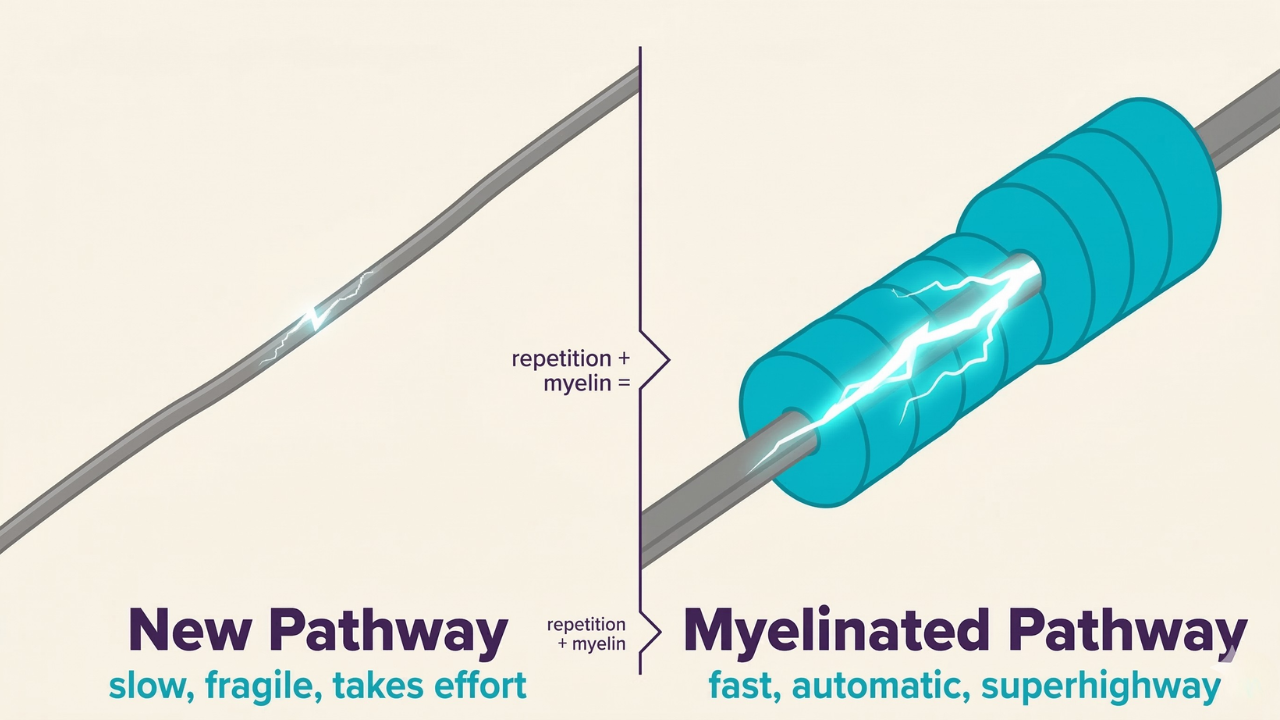
  • The Real Benefits of Neurofeedback: A 40-Year Clinician Explains What Brain Training Can Do

    The Real Benefits of Neurofeedback: A 40-Year Clinician Explains What Brain Training Can Do

    Let me begin with a part of my personal story as a clinician. I have been a clinician in the counseling field for a little over 40 years. In my practice, I have always worked with individuals with more complex issues, usually relating to emotional, physical, and sexual trauma. In addition, I have worked to find better tools to help heal people more effectively and more efficiently throughout my career in this article we will look at the benefits of Neurofeedback.

    So a person walks into my office with depression. In my opinion, depression is usually related to trauma or head injury. The idea that depression is a chemical imbalance came from a TV commercial. Regardless, my standard protocol when they came in for treatment was to send them to their doctor or a psychiatrist, and they would be put on anti-depressants- many for the rest of their lives. I won’t get into the problems of psychiatric medications, but I am not a fan. There are multiple side effects, and in recent studies, both longitudinal and re-testing the effectiveness, most drugs are no better than placebo except in very severe cases. I believe that Big Pharma has done a marvelous job marketing the medical community and the general population while skewing their studies and results.

    Devastating Story:

    So one day, a client walked in telling me a devastating story. But, as I listened, I noticed a real difference. I had previously worked with this person for years. They were exceptional at working on their issues, but this was not an everyday problem; however, they did so with balance, appropriateness, and moderation as they talked about this crisis. I was shocked by the story I heard, but I was more shocked by the change that had taken place in my client. So I asked them! “What happened to you?” The long and the short of it was they had begun treatment doing Neurofeedback. At that time, I had been a clinician for 30 years. I had no clue what they were even talking about. So I asked, “How, what, when, and where? (If you want to read more detail about this story, you can go back and read my first blog on Kenny’s website.)

    Well, that began a journey, and essentially, a new career for me. I learned that this process called Neurofeedback started in the sixties with a NASA scientist. I won’t go into the history here, but it was not a treatment. It was a type of brain training where individuals could learn to self-regulate and change their brains significantly that most no longer had their disorder. Furthermore, it did this without any adverse side effects. The training took from 3-6 months, and when most people finished, they were done….forever.

    This process was not a hoax without a scientific basis. In fact, it is an evidence-based treatment that was built on years of scientific study, and not just a few studies, but thousands. The studies weren’t from a remote individual like many options today, but from major universities like Harvard, Stanford, UCLA. It was a well-known and well-studied process in top universities in Europe and Russia.

    Education:

    So I jumped in with both feet. I found the best education. I found the best mentors, including Dr. Joel Lubar. Dr. Lubar was one of the individuals who started neurofeedback treatment at the University of Tennessee in the late sixties. I also got the highest level of certification possible and purchased the best equipment and software available. I maintained these standards from the first day until now. Ten years ago, I began treating people in my clinic at Heart Matters.

    Here is what I discovered. As the saying goes, the proof is in the pudding. I have seen a woman who couldn’t talk without stammering and stuttering speak seamlessly in 5 weeks of training. We didn’t do speech therapy. We trained her brain’s speech networks. She had been in this condition for seven years.

    I saw another person who experienced the loss of feeling in her left arm and hand due to a stroke twenty years previously. She couldn’t hold anything in her hand when she came in unless she looked at her hand. When she quit looking, she dropped whatever she was holding. When she left Heart Matters, she could hold onto whatever was in her hand because she could feel it, whether she looked or not.

    I would estimate that 95% of the people who have come into my office on medication for depression or anxiety leave training off medication and symptom-free. They become self-regulated over their moods.

    Bipolar:

    I have treated seven patients with bipolar. Of those seven, five have been symptom-free and off medication now for years. I used to say six, but one person had chosen to stay on medication, although he had been on meds for over a year when he came to me. Just before seeing us, he was averaging three psychotic episodes a week. He came to us from a mental hospital, and was symptom-free after ten training sessions with us and He has had no further symptoms since leaving us except memory issues from his medication.

    Furthermore, he has returned to work as an accountant without any interruption for the past three years. I have treated a multitude of people with PTSD successfully. Likewise, I have treated tic disorders successfully.

    T

    One area that we have had great success with is learning disorders like dyslexia and ADHD. I cannot tell you the number of people who come to us with an ADHD diagnosis who do not have ADHD. So one of the benefits of working with EEG is that we can see what is going on in an individual’s brain. ADHD is primarily caused by a slowing in the frontal lobes and the midline of the brain. Often people come in with this diagnosis after being put on medication to speed up the slow activity when they don’t have slow activity. These medications are akin to speed. It will sharpen focus for anyone, but there is also a high, which I do not think is good, especially for kids. Regardless, most people come into our clinic having an issue with anxiety. Their brains are not too slow. Their brains are too fast. Adding speed to this brain often creates several side effects like irritability and anger outbursts. An anxious brain lacks focus and concentration, so it is an honest mistake by those diagnosticians. The symptoms fit both categories, but the treatments are very different.

    Story of 9 Year Old Girl:

    I want to tell a story about a 9-year-old girl who came to see us at Heart Matters. She came in with a diagnosis of ADHD and ODD (Oppositional Defiant Disorder). We did our assessment called a QEEG. She did not have a slow brain nor a brain characteristic of ODD. Instead, she had a fast anxious brain and an auditory sequencing issue. The auditory sequencing problem caused her to hear delayed. Imagine this girl’s daily life in class. She is trying to pay attention and on the front row in her classroom. She is anxious because she doesn’t hear in real-time (although she doesn’t know it) and is afraid she will miss being called on by her teacher, and then she will be in trouble.

    This scenario plays out day after day. She and her teacher are frustrated. They send her to the doctor, who puts her on medication—the meds don’t help. Finally, her parents are at their wit’s end. They bring her to Heart Matters. We correctly assess her using QEEG. We begin brain training. Her anxiety is significantly reduced, her auditory condition is corrected and her dad calls me up and tells me she has just read a nine hundred-page book in two days. Does that sound like focus and concentration to you? She started the following year in a new class with a different teacher. The teacher thinks she’s a rock star!

    So here is the question. Since Neurofeedback is a process backed by 60 years of clinical science and research that is effective for most people to treat many psychological and learning disorders without side effects, and most people no longer need further treatment. Why wouldn’t you try it?

    I realize that many of you are not in my area in Colorado, and Neurofeedback, for the most part, requires in-person treatment (some providers can train with Neurofeedback remotely.) So what should you look for in a clinician as far as training and experience? I will answer these questions in the next blog segment.

    About The Author Mike Pinkston:

    For nearly 40 years, Mike has been helping others heal from complex emotional, physical, and sexual trauma and abuse. He is also an expert in diagnosing and treating PTSD, Dissociative Disorders, as in multiple personalities, sex addiction, Love addiction, love avoidance, and Codependence.

    He is also an expert in parenting and marriage, and family structures. Mike has advanced certification in EMDR and clinical hypnosis. Mike is also a leading expert in Neurofeedback training, a cutting-edge treatment for many emotional and psychological difficulties that regular talk therapy and medication can not find solutions for. Things like ADHD, Bipolar, Anxiety, depression, PTSD, Addiction, and much more.

    Finally, Mike has also spent over 25 years supervising and mentoring other clinicians.

    If you are looking for more information about Neurofeedback or want to contact Mike for an appointment, contact at:

    Mike@theheartmatters.org

    719-257-3488

    www.theheartmatters.org

    I am fortunate to have called Mike my counselor and now my friend and colleague and am forever indebted for how he helped me save my life.

    I am also the client Mike refers to in this article who walked into his office so drastically different which led him to become an expert in Neurofeedback.

  • Why You’re Attracted to Narcissists: The Childhood Trauma Pattern Behind Every Toxic Relationship

    Why You’re Attracted to Narcissists: The Childhood Trauma Pattern Behind Every Toxic Relationship

    If you’ve ever felt an inexplicable magnetic pull toward someone who ultimately hurt you, you’re not alone. The attraction to narcissists isn’t random. It’s not a choice. It’s not a character flaw.

    You do not end up with a narcissist unless you experience childhood trauma and you’re a codependent yourself. The narcissist-attracted person is drawn to these relationships because their brain is literally addicted to the emotional chemistry of their childhood trauma—and the narcissist’s behavior activates that exact same chemical cocktail.

    This is why understanding the why behind your attraction is the first step toward breaking the cycle and reclaiming your authentic self.

    Why You’re Attracted to Narcissists (The Science)

    Imagine I put you in a room with 10,000 people. All but one of them would be genuinely healthy. And like radar, you’d come out and say: “Yeah, they’re all attractive, smart, nice, but there’s just something about this one.” You’d be drawn to it.

    That’s not intuition. That’s not destiny. That’s your nervous system recognizing a familiar emotional pattern from your childhood.

    That’s you experiencing the same abandonment, control, shame, or rage that you learned to survive as a child.

    Trauma chemistry and emotional addiction explaining attraction to narcissists

    Attraction is based on a known experience. Your brain and body don’t know right from wrong. They only know known versus unknown. If your childhood was filled with unpredictability, control, shame, or emotional intensity, your adult nervous system mistakes those familiar patterns for safety—even though they’re destroying you.

    The butterfly feeling in your stomach when you meet someone? That’s the red flag. That intense emotion your brain and body is generating is saying: “Oh my God, this person is going to let me relive my childhood trauma.” That’s attraction.

    Not because you want to suffer. But because your emotional blueprint was written in pain—and your nervous system is addicted to the chemistry that recreates it.

    Trauma Chemistry: The Addiction Nobody Talks About

    When you experience childhood trauma—any negative emotional experience that created painful meanings about yourself, others, or the world—your hypothalamus doesn’t file it away as “something to avoid.” Instead, it generates a massive chemical cocktail.

    Your brain releases cortisol (stress), adrenaline (panic), dopamine (addiction), and oxytocin (false bonding). This chemical cascade becomes your nervous system’s baseline. It becomes your normal.

    Your brain becomes addicted to these emotional states.

    Years later, when you meet someone who triggers that exact same chemical cascade—someone who is controlling, unpredictable, charming-then-cruel—your body doesn’t say “danger.” Your body says “home.” Because it’s the chemistry you know.

    The narcissist uses words to hide their actions. They try to smooth things over by being kind and sweet with their words, making you doubt your perception of their behavior. It’s like a snake coming out from behind a sweet mask of love—and you’re dying a thousand paper cuts while they tell you how much they adore you.

    Survival persona types and how they develop from childhood trauma

    The trauma bond isn’t love. It’s chemistry. It’s your nervous system confusing familiarity with safety. And the narcissist—whether they know it or not—is the perfect match for your unhealed childhood blueprint because they replicate the exact conditions that traumatized you in the first place.

    This is why breaking the cycle requires more than willpower or better boundaries. It requires rewiring your emotional blueprint at the biochemical level.

    How to Recognize a Narcissist (6 Red Flags)

    A narcissist doesn’t have to be grandiose or obvious. Many are covert—charming in public, controlling behind closed doors.

    Here are 6 signs you’re with a narcissist:

    1. Love-bombing followed by devaluation: They move fast, make you feel special, then slowly (or suddenly) criticize, withdraw, or make you feel inadequate.
    2. Your reality doesn’t match their story: You experienced something hurtful. They tell you it never happened. You doubt yourself. That’s you falling into denial.
    3. Their needs always come first: Your boundaries get smaller. Your voice gets quieter. Your desires become “selfish” and their demands become “reasonable.”
    4. You feel responsible for their emotions: If they’re upset, it’s your fault. If they’re angry, you caused it. You’re always managing their emotional temperature.
    5. They punish you for having healthy boundaries: When you say no, they withdraw affection, threaten to leave, or rage. You learn to collapse your own needs to keep the peace.
    6. You feel confused about what’s real: One moment they’re loving and attentive. The next they’re cold and cruel. You can’t predict which version of them will show up.

    Sound familiar? This isn’t about finding the “right” narcissist or fixing them. It’s about understanding why you’re magnetically drawn to them in the first place.

    And that answer lives in your childhood.

    The Worst Day Cycle™: Why You Keep Repeating the Pattern

    The Worst Day Cycle™ is a four-stage framework that explains how childhood trauma creates the attraction and keeps you trapped in it.

    Worst Day Cycle framework showing trauma fear shame denial pattern

    The Four Stages of the Worst Day Cycle™

    Stage 1: Trauma

    Any negative emotional experience in childhood that created painful meanings. A parent who raged. A parent who abandoned you emotionally. A parent who controlled everything. A parent who made you responsible for their feelings. A parent who shamed you for who you are.

    Stage 2: Fear

    Your brain responds to trauma by creating fear. But not rational fear. Chemical fear. Your hypothalamus floods your body with cortisol and adrenaline. Your nervous system learns: “This situation is dangerous. I need to survive it.” Fear drives repetition—your brain thinks repetition equals safety. If you learned to survive by people-pleasing, you’ll people-please in every relationship. If you learned to survive by controlling, you’ll try to control.

    Stage 3: Shame

    Shame is where you lost your inherent worth. Not your actions—you. “I am the problem. There’s something wrong with me. I’m not enough.” This is the deepest stage because it’s not about what happened to you. It’s about what you decided about yourself.

    Stage 4: Denial

    To survive the pain of trauma, fear, and shame, your brain creates a survival persona—a false self. This persona is brilliant in childhood. It keeps you alive. It makes sense of the chaos. But in adulthood, it sabotages you. Denial is the stage where you convince yourself the narcissist isn’t that bad, that you can fix them, that you’re overreacting. That’s you staying in the cycle.

    The Worst Day Cycle™ repeats because your brain conserves energy by repeating known patterns. It can’t tell right from wrong. It only knows known versus unknown. Since 70%+ of your childhood messaging was negative or shaming, you unconsciously repeat these painful patterns in relationships, career, health, and every other life area.

    That’s you being a codependent. Not because you’re weak or broken. But because your nervous system learned to survive by merging with chaos, abandonment, or control. And the narcissist is the perfect match because they replicate that exact chaos.

    Your Survival Persona: The False Self That Attracts Them

    To survive the Worst Day Cycle™, your brain creates a survival persona—a false identity designed to protect you from pain. There are three main types:

    1. The Falsely Empowered Survival Persona

    This persona controls, dominates, manages, and rages. If your childhood had an unpredictable parent, you learned: “If I can predict and control everything, I won’t get hurt.” As an adult, you try to control your partner, your kids, your environment. When they don’t comply, you rage or shame them into submission.

    Sound like you? This is why you’re attracted to narcissists who are also falsely empowered. You’re both trying to control the relationship. You clash. You disconnect. But the intensity keeps you addicted.

    2. The Disempowered Survival Persona

    This persona collapses, people-pleases, and abandons their own needs. If your childhood had a narcissistic or controlling parent, you learned: “If I disappear, don’t take up space, and make myself small, maybe I’ll finally be loved.” As an adult, you say yes when you mean no. You sacrifice your needs. You make excuses for their behavior.

    That’s you with the narcissist. They’re attracted to your willingness to be small because it makes them feel big. You’re attracted to their intensity because it’s the only time you feel less empty—even though it destroys you.

    3. The Adapted Wounded Child Survival Persona

    This persona oscillates between falsely empowered and disempowered. You’re controlling one moment, collapsed the next. You rage, then you apologize profusely. You set a boundary, then you dissolve it. That’s you trying to survive using both strategies because neither one actually worked.

    Adapted wounded child survival persona oscillating between control and collapse

    All three survival personas attract narcissists. The falsely empowered clashes with them. The disempowered merges with them. The adapted wounded child does both—creating a relationship that feels like constant whiplash. The narcissist loves this because the chaos keeps you addicted to trying to fix it.

    Codependence and how it develops in relationships with narcissists

    The first step toward healing is naming which survival persona you are. Not to shame yourself. But to understand why you’re attracted to this pattern and what needs to shift in your nervous system for the attraction to disappear.

    7 Signs You’re Attracted to Narcissists (By Life Area)

    The attraction to narcissists doesn’t show up the same way for everyone. Here’s how it manifests across different life areas:

    In Your Family of Origin

    One or both parents were narcissistic, controlling, unpredictable, or emotionally unavailable. You learned to survive by managing their emotions or becoming invisible. You still do this with them now. That’s you repeating the pattern with a partner who acts just like your parent.

    In Romantic Relationships

    You’re attracted to someone who love-bombs, then withdraws. You feel responsible for keeping the relationship stable. You minimize their bad behavior. You blame yourself for their anger. You stay longer than you know you should because the intensity feels like love. That’s the trauma bond.

    In Friendships

    You have one or two “best friends” who take much more than they give. They confide in you, crisis after crisis, but when you need support, they’re unavailable. You feel responsible for their wellbeing. You can’t set boundaries without feeling guilty. That’s you being codependent in friendship.

    At Work

    Your boss or a colleague is charismatic, ambitious, and charming—but also controlling, critical, and takes credit for your work. You work overtime to please them. You doubt your own competence. You stay in the job longer than you should because you think it’s your fault they’re difficult. That’s you extending your family trauma into your career.

    In Your Body and Health

    You ignore physical pain or illness because you were taught your needs weren’t important. You overexercise or undereat to maintain control. You stay in positions of chronic stress because it’s familiar. You self-harm or numb yourself with substances because your body learned pain was normal. That’s trauma living in your cells.

    In Your Money and Resources

    You give more than you receive. You bail people out financially. You stay in jobs that underpay you. You can’t ask for what you deserve. You believe asking for money or payment feels selfish. That’s you confusing self-abandonment with generosity.

    In Your Spiritual or Personal Growth

    You’re attracted to teachers, coaches, or spiritual leaders who seem enlightened but are actually controlling. They require your devotion. They punish questioning. They make you feel special, then make you feel small. That’s you extending your family trauma into your healing journey.

    Do these resonate? The pattern isn’t random. It’s your nervous system trying to survive using the same strategies that kept you alive as a child. The narcissist isn’t the problem. Your unhealed emotional blueprint is.

    The Authentic Self Cycle™: Your Path to Healing

    If the Worst Day Cycle™ is how you got stuck, the Authentic Self Cycle™ is how you get unstuck. It’s the healing counterpart—an identity restoration system with four stages:

    Authentic Self Cycle framework for emotional healing and recovery from narcissistic abuse

    The Four Stages of the Authentic Self Cycle™

    Stage 1: Truth

    Name your emotional blueprint. See the pattern: “This isn’t about today. This is about what I learned to survive in childhood.” When your partner criticizes you, your nervous system goes into shame—not because they’re right, but because your parent criticized you the same way. Truth is naming this without judgment.

    Stage 2: Responsibility

    Own your emotional reactions without blame. “My partner isn’t my parent. My nervous system just thinks they are. I’m responsible for my own healing.” This isn’t about forgiving them or staying. It’s about recognizing that your nervous system is in charge, not your conscious mind. You can’t think your way out of a biochemical response.

    Stage 3: Healing

    Rewire your emotional blueprint using the Emotional Authenticity Method™ (see next section). The goal is to make conflict uncomfortable but not dangerous. Space isn’t abandonment. Intensity isn’t attack. Your nervous system learns new chemistry. That’s you building a new normal.

    Stage 4: Forgiveness

    Release the inherited emotional blueprint and reclaim your authentic self. This doesn’t mean forgiving the narcissist or your parent. It means releasing the grip their pain has on your present moment. You stop living to survive their chaos. You start living to honor your own truth. That’s you becoming free.

    The Authentic Self Cycle™ creates a NEW emotional chemical pattern that replaces fear, shame, and denial. Your nervous system learns that safety comes from authenticity, not from controlling or collapsing. The attraction to narcissists disappears because you’re no longer addicted to the chemistry of your childhood trauma.

    Emotional blueprint rewiring and the pathway to authentic self

    The Emotional Authenticity Method™: 6 Steps to Rewire Your Blueprint

    The Emotional Authenticity Method™ is a six-step process designed to rewire your emotional blueprint at the biochemical level. The core principle: You cannot change emotional patterns through thoughts alone. Emotions are biochemical events. Thoughts originate from feelings.

    Here’s how it works:

    Emotional Authenticity Method six steps for rewiring emotional patterns

    The Six Steps of the Emotional Authenticity Method™

    Step 1: Somatic Down-Regulation

    When your nervous system is activated (triggered by conflict, criticism, or perceived abandonment), you can’t think your way to healing. You have to calm your body first. Focus on what you can hear for 15–30 seconds. Listen to the ambient sounds around you. If you’re highly dysregulated, use titration: squeeze ice, splash cold water on your face, or engage your senses. The goal is to bring your nervous system down from fight/flight/freeze into a state where your prefrontal cortex can actually function.

    Step 2: What Am I Feeling Right Now?

    Most people say “I feel bad” or “I feel anxious.” That’s too vague. Your brain can’t rewire what it can’t name. Use emotional granularity. Expand your vocabulary beyond “bad.” Are you feeling abandoned? Disrespected? Invisible? Controlled? Betrayed? Use the Feelings Wheel (link below) to identify the exact emotion. That’s you developing emotional literacy.

    Step 3: Where in My Body Do I Feel It?

    Emotional trauma is stored physically. Abandonment might live in your chest as a crushing weight. Shame might live in your throat as a lump. Control might live in your stomach as tension. Locate the exact physical sensation and notice it without judging it. That’s you developing somatic awareness.

    Step 4: What Is My Earliest Memory of Having This Exact Feeling?

    Trace the feeling to its origin. When your partner withdrew, you felt abandoned. When did you first feel that way? Maybe your parent left for work and you didn’t understand they were coming back. Maybe a sibling got more attention than you. Maybe a parent died. Whatever it was, your nervous system has been trying to survive that moment ever since. That’s you finding the root.

    Step 5: Who Would I Be If I Never Had This Thought or Feeling Again?

    This is the vision step. Move beyond the past for a moment. If you weren’t controlled by abandonment fear, shame, or the need to control—who would you be? What would you do? How would you show up? What would you say? What kind of partner, parent, friend, or professional would you become? Hold this vision. That’s you imagining your Authentic Self.

    Step 6: Feelization—Sit in the Feeling of Your Authentic Self and Make It Strong

    This is the most critical step because it’s where the biochemical rewiring happens. Close your eyes and feel yourself in that Authentic Self vision. Don’t think about it. Feel it. What does confidence feel like in your body? What does boundaries feel like? What does self-love feel like? Create a strong emotional sensation in your body associated with your Authentic Self. Now, ask: “How would I respond to this situation from this feeling? What would I say? What would I do?” Visualize and FEEL yourself operating from your Authentic Self. Make it visceral. Make it real in your nervous system. This is the emotional blueprint remapping and rewiring step. You’re creating a new chemical addiction to replace the old one.

    That’s the Emotional Authenticity Method™. Not once. Not twice. But repeatedly, over weeks and months, until your nervous system’s default is Authentic Self, not survival persona.

    The breakthrough happens in Step 6. You cannot change an emotional pattern by understanding it intellectually. You change it by feeling something different in your body with such intensity and frequency that your nervous system adopts it as the new baseline. That’s Feelization.

    Want to dive deeper into this work? Use the Feelings Wheel—a life-changing exercise to develop emotional granularity.

    The Victim Position Paradox: Why Healing Stalls

    Here’s something nobody tells you: There’s a reason healing from narcissistic abuse feels so hard, even when you know the framework.

    The victim position is a societal construct meant to protect victims, but in reality it has created a paradoxical falsely empowered position that nearly guarantees the victim will reexperience their childhood victimization, leaving them disempowered.

    What does this mean?

    When you identify as a “victim of narcissistic abuse,” you get validation. You get sympathy. You get to talk about what happened to you. And that feels like progress because, finally, people believe you. Finally, it wasn’t your fault.

    But here’s the trap: You get so much validation from the victim position that you don’t have to address the underlying childhood trauma and pain that created the attraction in the first place. You get to stay in the story: “I’m damaged because of what they did to me.” And that story is true. But it’s not the whole truth.

    The whole truth is: “I was attracted to them because of my unhealed childhood. I stayed with them because of my survival persona. I’m responsible for healing this now.”

    That’s the paradox. The victim position protects you from blame, but it also keeps you stuck in the role of victim. It keeps you disempowered. It keeps you waiting for someone else to fix it—for the narcissist to change, for the legal system to punish them, for therapy to make the pain go away.

    Healing requires moving from the victim position into responsibility. Not blame. Responsibility. You can’t change what happened to you. But you can change how your nervous system responds to it. You can rewire your emotional blueprint. You can become someone the narcissist—and future narcissists—are no longer attracted to.

    That’s where real healing begins.

    People Also Ask (FAQ)

    Q: Can a narcissist actually change?

    Technically, yes. But practically, almost never. Change requires self-awareness, humility, and the willingness to experience shame—all things a narcissist’s survival persona is designed to avoid. If they do change, it’s because their cost of staying the same became higher than their fear of changing. This almost never happens in a romantic relationship where they’re getting their needs met through control and devaluation. Your job isn’t to change them. Your job is to heal yourself so you’re no longer attracted to them.

    Q: How long does it take to stop being attracted to narcissists?

    This depends on how deep your childhood trauma is and how committed you are to the Emotional Authenticity Method™. Some people see shifts in weeks. Others take months or years. The timeline isn’t about time—it’s about nervous system rewiring. Feelization creates new neural pathways. These pathways need to be strengthened repeatedly until they become your default. Most people report major shifts in 90 days of consistent practice. Full rewiring usually takes 12–18 months.

    Q: What if I’m currently in a relationship with a narcissist?

    You have two choices: Leave or stay and heal simultaneously. Staying while you heal requires strong boundaries and a commitment to not merging with their chaos. Leaving while you heal requires processing the grief and loss. Neither is “better.” The key is making a conscious choice based on your values, not based on addiction or fear. Many people find that once they start rewiring their blueprint, staying becomes unbearable—not because it’s too hard, but because their nervous system stops tolerating the chaos.

    Q: Is the attraction to narcissists the same as codependency?

    They’re related but not identical. Codependency is the survival strategy (controlling, collapsing, or oscillating). The attraction to narcissists is the result of unhealed trauma meeting a partner whose behavior activates that trauma. All people attracted to narcissists are codependent to some degree, but not all codependents attract narcissists. Some codependents end up with partners who are emotionally unavailable or dismissive but not full narcissists. The framework is the same: Heal the childhood trauma and the codependency disappears.

Q: Can you be attracted to a narcissist if you didn’t have childhood trauma?

Not in the way described in this post. You might be attracted to someone who’s charismatic or confident (those are normal attractions). But the trauma bond—the intense, addictive pull that keeps you in a destructive relationship—requires an unhealed childhood blueprint. If you find yourself in a long-term relationship with a narcissist, there’s always childhood trauma at the root. It might be obvious, or it might be subtle. But it’s there.

Q: What if the narcissist in my life is my parent, not my partner?

The framework is the same. The Worst Day Cycle™ and your survival persona developed in response to your parent. You then recreate that dynamic with partners, friends, colleagues, and even with your own children. The healing process requires separating from your parent (emotionally and possibly physically), grieving the relationship you should have had, and rewiring your blueprint using the Emotional Authenticity Method™. Internal work first, then decide what level of contact is healthy for you moving forward.

The Bottom Line

You’re attracted to narcissists because your nervous system is addicted to the emotional chemistry of your childhood trauma. This isn’t your fault. It’s not a character flaw. It’s a survival mechanism that kept you alive as a child and is now destroying you as an adult.

The good news? Your emotional blueprint can be rewired. The Authentic Self Cycle™ and the Emotional Authenticity Method™ show you how. It requires work—consistent, vulnerable, honest work. But it works.

You don’t have to keep repeating this pattern. You can break it. You can become someone who’s attracted to healthy, available, grounded people. You can have the relationship you actually deserve.

But it starts with understanding why you’re attracted to narcissists in the first place. And it continues with rewiring your nervous system so that attraction disappears forever.

Related Articles to Deepen Your Understanding

Recommended Reading

Deepen your understanding of trauma, codependency, and emotional healing with these foundational books:

Ready to Heal Your Emotional Blueprint?

Understanding why you’re attracted to narcissists is the first step. Taking action to rewire your nervous system is the next step. Kenny Weiss offers comprehensive courses designed to guide you through the Worst Day Cycle™, Authentic Self Cycle™, and Emotional Authenticity Method™.

Start your healing journey with one of these courses:

Each course includes video training, worksheets, and access to the Emotional Authenticity community.


  • Why You’re Attracted to Bad Men: The Childhood Trauma Pattern Behind Toxic Relationships

    Why You’re Attracted to Bad Men: The Childhood Trauma Pattern Behind Toxic Relationships

    Why are you attracted to bad men? If you keep falling for emotionally unavailable, manipulative, or toxic partners — and you can see red flags in everyone else’s relationships but not your own — it’s not a character flaw. It’s a childhood trauma pattern running on autopilot inside your nervous system. Being attracted to bad men is a sign that your emotional blueprint was set in childhood, and your brain is chemically addicted to recreating the pain it never healed.

    The reason you keep choosing toxic partners is not because something is wrong with you. It’s because your brain learned what “love” feels like from the people who raised you — and if that included chaos, neglect, manipulation, or emotional unavailability, your nervous system now reads those signals as familiar, safe, and even attractive. You’re not broken. You’re running a program that was installed before you had any say in the matter.

    That’s you — wondering why you always end up with the same kind of man, no matter how many times you promise yourself “never again.”

    Table of Contents

    What Does It Really Mean to Be “Attracted to Bad Men”?

    Being attracted to bad men means your nervous system has been programmed — through childhood experiences — to interpret chaos, emotional unavailability, and intensity as love. It is not a conscious choice. It is an emotional blueprint that was set before you could speak, walk, or understand what was happening to you. Your brain learned to associate pain with connection, and now it recreates that pattern in every romantic relationship you enter.

    Emotional blueprint childhood trauma pattern attraction to bad men

    That’s you — sitting across from a man who ticks every red flag box, and instead of running, your stomach flutters. You call it chemistry. It’s actually your childhood.

    The only reason you’re attracted to somebody is whatever it is in them reminds you of your childhood trauma. That’s all attraction is. Your brain and body become addicted to the trauma you experienced, and so you relive it until you heal it. That doesn’t mean your partner is bad as a person — but you picked them for the express reason of recreating the emotional experience you never resolved from childhood.

    That’s you — choosing the emotionally unavailable man because one or both of your parents were emotionally unavailable. Until you heal that wound, you’ll keep being attracted to men who are emotionally unavailable.

    This is not about blame. This is about understanding. And once you understand what’s driving the attraction, you can finally stop the cycle.

    Why Your Childhood Trauma Blueprint Controls Your Attraction

    Everyone has been through childhood trauma. The types and severity vary, but everyone has experienced it. Trauma is any negative emotional experience that created painful meanings — it doesn’t have to be a catastrophic event. It can be a parent who dismissed your feelings, a caregiver who made you responsible for their emotional wellbeing, or a household where conflict was constant and unpredictable.

    Trauma chemistry and childhood emotional blueprint driving toxic attraction

    That’s you — thinking your childhood was “fine” because nothing dramatic happened, while your nervous system is still running the same painful patterns every day.

    What happens in childhood trauma is this: because we don’t teach how to parent, and because even the best parents are perfectly imperfect, children receive a devastating message. Instead of hearing “that behavior was wrong,” the child hears “you as a person are wrong and bad.” This creates a shame core — the deep belief that “I am defective.”

    We also learn about relationships from our primary relationships as children — watching our parents, observing how they interact with each other and with us. Nobody ends up with a narcissistic or toxic partner unless they’ve experienced chaos, manipulation, shame, and disregard in their childhood.

    That’s the truth nobody tells you — your “type” isn’t a preference. It’s a wound.

    How the Worst Day Cycle™ Keeps You Choosing Toxic Partners

    The Worst Day Cycle™ is a four-stage pattern that explains exactly why you keep ending up with bad men. It runs on autopilot inside your nervous system, and until you understand it, you cannot escape it.

    Worst Day Cycle four stages trauma fear shame denial toxic attraction

    Stage 1 — Trauma: Childhood trauma is any negative emotional experience that created painful meanings. It causes a massive chemical reaction in the brain and body. The hypothalamus generates chemical cocktails — cortisol, adrenaline, dopamine, and oxytocin misfires — and the brain becomes addicted to these emotional states. The brain conserves energy by repeating known patterns. It cannot tell right from wrong, only known from unknown. Since over 70% of childhood messaging is negative and shaming, adults repeat these painful patterns in relationships, career, hobbies, health — everything.

    That’s you — drawn to the man who runs hot and cold because that unpredictable emotional rollercoaster feels like home.

    Stage 2 — Fear: Fear drives repetition. The brain thinks repetition equals safety. Even though the pattern hurts, it feels familiar — and to your nervous system, familiar means survivable. The unknown — a kind, emotionally available man — actually feels dangerous because your brain has no reference point for it.

    That’s you — feeling bored or “no spark” with the nice guy, and mistaking the absence of anxiety for the absence of attraction.

    Stage 3 — Shame: This is where you lost your inherent worth. Shame is the core wound that says “I am the problem.” When your parents treated your mistakes as evidence of your defectiveness instead of normal learning, shame was installed as your operating system. Now every relationship confirms what shame already told you — you’re not enough.

    Survival persona types shame-driven attraction to toxic men

    That’s you — staying with a man who treats you poorly because somewhere deep inside, you believe you don’t deserve better.

    Stage 4 — Denial: Denial is the survival persona you created to survive the pain. It was brilliant in childhood — it kept you alive. But in adulthood, it sabotages every relationship. Denial keeps you romanticizing the good moments and minimizing the bad ones. It keeps you saying “he’ll change” when every piece of evidence says he won’t.

    That’s you — making excuses for his behavior, telling your friends “you don’t know him like I do,” while your body knows the truth.

    I could put you in a room with a thousand people — all of them kind, available, exactly what you say you want. And I’d put one person in there who is just like your childhood. Like radar, you’d walk out with that one and say, “There’s just something about him.” That something is your Worst Day Cycle™. That’s the fear piece. Your brain and body have become emotionally, chemically addicted to reliving the trauma you haven’t healed.

    The Three Survival Persona Types That Drive Toxic Attraction

    The denial stage of the Worst Day Cycle™ creates what’s called a survival persona — a protective identity your brain built in childhood to shield you from the full impact of your pain. There are three types, and each one drives attraction to bad men in a different way.

    The Falsely Empowered Survival Persona: This is the person who controls, dominates, and rages. If this is your pattern, you may be attracted to bad men because you unconsciously seek someone you can “fix” or “save.” You believe your strength can change them. It can’t — because your strength is actually a defense against the helplessness you felt as a child.

    That’s you — the woman everyone calls “strong” who keeps ending up with men who need rescuing.

    The Disempowered Survival Persona: This is the person who collapses, people-pleases, and gives everything away to avoid abandonment. If this is your pattern, you’re attracted to bad men because intensity feels like love, and their controlling behavior feels like being wanted. You confuse someone needing you with someone loving you.

    That’s you — losing yourself completely in relationships, becoming whoever he needs you to be, until there’s nothing left of you.

    The Adapted Wounded Child: This survival persona oscillates between both — sometimes controlling, sometimes collapsing. The unpredictability mirrors the chaos of childhood, and relationships become an exhausting cycle of highs and lows that feel normal because chaos is all you’ve ever known.

    Adapted wounded child survival persona oscillating between empowered and disempowered

    That’s you — one day you’re the strong one holding everything together, the next you’re falling apart wondering why you can’t just leave.

    Signs Your Trauma Blueprint Is Running Your Relationships

    The pattern of being attracted to bad men doesn’t just show up in romance. Your emotional blueprint runs through every area of your life. Here’s how to spot it.

    In Family Relationships

    You take on the caretaker role — managing everyone’s emotions, keeping the peace, being the one who holds it all together. You learned in childhood that love meant being useful, so you perform love instead of receiving it. Your family relationships exhaust you because you’re still playing the same role you were assigned as a child.

    That’s you — the one everyone calls when there’s a crisis, but nobody asks how you’re doing.

    In Romantic Relationships

    You’re drawn to intensity, unavailability, and the promise of potential. You fall for who he could be instead of who he is. You ignore red flags because the chemistry is overwhelming — and you don’t realize that “chemistry” is actually your trauma response recognizing something familiar.

    That’s you — believing that if you just love him enough, he’ll finally become the man you know he can be.

    In Friendships

    You attract friendships that mirror the same dynamic — one-sided giving, emotional unavailability, or friends who only show up when they need something. You tolerate behavior in friendships that you’d tell anyone else to walk away from.

    At Work

    You overperform, under-ask, and accept less than you deserve. You may work for bosses who are demanding and emotionally volatile — and instead of setting boundaries, you try harder. Your career becomes another stage where your childhood drama replays itself.

    That’s you — working 60-hour weeks for a boss who never says “good job” because it feels exactly like trying to earn your parent’s approval.

    In Your Body and Health

    Chronic stress, anxiety, insomnia, digestive issues, and autoimmune conditions. Your body has been storing the trauma your mind was told to ignore. The same nervous system that keeps you attracted to toxic men also keeps your body in a constant state of fight-or-flight.

    Why You Can See Red Flags in Others But Not Yourself

    Here’s the cruel paradox: you can see exactly when a man is terrible for your friend, your sister, your coworker. But when it comes to your own relationships, you’re blind. This isn’t stupidity. It’s neuroscience.

    When you’re on the outside of someone else’s relationship, you have no emotional investment. Your trauma blueprint isn’t activated. You can see clearly because your nervous system isn’t involved.

    But the second you have skin in the game — the second your heart is involved — your childhood wiring takes over. The conflicting messages you received as a child flood back in. A parent who told you that you were wonderful while making you responsible for their emotional wellbeing. A parent who showed affection when they needed something from you. These mixed signals taught your brain that love is confusing, unpredictable, and comes with conditions.

    That’s you — knowing exactly what you should do, and watching yourself do the opposite, because your body won’t let your brain drive.

    Emotional authenticity healing from attraction to toxic relationships

    So when someone starts showing you clear affection, you don’t take it at face value — because as a child, affection always came with a hidden cost. You need a man to go above and beyond just to prove he won’t abandon you. This puts impossible stress on healthy partners and pushes them away, while the toxic ones thrive in this dynamic because manipulation is their native language.

    The Chemical Addiction to Pain: Why Attraction Feels Like Love

    This is the part most people never learn: attraction to bad men is a chemical addiction. When you went through childhood trauma, it created a chemical signature in your body — specific combinations of cortisol, adrenaline, dopamine, and oxytocin that your brain now associates with love, connection, and home.

    Neural pathways myelin chemical addiction trauma pattern attraction

    When you meet a kind, stable, emotionally available man, your body doesn’t produce those chemicals. So you feel nothing — no butterflies, no excitement, no “spark.” And you walk away thinking there’s no connection.

    When you meet a chaotic, unavailable, or manipulative man, your body floods with those familiar chemicals. Your heart races. Your stomach flips. You feel alive. And your brain says, “This is love.”

    That’s you — confusing the stress response of your nervous system with the feeling of falling in love.

    It’s not love. It’s recognition. Your nervous system is recognizing the emotional pattern it was trained on in childhood. The “spark” you feel with bad men is actually your trauma response firing. Until you create a new chemical pattern through healing, you will continue to be drawn to what hurts you and repelled by what could heal you.

    When trauma creates a chemical addiction inside you, you repeat the pattern until you heal and change the emotional chemical addiction. That’s what real recovery looks like — not white-knuckling your way into choosing a “nice guy,” but actually rewiring the chemical signature that drives your attraction in the first place.

    How to Break the Pattern: The Emotional Authenticity Method™

    You cannot change emotional patterns through thoughts alone. Emotions are biochemical events. Thoughts originate from feelings — not the other way around. This is why positive affirmations, willpower, and “just choosing better” don’t work. You need a method that rewires the emotional blueprint itself.

    The Emotional Authenticity Method™ is a six-step process designed to do exactly that.

    Emotional regulation somatic down-regulation for breaking toxic attraction patterns

    Step 1: Somatic Down-Regulation. Focus on what you can hear for 15–30 seconds. If you’re highly dysregulated, use titration — small doses of awareness rather than flooding yourself with sensation. This step brings your nervous system out of fight-or-flight so your rational brain can come back online.

    Step 2: What am I feeling right now? Use emotional granularity — expand your vocabulary beyond “bad” or “anxious.” Are you feeling abandoned? Invisible? Terrified? Worthless? The more precisely you can name the feeling, the less power it has over you. Use the Feelings Wheel to build your emotional vocabulary.

    Step 3: Where in my body do I feel it? All emotional trauma is stored physically. Tightness in your chest. A pit in your stomach. Tension in your jaw. Your body has been keeping score even when your mind was told to move on.

    That’s you — realizing that the “butterflies” you feel with bad men are actually stored terror in your gut.

    Step 4: What is my earliest memory of having this exact feeling? Trace it to the childhood origin. When you feel that familiar pull toward a toxic man, ask yourself: when was the first time I felt this exact sensation? You’ll find a childhood memory — a parent who was unpredictable, a moment when love felt conditional, a time when being needed was the only way to feel worthy.

    Step 5: Who would I be if I never had this thought or feeling again? What would be left over? This is the vision step. It connects you to the Authentic Self Cycle™ and shows you the person you are beneath the trauma programming. The woman who doesn’t need chaos to feel alive. The woman who can sit in peace and feel worthy.

    Step 6: Feelization. Sit in the feeling of the Authentic Self and make it strong. Create a new emotional chemical addiction to replace the old blueprint. Ask yourself: how would I respond to this situation from this feeling? What would I say? What would I do? Visualize and FEEL yourself operating from your Authentic Self. This is the emotional blueprint remapping and rewiring step — the step where you actually create the new chemical signature that will change who you’re attracted to.

    Healing Through the Authentic Self Cycle™

    The Authentic Self Cycle™ is the healing counterpart to the Worst Day Cycle™. It is an identity restoration system with four stages that replace the trauma pattern driving your attraction to bad men.

    Authentic Self Cycle four stages healing from toxic relationship attraction

    Stage 1 — Truth: Name the blueprint. See that “this isn’t about today.” When that man triggers your longing, your anxiety, your desperate need to be chosen — that’s not about him. It’s about the child inside you who learned that love requires suffering.

    Stage 2 — Responsibility: Own your emotional reactions without blame. “My partner isn’t my parent. My nervous system just thinks he is.” This is not about blaming yourself for choosing bad men. It’s about understanding that your emotional reactions belong to you, and you have the power to change them.

    Stage 3 — Healing: Rewire the emotional blueprint so that conflict becomes uncomfortable but not dangerous, space isn’t abandonment, and intensity isn’t love. This is where the Emotional Authenticity Method™ does its deepest work — creating new neural pathways and new chemical patterns that change what your body reads as “safe” and “attractive.”

    Stage 4 — Forgiveness: Release the inherited emotional blueprint and reclaim your authentic self. This creates a new emotional chemical pattern that replaces fear, shame, and denial. Forgiveness isn’t about excusing what was done to you. It’s about releasing its hold on your nervous system so you can finally choose from freedom instead of fear.

    That’s you — for the first time in your life, feeling drawn to a man who is kind, stable, and emotionally present — and recognizing that feeling as love instead of boredom.

    The Bottom Line

    You are not attracted to bad men because you’re stupid, weak, or broken. You are attracted to bad men because your childhood wired you to be. Your brain became chemically addicted to the emotional patterns of your earliest relationships, and it has been faithfully recreating those patterns in every partner you’ve chosen since.

    The good news is that the same brain that learned these patterns can unlearn them. The same nervous system that drives you toward chaos can be rewired toward peace. The same heart that keeps choosing pain can learn to recognize and receive love.

    But you cannot think your way there. You cannot willpower your way there. You have to feel your way there — through the Emotional Authenticity Method™, through the Authentic Self Cycle™, through the courageous work of facing the childhood pain you were told to forget.

    You deserve a love that doesn’t hurt. And the path to it runs directly through the wound you’ve been avoiding your entire life.

    That’s you — finally ready to stop choosing the pain you know and start building the love you deserve.

    Frequently Asked Questions

    Why am I always attracted to emotionally unavailable men?

    You’re attracted to emotionally unavailable men because one or both of your parents were emotionally unavailable. Your brain learned in childhood that love means chasing someone who can’t fully show up for you. Until you heal that original wound through the Emotional Authenticity Method™, your nervous system will continue selecting partners who replicate that pattern.

    Can I change who I’m attracted to?

    Yes, but not through willpower or “choosing better.” Attraction is driven by your emotional blueprint — a chemical pattern set in childhood. To change who you’re attracted to, you must rewire that blueprint using somatic and emotional healing work like the Emotional Authenticity Method™ and the Authentic Self Cycle™. When your chemistry changes, your attraction changes.

    Is being attracted to bad men a trauma response?

    Absolutely. Being attracted to bad men is one of the most common trauma responses. Your nervous system became chemically addicted to the emotional patterns of your childhood, and it recreates those patterns in adult relationships. The “spark” you feel with toxic men is actually your trauma recognition system firing — not love.

    Why do I stay with men who treat me badly?

    You stay because your survival persona — built in childhood to protect you from pain — convinces you that this is what you deserve, that he’ll change, or that leaving would be worse than staying. The Worst Day Cycle™ of trauma, fear, shame, and denial keeps you locked in a pattern that feels impossible to break without understanding its origins.

    How do I break the cycle of toxic relationships?

    Breaking the cycle requires becoming an expert in your own childhood trauma. Use the Emotional Authenticity Method™ to trace your attraction patterns back to their childhood origins, rewire your emotional blueprint through Feelization, and build the Authentic Self Cycle™ as your new operating system. This is not about finding a better man — it’s about becoming the healed version of yourself who naturally attracts healthy love.

    What is the Worst Day Cycle™ and how does it affect my relationships?

    The Worst Day Cycle™ is a four-stage pattern — Trauma, Fear, Shame, Denial — that explains why you repeat painful relationship patterns. Childhood trauma creates fear-based chemical addictions in your brain. Shame makes you believe you’re defective. Denial creates a survival persona that keeps you from seeing the truth. Together, these stages keep you attracted to bad men and repelled by healthy ones until you do the healing work to break free.

    If you want to go deeper into understanding why you’re attracted to bad men and how to heal, these books are essential reading. Facing Codependence and Facing Love Addiction by Pia Mellody — foundational texts on how childhood trauma creates adult relationship dysfunction. When the Body Keeps the Score by Bessel van der Kolk — the definitive work on how trauma is stored in the body. In the Realm of Hungry Ghosts by Gabor Maté — understanding addiction as a trauma response. Codependent No More by Melody Beattie — the classic on releasing codependent patterns. The Gifts of Imperfection by Brené Brown — learning to embrace your perfectly imperfect self. Your Journey to Success by Kenny Weiss — the complete guide to the Worst Day Cycle™ and how to break free.

    Start Your Healing Journey Today

    If you’re ready to stop being attracted to bad men and start building relationships from your Authentic Self, Kenny Weiss offers courses designed to help you do exactly that. Emotional Blueprint Starter Course — Individual ($79) — understand your emotional blueprint and begin rewiring it. Relationship Starter Course — Couples ($79) — heal your relationship together. Why We Can’t Stop Hurting Each Other ($479) — deep dive into the trauma patterns that destroy relationships. Why High Achievers Fail at Love ($479) — for driven people who can’t figure out why success doesn’t translate to love. The Shutdown Avoidant Partner ($479) — understand and heal the avoidant pattern. Tier 1: Mapping the Blueprint ($1,379) — the complete transformation program.

    Explore the Feelings Wheel to start building emotional granularity today.

    Related articles: Enmeshment: Signs, Meaning, and How to Heal | 7 Signs of Relationship Insecurity | 7 Signs of High Self-Esteem | How to Determine Your Negotiables and Non-Negotiables | 10 Do’s and Don’ts For a Great Relationship

  • How to Stop Numbing Your Emotions: Why You Shut Down and How to Feel Again

    How to Stop Numbing Your Emotions: Why You Shut Down and How to Feel Again

    How to stop numbing your emotions starts with understanding a truth that changes everything: you are not choosing to be numb. Emotional numbness is not laziness, weakness, or a character flaw. It is a trauma response — a survival strategy your nervous system installed in childhood to protect you from feelings that were too big, too dangerous, or too punishing to experience safely. If you go blank during conflict, if you cannot cry even when you want to, if you feel like a robot moving through life while everyone else seems to actually feel things — your nervous system learned decades ago that feeling equals danger. And it has been protecting you from that danger ever since.

    The problem is that the protection that saved you as a child is now destroying your adult life. You cannot connect in relationships because connection requires vulnerability, and vulnerability requires feeling. You cannot set boundaries because boundaries require knowing what you need, and knowing what you need requires accessing emotions your system deleted years ago. You cannot heal because healing is a feeling process, not a thinking process — and your entire survival strategy is built on replacing feeling with thinking.

    That’s you if you’ve tried therapy, journaling, meditation, and positive thinking — and none of it has worked because all of those approaches ask you to access emotions your nervous system has been trained to suppress since before you could walk.

    The path out of emotional numbness does not begin with trying harder to feel. It begins with understanding why your nervous system shut feeling down in the first place, how the Worst Day Cycle™ keeps you trapped in that shutdown, and how the Emotional Authenticity Method™ literally rewires your nervous system so that feeling becomes safe again.

    Table of Contents

    How to stop numbing emotions through emotional regulation and nervous system healing

    What Is Emotional Numbness? Why You Shut Down Instead of Feeling

    Emotional numbness is not the absence of emotion. It is the absence of permission to feel it. Underneath the blankness, the flatness, the “I don’t know what I feel” — every emotion is still there. Your nervous system has not deleted your feelings. It has locked them behind a door that was sealed in childhood because the feelings behind that door were too overwhelming, too punished, or too dangerous to express.

    Emotional numbness is not emotional incompetence. It is trauma-induced self-protection. The nervous system suppresses emotion as an act of love for the self — protecting the child from feelings that would have destroyed them.

    That’s you if you go blank during conflict. That’s you if you feel like you’re watching your own life from behind glass. That’s you if your partner accuses you of not caring — and the truth is you care so deeply that your nervous system shut feeling down entirely to survive it.

    Emotional blueprint showing how childhood created emotional numbness and shutdown patterns

    Adults who are emotionally numb say things like: “I don’t know what I feel.” “I go blank.” “I shut down during conflict.” “I feel like a robot.” “I can’t connect to myself.” “I can’t access my needs.” These are not signs of weakness. They are signs of a nervous system that learned in childhood: feeling is not safe, my emotions cause problems, expression leads to shame, staying small keeps me protected, if I speak I will be punished or abandoned.

    That’s you if you’ve been called “cold” or “distant” by people who love you — and you know they’re right, but you genuinely don’t know how to be different. Your emotional shutdown was installed before you had any say in the matter.

    The Childhood Blueprint: Where Emotional Numbness Begins

    Your emotional blueprint — the nervous system’s learned pattern for what feelings are safe and which ones are forbidden — was set in childhood. If your childhood contained a parent who punished your tears, mocked your sensitivity, withdrew when you expressed needs, or became volatile when you showed fear — your brain made a calculation that has been running your life ever since: emotions create danger, suppress them to survive.

    Trauma overwhelms the emotional system, causing the child to disconnect from their internal world. The child learns that emotions are too big, create danger, overwhelm caregivers, provoke shame, result in disconnection, lead to punishment, and destabilize the environment. To survive, the child suppresses emotions they cannot afford to feel.

    Trauma chemistry showing how childhood emotional suppression creates adult numbness patterns

    That’s you if you grew up hearing “stop crying,” “don’t be so sensitive,” “you’re overreacting,” or “there’s nothing to be upset about.” Every one of those messages taught your nervous system that feeling is wrong — and your system obeyed.

    The child who was never allowed to feel doesn’t grow into an adult who can feel. They grow into an adult who intellectualizes everything, who lives in their head, who can analyze their pain but cannot touch it. Suppression was the child’s salvation. Visibility becomes the adult’s liberation.

    The result is a constellation of symptoms that most therapists treat individually but that all share a single root: emotional numbness, shutdown, alexithymia — the clinical term for difficulty identifying emotions — disconnection from body sensations, difficulty crying, difficulty expressing needs, intellectualizing feelings, avoiding emotional intimacy, and collapsing when overwhelmed.

    That’s you if you can explain your childhood trauma in perfect clinical language but feel absolutely nothing when you talk about it. That’s the survival persona in action — turning feeling into thinking so the pain never reaches you.

    The Worst Day Cycle™: How Emotional Numbness Becomes a Chemical Addiction

    The Worst Day Cycle™ explains why numbness doesn’t just visit you — it lives in you. It is a four-stage neurological loop: Trauma → Fear → Shame → Denial. This cycle repeats endlessly until you interrupt it.

    The Worst Day Cycle showing how trauma fear shame and denial create emotional numbness

    Stage 1: Trauma. Childhood trauma is any negative emotional experience that created painful meanings. A parent who rolled their eyes when you cried. A father who said “stop crying or I’ll give you something to cry about.” A mother who needed you to be happy so she wouldn’t fall apart. Any of these creates a massive chemical reaction in the nervous system. The hypothalamus generates chemical cocktails — cortisol, adrenaline, dopamine misfires, oxytocin disruptions — and the brain becomes addicted to these emotional states.

    Stage 2: Fear. Fear drives repetition. The brain conserves energy by repeating known patterns. It cannot tell right from wrong — only known versus unknown. Since approximately 70% of childhood messaging is negative and shaming, the brain defaults to emotional suppression because that is what it learned to do. That’s you if feeling nothing feels safer than feeling something — because the last time you felt something fully, you were punished for it.

    Stage 3: Shame. This is where you lost your inherent worth. Where you decided “I am the problem.” The child who was told not to cry concluded not just “crying is bad” but “I am bad for wanting to cry.” Shame says your emotions themselves are defective — that there is something fundamentally wrong with the way you experience the world.

    Stage 4: Denial. To survive unbearable shame, your psyche creates a survival persona — a false identity that says “I’m fine,” “I don’t need anyone,” “emotions are weakness,” “I’m just not an emotional person.” This is the numbness. Three survival persona types emerge: falsely empowered (controls, dominates, rages), disempowered (collapses, people-pleases), adapted wounded child (oscillates between both).

    Sound familiar? That’s the Worst Day Cycle™ running your emotional life without your permission — keeping you numb so you never have to face the shame underneath.

    The Three Survival Personas and Emotional Shutdown

    Emotional numbness doesn’t look the same in everyone. It creates three distinct survival personas — adaptive identities built in childhood to protect you from the pain of feeling.

    Three survival persona types showing how emotional numbness manifests differently

    The Falsely Empowered Persona. This survival persona hides numbness behind control, intellect, achievement, and emotional dominance. You became the person who “doesn’t do emotions.” You replaced vulnerability with productivity. You intellectualize every feeling. You analyze pain instead of experiencing it. You are the one everyone calls “strong” — and you are exhausted from the performance.

    That’s you if you’ve been promoted for the very pattern that’s destroying you — your survival persona’s emotional detachment is your company’s greatest asset and your nervous system’s greatest prison.

    The Disempowered Persona. This survival persona hides numbness behind collapse, people-pleasing, and disappearance. You feel nothing because you learned that feeling meant being consumed by someone else’s emotional needs. Your numbness is not coldness — it is exhaustion from a lifetime of carrying emotions that were never yours to carry.

    That’s you if you absorb everyone else’s feelings but can’t locate your own. You feel everything for other people and nothing for yourself — because your childhood taught you that your feelings don’t matter.

    The Adapted Wounded Child. This survival persona oscillates between both — sometimes controlling and numb, sometimes collapsing and overwhelmed, never grounded in authentic feeling. You shift depending on who is in the room, reading emotions like a survival manual.

    Adapted wounded child survival persona oscillating between emotional shutdown and emotional flooding

    That’s you if you swing between feeling nothing and feeling everything — between weeks of numbness and sudden floods of emotion that seem to come from nowhere. Your nervous system is cycling between two survival strategies, neither of which allows authentic feeling.

    Why Thinking Cannot Fix a Feeling Problem

    Here is the truth that most therapy, most self-help, and most personal development gets wrong: every thought you have and every action you ever take starts with an emotion, a feeling. You feel before you think. Your thoughts are a byproduct of what you are feeling. Therefore, thought-based programs will have limited effectiveness because they are not addressing the core source of what is creating the negative patterns.

    Metacognition and why thinking cannot resolve emotional numbness caused by childhood trauma

    This is how the brain is designed. Every bit of information you take in — whether you see it, smell it, touch it, taste it, hear it — comes through the thalamus, the emotional center of the brain. It gets cataloged based on previous emotional experiences, and only then does it reach thought. That is why positive thinking does not work for people carrying childhood trauma — the emotional blueprint generates the feeling before the thought even forms, and no amount of affirmation can override a chemical reaction that happens in milliseconds.

    That’s you if you’ve read every self-help book, done every meditation app, repeated every affirmation — and you still feel numb. Because you’ve been trying to think your way out of a feeling problem. And that is neurologically impossible.

    This is a feeling process, not a thinking process. Pain is a feeling experience, not a thinking experience. You cannot change emotional patterns through thoughts alone — emotions are biochemical events, and thoughts originate from feelings. To heal emotional numbness, you must work at the level where the numbness was installed: the body, the nervous system, the emotional blueprint.

    That’s you if you understand your trauma intellectually but still react — or fail to react — the same way in relationships. That’s the gap between knowing and feeling. The Emotional Authenticity Method™ closes that gap.

    How Emotional Numbness Shows Up Across Your Life

    Emotional numbness does not confine itself to one area. Because the emotional blueprint runs beneath every decision, every relationship, every moment of self-talk — the shutdown infiltrates everything.

    Family Relationships

    You sit through family gatherings feeling detached, like you are watching a movie of your own life. You cannot connect with your parents in any authentic way. You avoid emotional conversations. You perform the role of “the strong one” or “the easy one” because you learned early that your feelings created problems for the family system. Learn more about these patterns at the signs of enmeshment.

    That’s you if your family calls you “the calm one” — and you know the truth is that you are not calm. You are disconnected.

    Romantic Relationships

    Your partner says “I feel like I’m talking to a wall.” You want to connect but you literally cannot access the feelings they are asking for. Intimacy feels threatening because intimacy requires vulnerability, and vulnerability means opening the door your survival persona sealed shut in childhood. You choose partners who are either emotionally explosive (providing the feelings you cannot generate) or emotionally unavailable (matching your own shutdown). Explore deeper patterns in signs of relationship insecurity.

    That’s you if you love someone and cannot say it. Not because you don’t mean it — because the words feel physically stuck in your throat, blocked by a lifetime of emotional suppression.

    Friendships

    Your friendships are surface-level. You can talk about work, sports, shows — but the moment someone asks “how are you really doing?” you deflect. You have acquaintances but few genuine connections because genuine connection requires letting someone see you, and you have spent your life making sure nobody does.

    That’s you if people think they know you but actually know your survival persona. The real you — the one with feelings, needs, fears, and desires — has never been safe enough to show up.

    Work and Achievement

    You are highly productive because emotional numbness makes you efficient. You do not get derailed by feelings because you do not have access to them. But underneath the productivity is emptiness. The achievements mean nothing. The promotions mean nothing. Build genuine self-esteem that does not depend on output.

    That’s you if you’ve achieved everything on your checklist and still feel hollow — because achievement cannot fill a hole that only feeling can fill.

    Body and Health

    Your body has been storing the emotions your mind refused to feel. Chronic tension, digestive issues, headaches, fatigue, insomnia, autoimmune conditions — your body is keeping the score. When we suppress emotions, we do not eliminate them. We drive them underground into the body, where they manifest as physical symptoms.

    That’s you if your doctor says there is nothing wrong with you — but your body disagrees. The numbness you feel emotionally, your body feels as pain.

    Emotional fitness and recognizing how emotional numbness affects body and health

    The Emotional Authenticity Method™: 6 Steps to Stop Numbing and Start Feeling Again

    The Emotional Authenticity Method™ is a six-step process that rewires your nervous system’s relationship with feeling. This is not talk therapy. This is not positive thinking. This is somatic, chemical, neurological rewiring — working at the level where the numbness was installed.

    Six steps of the Emotional Authenticity Method for healing emotional numbness

    Step 1: Somatic Down-Regulation. When you notice the numbness descending — when you feel yourself going blank, shutting down, checking out — pause. Focus on what you can hear for 15–30 seconds. Wind. Traffic. Your own breath. If you are highly dysregulated, use titration: cold water on your face, step outside, hold ice. You cannot access feeling from a flooded or frozen state. This step brings your nervous system back into the window where feeling becomes possible.

    Step 2: What am I feeling right now? Not “I feel nothing.” Use the Feelings Wheel to expand your emotional vocabulary beyond “fine” and “nothing.” Research shows that 70% of the population cannot name what they feel because they were taught to suppress their authentic emotional experience. Are you numb? Or are you terrified? Are you blank? Or are you so overwhelmed with sadness that your system shut it down? Emotional granularity activates your thinking brain and begins to crack the numbness.

    Step 3: Where in my body do I feel it? All emotional trauma is stored physically. Even numbness has a body signature — heaviness in the chest, tension in the jaw, a hollow feeling in the stomach, tingling in the fingers. Locate the sensation. This grounds you in your body, which is exactly where the numbness was designed to keep you from going.

    That’s you if you’ve been living in your head for so long that the idea of feeling something in your body sounds foreign. That’s exactly why this step matters — your body has been holding what your mind refused to carry.

    Step 4: What is my earliest memory of having this exact feeling? The numbness you feel today echoes something much older. When was the first time you shut down? When was the first time you were told not to feel? When was the first time feeling created danger? This is where you connect present-day numbness to the childhood blueprint that installed it.

    Step 5: Who would I be if I never had this numbness again? Not “I’d be happy.” Specific: “I’d be someone who cries at movies. Someone who tells their partner ‘I love you’ without rehearsing it first. Someone who can sit with sadness without needing to fix it or flee from it.” This plants the seed of your authentic self — the version of you that existed before the numbness was installed.

    Step 6: Feelization — The New Chemical Addiction. Sit in the feeling of who you would be — the authentic self. Make it strong. Feel the openness, the softness, the vulnerability, the aliveness in your body. Create a new emotional chemical addiction to replace the old numbness blueprint. Ask yourself: “How would I respond to this situation from this feeling? What would I say? What would I do?” Visualize and FEEL yourself operating from your Authentic Self. This is the emotional blueprint remapping and rewiring step. The more you practice Feelization, the more you become blended with feeling — and the weaker the old numbness pattern becomes.

    That’s you if you’ve never been taught that you can literally rewire your nervous system by changing what you practice feeling — that numbness is a chemical addiction, not a permanent identity.

    The Authentic Self Cycle™: From Shutdown to Authentic Connection

    The Authentic Self Cycle™ is the healing counterpart to the Worst Day Cycle™ — a four-stage identity restoration system: Truth → Responsibility → Healing → Forgiveness. This is how you reclaim the emotional life that was stolen from you in childhood.

    The Authentic Self Cycle showing truth responsibility healing and forgiveness for reconnecting with emotions

    Stage 1: Truth. Name the blueprint. “My numbness is not a personality trait. It is a survival strategy I developed in childhood because feeling was dangerous. I was never allowed to cry. I was never allowed to express anger. I was never allowed to have needs. My nervous system did the only thing it could — it shut feeling down to keep me safe.” That’s you if you’re finally seeing the pattern — the same numbness showing up in every relationship, every conflict, every mirror.

    Stage 2: Responsibility. Own your emotional patterns without blame. “My partner is not my parent — my nervous system just thinks they are. When they ask me to be vulnerable, my system fires the childhood alarm. That alarm is mine to heal.” This is not about fault. It is about authorship — becoming the author of your emotional life instead of a character in a script written before you could speak.

    Stage 3: Healing. Rewire the emotional blueprint so that feeling becomes safe. This is where the Emotional Authenticity Method™ does its deepest work — creating a NEW emotional chemical pattern that replaces the old numbness. Feeling becomes uncomfortable but not dangerous. Tears become allowed. Anger becomes information instead of threat. Need becomes human instead of shameful. Creates a new emotional chemical addiction rooted in authenticity rather than suppression.

    Stage 4: Forgiveness. Release the inherited emotional blueprint and reclaim your authentic self. Forgive yourself for the numbness. Forgive your parents — not because what happened was acceptable, but because they were doing the best they could with the tools they were given. When you can think about your childhood without rage or collapse — and feel genuine compassion for the child who had to disappear to survive — you have broken the cycle.

    That’s you if you’re ready to stop being invisible and start being whole. Your authentic self — the one who was there before the numbness, the one who felt everything before the world taught you not to — is still in there. Waiting.

    Reparenting yourself to reconnect with emotions and heal childhood emotional suppression

    Frequently Asked Questions

    Why can’t I feel my emotions even when I want to?

    Your nervous system learned in childhood that feeling is dangerous, and it is still running that program. Emotional numbness is not a choice — it is a neurological pattern installed before your logical brain was fully developed. The feelings are still there. Your system has simply locked the door to protect you from them. The Emotional Authenticity Method™ teaches you to open that door safely, at the pace your nervous system can handle.

    Is emotional numbness the same as depression?

    They can look similar, but they are not the same. Depression often involves sadness, hopelessness, and loss of interest. Emotional numbness involves the absence of all feeling — including sadness. Many people who are emotionally numb would welcome sadness because at least sadness is something. Numbness is the flat, blank nothing that happens when your survival persona has suppressed every emotion equally. Both can be rooted in childhood trauma and the Worst Day Cycle™.

    Can you become emotionally numb from a single traumatic event?

    A single overwhelming event can trigger shutdown, but most chronic emotional numbness develops from repeated exposure to environments where feeling was unsafe. It is the accumulation — like quarters dropping into a bucket — that eventually breaks the rope and floods the system. The child who was told “stop crying” once might adapt. The child who was told “stop crying” every day for years builds a nervous system that eliminates crying altogether.

    How long does it take to stop feeling numb?

    Most people report moments of breakthrough feeling within weeks of consistent practice with the Emotional Authenticity Method™, with significant shifts within 6–12 months. The feeling comes back in waves — not all at once. It is becoming more intense because you are awakening to what it is like to actually feel. You were never allowed to feel. And so you are learning what it is like — and learning that you can survive it.

    Will I be overwhelmed if I start feeling again?

    This is the most common fear — that opening the emotional floodgates will drown you. The Emotional Authenticity Method™ addresses this directly through Step 1 (somatic down-regulation) and titration. You do not rip the door open. You crack it. You feel a little, you regulate, you feel a little more. Over time, your nervous system learns that feeling is survivable — that waves of emotion can move through you without destroying you.

    Is emotional numbness genetic or learned?

    Emotional numbness is learned, not inherited. You are not born numb. You are born with a full range of emotions. Watch any infant — they feel everything, fully, without suppression. Numbness is installed through repeated experiences where feeling was punished, ignored, or unsafe. Because it is learned, it can be unlearned. Your emotional blueprint can be rewritten.

    The Bottom Line

    You are not broken. You are not cold. You are not incapable of feeling. You are running a survival program that was installed in childhood to protect you from emotions that were too big, too punished, or too dangerous to experience safely. That program saved your life. And now it is time to update it.

    The numbness you carry is not permanent. It is not who you are. It is what your nervous system learned to do when feeling meant danger. Underneath the blankness, underneath the shutdown, underneath the “I don’t know what I feel” — your full emotional life is waiting. Every feeling you were never allowed to have is still there, preserved, ready to be accessed the moment your nervous system learns that feeling is safe again.

    That’s you if you’re finally ready to feel — not because someone told you to, not because a therapist assigned it, but because you are tired of watching your life through glass and you want to actually be in it.

    The Worst Day Cycle™ keeps you numb by repeating trauma, fear, shame, and denial. The Authentic Self Cycle™ breaks it by moving through truth, responsibility, healing, and forgiveness. And the Emotional Authenticity Method™ gives you the six steps to literally rewire your nervous system so that feeling becomes your new baseline — not something you perform, but something you live.

    Your authentic self — the one beneath the numbness, beneath the performance, beneath the survival strategies — already knows how to feel. Your only job is to make it safe enough for them to come forward.

    Perfectly imperfect self-acceptance and reconnecting with authentic emotions

    Recommended Reading

    • Facing Codependence by Pia Mellody — The foundational text on how childhood trauma strips away emotional access and creates survival personas that suppress authentic feeling.
    • The Body Keeps the Score by Bessel van der Kolk — Essential reading on how emotional suppression and numbness live in your nervous system and why healing requires more than talk therapy.
    • When the Body Says No by Gabor Maté — How chronic emotional suppression manifests as physical illness, autoimmune conditions, and chronic pain.
    • Codependent No More by Melody Beattie — The classic guide to reclaiming your emotional life and stopping the cycle of self-abandonment.
    • The Gifts of Imperfection by Brené Brown — A guide to wholehearted living that directly counters the shame keeping you disconnected from your authentic emotions.

    Ready to Stop Numbing and Start Feeling?

    Start with the Feelings Wheel exercise to begin rebuilding your emotional vocabulary today. Then explore the signs of enmeshment to understand how your emotional boundaries collapsed. Learn your negotiables and non-negotiables to rebuild the foundation. And discover the do’s and don’ts for great relationships to build connections from wholeness.

  • How to Handle Criticism: Turn Insults Into Blessings With Denial and Projection

    How to Handle Criticism: Turn Insults Into Blessings With Denial and Projection

    Criticism stings. When someone attacks you—whether directly to your face or through a casual insult—the pain can feel disproportionate to what was actually said. You replay the comment over and over. You defend yourself in imaginary conversations. You lose sleep. But here’s what most people don’t realize: that sting you feel isn’t about them. It’s about you. When you learn to recognize what’s happening at the psychological level, insults transform from wounds into gifts. This is about understanding denial and projection—the twin forces that make us see in others what we haven’t yet healed in ourselves. In this article, you’ll discover exactly why criticism hits so hard, what it actually reveals about both the person delivering it and the person receiving it, and how to use the Emotional Authenticity Method™ to turn any insult into a blessing that accelerates your healing.

    Table of Contents

    Understanding denial projection and criticism in relationships and personal growth

    Denial and Projection: The Core of How Criticism Works

    Whenever we judge, blame, criticize, or hate anyone or anything, all we’re ever doing is talking about ourselves. A piece of ourselves we’re not aware of and ultimately we haven’t forgiven. This is the foundational truth that changes everything.

    Now, it may be true that the other person or situation is actually doing what we’re criticizing them for. But here’s the critical insight: the only reason we can see it in them is because it’s operating in us as well. We’re neurologically blind to what we haven’t done the internal work to recognize. When someone attacks you, they’re revealing their own unhealed wounds through the language of judgment.

    Think about the last time someone said something truly hurtful to you. Consider what emotional word they used to degrade you—”stupid,” “selfish,” “inadequate,” “broken.” That word is a window into their shame. They’re telling you about a part of themselves they haven’t forgiven. They’re projecting their internal pain onto you because it’s too much to look at in the mirror.

    That’s you when you judge someone else too. You’re unconsciously revealing what you haven’t healed.

    Codependence patterns and denial in relationships healing

    Direct vs. Indirect Projection: Two Paths to Self-Revelation

    Denial and projection work in two distinct ways, and understanding both is essential to recognizing yourself in every criticism you receive.

    Direct Projection

    This is the easiest to spot. Someone criticizes you for something they’re actively doing themselves. I use this example often: imagine someone saying, “I can’t stand men who wear bright colored suits, decorate their house with bold colors, wear these silly pocket squares. Oh my God, they drive me nuts. They’re so stupid.”

    Who are they talking about? Themselves. If you look at their closet and their home, you’ll see exactly what they’re judging. That’s you when you criticize someone for being too emotional while you’re emotionally reactive yourself. Direct denial is straightforward because the behavior is visible.

    Indirect Projection

    This is where most people get confused—and where the real power lies. Indirect projection is metaphorical. Someone might say, “I hate stupid drivers,” but they don’t necessarily drive recklessly. The operative word is “stupid.” Every judgment contains a heavy emotional word—something degrading. And that emotional word is the clue.

    When they call a driver “stupid,” what they’re revealing is that somewhere in their own life, they feel stupid. Not necessarily about driving, but about something. Maybe it’s their career, their parenting, their finances. The metaphor is how their unconscious self communicates what they’re judging in themselves.

    That’s you when you judge your partner for being “irresponsible” but you’re actually terrified of your own financial instability. You’re not talking about them—you’re metaphorically describing your own shame.

    This is why defensiveness is so revealing. When somebody immediately becomes defensive, it typically means you’ve touched on something that’s true inside them. Their denial is being threatened. And denial is powerful—it’s the mechanism that allows us to survive the unbearable.

    Perfect imperfections shame and personal healing journey

    The Driving Metaphor: How I Discovered This Truth

    I figured this out years ago while driving. I realized I was constantly angry at other drivers. “These stupid drivers!” “Look at that moron!” “What an idiot!” I was furious, judging everyone on the road.

    One day I had an insight: I wasn’t actually driving differently than they were. I was breaking the same rules, making the same mistakes. But I was in complete denial about it. Every time I judged another driver, I was unconsciously revealing that I felt stupid about something in my own life. Driving was just the metaphor my unconscious mind chose.

    That’s when everything clicked. If I can only see what’s operating inside me, then every single judgment I make is literally a mirror of my own denial. That’s you when you watch the news and get enraged at “those people.” You’re not just angry at them—you’re unconsciously identifying a part of yourself you haven’t healed.

    Once I understood this, I stopped being so angry at other drivers. Instead, I got curious: What part of me feels stupid? What haven’t I forgiven myself for? And that curiosity opened the door to actual healing.

    The Facebook Comment Story: Flipping the Script

    A client of mine shared a devastating text she received from her ex-husband after she delivered the eulogy at her father’s funeral. The message was cruel, dismissive, and filled with harsh judgments. Rather than defend herself against his attacks, she did something remarkable: she flipped every statement to reveal what he was actually saying about himself.

    His original text said: “It’s just like you to start an argument and not listen; it’s all about you. You need to hear the truth but you can’t.”

    When flipped to reveal his projection, it became: “It’s just like me to start an argument and not listen; it’s all about me. I need to hear the truth but I can’t.”

    He accused her of being self-centered. When she flipped it: “I am the most self-centered person in this situation.” He said her eulogy was “all about you.” When flipped: “My criticism of this moment is all about me.”

    That’s you when your partner says you’re “too needy” and you realize they’re actually terrified of intimacy. The criticism is their confession. And here’s the beautiful part: once you realize that, the sting disappears. Instead of feeling attacked, you see vulnerability. You see pain. You see someone doing their best with the emotional tools they have.

    My client did something even more powerful at the end of the conversation with her ex. She wrote: “I’m very thankful that you see so much of me. It’s always a tremendous gift when someone invests their valuable time in seeing me.” She was acknowledging his vulnerability, his courage in being so transparent about his inner world—even if he didn’t realize that’s what he was doing.

    That’s the turnaround. That’s how you transform an insult from a wound into a blessing.

    Worst Day Cycle trauma fear shame denial framework

    5 Steps to Turn Any Insult Into a Blessing

    Now that you understand denial and projection, here’s the practical framework for transforming criticism into a healing tool.

    Step 1: Name the Insult Without Defending

    The first instinct when insulted is to defend yourself, argue, correct them, prove them wrong. But that never works. Has it ever worked for you? Have you ever convinced someone who judged you to suddenly see your perspective? In my experience, the answer is almost always no.

    Instead, simply name what they said without immediately defending against it. Agree with them. Yes, I hear what you’re saying. That’s you letting go of the need to convince them of your truth. You release the exhausting work of being their teacher.

    Step 2: Identify the Emotional Word

    What word did they use to degrade you? “Stupid,” “selfish,” “weak,” “crazy,” “broken,” “manipulative”? Extract that emotional word—that’s your clue.

    This emotional word is not about you. It’s the metaphorical language of their own shame. They’ve chosen a word that carries weight in their internal world. That’s you recognizing that their vocabulary of shame is their confession, not your diagnosis.

    Step 3: Flip the Statement to Reveal Their Projection

    Rewrite their criticism by changing “you” to “me.” If they said, “You’re so selfish and you only think about yourself,” flip it to: “I’m so selfish and I only think about myself.” Read that version. Does it ring true for them? Almost certainly, yes.

    This isn’t about mocking them. It’s about seeing the truth of their projection. That’s you developing the neural capacity to see criticism as feedback about the person speaking, not about you.

    Step 4: Check Yourself for Any Truth on Your Side

    While their criticism is about them, it’s worth asking: Is there any truth here for me? Am I actually being selfish in some way? Not in the way they defined it, but genuinely? If yes, note that and work on it privately. Separately. Not in the conversation with them.

    That’s you doing your own internal work without needing validation or agreement from the person who hurt you. You’re taking responsibility for your part without entering what I call a “reality argument”—that exhausting cycle where two people race to the victim position, each demanding the other act as their parent.

    Step 5: Offer Them Gratitude for Their Vulnerability

    This is the transformation. Instead of seeing the person who insulted you as cruel, recognize them as vulnerable. They just told you something deeply true about themselves. They revealed their shame, their unhealed wounds, their perfect imperfection.

    You can even say it: “Thank you for being so vulnerable with me. I can see how much pain you’re carrying.” Or simply: “I’m grateful you see me so clearly. That takes courage.”

    That’s you meeting their broken part with compassion instead of defensiveness. And when you do that consistently, something miraculous happens: you stop being triggered. The insult loses its power.

    Survival persona types falsely empowered disempowered adapted wounded child

    Understanding the Worst Day Cycle™

    To truly heal from the impact of criticism and judgment, you need to understand the framework that created your defensive response in the first place. That’s the Worst Day Cycle™.

    The Worst Day Cycle™ (WDC) is a trauma-driven loop that starts in childhood and continues into adulthood. Here’s how it works:

    Trauma → Your early environment creates painful experiences—rejection, neglect, criticism, abuse, or conditional love.

    Fear → Your nervous system responds to protect you. Cortisol and adrenaline flood your system. You become hypervigilant to threats.

    Shame → Over time, you internalize the message that you’re wrong, broken, inadequate. Your brain receives 70% negative messaging during childhood. You encode shame as identity.

    Denial → To survive this unbearable emotional state, your brain develops denial mechanisms. You push the pain down, rationalize it away, project it onto others, or dissociate from it entirely.

    But here’s the problem: your brain becomes neurologically addicted to these states. Cortisol, adrenaline, dopamine, oxytocin—they all dysregulate. Your brain can’t tell right from wrong anymore. It only knows familiar from unfamiliar. And trauma is familiar.

    That’s you when criticism triggers you far more than it should, when you ruminate for days, when you can’t let it go. Your Worst Day Cycle™ is running. Your survival persona has taken over.

    The Three Survival Persona Types

    Within the Worst Day Cycle™, your brain developed a survival persona—a false self designed to keep you safe. There are three primary types, and most people recognize themselves in at least two.

    The Falsely Empowered Persona

    This persona says, “I don’t need anyone. I’m tough. I’m independent. I’ll just push through.” The falsely empowered person appears confident and self-sufficient on the outside, but internally they’re driven by shame and the fear of being seen as weak. They judge others for being vulnerable. They shame people for needing help. They control situations because vulnerability feels like death.

    That’s you when you pride yourself on “never asking for help” and you judge your partner for needing emotional support. You’re projecting your own terror of vulnerability onto them.

    The Disempowered Persona

    This persona says, “I can’t do anything right. I’m broken. Someone else will have to fix me.” The disempowered person appears helpless and victimized. They give their power away. They wait for rescue. They’re controlled by the shame belief that they’re incapable. They judge others for being “selfish” when really they’re terrified of their own capability.

    That’s you when you believe your trauma defines your limitations and you resent others for their independence. You’re projecting your own terror of responsibility onto them.

    The Adapted Wounded Child

    This persona is a hybrid. The adapted wounded child has learned to survive by becoming whatever the environment needed them to be. They’re the peacekeeper, the caretaker, the performer. They sacrifice their authentic self to manage other people’s emotions. They judge others who have boundaries as “selfish” because boundaries feel like abandonment to them.

    That’s you when you lose yourself in relationships and resent others for not doing the same. You’re projecting your own loss of self onto them, confusing merger with love.

    Most people operate from all three survival personas at different times, with one being dominant. The problem is: these personas are running denial protocols 24/7. They’re protecting you from shame at all costs. And that’s why criticism hits so hard—it threatens the survival persona’s illusion of safety.

    Adapted wounded child survival persona healing framework

    The Authentic Self Cycle™: The Path Forward

    The Worst Day Cycle™ is how you survived. The Authentic Self Cycle™ is how you heal. This framework offers a path out of denial and into truth.

    The Authentic Self Cycle™ has four steps:

    Truth → Name your actual blueprint. Not the story you tell yourself, but the truth of what you learned in childhood. “My parents were critical. I learned that love was conditional on performance.” Name it.

    Responsibility → Own your reactions without blame. Not “They made me this way” but “I learned to respond this way to survive, and now it’s running my life.” Take ownership of your survival mechanisms.

    Healing → Rewire the blueprint. This isn’t talk therapy alone. This is somatic work, emotional regulation, changing the chemical addiction in your nervous system. This is the Emotional Authenticity Method™.

    Forgiveness → Release the inherited blueprint. Not forgive the people who hurt you (though that may come). But forgive the blueprint itself. Accept that you’re not broken—you’re human.

    That’s you when you stop blaming your past and start taking responsibility for your present. That’s when your nervous system begins to rewire. That’s when criticism stops triggering your survival persona and starts activating your authentic self.

    Authentic Self Cycle truth responsibility healing forgiveness

    The Emotional Authenticity Method™: 6 Steps to Transform Criticism

    Now, when criticism comes—and it will—how do you move from your survival persona into your authentic self in real time? That’s what the Emotional Authenticity Method™ does. This is the practical, somatic framework that rewires your nervous system response.

    Step 1: Somatic Down-Regulation (15–30 Seconds)

    When you’re triggered, your nervous system is in fight-flight-freeze. You can’t think clearly. You’re flooded with adrenaline. The first step is to down-regulate your autonomic nervous system.

    Focus on what you can hear for 15–30 seconds. Just listen. Ambient sounds, the room around you, your breath. This shifts your brain from the emotional processing center (amygdala) to the sensing center. Your nervous system begins to calm.

    That’s you interrupting the automatic reaction pattern before it hijacks your response.

    Step 2: Name the Feeling

    Once you’re regulated, ask yourself: What am I feeling right now? Not “What is the situation?” but “What is the emotion in my body?” Anger, sadness, shame, fear, embarrassment?

    Use granular emotional language. Not just “sad,” but “betrayed.” Not just “angry,” but “humiliated.” The more specific you can be, the more you activate the language centers of your brain, which calms the emotional centers.

    I recommend exploring the Feelings Wheel to build your emotional vocabulary. This is non-negotiable for the Method™ to work.

    Step 3: Locate the Feeling in Your Body

    Where do you feel this emotion physically? Chest? Throat? Stomach? Limbs? Don’t intellectualize it. Just notice where the sensation lives.

    That’s you anchoring the emotion in your somatic reality, making it real and manageable instead of all-consuming.

    Step 4: Remember the Origin

    What is your earliest memory of feeling exactly this? Not just similar—this exact feeling. When did you first learn this response? This is often a moment from childhood where you felt unsafe, judged, shamed, or abandoned.

    Don’t re-traumatize yourself. Just notice. “Oh, I felt this way when my father criticized me in front of my friends.” That’s the moment. That’s the blueprint.

    Step 5: Vision Your Authentic Self

    Ask: Who would I be if I never had this thought or feeling again? What would be possible? Not delusion—genuine possibility. What would you do differently? How would you show up? Who would you become?

    That’s you accessing the neural pathways of your authentic self before you’ve fully healed. You’re creating a template for who you’re becoming.

    Step 6: Feelization – Rewire Your Nervous System

    This is the most powerful step. Close your eyes. Sit in the feeling of that authentic self. Make it strong. Feel what it feels like to be that version of you—confident, unbothered by the criticism, seeing it as their projection. Not thinking about it. Feeling it. Embodying it.

    Stay here for 2–3 minutes. This is where you create a new chemical addiction. Your brain will start associating this new self with dopamine, oxytocin, and serotonin instead of cortisol and adrenaline.

    That’s you literally rewiring your nervous system response to criticism in real time. Over time, this becomes your default.

    The Emotional Authenticity Method™ is not about avoiding difficult emotions. It’s about moving through them with precision, landing in your authentic self, and creating new neural pathways that serve you.

    Emotional Authenticity Method 6 steps to handle criticism

    How Denial and Projection Show Up Across Your Life

    Denial and projection aren’t confined to romantic relationships or family. They show up everywhere—because your survival persona is running in all domains. Here’s how to recognize them:

    In Family Relationships

    Your parent criticizes you for being “selfish.” What they’re revealing: they can’t maintain boundaries and they resent you for having them. Your sibling judges you for being “too ambitious.” What they’re revealing: they feel small and threatened by your growth. That’s you when you judge your adult child for moving away, unconsciously revealing your abandonment wounds. You’re not protecting them. You’re protecting your denial.

    In Romantic Relationships

    Your partner says you’re “too emotional” or “never available.” What they’re revealing: they’re terrified of vulnerability and connection. Your ex told you that you’re “controlling.” What they’re revealing: they gave away their power and resented you for not making it safe. That’s you when you attract partners who judge you for your wounds because those wounds are mirrors of your own unhealed family trauma. You’re not in a relationship problem. You’re in a blueprint problem. See the signs of enmeshment and insecurity in relationships for deeper work.

    In Friendships

    Your friend says you’re “flaky” or “don’t show up.” What they’re revealing: they have abandonment wounds and they’re testing whether you’ll leave. Your acquaintance judges you for being “too nice.” What they’re revealing: they operate from a false persona and they resent authenticity. That’s you when you judge people who set boundaries as “cold” or “unfriendly.” You’re projecting your own terror of being rejected if you say no.

    In Work Environments

    Your boss says you’re “not a team player.” What they’re revealing: they need control and they resent your autonomy. A colleague judges you for your communication style. What they’re revealing: they’re insecure about being heard. That’s you when you judge a coworker’s success as “luck” or “unfair advantage.” You’re projecting your own shame about not being good enough.

    You can also check signs of high self-esteem and explore negotiables and non-negotiables to build your own framework around work boundaries.

    In Physical Health and Body Image

    When someone judges your body, diet, or health choices, what are they really saying? That they’re at war with their own body. That they have shame about their own health. That they’ve bought into a cultural narrative and they’re projecting that standard onto you. That’s you when you judge someone for gaining weight and you unconsciously reveal your own body terror. Their shape is triggering your shape-related shame.

    In every domain of life, projection is the same: they’re talking about themselves. They’re revealing their unhealed blueprint. And once you see this pattern clearly, criticism transforms from attack to information.

    Enmeshment codependence boundaries healing relationships

    Frequently Asked Questions

    What if the criticism is actually true?

    Great question. Two things can be true at once: (1) There may be legitimate feedback about your behavior, and (2) The way they delivered it, the emotional word they used, the intensity—that’s about them. Separate the feedback from the delivery. If there’s truth, you can work on it privately without entering a debate about whether you’re a “bad person.” You’re not. You’re human.

    How do I handle criticism from someone I care about?

    The fact that you care about them makes it harder, not easier. Your survival persona is activated because you fear abandonment. Use the Emotional Authenticity Method™. Down-regulate. Name the feeling. Find the origin. Then decide: Is this feedback worth taking, or is this their projection? Often it’s both. Take what’s yours, leave what’s theirs.

    Can I use this understanding in conversations with the person who hurt me?

    Proceed with caution. If the person is emotionally mature and capable of self-reflection, you can gently mirror their projection back to them—like the “flipping” technique. But if they’re in active denial or narcissistic defense, sharing your insight will only trigger them. Save your energy for your own healing work.

    What if I’m the one projecting? How do I stop?

    First, congratulate yourself on the self-awareness. That’s the hardest part. Second, every time you feel rage toward someone, get curious: What am I judging in them that I haven’t healed in myself? Use that anger as a diagnostic tool. It’s showing you your next healing frontier. Finally, practice the Emotional Authenticity Method™ regularly to rewire your default response.

    Does this mean I should tolerate abuse?

    Absolutely not. Understanding that someone’s criticism is about them doesn’t mean you accept ongoing harm. You can recognize their projection and still set a boundary: “I love you, and this dynamic isn’t working for me. I’m moving on.” Understanding projection is about your healing, not about condoning their behavior. See the dos and don’ts for a great relationship for clarity on healthy boundaries.

    How long does it take to stop being triggered by criticism?

    It depends on your nervous system history and your practice consistency. Some people see shifts in weeks. Others take months. The Emotional Authenticity Method™ creates neurological change, but your brain needs repetition to rewire. Use it every single time you’re triggered. Over time, you’ll notice that criticism triggers you less and less. Eventually, it becomes information instead of threat.

    Trauma chemistry nervous system codependence healing

    The Bottom Line

    Criticism stings because your survival persona is built on the foundation of childhood shame. When someone judges you, they’re triggering the exact wounds that your false self was designed to protect. But here’s the liberation: once you understand that their criticism is projection—once you see it as a confession rather than a condemnation—the power dynamic shifts entirely.

    They’re no longer the authority on your worth. They’re just a person revealing their own unhealed blueprint. And you? You become the scientist of your own healing.

    Use the five steps. Practice the Emotional Authenticity Method™. Recognize your survival persona. Understand the Worst Day Cycle™ that created it and the Authentic Self Cycle™ that will heal it. Over time, your nervous system will rewire. Criticism will become a diagnostic tool instead of a threat. And insults will transform into blessings—evidence of how much work you still get to do, and how capable you are of doing it.

    To deepen your understanding of denial, projection, shame, and healing, I recommend these foundational works:

    • Facing Codependence by Mellody Beattie—The definitive exploration of how childhood trauma creates adult codependence patterns and denial mechanisms.
    • The Body Keeps the Score by Bessel van der Kolk—Essential for understanding how trauma is stored somatically and why the Emotional Authenticity Method™ works through somatic work.
    • Scattered Minds by Gabor Maté—A brilliant exploration of how shame and unmet needs create behavioral patterns and disease.
    • Braving the Wilderness by Brené Brown—The intersection of shame, belonging, and authenticity. Critical for understanding why vulnerability feels dangerous.
    • Codependent No More by Melody Beattie—A practical guide to recognizing projection and taking your power back in relationships.

    Start Your Healing Journey Today

    Understanding denial and projection is the first step. But knowledge alone doesn’t rewire your nervous system. Action does. That’s why I’ve created comprehensive courses to guide you through the Emotional Authenticity Method™ and the Worst Day Cycle™ frameworks with precision.

    Self-Healing Path

    Emotional Blueprint Starter Course — Individual ($79) — A guided video course walking you through your personal Worst Day Cycle™, identifying your survival persona, and practicing the six steps of the Emotional Authenticity Method™. This is your foundation.

    Why We Can’t Stop Hurting Each Other ($479) — A deep dive into how the Worst Day Cycle™ shows up in relationships, how projection creates conflict, and how to break the cycle with your partner.

    Why High Achievers Fail at Love ($479) — Specifically designed for ambitious people whose falsely empowered survival persona is sabotaging their relationships. This course teaches you how to integrate achievement with authenticity.

    Tier 1: Mapping the Blueprint ($1,379) — My most comprehensive program. Six weeks of daily video lessons, somatic practices, and real-time application of the Method™. This is where transformation happens.

    Relationship-Focused Path

    Relationship Starter Course — Couples ($79) — A shared course designed for couples who want to understand each other’s projections, break the Victim Position Paradox, and heal together.

    The Shutdown Avoidant Partner ($479) — If your partner runs from intimacy, withdraws, or uses criticism as a defense mechanism, this course explains exactly why and how to respond without triggering their survival persona further.

    Each course includes video instruction, workbooks, bonus content, and lifetime access. You work at your pace. But I recommend committing to one framework for at least 30 days before moving to the next, allowing your nervous system time to integrate.

    The question isn’t whether you can transform your relationship with criticism. The question is: How much longer are you willing to let other people’s projections run your life? Your authentic self is waiting. Your nervous system is ready. The tools are here.

    Start with the Emotional Blueprint Starter Course — Individual. Begin this week. Your future self will thank you.

  • Closure From a Narcissist: Why You Can’t Let Go and How to Actually Heal

    Closure From a Narcissist: Why You Can’t Let Go and How to Actually Heal

    Closure from a narcissist is the emotional release you seek after a narcissistic relationship — but true closure never comes from the narcissist, because they will never give it to you. If you’ve been waiting for an apology, an explanation, or a moment of accountability from a narcissist, you are waiting for something that will never arrive. The narcissist keeps you hooked precisely because unanswered questions keep you tethered. And that tether isn’t accidental — it’s the same childhood trauma pattern that attracted you to the narcissist in the first place.

    That’s you — the one who replays every conversation in your head, searching for the moment it all went wrong, hoping that if you just understand enough, the pain will stop.

    The truth is: closure doesn’t come from understanding the narcissist. It comes from understanding yourself — the childhood emotional blueprint that made you vulnerable to narcissistic abuse, and the survival persona that kept you trapped long after you knew something was wrong.

    Emotional authenticity icon representing the path to real closure from narcissistic abuse

    What Is Closure From a Narcissist and Why Can’t You Get It?

    Closure is the emotional resolution you seek after a relationship ends — the feeling that you understand what happened, that it makes sense, and that you can move forward. In healthy relationships, closure often comes through honest conversation, mutual accountability, and shared grief. In narcissistic relationships, none of that exists.

    That’s you — sitting in your car at 2 AM, composing the perfect text that will finally make them understand what they did to you.

    You will never, ever get closure from a narcissist. They won’t give it to you because they want to keep you on the line. They want you hooked. All the questions you want answered, all the things that don’t make sense, the confusion — you just want to sit down and have a conversation: “Why did you do this?” or “What were you thinking?” That will never happen.

    And that powerlessness — the recognition that you will never get an answer — is one of the most difficult things to accept. The only way you can get closure is from inside yourself.

    That’s you — still waiting for the narcissist to validate your pain, when validation is the one thing they are designed never to give.

    Closure from a narcissist is impossible because the narcissist’s power depends on keeping you in a perpetual state of confusion — your unanswered questions are not a bug in the relationship, they are the feature that keeps the trauma bond alive.

    How the Worst Day Cycle™ Explains Why You Can’t Let Go of a Narcissist

    The reason you can’t let go of a narcissist isn’t weakness. It isn’t stupidity. It’s neuroscience. The Worst Day Cycle™ explains exactly why your brain keeps pulling you back to someone who hurt you — and why no amount of logic can break the pattern.

    Worst Day Cycle diagram showing trauma fear shame denial loop that keeps you seeking closure from a narcissist

    The Worst Day Cycle™ has four stages: Trauma → Fear → Shame → Denial.

    Trauma: Any negative emotional experience in childhood that created painful meanings. For people who end up in narcissistic relationships, childhood trauma often looked like emotional neglect, conditional love, or a household where your feelings were dismissed. These experiences create a massive chemical reaction in the brain and body. The hypothalamus generates chemical cocktails — cortisol, adrenaline, dopamine, oxytocin misfires — and the brain becomes addicted to these emotional states.

    That’s you — feeling most alive during the chaos of the narcissistic relationship, because your nervous system was calibrated for intensity in childhood.

    Fear: The brain conserves energy by repeating known patterns. It can’t tell right from wrong — only known from unknown. Since 70%+ of childhood messaging is negative and shaming, adults repeat these painful patterns in relationships, career, hobbies, health — everything. Fear drives repetition. Your brain thinks repetition equals safety. So you keep going back to the narcissist — or to the obsessive thoughts about them — not because you’re weak, but because your nervous system is terrified of the unknown.

    Shame: This is where you lost your inherent worth. “I am the problem.” Not “I made a mistake” — but “I AM the mistake.” This is the core wound that made you vulnerable to the narcissist in the first place. You chose someone who confirmed what you already believed about yourself — that you aren’t enough, that you have to earn love, that your needs are a burden.

    That’s the shame talking — the voice that says “maybe if I had been different, they wouldn’t have treated me that way.” But the narcissist didn’t create your shame. They exploited the shame that was already there.

    Denial: Denial is the survival persona you created to survive the pain. It was brilliant in childhood — absolutely necessary. But in adulthood, it sabotages everything. Denial is what kept you in the relationship long after you knew something was wrong. Denial is what makes you romanticize the good moments. Denial is what has you believing that the next conversation, the next text, the next encounter will finally give you the closure you need.

    Trauma chemistry icon showing how narcissistic relationships create neurochemical addiction through the Worst Day Cycle

    The Worst Day Cycle™ reveals why you can’t stop thinking about the narcissist — your brain created a neurochemical addiction to the emotional chaos of the relationship, and seeking closure is just another way your nervous system tries to get its next fix of the familiar pain pattern.

    Why the Trauma Bond Keeps You Seeking Closure

    The reason you can’t stop thinking about the narcissist isn’t love. It’s chemistry. Specifically, it’s trauma chemistry — the same neurochemical pattern that was wired into your nervous system in childhood.

    That’s you — knowing they’re toxic, knowing they hurt you, and still feeling physically pulled back to them like gravity.

    A trauma bond forms when intermittent reinforcement — the cycle of love-bombing, devaluation, and discarding — hijacks your brain’s dopamine system. The narcissist trained your nervous system the same way a slot machine trains a gambler: unpredictable rewards create the strongest addictions. You don’t go back for the pain. You go back for the possibility that this time, you’ll finally get the love you’ve been chasing since childhood.

    This is what Kenny’s metaphor “The Snake Behind the Sweet Mask” reveals: narcissists use words to hide their actions. They can be gaslighting you, manipulating you, blame-shifting — but they do it with a smile, very kind and loving words, as they completely denigrate you. You’re sitting there confused because the packaging says “love” but the content is poison. That confusion is the trauma bond in action.

    Codependence icon showing how codependent patterns fuel the trauma bond with narcissists

    Sound familiar? The person who treats you terribly but says all the right things — and your body believes the words instead of the actions.

    The 90/10 rule explains why: you’re in a relationship with a narcissist because 90% of your thoughts, feelings, and behaviors are focused on the narcissist, while only 10% focus on you. That dynamic has to flip. People who end up with narcissists are severely codependent — 90% of their life revolves around the narcissist. Healing means dedicating 90% of your energy to recovering yourself, building your self-love, your self-esteem, doing the recovery work.

    The trauma bond keeps you seeking closure because your nervous system is chemically addicted to the intermittent reinforcement pattern of the narcissistic relationship — your brain doesn’t distinguish between seeking closure and seeking another hit of the same emotional drug that has been running since childhood.

    How Your Survival Persona Keeps You Trapped in the Narcissistic Cycle

    Your survival persona is the identity you created in childhood to navigate an emotionally unsafe environment. It’s not who you are — it’s who you had to become. And it’s the reason you ended up with a narcissist in the first place.

    Survival persona icon showing how childhood identity creation leads to narcissistic relationship patterns

    There are three survival persona types:

    The Falsely Empowered: This persona controls, dominates, and rages. In the narcissistic dynamic, this is often the narcissist’s position — but here’s the truth nobody tells you: both partners in a narcissistic relationship are operating from survival personas. The falsely empowered position uses power to avoid vulnerability. They seek closure through control — “If I can just make them admit what they did, I’ll feel better.”

    That’s you — the one who writes the long, detailed text exposing every lie, every manipulation, every betrayal — because proving you were right feels like power.

    The Disempowered: This persona collapses, people-pleases, and disappears. In the narcissistic dynamic, this is often the codependent position — the one who gave everything and got destroyed. They seek closure through understanding — “If I can just understand why they did it, the pain will make sense.” They stay focused on the narcissist’s psychology, reading every article about narcissism, watching every video, analyzing every interaction — all to avoid looking at their own childhood wound.

    That’s you — spending hours reading about narcissistic personality disorder instead of asking the real question: what in my childhood made me choose this person?

    The Adapted Wounded Child: This persona oscillates between both — raging one moment, collapsing the next. They swing between wanting to destroy the narcissist and wanting them back. They seek closure through oscillation — angry texts followed by vulnerable pleas, boundaries followed by complete surrender.

    Adapted wounded child icon showing oscillation between falsely empowered and disempowered positions in narcissistic relationships

    That’s you — blocking them on Monday, unblocking them by Wednesday, and hating yourself by Friday.

    Here’s the insight that changes everything: once you learn the truth — that you are controlling, that you’re doing many of the same things the narcissist does, just from the victim position — then you can learn to stop it. And once you stop, the narcissist loses their power. You just don’t care anymore. You start to heal. You start to give the love to yourself instead of looking for someone else to do the job for you.

    Your survival persona keeps you trapped in the narcissistic cycle because it uses the search for closure as a way to avoid confronting the real wound — the childhood trauma that created the survival persona in the first place.

    The Victim Position Paradox: Why Blaming the Narcissist Keeps You Stuck

    The Victim Position Paradox is one of the most important concepts to understand when seeking closure from a narcissist. The victim position is a societal construct meant to protect victims, but in reality it has created a paradoxical falsely empowered position that nearly guarantees the victim will reexperience their childhood victimization, leaving them disempowered.

    That’s you — feeling powerful when you tell the story of what they did to you, while simultaneously staying completely stuck in the pain.

    Here’s what most narcissistic abuse content won’t tell you: if you are stuck in a place where you hate, judge, blame, and criticize the narcissist, what that means is you haven’t forgiven yourself. The biggest struggle for someone who can’t find closure is being unable to take responsibility for their part in the relationship.

    This is NOT victim-blaming. The narcissist is absolutely to blame. But those attracted to narcissists are responsible for their attraction to them. We can never divorce ourselves from our responsibility in choosing a narcissist and allowing them into our lives. We chose them out of the millions of people we could have chosen.

    Emotional fitness icon representing the work of moving from victim position to empowered healing after narcissistic abuse

    That’s the hardest truth — recognizing that the narcissist was the symptom, not the cause. The cause was a childhood that didn’t teach you what healthy love looks like.

    When you hit the sadness and depression of truly confronting your childhood wound, you can accept your pain, work through it, grieve it. That allows acceptance, and then forgiveness — not of the narcissist, but of yourself. And then something shifts: “My God, the narcissist was actually the key to my healing. They exposed the underlying pain that made me susceptible to their games. What a gift. Now I can forgive because I’ve forgiven myself. I recognize I had no shot — my childhood trauma primed me for it.”

    That’s empowerment. That’s real closure.

    The Victim Position Paradox keeps you seeking external closure because blaming the narcissist provides a temporary sense of power that masks the real wound — but genuine closure only arrives when you take responsibility for the childhood pattern that made you vulnerable, without blaming yourself for what happened.

    How the Need for Narcissist Closure Shows Up in Every Area of Your Life

    Family: You replay childhood dynamics with your family of origin, seeking the closure from your parents that the narcissist couldn’t give. You over-function at family gatherings, manage everyone’s emotions, and swallow your own reactions. You might even recognize narcissistic patterns in your parents — and realize the narcissistic relationship you’re trying to get closure from was a repetition of the one you grew up in.

    That’s you — still trying to get the love from your partner that your parent never gave you, and calling it closure when it’s actually the original wound.

    Romantic Relationships: You either avoid relationships entirely — using the narcissist’s betrayal as proof that love is dangerous — or you jump into a new relationship seeking the validation the narcissist denied you. Both responses are the Worst Day Cycle™ in action. You confuse intensity with intimacy. You mistake anxiety for attraction. And you remain hypervigilant, scanning every new partner for narcissistic red flags while ignoring your own unhealed patterns.

    Sound familiar? The person who can spot a narcissist from a mile away but has no idea what a healthy relationship actually feels like.

    Friendships: You become the friend who tells the narcissist story to everyone who will listen. You analyze the relationship endlessly. You seek validation from friends who confirm the narcissist was terrible. And while all of that feels like healing, it’s actually keeping you in the relationship — because 90% of your thoughts are still about them.

    Work: You either throw yourself into work to numb the pain — becoming a high achiever who uses productivity as a drug — or you can’t focus because your mind is consumed with the narcissist. You might recreate the narcissistic dynamic with a controlling boss or dominating colleague, because your nervous system seeks the familiar pattern.

    That’s you — getting promoted for the same codependent pattern that kept you in the narcissistic relationship.

    Body and Health: Your body keeps the score. The obsessive thoughts about the narcissist live in your nervous system as chronic tension, insomnia, digestive issues, exhaustion, and autoimmune flares. You can’t “think” your way to closure because the trauma bond isn’t stored in your thoughts — it’s stored in your body. Every time you ruminate about the narcissist, your body floods with the same stress chemicals it produced during the relationship.

    Emotional blueprint icon showing how childhood patterns create narcissistic relationship vulnerability across all life areas

    How the Emotional Authenticity Method™ Creates Real Closure

    The Emotional Authenticity Method™ is the daily practice that creates the closure the narcissist never will. It works because it targets the body — where the trauma bond lives — not just the mind where you’ve been endlessly analyzing the relationship.

    Emotional regulation icon representing the Emotional Authenticity Method for creating real closure from narcissistic abuse

    Step 1: Somatic Down-Regulation. Focus on what you can hear for 15-30 seconds. When you’re spiraling about the narcissist — replaying conversations, composing texts, analyzing their behavior — your nervous system is in survival mode. Before you can process anything, you have to get out of fight-or-flight. If you’re highly dysregulated, use titration — go slowly, don’t force yourself to feel everything at once.

    That’s you — learning that the obsessive thoughts about the narcissist are your nervous system’s way of staying in survival mode, not your mind’s way of finding answers.

    Step 2: What am I feeling right now? Not “what did the narcissist do?” Not “why are they like this?” But: what am I actually feeling in this moment? Using the Feelings Wheel, develop emotional granularity — the ability to name specific emotions beyond “angry” or “hurt.” You might discover that underneath the anger at the narcissist is grief, abandonment, terror, or shame that has nothing to do with them.

    Step 3: Where in my body do I feel it? All emotional trauma is stored physically. Your chest tightens. Your stomach drops. Your throat closes. Locating the feeling in your body is how you move from intellectual analysis of the narcissist to somatic processing of your own wound.

    Step 4: What is my earliest memory of having this exact feeling? This is where real closure begins. You trace today’s obsession with the narcissist back to its childhood origin. You realize: this isn’t about the narcissist. This feeling was there before they arrived. My partner isn’t my parent — my nervous system just thinks they are.

    That’s the moment everything shifts — when you see that the closure you’ve been seeking from the narcissist is actually the closure you never got from childhood.

    Step 5: Who would I be if I never had this thought or feeling again? What would be left over? This is the vision step. It connects you to the Authentic Self Cycle™ and gives your nervous system a new destination — not another narcissist, not another obsessive thought loop, but your actual identity.

    Step 6: Feelization. Sit in the feeling of the Authentic Self and make it strong. Create a new emotional chemical addiction to replace the old blueprint. Ask: how would I respond to this situation from this feeling? What would I say? What would I do? Visualize and FEEL yourself operating from your Authentic Self. This is the emotional blueprint remapping and rewiring step — the step where the trauma bond to the narcissist actually breaks.

    That’s you — not reading another article about narcissism, but actually sitting with the feeling in your body and letting it show you where the real wound is.

    The Emotional Authenticity Method™ creates real closure because emotions are biochemical events — you cannot change emotional patterns through thoughts alone. Thoughts originate from feelings, not the other way around. Analyzing the narcissist changes your thoughts. The EAM™ changes your feelings.

    How the Authentic Self Cycle™ Replaces the Need for External Closure

    The Authentic Self Cycle™ is the healing counterpart to the Worst Day Cycle™. Where the Worst Day Cycle™ traps you in Trauma → Fear → Shame → Denial, the Authentic Self Cycle™ restores your identity through Truth → Responsibility → Healing → Forgiveness.

    Authentic Self Cycle diagram showing truth responsibility healing forgiveness as the path to real closure from narcissistic abuse

    Truth: Name the blueprint. See that “this isn’t about the narcissist.” When you feel the pull to text them, to check their social media, to replay the relationship — truth says: “This feeling is from childhood. The narcissist isn’t my parent — my nervous system just thinks they are.” Truth means getting honest about your own role: your situation with the narcissist repeated what happened in childhood. You neglected yourself because you were taught to neglect yourself.

    That’s the first step toward real closure — seeing the narcissist as a mirror of your childhood wound, not the cause of your pain.

    Responsibility: Own your emotional reactions without blame. “I chose this person. Not because I’m broken, but because my childhood trauma primed me for it.” Responsibility doesn’t mean the narcissist wasn’t abusive. It means recognizing that the only way to fix the pattern is to become your own parent and stop neglecting yourself.

    Healing: Rewire the emotional blueprint so the narcissist’s behavior becomes uncomfortable but not devastating, their silence isn’t abandonment, and their manipulation doesn’t feel like love. This is where daily practice does its work — second by second, like the ticks of a clock.

    Forgiveness: Release the inherited emotional blueprint and reclaim your authentic self. This creates a NEW emotional chemical pattern that replaces fear, shame, and denial with safety, worth, and connection. Forgiveness doesn’t mean condoning what the narcissist did. It means releasing the grip their behavior has on your nervous system. When you forgive yourself for the childhood wound that made you vulnerable, the need for the narcissist’s closure dissolves.

    That’s you — not the person who got conned by a narcissist. The person who finally understands why, and is building something entirely new.

    The Authentic Self Cycle™ is an identity restoration system — it doesn’t give you closure from the narcissist, it eliminates the need for it by replacing the neurochemical pattern that created the attraction with a new blueprint built on truth, self-responsibility, and emotional authenticity.

    What Are the Steps to Getting Closure Without the Narcissist?

    These aren’t tips. They’re rewiring practices. Each one breaks the trauma bond a little more and builds your authentic self a little stronger.

    Reparenting icon showing how self-parenting creates real closure from narcissistic relationships

    Cut all contact. Delete them off social media. Block them. Remove all pictures, mementos, music, and reminders. Every time you check their profile or reread their messages, you’re back in the relationship. You haven’t left. Choosing to leave means leaving all of it.

    That’s you — knowing you should block them but keeping one channel open “just in case.” That “just in case” is the trauma bond talking.

    Stop analyzing the narcissist. The obsessive analysis — what did this mean, why did they say that, were they ever real — is not healing. It’s denial. You analyze the narcissist to deny the truth about yourself. Every minute spent decoding their behavior is a minute stolen from your own recovery. When the rumination starts, redirect: focus on what you can see and hear around you right now. Get present. Don’t give your power away.

    Flip the 90/10 rule. Dedicate 90% of your energy to your own healing, self-love, and recovery. Stop talking about the narcissist. Stop commenting about them. Make everything about your progress on your own journey.

    Work through the grief process. Shock, anger, bargaining, depression, acceptance. Most people get stuck at bargaining — cycling through the first three stages to avoid the depression. They don’t want to feel the pain that was there before the narcissist came along. The narcissist didn’t create the pain. They activated it.

    That’s you — cycling between anger and bargaining, never letting yourself sink into the grief because the grief isn’t about the narcissist. It’s about your childhood.

    Take responsibility. Not blame. Responsibility. The narcissist is to blame for their behavior. You are responsible for understanding why you chose them. If you don’t acknowledge that childhood trauma primed you for this relationship, you are likely to choose another narcissist in the future.

    Practice the Emotional Authenticity Method™ daily. Every time the obsessive thoughts start, run the 6-step process. Down-regulate. Name the feeling. Find it in your body. Trace it to childhood. Envision your authentic self. Feelize it into your nervous system. This is how the trauma bond breaks — not through understanding the narcissist, but through rewiring your own emotional blueprint.

    That’s you — finally becoming the expert on yourself instead of the expert on narcissism.

    Frequently Asked Questions About Closure From a Narcissist

    Why can’t I get closure from a narcissist?

    You can’t get closure from a narcissist because closure requires honesty, accountability, and mutual vulnerability — none of which a narcissist can provide. The narcissist’s power depends on keeping you confused and tethered through unanswered questions. The Worst Day Cycle™ explains how childhood trauma creates a neurochemical addiction to the chaos, making the search for closure feel urgent even though the narcissist will never provide it. Real closure comes from healing the childhood wound, not from the narcissist’s admission.

    How long does it take to get over a narcissist?

    The timeline depends on the depth of the childhood trauma that made you vulnerable to the narcissist. Surface-level recovery — going no contact, stopping the obsessive thoughts — can happen within weeks with consistent practice of the Emotional Authenticity Method™. Deeper rewiring of the emotional blueprint that attracted you to the narcissist takes longer and requires daily repetition. The key is understanding that you’re not getting over the narcissist — you’re healing the childhood wound that created the attraction.

    Is it normal to still think about a narcissist years later?

    Yes — and it’s a sign that the underlying childhood trauma hasn’t been processed. Persistent thoughts about the narcissist are your nervous system’s way of staying in the Worst Day Cycle™ — repeating the known pattern because the unknown feels dangerous. The three survival persona types each ruminate differently: the falsely empowered replays anger, the disempowered replays loss, and the adapted wounded child oscillates between both. The Emotional Authenticity Method™ breaks this loop by redirecting the processing from the narcissist to the childhood origin.

    What is the difference between blame and responsibility after narcissistic abuse?

    Blame says the narcissist caused your pain. Responsibility says your childhood trauma made you vulnerable to their tactics. Both are true simultaneously. The narcissist is to blame for their abusive behavior. You are responsible for understanding why you chose them and for healing the pattern so you don’t choose another one. The Victim Position Paradox explains how staying in blame provides temporary power but prevents genuine healing — the Authentic Self Cycle™ moves you from blame through truth and responsibility to actual forgiveness and freedom.

    Can you heal from narcissistic abuse without therapy?

    You can begin healing with daily somatic practices like the Emotional Authenticity Method™, which targets the body where the trauma bond lives. The six steps — somatic down-regulation, naming feelings, locating them in the body, tracing to childhood, envisioning the authentic self, and Feelization — create real neurological change. A skilled guide can accelerate the process, especially for deep childhood trauma, but the daily work is what creates lasting transformation. The most important step is becoming an expert in your own patterns rather than an expert in narcissism.

    Why am I attracted to narcissists?

    You’re attracted to narcissists because your childhood emotional blueprint taught you that love requires intensity, chaos, conditional approval, and earning someone’s affection. The Worst Day Cycle™ explains how the brain becomes addicted to the chemical cocktails produced by these painful patterns and seeks relationships that reproduce them. Your attraction to the narcissist wasn’t random — it was your nervous system recognizing a familiar pattern and calling it love. Healing this attraction requires rewiring the blueprint itself through the Authentic Self Cycle™, not just avoiding narcissists.

    The Bottom Line

    You will never get closure from the narcissist. Not because there’s something wrong with you. Not because you haven’t found the right words. But because the narcissist’s entire strategy depends on your questions staying unanswered.

    And here’s the truth that sets you free: the closure you’re seeking from the narcissist isn’t really about the narcissist. It’s about a child who never got answers either. A child who was told their feelings didn’t matter. A child who learned that love meant confusion, intensity, and pain.

    That child is still waiting for closure. And only you can give it to them.

    Not through one more text. Not through one more conversation. Not through one more article about narcissism. But through the daily, quiet, brave practice of turning inward — feeling the feeling, tracing it back, and choosing yourself.

    That’s you — not the person who was broken by a narcissist. The person who is finally healing the wound the narcissist exposed. And that wound was never about them. It was always about you learning to give yourself what nobody gave you as a child.

    The void doesn’t fill with answers from the narcissist. It fills with truth. With self-responsibility. With the willingness to grieve what happened in childhood, forgive yourself for what you didn’t know, and build a life from your authentic self — not the survival persona that chose the narcissist in the first place.

    Real closure isn’t something they give you. It’s something you become.

    These books complement the frameworks in this article and deepen your understanding of narcissistic relationship patterns and healing:

    Facing Codependence by Pia Mellody — the foundational text on how childhood trauma creates the codependent patterns that make you vulnerable to narcissistic relationships.

    The Body Keeps the Score by Bessel van der Kolk — the science of how trauma bonds live in the body, not the mind, explaining why analyzing the narcissist doesn’t create closure.

    When the Body Says No by Gabor Maté — how chronic emotional suppression during and after narcissistic relationships manifests as physical illness.

    Codependent No More by Melody Beattie — a practical guide to recognizing and healing the codependent patterns that attracted you to the narcissist.

    The Gifts of Imperfection by Brené Brown — how shame drives the need for external validation and why vulnerability is the path to authentic closure.

    Take the Next Step

    If you’re ready to stop seeking closure from the narcissist and start building real healing from within, Kenny Weiss offers courses designed for people who are done analyzing the narcissist and ready to heal themselves:

    Emotional Blueprint Starter Course — Individual ($79) — Your personal roadmap to understanding the Worst Day Cycle™ and why you were attracted to the narcissist.

    Relationship Starter Course — Couples ($79) — For couples ready to break the cycle of narcissistic and codependent dynamics and build interdependence.

    Why We Can’t Stop Hurting Each Other ($479) — Deep-dive into the Worst Day Cycle™ and how childhood trauma creates narcissistic and codependent relationship patterns.

    Why High Achievers Fail at Love ($479) — Built for high achievers who keep choosing narcissistic partners because their childhood taught them love requires earning.

    The Shutdown Avoidant Partner ($479) — Understanding avoidant attachment and narcissistic dynamics through the lens of trauma chemistry and survival personas.

    Tier 1: Mapping the Blueprint ($1,379) — The comprehensive program for learning and practicing the Emotional Authenticity Method™ so you never need a narcissist’s closure again.

    Download the Feelings Wheel — the free tool used in Step 2 of the Emotional Authenticity Method™ to move beyond “angry” and “hurt” into real emotional granularity.

    Explore more: The Signs of Enmeshment | 7 Signs of Relationship Insecurity | 7 Signs of High Self-Esteem | How to Determine Your Negotiables and Non-Negotiables | 10 Do’s and Don’ts for a Great Relationship
  • Passion vs Addiction: How Trauma Chemistry Disguises Addiction as Drive

    Passion vs Addiction: How Trauma Chemistry Disguises Addiction as Drive

    The difference between passion and addiction is the difference between a life that expands and a life that slowly devours itself from the inside out. If you have ever felt consumed by a pursuit — a relationship, a career, a goal, a substance, a person — and told yourself it was passion, but deep down you felt the exhaustion, the emptiness, the quiet desperation that nothing was ever enough, you are not experiencing passion. You are experiencing addiction. And that addiction was not born yesterday. It was born in childhood, wired into your nervous system before you had language to describe it, and it has been running your life ever since.

    Most people cannot tell the difference between passion and addiction because their emotional blueprint — the set of meanings, chemical patterns, and survival strategies formed in childhood — never taught them what healthy desire feels like. That’s you if you chase intensity and call it love. That’s you if you grind yourself into the ground and call it ambition. That’s you if you cannot stop, cannot rest, cannot be still without feeling like something is terribly wrong. The truth is, passion creates energy. Addiction borrows energy from your future self and calls it fuel. And until you understand where that pattern comes from and how to rewire it, you will keep mistaking the fire that consumes you for the fire that illuminates you.

    Trauma chemistry and the difference between passion and addiction — Kenny Weiss

    What Is the Real Difference Between Passion and Addiction?

    Passion and addiction can look identical on the surface. Both create energy, focus, drive, and intensity. Both can consume your attention and shape your identity. But the internal experience is completely different — and the outcomes could not be further apart.

    Passion is a source of truth and expansion. It creates energy, deepens your relationships, and leaves you feeling more connected to yourself and others. Addiction is a thief disguised as desire. It borrows energy from your body, your relationships, and your future — and it always demands more than it gives.

    That’s you if you have ever accomplished something massive and felt nothing. That’s you if you have reached the top of a mountain and immediately started looking for the next one — not out of excitement, but out of terror that stillness would swallow you whole.

    Addiction is centrifugal — it sucks energy from you, creating a vacuum of inertia. Passion is centripetal — it energizes you and enriches your relationships, empowering you and giving strength to others.

    Here is the clearest way to tell the difference. Passion pursues the process. Addiction pursues the outcome. A passionate person finds joy in the work itself — the daily practice, the learning, the creation, the growth. An addicted person endures the process as suffering in order to reach the outcome, which provides a brief chemical high before the emptiness returns. That’s you if the only time you feel alive is at the finish line — and even that feeling lasts about thirty seconds before the anxiety kicks back in.

    Passion needs truth. Addiction needs self-deception. Passion can be paused, redirected, or released without creating an identity crisis. Addiction cannot stop — because stopping means confronting the pain underneath. Passionate people accept criticism and use it to grow. Addicted people refuse criticism because it threatens the survival persona that protects the wound. Passion enriches the people around you. Addiction isolates you, even when you are standing in a crowded room.

    Why Addiction Feels Exactly Like Passion

    The reason most people cannot distinguish between passion and addiction is because addiction produces an intense chemical experience in the body that the brain interprets as aliveness, purpose, and connection. But that chemical experience is not coming from fulfillment. It is coming from your childhood emotional blueprint — a set of neurochemical patterns that were formed before you could walk, talk, or think critically about what was happening to you.

    Emotional blueprint and how childhood patterns create addiction disguised as passion

    Your feelings are biochemical events, not abstract concepts. The hypothalamus generates specific chemical cocktails — cortisol, adrenaline, dopamine, oxytocin — that cause you to feel the emotions associated with each experience. When those chemicals fire repeatedly in childhood, your brain and body become addicted to them. This means that by the time you are an adult, your nervous system is not seeking what is good for you. It is seeking what is familiar. And if what was familiar in childhood was chaos, intensity, unpredictability, perfectionism, or emotional deprivation, then your body will interpret those conditions as passion — because the chemical signature matches what your system learned to call “alive.”

    That’s you if healthy calm feels boring. That’s you if you feel most energized in a crisis. That’s you if you have ever sabotaged something good because it felt too quiet, too easy, too peaceful.

    Trauma Chemistry: The Hidden Engine Behind Addiction Disguised as Passion

    What most people call passion is often trauma chemistry — the nervous system re-creating the exact chemical reality of childhood. Trauma chemistry is not a metaphor. It is a physiological state where the body generates adrenaline, cortisol, dopamine surges, and oxytocin misfires that combine to create a high-crash cycle identical to substance addiction patterns.

    Worst Day Cycle and how trauma chemistry drives addiction patterns

    That’s you if you are drawn to people who run hot and cold. That’s you if you have ever said “I know they are bad for me but I cannot stay away.” That’s you if stable, available, consistent people feel like there is no spark — no chemistry — no connection.

    The brain becomes addicted to unpredictable rewards. This is the same mechanism as a slot machine — intermittent reinforcement. You do not win every time. You win just enough to stay hooked. The brain thinks: “Maybe this time. Maybe they will change. Maybe I can fix it. Maybe this time is different.” This is not love. This is not passion. This is intermittent reinforcement addiction operating through your nervous system.

    Chemistry is a warning, not a signal. Safety is attraction. Stability is passion. Calm is love. When the body has been wired by childhood trauma to interpret danger as connection and chaos as aliveness, the person will pursue relationships, careers, substances, and behaviors that provide the chemical hit — and they will call it passion every single time.

    Your body is not choosing passion — it is choosing familiarity. Your chemistry is your childhood. The spark you are addicted to is the wound trying to resolve itself.

    That’s you if you chase the high and call it drive. That’s you if you pursue unavailable people and call it chemistry. That’s you if you push yourself past every healthy limit and call it dedication.

    The Worst Day Cycle™ and Why You Cannot Stop

    To understand why you keep mistaking addiction for passion, you have to understand the Worst Day Cycle™. This is the repeating emotional loop that was installed in childhood and drives nearly every pattern you cannot seem to break in adulthood.

    The Worst Day Cycle™ has four stages: Trauma → Fear → Shame → Denial.

    Trauma is any negative emotional experience in childhood that created painful meanings. It does not have to be dramatic abuse. It can be criticism, comparison, emotional neglect, inconsistency, conditional love, parentification, or simply growing up in an environment where your authentic self was not safe. These experiences create a massive chemical reaction in the brain and body.

    Fear drives repetition. The brain conserves energy by repeating known patterns — it cannot tell right from wrong, only known versus unknown. Since seventy percent or more of childhood messaging is negative and shaming, the brain defaults to repeating painful patterns because painful is familiar, and familiar equals safe in the nervous system’s calculations.

    Emotional regulation and the fear stage of the Worst Day Cycle

    Shame is where you lost your inherent worth. It is the moment the child concluded: “I am the problem. Something is fundamentally wrong with me. I am not enough.” Shame is not guilt — guilt says “I did something bad.” Shame says “I am bad.” And that shame identity becomes the engine that drives every addictive pursuit, because the addiction is always trying to fix, fill, or outrun the shame wound.

    That’s you if you achieve obsessively to prove you are enough. That’s you if you people-please compulsively to earn love. That’s you if you pour yourself into work, relationships, or substances to avoid the feeling that something is missing at your core.

    People remain in addictive patterns not because they want the pain, but because their bodies crave the chemical intensity of the familiar wound — and that craving overrides logic every single time.

    Denial is the survival persona — the brilliant adaptation you created in childhood to survive the pain. It was genius when you were six years old. It is destroying your life at forty. Denial keeps the cycle spinning by preventing you from seeing the truth: that what you call passion is actually the survival persona chasing the chemical fix that temporarily numbs the shame wound.

    How Your Survival Persona Hijacks Passion

    There are three survival persona types, and each one has a specific way of turning addiction into something that looks and sounds exactly like passion.

    Three survival persona types and how they disguise addiction as passion

    The Falsely Empowered survival persona controls, dominates, achieves, and rages. This persona turns addiction into ambition. They build empires, crush goals, accumulate wealth and status — and they call it passion. But underneath the drive is terror. Terror of being seen as weak. Terror of being exposed as not enough. Terror of stopping — because stopping means sitting with the shame. That’s you if people call you driven but you feel empty at every milestone.

    The Disempowered survival persona collapses, people-pleases, caretakes, and disappears. This persona turns addiction into devotion. They pour themselves into other people’s lives, other people’s problems, other people’s emotions — and they call it passion for helping. But underneath the giving is a desperate attempt to earn worth. That’s you if you give everything to everyone and there is nothing left for you. That’s you if your “passion” for caring for others is actually a survival strategy to avoid your own pain.

    The Adapted Wounded Child oscillates between both — sometimes controlling, sometimes collapsing, always reacting from the emotional age where the original wound occurred. This persona creates chaos and calls it creativity, creates intensity and calls it aliveness, creates crisis and calls it purpose. That’s you if you swing between over-functioning and shutting down. That’s you if your life feels like an emotional roller coaster that you cannot get off.

    Signs You Are Addicted, Not Passionate — By Life Area

    The addiction pattern does not stay in one area of life. Because the emotional blueprint operates across every domain, the same trauma chemistry that drives your relationship patterns also drives your career patterns, your friendships, your health, and your family dynamics.

    Family

    You take on everyone’s emotional weight and call it being a good family member. You cannot set boundaries without guilt. You replay the same arguments from childhood with siblings, parents, or your own children. You overfunction to prevent the family from falling apart — and you call that dedication. That’s you if your family role was assigned in childhood and you have never questioned it.

    Romantic Relationships

    You are drawn to partners who are emotionally unavailable, inconsistent, or intense. When things are calm, you create conflict or lose interest. You confuse anxiety with attraction and relief with love. You chase people who match your childhood wound and call it chemistry. That’s you if every relationship follows the same painful pattern and you keep asking what is wrong with you.

    Friendships

    You are the one everyone calls when they need something. You over-give, over-listen, and over-accommodate — and you call it being a great friend. But you never let anyone see you struggling. You never ask for help. Friendships are performance, not connection. That’s you if your friendships feel one-sided but you cannot stop giving.

    Codependence patterns in relationships driven by addiction not passion

    Work and Career

    You work eighty-hour weeks and call it hustle culture. You cannot take a vacation without checking email. Your identity is fused with your job title and your output. When you are not producing, you feel worthless. The addiction is not to the work itself — it is to the chemical hit of achievement that temporarily quiets the shame voice that says you are not enough. That’s you if success never feels like enough and you are already dreading the moment the high fades.

    Body and Health

    You exercise obsessively and call it discipline. You restrict food and call it health. You push through pain, exhaustion, and illness because stopping feels like failure. Your body is a vehicle for the addiction, not a home you inhabit. That’s you if your body is running on cortisol and caffeine and you call it peak performance.

    How the Emotional Authenticity Method™ Breaks the Addiction Loop

    You cannot think your way out of addiction disguised as passion. Emotions are biochemical events. Thoughts originate from feelings — not the other way around. This is why willpower fails, why cognitive strategies alone do not create lasting change, and why you can know something intellectually and still be unable to stop the pattern. The Emotional Authenticity Method™ works because it addresses the body, not just the mind.

    Emotional Authenticity Method six steps to break addiction patterns

    The Emotional Authenticity Method™ is a six-step process:

    Step 1: Somatic Down-Regulation. Focus on what you can hear for fifteen to thirty seconds. If you are highly dysregulated, use titration — oscillating between the activation and the calm stimulus until your nervous system settles enough to proceed. This step interrupts the trauma chemistry hijack.

    Step 2: What am I feeling right now? Use emotional granularity — expand your vocabulary beyond “bad” or “anxious” using the Feelings Wheel. Seventy percent of the population cannot name what they feel because they were taught to suppress their authentic emotional experience. Naming the feeling is the first act of reclaiming yourself.

    Step 3: Where in my body do I feel it? All emotional trauma is stored physically. Every feeling resides in a specific area of your body. When you locate the sensation — the tightness in your chest, the knot in your stomach, the pressure in your throat — you are making contact with the stored wound that is driving the addictive pattern.

    Step 4: What is my earliest memory of having this exact feeling? Trace the feeling back to its childhood origin. You will always arrive at a memory of a less-than-perfect event from childhood. That is the source being replayed in this moment. You are not addicted to the substance, the person, the achievement, or the behavior. You are addicted to the emotional chemical pattern that was installed when you were a child.

    Step 5: Who would I be if I never had this thought or feeling again? What would be left over? This is the vision step — the bridge into the Authentic Self Cycle™. For the first time, you glimpse who you actually are underneath the survival persona and the addiction.

    Step 6: Feelization. Sit in the feeling of the Authentic Self and make it strong. Create a new emotional chemical addiction to replace the old blueprint. Ask yourself: How would I respond to this situation from this feeling? What would I say? What would I do? Visualize and feel yourself operating from your Authentic Self. This is the emotional blueprint remapping and rewiring step — the moment you begin replacing the old chemical pattern with a new one rooted in truth instead of trauma.

    The Authentic Self Cycle™: From Addiction to True Passion

    The Authentic Self Cycle™ is the healing counterpart to the Worst Day Cycle™ — an identity restoration system with four stages: Truth → Responsibility → Healing → Forgiveness.

    Authentic Self Cycle four stages truth responsibility healing forgiveness

    Truth means naming the blueprint, seeing clearly that “this is not about today.” When you chase a goal with desperation and call it passion, truth says: this chemical urgency was installed in childhood. I am repeating my worst day, not pursuing my best life.

    Responsibility means owning your emotional reactions without blame. “My boss is not my parent. My partner is not my caregiver. My nervous system just thinks they are.” This is not about fault. It is about authorship — becoming the author of your emotional life instead of a character in a script written when you were six years old.

    Healing means rewiring the emotional blueprint so that intensity is not the only state that feels real, so that stillness does not feel like death, so that passion can exist without the adrenaline crash of addiction underneath it. This is the work of the Emotional Authenticity Method™ — reworking the emotion until it becomes a new emotional chemical addiction that replaces the fear, shame, and denial response.

    Forgiveness means releasing the inherited emotional blueprint and reclaiming your authentic self. Not forgiving the people who hurt you because they deserve it — forgiving because the alternative is staying chemically bonded to the wound forever. Forgiveness is freedom from the Worst Day Cycle™.

    That’s you if you are tired of the cycle. That’s you if you know something deeper is driving the pattern. That’s you if you are finally ready to stop performing passion and start actually living it.

    What Healthy Passion Actually Looks and Feels Like

    When the addiction loop breaks and you begin living from the Authentic Self, passion transforms. It does not disappear — it changes form. Healthy passion is:

    When addiction breaks and the Authentic Self leads, you do not lose your drive — you lose the desperation underneath it, and what remains is passion in its purest form.

    Energizing instead of depleting. You finish a day of work on your passion and feel alive, not destroyed. Generous instead of consuming. Your passion enriches the people around you instead of demanding that they sacrifice for it. Sustainable instead of desperate. You can pause, rest, redirect, and return without an identity crisis. Process-oriented instead of outcome-dependent. The joy is in the doing, not just the achieving. Free instead of compulsive. You choose your passion. It does not choose you by hijacking your nervous system with childhood chemicals.

    That’s you if you have never known what this feels like — because you have only ever known the addiction version. That’s you if “balance” sounds like a foreign concept because your system only knows all-or-nothing.

    Passion gives and enriches. Addiction takes and impoverishes. You can devote your entire life to a passion, but if it is truly passion and not addiction, you will do so with freedom, joy, and a full expression of your truest self. In addiction, there is no joy, no freedom, no self — only the survival persona performing its role to outrun the shame.

    Frequently Asked Questions

    How do I know if my drive is passion or addiction?

    Ask yourself one question: Am I happier during the process, or only at the outcome? If the process itself is filled with stress, anxiety, and suffering that you endure just to reach the finish line, and the high at the finish line lasts only moments before emptiness returns — that is addiction, not passion. Passion creates joy throughout the journey. Addiction only provides relief at the destination, and even that relief is temporary.

    Can addiction disguised as passion show up in relationships?

    Absolutely. This is one of the most common places it appears. When you confuse anxiety with attraction, when you chase emotionally unavailable partners and call it chemistry, when calm and stable relationships feel boring — that is trauma chemistry operating through your nervous system. Your body is not choosing love. It is choosing familiarity. And if familiarity was chaos, intensity, or enmeshment, that is what your system will interpret as passion.

    Why does healthy passion feel boring at first?

    Because your nervous system was wired for intensity, not stability. To a traumatized nervous system, consistent and safe feels like “no spark.” In reality, the body is detoxing from trauma highs. Healthy love is quiet. Trauma love is loud. As you rewire through the Emotional Authenticity Method™, you will begin to experience stability as deeply satisfying instead of threatening.

    Can high achievers be addicted to success?

    Yes — and this is one of the most invisible forms of addiction. The falsely empowered survival persona turns achievement into a shame management strategy. You do not achieve because you are passionate. You achieve because stopping means sitting with the shame wound that says you are not enough. The relentless pursuit of more — more money, more status, more recognition — is the addiction. The genuine passion for the work itself is buried underneath it.

    How do I break the addiction cycle if I have been in it my whole life?

    You break it by addressing the emotional blueprint, not the behavior. Willpower, discipline, and cognitive strategies alone will not rewire a nervous system pattern that has been running since childhood. The Emotional Authenticity Method™ works with the body and the stored emotion to trace the pattern back to its origin, dismantle the shame identity driving it, and create a new chemical pattern rooted in truth instead of trauma. This is not a quick fix — it is identity restoration.

    What is the role of shame in addiction disguised as passion?

    Shame is the engine. Every addictive pursuit — whether it is a substance, a relationship, a career, or a behavior — is ultimately trying to manage the shame wound. Shame says “I am not enough” and the addiction says “I can prove that I am.” But the proof never sticks because the shame was installed at a level deeper than logic. Healing the shame through emotional authenticity is the only way to stop the cycle permanently.

    The Bottom Line

    The difference between passion and addiction is not visible from the outside. Both can look like intensity, drive, commitment, and fire. But passion feeds your soul while addiction feeds on it. Passion creates connection while addiction creates isolation — even when you are surrounded by people. Passion leaves you more yourself. Addiction leaves you less.

    If you have spent your life chasing the high and calling it passion — in your relationships, your career, your health, your family — the path forward is not more willpower or a better strategy. The path forward is understanding the childhood emotional blueprint that created the addiction, dismantling the survival persona that maintains it, and reconnecting to the authentic self that has been waiting underneath the performance your entire life.

    You are not broken. You are programmed. And programming can be rewritten.

    Recommended Reading

    • In the Realm of Hungry Ghosts by Gabor Maté
    • Facing Codependence by Pia Mellody
    • Codependent No More by Melody Beattie
    • The Gifts of Imperfection by Brené Brown
    • When the Body Says No by Gabor Maté
    • Your Journey To Success by Kenny Weiss, Lara Currie, and Elizabeth Smithson

    Ready to Break the Cycle?

    If this post described your life, the next step is not reading another article. It is doing the work. Kenny Weiss has created courses specifically designed to dismantle these patterns at their root:

    • Emotional Blueprint Starter Course — Individual — $79
    • Relationship Starter Course — Couples — $79
    • Why We Can’t Stop Hurting Each Other — $479
    • Why High Achievers Fail at Love — $479
    • The Shutdown Avoidant Partner — $479
    • Tier 1: Mapping the Blueprint — $1,379

    Visit kennyweiss.net/life-changing-exercise to download the free Feelings Wheel and begin the Emotional Authenticity Method™ today.

    Learn more about the signs of enmeshment, relationship insecurity, signs of high self-esteem, and negotiables and non-negotiables in codependence recovery.