Category: Healing Trauma

  • The Bad Vegan and The Worst Day Cycle

    The Bad Vegan and The Worst Day Cycle

    This Best Day Blog article and accompanying video is an analysis of the happenings that took place in the Netflix docu-series Bad Vegan – Fame. Fraud. Fugitives.

    In this article, I will be discussing what created the attraction between the ‘meat suit’. Otherwise known as Anthony Strangis, and the bad vegan, Sarma Melngailis. Having this information will allow you to protect yourself from falling for a ‘meat suit’ yourself! Throughout the article I’ll be sharing lots of helpful resources so that you can gain the knowledge, skills, and tools that you need so that you don’t ever fall prey to a situation like this.

    What creates a ‘meat suit’ and what creates the vegan who is attracted to them?

    For those who haven’t yet watched the documentary, the ‘meat suit’ is what Strangis calls his human form, his vessel. He believes he is a ‘non-human’ and that his body is simply here as a physical representation of himself – his meat suit. I will refer to him as the ‘meat suit’ from here on out.

    What created the personality of the meat suit, though? Well, it is something I call The Worst Day Cycle. The Worst Day Cycle explains how we end up in relationships like these. Furthermore, it explains how we fall short in reaching our potential. If you would like to learn the full process and how it is operating in your life because yes, it is operating in all of our lives, I discuss it at length in my book ‘Your Journey to Success’. Your cycle may not be as extreme as what was portrayed in Bad Vegan, but everybody on this planet is caught living in The Worst Day Cycle.

    What is the Worst Day Cycle (WDC)?

    On my YouTube channel, I have a 5-part video series which takes you through the WDC called ‘Reclaim Your Authentic Self By Becoming Trauma Informed. You will find that series within my WDC playlist.

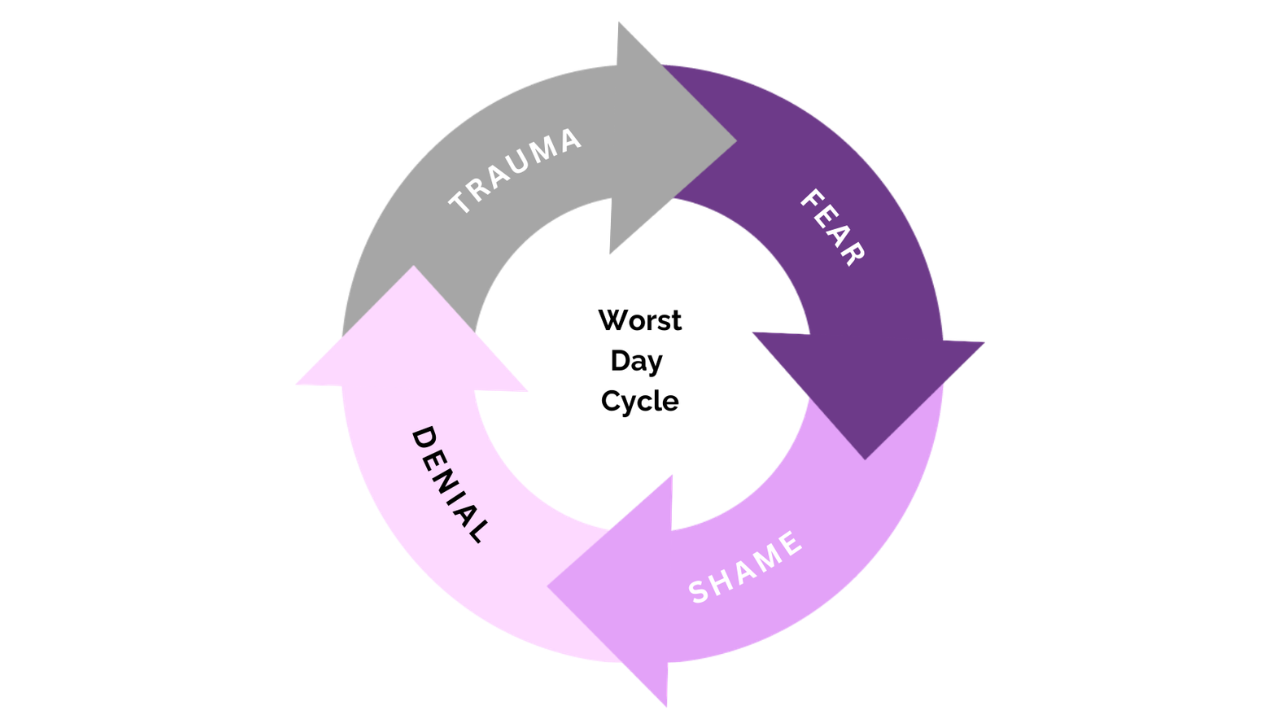
    The WDC consists of four parts, trauma, fear, shame and denial. This might be hard to swallow but every single one of us experiences trauma in childhood – this is unavoidable. For the Meat Suit in Bad Vegan he experienced significant neglect and abandonment from his father who often took him gambling when he was a child. He and his mother were also held hostage and he watched as his father held a gun to her head. While many of us do not experience this level of trauma. We do experience emotional injuries from our perfectly imperfect caregivers.

    Worst Day Cycle

    For Sarma the ‘Bad Vegan’, she experienced her parents divorcing at 9 years old which is a difficult experience for anyone to go through and her sister, with all best intention, took on a protective role for her, often talking for Sarma and becoming her voice – this is also what happened in the relationship with Anthony – he became her voice. Sarma ended up playing the prisoner just as she had as a child and therefore subconsciously looked for this in her partners. Someone who could talk for her and ‘protect’ her – the trauma cycle repeats.

    Many people don’t realize that they’ve experienced trauma in their childhoods. They believe they are completely recovered from it, but most often this isn’t the case. My video ‘The Wounded Inner Child’ will help you to understand more about this. When you are living in denial and not accepting that your childhood was less than perfect. You can’t recover or prevent similar events like those that took place in ‘Bad Vegan’ from happening.

    Worst Day Cycle

    When we go through these emotional and traumatic experiences our brain actually becomes emotionally addicted to the explosion of fear chemicals and hormones that are released – we become addicted to the trauma – my video on ‘The Tinder Swindler’ goes into this phenomena in some depth. Because we have been conditioned to minimize and suppress our fears, we are all stuck in it. We’ve never been taught the Emotional Authenticity Method I teach to cope with these difficult emotional life experiences.

    There is a great deal of work in science, medicine and society that has taken place around emotions because we now know that, actually, emotions do run our lives – not our intellect. Emotions come first – every thought we have starts with a feeling, and because we haven’t developed the Emotional Authenticity that we need, our brains automatically replay the unhealed emotions from the past when we experience new things or things that subconsciously trigger the same feelings we experienced as children.

    The Third Stage

    The third stage of the cycle is shame. As a child we must physically and emotionally connect to another human being to survive. Therefore when our parents are imperfect and create emotional injuries inside of us. We adapt and create a false persona to fit in. It is a survival mechanism to protect ourselves. Because it happens so young, we believe it is the real “us”. This loss of the authentic self creates a power vacuum. Shame is ultimately a power dynamic. We use this deep shame core as adults to regain our power. How do we do that? By choosing hobbies, friends, careers and relationships that mirror the injuries of our childhood. We do this because even though we have been hurt, who is responsible for the hurt? Ourselves, we CHOSE, this person place or thing.  The overwhelming truth that we are responsible for our self-victimization send us into denial.

    About Denial

    Denial is the single greatest killer on the planet today. He is the main reason you don’t have the relationship, career or life you want. This is exactly what Sarma was caught in – the shame and denial portions of the cycle. She kept going back, choosing to re-victimize herself (shame) by denying the abuse and lies that were right in front of her. Not because she is a bad person but because as a society we don’t teach about The Worst Day Cycle or how to attain Emotional Authenticity.

    To dive deeper into how denial is the single greatest killer on the planet today, I really recommend checking out my ‘Self-Deception/Denial’ playlist on YouTube so you can learn how your denial is affecting your life and begin the healing journey.

    The Worst Day Cycle is incredibly powerful. People often think that these sorts of experiences can only happen to people who aren’t smart or are defective in some way, but Sarma was a very clever woman. It happens to all of us. Many people find this very difficult to accept – that even the ‘victim’ could be responsible for bad things happening to them, but learning to accept responsibility for this is the only way to heal. Sarma wanted money, she wanted her dog to be saved and she made the choice to stay. She did these things because of The Worst Day Cycle and her lack of Emotional Authenticity.

    Resources and links to help you

    We must become an expert in the worst day cycle and how trauma, fear, shame and denial operate in our lives. My book ‘Your Journey to Success’ goes through this in detail.

    If you would like to start your healing journey then sign up to my free masterclass ‘Your Journey to Emotional Authenticity.’ Learning my Emotional Authenticity method does not take long and you will see very quickly how much better your life becomes and when you have the knowledge, skills, and tools, how easy it is to avoid being eaten by a meat suit!

    Are you looking for more solutions? Pick the one that suits your needs best!

    1- My Book, Your Journey To Success
    2- My Complete Emotional Authenticity Method
    3- My Perfectly Imperfect Private Group
    4- My Private Coaching

    To learn more watch this:

  • How to Overcome Your Limiting Beliefs

    How to Overcome Your Limiting Beliefs

    Think about a limiting belief you have right now. What is it? “I’m not attractive,” “I’m not smart,” “I’m not thin enough,” “I don’t make enough money,” whatever it may be. Do you notice when you think about that limiting belief that the feeling is very negative? It matches with the negative thought. That is because a belief is when our thoughts and our feelings line up.

    Now try and change it. Tell yourself “I’m beautiful,” “I’m intelligent,” “I’m sexy,” “I’m rich,” whatever – you’ll notice the feeling hasn’t changed. You don’t feel more attractive, smart, fit, powerful. That’s at the heart of every limiting belief and this is why personal development programs produce limited results. They all teach that we need to change the way we think about ourselves, but no amount of thinking will change what we feel; until we gain Emotional Authenticity, we will never conquer our limiting beliefs.

    Why do limiting beliefs happen?

    The first thing to recognize is how the brain and bodywork. With every piece of information we ever take in, whether we see, smell, touch or taste it, we first have an emotional reaction. That is because all incoming information checks our emotional centers first. Our brain is checking our previous emotional experiences so they can be categorized. All this happens well before we are cognitively aware. Because in the past you got sent the message that you’re not capable or smart or beautiful. You are replaying those feelings. That is why when you try to talk positively, you can’t believe it. The previously unhealed feeling is more powerful. Therefore, we all become what we feel, not what we think. If you have limiting beliefs, you have to shift the way you feel. Limiting beliefs are part of The Worst Day Cycle. I share that full process in my book, Your Journey To Success.

    How do you change previous emotional experiences? Begin healing The Worst Day Cycle!

    Step one

    Step one is to learn about your feelings. At the top of my website www.thegreatnessuniversity.com inside the tab titled “free content,” you’ll find a feelings wheel. Print it off and start tracking your feelings a few times a day over the next 3-5 days. This will help you become able to identify how your limiting beliefs are associated with emotion and will help you put a name to those emotions. When you become aware of which feelings are creating your thoughts, you become more able to start progressing in the process of healing your pain.

    Step Two

    Once you check in on your feelings ask yourself where in your body you are feeling those emotions. This step is critical because we store those traumatic emotional memories physically in our bod. Our physical and mental health are so closely entwined to negative feelings, we start to feel them in places in our bodies. This could be the tension that you hold in your shoulders when the limiting belief presents itself or it could be a stomachache, which is really common in anxious children. It could be a headache, cold-like symptoms, fatigue, muscle strain, arthritis, chronic pain or any number of other ailments. Become aware of how these feelings are actually affecting your health.

     Step three

    3. The third step is to ask yourself when was your first memory of that feeling associated with your limiting belief? For most people over thirty, you’ll remember something within the last one to five years. Write it down. Then ask yourself about your next memory and write it down, and then your next and your next until you can’t go any further. You’re going to see you’ve been repeating this limiting belief for decades. Eventually, you’re going to arrive at an original moment in childhood when you experienced this hurtful emotional event that has caused you to create your limiting belief. It’s likely to have been your parents or caregivers who taught you to have these feelings. This means your parent’s perfect imperfections and their own unhealed pain was placed into you, it created this limiting belief that you have been carrying for them all of these years. You have just discovered  The Worst Day Cycle and how you have been replaying the pain from the past for most of your life.

     Journey To Success

    Unfortunately, the process is far too long to go through in a single article, I wrote my book Your Journey To Success based on this cycle. But, I have resources to help. If you go back to my website www.thegreatnessuniversity.com and the same tab “free content,”  you’ll find another free download called 10 Simple Steps to Heal Emotional Pain. It walks you through the complete process to heal and shift that emotional pain.

    You’re going to learn to take those hurtful moments that have left you defeated, frustrated, and stuck for decades and create new feelings, thoughts, and beliefs that work for you. It was somebody else’s pain that was dumped into you, and you’ve been carrying it for far too many years. You’re going to learn how to give it back to them. With those feelings no longer plaguing you, it becomes possible to say, “I’m beautiful,” “I’m intelligent,” “I’m sexy,” “I’m rich,” or whatever else you desire and believe them. You’ll now be able to create the appropriate feeling authentically.

    Remember: we become what we feel, not what we think. The Emotional Authenticity process of healing The Worst Day Cycle provides you with the knowledge, skills, and tools to create the beliefs that can change your life for the better and overcome your limiting beliefs.

    Are you looking for more solutions? Pick the one that suits your needs best!

    1- My Book, Your Journey To Success
    2- My Complete Emotional Authenticity Method
    3- My Perfectly Imperfect Private Group
    4- My Private Coaching

    Learn more here:

  • How To Heal From a Narcissistic Parent

    How To Heal From a Narcissistic Parent

    The experience of being raised by a narcissistic parent is just devastating and the consequences and effects last a lifetime. It is devastating to be left with feelings of emptiness – or filled with confusion and sadness, or the sense that we’re unlovable by those who are supposed to be our greatest protectors.

    This article will offer suggestions that will help you heal from this dynamic and provide you with some tips to get started on the recovery process.

    1. Educate yourself (what you’re doing right now)

    You’re already making a great start. Educating yourself is important and here’s why: studies show that the biggest boost of self-esteem we get comes from learning.

    The core wound for those raised by a narcissistic parent is low self-worth and low self-esteem. Our identity and worth come from our parents and if they’re incapable of giving that — of creating that healthy attachment and bonding that every human being needs — it leaves us with a gaping, empty hole we then have to fix. Learning is a great way to start filling that hole.

    Whenever we learn something new, there’s this massive chemical reaction inside of us — we love ourselves more for learning well. Therefore, make learning a priority. Learn about the negatives like how bad narcissistic parents are, but also learn about the positives like recovery and the journey into yourself. Don’t stop there, learn about new hobbies like ballroom dancing or painting or any other hobby; the point is to learn. Make sure you also take advantage of my free downloads here: http://kennyweiss.net/resources/

    2. Seek trauma recovery

    We can’t get out of this on our own. In life, if we want to achieve anything, we have to take classes with a teacher to guide us.  We need someone who has the skills and tools that our parents never had to guide us along that journey. Find somebody and make that investment in yourself.

    Sadly, many people will define that as a cost and have many reasons or excuses to avoid this step, but what they’re avoiding is their worth and their recovery. They’re avoiding the ability to love themselves and the ability to love their own children or spouse or anyone else. Unless we pursue trauma recovery, we are severely limiting our life capabilities. I personally don’t see any o us as a “post.” I believe we are all worth the investment.

    3. Do grief work

    There are five stages of grief, right? Shock/denial, anger, bargaining, sadness/depression, and acceptance. Most people live their life in the first three stages. They don’t let in the weight of what they have experienced. That then expresses itself in anger, which manifests in poor relationships, being shut down, addictions, and similar things. Then with bargaining, they look for any excuse or reason not to do the work because they’re trying to avoid step number four, the sadness. Society tends to manipulate people into a false sense of nirvana when there’s really a lot more pain and dysfunction than we ever talk about or deal with. This is how we minimize the effect of what we experienced in childhood.

    This is why grief work is so important — it recognizes in all of us the part of ourselves we’ve neglected, our pain. Our denial of that pain is robbing all of us of true health. Instead, society keeps projecting the need for perfection when what we need to be dealing with is our imperfection. The day we learn how to heal our pain and imperfections is the day we start achieving acceptance and freedom.

    4. Stop the self-abuse

    Because of developmental trauma, we are all stuck in a cycle where we project perfection and hide imperfection. We need to rip off the band-aid and confront the denial of these imperfections. We do this by becoming an expert in our imperfections. When we can accept the deepest, darkest, most broken pieces of ourselves how could we not love ourselves? Do you see that when we can accept the most horrible thing that we never want anyone to know, it is proof of our self-love because we no longer care if others know? You can read more about this concept in my book, Your Journey to Success.

    5. You need to reparent yourself

    A narcissistic parent is immature; they never matured out of the narcissistic stage we all go through in early childhood development. So we need to learn how to parent ourselves. How do we do that? We need an expert. That’s part of why we have to hire somebody to help us with the trauma recovery. They also need to teach us what developmental deficiencies are. We need to use experts to help us become aware of them and essentially need to find a surrogate parent. That can be done through the use of support groups, coaches, counselors, and therapists. They become the trusted advisor we never had until we can become it for ourselves.

    So if you have been raised by a narcissistic parent, it’s incumbent on you now that you’re the adult to go heal yourself. I offer plenty of free content for those looking to heal on my free online magazine site, www.thegreatnessuniversity.com. It’s perfect for those who are in the discovery phase of the process and are ready to take action. There is plenty of content on self-love, codependence recovery, narcissism recovery, and more with options to watch videos, read, or a combination of the two. There are also a ton of free exercises to download.

    If you feel you are ready for the full process I would suggest looking for a trusted expert in the field to guide you along the journey of recovery. If you would like to learn more about all the different ways I help people which include online masterclasses, private groups, and private sessions, you may email me directly at kw@kennyweiss.net.

    Are you looking for more solutions? Pick the one that suits your needs best!

    1- My Book, Your Journey To Success
    2- My Complete Emotional Authenticity Method
    3- My Perfectly Imperfect Private Group
    4- My Private Coaching

    Learn more here:

  • The Signs Of Childhood Emotional Neglect

    The Signs Of Childhood Emotional Neglect

    Childhood emotional neglect can show up in your life in 15 ways. Contrary to belief, we may think some signs are “proof” that we didn’t experience childhood emotional neglect, but they are proof that we did.

    What creates emotional neglect? When a parent doesn’t meet a child’s attunement needs. The child’s attunement needs are often repeatedly ignored, or their feelings are invalidated. As loving parents, we may say we love our children; although we say it, children may not just know that we love them. For our children to not feel emotionally neglected, they require focused emotional attention. The best way to describe that is the ability to, as a parent, defer your life stress, relationship problems, addiction problems, emotional problems, everything that we adults usually struggle with, and be entirely emotionally present for your child. Basically, “Hey, I’m here for you.”

    Childhood Emotional Neglect

    Let’s be honest; most of us parent with other things on our minds. We’re constantly multitasking. We’re running businesses, pleasing our spouses, feeding the dogs, and doing all these things where we are just dragging our kids along. So then the attention is no longer considered focused attuned attention, more like co-opted attention or multitasking attention. That contributes to the feeling of emotional neglect. Our children are a partial thought and many times an afterthought.

    That is why I say, in my experience, I have yet to meet a single person who has not experienced childhood emotional neglect. Although some may argue that they didn’t experience emotional neglect, it’s just not possible. We’re all human, and every parent, at times, will try and multitask their parenting, and when they do that, they are emotionally invalidating and ignoring their child’s attunement needs. It doesn’t make parents bad parents. It is just a fact of life, parenting is hard, and life has many demands. Therefore this isn’t about blame. It is about admitting the truth and taking responsibility. So now that we are in reality and recognize this is a universal dynamic let’s get into the characteristics.

    What are some characteristics that show up as an adult?

    1- Few childhood memories

    Having big blank spots in our childhood, memory is a prevalent indicator of emotional trauma. It’s a self-defense technique, a dissociative technique. To dissociate, we block things out. We don’t want to feel the pain of those moments, so we have big blank spots. The reality that most people remember very little of their childhood shows how prevalent neglect is for us all.

    2. Saying, “I don’t know a lot.”

    This tells us that, as a child, the parent did not allow the child to express or choose their morals, values, needs, wants, negotiables, and non-negotiables. That is why subconsciously, they feel as though they aren’t allowed to make a choice, even as adults.

    3. Perfectionism

    We all know what that means, believing that we won’t get any attention if we’re not perfect. Perfectionism is a direct attempt to avoid feeling worth “less.”

    4. Feeling Blank, numb, empty.

    70% of the population does not feel, which shows us that 70% feel detached and dissociated from their childhood emotions. Dissociating from feelings of neglect for many is their only solution.

    5. Low Self-Esteem

    How are we expected to have high self-esteem when our parents were imperfect and couldn’t attune to us because of multitasking and having other things on their minds? Not that we weren’t loved, but it just happens to be the case that parenting requires a lot. Unfortunately, the defense mechanism was to blame themselves when something couldn’t be fixed in their life.

    6. Can’t ask for needs and wants or help

    When our parents are too busy to attune to us, they invariably ignore our needs and wants. Therefore as a child, we learn to ask is to be rejected. This becomes an ingrained belief. Now, as adults, when the prospect of making a request presents itself, we become blank, numb or terrified.

    7. Can’t say no or feel guilty for saying it. People pleasers

    Because we had to put our needs and wants aside, many of us became people-pleasers because we also weren’t allowed to say no! When we did, usually around the age of two, it was followed by punishment. As an adult, there is a direct correlation between saying no and punishment.

    8. Relationship instability – fear rejection, reject others easily.

    Is relationship stability possible? Or have older generations with 60-yearlong marriages just found a way to suffer through intolerable pain with each other? Most of us have been through a marriage, multiple marriages, or breakups after just 6 months to a year. We learn how to have relationships from our parents and childhood relational environment. That shows us how emotionally abandoned we all are. As a result, people with relationship instability will fear rejection or reject people easily. Easily rejecting people shows that a person is dealing with false empowerment and detachment and they were never present in the relationship. That maladaptive coping skill is learned in childhood. Typically, our society celebrates and promotes the falsely empowered side as success. Most are unaware that it’s just as dysfunctional and results from emotional hurt.

    9. Believe they can change a person.

    As adults, we place ourselves in a God-like position when we believe that we really have enough power over someone to make them change. We even stay in abusive relationships because we assume we can change someone. All because of the severe emotional neglect that we had to cover up with false power as a child.

    10. Stay so busy they can’t feel.

    I love Gary Vaynerchuck, he’s a beautiful human being who’s done a lot to help people, but when you hear him talk about his childhood, you’ll find that it was brutal. He has many businesses and keeps himself busy, he never sleeps, and I believe this is done so that he doesn’t have to feel he is running from the pain of his childhood. So many of us keep busy with activities, parenting, working out, careers, etc., but it’s always extreme, so the pain from childhood isn’t felt.

    11. Grandiose – Better than/false esteem.

    Again, this stems from the false empowerment side. Usually shown by successful athletes, actors, politicians, and those we say have “succeeded.” The internal subconscious belief is that I have become something if I achieve these things and am now worthy of love. I am no exception. Part of my career is based on this; however, I have to remind myself to stay accountable and that this is one of the falsely empowered ways to deal with my emotional neglect.

    12. Domineering and controlling

    This is a sign of success, the newly emerging “boss bitch babe” and the classic “dominant controlling man” not taking anything from anybody. But, remember, this is hiding something. It disguises how small and insignificant we can feel. This holds true for me, too; remember, I am pointing my finger at myself first. I’ve had to tear myself down and realize this also relates to me.

    13. Success or achievement-oriented

    Do you often wonder why some successful or wealthy people are the most miserable or take their own lives? They’re feeling tremendous neglect and covering over it by pursuing outside esteem to fill the hole within themselves. True success is the ability to overcome our demons, whether or not we have the money or accolades. It’s internal, not external. Unfortunately, people who have suffered childhood neglect and have not healed are pursuing the external.

    14. Critical and judgmental

    I have several videos that may be a little critical and judgmental, I try my best to be kind and loving, but I am giving critiques and judgments. Critical and judgmental people do that because they were critiqued and judged when they were young. People like me that push an agenda. While there’s nobility, we cannot separate ourselves from the truth that the drive to fix an issue comes from the pain we felt as children. We are using society and the world to heal a piece of ourselves. Like me, I’m trying to bring to reality that our childhood affects everything because my childhood affected everything. This is my passion because it’s my pain. Agendas are pushed because of internalized pain.

    15. Needless and wantless

    We send the message that neither a man nor a woman needs a relationship with the other. The falsely empowered believe they can navigate life on their own. To be open, vulnerable, or emotional is to be weak. This is a direct result of being emotionally neglected as a child.

    All of our parents were perfectly imperfect, so we suffered childhood emotional neglect at times. The first step in healing this is to accept that reality. We must be willing to live in truth. Once admitted, we can begin taking ownership by developing the skills and tools to provide the emotional care we never received.

    Are you looking for more solutions? Pick the one that suits your needs best!

    1- My Book, Your Journey To Success
    2- My Complete Emotional Authenticity Method
    3- My Perfectly Imperfect Private Group
    4- My Private Coaching

    Learn more here:

  • What Are The Benefits of Neurofeedback?

    What Are The Benefits of Neurofeedback?

    Let me begin with a part of my personal story as a clinician. I have been a clinician in the counseling field for a little over 40 years. In my practice, I have always worked with individuals with more complex issues, usually relating to emotional, physical, and sexual trauma. In addition, I have worked to find better tools to help heal people more effectively and more efficiently throughout my career in this article we will look at the benefits of Neurofeedback.

    So a person walks into my office with depression. In my opinion, depression is usually related to trauma or head injury. The idea that depression is a chemical imbalance came from a TV commercial. Regardless, my standard protocol when they came in for treatment was to send them to their doctor or a psychiatrist, and they would be put on anti-depressants- many for the rest of their lives. I won’t get into the problems of psychiatric medications, but I am not a fan. There are multiple side effects, and in recent studies, both longitudinal and re-testing the effectiveness, most drugs are no better than placebo except in very severe cases. I believe that Big Pharma has done a marvelous job marketing the medical community and the general population while skewing their studies and results.

    Devastating Story:

    So one day, a client walked in telling me a devastating story. But, as I listened, I noticed a real difference. I had previously worked with this person for years. They were exceptional at working on their issues, but this was not an everyday problem; however, they did so with balance, appropriateness, and moderation as they talked about this crisis. I was shocked by the story I heard, but I was more shocked by the change that had taken place in my client. So I asked them! “What happened to you?” The long and the short of it was they had begun treatment doing Neurofeedback. At that time, I had been a clinician for 30 years. I had no clue what they were even talking about. So I asked, “How, what, when, and where? (If you want to read more detail about this story, you can go back and read my first blog on Kenny’s website.)

    Well, that began a journey, and essentially, a new career for me. I learned that this process called Neurofeedback started in the sixties with a NASA scientist. I won’t go into the history here, but it was not a treatment. It was a type of brain training where individuals could learn to self-regulate and change their brains significantly that most no longer had their disorder. Furthermore, it did this without any adverse side effects. The training took from 3-6 months, and when most people finished, they were done….forever.

    This process was not a hoax without a scientific basis. In fact, it is an evidence-based treatment that was built on years of scientific study, and not just a few studies, but thousands. The studies weren’t from a remote individual like many options today, but from major universities like Harvard, Stanford, UCLA. It was a well-known and well-studied process in top universities in Europe and Russia.

    Education:

    So I jumped in with both feet. I found the best education. I found the best mentors, including Dr. Joel Lubar. Dr. Lubar was one of the individuals who started neurofeedback treatment at the University of Tennessee in the late sixties. I also got the highest level of certification possible and purchased the best equipment and software available. I maintained these standards from the first day until now. Ten years ago, I began treating people in my clinic at Heart Matters.

    Here is what I discovered. As the saying goes, the proof is in the pudding. I have seen a woman who couldn’t talk without stammering and stuttering speak seamlessly in 5 weeks of training. We didn’t do speech therapy. We trained her brain’s speech networks. She had been in this condition for seven years.

    I saw another person who experienced the loss of feeling in her left arm and hand due to a stroke twenty years previously. She couldn’t hold anything in her hand when she came in unless she looked at her hand. When she quit looking, she dropped whatever she was holding. When she left Heart Matters, she could hold onto whatever was in her hand because she could feel it, whether she looked or not.

    I would estimate that 95% of the people who have come into my office on medication for depression or anxiety leave training off medication and symptom-free. They become self-regulated over their moods.

    Bipolar:

    I have treated seven patients with bipolar. Of those seven, five have been symptom-free and off medication now for years. I used to say six, but one person had chosen to stay on medication, although he had been on meds for over a year when he came to me. Just before seeing us, he was averaging three psychotic episodes a week. He came to us from a mental hospital, and was symptom-free after ten training sessions with us and He has had no further symptoms since leaving us except memory issues from his medication.

    Furthermore, he has returned to work as an accountant without any interruption for the past three years. I have treated a multitude of people with PTSD successfully. Likewise, I have treated tic disorders successfully.

    T

    One area that we have had great success with is learning disorders like dyslexia and ADHD. I cannot tell you the number of people who come to us with an ADHD diagnosis who do not have ADHD. So one of the benefits of working with EEG is that we can see what is going on in an individual’s brain. ADHD is primarily caused by a slowing in the frontal lobes and the midline of the brain. Often people come in with this diagnosis after being put on medication to speed up the slow activity when they don’t have slow activity. These medications are akin to speed. It will sharpen focus for anyone, but there is also a high, which I do not think is good, especially for kids. Regardless, most people come into our clinic having an issue with anxiety. Their brains are not too slow. Their brains are too fast. Adding speed to this brain often creates several side effects like irritability and anger outbursts. An anxious brain lacks focus and concentration, so it is an honest mistake by those diagnosticians. The symptoms fit both categories, but the treatments are very different.

    Story of 9 Year Old Girl:

    I want to tell a story about a 9-year-old girl who came to see us at Heart Matters. She came in with a diagnosis of ADHD and ODD (Oppositional Defiant Disorder). We did our assessment called a QEEG. She did not have a slow brain nor a brain characteristic of ODD. Instead, she had a fast anxious brain and an auditory sequencing issue. The auditory sequencing problem caused her to hear delayed. Imagine this girl’s daily life in class. She is trying to pay attention and on the front row in her classroom. She is anxious because she doesn’t hear in real-time (although she doesn’t know it) and is afraid she will miss being called on by her teacher, and then she will be in trouble.

    This scenario plays out day after day. She and her teacher are frustrated. They send her to the doctor, who puts her on medication—the meds don’t help. Finally, her parents are at their wit’s end. They bring her to Heart Matters. We correctly assess her using QEEG. We begin brain training. Her anxiety is significantly reduced, her auditory condition is corrected and her dad calls me up and tells me she has just read a nine hundred-page book in two days. Does that sound like focus and concentration to you? She started the following year in a new class with a different teacher. The teacher thinks she’s a rock star!

    So here is the question. Since Neurofeedback is a process backed by 60 years of clinical science and research that is effective for most people to treat many psychological and learning disorders without side effects, and most people no longer need further treatment. Why wouldn’t you try it?

    I realize that many of you are not in my area in Colorado, and Neurofeedback, for the most part, requires in-person treatment (some providers can train with Neurofeedback remotely.) So what should you look for in a clinician as far as training and experience? I will answer these questions in the next blog segment.

    About The Author Mike Pinkston:

    For nearly 40 years, Mike has been helping others heal from complex emotional, physical, and sexual trauma and abuse. He is also an expert in diagnosing and treating PTSD, Dissociative Disorders, as in multiple personalities, sex addiction, Love addiction, love avoidance, and Codependence.

    He is also an expert in parenting and marriage, and family structures. Mike has advanced certification in EMDR and clinical hypnosis. Mike is also a leading expert in Neurofeedback training, a cutting-edge treatment for many emotional and psychological difficulties that regular talk therapy and medication can not find solutions for. Things like ADHD, Bipolar, Anxiety, depression, PTSD, Addiction, and much more.

    Finally, Mike has also spent over 25 years supervising and mentoring other clinicians.

    If you are looking for more information about Neurofeedback or want to contact Mike for an appointment, contact at:

    Mike@theheartmatters.org

    719-257-3488

    www.theheartmatters.org

    I am fortunate to have called Mike my counselor and now my friend and colleague and am forever indebted for how he helped me save my life.

    I am also the client Mike refers to in this article who walked into his office so drastically different which led him to become an expert in Neurofeedback.

  • Your Trauma Is Affecting Your Manifestations

    Your Trauma Is Affecting Your Manifestations

    The inability to manifest our dreams or activate the law of attraction is trauma. It’s always trauma. Specifically, childhood developmental trauma is in our way.


    What the research shows


    The groundbreaking Adverse Childhood Experiences study shows that at least 70% of us have been through at least one traumatic event as a child. Of that 70%, 88% have been through two or more traumatic events. Famed cell biologist, Dr. Bruce Lipton, points out that 70% of all the messaging we receive in childhood is negative, self-sabotaging, and hurtful.

    If you listen to the participants posing questions at an Abraham-Hicks or other teachers of the law of attraction event, you’ll find one common theme throughout pain. The way and type of questions posed show that there’s always unresolved trauma in the person.

    The barriers to the law of attraction

    The whole premise and teaching method of the law of attraction is to feel what you want. Going back to the research of how the brain and body work under trauma, when we have a traumatic event, especially in childhood, it creates this massive chemical explosion within our body and becomes ‘known’ in our body. This “knowing” makes an emotional chemical addiction repeat that painful experience.

    Because it takes tremendous energy for our brain to work, the brain’s solution is to conserve energy by repeating things it has already done. It doesn’t care if it’s been bad for us – it doesn’t know right from wrong – it just defaults to the position that a known experience is a lot better than an unknown experience. So it’s always trying to avoid anything unknown and trying to repeat what it knows so it can rest.

    Unfortunately, when we look at the Abraham-Hicks responses to questions that have so much pain behind them, trauma is never addressed, and that’s because if someone is not an expert in trauma, they won’t be able to recognize it as a barrier. The trauma that is underlying these people’s conditions is therefore left unresolved. That unresolved trauma keeps the audience from creating the “feeling” required to manifest their dreams. Therefore, those unable to latch onto manifestation cannot do so because of their childhood traumas.

    The key to manifesting what we want is the ability to have Emotional Authenticity because no matter what somebody’s struggle is, whether that’s a career, relationship, or anything else, it all goes back to our emotions. Because of the way our brain and body work, it’s always a feeling before a thought. Therefore, thought-based programs aren’t the solution and will have minimal effect.

    Now, where do we learn about our feelings? Where do we get our perceptions and learn how to make determinations about our feelings? From childhood. From our parents. So the bottom line is this: if something isn’t working in our life, it all goes back to our childhood, the traumas we experienced, and the feelings that became programmed, and we are stuck repeating against ourselves. The stored traumatic feelings are what get in the way, so the question becomes:


    How do you turn it around?


    1. Become an expert in the ability to evaluate your own life. Understand how you are reliving your trauma against yourself. Because that’s what we’re doing, we’re subconsciously putting ourselves in situations that replay our traumatic experiences because of that desire our brain has to reuse information. So, we need to become aware. Most people will say that they have never experienced childhood trauma, but that’s a lack of awareness. Trauma presents itself in different ways, and it’s essential to dive into your personal trauma.

    An example of childhood trauma could be your parents mishandling finances, putting pressure on you to take on adult responsibilities at too young, or creating an experience of food insecurity. Of course, not all trauma is abusive. However, these traumas affect how you interact with related problems in the future – maybe you’re not good with money, struggle to maintain positive relationships, or have a poor understanding of food. Once you are aware of how these traumas affect your daily life, you’ll be able to start moving forward.

    1. Practice Emotional Authenticity. When you understand your emotions, you’re better able to find solutions to moments where you feel off-balance. Maybe the solutions you usually go for won’t work, but how will you know unless you are indeed an expert in evaluating your life?

    The law of attraction isn’t always about getting something. It’s about learning to gain Emotional Authenticity so we can create. Suppose you can spend the time digging through your trauma and reprogramming your subconscious, and learning to develop positive emotional responses to things. In that case, you’re not going to see things negatively anymore. Intuition and emotion are the keys to success in life.

    It’s not all about manifestation and dreaming all day, though. It’s about putting in hard work to master your emotions, to understand your trauma, and to move forward. You’ll start to notice that positive things begin to come once you do these things. That’s how you create the law of attraction. Your recovery is the ‘doing’ part of healing, but once you get there, it’s all about simply ‘being.’


    Exercises that will help you succeed


    Two free exercises are available to download under ‘Resources” on my website. http://kennyweiss.net/resources/ 

    The first is called “How To Remove Feeling Rejected’. This isn’t just about rejection; it goes deeper than that. Any time somebody says something or does something to you, it might feel like a personal attack. What they say is one thing, but what you hear is another – you don’t have enough worth. It’s not what they are saying, but it’s how you perceive it. This is proof of childhood trauma. And this journey book will help you overcome that.

    The second is called “How To Heal From Codependence. Giving the pain back.” This one will walk you through the much deeper process of healing many of the traumatic moments you’ve been through.

    You may need a professional like me to help guide you through your recovery, (you can learn more here. http://kennyweiss.net/coaching/) but these will allow you the opportunity to start on your own.

    The most difficult and important step in manifesting the life you want is to take ownership of what you have been through in childhood. Acknowledging that your parents were perfectly imperfect and left wounds in you does not mean that they were terrible parents, only that they are human. It is loving to ourselves and our parents to live in truth.

    Enjoy The Journey ??

    To Learn More, Watch The Video Here:

  • How neurofeedback achieves what medication and therapy cannot!

    How neurofeedback achieves what medication and therapy cannot!

    I was reading in the preface of Sebern Fisher’s book Neurofeedback and the Treatment of Developmental Trauma: Calming the Fear Driven Brain comments made by her friend and mentor Bessel A. Van der Kolk, MD. Just a little background on me and Dr. Van der Kolk.

    I have been involved in the field of trauma almost from the beginning of my clinical career, which began over forty years ago. Before Dr. Van der Kolk had published books

    .I discovered papers he had written on PTSD and trauma resolution. The one that comes to mind is The compulsion to repeat the trauma: Re-enactment, revictimization, and masochism (1989). Dr. Van der Kolk may be the foremost expert in the world.

    on trauma, its effects, and its resolution. So it caught my eye that he was writing the Foreword to this humble clinician’s book. In the Foreword, he makes this comment:

    “Neurofeedback training has been shown to improve cognitive flexibility, creativity, athletic control, and inner awareness. I do not know of any other psychiatric treatment that can do this.” (Emphasis is by me).

    What astounds me about this statement is that Van der Kolk is a psychiatrist. I naturally assumed he would say that psychiatrists are trained to treat an individual’s disorders with medication.

    The context of this statement was describing peak performance for athletes using brain training with neurofeedback.

    However, the larger context was developmental trauma and how it handicaps its victims from interaction with the world and creates debilitating fear in its victims. He defines this all-encompassing fear as being

    “…usually the result of severe childhood abuse and neglect- otherwise known as developmental trauma- in which lack of synchronicity in the primary caregiver relationship leads to abnormal rhythms of the brain, mind, and body.”

    My astonishment subsided when I remembered reading in the early 1990s Van der Kolk encouraging his fellow professionals by saying,

    “don’t medicate your clients. Instead, learn and do EMDR.”

    This created vast waves of criticism from his peers. This was before he went to neurofeedback.

    For those who do not know what EMDR is, it stands for Eye Movement Desensitization and Reprocessing, and Dr. Francine Shapiro discovered it in the 1980s.

    I was working with a population of clients crushed by childhood trauma and was looking for any way to help them more effectively.

    I was amazed at how quickly these damaged individuals began to respond and become better equipped in their lives. It was faster and easier on them than the prevalent theories of trauma therapy of the day. It is now considered a standard and effective treatment for treating trauma.

    I’m getting off track, but suffice it to say, I have great respect for the courage of Dr. Van der Kolk for continuing to pursue different and effective modalities of treatment for those who have been harmed the most by life’s events.

    Effective treatment than EMDR

    In 1998 I was challenged to pray for even more effective treatment than EMDR for not only trauma-related disorders like PTSD, depression, and anxiety but for anyone who walked into my door.

    So I prayed every day for something better. Then about ten years ago, it walked into my door.

    A former client came to see me. I had known this individual for about ten years.

    He was an elite athlete but had suffered from childhood trauma. When he sat down, he began to unfold the story of great sadness and disappointment. What was different was how balanced and emotionally regulated he was. He was so different that I finally asked him why.

    He went on to tell me another story of meeting an individual on the golf course, a cart girl, who told him about neurofeedback. Since I knew where he played, I had an inkling of who that young woman was. He thought I was a psychic because I was correct. He went on to tell me that he went to the clinic where she was a neurofeedback tech and started the process.

    My only exposure to neurofeedback was that young lady’s experience years before. She just happened to be the daughter of a dear friend who was also a clinician.

    Psychotic Break

    When she was a teen, she had her first psychotic break. I had known her father since I was a teen, and I knew his brother suffered from the same issue- manic, psychotic breaks, then deep dark depression.

    I called my friend and asked him how his daughter was. He told me they sent her for neurofeedback treatments. She came back well, had never been on medications, and had never suffered a reoccurrence of the disorder.

    I was dumbstruck. I asked myself, “Is that even possible?” To make a long story short, I called the clinician who trained my client’s brain with LORETA Z-Score neurofeedback.

    I spent several hours with this remarkable clinician. I even had a neurofeedback session.

    Finally, I decided to go all in. Was it possible that this could be the answer to my prayer and longing for something better to help the people who walked into my office?

    I think after ten years of clinically treating people with neurofeedback, the answer is “yes.”

    One more piece of background about me.

    I am a clinician’s clinician. Although I do a ton of research, I am not a researcher. I have never published a study, although I have read thousands.

    I believe I am built to help others heal. Although I am interested in the theoretical, I am much more interested in what works to heal people and help them be transformed into the people they were meant to be. I believe that is who I am called to be.

    Before I began practicing neurofeedback, I saw my patients heal substantially. They were less depressed, less anxious, and more engaged in the present in their life’s pursuit.

    Their relationships, and their families. They were better parents, better employees, and better spouses; however, if they had depression, it was more likely than not that they would spend the rest of their lives on medication.

    I believe that psychiatric medication is a stop-gap treatment that may help individuals get back on the horse if they have fallen off. Still, it does not cure or resolve the underlying issues which are under treatment.

    Medication

    Sometimes, however, individuals temporarily need the help medication provides. Psychiatric medication is not like a cancer therapy that successfully treats cancer and allows people to return to their pre-cancer lives.

    Can you imagine being forty and being told you have cancer, and then being told you will have to be on chemotherapy for the next 30 years? Yet, this is often what patients with depression are expected to do.

    And that was what my patients also experienced when they came in with depression. I would send them off to a psychiatrist or doctor. They must tell medication and still be on it and probably, even more, ten years later.

    I would counsel them and help them heal, but they would still be assigned a life where they would take a pill in order to live their lives, often with side effects from those pills. That is until I began treating people with neurofeedback

    Neurofeedback.

    When I began treating my patients with neurofeedback, they came in with complaints, and after treatment, they no longer had those complaints.

    They left emotionally regulated. We taught them how to literally change their brains so that they could control how they felt, how they thought, and even how to regulate different issues in their bodies. As a result, their lives can change.

    I’ll give you some examples of the powerful transformations I have witnessed since I began treating clients with neurofeedback. I had one client who had been a talk therapy client for several years.

    He had been sexually abused as a child, and besides suffering from PTSD with horrendous intrusive memories, he also had been on antidepressants for about twenty years for dark depression.

    Even on medication, he would have periods of debilitating depression. I offered him the opportunity to try neurofeedback.

    Unfortunately, he had to move away for personal reasons and did not complete our protocol, but we stayed in contact. He would tell me that he has no depression.

    I can’t get out of bed depression, to short episodes of what he called low-grade depression and anxiety. Finally, he came back. After the subsequent ten sessions, he called me up and said,

    “It’s gone! I am not in depresion at all, and I have no anxiety!”

    We finished his training with another ten sessions to ensure the brain had learned to continue regulating itself. But, again, it has never come back, which is consistent with the longitudinal studies on neurofeedback.

    I will give you another example. We had a young woman come in who was on the autistic spectrum. She was a computer scientist and a wiz at her job.

    However, she suffered from acute anxiety and panic attacks. We treated her for these issues, and she improved dramatically.

    We had a significant software update that allowed us to see how 8000 connections and 450 different metrics in the brain were communicating.

    Since autism is partially due to poor connectivity between the left and right hemispheres (autistic people are very left hemispheric dominant, which makes them great at repetitive factual detail.

    But makes them poor at gathering new and novel information), I asked her if she wanted to train the autistic network and see if we could create a new dialogue in her brain between the right and left brains.

    She said, “yes”! What happened after five sessions were totally different for us both. She wrote me this text that said something like this.

    “I am so excited. I feel like a whole new wonderful world has opened up to me. Besides being even calmer internally, I can see, hear, and feel things I have never experienced before! This is amazing!”

    She wanted to write a case study on her experience and present it for publication. She has also decided to consider going back to school and seeking a degree in neuropsychology.

    In my initial paragraph, I quoted the most prominent researcher in the world of PTSD.

    “Neurofeedback training is able to improve cognitive flexibility, creativity, athletic control, and inner awareness. I do not know of any other psychiatric treatment that can do this.”

    I have been a clinician for over 40 years. It offers individuals a new lease on life- free of emotional turmoil, life-long medication with side effects.

    About The Author Mike Pinkston:

    Mike received his Master’s degree in 1980 from Denver Seminary and has done extensive post-graduate work. He was certified as a Licensed Professional Counselor in 1995 in the state of Texas and in Colorado in 1998.

    Most of his practice throughout the years has been centered on helping individuals through complex trauma issues- Including sexual trauma, violent mental, and physical abuse to sexual addiction and sexual criminal behavior.

    As a member of the Tarrant Counsel on Sexual Abuse.

    Mike chaired a multi-modal committee of doctors, lawyers, psychologists, psychiatrists, and child protective services to create a screening and treatment protocol adopted by the state of Texas for the treatment of adolescent sex offenders.

    But that is not all, Mike also has expertise in PTSD and Dissociative Disorders, Codependence, Love addiction and love avoidance, parenting, and marriage and family structures.

    He has advanced certification in EMDR and clinical hypnosis. Mike has also spent over 25 years supervising and mentoring other clinicians.

    Mike changed the emphasis

    In 2012, Mike changed the emphasis of his practice from clinical counseling to clinical neurofeedback.

    After seeing the great benefits of teaching individuals how to change their brain functioning to overcome psychological and learning disorders, he jumped into this field with both feet.

    He has trained extensively with the top leaders in this field including Dr. Joel Lubar, Dr. Robert Thatcher, Dr. John Demos, Dr. Stephen Stockdale, and Jay Gunkelman.

    His primary expertise is in the quantitative assessment of an individual’s brain activity (QEEG), and retraining the brain back into normalcy using LORETA Z-Score Neurofeedback.

    He is board certified by the International QEEG Certification Board as a QEEG-Diplomate and is now an executive member of the IQCB.

    He is also a member of other professional societies like the International Society of Neurofeedback Research (ISNR) and the Society for Brain Mapping and Therapeutics. He’s also mentors medical professionals, psychologists,  psychiatrists, and other clinicians in learning how to accurately assess patients using QEEG, and then applying the assessments to practical treatment using neurofeedback.

    If you are looking for more information about neurofeedback or want to contact Mike for an appointment, contact at:

    mike@theheartmatters.org

    719-257-3488

    www.theheartmatters.org

    I am fortunate to have called Mike my counselor, and now my friend and colleague. I’m forever indebted for how he helped me save my life.

    I am also the client Mike is referring to in this article who walked into his office so drastically different which led him to become an expert in neurofeedback.

  • How To Stop Self Sabotage: Conquering The Worst Day Cycle

    How To Stop Self Sabotage: Conquering The Worst Day Cycle

    Welcome back! Today we’re talking about self-sabotage: what creates it and how to get out of the cycle.

    The first place we need to start is: what creates it? What makes the need and desire to self-sabotage is: we were told directly or indirectly that we had no worth as a child. what creates it and how to get out of the cycle.

    Think about it: underneath the self-sabotage is the belief that we don’t have the value to achieve it. In those self-sabotaging moments.

    we have a feeling that tells us we don’t want to take a particular action even though we know it will help us achieve our dreams.

    That sense of dread or procrastination was placed into us and stopped us from doing what we want. That feeling of anxiety or procrastination is a shame.

    It is the feeling that we will be bad if we claim what we want.

    Where does this come from?

    How does this happen? Over 80% of the people I talk to say their parents and childhood were great and perfect. I can appreciate that – personally.

    I believe every parent wants nothing but the best for their kids, even in imperfect parenting moments.

    But the fact of the matter is: our parents make mistakes. And a lot of them. I’m going to prove that to you.

    Here’s the first step to get out of denial about our childhood. Science shows 70% of the messaging we get as a child is negative, disempowering, and self-sabotaging.

    Think about that. Over 2/3 of what we heard from our parents was negative.

    Even a simple divorce causes actual brain damage and the feeling of abandonment. If we believe there were no imperfections in childhood, that means we think we were raised by a perfect human being – a God.

    That’s not possible! Finally, to get into the reality of childhood,

    I’ll ask you two questions to prove you suffered trauma or less-than-perfect parenting that still affects you:

    1- When you were a child and felt sad, lonely, or scared at anything your parents did or said, did you discuss it with them and voice it?

    No way. They probably yelled at you to get into your room and to not backtalk.

    2- Do you have any secrets from your parents? We all do. Do you see how traumatizing that is? It means that if I were to share who I really was, if they knew what I really thought, felt, or did.

    I believe they will reject me. Ultimately we don’t feel safe with our parents. That’s horrifically traumatizing! They are the two people we should feel the safest and secure with, yet we believe our truth is not allowed.

    This trauma creates what I call The Worst Day Cycle. There are four stages to it: trauma, fear, shame, and denial.

    Everyone is caught in this dynamic. Every choice in your life revolves around this cycle, and I’m going to walk you through it – it’s at the heart of self-sabotage.

    The cycle is created because we have two needs as a species: attachment (physical or emotional to someone else) and authenticity (the pursuit of who we naturally are).

    The previous questions show that our power was squashed if we were to speak our truth or pursue who we are.

    We weren’t allowed to follow our authentic selves.

    Because we don’t want to lose attachment – our survival depends on it as a child.

    In the pursuit of attachment, we lose our authenticity.

    We all downplay, deny, and justify what happened to us. We do it to stay alive.

    It’s the moment shame and denial are born.

    In those less-than-perfect moments, a big chemical explosion in our brain and body is created: fear. That chemical release becomes a chemical addiction.

    It takes a lot of energy for our brain to do anything: 25% of the calories we consume go straight to our brain. In addition, the brain doesn’t process right or wrong but rather known and unknown.

    If we’ve lived and experienced it, our brain will repeat it even if it’s wrong. The traumatic feelings got known in childhood, and the brain chooses to relive them in its effort to conserve energy.

    It’s an emotional chemical addiction that keeps us stuck. The fear we get addicted to is always one of three things: the fear of rejection, inadequacy, or powerlessness.

    Think of that moment when you went to express yourself as a child. Rejection. Inadequate. Powerlessness. It’s an overwhelming cocktail of horrifically painful emotions that get stuck in our bodies.

    The overwhelming nature of these feelings sends us into shame.

    Shame is the feeling that there’s something wrong with us – it’s internal.

    “Come on; you’re so stupid!” We learned we must be bad, wrong, stupid, or defective in some manner, either directly or indirectly, through our parent’s actions or expressions.

    This is why we self-sabotage. As a child, we were powerless, and we couldn’t argue with our parents. Now we’re adults. We get to pick where to live, where to work, who to marry. What’s the greatest way to get our power back?

    To choose things that don’t work because we get so much attention (attachment) from others. Because our brain and body were trained to repeat the miserable feeling of not liking ourselves – stuck on the emotional, chemical loop.

    We pick terrible relationships or careers to relive that pain against ourselves. It is a subconscious attempt to get our power back because I chose.

    Until we heal the original wound, this is precisely what we do: your life story is proof of it.

    Do you see how the terrible person you’re with or your bad job reminds you of the same chaos, confusion, uncertainty, and belittling dynamic in childhood?

    If you’re in denial, you won’t see it, and I urge you to seek professional help. We need help to see the tie-ins if we want to stop the cycle.

    The shame piece is our attempt to remedy how we were told, directly or indirectly, that we didn’t have worth.

    Who we were meant to be was squashed, so as a child, we develop a false persona to create attachment and survive.

    I tried out for two professional sports before deciding that neither of them was for me.

    I was only trying to gain my father’s attention and get back at my brother by repeating the agony. My brother was shooting at my head when I stopped the frozen tennis balls as a kid, therefore I became a hockey goalkeeper.

    it would make him mad. To get my power back as an adult, I relived the abuse against myself. I continued the cycle as the person in control.

    You’ll see this in every aspect of your life.

    Ask people about their careers, and you will hear how they are reliving the unhealed pain of their childhood.

    People in finance will tell you stories of money problems. Salespeople never felt a sense of worth, insurance people, no safety. The correlations are so transparent.

    All we do is relive it until we heal it. Gallup has done polls for years that show only 7% of people are happy in their careers. Now you know why.

    They are all reliving the pain and trauma from childhood against themselves; they are stuck in The Worst Day Cycle.

    This self-victimization kicks us into denial: this process shows us we have to admit we don’t know who we are. We have careers and hobbies but don’t honestly know what we like.

    Many of you will say there’s no way you’re starting over – that you can’t admit it to yourself. You may say I’m wrong.

    But science disagrees with you: 95% of our adult life, thoughts, feelings, and choices are all derived from the emotions placed into our subconscious as a child.

    Remember: our brain seeks to repeat what it knows. You may disagree with my premise, but your life story shows you the proof. You can’t outrun yourself.

    I know it’s hard to hear.

    It all comes down to imperfect parenting, but parents are not to blame – for centuries, we’ve never been taught these topics and their effects.

    Our parents don’t know any better. How can we blame – where does it end? Back to the first cell or Adam and Eve?

    Waste of time. Everyone is perfectly imperfect, and no parent can be blamed for doing something they weren’t even aware of. Many parenting skills we thought were good at the time were only later seen as abusive.

    We didn’t know. We always do the best we can with what we know at the time.

    It’s daunting enough to admit we are reliving a subconscious program, but there’s more.

    Can you see the second reason we self-sabotage and relive the cycle:

    if we accept the truth and pursue our authentic self, we give up attachment to our parents. If we heal, admit our secrets, become what we want, and succeed, we lose attachment.

    Remember, we became all of those things so our parents wouldn’t leave us. This may not make sense at first but think: what happens in a riot? People are mad at the police and government but destroy their own neighborhood and themselves.

    This is proof of the worst-day cycle. How do we celebrate as a culture? We get drunk, stoned, over-eat, victimize, destroy, and self-sabotage.

    Then, we repeat the self-sabotage and go into denial, saying these things aren’t true,

    I’m not forgiving myself for the suffering I’ve caused myself in the past?

    I didn’t make up a phoney identity to get attention; I’m comfortable with myself.

    Are you sure? What happened the last time you got drunk? You woke up hungover the next day, tell your kids you can’t play, boom.

    the kids feel rejected, and now the cycle has passed onto them. They can’t comprehend hangovers, only that mom or dad abandoned them.

    Do you remember how they tried to modify their behavior to get your attention/attachment and love? Can you now see how you did the same thing in your childhood?

    We’re all perfectly imperfect

    we can’t stop the cycle. But we can take ownership of our actions and choices and do the work to conquer the cycle. As a society, we need to talk about it openly with ourselves, friends, and family.

    We need to make it OK to end the cycle. If you’re honest with yourself, you’ll see we do all of this – everyone. I know it’s scary, but this is how we get our self-esteem back.

    If we can’t admit the truth, we have low self-esteem – we need to confront the pain, darkness, and pain.

    It hurts, but you will be in reality and gain self-esteem. It’s the recovery process.

    It’s how you get your authentic self back. You did the best you could with the information you had at the time. Now that you have new and better information, you can do something about it.

    This may be the first day in your life you actually have a choice to pursue your greatness: therefore, you are not to blame for any of your imperfections.

    You can’t be blamed for doing something you weren’t even aware of. But now you have a choice

    will you relive that pain against yourself or make a change to learn about this, do the work, recover, and end the cycle?

    If you want to make that choice, the process is pretty simple: become an expert in the worst day cycle. To do that, pick up my book.

    I lay out the exact process much more profound than I just did. Next, gain Emotional Authenticity. My book will help give you the tools to achieve Emotional Authenticity.

    Step three is to get out of denial and admit your trauma. Step four, become an expert in your fear, shame, and denial.

    Every person who’s done this process has reclaimed their authentic self: it has never failed. When there’s no denial, there’s truth, self-esteem, self-love, and authenticity. Or, as I like to call it, Our Greatness.

    Enjoy The Journey! ??

    CLICK THE IMAGE TO PURCHASE YOUR COPY TODAY
  • How To Heal From Your Past

    How To Heal From Your Past

    Hello and welcome back! Today I’m talking about how to heal the pain from our past – I’ll be laying out the entire process. Before I get started, I want to disclaim: there are a ton of modalities out there. They’re all great, and they all work yoga, acupuncture, mindfulness, etc. It’s all part of the process. But I’ve seen in my experience personally and with clients that what I’m about to share must be in the recovery process. You can’t skip this. You won’t get the full benefit of the other modalities without this – this is the foundation to heal the pain from the past.

    Here are the steps to the awareness process:

    1. Download a feelings list – I have one on my website. The text has been highlighted to take you directly to the site. Keep this with you, and for the next several days, check in. See how you feel and pay particular attention to any negative feelings. Start getting attached to what you’re feeling – this entire process is a feeling process, not a thinking process.
    2. Where in your body are you feeling this? You may feel it in the same spot every time or in different areas. Please make a note of it.
    3. What’s your first memory of having this feeling? Most people will remember it from 1-5 years ago. Please write it down. Think of the subsequent memory before that: same thing, some life event. Keep going back. Eventually, you’ll arrive in childhood where something happened. This is where all this pain comes from. For many people, their childhood was so traumatic they don’t remember much of it, which leads me to…
    4. When we don’t remember our childhood, that means your childhood was filled with trauma that you dissociated. Many people struggle with admitting this. You may not remember a specific event, but you may remember a feeling. That’s fine. Think of the emotion and the age you were.
    5. Recognize you developed an emotional chemical addiction to this pain from your childhood. You can see now that you’ve repeated this pain all your life. It’s proof your childhood was less than perfect.

    Steps to the awareness process:

    1. Recognize The Worst Day Cycle. We repeat the pain from our childhood. Our brain and body create an emotional-chemical addiction to traumatic feelings and store them in our subconscious mind. All our life, our decisions are based on this programming. Studies show that 70% of what we experienced in childhood is negative, disempowering, and self-sabotaging; we keep repeating it. We want to shift the emotion and subconscious away from this and make a good foundation instead.
    2. What are your mantras? When we make a mistake, we think we’re stupid and wonder what we were doing. We all have these mantras: “What’s the point? F*** it!” etc. This keeps us replaying in that trauma. Write these mantras down.

    Now that we are aware, we have to start the5-step repairing process:


    Step 1:

    Grief and empathy. Many of us have never grieved our parents’ perfect imperfections. We’ve never been in the reality of how hurtful those moments were. Now that we are aware, we must grieve. Allow yourself to cry and be sad. It’s unfortunate! It still affects you directly. Don’t minimize and suppress it. Permit yourself to feel the pain. Have empathy for yourself and your parents. Our parents are not bad people – they are doing the best they can.

    They didn’t have all the information, so they made loving mistakes. Give the pain back. Use your mantra as a guide. Use the painful experience and how the mantra ties into it. Feel yourself, reach in, and grab that phrase. Pull it out. Say you love the person that put it there; you knew their heart was in the right place, but it was hurtful, and you will not carry the pain anymore.

    Step 2

    There is no blame or shame. It’s empathy – no one ever taught us this. We extract the pain from us and give it back.Reclaim your inherent self. When our parents roll their eyes or get exacerbated, we separate from ourselves and lose who we are. We have to reattach to ourselves. The first step in this is rage. We never got to express ourselves or defend ourselves.

    We went along as a survival mechanism. Here’s how to express anger: write a letter. You won’t send it. This is just for you. Make it really, really focused. Get into the feeling if you felt humiliated, discarded, insignificant, ignored, abandoned. List it out – this goes back to your feelings list. It will get in touch with the sadness and rage.

    Step 3

    I suggest you get really judgmental – it’s OK in this situation. Use profanity. Let yourself rage. Release it. Get it out. You’ve been carrying it for too long. Studies show that chronic fatigue, chronic pain, migraines, arthritis, cancer, obesity, and so much more are from the suppression of rage and despair. Please permit yourself to deal with the anger. It might be difficult – you might feel like a “bad child” for giving the pain back. It was challenging for me, it still is, but this work must be done. The pain is not yours. The process never ends. Go back to the letter if you need to.

    Step 4

    Next, you have to release it physically – we store trauma physically. This is how illness and disease are formed: the breakdown of a cell during the repeated firing of an emotion that’s never been processed. I suggest reading When the Body Says No by Gabor Mate. A great example is Lou Gehrig’s disease. Just a simple questionnaire can predict it – no tests are needed. Lou Gehrig himself played 2000 games without missing one with 17 fractures in his hand.

    Yet he’d take care of a rookie who had the flu. Some people can’t say no and constantly try to help others – they suffer physically from it and can’t take care of themselves. You have to release the rage physically. Take a baseball bat to the bed, punch a steering wheel, go to a rage-house! Please let that anger rip and let it out. The exhilaration is freeing. You may have to do this several times.

    Step 5

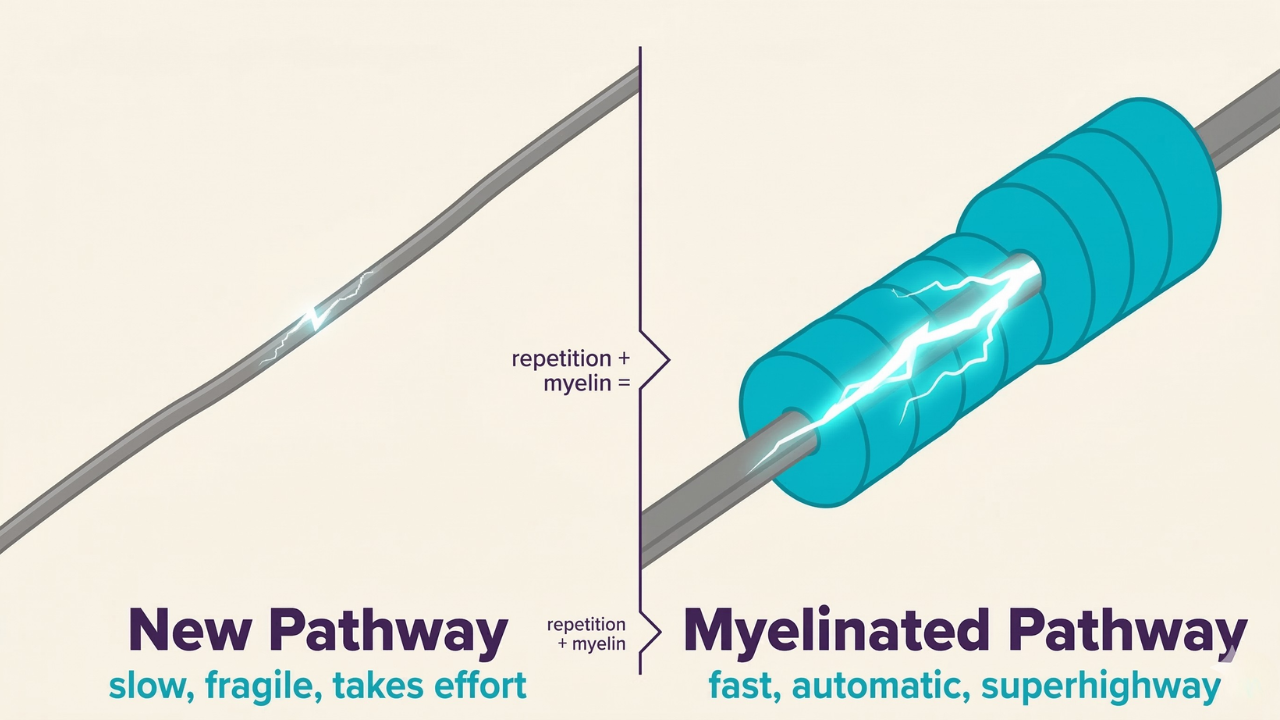
    We need to start reorienting the subconscious and creating a new neural pathway to make a best-day cycle. I call this the “Feelization” step. Sit in the feeling of being powerful. What does that look and feel like? Ask yourself what you would think and feel if you could never feel this negative thought and feeling ever again? What would be left over? All my clients say free, light, strong, safe, powerful, quiet, protected, etc. Sit in that feeling. Let your body get addicted to that new neural pathway: a sense and essence of who you’re meant to be. We can’t picture our authentic selves and who we’re meant to be for many of us.

    But, all of us have someone we respect – look for a person, place, or thing that makes you think, “Yeah, my authentic self is like that.” It could be a mountain, an art piece, a famous person, or someone you know. Ask yourself, “Is that the best version of me?” Think of what it would feel like for you to exemplify and own the best part of yourself. Sit in that. Start feeling and firing the chemical reaction. We’re trying to create a massive chemical explosion to make an imprint in our subconscious mind of who we are.

    Final Step

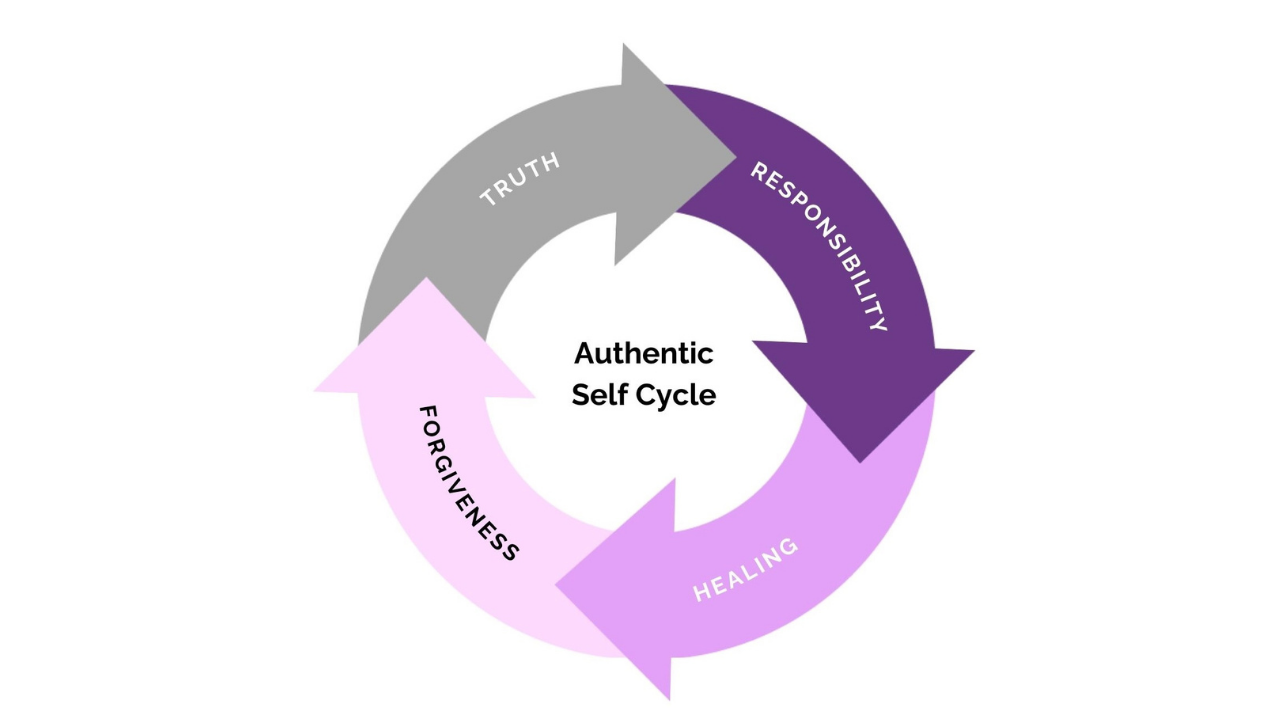
    The last piece is self-forgiveness. Many of us have a hard time forgiving ourselves because we’re just noticing the worst day cycle. It shows us the first time something happened, we weren’t responsible, but we chose to relive it in adulthood. It shows us we are responsible. Because you haven’t been taught, you are not to blame. It’s not about blaming but about getting into the reality that we do this to ourselves. It can feel horrible because of that original traumatic experience. Trauma leaves shame. It makes us feel worthless. But we need to forgive ourselves. We are always doing the best we can, even in those moments when we can’t get ourselves to do what we want. You’re the best you can be, and you can’t be blamed for doing things you aren’t aware of. As we know more, we can do more.

    Now the choice is in front of you: this is the first time you’ve had the choice. No one has taught you this – you are not flawed or defective. But now you have a choice: decide if you want to go back and heal the pain from the past. You are an infant today. You get to choose what sort of life you want to live now. You’re forgiven for what you did previous to this. There may be consequences from our past, but we don’t have to shame ourselves for it. How could you have done better? Forgive yourself, love yourself. What’s the best way to love yourself? Learn the skills and tools to turn this around. That’s how we regain our authentic selves and discover who we are meant to be.

    Forgiveness

    Forgiveness is ownership. It’s not your fault someone may have been toxic, but we are responsible for letting them into our life. Our inability to accept that responsibility is our inability to forgive ourselves. We are shaming ourselves when we don’t admit that truth. We’re keeping the cycle going and victimizing ourselves when we don’t take responsibility for our thoughts and actions. We must clear out our worst-day cycle and shame-based feeling. We must forgive ourselves.

    If you want to see more about this process, I coached a client live. The video is called 23 Minutes to Forgiveness – please watch it. She couldn’t forgive her ex-husband because she couldn’t forgive herself. I walk her through the process to realize and accomplish this. I ask questions to lead her to the answer – and she arrived at it. If you want the same experience, watch that video.

    Once we have the new neural pathway, really double down on your breathwork, mindfulness, manifestation, yoga, all of it. It will skyrocket! When you shift the way you feel, you will be blown away by the success of all the modalities.

    I hope this helped you – if you think it could help others, please like, share, and leave comments.

    Enjoy The Journey!

    Learn more here:


    Are you feeling stuck?

    Is your life just not working out the way you hoped?

    You’ve come to the right place.

    The Greatness University is a safe space for you to get back on track and achieve your dreams by offering online masterclasses that provide you with the knowledge, skills, and tools to become the greatest version of yourself!

    Through developing Emotional Authenticity, you will accept your perfect imperfections and attain self-love! Break the chains of fear, put an end to people-pleasing, and say no with ease! Break free from toxic relationships by learning to set and negotiate healthy boundaries and create the lasting love and connection you deserve.

    You deserve to be happy and have a life where you feel safe enough to show up as your authentic self.

    And we know that it takes courage – but we also know that it’s worth every single step on this journey.

    You deserve a life free from toxic people, pain, and frustration. It doesn’t matter if you’re just starting or have already walked a long way down this path – our courses will help you take the next step in your journey to the greatest version of yourself. Join us today!

    It’s YOUR turn to be Great!

    Enjoy The Journey!


  • What Is Enmeshment?

    What Is Enmeshment?

    Welcome back! Today we are talking about enmeshment: what is it? It’s not something most people are aware of – perhaps you’ve never even heard the term.

    So let’s dive right into it.

    Enmeshment is a parenting style that’s mischaracterized as loving and loyal. In reality, there are elements of psychological and emotional incest in enmeshment.

    This gets perpetrated through the behaviors and communication styles of the parents, as well as actions. It’s similar to codependence, but there are some key distinctions.

    In an enmeshed dynamic, the parent uses the child for intimacy, companionship, romantic attachment, advice, ego fulfillment, and/or emotional release.

    The key is the parents are completely unaware they’re doing this. They are also completely unaware that they struggle with unmet emotional and psychological needs, broken from their own childhood trauma.

    Society and media have not educated us on what healthy parenting looks like – it’s not the parents’ fault. We aren’t blaming; they just didn’t know. If you find in this article yourself or your family, don’t beat yourself up. It’s widespread. Give yourself grace but take ownership.

    It will allow yourself to heal.

    These parents do not see the harm they are imposing. Many see themselves as wholly devoted and self-sacrificing in their child’s best interest.

    They don’t realize they’re using their child to satisfy their own needs. This happens most commonly in single-parent households and in households where the partners aren’t getting along.

    Let’s move on to some of the characteristics:

    I’ve zoomed in on 17 of the most prevalent traits with examples. First, I encourage everyone to get a copy of The Emotional Incest Syndrome by Dr. Patricia Love.

    Don’t shy away from the title – there is excellent information in that book so tackle it.

    1. Over-involved parents. Their lives center around their children even into adulthood. They feel lost and lonely if their children are gone.
    2. They will lament when the child grows up – they are losing the romantic connection they developed.
    3. Parents who have few friends and/or little support.
    4. Parents who know too much about their child’s personal relationships, activities, and problems.
    5. They demand to be included. A prime example is a mother I know who spent the first week with her daughter at her college! That’s severe enmeshment.
    6. Parents who share too much personal information create feelings of unhealthy dependence. This happens most commonly when they lament to the child about their spouse or ex.

    Children are not developed enough to handle all of that emotion

    1. It’s very abusive. When I was little, my mom once told me she “took me for granted.”
    2. That’s the first memory I have of my mom enmeshing with me, where I felt a massive responsibility towards her.
    3. Parents whose self-worth depends on the child’s success and accomplishments.
    4. This is the classic screaming parent at the little league game. Sometimes they are trying to realize their unmade dreams through the child.
    5. This ties significantly with the recent college admissions scandal – horrific abuse. My father used to say to me.
    6. “you’re the easiest of all the kids.” The book mentioned above details a comment that it is an “unconscious device” meant to relieve the parent from the “burden of parenting.” Underneath is an ultimatum.
    7. The parent isn’t able to handle the needs of the child. Dr. Love also details these phrases to bolster the parent’s ego – it makes them feel like they are a good parent and thus a good person.

    Parents who don’t encourage them to follow their own dreams and impose their goals onto the child.

    1. They pick the activities, schools, careers, friends, all of it. They subtly or directly criticize a child’s independence. “Why do you want to live there? It’s so far from us.” Or “Fine, go out. I’ll be fine by myself.”
    2. There’s a subtle bind to keep the child there. Children owe us nothing .
    3. we chose to have children. Enmeshed parents think their children owe them something – they don’t. Our job is to create an emotional environment to let them become what they want, not what we want.
    4. Parents who expect their children to still follow their rules, even into adulthood, accept their morals and values.

    How many secrets do you have from your parents because you know they won’t approve?

    1. You’re sacrificing your own belief system to make your parents happy.
    2. Parents that shun the child if they don’t be and do what they want.
    3. Incessantly worried parents. They’re always worried their child will get hurt, not letting them do anything.
    4. Frequently, the parent is scared, and yet the child is excited! Nothing terrible will happen in most instances
    5. Allowing the child to get a scraped knee and learn from the experience is far better than acting out of parental fear.
    6. Parents spoil their children or take care of them financially. I have a client with a horrific case of abuse
    7. This woman came to me in her late 20s has not had a real job. She would rack up huge bar bills, and her mom would pay for all of it, no questions asked.

    Mom was an alcoholic and needed someone to drink with .

    1. Bad habits were OK. If my client tried any self-care like a yoga class, the mom would threaten to cut her off. She used finances to keep her daughter close to her.
    2. Thankfully this woman has made incredible progress, and remember you always can too.
    3. Parents react with anger if their adult child tries to set limits or boundaries of any kind. Parents who respond angrily to this article would be a prime example.
    4. An opposite-sex parent criticizes their child’s partner or competes with the partner for love.
    5. They’ll do anything to prevent you from feeling closeness with your partner. They’ve made you a surrogate spouse .
    6. my mother did this to me, wanting me to be her emotional support system. My mother also sexualized our relationship . she’d comment on how I look, say I was “gorgeous,” and it was said with lust. This is covert sexual abuse. She never touched me physically, but my mom’s comments and looks were indirectly sexual, which is still abusive.

    People who feel each other’s emotions.

    1. This is the classic “empath.” That’s just a new buzzword – it really means the person has no boundaries, is severely codependent, and enmeshes quickly.
    2. They can be happy, but if someone negative or in pain comes around, they immediately drop. This could be a child to parent or vice versa.
    3. Usually, it’s the child becoming the parent’s emotion. This creates the “empath.” That used to be me! It took massive work to stop doing it .
    4. it’s not healthy. Genuine empathy is excellent, but it doesn’t mean we get sucked in. We shouldn’t lose ourselves. We must heal from our abuse to grow from this.
    5. Genuine empathy has boundaries – We don’t become, absorb or take on the sadness and pain of others.
    6. Parents that expect the adult child to call them daily or frequently visit.
    7. They’ll expect the child to drop their plans and revolve around the parent. If the child doesn’t, the martyr will come out of the parent.
    8. Parents that make the child the scapegoat or conversely make the child the “golden” child. Sometimes it’s both .

    you may be in limbo and never know which it truly is.

    1. Neglectful parents. This happens in single-parent households when parents need to work and aren’t there. Or the parents have an addiction, and the children are left alone. It forces the child to become an adult far earlier than expected.
    2. Parents that sexualize their children, like the example I gave earlier. Unfortunately, I see this happen a lot – “Daddy’s little girl” and “Mommy’s little boy” is an unhealthy romantic dynamic.

    I could go through hundreds of more traits – there are so many more. I implore you, if you feel you have gone through these or are doing these things, please read the book mentioned above by Dr. Love.

    You will learn much about yourself and perhaps why you are struggling in relationships. Every parent does a level of this to their child . we all can know. Part of the recovery process is to gain knowledge to develop skills that become tools.

    I believe if you are reading this, you want to love your child as best you can. Unfortunately, we haven’t been taught the most loving ways, but we can learn now.

    If you believe you experienced this type of parenting and want to gain the knowledge, skills, and tools to heal your codependence, I have created masterclasses that will empower you to do so.

    Enjoy The Journey!

    Kenny Weiss

    Learn more here:


    Learn More

    CLICK THE IMAGE TO LEARN MORE