Category: Healing Trauma

  • ⭐Hey You Chase Love (And They Pull Away)

    ⭐Hey You Chase Love (And They Pull Away)

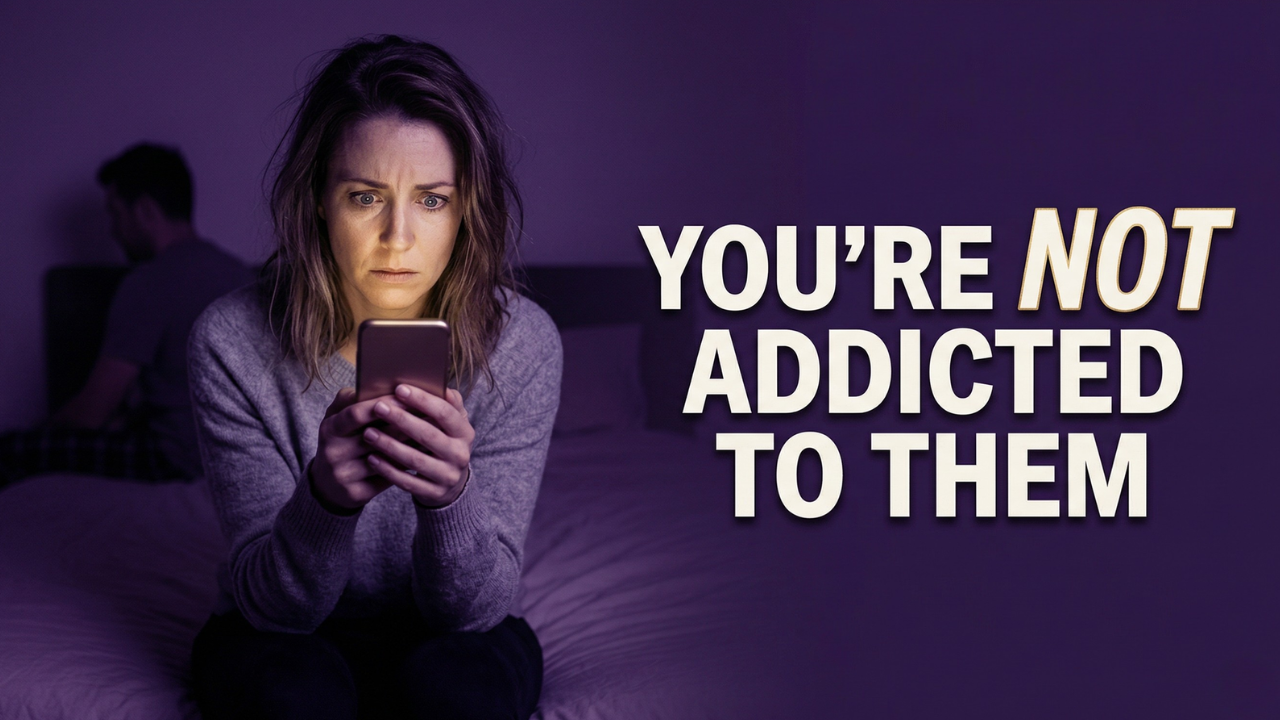
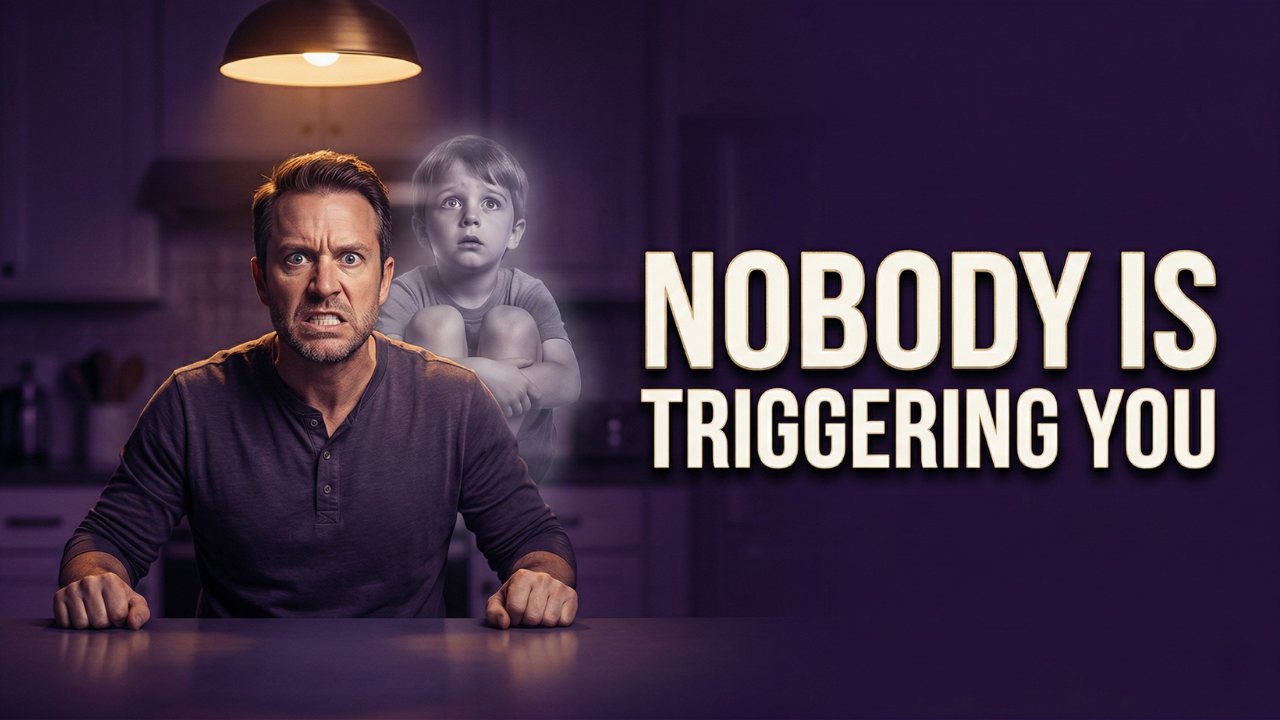
    “You don’t chase them because you love them.
    You chase them because your childhood taught you that love runs away.”

    “You’re not pursuing a partner — you’re pursuing the parent who couldn’t choose you.”

    THE MOMENT YOU START CHASING

    Let’s start with the exact moment it happens.

    Someone pulls away
    maybe a text slows down,
    their tone shifts,
    the energy changes,
    they turn distant,
    or they say “I just need space.”

    Instantly your body:

    • goes into panic
    • your chest tightens
    • your stomach drops
    • your mind races
    • you replay every interaction
    • you start fixing, soothing, chasing
    • you send the long text
    • you over-explain
    • you apologize even when you did nothing wrong
    • you start “performing”
    • you try to become the version of you they’ll choose

    But what you call chasing…

    …is actually your fear hijacking your nervous system.

    This is NOT about them.
    This is not even about adult you.

    This is your unseen childhood wound screaming:

    “DON’T LEAVE ME.”

    THE REAL EMOTIONAL BLUEPRINT BEHIND CHASING

    Chasing doesn’t begin in adulthood.

    Chasing begins the exact moment you learned:

    • love was inconsistent
    • love was unpredictable
    • love was conditional
    • love disappeared
    • love had to be earned
    • love pulled away the moment you needed it
    • love chose work, addiction, siblings, religion, stress, or silence over you

    Chasing love is not a behavior.
    It is a childhood role.

    Here are the five childhood conditions that create adult “chasers”:

    1. YOU GREW UP WITH AN EMOTIONALLY UNAVAILABLE CAREGIVER

    You learned connection comes through pursuit.

    2. YOU LEARNED TO EARN LOVE THROUGH PERFORMANCE

    Achievement = attention.
    Obedience = connection.

    It was all about what you did, how well you did it, and NOT about who you are.

    Your Achievement and Obedience are what got you attention and connection.

    3. YOU WERE THE EMOTIONAL CARETAKER

    Your worth and value came from emotionally fixing, soothing, & stabilizing them

    4. YOU LIVED IN CONFUSION

    Your worth and value came from emotionally fixing, soothing, & stabilizing them

    5. YOU NEVER FELT CHOSEN

    So you lived in the background, like the family pet at the dinner table, yearning for head scratches and any leftover scraps of love.

    So, your adult chasing is simply: Your childhood trying to finish a story it never got to complete.

    THE TRAUMA CHEMISTRY LOOP

    This part is critical.

    Your brain is formed by your emotional experiences as a child, and those experiences create an emotional blueprint we take into adulthood. Id you are a chaser, your brain became addicted to the emotional chemicals produced by:

    • distance
    • unpredictability
    • inconsistency
    • hope + fear cycles
    • intermittent reinforcement
    • longing
    • unreliability

    This emotional cycle of ups and downs is identical to what casinos use.

    Your brain gets dopamine not from love…

    …but from the chase. As a child, you pulled the metaphorical emotional safety and love slot machine handle every day, anxious to see what you were going to get from your caregivers.

    Like the gambler, you were desperate to win. And you are still desperate to win. That is why you keep picking people who mirror the emotional environment of your childhood.

    Now you know why:

    • The avoidant feels magnetic
    • The unavailable feels intoxicating
    • The distant feels “deep”
    • The stable feels boring
    • The present feels unsafe
    • The consistent feels foreign

    Your nervous system isn’t seeking love.

    Your nervous system is seeking what it survived.

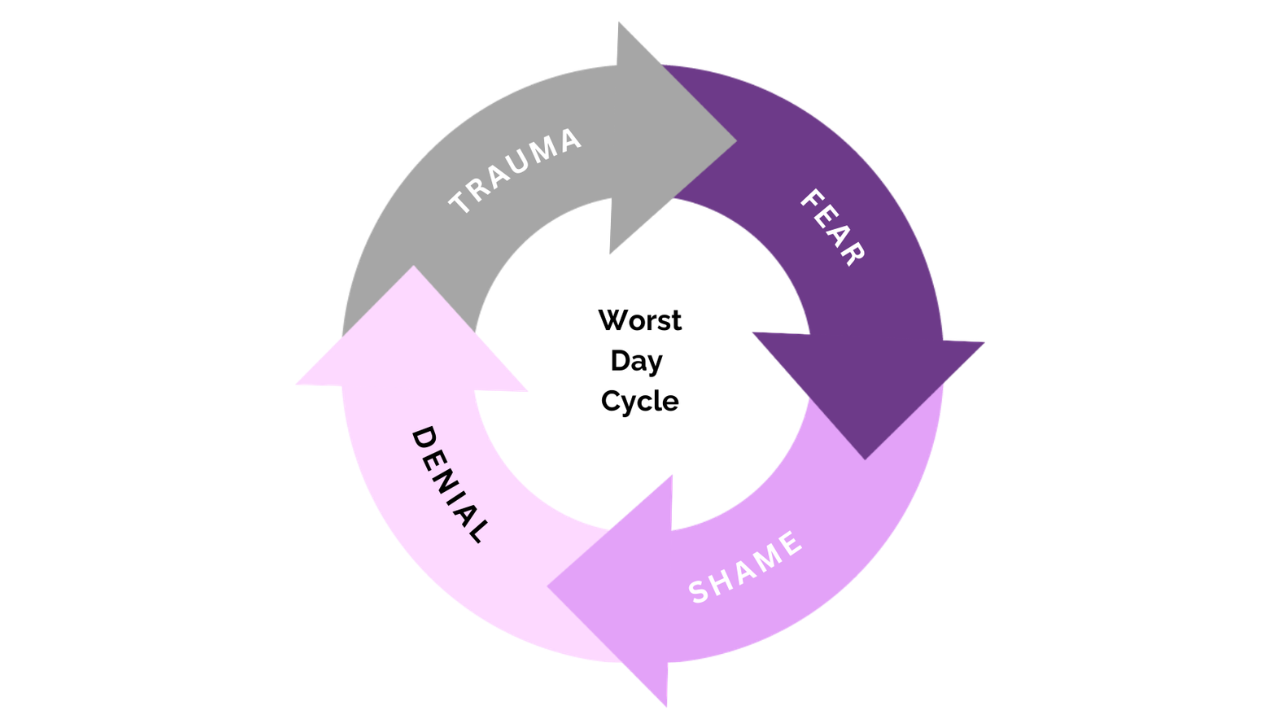
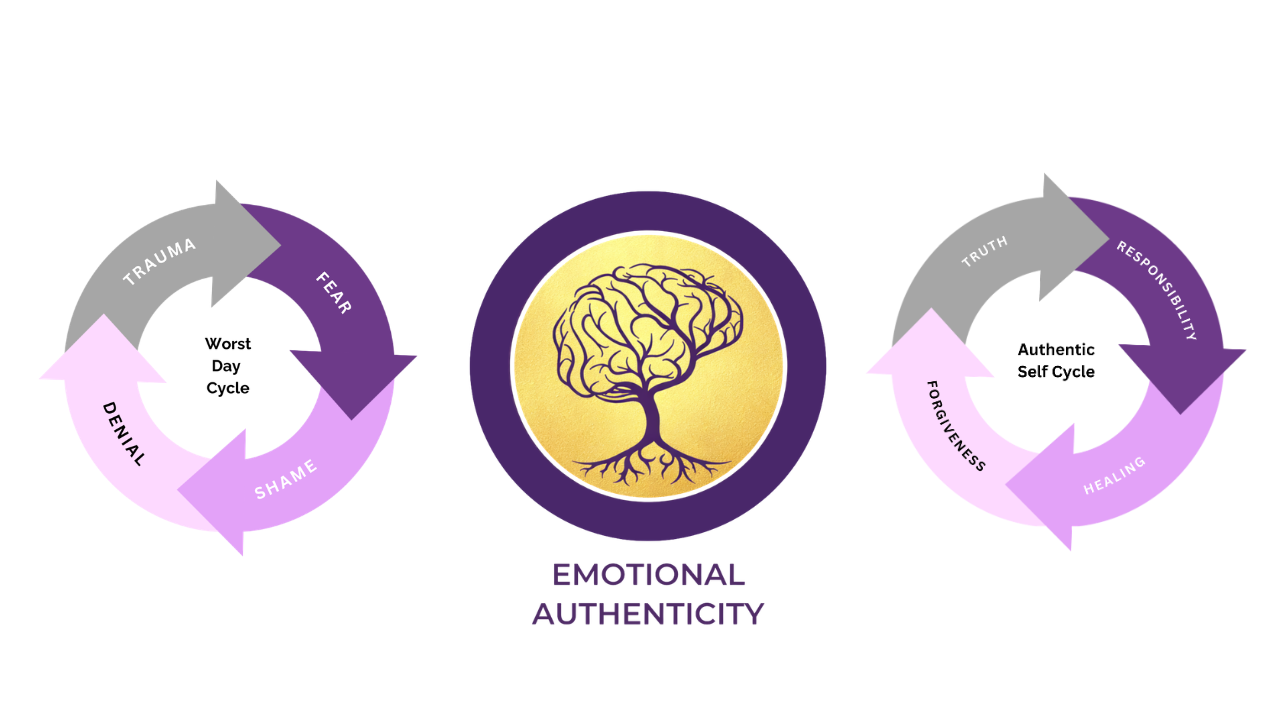
    That is because our brains are designed to repeat what they already know emotionally. It follows the emotional blueprint of what we experienced as children. This is what I call The Worst Day Cycle.

    THE WORST DAY CYCLE BEHIND CHASING

    Let’s break it down:

    TRAUMA

    The moment a caregiver didn’t choose you.
    Your blueprint has been formed, which sends you into stage two.

    FEAR

    Your brain and body become chemically addicted to the emotional state of chasing. And the chasing sends you into stage three. SHAME

    You internalize:

    • “If I were enough, they would stay.”
    • “I’m the reason they pull away.”
    • “I need to fix myself.”
    • “I’m unlovable unless I earn it.”

    SHAME

    Your emotional blueprint becomes internalized with mantras like:

    • “If I were enough, they would stay.”
    • “I’m the reason they pull away.”
    • “I need to fix myself.”
    • “I’m unlovable unless I earn it.”
    • So you only have one option. To get any emotional scraps from the dinner table of love,
      you have to cast off your authentic self, redefine what is hurtful, and call it love.
    • Now, the only way you can achieve that and protect yourself from the overwhelming
      emotional pain you are experiencing is to move to stage four.

    DENIAL

    This is where the child you came up with a brilliant life-saving strategy. To protect your authentic self from the pain and loss of care, you create a protective persona of:

    • the fixer, and the giver
    • the perfect partner
    • the calm one
    • the stable one
    • the one who always forgives
    • And the emotionally responsible one

    You chase because your childhood emotional blueprint persona learned that the only way to survive was to chase.

    It’s not who you are —
    it’s who you became to survive.

    WHY YOU CAN’T STOP CHASING EVEN WHEN YOU KNOW BETTER

    You can’t stop because your nervous system was programmed to interpret distance as danger.
    Withholding = abandonment
    Silence = rejection
    Space = disconnection

    So when someone pulls away, your body doesn’t think:

    “Maybe they’re busy.”

    Your body thinks:

    I’m losing love.
    I’m losing worth.
    I’m losing safety.

    Fear takes over,

    Shame floods your system,
    your adult self disappears,
    and your childhood wound starts frantically pulling on the slot machine handle, desperate to win love, finally

    So, you see, you’re not chasing THEM.

    You’re chasing the FEELING of being chosen.

    THE CHILD YOU LEFT BEHIND

    Now here is the tough truth that most people won’t tell you.

    The adult who’s chasing isn’t really you. It is the hurt, unhealed parts of you.
    Depending on your specific childhood environment, it might be

    • the 5-year-old who felt invisible
    • the 7-year-old who never felt picked
    • the 9-year-old who earned approval through perfection as a student or athlete
    • the 12-year-old who emotionally soothed your parent after the divorce
    • the child who learned their needs were inconvenient
    • the child who believed:
      “If I can just be good enough, they will finally choose me.”

    So every time your partner withdraws…

    …your inner child jumps forward and says:

    “I can fix this.
    I can be better.
    I can make them stay.”

    That child STILL doesn’t know you survived.
    Still doesn’t know you’re an adult now.
    Still doesn’t know love can be safe.

    What that means is that chasing is your child trying to rewrite history and find someone to be the caregiver and caretaker of your abandoned heart.

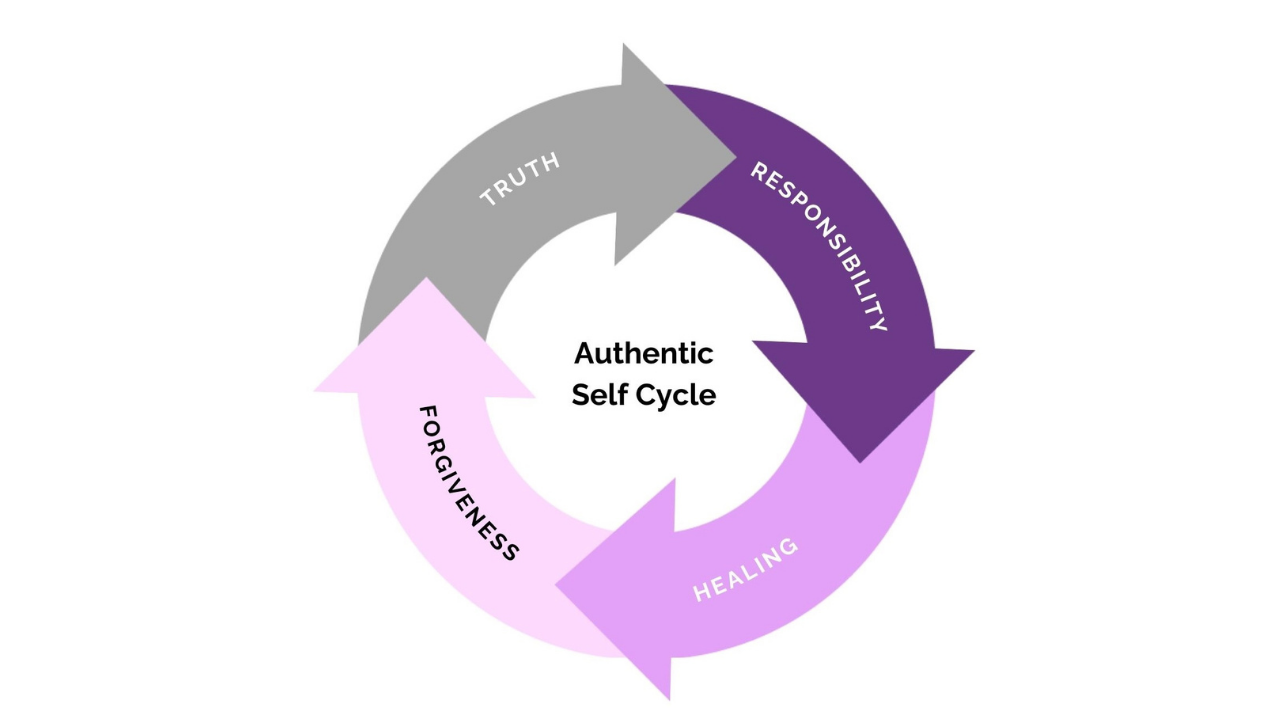
    So, how do you stop the chasing pattern? You can’t do it with superficial strategies that treat the symptoms, like Emotional Intelligence but only with TRUE emotional reprogramming that heals the core.

    The process you are looking for is the Authentic Self Cycle, which is built on developing Emotional Authenticity. That is because Emotional Intelligence has you focus on your emotions today, not the root, the place where all emotions and feelings are learned, childhood, only Emotional Authenticity does that.

    So let’s begin with the Authentic Self Cycle and step one…

    HOW TO STOP CHASING

    Here is how you stop the chasing pattern — not the superficial version, but the TRUE emotional reprogramming: The Authentic Self Cycle

    1. TRUTH

    Identify the original moment you felt:

    “I’m not chosen.”

    This is the root wound behind every chase. This is a critical step because it breaks the wall of denial and exposes the false persona your emotional blueprint had to choose to survive.

    2. RESPONSIBILITY

    Not blame. Not shame. You did the best you could with what you knew at the time.
    So responsibility looks like….

    “This survival pattern kept me safe.
    And now it’s time to let it go.” And I will do that by committing to a process and plan of healing.

    3. HEALING — This is where the Emotional Authenticity Method comes in

    It shows you how to rewire the chasing response by:

    • Showing you how to reparent your inner child and become the parent who chooses you.
      And when you do that, you can…
    • break the shame story
    • heal the fear-based chemical addiction
    • Confront the emotional memory your body is still carrying
    • Create emotional safety inside your own nervous system
    • Teach your body that stability = safety
    • Build tolerance for consistent love

    When you become the parent you needed for yourself, safety becomes familiar, and chasing becomes unnecessary. And the combination of the first three steps leads you into

    4. FORGIVENESS

    Forgiveness is not about focusing on the partner you chased.

    Forgiveness is about the child who had to chase love to survive.

    Forgiveness is the moment you can be the parent to your wounded child and say:

    “I appreciate you for coming up with such a brilliant strategy. You are so smart and so capable, to have figured out how to survive.

    But I want you to know I am here now. It is my job and my promise to you is that I will work every day to become the parent you needed so you can feel safe and not feel like you have to take over anymore. You no longer need to earn love; I will give you all of mine.”

    YOUR JOURNEY TO BEING YOURSELF

    Let’s wrap this up.

    I hope you can now see that when you use the 4 Pillars of the Authentic Self Cycle, through the emotional authenticity method, what you discover that…

    “You do not chase because you’re needy.
    You chase because your childhood taught you that love disappears.”

    But…. More importantly. You deserve to be chosen not by others, but by yourself.”

  • That Dark Truth About Empaths: What Nobody Tells You!

    That Dark Truth About Empaths: What Nobody Tells You!

    The Empath’s Hidden Burden: Unpacking Trauma, Shame, and the Illusion of Kindness

    If you often find yourself stressed, overwhelmed, or feeling like you’re carrying the weight of the world for others, it’s time to get real about something many kind, empathetic souls struggle with: the truth you might be unconsciously avoiding, and it is not your fault.

    Sadly, Dr. Elaine Aron, the creator of the term “empath,” misdiagnosed her own childhood trauma and created a false narrative that has left these poor souls fighting the wrong demon. Recent estimates show that 30% of the population now identifies as a Highly Sensitive Person or Empath. That is a whole swath of the population that has been misled and is suffering needlessly. I find that very sad.

    The Core of the Empathic Struggle

    You see, for those who identify as empaths, there are two colossal forces bubbling beneath the surface: horrific childhood trauma and debilitating shame. Understanding these isn’t about blaming; it’s about illuminating the path to genuine healing and emotional safety, and liberation.

    Trauma: The Childhood Foundation

    Now, if you’re thinking, “Trauma? My childhood was great!” I hear you. But here’s the thing: you don’t become an empath by accident. A deeply sensitive person only develops this hyper-awareness in childhood because their environment demanded it. Think of a child’s emotional landscape as an open, unshielded canvas. Whatever emotions our parents felt — their anxieties, their unexpressed anger, their fears — we absorbed them. We became mirrors of their emotional state.

    To survive, we learned to be hyper-attuned. For me, with a mother battling alcoholism and a father consumed by rage, survival meant becoming a human lie-detector, constantly scanning for emotional shifts. This was a brilliant, life-saving skill in childhood. It protected me. But, like an old survival kit, it becomes a burden in adulthood. The very mechanism that saved us then can now keep us from truly living. It’s why so many empaths feel overwhelmed in crowds, struggle in relationships, and constantly feel drained — the trauma of childhood is boomeranging back, keeping them stuck.

    Shame: The Silent Driver Behind Inauthentic Kindness

    And then there’s the second piece: debilitating shame.

    Have you ever heard the phrase “kill someone with kindness”? That’s a perfect description for some empaths. Many wear their extreme kindness like a badge of honor, almost saying, “Oh, I’m just too kind, that’s why people hurt me.”

    But here’s a powerful truth from the world of human behavior: when we experience severe trauma and shame, we often develop what’s called a reaction formation. This is an unconscious defense mechanism where we repress a disturbing, painful feeling and express the exact opposite.

    So, when an empath is excessively kind, it’s often a defense against a buried impulse to be “cruel.” Not because their heart is inherently cruel, but because underneath that shame and trauma lies a deep reservoir of unexpressed hurt, anger, and sadness. As children, they couldn’t stand up for themselves; expressing that raw emotion would have been “bad” or unsafe, reinforcing their shame.

    The “Thinly Sadistic” Nature of Avoidance

    Imagine all that unprocessed anger and pain building up. If an empath were to truly express that deep-seated rage, it would trigger that original shame and wounding they’ve spent a lifetime avoiding. So, what do they do? They double down on kindness. It becomes a rigid, almost inappropriate trait. This extreme kindness acts as a shield, ensuring they never have to feel that inner “cruelty” — that deep, raw anger — and therefore, never have to face the underlying shame.

    This is why many empaths find themselves repeatedly in relationships with narcissists. This “kindness” isn’t a freely given, authentic gift. It’s often coercive, manipulative, and yes, thinly sadistic (a term coined by John Bradshaw). Think about it: how truly authentic or loving is it to be “nice” to someone who doesn’t deserve it, or to give of yourself until you’re depleted, all while secretly resenting it? This isn’t a genuine connection; it’s a dynamic born from unaddressed trauma and shame.

    Finding Your Authentic Power

    This relentless kindness, in its most extreme form, is an empath’s way of hiding their own “darkness” — the very hurt and anger that, if faced, could lead to their greatest liberation. It’s time to recognize that true healing begins not by perpetuating the cycle with forced kindness but by acknowledging the full spectrum of emotions within and learning to be authentically imperfect. This is the first step on your journey to Emotional Authenticity.If this resonates with you and you’re curious about taking those next steps to heal childhood wounds and overcome shame, my book, Your Journey to Success, could be a helpful guide.

    To watch the video and learn more click here:

  • 5 Surprising Ways Pets Can Damage Relationships

    5 Surprising Ways Pets Can Damage Relationships

    We adore our pets — those furry bundles of loyalty, companionship, and unconditional affection. They greet us at the door like we hung the moon. They never criticize our outfit, never roll their eyes, and never forget to be happy to see us.

    But what if your sweet four-legged friend is quietly complicating your romantic relationships?

    In my coaching practice, I’ve seen this pattern over and over — especially with women. It’s not intentional, and it’s certainly not “bad,” but it is real. Today, let’s walk through the five hidden ways your pet may be shaping your relationships — and how to make sure those adorable paws don’t leave footprints on your love life.

    1. When Pets Become the New “Family”

    A recent Pew Research trend reveals a big shift: 57% of women now view their pet as equal to a family member, compared to 43% of men. That’s a huge difference.

    It wasn’t long ago that pets completed the family — after marriage, after kids. But for many women today, the pet is the family.

    You may relate to this:
    You curl up with your pup at night. You talk to your cat about your day. You invest your affection, your time, your emotional connection into the furry one who never lets you down.

    There’s nothing wrong with that — unless it unintentionally becomes a substitute for the connection you truly desire with another adult.

    In many ways, pets are becoming modern-day life partners — and society cheers it on. Commercials portray partners as annoyances while pets are the loyal, loving companions. We’re subtly taught that humans disappoint, but pets? Pets never do.

    It’s a comforting story… but also a limiting one.

    2. When Your Partner Becomes the “Mistress”

    Ever notice how everything revolves around the pet?

    Before you go anywhere:
    “Wait — we have to walk the dog!”
    “Hold on — we need to get home to feed the cat.”

    Spontaneous weekend away? Not without 24 hours’ notice and a pet sitter.
    A romantic overnight detour after a beautiful day trip? Impossible if the dog hasn’t been let out.

    In subtle but consistent ways, the pet becomes the spouse… and the partner becomes the mistress.

    I once worked with a man whose childhood still echoed with his mother’s nightly mantra:
    “Kids, wait — I have to feed the pets first.”

    The message was clear:
    “Your needs come second.”

    Decades later, he dated women who treated him the same way. Not because they were unkind, but because our brains, craving familiarity, unconsciously pull us toward what we know — even when it hurts.

    3. Pets as a Safe Hiding Place From Emotional Intimacy

    Children bond deeply with stuffed animals. Why?
    Because stuffed animals give comfort without demanding anything in return.

    Many adults accidentally recreate this dynamic with their pets.

    A relationship with a pet is a one-way street:
    You give when you want.
    You receive when you need.
    And if you’re tired, stressed, or overwhelmed — you can emotionally “check out” without consequence.

    Humans don’t work that way.
    Healthy adult intimacy requires vulnerability, reciprocity, open-hearted communication, and mutual presence.

    So when people feel overwhelmed or afraid of intimacy, the pet becomes the perfect emotional substitute.

    • Sad? Snuggle the dog.
    • Angry? Take the cat for a long cuddle session.
    • Hurt by your partner? Retreat into the pet’s unconditional acceptance.

    It feels comforting. But it may also be keeping you from the deeper connection you deserve.

    4. Pets Can Reinforce Love Avoidance

    Love avoidance stems from childhood environments where a child was engulfed — emotionally smothered, over-relied on, or forced into adult responsibilities far too young.

    For people with this pattern, closeness often feels dangerous.
    Independence feels safe.
    And pets? Pets are the perfect “safe closeness.”

    You can love them without getting overwhelmed.
    They never burden you.
    You choose the distance.

    Unlike humans, pets don’t ask for more.

    Two love-avoidant people together can function beautifully. I once knew a couple like this — devoted animal activists whose home buzzed with the warmth they showered on their pets… while their interactions with each other were calm, factual, and emotionally distant.

    They weren’t unhappy — they were perfectly matched in their avoidance.

    Not all relationships need the same level of intimacy.
    The key is knowing your own.

    5. The Real Question: What Are Your “Pizza Toppings”?

    Imagine relationships like pizza.

    Some people are meat lovers.
    Some are veggie lovers.
    Some are “don’t you dare put olives anywhere near my slice.”

    There’s no right or wrong — just preference.

    Pets work the same way.

    Some people want a house full of animals.
    Some want none.
    Some like a balanced life where a partner comes first and a pet fits in harmoniously.

    Your job isn’t to judge anyone’s toppings — it’s to understand your own.

    • Do you need deep emotional closeness?
    • Do you prefer more independence?
    • Do you enjoy being someone’s primary emotional connection… or does that overwhelm you?
    • Do you want the pet to be part of the family — or the center of the universe?

    Once you know your toppings, you can choose a partner whose pizza blends beautifully with yours.

    Bringing It All Together

    Pets are wonderful.
    They bring joy, healing, and companionship.
    They’re not “the problem.”

    The issue isn’t the pet — it’s the unconscious emotional patterns that determine whether the pet becomes a complement to your relationship… or a quiet barrier to intimacy.

    Awareness is powerful.
    Once you see what’s happening, you can choose differently.
    You can create a partnership where both your pet and your person have a place in your heart — without competition, confusion, or resentment.

    And that, ultimately, is the journey to healthier love.

    Want to Explore This More Deeply?

    If something in this article sparked an insight — maybe a shift, a realization, or even an uncomfortable “wow… that might be me” — you don’t have to navigate it alone.

    If you’re curious, I invite you to explore the possibility of booking a private coaching session. No pressure — just an open door if you’re ready for deeper clarity, healing, and empowerment.

    Your best relationship is waiting. Let’s help you build the pizza you truly want. 🍕✨

    To watch the video and learn more click here:

  • 7 Signs of a Narcissistic Parent

    7 Signs of a Narcissistic Parent

    Have you always been curious about whether a narcissistic parent raised you? In today’s Best Day Blog article, we will look at the characteristics of a narcissistic parent and how being raised by a narcissistic parent translates into adult life. We’ll also look at what you can do to begin the recovery process to get your life back.

    Before continuing, it’s a good idea to check  Are They a Narcissist or a Codependent? to understand the difference between a narcissist and a falsely empowered codependent. You wouldn’t have ankle surgery for a broken arm, and you can’t heal from something you don’t struggle with; you want the solutions you are getting to be helpful to you.

    These are the characteristics of a narcissistic parent:

    1. A narcissist’s child exists to meet the parent’s needs

    Whatever is going on, the child is a prop and nothing more. Everything is about the parent.

    Many of us have been raised by falsely empowered parents and have moments like that. The difference is that this behavior will be consistent in a narcissist rather than moments as in a falsely empowered codependent.

    One of the ways narcissistic parent uses their child is to fulfill their unrealized dreams so they can live vicariously through them. So, the child’s individuality, thoughts, dreams, feelings, desires, needs, and wants are entirely ignored. All of these things are fashioned and controlled and decided by the parent. It all must be to please the parent.

    Generally, a narcissistic parent will use a lot of guilt. They may try to stop you from going off on your own, telling you that you don’t care about them because you want to leave them. You, as the child, are always placed in a double bind. If you go and pursue your interests, you feel like you’re letting your parent down. So, your parent is always making these decisions for you.

    As a child of a narcissist, you’re treated like an ornament. While the parent pursues their status, career, activities, or promotion of their self-importance through charities or social media, you’re propped up as an ornament. They highlight how well you’re doing in school or your athletic pursuits and how great you make them look. It might even be that only one of their children is highlighted as the ornament while the others are never featured because they aren’t as ‘good’ in the eyes of a narcissist.

    Again, many parents may have moments like this, but that doesn’t mean they are narcissists. If this is consistent behavior across time, situation, and activity, that is the signifier for narcissism.

    2. The narcissistic parents are always superior and will fight for their superiority

    Their children can never eclipse them, which means the parent is always in competition with their child. An example of this could be a parent and child sharing the same hobby or cooking a festive family dinner; the parent will constantly belittle and criticize what the child has done, regardless of their age or talent. This is something that continues into adulthood. The narcissistic parent will always have to be better than their child, irrespective of the actual quality of the parent’s work.

    These parents are possessive, competitive, and critical and will constantly compete with your friends and whoever you date or marry. That’s because they feel the need to always be above them. You’ll often see this with people who are new to the family, and your parent is likely to tell you or even your partner that they are not good enough for you. They’re always in a constant state of complaining. A narcissistic parent will try to segregate you from your friends or partners because they need their position of superiority.

    3. Narcissistic parents seek external validation

    They will parade their accomplishments – their life, trophy husband or wife, trophy kids, trophy associations – in front of others all the time. They seek a ‘better than’ position – ‘this is less than, that is better than.’ Everything is a comparison, and it’s all predicated on external validation. Sharing any personal information that makes them look bad is the worst thing someone could do to them, regardless of how their child’s feelings might be impacted. Parents like this will place themselves in positions where they can be recognized and validated.

    4. A narcissistic parent will use shame, blame, manipulation, and coercion

    They work to control you and always keep you beneath them. The way you dress, the way you act, or the way you perform is an embarrassment to them all the time. One way they do this is by boasting about how much they’ve done for you. This becomes even more prevalent when you try to move away from home. You can see this in parents who guilt their child for leaving by essentially listing all that they’ve done for them in their life as if it was out of the kindness of their hearts rather than the obligation and legal duty they have for bringing a child into the world. As a parent, it’s their job to take care of their child without expecting anything in return.

    Narcissistic parents will often blame their children for their unhappiness. This can extend beyond the parent-child relationships and into the parent’s troubles with their partner or loneliness. These parents will manipulate you with money or vice to get you to do what they want. This might be in the form of paying for rent, bills, and everything else so that their money can control you, especially if they threaten to cut you off as a way to get you to do what they want.

    In trying to coerce you into doing something immediately, they might barge into your house unannounced and uninvited. Or they will put you in a position where you need to make a difficult decision to please them and put them in a place of being your priority. If you don’t make them your preference, then they tell you you’re a terrible child.

    5. They are rigidly controlling and highly sensitive

    This is expressed as the adage, ‘it’s my way or the highway.’ No matter what, you, as a child, are always wrong. Any thought, feeling, action, or belief must always align with them. Any disagreement creates explosiveness. Remember that narcissists have severe shame and tremendously low self-esteem, so they can never be labeled as wrong. Unlike a falsely empowered codependent, a narcissist is never aware of this. Instead, they continuously negate any flaws within themselves.

    6. These parents lack empathy

    With an inability to register their child’s thoughts or feelings, they can’t understand that the child is inherently meaningful and worth something. That’s that lack of empathy; the only feelings that matter are their own. This is why if you’re having a bad day, they immediately turn the attention towards themselves and how their day was. It is a constant competition for them to be the center of the conversation.

    7. A narcissistic parent expects their child to take care of them

    This starts in childhood but then extends into adulthood and beyond. It encompasses emotional, physical, and, in many instances, financial care in virtually every area. They want you to put them above even your kids and family. Because, after all, they believe that you owe them something for everything they gave you growing up.

    There’s a misconception that we must take care of our parents, but it’s our parents’ job to take care of us and to have worked in a position where they can take care of themselves as they grow old. Life may be difficult, and many parents work hard under circumstances that disallowed them from creating a comfortable nest egg to retire on; that shouldn’t be held against them. However, while children will often have to chip in at the end, parents who aren’t narcissistic will not believe that they deserve to be cared for in this way. With narcissism, parents expect to be cared for even if they can care for themselves.

    The common thread within all seven of these characteristics is that narcissistic parents are the mountaintop with everything else revolving around them, not in moments but all the time.

    What does this look like in adulthood?

    If a narcissist raised you, there are several ways it would manifest as an adult, including low self-esteem, anxiety, or depression. You will be codependent in many or all of your relationships, have poor boundaries, and tend to be a people pleaser. It’s almost impossible for you to say no.

    Children of narcissistic parents tend to be racked with chronic guilt if they’ve managed to say no, and they tend to be left with a tremendous feeling of emptiness. They may not feel it or medicate it away, which is why they won’t seek recovery—seeking recovery means feeling that void, and who wants that? This is the biggest struggle for many trying to recover; it can be isolating and intensely lonely. It’s an uncomfortable feeling to make peace with. But this is where the healing is.

    A person raised by a narcissist cannot express or even handle their emotions. They can be all over the place and react quickly or shut down and shut off. Trust issues and indecision are often very prevalent as well; they will relinquish decision-making power to others.

    Sadly, children of narcissists tend to pick partners who are also narcissistic. You do not end up in a narcissistic adult relationship unless you have suffered severe trauma in childhood. Many people push back on that, but they tend to be detached from the reality of their childhood abuse. Malcolm Gladwell points out that it takes 10,000 hours to become proficient at something. Few of us ever take a class on how to be a parent or have a relationship, but everyone thinks they are an expert. Everyone thinks they know their childhood without delving into it even a little bit. Therefore, everyone has a deep level of disconnect from reality about the truth of their childhoods. If they do the work, they will realize the truth about their parents and their perfect imperfections.

    What are the solutions?

    1. The first thing is trauma recovery. If you know that a narcissistic parent raised you, you went through horrific and unspeakable trauma. You may not feel or notice it yet, but that’s a defense mechanism you used throughout childhood to survive. However, you will have to address all of this to get your life back.

    The second thing you need is codependence recovery. As you can see, because of many of these dynamics, it became your job to care for your parent; you had to give up your life. You were an ornament and a possession for them to use as they saw fit. That left you in a place where you’re now dependent on others to get validation. This needs to be dealt with.

    The third thing you need to do is seek out an expert. This is not something that you can navigate by yourself. You can’t recover just by watching videos or reading books. Sure, you can gain information, skills, and tools using these mediums, but you will never heal. We need outside experts to teach us. I always suggest a person find an expert in childhood trauma recovery and codependence recovery.

    Beginning your recovery journey.

    If you’re not in a financial place to work with a professional, take advantage of my free resources here. http://kennyweiss.net/resources/

    For those that are ready for the complete healing journey, here or four suggestions I invite you to get started with today:

    1- My Book, Your Journey To Success
    2- My Complete Emotional Authenticity Method
    3- My Perfectly Imperfect Private Group
    4- My Private Coaching

    Investing in yourself is essential to successfully heal from a narcissistic parent. I encourage you to do that in whatever way works for you.

    Enjoy The Journey??

    If you would like to learn more, check out the video here:

  • Why Being An Empath Isn’t Good

    Why Being An Empath Isn’t Good

    Most people believe being an empath is superior, but it can damage your life and relationships. Today’s Best Day Blog article, and the accompanying video, will take you through what an empath is actually experiencing, what creates them, and what you need to do so that you don’t end up in trouble! To do so, we’ll go through the difference between being an empath and empathy, and also the truth about empaths that many experts won’t tell you.

    What is the difference between being an empath and empathy?

    Empaths absorb other people’s emotions and will often become that person’s emotions, no matter how they feel themselves, altering how they feel inside. Empathy, on the other hand, is the ability to take somebody’s story and equate it to a moment in your life where similar feelings were encountered and put yourself in their shoes, remembering what it was like from your own experience to be going through something similar. Somebody with empathy won’t lose themselves and can stay contained. In contrast, an empath cannot keep that separation between themselves and the other, instead absorbing the feelings as if they were their own.

    The experts won’t tell you that being an empath is actually a misnomer for something else. There is a way to prove this – before you continue reading this article, type into Google ‘empath’. Notice the results that come up, many articles on ‘10 characteristics of Empaths’, for example, all of which will say similar things like ‘empaths absorb others emotions, they can become overwhelmed, they have huge hearts but give away too much…etc.’. Now Google the characteristics of a codependent, and you’ll notice that these share the same traits. 

    Unfortunately, the myth that being an empath makes you better than others and is a desirable trait isn’t correct. An empath is someone who is living with untreated codependency. 

    Pia Mellody asserts that the main 5 symptoms of codependency are:

    1. Low self-esteem
    2. Lack of boundaries
    3. Lack of self-care
    4. Out of touch with reality (believing that their overt kindness is healthy and admirable)
    5. Lack of maturity

    This can be difficult to accept, and this information isn’t here to disparage you. In fact, I myself have had to learn and own this part of myself.

    The Myth Of, “I Was Born An Empath.”

    The tendency to wear being an empath as a badge of honor is most often justified by the phrase, “I was born this way.” No human is cognitively capable of remembering or assessing the feeling state they were born with. The person who claims they were born this way is “out of touch with reality.”  They have constructed a reality that is not based on truth—a core symptom of codependency. Emotions and feelings are created and learned through our childhood experiences. We are all born with a certain effect, which is a description of our general state, but emotions and feelings are learned constructions based on the emotional environment and culture in which we were raised. 

    Becoming someone else as an empath does, who is taken over by the feelings of another, is a perfect imperfection. In many of my videos, I speak about my having a ‘great gift’ of being an empath,. It has taken time for me to work through my codependence and get to the reality that this is not a gift but, instead, one of my many perfect imperfections. This can be difficult to accept and understand, but acceptance is the key to healing. 

    What Creates the Empath?

    There are two things that generally lead to someone becoming an empath. 

    1. Childhood trauma
    2. Shame

    Unfortunately, for many empaths, it might not be immediately obvious what the trauma is. It’s very common to hear people declare that they had a great childhood and, therefore, haven’t experienced trauma. Humans are imperfect, and those imperfections leave emotional wounds. The disconnect is that most think the definition of trauma means they experienced some horrific event. Trauma is any event that leaves a negative emotional condition that persists. You don’t become an empath unless your childhood was filled with some form of emotional dysfunction. Therefore, because we are perfectly imperfect humans, we have all experienced trauma of some sort growing up – there are no exceptions. To not accept this truth is to be out of touch with reality. A core symptom of codependency. 

    As children, in the first seven years, our brains operate in a theta state, which is a hypnotic state without cognition. Therefore we are extremely open and impressionable. We have no emotional boundaries, so we download and become whatever our parent’s emotional condition is. As we gain understanding, we construct a reality to justify our parent’s imperfections. We condone their perfectly imperfect behavior. In the case of the empath, their boundaries were transgressed to the point that they no longer have them. The child becomes hyper-aware of any small changes in the emotional balance in the household as a way to survive, creating hypersensitivity to emotions in general.

    This is positive in that it helps children to survive. Still, as an adult, we are unable to manage our own emotions, finding it difficult to be in relationships and getting overwhelmed easily because we are still stuck in our trauma. The trauma forces the denial of the authentic self and is replaced with shame.

    How Empaths Use Reaction Formation As a Defense 

    Let’s talk a little about the ‘Reaction Formation,’ and a good way to introduce this is to look at the common phrase ‘Kill them with kindness.’ Empaths are most often those who are the kindest people, and you may hear them say that people often hurt them because they’re ‘too nice’. When we go through severe trauma, to counteract the shame, many create a different form of the reaction to protect themselves. In this case, an empath may be repressing a disturbing feeling that would trigger a shame response. Remember that this is not a conscious process. This is all happening as a maladaptive coping skill that was created to get through childhood.

    The trait of kindness is then developed to counteract an impulse to be cruel because underneath the shame is a lot of hurt, sadness, and anger that wants to be released. These emotions have been there since childhood, but as a child who were unable to stand up for themselves, these feelings were repressed. So instead of lashing out, they go the complete opposite way and into intense kindness. The kindness will tend to be rigid and often inappropriate – empaths often end up in relationships with narcissists because they are stuffed with so much shame, commandeering as incredible kindness and caring – an intense version of trying to help them get better – but it is not warranted. 

    Using Kindness To Hide the Anger

    Using kindness instead of anger is designed to protect the self from feeling the shame within – it is used to avoid the original wounding that has never been dealt with. 

    The kindness is unconscious, coercive, manipulative, and as John Bradshaw says, “thinly sadistic.” In many ways, it is, in fact cruel in itself as well as inappropriate. Take being overtly kind to a narcissist. There is no reason to keep them in our lives and be nice to them. Therefore, both are, in fact, deceiving each other as they’re out of touch with the reality of who they are. The difference with the empath is that they cover their shame with kindness, whereas narcissist smost often covers it with conflict and cruelty. 

    The untreated codependency and shame can make it difficult to be in a relationship with an empath because they are not fully in reality or inside themselves. 

    What Does The Empath Need To Do To Heal?

    1. Codependence recovery work
    2. Shame recovery work
    3. Childhood trauma recovery work

    The best codependence recovery is found in the book ‘Facing Codependence’ by Pia Mellody. John Bradshaw’s book ‘Healing The Shame That Binds You’ is a great resource, and my book ‘Your Journey to Success’ will unearth the traumas you have suffered and bring them into your reality. 

    You can find Pia Mellody’s and John Bradshaw’s book on my website at this link http://kennyweiss.net/recommended-reading/ and my book can be purchased at this link. http://kennyweiss.net/shop/

    To learn more, watch the complete video here.

    [embedyt] https://www.youtube.com/watch?v=Zfa8Xij5Ckw[/embedyt]

  • Depression Solutions Without Medication

    Depression Solutions Without Medication

    Depression Solutions Without Medication

    Depression is a debilitating condition that affects millions of Americans. If you’re feeling the burden of depression, today’s Best Day Blog article will provide you with depression solutions without medication. Make sure to check out the in-depth video linked at the bottom.

    In it, we’ll discuss tips and tricks to help those dealing with depression or living with anxiety cope in their day-to-day life. These strategies for coping will work whether you have depression, anxiety, PTSD, or another mental or emotional illness. Unfortunately, in almost all cases, depression medication doesn’t solve depression. In many, it makes the depression worse, and in almost all cases, when coming off it, this is undoubtedly so.

    Medication only medicates the symptoms, but it doesn’t deal with the root cause – and this goes for all depression medications, of which many work only on a psychosomatic basis. There can also be significant negative side effects from depression medication, so you’re in the right place to look for real solutions and answers.

    There are several contributing factors to the issues with depression treatment: problems in the medical community and problems with the way we look at treating mental and emotional health. 

    What are some of the myths and facts about depression?

    Modern research into how the brain works shows us that the way we feel and think creates our biology, which means the old adage that faulty brain chemistry creates depression is mostly wrong. You might be genetically predisposed, but that does not mean it is predetermined. It takes faulty feeling and thinking to trigger that gene of depression to activate. One of the medical issues is that it only looks at biology – take this anecdote as a way of explaining this:

    A car has many different components that make it run smoothly – an engine, tires, windows, batteries, oil, gas, clutches, etc. – but using the anecdote of the car in medicine, they only look at the engine. If the car has a flat tire, prescribing a pill would be akin to ‘Put more gas in the tank!’ rather than looking at the actual issue causing the car to run dysfunctionally. The car will still run, but the root cause of the issue has not been addressed. Pills are not always the most effective treatment for depression. They might be an initial starting point so a person can begin addressing unhealed emotional pain’s root cause.  

    Why won’t your doctor tell you this? Medical research and medical schools are funded by huge pharmaceutical companies, meaning that most doctors are trained to become simply a ‘pill mill.’

    How does illness happen?

    Illness happens when cells break down and cells have receptors. Think of it like the texture of an orange, all the little bumps. Those bumps are the receptors. If there are 1 million receptors on the cell, depression might only 500 of those receptors. Sadly, medication doesn’t just attach to the “depressed” receptors. It attaches to ALL of the receptors This is what causes significant side effects and leads to an activation of the ‘healthy’ cells unnecessarily. So now, all of the latent conditions that may be sitting in the cell receptors that weren’t activated become activated and cause other issues on top of the one you were initially trying to deal with. This leads to further prescribed medication and the start of a long journey of living in a medicated state – this isn’t helpful for a happy and healthy life. 

    Health needs to be bio-psycho-social, a holistic approach that understands that our health isn’t predetermined. We must start bringing in the psychological and emotional factors that create our medical conditions because stored emotional energy creates illness. This is what Candace Pert talks about in her book ‘Molecules of Emotion’, stating ‘If you look underneath your depression, you’ll find anger, If you look underneath your anger, you’ll find sadness, and under sadness is the root of it all – what’s really masquerading all the while – fear.’

    Where did we learn to be afraid?

    Childhood. We’ve all been through perfectly imperfect parenting, and while many believe their childhoods were perfect, it’s not true. Every single one of us has been through levels of shame and trauma, even when a parent was trying their hardest with our upbringing. We are all human. We all make many daily mistakes, even loving parents. Parents are not perfect, and those imperfections leave lasting wounds. Depression results from attempting to minimize, justify and ignore this fact and truth.

    But what happens to a child experiencing that? Alice Miller has several books that provide a deeper understanding that at the heart of this depression is the inability to express emotions. In ‘The Body Never Lies,’ she says. “The point is that the fatigue characteristic of such depression reasserts itself every time we repress strong emotions when we play down the memories stored in the body and refuse them the attention they clamor for.”

    We are depressed because we have suppressed, repressed, minimized, and ignored the anger, sadness, and pain of our childhood. Almost everyone is told growing up that it is not okay for you to be a child, to be imperfect, to feel – most often, children are told to shut down their feelings. 

    The Solutions For Depression

    If you’re here reading this, you know medication has not solved this for you. Because you’ve lived it and know the truth, let’s get to the solutions. 

    Depression Solution Number One:

    Pick up Beverly Engel’s book ‘The Emotionally Abusive Relationship.’ This will help those who are finding it difficult to stomach the truth that you learned this in childhood. Most likely, you may not be aware of what creates perfectly imperfect and dysfunctional parenting. This book will help you understand the different parenting styles and learn more about how they impact you today.

    Depression Solution Number Two:

    Purchase Alice Miller’s books ‘Free From Lies: Discovering Your True Needs.’ ‘The Drama of the Gifted Child, and ‘The Body Never Lies. These three books will help you to discover how the trauma from your childhood is the cause of your depression. 

    It has been proven that genes do not predetermine our life.  The emotional environment the gene is placed into that triggers and activates a gene to ‘switch on and create illness. Therefore, healing depression requires developing new tools, skills, and knowledge to create a new emotional environment to change the cell’s genetic makeup.

    Depression Solution Number Three:

    Go to this link to access my free resources on my website. Look at the Feelings Wheel and the ‘10 Simple Steps to Heal Emotional Pain’. These will help you become an expert in Emotional Authenticity. Understanding how these emotions create biology, realizing that you cannot change depression with THOUGHT! You can only change it with emotion.

    So use the feelings wheel to track your feelings for the next few days. Start with tracking how you feel and where in your body you’re feeling it 3-5 times a day. We store emotional trauma within our body physically, which leads to illness. Becoming aware of where it is in your body will really help.

    Ask yourself when the first time you had this feeling was. Can you remember and trace it back to childhood – that moment you experienced the sentinel feeling? These emotional expressions have been diminished, and part of the healing journey is learning to express these emotions healthily. 

    My ‘10 Simple Steps to Heal Emotional Pain download walks you through the complete healing journey. It gets to the core solution rather than attempting to medicate the symptoms. 

    My video ‘How to Release Emotional Pain’ works together with the above printout. 

    These three free resources will help you to get off the medication and deal with the source of the problem. 

    [embedyt] https://www.youtube.com/watch?v=VFAB-7OmkVo[/embedyt]

  • How To Heal A Lack of Attachment

    How To Heal A Lack of Attachment

    In today’s Best Day Blog, I’ll share some tips on how to heal from a lack of attachment. 

    Feeling lonely, disconnected, or misunderstood by those closest to you or, even worse, by yourself are typical experiences for those who lacked the proper attachment with their parents.

    We all experience a lack of attachment

    Everybody experiences detachment of varying degrees in childhood. The mistake is to believe that a lack of attachment requires some big transgression. In fact, yelling, being dismissive, sarcastic, poking fun, or withdrawing intellectually or emotionally can result in attachment wounds. 

    For some, rarely are these memories accessible in adulthood – but the experience and the feeling are still stored in the body. Research shows that even if a child is placed straight into an adoptive mother’s arms, the child will still experience a severe detachment and abandonment right from birth.

    Physical presence is not enough to create attachment. If your parent is an alcoholic, for example, as my mother was, in her periods of drinking heavily she was essentially in a walking coma, unable to care for me properly and not available mentally or physically – this created detachment and severe fear. 

    How can you start to heal this?

    1. Work with a professional
    2. Tell your story- Journal your life as a child, narrate it so you can discover the trauma you experienced
    3. What is your worst day cycle? How are you repeating the same pain as an adult? 
    4. Learn about the attachment styles 
      1. Anxious (also referred to as Preoccupied)
      2. Avoidant (also referred to as Dismissive) 
      3. Disorganized (also referred to as Fearful-Avoidant) 
      4. Secure
    5. Begin asking for and meeting your needs and wants

    So let’s get into the tips I have for you on how to heal from a lack of attachment.

    Step One: Hire a Professional

    To get good at anything we have to learn from a professional. To become a great chef, athlete, musician, etc. you can’t do it without a coach or teacher. Ironically, in almost every other aspect of life, if we don’t know how to do something, we hire someone who does, but when it comes to our emotional well-being people either believe they don’t need one or make excuses as to why they can’t do it (it’s too expensive being a very common one). This denial or refusal to get support actually comes from our deep attachment wounds.

    The core belief is we’re not worthy, that we don’t want to spend money attaching to ourselves. If you’re not willing to look into support with your journey on healing this attachment wound, it could very well be that your attachment wound is severe and deeply buried. The coach is there for attachment! To be the safety that you never had, to advocate for the child inside you who never had the love and support that you deserved growing up. 

    Step Two: Learn to Tell Your Story

    Journal on all the memories and stories you have of when there was a feeling of detachment growing up. Think of times you asked your parents to play with you and they said no or perhaps you were the youngest child for a while and then a brother or sister was born? Can you still remember how this feels within? 

    Journaling will help to pull up these memories and remember those times when your parents were perfectly imperfect and couldn’t attach to you.

    Step Three: Learn how you are repeating The Worst Day Cycle

    I talk about The Worst Day Cycle in my book ‘Your Journey to Success’. Every single one of us replays the trauma from our childhood, whether our lives are going well or not. Our adult decisions can be traced to our childhood experiences. If you’re struggling as an adult, you’re replaying The Worst Day Cycle. We need this information and awareness so we can learn how to heal and move forward. 

    You can learn more about The Worst Day Cycle here. If you want to learn the complete process, I invite you to read my book. 

    Step Four: Learn about the 4 Different Attachment Styles

    We have all formed attachment styles and three out of the four possible options are maladaptive – they do not benefit you. The three maladaptive styles are Anxious (also referred to as Preoccupied), Avoidant (also referred to as Dismissive), and Disorganized (also referred to as Fearful-Avoidant). The fourth is Secure which very few of us experience. 

    Remember that all of the best parents do not intend to create these ‘issues’ within their children. Imagine everything that is going on in your life now – working, commuting, social media, the news, household chores and so much more, all crammed into one day – this was the same for your parents who, on occasion, or maybe often, we’re unable to give you the attention you desired because they were busy or tired or distracted. This is not a fault of theirs, but simply the truth of every situation.

    Most people fall into the first three attachment styles because we are not taught Emotional Authenticity. Our lack of Emotional Authenticity as a society is why these attachment styles are passed down generationally.

    Step Five – Begin Asking For and Meeting Your Wants and Needs

    Do you know why 99% of the people I work with can’t answer the question ‘What are your morals and values, needs and wants and negotiable’s and non-negotiable’s?’ Because, as a child, they were brought up to meet their parent’s morals and values, needs and wants and negotiable’s and non-negotiable’s and were never given permission to investigate, discover and express their own. This is part of the attachment disconnect with themselves- if they were better connected internally, they would be able to confidently and quickly list them off without thinking too much about them.

    Try not to get overwhelmed by this new information. Be kind to yourself as your progress through these initial heavy steps of the journey. If you need help getting started, I invite you to try out my free masterclass, Your Journey To Emotional Authenticity.

    In less than thirty days you will unravel where your attachment wounds originated and more importantly, you will develop the first foundational step to reconnecting with yourself.

    Get started here:

    Learn more here:

    [embedyt] https://www.youtube.com/watch?v=5zbmthdCcQg[/embedyt]

  • How To Know If You Have Childhood Trauma?

    How To Know If You Have Childhood Trauma?

    How to know if you have childhood trauma? Most people incorrectly assume that childhood trauma is only created by the typical devastating mistreatment often written about in the media and news. However, it does not require such devastation, and therefore, all of us have been through childhood trauma. This Best Day Blog article aims to bring that truth into reality and consciousness. Living in truth is critical for us to live the happy, healthy, and safe lives we deserve.

    Childhood trauma happens more often than you think?

    As a child, how often were you told, ‘Not right now, just go watch tv, go play in your room, and I’ll be up in a minute!’ How many times as a parent have you said that? If you’re like an average parent, you’ve probably said those same comments thousands of times to your children. 

    These experiences are traumatic.

    It might seem nit-picky to say little comments like those are traumatic. Still, the accumulation of the emotional injuries we all experience are traumatic to our brain and body.

    Parenting is Hard!

    Of course, there will always be examples of severe trauma that can result in very difficult adulthoods and childhoods, but the small stuff causes trauma too. The little comments, looks, abandonments – it’s all normal. Parents get exhausted, feel drained, and need a moment to themselves. It’s ok to admit that sometimes we don’t have the energy to parent. But, in those moments, your child knows it. 

    This brings to light how overwhelming the job of parenting can be. To leave your child without any wounds, you need to be perfect in every moment, which isn’t humanly possible. But, you are not to blame – no parent is to blame.

    Parents must live in truth and take responsibility.

    It’s essential to be able to listen to your child and what they say about your imperfections. Admitting our mistakes is not easy, but as parents, we must take ownership of our perfect imperfections and accept that we leave wounds in our children. Furthermore, any struggle that our child is having is, in part, a direct result of our perfectly imperfect parenting of them. For a parent not to acknowledge that mistakes were made and that those mistakes are showing up in their child’s life is the most traumatic. That is a complete lack of regard for a child’s inherent value and worth. Denial on that level communicates that the child doesn’t even exist.  

    By learning to do this, you can teach your child not to be falsely empowered but rather own up to when we’re wrong with humility and grace. 

    Parents often reach out to me with issues their children are facing. It’s as though they think their child was raised in a vacuum. For a long time, behavioral science has shown that we become our childhood, particularly the first three years of life. Those years are critical, but so many people are oblivious to this fact – your child’s struggles directly reflect your internal struggles, no matter their age. If you see this, it’s time to look in the mirror, look inwards, and start your healing journey to recover from what you’re struggling with. 

    To help your child heal your childhood trauma. 

    Healing can take shape in many different ways. It starts with recognizing the patterns and behaviors we are passing down. This requires an awareness of our childhood experiences. We can then make an intentional effort to change by taking ourselves out of the loop of habit. The result is a positive impact on our child’s emotional development. 

    Unless someone takes responsibility for generations of perfect imperfections, all being passed through you to your child, the pattern will continue. This requires confronting our denial and mastering our emotions.

    If you are interested in beginning your healing journey, these links will help you

    1– My book, Your Journey To Success

    2– My Complete Emotional Authenticity Method

    3– My Perfectly Imperfect Private Group

    4– My Private Coaching

    Learn more here:

    [embedyt] https://www.youtube.com/watch?v=Kk3upkD2QXk[/embedyt]

  • How To Heal The Worst Day Cycle – Part 2 Trauma

    How To Heal The Worst Day Cycle – Part 2 Trauma

    Today’s Best Day Blog article is here to help you on your journey to healing from the past, gain Emotional Authenticity, and love and accept your perfect imperfections. This is part two of my 5-part series about how to heal The Worst Day Cycle, and here I’m going to share the 7 things we need to know about stage 1 of the cycle, trauma:

    1: Knowing what trauma is

    So, let’s start with the definition. Most people would define trauma as only those events that are very severe, like physical or sexual abuse. However, I have concluded that trauma is any life event that creates a harmful or hurtful emotional experience. I have concluded this because of what happens to us when we have negative emotional experiences. Even the slightest emotional injury creates a very damaging response to the individual, regardless of race, gender, or socioeconomic status. Those responses create lifelong negative consequences that impact a person’s relationships, careers, hobbies, friendships, families, and health. Most of society has minimized this fact to our great detriment. I would like to change that.

    2: What happens to us during trauma

    As Bessel van der Kolk, a leading expert on trauma, says, ‘Trauma produces a recalibration of the brain’s alarm system, an increase in stress hormone activity, and alterations in the system that filters relevant information from irrelevant.‘ This is the fight or flight system. For example, The brain’s alarm system or fight or flight response activates when we experience something new, For example, a possible new definition for trauma?  Our brain and body are repeatedly having a chemical reaction to even the slightest emotional event.

    Any stressful or fearful event actually changes the physical makeup of who we are. This is why I define them as traumatic because they alter us. And the more we experience them, the more the brain and body degrade.

    Peter Levine, another powerhouse in this field of expertise, says

    Trauma becomes inscribed as deep impressions carved into the body, brain, and mind, as well as in psyche and soul. It is critical to appreciate just how trauma becomes riveted in the body’s instinctive reactions to a perceived threat; how it becomes fixated in certain emotions, particularly those of fear, terror, and rage, as well as in habitual affective mood states such as depression, and loss of vital energy; and finally, how it plays out in various self-destructive and repetitive behaviors.

    This is part of what led me to The Worst Day Cycle – because when we experience adverse emotional events, it leaves a deep imprint on all of us, which our brain and bodies get stuck repeating. The critical distinction I am making about trauma is that you can’t grade it. Contrary to what the majority of people believe, all trauma is bad.

    3: What creates it?

    The most significant source of all of our trauma is our childhood. Unfortunately, none of us leave childhood unscathed. The Adverse Childhood Experience Study (ACE) shows that two-thirds of us have experienced childhood trauma. Sadly, our culture promotes toxic levels of denial around this truth. Many people find it difficult to admit our caregivers hurt us, and we wound our own children. Because we lack Emotional Authenticity, it induces trauma to recognize these truths.

    In addition to the ACE study, MRI studies of pregnant women found that stress during pregnancy literally changes the DNA makeup of the child instantly. Pregnancy is an emotionally overwhelming experience and responsibility. Studies show that maternal stress, depression, and exposure to partner violence affect infants before they’re even born. The experience of birth, going from the warmth and safety of the womb, into a world with noise, light, and sound is emotionally traumatic.

    Parents are not to blame

    The primary way we experience trauma is through parenting, and many people can find this difficult to accept because it can insinuate that I am blaming our parents. As I always say, this isn’t about blame, and it is about responsibility. We are all human. Therefore, we all make mistakes. That means that logically, all of us will be hurtful not by choice but by the nature of being human.

    Blame says, ‘You did something that you could’ve done differently, so you are at fault.’ But responsibility says – ‘Yes, I played a part in this but not deliberately. My intent was pure. But I recognize that I was perfectly imperfect because of the lack of information and teaching, and there were consequences, and because I love my child, I accept those consequences.’ Loving your child is taking responsibility for your part in what your child is going through in their adult lives. The most hurtful parents are those who shun any responsibility and place all the blame and burden on the child – importantly, even those parents are not doing this maliciously. They are simply stuck in their unhealed childhood trauma and haven’t gained the Emotional Authenticity to be able to see it.

    Gabor Mate, another expert in parenting dynamics, addiction, authentic self, and Emotional Authenticity, says

    Of all environments, the one that most profoundly shapes the human personality is the invisible one: the emotional atmosphere in which the child lives during the critical early years of brain development.‘ This timeframe is pre-birth to 7 years old, which means the emotional environment we provide as parents is crucial to our children’s outcomes, so we are responsible but not to blame.

    Bruce Lipton, who is a cell biologist and expert in this field, says

    Young children carefully observe their environment and download the fundamental behaviors, and feelings, of their parents directly into their subconscious memory. As a result, their parents’ behavior and feelings become “hardwired.” into the subconscious mind, those behaviors, and feelings control our biology for the rest of our lives, or at least until we make the effort to reprogram them.’

    This is The Worst Day Cycle! We become our parents. Their feelings become the child’s feelings. If the parent is not healing, the child can’t heal because they become hardwired from whatever the parent’s emotional condition is. This is why most of us are simply replaying our lives unconsciously, making the same mistakes, thinking the same thoughts, and experiencing the same things because we have not made an effort to heal the pain from the past.

    Parenting experts Foster Cline and Jim Faye, who created the world-renown parenting style of “parenting With Love & Logic say,

    ‘Whenever we order our children to “Shut up!” “Stop arguing!” or “Turn off the television!” we’re sending a message that slashes into their self-concept. when we give children orders, we are saying: “You don’t take suggestions.” “You can’t figure out the answer for yourself.” “You have to be told what to do by a voice outside your head.”

    When we tell our kids what to do, we are telling them we think they are incapable or stupid. We say we know better, you don’t know what you’re doing, and I don’t believe in you. To expect your child to then be able to go out into the world confidently, believing they can do things on their own, is unreasonable.

    Now, reflect on your own life – are you a people pleaser? Do you know your own needs and wants? Do you have a strong sense of self? If not, that is trauma! You were stripped of the ability to think for yourself. Told what to do. Unable to make your own decisions. But, rather than being a ‘big,’ dramatic event that caused trauma, it was the simple day-to-day normal parenting, and this is exactly what I am here to share and shed light on – that trauma is happening all the time and everywhere because, as a society, we do not teach Emotional Authenticity.

    4: What It leads to – Illness and Disease

    The ACE studies show that dysfunction in childhood plays a significant role in chronic diseases, such as heart disease, cancer, stroke, and diabetes – the most common causes of death and disability in the United States. Our emotional trauma history primarily determines our health! Study after study has shown that nearly every illness and disease has an emotional element. The CDC estimates the number to be between 85 and 95%.

    This is why the most effective treatment for many conditions is Emotional Authenticity and learning how to heal emotional trauma. Unfortunately, medical schools are run and funded by the pharmaceutical industry in today’s society. They have a vested interest in our doctors only learning biology and only prescribing medications. Our doctors don’t even take a single class on emotions or trauma or their profound direct correlation to illness and disease. As a result, our doctors are woefully under-educated on the entire illness and disease model.

    5: How Do You Know If You Experienced Trauma

    There are four questions that I’ve devised that will help you to determine if you’ve experienced trauma in your childhood and will also show if you’re stuck in The Worst Day Cycle.

    1- As a child, whenever you felt sad, angry, or scared by anything your parents said or did, you could not discuss it with them. The fantastic Gabor Mate’ gets credit for this question.

    2- You have kept secret any thoughts, feelings, beliefs, or behaviors from your parents because you fear their disapproval, judgment, or rejection. The fear of rejection, abuse, or abandonment is too strong to be fully authentic, and the trauma bond between parents and children is too strong to admit perfect imperfections.

    3- You can’t sit with your parents and openly discuss their perfectly imperfect parenting? Even worse, you’re afraid to mention the subject? If you’re a parent reading this, you might be finding it very difficult to accept responsibility, but this is simply because, as a child yourself, you were stripped of your own voice, and the child inside of you is fearful of facing up to your own parents. To accept what is being said in this article is a threat to the whole emotional upbringing of your childhood – the one that said you must keep your parents happy and keep secret your own trauma, pain, and sadness to get their love and protection.

    4- You excuse, minimize or justify your parent’s perfectly imperfect parenting of you. Did your parents hot it yell at you? Do you find yourself defending the behavior by saying it was tough love? It was good for you? It made you strong and tough, or even worse, you deserved it?  Minimizing our parent’s behaviors makes it more likely that we will condone the poor behaviors of toxic people like narcissists. You will overlook the behavior in the same way you did as a child. There is a direct, irrefutable connection between the two. Your adult relationship struggles and dysfunctions directly correlate to the care or lack of care you experienced as a child.

    6: Why do we have to heal it?

    Alice Miller, the Swiss psychologist, explains it well when she says,

    ‘We cannot really love if we are forbidden to know our truth, the truth about our parents and caregivers as well as about ourselves. We can only try to behave as if we were loving. But this hypocritical behavior is the opposite of love. It is confusing and deceptive, and it produces helpless rage in the deceived person. So, whether it is ourselves or our parents who avoid this mourning it means that we remain at our core the one who is unloved, for we have to dislike everything in ourselves that is not wonderful, good, and clever. Thus we perpetuate the loneliness of childhood: We despise our weakness, helplessness, uncertainty—in short, the perfectly imperfect child in ourselves, our parents, our children, and in others.’

    Being forbidden to live in truth is at the core of The Worst Day Cycle. This creates the inability to have Emotional Authenticity, which is why trauma is so significant – because it starts everything. The ability to not blame our parents but hold them responsible is what truth can offer. When we can speak openly about the pain from the past we will then behave and love authentically.

    This false love causes people to be in unhealthy relationships. For example, narcissists, because it creates dual deception and manipulation. On one side, the narcissist is being manipulative and most often knows what they are doing is unkind. But the person with the narcissist is also manipulating. They are so desperate for some form of attention and a feeling of love. They use blame and victimhood to gain control and power.

    We’re all doing the best we can, and no one is to blame. The goal is to take responsibility for these actions in our lives. That is when healing can begin.

    7: The Worst Day Cycle

    All we ever do is recreate our trauma – in every aspect of our life – this is The Worst Day Cycle

    As Dr. Joe Dispenza says, because of the chemical release that happens when we experience trauma in childhood

    We choose to remain in the same circumstances because we have become addicted to the emotional state they produce and the chemicals that arouse that state of being.‘ This happens when we go through trauma – it creates an emotional chemical addiction that creates a cycle.

    Bessel van der Kolk says

    Scared animals return home, regardless of whether a home is safe or frightening. Somehow the very event that caused them so much pain had also become their sole source of meaning. They felt fully alive only when they were revisiting their traumatic past’. This is everybody! This is why gallops polls have shown 93% of people on this planet are unhappy because everybody is simply living The Worst Day Cycle day in and day out. To recover, we must become trauma-informed. Doing so brings us into reality on the parenting we had, and the parenting we give as caregivers.

    The next step in our journey to healing The Worst Day Cycle is to discover how the chemicals of trauma create the addictive fear response. In the meantime, here are some resources to help you begin the Emotional Authenticity healing journey.

    Pick the one that suits your needs best!

    1- My Book, Your Journey To Success
    2- My Complete Emotional Authenticity Method
    3- My Perfectly Imperfect Private Group
    4- My Private Coaching

    Learn more here:

  • How To Heal Childhood Emotional Neglect

    How To Heal Childhood Emotional Neglect

    Childhood emotional neglect is experienced as a lack of care, concern, or response to your feelings as a child. It can feel as though your parents:

    1- Didn’t notice that you had feelings

    2- Didn’t take the time to acknowledge them

    3- Or even shamed you for having them.

    As an adult,

    we then carry this trauma through our interactions and shame ourselves for experiencing feelings. or might ignore them altogether. This can lead to health and relationship problems and an inability to recognize or process emotions properly.

    It’s not always malicious or intentional and to some level, we’ve all experienced it. It’s useful to remember that parents are perfectly imperfect people with obligations, responsibilities, and, often, not a lot of free time.

    And so through trying to multitask or look after a sibling or keep the house clean, they may not have been present for your feelings.

    sort of unintentional neglect

    This sort of unintentional neglect isn’t always recognizable until later in life and I certainly only realized in my adult life that I too have experienced this as a child.

    A memorable instance was from a time I was unable to discuss with my parents how something my mother had done had affected me.

    In this particular example, my mother, who was an alcoholic, had deeply embarrassed me and my family at an important meal and for me, it was a very difficult situation to process.

    While my father was able to speak about this with other adult members of the family, if I tried to share how I felt about it I was shut down – the topic was off-limits. This is a primary way that emotional neglect is experienced – the inability to speak about certain topics.

    However, there are ways that you can heal this sort of emotional neglect from childhood and in this article, we’ll look at 7 ways that you can do just that.

    #1 – Discover and validate your needs and wants

    When you can’t talk about certain things, you don’t know or understand your needs and wants.

    With my specific experience, I wasn’t allowed to say to my Dad ‘I don’t want to go because Mom will be embarrassing’ – my feeling unsure or unhappy had no bearing on the outcome of the situation.

    Experiences like this can lead us to feel that our voice and our feelings are insignificant, and can mean we will learn to never ask for what we want or need as an adult.

    I’ve done a video called ‘Codependence Recovery – How to ask for your needs and wants’ which helps you learn how to start understanding what your needs and wants are and how to start asking for them.

    #2 Self-Care

    In moments of emotional neglect as a child, you often have to give away your self-care. Again, this is you not having a choice of what to do or how to spend your time .

    It is all decided for you. To heal from this sort of neglect, self-care that does not include others is a priority. Often, self-care suggestions can include activities that involve others .

    chatting with friends, organizing holidays, etc. – but by doing this you are once again relying on someone else to ultimately provide your needs for you.

    To heal emotional neglect, doing daily self-care will help to nurture and bring you joy from within. This says to your mind ‘I am worthy.

    I want or need this and I will provide it for myself’. It doesn’t matter how small the act of self-care is, as long as it’s something that ‘fills your tank’ and brings you joy each day.

    #3 Don’t assume, gather information

    As a child we’re not able to voice our feelings, so instead of talking through what we think is happening with our parents or others, we make assumptions in our minds.

    This means that as an adult if, for example, your partner is doing something that you’re unsure about, you may not ask them about it.

    Instead, as you did as a child, you might make up scenarios and assumptions in your mind that could be incorrect.

    Remember, adults in your life now are all dealing with the same pain from the past and many are trying, like you, to heal. When we assume something.

    Instead of assuming, ask! Stop and say ‘Can I have some clarity – what did you mean by this, why did you do this.

    Pause and try to steer clear of making up what you assume they mean – gather information and ask for clarity.

    #4 Make requests for care and love

    When you are shut down when asking for love and affection as a child, you’ll carry this on through to adulthood. This experience can lead many to think ‘What’s the point in asking?’.

    This shaming or dismissal of your feelings can mean you’ll find that you’re not able to voice what your emotional needs and wants are in adulthood, especially with someone you are very close with.

    So, try this with people who you’re not as close to first, because if you start asking these requests from those closest to you and get rejected, you’ll wind up feeling even worse.

    By requesting for your wants and needs to mete someone who’s not as close to you. It’s less likely to be as painful if they can not meet them.

    It will feel less like a rejection that comes from the place of your trauma. Then, work your way up to those closer and closer to you.

    #5 Learn to say no

    As a child, you’re not often able to say no to things your parents want you to do. Which means in adult life it can be very difficult for you to feel as though you have permission to say no to things that don’t serve you.

    For example, being with an emotionally or physically abusive spouse can be due to an inability to say no to things you don’t want in your life .

    you will often tend to put people in your life in an authoritative position. It’s why many people with emotional neglect issues can end up with narcissists.

    Remember, it doesn’t make you weak to be unable to stand up for yourself- as you learn more, you can do more to heal and more to stand up for yourself.

    If you have grown up in this sort of environment, it’s not easy to stand up for yourself and it’s not something to blame yourself for.

    However, it is your responsibility to do the work to break the cycle and you can learn more about how to say no with this video: How To Say No to Anyone Without Feeling Guilty.

    #6 Learn to rage

    When we are taught the message that we shouldn’t feel, we stuff rage down. Being embarrassed by my mother, for example – and having no one to talk to about this.

    Being unable to share my feelings with my father or talk them through was a suppression of my feelings and neglect of my emotions.

    Rage was not something I was able to express as a child, and this is often the case in many families that haven’t learned how to work through their own traumas.

    Learning to let the rage out through physical acts – hitting a punching bag, shouting, allowing yourself to feel angry. And learning that it is ok for you to feel this way when you need to will help you to heal from this neglect.

    #7 Learn to grieve

    Learn to feel sadness. There are likely to have been many experiences of grief and sadness in your life that you may be holding on to.

    Giving yourself permission to feel this is important for your growth.

    To heal this, it can help to learn to re-parent yourself. Talk, journal, or meditate on how you feel and say to yourself the things you wish someone had said to you when you were younger.

    It’s not possible to recover from childhood emotional neglect without dealing with the emotional pain and sadness .

    you cannot keep suppressing these feelings, even though they’re difficult to work through – take time and go easy on yourself as you journey through this.

    If you would like to learn more about childhood emotional neglect here are some videos to help you:

    1- ‘What are the Signs of Emotional Neglect

    2- ‘Codependence Recovery: How to Ask For Your Needs and Wants

    3- ‘How to Say No Without Feeling Guilty’

    Are you looking for more solutions? Pick the one that suits your needs best!

    1- My Book, Your Journey To Success
    2- My Complete Emotional Authenticity Method
    3- My Perfectly Imperfect Private Group
    4- My Private Coaching

    To learn more watch the video: